



Red hair does not sit quietly. Copper flashes at the ends, auburn sinks a little darker under the crown, and strawberry blonde can go flat if the cut underneath is too neat. That is why shag hairstyles for red hair make so much sense: the layers break the surface so the color can move, bend, and show off all its little shifts as you turn your head.
The wrong shag, though, can go sideways fast. Too many razor cuts on fine ginger hair and the ends look see-through instead of soft. Too much bulk removed from thick mahogany waves and the whole head balloons at the crown. The sweet spot is a cut that gives the shade room without stealing its body.
The styles below range from classic and wearable to a little unruly, because red hair can carry both moods. Some lean on curtain bangs, some use a blunt fringe, some soften the jaw, and some do not bother being polite at all. The one thing they share is movement, and that matters more here than perfection.
Why This Collection Stands Out
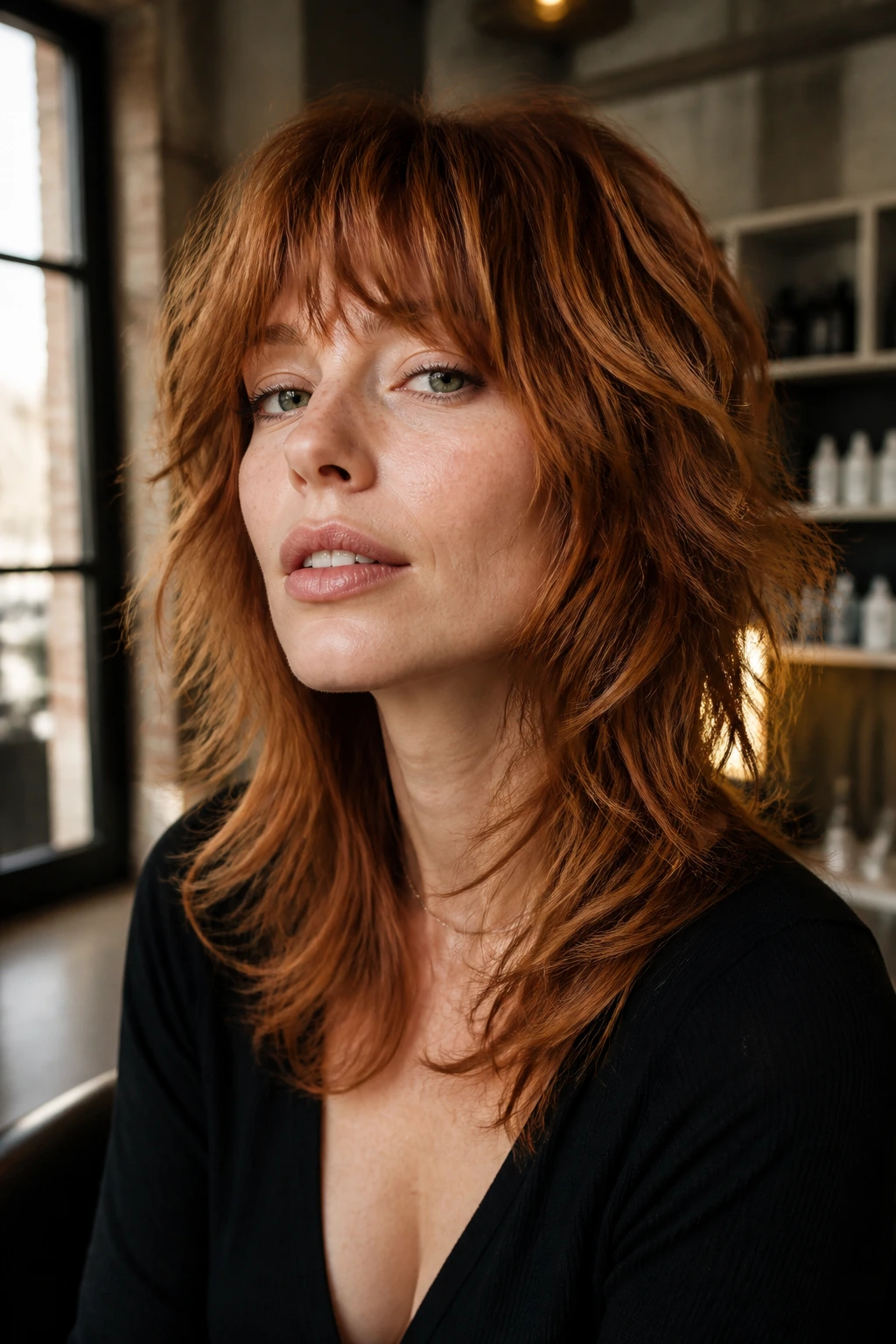
- Built for color movement: A shag keeps red tones from sitting in one flat block, so copper, rust, and auburn can catch light at different angles.
- Works with real texture: Waves, curls, and even stubborn straight hair all get a little help from the layered shape instead of fighting it.
- Grow-out is kinder: Soft perimeter lines and face-framing pieces hide the awkward middle stage better than a blunt cut does.
- Bang-friendly by design: Curtain bangs, bottleneck bangs, micro fringe, and side-swept pieces all fit into a shag without looking pasted on.
- Good for volume control: The right layering can remove bulk from thick hair or build lift into fine hair without turning the ends to fluff.
- Easy to make your own: A shag can go polished, punky, retro, or soft depending on how sharp the layers are and how you style the finish.
Why Shag Hairstyles for Red Hair Work So Well
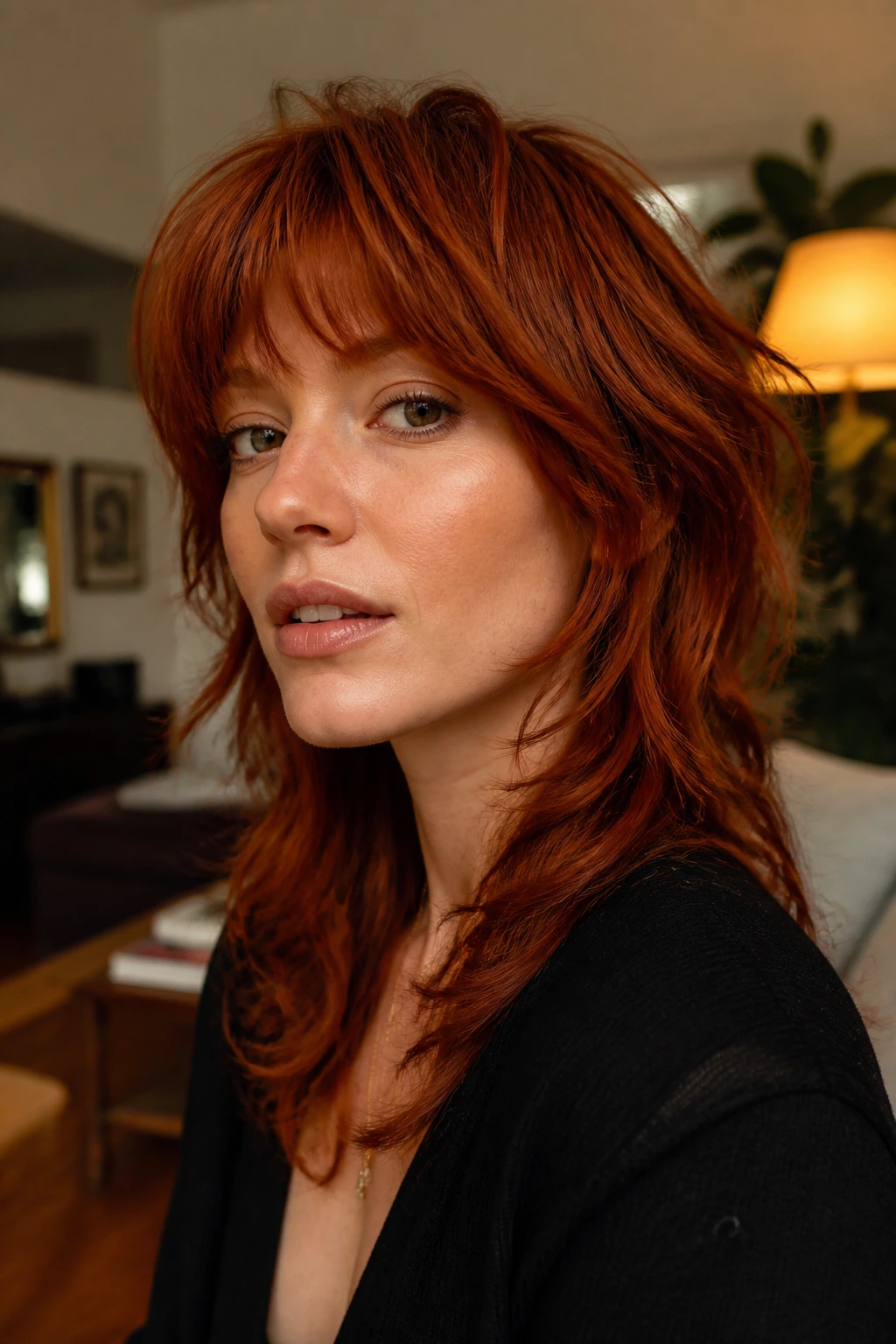
Red hair has a funny habit of showing everything. A blunt cut that looks tidy on brown or black hair can feel heavy on copper, because the color itself is already doing a lot of visual work. A shag solves that by breaking up the silhouette. The eye stops seeing one solid shape and starts seeing shifts: brighter ends, darker roots, soft bends around the face.
Red pigment likes broken lines
That little bit of disruption matters more than people think. Layered pieces let the top of the cut sit one shade, the middle another, and the ends another, even when the dye is the same all the way through. On copper hair, that can mean the fringe looks slightly brighter than the nape. On auburn, the underlayers can go smoky and rich instead of muddy.
Why blunt cuts can flatten red hair
A straight, blunt edge can make red hair feel bigger in the wrong way. Not voluminous. Bigger. Like a helmet with a nice color job. Shag layers keep the ends from acting like a single heavy curtain, which is a gift if your hair has any wave at all. The cut also lets you cheat a little on styling; an air-dry that looks messy on a blunt bob can look intentional on a shag.
The face-frame does the heavy lifting
The best red shags usually keep one thing very clear: the pieces around the face matter most. A soft curtain fringe, a cheekbone piece, or a jaw-skimming layer can make the whole haircut look more deliberate. That is where the color shows first when you walk into a room. And that is the part people remember.
1. Classic Copper Shag
Copper and shag belong together. The color has enough warmth to show every layer, and the cut gives it movement without asking for a perfect blowout. Ask for shoulder-grazing length, feathered pieces around the cheekbones, and a fringe that lands somewhere near the brow bone.
This version works best when the ends are a little piecey, not polished to death. A rough dry, a small round brush at the front, and a light mist of texturizing spray are enough. If your hair is medium density, this is the one that tends to look good even on days when you barely try.
2. Curtain Bang Copper Shag
A center part with curtain bangs softens copper in a way that feels almost built-in. The bang opens at the temples, which keeps the face from looking boxed in, and the shag layers carry that same easy bend through the rest of the cut. It is one of the safest choices if you want shape without edge.
- Best for: oval, heart, and square faces.
- Styling note: blow the fringe forward first, then sweep it open with a round brush.
- Trim cadence: every 3 to 4 weeks if you want the curtain part to stay crisp.
3. Wavy Auburn Mid-Length Shag
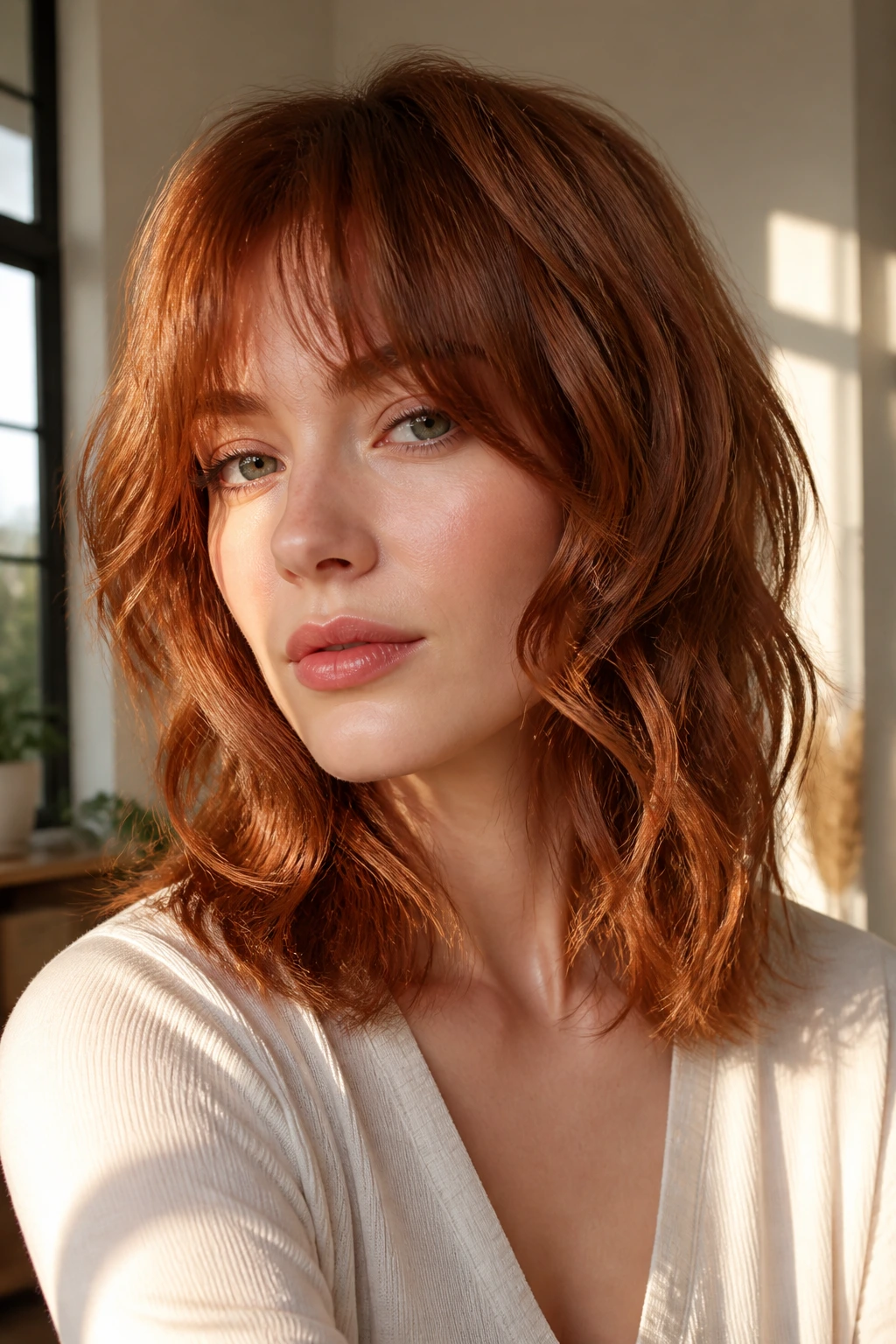
Auburn waves love a mid-length shag because the cut follows the bend instead of forcing it. The result is soft but not sleepy, which is a better look than people give it credit for. Keep the shortest face-framing layer around the cheekbone or just below it, then let the rest fall to the collarbone.
I like this shape when the hair has a little natural grit. Too silky, and the layers can slip flat. A mousse at the roots and a small amount of cream through the mid-lengths usually does the job.
4. Curly Ginger Shag

Why does this work so well on curls? Because curls need room, and a shag gives them that room without building the old triangle shape. A dry cut is worth asking for if your stylist knows how to read curl pattern, because ginger curls often shrink more than people expect once they dry.
Diffusing on low heat keeps the curl clumps intact. Keep the layers rounded rather than stacked, and do not carve the top too hard or the crown can go puffy. The charm here is bounce, not precision.
5. Long Red Shag with Face-Framing Layers
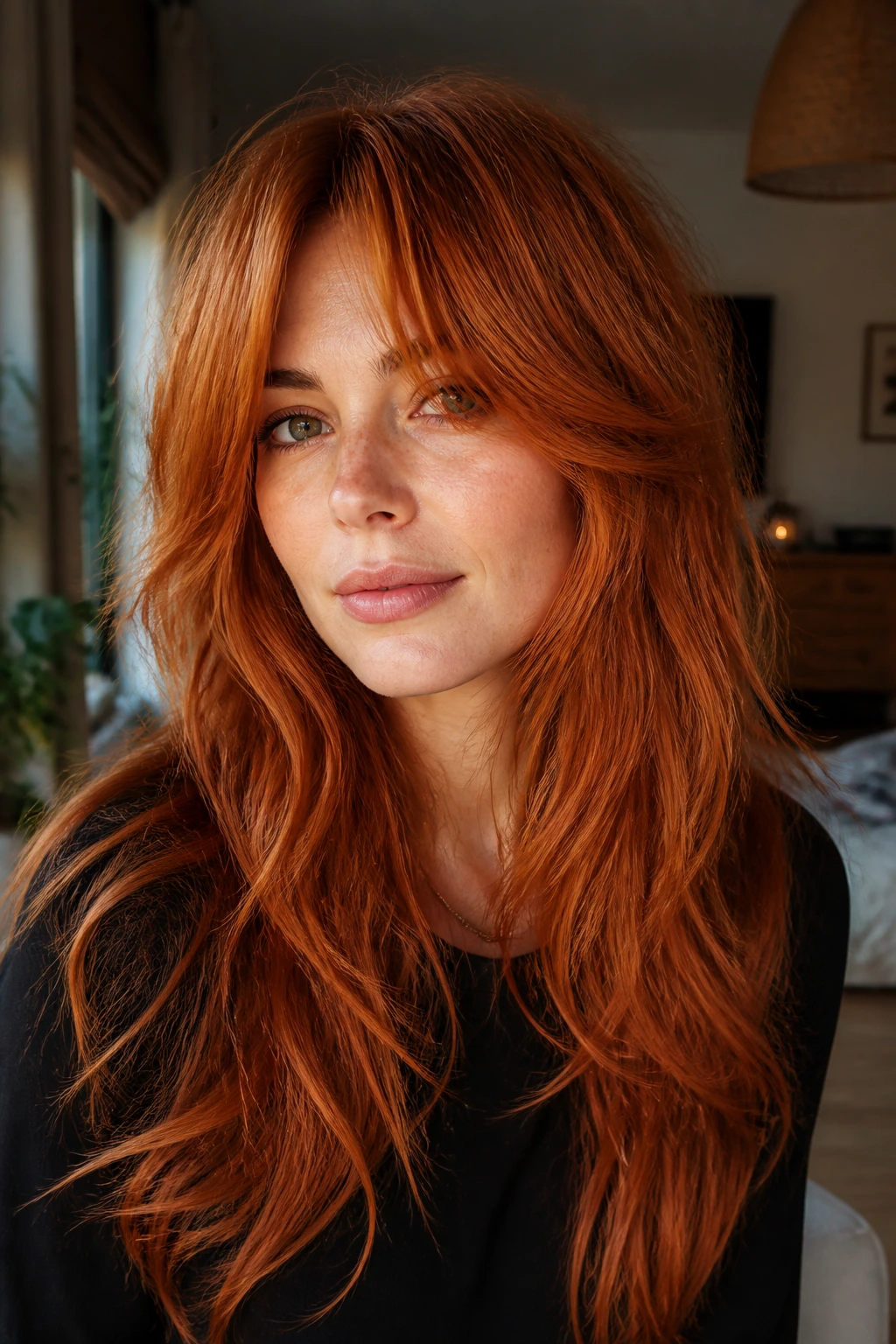
If you do not want to lose length, this is the move. A long red shag keeps the bottom line loose while carving out the front so the hair still has shape. Think of it as a way to get movement without giving up the drama of long hair.
The best versions keep the layers soft and connected. You want the face-framing pieces to start high enough to matter, but not so high that the haircut looks chopped. A wide barrel brush or a big curling iron can bend the front away from the face in a way that shows off the color.
6. Choppy Shag with Micro Bangs
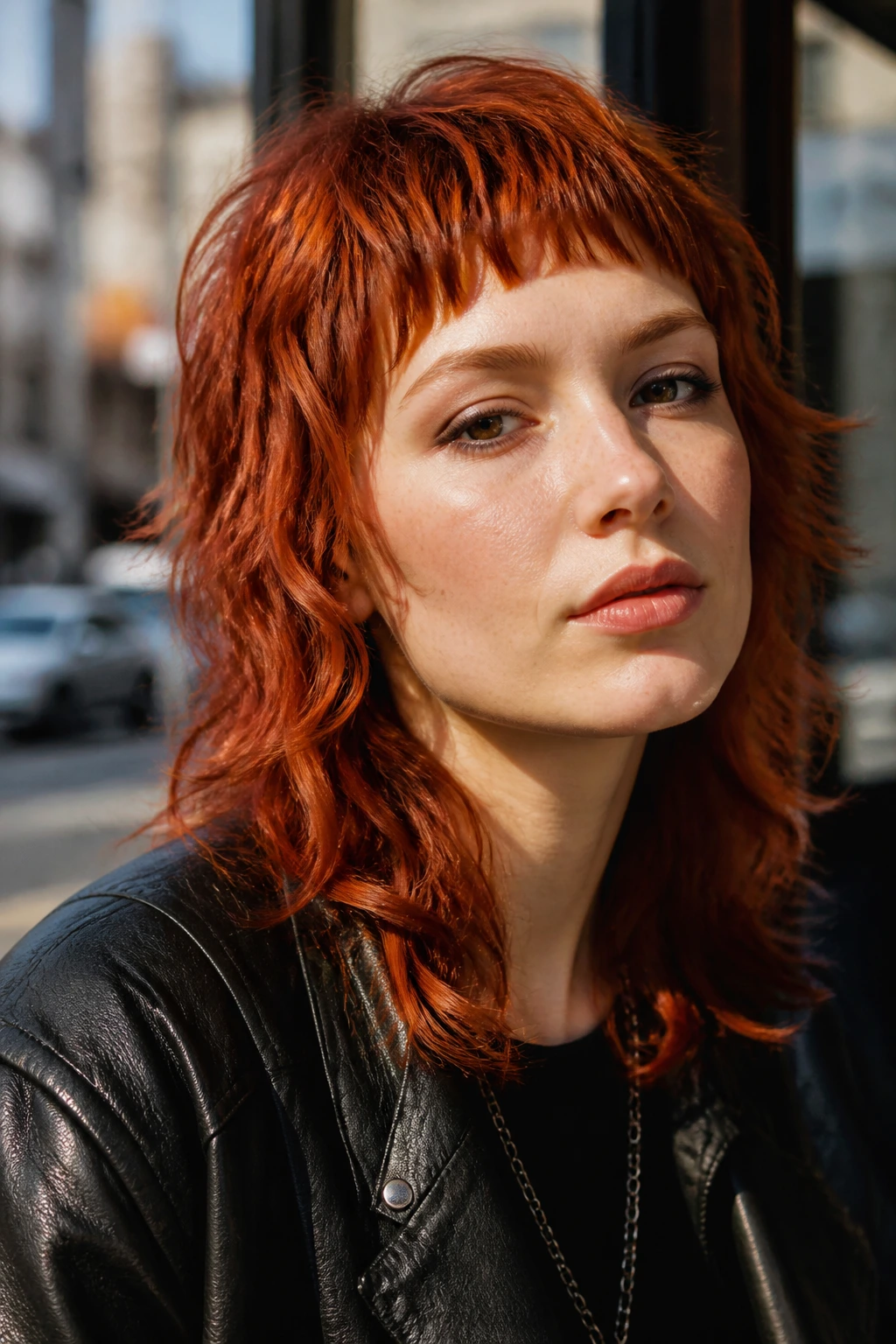
Micro bangs change the whole mood of red hair. They make the cut sharper, a little stranger, and much more noticeable. On a shag, that tiny fringe sits against the broken layers like a punctuation mark.
This one is not for the half-committed. The fringe needs regular trimming, and the overall cut looks best with a bit of separation through the ends. If your red is bright or flame-like, the contrast is especially good because the bangs give the eye a place to land.
- Best for: strong brows, narrow foreheads, and people who like structure with a little bite.
- Style it with: matte paste on the fringe and a touch of spray on the ends.
7. Soft Wolf Shag in Rust Red
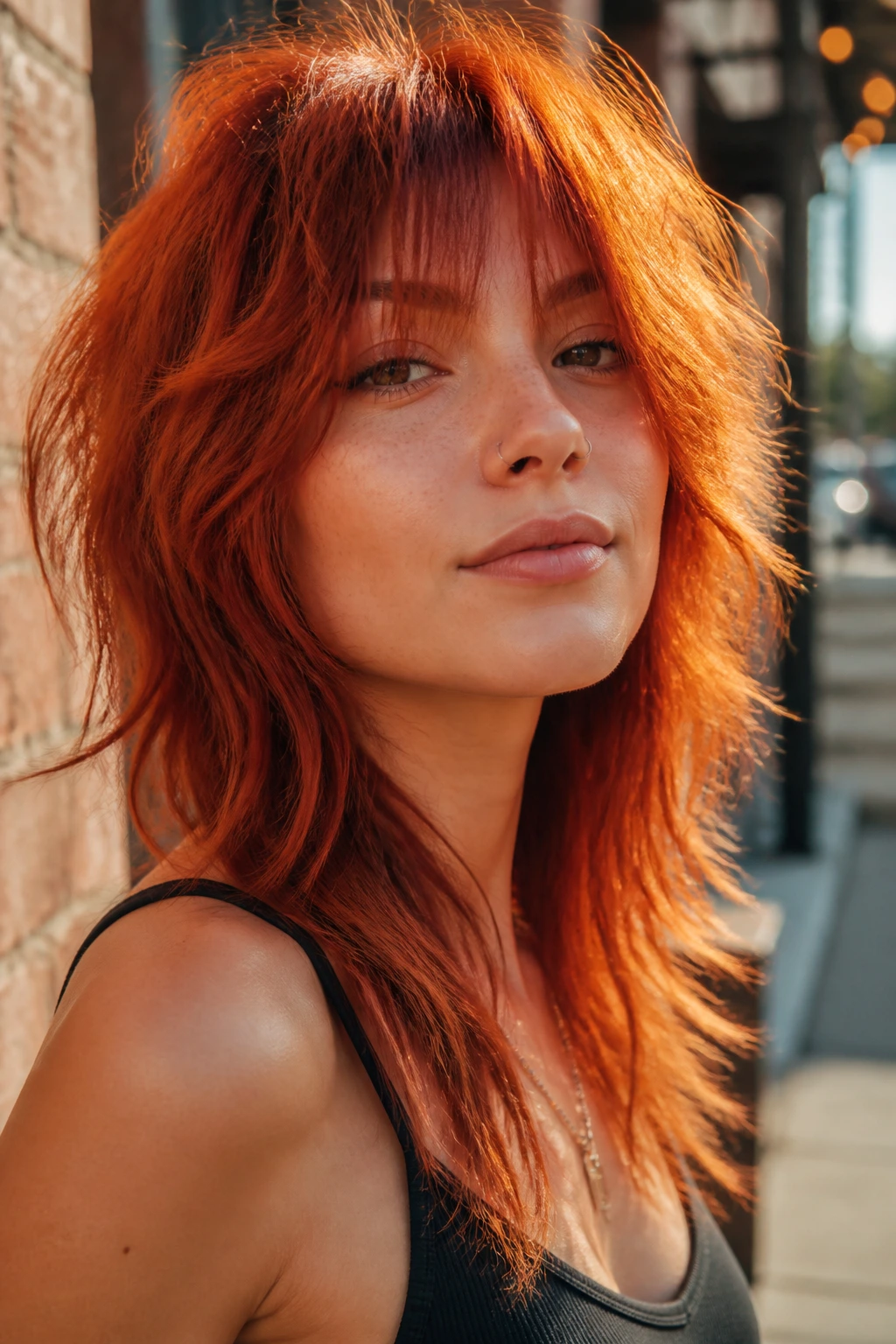
The wolf cut’s softer cousin works beautifully in rust red because the color already has a slightly wild feel. This version keeps the crown lifted and the lower length longer, but not so long that the cut turns into a mullet with excuses. The layers should feel lived-in, not hacked.
Thick hair does especially well here, because the shape removes bulk and leaves a kind of loose vertical line. I would ask for the shortest pieces around the cheekbone and a little extra length at the nape. That keeps the look intentional instead of costume-y.
8. Pixie Shag in Deep Auburn
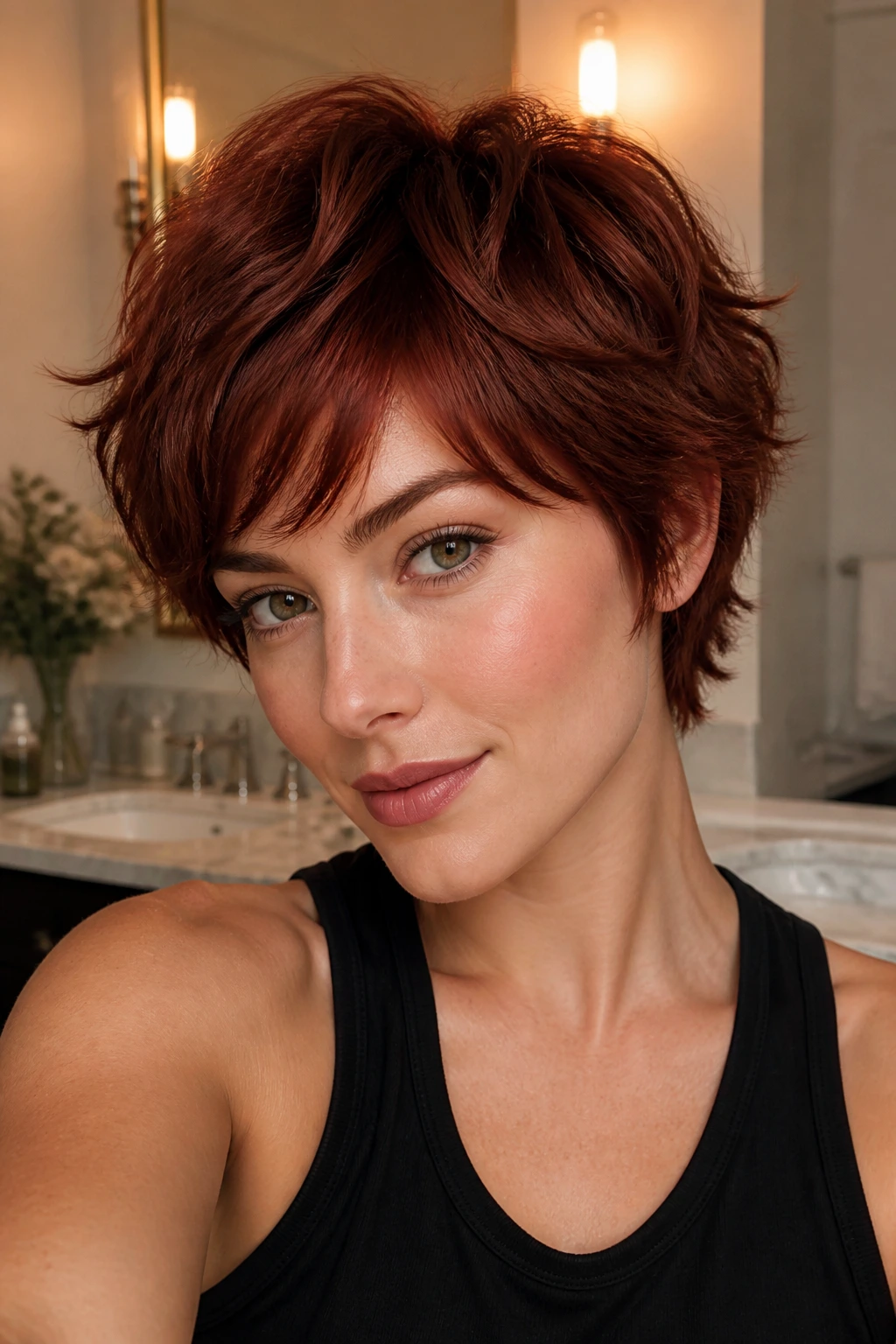
Short hair can still be shaggy. A pixie shag in deep auburn uses feathered layers on top, soft sides, and enough texture to keep the silhouette from going helmet-shaped. It is one of the easiest red looks to wear if you like a strong neck line and quick styling.
This cut works best when the top is cut with movement in mind. A small amount of paste warmed between the fingers gives the layers enough separation. If your auburn has a deeper brown base, the texture shows even more clearly around the crown.
9. Layered Copper Lob Shag

A lob with shag layers sits in a very useful middle zone. It is long enough to tuck behind the ears, short enough to feel fresh, and loose enough to show off copper’s brightness at the ends. It is also one of the easiest red shags to wear at work without looking too styled.
What to ask for: collarbone length, soft layers through the interior, and a slight bend at the front. If you wear your hair straight, this cut benefits from a quick flick under with a flat brush or a round brush so the perimeter does not go limp.
10. Bottleneck Bang Shag
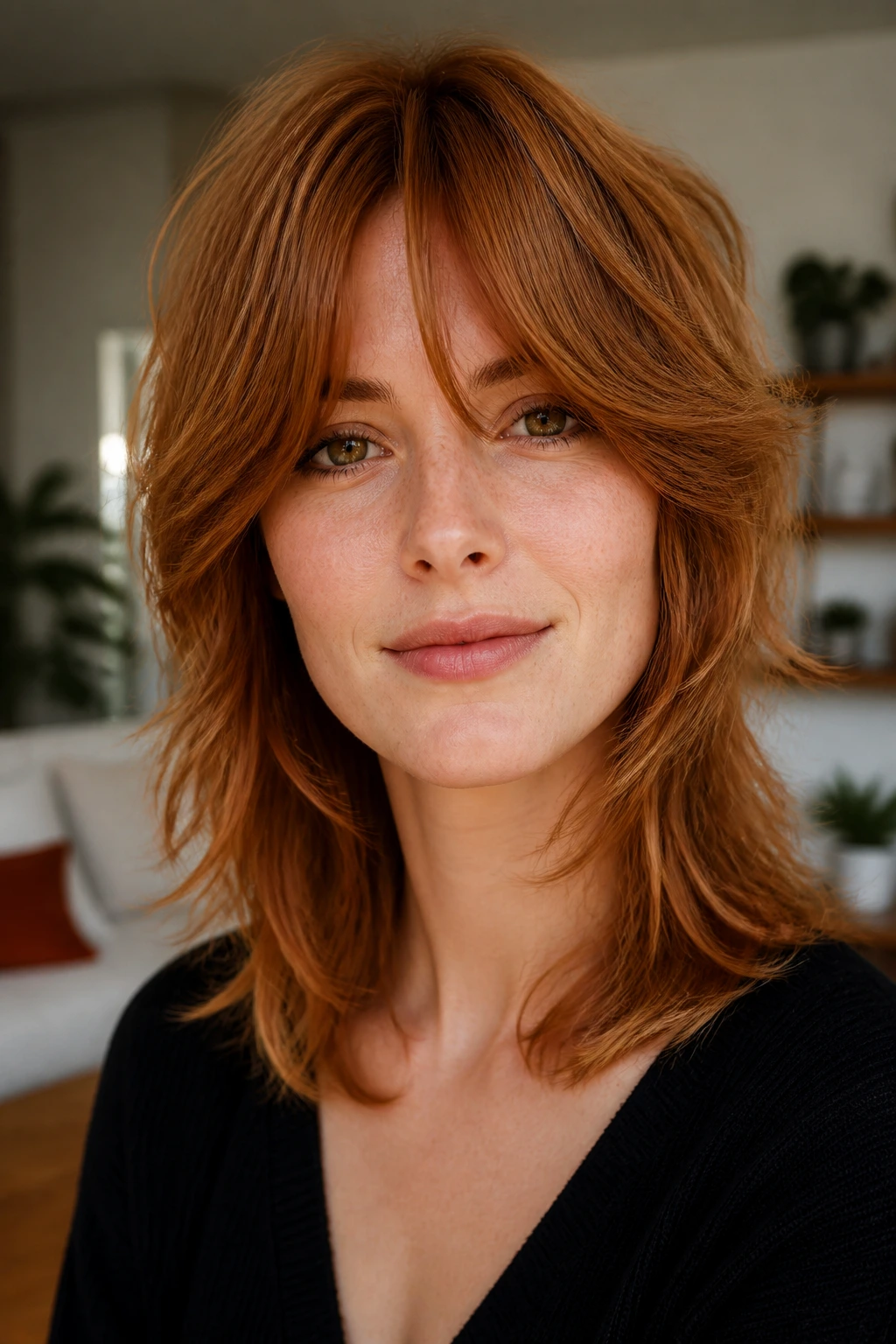
Bottleneck bangs are a nice compromise when you want fringe but not a full curtain. They start a little narrower at the center, then open up near the temples, which makes the shag feel softer around the face. On red hair, that shape keeps the color from getting swallowed by too much bang.
This version works especially well if your face has sharper angles that you want to soften. Keep the layers around the cheekbone and jaw, then let the bangs taper out into the side pieces. It grows out better than a blunt fringe, which is half the appeal.
11. Copper Shag with Money Pieces
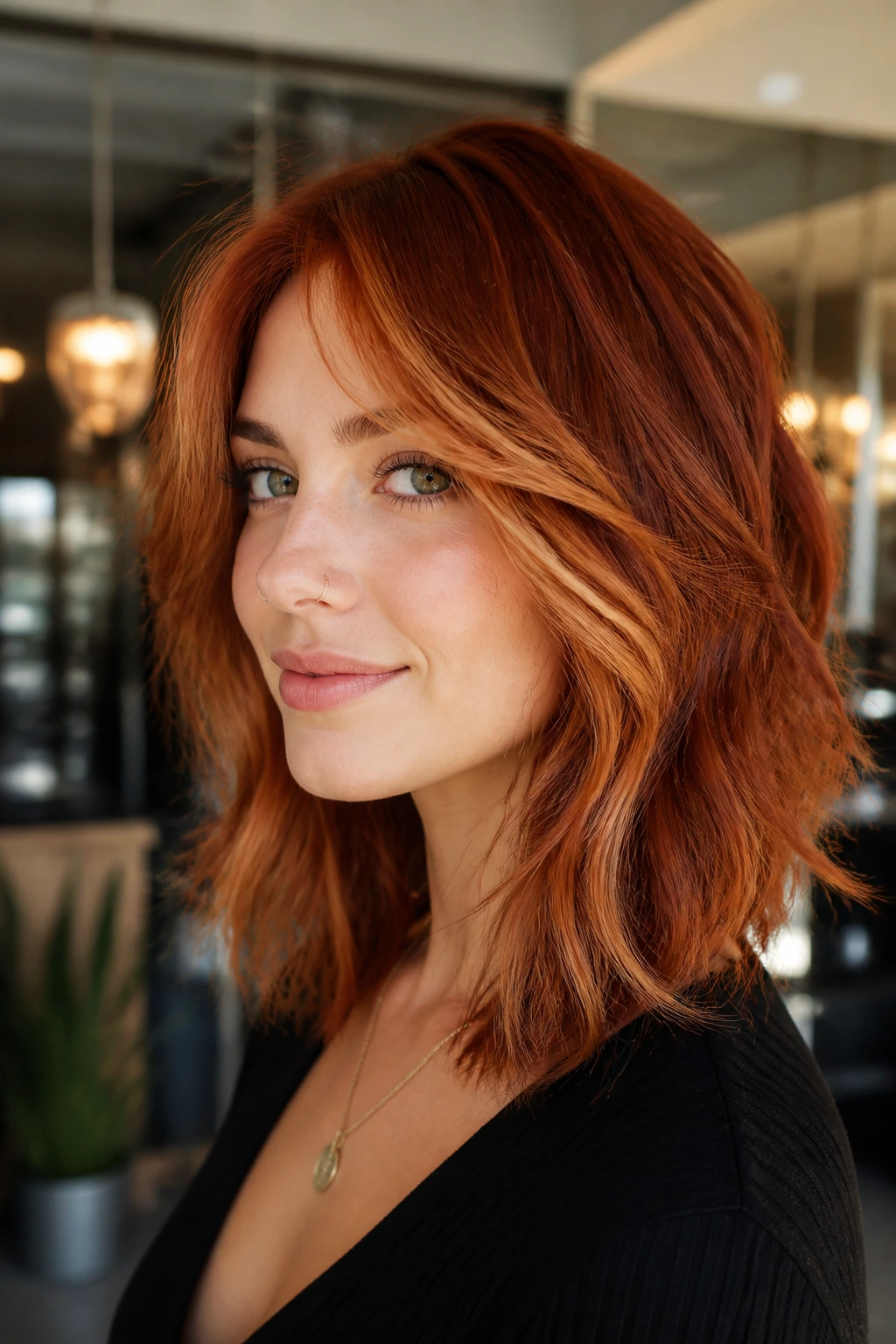
Bright front pieces can wake up a shag fast. On copper hair, money pieces do not need to be bleach-blond to work; even a lighter copper or apricot ribbon near the face can shift the whole haircut. The shag gives those lighter strands room to show up instead of disappearing into the length.
I prefer this look when the front pieces start around the cheekbone and slide down toward the collarbone. It frames the face without turning the haircut into a color-only story. A gloss every few weeks helps the front stay shiny, which matters because dull red reads flat quickly.
12. Razor-Cut Cherry Red Shag
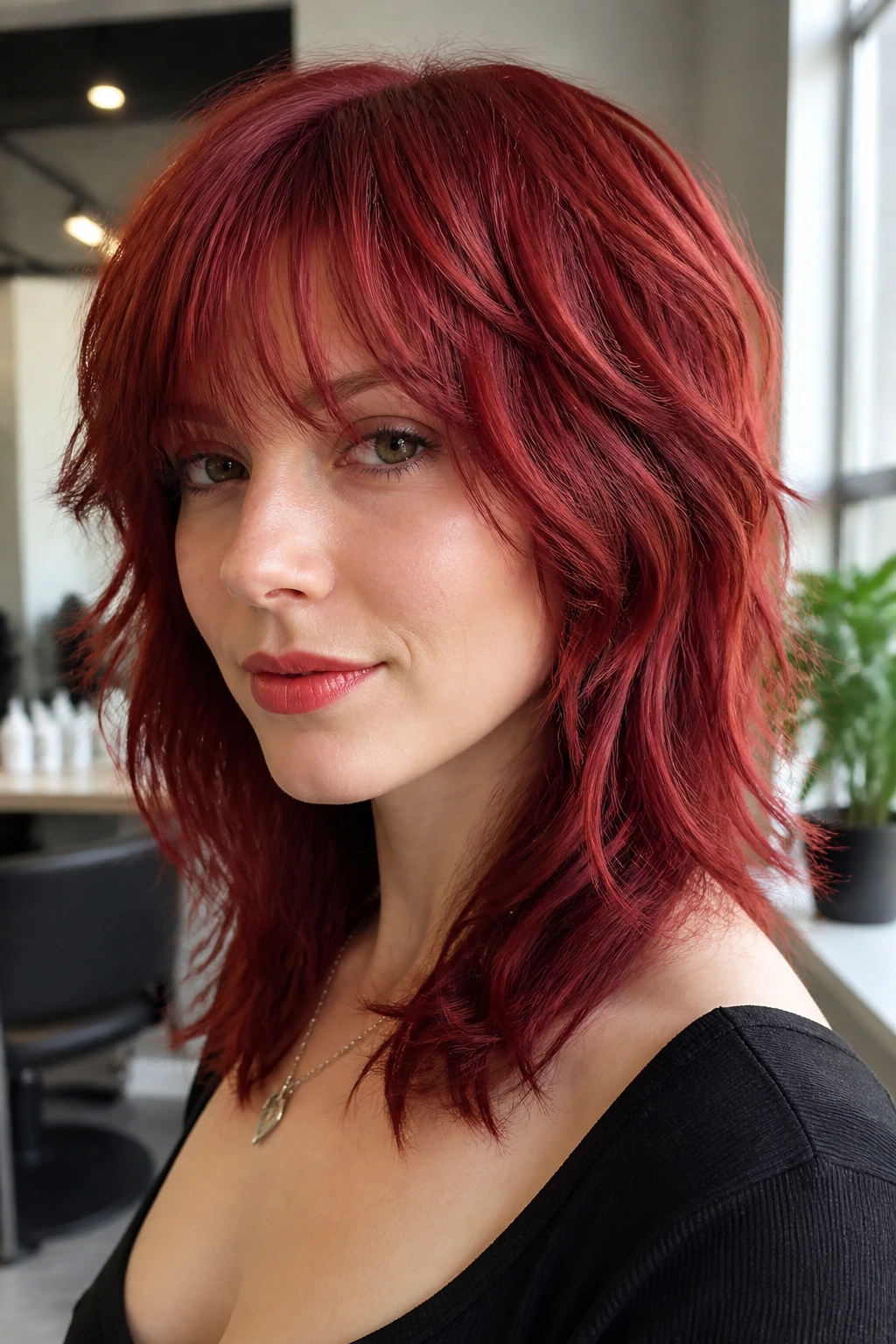
Cherry red likes a razor cut because the color already has a sharp edge to it. A razor removes weight fast and leaves the ends a little feathered, which works if you want the haircut to feel modern and slightly undone. Straight or softly wavy hair is the best match.
The trick is not to overdo the thinning. Cherry shades can look thin if the ends get too sparse. Ask for soft separation, not a shredded mess, and keep a shine spray nearby. That color looks better when it reflects a little light instead of sitting matte.
13. Boho Red Shag with Airy Ends

This is the shag for someone who wants the hair to look touched by wind, not polished with a round brush for half an hour. The ends are loose, the layers are soft, and the whole cut feels like it could have dried on its own and still looked intentional. In red, that casual movement reads as rich rather than sloppy.
A little sea salt spray can help, but only on the mid-lengths and not every day. Too much will dull the color and rough up the ends. Keep the fringe light and the perimeter a touch uneven, and let the layers do the rest.
14. Modern Mullet Shag
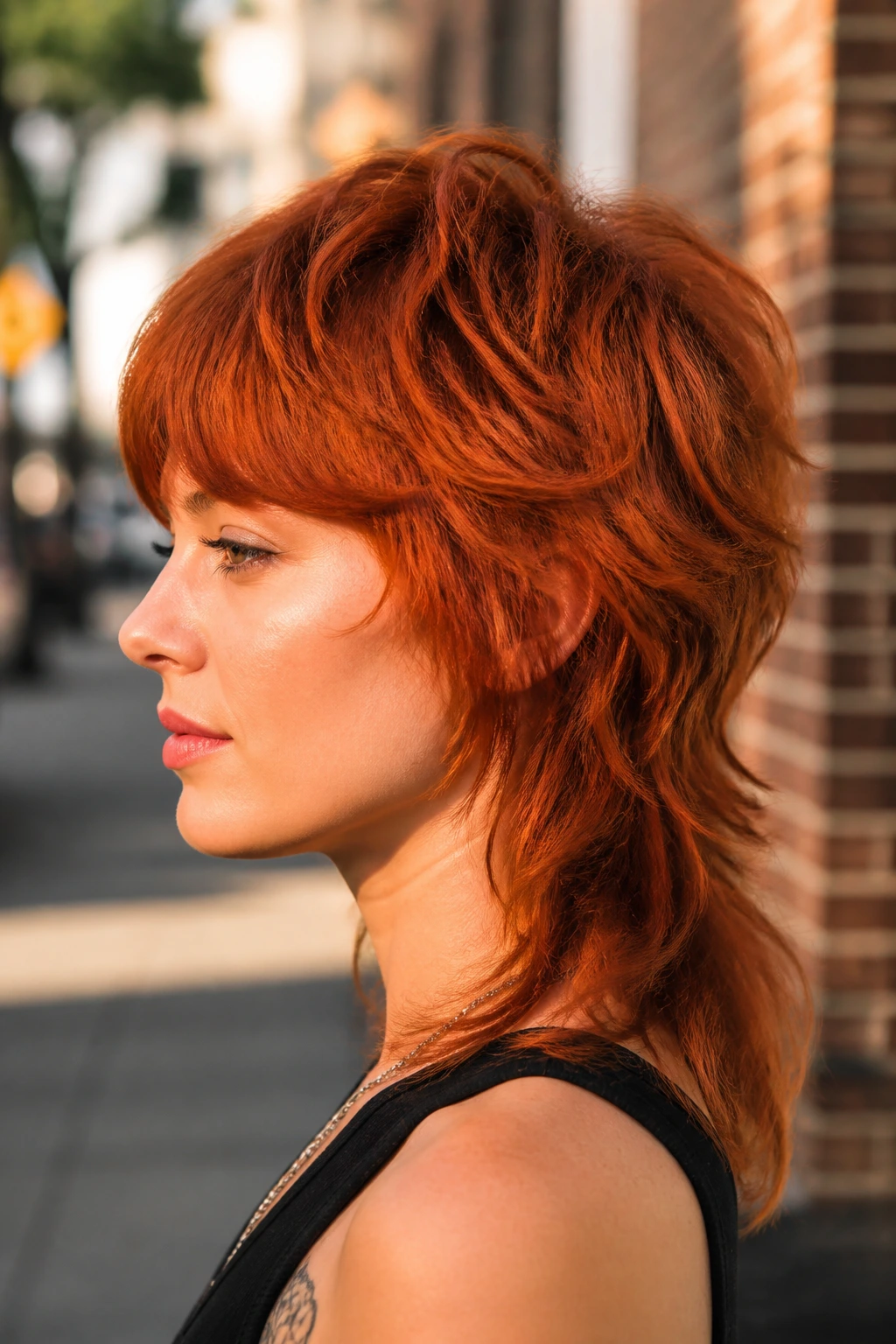
A modern mullet shag asks for confidence, but not much else. The front stays shorter, the back stays longer, and the crown gets enough lift to make the shape look deliberate. Rust, cinnamon, and dark copper all suit this cut because the layers deepen the color instead of flattening it.
It works best with some natural texture. Straight hair can wear it too, but you will want a bit of bend in the top and sides so the contrast between front and back feels smooth. If you are going for edge, this is one of the clearest ways to get it without shaving anything.
15. Strawberry Blonde Shag with Soft Fringe
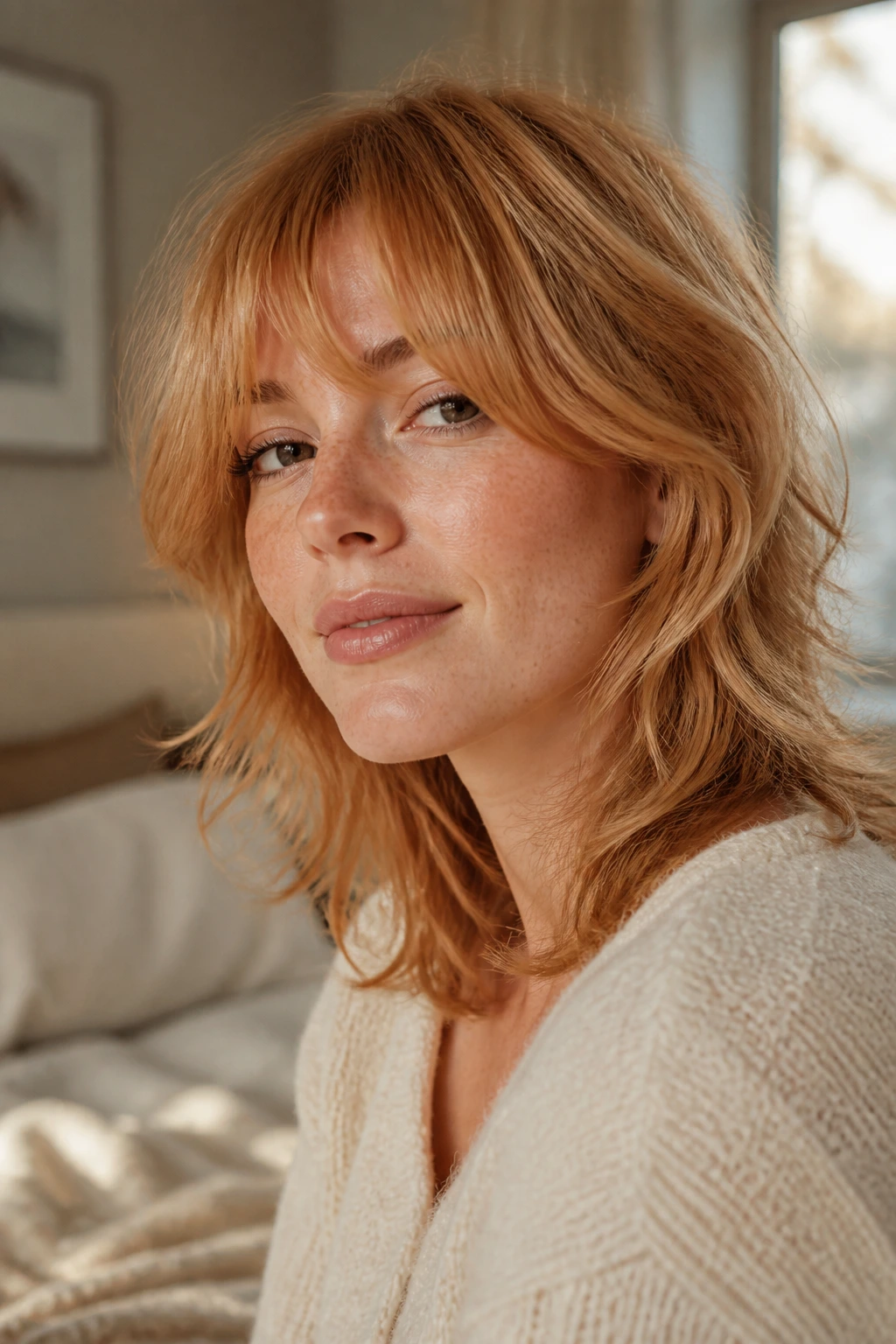
Strawberry blonde can disappear if the cut is too aggressive. That is why a softer shag suits it so well. The fringe stays light, the layers are airy, and the whole thing keeps the color delicate instead of throwing it into a harsh frame.
This style likes a gentle finish. A blow-dry that bends the face frame away from the cheeks, then a little finger-combing through the ends, is enough. Keep the shortest pieces around the cheekbone and avoid over-texturizing the very ends, or the lighter color can start to look washed out.
16. Sleek Straight Shag
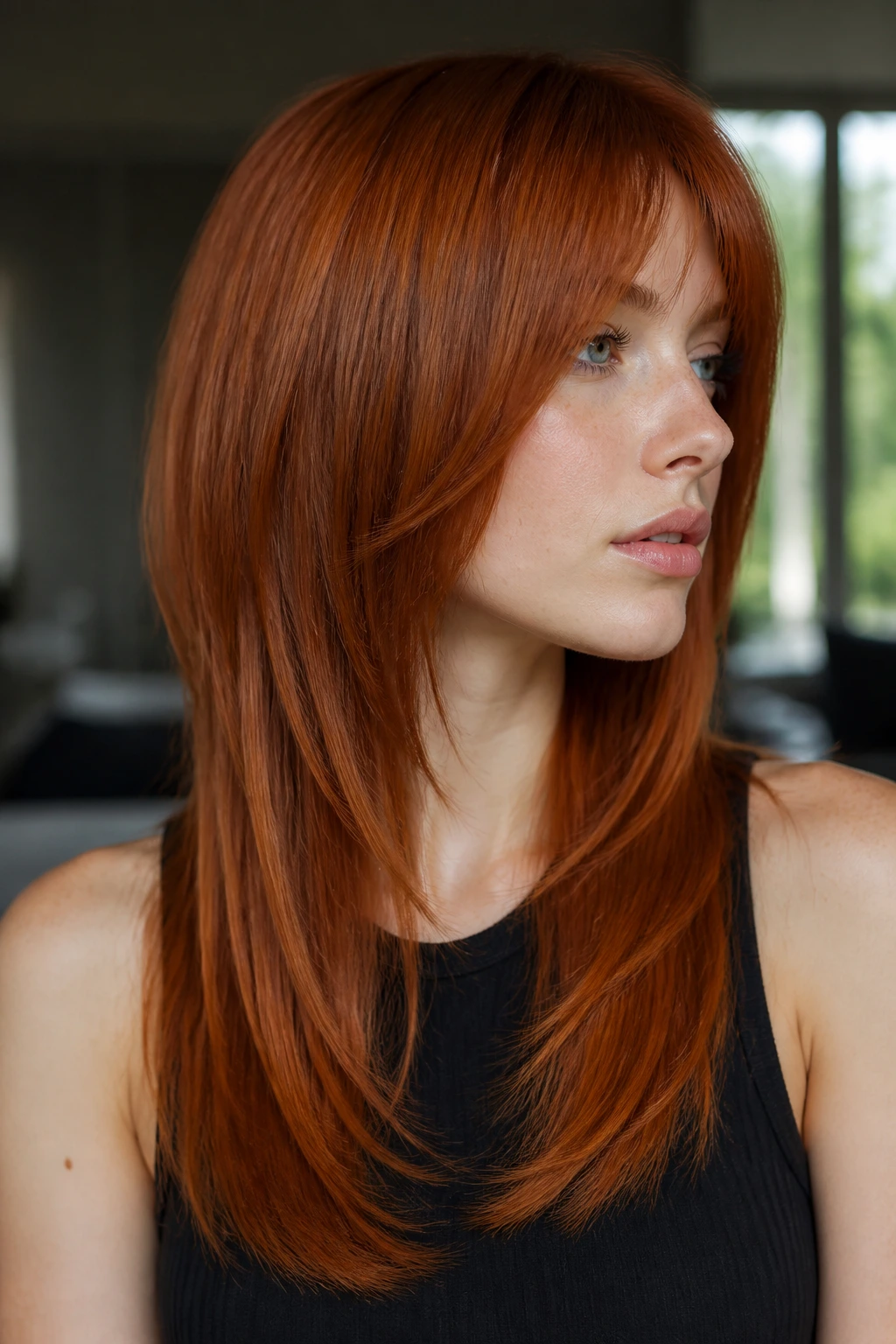
Who said a shag has to look messy? On straight red hair, a sleeker finish can be the smart choice because it lets the layer map do the talking. The cut should still have movement, but the edges stay cleaner and the crown stays smooth.
This is a good option if you wear red color in a single shade and want the haircut to create the contrast. Use a heat protectant, bend the front pieces slightly inward, and leave the rest straighter than you think. A little shine serum on the mids makes the color look richer.
17. Tousled Mid-Length Shag with Side Part
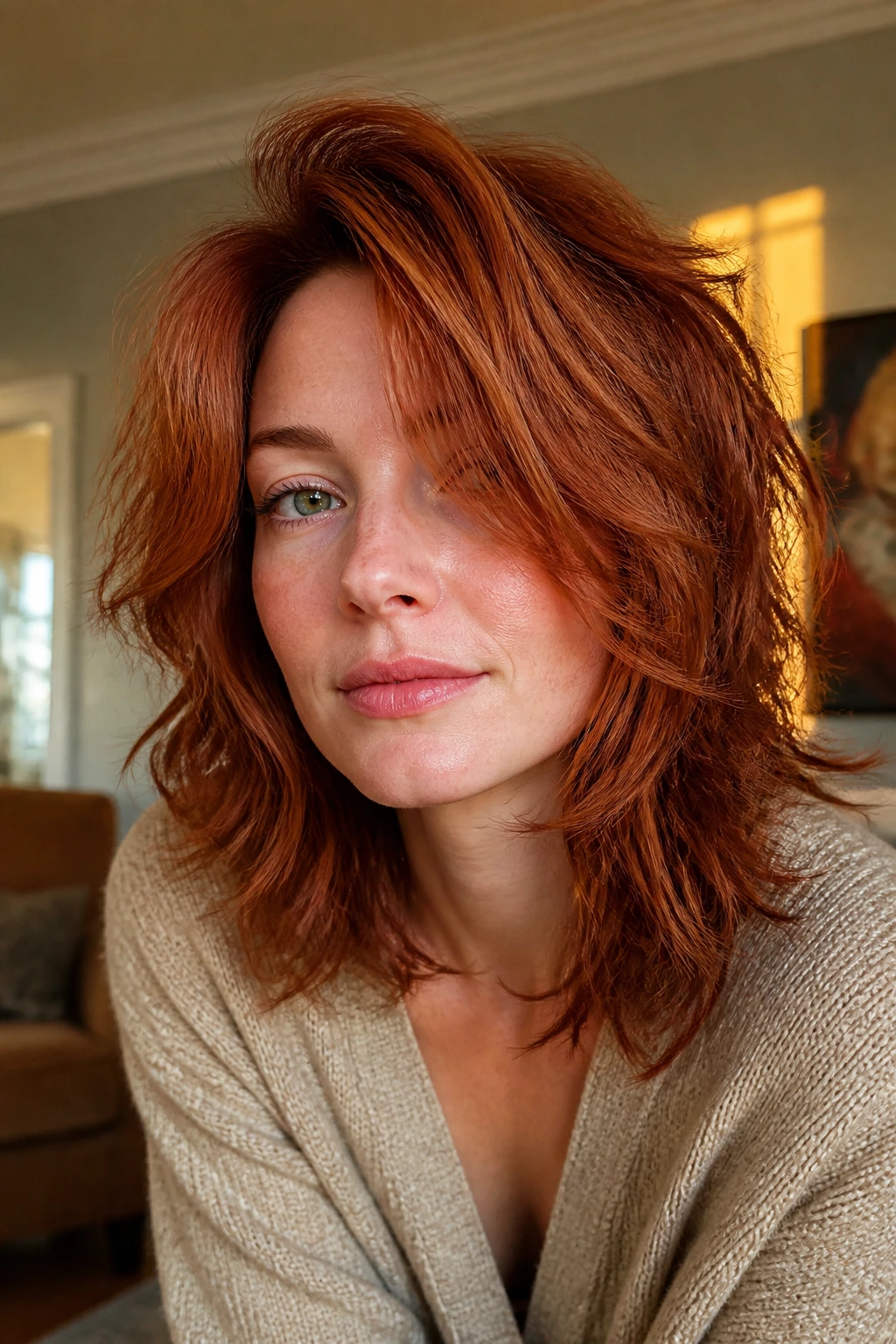
A side part changes the whole geometry of a shag. It gives the crown a small lift, makes the fringe fall differently, and lets red hair catch light in a less symmetrical way. That slight imbalance is a good thing here.
This cut is easy to live with because it does not demand perfect styling. A root spray at the crown and a rough finger-dry are enough for most days. If your hair wants to fall flat on one side, this shape works with that quirk instead of arguing with it.
18. High-Volume Glam Shag
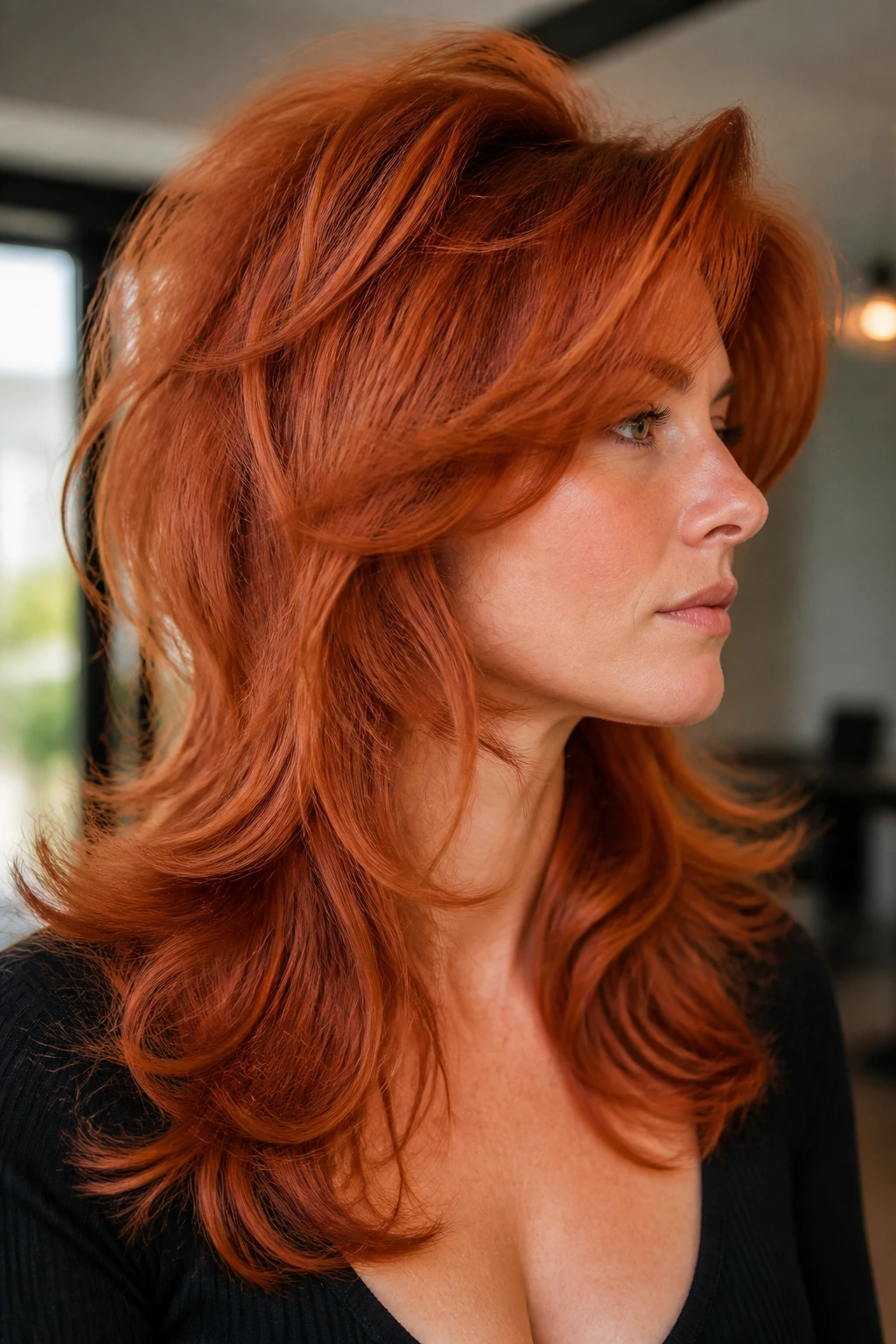
Some shags are quiet. This one is not. A high-volume glam shag keeps the crown lifted, the layers visible, and the ends bouncy enough to feel almost sculpted. On bright red hair, that kind of shape can look expensive without looking stiff, which is a hard balance to hit.
Velcro rollers or a large round brush can help if you want the top to stay lifted past lunch. Thick hair takes to this cut especially well, though fine hair can wear it too if the layers are not overthinned. The key is volume at the roots, not frizz at the ends.
19. Textured Copper Shag with Wispy Ends
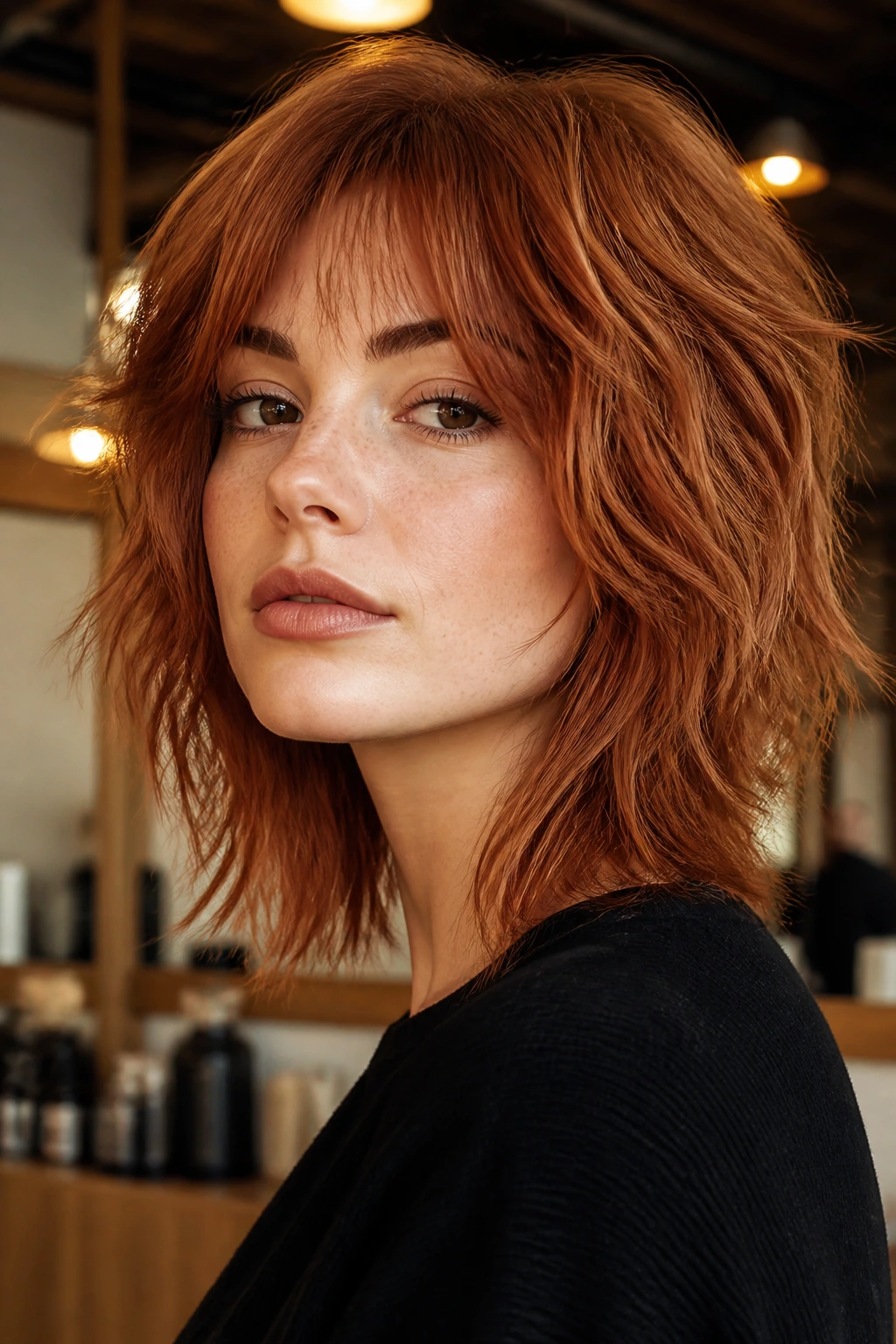
Wispy ends are a useful trick on copper because they stop the cut from looking blocky. The texture gives the hair movement, but the softness at the perimeter keeps it wearable. It is a nice middle ground if you want a shag that feels modern but not choppy for the sake of being choppy.
This one benefits from a light texturizing spray, used only from mid-shaft down. Too much at the roots and the cut can feel dry. If your hair has a natural wave, even better; the wispy finish makes the color flicker as it moves.
20. Chin-Length Ginger Shag
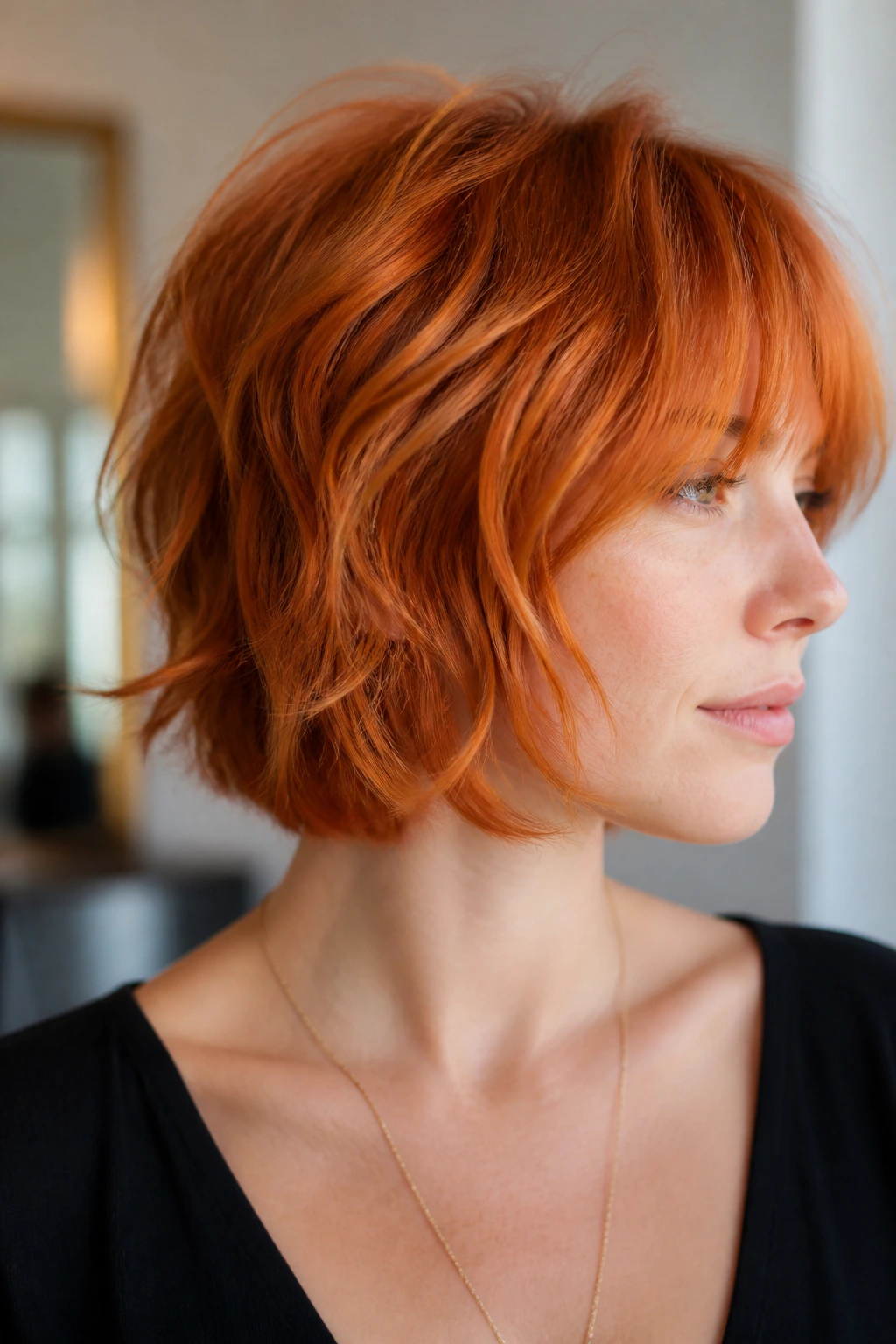
A chin-length shag is sharp in the best way. It puts the color right at the jaw, where people actually notice it, and the shorter layers keep ginger hair from drooping. The cut has a bit of bite, but it is still easy to style.
I like this one on fine to medium hair because it gives the illusion of body without asking for huge volume. A side-swept fringe can soften the chin line if that matters to you. Keep the nape clean and the top light, and trim it often enough that the shape stays crisp.
21. Retro ’70s Shag
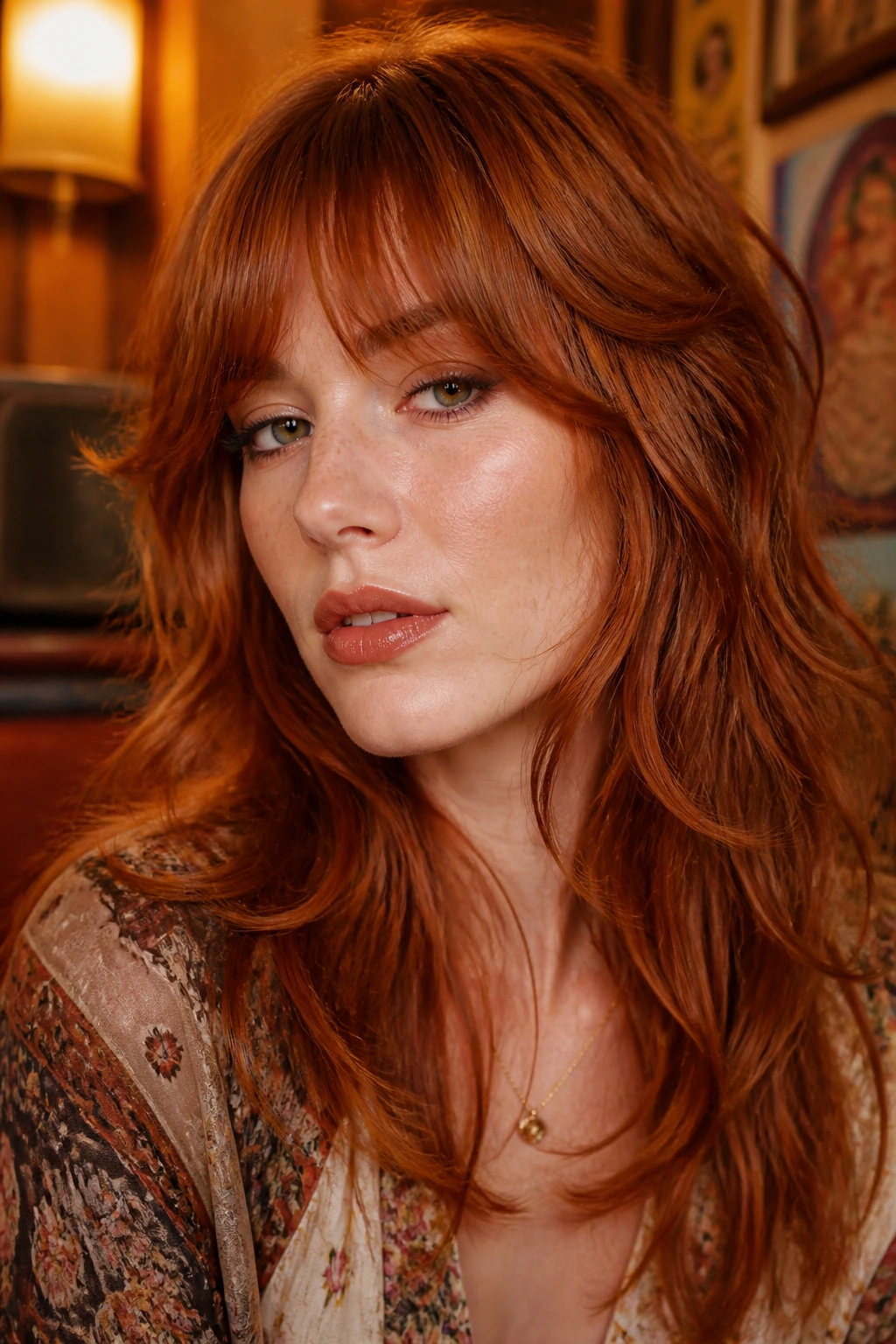
This is the shag people picture when they think of feathered fringe, long face-framing pieces, and flips at the ends. Red hair makes it feel even more period-specific in a good way, because the layers show up like bands of color. It is a little nostalgic, but not costume-y if the finish stays soft.
Use a medium round brush and bend the front away from the face. The crown should have height, but not so much that the cut starts looking dated. Mahogany and copper both suit this style because the layer pattern gives the shade a lot of depth.
22. Mahogany Shag with Deep Side Bangs

Mahogany can look almost velvet-dark in the right light, and a deep side bang gives it a nice sweep. This is one of the more elegant takes on a shag because the lines are softer and the color does some of the work on its own. It is especially good if you want movement without a lot of visible choppiness.
The side bang should start high enough to lift the face, then taper into the rest of the cut. A smooth blowout looks great here, but so does a softer bend if you prefer less polish. The darker red shade keeps the layers from getting too busy.
23. Layered Red Shag for Thick Hair
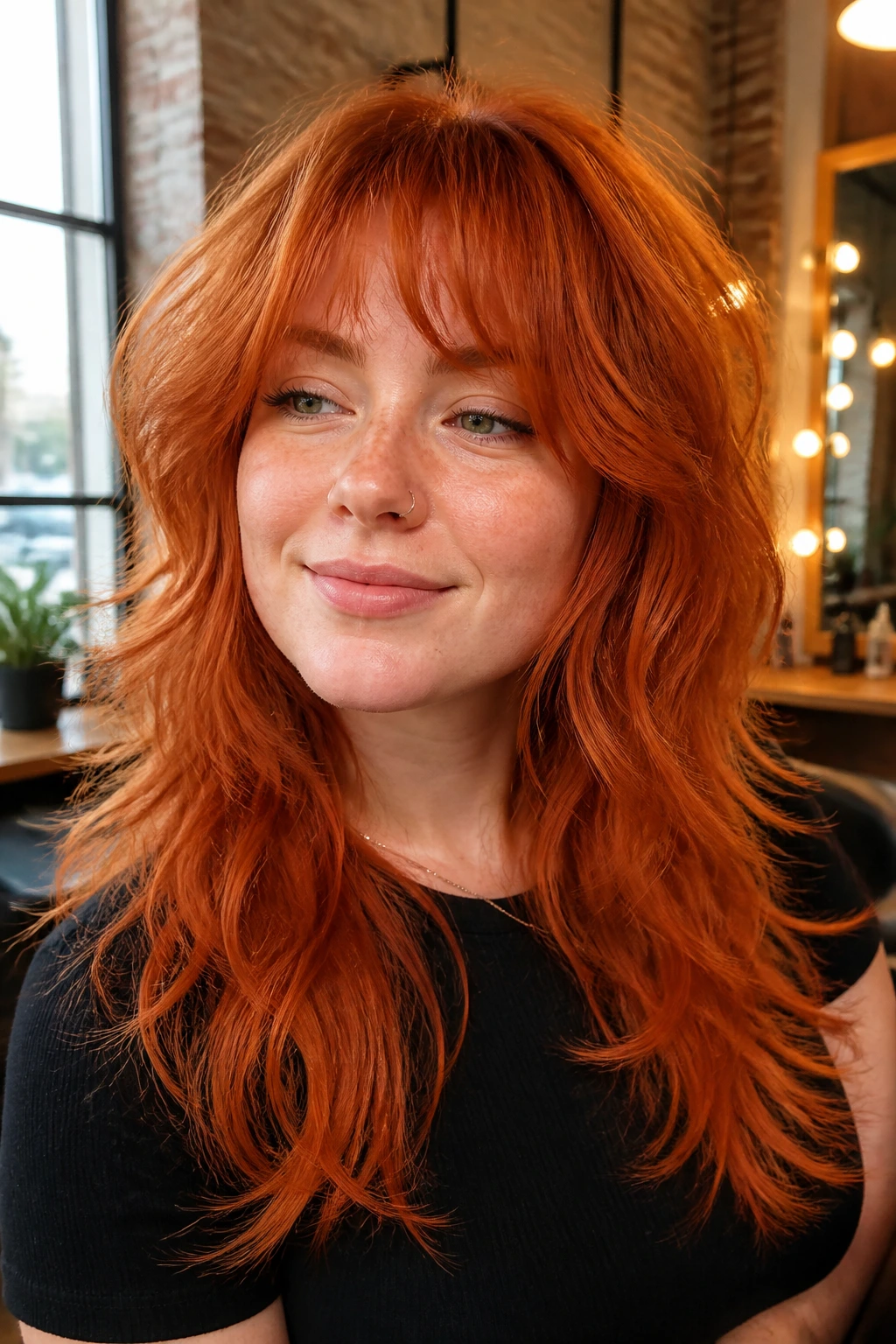
Thick hair can carry a shag better than almost any other cut, provided the layers are placed with some restraint. The goal is to remove bulk from the interior so the perimeter does not puff out like a triangle. Red tones make that shape more obvious, so balance matters.
Ask for weight removal under the top layers, not just at the ends. That keeps the silhouette from turning stringy. A good stylist will also watch the crown closely, because that is where thick hair likes to spring up when the cut is too eager.
- Best move: keep the face frame softer than the rest of the layers.
- Avoid: overthinning the bottom third of the hair.
24. Light Shag for Fine Red Hair
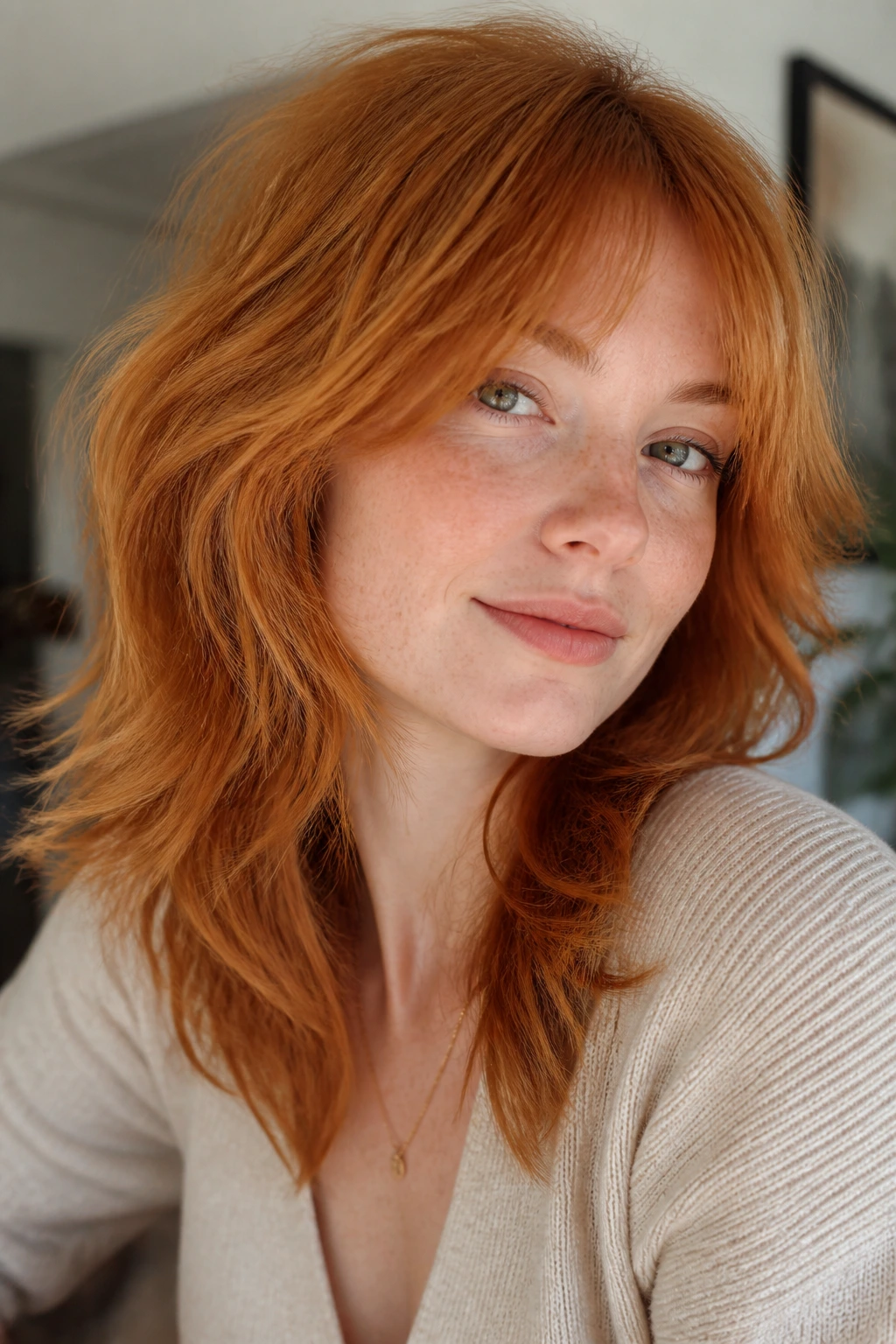
Fine red hair needs a gentler hand. Too much texture and the ends can disappear; too little and the hair lies flat. A light shag keeps the layer map visible but preserves enough density to make the color look full.
This is where soft interior layering beats aggressive chopping. Ask for movement around the face and crown, but keep the outline clean. A root-lifting spray at the roots and a tiny bit of mousse can do more for this cut than heavy creams ever will.
25. Copper Shag with Flipped Ends
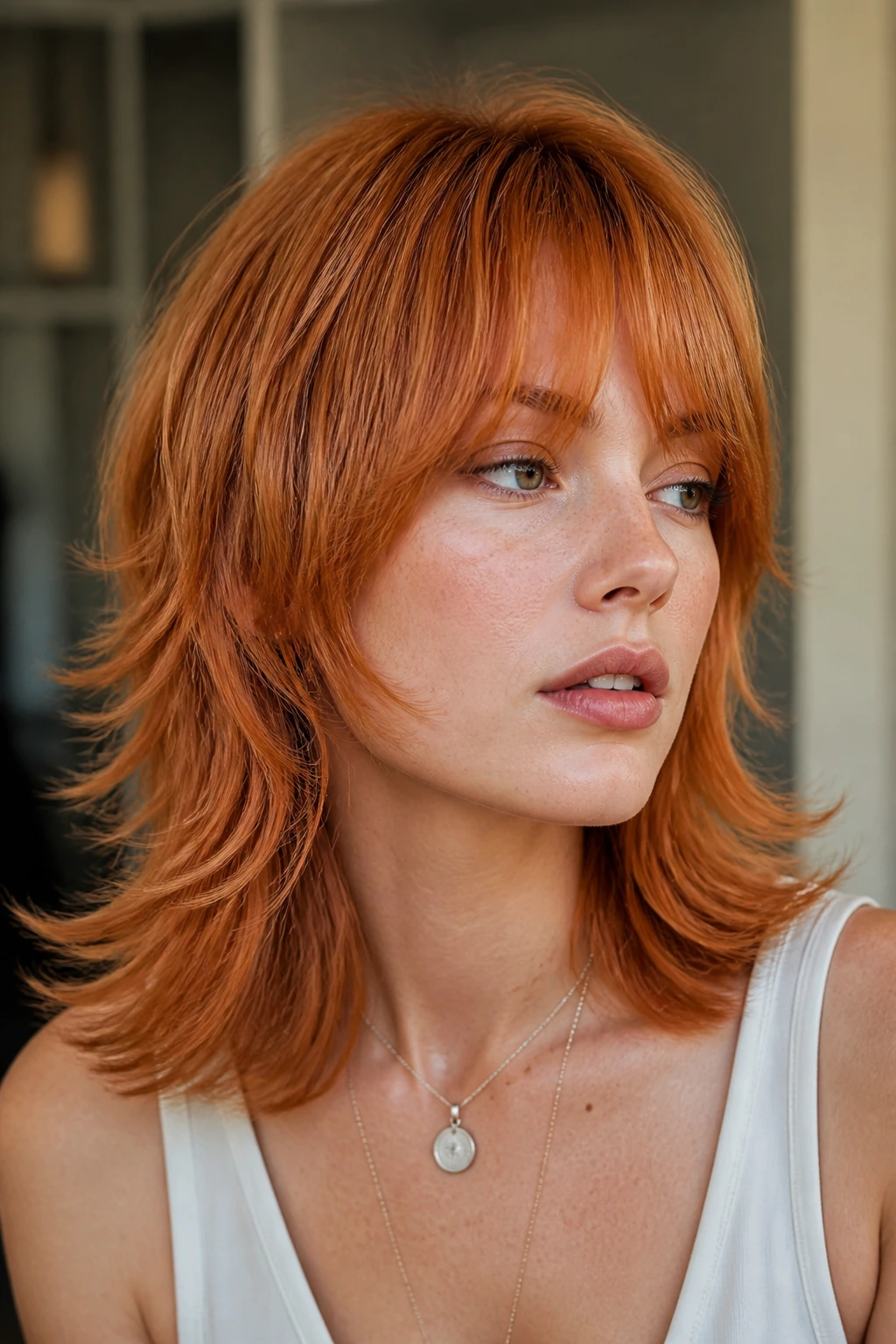
Flipped ends bring a little shape back to a shag without making it stiff. The outward bend looks especially good on copper because the lighter ends catch the curve and make the whole haircut feel animated. You can get the flip with a flat iron, a round brush, or a quick pass with a curling wand.
The biggest mistake is flipping every layer the same way. Leave some pieces straighter so the movement looks natural. The contrast is what makes it work. If the whole head turns into a uniform flip, the shag loses its edge.
26. Shag with Baby Bangs and Texture

Baby bangs change the whole story. They make the haircut feel sharper, and on red hair that sharpness reads like a style choice rather than a gimmick. The rest of the cut should stay textured and soft, or the fringe will look isolated.
This one suits people who like a little attitude in their hair. It does need upkeep; baby bangs grow fast, and a shag can start to feel top-heavy if the fringe is ignored. Keep the texture around the temples light so the short fringe has room to breathe.
27. Surfer Shag on Natural Waves

Natural waves and a shag are old friends. The surfer version keeps things airy, with a middle or slightly off-center part, piecey ends, and enough bend to suggest salt and sun without going costume. Red hair makes it feel warmer and less beach-broody than the usual version.
A salt spray can help, but use it carefully if your hair is dry. A leave-in first, then a light mist of texture spray, usually gives better movement. The ends should separate a little rather than clumping into thick ropes.
28. Shoulder-Length Shag with Hidden Layers

Hidden layers are a smart choice when you want the shape of a shag without obvious choppiness. From the front, this cut can look almost classic. Move your head, though, and the layers show themselves. Red hair likes that trick because the color shifts with motion.
This is one of the most office-friendly options in the lineup. It can be tucked, clipped, or blow-dried smooth without losing the point of the cut. If you want a shag but do not want people to clock it immediately, this is the one.
29. Flame-Red Shag with Piecey Fringe

Flame red deserves a fringe that has some separation. A piecey bang keeps the bright color from feeling too solid at the hairline, and the rest of the shag can stay loose and airy. The result is bold, but not heavy.
I would keep the crown lightly layered and the ends a touch uneven. That helps the bright shade move instead of sitting in one shape. A little pomade on the fringe goes a long way; too much and it turns stringy fast.
30. Soft Curly Shag with Rounded Shape

Curly red hair often looks best when the shape stays rounded. The soft curly shag avoids that mushroom look by removing weight from the right places and keeping the curl pattern intact. It is a better choice than a sharp, stacked cut if your curls have any spring at all.
A dry cut or a curl-aware wet cut matters here. The layers should sit where the curls actually fall, not where they pretend to fall when wet. Diffuse gently, then stop touching it. Curls need fewer opinions than straight hair does.
31. Angled Shag Bob
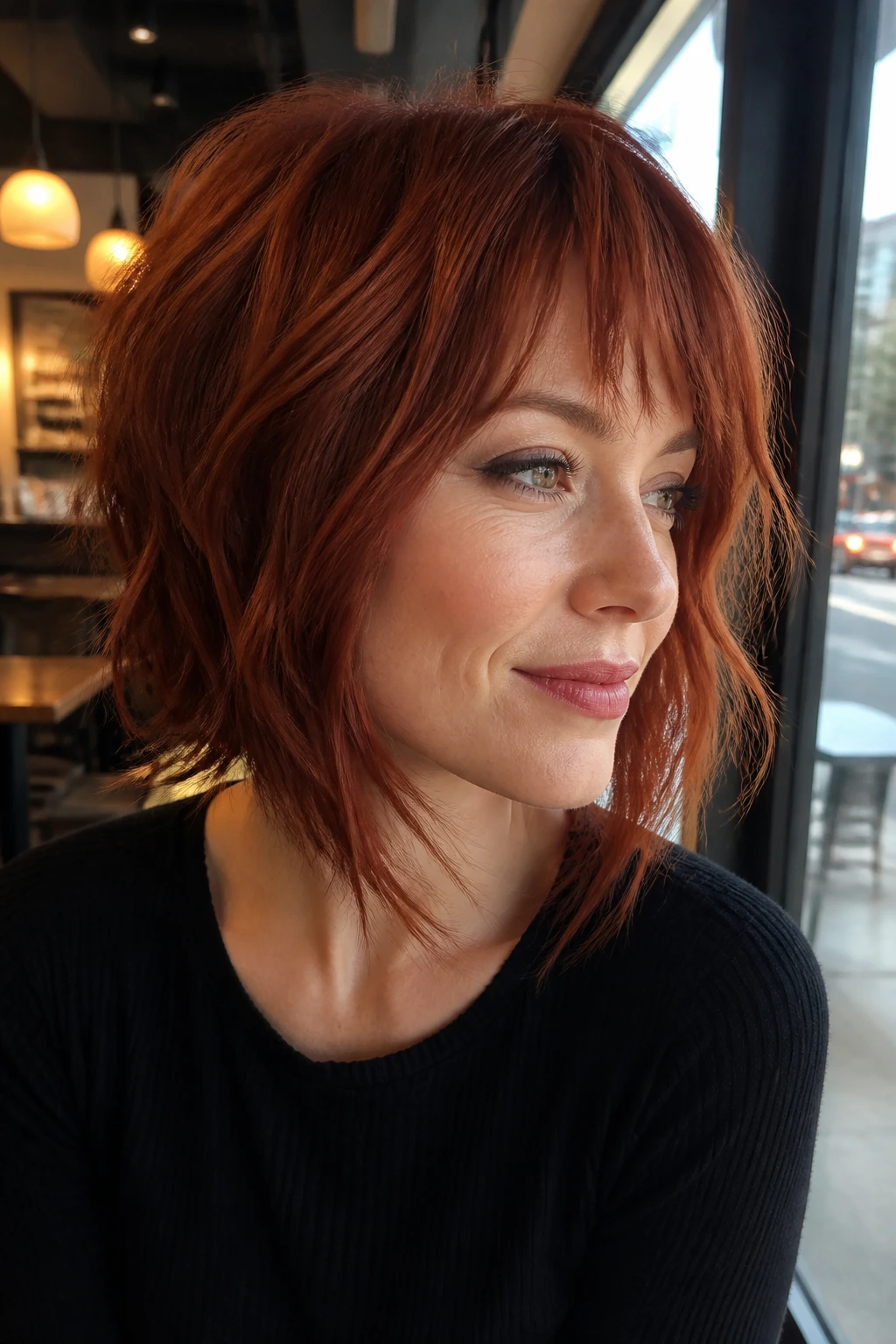
An angled shag bob gives you a cleaner outline with shag movement tucked inside it. The front sits a little longer than the back, which makes the jawline look more defined, while the interior layers keep the shape from going too stiff. On red hair, that angle shows up fast.
This is a strong option if you like structure but still want a bit of edge. Keep the angle soft, not severe, unless you want the haircut to read sharper. A slight bend through the front pieces makes the whole thing feel less architectural.
32. Bedhead Shag with Air-Dried Texture
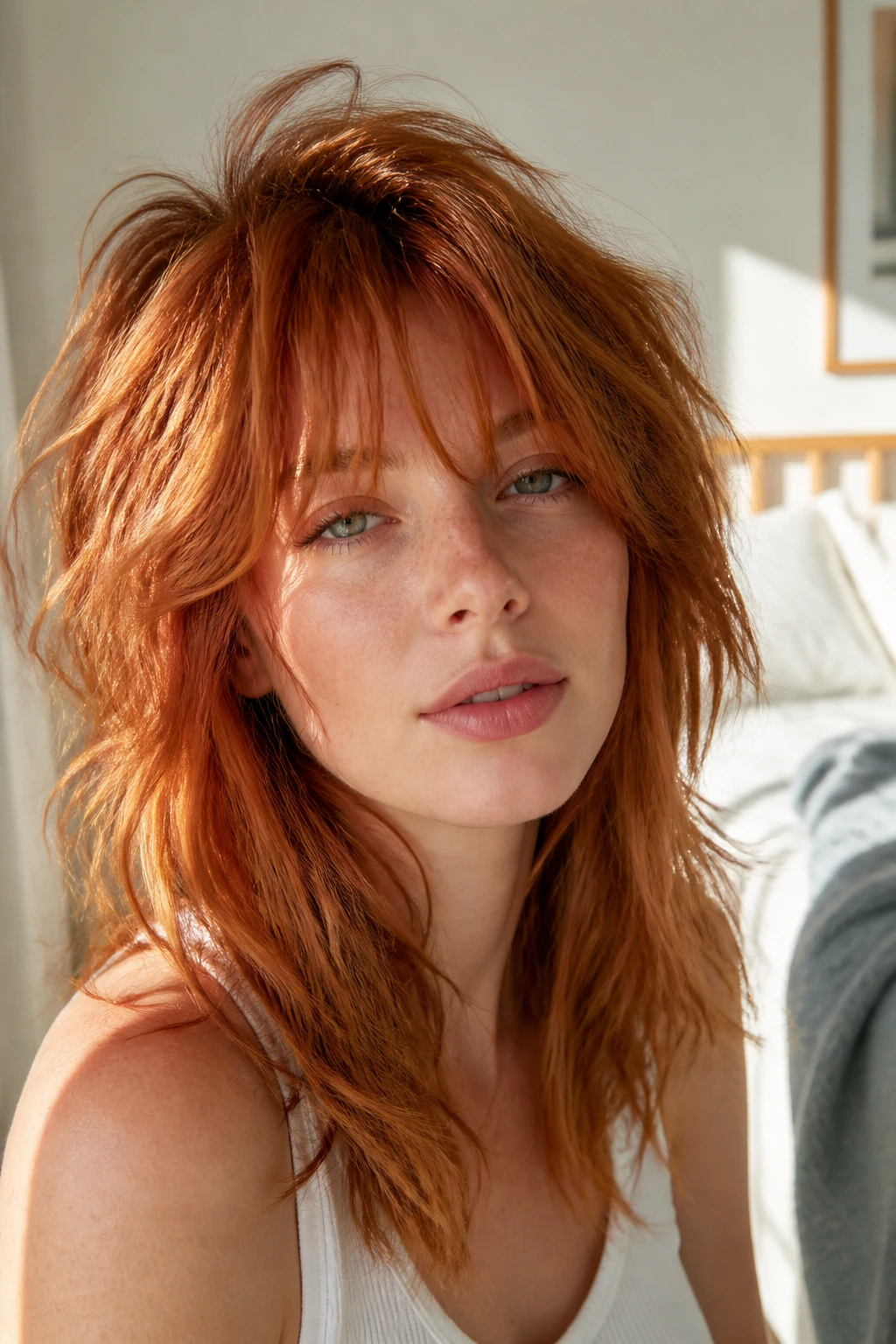
Some cuts are made for the air-dry life. This is one of them. The bedhead shag uses loose layers, a messy fringe, and a finish that looks better when it is a little imperfect. On red hair, that kind of texture keeps the color from looking flat or overworked.
Scrunch in mousse, twist a few face-framing pieces while damp, and leave the crown alone as much as possible. Once it dries, break up any crunchy bits with your fingers. The point is not mess. The point is movement that looks accidental.
33. Wet-Look Shag
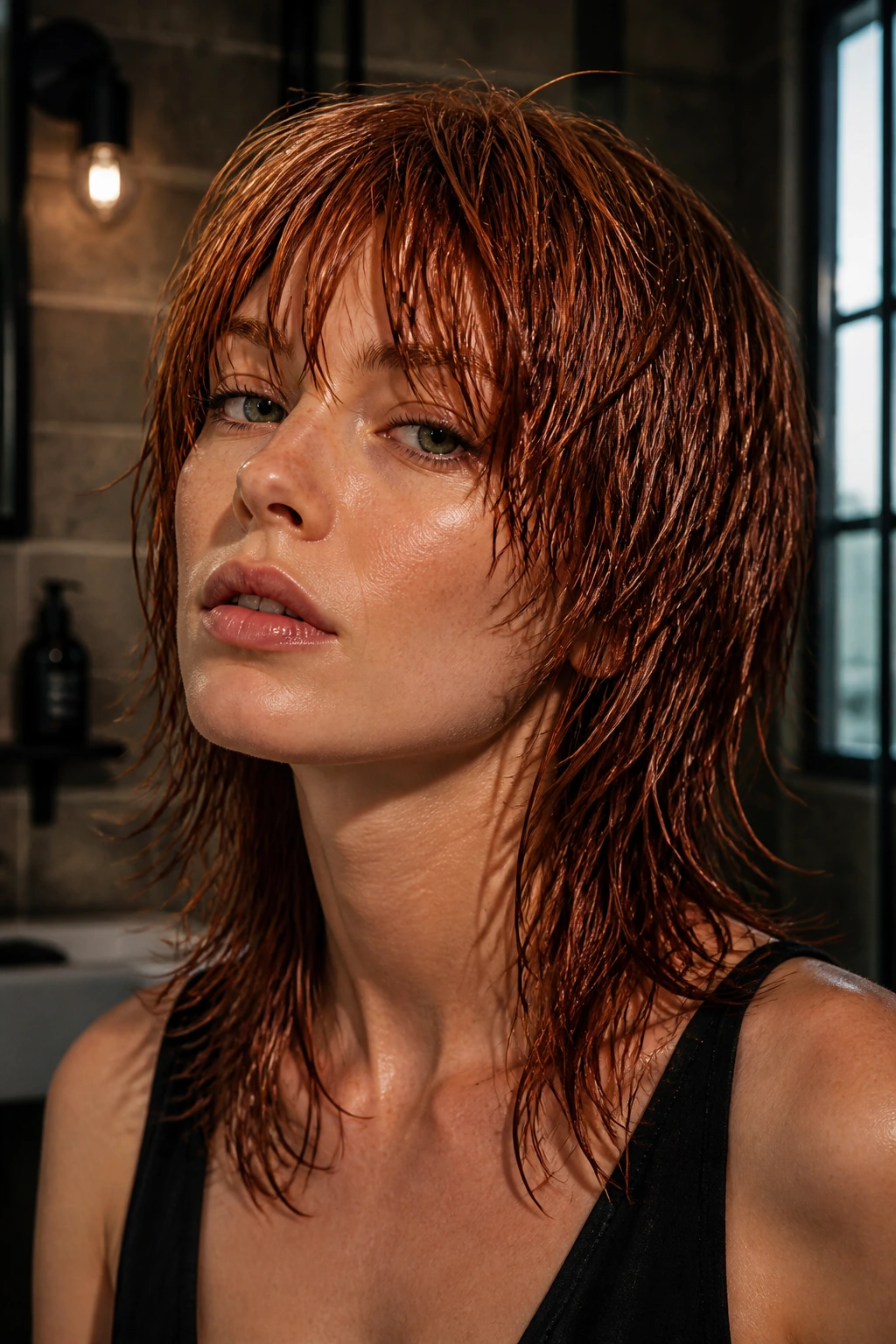
A wet-look shag is not for every day, but it is a sharp way to wear red hair when you want the color to look glossy and deliberate. The gel finish makes every layer visible, which is exactly why it works here. The shag keeps the hard edge from feeling too severe.
Use enough gel to hold the shape, but not so much that the hair turns greasy at the roots. This style looks best when the fringe is combed into place and the ends still have some separation. It is a strong choice for a night out or any time you want the cut to look a little harder.
34. Braided-Accent Shag
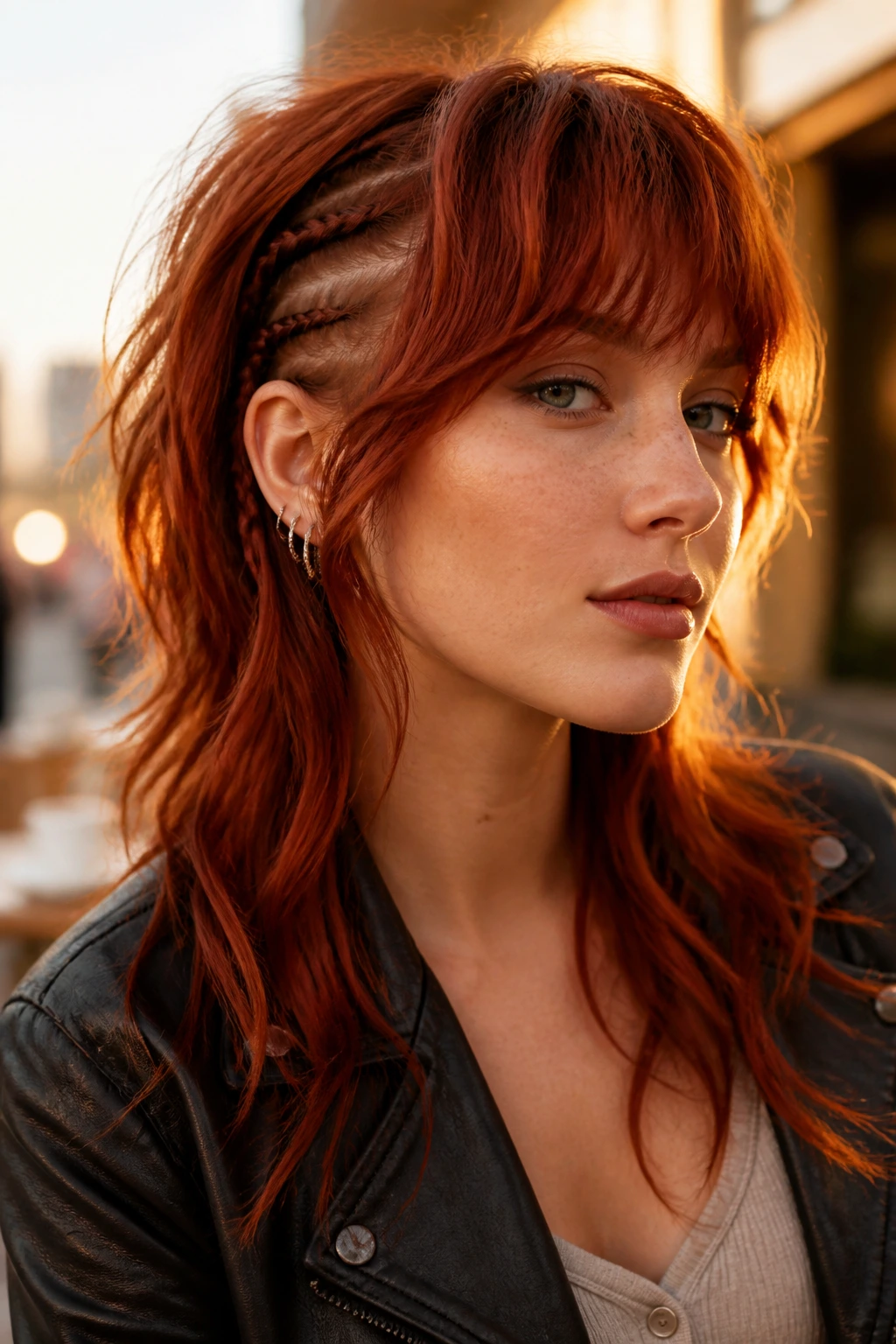
Small braids can change the mood of a shag without hiding the cut. A thin braid at the temple, a tiny braid tucked behind one ear, or two small side braids can give red hair a little contrast while still leaving the layers visible. It is a useful trick if you want detail without committing to an updo.
This works best on medium to long shags. Keep the braids loose so they do not flatten the top. A few loose tendrils around the face keep the style from looking too neat, which would miss the point.
35. Romantic Long Red Shag
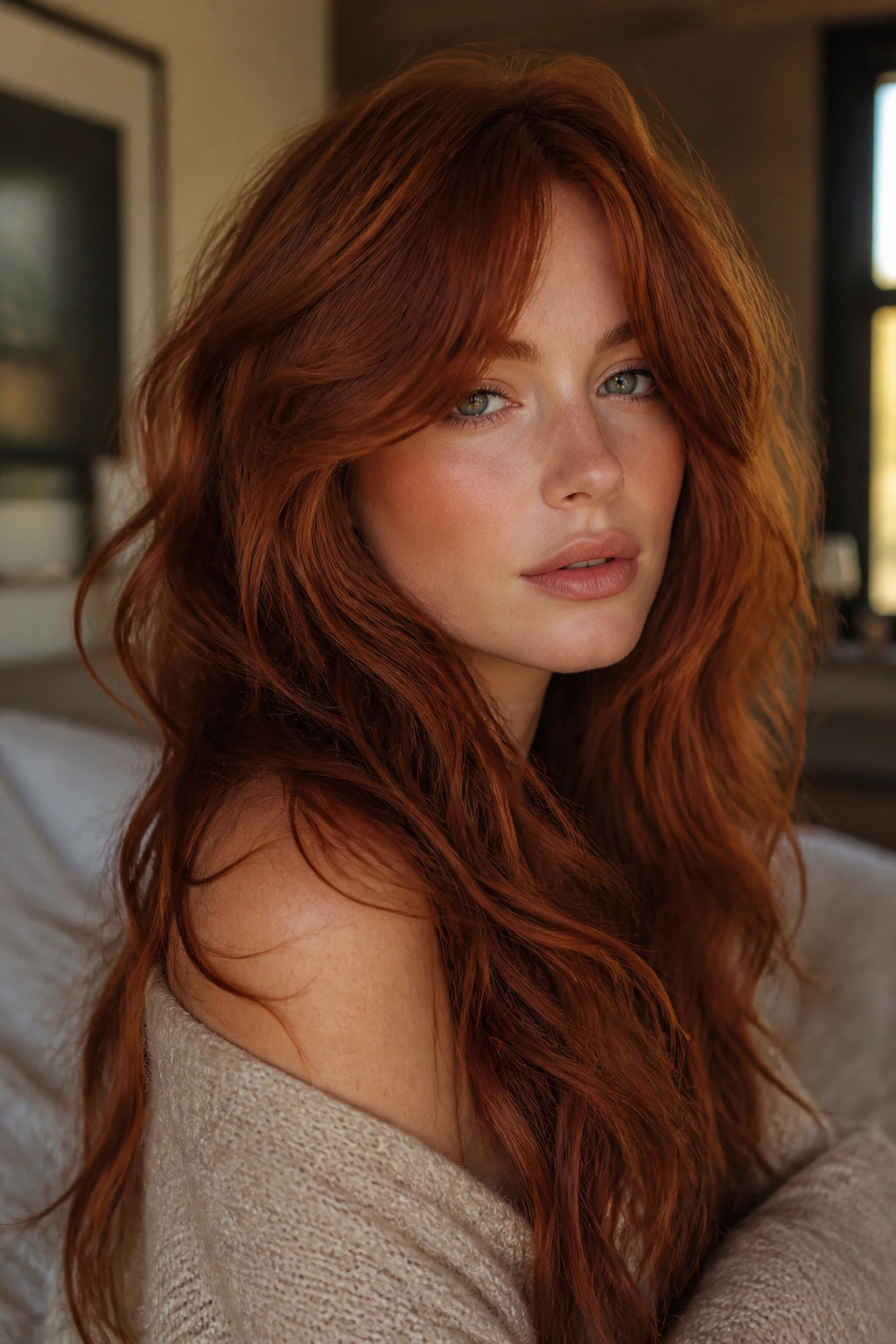
A long shag can still feel soft and romantic if the layers are curved instead of chopped. This version keeps length in the back, builds gentle face framing, and lets the ends fall in loose bends. It is a quiet way to wear red hair, but not a boring one.
I like this best on auburn, copper, or cinnamon tones that have depth. The haircut gives the color room to show up in stages. If you want a long style that still has movement when you walk, this is the one to keep in mind.
Why Shag Hairstyles for Red Hair Work So Well
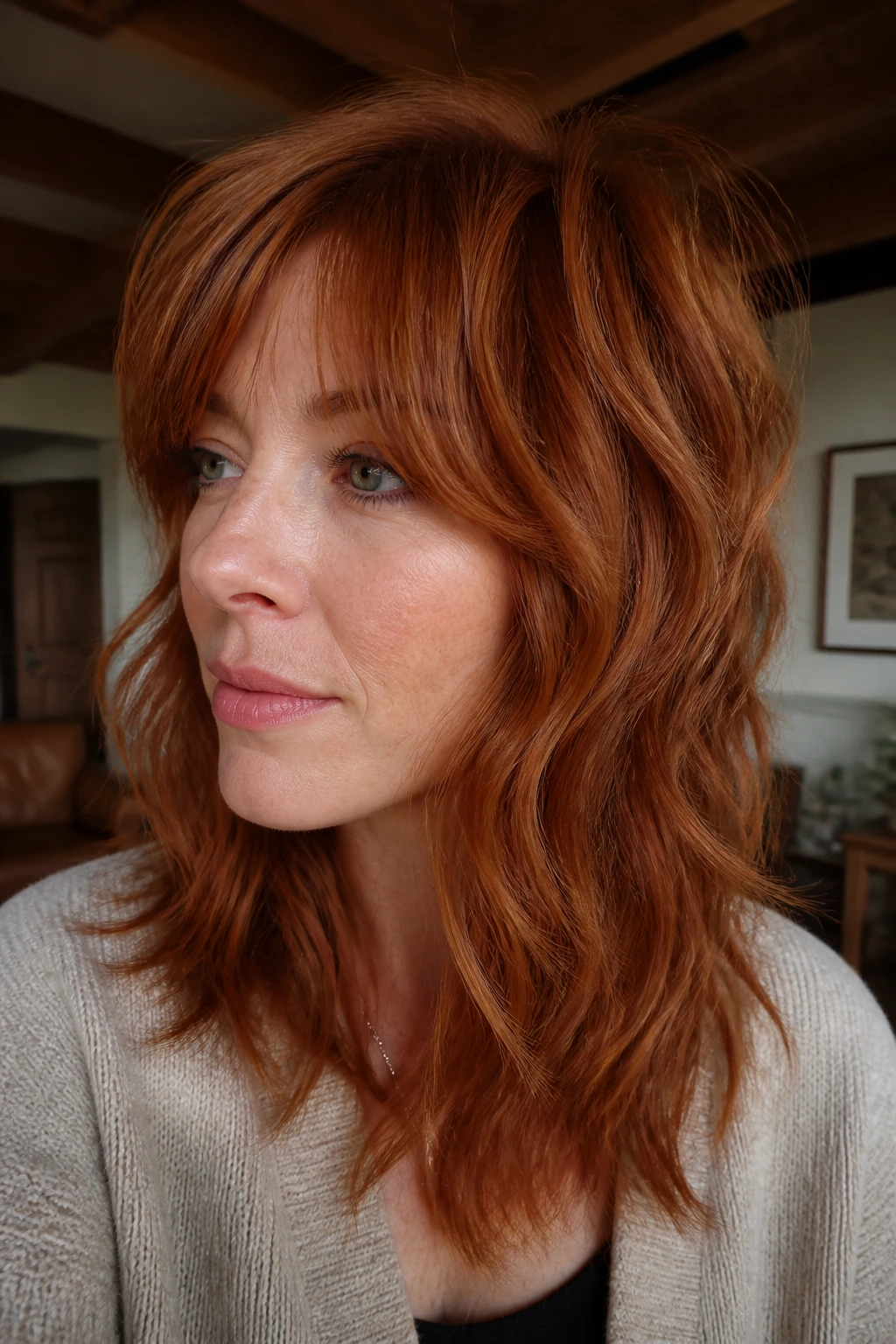
The cut earns its keep because red hair changes when it moves. A copper shag can flash brighter at the ends in daylight and deeper at the roots indoors, and the layers make that shift look like part of the plan. Without those breaks in the shape, the color can read as one solid block.
What the layers are doing underneath
A shag is not only about visible choppiness. The smart part is the hidden weight removal. On thick red hair, that keeps the crown from exploding upward. On fine red hair, softer internal layers create the illusion of fullness without making the ends thin out like string.
Why the same shag does not suit every red shade
Bright copper can carry a little more texture because the color itself is lively. Deep auburn and mahogany usually look better with cleaner layers and less aggressive razoring. Strawberry blonde often needs a softer perimeter so the lighter shade does not get washed out by too much separation.
The parting changes everything
A middle part makes the layers feel calmer. A side part adds lift. Curtain bangs split the face into two soft lines, while micro bangs make the whole haircut sharper and more graphic. I would pay almost as much attention to the part as to the layer length. It changes the cut faster than people expect.
The Tools That Make Styling Easier at Home
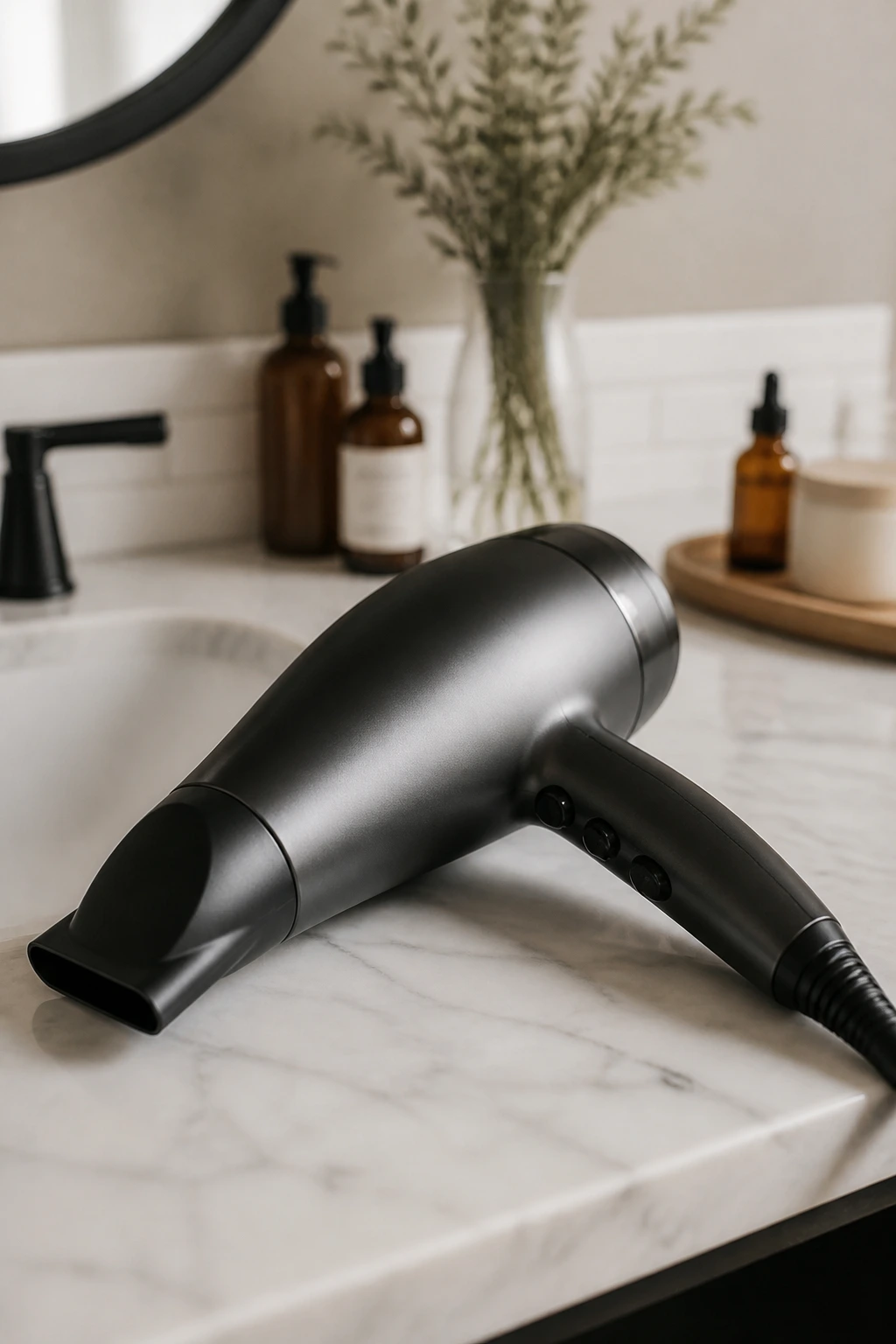
- Blow dryer with a nozzle: Keeps air aimed where you want it, which matters when you are trying not to puff up the crown.
- Diffuser: The best friend of wavy or curly red shags; it protects the layer pattern while drying.
- 1-inch round brush: Useful for fringe, face-framing pieces, and quick bends at the ends.
- Wide-tooth comb: Helps distribute leave-in conditioner or mousse without stretching out texture.
- Sectioning clips: Make bangs and crown layers easier to dry in the right direction.
- Heat protectant spray: Non-negotiable if you touch the hair with a dryer, iron, or curling wand.
- Texturizing spray: Gives shags that piecey finish, but keep it away from the roots.
- Lightweight mousse: Great for lift on fine hair and support on waves without making the cut crunchy.
- Flat iron with rounded edges: Handy for flipping ends or softening a fringe without creating a hard bend.
- Silk or satin pillowcase: Keeps the fringe from looking like it lost a fight overnight.
What to Ask Your Stylist Before the First Snip
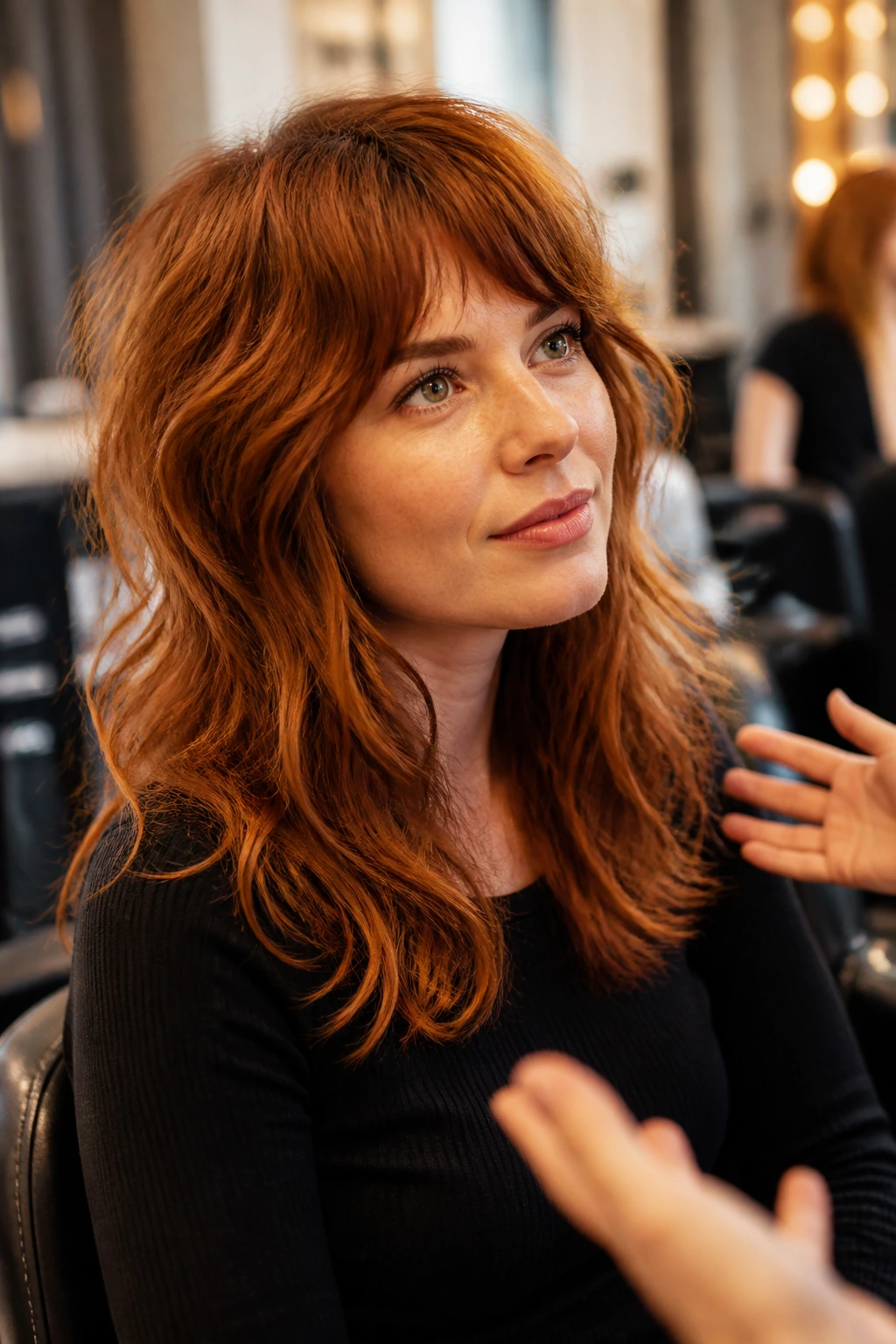
The easiest way to ruin a shag is to ask for “lots of layers” and leave it at that. That phrase means almost nothing in a salon. Bring two photos instead: one for the overall shape and one for the fringe. A picture of a bang is worth more than three minutes of vague explaining.
Tell your stylist how you actually wear your hair. Air-dried? Diffused? Round-brushed? Straightened? That answer changes where the shortest layers should land. If you never pick up a round brush, do not let anyone build a cut that only works with one.
Be specific about the crown and the fringe
Ask where the shortest crown layers will start and how short the face-framing pieces should be when dry. With red hair, the front pieces can do a lot of work visually, so that length matters. If you want softness, ask for a feathered fringe. If you want sharper lines, ask for a clearer break at the brow or cheekbone.
Say how much grow-out you can tolerate
Some shag versions need regular trims to stay crisp. Others can drift a little and still look fine. If you only want to visit the salon every two months, tell them that up front. It changes how aggressive the layering should be, and it can save you from an overcut top section that goes weird after three weeks.
Mention your density before your texture
A stylist can work with straight, wavy, or curly hair. Density is the part that decides how much weight can come out without exposing the scalp or making the ends wispy. Fine, dense hair needs a different shag map than coarse, sparse hair. That is the kind of detail worth saying out loud.
Smart Product Picks for Layered Red Hair
- Color-safe shampoo: Red fades faster than many shades, and harsh surfactants will strip the shine right out.
- Lightweight conditioner: Heavy masks are fine once in a while, but daily use can collapse a shag’s root lift.
- Root-lifting mousse or spray: Helpful for fine hair and for anyone who wants the crown to stay off the scalp.
- Curl cream or leave-in milk: Best for curly and wavy shags that need softness more than grit.
- Texture spray: Good for separation through the mids and ends; use a little, then stop.
- Heat protectant: Necessary if you blow-dry the fringe or bend the ends with an iron.
- Shine serum or light oil: One drop on the ends can make copper and auburn look richer, but keep it away from the crown.
- Color-depositing conditioner or gloss: A useful way to keep red looking fresh between salon visits, especially if your shade pulls copper, auburn, or strawberry.
- Dry shampoo: Worth keeping on hand for day-two root lift, not as a substitute for actual washing when the scalp needs it.
How to Style a Shag Without Crushing the Shape
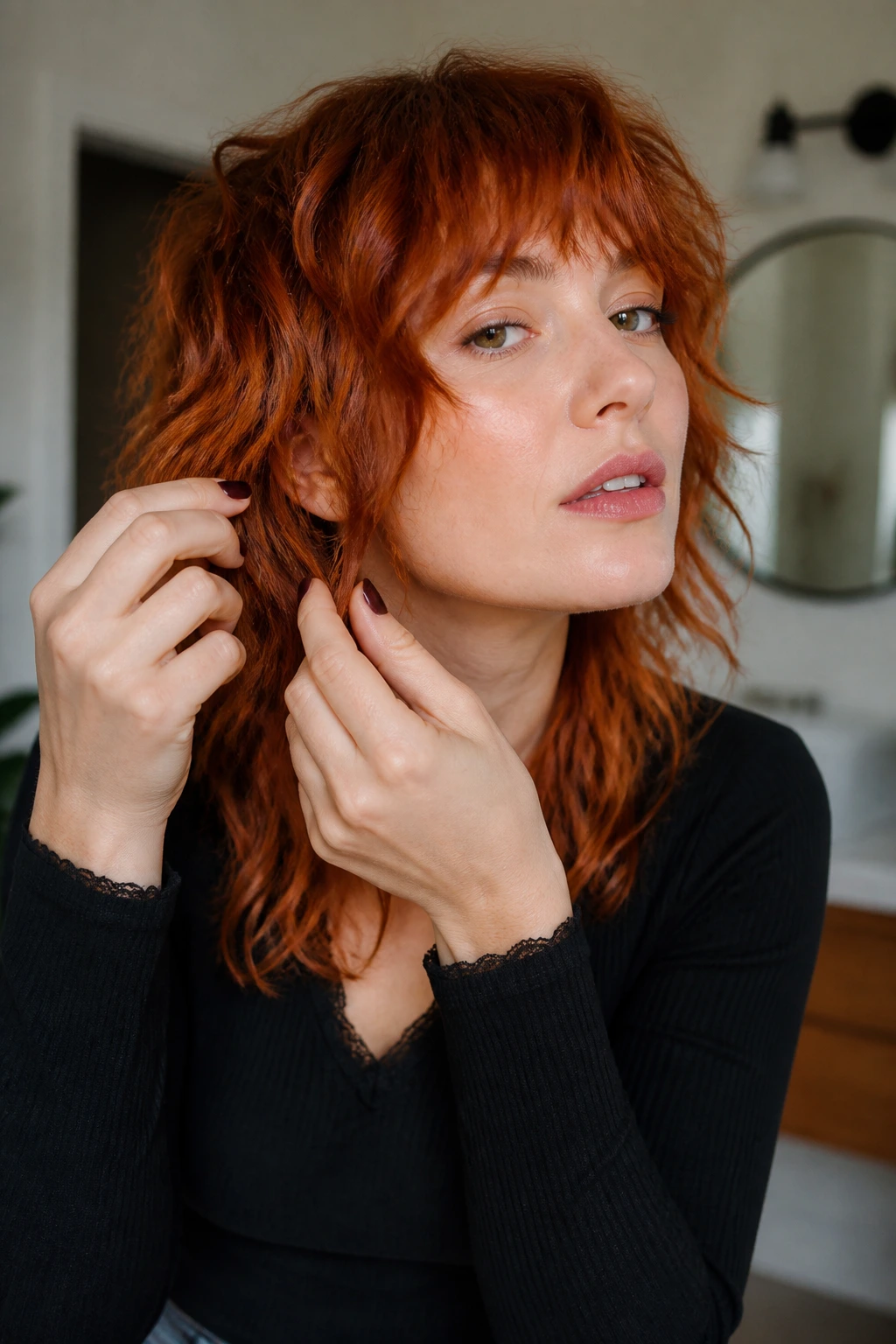
Air-dry days
Start with damp hair and work in product from the mids outward. Mousse at the roots, a little leave-in through the lengths, then scrunch or finger-twist the face frame so the layers land where you want them. Do not brush it smooth after that. The whole point is to keep the texture a little irregular.
Blowout days
Rough-dry until the hair is mostly dry, then switch to a round brush only on the crown, bangs, and the first few inches around the face. That keeps the top from lying flat while letting the rest stay easy. If you bend the ends every which way, the shag loses its shape. Choose one direction for the front, leave the back looser, and move on.
Day-two revival
A mist of water, a dab of mousse, and a quick blast from the dryer can wake the layers back up. If the fringe is bent weird, wet just the front pieces and re-dry them with your fingers or a brush. Dry shampoo belongs at the roots only. If you dust it over the whole head, the red can look dull.
Keeping the Cut Fresh Between Appointments

Short shag cuts usually need a trim every 6 to 8 weeks if you want the fringe and top layers to stay crisp. Longer shags can stretch to 8 or even 10 weeks before the shape starts to sag. That window changes if your hair grows fast, but those ranges are a decent place to start.
Color matters too. Red tones fade into copper-brown, pinkish warmth, or a washed-out orange cast depending on the dye and your wash habits. A color-depositing conditioner every couple of weeks can help, and a gloss in the salon can keep the shine from disappearing. If your hair is heat-styled often, the ends will show wear first, so a tiny trim on the perimeter keeps the whole cut looking better.
A silk pillowcase helps more than people expect. So does sleeping with the hair loosely clipped up, not tied tight at the crown. The goal is to protect the fringe and stop the layers from getting kinked in all the wrong places.
Common Mistakes That Flatten the Shape
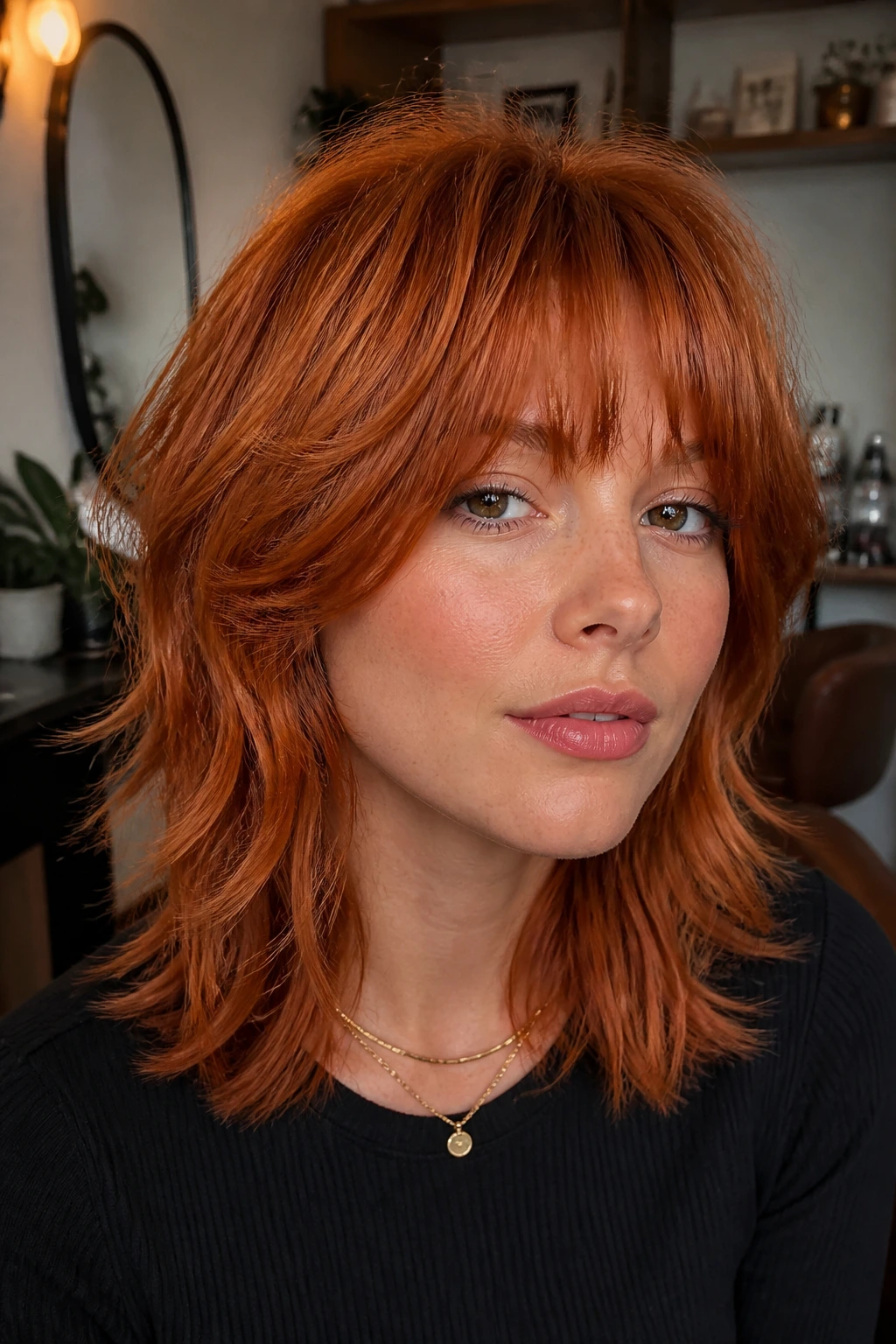
- Over-layering fine hair: The cut starts looking thin at the ends and see-through around the face. Ask for softer internal layers instead of hard thinning.
- Cutting curly bangs too short: Curly red hair shrinks. A fringe that looks perfect wet can jump an inch or more once it dries.
- Using heavy cream at the roots: The crown collapses and the whole shag loses lift. Keep richer products below the ear line.
- Brushing out the texture too hard: The layers go frizzy, then limp, then both at once. Finger-comb or use a wide-tooth comb instead.
- Ignoring the fringe between trims: Bangs grow fast enough to drag the whole haircut downward. A tiny cleanup every few weeks helps.
- Razor-cutting everything on already-fine hair: That can turn a nice red shag into wispy ends with no shape. Some hair wants scissors more than a razor.
Easy Variations to Try When You Want More or Less Edge

Soft Sunday Shag: Keep the same layered structure, but leave the fringe longer and the ends less broken up. This is the version I would pick if you want movement without visible choppiness.
Sharper Wolf Shag: Shorten the crown, keep the front pieces punchier, and let the nape run longer. It has more attitude and works well on thick hair that can hold a shape.
Polished Copper Blowout: Use the shag cut, then style it smooth with a round brush so the layers curve softly instead of sticking out. It is a clean way to wear red hair if you like shine more than rough texture.
Curly Halo Shag: Round the shape around the head and let the curls stack in a soft halo instead of building a triangle. Good curl cuts can look expensive here because the red shade shows every coil.
Grow-Out-Friendly Shag: Keep the shortest pieces around the cheekbone and avoid tiny bangs. The result stays wearable longer, which matters if you do not want to live by the salon calendar.
Questions People Ask About Shag Hairstyles for Red Hair

Will a shag work if my red hair is very straight?
Yes, but you should ask for softer movement rather than extreme choppiness. Straight red hair can go flat fast, so a shag with a little bend at the ends and a strong face frame usually looks better than a heavily razored version.
Do bangs make red hair look better, or just busier?
They can do both, depending on the cut. Curtain bangs and bottleneck bangs usually soften a shag without taking over, while micro bangs make the style much sharper. If you want the color to stay front and center, keep the fringe lighter.
Is a shag too much for fine hair?
Not if the layers are controlled. Fine red hair usually needs a lighter hand so the ends keep some density. A soft shag with root lift and a clean perimeter can look fuller than a blunt cut, but too much thinning will backfire.
How often should I trim a shag?
Shorter versions usually need a trim every 6 to 8 weeks. Longer versions can stretch a bit longer, especially if the fringe is not short. Bang trims may need their own schedule, because they grow faster than the rest of the cut.
What if my curls frizz when I wear a shag?
The shape probably needs less thinning and more curl-friendly product. A leave-in conditioner, a curl cream, and a diffuser on low heat usually help more than heavy gels. Frizz often comes from too much disturbance, not too little styling.
Can I ask for a shag if my hair is thick and heavy?
Absolutely, and thick hair may be the easiest texture for it. The stylist just needs to remove weight in the right places so the crown does not puff out. Internal layering matters more than chopping the ends short.
Should a red shag be cut with scissors or a razor?
Both can work, but the tool should match the hair. Razor cutting can give soft separation on straight, dense hair, while scissors are often safer for fine or fragile strands. If your hair already frizzes or splits easily, a softer scissor cut usually behaves better.
Can I grow a shag into a longer cut without awkward stages?
Yes, if the front pieces and crown are planned with grow-out in mind. A longer shag or a shoulder-length version usually transitions better than a very short, choppy one. The trick is to keep the face frame soft enough that it still looks intentional as it gets longer.
The Cut That Keeps Red Hair Moving
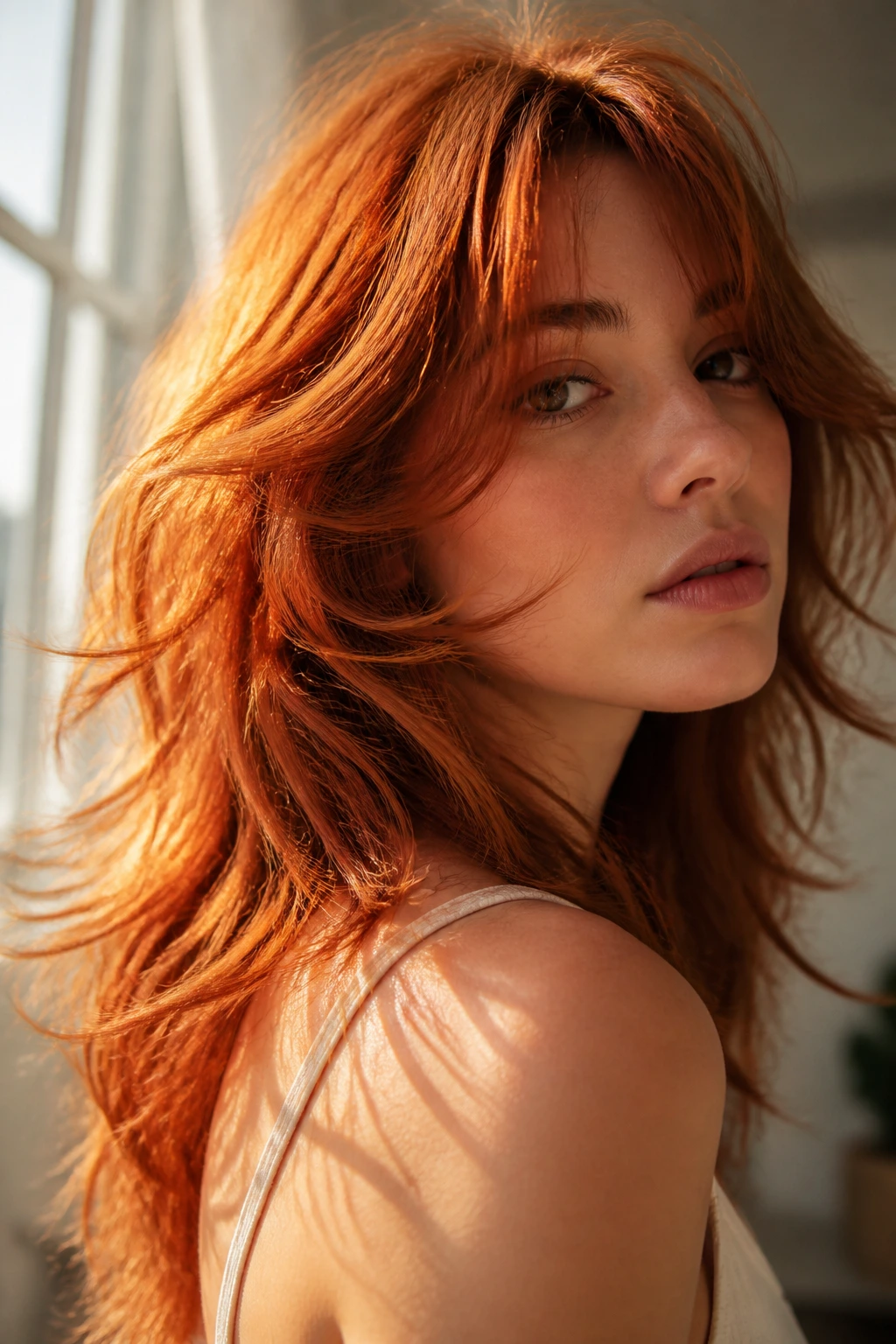
A good shag on red hair does not hide the color. It gives the color something to do. Copper can flick brighter at the ends, auburn can deepen under the crown, and even a soft strawberry blonde can pick up more shape when the layers are placed with care.
The best version for you is the one that matches your texture, your patience level, and your willingness to style the fringe. Bring photos, mention how you dry your hair, and ask for the kind of layering that suits your density instead of someone else’s. That one conversation usually decides whether the haircut feels like a good idea or a great one.
