



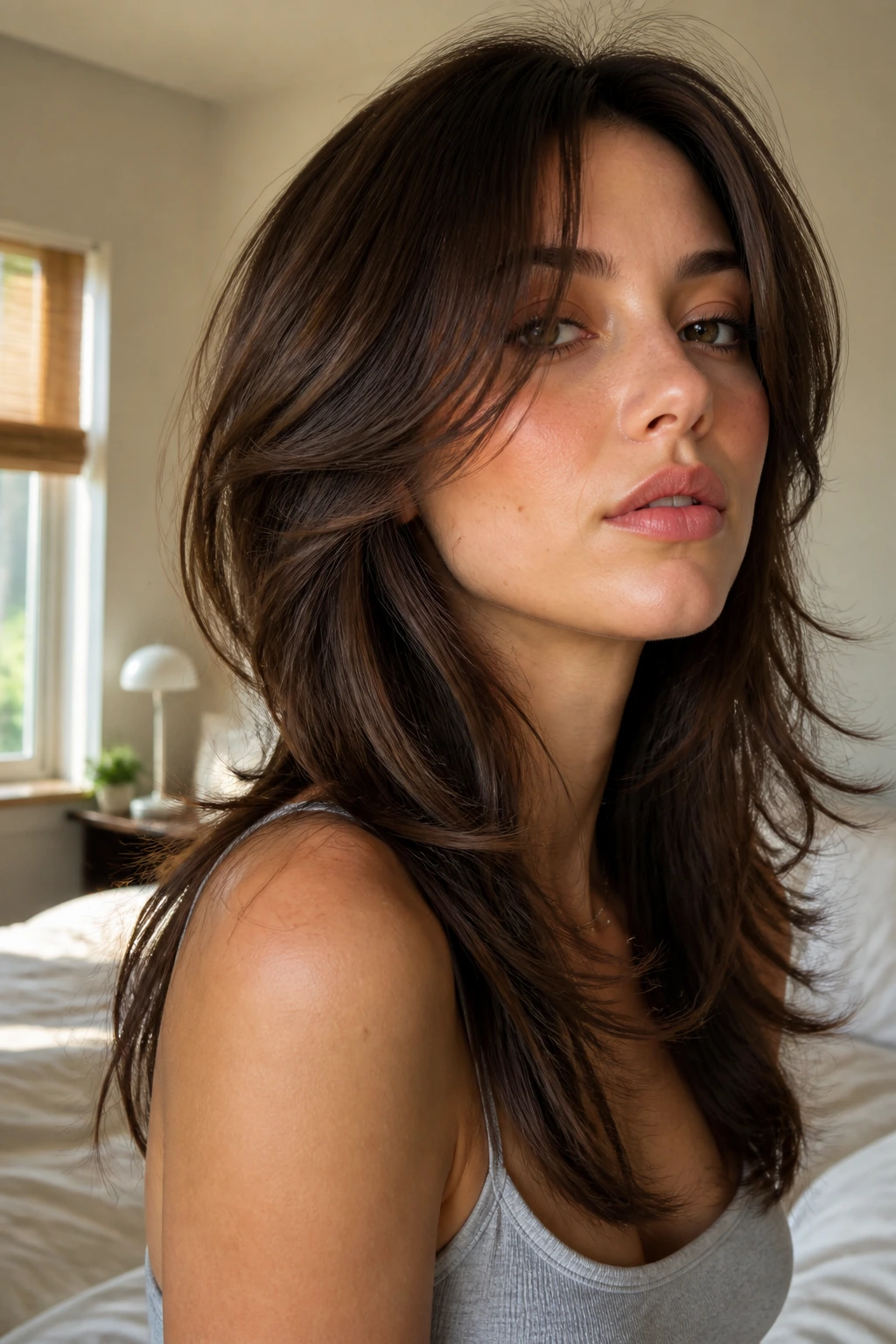
Butterfly haircuts live or die on balance: too much chopping up front, and the shape turns shaggy; too little, and you just paid for long hair with a few polite layers. The best versions do something sneaky. They keep the length you want while lifting the crown, opening the face, and making the ends move when you turn your head.
That’s why this cut keeps coming back in salons. It can look plush and blowout-ready on one head, then soft and almost invisible on another. It works because the shorter face-framing layers and the longer lower layers are doing different jobs at the same time. When that contrast is drawn well, the hair looks like it has more body than it actually does.
The catch is that “butterfly” is not one single haircut. It’s a family of shapes. Some versions are all cheekbone lift and curtain bangs. Others are more low-key, with hidden layers that only show when the hair moves. A few are for thick hair that wants to shed weight, and a few are for fine hair that needs every blunt edge it can keep. The good ones feel tailored, not copied.
Why These Butterfly Haircuts Stand Out From Ordinary Layers
-
The shape is built, not guessed: the shortest front pieces and the longer back layers serve different purposes, so the haircut keeps length while still creating movement around the face.
-
It works with heat styling and air-drying: a round brush gives the classic lifted finish, but softer versions still fall well when you skip the blowout and let the texture do the work.
-
Density changes the result more than most people expect: the same butterfly cut can look airy on fine hair and dramatically full on thick hair, which is why the layering pattern has to shift.
-
The front pieces do the heavy lifting: if the face frame lands in the right spot—cheekbone, lip, or chin—the whole cut looks intentional. Miss that point, and the haircut feels off no matter how good the back is.
-
Grow-out is part of the appeal: when the layers are blended with some restraint, the haircut still looks decent eight weeks later instead of collapsing into a blunt shelf.
1. Classic Long Butterfly Layers
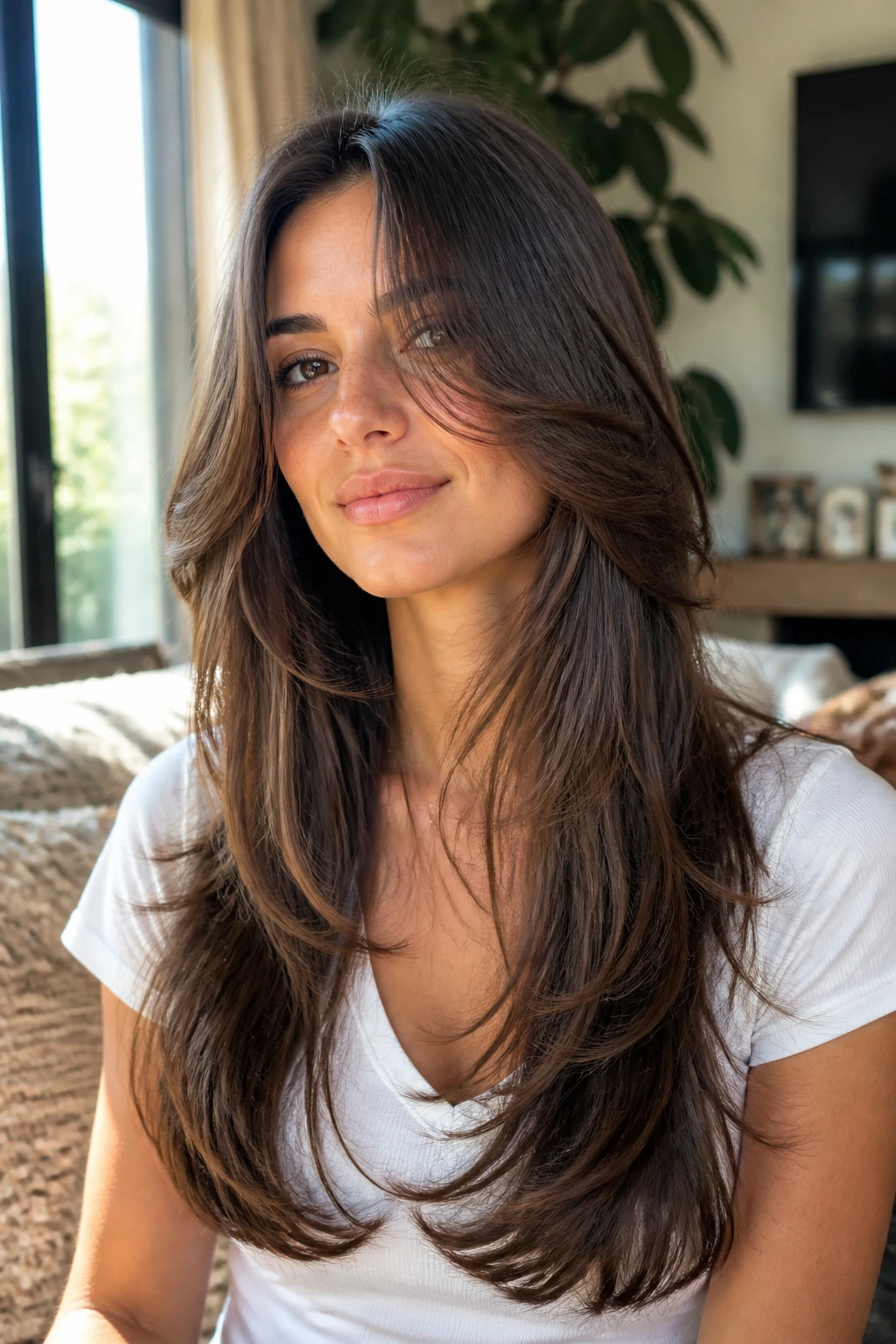
The classic version is the one people mean when they say “butterfly haircut” without having the words for it. Long length stays intact, then softer, shorter layers open up the front so the hair moves instead of hanging like a curtain.
Best for: chest-length hair or longer, especially if you want visible shape without losing the length you’ve grown out.
Ask for: face-framing pieces that start around the cheekbone or just below it, plus longer layers that flow into the mid-lengths and taper quietly through the back.
The sweet spot is movement without obvious chopping. When this cut is done well, the hair looks fuller when it’s blown out and still neat when it’s left alone. That’s the real trick. Not drama. Just clean, airy shape.
2. Butterfly Cut With Curtain Bangs
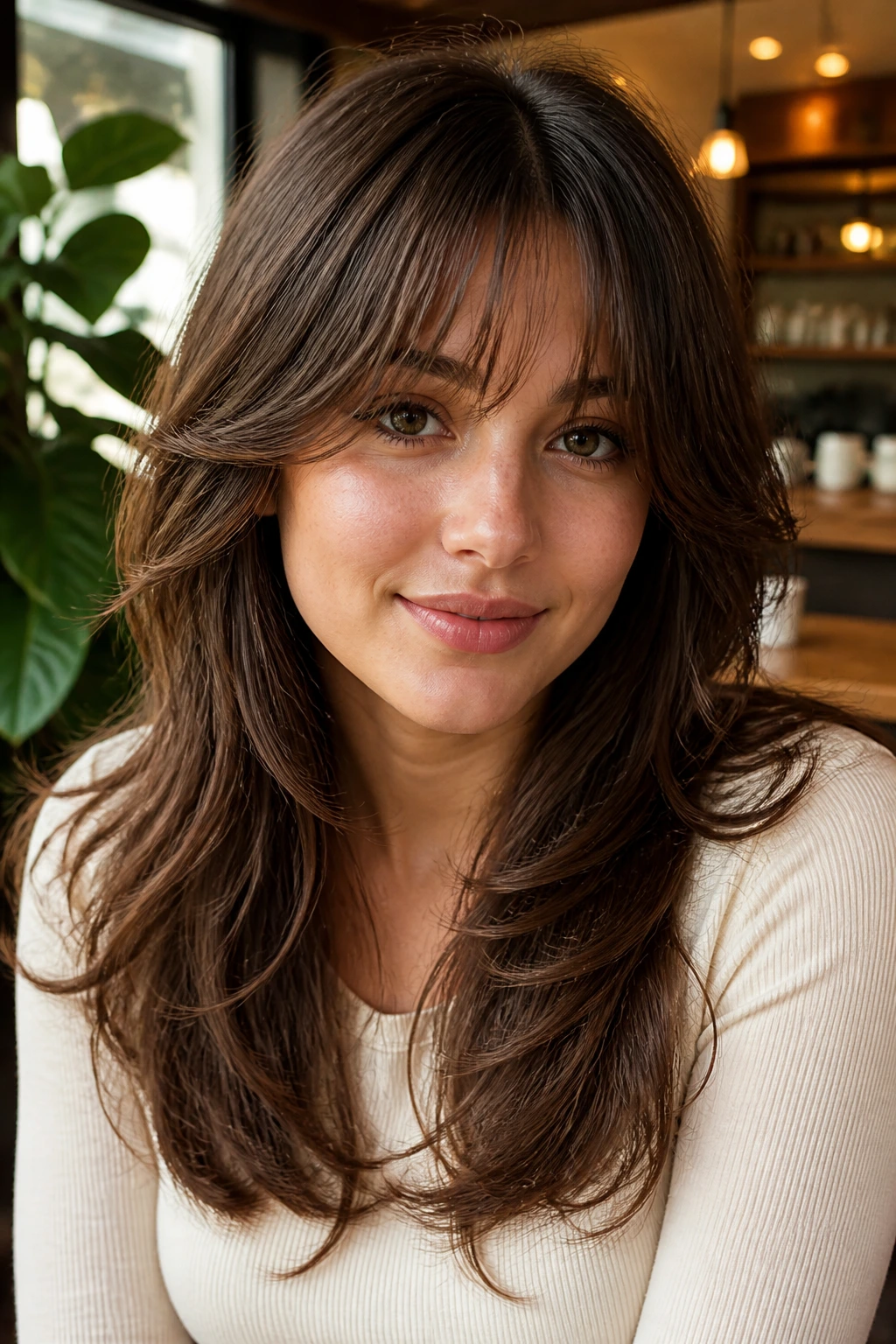
Curtain bangs change the whole mood of a butterfly cut. They soften the forehead, split the face frame in a way that feels easy, and make the shortest pieces around the eyes feel less abrupt.
This version works especially well if you want the front to be the star. The bangs can graze the brows or sit a little longer near the cheekbone, then melt into the first layer of the cut. That blending matters. If the bangs stop too suddenly, the haircut starts to look like two different ideas living in the same head.
Styling note: a large round brush or a medium roller gives the bangs the bend they need. Blow them back, not straight down. Straight-down bangs flatten fast and fight the butterfly shape.
3. Butterfly Lob That Stops at the Collarbone
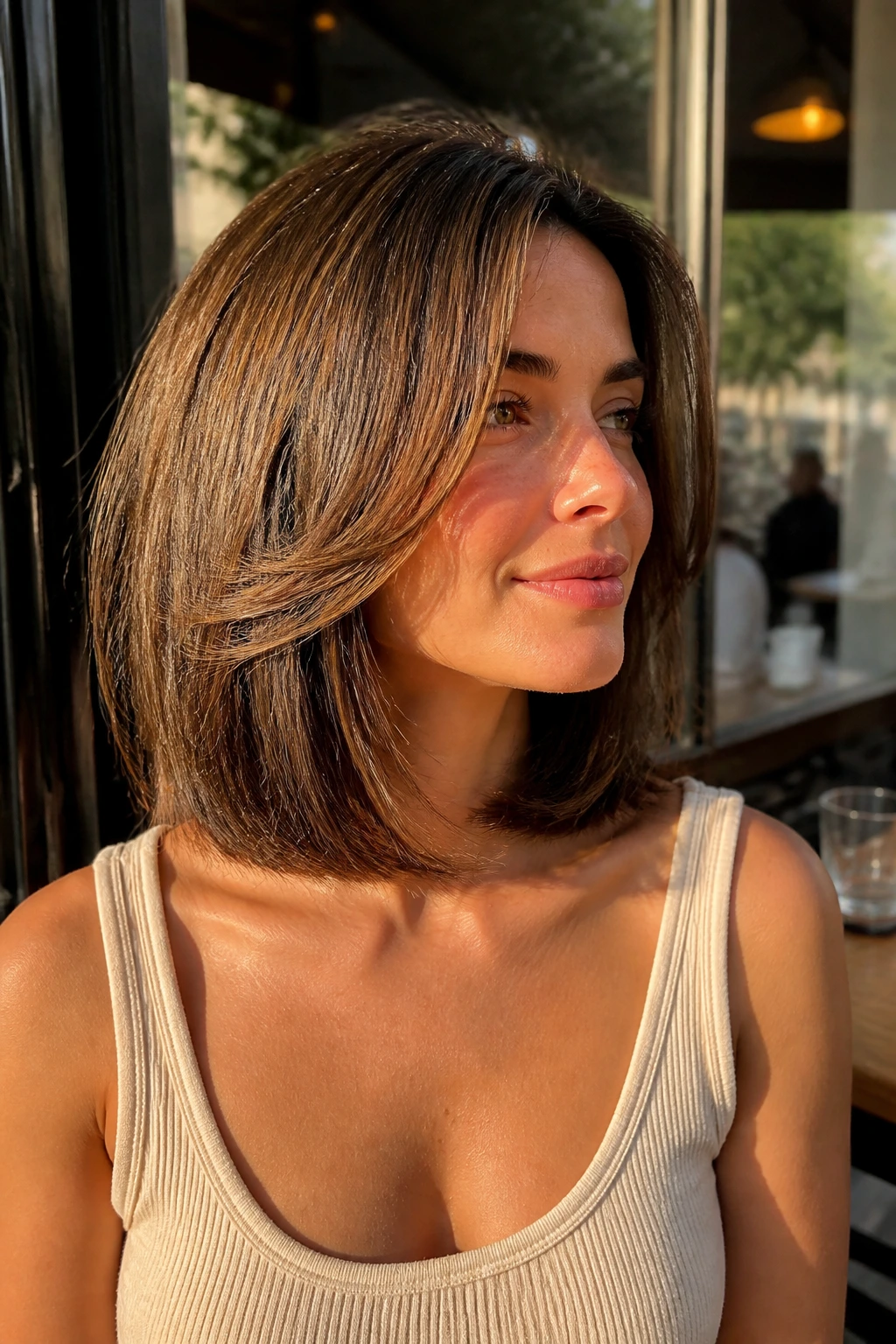
A butterfly lob keeps the shape, but trims the drama. The length lands around the collarbone, which makes the haircut feel lighter and easier to wear if you don’t want chest-length hair or don’t have the patience for it.
What makes this version smart is the contrast between the short front layers and the slightly shorter overall length. You still get lift at the cheekbones, yet the ends don’t drag the whole cut down. That means the silhouette feels cleaner on straighter hair and easier to scrunch on waves.
If your hair tends to sit flat at the shoulders, this is a strong move. The collarbone is a useful stopping point because hair flips, turns, and bends there naturally. It gives the layers somewhere to land.
4. Big Blowout Butterfly Cut
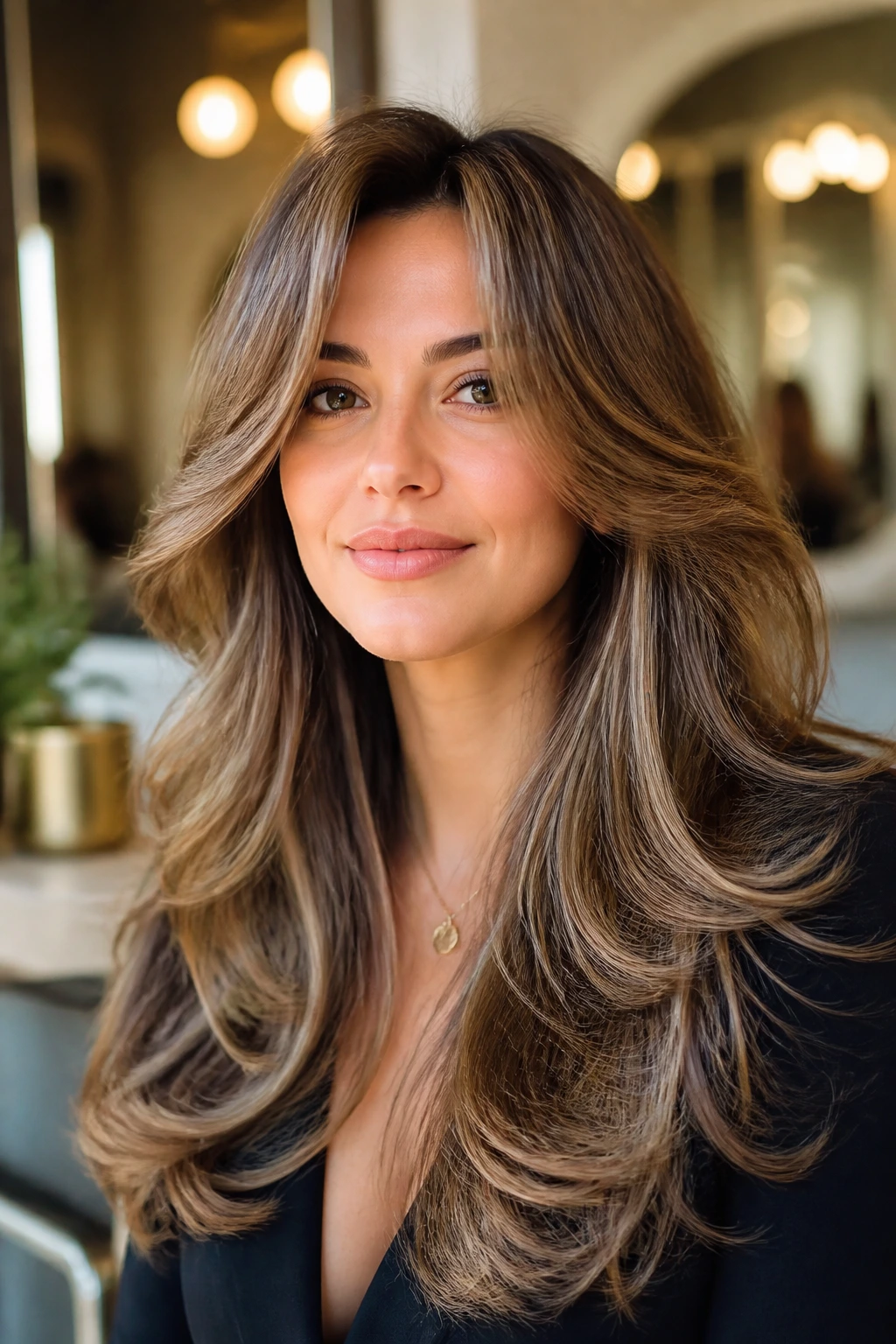
This is the glossy, round-brush version that looks like it knows exactly where it’s going. The layers are cut to swing, then styled to lift away from the head instead of clinging to it.
The cut itself usually needs enough separation between the shorter front layers and the longer bottom section to make that blowout read clearly. If everything is cut too evenly, the effect gets muddy. You want the top half to feather away from the face while the lower half stays long and soft.
Use a heat protectant, a big round brush, and a nozzle on the dryer. That nozzle matters more than people think. It keeps the airflow focused so the hair bends instead of frizzing into a cloud.
5. Butterfly Cut for Fine, Limp Hair
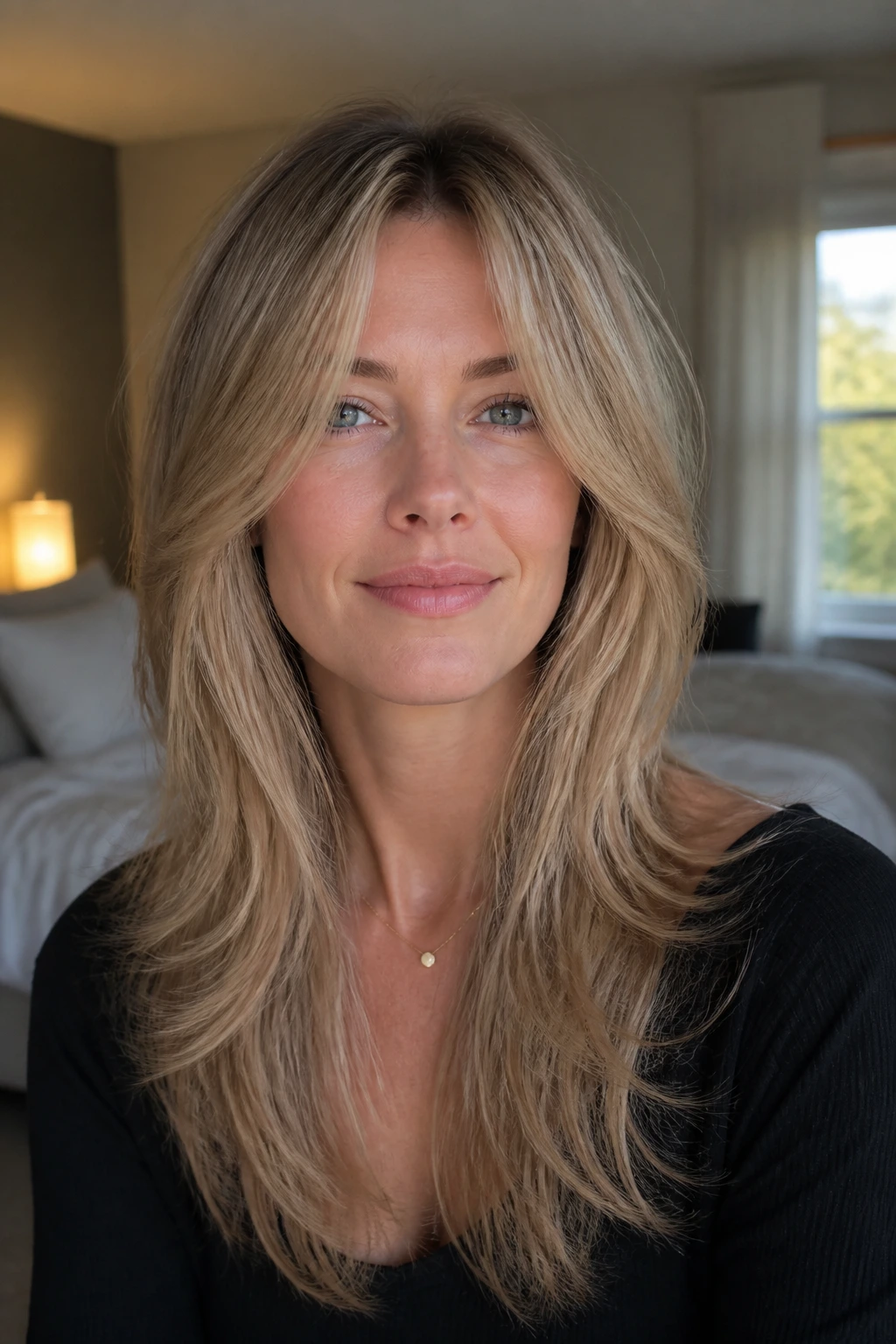
Fine hair needs restraint. Too many layers and you end up with pieces that look wispy at the tips and see-through at the crown, which is not the same as movement.
The better version keeps the perimeter a little stronger while carving in just enough front layering to lift the shape. Think of it as a butterfly cut with manners. The top should move, but the ends still need enough weight to hold their line.
What to avoid: aggressive razoring and too-short layers near the face. Fine hair can fall apart fast once it loses density. Ask for soft graduation, not a shredded finish. A root-lifting spray at the crown and a quick bend through the front layers will do more than an extra hour of cutting ever could.
6. Butterfly Cut for Thick, Heavy Hair
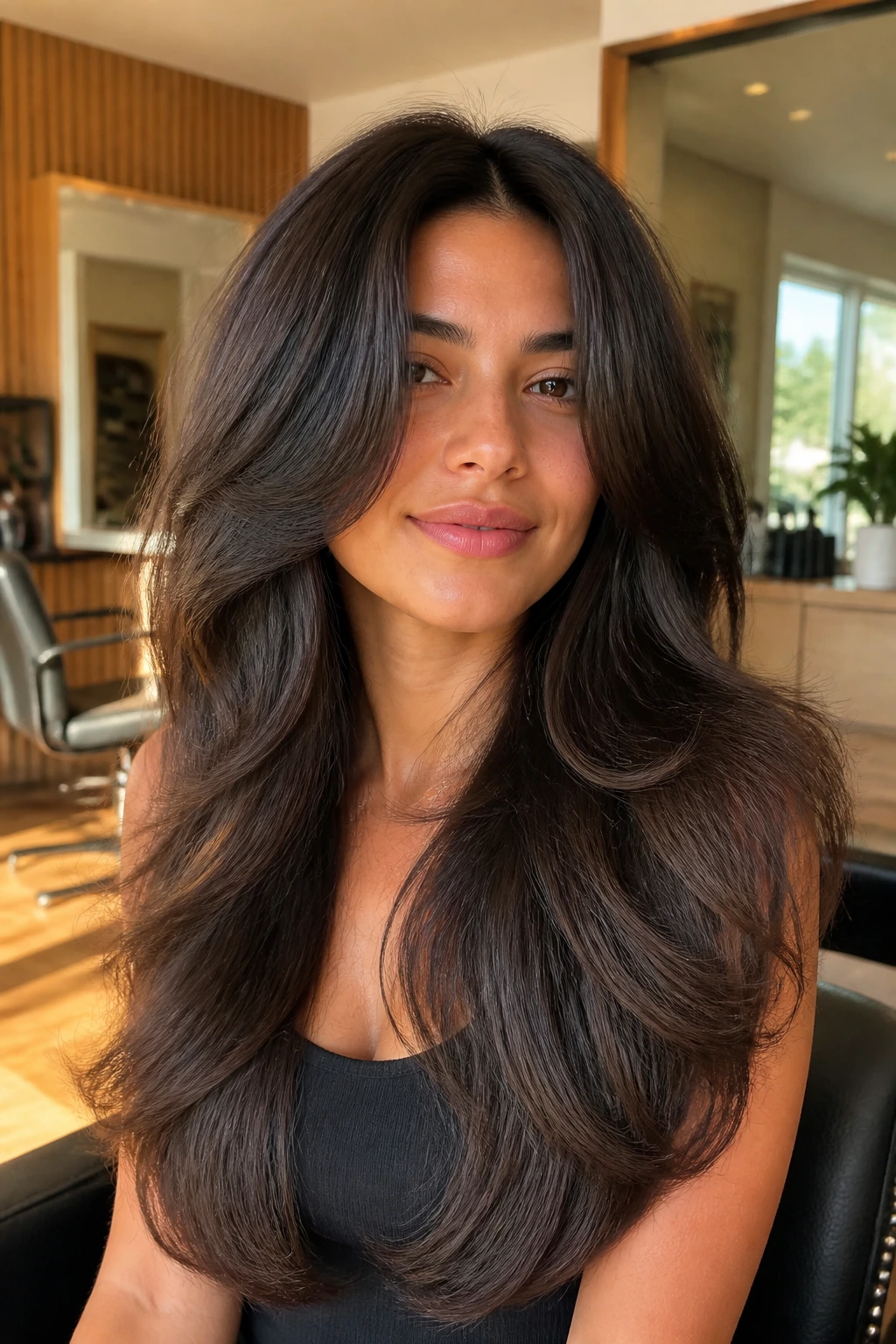
Thick hair can carry a butterfly cut beautifully, because it has enough body to show the layers without collapsing. But the cut has to remove weight in the right places, or the front gets puffy while the ends stay dense.
This is where internal layering helps. The stylist can take bulk out of the middle and lower sections so the hair swings instead of building a wall around your shoulders. The front pieces can be more dramatic here, since thick hair holds shape longer and won’t disappear after one wash.
A good thick-hair butterfly cut feels cooler on the neck and easier to dry. That sounds basic, but it matters. Less bulk means less fight.
7. Butterfly Cut for Wavy Hair
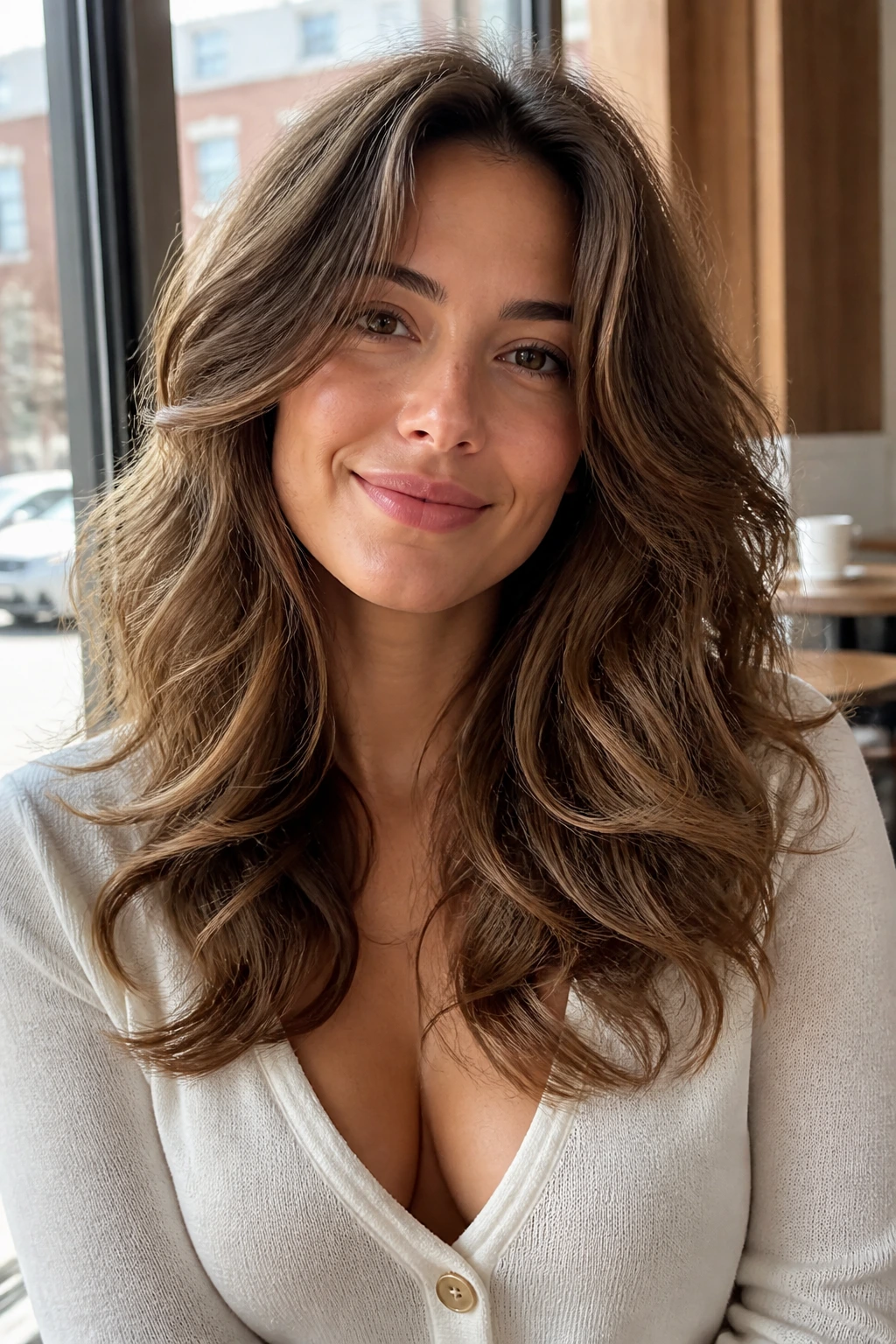
Waves and butterfly layers usually get along. The cut gives the bend somewhere to travel, and the face frame helps the waves land in a way that looks planned instead of random.
The trick is not overcutting the shorter front pieces. Wavy hair springs up more than straight hair once it dries, so the cheekbone layer may end up sitting higher than expected. If you wear your hair wavy most days, ask for the face frame a little longer than you think you need.
A small amount of cream through damp mids and ends is usually enough. Too much product makes the layers clump and kills the airy feeling that makes this haircut work.
8. Butterfly Cut for Curly Hair
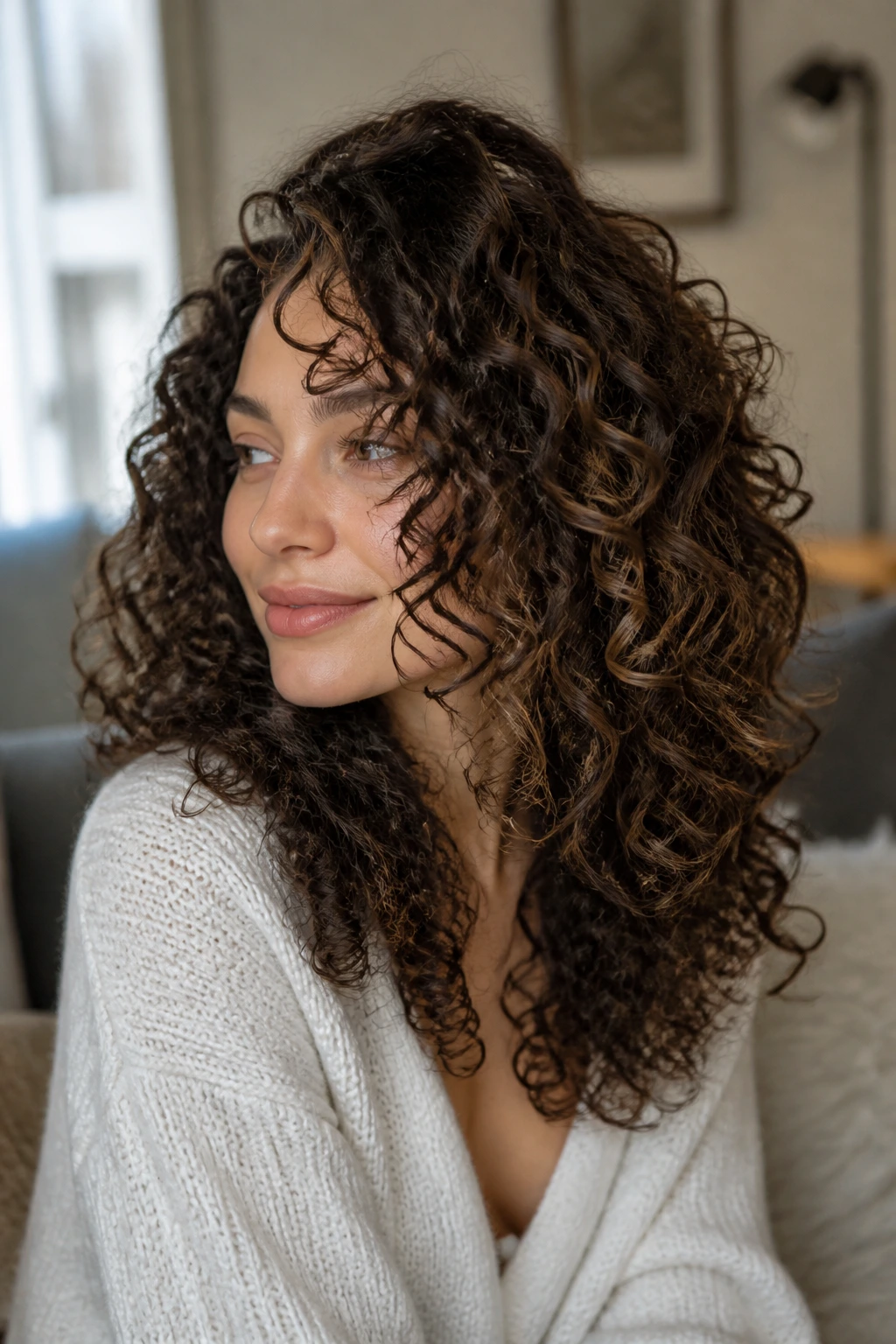
Curly hair can wear a butterfly shape, but it needs a different hand than straight hair. The layers should respect the curl pattern, not bulldoze it.
Dry cutting or curl-by-curl shaping often gives the most honest result, because curls bounce up after the cut and can surprise you if they’re snipped wet and stretched. The face frame should usually be left longer than you’d expect so it doesn’t spring too short. That’s the part people miss. A cheekbone layer on paper can turn into a lip layer in real life.
The best curly butterfly cuts keep the crown from getting bulky while allowing the lower curls to stay long and full. Diffuse gently, or let it air-dry with a light gel cast. Frizz eats the shape alive.
9. Butterfly Cut for Straight Hair
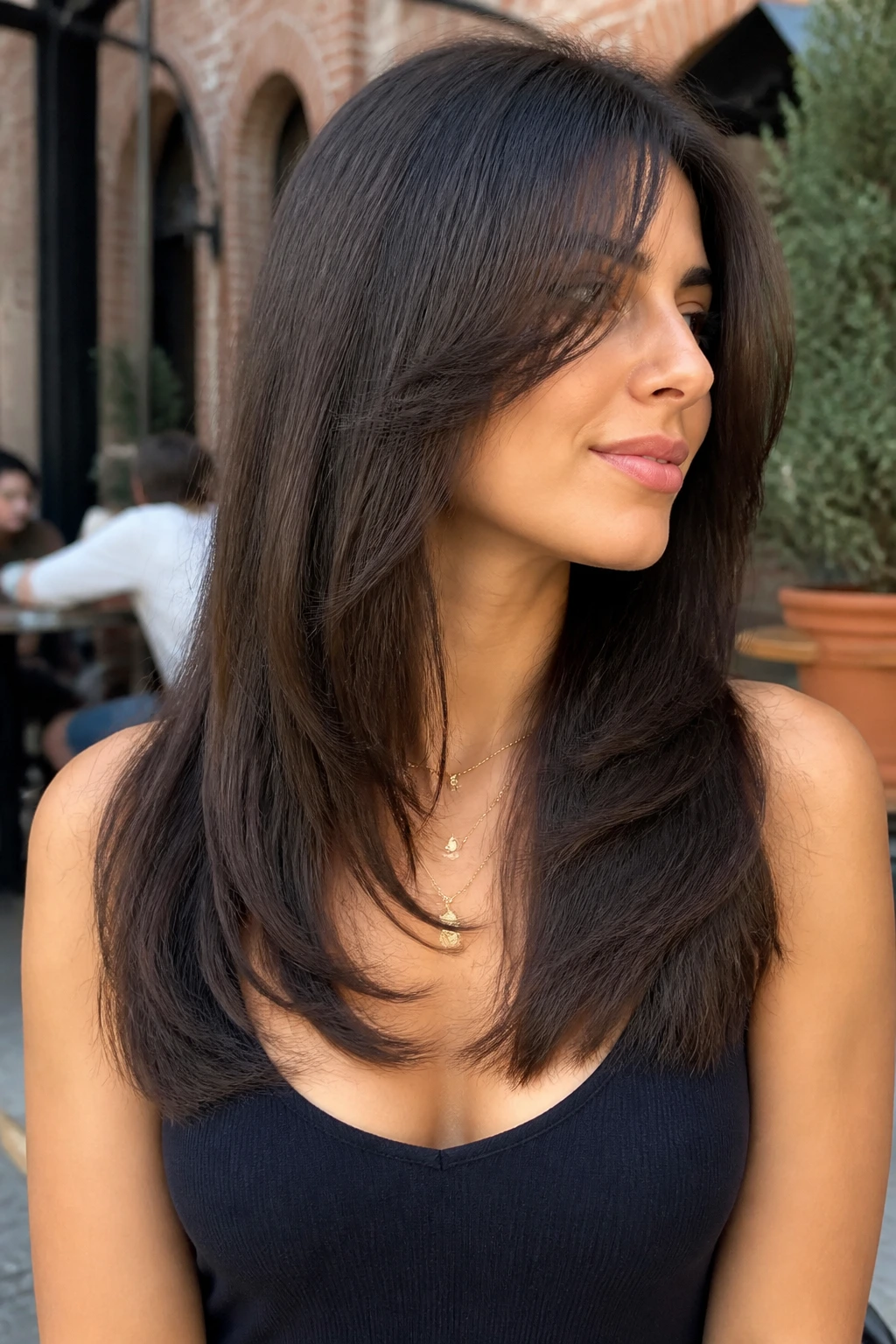
Straight hair shows every line, which is both a blessing and a trap. If the layers are good, the haircut looks crisp and polished. If they’re off, you’ll see the mistake from across the room.
This version usually needs a little more visible layering than wavy or curly hair, because straight strands won’t hide the transition for you. The shorter pieces around the face can be feathered slightly, and the lower layers should be blended enough to avoid a hard shelf.
A flat iron bend or a quick pass with a round brush gives straight hair the swing it needs. Without styling, the haircut can still work, but it will read more subtle than dramatic. That’s not a flaw. It’s just the nature of straight hair.
10. Butterfly Cut With Side-Swept Fringe
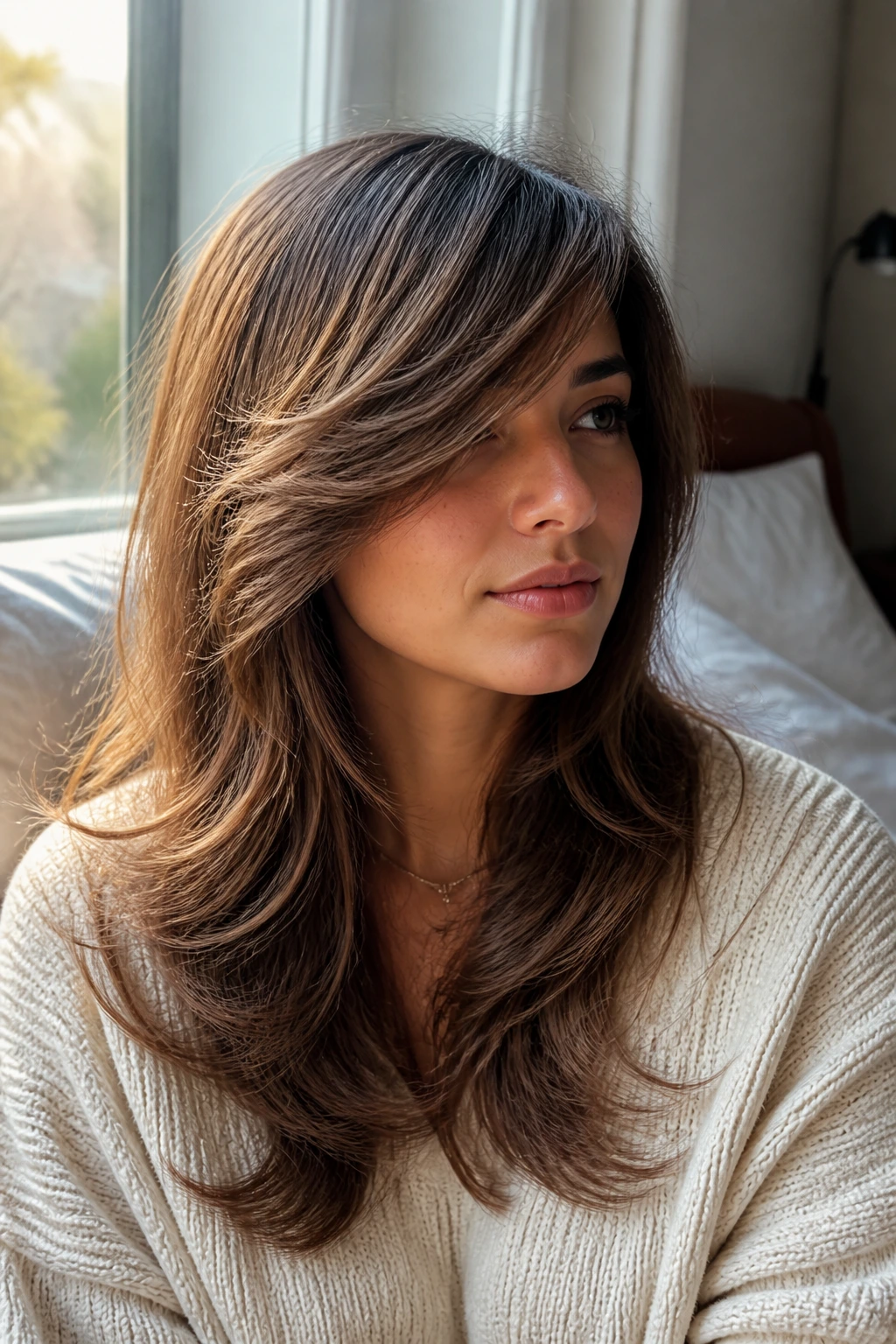
A side-swept fringe changes the geometry of the whole cut. Instead of splitting the face evenly, it pushes the eye across the forehead and into the layers, which makes the haircut feel softer and a little more old-school.
This is a good choice if center parts make your face feel too open or if you want the butterfly shape without curtain bangs. The fringe can start at brow level and sweep into the face frame, keeping the top lighter without making the front look chopped.
The key is control. Side-swept fringe needs direction, not volume for volume’s sake. Blow it across the forehead with a brush, then pinch the ends between your fingers while they cool so the sweep holds its line.
11. Chin-Skimming Face Frame Butterfly Cut
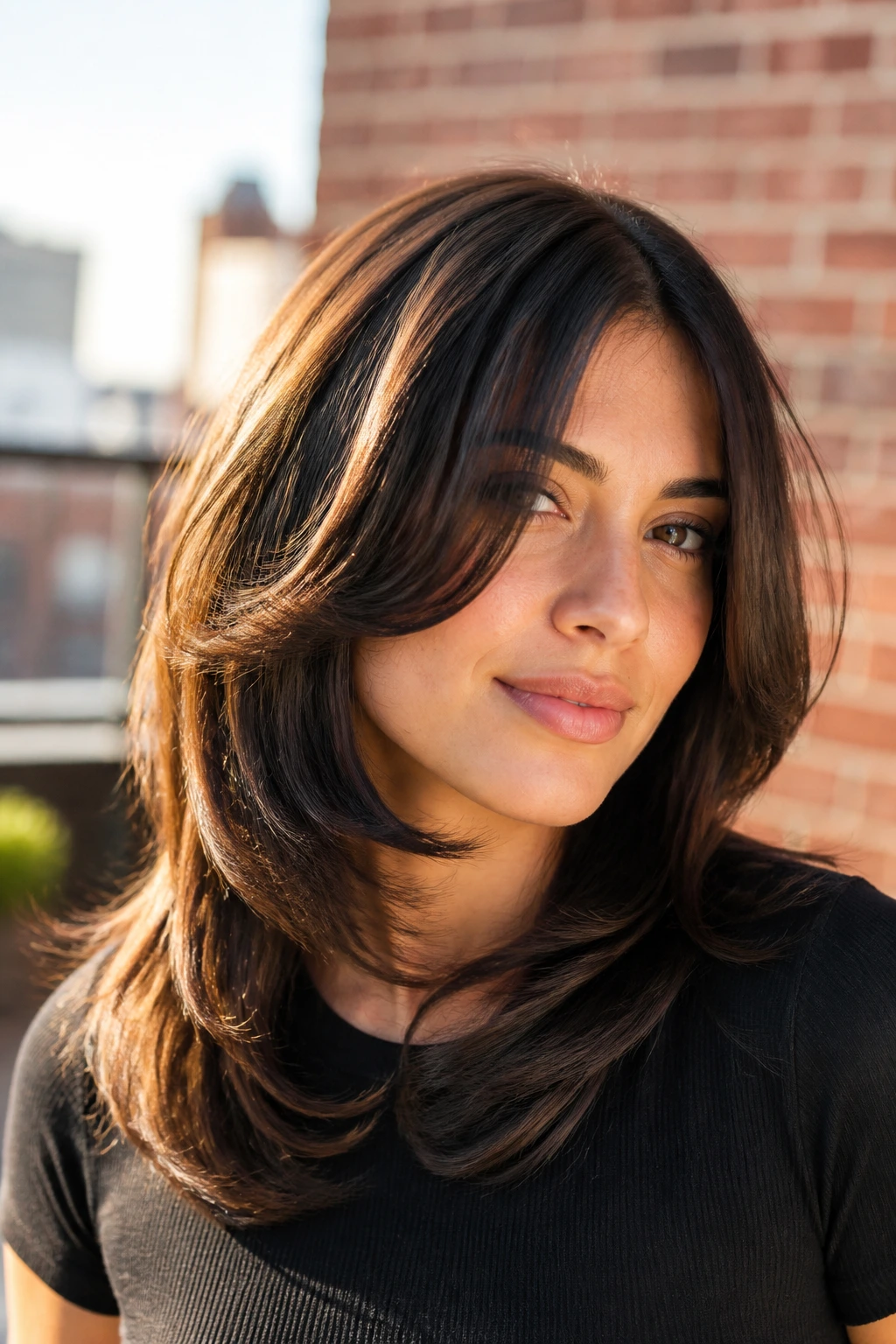
This is a bolder version of the face frame, and it changes the whole attitude of the cut. The shortest pieces graze the chin instead of hovering at the cheekbone, which gives the face a more sculpted outline.
It works well if you want the butterfly cut to do more than just add fluff. Chin-length framing can soften a strong jaw, make long faces feel a little wider at the right spot, and give the haircut a cleaner edge. The danger is going too short and losing the easy flow into the rest of the layers.
Ask for the chin pieces to blend down gradually rather than stop dead. That transition is what keeps the style from looking like a disconnected front section.
12. Airy Butterfly Cut With Invisible Layers
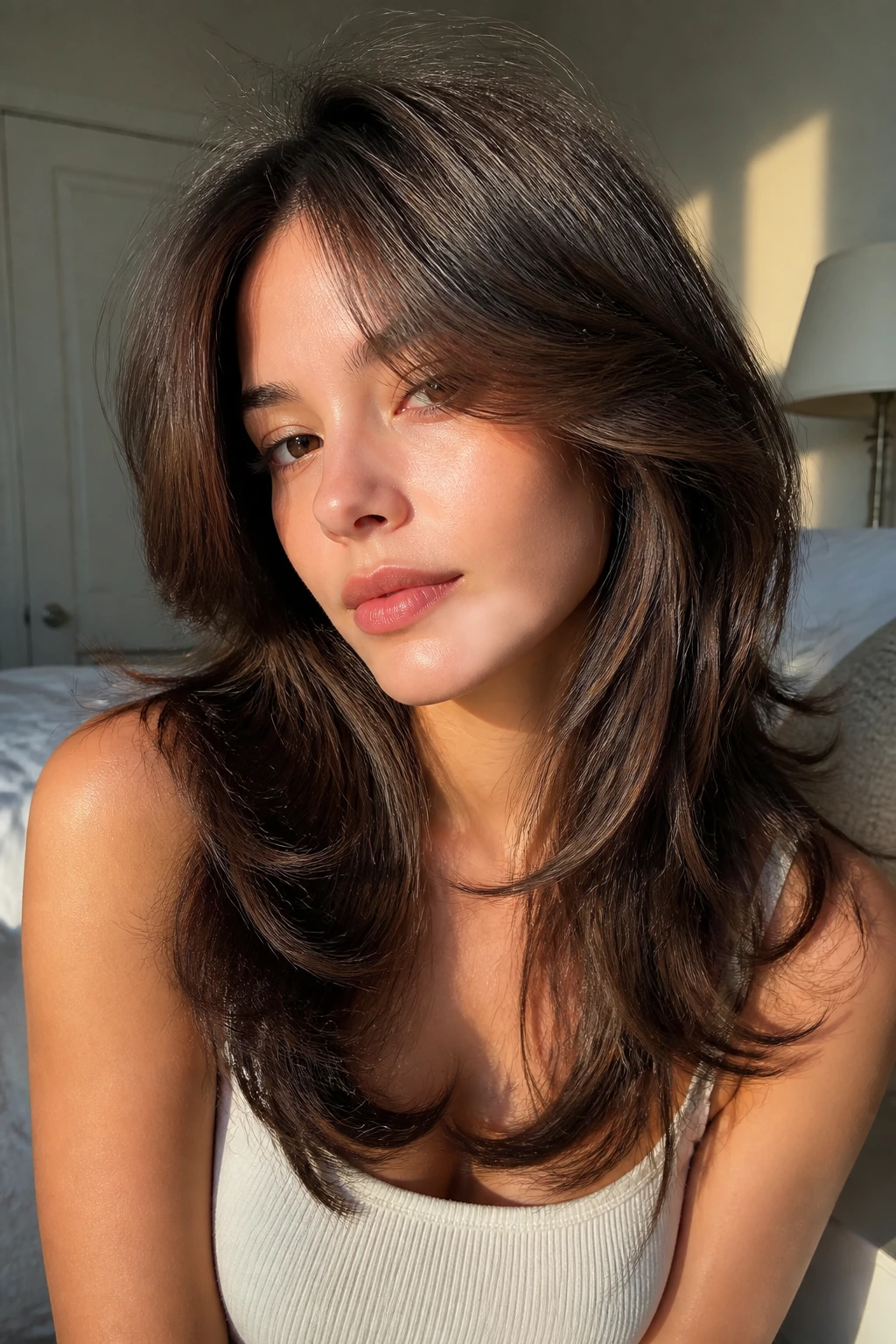
Invisible layers are the quiet cousin in this group. They’re there, but they don’t shout.
Instead of obvious step-downs, the hair is cut with internal movement that lightens the mass while keeping the outline soft. This version is useful if you want the butterfly effect without a lot of visible texture. It’s especially nice on hair that gets poofy when it’s over-layered.
The result is subtle lift around the crown and better movement at the ends, but the haircut still reads smooth. If you like a neat outline and hate pieces flying everywhere, this is the version to ask about. It’s the one people notice only after they see you turn your head.
13. Feathered Butterfly Cut
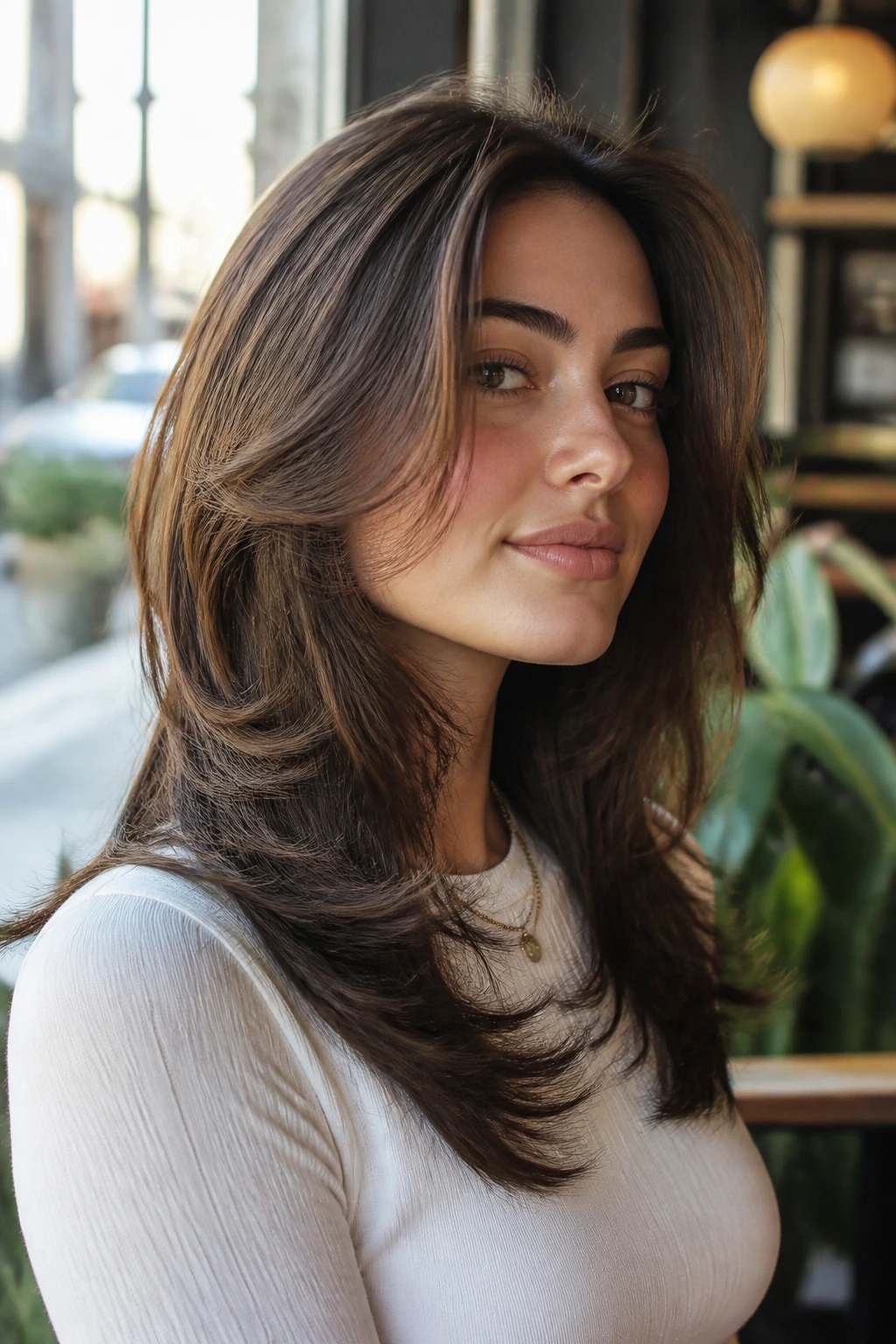
Feathering gives the butterfly cut that light, brushed-out texture that feels almost suspended around the face. It’s softer than choppy layering and less obvious than a shag.
This version lives and dies by the ends. They should look airy, not scraggly. Feathered layers work well if your hair already bends naturally or if you plan to style it with a blow dryer and brush. The movement should fan out from the cheekbones and taper toward the bottom half.
You’ll know it’s right when the hair doesn’t sit in one heavy curtain. It floats a little. Not too much. Just enough to keep the front open.
14. Razor-Textured Butterfly Cut
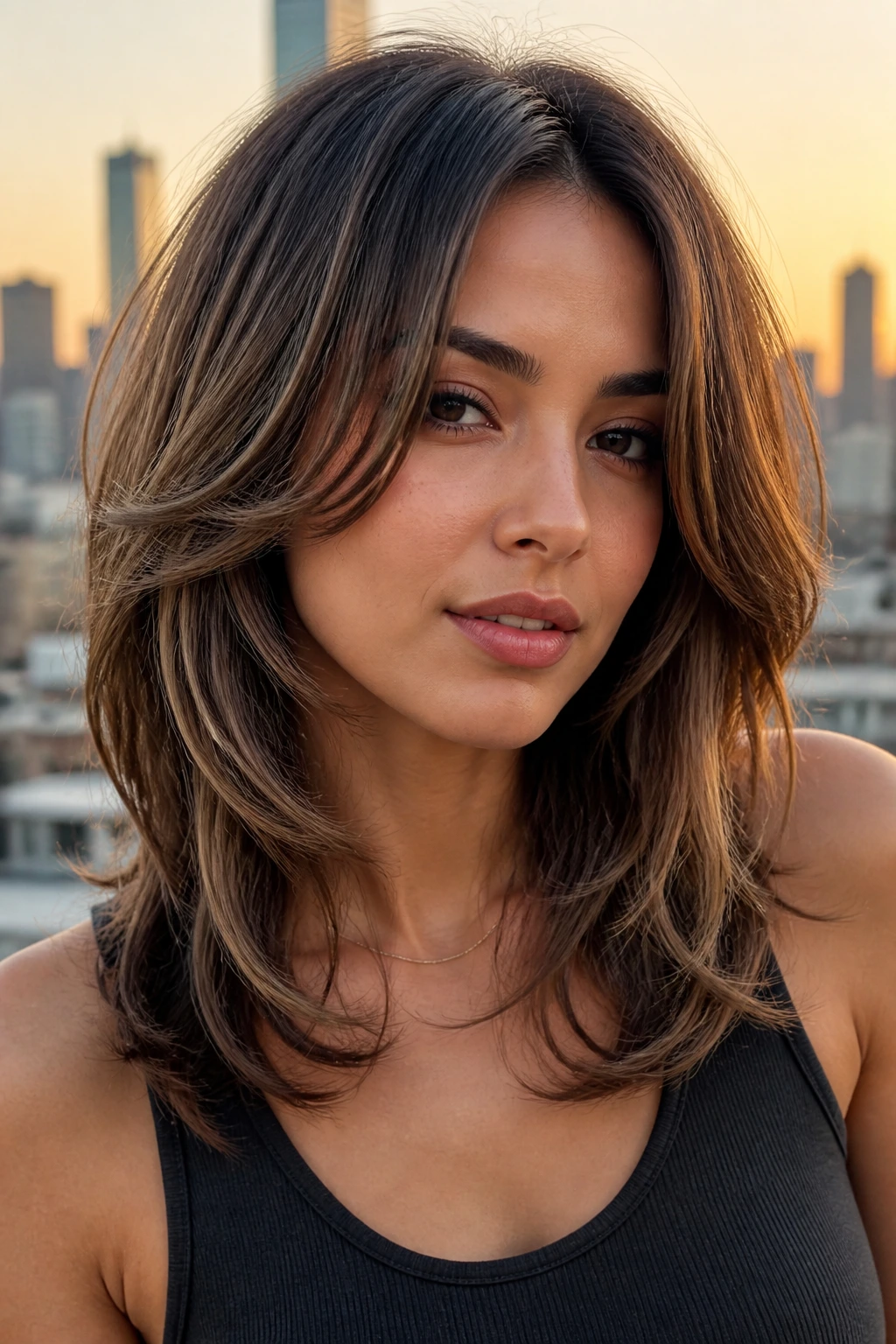
A razor can give a butterfly cut a softer edge, but only on the right hair. Thick, smooth hair often takes to razor texturizing better than fragile, fine strands that fray if they’re thinned too hard.
The advantage is a more broken-up finish through the face frame and layers, which can be useful if blunt lines make your hair look boxy. The downside is that razor work can get messy fast when it’s overdone. You want controlled texture, not shredded ends.
If you choose this version, ask for razor work mainly in the mid-lengths and front sections. Leave some weight in the perimeter so the haircut still has a shape to hold onto.
15. U-Shaped Butterfly Cut
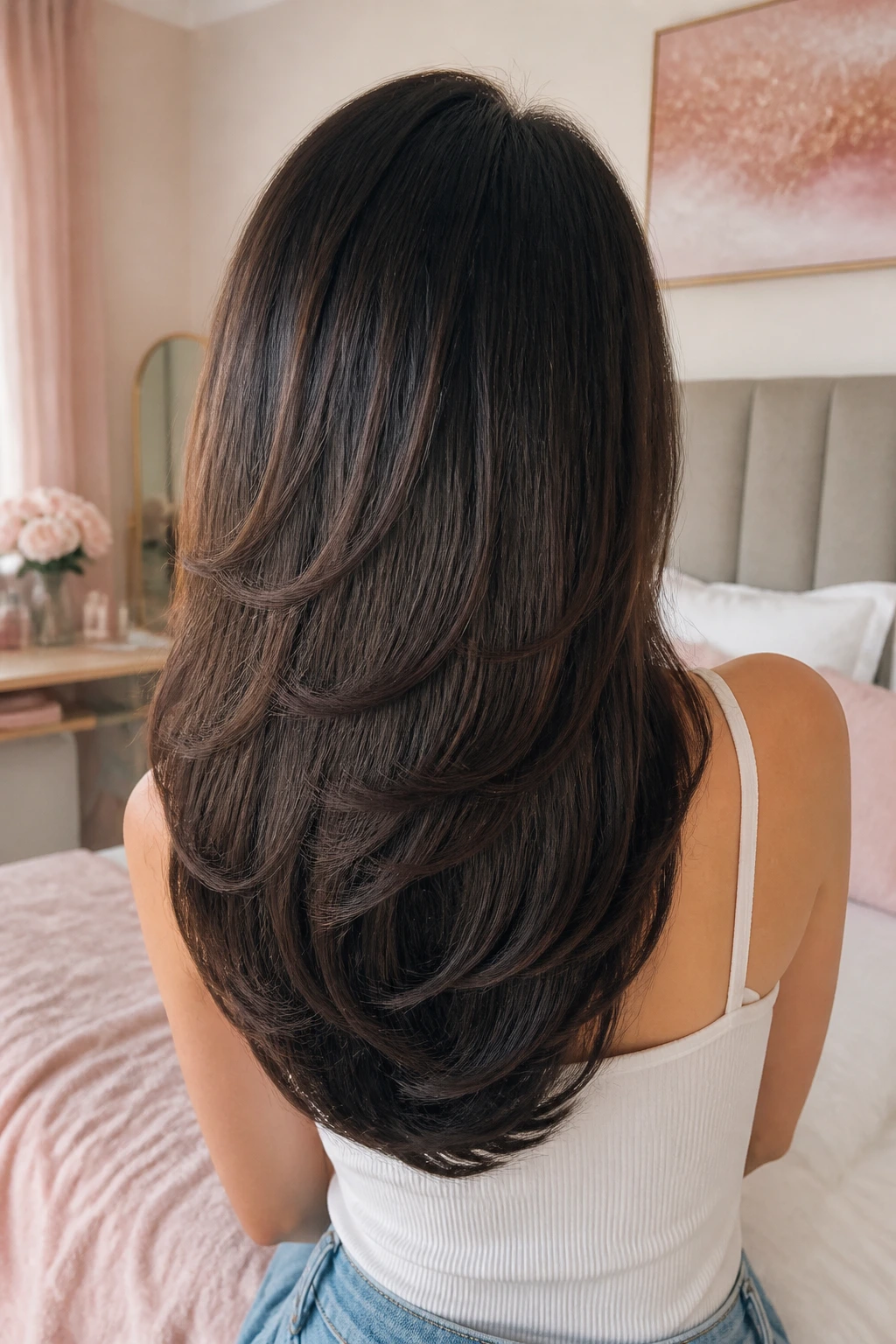
A U-shaped outline keeps the back rounded and soft, which makes the butterfly layers feel smoother as they fall. It’s less dramatic than a V and less flat than a straight hem.
This shape is useful if you want the haircut to look polished from behind. The curve keeps the longest pieces gently nested under the layers instead of hanging in a hard line. It also makes grow-out easier, because the silhouette doesn’t show regrowth as sharply.
The U shape pairs nicely with most face frames. You get the lift up front, the softness through the sides, and a back that still reads full. Clean. Easy to live with.
16. V-Shaped Butterfly Cut
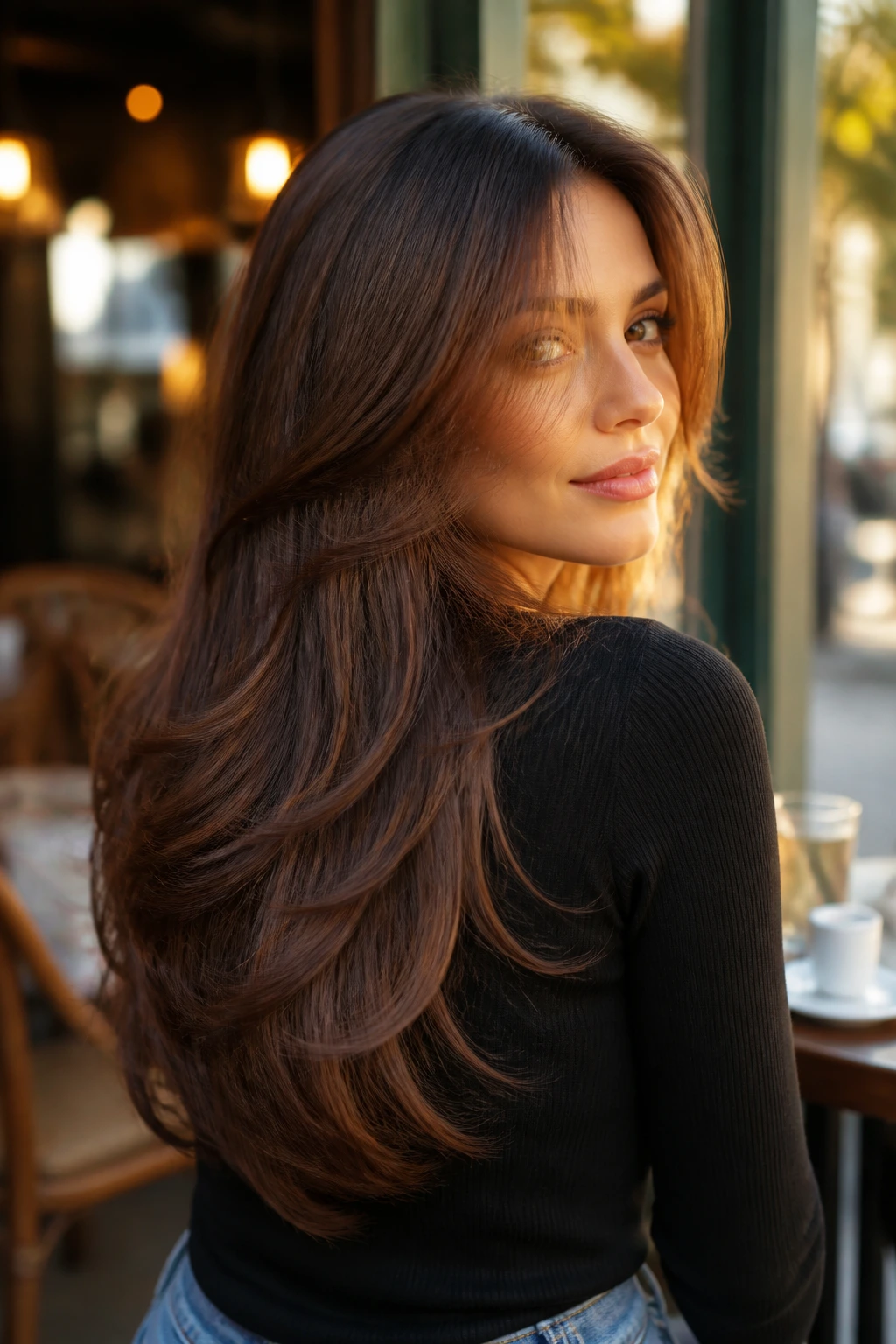
The V-shaped version leans into drama. The longest pieces taper more sharply in the back, so the length feels even longer and the layers have room to show movement.
This cut works best on hair that has some natural density or length to spare. On very fine hair, a V can look stringy if the ends get too narrow. But on thicker hair, it gives a striking cascade effect, especially when blown out with a round brush.
If the U shape is the easygoing version, the V is the one with a little attitude. It’s still butterfly, just sharper at the bottom.
17. Mid-Length Butterfly Cut
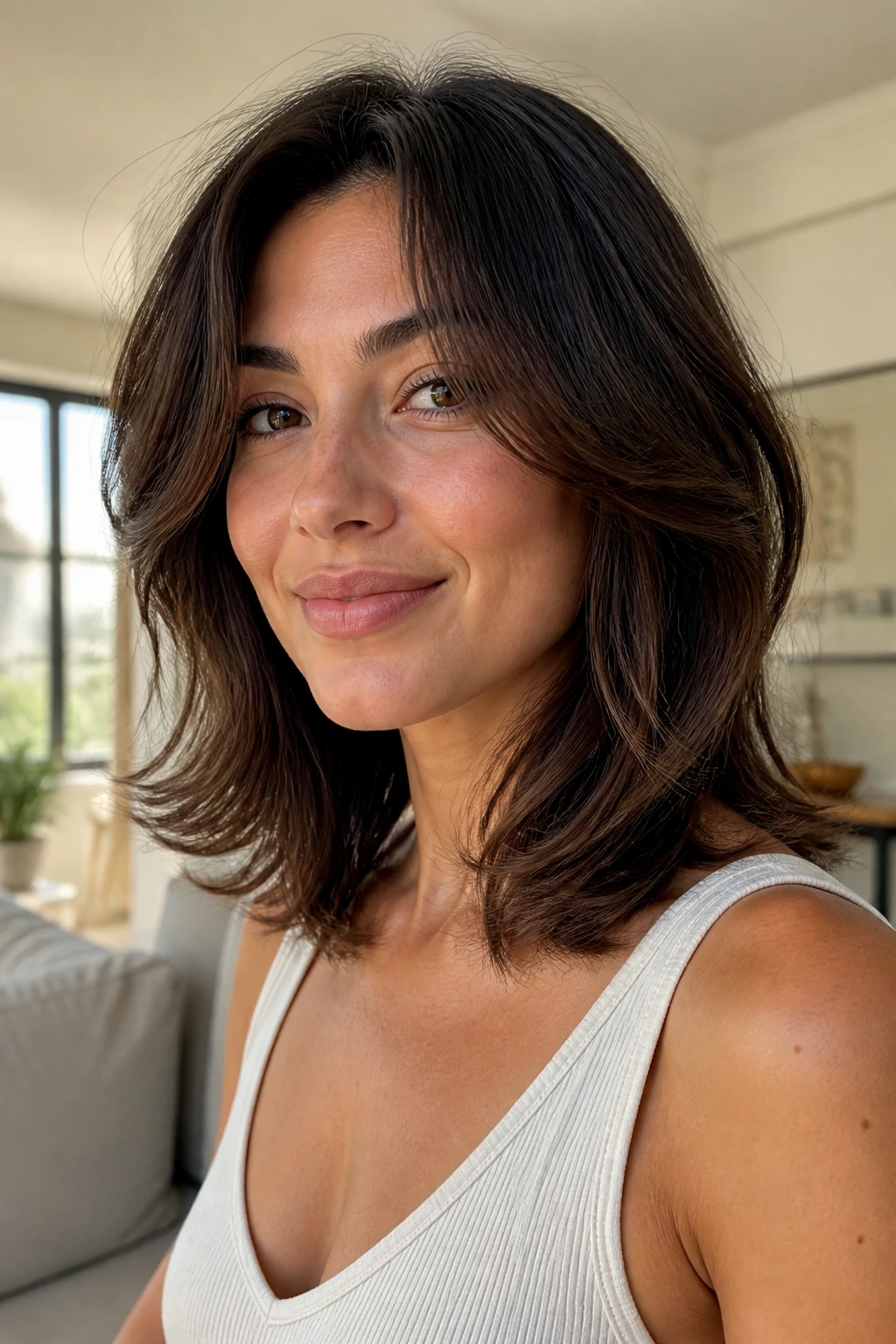
Mid-length hair and butterfly layers meet in a useful middle ground. The cut gets enough length to create visible contrast, but the overall shape stays light enough to handle without a wrestling match.
A good mid-length butterfly cut usually lands around the shoulders or a bit below. The front pieces can open the face, while the back layers keep the cut from feeling bulky at the collarbone. That’s what makes it work so well: enough hair to build shape, not so much that the style drags.
If you want movement without the long-hair maintenance tax, this is an easy place to land. It’s not fussy. It just needs clean layering and a decent blow-dry.
18. Extra-Long Butterfly Cut
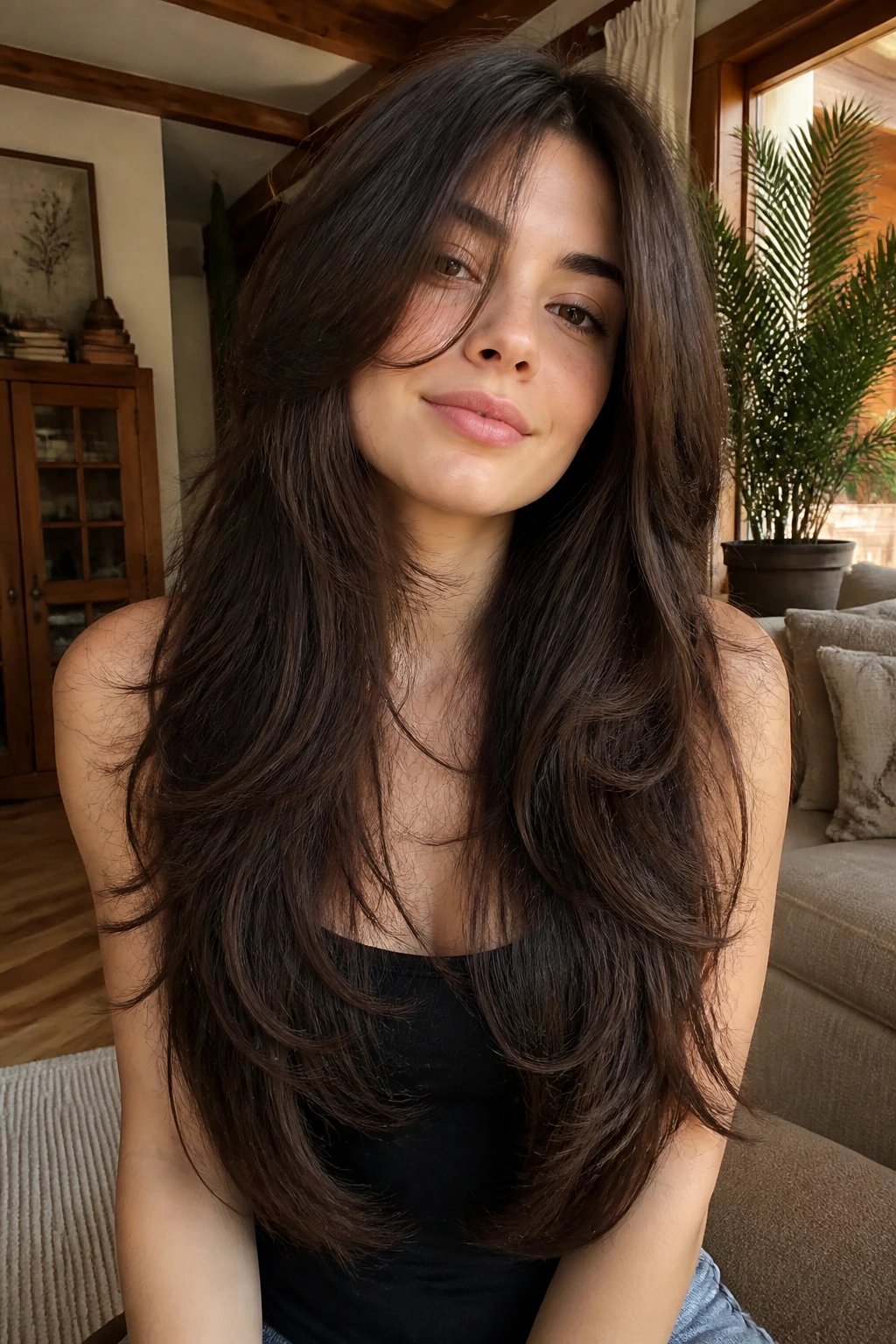
Extra-long hair can swallow a bad cut whole. It can also make a good butterfly cut look expensive in the best possible way.
The front layers need to be strong enough to show against all that length, or the shape disappears into the background. The back layers should remove weight gradually so the ends can still move. With extra-long hair, even a small adjustment around the cheekbone can change the whole feel of the cut.
This version is for people who want the longest possible silhouette but don’t want to drag a heavy curtain around all day. Done right, it looks rich, not overworked.
19. Short Butterfly Cut With Long Front Pieces
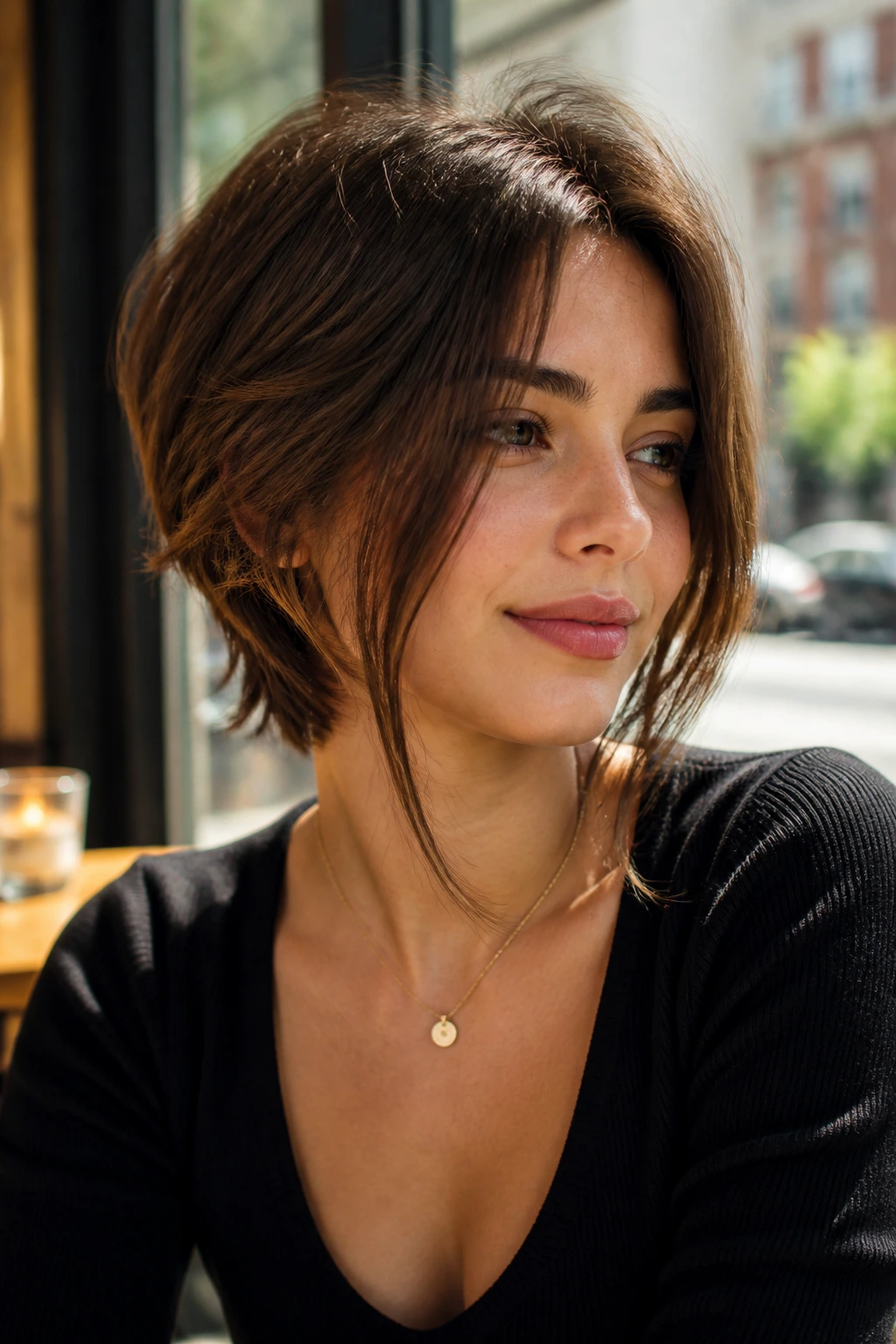
Short hair usually gets left out of butterfly conversations, which is a shame. You can absolutely keep the shape alive if the front pieces stay longer and the top layers are carved with enough lift.
The back might stop above the collarbone, but the front can still swing past the chin and create the illusion of a fuller, more layered haircut. That contrast is the point. You’re not chasing long hair here. You’re building shape where the eye lands first.
This version is especially useful if you’re growing out a bob and want something less blunt. It gives you movement without forcing you into a full long-hair commitment.
20. Butterfly Cut With Bottleneck Bangs
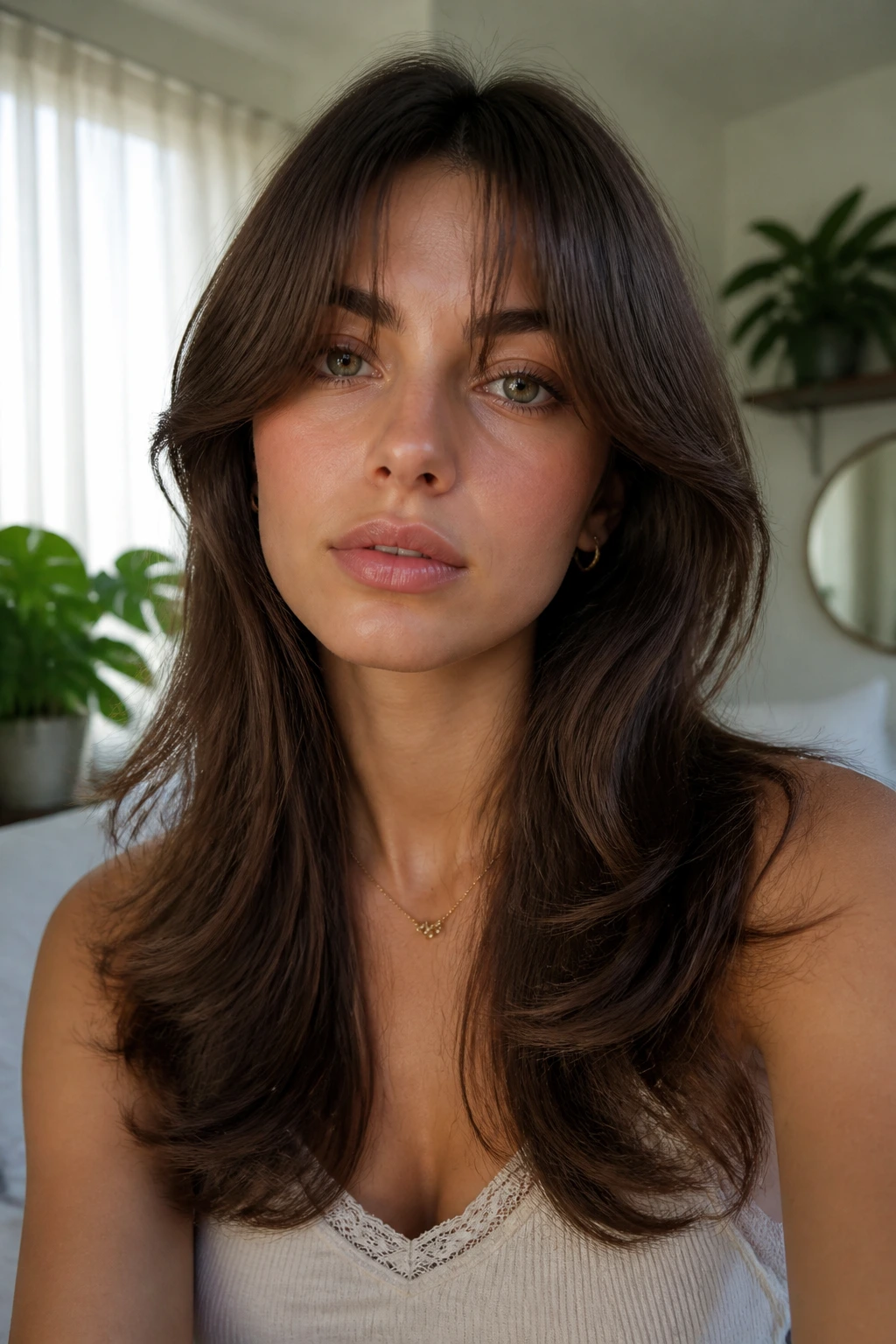
Bottleneck bangs taper narrow in the middle and widen near the temples, which makes them a natural partner for butterfly layers. They frame the eyes without taking over the forehead.
This version feels softer than a blunt fringe and less obvious than full curtain bangs. The shape slides nicely into the face frame, especially if the shortest layers start around the cheekbone. The whole front of the haircut ends up with a fluid, curved line.
If you want a little face framing but not a wall of fringe, bottleneck bangs are a smart move. They grow out gently, too, which saves you from the awkward in-between stage.
21. Butterfly Cut With Money-Piece Highlights
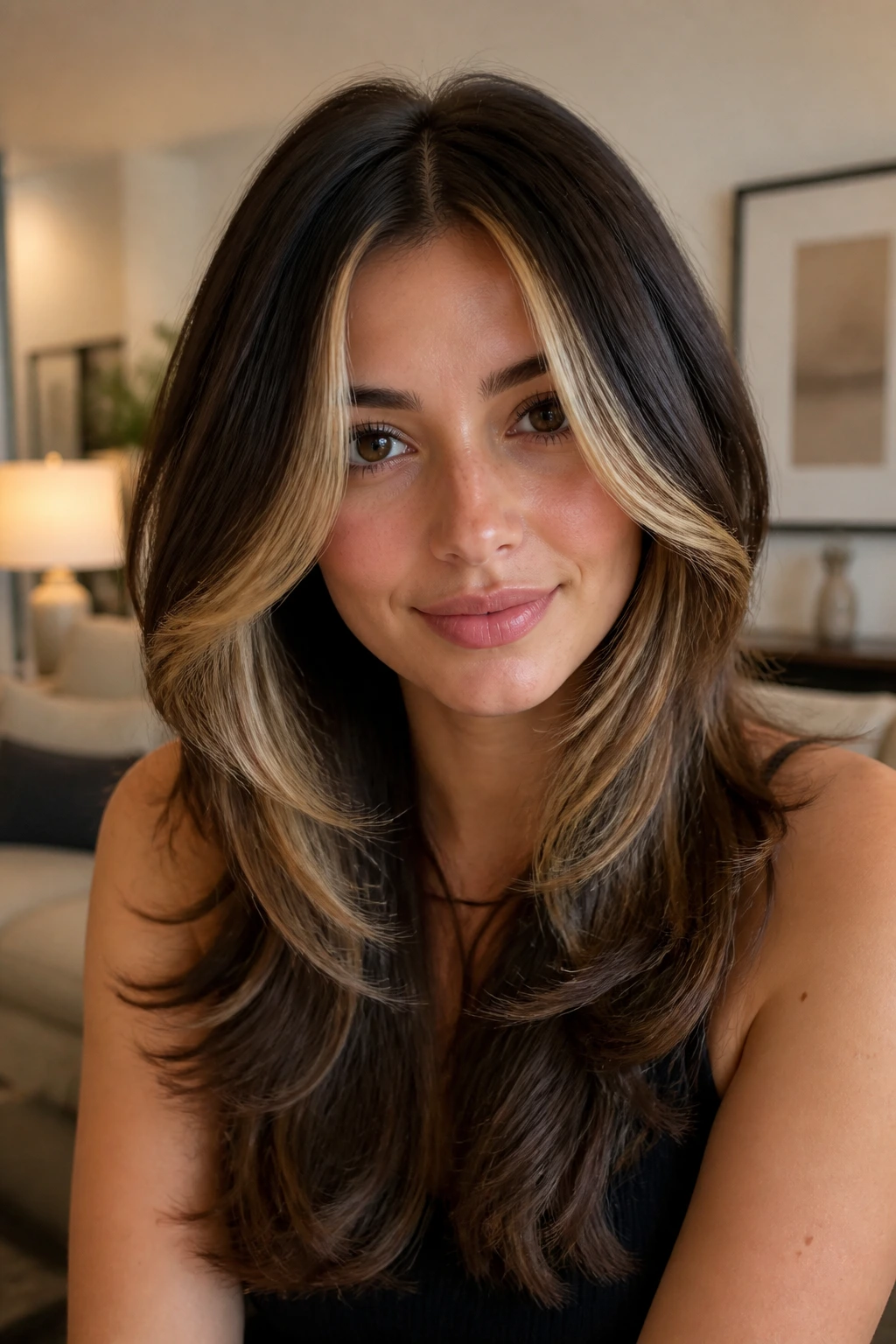
Color can change the read of a haircut faster than another inch of layer ever will. Money-piece highlights light up the front sections, which makes the butterfly shape easier to see and easier to style.
This version is especially good if your layers are subtle and you want the face frame to pop. The lighter strands catch the bend from a blowout and draw attention to the cheekbones or chin line. On darker hair, the contrast can be striking. On lighter hair, the effect is softer and more blended.
The important part is placement. Put the brightest pieces where the shortest layers live. Otherwise the color and the cut end up talking over each other.
22. Butterfly Cut With a Deep Side Part
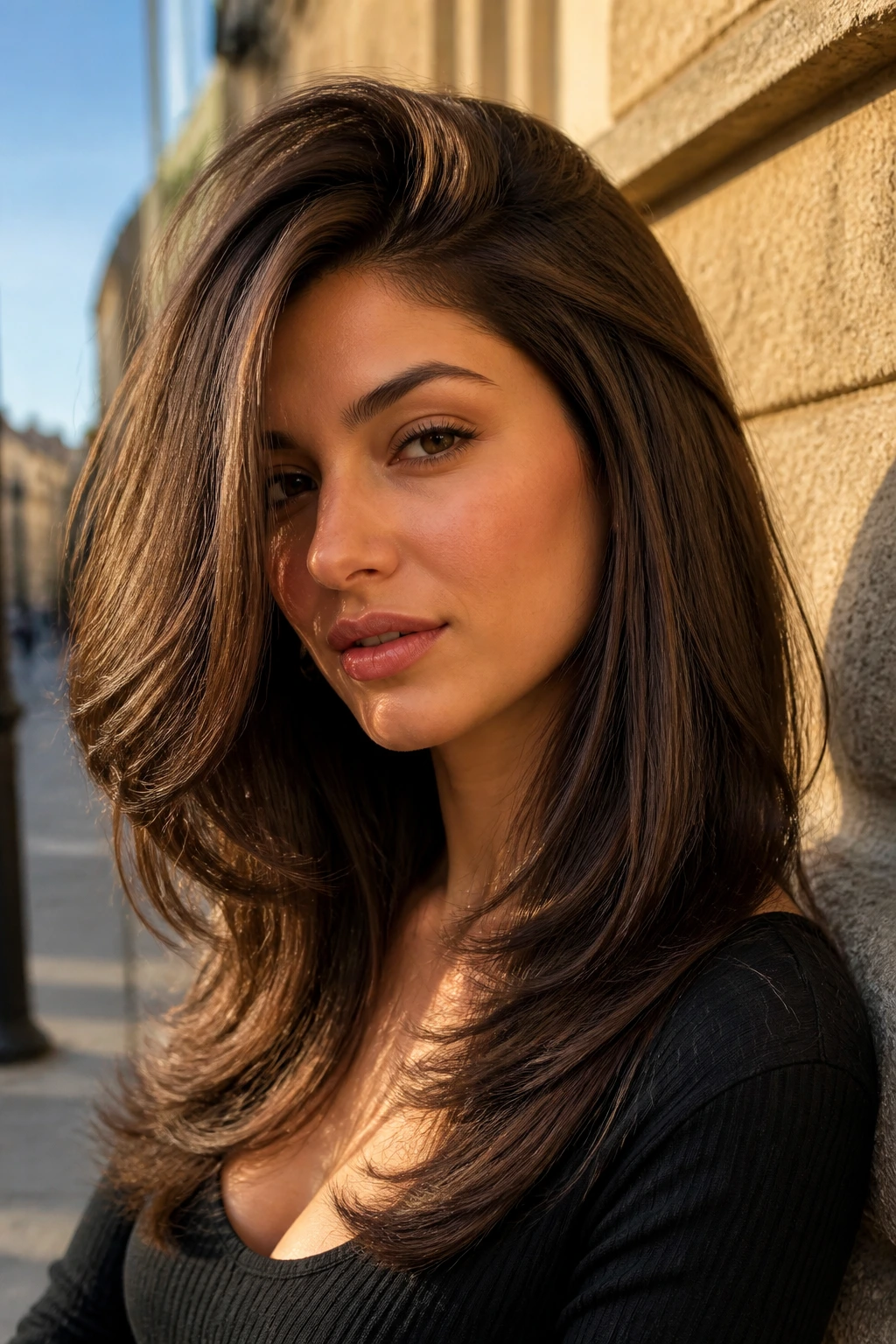
A deep side part changes the volume map of the haircut. One side gets lift, the other side gets sweep, and the face frame suddenly feels more sculpted.
This is a nice option if your usual center part makes the cut look too symmetrical or too flat. The deeper part helps the top layers fall with more motion, especially when the hair is blown away from the heavier side. It can also sharpen cheekbones in a way that feels easy, not harsh.
Try this when you want a little more polish without changing the cut itself. Sometimes the parting shift does half the job.
23. Low-Maintenance Grow-Out Butterfly Cut
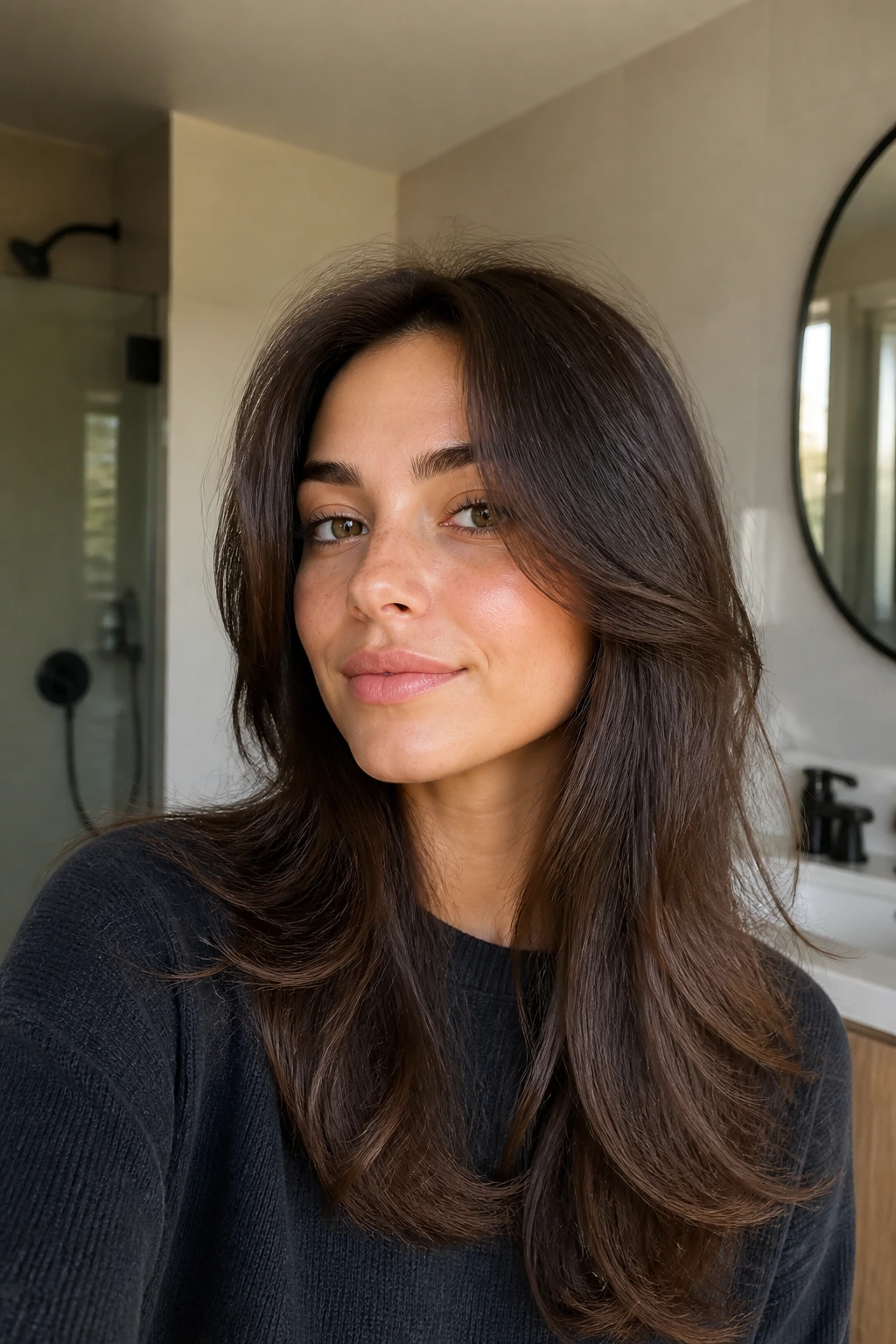
Some butterfly cuts are cut for the first day. This one is cut for week ten.
The layers stay soft enough that regrowth doesn’t leave a hard line, and the face frame is kept long enough to avoid looking overcut once it starts falling. That matters if you don’t get trims often or if you want the haircut to still look decent on a lazy day with dry shampoo and a claw clip.
The best grow-out versions are quietly shaped. No harsh shelves. No overly short face pieces. Just enough structure to keep the haircut from going limp between salon visits.
24. Glam Butterfly Cut With Rounded Ends
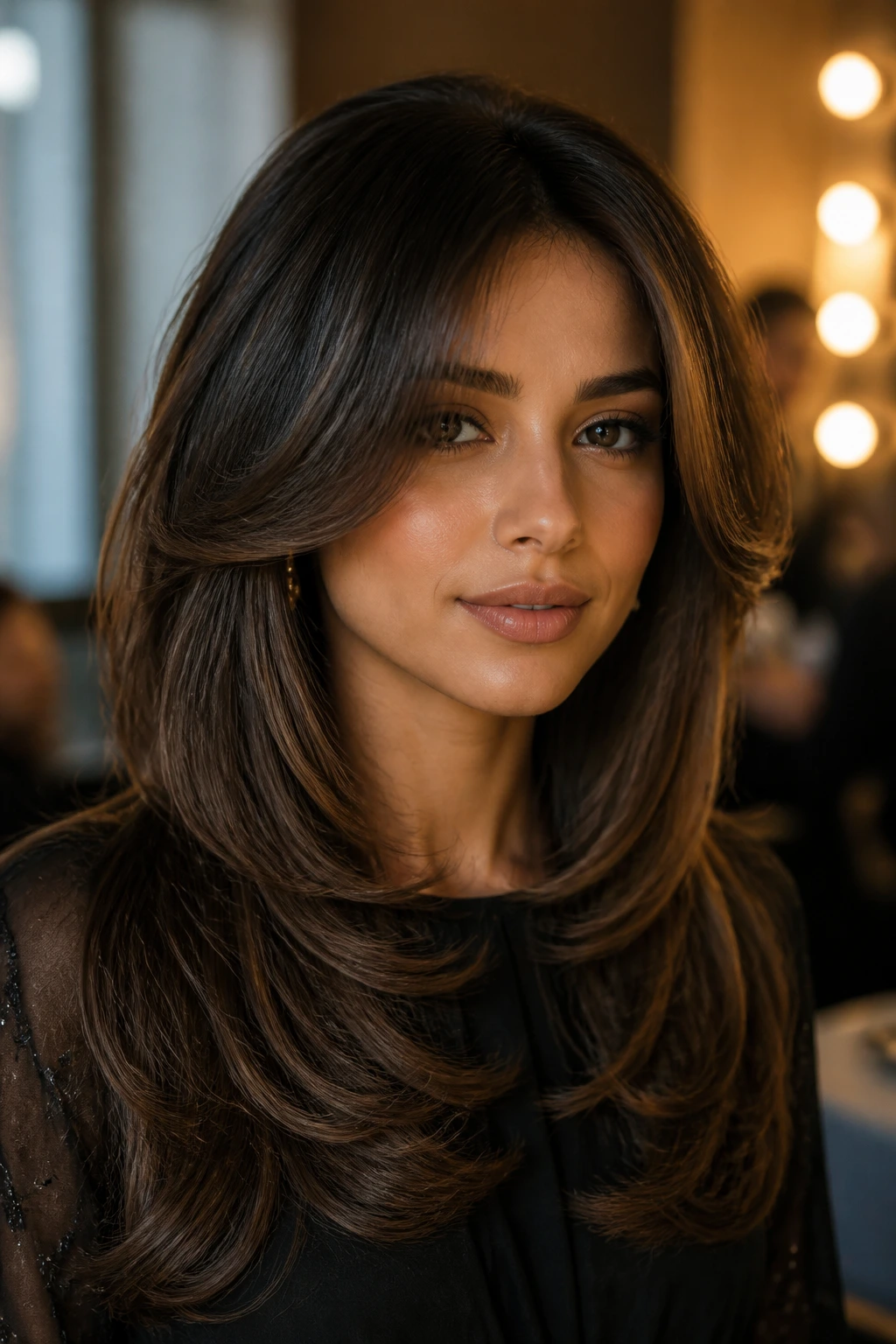
Rounded ends make the cut look fuller and more finished, especially when styled with a big brush or velcro rollers. The shape curves inward instead of flipping randomly, which gives the whole haircut a smoother finish.
This version feels especially good for events, photos, or any day you want the hair to look deliberate from root to tip. The rounded ends also help long layers sit together instead of breaking apart in sharp pieces.
If you’ve ever liked a blowout but hated how piecey your ends looked afterward, this is the answer. Clean, soft, and a little polished. Not stiff.
25. Shag-Inspired Butterfly Cut
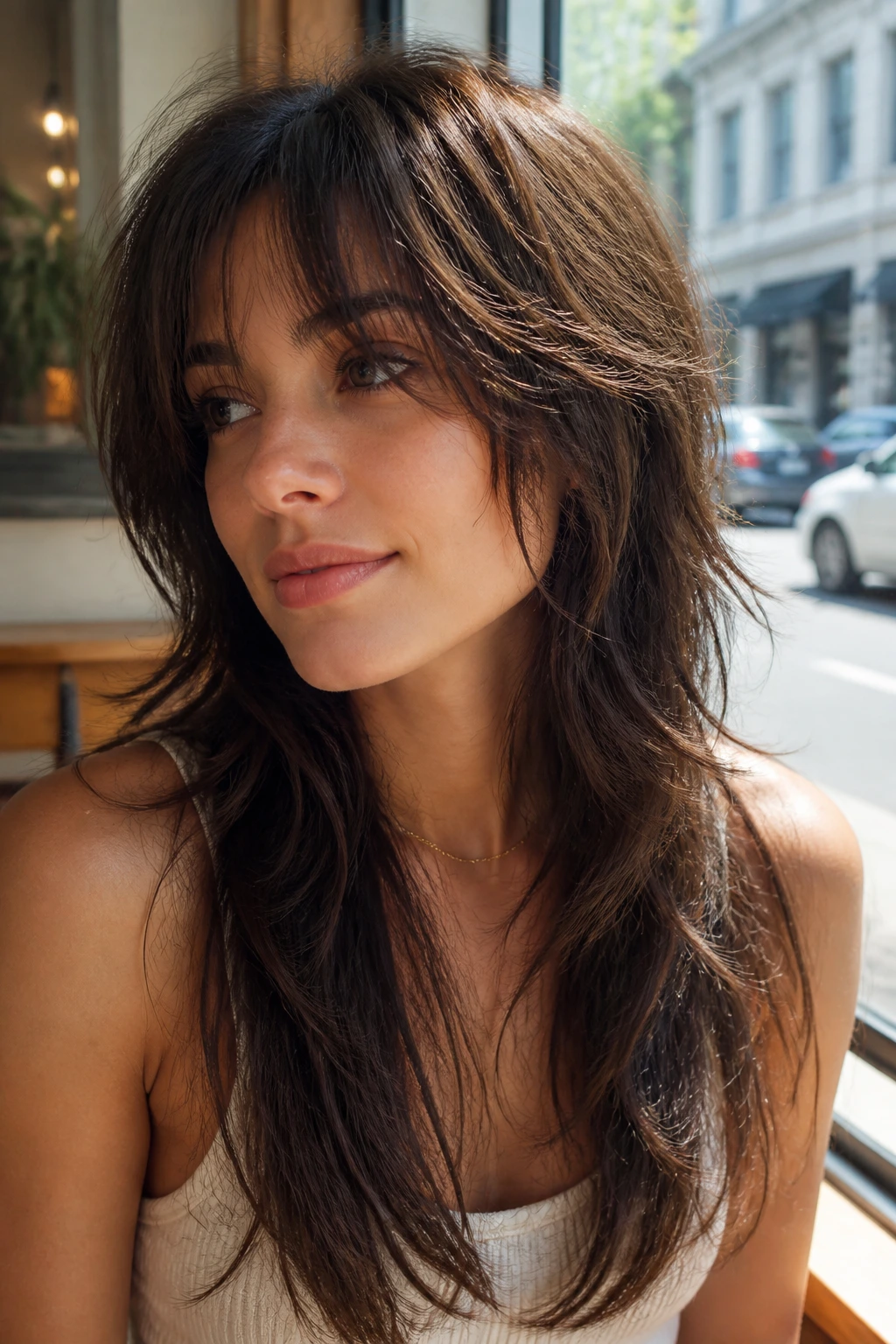
A shag-inspired butterfly cut borrows the looseness of a shag without giving up the length that butterfly lovers usually want to keep. The result is messier, choppier, and more playful.
The layers are more visible here, especially around the crown and sides, but the overall silhouette still stays long enough to feel like a butterfly cut rather than a full shag. This is a good pick if you like texture and don’t mind a bit of edge in the finish.
It’s not the quietest option in the list. That’s the point. It gives the haircut some bite.
26. Wolf-Light Butterfly Cut

Think of this as the gentler sibling to a wolf cut. You still get attitude and broken-up layers, but the length is preserved and the silhouette stays easier to wear.
This version suits people who like a little roughness around the face but don’t want the heavy top, extreme crown volume, or choppy disconnect that a stronger wolf cut can bring. The front pieces can be textured, and the back can keep a softer, longer line.
It’s a useful bridge haircut if you’re testing out more texture without going all the way in.
27. Sleek Glass-Hair Butterfly Cut
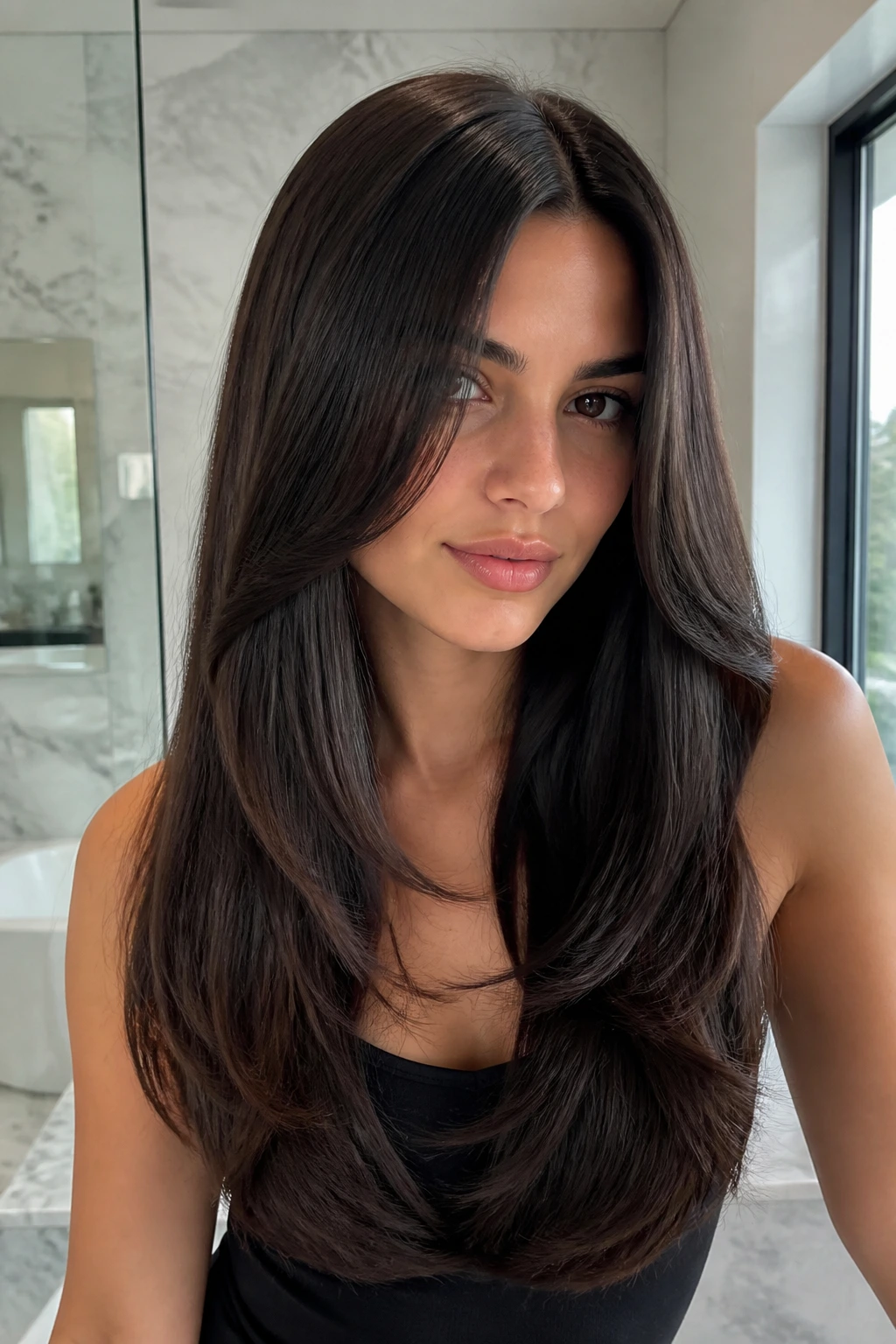
Not every butterfly cut has to be fluffy. A sleek version keeps the layers smooth and shiny, with just enough movement to avoid looking flat.
This cut relies on precision. The layers should blend cleanly so the surface stays reflective and the shape reads through the shine rather than through frizz or texture. A serum, a flat brush, and careful blow-drying matter here more than a pile of styling products.
If your taste runs toward clean lines and a smooth finish, this is the version that still gives you face framing without sacrificing polish. Quiet, but not boring.
28. Bouncy Round-Brush Butterfly Cut
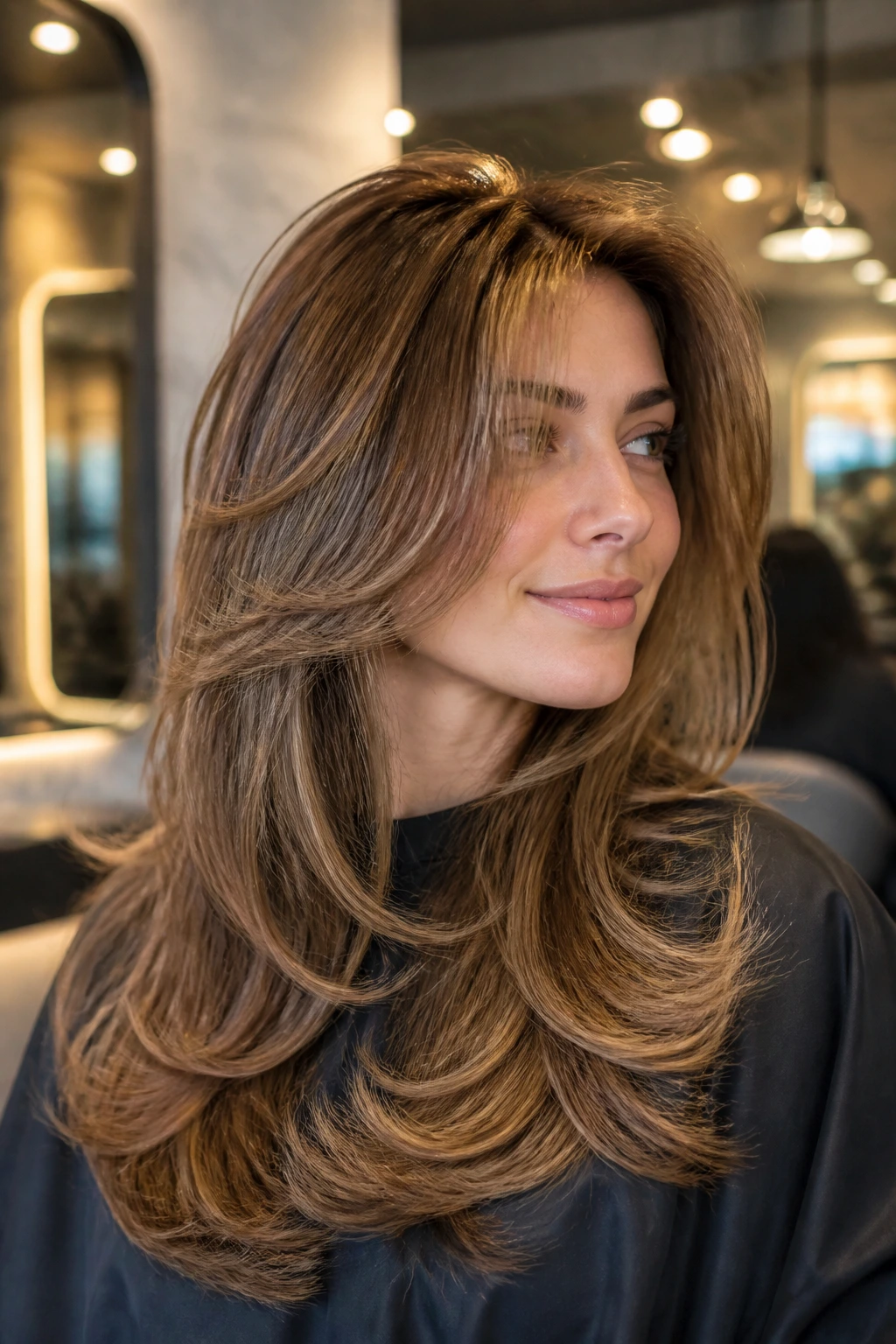
This is the version people picture when they think of a salon blowout with bounce at the ends and lift through the crown. The haircut is shaped to cooperate with a round brush, not fight it.
The shorter front layers need enough space to bend away from the face, while the lower layers should swing under or flip out depending on the brush direction. Medium to large sections work best. Tiny sections take too long and can make the hair look too set.
If you enjoy the ritual of styling, this one is a pleasure. If you hate it, skip ahead. It rewards patience.
29. Face-Slimming Butterfly Cut for Round Faces
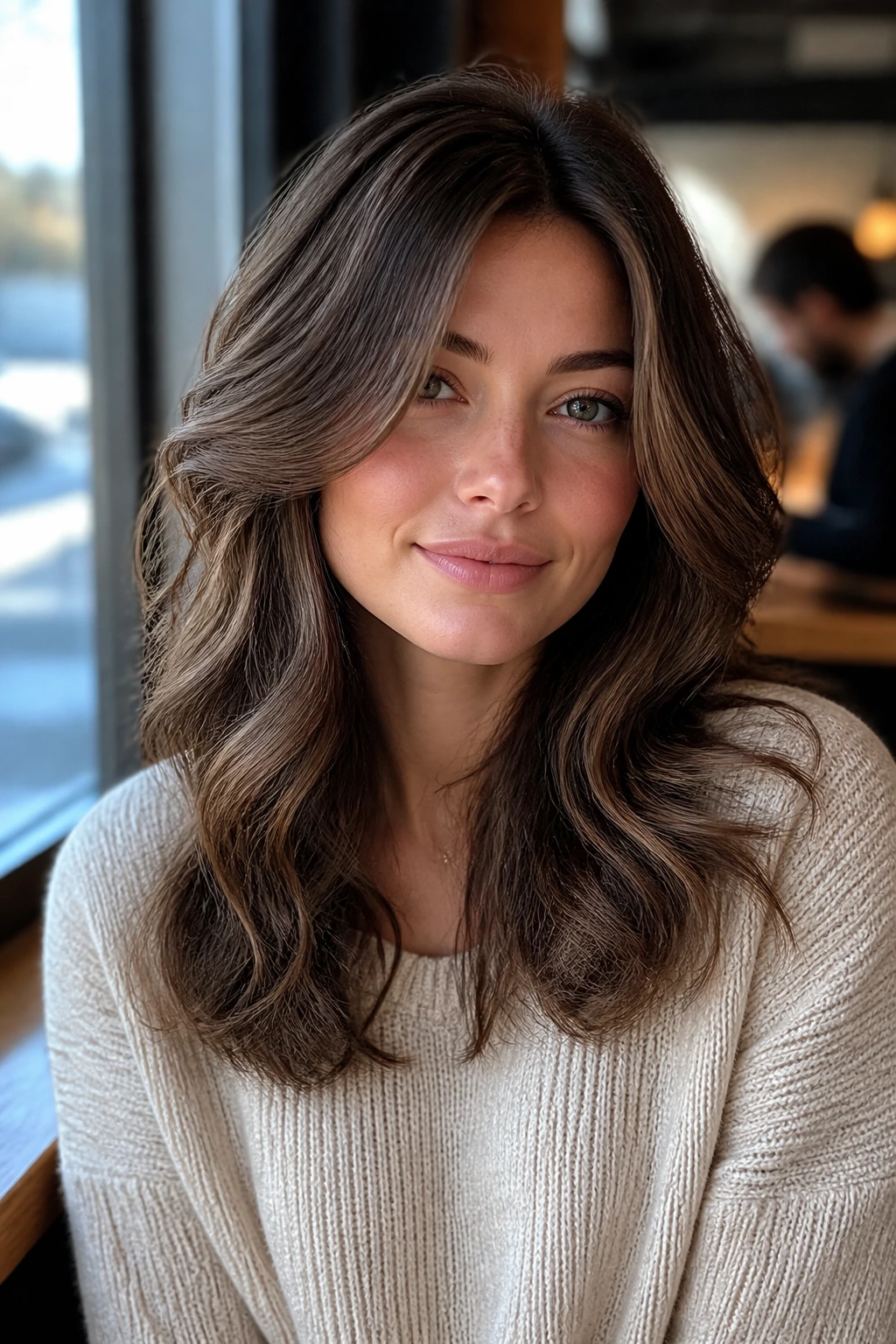
A round face often benefits from vertical length and controlled width at the sides. This butterfly version keeps the front pieces longer, usually past the cheekbones, so the eye travels downward instead of widening the face.
The crown can still have lift, but the shortest layers should not stop too high or sit too close to the cheeks. That can widen the face when you were trying to narrow it. The shape should skim, not spread.
A slightly off-center part can help too. So can soft waves that begin below the cheekbone, not right at it. Small choices, big difference.
30. Softening Butterfly Cut for Square Jaws
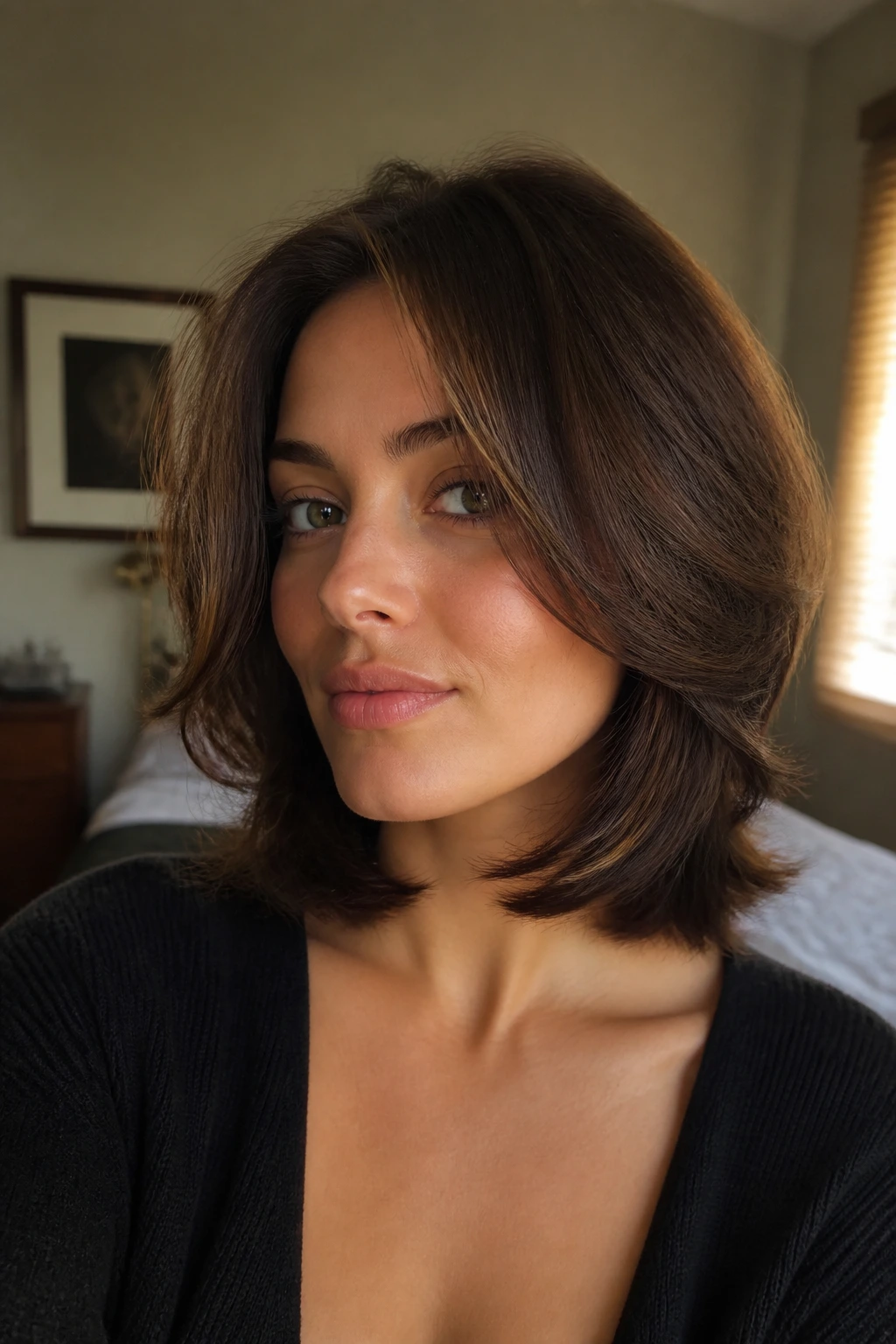
Square jaws look sharp in the best way, but some people want the haircut to soften that edge a little. Butterfly layers can do it if the front pieces curve around the jaw instead of ending exactly on it.
The goal is to break up the straight line, not hide the face. Chin-grazing or slightly longer face framing works well here, especially if the ends are rounded rather than chopped. That little bend around the jaw pulls the eye upward and keeps the cut feeling fluid.
This version tends to look especially good with a side part or soft bend around the temples. It’s subtle, which is why it works.
31. Length-Adding Butterfly Cut for Petite Frames
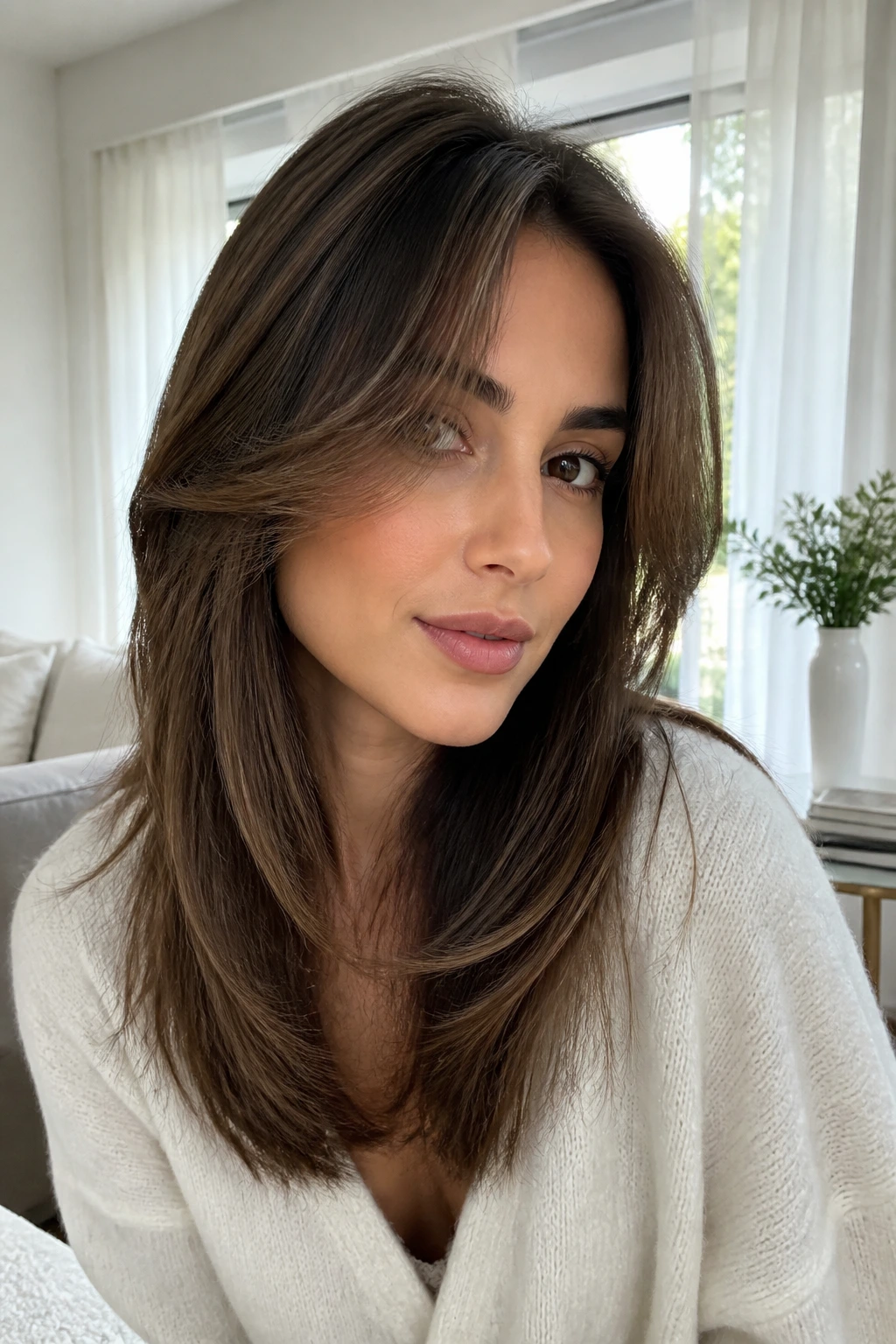
Shorter frames can get swallowed by too much hair around the face. A length-adding butterfly cut keeps the front pieces from sitting too high and uses vertical lines to stretch the silhouette.
The face frame should usually start lower and travel down in a long sweep. The back layers can still create movement, but the overall shape should keep the eye moving downward rather than outward. That makes the haircut feel proportional instead of bulky.
This is one of those cuts where a little restraint pays off. Keep the shortest pieces a touch longer, and the whole shape becomes easier to wear.
32. Volume-Boosting Butterfly Cut for Flat Crowns
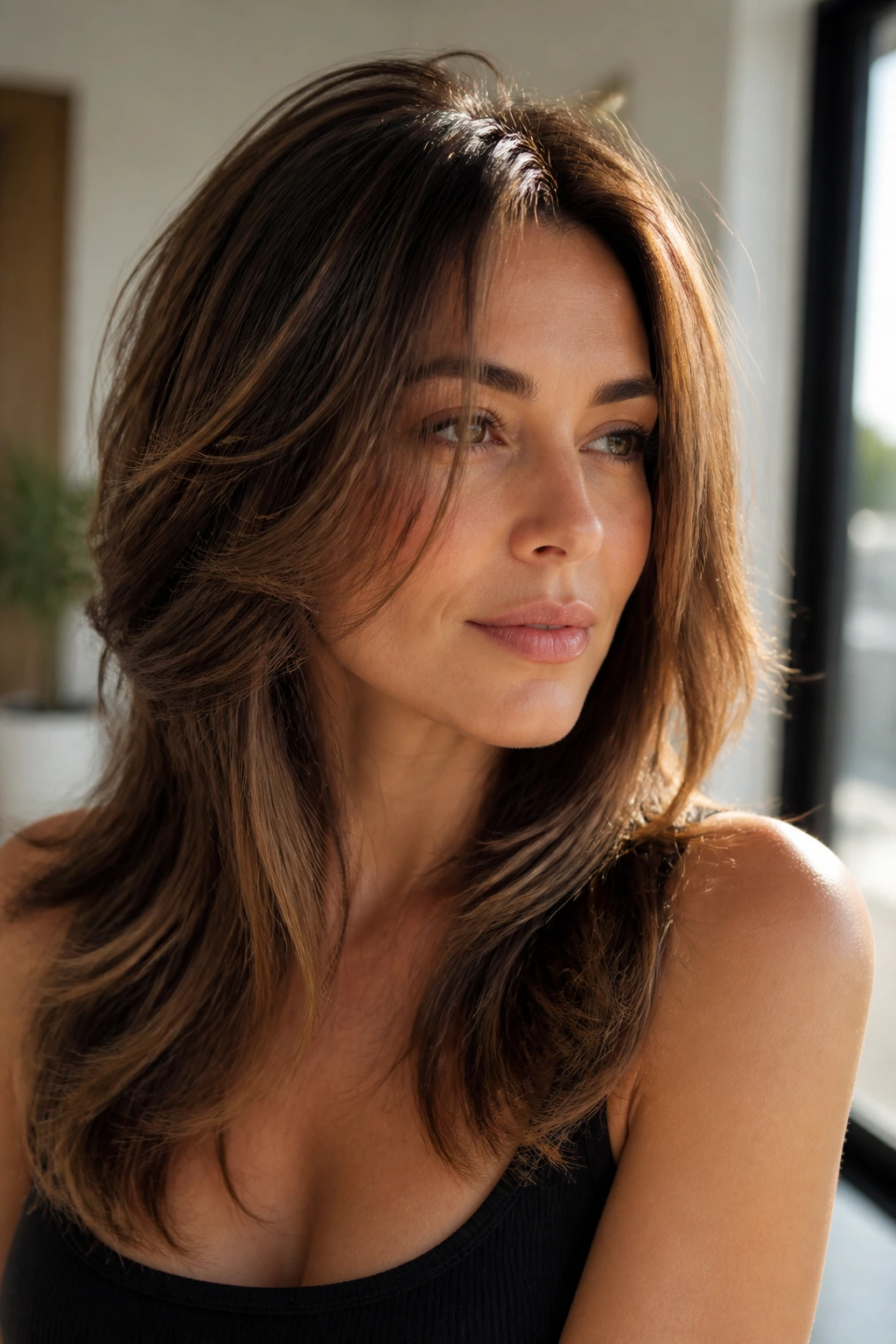
If your crown lies flat no matter what you do, the layering has to do real work. A volume-boosting butterfly cut puts some lift near the top without turning the haircut into a teased mess.
The stylist may need to shorten the top transition layers a bit more than usual and remove weight from the crown area so the roots can rise. That’s where a round brush, root clips, or a quick roller set can make the difference between “layered” and “flat.”
This version is not for someone who wants zero styling. It is for someone who wants the haircut to cooperate once you give it a little push.
33. Layered Butterfly Cut for Heavy Hair
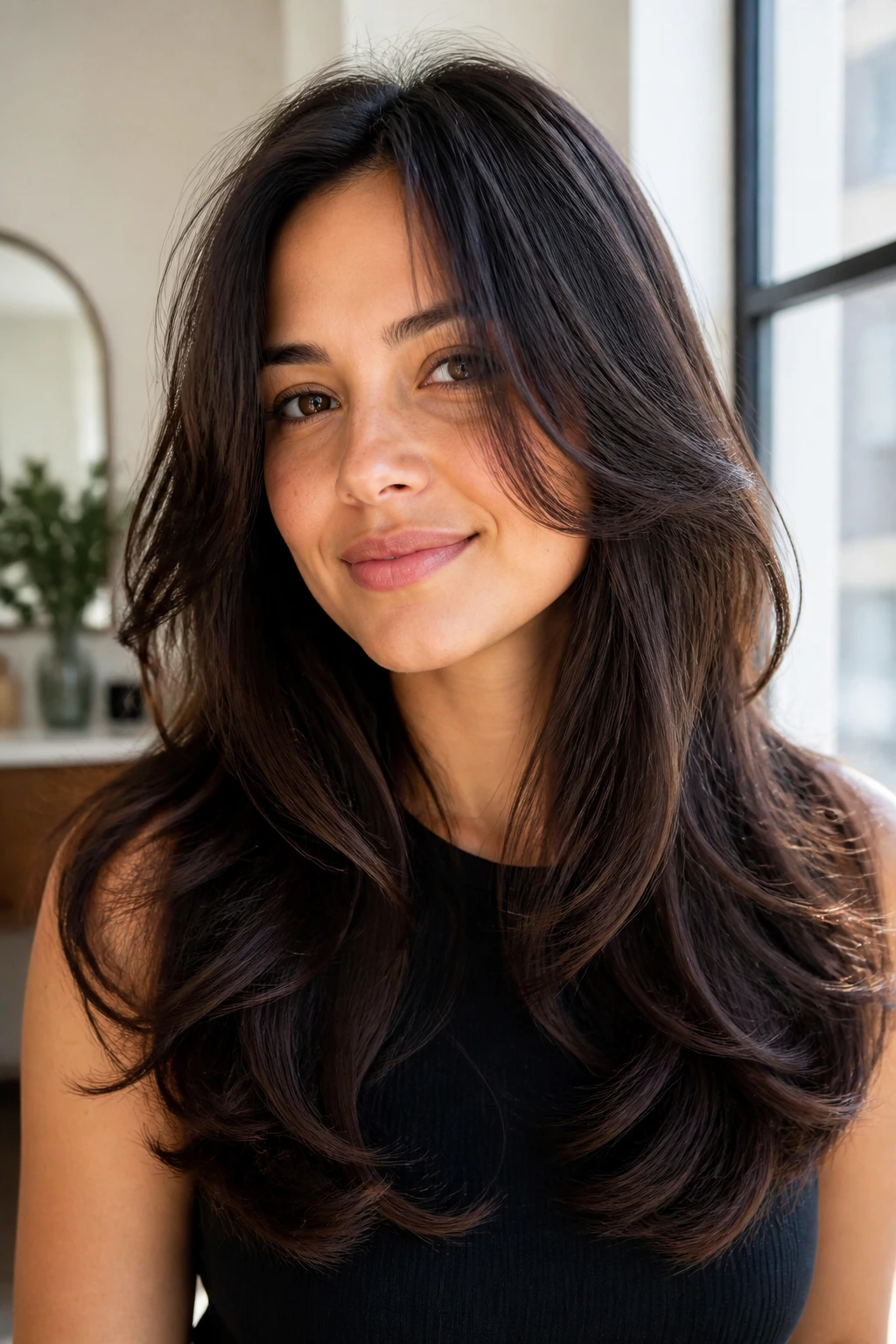
Heavy hair often needs layers not because it lacks shape, but because it has too much of it in the wrong places. This version removes bulk where the hair stacks up and keeps the outline from turning boxy.
The best move is usually to thin the interior rather than strip the ends. That keeps the length looking full while making the whole head easier to move, dry, and pin up. A strong face frame can help too, since heavy hair tends to drag downward if the front stays too blunt.
The result should feel lighter on the head, not just look lighter in photos. That distinction matters.
34. Air-Dried Butterfly Cut for Busy Mornings
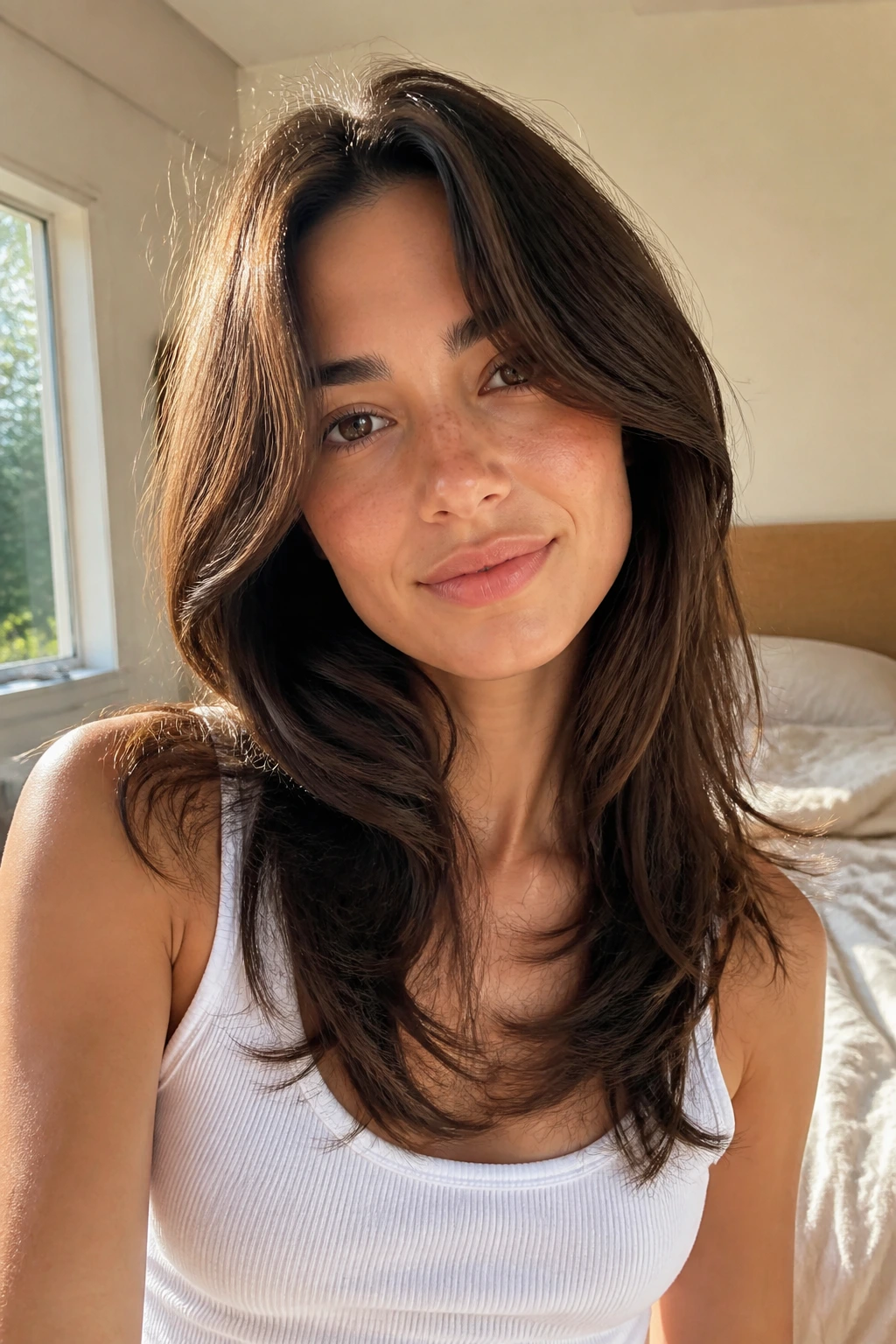
Not every butterfly cut needs a blow dryer to make sense. This version is shaped so the hair still falls in a decent pattern when you let it dry on its own.
The layers stay softer and longer than in a full blowout cut, and the face frame is kept low enough to avoid weird flip-outs. A little leave-in conditioner and a light cream can help the sections settle without puffing up.
If your mornings are packed, this is the practical choice. It gives you shape even when the styling effort is basically a towel, a quick rake-through, and a door out the front.
35. Bridal Butterfly Cut With Soft Face Framing
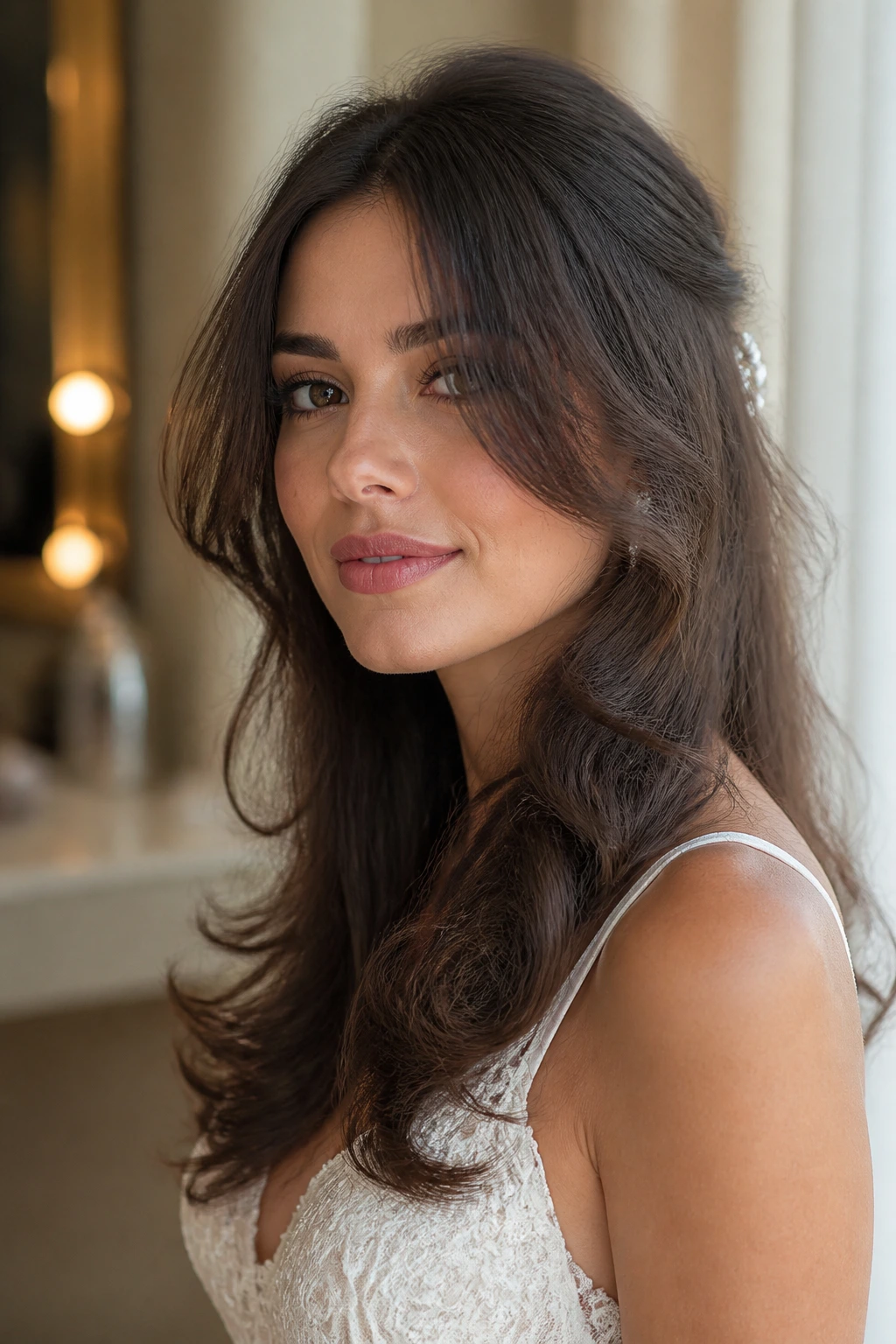
For an event look, the butterfly shape gives the hair a built-in frame before you even add pins or curls. The front layers can be curled away from the face, tucked into a half-up style, or left loose to soften an updo.
What makes this version useful is the movement around the temples and cheekbones. It keeps formal styling from feeling too stiff. Even a low bun looks less severe when the front pieces are cut to bend and float instead of lying flat.
This is a smart option if you want a haircut that works for an event and still looks good the next day. The haircut does the heavy lifting before the styling starts.
36. Butterfly Cut With Internal Layers
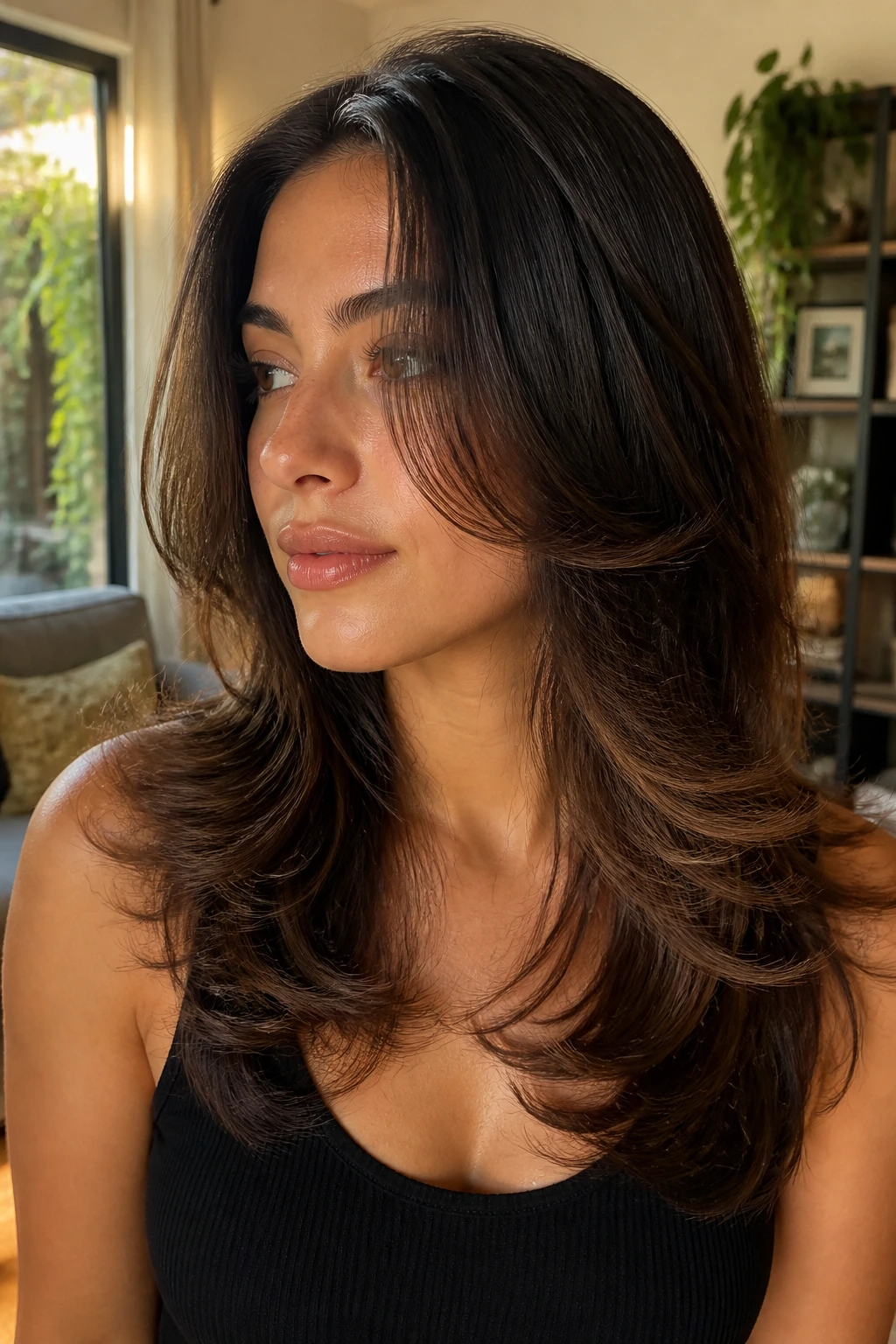
Internal layers are for people who want movement without broadcasting every step of the layering. The top surface stays smoother, while the inside of the haircut is lightened enough to improve flow.
That makes this cut a useful middle path. It keeps the outer shape neat, which helps if you wear your hair straight or in a polished bend, but it still prevents the bottom from feeling dense and heavy. It also grows out in a calmer way than a cut with loud, visible steps.
If you’ve hated layered hair that looked chopped from the front, internal layering may be the fix. Quiet work. Good payoff.
37. Butterfly Cut With Blunt Ends
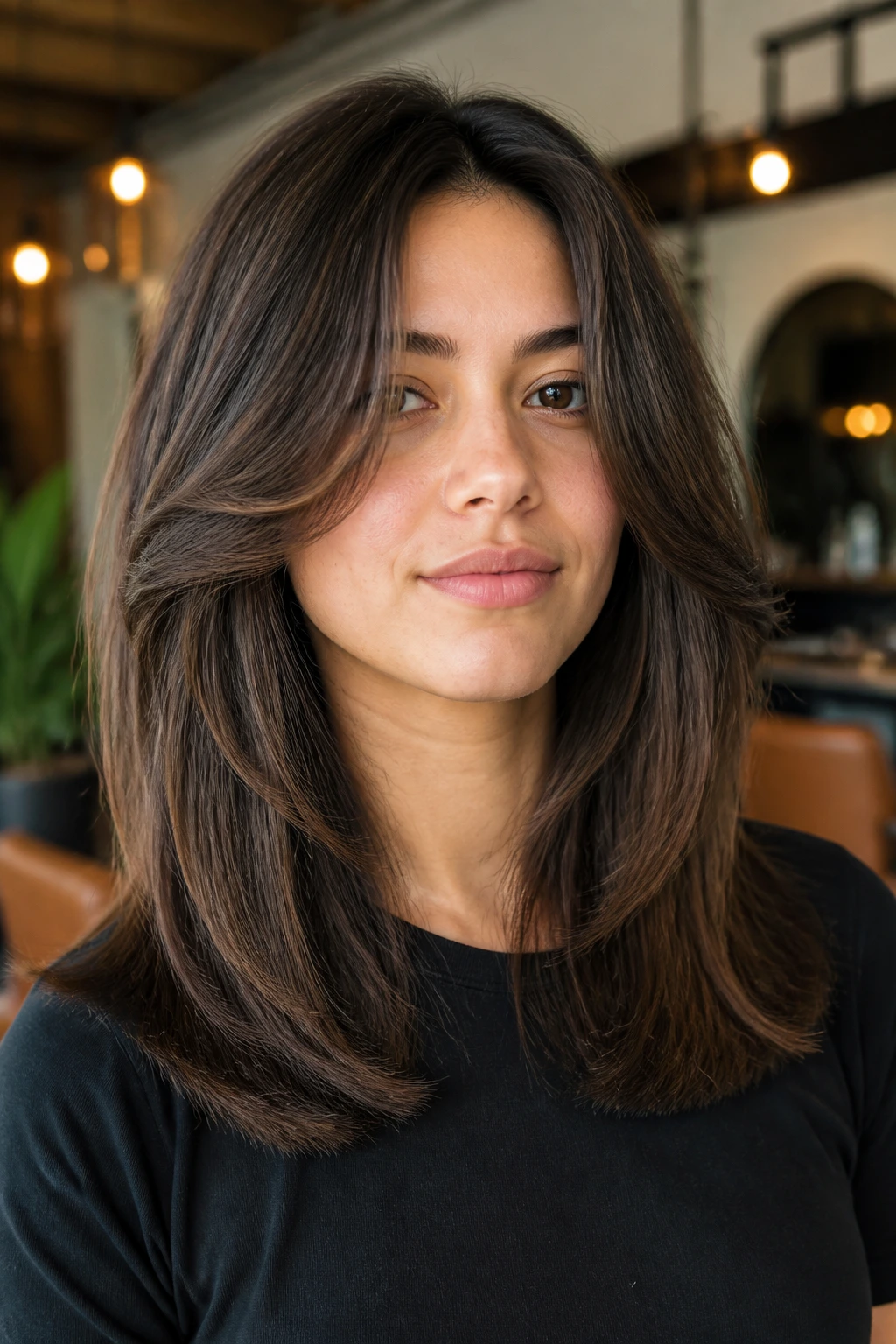
Blunt ends and butterfly layers sound like opposites, but that contrast can be useful. The perimeter stays strong and thick-looking, while the upper layers still create lift and face framing.
This version is especially good for finer hair that needs the illusion of density at the bottom. The blunt line keeps the ends from looking scraped thin, and the layers above add movement where the eye wants it. It can also make the haircut feel more modern than a heavily feathered finish.
The key is not over-layering the lower half. Keep the hemline solid, then let the top do the moving.
38. Butterfly Cut With Piecey Layers
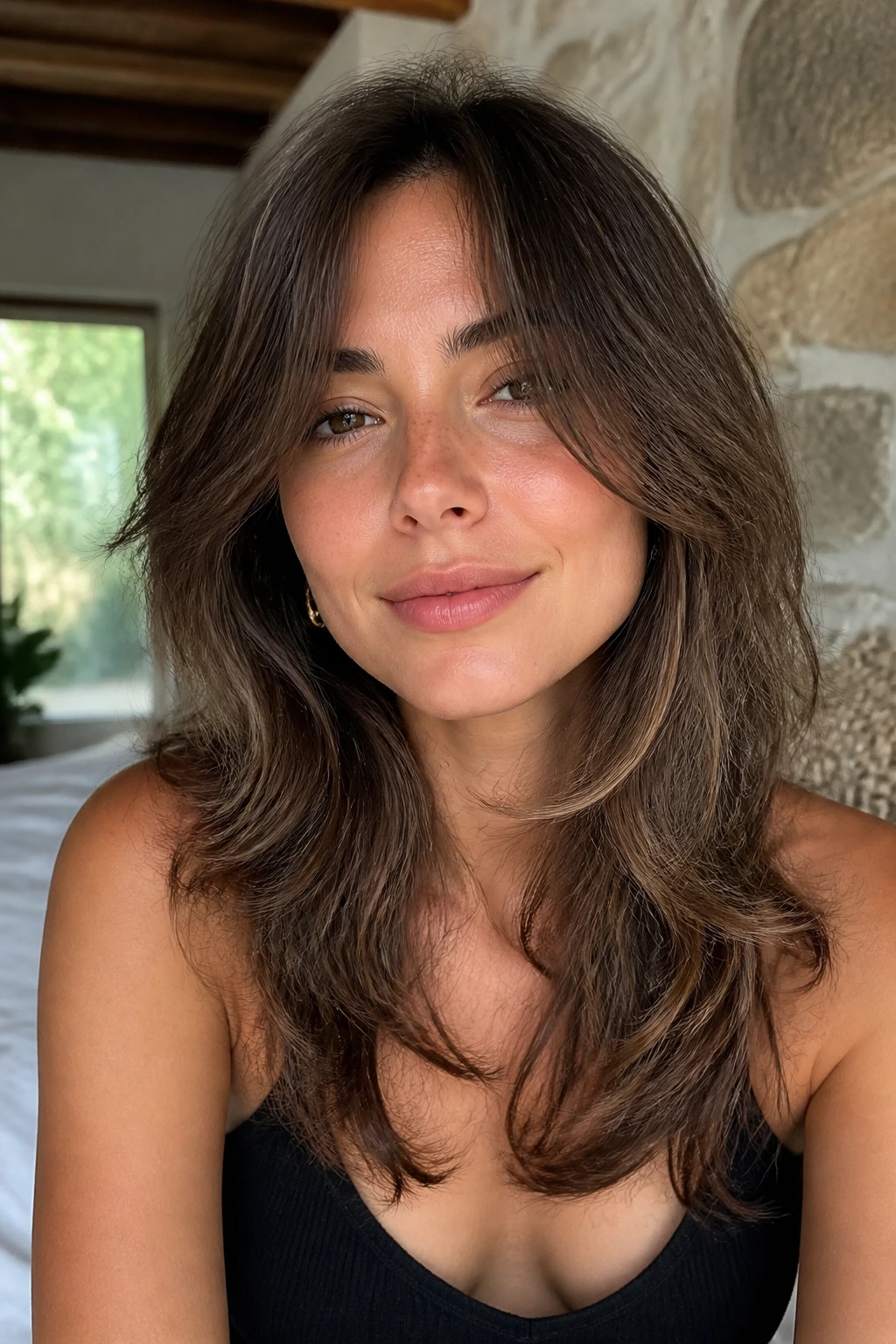
Piecey layers make the cut look more separated and a little more lived-in. Instead of one soft curtain, the hair breaks into visible sections that catch light and move independently.
This works well if you like texture cream, a touch of grit, or styling with fingers instead of brushes. The result feels less salon-smooth and more relaxed. Still butterfly, just with edges.
It’s a good fit for hair that naturally has some bend or grip. On ultra-smooth hair, you may need a texturizing spray or a light bend with a flat iron to keep the pieces from falling together.
39. Retro 90s Blowout Butterfly Cut
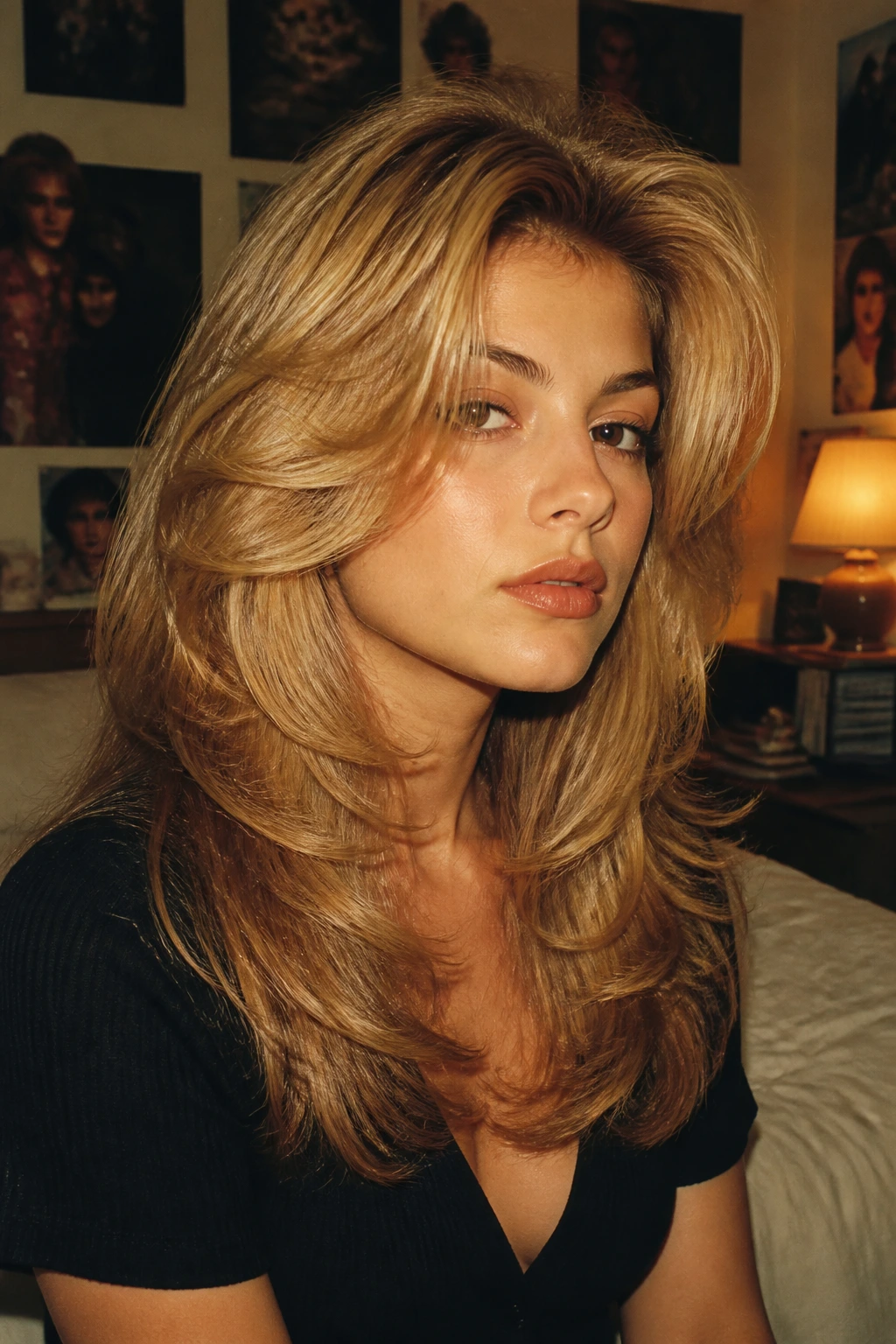
This is the big, glossy, face-framing version with a little nostalgia baked into it. The layers are designed for volume, and the ends usually turn outward or under with that familiar 90s swing.
The key detail is the contrast between the short front and the longer lower layers. That contrast gives the blowout its drama. If the layers are too subtle, the retro look disappears and you’re left with a regular layered cut.
This version loves a round brush, velcro rollers, and a bit of patience. It’s not subtle. That’s the charm.
40. Dark-Hair Butterfly Cut With Seamless Layers
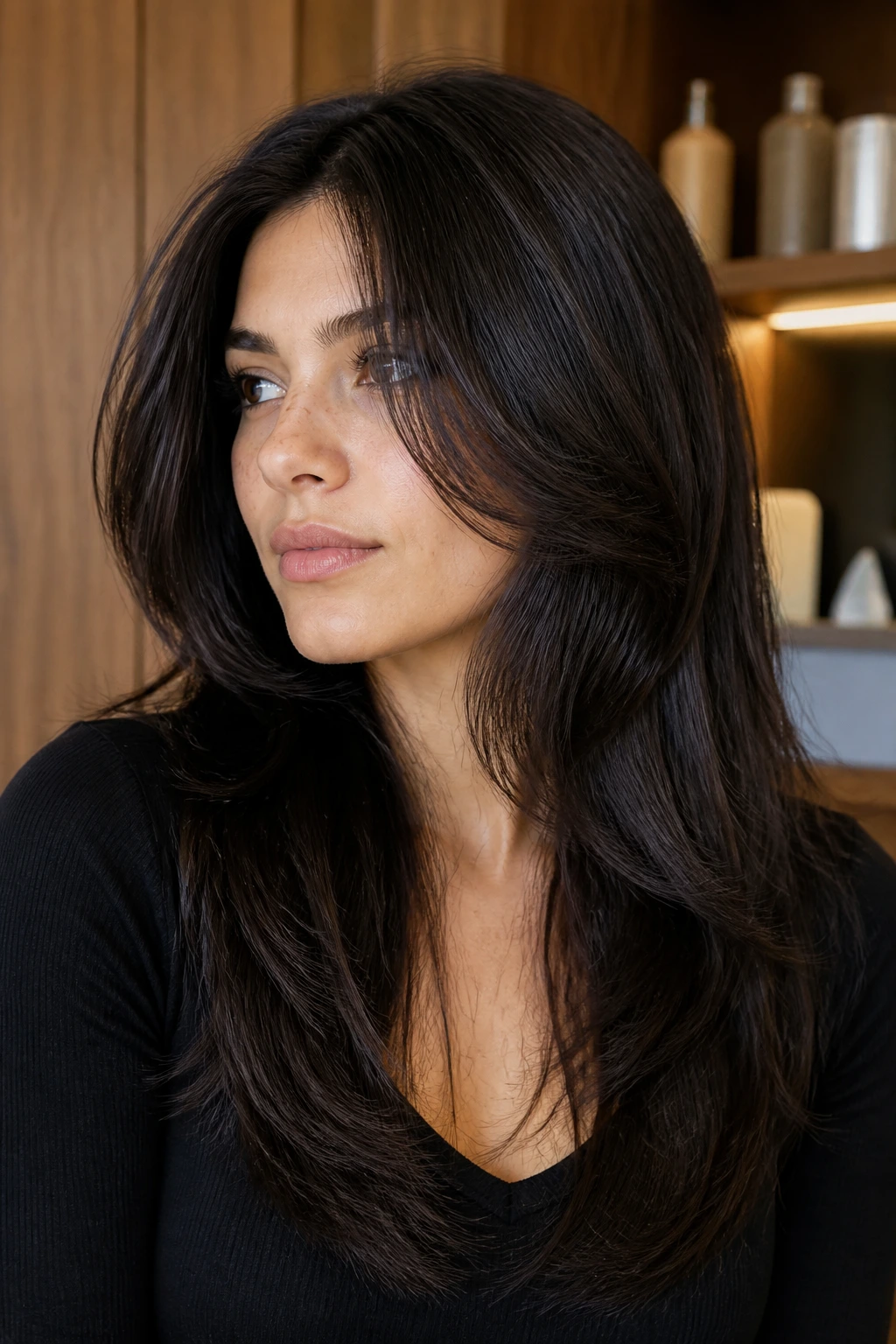
Dark hair can hide layering if the cut is too soft or the shine is too uniform. Seamless layers solve that by keeping the shape smooth while still letting the light catch the movement.
This version is useful when you want the haircut to look rich and full rather than chopped. The layers should read in motion, not in hard steps. That’s especially important on very dark brunette or black hair, where every line can either glow or disappear.
A glossing serum or light shine spray helps the shape show up without turning the hair greasy. On dark hair, polish matters.
41. Blonde Butterfly Cut With Lighter Ends
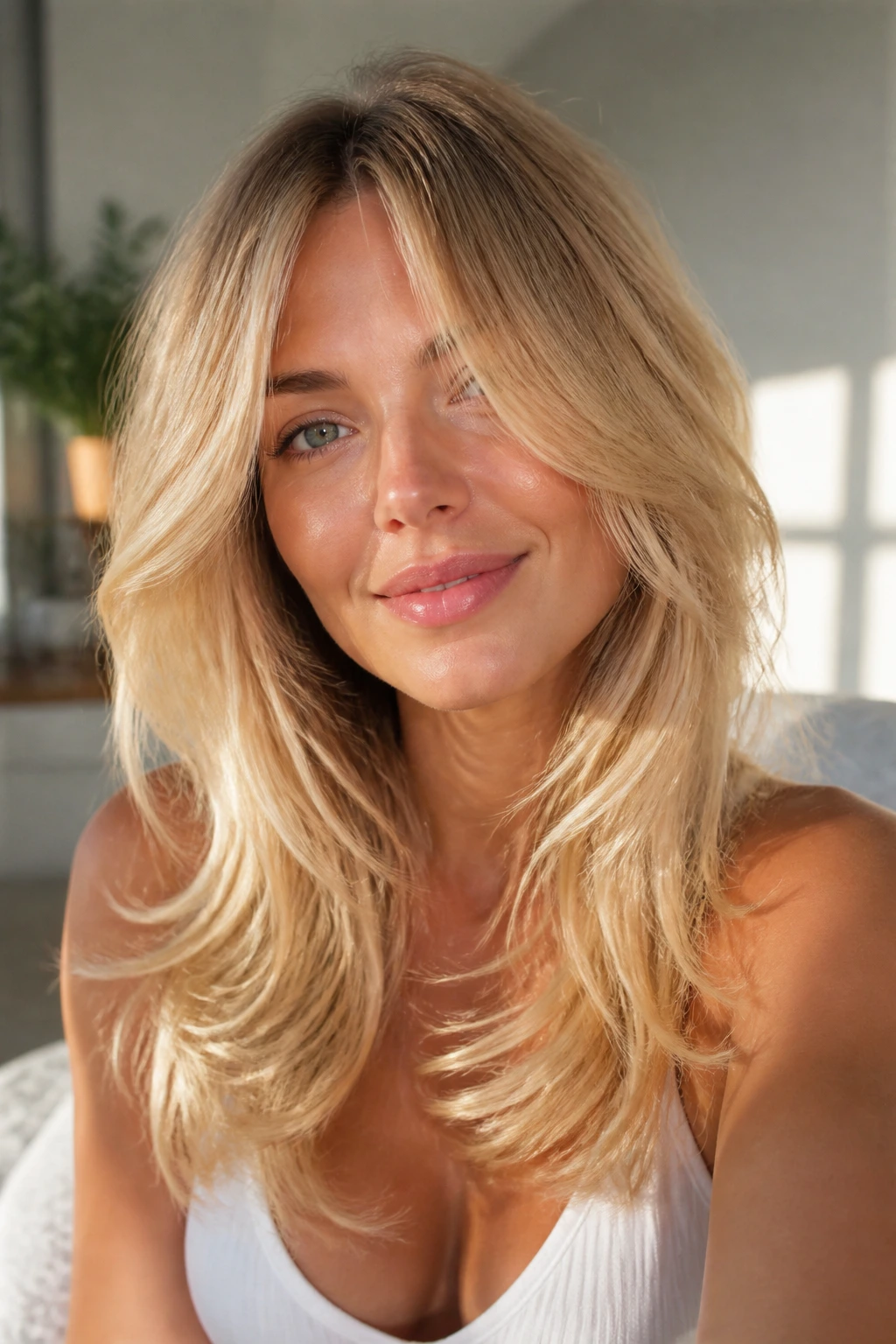
Blonde hair tends to show texture and separation easily, which makes it a good canvas for butterfly layers. Lighter ends can make the layers look even airier, especially if the color has dimension through the mids.
The danger is over-lightening the tips so they look stringy. Keep the lower section healthy and thick enough to hold the shape. The face frame can be a little brighter to emphasize the cheekbones, but the cut should still carry the look on its own.
This version works especially well with soft curls or a loose blowout. The light catches every bend.
42. Copper Butterfly Cut With Warm Dimension
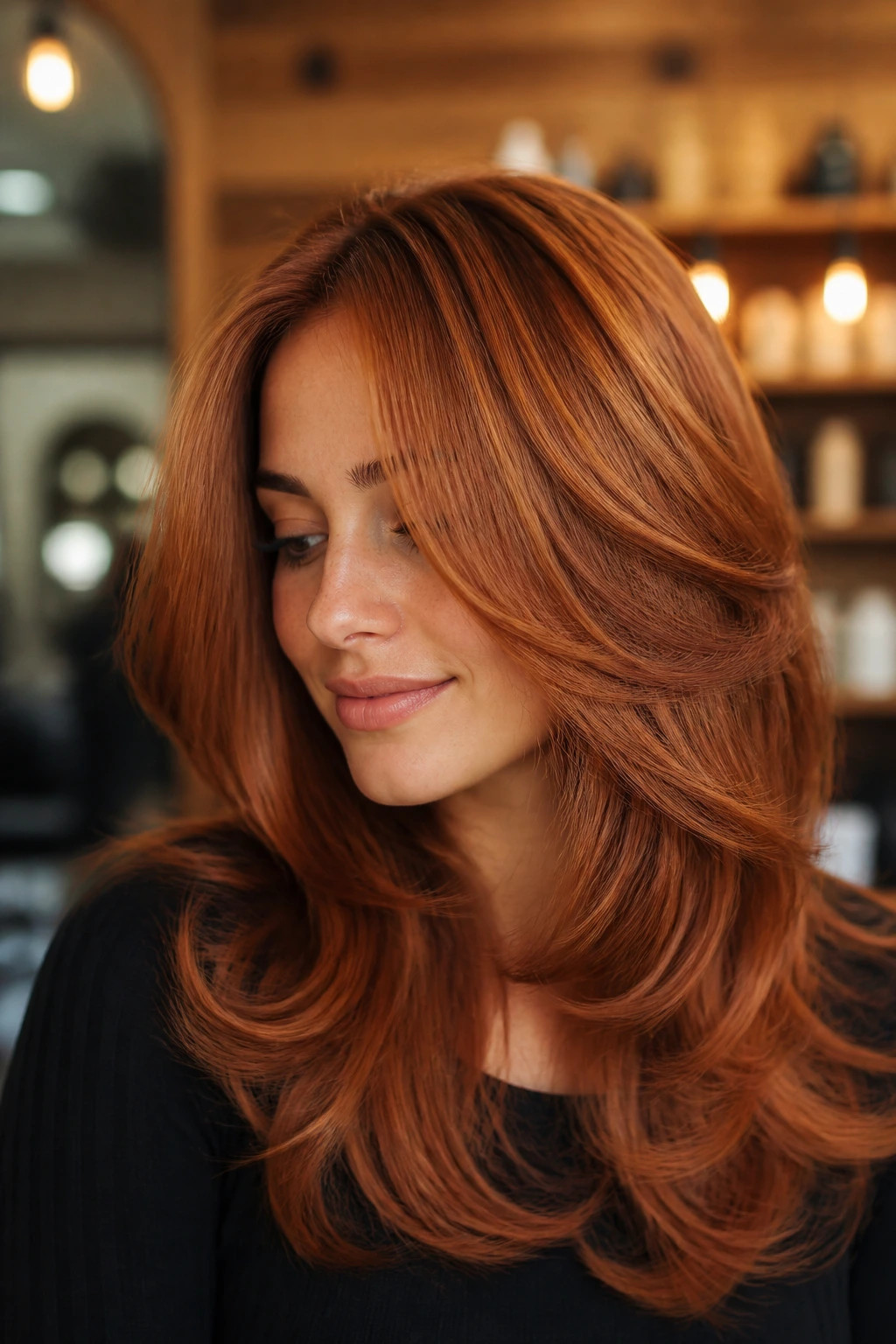
Copper hair has a way of making layers look more alive, because the color shifts every time the light moves across it. The butterfly cut plays into that by giving the ends and face frame somewhere to catch and reflect that warmth.
The shape should stay soft enough to let the color glow, not fight it. Too much texture can make copper look frayed. A controlled layer pattern with a rounded face frame usually keeps the color rich and the haircut clean.
If you want hair that looks like it has heat in it even when it’s freshly washed and air-dried, this is a sharp choice. Strong shape. Strong color. The two do the work together.
How the Butterfly Shape Builds Lift Without Losing Length
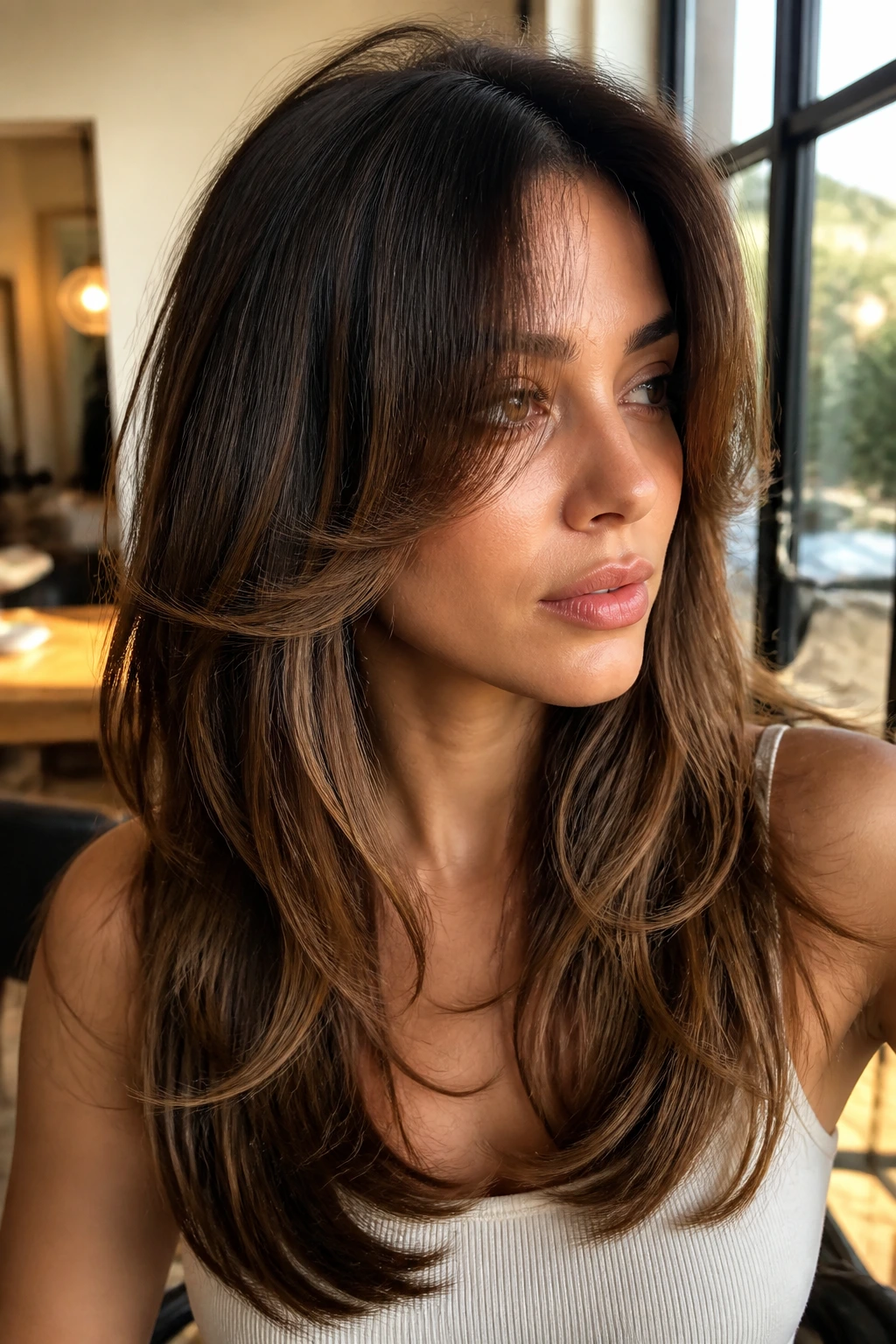
The whole trick behind butterfly haircuts is that they split the job in two. The upper layers lift the face and crown, while the lower layers keep the long line intact. That’s why the haircut can look full without feeling chopped.
A good butterfly shape usually has the shortest pieces starting around the cheekbone, lip, or chin, depending on the face and texture. From there, the layers should fall into longer sections that still allow the hair to swing. If the transition is too abrupt, the shape turns into a shag. If it’s too soft, the haircut loses its reason for existing.
The best cuts also account for how hair behaves when it dries. Wavy hair springs, straight hair hangs, curly hair shrinks, and thick hair stores weight in a way that can flatten the front. A stylist who understands that will cut differently for each head. Same idea. Different geometry.
The Brushes, Clips, and Products That Make Styling Easier
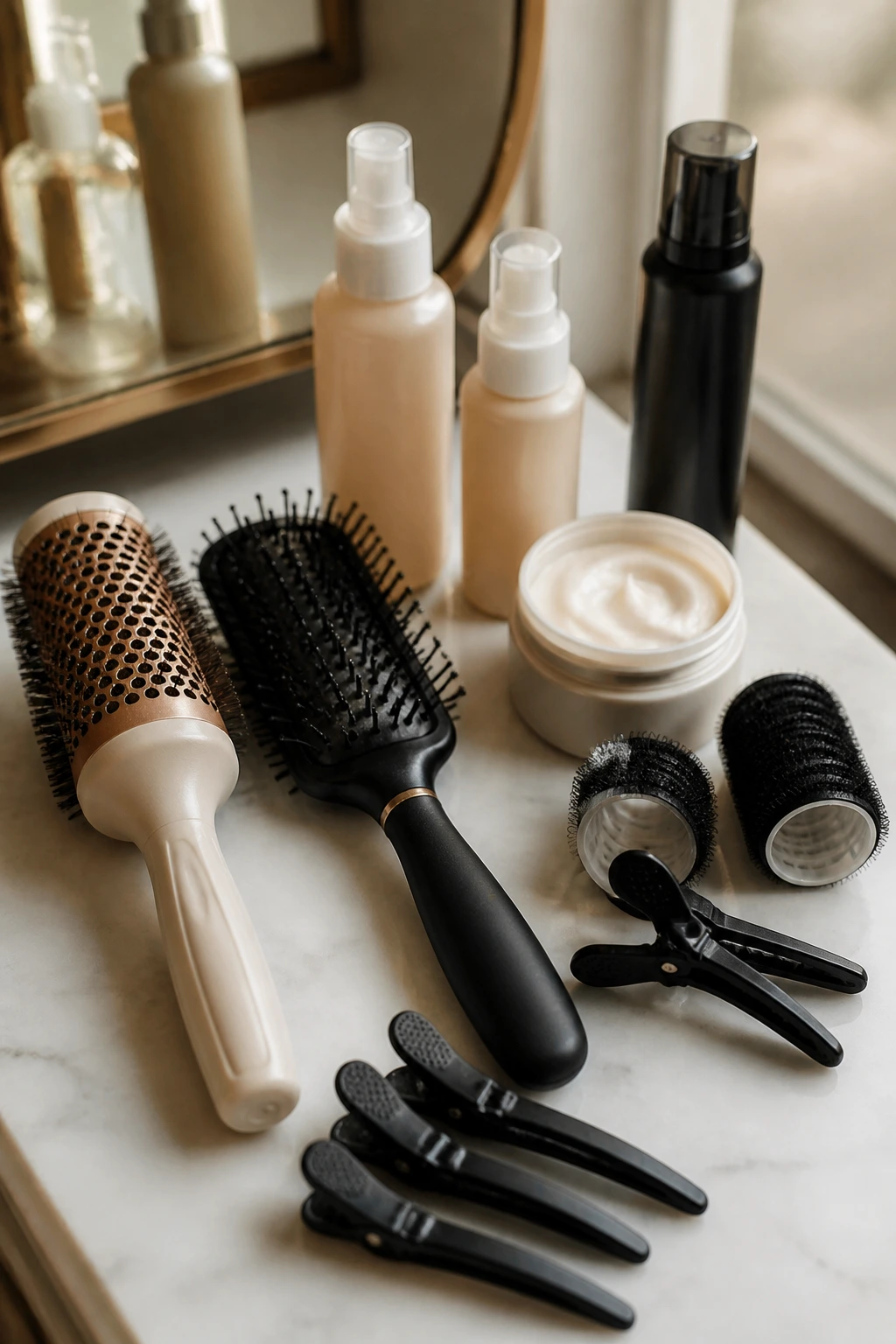
The right tools do not turn a bad cut into a good one, but they do make the shape easier to see and easier to keep. Butterfly layers usually need a little coaxing at the root and a little direction through the front pieces.
-
Large round brush: Best for lifting the crown and curving the front layers away from the face. A 2- to 3-inch barrel is the sweet spot for long hair.
-
Vent brush: Handy for rough drying when you want speed more than polish. It helps move air through thick sections without trapping heat.
-
Duckbill clips: These keep the top sections separated while you work on the lower layers, which stops the hair from collapsing before it cools.
-
Heat protectant: Non-negotiable if you blow-dry or iron the front pieces often. Look for one that doesn’t leave a sticky film.
-
Velcro rollers: Useful when you want the crown to stay lifted after a blow-dry instead of dropping flat in ten minutes.
-
Light mousse or root spray: Helps fine or slippery hair hold shape at the roots without weighing down the ends.
-
Smoothing cream or serum: A small amount on mids and ends keeps layered hair from puffing out, especially on coarse or frizzy textures.
What to Tell Your Stylist Before the First Snip
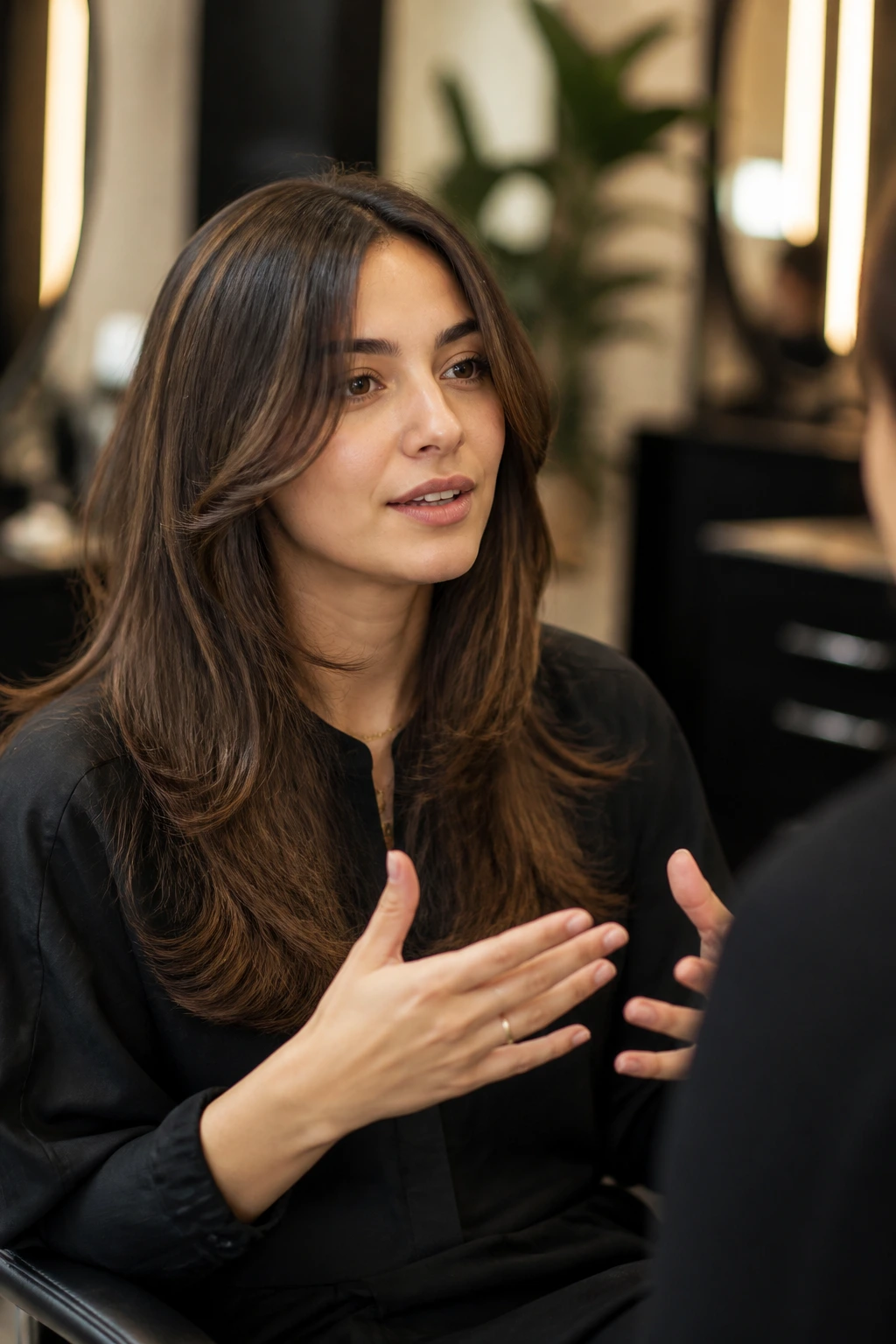
Bring photos. Not one. Two or three. And make sure at least one shows the side view, because that’s where the butterfly shape either makes sense or falls apart.
Say where you want the shortest front pieces to land. Cheekbone, lip, or chin are very different answers. If you leave that vague, you may end up with a cut that looks close in the mirror and wrong every time you turn your head. Also mention how you wear your part, how often you heat-style, and whether you usually tuck your hair behind your ears. Those tiny habits change where the layers should sit.
If your hair is curly, tell the stylist how much it shrinks. If it’s fine, tell them you want movement without losing bulk at the ends. If it’s thick, say whether you want weight removed or just shape. That conversation matters more than the name of the cut.
How to Style Butterfly Haircuts on Busy or Fancy Days
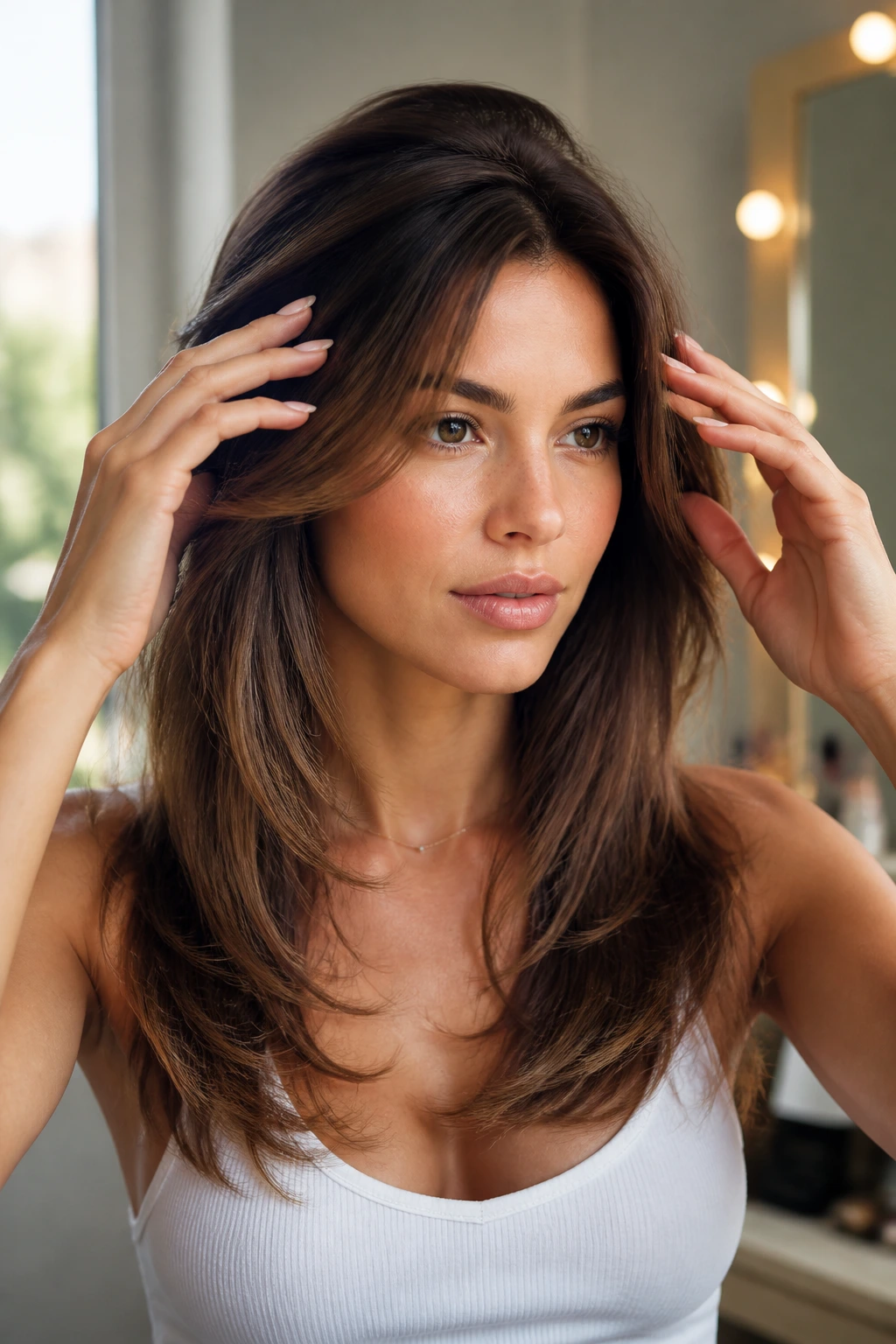
For busy mornings: rough dry the roots first, then bend only the front pieces with a brush or iron. You do not need a full blowout for the haircut to read as butterfly; you just need the face frame to move.
For polished days: round-brush the crown away from the head and roll the front layers under or away from the face, depending on the finish you want. Let each section cool before touching it. Hot hair lies.
For air-dried texture: use a light cream or mousse and keep your hands out of it once the shape starts to set. The haircut should do the work, not constant fiddling.
For a fast part change: switch from center to side and watch how the front layers fall. Butterfly cuts can look like a different haircut with only that one move. Handy. Cheap, too.
Smart Ways to Avoid Flat, Choppy, or Overcut Layers
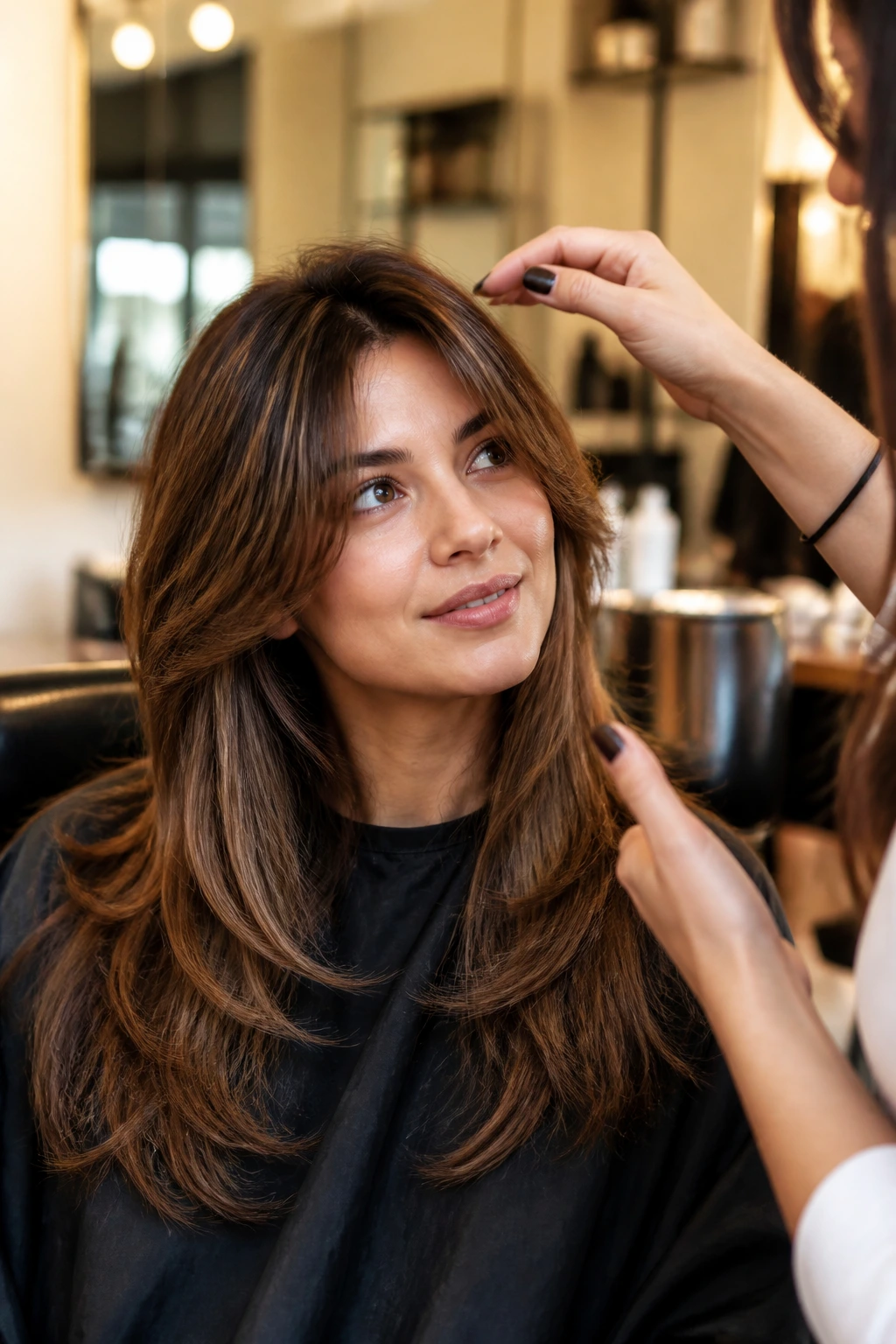
The biggest mistake is asking for “more layers” without saying where the movement should live. That can turn the front into a ladder and the back into a thin sheet. Be specific about the face frame and the amount of weight you want to keep.
Another mistake is over-thinning fine hair. It looks fine in the chair, then collapses after one wash. Keep some density at the bottom if your hair already feels delicate.
Finally, don’t ignore your styling habits. If you never blow-dry, a super-feathered butterfly cut may frustrate you. If you love a blowout, a very subtle shape may feel too plain. The cut should match the routine you actually keep, not the one you imagine keeping.
Variations and Alternatives to Try
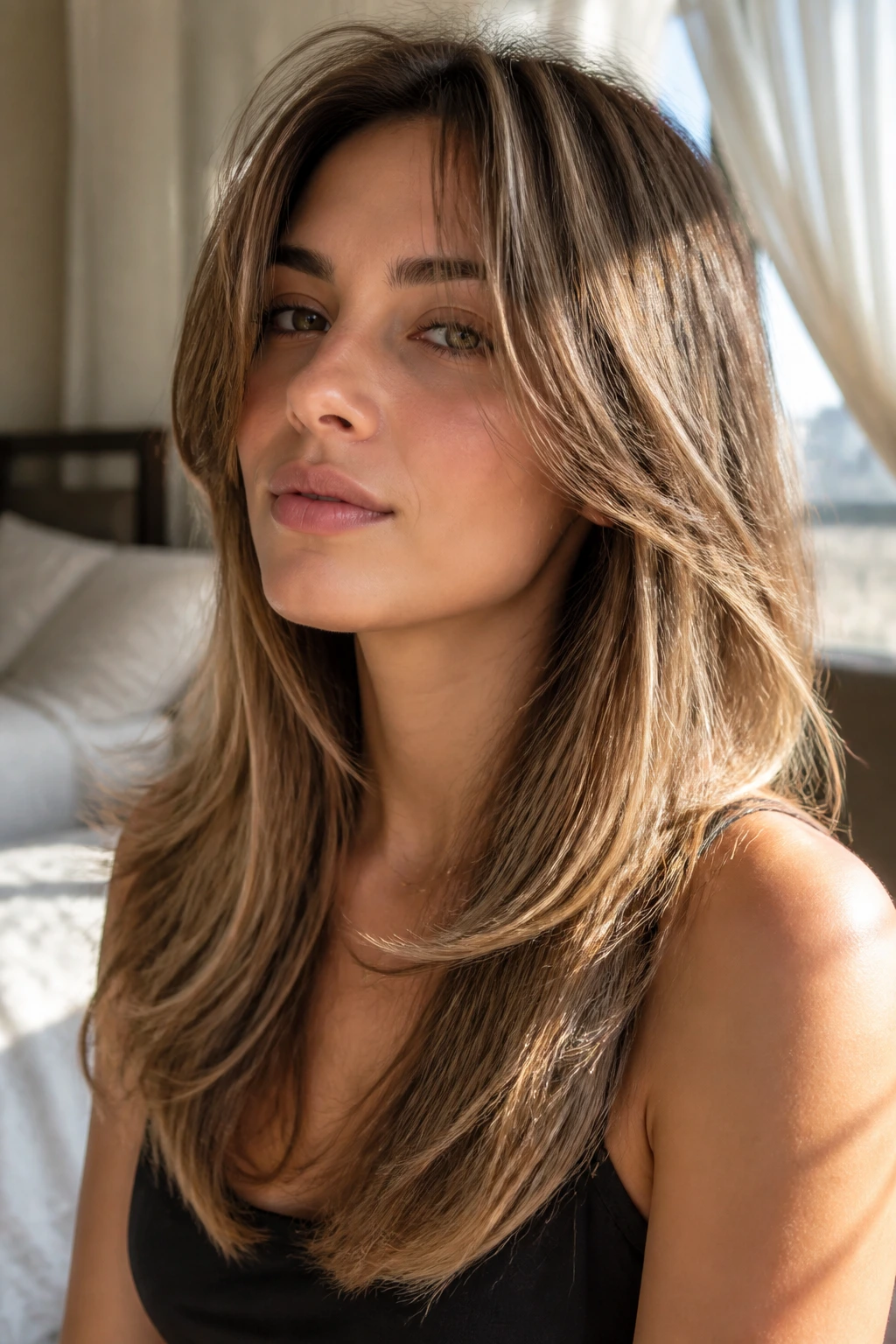
Soft-Edge Butterfly: This version keeps the layers long and the face frame gentle. It’s a good fit if you want movement but hate visible steps around the cheeks.
Textured Butterfly Shag: More pieceiness, more air, less polish. Choose this if you like your layers to read a little rougher and don’t mind styling with cream or spray.
Blunt-Perimeter Butterfly: The ends stay thick and solid while the upper layers create the movement. It suits fine hair and anyone who wants a fuller hemline.
Curly Butterfly Halo: Built for curls that need shape around the face and weight removal through the interior. Best when the curl pattern is stronger than the wave.
Blowout-First Butterfly: A cut designed to look its best with a round brush and rollers. If styling is part of the fun, this version gives you the most visible payoff.
How to Keep the Shape Fresh Between Salon Visits
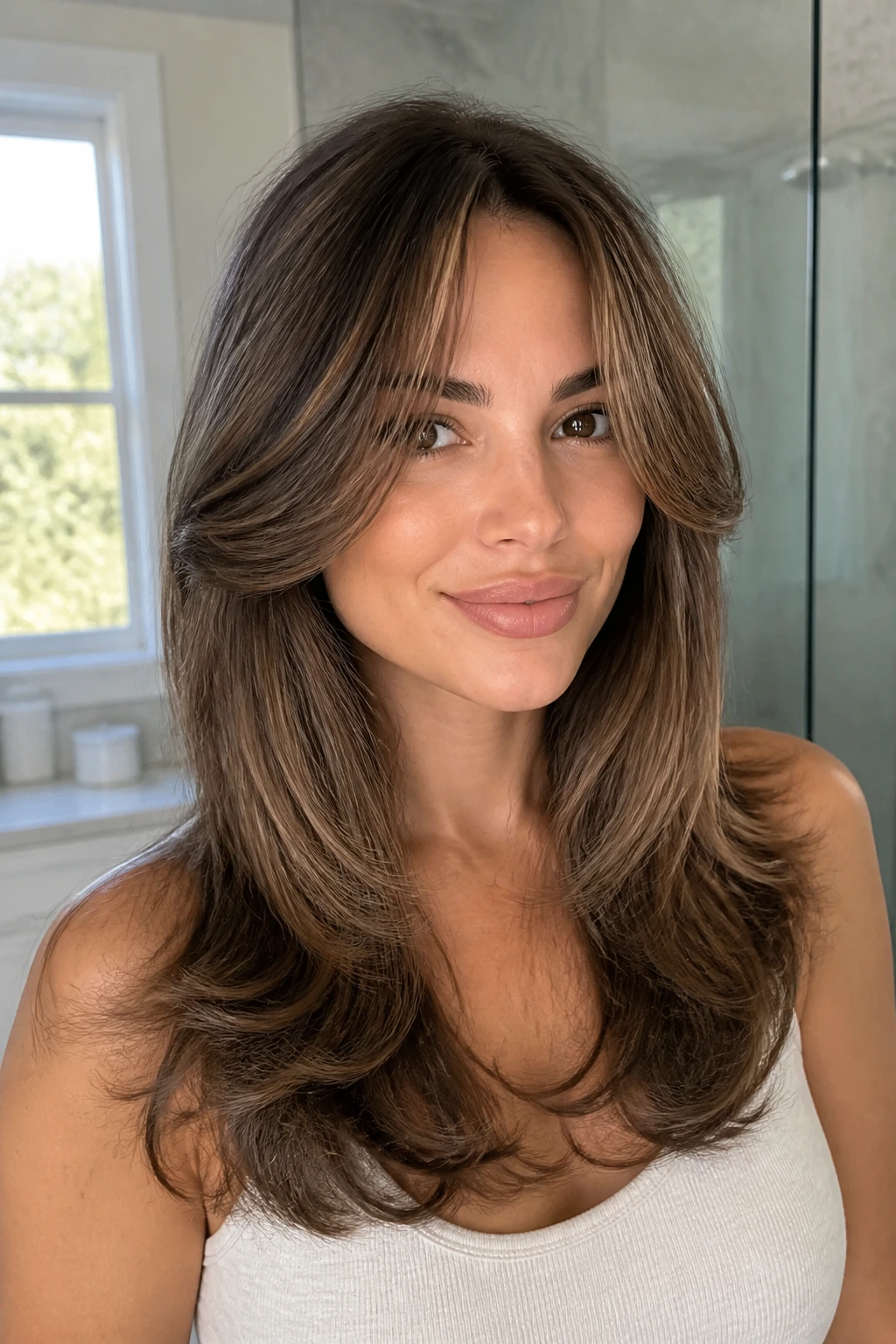
Butterfly cuts hold their best shape for about 8 to 12 weeks if you like defined layers. If you prefer a softer grow-out, you can stretch that longer, but the front pieces will start dropping toward the jaw and losing their lift.
The face-framing layers usually need attention first. Those shorter pieces show regrowth fast, especially if you wear your hair parted the same way every day. If you have bangs or bottleneck fringe, plan on tidying them more often than the rest of the cut.
At home, keep the layers from going dull by washing only as often as your scalp needs and using a heat protectant any time you style with a dryer or iron. A satin pillowcase helps the shorter front pieces stay smoother overnight, and dry shampoo at the roots can buy you an extra day of shape when the crown starts to sag. If your hair is curly, keep the trim dry and stretch the shape gently with a diffuser instead of fighting it flat.
Questions People Ask Before They Cut the Front Layers
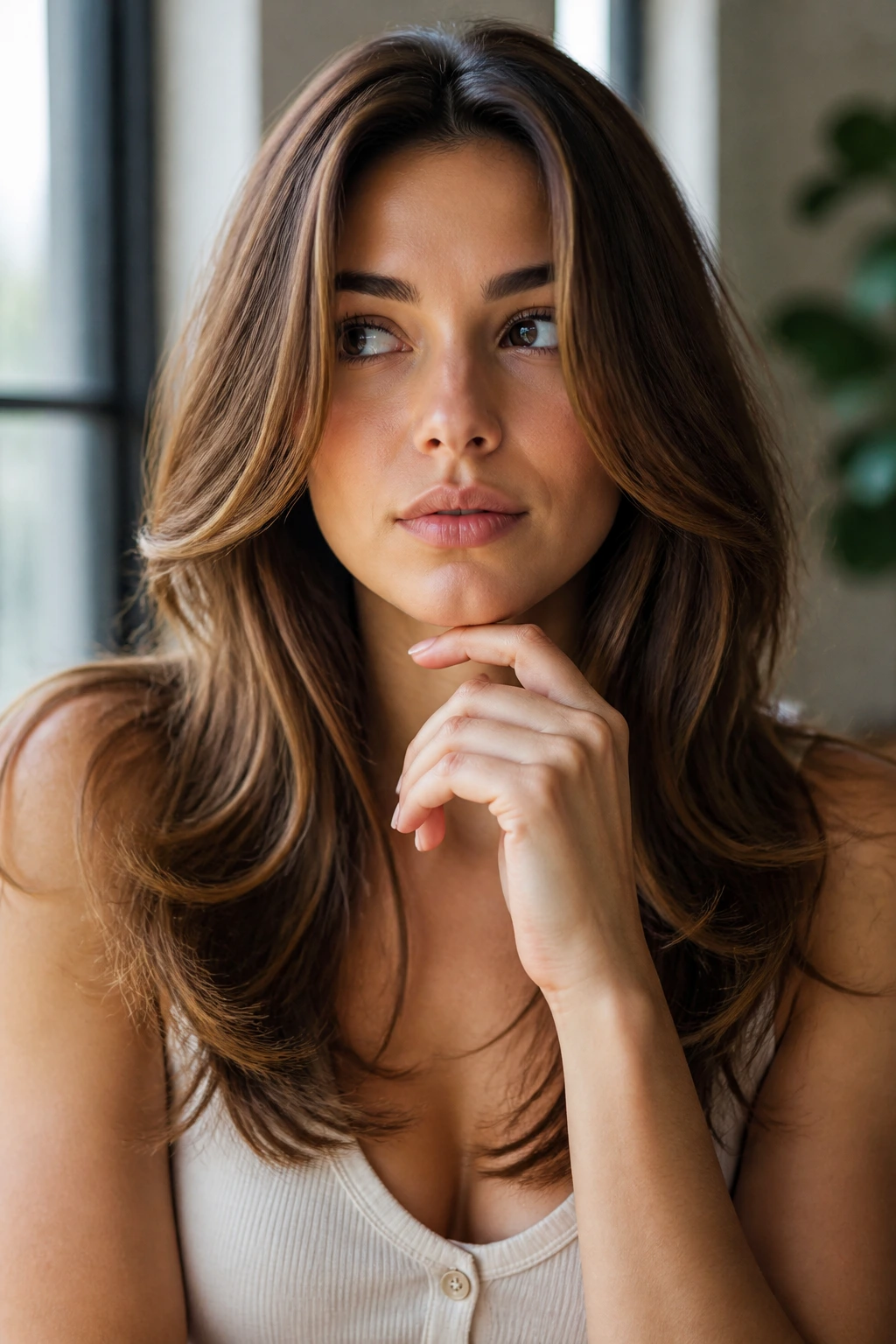
Does a butterfly haircut work on short hair?
Yes, but the shape changes. On shorter lengths, the front pieces have to stay longer relative to the rest of the cut, or the haircut stops looking like a butterfly and starts looking like a choppy bob with face-framing layers.
How short should the shortest layer be?
That depends on your face shape and texture, but cheekbone, lip, and chin are the usual landmarks. Cheekbone gives the most lift; chin gives the most softness.
Is a butterfly haircut the same as curtain bangs?
No. Curtain bangs can be part of a butterfly cut, but they’re not the whole thing. The butterfly shape also includes longer layers through the rest of the hair.
Can fine hair get a butterfly cut without looking thin?
Yes, if the layers are kept soft and the perimeter stays strong. Too much texturizing is what makes fine hair look see-through.
Does it work on curly hair?
It can, but the cut should respect shrinkage. Curly hair usually needs longer face framing and a dry or curl-aware cut so the shape doesn’t jump up too high.
How do I style it without heat every day?
Use a light mousse or cream and let the front layers fall with your natural pattern. If the cut is good, you should still get shape even when the blow dryer stays in the drawer.
What if my layers look too choppy after the cut?
Go back sooner rather than later. A stylist can soften the transition points and rebalance the face frame before the grow-out makes the issue harder to fix.
What’s the difference between a butterfly cut and a shag?
A shag is usually more textured and fragmented, with a stronger emphasis on pieceiness. A butterfly cut keeps more length and usually looks smoother through the ends.
The Shape That Still Moves
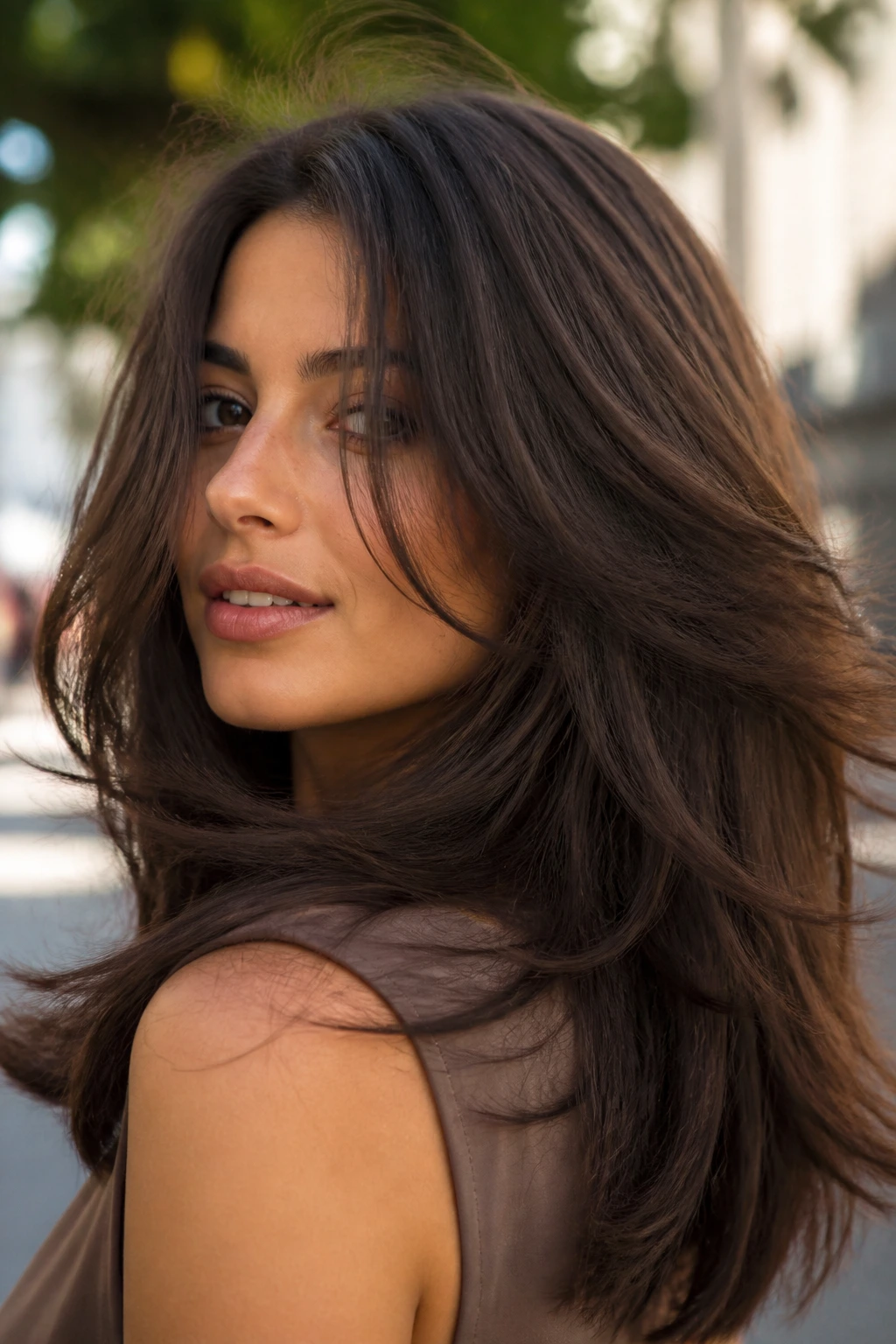
A butterfly haircut works when it earns its contrast. The front lifts the face, the back keeps the length, and the whole cut looks alive when you turn your head. That sounds simple. It isn’t, which is why the details matter so much.
The best version for you might be glossy and blowout-heavy, or soft and nearly invisible, or built for curls that spring up the second the scissors stop moving. Same family. Different result. That flexibility is the reason the cut keeps showing up in salons and why it can look fresh on one person and totally wrong on another if the layering is off.
If you bring the right photo, name where you want the shortest pieces to land, and match the cut to the way you actually wear your hair, the butterfly shape tends to repay the effort. And when it’s right, the hair still moves even on the days you barely touch it.
