



Short shaggy bobs can be a lifesaver once hair starts changing texture, because they keep shape at the perimeter while giving the crown room to move. The very short versions are the sharpest of the bunch. They sit above the collarbone, skim the jaw, and leave just enough length to tuck, tousle, or push behind one ear without the style collapsing into a block.
For older women, that matters more than people admit. Fine hair needs lift. Thick hair needs weight removed in the right places. Gray hair often gets a little wiry and wants a cut that respects that texture instead of fighting it. A good very short shaggy bob does all of that without making the head look widened through the sides.
And that’s the real appeal here: not “trying to look younger,” which is lazy advice, but getting a cut that works with the hair you actually have. Some versions are crisp and cheekbone-friendly. Others are softer, pieceier, and a little rebellious. A few are clean enough for glasses and low-maintenance mornings; others ask for a round brush and a little styling cream. The good ones all share the same trick — they look deliberate, even when they’re a bit undone.
Why These 21 Bobs Earn Their Keep
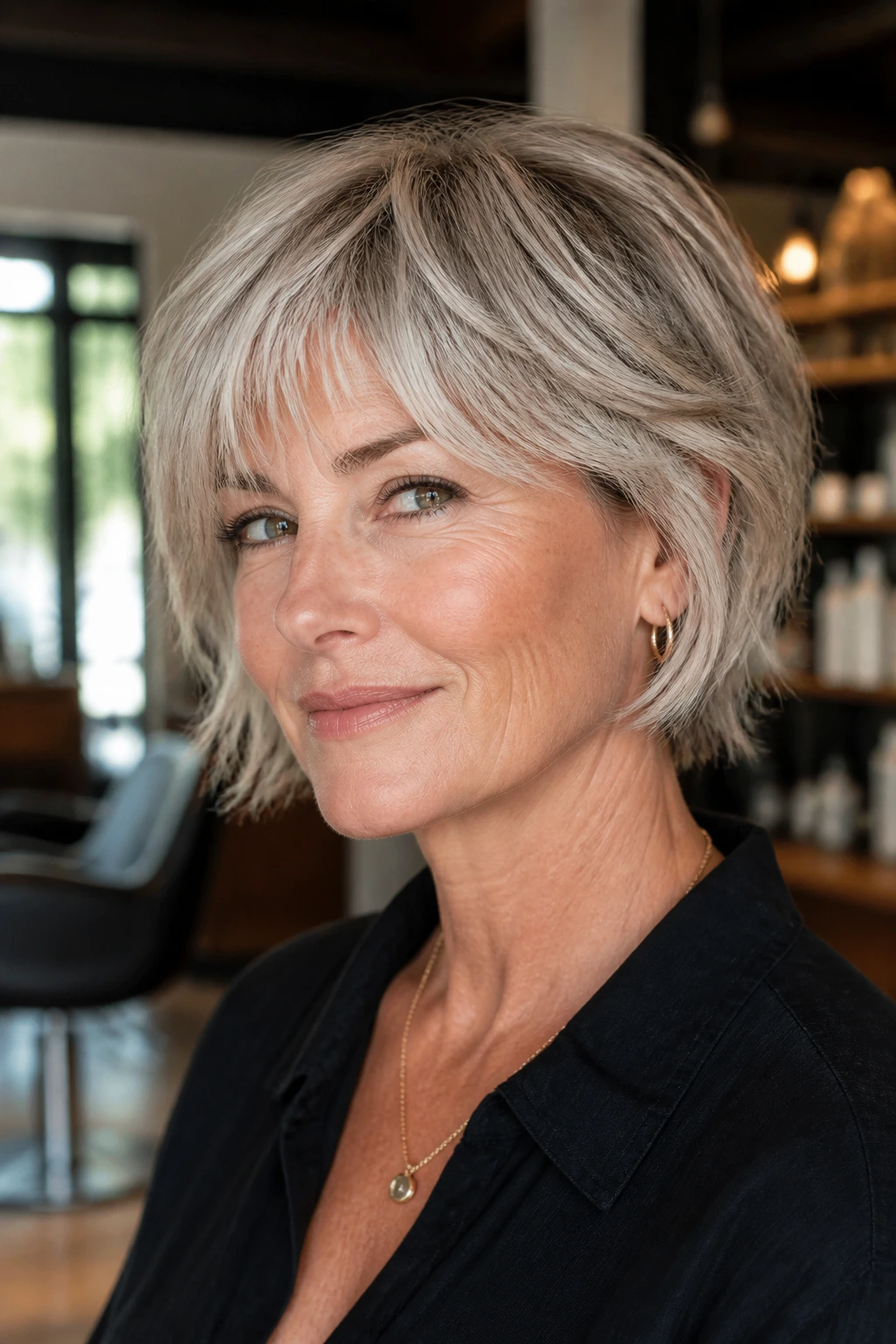
- They remove dead weight without chopping off movement: A very short shaggy bob keeps the ends light, so hair doesn’t hang in one blunt sheet around the jaw.
- They make gray and silver strands look intentional: The texture shows off salt-and-pepper color instead of flattening it into one dull block.
- They work with changing density: If the crown is thinner than it used to be, short layers and smart shaping can fake lift where you need it most.
- They grow out better than a strict one-length bob: The shaggy edge softens the grow-out line, so you don’t hit that awkward helmet phase as fast.
- They can be styled fast or fussy: A little mousse and a diffuser works for some cuts; others look better with just a bit of bend at the ends.
- They suit glasses, earrings, and necklines: The shorter length leaves room for frames, hoops, high collars, and scarves without crowding the face.
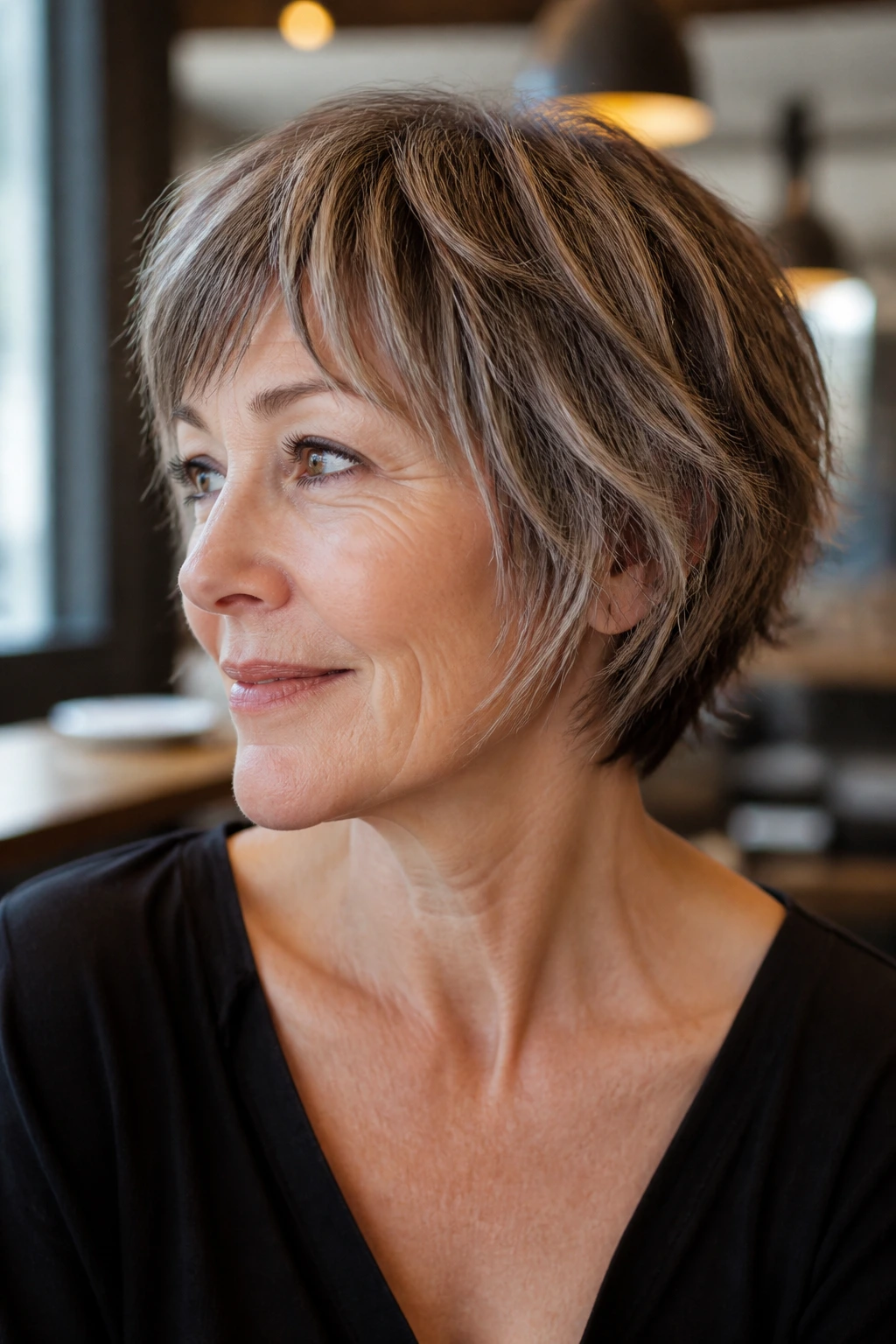
1. Feathered Jawline Bob That Skims the Cheekbones
This is the cut I reach for when someone wants softness first. The shape sits right at the jaw, but the ends are feathered so the line never looks heavy or square. There’s movement around the mouth and cheekbone area, which is exactly where a blunt bob can start to feel stern.
The trick is in the weight line. Ask for a slightly shorter back, then let the front fall just long enough to brush the cheeks when you turn your head. That little bit of swing keeps the style alive. On fine hair, it creates the feeling of fullness without stuffing the haircut with layers that collapse by noon.
Best on straight to slightly wavy hair. If your hair has a tendency to flip out at the ends, this version can still work — the feathering turns that flip into part of the look instead of a mistake. It’s a polished shag, not a messy one.
2. Razored Micro Shag Bob With Airy Ends
A razor cut can make short hair look feather-light in a way scissors sometimes can’t. This micro shag bob uses sliced, chipped ends to take away bulk, so the silhouette feels soft and a little electric instead of bulky. It’s especially good if your hair is dense and wants to puff out around the sides.
There’s a catch. Razor work is lovely on healthy hair, but if the ends are dry and brittle, too much slicing can make them fray. That’s why I like this cut best on hair that still has some spring to it. The look is piecey, not shredded.
Ask for the top to stay a touch longer than the nape, with visible separation in the outer layers. A dab of paste or texture cream on the fingertips is enough. If you use too much product, the whole thing goes stringy fast.
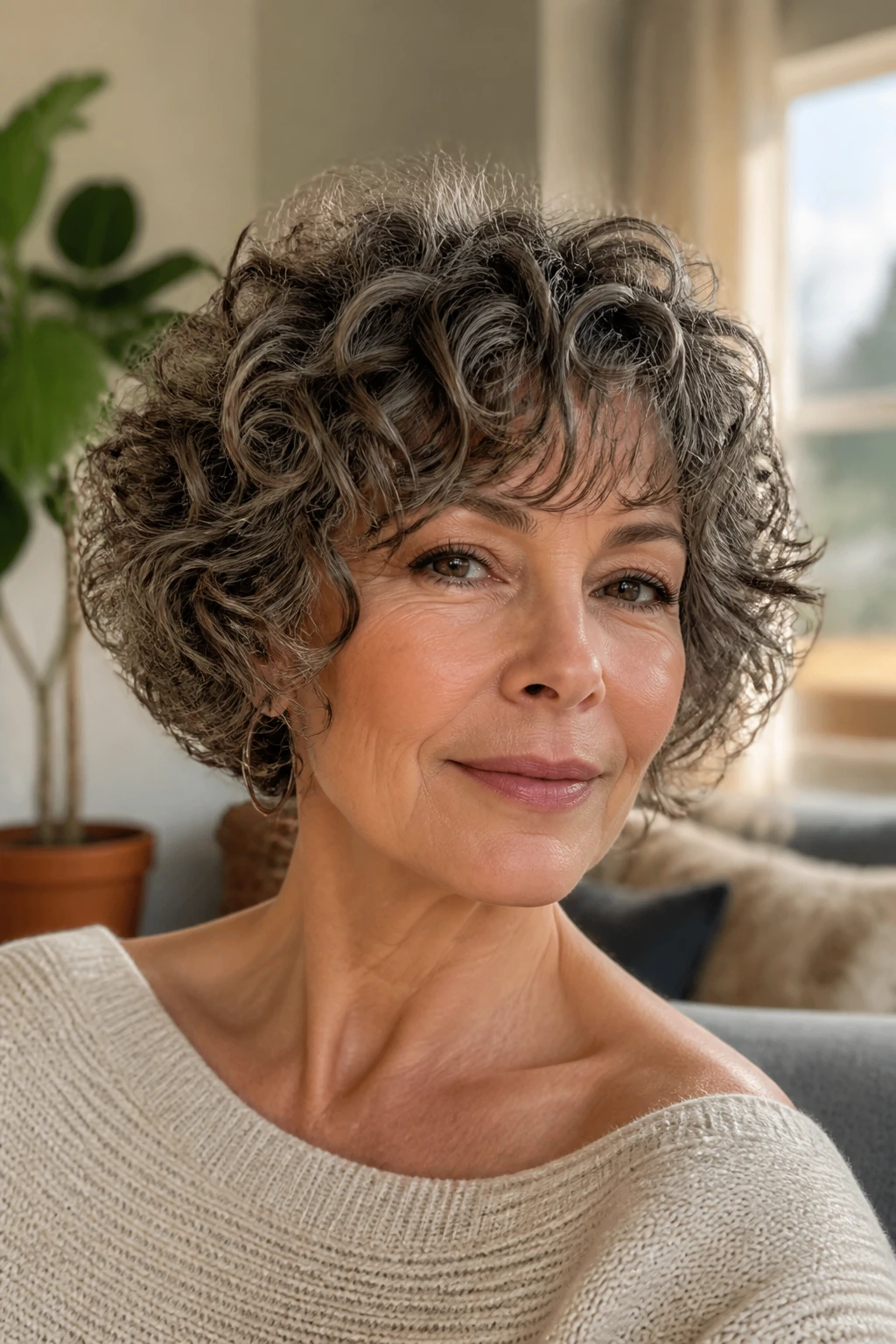
3. Curly Crop Bob With a Soft Fringe
Curly hair and very short shaggy bobs get along better than people expect, but only when the cut respects the curl pattern. This version keeps the length above the shoulders and lets the curls stack in a controlled way around the head, which avoids the wide, round “pyramid” shape that happens when curly hair is cut too bluntly.
The fringe matters here. Keep it soft and slightly longer than eyebrow length if you want movement without a curtain of curl in your eyes. Cut it dry, or at least mostly dry, so the stylist can see how the curl sits after shrinkage. That part is not optional.
This cut is ideal for women whose curls have become looser, denser, or a little frizzier with age. It gives shape without demanding perfect definition every day. A diffuser, a curl cream, and a few minutes of scrunching are usually enough.
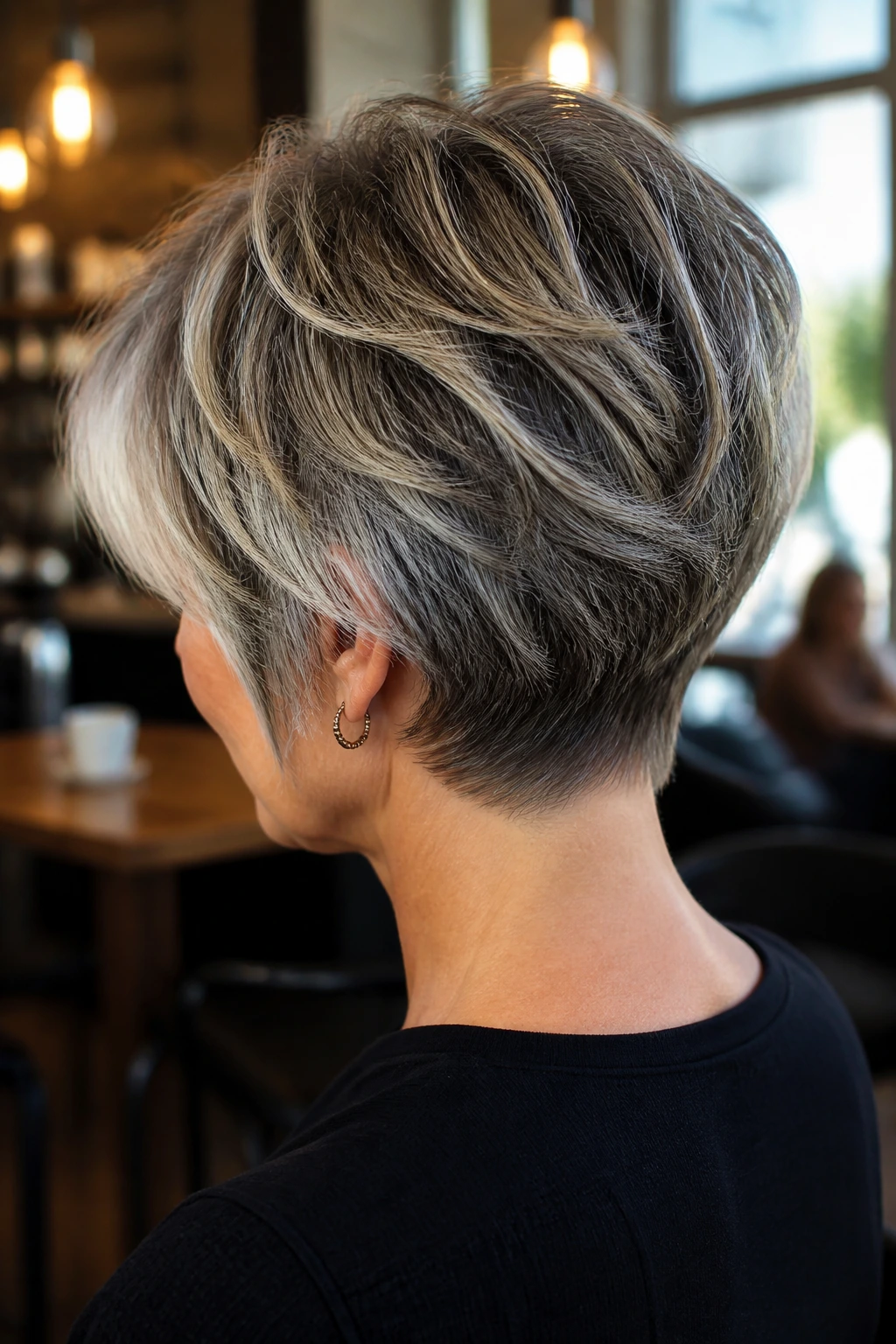
4. Tapered Nape Shag Bob That Stays Neat at the Neck
If you hate hair rubbing your collar, this one is worth a close look. The nape is tapered close to the neck, which makes the whole style feel cleaner and lighter from the back. The layers build upward from there, so the crown gets lift without the sides puffing out like a triangle.
I like this cut for thick hair and for anyone who wears jackets, turtlenecks, or scarves often. The neckline stays tidy. That’s a small thing until you’ve lived with hair that gets trapped in every collar seam you own.
Ask for the taper to be subtle, not clipped short like a pixie. You want enough length to see the bob shape from the back. A touch of styling cream at the nape keeps the finish smooth and stops those little bristly ends from sticking up.
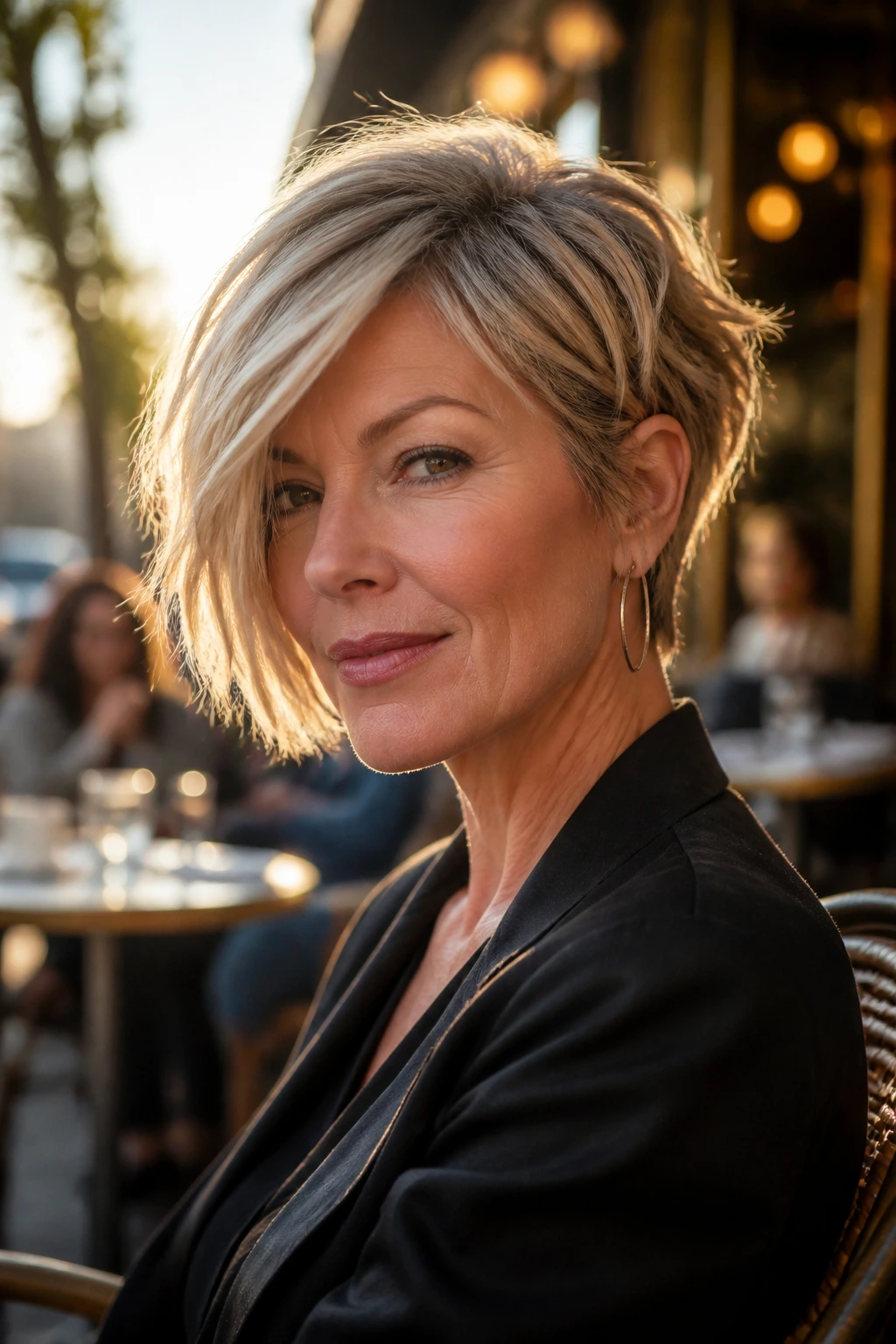
5. Side-Swept Piecey Bob With a Little Attitude
A side part changes everything. It gives the top more lift and lets one side skim the cheek while the other tucks in more neatly, which is a nice way to break up a narrow or flat face shape. The shaggy texture keeps the style from looking too formal.
This is one of my favorite options for hair with a stubborn cowlick. A deep side part can redirect the growth pattern instead of fighting it, and the piecey ends help hide the fact that one side may want to behave differently from the other. Hair is rarely perfectly symmetrical. Why pretend?
If your hair is fine, keep the layers minimal and the ends light. Too much slicing at the crown can make it go limp. A root-lifting spray at the part and a quick blast with a blow-dryer usually does the trick.
6. Curtain-Bang Short Shag Bob That Softens the Forehead
Curtain bangs look especially good on a short shag bob because they break up the face without swallowing it. The fringe opens from the center and falls toward the cheekbones, which gives you a soft frame instead of a hard line. On older women, that can be a relief. It takes the eye upward and away from a straight fringe that might feel too severe.
The length of the curtain bang matters more than people think. If it starts too short, it can spike up and separate in strange ways. If it’s too long, it falls into the eyes and turns the whole style into maintenance theater. The sweet spot is usually somewhere between the eyebrow and the top of the cheekbone.
This version works well with glasses, too, because the bangs can sit above or beside the frames instead of colliding with them. A small round brush and a bend at the ends are enough. No need to over-style it.
7. Soft Undercut Bob That Removes Bulk Without Looking Harsh
An undercut sounds dramatic, but it doesn’t have to be. In a short shaggy bob, the undercut usually sits hidden at the lower back or under the sides, where it removes bulk and lets the top layers fall better. That’s a gift for coarse or very dense hair.
The mistake is making the undercut too high. Too high, and the haircut starts to look separated — top layer floating over missing weight. Keep it low and soft. The goal is movement, not drama.
This cut is excellent if your bob turns puffy every time humidity shows up. It also grows out in a forgiving way when the top has enough length to cover the shorter section. Ask the stylist to check how the hair falls naturally before taking anything off underneath.
8. Silver Sliced Bob That Lets Gray Hair Look Sharp
Gray hair has its own mood. Sometimes it’s silky. Sometimes it’s wiry. Often it’s both in the same head. A sliced short bob is one of the best ways to handle that because it shows the dimension in silver strands without letting them expand into a wide shape.
What I like about this version is the contrast. The movement in the ends keeps the cut from looking too neat, while the lighter surface catches different tones in white, silver, pewter, and darker lowlights if you’ve kept them. The result is lively, not flat.
It’s a smart cut for women who don’t want to hide their gray and don’t want a stiff shape around it either. Add a little shine spray or a pea-sized amount of smoothing cream. Gray hair can take on a rougher texture, and a bit of polish goes a long way.
9. Wavy French Bob With Choppy Ends

The French bob usually lands around the cheekbone or jaw, but the shaggy version takes the clean outline and roughs it up just enough to keep it from feeling precious. It’s a neat shape with a little edge. The choppy ends make the cut move when you turn your head, which is where the charm lives.
This one loves natural wave. If your hair bends on its own, the cut can look expensive in that quiet, unfussy way that comes from good shape and not much effort. If your hair is straight, a few bends from a flat iron or a bendy brush blowout can fake the effect.
Keep the fringe soft if you want the cut to stay wearable. A blunt French fringe plus shaggy ends can look too strong unless you’re after a very specific look. Most people want the version that whispers, not shouts.
10. Inverted Shag Bob With Lift in the Back
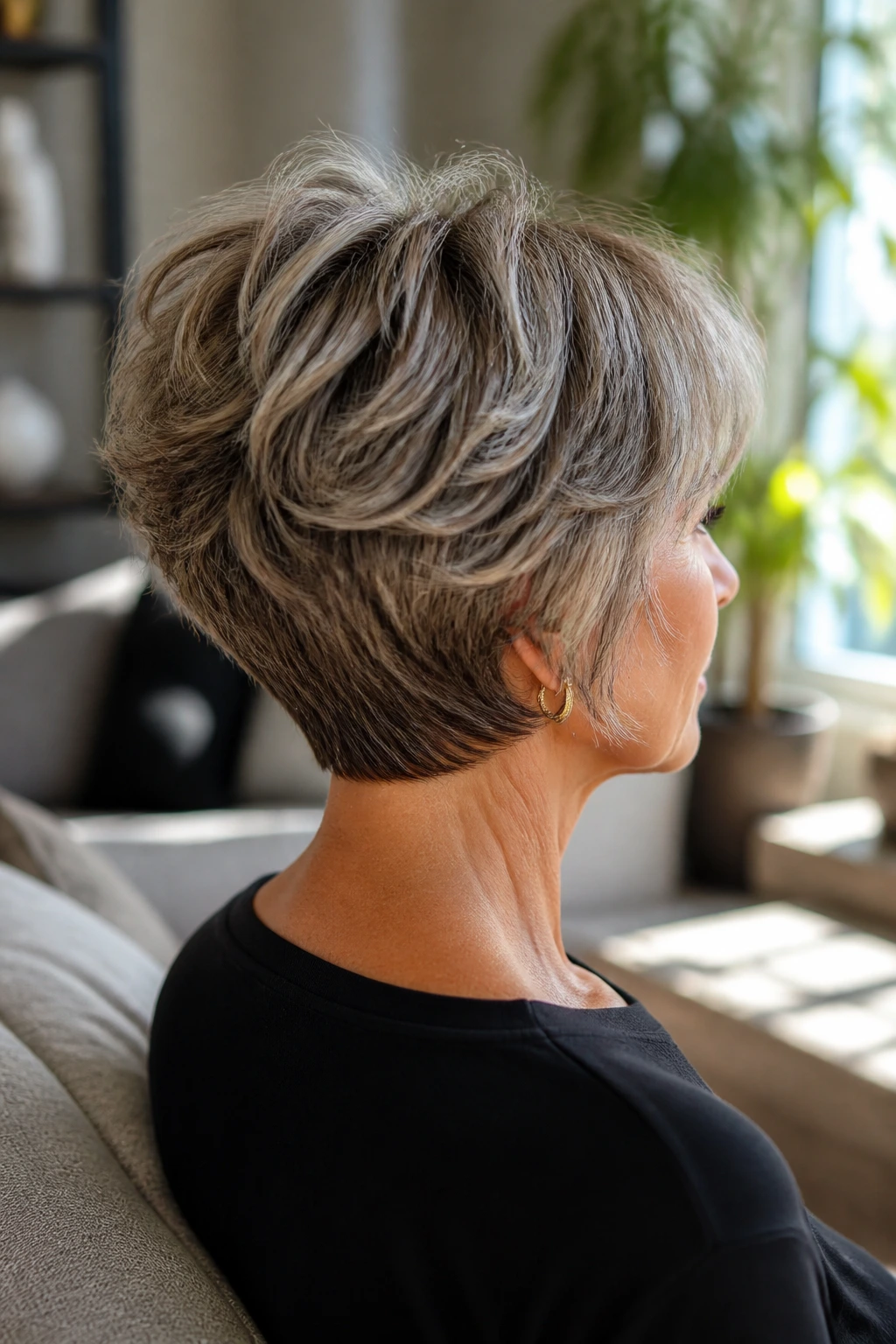
An inverted bob already has a built-in angle: shorter in the back, longer toward the front. Add shaggy texture and you get a cut that lifts the nape, opens the cheekbones, and gives the front just enough length to feel face-friendly. It’s one of the cleanest ways to get shape without a lot of styling.
The back should not feel stacked into a hard shelf. That’s the old-school version, and it can look dated fast. A softer inversion keeps the line close to the head but still leaves movement through the crown and sides. Think curve, not shelf.
This style is especially nice for women with a narrower neck or a face shape that benefits from a bit more structure near the jaw. A round brush at the back and a quick flip through the front pieces is usually enough. The cut does most of the work.
11. Crown-Lift Bob for Fine Hair That Needs a Little Lie

Fine hair doesn’t need more length. It needs better architecture. This bob keeps the perimeter short, then uses light internal layering at the crown to make the hair stand a little higher off the scalp without showing obvious choppy sections.
The real trick is restraint. Too many layers and the ends go see-through. Too little and the whole thing lies down like wet paper. You want lift at the crown, not a mess of thin ends. That balance is what separates a decent cut from one that looks skimpy in bright daylight.
A mousse at the roots and a clip at the crown while the hair cools can make a big difference. Not fancy. Just useful. If your hair is very fine, ask the stylist to avoid thinning shears at the perimeter. That’s how short bobs start looking frayed instead of airy.
12. Flipped-Under Choppy Bob With a Soft, Polished Finish
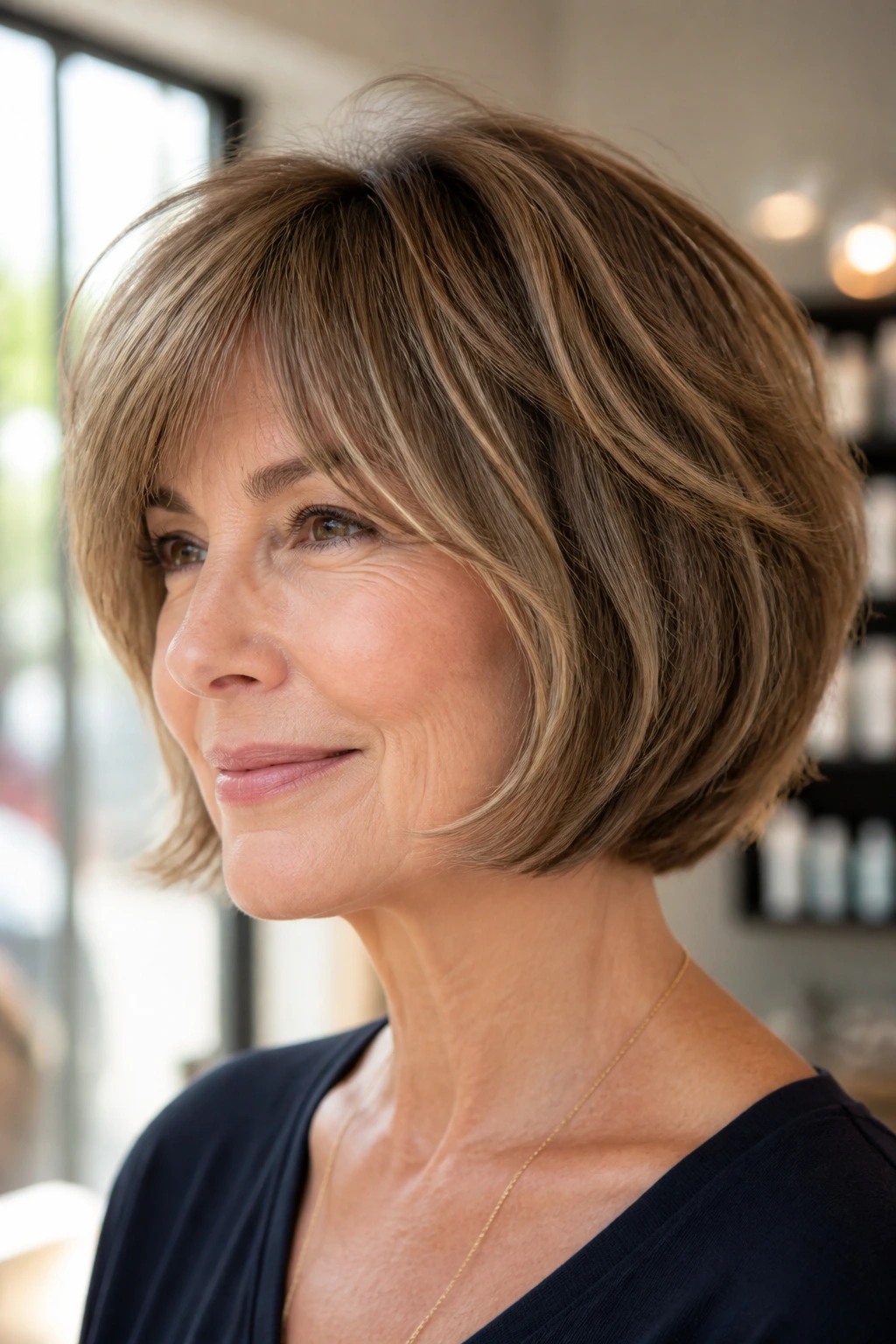
Some women want texture but don’t want their hair to look undone. This is the compromise. The ends are cut in a shaggy, choppy way, but the overall finish is encouraged to flip slightly under toward the jaw. That gives the bob a tidier outline while keeping the texture alive.
It works well on straight hair, especially when the ends tend to kick out in random directions. A quick blow-dry with a small round brush can train the line just enough. You’re not creating a pageant blowout. You’re giving the hair direction.
This is also a good cut for anyone who likes earrings and clear necklines. The shape stays neat around the face, so the accessories can do their job. There’s a mild, almost tailored feel to it — but not stiff, which is the important part.
13. Asymmetrical Shag Bob That Softens Strong Features
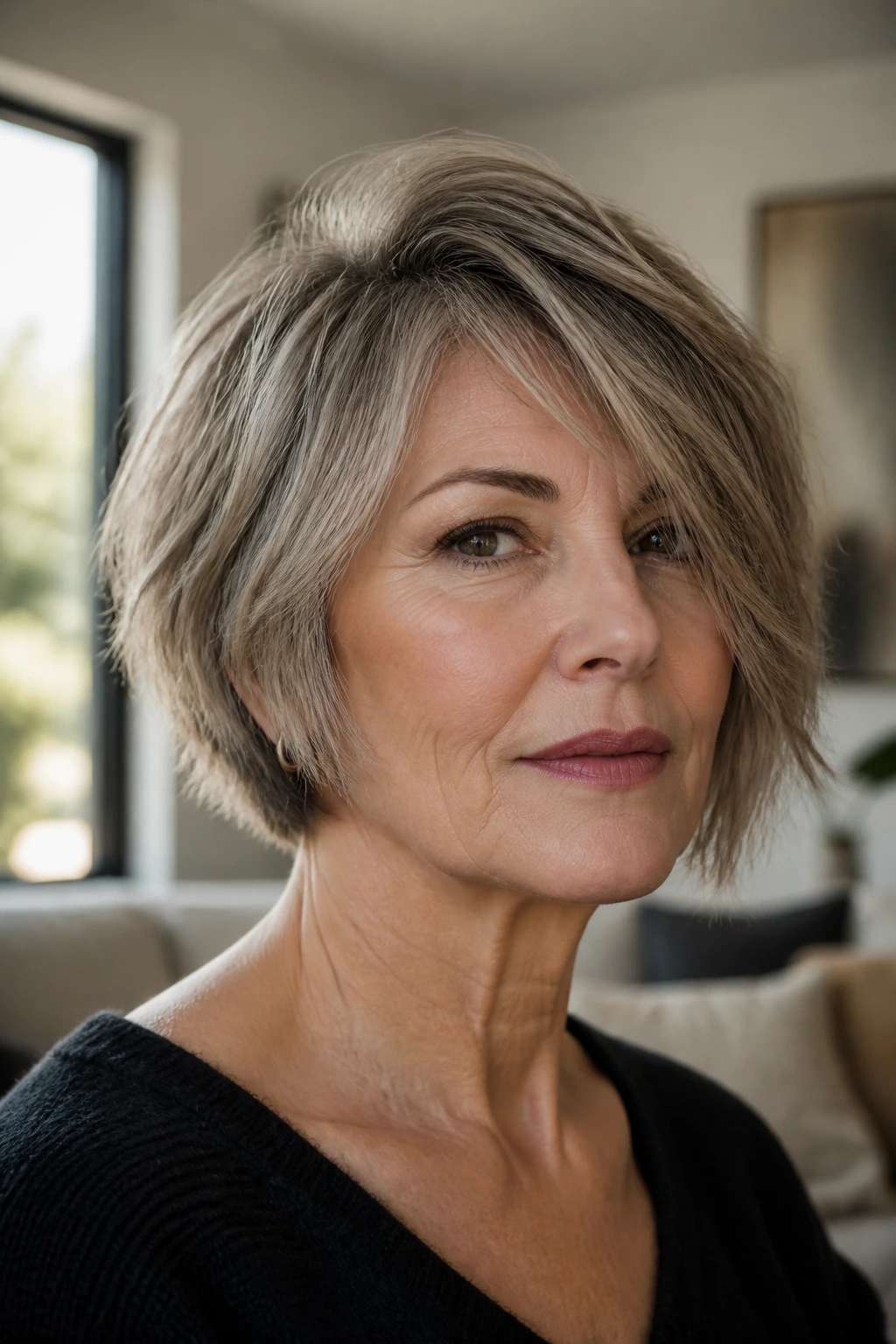
A tiny bit of asymmetry can do more than layers alone. One side sits a touch longer, the other a touch shorter, and the whole cut feels less expected. That small difference softens square jawlines, broad foreheads, and any face that looks best with a little movement cutting across it.
Don’t go wild with the angle. A half-inch to an inch is often enough. Too much asymmetry and the style starts to feel like a statement haircut instead of an easy one. The shaggy ends keep the shape from becoming too sharp.
I like this cut for women who wear one side tucked and the other loose. It gives the eye something to follow. Add a side part, and the shape feels even better because the longer side can graze the jaw while the shorter side lifts away from the face.
14. Glasses-Friendly Rounded Bob That Sits Cleanly Around Frames

If you wear glasses every day, the haircut has to play nicely with the frames. This rounded shag bob keeps the sides close enough to the face to avoid bulk, but the soft layers stop the hair from pressing awkwardly into the temples. It sounds minor until you’re battling frame-hair friction all day.
The fringe should stop above the top rim or split softly to the sides. If bangs crash into your glasses, the whole look starts to feel fussy. A little air between the lenses and the hair makes a huge difference.
This style tends to work best with a gentle bend rather than tight curl or harsh flip. It looks finished without competing with the glasses. And yes, that matters. Frames are part of the silhouette.
15. Salt-and-Pepper Airy Bob With Piecey Movement
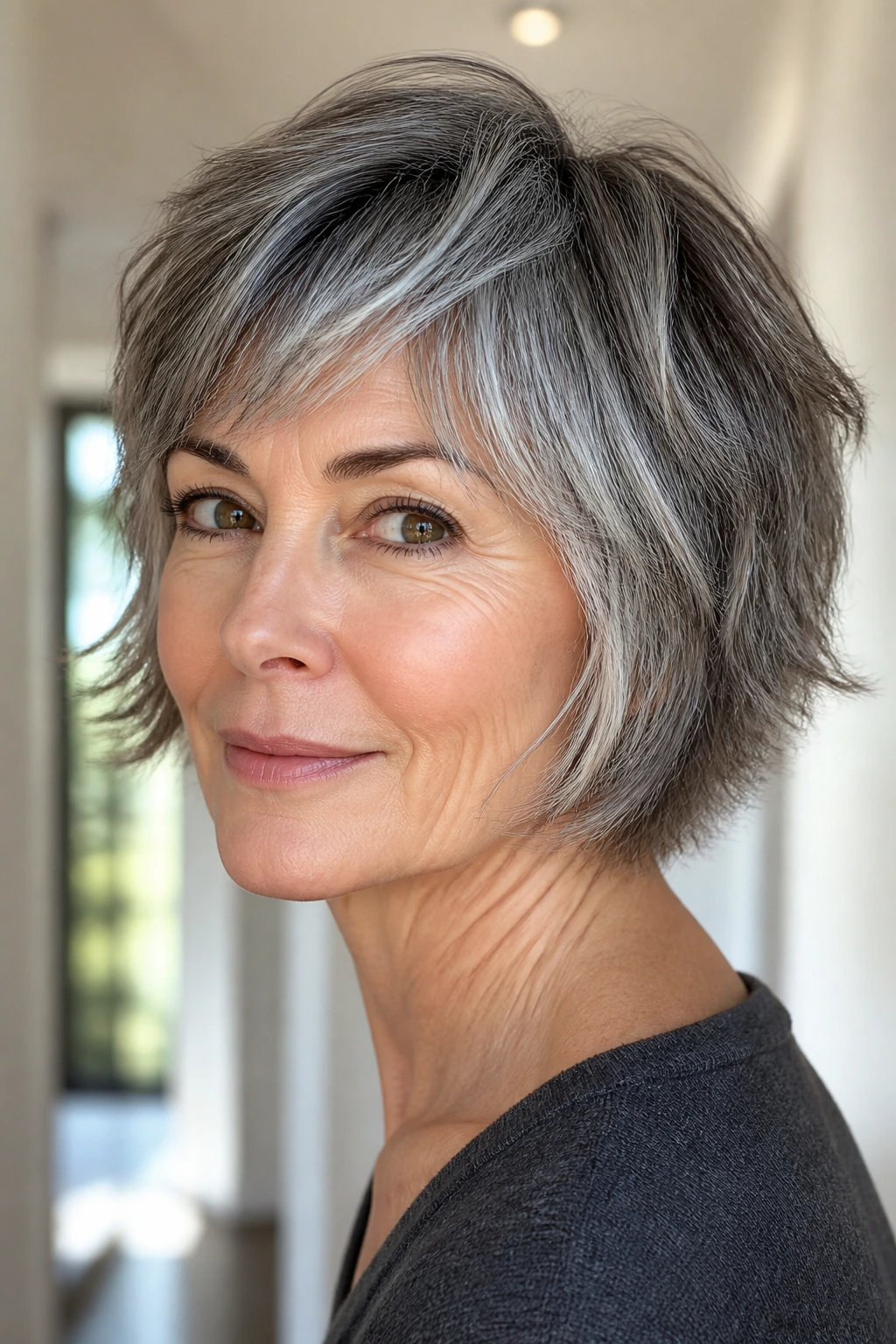
Salt-and-pepper hair has built-in contrast, which is why this bob looks so good with separation in the ends. The mixed tones show off the cut line. A solid one-length bob can hide that. A shaggy one lets it show.
The texture should stay airy, not fuzzy. That means not over-thinning the ends and not loading the hair with heavy creams that drag the pattern down. A light texturizing spray or a touch of wax on the fingertips is often enough to pull out the pieces you want.
This is a lovely choice if you’ve stopped coloring and want the grow-out to feel intentional. The cut gives the color movement, and the color gives the cut depth. One feeds the other. Simple, and better than people expect.
16. Thick-Hair Debulked Bob That Keeps the Shape Close to the Head
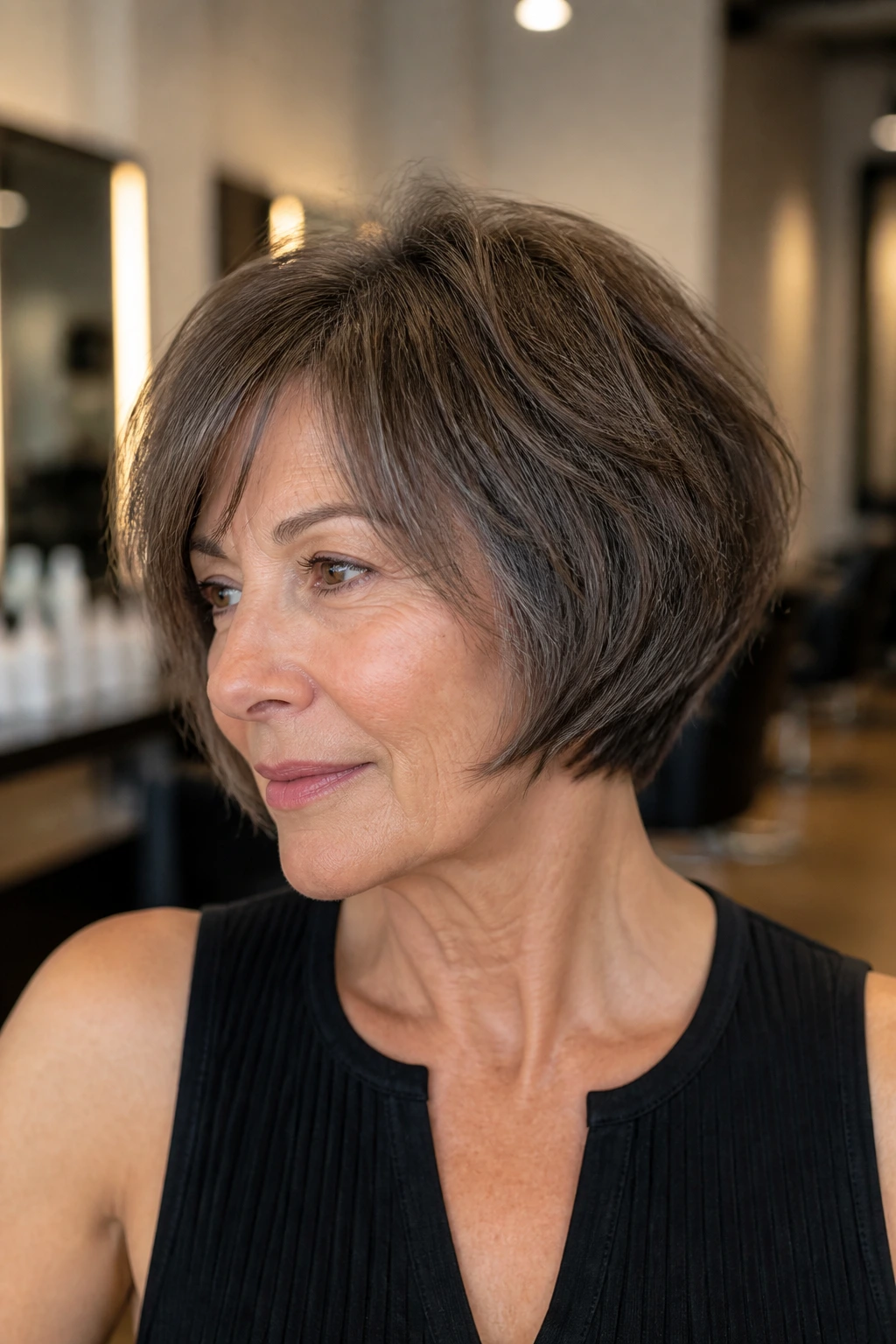
Thick hair can wear a short bob beautifully, but only if the inside is handled properly. The outer line needs enough weight to keep the shape grounded, while the inside gets debulked so the head doesn’t balloon out at the sides. That’s the whole game.
I’m picky here. Too much thinning ruins the cut. It leaves the hair frizzy and ragged at the edges, which is the exact opposite of what a short shag bob should do. Debulking should happen inside the shape, not all over the ends.
This version is especially good for women whose hair grows wide at the cheek or jaw. Keep the top lightly layered, preserve a strong perimeter, and let the stylist remove weight where the hair naturally expands. The result is cleaner and much easier to style.
17. Air-Dried Coily Bob With Compact Layers
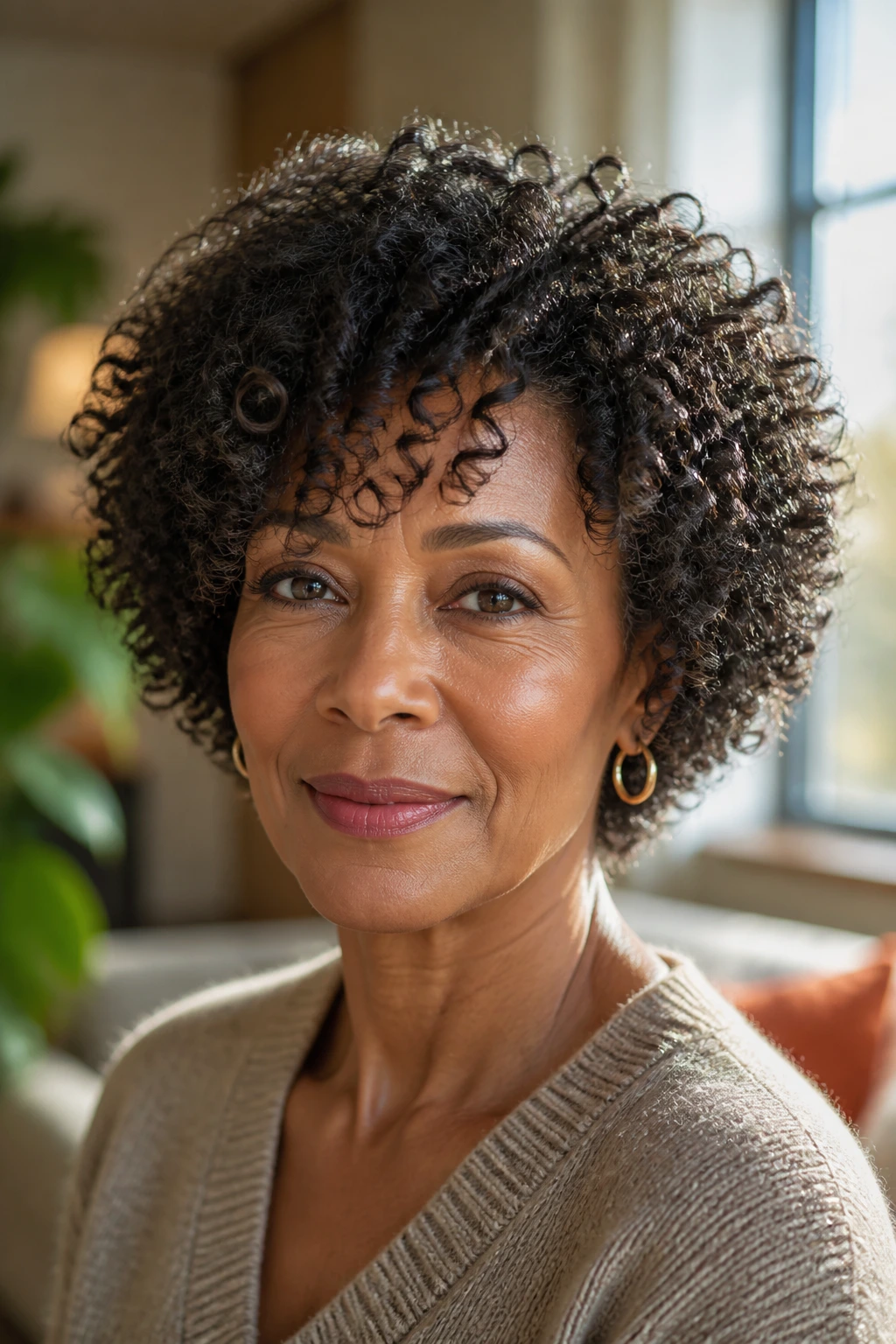
Coily hair needs a short bob that respects shrinkage and spring. Cut it dry, or almost dry, so the stylist can see where the coils land. Then build compact layers that encourage the shape to hug the head instead of widening out at the sides.
This is one of those cuts that looks best when it’s allowed to do its own thing. A little leave-in conditioner, a curl cream, and a diffuser if you need it — that’s usually enough. The point is to keep the coil pattern defined without stretching it into shape it doesn’t want.
If your coils are tighter at the crown and looser at the nape, ask for those differences to be built into the cut. One-length curly bobs can look bottom-heavy fast. A shaggy bob has a better shot at balancing the whole head.
18. Tousled Short Bob With Longer Front Pieces
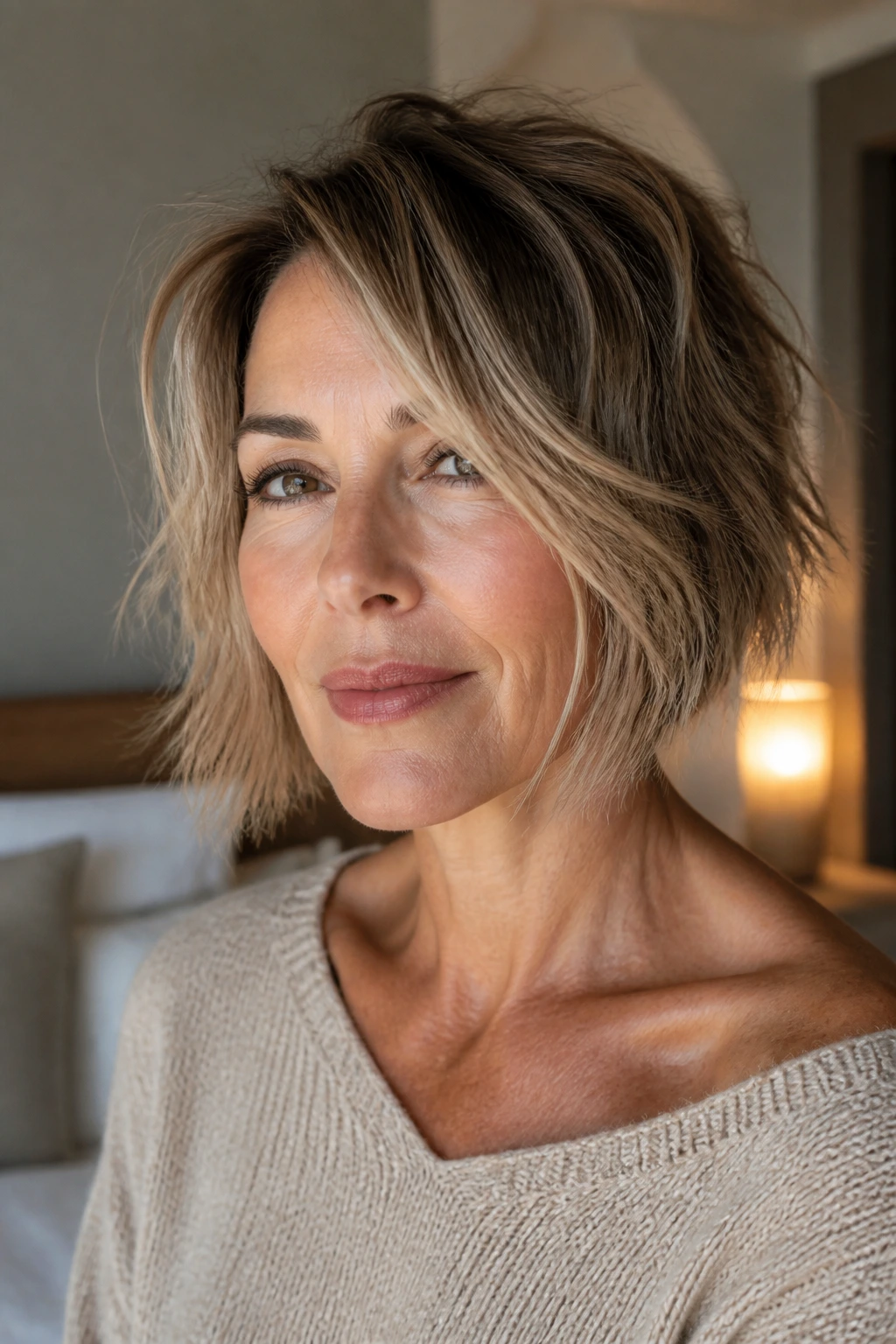
This cut is for people who like a little swing near the face. The back stays short and neat, while the front pieces stretch longer enough to frame the jaw and neck. The overall effect is easy, not severe, and the shaggy ends keep the length from looking too engineered.
It’s a good cut if you don’t want a fringe but still want softness around the face. The longer front pieces behave like built-in face-framing layers. They’re also handy when you want to tuck one side behind the ear and leave the other loose.
This shape tends to work across hair types, which is part of its charm. Straight hair can be bent under or out. Wavy hair can be left alone. Either way, the front keeps the style from disappearing into a plain short bob.
19. Micro-Bang Shag Bob That Feels Sharp and Fresh

Micro bangs are not for everyone. Let’s just say that plainly. But on the right face, with the right attitude, a short shag bob and a tiny fringe can look crisp and almost editorial without being fussy.
The bangs need regular trims. That’s the trade-off. If they grow past the brow line, the whole point gets muddy. They also work best on hair that doesn’t flop heavily at the front. If your fringe area is dense, ask for the bangs to be thinned and softened so they don’t sit like a shelf.
This cut has more personality than most. It’s good for women who are happy to let the haircut speak a little louder. Keep the rest of the bob piecey and light so the fringe remains the star.
20. Deep-Side-Part Sculpted Bob With Root Lift
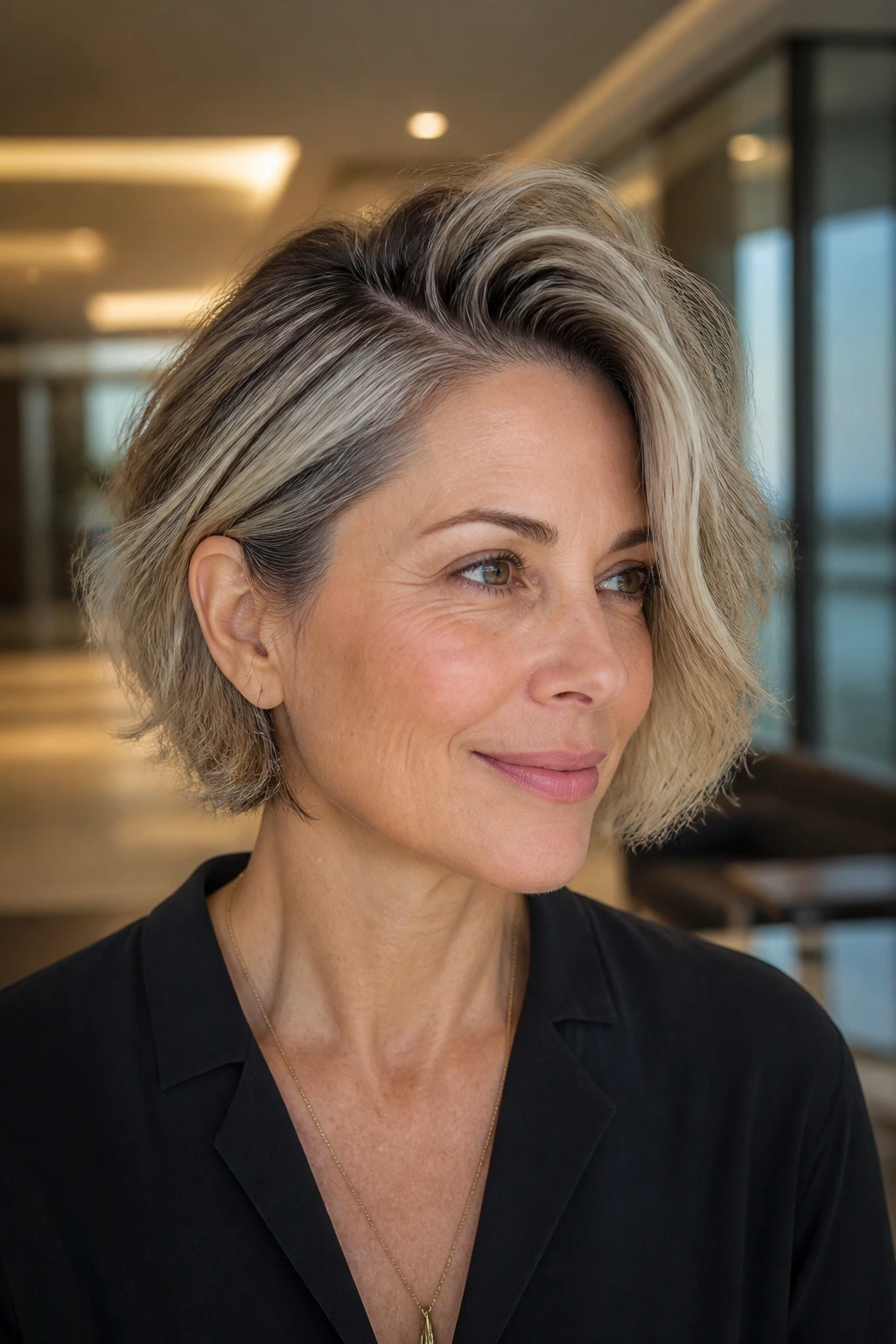
Sometimes the difference between a flat bob and a lively one is one inch of parting. A deep side part shifts the weight, gives the roots room to rise, and creates a sculpted line through the front that can make the whole face look more open.
This version is a little more polished than some of the messier shags, but it still keeps the shaggy ends. I like it for days when you want the cut to look deliberate — dinner, a doctor’s appointment, a presentation, whatever demands a bit of presence.
A root spray at the part and a quick lift with a blow-dryer make a real difference here. Don’t plaster the hair down with oils. The style needs air at the roots. That’s the whole point of the deep part.
21. Rocker Bob With Piecey Ends and a Little Edge
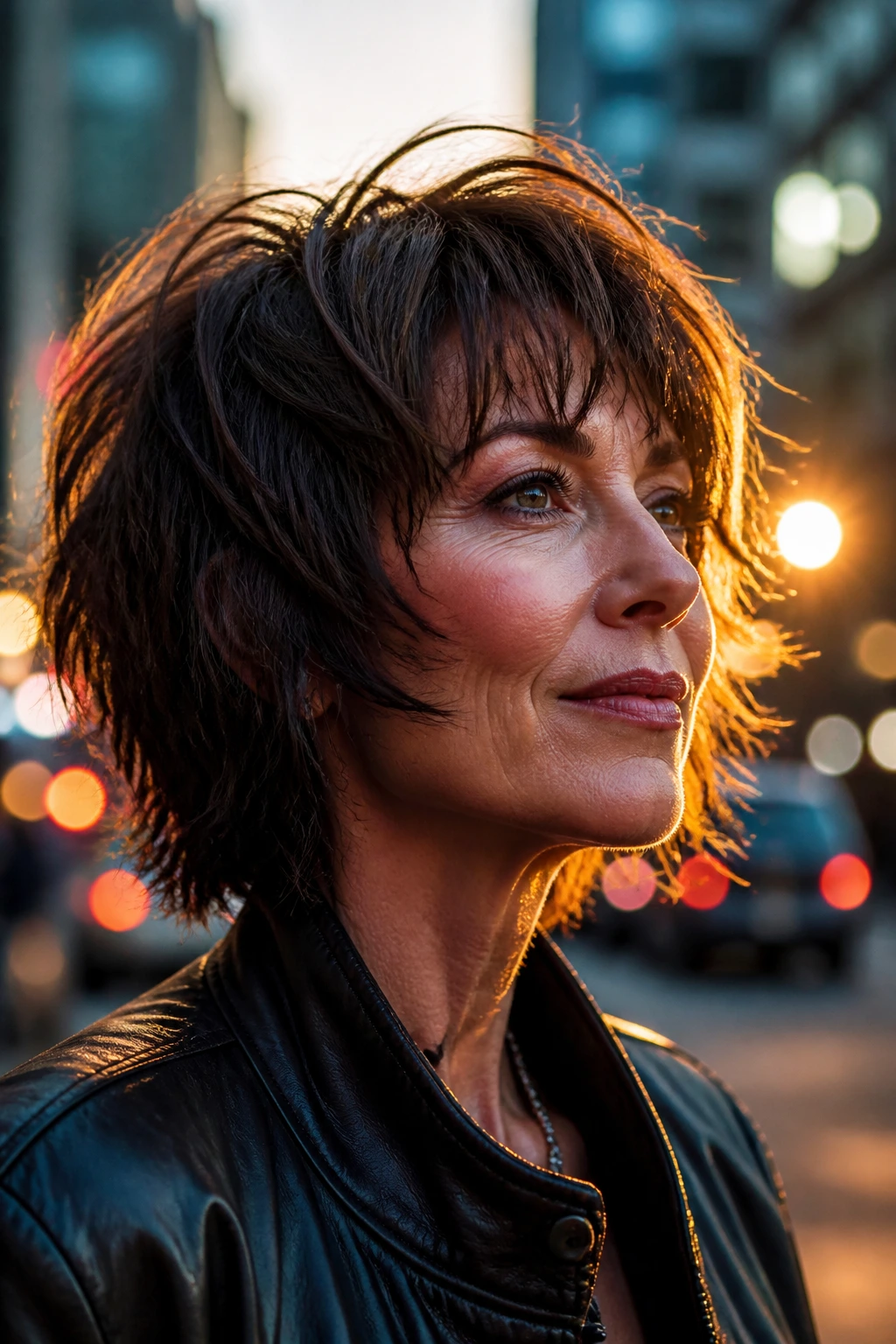
This is the cut with attitude. It’s still short, still bob-shaped, but the ends are more separated, the fringe a little mussed, and the overall finish slightly rebellious. It’s a good answer for women who don’t want softness all the time.
The magic is in restraint. You want piecey, not spiky. You want movement, not chaos. A small amount of styling wax can define the ends, but use too much and the whole thing turns greasy. A little goes a long way with this shape.
It’s especially flattering when paired with strong brows, a bold lip, or statement earrings. The haircut gives you a little grit. The rest of the look can be as simple as you want.
What Makes a Very Short Shaggy Bob Work Without Looking Boxy
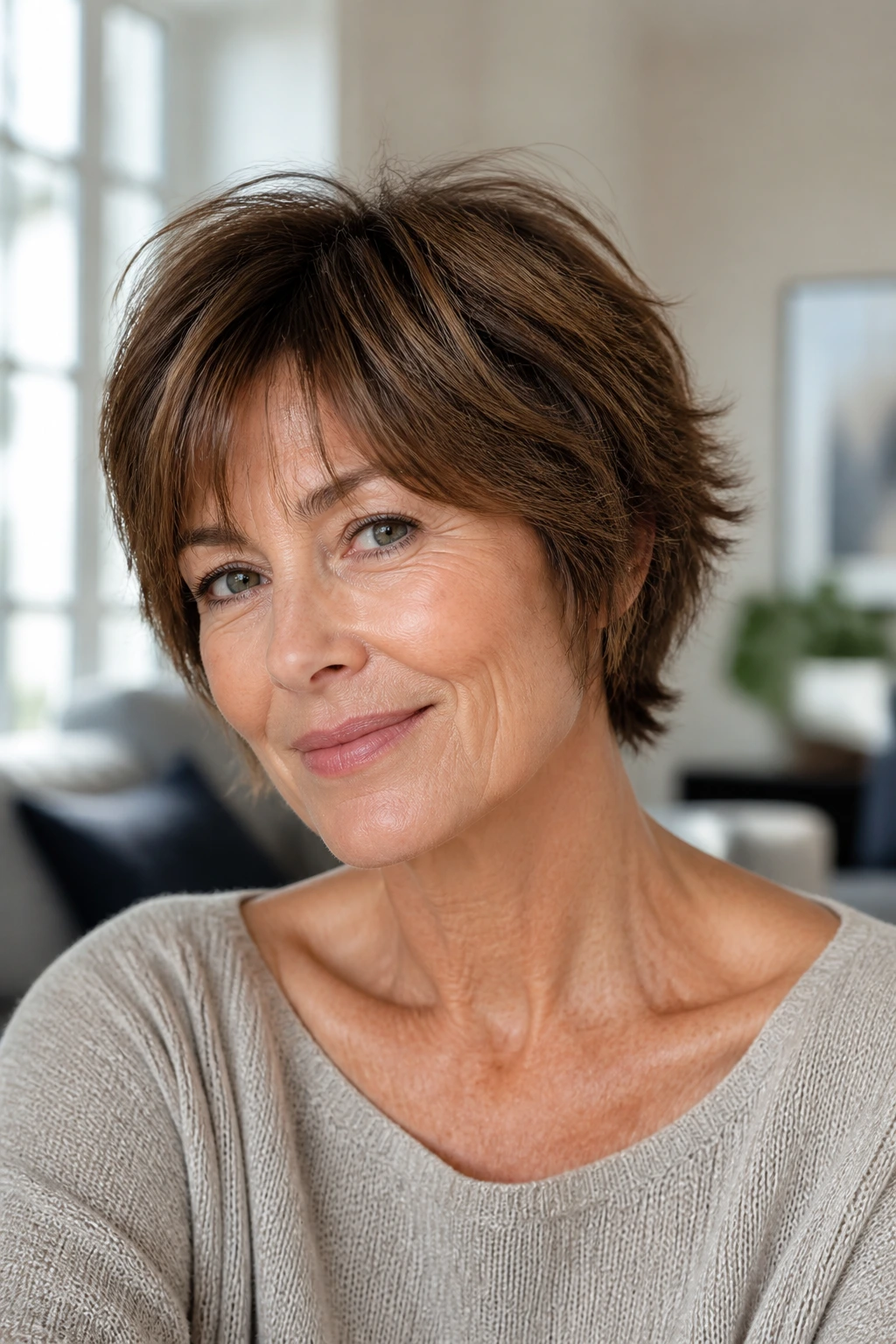
The line matters more than the layers. That’s the first thing I tell anyone considering a very short shaggy bob for older women. You can have all the choppy texture in the world, but if the perimeter is too blunt and the sides are too full, the haircut starts to look square instead of soft.
The best versions keep a little lift at the crown, some slack around the jaw, and a clean taper near the nape. That shape lets the hair move while still giving the face a frame. And because mature hair often changes — finer in one area, coarser in another, flatter at the root, frizzier at the ends — a bob like this can adjust to those shifts better than a one-length cut.
Fringe plays a bigger role than people expect. A soft side bang, a curtain fringe, or a short piecey front can pull the whole haircut together. Straight-across bangs can work too, but they’re less forgiving. They demand more precision and more trimming. If you want easy, the softer fringe usually wins.
How to Ask for the Cut at the Salon So It Lands Right
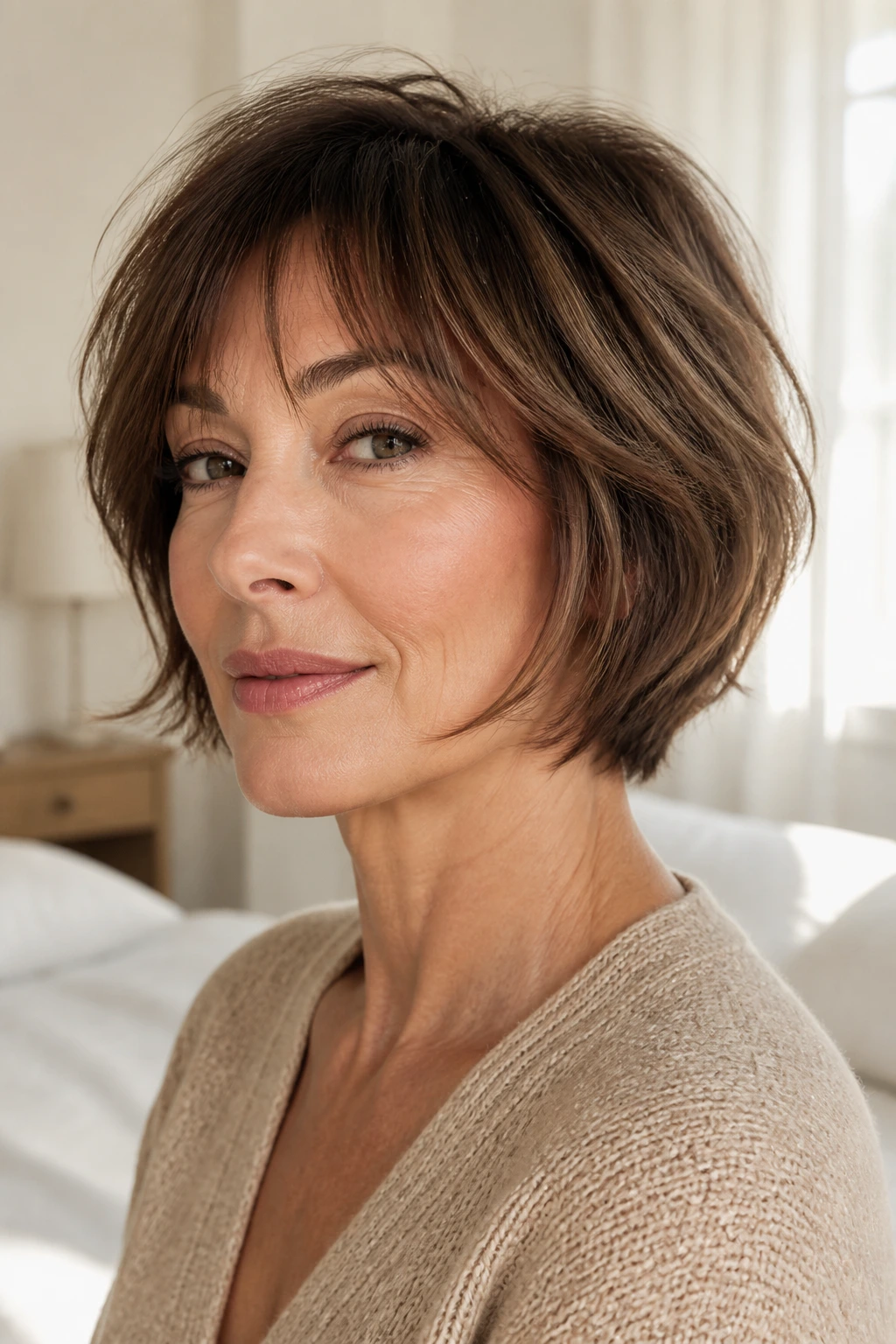
Bring photos, yes, but don’t stop there. Photos show the shape. Your stylist still needs to know what your hair actually does in the wild — where it flips, where it lies flat, where the crown collapses, and where the neckline gets bulky. That information matters more than the picture of a celebrity with a perfect blowout.
Use plain language. Say you want the bob to hit above the jaw or just at it. Say whether you want the nape tapered, the front pieces longer, or the fringe soft and movable. If you wear glasses, mention that. If your hair gets puffy in humidity, mention that too.
Ask how the stylist plans to remove weight. Point cutting, slicing, and careful internal layering all do different jobs. Too much thinning shears on fragile hair can leave rough ends. If your strands are fine or dry, I’d rather hear “light layers and clean edges” than “we’ll texturize a lot.” That phrase makes me nervous.
Essential Tools and Products for Styling These Cuts
- A small round brush: Best for curving the ends under or adding a little bend at the cheekbone.
- A diffuser attachment: Useful for waves and curls that need shape without frizzing out.
- Texturizing spray: Good for piecey separation on dry hair, especially at the ends and crown.
- Light mousse or root-lifting foam: Helps fine hair hold the shape without turning stiff.
- Styling cream or light paste: Works well for smoothing the nape and defining the shaggy pieces.
- Blow-dryer with a narrow nozzle: Gives you control where the front and crown need it most.
- Wide-tooth comb: Better than a brush for curls, waves, or hair that tangles easily when damp.
- Heat protectant spray: Necessary if you use a brush, iron, or dryer on a regular basis.
- A tail comb: Handy for making a clean side part and sectioning the fringe.
- Clips for crown setting: A simple little trick that can make the top stand up instead of lying flat.
Picking the Right Version for Your Hair Texture and Face Shape
Fine hair usually likes a shorter, lighter perimeter with a bit of crown lift. Thick hair needs internal weight removal and a stronger outer line so the style doesn’t puff out. Wavy hair can take more texture on top, while straight hair often needs a touch more shaping in the ends so it doesn’t feel severe.
Face shape matters, but not in the simplistic way people online love to repeat. A round face doesn’t automatically mean “no bob.” A square face doesn’t automatically mean “no fringe.” What matters is where the movement lands. Cheekbone-heavy layers soften width. Jaw-skimming front pieces can lengthen the face. A deeper side part can break up symmetry and make the whole cut feel less static.
If you wear glasses, think about the space around the temples and brow line. If your neck is a feature you want to show, a tapered nape or a slightly inverted back will help. If you want to minimize attention at the jaw, choose a bob with softer face-framing and a less blunt edge. Haircuts are geometry, but they’re personal geometry.
How to Style a Very Short Shaggy Bob Without Fighting It
The easiest styling method is the one that respects the cut. On damp hair, work in a small amount of mousse or lightweight cream, then push the hair into its natural direction with your fingers. That’s the part many people skip. They try to force a bob into a shape it doesn’t want, then blame the haircut for misbehaving.
For a blow-dry, start at the roots and move the air toward the direction you want the hair to fall. Use a round brush only on the front pieces, crown, and ends if needed. The back often behaves better when you leave it a little less fussed over. Seriously. Overworking the back is how you get that over-polished helmet shape.
On day two, dry shampoo at the roots and a pea-sized bit of texture spray through the ends can wake the style up. If the bob has gone a touch flat, clip the crown for 10 minutes while you do your makeup. That small pause can create lift without another full blowout.
Common Mistakes That Make This Cut Look Harsh or Flat
The first mistake is making the perimeter too blunt. A short bob without softness around the ends can sit there like a box, especially on fine or straight hair. The fix is simple: ask for point-cut ends, some interior movement, and a little air around the jaw.
The second mistake is over-thinning thick hair. This sounds helpful in the chair and then looks ragged at home. Over-thinned hair frizzes faster and loses shape sooner. If you’ve got thick or coarse strands, keep the thinning selective and low.
The third mistake is cutting the fringe too short without checking how it behaves when dry. Bangs shrink, curl, and split. A fringe that looks cute when wet can land way too high once it dries. The right move is to check the natural fall and trim in tiny amounts.
The fourth mistake is loading the style with too much product. Short shaggy bobs need definition, not grease. Use a little cream, a little spray, or a small puff of mousse — not all three in a heavy cloud. The hair should still move.
Variations and Adaptations to Try
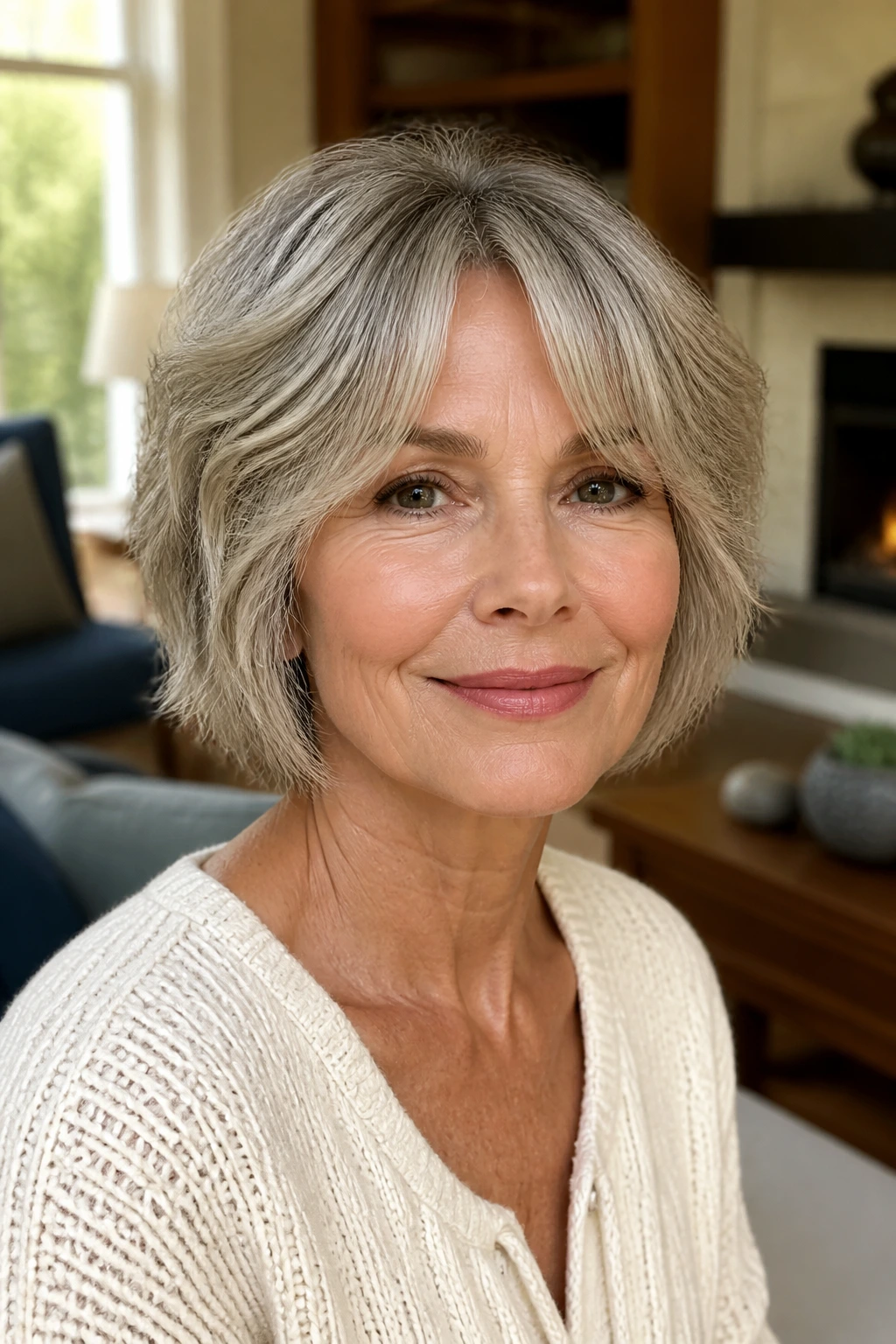
Soft Side-Sweep Version: Keep the fringe longer and brush everything toward one side for a gentler look. This is the easiest adjustment if you want the cut to feel less edgy and more wearable with minimal styling.
Silver-First Version: Skip color-masking tricks and let the gray show. Pair the cut with cool-toned shine spray or a purple conditioner if your silver tends to go yellow near the ends.
Thick-Hair Control Version: Ask for a stronger internal debulk and a narrower silhouette at the sides. Keep the perimeter strong so the cut doesn’t explode outward once it dries.
Curly-Air-Dry Version: Shape the cut around the curl pattern and let the hair dry without brushing it to death. A leave-in conditioner and curl cream will do more than any hot tool can.
Razor-Light Version: If you want extra movement, use a razor sparingly on healthy hair only. It gives the ends a feathered feel, but it’s not the best choice for brittle or highly processed strands.
Maintenance, Trims, and Grow-Out Without the Awkward Stage
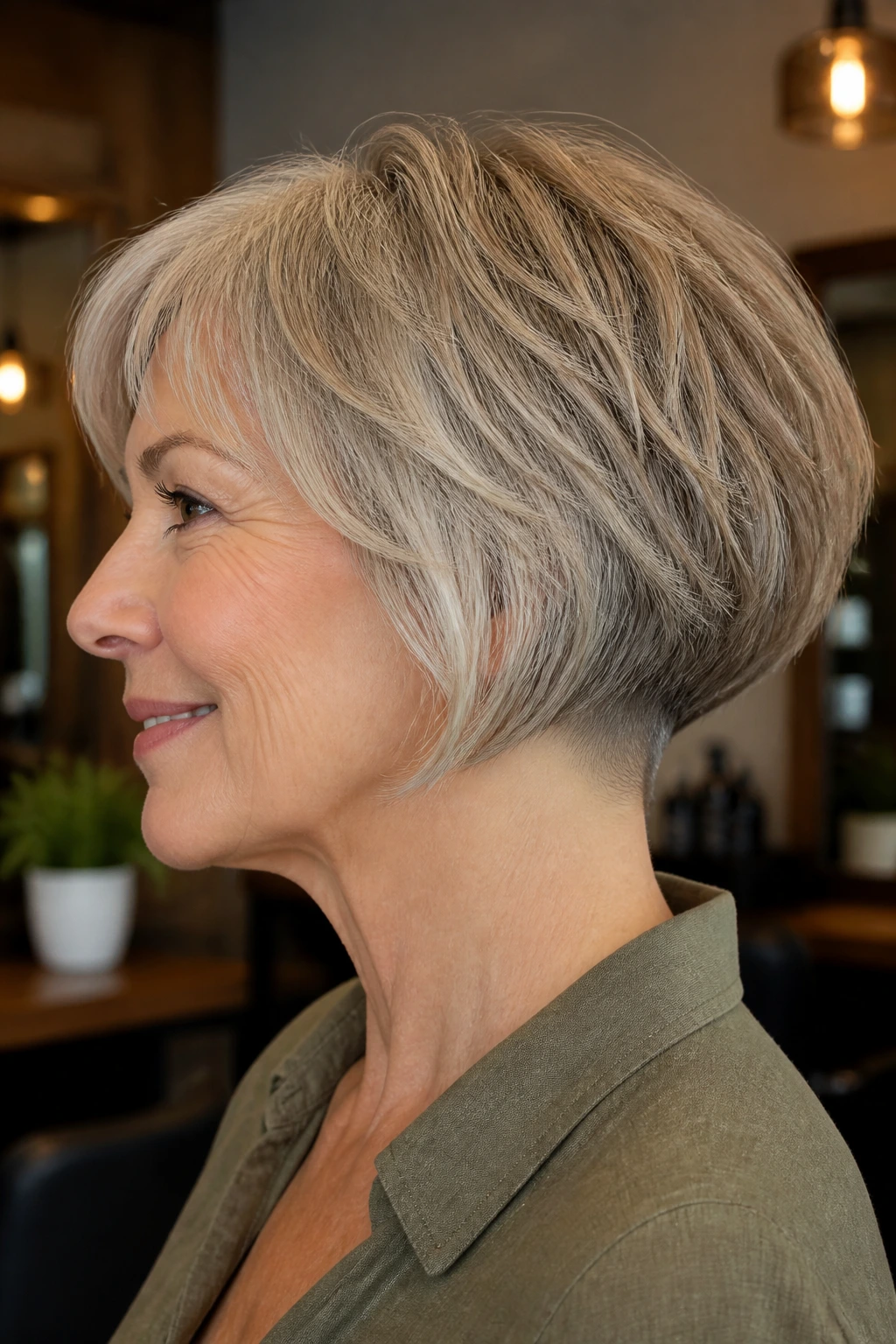
A very short shaggy bob looks best when it’s trimmed every 6 to 8 weeks, especially if you wear fringe. The shorter the cut, the faster the shape shows wear. Bangs can start poking into the eyes, and the back can lose its clean line faster than you’d expect.
If you’re growing it out, keep some shape around the crown and face instead of letting everything turn into one blunt grow-out slab. That’s where shag layers earn their keep. They soften the transition. If you want the grow-out to stay neat, ask the stylist to leave the front a little longer and taper the back gradually.
Night care matters too. A silk or satin pillowcase helps reduce friction, which is especially useful for gray, coarse, or curly hair. If the style gets crushed while you sleep, a quick mist of water plus a dab of cream can revive it the next morning without a full wash.
Frequently Asked Questions
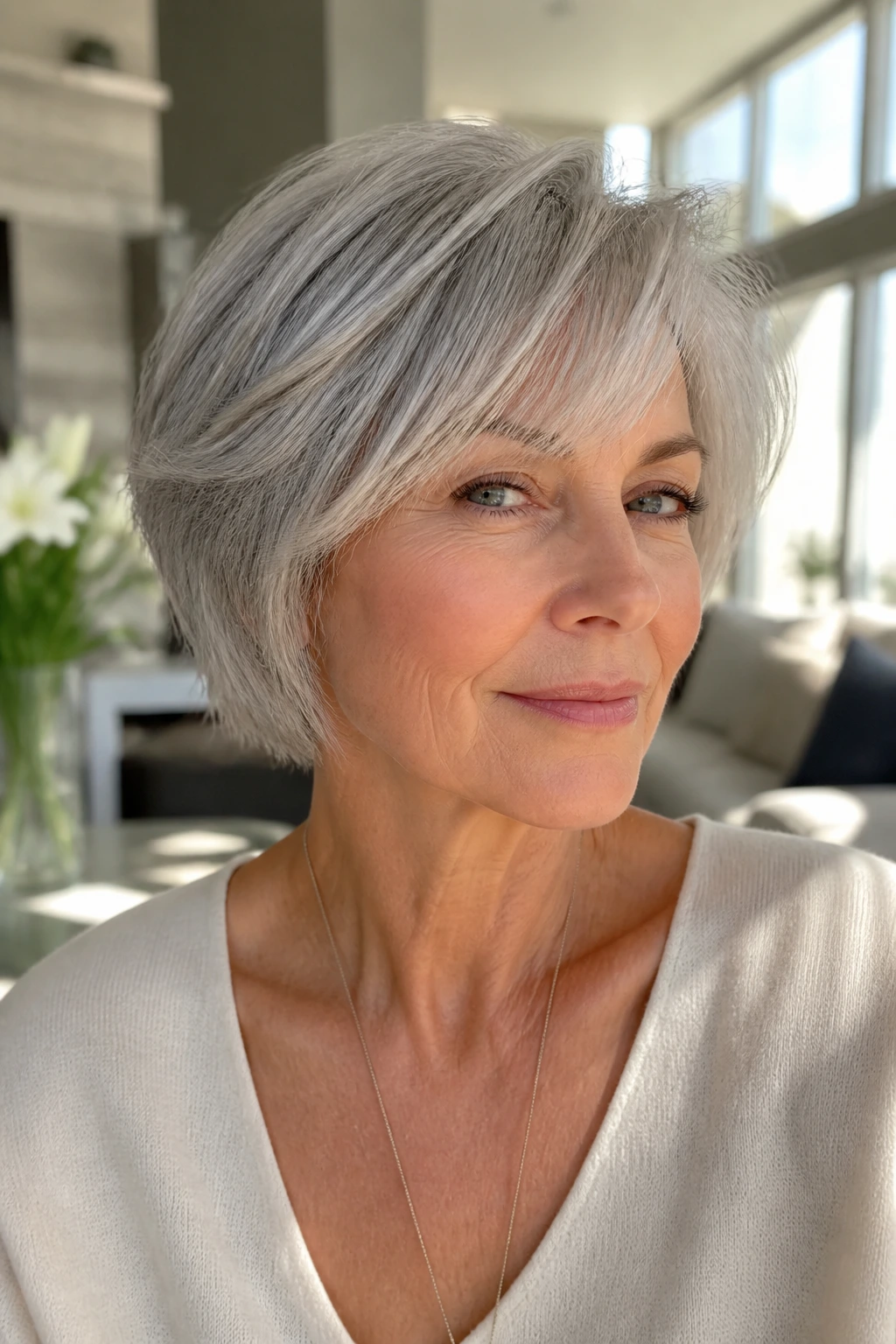
Will a very short shaggy bob work if my hair is fine?
Yes, but the cut has to protect what density you have. Keep the perimeter light, avoid over-thinning, and build volume at the crown with mousse or a root spray rather than heavy layers all over.
Does this haircut make the face look wider?
It can if the sides are cut too full. A good shag bob removes bulk near the jaw and keeps a little lift at the crown, which balances the face instead of widening it.
Can curly hair pull off a very short shaggy bob?
Absolutely, as long as the cut is done with shrinkage in mind. Curly hair should usually be cut dry or mostly dry so the stylist can see where the curls really land.
How short is “very short” here?
Usually above the shoulders, often at the jaw, cheekbone, or just under the ear depending on the shape. The key is that it should feel cropped and light, not shoulder-skimming.
What if I wear glasses every day?
Then keep the fringe and temple area clean. You want enough softness around the frames to avoid crowding, but not so much hair that it collides with the arms of the glasses.
Is this cut high-maintenance?
Not usually, but the fringe and outline need regular trims. Styling can be quick, yet skipping trims too long will flatten the shape and make it look grown out rather than shaggy.
Can this work with a strong cowlick or stubborn part?
Yes, and sometimes better than a sleek bob would. The shaggy texture gives the hair somewhere to go, especially if you use a side part and style the front in the direction it naturally wants.
Should I ask for layers or texture?
Ask for both, but be specific. “Light, movable layers with textured ends” tells the stylist more than “make it shaggy,” which can mean almost anything in a salon chair.
A Short Cut That Still Has Shape
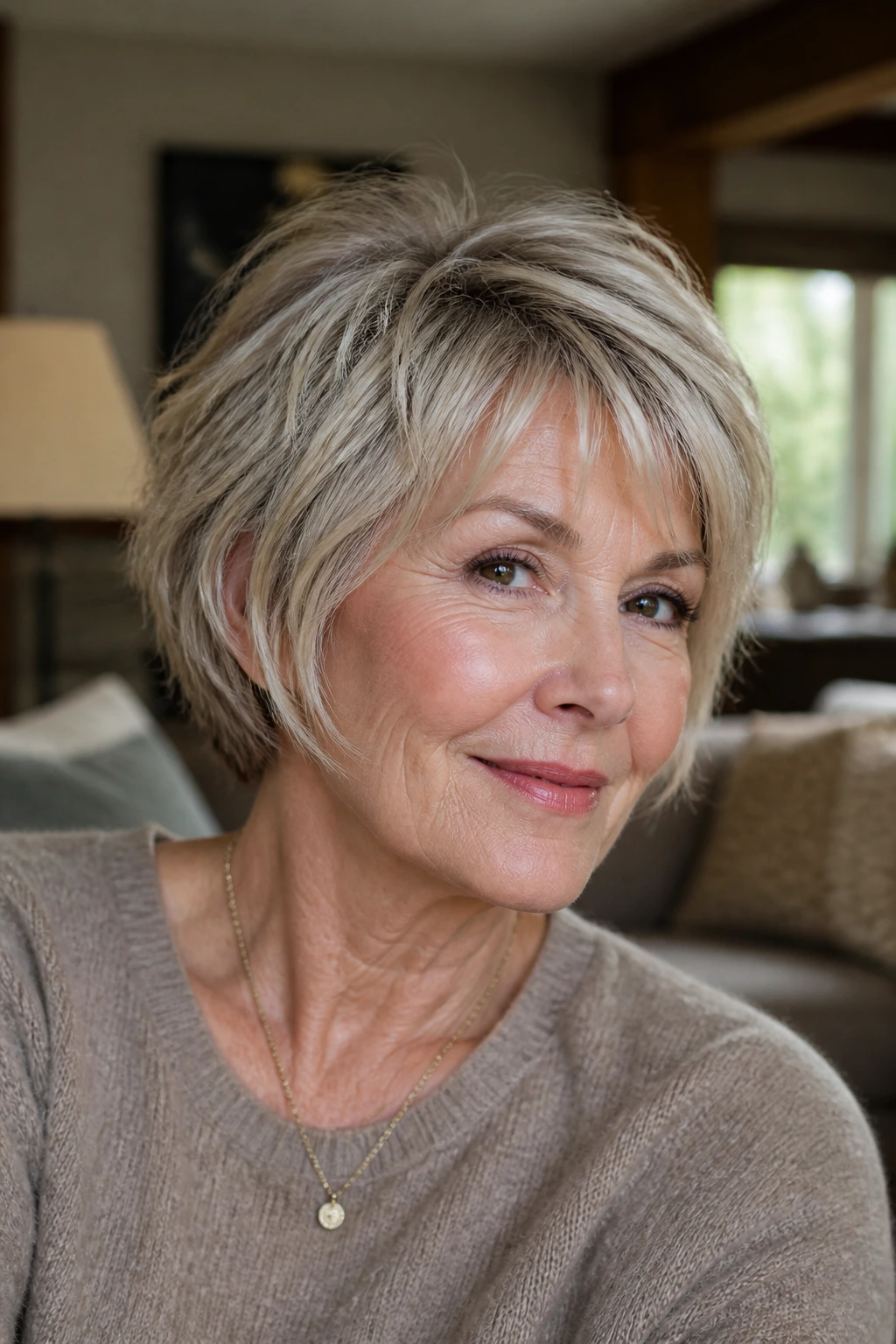
The best very short shaggy bobs for older women don’t fight age, texture, or density. They make peace with them. That’s why they keep working long after a blunt cut would have gone flat, bulky, or oddly formal.
Pick the version that matches your hair’s actual behavior, not the one that looks best under a salon light. There’s a difference. One needs constant correction. The other settles in, moves a little, and looks like it belongs on your head from the first day.
