



Wavy hair has a funny habit of looking best when it’s allowed to be a little unruly, but not too unruly. That sweet spot is exactly where a medium shag bob with bangs lives. Cut it too blunt and the wave pattern puffs out at the sides. Cut it too thin and you get wispy ends that look like they forgot to come to work. The medium shag bob sits in that middle lane, where the layers can bend, flick, and settle without fighting the hair’s natural movement.
Bangs change the whole story. A fringe on wavy hair is never just a fringe; it’s a pressure point. Curtain bangs soften the face, bottleneck bangs skim the cheekbones, and a blunt fringe can make the cut feel sharper and more deliberate. The trick is choosing a bang shape that bends with your wave pattern instead of freezing it in place.
That’s why these 22 medium shag bobs with bangs for wavy hair are not just “different looks.” They solve different problems. Some tame bulk. Some add lift. Some make fine hair feel fuller through the crown. Some keep thick hair from turning into a triangle by lunch. And a few are for people who want the cut to look just a little cool without having to stand in front of a mirror for half an hour.
Why This Collection Works So Well on Wavy Hair
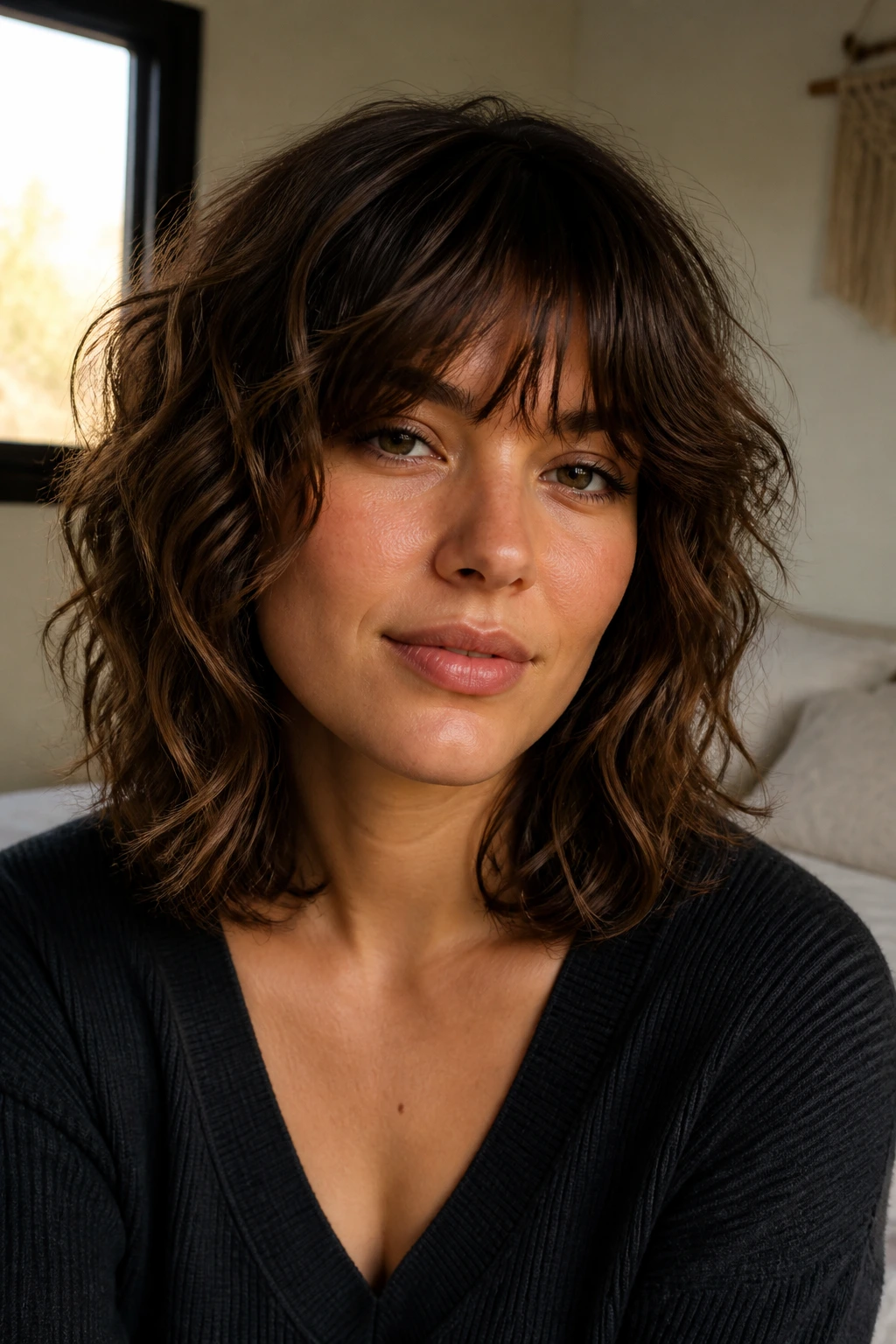
-
The layers work with the bend, not against it: Wavy hair already forms natural S-curves, and shag layers let those curves show up instead of flattening them into one heavy shape.
-
Bangs soften the forehead area without stealing the show: A good fringe breaks up the front line of the haircut, which keeps medium-length wavy hair from looking bottom-heavy.
-
The length is practical, not precious: Medium shag bobs usually hit somewhere between the jaw and the collarbone, which gives enough weight for the waves to hang properly.
-
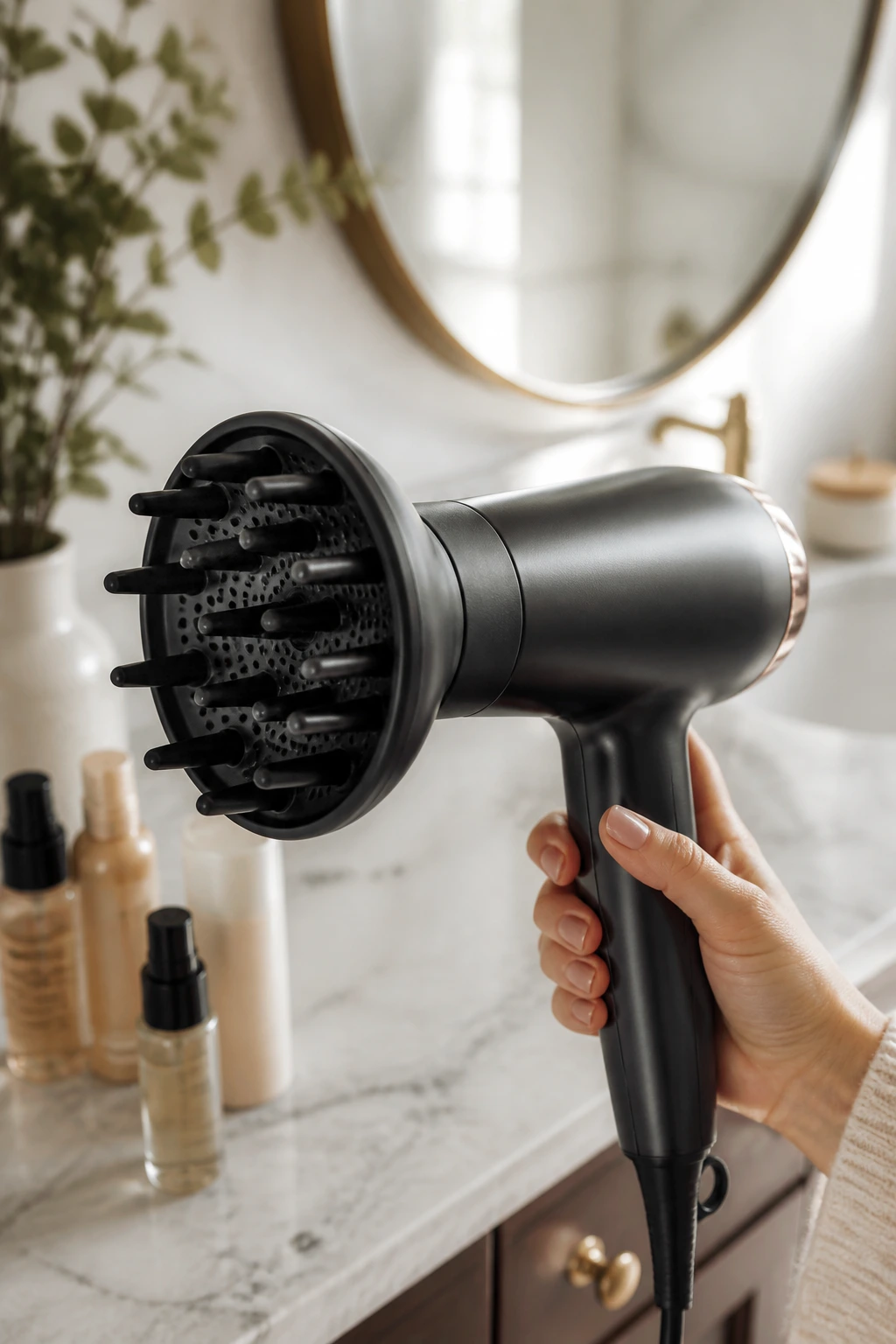
Styling can stay loose: Most of these cuts look better with a rough dry, a diffuser, or a quick bend from a brush than with a full blown-out finish.
-
There’s room for fine hair and thick hair: The same cut family can be adjusted with weight removal, fringe density, and face-framing pieces, so it doesn’t belong to one hair type only.
-
The grow-out is kinder than a blunt bob: When the layers soften and the bangs lengthen, the cut still reads on purpose. That matters more than people admit.
1. Collarbone Shag Bob with Curtain Bangs
The collarbone-length shag is the easiest way to let wavy hair breathe without losing shape. The ends sit low enough to keep the wave pattern weighted, while the internal layers remove the bulky middle section that causes that awkward triangle silhouette. Curtain bangs split from the center and fall toward the cheekbones, which makes the front of the cut feel soft instead of heavy.
Why it works here
This version is a smart starting point if you want movement but not a dramatic chop. The collarbone length gives your waves somewhere to land, and the curtain fringe keeps the forehead from looking too open. It’s the kind of cut that still looks decent on day two, especially if you scrunch in a little leave-in and let the pieces settle.
Best for: medium-density waves, oval faces, and anyone who wants an easy grow-out.
Styling note: twist the front pieces away from the face while they’re damp, then let them cool before you touch them again. That little step keeps the curtain bang shape from collapsing flat.
2. French-Girl Shag Bob with Bottleneck Bangs
Bottleneck bangs are the cleaner, slightly more polished cousin of curtain bangs, and they sit beautifully on wavy hair. Narrow at the center, then wider around the brows and temples, they create a shape that looks intentional even when the rest of the cut is loose and tousled. The shaggy bob underneath keeps it from feeling too neat.
The French-girl version works because it balances softness with edge. The bangs frame the face without cutting across it like a straight line, and the medium shag layers keep the sides from ballooning out. If your waves are loose and you like a bit of swing around the jaw, this one lands well.
I’d choose this cut if you want something that can be air-dried, then cleaned up with a finger twist around the fringe. It feels a little dressed up without becoming fussy.
3. Rounded Shag Bob with Wispy Brow-Grazing Bangs
Do you want the haircut to feel softer all around? Then round out the perimeter. A rounded shag bob keeps the shape close to the head through the sides, so the waves stack in a more controlled way instead of flaring wide. Wispy bangs that brush the brows keep the front light, which matters if your hair tends to get puffy when too much is cut off.
This cut is especially good for fine to medium hair that needs the illusion of fullness without bulk. The rounded line keeps the outline neat, while the shaggier layers inside the cut add texture where you actually need it. It’s not a dramatic, choppy shag. It’s subtler. And honestly, that’s what makes it wearable.
Styling tip: blow-dry the bangs side to side with a small round brush, then separate them with your fingers only after they cool. If you mess with them while they’re warm, they’ll split in all the wrong places.
4. Razored Shag Bob with Micro Fringe
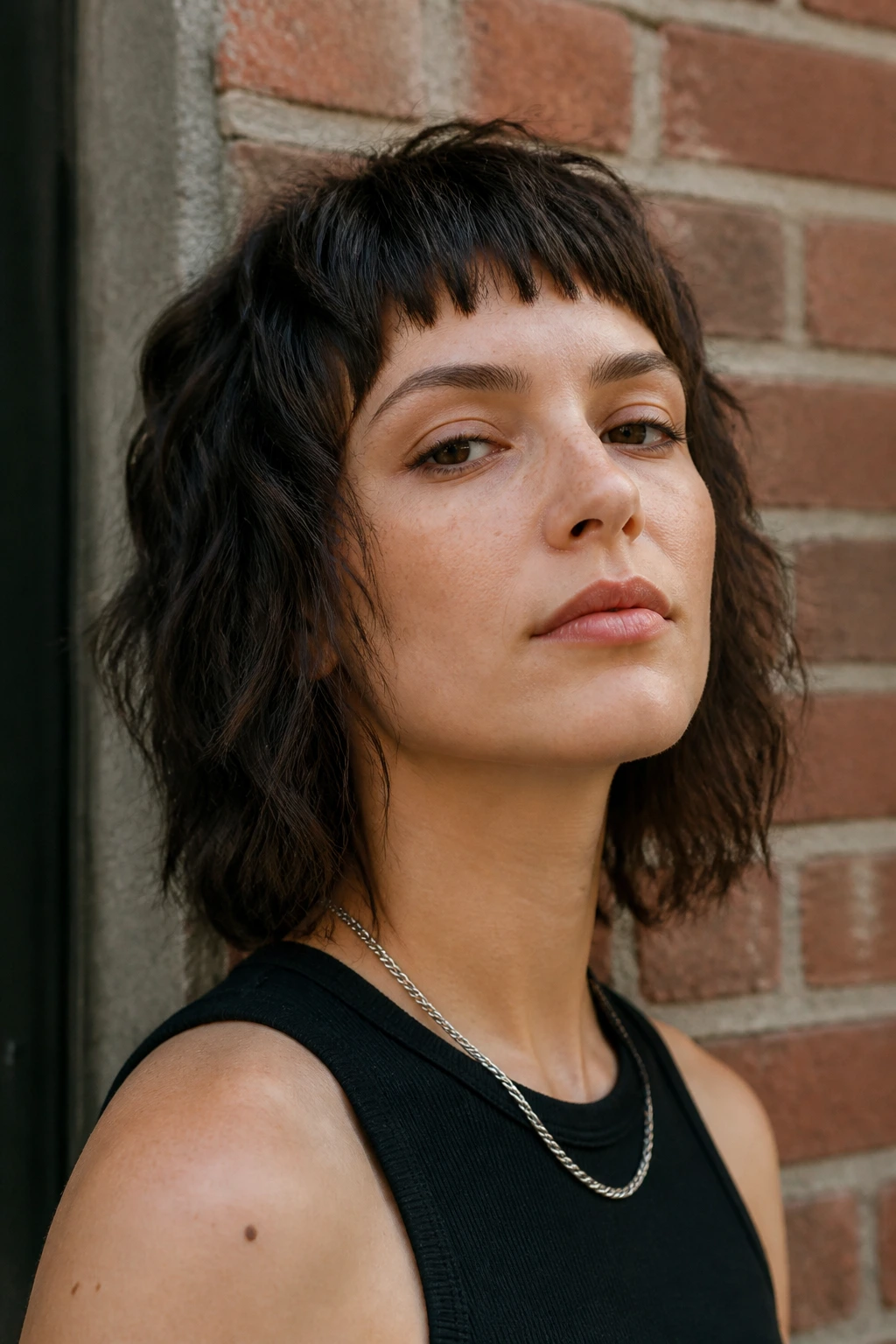
This one has attitude. A razored shag bob takes the ends apart with a lighter hand than scissors alone, so the perimeter looks shattered rather than blunt. Add a micro fringe, and the whole cut shifts from soft to sharply graphic in about two seconds. On wavy hair, that contrast can be gorgeous.
It’s not the easiest look in the room. Micro bangs expose the forehead, so they demand a bit more confidence and a bit more upkeep. But if your waves are loose and your hair has enough density to support the texture, the result is crisp, cool, and a little unexpected. The key is not over-smoothing the rest of the cut. If the fringe is short and the body is too polished, it feels disconnected.
I like this version on people who wear simple clothes and let the haircut do the talking. It’s cleaner than a full shag, but rougher than a classic bob.
5. Layered Lob-Shag with Side-Swept Bangs

A lob-shag sits in that useful zone between bob and shoulder-length cut. On wavy hair, that extra inch or two matters. It gives the wave pattern more weight through the ends, which keeps the silhouette from floating away from the face. Side-swept bangs make the front feel easy, almost casual, but they still do the job of softening the forehead and moving the eye diagonally.
This version works best when you want the cut to tuck behind one ear without losing its shape. The side-swept fringe can be pushed across the brow on heavier wave days or lifted away from the face when you want more openness. That flexibility is the whole point.
If curtain bangs feel too symmetrical for you, this is the better choice. It has less “I styled this for twenty minutes” energy and more “this just happens to sit well.”
6. Chin-Skimming Shag Bob with Feathered Bangs
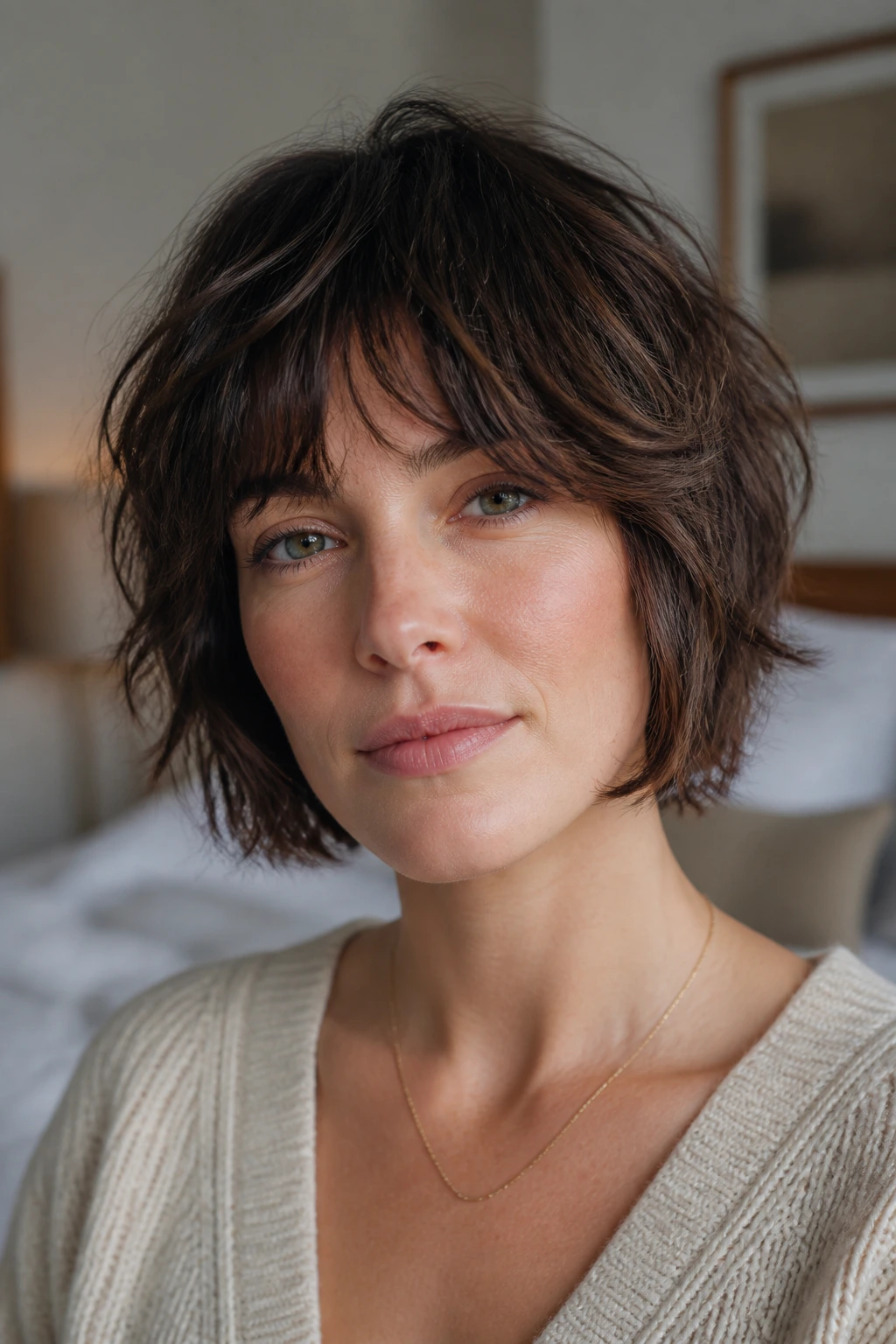
A chin-skimming shag bob gives the wave enough room to swing around the jaw, which is where a lot of wavy hair looks best. The feathered bangs keep the front light and broken up, so the cut doesn’t turn dense through the face. That’s a good thing if your jawline already has fullness or if you dislike anything too boxy near the cheeks.
This shape is quietly flattering on round and heart-shaped faces because the feathering pulls the eye downward without dragging everything flat. It has a bit of a breezy, lived-in feel, but it’s not sloppy. The ends still need to be cut with enough intention that they flick instead of hang like a wet towel.
Best use: softening strong cheekbones or adding motion around a shorter face.
Finish with: a small amount of styling cream on the ends only. Too much product at the fringe and the whole thing collapses.
7. Mushroom Shag Bob with Full Blunt Bangs
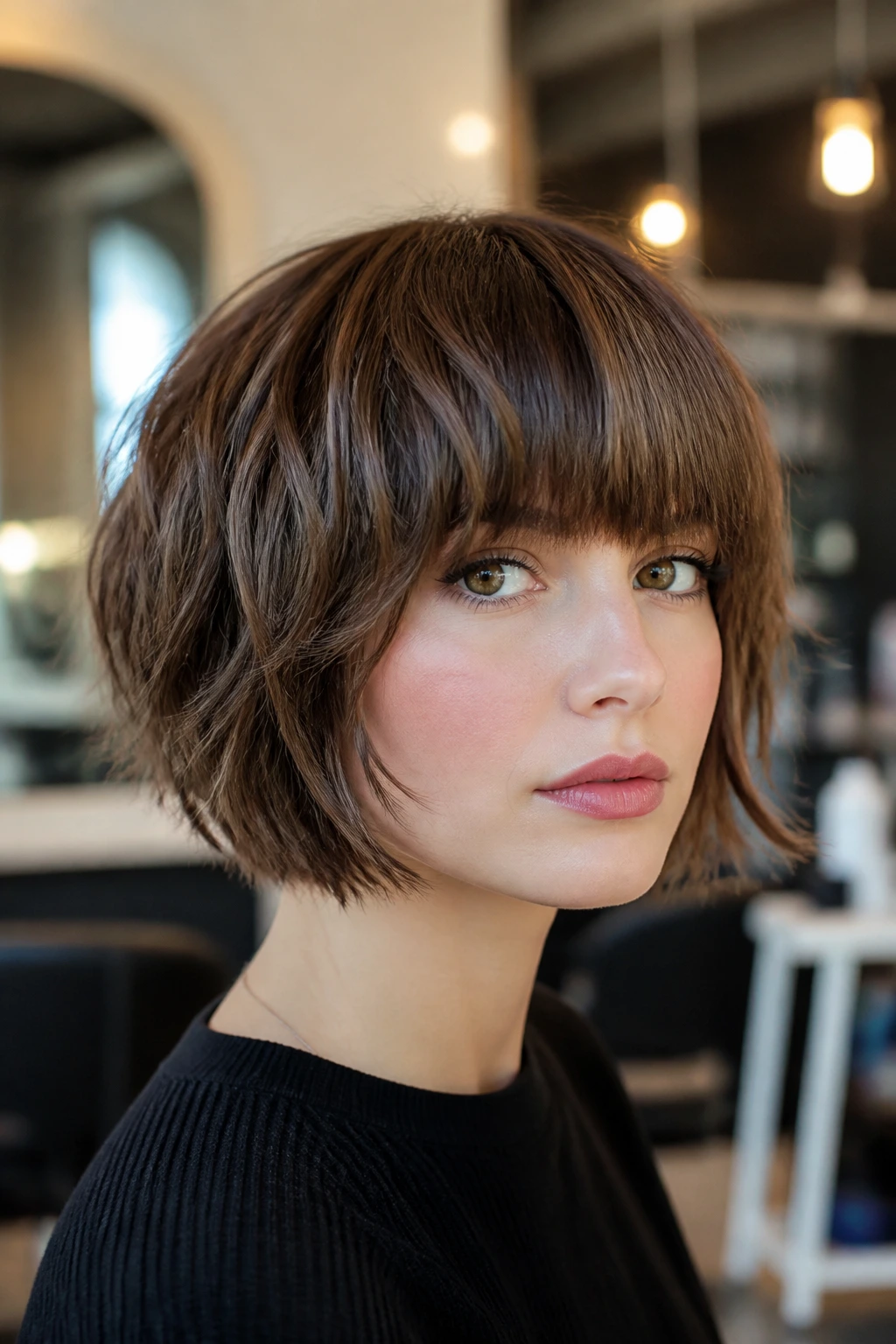
The mushroom shag is for people who like shape. The crown has a fuller, rounder profile, and the line sits more deliberately around the head than a loose beach shag. Full blunt bangs sharpen the top half of the haircut, which gives the wavy body underneath a stronger frame.
This style can look extremely chic on medium-density waves, but it does ask for maintenance. The bangs need regular trimming, and the top layers have to be cut with enough balance that the shape doesn’t mushroom out in the wrong way. Done well, though, it gives you that slightly graphic, fashion-editor feel without needing razor-thin layers everywhere.
If you want a shag bob that reads polished first and messy second, this is the one. It’s bolder than curtain bangs, and I like that. It has a spine.
8. Soft Wolf-Shag Bob with Airy Fringe
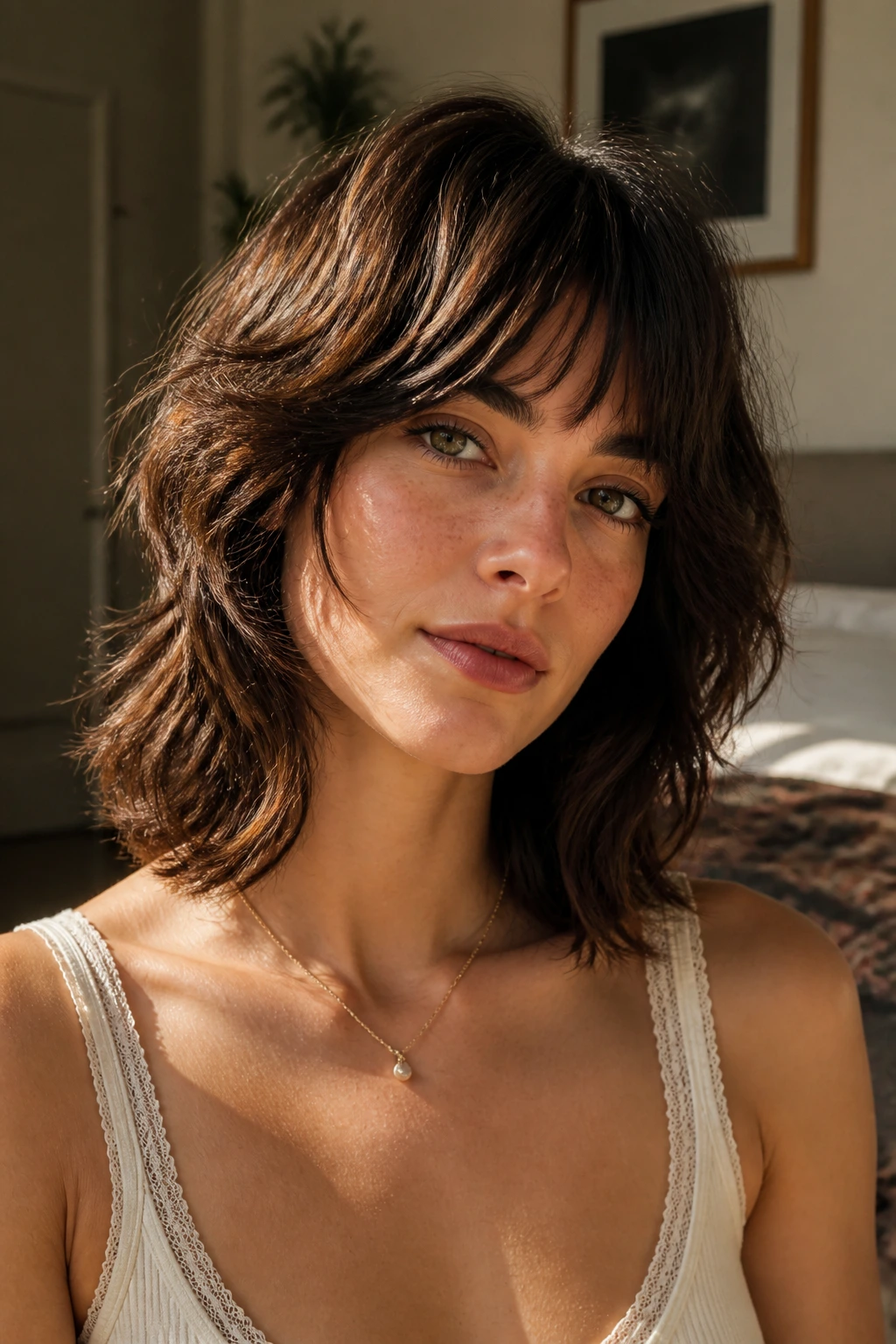
The wolf-shag is still one of the easiest ways to make wavy hair look alive. The crown gets a little more lift, the nape stays a touch longer, and the fringe stays airy enough to avoid crowding the face. On medium-length hair, that mix creates a shape that moves in layers rather than in one heavy sheet.
The airy fringe is the key. It keeps the top from looking too dense, which matters because wavy hair can already build volume fast. If your waves are coarse, this version lets them scatter in a way that feels modern rather than puffy. If your waves are finer, you’ll need less thinning and more careful layering so the cut doesn’t get stringy.
It’s a good cut for people who like texture with a little edge. Not punk. Not precious. Somewhere in the middle.
9. Coastal Tousle Shag Bob with Split Bangs
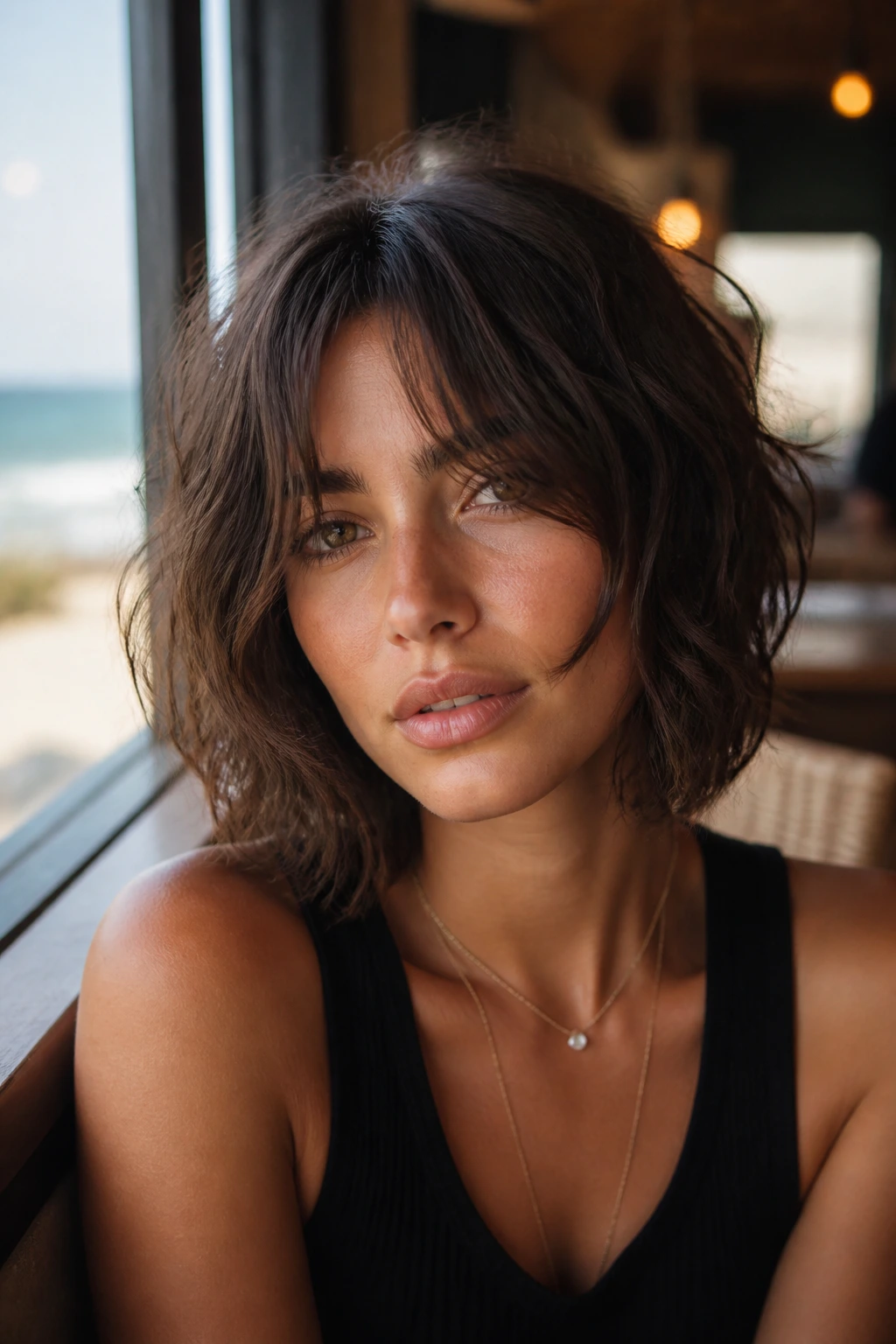
Split bangs are not the same as curtain bangs, even if people lump them together. This version lives looser and a little more undone, with the fringe naturally parting and drifting toward the temples. Combined with a coastal tousle shag bob, it gives wavy hair that air-dried, salt-spray kind of texture without needing to look beachy in a costume way.
This is one of the most forgiving options on the list. If your waves dry differently from section to section, the split fringe hides a lot of that irregularity. The shag layers should stay soft and broken, not too symmetrical. The whole point is to look like the haircut is responding to the texture instead of bossing it around.
A dab of wave cream, a scrunch, and a diffuser on low heat is usually enough. Leave the pieces imperfect. That’s where the charm lives.
10. Inverted Shag Bob with Cheekbone Bangs
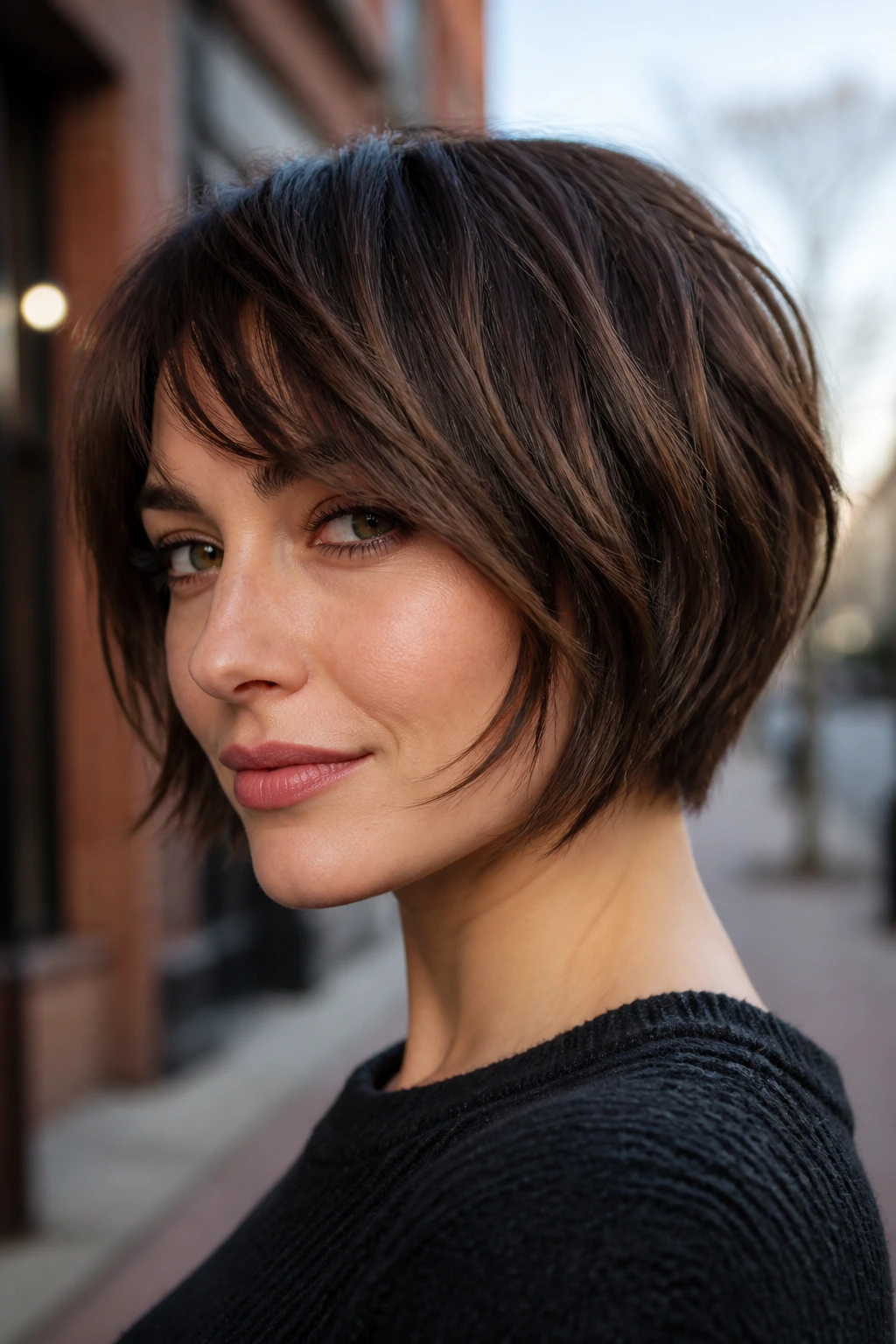
An inverted shag bob gives you a subtle stack in the back and a little more length toward the front. That angle is useful on wavy hair because it creates lift where the hair tends to sit flat, then lets the front pieces skim the face instead of hanging bluntly. Cheekbone bangs reinforce that diagonal line, which can make the whole cut feel cleaner.
This version is especially good if you want your jawline to look sharper or if your hair tends to puff out at the sides when it reaches one uniform length. The stacked back keeps the shape from drooping, while the front stays long enough to move. It’s a smart compromise between a bob and a more layered shag.
If you wear glasses, this cut often plays nicely because the bangs can sit above or beside the frames without crowding them. That sounds like a small thing. It isn’t.
11. Choppy Shag Bob with Arched Bangs
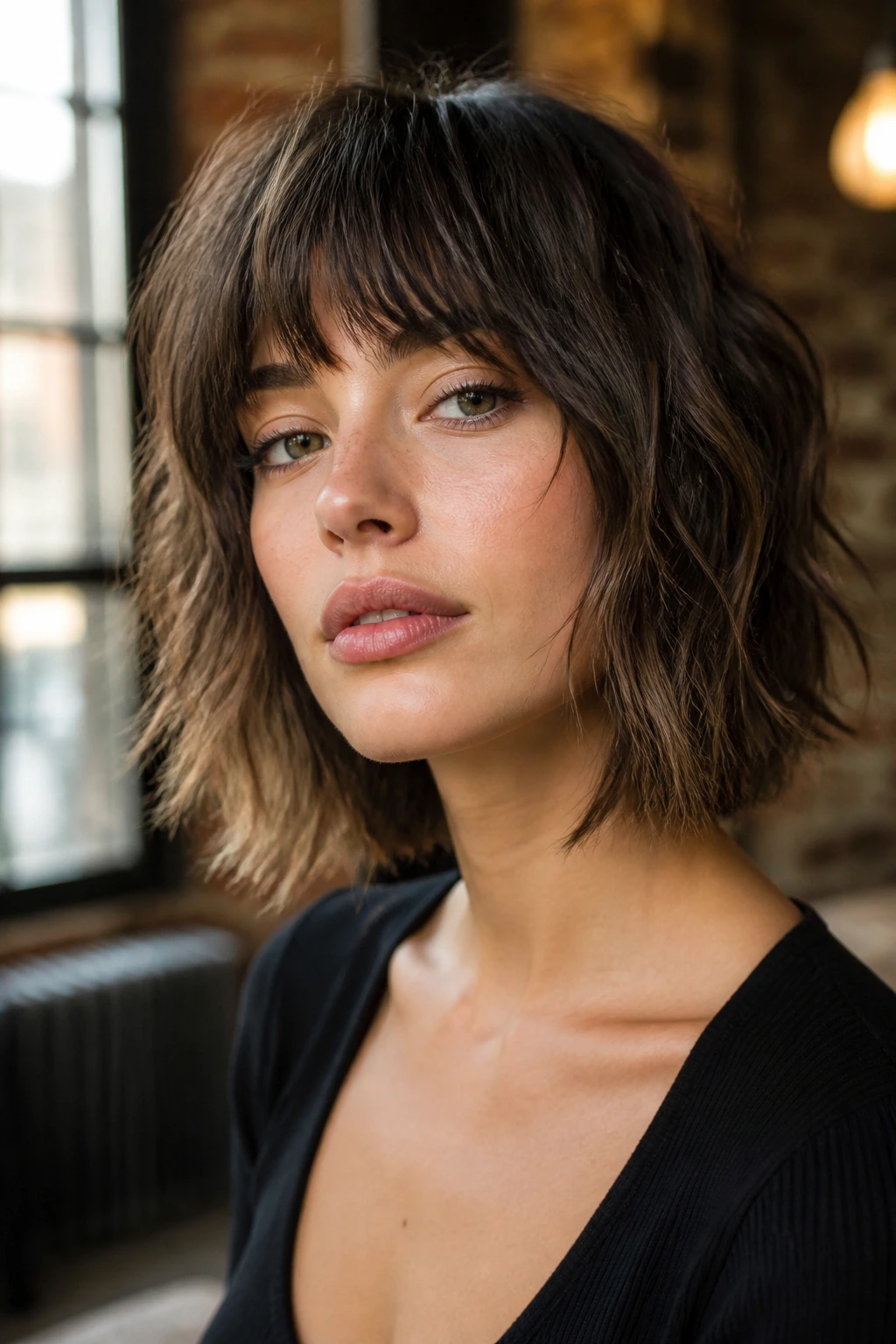
Arched bangs curve gently over the forehead instead of cutting straight across it, which keeps the face open while still giving the haircut a strong front. Pair that with choppy shag layers, and the whole look gets a bit of edge without turning severe. Wavy hair likes this because the irregular texture echoes the wave pattern instead of flattening it.
The arched shape is useful when you want bangs but don’t want the visual weight of a heavy fringe. It also grows out gracefully, which is more than I can say for some sharper bang shapes. The choppy layers should be visible, not blended to death; if they disappear completely, you lose the point of the haircut.
This is the sort of style that looks better with a few separated pieces than with a brushed-out, fully smooth finish. Don’t overthink it. A little texture is the whole story.
12. Retro Shag Bob with Bardot Bangs
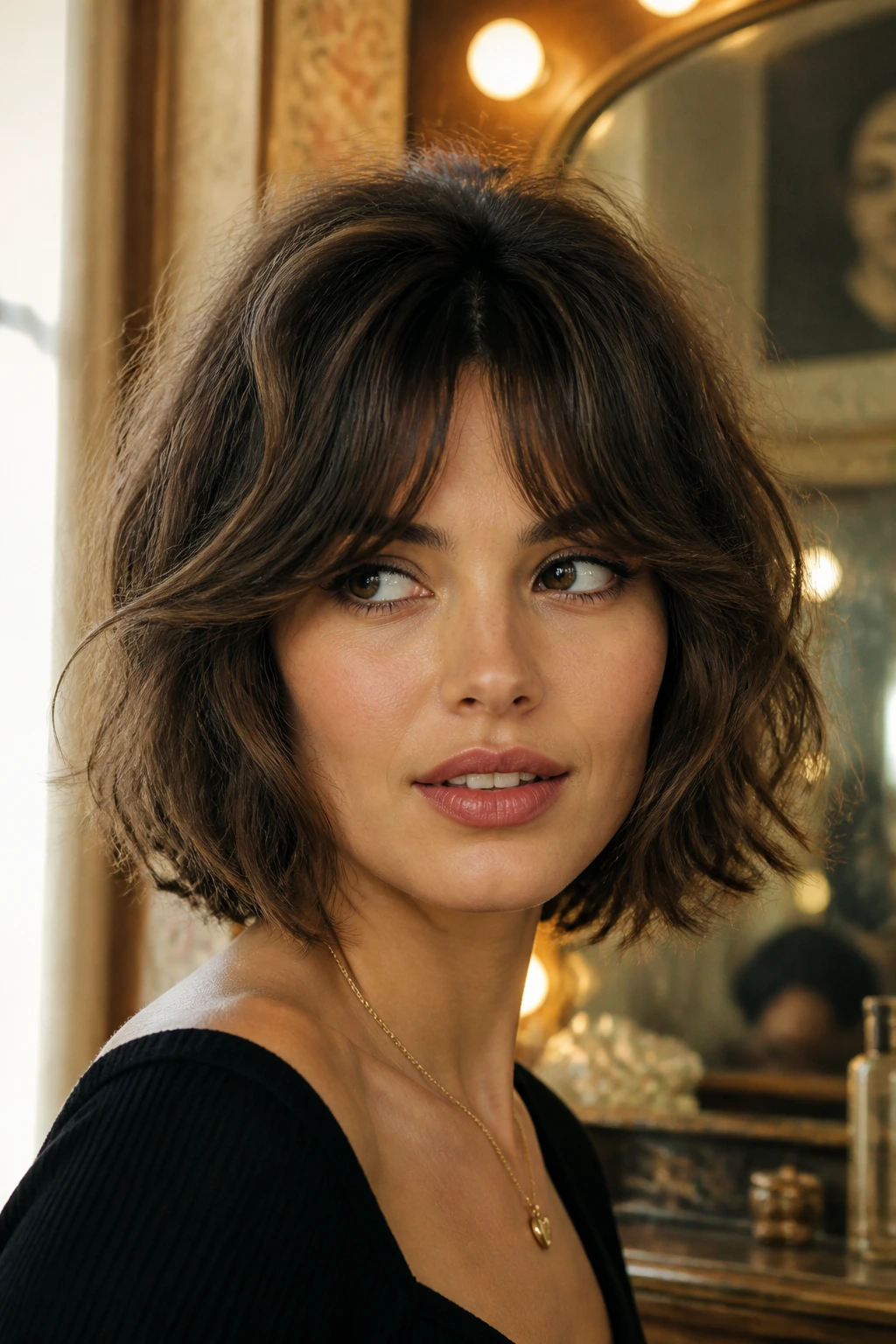
Bardot bangs bring a softer, fuller curtain across the forehead, with a wider split in the middle and longer side pieces that sit near the cheekbones. On a retro shag bob, that fringe gives the cut a touch of old-school drama without making it stiff. Wavy hair loves the setup because the fringe can bend, separate, and still look deliberate.
The retro angle shows up most in the volume at the crown and the sweep around the face. It’s less “messy weekend” and more “carefully undone.” If your waves are medium to thick, this cut can look lush. If your hair is fine, the bangs need to stay airy or they’ll overpower the rest of the shape.
I’d recommend this one when you want your bob to feel a little glamorous. Not formal. Just more polished than beachy.
13. Invisible-Layer Shag Bob with See-Through Bangs
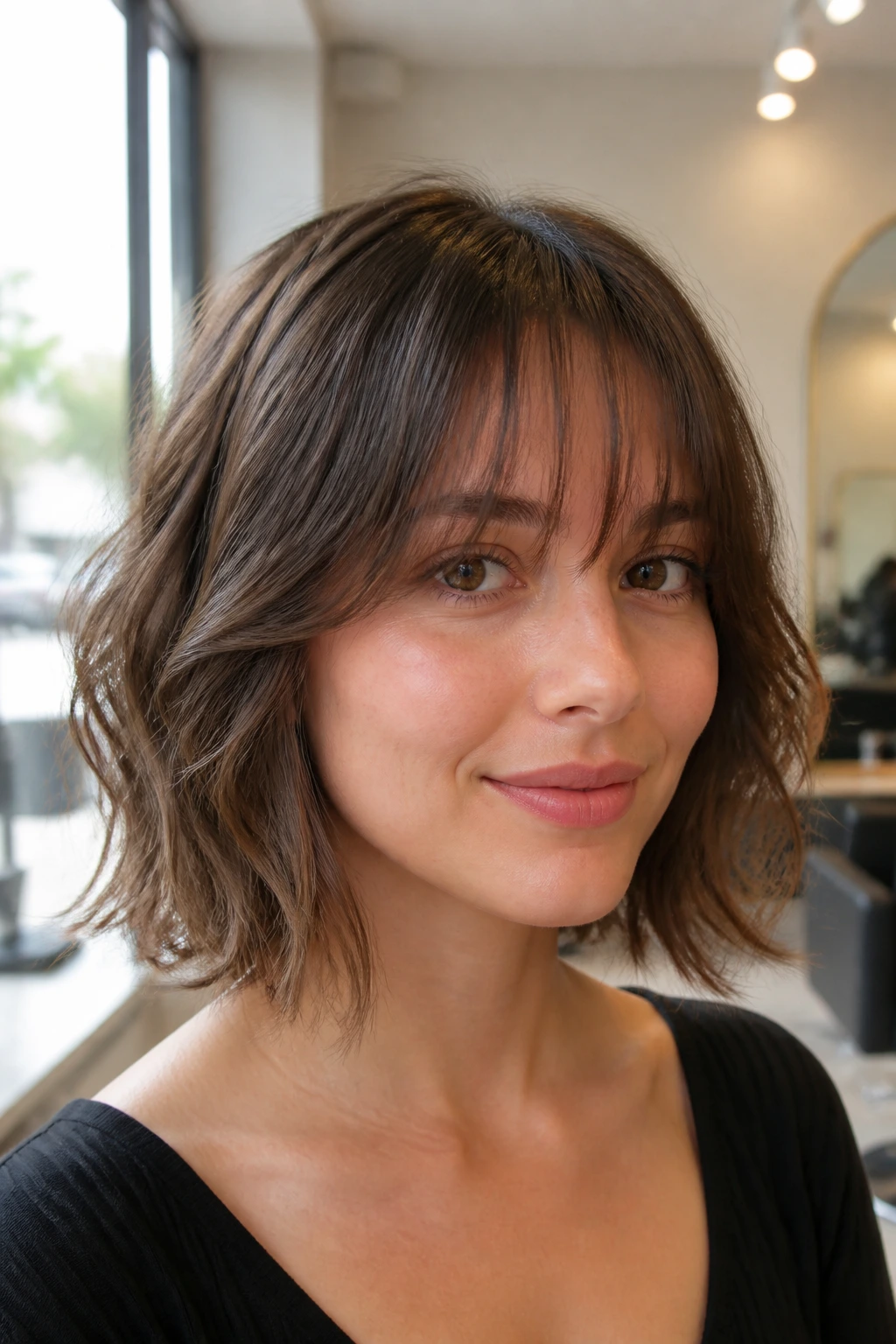
Invisible layers are for people who like movement but don’t want to see every layer announced across the haircut. The outline stays cleaner, while the interior is softened just enough to keep wavy hair from building bulk. See-through bangs keep the forehead light and breakable, which is useful if your hair gets dense quickly.
This is a clever option for fine wavy hair, because it adds shape without stripping away too much substance from the ends. It’s also a good first shag if you’re nervous about going too choppy. The effect is quieter. You still get lift and texture, just not a lot of obvious disconnection.
The tradeoff is simple: the cut needs a little styling to show itself. A quick bend with a brush or a scrunch of mousse usually does the trick.
14. Grown-Out Shag Bob with Long Curtain Bangs
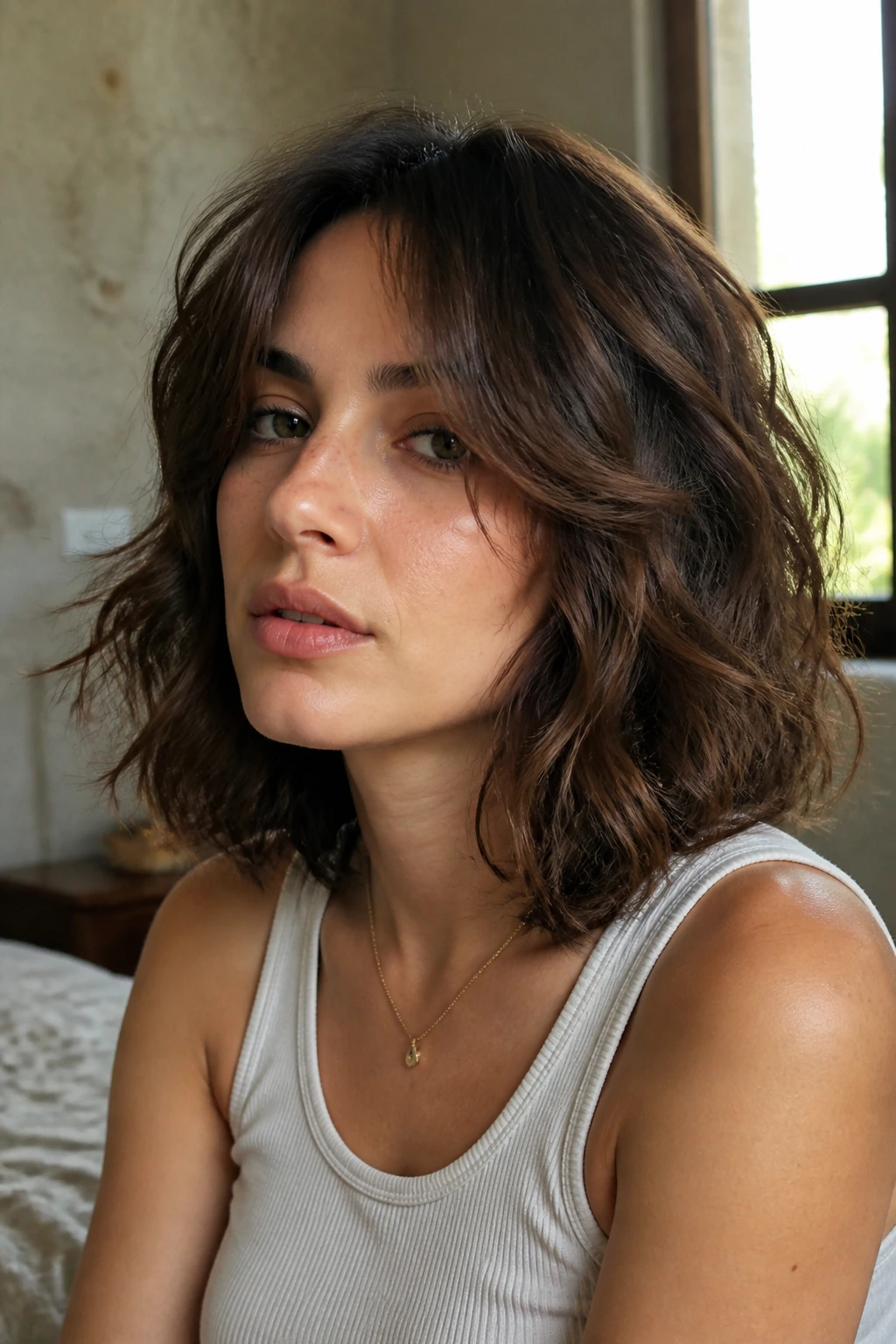
Long curtain bangs are the easiest fringe to live with if you hate constant trims. They sit low enough to merge into the face-framing layers, which makes them ideal for a grown-out shag bob. On wavy hair, that blend looks intentional instead of awkward, because the texture already wants to separate a little.
This is the version I’d point people toward if they want the shag shape but don’t want to babysit the bangs every three weeks. The length lets you tuck the fringe behind the ears, push it into a side part, or wear it split and loose. That flexibility makes the cut useful on busy days and better-looking on lazy ones.
The best part is that the grow-out phase is not a phase you have to hide. It reads as part of the style.
15. Tapered Shag Bob with Baby Curtain Bangs
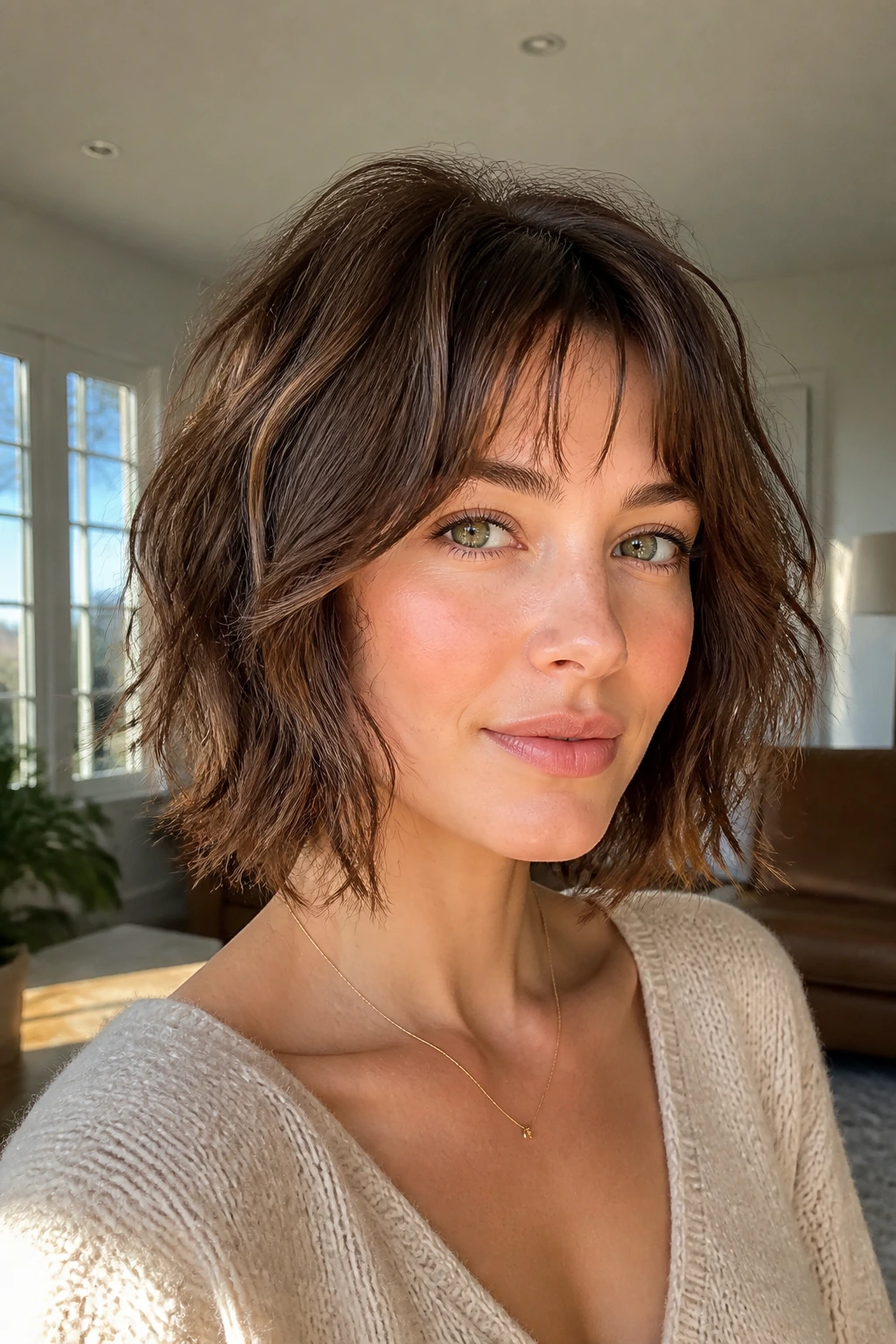
Baby curtain bangs are shorter and lighter than the classic version, and they create a little flick of movement right at the center of the forehead. A tapered shag bob keeps the length slightly narrower toward the neck, which helps the haircut feel neat while still textured. On wavy hair, that shape gives you a clean outline with a lively front.
This cut works best if you like a touch of playfulness and do not mind that the bangs sit higher than your brows. It can look fresh and a bit cheeky, but the rest of the bob needs to be balanced so the fringe doesn’t feel like a separate idea. That means the layers around the temples should connect smoothly into the sides.
A light mist of texturizing spray is usually enough. Anything heavier can make the baby bangs piece out too much.
16. Edgy Razor-Shag Bob with Piecey Fringe
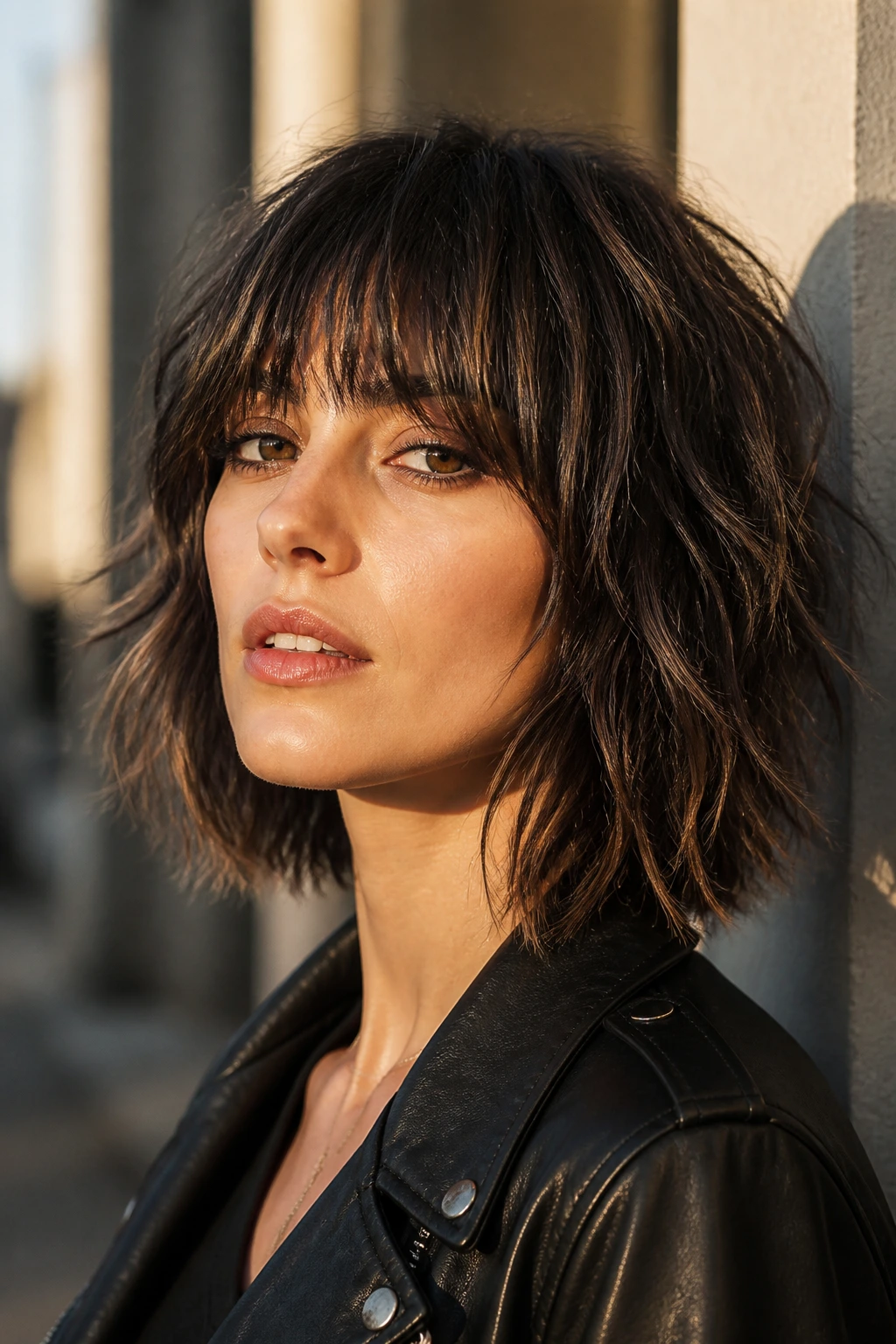
A razor-shag bob has a sharper, more shattered edge than a scissor-cut shag. The ends look light and broken, which suits wavy hair that already has a rougher texture. Pair it with a piecey fringe, and you get a cut that feels very alive, almost twitchy in a good way.
This is a strong choice if your hair is thick, a little coarse, or naturally stubborn. The razor removes weight without leaving obvious shelves, and the piecey fringe stops the front from becoming heavy. You do need some styling product here, though. The texture should look separated, not dry.
Who it suits: people who want the bob to feel slightly rebellious.
Quick reality check: if your hair frizzes easily and you never use product, this cut can turn fuzzy fast. A small amount of cream or balm keeps the pieces honest.
17. Full-Movement Shag Bob with Side-Part Bangs
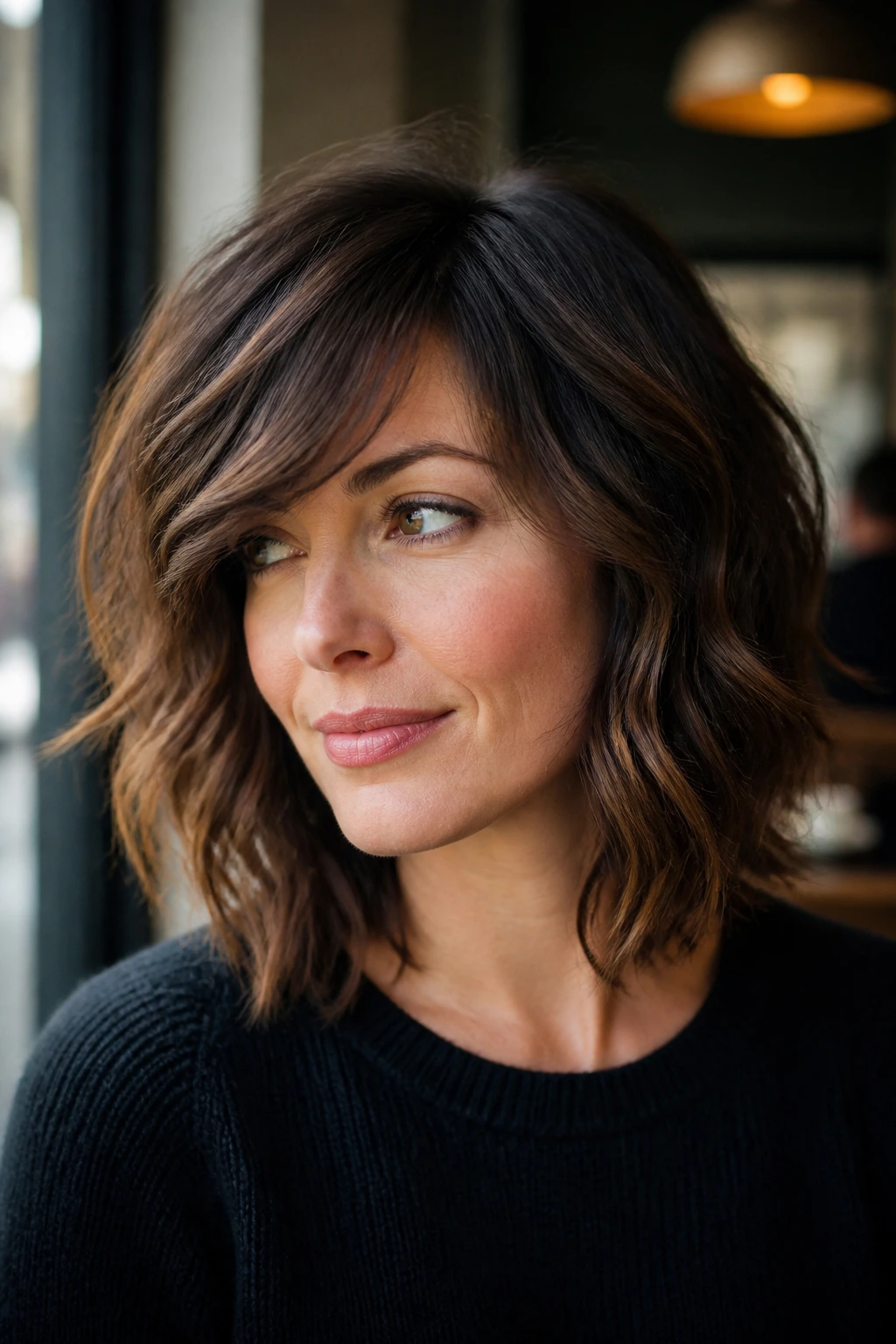
A deep side part changes the whole mood of a shag bob. Instead of framing the face evenly, the bangs sweep across one side and blend into the layers with a little more drama. On wavy hair, that asymmetry makes the cut feel more dynamic because the natural bend of the hair follows the part.
This version is especially flattering if you want volume on one side or if your waves fall flat around the center part. It lets the hair move diagonally, which often looks softer around the cheek and jaw. The full-movement feel comes from not forcing the fringe to sit in the middle at all.
If curtain bangs feel too predictable, this is the better move. It has a little more personality and a little less symmetry.
18. Curved-Under Shag Bob with Swoopy Bangs
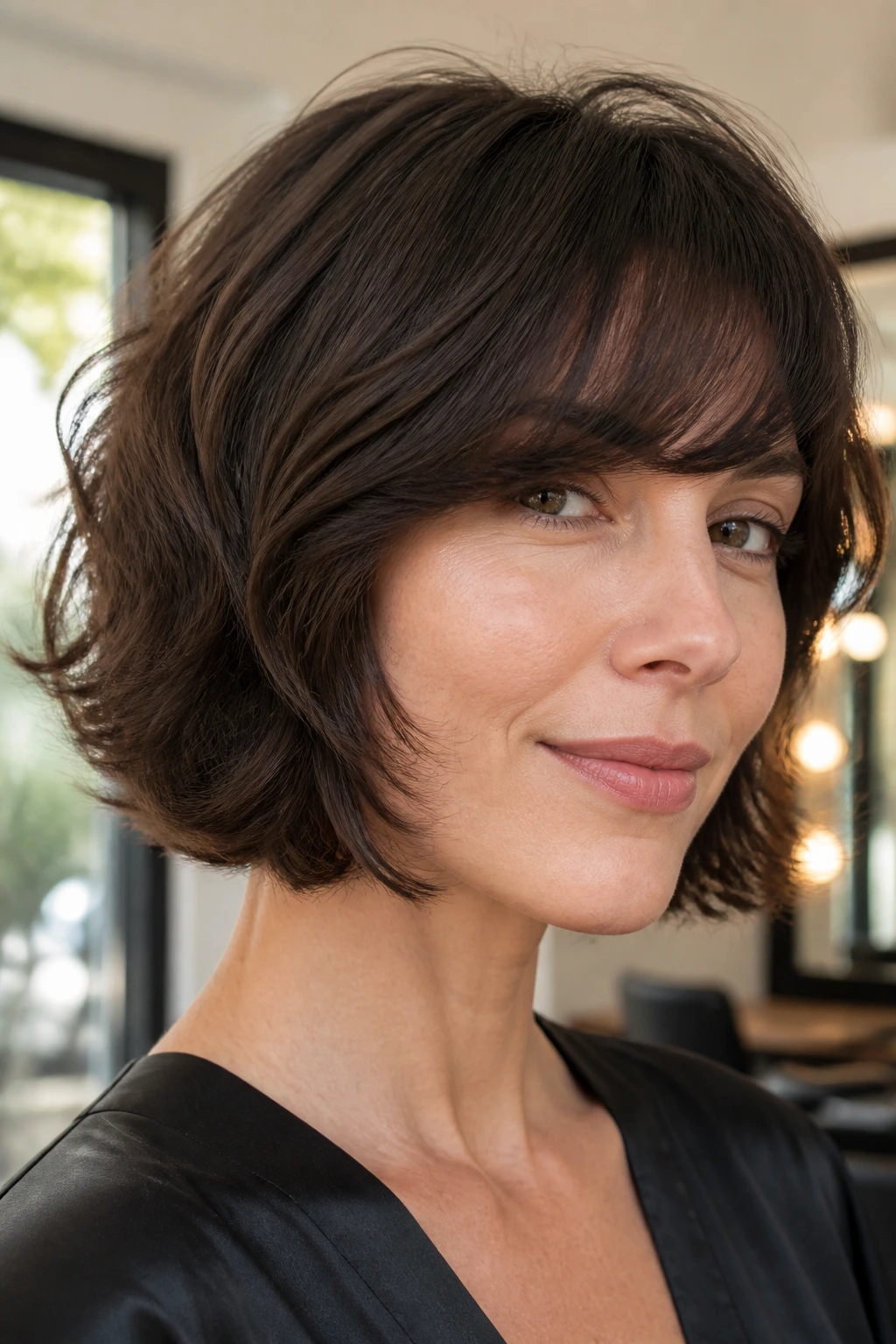
A curved-under shag bob has ends that tuck inward just enough to keep the shape controlled. That makes it a good match for wavy hair that expands at the sides. Swoopy bangs repeat the same motion through the front, so the whole cut feels connected from fringe to neckline.
This is one of the more polished options on the list, but it still has enough texture to avoid looking stiff. The curve under the ends helps if your hair flips out at the bottom, which can happen when a bob is cut too blunt or too short for the texture. Swoopy bangs soften the top, and together the two shapes make the haircut feel finished.
It’s a strong choice if you like a little roundness rather than a jagged outline. Think soft movement, not sharp angles.
19. ’90s Shag Bob with Heavy Fringe
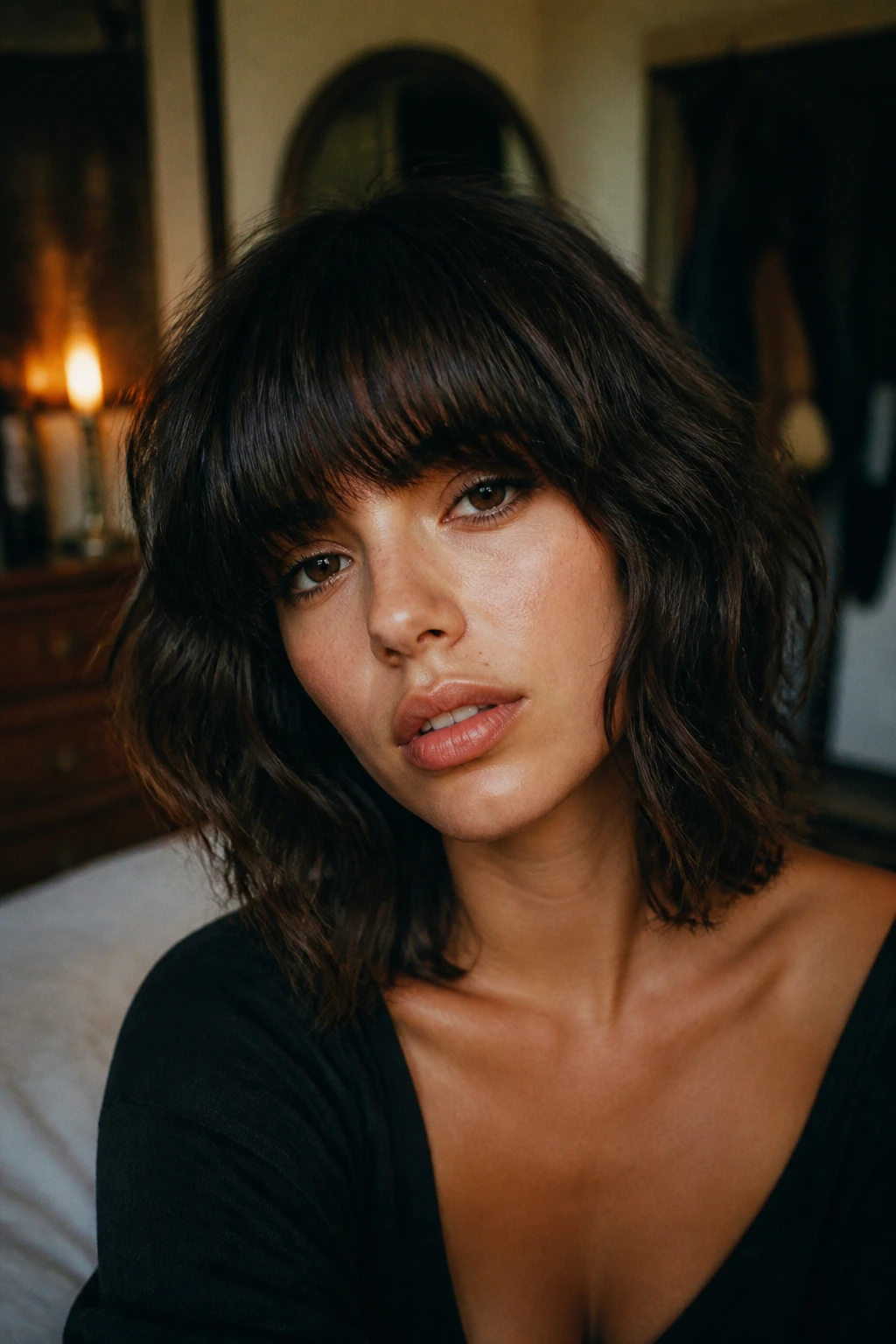
There’s a reason the ’90s-inspired shag keeps coming back: it gives the haircut a heavier front and a bigger sense of shape. The fringe is fuller here, falling more solidly across the brow, while the layers around the sides stay broken and touchable. On wavy hair, that contrast can look expensive in the best possible way.
This style needs density. If the hair is too fine, the heavy fringe can overwhelm the face. But on medium to thick waves, it creates a lush frame that doesn’t need a lot of extra styling. A blow-dry at the front and a rough dry everywhere else is often enough.
It’s one of the more statement-making cuts in the group. Not because it shouts. Because it knows exactly where to sit.
20. Minimal Shag Bob with Soft Straight-Across Bangs
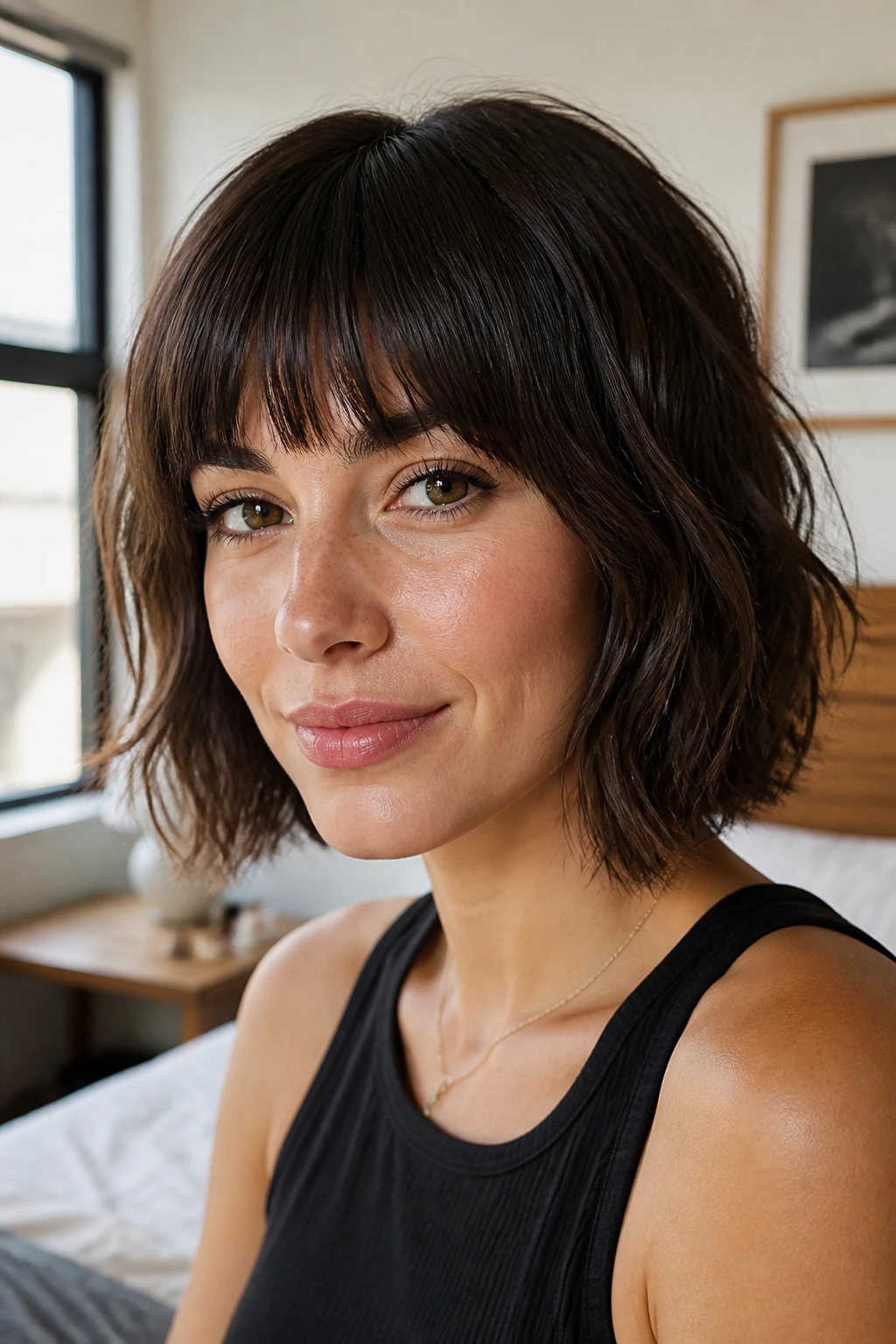
A minimal shag bob keeps the layers quieter and the outline cleaner. The texture is still there, but it’s tucked under the surface instead of cut into obvious shards. Soft straight-across bangs give the style a gentle edge, especially if the fringe is broken just enough at the ends to avoid a hard line.
This cut is good for people who like a neat shape with a little movement around the crown and sides. Wavy hair often looks best when it has a controlled perimeter, and this version respects that. The bangs keep the cut from feeling too plain, but they don’t take over the whole head.
If you want shag texture without the full “piecey” effect, this is the calmest route.
21. Heavily Layered Shag Bob with Face-Framing Bangs
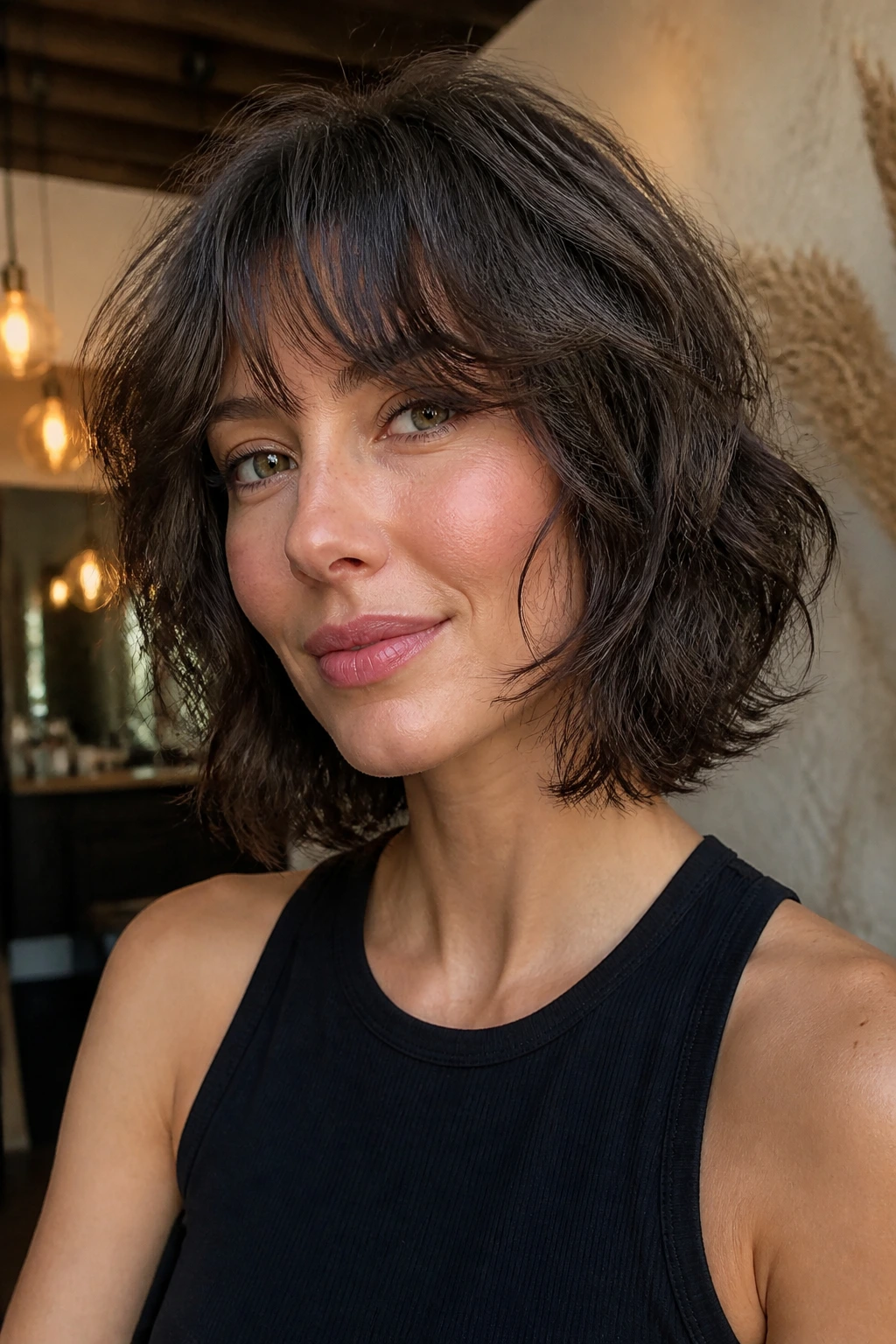
Some shag bobs are about texture. This one is about contour. Heavily layered pieces around the cheeks and jaw pull the eye inward, while the bangs melt into those face-framing sections instead of sitting as a separate fringe. On wavy hair, that kind of layering can make the whole cut look sculpted without feeling formal.
It’s especially useful if you want to soften a square jaw, balance a long face, or keep thick hair from becoming a wall. The layers need to be cut with enough intention that they don’t just create frizz at the front. Done right, the pieces fall in a way that looks like movement rather than damage.
This is one of my favorites for people who want shape first and trend second. It does a lot of work quietly.
22. Air-Dried Shag Bob with Split Fringe
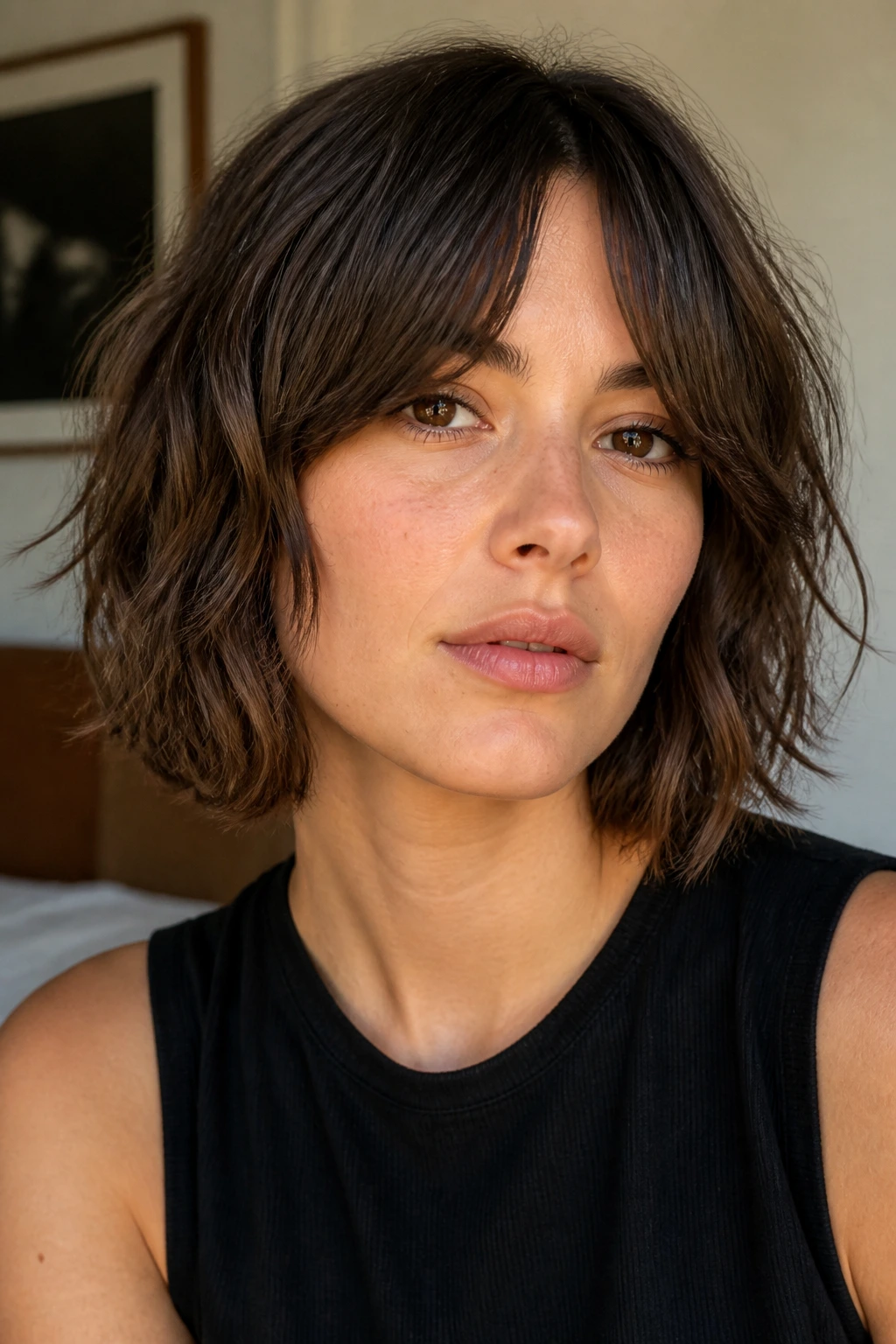
If you want a haircut that behaves well when you don’t feel like styling it, this is the one to watch. The split fringe opens naturally at the center and settles on its own, while the air-dried shag bob keeps the layers soft enough to dry without a fight. Wavy hair tends to appreciate that freedom.
The shape relies on good cutting, not heavy styling. The ends should be light, the fringe should separate easily, and the crown should not be so over-thinned that it frizzes out. A little leave-in conditioner, a bit of curl cream, and a scrunch are usually enough. That’s the point.
It’s the most relaxed version in the collection, and maybe the most realistic one too. Some mornings you want a haircut that still looks like a haircut after you’ve barely touched it.
Why Wavy Hair and a Shag Bob Click So Well
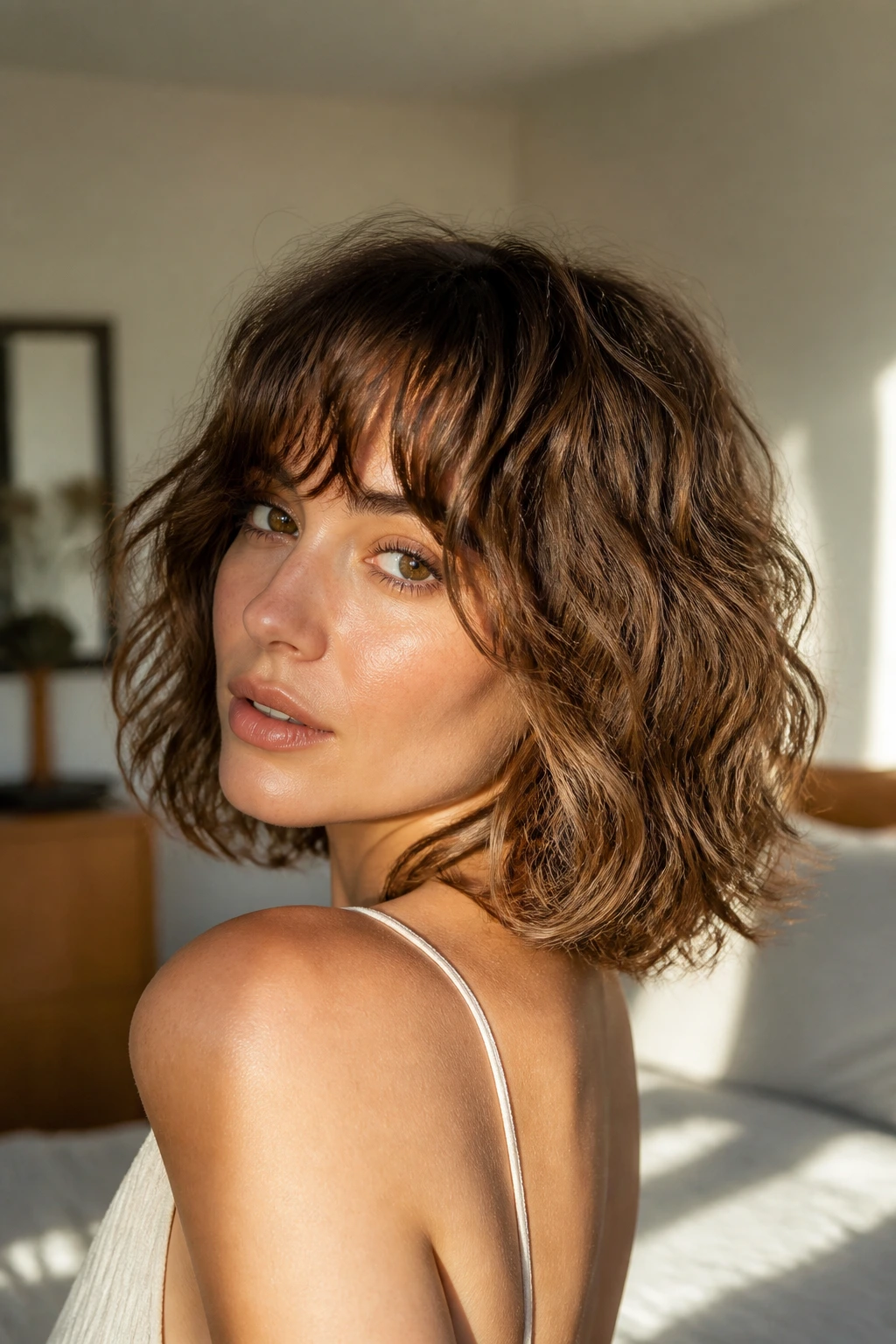
Wavy hair usually looks best when the cut gives it somewhere to bend. A medium shag bob does that job better than a one-length bob because the layers remove just enough bulk for the wave pattern to show up cleanly. Without those internal layers, the hair can stack outward at the sides and turn into that awkward triangle nobody asked for.
The bangs matter just as much. A fringe on wavy hair should feel breakable, not locked into place. That’s why curtain bangs, bottleneck bangs, and soft side-swept shapes tend to work so well. They let the front of the cut move with the rest of the hair, which keeps the style from feeling like three separate parts stitched together.
There’s also a practical side to the whole thing. Medium length gives wavy hair weight. Too short, and some textures puff up. Too long, and the wave pattern gets dragged out and sleepy. The shag bob lands in the middle, where the curls or waves can hold shape without needing constant heat.
How to Ask for the Cut at the Salon
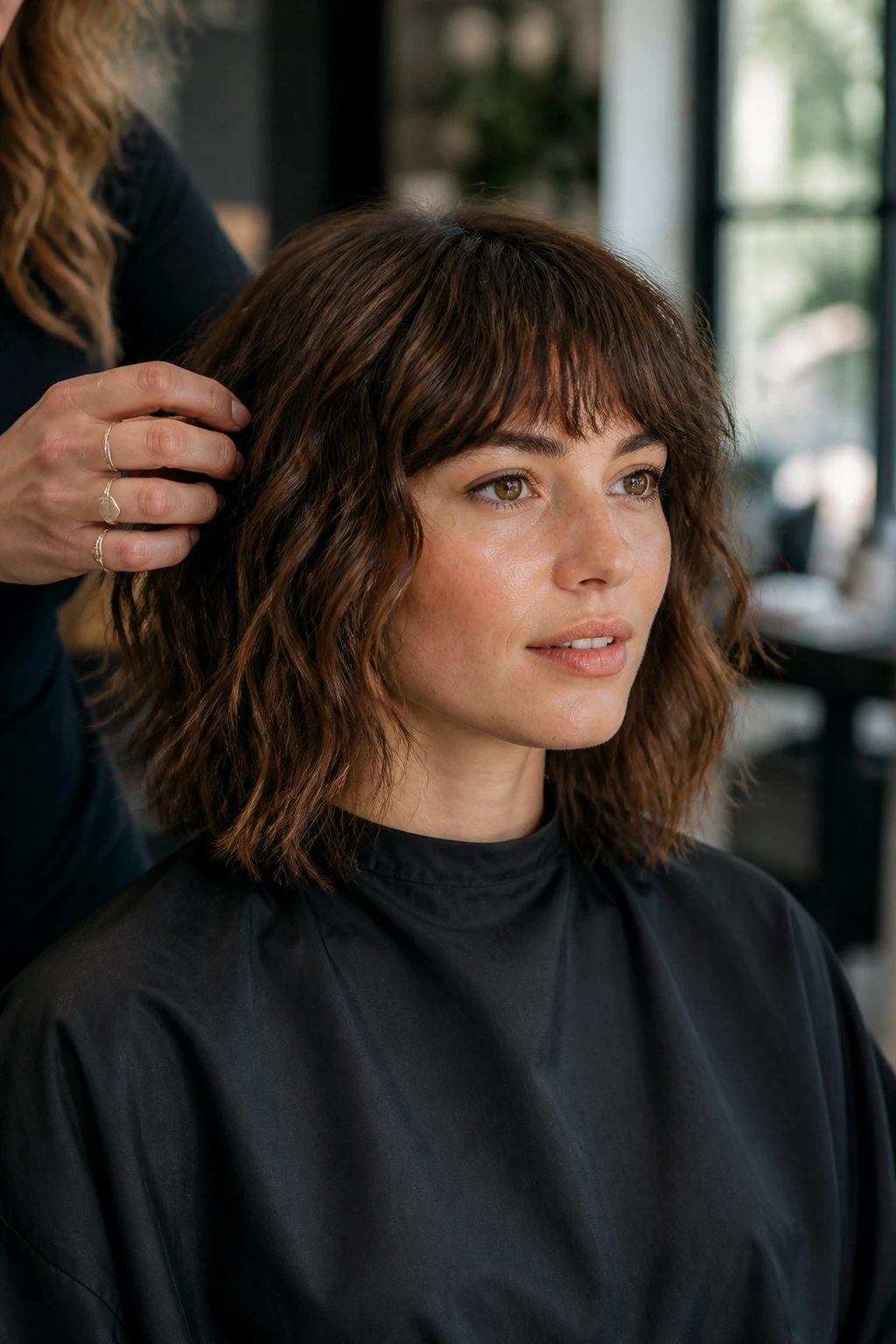
Bring photos, yes, but bring the right ones. One front view is not enough. You want at least one photo of the side, one of the back, and one image that shows the fringe shape you actually want. A “shag bob with bangs” can mean a dozen different things to a stylist, and the differences are not small once the scissors come out.
Use plain words. Tell them where you want the length to sit: jaw, chin, upper neck, collarbone. Say whether you want the shape rounded, tapered, or slightly stacked. If your hair is thick, ask where they plan to remove weight. If it’s fine, ask how they’ll keep the ends from getting see-through. That conversation matters more than the buzzword on the mood board.
For the bangs, be specific about the starting point and the opening. Curtain bangs that split at the bridge of the nose do something different from bottleneck bangs that stay narrow at the center. Micro fringe, blunt fringe, and soft wispy fringe all behave differently on wavy hair, and if you don’t name the difference, you may get the wrong one.
The Tools That Keep the Shape Soft, Not Puffy
-
A diffuser attachment: It dries waves without blasting them into frizz, especially around the bangs and crown.
-
A blow dryer with a nozzle: The nozzle helps direct the front pieces so curtain bangs and side-swept fringe don’t scatter.
-
A 1 to 1.25-inch round brush: Small enough for bangs, large enough to bend the front layers without making them curl too tight.
-
Wide-tooth comb: Best for distributing conditioner or leave-in through wavy hair without breaking the wave pattern.
-
Sectioning clips: They keep the bangs separate while you dry the rest, which matters more than people think.
-
Lightweight mousse or wave foam: Adds support at the roots without turning the cut sticky or stiff.
-
Texturizing spray: Useful for shag layers that need a little grit and separation after drying.
-
Heat protectant: If you smooth the bangs or bevel the ends with heat, this is not optional.
How to Style a Medium Shag Bob with Bangs on Wavy Hair
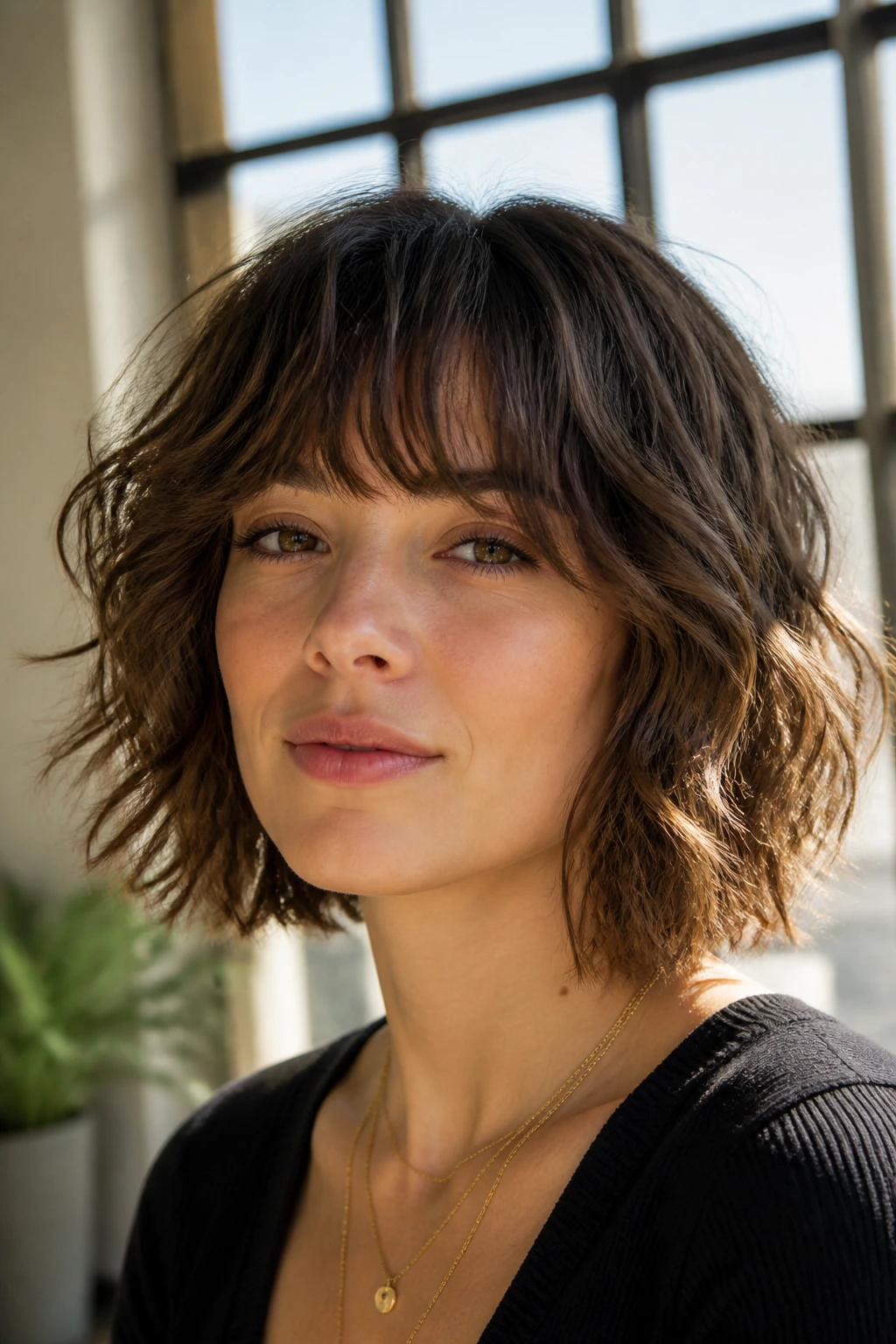
Start with damp, not dripping, hair. That matters. If the hair is too wet, product gets diluted and the bangs take forever to settle into their shape. Work in a lightweight mousse or wave foam from roots to mid-lengths, then smooth the fringe with whatever’s left on your hands.
For air-drying, scrunch the ends upward and leave the bangs separate from the rest of the hair until they’re about 80 percent dry. That keeps the fringe from clumping into the front pieces. If you want more polish, use a diffuser on low heat and low speed, moving the dryer around instead of sitting in one spot. Wavy hair gets puffy when you overdo the heat. It gets weirdly stringy when you under-dry the crown. There’s a middle point. Find that.
If you prefer a smoother finish, bend only the front and the ends with a round brush or a flat iron. Don’t curl the whole head. That’s how a shag starts looking overworked. The cool trick is to style the bangs first, then let the rest stay loose. The contrast makes the texture look intentional.
Common Mistakes That Flatten or Frizz the Shape
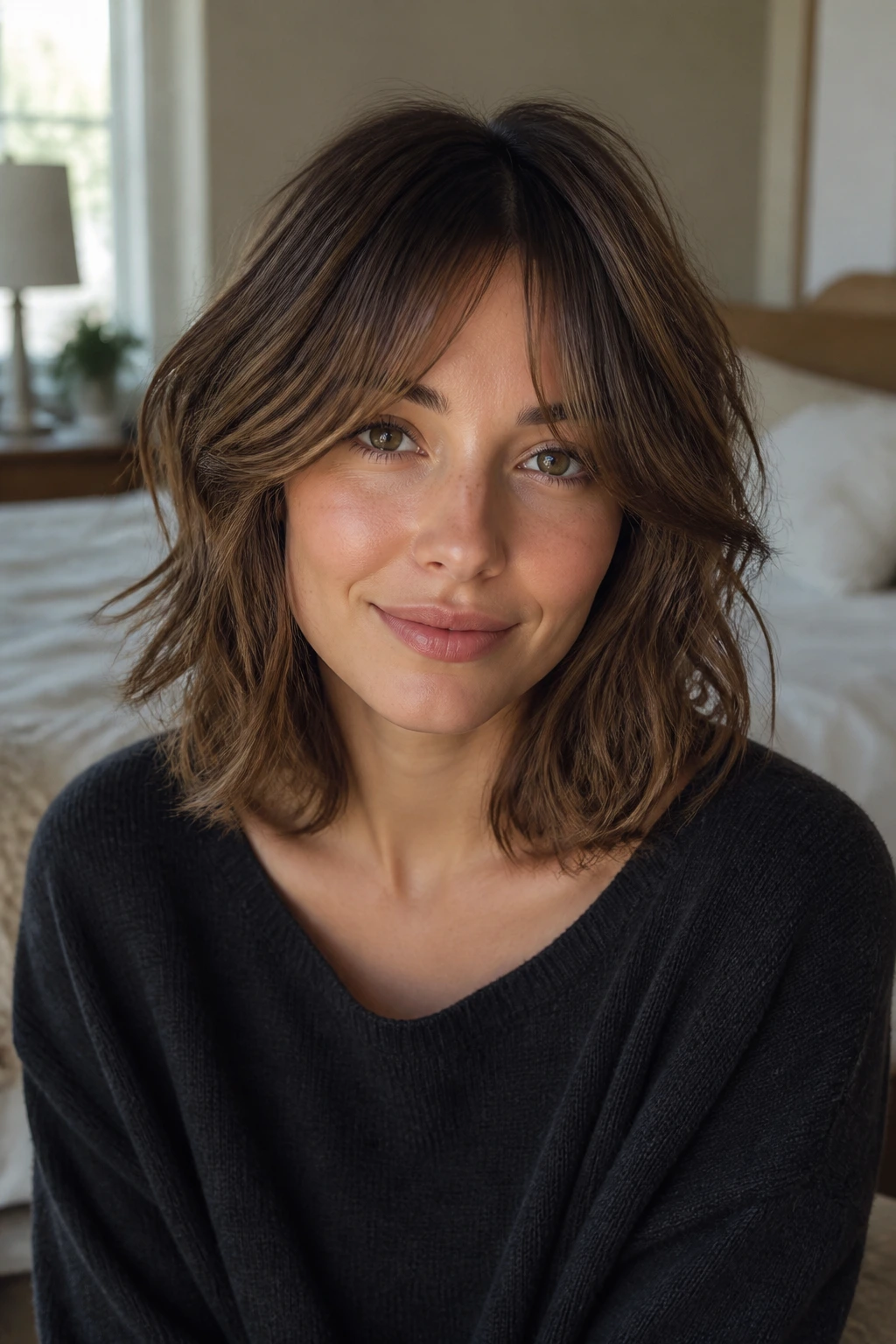
The first mistake is cutting the layers too short near the crown. That can make wavy hair stick out like a broom in the back, especially if the hair is thick. The fix is simple: keep the shortest layers soft and slightly disconnected, not chopped high into the head.
Another one is over-thinning the ends. People see “shag” and assume more removal is better, but too much texturizing leaves the bottom wispy and dry-looking. If the ends start to look see-through when the hair is dry, the cut has gone too far.
Bangs are the third trouble spot. A dense fringe on a loose wave pattern can sit heavy and separate in the wrong places. Ask for a bang that’s cut with movement in mind, then dry it the way you plan to wear it. Wet bangs lie. Dry bangs tell the truth.
Finally, too much product can kill the shape. Heavy oils and thick creams weigh down the fringe and make the layers stick together. Use just enough to control frizz, then stop.
Easy Variations for Fine, Thick, or Grown-Out Hair

Fine-Hair Lift: Keep the perimeter a touch fuller and the layers softer through the crown. This adds movement without stripping away the weight that fine waves need to look like hair instead of smoke.
Thick-Hair De-Bulk: Ask for internal weight removal through the mid-lengths, not just the ends. Thick wavy hair needs room to move, and removing bulk in the wrong place creates a triangle faster than most stylists admit.
Grown-Out Fringe: Let the bangs slide into the cheekbone layers. This is the easiest path if you want the look without the pressure of a strict bang trim every few weeks.
Curly-Wave Hybrid: If your waves bend more tightly in humid weather, keep the layers longer and the fringe more broken up. That helps the cut read well whether your hair is behaving or not.
Office-Friendly Version: Ask for softer edges, a less aggressive crown, and bangs that can tuck away from the face. It still has texture, but it won’t feel too wild when you need a neater finish.
How to Keep the Cut Fresh Between Appointments
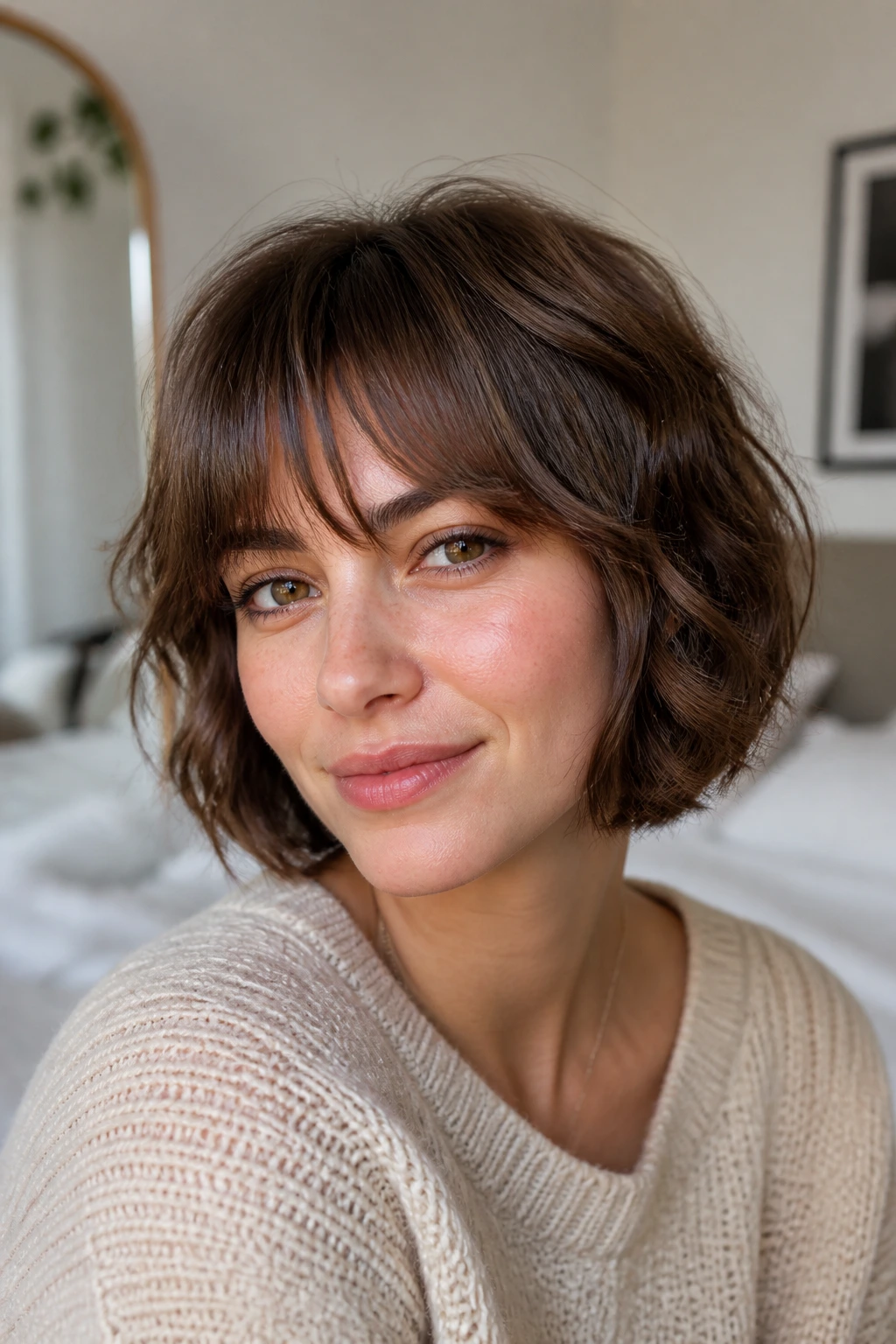
Bangs need the most attention. Plan on trimming or reshaping them every 3 to 5 weeks if you like the fringe sitting cleanly on the face. The rest of the cut can usually go 8 to 10 weeks before it starts losing its shape. If your hair grows fast or the layers are dramatic, that window gets shorter.
The good news is that shag bobs age more kindly than blunt bobs. A slightly grown-out curtain bang still looks like part of the style. The layers just soften and the shape gets looser. What you do want to watch for is the perimeter getting too heavy. Once the ends start flipping weirdly or the side shape collapses, it’s time to tidy it up.
Between appointments, keep the finish light. Wash away heavy buildup every few weeks with a clarifying shampoo if your waves start looking coated. Use dry shampoo at the roots, not through the bangs, or you’ll get that dusty fringe texture that looks older than it is.
Questions People Ask Before They Chop Their Hair
Will a shag bob make wavy hair look thinner?
Not if it’s cut well. A good shag bob removes bulk where the hair balloons, but it keeps enough weight in the outline to preserve fullness. The danger is over-layering the ends, which can make the bottom look sparse.
Are curtain bangs better than blunt bangs for wavy hair?
Usually, yes, if you want less styling work. Curtain bangs bend with the wave pattern and grow out more gracefully. Blunt bangs can look excellent, but they ask for more upkeep and a steadier styling routine.
Can fine wavy hair wear a medium shag bob?
Absolutely, but the layers should stay softer and the fringe should not be too dense. Fine hair needs some perimeter weight so the ends don’t look stringy after a few weeks of growth.
What if my waves are different on each side?
That’s common. A slightly off-center part and a more forgiving fringe, like curtain or side-swept bangs, will usually hide the asymmetry better than a rigid, straight-across bang.
How do I stop bangs from separating in weird places?
Dry them first, while the rest of the hair stays clipped back. Use a small round brush or fingers to guide them, then let them cool before touching them again. Wet bangs are too easy to bully into the wrong shape.
Can I wear this cut straight sometimes?
Yes, and that’s one of the better things about it. A medium shag bob still has shape when blown out, as long as the layers aren’t so shredded that the ends disappear.
Does this cut work with glasses?
It can, especially with side-swept, bottleneck, or curtain bangs. You just want the fringe to sit either above the frames or softly around them, not right through the lenses.
What if my stylist cuts the bangs too short?
Don’t panic. Keep the rest of the hair soft and let the fringe grow into the side layers. A bad bang cut is annoying, but on this style, it usually grows out into something usable faster than a blunt bob would.
The Shape That Moves With You
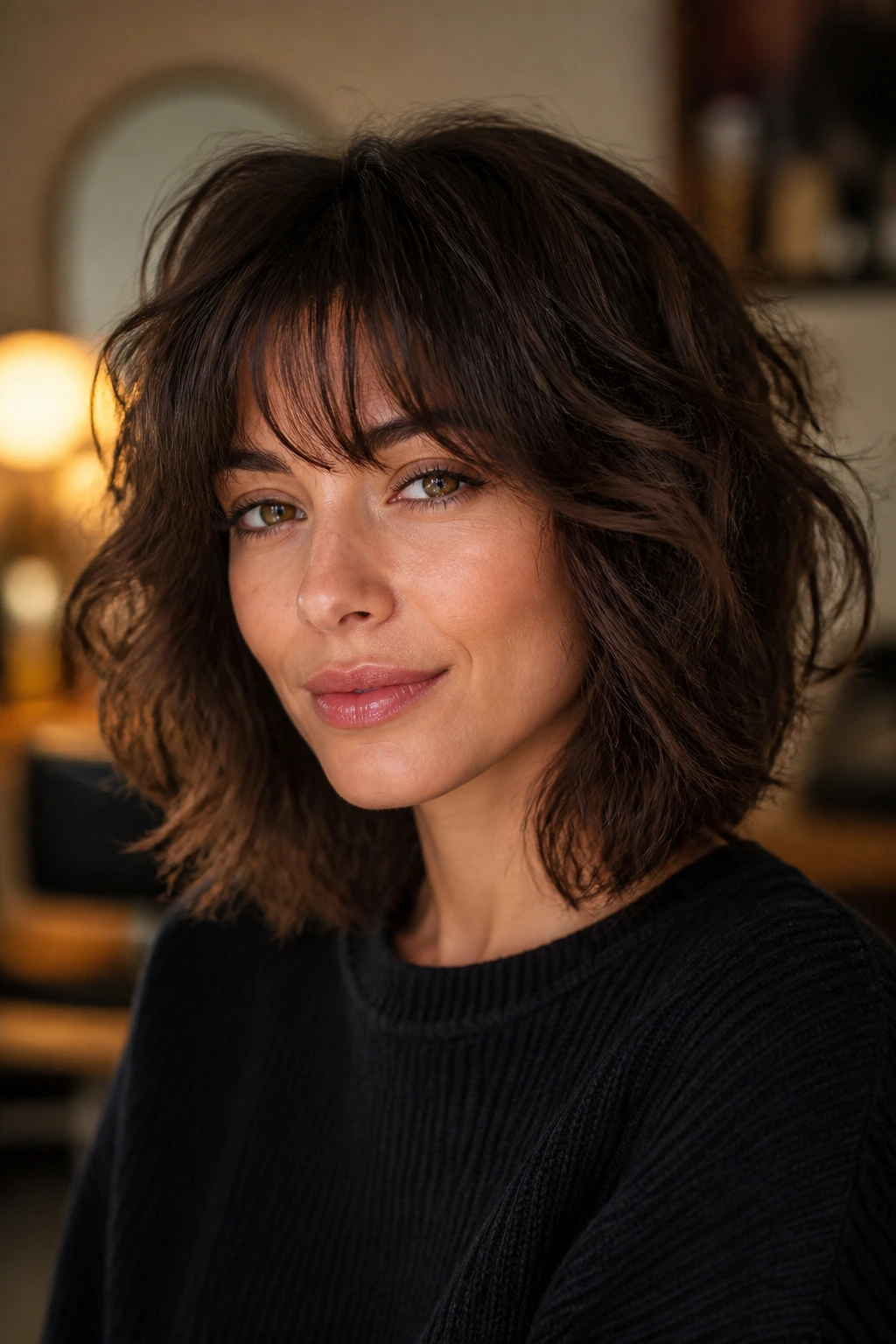
What makes a medium shag bob with bangs on wavy hair worth the trouble is not that it looks perfect. It doesn’t. That’s the point. The cut works because it gives the wave pattern a frame, then leaves enough looseness for the hair to keep doing what it already wants to do.
If you’re choosing between versions, think about the kind of help your hair needs most. More lift? More control? Softer bangs? Less maintenance? The right shag bob answers one of those questions without flattening the rest of your texture.
The best part is that there isn’t only one good answer here. There are twenty-two. Pick the shape that matches your waves, then let the haircut do some of the work for you.
