



A shaggy bob can do a lot of work fast. The cut brings lift at the crown, movement through the mids, and enough softness around the jaw to keep the whole thing from looking helmet-stiff. On blonde hair, that movement matters even more, because the light catches every layer and makes the cut read as fuller instead of flatter. For women whose hair has started to thin at the temples or lose bounce at the ends, the right shaggy bob can feel like a cheat code — not magic, just smart shape.
What makes blonde shaggy bobs for older women worth a long look is the mix of polish and looseness. A blunt bob can go sharp in a hurry. A shag with soft blonde ribbons does the opposite: it blurs hard lines, lifts the cheek area, and gives you that lived-in finish that doesn’t demand a full salon blowout every morning. The trick is choosing the right length, fringe, and blonde tone for your hair texture, face shape, and how much styling you actually want to do.
Some of these cuts are built for fine hair that needs more body. Others are better for thick, wavy, or curly hair that needs weight removed without turning frizzy at the ends. The good versions always look intentional. The bad ones look like the stylist got carried away with the thinning shears. That difference matters, and it’s exactly where the details start to count.
Why These Blonde Shaggy Bobs Earn Their Keep
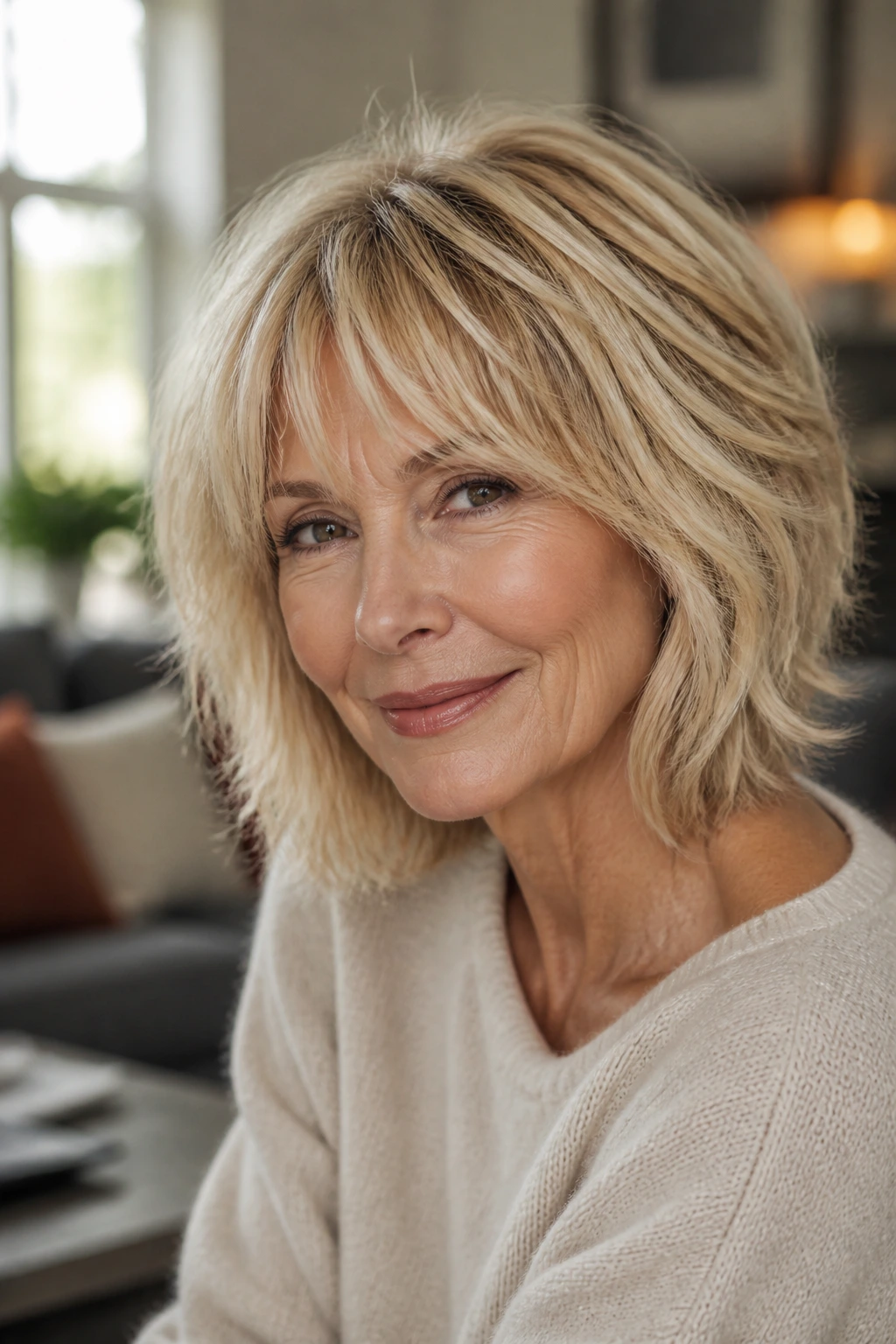
Face-softening shape: A shaggy bob bends around the cheek and jaw instead of drawing a hard line there, which is kinder to hair that has lost some density near the front.
Blonde does some of the visual lifting: Honey, beige, champagne, silver, and rooted blonde tones catch light in the layers, so the cut looks fuller even when the hair itself is not thick.
The grow-out is less fussy: Soft edges, curtain bangs, and rooted color make salon regrowth look deliberate rather than neglected, which matters when you don’t want to book trims every few weeks.
It works with real-life styling: Most of these cuts air-dry with a little mousse and a rough twist of the fingers. You do not need a round brush marathon to get them moving.
There’s room for gray blending: A shaggy bob can blend silver regrowth into blonde ribbons without that obvious line of demarcation that makes some color jobs feel high-maintenance.
The right version flatters glasses and necklines: Shorter pieces around the temples, a soft fringe, or a collarbone-grazing length can make frames and earrings look intentional instead of crowded.
1. Soft Honey Shag Bob With Feathered Ends
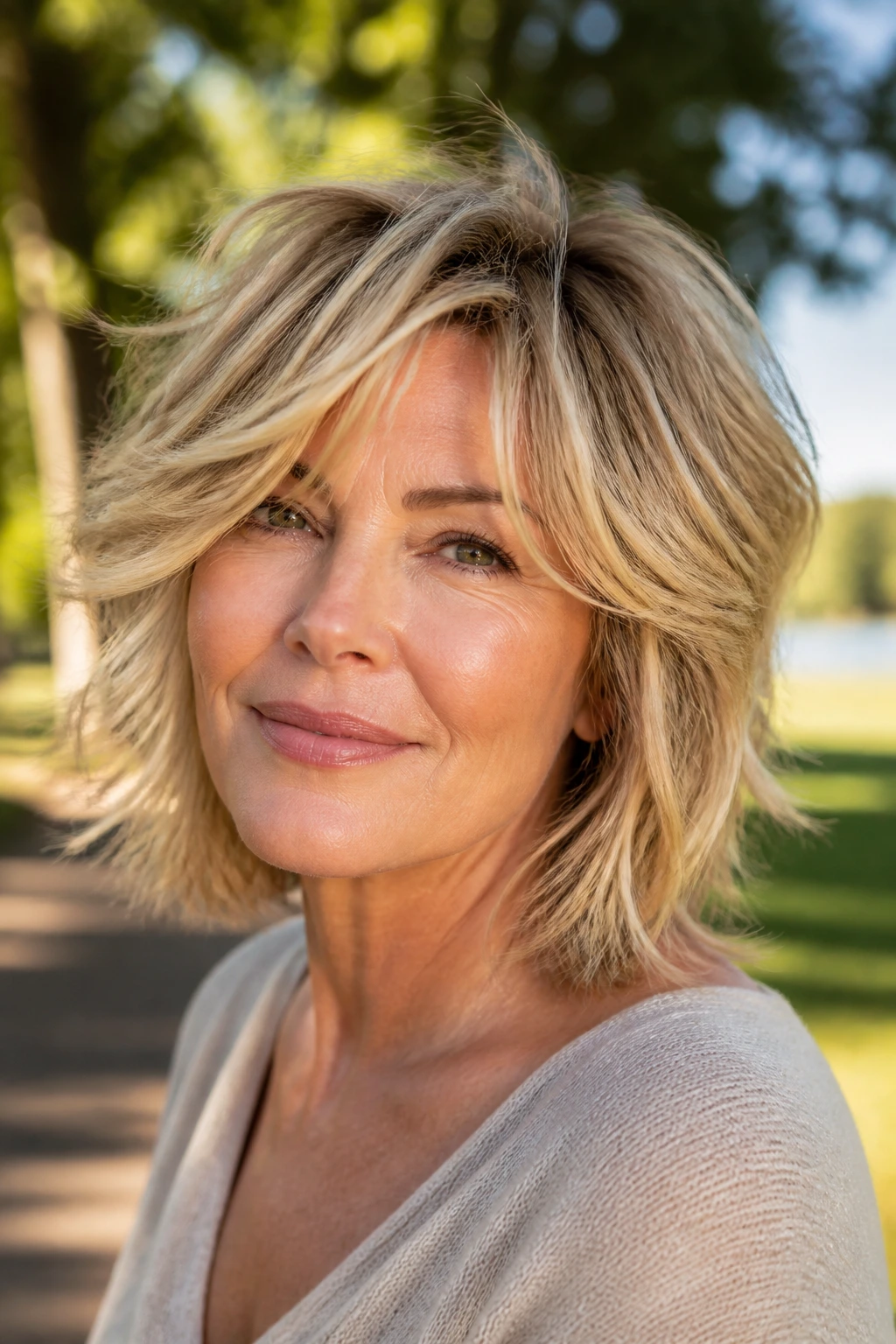
This is the bob I think of when someone wants softness first and attitude second. The honey blonde keeps the cut warm and bright, while the feathered ends stop it from feeling boxed in. It has that easy, brushed-through texture that looks even better after a little wind or a few hours of wear.
Why feathering matters here
Feathering takes the edge off the perimeter, which is useful if the jawline has more angles than you want to emphasize. The layers create little gaps of movement, and the honey tone fills those spaces with light. On finer hair, that keeps the style from looking see-through; on thicker hair, it keeps the outline from turning bulky.
A few things to ask for
- What to ask your stylist for: Soft internal layers, a slightly longer front, and point-cut ends rather than a blunt chop.
- What it suits best: Fine to medium hair that needs movement without a ton of shortening.
- Best styling move: A 1-inch brush bend or a quick pass with a flat iron, leaving the last inch out.
- Color note: Honey reads richer when the roots stay a shade deeper than the mids.
Pro tip: Keep the ends light, not wispy to the point of vanishing. There’s a line between airy and thin, and that line shows up fast on blonde hair.
2. Chin-Length Silver-Blonde Bob With Side-Swept Fringe
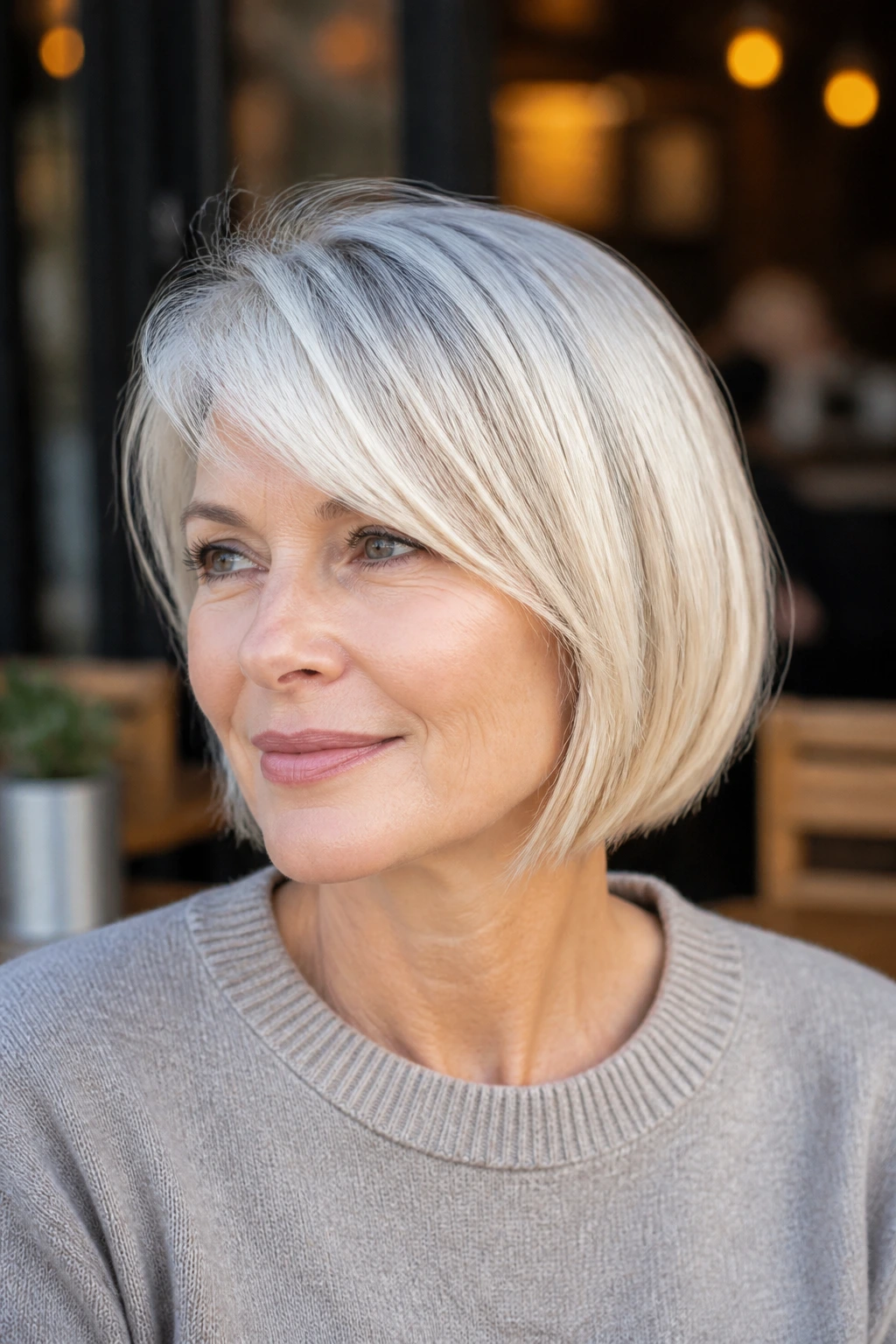
Why does this one work so well? Because silver-blonde has a crisp, reflective finish that makes chin-length hair look deliberate, not skimpy. A side-swept fringe softens the forehead and gives the front a little bend, which is useful if you wear glasses or have a strong hairline.
The shape sits close to the face without clinging to it. That’s the trick. The shorter length keeps the neckline clean, while the fringe breaks up the forehead just enough to keep the cut from feeling severe. If your hair has gone naturally silver, this is one of those styles that lets the color do some of the visual labor.
How to wear it without making it stiff
Blow-dry the fringe first, then turn your attention to the body of the bob. Use a small round brush at the roots for lift, then let the ends fall with a slight inward curve. A tiny amount of light cream on the fringe is enough; too much and the whole thing collapses into a stringy curtain by noon.
The best part is how it frames earrings. The chin length leaves the jaw open, which makes the whole face look brighter. That sounds like a small thing. It isn’t.
3. Collarbone Shag Bob With Curtain Bangs
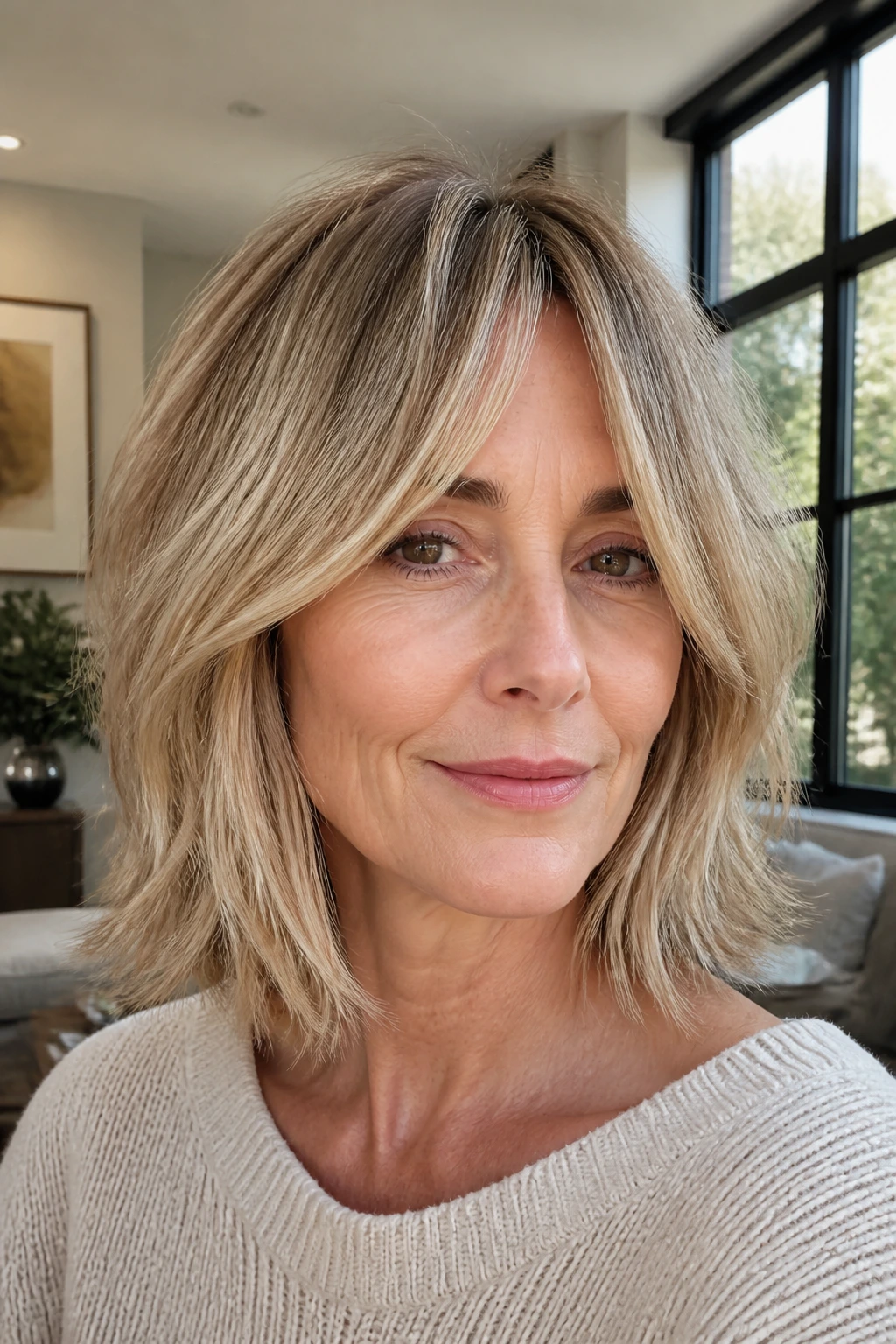
A collarbone shag bob gives you a little more room to breathe. If you’ve had shorter bobs before and felt trapped by them, this length keeps the neck free while the layers still do the flattering work. Curtain bangs are the selling point here: they split the forehead softly and travel into the sides without a hard break.
Best for hair that loses shape by midday
This cut behaves well on hair that starts strong in the morning and sags later. The extra length gives the ends some weight, so they don’t fly off in every direction. Meanwhile, the curtain fringe keeps the front from looking heavy, which is a common issue when hair gets finer with age.
What to request: Ask for the bangs to start a little back from the hairline, not chopped straight across the front. That small shift keeps them from sitting like a shelf.
You can wear this shag polished or messy. Polished means a bend at the ends and a soft center part. Messy means a quick scrunch with mousse and a rough dry. Either way, the curtain fringe makes the whole cut feel more expensive than it is, which is one reason stylists keep returning to it.
4. Rooted Beige Blonde Bob With Choppy Layers
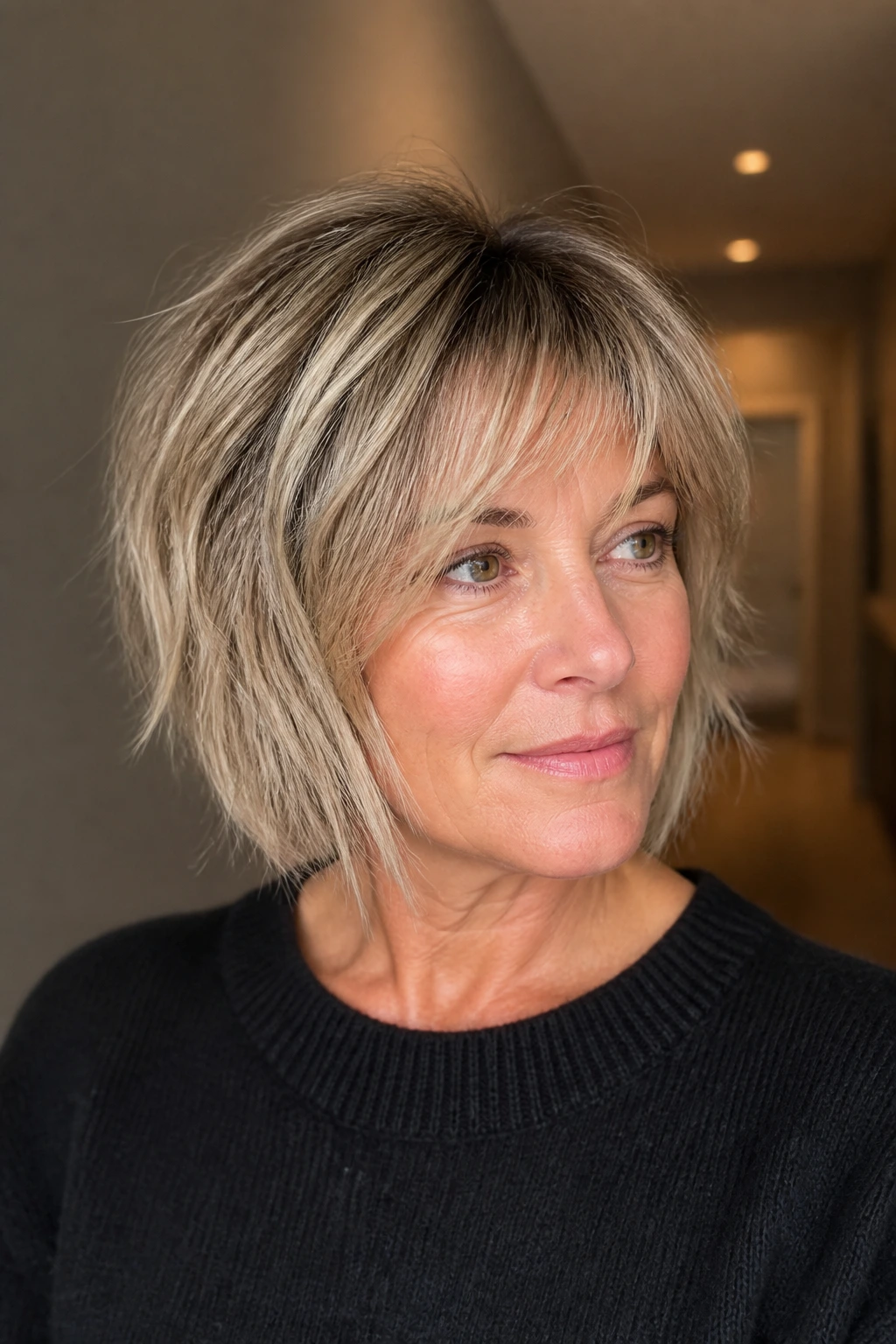
If you hate a blunt regrowth line, this is the one to pay attention to. The rooted beige blonde bob makes grow-out part of the design, not a problem to hide. Choppy layers keep the silhouette light, and the beige tone sits in that sweet zone between icy and gold, so it doesn’t shout for attention.
The color is doing more than looking pretty. A deeper root creates shadow, and shadow gives depth to the cut. That depth matters when you want the bob to look full at the crown without loading it with product. The choppy layers pick up the root shadow and move it through the shape, which keeps the style from reading flat.
Best way to ask for it
Tell the colorist you want a soft root smudge, not a dark stripe. The blonde should lighten gradually through the mids and ends, with enough contrast to show texture but not enough to look stripy. On the cut side, the layers should be broken up, not razor-thin.
This is a smart pick for women who want a bob that can go six or seven weeks between salon visits without looking unfinished. That alone makes it worth considering.
5. Razored Platinum Bob With Airy Texture
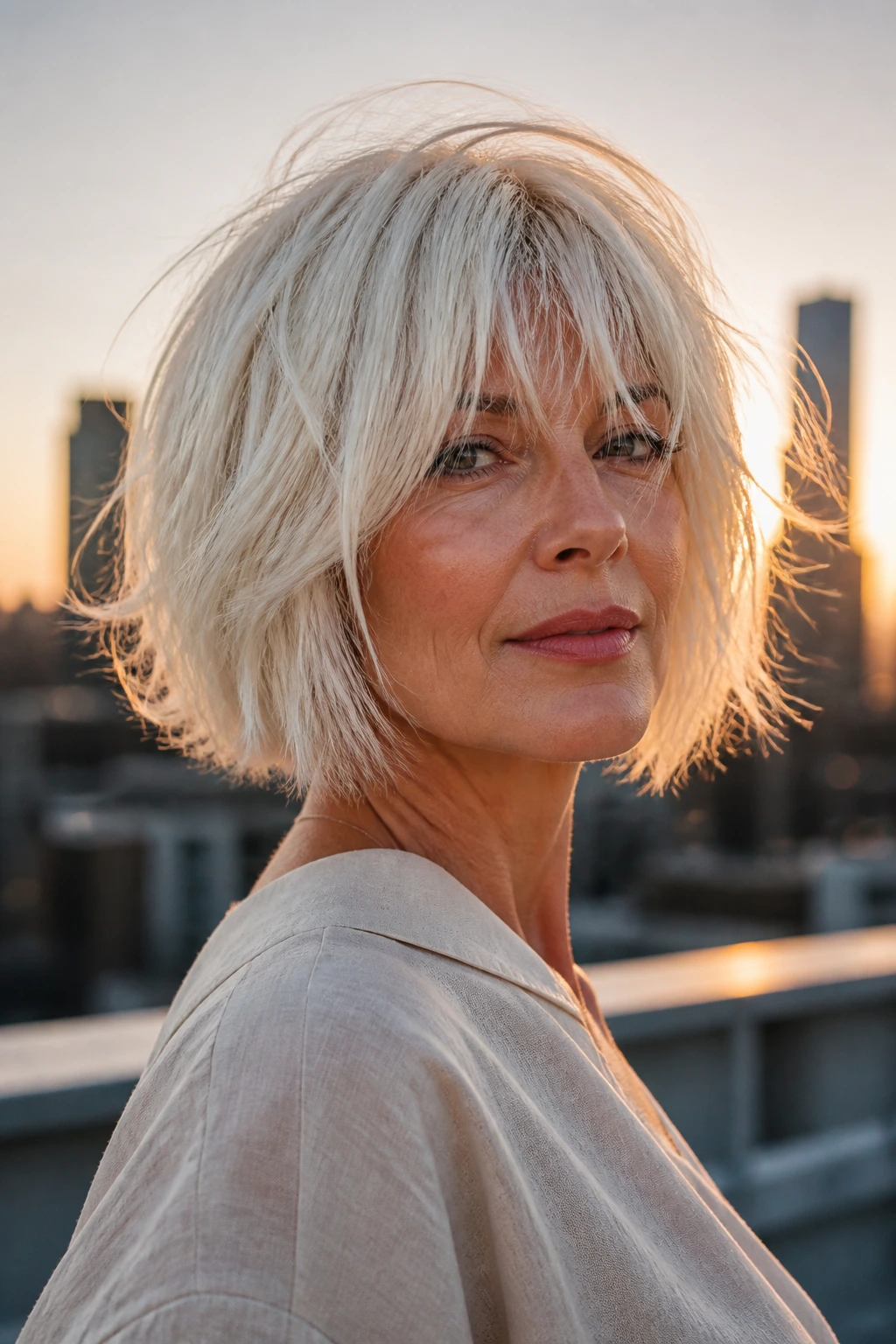
Platinum blonde has a sharp edge, and that edge gets softer when the cut around it is loose. A razored bob can do that well — if the razor work is controlled. The ends look light and flicked, almost brushed by air, which is why this style suits women who like a cleaner, cooler blonde with some movement built in.
The texture is the thing. Not the color alone. Platinum on a blunt line can feel hard, especially near the jaw. Add airy texture, and the whole shape loosens up. The bob stops looking like a helmet and starts looking like hair that moves when you turn your head.
A warning, though: fine hair does not always love aggressive razor work. If the stylist takes too much weight out, the ends can go sparse in a way that no styling cream can hide. Better to ask for a light razor touch or point-cut finish and keep the body intact.
The payoff is strong if your hair is dense or tends to sit heavy. Platinum brings the brightness; the texture keeps it wearable.
6. Wavy Champagne Bob With Tucked-In Nape
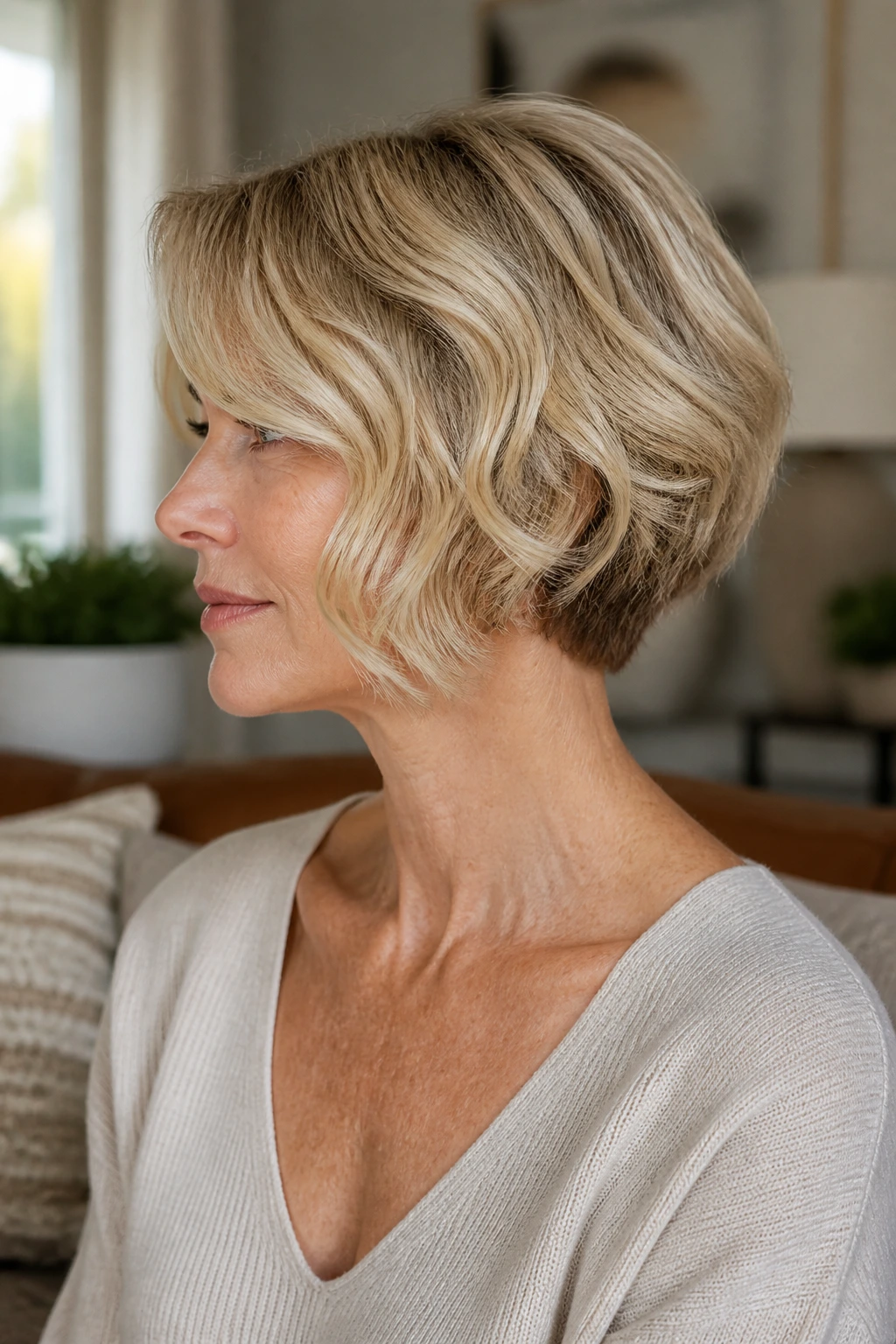
The champagne blonde bob feels smoother and more relaxed than a stark platinum cut. It has warmth in it, but not so much that it turns brassy. Add natural waves, and the shape starts to look almost tailored — the nape tucked in cleanly, the sides bending just enough to skim the face.
This is one of those cuts that looks especially good from the side. The tucked-in back shows off the neck, which can be useful if you like scarves, earrings, or simple collars. The wave keeps the front from feeling too neat, and that loose texture gives the style a lived-in quality without making it messy.
What makes it different from a standard bob
A standard bob sits in one clean line. This one breaks that line with wave and a soft bend at the ends. The result is easier to wear on days when your hair has its own opinion.
It suits hair with a slight natural bend or hair that holds a curling iron without fighting back. If your hair is poker-straight, you can still wear it, but it wants a little movement product and a twist-dry through the mids. The tucked nape is a nice detail. So is the way champagne blonde catches the light around the ears.
7. Piecey Golden Blonde Bob With Long Fringe
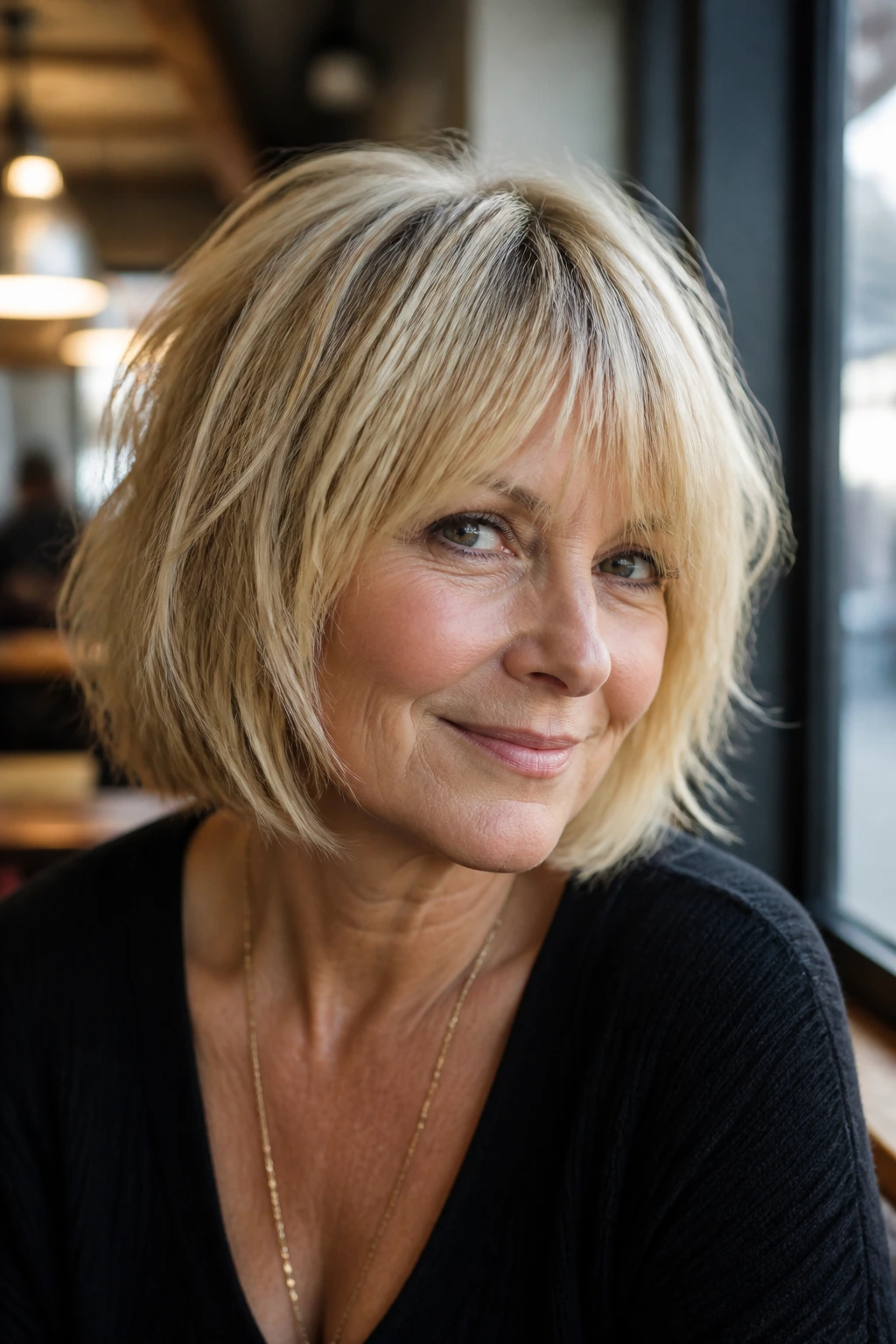
This is the cut for someone who likes the front of the hair to do some talking. The long fringe drapes across the forehead in a soft, broken way, while the golden blonde keeps the whole look warm and easy. Piecey layers stop the bob from settling into one smooth block.
The fringe matters because it gives you options. Wear it straight across the brow with a little separation, or sweep it to one side so the face opens up. Either way, the front pieces have enough length to frame the eyes without swallowing them.
A bob like this works especially well if your hairline has softened or if you want to blur fine lines around the forehead without going full bang. It’s also kind to women who want a little more coverage at the temples. The fringe does that job while the bob stays light around the jaw.
One small note: keep the texture product light. A dab of paste rubbed between the fingers is enough. Too much and the fringe becomes sticky, which is a fast way to ruin the airy effect.
8. Curly Shag Bob With Soft Layers
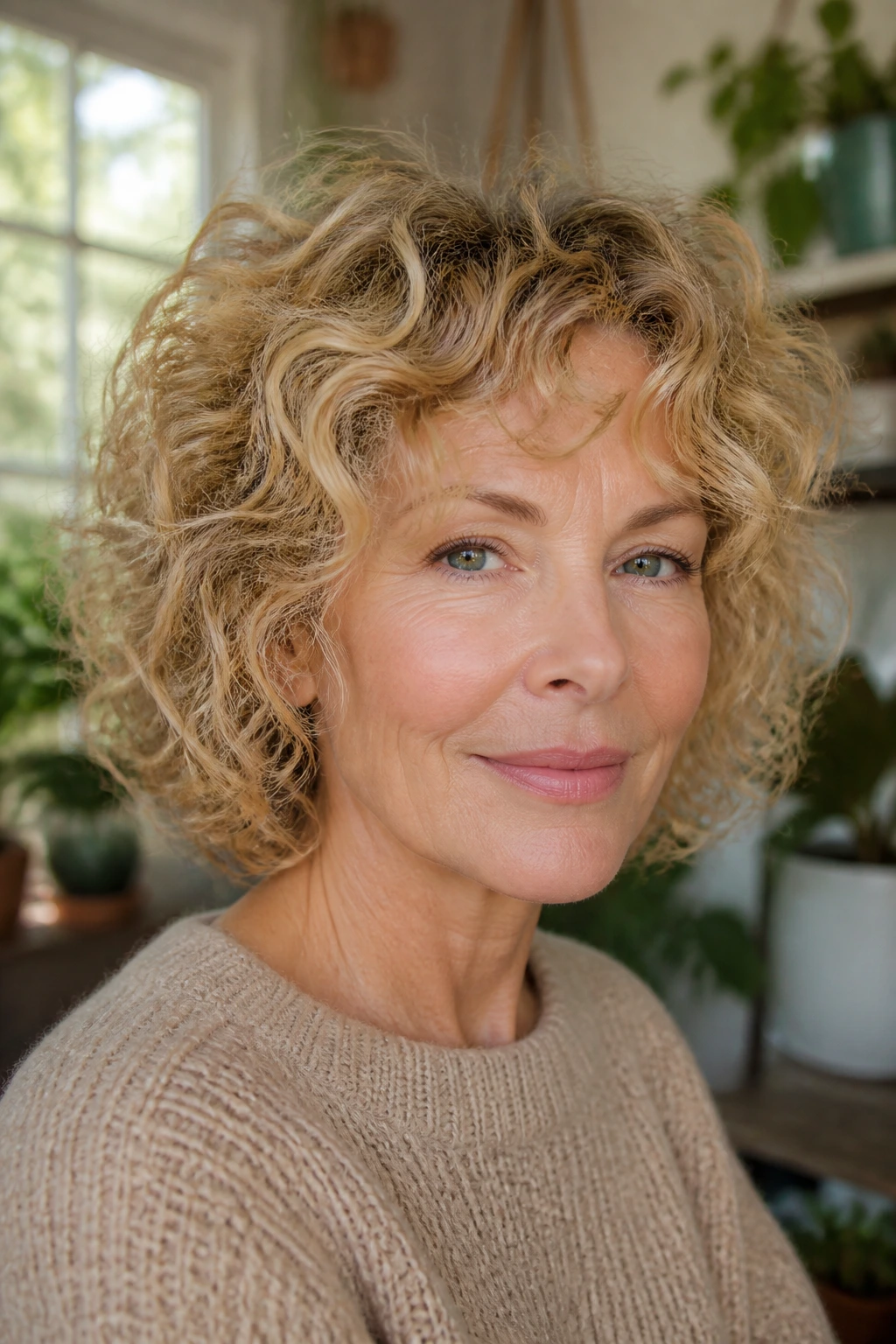
Can curly hair wear a shaggy bob without turning into a pyramid? Yes — if the layers are cut with the curl pattern in mind. The soft layers give curls space to spring, which keeps the shape rounded and alive instead of puffed out at the sides.
This version is especially good for older women whose curls have become a little looser or drier. A blunt cut can make those curls hang in awkward clumps. A shaggy bob breaks the shape up, so the curls stack more naturally around the face and crown. The blonde tone helps here too, because highlights and lowlights show the curl pattern more clearly than one flat color does.
How to style it
Use a leave-in conditioner on damp hair, then add a light mousse or curl cream. Scrunch upward, diffuse on low heat, and stop before the hair is completely dry if you want more separation. If you let every curl dry untouched, you’ll get volume. If you touch it too much, you’ll get frizz.
The cut looks best when the layers are tailored to the curl’s spring, not chopped randomly. A good curly shag bob has movement. A bad one has confusion.
9. Inverted Blonde Bob With Light Crown Lift
The inverted bob gives you a little drama, but not the dated kind. The back sits higher and the front falls longer, which creates a lift at the crown and a clean line near the chin. Add blonde dimension, and the angle becomes easier on the eye.
This shape is one of the most useful options for hair that falls flat on top. The shorter back takes weight off the crown, so the roots can stand up a bit more. Meanwhile, the longer front pieces frame the face and keep the style from feeling too severe. It’s a smart compromise between structure and softness.
Best fit and best caution
It works well on straight to slightly wavy hair that needs shape built in. Very curly hair can wear it too, but the angle has to be adjusted so it doesn’t balloon out at the ends.
The caution is simple: don’t let the back get over-trimmed. If the nape is cut too high, the style can look narrow and old-fashioned. A slight inversion is enough. You want lift, not a stack that screams for hairspray.
10. French-Inspired Shag Bob With Swoop Bangs
This one has an effortless bend to it, the kind that looks like you stepped out with a scarf loose around your neck and did not spend half the morning fighting a brush. The blonde is usually soft and muted — think beige, sand, or pale honey — and the bangs sweep to one side in a relaxed arc.
The French-inspired part isn’t about pretending the cut came from a postcard. It’s about restraint. The layers are there, but they don’t shout. The front pieces are shaped, but not overly thinned. The whole effect depends on a little messiness at the ends and some lift at the root.
Swoop bangs do useful work on older faces. They soften the forehead, skim the brows, and give the eyes a frame without boxing them in. If you have a strong side part already, this cut can feel almost natural from day one.
Keep the finish loose. A tiny bit of dry texture spray at the mids is enough. Too much polish kills the charm, and that’s the whole point of this style.
11. Ash-Buttery Blonde Shag Bob
Cool ash and warm butter sounds like a strange pairing until you see what it does on hair. The ash side calms down brassiness and keeps the blonde from getting orange at the ends. The buttery side keeps the color from looking chalky or flat. Put them together in a shaggy bob, and the result has depth.
The cut benefits from that mix because the tones break up the layers. You see movement faster when the color shifts subtly from one panel to the next. That matters on older hair, especially when the strands are fine and the surface wants to lie flat. A single flat shade can make that worse. Dimension fixes it.
This is a good choice if your skin tone sits somewhere neutral and you want a blonde that won’t turn harsh under indoor light. It also plays well with gray blending, because the cooler ribbons help the regrowth sit quietly near the root.
There’s one catch: if the blonde gets too ashy, the face can go dull. The warmth has to stay in the mix. A glaze every so often keeps that balance from slipping.
12. Neck-Length Bob With Tapered Back
A neck-length bob with a tapered back is practical in the best way. It clears the collar, makes scarves less annoying, and gives the back of the head a neat shape without pushing the front too short. The taper keeps the nape tidy, while the blonde layers soften the silhouette.
This cut is useful for women who want hair off the neck but don’t want the commitment of a very short crop. It gives you movement, but it also gives you a clear outline. That matters if you like a haircut that looks finished even when you only rough-dry it.
A few reasons it works
- The length sits long enough to tuck behind the ears.
- The tapered back removes bulk where hair tends to puff out.
- Blonde highlights around the crown make the head look taller.
- A soft side part can stop the style from reading too severe.
If you want low maintenance and a clean neckline, this is a strong option. It’s not flashy. It just does its job, and it does it well.
13. Beachy Lob Shag in Soft Caramel Blonde
Does a lob count as a bob? When it’s shaggy, I’d say yes — or at least close enough to matter. The beachy lob gives you extra length around the shoulders, which some women prefer because it feels less exposing than a chin-length cut. Soft caramel blonde keeps it warm and sunlit without turning brassy.
The length changes the whole mood. Instead of bouncing above the jaw, the hair sways around the collarbone, which can be flattering on longer necks or narrower faces. The shag layers stop the extra length from feeling heavy, and the beachy finish keeps the ends from hanging like curtains.
How to wear it
A flat iron bend near the ends works better than tight curls. You want loose bends, not ringlets. A little texture spray through the mids gives the blonde some grit, which helps the layers separate instead of clump together.
This is one of the easiest cuts to live with if you’re growing out a shorter bob but still want shape. It also suits women who like to pull hair back loosely on busy days. The front pieces stay interesting even when the rest is clipped up.
14. Blunt-Edge Shag Bob With Broken Ends
A shag does not have to be all wisps and softness. A blunt-edge version with broken ends keeps more structure at the perimeter, which can be a relief if your hair is thick or if you dislike the “too feathered” look some shags get. The broken ends prevent the line from feeling harsh.
This cut is a good compromise. You get the movement of a shag, but the body still feels contained. On blonde hair, that balance shows up beautifully because the cut has enough edge to hold its shape in daylight and enough texture to avoid looking heavy.
It’s a smart pick if your hair tends to frizz when too much weight is removed. Heavy layering can backfire there. Keeping the base line stronger gives the ends something to hang from, which is a small detail that changes how the whole bob sits on the head.
Ask for the perimeter to stay intact and the interior to carry the texture. That phrasing matters. It helps the stylist understand you want shape, not shredding.
15. Feathered Bob With Face-Framing Highlights
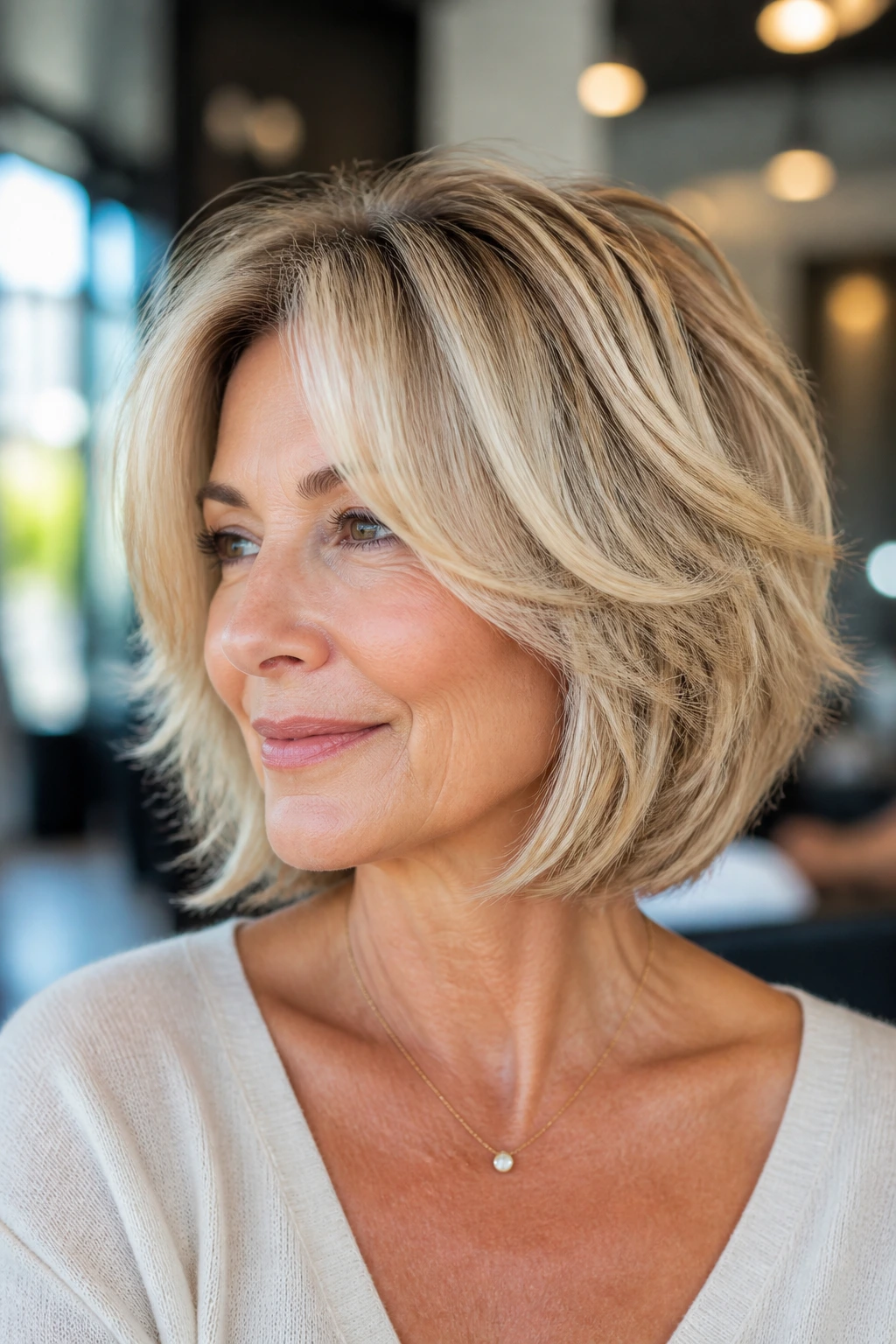
The first thing you notice is how the highlights land. They sit around the face and through the front layers, so the eyes and cheekbones get a little extra lift without any hard stripes. Feathered ends soften the whole haircut, and the blonde placement does some sneaky work by drawing the eye upward.
This style is a gift for hair that has started to feel plain. The feathering breaks up the surface, while the face-framing highlights create contrast where it matters most. You don’t need a lot of brightness through the back. In fact, keeping the back quieter makes the front do more for the face.
What makes it flattering
The cut gives movement at the cheek level, which can soften a stronger jaw or lengthen a rounder face. That kind of shaping is subtle, but you see it immediately in the mirror. The face looks lighter. The hair looks more awake.
If you wear makeup, this cut plays nicely with a strong brow or a clean lip because the front hair doesn’t crowd the face. It leaves room. That’s half the charm.
16. White-Blonde Textured Bob With Wispy Fringe
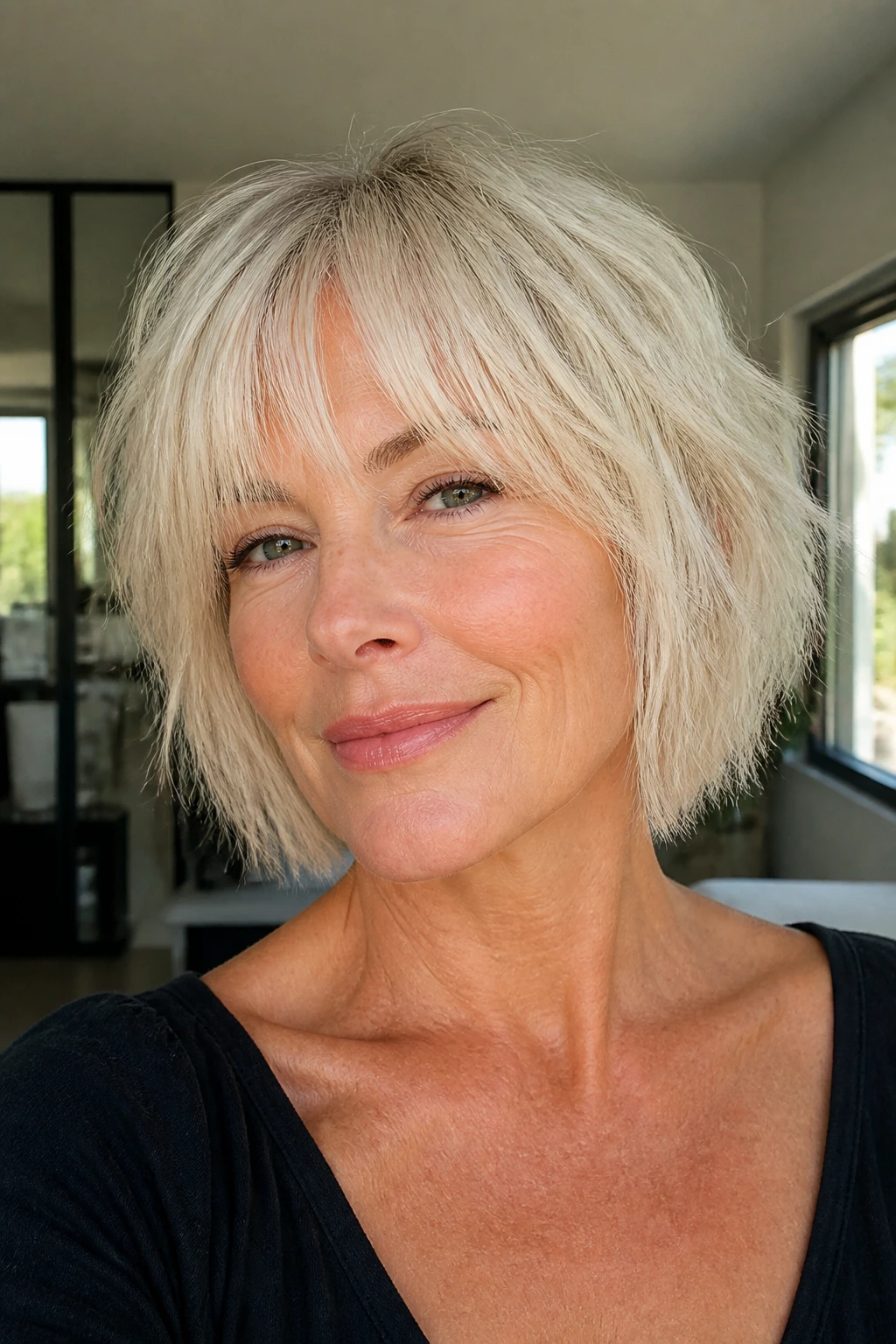
White-blonde is a bold choice, but with texture it stops looking stark. The wispy fringe keeps the forehead area soft, and the textured bob gives the color some breathing room. On women with naturally white or very silver hair, this can look clean and crisp in a way that feels modern without trying too hard.
The fringe matters here because all-over light blonde can wash out the face if the front is cut too bluntly. Wispy bangs interrupt that. They let a little skin show through, which keeps the style from becoming a solid block of pale color.
This look needs a decent amount of moisture care. White-blonde hair tends to be dry, and dry ends make texture look frayed instead of airy. Use a leave-in that smooths rather than coats, and avoid stacking too many heavy creams on the fringe.
If you want a bob that reads bright from across the room, this is one of the most eye-catching options. It’s not the quietest cut on the list. That’s the point.
17. Warm Sand Blonde Bob With Deep Side Part
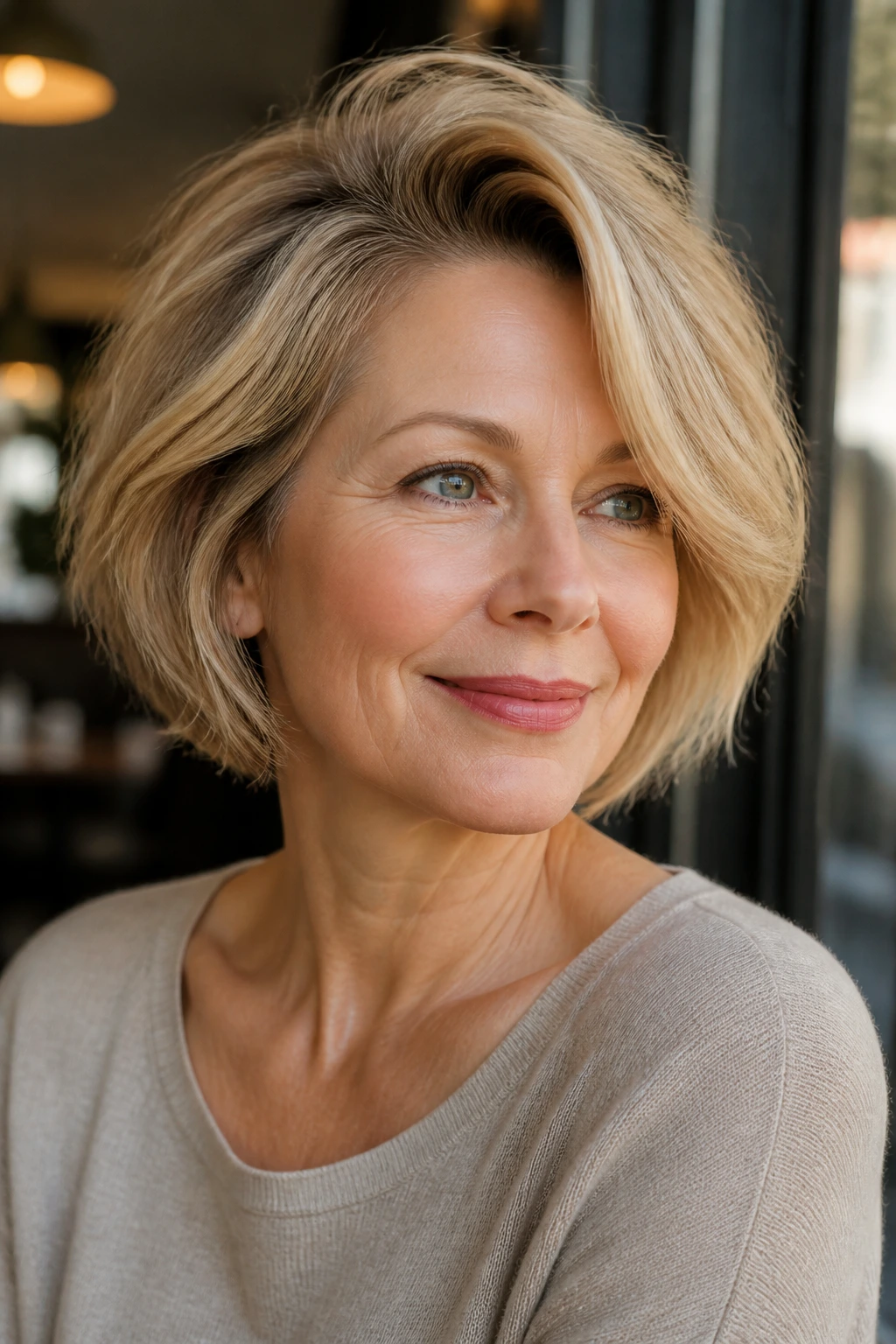
A deep side part changes the geometry of a bob more than people expect. It lifts one side, softens the other, and gives the top of the head a little instant height. Warm sand blonde keeps the whole thing from looking flat or dusty, which can happen when a side part is paired with a dull tone.
This style is especially useful if your hair likes to collapse at the roots. The side part creates a natural push of volume without having to over-tease the crown. The shag layers then pick up that height and carry it through the sides.
Good fit for these situations
- You want more lift near the temple.
- Your face feels better with asymmetry.
- You need a cut that still looks decent after a hat.
- You prefer a part that doesn’t sit exactly in the center.
The side part also helps a bob feel a touch more glamorous. Not nightclub glam. Just enough. A slight bend through the ends and a sand-blonde glaze can make the style look finished with almost no effort.
18. Tousled Bob With Soft Undercut
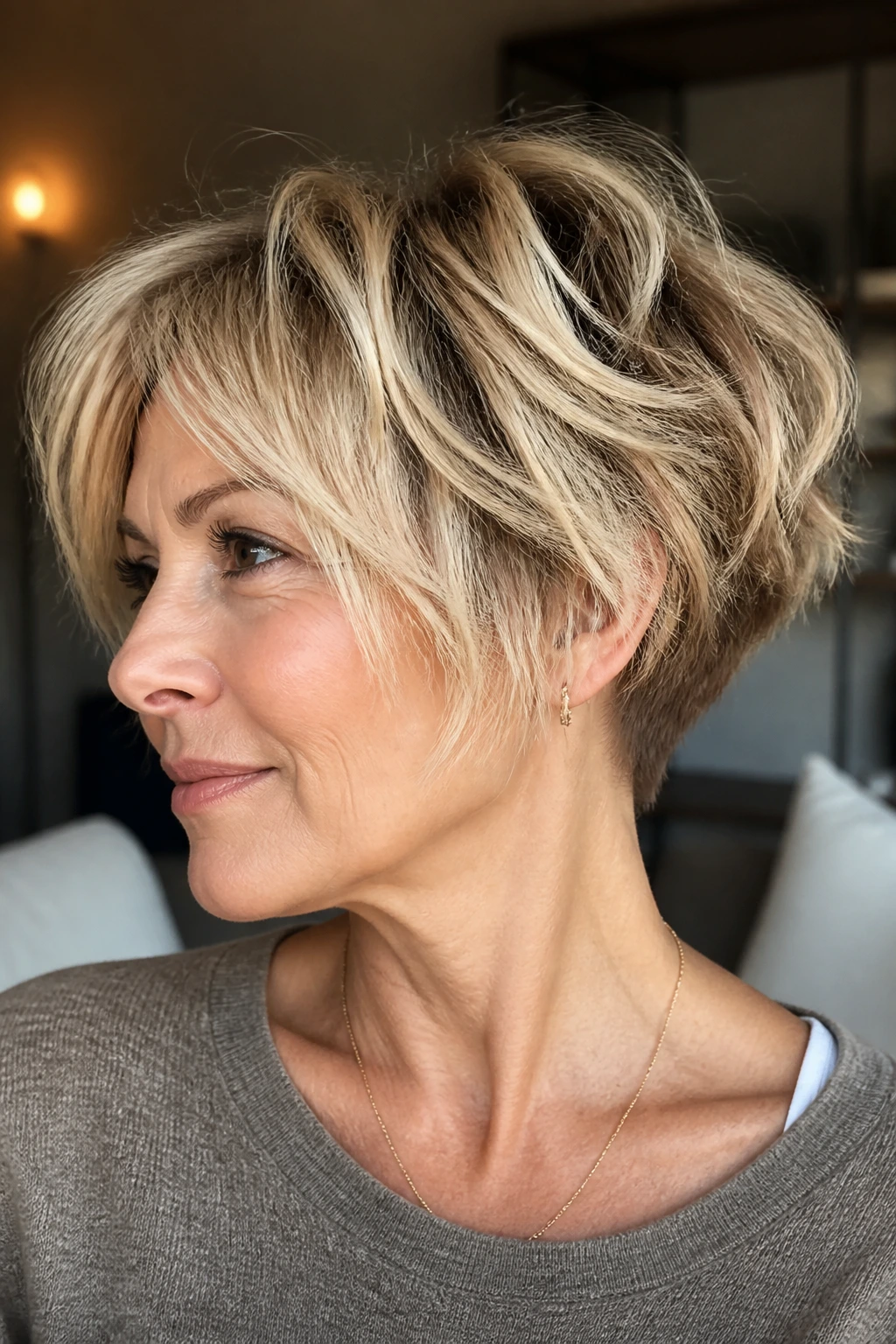
Here’s the blunt truth: thick hair often needs to lose weight somewhere, and a soft undercut can do that without wrecking the visible shape. The top layers stay tousled and full, while the hidden undercut removes bulk near the nape. The result is a blonde bob that moves instead of puffing out.
The undercut is not for everyone. If your hair is fine, it can leave the style too sparse underneath. But on dense hair, it solves one of the most annoying bob problems — that chunky, triangular bulk at the bottom that makes the cut look boxy by lunchtime.
The tousled finish keeps the style relaxed. Think soft bends, not spiral curls. Blonde helps because it catches light through the broken texture, so you can actually see the shape instead of a heavy curtain of hair.
Ask for a concealed undercut, not a visible shave line, unless you want that to show. Subtle is the better move here. You get cleaner movement and less heat-time in the morning, which is a trade I’d take any day.
19. Layered Bob With Rounded Crown
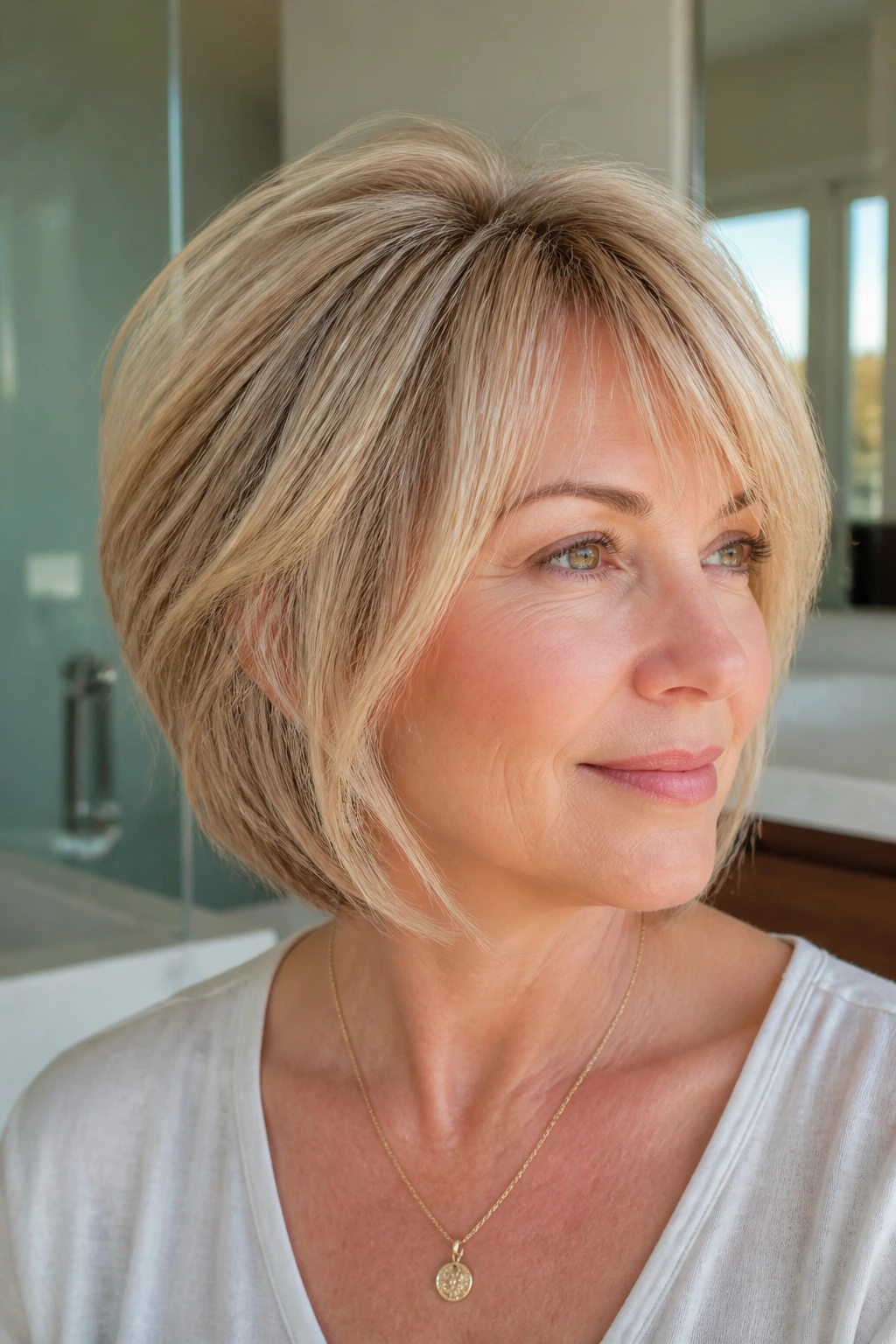
Does your hair flatten at the top no matter what you do? Then a rounded-crown bob is worth a serious look. The crown gets cut and styled to lift away from the scalp, while the layers around the sides stay soft enough to avoid a mushroom shape. On blonde hair, that rounded lift is easier to see because the light lands right where the volume starts.
This cut helps hair look fuller where it counts. The crown is the first place many bobs collapse, especially on hair that’s fine or has a bit less density than it used to. A rounded crown solves that without making the ends too wild.
How to get the shape
Blow-dry the roots upward with a brush before touching the mids. That part matters more than people think. If the root is flat, the whole style goes flat, even if the ends are curled perfectly.
The layers should be graduated enough to follow the crown, not chopped in random steps. When that shape is right, the bob feels balanced from every angle.
20. Champagne Blonde Bob With Sideburn-Length Pieces
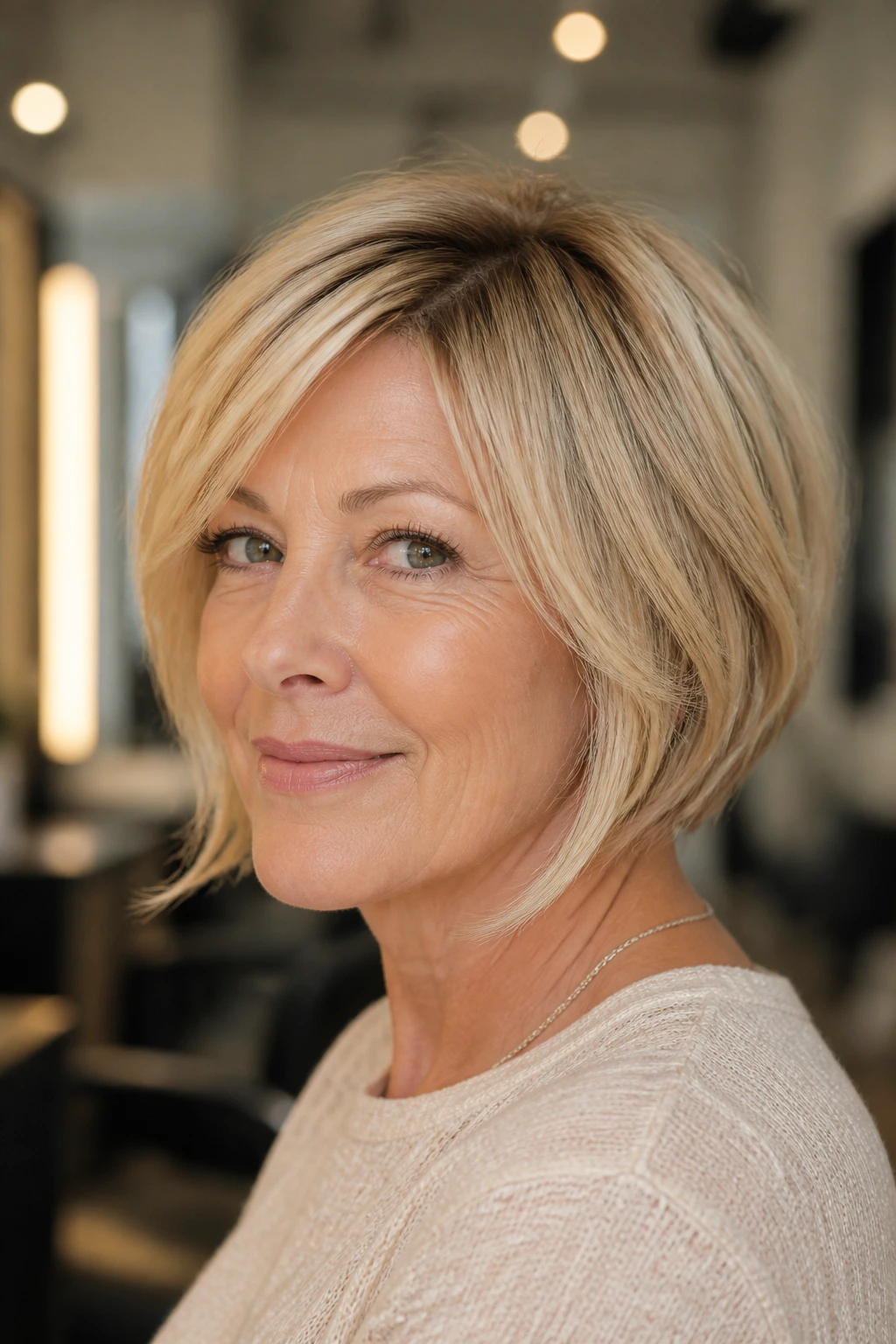
The little pieces at the sideburn area do a surprising amount of work. They soften the front of the cut, keep the hair from bunching near the ear, and create a gentle frame around the cheek. Champagne blonde adds a clean, glossy look that keeps those face-framing pieces from disappearing into the rest of the bob.
This style is especially flattering if you wear glasses or have strong cheekbones you want to keep visible. The sideburn-length pieces sit where the eye naturally travels, which makes the face look more open. They also help if your ears are something you’d rather not fully expose every day.
A bob like this has a polished feel without being stiff. The champagne tone gives it a little sparkle, but the soft pieces stop it from reading formal. That balance is why so many women keep coming back to this kind of cut after one salon visit.
If you want a small detail that changes the whole face shape, this is it. Tiny front pieces. Big difference.
21. Low-Heat Air-Dry Shag Bob
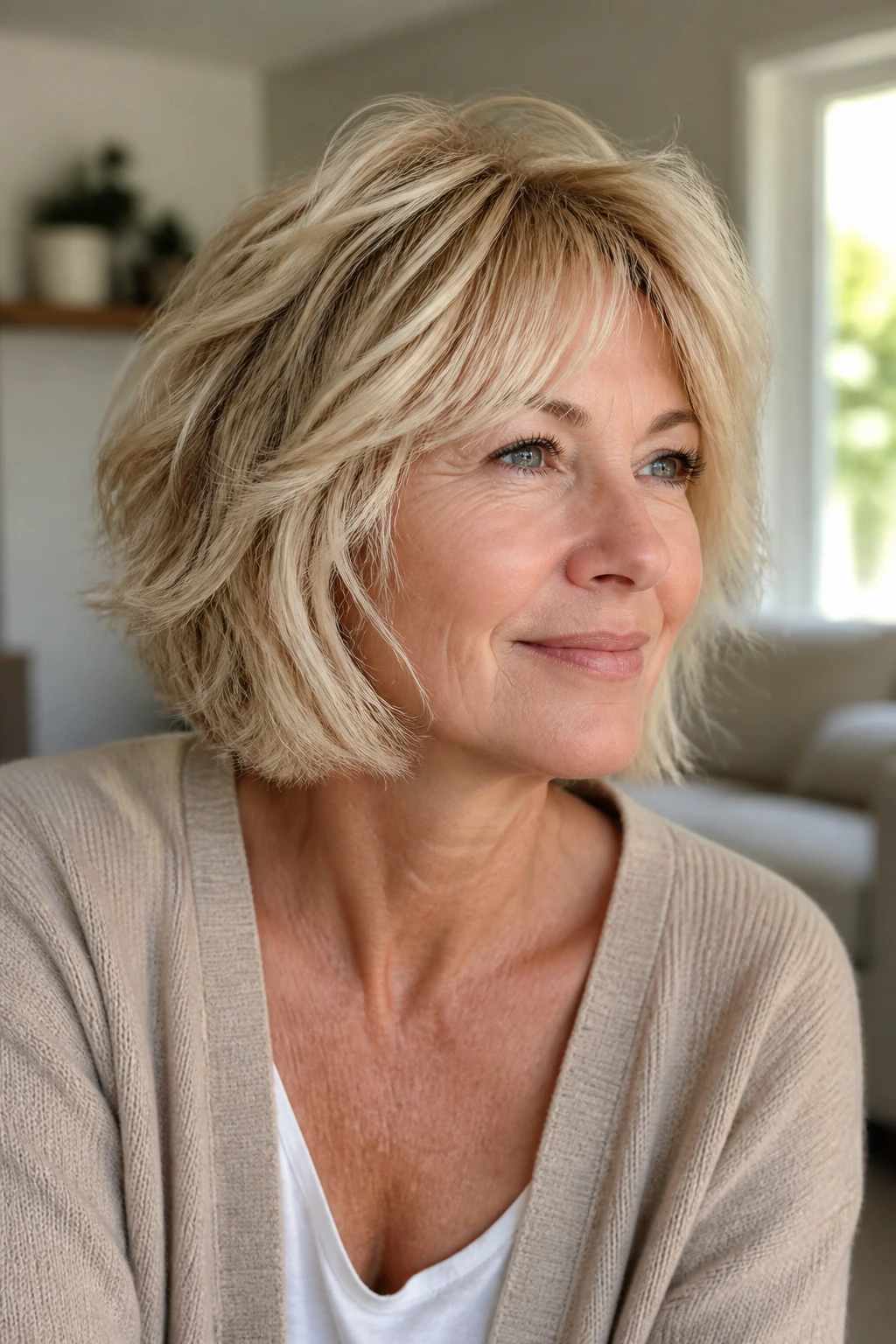
Can you get a decent finish without heat? Absolutely, if the cut is built for it. A low-heat air-dry shag bob leans on natural movement, mousse, and a little scrunching rather than brushes and curling irons. Blonde hair makes the texture easier to see, especially when the layers are cut to break up the shape.
This style works especially well on hair that already has a bend. You wash it, blot it, work in a light mousse, and let the hair fall where it wants to fall. If your crown tends to flatten, a couple of clips at the root while it dries can help. Small move. Big payoff.
Why it stays wearable
The layers are not too short, so the cut dries without exploding outward. That’s the key. A good air-dry shag bob should look soft, not puffy. If the ends start to frizz, a pea-sized amount of serum on the last inch is enough to calm them.
This is a useful option for women who want to cut heat styling out of the routine without giving up shape. It’s not fancy. It just gets out of the way and lets the hair do what it already wants to do.
22. Sunny Honey Bob With Longer Nape Pieces
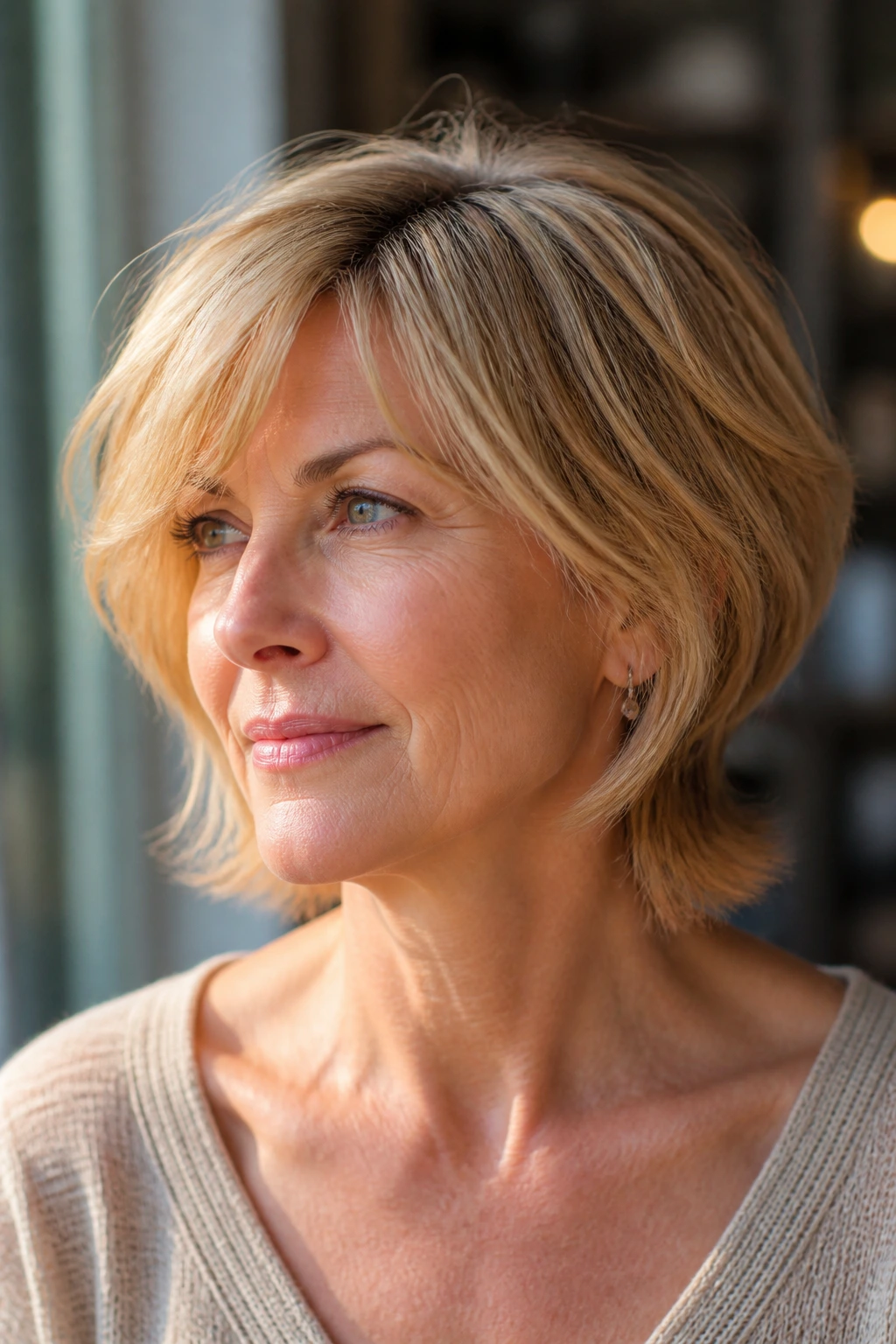
This version keeps a little extra length at the back so the nape stays soft and the front has room to frame the face. The longer nape pieces make the bob easier to tuck behind the ears on some days, while the sunny honey blonde keeps the style bright and warm.
Compared with a shorter, tighter bob, this one feels less exposed. That matters for women who like hair on the neck but don’t want bulk there. The longer back also gives the cut a quieter grow-out, which is useful if you don’t live in the salon.
When it makes sense
It’s a strong pick for straight or slightly wavy hair that loses body when it gets too short. The extra length gives the ends enough weight to swing rather than float. If your hair sticks out at the nape, those longer pieces help the shape settle.
The honey tone works well here because it keeps the length from feeling heavy. A sunny blonde can make even a slightly longer bob feel lighter and more open.
23. Dimensional Blonde Bob With Micro-Layers
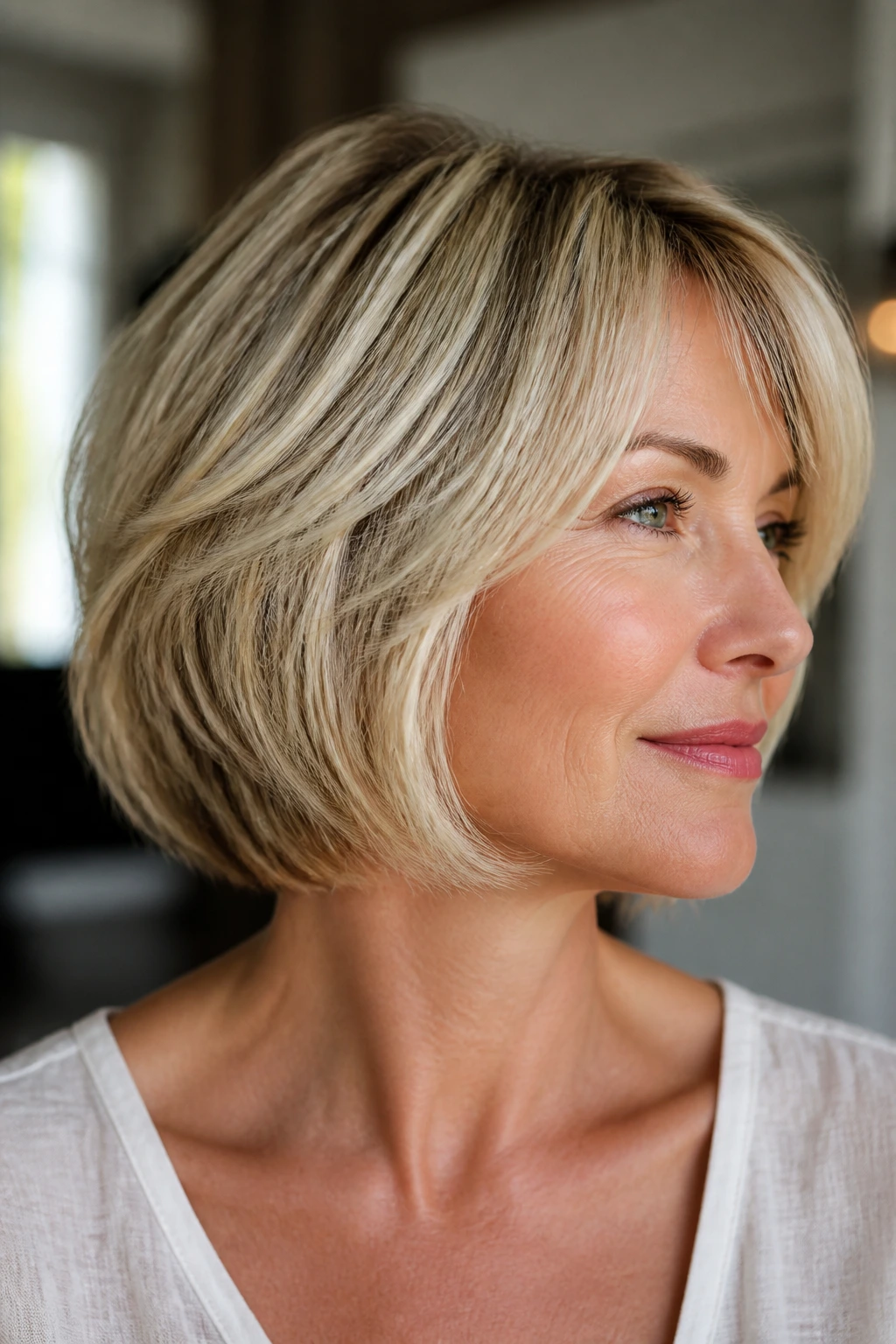
This is the one I’d hand to someone who wants movement but hates obvious layering. Micro-layers are tiny, almost hidden cuts that create separation without turning the bob into a shaggy mess. On dimensional blonde, they make the light and shadow shift through the haircut in a very natural way.
The genius of micro-layers is that they don’t scream “layered hair.” They just let the cut breathe. Fine hair gets a bit of lift. Thick hair gets more slide. Wavy hair gets room to bend. The blonde color does the rest, because every ribbon of light shows off the shape you would miss in a single flat shade.
This is a good final stop if you want a bob that looks expensive, not loud. It’s polished, but it still has motion. There’s a lot of restraint in it, which is why it ages so well. Loud cuts can go out of style fast. Soft structure hangs around.
Why Blonde Shaggy Bobs Work So Well on Older Hair
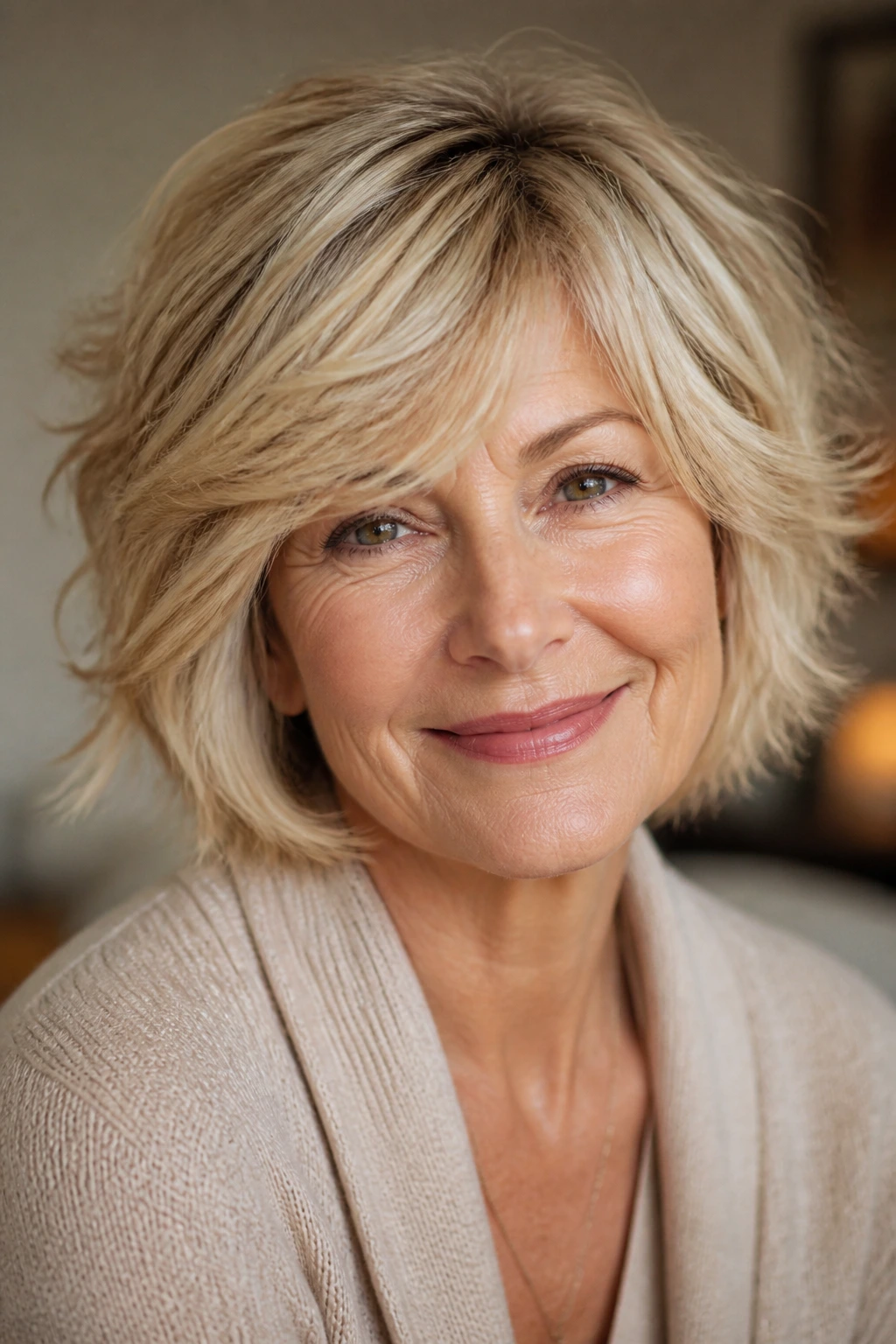
The best thing about a blonde shaggy bob is that it gives you shape without forcing your hair into one hard outline. That matters more as hair changes. Fine strands need lift. Coarser strands need controlled softness. Gray blending needs dimension. A shaggy bob handles all of that better than a flat one-length cut because it builds movement into the silhouette instead of relying on styling tricks to fake it.
Blonde color adds another layer of help. A few ribbons of brightness around the face can make the cheek area look more lifted, and a deeper root can make the crown look fuller. Even the tone of blonde changes how the haircut reads. Honey warms the face. Beige keeps things soft. Silver-blonde sharpens the finish. Champagne sits somewhere in the middle and tends to be easy to wear.
There’s a catch, and it’s worth saying plainly. A shaggy bob only looks good when the layers are deliberate. Too many short pieces can make the ends look thin. Too much thinning near the crown can make the top collapse. The cut works because it removes weight with a reason, not because it removes weight everywhere.
Essential Tools for These Cuts
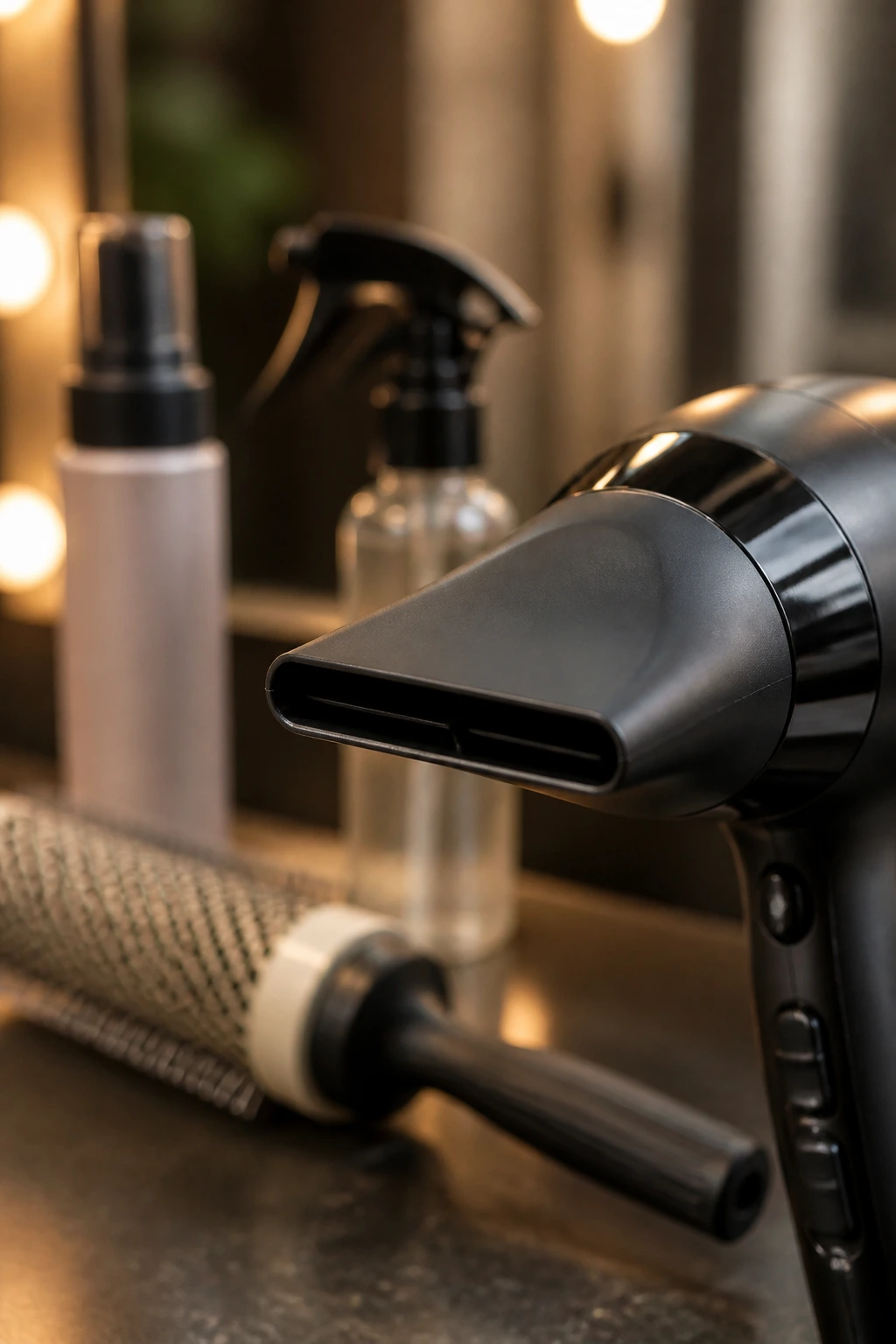
- Blow-dryer with a nozzle attachment: Directs airflow where you want it and helps the roots dry with more lift.
- 1.25-inch round brush: A good size for curving the ends under without making the bob too curled.
- Flat iron with rounded edges: Useful for a loose bend through the mids and ends, especially on straight hair.
- Light mousse: Gives fine or flat hair some support without the crunch of old-school setting foam.
- Texturizing spray: Helps shags stay piecey instead of softening into one smooth sheet.
- Heat protectant spray: Non-negotiable if you use hot tools at all.
- Wide-tooth comb: Easier on damp hair, especially if it’s wavy or fragile at the ends.
- Sectioning clips: Worth keeping around when you want the crown and fringe to dry in the right direction.
- Purple shampoo, used carefully: Helpful for brass control on cooler blondes, but too much can make porous hair look dull.
Smart Cut and Color Notes
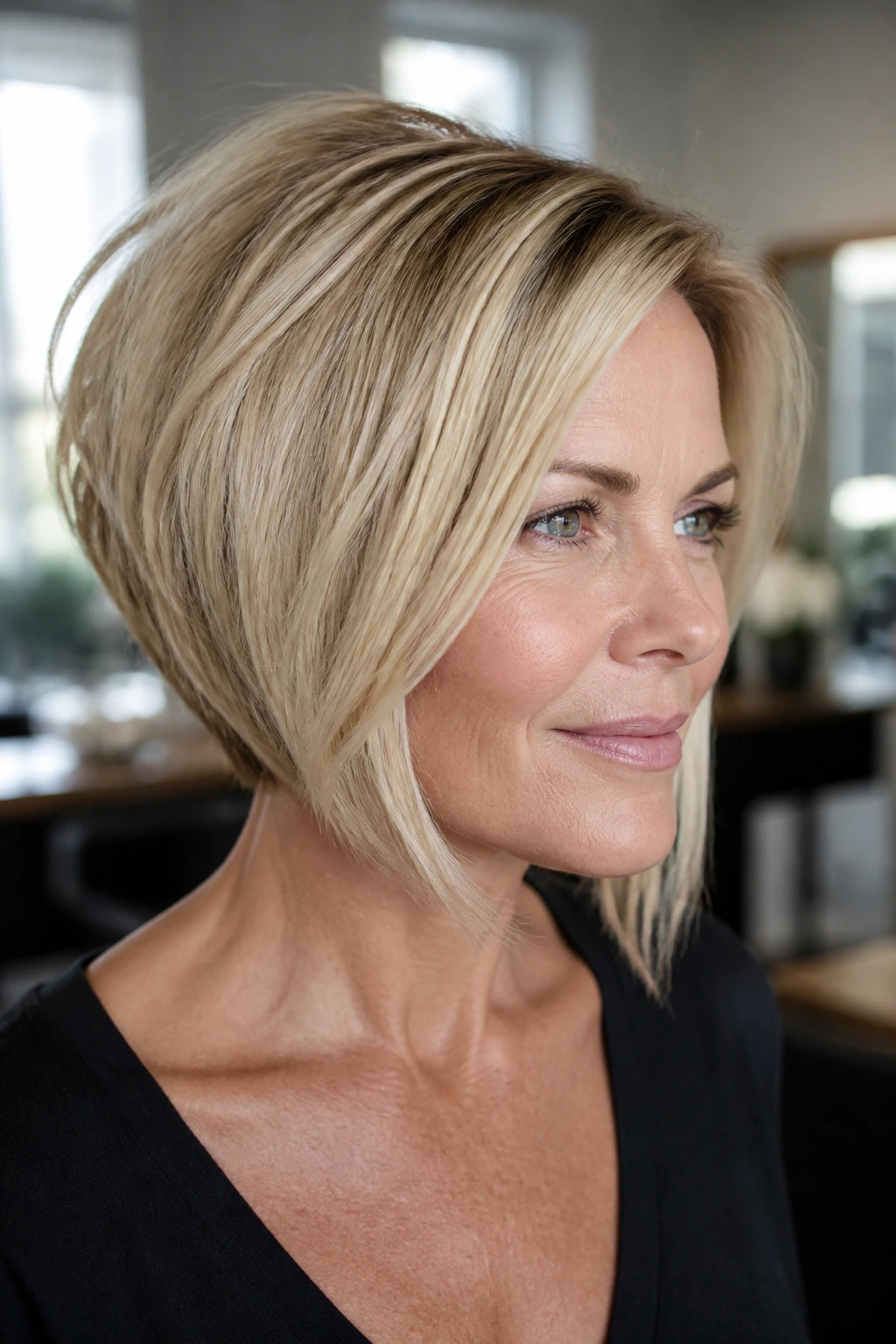
A shaggy bob lives or dies by the way the layers are cut. On fine hair, internal layers and point-cut ends usually work better than heavy razor work, because they keep the outline from disappearing. On thick hair, a stylist should remove weight from the interior while keeping enough perimeter to hold the shape. That little distinction changes everything.
Blonde color needs the same kind of judgment. Root shadow, lowlights, and soft face-framing pieces keep the hair from looking one-note. If the blonde is all one tone from root to tip, the cut can lose depth fast. If the blonde is too light everywhere, the ends can look tired and dry even when the hair is in decent shape.
Ask for blonde that suits your maintenance tolerance, not just the picture in your head. A rooted beige or honey blonde stretches further between appointments. Platinum and white-blonde need more toner and more moisture. Silver-blonde can be beautiful, but it shows brass or dullness quickly if the glaze goes off.
How to Style These Cuts Without Fighting the Mirror
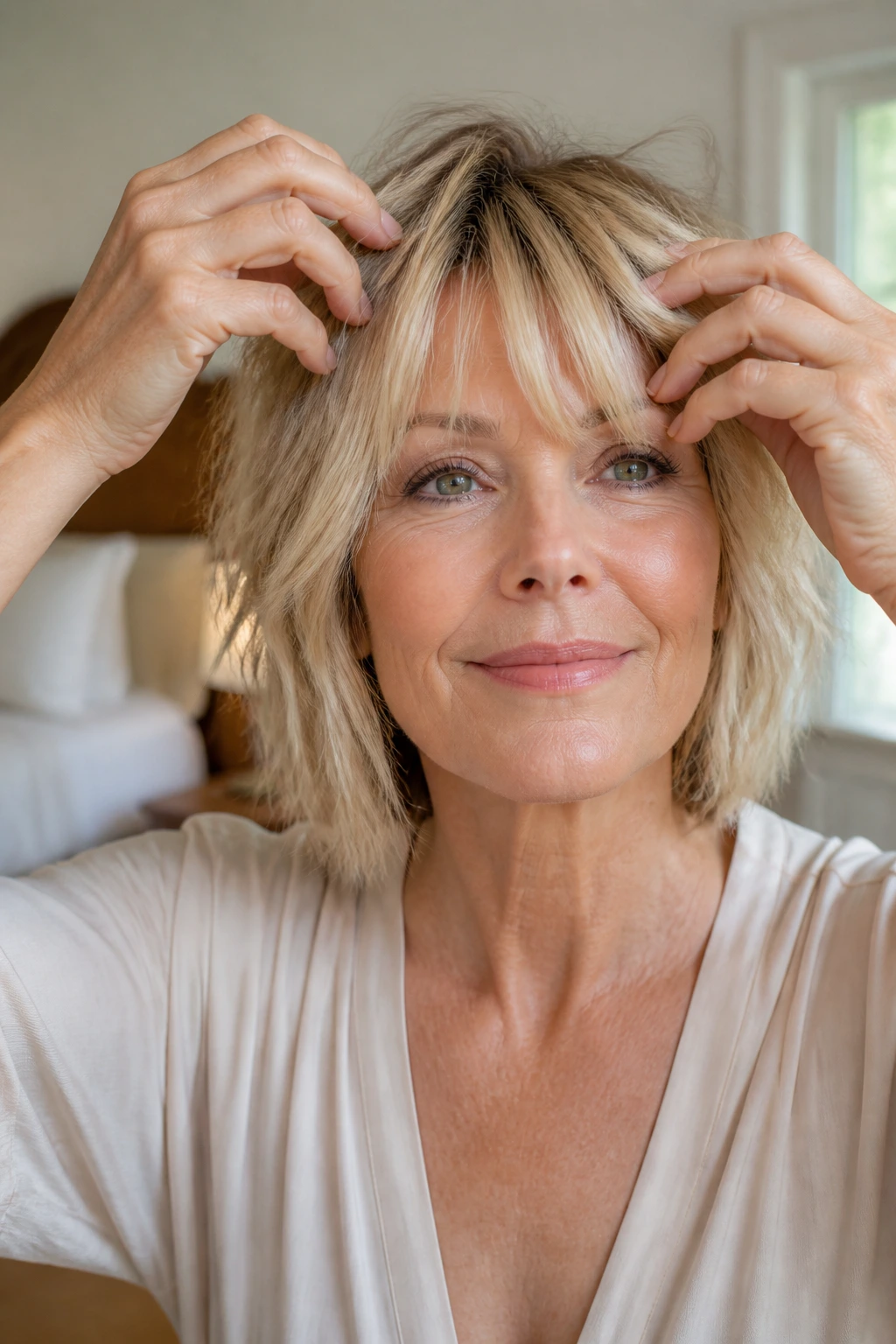
Fast Blow-Dry: Rough-dry the roots first, then use a round brush only where you need direction — usually the crown, fringe, and front pieces. The rest can stay a little loose. That’s often enough for a bob that still looks finished.
Air-Dry: Work mousse through damp hair, scrunch the mids, and clip the crown for the first fifteen minutes so it doesn’t flatten. Don’t touch it once it starts to set. That’s where frizz sneaks in.
Flat-Iron Bend: Glide a flat iron down the hair shaft and rotate the wrist slightly at the ends. You want a soft bend, not a curl. On blonde hair, that relaxed finish shows off the layers better than tight ringlets.
Fringe Control: If you wear bangs, dry them first. Bangs have their own agenda, and they usually choose the direction you give them in the first five minutes. A dab of lightweight cream or paste is enough. More than that and they separate in greasy little strings.
Small Tweaks That Change the Whole Cut
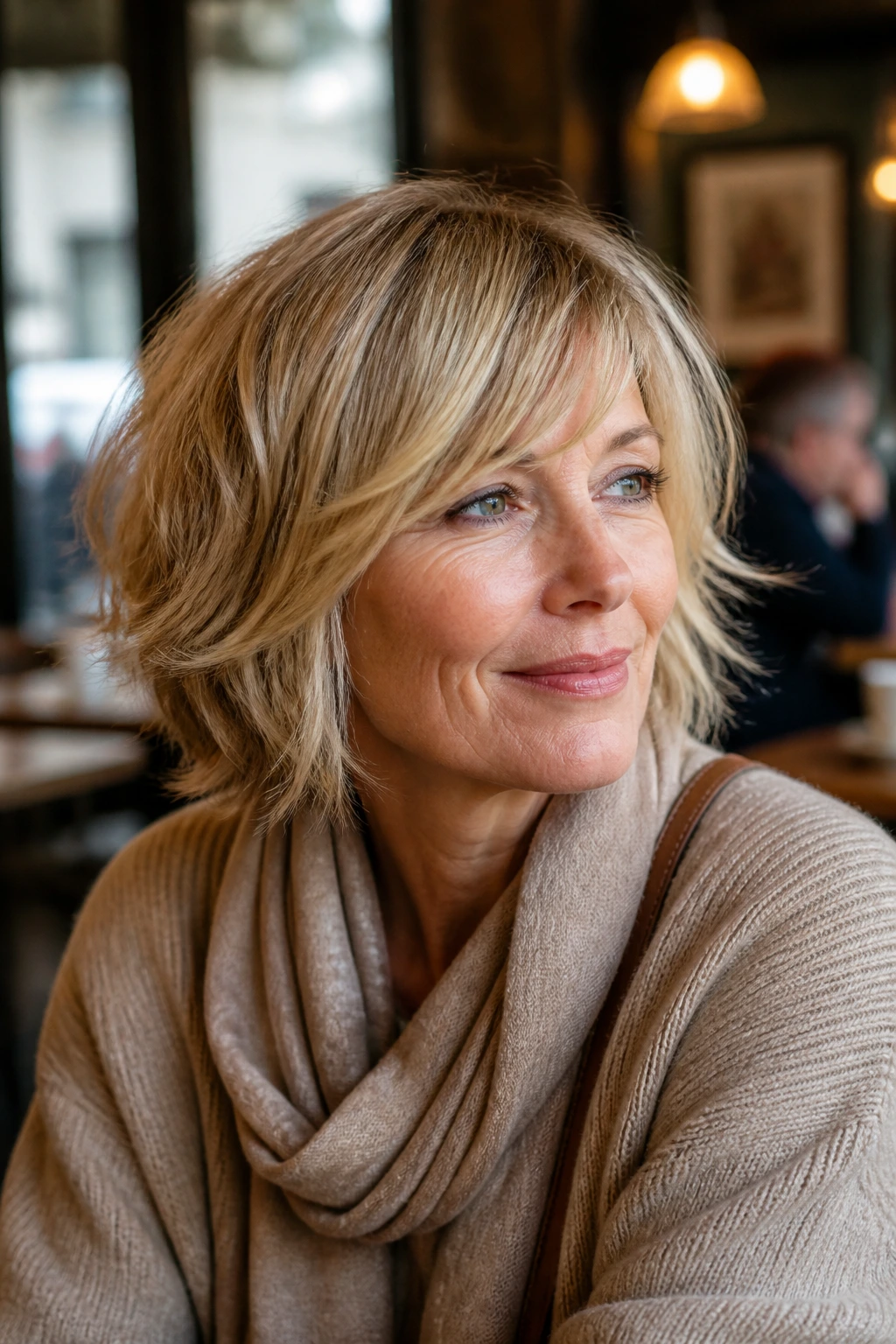
Color Enhancement: A gloss every few weeks can keep blonde from going flat or brassy. Ask for a sheer glaze, not a heavy opaque toner, if you want the dimension to stay visible.
Customization: If you want more lift, shift to a deeper side part. If you want more softness, let the front pieces fall a little longer and keep the fringe broken up.
Finishing Touches: One tucked side, a small hoop earring, or a narrow headband can make a shaggy bob feel more intentional on days when the texture is slightly off.
Make-It-Yours: Fine hair usually likes internal lift and a lighter fringe. Thick hair usually needs weight removed lower in the shape. Curly hair usually wants layers cut to the curl pattern, not against it. That sounds obvious, but people still get it wrong all the time.
Maintenance, Wash Days, and Trim Timing
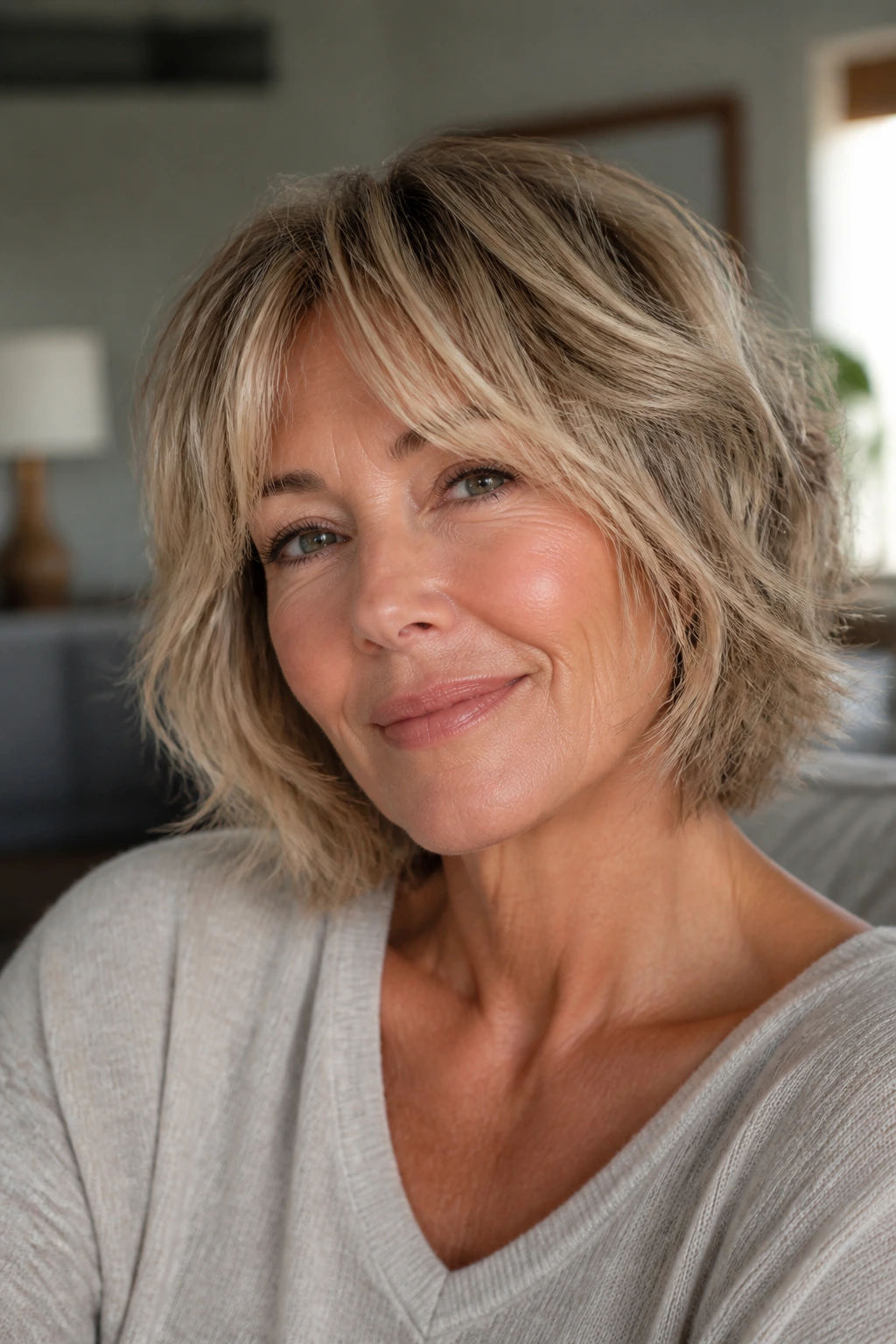
A shaggy bob keeps its shape best when you don’t let it grow too far past the intended line. For most cuts on this list, a trim every 6 to 8 weeks keeps the layers from collapsing into the same length. If the cut has a strong fringe or side-swept bang, you may want a quick fringe cleanup in between.
Blonde color asks for its own rhythm. Cool blondes often need toning or a gloss every 4 to 8 weeks, depending on water quality, heat styling, and how porous the hair is. Honey and beige blondes usually stretch a bit longer before they need refreshing. If your hair gets dry, use purple shampoo sparingly — once a week is enough for many heads of hair, and some need less.
Overnight care matters too. A silk or satin pillowcase reduces the roughness that can make shag layers frizz at the ends. If you wake up with a bent fringe or a flat crown, mist the roots lightly with water, lift them with your fingers, and give them two minutes of warm air. That usually fixes more than a full wash would.
Variations and Adaptations to Try
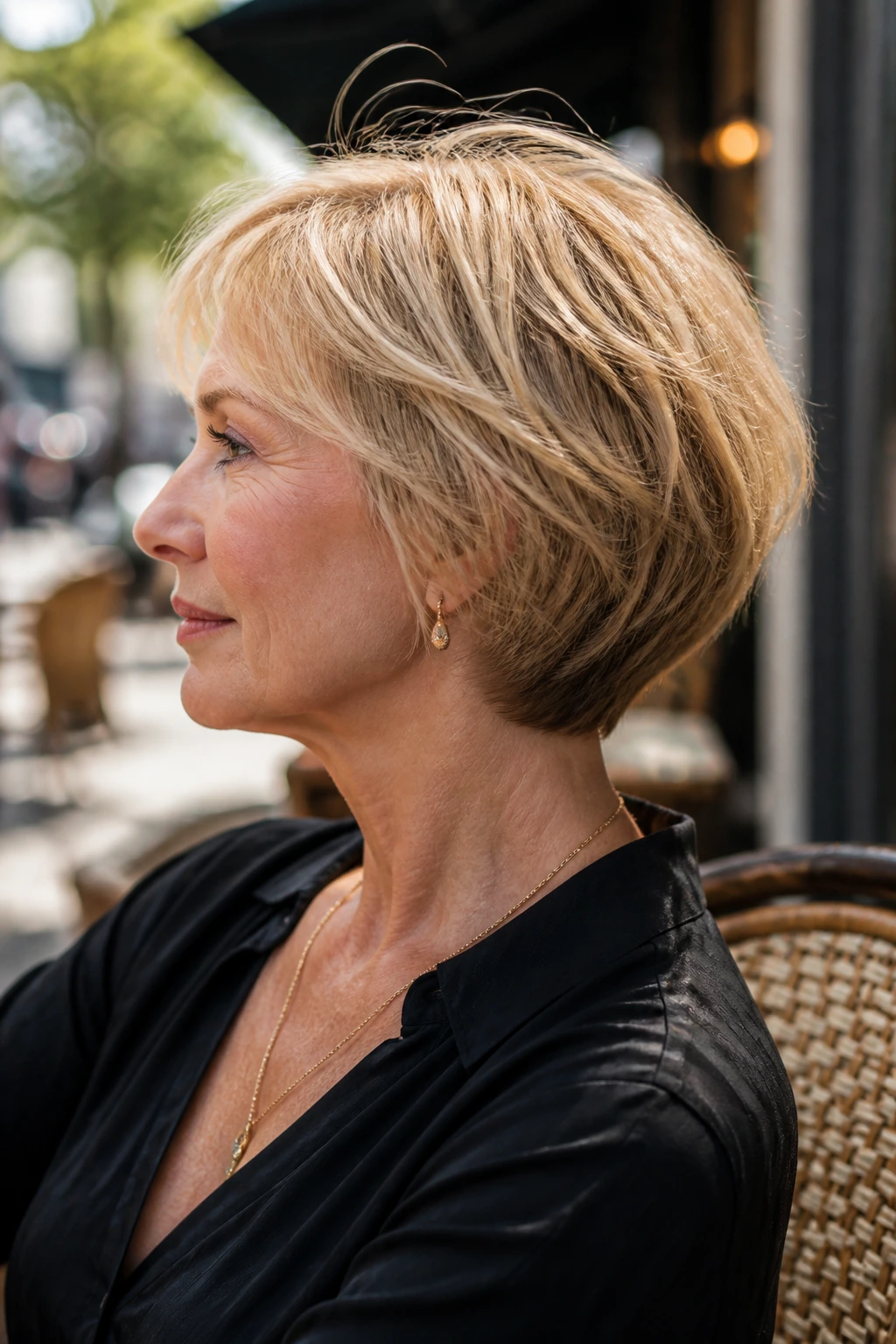
The Fine-Hair Lift-Up: Keep the perimeter a little fuller and let the layers stay internal. This version gives you movement without stripping away the body that fine hair needs to look healthy.
The Thick-Hair Breakup: Use more interior weight removal and a slightly stronger nape taper. This helps dense hair stop ballooning at the bottom.
The Gray-Blend Gloss: Blend natural silver or gray growth into a rooted beige or champagne blonde. The grow-out is softer, and the regrowth line reads as part of the color story instead of a problem.
The Glasses-Friendly Fringe: Choose side-swept bangs or curtain bangs that stop just above the frames. That keeps the front open and avoids the awkward bang-on-glasses collision.
The Air-Dry Version: Cut the layers to follow the hair’s natural bend and let mousse do the heavy lifting. This is a good choice if you avoid heat most days.
The Shorter Nape Sweep: Keep the front soft but trim the back closer to the neck. Nice for women who want a cleaner profile and easier scarf wear.
Common Mistakes to Avoid
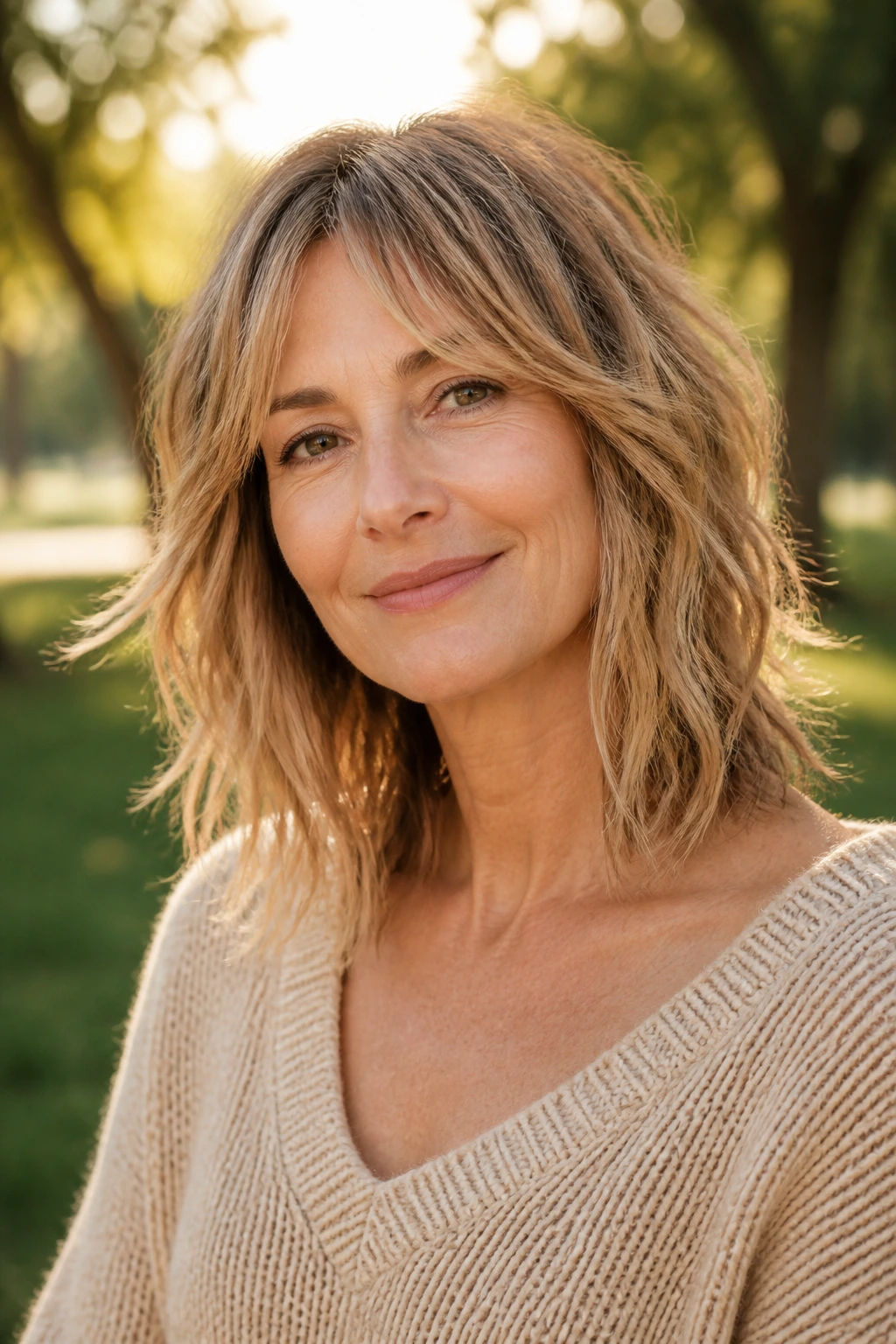
Too many short layers at once: The cut can go airy to stringy in a hurry. If the hair starts looking wispy at the ends or flat at the crown, there’s likely too much weight gone from the wrong place. The fix is a softer interior shape and a less aggressive finish.
Choosing the wrong blonde tone: A cool ash blonde on warm skin can look dull, while a too-golden blonde can turn brassy fast. Ask for a tone that works with your complexion and maintenance habits, not just the photo you saved.
Overloading it with product: Heavy creams and oils collapse shag layers. If the bob starts clumping or looking greasy by noon, the product load is too high. Use lighter mousse, spray texture, or a pea-sized amount of serum on the ends only.
Ignoring the crown: Flat roots make even a good shag look tired. A bit of root lift at the blow-dry stage is usually enough, but it has to happen. The crown is doing more work than people think.
Cutting bangs too bluntly: A hard fringe can fight the softness of the shag and make the face look boxed in. Softer bangs, broken up with point cutting, usually suit this style better.
Frequently Asked Questions
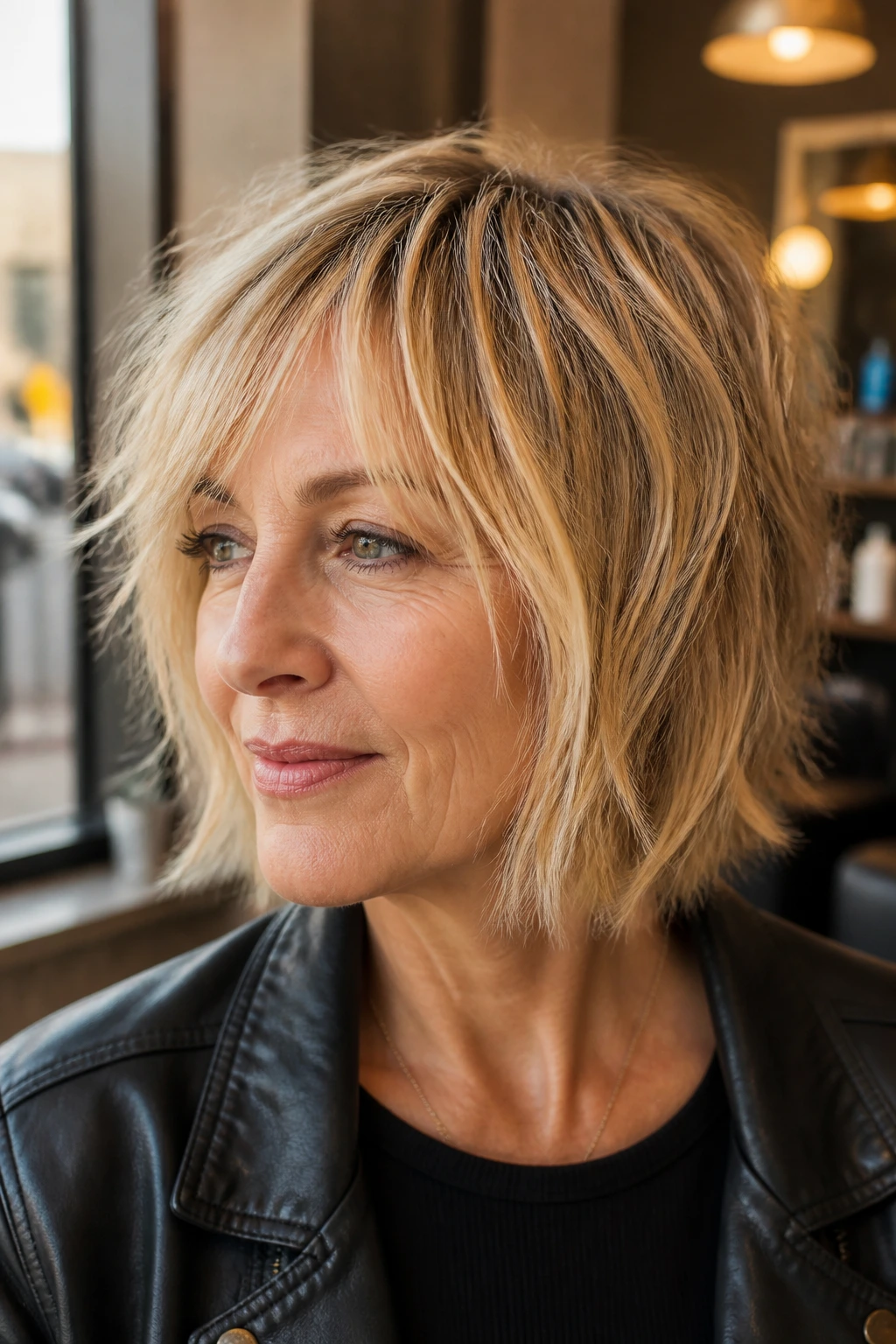
Can fine hair wear a shaggy bob without looking thinner?
Yes, but the cut needs restraint. Keep some fullness at the perimeter and use light layers instead of aggressive texturing. Fine hair usually looks best when the crown is lifted and the ends are not shredded.
Which blonde shade is easiest to maintain?
Rooted beige, honey, and champagne tend to be the easiest to live with. They grow out softly, and they do not show every little tone change the way platinum or white-blonde can.
Are curtain bangs a bad idea with glasses?
Not at all. They can work very well if the shortest part of the fringe starts high enough to clear the frames. Ask for the bang to open around the eyes rather than sit straight down the center.
How often should a shaggy bob be trimmed?
Most of these cuts hold their shape best with a trim every 6 to 8 weeks. If you have a fringe, you may want a bang tidy between full cuts.
Can I keep my natural gray roots and still wear blonde?
Absolutely. A root shadow or soft gray blending can make the grow-out look intentional. The important part is avoiding a harsh stripe at the part line.
What if my ends flip out instead of curling under?
That usually means the haircut is a little too short at the perimeter or the blow-dry is pushing the ends outward. A bigger brush, a softer bend from a flat iron, or slightly longer ends usually solves it.
Does a shaggy bob work on curly hair?
Yes, as long as the layers respect the curl pattern. Curly hair needs shape cut into it, not carved against it. A good curly shag bob should spring, not puff.
Can I style it without hot tools most days?
You can, especially if your hair already has some bend. A light mousse, a scrunch, and a few root clips while it dries often get enough shape for a low-heat day.
The Shape That Keeps Its Softness
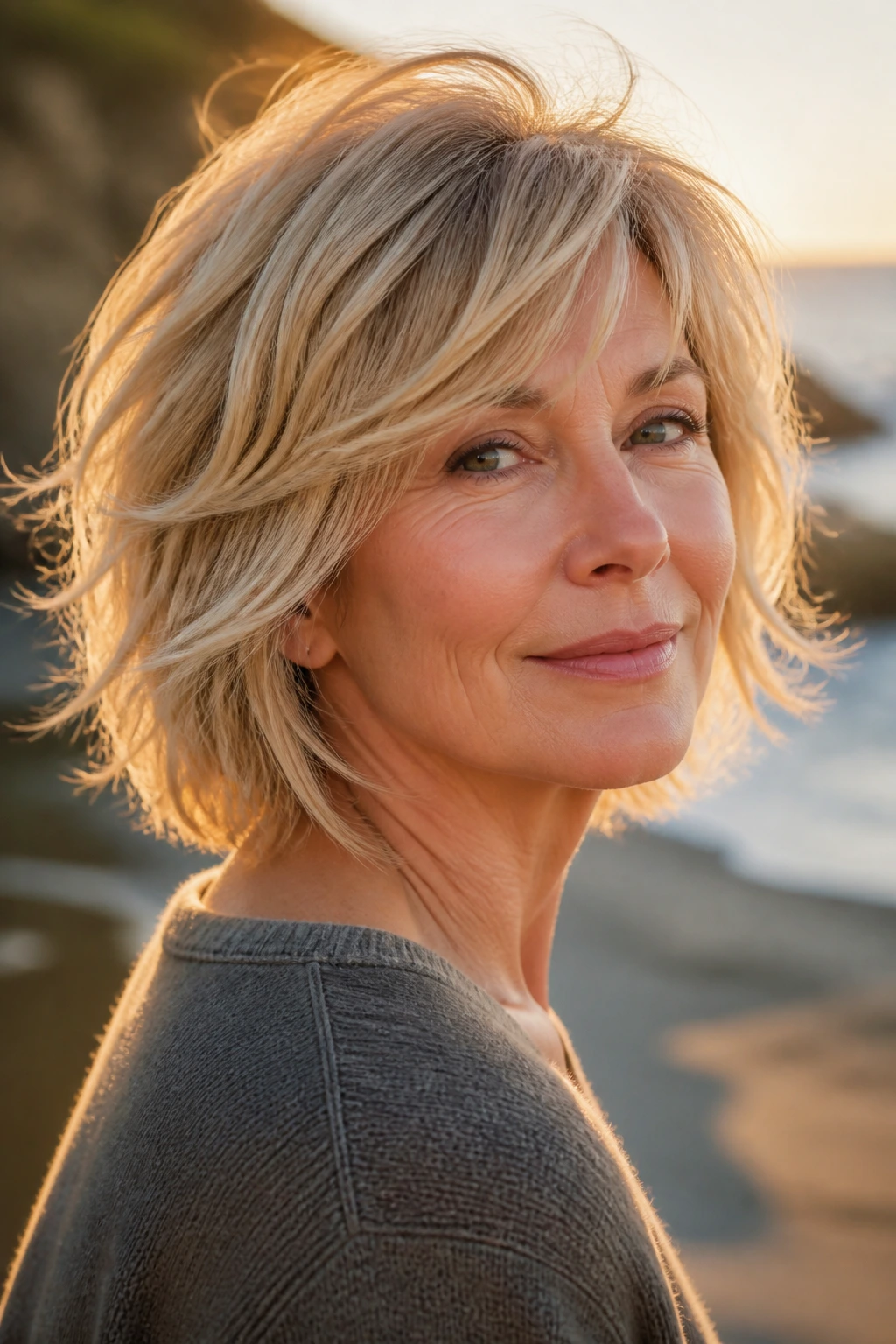
A good blonde shaggy bob does something a plain cut can’t: it keeps moving after you leave the chair. That movement matters when hair has changed a little in texture, density, or color, because it gives you shape without forcing the whole head into one rigid line. The blonde tones help, sure. The cut does the real work.
What I like most about these styles is how adaptable they are. You can keep them soft and air-dried, or push them a little more polished with a brush and a bend at the ends. You can lean warm, cool, bright, rooted, or silvery. The structure stays useful either way.
If you want hair that looks lighter on the face and less obedient in the best possible way, this is a smart place to start.
