



Shaggy bobs for curly hair over 40 work because they stop fighting the curl pattern and start framing it. That sounds simple, but it’s the whole point. When a bob is cut too blunt on curls, the shape can puff at the sides, tuck inward at the bottom, or fall flat at the crown while the ends stick out like they’re in a different mood entirely.
A good shaggy bob does the opposite. It breaks up the bulk where curls pile up, keeps a little air around the face, and lets the texture do the heavy lifting. The best versions have movement near the cheekbones, lift at the roots, and enough length that the cut still feels like a bob instead of a grow-out experiment gone wrong.
There’s also a practical side people don’t talk about enough. Curl patterns change. Density changes. Some people get softer curls, some get more halo frizz, and some suddenly discover their hair has opinions about humidity that it never used to share. The right shaggy bob works with those changes instead of pretending they don’t exist. That’s why the cut can look fresh, not fussy.
Why These Cuts Earn a Bookmark
-
They control bulk without crushing bounce: The layering breaks up the triangle shape curly bobs can fall into when the bottom line is too heavy.
-
They give the face some breathing room: Cheekbone and jawline pieces keep curls from sitting all in one block around the lower face.
-
They grow out with less drama: A shaggy edge still looks intentional when the cut has been out of the salon for six weeks.
-
They play well with silver strands: Gray, white, and salt-and-pepper curls show off movement more than a hard, even line ever could.
-
They work with low-effort styling: A diffuser, a little mousse, or a careful air-dry can be enough.
-
They leave room for personality: Some versions lean soft and airy; others are sharper and more sculpted. Same family, very different attitude.
1. Chin-Length Curly Shag With Airy Fringe
A chin-length curly shag with airy fringe sits in that sweet spot where the curls still have room to spring, but the shape doesn’t swallow your face. The fringe keeps the front soft, and the shorter length makes the outline feel light instead of heavy. It’s one of those cuts that looks finished even when you haven’t fussed much with it.
Why it flatters curls
The chin-length perimeter gives the curl pattern enough room to form a clean halo instead of collapsing into a shelf. If your hair has medium density or loose ringlets, this shape keeps the sides from ballooning out while the front stays open and flattering. The fringe should be soft and piecey, not blunt. Hard bangs on curly hair can get bossy fast.
A lot of stylists cut this shape too short in the front. Don’t let them. The safest version leaves the longest fringe pieces around brow level when dry, not wet.
- Best on 2C to 3B curls
- Good for medium density and fine-to-medium strands
- Ask for point-cut fringe, not a heavy line
- Style with mousse at the roots and a light cream through the ends
Flat roots are the enemy here.
2. Collarbone Curly Bob With Choppy Ends
A collarbone curly bob with choppy ends is the cut I’d pick for someone who wants shape without losing the option to tuck hair behind the ear or pull it into a tiny clip. That extra length matters. It gives the curls a little more weight, which helps reduce side puff and keeps the silhouette from rising too high.
The choppy ends are doing quiet work. They interrupt the blunt line that can make curly hair look boxy, and they let the texture break apart into softer pieces. If your curls are thick, this is where the haircut starts looking expensive instead of bulky.
I like this one with a side part and a slightly off-center fringe area. It keeps the bob from reading too symmetrical, which is exactly where curly hair can start to feel stiff.
A little definition cream goes a long way. Too much and the choppy ends clump together in a way that erases the shape.
3. Rounded Shag Bob for Coily Curls
Why does a rounded shape matter so much on tighter curls? Because coily hair usually wants to expand upward and outward at the same time. If the cut is too square, the edges can feel abrupt. A rounded shag bob follows the head more naturally, so the hair looks full without turning into a box.
This cut is especially good if your curls live in the 3B to 4A zone and you want a shape that keeps the crown lifted while the sides stay neat. The trick is in the layer placement. You want shorter layers around the crown and upper sides, then a softer perimeter that doesn’t get thinned to pieces.
What makes it work
The rounded outline makes the bob feel deliberate, not accidental. Coily curls shine when they have room to cluster, and this cut gives them that space without building too much width. If your hair is dense, ask the stylist to remove bulk from the inside, not by hacking at the outer line.
A diffuser on low heat helps preserve the rounded shape. High heat can stretch the top layer and leave the sides frizzy by noon.
4. Side-Parted Curly Bob With Long Face Frame
Picture this: you’ve got curls that want to sit wide at the cheeks, and every cut you’ve tried seems to split the difference between fluffy and flat. A deep side part fixes a lot of that in one move. The long face frame drapes diagonally, which pulls the eye downward and softens the width.
This shape is one of my favorites for rounder faces, broad foreheads, and anyone who wears glasses. The side part makes the hair feel more tailored, but not severe. It also gives you a place to tuck one side behind the ear, which can be useful when the curls start expanding on a humid day.
- Put the part where your hair naturally wants to fall
- Ask for the longest front piece to hit just below the jaw
- Keep the crown layered enough to avoid a flat top
- Use root clips while drying if your part wants to collapse
A deep side part can be dramatic in the best way. It gives the bob a diagonal line, and diagonal lines are almost always kinder than straight ones on curly hair.
5. Layered Inverted Shag Bob
The inverted shag bob has more structure than people expect, and that’s why it works. The back sits a touch shorter, the front stays longer, and the layers build lift without making the cut look stacked or dated. On curls, that slight angle can be magic.
This is the one I reach for when hair feels heavy at the nape but the front still needs some length around the jaw. The shorter back lifts the whole shape off the neck, while the front pieces keep it from feeling severe. It’s neat. Not rigid.
The danger is overdoing the angle. If the front is too long and the back too short, the bob starts shouting. Keep the difference subtle, and let the curls themselves do the decoration.
A light foam at the roots and a cream on the mids is often enough. The cut already has posture.
6. Shoulder-Grazing Curly Lob With Razor-Soft Ends
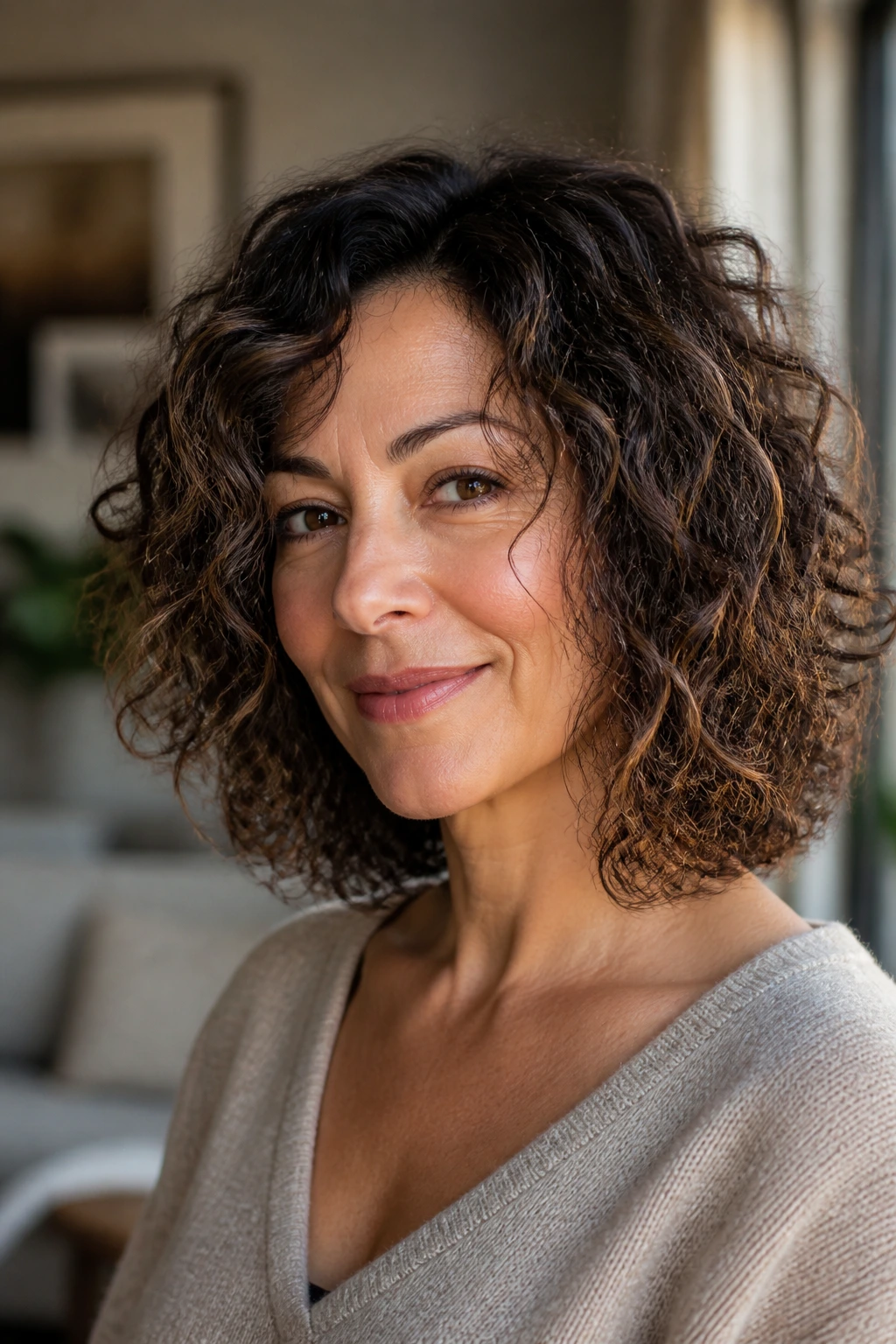
Unlike a tighter bob, a shoulder-grazing lob gives curls room to behave without making you commit to a big chop. The length lands in a forgiving place, and the razor-soft ends keep the perimeter from looking chopped off. That soft edge matters more than people realize. It lets the curls settle instead of sitting like a wall.
This cut is especially useful if your hair shrinks a lot when it dries. A collarbone-length cut can read as much shorter once the curls spring up, so the extra length gives you insurance. If you want the easiest grow-out of the whole bunch, this is probably it.
How to wear it
Keep the front just long enough to skim the collarbone when dry. If the stylist cuts it too high while wet, the finished shape can jump up above the shoulders and lose the lob effect. A slight side part helps keep the front from hugging the face too tightly.
This one also plays nicely with bigger earrings. The length frames them instead of competing with them. Small thing. Big payoff.
7. Curly French Bob With Wispy Bangs

A curly French bob with wispy bangs has a little Parisian swagger, but the real charm is how it softens the whole face without feeling precious. The bob stays short, often around the jaw, while the fringe breaks up the forehead in loose, airy pieces. Not baby bangs. Never baby bangs on curly hair unless you enjoy chaos.
The shape works best when the bangs are cut longer than you think they need to be. Curly fringe bounces up, and a bang that looks careful when wet can turn into a high, uneven strip after it dries. Leave room. Let the curl pattern land where it wants.
This style suits medium-density curls with a bit of spring and good definition. If your texture is very tight or very loose, the fringe can still work, but the proportion needs adjusting. A thinner fringe keeps the look light; a fuller one can read heavy fast.
The whole point here is softness around the eyes and brow, not a perfect line.
8. Tousled Bob With Internal Layers
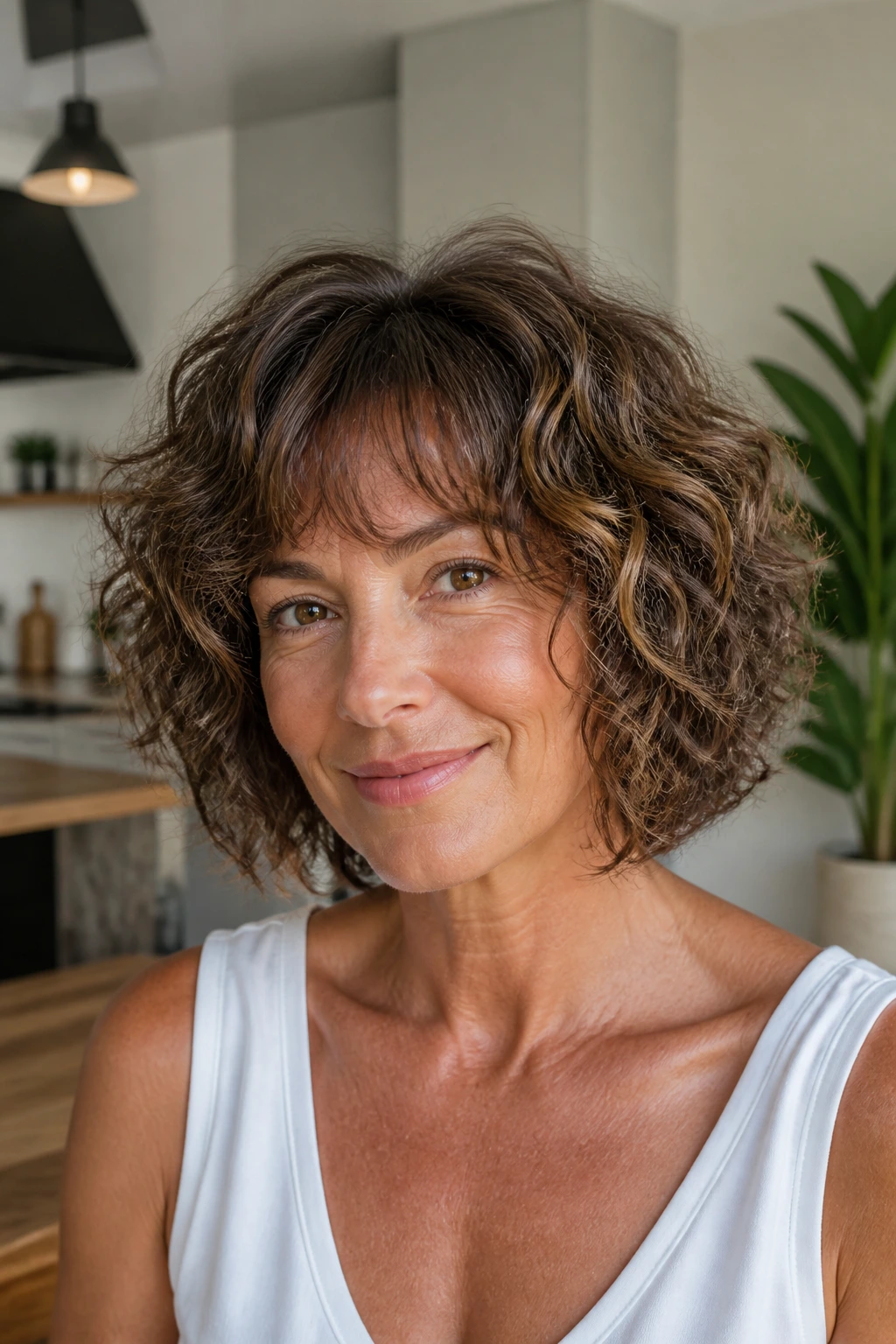
The best thing about internal layers is that nobody sees them. They sit inside the haircut, quietly removing weight so the top doesn’t lie flat and the bottom doesn’t puff up. On a tousled bob, that hidden structure makes the curls separate into cleaner pieces instead of clumping into a mass.
This cut is a gift for dense hair. It lets the perimeter stay smooth while the inside does the work of opening the shape. You still get volume, but it feels airy rather than puffy. That’s a difference you can spot from across the room.
One-sentence truth: this is not the cut for someone who wants sharp edges.
If you style it with a light gel and scrunch out the cast once it’s dry, the ends get that soft, lived-in look without collapsing. The cut does not need perfection. It just needs space.
9. Curly Shag Bob With Deep Side Sweep

A deep side sweep is one of the easiest ways to make a curly bob feel intentional instead of symmetrical in a dull way. The weight falls to one side, the front opens up, and the curls at the crown get a little extra room to stand up. That’s a useful trick if the top tends to lie flatter than the rest.
I like this shape for people whose curls are full at one side and sleepy at the other. The sweep disguises the imbalance and turns it into part of the style. It also helps if you have a strong cowlick near the hairline, because the part can work with it instead of wrestling it.
- Start the part while hair is soaking wet or very damp
- Clip the heavier side at the root for 10 to 15 minutes
- Keep the front sweep long enough to skim the cheekbone
- Use a medium-hold mousse so the curve stays in place
There’s a little drama here, but not too much. Enough to make the bob feel alive.
10. Bouncy Curly Bob With Hidden Undercut
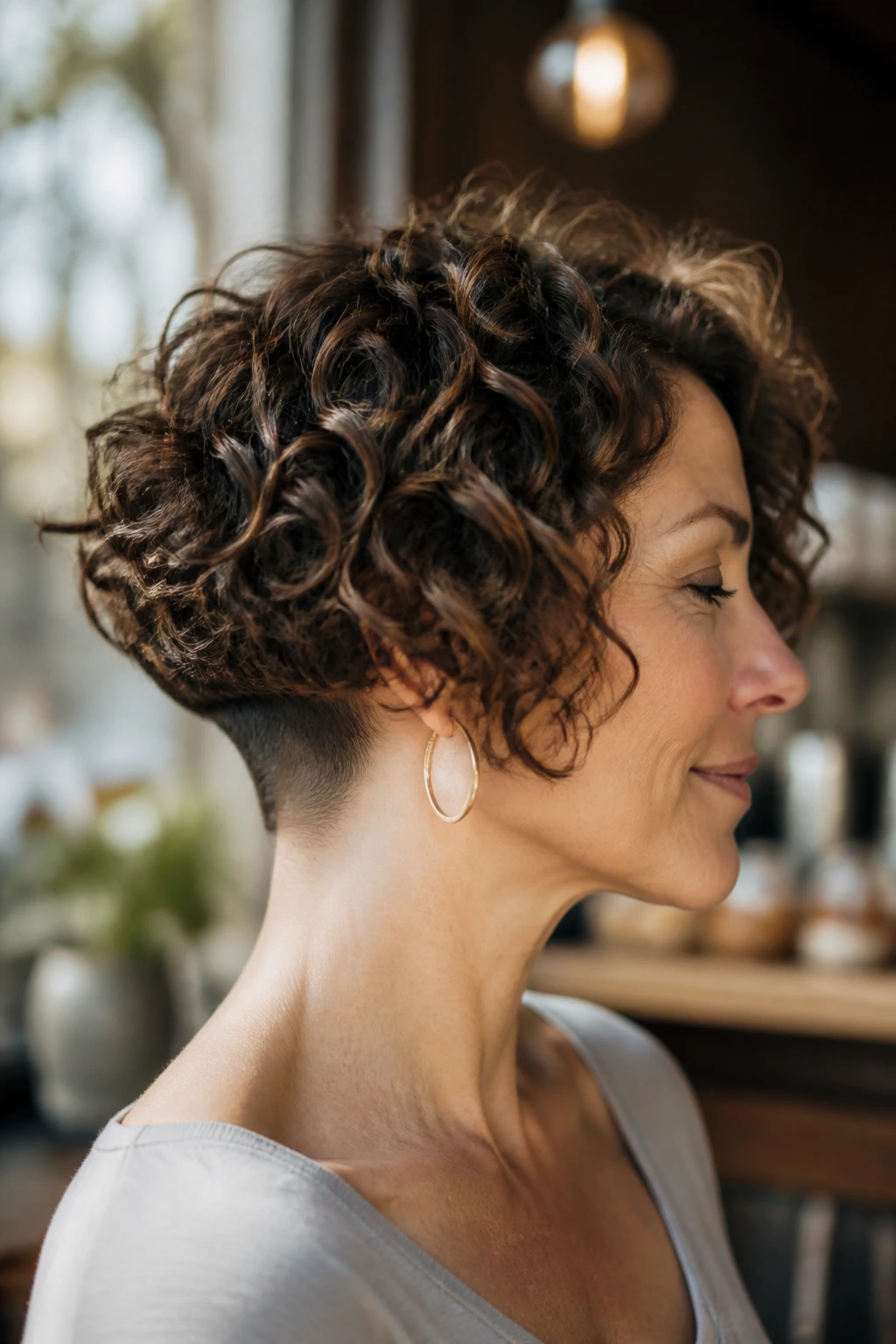
A hidden undercut can rescue a bob that feels too dense at the nape or behind the ears. The outside still looks soft and curly, but underneath, some of the bulk is removed so the shape stops fighting your neck. That’s a smart move for thick curls that trap heat and puff out at the bottom.
The undercut should stay hidden unless the hair is lifted. This is not the place for a shaved design unless you want the haircut to shout from every angle. The point is relief, not a reveal.
This style works especially well when you want bounce at the top and sides but hate the heaviness that thick curls can create in warm rooms or humid weather. It also cuts down on the feeling that the bob is “sitting” on your shoulders.
A pea-sized amount of oil on the ends is enough. Too much product and the cut loses its air.
11. Salt-and-Pepper Shaggy Bob With Soft Crown Lift

Silver strands show shape differently than dark strands do. They catch every blunt line, every heavy corner, every flat crown. That’s why a shaggy bob with soft crown lift can look so polished on salt-and-pepper curls: it gives the color movement, not just coverage.
The crown lift keeps the top from collapsing into the sides, which is a common problem when curl density starts to shift. The layers should rise at the crown and soften as they fall toward the ears. No shelf. No helmet.
This cut is especially good if you’re leaning into your natural gray and want the color to feel deliberate rather than transitional. The contrast between silver curls and darker pieces reads best when the haircut has some lift and lightness around the face.
A satin pillowcase helps a lot here, because coarse silver strands can lose shape overnight faster than people expect. The cut can be gorgeous at noon and a little grumpy by breakfast.
12. Cropped Curly Bob With Tapered Nape
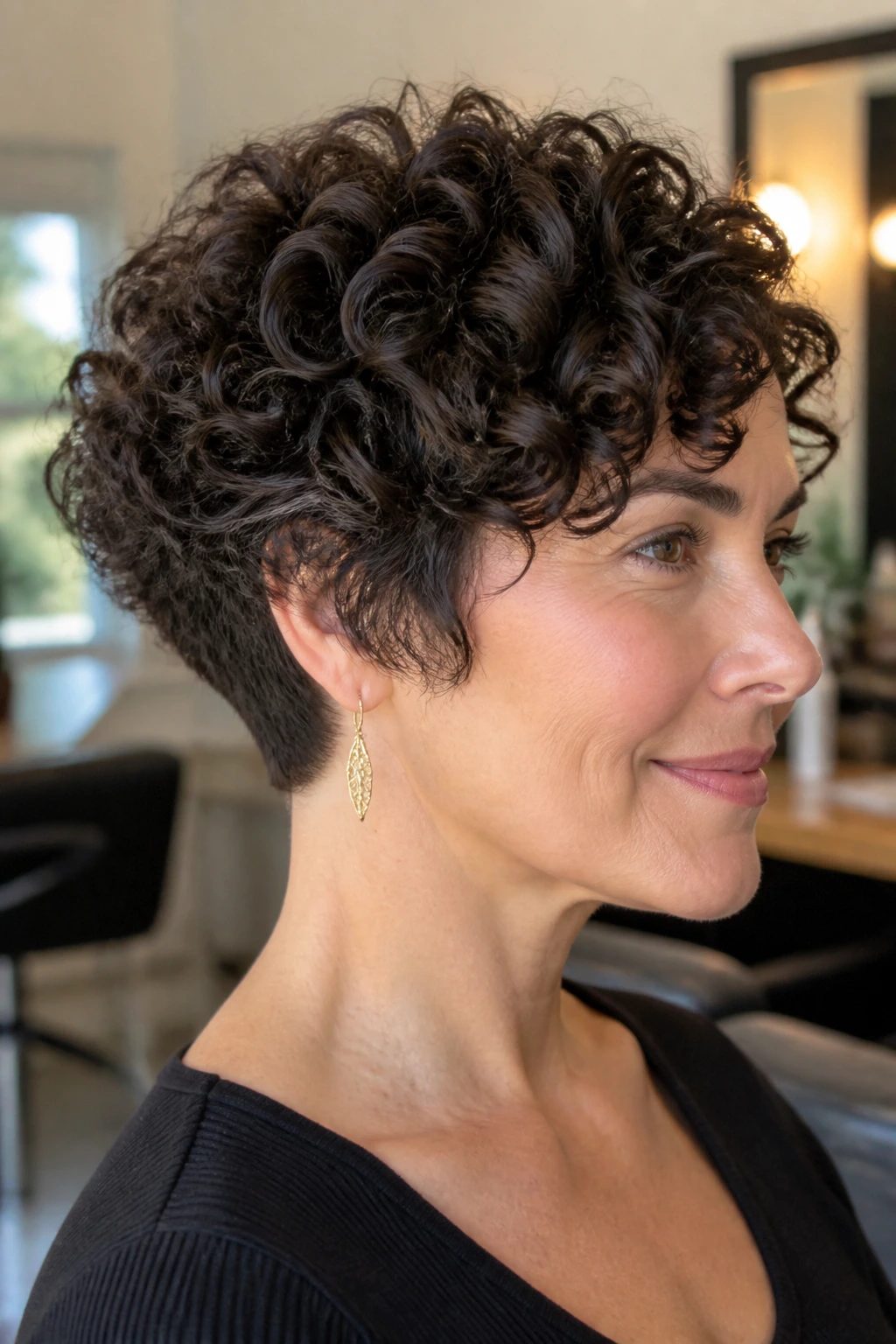
Want the neckline to feel clean without losing the bob shape? A cropped curly bob with a tapered nape does that job. The hair sits shorter at the back, then softens upward into curl and movement. It’s crisp, but not severe.
This one works best on springy curls that naturally stack a little higher on the head. It gives the neck room and keeps the silhouette from dragging downward. If you wear scarves, collars, or higher necklines, the tapered nape keeps the haircut from getting trapped underneath.
Why it holds its shape
The taper creates a neat foundation, and the curls on top give the style its softness. You want the nape to be clean, not shaved to the skin. A very short undercut changes the mood completely. A taper still feels like hair.
This cut does need regular neck cleanups. Let it go too long and the balance disappears fast.
13. Modern Mullet-Inspired Curly Bob
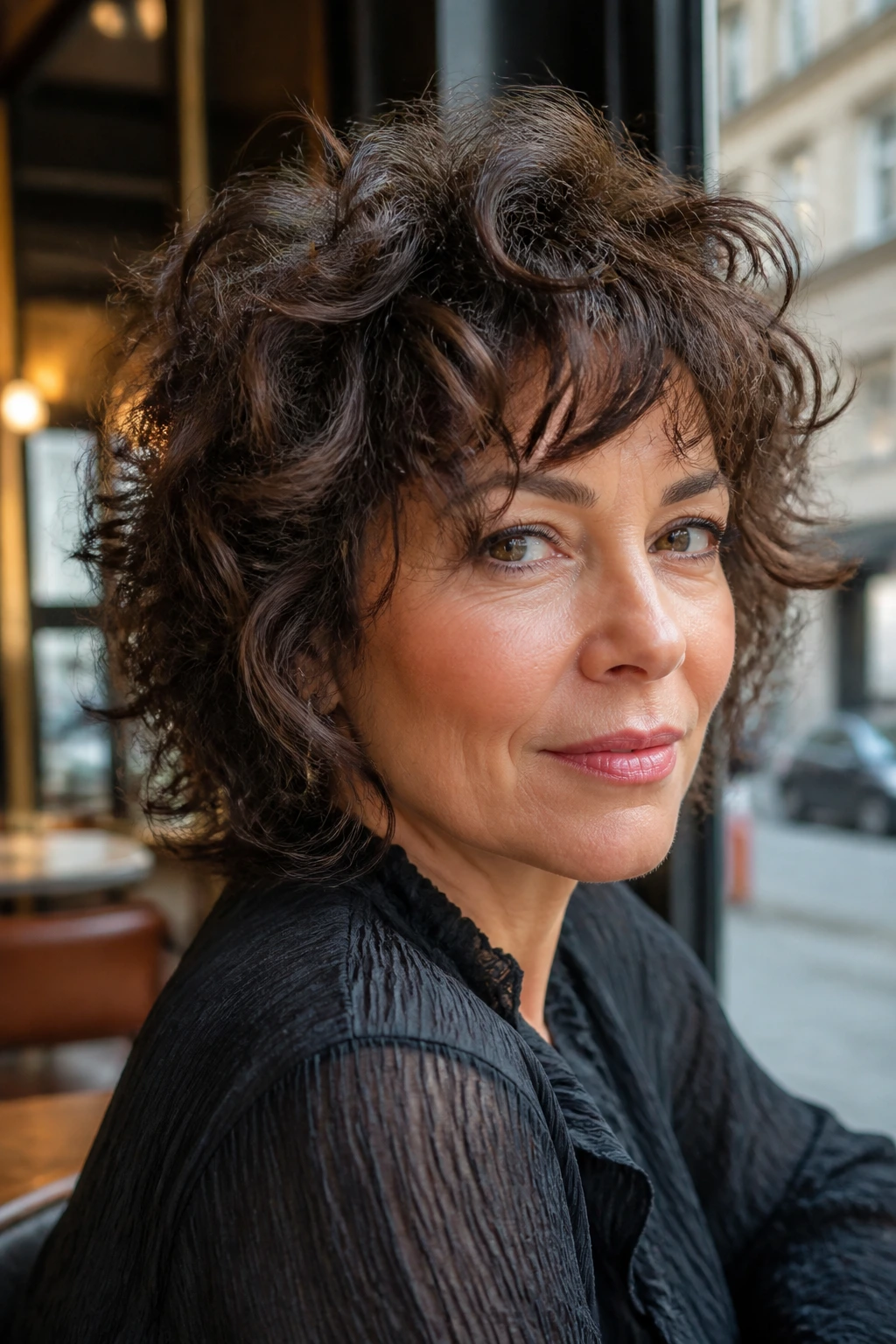
Yes, this one has edge. No, it does not have to look punky or costume-y. In curly hair, a modern mullet-inspired bob can read soft and current because the texture blurs the line between the shorter front and the slightly longer back. The trick is restraint.
The front still behaves like a bob. The back just carries a touch more length, enough to create movement and keep the outline from feeling boxed in. On dense curls, that shape can actually be easier to wear than a standard bob, because the extra back length keeps the curl stack from rising too high.
This is the cut for someone who wants personality and doesn’t mind a little attention. It pairs well with strong cheekbones, a defined jaw, or a wardrobe that can handle a haircut with opinions.
Skip this if you want a quiet, predictable shape. This one has a little swagger.
14. Asymmetrical Curly Shag Bob
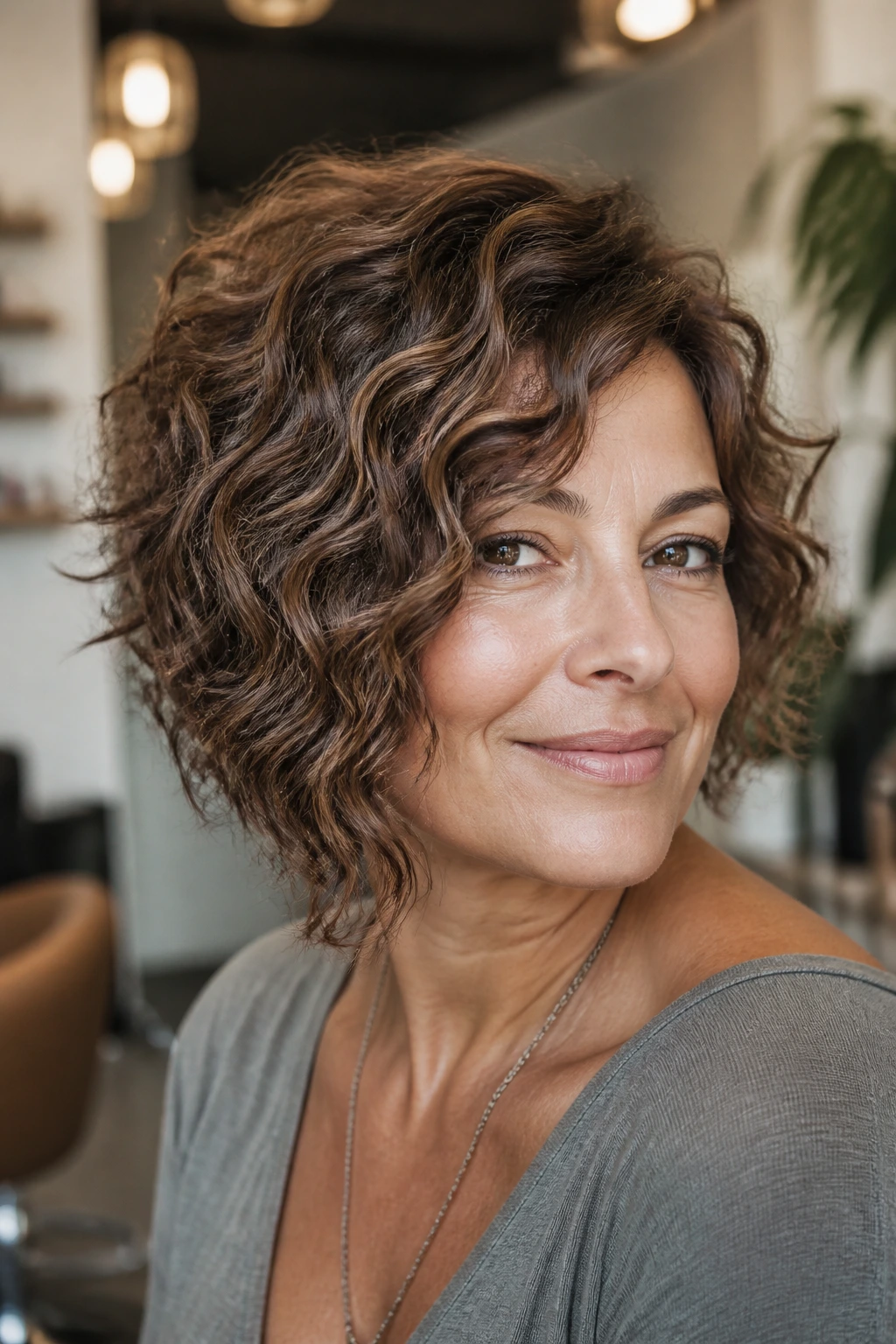
An asymmetrical bob works because it breaks the symmetry that can make curly hair look stiff. One side sits slightly longer than the other, and the difference gives the curls a diagonal line to follow. That line matters. It pulls the shape forward.
I like this cut for anyone whose hair naturally favors one side or whose part keeps shifting no matter what product they use. Instead of battling the unevenness, the asymmetry turns it into a feature. The longer side can skim the jaw, while the shorter side opens the face.
Don’t make the difference too dramatic. You want a lean, not a lopsided shock. A small gap of one to one and a half inches is usually enough to register.
This is also a good way to refresh a bob that has gone flat. The uneven shape can make the whole cut feel awake again.
15. Curly Bob With Curtain Bangs and Cheekbone Layers
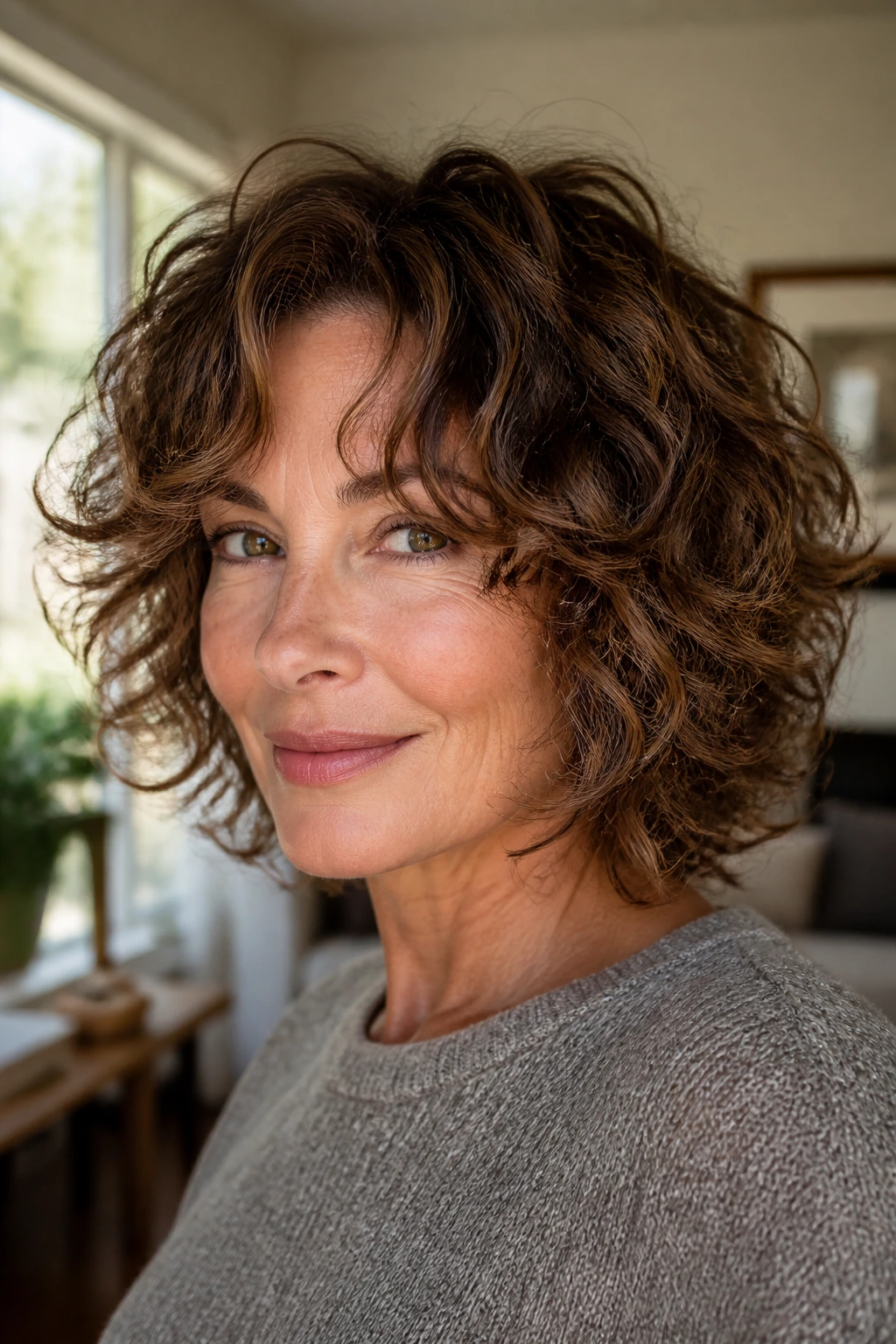
Curtain bangs on curly hair are less about a perfect swoop and more about a soft opening around the center of the face. With cheekbone layers, the effect is gentle but clear: the curls frame the eyes, the temples feel lighter, and the bob gets a little lift right where it needs it.
This is one of the most flattering options if you want movement without losing length at the front. The bang pieces should blend into the side layers, not sit as a separate chunk. If they’re too short, they spring up and can feel abrupt. Longer is safer.
A good curtain bang on curls usually needs a separate styling step. I’d twist or clip the front pieces while the rest of the hair air-dries. It’s a small move, but it keeps the fringe from splitting in weird places.
The result is soft and a little romantic, without going fussy.
16. DevaCut-Inspired Shape With Piecey Ends
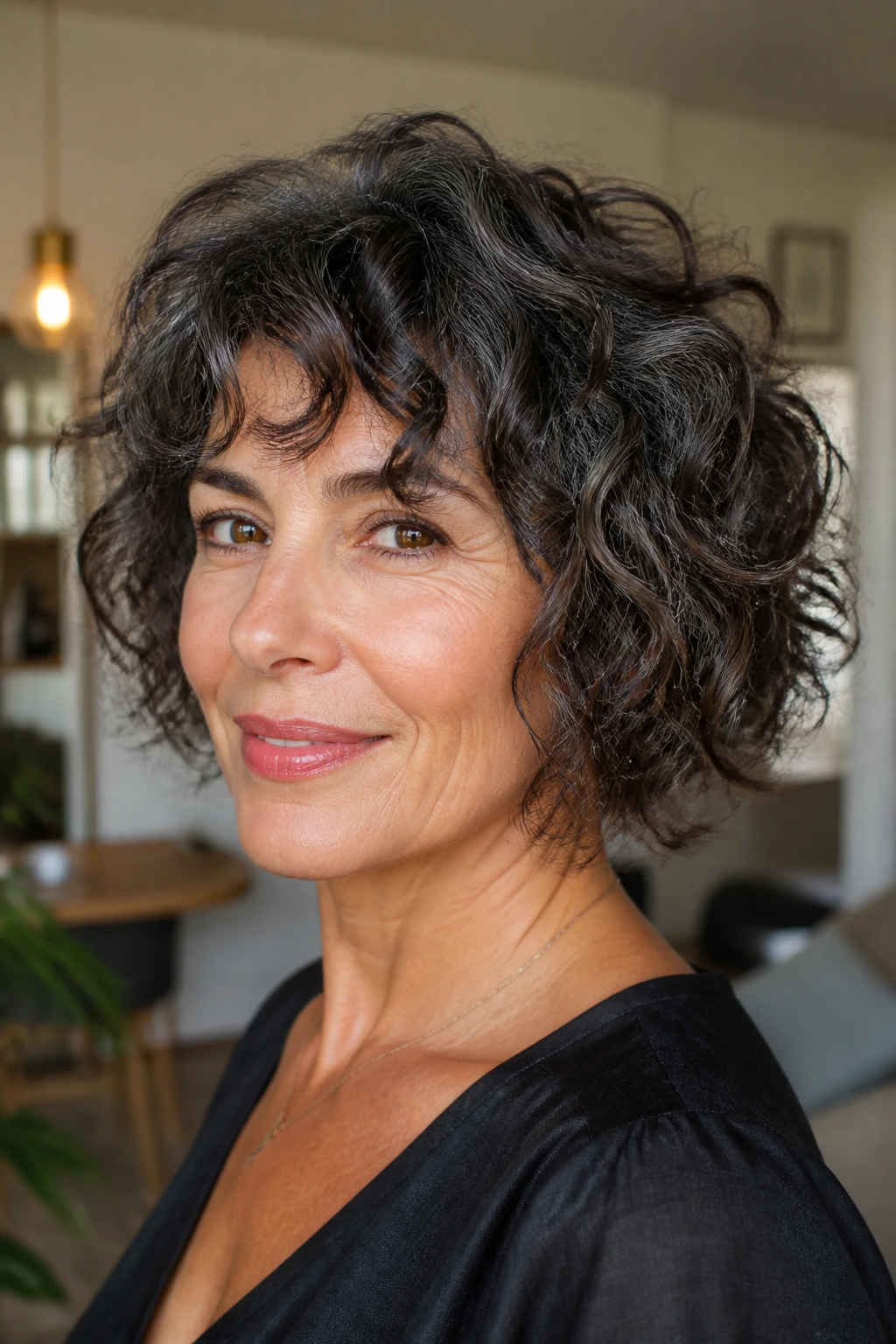
A DevaCut-inspired bob is built around the curl pattern itself, usually cut dry so the stylist can see where each curl lands. That matters more than people think. Wet curls lie. Dry curls tell the truth.
The piecey ends keep the shape from turning into one big round mass. Instead, the haircut gives you distinct curl groups with little gaps of air between them. The result feels lighter and more individual, which is often what people want when they say they want movement.
What to ask for
Ask for a curl-by-curl or dry cut approach, and make sure the stylist respects your natural part. If one side is tighter or looser, the shape should account for that instead of forcing both sides to match perfectly. Matching curl textures by force is how you end up with a bob that only behaves in one lighting situation.
This is one of the best choices if your curl pattern varies a lot from crown to nape.
17. Blunt-Edge Curly Shag Bob
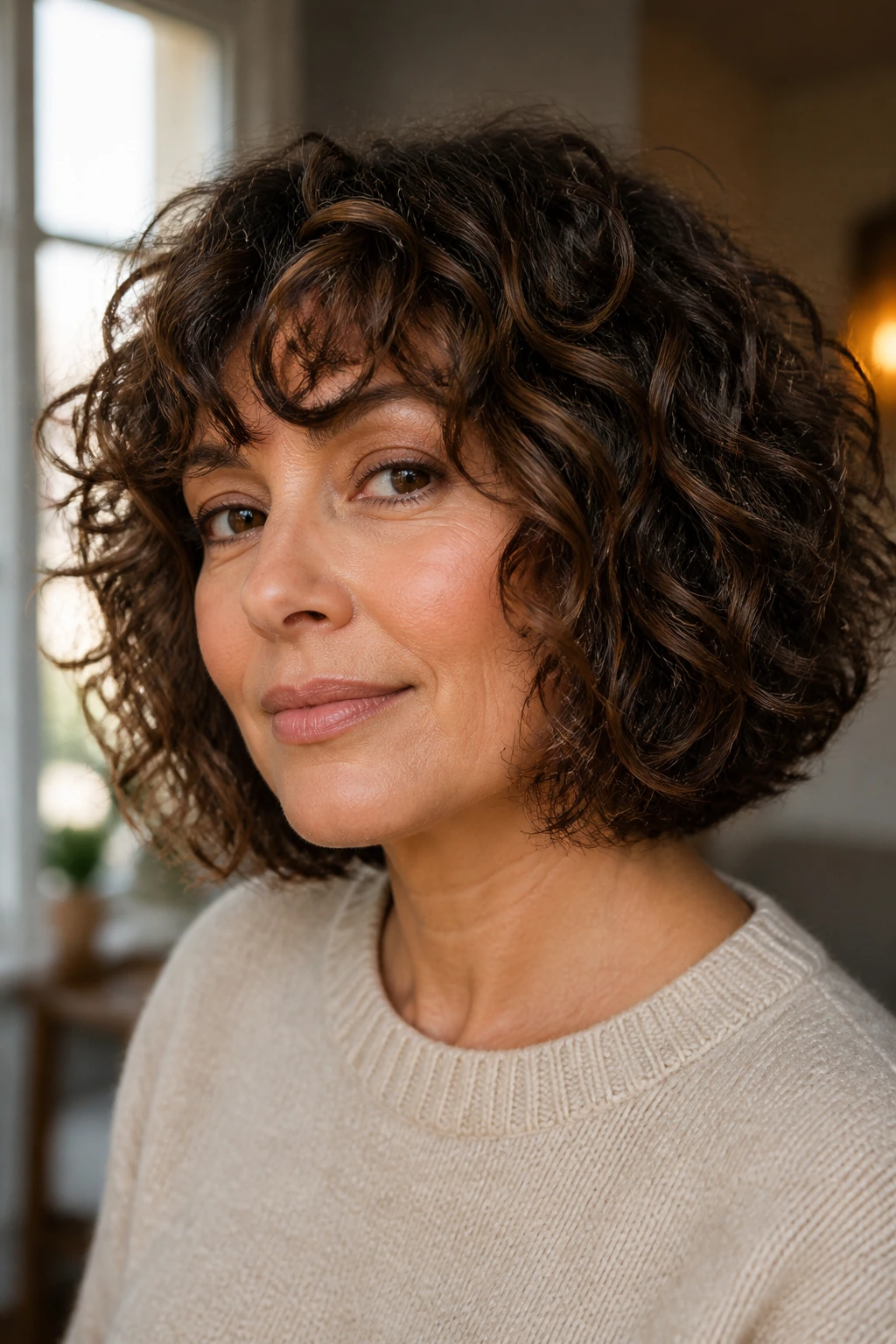
A blunt-edge curly shag bob sounds contradictory, and that’s exactly why it works. The outer line stays solid enough to make the curls look thick and healthy, while the internal layers keep it from feeling heavy. You get the clarity of a blunt shape with the softness of a shag.
This cut is a strong choice for fine-to-medium curls that can disappear when too many layers are removed. A clean edge gives the ends a fuller look, which is useful if your hair has lost some density. The interior layers should be subtle, though. Too much cutting inside and the outline starts fraying.
- Best if you want the ends to look dense
- Good for looser curls that need visual weight
- Keep the longest pieces even around the perimeter
- Use a light mousse or foam, not a heavy cream
There’s a nice tension in this haircut. Sharp enough to look deliberate, soft enough to move.
18. Low-Maintenance Air-Dry Shag Bob
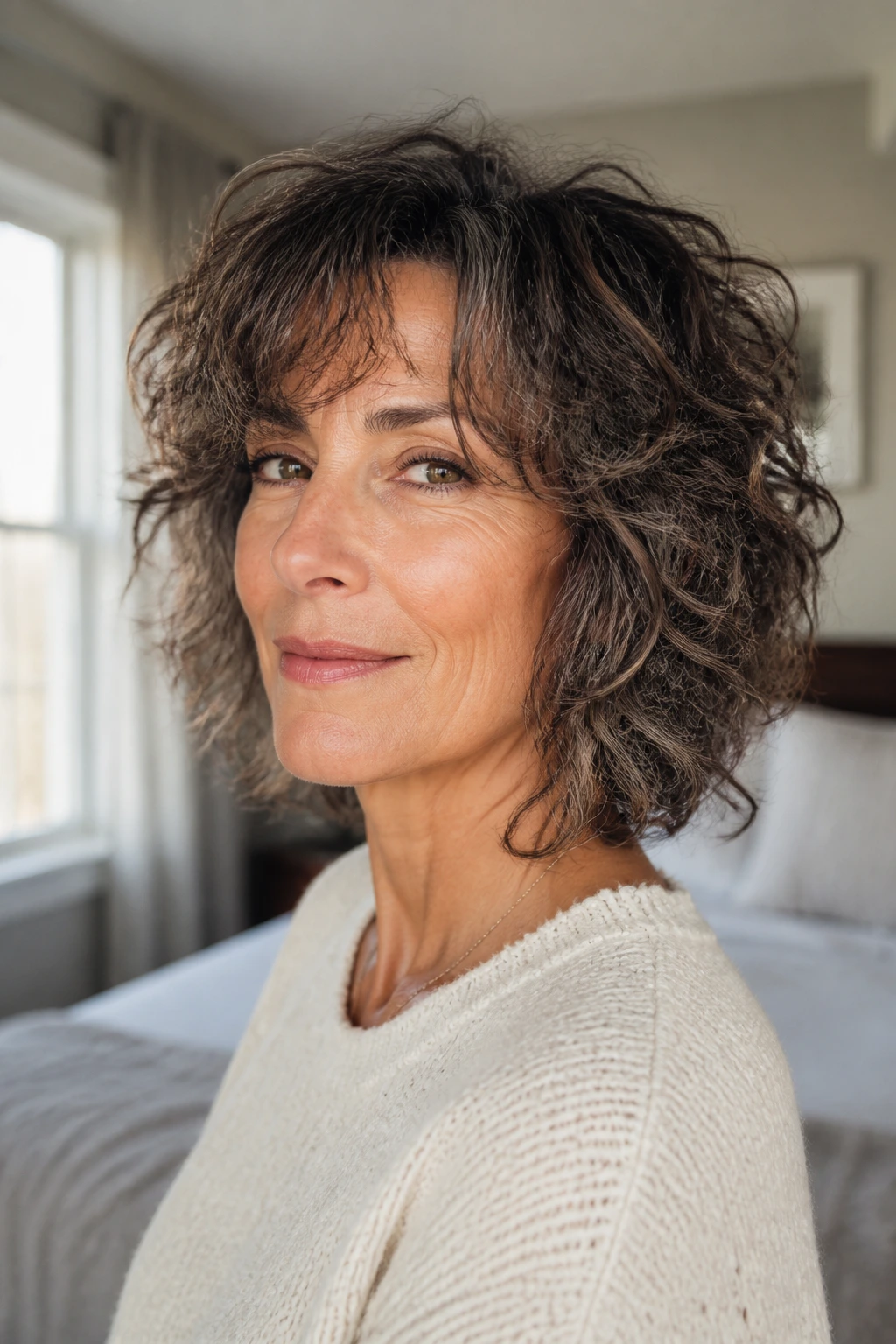
If you want a shaggy bob that won’t punish you on busy mornings, build the cut around air-drying from the start. That means slightly longer layers, no fragile micro fringe, and a face frame that doesn’t need constant babysitting. The best air-dry shag bob looks finished when you scrunch it and leave it alone.
The cut should be forgiving at the crown and around the ears, because those are the places that usually betray a rushed styling job. A little extra length helps the curl settle without sticking up at odd angles.
One-sentence rule: the shape has to look good at 70 percent dry.
That’s the test.
If it only looks right after you’ve twirled every piece and hovered over it with a diffuser for 20 minutes, it’s not really low-maintenance. It’s just well behaved on good days.
19. Glam Curly Bob With Polished Volume
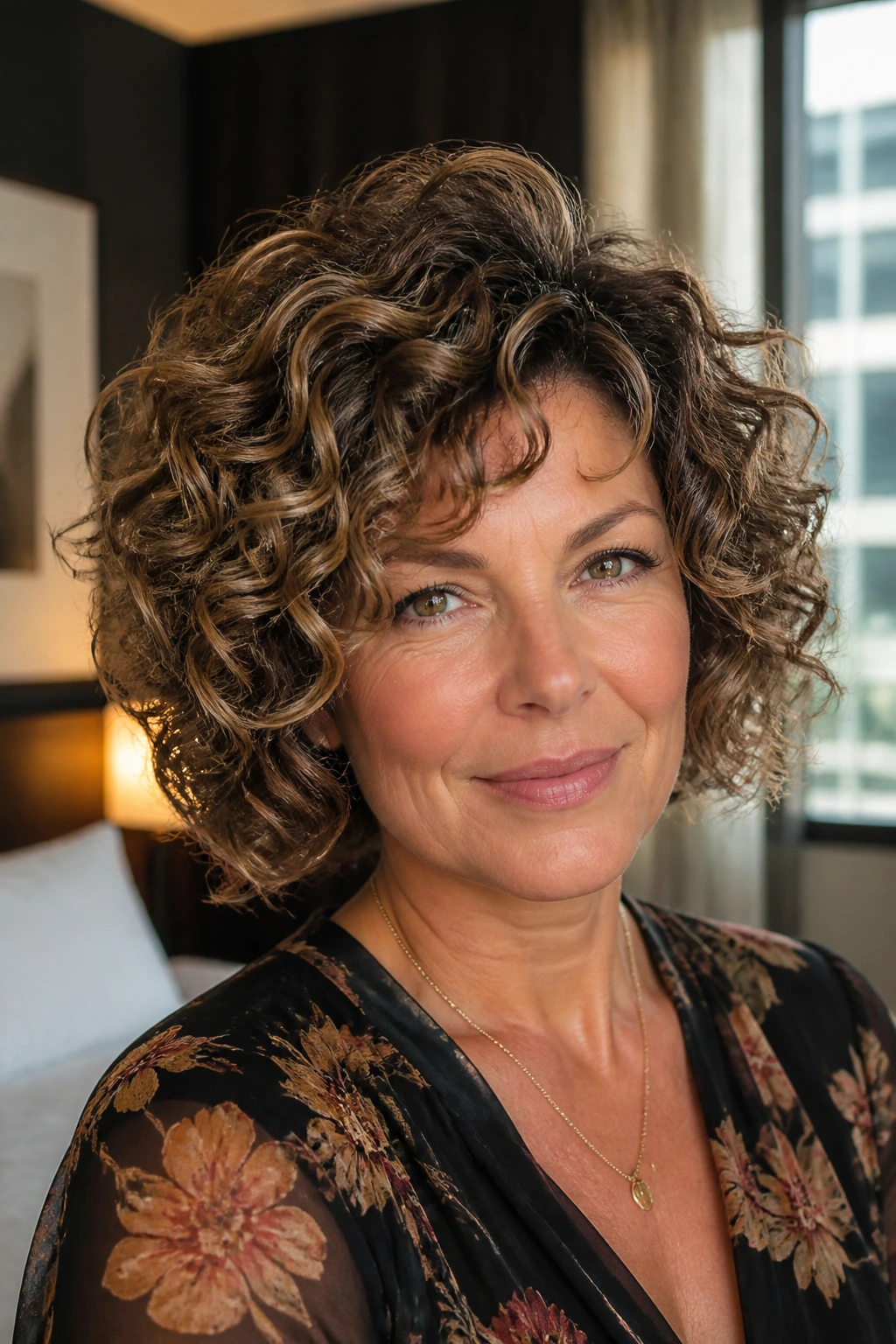
A glam curly bob isn’t about stiffness. It’s about volume that looks deliberate. The crown gets lift, the side pieces stay smooth enough to frame the face, and the curl clumps are defined enough to read as polished, not fluffy.
This is the bob I’d reach for when you want something sharper for dinner, events, or any day when you want your hair to look a touch more finished than “I let it dry and hoped for the best.” A side part, a little root lift, and controlled shine can change the whole mood.
A medium-hold gel or mousse helps here, followed by a careful scrunch once the cast is fully dry. If a few front pieces need extra shape, finger-coil them while they’re damp and leave them alone.
The result should feel refined, not lacquered. That’s the difference.
Why Shaggy Bobs for Curly Hair Over 40 Work So Well
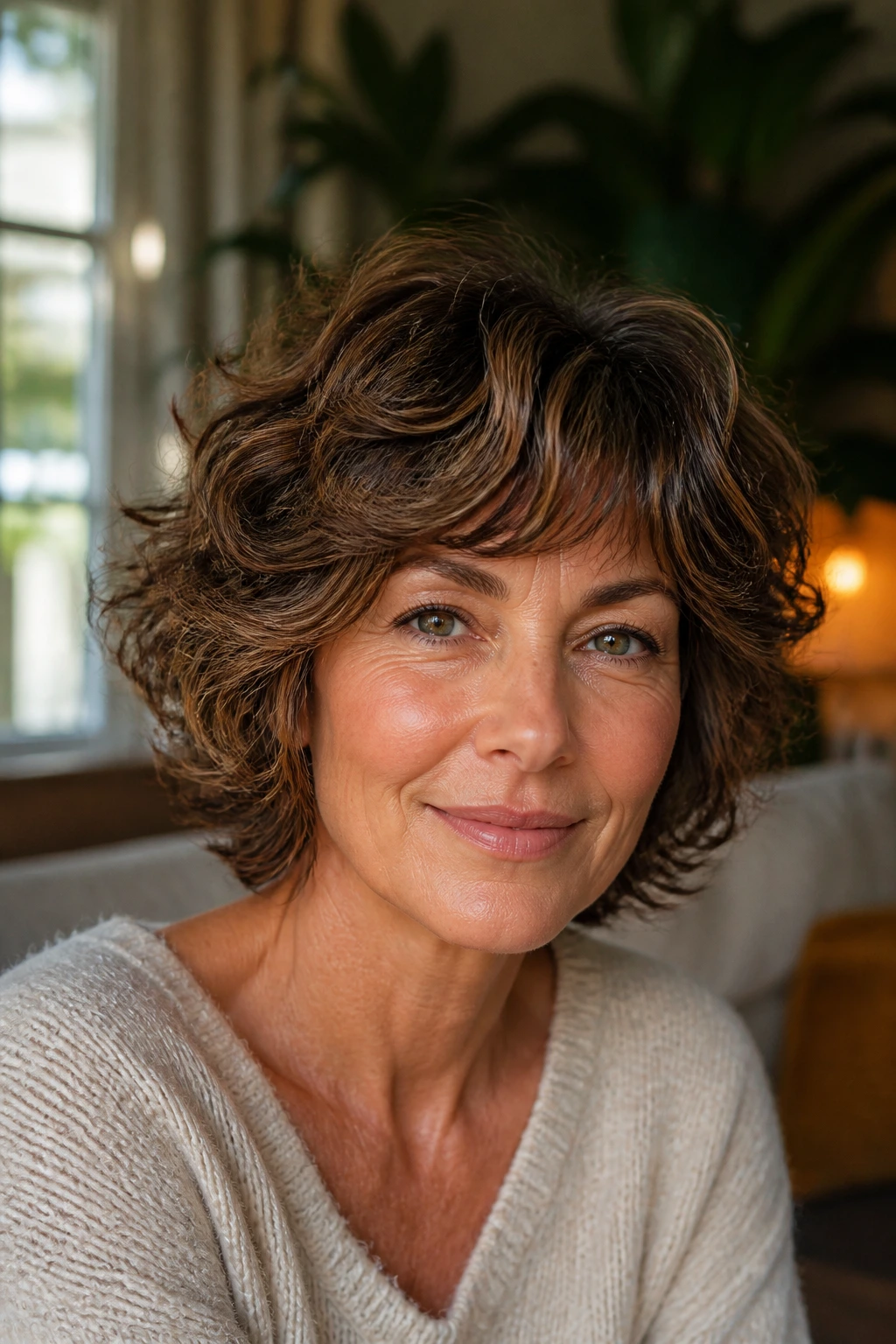
The haircut works because curly hair isn’t one texture. It’s a pile of tiny decisions made by the strand: where it bends, how it dries, where it swells, where it shrinks. A shaggy bob gives those decisions some room. The layers interrupt bulk, the face-framing pieces soften the outline, and the length can be adjusted so the shape lands where you want it instead of where gravity decides.
Curls also change as the hair gets longer or shorter. A bob that looks sleepy at shoulder length can suddenly bounce at chin length. A shaggy cut lets you use that to your advantage. The crown can stay lifted while the perimeter stays soft, which is a much better deal than a one-length bob that looks good only on the day it’s blown out.
What to Tell Your Stylist Before the First Snip
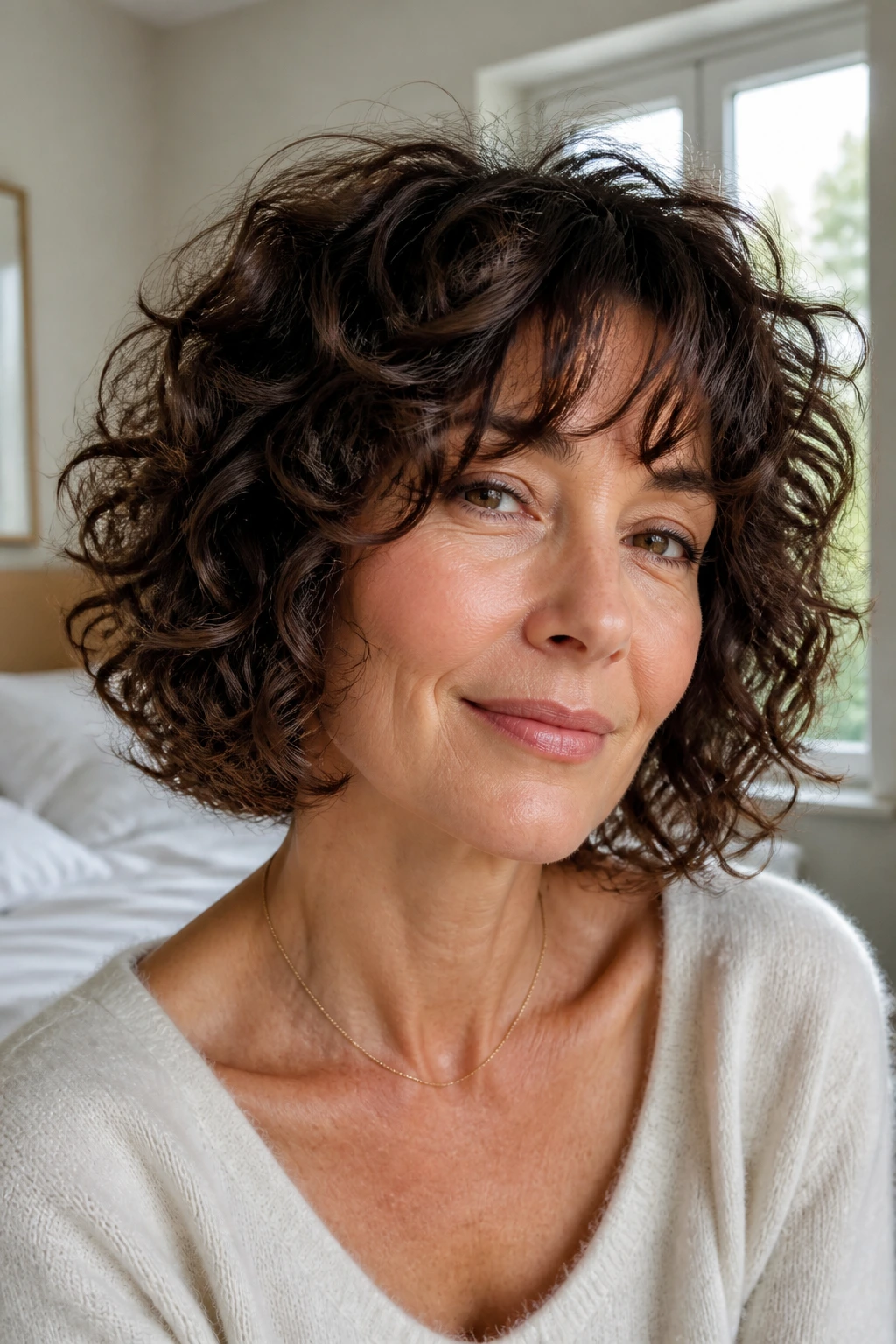
Bring pictures, yes, but bring the right kind of pictures. A photo of someone with a different curl pattern, different density, and three inches less shrinkage can send the whole appointment off the rails. The better move is to show two or three examples that match your curl family and face shape, then point out what you actually want: the fringe, the length, the side part, the lift.
Say the length in landmarks. Chin. Jaw. Collarbone. Nape. Those words matter more than “short” or “medium.” Curly hair grows upward when it dries, so wet length is a lousy reference point.
Ask for dry checking if the stylist is unsure. Ask for point cutting or curl-by-curl shaping when you want softness. Ask them not to over-thin the ends with regular thinning shears unless your hair is extremely dense and they know exactly why they’re doing it. A good stylist will not mind the detail. A rushed one will.
The Tools and Products That Keep the Shape Easy
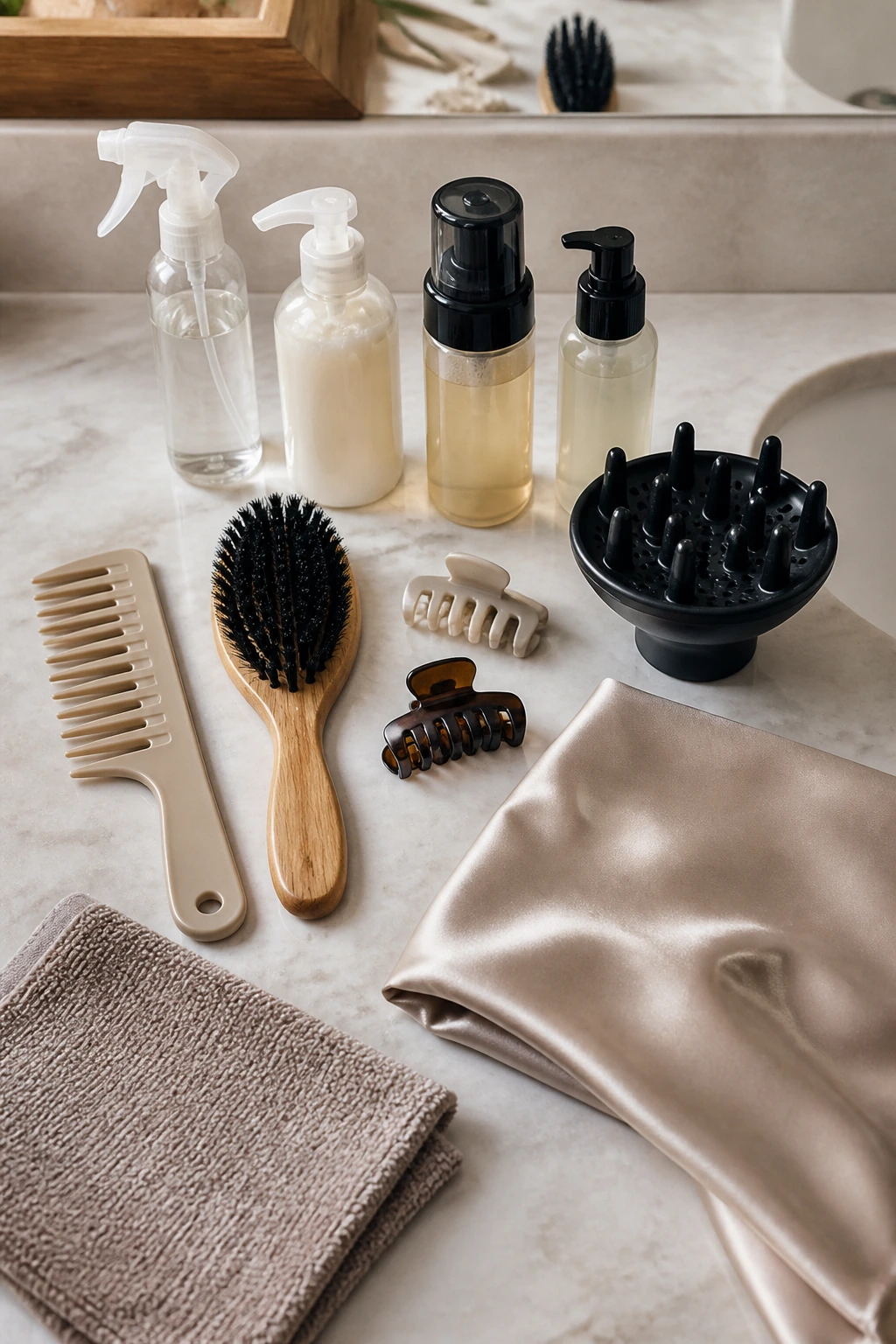
- Wide-tooth comb: Good for detangling in the shower without tearing through curl clumps.
- Curl brush or Denman-style brush: Useful for shaping sections and encouraging defined curl groups.
- Microfiber towel or cotton T-shirt: Cuts down on rough drying and frizz around the cuticle.
- Spray bottle: Handy for reactivating curls on day two or reshaping one side that’s gone flat.
- Curl cream: Best for softer definition and a little slip through the mids and ends.
- Mousse or foam: Helps the crown stand up and gives shaggy layers a lighter hold.
- Light gel: Good when you want cleaner curl separation and a cast that scrunches out later.
- Diffuser attachment: The easiest way to keep the bob lifted at the roots without blasting the shape apart.
- Duckbill clips or root clips: Small thing, big effect. They raise the crown while the hair dries.
- Satin pillowcase or bonnet: Keeps the bob from getting smashed overnight and helps preserve the shape between washes.
How to Style, Diffuse, and Refresh the Cut
Wash Day: Start with conditioner and detangle while the hair is wet and coated. Rake product through in sections, then scrunch upward from the ends to encourage the curl pattern to form in the right places. If the cut is shaggy, do not overload the mids with cream. That’s how the layers lose their separation.
Air-Dry: If you’re letting it dry naturally, clip the roots for the first 10 to 15 minutes. That tiny bit of lift helps the crown keep its shape. Then leave it alone. Constant touching is what turns a clean bob into fuzzy volume with no outline.
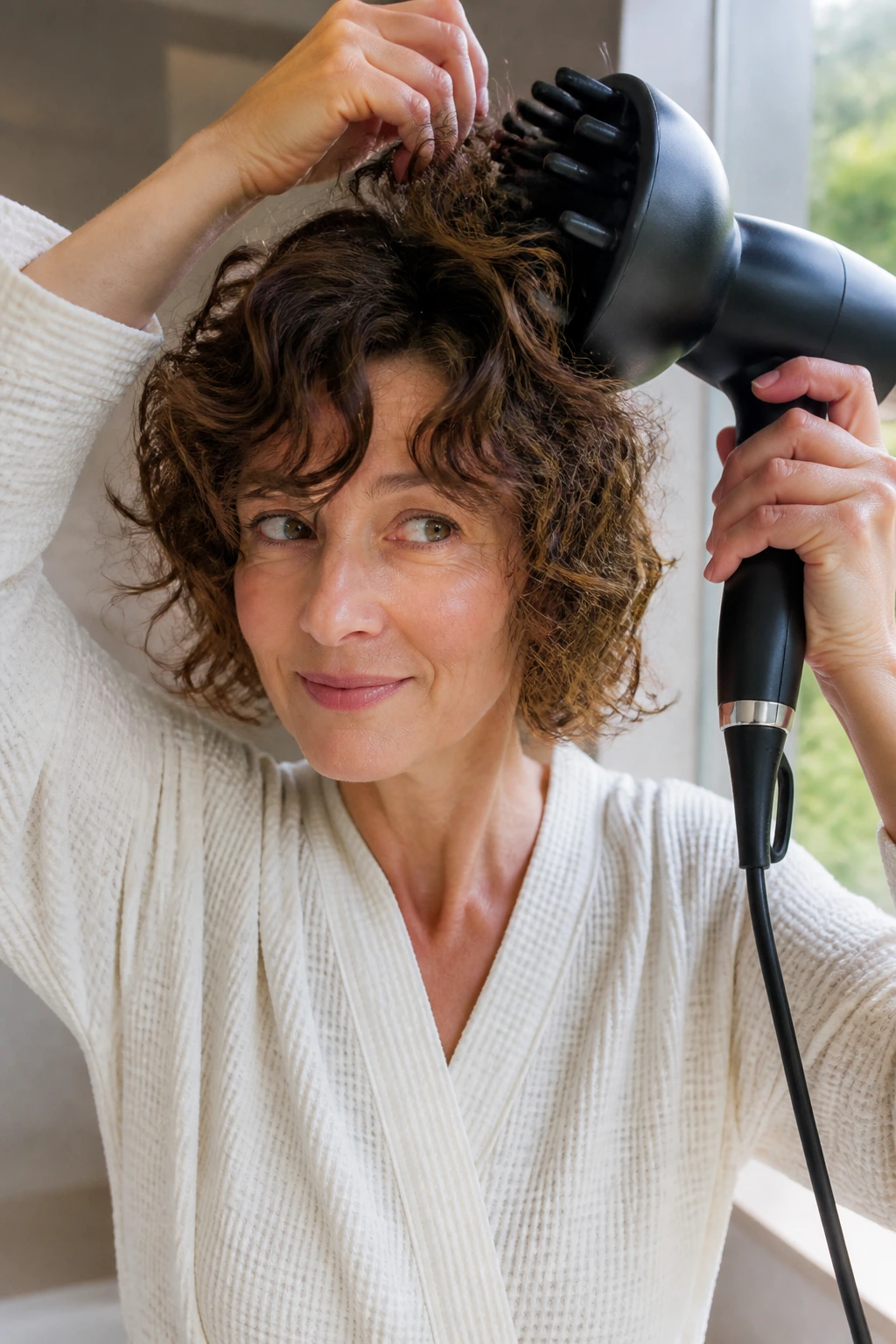
Diffusing: Use low heat and low airflow. Hover first if the curls are fragile, then cup sections into the diffuser once a cast begins to form. Stop when the hair is about 80 percent dry and finish with air if you can. Over-diffusing can stretch the curl and collapse the shaggy texture.
Second-Day Refresh: Mist the problem sections with water, add a drop of leave-in or foam, and scrunch. If the front has gone weird, rewet only the front. No need to soak the whole head just to fix one stubborn curl.
When To Stop Touching It: Earlier than you think. Seriously. A shaggy bob looks best when the curl clumps are allowed to set and then are left alone until dry.
Common Mistakes That Flatten the Shape
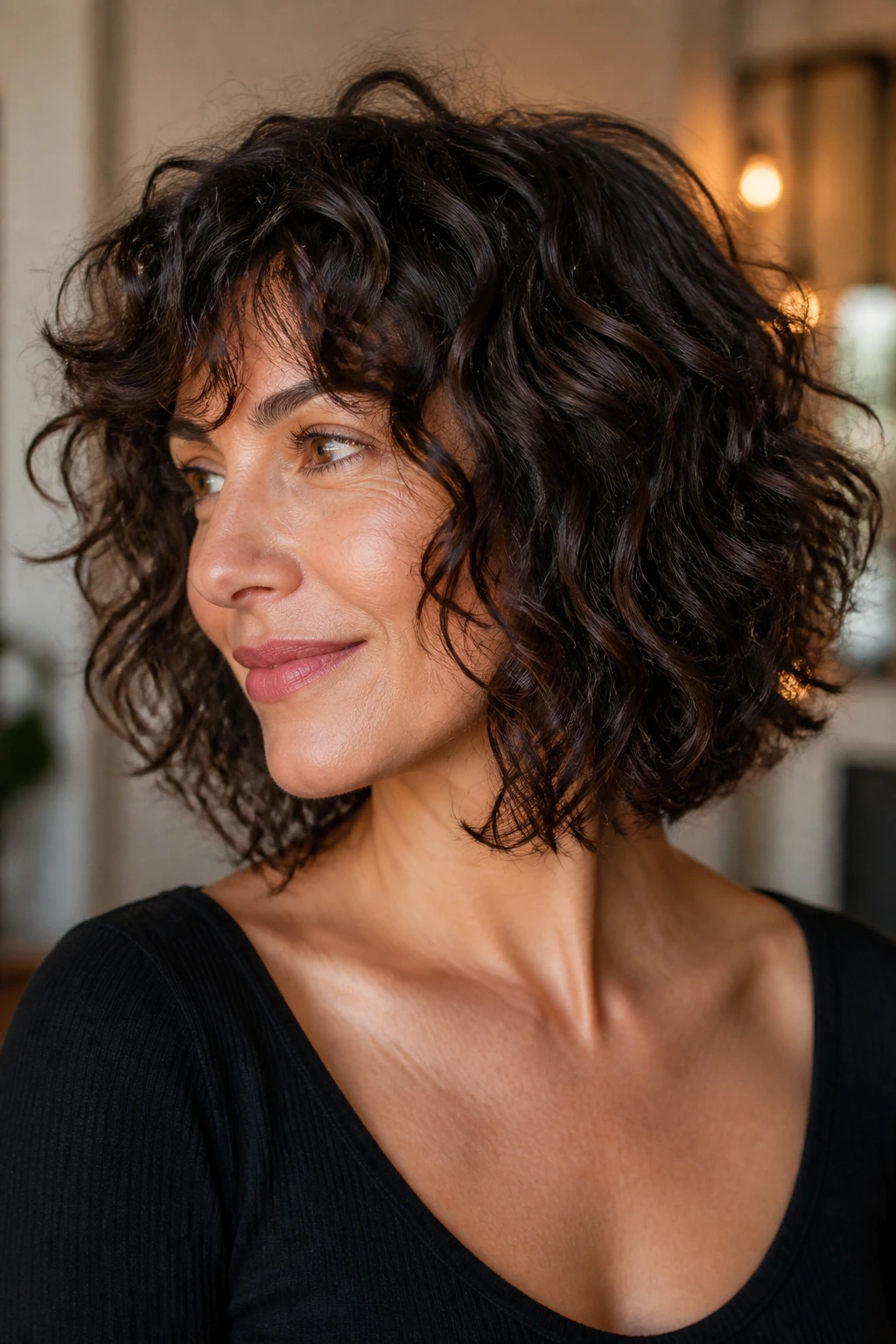
The first mistake is cutting the perimeter too blunt and too short. On curly hair, that can make the bob balloon at the sides while the bottom line looks heavy and stuck. The fix is softer point-cut ends and a length that lands where the curl pattern can settle, usually at the chin or collarbone depending on shrinkage.
The second mistake is over-thinning. If the stylist uses thinning shears all over the interior, the hair may look airy for a day and then frizz out at the ends once humidity hits. Ask for internal weight removal, not aggressive thinning.
Third, too much product. Heavy cream and oils can clump the layers together and erase the shag effect. Use enough to define, not enough to coat.
Fourth, ignoring the crown. A curly bob with a flat top always looks narrower in the wrong places. Root clips, mousse, or a careful diffusing angle fix that fast.
Fifth, cutting bangs too short because the hair was wet. Curly fringe shrinks. A lot. Leave room.
Variations and Alternatives When You Want Something Different
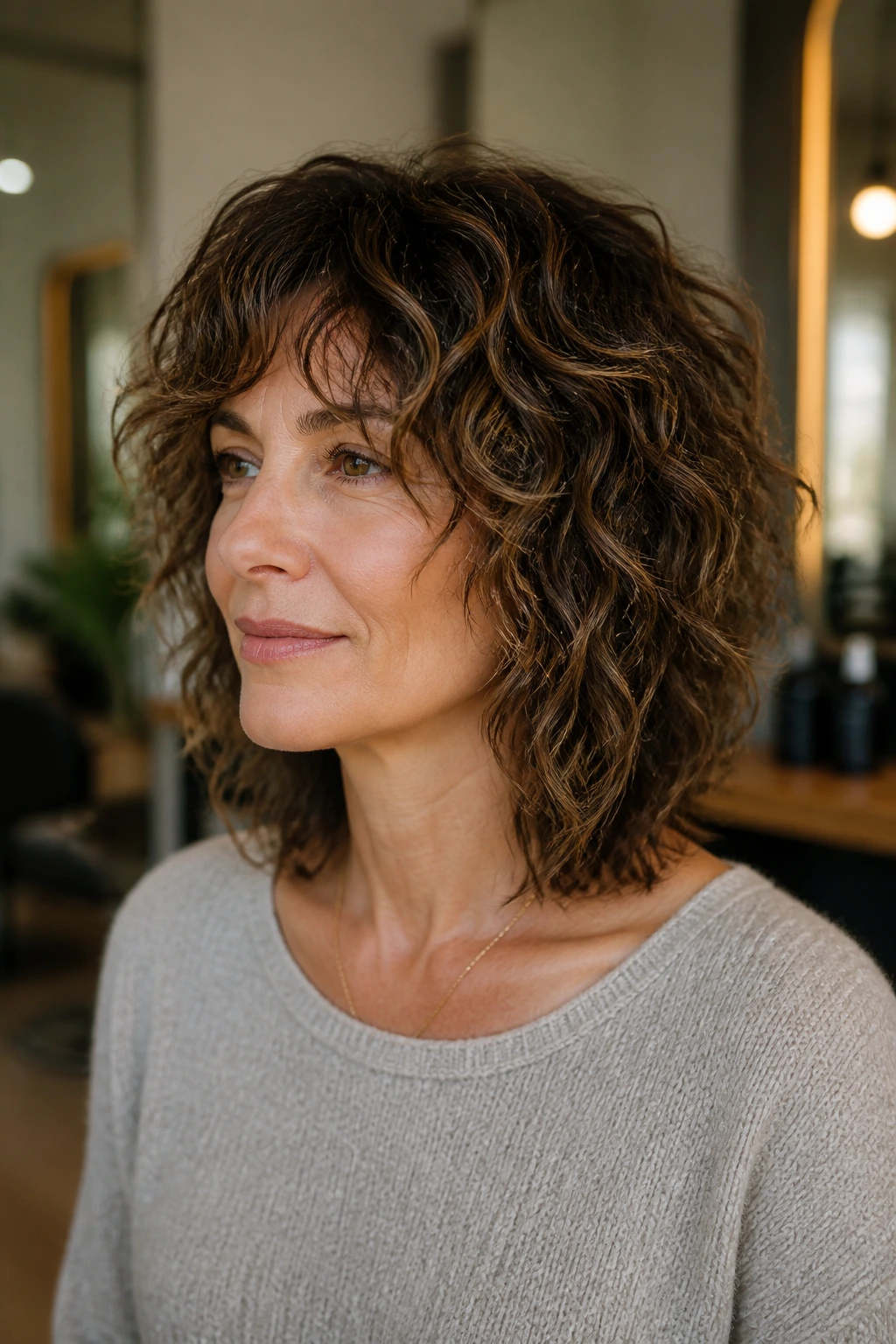
Longer Lob Version: Keep the front at collarbone length and the back just a touch shorter. This is the calmest version of the whole family, and it’s the easiest to grow out if you decide you want more length later.
Fine-Hair Boost Version: Keep the perimeter blunt and make the layers subtle. Fine curls need density at the ends or they can vanish into wisps. A little crown lift is enough; too many layers and the shape starts to disappear.
Thick-Curl Relief Version: Add a hidden undercut or more internal layering around the nape. This is the right move when the hair feels hot, bulky, or too wide through the lower half.
Bang-Free Version: Skip fringe entirely and use cheekbone-length face-framing pieces. This is the safest choice if your hairline is uneven, your curls vary too much, or you just don’t want to style bangs every morning.
Sharper Fashion Version: Go with an asymmetrical shape or a modern mullet drift. It gives the bob a little attitude without losing the curl-friendly softness.
Maintenance, Trims, and Nighttime Care
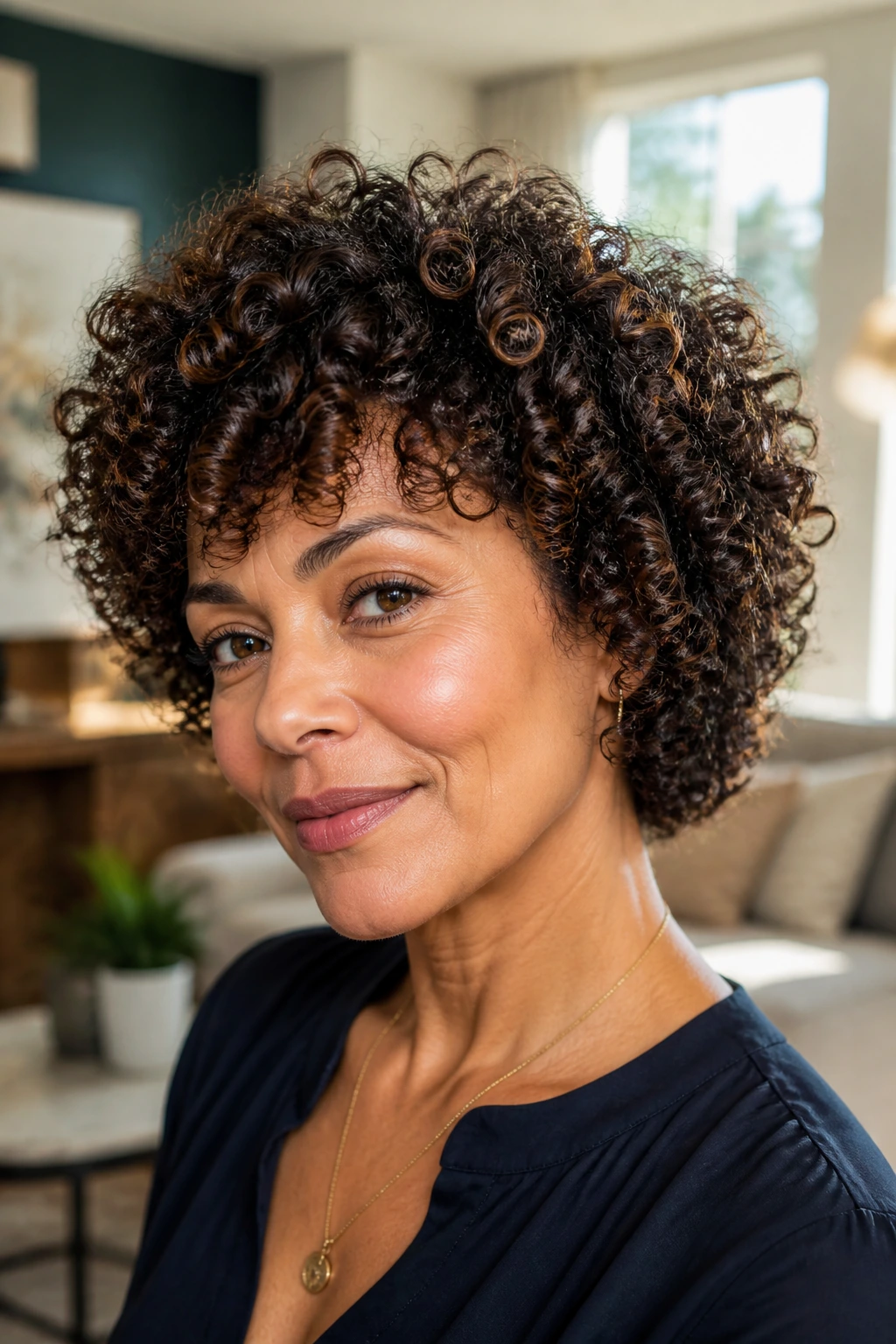
Most shaggy bobs on curly hair need a trim every 8 to 12 weeks, but shorter shapes with bangs or a tapered nape usually want a cleanup closer to 6 to 8 weeks. If the perimeter starts flipping outward or the fringe lands in your eyes, the cut is already talking to you.
Wash frequency depends on scalp needs, not fashion rules. Many curly bobs do well with washing every 3 to 5 days, but if your scalp gets oily faster, a lighter cleanse in between can help. The key is not to strip the hair so hard that the layers puff up and lose their shape.
A deep conditioner every 1 to 2 weeks keeps the ends from getting rough, especially on silver or coarse curls. Clarify every 3 to 4 weeks if product buildup makes the bob feel dull or heavy. If the hair starts looking coated instead of soft, that’s usually buildup, not “bad curl days.”
At night, use a satin pillowcase, a loose pineapple, or a soft clip that doesn’t flatten the crown. If the shape gets flattened on one side, a few spritzes of water and a quick scrunch in the morning usually put it back together. Usually.
Frequently Asked Questions About Shaggy Bobs for Curly Hair Over 40

Will a shaggy bob make my curly hair look thinner?
Not if the layers are placed well. A good shaggy bob removes bulk where the hair piles up and leaves enough density at the perimeter to keep the ends looking full. Over-thinning is what makes curls look sparse, not the bob itself.
Do I need a dry cut for this kind of haircut?
A dry cut is often the safest choice for curly hair, especially if your curl pattern changes a lot from root to end. That said, some stylists do excellent wet cuts and then check the shape dry. The real issue is whether they respect shrinkage.
Can a shaggy bob work if my curls are very thick?
Yes, and it may work better than a one-length bob. Thick curls often need internal shaping or a hidden undercut so the haircut doesn’t puff out at the sides. The trick is removing weight without turning the ends frizzy.
What if my curls shrink a lot when they dry?
Tell the stylist exactly how much shrinkage you see and where it happens. If your curls jump two or three inches, the cut needs to be left longer than you think at the appointment. Cutting from a wet guess is where things go sideways.
Are bangs a bad idea with curly bobs?
No, but they need the right length and the right amount of softness. Curly bangs should usually be longer than straight bangs, because they bounce up as they dry. Wispy fringe or curtain bangs are easier to live with than a hard, blunt line.
How do I stop the haircut from turning triangular?
Triangle shape usually means there’s too much weight at the bottom and not enough lift at the crown. Ask for internal layers and a little root support while styling. The haircut and the styling routine need to work together here.
Can I still air-dry this cut?
Absolutely, if the cut was designed with air-drying in mind. Slightly longer layers, a soft fringe, and a product that doesn’t weigh the hair down make air-drying much easier. The only thing you can’t do is touch it every five minutes.
How often should I refresh the curls between washes?
Usually day two is enough for a light mist and a few scrunches. By day three or four, you may need to rewet the front or crown more fully, especially if the bob has short layers. Don’t chase every curl; fix the ones people actually see.
What’s the easiest shaggy bob if I don’t want much maintenance?
The shoulder-grazing lob with soft internal layers is the least demanding of the bunch. It keeps enough weight to settle nicely, grows out politely, and doesn’t rely on precise fringe styling. If you want a haircut that can survive a busy week, start there.
A Shape That Moves With You
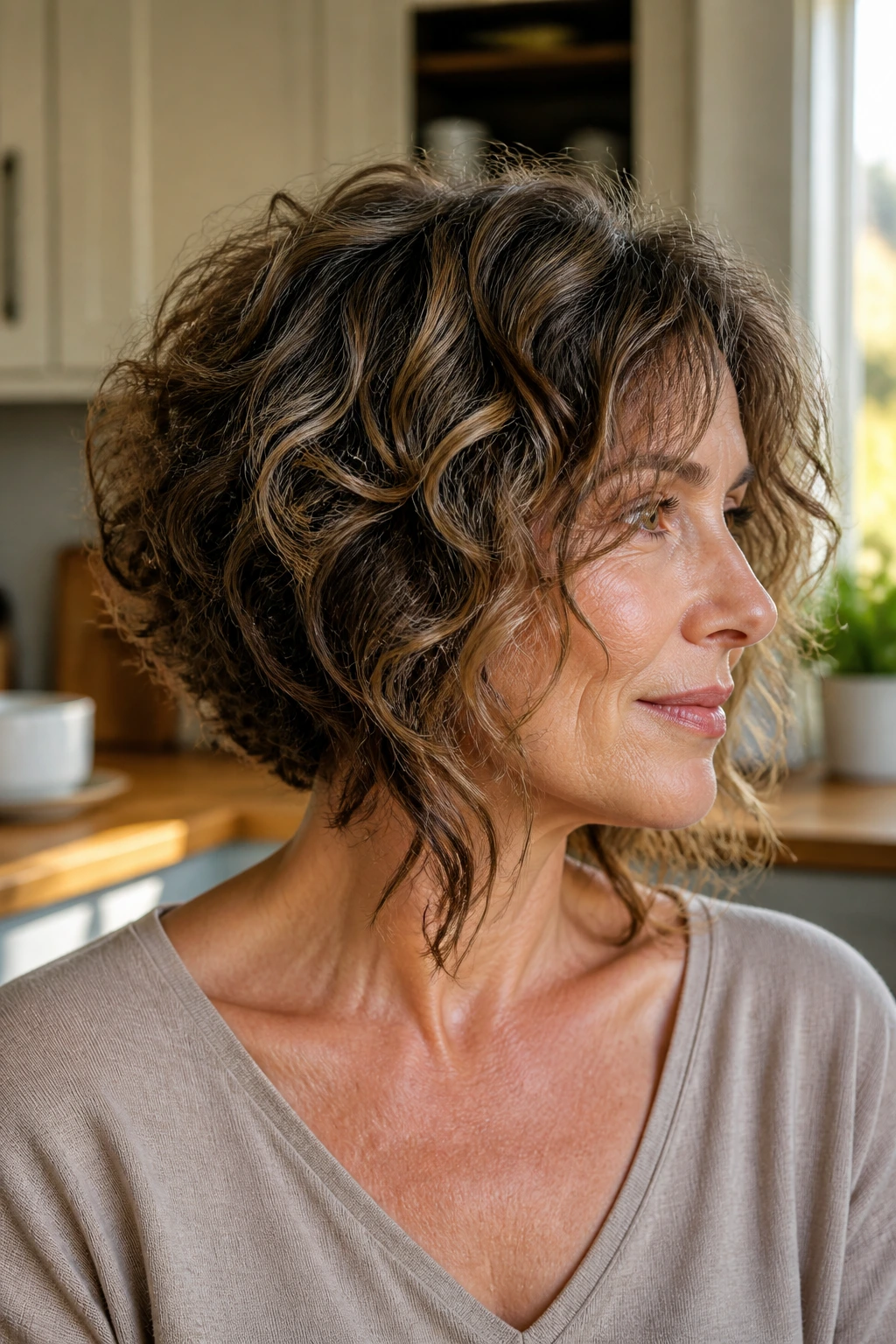
The best shaggy bob isn’t the one that looks the most dramatic in a photo. It’s the one that still makes sense on a damp Monday, after a short night, with a little humidity hanging in the air. That’s where curly hair over 40 often lives in real life, and the right cut should meet it there.
A soft fringe, a lifted crown, a clean perimeter, and the right amount of internal layering can do more for curls than ten products piled on top of each other. Pick the version that matches your texture, not the one that tries to force your texture into submission.
And once you land on the right one, the haircut does what the best haircuts always do: it gets out of the way and lets your curls look like they know exactly what they’re doing.
