



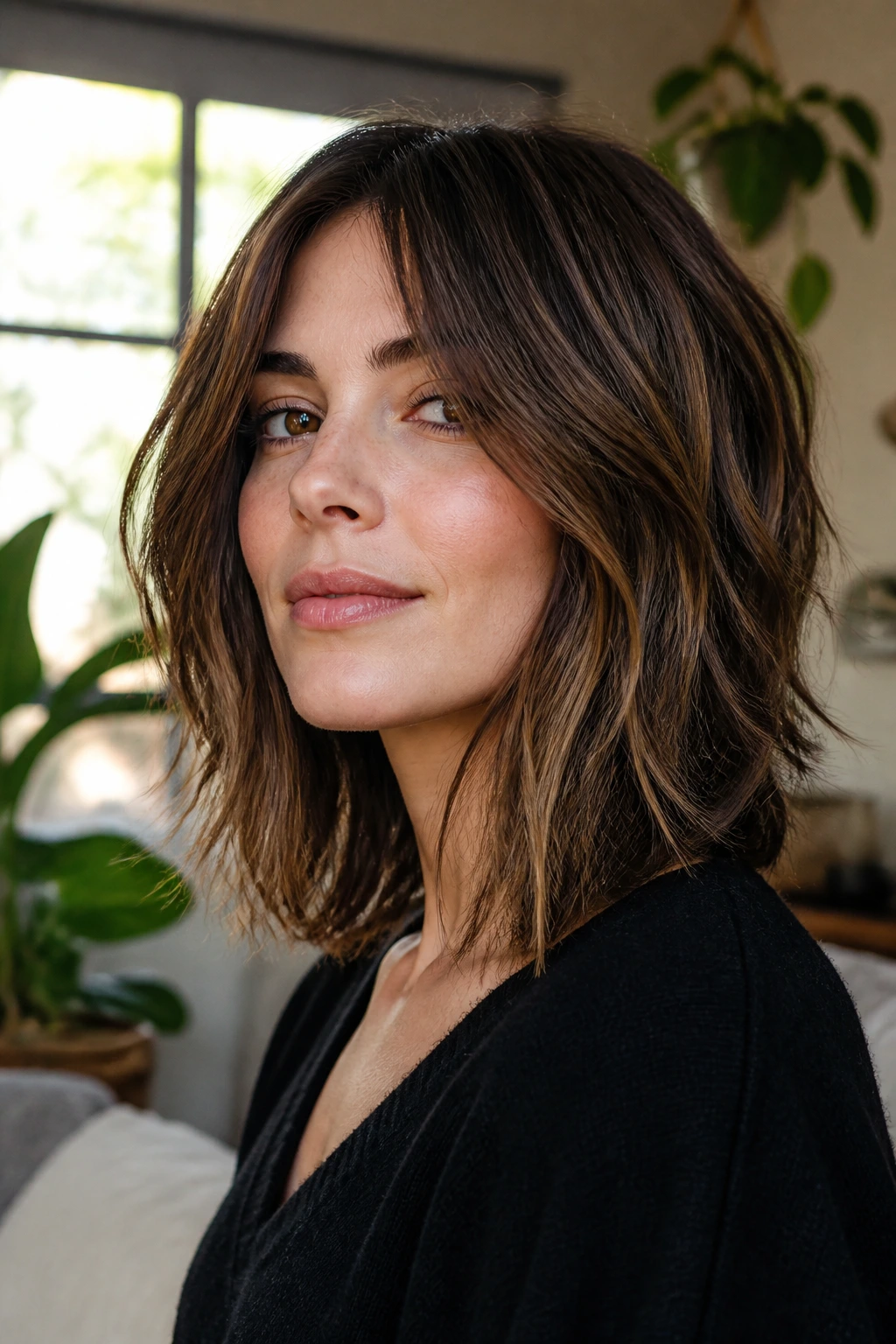
A shaggy bob haircut looks best when it doesn’t look freshly ironed. The whole point is that little bit of lift at the roots, the chipped ends that don’t sit like a ruler line, the way a few pieces fall forward and others kick out for no reason you can quite explain. That softness is the trick. Not sloppy. Not overstyled. Just hair that feels like it’s been lived in for a day or two, even when you’ve spent ten minutes on it.
That’s why shaggy bob haircuts keep hanging around in salon conversations. They work on straight hair that needs movement, wavy hair that wants shape, curly hair that needs less bulk, and thick hair that’s tired of acting like a helmet. The cut matters more than the curling iron here. If the layers are placed well, you get texture that falls naturally instead of fighting you every morning.
And there’s a real art to soft texture. Too many layers, and the ends start to look stringy. Too much thinning, and the bob loses its body. Too much blow-drying, and the whole thing stiffens up. The sweet spot is a cut that bends with your hair’s own behavior, which is exactly why the best shaggy bob is often the one that looks a little imperfect from the start.
Why These 20 Shaggy Bob Haircuts Stand Out
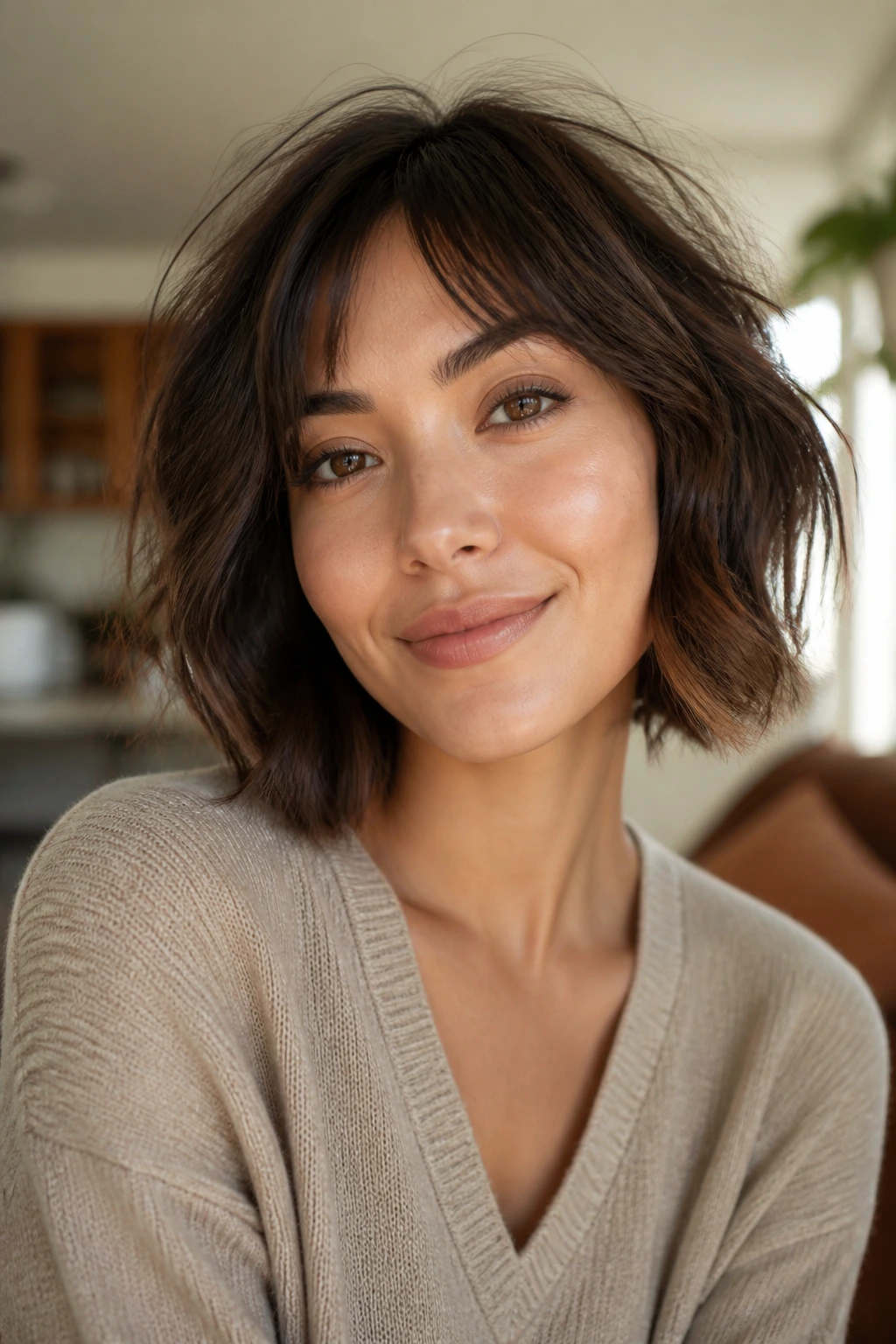
Soft movement, not choppy ends: Every cut in this collection keeps the perimeter readable, so the bob still looks deliberate even when the texture is loose.
Works with second-day hair: These styles don’t ask for a polished finish every morning. A little dry shampoo, a touch of mist, and you’re back in business.
Built for different textures: Fine hair, dense hair, waves, curls, and bendy in-between hair all get their own version of the shaggy bob here.
Bangs are optional, not mandatory: Some cuts use curtain bangs or bottleneck bangs; others keep the front clean so the shape can do the talking.
Low-drama grow-out: Most of these bob shapes soften instead of collapsing as they lengthen, which matters more than people admit.
You can wear them messy on purpose: The best lived-in texture looks a little accidental, but the haircut still needs structure underneath. That balance is the whole game.
1. Airy Razor-Cut Shag Bob
A razor-cut shag bob is the one I reach for when hair feels heavy but the client doesn’t want to lose the swing. The ends are sliced into soft separation, not carved into little broken bits, so the shape still moves when you shake your head. On fine hair, especially, this cut can wake everything up without making the outline disappear.
Why It Works
The razor creates feathered ends that catch light and break up a solid line. That matters because a blunt bob can look too rigid on hair that naturally bends or flattens. This version keeps the jawline open and the crown a touch airy, which makes the whole cut read as light rather than thin.
What to Ask For
- Keep the length around the chin or just below it if you want the most movement.
- Ask for soft razor ends, not aggressive thinning through the bottom.
- Request slightly shorter layers around the crown so the top doesn’t collapse.
- Bring a photo where the ends look separated but not wispy.
How to Wear It
A bit of mousse at the roots and a rough dry with your fingers is usually enough. If you want more bend, wrap only the front pieces around a 1-inch wand and leave the rest alone. That mix of styled and unstyled hair is what makes the cut look easy instead of unfinished.
Best for: fine to medium hair, soft waves, and anyone who hates a heavy perimeter.
Watch this: razor work on very curly hair can fray the ends if it’s done too high up, so keep the layers controlled.
2. Chin-Length Feathered Bob
A chin-length feathered bob has that neat little trick of looking polished from a distance and airy up close. The shape lands right at the jaw, then the ends feather away from the face instead of sitting in one block. It’s the kind of bob that makes earrings and necklines look sharper because the hair isn’t hogging all the attention.
What Makes It Stand Out
The feathering softens the line at the bottom, which is a big deal if your hair tends to puff out when it’s cut too blunt. Around the chin, that softness keeps the cut from feeling boxy. You still get structure. You just don’t get that hard-edged helmet effect people fear when they hear the word bob.
Styling Cue
Blow-dry the front sections with a small round brush, turning the ends slightly under and away from the face. Then mess it up a little. Seriously. A tiny amount of texture spray in the mid-lengths is enough to stop the style from looking too neat, and this cut loses some of its charm if every strand behaves.
A feathered chin-length bob works especially well when your hair already has a little bend, because the shape can follow the natural movement instead of fighting it. If your hair is pin-straight, you’ll want a light root-lift mousse so the top doesn’t flatten and drag the whole cut down.
3. French Shag Bob with Micro Fringe
Do you want a bob that feels a little flirtier than the usual cut? The French shag bob with micro fringe has that short-front, softer-back contrast that makes the face look instantly framed. The fringe sits high and wispy, which gives the cut a bit of attitude without turning it into a full editorial moment.
Why It Works
The short fringe pulls the eye upward, while the shaggy layers keep the rest of the bob loose. That combination is why this cut works better than a blunt mini bang for most people. The fringe doesn’t sit as one solid slab across the forehead. It breaks, moves, and gives you that lived-in finish even on day one.
How to Style It
Keep the fringe almost dry with a small round brush or even just your fingers. A pea-sized amount of lightweight cream is enough to stop flyaways from standing up. For the rest of the bob, rough dry and bend only a few pieces around the face so the texture looks intentional.
This cut does ask for more upkeep than some of the others here. The fringe needs trimming before the rest of the bob does, and if you let it grow too long, the whole shape loses its point. Still, if you like hair that looks a bit undone and a bit clever, this one has real charm.
4. Curly Shag Bob with Rounded Layers
Curly hair and shaggy bobs can be a glorious match when the layers are placed with restraint. The best curly shag bob doesn’t explode into a triangle. It rounds out the silhouette, keeps the curl spring intact, and lets the shape breathe around the cheeks and neck.
Why It Works
Curls need room to move. If the cut is too blunt, the lower edge can get bulky and wide, especially on denser curl patterns. Rounded layers help the curl stack more naturally, so you get a bob that looks alive instead of boxy. The curls also look more defined when the cut removes weight in the right places.
How to Style It
This one prefers a leave-in conditioner, a light curl cream, and then a gel or custard over the top if your hair frizzes easily. Diffuse on low heat, or air-dry with clips at the roots if you want more lift. Don’t keep touching it while it dries. That’s how you lose the curl clumps and end up with fluffy ends.
If you have tighter curls, ask for the shape while your hair is dry or mostly dry. Wet curls can lie to everyone. A cut that looks balanced when soaked can shrink up higher than you expected once it dries, and that matters a lot with bob length.
5. Wavy Bob with Curtain Bangs
A wavy bob with curtain bangs is one of those cuts that looks relaxed even when it’s freshly done. The fringe opens in the middle, slips toward the cheekbones, and gives the bob a soft frame without closing off the forehead. On naturally wavy hair, the whole style can fall into place with very little persuasion.
The Appeal
Curtain bangs are forgiving. They don’t demand the exactness of blunt bangs, and they grow out in a way that feels deliberate instead of awkward. Paired with a shaggy bob, they keep the front of the haircut light while the rest of the shape gains movement through the sides and crown.
Styling Notes
Use a diffuser or a large round brush depending on how much polish you want. If you like the cut rougher, work a texture spray into damp hair and scrunch the bangs away from the face with your fingers. For a smoother finish, bend just the bang area with a round brush and let the rest air-dry.
This is one of the easiest shaggy bob haircuts to live with because the bangs can hide a late trim and the waves do most of the work. It’s also one of the best if you want a style that can look casual at noon and a little dressed up by evening without changing the cut at all.
6. Collarbone Shag Bob with Long Layers
If you’re not ready to go short-short, the collarbone shag bob is the safe bet that doesn’t feel safe at all. It keeps enough length to tuck behind the ears or clip up on a hot day, but the layers still give it the broken-up texture that makes a bob interesting. I like this length for people who want movement but panic at the thought of a jawline cut.
Why It Works
Longer bobs have more swing, and the shag layers stop that length from hanging flat. The collarbone length also makes the shape easier to grow out, which is why this version ages well between salon visits. It can look polished with a blowout or loose with air-dried waves.
What to Tell Your Stylist
Ask for face-framing layers that start below the cheekbone if you want a softer result. If they begin too high, the front can get too chopped and lose the relaxed feel. Keep the perimeter somewhat full. You want movement, not a collarbone-length feather duster.
This is the bob I’d recommend to anyone who wants a haircut that still works in a ponytail emergency. It’s practical without looking practical, which is a nice trick when you want your hair to feel styled even on days when you haven’t done much at all.
7. Side-Swept Shag Bob

A side-swept shag bob has more drama in the front than people expect, but it stays soft if the layers are controlled. The deep side part gives the haircut direction, and the longer fringe sweeps across the forehead in a way that can soften sharper face shapes or add balance to a longer one. It’s slightly asymmetrical. That’s the point.
Why It Feels Different
A center part can make a shaggy bob feel very even and airy. A side part changes the whole posture of the haircut. It builds a little volume on one side and a little tuck on the other, which keeps the shape from feeling too symmetrical or too precious. If your hair tends to sit flat around the crown, this parting choice can help more than extra layers ever will.
How to Wear It Well
Set the front section with a round brush or a hot brush, then let the rest stay a touch rough. The fringe should skim the brow and cheekbone, not stick to the face like a curtain. If your hair is fine, a root-lifting spray at the side part gives the style some lift without making the ends stiff.
This cut has a nice habit of looking intentional even when it’s not freshly styled. That makes it useful for people who like movement but don’t enjoy daily maintenance. It looks like hair with opinions.
8. Blunt-Base Bob with Shaggy Interior
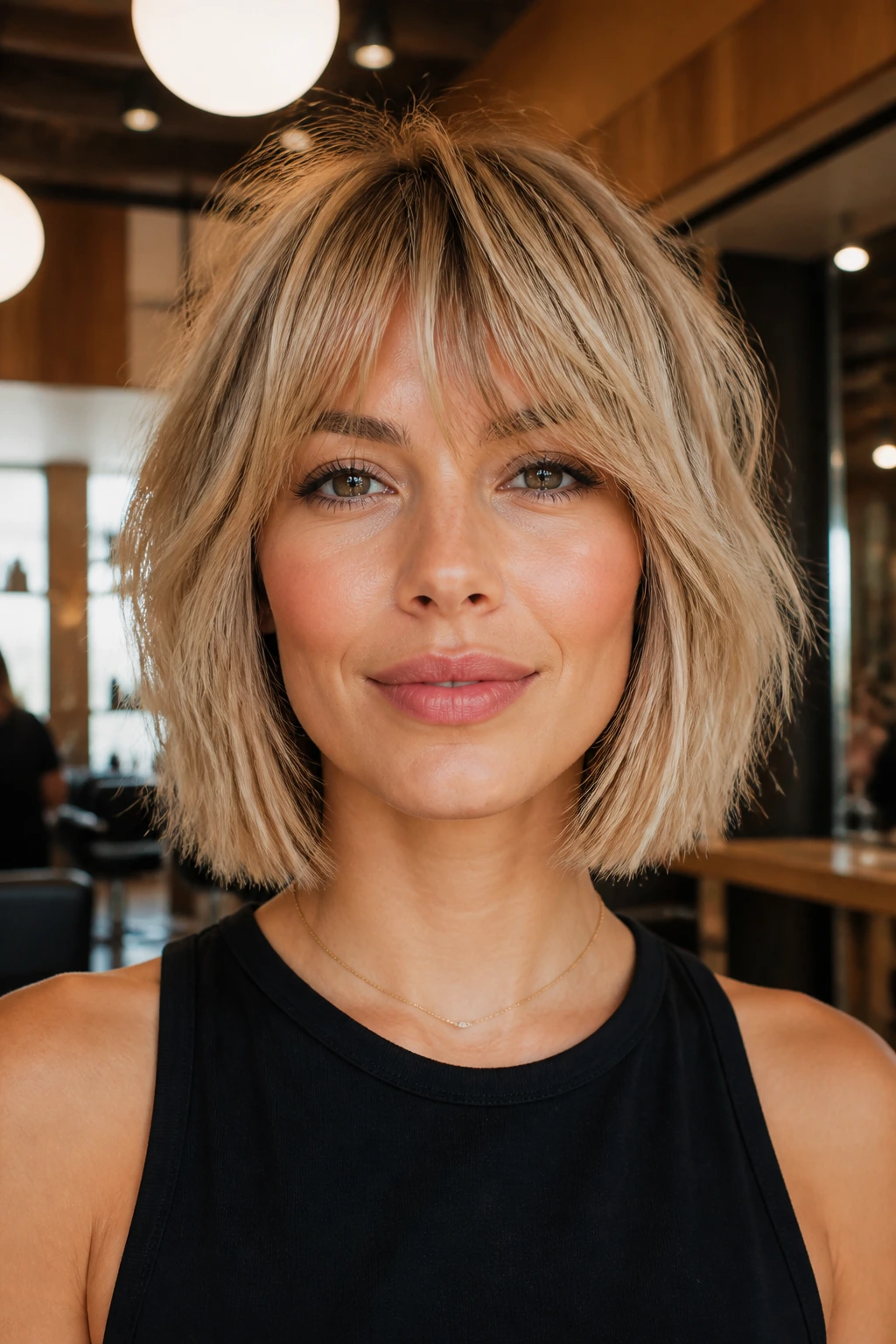
Here’s the contradiction I like: a bob can be blunt and shaggy at the same time. The outer edge stays clean so you keep the graphic shape, while the inside gets broken up with internal layers that create movement when the hair swings. From the front, it reads crisp. From the side, it’s all loosened up.
Why It Works
This version is especially smart for thick hair, because the blunt base gives the cut enough weight to sit properly while the interior layers reduce the blocky feeling. Too many people ask for shaggy texture and end up with an over-thinned mess. This cut avoids that. You keep the perimeter strong and let the movement live inside the shape.
What to Ask For
Ask for “movement inside the bob, not on the bottom edge.” That line matters. If your stylist hears that, they’re more likely to leave the ends looking healthy and use layering where it won’t fray the outline. Point cutting can soften the edge just enough without destroying the line.
This is a good pick if you like your hair to look polished enough for work but not so polished that it feels stiff. It’s the bob equivalent of wearing a great jacket with worn-in jeans.
9. Thick-Hair Shag Bob with Hidden Weight Removal
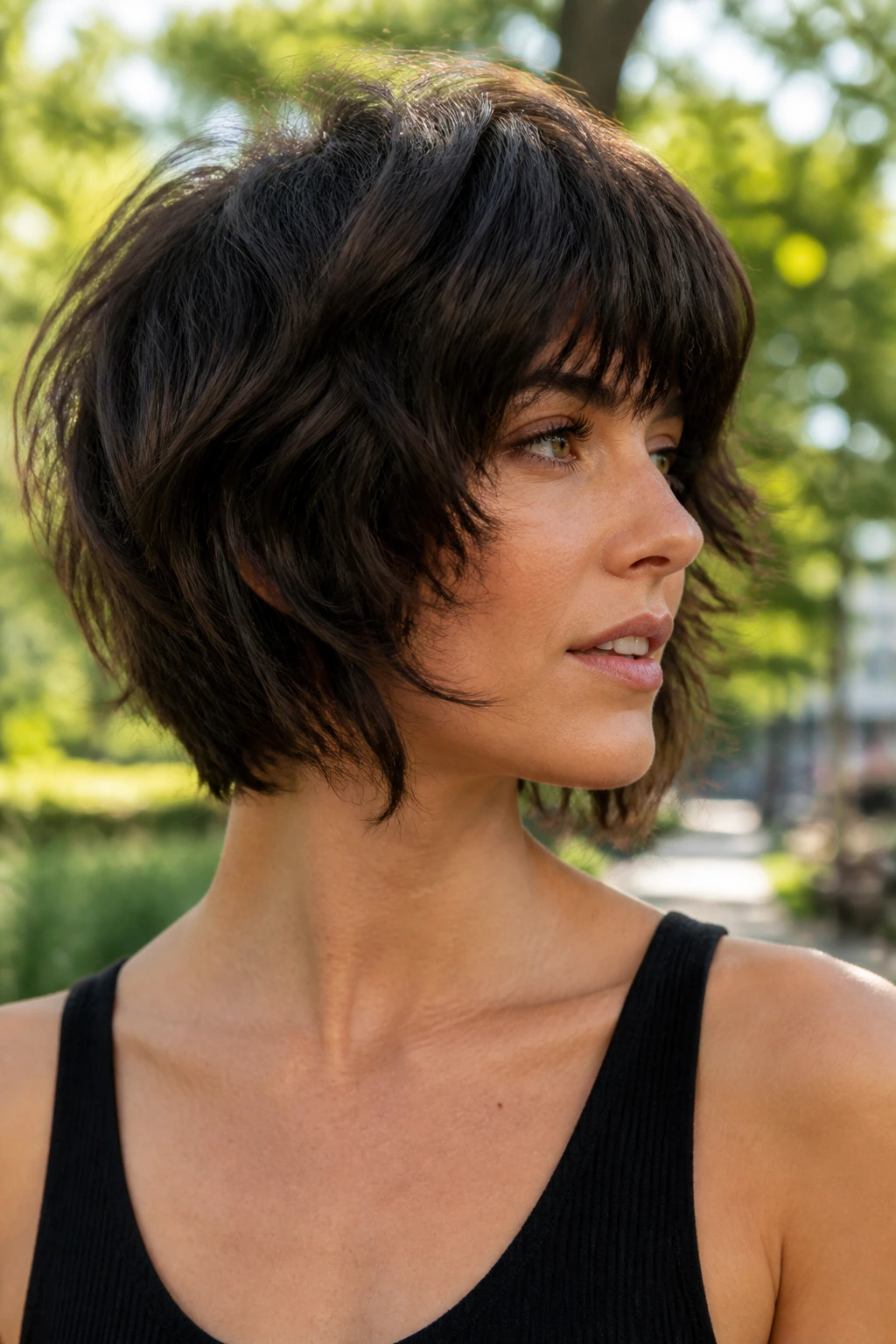
Thick hair can take a shaggy bob in two different directions: either it becomes too wide, or it turns into a heavy block. The fix is hidden weight removal. Done well, the cut opens up around the cheekbones and neck without making the ends look stringy or too sparse.
What Makes It Work
The shape relies on internal carving, not surface-level thinning. That means the stylist removes bulk from underneath and through the mid-lengths, while the perimeter keeps enough density to hold the bob shape. If you’ve ever had thick hair that looked bushy after a cut, this is probably the correction it needed.
Practical Detail
Avoid asking for aggressive thinning shears right through the bottom edge. That’s how you get those see-through ends that puff up in humidity and never lie flat at the same time. Instead, ask for weight reduction through the inside sections and soft layering around the face.
A thick-hair shag bob can feel liberating because it takes the mass off the neck. It also behaves better on humid days than a blunt heavy bob, since the layers let the hair expand a little instead of pushing outward as one solid piece. That alone is worth the cut.
10. Fine-Hair Shag Bob with Invisible Layers
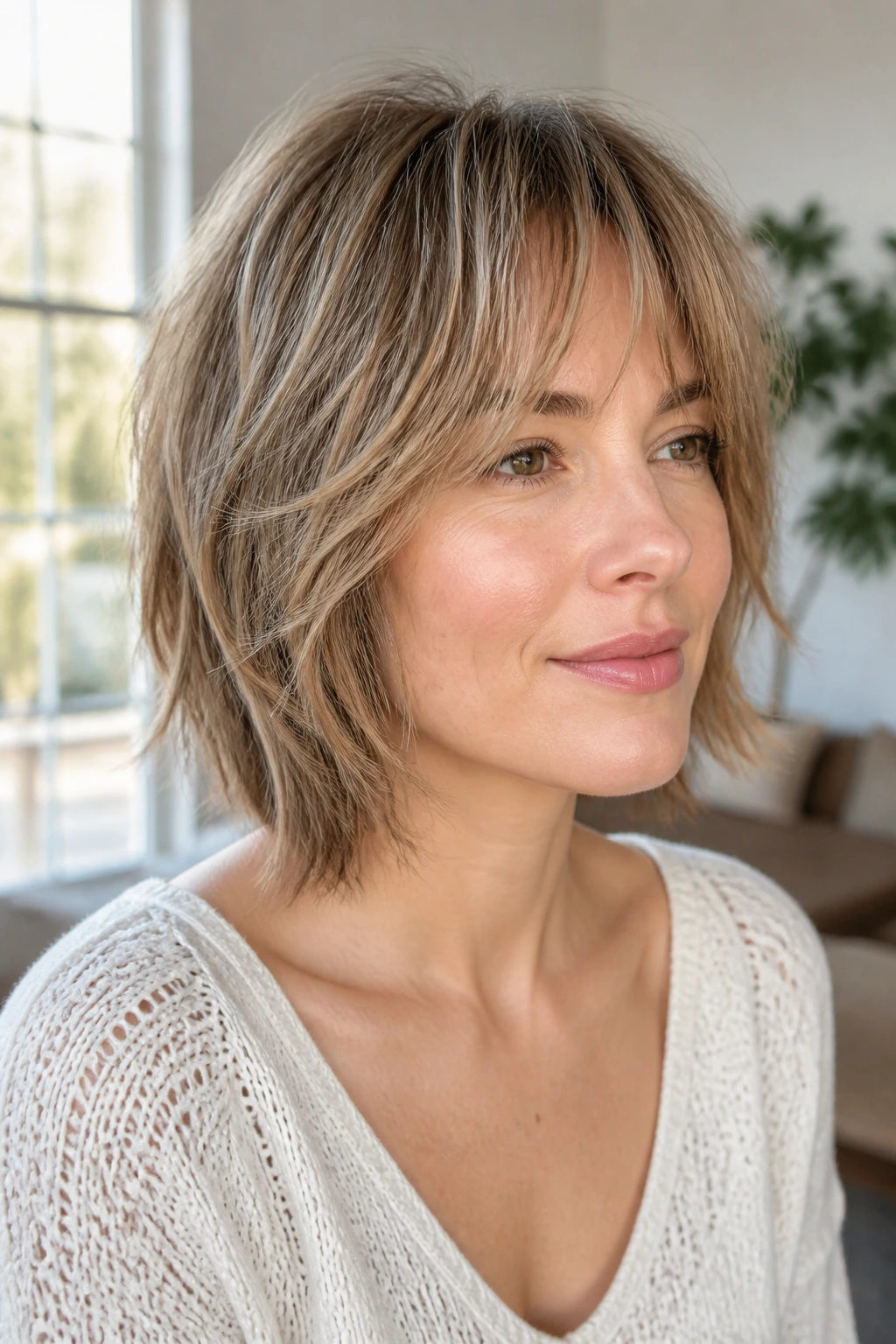
Fine hair needs a lighter touch. Too much texture and it starts to look overworked. The invisible-layer shag bob gets around that by keeping the ends fuller while adding movement in places you don’t notice until the hair moves. The cut feels soft, not sparse.
Why It Works
Fine hair often benefits from subtle layering that supports the shape without stripping out density. That means the hair still looks like hair. It just moves more. The interior layers help prevent the top from lying flat against the scalp, which is one of the main reasons short fine hair can look tired by noon.
Styling Habit
A lightweight mousse at the roots and a touch of volumizing spray through the crown can do a lot here. Skip heavy creams unless the ends are very dry. Fine hair doesn’t need much product before it starts to hang. If you want extra bend, wrap only random sections around a small iron and leave the rest alone.
This is the kind of shaggy bob that gets better with a little mess. The first day can look almost too neat if you blow it out hard, but by day two the layers loosen and the shape starts doing the work for you.
11. Jaw-Length Shag Bob with Tucked Nape

A jaw-length shag bob is sharp in the best way. It shows the jawline, opens the neck, and gives the back just enough tuck to keep the shape from feeling bulky. If you like a cut that makes your face the main event, this one knows how to behave.
The Shape Advantage
The shorter length creates a strong frame around the lower face, which can be useful if you want your cheekbones or earrings to stand out. The nape is softened so it doesn’t look severe, and the shag layers stop the cut from becoming too neat. That little bit of looseness matters. Without it, the style can look more retro than modern.
Who It Suits
This version often works well for people with fine to medium hair, especially if the strands need a little lift to avoid hanging straight down. It also looks clean on straight hair with a slight bend at the ends. If you wear glasses, this length can be very flattering because it keeps the hair out of the frame without looking severe.
Use a small round brush at the nape and let the sides stay a little undone. That contrast is what keeps it soft. A jaw-length bob with too much polish starts looking like a character cut from a period drama. A little roughness fixes that fast.
12. Soft Mullet Bob Hybrid

Yes, this one edges closer to mullet territory. No, it doesn’t have to look rebellious or theatrical. The soft mullet bob hybrid keeps the front pieces a bit shorter and the back a touch longer, but the layers stay fluffy and wearable. It’s for someone who wants a little edge without a full commitment to the shape.
Why It Works
The front opens the face, while the back gives the bob a little tail and movement. That difference in length creates a natural swing when you walk. If you like cuts that look better in motion than in a static mirror, this one has that energy built in.
Best Way to Wear It
Keep the styling loose. A dry texture spray, a rough blow-dry, and a little finger-twisting through the front sections is usually enough. If you over-style it, the hybrid shape loses its charm and starts to feel too calculated. The point is softness with a hint of attitude.
This is also one of the better choices for hair that grows awkwardly. Because the back is intentionally longer, the cut can stretch out without losing its identity too quickly. That makes it a smart pick if you don’t want to live at the salon.
13. Air-Dried Natural Texture Bob

Some cuts want a brush. This one wants time. The air-dried natural texture bob is shaped to follow the hair’s own pattern, which is why it works so well for waves, bends, and curls that don’t need a lot of coaxing. You wash it, add product, scrunch or rake it into place, and leave it alone.
What Makes It Different
The layers are planned around the way your hair dries on its own. That means the shape can look a little fuller at the crown and a little broken at the ends without turning messy. Because the haircut is built for your natural movement, you don’t have to fight the hair into submission every morning. That’s the appeal.
Product Notes
A leave-in conditioner plus a light gel or cream is usually enough. Apply while the hair is wet, not damp, so the product distributes evenly. If you wait until the strands are half-dry, you end up with patchy texture and frizz where you least want it. A microfiber towel can help, but don’t squeeze the life out of the pattern.
This cut is one of my favorites for people who hate heat styling. It doesn’t pretend that every hair type should behave the same way. It just works with what’s already there.
14. Rounded Shag Bob
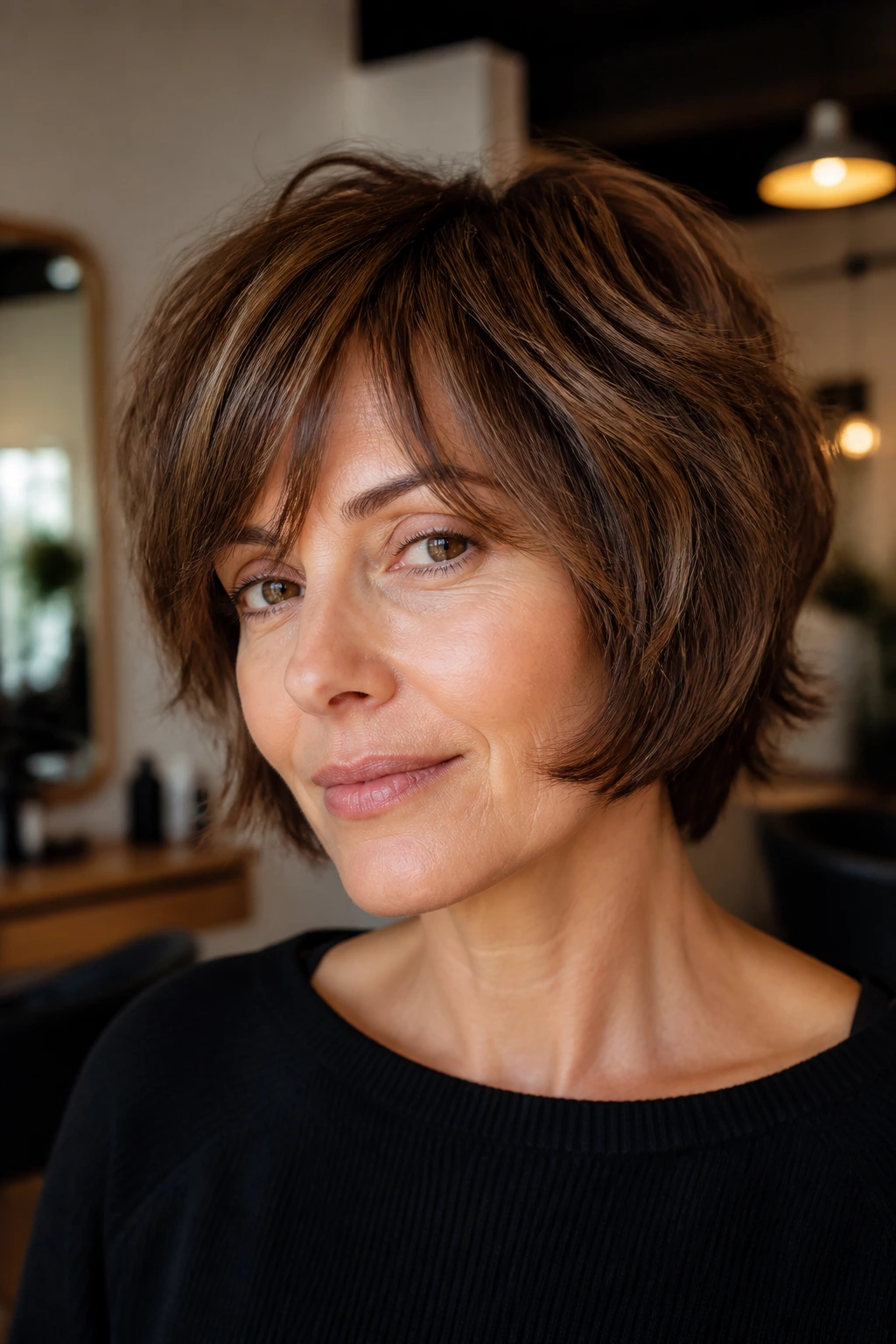
A rounded shag bob wraps around the head instead of sitting in a hard box shape. That roundness softens the cheek area and gives the haircut a little halo effect, especially when the layers are kept light through the sides. It’s gentle. Almost deceptively gentle.
Why It Works
The rounded silhouette keeps the bob from widening at the bottom. That’s useful for medium to thick hair, where a straight-sided bob can spread out and feel square. The interior layers create lift, while the outer outline stays smooth enough to read as a single shape. You get softness without losing structure.
Styling Move
A round brush gives this cut its nicest finish, but you don’t need a salon-level blowout. Dry the roots first, then smooth the sides just enough to bend them under the curve of the head. If you want more movement, separate the ends with your fingers and a dab of matte cream.
The rounded shag bob is a good middle ground for someone who wants texture but doesn’t want the haircut to look wildly layered. It’s one of those styles that quietly does a lot.
15. Bottleneck Bang Shag Bob
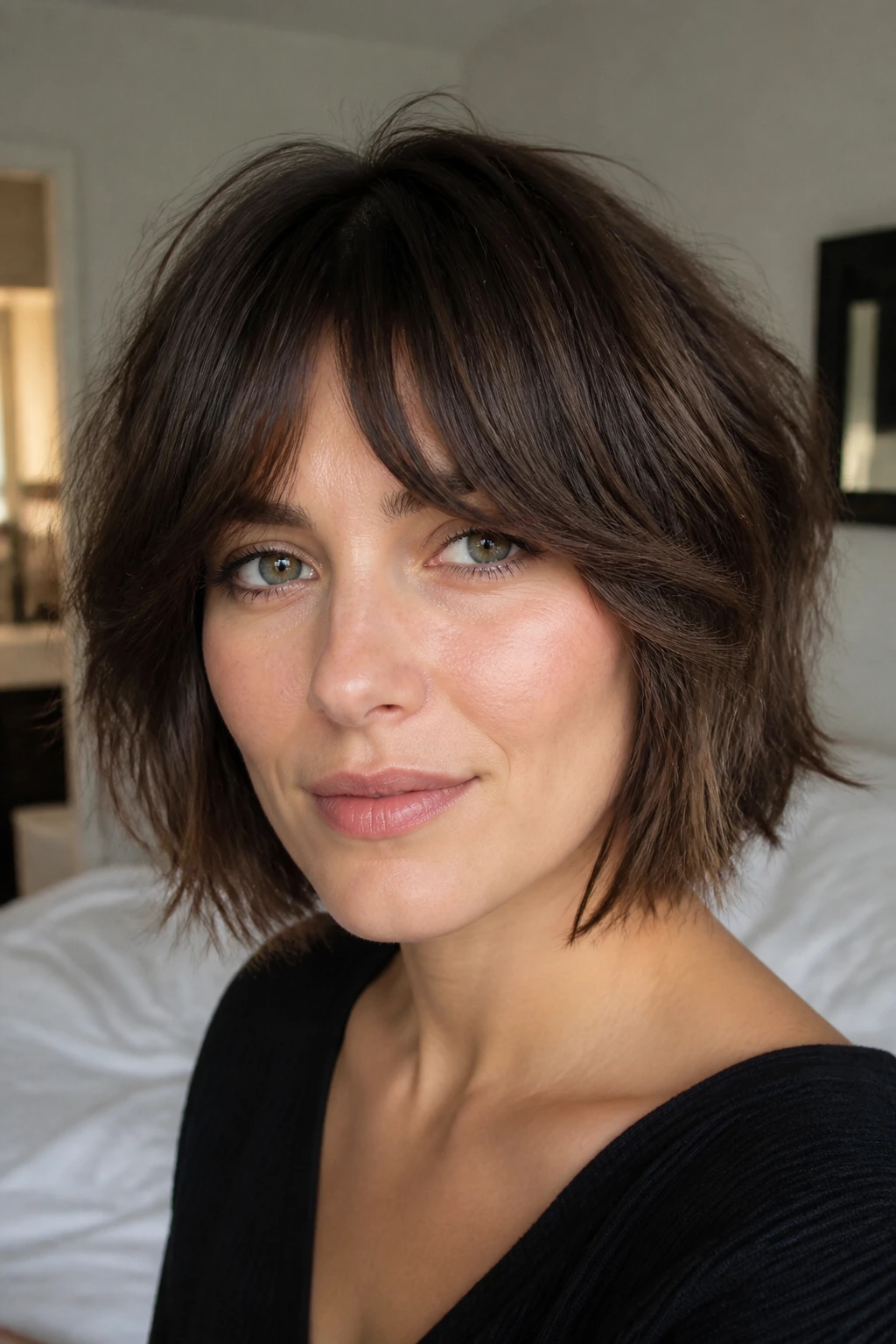
Bottleneck bangs have become popular for a reason: they soften the forehead without swallowing the face. In a shaggy bob, they create a nice little taper from short center pieces to longer side pieces, which gives the whole haircut a gentle framing effect. It’s a smart fringe if you want dimension without committing to blunt bangs.
What It Changes
The center of the fringe gives a little lift, while the outer pieces graze the cheekbones. That pattern draws the eye down and outward, which can balance a stronger forehead or add shape to a rounder face. The bangs also help the shaggy bob look more finished when the rest of the hair is loose and piecey.
How to Style It
Dry the fringe first. Always. If you leave it until the end, it tends to separate in odd places and then you’ll spend the rest of the morning fixing it. Use a small brush or even your fingers to push the center slightly forward and the sides away from the face. That creates the bottleneck effect instead of a flat bang line.
This cut works best when the fringe is trimmed often enough to stay in proportion with the bob. Let it grow too much and the whole look loses the softness that makes it worth wearing in the first place.
16. Piecey Bob with Long Face-Framing Ribbons
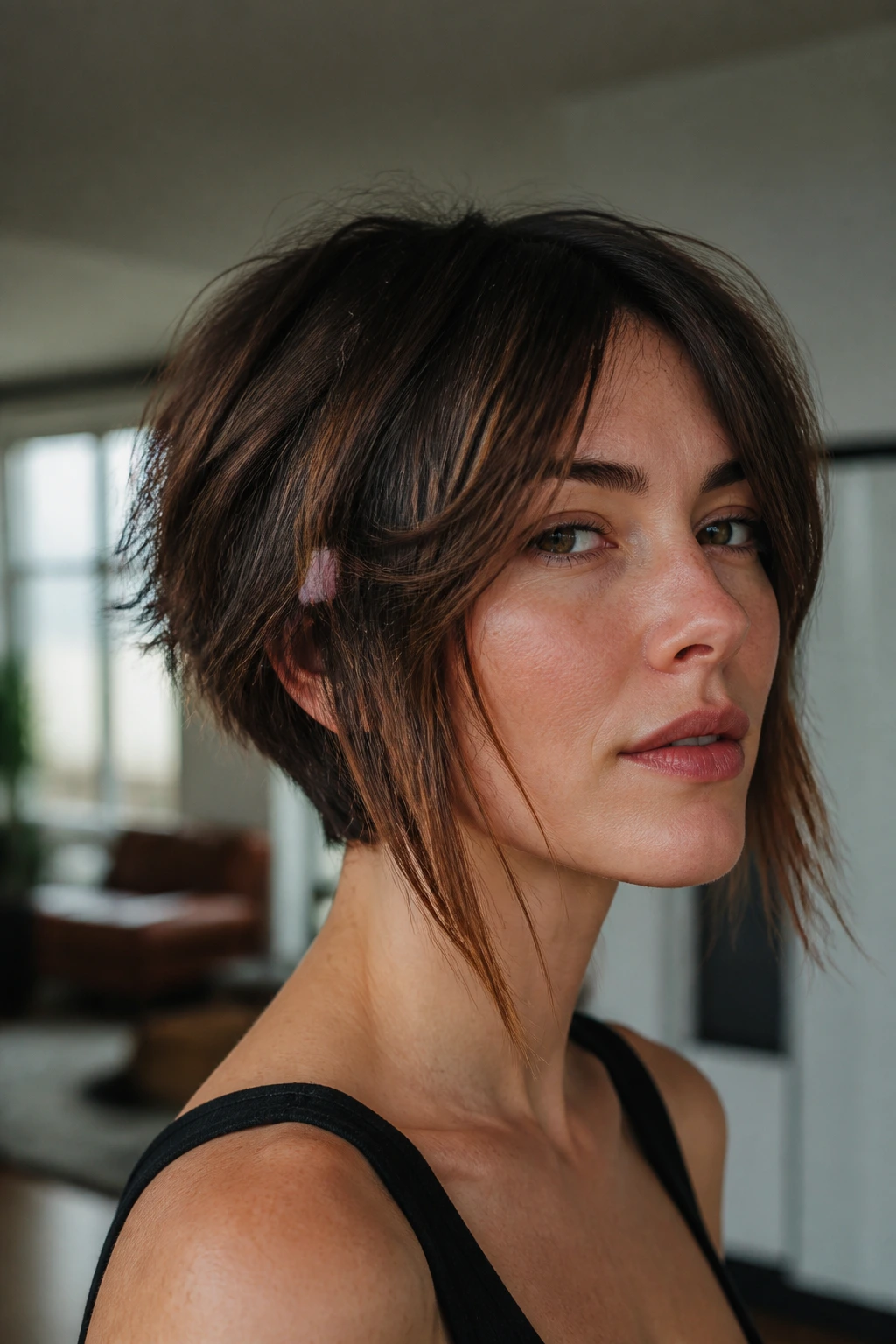
This is the bob for someone who wants movement right around the face without giving up length through the rest of the cut. The long face-framing ribbons fall a little lower than the chin, while the back stays compact and textured. It’s flattering without trying too hard, which is one reason stylists keep returning to it.
Why It Works
The front pieces break up the face in a soft, vertical way. That can make the cheekbones appear a little longer and the jaw a little lighter. Meanwhile, the back stays controlled, so the haircut doesn’t drift into shag territory that’s too layered or too fringed out.
Styling Detail
You can bend just the front ribbons with a flat iron for a loose curve away from the face. That small move changes everything. The rest of the bob can be air-dried or misted with texturizing spray. If you like to tuck your hair behind one ear, this cut gives you enough length to do it without losing the shape.
It’s a good one for people who want their haircut to frame the face the way a soft scarf would. Not too much. Just enough.
17. Italian Bob with Tousled Ends

The Italian bob leans a little fuller and a little more glamorous than the most shattered shag styles, but the tousled ends keep it from looking formal. Think of it as the polished cousin in the family. The structure is still there. The edge just got ruffled on purpose.
Why It Works
The Italian bob usually keeps more density through the body of the cut, which helps it sit with a lush curve around the face. Adding soft texture to the ends keeps that fullness from turning rigid. It’s a good choice if you want a bob that looks expensive without looking stiff — and yes, that really comes down to where the layers are cut and how much the ends move.
How to Wear It
A large round brush or a medium hot brush can give the shape a smooth bend, but don’t polish the ends so much that they freeze. A slight twist at the tips is enough. Finish with a light mist of shine spray or flexible hairspray, then break it up with your fingers.
This version is useful for anyone who wants a shaggy bob haircut that can dress up easily. The texture keeps it casual; the fullness keeps it elegant enough for places where you don’t want your hair to look like you gave up.
18. Wet-Look Shag Bob
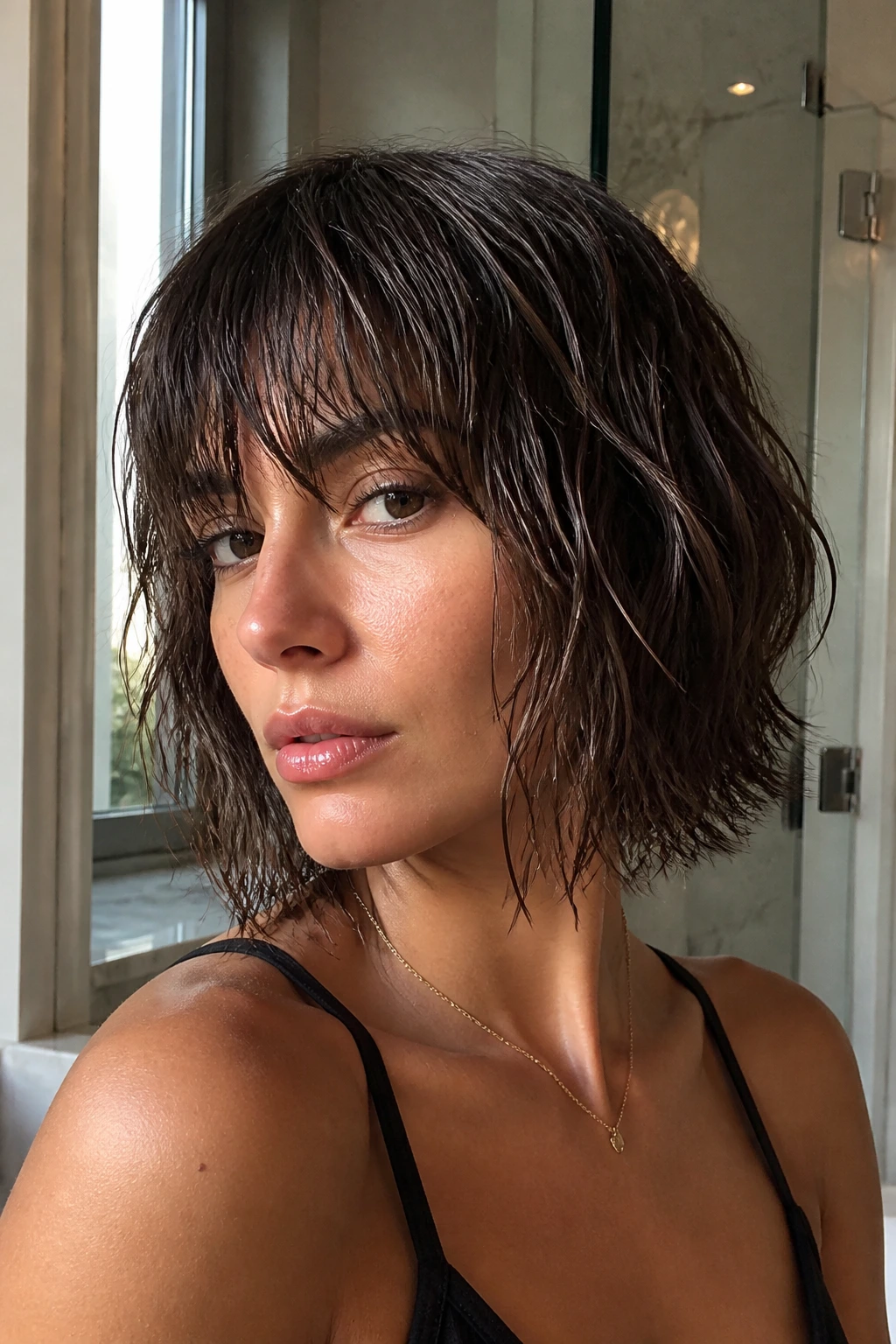
A wet-look shag bob has more edge than the softer air-dried versions here, but it still belongs in the lived-in family. The trick is sheen, not stiffness. The pieces should separate and gleam, not shell up into a crunchy helmet. When it works, the result is sleek at the roots and softly broken at the ends.
Why It Works
This style leans into product a little harder, which makes sense if you want the texture to look controlled instead of fluffy. The shag layers give the hair places to bend and separate, while the gloss keeps everything looking intentional. It’s a useful version for humid weather or evenings when you want the cut to feel a little sharper.
Product Approach
Use a lightweight gel or cream-gel mix on damp hair, then comb it through with fingers or a wide-tooth comb. Don’t pile on too much, or the roots will collapse and the ends will clump. A tiny amount of shine serum on the outer pieces can help, but use it sparingly. Too much and the style starts to look greasy instead of wet.
This isn’t the everyday answer for everyone. Still, when you want a shaggy bob to look a bit sleeker without losing texture, it’s a very good lane.
19. Crown-Lift Razor Bob
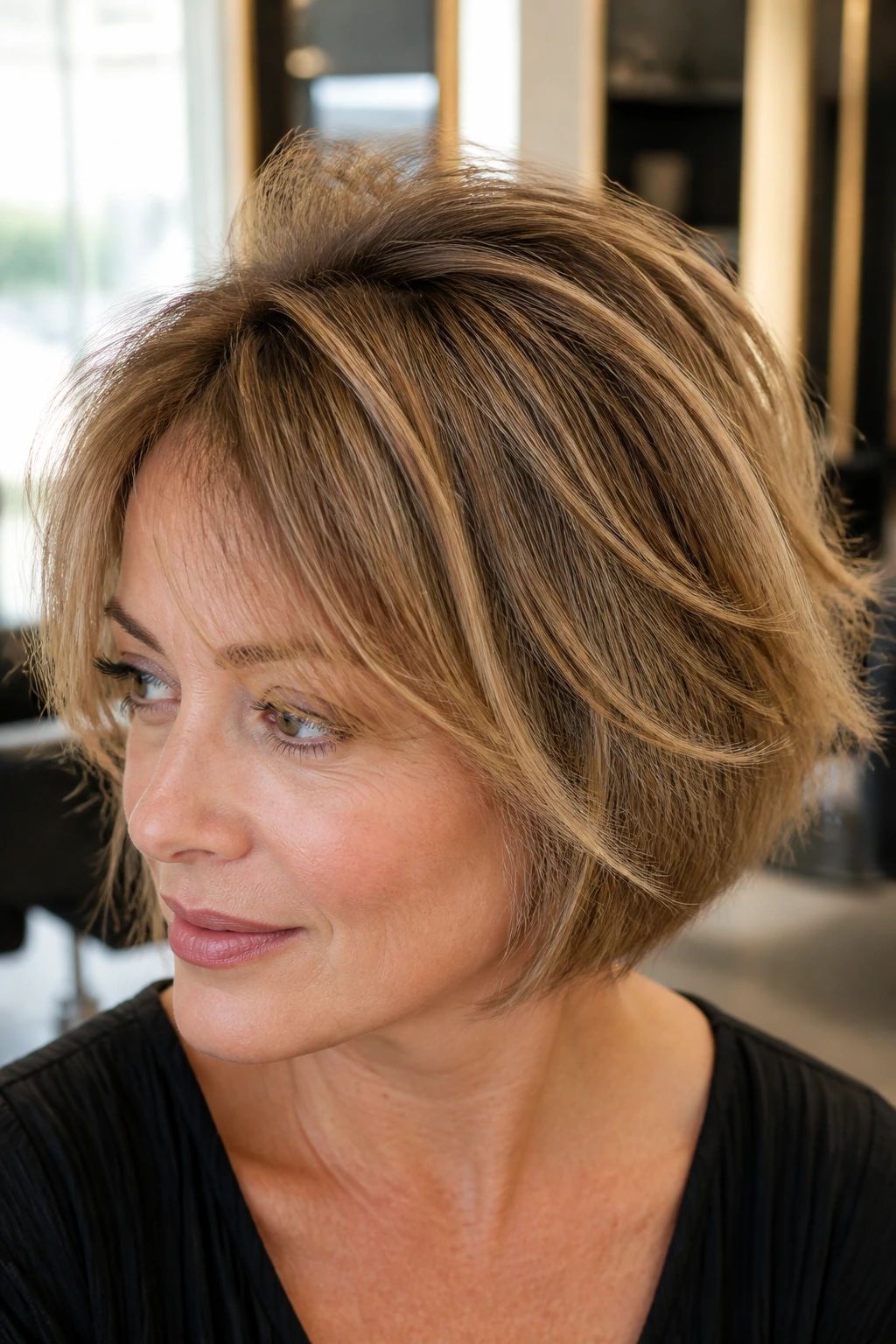
Flat crowns make short hair feel tired fast. The crown-lift razor bob addresses that by putting movement where the head needs height most. The top layers are lighter, the sides stay controlled, and the whole shape gets a little upward energy without turning into a teased mess.
Why It Works
A lot of bob cuts focus on the ends and forget the top. That’s why they fall flat by lunchtime. This one builds lift into the crown, so the silhouette looks more alive from the side and from above. The razor work through the top gives the hair room to move while the perimeter keeps the bob recognizable.
Styling Cue
Flip the head over for a brief rough-dry, then finish the top section with a round brush or your fingers at the roots. A root-lift spray helps, but you don’t need a pile of product. What you need is direction. If the top is over-smoothed, the lift disappears and the cut loses its purpose.
This is a quiet winner for people who want a shaggy bob haircut that doesn’t go limp halfway through the day. The lift carries the texture. The texture keeps the lift from looking fake.
20. Grow-Out Friendly Layered Bob

If you hate the in-between stage where a haircut gets awkward before it gets long, this is your version. The grow-out friendly layered bob keeps enough length and softness that it still looks intentional six to ten weeks later. The layers are long, the outline is gentle, and the shape doesn’t fall apart when it starts to stretch.
Why It Works
A lot of shaggy cuts look fantastic on the day they’re cut and then lose their form too quickly. This one is designed to stretch. The perimeter stays readable, while the layers blend instead of breaking into separate chunks. That makes it a smart choice for people who can’t live on six-week trims.
How It Changes Over Time
At first, it reads like a classic soft bob. Later, it becomes a little more collarbone-skimming and a little less sharp, but in a good way. The texture gets looser instead of messier. If you like haircuts that age gracefully, that slow change matters.
This is the version I’d pick for someone who wants to test shaggy bob haircuts without making a dramatic leap. It gives you room. That’s rare enough to be worth naming.
What Makes a Shaggy Bob Look Soft Instead of Scruffy
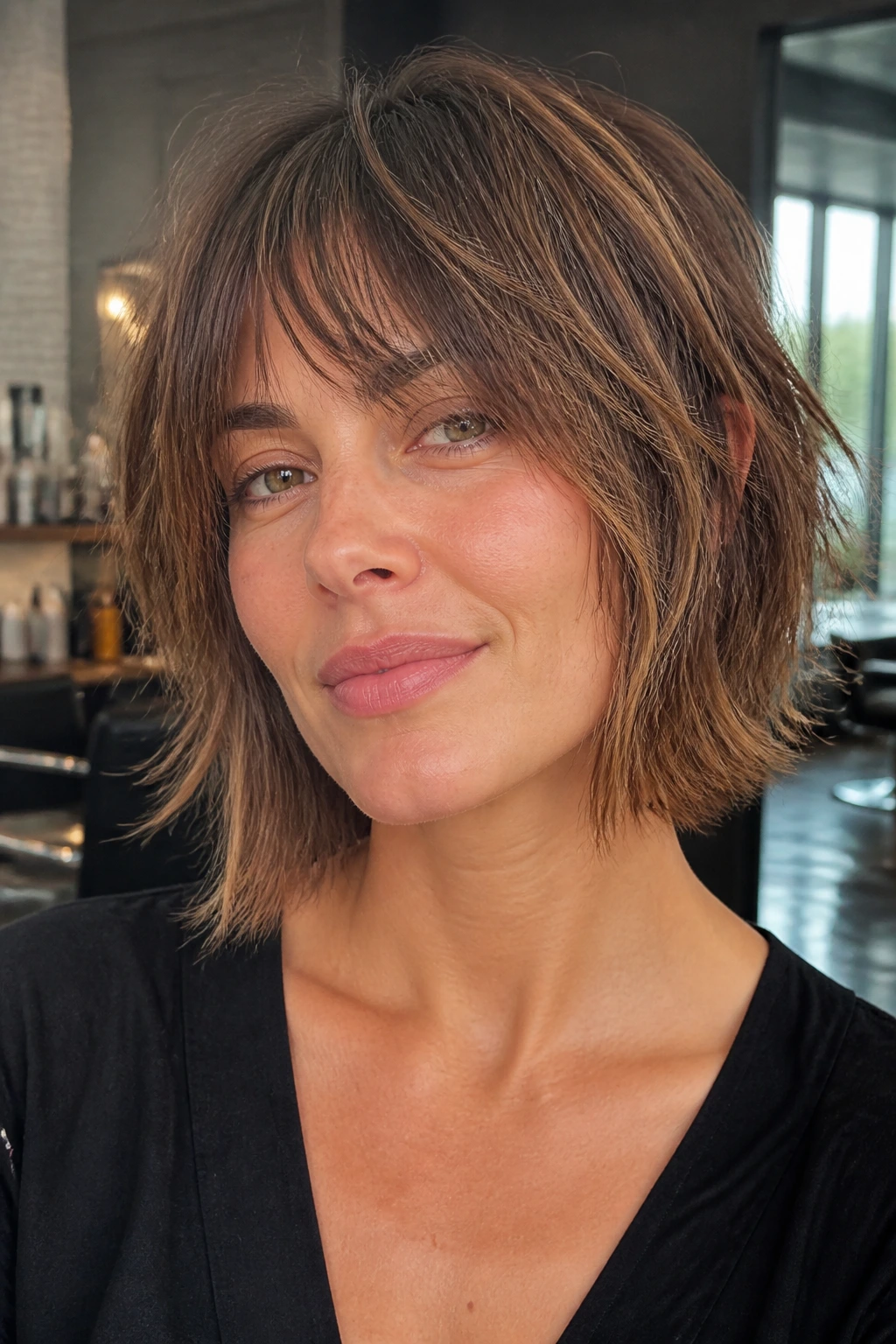
Soft texture starts with restraint. That sounds boring, but it’s the truth. The difference between a shaggy bob that looks lived-in and one that looks like it got chewed up by a bad razor is usually about where the layers stop, how full the perimeter stays, and whether the ends still have enough weight to behave.
A soft shaggy bob still has a shape you can describe in one sentence. Chin-length. Collarbone-length. Jaw-skimming. Rounded. If the cut becomes so broken up that you can’t see the outline, you’ve gone too far. The best versions keep the hair moving while letting the eye understand the haircut in one glance.
Product matters too, but not in the dramatic way people think. A small amount of texture spray can separate the pieces. A heavy cream can flatten them. A good cut lets you use less product, which is the whole point. If you need a full cocktail of styling tools just to get the hair to stop flopping around, the shape probably needs work.
How to Ask for the Right Shape at the Salon

Bring more than one photo. Better yet, bring a photo of the front, one of the side, and one of the back if you can find them. Stylists can read a front image all day, but the back and side are where shaggy bob haircuts either make sense or fall apart. That’s where the weight lives.
Say the words that actually matter:
- Keep the perimeter full: This tells the stylist not to over-thin the ends.
- Add movement inside the shape: That points them toward internal layers instead of a shredded outline.
- Soften the front without taking too much length: Helpful if you want face framing but not a drastic chop.
- Leave enough density for air-drying: Useful if you wear your hair natural most days.
- Avoid over-texturizing the bottom edge: This keeps the ends healthy-looking.
A good consultation is part haircut, part translation. If your hair is fine, say you want lift without see-through ends. If it’s thick, say you want the bulk removed from the inside. If it’s curly, say you want the shape to work when dry, because wet curls can trick everyone in the room. Those details are worth more than saying you want “something messy.”
Tools and Products That Actually Help This Cut

A shaggy bob doesn’t need a drawer full of gadgets. It needs a few useful things and a little restraint. Here’s the kit that earns its shelf space:
- Blow dryer with nozzle attachment: Helps direct the roots without blasting the whole shape into a puff.
- Diffuser: The best friend of wavy and curly shaggy bobs; it keeps the curl pattern intact while adding lift.
- Small to medium round brush: Useful for the fringe, front pieces, and crown lift.
- Wide-tooth comb: Better than a fine comb for keeping natural texture from breaking apart.
- Lightweight mousse: Gives roots some grip without making the hair sticky.
- Texture spray: Breaks up the ends and adds that soft, separated finish.
- Flexible-hold hairspray: Keeps movement alive; stiff spray kills the whole point.
- Leave-in conditioner: Helps curly and dry hair stay soft instead of frizzy.
- Matte cream or paste: Good for piecey ends, especially on straight or fine hair.
- Dry shampoo: Handy for day-two texture and root lift, especially on shorter lengths.
The trick is not to use all of them at once. Pick the few that suit your hair type, then stop. Overloading a shaggy bob with product is a fast way to flatten the movement you wanted in the first place.
How to Style a Shaggy Bob on Straight, Wavy, Curly, and Coily Hair
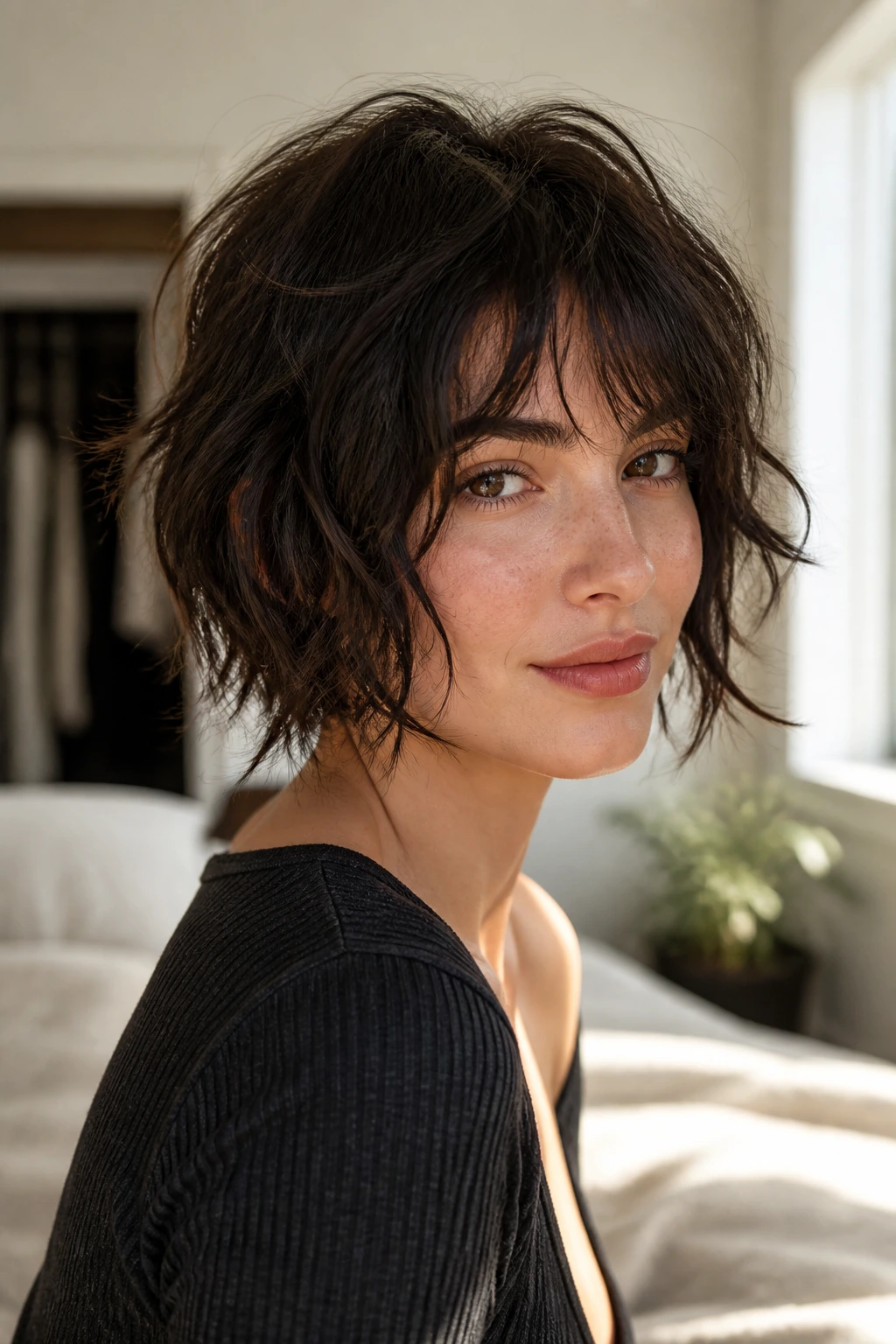
Straight hair needs a little bend, but not a curl set. Use mousse at the roots, rough dry until the hair is about 80 percent dry, then bend a few random pieces with a wand or flat iron. The goal is separation. Not symmetry. If every piece turns the same direction, the cut starts to look controlled instead of lived-in.
Wavy hair gets the easiest route. Scrunch in a light cream or texture spray, dry with a diffuser or air-dry, and stop touching it halfway through. A shaggy bob on wavy hair can look polished with almost no effort, but only if you resist the urge to over-brush it. Brush it dry and you often erase the part that makes it good.
Curly hair wants shape and moisture. A bob cut for curls should leave enough length for the curl pattern to spring without losing the line around the face. Use leave-in conditioner, then a curl cream or gel. Diffuse on low heat, and let the curls settle before separating them. If you split them too soon, they frizz. That’s one of those small decisions that changes everything.
Coily hair can wear a shaggy bob too, but the cut needs to respect shrinkage and density. The shape often works best when the stylist cuts with the natural pattern in mind and leaves enough room around the face for the hair to move without ballooning. Define with cream or gel, then stretch the roots slightly if you want more visible length. The cut should frame the face, not fight the coil.
Keeping the Shape Fresh Between Cuts

Short hair shows growth fast. That’s not a flaw; it’s just physics. A shaggy bob usually looks best with trims every 6 to 10 weeks, depending on how short it is and how precise you want the fringe to stay. The shorter and more layered the cut, the more often it needs attention.
Between trims, dry shampoo can help the crown stand up a little better, especially on fine hair. A texturizing spray at the mid-lengths can revive the separation that disappears after a few wash days. If the ends start to look frayed, a tiny touch of matte cream can calm them down, but don’t coat the whole head. That usually creates more limpness than help.
Heat matters too. If you keep blowing the hair smooth every day, the shag starts to look tame in the wrong way. Give it a few air-dry days. Let the natural bend show up. Hair like this needs some room to misbehave a little or it stops looking like a shaggy bob and turns into a regular bob with a slightly bad mood.
Common Mistakes That Flatten or Frizz the Style
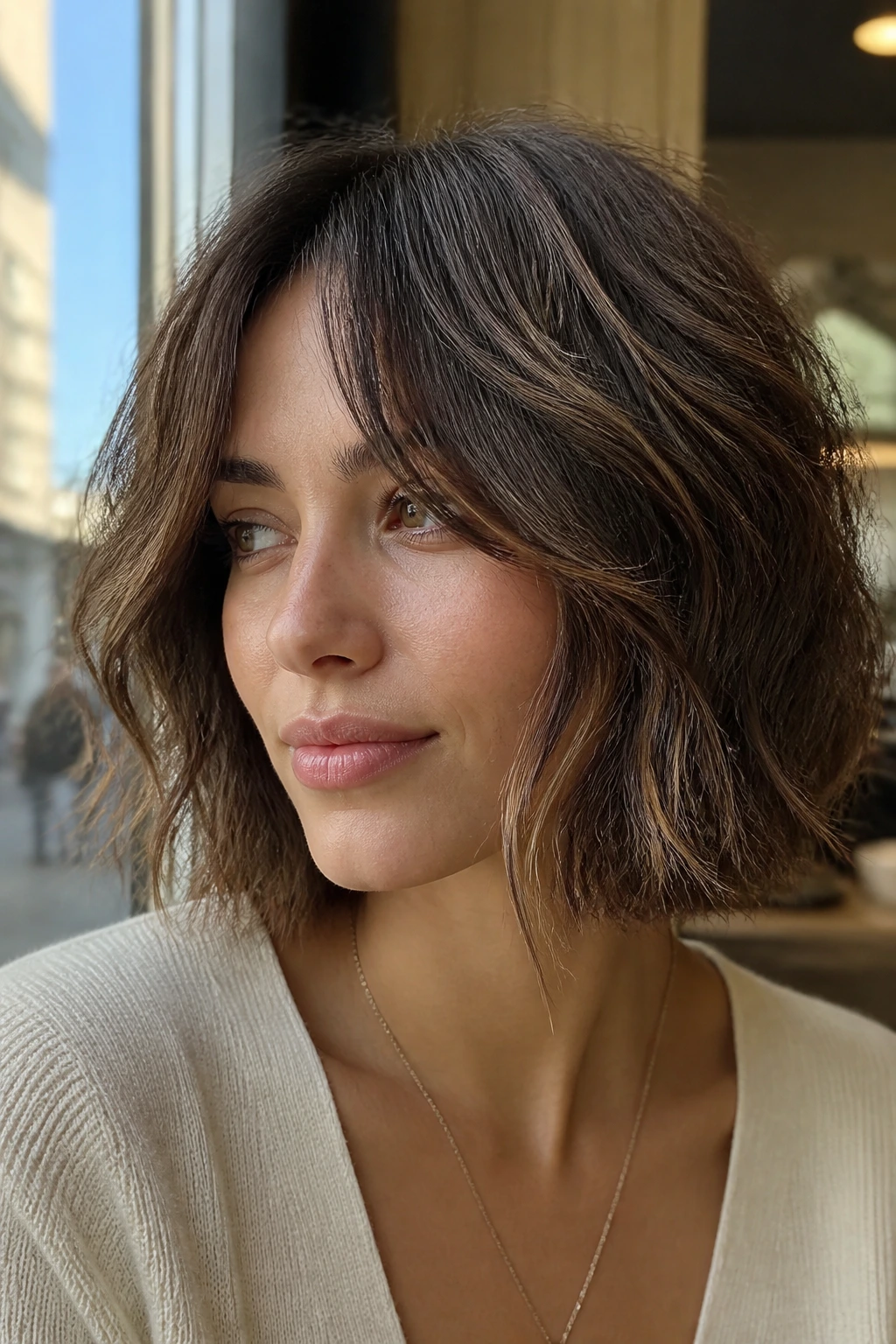
Over-thinning the ends: The haircut starts to look see-through and poofy at the same time. Ask for internal weight removal, not a shredded bottom edge.
Blowing it too straight every day: A smooth blowout can erase the lived-in texture completely. Keep some bend in the ends and some lift at the crown.
Choosing bangs that need more work than you’ll give them: Short fringe looks great for about ten minutes if you never style it. If you want low maintenance, choose curtain or bottleneck bangs instead.
Using too much product: Hair turns sticky, flat, or stringy. Start with a dime-size amount and build only if you need more.
Ignoring your hair’s density: A shaggy bob that looks airy on one person can look sparse on another. The solution is better layer placement, not more texture spray.
Letting curly hair be cut only when soaking wet: The shrinkage can surprise you. A dry or curl-by-curl consultation gives a far better result for textured hair.
Variations and Adaptations Worth Trying

The Office-Polished Version: Keep the perimeter a little fuller, leave the layers longer, and use just enough texture spray to break up the ends. This version still feels relaxed, but it looks neat enough for meetings or sharper outfits.
The Weekend Air-Dry Version: Ask for a cut that follows your natural wave or curl pattern and requires no round brush. It’s the easiest version to live with if you don’t enjoy daily styling and don’t want a haircut that expects applause every morning.
The Bangs-Off Option: Skip the fringe entirely and let the face-framing pieces do the work. This is a smart choice if you want a shaggy bob that grows out with less fuss and doesn’t need regular bang trims.
The More Edgy Piecey Version: Keep the layers a little more separated and the ends more defined, then use matte paste to make the pieces stand out. This works well if you like a bob that feels a little cooler and less sweet.
The Soft Curly Version: Keep the layering rounded and controlled so the curl pattern can stay intact. This version prevents the triangle effect and gives curls room to spring without losing the bob shape.
Frequently Asked Questions
Does a shaggy bob work on straight hair?
Yes, but it needs a little help. Straight hair usually needs root lift and a few bent pieces around the face so the cut doesn’t fall flat and look overly tidy.
Will a shaggy bob make fine hair look thinner?
It can, if the layers are too aggressive. The better approach is invisible layering with a fuller perimeter, which keeps the ends looking solid while still adding movement.
How often should I trim a shaggy bob?
Most versions look best with a trim every 6 to 10 weeks. Shorter bobs and fringe-heavy styles need the sooner end of that range, especially if you like the shape precise.
Can curly hair wear a shaggy bob without turning into a triangle?
Absolutely, but the layers have to be placed carefully. Rounded layers and curl-specific cutting help the hair sit closer to the head instead of widening at the bottom.
What should I ask for if I want soft texture, not a choppy mess?
Ask for movement inside the shape, a full perimeter, and gentle face framing. That language helps a stylist keep the cut soft without stripping out too much density.
Is a shaggy bob high maintenance?
It depends on the bangs and the length. A collarbone version is usually easier to live with than a chin-length cut with micro fringe, which needs more regular attention.
Can I air-dry a shaggy bob and still have it look finished?
Yes, if the cut is designed for your texture. Use the right leave-in or cream, then let the hair dry without constant touching or brushing.
What if my shaggy bob starts to look fuzzy instead of soft?
You probably need a little more moisture, less product overall, or a trim to clean up the ends. Fuzzy texture usually means the layers are too dry, too thin, or both.
The Softest Kind of Messy
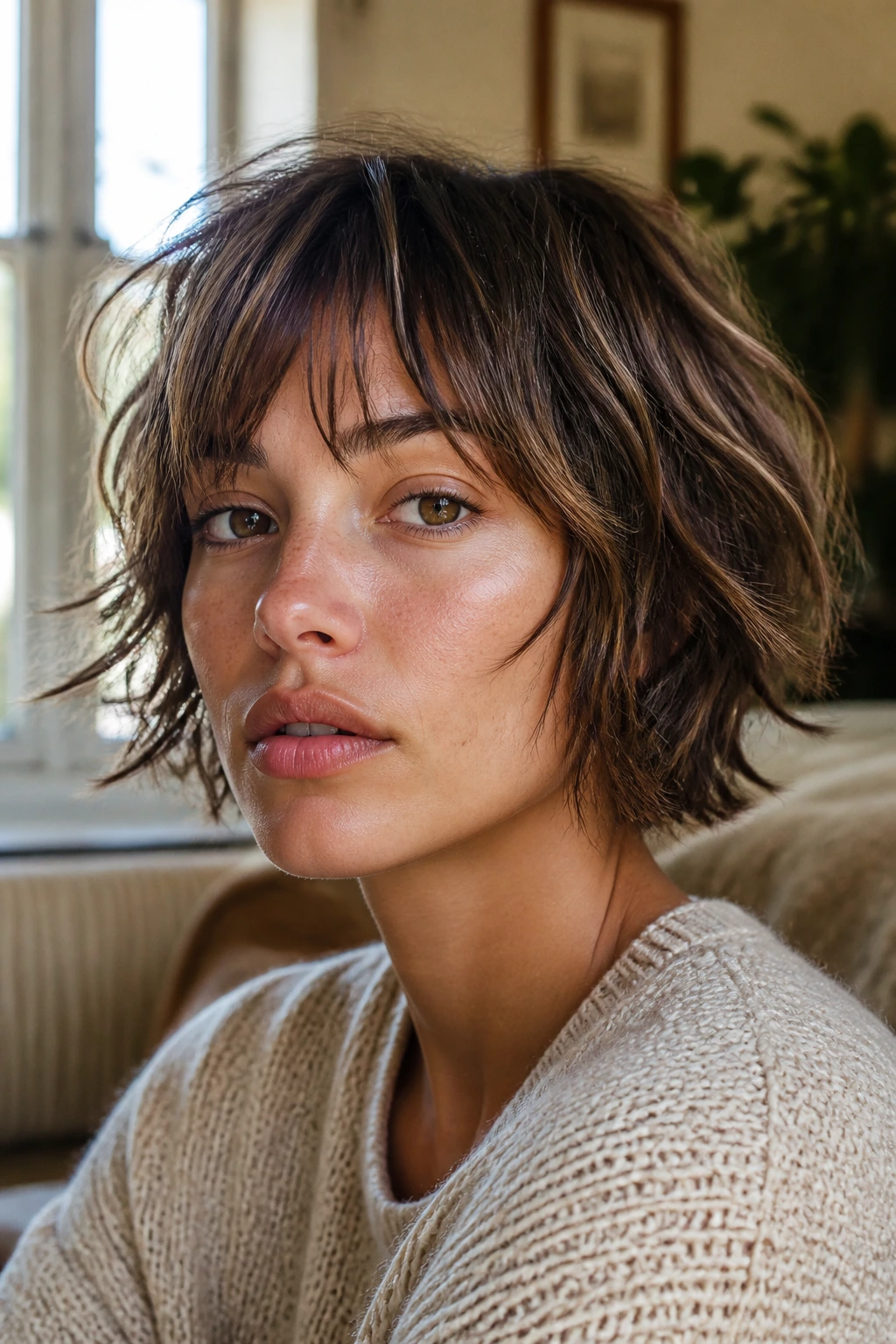
A good shaggy bob haircut doesn’t ask for perfect styling. It asks for good bones underneath the mess. That’s the part people miss. The softness comes from a shape that holds together even when the ends are broken up and the crown is a little loose.
If you want a cut that looks current without chasing anything flashy, this is one of the easiest places to land. It has room for air-drying, space for bangs if you want them, and enough structure to survive a few lazy mornings. That combination is rarer than it should be.
And that’s why the best shaggy bob haircuts keep winning people over. They leave you with hair that moves, softens, and behaves like it has a life of its own — in the best possible way.
