



Wedding hairstyles for brides with straight hair have a reputation for being the “easy” option, which is funny because straight hair tells the truth faster than almost any other texture. A center part that’s off by half an inch. A bobby pin that isn’t buried deep enough. A crown that sits too high and starts to wobble before dinner. Straight strands show it all.
That’s also why they can look so clean, so sharp, and so expensive-looking when they’re handled well. You get a smooth surface, crisp lines, and a finish that lets the dress, veil, earrings, or back detail do their job without competing with a cloud of curls. There’s nowhere to hide, which is exactly the point.
The trick is not to fight straight hair into pretending to be something else. The best bridal styles for this texture use its strengths: shine, structure, and a sleek base that holds pins without turning into a puffed-up helmet. Some brides want a low bun with barely a whisper of movement. Others want a ponytail so polished it looks carved. Straight hair can do both, and the styles that work best are the ones that respect the hair instead of wrestling it.
Why Straight Hair Works So Well for Bridal Styles
- Clean Lines: Straight strands let the shape of a bun, twist, ponytail, or tucked roll show up without waves breaking the outline.
- Accessory-Friendly: Veils, combs, pins, and ribbons sit flatter on smooth hair, so they’re less likely to lift or slide.
- Shine Reads Fast: Healthy straight hair catches light in a way that makes even a simple style look finished, not plain.
- Less Bulk at the Nape: Low styles stay neat because there isn’t extra texture building thickness where the pins need to sit.
- Easy Touch-Ups: A flat iron pass, a small brush, or a dab of serum can fix a bend in minutes if the morning gets messy.
1. Glass-Smooth Low Chignon
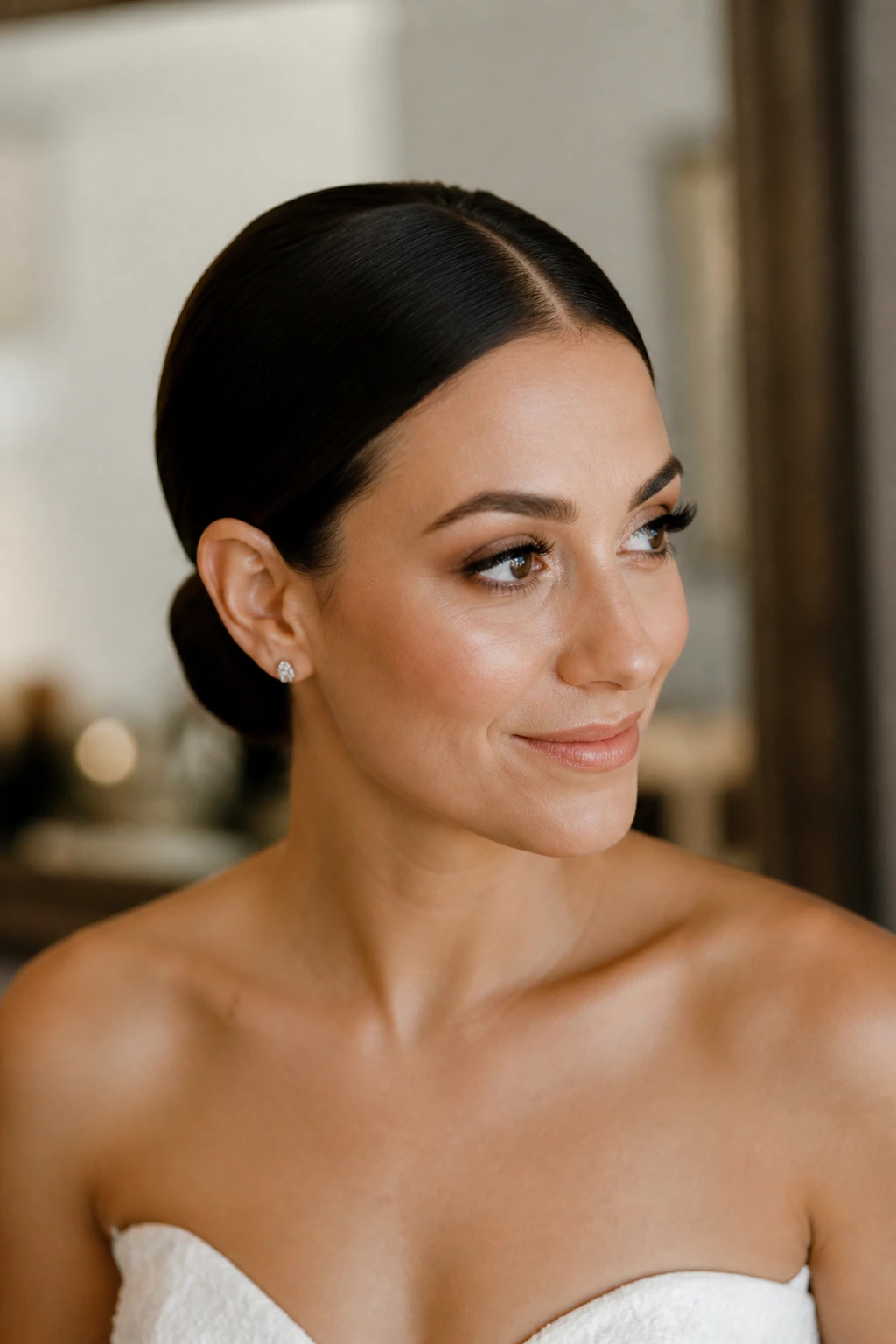
The glass-smooth low chignon is the straight-hair bride’s safest classic, and I mean that in the best way. It sits low at the nape, keeps the neckline clean, and makes a satin gown or structured bodice look even sharper.
What makes it work is the restraint. You’re not building a fluffy bun that tries to be romantic and ends up loose by dessert. You’re creating a compact shape, smoothing the surface with a fine-tooth comb, and letting the hair’s natural shine do the heavy lifting. It’s the look I’d hand to a bride who wants the dress to be the loudest thing in the room.
Ask your stylist for a low bun with a center part, a hidden elastic, and pins set in a crisscross pattern. If you want a softer edge, leave two very thin face pieces out and keep them straight, not curled. That small choice keeps the style from feeling severe.
2. Center-Part Sleek Low Bun
A center-part sleek low bun is the more minimalist cousin of the chignon, and it has a cleaner, tighter feel. The part is the whole story here. If it’s straight and balanced, the bun can be almost plain and still look intentional.
This style is especially good with square necklines, halters, and dresses that have a lot going on near the shoulders. It clears the face, shows off earrings, and keeps the back of the dress visible. No frizz halo. No wandering volume.
The only catch is prep. Straight hair loves to slip, so a little dry shampoo at the roots and a lightweight mousse before blow-drying will give the bun something to hold onto. If your hair is silky to the point of being slippery, your stylist may rough up the base with a touch of texturizing spray before pinning. That’s not a flaw. It’s insurance.
3. Tucked French Twist With a Sharp Finish
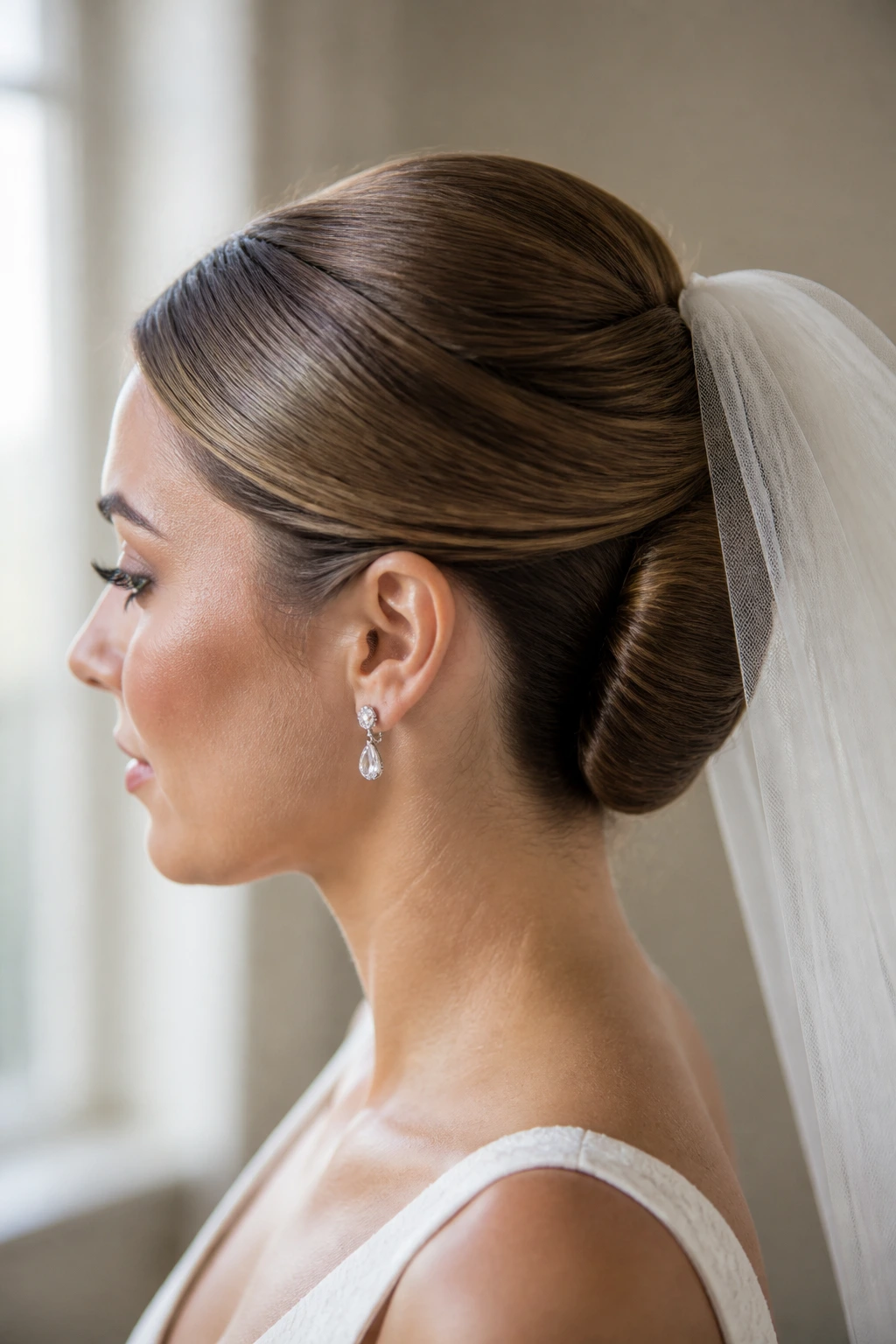
The French twist looks formal because it has an almost architectural line to it. On straight hair, that line gets even clearer. You can see the sweep, the tuck, and the vertical fold without curls softening the edges.
This one works especially well for brides who want polish with a little height at the back. It’s also a smart choice if you’re wearing a veil that will sit above the bun or a decorative comb with a strong shape. The twist gives the accessory a clean place to land.
What I like most is how tidy it stays when it’s built right. A good French twist on straight hair is pinned from the inside out, with the seam hidden and the roll secured at several points instead of just one dramatic pin. If a stylist says they can do it with three pins, I’d be skeptical. Six to eight is more realistic for real-life movement.
4. Half-Up Straight Hair With Pearl Pins
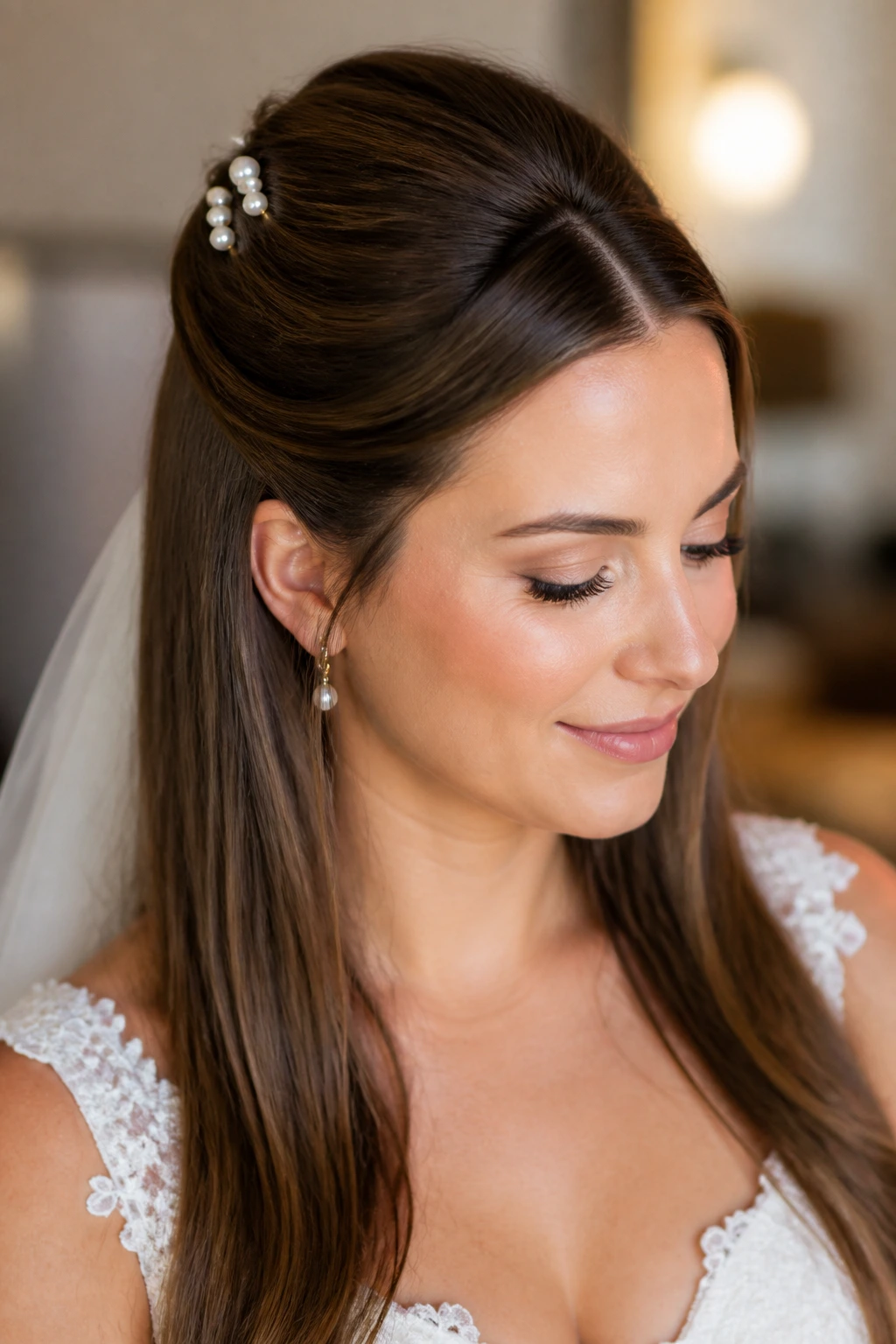
Half-up styles are one of the few bridal looks that let straight hair stay straight without looking unfinished. Pearl pins make the whole thing feel deliberate instead of accidental, and they’re kinder to sleek hair than oversized clips that can slide around.
The top section gives you just enough lift at the crown to shape the face, while the length stays down and glossy. That balance is useful if you want your hair to frame the dress rather than disappear into a bun. It also works well with a sheer veil because the lower half of the hair can hold the veil line without competing with a heavy updo.
Keep the crown smooth and the pinned section snug. Too much teasing turns this into a lumpy crown, which looks out of place on straight hair. A few pearl pins placed in a slight arc—rather than in a straight row—usually looks more expensive and less formal-school-dance.
5. Lean Low Ponytail With a Ribbon Wrap
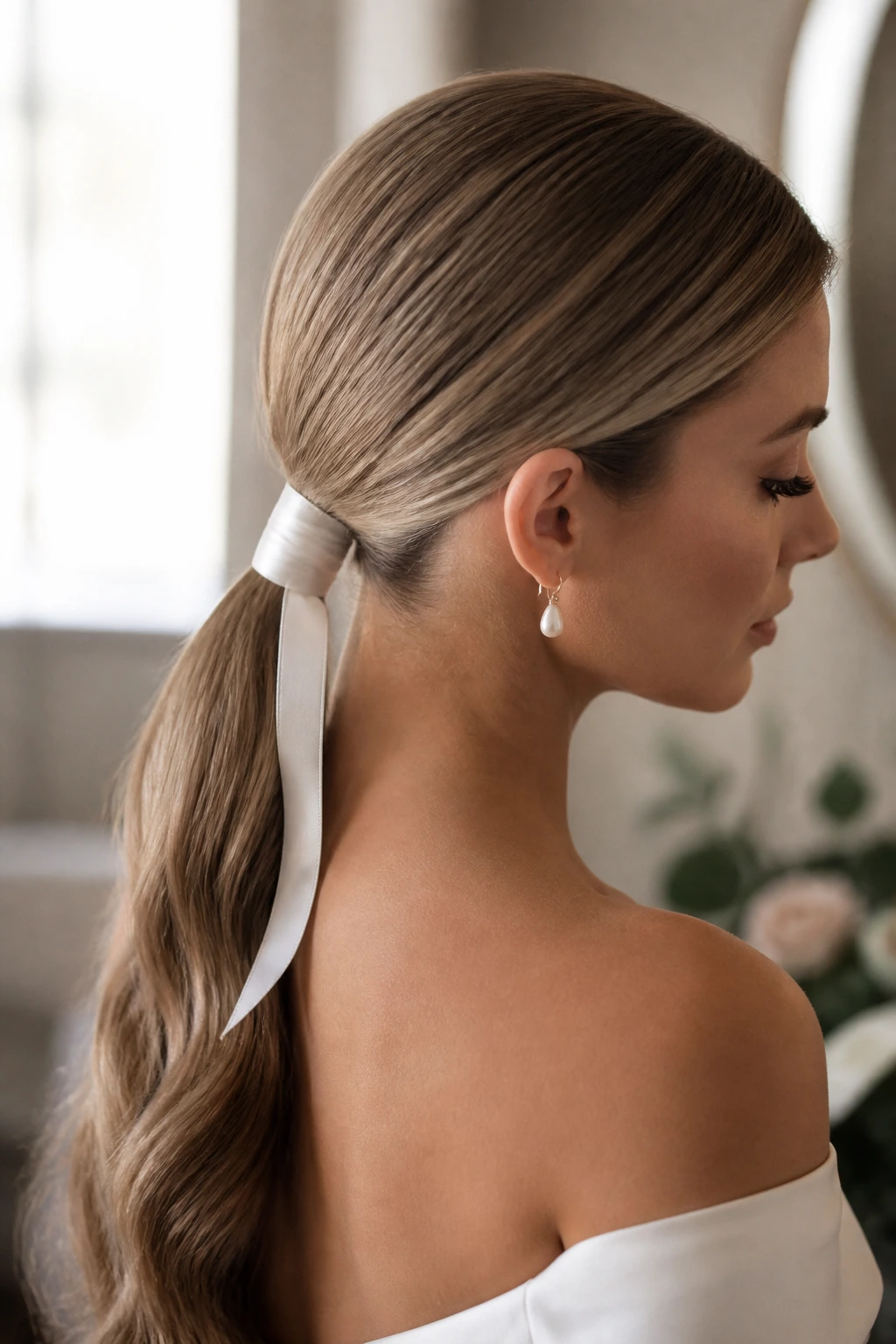
A low ponytail sounds almost too simple for a wedding until you see one done right. On straight hair, that polished line down the back can look cleaner than any curled style in the room, especially when the base is wrapped with ribbon, satin, or a narrow strand of hair.
The key is not volume. It’s control. A sleek low ponytail should sit at the nape, have a smooth crown, and move like one single sheet of hair rather than several sections fighting each other. If the ends are blunt and healthy, even better. That gives the whole style a tailored feel.
I’d suggest this for brides who want room for bold earrings or a dramatic back detail. It also survives dancing better than a lot of people expect, because the weight is centered and the base is easy to reinforce with two hidden pins under the ribbon wrap.
6. Side-Part Hollywood Sweep Without the Curl
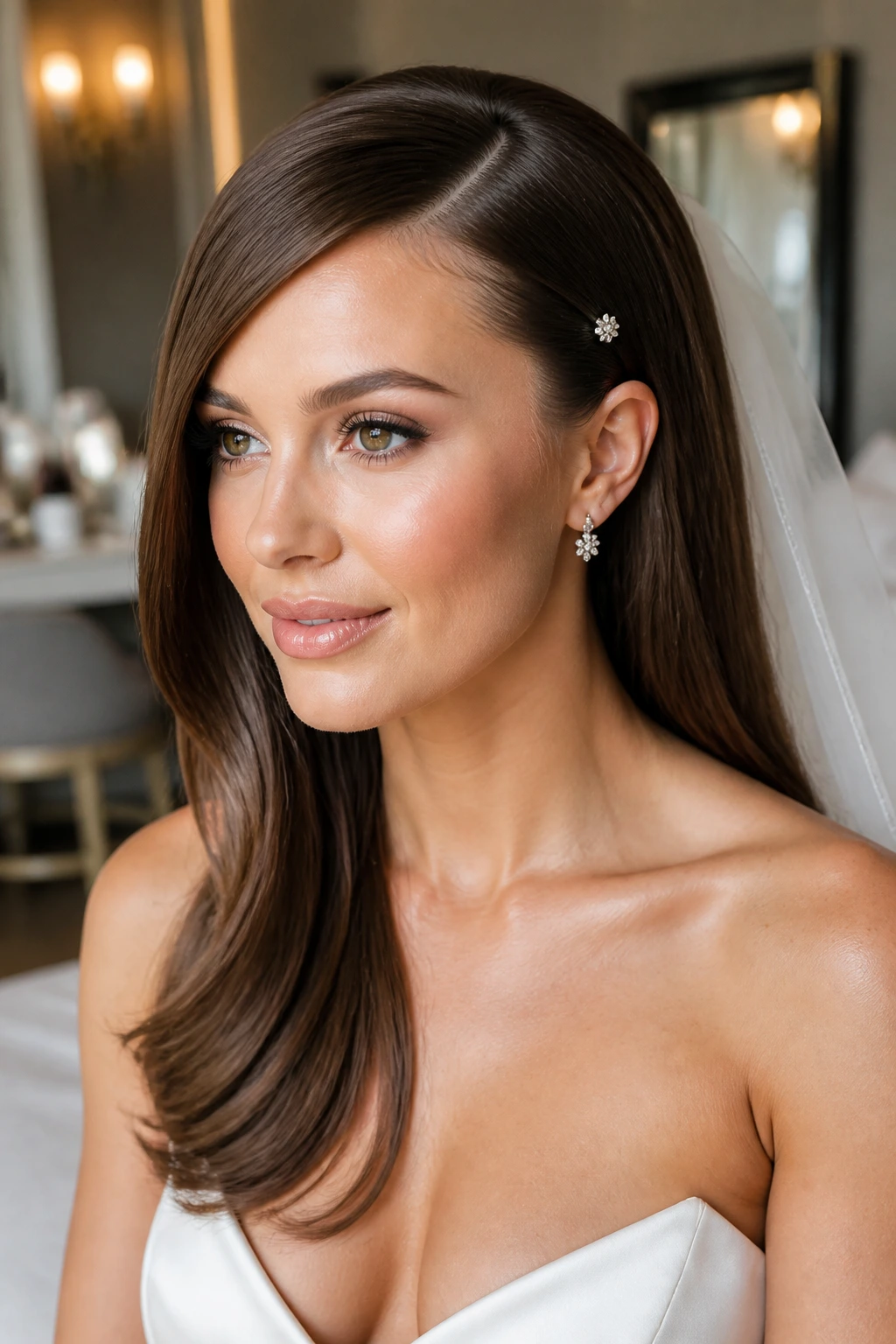
You do not need curls to borrow the drama of an old-Hollywood side sweep. On straight hair, the shape comes from the part, the direction of the sweep, and how smoothly the front section crosses the forehead and temple.
This look is smart for asymmetrical necklines, one-shoulder dresses, or gowns with a lot of detail on one side. It creates movement without making the hair puffy. The straight lengths can fall over one shoulder or stay tucked behind the back, depending on the dress and veil placement.
The trick is to keep the front glossy and controlled. A little smoothing cream on the surface—not the roots—will stop the side section from fraying. If you want the style to feel more bridal and less evening-event, add one crystal pin just above the ear. One pin. Not a cluster. Straight hair usually needs one strong accent, not a handful of little ones.
7. Straight Hair With a Veil-Friendly Knot
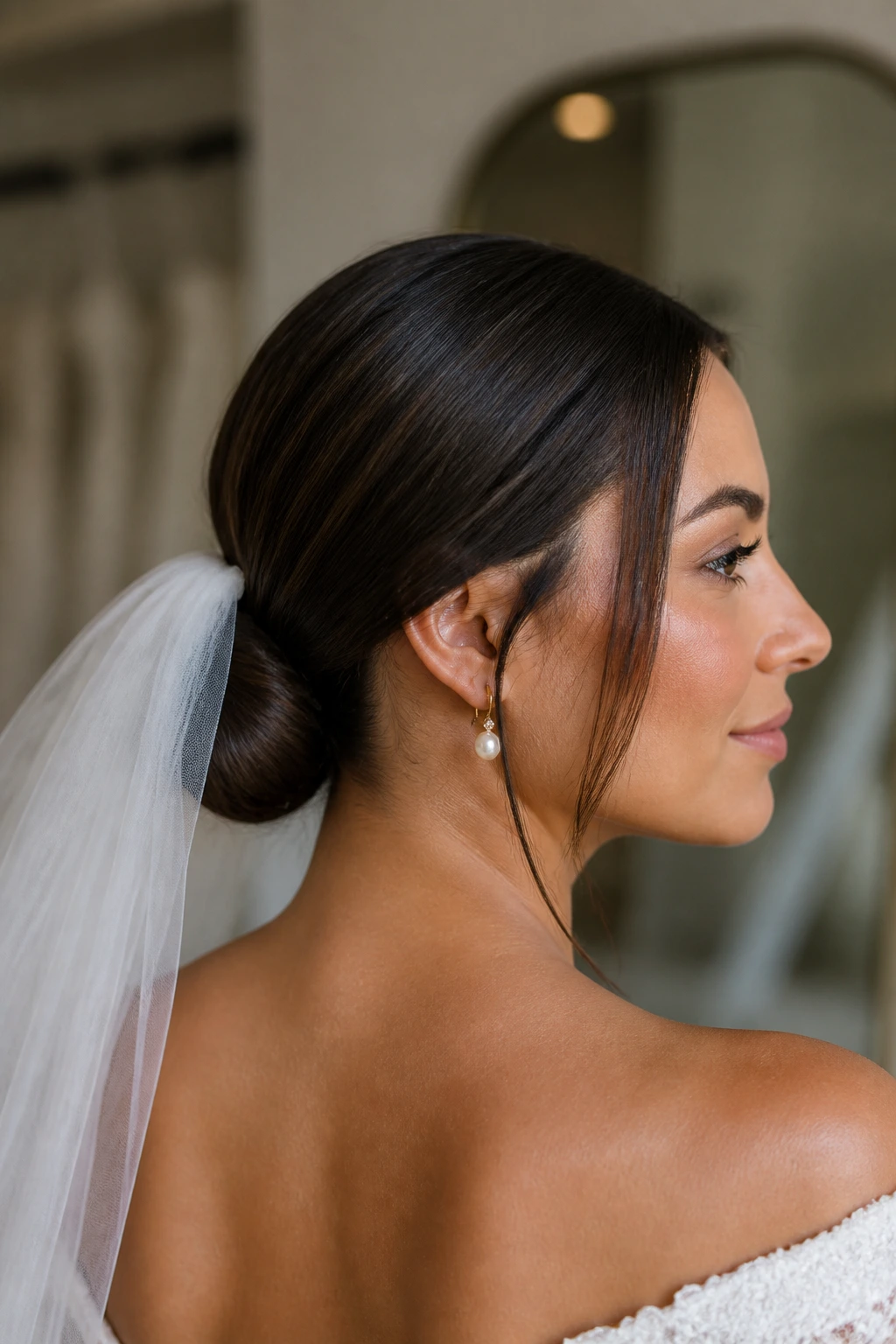
This is the style for brides who care about the veil first and the hair second, which is a perfectly sensible way to think about it. The knot sits low and compact so the veil comb can nest in securely without bulking up the crown.
A veil-friendly knot is usually a little flatter than a classic bun. That’s on purpose. The veil should sit above or just under the knot cleanly, not wobble on top of a pillow of hair. Straight hair is useful here because it lays flat and lets the comb grip better when the stylist anchors it into a hidden pin base.
If you’re wearing a cathedral or chapel-length veil, this is one of the safer choices because it won’t snag as easily on loose texture. It also makes removal easier later, which matters more than people expect. There is nothing elegant about wrestling a veil out of a style that was never built to hold one.
8. Wet-Look Bridal Bun
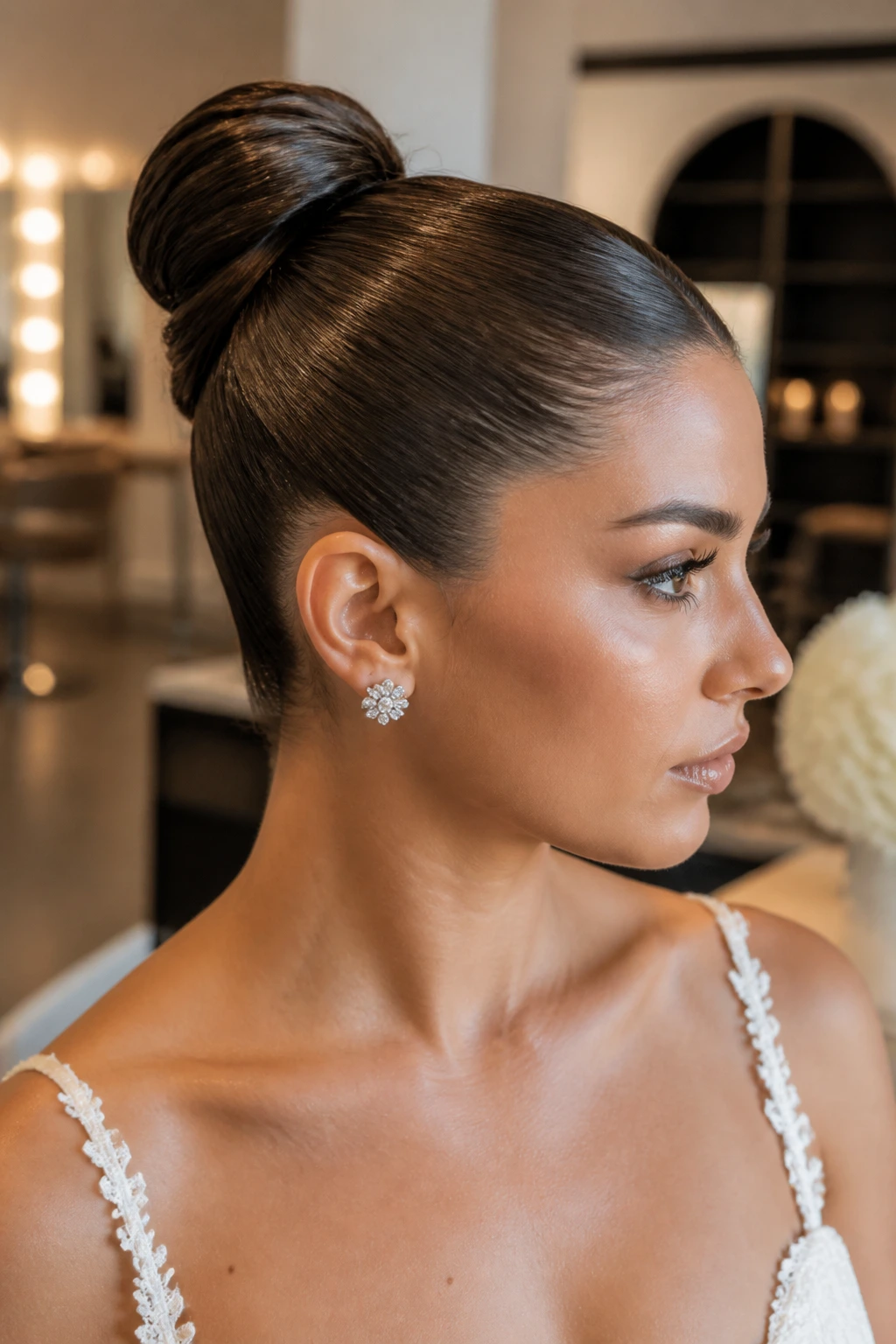
The wet-look bun is not for everyone, and that’s fine. It’s for the bride who likes sharp edges, modern lines, and a finish that feels a little runway, a little art gallery, and not at all fussy.
Straight hair is the perfect canvas for this because the slick surface is already there. You’re leaning into the natural gloss with gel or a high-shine cream, brushing the hair back tightly, and pinning it into a neat bun or knot. The result is smooth enough to feel sculpted, but not stiff if the product is handled well.
This style is especially good with bold earrings, a clean neckline, or a dress with dramatic fabric. It can look expensive fast. The only warning: the product has to be distributed evenly, or you’ll get shiny patches near the hairline and dryness at the ends. That contrast shows in photos. More than you’d think.
9. Braided Crown Over Straight Lengths
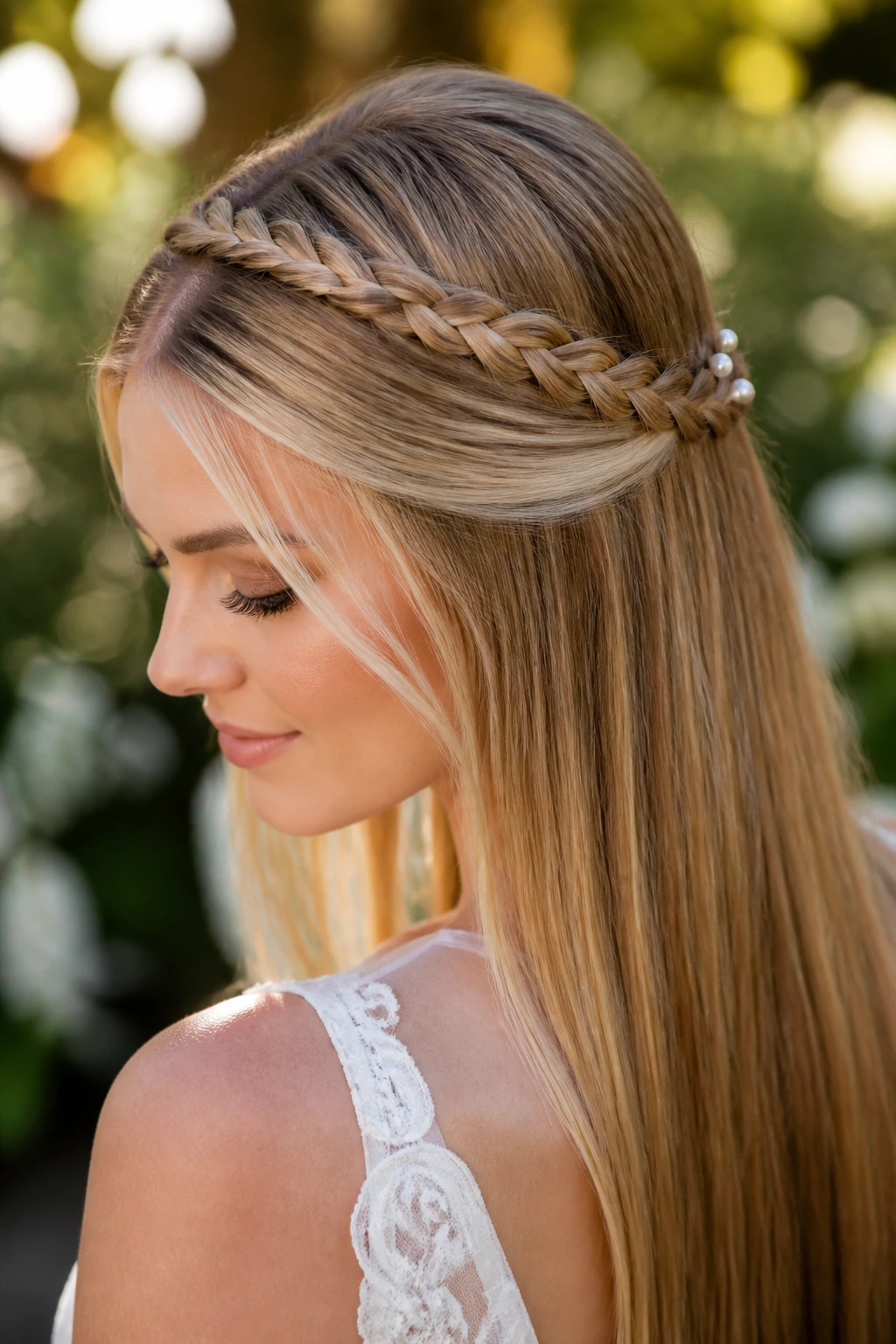
A braided crown can sound contradictory on straight hair, which is exactly why it works. The braid gives the crown shape and texture, while the rest of the hair stays long, smooth, and deliberate.
This is a smart middle ground for brides who want something softer than a bun but more styled than leaving the hair down. The braid frames the face and keeps the top from falling flat, while the lengths can stay straight and polished. If your dress has a boho or garden feel, this one fits without drifting into costume territory.
Keep the braid narrow and neat. A thick pancake braid can overwhelm straight hair and make the head look wider than it is. Thin pearl pins, or a tiny floral comb tucked at the braid’s end, usually give it enough bridal detail without burying the shape.
10. Blunt Lob With Sculpted Ends
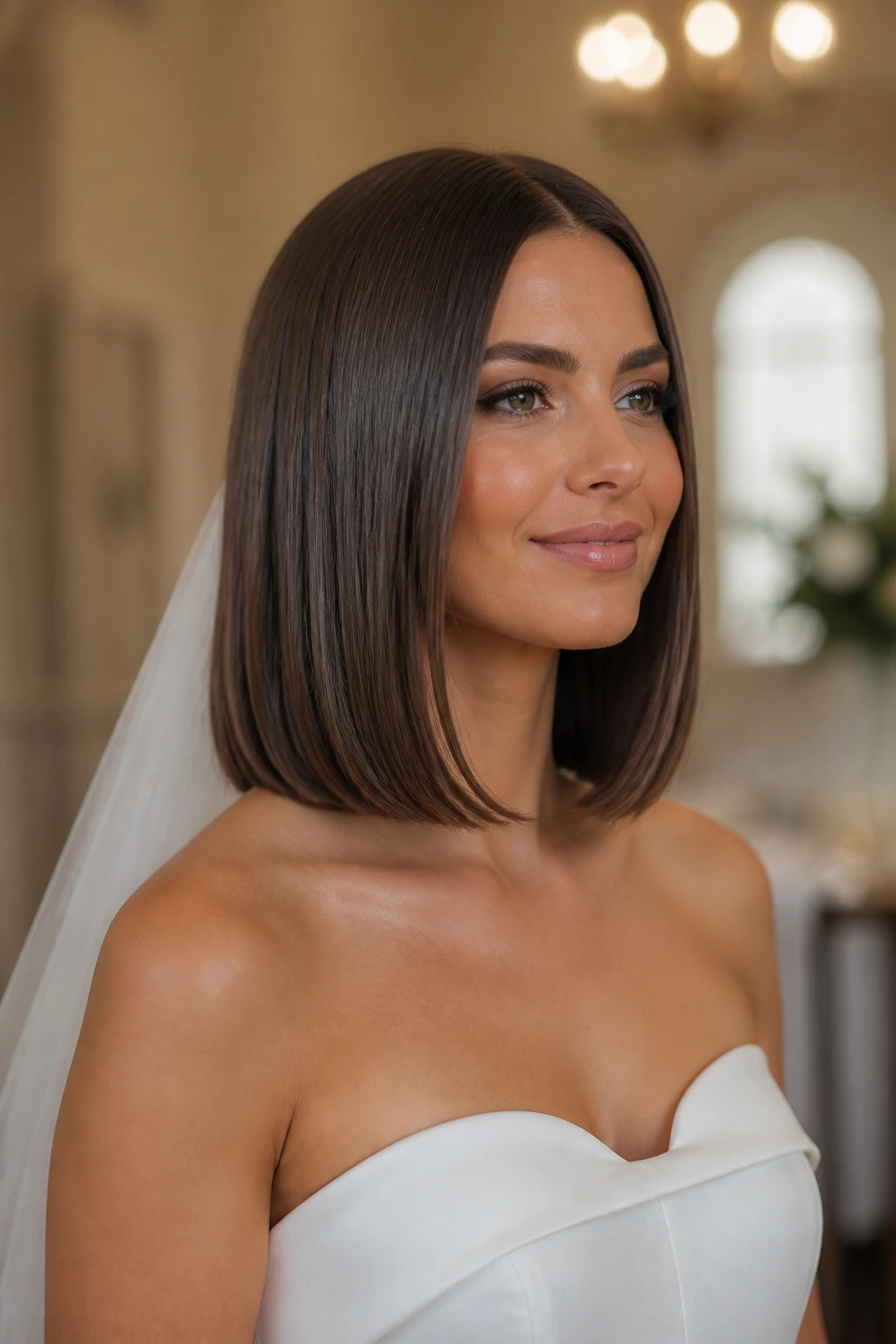
A blunt lob can be one of the smartest bridal looks on straight hair because it already has structure. You don’t need to fake volume. You just need to make the cut look intentional.
The finish matters here. Slightly beveled ends—curved under just a touch with a flat iron or round brush—keep the shape from looking too boxy. That tiny bend changes everything. It keeps the lob from reading as an ordinary haircut and turns it into a polished style with a purpose.
This is a great option for brides who wear modern dresses, minimalist jewelry, or a shorter veil. It also suits brides who hate the feel of pins against the scalp. With a clean center or side part and a glossy finish, a lob can look more expensive than a lot of complicated updos.
11. Low Knot With Face-Framing Pieces
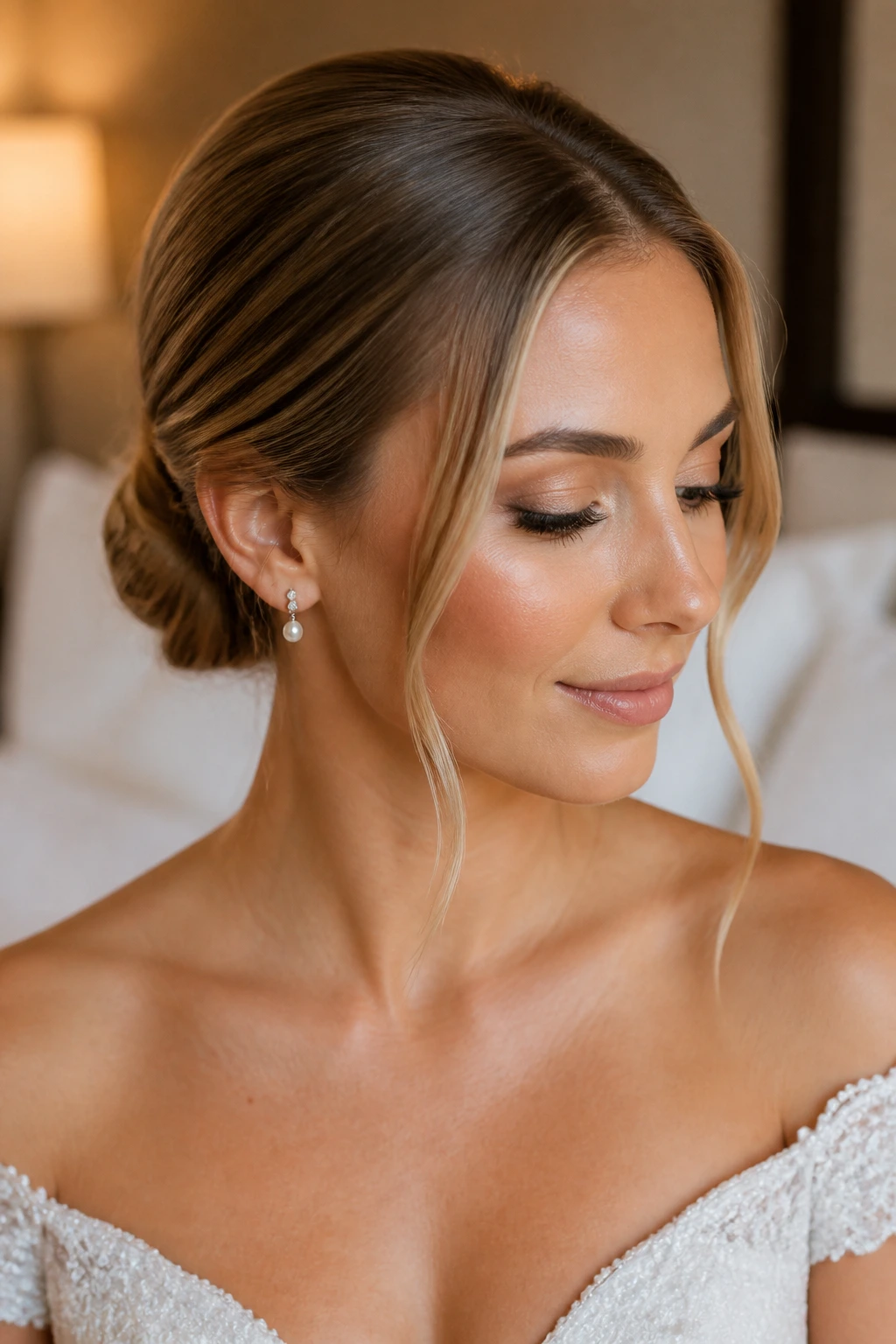
A low knot with face-framing pieces is the style I’d recommend when a bride wants softness without giving up the security of an updo. The knot keeps the back tidy, and the two slim front pieces take the edge off a very smooth finish.
Those front pieces matter. They should be intentional, not random. Think whisper-thin sections that skim the cheekbone or jaw, not heavy chunks that break the line of the face. On straight hair, even a small piece can carry a lot of visual weight.
This look works well if your dress has a softer neckline, like a scoop or a sweetheart shape. It also plays nicely with drop earrings because the front pieces frame them instead of hiding them. Just don’t over-style the strands. If they curl too much, the contrast can look disconnected from the rest of the hair.
12. High Ponytail With Wrapped Base
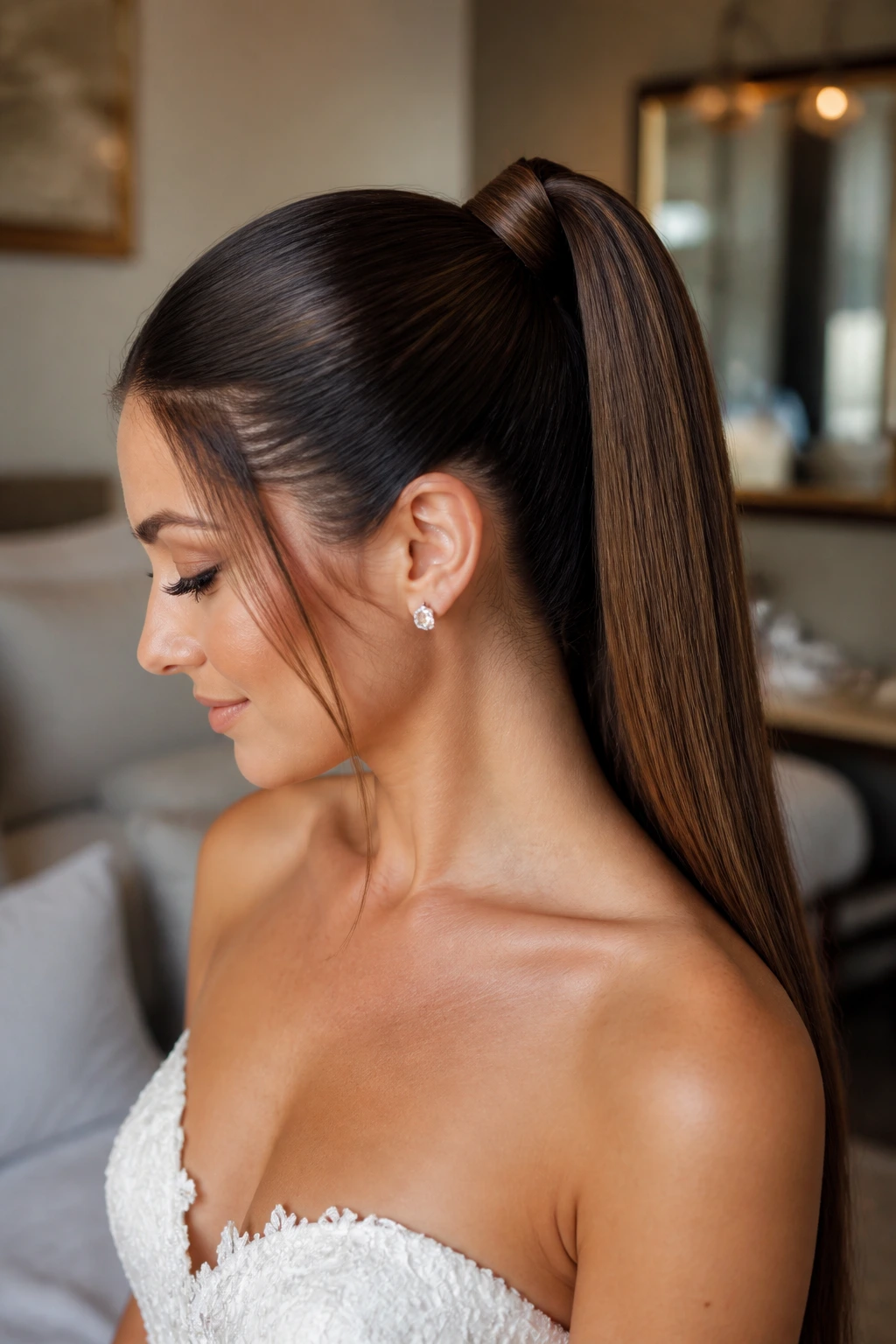
A high ponytail on straight hair is bold in the best way. It lifts the face, lengthens the neck, and brings a little energy to a bridal look that might otherwise feel too sweet.
The wrapped base is what keeps it wedding-ready. A section of hair—often from underneath the pony—wraps around the elastic, hiding the tie and giving the whole style a finished edge. If the ponytail is secured too low or too loose, it loses the clean line and starts to look like a workout style dressed up for the occasion.
I like this for reception changes, second looks, or brides whose dresses have dramatic backs that deserve visibility. It also gives you swing. Real movement. Straight hair in a high ponytail doesn’t bounce the way curled hair does, but that can be a plus. It looks sleek, not chaotic.
13. Straight Hair With a Statement Comb
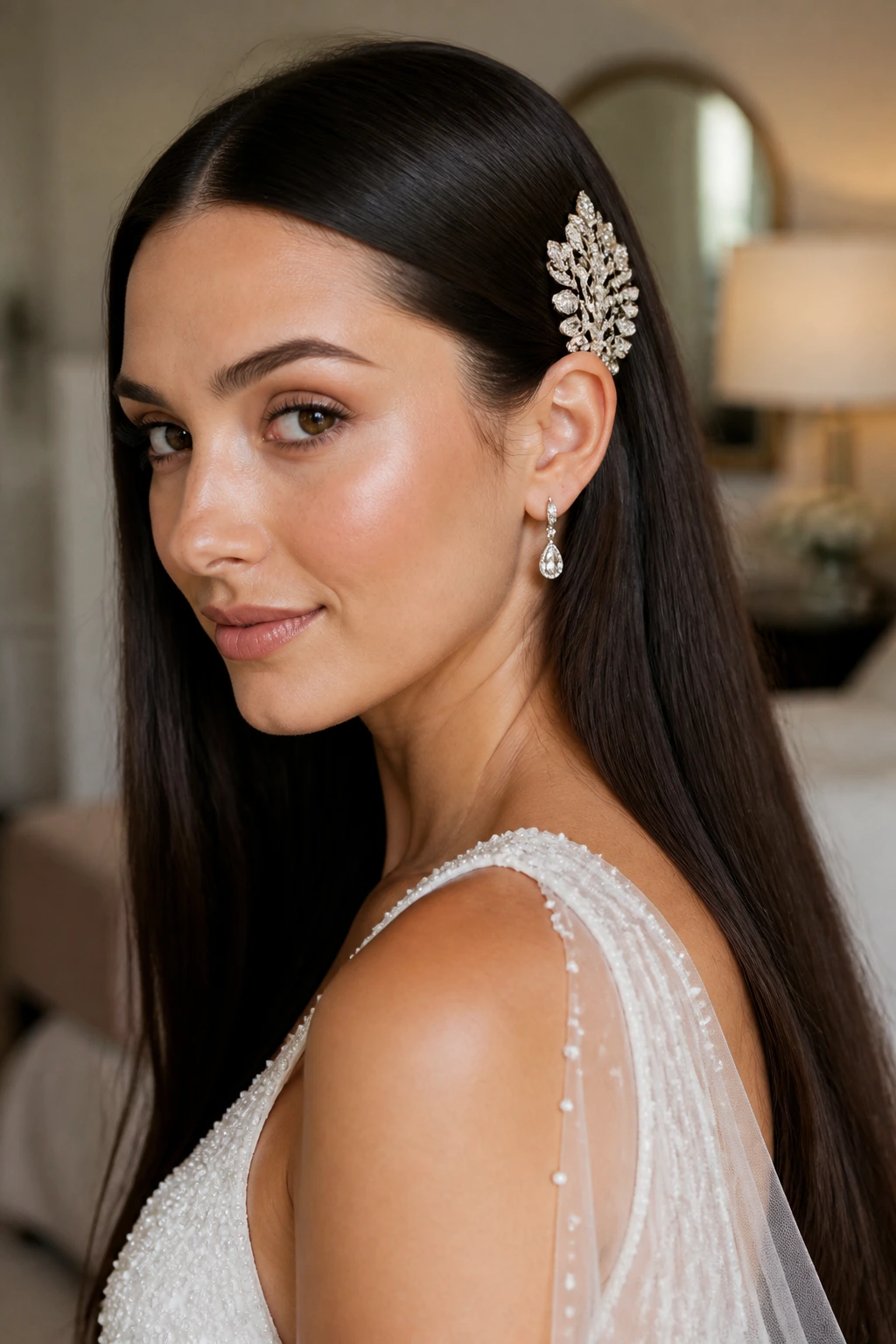
A statement comb can do more work than an elaborate updo if the placement is right. On straight hair, the accessory becomes the focal point, which means the style underneath can stay simple and controlled.
The comb usually sits at one side, just behind the temple or above a tucked-back section, where it can catch the light and anchor the shape. The rest of the hair can stay down, tucked, or lightly pinned. That’s the beauty of this look: you’re not hiding the accessory in the hair. You’re letting it lead.
This is a particularly good choice for brides who want a little sparkle without full glitter. Crystal, pearl, and brushed-metal combs all work well against smooth strands because the contrast reads cleanly. If the comb is large, keep the rest of the style quieter. Straight hair doesn’t need two loud ideas at once.
14. Soft Twisted Half-Up With Long Ends
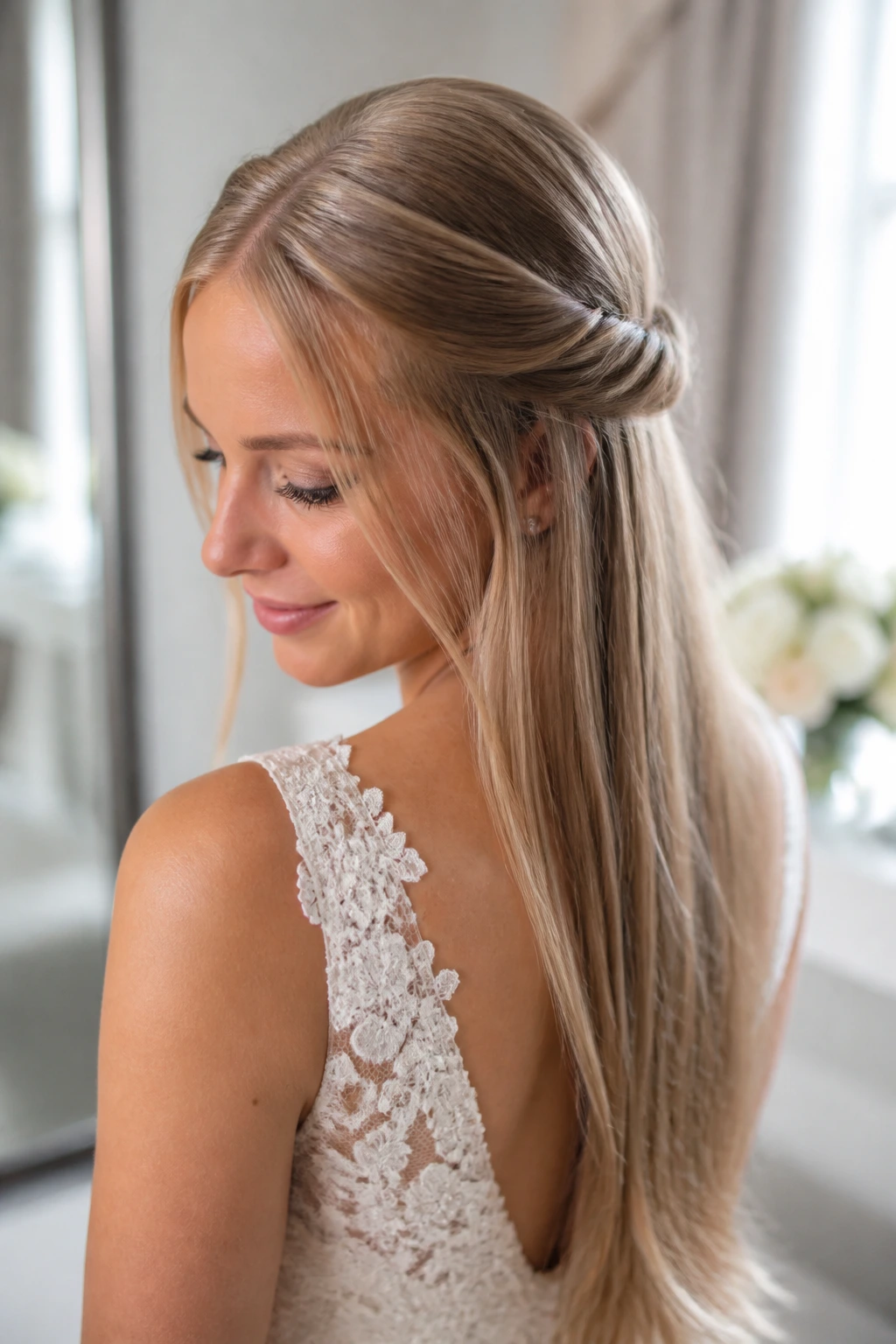
A twisted half-up style gives straight hair movement without forcing it into curls. The top sections are twisted back from each side and joined in the middle, leaving the rest of the length to fall straight and neat.
It’s one of the easiest ways to keep long hair out of your face while still showing it off. That makes it useful for brides who love their length but do not want hair sitting on the collarbone all evening. The twist also creates a small pocket where pins, pearls, or a thin vine accessory can sit.
This style looks best when the twists are smooth and close to the head. If they’re too loose, they can slip or puff out. A few hidden pins crossed under the join usually do more for stability than a dozen decorative ones on top, which is one of those boring little details that makes a huge difference later in the night.
15. Faux Bob for Long Straight Hair
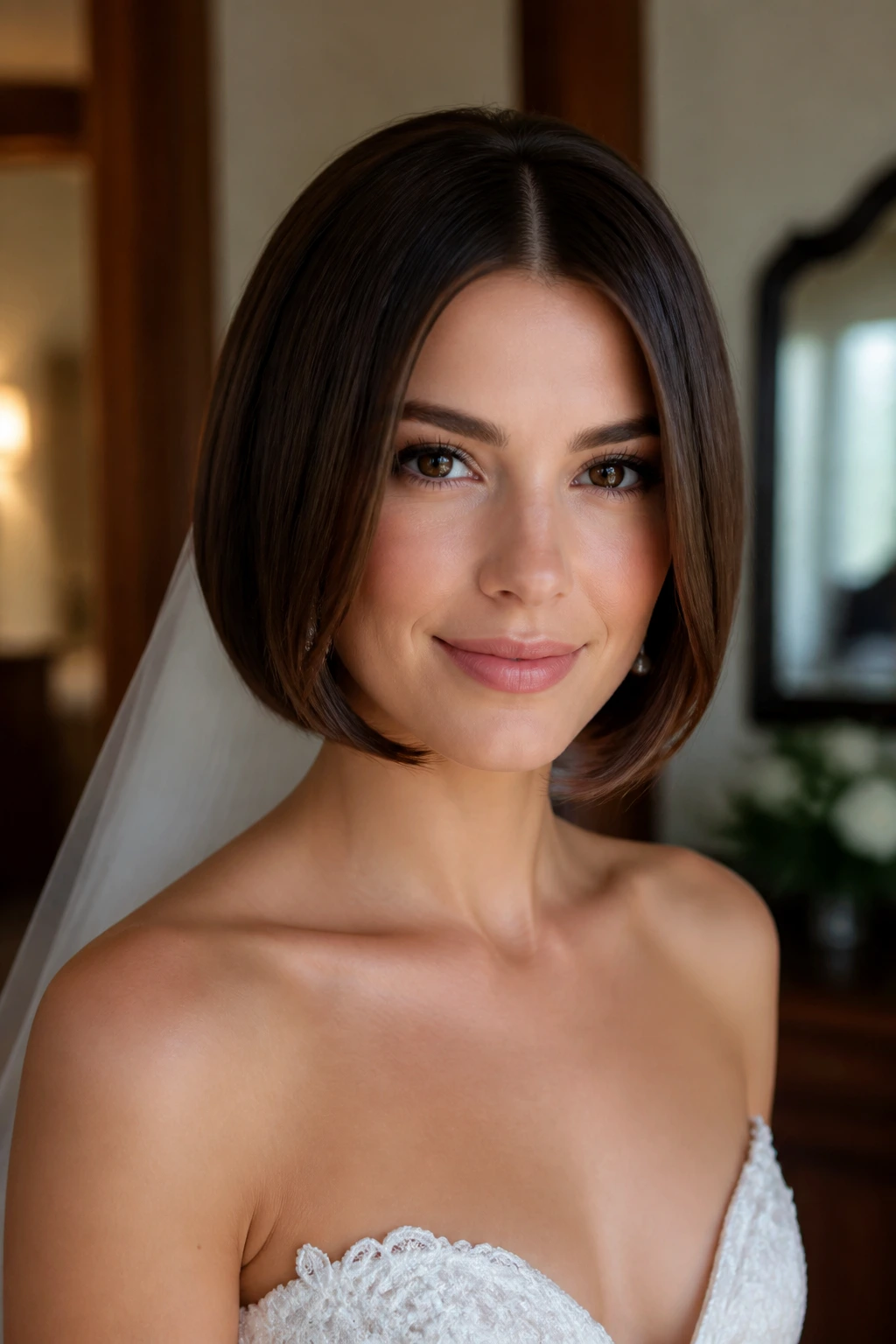
The faux bob is for the bride who wants a shorter, sharper silhouette without actually cutting her hair. Straight hair makes this trick easier because the lengths can be tucked under and pinned without fighting curls or waves.
It’s a clever option for dresses with intricate backs or higher necklines, where long hair can feel like too much. The illusion works best when the top remains smooth and the ends are hidden under a rolled or tucked section near the nape. From the front, it reads as polished and slightly vintage. From the back, it looks like a precise styling choice, not a compromise.
The key is hiding the ends well. A good faux bob should not flap open after a few hours. Ask for enough pins under the fold, and make sure the underside is secured against the head. The shape can be surprisingly stable when it’s built properly.
16. Sleek Side Bun With a Deep Side Part
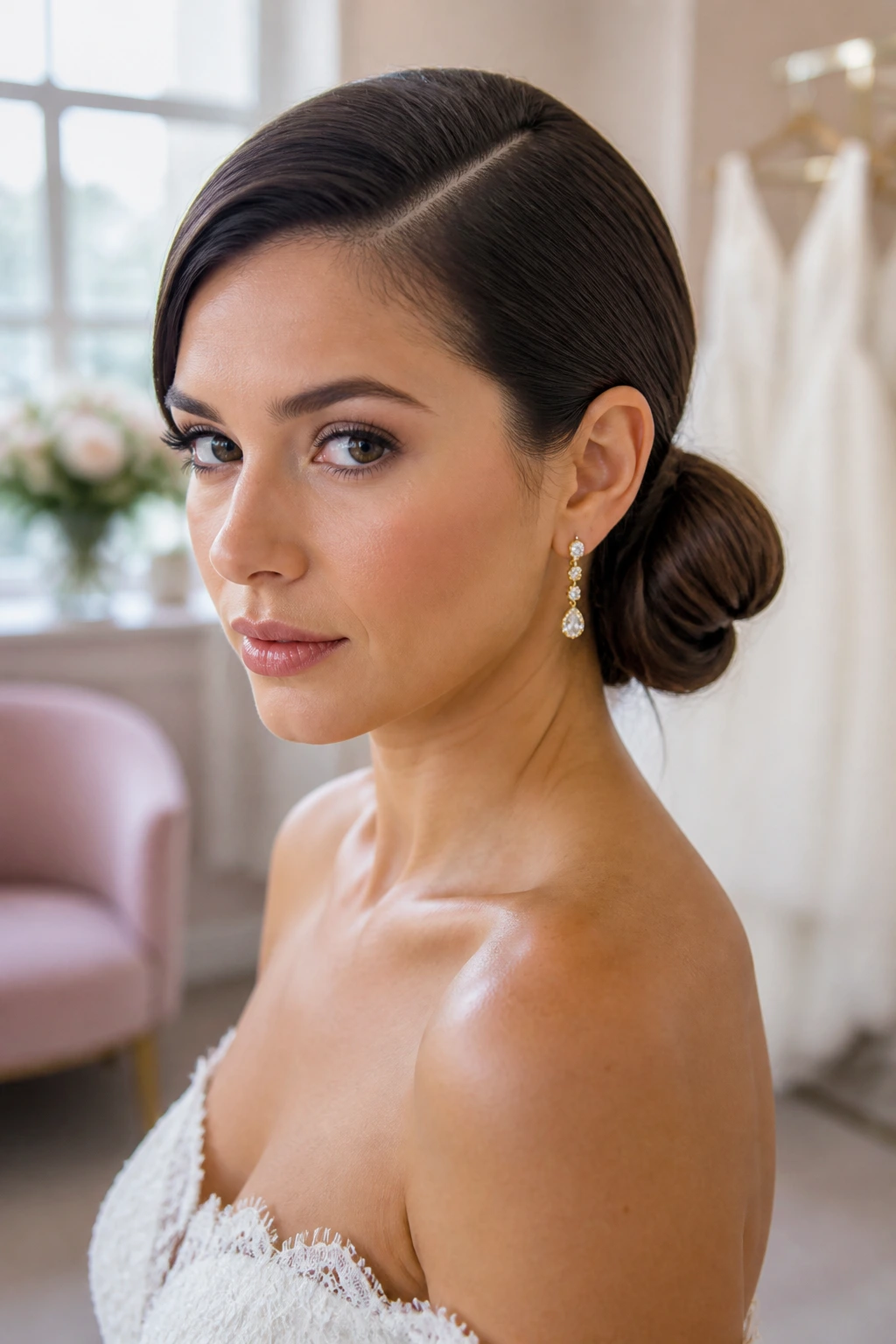
A deep side part changes the entire mood of straight hair. Add a sleek side bun, and suddenly the style has an angle, a little drama, and enough asymmetry to feel designed rather than routine.
This one works beautifully with gowns that already have strong lines—sharp lapels, sculpted straps, or a gown that leans modern instead of soft. The side part helps balance the face, while the bun keeps the back clean. If you want to show off a single statement earring, this is a strong move.
The bun itself should sit low and to the side, not perched awkwardly near the ear. That placement keeps the style elegant and practical. It also gives the veil or comb a slightly different landing zone, which can make the whole look feel more thoughtful. Straight hair loves symmetry, but sometimes a clean imbalance is more interesting.
17. Minimalist Down Style With Polished Ends
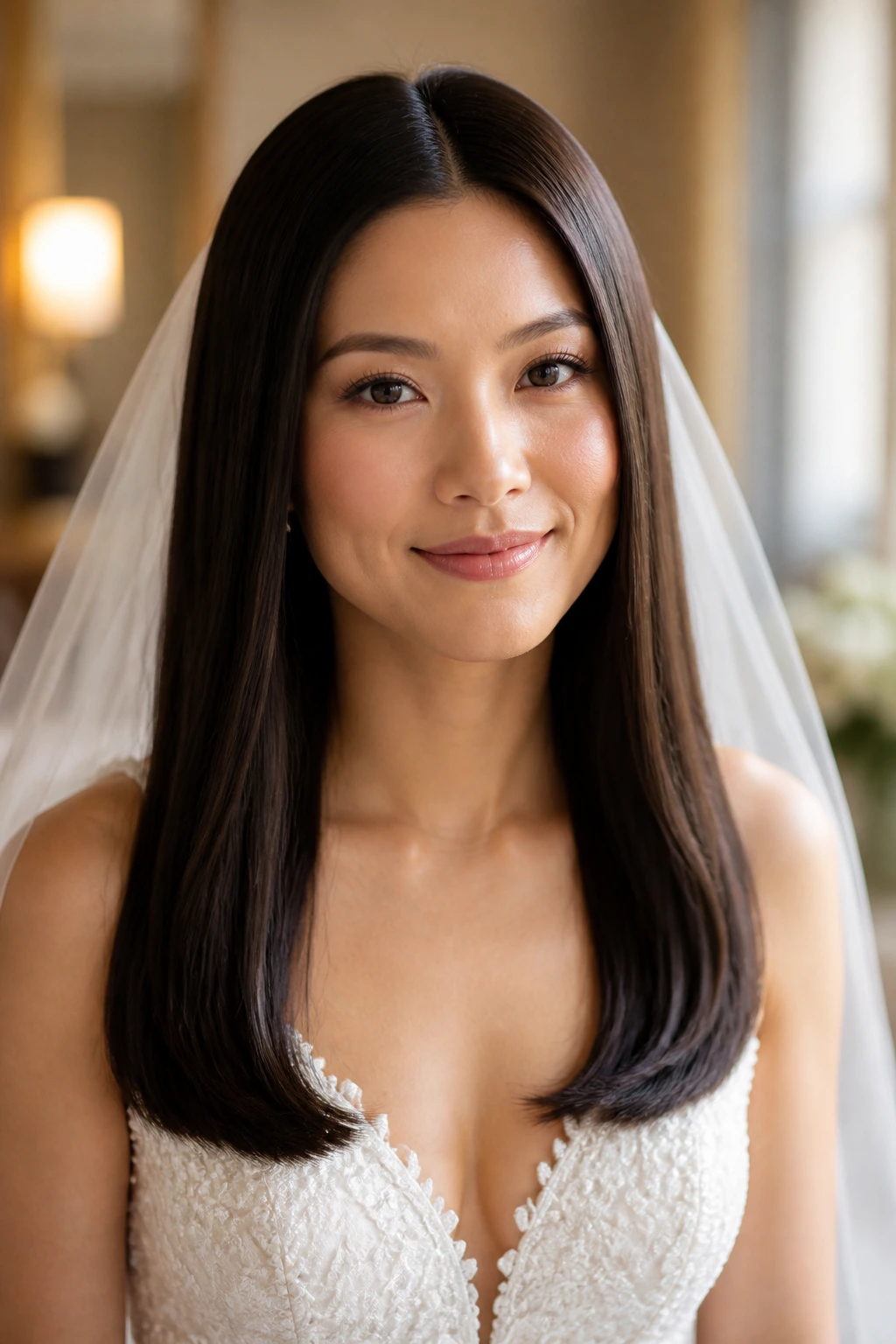
Sometimes the best answer is to leave the hair down and make it look as exact as possible. On straight hair, a minimalist down style can be very bridal if the finish is careful enough.
The part has to be clean, the ends have to look healthy, and the surface needs to be free of visible frizz. You’re not trying to create volume here. You’re trying to create calm. A little beveled bend at the ends keeps the shape from hanging too flat, and a narrow veil or a small comb can add the bridal cue without hiding the hair itself.
This is the look for brides who want to feel like themselves, not like a version of themselves that has been pinned into a shape they never wear. It’s also practical for outdoor ceremonies because there are fewer pins to shift and fewer places for humidity to ruin the outline. Simple. But not lazy.
18. Tucked Low Roll With Crystal Pins
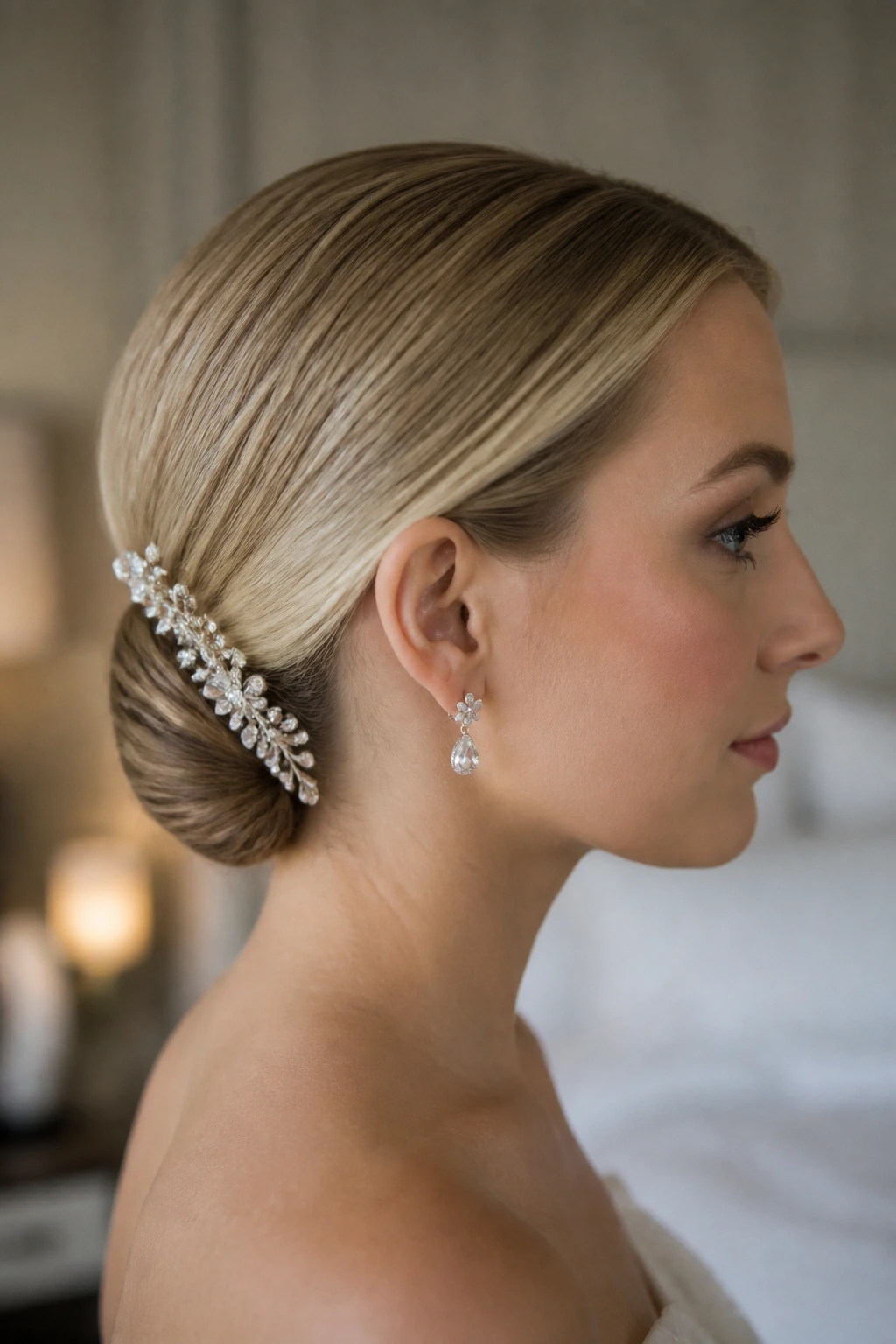
A tucked low roll looks old-fashioned in the best sense. It has that neat, polished finish that sits beautifully under a veil or beside a detailed collar.
Straight hair makes the roll crisp, which is part of the charm. The hair folds into itself along the nape, and the structure stays visible instead of getting swallowed by texture. Crystal pins can trace the edge of the roll or cluster at one side, depending on how much sparkle you want.
I like this style for brides who want something formal but not stiff. It feels more tailored than romantic, which can be a relief if your dress already has lace, beading, or a soft train. Keep the roll low and the shine controlled. Too much product, and the pins start looking greasy. Too little, and the fold loosens before the cake cutting.
19. Straight Hair With a Tiara and Center Part
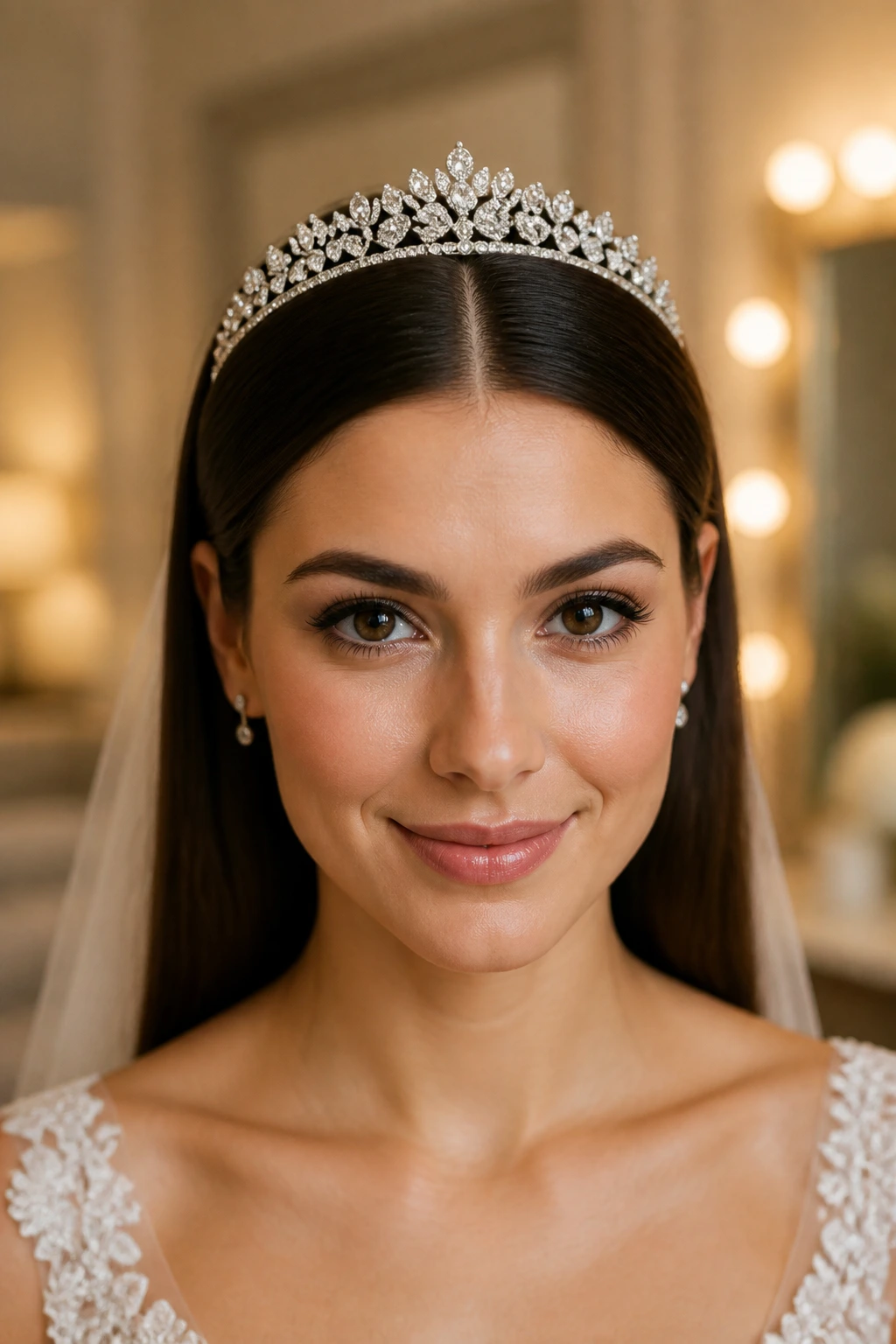
A tiara on straight hair can look far more modern than people expect, especially when the part is clean and the hair is smooth all the way down. The tiara gives height and ceremony; the straight hair gives it restraint.
The center part is what holds the whole thing together. It keeps the crown line balanced so the tiara doesn’t slide visually to one side. If the dress is classic, this is an easy way to lean into the formality without piling on curls or volume that may not suit you.
Keep the rest of the style simple. Softly tucked sides or straight lengths that fall neatly behind the shoulders are enough. The tiara should be the one dramatic element. Straight hair loves a single strong detail because it doesn’t need five things happening at once.
20. Rope-Twist Ponytail for Extra Grip
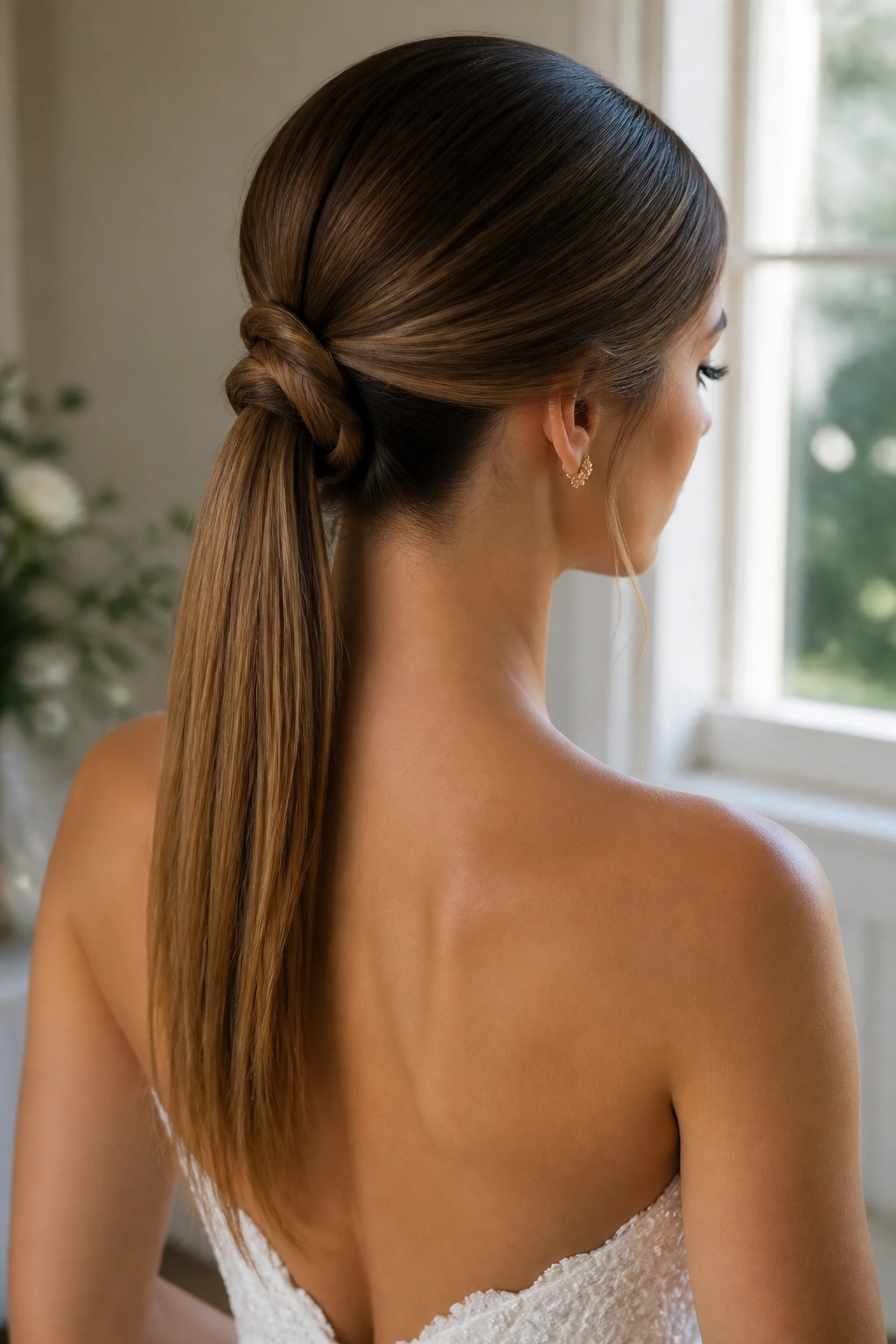
A rope-twist ponytail is one of those styles that looks more complicated than it is, which is a nice bonus on a wedding morning. Two sections are twisted around each other before the ponytail is secured, giving the style grip and a slightly sculptural feel.
On straight hair, that twist helps keep the lengths from sliding flat into a plain tail. It also gives the style a little more texture without relying on curls. If you have fine hair, this is a useful trick because the twist adds visual thickness at the base.
It’s best for brides who want polish with movement and don’t mind a slightly modern finish. A wrapped elastic and one hidden pin under the twist usually keep it steady. If the ponytail starts to feel too casual, a small crystal clip at the base can pull it back into bridal territory fast.
21. Classic Veil Drop With a Smooth Finish
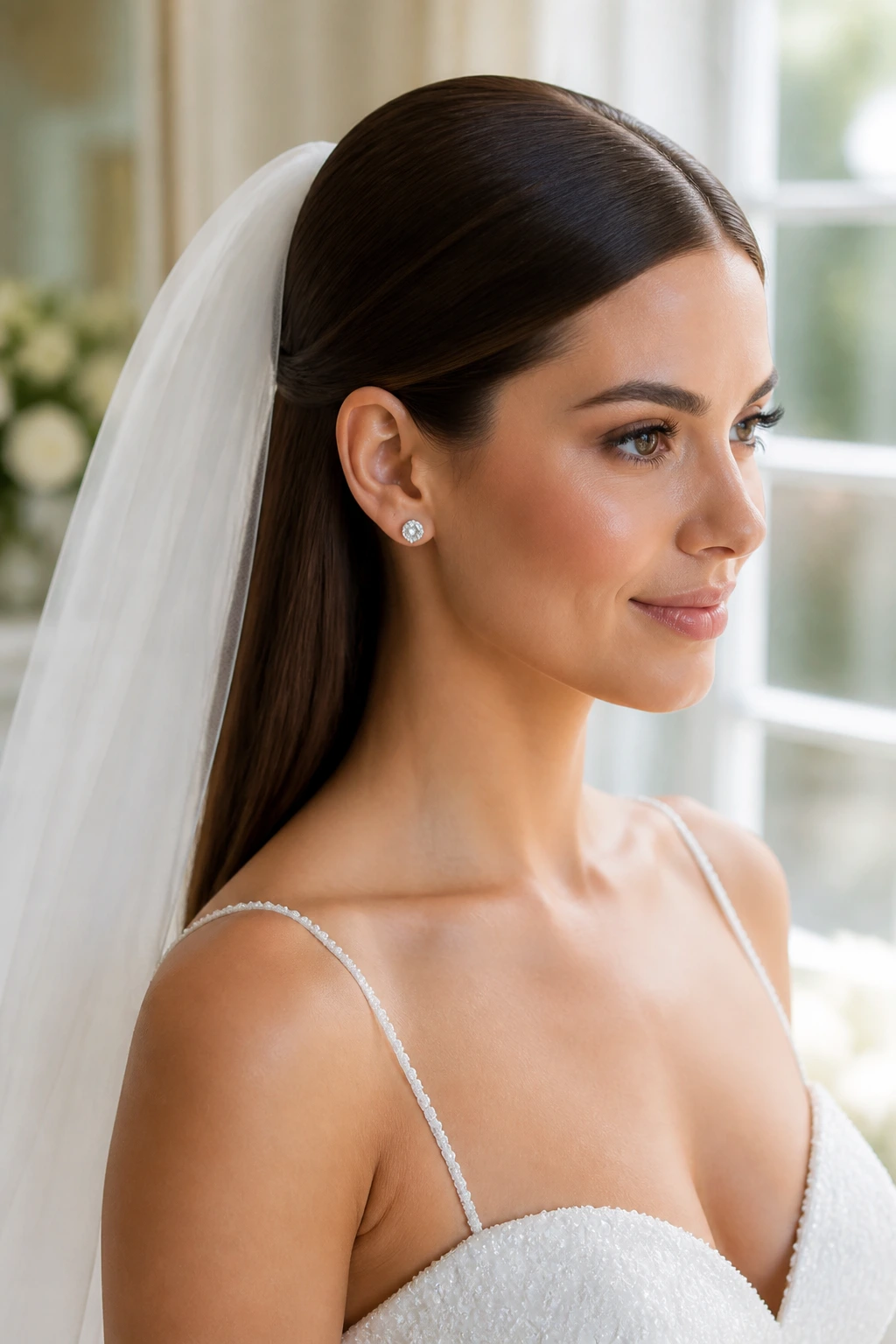
This is the most pared-back option in the group, and there’s a reason it keeps showing up. The hair stays smooth, the veil does the talking, and nothing competes with the line of the dress or the shape of the train.
The style underneath is usually a center part or a gently side-parted base with the hair tucked neatly behind the shoulders or into a low anchor point. The main job is to give the veil comb a secure home and keep the surface flat enough that the veil sits cleanly. Straight hair is excellent for this because it doesn’t fight the veil comb the way bulkier textures sometimes do.
If you want the dress, jewelry, and veil to lead, this is the quietest, smartest choice in the bunch. It doesn’t beg for attention. It doesn’t need to. The finish is the point.
How Straight Hair Holds a Wedding Style Best
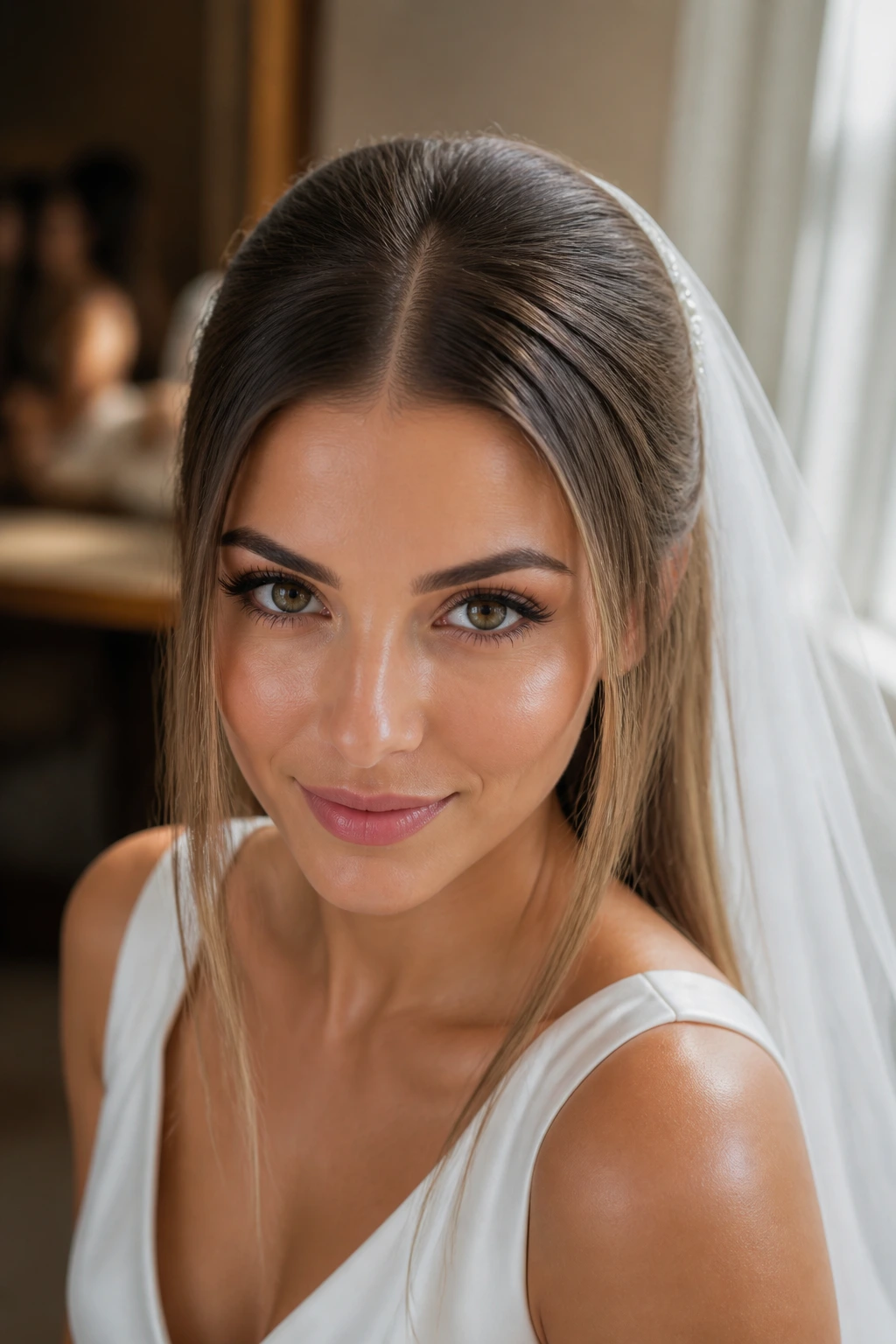
Straight hair usually needs grip before glamour. That sounds unromantic, but it’s the honest version of the story. If the surface is too silky, pins skate. If the roots are too clean, buns collapse. If the hair is overloaded with serum, every section looks separated in a bad way.
The sweet spot is a little texture at the base and a smooth surface on top. A lightweight mousse or root-lift spray before blow-drying helps more than slathering on heavy cream after the fact. Dry shampoo is useful even on clean hair because it creates a bit of friction, which makes bobby pins and combs behave.
A trial run matters more on straight hair than most brides expect. You can spot a small shift in the part, a weak pin, or a veil that sits too high almost instantly. That’s not because the hair is difficult. It’s because the finish is clean, so mistakes show up fast. A good stylist works with that instead of trying to bury it.
Tools and Products That Actually Help Straight Bridal Hair
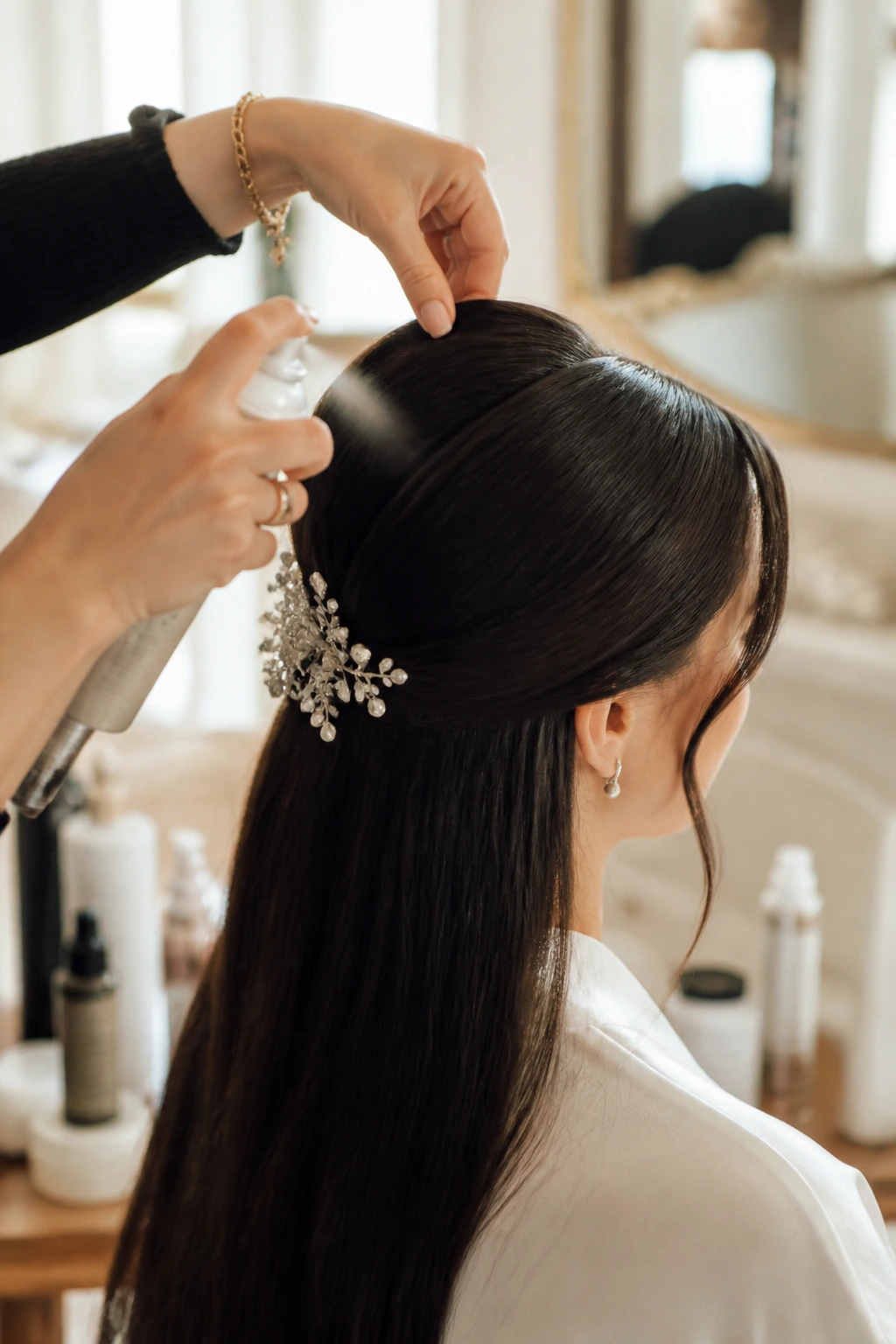
- Fine-tooth comb: Best for creating a crisp part and smoothing the crown before pinning.
- Boar-bristle brush or mixed-bristle brush: Helps distribute natural oils and tame flyaways without making the hair puff up.
- Blow-dryer with concentrator nozzle: Gives you directional control so the roots dry flat and smooth.
- Heat protectant spray: Keeps the surface from getting dry and fuzzy if you need a flat iron or bevel at the ends.
- Lightweight mousse or root-lift spray: Adds the grip straight hair needs without turning it sticky.
- Texturizing spray or dry shampoo: Useful at the roots and at pin points; it gives bobby pins something to catch.
- Strong-hold hairspray: Choose one that dries firm but not brittle, because touchable is better than crunchy.
- Bobby pins in your hair color: Stock more than you think you need. Straight hair often takes 10 to 20 pins for a secure updo.
- U-pins: Handy for buns and twists because they hold shape without leaving obvious marks.
- Silicone-grip elastics: Better than loose, shiny ties for ponytails and half-up styles.
- Veil comb or accessory clips: Worth testing with the hairstyle before the big day so the weight sits where it should.
- Mini touch-up kit: Include a travel hairspray, a few extra pins, and a small anti-frizz stick for emergency flyaways.
How to Match the Hairstyle to Your Dress, Veil, and Jewelry
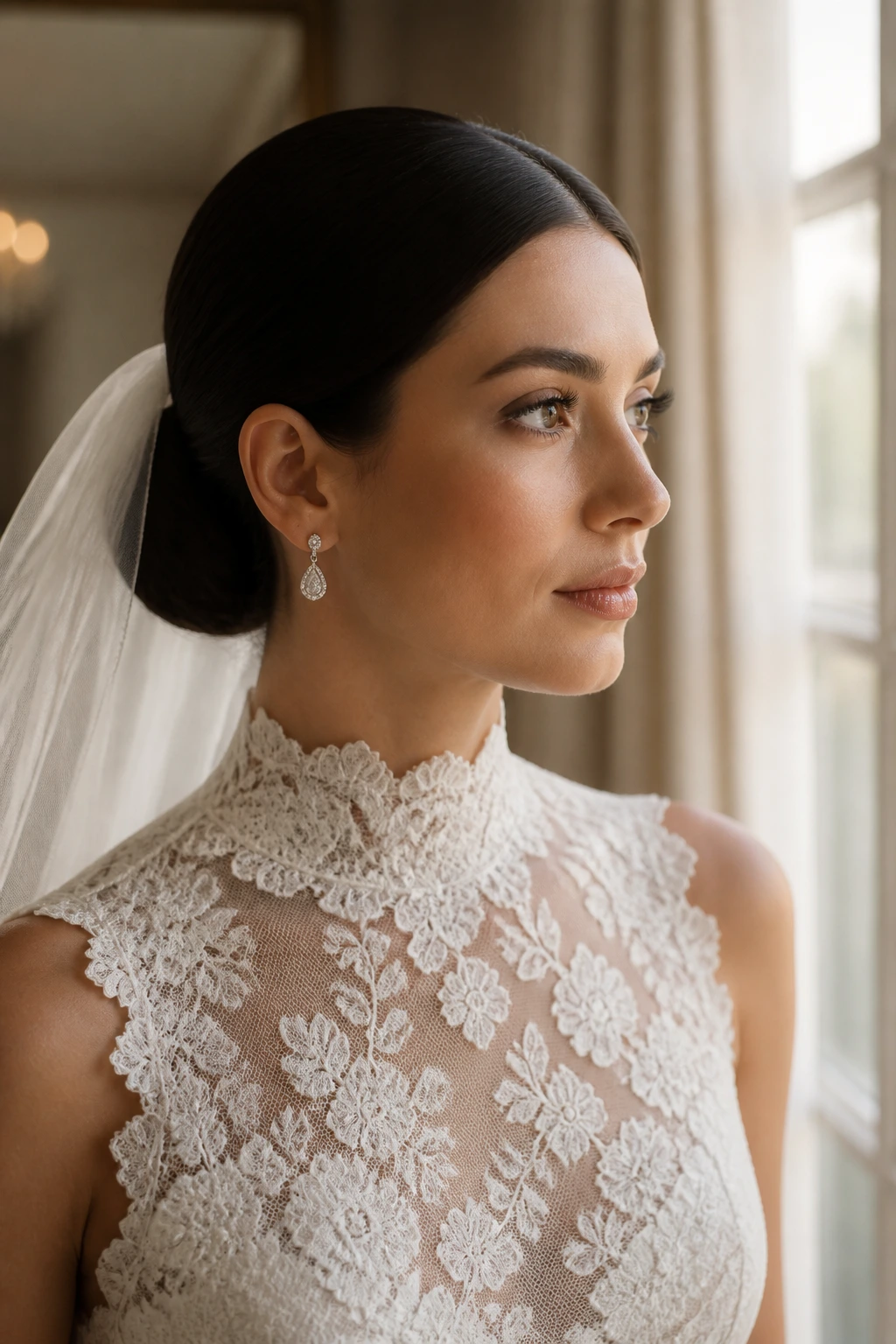
A high-neck dress usually asks for a style that keeps the neckline clear. That’s where low buns, tucked rolls, and sleek ponytails earn their keep. They leave the fabric visible and stop the whole look from feeling crowded near the face.
Open backs want a little more thought. If the back detail is the star, the hair should either sit very low or move off the shoulders altogether. That’s why a low chignon, a veil-friendly knot, or a lean ponytail often looks better than a bulky twist that covers the dress.
Veils are easier to work with when the crown stays smooth and the anchor point is secure. A bride wearing a heavy comb should avoid a style with too much cushioning at the crown, because the veil will shift as the pins settle. Attach the veil after the style is finished, not while the hair is still being adjusted.
Jewelry matters too. Big earrings usually want the hair back or tucked away. A statement comb wants breathing room. A tiara can carry the whole look if the hair underneath is quiet. Once you start looking at the outfit as one unit, straight hair becomes less about “what can I do?” and more about “what should I leave alone?”
Practical Tips for a Style That Lasts Until the Last Dance
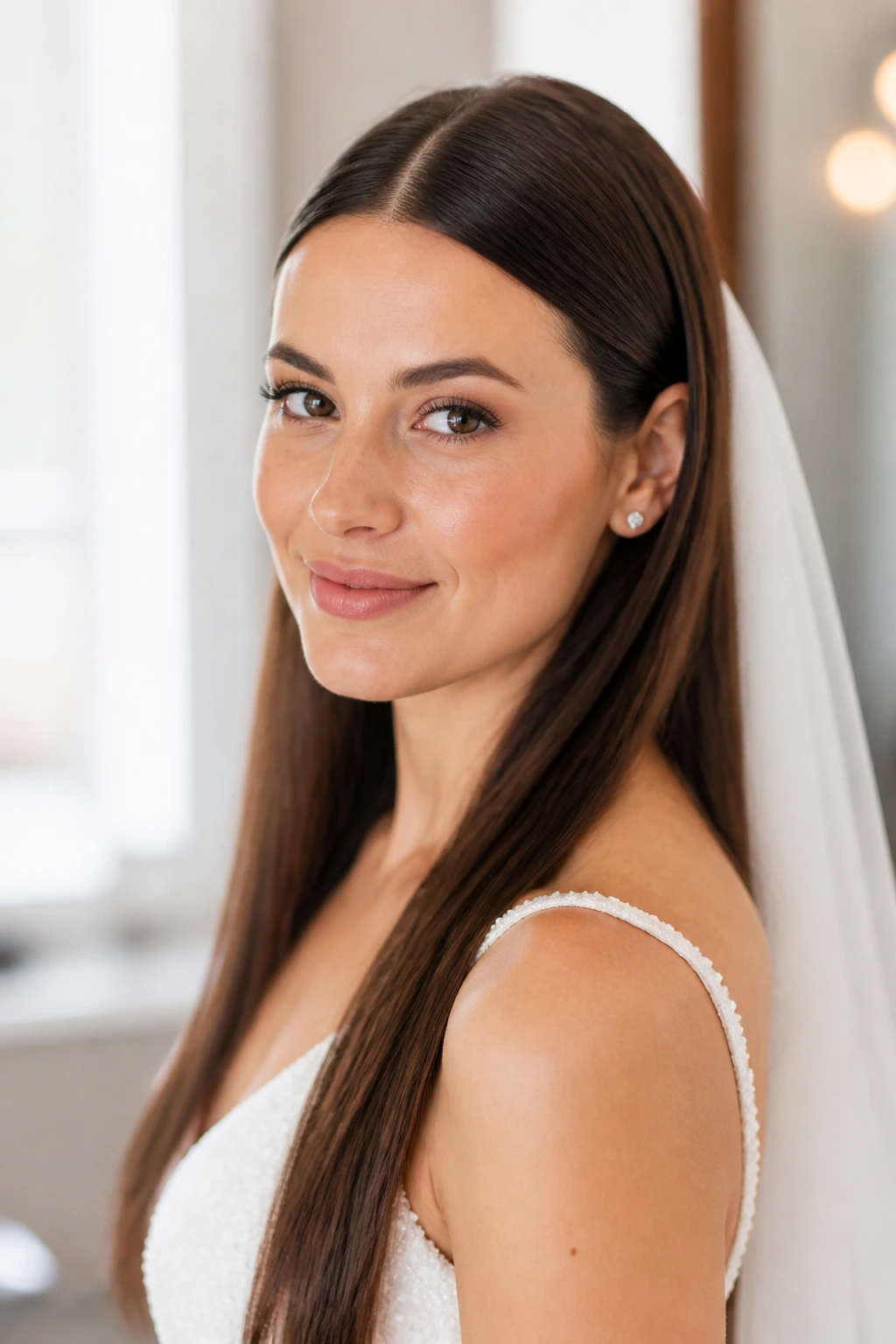
Grip Boost: If your hair is slippery, your stylist can mist the roots with dry shampoo or texture spray before the first pin goes in. That tiny bit of friction changes everything, especially around the nape and behind the ears.
Shine Control: Use serum only on the mid-lengths and ends. If it touches the roots, the hair can separate and look oily under bright indoor light, which is a miserable thing to notice in photos.
Pin Strategy: Cross two bobby pins over each other wherever a comb, bun, or twist feels loose. Straight hair often needs structure under the surface, not just on top.
Touch-Up Kit: Keep a small packet with 6 bobby pins, 2 U-pins, a travel spray, and a mini comb. Hand it to someone in the wedding party who knows where your hairline usually frizzes first.
Photo Fix: If the front sections start to bend awkwardly, smooth them with slightly damp fingers and a tiny amount of cream rather than re-spraying the whole head. Too much hairspray late in the day can make the hair look dusty.
Common Mistakes Brides Make With Straight Hair
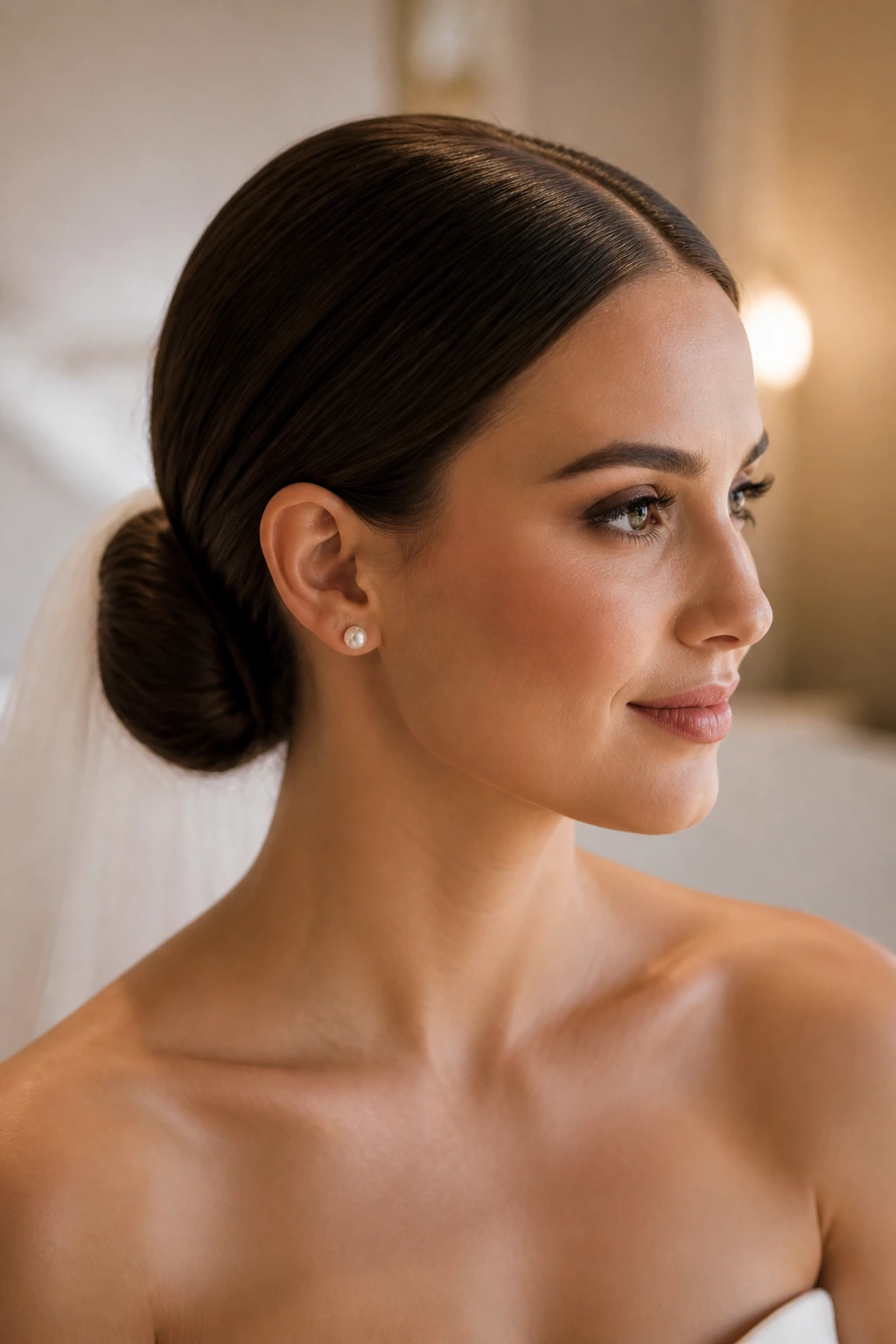
One of the most common mistakes is making the hair too slick at the roots. The style may look gorgeous for ten minutes, then the pins start sliding because there’s nothing for them to grab. If your hair is naturally fine or soft, it needs some texture before it can hold a bun or twist properly.
Another mistake is choosing a style that fights the dress. A heavy crown of volume under a fitted collar looks awkward fast. Straight hair is at its best when the silhouette matches the outfit, not when the hairstyle competes with it.
Brides also tend to overdo the product. A thick layer of serum, cream, and spray can make straight hair look separated and greasy instead of glossy. Use smaller amounts and build slowly. You can always add a little more; you can’t take product back out once it’s sitting on the strand.
The last big miss is skipping the trial run with the actual veil or accessory. A style that looked perfect in the salon can collapse once the comb is added or the pin placement changes. Test the whole package. Hair, veil, earrings, neckline, all of it. The tricky part is not the style itself. It’s how the style behaves once the rest of the outfit joins the party.
Variations for Different Lengths, Textures, and Vibes
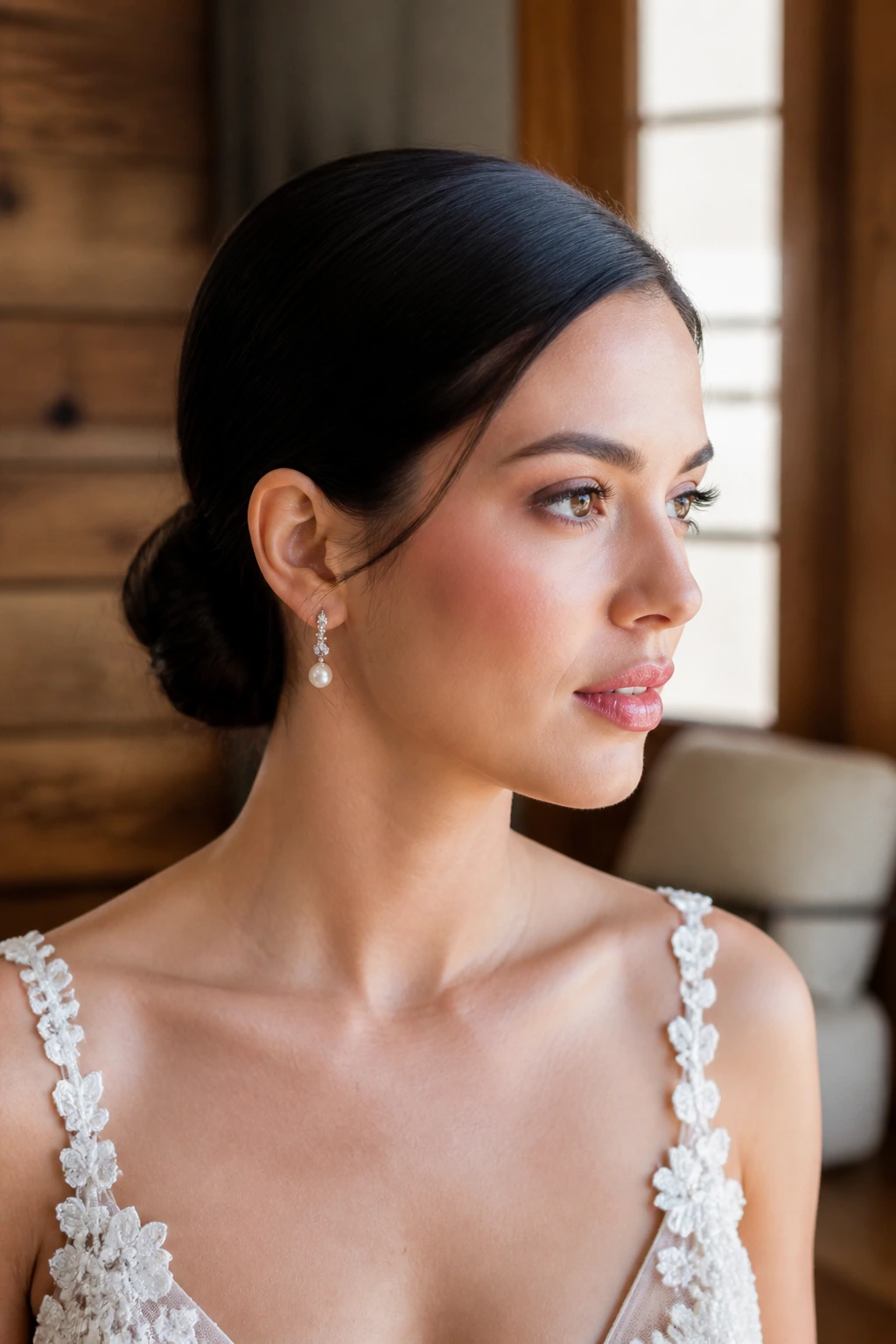
Fine-Hair Rescue: If your straight hair is silky and flat, start with root-lift spray and a light powder at the crown. Low buns, rope-twist ponytails, and tucked rolls usually hold better than loose half-up styles because they give the pins more structure to bite into.
Thick-Hair Control: Dense straight hair often needs more sectioning and more pins than you’d expect. A French twist, veil-friendly knot, or side bun can contain the weight better than a high ponytail that strains the elastic.
Lob-Length Bride: Shoulder-length straight hair looks sharp in a blunt finish, a tucked bob, or a half-up with small pearl pins. The trick is to make the cut look deliberate, not like a style that ran out of length halfway through.
Minimalist Ceremony Look: If you want almost no visible styling, go for a center part, polished lengths, and one accessory—either a veil or a comb, not both. Straight hair does quiet elegance well when the surface is clean and the ends are shaped.
Reception Switch-Up: A low bun for the ceremony and a high ponytail or down style for the reception gives you two different moods without a full restyle. That change matters if you want the hair off your neck while you’re dancing.
Soft Romantic Finish: Add thin face-framing pieces, a twisted half-up, or a narrow braid at the crown. Keep the texture controlled so the look stays bridal rather than loose and accidental.
Make-Ahead Trial Runs and Wedding-Morning Timing
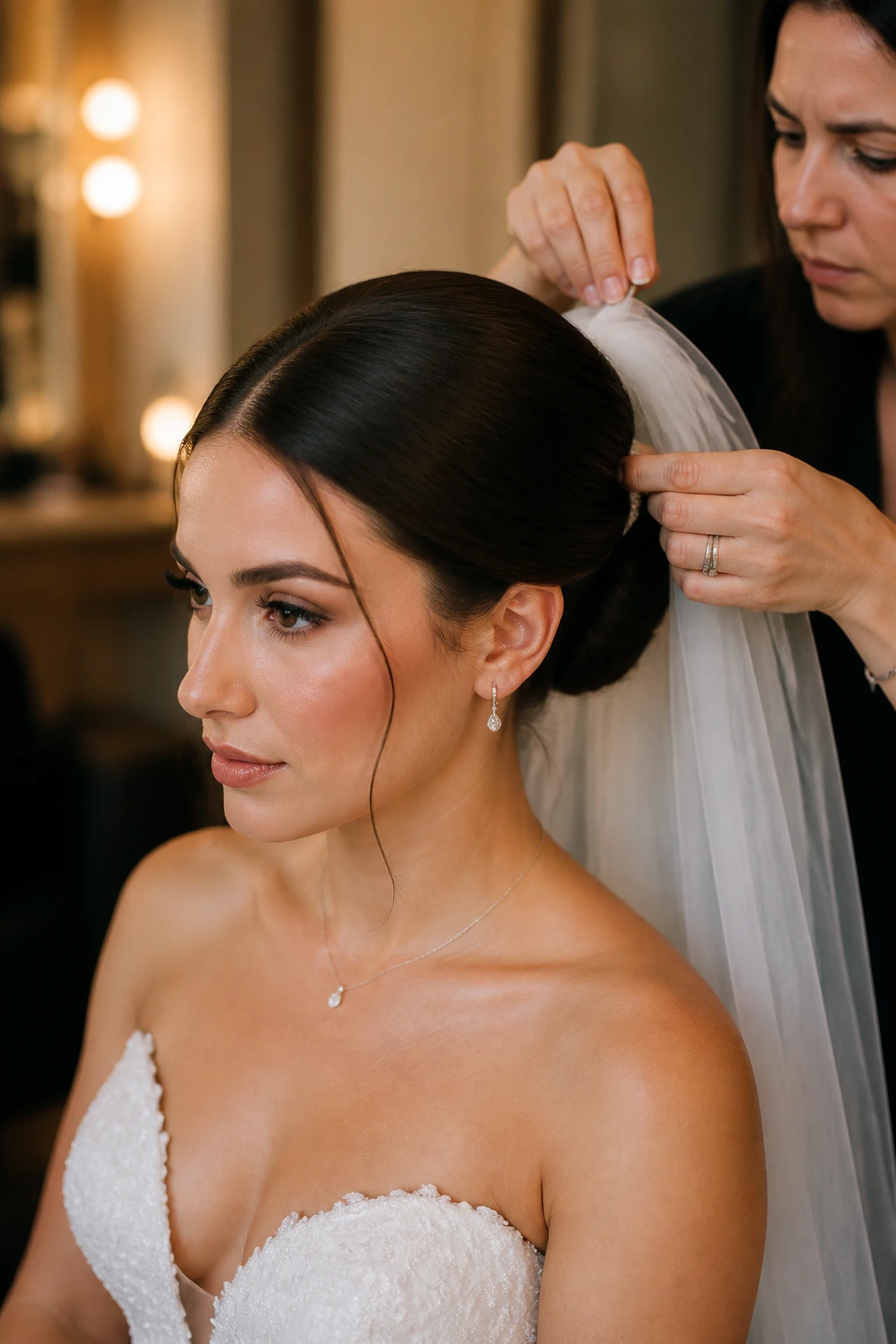
The trial should happen with the real accessories. Not something similar. The real comb, the real veil, the actual earrings, the whole set. Straight hair can shift even when the style looks perfect in isolation, and the trial is where you find out whether the veil sits too far forward or the side part needs to move a finger’s width.
If your ends need a trim, do it before the trial, not after. A blunt or beveled edge changes the shape of straight styles more than people realize. The same goes for color glossing, if you do that sort of thing. Anything that changes the surface should happen before the style is tested.
On the wedding morning, timing depends on the style. For sleek buns, ponytails, and French twists, many stylists prefer hair that’s clean but not newly washed, because second-day or lightly prepped hair gives better grip. For a minimalist down style, freshly washed hair can work if it’s blown out fully and cooled before styling. The real rule is simple: whatever you do, let the hair dry completely before pinning or smoothing. Damp roots are a bad surprise waiting to happen.
The veil should go in after the style is set, not in the middle of the process. Once the base is secure, the veil comb can be anchored into a hidden cross of pins. That little step keeps the comb from sliding and saves you from tugging at the hair ten minutes before photos.
Frequently Asked Questions
What wedding hairstyle works best for brides with straight hair?
The safest bets are low buns, sleek ponytails, French twists, and polished half-up styles. They use the natural smoothness of straight hair instead of asking it to fake texture it doesn’t naturally have.
Should I curl straight hair for my wedding?
Not unless you actually want curls. Straight hair can look more refined left sleek, and forcing waves into it sometimes makes the style collapse faster than a clean low bun would.
How do I keep straight hair from slipping out of pins?
Your stylist should prep the base with dry shampoo, texture spray, or a little powder before pinning. Cross-pinned bobby pins and U-pins also help more than one lonely pin stuck in from the side.
Can I wear a veil with a ponytail or low bun?
Yes, and both can be excellent choices. The veil just needs to be anchored after the hairstyle is finished, with enough hidden support under the comb so the weight doesn’t drag the style down.
Is second-day hair better for straight bridal styles?
Often, yes, especially for buns, twists, and ponytails. Second-day hair usually has a bit more grip, which is useful if your strands are soft or fine. Very dirty hair is another story, though—that can look dull and hard to smooth.
What if my straight hair is fine and goes flat fast?
Start with root-lift spray, dry shampoo, or a light mousse, and lean toward styles that are pinned close to the head. Half-up looks, low knots, and rope-twist ponytails usually hold better than loose, airy shapes.
Can short straight hair still look bridal?
Absolutely. A blunt lob with a polished bend, a tucked faux bob, or a statement comb can look elegant without adding fake volume. Straight short hair often looks strongest when it’s kept clean and intentional.
How do I stop flyaways from showing in photos?
Use a tiny amount of smoothing cream on the surface and a toothbrush-sized spoolie with hairspray for the hairline. Don’t drown the whole head in spray. That usually makes the flyaways worse, not better.
A Clean Finish
Straight hair can feel unforgiving on a wedding morning, but that same honesty is what makes it so good when the style clicks. A tidy bun stays tidy. A sharp ponytail stays sharp. A part that lands exactly where it should gives the whole face a calmer frame, and that calm matters more than extra fluff ever will.
The best looks in this set are the ones that let straight hair behave like itself—smooth, glossy, controlled, and deliberate. Pick the shape that suits the dress first, then build the hair around that decision. That order saves a lot of second-guessing, and it usually leads to a style that still looks right after the ceremony, the photos, the dinner, and the last dance.
