



Long hair gives ombre room to move. On a bob, the fade has to do all the work; on hair past the shoulders, the color can drift from root to tip like smoke, ribbon, or melted sugar depending on the tone. That extra length is the reason some ombre looks feel rich instead of obvious.
The trick is restraint. A long ombre looks best when the darker area stays honest and the lightest color lives where the hair can actually carry it — usually the last third, sometimes the last four inches, sometimes a few face-framing pieces that sneak in early. Push the lightness too high and the whole thing starts to look stripey. Keep it lower and the length does the selling for you.
There’s a lot of room to play here, which is rare and useful. Brunettes can slide into caramel, ash, or champagne. Redheads can lean copper, apricot, and strawberry. Fantasy shades can sit on the ends without taking over the whole head. Long hair makes the gradient feel deliberate, and that’s why the best ombre hair looks for long hair don’t scream for attention — they keep pulling your eye down the shaft, inch by inch.
Why These Ombre Hair Looks Work So Well on Long Hair
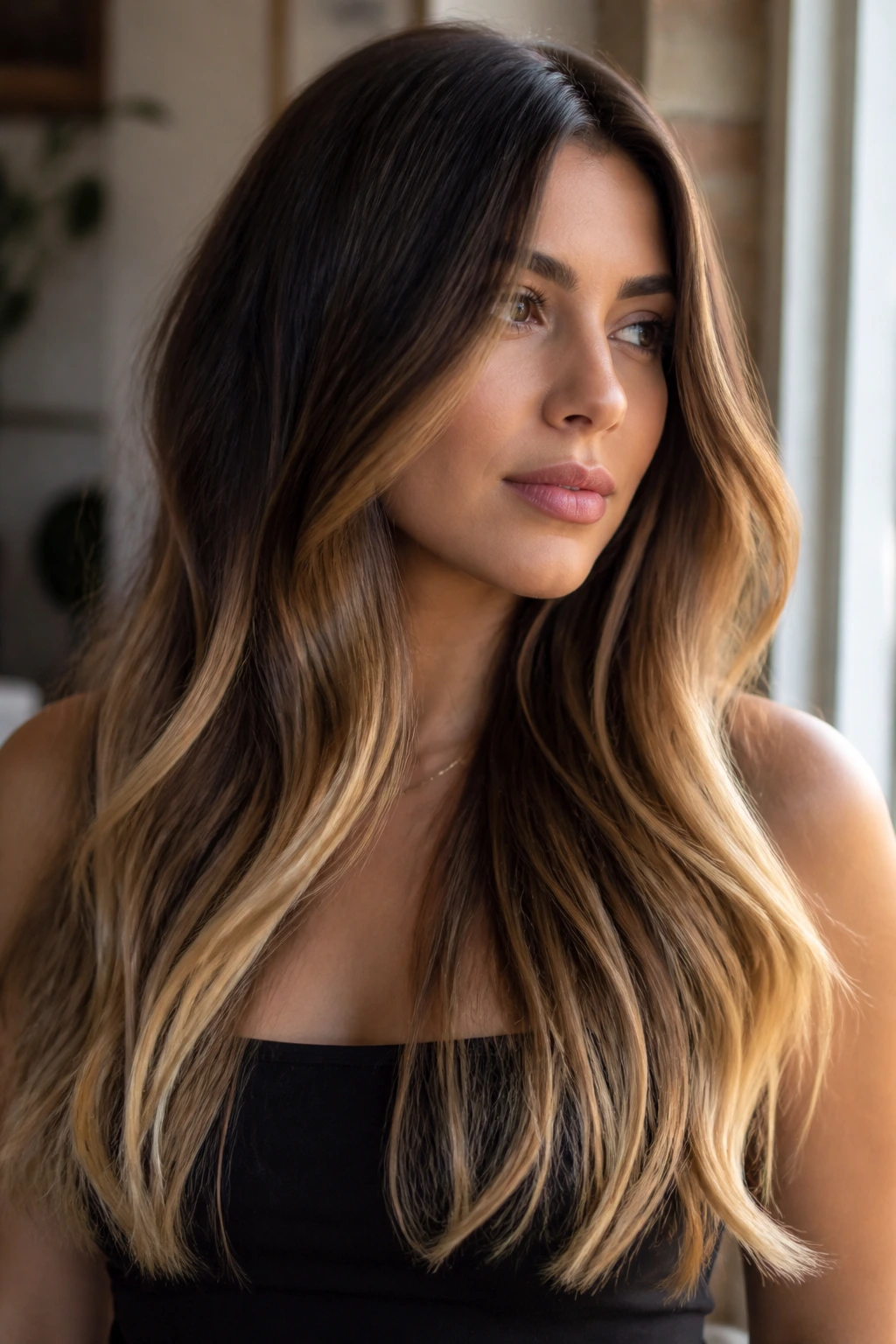
Room to stretch: Long hair gives the colorist space to build a fade instead of stacking two shades side by side. That extra length is what keeps the transition from looking blunt.
Better grow-out: A shadowed root on long hair can sit quietly for weeks because the eye is traveling through more color before it reaches the ends. The regrowth line matters less when the gradient has enough distance.
More ways to place brightness: The same caramel end color can read soft on a waist-length wave, sharper on a straight blowout, and almost honeyed on curls. Length lets the finish change with styling.
Less pressure to go blonde all over: You can get a visible payoff from just 2-4 levels of lift on long hair. That means less damage, less toner drama, and fewer moments where the ends turn into chalk.
Works with layers and bends: Long layers catch ombre in motion. A blunt finish can make the fade look heavy, but a few shorter pieces at the front help the lighter shade show up before you even turn your head.
1. Soft Caramel Melt on Chestnut Lengths
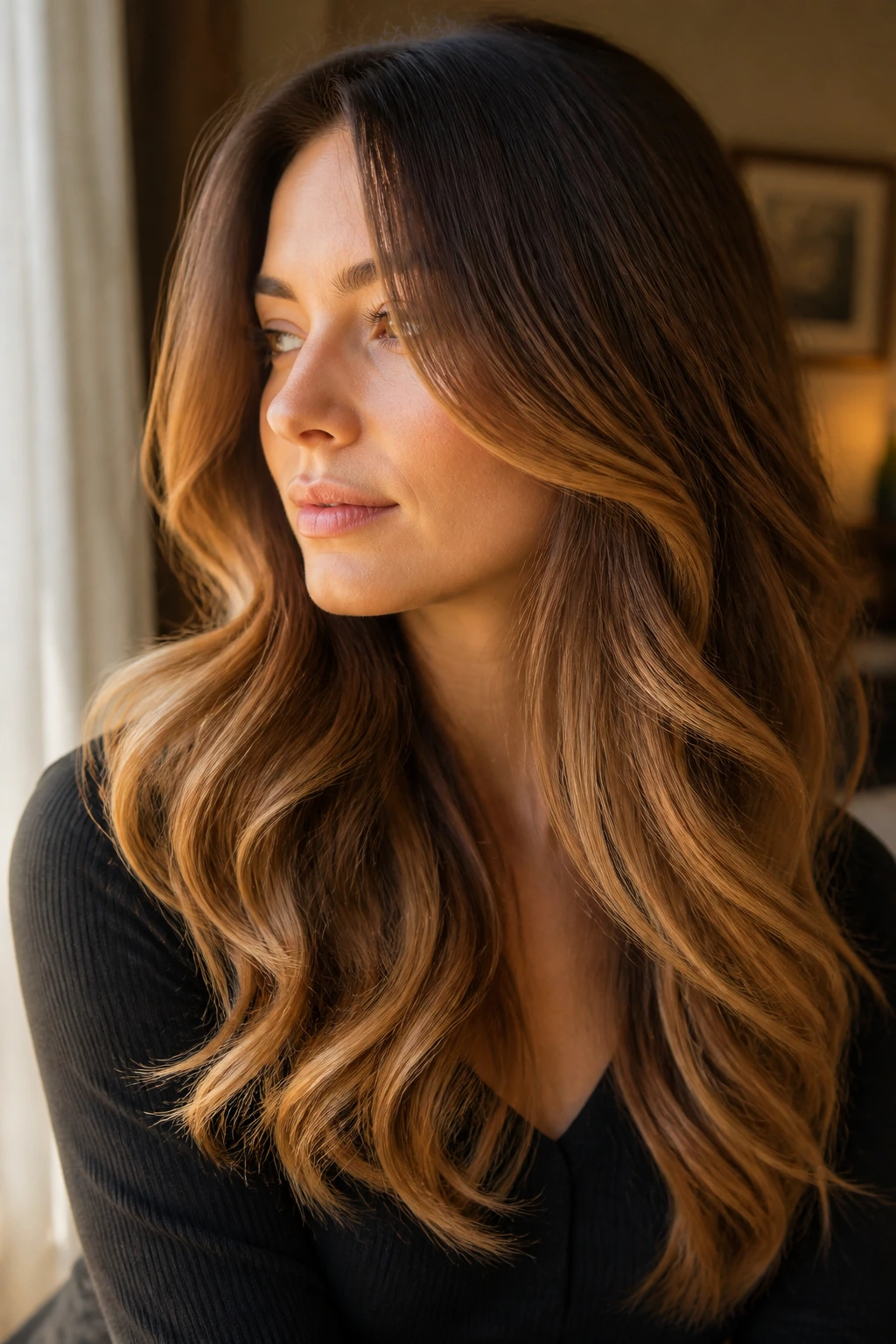
A soft caramel melt is the ombre I’d hand to someone who wants movement without a loud color jump. Chestnut at the top, caramel through the mids, toasted beige at the last few inches — that’s the whole story, and it reads clean on hair that falls past the ribs.
The best version starts the lightening low, usually below the collarbone on long hair. That keeps the gradient from eating the length, which is the mistake people make when they ask for “just a little ombre” and end up with half their hair looking frosted.
Loose waves make the caramel shimmer, but straight hair works too if you want the fade to look smooth and polished. Ask for a warm gloss at the end so the caramel stays rich, not orange.
2. Espresso-to-Mocha Gradient for Minimal Contrast
This one is for people who want the idea of ombre without the drama. Espresso near the roots, mocha through the mids, and only a barely lighter finish at the ends keeps the whole head looking dense and glossy.
Long hair makes this look stronger, not weaker. On shorter hair, low-contrast ombre can vanish; on long lengths, the subtle shift reads as expensive depth instead of “I forgot to make a choice.”
If your natural color is already dark brown or soft black, this is a smart lane. It grows out quietly, and the finish still gets dimension when you curl the ends or add a little bend through the lower half.
3. Chestnut to Honey Sweep
Chestnut to honey is warmer and brighter than caramel, and that warmth is exactly why it works on long hair with a little wave. The honey starts showing through around mid-length, then deepens toward the ends so the hair catches light in broad, soft bands.
This is a good pick if your skin leans warm or neutral, but it can be adjusted with a beige gloss if you don’t want the whole look to feel golden. The goal is shine, not brass.
I like this one on layered cuts because the shorter pieces around the face show the honey before the longest ends do. It gives the color a little head start.
4. Mushroom Brown to Beige Blonde Fade
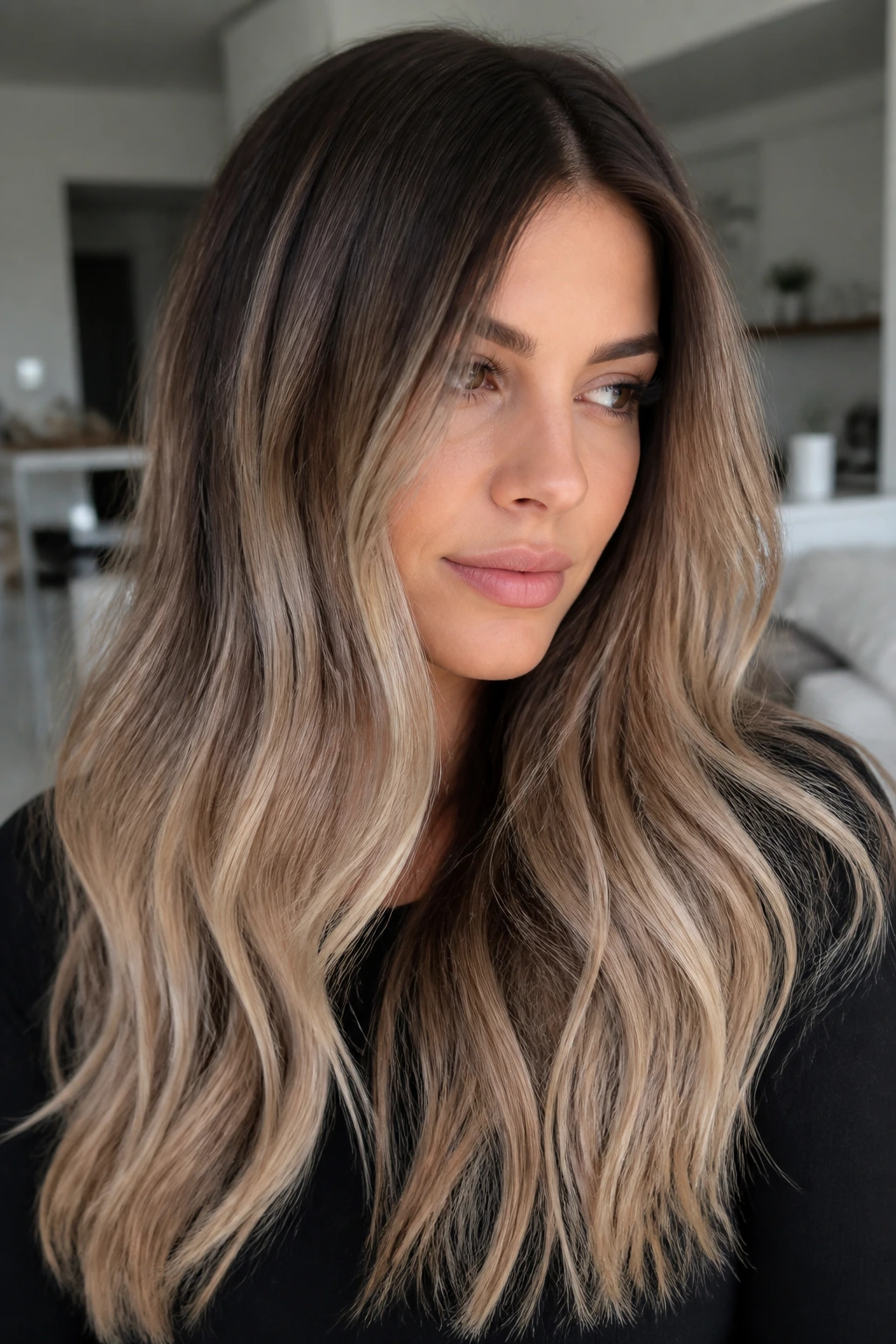
Cool-toned ombre on long hair needs space, and mushroom brown to beige blonde gives it exactly that. The root stays ashy and grounded, the mids soften into taupe, and the ends land in a creamy beige that looks clean rather than yellow.
The important part is the transition. Cool blonde on porous ends can grab toner too dark, so the fade should be built in slow steps instead of one big jump. Long hair gives you room to do that.
This look is sharp on straight hair and a little softer on brushed-out curls. If you’ve ever wanted a blonde finish that doesn’t turn sunny or gold, this is the lane.
5. Ash Brown to Silver Smoke Ends
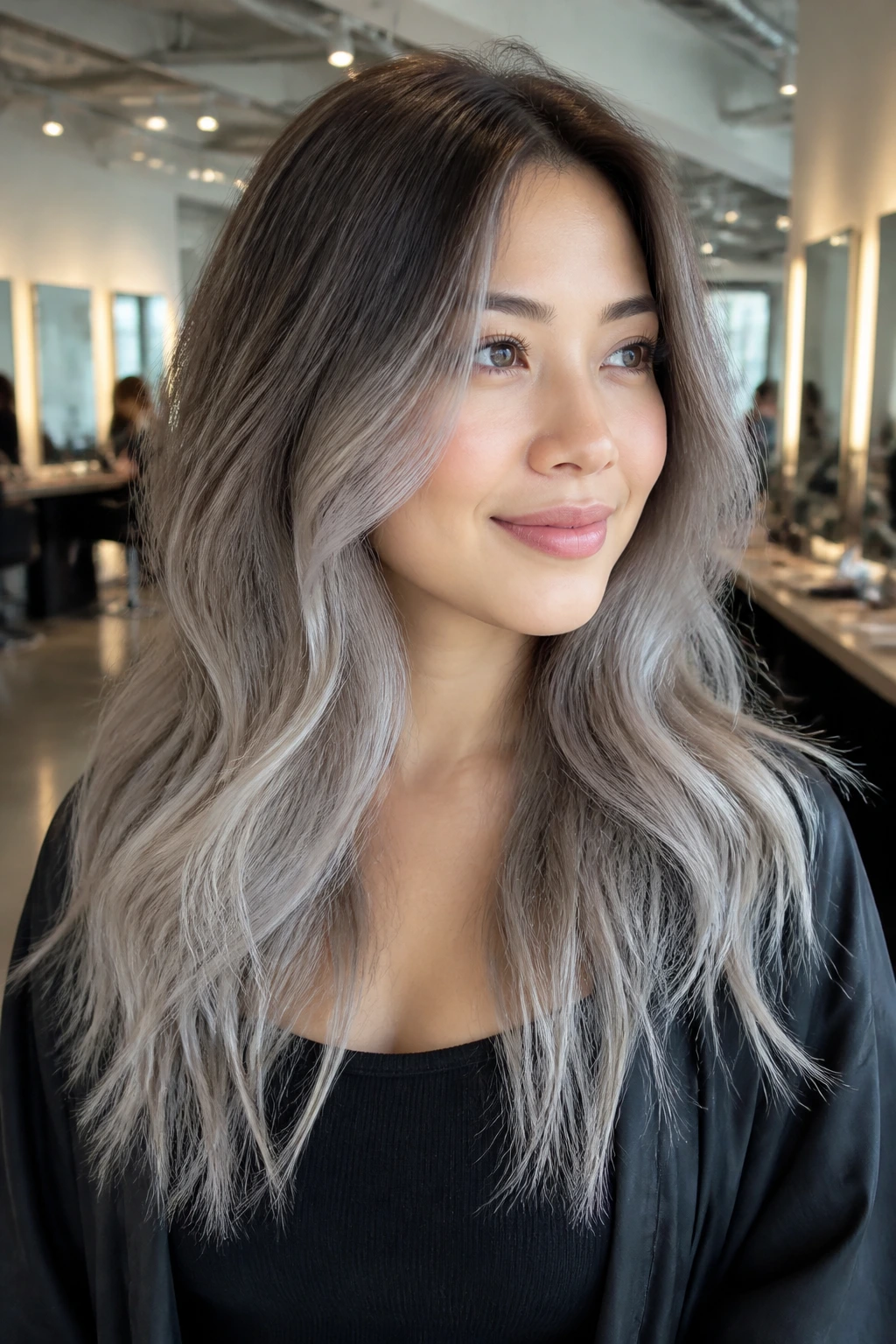
Ash brown to silver smoke is one of those long-hair ombre looks that looks expensive because it refuses warmth. The base stays earthy and cool, then the last stretch turns smoky gray-beige, almost like metal seen through mist.
You need enough lift here for the silver to show without going translucent. On long hair, that usually means the lightest ends should sit at the very bottom rather than halfway up the shaft, or the whole thing can start to look dusty.
Best worn with a sleek blowout or loose bends. The shine makes the cool tones read intentional, not flat.
6. Dark Chocolate to Toffee Ribbon Ombre
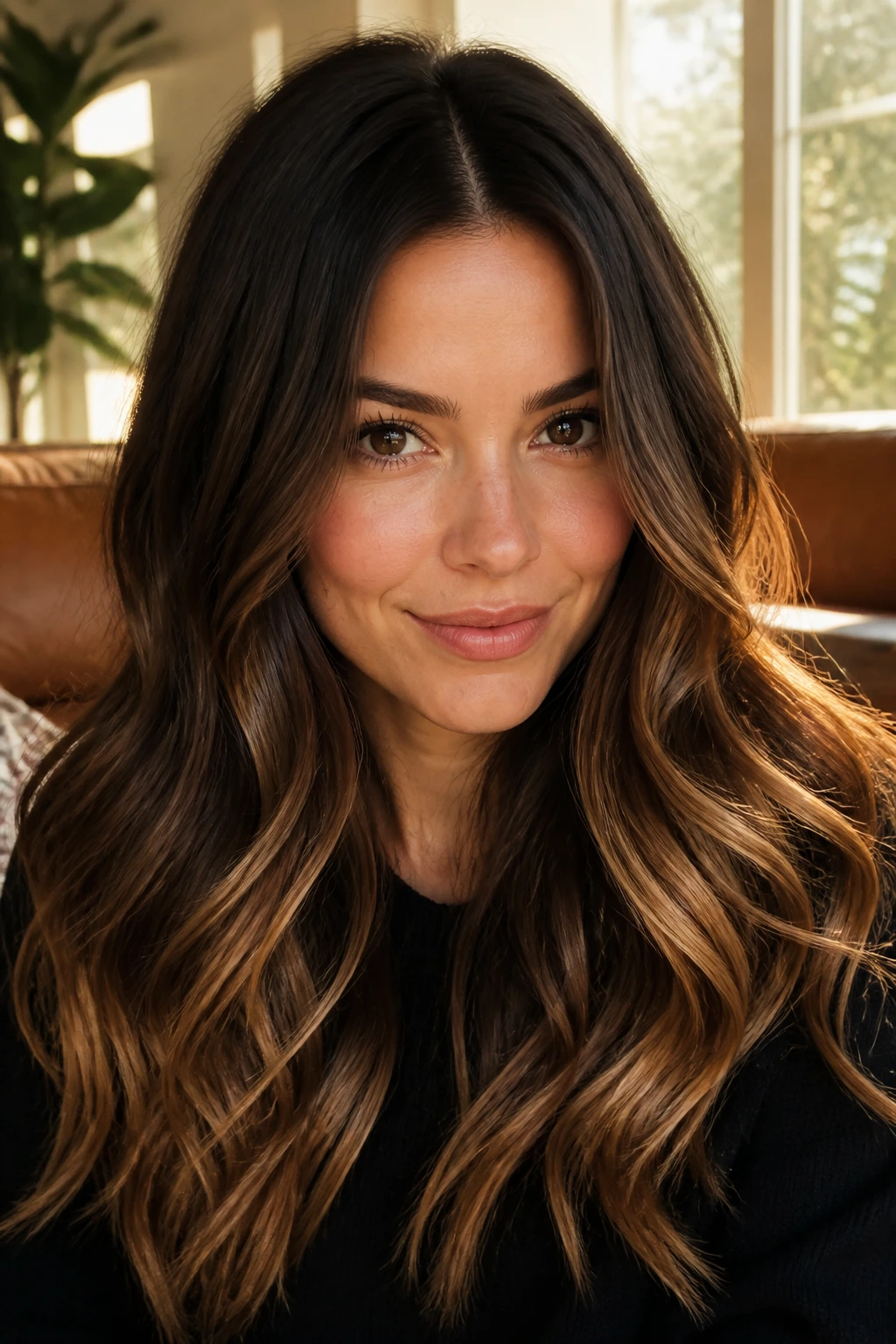
Dark chocolate to toffee is richer than a simple brown-to-blonde fade. The trick is ribboning the toffee through the lower half instead of painting one solid lighter block at the ends.
That scattered placement matters on long hair because the movement keeps the toffee from looking heavy. Every layer catches a little different piece of light, which is what keeps the color alive when the hair swings.
If you wear your hair in braids or half-up styles, this look pops even more. The lighter ribbons peek through in little flashes, and that’s the part people notice first.
7. Bronde to Champagne Blonde
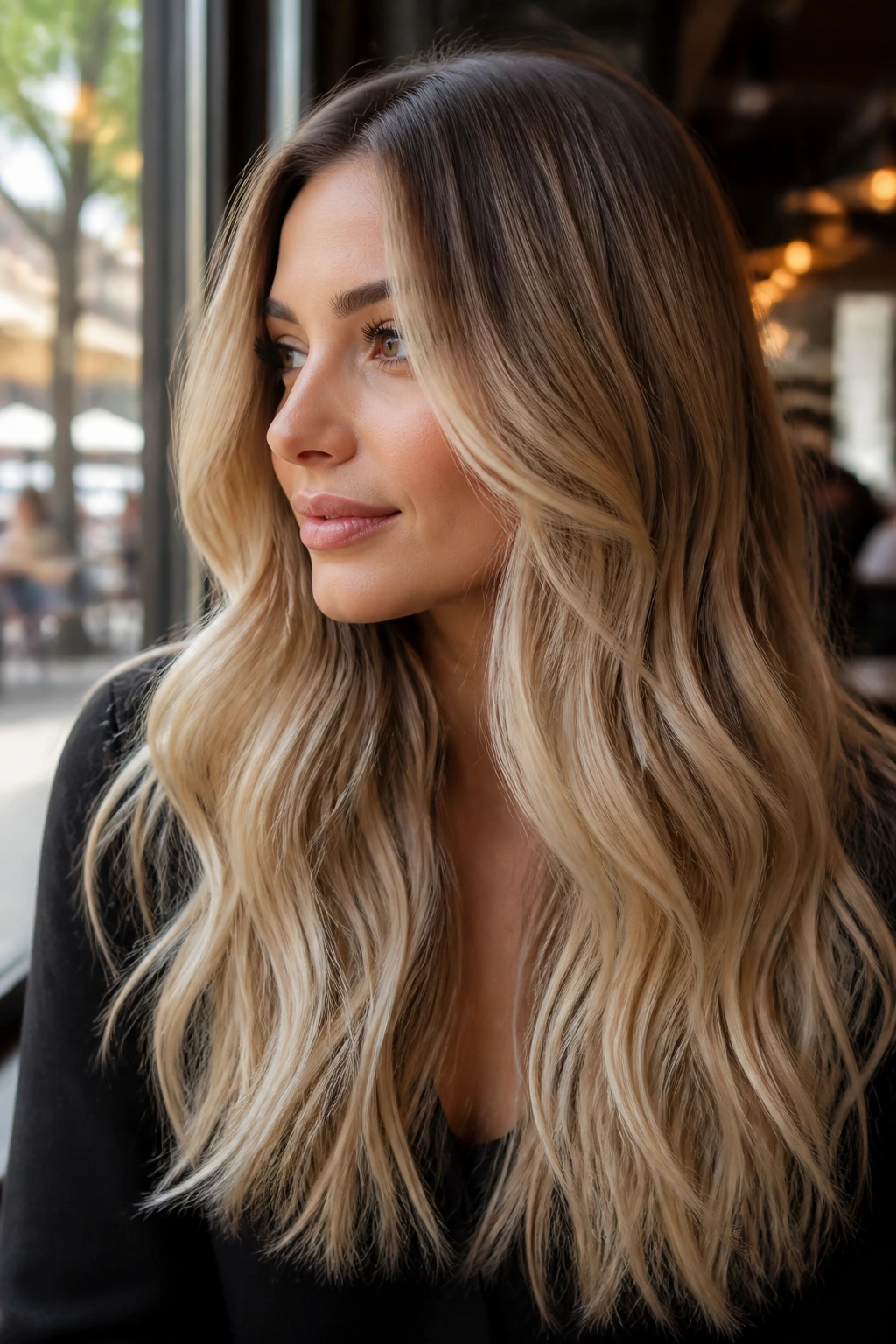
Bronde to champagne blonde sits in the sweet spot between brunette and blonde. The root and mids stay muted, then the ends turn soft, pale, and slightly pearly — not icy, not yellow, not too warm.
Long hair gives champagne room to breathe. On shorter hair, it can feel too abrupt. On hair that falls below the shoulders, the fade gets a chance to soften before the lightest tone appears.
It’s a smart choice if you want lighter hair without losing the darker base that makes long lengths look full. The contrast is enough to show up in photos, but not so strong that you’ll panic at every root grow-out.
8. Black to Smoky Blue Ends
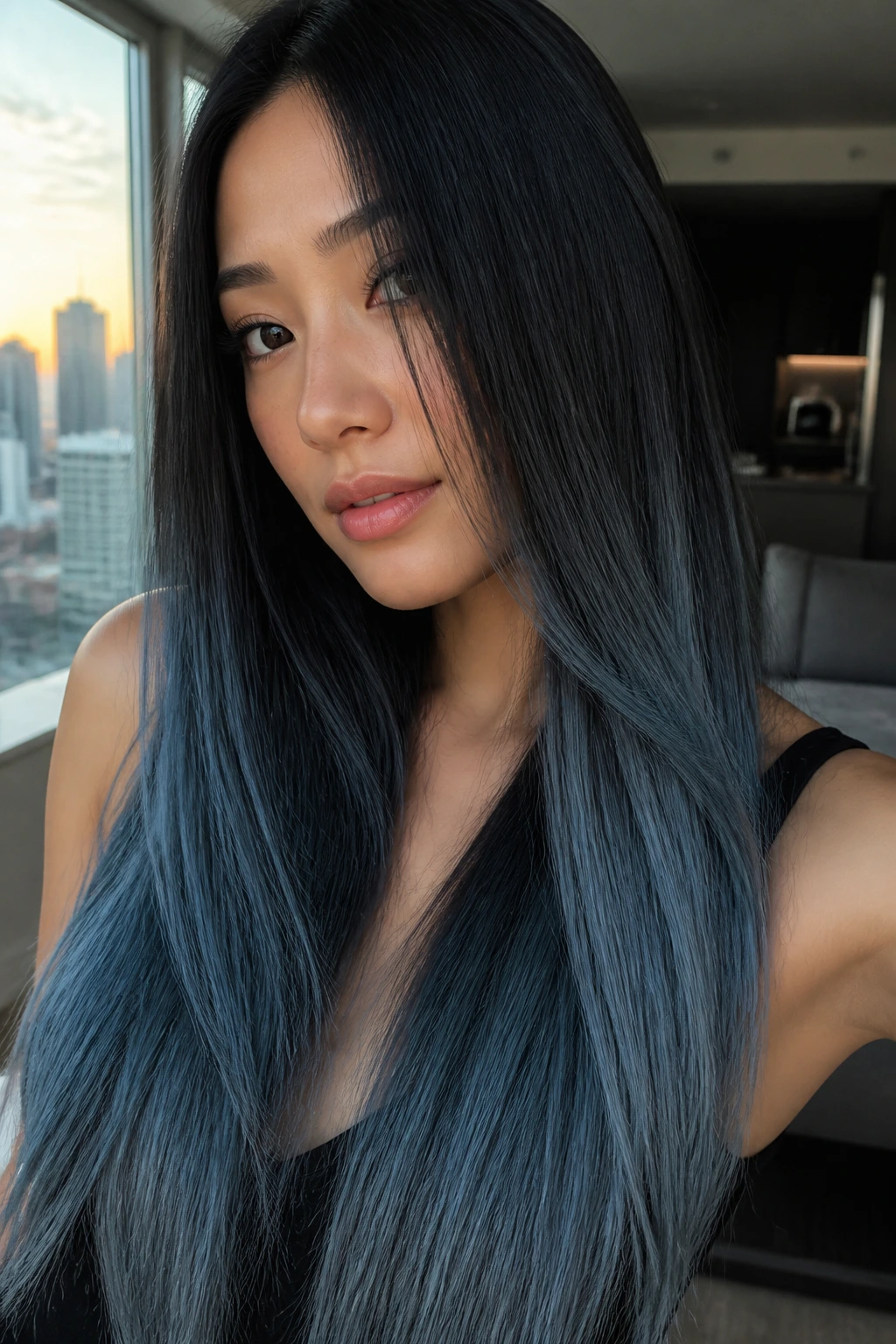
Black to smoky blue is for someone who wants mood, not sweetness. The top stays ink-dark, then the ends move into a blue that’s been knocked back with gray so it doesn’t look neon or costume-y.
This works especially well on long straight hair because the color can stack in a clean gradient. On curls, the blue turns more electric in random flashes, which is its own kind of good.
The downside is upkeep. Blue fades fast on porous lightened ends, so a color-depositing mask or glaze helps keep the tone from going muddy.
9. Midnight Brunette to Plum Wine
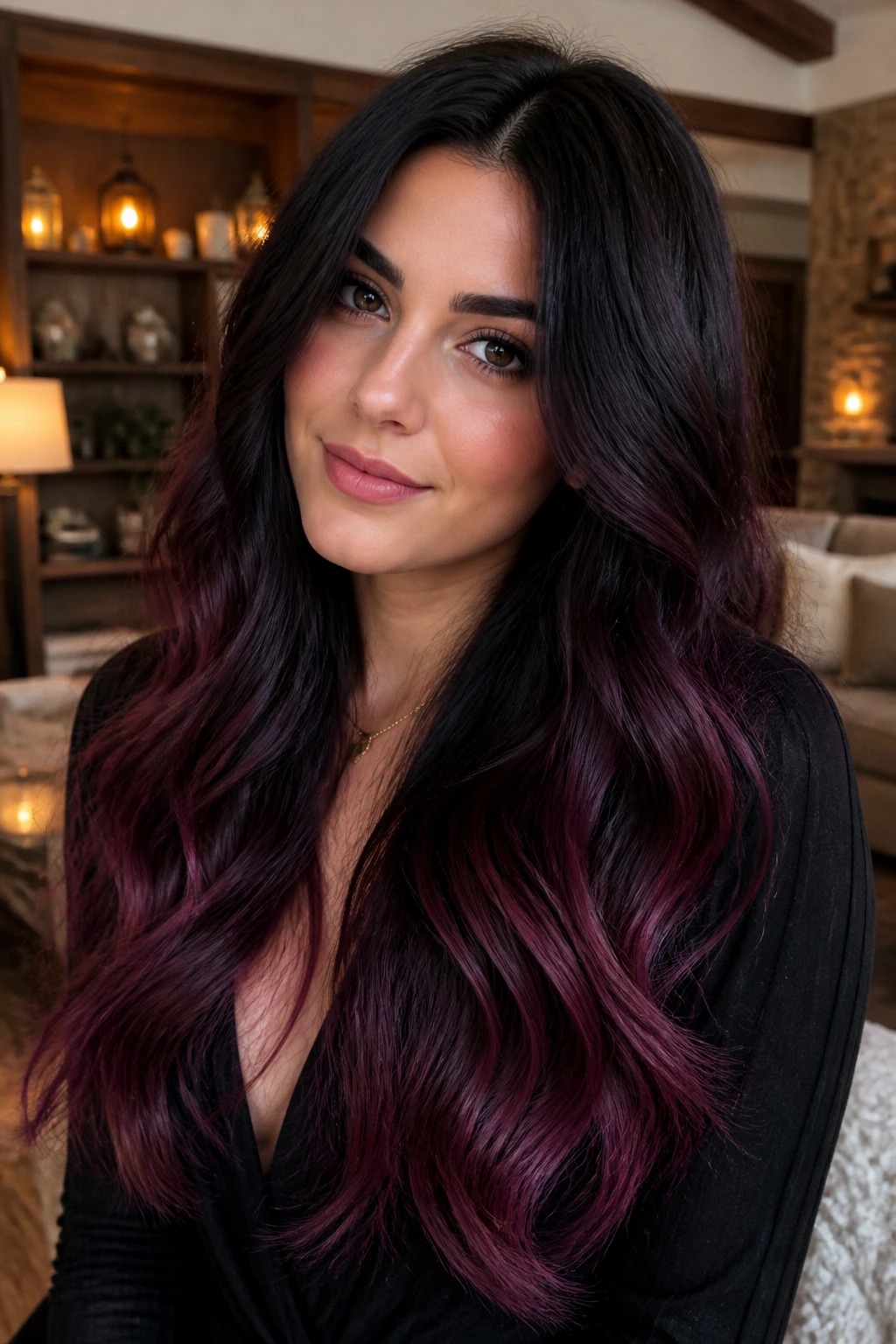
Plum wine on the ends of deep brown hair looks subtle until the light hits it, and then it wakes up. That makes it a good choice for long hair, where the color can hide in the lower half and still surprise you when you move.
The best version keeps the plum more burgundy than purple. Too much violet can go flat under indoor light; a wine tone stays richer and more dimensional.
I like this on thick hair because the darker root preserves density. If your hair is fine, keep the plum closer to the ends so the head doesn’t start looking color-heavy.
10. Copper Root to Apricot Fade
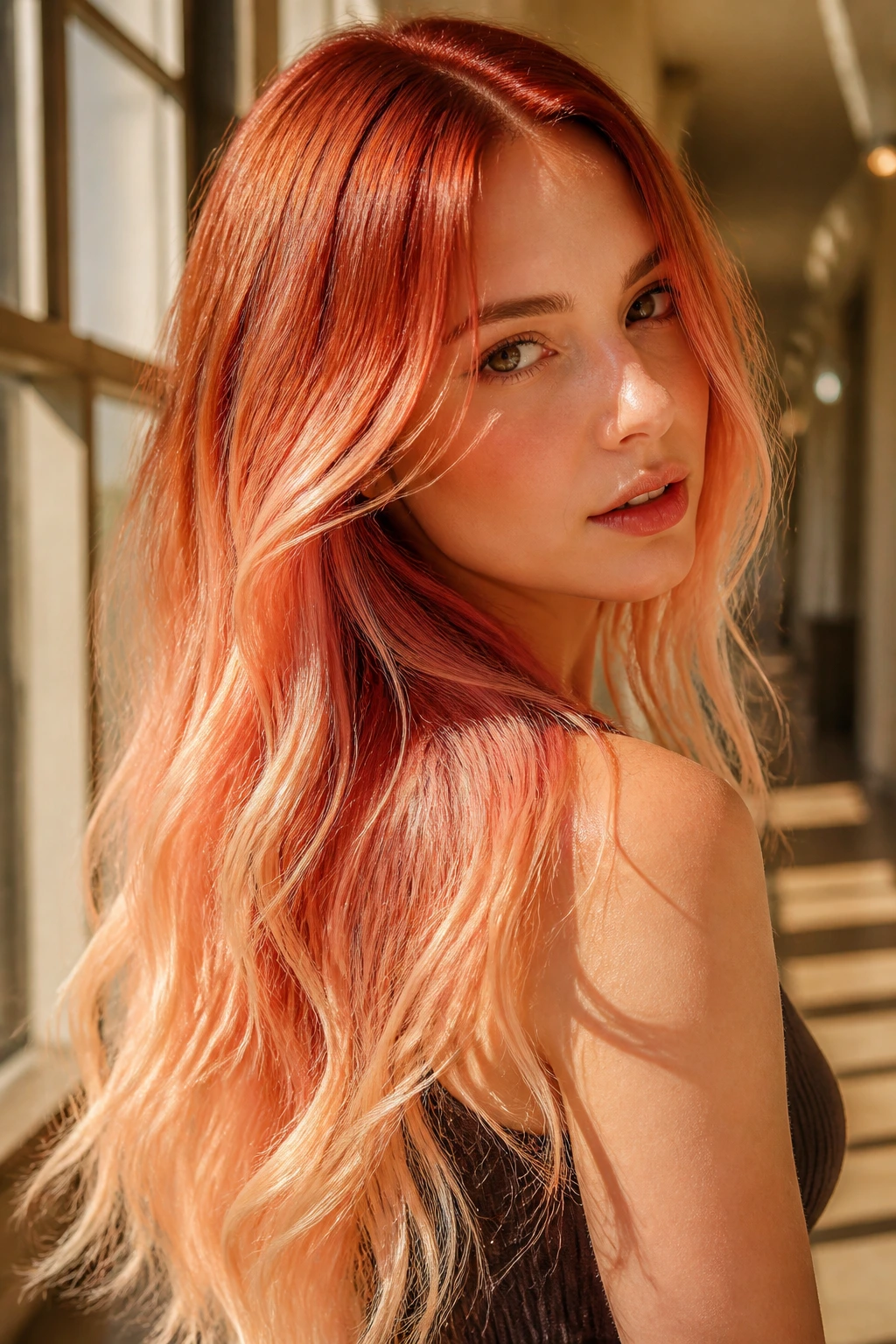
Copper root to apricot is warmer and bolder than most ombre, and long hair keeps it from looking busy. The shift from deep copper through coral-toned mids to apricot ends gives the whole length a sun-warmed glow.
This is one of the few ombre looks where the root can actually be a little brighter than the usual brunette base. That works because the family stays inside the same warm lane.
The fade should be soft, not striped. If the apricot starts too high, the whole color turns loud fast. Keep the palest points near the bottom third and let the wave pattern do the rest.
11. Auburn to Strawberry Blonde
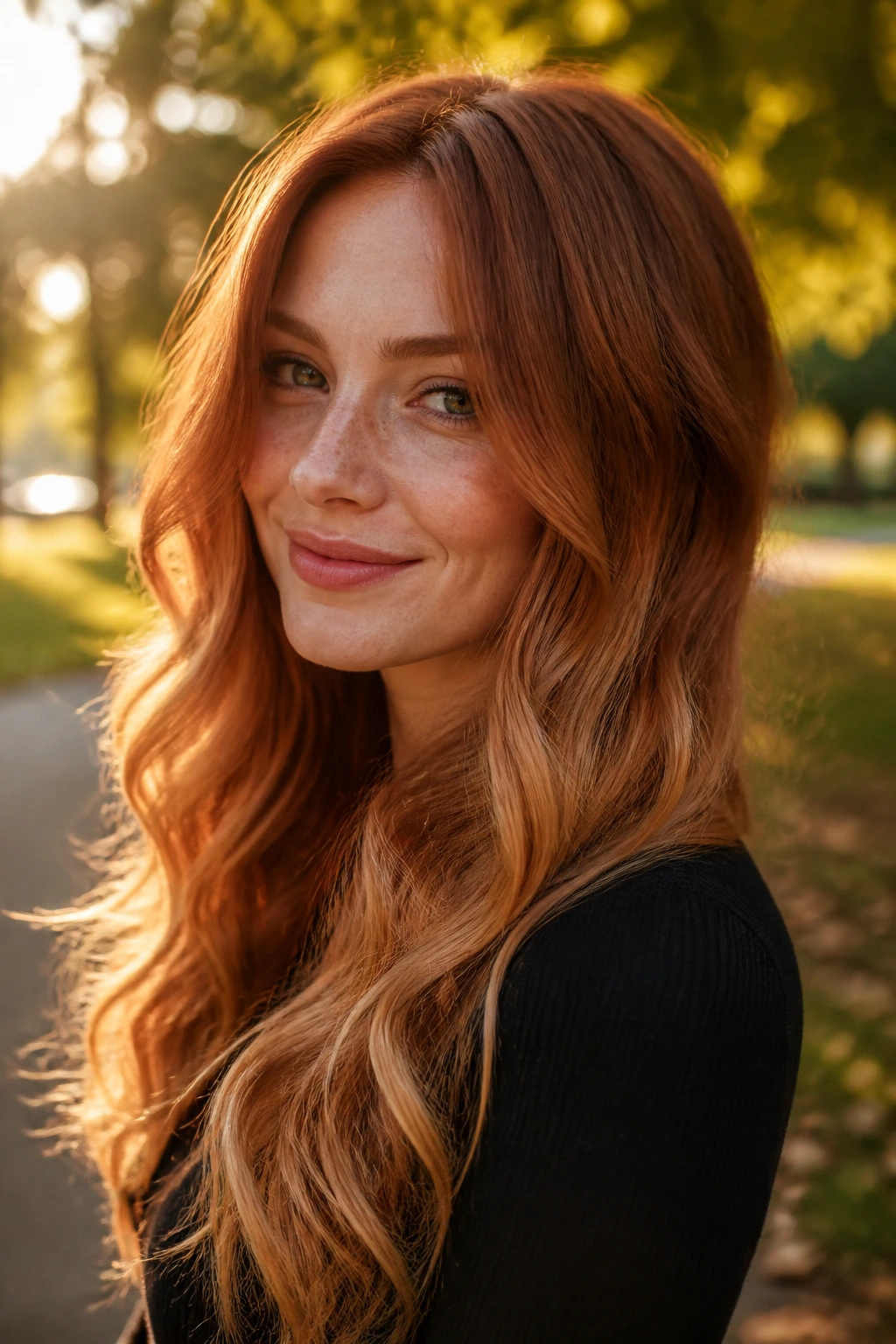
Auburn to strawberry blonde is a redhead’s version of ombre that doesn’t feel like a radical departure. The auburn base keeps the hair grounded, while the ends turn lighter, sweeter, and a little more peachy.
Long hair is the reason this color doesn’t collapse into one red block. The gradient has enough space to move from rich copper-red to soft strawberry without feeling abrupt.
It’s especially pretty on loose curls. The lighter ends catch the curve of each bend, and the strawberry shade shows up as a glow rather than a hard color line.
12. Cinnamon Brown to Gold Balayage Ombre
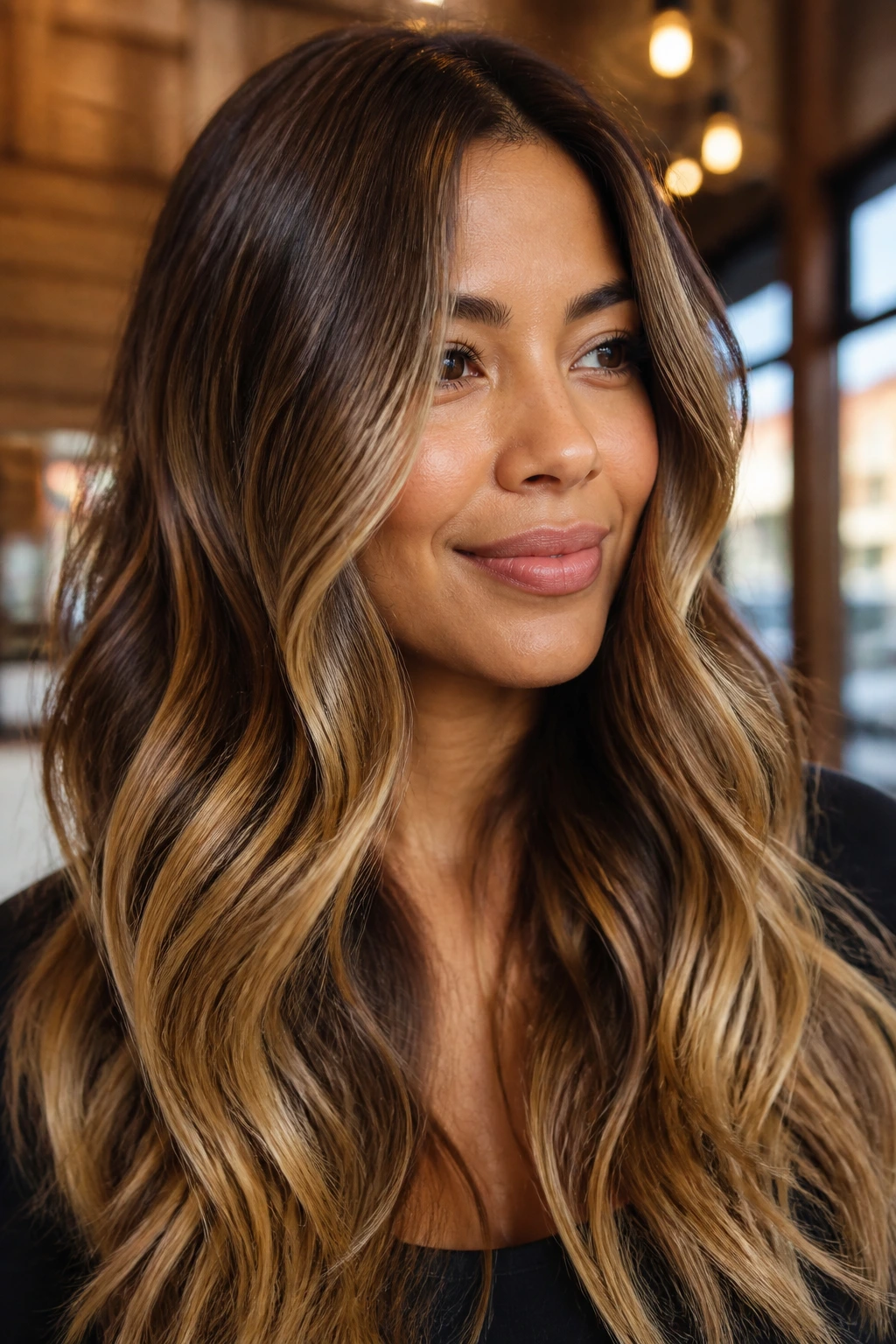
Cinnamon brown with gold balayage through the ends gives you warmth with texture. Instead of one flat lighter shade, the gold sits in painted pieces that show up more when the hair moves.
That’s the key on long hair: the light needs to travel. When the ombre is painted in ribbons rather than a block, the whole style feels more layered and less “dyed at one level.”
This is a good middle path if you want brightness but not blonde. It also plays well with big waves, which is where gold catches and cinnamon disappears just enough to keep the finish soft.
13. Golden Brown to Sunlit Blonde
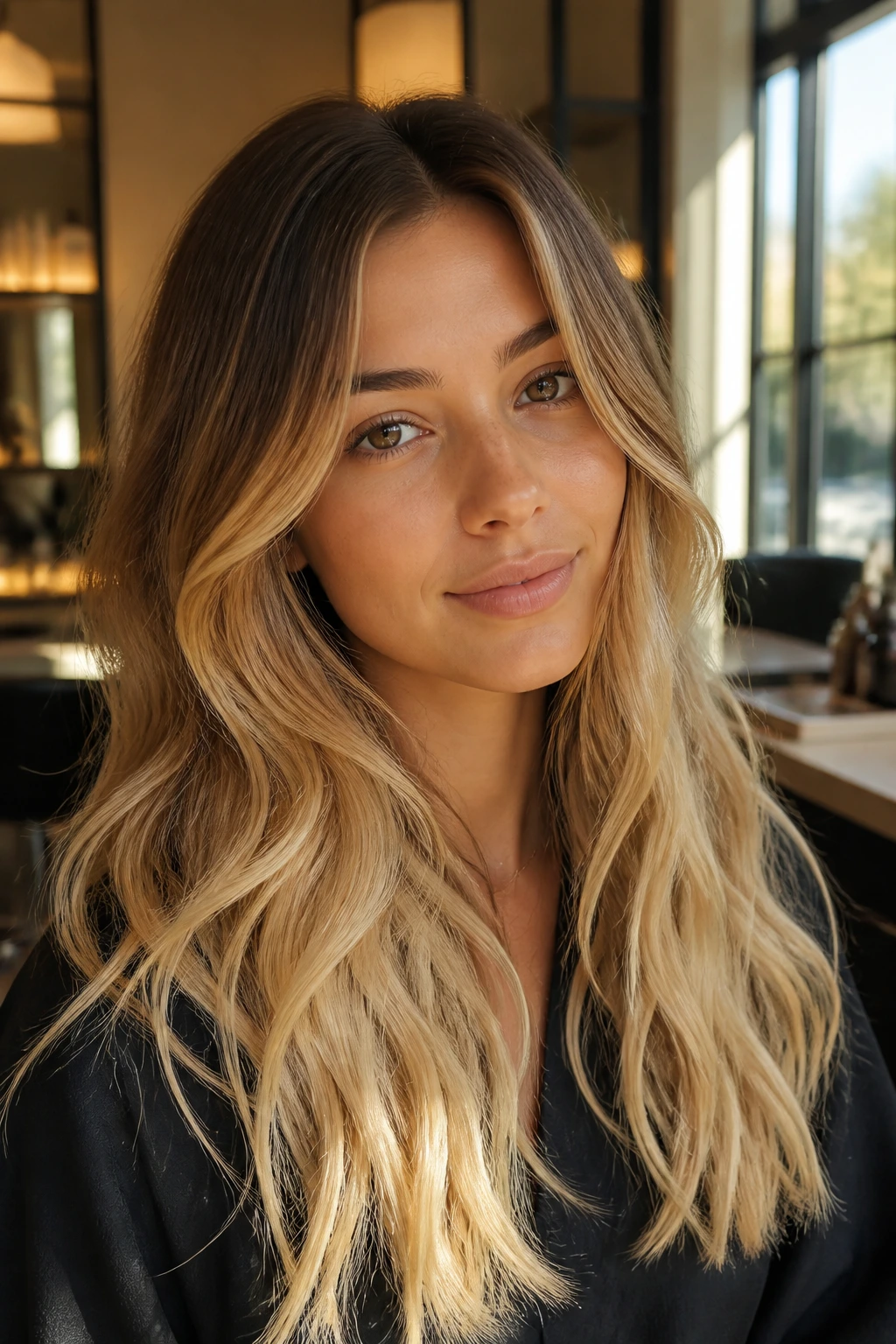
Golden brown to sunlit blonde is the ombre equivalent of warm afternoon light on hair. The root is soft and golden, the mids lighten gradually, and the ends finish in a creamy blonde that still feels wearable.
The reason it works on long hair is the pace. You’re not trying to jump from brown to bright blonde in one step. You’re letting the color open gradually, which keeps the ends from looking fried.
Ask for a soft root shadow if your hair lifts fast. That keeps the blonde from starting too high and makes the whole fade look calmer.
14. Mahogany to Rose Gold
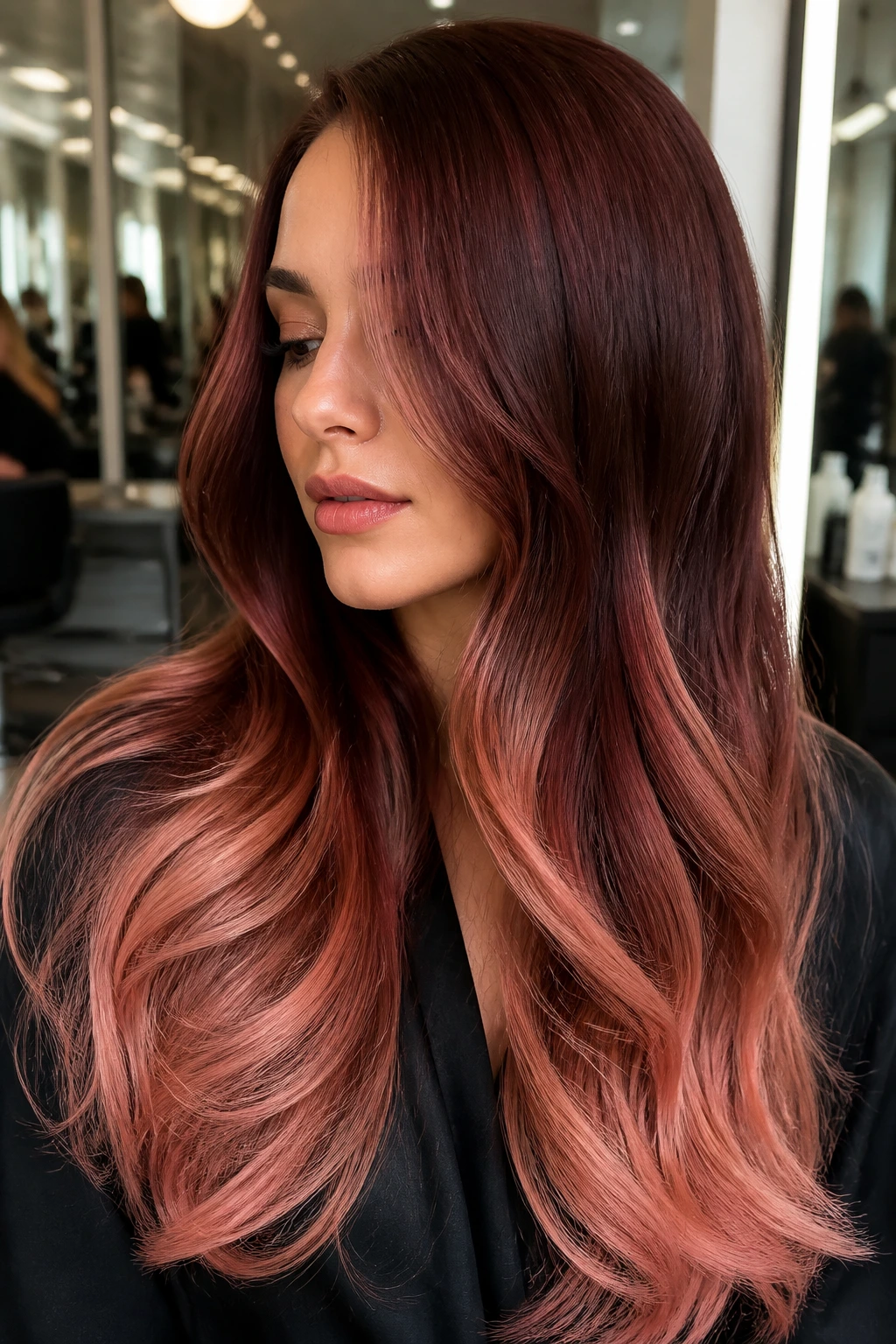
Mahogany to rose gold is dramatic without turning fully fantasy. The deep red-brown base keeps the length rich, then the ends shift into a pink-gold that feels softer than magenta and warmer than lavender.
On long hair, the rose gold doesn’t need to cover much to make an impact. A few inches at the bottom can carry the whole look if the transition is smooth and the gloss is clean.
This one does best when the finish is glossy and polished. Frizz can make the pink tone look dusty, so a smoothing cream or shine spray helps more than you’d think.
15. Dark Brown to Peach Sorbet
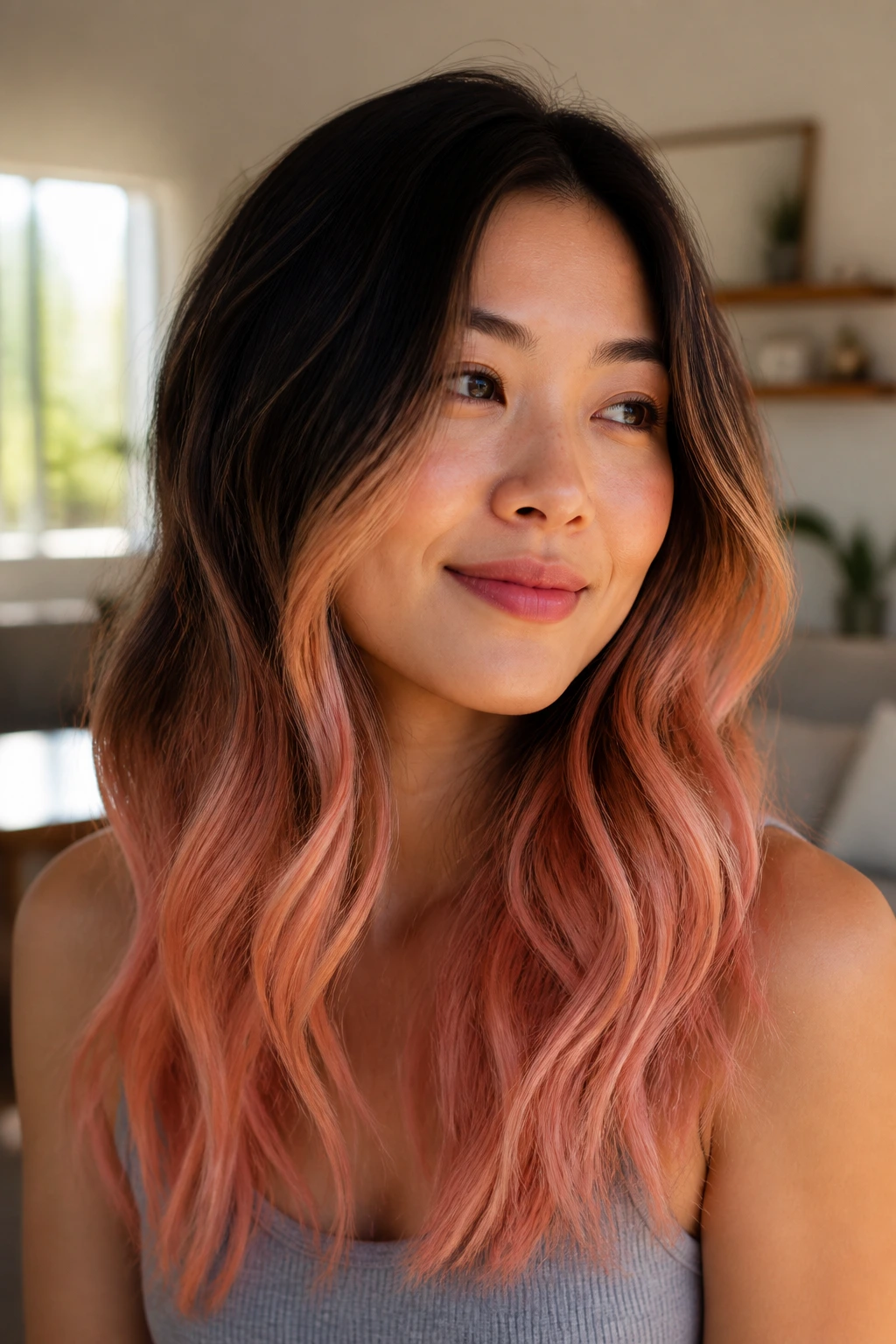
Peach sorbet on the ends of dark brown hair sounds playful, and it is, but the long length keeps it from tipping into novelty. The dark top gives the peach something to stand on.
I like this look when the peach is muted rather than candy-bright. A soft coral-peach fade feels modern; a punchy pastel can look more seasonal and more fragile.
The best place for the color is the last third of the hair, especially if you wear layers. The movement lets the peach flash in little pieces instead of showing up as one big colored cap.
16. Espresso Lengths with a Caramel Money Piece
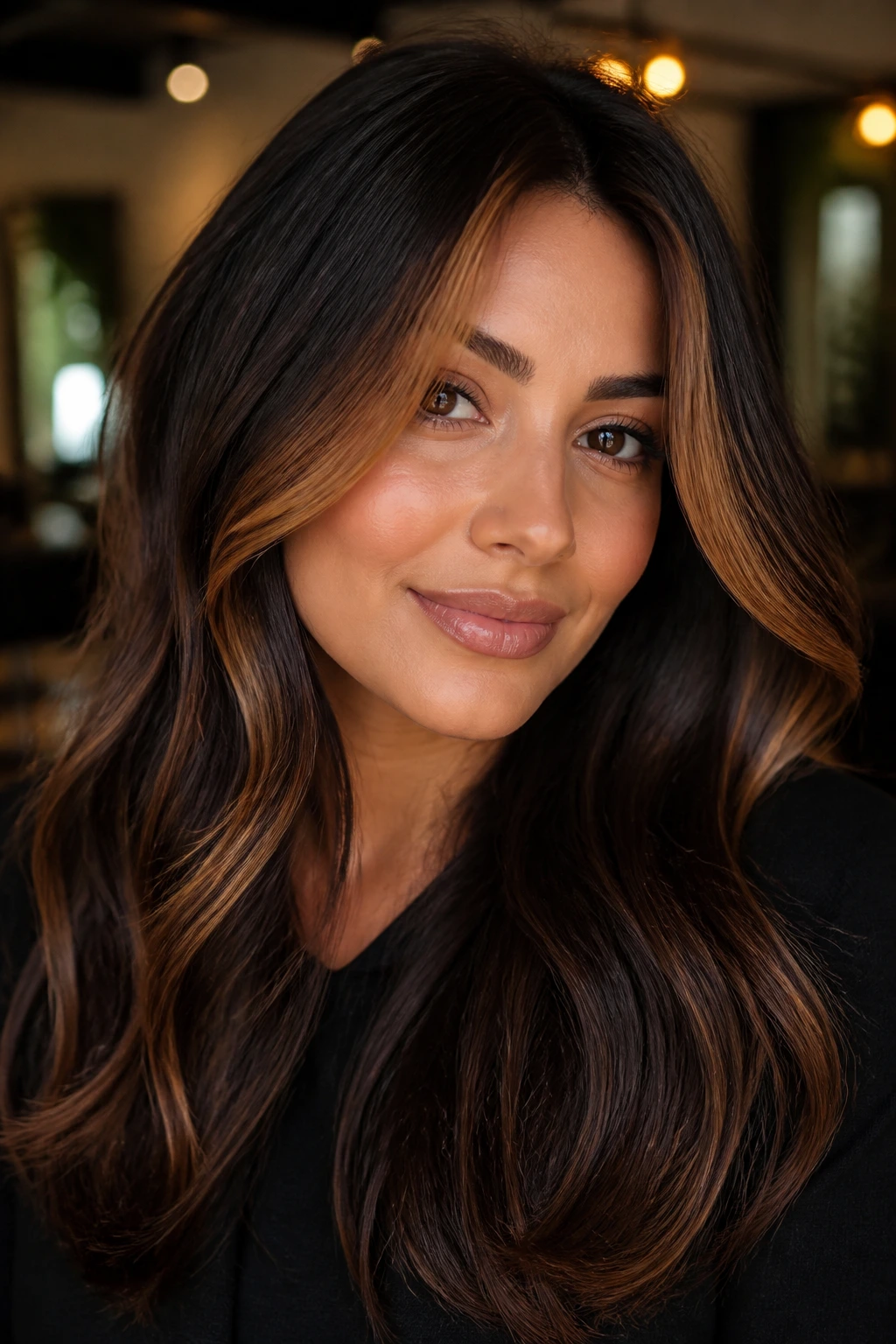
This is a smart hybrid. Keep the body of the hair espresso to deep mocha, add a caramel money piece around the face, then let the lower half lighten into soft ends. You get ombre, but with a front-loaded hit of brightness.
Long hair makes this worth doing because the money piece keeps the front visible even when the back is tied up. The ombre ends handle the rest, so you’re not relying on one detail to carry the whole style.
It suits people who want to see the color immediately in a mirror. If the face frame is too pale, the look turns harsh. Keep the front strand 1-2 levels lighter than the ends, not five.
17. Reverse Ombre from Blonde to Brunette
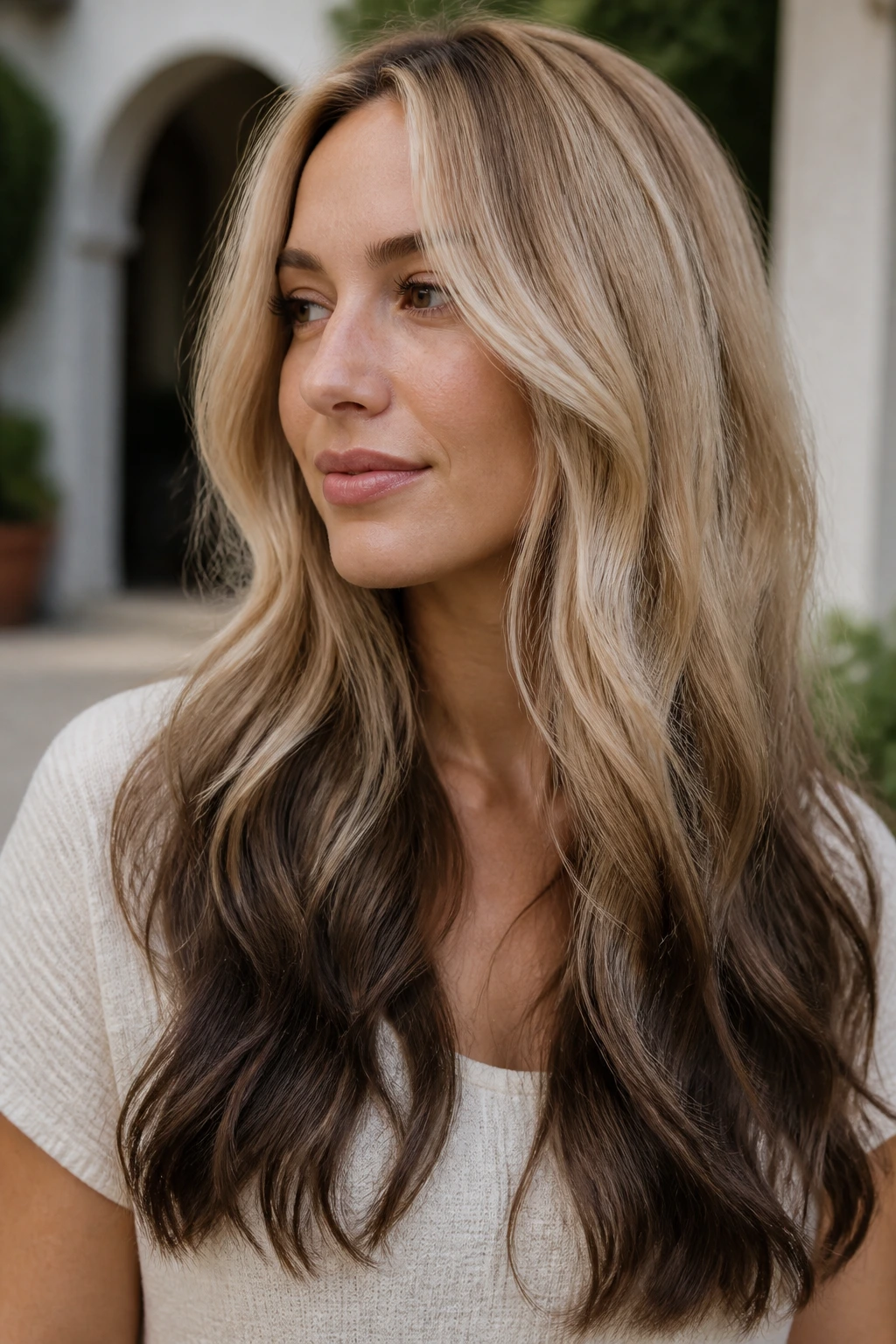
Reverse ombre is a little unexpected, which is why it looks so good on long hair. The top stays light, then the color deepens through the mids and ends into a brunette shade that grounds the whole shape.
The effect is cleaner on lengths that fall past the chest because there’s enough room for the darker color to settle in. On shorter hair, reverse ombre can feel abrupt. On long hair, it feels tailored.
This is a good fit if your blonde ends are tired and you want to move darker without losing dimension. It also grows out in a softer way than people expect, because the darker ends hide wear better than pale ones.
18. Face-Framing Ombre on Long Layers
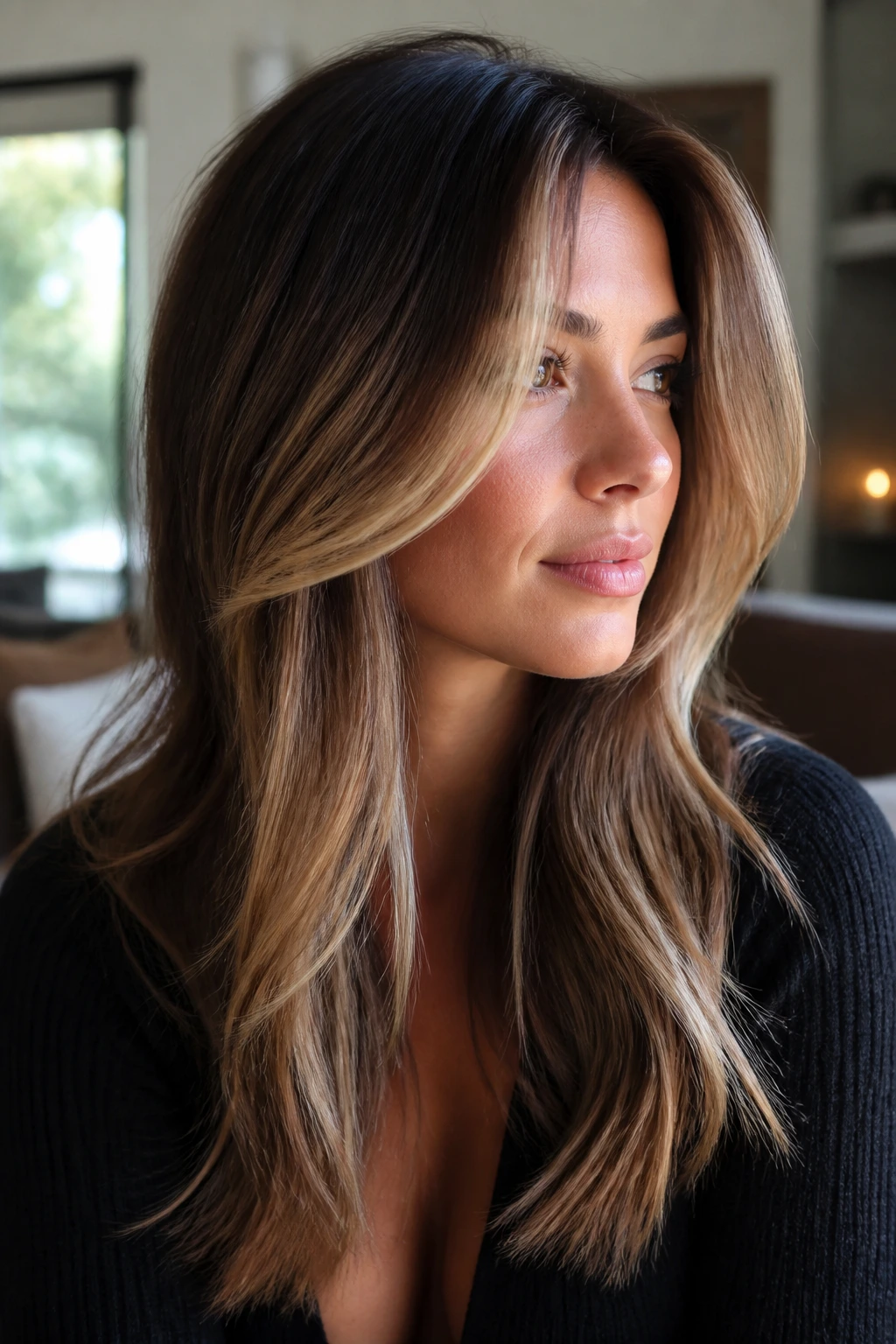
Sometimes the best ombre is not about the ends at all. A face-framing version keeps the bulk of the hair close to the base color and lets the brightness live around the cheekbones and the longest layers.
That’s especially useful on long layered cuts. The lighter front pieces show movement early, and the rest of the gradient can stay quiet so the style doesn’t turn busy.
If you like wearing your hair half-up or clipped back, this is a strong choice. The light pieces stay visible even when the length is tucked away, which makes the color work harder for you.
19. Balayage Ombre for Curly Long Hair
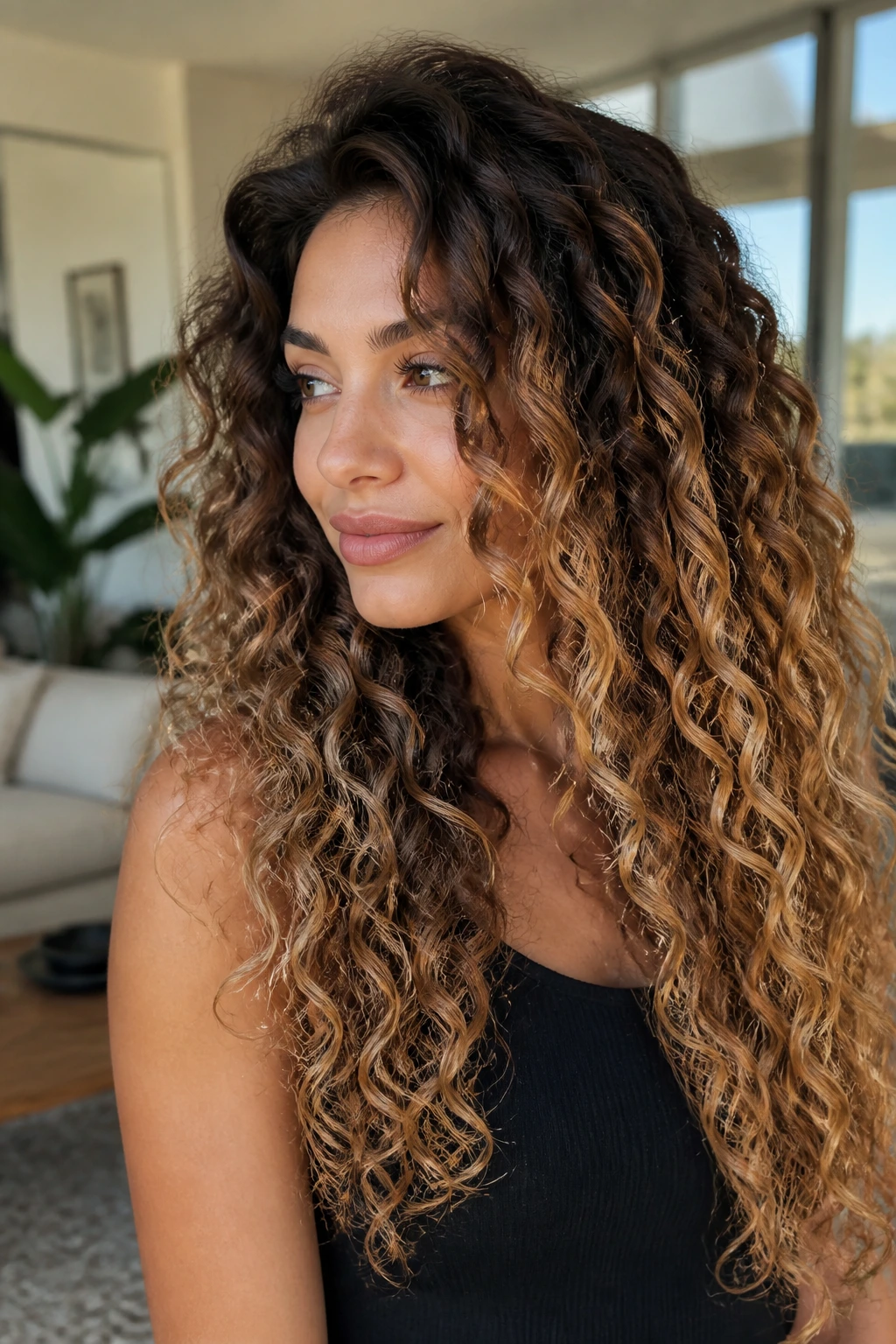
Curly long hair changes the whole equation. Instead of one smooth fade, the color has to travel across bends, spirals, and shrinkage, so a balayage-heavy ombre gives you softness without sharp bands.
The lighter pieces should sit where the curls open up — usually around the outer curve of the ringlet and through the lower half of the hair. That placement keeps the color from disappearing when the hair springs up.
If your curls are dense, a few brighter ribbons near the face help the entire ombre read from the front. The rest can stay softer and more diffused.
20. Sleek Glass-Hair Ombre
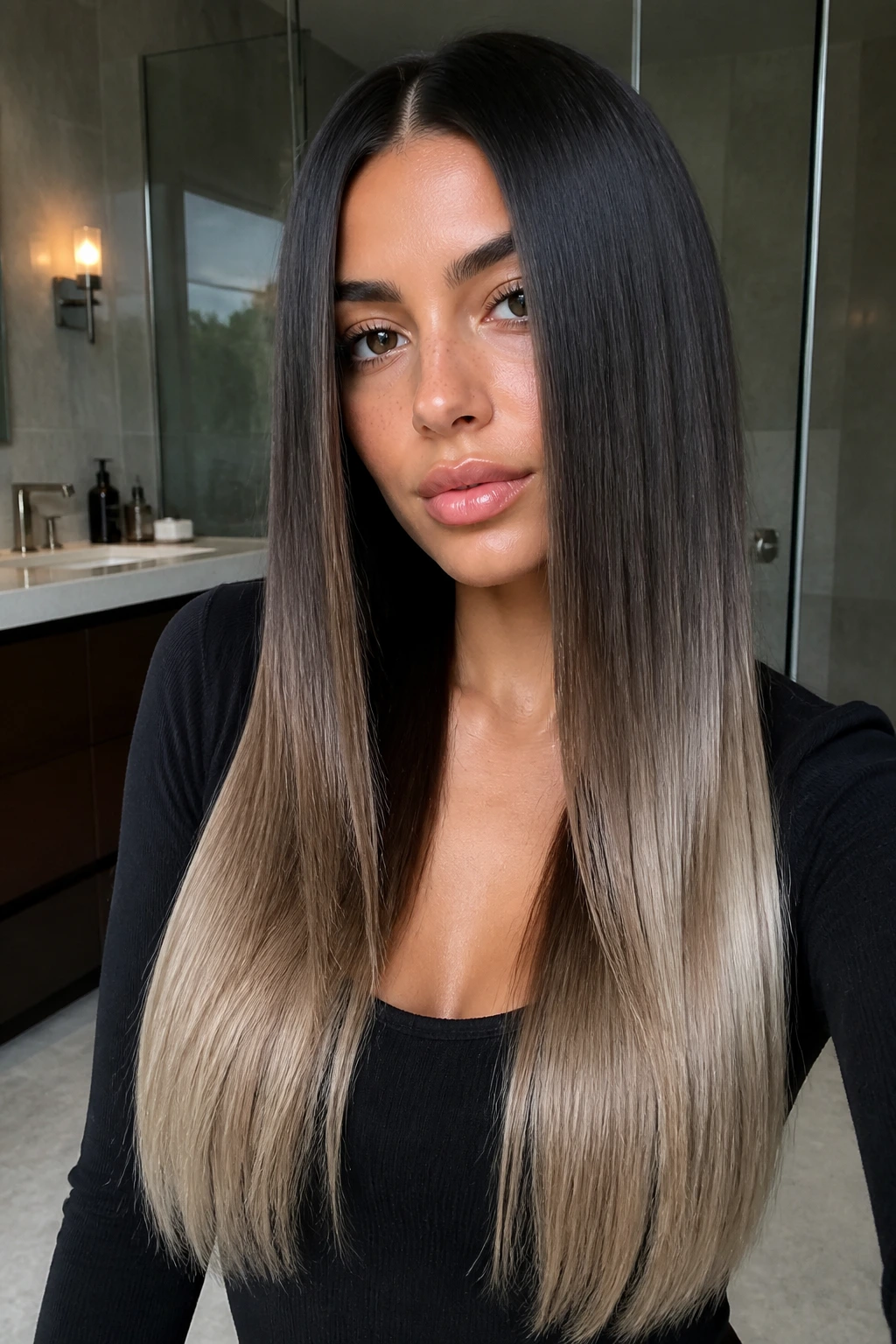
Glass-hair ombre is for people who want the fade to look exact. Straight, shiny lengths make the transition from root to tip read like a single uninterrupted slide, which is why this version feels so crisp on long hair.
The placement needs to be tidy. Uneven lightening shows faster on smooth hair, so the colorist has to blend the midsection carefully and keep the ends reflective, not chalky.
If you like clean lines, this is your lane. A center part makes the gradient look longer; a side part gives the lightest pieces a little more drama around the face.
21. Beachy Beige Ombre
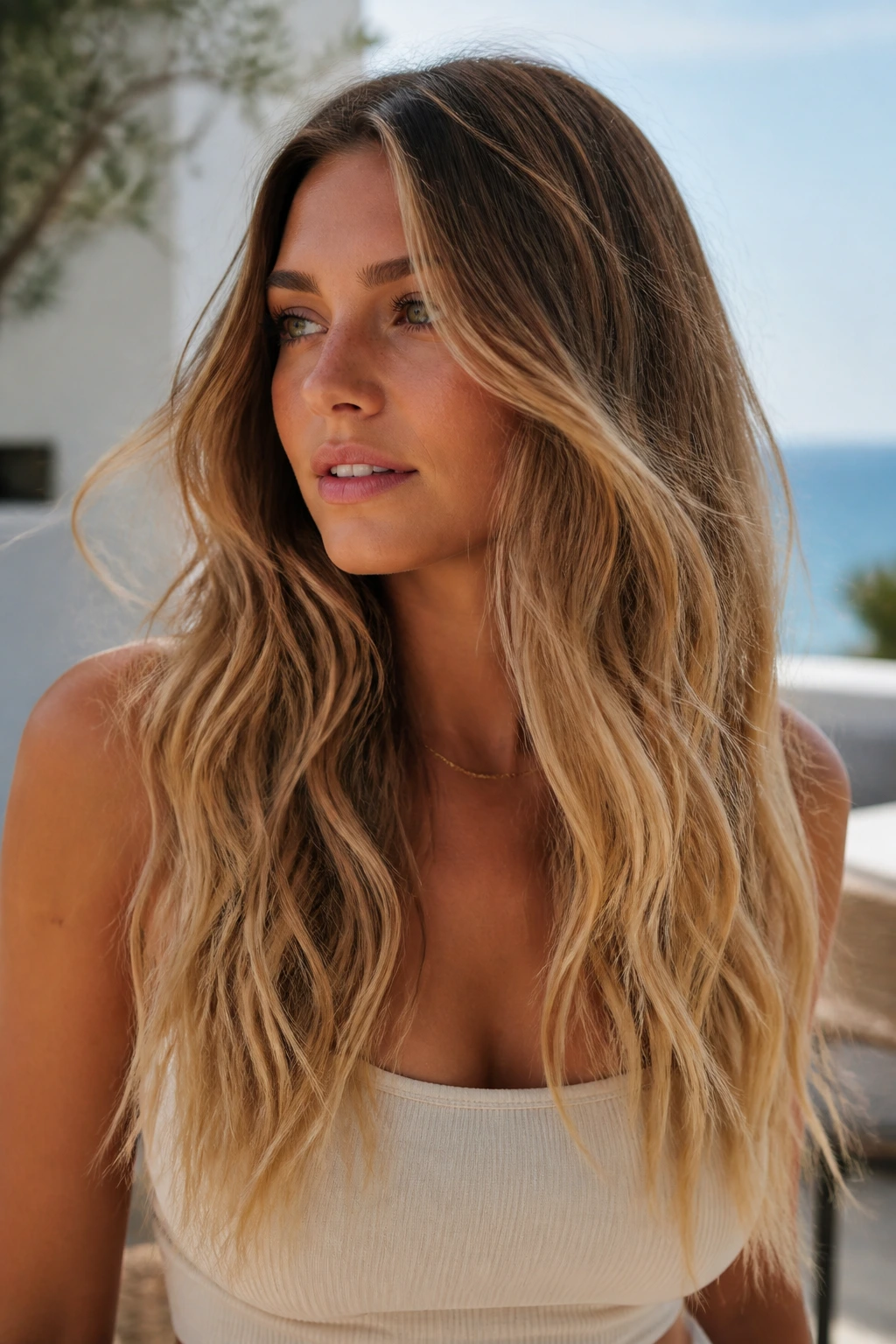
Beachy beige is the kind of ombre that looks lived-in even when it’s freshly done. The base stays soft and natural, the mids get sandy, and the ends drift into beige blonde instead of bright yellow.
Long hair makes that beige tone feel relaxed instead of flat. The length gives the fade room to look sun-soft, especially if the hair has loose bends or a little texture spray in it.
This is one of the most wearable blonde ombres for long lengths because it doesn’t demand perfect styling. Airdried waves, polished curls, or a quick blowout all make sense here.
22. Bronde S-Wave Ombre
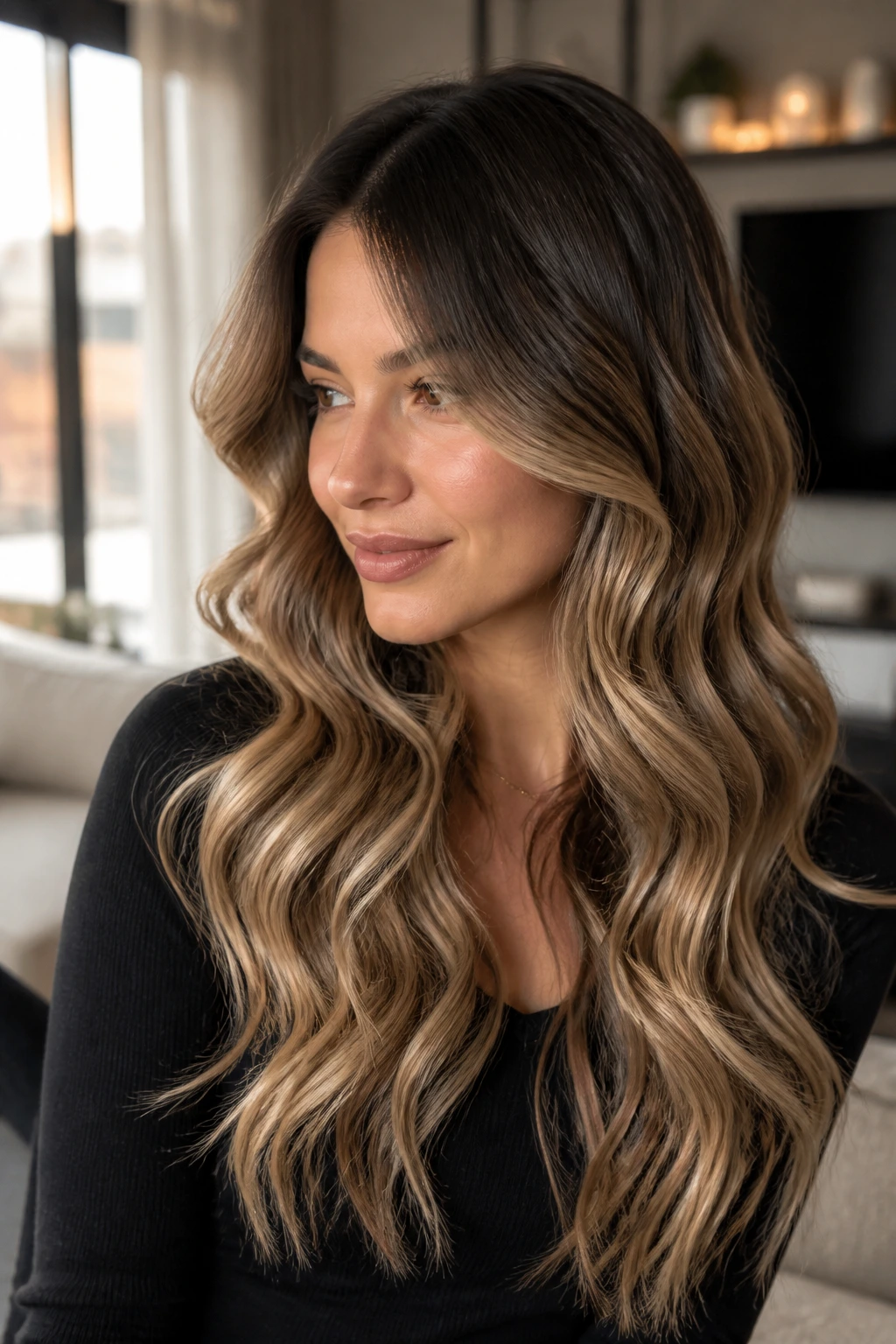
Bronde with an S-wave finish is less about the color block and more about the movement. The darker root melts into a brown-blonde blend that looks almost like one shade until the light hits the bends.
The S-wave matters on long hair because it breaks up the mids. That makes the ombre feel fuller, since the darker and lighter pieces weave through each other instead of sitting on top of each other.
This is a good pick if you want dimension without a lot of contrast. It’s low-fuss, and that matters when the length already takes enough time to dry and style.
23. Shadow Root to Creamy Vanilla
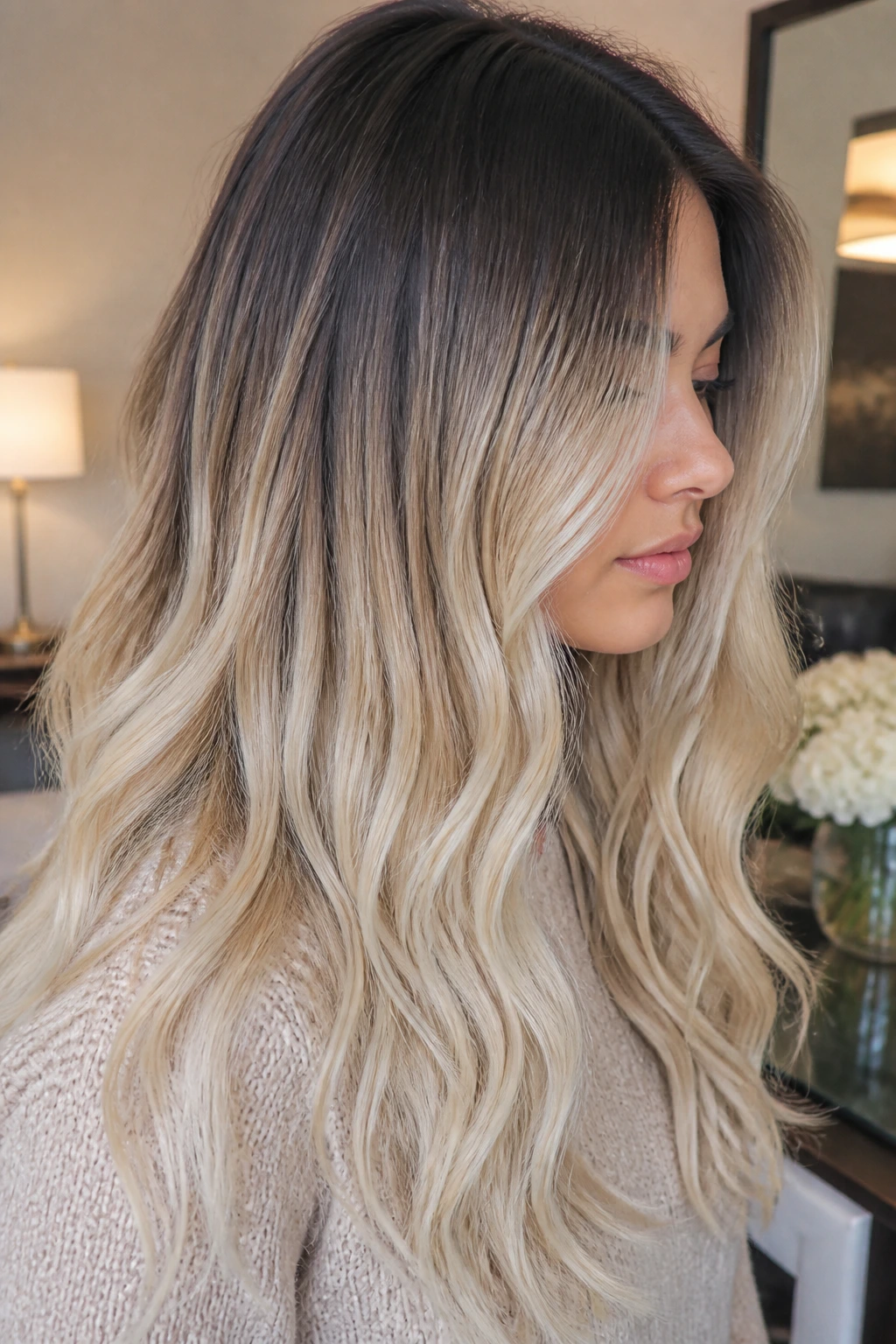
Shadow root to creamy vanilla is the classic blonde ombre with better manners. The root stays deeper, the mids soften into beige, and the ends finish in a vanilla tone that feels creamy instead of icy.
On long hair, the shadow root is what keeps the blonde from looking too loud. It gives the light shade a place to land and buys you a softer grow-out line.
If your hair tends to pull yellow, ask for a vanilla gloss rather than a white-blonde toner. The creamy version holds up better between salon visits and looks better when the hair catches indoor light.
24. Mocha to Cool Taupe
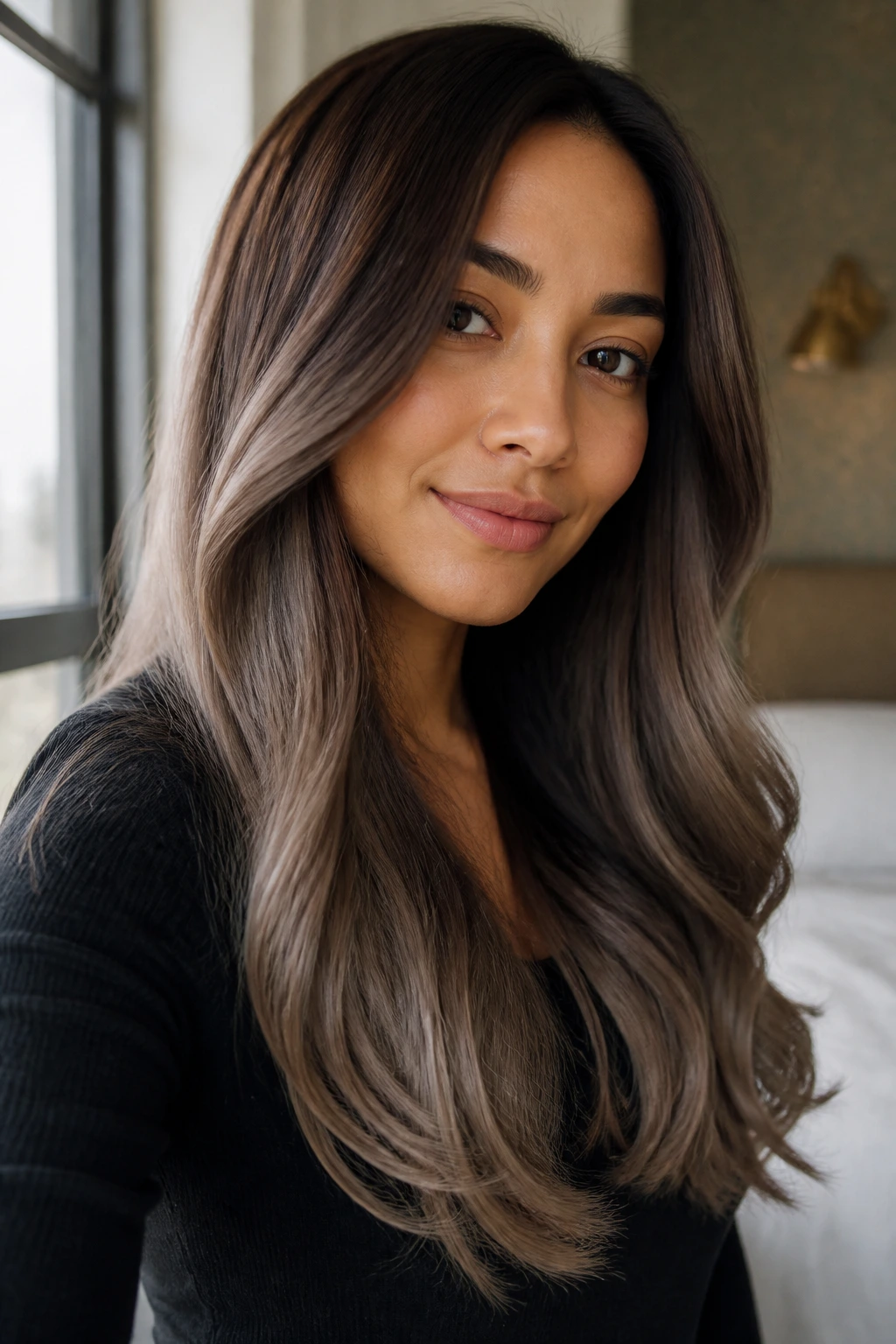
Mocha to cool taupe is a quieter cool-toned look than ash blonde, and I like it for people who want something polished but not icy. The mocha base keeps the color grounded, while the taupe ends add a dusty, refined finish.
Long hair lets taupe stretch out without reading gray. That’s the part people often miss: cool tones need length to look soft, not abrupt.
It works especially well on hair with a silky finish. If the hair is very layered or very textured, the taupe will show up in little flashes instead of one smooth sweep.
25. Smoked Cherry Cola Ombre
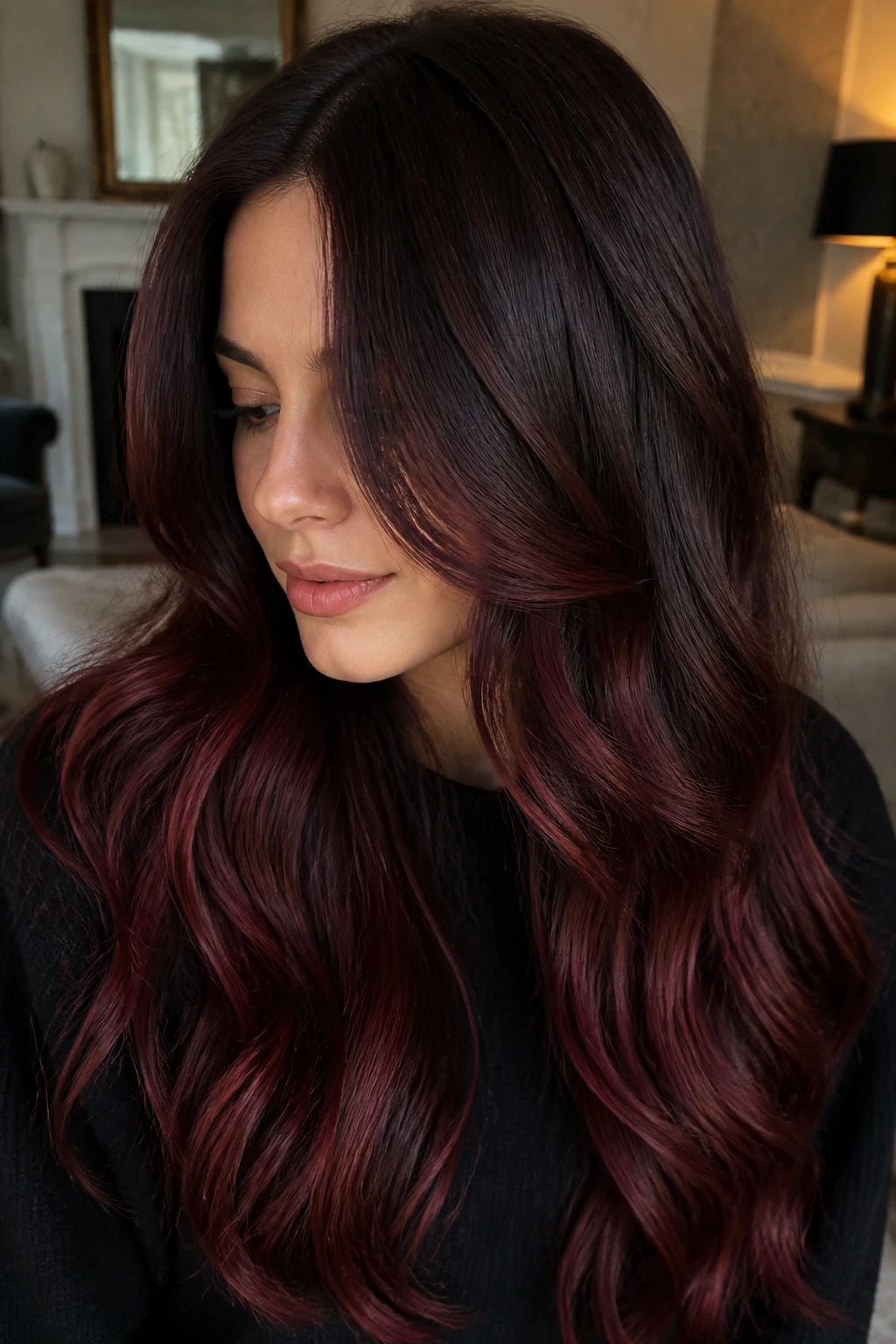
Cherry cola has always been a good color name because it tells the truth. This version mixes brown, red, and a little plum so the whole thing looks dark until the light hits the lower half.
On long hair, that smoked finish stays elegant instead of novelty. The color can deepen through the mids and end in a wine-toned shine that moves beautifully in waves.
If you like red but don’t want red hair, this is a smart compromise. It fades softer than brighter red ombre and usually keeps more depth at the root.
26. Merlot to Blackberry Glass
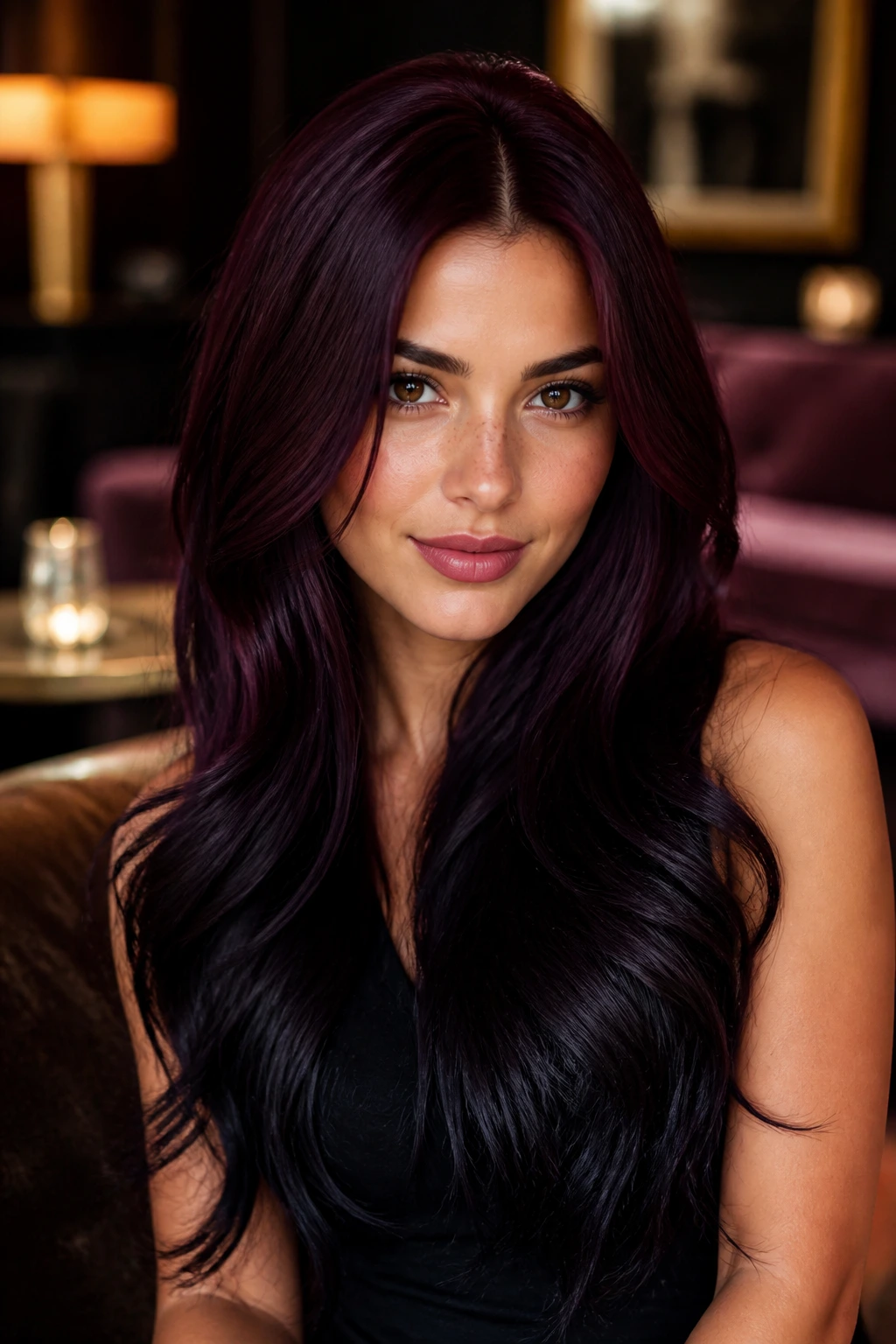
Merlot to blackberry is deep, moody, and a little glossy, which is exactly why it suits long lengths. The root stays wine-dark, then the ends cool into blackberry purple-black with a hint of shine.
The most important thing is keeping the purple side rich rather than neon. Long hair gives the darker colors enough room to look luxe, but only if the blend stays smooth and the gloss stays fresh.
This one looks strongest on medium to thick hair. Fine hair can wear it too, but the color should stay close to the base so the ends don’t overpower the length.
27. Black Cherry to Plum Wine
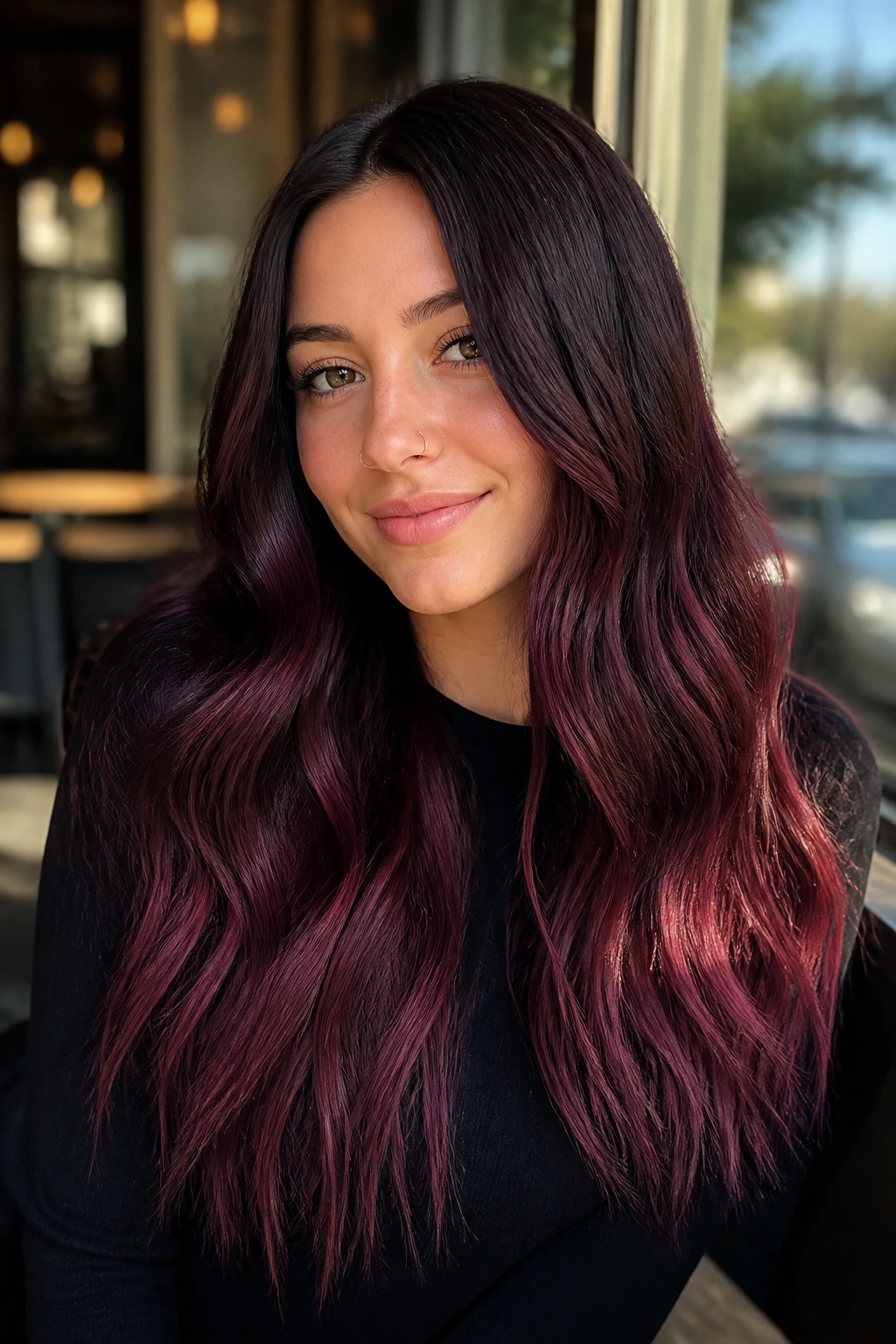
Black cherry to plum wine has more red than the merlot look and more softness than a full violet fade. It’s a good long-hair ombre when you want something rich that still reads as color, not just darkness.
The transition should be slow. A few inches of black cherry through the lower mids help the plum ends feel connected instead of pasted on.
I’d wear this one with loose curls or a deep side part. Both help the red-violet tones catch the light without turning flat.
28. Lavender Smoke Ombre
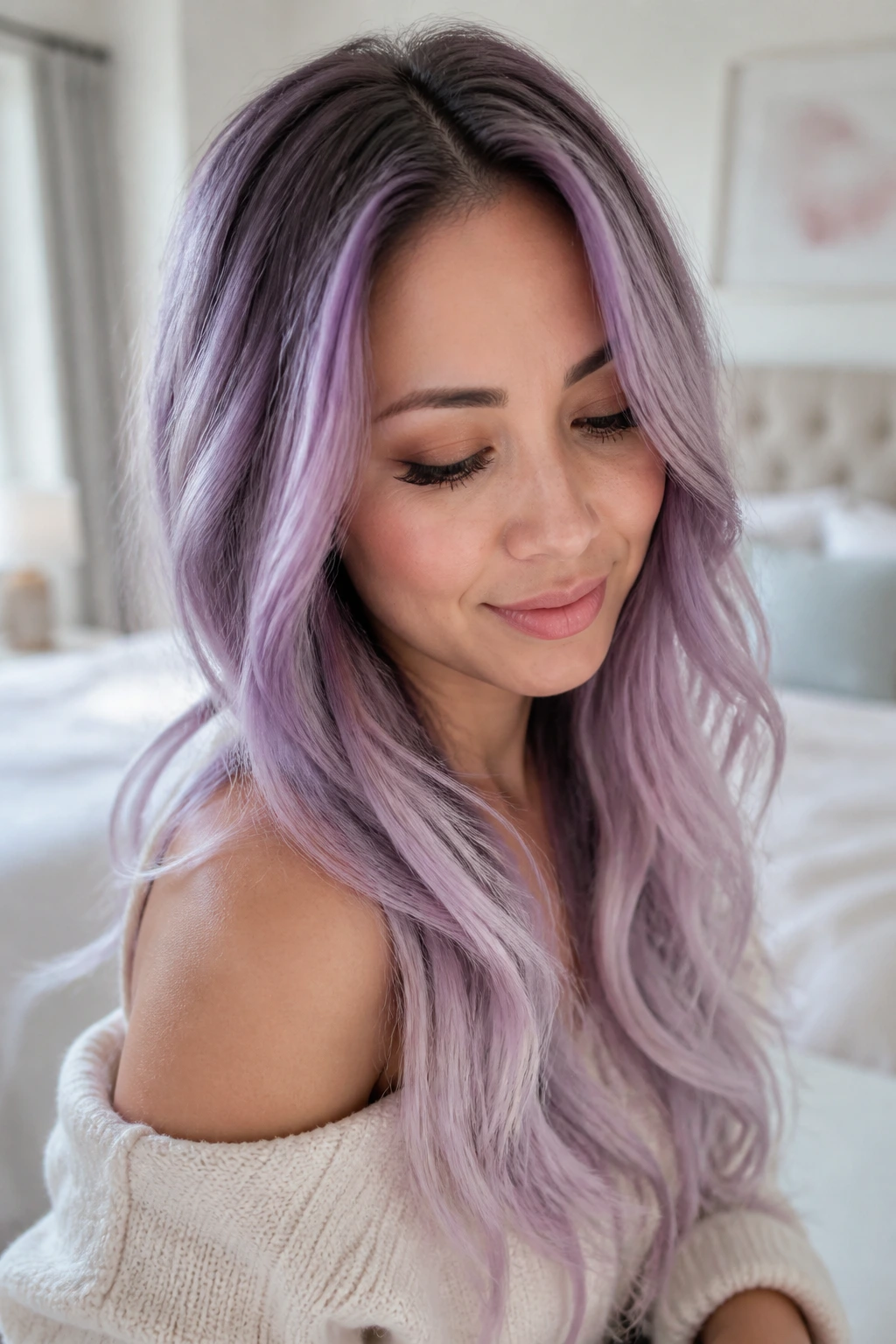
Lavender smoke is one of the best fantasy ombres for long hair because it has a built-in softness. The roots stay muted, the mids fade into silvery mauve, and the ends drift toward pale lavender with a smoky veil over them.
That smoky cast is what keeps the color grown-up. Pure lavender can look bright fast. Long hair lets the shade spread out and stay airy instead of loud.
This is a maintenance color, though. The pastel parts fade quickly, so a tinted conditioner and a cool-toned gloss are worth keeping around.
29. Rose Brown to Dusty Pink
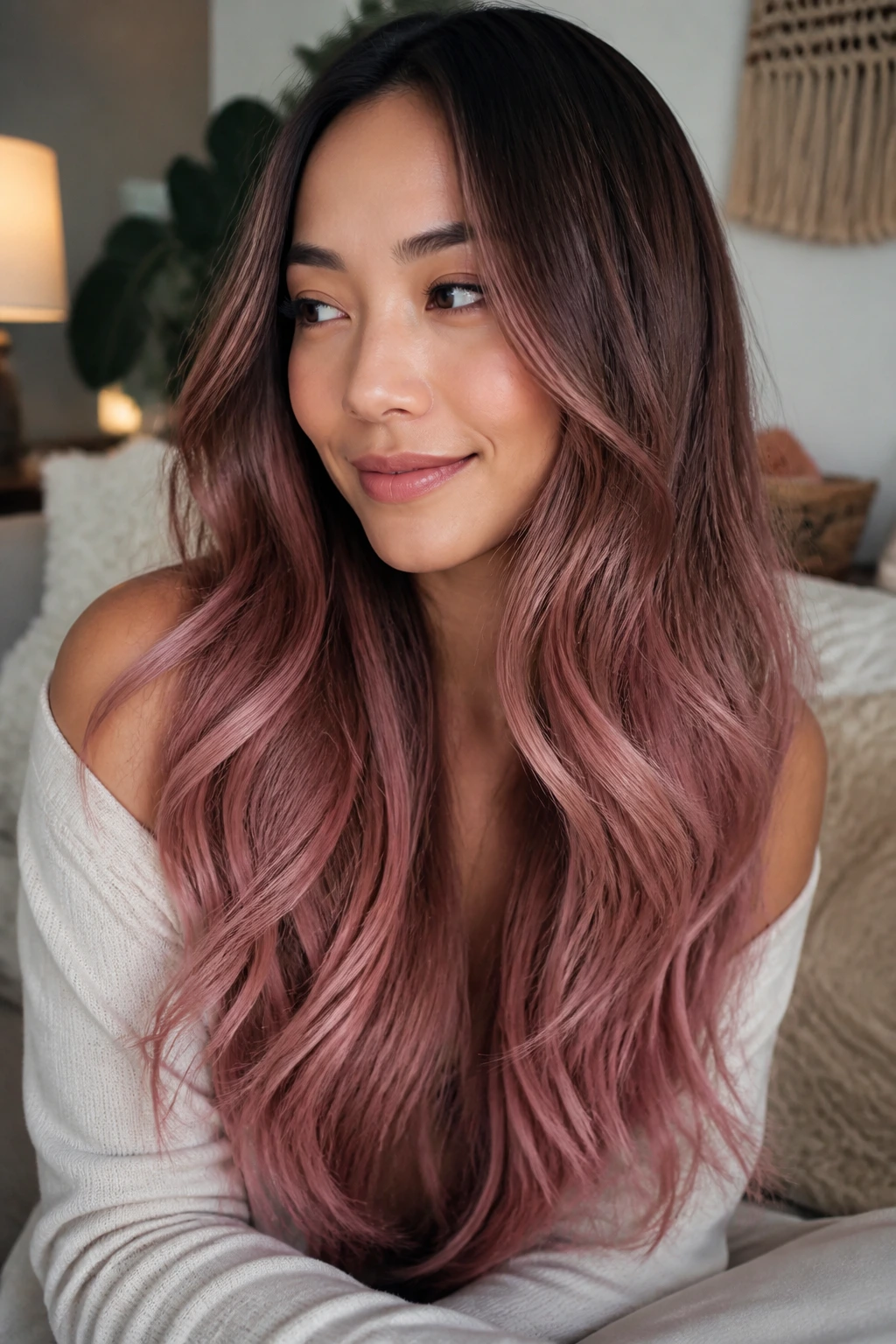
Rose brown to dusty pink is the muted cousin of rose gold, and it works beautifully on long hair because the color doesn’t need to shout. The brown base keeps the hair grounded, while the pink end tone shows up as a soft blush.
The long fade helps the pink stay wearable. On short hair, dusty pink can look abrupt. On longer lengths, it looks like the color is blushing from within.
This is a good option if you want something feminine without going full pastel. It also plays nicely with textured waves, which break the color up and keep it from feeling too sweet.
30. Sunset Ombre in Copper, Peach, and Gold
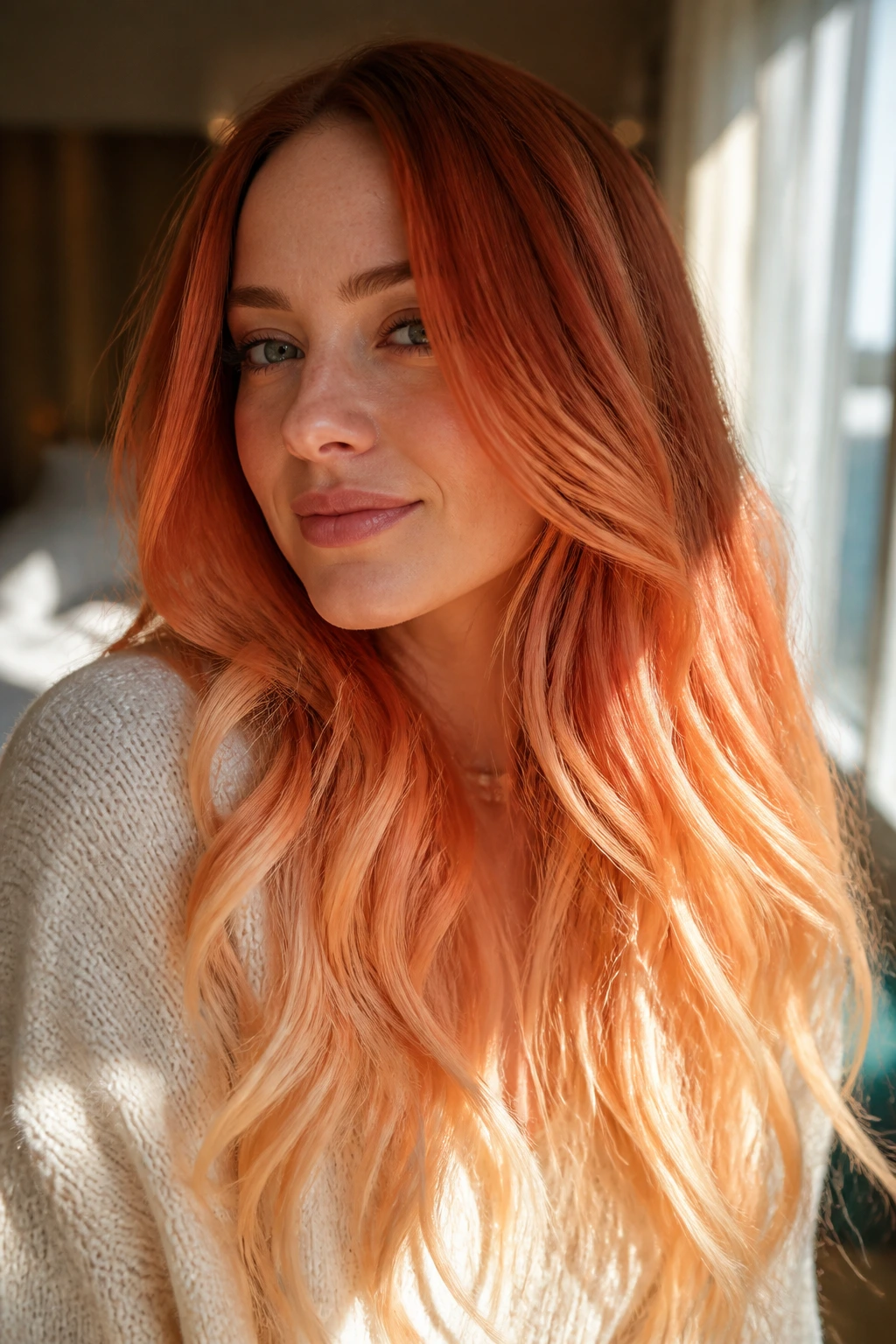
Sunset ombre is what happens when you stop pretending one warm shade is enough. Copper near the top, peach through the middle, and gold at the ends create a warm gradient that feels layered instead of flat.
Long hair gives those three tones room to separate just enough. You want them to blend, yes, but you also want the eye to catch each stage as it moves downward.
This look shines on wavy or curled hair. The bends spread the copper, peach, and gold around in little flashes, which is where the color gets its movement.
31. Mermaid Ombre in Teal to Seafoam
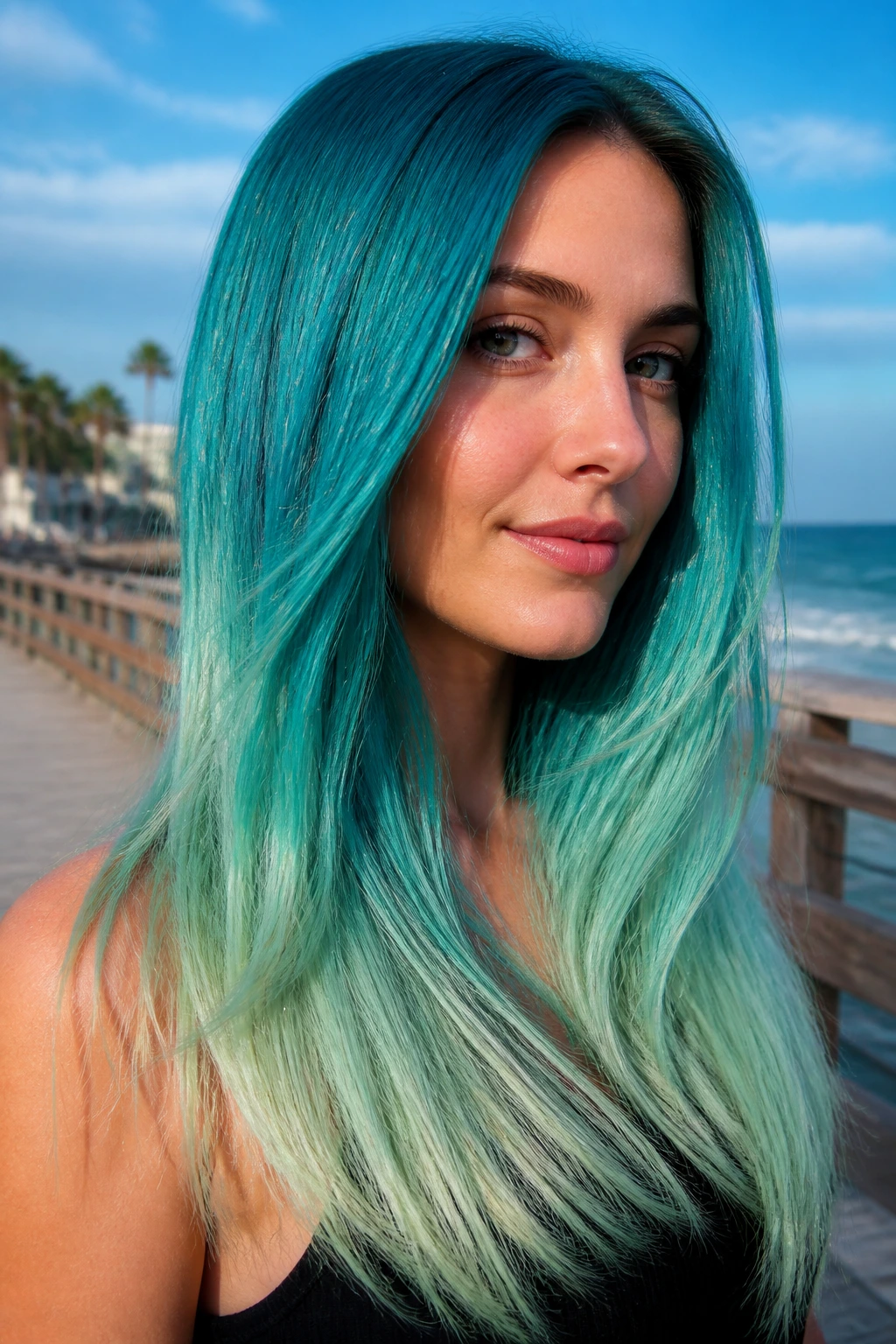
Teal to seafoam is the cool fantasy version, and long hair is almost required for it to work. The darker teal root or upper midsection makes the seafoam ends feel like the final stage of a color journey instead of a random bright tip.
The important part is keeping the transition blended. If the teal jumps too fast into mint, the eye loses the gradient. Long lengths prevent that because there’s space to soften the shift.
This one is most striking when the hair is glossy and straight or loosely waved. The shine helps the aquatic tones look deep instead of chalky.
32. Navy to Aqua Gradient
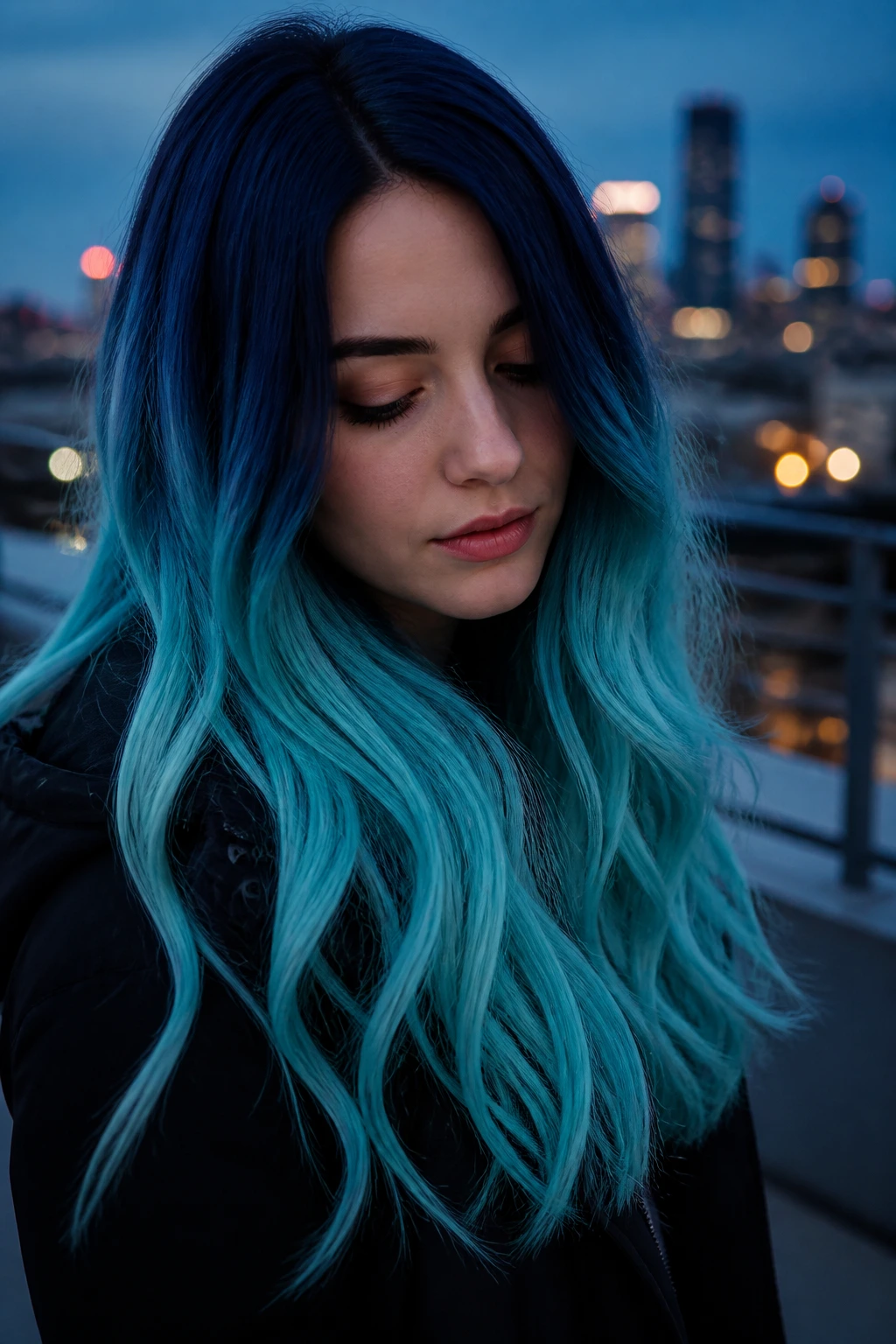
Navy to aqua is bolder than teal-to-seafoam and a little more graphic. The navy keeps the crown dark, while the aqua ends bring a high-contrast finish that works best when the fade is carefully feathered.
Long hair gives this look a runway of color. The deeper navy has enough room to taper into blue, and the aqua can sit at the ends without overwhelming the whole head.
It’s a strong choice if you like statement hair but still want some control. A satin finish helps, because matte styling can make bright blue shades look dusty.
33. Deep Brunette to Turquoise Tips
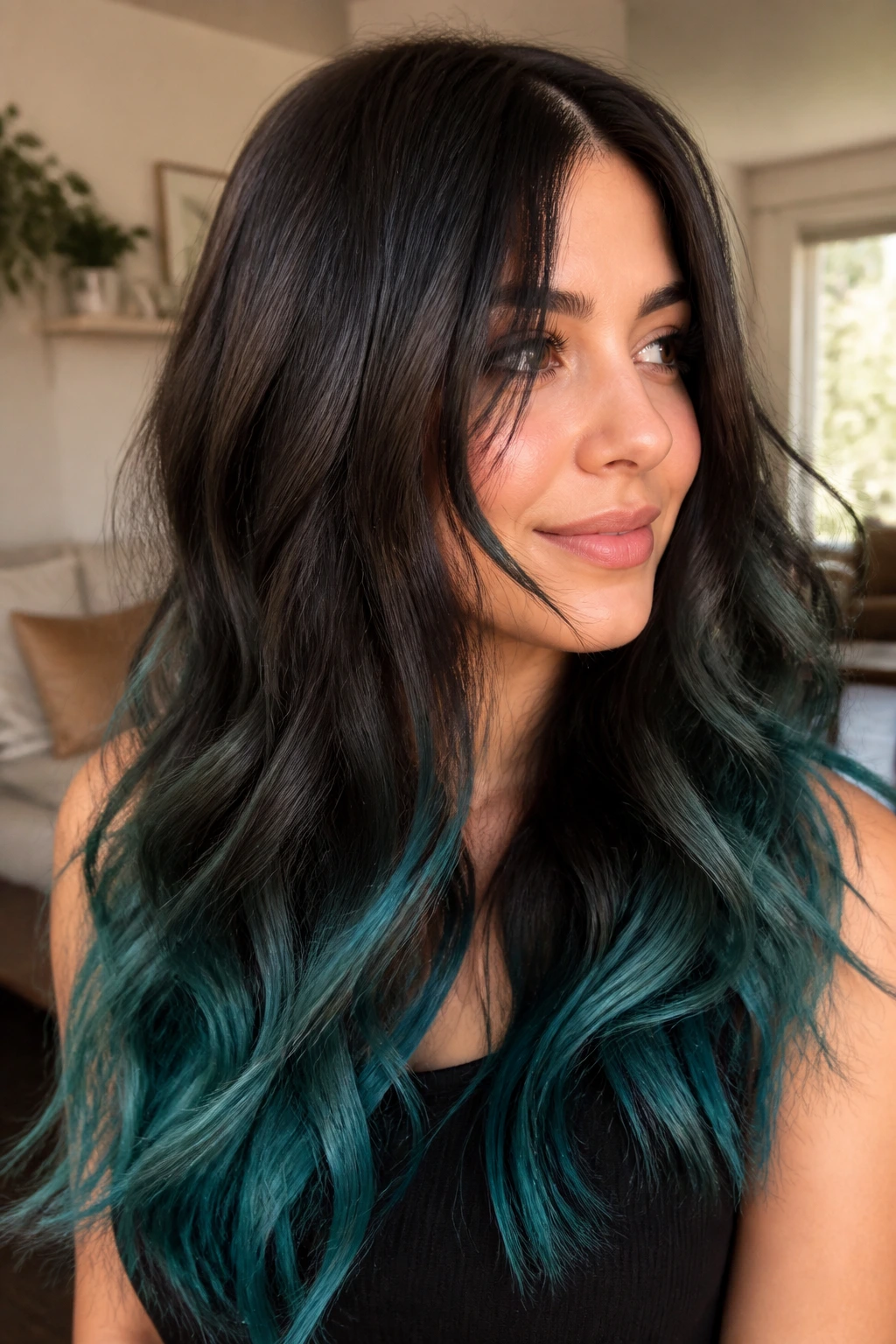
Turquoise tips are a low-commitment fantasy move for long hair. Keep the base dark and rich, then let the turquoise live in the last few inches where it can pop without taking over the length.
The short answer is that this works because the long hair keeps the color concentrated at the bottom. You get the playful hit of turquoise, but the overall silhouette still reads brunette.
I’d recommend this for someone who likes the idea of color but doesn’t want constant root maintenance. The darker top makes the grow-out very forgiving.
34. Platinum to Iced Lilac
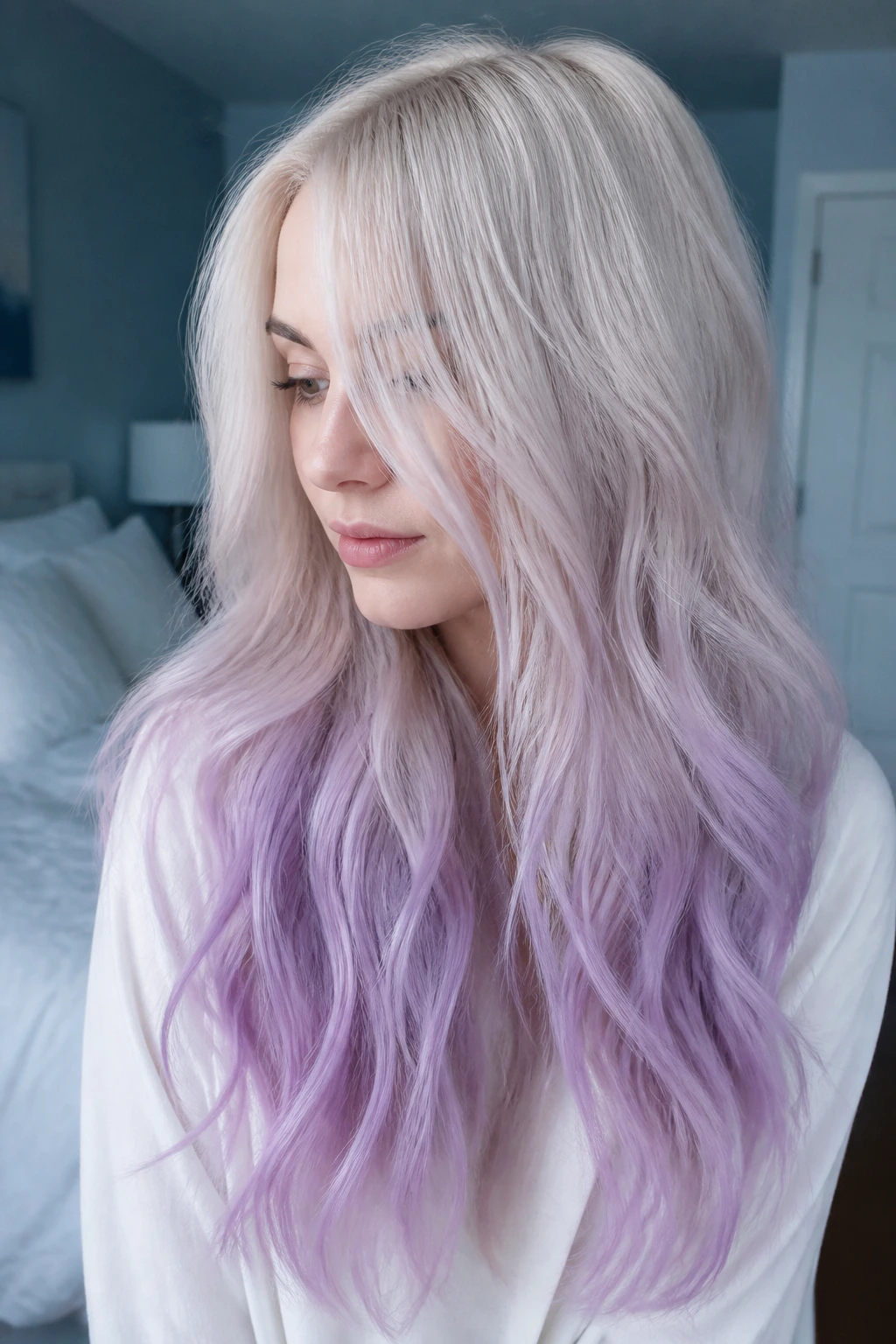
Platinum to iced lilac is pale, airy, and high-maintenance in the way that only pale color can be. The platinum root area or shadowed top creates a clean base, then the lilac ends cool the whole look down into a soft pastel.
Long hair gives the lilac room to stay soft instead of cartoon-bright. The length helps it read like a wash of color, not a single painted stripe.
This is one of those looks that needs regular toning. If the lilac fades out, the platinum can start to read harsh, so keep a tinted mask nearby.
35. Sand Blonde to Pearl
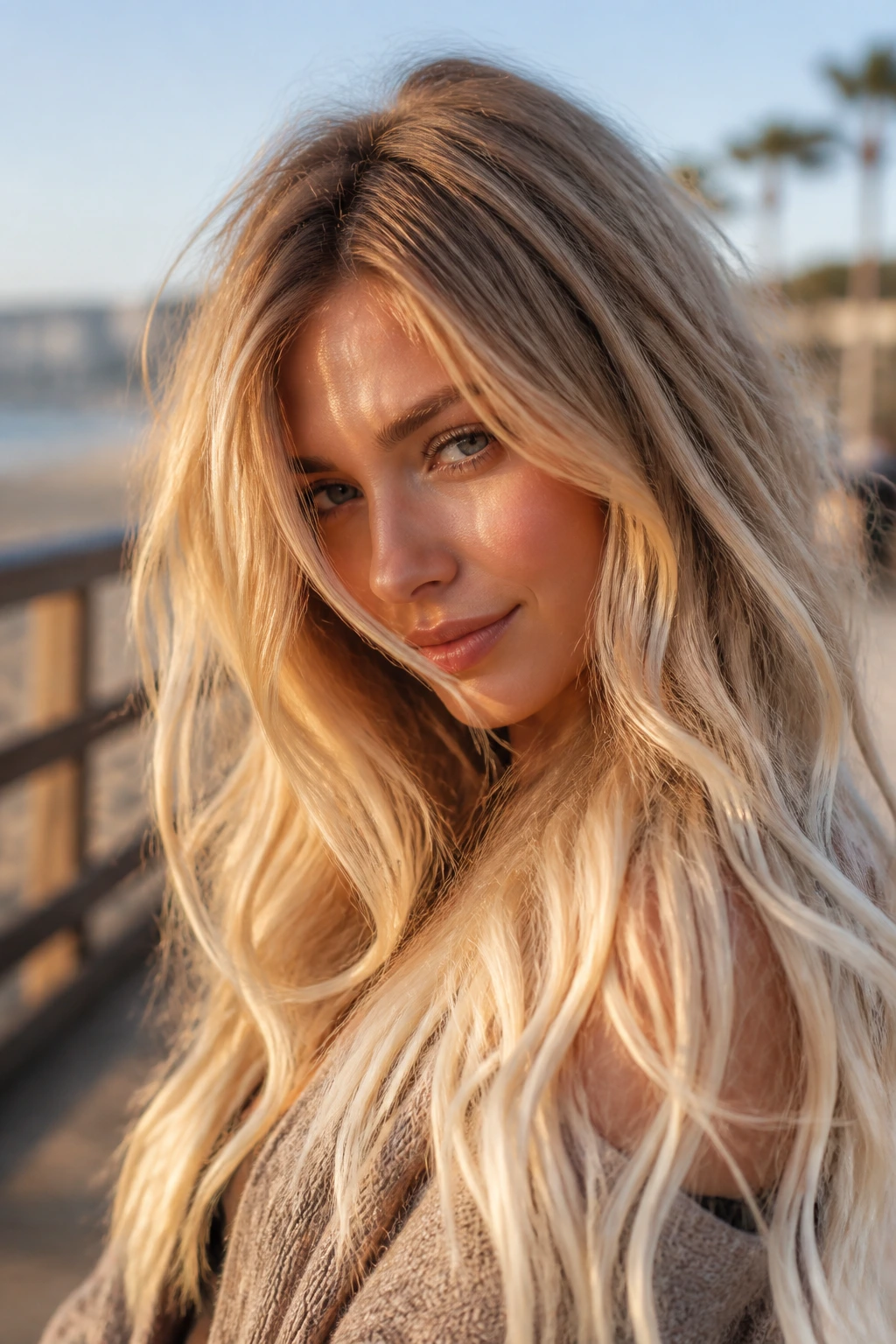
Sand blonde to pearl is one of the gentlest blonde ombres for long hair. The top stays sandy and neutral, then the ends drift into a pearl finish that looks smooth, creamy, and lightly reflective.
The pearl tone needs a clean lift underneath, but it does not have to be icy. In fact, a little softness helps it look better on long lengths because the fade feels calmer.
This one is a quiet favorite for people who want blonde without yellow. It sits nicely on hair that’s layered, blown out, or worn in soft bends.
36. Rooted Butter Blonde Ombre
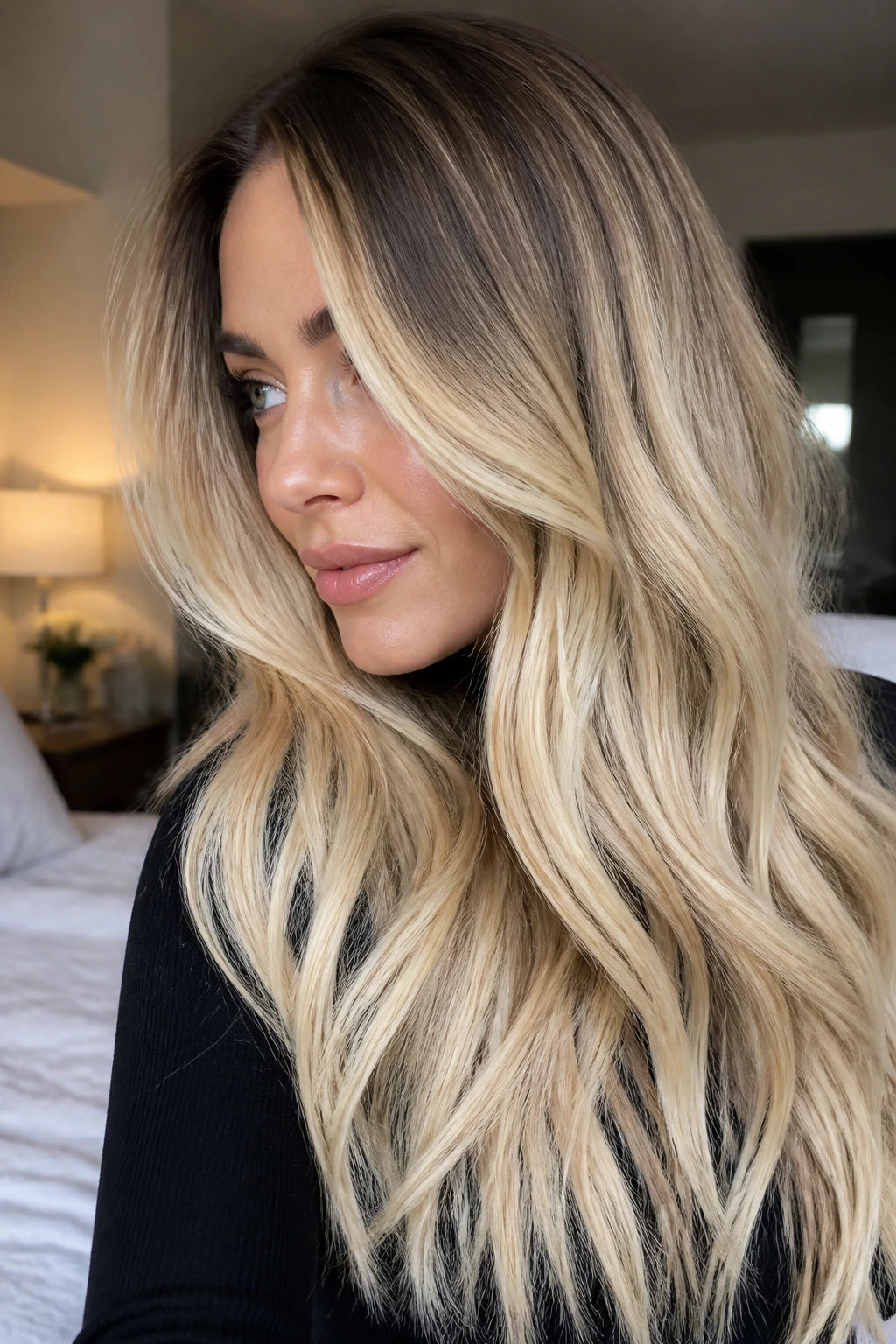
Butter blonde with a rooted top is warmer, brighter, and easier to wear than full platinum. The shadowed root keeps the color from feeling blocky, while the butter ends give the hair that soft yellow-cream glow.
Long hair helps the butter tone look lush instead of flat. The darker root also buys you time between refreshes, which matters because pale blondes can look tired fast if they’re overprocessed.
If your hair pulls orange easily, ask for a beige step between root and butter. That little buffer keeps the final blonde from turning brassy.
37. Honeyed Face-Frame with Deep Ends
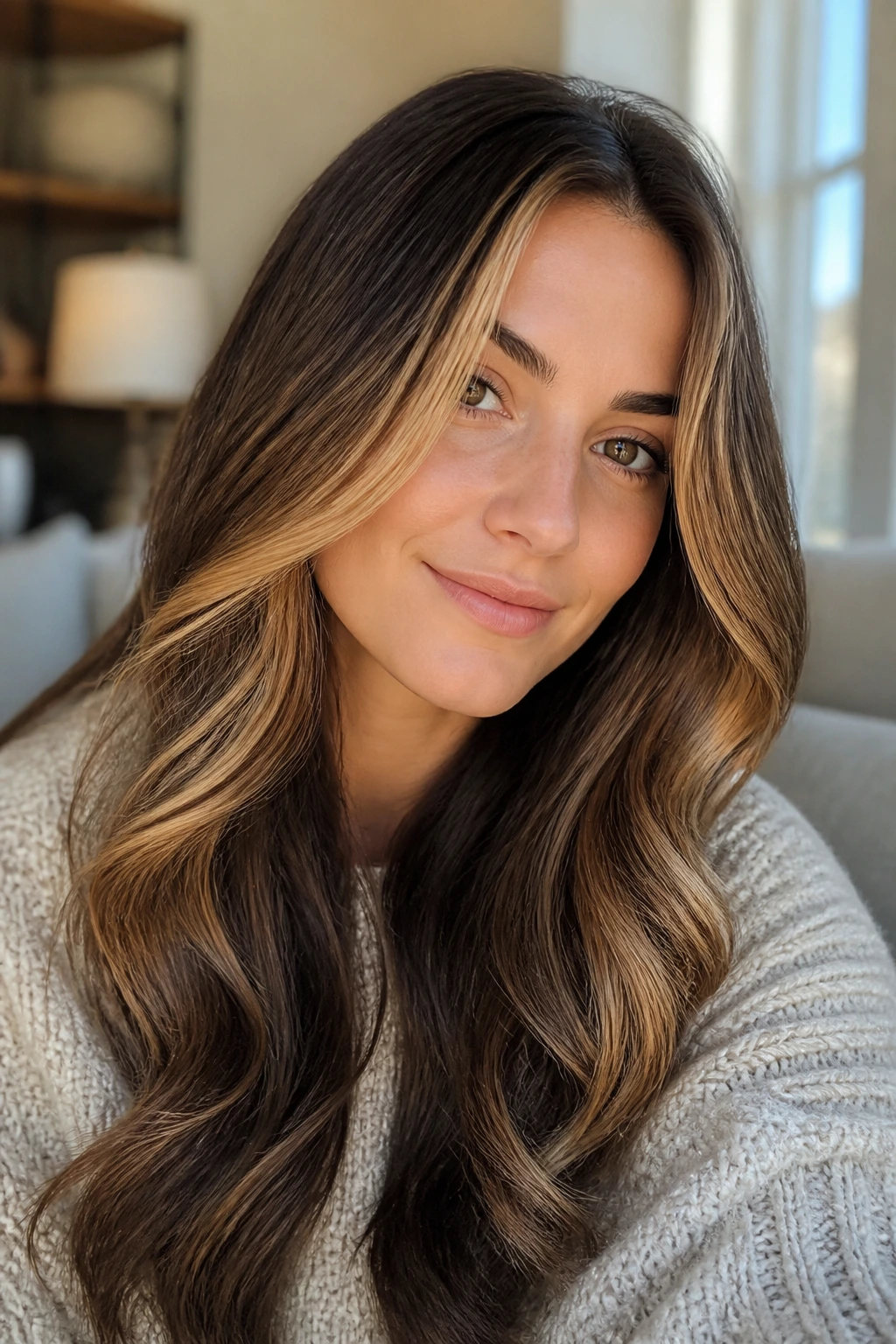
This is the version I recommend when someone wants dimension but not a full color overhaul. Keep the ends deep, bring honey around the face, and let a few lighter layers travel down the sides.
On long hair, that face-frame keeps the style from disappearing when it’s tied up. The darker ends still give density, while the honey pieces lift the front just enough to matter.
It’s also a smart move for people who wear glasses or like center parts. The brightness sits where the eye lands first, and the rest of the ombre can stay quiet.
38. Dramatic Dip-Dye Ombre
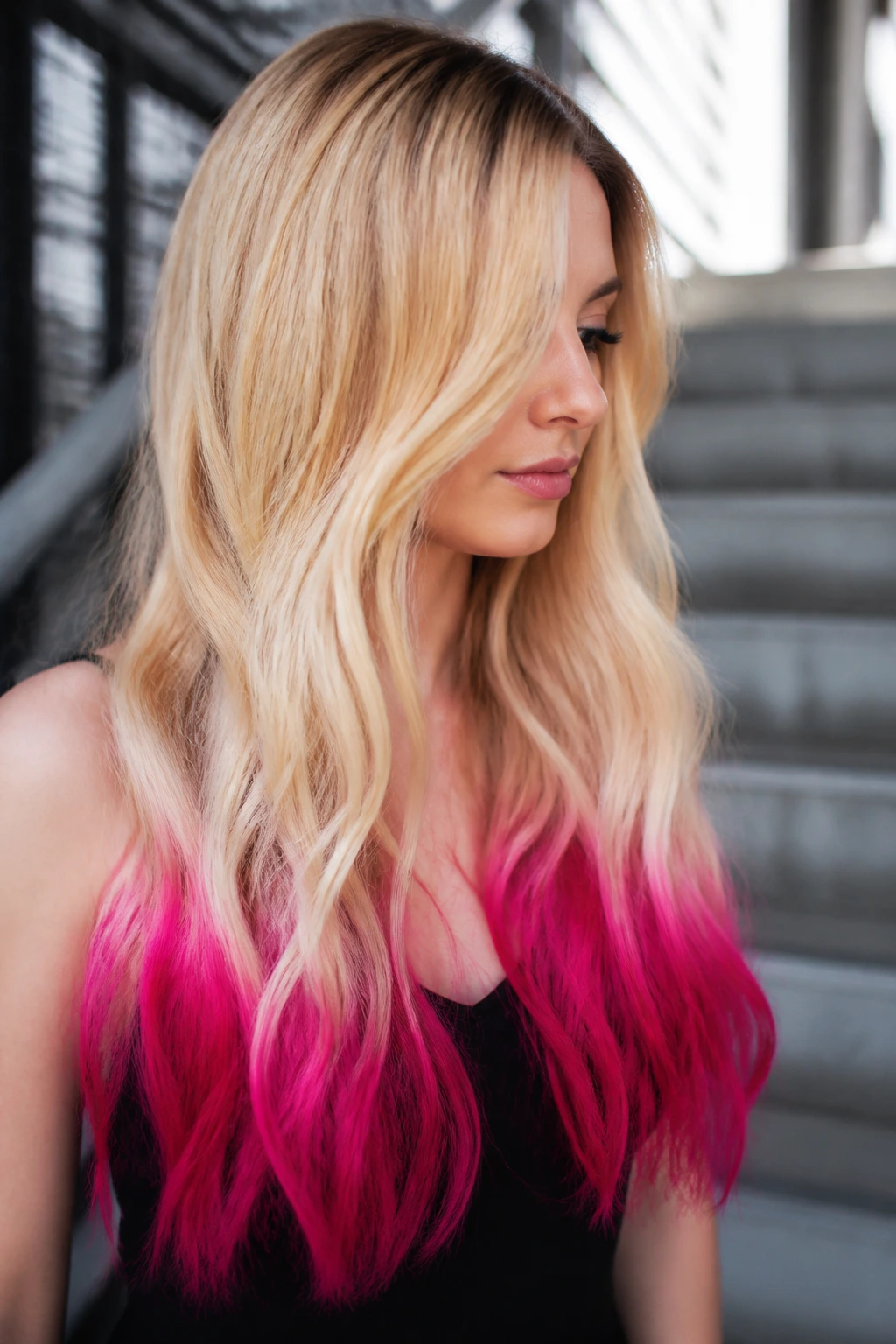
Dip-dye ombre is the loudest version here, and long hair is the only reason it doesn’t feel too abrupt. The base stays mostly untouched, then the color drops hard into a saturated end section — blonde, copper, blue, pink, whatever your nerve can handle.
The line has to be clean. If the transition is fuzzy, the whole point gets lost. Long hair gives the dip-dye enough vertical space to look bold on purpose instead of like a mistake.
It’s the least subtle option in the set, which is exactly why some people love it. If you want your ends to do the talking, this is the one.
Why Ombre Hair Looks for Long Hair Need So Much Breathing Room
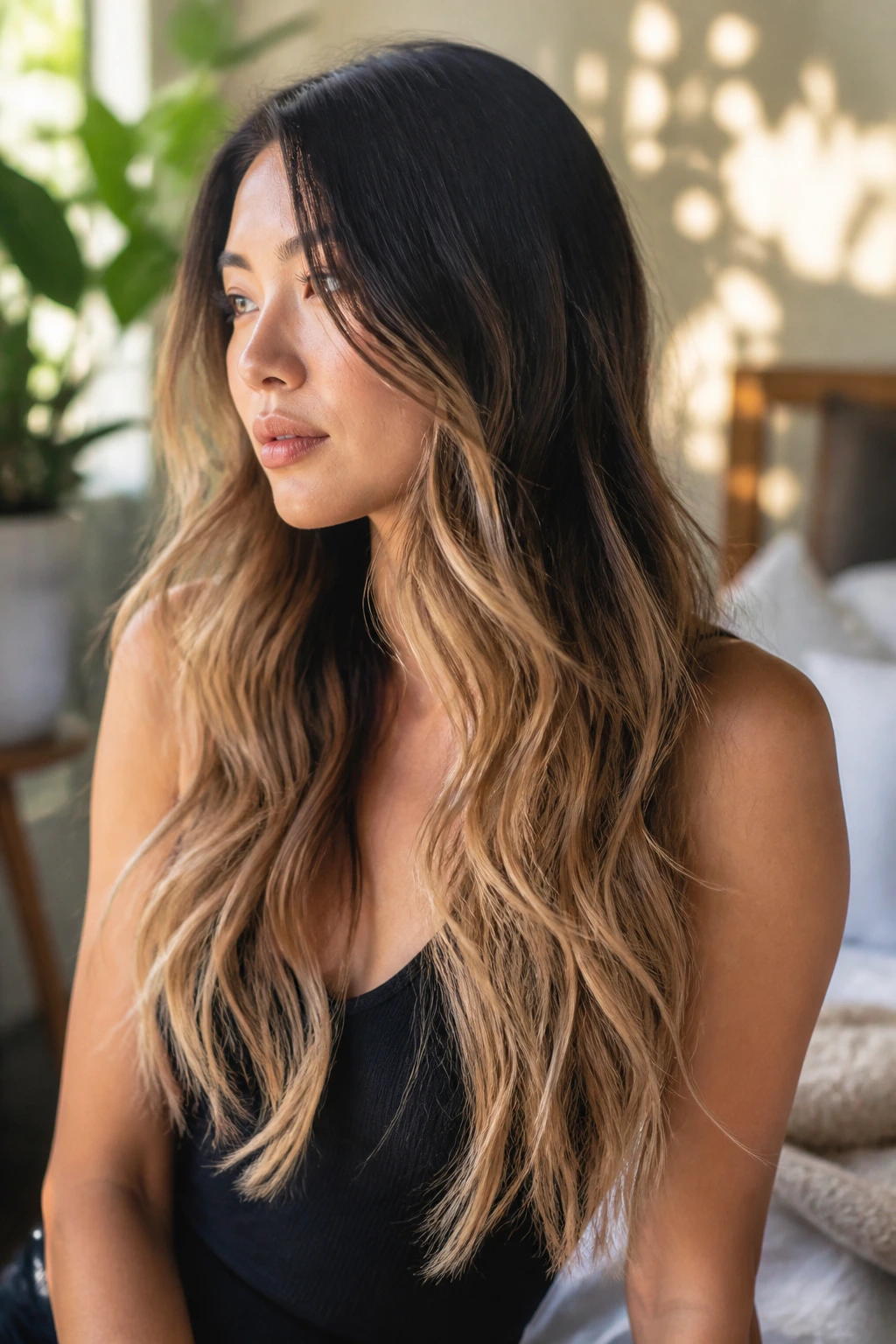
Long hair changes the math. A fade that would look abrupt on a collarbone cut can look soft and deliberate once the same color has twelve inches to travel. That extra distance is what lets ombre feel like a gradient instead of a split-screen.
The other thing long hair does well is hide the hard parts. Dark roots, old toner, slightly warmer mids — all of that blends more easily when the color has room to settle. You still need good placement, but the length forgives a lot if the transition starts low enough.
I also think long hair deserves more depth at the ends than people give it credit for. Too many ombre jobs stop at “lighter bottom half” and forget the ends are the part people actually notice when the hair swings. A good long ombre uses the ends like punctuation. Not a full stop. More like a comma that makes you look again.
Tools and Products That Keep the Blend Clean
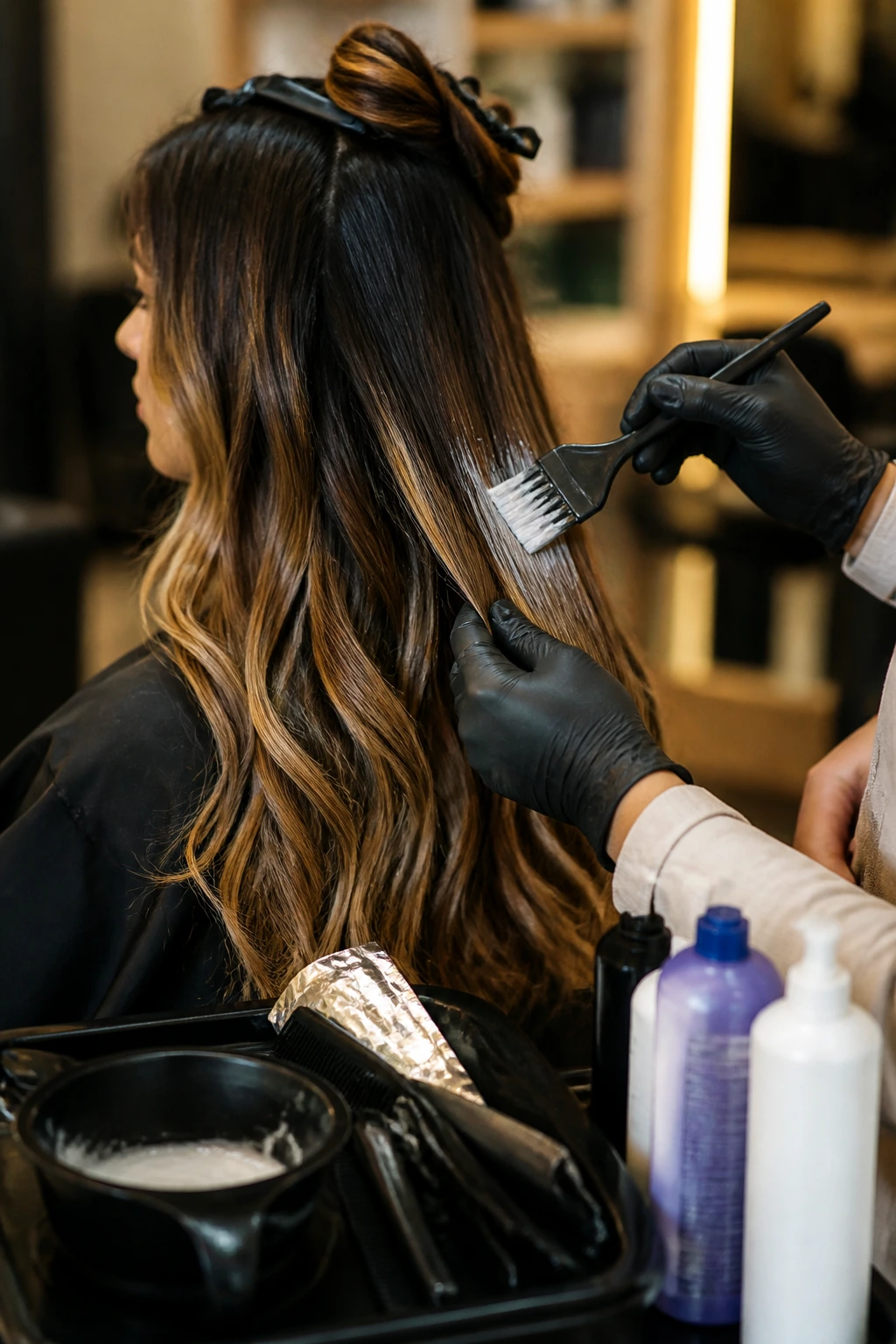
- Tint brush and bowl: Useful for painting soft mid-length transitions instead of dumping color on in one pass.
- Tail comb: Helps section long hair cleanly, especially if you’re mapping where the fade should start.
- Sectioning clips: Long hair tangles fast; clips keep the top, mids, and ends separated while you work.
- Balayage board or foil: Optional, but helpful if you want more lift through the ends and a cleaner blend.
- Gloves: Non-negotiable for lightener, toner, and color-depositing masks.
- Sulfate-free shampoo: Keeps the ombre from washing out too fast and helps warmer tones stay richer.
- Purple shampoo or blue shampoo: Purple helps blondes; blue helps brassy brunettes and darker blondes.
- Deep conditioner or mask: Lightened ends need moisture, especially if your hair is long enough to sit on your shoulders and rub.
- Heat protectant: A good one matters more on long ombre hair because the ends take the brunt of curling and flat ironing.
- Microfiber towel or old T-shirt: Regular bath towels rough up the ends, and ombre shows damage faster.
How to Choose the Right Tone Before You Book
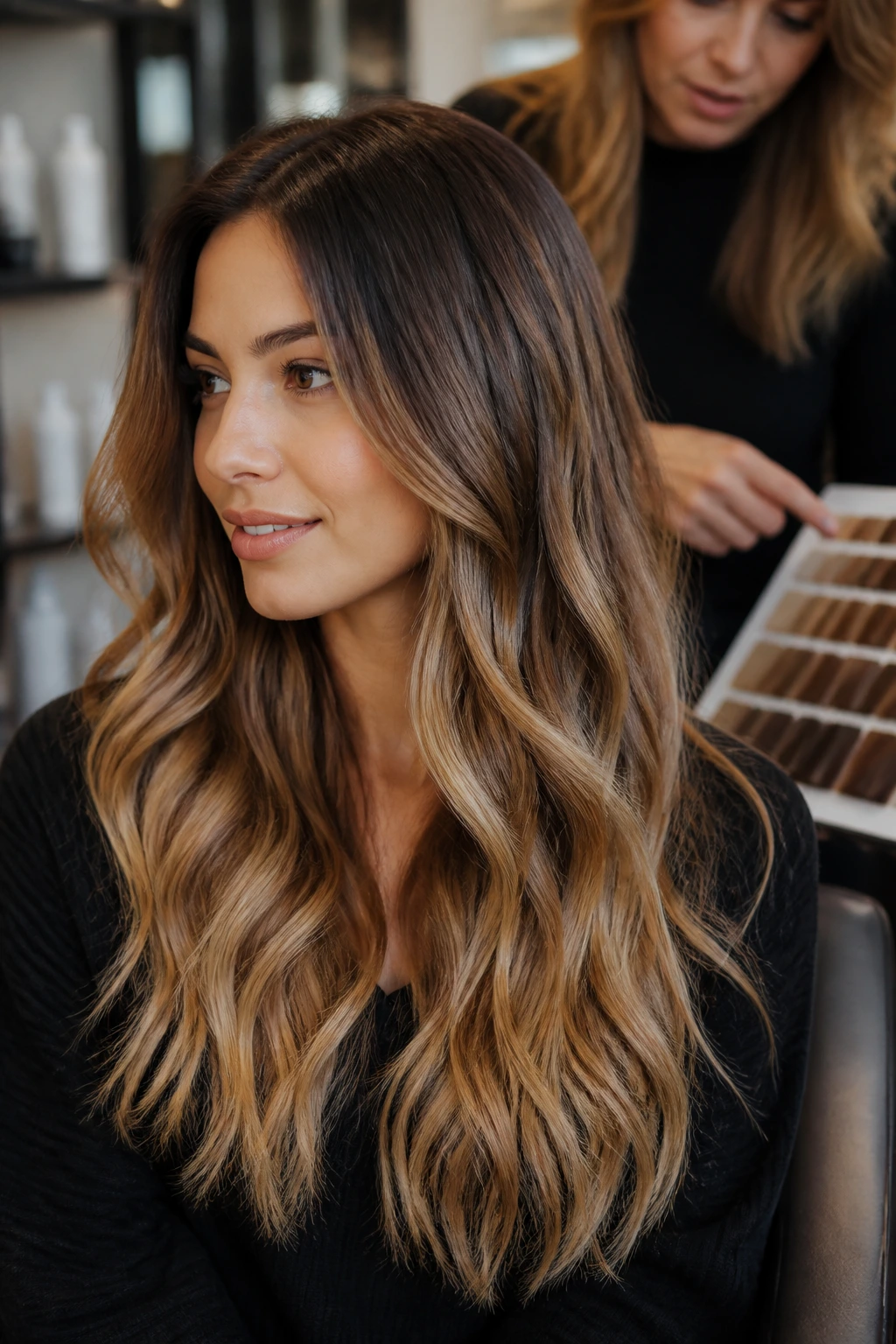
The easiest way to ruin a long ombre is to pick a pretty color that fights your base. Warm brunettes usually hold caramel, honey, copper, and rose tones better than icy ash. Cooler bases take ash, beige, silver, and smoky blue with less resistance.
That does not mean you have to match everything to your skin tone like it’s a law. Hair history matters more. If your ends are already porous or have old color on them, they may grab toner dark or muddy. If you’ve got box dye underneath, red, copper, plum, and chocolate-to-caramel fades are often kinder than pale ash blonde.
Bring photos, yes, but bring the right ones. I want to see the roots, mids, and ends in the same image. A colorist can read a mood shot in two seconds and tell you whether the fade starts at the cheekbone, shoulder, or lower rib, which is the real decision. The color family matters. The placement matters more.
How to Style Long Ombre Hair So the Fade Shows Up
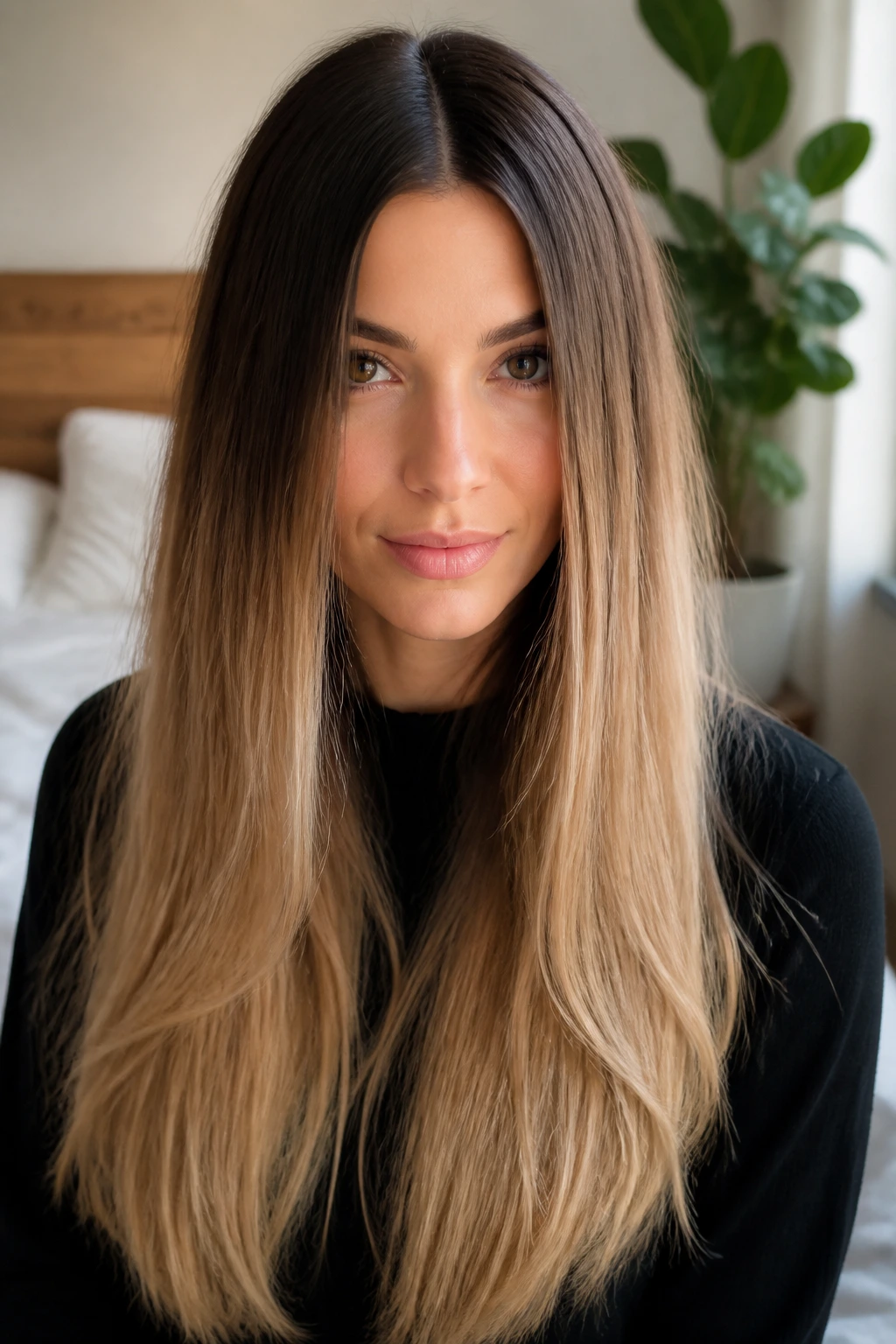
Straight and sleek: This shows the gradient most clearly. A center part and a smooth blowout make the transition look clean, especially on brunette-to-blonde or brunette-to-caramel ombre.
Loose waves: My favorite for almost every long ombre. Use a 1 to 1.25-inch iron, leave the last inch out, and alternate directions so the lighter ends land in different places. The fade feels softer and fuller.
Braids and twists: These are underrated. A side braid or loose rope twist brings the lighter pieces forward in chunks, which makes ombre look thicker through the lower half.
Ponytails and half-up styles: High ponytails show off the hidden underlayer; low ponytails make the ends do the talking. If you spend a lot of time tying your hair up, put a little brightness around the face so the color doesn’t vanish.
A tiny amount of shine oil on the last two inches changes everything. Too much, though, and the ends separate like strings. Use less than you think.
Extra Moves That Make the Gradient Look Richer
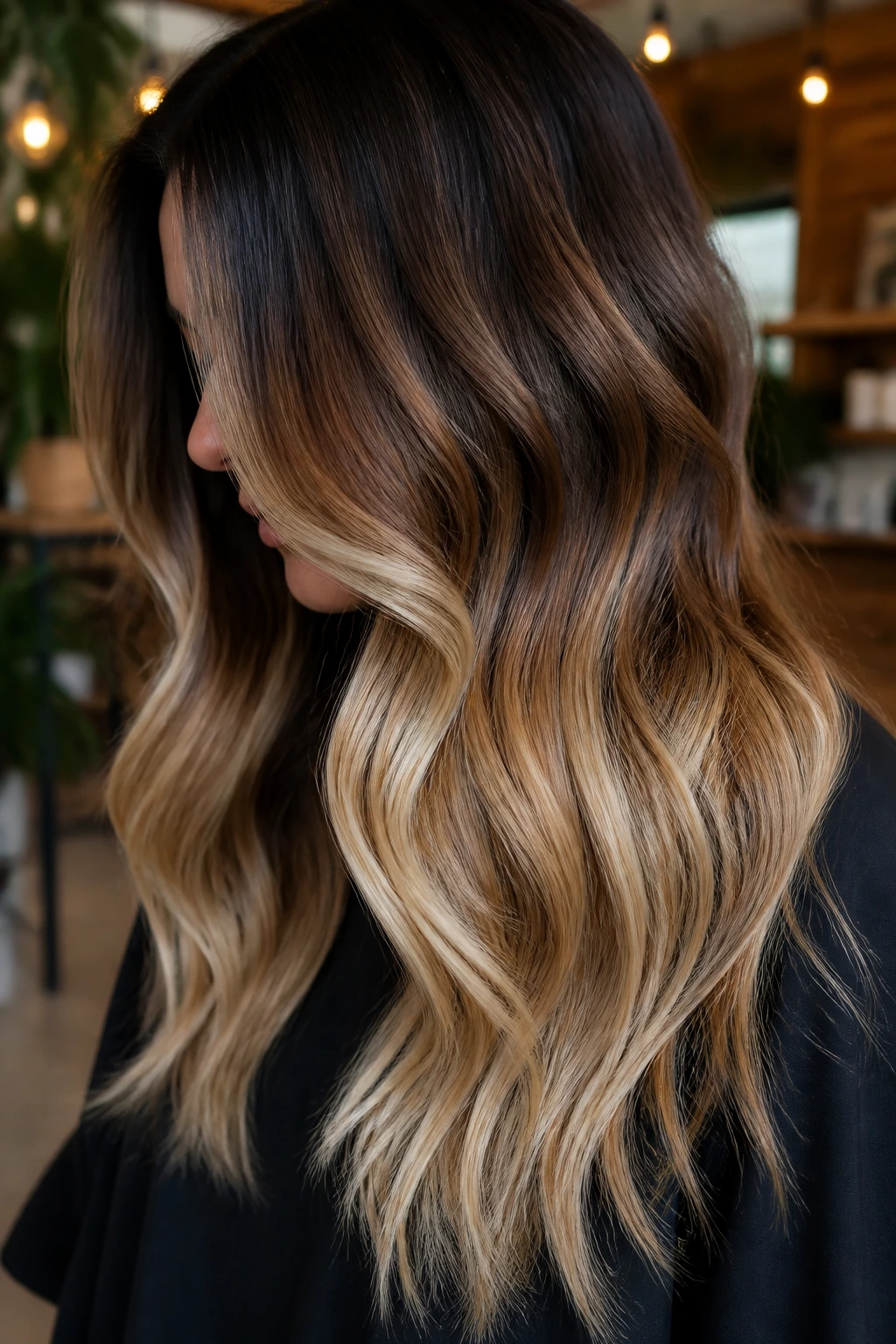
Color melt: Ask for the mids to be toned in a color that sits between root and end. That extra middle shade is what keeps the ombre from looking like two disconnected blocks.
Face-frame boost: A strand or two around the face can be one shade lighter than the rest of the ends. It draws the eye upward and makes the whole color feel more alive.
Layer awareness: If you have long layers, ask for brightness on the longest pieces and a softer finish on the interior layers. Otherwise, the ombre can look heavy from the side but thin from the back.
Gloss finish: A gloss every 6 to 8 weeks keeps warm brunettes caramelized, blondes creamy, and reds from going flat. It’s one of the least glamorous parts of maintenance and one of the most useful.
Texture choice: Straight hair reads cleaner, but waves usually make ombre look richer. If you’re unsure, style your hair the way you wear it most before deciding where the lightness should stop.
Keeping Ombre Hair Healthy as It Grows
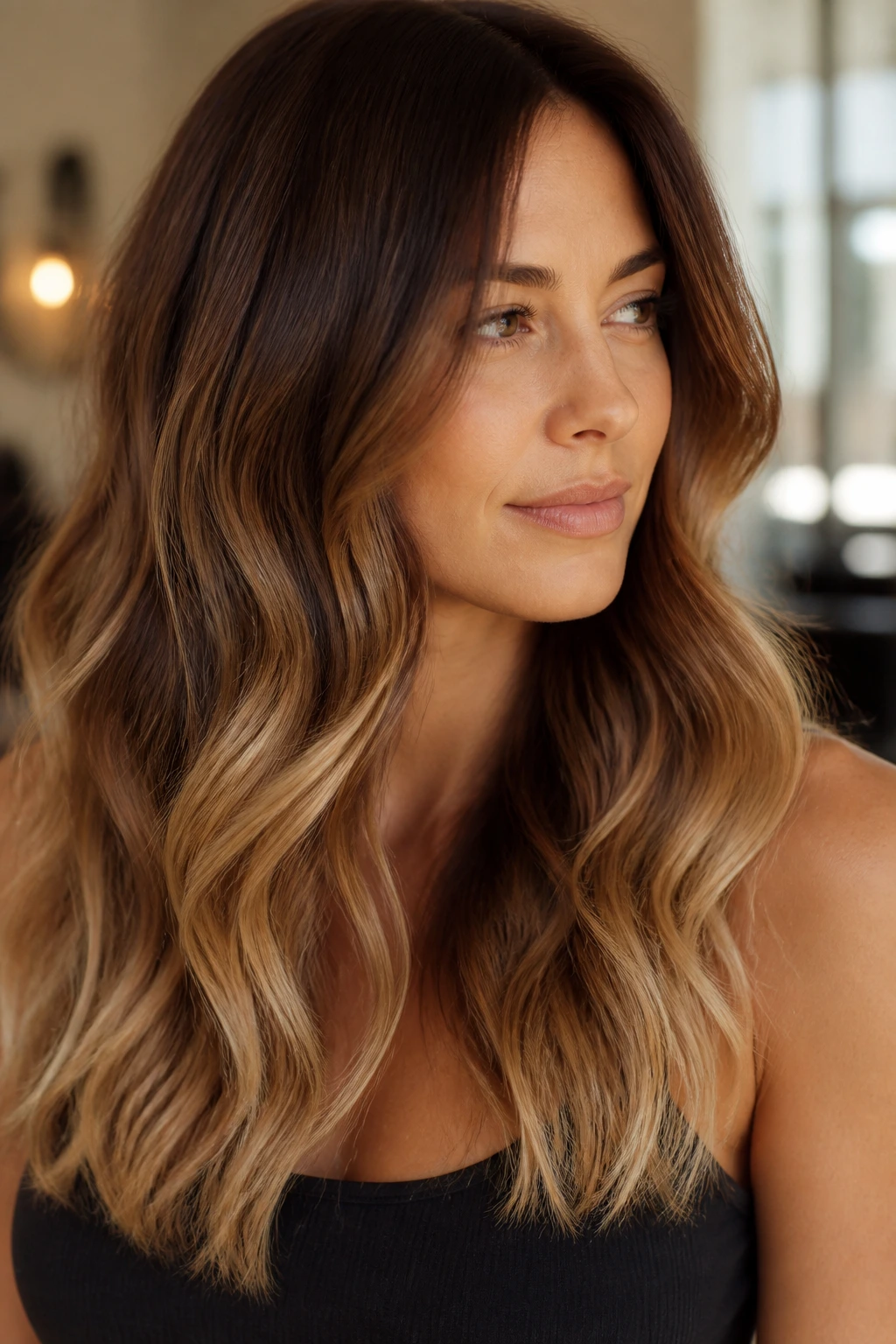
Long ombre hair looks best when the ends stay soft, not fried. A deep conditioner once a week is the baseline if you’ve lightened the lower half, and it matters even more if your hair sits on clothing all day and picks up friction.
Toners and glosses do most of the color maintenance. For blonde, beige, or lilac ends, plan on a refresh every 4 to 8 weeks depending on how fast brass creeps in. Warm brunettes and coppers can usually stretch longer, but they still benefit from a gloss when the shine starts to go dull.
Trims every 8 to 12 weeks keep the ends from looking see-through. If you’re trying to grow the length, ask for a dusting instead of a full cut. That keeps the hemline tidy without taking away the drama that makes ombre worthwhile.
Heat is the other thing to watch. Curling irons and flat irons can rough up the lightest ends fast, so a heat protectant and a medium rather than screaming-hot setting make sense. A little extra care here buys you a lot of softness.
The Mistakes That Make Ombre Look Stripy or Flat
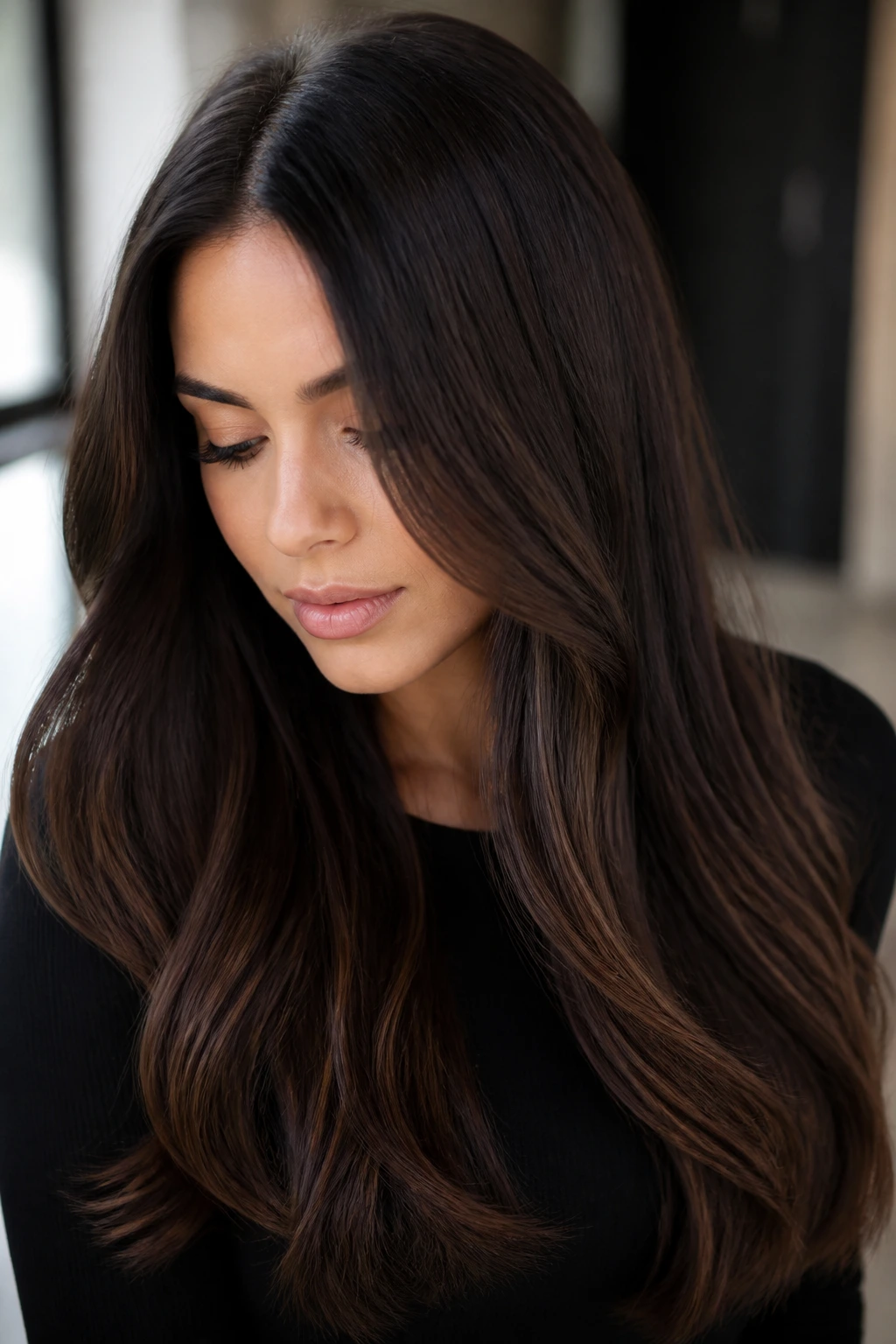
Starting the fade too high: The color line ends up sitting around the ears or chin, and the whole length loses its depth. The fix is simple: push the transition lower on long hair so the gradient has room to breathe.
Ignoring undertone: Ash on orange ends can look muddy. Peach on already-warm copper can look loud. Pick a tone family that works with the base you already have, or you’ll spend the whole appointment fighting the hair instead of working with it.
Making the ends too light too fast: That chalky bottom section is what people complain about when they say ombre looks “striped.” The solution is to lift gradually and stop before the ends go hollow.
Skipping a gloss: Fresh lightening without tone control often looks raw. A gloss softens the edge between shades and gives the ombre that blended, finished feel.
Forgetting the haircut: One blunt, heavy hemline can hide the fade. Long layers or a soft U-shape let the lighter ends show movement instead of sitting as one solid block.
Ways to Bend the Look Without Losing the Ombre
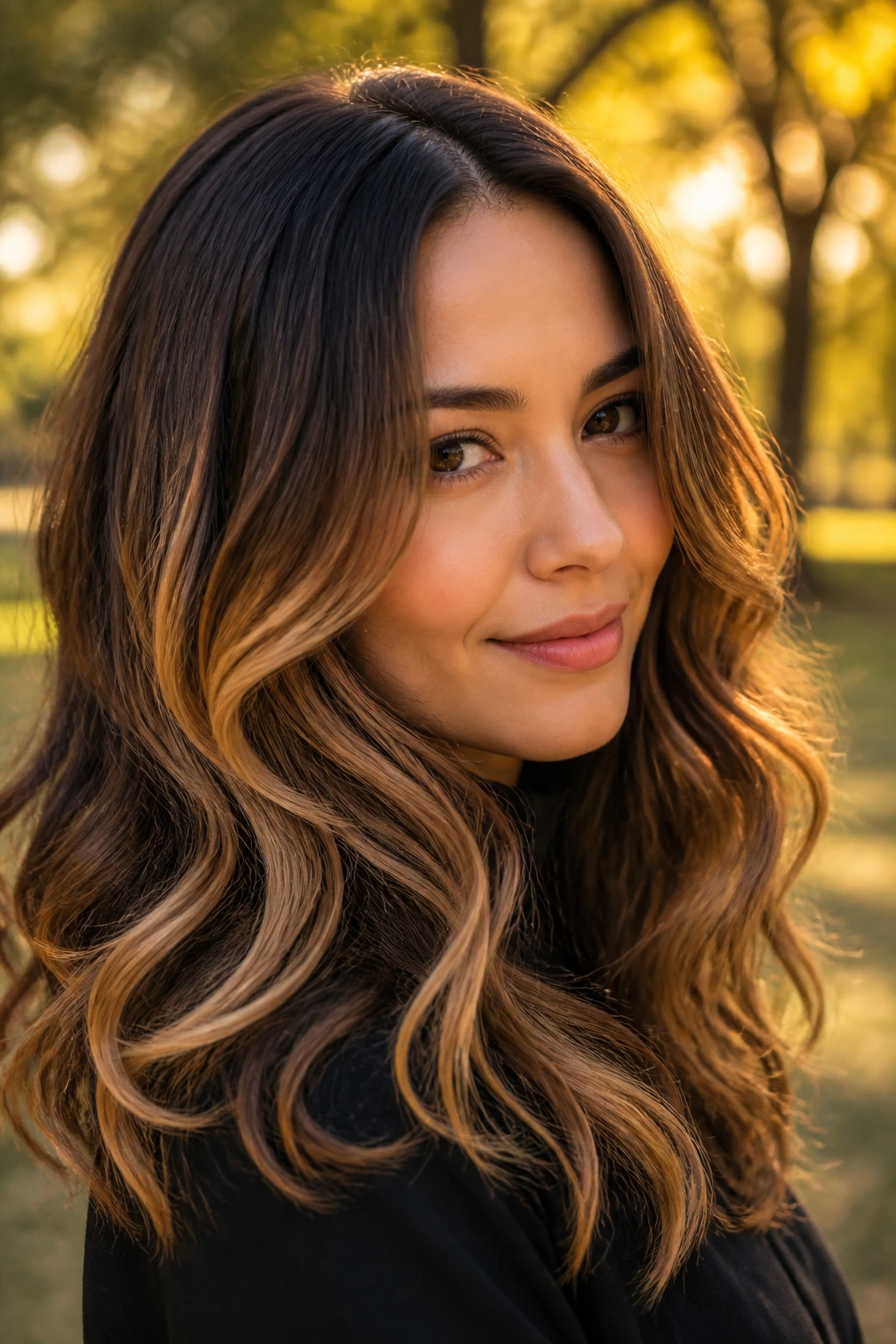
Low-Contrast Brunette Melt: Keep the shade shift within 2 levels of your natural brown. It’s the best option if you want shine, shape, and very little drama at the root.
High-Impact Dip: Push the ends 4-5 levels lighter or brighter than the top. This works when you want the color to read from across the room, but it needs cleaner upkeep.
Curly-Hair Halo Fade: Put the lightest pieces around the outer curve of curls and keep the deepest shade near the crown. The result looks softer and bigger at the same time.
Cool-Tone Reset: If your warm ombre has gone brassy, shift the ends toward beige, taupe, or smoky ash instead of trying to bleach them lighter again. Less damage. Better tone.
Warm Glow Refresh: For brunettes and redheads who want more shine than contrast, add caramel, copper, or honey through the mids and gloss the ends instead of relifting them.
Bangs-Friendly Frame: If you wear fringe, keep the ombre lower and brighter around the lengths. Bangs already create a visual break, so the color should support the shape, not crowd it.
Frequently Asked Questions
How long does hair need to be for ombre to look good?
Usually, shoulder length is the bare minimum, but the look really opens up on hair that reaches the chest or longer. Once you have room for a real fade — not just a quick color shift — the ombre starts looking intentional.
Is ombre the same as balayage?
Not quite. Balayage is a painting technique, while ombre is the overall effect of darker roots fading into lighter ends. Long hair often uses both together, which is why the terms get mixed up so often.
Can ombre work on very dark hair?
Yes, but the lift has to be realistic. Deep brunettes and black hair usually look best with caramel, copper, blue, plum, or softened blonde tones rather than trying to jump straight to pale ash.
Does ombre damage hair less than all-over blonde?
Usually, yes, because you’re lightening only part of the length instead of the entire head. The ends still need care, though, and if they’ve been lifted hard, they’ll show dryness faster than the darker top.
How often do the ends need toner or gloss?
For blonde, beige, silver, or lilac ombre, every 4 to 8 weeks is common. Warm brunettes and reds can go longer, but they still benefit from a gloss when the shine fades or brass starts to creep in.
What if my ends turn orange after lightening?
That means the hair hasn’t been lifted enough for the tone you want. Blue shampoo can help in the short term, but if you want ash, beige, or pearl, you may need another careful lift followed by the right toner.
Can I get ombre if my hair is curly?
Yes, and curls can make ombre look thicker because the light pieces catch on the curve of each curl. The placement just has to respect shrinkage, or the color will sit too high once the hair dries.
Will ombre make fine long hair look thinner?
It can if the ends are too light and too blunt. Keep more depth at the root, add a few face-framing pieces, and ask for a soft layered cut so the length still looks full.
Soft Ends, Long Wear
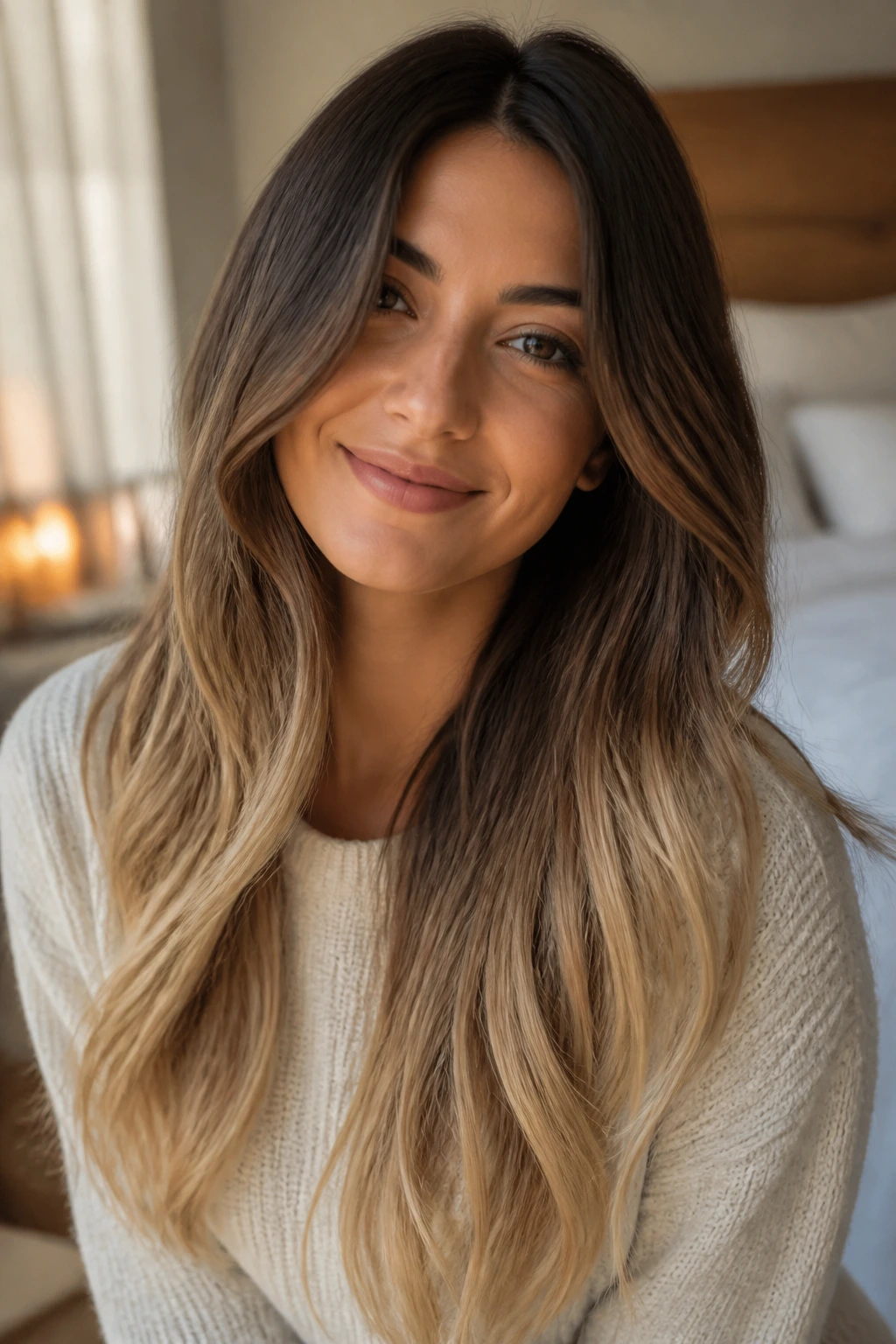
Long ombre works because it respects the length instead of fighting it. The best versions keep the root believable, let the gradient travel, and stop just short of looking overworked. That’s the sweet spot — a fade with enough room to feel smooth, not forced.
If you’re choosing between several of these looks, start with the tone family that already lives closest to your natural base. A good ombre on long hair rarely looks like a costume. It looks like your hair, only with better lighting.
