



An evening hairstyle has one job that daytime hair never really has to think about: it needs to look intentional under warm light, then survive hugs, staircases, photos, and the odd draft from a restaurant door. Loose waves can read soft in the mirror and limp in a dining room. A bun can look elegant at home and suddenly too tight once you put on earrings. The trick is finding shapes that hold their line without turning helmet-stiff.
What makes polished evening hair tricky is that the details show. A crooked part is louder at night. Flyaways catch light. A bobby pin that would disappear in daylight can glare back at you from a flash photo. I like styles that build structure at the crown or nape, then leave one or two softer pieces near the face so the whole look feels finished rather than sealed shut.
There’s also a practical side people skip: evening styles need a little grip. Freshly washed hair is often too slippery for clean updos, especially if it’s fine or layered. A tiny bit of texture spray, mousse, or even second-day oil control can make the difference between a style that stays put and one that slowly slides south by dessert.
Why These Looks Earn Their Keep After Sunset
-
They stay readable in low light: clean parts, visible lines, and controlled shine keep the shape from disappearing once you leave bright bathroom lighting behind.
-
They tolerate movement: these styles are built to survive a little dancing, coat removal, and the usual face-touching that happens during a long night.
-
They work with real hair, not fantasy hair: some are better for fine hair, some for thick or curly hair, and several can be adjusted with a few pins instead of a full restyle.
-
They leave room for accessories: pearl clips, combs, satin ribbons, and statement earrings all sit better when the base shape is already tidy.
-
They can be refreshed fast: most of these looks can be revived with a travel comb, a few bobby pins, and a light mist of flexible hairspray.
-
They look polished from more than one angle: a lot of evening hair photographs from the side or back, not head-on, so these styles are designed to hold their shape all the way around.
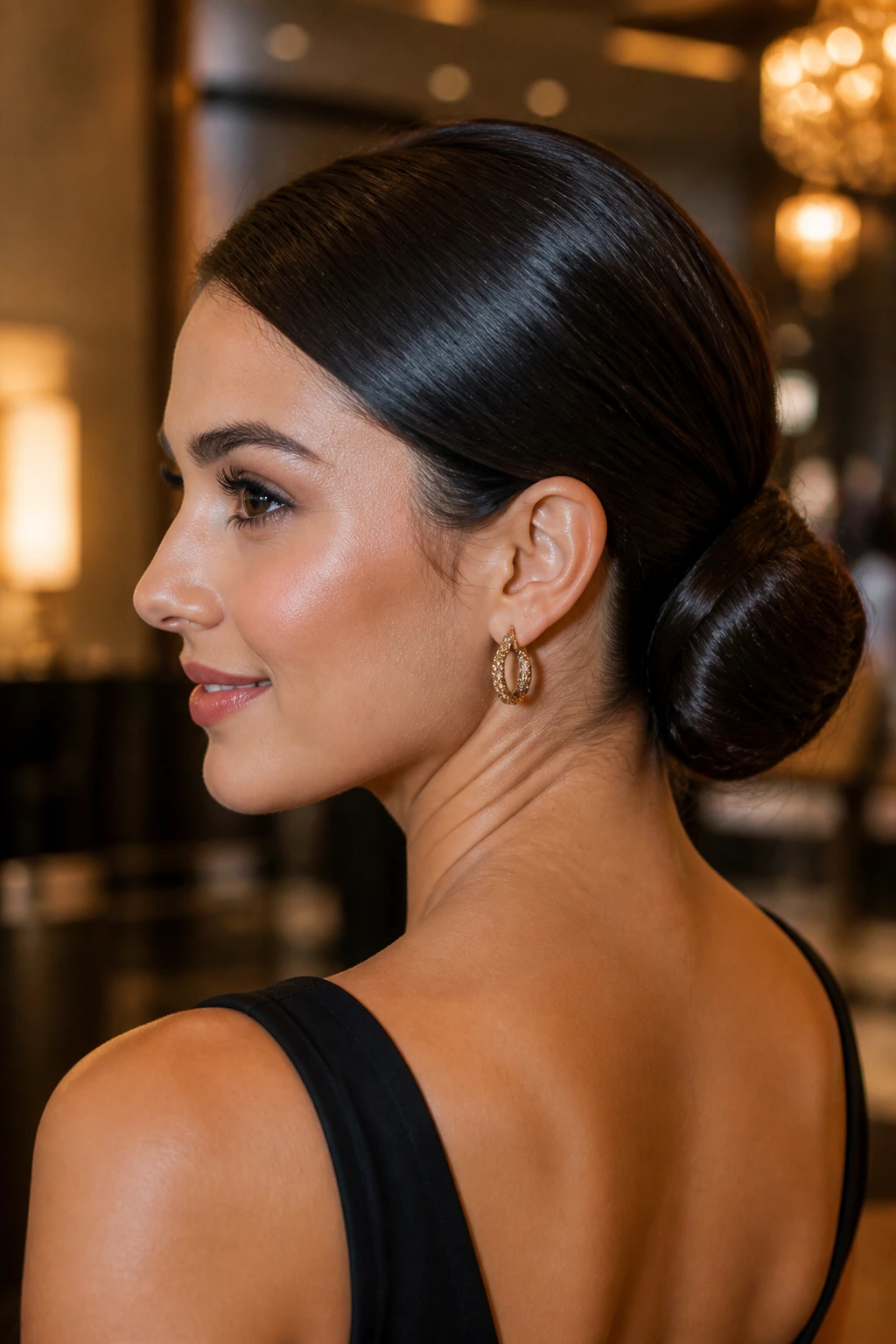
1. Sleek Center-Part Low Bun
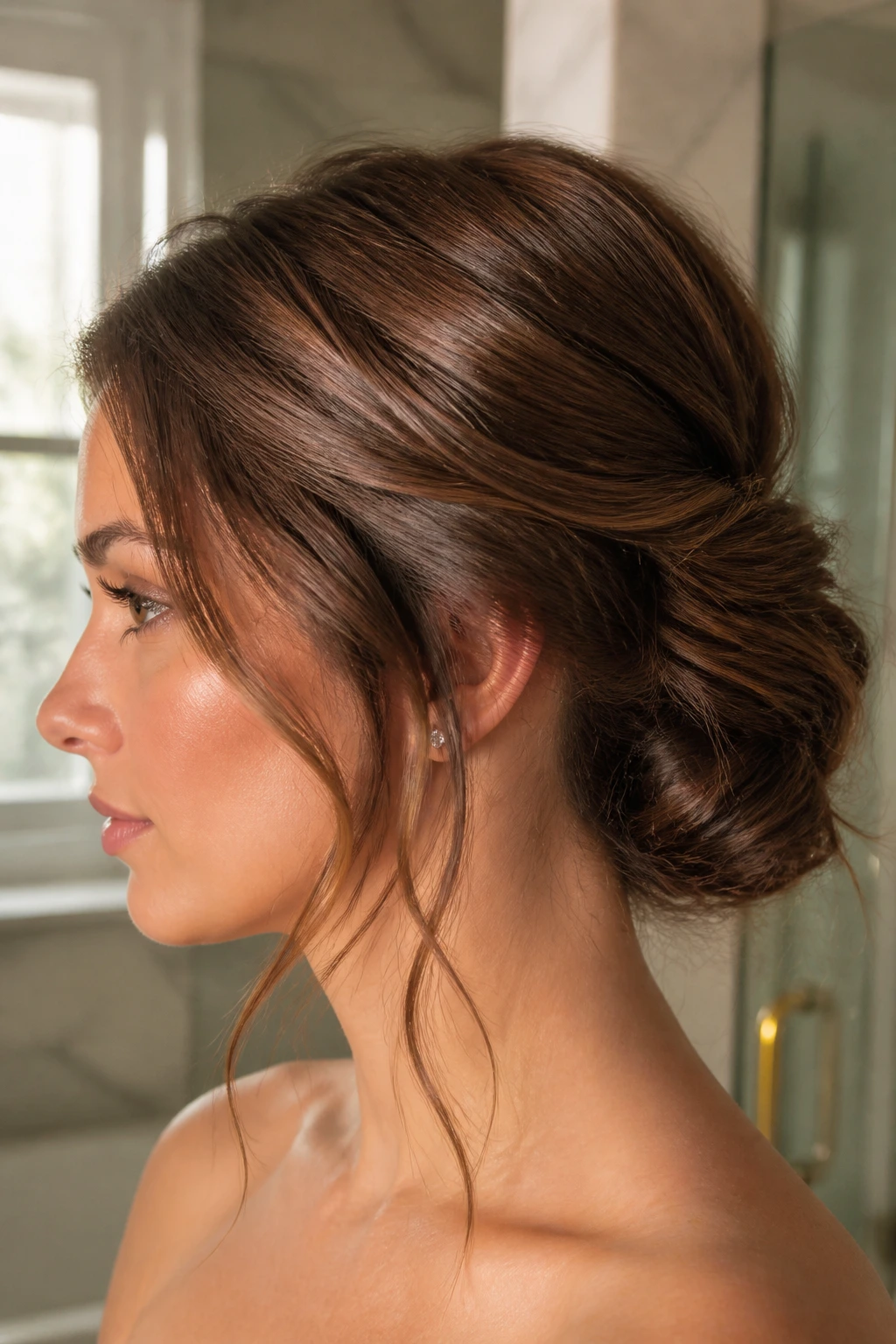
A sleek center-part low bun has a clean, almost severe line at the front, then a soft roll or coil tucked low at the nape. That contrast is what makes it feel dressy. It looks especially sharp with a bare shoulder, a boat neck, or any neckline that needs the hair out of the way.
Why It Looks So Clean
The center part creates balance, which matters more than people think. If your hair tends to puff at the crown or swell at the temples, this shape reins it in fast. On straight or blow-dried hair, it can look expensive without looking fussy, and that’s a rare thing.
Quick Facts
- Best for: medium to long hair with some length to the ends.
- Prep: smooth with a blow-dryer and paddle brush or a flat iron if the front is frizzy.
- Hold: strong enough for long dinners if you anchor the bun with two crossed pins.
- Finishing move: rub a pea-sized drop of serum between your palms and press only the surface.
A tiny warning. Don’t drag the bun too tight at the front or you’ll get a pulled, harsh look. Leave the hairline smooth, not strained.
Pro tip: if your hair is layered, twist the shorter pieces under the bun first and pin them flat before shaping the outside. It keeps the finish neat instead of shaggy.
2. Glossy Hollywood Waves
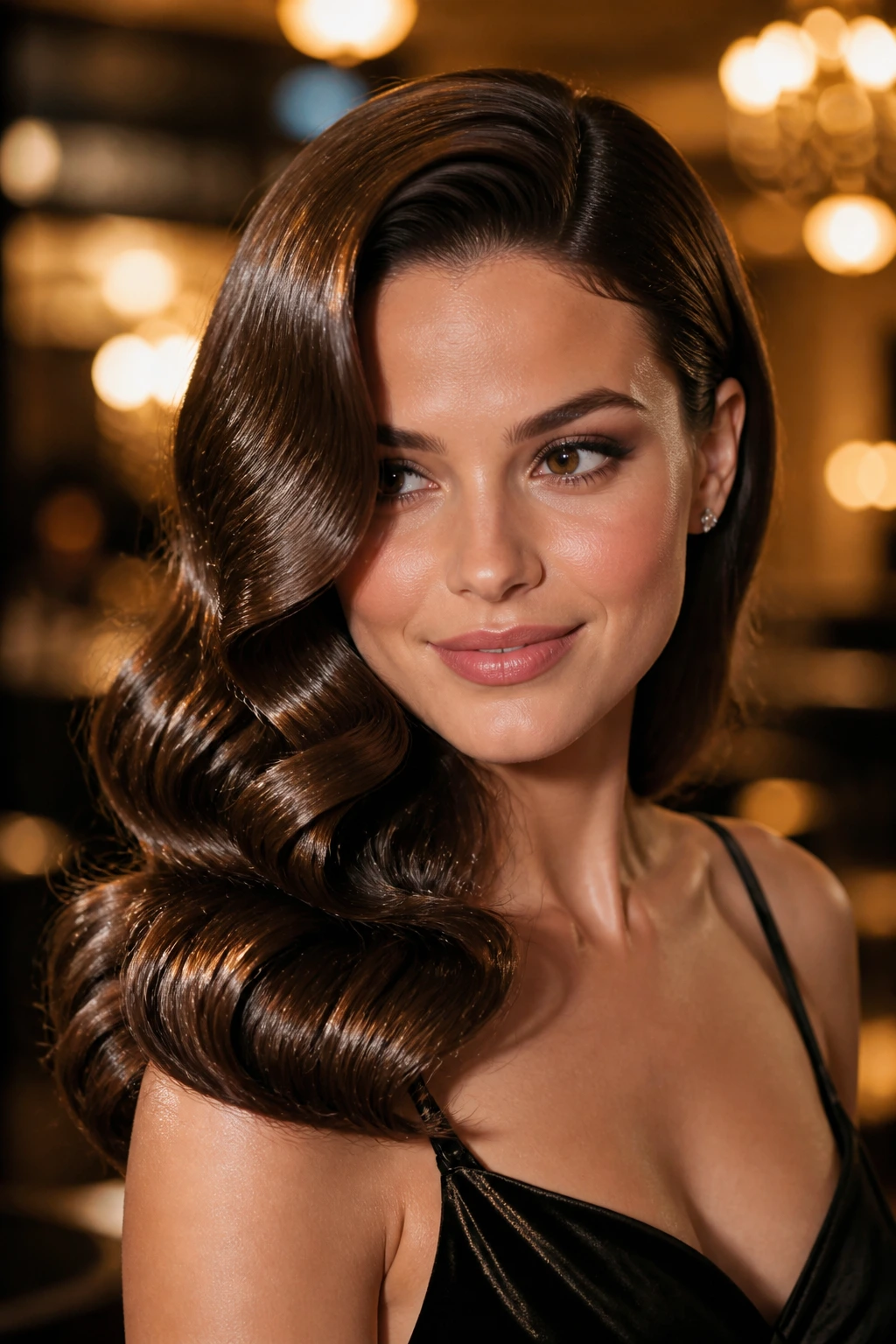
Glossy Hollywood waves are the evening hairstyle that still makes sense decades after they first became a glamour standard. They’re sculpted, side-swept, and brushed into one continuous wave pattern that sits close to the head before opening into soft movement. If your dress is simple, this is the hair that does the talking.
The part matters. So does direction. Curl every section in the same direction with a 1.25-inch iron, pin the curls to cool, then brush them out with a boar bristle brush until the wave merges instead of breaking into separate curls. That brushing step is where the whole thing changes.
This style loves shine spray, but not too much. Too much and the hair starts to look greasy under flash. I prefer a light mist from about 10 inches away, then a final touch at the ends only.
It’s not the fastest option on this list. It’s also one of the most worth it when the evening calls for polished hair that still moves.
3. Twisted Low Chignon
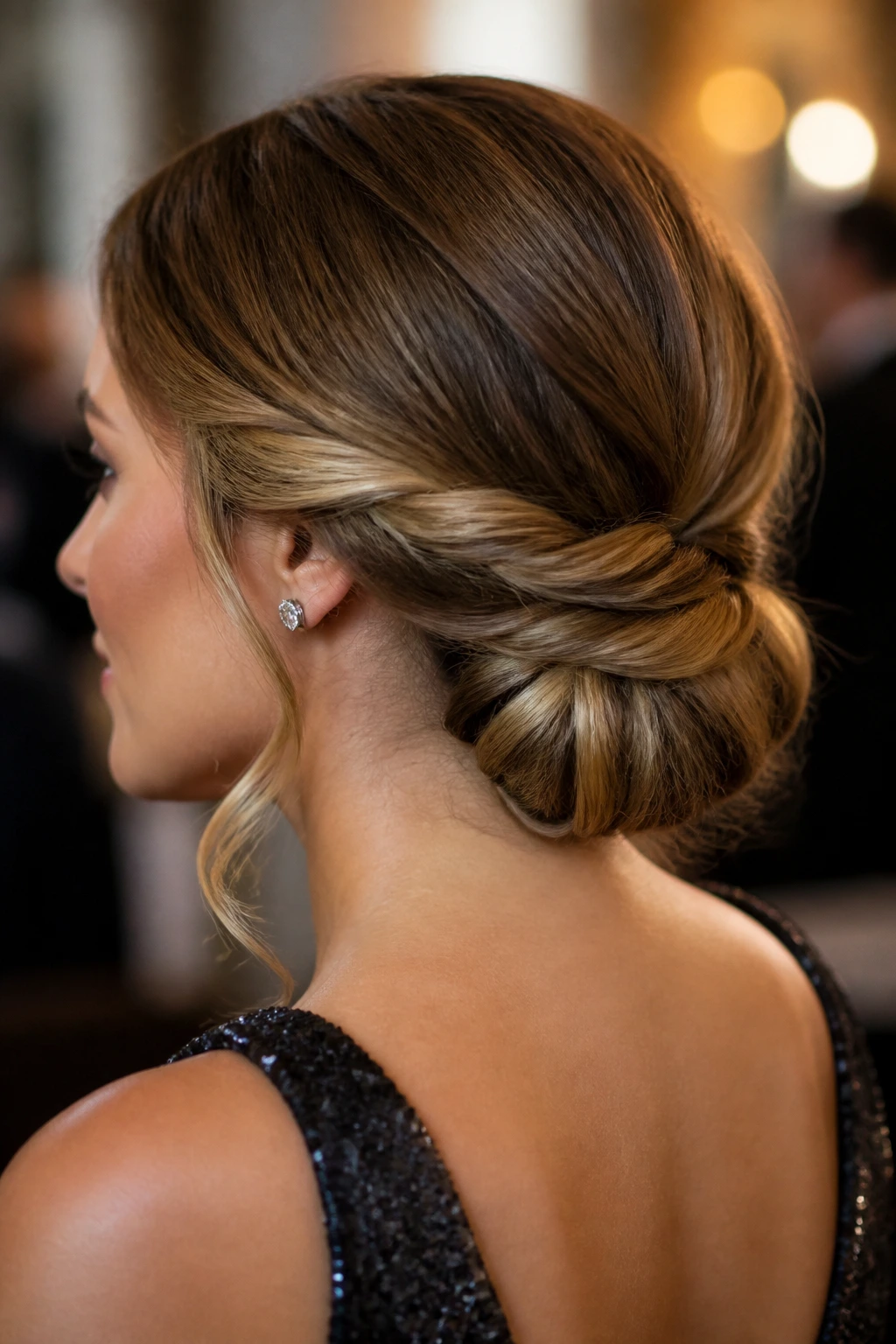
Why does a twisted low chignon look more elegant than a plain bun? Because it shows the work without showing the mess. The twist creates texture through the middle, while the low placement keeps the silhouette calm and controlled.
For this one, gather the hair low, split it into two sections, and twist each section before wrapping them around each other or around a base coil. The shape should sit at the nape, not drift up the head. If you have thick hair, this is one of the few formal styles that can actually handle the bulk without looking inflated.
How to Place the Twist
Start with slightly gritty hair. Day-old hair or a mist of texture spray gives the twist something to hold onto. Smooth the outer layer with a brush, but do not overbrush the length — a little grip is your friend here.
A soft side part can make this look even better, especially if you want a little asymmetry near the face. It softens the profile without turning the style mushy.
4. High Gloss Ponytail
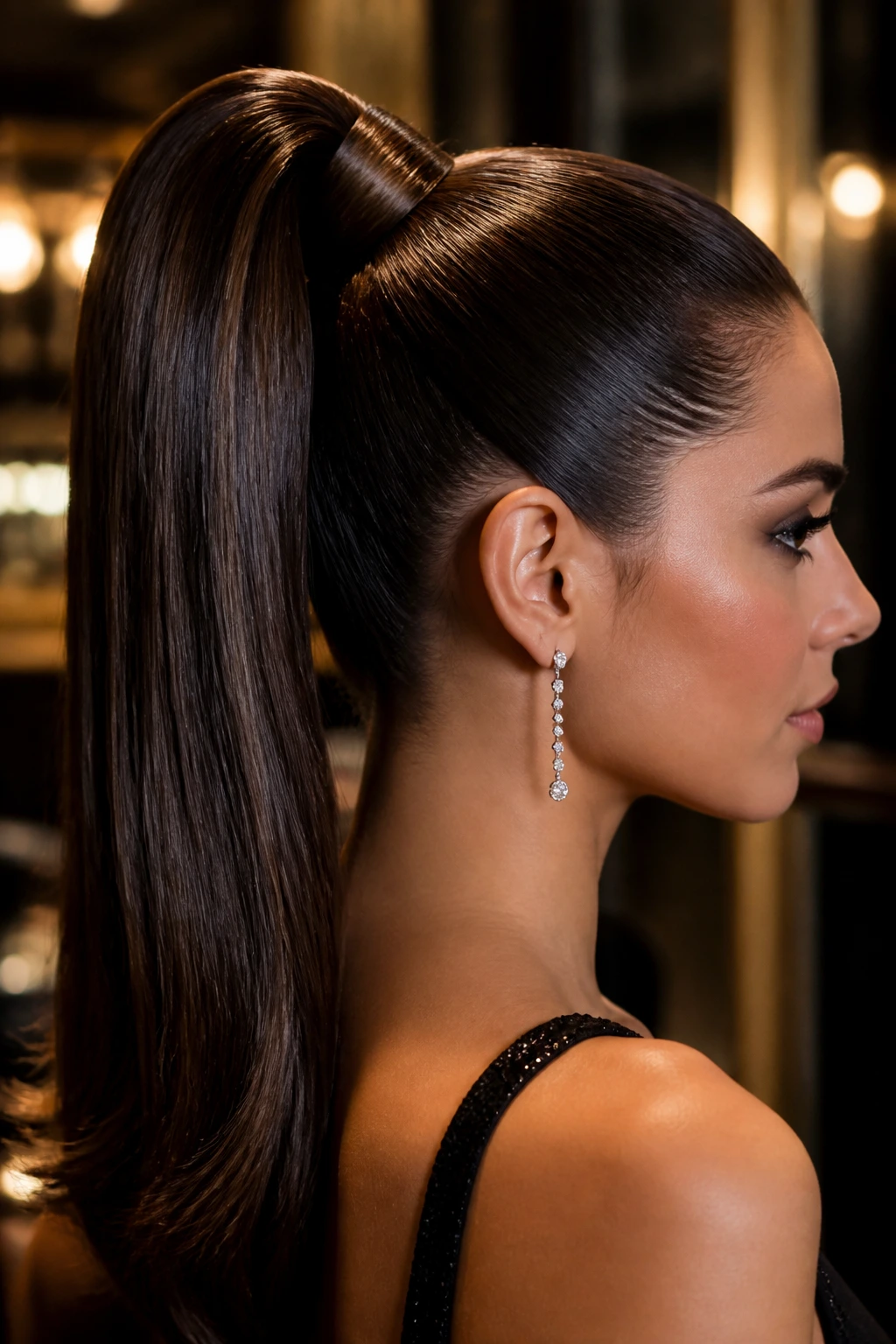
A high gloss ponytail is sharper than it sounds. When the crown is sleek and the tail is wrapped with a strand of hair or a narrow ribbon, it stops reading as a gym pony and starts reading like a deliberate evening look. The height gives lift, which is a nice fix for heavy necklines or dresses with a lot of fabric.
I like this style on hair that holds a curl well at the ends. Straight lengths can work too, but a gentle bend through the tail gives it movement. If your roots puff up, smooth them with a comb and a light gel or wax stick before you tie the ponytail.
Keep the base narrow and precise. A ponytail that sits too low loses the drama, while one that sits too high can look juvenile. The sweet spot is usually at the upper crown, just enough to lift the face without feeling severe.
A wrapped elastic matters here. It hides the obvious “I tied my hair back” look and makes the whole thing feel finished.
5. Deep Side-Swept Curls
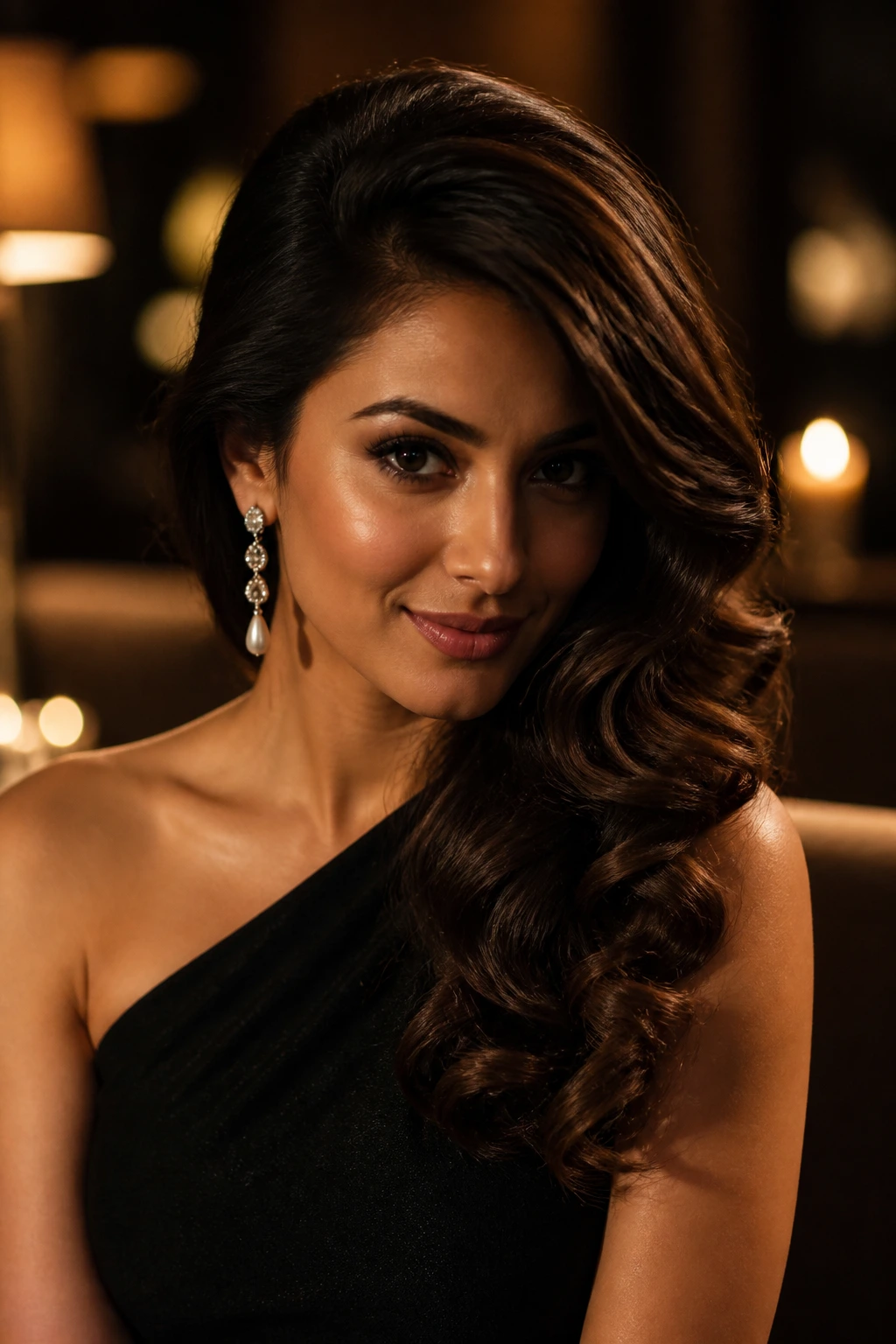
Deep side-swept curls are what I reach for when a dress needs softness near one shoulder. The whole shape leans to one side, which gives the face a little drama without forcing the hair into a rigid updo. It’s especially good when you want movement and polish in the same breath.
The side part should be deeper than you think. That heavy sweep across the forehead is what gives the style its shape. Curl the sections away from the face, clip them to cool, then brush them just enough to merge the ringlets into bigger, smoother bends.
This is one of those styles where earring choice matters. A single statement earring on the exposed side looks fantastic. Two huge earrings usually fight the hair.
Fine hair can wear this beautifully if you set the roots with mousse first. Thick hair benefits from a smaller barrel and extra cooling time before brushing. The goal is not bouncy prom curls. The goal is a smooth wave that slides over one shoulder and stays there.
6. French Twist with Soft Volume
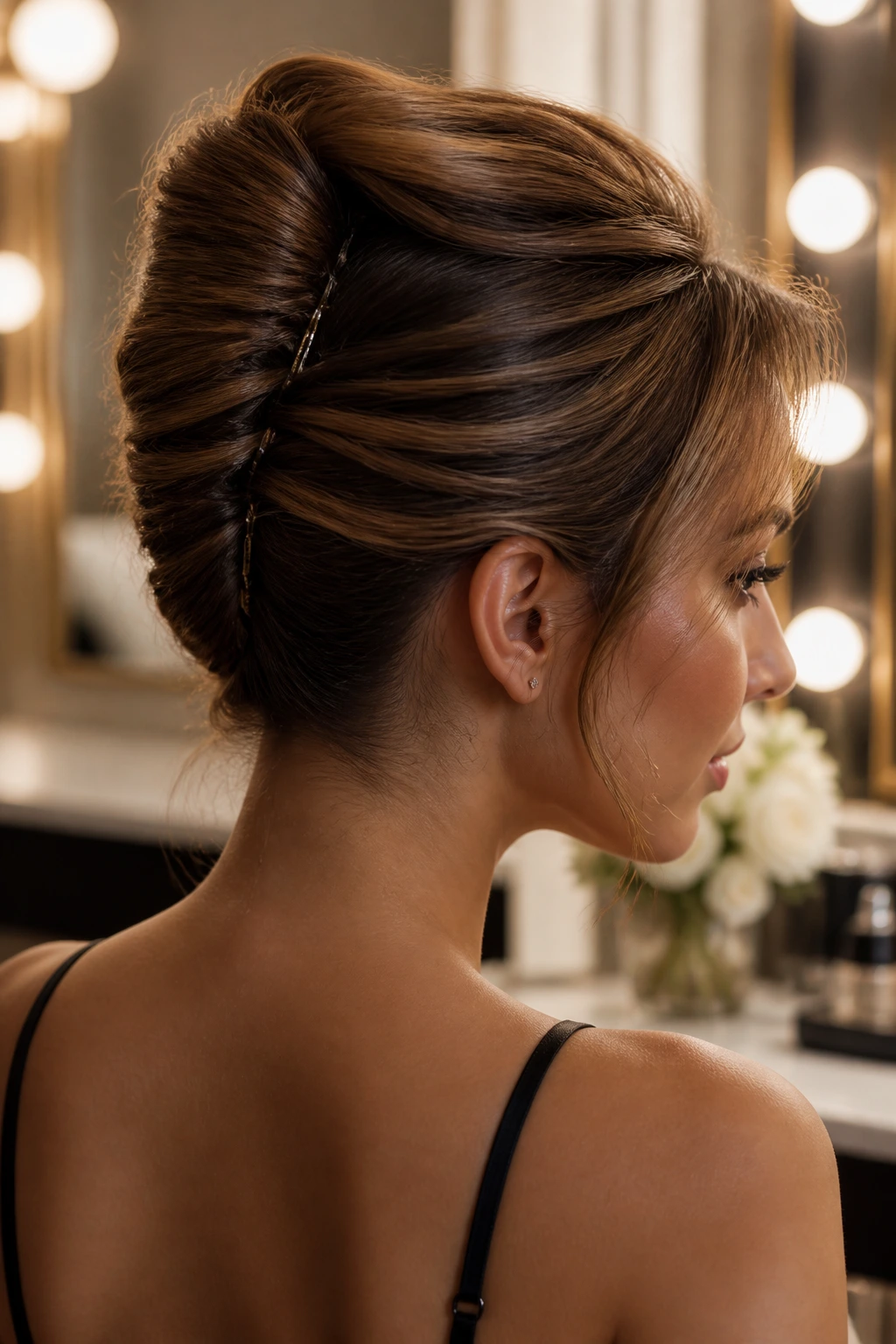
A French twist is the formal one. The soft-volume version is the one that feels modern. Instead of making the back look shell-hard, you leave a little lift at the crown and a few controlled pieces near the front so the shape doesn’t look dated.
Compared with a sleek bun, a French twist gives more vertical line. That makes it a smart choice for long earrings and dresses with open backs. It also works well if your hair is long enough to fold but not so long that it becomes bulky at the nape.
You want the twist to feel secure before you decorate it. Pins should go in vertically and then horizontally where the roll needs extra support. If you can tug the hair and feel the whole thing shift, it isn’t ready yet.
This style is for anyone who likes structure. It does not forgive loose ends easily. But when it’s set right, it has a clean, tailored look that belongs at night.
7. Braided Crown Bun
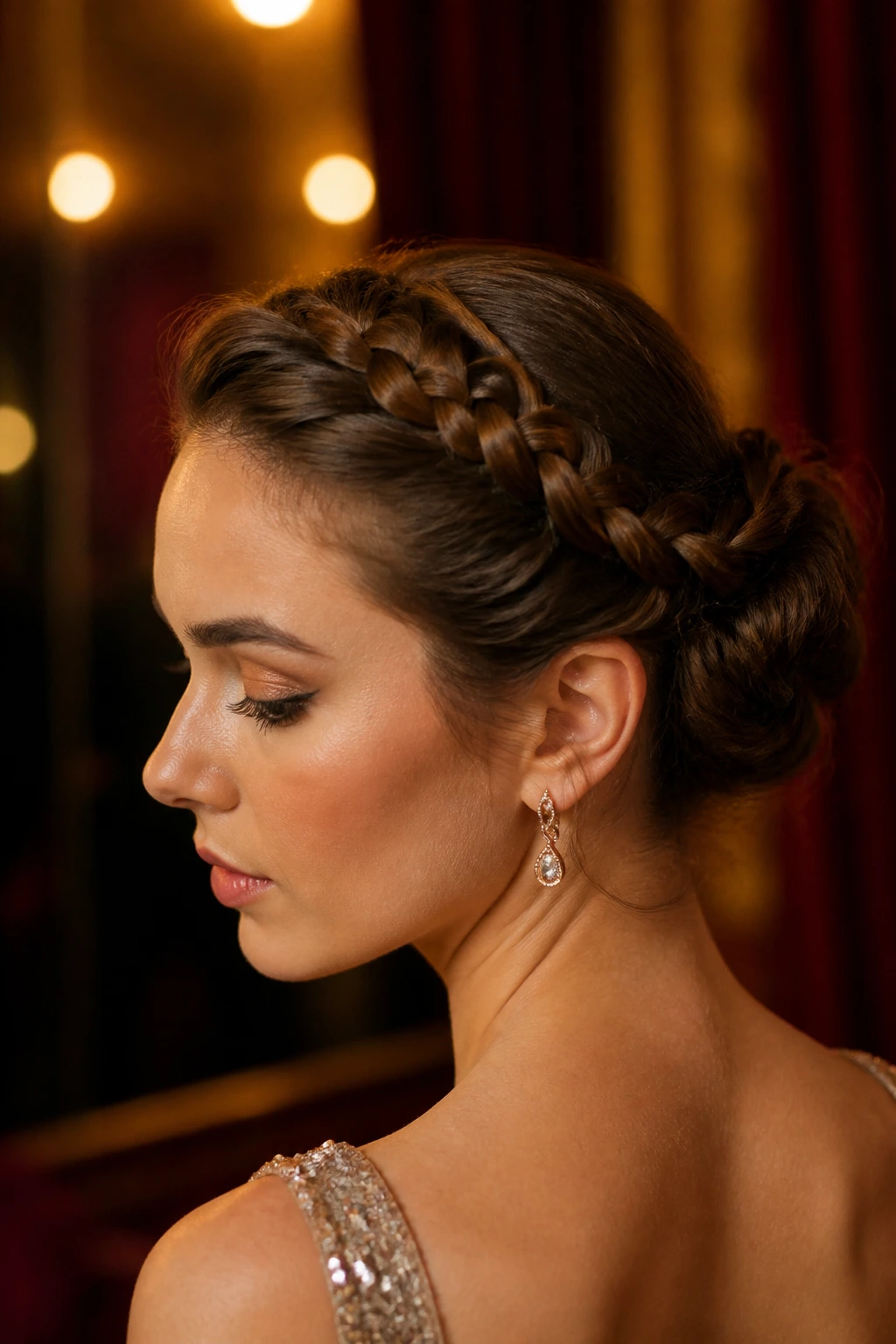
A braided crown bun gives you two things at once: a visible braid around the hairline and a tidy bun at the back. That makes it a strong choice when you want detail near the face but still need the neck open. It’s a little more intricate than a standard updo, and that’s exactly why it works for evening.
The braid does not have to be perfect. In fact, a slightly relaxed braid often looks better because it keeps the crown from feeling too tight. A simple Dutch braid, or two braids meeting at the back, is enough if you pin them into a small bun or knot.
Why It Holds
The braid acts like a built-in frame. It grips the hairline and gives the style a clearer outline, which helps a lot if your hair is fine or silky. It also hides the transition between the front and back sections, which is where many updos start to look unfinished.
If you’re wearing a dress with clean lines, this is a lovely way to add texture without piling on curls, volume, and accessories all at once.
8. Half-Up Knot with Loose Ends
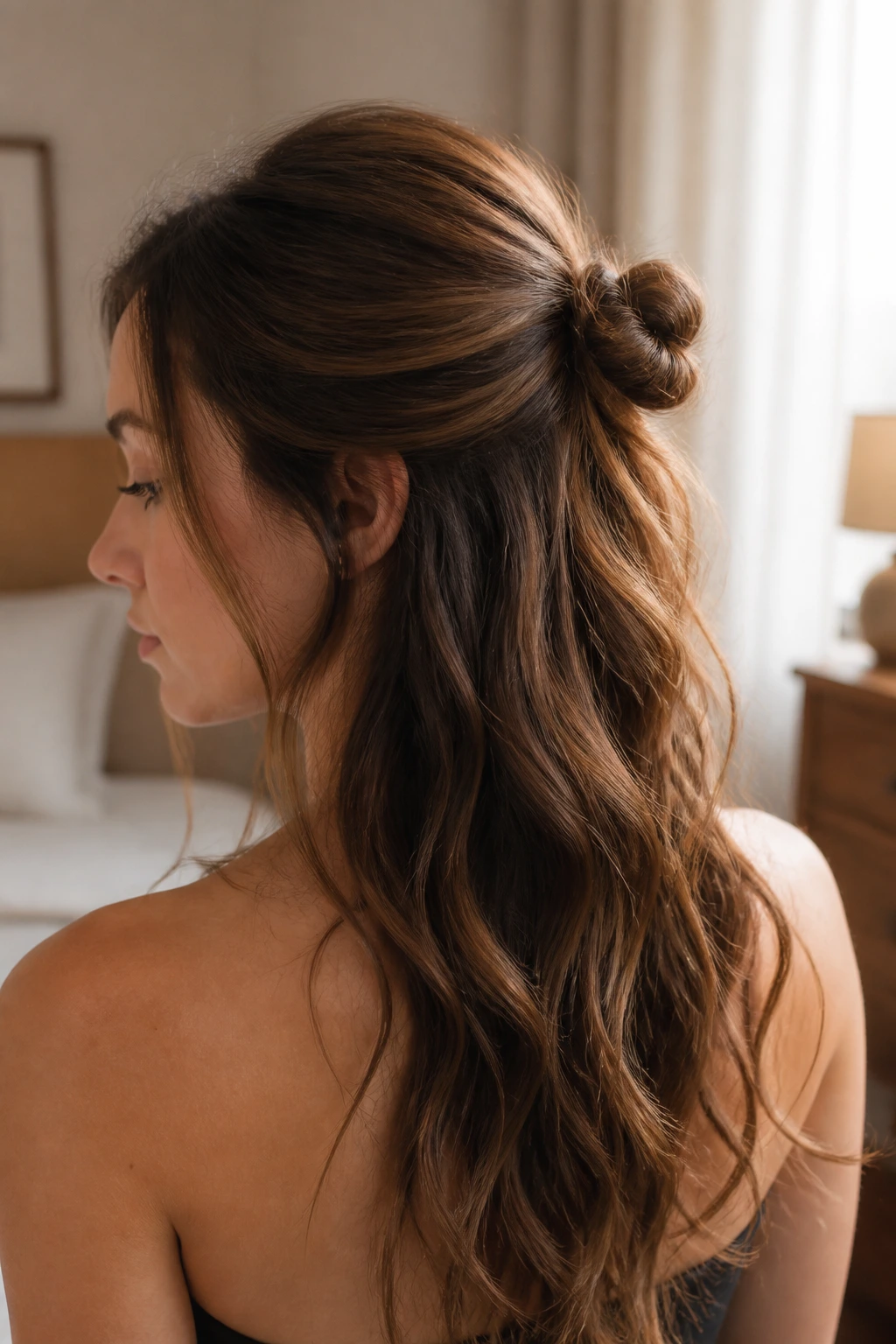
A half-up knot is the sweet spot for people who want to keep their hair down but still need the top section under control. The knot sits at the back of the head, while the rest falls in loose waves or brushed-out bends. It’s casual in theory, but the right finish makes it completely evening-worthy.
This style shines on hair that doesn’t love full updos. If the nape gets bulky or the ends frizz faster than the roots, leaving the lower half down gives you more freedom. A half-inch section of hair wrapped around the knot hides the elastic and gives the top a cleaner line.
I like this look with a soft wave through the lengths. Pin-straight ends can feel too plain unless the rest of the outfit carries a lot of texture.
If you have layers around the face, let them fall naturally. Don’t fight every shorter piece into submission. A few loose bits near the cheekbones make the knot feel less severe.
9. Old Money Blowout
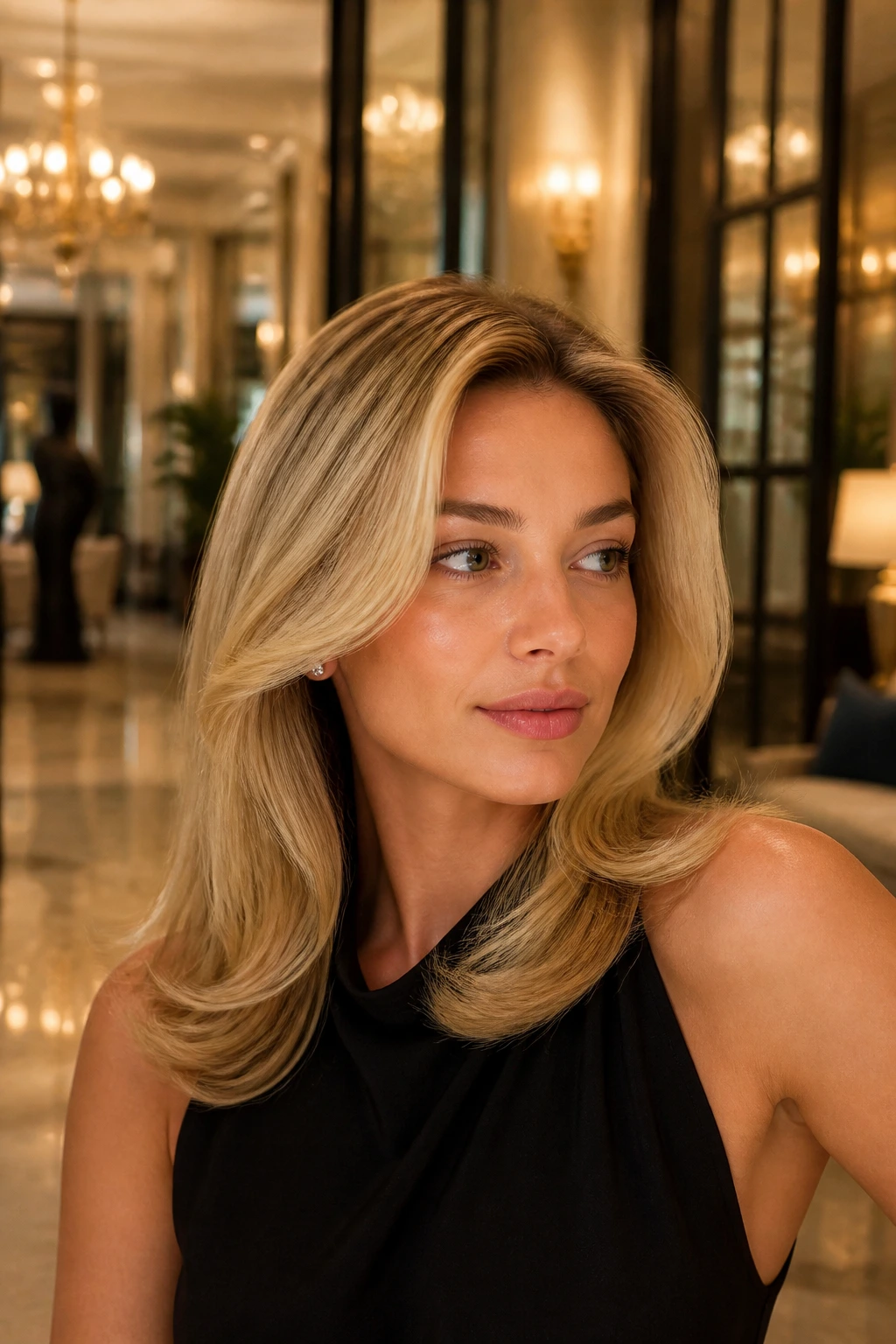
The old money blowout is less about volume and more about polish. The ends turn under softly, the roots lift just enough, and the hair moves in smooth, expensive-looking sections instead of obvious curls. It’s one of the easiest evening hairstyles to wear when you want glamour without an updo.
The brush-out matters. A round brush and a cool shot from the dryer give the shape its bend, then a large-barrel curling iron can refine the front pieces if needed. I like this style on medium to long hair, especially when the cut already has layers that support movement.
How to Keep It From Falling Flat
Start with a root-lifting mousse or spray at the crown. Blow-dry away from the scalp, not flat against it. If your hair is naturally limp, pin the front sections up while they cool so the shape holds a little longer.
This style can look incredibly polished in warm evening lighting because the curve of the ends catches the eye. It’s understated, but not boring. That’s the whole point.
10. Tucked-In Low Roll
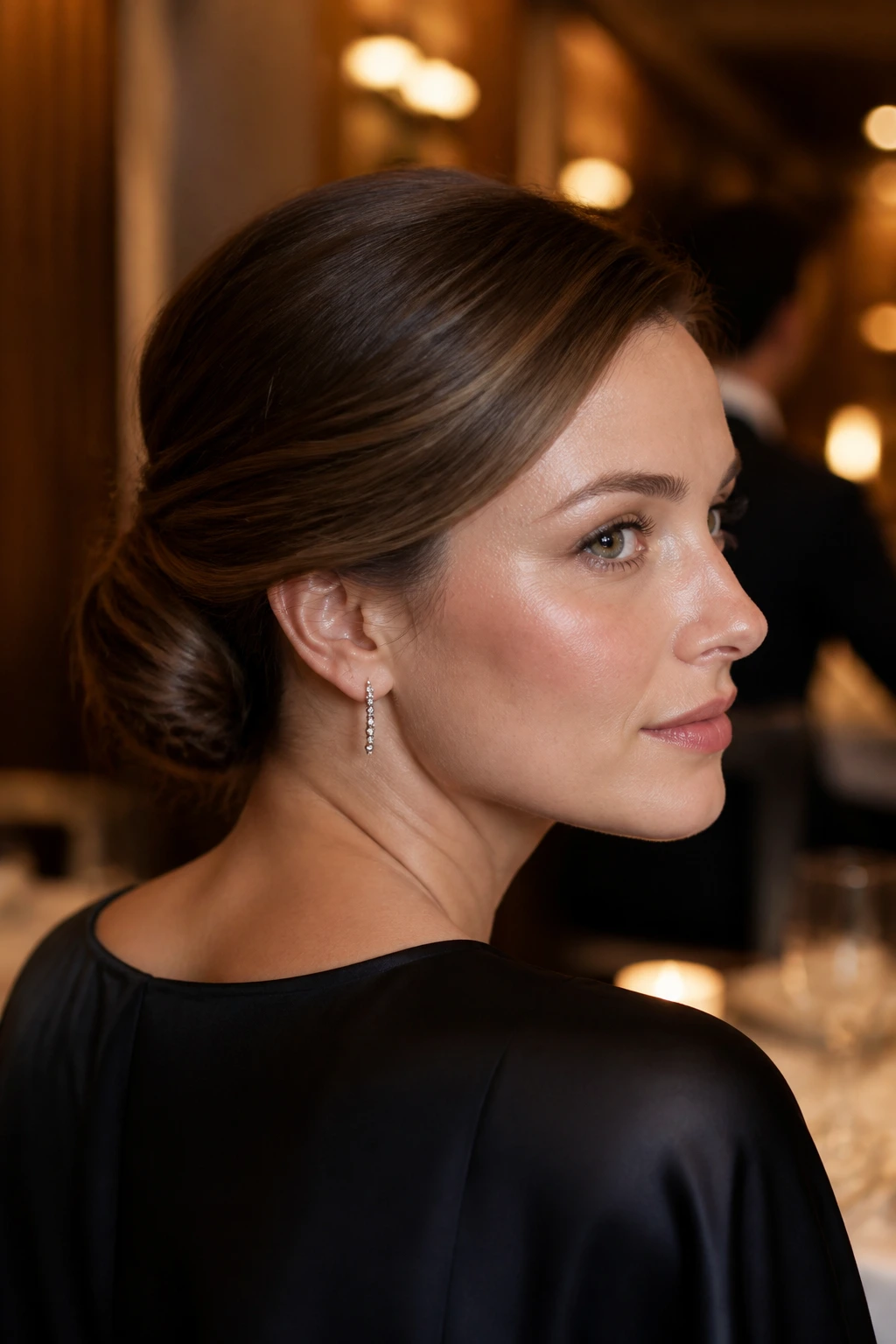
A tucked-in low roll is what you wear when you want something neat and quiet, but not plain. The hair is rolled inward toward the neck, then pinned into a smooth shape that can sit sleek or a little soft depending on how much texture you leave at the front.
It’s a sleeper style. From the front, it can look simple. From the side, it has a sculpted line that reads clean and deliberate. That makes it smart for dinner events where the outfit already carries a lot of detail.
If you have shorter layers, this is a forgiving choice because the roll can hide a lot. Use a small amount of dry shampoo or texture spray first so the hair grips, then fold the ends under and pin in sections instead of trying to roll the whole head at once.
The nape is the part to watch. If it gets lumpy, the whole style looks rushed. Work slowly there. It’s worth it.
11. Bubble Ponytail with Satin Wrap
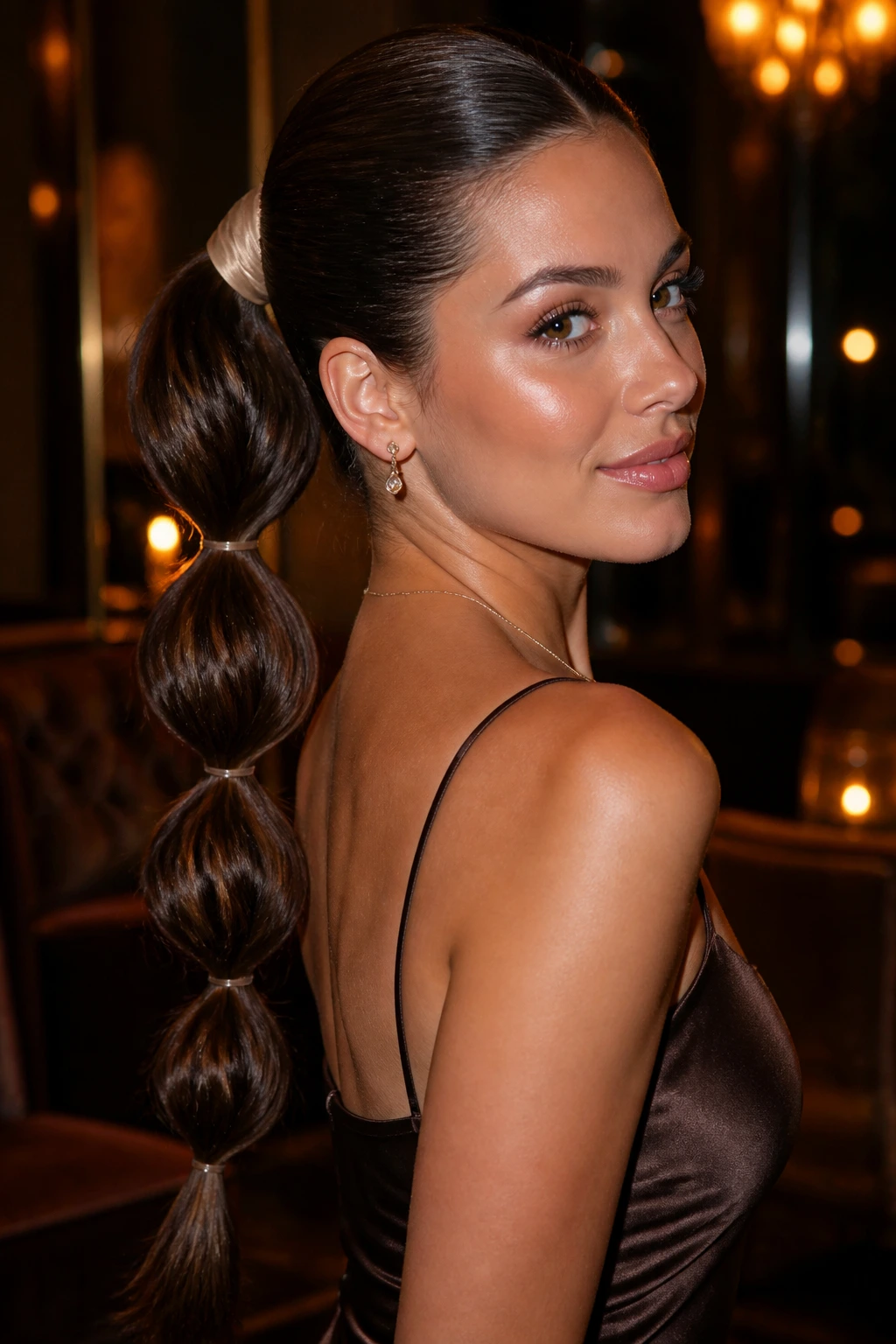
A bubble ponytail sounds playful, and it is, but the version that works for evening is more controlled than whimsical. You secure the ponytail at intervals with clear elastics or tiny bands, then gently pull each section to form rounded bubbles. A satin wrap at the base quiets the look and makes it feel dressed up.
This style is especially good for long hair that looks flat when left loose. The segmented shape builds volume without backcombing the whole head. It also works when you want a strong silhouette from across a room.
What I like about this one is the contrast. The crown can stay smooth, almost sleek, while the tail gets the more dramatic texture. If you have straight hair, the bubbles are cleaner. If your hair is wavy, they look softer and a little fuller.
Keep the elastics hidden if you can. A clear band or one wrapped in hair makes the whole thing look more deliberate.
12. Sculpted Curl Ponytail
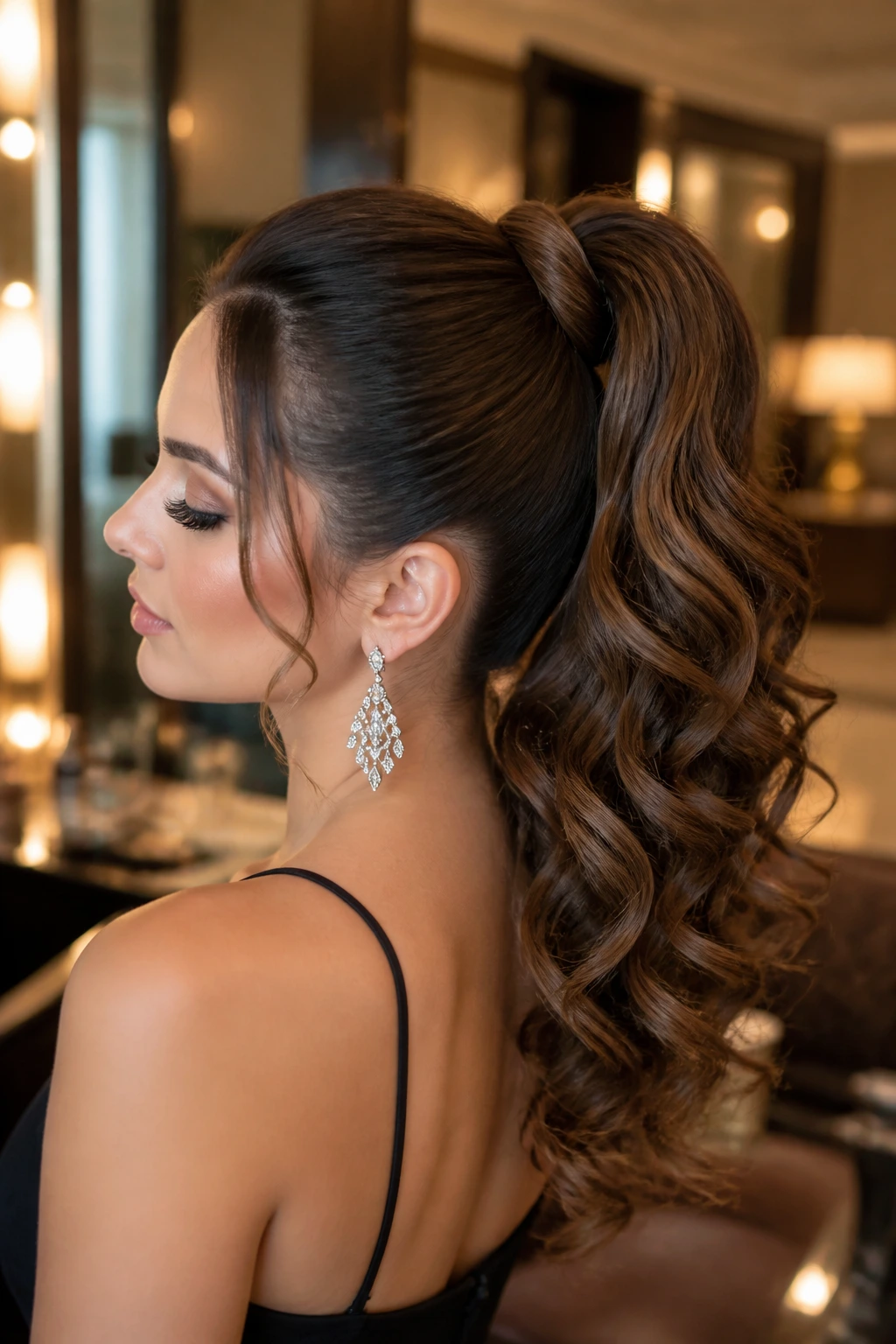
A sculpted curl ponytail takes the comfort of a ponytail and gives it the shape of formal hair. The base stays secure and lifted, while the tail is set in large curls or ribboned waves that fall in a controlled cascade. It is a good answer when you want something elegant but not pinned up.
Unlike a flat ponytail, this version benefits from sectioning. Curl the tail in a few large sections, pin them to cool, then loosen them lightly with fingers instead of a brush. You want the curl pattern to stay visible.
It’s best for hair that holds a curl at least a few hours. If your hair drops curl fast, prep the tail with mousse and a smaller iron, then set each section longer before touching it.
A wrapped base helps a lot here. It hides the elastic and gives the ponytail a cleaner start. The rest is all about shape. Think of it as a ponytail with manners.
13. Side-Part Pin-Up Waves
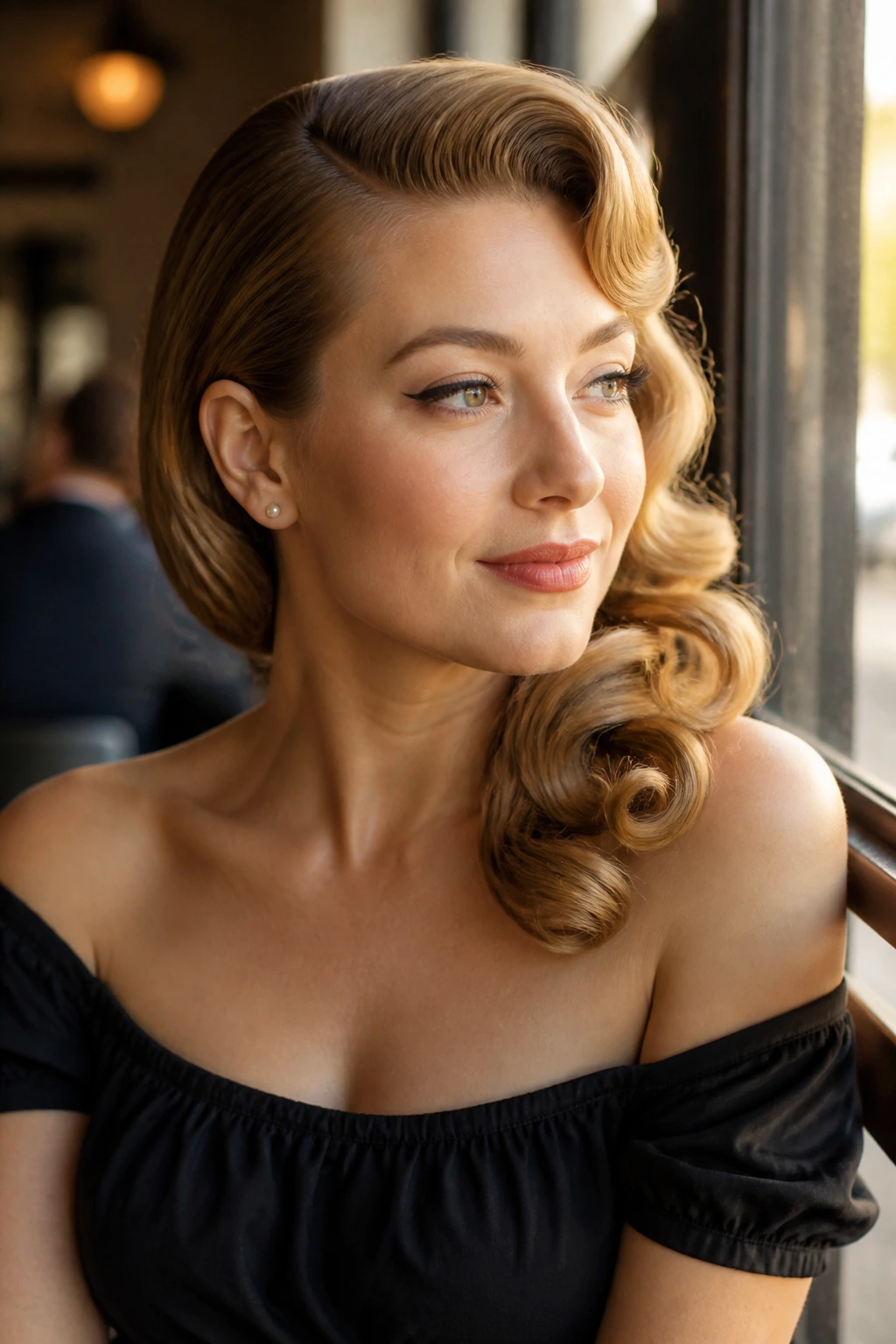
Side-part pin-up waves have a little retro snap to them, but they don’t need to look costume-like. The waves are pinned and directed so they hug the head on one side and open into softer movement on the other. It’s a neat way to wear hair down while still making it feel special.
The side part should sit low enough to create a visible sweep. Then shape the front section with a curling iron or hot rollers, pinning the wave into place while it cools. That cooling time is what gives the style its sculpted memory.
What Makes It Different
This style gives you control at the front and movement at the back. That combination is useful when the rest of your outfit is already dramatic — beading, sequins, a bold neckline, something with enough texture to compete with the hair if the hair got too large.
I’d choose this over a full set of curls when I want a more controlled outline. It feels polished from the front and has enough softness from the side to keep it from looking rigid.
14. Faux Bob
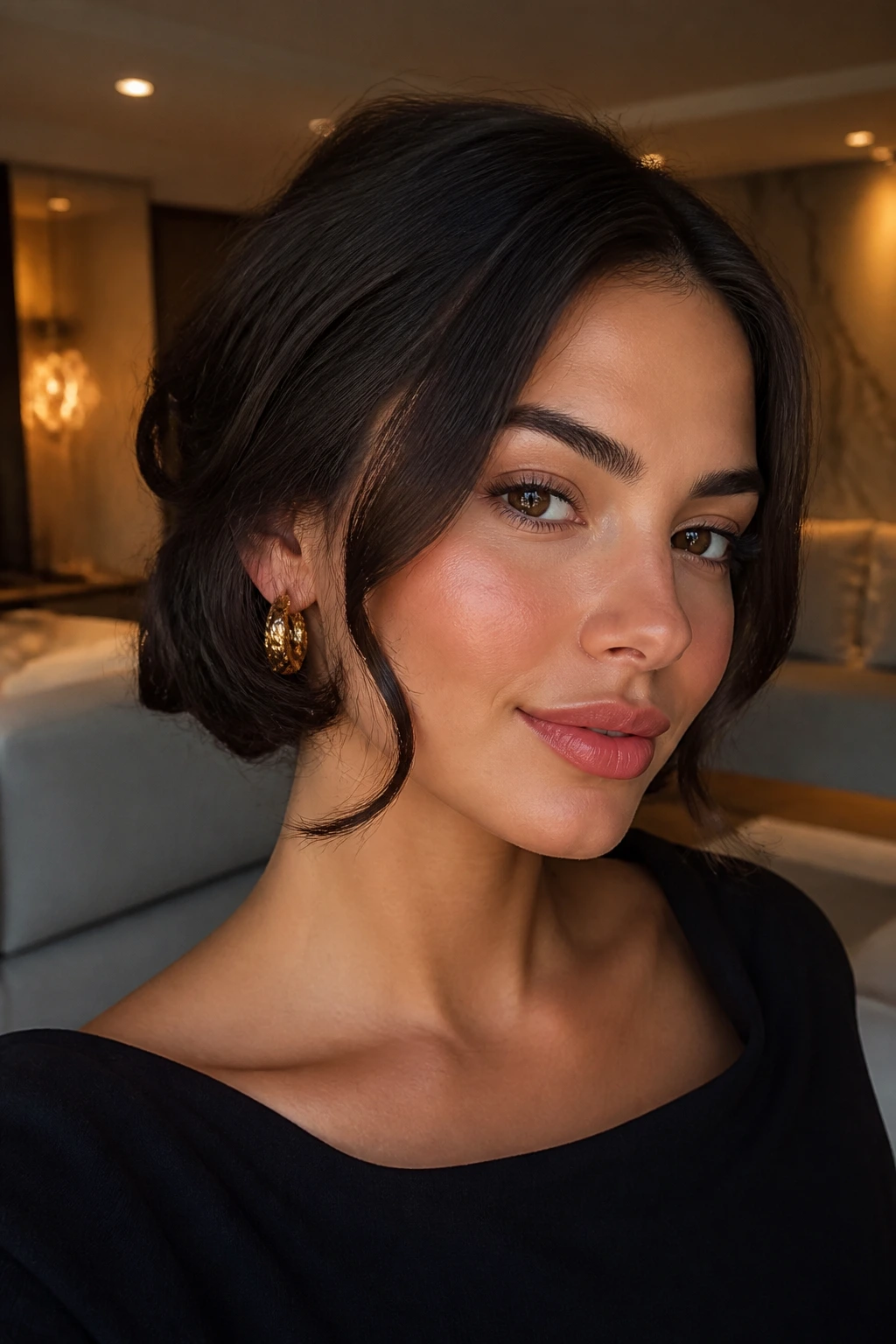
A faux bob is one of those styles that looks more complicated than it really is. You tuck the longer lengths under and pin them so the hair falls around the jaw or just below it, creating the illusion of a shorter cut. It’s useful when you want to show off shoulders, earrings, or a neckline without actually cutting anything.
The trick is to curl the ends a little first. That makes the tucked section softer and hides the fold. If the hair is too straight, the fake bob can look like a bad tuck instead of a style.
This is one of my favorite moves for medium to long hair. It gives you the shape of a shorter evening cut without changing the length. If you want the result to feel more polished, leave a few thin tendrils out near the temples and smooth them flat.
It’s also a smart option if you’re tired of wearing the same long-hair down style to every event. The illusion does a lot of the work.
15. Rope-Braid Low Bun
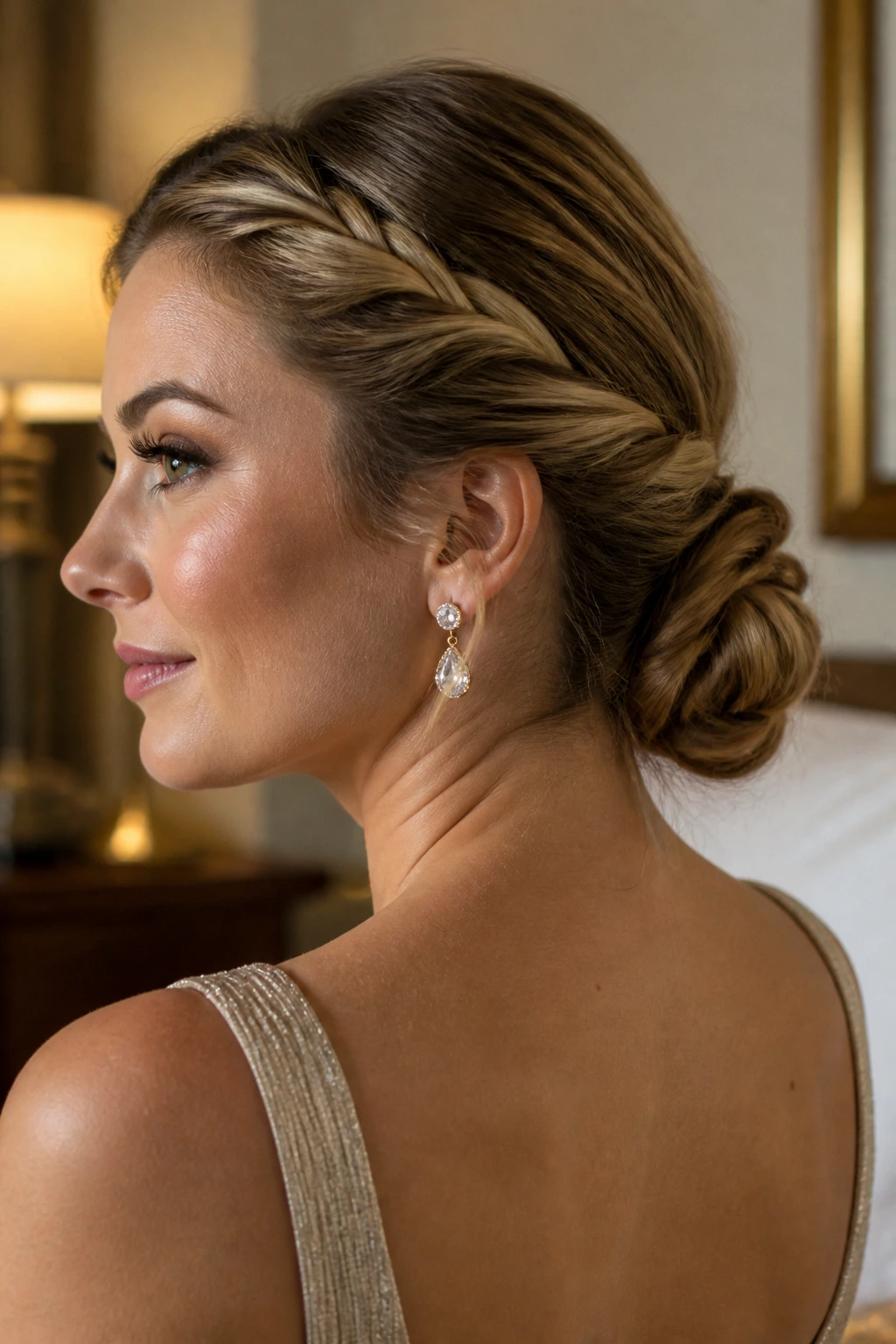
A rope-braid low bun brings a little texture without needing a three-strand braid or a mountain of pins. You twist two sections around each other, then wrap the rope into a low bun. The result is tidy but not stiff, which suits evening hair surprisingly well.
Compared with a plain bun, the rope braid has more visible line. That makes it look more crafted, especially if the hair is one solid color and needs a little dimension. It also works nicely on hair that’s too smooth for a standard bun to hold without slipping.
If your hair is fine, use a bit of grit first. If it’s thick, divide the sections carefully so the rope doesn’t get bulky. The bun should sit low and compact, not spread wide like a knot that ran out of patience.
A side part can soften this style, but a center part keeps it sharper. Pick one and commit.
16. Halo Braid Updo
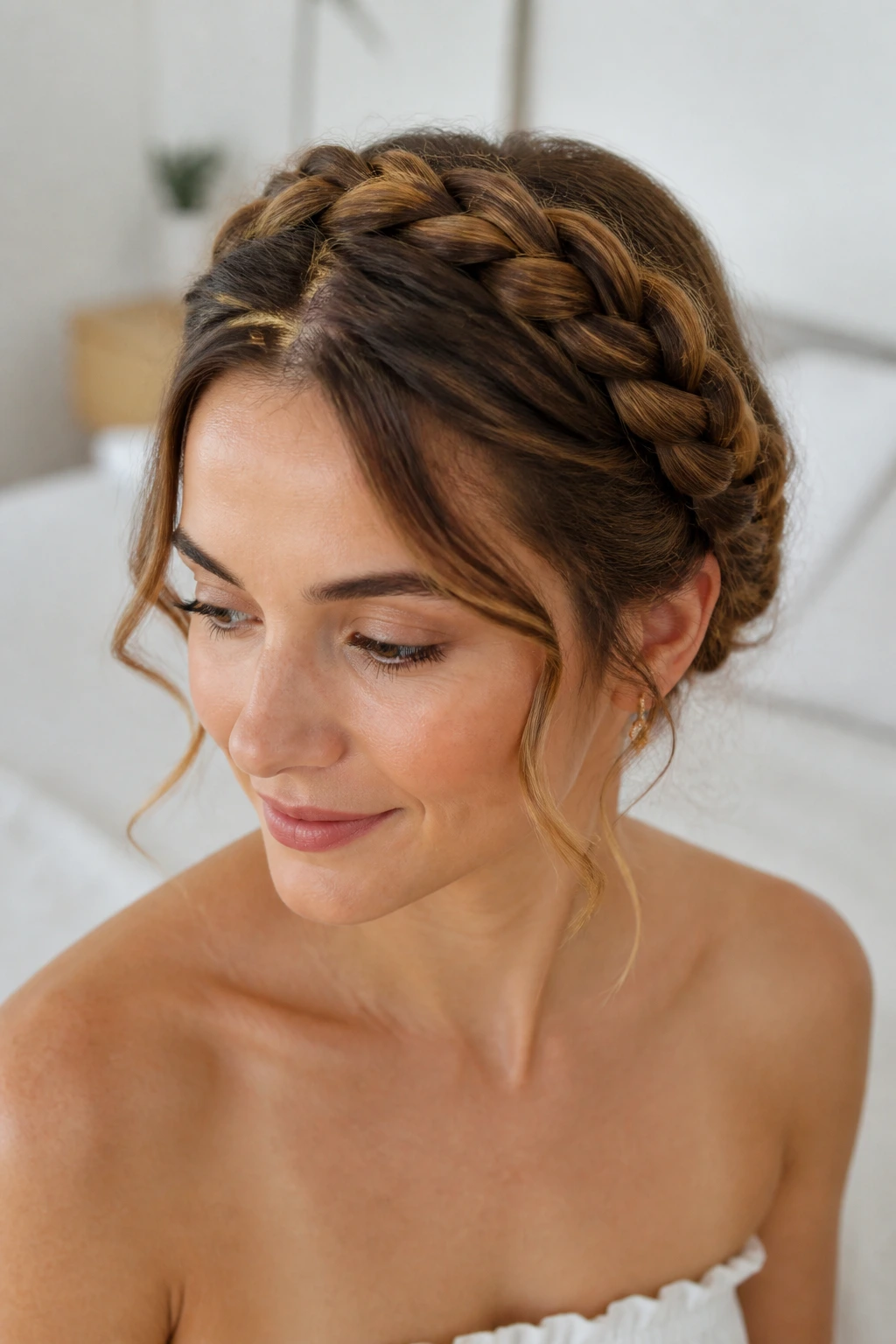
A halo braid updo wraps the braid around the head like a built-in frame, then tucks the remaining length into a knot or coil. It has a formal feel, but it can still look airy if you keep the braid slightly loosened instead of tight and crisp.
This style is especially nice for hair with some natural texture. Wavy and curly hair often holds the braid better, and the result has more body near the crown. Straight hair can wear it too, but a texture spray helps the braid grip.
The halo shape does the visual work, so you don’t need much else. In fact, too many accessories can crowd it. A single pin or small comb is enough.
It’s one of the more secure styles here, which matters when you know the evening will run long. Once it’s pinned well, it tends to stay where you put it.
17. Wet-Look Side Part
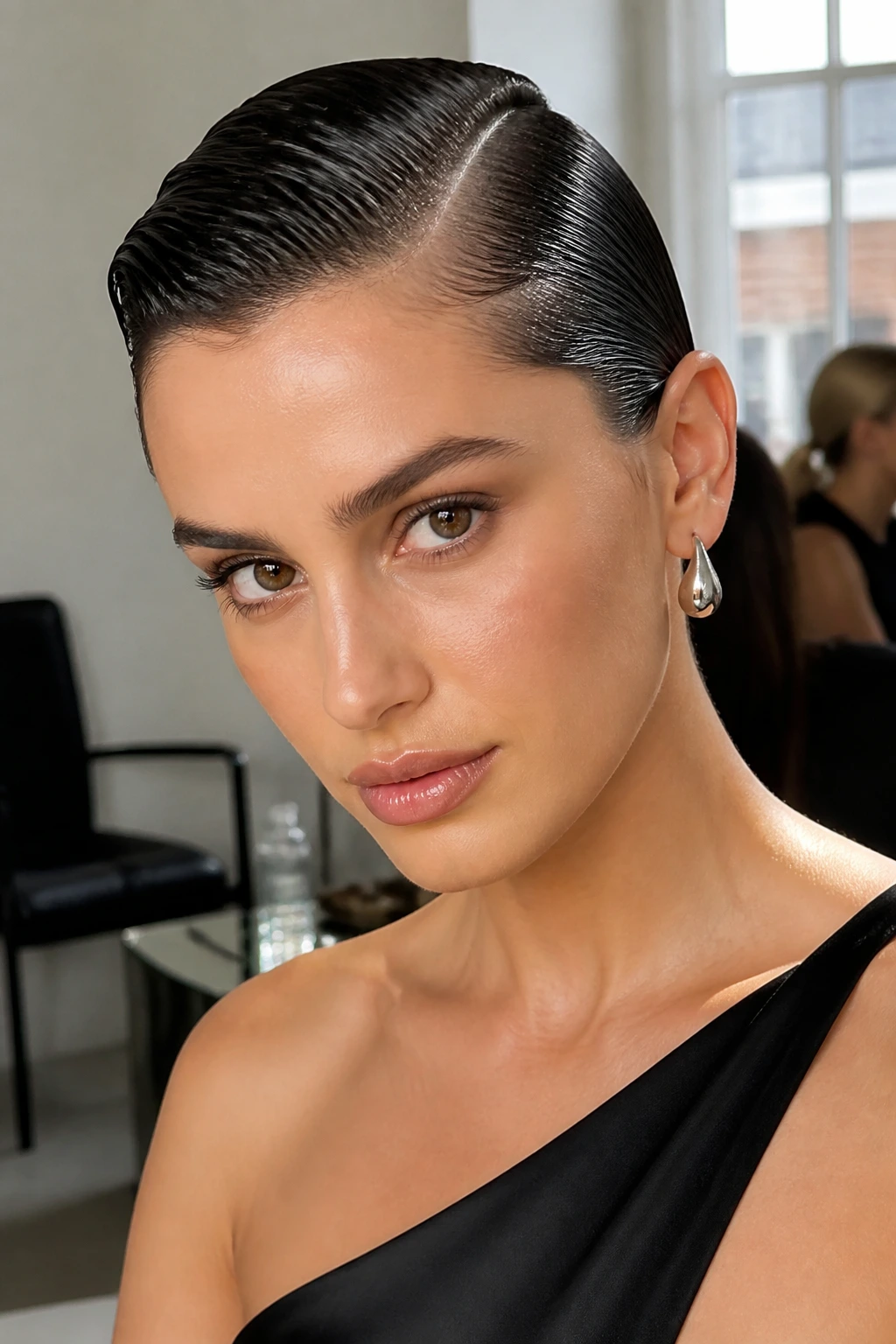
A wet-look side part is sleek, sharp, and a little daring. It gives the impression of high gloss without requiring curls or volume, and it’s one of the best evening hairstyles when the outfit already has a lot going on. Think strong earrings, bold shoulders, a structured dress.
The part should be clean and deliberate. Then apply gel or styling cream from the roots through the mid-lengths, combing it flat and shaping the top so the hair lies close to the head. The finish should look polished, not crunchy.
This is not the style for anyone who hates hair near the face. It clings by design. But if you like strong lines and a modern feel, it can be incredibly striking.
A small amount of shine on the surface is enough. Too much product, and the hair starts to look stringy. You want gloss, not grease.
18. Low Knot with Jewel Pin
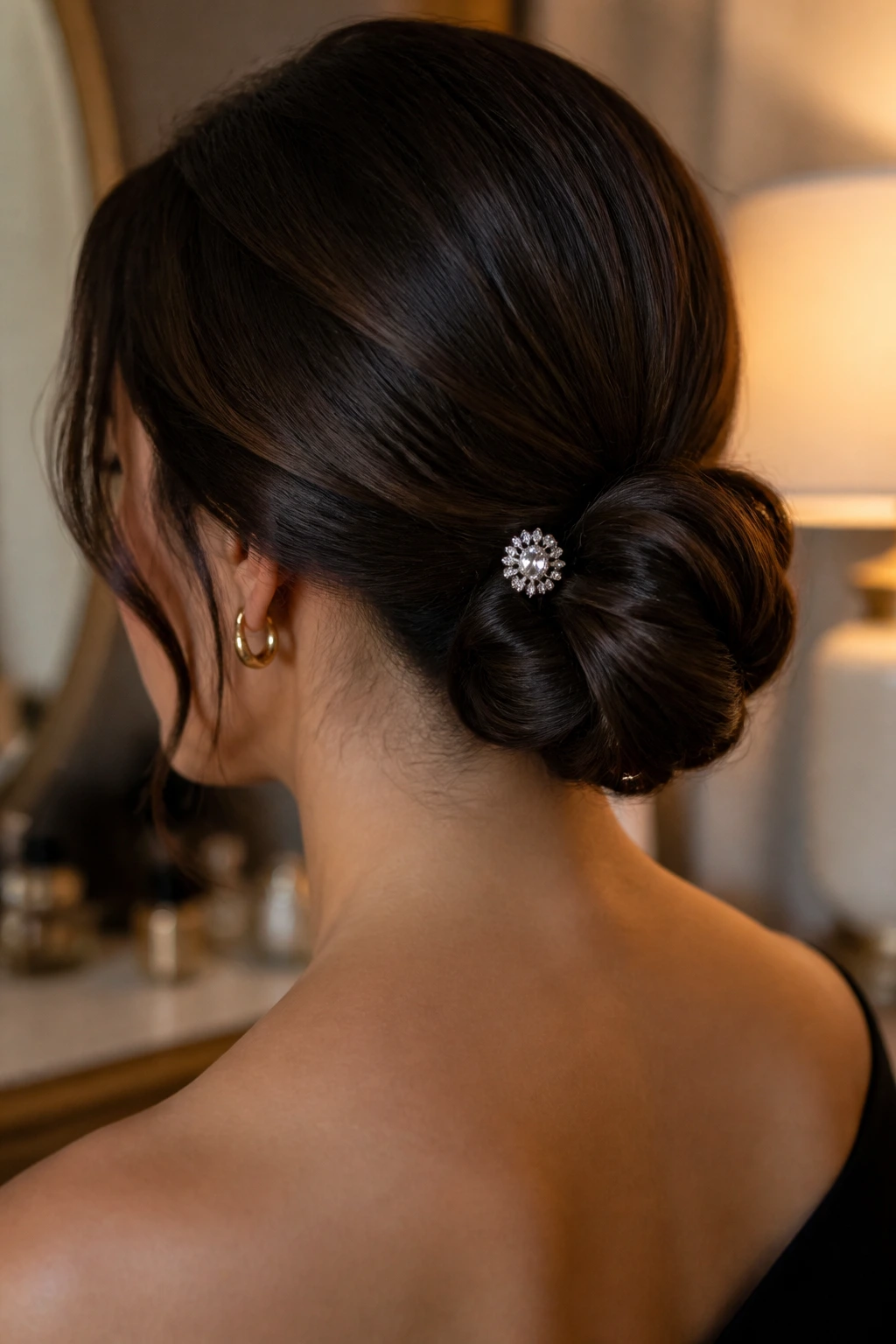
A low knot with a jewel pin is the easiest way to make a simple shape feel dressed up. The knot itself can be plain — even a simple coiled bun — because the accessory does the visual heavy lifting. That makes this style a smart choice when you do not have time for a more elaborate updo.
Place the knot at the nape and keep the surface smooth. Then insert the pin slightly off center so it catches light from the side rather than sitting flat and hidden in the middle. A pin with one clear focal stone usually looks cleaner than a cluster of tiny sparkly pieces.
This style works on almost every hair texture because the accessory redirects attention. Fine hair gets a little drama. Thick hair gets a tidy finish. Curly hair gets a polished frame around the braid or coil.
The rule is simple: let the pin be the ornament, not the whole hairstyle. If the bun is overworked, the pin loses its job.
19. Defined Natural Curls with Polished Edges
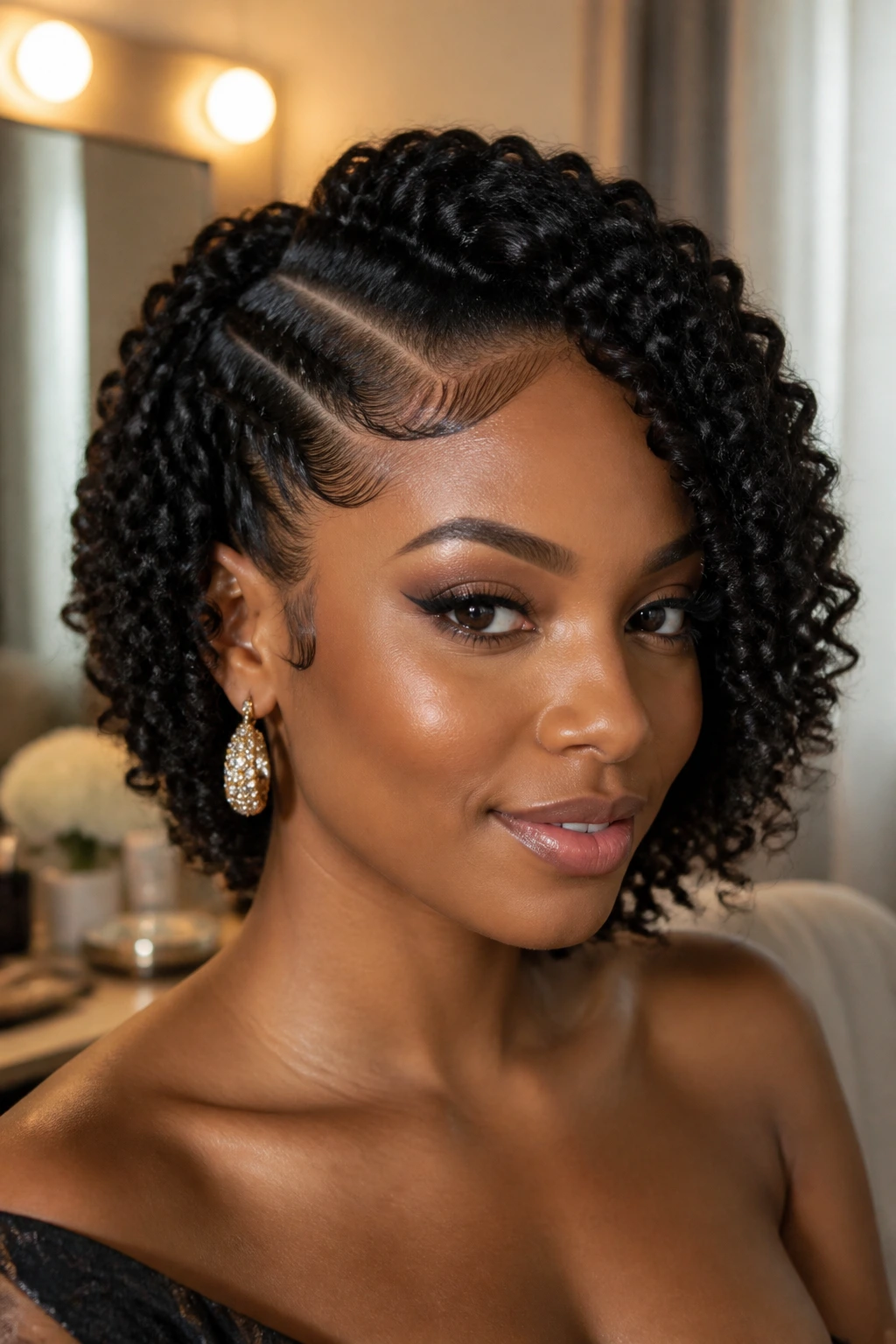
Defined natural curls can look every bit as formal as straightened hair when the edges are smooth and the curl pattern is intentional. The difference is in the finish. You want shape, shine, and clean parting, not a fuzzy halo that fights the outfit.
Start with curls that are fully dry and separated only where needed. Use a curl cream or light gel during styling, then seal the outer layer with a little oil or serum once everything is set. A side part or center part both work, depending on the face shape and the neckline of the outfit.
How to Keep the Shape Formal
Pin the top if the roots need lift. Smooth the hairline with a soft brush or edge brush and a small amount of product. Then leave the curls alone. Over-touching is the enemy here.
This is one of the strongest evening looks on the list when it’s done well. It’s not trying to hide texture. It’s showing it with discipline.
20. Short-Hair Tucked Satin Finish
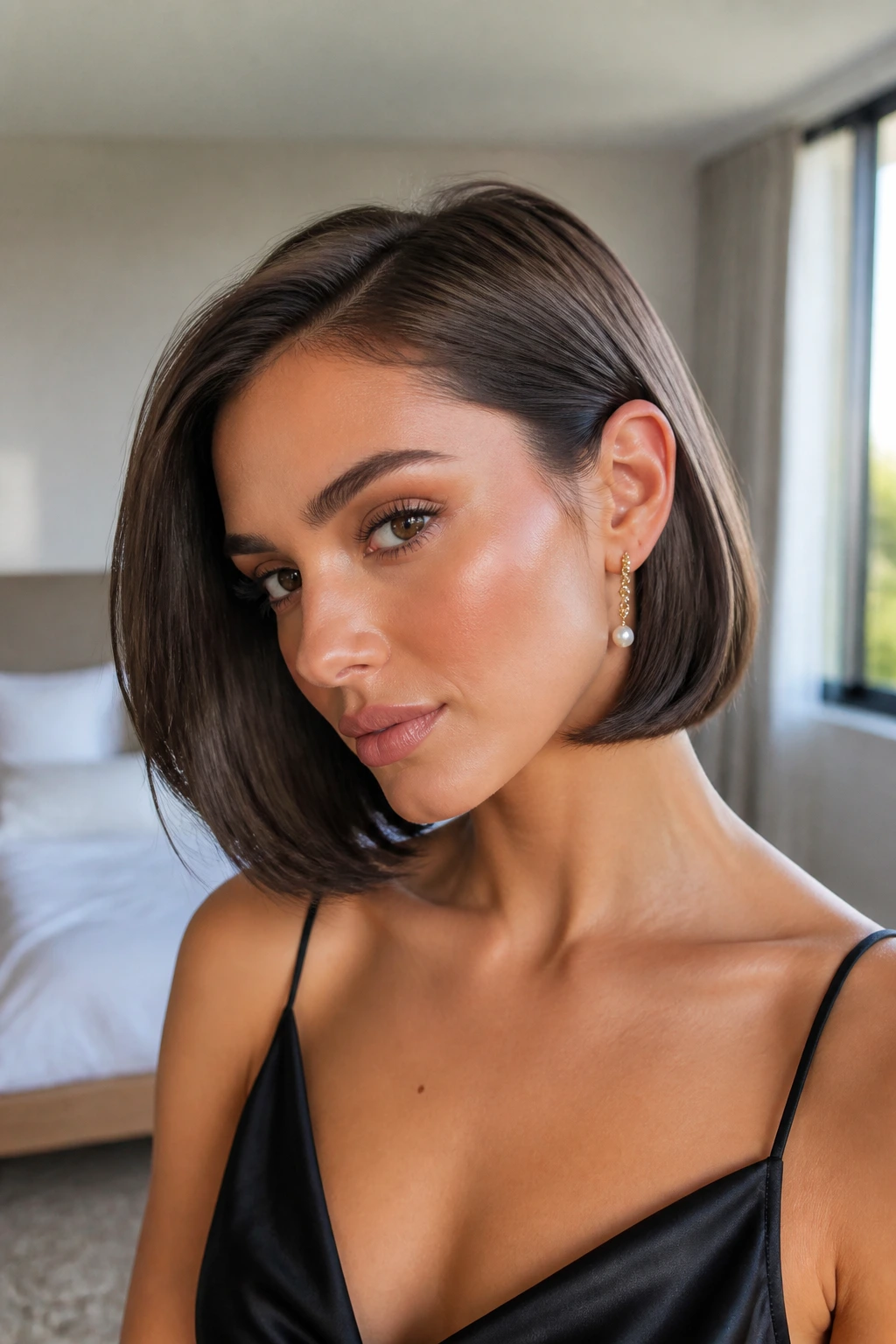
Short hair can feel harder for evening styling, but it often looks cleaner than longer hair once it’s shaped well. A tucked satin finish uses a side part, smooth flat sections, and pinning at the temples or back to create a glossy, controlled outline. On a bob or lob, it looks sharp and modern.
The length matters less than the shape. Tuck one side behind the ear, smooth the other side across the cheekbone, and use a light cream or serum to keep the surface reflective. If the ends flip out too much, a quick pass with a flat iron can tame them.
This style is especially good when you want the outfit to stay in full view. Short hair with a polished finish doesn’t fight a necklace or a bold neckline. It frames them.
A decorative clip can sit above the ear or just behind it. Keep the accessory small if the cut is already strong. Too much hardware and the whole thing gets noisy.
What Makes Evening Hair Hold Its Shape
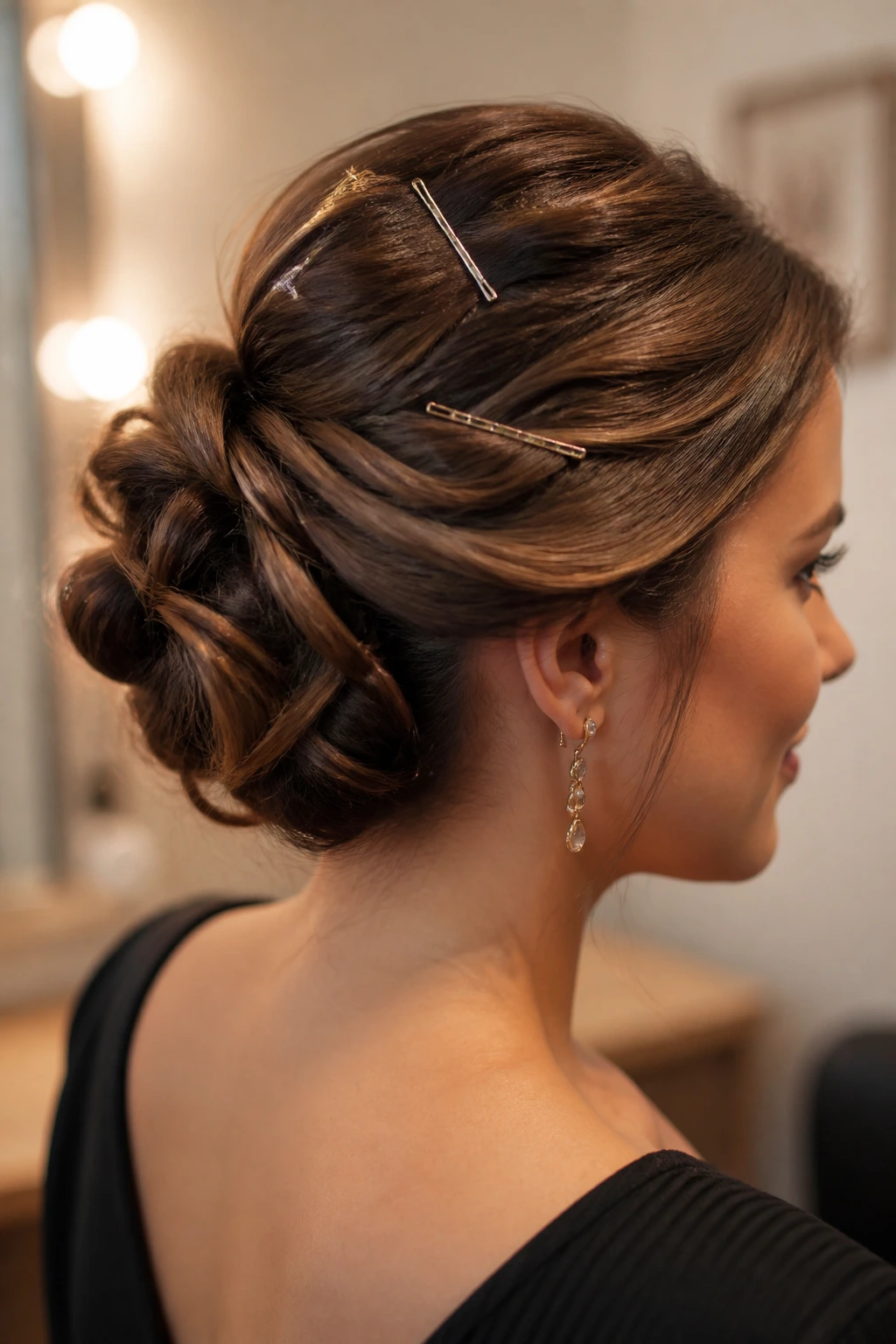
The styles that last best usually have three things in common: a clean base, a little grip, and one clear point of tension. That can be a ponytail anchor, a braid, a pinned twist, or a smooth front section that keeps the style from collapsing. Without those anchors, hair looks lovely for ten minutes and then quietly surrenders.
Second-day hair is often easier to work with than freshly washed hair. That slight loss of slip helps pins stay put and lets waves or bends keep their shape. If your hair is too clean and too soft, a little texture spray at the roots and mid-lengths can change the whole outcome.
Heat matters, too. If you curl or wave the hair, let each section cool before touching it. Warm hair forgets faster. Cool hair remembers.
And yes, product placement matters more than product quantity. A teaspoon too much serum at the root will flatten a style faster than a humid breeze. Use shine on the surface, grip underneath, and keep the crown from getting heavy.
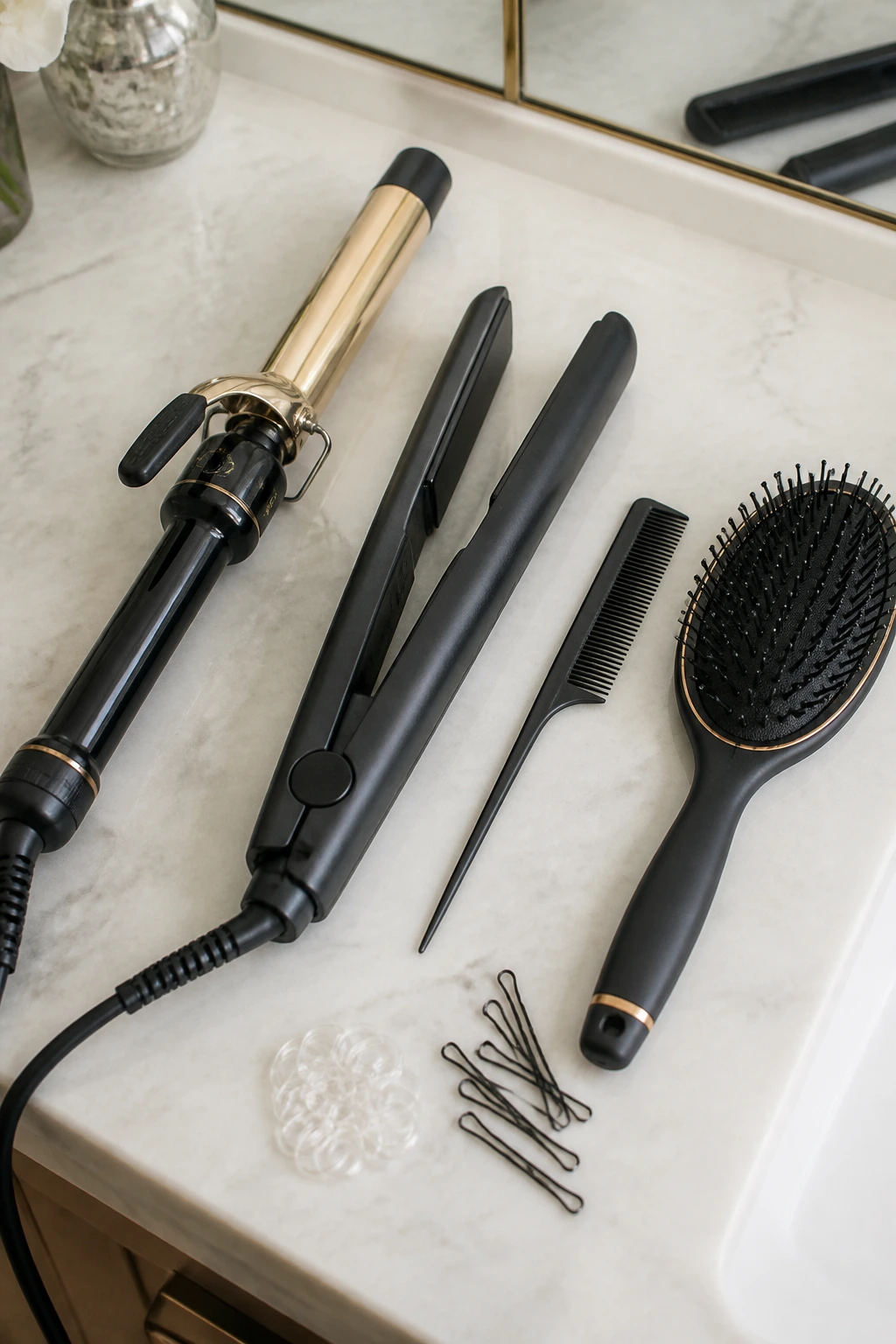
Essential Tools for These Looks
-
1-inch curling iron: best for tighter waves, pin curls, and styles that need a clear curl pattern.
-
1.25-inch curling iron: a good all-purpose barrel for Hollywood waves and soft evening curls.
-
Flat iron: useful for sleeker styles, smooth parts, and short-hair polishing.
-
Tail comb: this makes the part look clean and helps lift sections without tearing the hair.
-
Boar bristle brush or smoothing brush: good for brushing waves into one soft pattern.
-
Bobby pins and U-pins: use both; U-pins are excellent for buns, while regular pins are better for small fixes.
-
Clear elastics: best for ponytails, bubble styles, and hidden anchors.
-
Texture spray or dry shampoo: gives slippery hair enough grip to hold pins and twists.
-
Flexible-hold hairspray: holds shape without turning the hair stiff or flaky.
-
Serum or light shine cream: use sparingly on the outer layer to tame flyaways and add gloss.
-
Duckbill or sectioning clips: keep sections separate while you curl, roll, or smooth.
Smart Product and Accessory Picks
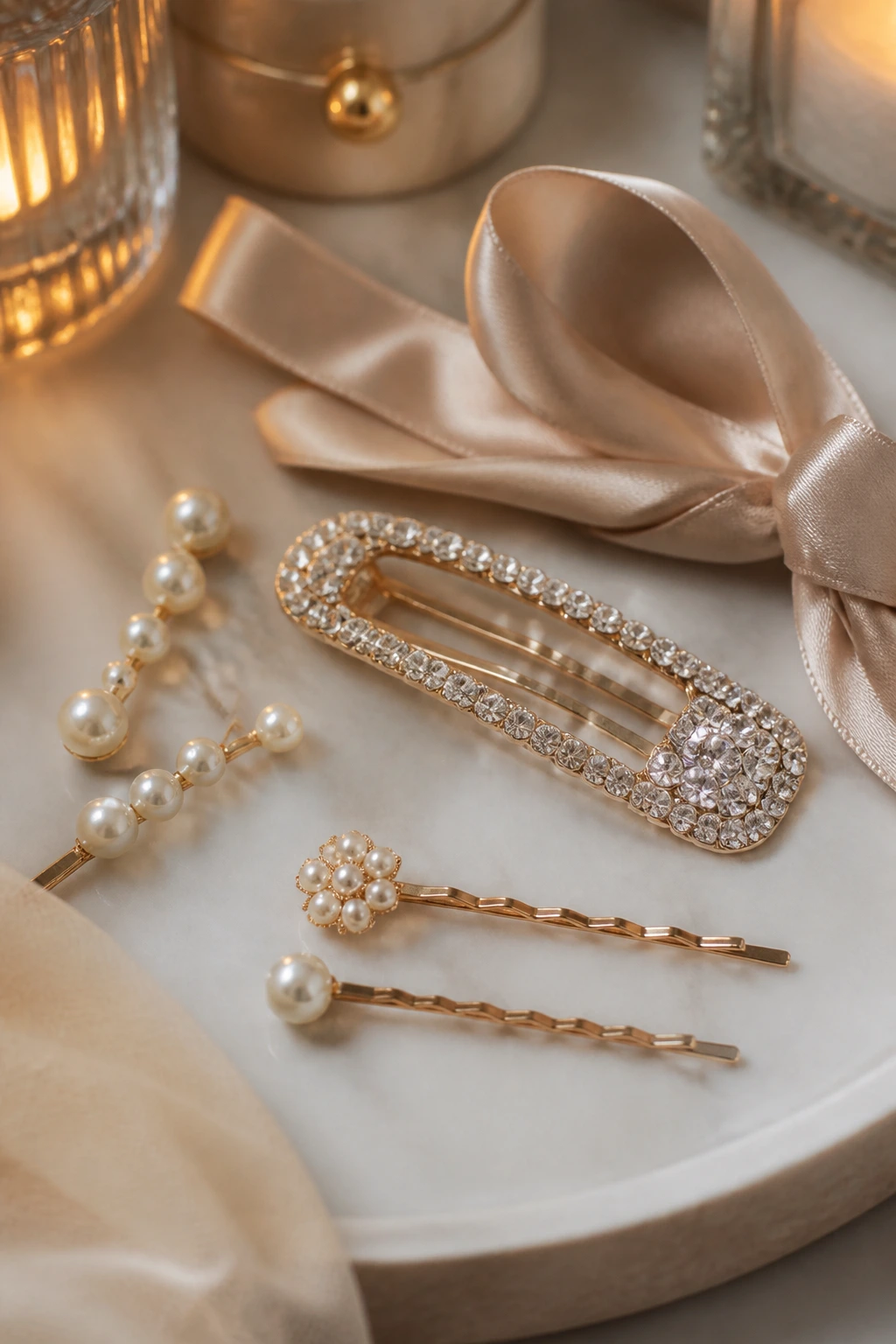
Picking the right styling products matters more than people expect. A high-hold gel can make a sleek look crisp, but on soft waves it can leave the hair looking hard and dry. A flexible hairspray lets movement stay visible, which is better for anything meant to look elegant rather than shellacked.
For accessories, choose the finish before the color. Satin ribbons soften a ponytail or half-up style. Pearl pins feel right when the hairstyle is clean and minimal. Rhinestone clips work best when the hair itself stays quiet and the accessory gets the spotlight.
If your hair is very fine, go for products that add grip without weight: texture spray, root-lift mist, lightweight mousse. Thick or coarse hair usually needs smoothing cream or a light gel at the hairline so the top does not puff up halfway through the evening.
Bobby pins are not all the same, either. The wavy kind holds better in buns and twists. Straight pins are useful for small fixes but slide more easily. Buy more than you think you need. Hair has a way of stealing one pin per hour.
How to Pair These Hairstyles With Necklines and Accessories
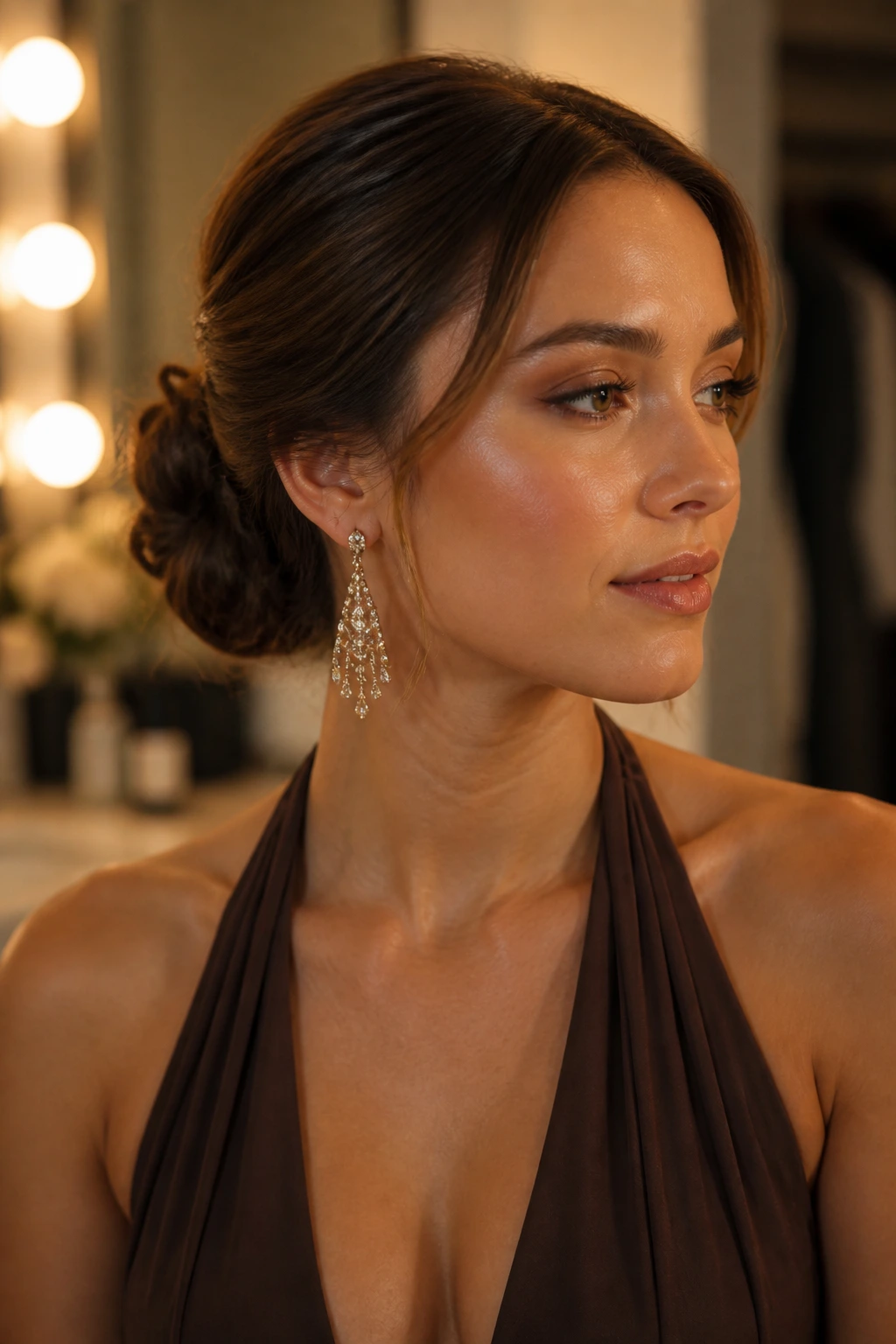
Neckline Match: Low buns, French twists, and tucked rolls leave the neck open, which works best with halters, high collars, and dresses with detailed backs. If the dress already has a lot of visual weight near the shoulders, a clean updo keeps the whole outfit from feeling crowded.
Earring Match: Side-swept waves, wet-look parts, and faux bobs make room for statement earrings because they leave one side exposed. If the earrings are large or textured, keep the hair shape smoother so the look does not start arguing with itself.
Accessory Match: Pearl pins, jeweled combs, and satin ribbons should feel like part of the hairstyle, not an afterthought. They look most natural on low knots, ponytails, and chignons where there’s a clear anchor point.
Makeup Match: Strong hair shapes pair well with a softer lip or a more restrained eye, while softer hair can handle bolder makeup. The key is balance, not symmetry. If the hair is doing a lot, let the makeup breathe a little.
Additional Styling Tips and Finish Boosters
Texture Control: If your hair slips out of pins before you leave the house, mist the sections with dry shampoo or texture spray and wait 30 seconds before styling. That tiny pause gives the product time to grab. Straight, silky hair needs this more than most people admit.
Shine Boost: A drop of serum rubbed between the palms and pressed over the outer layer makes a style look finished fast. Put it on the surface only. Roots and serum are not friends.
Customization: Swap the same base shape with different parts, accessories, or curl patterns. A low bun can read strict with a middle part, softer with a side part, and more romantic with one twisted face-framing piece.
Make-It-Yours: For curly hair, preserve the pattern and shape the outline instead of fighting the texture flat. For fine hair, build at the roots and keep ends controlled. For thick hair, split sections smaller than you think you need; the style will sit cleaner and pin more securely.
How to Keep the Style Fresh Through Dinner and Dancing
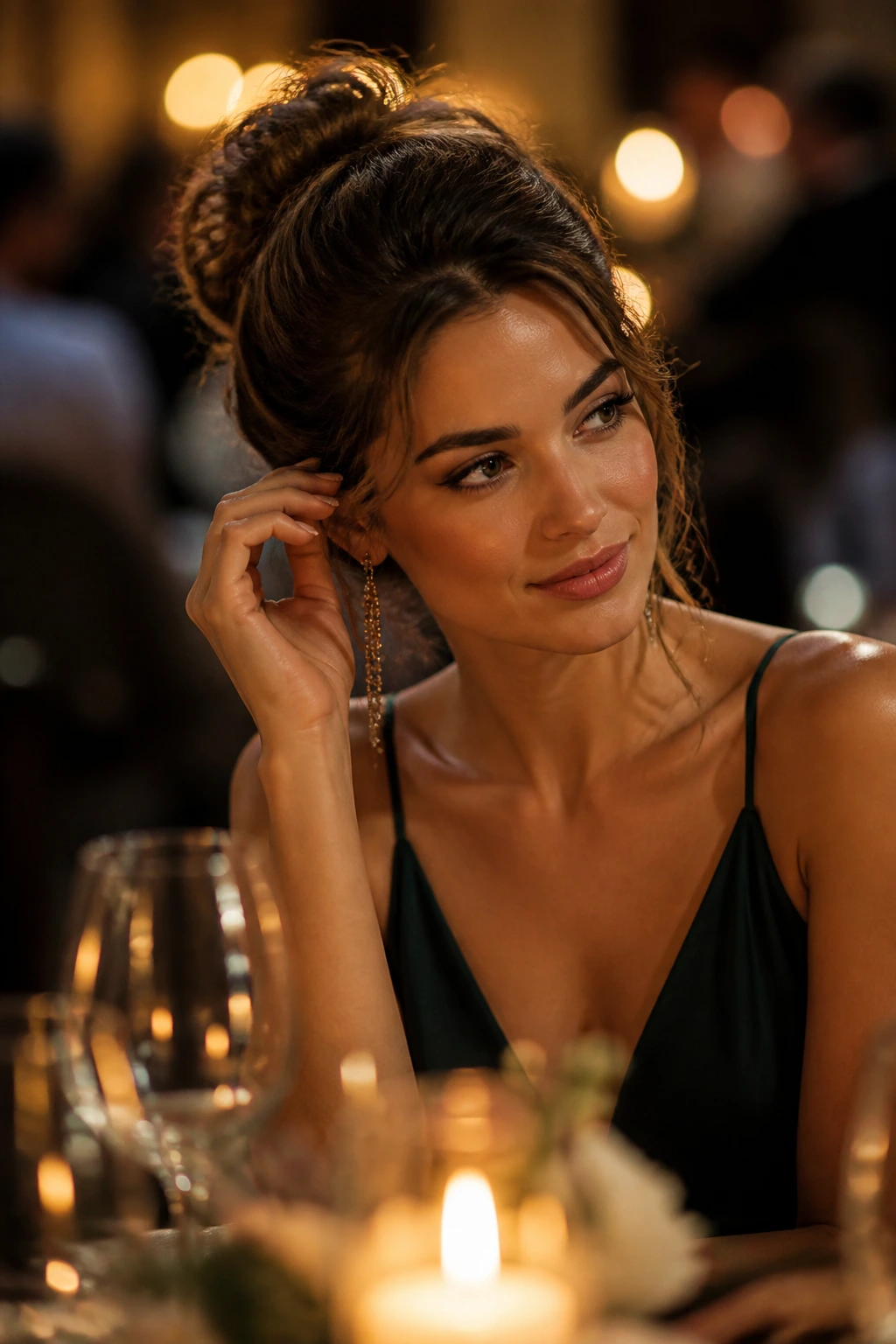
Most of these styles can stay presentable for six to eight hours with the right prep, and a secure updo can go even longer if you leave your hands off it. The biggest enemy is not time. It’s touching. Once you keep lifting the front pieces, the whole shape starts to loosen.
Carry a few things in a small bag or coat pocket: two bobby pins, a travel comb, a tiny hairspray, and a flat clip if your style uses one. If the crown lifts, press it down with your palm for a second, then re-pin from underneath. If the back softens, twist it once and pin it again rather than trying to rebuild the whole style in a restroom mirror.
For waves and curls, a quick finger re-shape works better than brushing. Brushing breaks the pattern and leaves the ends wide. For sleek styles, use a dab of serum on the fingertips to smooth only the flyaways that pop up near the part or temples.
Before bed, take the style down fully. Don’t sleep in hard pins or tight elastics unless you enjoy waking up with a kink that takes half the morning to fix.
Variations and Adaptations to Try
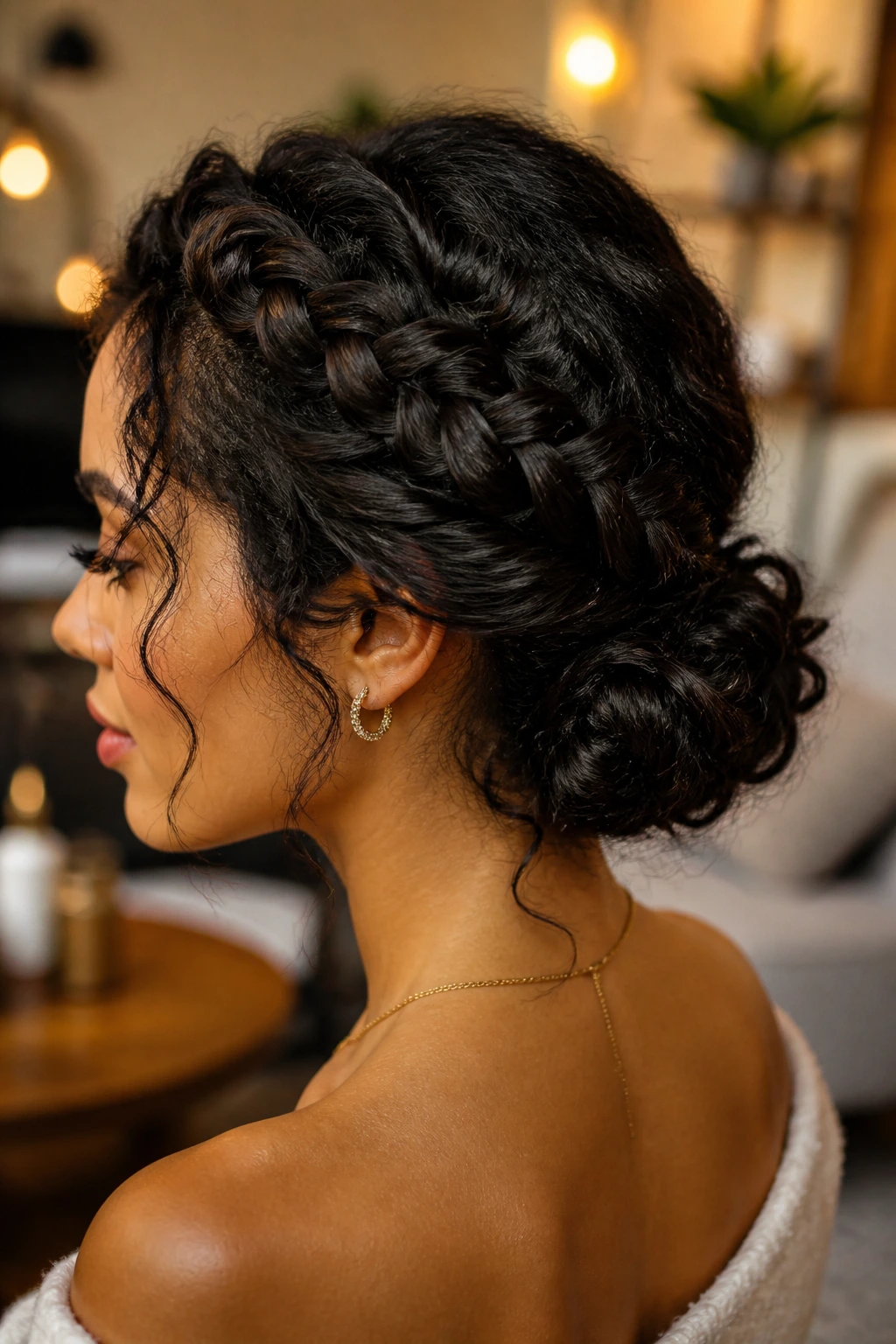
Soft-Glam Version: Keep the same hairstyle shape, then loosen the front by a quarter inch on each side. This works well if you want the style to feel less formal and more easygoing without losing polish.
Curly-Texture Version: Build the style around the curl pattern instead of flattening it out. A braided crown, low knot, or sculpted ponytail tends to work especially well because the texture becomes part of the design.
Short-Hair Adaptation: Use tucked ends, pinned waves, and small ornamental clips to create shape where length is limited. A bob can look more formal than long hair if the part is sharp and the surface is smooth.
Humidity-Heavy Version: Start with mousse, blow-dry fully, then finish with a light anti-humidity spray over the outer layer. Styles with strong anchors — like buns and twists — hold up better than loose curls when the air gets damp.
Accessory-Forward Version: Add one focused piece only: a comb, a ribbon, a pin, or a slim headband. Too many accessories scatter the eye, while one strong piece can make even a simple ponytail feel event-ready.
Common Mistakes to Avoid
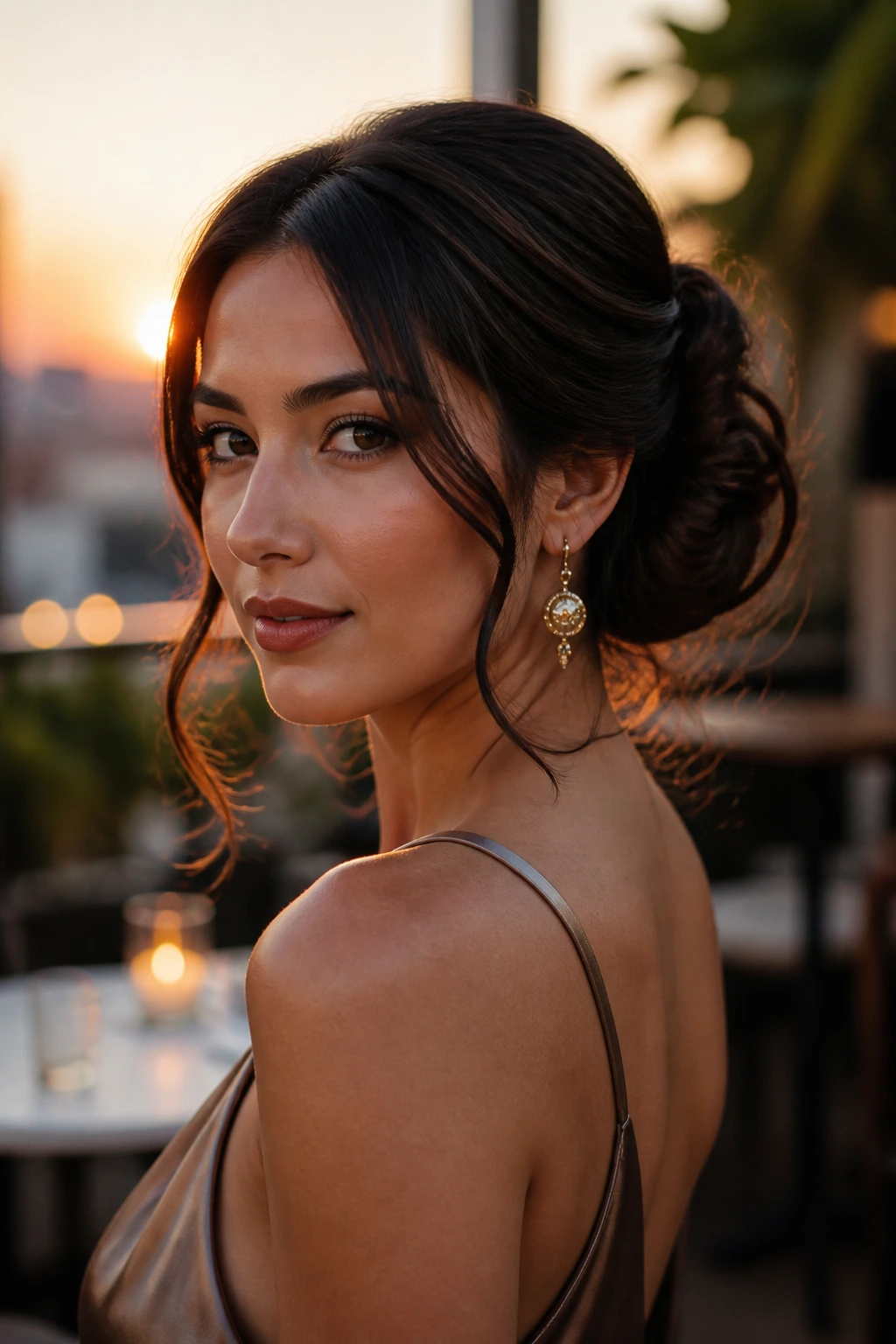
One mistake I see all the time is starting with hair that’s too clean and too soft. The style looks fine for a minute, then the pins start sliding. A little dry shampoo or texture spray usually fixes that, and it works better than piling on extra hairspray later.
Another problem is over-tightening the front. A pulled hairline can make even a beautiful bun look tense. Leave the surface smooth, yes, but not stretched to the point that the style looks uncomfortable.
People also overload the crown with product. That flattens the volume where you need it most and makes the style feel greasy under evening light. Use shine on the outside and grip underneath. Keep those jobs separate.
Skipping anchor pins is another common miss. If you only use one pin in a bun, it may hold while you’re standing still and loosen the second you turn your head. Cross two pins where the weight sits.
And then there’s the opposite problem: too many accessories. If the hair already has braids, waves, and shine, a giant clip can push it into costume territory. Pick one focus and let the rest stay quiet.
Frequently Asked Questions
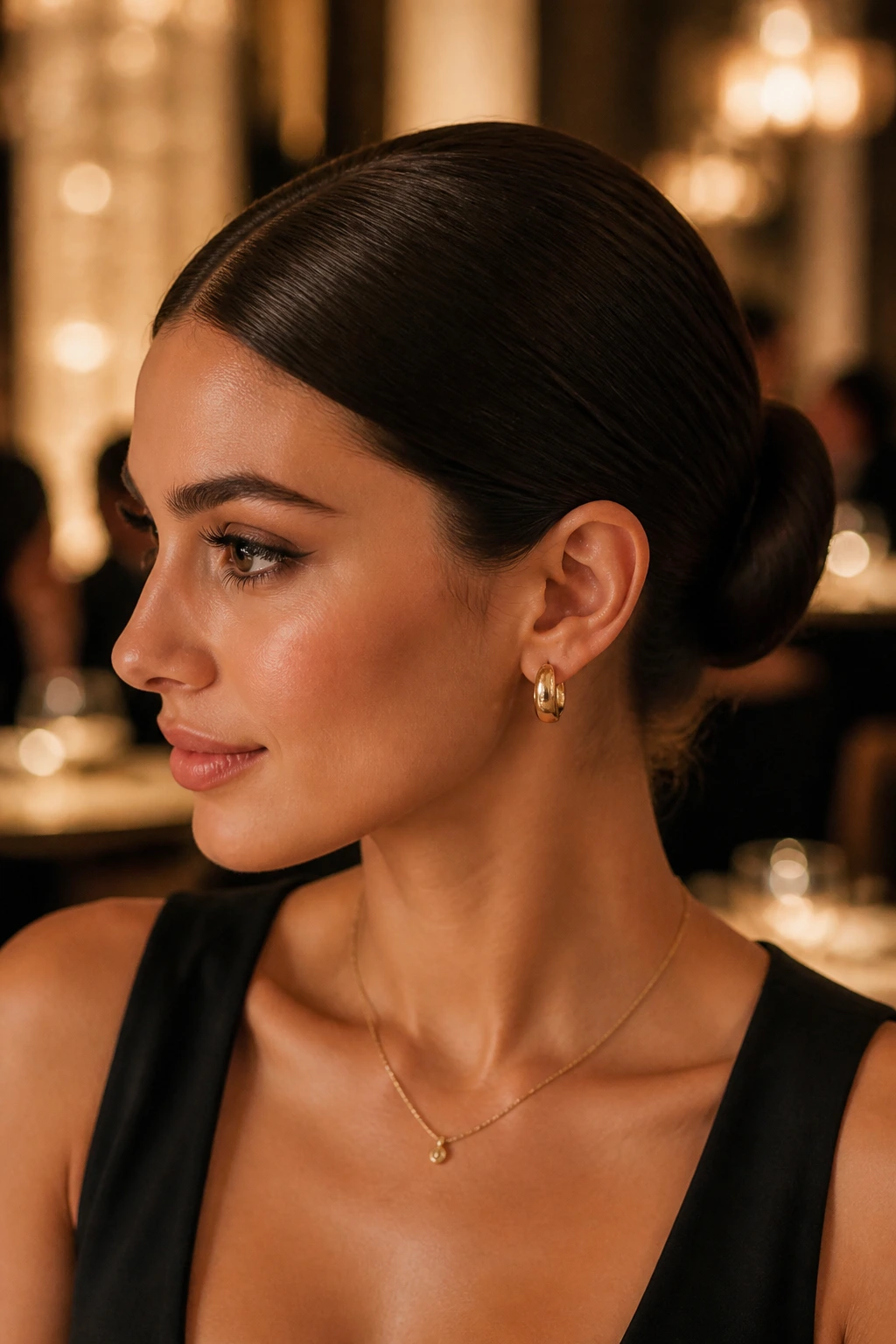
Which evening hairstyle lasts the longest?
Low buns, French twists, and tucked styles usually last the longest because they have strong anchors and less movement in the length. If you’re going to be out for hours, these are the styles I’d trust first.
Can I do these styles on day-old hair?
Yes, and many of them work better that way. Day-old hair has more grip, which helps pins, braids, and twists hold without sliding around.
What if my hair is very fine and slippery?
Use texture spray at the roots and mid-lengths before styling, then pin smaller sections than you think you need. Fine hair usually behaves better when you build the style in layers instead of trying to secure everything at once.
How do I keep curls from falling flat?
Curl smaller sections, clip them to cool, and avoid brushing until the hair is fully set. A flexible-hold hairspray at the end helps, but the cooling step is what gives the curl memory.
Can short hair still look formal?
Absolutely. A short bob or lob can look incredibly polished with a sharp part, smooth finish, and one clean accessory. The trick is to focus on shape rather than volume.
What if I wear earrings that tangle in my hair?
Choose a style that keeps the hair away from the ear line, like a low bun, faux bob, or side-swept wave pinned on the opposite side. If the earrings are long, keep the hair controlled near the jaw.
How much product is too much?
If the hair feels heavy, sticky, or stiff before you leave the mirror, you’ve used too much. Start with less than you think you need; you can always add a little more serum or spray, but you can’t easily pull product back out.
Do I need hot tools for all of these?
No. Several of the updos, twists, and tucked styles work with smoothing cream, a comb, and good pinning alone. Hot tools help with finish, not always with structure.
The Shape That Fits the Night
The strongest evening hairstyles do not try to do everything. They pick one shape and hold it cleanly. A low bun, a glossy wave, a rope braid, or a tucked roll all works because the outline is clear enough to survive real life, not just a bathroom mirror.
If you keep one thing in mind, let it be this: the finish matters as much as the style itself. Clean parts, the right amount of grip, and a little restraint with accessories make the difference between hair that looks done and hair that looks overworked.
Pick the shape that suits your neckline, your texture, and how much time you actually want to spend in front of the mirror. The rest is just pins, patience, and a light touch.
