



Half up half down styles for bridesmaids solve a very specific problem: hair has to look polished in photos, but it also has to survive hugs, wind, and an evening of being tugged loose, tucked back, and touched up again. A style that sits halfway between loose and pinned can do that with less fuss than a full updo and more shape than hair left entirely down.
The trick is in the balance. Too much hair pulled back, and the look starts to feel stiff. Too little, and the front pieces fall into the face right when the camera comes out. The best half-up bridesmaid hair keeps the crown controlled, leaves enough movement through the lengths, and gives you room to play with braids, twists, pins, bows, pearls, or nothing at all.
That flexibility is why this hairstyle keeps showing up in bridal parties with wildly different hair textures, lengths, and dress necklines. You can make it airy and romantic, sleek and modern, curly and full, or soft enough to sit quietly behind statement earrings. The best versions all share the same idea: lift where you need it, softness where you want it, and enough pins to make the whole thing stay put past the first toast.
Why Bridesmaids Keep Coming Back to Half-Up Hair
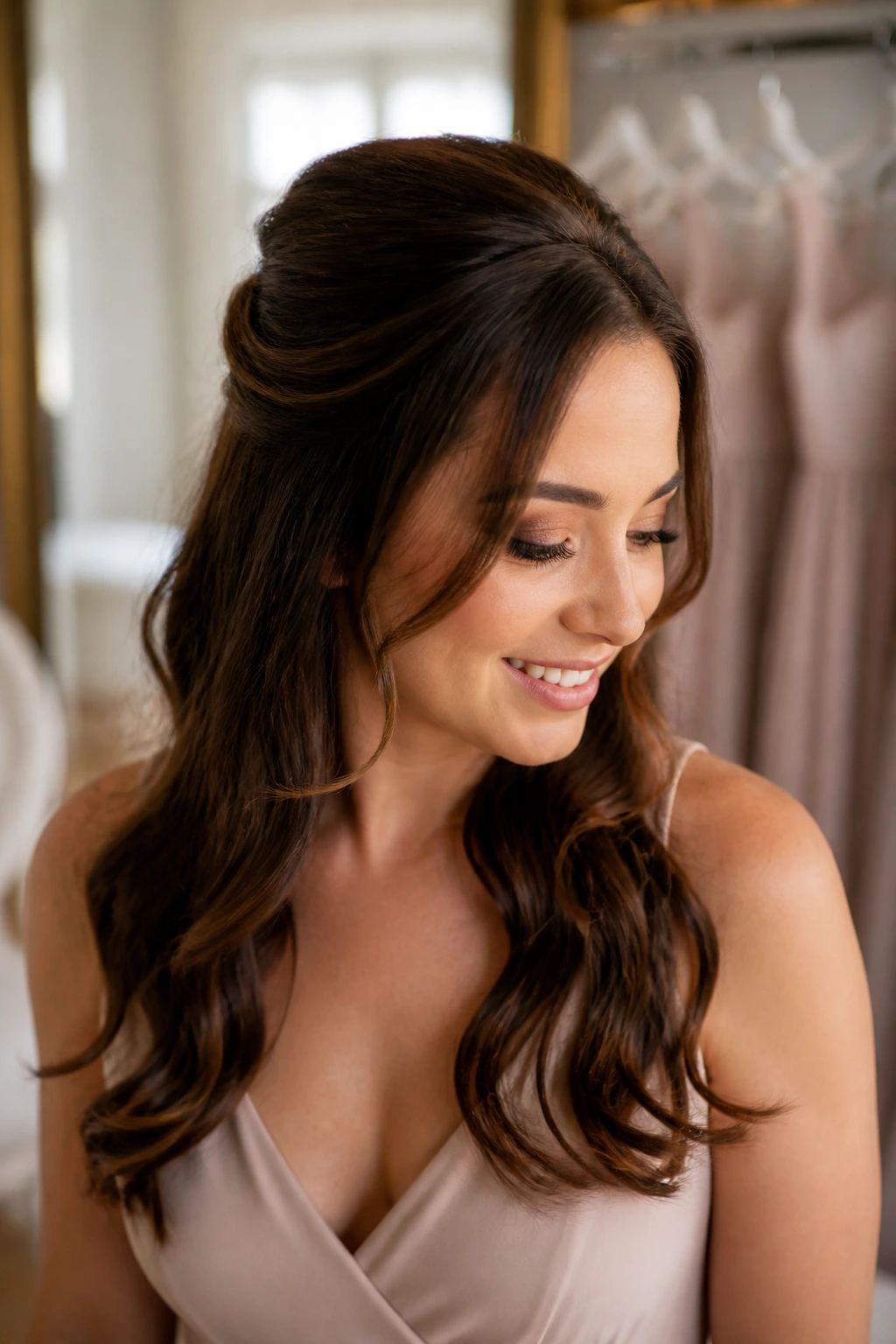
-
It keeps the face open without flattening the hair: The top section stays controlled for photos, while the length still moves when someone turns, laughs, or leans in for a group shot.
-
It works with a wide range of dresses: Open backs, square necklines, off-the-shoulder straps, and higher necks all sit differently, and half-up styling can be tuned to each one.
-
It gives the stylist room to adjust for different hair types: Fine hair needs more texture and smaller sections. Thick hair needs stronger anchors. Curly hair needs less brushing and more respect for its own pattern.
-
It looks finished without feeling overly formal: A braided crown or pearl pin can make the style feel special, but the loose length keeps it from looking severe.
-
It is easier to coordinate across a bridal party: You can keep one shared idea—same curl size, same pin color, same part—and still let each bridesmaid wear a version that suits her face and hair.
1. Soft Twisted Crown Half-Up
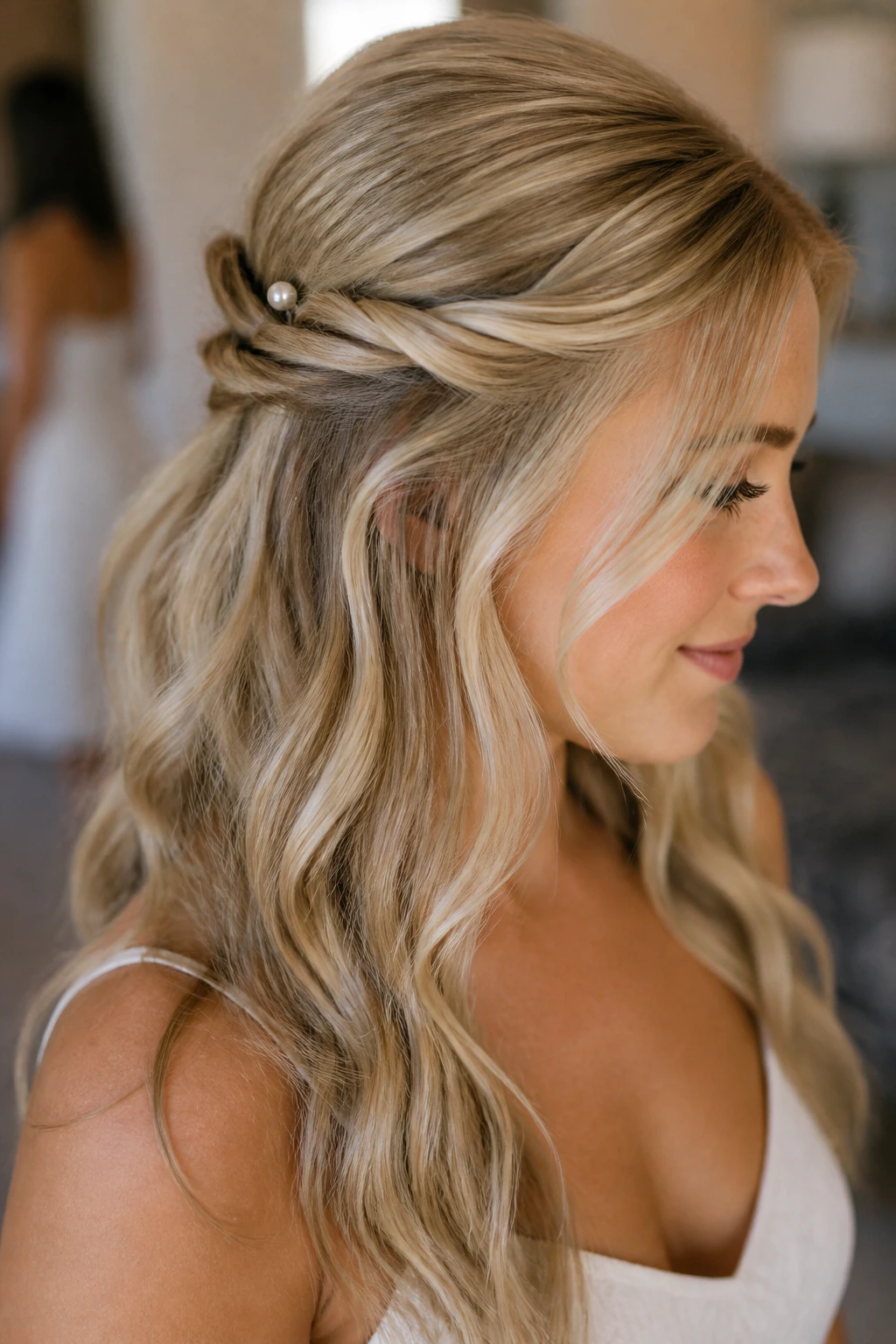
A soft twisted crown half-up is the kind of bridesmaid hair I reach for when the dress is already doing a lot. Two loose sections from the temples twist back and disappear under a pearl pin or hidden bobby pins, while the lengths stay in soft waves so the whole look still moves.
Why It Works
It keeps the crown tidy without pinning the whole head. That matters on bridesmaids, because you want hair that behaves in photos and still falls over the shoulders in a natural way.
- Best on medium to long hair.
- Use a 1-inch iron for loose bends.
- Anchor the twist with 4 to 6 bobby pins.
Stylist note: Rough-drying with a little mousse gives the twist more grip than a silky blowout.
2. Pearl-Pinned Loose Waves
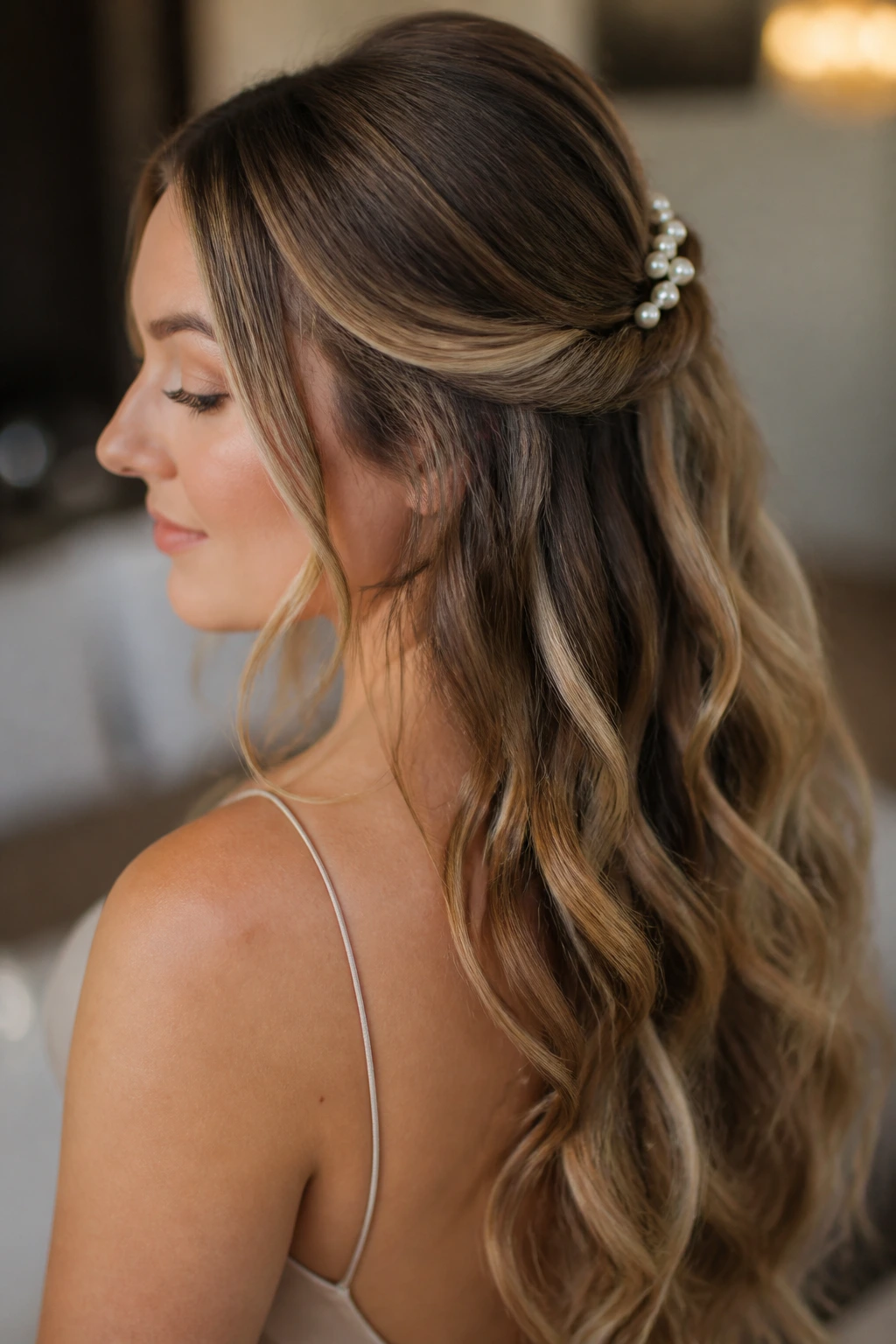
Pearl-pinned loose waves are for the bride who wants the bridal party to look coordinated without wearing the same exact hairstyle. The shape is simple: soft waves left mostly down, with a small section at the back pinned by two or three pearl clips so the style reads as deliberate, not unfinished.
This version works especially well with solid-colored dresses and clean necklines. It keeps the attention on the face and the earrings, which is useful when the gowns are already ornate or the venue has a lot going on visually. A row of tiny pearls looks tidy; a giant cluster usually tips the balance too far.
Best for
- Shorter ceremony timelines
- Hair that holds wave well
- Bridesmaids who hate heavy teasing
If you want one shared note across the whole bridal party, this is easy to repeat: same wave size, same side of the head for pin placement, same metal tone on the clips.
3. Braided Halo Half-Up
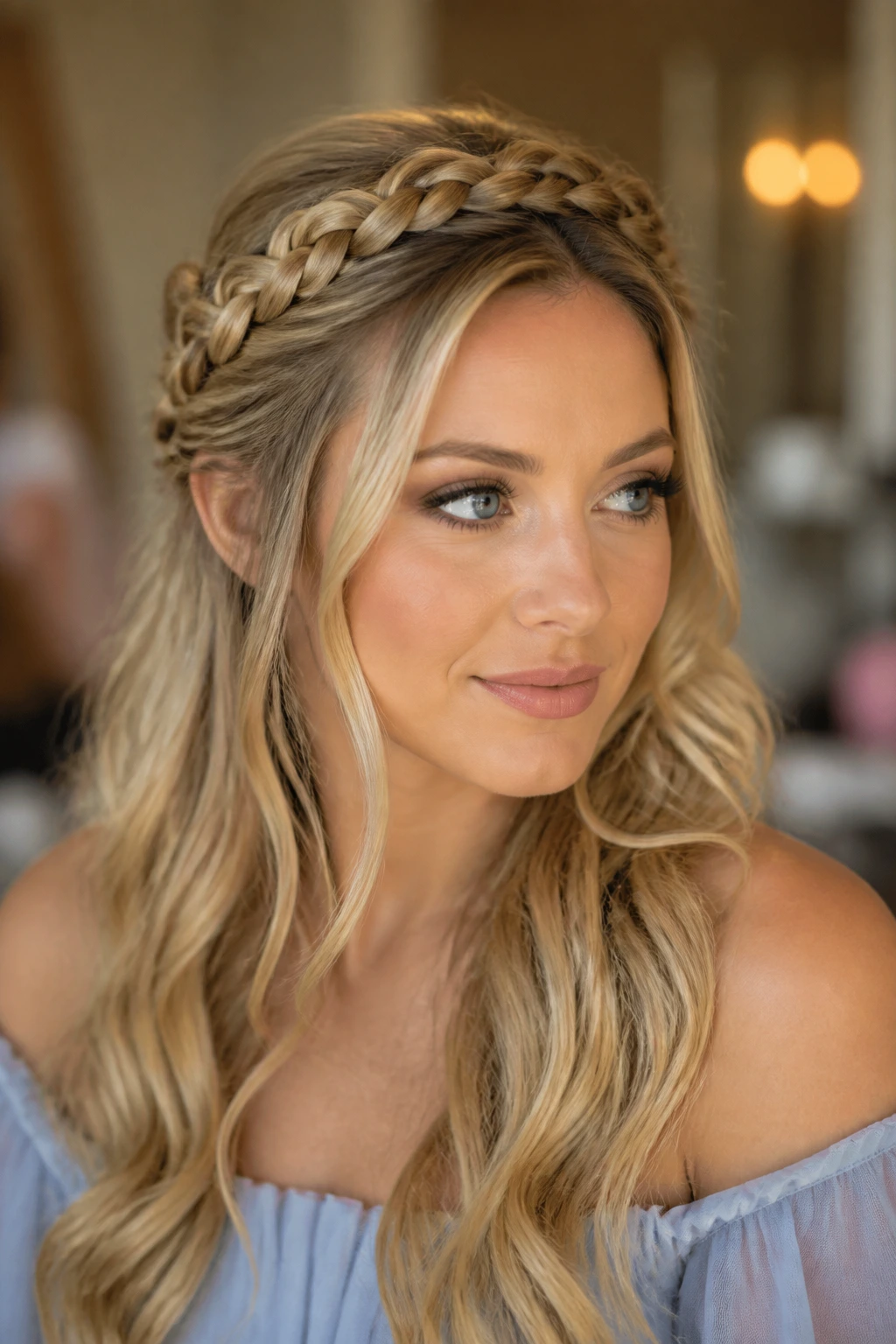
A braided halo half-up gives a little more structure than a twist, and that structure shows in a good way. The braid wraps from temple to temple, then disappears into the back section so the length stays loose underneath. It has a soft, lifted shape around the face without looking severe.
Why do people like it for bridesmaids? Because it holds. Better than a loose twist, frankly. If the wedding runs long or the weather gets damp, a halo braid keeps the top section from collapsing into the crown.
What to ask for
A braid that sits snugly but not tight, with the crown lifted only enough to stop the part from flattening. If the hair is very fine, a little root powder before braiding helps. If it is thick, use smaller sections so the braid doesn’t turn bulky at the back.
4. Sleek Center-Part Half-Up
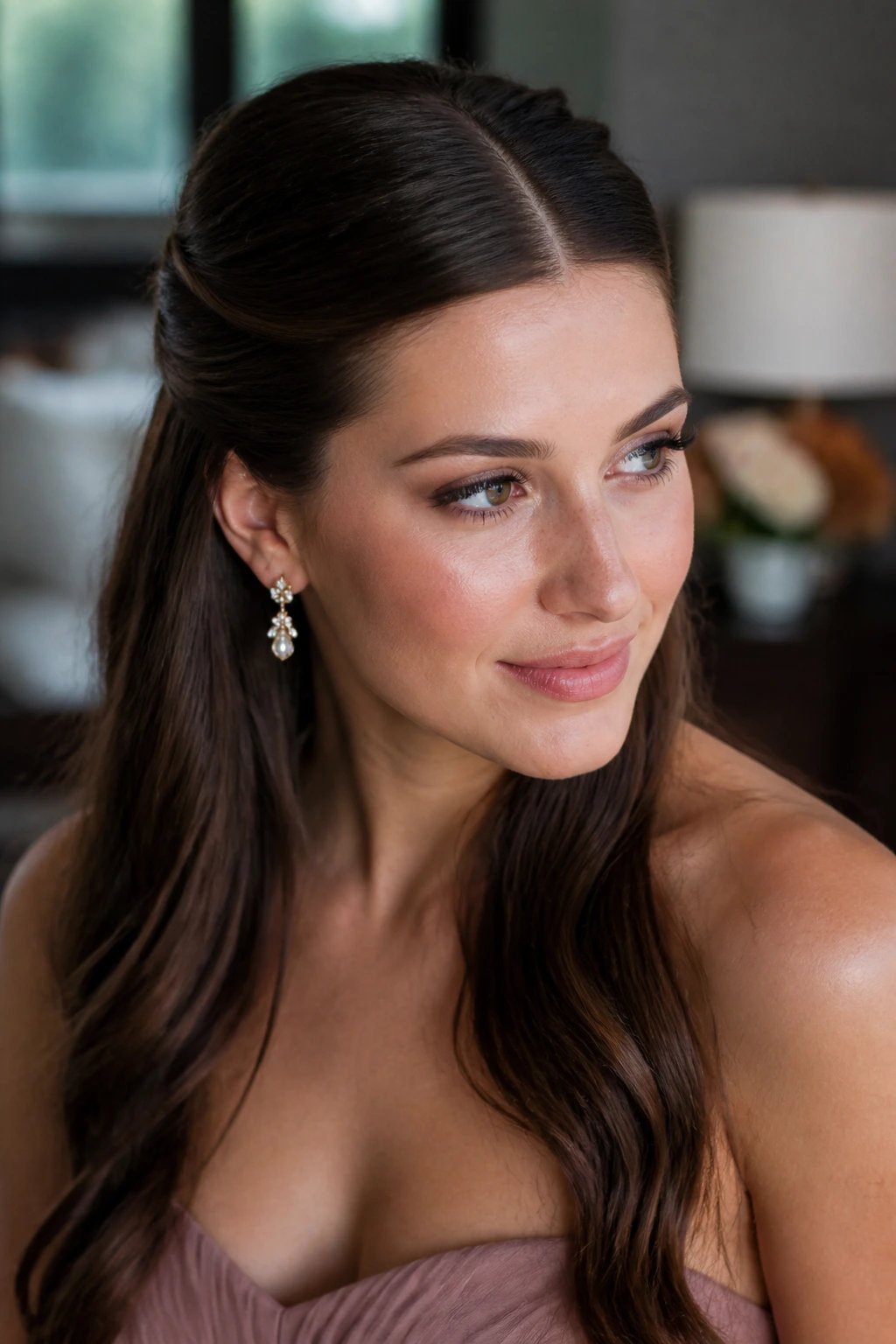
A sleek center-part half-up can look stricter than it is. The top section is smoothed back cleanly, usually from a center part, and pinned low enough that the length still drops straight or in a very soft bend. The finish is neat, glossy, and a little modern.
This is the bridesmaid style I’d pick for a dress with sharp lines: square necks, clean satin, structured shoulders. It also works when the jewelry is doing the talking. A style like this gives statement earrings a clear frame instead of competing with them.
One warning: it exposes everything. Flyaways, dull ends, uneven layers. If the hair is going sleek, the ends need to be in good shape, and the surface should be smoothed with restraint. Too much serum makes the top section slide; too little leaves it puffy.
5. Waterfall Braid Sweep
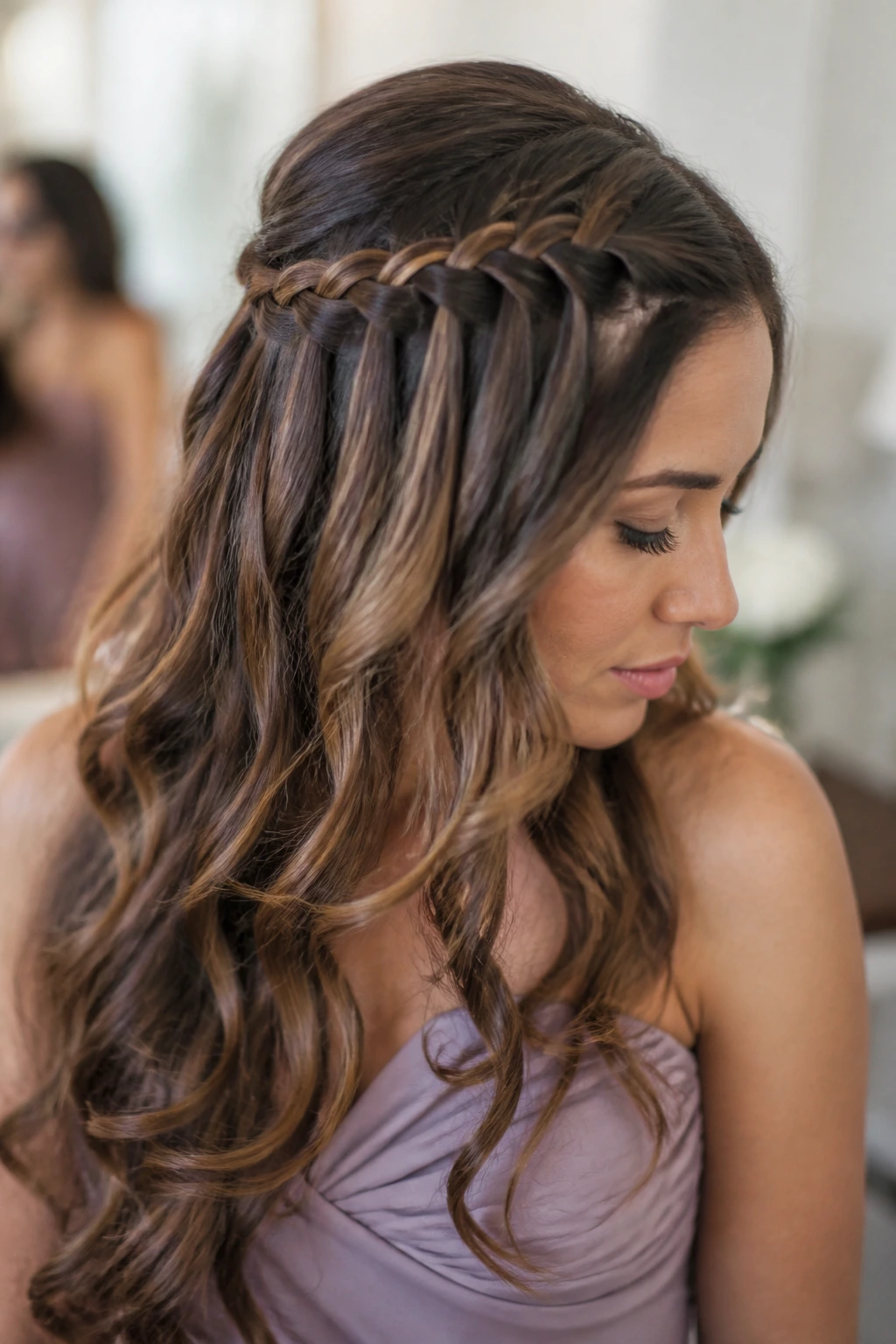
A waterfall braid sweep feels a little more involved, which is exactly why it photographs so well in a bridal party lineup. The braid drops small sections as it moves, creating that ribboned effect across the crown while the rest of the hair stays loose and soft.
The style is best when there is enough length for the braid to travel across the head without running out of hair. On shoulder-length hair, it can look crowded. On longer hair, it turns elegant fast. I like it when the dress has movement too—soft chiffon, chiffon sleeves, anything that needs a hairstyle with the same kind of motion.
Best to know
- Curl the loose lengths first.
- Keep the braid slightly loose so it does not pucker.
- Use clear elastics only if the braid ends in a small tie.
6. Ribbon-Tied Half-Up Waves
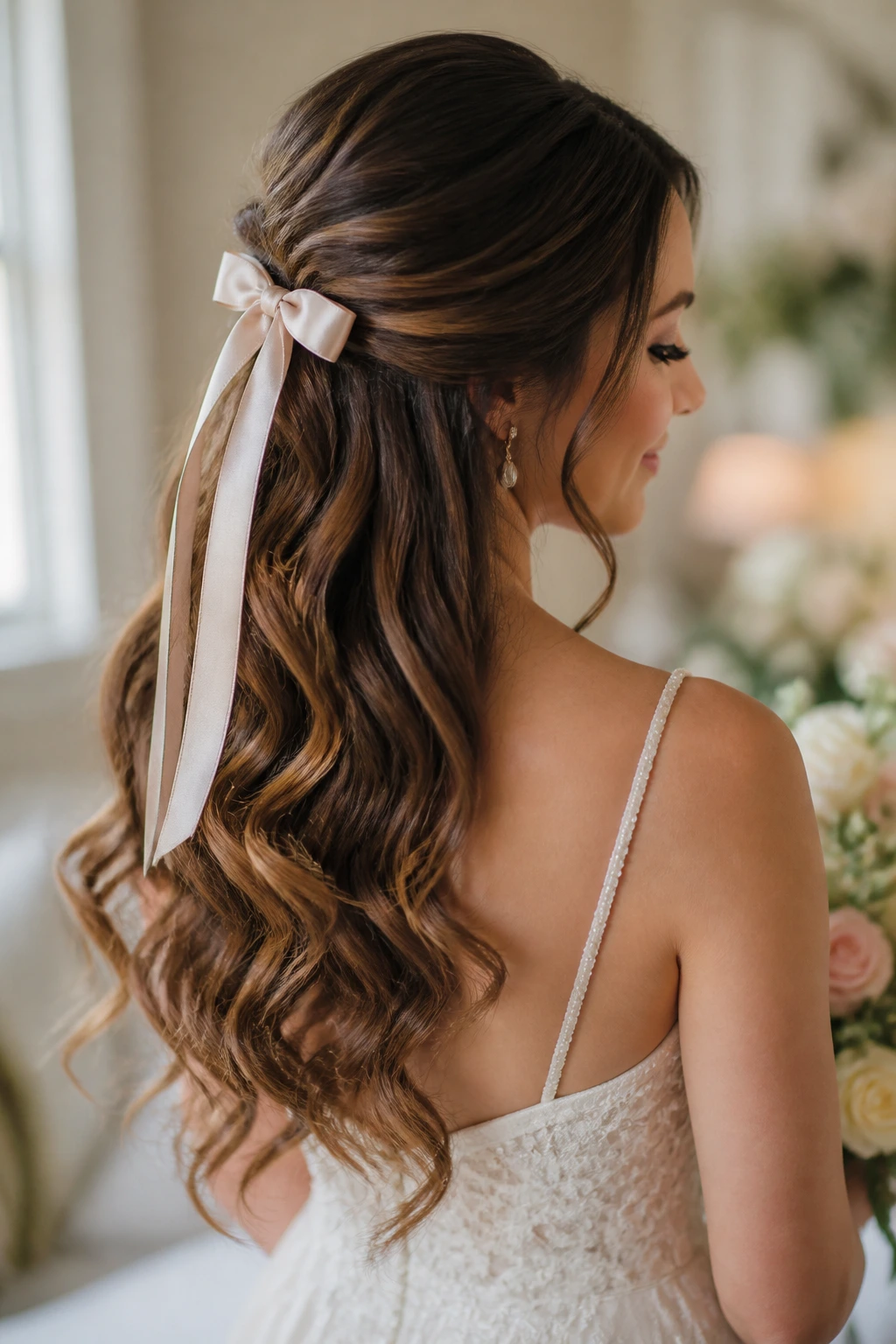
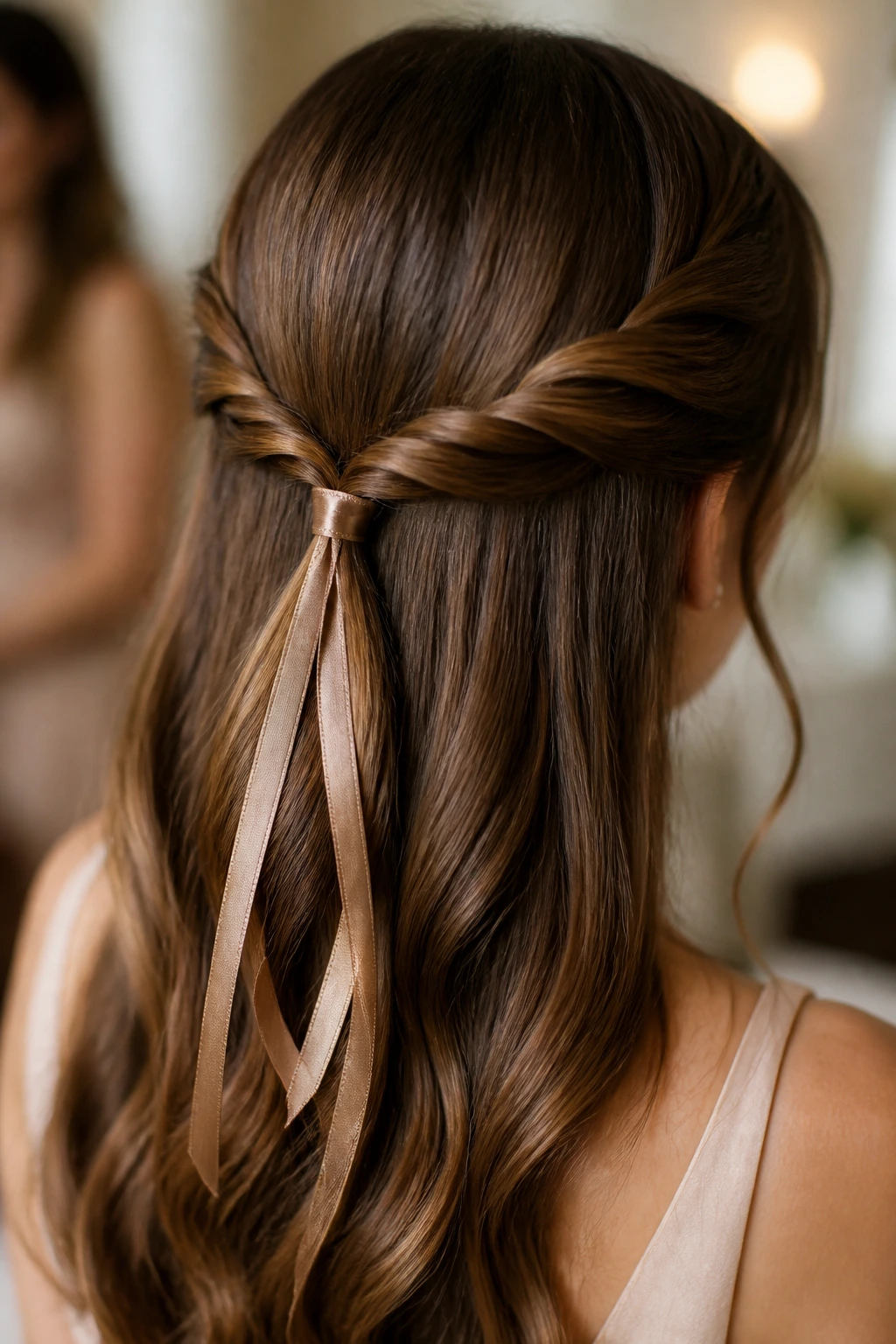
Ribbon-tied waves are one of those styles that looks gentle in the best way. The half-up section gets gathered at the back, tied with satin ribbon, and left to drape naturally while the rest of the hair falls in soft waves. It can feel sweet, but it does not have to feel juvenile.
The ribbon matters. A skinny ribbon reads neat and quiet. A wider ribbon makes the style feel more present. I prefer ribbon colors that sit close to the dress tone or the bouquet palette, because a random bright ribbon can look detached from the rest of the look.
If the hair is slippery, secure it with a hidden elastic first and wrap the ribbon over that. Don’t rely on ribbon alone unless the hair has a lot of texture.
7. Double Rope-Twist Half-Up
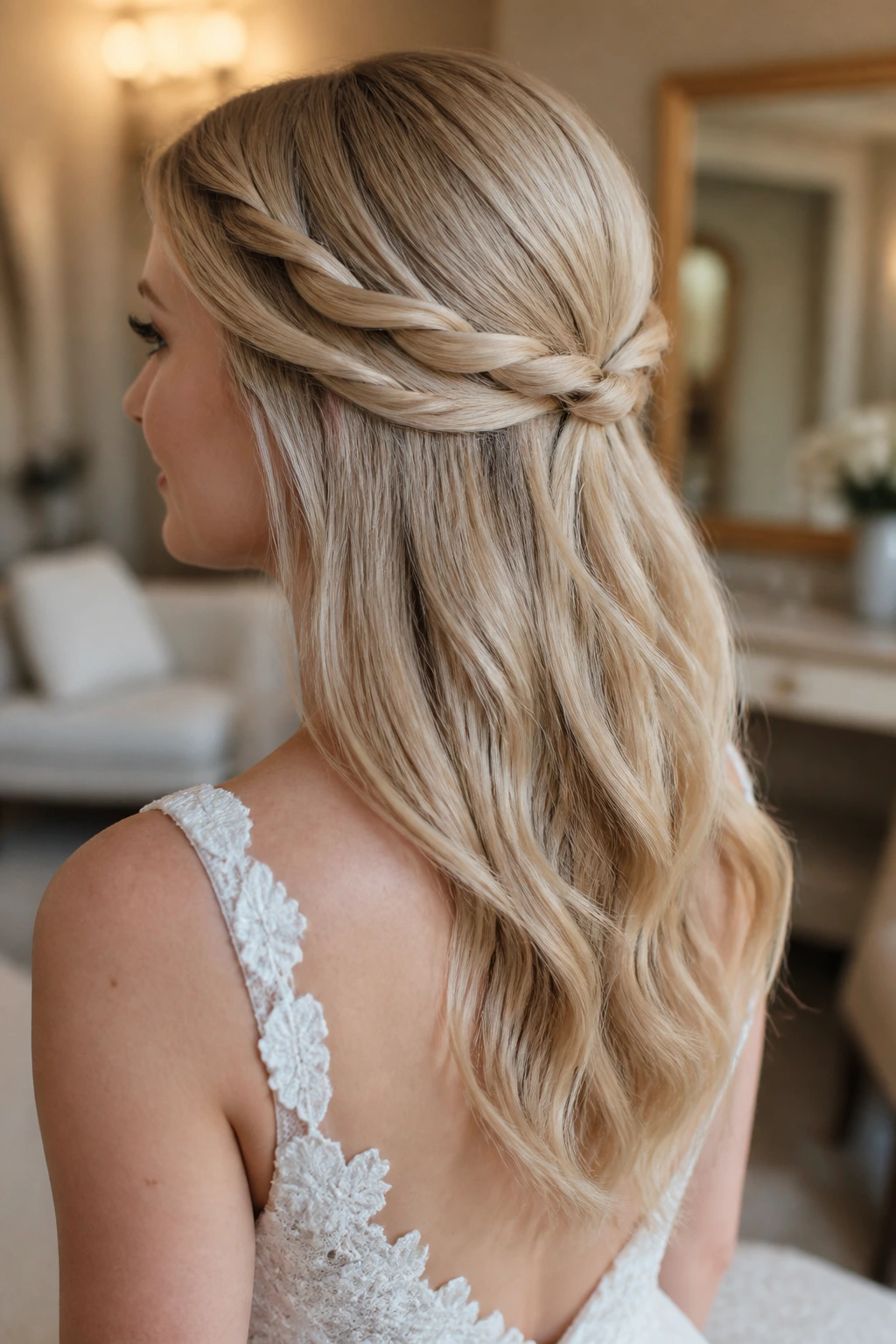
Two rope twists pulled from each side and joined at the back create a half-up style that is quick, polished, and much less fussy than a braid. Rope twists have a smoother look than three-strand braids, so they suit bridesmaids who want texture without a strong boho feel.
This is one of the better choices for mixed hair textures in one bridal party. It can be scaled up or down with almost no drama. Thin hair benefits from tighter twists and a bit of texture spray. Thick hair does better when the twists are slightly wider and pinned in a crossed X at the center back.
What makes it different: the twists sit flatter than a braid, which makes the style comfortable if someone is wearing a high-back dress or needs to sit through a long ceremony without feeling pins digging in.
8. Bubble Braid Half-Up
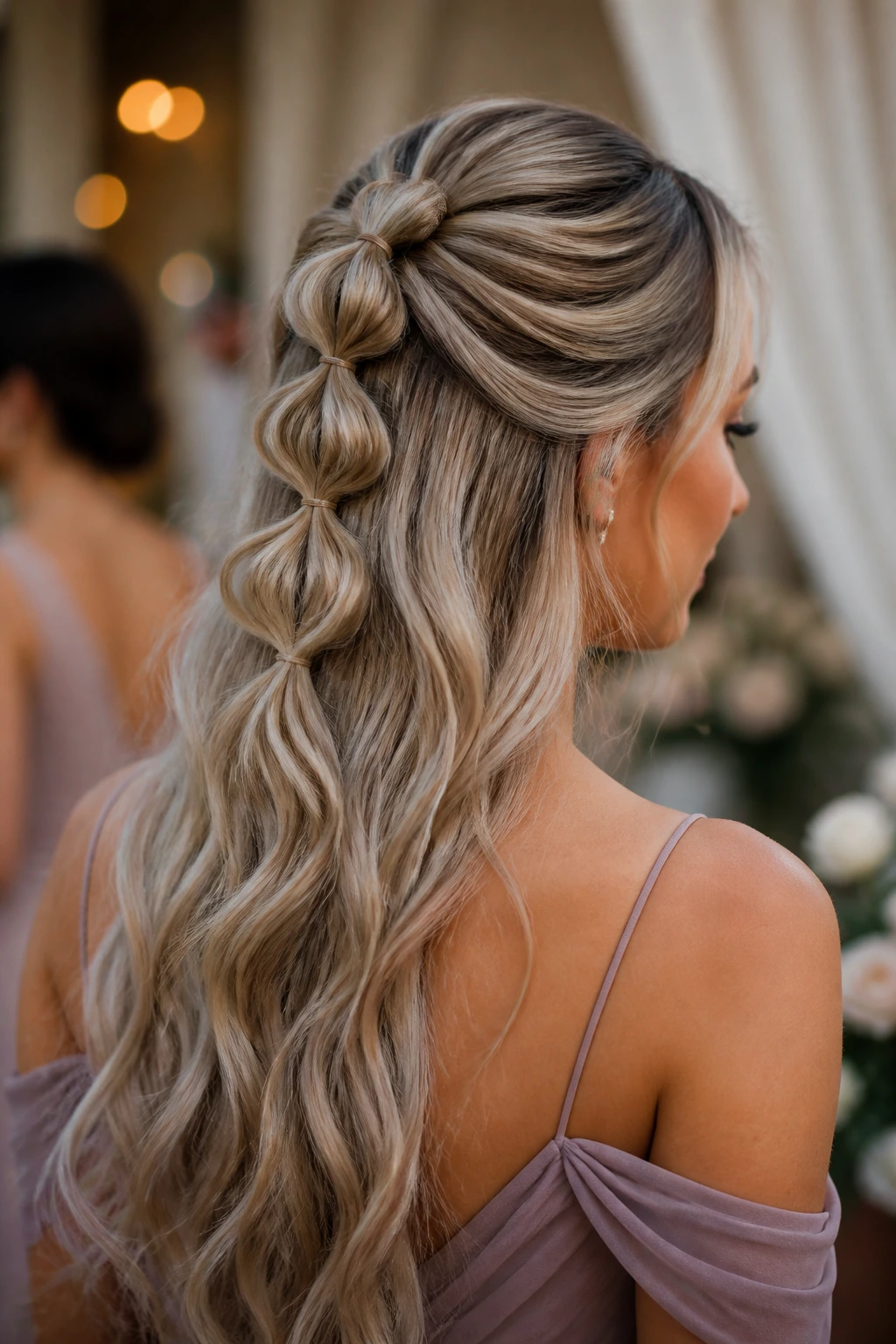
Bubble braid half-up hair has a playful edge, but on bridesmaids it reads more clever than cute if you keep the spacing neat. The top section is secured with tiny clear elastics at intervals, then each little section is gently puffed into a bubble. The loose hair underneath keeps it from looking too engineered.
It is a smart option for anyone with long, thick hair that needs structure. A plain twist can disappear in a heavy head of hair. A bubble braid does not. The shape shows from across the room, which makes it useful when the bridal party is walking in a line or standing in a group shot.
A neat row of 5 to 7 bubbles is usually enough. If you go too small, the style starts to look fussy; too large, and the bubbles lose their shape.
9. Curly Half-Up with Face-Framing Pieces
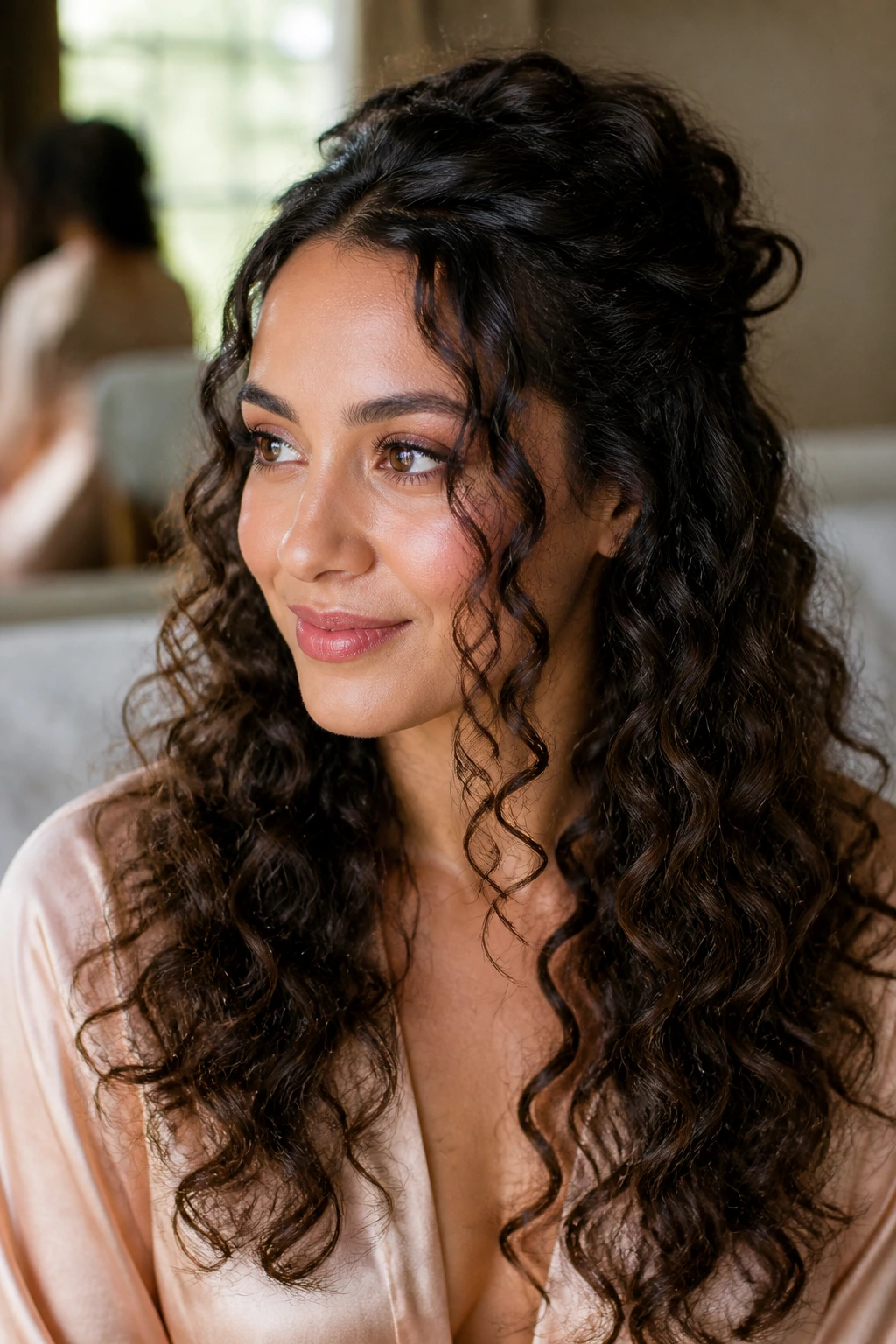
If the bridesmaid has natural curls, this is the move that usually feels most like the hair belongs to her. The half-up section just gathers a portion from the temples and crown, then leaves the rest of the curls alone so the shape stays full, springy, and alive.
The mistake people make with curly half-up styles is trying to flatten the front. Don’t. Keep the curl pattern visible, separate the curls with fingers rather than a brush, and let two front pieces sit forward if that suits the face. A little curl cream at the ends is enough.
This style is a favorite for movement. It does not fight the hair. It works with it, which is usually the smarter choice when the bridal party needs styles that last more than an hour and still look good after dancing.
10. Low Bouffant Half-Up
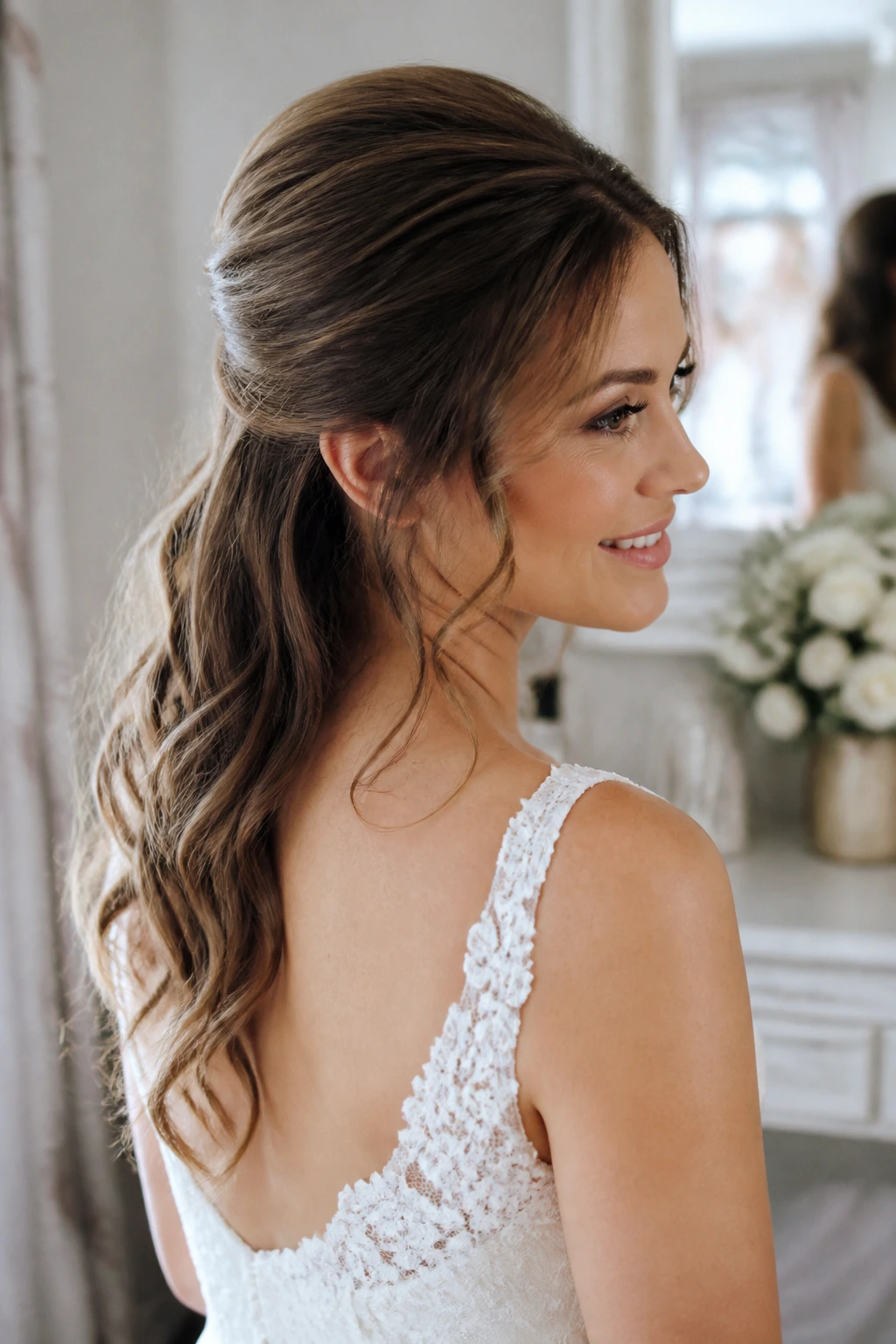
A low bouffant half-up gives the crown a little lift without pushing the style into full vintage territory. The top section is lightly teased under the surface, smoothed over, and pinned at the back so the shape rises gently before dropping into soft lengths.
This is one of the stronger picks for formal weddings. It adds height, which helps balance fuller skirts and higher necklines. It also gives the face a little more frame than a flat half-up style. That can matter in photos, especially if the bridal party is lined up shoulder to shoulder and some faces need a bit more lift.
Do not over-tease it. A bouffant that looks like a helmet is a different animal entirely. Keep the lift hidden under the smooth outer layer, then seal it with flexible spray so it moves instead of cracking.
11. Side-Swept Volume Half-Up
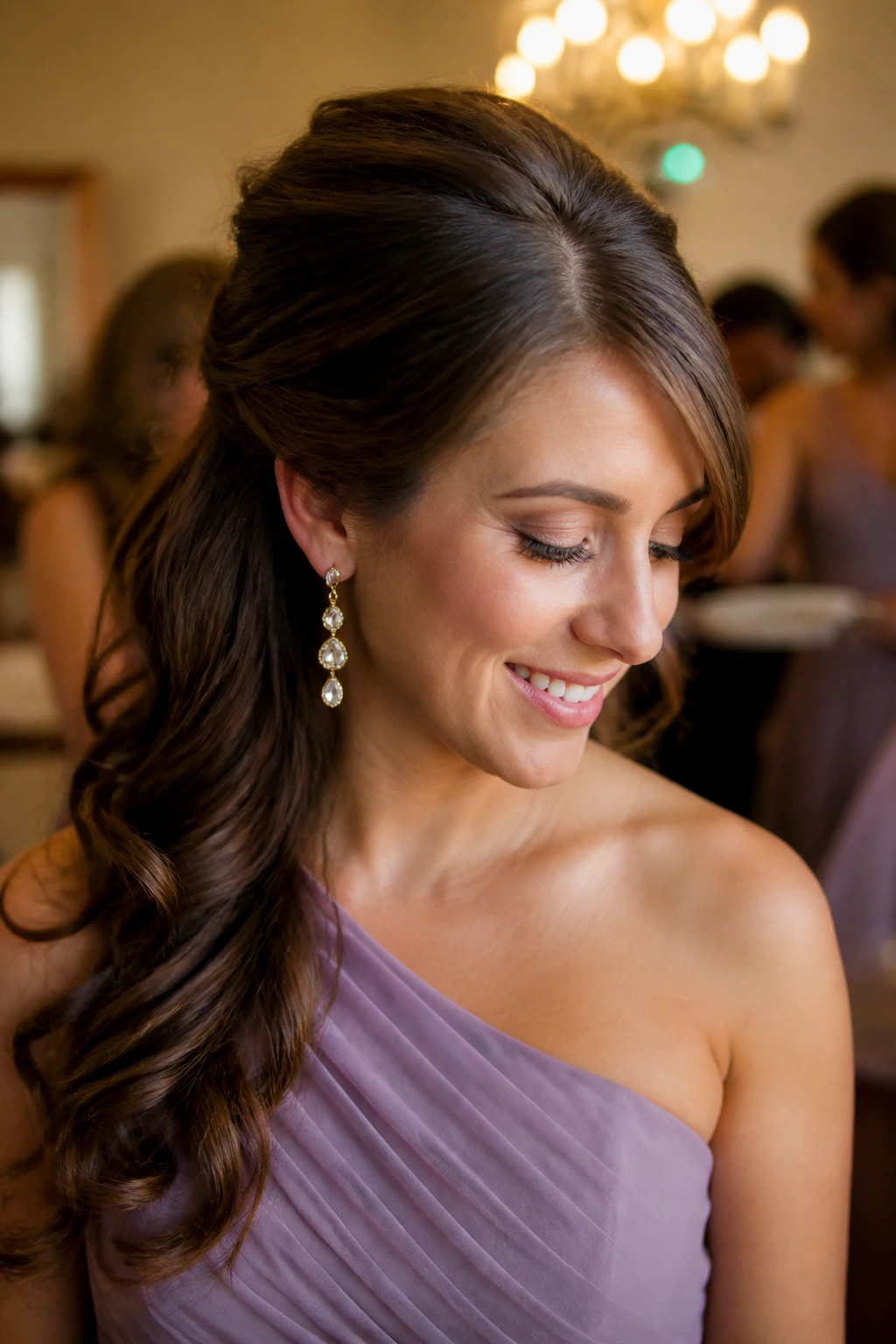
A side-swept half-up is a good answer when a dress has one standout shoulder, an asymmetrical neckline, or just a more dramatic cut on one side. Instead of pulling hair evenly from both temples, the style gathers slightly more from one side and lets the rest fall in a soft sweep.
That off-center shape feels elegant without trying too hard. It also gives earrings and collarbones a little breathing room. For bridesmaids, that’s useful: not every style has to sit dead center to look intentional.
Ask for
A soft part, not a hard one; a lifted crown; and a sweep that ends low enough to sit above the shoulder blade. If the hair is very thick, a side-swept shape can remove bulk where it’s not needed. If it is fine, the off-center lift can create the illusion of more body than there really is.
12. Fishtail Cascade Half-Up
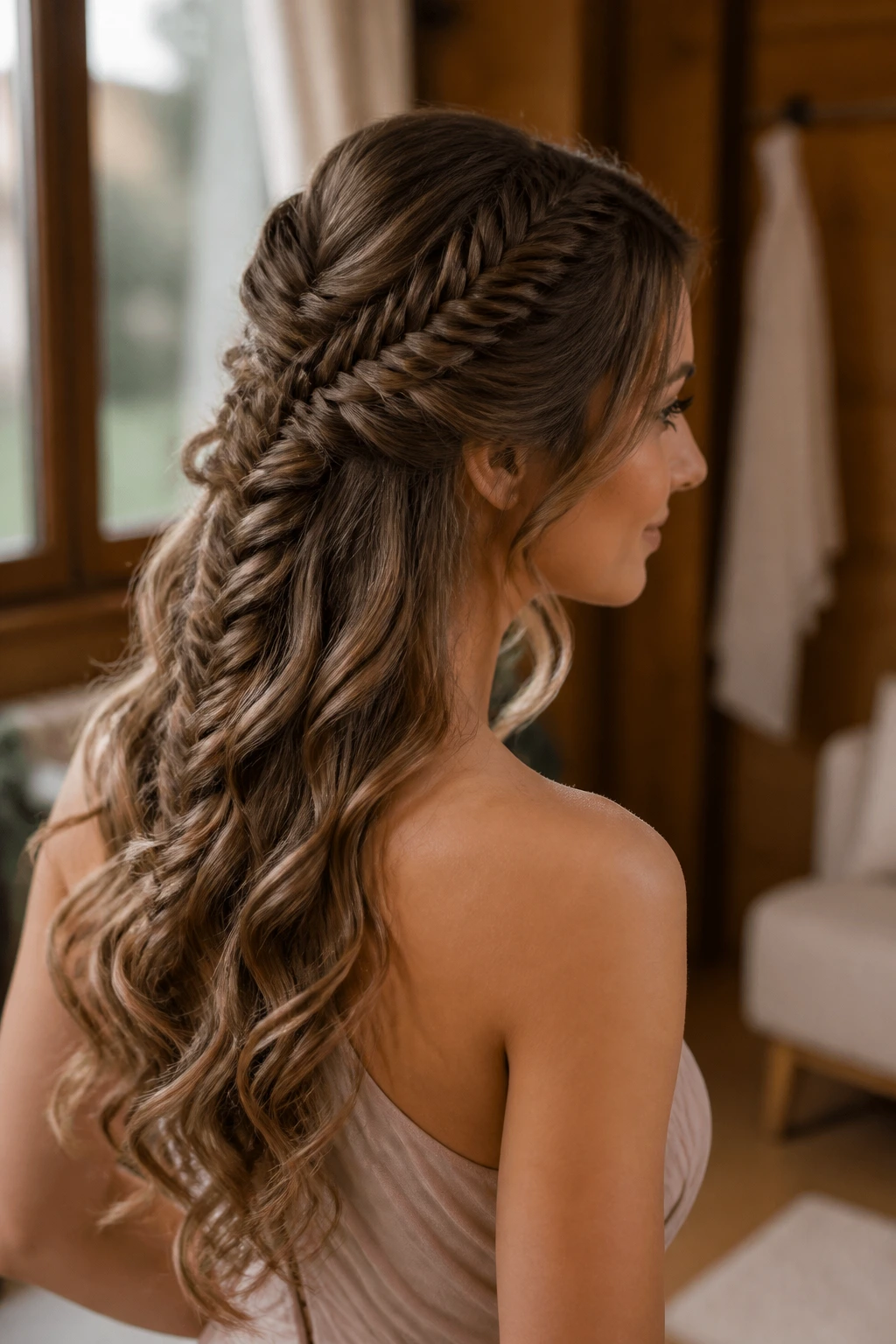
A fishtail cascade half-up is more detailed than a standard braid, and that detail shows. The braid has that woven, almost herringbone look, which makes it a strong choice when the dress design is simple and the hair needs to carry more of the visual work.
Long hair is the best canvas here. Shorter layers can slip out and make the braid look uneven unless the stylist has a very strong grip. I also like this one when the bridal party is wearing softer colors, because the braid itself creates enough interest that the style does not need much else.
The loose lengths underneath should be curled in a way that matches the braid’s tightness. Tight fishtail, soft wave. Loose fishtail, looser wave. That balance keeps the style from feeling split in two.
13. Minimal Clip-Back Waves
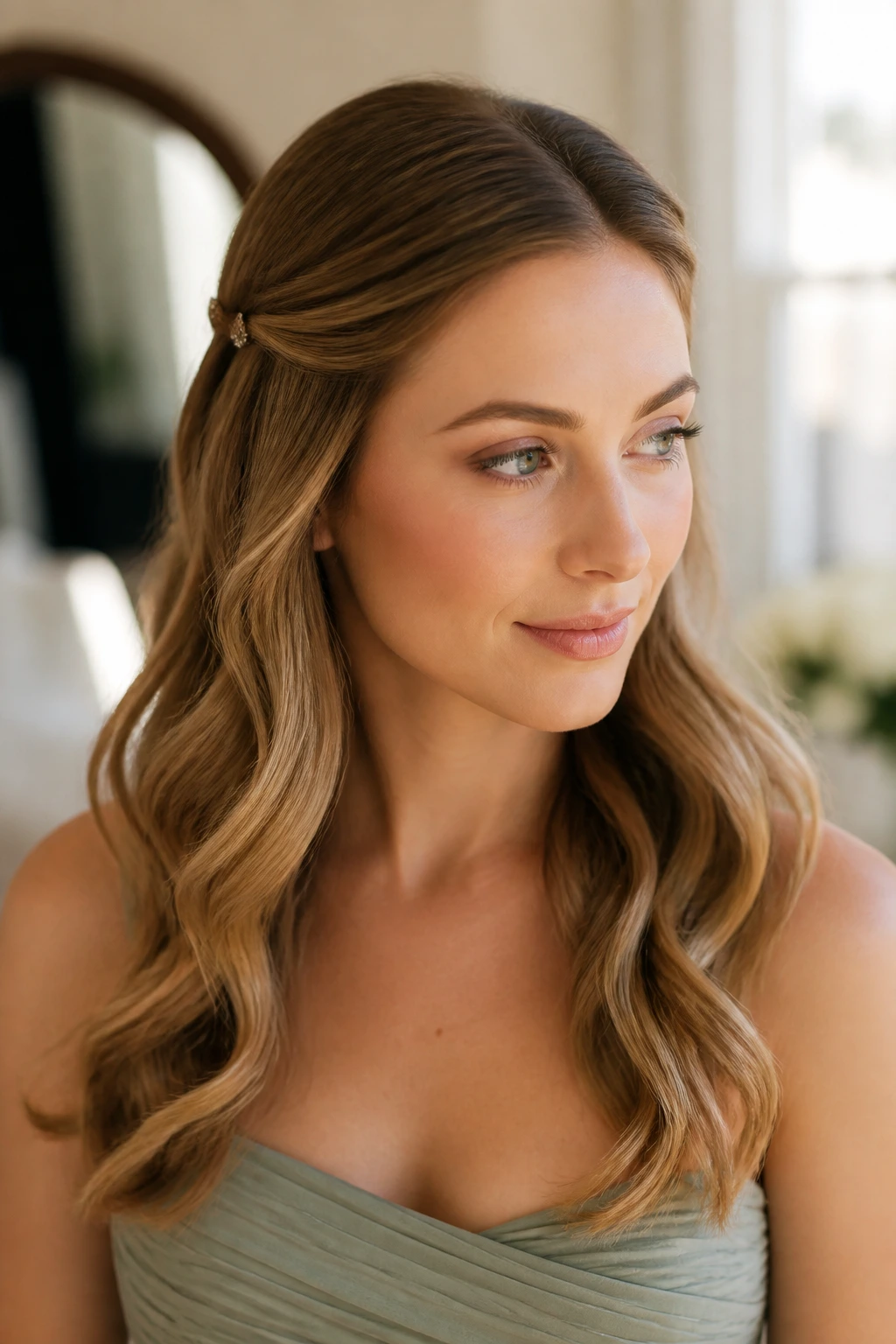
Minimal clip-back waves are for bridesmaids who want their hair to look styled without looking decorated. Two clean clips, usually placed just behind the temples, hold back the top sections while the rest of the hair stays in soft, brushed-out waves.
This is the simplest look in the collection, and I mean that as praise. It works because it does not fight the dress, the jewelry, or the face. If the gowns are already textured or if the bridal party is wearing bold earrings, a minimal clip-back style gives everybody some breathing room.
The clips themselves matter. A flat metal barrette feels modern. A pearl clip feels softer. A sparkly clip can tip the whole thing into prom territory if it’s too big, so keep the scale modest.
14. Flower-Pin Half-Up
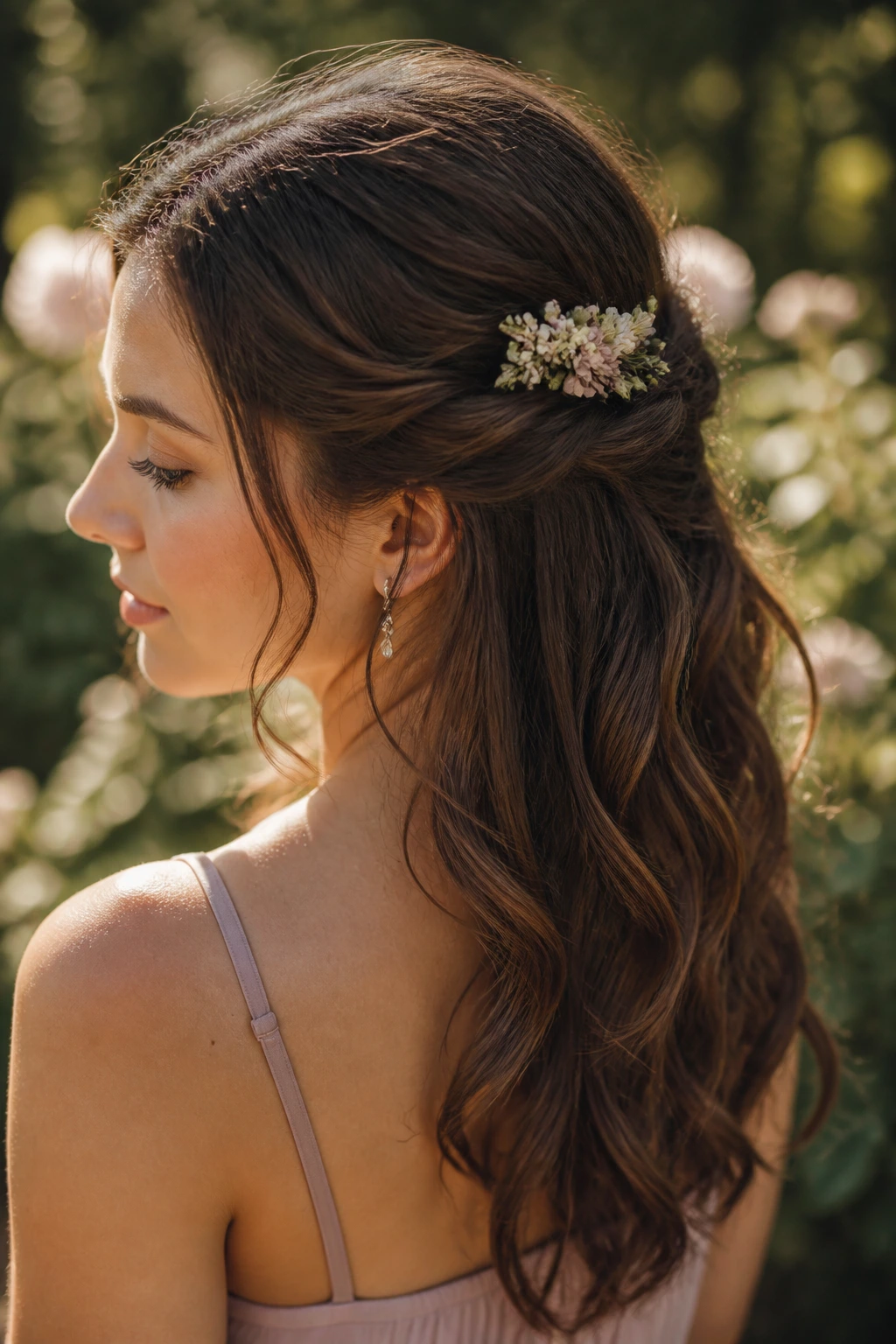
Flower-pin half-up hair has a romantic, garden feel when it is done with restraint. A few tiny floral pins tucked into a twist or braid add color and texture without burying the hair under decoration. Fresh blooms can work, but silk flowers are less delicate and survive a long event better.
The trick is to make the flowers look placed, not scattered. One cluster near the twist or a small pair on one side is enough. Too many flowers can make the style feel like it’s trying to sell the bouquet twice.
I like this style for outdoor ceremonies, but only when the floral tones are shared with the bouquet or the table arrangements. If the flowers on the hair look like they came from another wedding, the whole thing gets weird fast.
15. Dutch Braid into Soft Curls
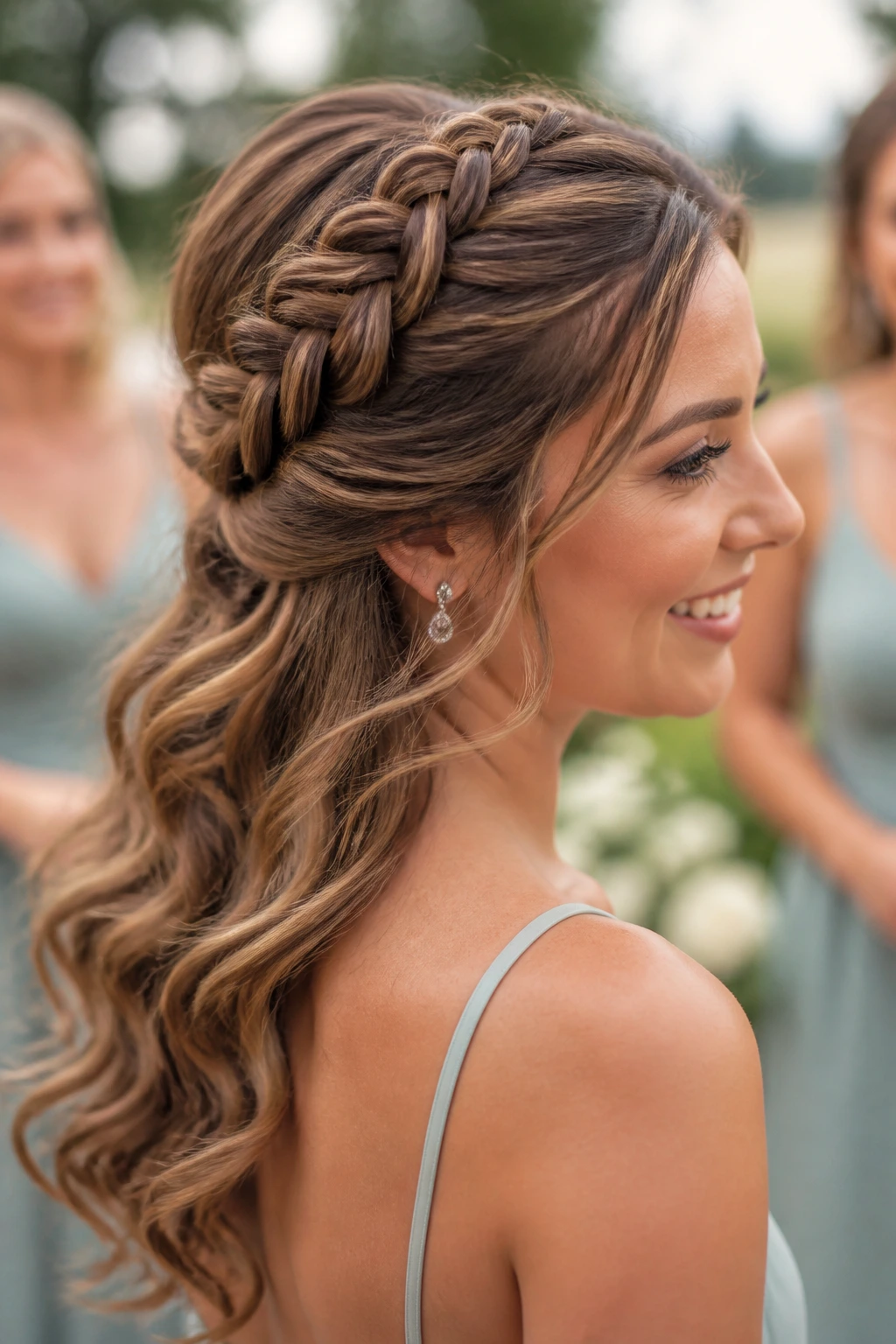
A Dutch braid into soft curls gives you a braid with a bit of lift and then a gentler finish below. The braid sits on top of the hair instead of sinking into it, which makes it more visible in photos and more secure through a long day.
This style does a good job of handling active bridesmaids. If someone will be moving between ceremony, portraits, and reception without a break, the Dutch braid anchors the top section nicely. The curls below should be soft rather than stiff; the braid is already doing the heavy lifting.
A small detail makes a big difference here: the braid should stop before it gets too narrow. If it thins to a tiny tail, the top starts to look unfinished. Let it end where the shape still feels deliberate.
16. Bow-Back Half-Up
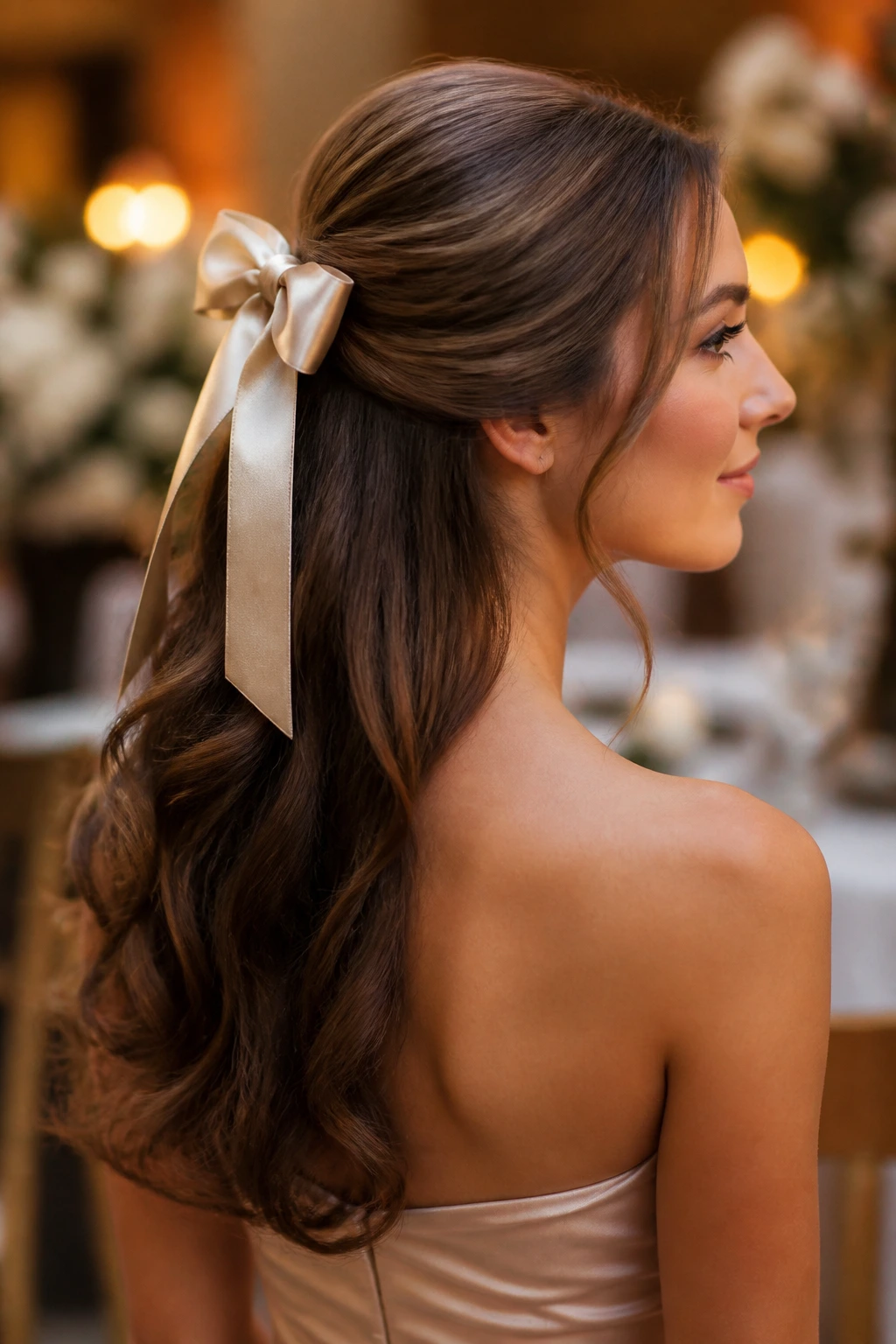
A bow-back half-up turns the accessory into the point of the style, which is useful if the bridal party wants a coordinated look without matching braids or curls. The hair is gathered and pinned at the back, then finished with a satin bow or ribbon tie that sits right on top of the anchor.
It works best when the rest of the hair stays smooth and clean. A messy bow on top of frizzy lengths looks accidental. A neat bow over brushed waves looks like a decision.
Best for
- Soft, romantic dresses
- Bridesmaids who want one shared accessory
- Medium to long hair with decent hold
If the bow is the same color as the dresses, the look can go flat. Give it a little contrast—cream ribbon against blush, ivory against deep green, that kind of thing—so it reads in person and not just in a close-up.
17. Tousled Knot Half-Up
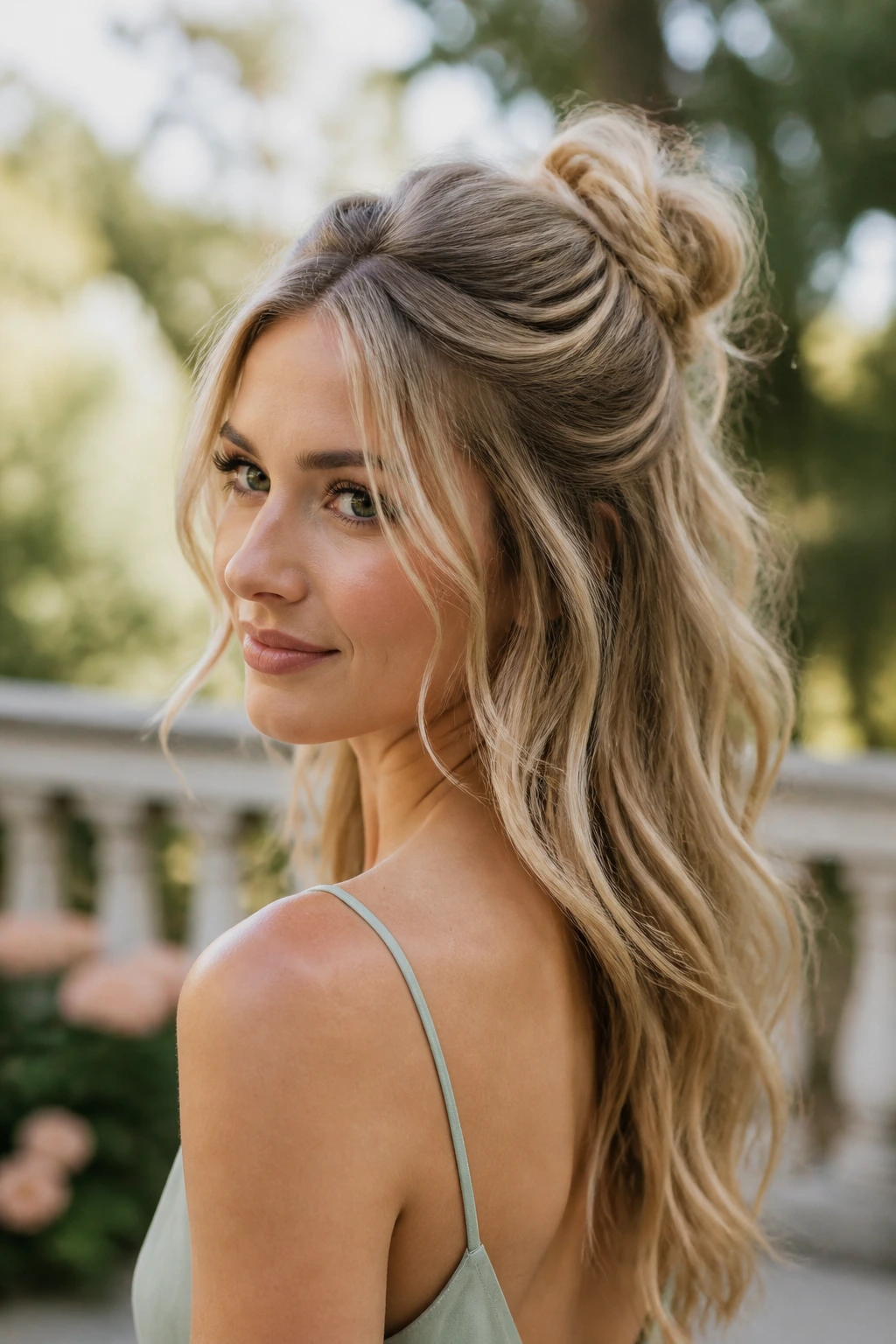
A tousled knot half-up has a relaxed shape that suits dresses with movement. The top section is gathered, twisted into a loose knot, and pinned so it does not sit too high. The rest falls in textured waves, which keeps the whole style from feeling overworked.
This is a good match for weddings that lean casual but still polished. Garden settings, rustic venues, beach ceremonies—anywhere a rigid style would feel out of place. The knot should look soft, not sloppy. There’s a difference, and it matters.
If the hair is fine, backcomb a hidden bit at the crown before forming the knot. If it’s thick, keep the knot small and let the volume come from the loose lengths instead. That keeps the back of the head from getting bulky.
18. Hollywood Wave Half-Up
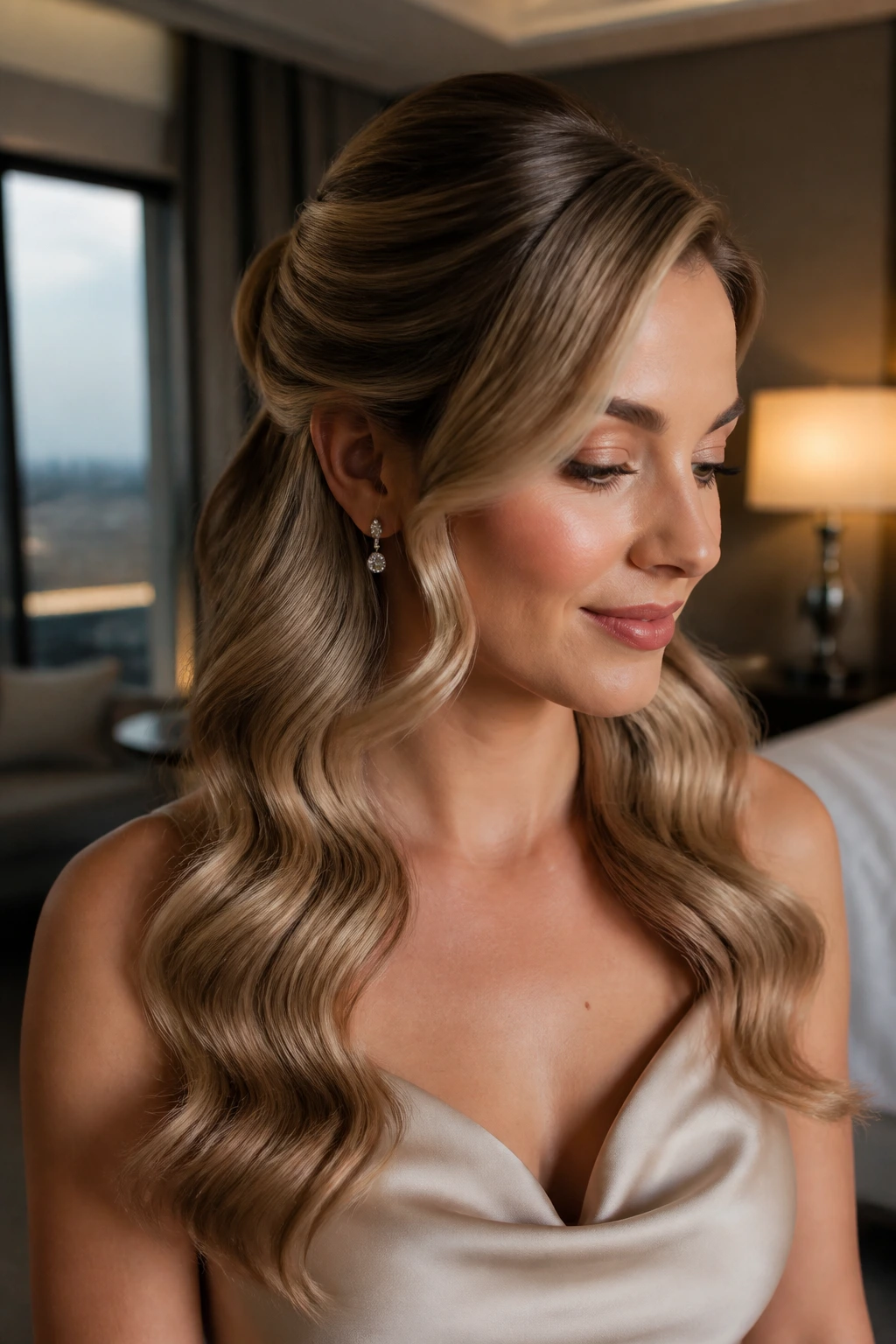
A Hollywood wave half-up has more glamour than most bridesmaid styles, but that can be exactly the point when the dresses are plain and the venue is formal. The top section gets pinned back smoothly, while the lengths are set into broad, shiny waves that curve in one direction.
It works best on longer hair with some natural smoothness or a strong blowout underneath. The finish should look controlled, not crunchy. I usually prefer a deep side part here because it gives the wave line more movement and keeps the style from looking too symmetrical.
The top section should be pinned low and neat. If it sits too high, the whole style starts to read like a pageant look. Low and glossy is the lane.
19. Braided Crown with Loose Ends
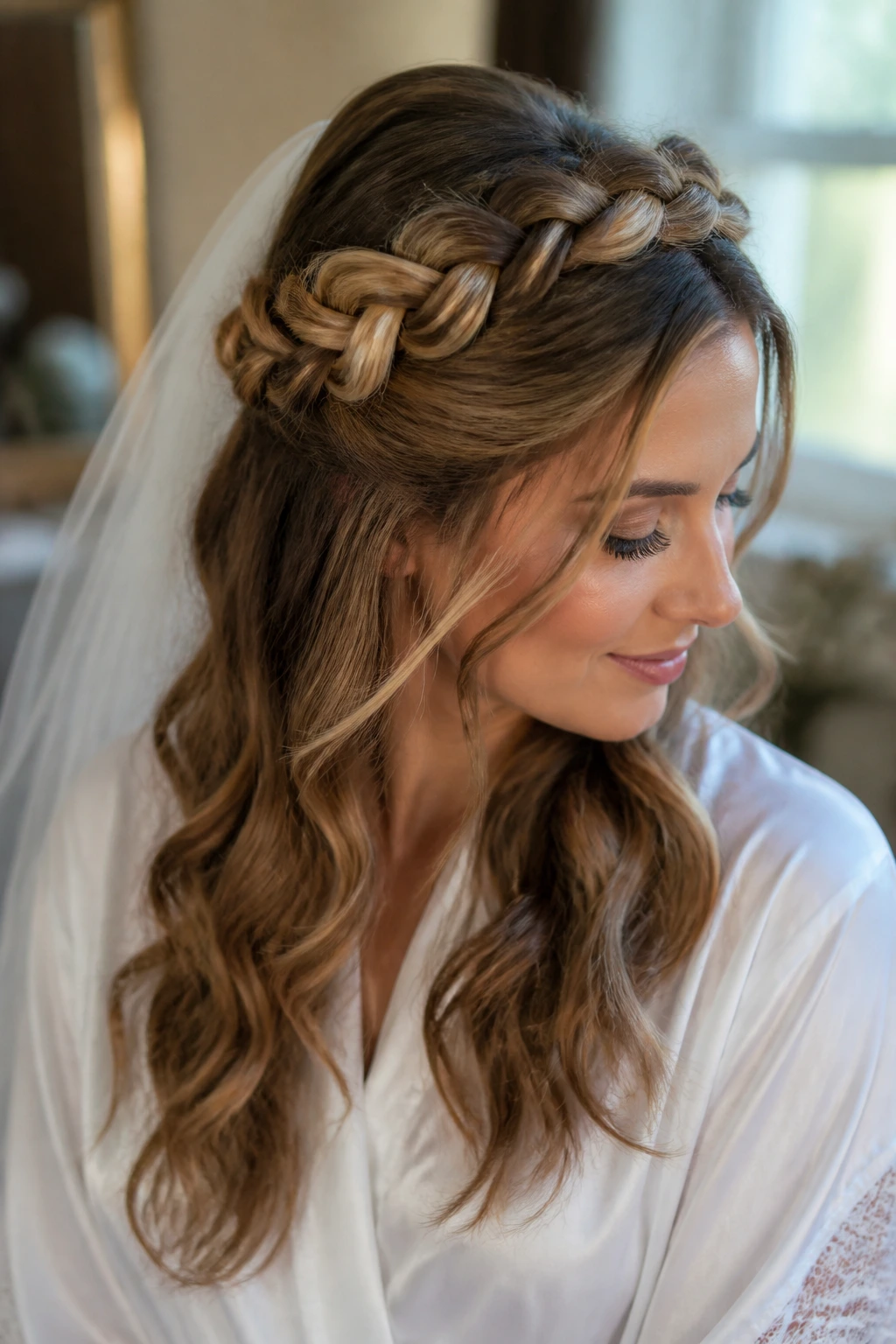
A braided crown with loose ends is close to a halo braid, but a little softer and less exact. The braid wraps around the crown and leaves the remaining hair flowing underneath, which creates a fuller silhouette than a tightly closed braid would.
This style is useful when the bridal party has different hair densities and still wants a shared shape. The crown part gives everyone the same visual anchor, while the loose ends can be curled, waved, or left with their natural texture.
What I like most is the way it sits under a veil or hair accessory. The braid creates a clean ledge for pins without hiding the rest of the hair. That means the style stays visible from the front and the back, which is not a small thing when there are photographs from every angle.
20. Rolled Twist Half-Up
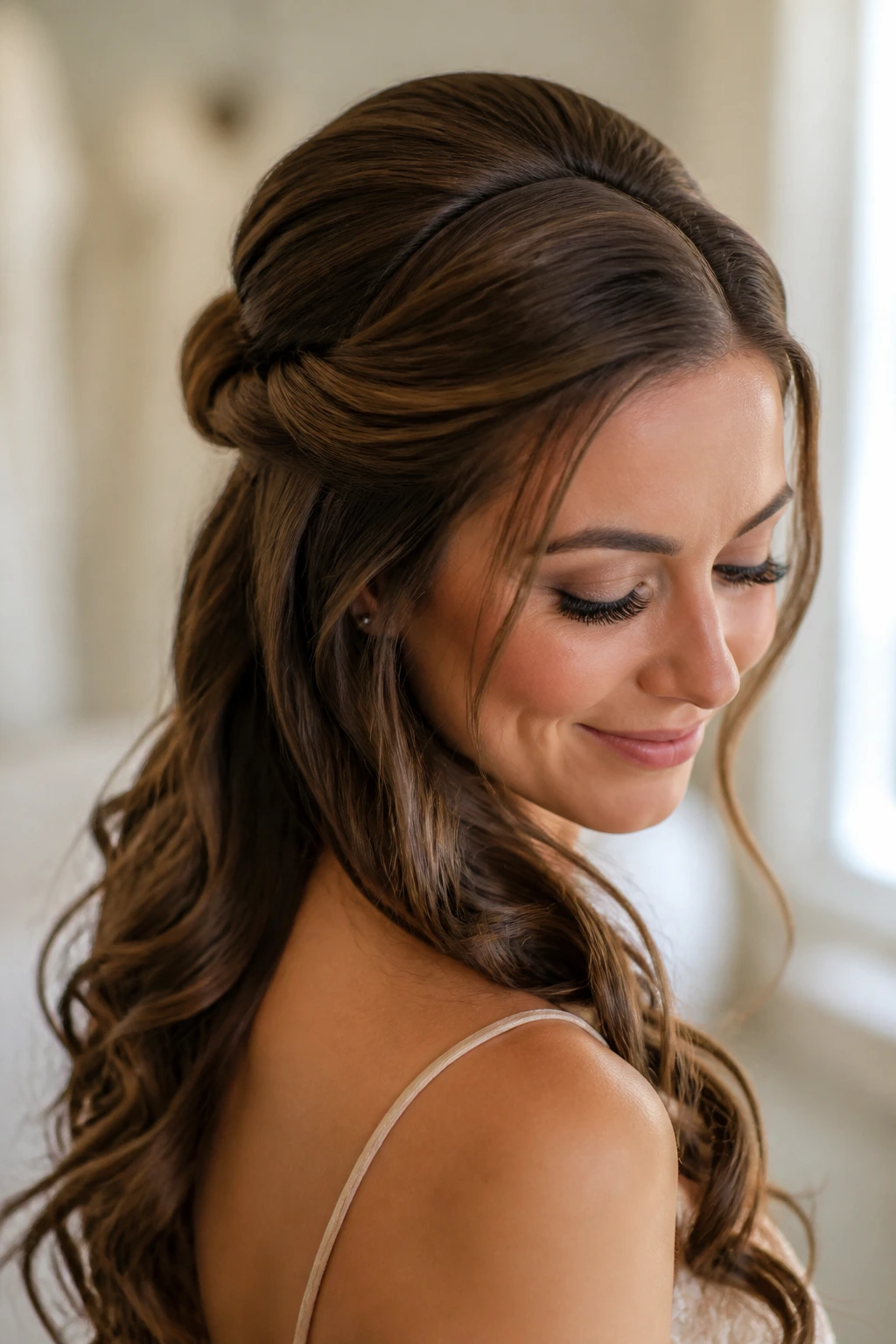
A rolled twist half-up has a vintage softness that sits somewhere between a 1940s roll and a modern half-up. The sides are rolled inward, tucked, and pinned at the center back, creating a gentle lift that feels polished without becoming fussy.
It is especially good on finer hair because the rolls create the impression of more body than a flat twist would. If the hair tends to collapse, this style keeps some structure at the crown without needing a lot of teasing.
What to ask for
A smooth top, a soft roll on each side, and a low pin line that stays hidden under the top layer. If the roll is too tight, the style can get stiff. If it is too loose, it loses the whole point. There’s a narrow middle here, and that’s where it looks best.
21. Mini-Braid Half-Up
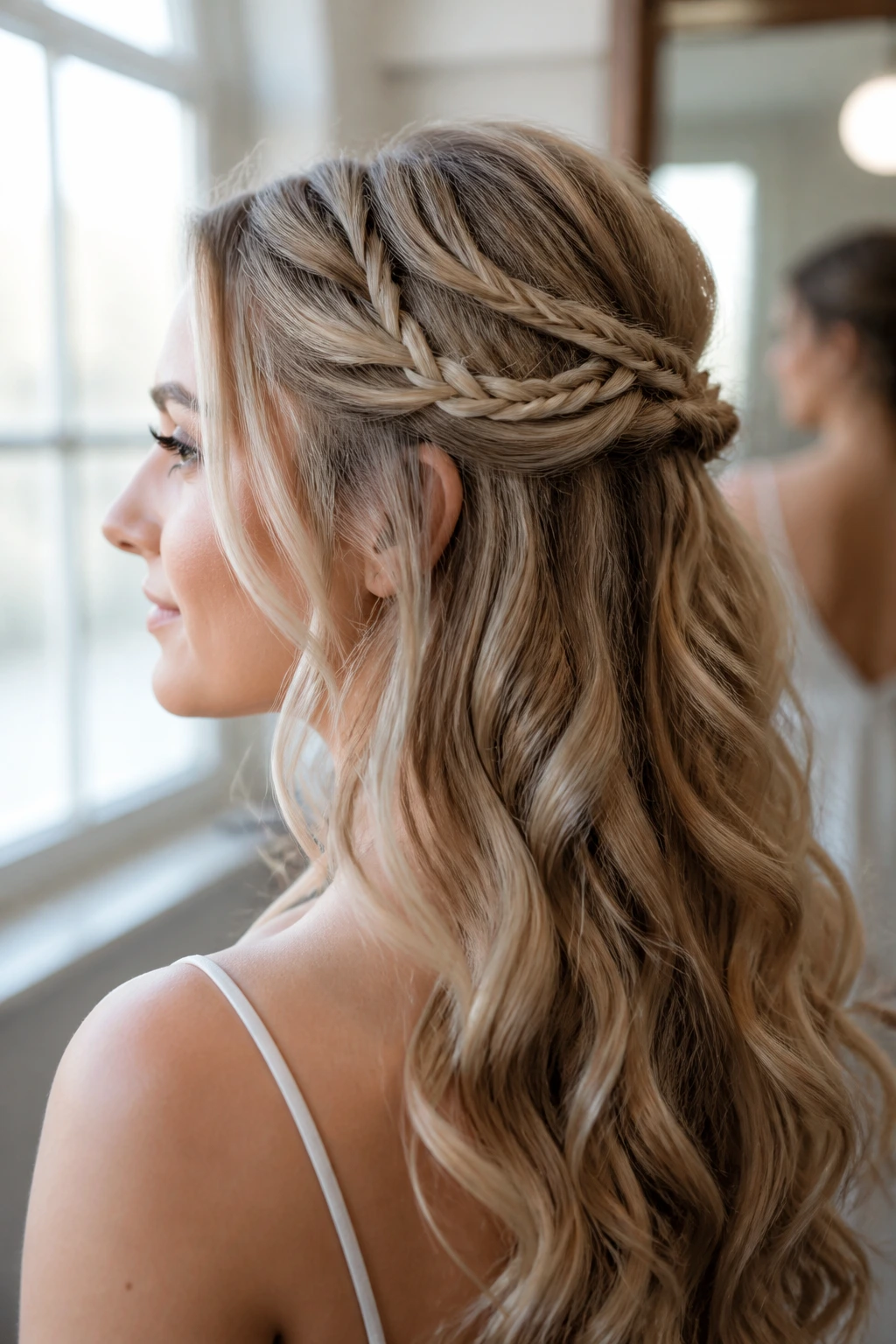
Mini-braid half-up hair adds texture in a quiet way. Instead of one obvious braid, the stylist works one or two small braids into the top section and lets them disappear into waves below. The result is detailed up close and still clean from across the room.
This is one of the better styles for mixed bridal parties because it can be adapted endlessly. A tiny braid near the temple. Two braids crossing at the back. One hidden braid tucked under a larger twist. You can keep the overall look cohesive while letting each bridesmaid wear a slightly different version.
The important thing is proportion. If the braids get too large, they take over. Keep them narrow and let them act like stitching rather than a headline.
22. Polished Glossy Half-Up
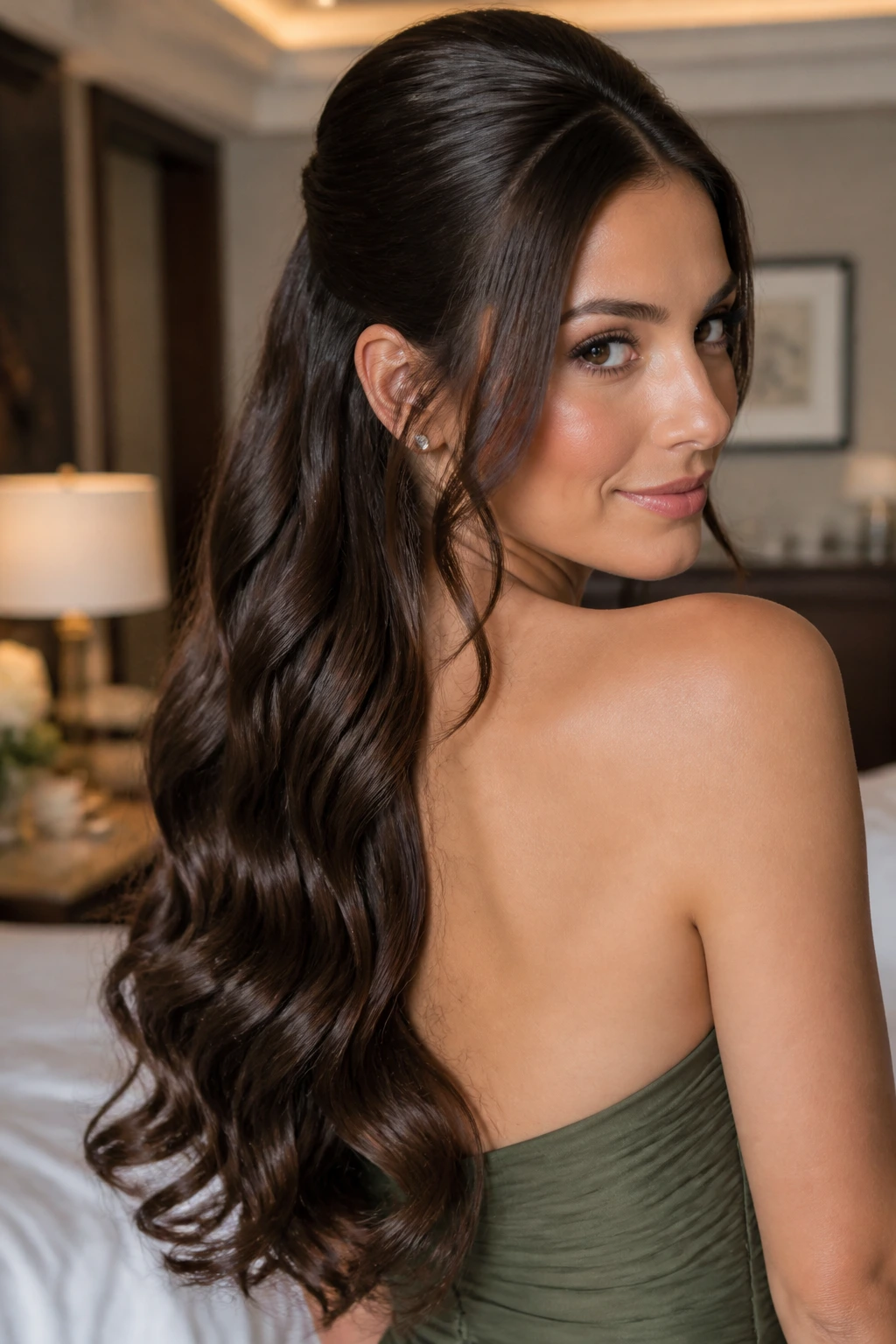
A polished glossy half-up is for bridesmaids who need a refined finish that still keeps some hair down. The crown is smoothed flat, the half-up section sits cleanly at the back, and the length falls in shiny, controlled waves or straight strands with movement only at the ends.
This is one of the best styles for black-tie settings and satin dresses. It feels expensive without needing a lot of decoration. The shine is part of the look, so the hair needs to be in good condition. Split ends will show. Dull ends will show too. There is no place to hide.
I’d avoid piling on accessories here. One slim comb or a pair of tiny pins is enough. Anything bigger starts to compete with the finish, and the finish is the whole point.
23. Side-Twist Half-Up
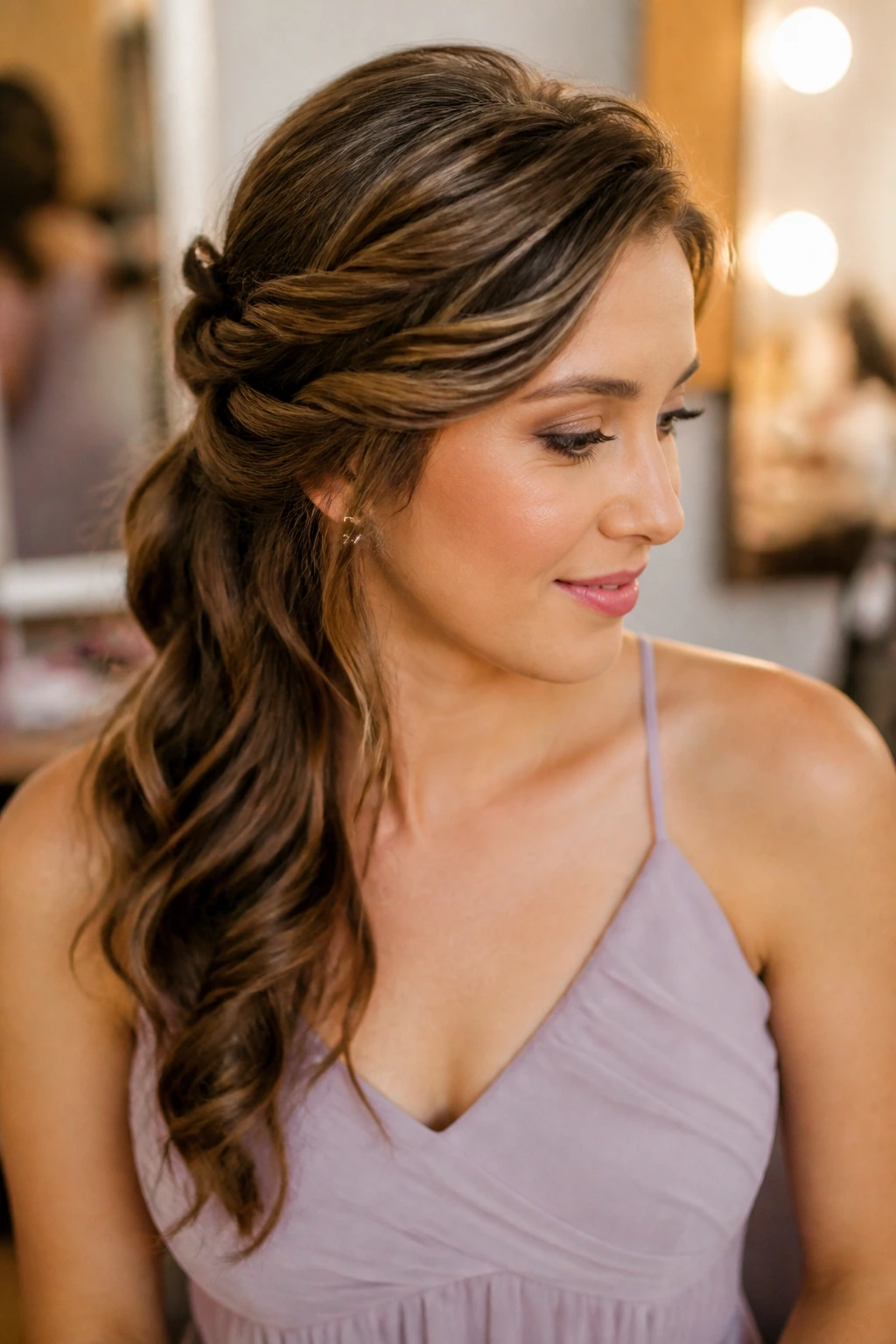
A side-twist half-up pulls the hair just a little off center, which keeps it from looking too buttoned up. One twist from each side meets low on one shoulder side or at the center back with a slight lean. The shape is softer than a strict center pull and works well with dresses that already have some asymmetry.
It is a practical choice for bridesmaids with medium hair that does not need a lot of help to hold shape. The twist can be loose enough to stay comfortable through a long ceremony and still look tidy after a few hours. I like it most when the ends are curled in the same direction so the style has a single flow.
A side-twist is also one of the easiest looks to scale across different hair lengths. Shorter hair gets a smaller twist; longer hair gets more movement. The shared shape keeps the lineup consistent.
24. Curly Crown Puff Half-Up
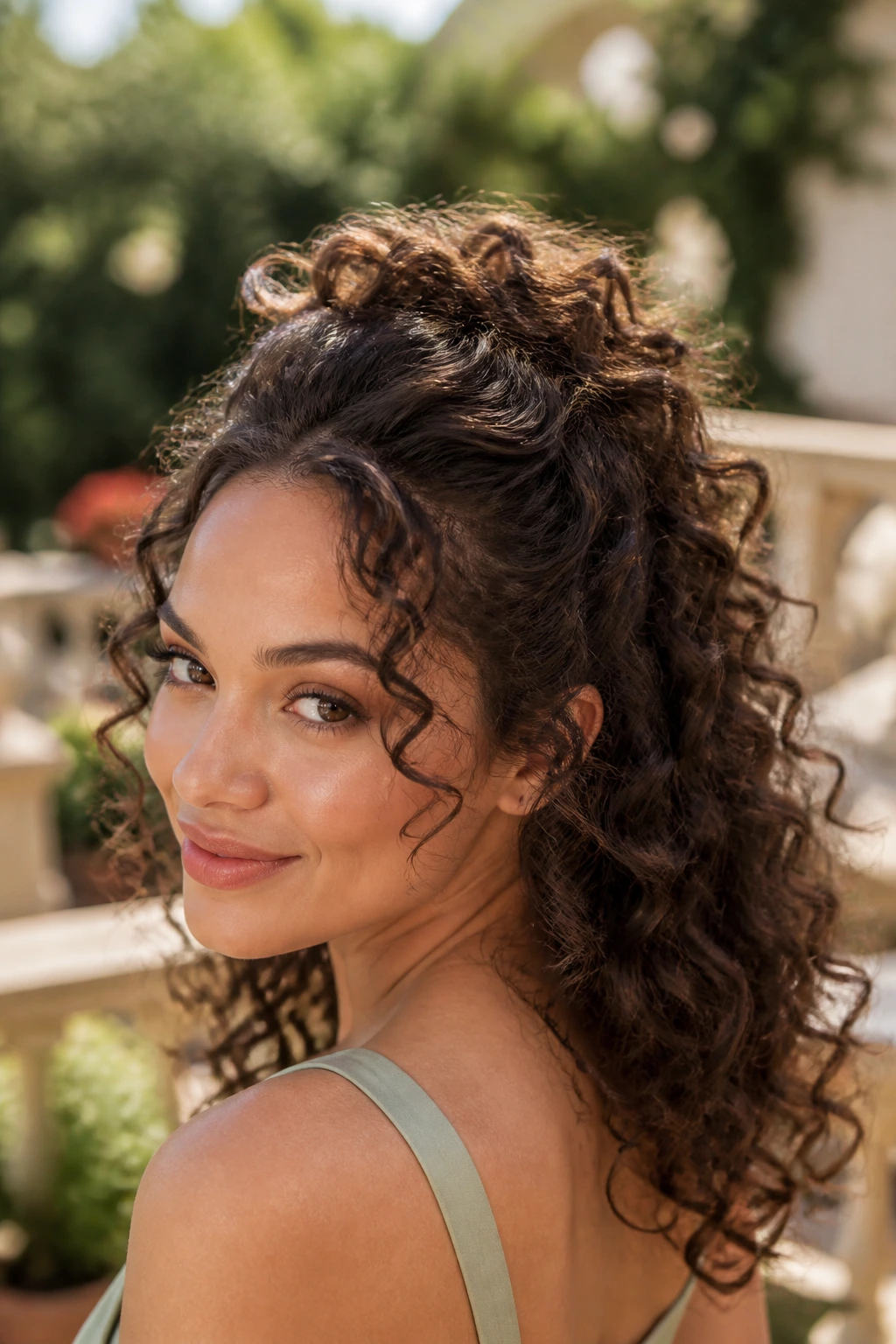
A curly crown puff half-up gives natural curls room to breathe while still lifting the face. The crown section is gathered, pinned back, and sometimes lightly stretched upward just enough to create shape at the top. The rest of the curls keep their spring and volume.
This is one of those styles that looks best when it doesn’t try to behave too much. Keep the curl pattern intact. Use fingers, not a brush. A little edge control or smoothing cream near the hairline can tidy flyaways, but don’t turn the front into a helmet.
The style shines in photos because the upper lift gives the curls a frame. It also works on bridesmaids wearing shoulder-baring dresses, since the volume sits above the neckline instead of fighting it.
25. Lace Braid Half-Up
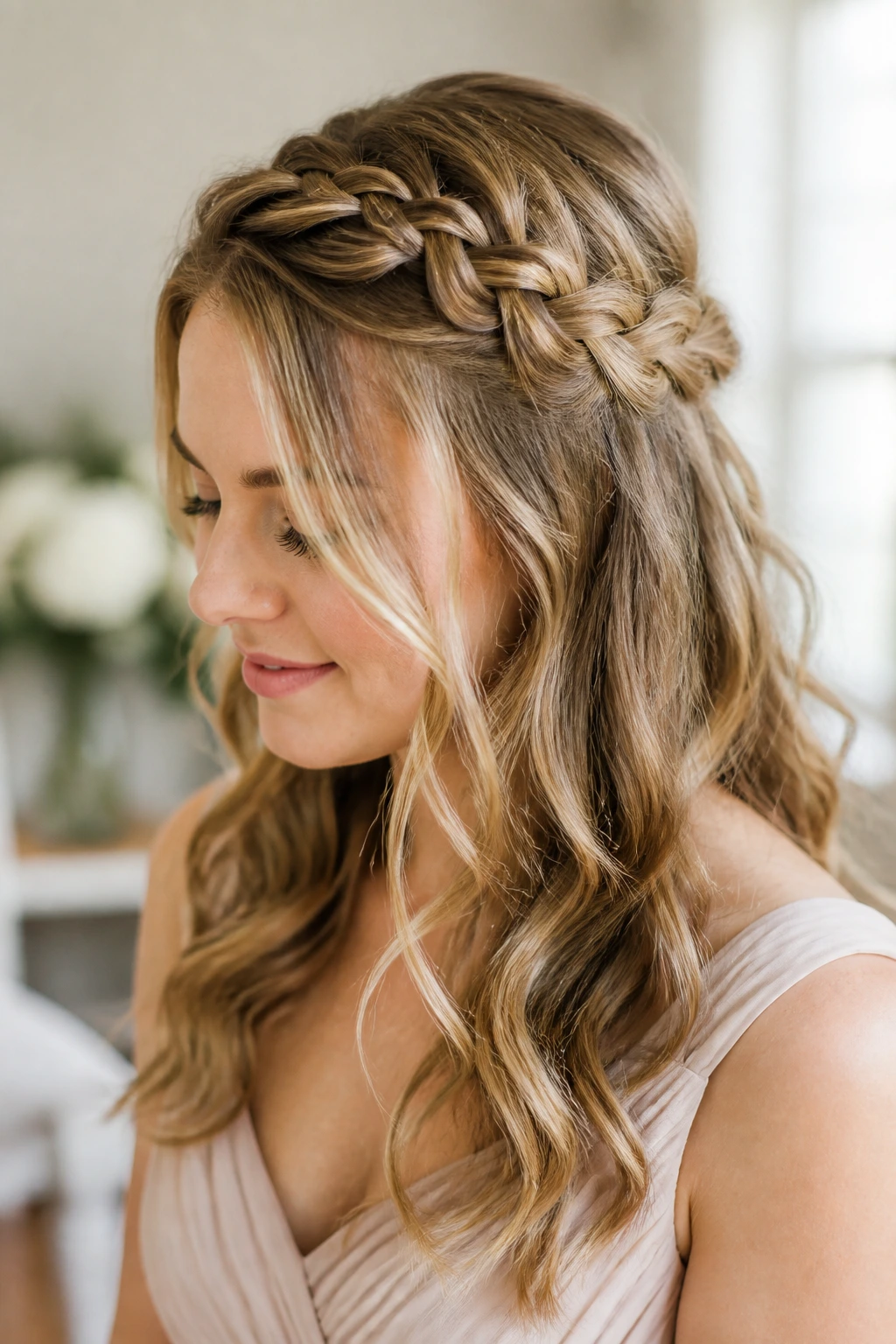
A lace braid half-up is for anyone who wants a braid that feels lighter and more delicate than a standard plait. One side of the braid is fed with hair while the other stays mostly fixed, which creates that soft, woven edge as it moves across the crown.
The effect is pretty, but the braid does take a steady hand. Uneven tension shows fast. If the braid is pulled too tight, it loses the airy quality that makes it special. If it is too loose, the whole thing can sag before the reception starts.
I like lace braids on longer hair with a bit of wave already in the ends. The braid becomes the detail up top, and the ends do the softer work below. That split is clean and easy to read in group photos.
26. Crisscross Pin-Back Half-Up
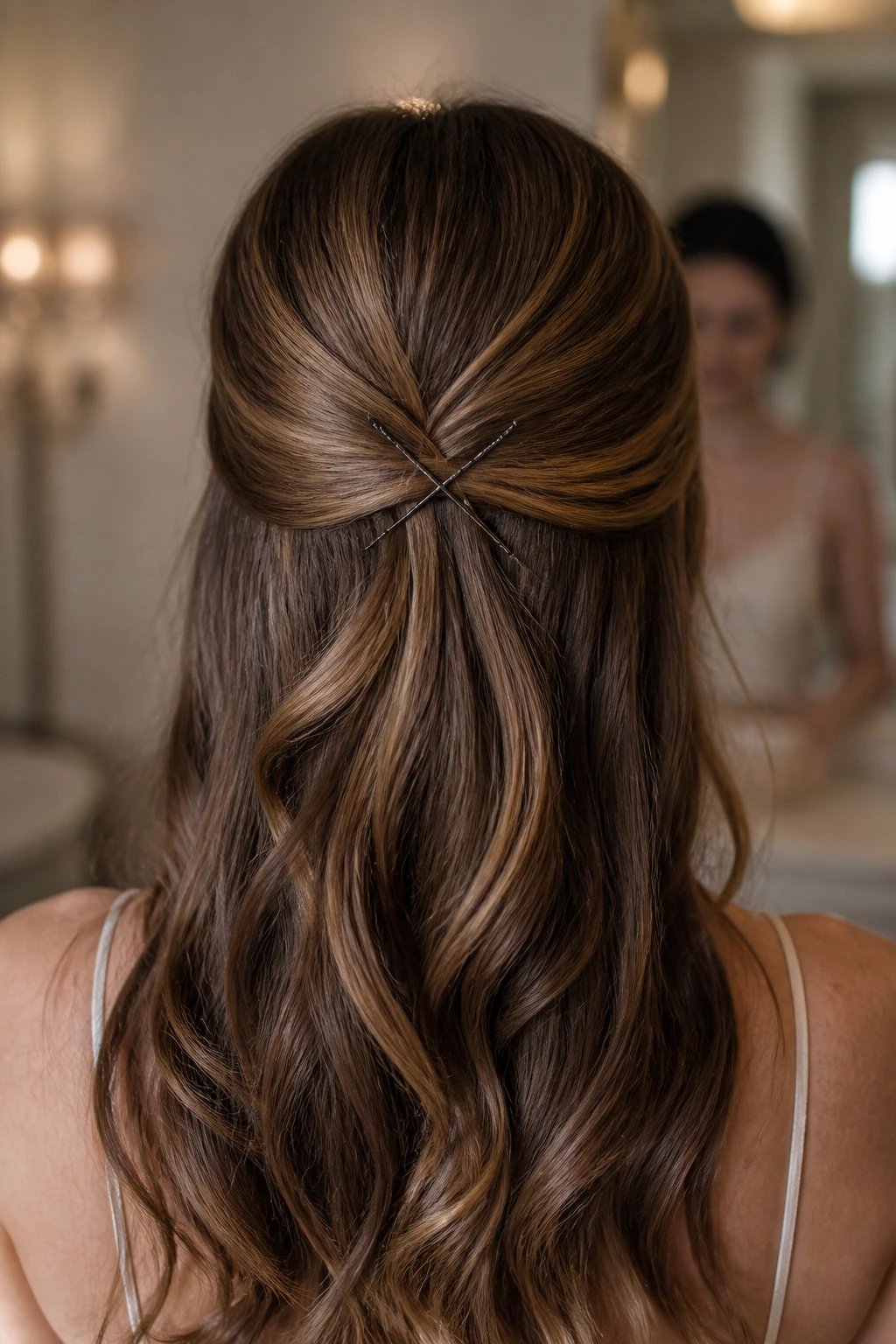
A crisscross pin-back half-up is one of the more understated styles here, but it has a neat geometric finish that stands out when the dress is minimal. Small sections from each side are crossed over one another and pinned in a tidy X pattern at the back.
This is a smart choice for hair that refuses to stay braided. Some textures just do better with pins than plaits. The crisscross shape gives you structure without forcing the hair into a braid that might fray or puff out.
It also makes a quiet statement. No big curl volume. No heavy accessory. Just clean lines and a little bit of logic. That can be a relief when the bridal party already has plenty going on with dresses, flowers, and makeup.
27. Chignon Hybrid Half-Up
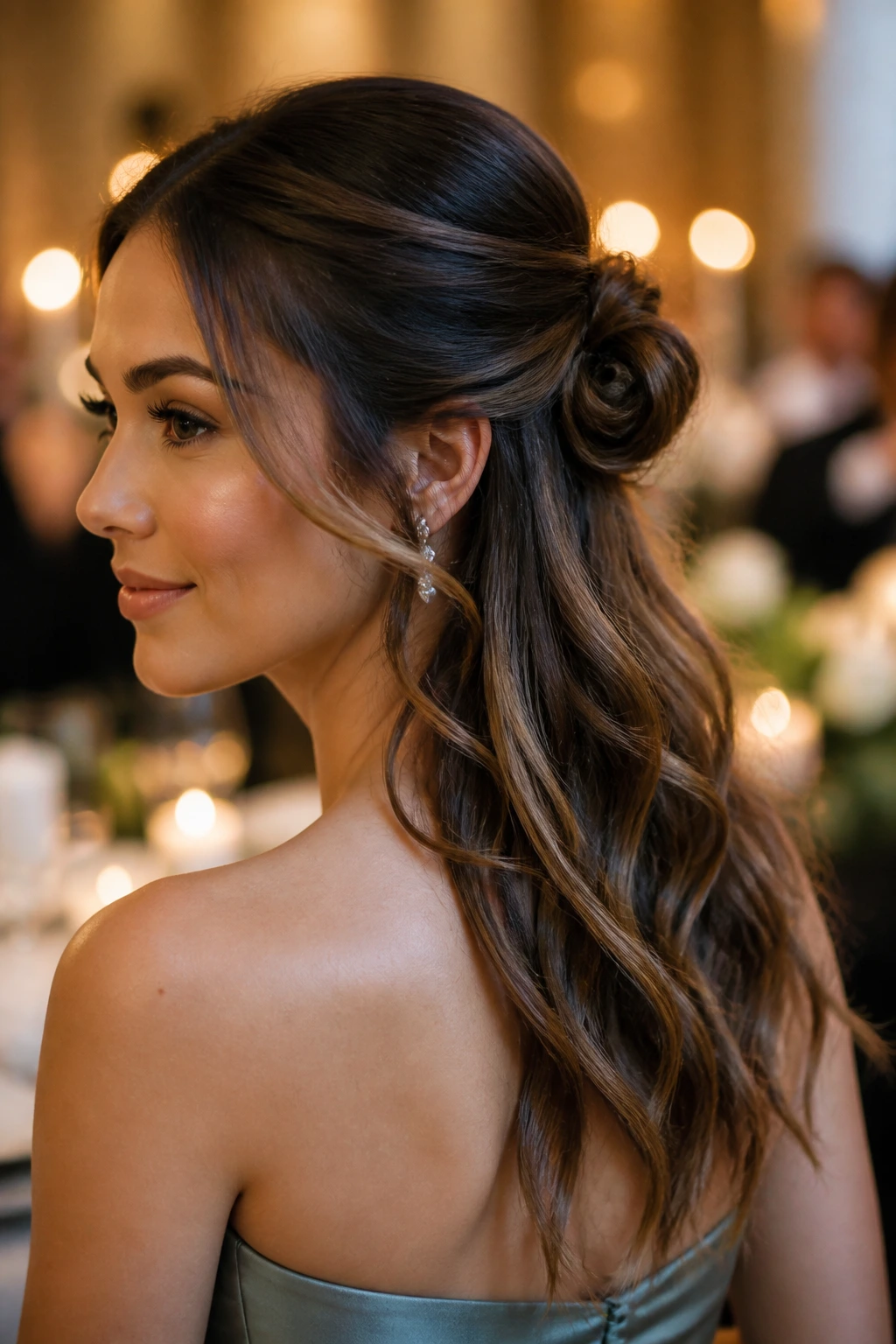
A chignon hybrid half-up sits halfway between an updo and a half-down style, which is exactly why it is useful. A small knot or tucked bun forms at the back, while the rest of the hair stays down in curls or bends. The top feels formal; the length keeps it soft.
This style works well for bridesmaids who want polish but do not want a fully pinned head. It is also a good compromise when the bride wants a more formal party look but the attendants need movement in their hair for the reception.
The bun should stay compact. If it gets too large, the style stops reading as half-up. Keep the knot low and the loose lengths deliberate. That balance is what makes it feel modern instead of bridal-school formal.
28. Soft Pompadour Half-Up
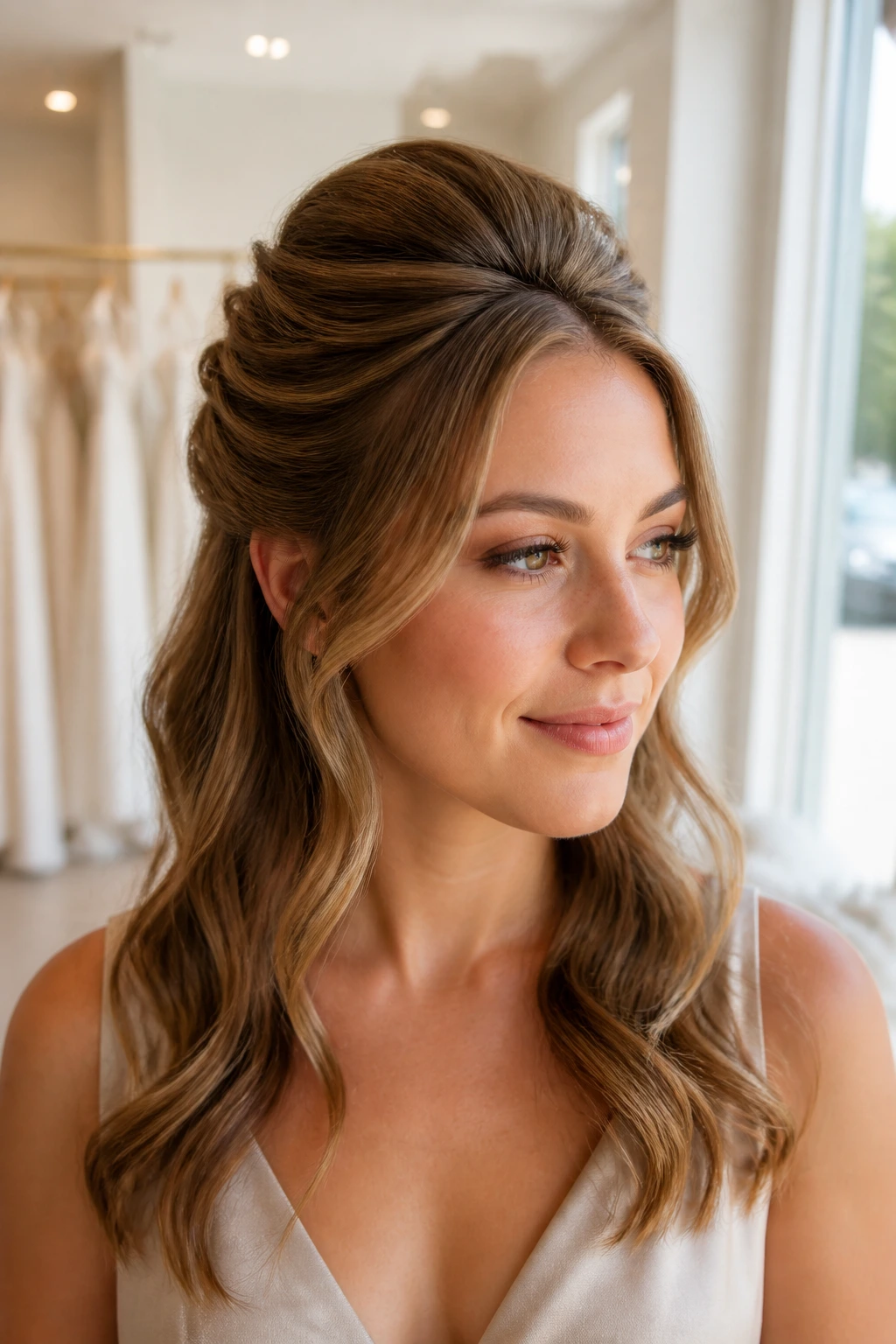
A soft pompadour half-up adds height at the front without leaning into a retro costume look. The crown is lifted gently, smoothed back, and pinned so the front has shape before the hair falls into lengths or waves. It gives the face a little extra room and makes earrings show up better.
This is a useful style when the dress has a wide neckline or the bridesmaid wants some drama without a full updo. It also helps balance a fuller face shape, though that should never be the only reason to choose it. The real advantage is proportion: a little lift makes the rest of the hair feel more intentional.
Do not over-tease the front. A soft pompadour is about shape, not height for height’s sake. Too much lift turns the look theatrical fast.
29. Mixed-Texture Half-Up
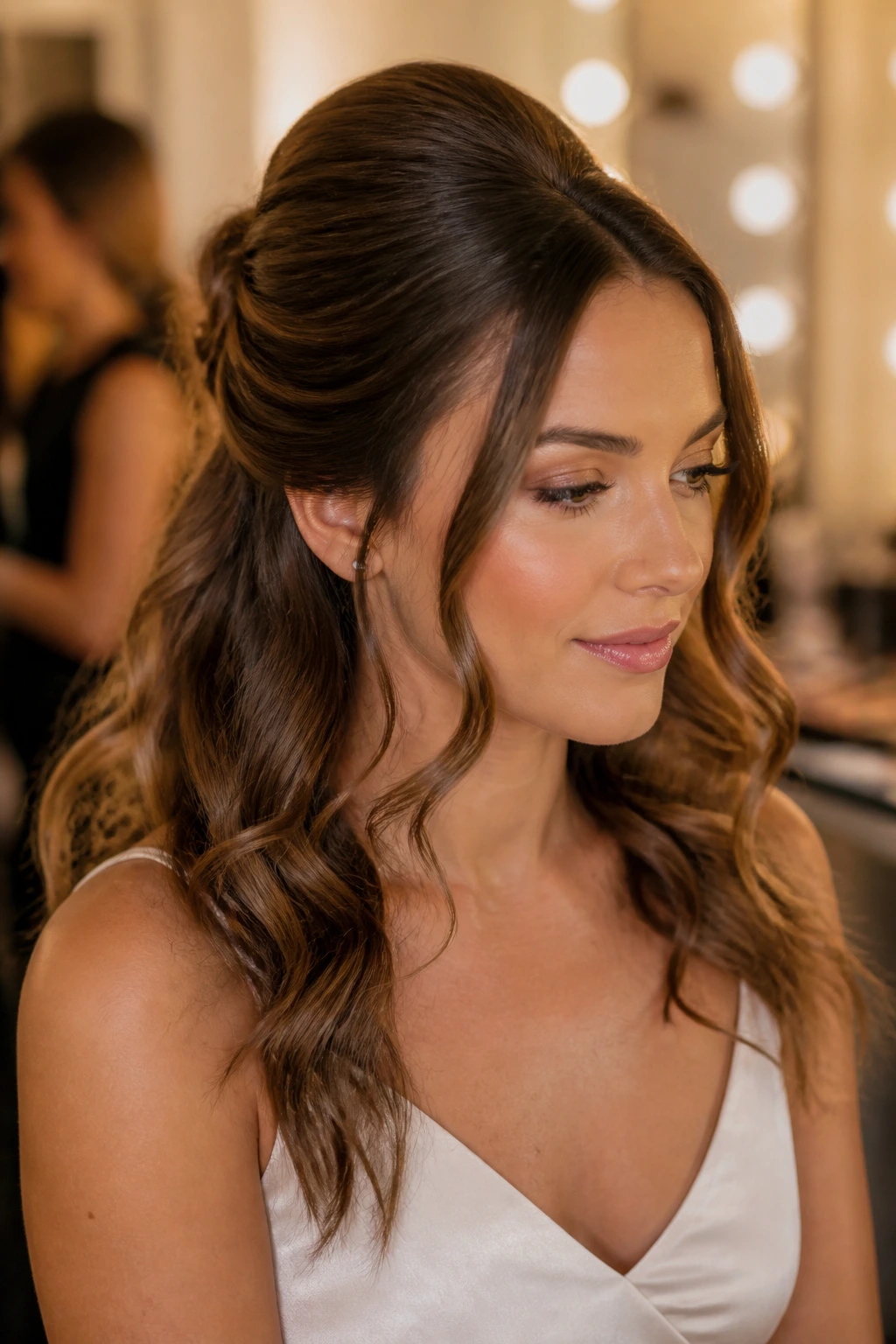
A mixed-texture half-up is a modern option when the bridal party wants something a little less traditional. The crown can be smoother while the lengths stay textured, or the top can be lightly waved while the ends sit straighter. The contrast gives the style some edge.
I like this one for bridesmaids in contemporary dresses. Satin slip styles, sharp cuts, clean makeup. The hair should feel deliberate, not random, so the difference between textures needs to be visible on purpose. That means the transition point matters. Keep it clean, not choppy.
This style is also forgiving if the curls relax over the course of the day. Since part of the look is already looser or straighter, the entire shape still makes sense later on.
30. Messy Knot with Curtain Pieces
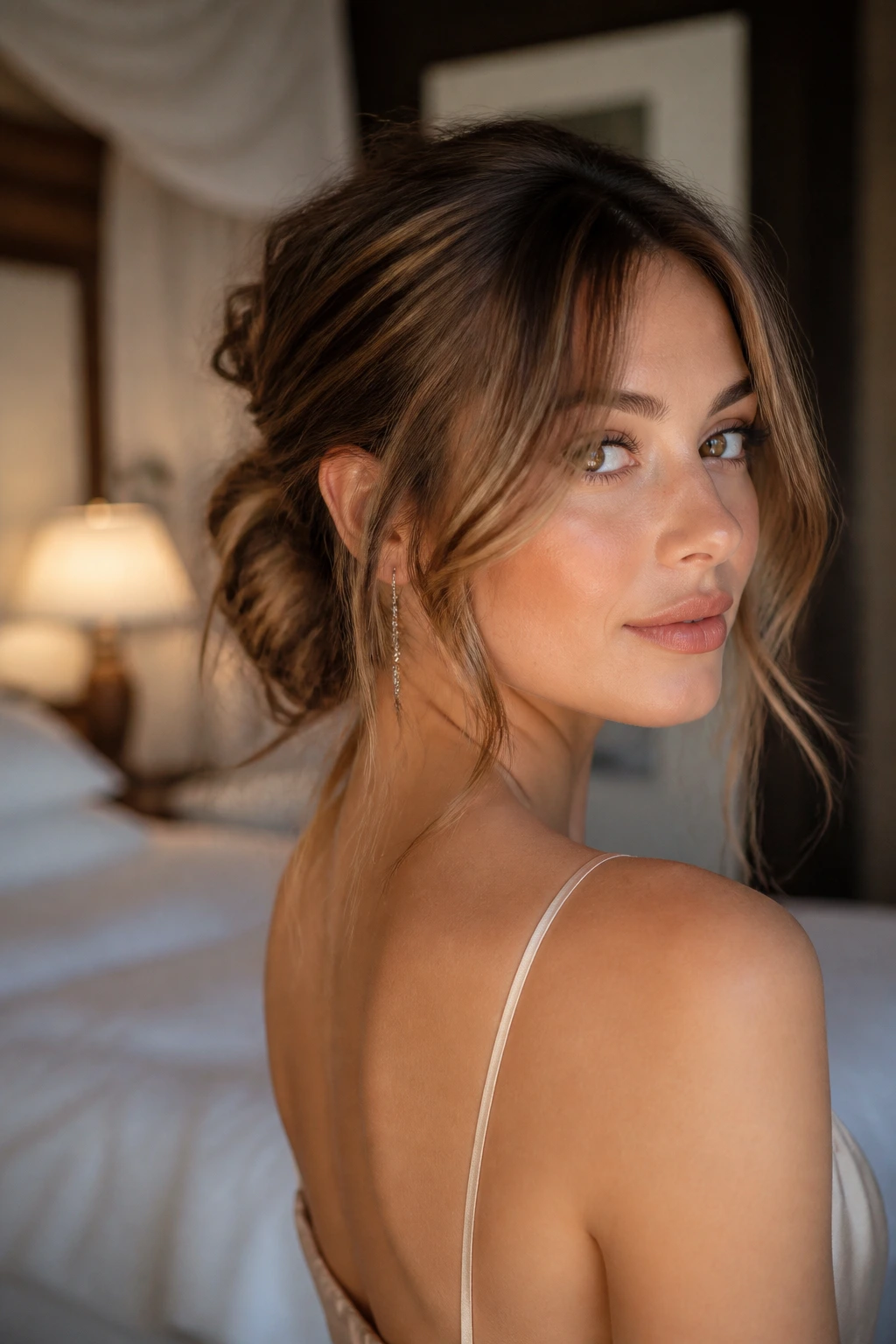
A messy knot with curtain pieces is exactly what it sounds like: a loose knot at the back, a few face-framing pieces left out, and a finish that says romantic instead of rigid. It is one of the easiest styles to make feel soft without looking unfinished.
The key is control underneath. The knot can be loose on top, but the pins underneath need to hold. If the structure is weak, the knot slides and the style becomes droopy by the time dinner starts. Curtain pieces should curve gently away from the face, not hang straight and heavy.
This works especially well for bridesmaids with long layers. The pieces left out add movement, and the knot keeps the top from collapsing into the neck.
31. Satin Ribbon Twists
Satin ribbon twists lean a little more formal than plain rope twists because the ribbon itself becomes part of the line of the style. Two twisted sections are brought back and tied or wrapped with ribbon at the center, which adds a soft finish without needing a full bow.
This is a good option when the bridal party wants a matching detail that is easy to repeat. Same ribbon, same width, same twist direction. It can be done on different hair lengths and still read as one family of looks.
If the ribbon is satin, keep the rest of the hair smooth enough to match. A highly textured finish with a glossy ribbon can look mismatched. A clean bend or soft wave is the safer pairing.
32. Short-Hair Volumed Half-Up
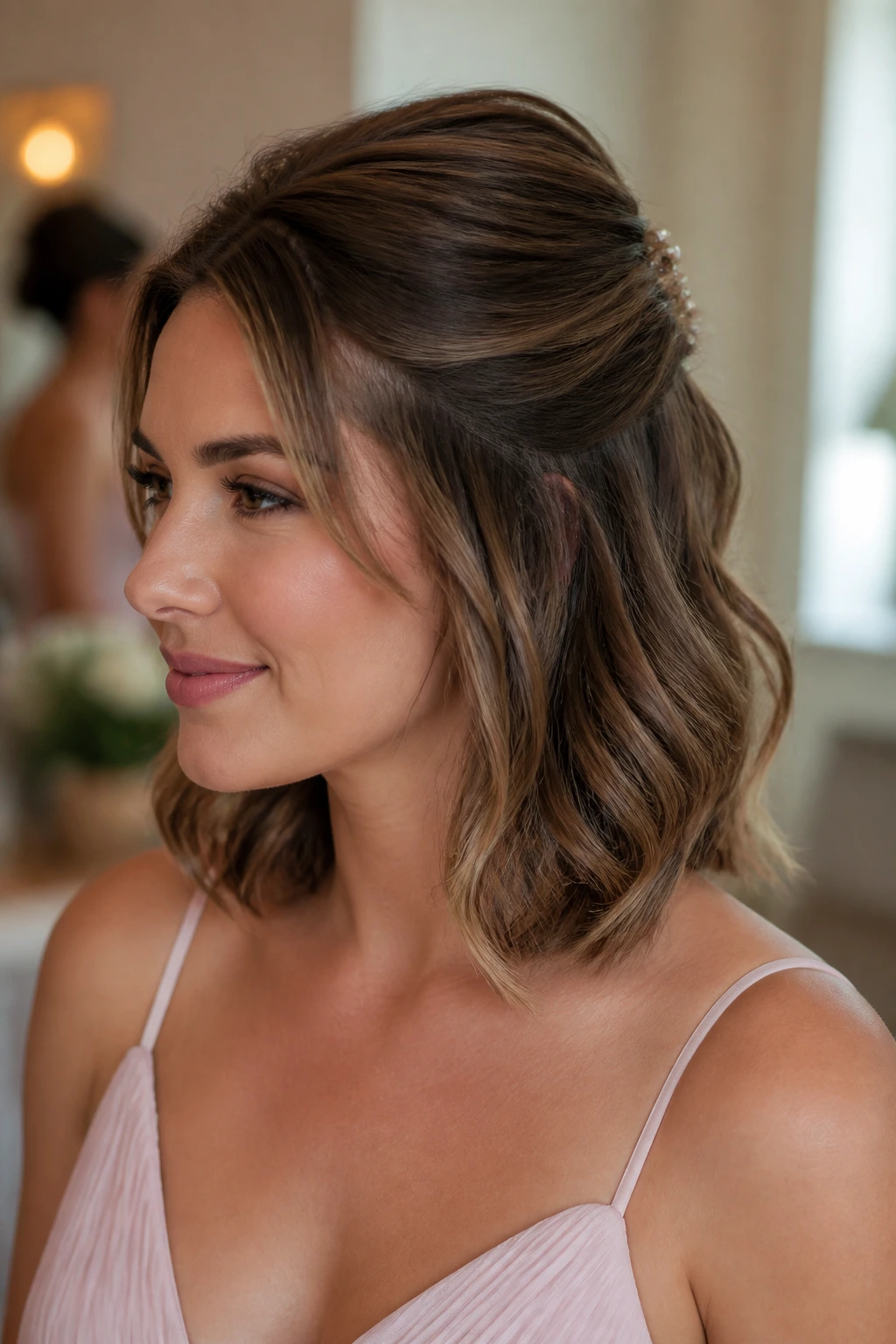
Short-hair volumed half-up styles are proof that shoulder-length cuts and lobs can absolutely play in this category. The trick is to keep the half-up section narrow and build the illusion of fullness with curl, root lift, and careful pinning rather than trying to create a big dramatic crown.
This is one of the most useful styles for bridal parties where not everyone has long hair. It keeps the lineup consistent without forcing shorter cuts into shapes they cannot hold. Two or three small sections, a hidden pin cluster, and a little bend at the ends usually go further than people expect.
For short hair, the back should stay low and neat. If the half-up section sits too high, the style can look like it is missing the rest of itself. Keep it compact and let the volume come from the texture, not the height.
33. Hidden-Pin Dance-Proof Half-Up
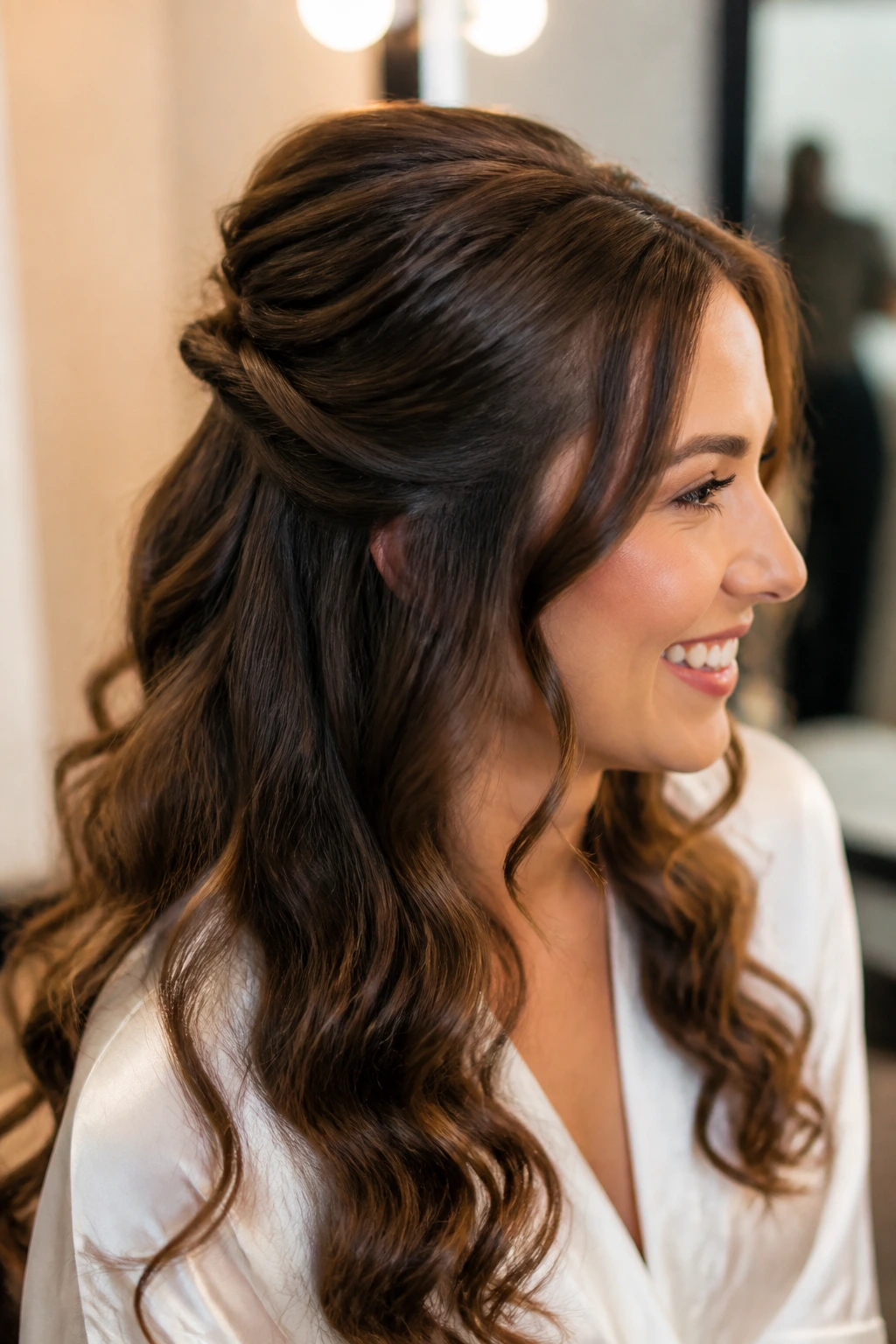
A hidden-pin dance-proof half-up is the style I trust when nobody wants to think about hair again after the ceremony. The idea is simple: build the half-up shape with strong anchors beneath the surface, hide every visible pin, and let the loose lengths fall in curls or smooth bends that can survive movement.
This is not the flashiest version in the collection. It is the one that lasts. The top section should be sectioned cleanly, pinned in more than one direction, and sealed with flexible spray. If the bridesmaids are going straight from portraits to dinner to dancing, this is the style that keeps the front from loosening into the face.
A good test is the head turn. If the style stays put when someone turns sharply, laughs, or leans into another shoulder for a photo, it’s ready. If it shifts too much in the mirror, it needs another pin or two.
Why Half-Up Hair Holds Its Shape Better Than Loose Waves
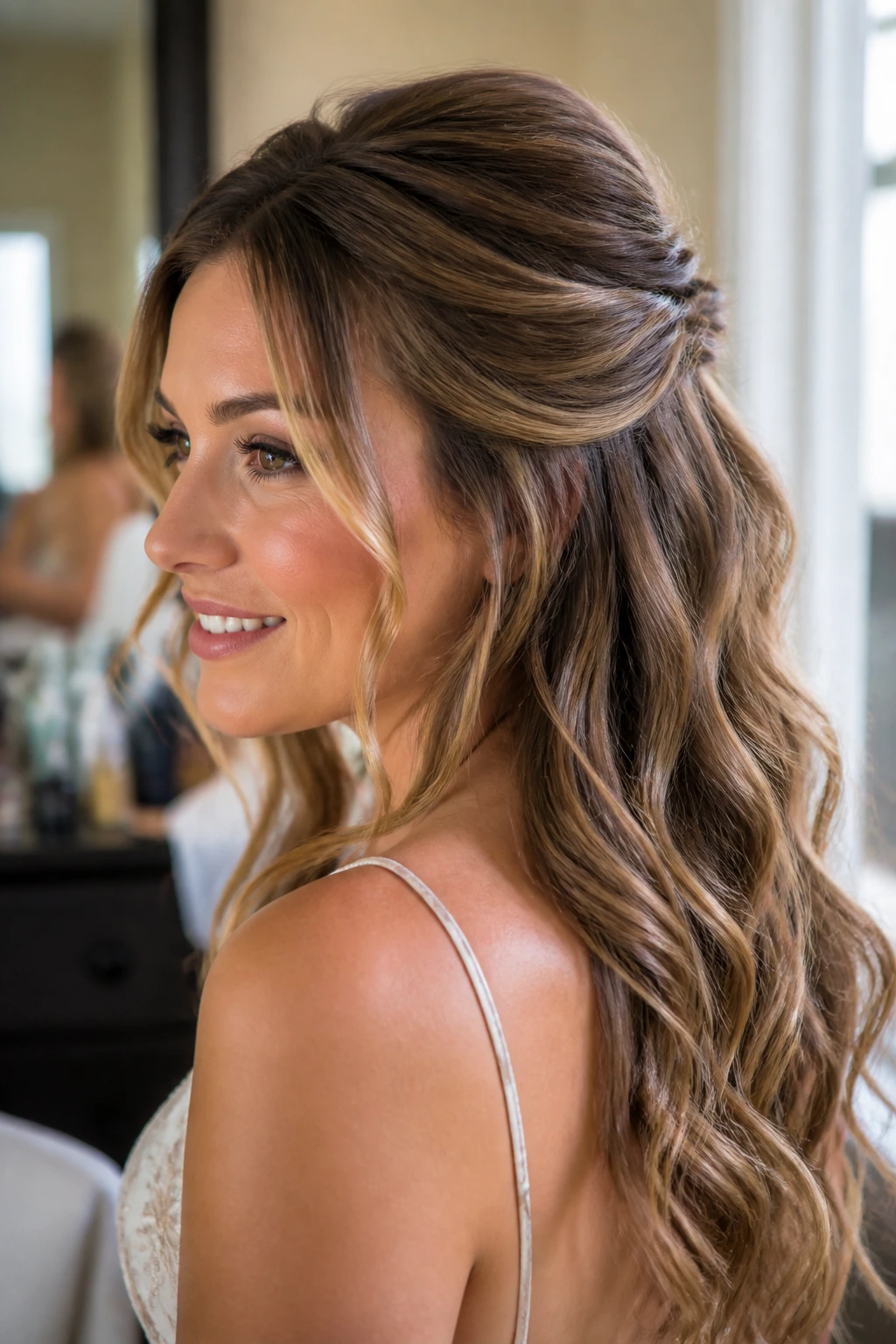
Half-up styling gives you a hidden anchor at the crown, and that anchor changes everything. Loose waves alone depend on gravity, heat set, and spray. Add even a small pinned section, and the style gains a center of support that slows down collapse around the face and part line.
That matters over a long wedding day. Hair that starts to droop usually does it first at the front. The top gets touched, tucked, and smoothed, then the waves fall flat from all the handling. A half-up shape interrupts that cycle. The hair at the crown stays controlled, which leaves the lower lengths to move on their own.
Why stylists like this shape
The half-up form gives a stylist room to balance different hair densities within one bridal party. Fine hair can be lifted a little higher. Thick hair can be pinned lower and tighter. Curly hair can keep its own texture underneath. One shape. A lot of room.
It also photographs well from multiple angles, which sounds obvious until you are halfway through a ceremony and the back of someone’s head is suddenly the only thing the photographer cares about. A half-up style keeps something interesting visible from the front, side, and back without asking for constant repair.
Essential Tools for These Styles
-
Tail comb: Clean parting and sectioning matter more than people think; a tail comb keeps the top section even.
-
Sectioning clips: These hold the loose hair out of the way while you curl or smooth the crown.
-
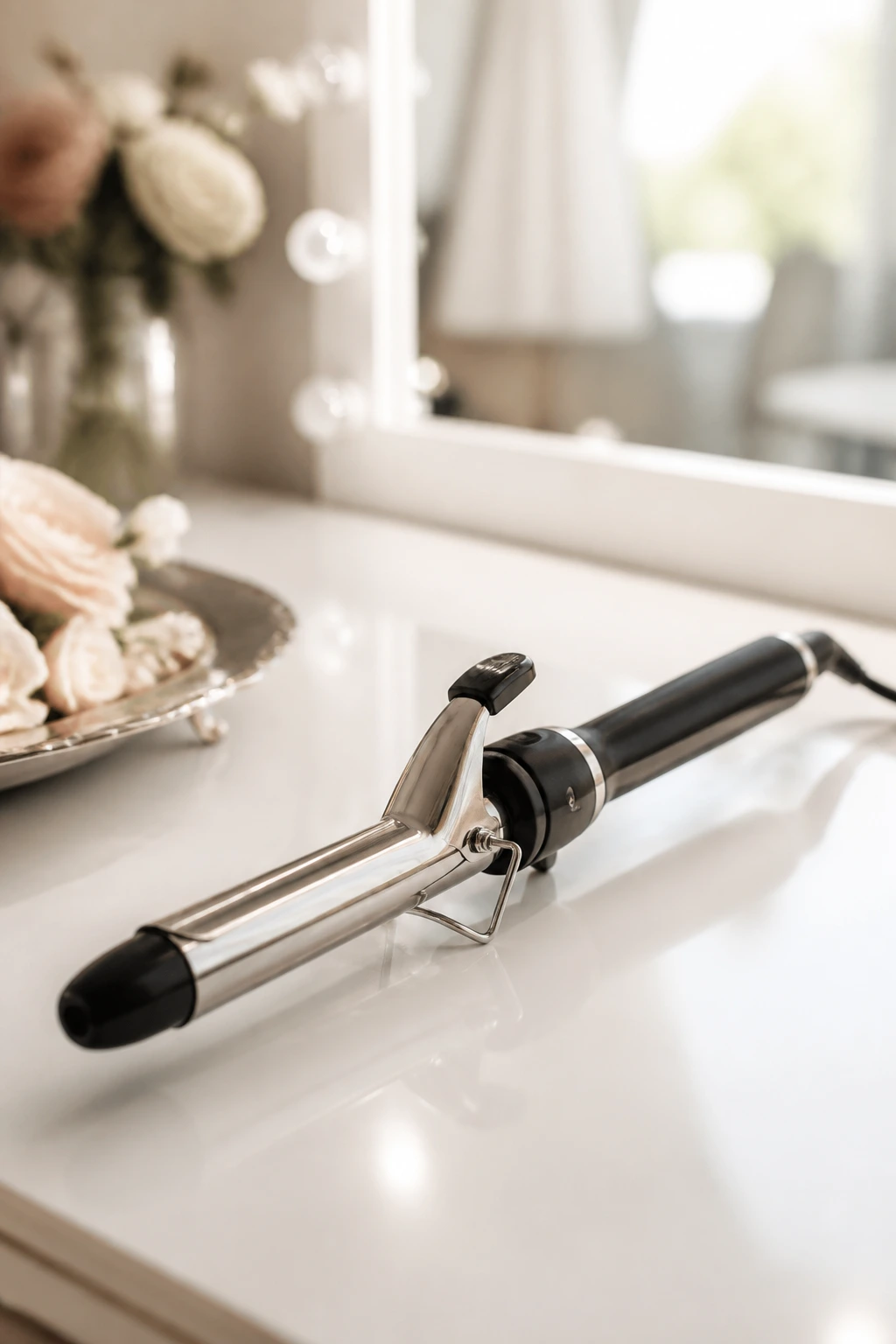
1-inch curling iron or wand: The safest size for soft bridesmaid waves; it gives shape without giant bends that fall apart fast.
-
Flat iron: Useful for sleek center-part styles, polished glossy finishes, and smoothing the front pieces.
-
Blow-dryer with nozzle: A controlled blow-dry helps build grip at the roots instead of leaving the hair too soft.
-
Bobby pins in the hair’s color: Match them as closely as possible so they disappear under twists and braids.
-
U-pins: Better than regular pins for rolled sections, knots, and tucked buns because they hold shape without crowding the hair.
-
Clear elastics: Handy for bubble braids, mini braids, and ribbon styles where the tie should stay hidden.
-
Texturizing spray: Gives slip-resistant texture to fine or freshly washed hair.
-
Flexible-hold hairspray: Strong enough to hold, light enough to let the hair move.
-
Teasing comb: Optional, but useful for crown lift and bouffant shapes.
-
Pearl pins, floral pins, or a slim comb: Pick one accessory language and stick to it across the bridal party.
Picking Products and Accessories Without Overbuying
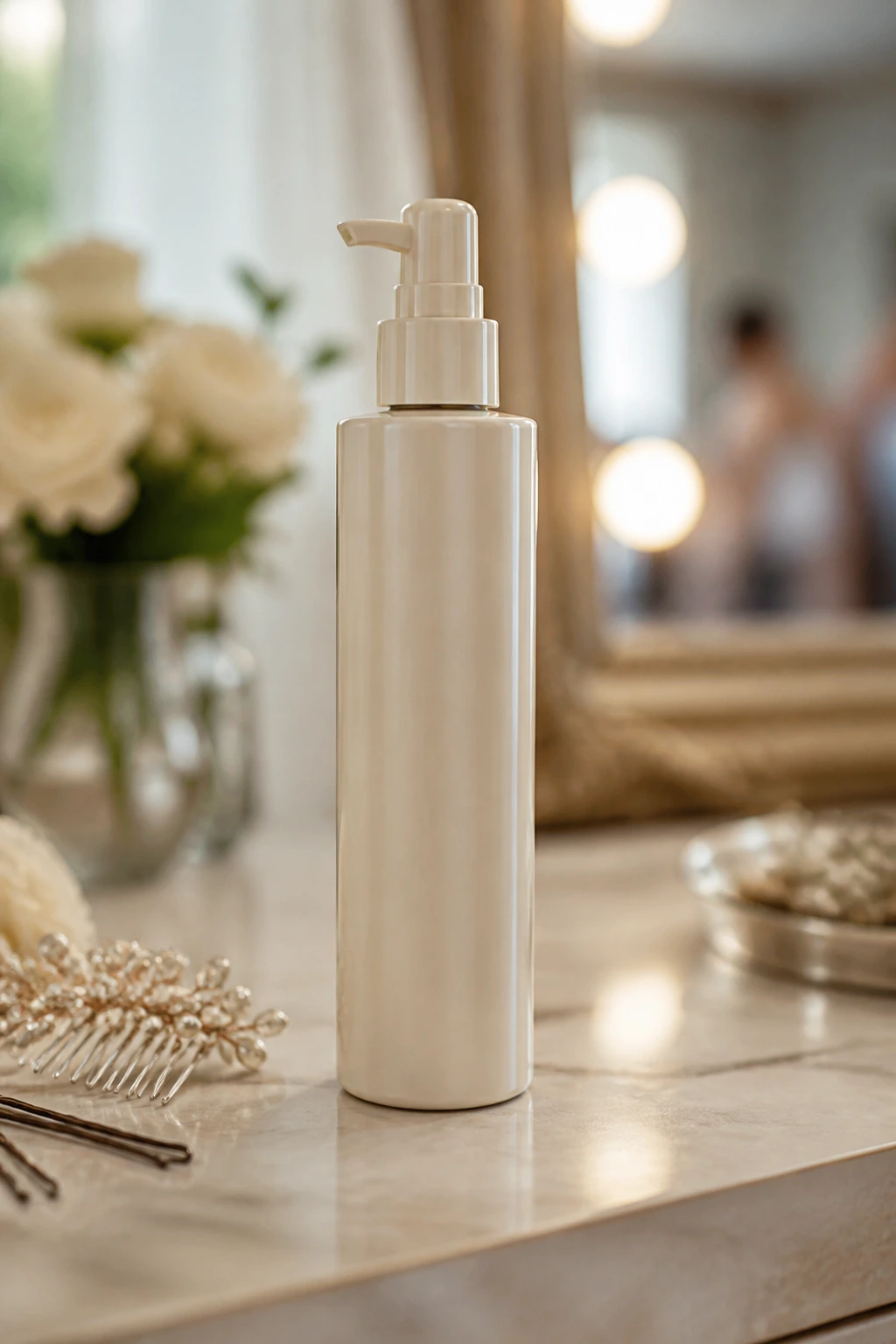
The easiest way to overspend on bridesmaid hair is to buy too many decorative pieces and too few working products. Hair spray, texture spray, pins, clips, elastics, and a good comb will do more for the final look than a drawer full of sparkly extras. Start with the structure. Add decoration second.
For product choices, hair type should steer the decision. Fine hair likes lightweight mousse or texturizing spray before styling, because it needs grip. Thick hair often needs a smoothing cream on the ends and a stronger pin strategy at the back. Curly hair does better with curl cream and a soft hold spray than with heavy brushing and stiff lacquer.
Accessories should stay in one family. If the dresses are already busy, use simple pearl pins or a plain metal clip. If the dresses are plain, ribbon or floral accents can carry more of the visual weight. The biggest mistake is mixing three different metals, two flower colors, and a satin bow all in the same bridal party. That turns coordinated into chaotic.
A good rule: buy one test set first. One clip style, one ribbon width, one spray. Try it on the hair texture that needs the most help, then repeat what works. Bridesmaid hair is not the place to stock up on guesses.
How to Match These Styles to the Dress, Hair Texture, and Venue
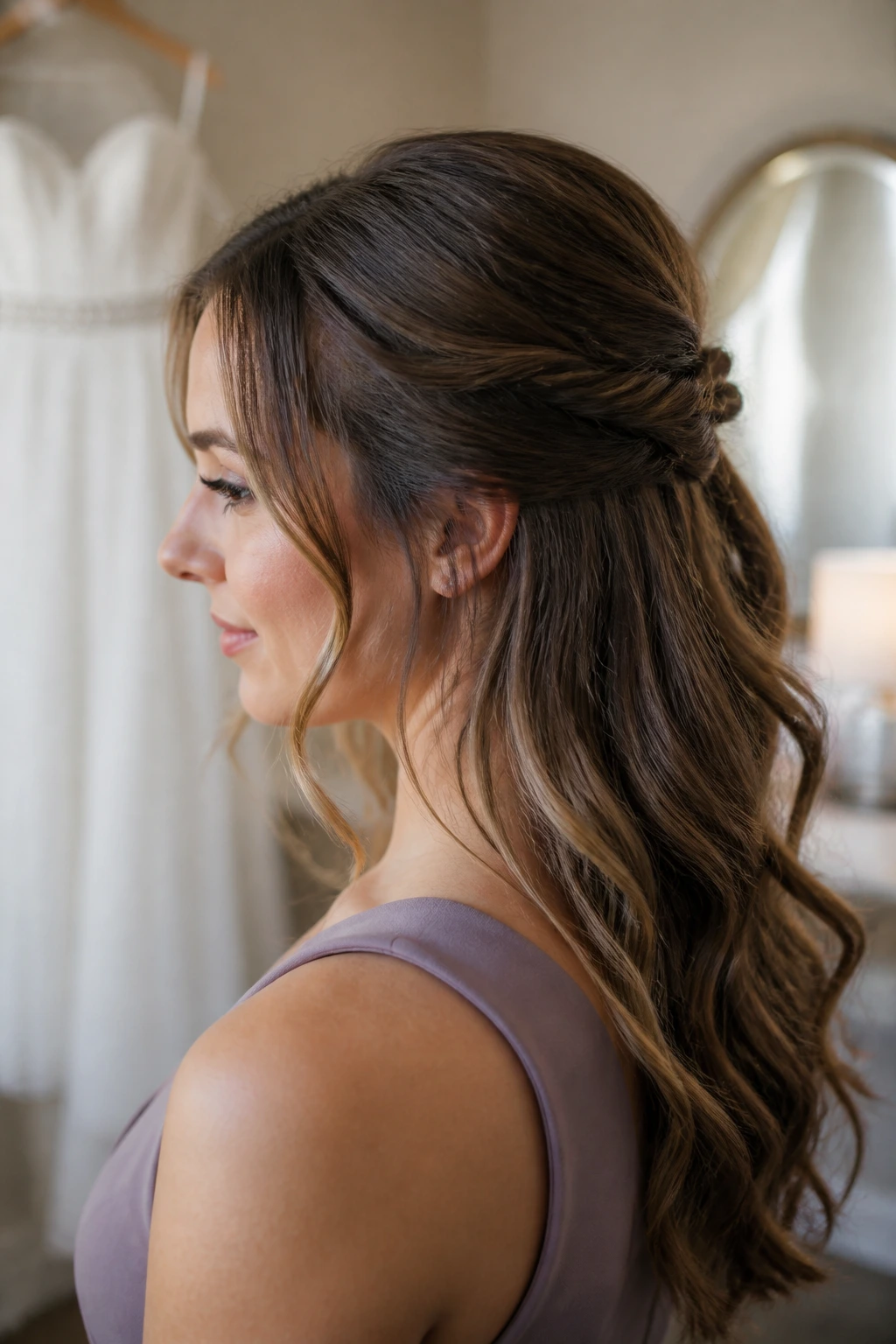
Neckline: Higher necklines usually look better with a lower half-up section and softer volume through the ends, while open backs and off-the-shoulder dresses can handle more lift at the crown. The hairstyle should leave room for the dress to speak.
Hair Texture: Fine hair needs smaller sections, tighter anchors, and more texture spray before the pins go in. Thick hair needs fewer decorative pieces and more thought around where the weight sits. Curly hair should keep its curl pattern visible instead of being brushed into a flat wave.
Accessories: Pearls, ribbons, flowers, and metal clips all change the mood fast. If the bridesmaids are wearing bold jewelry, keep the hair accessories quieter. If the dresses are plain, the hair can carry more detail without looking cluttered.
Venue and Weather: Outdoor ceremonies need a firmer spray and more hidden pins than indoor ballroom hair. Humidity softens everything. Wind does not care how carefully you curled those front pieces. Build the style with a little extra grip if the weather is likely to fight back.
Group Consistency: Pick one repeatable rule for the whole bridal party—same part, same accessory tone, same curl size, or same pin placement. That is enough to make the styles read as a set without making everyone look cloned.
Finishing Moves That Keep the Style Looking Fresh
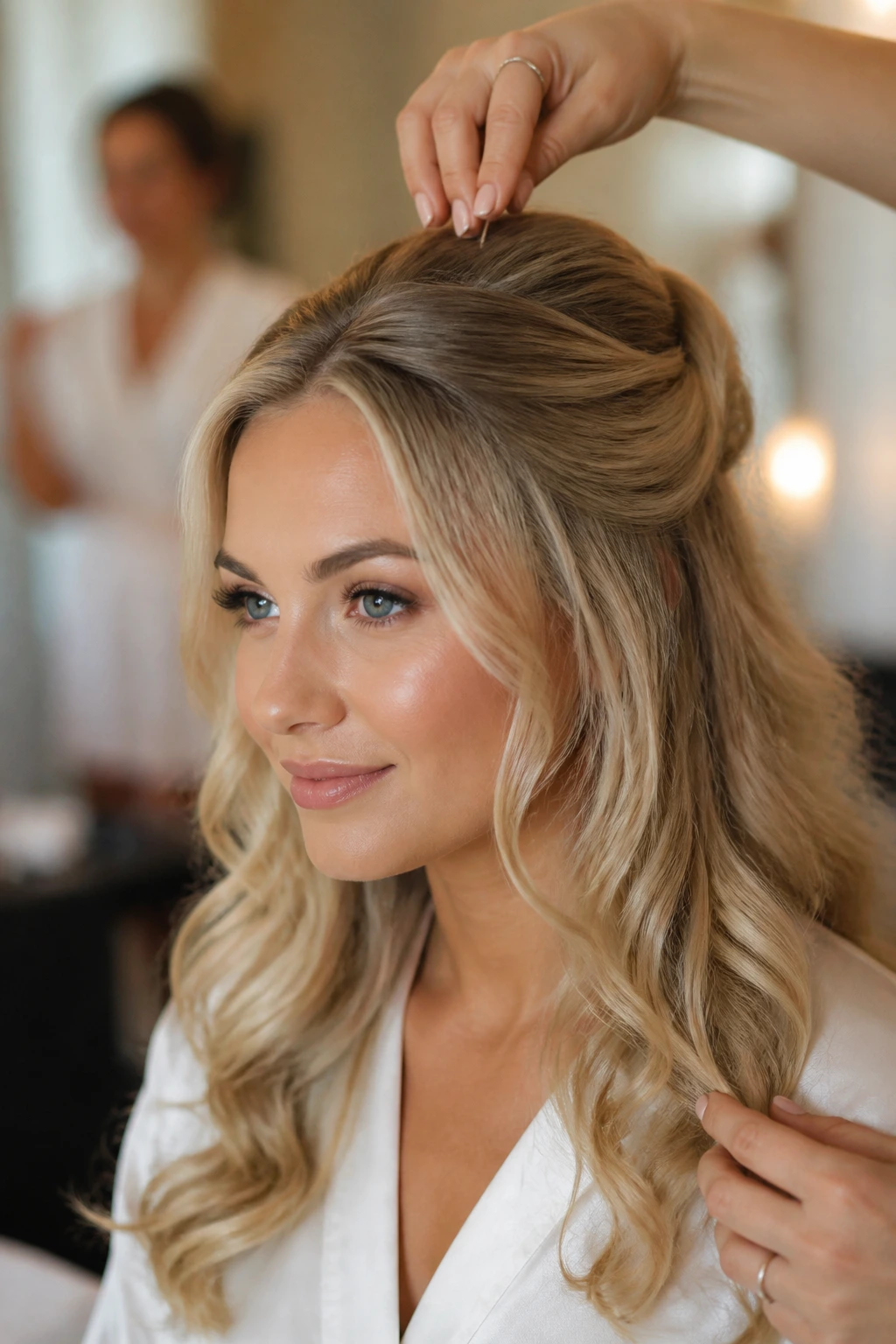
Texture: Start with enough texture at the roots to keep the style from sliding. On fine hair, that means a dry texture spray or light mousse before curling. On thicker hair, it may mean rough-drying the crown instead of smoothing it perfectly flat.
Volume: Put the lift where it counts. A tiny bit of tease under the top section gives the half-up shape presence without making the back look bulky. The lift should sit under the surface, not on top of it like a bump someone forgot to blend.
Face-Framing: The front pieces should curve, not hang. If you leave them out, give them a bend with the iron and let them open away from the face. Straight side pieces tend to stick to lipstick, earrings, and every hug in the room.
Accessory Placement: One accessory cluster is usually enough. Put it near the join point of the half-up section so it looks anchored. If it floats in the wrong place, the eye notices the accessory before the hairstyle.
Last-Minute Rescue: Carry two extra pins and a travel spray. If the hair starts to loosen before portraits, re-pin the crown before touching the ends. Fix the weak point, not the visible one.
Common Mistakes That Make Half-Up Hair Sag
-
Pinning the section too high: The style starts to look like a tiny updo with loose hair hanging underneath. Keep the anchor low enough that the lengths still feel connected to the crown.
-
Using too much serum near the roots: The hair gets sleek, then slippery, then the pins slide out. Put shine products on the ends, not the base.
-
Curling after the hair is already pinned: The clamp lines show, the pieces fight each other, and the result looks stiff. Curl first, pin second.
-
Leaving the front pieces too thick: The face can look crowded, especially with heavy earrings. Thin, curved front pieces usually sit better.
-
Ignoring the back view: A style can look fine from the mirror and still look unfinished from behind. Always check the join point and the pin cluster before you call it done.
-
Trying to force every hair type into the same look: A sleek center-part style will not flatter every texture, and a loose braid will not hold every day. Match the structure to the hair instead of the other way around.
Variations for Different Hair Lengths and Textures
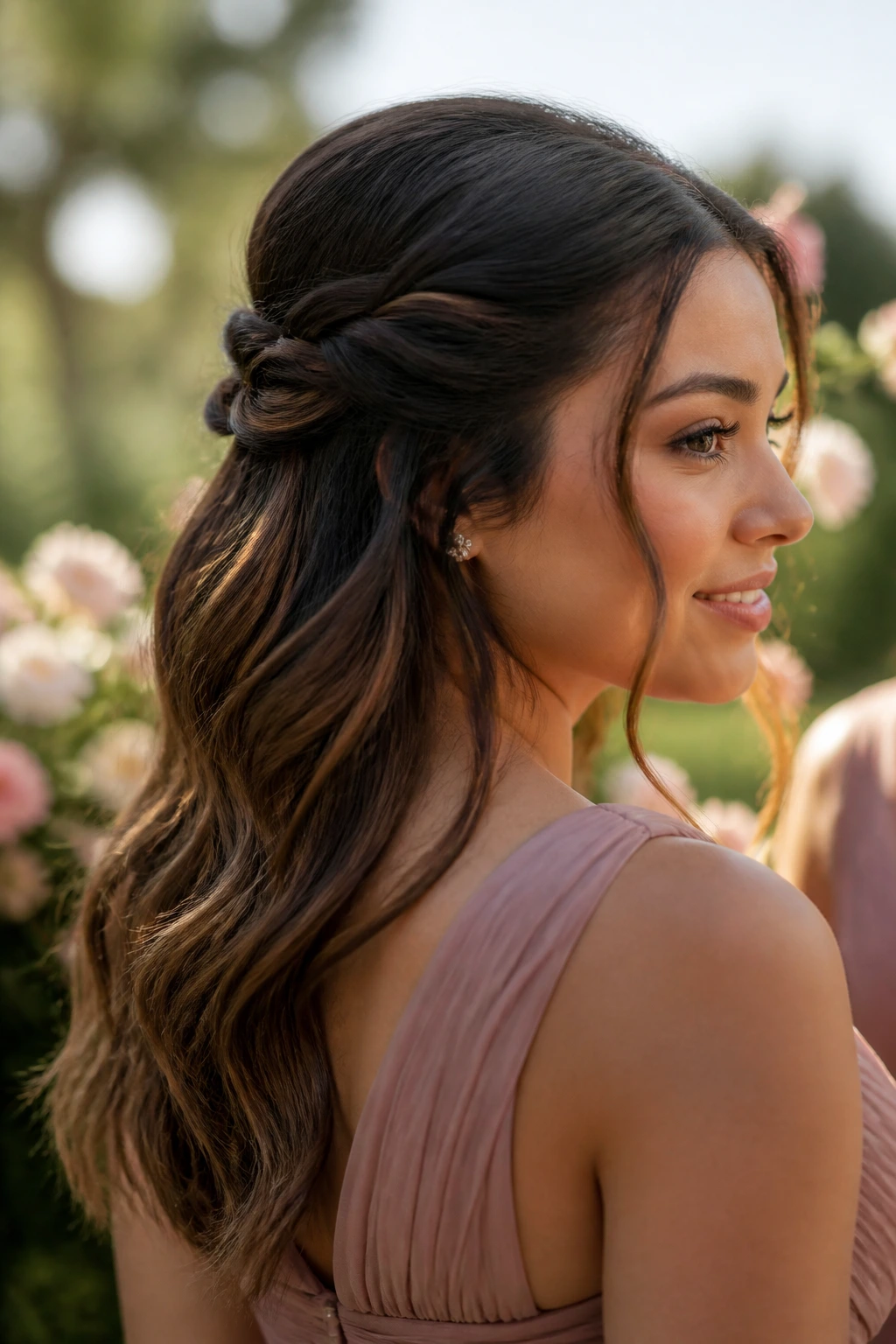
Fine-Hair Lift Kit: Use smaller sections, dry shampoo at the roots, and a narrower half-up shape. Fine hair usually needs grip more than decoration, so skip oversized clips and let the texture do the work.
Curly and Coily Version: Keep the curl pattern intact and pin only the top section. U-pins and small anchors work better than heavy teasing, which can break the shape and make the hair puff in the wrong places.
Short-Hair Adaptation: Lobs and shoulder-length cuts can still wear half-up styles if the crown section stays compact. Build volume with bends and tiny twists instead of trying to create length that is not there.
Ultra-Formal Finish: Smooth the top, use a pearl comb or a slim barrette, and keep the waves broad and controlled. This version fits black-tie gowns and clean venues where the hair should look polished rather than playful.
Outdoor Garden Version: Add texture spray, pin a little more firmly, and keep floral accents small and light. The style should be able to handle wind without looking overstuffed with decoration.
Mixed Bridal Party Version: Use one shared rule—same accessory tone, same curl size, or same braid width—and let each bridesmaid wear the version that fits her own hair. That keeps the group coordinated without making everyone fight the same shape.
How to Keep the Style Neat Through the Ceremony and Reception
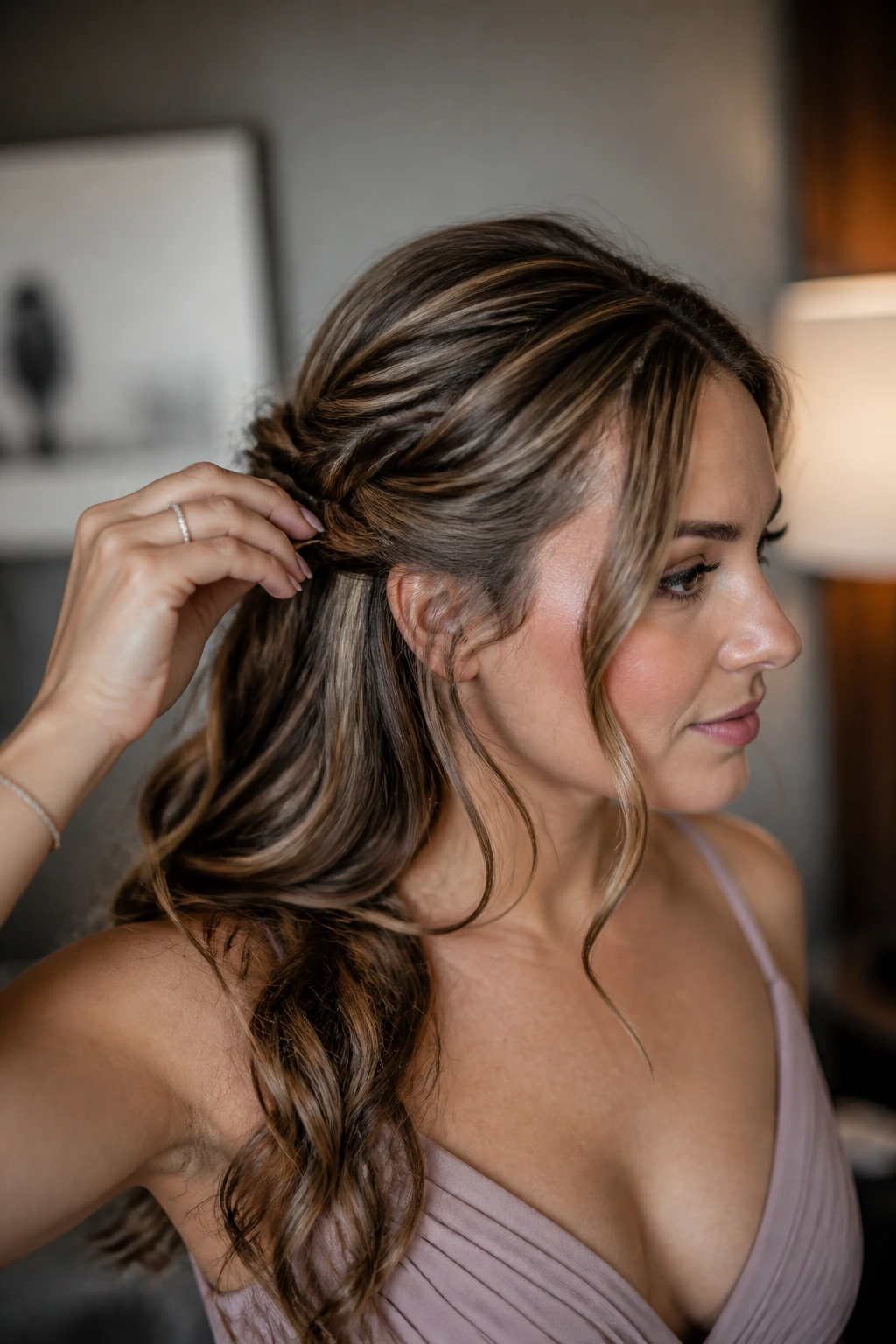
Half-up bridesmaid hair usually behaves best when it is treated like a living style, not a finished sculpture. The first hour is easy. The next four are where the real test happens. A quick check before portraits, another before dinner, and one after dancing starts will catch most issues before they turn into flat spots or loose pins.
If the style is being worn for a long block of time, pack a tiny rescue kit. Two bobby pins, a travel hairspray, a small comb, and one extra accessory match the original finish. Keep the kit with the maid of honor, not buried in a bag across the venue. Nobody wants to hunt for a pin between the ceremony and the group shots.
For day-before styling, loose waves hold better if the hair is wrapped on a silk pillowcase or tucked into a loose braid after they cool. Don’t brush them out aggressively the next morning. A few finger passes and a small mist of spray are enough to wake the shape back up.
If the bridesmaids are switching from ceremony to reception fast, ask for the style to be pinned with a little extra security at the nape and crown. Hidden pins do the boring work. They are the reason the fun parts stay visible later.
Questions Bridesmaids Actually Ask Before Hair Day
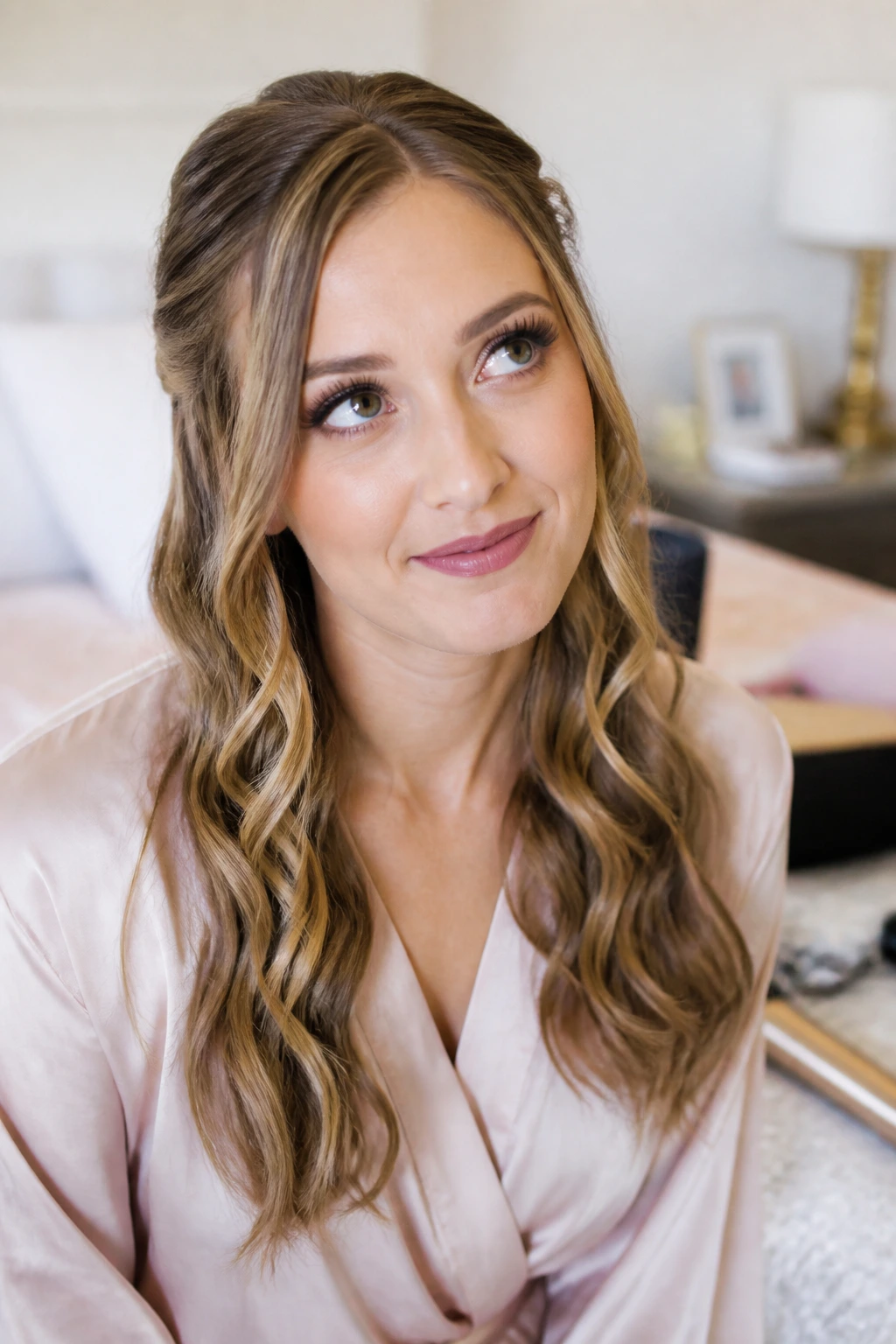
Can half-up hair work on fine hair without extensions?
Yes, if the style is built with the right amount of texture and the half-up section stays narrow. Fine hair usually looks best with smaller curls, lightweight spray, and hidden pins placed close together so the structure does not wobble.
How far ahead should a bridesmaid hair trial happen?
Soon enough to fix the problem, not so early that nobody remembers the details. A trial a few weeks before the wedding gives time to adjust the accessory, the curl size, or the height of the half-up section if the first version feels off.
What if one bridesmaid has curls and another has straight hair?
Keep the shared element in the shape, not the texture. Match the anchor point, accessory tone, or braid direction, then let each person wear the version that suits her own hair pattern.
Do half-up styles hold up in humidity?
They can, but they need more pinning and stronger prep. Texture spray, a dry crown, and a firm flexible-hold spray make a big difference. Hair that starts too soft tends to relax fast when the air is damp.
Can short hair wear these styles?
Absolutely. Shoulder-length cuts and lobs just need a narrower half-up section and a little extra root lift. Small twists, mini braids, and low pinned shapes usually work better than trying to force large braids or heavy waves.
Should the hair be curled before or after pinning?
Before. Always before. Curling after the hair is pinned creates awkward clamp marks and makes the style harder to balance. Set the shape first, then bring the top section together.
What’s the easiest option if there’s no time for a trial?
A minimal clip-back wave or a soft twisted crown is the safest bet. Both styles are forgiving, easy to repeat, and less likely to fall apart if the hair texture behaves a little differently than expected.
How do you keep the style from looking too prom-like?
Keep the accessory choice quiet, the curl size soft, and the crown lift moderate. Oversized curls, shiny clip clusters, and very high volume can push a bridesmaid style into an older, more formal look than most wedding parties want.
The Style That Stays Put
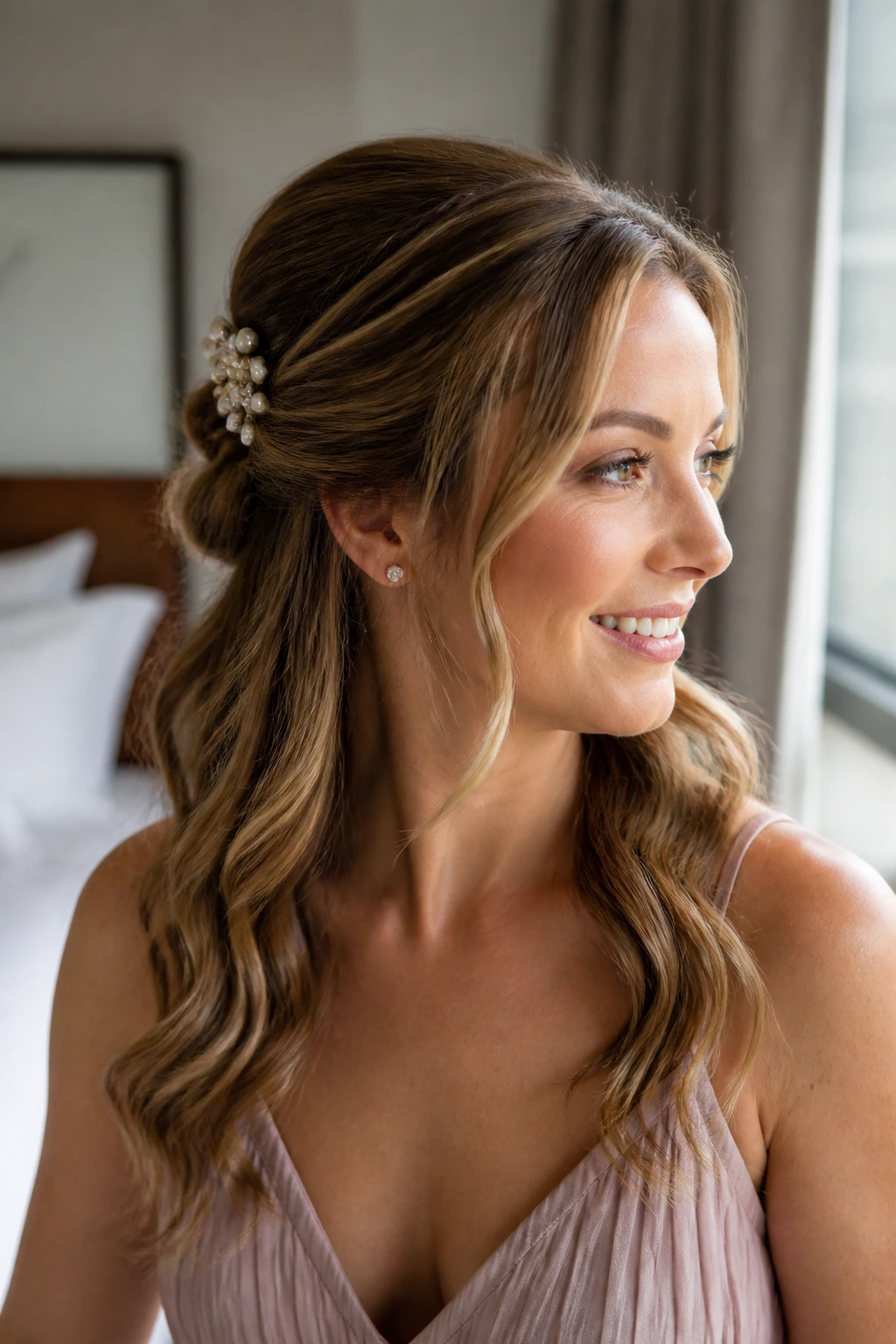
A good bridesmaid hairstyle should do two jobs at once: look thoughtful in photos and survive the messy parts of the day without asking for a full reset. Half-up, half-down styles do that better than most because they give you shape at the crown and movement through the lengths.
The real win is how adjustable they are. One bridal party can wear pearls, ribbon, braids, curls, twists, or a clean clip-back version and still look like they belong in the same story. That kind of flexibility makes planning easier, and it keeps the hair from feeling copied off a single template.
Pick the version that matches the dress, the texture, and the amount of movement the day will demand. Then pin it properly, spray it lightly, and let the style do its job. The best half-up bridesmaid hair doesn’t shout. It stays put, which is usually the more useful trick.
