



Soft-polished hair has a very specific mood: the outline looks neat, the part sits where it should, and the ends still move when you turn your head. That balance is why Asian hairstyles for a soft polished look work so well when they’re done right. They don’t fight the hair’s natural texture. They work with it, then clean up the shape so it reads intentional instead of overworked.
A flat, glassy finish can look harsh fast. So can too much volume at the crown, which turns even a pretty cut into something that feels dated by noon. The looks that last tend to do the same quiet trick: smooth roots, one soft bend, a face-framing piece or two, and just enough hold to keep everything from slipping out of place. Clean. Never crunchy.
That matters even more because “Asian hair” is not one texture. Some strands are pin-straight and fine, some are thick and heavy, some sit somewhere in between, and plenty of people deal with wave at the ends and steam-resistant frizz at the roots. The best soft-polished styles respect that spread. They give you shape without forcing your hair into a personality it does not have.
Why These Styles Keep Their Shape Without Looking Stiff
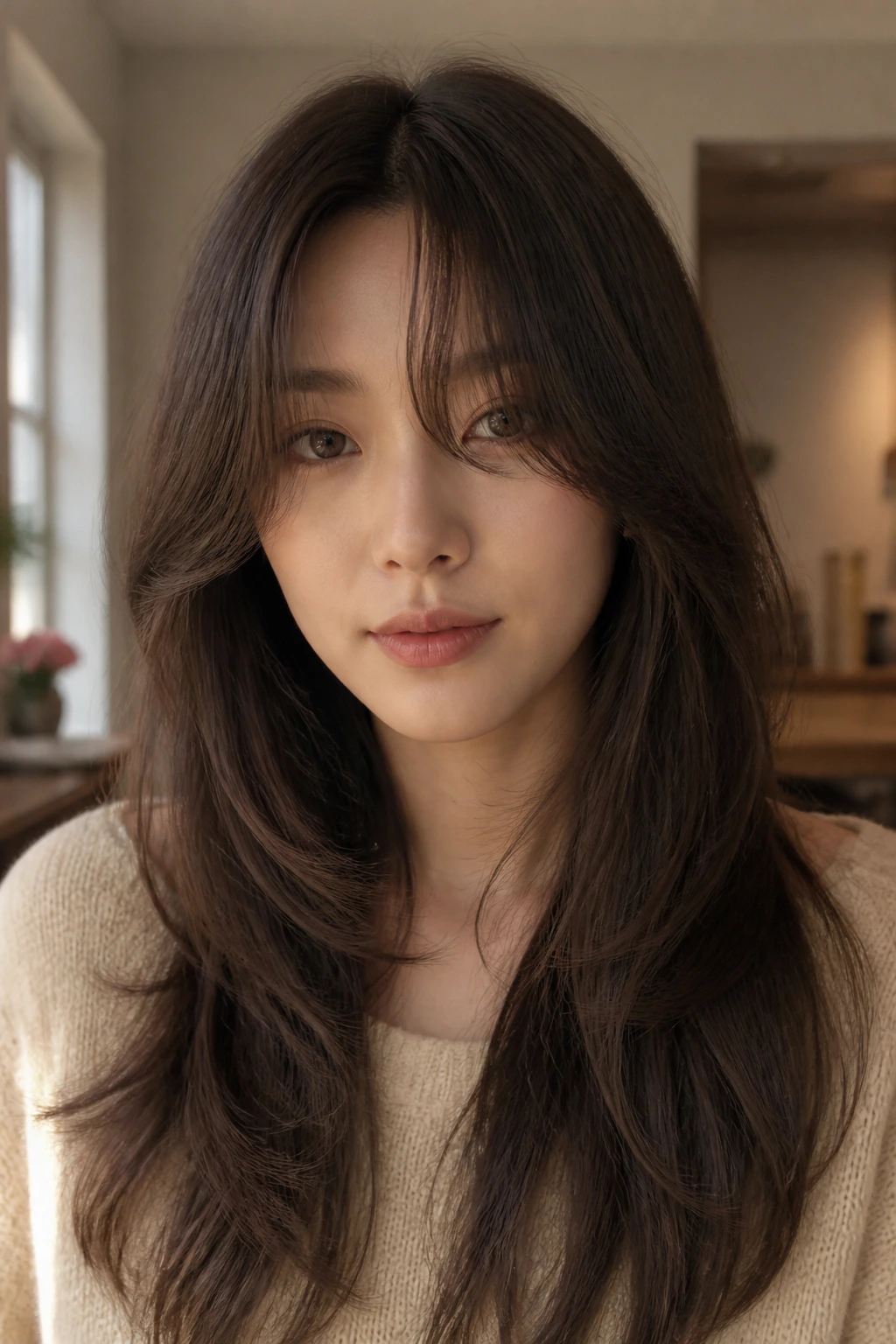
- Soft, not shellacked: These looks stay polished because they rely on structure, not a helmet of hairspray, so the hair still moves when you touch it.
- Built for slippery strands: Straight, silky hair often drops heavy curls fast, which is why bends, low tension, and smart pinning matter more than big volume.
- Easy to dress up or down: A tucked bob, low bun, or ribbon tie can sit next to a sweatshirt or a blazer and still make sense.
- Kind to second-day hair: Tiny bits of grip from day-old roots can actually help a claw clip twist or low pony hold better than freshly washed hair.
- Broad hair-texture fit: I’m using “Asian” here as shorthand for the wide mix of hair textures common across Asian communities, not one single hair type.
1. Curtain Bangs with Long Layers
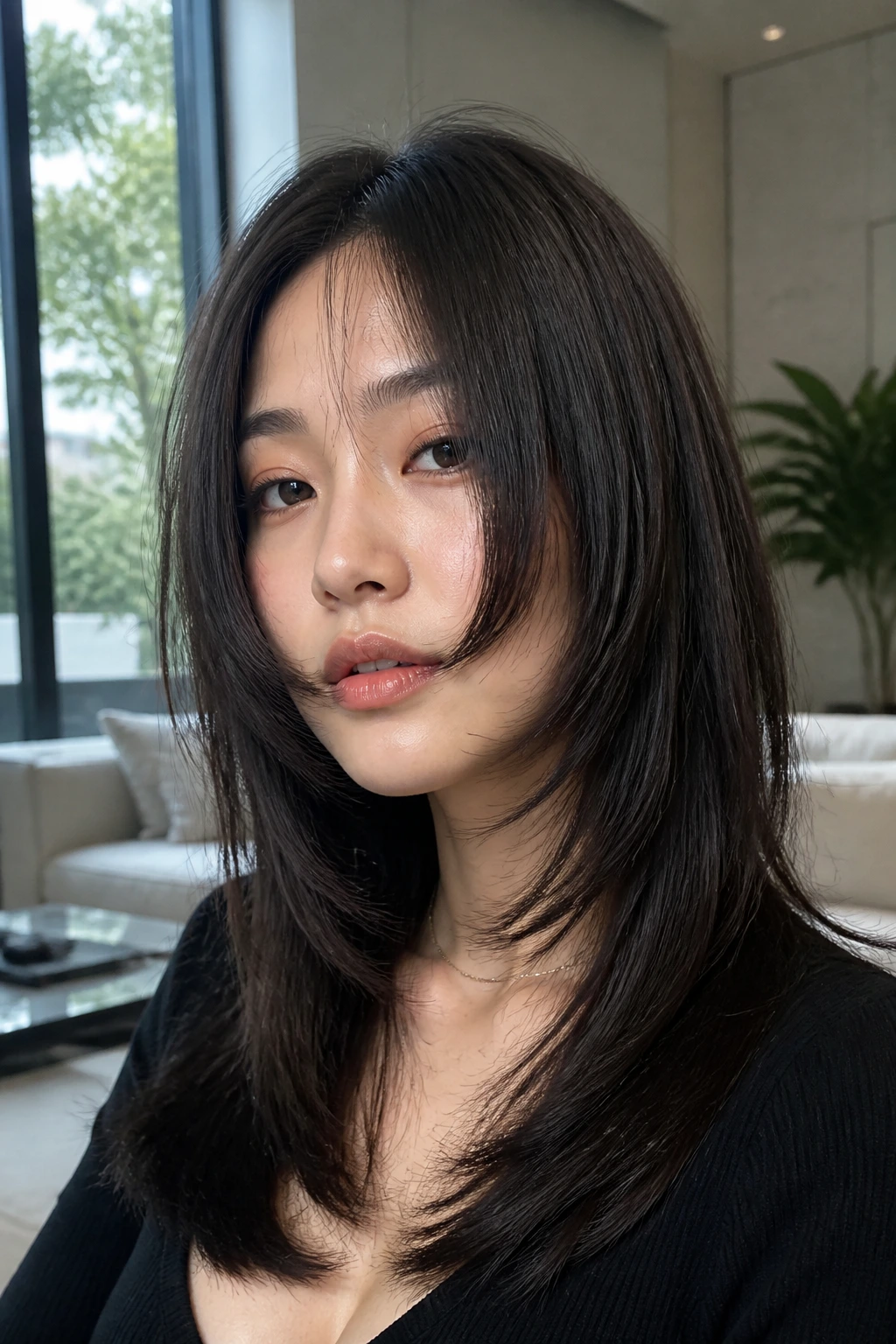
Curtain bangs are the easiest shortcut to softness when you want the face to look a little gentler without losing polish. The magic is in the sweep: the fringe starts near the cheekbone, opens at the center, and slides into long layers so there’s no hard line cutting across the forehead.
Why the shape works
On straight or slightly wavy hair, curtain bangs keep the front from looking too flat. They also make a long cut feel lighter around the face without taking away length. If your hair tends to hang straight down like a curtain rail, this shape breaks that line up in the prettiest way.
A 1.25-inch round brush or a medium curling iron gives the front pieces a bend that looks soft even after it cools. The ends do not need to curl under hard. In fact, a tiny outward flick at the jaw is often better.
Best detail: Ask for the shortest point of the bang to land around the brow or upper lash line, then let the side pieces taper into the cheekbones. That transition is what keeps the style from looking chopped.
2. Sleek Low Ponytail with a Soft Bend
A low ponytail can look severe in a hurry, and that’s exactly why the soft bend matters. Keep the roots neat, then leave a little movement through the tail—usually one loose wave or a brushed-out curve at the end.
No stiff gel cap. Please.
Use a fine-tooth comb only at the front hairline if you want polish, then switch to a brush for the tail so it feels smooth but not puffy. Wrap a small section of hair around the elastic, pin it under, and let the tail fall just below the nape. That length sits calmly against the neck and looks more finished than a pony that rides too high.
This style is especially good when your hair is straight enough to slip loose from fancy curls. The pony keeps its shape because the structure is doing the work, not the curl pattern.
3. Chin-Length Bob with Tucked Ends
Why does a bob look so soft when the ends turn inward instead of sticking out? Because that little inward tuck catches the jawline and makes the whole cut look deliberate.
A chin-length bob on straight Asian hair can be beautifully clean, but it can also turn harsh if the ends are blunt in the wrong way. The fix is a slight bevel at the tips. Not a flipped-under pageant curl. Just enough curve that the line reads gentle around the face.
How to shape it
Blow-dry with a round brush or use a flat iron to bend only the last half-inch of hair inward. Keep the crown smooth and let the perimeter do the talking. If your hair is very fine, a touch of lightweight mousse at the roots helps the bob keep its body instead of collapsing into the cheekbones.
The result should feel tidy, not rigid. That’s the whole point.
4. Claw Clip Twist with Face-Framing Pieces
You know the look. Hair twisted up fast, a few front pieces left out, and somehow it still looks like you meant to do it that way. That’s the claw clip twist at its best.
It works because it keeps the back neat while the face-framing strands soften the edges. On slippery hair, the trick is to twist the lengths once or twice before clipping, then tuck the tail under so there’s some grip. A matte claw clip usually holds better than a glossy one, which can slide on very smooth strands.
What makes it look polished
- Leave two small pieces around the temples.
- Pull the twist a little lower than the crown.
- Use a medium clip, not the giant one that eats half your head.
- Let the front pieces bend under a light pass of the iron if they fall dead straight.
A good claw clip twist looks casual from a distance and tailored up close. That’s a rare balance.
5. Loose Wave Lob with a Middle Part
A lob with loose waves is one of those cuts that can look expensive even when the styling takes fifteen minutes. The middle part gives it calm symmetry, and the waves keep it from feeling flat or overdone. On straight Asian hair, the key is to bend the hair in alternating directions and then brush it out once it cools.
That brushing step matters. A lot.
If you leave the curls untouched, the style can tip into ringlet territory. Brush them and the whole thing turns into soft, rolling movement that sits nicely against the shoulders. I like a 1-inch iron for this, with the barrel held vertically and the ends left a touch straighter than the mids. That tiny imbalance keeps the look modern.
If your hair is fine, spray texturizer before curling. If it’s thick, use less product and more sectioning. Same style, different head, different rules.
6. Low Bun with a Loosened Crown
Unlike a ballerina bun, this one does not try to erase every flyaway. The softer version keeps the crown slightly lifted and lets a few narrow pieces sit loose around the ears and temples, which is what makes it look calm instead of strict.
It’s a strong choice for straight hair because straight strands lie neatly in a bun without needing much persuasion. The danger is pulling too tight. That gives you a shiny, severe knot and, about an hour later, a headache that no one asked for.
Pull the bun low enough that it rests at the nape, then pinch the crown gently after pinning to create a little air. A silk scrunchie can help if your hair tends to slide. And if the bun looks too small, widen it with your fingers instead of adding more product. More product often just makes it greasy.
This style is especially good with center parts and cheekbone pieces. It likes clean lines, but not hard ones.
7. Rounded Pixie with a Side Fringe
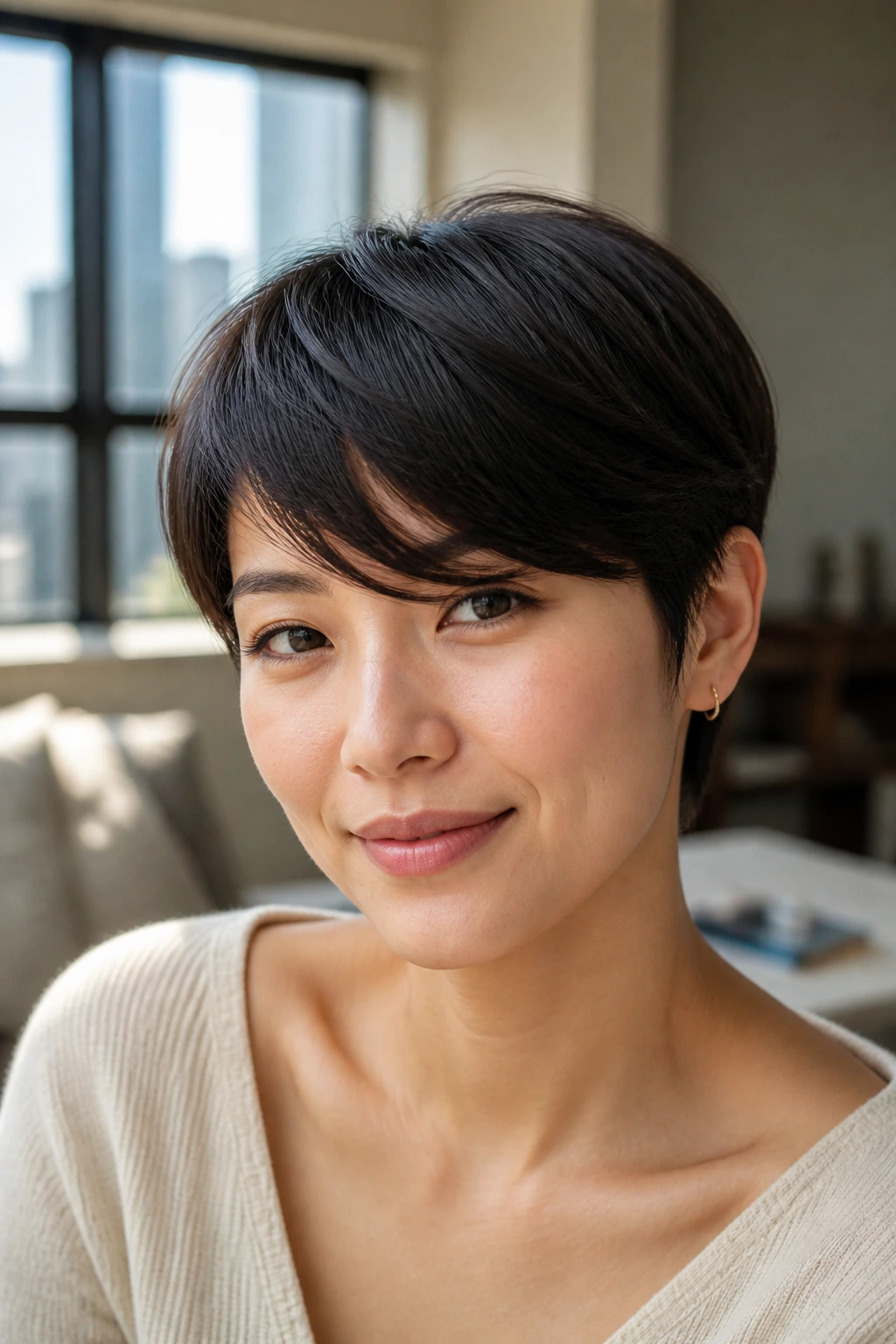
A pixie can be soft. It just needs the edges shaped with more curve than chop. The rounded version keeps length on top, cuts the sides close enough to show the face, and slides a side fringe across the forehead so the whole cut feels warm rather than spiky.
The best part on straight hair is how little effort it takes once the cut is right. A pea-sized bit of paste or cream through the top is enough. Push the front slightly over with your fingers, not a brush, so the texture stays piecey and touchable.
Quick notes that matter
- The fringe should skim the brow or cheekbone, not poke straight out.
- Ask for weight left through the crown if your hair is very fine.
- Keep the neckline tidy; that’s what saves the cut from looking unfinished.
- A tiny bend at the sideburns softens the whole face.
A soft pixie is not trying to be loud. It’s trying to look precise.
8. Ribbon-Tied Half-Up
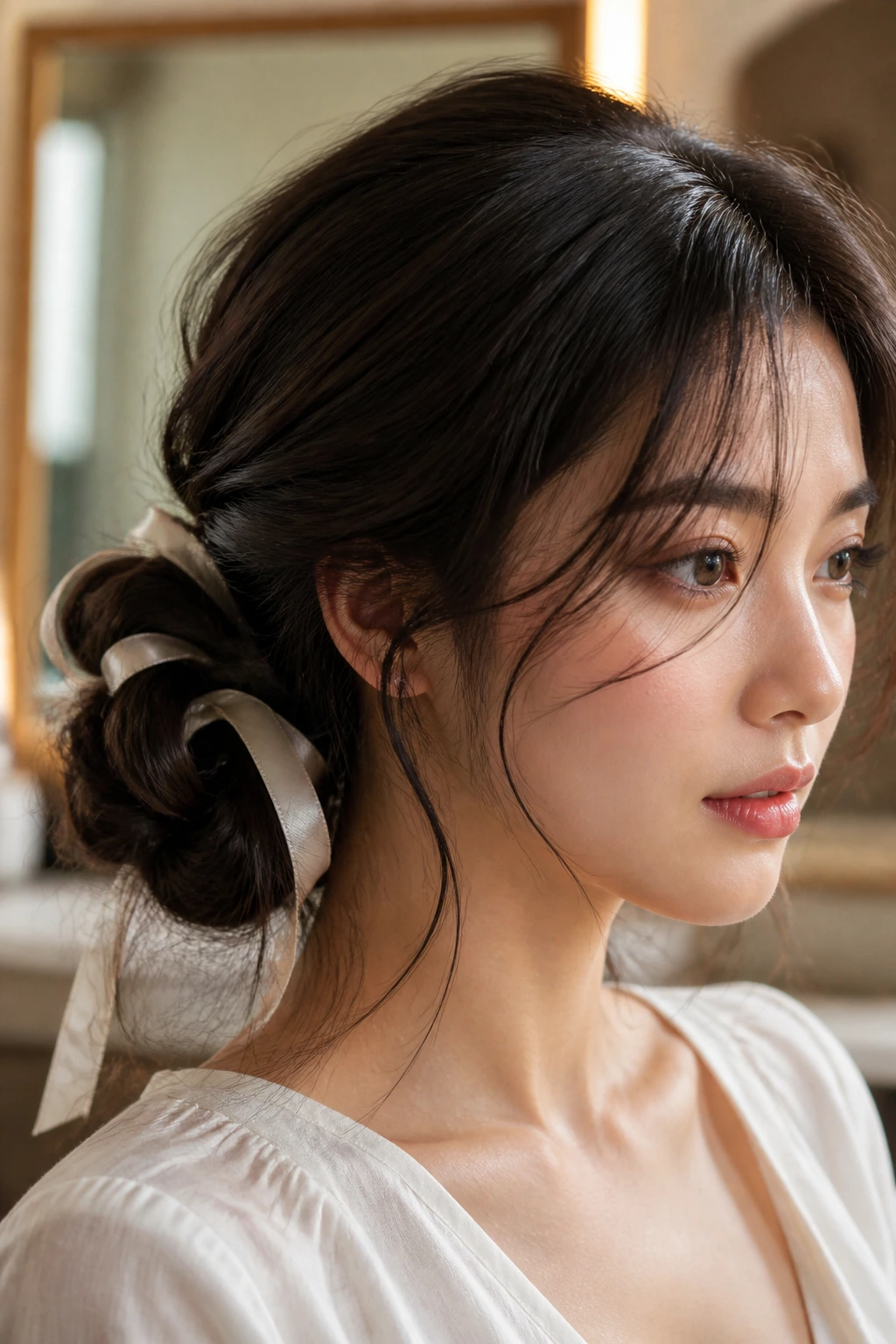
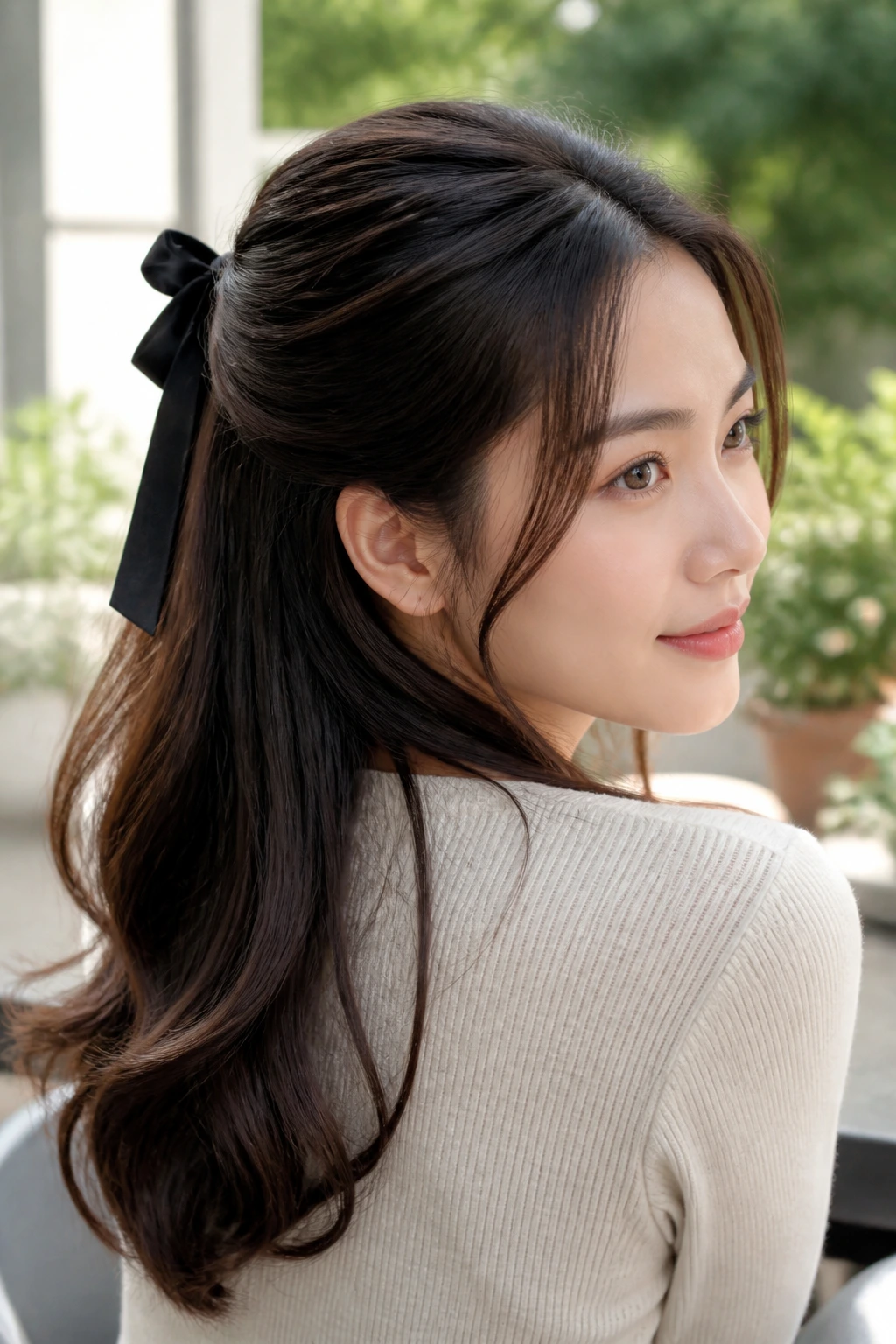
A half-up tie with a ribbon can look sweet in the bad way or polished in the good way. The difference is structure. Gather the top half cleanly, smooth the surface with a brush, then tie the section low enough that it doesn’t puff up like a fountain.
This is one of my favorite answers for straight Asian hair because it gives the illusion of effort without demanding much volume. The ribbon adds finish; the loose bottom half keeps the look from getting too prim. If your hair is shoulder-length or longer, leave the ends loose and slightly bent. That tiny bend stops the style from reading childish.
Choose a ribbon that sits flat—satin if you want shine, grosgrain if you want a little grip. Narrow is safer than wide. Wide bows can take over the whole head fast.
9. Soft Hime Cut
Can a hime cut feel soft? Absolutely—if the cheekbone pieces are treated like a frame, not a hard border. The old mistake is cutting the side sections too blunt and leaving the rest too still. The softer version keeps the silhouette clean while letting the longer layers fall with movement.
This cut looks especially sharp on straight hair because the lines show clearly, which is both the blessing and the trap. You need a little bend at the ends or the whole thing can read severe. A round brush under the front pieces and a flat iron bend at the longer lengths usually solve that.
The face-framing side sections should sit somewhere between the cheekbone and jaw, depending on your face shape. Too short and the cut looks severe. Too long and you lose the point of the style entirely. That middle ground is where it gets pretty.
10. Deep Side Part with S-Waves
A deep side part changes everything. It adds lift at one side, softens the other, and gives straight hair a little built-in drama without needing a full restyle. Pair it with S-waves and the result is polished, not pageant-y.
This works especially well when your hair falls flat at the crown. The off-center part creates instant height, and the waves break up the length so it doesn’t look like one long sheet. I like to curl away from the face on the heavier side and toward the face on the lighter side, then brush the whole thing into one loose flow.
A small trick: tuck the lower side behind one ear and leave the top side fuller. That asymmetry makes the cheekbones stand out without shouting about it.
11. Wispy Shoulder Shag
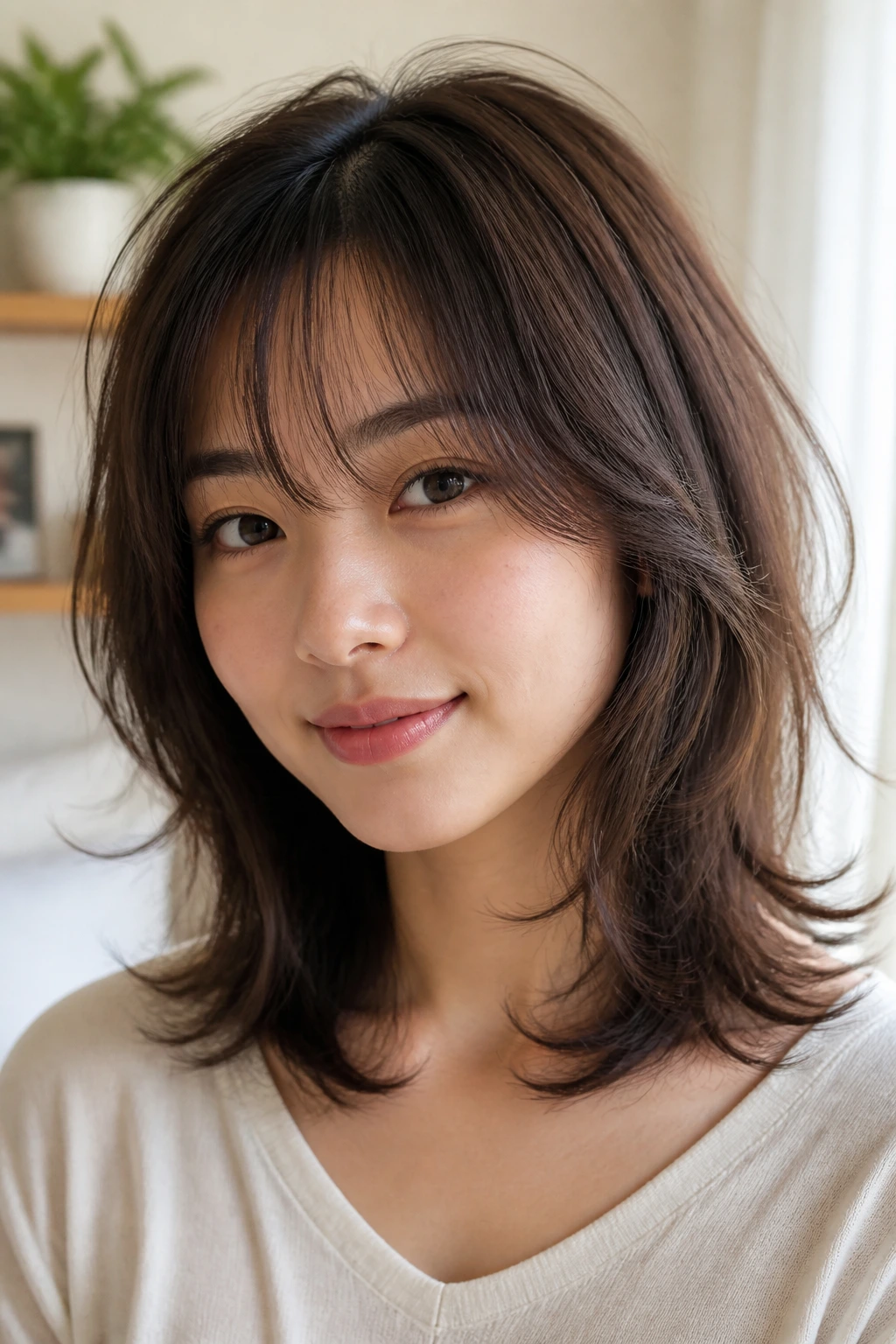
A shoulder-grazing shag can get messy fast, so the polished version depends on restraint. You want the layers to move, not explode. Keep the crown light, the ends feathered, and the face-framing pieces soft enough to bend around the jaw.
On straight or slightly wavy Asian hair, this cut gives body where it’s usually missing: around the top and through the sides. The shag shape is doing the volume work, which means you don’t need to tease the roots into a little mountain. Good. Nobody needs that.
Dry the hair with a nozzle, lift the roots with your fingers, and bend a few random ends outward with a flat iron. Random is the point. If every piece curls the same way, the shag loses its easy shape and starts looking staged.
12. Wrapped High Ponytail
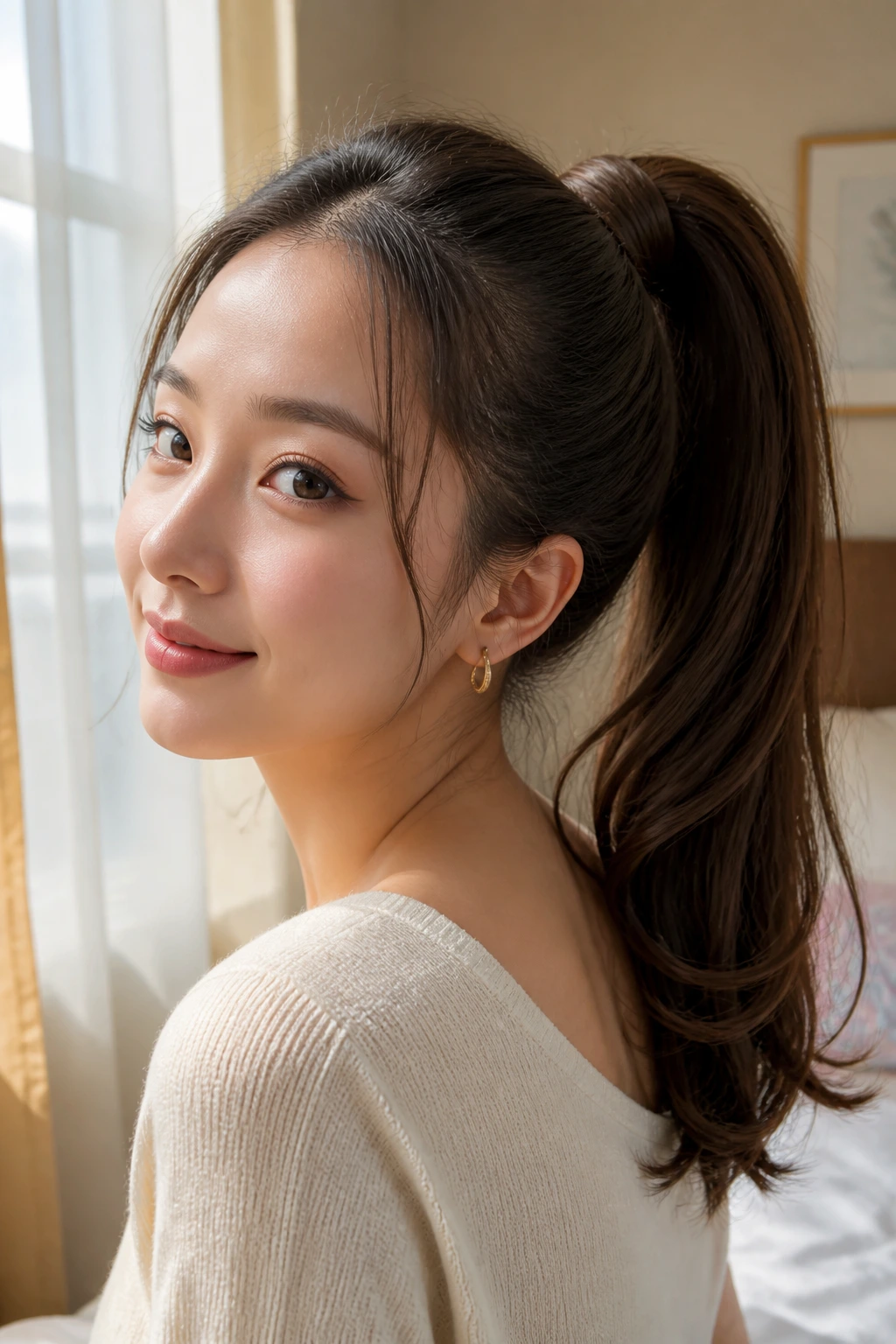
A high ponytail can look too tight, too cheerleader, too much. Wrap the base with a strand of hair and leave the tail brushed out with a soft bend, and it turns into something cleaner and more grown-up.
The height matters. Too high and the style gets severe. Too low and it loses the lift that makes it flattering. Aim for the top of the crown or a touch below. If your hair is straight and slippery, mist the roots with light hairspray before brushing up the pony so it holds without grabbing in clumps.
Best use cases
- When you want polish in ten minutes.
- When your hair is a day past washing.
- When the outfit is simple and you want the hair to do one clean job.
- When you need the neck clear but do not want a bun.
A wrapped pony works because it hides the elastic and gives the style a finished edge. Tiny detail. Big difference.
13. French Bob with Airy Volume
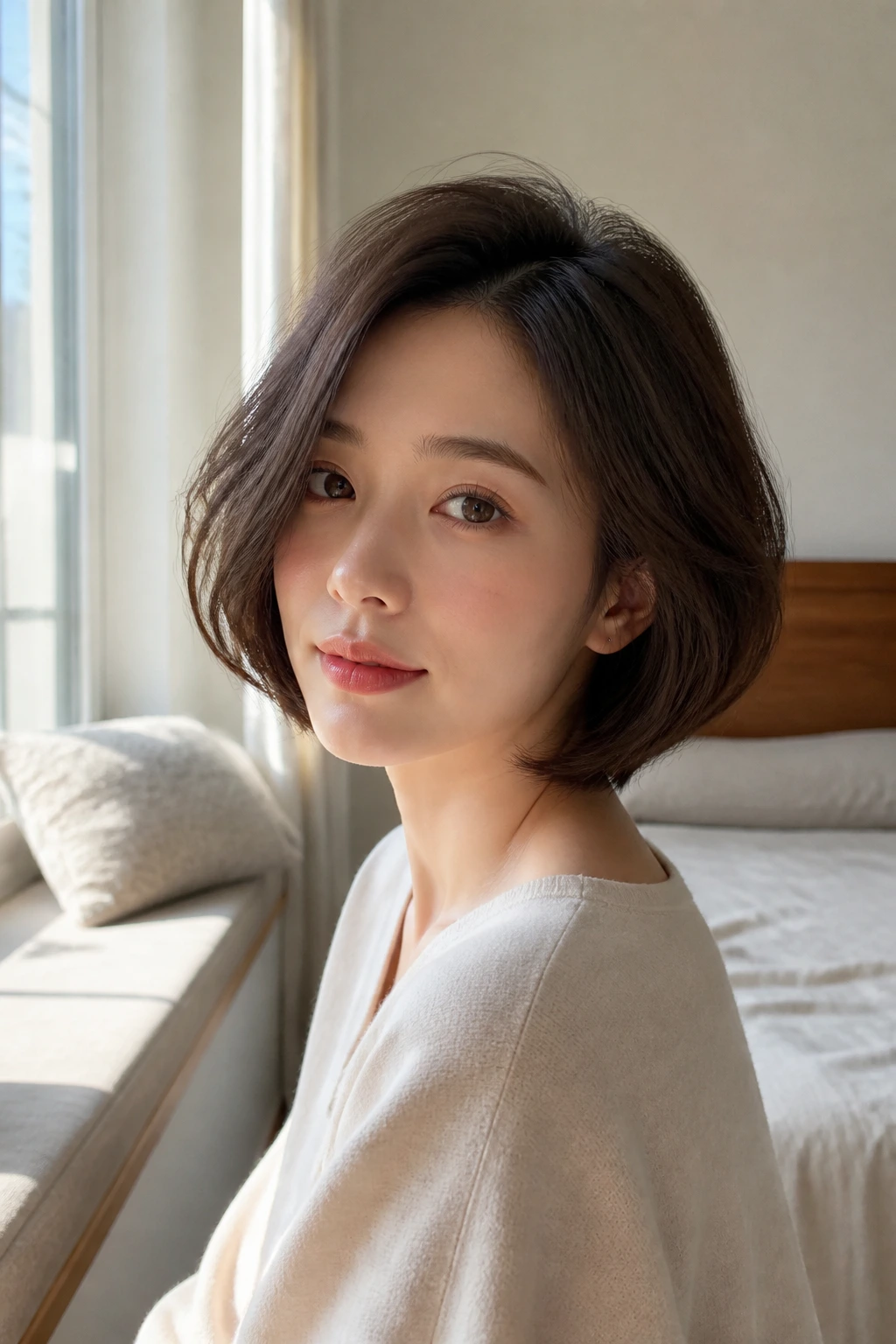
A French bob is only charming when it has air in it. Press it too flat and it loses the whole mood. The soft version lands around the cheekbone or jaw, with a little lift at the roots and a bend that keeps the ends from flipping all over the place.
This style flatters straight hair because the shape itself does the styling. You do not need a lot of product. You do need a clean, slightly off-center part, a round brush, and maybe a few rollers at the top while you finish makeup or get dressed.
A cool shot from the dryer makes a real difference here. So does tucking one side behind the ear and leaving the other side loose. That tiny asymmetry keeps the cut from looking frozen.
14. Pearl-Pinned Half-Up Twist
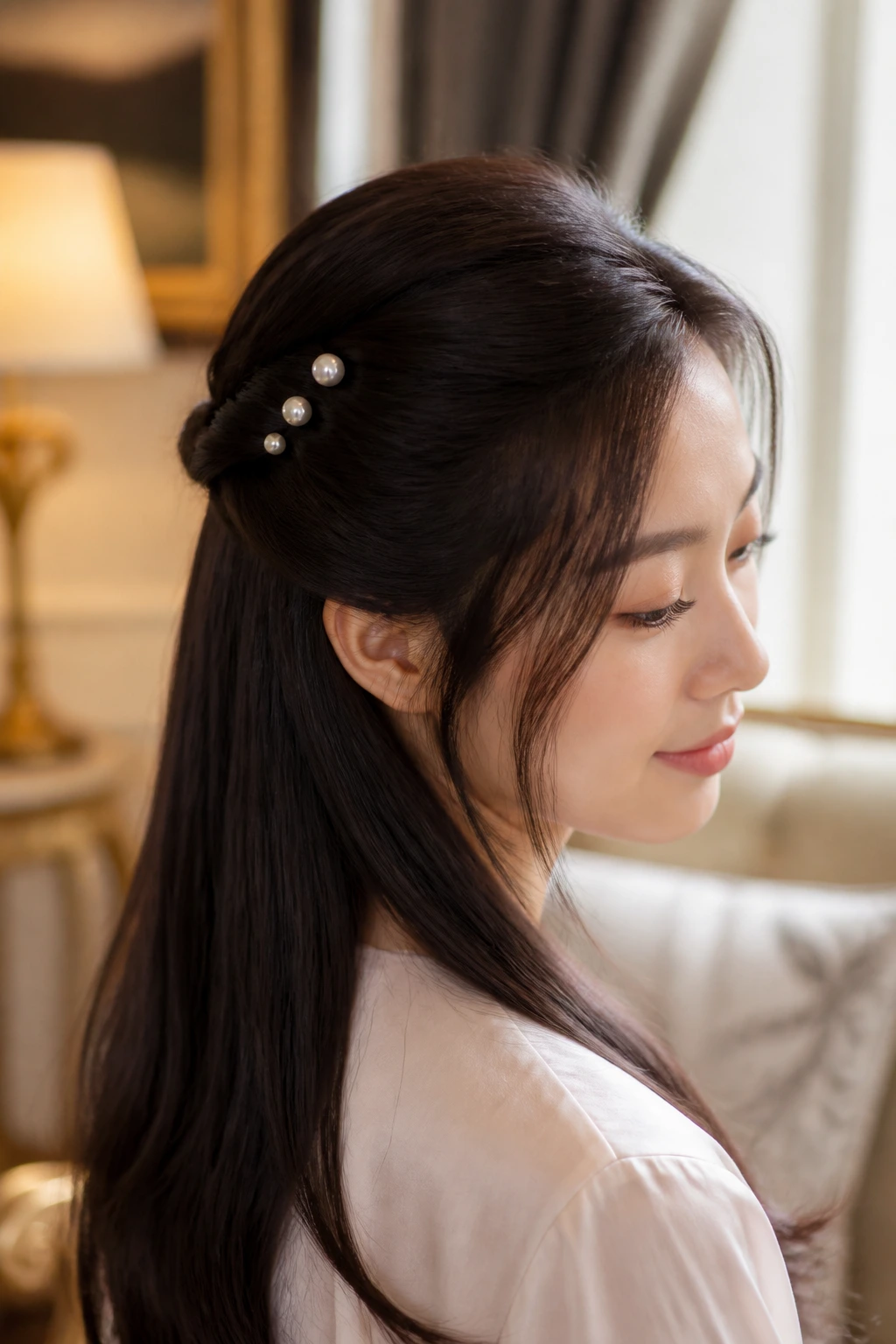
Pearl pins can look fussy if you scatter them around like confetti. Use them sparingly, and the whole style changes. A half-up twist with two or three pins on one side feels soft, dressed up, and a little old-school in the best way.
The twist itself should be loose. Pull the top section back, turn it once, and pin it just below the crown so the volume stays gentle. Let the bottom layer remain straight or lightly waved. On very silky hair, a light mist of texture spray gives the pins something to grab.
This is one of those styles that reads elegant without demanding a full blowout. It’s the pins that do the talking. Keep the rest quiet.
15. Flipped-Out Lob
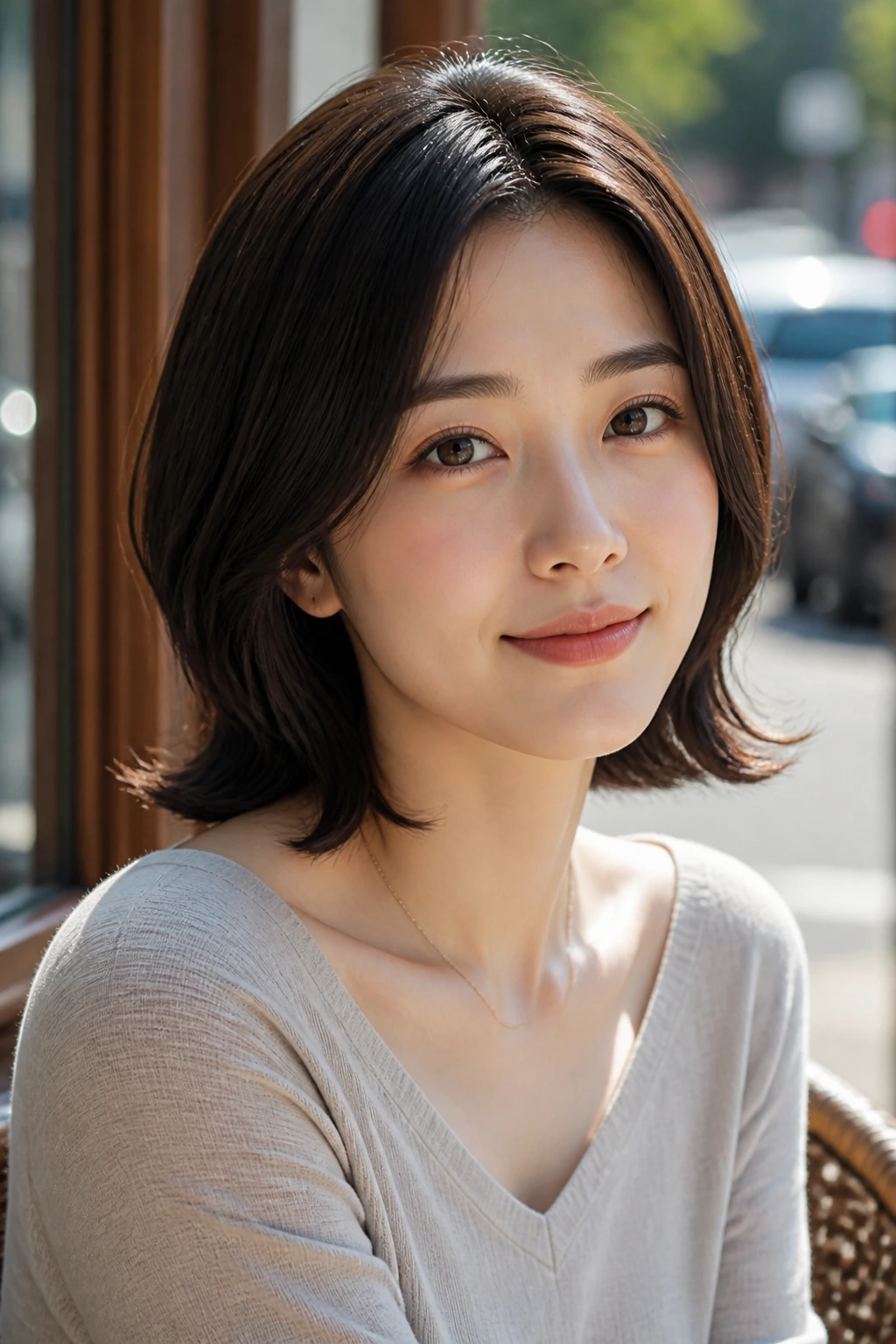
Why do flipped-out ends look polished instead of dated when they’re done with restraint? Because the bend is subtle and the rest of the hair stays smooth. A little flip at the ends gives a lob life without turning it into a retro costume.
This works best when the lob hits the collarbone or just above it. Use a flat iron or round brush to push only the bottom inch outward, then let the middle lengths fall straight. That contrast makes the cut look deliberate. If the whole head flips out, the style gets loud fast.
I like this one on straight Asian hair that tends to sit heavy at the shoulders. The outward movement opens the neckline and keeps the lob from feeling boxy.
16. Braided Crown Half-Up
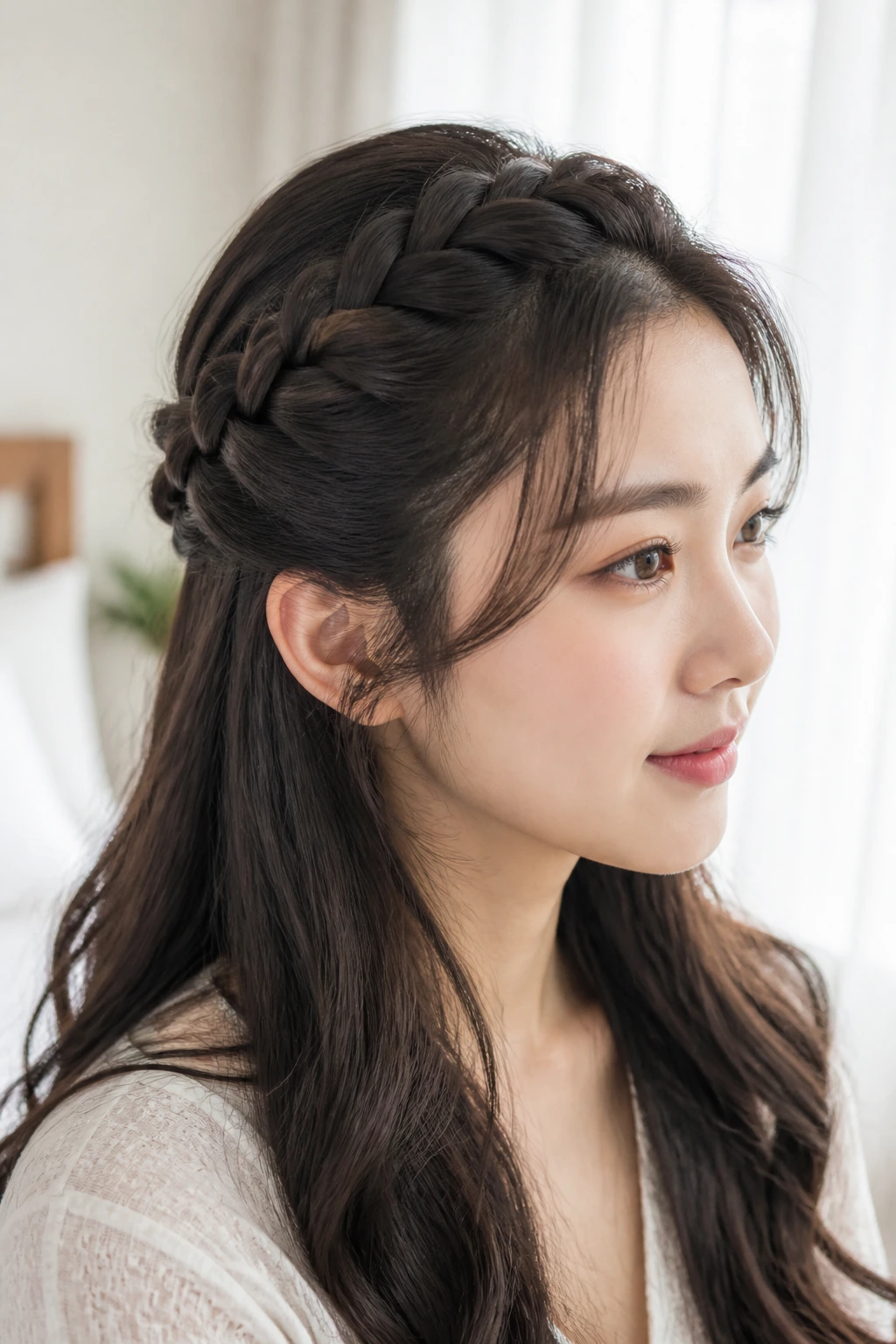
A braided crown half-up can look sweeter or sharper depending on how tight you pull it. For a soft polished finish, the braid should sit close enough to the head to stay neat, but loose enough that the edges don’t bite into the hairline.
Straight hair sometimes slips out of braids, so start with a bit of dry shampoo or texturizing spray. Braid from one side to the other, then tug each loop a touch after securing it so the braid looks fuller. Don’t panic if a few pieces fall free. That’s the point of the softness.
This style is handy when you want the front cleared away but you don’t want a full updo. It keeps the top neat and leaves the rest to move.
17. Bubble Ponytail with Sleek Roots
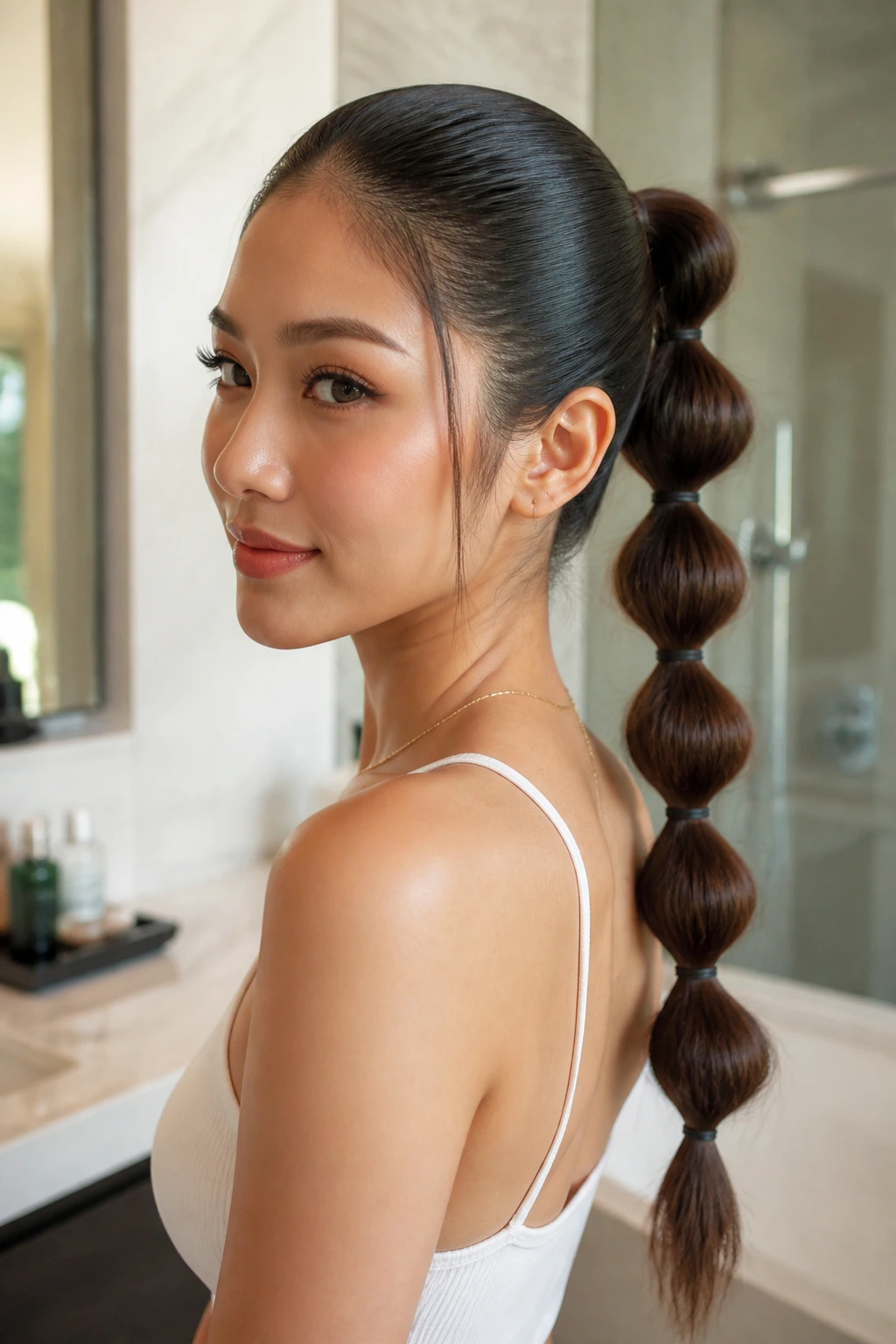
A bubble ponytail can look playful in a way that still feels neat. The clean roots are what make it polished. The “bubble” part is just a series of evenly spaced ties down the tail, with each section gently puffed between elastics.
It works well on straight hair because the smooth surface makes the shape easy to read. If your hair is very fine, pull the bubbles apart a little less so they hold. If it is thick, use larger sections and stronger elastics. The structure matters more than the shine here.
This style is best when you want something different from a standard ponytail but don’t want the hair to look overdone. It has shape. It has movement. It still stays tidy.
18. Waterfall Braid on Straight Hair
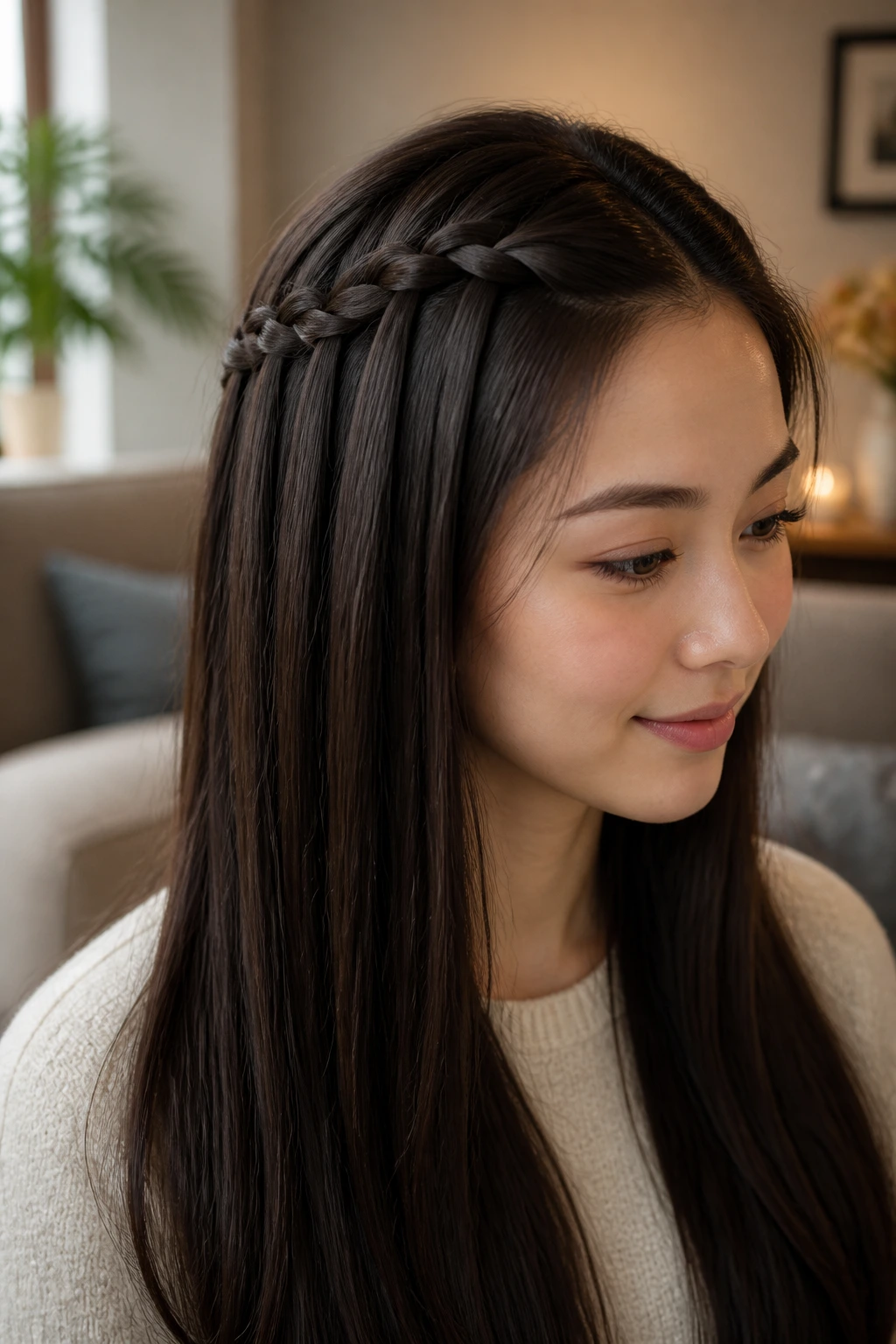
A waterfall braid can disappear on glossy straight hair if you do it too cleanly. A soft polished version needs a bit of looseness so the braid shows, then a brushed finish through the loose lengths so the whole thing stays calm.
The trick is not to pull every strand tight. Leave enough slack that the braid sits on top of the hair instead of sinking into it. That’s especially important if your hair is very smooth. A tiny mist of dry texture spray before braiding helps a lot.
Unlike a classic three-strand braid, a waterfall braid gives you visible detail at the crown while leaving most of the length free. That makes it useful when you want something pretty but not packed with volume.
19. Center-Part Low Knot
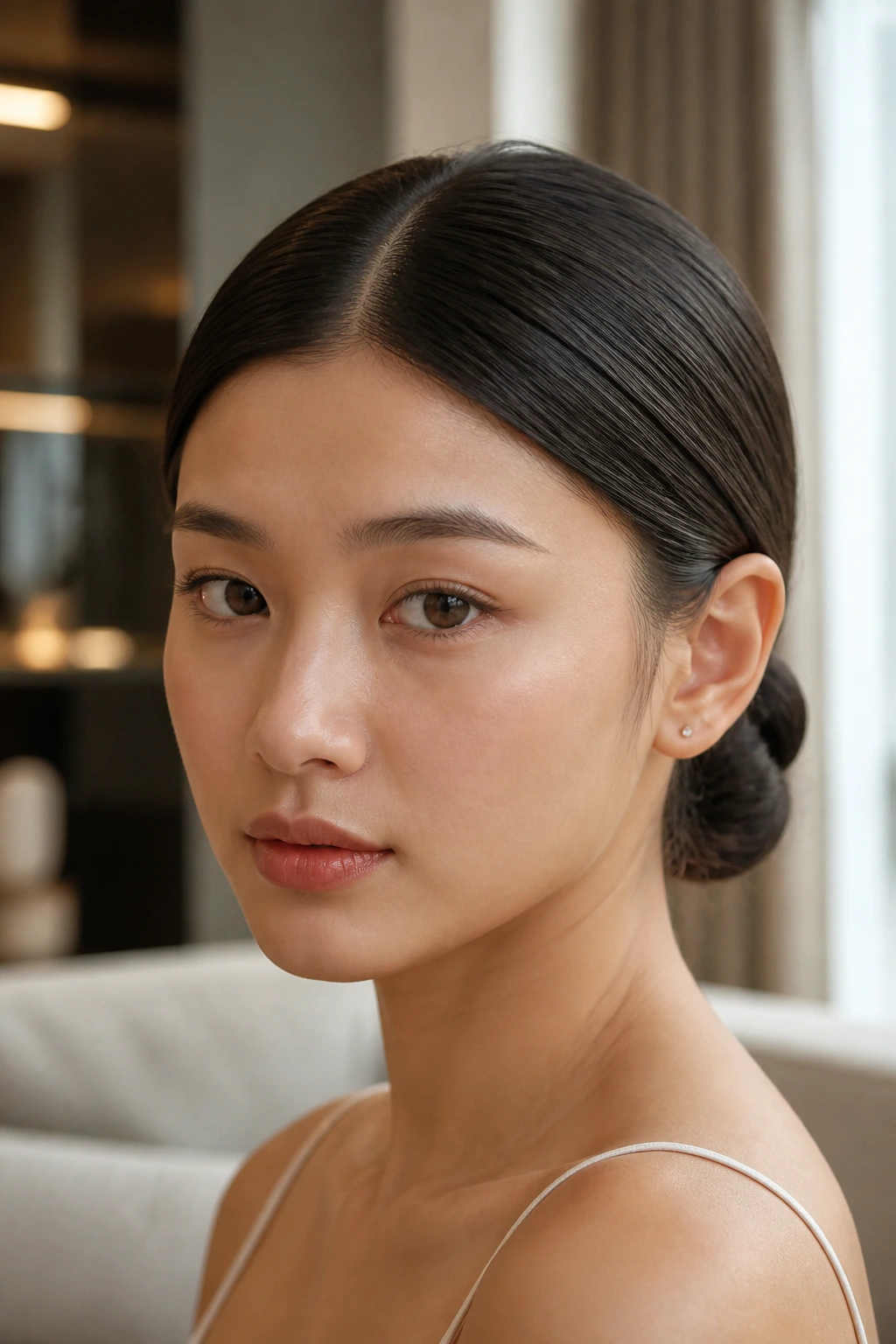
A center-part low knot looks minimal until you get the lines right. Then it turns into one of the most polished styles in the whole group. The part should be clean, the sides smoothed back with a brush, and the knot tucked low at the nape so it doesn’t compete with the face.
The knot itself can be twisted, folded, or pinned. I prefer a folded knot for straight hair because it lies flatter and doesn’t unravel as easily. If the hair slips, a small clear elastic at the base helps before you pin.
The style works because it creates order without trying to look dramatic. That’s not a boring thing. It’s a useful thing.
20. Silk-Press Long Layers
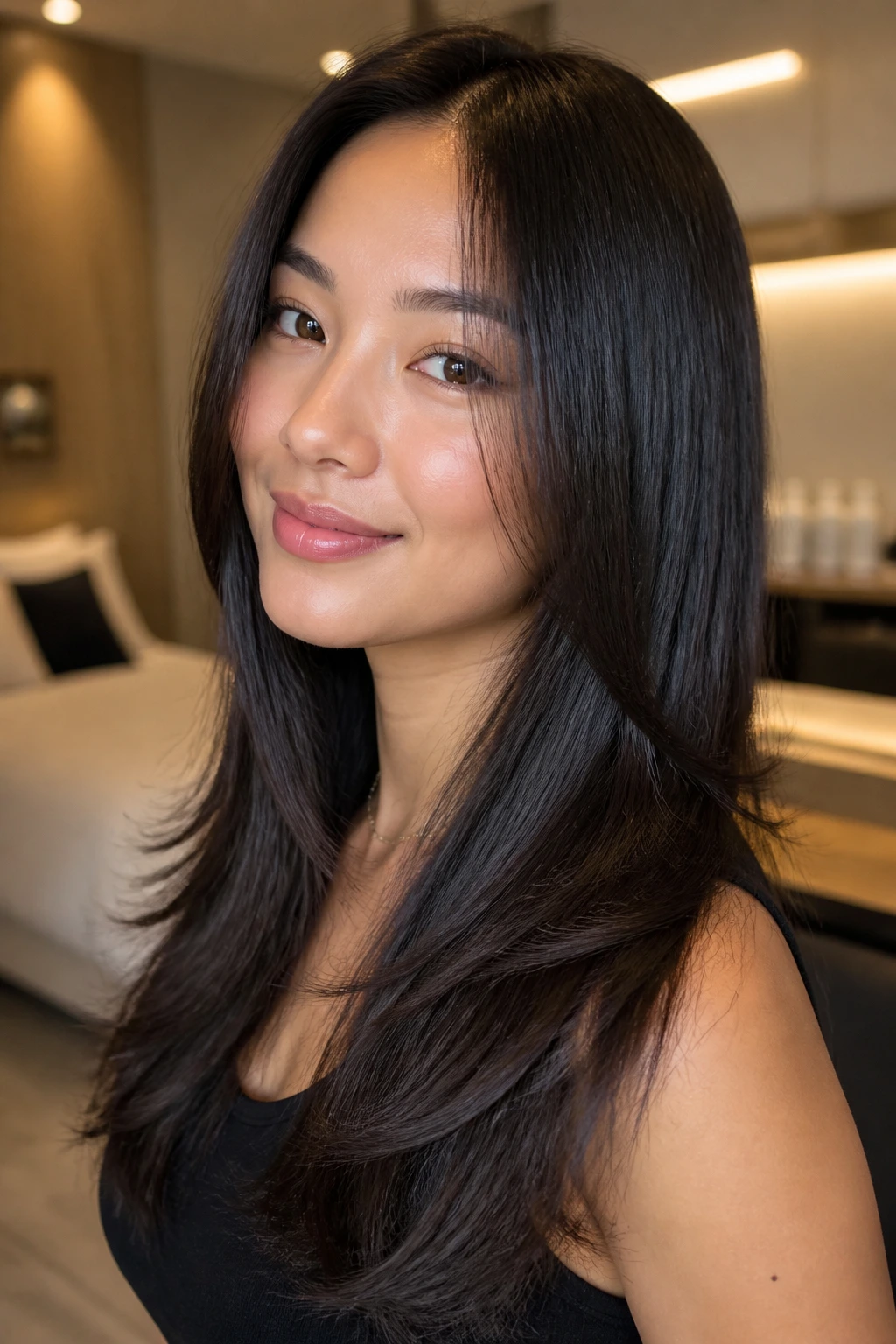
A silk-press inspired finish is less about making the hair bone-straight and more about making it look smooth, reflective, and feather-light around the ends. Long layers stop the shape from turning into one heavy sheet, which is what keeps this style from feeling stiff.
On straight or relaxed hair, the finish can be almost glassy. On naturally wavy or slightly textured hair, the goal is softer: root smoothing, clean movement, and a little bend at the bottom third. A pass with a flat iron in small sections, followed by a light serum just on the ends, usually does the job.
This is one of the most refined-looking options on the list, but it does need maintenance. The payoff is the outline. Long layers give it motion. Without them, the whole style goes flat fast.
21. Loose Chignon with Temple Pieces
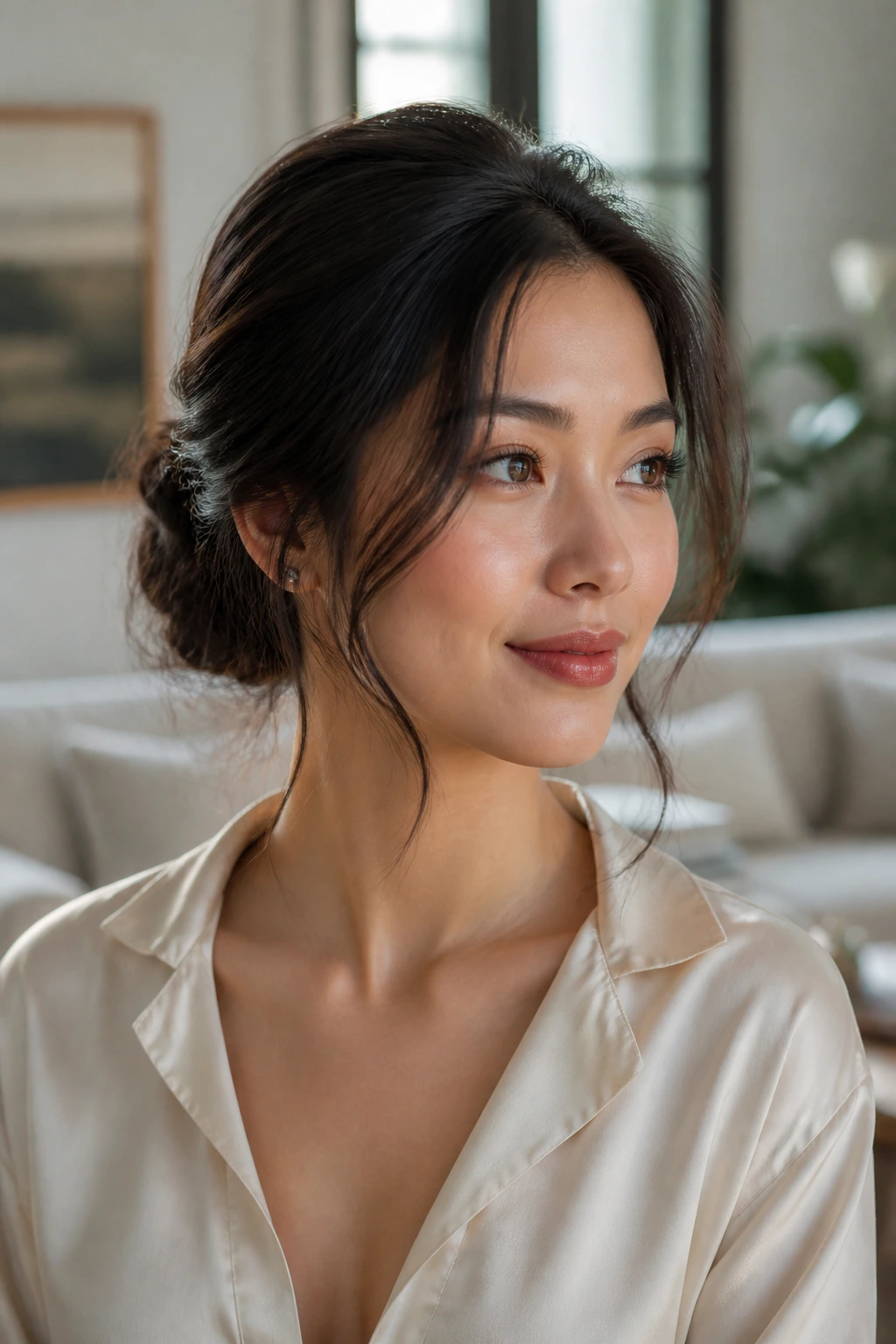
A chignon becomes softer the second you stop trying to make it perfect. Leave two temple pieces out, twist the back into a loose knot, and pin it low enough that the neck line stays long. That tiny looseness keeps the style from looking severe.
This is the one I reach for when the outfit already has structure and the hair should play backup. The chignon sits quietly, but the loose pieces keep the face from getting boxed in. If you want a bit more polish, curl only the front pieces and leave the bun itself smooth.
The best version feels finished from the front and relaxed from the side. That balance takes two minutes to lose and five minutes to get back, so pin carefully.
22. Soft Wolf Cut with Brushed Texture
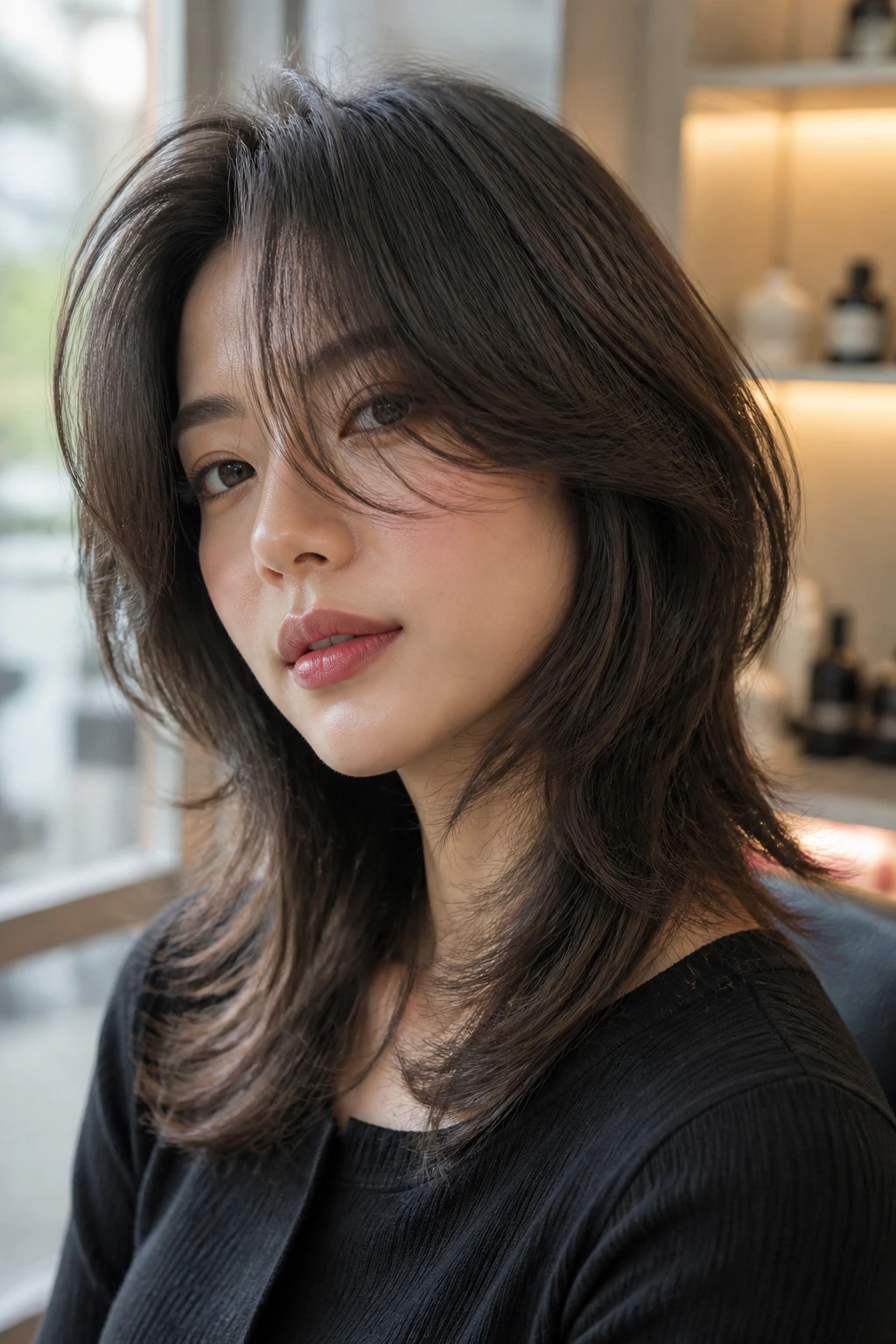
A wolf cut does not have to be wild. The softer version keeps the crown airy, the layers blended, and the ends brushed into a shape that looks lived-in rather than choppy. It is a good fit if your hair has some wave or if you want movement without the heavy polish of a blowout.
The danger with this cut is over-styling it into frizz. Use a little cream through the mids, rough-dry the roots, then smooth only the outer layer with a brush or flat iron. The result should feel feathered and loose, not shaggy in the bad sense.
Who it suits best
- Hair that sits heavy at the ends.
- People who want layers but not a strict bob.
- Anyone who likes a little edge with their softness.
- Straight hair that needs help holding shape around the face.
The soft wolf cut is the most relaxed style here, but it still belongs in a polished lineup because the outline is controlled. Messy is not the goal. Movement is.
How to Choose the Right Style for Your Hair Texture
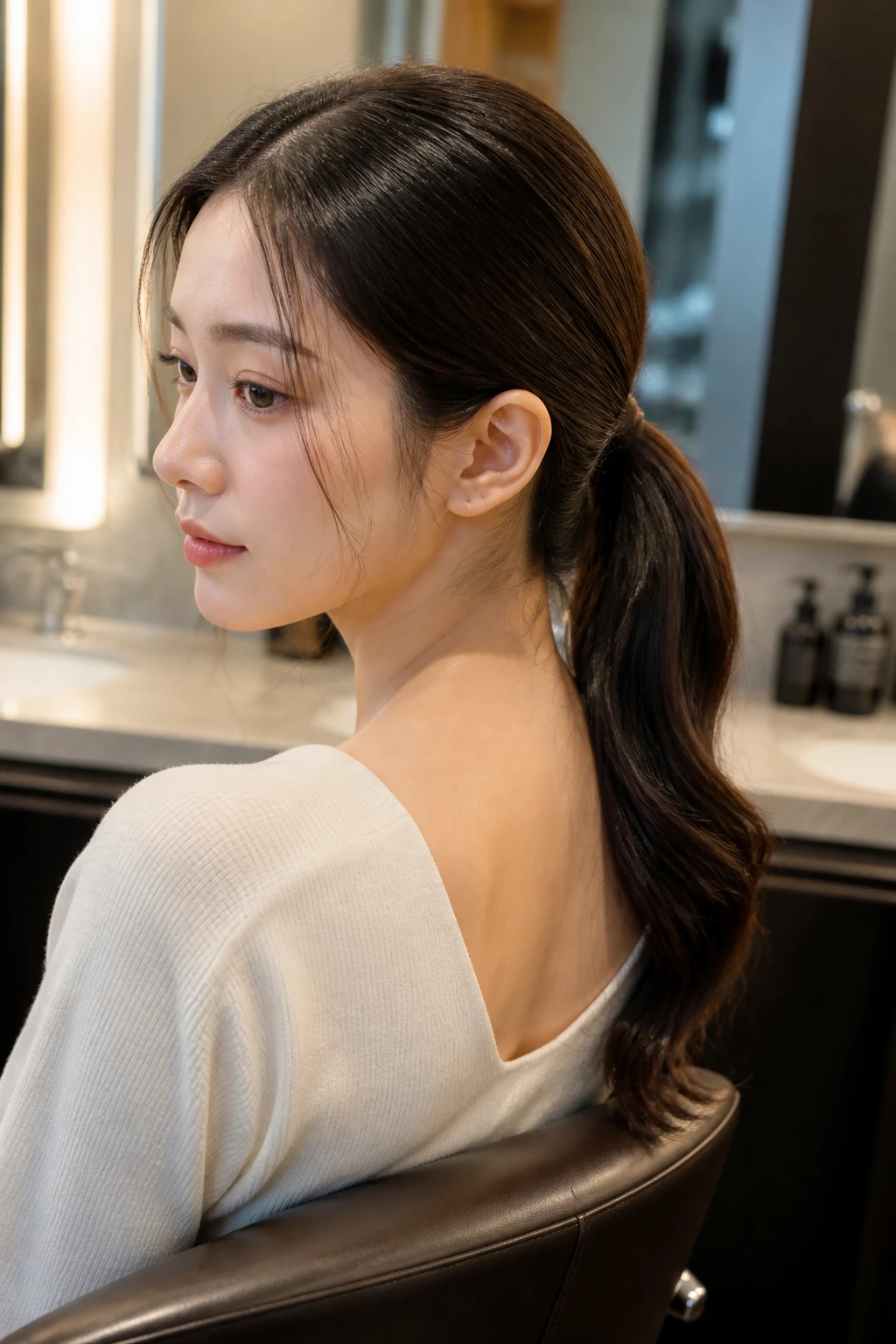
Straight, silky hair usually does better with styles that build shape through parts, bends, and clips rather than through huge curls. A low pony with wrapped elastic, a tucked bob, or a curtain-bang layer set will hold the eye longer than a loose spiral that drops out by lunch. If your hair is very fine, look for cuts and styles that create the illusion of body at the crown without asking for much product.
Thicker hair flips the equation. You often need less volume and more control. Low buns, center parts, half-up twists, and softened shags keep the silhouette from growing too wide. A little internal layering helps, but too much thinning can make the ends puff out in a way that is hard to calm down later.
Wavy hair sits in the middle and gets the most freedom. A brushed-out wave lob, side part with S-waves, or loose chignon can lean either polished or relaxed depending on how much you smooth the root area. That flexibility is a gift. Use it.
The Tools That Make the Finish Look Intentional
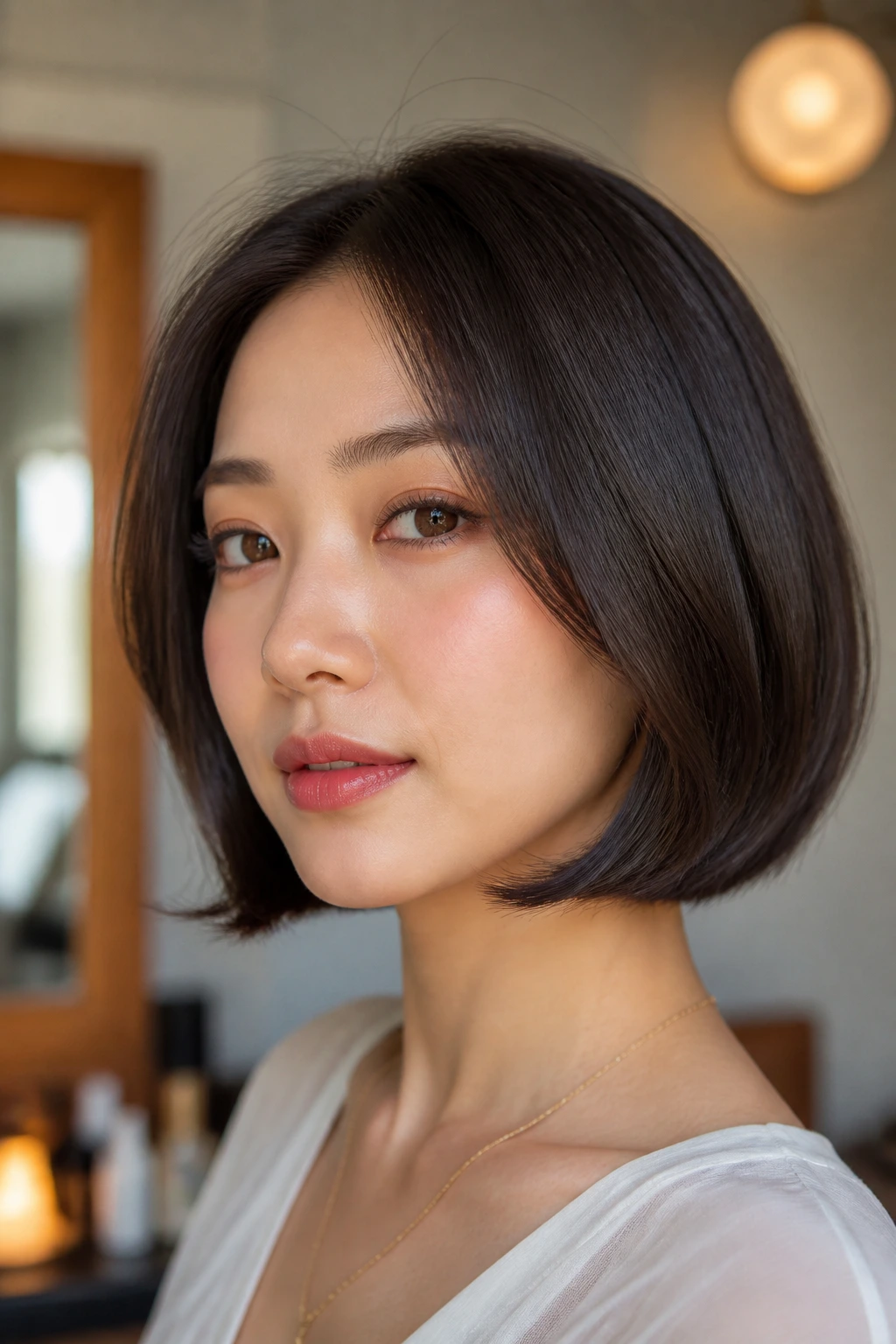
- 1-inch and 1.25-inch curling irons: The smaller barrel gives a stronger bend on straight hair; the larger one is better for brushed-out waves and lob length.
- Flat iron with rounded edges: This helps you bend ends inward or outward without leaving a sharp crease.
- Blow dryer with a concentrator nozzle: The nozzle keeps the air focused, which helps the hair lie smooth instead of puffy.
- Round brush in two sizes: A medium brush for fringe and a larger one for long layers covers most soft-polished styles.
- Duckbill clips: These hold sections out of the way while you work and keep the part neat.
- Clear elastics and silk scrunchies: Both are useful; clear elastics hide under wraps, while silk scrunchies are kinder to slippery hair.
- Bobby pins and U-pins: Good for low buns, half-up twists, and chignons that need quiet support.
- Fine-tooth comb and vent brush: One for crisp parts, one for quick smoothing.
- Heat protectant spray: Non-negotiable. Spray every section before heat touches it.
- Flexible-hold hairspray: Strong enough to keep shape, light enough to avoid crunch.
- Dry shampoo or texturizing spray: Best friend of very clean, very smooth hair when you need grip.
Product Picks That Keep the Hair Soft Instead of Puffy
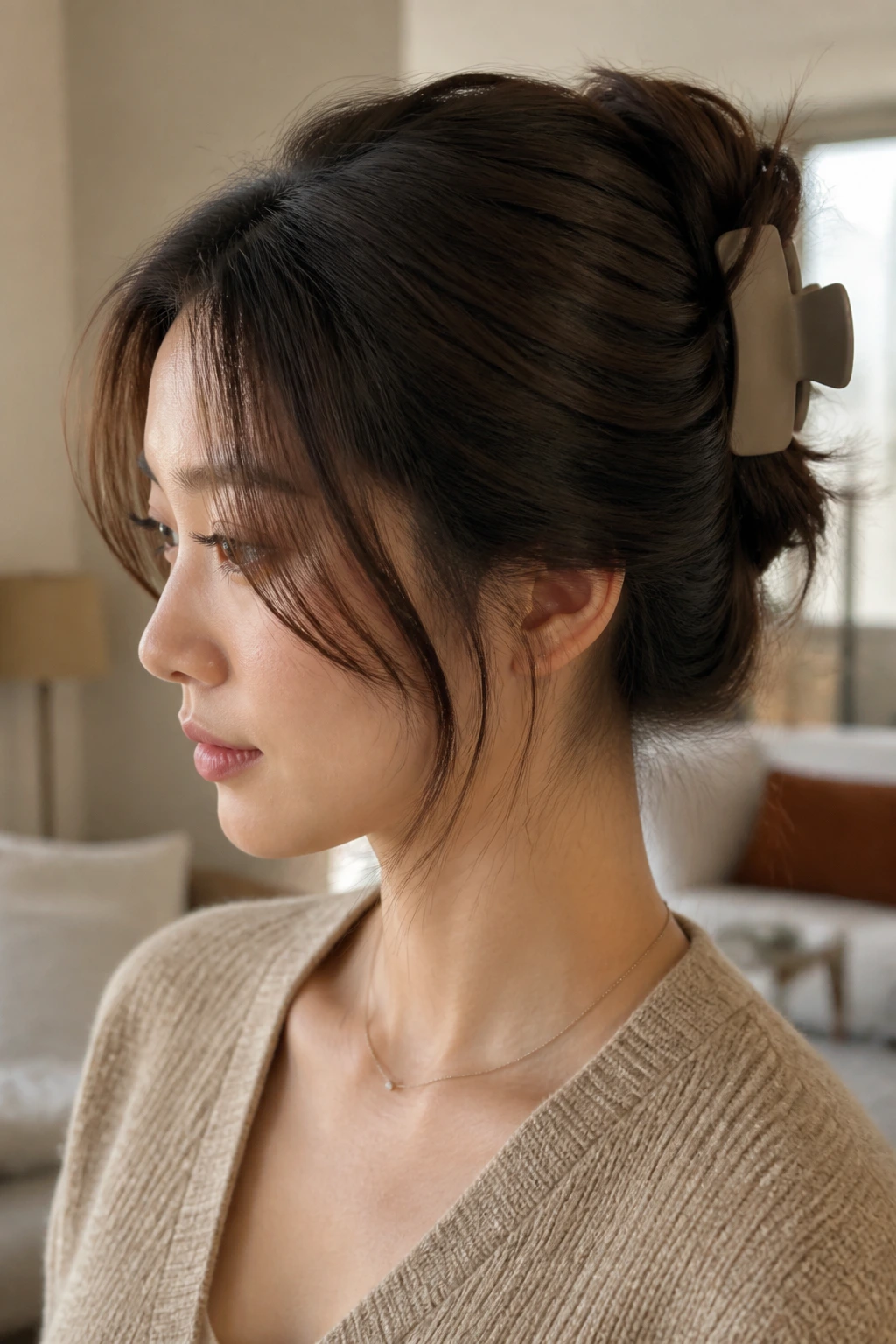
Soft polished hair starts in the shower, not at the iron. If your hair is fine, use a lightweight shampoo and conditioner that won’t leave a film at the roots. Heavy masks can flatten the crown before styling even starts, and then you spend the rest of the morning trying to wake it back up. That’s a losing game.
For thicker or frizz-prone hair, a smoothing conditioner and a leave-in cream on the mid-lengths can help the cuticle lie down. Keep richer products away from the scalp unless your hair is very dry. A little silicone serum on the ends is often enough to make long layers look glossy without getting greasy.
Heat protectant should be misted section by section, not sprayed in one big cloud and hoped for. Fine hair needs less product, but it still needs protection. If you’re curling or waving straight hair, a light mousse or setting spray gives the bend more staying power. If you’re building a ponytail or bun, dry shampoo on clean hair creates just enough grip that pins stop slipping around like they have somewhere else to be.
How to Wear These Looks for Work, School, and Events
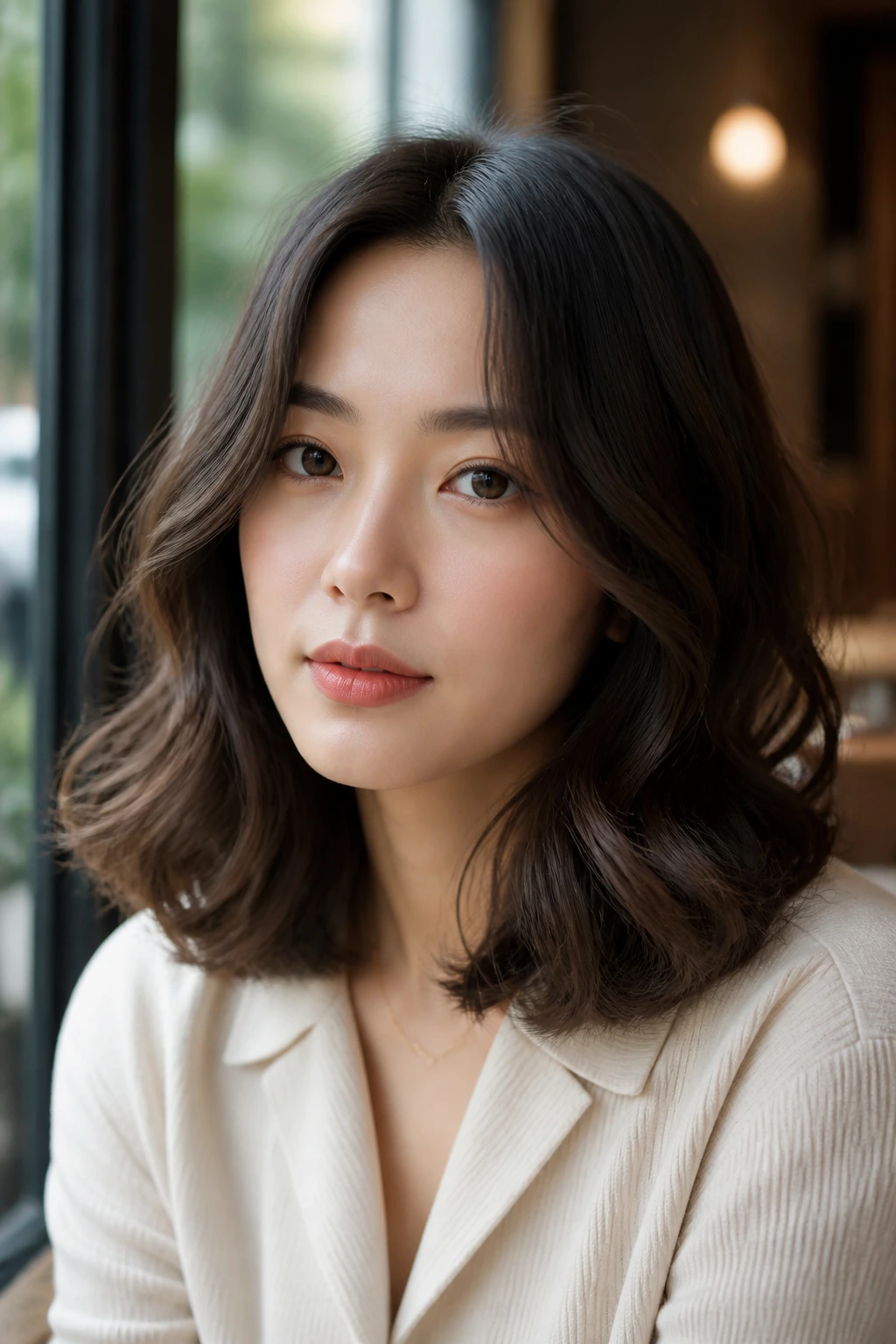
Desk-Friendly: Curtain bangs, chin-length bobs, low knots, and sleek low ponies behave well during long hours because they don’t need constant fixing. They sit close, keep the neck clear, and still look finished when you catch yourself in a hallway mirror.
School or Busy Errands: Claw clip twists, ribbon half-ups, and bubble ponies are the fast answers. They take very little time, but they still look deliberate because the base is smooth and the shape is clean. Good hair without the drama.
Dinner or Events: Pearl-pinned half-ups, loose chignons, French bobs, and brushed wave lobs all carry a little more visual weight. They look dressed up without turning formal. That’s the sweet spot for a soft polished look—enough detail to feel special, not so much that the hair starts competing with the rest of you.
Hot or Humid Days: Shorter cuts, low buns, tucked bobs, and center-part knots hold their lines best when the weather works against you. Keep the styling product light and the roots smooth, then leave some softness at the edges. The hair will look calmer, and it will last longer.
Small Tweaks That Change the Whole Shape
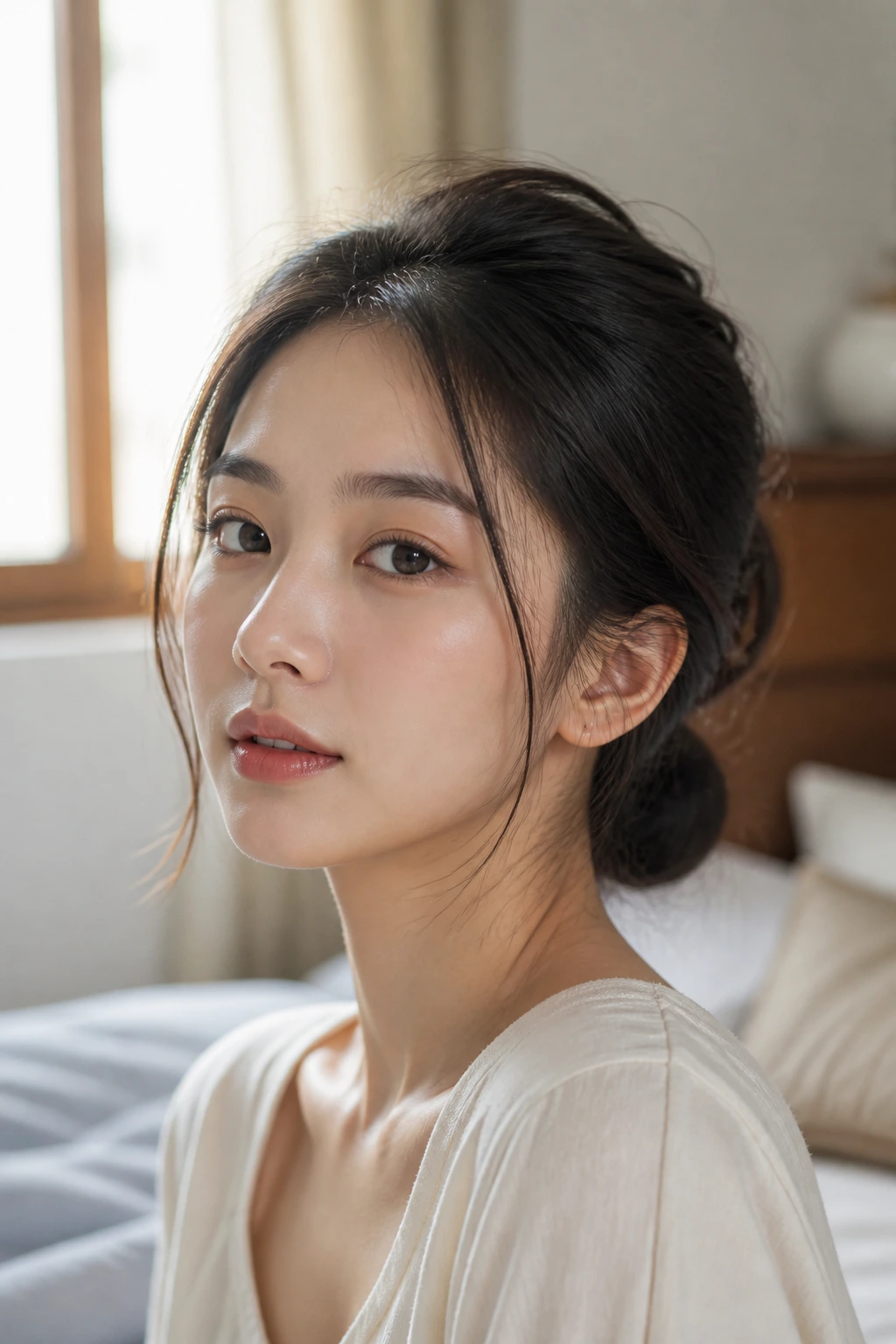
Root Lift: Flip the part while blow-drying the roots for the first few minutes, then set the part you actually want. That little trick keeps straight Asian hair from lying too flat where it counts.
Movement: Leave the last inch of the hair straighter than the middle lengths. It sounds backward, but that tiny unfinished end is what makes a wave look modern instead of over-curled.
Face-Framing: Two thin pieces around the temples can soften almost any style. Keep them narrow. Wide face-framing chunks can swallow the cheekbones.
Shine: Warm one drop of serum between your palms and smooth it only over the outer layer and ends. If you can see product from across the room, it’s too much.
Make-It-Yours: Add a ribbon, pearl pins, or a sleek clip when the style needs a little extra finish. Accessories are faster than restyling, and they often look more intentional.
Mistakes That Make Soft Styles Look Flat or Crispy
- Using too much oil at the roots: The hair looks shiny for ten minutes, then limp. Put heavier serum only on the ends and use a lighter touch near the scalp.
- Curling every section the same way: That creates a row of loops instead of soft movement. Alternate direction or leave a few ends straighter so the shape breathes.
- Pulling ponytails too tight: The style gets severe, the hairline gets stressed, and the whole look loses softness. Loosen the top a little and keep the base low enough to sit naturally.
- Skipping heat protectant: Straight hair shows heat damage fast because the surface is so smooth. Use a protectant every single time, even if you’re only bending the ends.
- Ignoring section size: Huge sections in a curling iron give lazy bends that fall out. Smaller sections—about 1 to 1.5 inches—hold shape better and look cleaner.
- Leaving layers untrimmed: Long bangs and soft layers lose their shape when the ends split or grow out unevenly. Bang trims every 4 to 6 weeks and shape trims every 8 to 12 weeks keep the line crisp.
Variations and Adaptations to Try
Heat-Free Bend: Set curtain bangs, front layers, or a lob in loose braids or velcro rollers while the rest of your routine happens. It gives you curve without the flat-iron pass, which is handy when your hair feels dry or fragile.
Humidity-Safe Finish: Use a smoothing cream through the mids, then lock the style with a flexible-hold spray. Keep the shape low and close to the head—low buns, knots, and clipped twists usually survive damp air better than open waves.
Fine-Hair Lift Edit: Add shorter layers around the crown, then use mousse before blow-drying. The extra support keeps the hair from collapsing halfway through the day.
Thick-Hair Control Edit: Choose styles that remove bulk from the outline: tucked bobs, low buns, soft shags, and center-part knots. A little weight removal in the cut can make styling much easier later.
Accessory-Forward Version: Swap a plain elastic for a satin ribbon, pearl pin, or matte claw clip. The accessory becomes part of the shape instead of an afterthought.
Short-Hair Spin: If your hair is too short for a full bun or pony, lean into bobs, pixies, side parts, and clipped half-ups. The trick is the same: tidy the base, soften the edges.
Keeping the Shape Fresh Between Washes
Soft polished styles usually hold best on day one and day two, then start asking for help. Straight, clean hair often needs more grip, which is why a little day-old texture can actually make claw clips, ponies, and low buns behave better. If your scalp gets oily fast, dry shampoo at the roots on the second day can buy you another round of wear without making the hair stiff.
Sleep matters. A silk pillowcase reduces friction, and a loose silk scrunchie can keep a low pony or bun from bending awkwardly overnight. If you wore curls or waves, pin them loosely into two or three large loops before bed and brush them out in the morning. Do not jam them into a tiny topknot and hope for the best. That usually gives you a crease where you least want one.
Refresh front pieces with a flat iron at a lower heat setting if they go weird around the face. Keep the pass quick—one smooth glide, maybe two if the hair is thick. Bangs and face-framing layers often need the most maintenance, so trim them on a shorter schedule than the rest of the cut.
Frequently Asked Questions
Which styles work best on very straight, slippery hair?
Low buns, wrapped ponytails, claw clip twists, curtain bangs, and chin-length bobs tend to hold the best because they rely on structure instead of curl memory. If your hair drops waves fast, a soft bend at the ends and a little dry shampoo at the roots will do more for you than a full head of curls.
How do I keep a polished style from looking too severe?
Leave a little movement around the face or at the ends. A flat crown with one soft wave, a loose temple piece, or a slightly tucked bob usually looks gentler than a tight, uniform finish.
Can thick Asian hair wear these styles too?
Yes, but the cut and product choice matter more. Thick hair usually needs more internal shaping, stronger pins, and less product at the roots so the style doesn’t balloon out or slide apart.
Do curtain bangs suit every face shape?
They’re flexible, but the length needs adjusting. Rounder faces often do well with longer curtain pieces that open below the cheekbone, while longer faces may prefer a shorter center point that brings attention back to the eyes.
What if my ponytail keeps slipping?
Use a small clear elastic first, then wrap the base with hair or a ribbon. A tiny bit of dry shampoo at the roots gives the tie something to grip, and a matte elastic usually works better than a shiny one on very smooth hair.
Is heat necessary for a soft polished look?
No, but it helps. Velcro rollers, braids, twist sets, and air-dried buns can still give you bend and shape if you prep the hair with the right product and give it enough time to set.
Which style is the fastest when I’m rushing out the door?
A low pony with a wrapped elastic, a claw clip twist, or a half-up ribbon tie. Those all look intentional with very little effort because the structure does the heavy lifting.
How often should I trim bangs and layers?
Bangs usually need a touch-up every 4 to 6 weeks if you want them to sit cleanly. Longer layers can go 8 to 12 weeks, depending on how fast your hair grows and how precise you want the shape to stay.
Soft Edges, Clean Lines
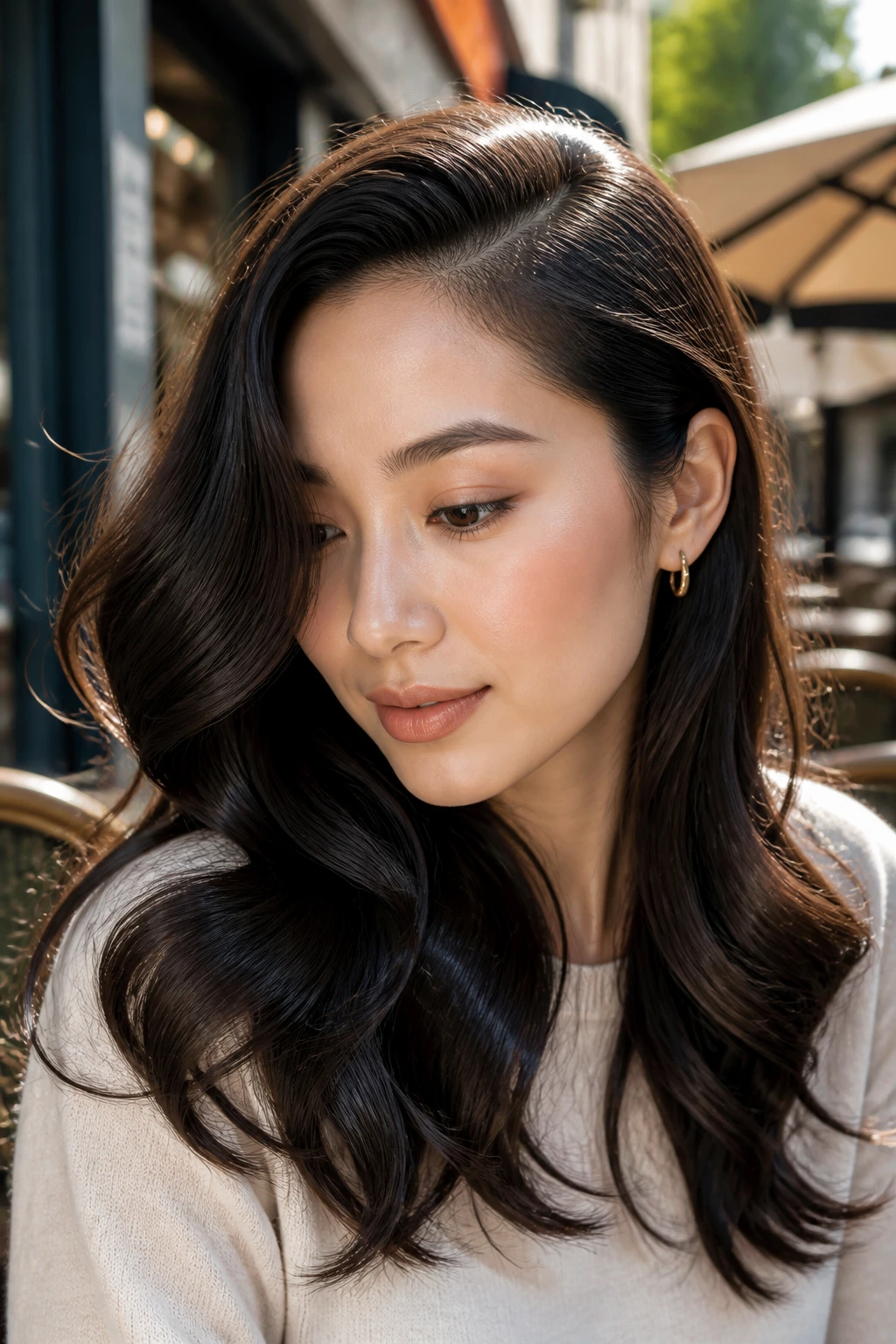
The best soft polished hairstyles do not try to bully the hair into something unnatural. They clean up the outline, leave a little air in the right places, and let the texture do half the work. That’s why they look good on so many different Asian hair types: straight strands, thick strands, fine strands, and all the awkward in-between stages that a haircut has to survive.
If you keep one rule in mind, make it this: polish the base, soften the ends. That tiny split is where the whole look lives. Get that balance right and the hairstyle stops feeling like a style choice for one outfit and starts behaving like a reliable part of your routine.
