



Fall hairstyles get tricky fast. One day your hair is doing exactly what you want, and the next it’s flattened by a collar, roughed up by a scarf, and full of static from dry indoor heat. A polished seasonal look usually has less to do with volume and more to do with shape. Clean lines. Controlled texture. A finish that looks deliberate, even if you got dressed in six minutes.
That’s the part I like most about autumn hair. Summer can get away with breezy, slightly wild texture. Fall asks for a little more discipline. Not stiffness. Never stiffness. But a better part, a lower silhouette, a smoother crown, or a wave pattern that stays put when you pull on a sweater and immediately regret it.
The styles below lean into that reality. They work with wool coats, turtlenecks, and the awkward little moment when you take a hat off and have to decide whether to panic. Some are sleek. Some are soft. Some are built for second-day hair, which is often where the magic lives anyway. The common thread is simple: these fall hairstyles look finished in real life, not only in a mirror under flattering light.
Why These Fall Hairstyles Work So Well Once the Weather Turns Cool
-
They hold their shape under layers: Low knots, tucked ends, and close-to-the-head braids stay neater when a scarf or coat collar keeps brushing them all day.
-
They make dry hair look intentional: Autumn air often steals shine, so styles with a clean part, a smooth crown, or a controlled bend read polished instead of puffy.
-
They work with second-day texture: A little grit helps bobby pins, clips, and elastics stay put, which is why these styles often look better on hair that isn’t freshly washed.
-
They dress up fast: Swap a plain elastic for a ribbon, a barrette, or a neat pin, and the whole look shifts without needing another round with the curling iron.
-
They suit more than one length: Short bobs, shoulder-length cuts, long layers, curls, and coils all show up here in a way that still feels seasonal and put-together.
-
They survive a real day: Commutes, cold air, hot coffee, and static are part of the equation. These styles are built for that mess.
1. The Low Chignon With a Sharp Center Part
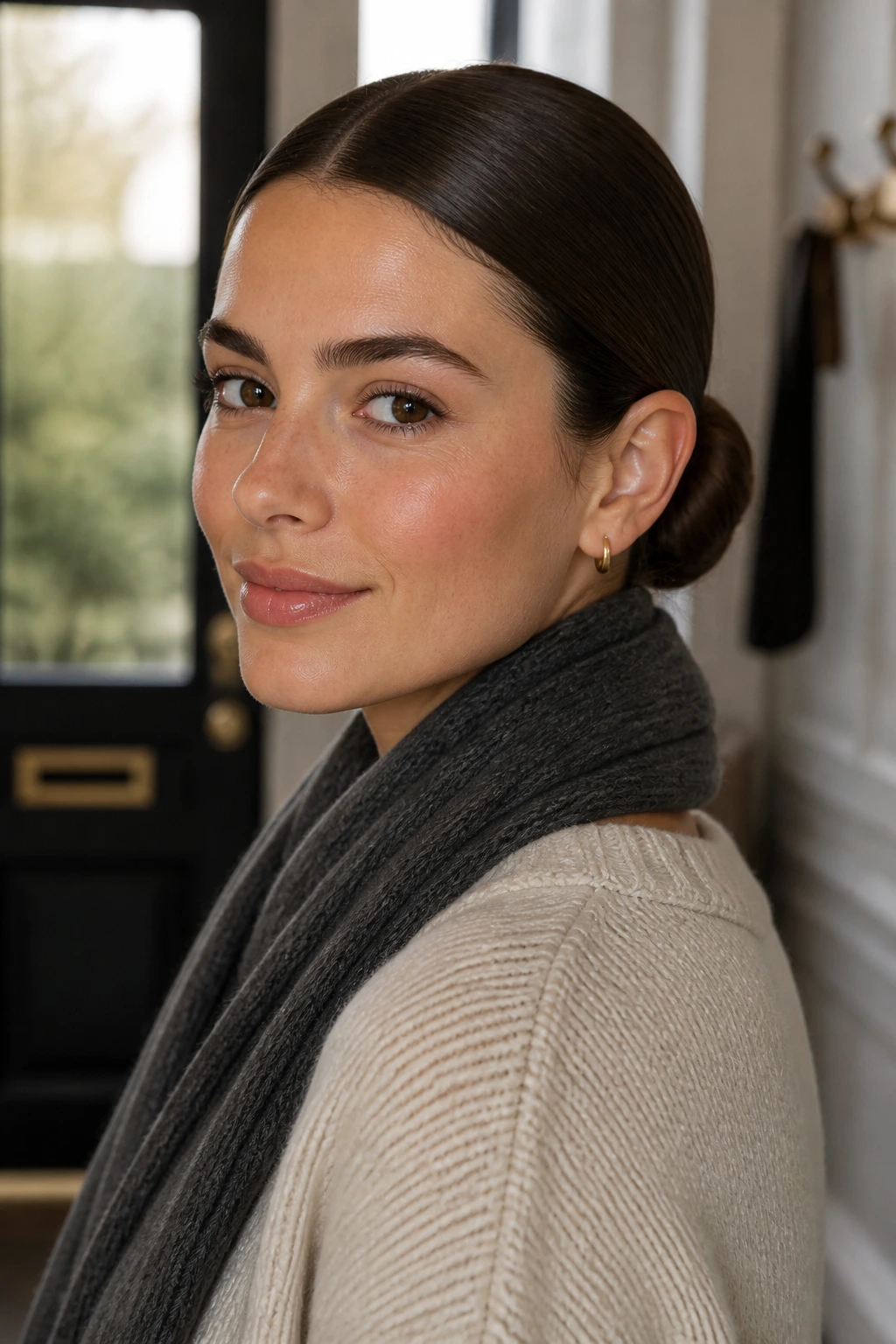
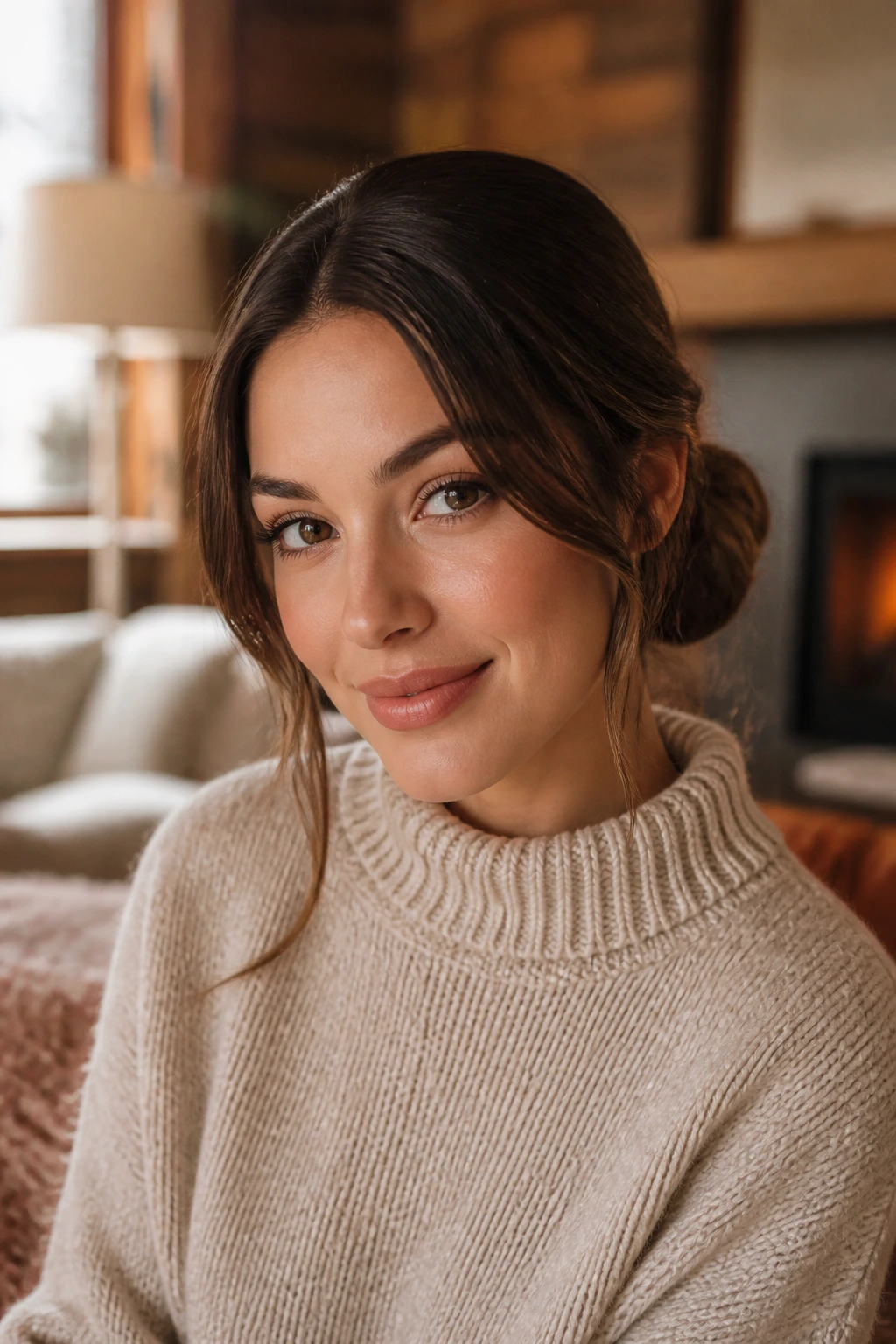
A low chignon is the hairstyle equivalent of a crisp white shirt. It doesn’t need decoration to look expensive. With a straight center part and a knot sitting right at the nape, the whole shape feels calm and deliberate, which is exactly what I want when knitwear starts creeping into the rotation.
Why it works in fall: the chignon keeps ends tucked away, so scarf friction has less to wreck. If your hair gets fuzzy in dry air, this is one of the few styles that still looks better after a few hours than it does in the bathroom mirror.
For this version, smooth the top with a lightweight cream, gather the hair low, and twist it into a compact knot rather than a soft bun. The difference matters. A chignon should look anchored, almost architectural, with the ends hidden cleanly under the roll.
Best details to get right
- Use a fine-tooth tail comb for the part; a sloppy center part ruins the whole effect.
- Keep the knot low and tight, not puffed up at the crown.
- Pin through the base in an X pattern so it stays put when you shrug on a coat.
- Leave one ear slightly visible if you want the style to feel less severe.
One good chignon can carry you through a day that includes wind, a meeting, and a dinner reservation. That’s not a small thing.
2. The Wrapped Low Ponytail
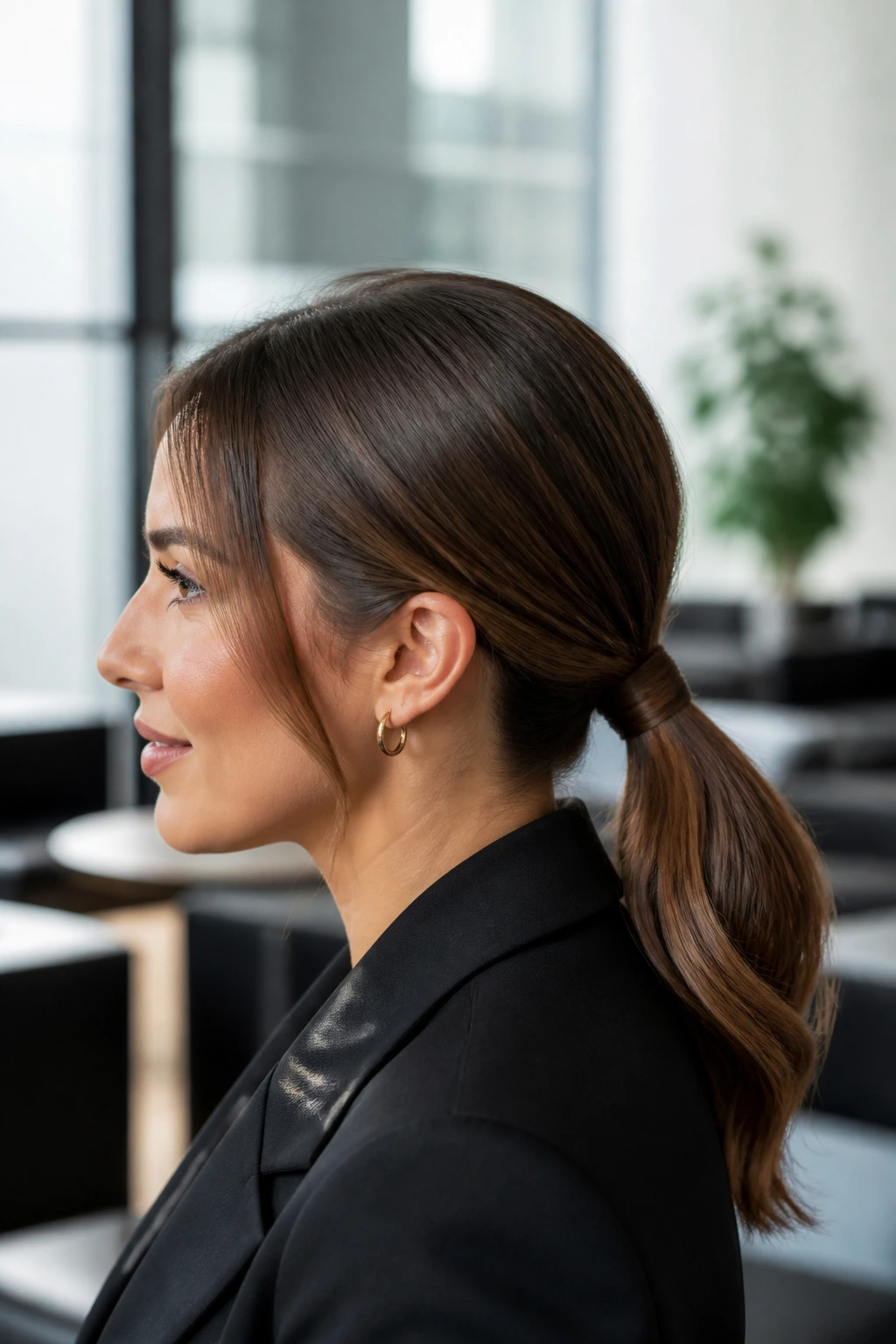
A wrapped low ponytail is the easiest way to make a ponytail look like you meant it. The trick is hiding the elastic with a small strand of hair, then keeping the base sleek enough that the style feels finished instead of rushed. Small move. Big payoff.
What I like here is the balance: the ponytail still moves, which keeps it from feeling too formal, but the wrapped base cleans up the whole silhouette. It’s one of those styles that looks especially good with a wool blazer or a ribbed turtleneck because the neck stays open and the line stays neat.
Keep the ponytail low and centered, or slide it just a half-inch off-center if your face shape likes a softer line. Use a touch of smoothing serum only on the crown and the hairline. Too much product near the ponytail itself will make the ends look stringy, and no one needs that.
The best version has a little bend in the tail, not a poker-straight drop. That bend keeps the style from reading severe. It also looks better when the air is dry and the ends need help pretending they’re cooperative.
3. Soft S-Bend Waves
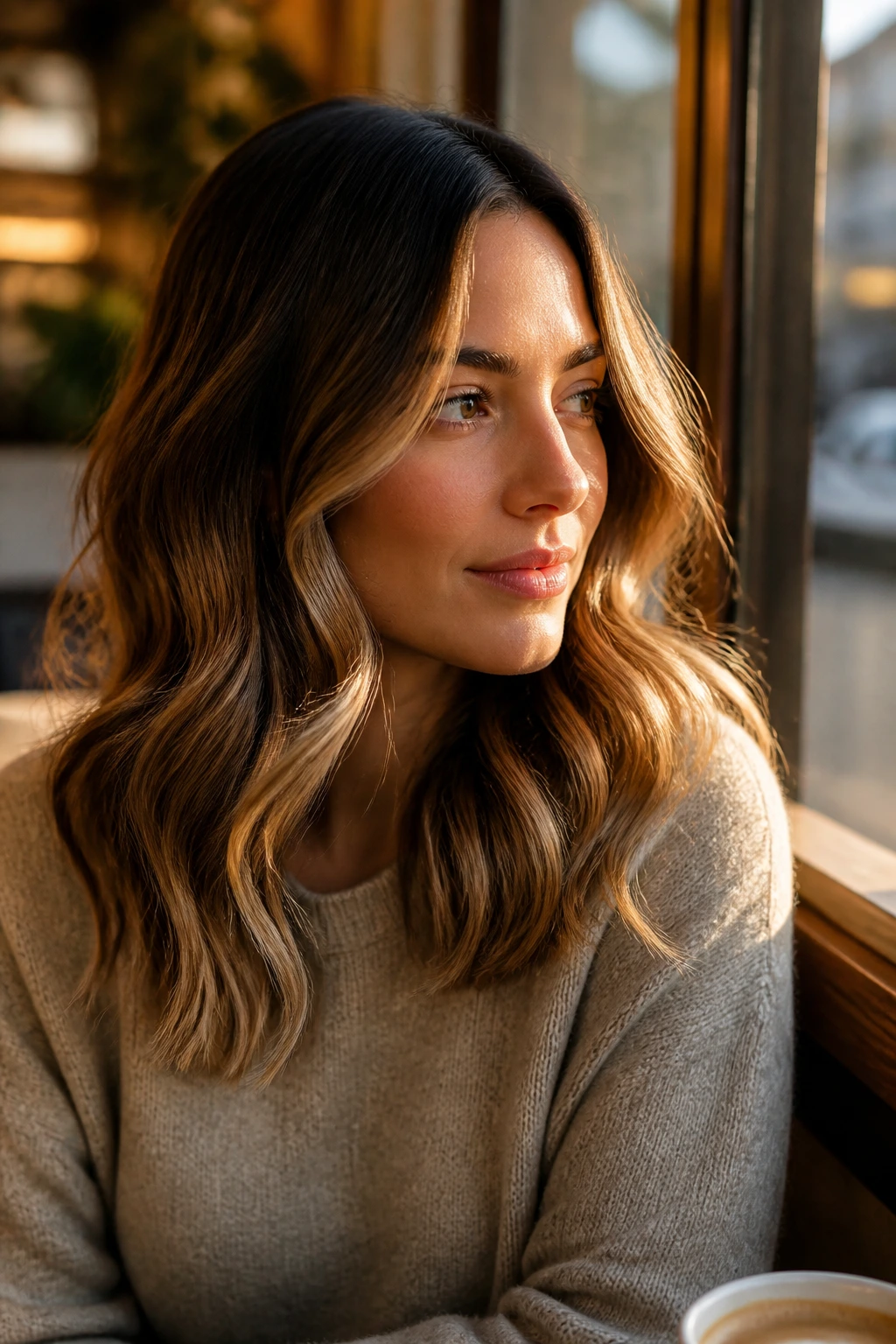
Why do S-bend waves look so good in fall? Because they sit between polished and relaxed. Not curled. Not flat. Just enough bend to catch the light, soften the jawline, and make layered cuts look more expensive than they probably were.
The shape is the whole story here. Rather than curling every piece into a ringlet, you create large, loose bends with a curling iron or flat iron, then brush them out gently so the wave falls in a long S shape. That makes the finish smoother and less springy, which is handy when sweaters already bring enough texture to the outfit.
How to keep them soft, not puffy
Use a 1-inch iron on medium sections, around 1 inch wide. Hold each bend for 5 to 8 seconds, then let it cool fully before brushing. If you touch it while it’s warm, the wave goes limp faster.
A light mist of flexible-hold spray is better than a stiff lacquer here. You want movement. If the hair feels crunchy, you used too much.
These waves are especially good on shoulder-length cuts and long layers, where the bends can stack into something that looks airy without turning messy.
4. The French Twist With Loose Face Pieces
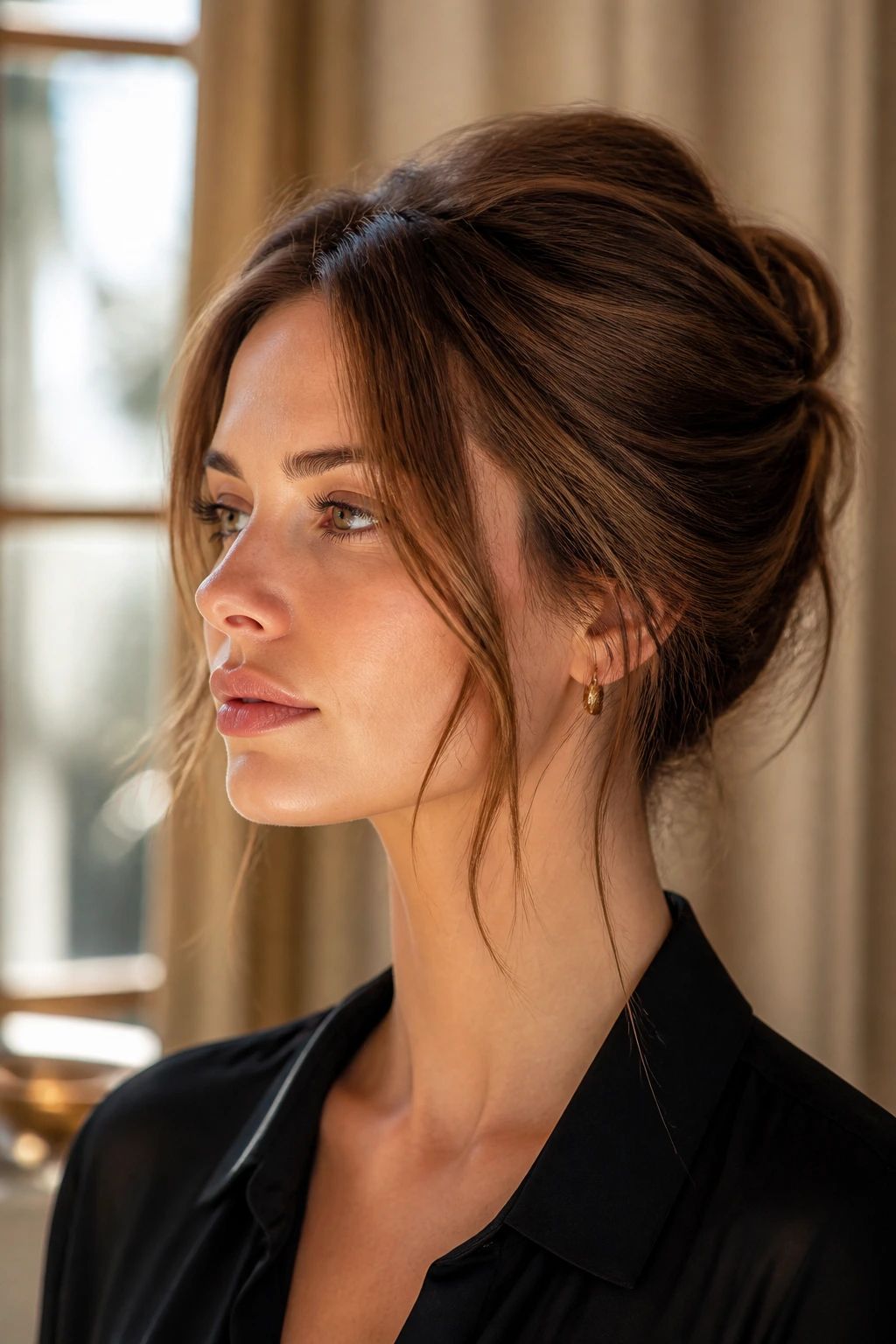
The French twist has a reputation for being too formal, which is fair if you’ve only seen the version that’s slicked to the point of severity. Loosen the front a little, leave two soft face pieces, and the whole thing changes. It becomes chic rather than stern.
Picture this: black knit top, gold hoops, hair swept neatly up the back of the head, and just enough softness around the face to keep it from looking like a banker from another decade. That’s the sweet spot. The twist stays close to the head, which means it plays nicely with collars, but the front pieces keep it from feeling rigid.
Use pins rather than one giant clip. The twist should be secured from inside the roll, not stabbed into the outer shell. If your hair is fine or slippery, prep with dry shampoo at the roots before you start. If your hair is coarse, a little cream on the ends helps them tuck cleanly.
A French twist only looks fussy when it’s over-smoothed. Leave a whisper of texture. Just enough to keep it from looking painted on.
5. The Claw-Clip Twist
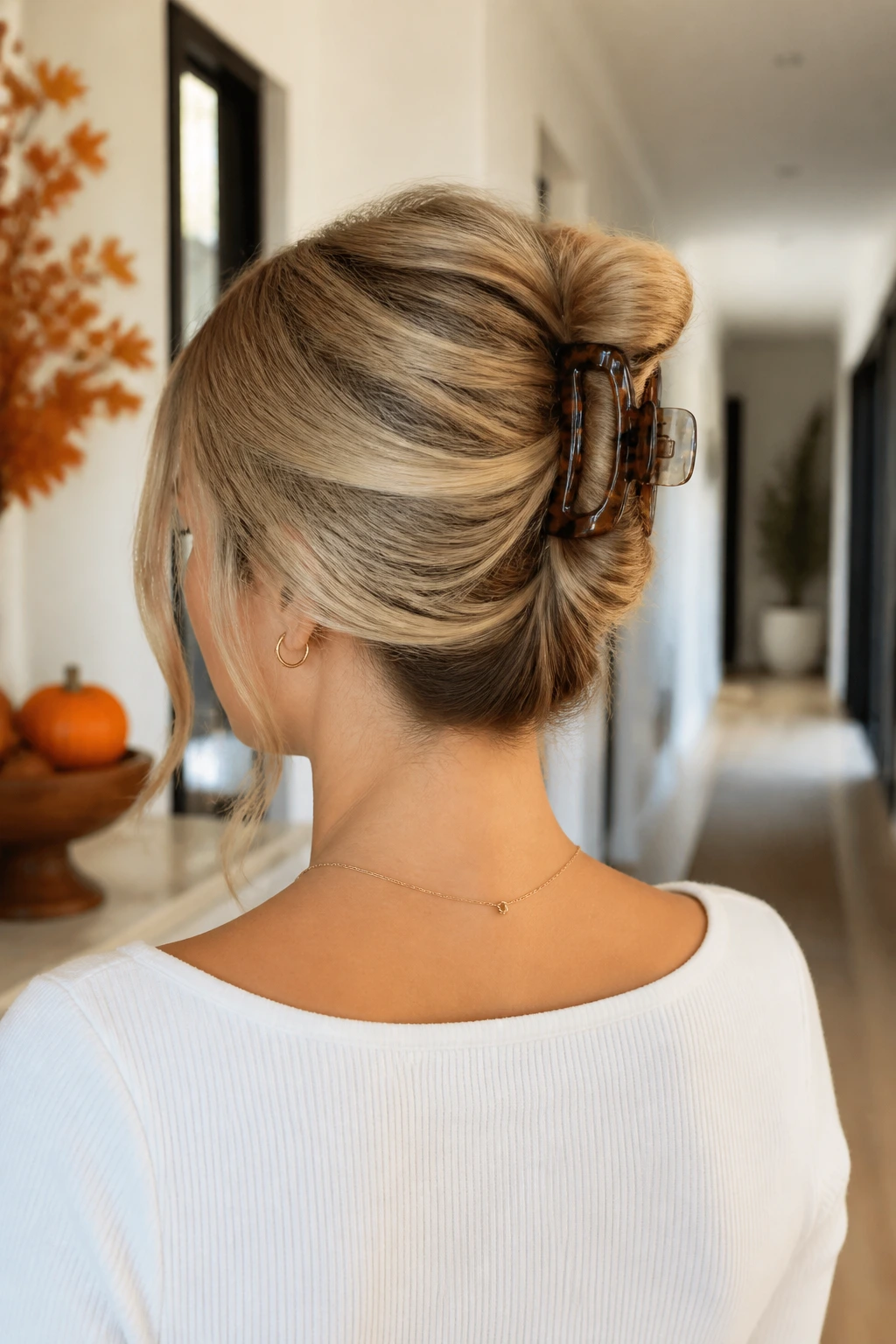
The claw-clip twist is the style I reach for when I want my hair up, but I also want it to look like I had some taste about it. The secret is in the shape you make before the clip goes on. If the twist is random, the style looks random. If the twist folds neatly upward and the ends are tucked in, the clip becomes a finish rather than a rescue mission.
This works best when the crown is smoothed first. Not glassy. Just smooth enough that the top reads clean. Then twist the lengths upward, fold the tail under, and clamp with a medium or large claw clip that matches the amount of hair you have. Too small and the style slips. Too big and the clip overwhelms the head.
Matte tortoiseshell, dark amber, or a plain black clip tends to look more polished than bright plastic. That’s not snobbery. It’s proportion. In fall, the texture of your clothes is already doing a lot, so a quieter accessory usually lands better.
The best part? You can undo it and redo it in under a minute, which makes it one of the few styles I’d actually call practical without grimacing.
6. The Satin Ribbon Half-Up
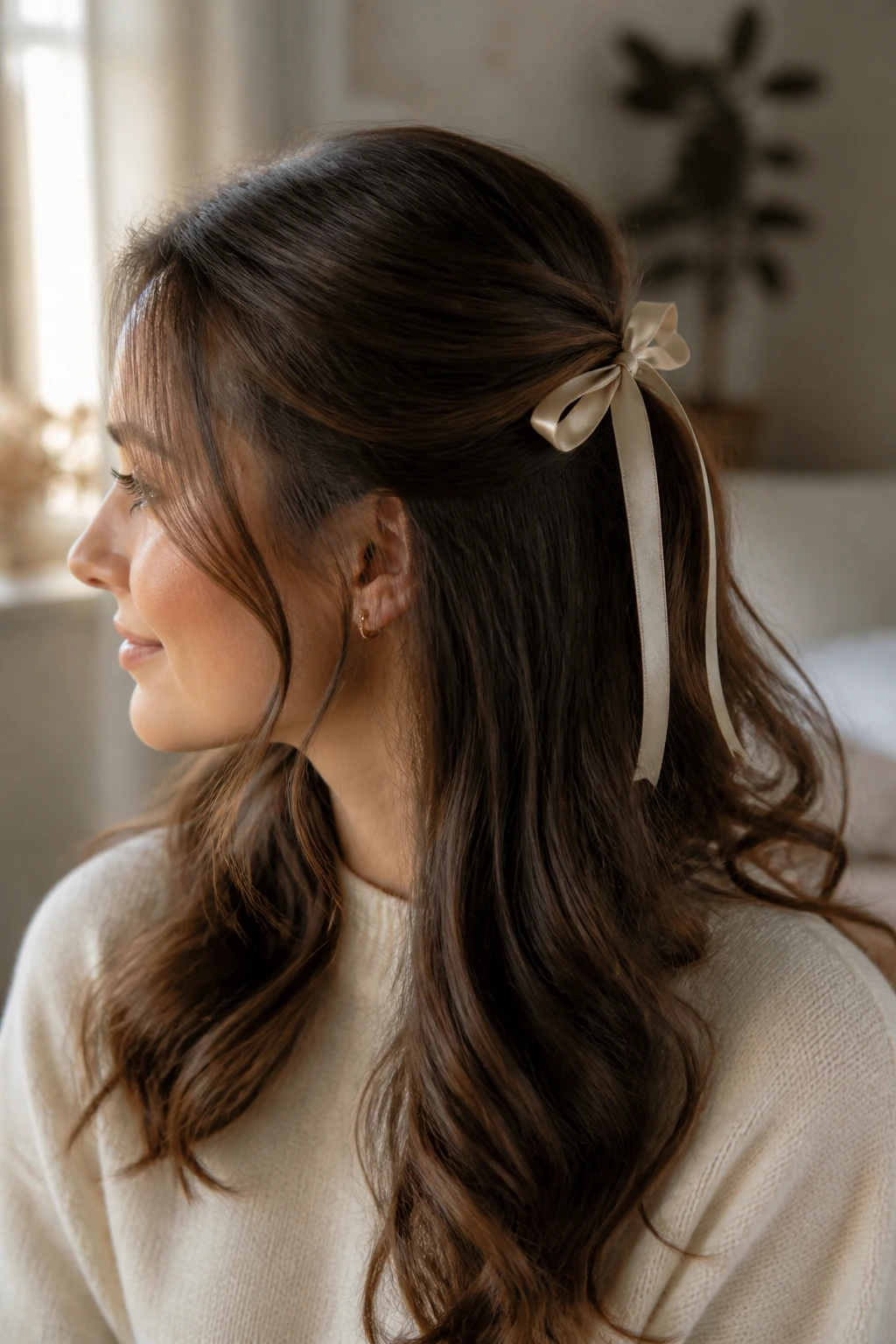
A satin ribbon half-up style gives you the softness of loose hair and the neatness of a tied-back crown. It’s a pretty smart compromise when you want something that feels dressed up but still lets the ends move around your shoulders. The ribbon does more work than people think. It visually finishes the style, even when the structure underneath is very simple.
This version suits blowouts, soft waves, or even a slightly messy second-day style that needs a little correction. Gather the top section from temple to temple, smooth it back with your fingers, and tie it with a ribbon that’s narrow enough to stay elegant. Wide bows can drift into costume territory fast.
Choose ribbon length carefully. Around 12 to 16 inches is plenty for a small bow or long tails. If the ribbon is too stiff, it won’t fall nicely. If it’s too soft and slippery, the bow collapses by lunch.
I like this for days when hair needs a lift but not a full updo. The neckline stays open, which pairs well with crewneck sweaters and collared shirts. Tiny thing. Makes a big difference.
7. Deep-Side-Part Glossy Curls
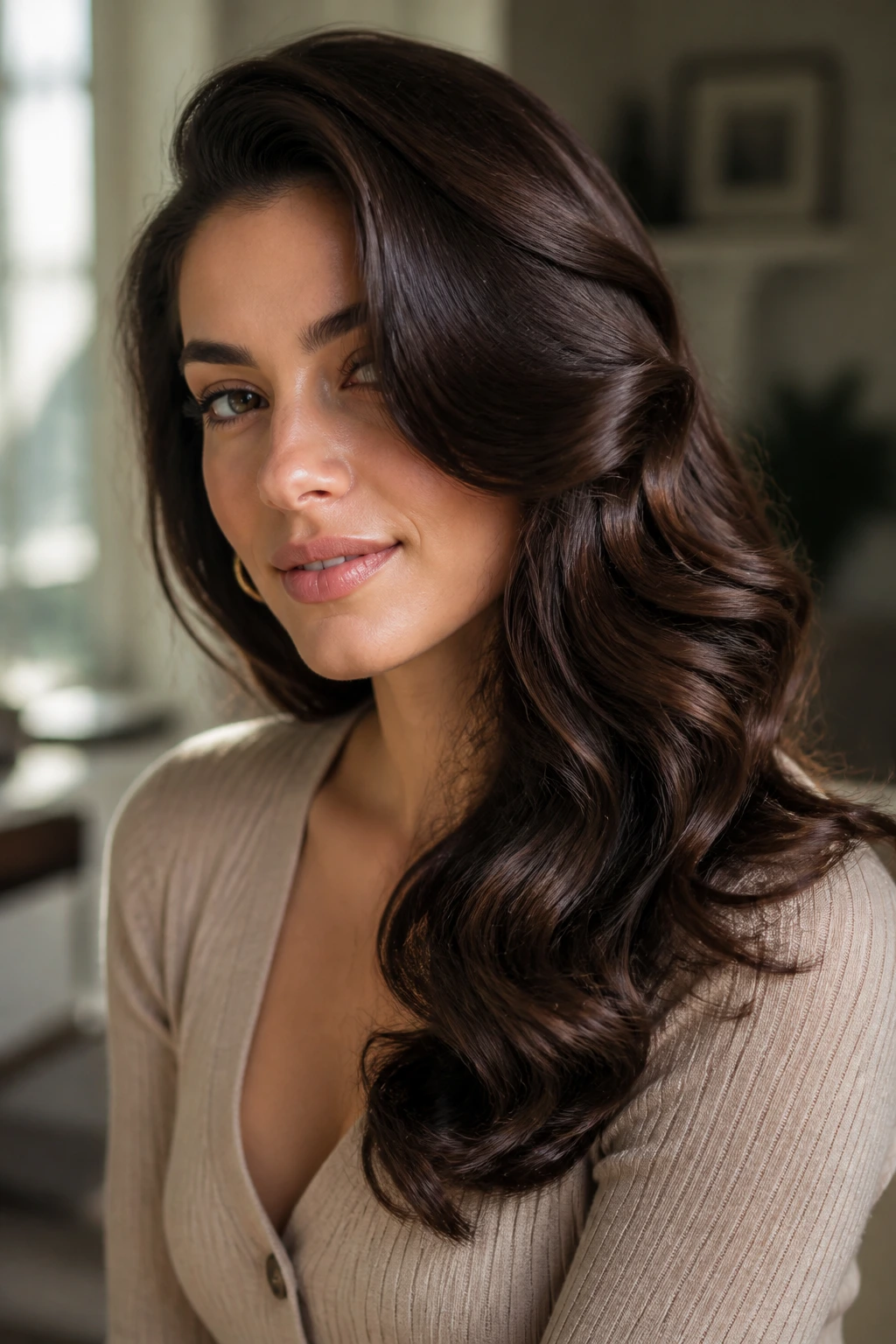
A deep side part changes the whole mood of curls. The style instantly feels more intentional, and the extra sweep at the front gives the face some shape without needing a complicated cut. That’s why this is one of my favorite fall hairstyles for shoulder-length to long hair. It has presence.
Glossy curls work best when the curl pattern is large and brushed into one smooth direction. Think polished, not springy. A 1.25-inch iron is a safe bet for most lengths, though long hair can take a 1.5-inch barrel if you want a softer bend. Curl away from the face on the heavier side of the part and let the other side fall more open.
What makes the finish hold
- Prep with heat protectant that dries smooth, not sticky.
- Set each curl in your hand for a few seconds before releasing it.
- Brush the curls once they are fully cool; warm brushing collapses the shape.
- Finish with a shine mist, not heavy oil.
Pro tip: tuck one side behind the ear and pin it flat with a hidden bobby pin. That single move keeps the style from drifting into pageant hair.
8. The Braided Crown With Tucked Ends
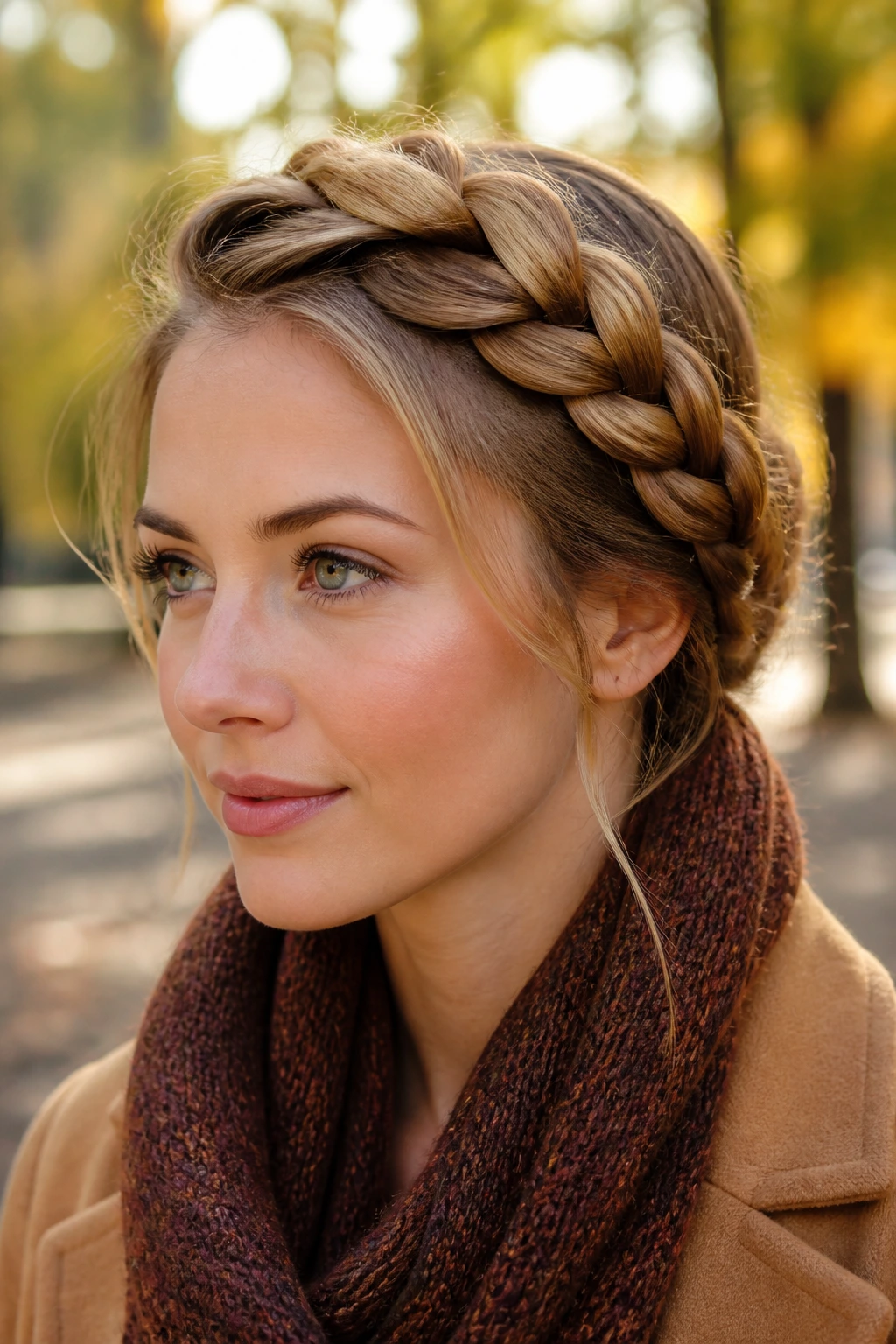
A braided crown is one of those styles that looks more difficult than it is. Good news. The trick is really just a clean braid line along the hairline and a tidy tuck at the back. Once the ends disappear, the whole style looks finished and surprisingly modern.
This is a strong choice for medium to long hair, especially if you wear scarves a lot. The braid creates a raised edge that gives shape around the face, while the tucked ends keep the back neat under collars. I also like it because it gives textured hair a place to live without flattening it completely.
The braid doesn’t need to be tiny. In fact, a slightly fuller braid reads better in autumn because it holds its shape against chunky clothes. Secure the ends under the opposite side with pins, then gently pull the braid apart just enough to soften the line. Don’t overdo it. You want fullness, not gaps.
A braid crown can look sweet if it’s too neat. A little looseness around the temple and a smooth tuck at the base fix that fast.
9. The Bubble Ponytail
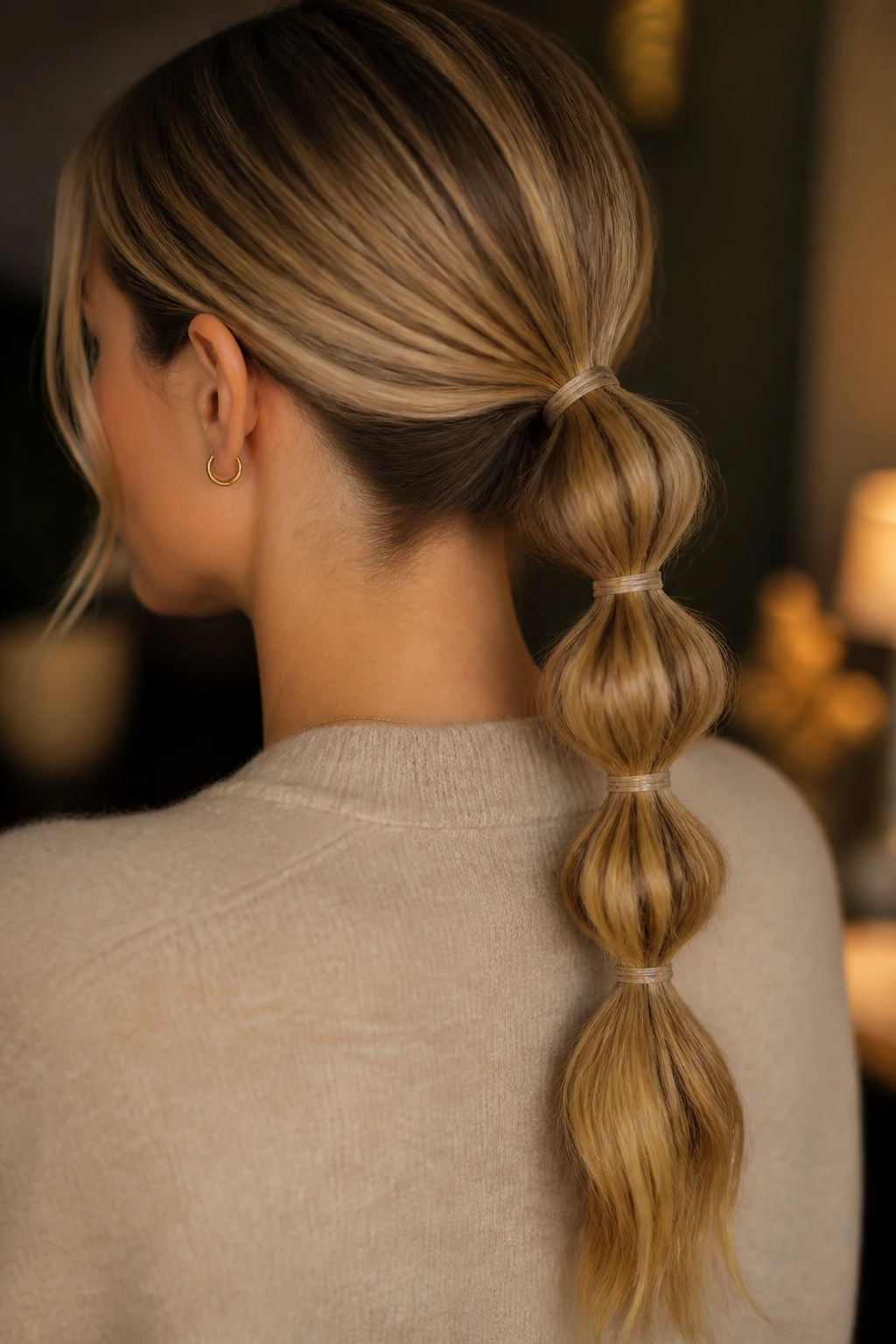
Want a ponytail that looks deliberate instead of lazy? Use a bubble ponytail. It keeps the same easy energy, but the added sections give it shape, and shape is half the battle with fall hair. The style reads polished because the spacing is visible. You can tell somebody actually planned it.
Start with a low or mid ponytail, then add clear elastics every 2 to 3 inches down the length. Gently tug each section outward to form round, even bubbles. The bubbles should be full, not floppy, and each one should look roughly the same size. That consistency is what makes the style feel finished.
If your hair is fine, lightly tease each section before tugging it outward. If your hair is thick, a quick pass of smoothing cream on the top and a tiny bit of spray at the elastics keeps the shape cleaner. The style doesn’t need shine everywhere. It needs controlled volume in the right places.
Bubble ponytails work especially well with simple outfits. Let the hair do the talking. Everything else can stay quiet.
10. The Scarf-Wrapped Bun
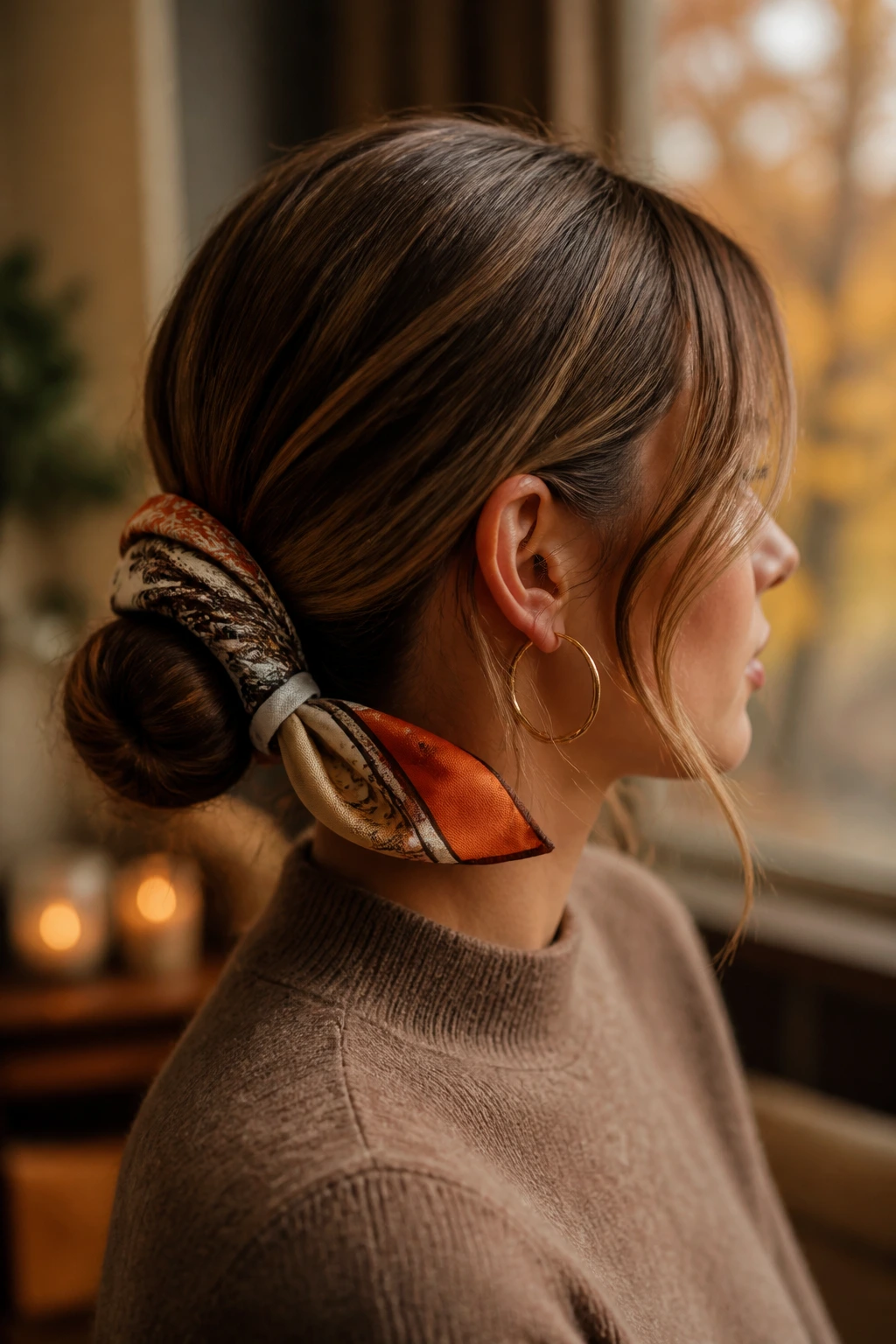
A scarf-wrapped bun solves more autumn hair problems than it gets credit for. It hides frizz. It softens the outline of a bun that might otherwise look too plain. And when the scarf has enough texture or color, it becomes the one thing on your head that looks intentional from ten feet away.
The bun itself should be small and secure, sitting low or just above the nape. Build it first, then wrap a thin scarf or square silk scarf around the base. Tie it off slightly off-center if you want a less rigid finish. Long tails are fine, but they should hang cleanly rather than sprawl.
This style is especially useful on the kind of days when the air is dry and your ends have decided to become static monsters. The scarf distracts from that, which is honest work if you ask me. It also gives you a way to use a less-than-perfect bun without pretending it’s something else.
Small details that help
- Choose a silk or satin scarf if your hair tangles easily.
- Keep the bun compact so the scarf sits snugly.
- Use two pins under the scarf knot if your hair is slippery.
- Avoid bulky scarves unless your hair is very thick.
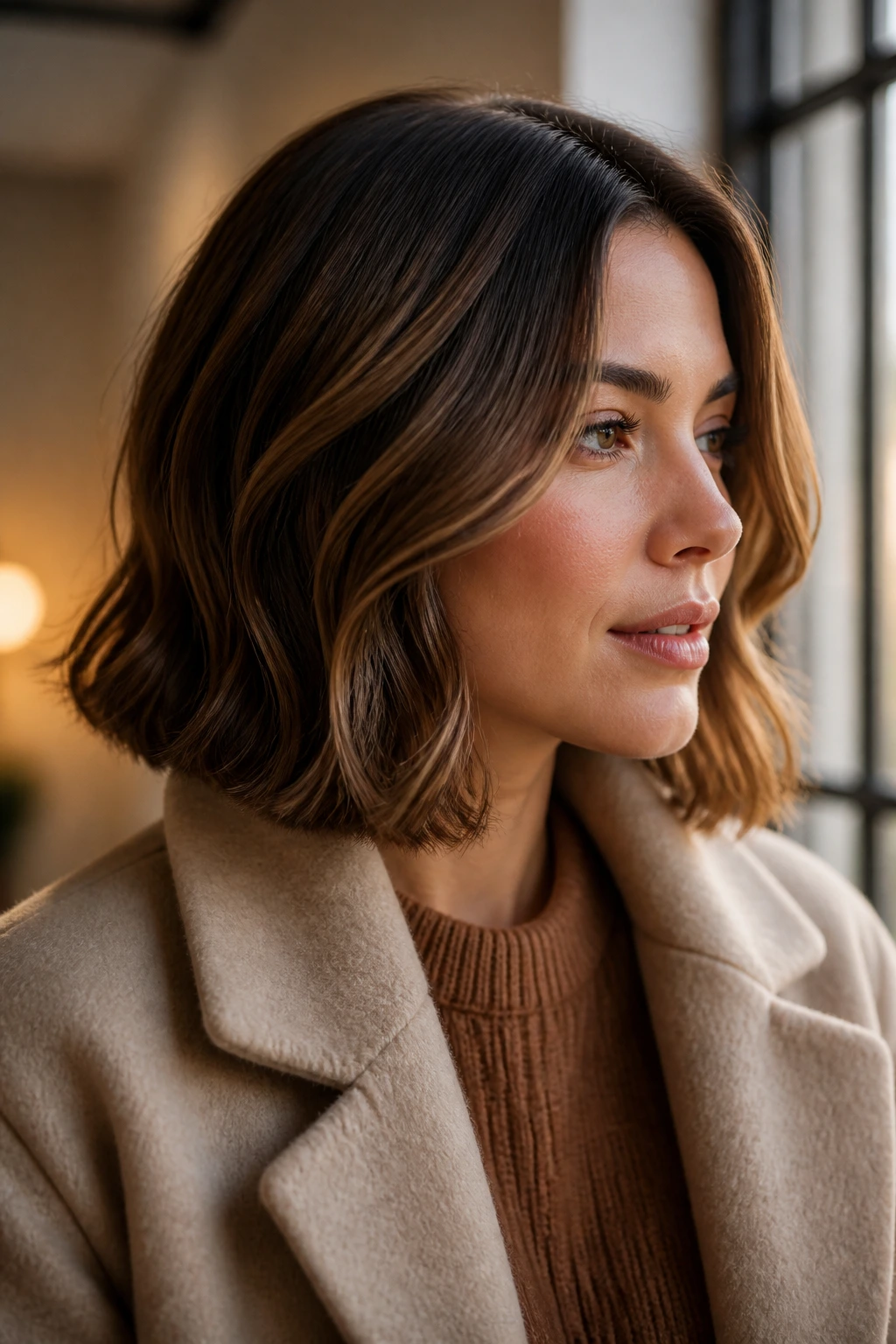
11. The Textured Lob With Beveled Ends
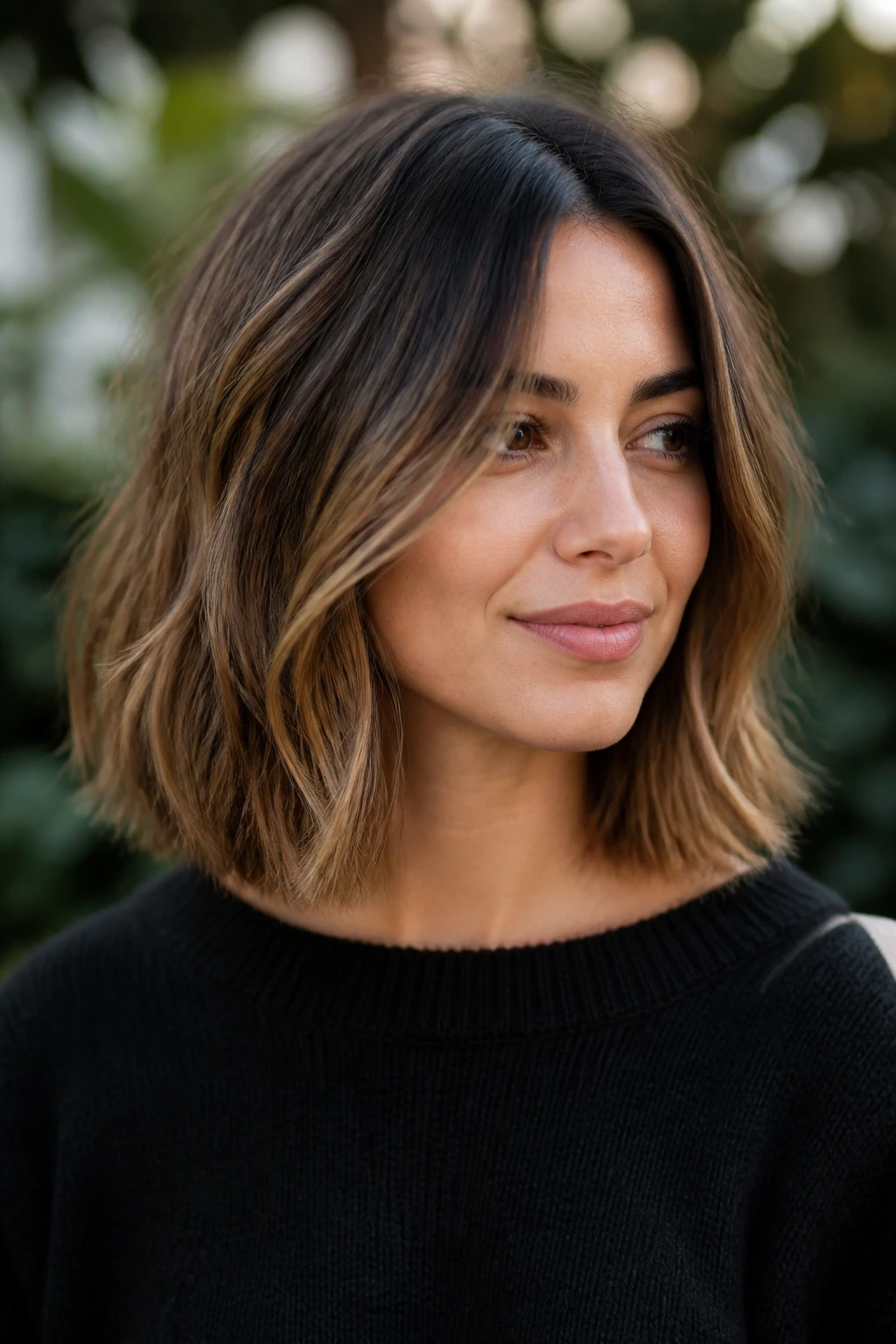
A textured lob with beveled ends is one of the easiest ways to make shoulder-length hair look polished without turning it into a helmet. The bevel matters. Straight ends can look blunt in the wrong way, especially when the rest of the cut has movement. A soft turn under at the bottom gives the whole shape a cleaner finish.
I like this cut-styled look because it sits right in the middle of casual and put-together. You can air-dry it with a bit of mousse, bend the ends under with a flat iron, or rough-dry it and then smooth the outer layer. Any of those paths can work. The goal is the same: a neat edge with some texture through the middle.
This is a smart style for people who hate feeling overdone. The hair still moves. It still looks like hair. It just doesn’t collapse into a shapeless curtain the moment you put on a sweater.
One small thing. If your lob has layers, spend an extra minute on the front pieces. Those are the bits people see first, and they’re usually the first to flip weirdly if you rush.
12. The Sleek Bob Tucked Behind the Ears
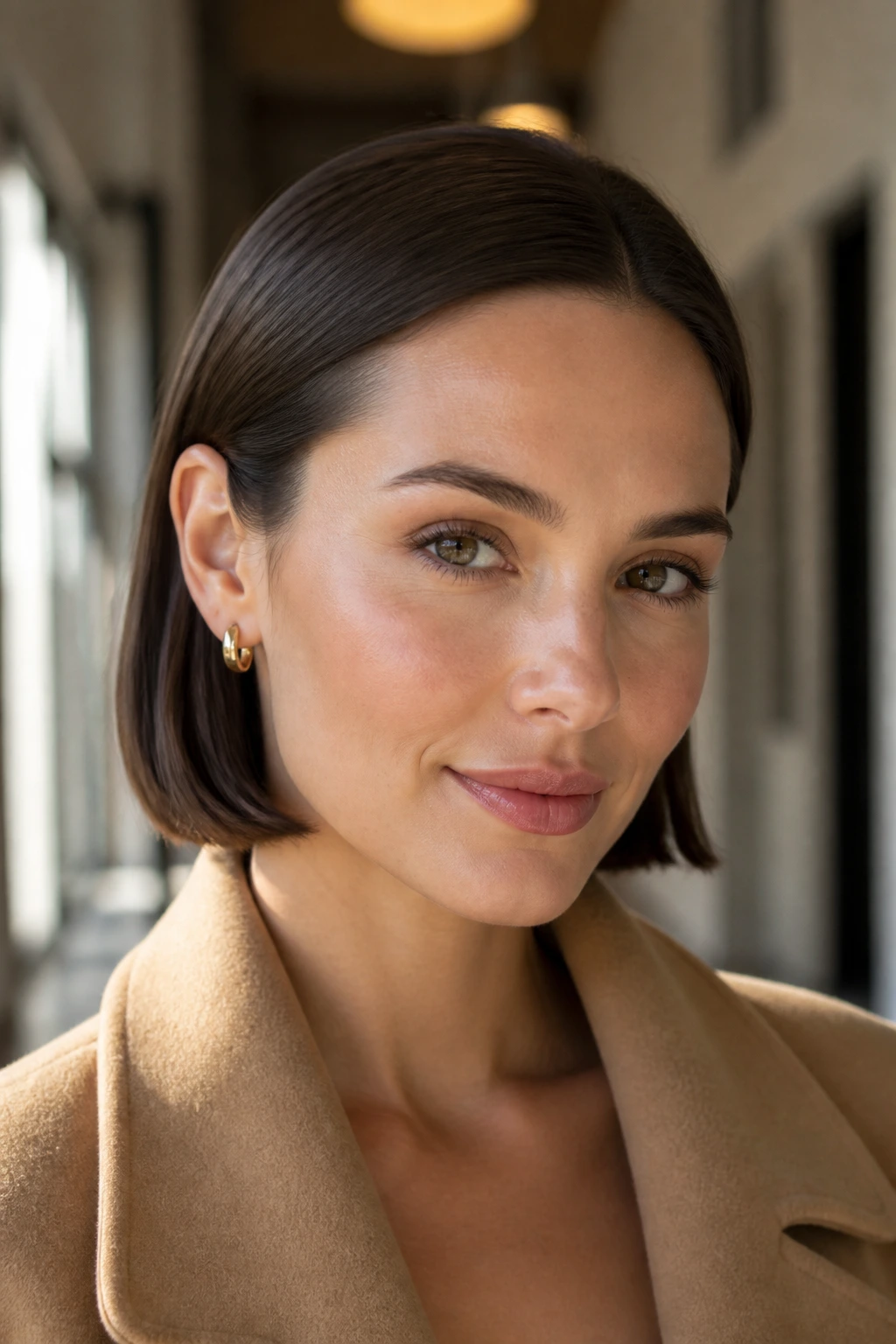
A sleek bob tucked behind the ears has a cleaner line than a bob left to hang loose. That’s the whole point. The ears open the face, the ends sit neatly at the jaw or just below it, and the style suddenly looks sharper. It’s simple, but not boring. There’s a difference.
Unlike a pin-straight bob that can feel flat and a little severe, this version relies on controlled movement at the ends. A slight inward bend keeps the shape soft, while the tuck behind the ear stops the front from puffing out over collars. It’s one of the few styles that actually gets better with a structured coat.
Use a light smoothing cream and a flat brush. You do not need a ton of product. Too much and the hair clings in greasy strings; too little and the tuck won’t stay put. A little tuck-pin behind the ear can help if your hair keeps slipping forward.
Best for bobs that already have a blunt or rounded line. The style loves a neat neckline. It also makes earrings look intentional, which is a small vanity detail I’ll happily defend.
13. The Curved Blowout With Feathered Layers
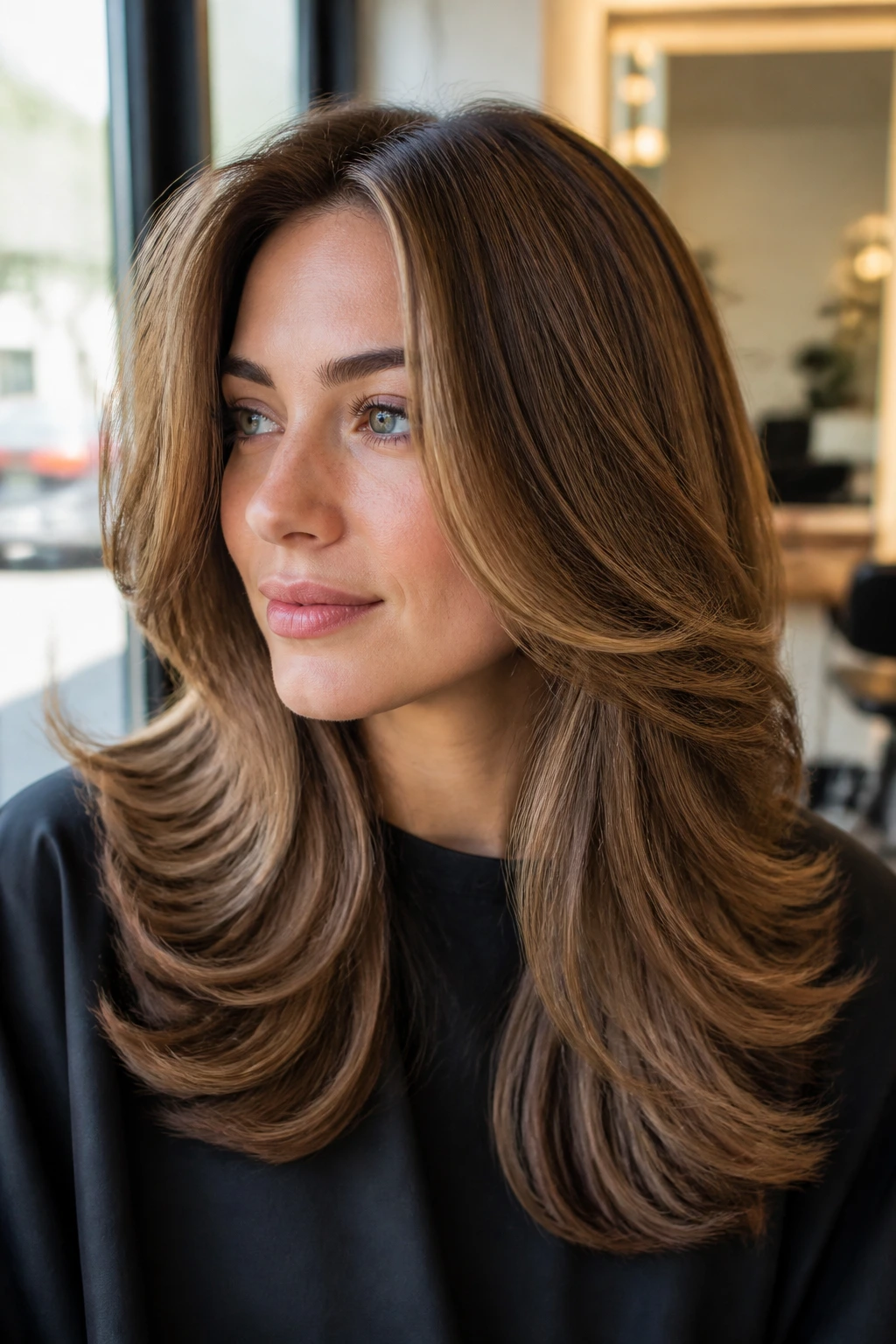
Feathered layers get a bad reputation when they’re styled badly. That’s the key phrase there: styled badly. In a curved blowout, those same layers become the reason the hair moves so well. The ends turn softly away from the face, the top keeps a bit of lift, and the whole cut looks airy without losing shape.
The pieces that matter most
- A round brush around 2 to 2.5 inches gives the right bend without over-curling the ends.
- A nozzle on the dryer keeps the airflow directed, which cuts down on frizz.
- Clip the top layers up and work from the bottom first so the finished shape isn’t smashed by your hands.
- Finish with a touch of flexible hairspray at the roots and a pea-size serum on the ends.
The blowout should move when you turn your head. If it sticks too close to the scalp, the layers disappear. If it spreads too wide, the shape gets puffy and loses that crisp fall feel.
My favorite part: the front pieces swoop just enough to frame the face while still sitting under a coat collar neatly. That’s the sort of thing people notice, even if they can’t quite explain why it looks better.
14. The Low Braided Bun
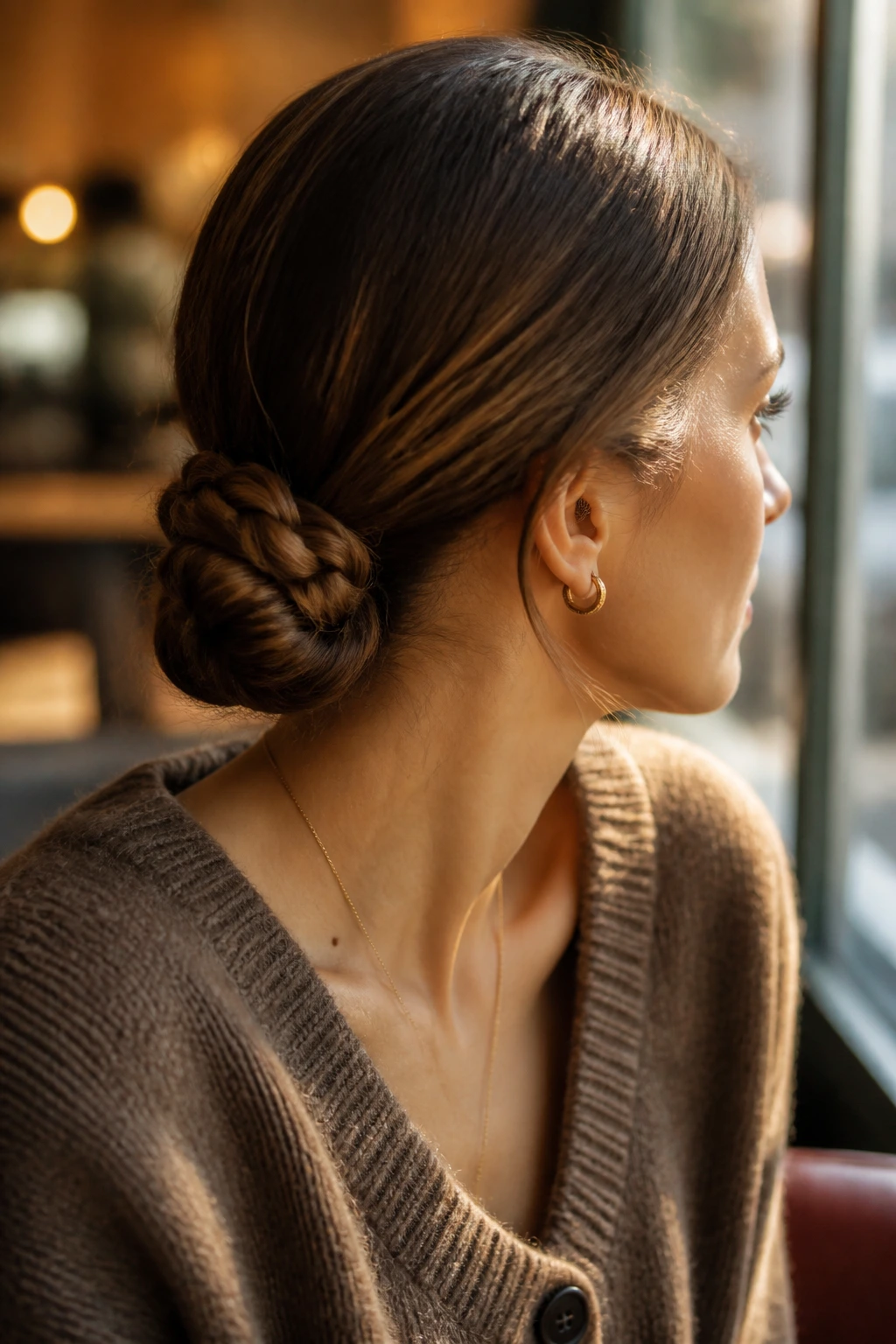
A low braided bun is one of the safest styles in this whole list, and I mean that in the nicest way. It handles second-day texture, hides uneven ends, and stays tidy under a scarf. There’s no drama here. Just a braid folded into a bun at the nape, where it can do its job without getting yanked around by outerwear.
This style reads polished because the braid gives the bun structure. A plain bun can slump. A braided one has a backbone. That makes it ideal for days when your hair has already been through a few rounds of dry air and needs shape more than shine.
It works best when the braid is snug at the base but not tiny. If you braid too tightly, the bun can look stiff. If you braid too loosely, the bun starts to unravel into a fuzzy nest by evening. Middle ground. That’s the sweet spot.
If you want a more finished look, wrap a small section of hair around the elastic before folding the braid into the bun. It hides the hardware and makes the style look cleaner from the back, which matters more than people think.
15. Curtain Bangs With a Soft Bend
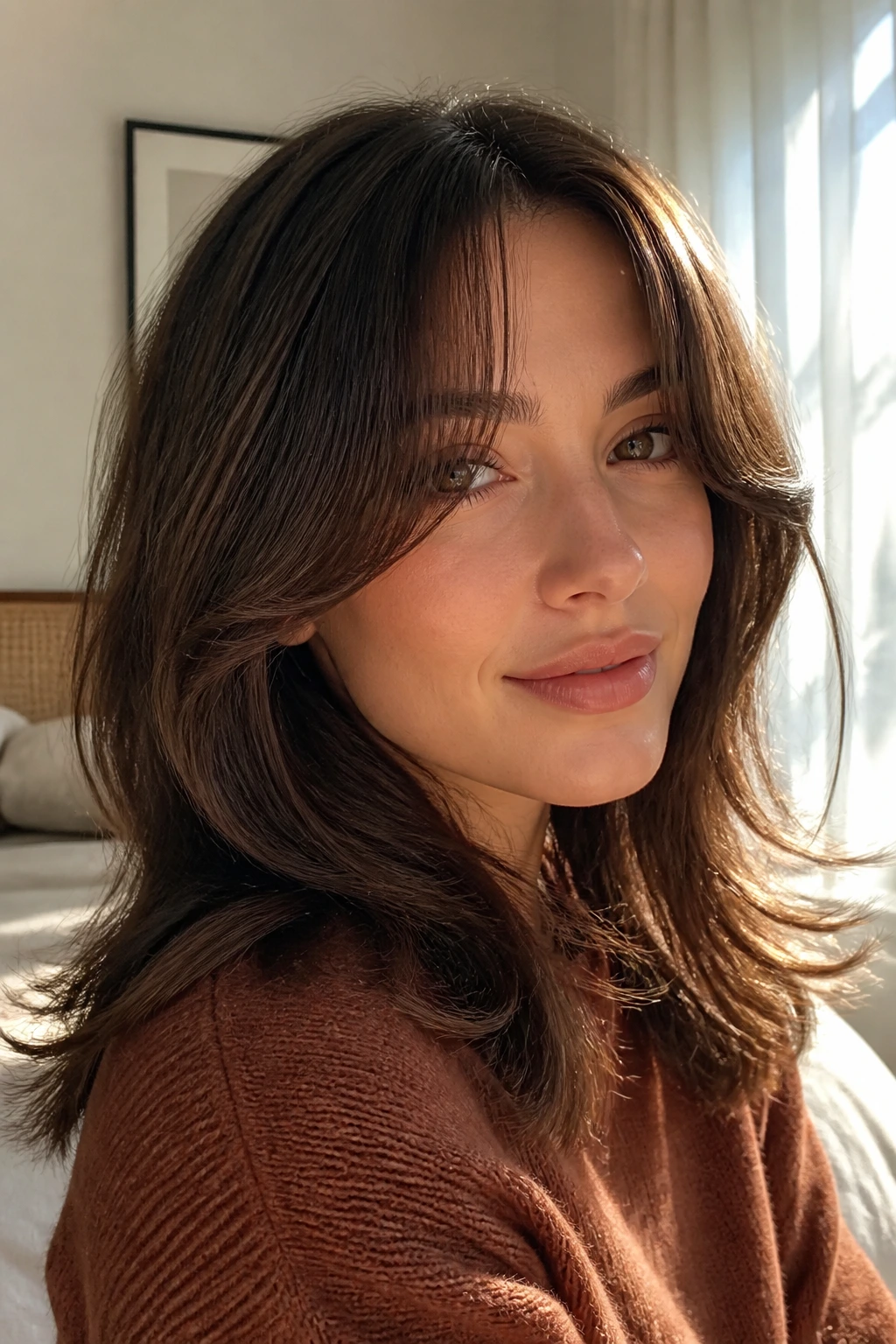
What do curtain bangs need in fall? A bend, not a blast of heat. That’s the difference between bangs that sit nicely under a sweater and bangs that separate into weird little strings the second the air gets dry.
The trick is to blow-dry them forward first, then sweep them away from the face with a round brush or medium Velcro roller. You want the root to lift a bit and the ends to curve softly outward. Not curled. Not straight. Just enough bend that the fringe blends into the rest of the cut.
Curtain bangs are especially good with layers, because they bridge the gap between face frame and length. They also make a simple ponytail or low bun feel more styled. If your bangs get oily fast, a touch of dry shampoo at the roots before styling helps keep the shape from falling flat by lunch.
How to keep them from splitting
- Dry them from side to side, not straight down the middle.
- Use a round brush that matches the length of the bang.
- Set the part while the hair is still warm.
- Don’t overload the fringe with serum.
The soft bend matters more than perfection. A tiny bit of unevenness makes them look lived-in instead of overworked.
16. The High Knot With Face-Framing Tendrils
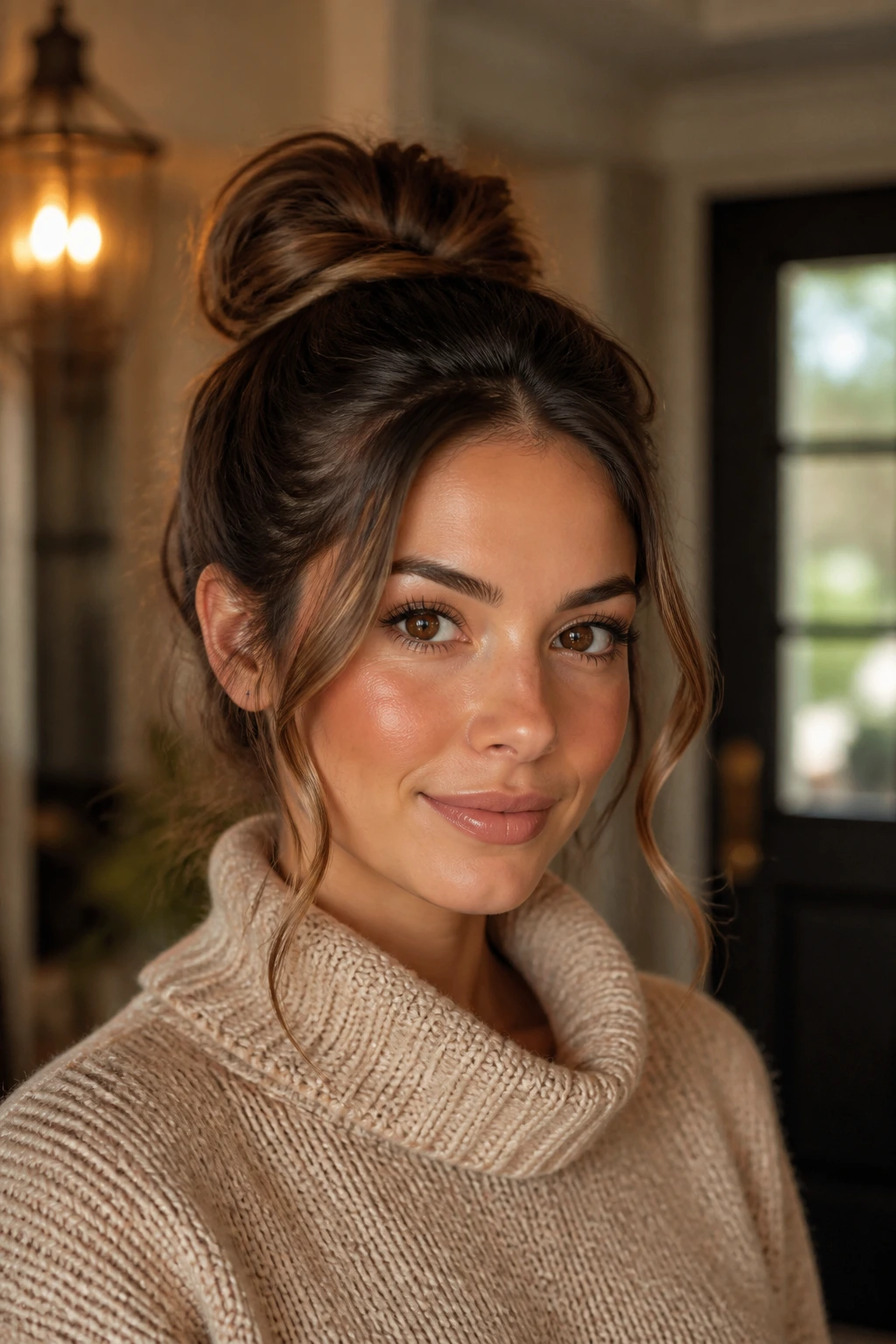
A high knot can look severe, but it doesn’t have to. Leave a few face-framing tendrils, keep the knot smooth at the crown, and the whole style turns softer without losing its polish. The contrast is what makes it work. Tight up top. Soft around the face.
This is one of the best styles for turtlenecks and higher collars because the knot clears the neckline completely. Nothing competes with the sweater. That alone is worth something. The tendrils also let you keep a little movement around the face, which keeps the style from feeling too exact.
The knot itself should be compact and secure, not an overlarge bun that sits like a nest. If your hair is layered, use a few hidden pins to keep the shorter pieces from escaping. Then curl the front tendrils lightly with a 1-inch iron so they bend rather than hang straight.
There’s a fine line here. Too many loose pieces and the style looks undone. Too few and it gets stern. I usually leave just enough hair to soften the temples and the cheekbones. No more.
17. The Rounded Bob With an Inward Curve
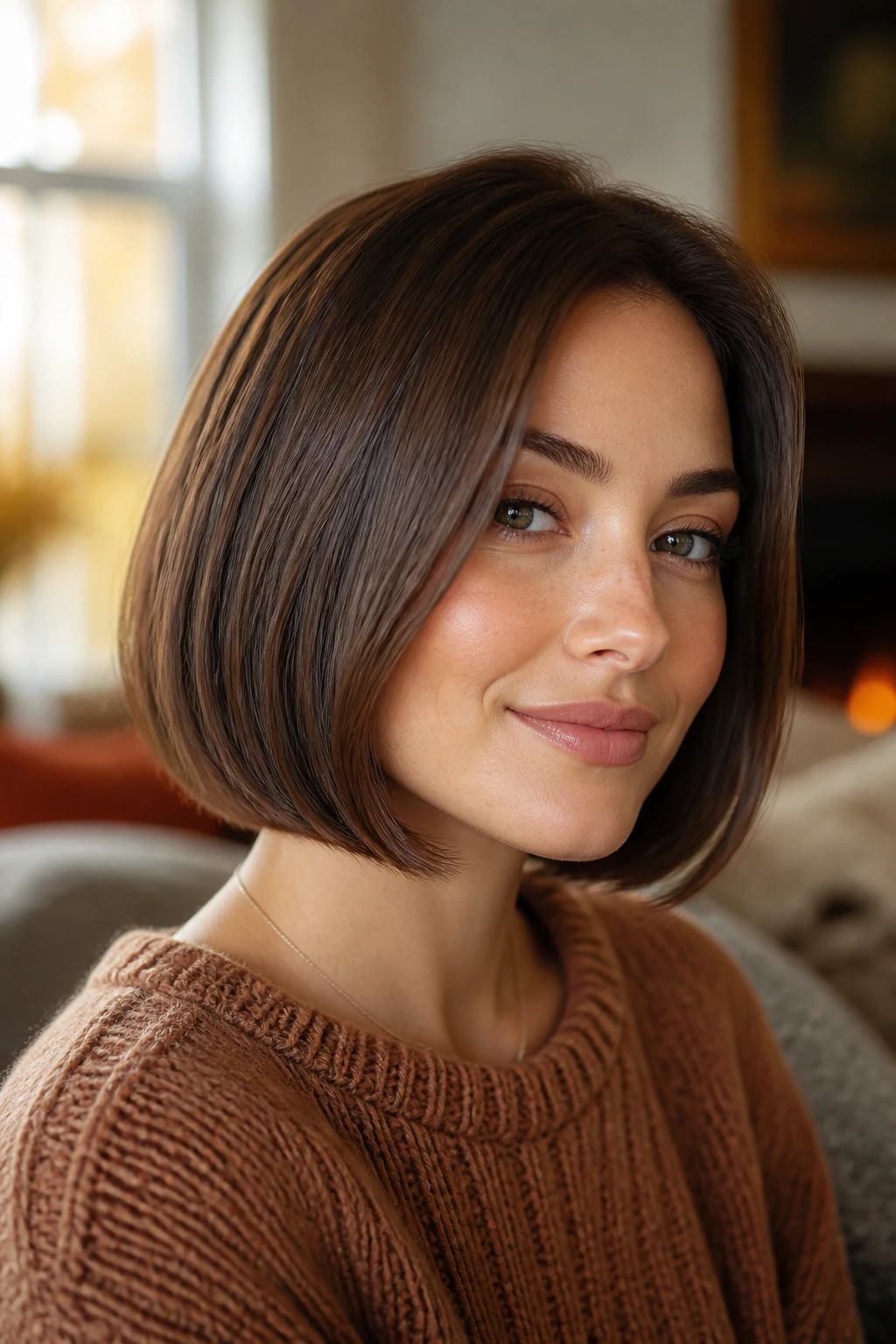
A rounded bob with an inward curve is the quietest kind of polished. It doesn’t shout. It just sits correctly. The ends curve under toward the jaw, the silhouette stays close to the head, and the result looks neat even when the rest of the outfit has texture and weight.
This cut-styled shape makes short hair easier in fall because it avoids the halo of frizz that can happen when a bob is left too blunt and airy. The inward curve gives the perimeter a clean line. It also keeps the style from spreading out under scarves and collars, which is a bigger deal than most people admit.
The best way to style it is with a round brush or a flat iron bend on the last inch of hair. Focus on the front and the back corners near the nape. Those are the zones that tell the story. If they’re clean, the bob looks like it was planned.
I also like this style with a side part. It gives the rounded shape a little more dimension. Straight down the middle can work too, but it changes the mood from soft to sharper, and not everybody wants that.
18. The Headband Tuck
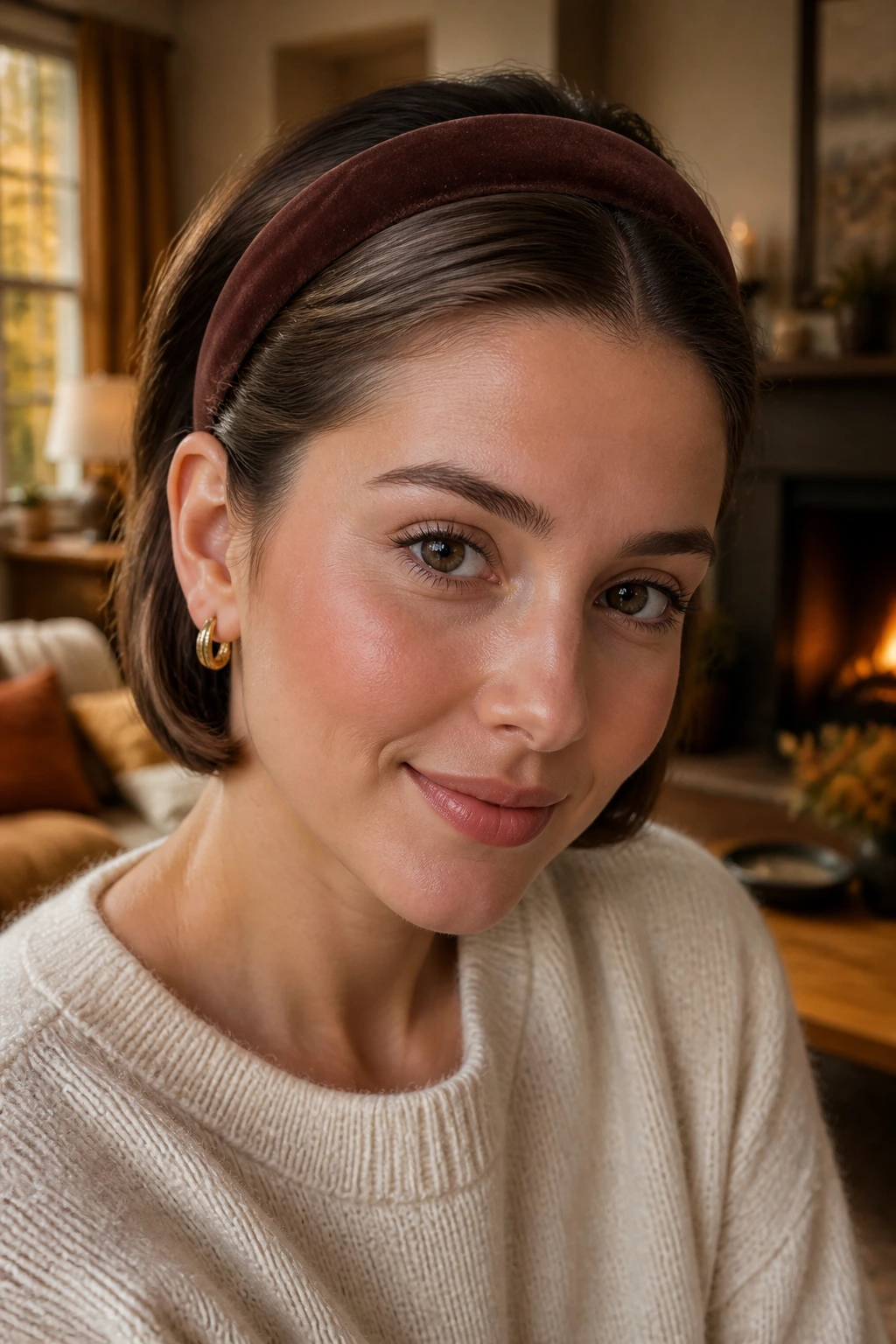
The headband tuck is not the same thing as just throwing on a headband and calling it a day. The difference is the ends. In this version, the hair gets tucked under the band so the shape becomes smooth, compact, and a bit retro in the best way. It’s a tidy look, not a lazy one.
That makes it a smart fall hairstyle for medium lengths and bobs that are awkwardly between stages. If your ends flip out when they hit your coat collar, tucking them under a wide fabric headband solves the problem with almost no effort. It also keeps the crown flat, which helps when you’re trying to keep the overall silhouette neat.
Choose a headband with a little grip. Satin is pretty, but if it slides off your hair every fifteen minutes, it’s not helping. A velvet or padded band tends to stay put better and gives the style a more finished outline.
The best version is smooth at the sides and softly tucked at the back. No bumps. No surprises. Just a clean line that holds up longer than you’d expect.
19. The French Braid Into a Low Knot
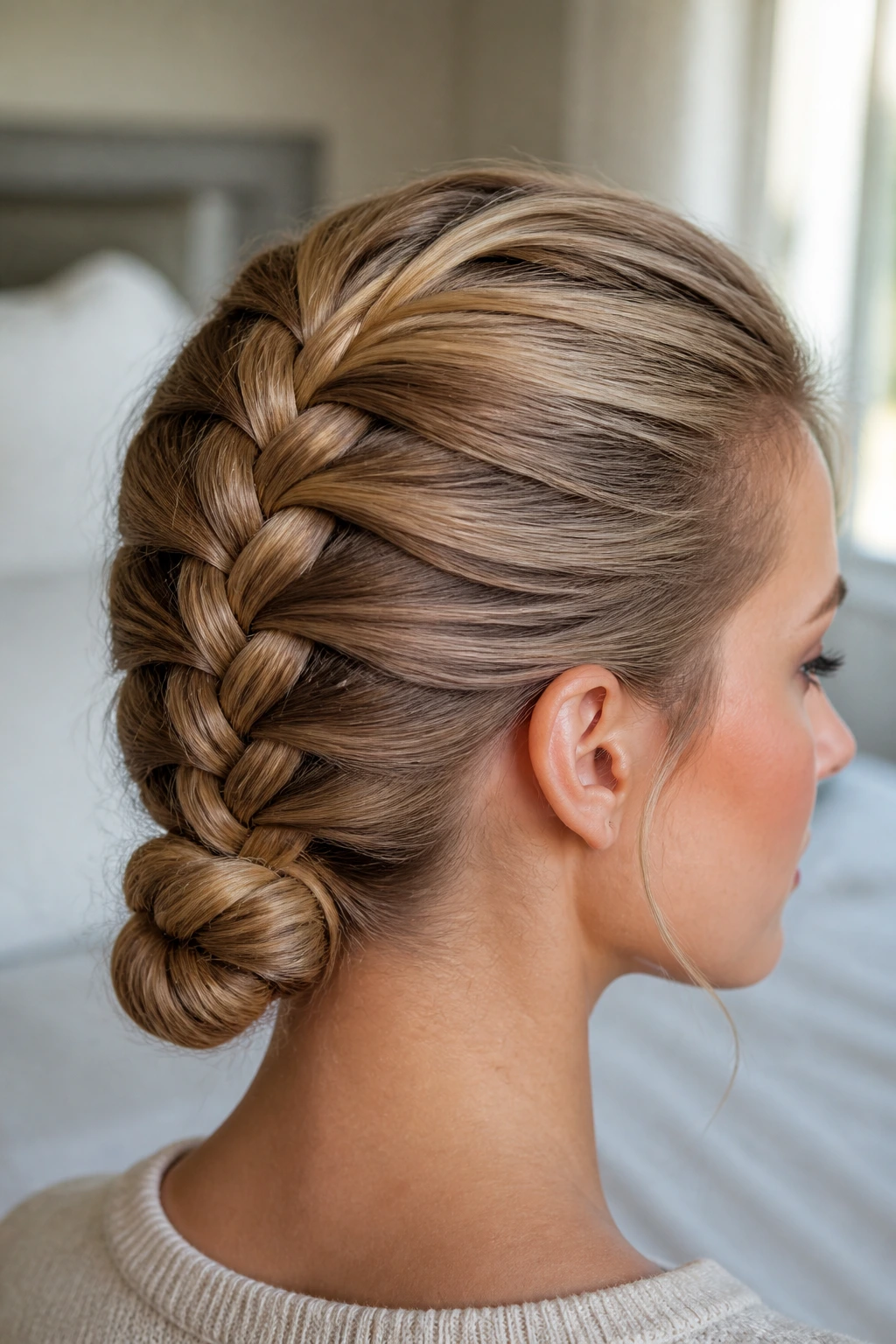
Why choose between a braid and a bun when you can have both? A French braid into a low knot gives you the texture of the braid through the top and the clean finish of a knot at the base. It’s one of those styles that feels practical enough for daytime and neat enough for dinner.
Start the braid high enough to shape the crown, then continue it down the back until you reach the nape. From there, twist the remaining length into a low knot and pin it flat. The braid should be snug, but not pulled so tight that the scalp looks strained. That harsh look ages the style fast.
What to watch for
- Keep the braid sections even so the line doesn’t wobble.
- If your hair is layered, mist the loose pieces with texturizing spray first.
- Use pins that match your hair color; contrast pins stick out in this style.
- Tuck the tail of the braid completely under the bun so the back looks finished.
This is a good one for windy days, busy days, and the kind of days when you want your hair to stay out of the way without disappearing completely.
20. Loose Barrel Curls
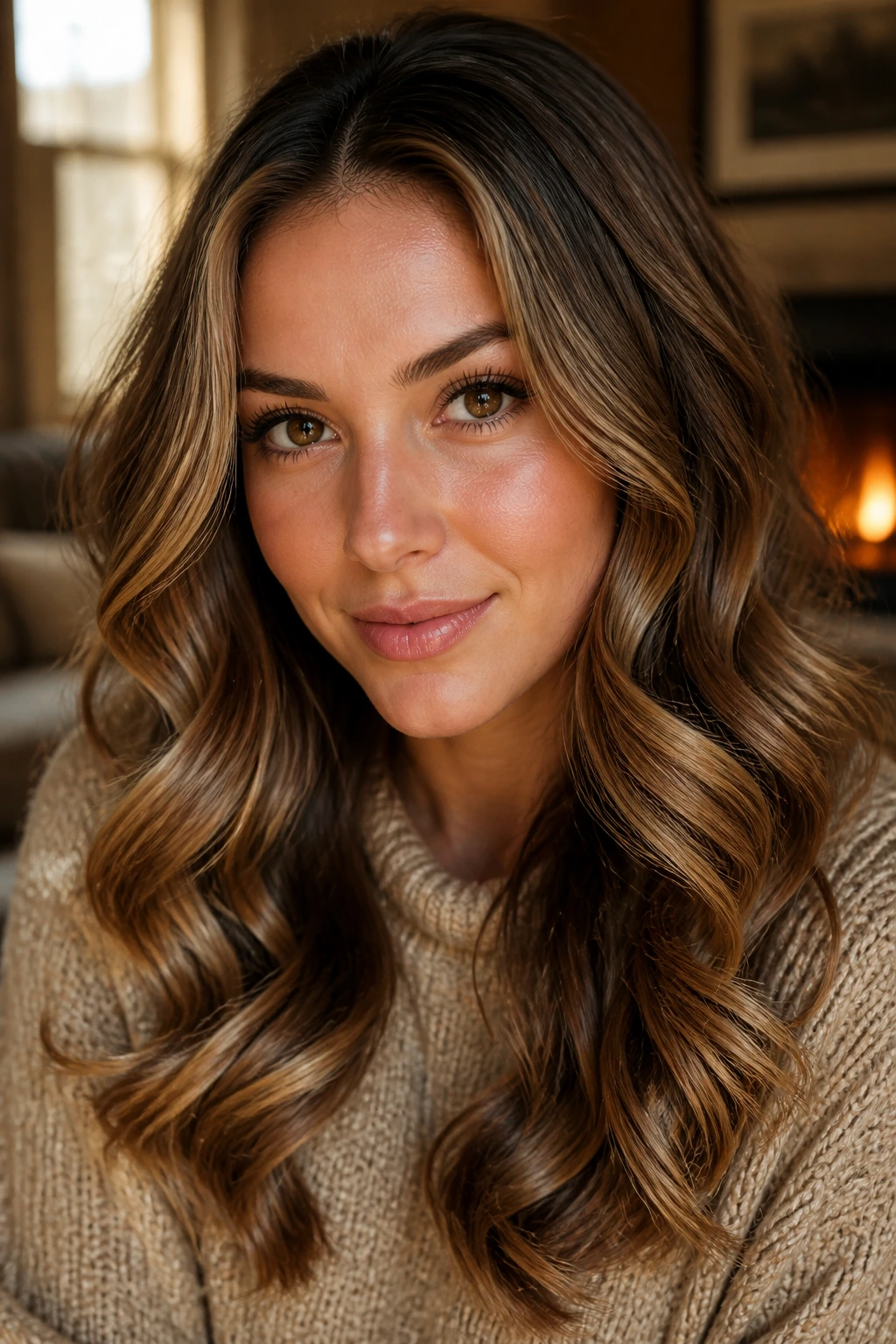
Loose barrel curls are the kind of fall style that looks expensive even when the rest of the outfit is just jeans and a sweater. The trick is size. Smaller curls read too formal. Bigger, softer curls look polished and airy, like you spent time on them without trying to prove it.
Use a 1.25-inch or 1.5-inch barrel depending on your length. Curl away from the face on the front sections, then alternate directions through the rest so the curls don’t clump into one heavy wave. Pin each curl while it cools if you want the set to last longer. Skip that step and they drop faster, especially on fine hair.
The brush-out matters. Wait until the curls are fully cool, then comb through with a wide-tooth comb or a soft brush. That’s how the shape turns into a loose wave instead of a springy coil. Finish with a light mist of spray and stop there. Too much product makes the hair feel coated.
These curls work best when the ends stay smooth. Frizz at the bottom kills the whole mood. A tiny touch of serum on the last inch of hair is usually enough.
21. The Side Bun With a Deep Part
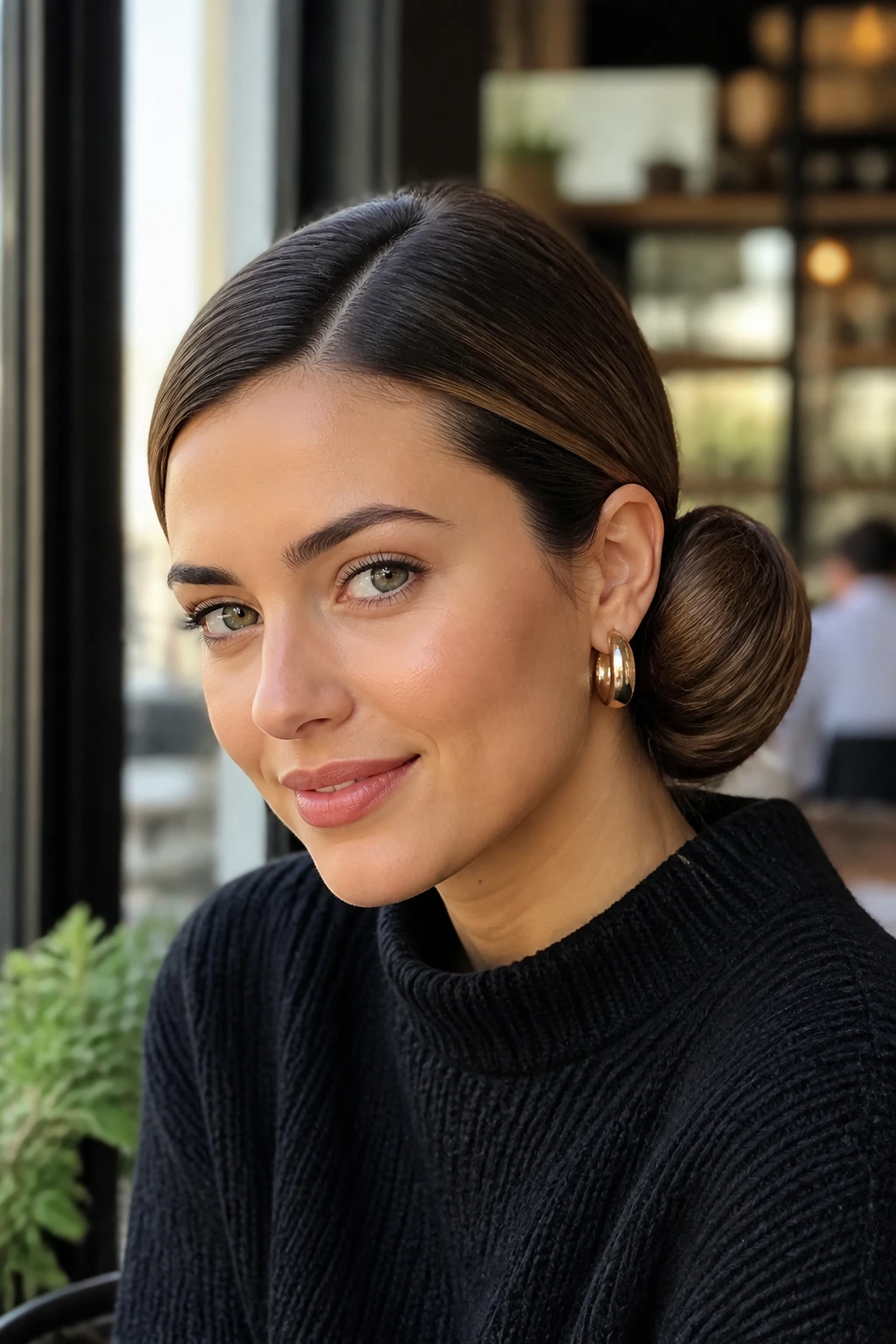
A side bun with a deep part has a little drama, but not the overdone kind. The deep part gives the front some shape, and the bun sitting behind one ear makes the whole style feel considered. It’s a nice answer when you want your hair up but don’t want the center of your head doing all the work.
This style suits medium to long hair and looks especially good with asymmetrical earrings or a collar that opens at the neck. The side part creates a line the eye can follow, and the bun gives that line somewhere to land. Without the part, the style can feel too plain. Without the bun, it can feel too styled. Together, it lands in the middle.
Use smoothing cream on the part side and pin the bun low and tight enough that it doesn’t slump. If your hair is thick, split the bun into two wrapped loops before pinning. That keeps the shape flatter against the head. If your hair is fine, a little teasing underneath can give the bun better support.
The side bun is one of those styles that can save a boring outfit. Small mercies.
22. The Coily Puff With a Sleek Side Part
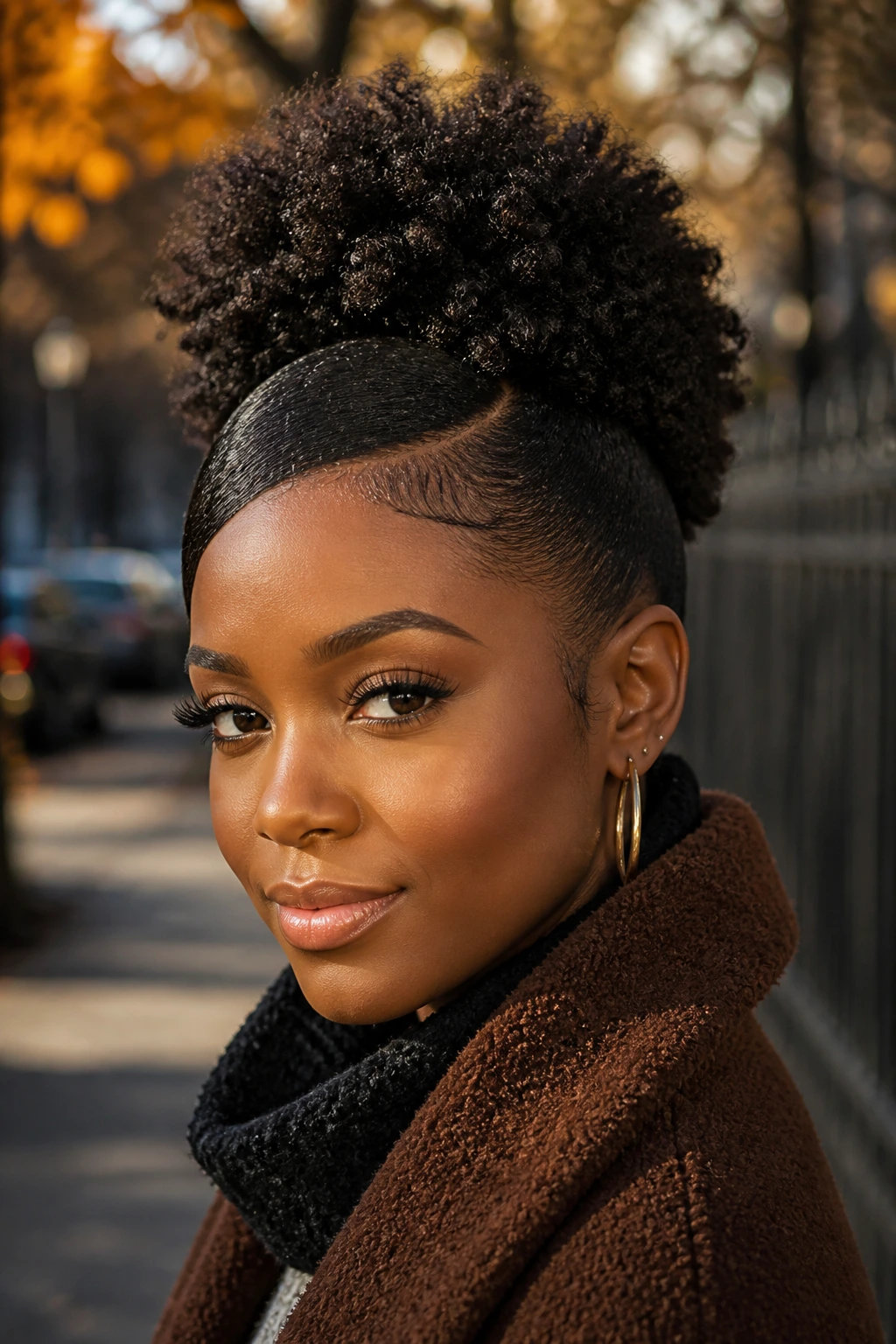
Polished does not mean straight. That’s worth saying plainly, because a coily puff with a sleek side part can be one of the sharpest fall hairstyles in the whole mix. The side part gives shape, the smooth front keeps the outline clean, and the puff lets the texture do what it already does best.
The clean part is what elevates this style. Use a tail comb and a bit of gel or edge control to smooth the front section, then shape the puff where your coils naturally want to sit. You’re not forcing the hair into another texture. You’re giving it a frame.
I like this style because it pairs so well with heavy fabrics. A high-neck sweater can make straight styles look a bit severe, but a puff keeps the silhouette interesting. The key is balance: keep the front sleek, the sides neat, and the puff full enough to show the curl pattern without stretching it unnaturally.
A soft satin scrunchie or coil-friendly band helps the base stay tidy. And if the edges are laid down with restraint—just enough, not shellacked—the whole look reads finished in a way that never feels overworked.
Why Fall Hair Looks Better With a Little Structure
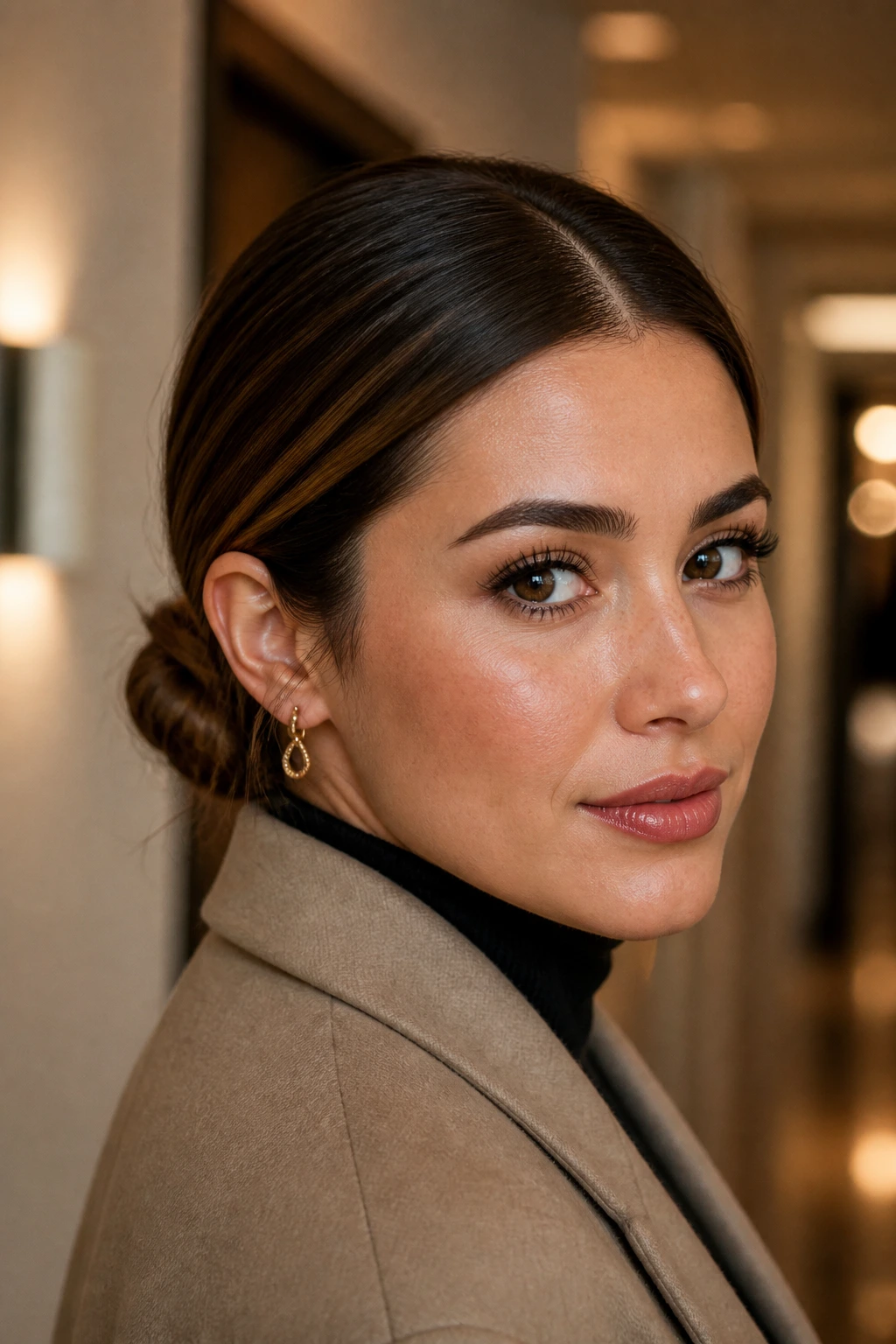
Fall hair has a specific personality. It rarely wants to be airy and free in the way summer hair does. Dry air, wool collars, and indoor heat change the texture by the hour, and the styles that survive are the ones with a clear shape from the start.
That’s why low buns, tucked ends, center parts, and smooth crowns show up so often here. They’re not just pretty. They solve problems. A collar rubs less against a low chignon than it does against a loose wave pattern. A side part gives fine hair a little lift without asking for a full blowout. A braid holds better than a loose twist when your day includes a scarf and a long walk.
I’ve always thought seasonal hair looks best when it respects the clothes. If the outfit already brings texture—wool, cashmere, tweed, leather—your hair usually doesn’t need to shout. It needs a clean line. Maybe a bit of gloss. Maybe a tucked end. That’s enough.
The other thing worth mentioning is weather memory. Hair remembers humidity, but it also remembers dryness. Once the air gets drier, strands lose slip and start misbehaving in small, annoying ways. A little structure compensates for that. Not by fighting texture, but by directing it.
Essential Tools for These Styles
-
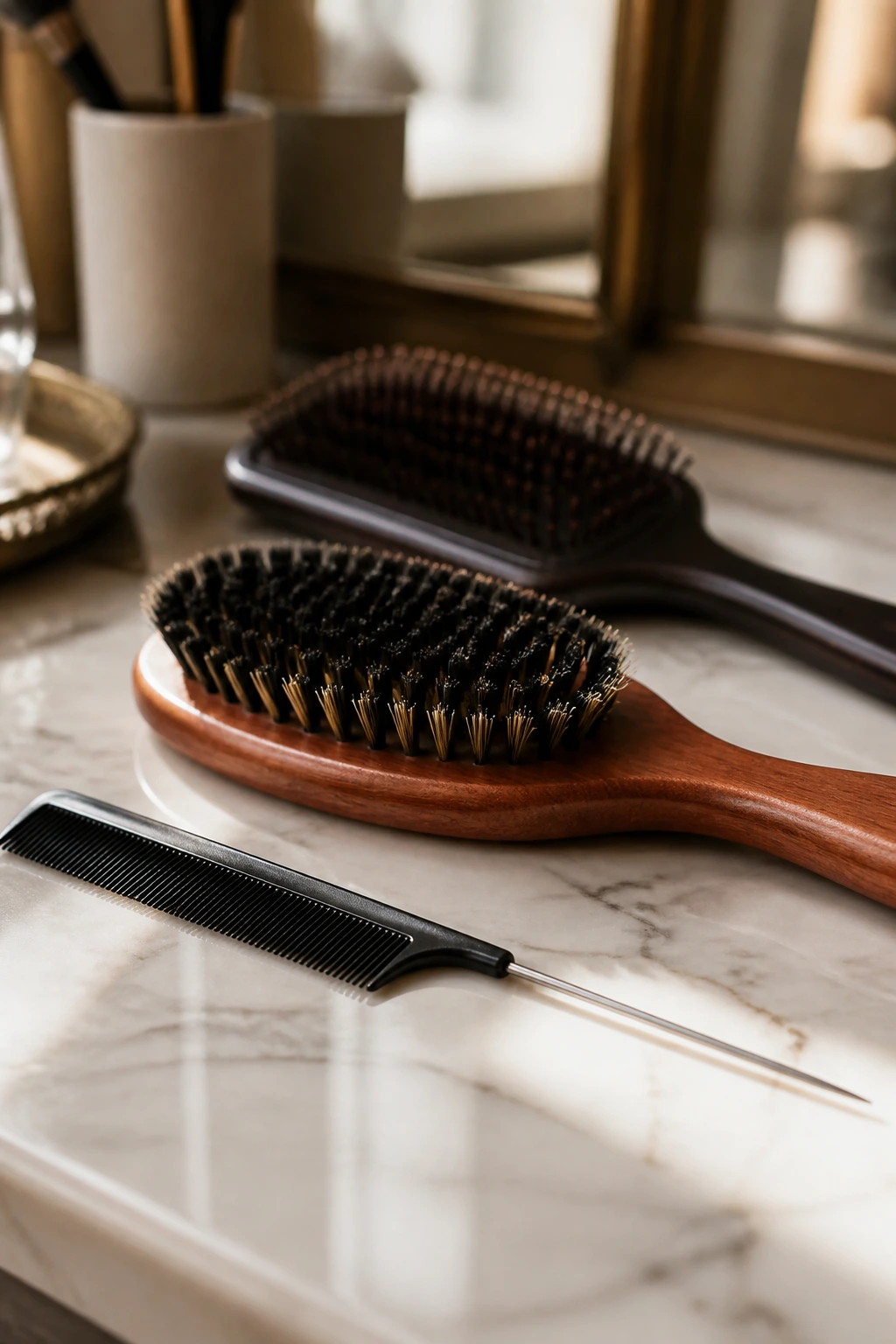
Tail comb: Makes center parts, deep side parts, and clean sectioning easier than using fingers alone.
-
Boar bristle brush: Smooths the crown and gathers hair neatly for low buns, ponytails, and twists.
-
Paddle brush: Good for blowouts and for distributing smoothing cream without overloading one section.
-
1-inch curling iron: The safest all-purpose tool for soft bends, face-framing pieces, and curtain bangs.
-
1.25-inch curling iron or wand: Better for loose barrel curls and glossy waves that should stay soft.
-
Round brush: Helps shape beveled ends, curtain bangs, and feathered layers without leaving a hard line.
-
Sectioning clips: Keep top layers out of the way while you work the bottom half cleanly.
-
Bobby pins and U-pins: Needed for chignons, French twists, braided buns, and any style that has to stay put.
-
Clear elastics: Useful for bubble ponytails, braided sections, and low ponytails that need a discreet base.
-
Silk or satin scarf: Helpful for scarf-wrapped buns, overnight protection, and cutting down on friction.
-
Flexible-hold hairspray: Holds shape without turning hair stiff, which matters more than people think.
-
Heat protectant: Not optional if you’re using hot tools; autumn dryness already does enough damage.
Smart Product Picks and Hair Prep for Autumn Hair
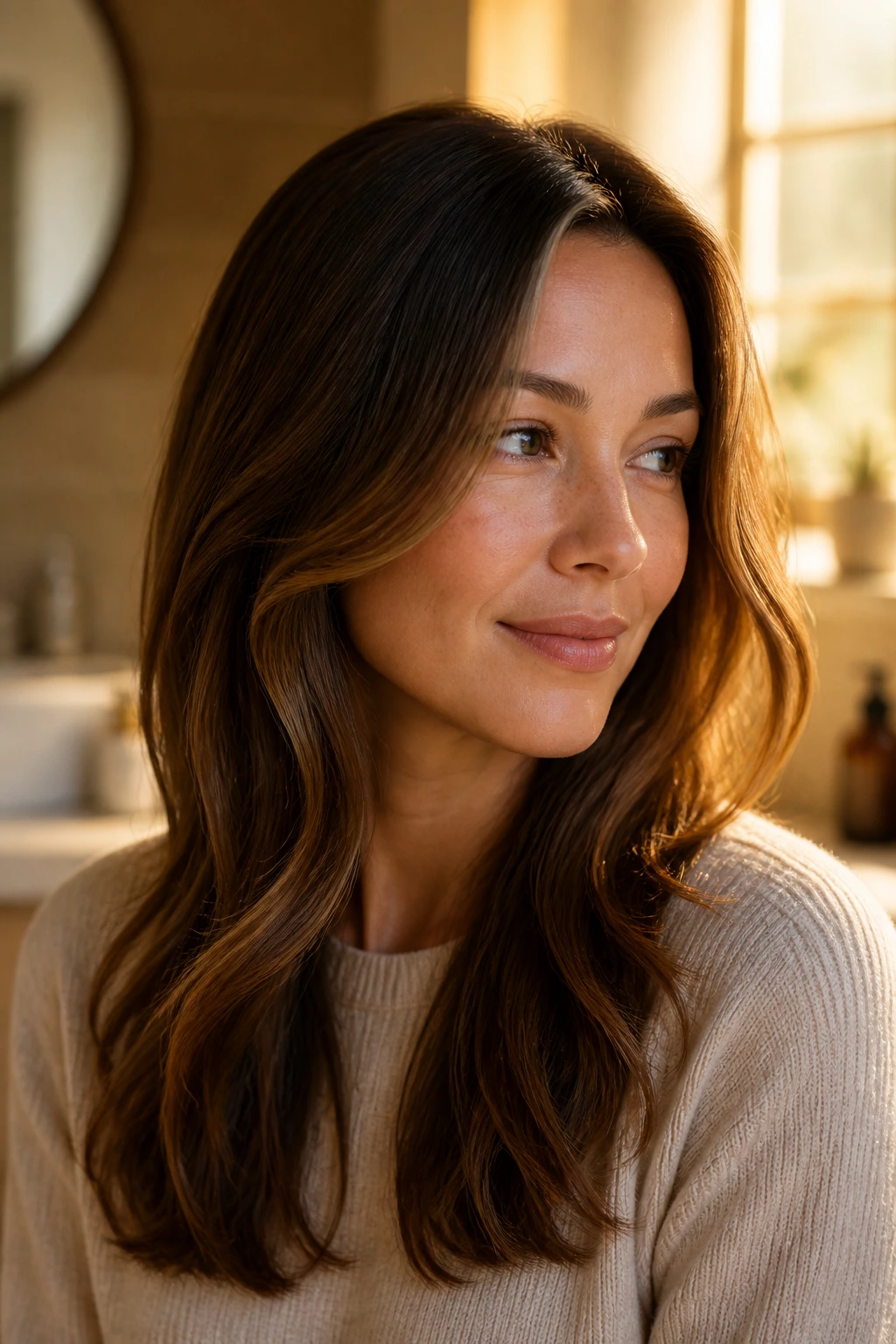
Fall hairstyles hold up better when the hair underneath is prepared with the weather in mind. Dry air makes the cuticle lift faster, so the goal is smoothness without grease. That usually means using lighter products at the crown and slightly richer ones on the ends.
Start with the scalp situation. If your roots get oily fast, a lightweight shampoo and a touch of dry shampoo at the root can give styles better grip. If your hair is dry all over, a moisturizing shampoo is fine, but I’d still keep conditioner off the roots unless your hair is very coarse or curly. Heavy roots collapse fast under hats and low styles.
Choose hold with flexibility. Flexible hairspray, styling cream, and soft mousse usually beat hard shellac in cooler weather. Hair needs structure, not crunch. A mousse with a soft finish can help blowouts and curls keep their shape without making the lengths feel sticky.
Heat protection matters more than people admit. If you’re curling or blow-drying for fall styles, use a heat protectant that also smooths the surface. Silicone-based formulas often help with flyaways because they coat the strand and reduce friction. That’s useful when collars and scarves are doing their own little damage to the ends.
Shine products should stay small. A pea-size amount of serum on the ends is usually enough. Any more and the hair can look weighed down by lunch, especially if you have fine hair or short layers.
How to Wear These Styles With Coats, Collars, and Hats
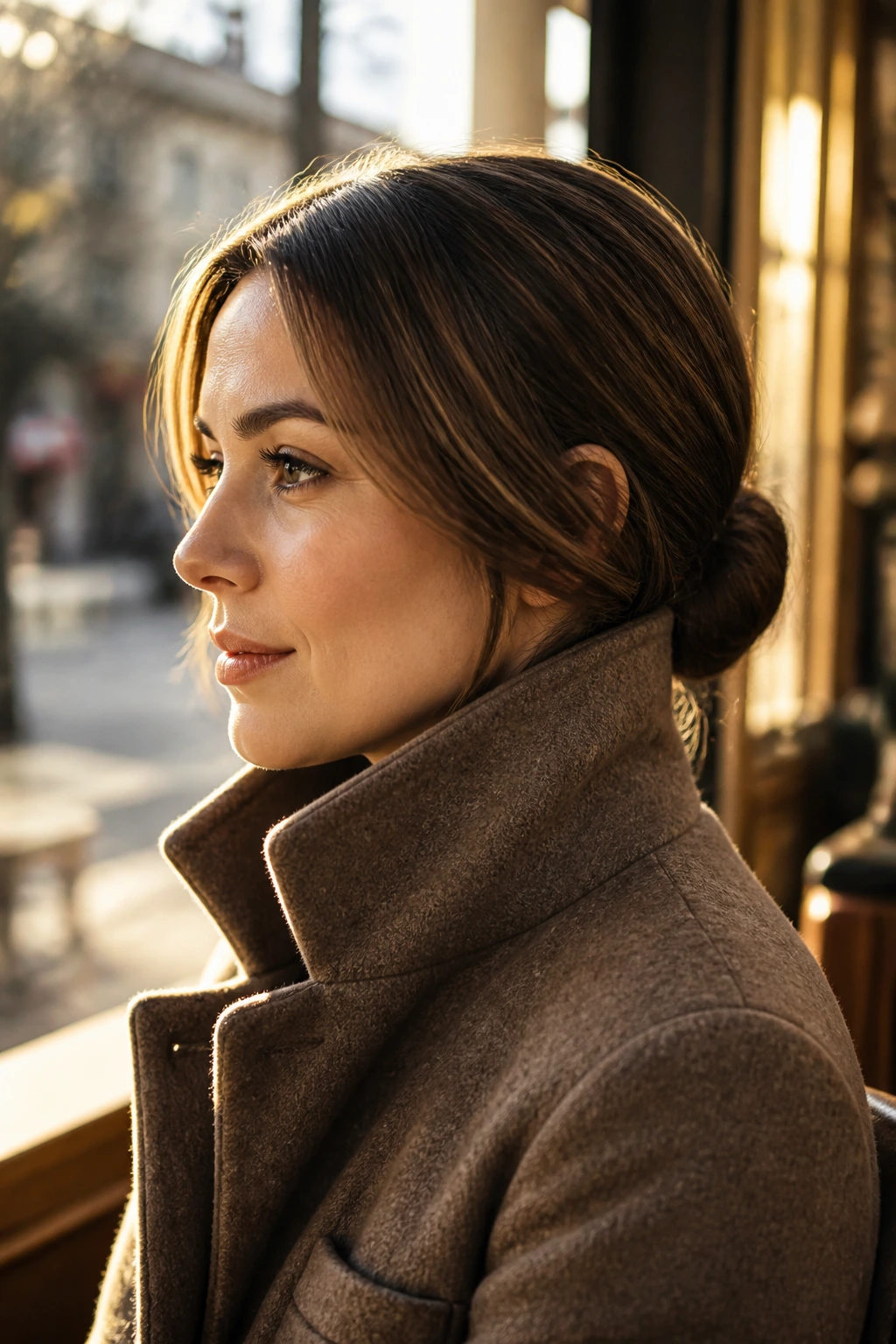
Collars: Low buns, wrapped ponytails, tucked bobs, and side buns are the easiest match for high necklines because they keep the bulk away from the fabric. If your collar is bulky, avoid a style that sits wide at the nape. It will get flattened and start looking tired.
Hats: Smooth crowns and low-profile styles hold up best under beanies, berets, and felt hats. A high knot or a puff can work, but only if you’re willing to refresh the top after taking the hat off. For the least drama, choose a style that can be reset with a brush and one pin.
Scarves: Braids, tucked buns, and French twists survive scarf friction better than loose curls. The scarf rubs the same sections repeatedly, which can make soft wave patterns go fuzzy fast. If you love loose hair with scarves, use a light anti-frizz cream on the outer layer only.
Earrings and necklines: Side parts, low buns, and tucked styles open the face and make earrings matter more. That sounds small. It isn’t. When the hair clears the jawline, even a plain sweater looks sharper because the whole frame feels more deliberate.
Extra Finishers That Make Each Style Look Intentional
Shine without slip: A small amount of gloss spray on the outer layer makes blowouts, waves, and bobs look cleaner. Keep it off the roots unless you want the style to collapse faster than it should.
Texture where you need it: Dry shampoo or texturizing spray at the roots helps ponytails, braids, and twists grip better. Put it in before styling, not after everything is already pinned, so it can do real work.
Accessory switch: A plain elastic can become a ribbon, a clip, or a barrette in seconds. That one swap changes the tone of the whole style. Ribbon for softness. Metal for a sharper line. Matte clip for everyday wear.
Shape the front first: The bits around the face sell the style. Curtain bangs, tendrils, side pieces, and part lines should be finished before you worry about the back. Nobody looks at the back first.
Make it yours: If your hair is flat at the crown, use mousse and a quick blow-dry lift at the roots. If your hair is coarse, focus on smoothing the top and keeping the ends tucked. If you like a softer mood, loosen the part by half an inch and leave one side less structured.
Keeping the Style Fresh Overnight and On Day Two
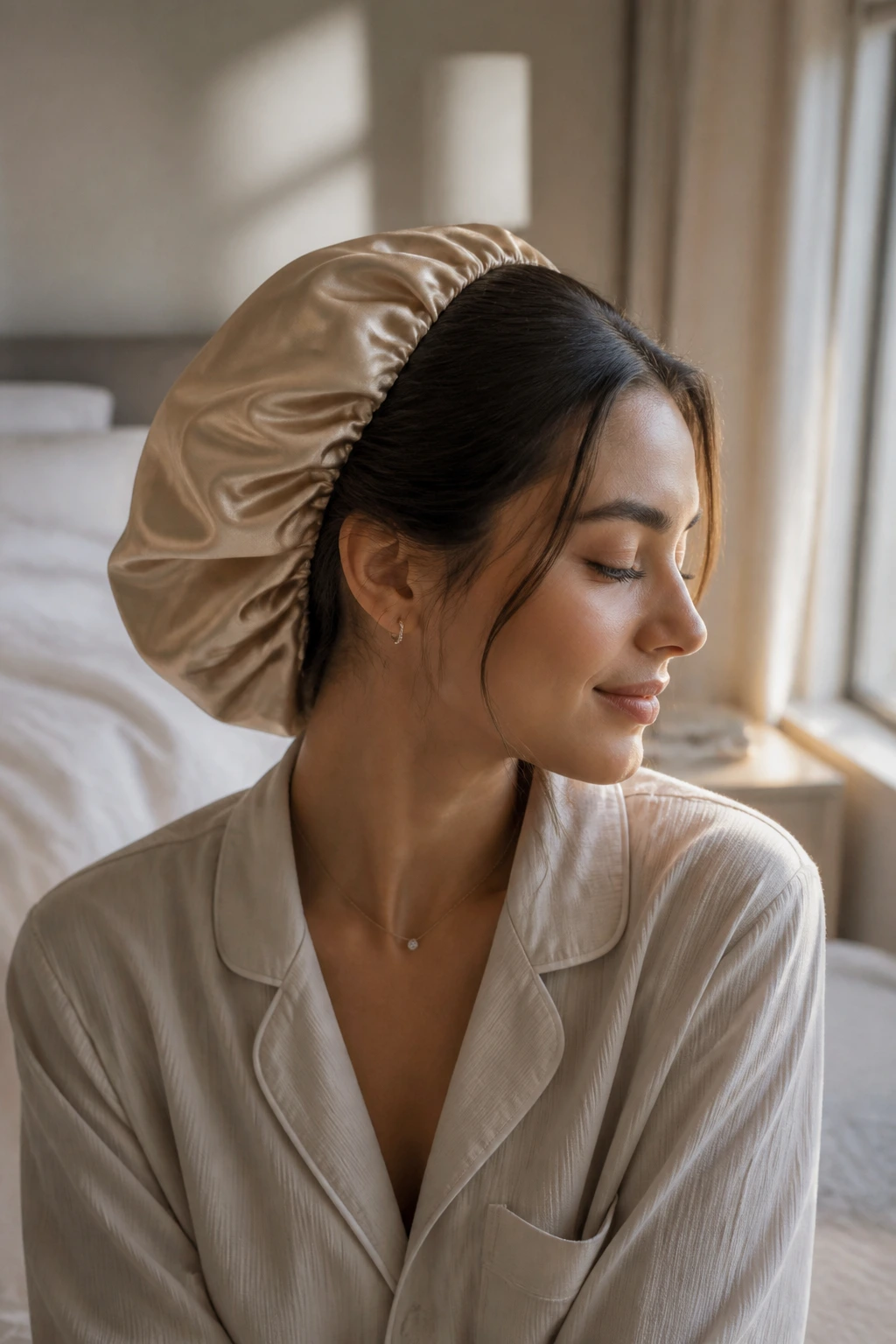
Some fall hairstyles forgive a bad night’s sleep. Others need a little help. Low buns, braids, and twists tend to last the longest because the structure is already close to the head. A satin bonnet or pillowcase helps cut down on friction, and that matters more than a lot of people realize. Cotton roughs up the surface. Satin doesn’t.
Loose curls and waves usually need the most rescue work. If you want them to hold past day one, pin them up loosely before bed or clip the lengths into a soft twist. The next morning, shake them out, add a touch of dry shampoo at the roots, and re-curl only the front pieces if needed. That is usually enough. Re-doing the whole head is overkill.
Bobs and lob styles often just need the ends reset. A flat iron at a moderate heat—around 320°F to 350°F for many hair types—can re-bend the bottom inch in a minute or two. Curtain bangs may need a quick round-brush pass or a Velcro roller while you get dressed. Fast. Not fussy.
For updos, check the pins before bed if you know you’ll be rewearing the style. A bun that shifts at midnight will look lopsided by morning. Two extra pins can save you from starting over.
Common Mistakes That Make Fall Hair Look Frizzy or Flat
Using too much oil near the roots: The hair looks shiny for ten minutes, then sinks and separates. Keep oils and serums on the mid-lengths and ends, where they actually help.
Ignoring collar friction: A loose wave can look great until your coat rubs it into fuzz. If you know you’ll be wearing a high collar, choose a lower style or tuck the ends away.
Curling everything the same direction: The result is a stiff spiral that can look overdone fast. Alternate directions or brush the curls out once they cool if you want softness.
Leaving the front unfinished: Hair can be pinned beautifully in the back and still look sloppy if the part line, bangs, or face-framing pieces are ignored. Finish the front first. Always.
Choosing accessories that fight the style: A giant clip on fine hair or a slippery ribbon on coarse hair just creates problems. The accessory should support the shape, not drag it sideways.
Over-spraying the whole head: Hair that’s locked in place can’t move, and in fall that usually makes the style look harsher than it needs to. Spray the spots that need support, then stop.
Variations and Adaptations for Different Hair Types and Lengths
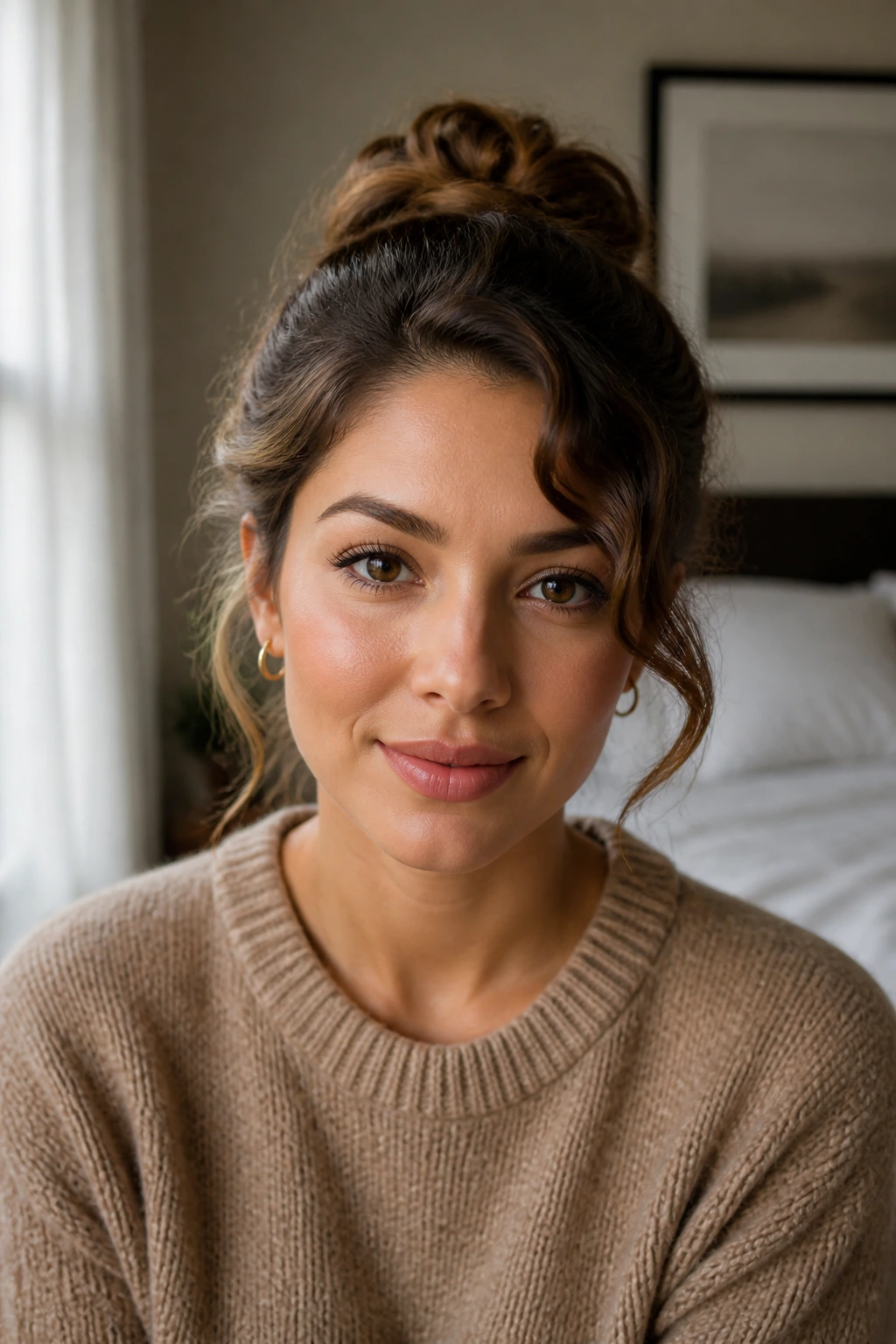
Fine-Hair Lift: If your hair slips out of everything, lean toward low buns, wrapped ponytails, and bubble ponytails. Prep with a root-lifting mousse and use texturizing spray before the elastic goes in. Fine hair usually needs grip first and shine second.
Curly-Texture Polish: Coils and curls look strongest in styles that respect their shape, like the coily puff, braided crown, or low braided bun. Smooth the crown only where necessary, and keep the curl pattern intact everywhere else. Too much stretching kills the look.
Short-Hair Edit: Bob and lob lengths do best with tucked-behind-ear styling, headband tucks, rounded blowouts, and beveled ends. If the hair is too short for a full twist, don’t fight it. Work with clean lines and small accessories.
Hat-Friendly Fix: For days with a beanie or brimmed hat, choose styles that sit low and flat: low chignon, side bun, wrapped ponytail, or tucked bob. Keep the crown smooth so the hair doesn’t explode when the hat comes off.
Evening Shine Version: Take any of the simpler looks and add a gloss spray, a polished part, and one good accessory. A plain low ponytail becomes dinner-ready with a ribbon. A bob becomes sharper with a side tuck and earrings.
Questions People Ask Before They Pin Their Hair Up
Which fall hairstyle is easiest for beginners?
The wrapped low ponytail and the claw-clip twist are the quickest to learn. Both rely on a clean base and one strong anchor point, so you don’t need ten pins and a prayer.
What styles work best with a turtleneck?
Low buns, French twists, side buns, and tucked bobs are the safest choices. Anything that sits high at the neck tends to fight the fabric and get flattened.
How do I stop static in dry weather?
Use a small amount of leave-in conditioner on the ends, avoid over-drying, and keep a tiny bit of serum on hand for flyaways. A metal comb on dry hair can make static worse, so a boar bristle brush is usually kinder.
Can I wear these styles with curly or coily hair?
Yes, and some of them are better on textured hair than on straight hair. The coily puff, low braided bun, braided crown, and headband tuck all give texture a cleaner frame without forcing it into another pattern.
How do I make a bun look fuller?
Split the ponytail before wrapping it, then pin the loops loosely so the bun has width instead of height. A little teasing at the base helps too, especially if your hair is fine.
What if my hair keeps slipping out of clips and pins?
Your hair probably needs more grip at the base. Use dry shampoo or texture spray before styling, rough up the section very slightly, and pin into a crossed pattern rather than one straight line.
Can these styles be done without heat?
Many of them can. The low chignon, wrapped ponytail, scarf bun, braid variations, and headband tuck all work well on air-dried hair. For waves or bangs, a roller or braid set can replace the iron.
How often should I refresh these styles?
Updos can often be revived for a second day with a couple of pins and a smoothing pass at the hairline. Waves and curls usually need a quicker touch-up on the front pieces and ends, especially if you slept on them.
A Polished Finish for Sweater Weather
The best fall hairstyles don’t fight the season. They work with it. They sit neatly under collars, hold their shape through dry air, and make a sweater look more put-together than it would on its own. That’s the real appeal here: not perfection, just a finish that survives a normal day.
I’d keep a short list of favorites and rotate between them. A low chignon for the days you need clean lines. A bubble ponytail when you want something quicker. A textured lob or loose barrel curls when you want movement without a full production. The styles that stay in your regular rotation are usually the ones that behave when the weather doesn’t.
So the next time your hair starts reacting badly to the first sweater you pull over your head, skip the panic. Pick one shape, smooth the front, and let the season do the rest.
