



Some bangs sharpen a face. The better ones soften it.
The right bangs for a soft flattering face frame don’t sit across the forehead like a hard line. They bend around the cheekbones, leave a little air at the brows, and grow out without turning into a daily grudge match. That’s the difference between a fringe that feels harsh and one that makes your haircut look finished.
A heavy fringe can be gorgeous on the right head of hair, but softness does the flattering work most people actually want. The shape matters. So does where the shortest point lands, how much weight sits in the center, and whether the side pieces blend into the haircut or stop dead at the temples. A bang that’s cut too blunt can make the eyes feel boxed in. A bang with a little give can make the whole face look more open, lighter, and—this part matters—less fussed-over.
The styles below lean on that idea from different angles: some split in the middle, some sweep to one side, some use texture to break up the line, and a few are especially kind to curls, waves, or a stubborn cowlick that refuses to behave. Not every soft fringe needs to be wispy, either. Sometimes the most flattering version is the one with enough density to frame the face but enough movement that it never looks carved in stone.
Why These Bangs Feel Softer on the Face
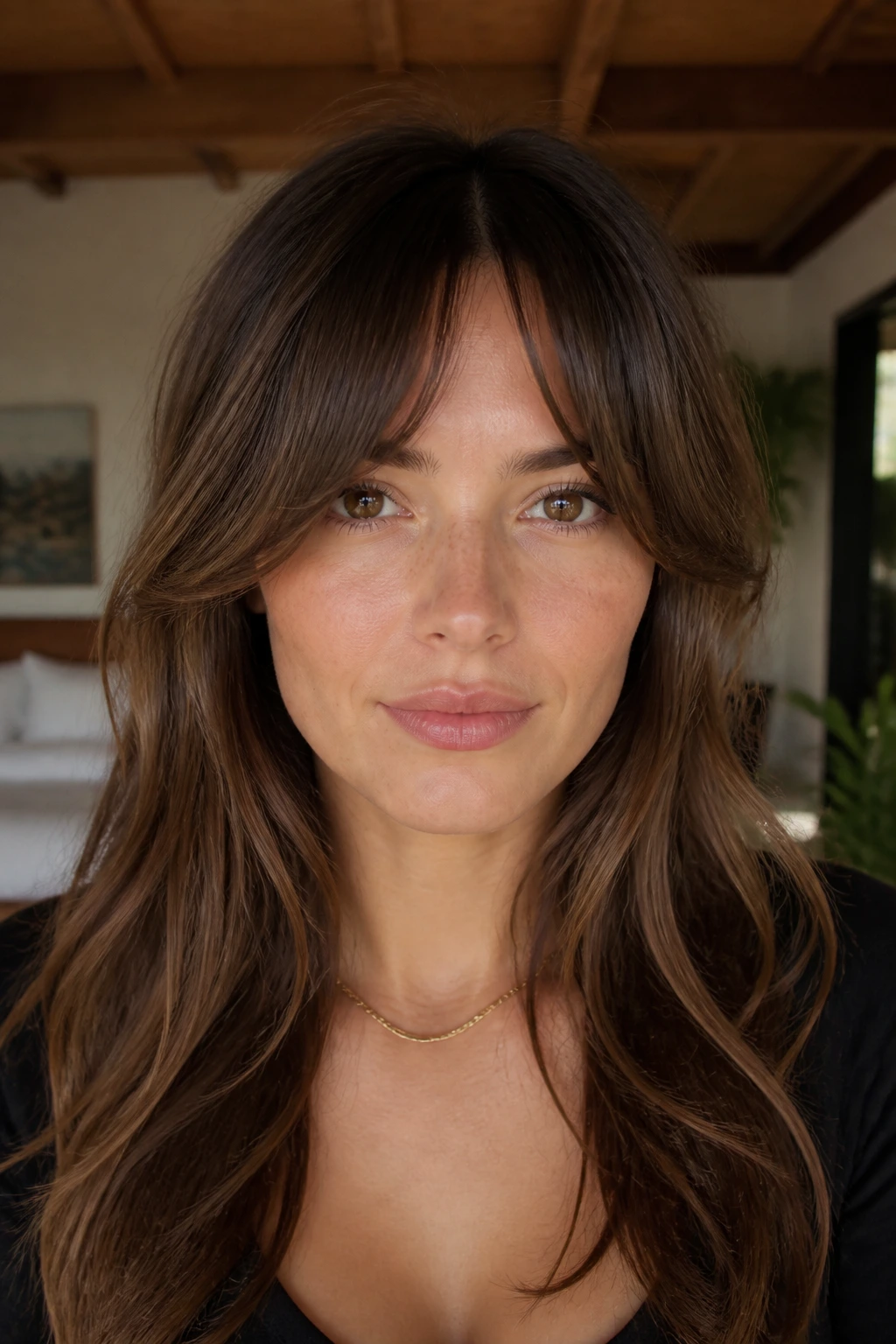
Face-framing movement: The best soft bangs leave an opening near the center or a bend near the cheekbone, which stops the forehead from looking cut in half and makes the eyes feel more open.
Grow-out that doesn’t punish you: Longer, tapered bangs usually grow into face-framing layers instead of an awkward shelf, so you are not stuck scheduling a trim the minute they touch your lashes.
Texture does the flattering work: A little feathering, point-cutting, or separation keeps the fringe from looking blocky, and that small detail changes the whole mood of the haircut.
More room for face shape: Soft edges are easier to adapt to round, square, heart, and oval faces, because the length can be adjusted at the temples, brows, or cheekbones without rebuilding the entire cut.
Less “helmet,” more shape: A soft fringe moves when you move, which matters more than people admit. If the bangs sit like a stiff curtain, the face can look smaller and the haircut feels dated fast.
1. Curtain Bangs That Split at the Brow
Curtain bangs are the obvious starting point, and for good reason: they do the face-framing job without making a big speech about it. The center opens just enough to show the forehead, then the sides drift down toward the cheekbones. That little split gives the face room to breathe.
They work especially well when the shortest point lands around the bridge of the nose or just below the brows. Any shorter and they start reading like a full fringe. Any longer and they lose the frame and become regular layers. The sweet spot is the one that skims the eyes, then bends outward with a round brush or a quick pass of the flat iron.
Why They’re a Reliable Default
Curtain bangs are the least fussy option if you want softness but don’t want to commit to a dense forehead curtain. They blend into long layers, shags, lobs, and even blunt bobs if the side pieces are cut cleanly.
They also forgive a lot. A little oil at the roots? Still works. A weird morning cowlick? Still works. A split part? That’s the whole point.
2. Bottleneck Bangs With a Narrow Center Opening
Bottleneck bangs start narrow in the middle, then widen as they move outward, which gives them a shaped, almost tailor-made look. The center sits higher and lighter, and the sides drop more like curtain pieces. That narrow opening is what makes them feel softer than a straight fringe.
I like them on people who want a visible bang but hate the feeling of hair sitting flat across the forehead. There’s a small bit of lift at the root, and that lift keeps the face from feeling weighed down. Ask for the shortest point to hit around the center of the brow, then let the length angle down to the cheekbones.
They’re especially good with a little texture on the ends. Not choppy. Just enough pieceiness that the bang doesn’t form one solid wall.
A lot of salon photos make bottleneck bangs look effortless. They’re not effortless. They’re just cleverly cut.
3. Long Side-Swept Bangs That Melt Into Layers
Long side-swept bangs are the old dependable friend in this group. They slide across the forehead and disappear into the haircut, which is exactly why they flatter so many faces. There’s no hard edge. No dead stop. Just a long diagonal that pulls the eye upward and outward.
They’re one of the best choices if you want softness but still want to keep most of your forehead visible. The diagonal line can slim the look of a wider forehead and soften a square jaw at the same time. That’s a rare little two-for-one.
The trick is to avoid making them too skinny. A wispy side bang can look stringy if the hair is fine, and then you lose the frame entirely. Ask for enough density that the bang can sweep as a unit, not in five separate wisps that stick to your cheek.
These also grow out well into face-framing layers. Which, frankly, is half the appeal.
4. Wispy See-Through Bangs That Leave Air at the Brow
Wispy bangs are for people who want a fringe but don’t want their forehead hidden. The hair is intentionally light, with space between the strands. You can see skin through it. That transparency is what keeps the look soft.
They’re especially kind to fine hair, because they do not ask for much density. A heavier bang on fine hair can separate in strange places and look thinner than intended. Wispy bangs already accept a little separation, so they look intentional even on a humid day.
How to Wear Them
Keep the ends textured and the length just below the brow or at the lashes. A small round brush gives them shape, but don’t over-style them into a stiff curve. A little bend is better than a perfect arc.
Use them when you want softness first and structure second. They’re lovely with long layers, shoulder-length cuts, and hair that naturally wants to move.
5. Feathered Bangs That Soften the Whole Hairline
Feathered bangs are cut to look airy at the ends, almost like the fringe has been lightly combed open by the wind. That feathering keeps the bang from sitting flat and heavy. It also helps the line dissolve into the rest of the haircut instead of sitting on top of it.
This is one of my favorite options for medium to thick hair. Thick bangs can get bulky fast, especially around the temples. Feathering removes some of that visual weight without turning the fringe into scraps. The balance matters. Too much thinning, and you get little flyaway pieces that never sit right.
The face-framing part comes from the way the side edges taper. A feathered bang should start with some fullness in the middle, then soften as it reaches the outer corners of the eyes.
It’s a very 1970s idea when it’s done well. Not costume-y. Just soft.
6. Birkin Bangs With a Soft Brow Skim
Birkin bangs sit right in that sweet zone between polished and undone. They tend to be fuller than wispy bangs, but softer and less severe than a blunt fringe. The ends skim the brows, and the line is never razor-straight.
The best Birkin-style fringe has a little irregularity at the tips. That tiny unevenness keeps the bangs from looking like they were cut with a ruler. They’re lovely on straight to slightly wavy hair because the texture gives them movement, but they can work on looser curls too if the shape is cut dry.
A lot of people ask for this style because they want that Parisian feel. Fine. But what they really want is a bang that frames the face without announcing itself from across the room. Birkin bangs do that.
They suit longer cheekbones especially well, because the fringe can sit heavy enough to frame but soft enough not to cover the whole face.
7. Arched Bangs That Follow the Brow Shape
Arched bangs curve gently from the center of the forehead down toward the temples, mirroring the natural shape of the brows. That curve creates softness in a different way: instead of splitting the face, it rounds the top third of it.
They’re a smart choice if you want to soften a square or angular face. The arch breaks up hard lines and adds a little motion around the eyes. The shape looks especially good when the center sits just above the lashes and the sides taper down cleanly, almost like a smile turned upside down.
These bangs need a careful hand. If the arch is too dramatic, they can look dated. If the curve is too shallow, they lose the point. The best version feels calm and easy, not theatrical.
They’re one of those cuts that doesn’t need a big style session. A quick blow-dry with a small round brush is usually enough.
8. Choppy Soft Fringe With Broken Ends
Choppy bangs sound rougher than they look. The best version still feels soft; it just uses uneven ends to avoid a heavy wall of hair across the forehead. Those broken edges catch the eye in smaller pieces, which makes the whole fringe look lighter.
This style works when you want movement but don’t want to go all the way into see-through territory. It’s a nice middle ground for thicker hair that needs some removal of bulk. The point is not to make the fringe thin. It’s to make it less monolithic.
What to Ask For
- Point-cut ends: This keeps the line from looking blunt.
- Slightly longer corners: Helps the fringe fold into the sides of the haircut.
- Soft center density: Keeps the bang from looking patchy.
If you like hair that looks touchable instead of exact, this one has a lot to offer. It’s the fringe equivalent of a washed linen shirt.
9. Shag Bangs That Blur into the Haircut
Shag bangs are all about blending. They are not a separate piece sitting on top of the haircut. They belong to it. The fringe usually starts as a shorter center section, then melts into the layers at the temples, which makes the face feel framed without feeling boxed in.
This is one of the best soft-fringe choices if your hair already has bend or wave. The texture helps the bangs sit in that loose, piecey way that shag cuts do so well. On straight hair, you can still get the look, but you’ll need a bit more styling to keep the movement alive.
The beauty here is the low drama. A shag fringe can grow a little and still look intentional. That matters more than people think. Haircuts that only look good for ten days are exhausting.
If you want your bangs to feel relaxed rather than polished, this is a strong option.
10. Curly Bangs That Follow the Curl Pattern
Curly bangs can be soft, flattering, and face-framing in a way straight bangs sometimes can’t match. The curl adds natural gaps, bends, and spring, so the fringe never reads as a flat block. It lands on the forehead with shape already built in.
The key is cutting them dry or nearly dry. Curl shrinks. Everyone with curly hair knows this in their bones, but it still gets ignored in salons more often than it should. A curly bang that looks perfect when wet can jump two inches shorter once it dries.
Best Features of Curly Bangs
- Soft perimeter: Keeps the curl from forming a sharp edge.
- Balanced density: Enough hair to frame the face, not so much that the curls stack up.
- Cheekbone reach: Longer side pieces help the curl blend into the haircut.
These bangs are especially good if you want your forehead partly open but still want a real fringe. The shape feels lived-in, not fussy.
11. Wavy Bangs That Bend Instead of Sit Still
Wavy bangs are the happy accident of the fringe world. They never lie flat for long, and that movement is exactly what makes them soft. The wave breaks the line, so the face gets framed by motion rather than by a single hard cut.
The trick with wavy bangs is to respect the wave pattern. Don’t fight it into a perfectly smooth curve unless you enjoy daily frustration. A wavy fringe looks best when the shortest point lands where the wave naturally wants to split or fold.
I like these on shoulder-length cuts and long layers because the bang can echo the rest of the hair instead of fighting it. There’s an easy harmony there. Not everyone wants harmony in a haircut, but I do.
If your hair has a little bend on its own, this style saves you styling time and still gives you that soft face frame.
12. Rounded Bangs That Curve Under the Eyes
Rounded bangs have a gentle arc, fuller in the center and softer at the edges. They frame the eyes in a smooth way, almost like a half-moon sitting just above the brows. When the curve is controlled and not too sharp, the effect is polished without feeling stiff.
This is a nice option if you want softness but you do not want the bang to disappear into the haircut. Rounded bangs still read as a statement. They just make a friendlier one. The curve also helps shorten a long forehead visually, which can make the whole face feel more balanced.
They’re best when the edges are lightly thinned or feathered so the bang doesn’t form a solid helmet. A little air at the corners matters. A lot.
A strong round bang is one of those styles that looks simple and isn’t. The shape has to be precise or it falls apart.
13. Split Fringe That Parts in the Center
Split fringe is the cool, low-maintenance cousin of curtain bangs. Instead of a big dramatic sweep, the hair parts naturally in the middle and falls away from the face in two softer sections. The center opening gives the forehead breathing room, while the sides create that flattering frame.
It’s a strong choice if you hate the feeling of hair stuck to your forehead but still want the idea of bangs. The split shape also works well on faces with strong cheekbones, because it points the eye right where the structure already lives.
The beauty of this style is how forgiving it is on imperfect styling days. If one side sits higher than the other, it still looks fine. Better than fine, sometimes. A little asymmetry helps it feel real.
This is the fringe I’d send someone toward if they want movement without obvious “bangs” energy.
14. Long Face-Framing Bangs That Start at the Cheekbones
These are technically bangs, but they behave more like the front pieces of a layered haircut. They start long enough to tuck behind the ears or fall beside the cheekbones, and they give shape without much forehead coverage. That makes them very soft, very wearable, and easier to grow out than almost anything else on this list.
They’re good for people who are unsure about bangs and do not want to jump into a full fringe. The cut can still shift the focus of the face, especially if the shortest pieces start around the bridge of the nose and angle down to the jaw.
They also work well with center parts, side parts, and messy texture. No rigid styling rules. That’s rare with bangs, and refreshing.
If your main goal is face framing rather than forehead coverage, this is probably the safest place to start.
15. Soft Blunt Bangs With Textured Ends
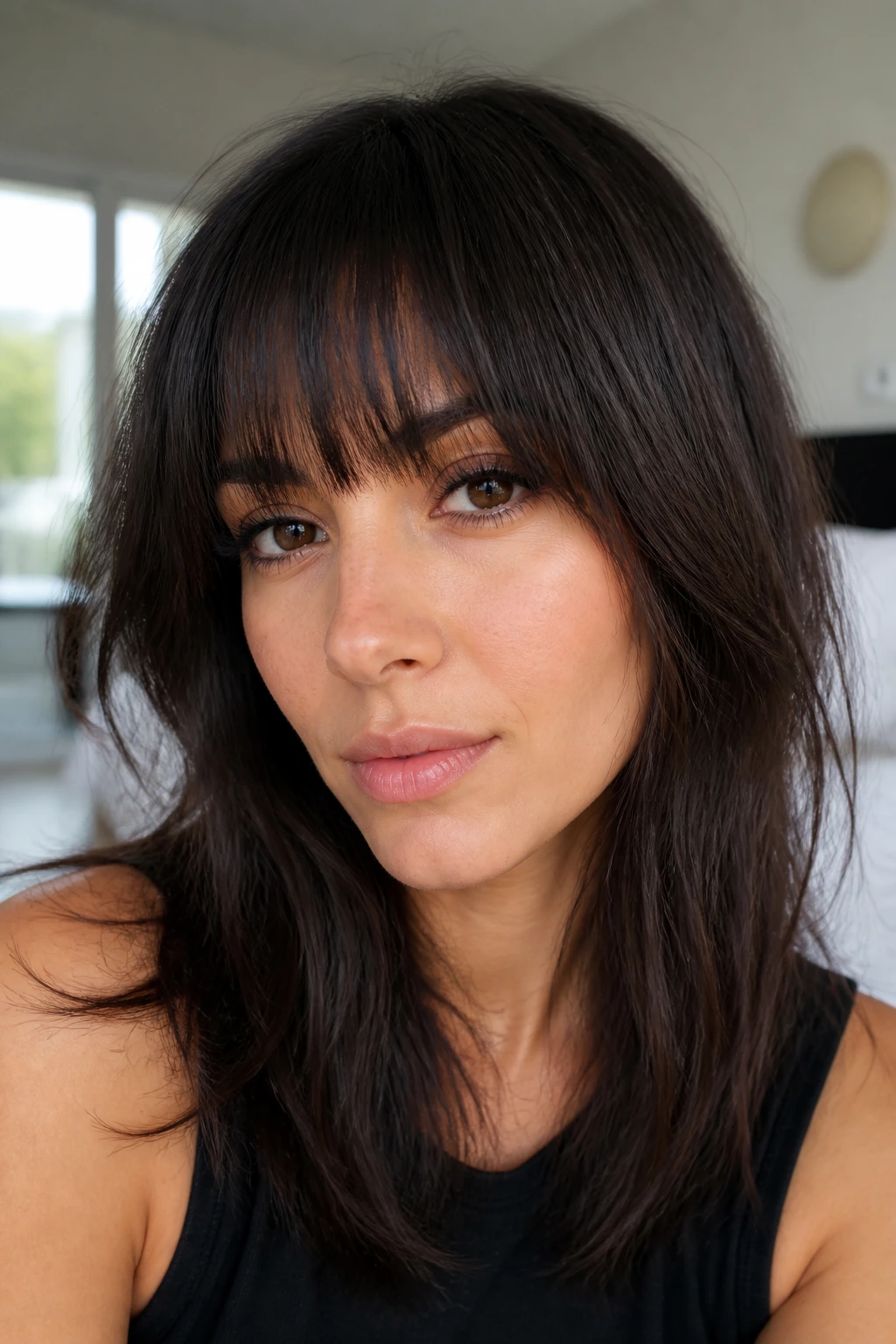
Blunt bangs sound severe, and they can be. But a soft blunt fringe is a different creature. The line still exists, which gives the haircut structure, but the ends are lightly textured so the bang doesn’t feel like a solid slab.
This style needs enough density to read cleanly. Fine hair can do it, but the ends need careful shaping or the line goes sparse. Medium to thick hair usually takes to it more easily. The softness comes from the edge treatment, not from thinning the whole bang into nothing.
The face-framing effect is strongest when the bang sits just below the brow and the corners are slightly longer than the center. That tiny detail prevents the look from feeling too strict.
I like this option for anyone who wants a little polish but still wants the face to look open. It’s a firm shape with a soft finish.
16. Tapered Bangs That Narrow at the Temples
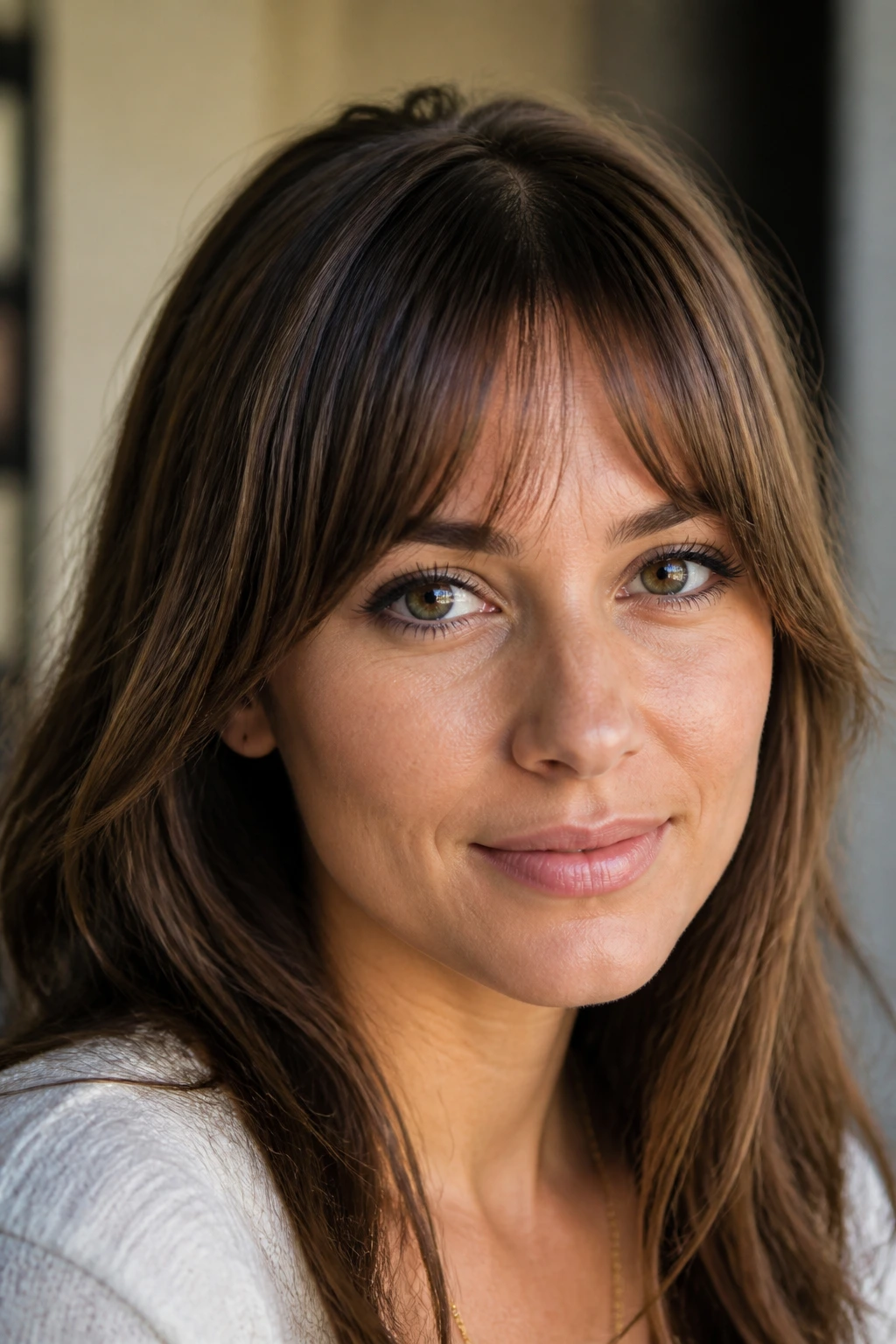
Tapered bangs are built to get lighter as they move outward. The middle carries the main weight, then the sides thin and lengthen until they blend into the haircut. That taper is the whole point. It softens the line and makes the fringe feel like it belongs to the rest of the cut.
They’re a good fit for rounder faces, because the taper creates some vertical pull and keeps the top of the face from feeling too wide. They also help thick hair behave better around the temples, where bang bulk tends to collect.
Styling Note
Use a round brush only at the root and forget about forcing the ends into a perfect shape. If the taper is cut properly, the movement is already there. Over-styling makes them look stiff.
This is a clean, practical option for anyone who wants the face to look slightly longer and softer at the same time.
17. Swoop Bangs With a Deep Side Sweep
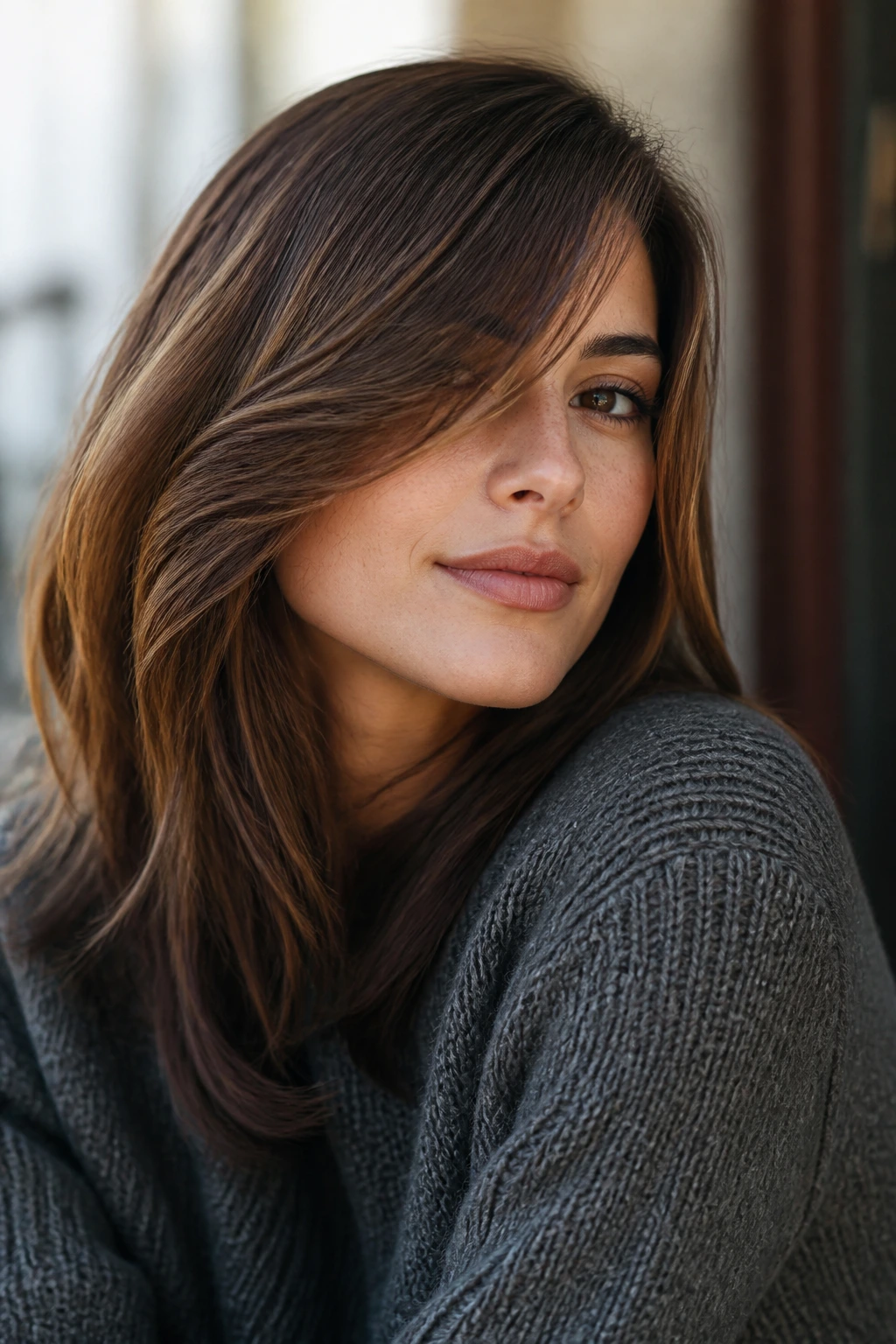
Swoop bangs make a bigger gesture than side-swept bangs. They start with more lift at the root and sweep across the forehead in a broad curve, almost like a ribbon laid diagonally across the face. That curve draws attention to the eyes and cheekbones, which is why it looks so flattering on many face shapes.
The trick is volume without bulk. A swoop that is too heavy can collapse and look like a chunk of hair pasted to one side. The best version has lift at the base and a light, curved finish at the ends.
This style is especially useful if you have a strong side part already. Don’t fight the part. Let it work. A good swoop bang looks intentional because it follows the head’s natural structure instead of arguing with it.
It’s one of the more dramatic soft-fringe options, and I mean that in a good way.
18. Layered Fringe That Blends into the Front
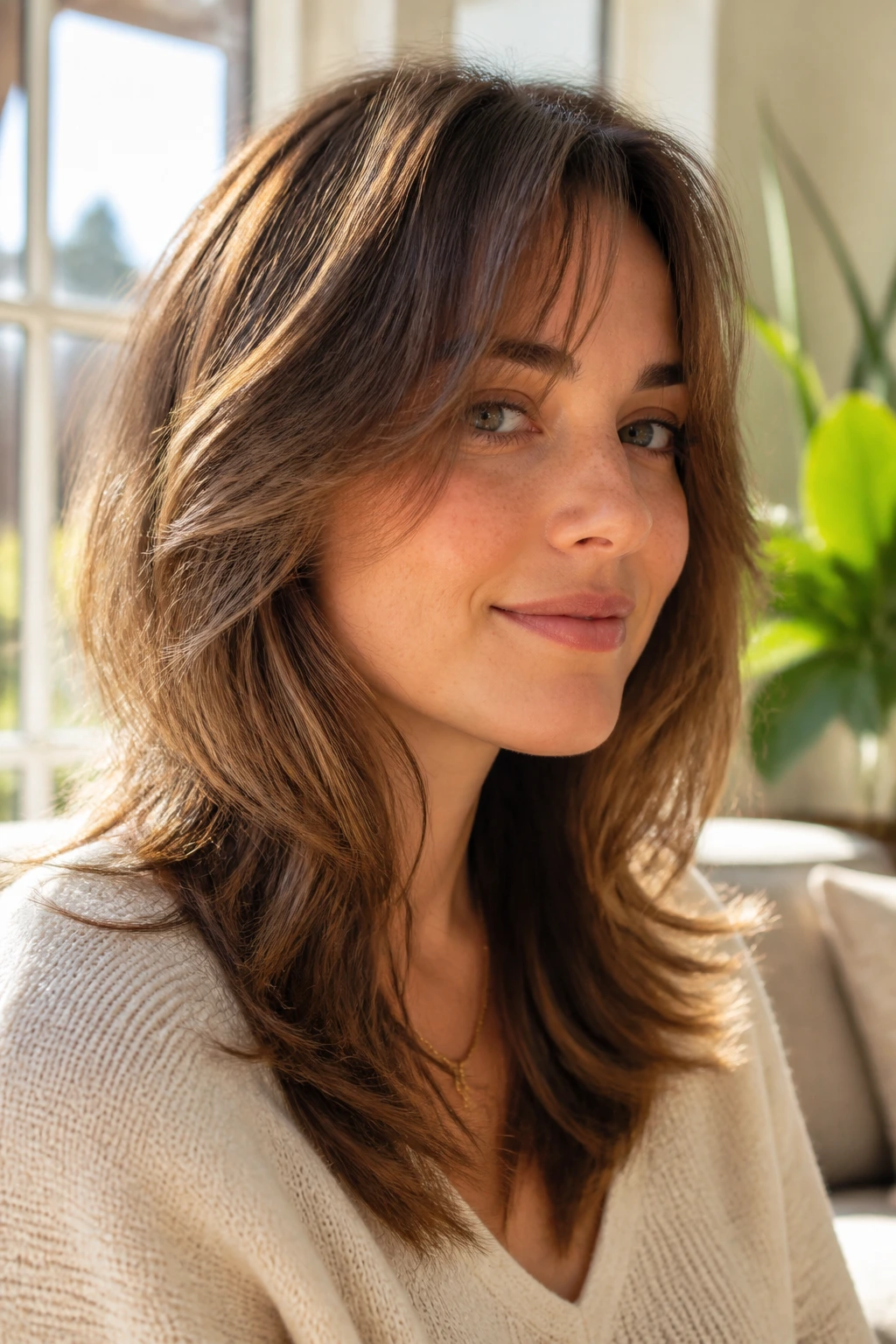
Layered fringe is all about making the front of the haircut feel connected. Instead of one clear bang line, the hair is cut in small steps so the pieces sit at slightly different lengths. That keeps the face framed while avoiding any one sharp edge.
It works well on medium to thick hair, especially if the goal is movement. Layers remove weight. Weight is what makes bangs go flat and dull by noon. A layered fringe keeps some body in the front, which helps the cut stay alive through the day.
The face shape benefit comes from the way the shortest pieces can sit at the center while the longer pieces taper around the eyes. It’s subtle. Which is often better than obvious.
If you hate bangs that need to be perfectly placed every morning, this style has your name on it.
19. Piecey Bangs That Separate in Small Sections

Piecey bangs look soft because they refuse to behave as one single sheet of hair. The sections fall into small strands or little clumps, and that separation lets light through the fringe. The result is a lighter frame around the face, not a block.
They’re a smart move for anyone with texture in the hair already. Straight hair can wear them too, but the styling has to encourage those small separations. A touch of texturizing spray or a tiny bit of paste at the ends helps. Tiny. Too much product and the bangs turn stringy fast.
Piecey bangs are especially flattering when you want to soften a broader forehead without hiding it completely. The eye can still see the skin underneath, so the face keeps its openness.
This is one of the most modern-feeling soft fringe shapes, though I’d use that word carefully. It’s less about trend and more about how the hair actually sits.
20. Deep Side-Part Bangs That Frame One Eye
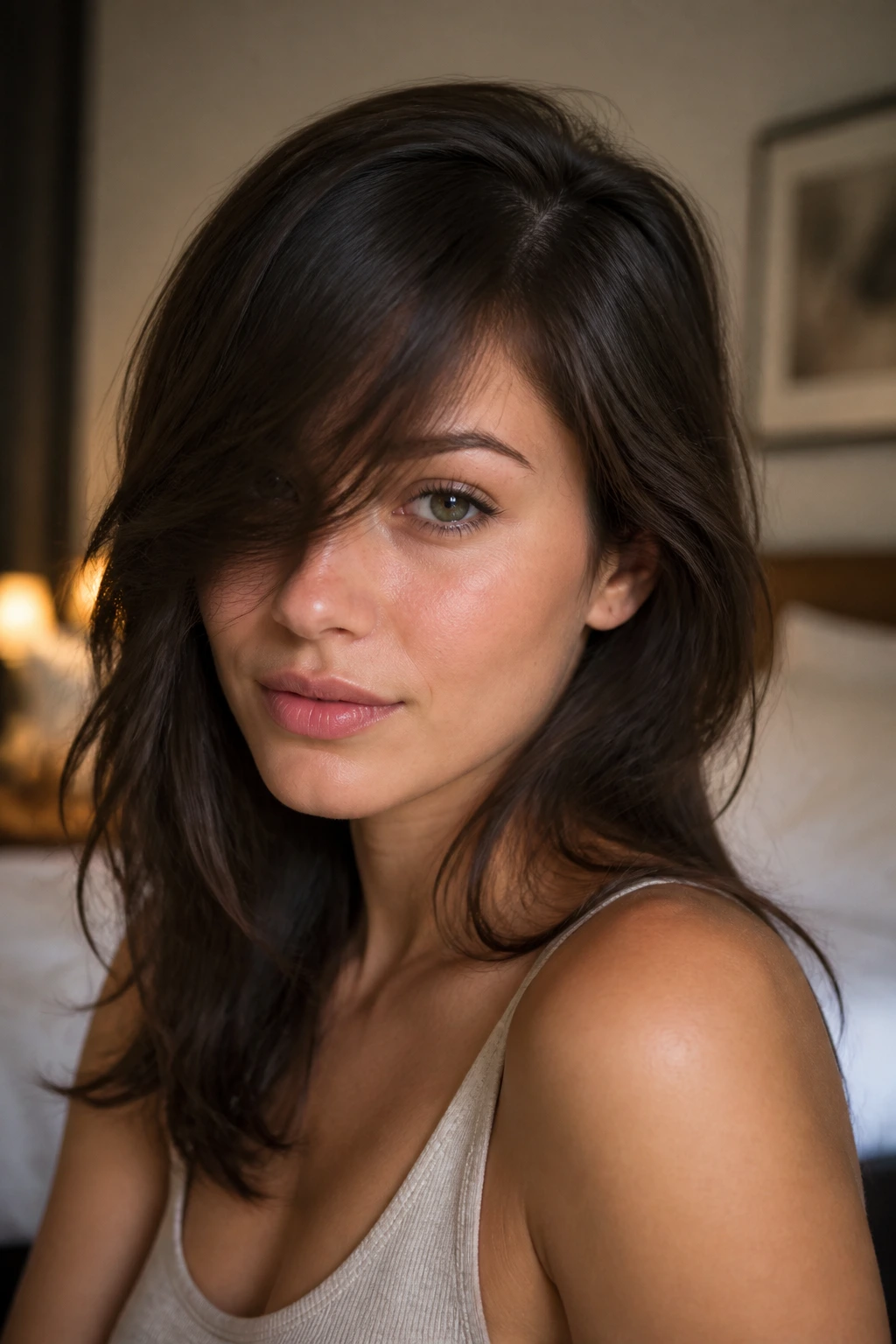
Deep side-part bangs are all about asymmetry. One side carries the fringe, the other side stays more open, and that imbalance creates a soft frame that feels a little dramatic without going hard. The strand line usually begins near the arch of the brow and sweeps diagonally toward the opposite cheekbone.
They flatter people who want some forehead coverage but not an even curtain. The diagonal line can narrow the look of a broad forehead and add softness to angular features at the same time. The eye gets pulled across the face instead of straight down it.
The best version is not frozen in place. It should move when you do. If the sweep is sprayed too stiffly, the shape stops feeling human.
I like this choice for nights out and for haircuts that need a little polish at the front without becoming formal.
21. Invisible Fringe That Acts Like Bangs Without Looking Like Bangs
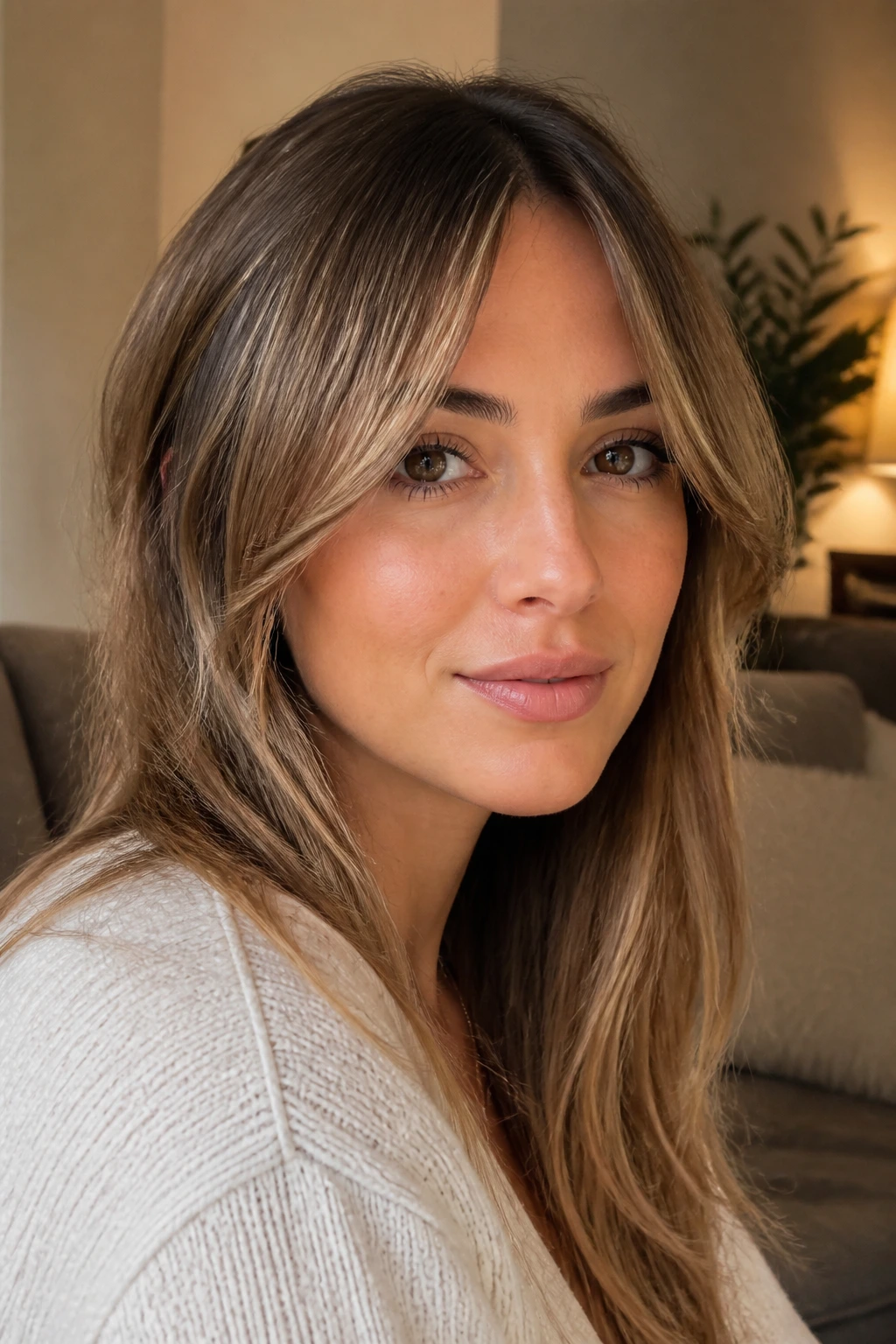
Invisible fringe is a sneaky little trick. It’s essentially a set of long front pieces that frame the face and behave like bangs only when you style them forward. On most days, they melt into the haircut and leave the forehead mostly open.
This is a strong option if you love the idea of bangs but fear the commitment. The shape gives you a frame around the eyes and cheeks without the obvious bang line. If you decide you want more coverage later, the pieces are already there.
It’s also a nice answer for anyone growing out bangs. Instead of pretending grow-out is a punishment, you can cut the front pieces into an intentional shape and keep the haircut soft.
The drawback? You do need some styling to keep the pieces from disappearing completely. But that’s a small price compared with a fringe that feels too heavy every day.
22. Cowlick-Friendly Bangs That Work With the Root, Not Against It
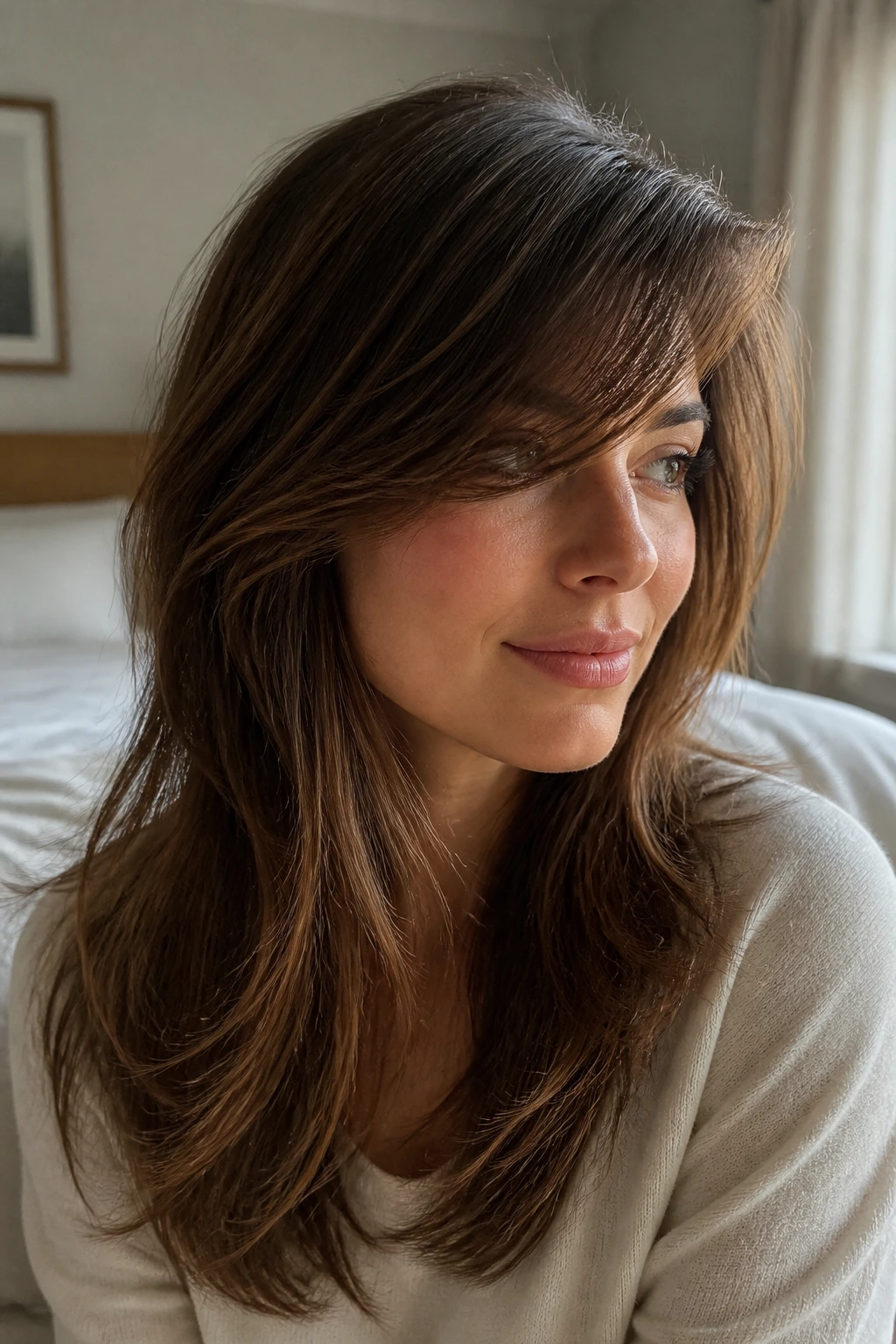
If you’ve got a stubborn front cowlick, you know the drama. Some bangs refuse to sit because the root wants to split, lift, or flip in one specific spot. Cowlick-friendly bangs are cut with that pattern in mind. They usually start a little longer, with enough weight to settle the hair and enough softness that the fringe still frames the face.
The smartest move here is to avoid fighting the cowlick with an over-short cut. That usually backfires. The hair pops up, sticks out, or parts in the exact wrong place. A longer, slightly off-center fringe can sit better and still look soft.
What Helps Most
- A dry or nearly dry cut: Lets the stylist see the real fall pattern.
- A small round brush at the root: Helps redirect the lift without flattening everything.
- Light root spray, not heavy cream: Keeps the bang from sliding apart.
These are the bangs for people who want a flattering face frame and need the haircut to cooperate with their actual hair, not the photo in their head.
Why Soft Bangs Beat a Hard Line
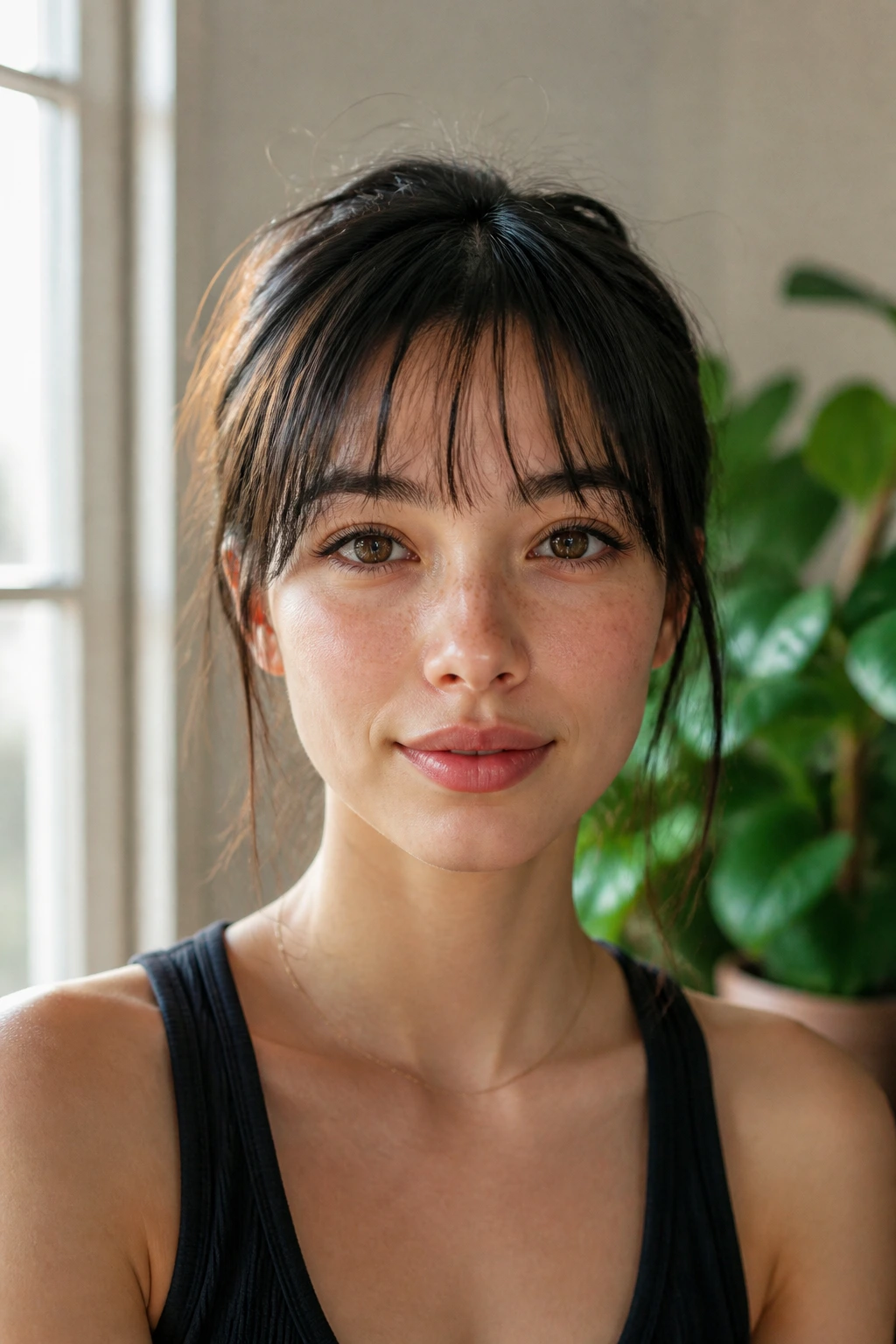
A soft fringe changes the mood of a haircut before it changes the haircut itself. That sounds obvious until you sit in the chair and realize how many bang cuts are designed to make a statement instead of flattering the face. A hard line can be striking, sure. It can also be unforgiving when the hair is fine, the forehead is short, or the part wants to move every six minutes.
Soft bangs work because they leave room. Room at the brows. Room at the temples. Room for the eyes to stay visible, which is usually where the flattery happens. When the fringe bends outward or breaks into pieces, the face reads as more open. That’s a subtle shift, but it changes how the haircut sits in photographs, in daylight, and in that unhelpful bathroom mirror at 7 a.m.
There’s also the grow-out factor. I care about this more than most salon trend talk does, because hair lives in time, not in still photos. A fringe that softens into layers is easier to wear for months. A blunt line has to stay precise or it starts looking like an afterthought.
The other piece is maintenance. Soft bangs tend to survive a skipped wash, a little humidity, or a rushed blow-dry better than rigid, full bangs. They don’t need perfection. That’s the selling point.
The Small Salon Details That Change Everything
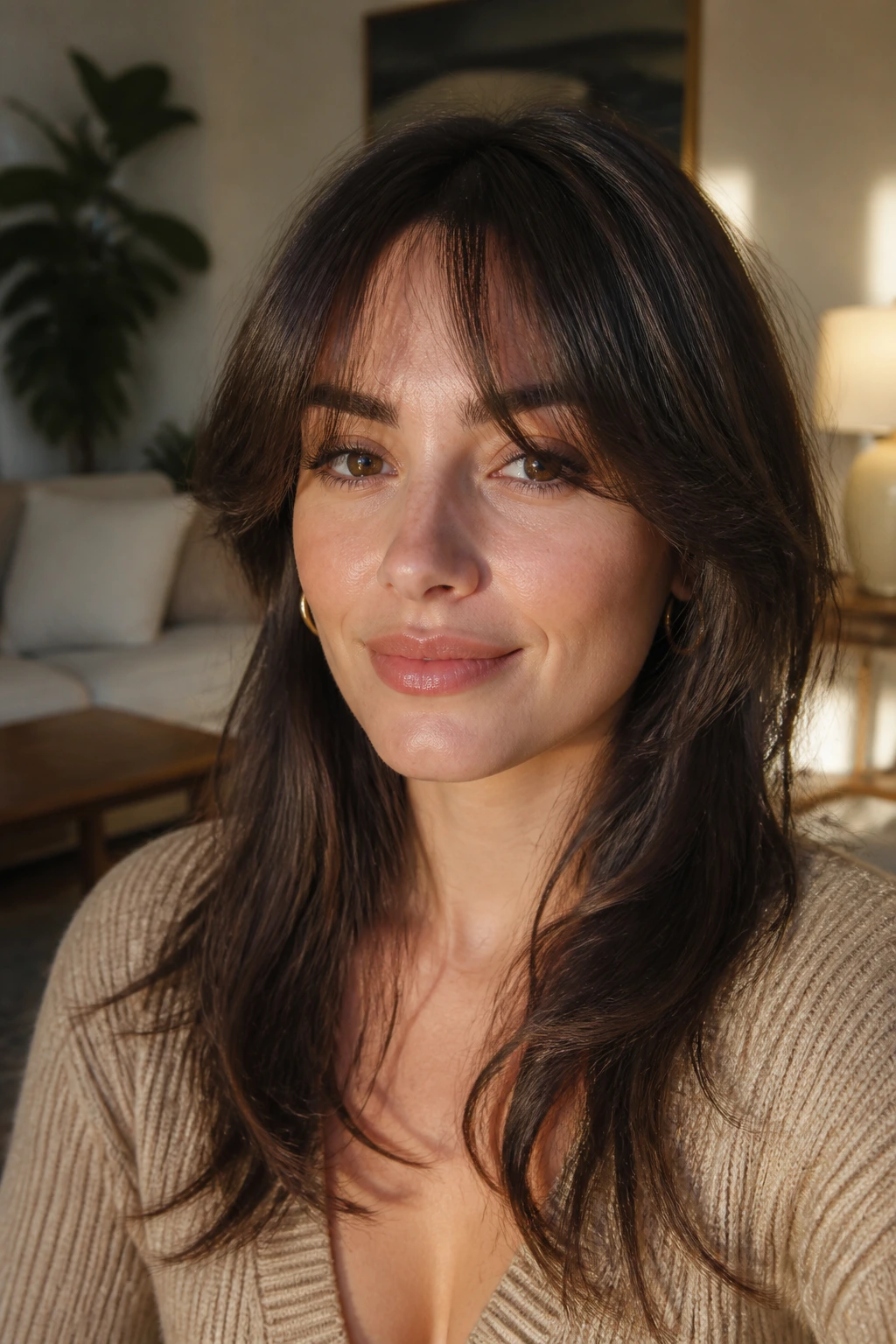
Ask for the starting point. Seriously. Not “bangs,” but where they should begin—brow, bridge of the nose, or cheekbone. That one detail changes the whole feel of the haircut. A softer, longer start usually gives you more flexibility later.
Tell the stylist how you part your hair on a normal day, not on picture day. If your part lives on the left, cutting a centered fringe and hoping for the best is a waste of everyone’s time. The same goes for cowlicks. If the front wants to split, let the cut respect that.
Point cutting and slide cutting can help break up the edge, but they need a light hand. Too much texturizing and the fringe gets thin, uneven, and frankly annoying to style. I’d rather see a little density with soft edges than a shredded bang that only looks good when it’s freshly blown out.
Bring photos, yes, but bring the right ones. Show a picture of the shape, not just the vibe. One photo with a center split and another with a heavy side sweep tells a stylist more than twenty vague saved images ever will.
Essential Tools for Styling Soft Bangs
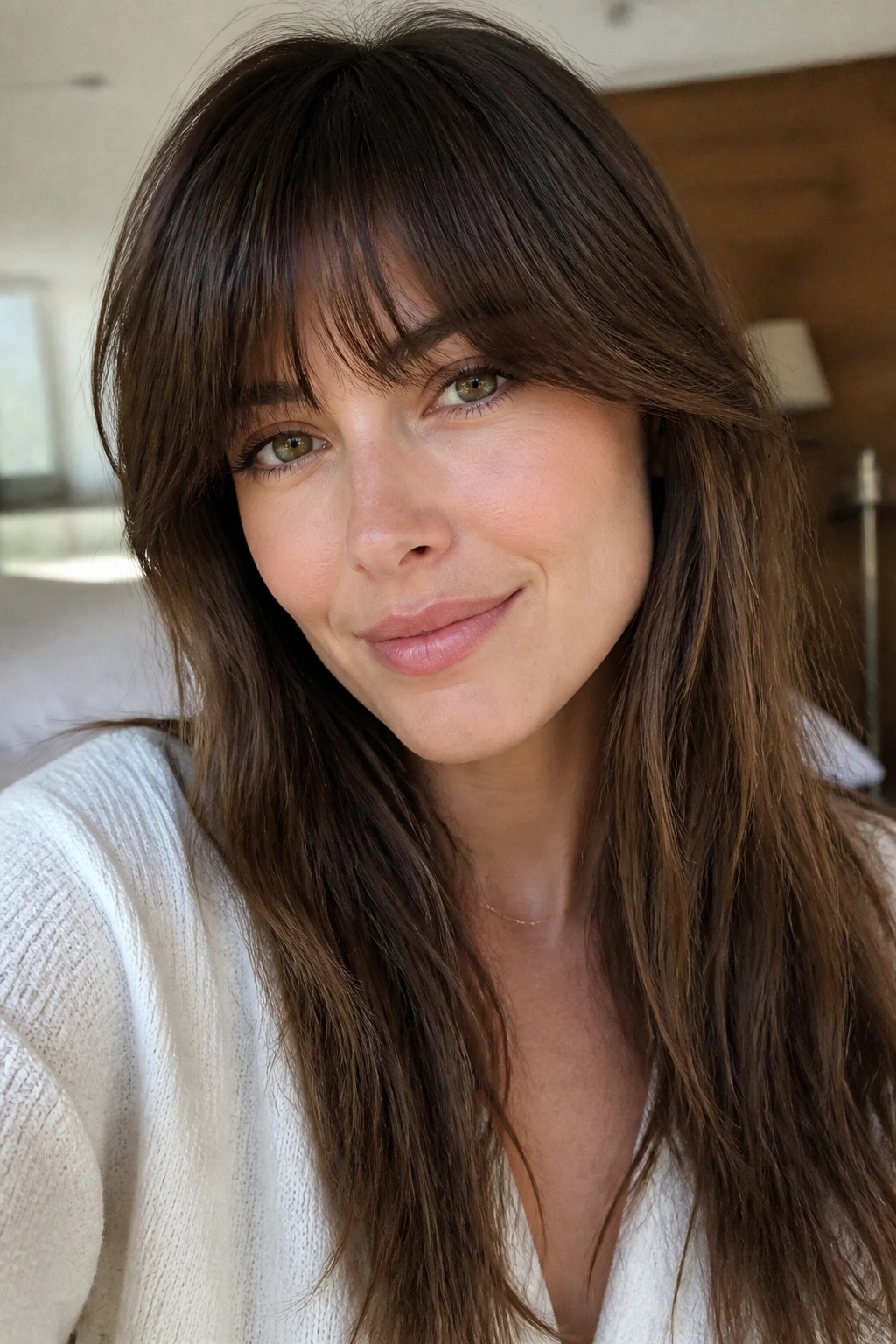
- A small round brush, 1 to 1.5 inches: Best for lifting roots and curving the ends without making the fringe too round.
- A blow dryer with a nozzle: The nozzle keeps the air where you want it, which matters more with bangs than with the rest of the hair.
- A fine-tooth comb: Useful for setting the part and guiding the fringe before heat.
- A flat iron with slim plates: Handy for a quick bend or a subtle flip at the ends.
- Light heat protectant spray: Keeps the bangs from drying out, especially if you touch them up every morning.
- Texturizing spray or light dry shampoo: Good for soft separation and root lift, especially on day two.
- Sectioning clips: Small but useful. Bangs behave better when the rest of the hair is clipped away.
- Velcro roller, optional: Great if you want a bit more shape without blasting the fringe with heat.
How to Ask for the Right Fringe in the Chair
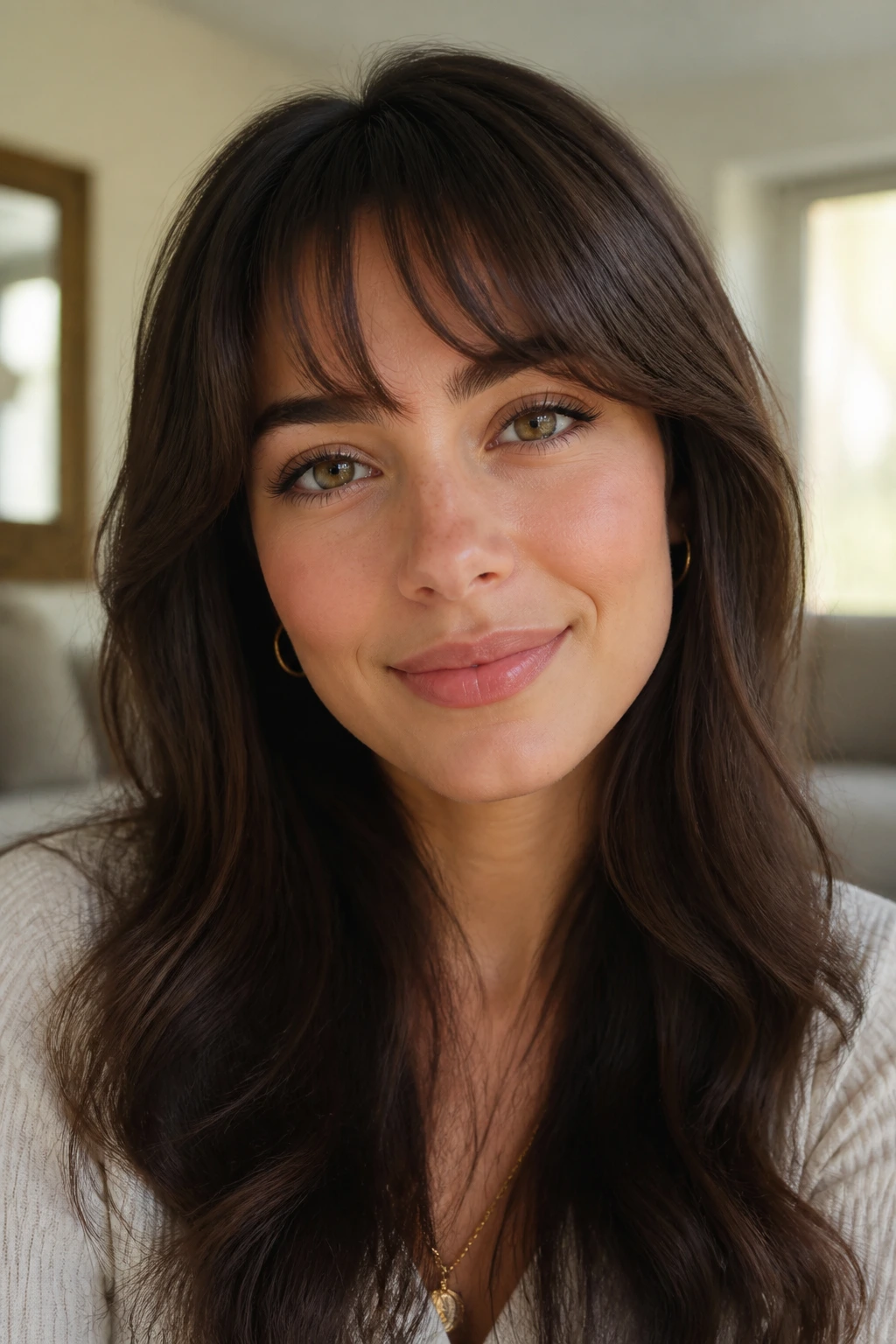
Be specific about the softness you want. A stylist can cut bangs in a dozen different ways, and “soft” means different things to different heads. For one person, it means curtain bangs that open at the brow. For another, it means a feathery side fringe that disappears into layers. Say which part matters most: forehead coverage, cheekbone framing, or easy grow-out.
Bring up your hair texture before the scissors come out. Fine hair, dense hair, curly hair, and cowlick-prone hair all behave differently at the front. The stylist needs to know whether the bangs should be cut to sit flat, sit airy, or sit with a little bend. If your fringe always shrinks up after drying, say that plainly.
Ask for the trim plan too. Bangs are not one-and-done. Some soft fringes need a touch-up every four weeks. Others can go six or eight. A good stylist will tell you which one you’re getting before they finish the cut.
How to Style Them So They Move, Not Helmet
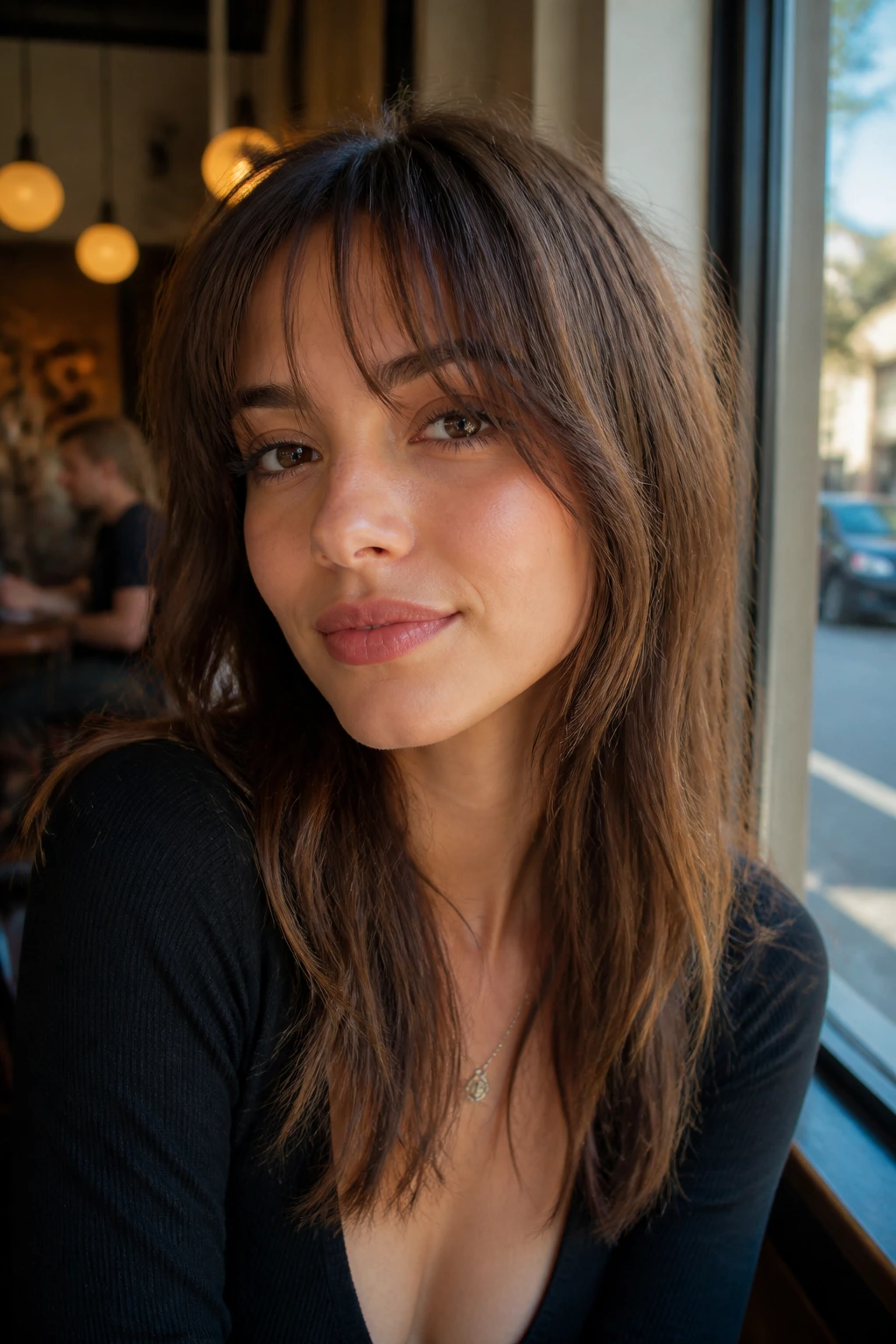
Root first, ends second: Dry the roots in the direction you want them to sit before you worry about the curve at the ends. If the root is wrong, the rest of the style will keep fighting you.
Use a little tension, not a lot: Pull the hair taut enough to shape it, then let it go. If you stretch the bang like taffy under heat, it can spring up in a weird way once it cools.
Presentation: Keep the fringe slightly separated with fingers or a comb after styling. A soft fringe should look touchable, not shellacked.
Pairings: These bangs work best with long layers, shag cuts, bobs with movement, or any haircut that already has softness around the face. A severe, one-length cut can make them feel too isolated.
Finish: A single puff of dry texture spray at the roots is often enough. Heavy cream at the front usually backfires.
Extra Tips for Volume, Texture, and Hold
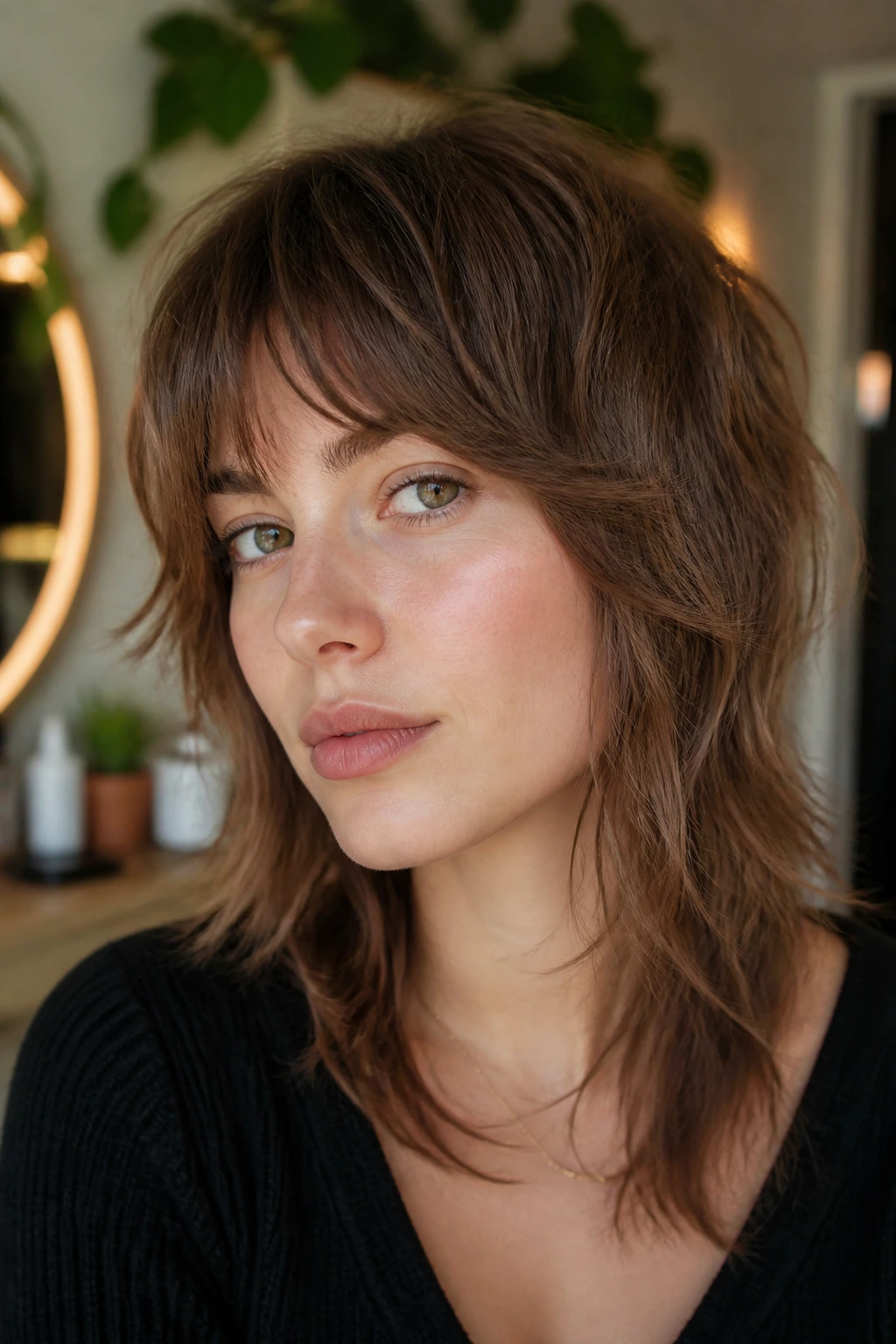
Flavor Enhancement: A tiny bit of root lift spray at the base of the bangs gives the face frame a better shape without making the hair stiff. Use less than you think. The front gets greasy faster than the rest of the head.
Customization: If your bangs fall too flat, roll them on a Velcro roller for five to ten minutes while you finish your makeup. That small set can turn limp fringe into something with body.
Serving Suggestions: Tuck the side pieces behind the ears for a cleaner frame, or leave one side loose to soften a strong jawline. A side pin, used sparingly, can also keep the fringe from splitting awkwardly at the worst possible moment.
Make-It-Yours: For fine hair, keep the fringe lighter and longer. For thick hair, ask for removal of bulk at the temples. For curly hair, cut dry and avoid over-thinning the ends. Each version needs a different hand.
Trim Schedules, Wash Days, and Grow-Out Plans
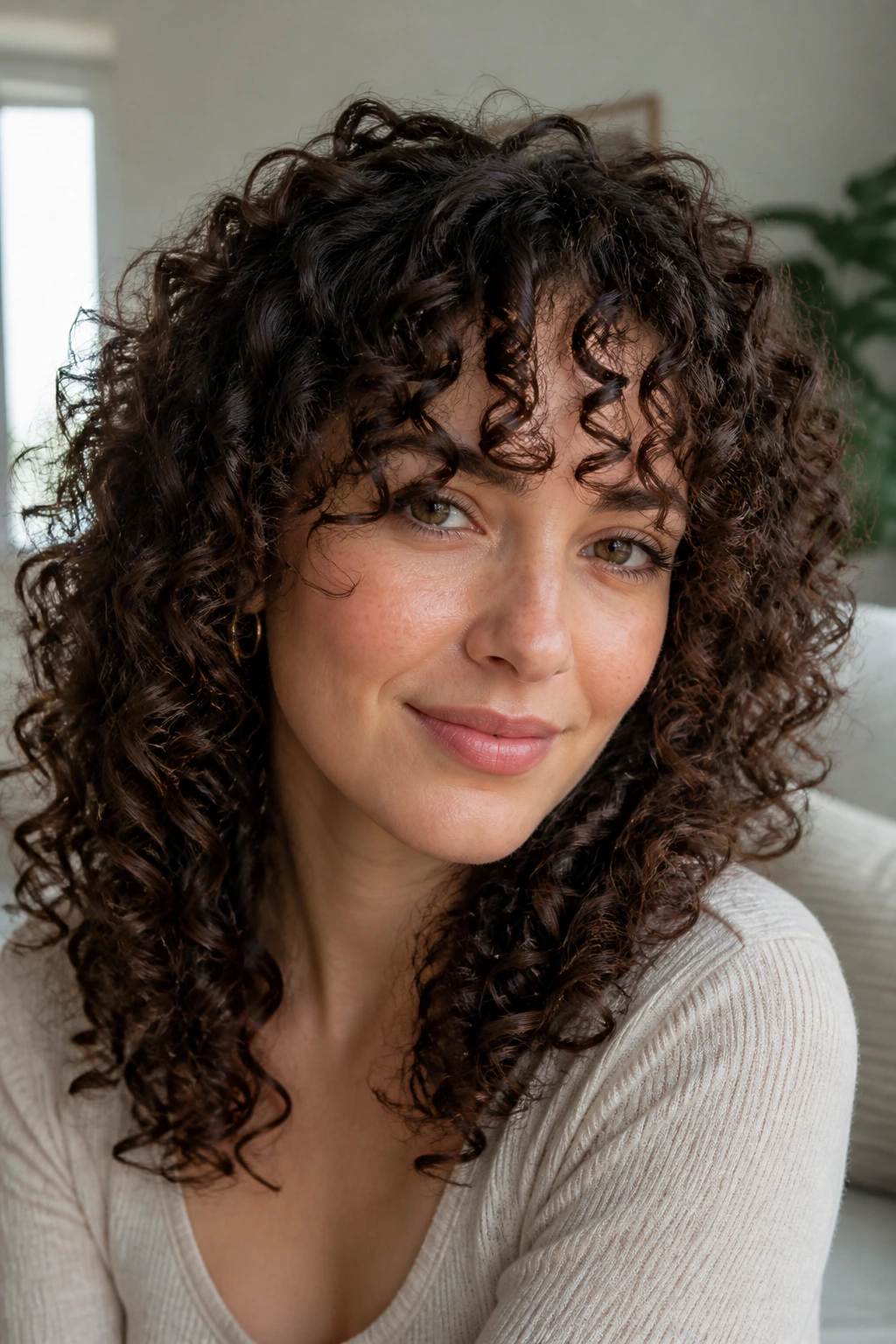
Bangs need more attention than the rest of the haircut. That’s just the deal. Most soft fringes look their best with a trim every 4 to 6 weeks, though a longer face-framing version can stretch to 6 to 8 weeks before it starts losing shape. If your bangs hit your lashes or split at the center when they get too long, trim them sooner.
Wash the front section more often than the rest if it gets oily. The forehead gives away grease fast. A quick rinse of the fringe over the sink can be enough, especially for curtain or wispy styles. If you use dry shampoo, spray it at the roots and let it sit for a minute before you touch it.
Grow-out is easier when the cut already leans soft. Curtain bangs become layers. Side-swept pieces become face-framing lengths. Even a rounded fringe can soften into a front layer if the corners were left a touch longer in the beginning. The ugly grow-out stage still exists, but it’s shorter and less annoying.
Common Mistakes That Make Soft Bangs Look Heavy
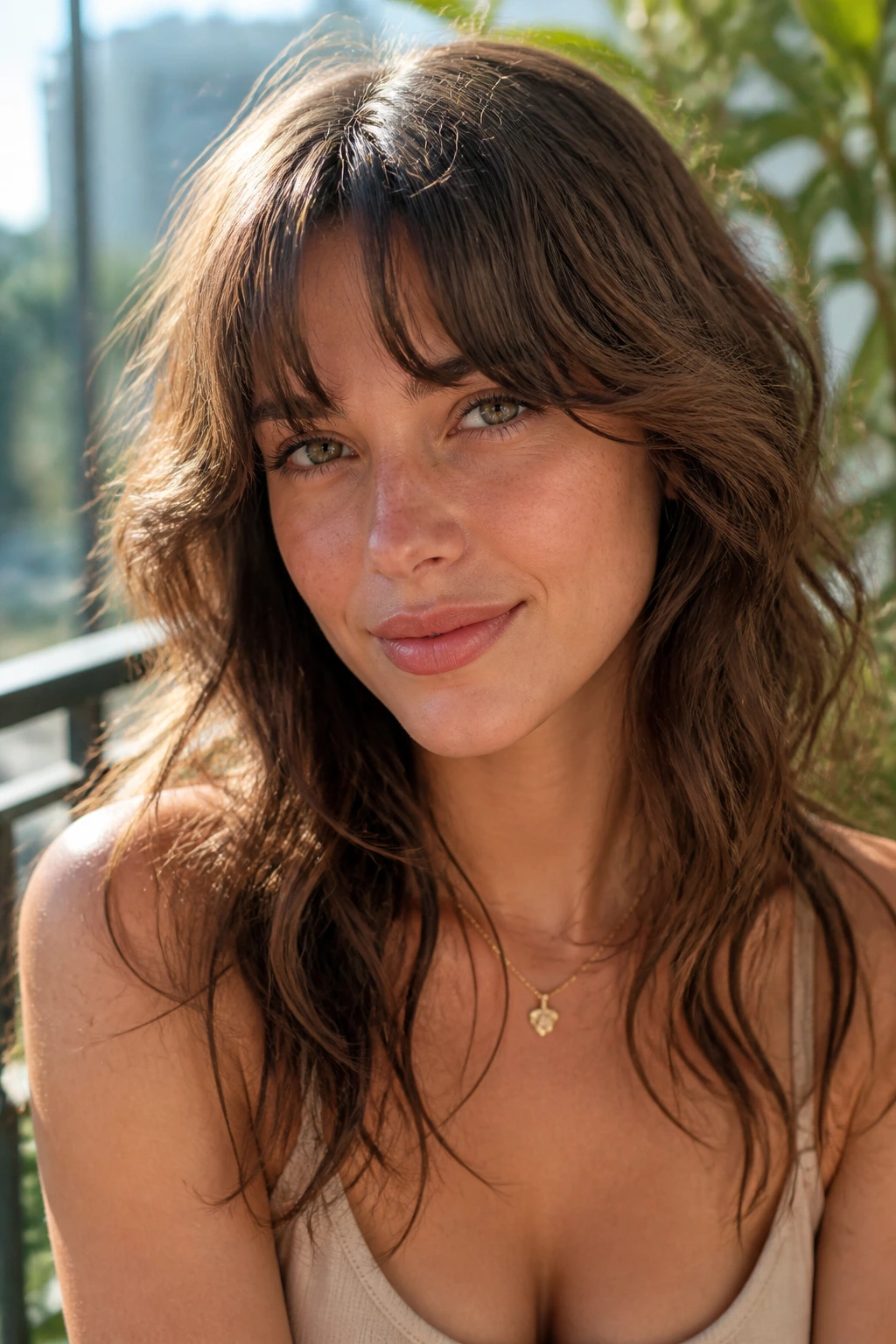
The first mistake is cutting them too blunt. A hard edge can flatten the face and make the forehead feel boxed in, especially if the rest of the haircut is soft. The fix is simple: ask for point-cutting, feathering, or a tapered edge at the sides.
Another problem is going too short at the center. Bangs that sit well above the brow can look cute for a week and then turn fussy, jumpy, or hard to style. If you want a soft face frame, keep some length in play. Let the shortest point live closer to the brows or lashes.
Over-styling is a sneaky one. Too much blow-dryer heat, too much brush tension, too much hairspray—suddenly the fringe loses movement and starts looking stiff. Use enough heat to guide the shape, then stop.
And then there’s the cowlick issue. Cutting against the root pattern and hoping product will rescue it is a losing bet. Product helps. It does not perform miracles.
Variations and Adaptations to Try
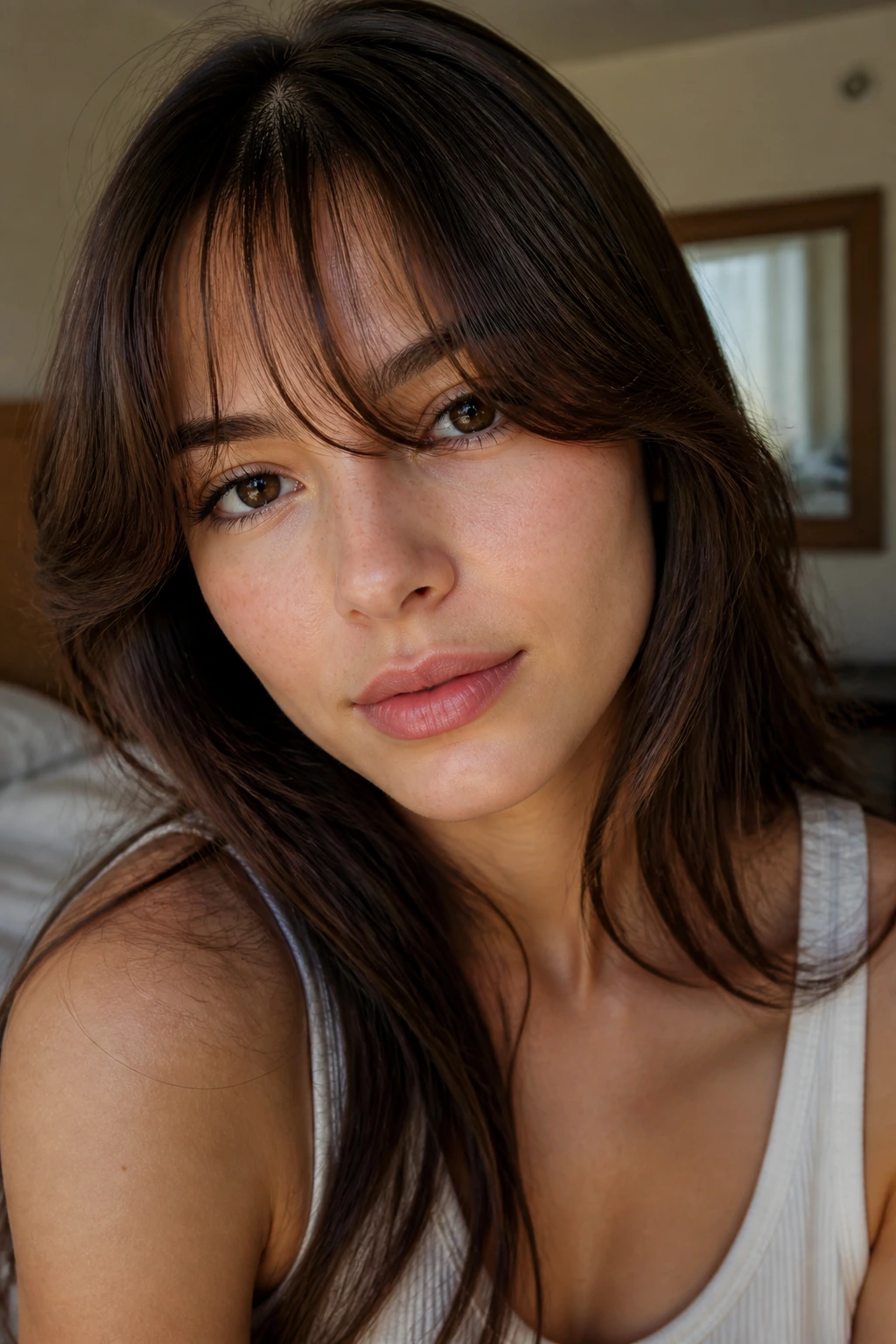
The Fine-Hair Float: Keep the bang light, longer, and lightly separated. Fine hair tends to look thinner when over-texturized, so the softness should come from length and spacing, not from shredding the ends.
The Thick-Hair Taper: Ask for more bulk removed at the temples and a softer center weight. Thick hair often needs a stronger taper to keep the fringe from swallowing the face.
The Curl-Friendly Bend: Cut the front dry with the natural curl pattern in place, then leave the sides longer so the bang can open and close without springing too short.
The Bob Companion: Pair a short, soft fringe with a bob that hits at the jaw or just below it. The line at the front stays airy while the cut underneath keeps the look grounded.
The Grow-Out Version: Start with longer face-framing pieces and barely-there center pieces. It gives you the feeling of bangs without locking you into daily styling.
Questions People Ask Before They Cut Bangs
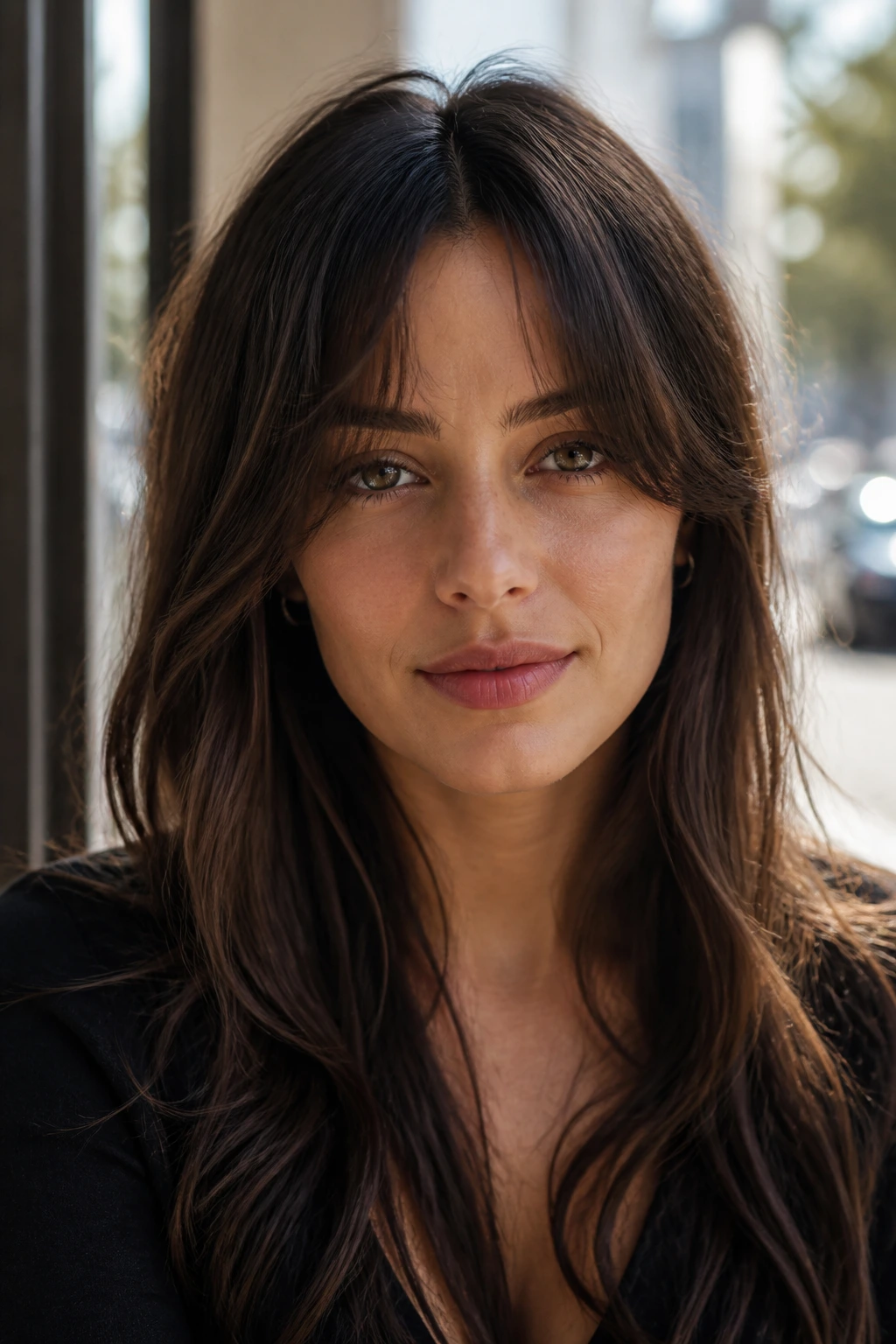
Will soft bangs work if my forehead is small?
Yes, but the length matters. Keep the center longer and avoid a dense, low-hanging fringe that eats up too much vertical space. A split or side-swept shape usually feels lighter.
Do curtain bangs suit round faces?
They can, especially when the shortest point starts a little below the brow and the side pieces hit near the cheekbones or jaw. That diagonal movement helps lengthen the face visually.
Are these bangs hard to style every day?
Some are, some aren’t. Curtain, bottleneck, and invisible fringe styles usually need a quick blow-dry and not much else. Fuller rounded or soft blunt versions need a bit more precision.
What if my hair is oily at the roots?
Soft bangs can still work. Keep a small dry shampoo on hand and focus it only at the root zone. Don’t soak the ends; that turns the front dull and dusty-looking.
Can I ask for soft bangs if I have a cowlick?
Absolutely. In fact, soft, longer bangs usually make more sense than short blunt ones on a cowlick-prone front. Just tell the stylist exactly where the hair pushes and how it splits.
What is the easiest soft fringe to grow out?
Curtain bangs and long face-framing pieces are the easiest. They blend into layers instead of hanging around as a separate problem.
Should I cut them myself?
You can trim tiny bits between salon visits, but a full fringe shape is risky at home. Hair looks shorter when dry, and bangs show every uneven snip. A bad trim at the front is the kind of mistake you stare at for three weeks.
The Fringe That Knows When to Stop
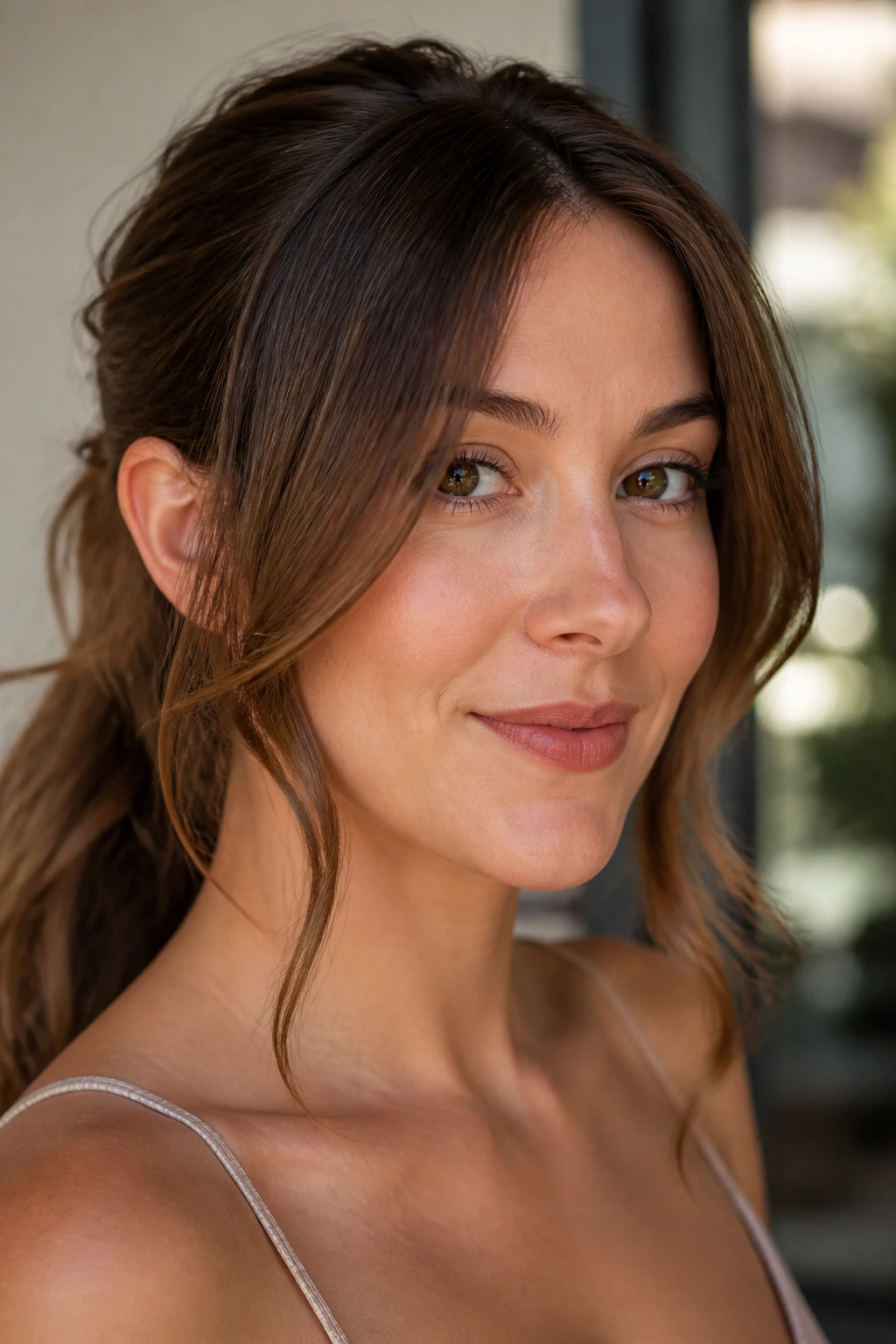
Soft bangs work because they know where to end. Not every face needs a blunt line, and not every forehead wants to be covered. The best versions in this list leave some space, bend with the haircut, and make the face look more open instead of more hidden.
That’s the real trick with a flattering fringe: it frames without trapping. If you pick the right shape for your hair texture and your part, the bangs become part of your face instead of a thing you have to manage. And that is what makes them worth the cut.
