



Curtain bangs do something blunt bangs often refuse to do: they shape the face without slamming a hard line across it. The best versions skim the cheekbones, soften the forehead, and fall away at the sides so the cut feels intentional instead of fussy. When the shortest point lands in the right spot, the whole haircut looks lighter, even if the hair itself is thick and heavy.
That’s why curtain bangs keep showing up in salons, on frizzy mornings, and on people who swore they would never touch their fringe again. They can be airy or full, polished or shaggy, narrow or wide. Done well, they shift attention to the eyes and cheekbones. Done badly, they collapse into the middle of the forehead and turn into a trimming chore every ten days.
The sweet spot is shape. Not hype. Shape. A good curtain fringe follows the face’s own lines instead of fighting them, which is why the cut can make a round face look a touch longer, soften a square jaw, or bring balance to a longer face without shouting about it. The details matter more than people think — where the shortest strand lands, how much weight stays at the corners, and whether the stylist cuts it wet, dry, or somewhere in between. And once you know what to ask for, the options get fun.
Why These Curtain Bangs Earn Their Place

- Face-Framing First: Every style here is built to soften the front of the face, not hide it under a wall of hair.
- Grow-Out Friendly: Curtain bangs usually blend into layers better than straight-across bangs, so the awkward stage is less brutal.
- Texture-Friendly: Straight, wavy, curly, thick, or fine hair can all wear this shape if the length and density are matched to the texture.
- Salon-to-Home Friendly: A round brush, a blow-dryer, and a little product go a long way; you do not need a complicated routine.
- Face-Shape Flexible: The center length, side sweep, and corner length can be adjusted to suit a round face, square jaw, long face, or heart shape.
- Low-Regret Fringe: If you want bangs but are nervous about commitment, curtain bangs leave more room to breathe than a blunt fringe.
1. Chin-Grazing Curtain Bangs
These are the curtain bangs I reach for when someone wants a face frame with a little spine. The shortest pieces sit around the brow or upper nose, then drop into longer corners that brush the cheekbones and stop near the chin. That length gives the eyes room and creates a soft diagonal line down the face, which is exactly why it works so well on fuller cheeks and broader foreheads.
Why They Work
The magic is in the slope. A chin-grazing curtain bang doesn’t split the face in half; it opens the center and pulls the eye downward just enough to soften width. It also pairs well with medium and long layers, because the fringe can disappear into the rest of the haircut instead of sitting on top like a separate piece.
Quick Styling Notes
- Blow-dry the fringe side to side for the first minute.
- Finish with a 1.25-inch round brush or a large velcro roller.
- Keep the ends feathered, not blunt.
- Ask for point cutting so the corners don’t look blocky.
This version is especially good if you like a lived-in look that still has shape by lunch. If your hair is dense, the chin length keeps the fringe from puffing out. If it’s fine, the longer corners stop the bangs from looking sparse.
2. Feathered Curtain Bangs on a Layered Lob
A layered lob and feathered curtain bangs have a nice little argument going on, and I mean that in a good way. The lob gives a clean, modern base, while the fringe breaks up the line and keeps the whole cut from feeling stiff. The feathering matters here. Without it, the bangs can look like a block perched on the forehead.
What makes this version flattering is the way the shorter center pieces fold into the cheek area and then dissolve into the lob’s ends. You get movement near the eyes and a soft edge around the jaw, which is a useful trick if your hair tends to look boxy in photos or flat after a long day.
I like this cut on people who want polish without the helmet effect. The layers don’t need to be dramatic. In fact, too much layering around the face can make the fringe collapse. A few soft internal layers are enough.
3. Bottleneck Curtain Bangs with a Narrow Center
Why do bottleneck bangs keep showing up in good haircuts? Because they do the blunt work of framing without the blunt look. The center starts a little tighter — usually around the bridge of the nose — then opens out wider at the cheekbones. That shape gives the forehead some coverage without closing the face off.
The narrow center helps if your forehead feels wide or if you have strong brows you want to show off instead of burying. The wider sides soften the face near the eyes, which is where this style earns its keep. It has a bit more structure than a wispy curtain fringe, so it reads as deliberate even on days when your styling is half-done.
How to Wear It
- Keep the center pieces lightly textured, not sliced to death.
- Ask for the shortest point just below the brow if you want more openness.
- Blow-dry with a nozzle directed down the hair shaft for a smooth bend.
- Let the corners sit near the cheekbone so the fringe can fan out cleanly.
This is one of the best curtain bang shapes if you like a fashion-forward finish but do not want the cut to look severe. It has shape. It has air. That balance is the whole point.
4. Shaggy Curtain Bangs with Soft Texture
Shaggy curtain bangs are the messy ones that know what they’re doing. They work because the fringe is allowed to live inside the haircut instead of sitting as a separate front panel. The ends are softly razored or point-cut, and the surrounding layers stay broken up enough to keep the fringe from feeling heavy.
This style is a gift for hair that wants movement. Thick hair loses some bulk. Wavy hair gets room to bend. Even straighter hair can take on that slightly undone swing if you rough-dry the roots and add a touch of texture spray through the ends.
The important part is restraint. If the bangs are thinned too aggressively, they can go stringy. Better to keep a little weight in the center and open them with styling, not with scissors alone. The shag gives the fringe a place to land; the curtain shape keeps it flattering instead of wild.
5. Wispy Curtain Bangs for Fine Hair
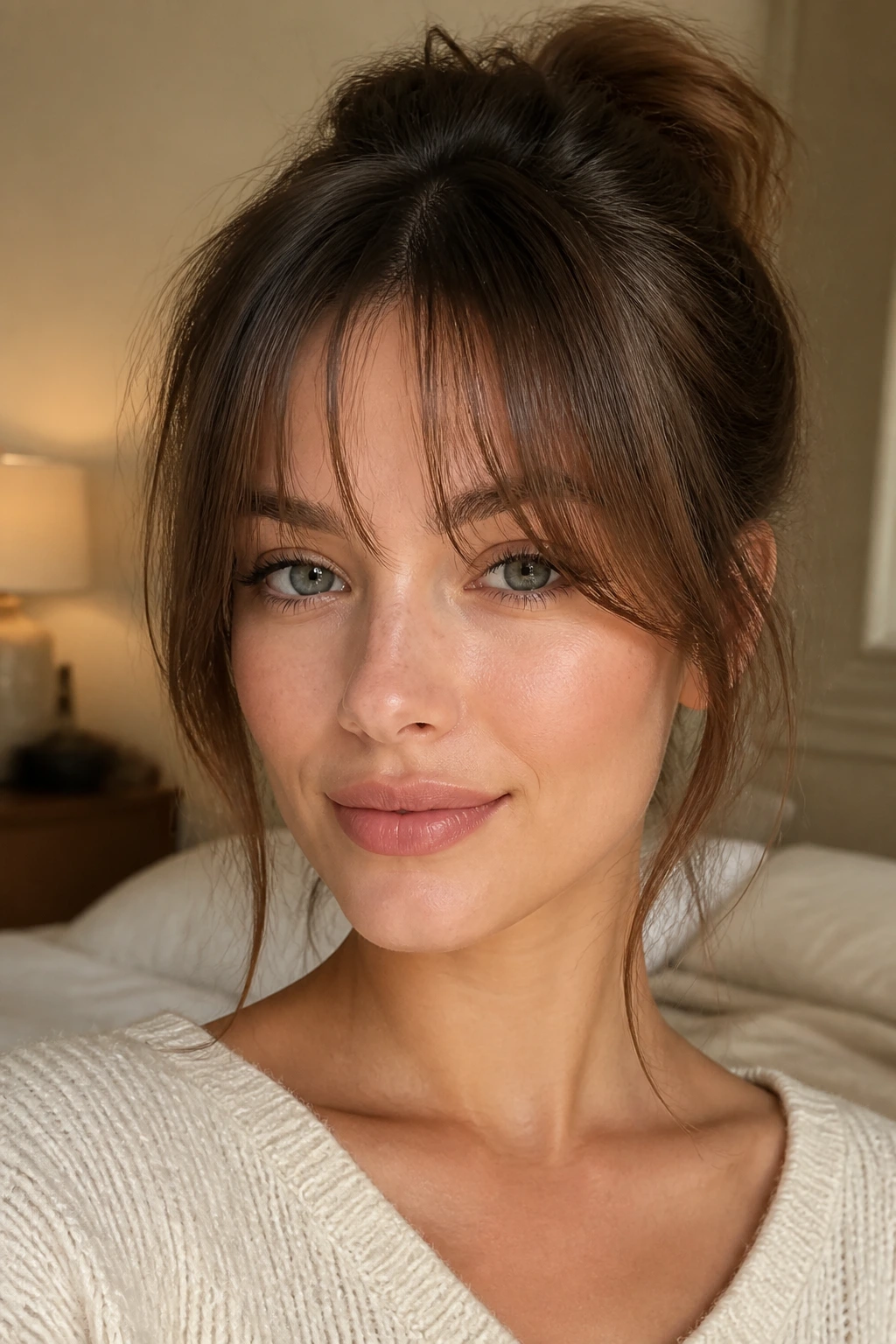
Fine hair needs a softer touch, and wispy curtain bangs handle that beautifully. The worst thing you can do to fine hair is overload the front with too much density. It sits flat, splits awkwardly, and makes the rest of the haircut look thinner than it is. A wispy fringe avoids that mess by keeping the center light and the corners airy.
The trick is to leave enough length for movement, usually just below the brows through the outer edges, and to avoid blunt, heavy cutting lines. A stylist who point-cuts or slides the ends a bit can keep the bangs from looking like a pasted-on strip. That matters more than volume products, honestly.
For styling, I’d use a lightweight mousse at the roots and a small round brush. Skip anything sticky. Fine hair shows product faster than people expect, and curtain bangs are the first place it betrays you.
6. Curly Curtain Bangs That Respect the Curl Pattern
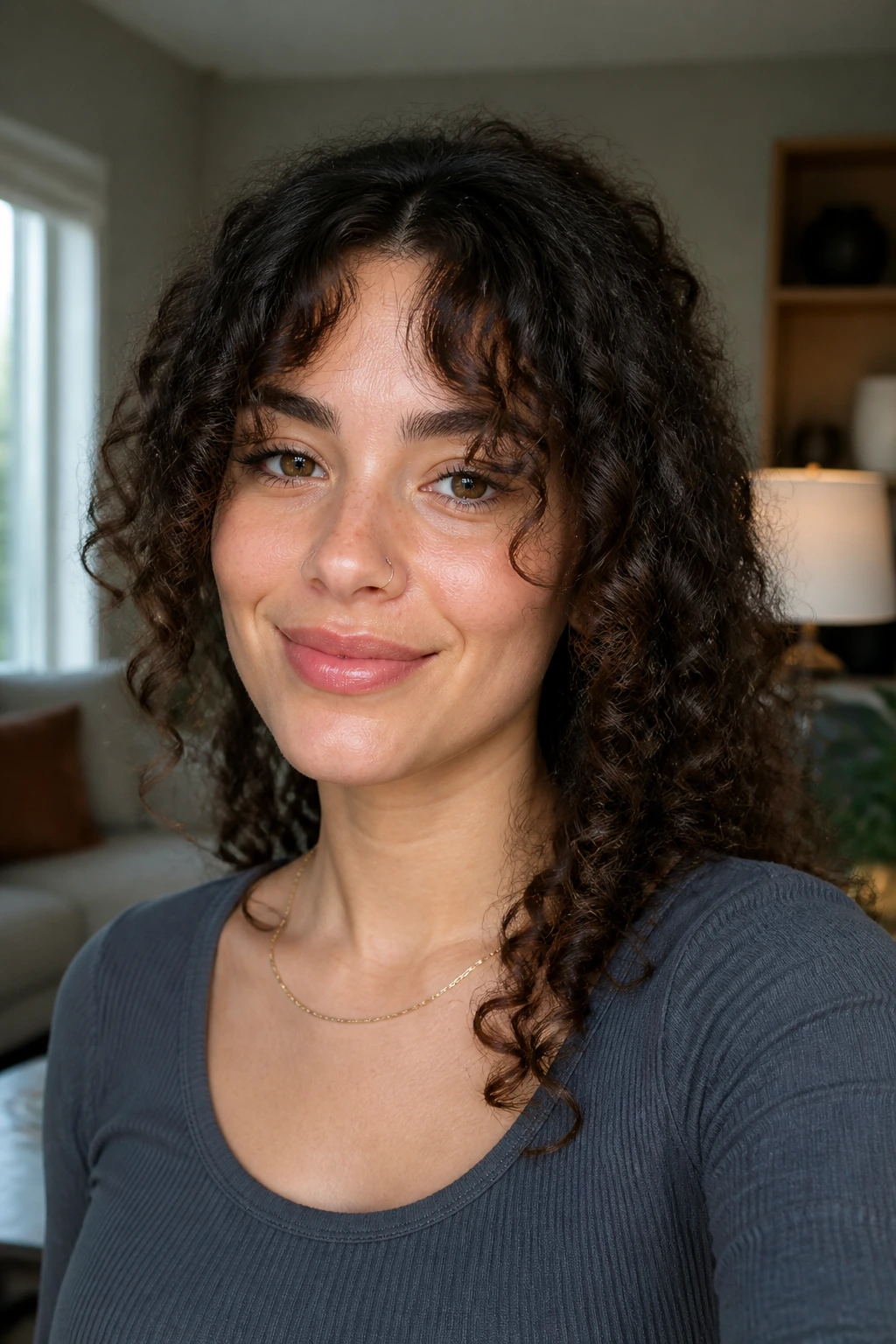
Curly curtain bangs are not about forcing curls into a straight shape. That never ends well. The best curly fringe respects the spring of the curl pattern and leaves enough length for shrinkage, which means the shortest point may look much shorter when dry than it did in the chair. A good stylist knows that and cuts accordingly.
The soft-flattering part comes from the way the curls open around the face instead of landing as one dense mound. When the corners are allowed to lengthen toward the cheekbones, the fringe pulls the eye outward and gives curly hair a sculpted front shape. It can make the whole haircut feel lighter without thinning the curl out.
A curl cream and a diffuser are your friends here. So is a dry cut or at least a nearly dry one. Wet curls lie. Dry curls tell the truth.
7. Straight Curtain Bangs with a Clean Center Part
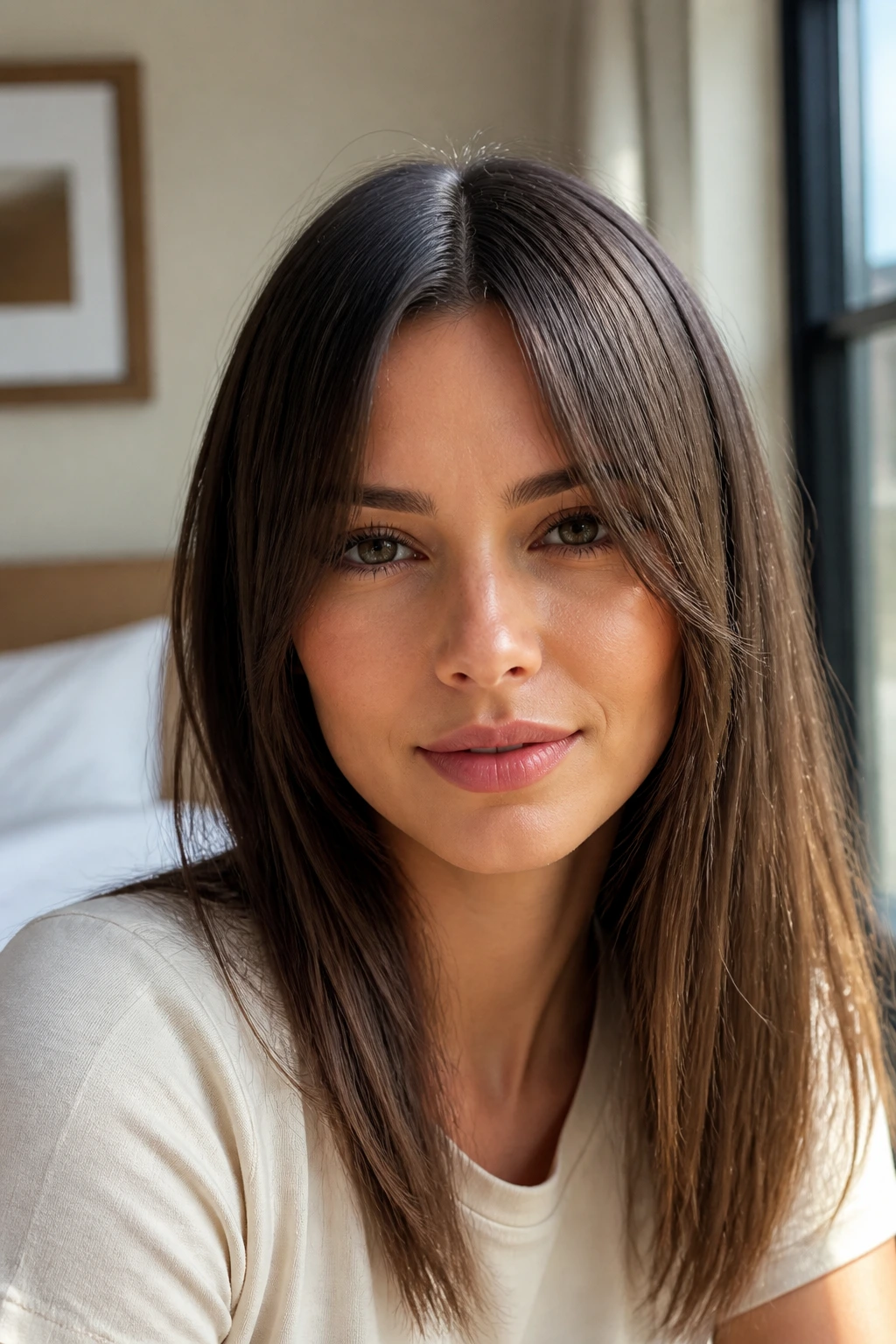
There’s a clean, almost architectural quality to straight curtain bangs when they’re cut with enough room to bend at the edges. The front stays smooth, the center part is tidy, and the outer corners flick away just enough to soften the face. I like this version on hair that naturally falls straight, because it looks deliberate without needing a lot of heat.
The thing to watch is weight. Straight hair can turn curtain bangs into a flat sheet if the cut is too blunt or too dense. A tiny amount of internal texture fixes that. So does a small round brush and a quick bend at the sides instead of curling the whole front under.
This style flatters strong brows and oval faces especially well, but it can work on plenty of face shapes if the corners are kept long enough. Think neat, not stiff. That’s the line.
8. Curtain Bangs with a Soft Blowout
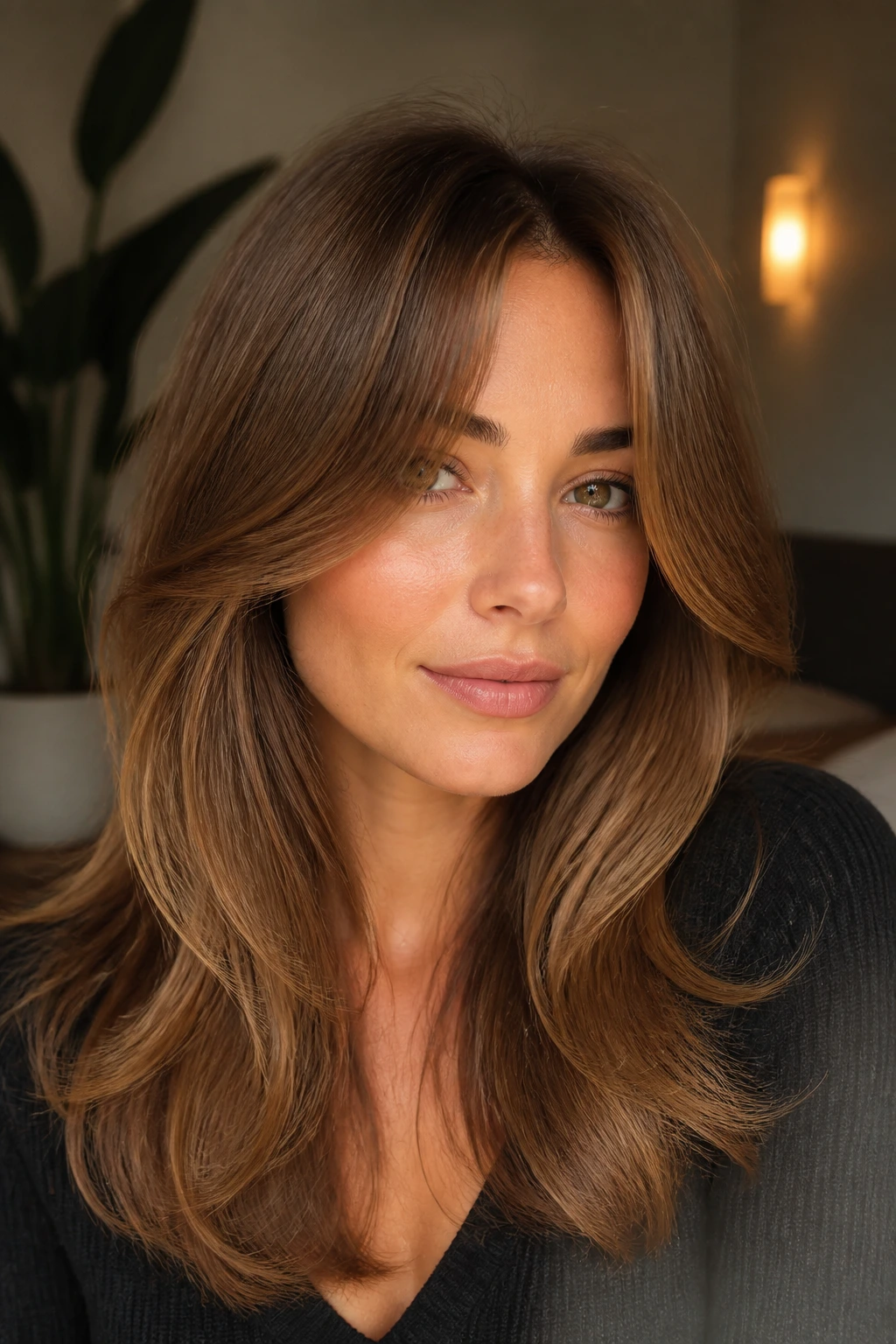
If you like a salon finish that still looks wearable on day two, this is the one. A soft blowout fringe gets lifted at the roots, curved over a round brush, and then split down the middle while the hair is still warm. The result is a rounded curtain shape that sits away from the forehead instead of sticking to it.
The softness matters because it keeps the fringe from looking overstyled. Too much curl and the bangs start fighting the rest of the haircut. Just enough bend, though, and the face gets that smooth frame that flatters cheekbones and softens a sharper jaw.
What to Ask For
- A longer center length with feathered corners.
- Light texturizing at the ends only.
- Enough density to hold the split, but not so much that the fringe feels heavy.
- A trim that accounts for your natural part and cowlicks.
This is the version I’d recommend to anyone who likes a neat front without a hard blowout every single morning. It holds shape well if you set it properly.
9. Curtain Bangs with a Wolf Cut

A wolf cut can swallow weaker bangs whole, which is why curtain bangs are such a smart match. The fringe gives the haircut a face-focused anchor, while the shaggy body of the wolf cut keeps the overall shape airy and directional. You get edge without losing softness.
What makes this pairing work is the contrast. The wolf cut brings roughness through the crown and lengths. The curtain bangs soften the front and guide the eye to the face instead of letting the whole cut feel wild. That balance is especially useful if your hair has a lot of volume and you need a front section that can calm things down.
Keep the front pieces longer than you think. A wolf cut already adds drama. The bangs do not need to compete. They should skim, not shout.
10. Long Curtain Bangs with Face-Framing Layers
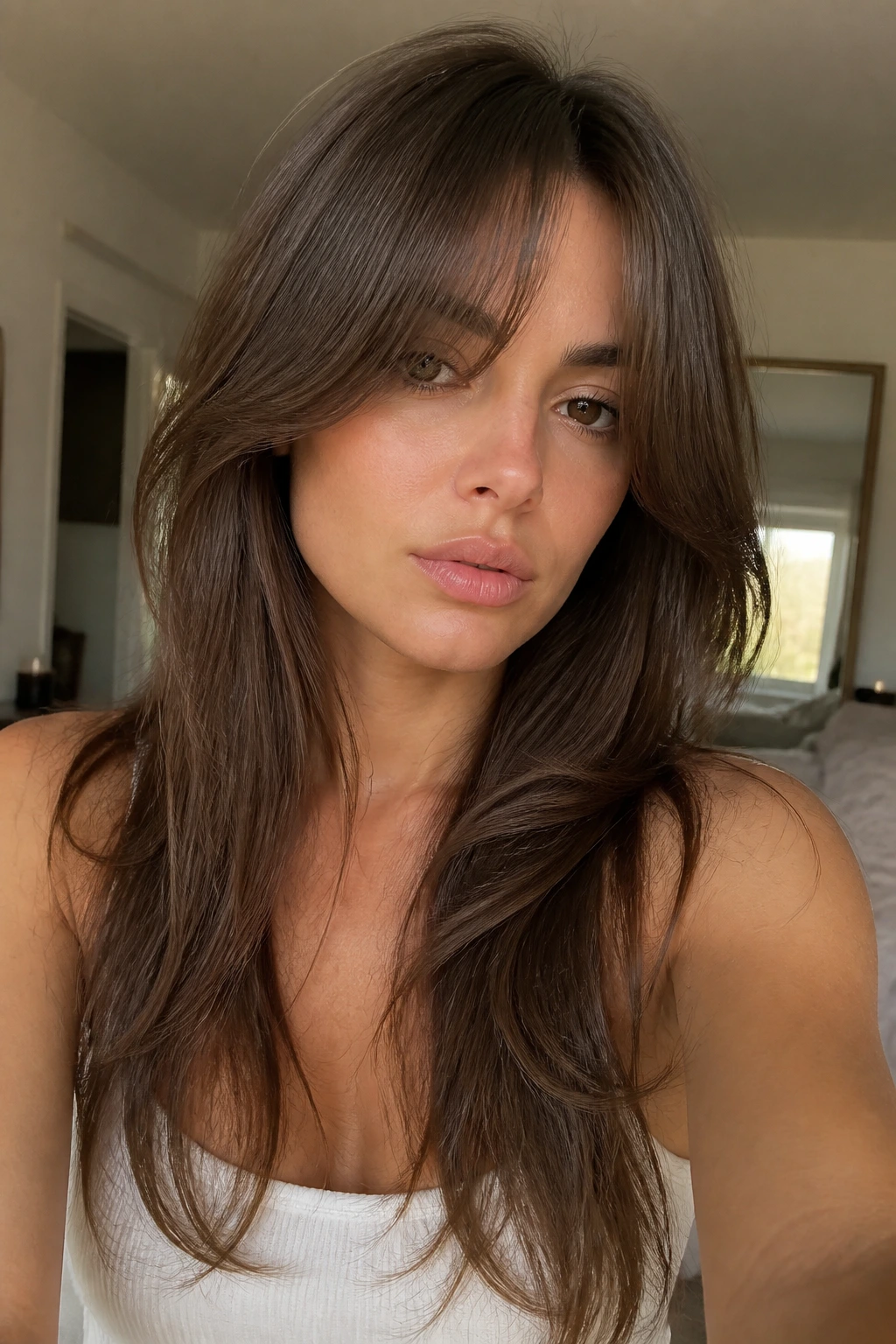
Long curtain bangs and face-framing layers are the safest bet if you want movement without a big visible fringe. The bangs blend into the layers so naturally that people often assume the shape is just part of the haircut. That’s the point. It gives the face a soft opening without announcing, “Hello, these are bangs.”
This version flatters long faces especially well because the front pieces can be kept near the cheekbone or lip, which helps shorten the visual length a little. It also works beautifully on hair that hangs heavy around the face, because the layers keep the fringe from feeling like one thick curtain.
If you wear your hair up often, this is a smart choice. The bangs still escape around the face when pulled back, which makes a bun or ponytail look less severe. Tiny thing. Huge payoff.
11. Curtain Bangs with a Bob That Kisses the Jaw

Shorter hair changes the whole mood of curtain bangs. On a bob, the fringe becomes part of the shape language, not just an accessory on the front. I love this when the bob ends around the jaw or just under it, because the fringe softens the straight edge and keeps the cut from looking too boxy.
The cleanest version uses a center part with fringe that opens right around the cheekbones. If the bangs are too short, the whole thing can feel choppy. If they’re too long, they lose the crisp relationship with the bob. That’s a narrow window, but it’s worth it.
A subtle inward bend at the ends can make the face look lifted. Too much curl, and the bob starts to feel dated fast. Keep it easy. Keep it moving.
12. Curtain Bangs for Round Faces

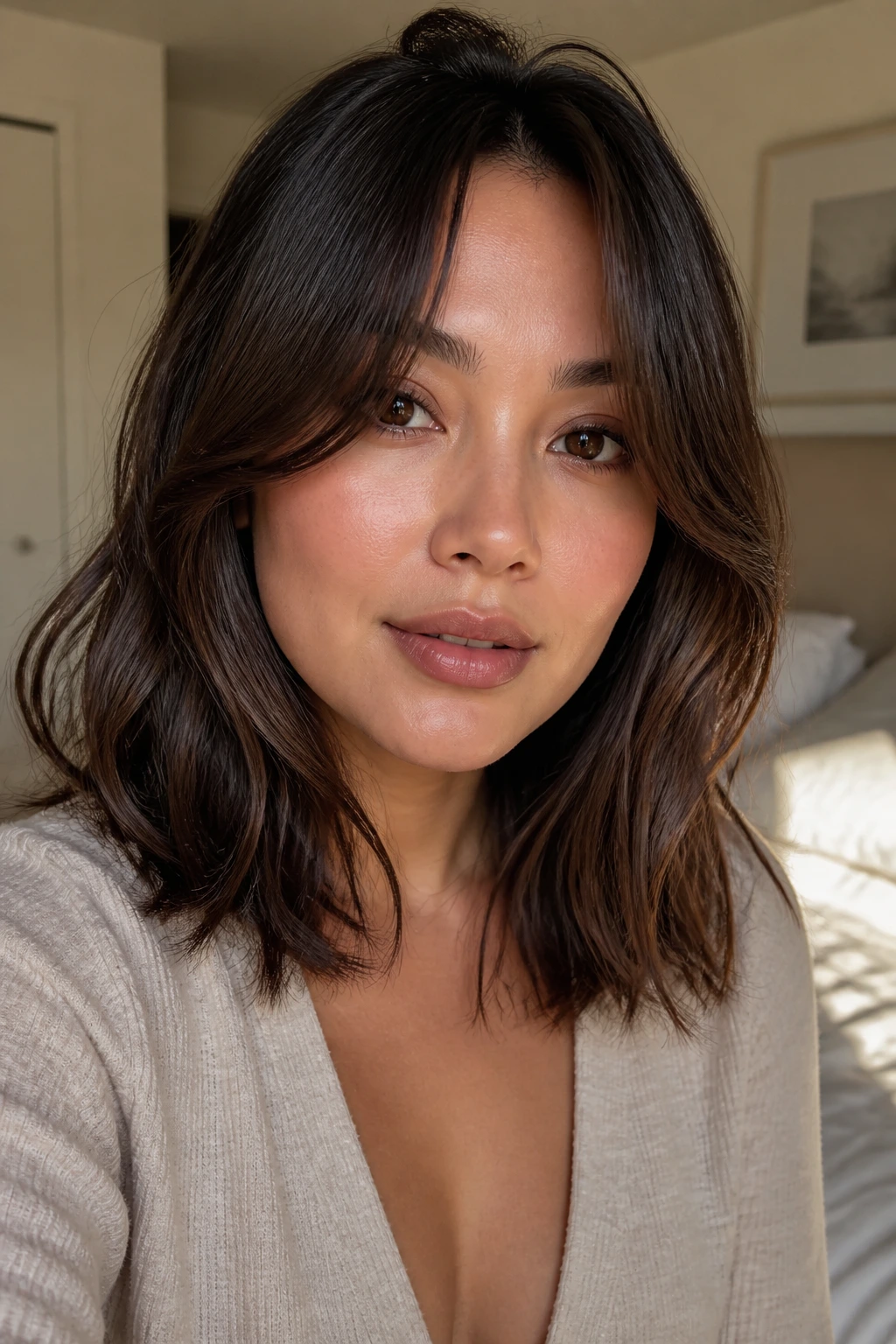
Round faces don’t need bangs avoided; they need bangs aimed well. Curtain bangs help by creating a vertical line down the center and longer diagonal pieces along the sides. That combo narrows the visual width without turning the face into something it isn’t.
The shortest point should usually stay a little lower than a straight-across fringe would sit. Let the center open around the middle of the forehead or just below the brows, then keep the outer corners long enough to brush the cheekbones or upper jaw. That diagonal is doing the heavy lifting.
Best Details to Request
- Keep the center lighter than the corners.
- Avoid a fringe that ends exactly at the widest part of the cheek.
- Add soft layers through the rest of the cut so the bang has somewhere to blend.
- Style with a slight root lift, not a flat center part plastered to the head.
This is one of those cuts that looks more polished when it moves. Frozen curtain bangs lose the shape advantage. A little bounce brings it back.
13. Curtain Bangs for Square Jawlines
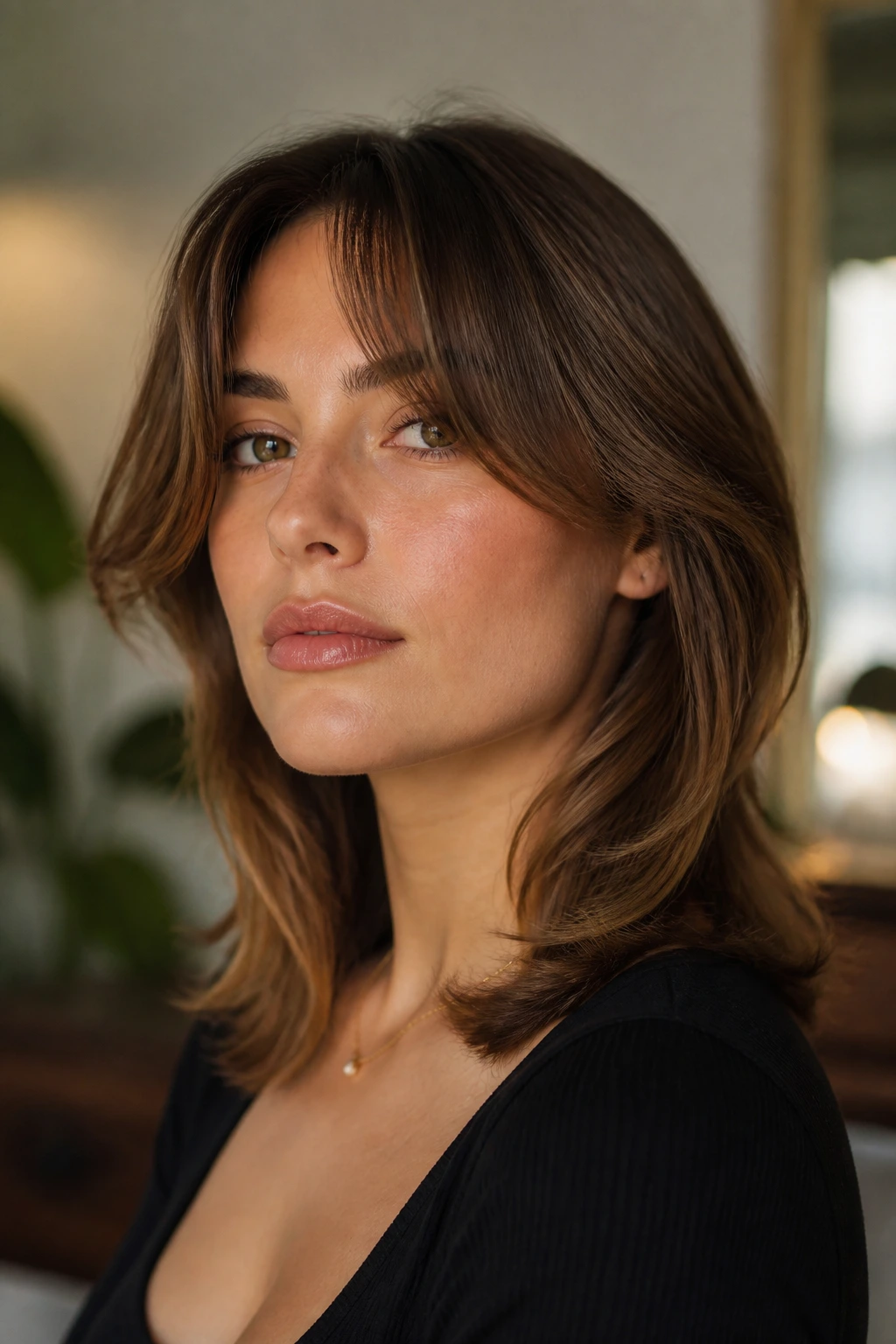
Square jawlines need softness around the front, and curtain bangs are good at taking the edge off without hiding the structure. The corners should fall below the cheekbones and toward the jaw so they can break up the stronger horizontal lines of the face. That way the fringe adds curve where the face is naturally more angular.
I prefer this style when the bangs are feathered enough to avoid a hard line. A blunt corner would work against the point. Soft ends, on the other hand, make the whole haircut feel more relaxed and less severe.
If your hair is thick, ask for internal removal of weight rather than heavy thinning at the bottom. Thin the wrong part and you end up with wisps that stand up in all the wrong places. The shape matters more than the amount taken out.
14. Curtain Bangs for Heart-Shaped Faces
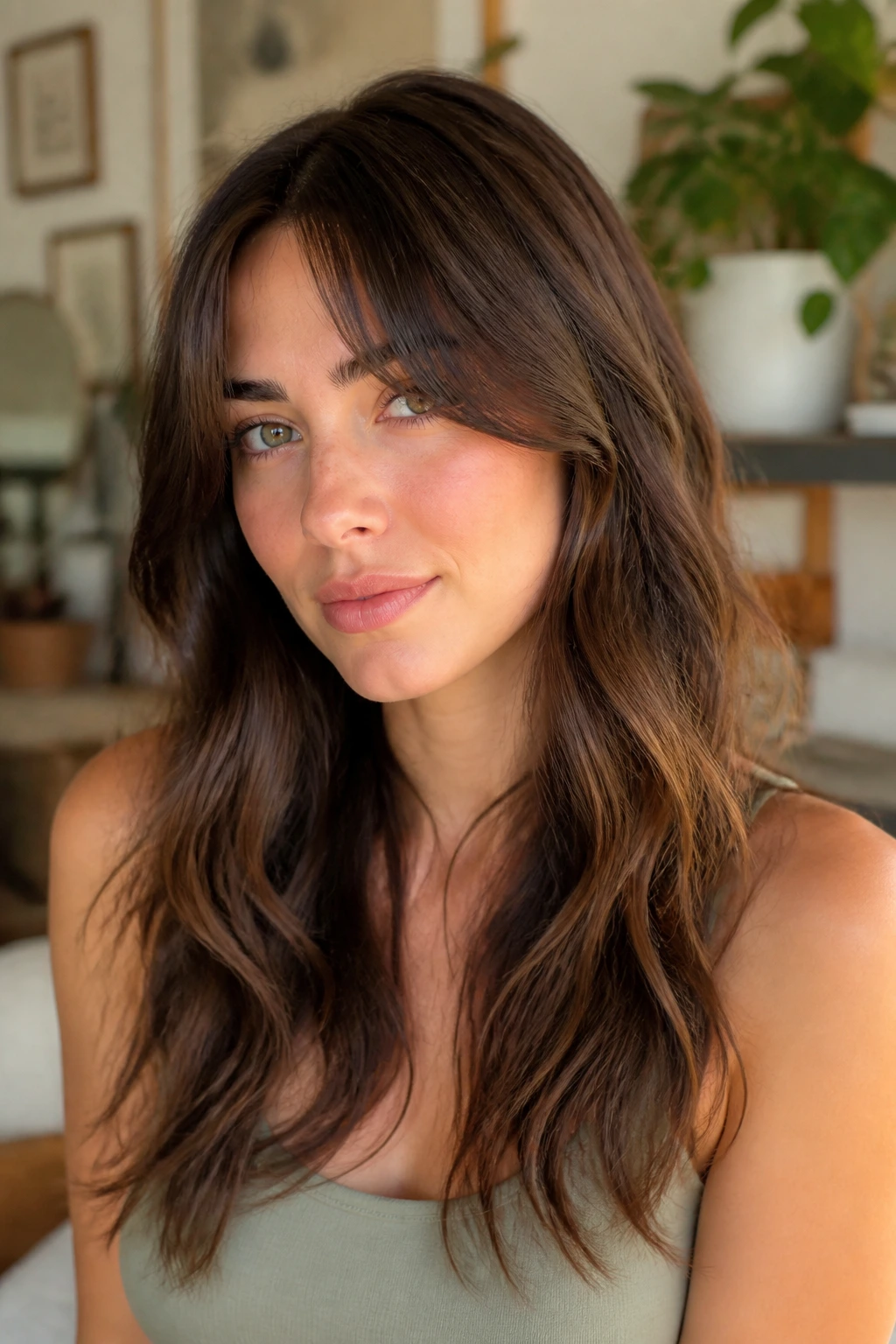
Heart-shaped faces often have more width through the forehead and a narrower chin, which makes curtain bangs a natural fit. The goal is to soften the top and give the lower face a little visual company. Longer corners that hit at the cheekbone or lip do that without crowding the forehead.
This style works especially well when the shortest point doesn’t sit too high. A bang that starts too far up can exaggerate forehead width. A longer, softer split feels more balanced and draws the eye downward in a nicer way.
If you wear your hair tucked behind one ear a lot, this shape still behaves. The longer sides leave enough strand to blend into the rest of the cut. That makes it practical, which is more than I can say for a lot of pretty bangs that collapse the minute you reach for a bobby pin.
15. Curtain Bangs for Long Faces
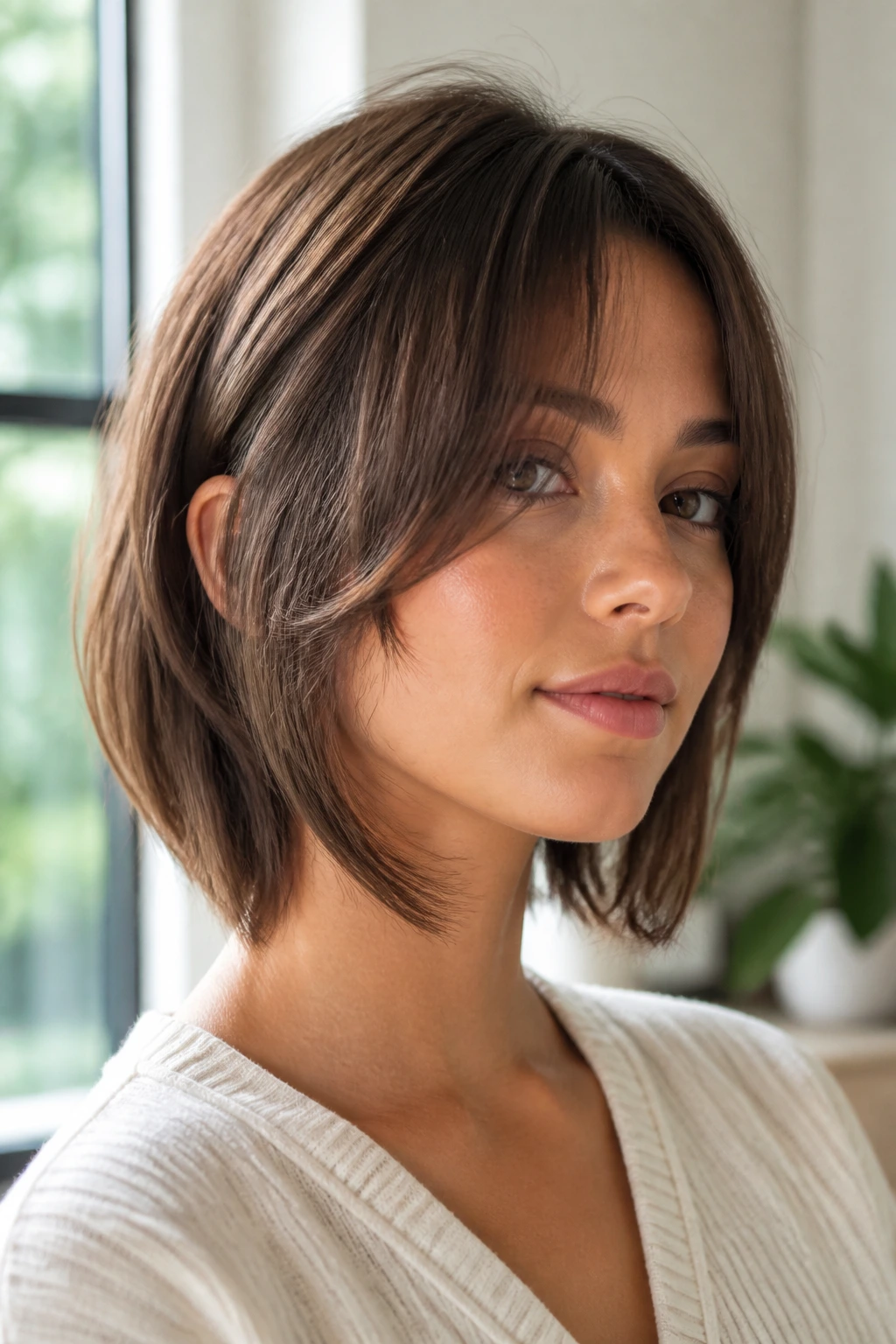
Long faces need width more than height, and curtain bangs can supply that without looking bulky. The shorter center should stay low enough to break up the vertical line, while the sides can sweep outward around the cheekbones. That creates a little horizontal movement where the face needs it most.
The mistake to avoid is over-lengthening the center. If the shortest point sits too low, the fringe starts to disappear and the face reads even longer. A slightly shorter center with soft corners usually does more for balance.
This shape also looks good with waves, because the bend in the hair adds width at the sides. A flat iron can over-elongate the line, so I’d keep some motion in it. Not too much. Just enough to stop the face from looking pulled down.
16. Curtain Bangs with a Wolf Cut and Tapered Ends

A wolf cut already leans shaggy and cool, so the curtain bangs need a little structure to keep the front from turning into a fuzz cloud. The fringe should be intentional, with a center split and a taper that follows the face rather than randomly breaking apart. That contrast gives the style its shape.
The best versions of this look keep the bangs long enough to move into the layers. The front opens, the sides fall, and the rest of the cut carries the rougher texture. It’s a neat trick. The eye gets softness right at the face and freedom through the body of the hair.
If you like texture spray, this is your lane. Just use a light hand. Too much and the bangs start to feel gritty instead of piecey.
17. Sleek Curtain Bangs on Straight Hair
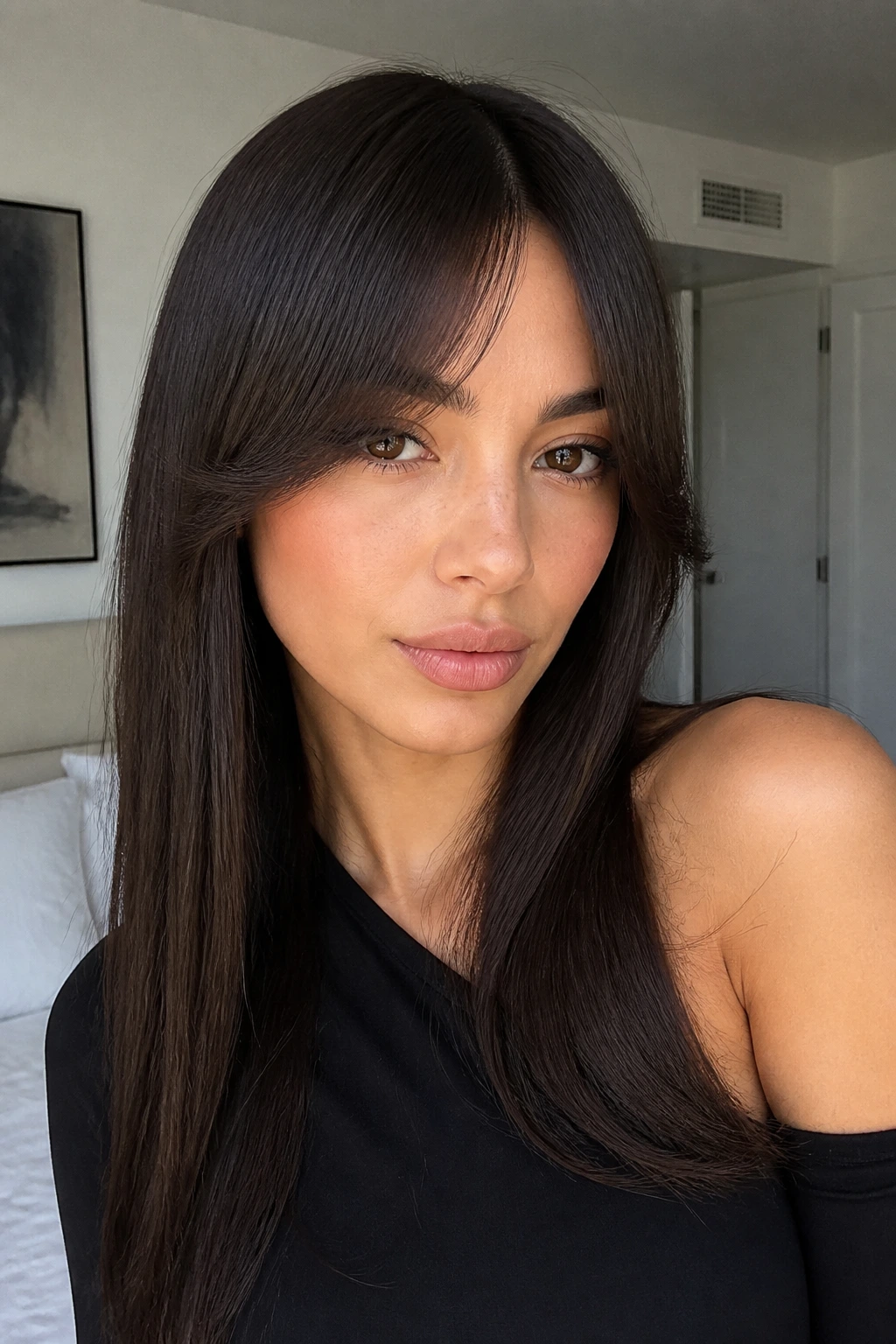
Sleek curtain bangs work when you want the front to read as clean and polished, not airy and undone. The cut should be precise, but the corners still need a bit of slide so the shape doesn’t look chopped. Straight hair shows every line, which is why this version needs a little extra attention at the salon.
A flat iron can help, but I’d still keep the ends slightly curved away from the face. A dead-straight curtain bang can feel heavy even when the cut is good. That tiny bend at the corners keeps the fringe from sitting like a curtain rod.
This style is especially useful if you wear tailored clothes or simple makeup. The fringe gives enough softness that the rest of the look doesn’t need to work hard. Clean. Calm. Good bones.
18. Piecey Curtain Bangs with Textured Ends
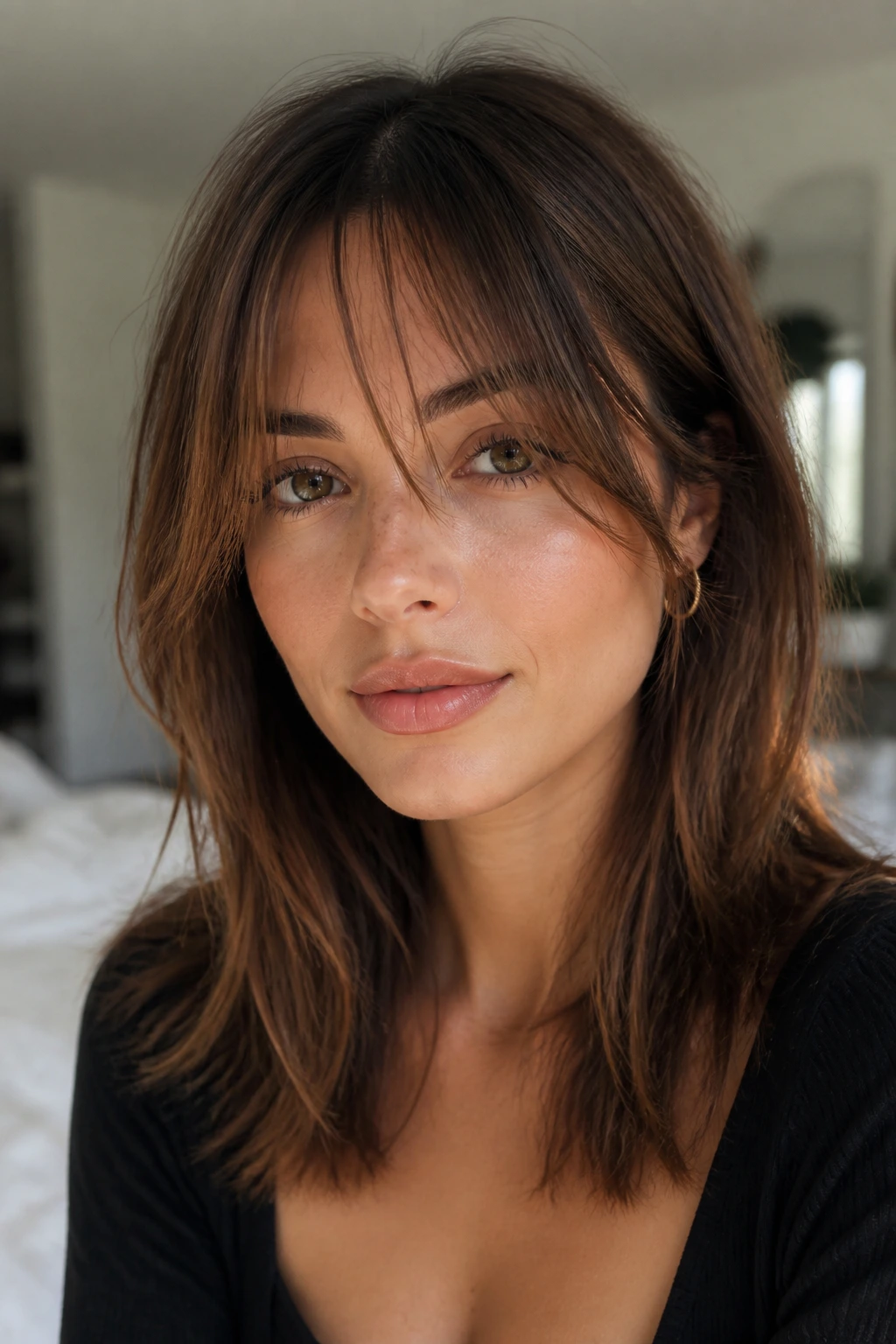
Piecey curtain bangs are for people who like definition. Instead of one continuous fringe shape, the front breaks into small separated sections that move around the eyes and cheekbones. It’s not messy if it’s cut and styled well. It’s just more detailed.
The key is to keep the base shape soft and then add piece separation with product, not scissors alone. A tiny amount of styling cream on the fingers can split the ends after blow-drying. I’d avoid over-layering the front, because too much thinning can make the pieces look feathered in a cheap way rather than cleanly separated.
This version works nicely with textured bobs, lobs, and shaggy layers. If your face needs softness but you still want some edge, this is a strong middle ground.
19. Curtain Bangs That Air-Dry Well
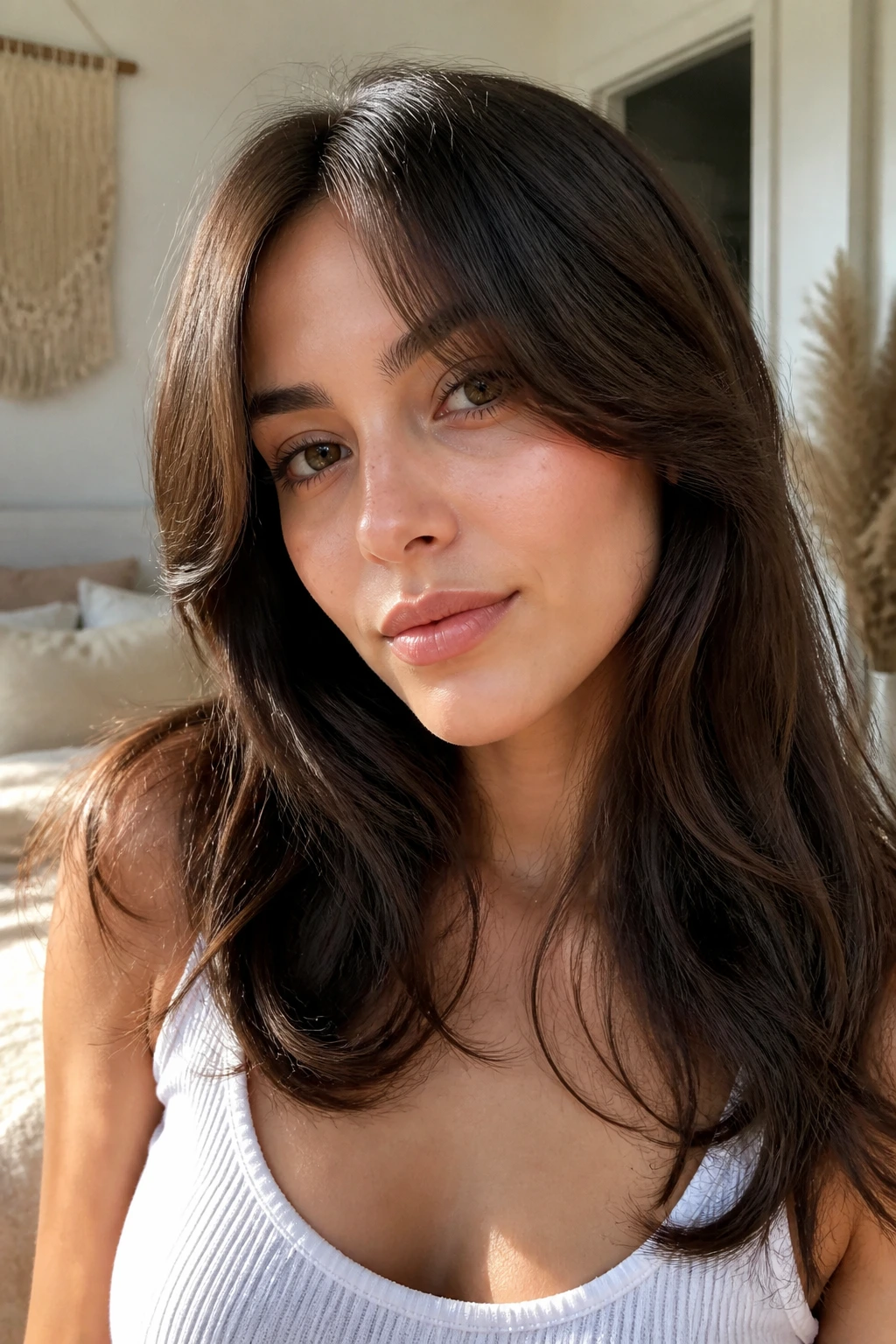
Not everyone wants to stand at a mirror with a round brush every morning. Fair. Air-dried curtain bangs can be a smart choice if the cut is made to cooperate with your natural texture. The center should be long enough to split on its own, and the corners should blend into the rest of the hair so they don’t dry in one weird direction.
The trick is to use a light leave-in and then twist each side away from the face while it dries. You can clip the front in place for ten minutes, then let it go. That tiny bit of guidance helps the bangs remember where to fall without locking them into a hard bend.
This style is friendly to waves and soft curls, especially if the hair has enough natural movement to fall outward on its own. It’s less friendly to very straight, slippery hair, which tends to slide flat unless you add some root support.
20. Blowout Curtain Bangs with Root Lift
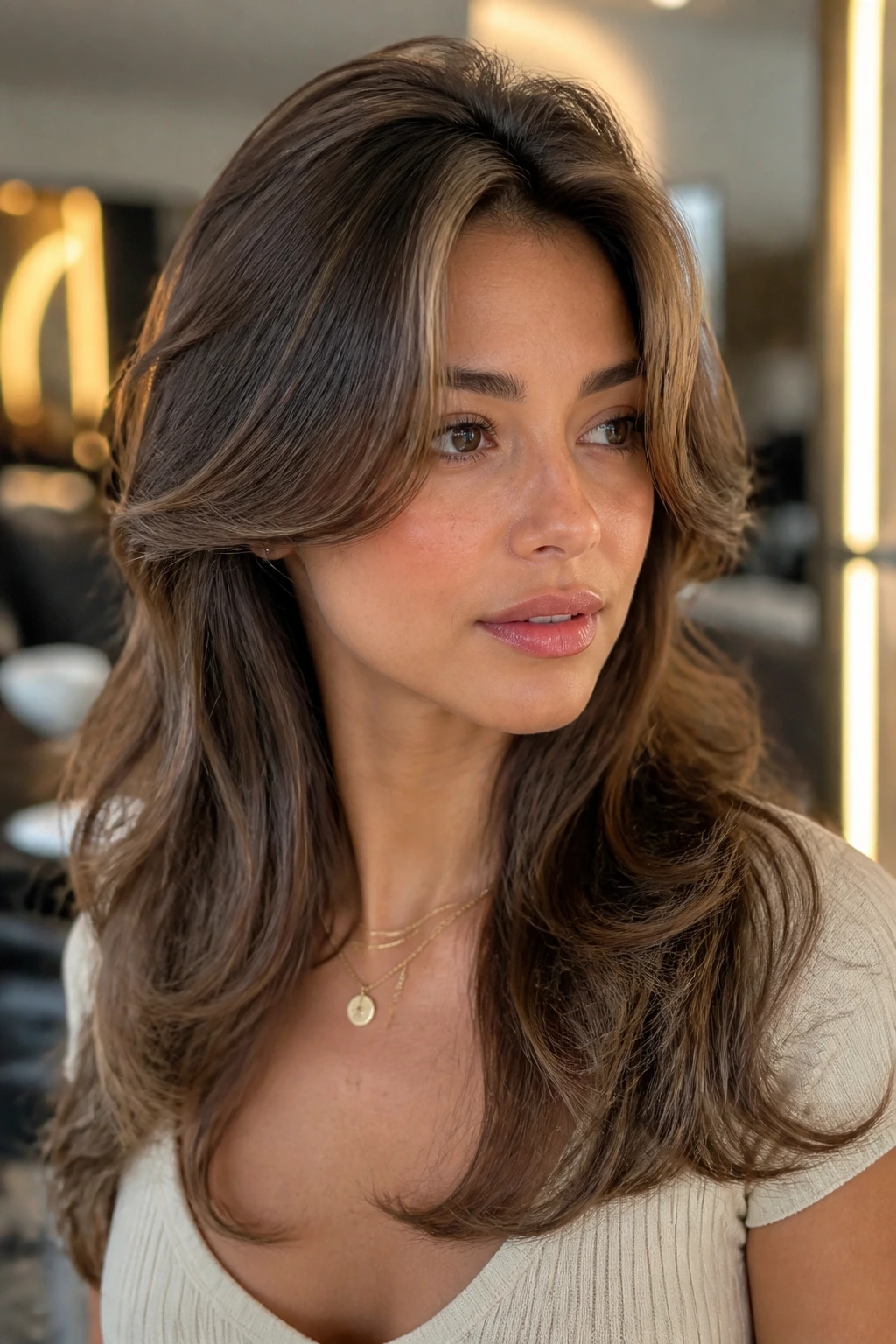
A proper blowout fringe has lift where it counts: at the roots, not at the tips. That little rise gives the curtain bang space to sweep instead of cling. If you’ve ever wondered why some curtain bangs look airy and others look sweaty, that’s usually the difference.
The brush work matters. Dry the fringe in the opposite direction first, then sweep it back into the middle part while it’s still warm. A round brush or medium velcro roller can help the corners curve out instead of tucking under in a stiff way. The finished shape should hover, not stick.
This version suits thick hair, but it can help fine hair too if you keep product light. The goal is lift with movement. Too much spray and the bang stops being soft.
21. Curtain Bangs with Highlights and Dimension
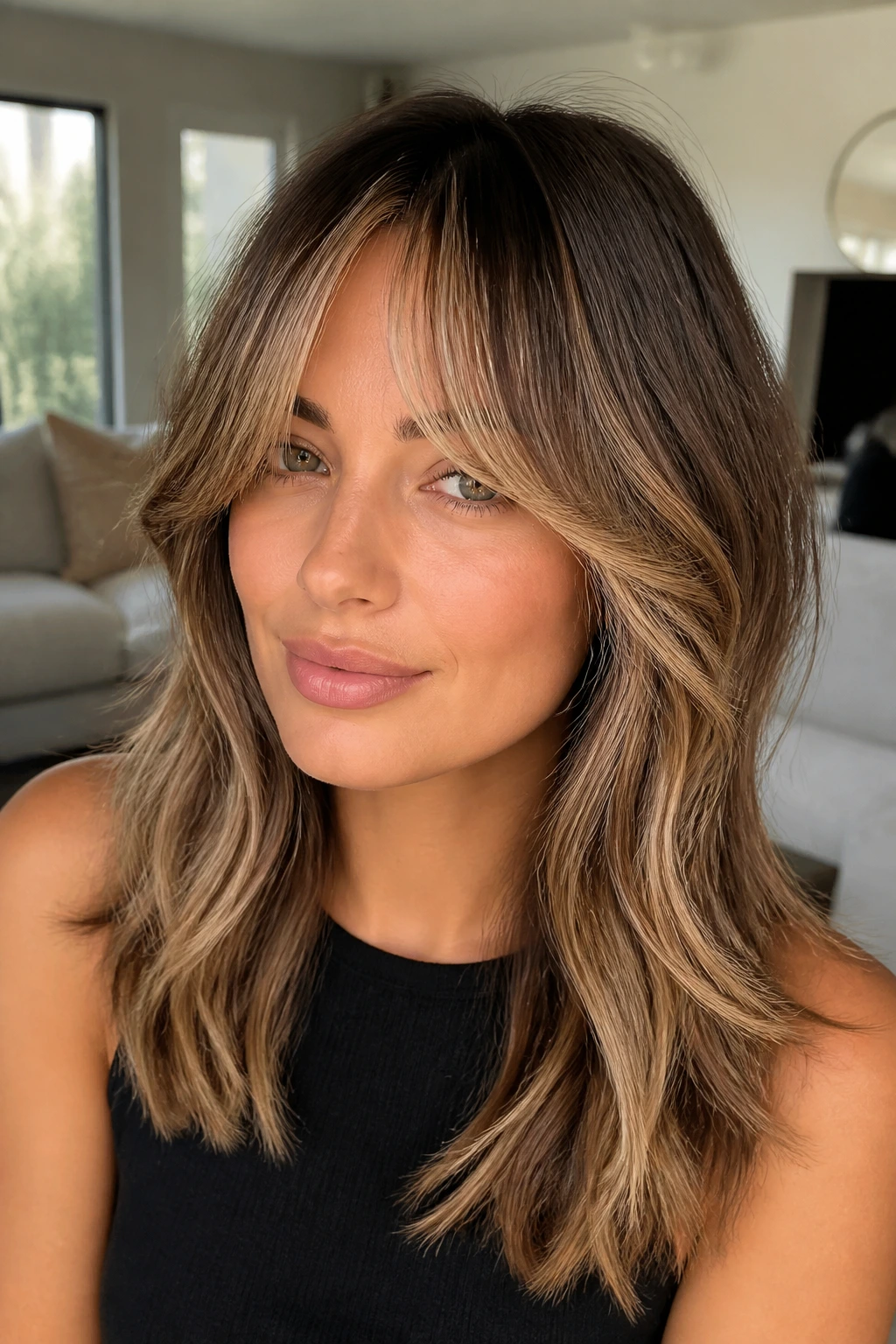
Color changes the way curtain bangs read on the face. A few lighter ribbons around the front can make the fringe look softer and more lifted because the eye follows the brighter pieces first. That’s especially useful if your bangs are dense or if the haircut needs a little visual break near the cheekbones.
I like this pairing when the highlights are placed softly, not in a striped money-piece block. A gentle face frame in a shade one or two levels lighter than the base can soften the fringe without turning it into a loud contrast line. The cut still does the shaping; the color just helps it show up.
This is a good choice if you want curtain bangs to feel a little more dimensional in photos and indoor light. Strong contrast can be fun, but subtle dimension tends to age better on the face.
22. Grow-Out Curtain Bangs That Still Look Intentional
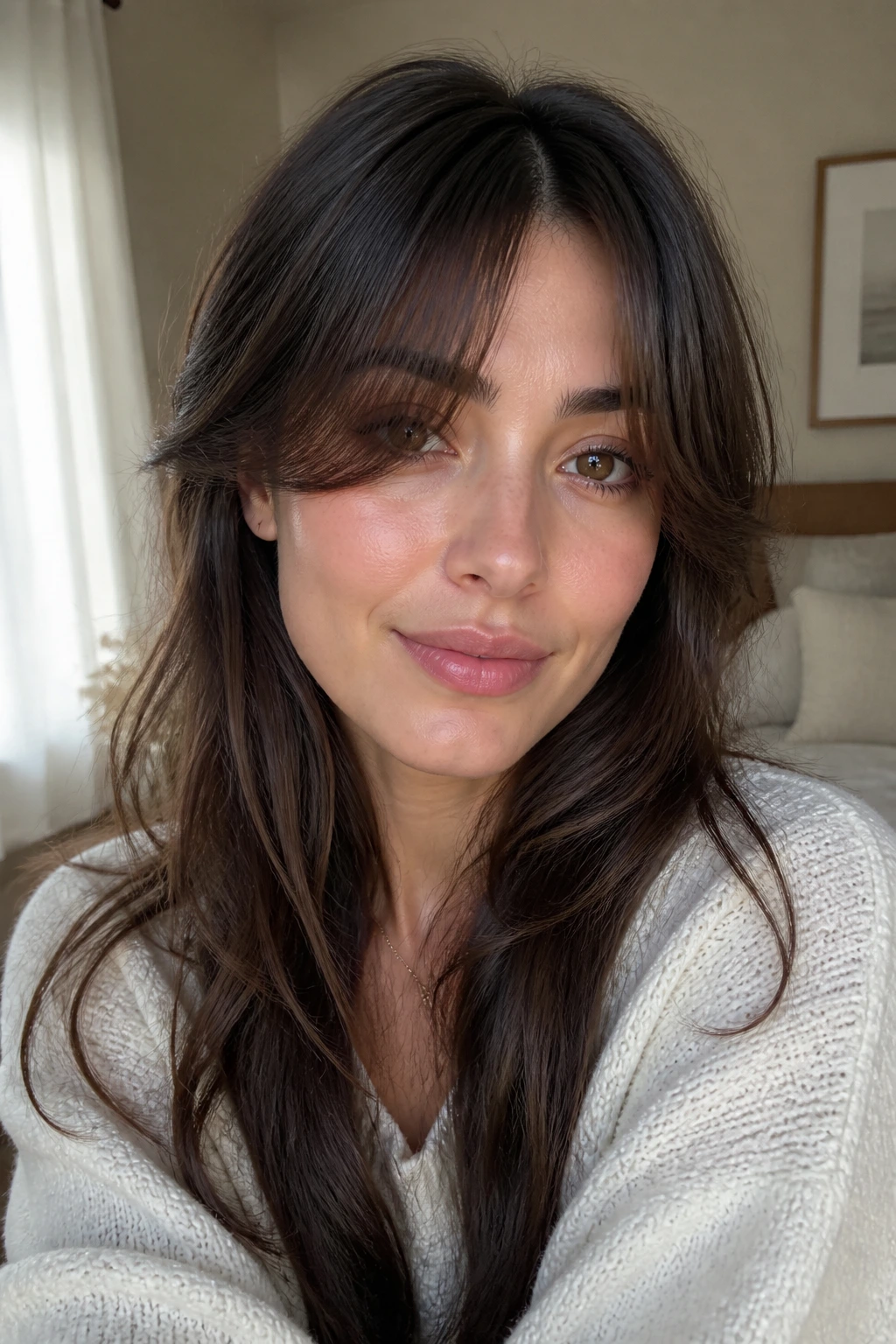
Grow-out curtain bangs are where the style earns its reputation for low regret. Once they pass the brow and start moving toward the cheekbones, they begin behaving like face-framing layers instead of a strict fringe. That transition can look surprisingly good if you keep the ends soft and the part clean.
The main goal is to stop them from splitting too wide or hanging in the eyes. A quick trim around the corners every few weeks helps. So does re-directing the front with a round brush or velcro rollers after washing. A grow-out fringe can look shaggy in a flattering way, but only if the weight line stays under control.
If you’ve been nervous about bangs because of the awkward phase, this is the version I’d point you toward. It gives you a front shape now and a graceful exit later. Rare combination.
Why Curtain Bangs Work So Well When the Part Is Soft

Curtain bangs flatter faces because they don’t land as a single horizontal line. That’s the core of it. The center stays open, the sides sweep outward, and the longest pieces usually graze the cheekbone, lip, or jaw. That diagonal shape pulls the eye away from the widest part of the forehead and toward the center of the face, which is why the cut feels softer than blunt bangs.
There’s also a density trick happening here. A curtain fringe can hold enough weight to look intentional, but the split keeps it from swallowing the face. If you want the look to feel airy, the shortest point should be cut just low enough to open the forehead without making the bangs disappear. If you want more drama, the corners can be thicker and longer. The shape still reads as soft because the line breaks in the middle.
Most stylists who do this well cut for movement, not just length. They’ll consider the natural part, any cowlick at the hairline, and how the front falls when dry. That’s why curtain bangs often look better with a tiny bit of texture than with a perfectly smooth helmet of hair. The best version has motion. A little swing. A little bend. Enough structure to flatter the face, not so much structure that it feels carved in place.
What to Ask Your Stylist Before the First Snip
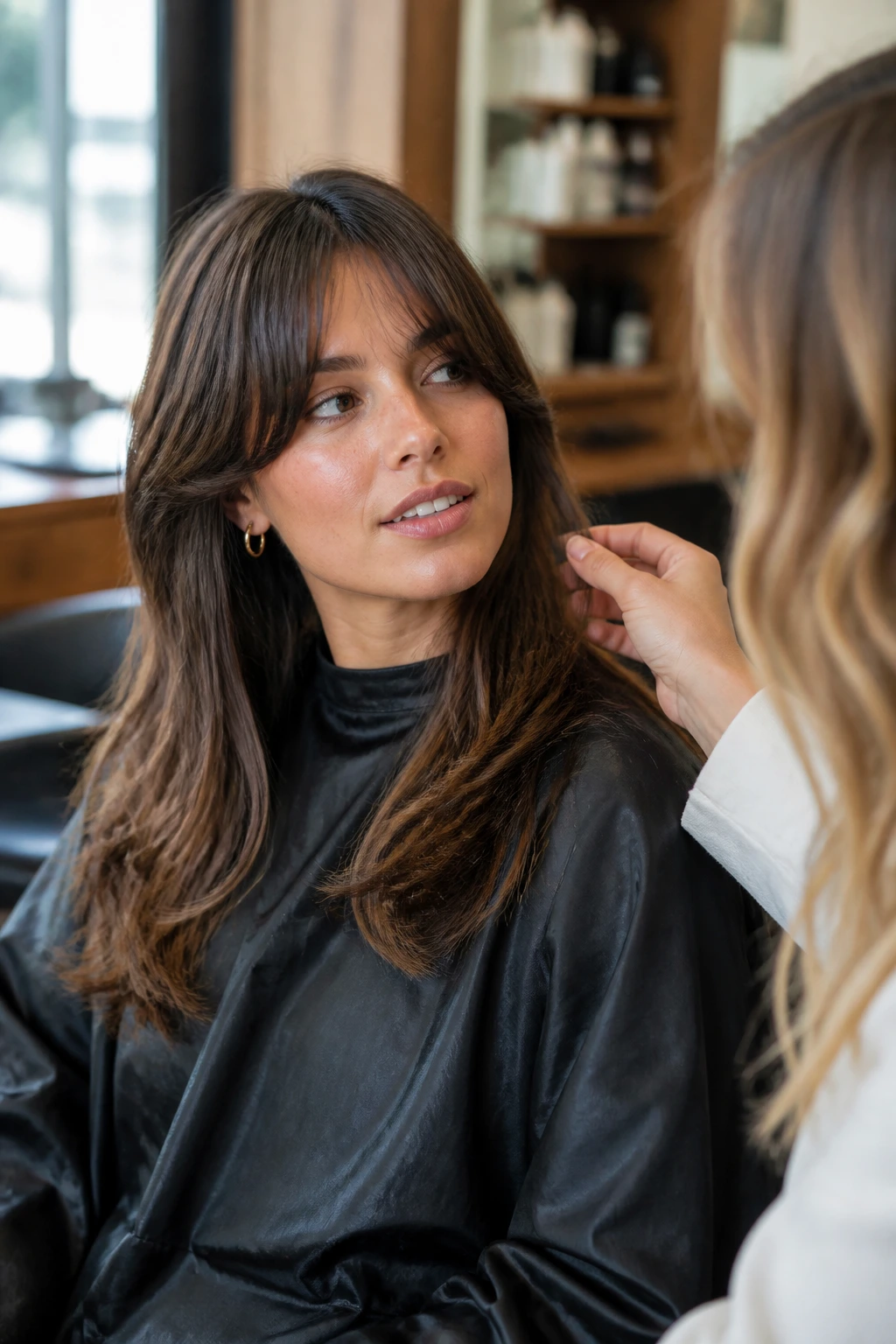
Bring photos, yes, but bring the right kind. One front view and one side view are better than ten filtered shots from different angles. A curtain bang can change a lot depending on where the shortest point sits, and a side photo tells the stylist more about the length you actually want.
Say where you want the fringe to land on day one and where you want it to land after a few weeks. That matters. If you want a soft face frame, you probably want the center somewhere between the brow and bridge of the nose, with corners that can grow into the cheekbones. If you want more openness, keep the center a little longer and ask for feathered corners.
Tell them about your hair’s habits. Cowlicks. Oiliness at the front. A center part that never sits straight. A bang that looks good in the chair but flips weird after two hours is usually a communication problem, not a bad haircut. I’d also ask whether they prefer to cut the fringe dry or nearly dry; for many textures, that gives the most honest result.
Essential Tools for These Looks
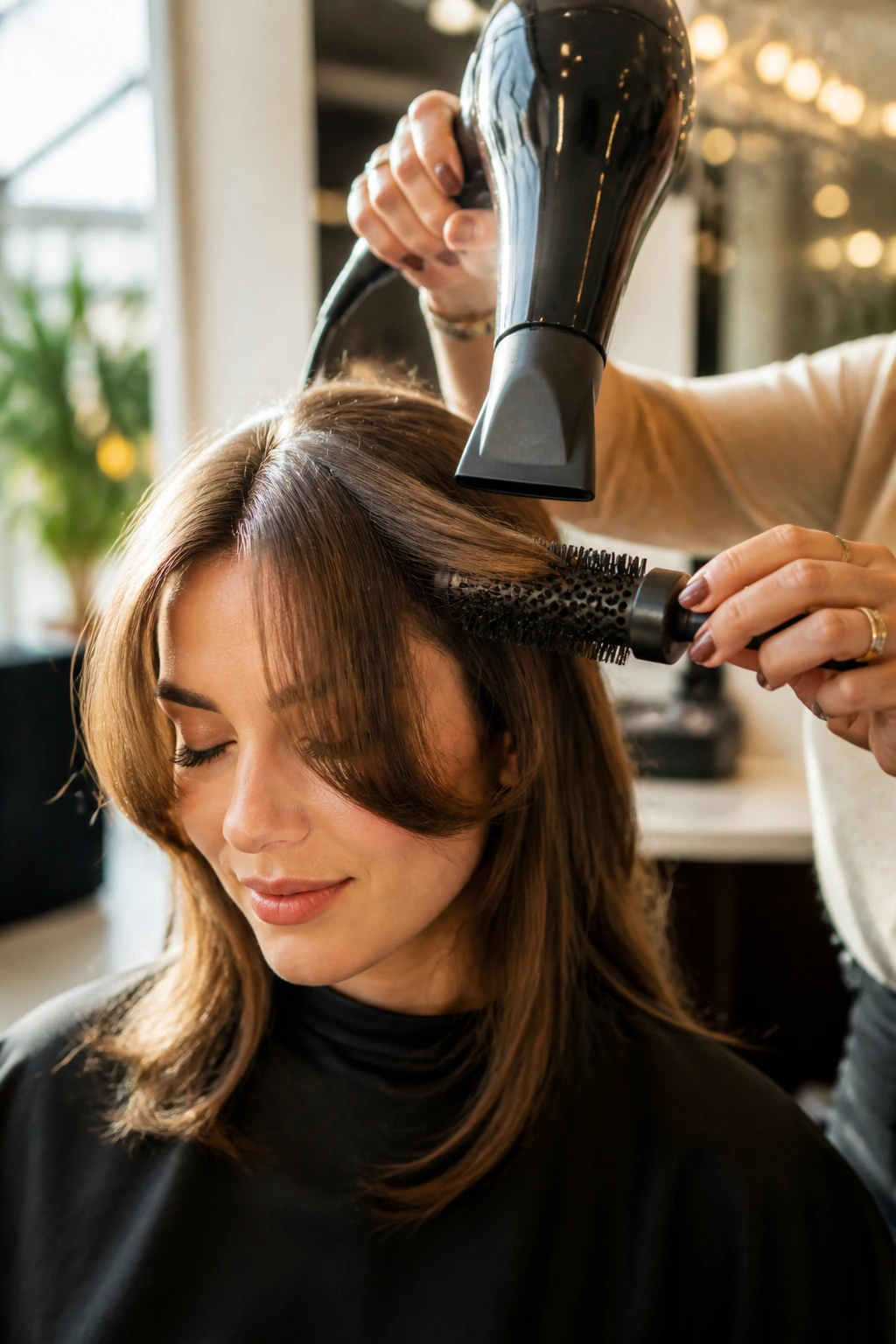
- Blow-dryer with a nozzle attachment: The nozzle helps direct the hair down the shaft and keeps the fringe from puffing in odd directions.
- Small round brush, 1 to 1.25 inches: Best for creating that soft inward or outward bend at the corners.
- Fine-tooth comb: Handy for setting a clean center part and separating the fringe before styling.
- Velcro rollers or a large roller clip: Useful if you want lift without using a brush the whole time.
- Heat protectant spray: Necessary if you’re using a round brush, flat iron, or hot roller on the bangs.
- Lightweight mousse or root lift spray: Helps fine hair hold the front shape without getting sticky.
- Texture spray or dry shampoo: Good for day-two refreshes and for keeping the fringe from looking too polished.
- Small flat iron: Optional, but useful for a quick bend on straighter curtain bangs or for taming stubborn corners.
- Duckbill clips: Great for setting the center part while the hair cools.
- Reference photos: Not glamorous, but a smart salon tool. They keep length and density conversations honest.
Smart Styling and Cut Tips That Save You Trouble
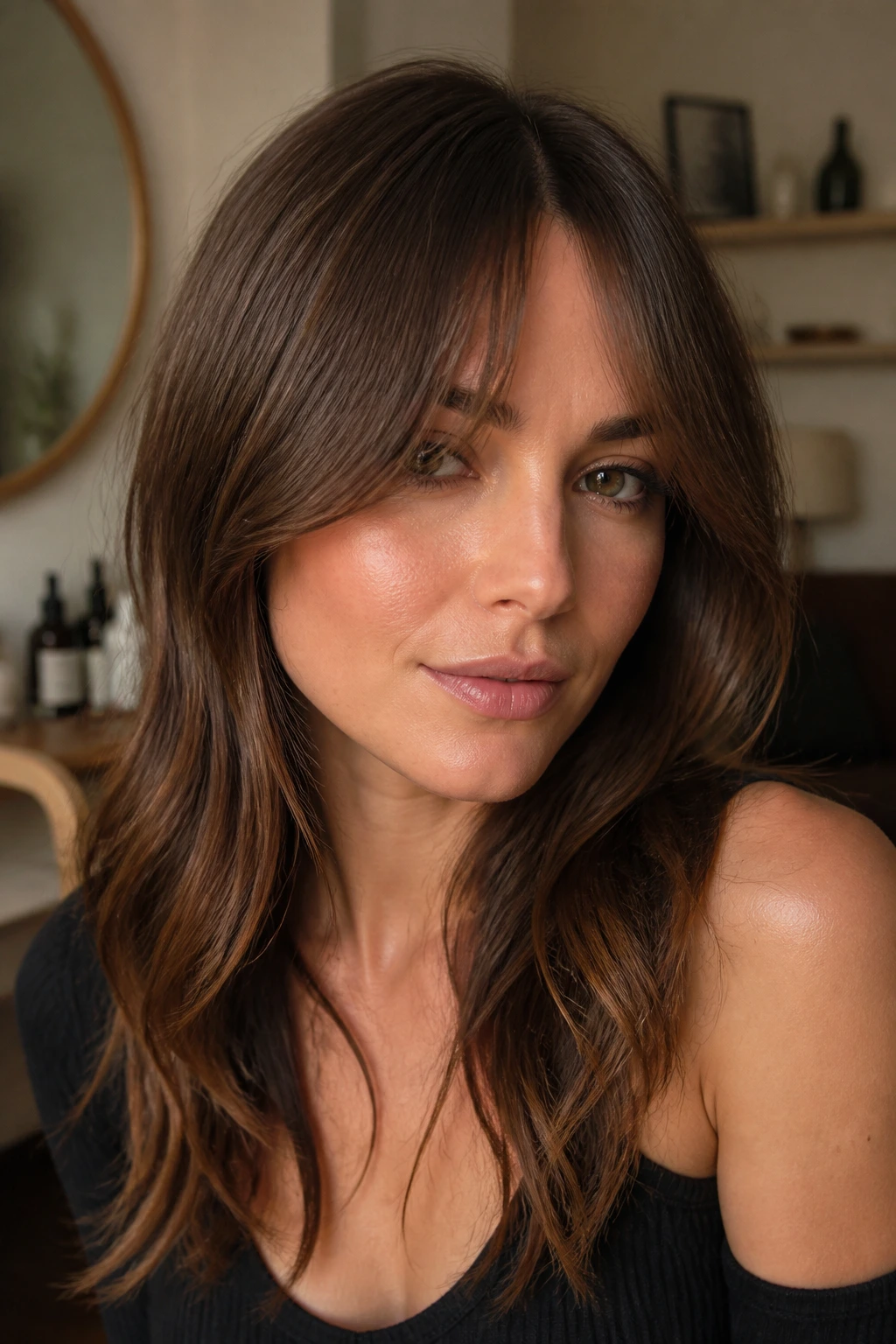
Length First: Curtain bangs shrink more than people expect once they’re dry. If your hair has any wave, ask for the shortest point a touch longer than your target, then let the dry shape prove the final length.
Density Matters: Too much hair in the fringe makes it feel like a front curtain instead of a face frame. If the bangs are thick, ask for weight removal through the interior, not a jagged thinning at the bottom.
Respect the Cowlick: If the front hair splits hard at the center or kicks to one side, don’t fight it with extra product. Work with it. A slightly off-center part and a softer bend usually solve more than a fight ever does.
Use Less Product Than You Think: A pea-size amount of cream or mousse is often enough. Curtain bangs go greasy fast because they sit on the face, where heat and skin oils get involved early.
Keep the Corners Alive: The side pieces should move. If they freeze in place, the whole style feels dated. Rebrush them when they cool, or clip them out of the way for two minutes after blow-drying so they hold the sweep.
Common Mistakes That Make Curtain Bangs Feel Wrong
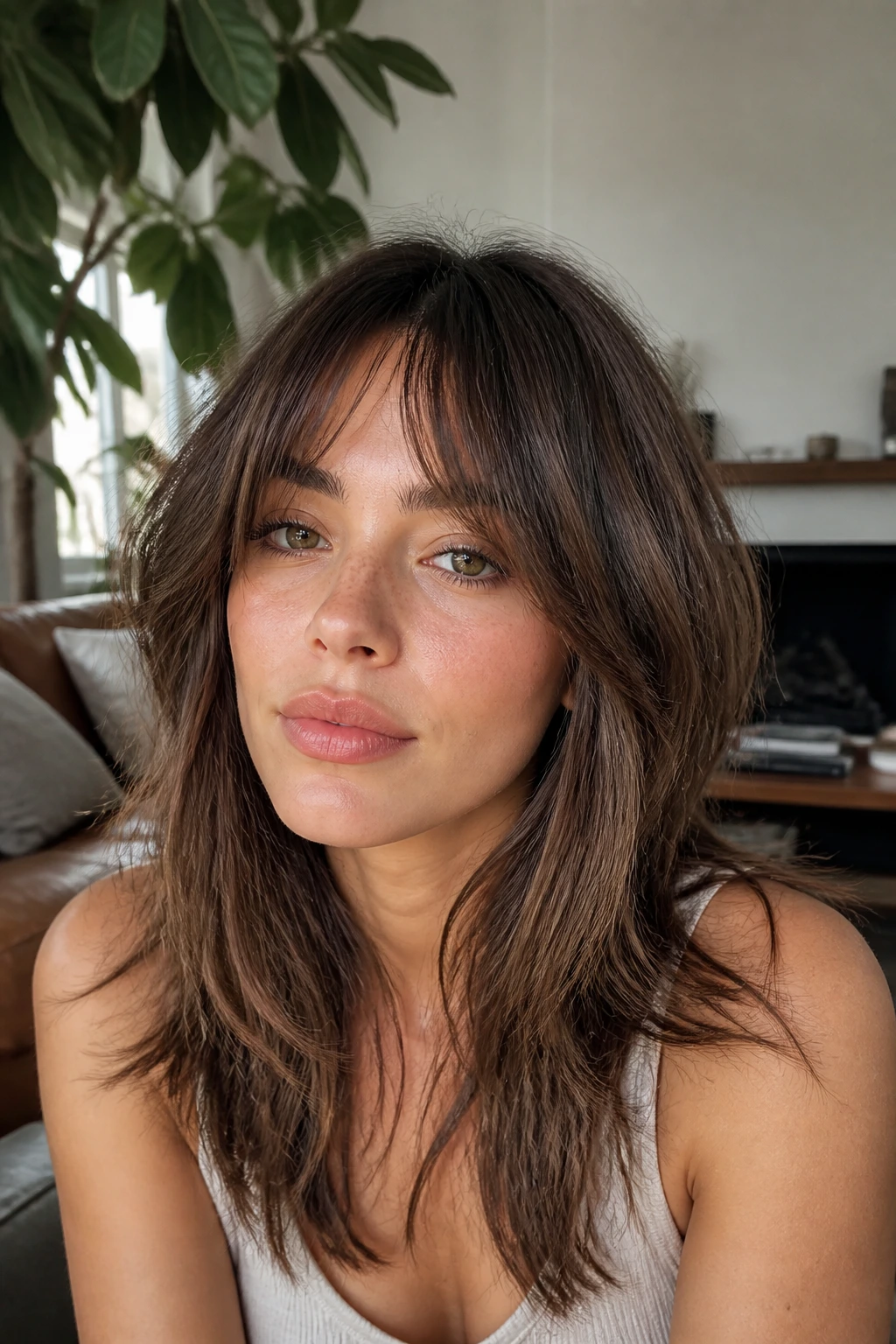
- Cutting them too short on the first try: The fringe ends up sitting above the brow with nowhere to soften, and the whole face frame gets sharp. Fix it by asking for longer corners and a slower first cut.
- Making the center too thick: The bangs become a wall instead of a curtain, especially on fine or straight hair. The fix is to lighten the interior and keep the split visible.
- Styling them flat down the forehead: That kills the shape and makes the fringe look like an afterthought. Blow-dry the front with side-to-side motion and some root lift.
- Ignoring natural growth patterns: Cowlicks and center parts are stubborn. If the cut doesn’t account for them, the bangs will separate weirdly and sit uneven. A better part or a softer corner solves most of it.
- Overusing texture spray or dry shampoo: Too much grit makes curtain bangs rough and chalky instead of airy. Use a light mist, then brush it through.
- Letting the edges go blunt: A sharp edge turns a soft face frame into a heavy line. Point-cut or feather the ends so they can blend into the rest of the haircut.
Curtain Bang Variations Worth Trying
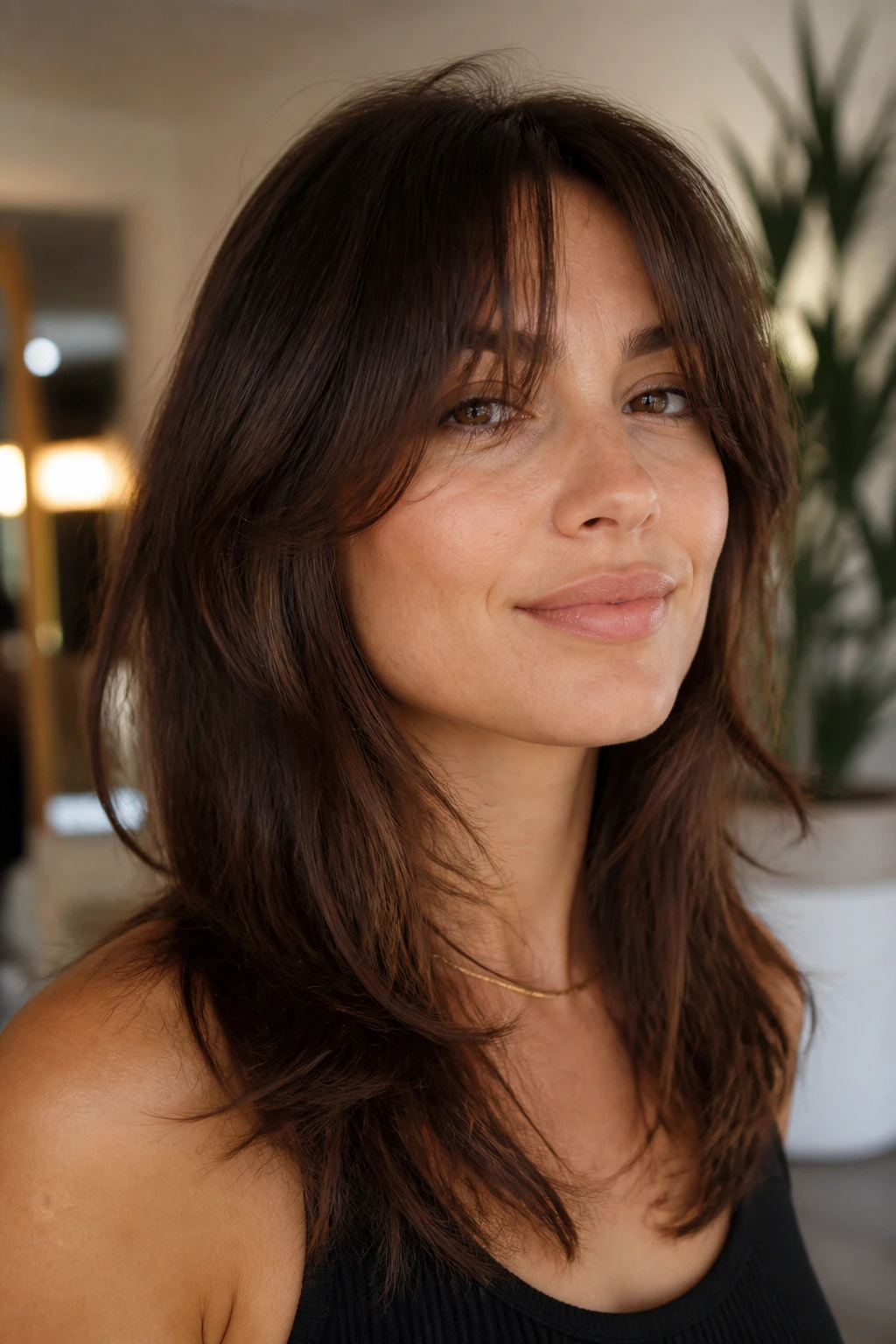
The Bottleneck Shift: Start with a narrow center and allow the bangs to widen toward the cheekbones. This version adds shape without crowding the forehead, and it works nicely if you want something a little more fashion-forward than a standard split fringe.
The Soft Shag Blend: Pair curtain bangs with shattered layers around the face and crown. It suits hair that already has bend or wave, because the fringe can melt into the rest of the cut instead of sitting on top of it.
The Blowout Sweep: Keep the fringe longer and style it into a rounded, salon-style curve. This is the version to pick if you like smooth movement and want the front to hold its shape for a day or two.
The Curly Cloud: Let curls keep their natural spring and frame the face in a softer arc. Ask for enough length to account for shrinkage, then shape the bangs with curl cream and a diffuser.
The Micro-Layer Frame: Use tiny internal layers to lighten thick bangs without taking away the face-framing shape. This keeps the front from puffing out and works especially well on dense hair.
The Grow-Out Sweep: Let the bangs drift into cheekbone-length face-framing layers. It’s the safest pick if you want the look of bangs now without locking yourself into a rigid maintenance schedule.
Keeping Curtain Bangs in Shape Between Trims
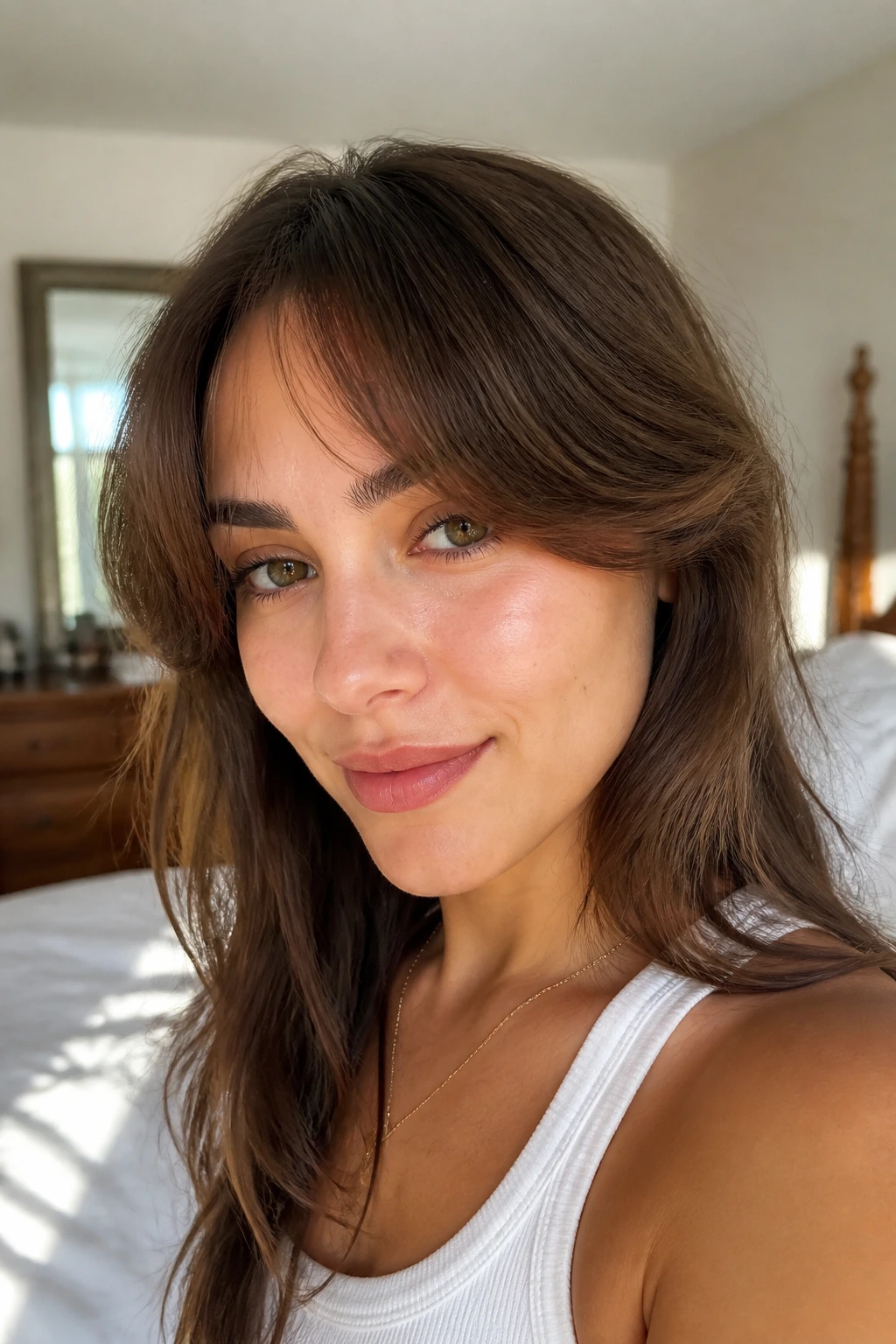
Curtain bangs look best when they’re trimmed before they get too heavy, not after they’ve already lost the shape. For most hair types, a touch-up every 4 to 6 weeks keeps the center from collapsing and the corners from dragging into your eyes. If your hair grows fast or you wear the fringe short, you may want to nudge that closer to 3 or 4 weeks.
Day-to-day upkeep is lighter than people expect. A quick mist of water, a round-brush pass, or a few minutes in Velcro rollers is usually enough to bring the shape back after sleep. If the front gets oily, dry shampoo at the roots can buy you another day, but don’t bury the bangs in powder. That chalky look shows fastest on the forehead.
At night, clip the fringe up loosely if it tends to flatten, or part it and let it rest over a silk pillowcase. It sounds fussy. It isn’t, really. It just keeps you from rebuilding the same shape every morning.
If you’re growing them out, use the in-between stage to your advantage. Let the corners reach the cheekbone, then ask your stylist to blend them into face-framing layers rather than chopping them off again. That way the cut changes shape with you instead of feeling like a compromise.
How to Wear Curtain Bangs So They Frame the Face

Presentation: The fringe should open at the center and taper out toward the sides, with the shortest pieces sitting somewhere between the brow and bridge of the nose. That gives the face softness without covering the eyes.
Accompaniments: Curtain bangs pair cleanly with bobs, lobs, long layers, shag cuts, ponytails, half-up styles, and loose waves. If your haircut already has a lot of shape, keep the bangs lighter so the front doesn’t fight the rest of the cut.
Portions: Ask for enough density to hold the split, but not so much that the fringe turns dense at the center. On thicker hair, that usually means some interior removal. On finer hair, it means keeping the bang long enough to feel full without being heavy.
Finish: A smooth bend, a little piece separation, or a soft air-dried wave can all work. Pick one finish and keep it consistent, because changing the front shape every day makes the haircut feel less intentional.
More Ways to Personalize the Shape
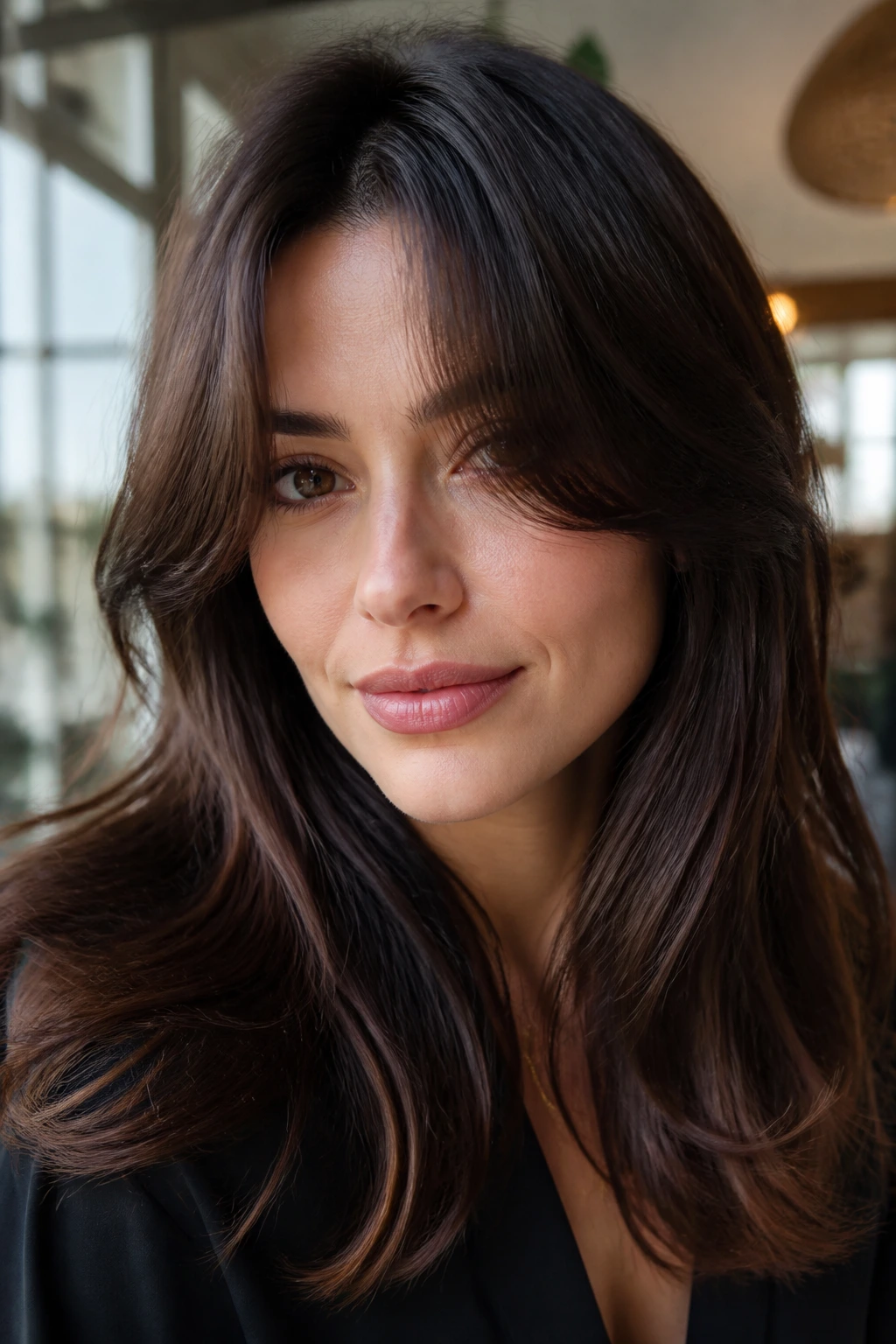
Volume Boost: If the fringe keeps falling flat, blow-dry the roots in the opposite direction first, then sweep them back to the center. That tiny reset gives the bangs lift without making them look blown out in a stiff way.
Texture Control: Use cream for curly or coarse hair, mousse for fine hair, and almost nothing for hair that already holds its own bend. The wrong product is usually the reason curtain bangs feel heavy, not the cut itself.
Softness Dial: Longer corners make the face look gentler, while a slightly shorter center brings more attention to the eyes. If you want the strongest soft-frame effect, keep the center low and the side pieces airy.
Make-It-Yours: If you wear glasses, keep the center a bit longer so it clears the frames. If you live in humidity, ask for a touch more weight in the corners so the fringe doesn’t puff into a halo. If you prefer low-maintenance styling, build the shape into the cut itself and keep the finish relaxed.
Frequently Asked Questions

Do curtain bangs work on every face shape?
Not every face shape needs the same length or density, but the style can be adjusted for most of them. The trick is matching the shortest point and corner length to what you want the fringe to do — soften width, shorten length, or open the eyes.
Can I get curtain bangs if my hair is curly?
Yes, but the cut has to respect shrinkage and the curl pattern. A dry or nearly dry cut is usually safer, and the fringe should be left longer than you expect so the curls can settle into place.
How often do curtain bangs need trimming?
Most need a trim every 4 to 6 weeks if you want the shape to stay crisp. If you like a more grown-out, face-framing look, you can push longer and let the corners blend into layers.
What if my curtain bangs keep splitting too wide?
That usually means the center is too light or the cut doesn’t match your natural part. A stylist can add a little weight back into the center, and at home you can guide the front with a quick blow-dry and clip while it cools.
Can I style curtain bangs without heat?
You can, especially if your hair has wave or curl already. Twist the front away from the face while it’s damp, clip it for a few minutes, and let it dry with a soft center part.
Are curtain bangs good with a bob?
Very. The bob gives the cut a clean base, and the fringe softens the edge around the jaw. Just keep the bangs long enough to blend, or the whole front can look chopped.
How do I grow them out without looking awkward?
Shift the shortest pieces into cheekbone-length layers and keep the corners feathered. A little side-sweeping during the grow-out stage helps the fringe look deliberate instead of stuck between two cuts.
Will curtain bangs make my forehead look smaller?
They can, if the shortest point sits low enough and the sides sweep outward. A narrow center with longer corners usually softens forehead width without closing the face in.
The Soft Frame That Stays Useful
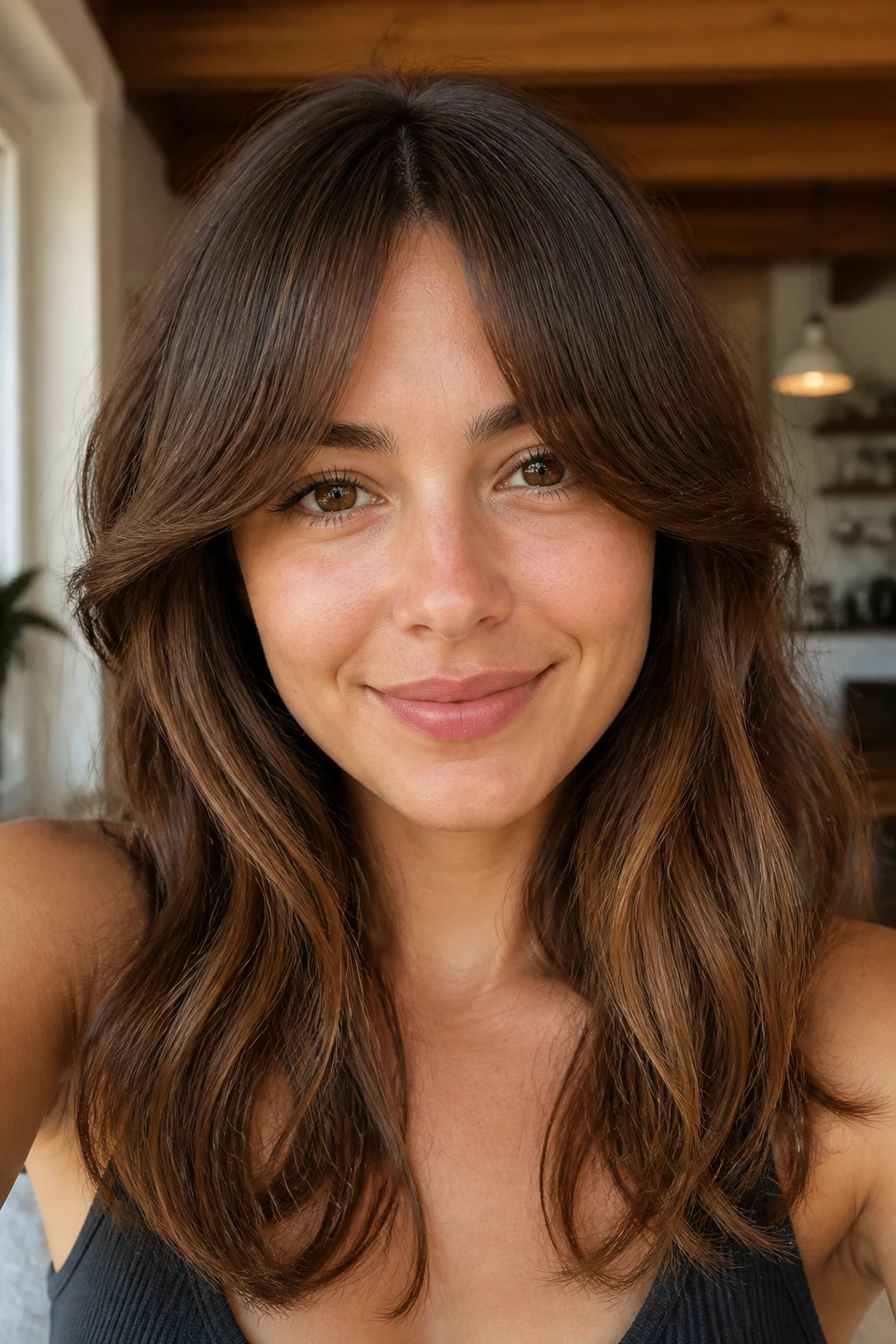
Curtain bangs keep winning because they do one thing most fringe styles can’t: they soften the face and still give you room to move. You can wear them polished, shaggy, airy, thick, curly, blown out, or grown out. That flexibility is the real appeal. Not the trendiness. Not the photo appeal. The fact that the cut can survive real life.
The best version is the one that respects your hair’s texture, your part, and the shape you actually want around your face. Get that part right, and the rest falls into place with a quick brush, a little heat, or sometimes not much at all.
