



A center part can be merciless. If the front of your haircut is too blunt, too dense, or cut at the wrong length, it lands as a wall. But when middle part bangs are shaped with a little give — a shorter middle, softer sides, and pieces that fall toward the cheekbones instead of straight down — the whole face opens up. The line at the nose stays clean, while the fringe does the quiet work of softening everything else.
That soft face frame is the real trick. It doesn’t need to shout. It just changes the way light sits on the forehead, the way the eye moves down the cheek, the way a jawline feels less boxed in. A good center-part fringe can make thick hair look lighter, fine hair look fuller at the front, and wavy hair look like it was cut to move. The bad ones are easy to spot: too much width, too much density, or a middle split that fights the hair’s natural fall. Those usually sit there like curtains that forgot to open.
The styles below lean into different textures, face shapes, and maintenance levels, because a soft face frame is not one single haircut. It’s a whole family of choices. Some skim the brows. Some live around the cheekbones. Some grow out into proper curtain bangs after a few weeks, which is part of the appeal.
Why These Bangs Keep Working on a Soft Face Frame
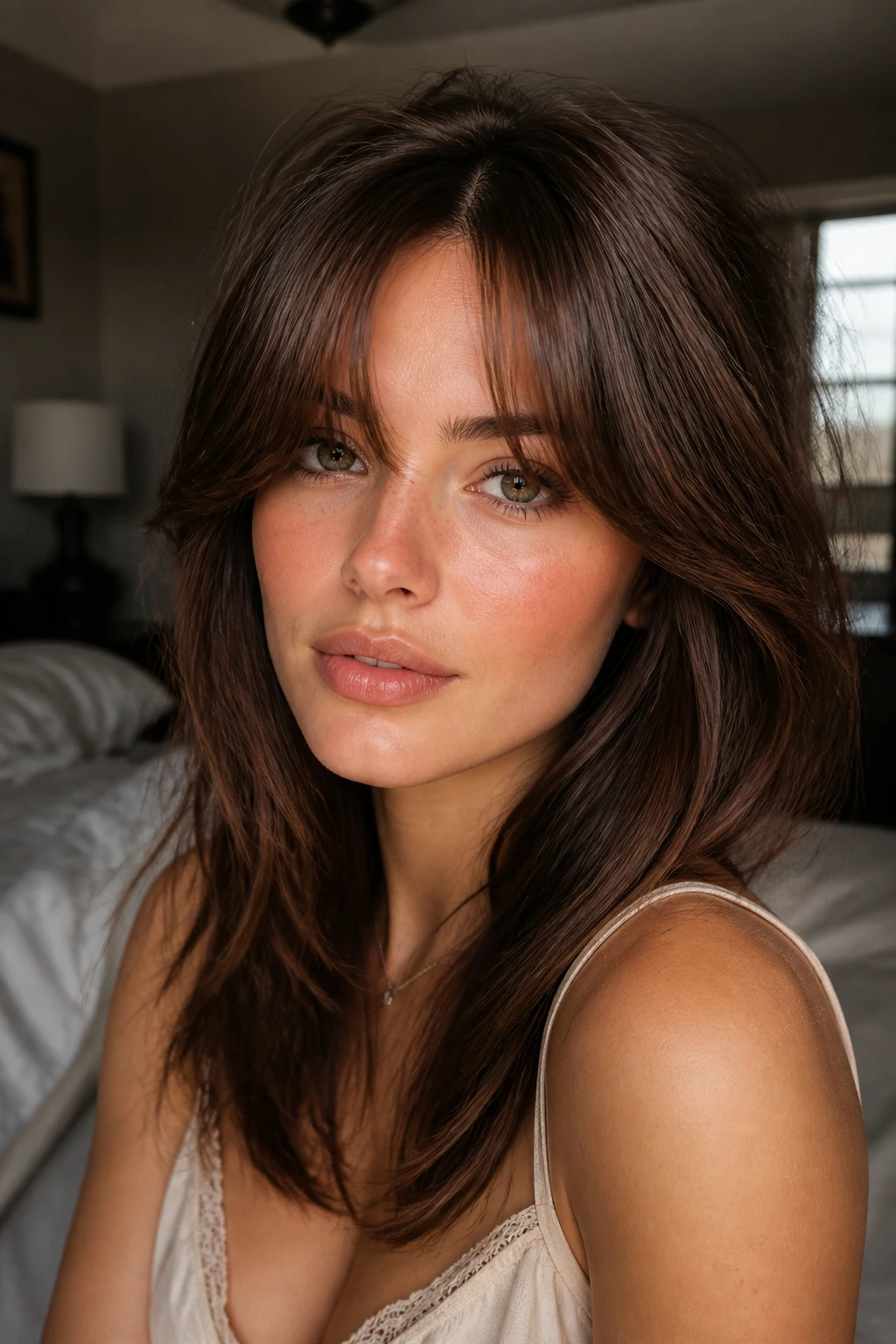
Center parts are good at making structure look gentler. The eye reads the split first, then follows the two lines outward, which makes the forehead feel less wide and the cheeks feel more lifted. That’s why middle part bangs can soften a strong brow, a square jaw, or a round face without hiding the face under a heavy fringe.
The best versions keep air between the strands. If the bangs are sliced, feathered, or point-cut, they move. If they’re cut blunt and thick all the way across, they can flatten the front of the haircut and erase the softness you wanted in the first place.
A good center fringe grows out in a useful way. This matters more than people think. A middle-part bang that starts at brow level and angles into the cheekbones can live through grow-out better than a straight-across fringe, which tends to look awkward once it loses its shape.
These styles work with movement, not against it. A little bend, a little lift at the root, and a clean split down the middle are usually enough. You do not need a perfect salon blowout every single morning.
The wrong cut shows fast. If the shortest point sits too high, the face can look exposed. If the side pieces are too short, they hover instead of frame. The sweet spot is usually somewhere around the bridge of the nose in front, then grazing the cheekbone or lip on the sides.
1. Curtain Bangs That Hit at the Cheekbone
Curtain bangs are the obvious place to start, and for good reason. They split cleanly in the middle, then open out like they were made to sit around the face instead of on top of it. The best version for a soft face frame starts a touch shorter in the center and drops longer on the sides, so the fringe doesn’t look chopped or stiff.
Why They Work
The cheekbone is the anchor here. When the shortest pieces brush the upper cheek and the longer sides skim toward the jaw, the whole face looks lifted without losing length. That’s the effect people are after when they ask for middle part bangs but don’t want a heavy fringe. They want movement first. Coverage second.
A round brush and a quick bend away from the face make the shape obvious. If the hair dries flat, the cut loses its point. If it has a little curve, even fine hair can look fuller at the front.
Small details that matter
- Ask for the center to start around the bridge of the nose or slightly above.
- Keep the side pieces long enough to reach the cheekbone or top of the lip.
- Avoid a blunt bottom edge. It should feel feathered, not carved.
- Works especially well on medium-density hair that can hold a soft bend.
Best tip: blow-dry the front on low heat, then pin each side back for five minutes while it cools. That little reset helps the curve stay open instead of collapsing straight down.
2. Bottleneck Bangs with a Soft Center Split
Do you want the fringe to look a little more deliberate? Bottleneck bangs are the answer. They start narrow in the center, then widen as they move out toward the temples, which gives the face a soft frame without that thick, curtain-heavy feel some people want to avoid.
The shape is called bottleneck for a reason. It’s slimmer at the top and fuller through the sides. That means the part sits cleanly, the middle doesn’t eat up the forehead, and the longer sides melt into layers instead of landing as a separate section. On a softer face shape, that transition matters.
How to wear them
- Style them with a small round brush so the center has a light bend.
- Keep the ends piecey, not packed together.
- Pair them with layered lengths; they look better when the haircut around them moves.
- If your forehead is shorter, keep the center a touch longer so the shape doesn’t feel crowded.
This is one of those styles that looks expensive when it’s cut right and a little fussy when it’s cut wrong. The difference is density. Too much hair in the front, and the whole thing goes blunt. Too little, and the bottleneck shape disappears.
3. Wispy Bangs That Skim, Not Smother
Wispy middle part bangs are what I reach for when someone wants softness but gets nervous around heavy fringe. The hair is sliced thin enough that you can still see skin between the strands. That airiness is the point.
They’re especially useful if your face already has delicate features and you do not want the front of the haircut to overpower them. A wispy split across the middle sits there like a loose veil, not a curtain. It softens the face frame without covering the eyebrows or pressing down the eyes.
The danger is over-thinning the bang section so much that it turns stringy. That’s not wispy. That’s just sparse. The cut should still have shape when you tuck one side behind the ear or let it swing across the cheek.
What to ask for
- A light internal texture through the bang section.
- A center split that can fall naturally, even when the hair is air-dried.
- Longer sides that taper into face-framing layers.
- Avoid razor-thinning on very fine hair; it can leave the ends looking frayed.
These bangs are easiest to live with when you like a slightly undone finish. If you want polished and neat every day, you’ll spend more time styling them than the cut deserves.
4. Long Face-Framing Bangs That Melt into Layers
Long face-framing bangs are the most forgiving version of this whole family. They usually start at the middle part and flow down into the jaw or collarbone, which makes them ideal if you want a soft face frame without the daily maintenance of a shorter fringe.
The cut works because it blurs the line between “bangs” and “layers.” There’s no hard break. The front pieces are simply the first layer of the haircut, and that makes everything feel softer. It also means the style grows out well, which is worth a lot if you hate awkward in-between stages.
A clean blowout helps, but this cut can also survive a rougher air-dry if the ends are textured enough. That flexibility is why so many people settle on this shape after trying shorter bangs first.
Best for
- Round faces that need length through the front.
- Thick hair that needs movement at the edges.
- Low-maintenance styling because the pieces can be tucked, waved, or pinned back.
- Anyone who wants bangs without committing to a full fringe.
My opinion: this is the safest place to start if you’re unsure. You can always go shorter later. Going the other way is much more annoying.
5. Face-Framing Bangs for Fine Hair
Fine hair needs a different approach. A center-part fringe that’s too narrow can vanish, and one that’s too dense can collapse into flat little strips. The sweet spot is a face-framing bang with enough width to show, but enough transparency to keep it light.
The trick is using length and direction instead of bulk. Let the front pieces fall from the middle and angle them toward the cheekbones. That creates the impression of fullness without asking the hair to carry too much weight. Fine hair often does better with soft bending than with a heavy blowout anyway.
How to keep them from disappearing
- Keep the roots lifted while drying with a small round brush or velcro roller.
- Use a light mousse or root spray, not thick cream.
- Let the front pieces stay a bit longer on the sides.
- Skip heavy oil near the part. It eats volume fast.
Fine hair loves this shape when the cut is airy. If the stylist removes too much weight near the front, the bangs can separate into wisps that look accidental. You want piecey, not patchy.
6. Soft Shag Bangs With a Middle Part

A shag with a middle part gives you bangs that don’t behave like bangs in the usual way. They’re part fringe, part layer, part texture. That’s why this cut works so well on people who want a little edge but still need softness around the face.
The front usually starts shorter near the center and breaks apart into longer, choppy pieces that blend into the rest of the haircut. There’s a relaxed messiness here, but not the sloppy kind. The good shag still has structure around the eyes and cheekbones.
This shape shines when the hair has a natural bend, a small wave, or a little grit from second-day styling. Straight, glossy hair can wear it too, but you usually need more texturizing.
What makes it different
- The bang line is broken up, not smooth.
- The face frame is built from layers, not one long strip of hair.
- It plays well with a slightly imperfect part.
- It works especially well if you like a haircut that looks better after being lived in for a day.
The shag version is not for someone who wants neat symmetry. It is for someone who likes movement around the face and doesn’t mind a little lift, a little bend, a little visible texture.
7. Chin-Grazing Bangs That Soften the Jaw

Chin-grazing middle part bangs are one of the most flattering choices for sharper jawlines. The front pieces split from the middle, then swing down toward the chin in a way that softens the lower half of the face without hiding it.
This cut has a little drama, but not much maintenance. The lengths are long enough to tuck behind the ear or shift around when you need a change, and that gives the haircut more life than a fixed bang line. It also makes the center part feel intentional rather than fussy.
The main thing to watch is weight. If the sides are too thick, the bang pieces can sit like ropes. You want them to move. They should swing when you turn your head, not just hang there.
Good matches
- Square faces that benefit from a softer corner around the jaw.
- Medium to thick hair that can support the longer front pieces.
- People who like a more dramatic frame without a blunt edge.
A chin-length face frame is one of those styles that looks calm from the front and much cooler in motion. That movement is the whole point.
8. Arched Curtain Bangs for Rounder Faces
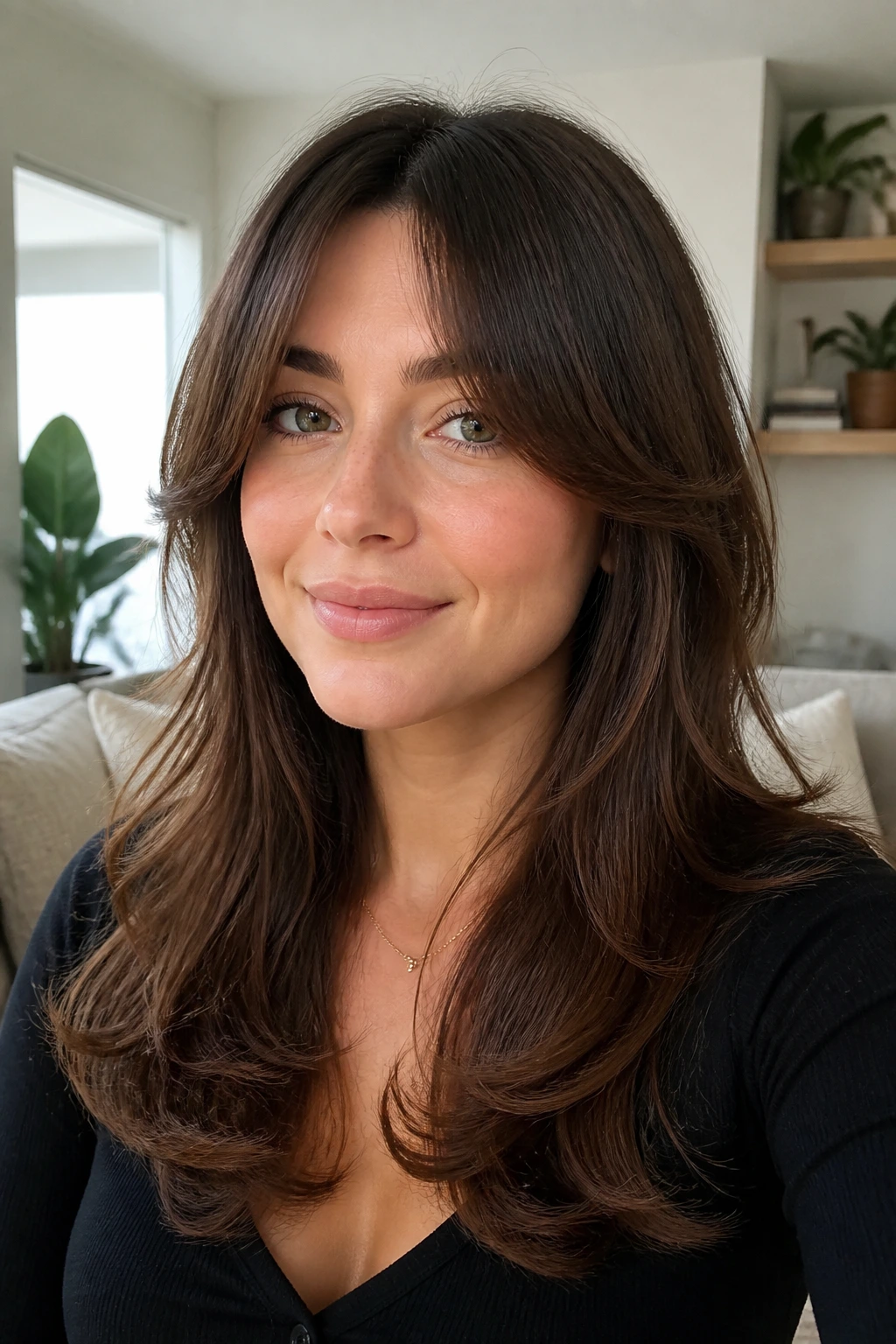
A round face can wear middle part bangs just fine, but the shape matters. Straight-across curtain bangs sometimes widen the face more than people expect. Arched curtain bangs solve that by keeping the center a little shorter and letting the sides fall lower and longer.
The result is a vertical pull. The eye moves down instead of across. That’s what softens the face without making it look wider at the temples. You get the center part, the cheekbone frame, and a little lift near the eyes.
How to ask for it
Ask your stylist to keep the middle section shorter than the sides by at least 1 to 2 inches. That difference matters. It creates the arch. Without it, the bang reads flatter and less shaped.
Use a round brush with the ends turned away from the face. Not under. Away. That tiny direction change keeps the front open, which makes the whole haircut feel lighter.
9. Air-Dried Wavy Bangs That Fall Naturally

If your hair has a wave, use it. Seriously. A center-part bang that’s cut to follow a natural bend often looks softer than one that’s forced into a polished blowout every day. The hair moves with the face instead of sitting on top of it.
The best version keeps the shortest point just long enough to avoid shrinking too high when it dries. Wavy hair springs up. Anyone who has lived with it knows that already. So the cut needs to account for that lift, or the bangs can end up shorter than planned.
A light cream or leave-in can help the wave clump softly, but too much product makes the front look greasy fast. The front of the haircut is the first place product shows.
What to remember
- Cut for dry shrinkage, not just wet length.
- Keep the ends soft and point-cut so the wave has room.
- Air-dry with the part in place and resist touching it until it sets.
- A diffuser can help, but low speed is safer than blasting the fringe around.
This is one of the least fussy versions if your texture already wants to do the work.
10. Heavy Curtain Bangs With a Light Finish
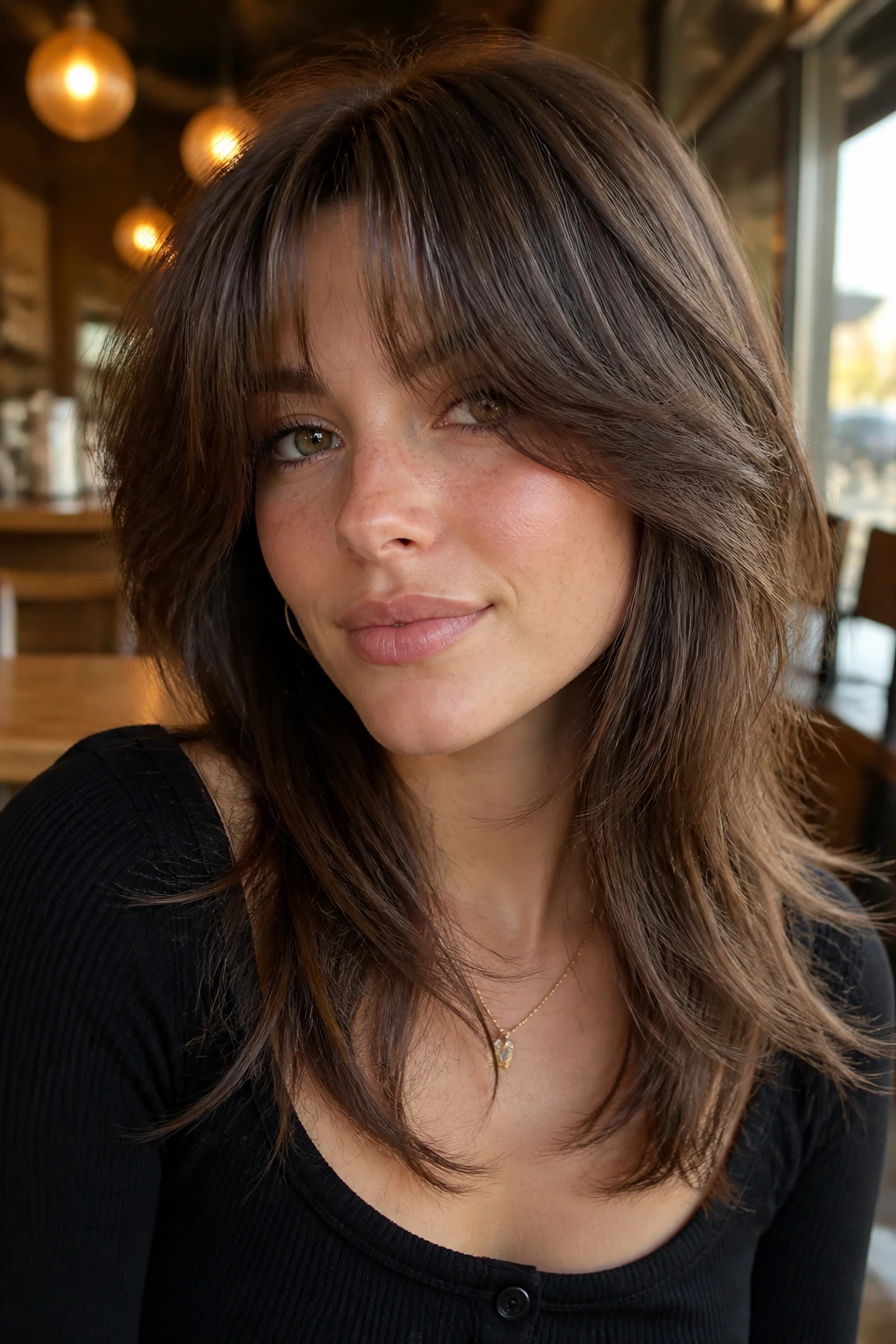
Sometimes people want a fuller bang but still want the softness of a center split. That’s where heavy curtain bangs come in. They carry more density through the front, so the shape shows even on thick or coarse hair, but the ends should still be textured enough to keep the face frame from feeling boxy.
The style can look luxurious when it’s cut with enough layering. It can also look too much if the bang section is dense from root to tip. The difference is usually two things: where the weight sits, and how much of the brow you decide to show.
Best use case
- Thick hair that needs control at the front.
- People who want a more noticeable bang but don’t want a blunt line.
- Anyone who likes a blowout with a bit of drama around the eyes.
I prefer these when the sides stay longer and feather into the cheekbones. If they end at the temple, the cut can feel abrupt. If they fall too long without shape, they lose the point entirely.
11. French-Inspired Center Fringe

This version leans a little softer and a little looser. The middle part is still there, but the front is cut with a more relaxed hand so it doesn’t feel too perfect. The bang sits close to the brows, then breaks open around the eyes and cheekbones in a way that feels lived-in.
The charm here is in the imperfect balance. One side may fall a touch differently from the other. Good. That’s part of the look. The face frame should feel like it belongs to the haircut, not like it was stapled on as decoration.
How to style it
- Use your fingers first, brush second.
- Let a few pieces fall forward and separate naturally.
- Dry the roots up and away from the face for the first minute, then redirect the lengths outward.
If you like your hair to look a little undone and not overworked, this is a strong choice. If you want precision, it may feel too relaxed for you.
12. Collarbone Layers With Barely-There Bangs

Here’s the low-commitment version. The bang section is there, but it’s subtle. The center part opens into soft front pieces that start at the forehead and fade into collarbone layers, which gives the face a frame without creating a hard bang line.
This is a smart choice if you’re nervous about regret. The haircut has enough shape to matter, but not enough to lock you into a bold fringe. It also grows out with less awkwardness, which is the unglamorous part nobody likes to talk about but everyone cares about.
Why it works
- The front pieces connect to the overall cut.
- There’s no blunt edge to fight with in the morning.
- The shape sits well on straight, wavy, or lightly curled hair.
The downside is simple: because the bangs are subtle, they can disappear if the haircut is too layered or the front is too thin. Ask for enough weight to keep them visible.
13. Razor-Cut Bangs for Straight Hair

Straight hair is honest. It shows every line. That’s why razor-cut middle part bangs can be so useful here. The razor removes weight and makes the ends lie softly, which keeps the fringe from turning into a hard shelf.
The texture is the selling point. It gives the center part a little haze around the edges, and that haze softens the face frame in a way blunt scissors won’t. On pin-straight hair, that extra bit of softness matters.
Use this if
- Your hair falls flat and needs movement at the front.
- You want a lighter look around the eyes.
- You don’t mind a cut that needs occasional reshaping.
Not everyone should go razor-heavy. On very damaged ends, it can fray the front. On coarse hair, it can create unpredictable pieces. But on healthy straight hair, it gives the fringe an easy fall that looks less severe.
14. Soft Curved Bangs for Thick Hair
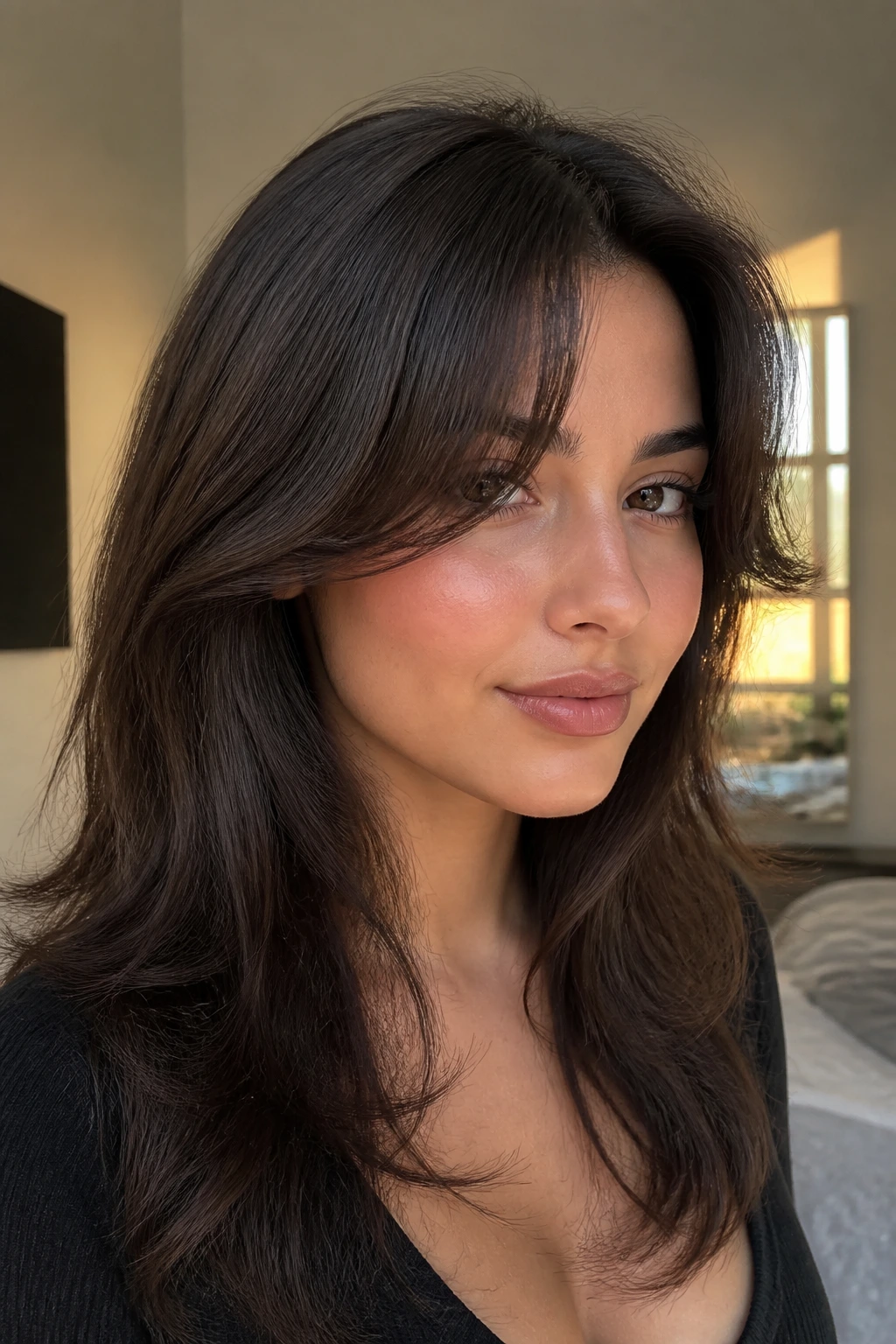
Thick hair loves shape, but it hates bulk sitting in the wrong place. Soft curved middle part bangs remove that problem by bending the front away from the face and taking some density out of the center. The curve is subtle. It should look like the hair decided to fold that way on its own.
The cut helps thick hair avoid the mushroom effect. That’s the thing where the front sits too full and too heavy, so the face frame looks like a lid. A curved split prevents that by making the front follow the cheekbone line instead of fighting it.
What helps
- Internal layering through the bang section.
- A medium round brush, not a giant one.
- A little product through the ends, not near the roots.
Thick hair can hold this shape for a long time once it’s set. That’s the upside. The downside is that if it’s cut too heavy, it can feel bulky fast. Precision matters more here than in finer textures.
15. C-Cut Layers With Split Fringe

A C-cut is one of my favorite shapes for a soft face frame because it builds a curve around the face instead of a straight frame line. Add a middle part bang to that and the whole haircut starts to look coordinated. The fringe becomes the first bend of the haircut, then the layers continue that shape down the sides.
That continuity matters. It keeps the face from looking chopped into sections. Instead, the eye moves from the bang to the cheek to the collarbone in one line. That’s clean. Quiet. Effective.
Ask for
- Front layers that begin around the cheekbone or upper lip.
- A center bang that can split without separating into two sad pieces.
- Ends that are softly curved, not flipped sharply outward.
This is one of the best choices if you wear your hair down most of the time and want the style to look intentional from every angle.
16. Grown-Out Bangs That Still Frame the Face

Some of the nicest middle part bangs are the ones that have already started to grow out. The length gives the front more range, and the split stays soft because the pieces have enough weight to drape instead of spring up. That grown-out stage is not a problem here. It’s the feature.
The frame lands closer to the eyes and cheeks than the forehead, which can be flattering on people who don’t love a lot of hair sitting directly across the brow line. It also means you can tuck one side back and still keep a shape.
Best part of this cut
- It’s forgiving.
- It moves easily between polished and casual.
- It works well if you’re between salon visits and need the front to still look finished.
If you’ve ever hated the “I need a trim right now” feeling, this style may be the one you settle into. It looks deliberate even when it’s not freshly cut.
17. Blunt Ends Softened by Texture
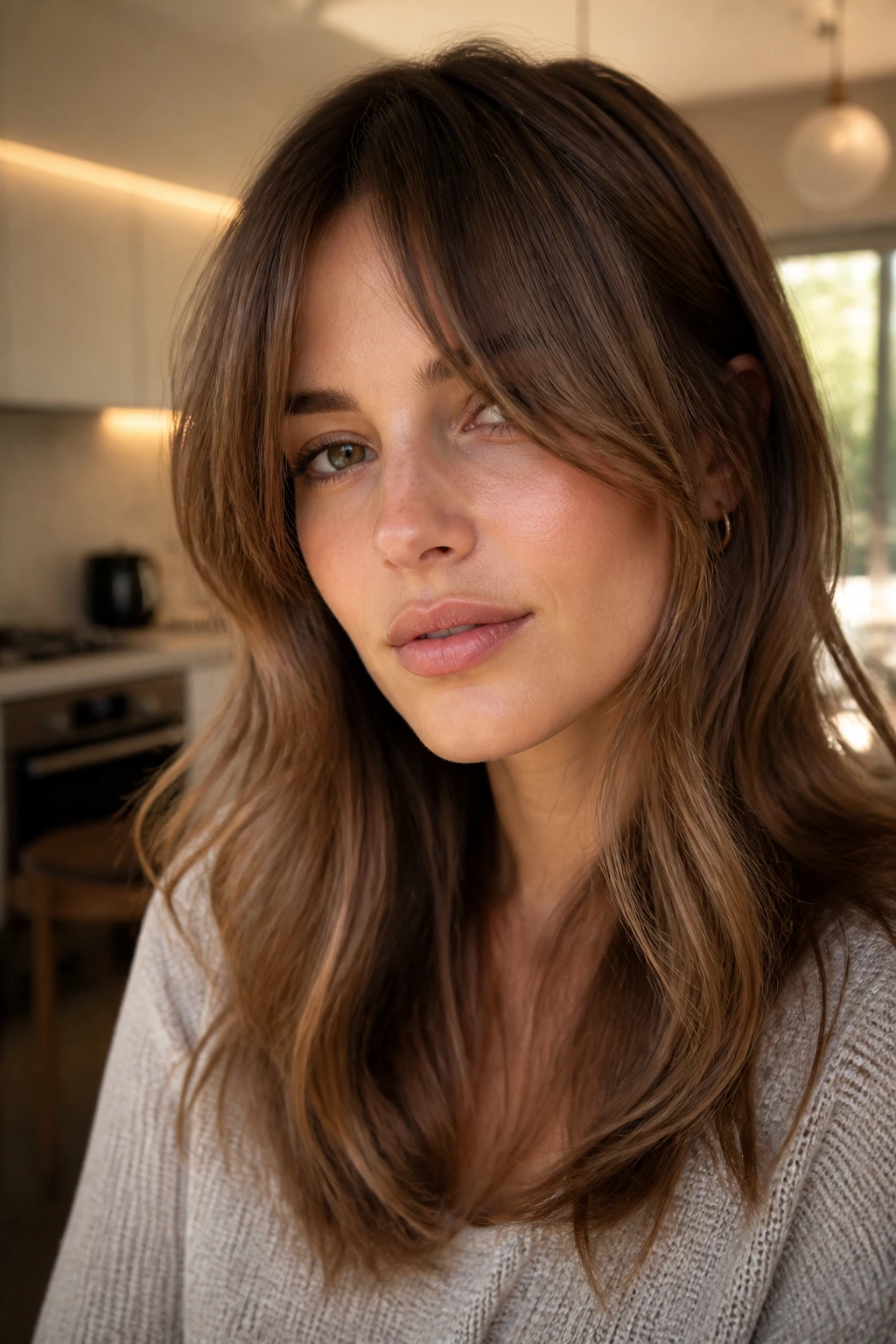
Blunt bangs sound the opposite of soft face framing, but the middle part changes the story. If the fringe is cut with a stronger line and then softened through the ends, the center split breaks up the heaviness enough to keep the look wearable.
This works best when the bluntness is there for density, not edge. The line helps hair that’s very fine or very straight show up in the front. The texture keeps it from looking severe. It’s a balance, and yes, that balance can go wrong if the stylist leaves too much weight at the center.
Watch for
- A blunt feel at the shortest point.
- Soft, feathered side lengths.
- A part that opens cleanly without needing constant re-combing.
I like this version for someone who wants the face to be framed more strongly, but still wants movement around the eyes and brow. It’s a little bolder than wispy bangs, but not as hard as a full blunt fringe.
18. Side-Soft Center Part Bangs
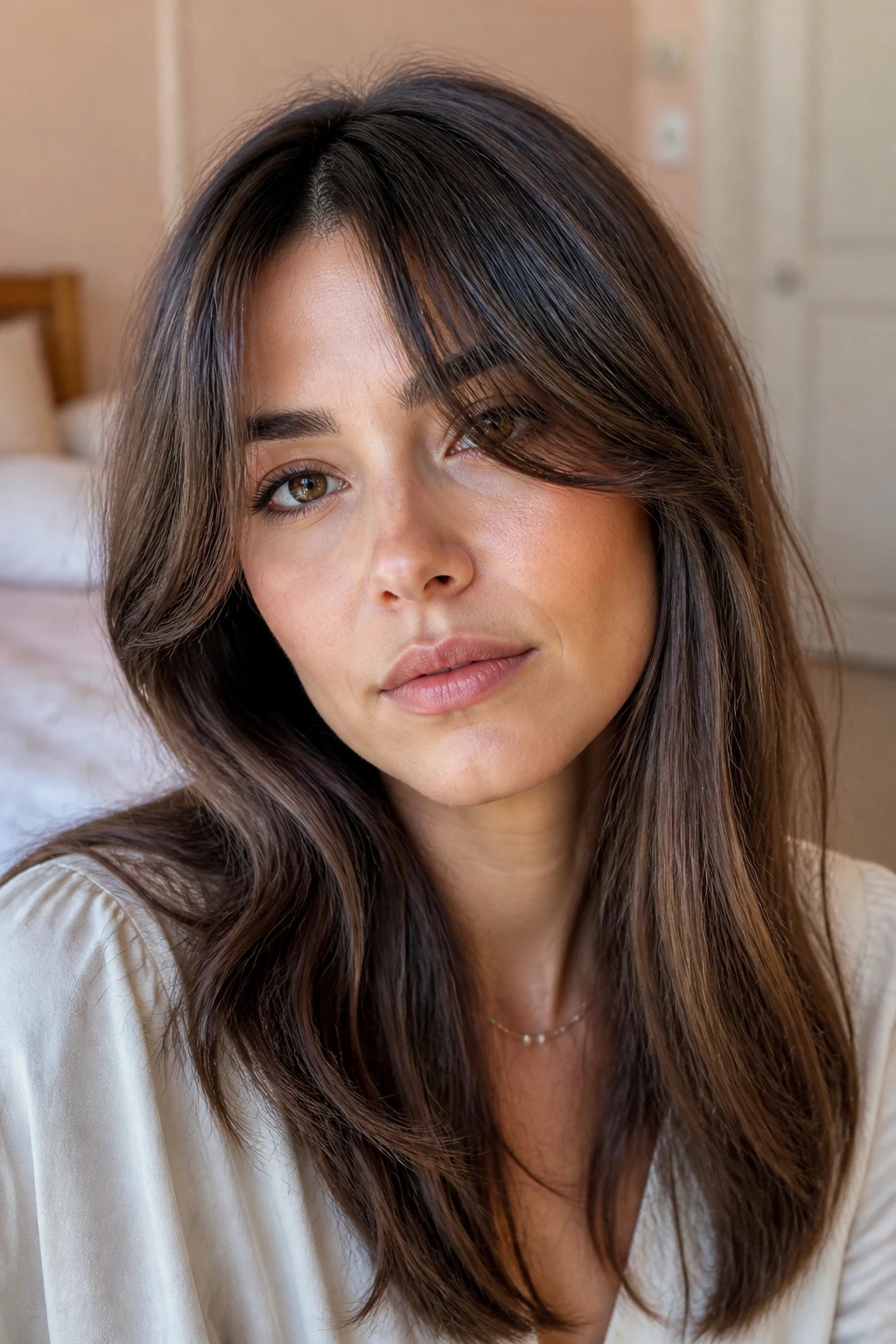
The part is in the middle, but the fall isn’t perfectly even. One side may sit a touch fuller, or one side may sweep a little more toward the cheek. That tiny asymmetry makes the style feel softer and less formal.
This matters because not every face wants mirror-image framing. A small imbalance can be more flattering than symmetry, especially if one brow sits higher, one side of the face is slightly narrower, or your hair naturally prefers one direction. Fighting that usually makes the cut look stiffer.
Why it’s useful
- It works with your natural growth pattern.
- It can make the front feel lighter.
- It’s easier to style when your hair part never sits perfectly centered anyway.
This is the bang version for people who like the idea of a center part but do not want it to look engineered. And honestly, that’s most people once they’ve lived with bangs for a while.
19. Layered Blowout Bangs With Root Lift
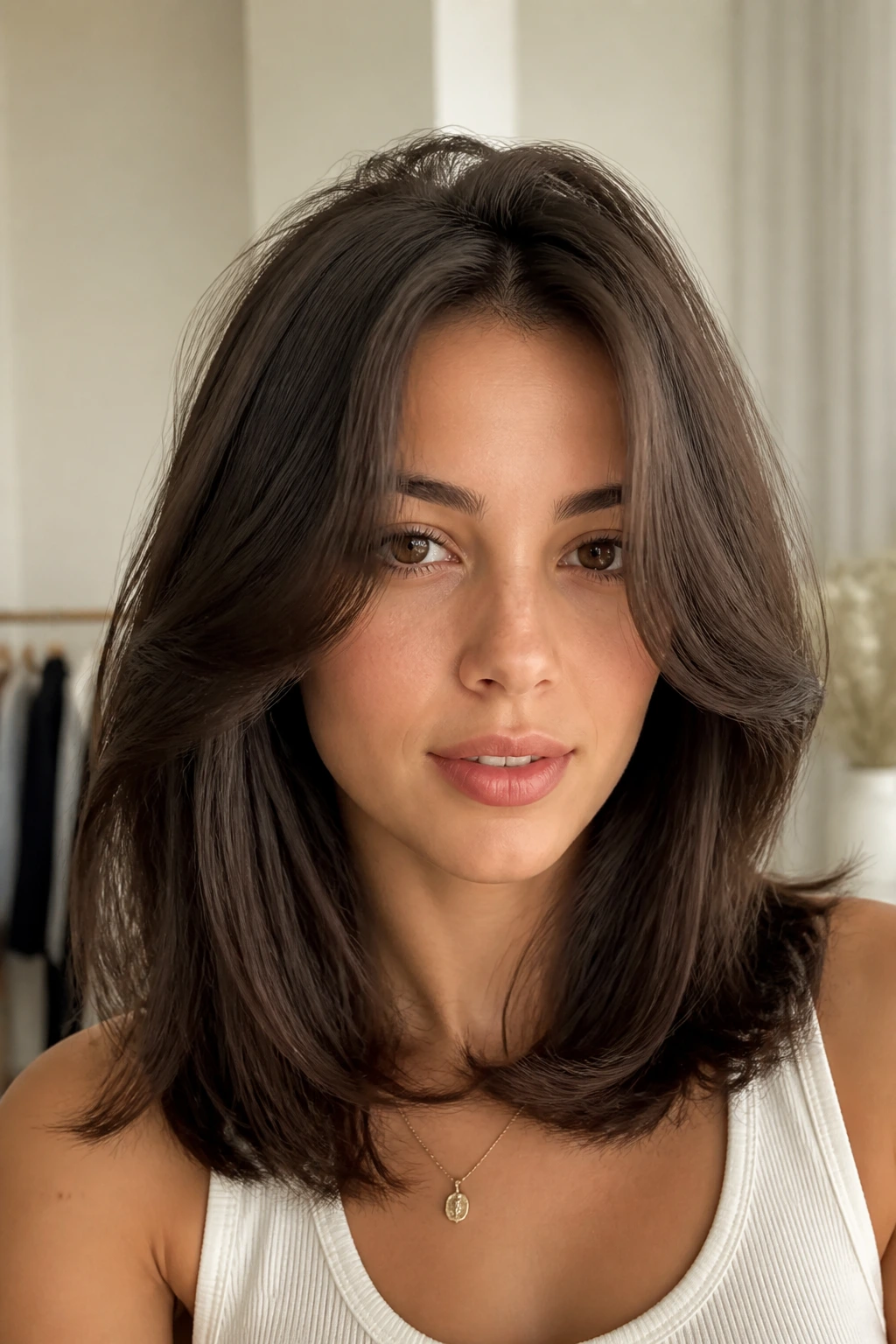
This is the glossy one. The front is cut to support a blowout, with enough layer to keep the bangs from sitting heavy and enough length to curve away from the face. When styled with root lift, the effect is full around the eyes and open at the cheeks.
The key is lift at the root, not volume everywhere. If you puff the whole front section, the bangs can balloon. If you keep the lift at the first inch near the scalp and let the ends bend softly, the face frame stays smooth.
What helps most
- A round brush with a ceramic barrel.
- Blow-drying the roots first, then the lengths.
- Cooling the front while clipped away from the face for a few minutes.
This is the version that looks best when you want your bangs to look finished, not accidental. It does ask for more styling time. That’s the trade.
20. Minimalist Center Fringe

Some people want the smallest possible bang effect. Not a curtain. Not a shag. Just enough front shape to make the center part feel intentional and soften the upper face. That’s what a minimalist center fringe does.
The cut is short enough to matter and long enough to stay polite. It usually lands around the brow or just below, then breaks into very light side pieces. The face frame is there, but it doesn’t dominate the haircut. That’s useful if you wear statement earrings, glasses, or strong lip color and don’t want the front of the hair competing with them.
Good for
- People who want a subtle change.
- Glasses wearers who need the front to stay open.
- Hair that tends to separate and needs a lighter section at the front.
It’s a restrained look. No drama. No fuss. And that, for the right person, is the whole appeal.
How a Center Part Softens the Whole Cut
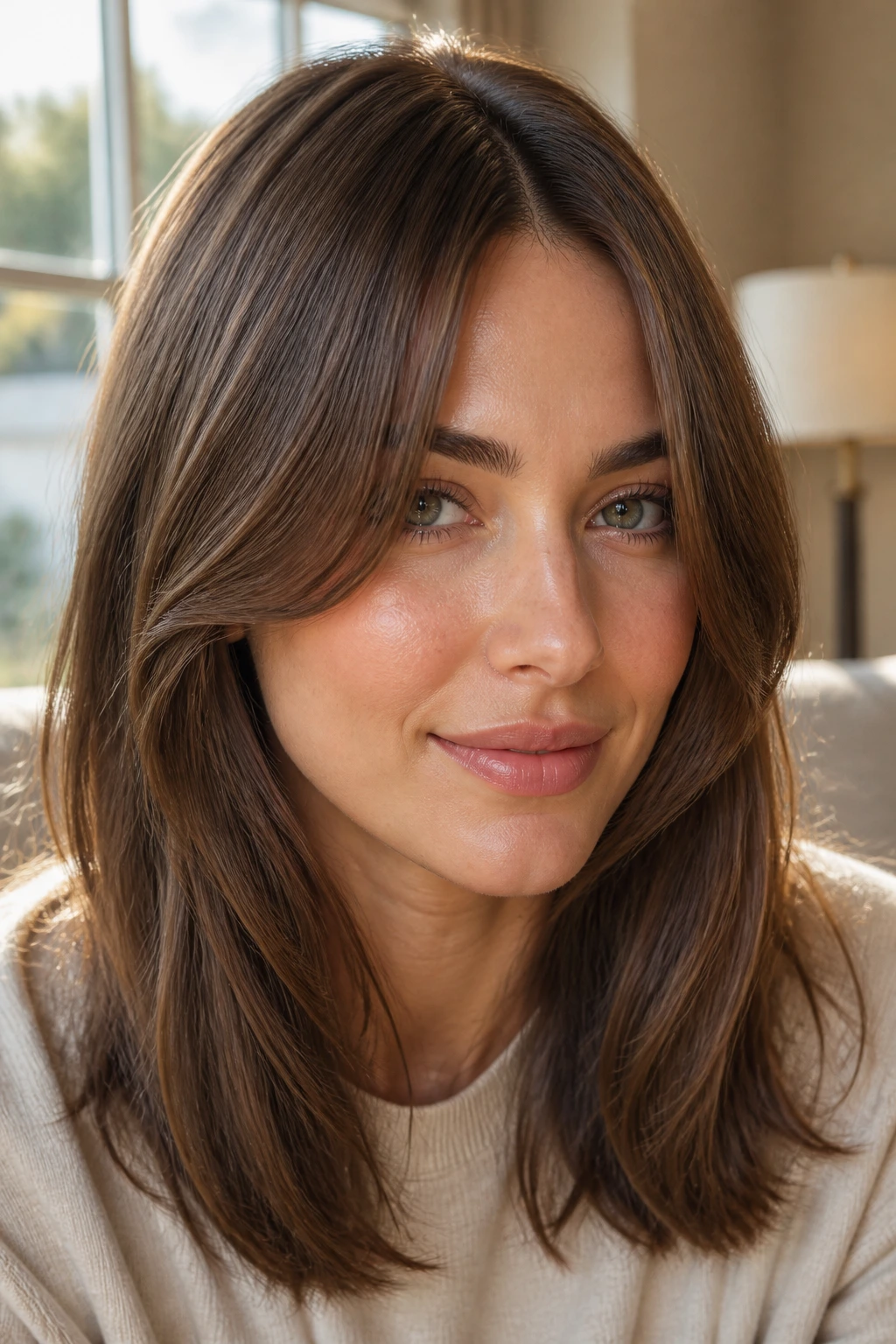
A soft face frame is built from balance, not from one dramatic snip. The middle split opens the front, the side pieces carry the shape, and the length around the cheeks keeps the cut from looking harsh. That’s why the best middle part bangs often look most flattering when they’re not trying too hard.
The shape also gives you room to move. You can blow it out, air-dry it, pin it back, or tuck one side and leave the other out. If the cut is right, none of those choices breaks the line. That flexibility is one reason this style has stayed useful for so long.
What to Ask Your Stylist for at the Salon

Bring photos, but bring language too. Photos show the general mood. Words give the useful details. Say where you want the shortest point to land — bridge of nose, brow, or just under the brow — and where you want the longest side pieces to end. That usually matters more than the word “curtain.”
A few things worth saying out loud:
- “I want a soft center part, not a full blunt fringe.”
- “Keep enough length in the sides to reach my cheekbones.”
- “I need this to grow out cleanly.”
- “My hair parts here naturally / fights me here.”
If you have a strong cowlick, say that too. A stylist can cut around a cowlick. They cannot pretend it is not there and hope for the best.
Tools That Make Styling Bangs Easier
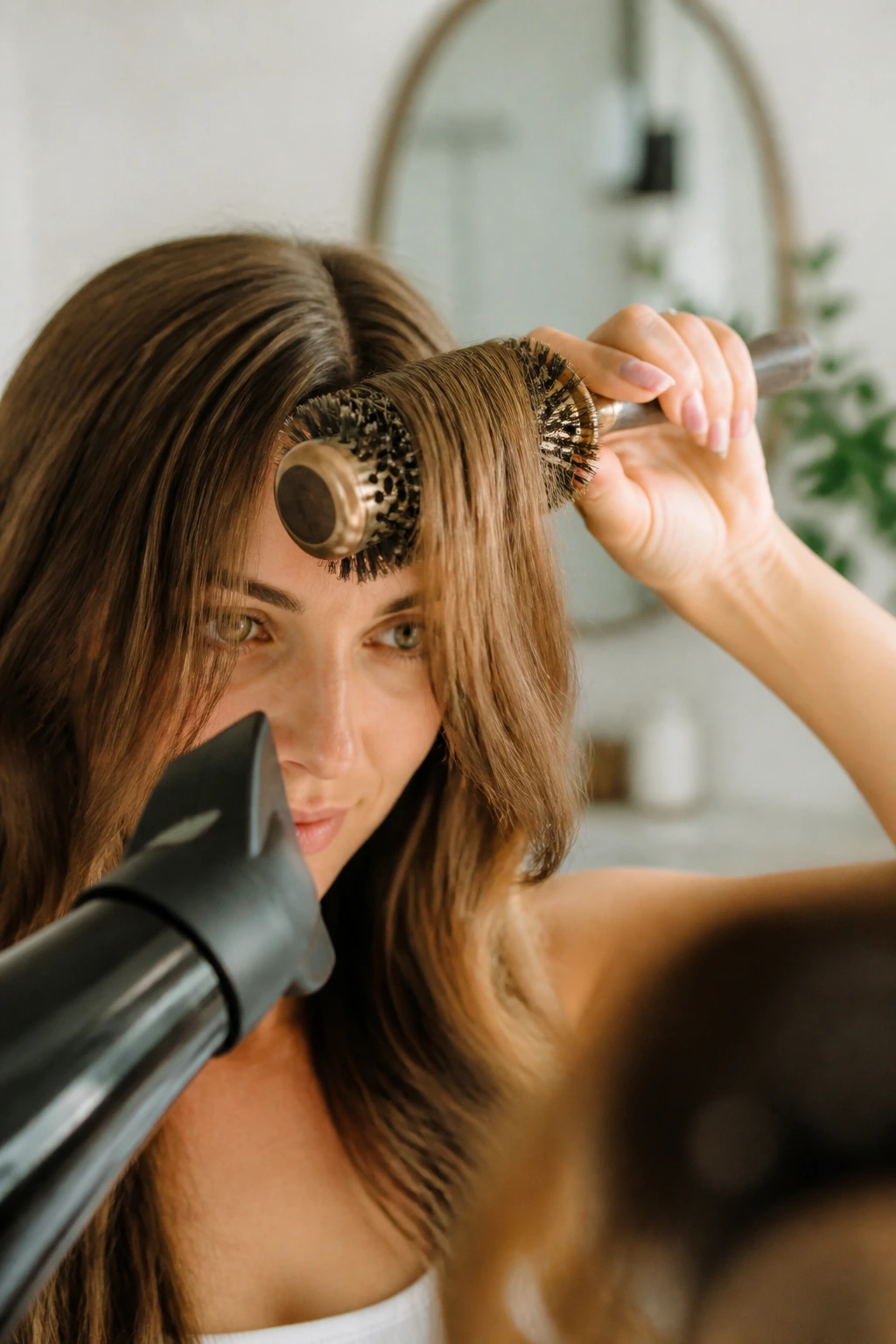
You do not need a huge drawer full of products. You need a few things that actually help the front of the haircut behave.
- Small round brush, 1 to 1.5 inches: Best for shaping the center and curving the sides away from the face.
- Blow dryer with a nozzle attachment: The nozzle gives you direction, which matters more than heat.
- Fine-tooth or rattail comb: Good for placing the part cleanly and separating the fringe before drying.
- Heat protectant spray: A mist, not a heavy cream, keeps the front from getting sticky.
- Velcro rollers or clips: Useful when you want the bangs to cool with lift.
- Texturizing spray or dry shampoo: Helps fine hair hold the front without making it greasy.
- Light-hold hairspray: Enough to keep the shape, not enough to freeze it.
A flat iron can help, but only if you use it sparingly. One soft bend is enough. A straight, hard press usually makes middle part bangs look thin and sleepy.
How to Style Middle Part Bangs Day to Day

The fastest path is usually the cleanest. Start with damp hair at the front, place the part, and blow-dry the roots side to side so the bang section does not set flat in the middle. Then use the brush only on the last inch or two to guide the curve.
Air-drying can work too, but you need to control the split while the hair is still wet. If you let the front dry randomly, it will choose its own direction and then fight you all day. A tiny clip on each side for the first few minutes helps.
On second-day hair, dry shampoo at the roots and a quick touch with a round brush are usually enough. Don’t soak the bangs in product. The front is small, and it shows everything.
Additional Tips and Shape Boosters
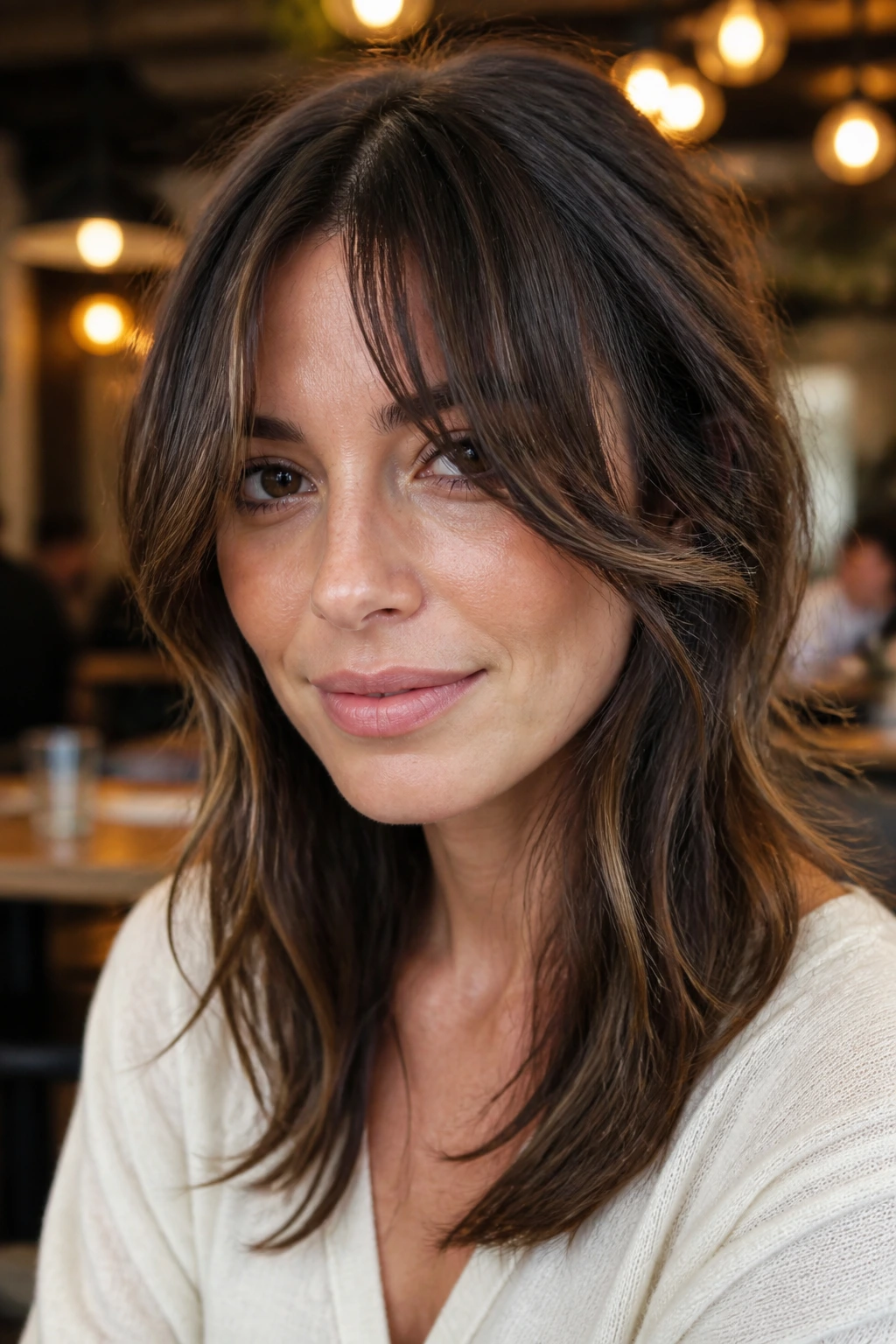
Root Lift: If the center part lies too flat, blow-dry the first inch of hair upward and slightly forward, then swing it down and away from the face at the end. That tiny bend keeps the fringe from sticking to the forehead.
Texture Control: Thick or coarse hair usually looks better with internal texture through the bang section. Fine hair usually needs less thinning and more directional styling. The wrong kind of thinning is where people get in trouble.
Cheekbone Focus: Ask for the longest front pieces to sit near the top of the cheekbone, not down at the jaw if you want a lifted frame. That placement changes the whole read of the cut.
Fast Fix: If the bangs separate awkwardly, mist them lightly, re-center the part with a rattail comb, and clip the sides away from the face for three to five minutes while they cool. It’s a small reset, but it works.
Common Mistakes That Flatten the Front

The first mistake is cutting the center too short. Short middle pieces can look cute for about ten minutes, then they spring up, split strangely, and expose more forehead than you wanted. The fix is simple: leave a little more length than you think you need.
The second mistake is making the bang section too wide. If the fringe starts too far back toward the temples, it stops looking like a face frame and starts looking like a helmet. Keep the dense part focused at the front and let the side layers do the rest.
The third mistake is overloading the roots with product. Heavy cream, too much oil, or too much serum will collapse the lift. Use the lightest product that gets the job done.
The fourth mistake is drying the bangs in the wrong direction. If you want them to curve away from the face, don’t blast them straight down and expect a soft frame at the end. That rarely works. Direct the heat where you want the hair to go.
The fifth mistake is ignoring the natural part line. If your hair insists on opening slightly left or right of center, force can make the style look tense. A center part can still be slightly adjusted. It does not have to be ruler-straight.
Variations Worth Trying

The Soft Shag Switch: Keep the center split, but add more choppy layering through the front. This version works when you want movement and don’t mind a little messiness around the face. It’s especially good on wavy hair that already likes texture.
The Polished Blowout Version: Keep the same bang shape, but style it with a round brush and a soft bend away from the cheeks. This is the cleaner, dressier version. It looks sharp with a crisp middle part and a smoother finish through the sides.
The Air-Dried Frame: Ask for longer face pieces and lighter internal texture, then let the hair dry naturally with the part in place. This fits people who don’t want to spend ten minutes every morning reshaping the front.
The Thick-Hair Defuser: For coarse or dense hair, keep the bang section fuller and use a gentle root lift with the dryer nozzle. The point here is control, not aggressive thinning. A bit of weight keeps the fringe from puffing out.
The Barely-There Fringe: If you want a subtle change, shorten only the center slightly and keep the outer pieces long. This is the lowest-drama way to wear middle part bangs with a soft face frame.
Make the Shape Last Between Washes
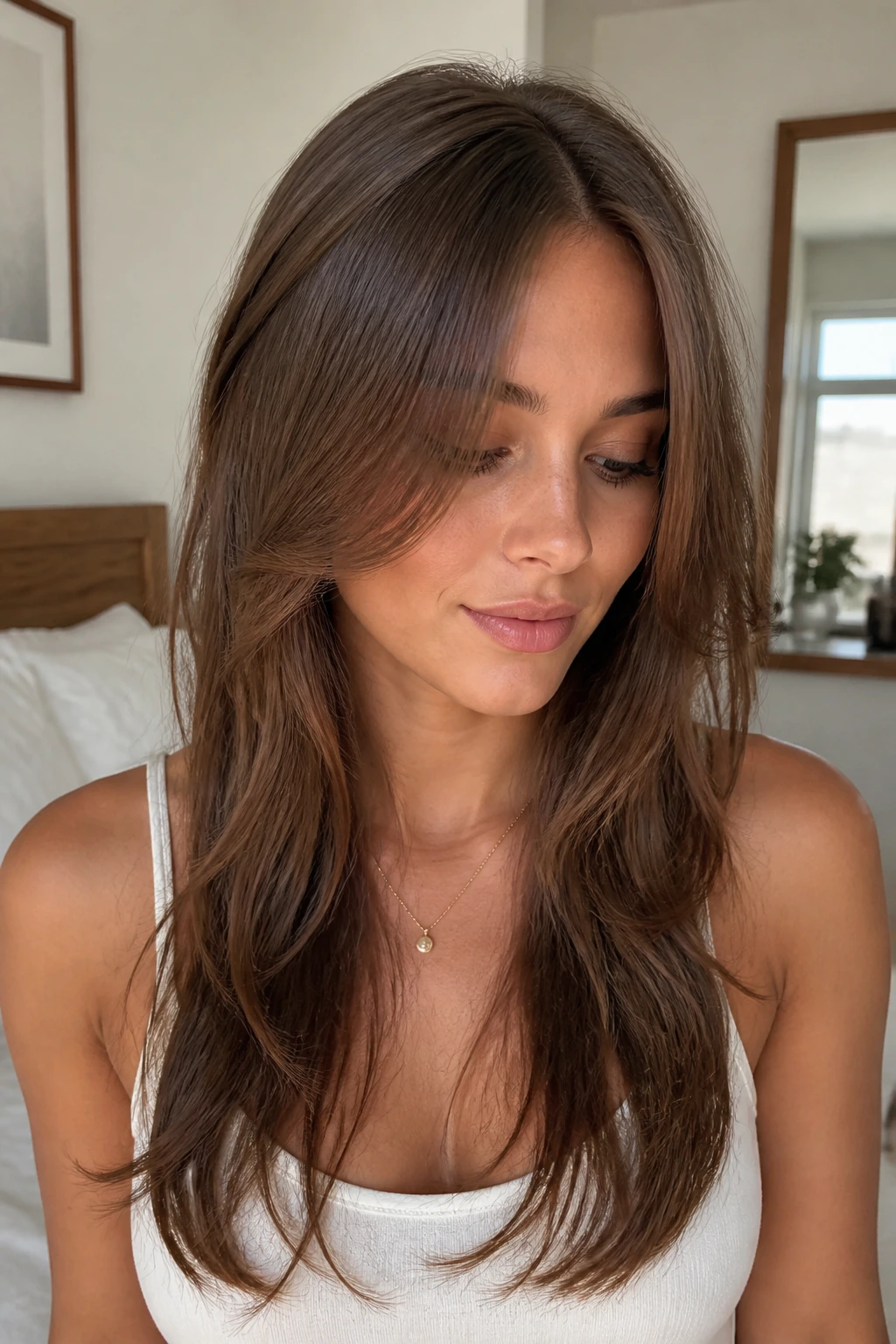
Bangs get oily first. That’s life. The fastest way to keep them looking fresh is to separate the front from the rest of the hair while you sleep if your hair is naturally slippery, or at least make sure the roots are dry before bed. Damp bangs flatten fast.
Dry shampoo works best at the roots, not the ends. Spray a little, wait a minute, then brush it through with a clean spoolie or a tiny brush. If you use too much, the front turns chalky and stiff. Less is better.
A quick trim every 3 to 6 weeks keeps the shape honest. Longer side pieces can last a little longer, but the shortest center usually tells on you first.
Frequently Asked Questions

Can middle part bangs work on a round face?
Yes, but the shape should be longer on the sides than in the center. That keeps the eye moving vertically instead of sideways, which helps soften the face without making it look wider.
Do they need a blowout every day?
No, but they do need some direction. A quick root reset with a round brush, roller, or clip usually does the job. Air-dried bangs can work if the cut was made for that texture.
What if my hair naturally parts off-center?
You can still wear this style. A slight adjustment is fine. What matters is that the front has a clear opening and the cut follows the way your hair wants to fall.
Are these bangs good for fine hair?
They can be, if the front isn’t over-thinned. Fine hair usually needs a lighter, cleaner shape with enough length to show up. Too much texturizing makes the fringe disappear.
How often should I trim them?
Most people need a touch-up every 3 to 6 weeks, depending on how fast the fringe grows and how short the center starts. The shorter the bang, the sooner it loses shape.
Can I wear them with glasses?
Yes. A slightly longer, lighter center split usually works best. Keep the bangs off the lash line and make sure the sides don’t sit right on top of the frames.
What’s the easiest version to grow out?
Long face-framing bangs or a barely-there fringe. Both blend into the rest of the haircut instead of sitting as a separate line, which makes the awkward stage much easier.
The Soft Frame That Actually Grows With You
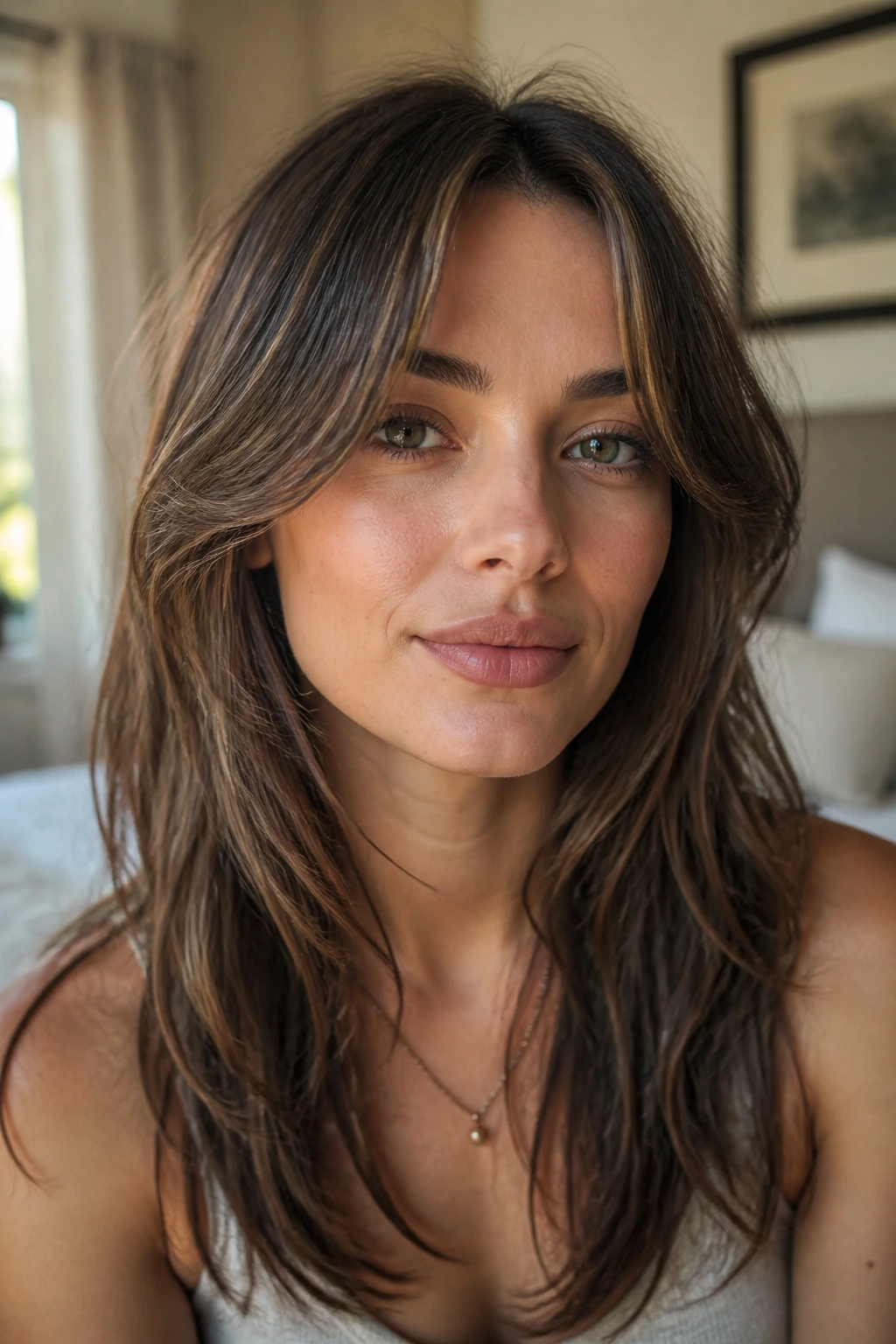
The nicest thing about middle part bangs is that they don’t lock you into one look. A good soft face frame can be polished, wavy, airy, piecey, or barely there, and the part still holds the whole thing together. That’s a rare kind of flexibility in hair.
If you want a fringe that softens the face without boxing it in, this is the lane to stay in. Pick the length that fits your texture, ask for the right amount of weight at the front, and let the side pieces do more of the work than the center. The best versions look easy. They are not lazy. Just well cut.
