



Round faces do not need to be “fixed” with bangs. They need a fringe that bends the eye upward, breaks up width at the cheeks, and leaves enough air in the center so the face still looks like a face, not a curtain dropped over it. That’s the part most people miss. The wrong bang is usually too blunt, too heavy, or too short right where the face is widest.
Soft bangs for round faces work because they draw lines that move. A little diagonal at the temple. A longer corner that lands near the cheekbone. A center section that stays light instead of sitting like a shelf. Those details matter more than the trendy name of the cut, and they matter even more once the fringe grows out two weeks later and stops behaving exactly the way it did in the salon.
I’ve always liked bangs that look as if they were cut to be worn, not photographed. The best ones bend with your hair texture instead of fighting it. They can be polished, shaggy, piecey, or barely there, but they all share the same basic idea: soften the forehead, keep the face open, and add shape without pinning everything into one hard line.
Why These Fringe Ideas Earn Their Keep
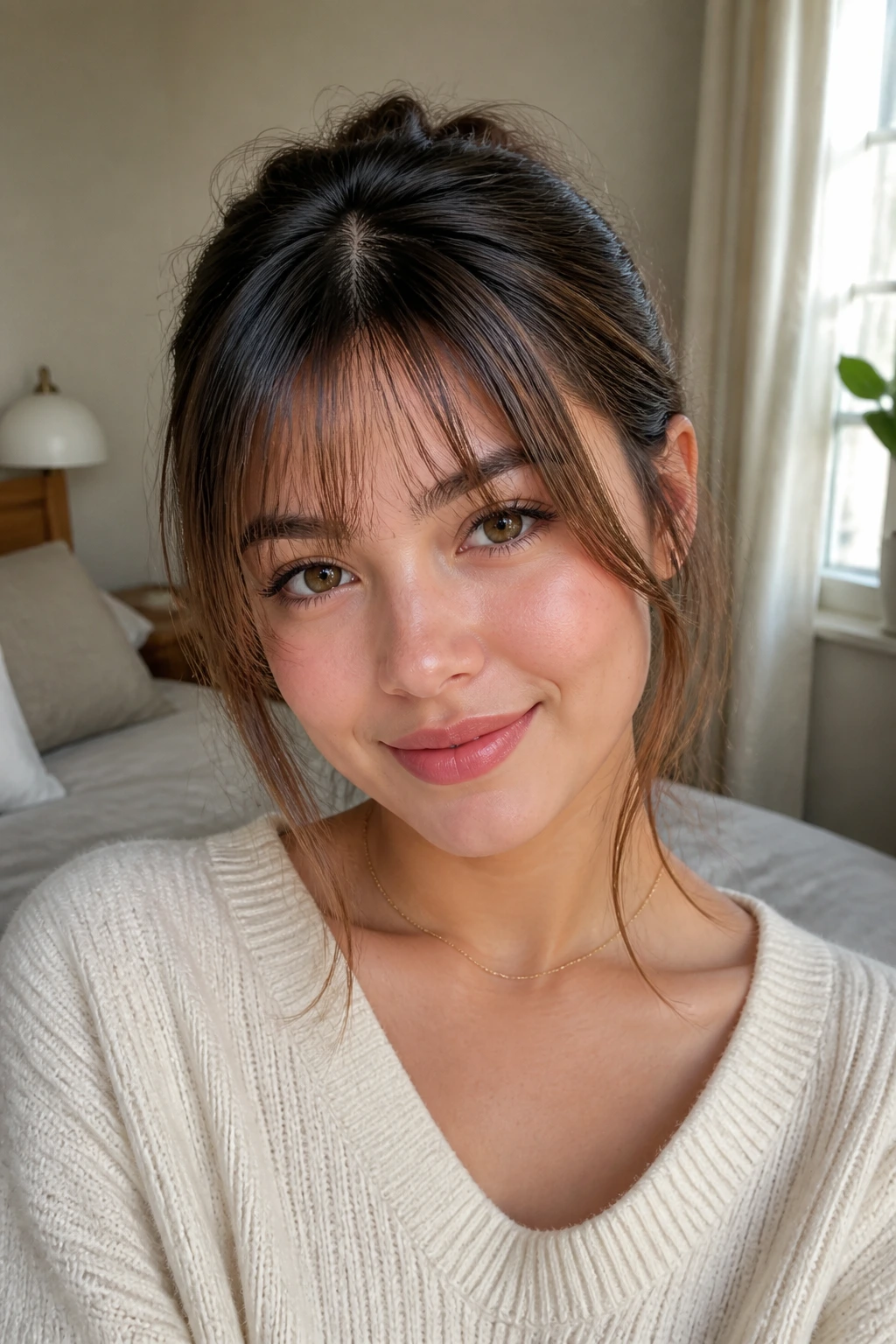
-
They create length where round faces need it most: Longer corners and off-center movement pull the eye vertically instead of letting it stop at the cheeks.
-
They leave the center light: A soft middle section keeps the fringe from looking boxy, which is the fastest way to make a round face feel wider.
-
They work with different styling habits: Some of these need a quick round-brush blow-dry; others look better when they’re air-dried and separated with fingers.
-
They grow out without a fight: Soft bangs usually turn into face-framing layers instead of becoming an awkward helmet line.
-
They fit different hair densities: Fine hair, thick hair, curls, and waves all need different amounts of weight removed, and the right fringe can handle that.
-
They let you keep your personality: You do not have to choose between “cute” and “grown-up” here. There’s a version for both, and for the people who live somewhere between the two.
1. Feathered Curtain Bangs
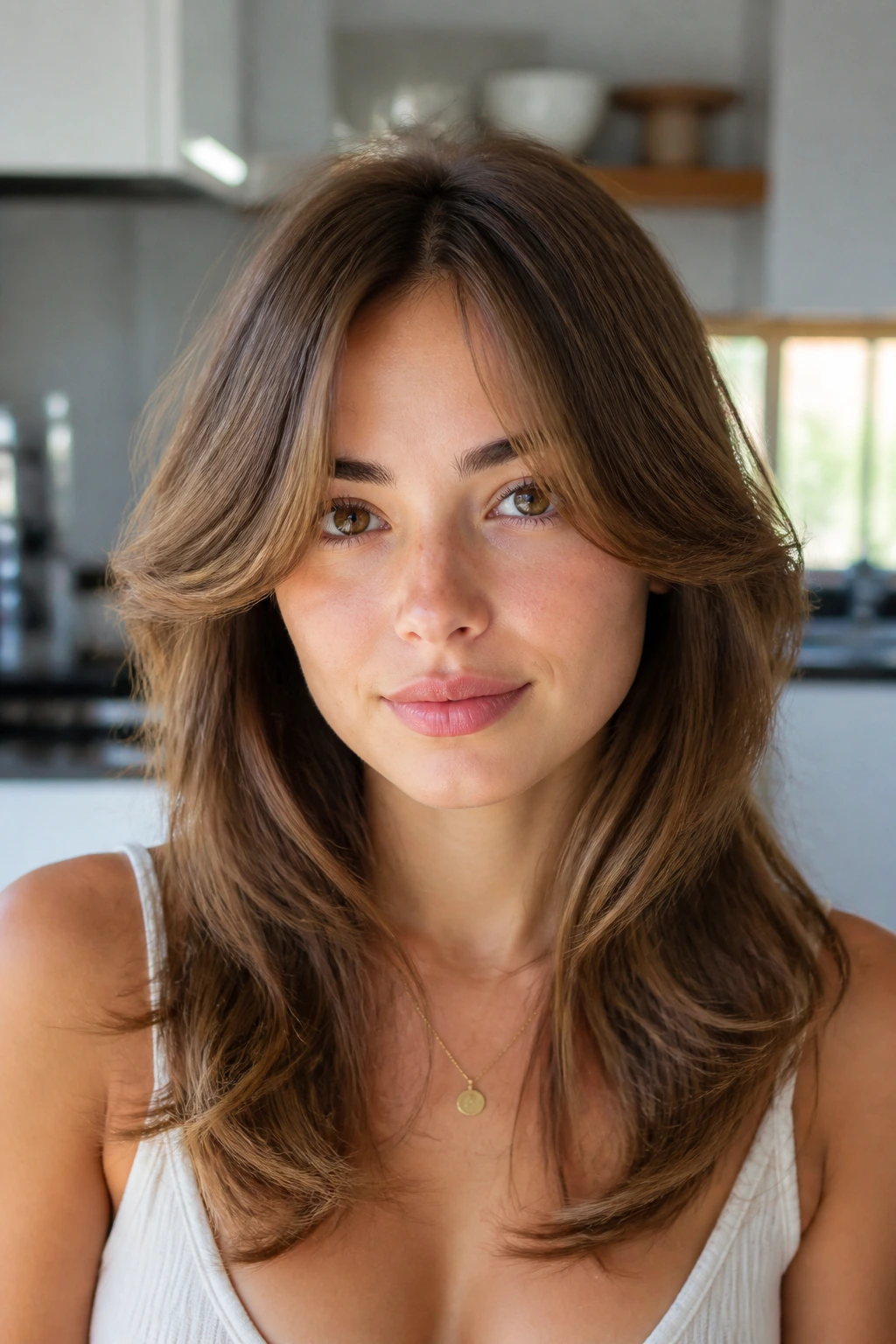
These are the dependable workhorses of soft fringe. The center sits light and airy, then the sides drift outward toward the cheekbones, which gives a round face a little extra length without making the forehead disappear. I like this cut most on medium-density hair because the feathering keeps the fringe from turning into one heavy slab after a humid day.
Why It Works
The middle part opens the face, and the longer corners create a clean diagonal. That combination matters more than people think. When the shortest point stays around the brow line and the corners skim past the cheeks, the whole front of the haircut looks longer and calmer.
- Best for: straight, wavy, and softly textured hair.
- Ask for: point-cut ends and corners that reach the cheekbone.
- Avoid: a dense center that sits too low on the lashes.
Tip: Blow-dry the fringe forward first, then split it with a round brush at the end. That little bend keeps it from flipping into a helmet shape.
2. Wispy Side-Swept Fringe
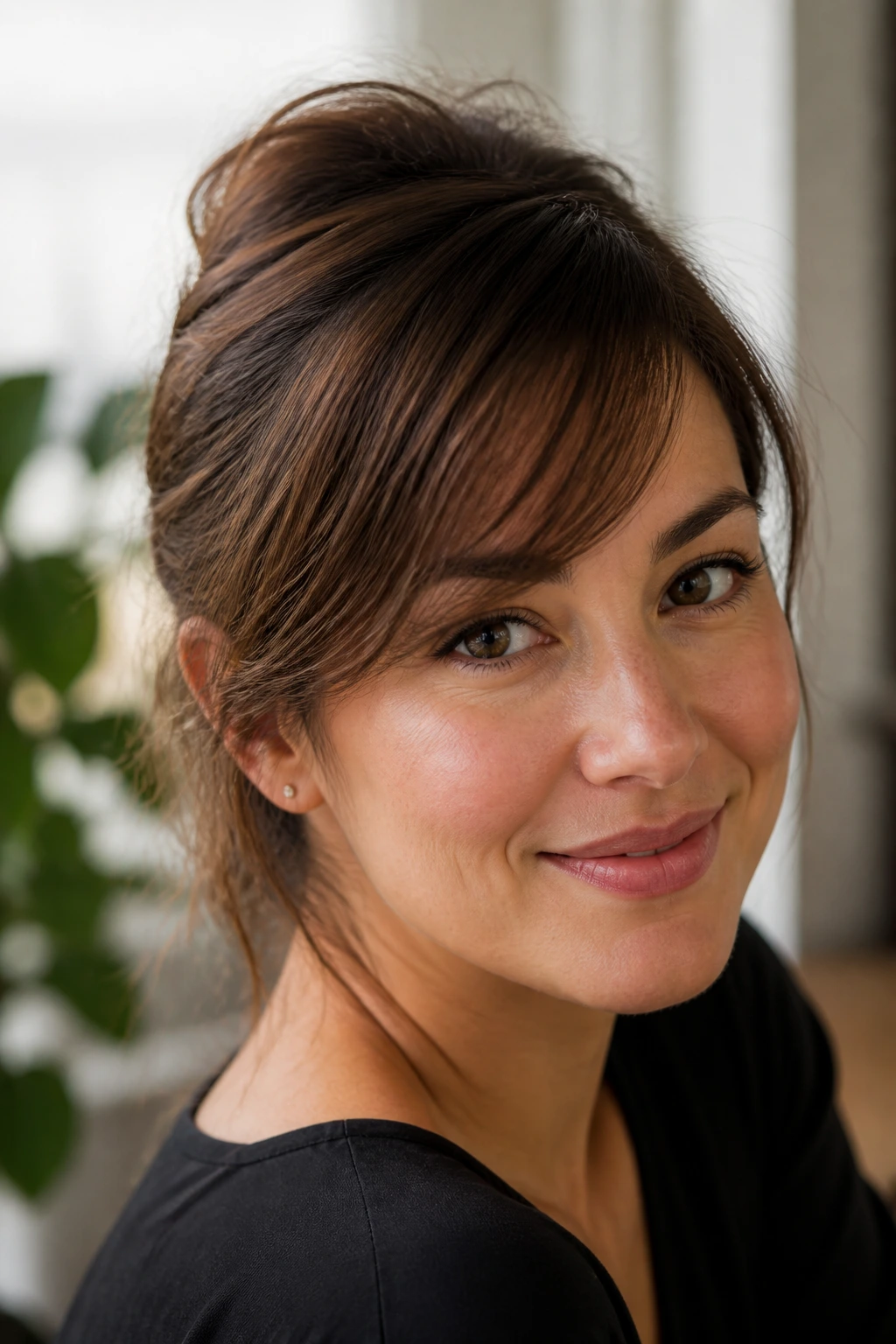
This is the safest bang style in the whole lineup. It starts with a side part, sweeps across the forehead, and leaves enough movement at the edges that the face still looks open. For a round face, that diagonal line does a lot of quiet work. It breaks the width of the cheeks without screaming for attention.
The best version isn’t stiff or lacquered. It has a little swing, a little separation, and a soft end that lands somewhere between the brow and the outer eye. If your hair grows in a strong cowlick or your part never stays in the middle for long, this is often the least annoying place to begin.
One more thing: side-swept fringe looks best when the crown has a little lift. Flat roots make the whole style droop toward the face.
3. Bottleneck Bangs with Long Corners
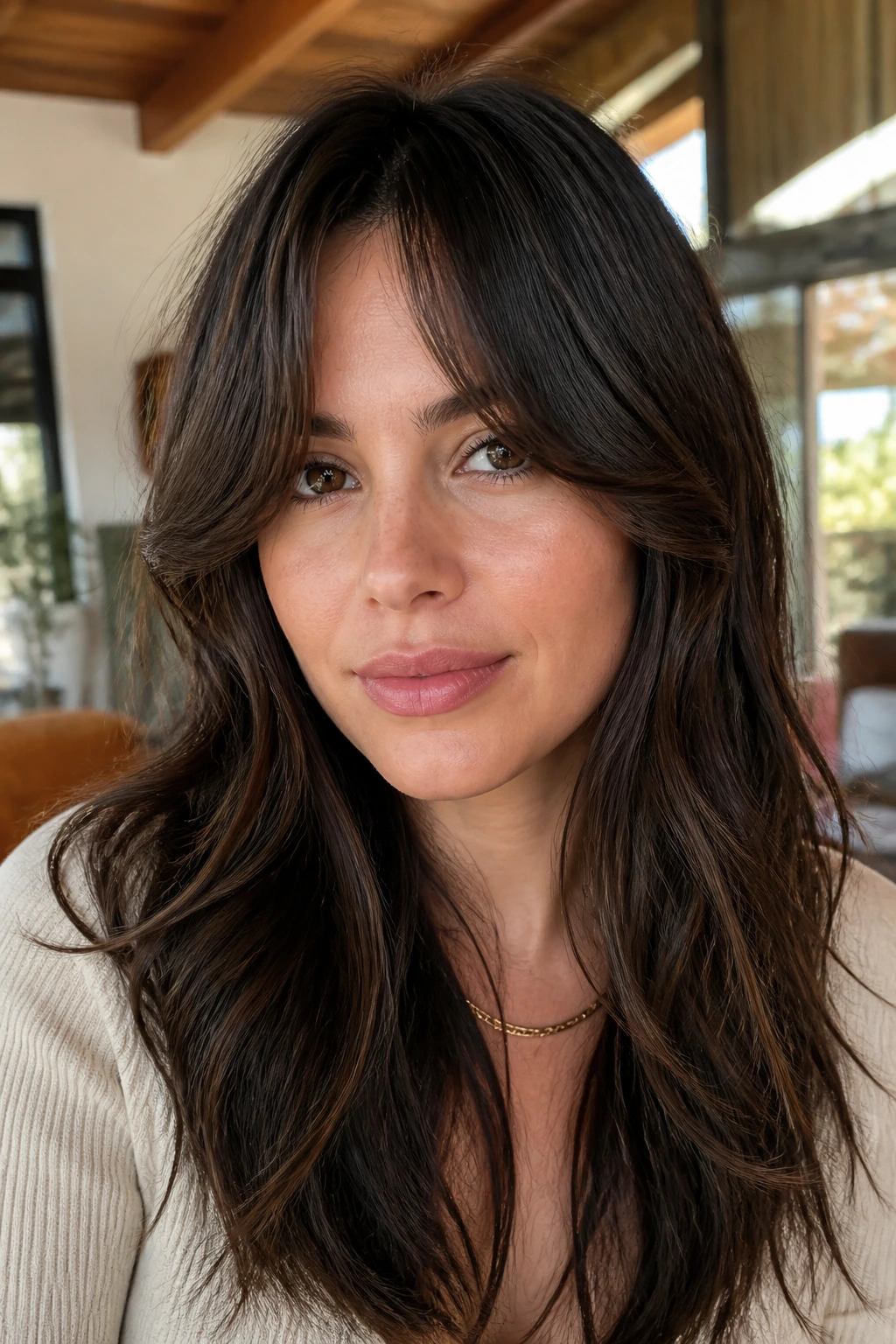
Have you ever noticed how the best bottleneck bangs start narrow and then open like a bottle neck at the sides? That shape is exactly why they flatter round faces. The center stays shorter, but not blunt, and the corners stretch out toward the cheekbones, which gives the face a longer frame.
How to Ask for It
Tell your stylist you want a soft center that sits near the brows, plus longer sides that merge into face-framing layers. That “merge” part matters. If the sides are cut too abruptly, the whole thing can look chopped instead of fluid.
What to Watch For
- The center should not be thick enough to block the forehead.
- The corners should be long enough to tuck behind the cheek, if needed.
- The line should feel curved, not square.
Best on: thicker hair, loose waves, and layered cuts. This is one of the few fringe styles that can look expensive without being fussy.
4. Brow-Grazing See-Through Bangs
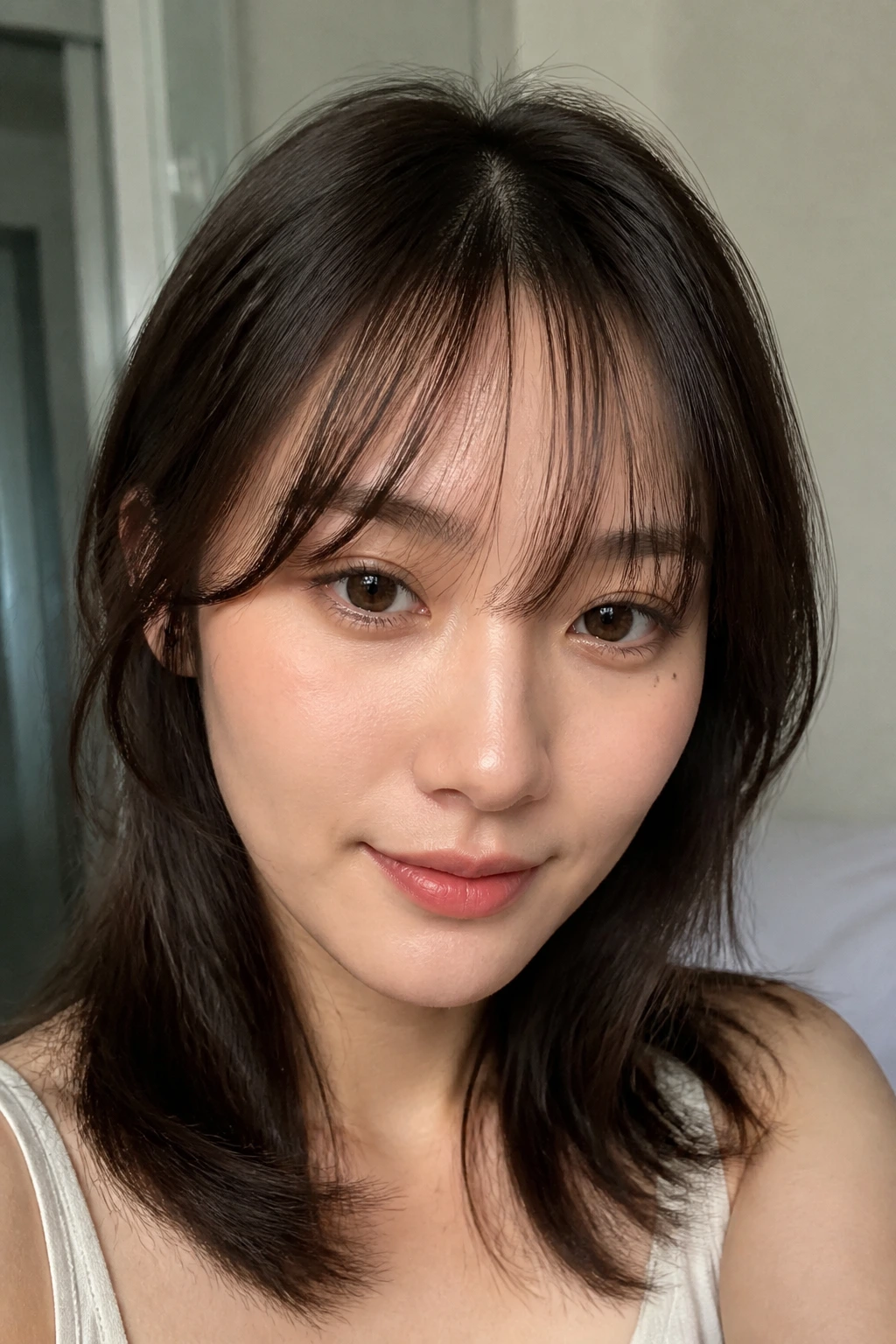
Thin, airy fringe can be a gift on a round face because it adds interest without adding bulk. The see-through version sits right around the brows, but there’s enough space between the strands that your forehead still shows through. That little bit of transparency keeps the face from looking compressed.
It’s a smart pick if you want bangs but hate the feeling of a full block across your forehead. Fine hair usually does well here, though dense hair can work too if the stylist removes weight from underneath. If your skin gets oily fast, this fringe also survives better than heavier bangs because it dries and separates more easily.
I wouldn’t ask for this if you want a dramatic change. I would ask for it if you want the face softening effect without the full commitment of a dense fringe.
5. Piecey Shag Fringe

This one has attitude, but it’s a controlled kind of attitude. The strands are broken up, a little irregular, and tied to the rest of a shag cut instead of sitting like a separate bang zone. On a round face, that looseness helps because it keeps the eye moving instead of stopping at one clean edge.
The piecey look works because it never creates a straight horizontal block. You get texture, a bit of forehead showing through, and ends that move around the brows and temples. I especially like it on hair that already has some bend, because the natural texture does half the work.
If your hair is pin-straight and very fine, ask for less layering than you think. Too much can leave the fringe looking stringy instead of piecey. There’s a thin line there.
6. Arched Soft Bangs

Arched bangs are for people who want shape, not drama. The center is a touch shorter, then the line curves gently longer toward the temples. That curve mirrors the brow and keeps the whole front of the haircut from looking boxy on a round face.
The nice thing about this shape is that it does not depend on a perfect blowout. Even when it falls a little messy, the arch still reads as intentional because the edges are softer than a blunt brow-skimmer. If you wear glasses, this can be a very good option, since the curve helps the fringe sit above or around the frames without collapsing onto them.
I’d ask for this if you want the forehead covered just a little, not heavily. It’s one of the easiest cuts to live with when you want softness but not a full curtain.
7. Cheekbone Curtain Bangs
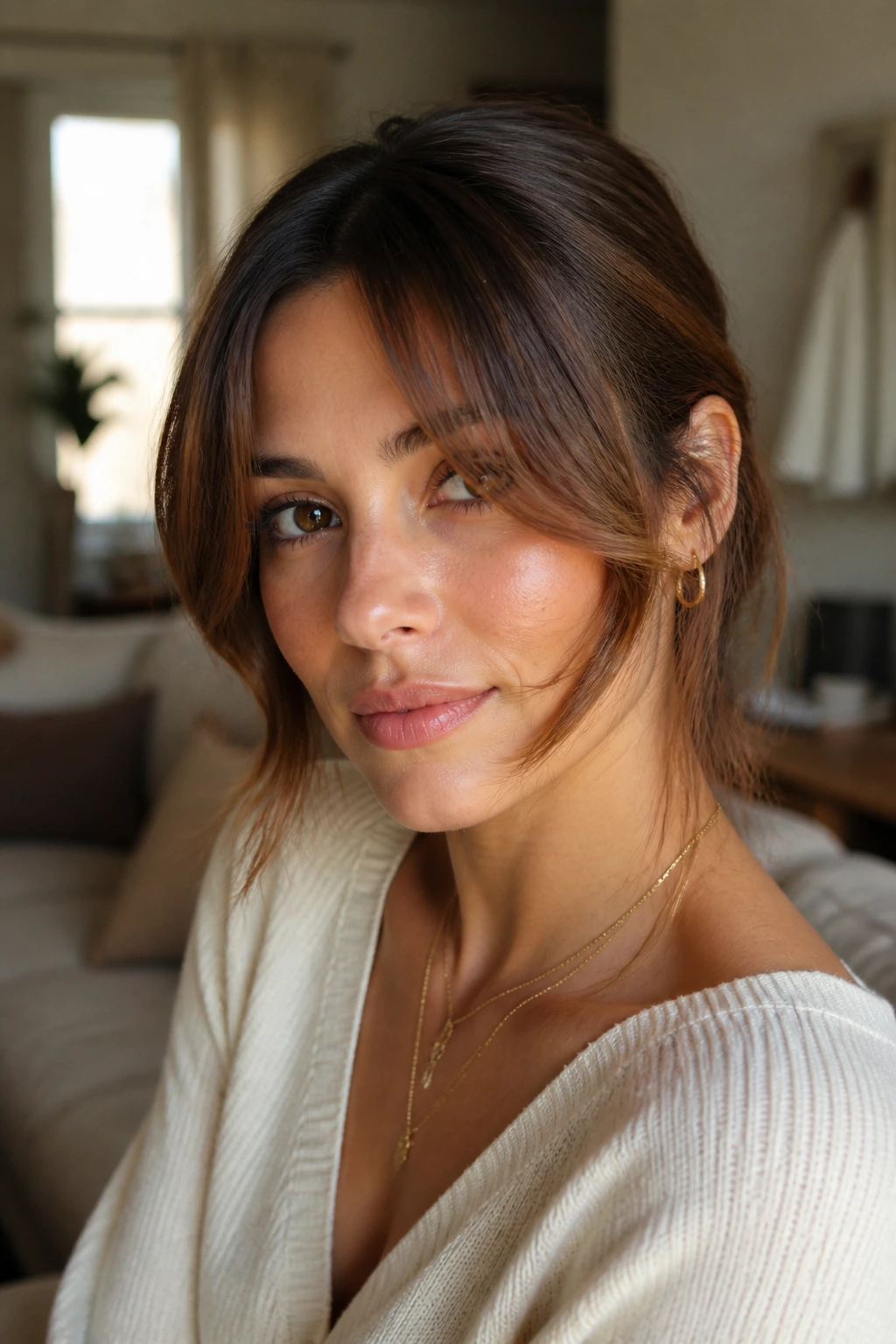
These bangs are built to land where the face needs framing most: the cheekbone. That’s why they work so well on round faces. Instead of ending at the brows and stopping, the outer pieces keep going until they skim the widest part of the face, which creates a longer line.
They’re especially good if you like your hair to look like it has shape even on low-effort days. A quick bend with a round brush is enough. You can also tuck one side behind the ear and let the other side fall forward, which gives the whole style a little asymmetry.
Best for
- Medium to thick hair
- Lob cuts and collarbone-length hair
- Faces that need length more than forehead coverage
Pro move: keep the center soft and the sides longer than you expect. The cut gets prettier as it moves away from the middle.
8. Air-Dried Curly Fringe
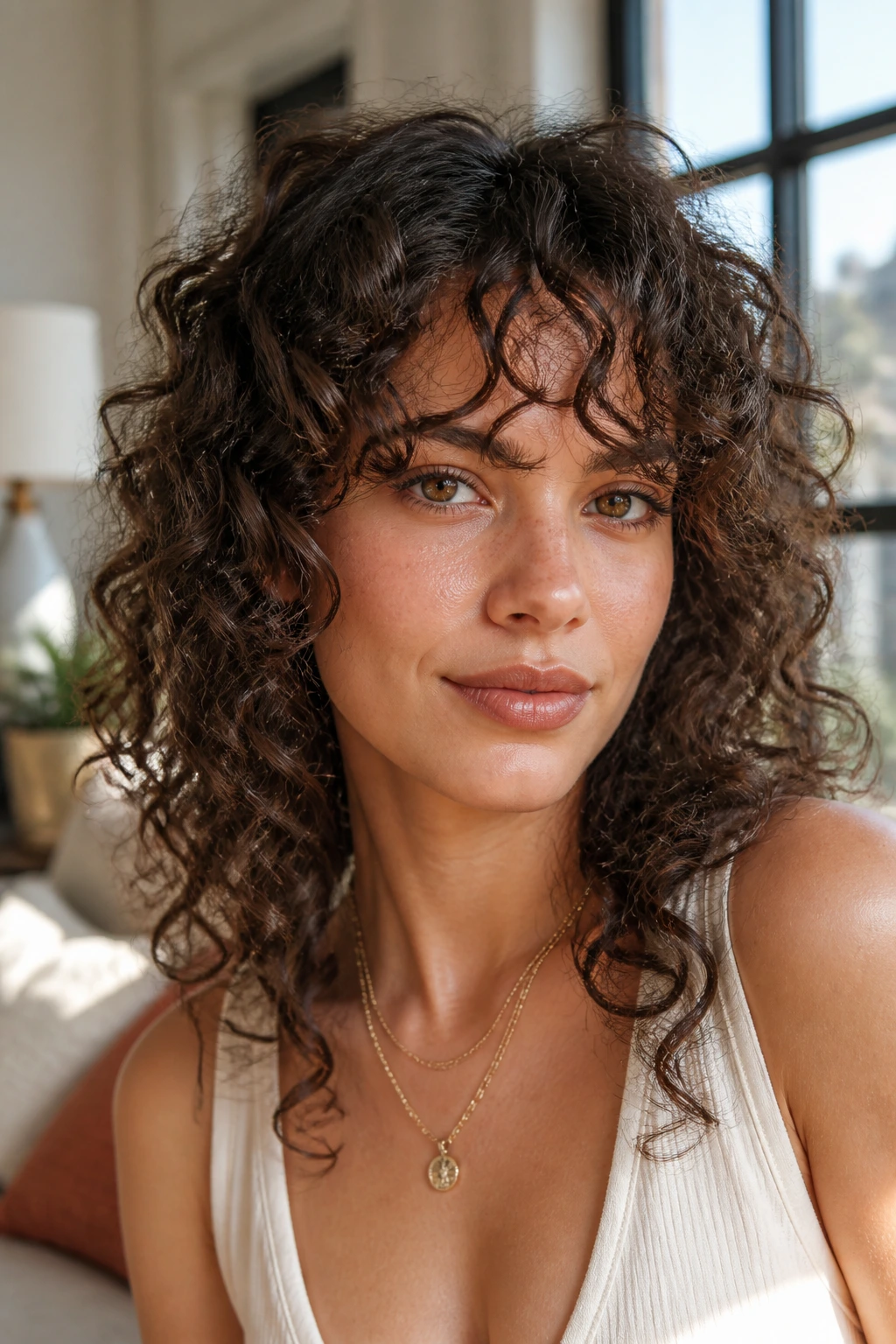
Curly hair needs bangs that respect the curl pattern, and this one does. The fringe is cut longer than a straight-hair version, because curls shrink, bounce, and sometimes spring up in ways that surprise people who do not wear curly bangs themselves. On a round face, the upside is huge: the curls create vertical texture and prevent the forehead from becoming a flat block.
The key is shaping the fringe dry, not just wet. Wet curls lie and lie and lie to you. Once they dry, they reveal their real length, so a stylist who understands shrinkage will leave more room than you think you need.
I like this fringe best when it blends into curly face-framing layers. A hard cut line across the forehead looks blunt fast. The softer the transition, the better the whole shape behaves.
9. Split Bangs with a Soft Bend
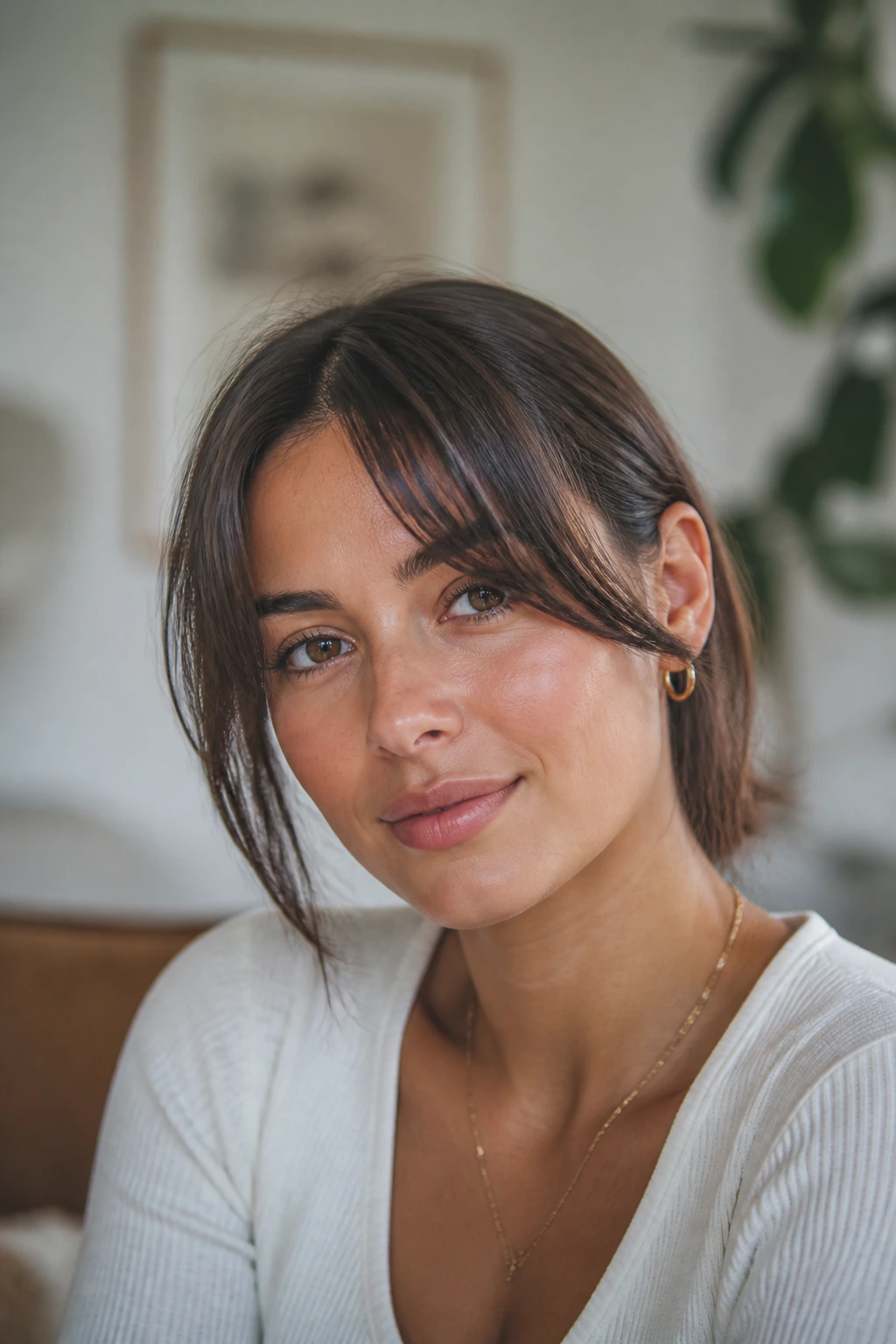
This is a middle-part fringe with enough bend that it doesn’t feel severe. The split opens the face right away, while the soft curve at each side keeps the forehead from looking exposed in a harsh way. For round faces, that opening effect is the whole point.
It works especially well if you like your bangs to disappear into the rest of your hair on some days. A split fringe can be pushed wider, pulled narrower, or tucked behind the ears when needed. That flexibility makes it a good choice for anyone who gets bored with one fixed shape.
Ask Your Stylist For
A center part, shorter inner sections, and longer front pieces that start to skim the temple. The word “soft” matters here. Without it, the split can look too sharp and a little dated.
10. Layered Side Fringe
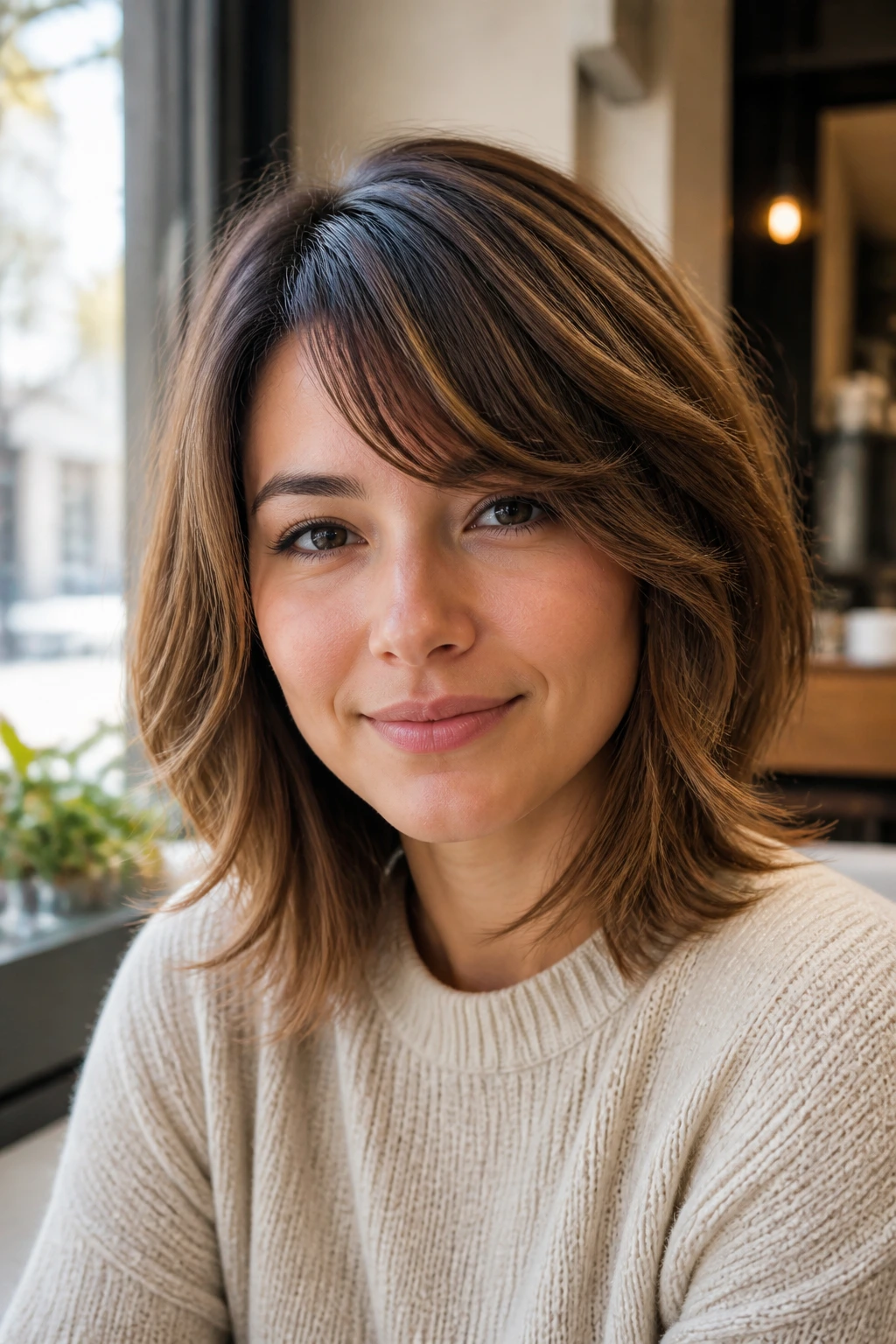
A layered side fringe has more movement than a classic side-swept bang because the pieces are cut at different lengths. That makes it a good partner for round faces, since the broken line pulls the eye downward and outward at the same time. No hard edge. No heavy block.
This style does best with a cut that already has layers around the face. Otherwise the fringe can look like it belongs to a different haircut. I prefer it on shoulder-length or shorter cuts where the side fringe can echo the shape of the rest of the hair.
If you use a flat iron, keep the bend loose. The point is to suggest motion, not create a stiff swoop.
11. Short Center, Long Sides Bottleneck
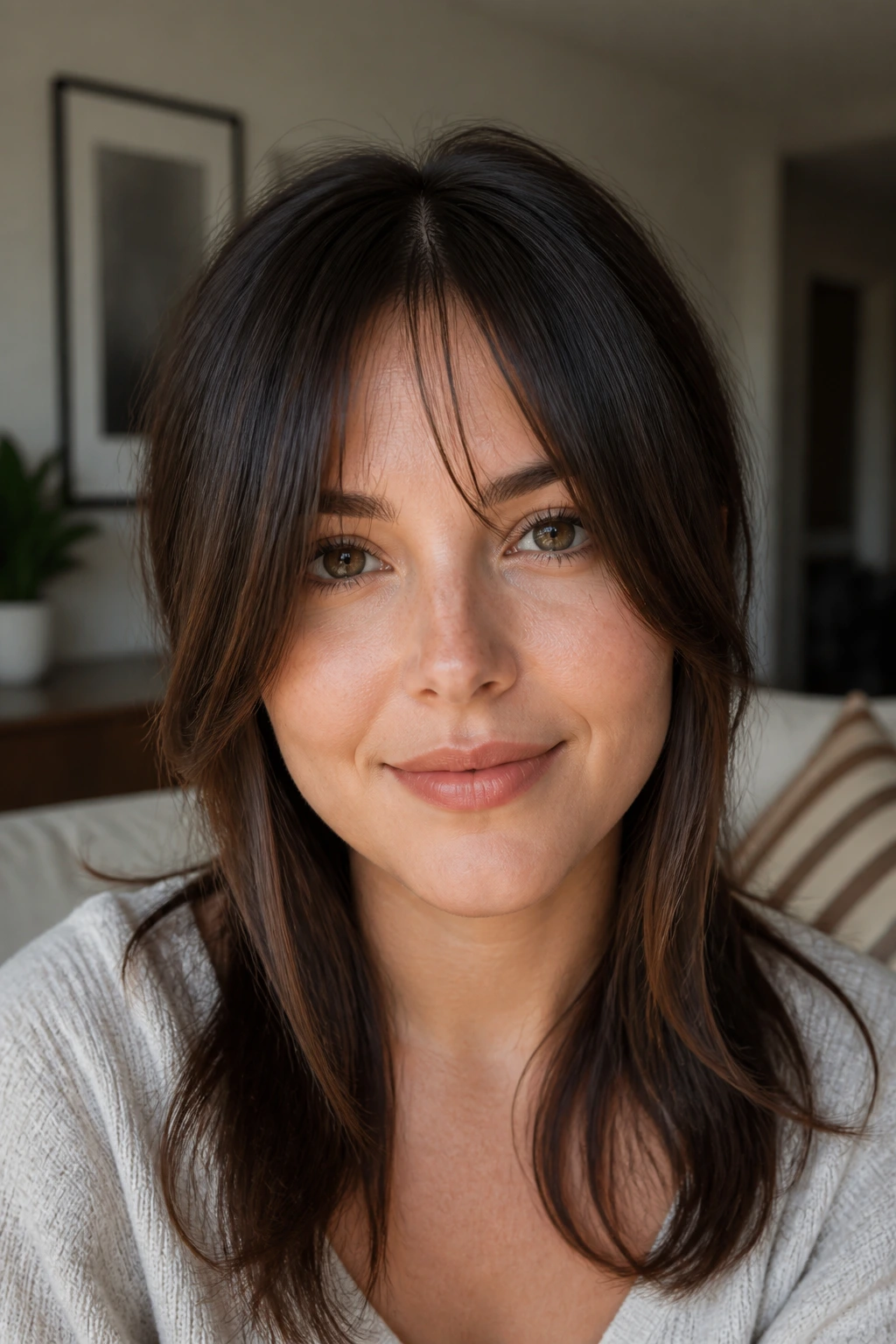
If you want more face-shaping than a curtain bang but less edge than a blunt fringe, this is the one to watch. The center is shorter and lighter, then the sides stretch down into longer pieces that frame the cheeks and jaw. It has a cleaner silhouette than some of the softer shag styles, which is why I like it on people who want polish.
The real advantage for round faces is the strong vertical fall at the sides. The center draws attention up; the corners guide it down. That combination can make a face look longer without looking like it’s trying to.
It also handles grow-out well. A month later, the shorter center simply becomes a longer fringe, which still looks deliberate.
12. Rounded Swoop Bangs
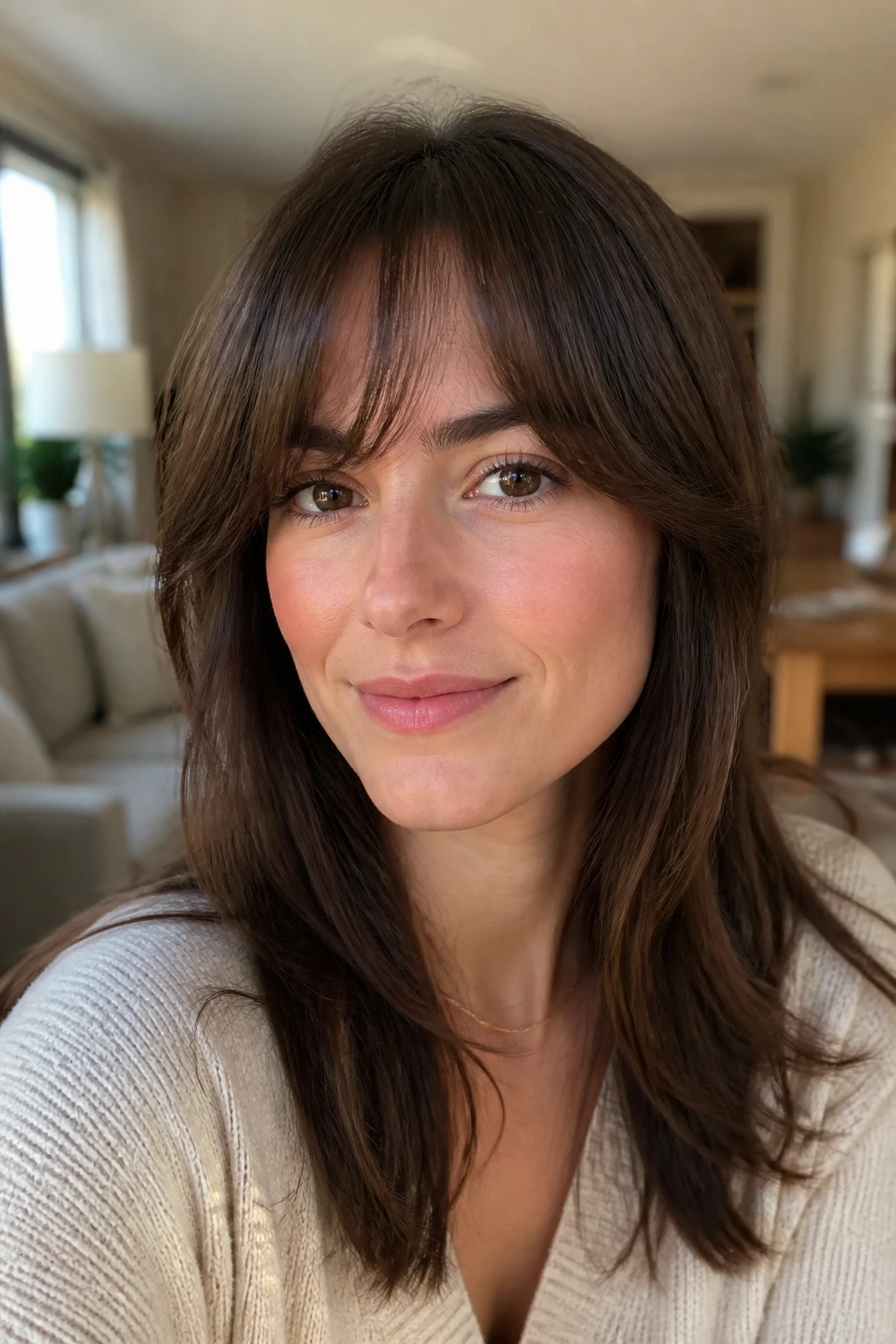
Rounded swoop bangs follow a gentle arc across the forehead instead of going straight across. Think of a soft smile shape. The curve keeps the face open at the temples and adds just enough sweep to avoid the square, heavy feeling that can happen with fuller bangs on round faces.
They’re a good choice if you like the idea of bangs but want something a little more classic than shaggy fringe. The silhouette is neat, but not severe. That balance is harder to get than it looks.
One detail that helps: keep the ends feathered, not blunt. Blunt ends make the arc read as a hard line. Feathers let it bend.
13. C-Curve Fringe
A C-curve fringe is named for the shape it makes beside the face, and that shape is useful. The bangs bend around the temples in a clean curve, which gives a round face a little more length and a little less side-to-side fullness. It’s a subtle move, but a smart one.
This cut usually looks best when the stylist cuts with a point or razor rather than a straight line, then shapes the ends so they curl inward naturally. Straight hair gets a neat bend; wavy hair gets an easy frame. Both work.
I’d choose this over a heavy curtain if you want something more sculpted. It feels tidier, less boho, and less likely to collapse by noon.
14. Collarbone Curtain Bangs
Long curtain bangs that hang close to the collarbone sound dramatic, but the effect is actually very soft. The length gives the face plenty of vertical framing, and the long corners blend into the rest of the haircut instead of stopping at the cheeks. On a round face, that extended line is a relief.
These work best when the overall haircut has some length too. A very short bob with ultra-long curtain pieces can look disconnected. On a lob or layered long cut, though, the fringe becomes part of the whole shape.
The benefit is obvious on days when you want to tuck the bangs back or open the face more. Long curtain pieces give you options without asking for a full grow-out first.
15. Invisible Fringe
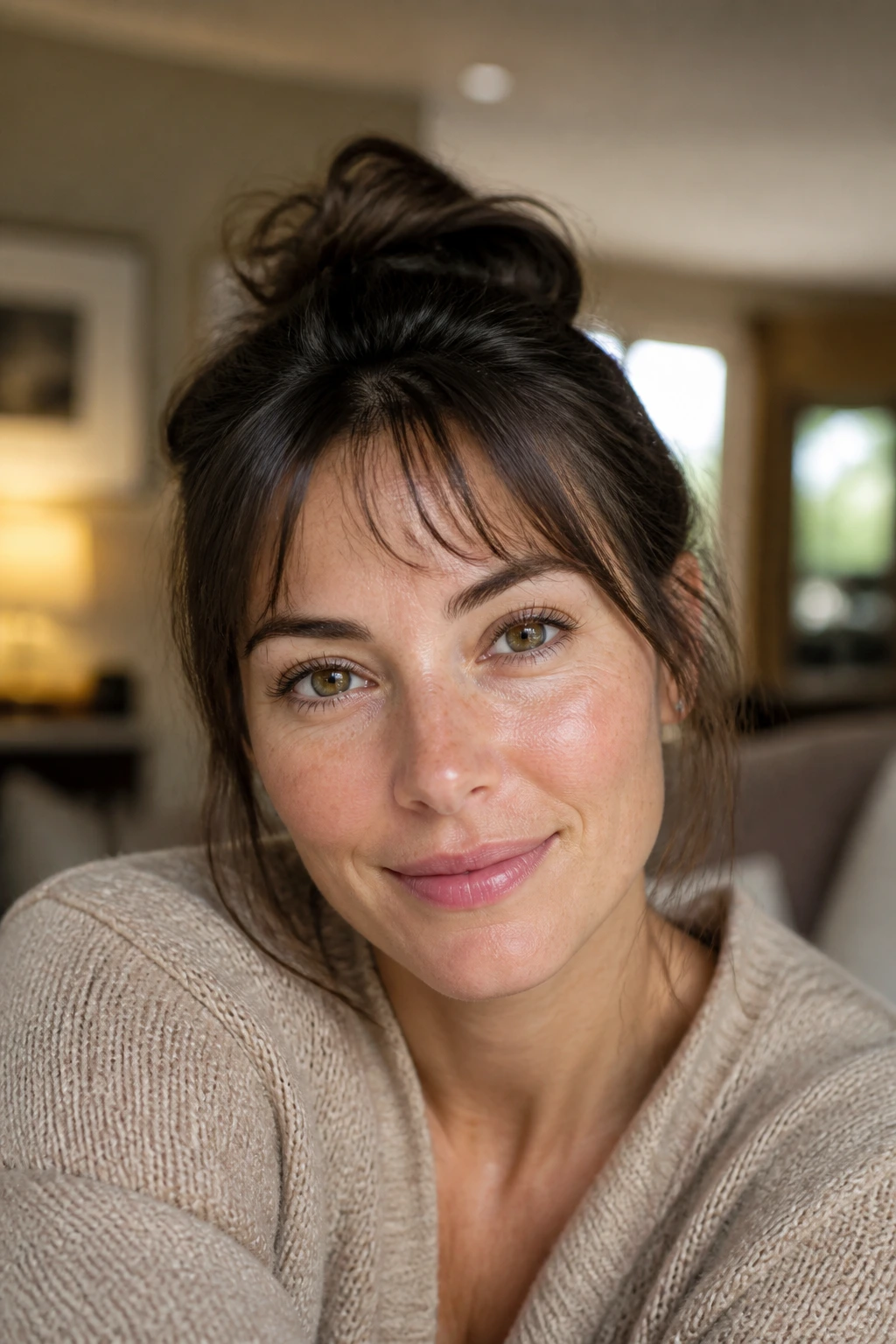
This one is for people who want a hint of bangs, not a headline. The pieces are so soft and broken up that they almost disappear into the hairline until they move. On a round face, that can be a nice compromise: you get texture around the forehead without a dense wall of hair.
Invisible fringe works best when the hair already has a little movement or layer. On very straight, heavy hair, it can vanish too much and look accidental. The point is a whisper, not a shrug.
How to Wear It
Let it fall a bit unevenly. A perfectly even invisible fringe loses the charm. The slight irregularity is what makes it look light.
16. Tousled French Fringe
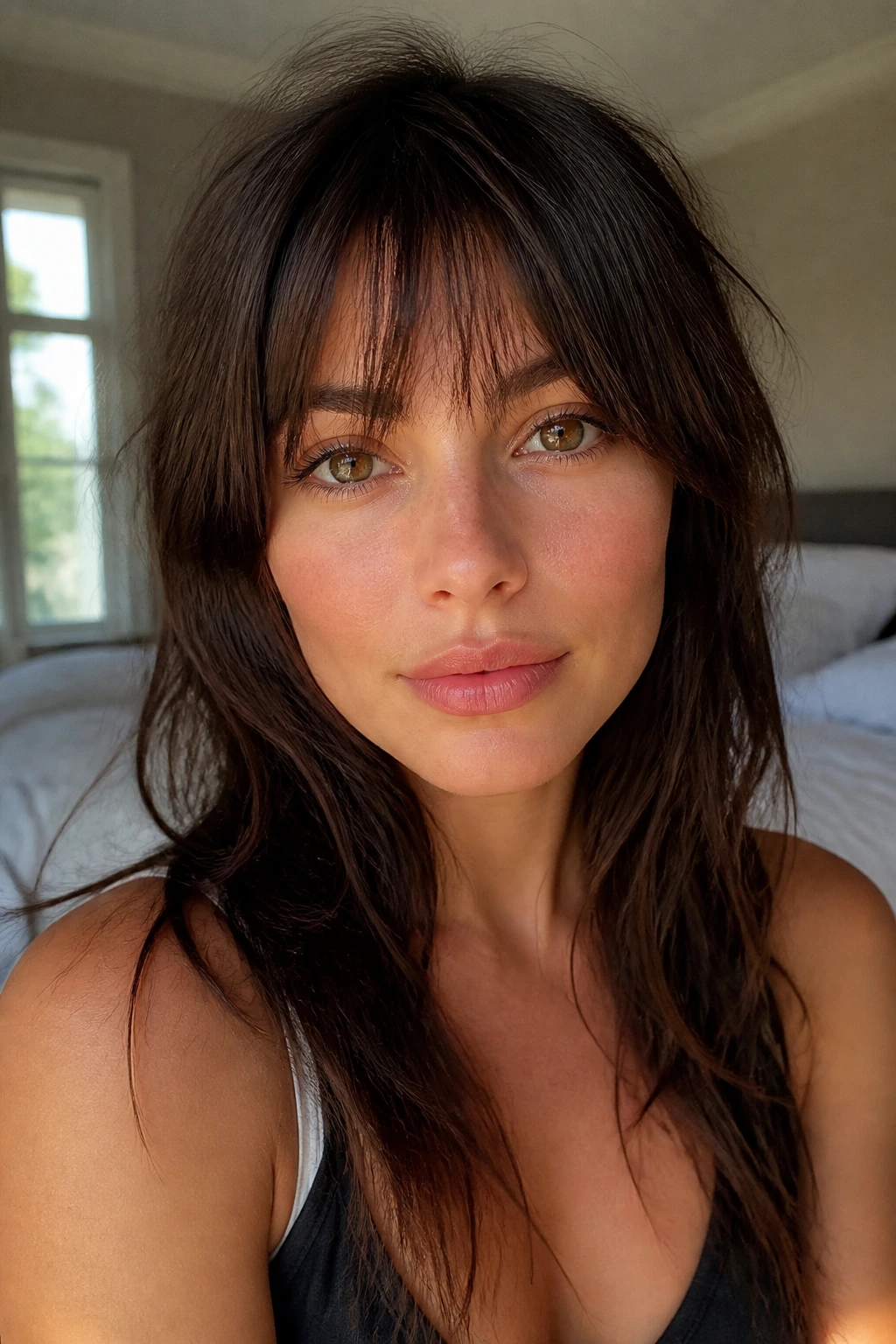
French fringe usually has that effortless, slightly undone feel, but the useful part here is the texture. The fringe sits around the brows, gets a little separation, and leaves enough forehead visible to keep a round face from looking compressed. It’s prettier when it’s not too neat.
I like this style on hair that can hold a soft bend with just a round brush or a quick finger-dry. If the hair is too slippery, the fringe may slide flat; if it’s too coarse, it can puff. Mid-texture hair tends to be the sweet spot.
The charm of this cut is that it looks better when it’s slightly imperfect. That’s not a flaw. That’s the point.
17. Soft Birkin Bangs
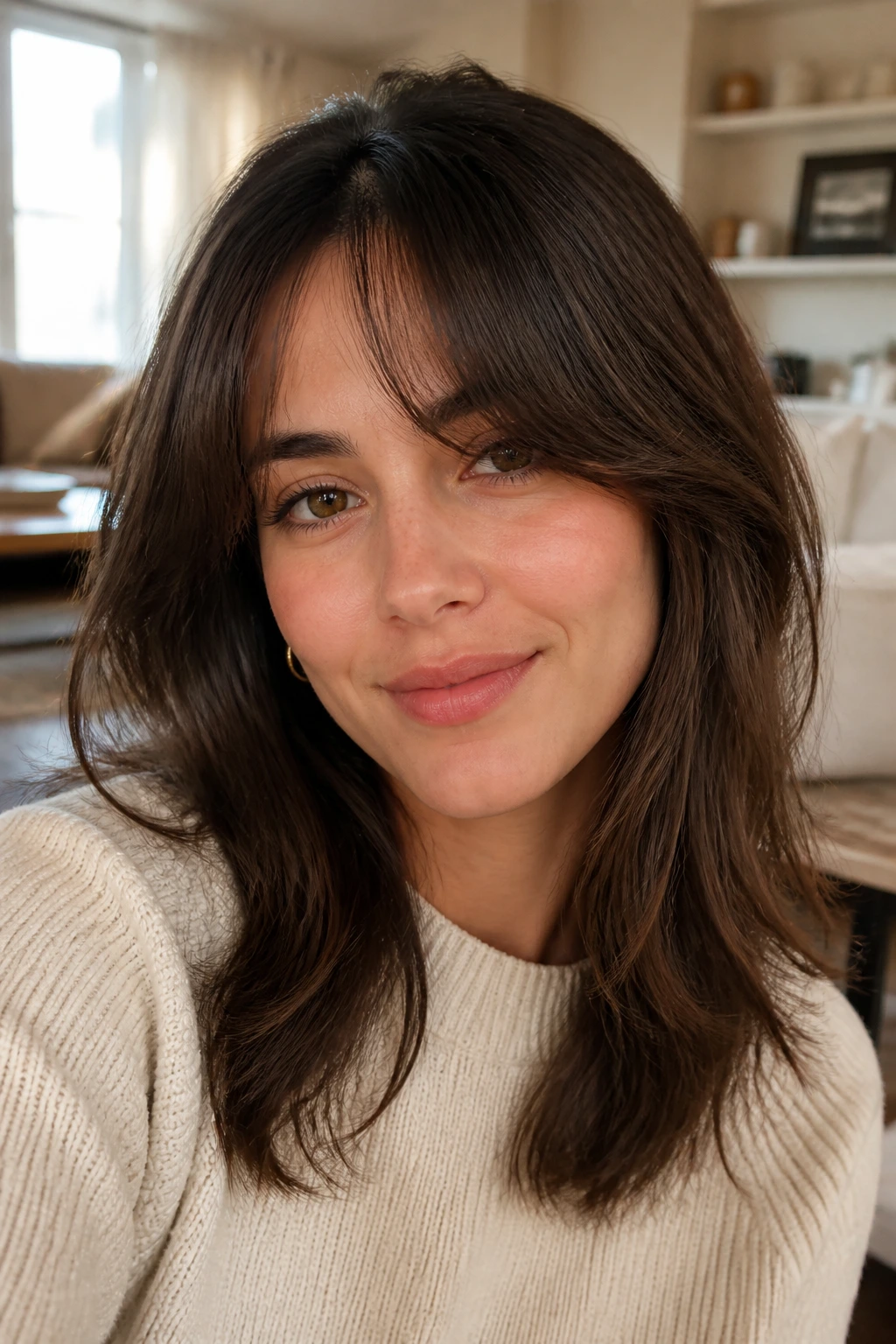
Birkin bangs carry a little more weight than a wispy fringe, but the soft version removes the stiff line that can age a face or widen a round shape. The ends are still broken up, the center is still light enough to show some skin, and the whole fringe sits with a natural bend instead of a ruler-straight edge.
If you like vintage-inspired hair, this is a strong option. It gives the eyes a frame and can look especially good with a side part or a slightly messy blow-dry. The risk is going too thick. Keep the density controlled.
I’d say this suits people who want bangs with presence but not bluntness. It has personality.
18. Long Choppy Bangs
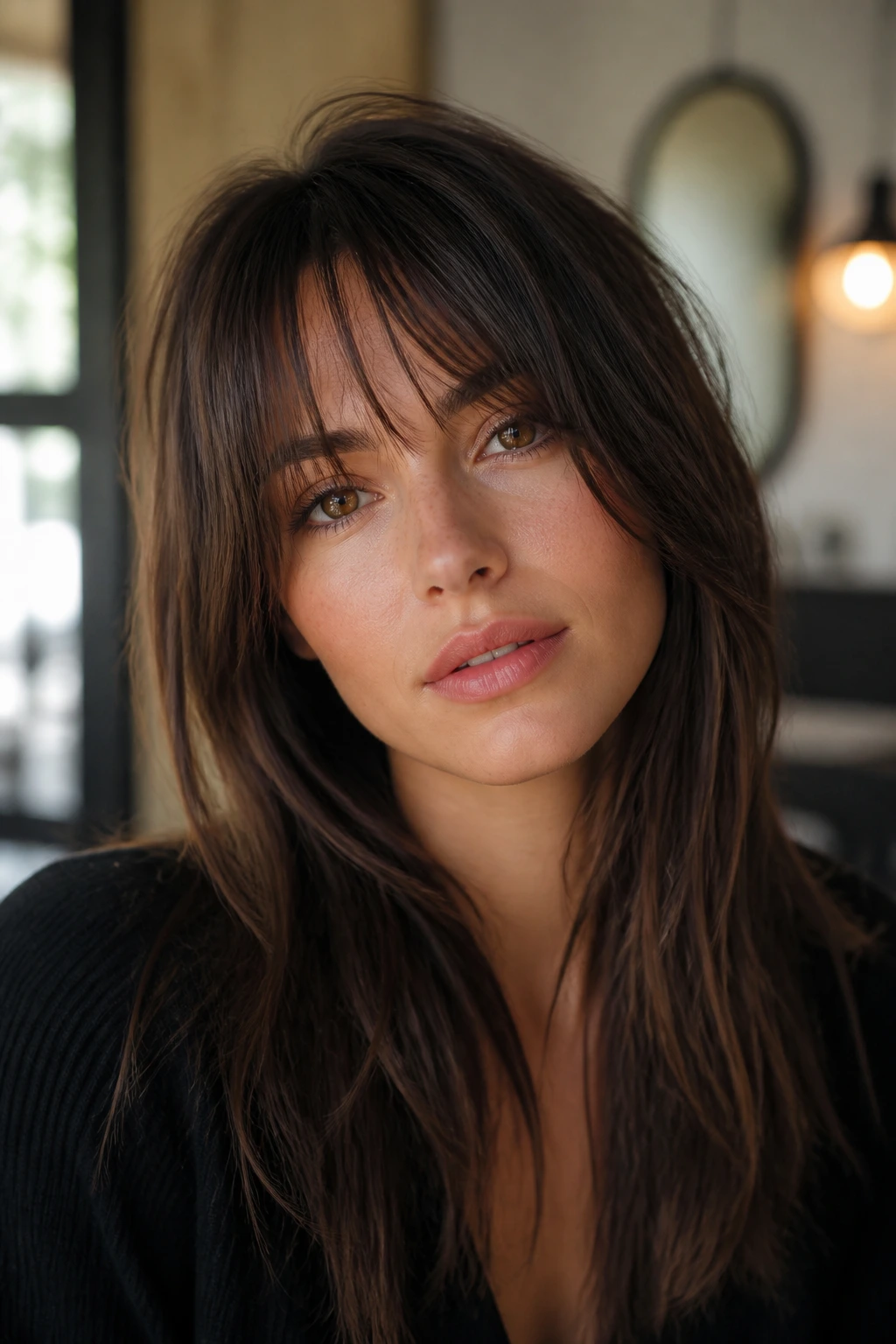
Long choppy bangs are one of my favorites for thick hair because they let you keep the fringe without carrying a heavy slab on the forehead. The irregular ends make the line feel lived-in, and the extra length gives a round face more vertical framing than a short bang would.
They can be worn with a center split, a soft side sweep, or brushed loose across the brow. That flexibility matters. A style that only works one way gets old fast.
The key is not to over-texturize. Too much chopping can leave the ends looking ragged. You want movement, not little gaps you have to explain.
19. Peekaboo Center Fringe
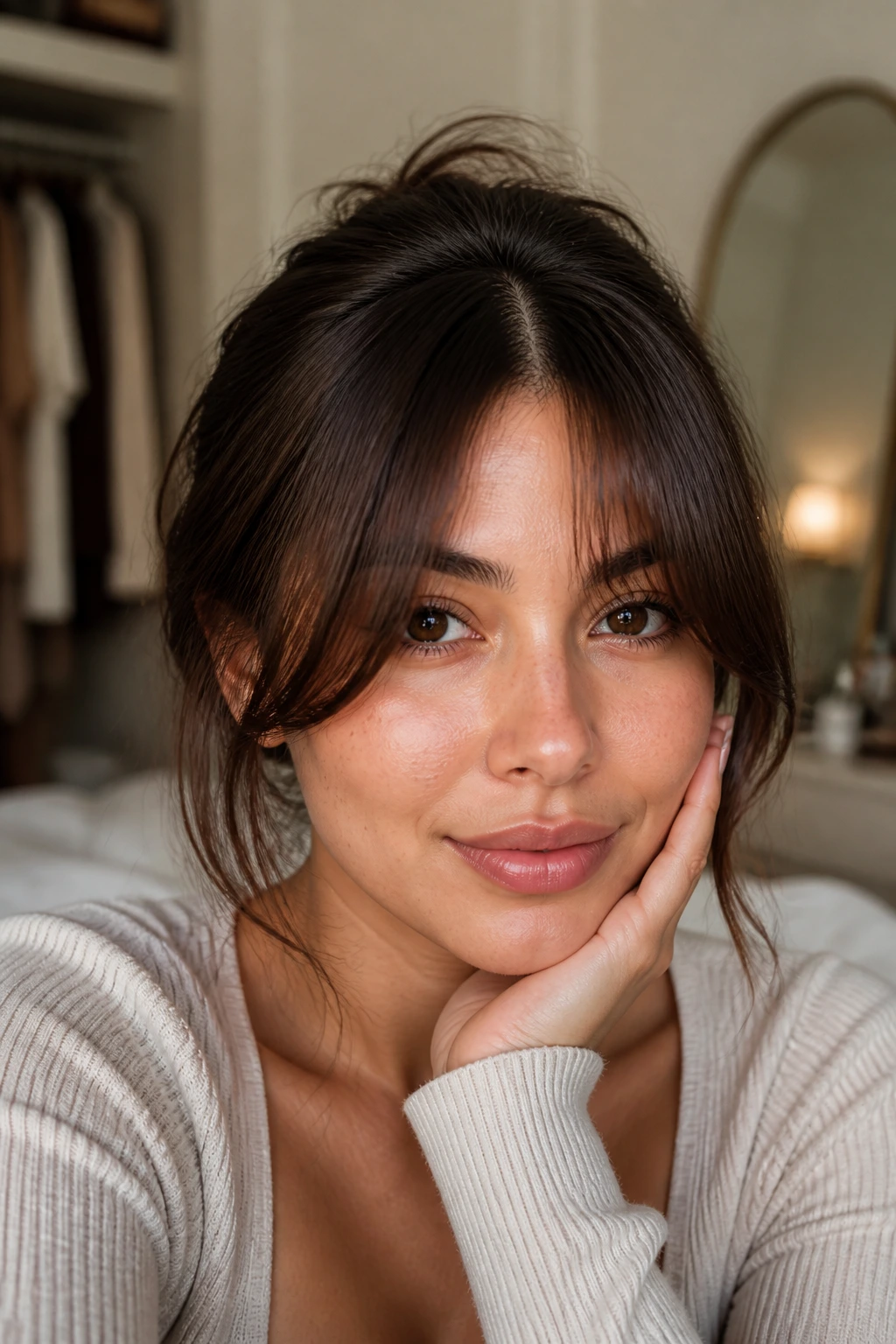
This is the fringe for people who want forehead coverage without full commitment. The center sits softly and then parts just enough to reveal a strip of skin, which keeps the face from feeling boxed in. On a round face, that tiny reveal is useful because it breaks the width of the forehead area.
The pieces around the temples usually stay a bit longer, so the cut still frames the face where it matters. It is one of the most forgiving styles if you are unsure about bangs, since the whole thing can be pushed a little wider or narrower as needed.
It’s also a good transitional cut. If you’re growing out shorter bangs, this shape can hide the awkward stage better than most.
20. Feather-Light See-Through Bangs
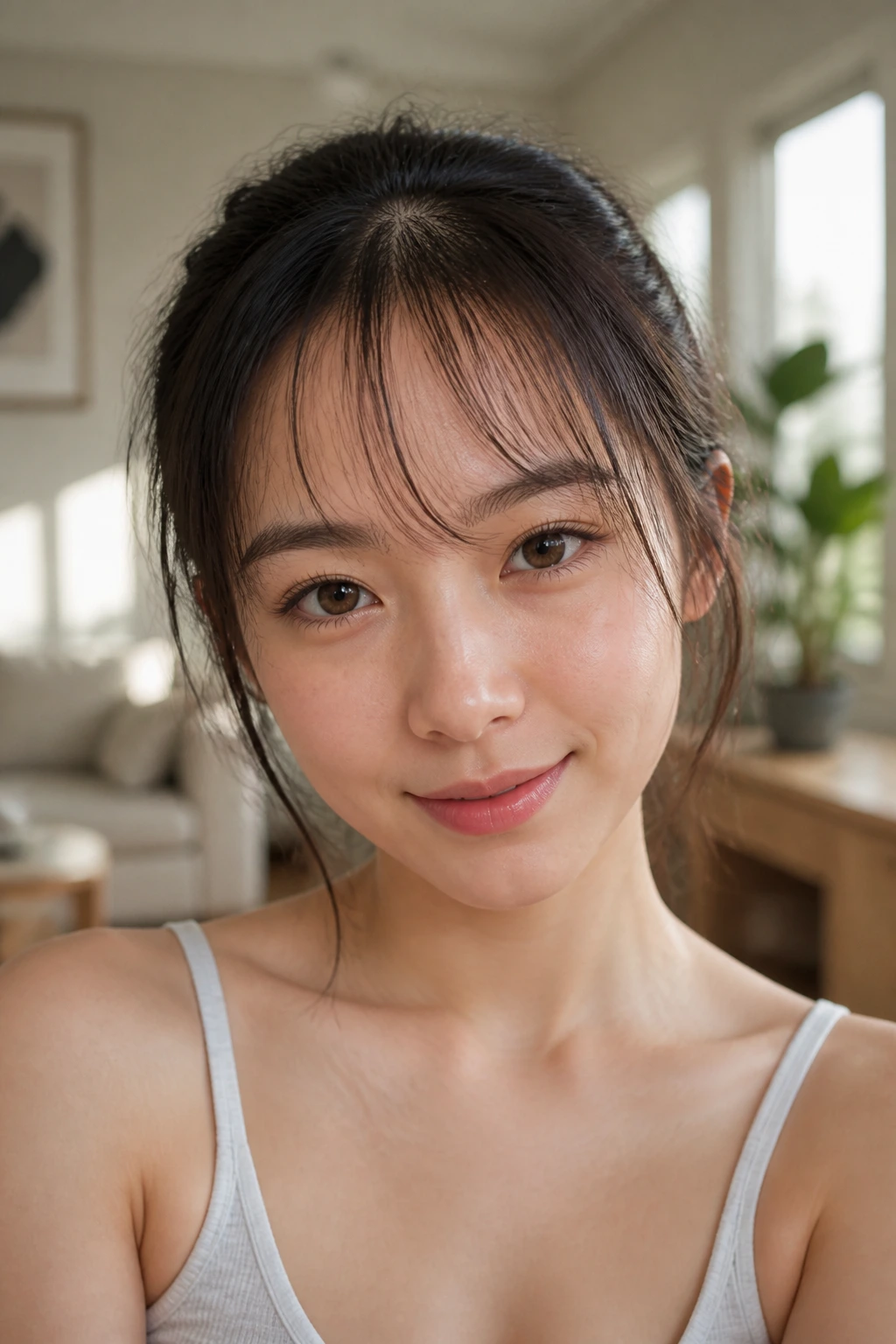
These bangs are even airier than the brow-grazing version above. The fringe is thin, delicate, and deliberately translucent, which means your forehead stays visible beneath the strands. That transparency gives a round face a softer look without adding extra width.
They work best on hair that lies smooth or at least smooth-ish. Super frizzy or very coarse hair can puff them out. A light styling cream or a small mist of heat protectant is usually enough; too much product kills the whole effect.
I’d choose this if you want something youthful and light, not dense or dramatic. It’s a small bang with a quiet job.
21. Side-Panel Fringe
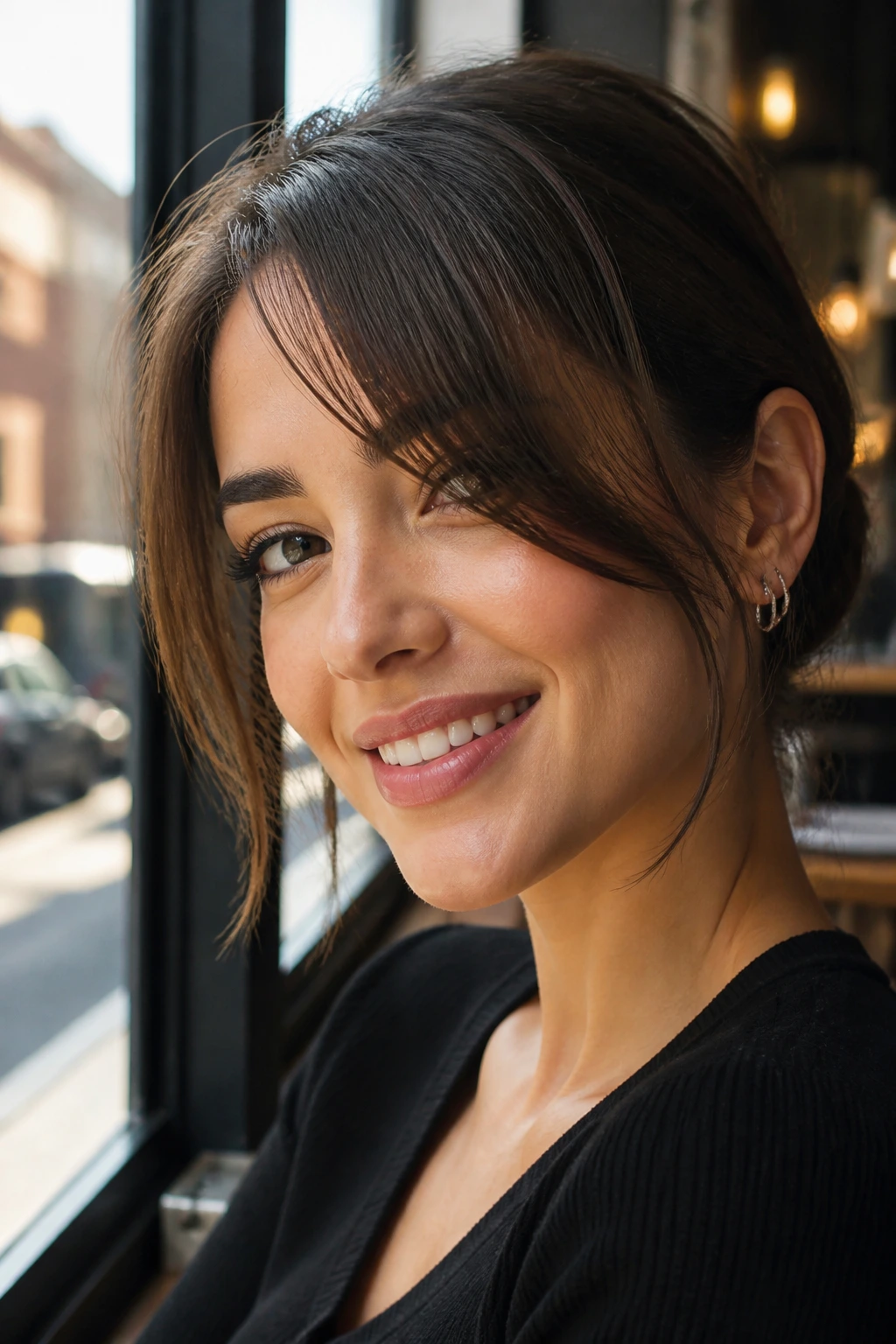
A side-panel fringe is more dramatic than a simple side sweep because one larger section of hair falls forward from the temple and acts like a frame. It slims the face by creating an obvious diagonal, which is a nice contrast to the soft width of a round face.
This is a good option if you wear your hair mostly tucked back on one side or if you like one strong framing piece instead of a full fringe across the forehead. It can also work well with bob cuts that need some front action.
Best Pairings
- Deep side part
- Lob or blunt bob with soft ends
- Hair that naturally falls to one side
My take: this is underrated. It gives shape fast, and it doesn’t ask for much styling.
22. Wavy Face-Framing Fringe
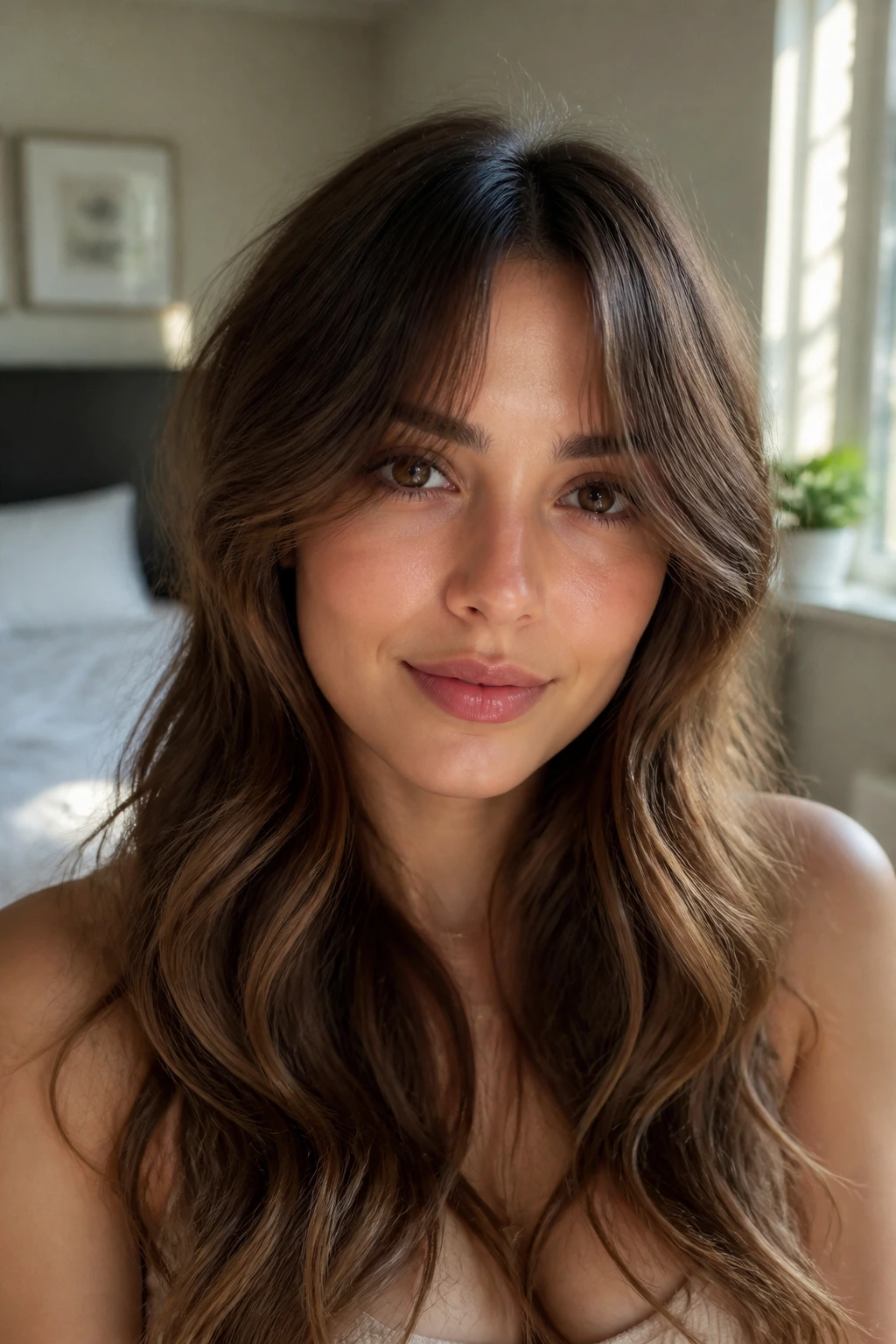
This style starts as bangs and ends as face-framing layers, which is a lovely trick for round faces. The wave pattern softens the forehead, and the longer side pieces make the face look a little longer and leaner without a hard contour effect.
It’s especially good if your natural texture leans wavy. Trying to make wavy hair act like straight hair is a waste of time half the week. Better to let the wave do the work and cut the fringe so the bends land where they flatter you most.
The downside is maintenance if you want the same shape every day. But if you’re comfortable with a little variation, this is a strong, easy shape.
23. Grown-Out Shag Bangs
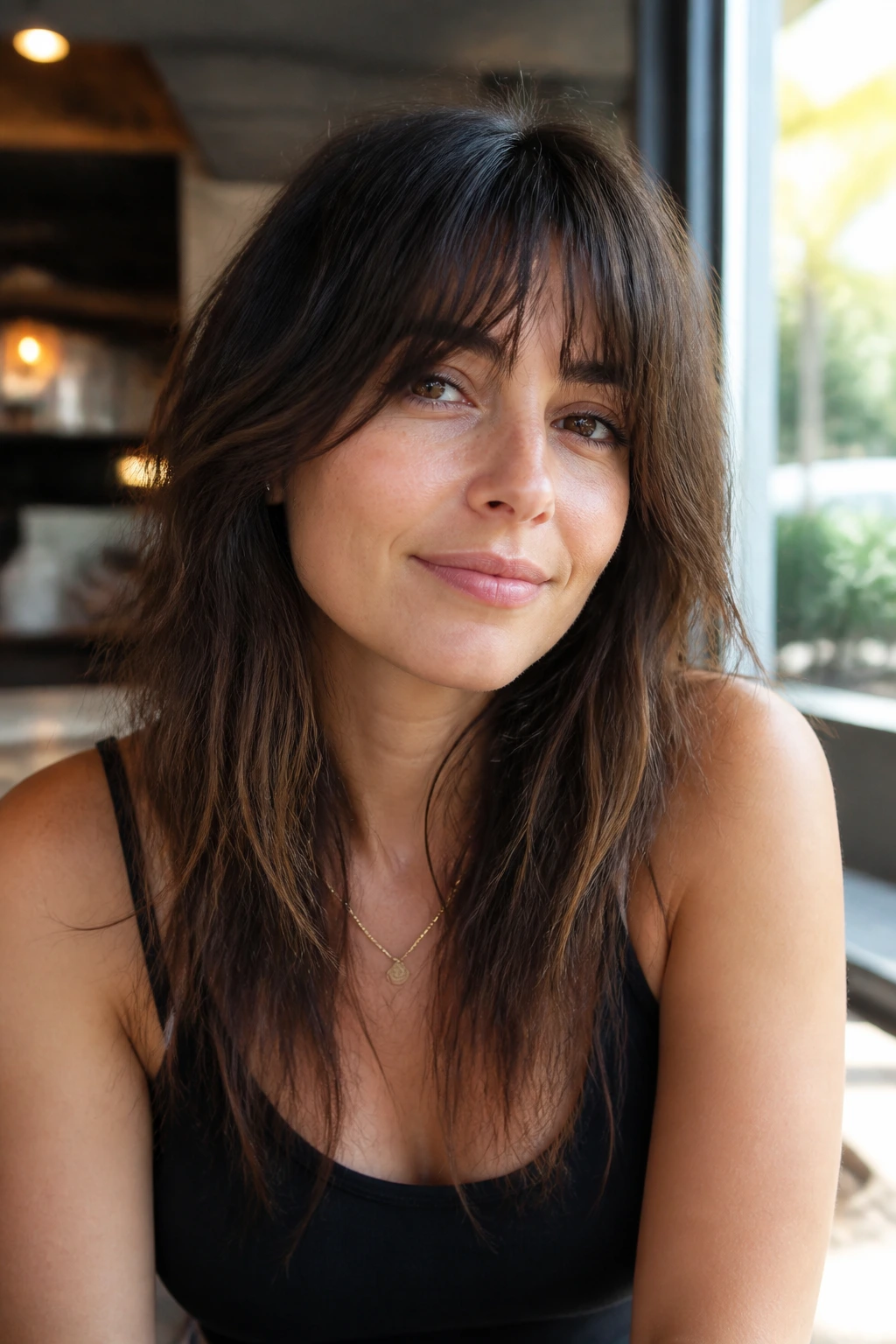
Some bangs look their best at the salon and become annoying later. Grown-out shag bangs are the opposite. They already look better with a little extra length, which makes them a smart fit for round faces and for anyone who hates monthly trim appointments.
The shape skims the brow, then blurs into the rest of the layers. That blur is the charm. It keeps the face soft without blocking it off, and the shag texture stops the line from looking too neat or heavy.
I’d call this one a low-stress fringe. If you want a bang that forgives a missed trim, this is one to save.
24. Razor-Soft Fringe
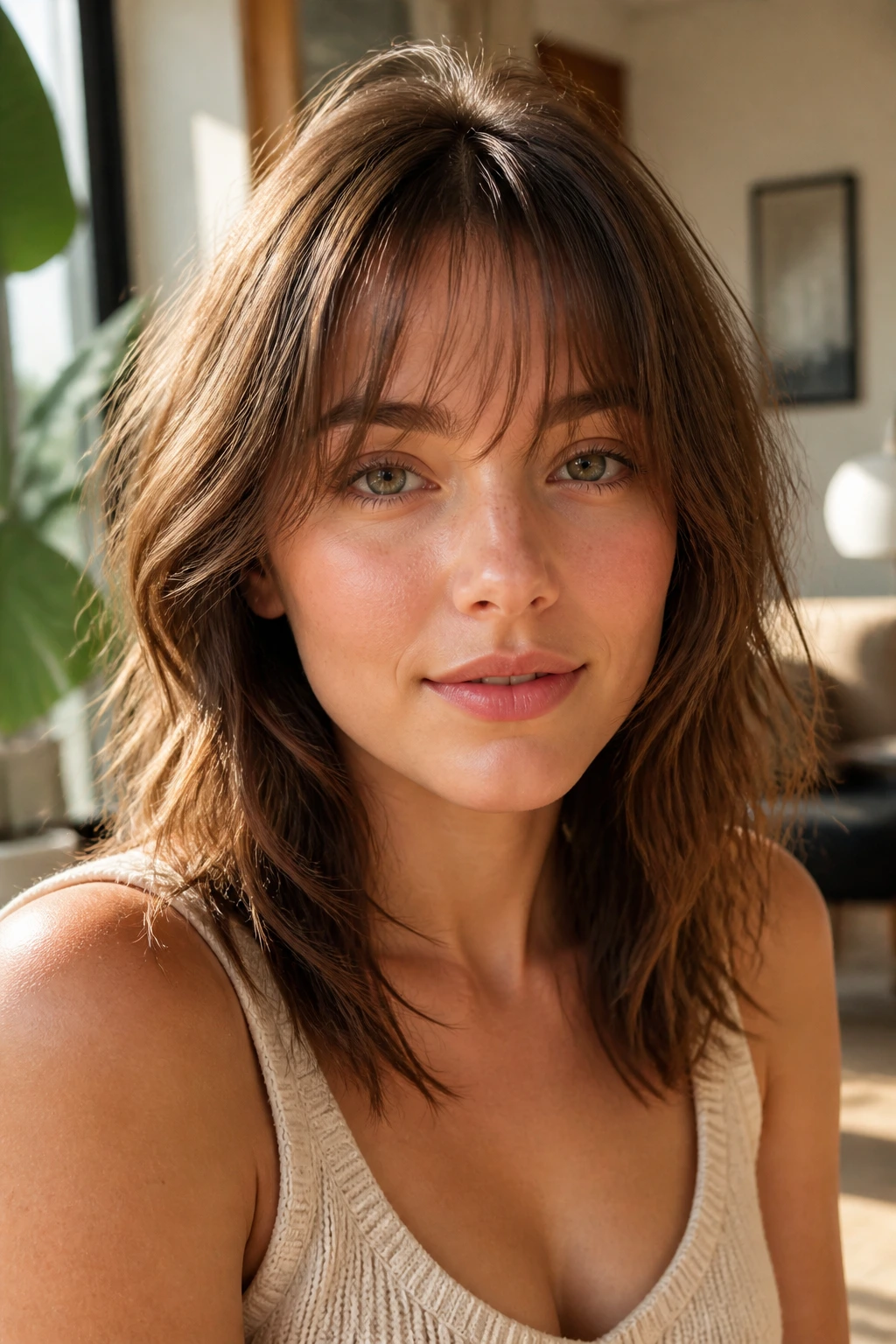
A razor-soft fringe has a lighter edge because the ends are cut with a razor rather than left blunt. That softness helps a round face by taking away the hard horizontal line that can make features look shorter. The fringe still has shape. It just moves more.
This cut is lovely on medium-texture hair that can take a little texture without fraying. If your hair is very fine, a razor can sometimes take out too much weight. If it’s very coarse, the line may need a bit more structure.
The finish matters here. A quick blow-dry with a round brush keeps the edges from sticking out in odd directions.
25. Bottleneck Flip Bangs

Here’s a fun one. Bottleneck flip bangs keep the short center and longer corners, then let the outer pieces flip slightly away from the face. That outward movement opens the cheeks and gives a round face a sharper visual line without making the fringe hard.
I like this style on hair that naturally bends at the ends, because the flip looks effortless rather than forced. It also plays well with layered cuts that need a little motion near the eyes.
If you love a styled blowout but do not want the fringe to feel formal, this is a good middle ground. The flip keeps it relaxed.
26. Thick-Hair Curtain Fringe
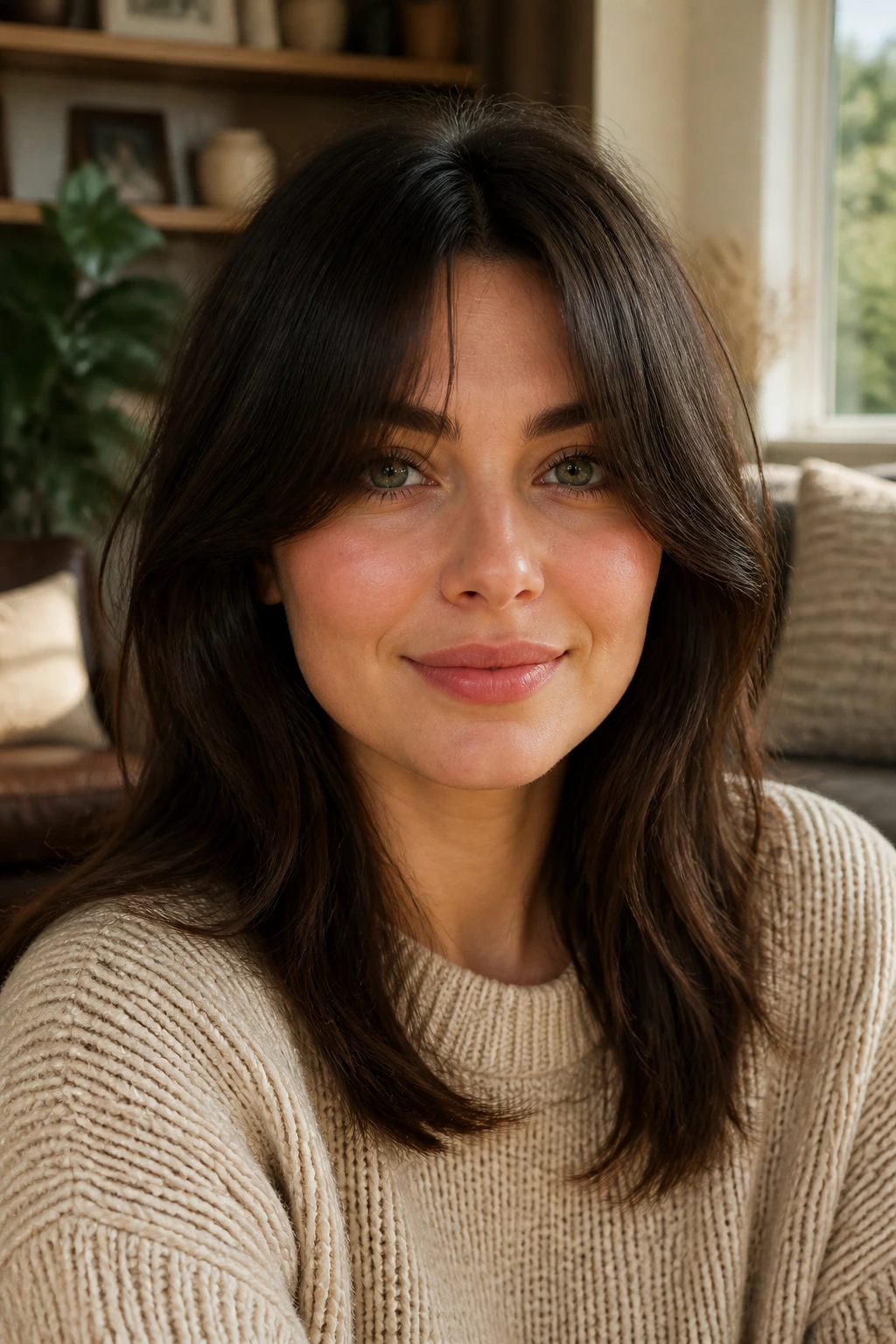
Thick hair needs honesty. If you try to cut thick hair into a delicate whisper of bangs without removing weight properly, you get a dense block that sits right on the forehead and fights the face. A thick-hair curtain fringe handles the density on purpose, with internal thinning and longer corners.
That makes it useful for round faces because the shape stays soft instead of bulky. The fringe can still be full, but it should not feel heavy. The best versions let the forehead breathe a little in the center while keeping enough hair at the sides to frame the cheeks.
Ask for shaping, not just cutting. Those are different things.
27. Fine-Hair Airy Fringe
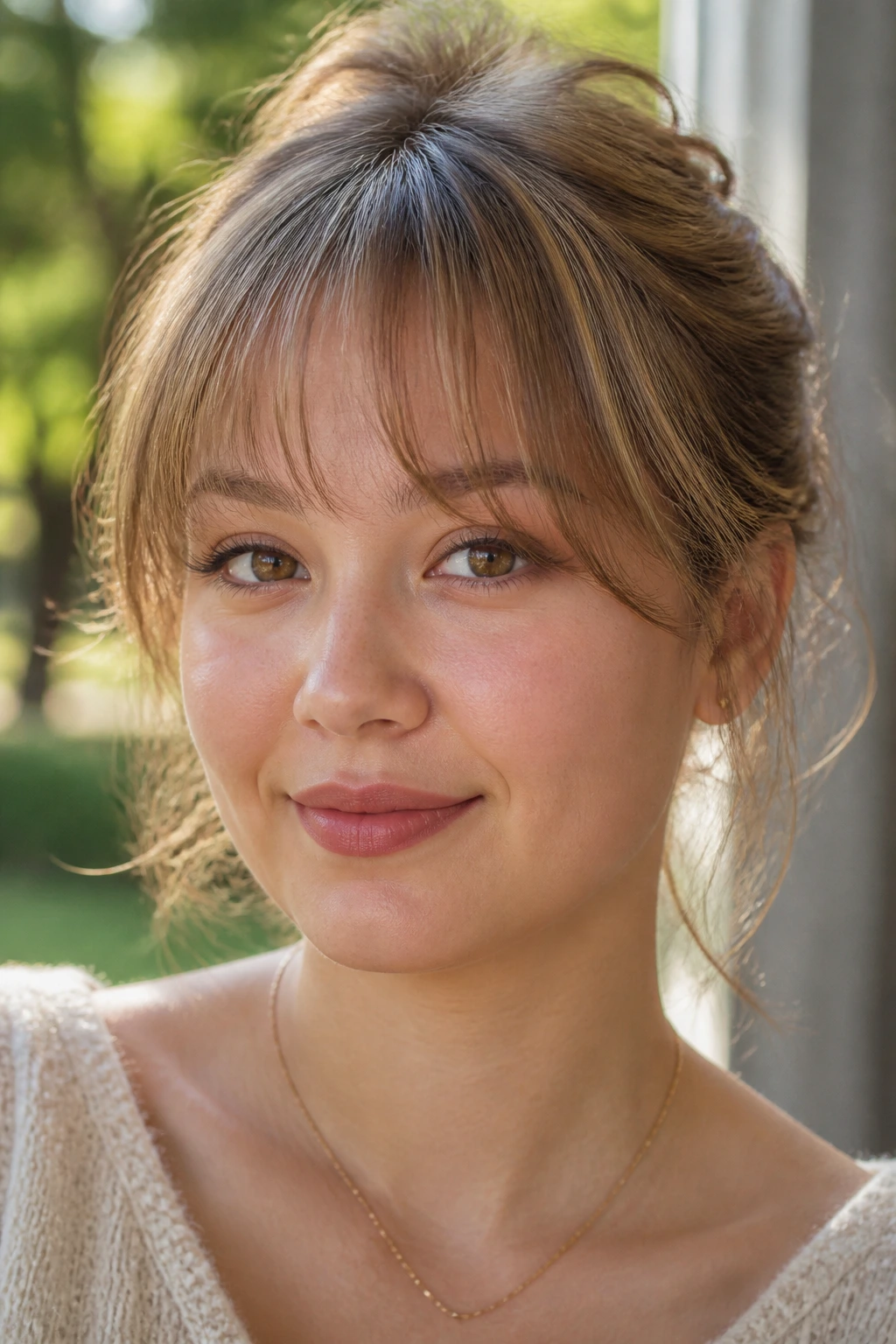
Fine hair can wear bangs beautifully, but it needs a very light hand. Too much cutting makes the fringe look sparse; too little makes it limp. The airy fringe gives you texture and movement while keeping enough body to sit in place.
On a round face, the lightness is the win. You get forehead softness without adding width or weight. A little root spray or dry shampoo at the base usually helps more than layers of product on the ends.
If your hair gets oily fast, this style is especially useful because it doesn’t need to look perfect to work. A slight separation can actually improve it.
28. Curly Curtain Bangs
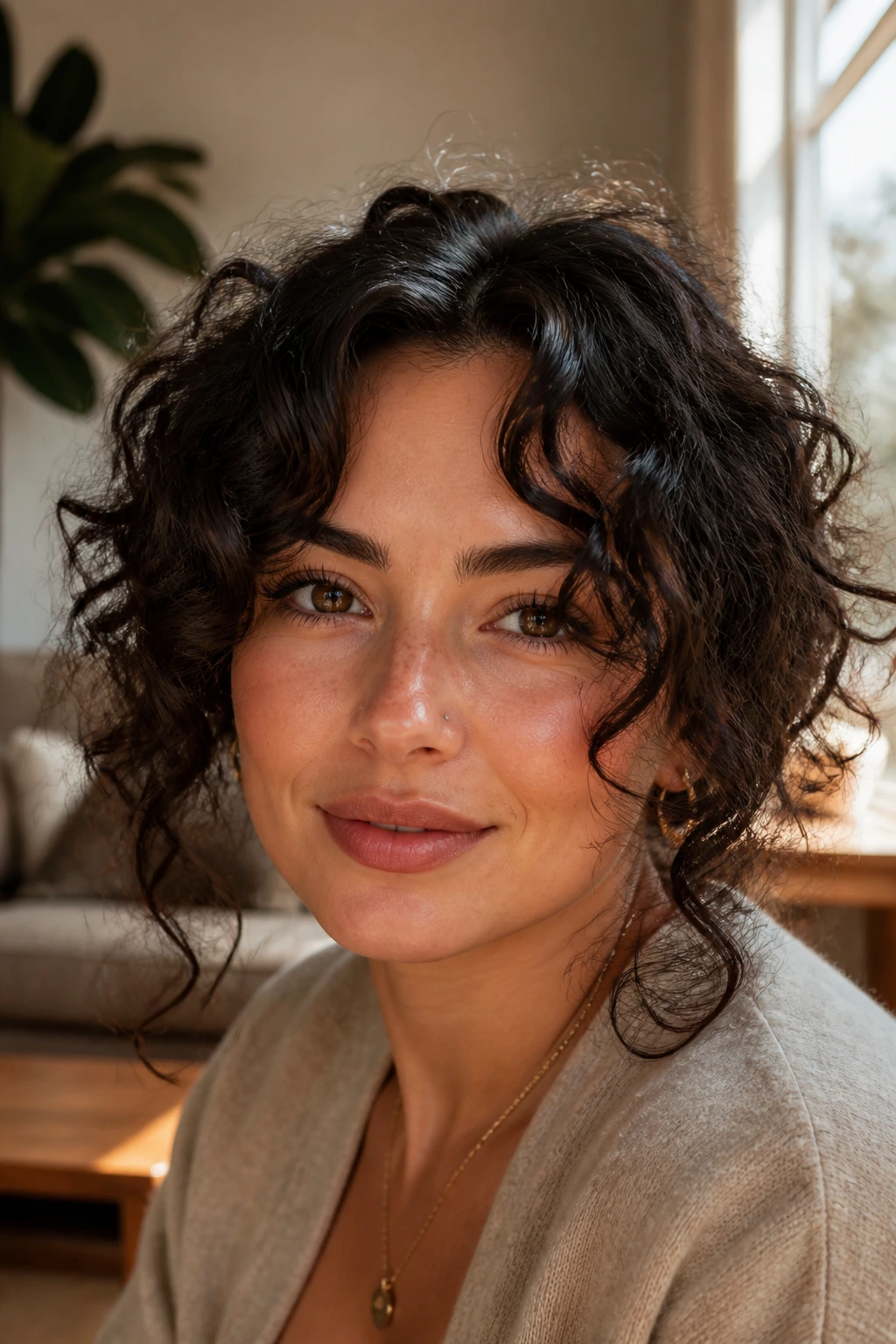
Curly curtain bangs are one of those styles that look simple in photos and require a bit of trust in real life. The length has to account for shrinkage, and the cut needs to let the curls fall in a center-parted frame instead of a tight block. On a round face, that frame can be magic because the curls create both height and softness.
The main rule is to cut them dry or nearly dry, following the curl pattern. Wet curls lie about their shape. If you cut them too short wet, they spring up and you lose the gentle framing line that makes the style work.
I like these on layered curly cuts where the bangs are part of a bigger shape, not a separate add-on.
29. Blunt-Edge Soft Bangs
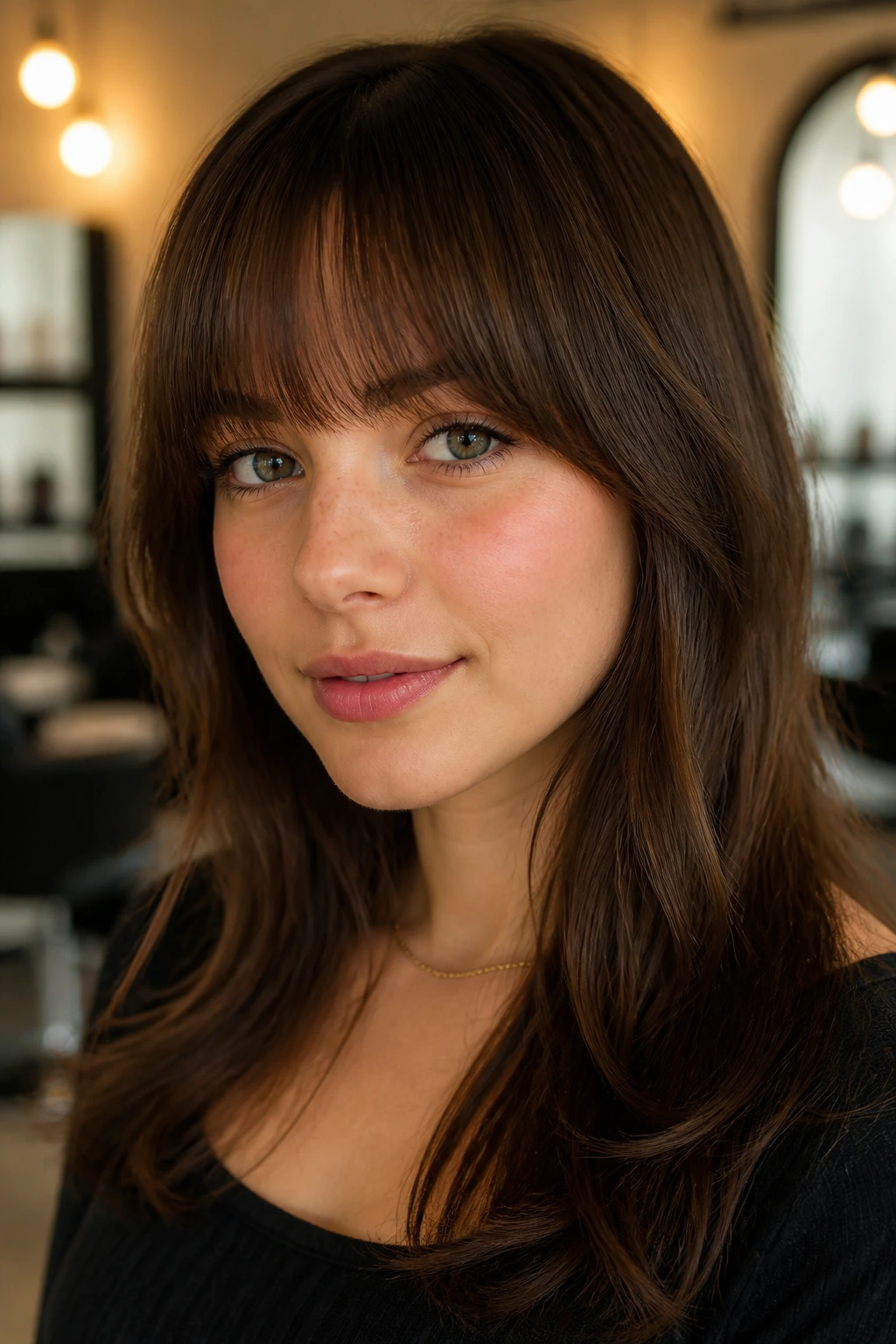
This is for people who want a little more structure but do not want a hard, heavy wall. The line is cleaner than a piecey fringe, yet the ends are softened so the whole thing still moves. On a round face, that little softness keeps the cut from looking square across the forehead.
It’s a good compromise if you usually like neat hair but want to avoid the severe look that straight-across bangs can create. A round brush gives it bend; a flat iron can make it too tight if you’re not careful.
What Makes It Different
The edge is present, but not sharp. That’s the whole point. Think of it as a softened line, not a softened idea.
30. Tapered Fringe with Longer Corners
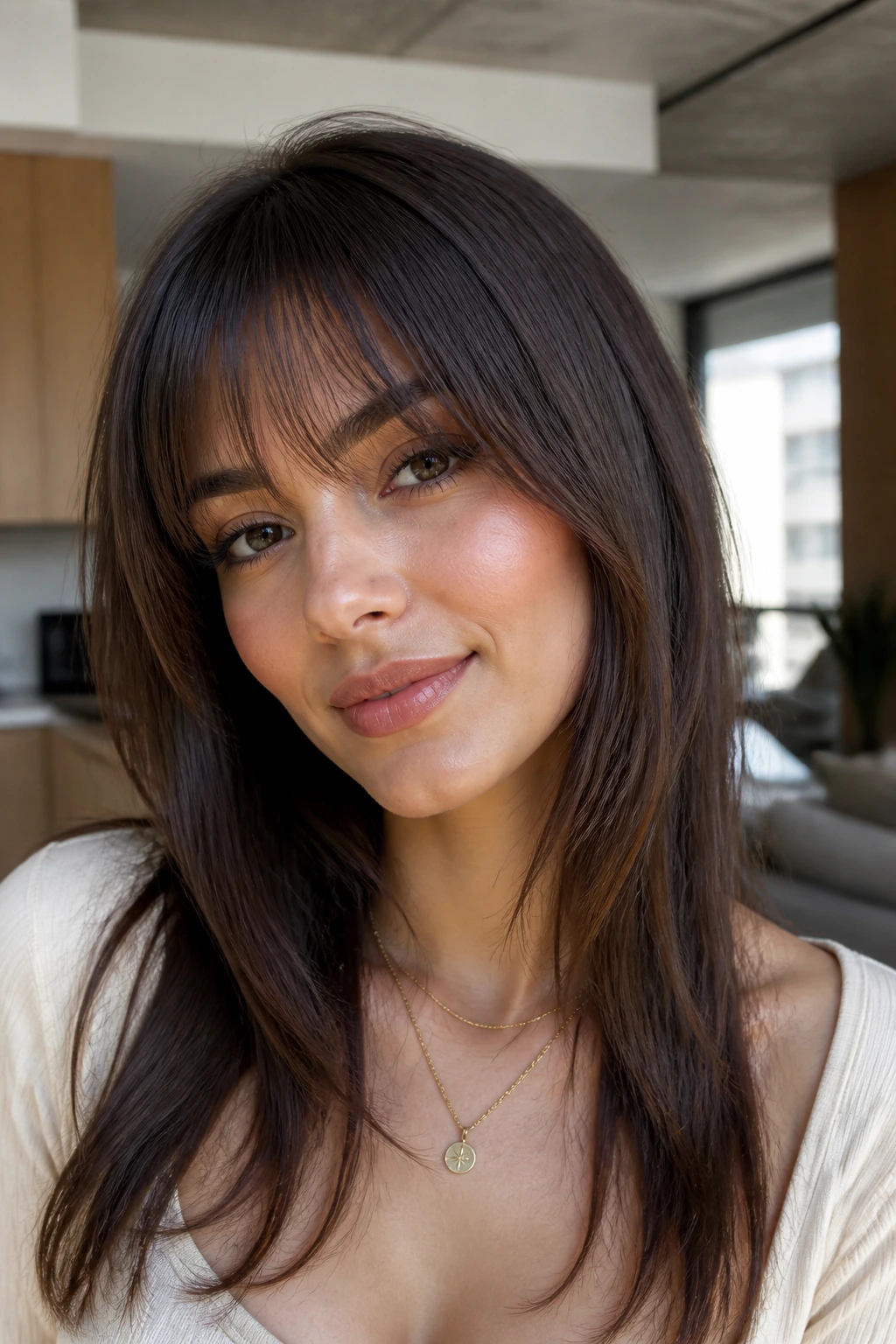
A tapered fringe is built to slim the face. The center stays a bit shorter, while the sides gradually lengthen until they almost melt into the rest of the haircut. For a round face, that taper gives a clean visual path downward and outward.
This style looks especially good on hair with some density, because the taper removes bulk without making the bangs look thin. It can also be dressed up or down easily. Brush it neat for a polished look, or mess it up slightly for something softer.
If you only remember one thing here, remember this: the corners need to be long enough. That is where the face-shaping happens.
31. Crown-Lift Swept Fringe
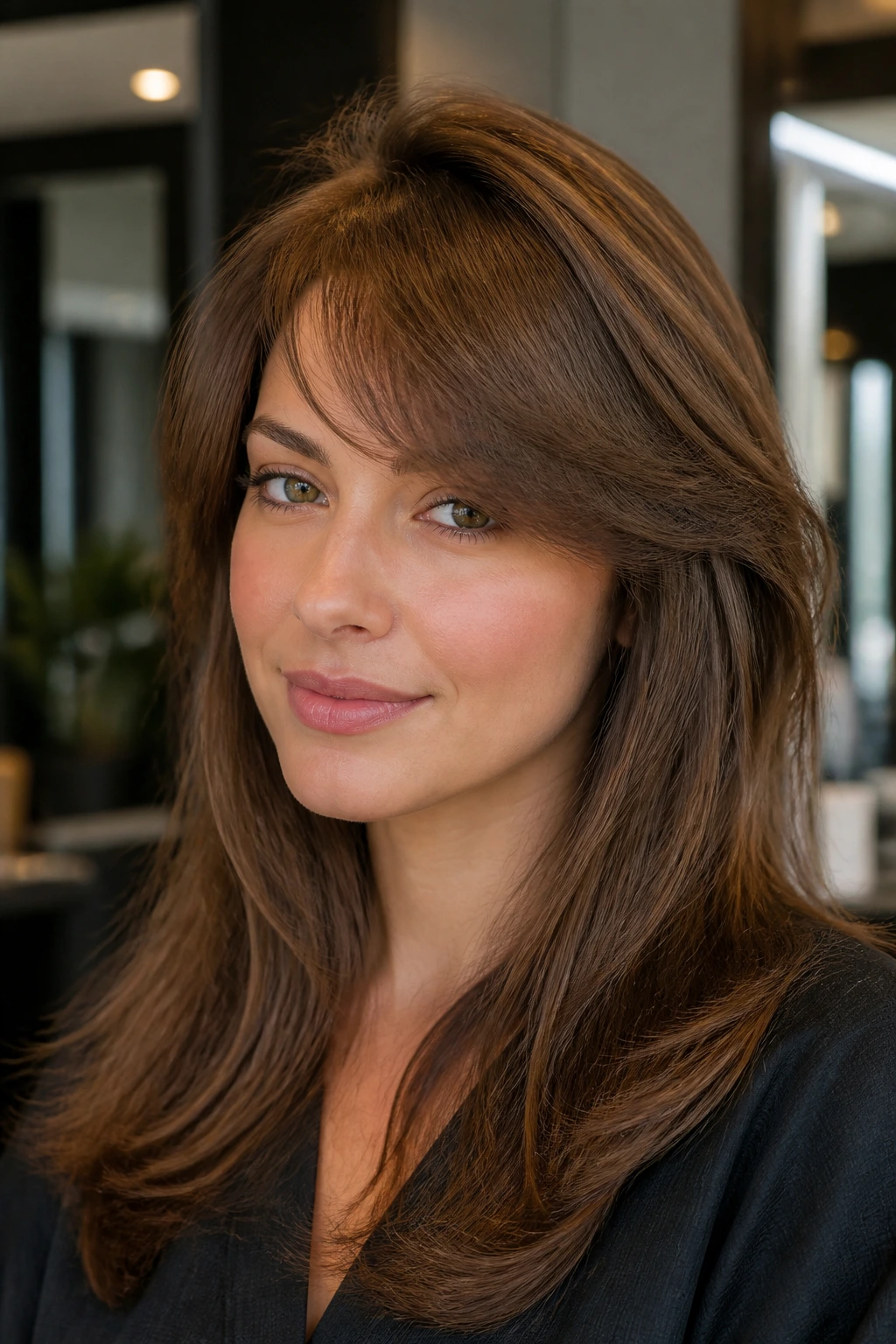
If your bangs always go flat, start at the crown. A swept fringe with lift at the roots can make a round face look longer because the hair rises before it falls. That added height at the top is subtle, but it changes the shape more than people expect.
The fringe sweeps off to one side or across the forehead with a bit of height built in. It suits people who like a blowout look, and it can be a lifesaver if your face needs more vertical balance than horizontal softness. A little root clip while the hair cools can help hold the shape.
I’d choose this over a flat side fringe if your hair has any natural volume at all. Let the crown work.
32. Low-Maintenance Soft Bangs
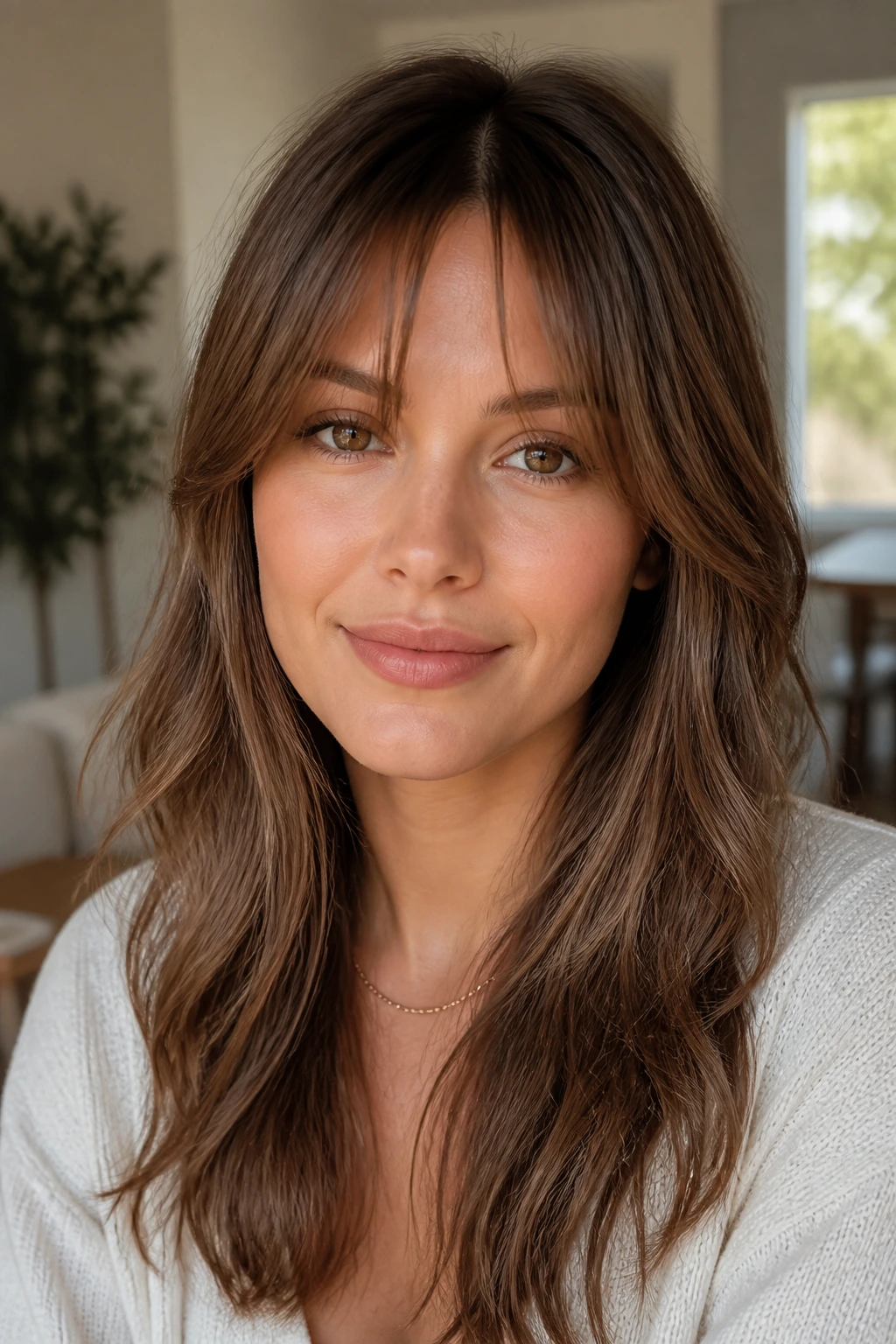
This version keeps the fringe longer, lighter, and easier to live with. Instead of chasing a precise line, it leans into a soft, grow-out-friendly shape that still frames the face. On a round face, that matters because the longer pieces keep the cheeks from feeling boxed in.
The biggest advantage is practical: you can skip a trim without the whole style falling apart. It works with air-drying, quick blow-drying, or a rough round-brush pass before you leave the house. It is not fussy, and I mean that as praise.
Best For
People who want bangs but do not want them running their calendar.
How Soft Bangs Change the Shape of a Round Face
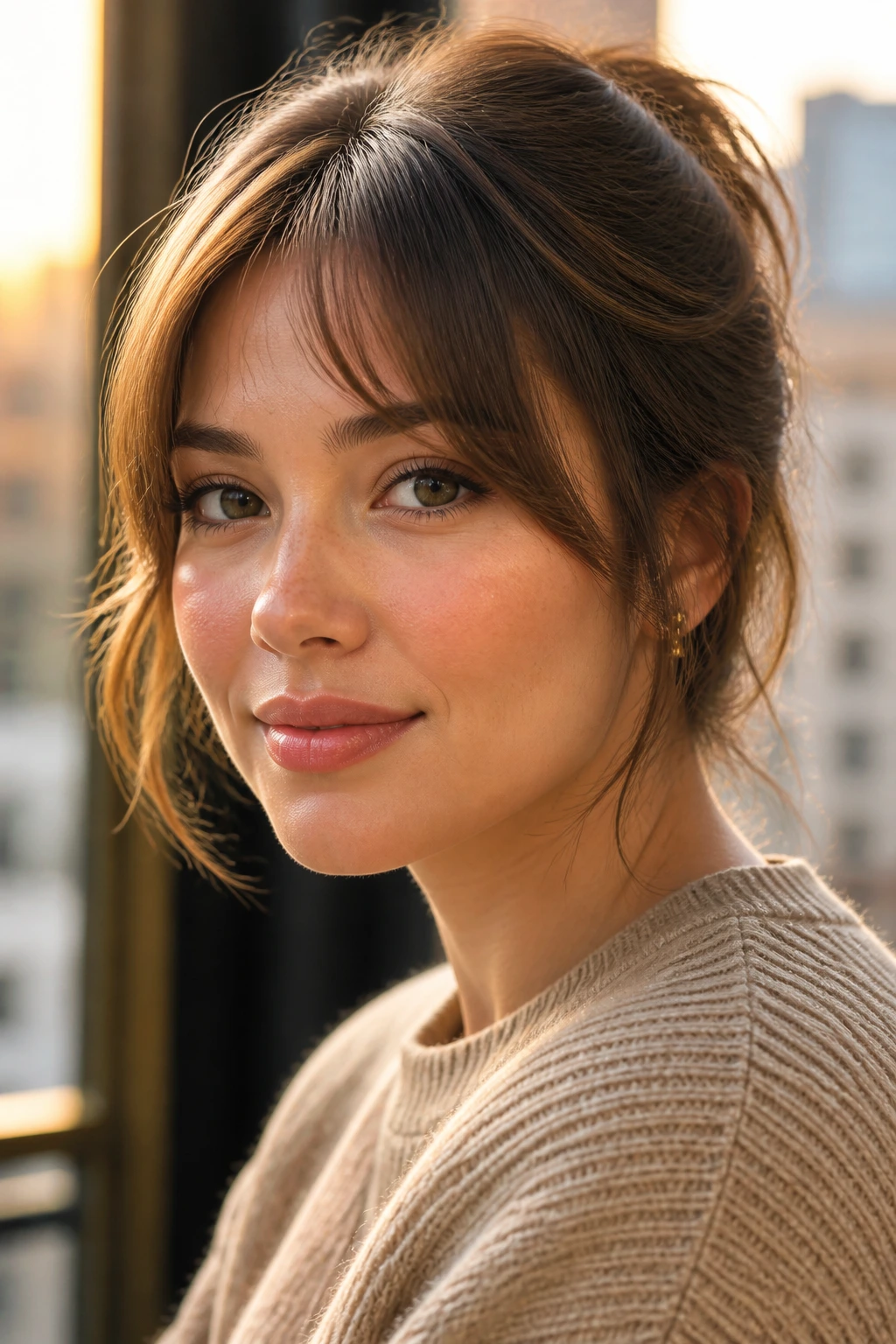
A round face usually has gentle width through the cheeks and a softer jawline, so the best fringe does not fight that softness. It gives the eye a path to follow. The strongest soft bangs create that path with diagonals, longer corners, and a lighter center section, which is why curtain shapes and side sweeps show up so often in good recommendations.
The thing I like most is that these cuts do not depend on hiding the forehead. They use the forehead as part of the design. A little skin showing through the center keeps the face open, while the side pieces stretch the silhouette. That balance is the difference between “I have bangs” and “my haircut was planned.”
Heavy, blunt, one-length bangs can work on a round face in rare cases, but they usually need a very specific texture and a very specific styling habit. Most people do better with something that moves. Hair should move. Faces should move. The minute everything gets locked into a hard line, the cut starts working against you.
Essential Tools for Styling a Soft Fringe
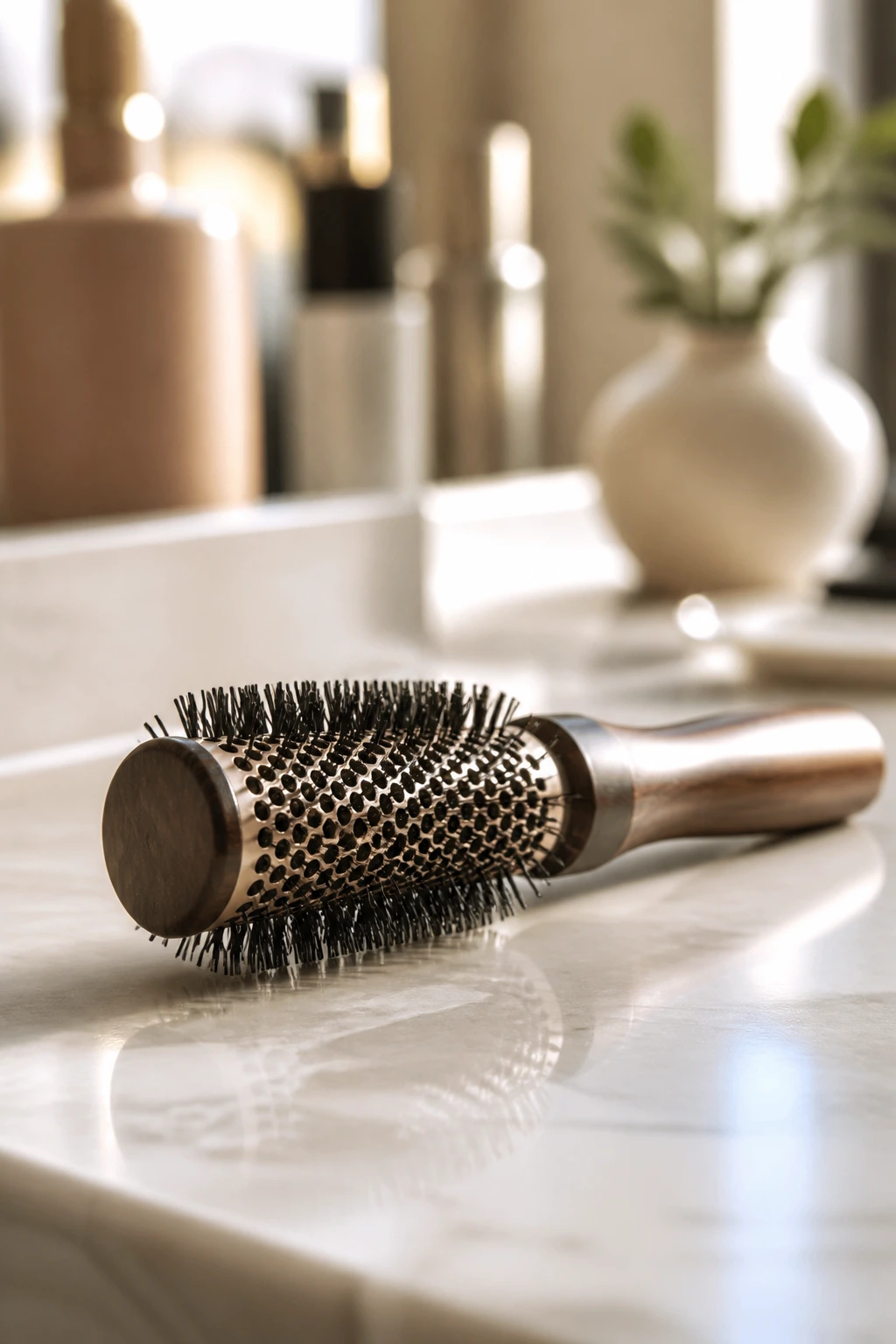
- Blow dryer with a concentrator nozzle: Directs airflow at the roots so the fringe dries where you want it, not where gravity sends it.
- Small round brush, 1 to 1.5 inches: Gives a light bend without creating a puffy curl at the ends.
- Tail comb: Helps you section the fringe cleanly and keep the center part straight if that’s the shape you want.
- Heat protectant spray: A thin mist is enough; the bangs are close to the face, so skipping this step is a bad trade.
- Lightweight texturizing spray: Useful for piecey or shaggy fringe, especially on second-day hair.
- Dry shampoo: Best used at the roots, not the ends. The ends need movement, not dust.
- Duckbill clips or sectioning clips: Handy while the hair cools, which is when bangs decide whether they keep their shape.
- Small flat iron: Optional, but useful for a tiny bend or a side sweep that needs one calm pass.
- Diffuser: Worth having if your fringe is curly or very wavy.
- Microfiber towel or T-shirt: Takes a little water out of the bangs without roughing them up.
What to Ask for at the Salon and What to Check at Home
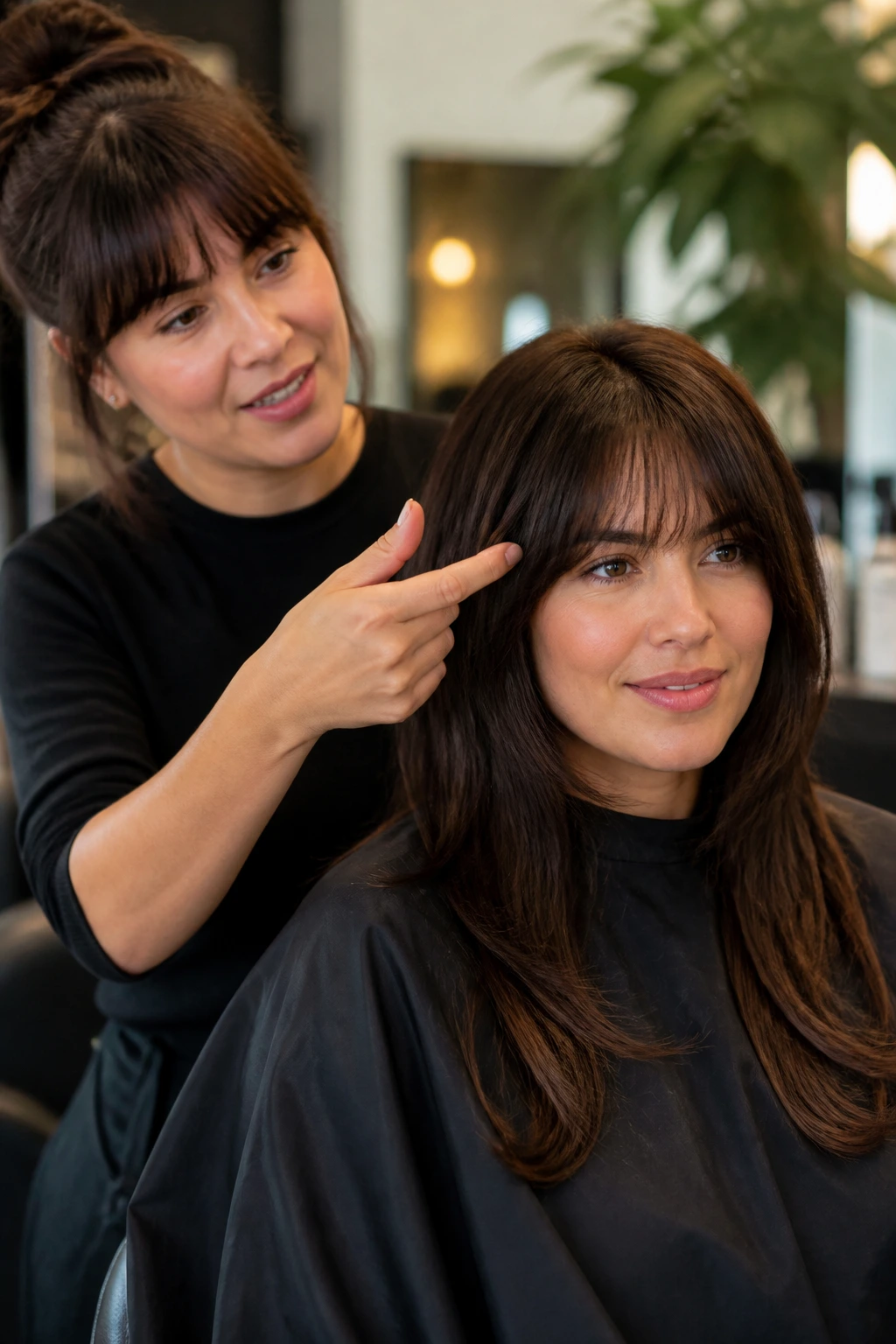
Bring pictures, sure. But bring two kinds: one that shows the length you want and one that shows the texture. Those are not the same thing. A photo of curtain bangs on pin-straight hair tells your stylist almost nothing if your own hair is coarse, wavy, or prone to sticking to the forehead.
The most useful words at the salon are plain ones. Say whether you style with a blow dryer, air-dry, or flat iron. Say whether your hair grows forward in the center, whether you wear glasses, and whether you want to trim often or live with a softer grow-out. Those details change the cut more than a celebrity reference does.
If your hair is thick, ask where weight will be removed. If it is fine, ask how the fringe will keep its body. If you have a strong cowlick, mention that before the scissors come out. A stylist can cut around these things, but only if they know they’re there. Silence is how bangs get into trouble.
How to Wear Soft Bangs Day to Day
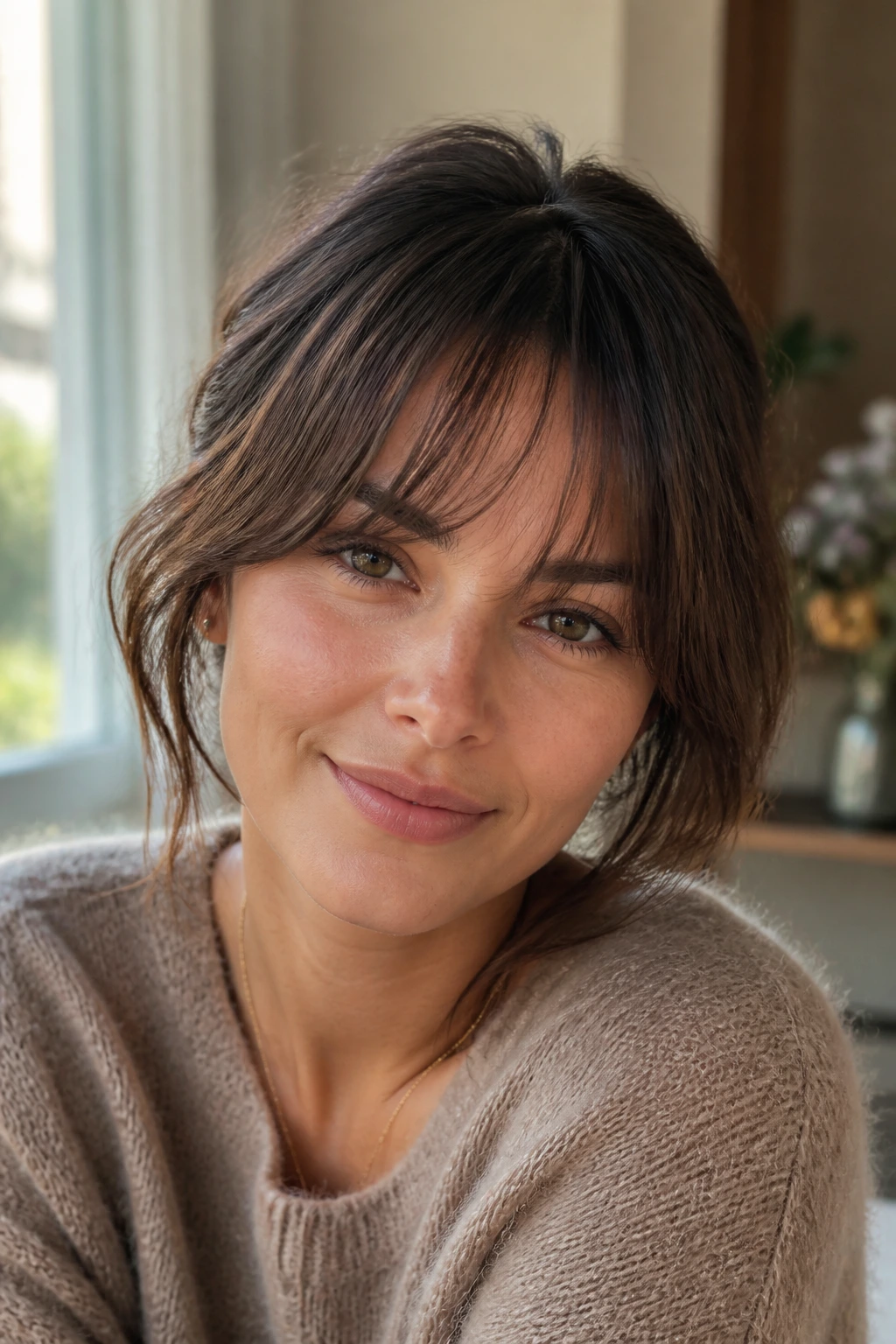
Placement: Keep the shortest part of the fringe near the brows or slightly above them, and let the corners travel longer toward the cheekbones. On a round face, that side length is doing real work. It gives the face a line to follow instead of stopping the eye at the forehead.
Pairings: Soft bangs look especially good with layers, lobs, shags, and shoulder-length cuts, because those shapes continue the movement started by the fringe. If the rest of the haircut is too blunt and heavy, the bangs can feel like a separate costume piece. I prefer a little connection from top to bottom.
Proportion: Crown lift helps. Not crazy volume. Just enough root height that the bangs do not collapse straight across the face by lunch. A small clip while the roots cool can make a bigger difference than another pass with the brush.
Finish: Decide whether you want polished, piecey, or brushed-out. Polished fringe looks neat and a little retro; piecey fringe feels modern and casual; brushed-out fringe reads soft and clean. Pick one on purpose. Accidental texture is where people start blaming their haircut when the real issue is just unfinished styling.
Additional Tips and Shape Boosters
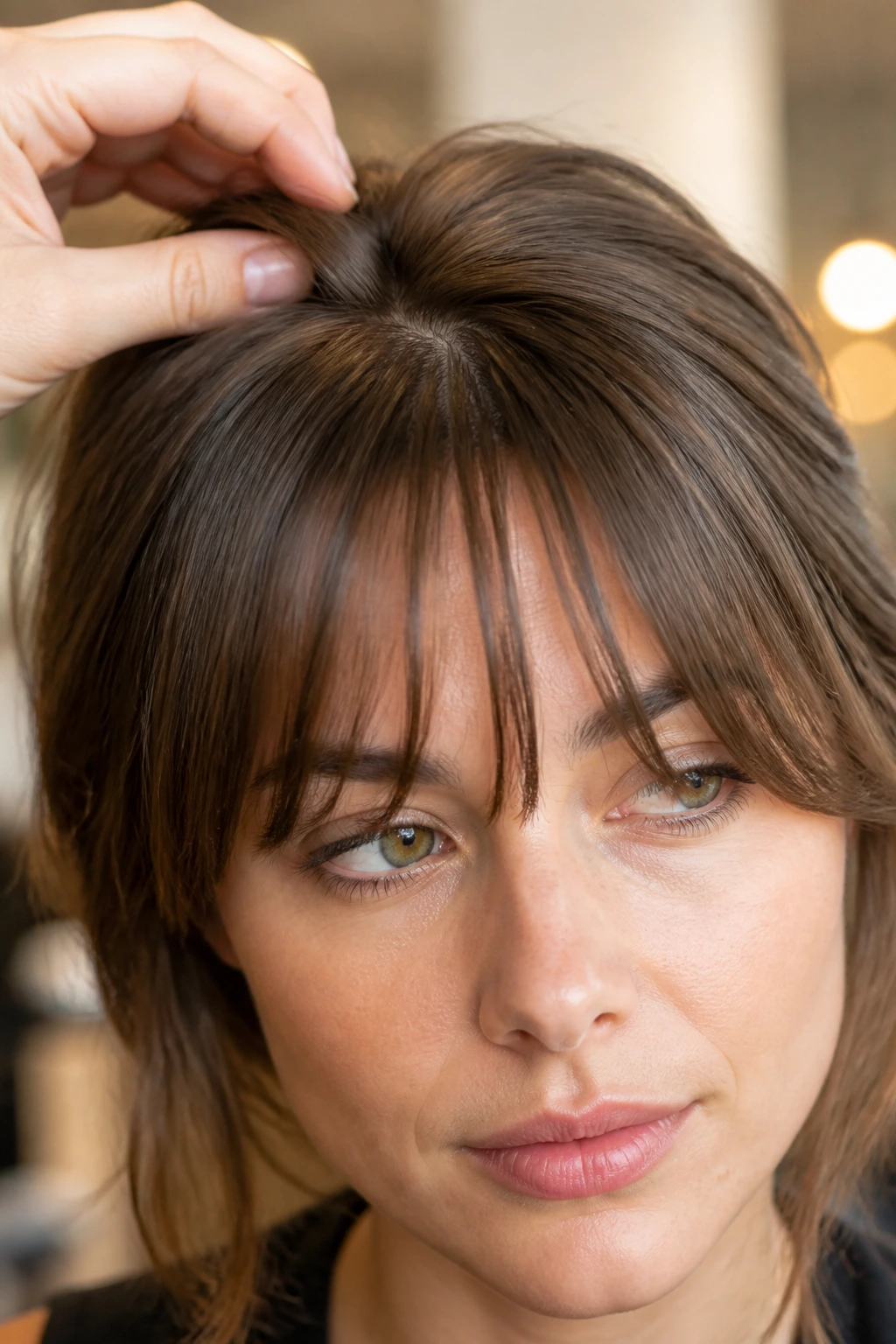
Root Lift: Dry the bangs forward first, then pull them slightly side to side with a round brush or your fingers. That tiny bit of motion at the roots keeps the fringe from lying flat across the widest part of the face.
Texture Trick: On piecey styles, use a pea-sized amount of matte pomade or wax only on the ends. Too much product at the roots makes the bangs sticky and narrow in the wrong way.
Fringe Rescue: If the bangs separate badly midday, mist them with water, re-dry for 20 to 30 seconds, and clip them back while they cool. Five minutes can reset a fringe that was going sideways for half the day.
Make-It-Yours: For fine hair, keep the center lighter and the corners softer. For thick hair, ask for internal removal of bulk so the fringe stays airy. For curls, length is your friend. For straight hair, bend matters more than density.
Keeping the Fringe in Shape Between Trims
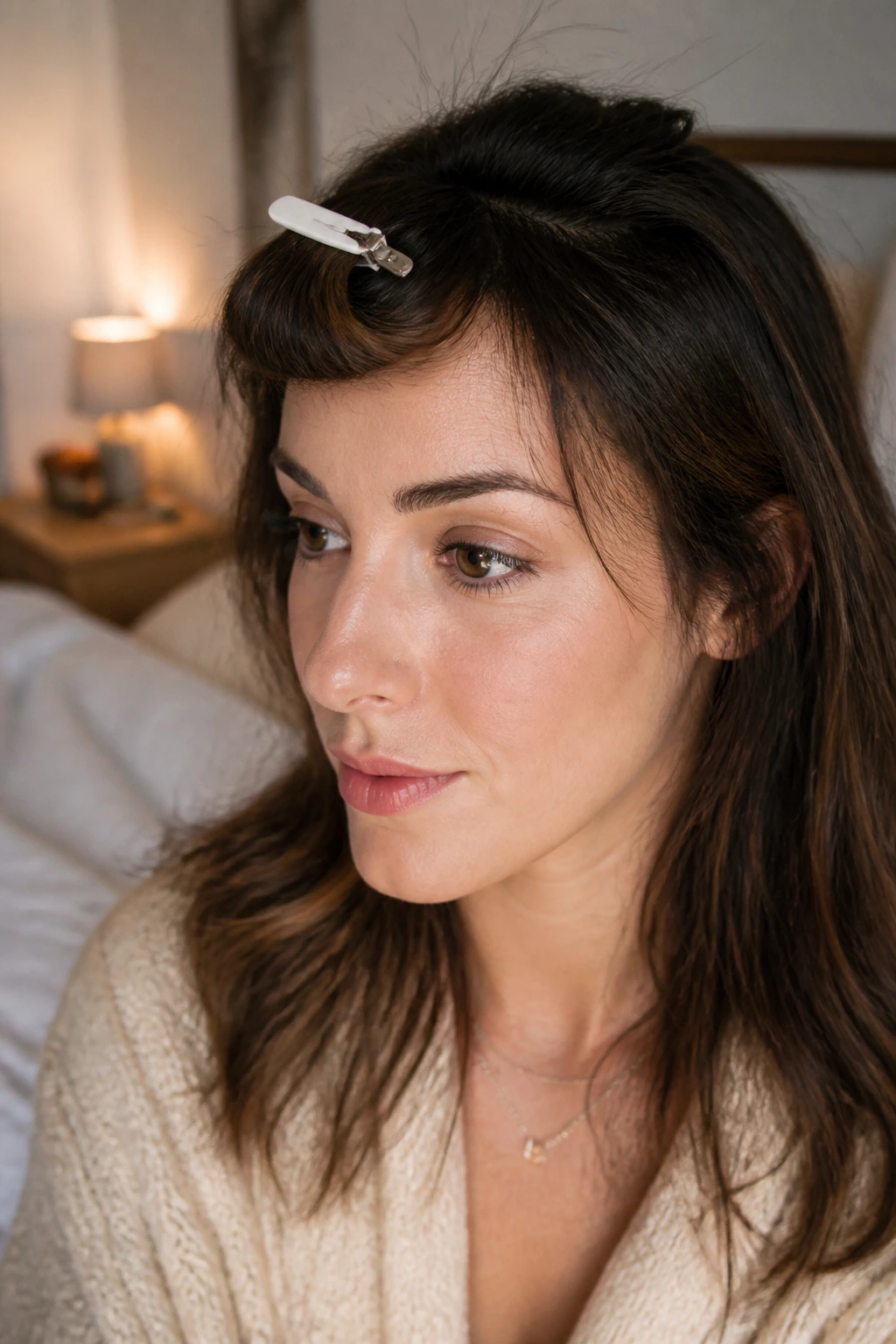
Soft bangs are forgiving, but they still need a little maintenance. If you wash your hair, dry the fringe first. Leaving bangs to air-dry on their own is how you end up with an odd bend that takes 40 minutes to undo later. A quick blow-dry at the root, even for 60 seconds, changes the whole morning.
Most people can stretch bangs for about 4 to 6 weeks before they start losing the intended shape, though longer, softer versions can go a little longer. If the fringe is shorter or more precise, expect to tidy it more often. At home, trimming tiny bits every few days is where people get into trouble. Don’t nibble at it unless you really know your hand. Bangs are brutally honest.
At night, clip the fringe loosely away from the face or pin it with a soft, flat clip if it tends to kinks. If you sleep hard on one side, a silk pillowcase helps keep the front from bending into strange shapes. Dry shampoo at the roots is better than over-washing the whole front section, especially if your bangs get greasy while the rest of your hair stays fine.
Variations and Adaptations to Try

Curl-Friendly Curtain: Leave the front longer and let the curl pattern decide the final shape. This is the better move when your hair shrinks a lot as it dries, because it keeps the fringe from springing up too high.
Fine-Hair Feather Fringe: Ask for a lighter density and more separation between pieces. This version keeps the forehead open and avoids that thin hair problem where every strand has to do too much.
Thick-Hair Airy Fringe: Build in internal weight removal and longer corners. Thick hair needs room to move, or the fringe turns into a block.
Glasses-Friendly Sweep: Keep the center shorter but not heavy, and let the sides angle away from the frames. That keeps the bangs from sitting on the lenses or hiding your eyes.
Low-Heat Air-Dry Fringe: Use a touch of mousse, clip the roots forward while the hair dries, and break up the ends with fingers. This is the easiest version for people who hate heat tools.
Grown-Out Mode: Ask for a shape that already blends into face-framing layers. Then, when the bangs grow, they do not become a separate problem. They just become longer layers.
Common Mistakes to Avoid
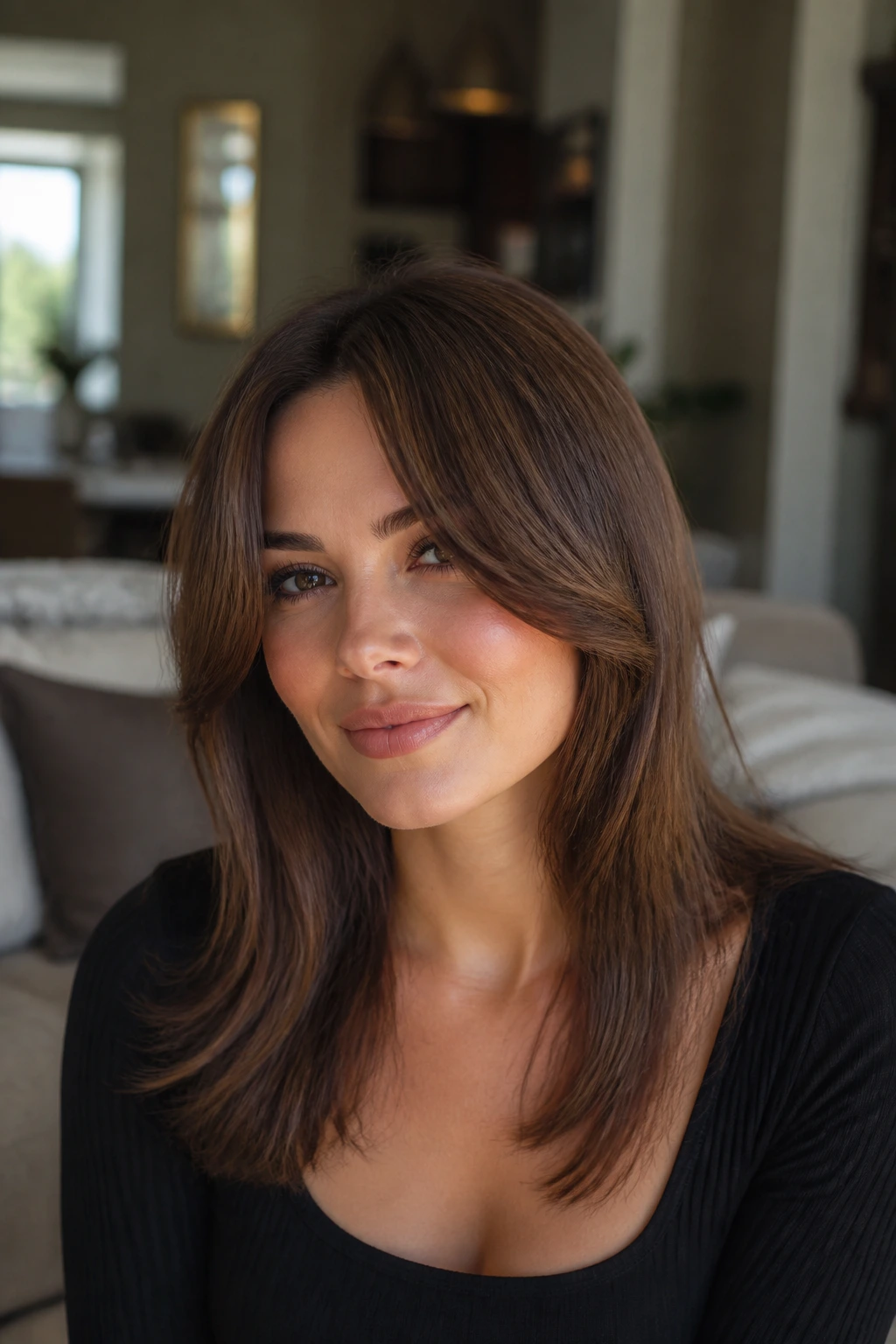
The first mistake is cutting the center too short. On a round face, that can make the forehead feel exposed in a way that throws the whole proportion off. Keep the shortest point near the brows unless your stylist has a very specific reason not to.
The second is making the fringe too dense. A thick, blunt bang can narrow the eyes and widen the face visually, which is the opposite of what most people want. Ask for point-cutting, internal removal, or softer separation if your hair can handle it.
Another common problem is ignoring your part and cowlicks. If your hair insists on splitting in one direction, fighting it every morning is a waste. Work with it. A soft side sweep or off-center curtain can save you from daily frustration.
The last big mistake is styling the bangs flat against the forehead. That kills the lift that helps a round face look longer. Give the roots a little air, even if the ends stay smooth. Flat roots and soft ends are a bad combo.
Frequently Asked Questions
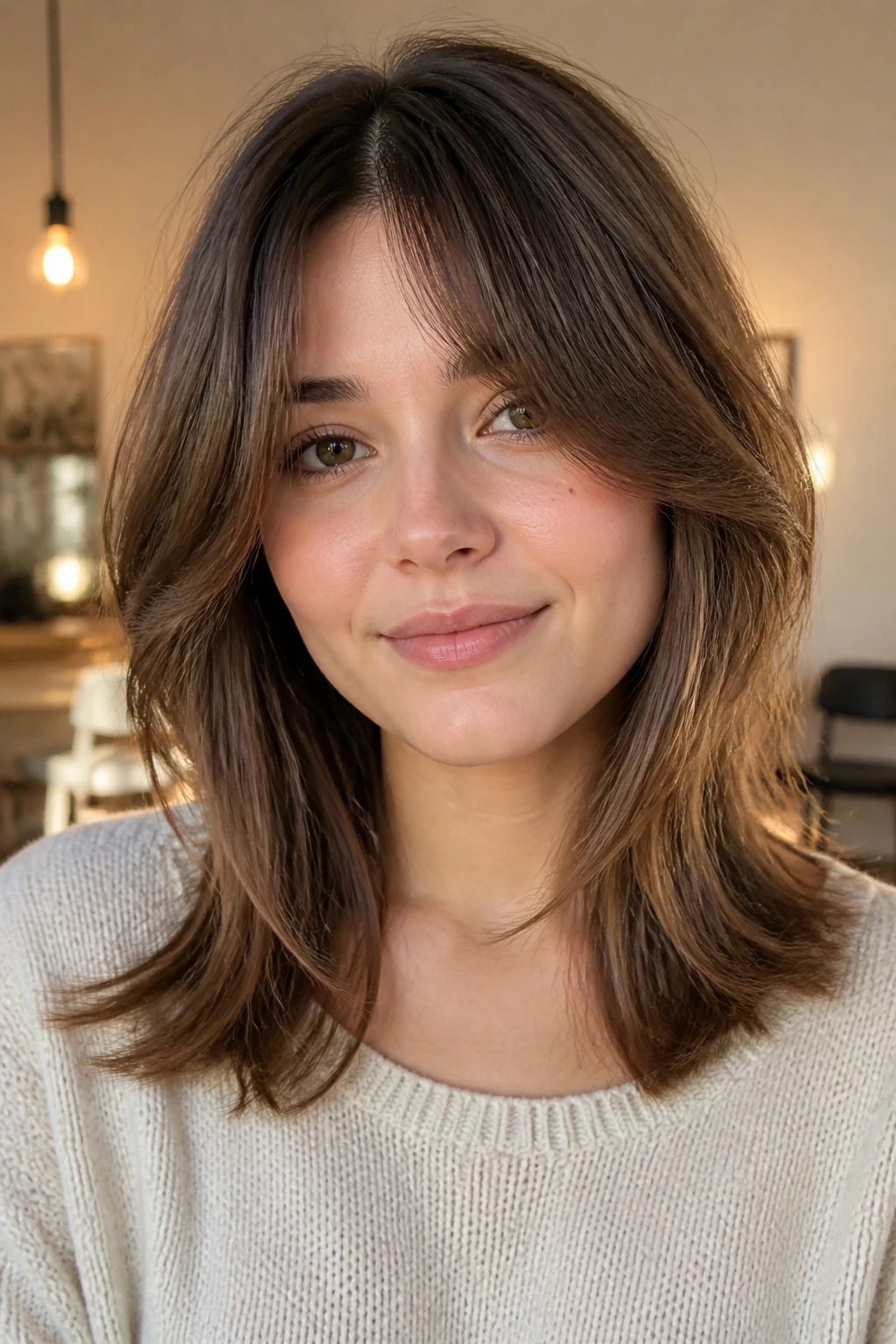
Which soft bangs make a round face look the longest?
Curtain bangs with longer corners, bottleneck bangs, and tapered side fringes tend to add the most length. They create vertical movement and keep the eye from stopping at the cheeks.
Are curtain bangs a good choice for round faces?
Yes, especially if the center stays light and the sides are long enough to frame the cheekbones. A heavy curtain cut can feel bulky, but a soft one is one of the easiest flattering shapes to wear.
Can round faces wear straight-across bangs?
They can, but the line usually needs to be softened or slightly arched. A hard, blunt edge across the forehead can make the face look shorter and wider than it really is.
Do soft bangs work on curly hair?
They do, but the cut has to respect curl shrinkage. Leave them longer, shape them dry or nearly dry, and avoid cutting them as if they were straight hair.
How often should soft bangs be trimmed?
Most styles look best with a trim every 4 to 6 weeks. Longer, softer versions can stretch beyond that, while shorter, denser fringes need tighter upkeep.
What if my bangs keep splitting in the middle?
That usually means your natural part or cowlick is stronger than the cut. Try a side-swept or split fringe on purpose instead of forcing a straight front.
Are soft bangs good if I wear glasses?
Yes, as long as the length sits above the frame or angles around it. Side-swept and soft curtain styles usually work better than heavy center bangs.
How do I style them on second-day hair?
A little water at the roots, a quick blow-dry, and a touch of dry shampoo is often enough. Don’t drown the fringe in product; that makes it cling and separate badly.
What if my hair is very thick?
Ask for internal weight removal and longer corners. Thick hair needs softness built into the cut, not just created with styling.
The Fringe Sweet Spot
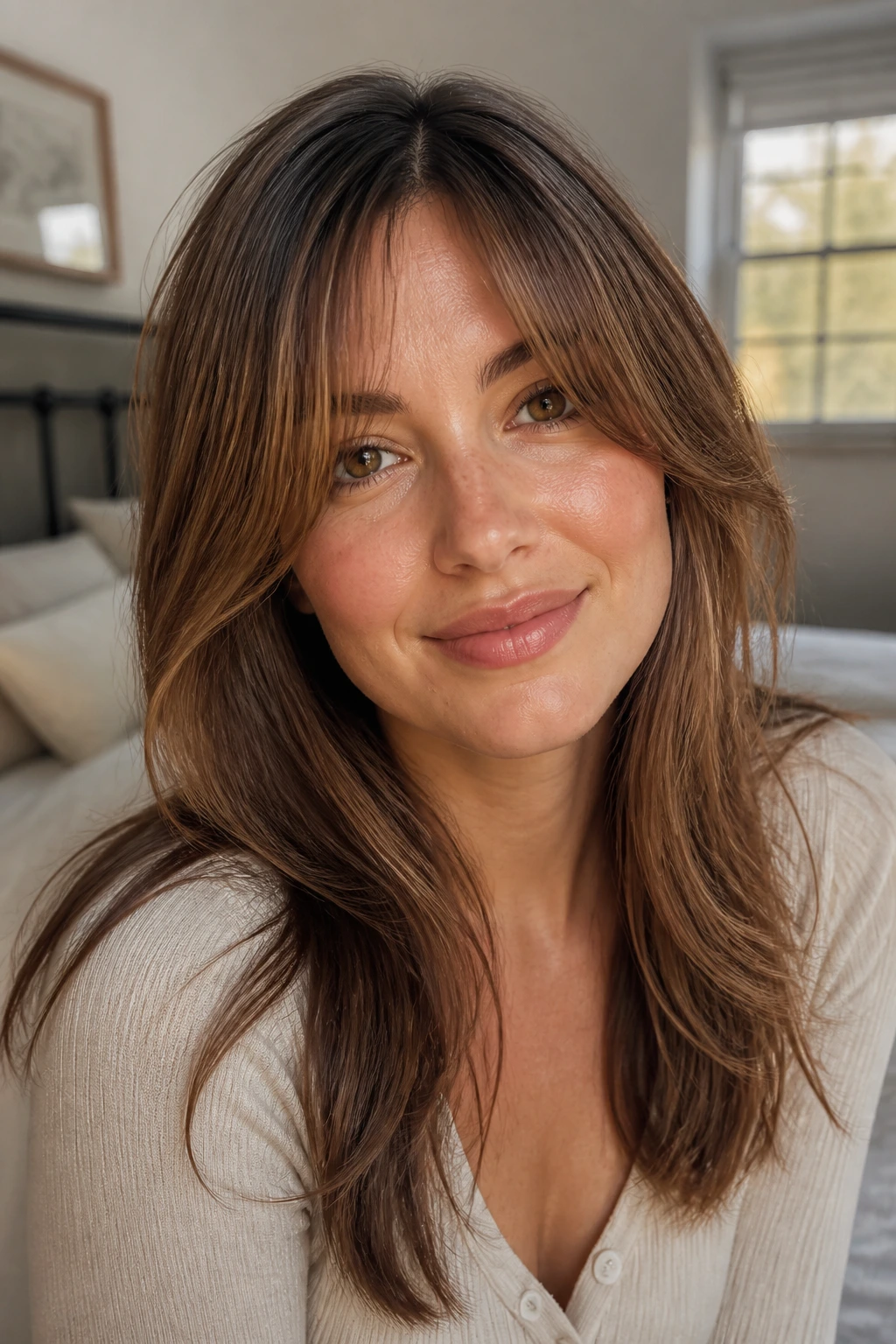
The best soft bangs for round faces do one job well: they change the direction of the eye without hiding the face underneath. That means light centers, longer corners, and enough movement to keep the cut alive after the salon chair has long been left behind.
If you remember only one rule, make it this one: start softer and longer than you think you need. Bangs can always be shortened. They cannot be uncut.
Pick the version that fits your texture, your styling habits, and your patience level. The right fringe should make mornings easier, not turn them into a negotiation with a round brush.
