



Wispy bangs are the haircut equivalent of soft light at the edge of a room: they change the whole mood without shouting about it. A blunt fringe can feel like a statement. Wispy haircuts with bangs feel like movement, air, and a little bit of ease—especially when the rest of the cut has texture built into it, not layered on as an afterthought.
The thing people get wrong is treating “wispy” as a vague aesthetic instead of a real cutting choice. It’s not just “thin bangs.” It’s a specific balance of density, length, and how the ends are broken up. Get that balance right and the fringe sits lightly on the forehead, opens up the face, and grows out without that awkward shelf most hard-edged bangs create. Get it wrong and you end up with stringy pieces that look accidental. That difference matters.
What makes this category so useful is how much it can do with very little hair at the front. A few soft pieces can make a bob feel less boxy, give long hair some structure, or stop a shag from swallowing the face. The best wispy fringe ideas are not one-note at all, and that’s where the real fun starts.
Why These Wispy Fringe Cuts Keep Working
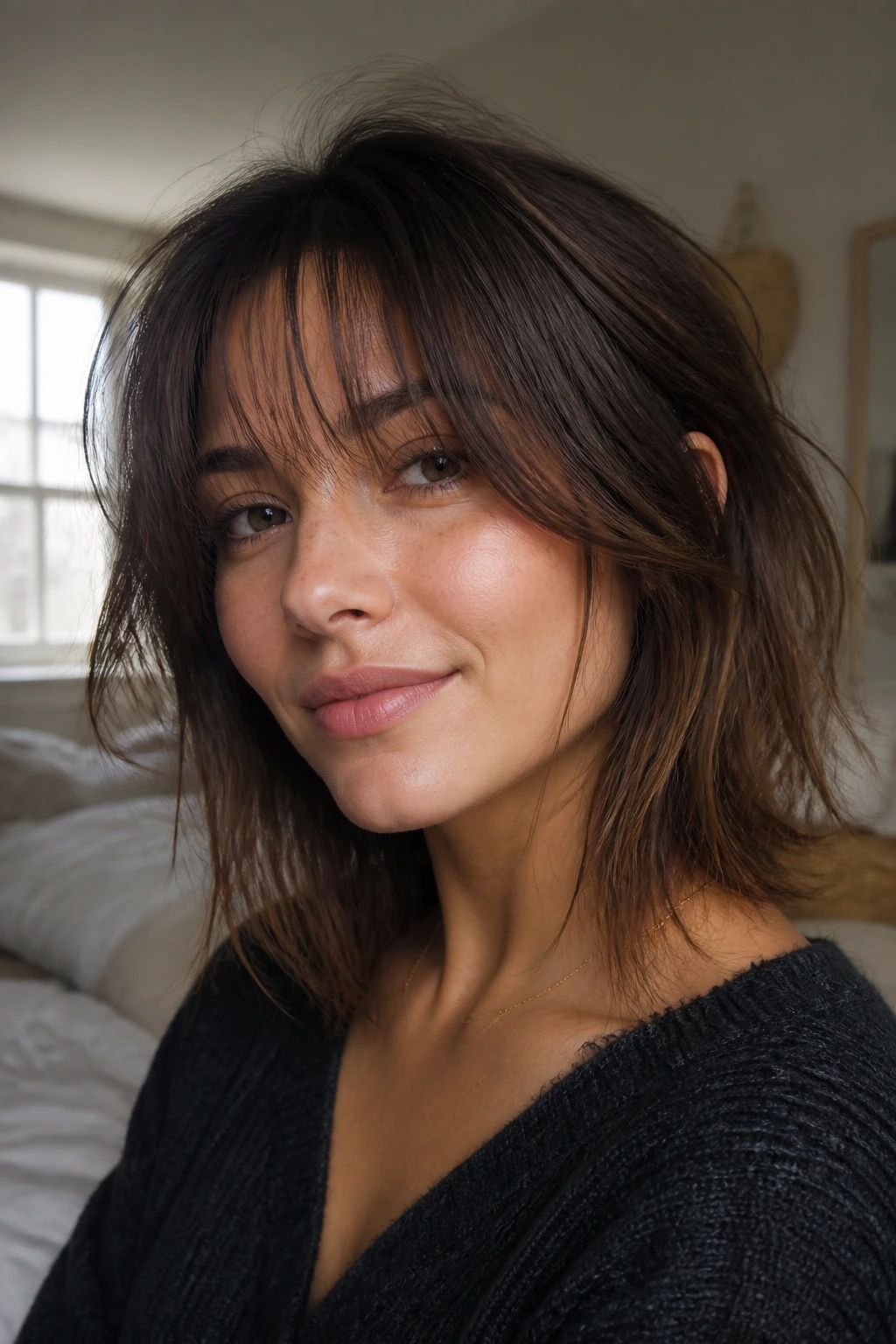
- They soften the front of the haircut fast: A few feathered pieces around the brow line can take the edge off a blunt silhouette without sacrificing shape.
- They grow out with less panic: Wispy bangs usually shift into face-framing layers instead of turning into a helmet-shaped problem.
- They work with movement, not against it: The whole point is a fringe that moves when you turn your head, tuck it behind your ear, or let it fall naturally.
- They suit more than one texture: Straight hair, waves, and curls can all wear a wispy fringe, but the cut has to respect the hair’s natural body.
- They give you a face-framing point of focus: The eye lands on the cheekbones, the eyes, or the jawline depending on where the shortest pieces sit.
- They’re easy to personalize: You can go curtain-soft, brow-skimming, side-swept, sliced, or nearly invisible and still stay in the same family.
1. Feathered Curtain Bangs on Long Layers
Feathered curtain bangs are the safest place to start if you want softness without losing control. The center sits a little shorter, usually around the bridge of the nose or just below the brows, then the sides drift longer and melt into the front layers. On long hair, that gives you movement near the face without making the whole cut feel busy.
Why this shape works
The long lengths behind the fringe do a lot of heavy lifting here. They keep the bangs from feeling too separate, which is the trap with a lot of first-time fringe cuts. The hair around the cheekbones gets a little lift, and the center stays light enough to split cleanly with your fingers.
Best for
- Oval and heart-shaped faces
- Hair that already has some bend or a loose wave
- Anyone who wants bangs but hates the feeling of a hard line across the forehead
A good curtain bang should open naturally when you blow-dry it away from the face. If you need to wrestle it flat every morning, it was cut too blunt or too short. Ask for point-cut ends and a soft center that can still part in the middle without gapping.
Small detail that matters: the shortest pieces should hit where your face opens up, not where your eyebrow ends. That extra inch can make the difference between “soft fringe” and “I regret this by lunch.”
2. Chin-Grazing Bob with Airy Fringe
This one has a little attitude. The bob lands at the chin, the fringe stays light, and the whole haircut has that clean, bright frame around the face that makes the eyes look sharper. It’s the kind of cut that doesn’t need much styling to look finished, which is useful because wispy bangs on a bob can turn fussy fast if they’re overworked.
What I like most here is the contrast. The bob gives you a defined perimeter, while the fringe keeps the front from looking too severe. That softness is doing real work. Without it, a chin-length bob can feel boxy, especially on finer hair that tends to sit flat around the jaw.
If your hair is thick, ask for internal removal near the bang line, not all over the crown. That keeps the fringe from puffing out like a little shelf when it dries. A round brush and a quick pass of the dryer are enough; you do not need to chase every strand into submission.
And yes, this cut looks best when the ends are a little piecey, not polished to death. A tiny bit of separation around the fringe keeps it airy. Too much smoothing product and it loses the point.
3. Shag with Piecey Brow-Grazing Bangs
Why do shags and wispy bangs keep showing up together? Because they solve each other’s problems. The shag gives the bang something to live inside, and the fringe keeps the shag from swallowing your whole face.
What makes it different
This version sits right at the eyebrow or just below it, with broken ends and uneven texture that feel intentional rather than fussy. The perimeter of the haircut is layered enough that the bang doesn’t read like a separate piece. It gets absorbed into the cut, which is exactly what you want if you like hair that looks better after a few bends and twists.
How to style it
Let the roots dry in the direction you actually want the fringe to fall. That sounds obvious. It isn’t. A shag with wispy bangs goes weird fast if you let the front dry straight down and try to fix it later with product alone.
Use a small round brush or your fingers, then pinch the ends while they’re still warm so they don’t fuse into a smooth curtain. You want little broken pieces around the eye line. Not doll hair. Not a sheet.
If you have dense hair, keep the bang section narrower than you think you need. That makes the fringe feel lighter and keeps the rest of the shag from getting overcrowded at the front.
4. Soft Pixie with Micro-Wisps
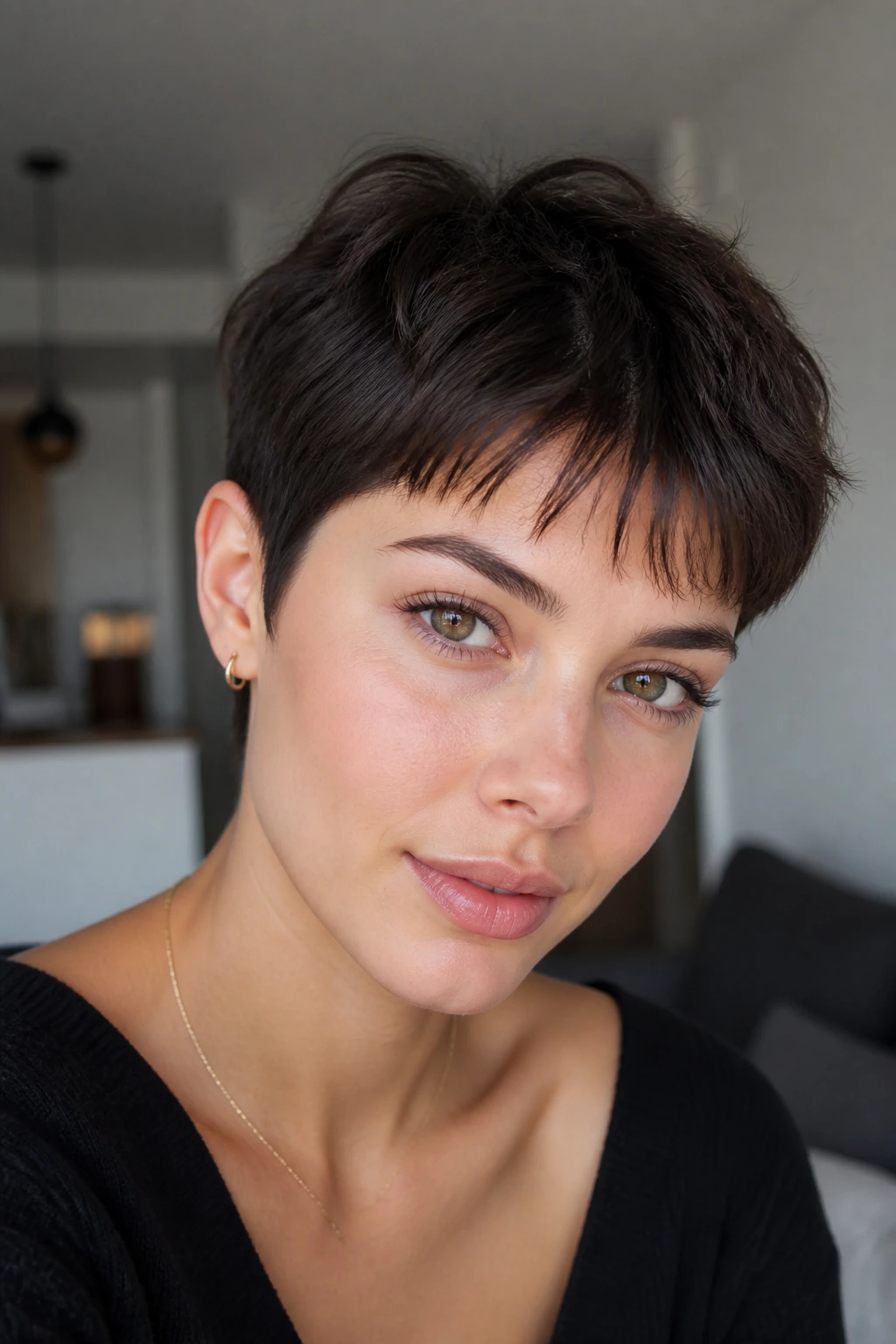
A pixie with wispy fringe is not for people who want to hide behind their hair. It is for people who want their features doing the talking. The cut works best when the top is short but not spiky, and the front has tiny feathered pieces that fall forward in a soft, broken line.
The key is restraint. Micro-wisps should skim the forehead, not sit in a solid strip across it. If the fringe is too thick, the whole pixie starts looking heavy on top. If it’s too thin, the shape can feel unfinished. Somewhere between those two is the sweet spot, and it usually lands around the center of the forehead or just above the brows.
This is a smart choice if your hair is straight or only slightly wavy. Very curly hair can do it, too, but the cut has to be made with shrinkage in mind or the fringe will bounce up far more than you expected. Ask for a soft, texturized front, not a blunt clipper line.
Best thing about this cut: it makes earrings and makeup do more work. The hair stays light around the face, so the whole look reads clean and sharp without being severe.
5. Collarbone Lob with Split Fringe
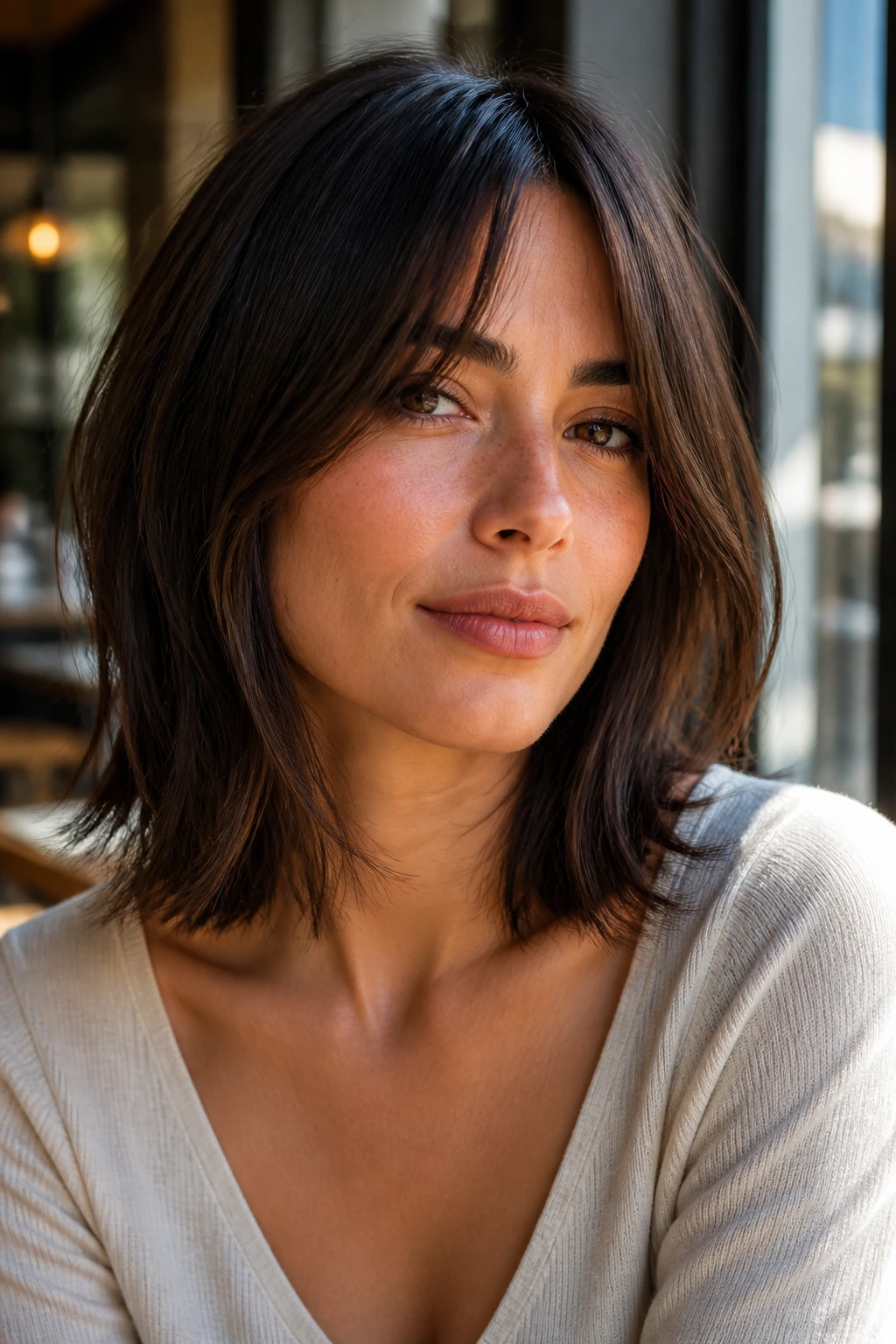
A collarbone lob is already one of the easiest lengths to live with, and the split fringe gives it enough shape that it doesn’t slump into generic shoulder-length hair. The front is long enough to tuck, twist, or center-part on lazy days. That flexibility is the real luxury here.
The split fringe should start soft at the nose or lip line, then drift into the front layers. If the center is cut too short, it starts behaving like baby bangs the second you bend over. If it’s too long, the bang disappears entirely and you lose the whole point of the style.
This is one of my favorite cuts for people who want a fringe but work in a setting where they may want to pin it back for part of the day. It behaves well with a clip, a tuck behind the ear, or a quick blow-dry using a flat brush. No drama. No overthinking.
On medium-density hair, a lob plus split fringe also gives you a nice visual break at the face. Without that front detail, the length can feel a little plain. With it, the haircut has shape even when it’s air-dried.
6. Butterfly Cut with Long Whisper Bangs
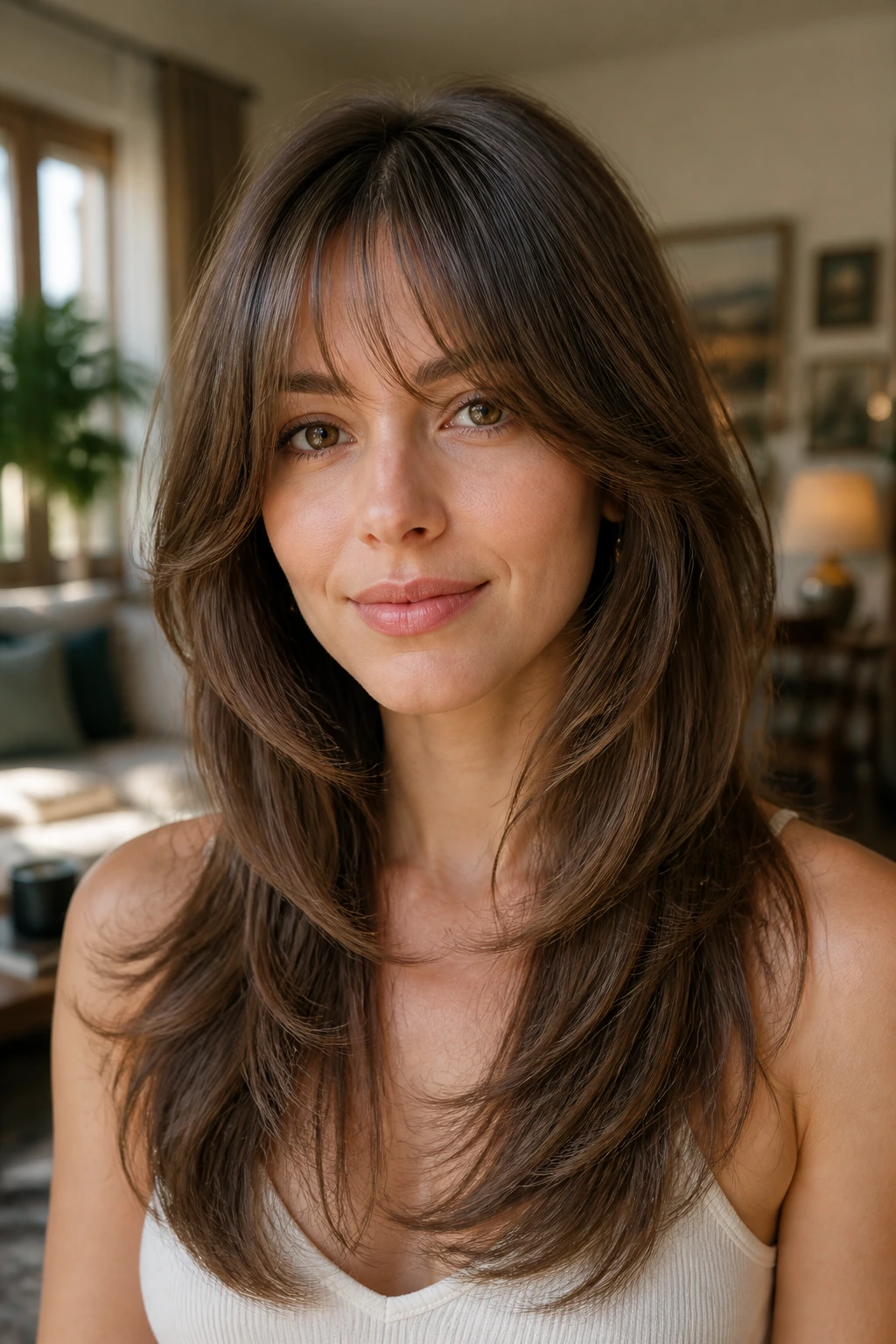
The butterfly cut and wispy bangs are cousins, not twins. The butterfly shape creates that lifted, layered effect around the face, while the long whisper bangs keep the front from turning into a wall of feathering. Together, they give you body at the cheekbones and softness at the forehead without chopping the length too hard.
Unlike a heavy fringe, this version stays long enough to vanish into the rest of the haircut. That matters. If you want volume at the front but still need the option to wear your hair back, long whisper bangs are the smart move. They can live in the middle part, drift to one side, or sit open like a curtain that never fully commits.
What to tell your stylist
Ask for face-framing pieces that start around the chin and a bang section that is texturized at the ends, not thinned through the middle. The middle of the fringe needs enough weight to lie flat. The edges are where the softness should happen.
This cut is especially good if your hair is thick at the ends but flatter at the crown. The layered shape gives the illusion of more lift while the wispy front keeps it from feeling bulky.
7. Wavy Wolf Cut with Sliced Fringe
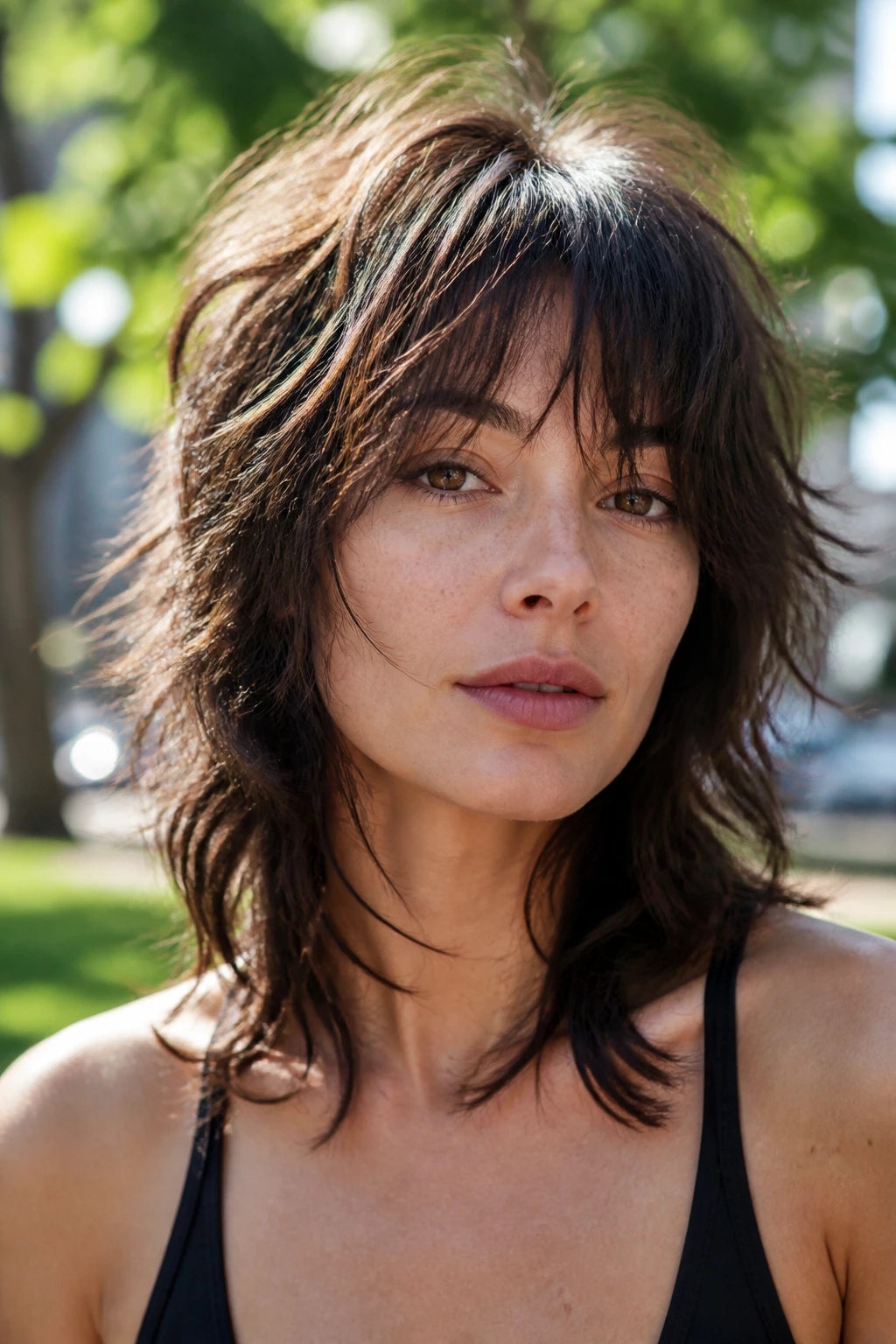
The wolf cut already lives on the wild side, so the fringe has to keep up. A sliced bang works here because it breaks the front into thinner pieces instead of one heavy curtain. On wavy hair, that means the fringe can move with the natural bend instead of fighting it.
The best version of this cut feels uneven in a good way. The shorter pieces land near the eyebrows, the longer ones hit closer to the cheekbones, and the rest of the cut swirls around that. It is messy, but not random. That distinction matters more than most people think.
This cut likes a little grit. A light mousse at the roots and a touch of wave spray through the mids are enough. Don’t drown it in cream. Too much softness makes the sliced fringe collapse into strings that stick to the forehead.
If your wave pattern is loose and your hair is medium to thick, this is a strong option. It gives you edge without requiring the full commitment of a mullet or a razor-heavy shag.
8. French-Girl Crop with Soft Brow-Skimming Bangs

This is the chic little haircut that looks better when it’s not trying too hard. The crop sits above the collarbone or closer to the jaw, and the bangs skim the brows with a soft, lived-in finish. The result feels relaxed but controlled, which is harder to do than it sounds.
A lot of people think this look only works on perfectly straight hair. It doesn’t. It works best on hair that has a tiny bit of bend, because that slight movement stops the fringe from looking pasted on. Blow-dry the bangs forward first, then split them with your fingers while they’re still warm. That tiny move opens the face immediately.
The crop itself should have enough internal layering to prevent the silhouette from going square. If the cut is too even, the fringe becomes the only interesting part, and that’s where things get lopsided. A slightly tapered nape and soft ends keep the whole shape balanced.
This style shines on smaller face shapes, but I’ve seen it look excellent on longer faces too when the fringe is kept a touch fuller. The difference is a few millimeters. Haircuts often live in those millimeters.
9. Bouncy C-Cut with Tapered Fringe
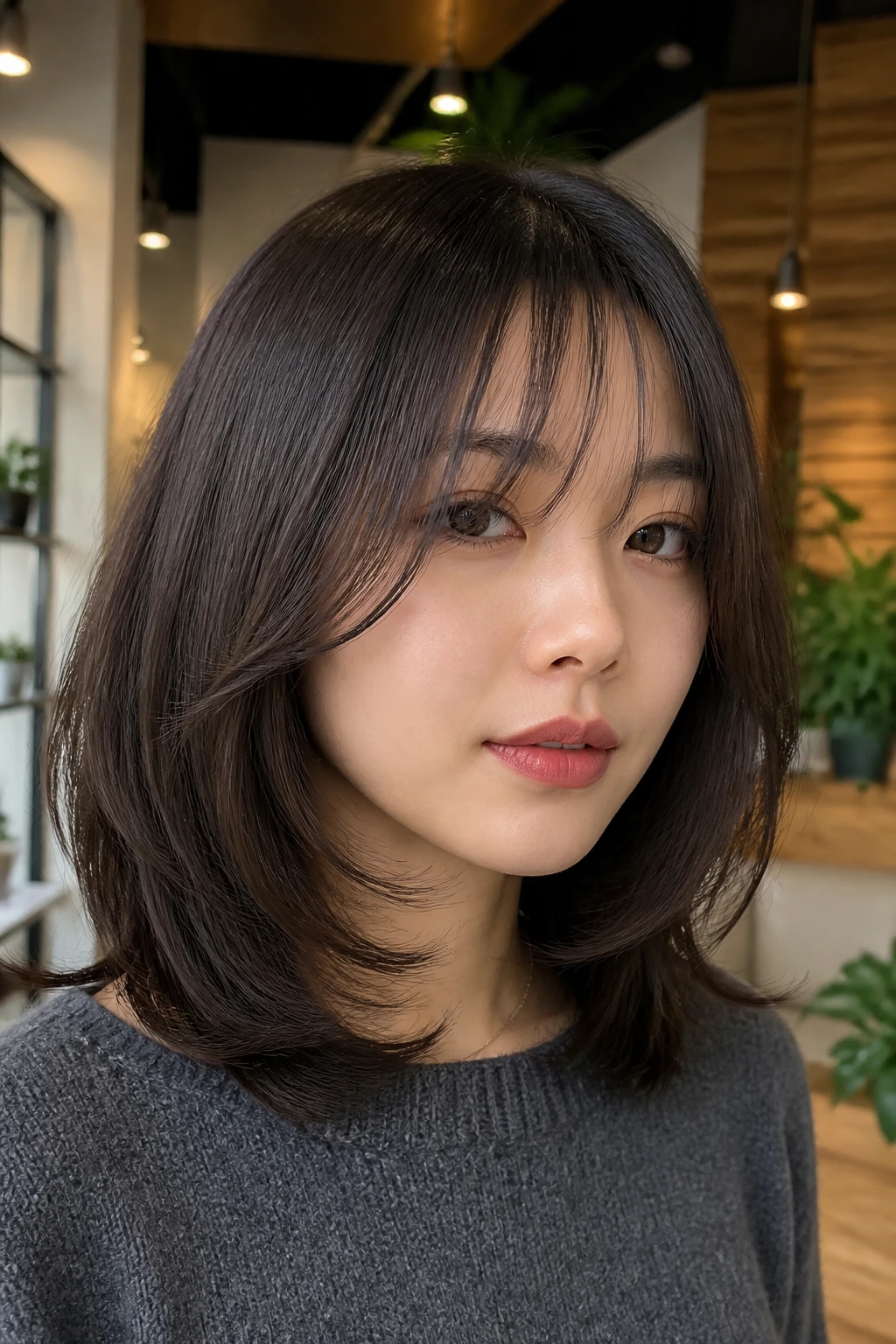
A C-cut curves inward toward the face, and that bend is what makes tapered fringe feel so easy here. The front layers sweep back in a soft arc, so the bangs don’t have to do all the work on their own. They can just sit there and blend.
The tapered fringe should be longer at the temples and lighter toward the center, or the other way around if you want a little more openness in the middle. Either way, the point is to avoid a square edge. A straight-across fringe will fight the shape of the cut and make the whole thing feel stiffer than it should.
This is one of the better wispy haircuts with bangs for medium-density hair that tends to puff outward. The inward curve of the C-shape reins in volume without flattening everything down. It’s a smart compromise, and I’m a fan of those when they’re done cleanly.
If you wear your hair blown out, this one really shines. The ends curl under just enough to frame the jaw, and the fringe follows that same softer motion. It’s one of those cuts that looks like you spent longer on it than you actually did.
10. Long Straight Hair with See-Through Bangs
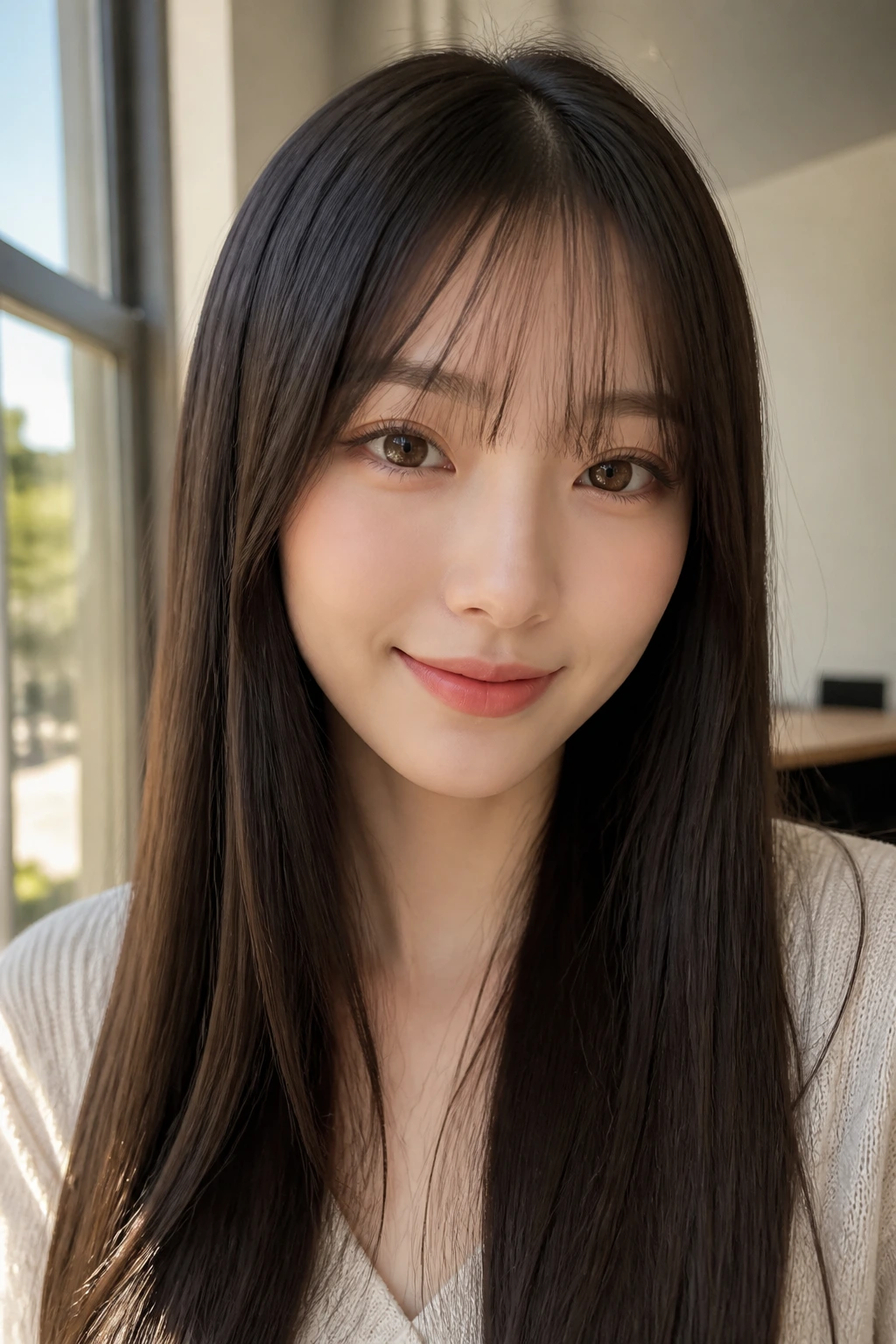
Can long, straight hair still feel soft at the front without layers everywhere? Yes, if the bangs are cut lightly enough. See-through bangs are the answer when you want face framing but don’t want to lose the clean line of long hair.
The trick is density. You leave enough forehead visible that the fringe doesn’t become a curtain. The hair should fall in delicate strands across the brows, not cover them fully. That little bit of transparency keeps the look airy and prevents the front from swallowing the face.
How to wear it
See-through bangs are at their best when the rest of the hair is glossy and smooth, but not pin-straight. A small bend at the ends makes the fringe look intentional instead of sparse. Dry shampoo at the roots helps if your hair gets flat fast; just don’t pile on texturizing powder at the fringe itself or the whole thing goes chalky.
This cut is a strong choice for people with fine hair because it gives the illusion of a fuller fringe without demanding a lot of density. It also grows out gracefully, which is a relief if you don’t want to trim every few weeks.
11. Razor-Cut Midi with Face-Framing Fringe
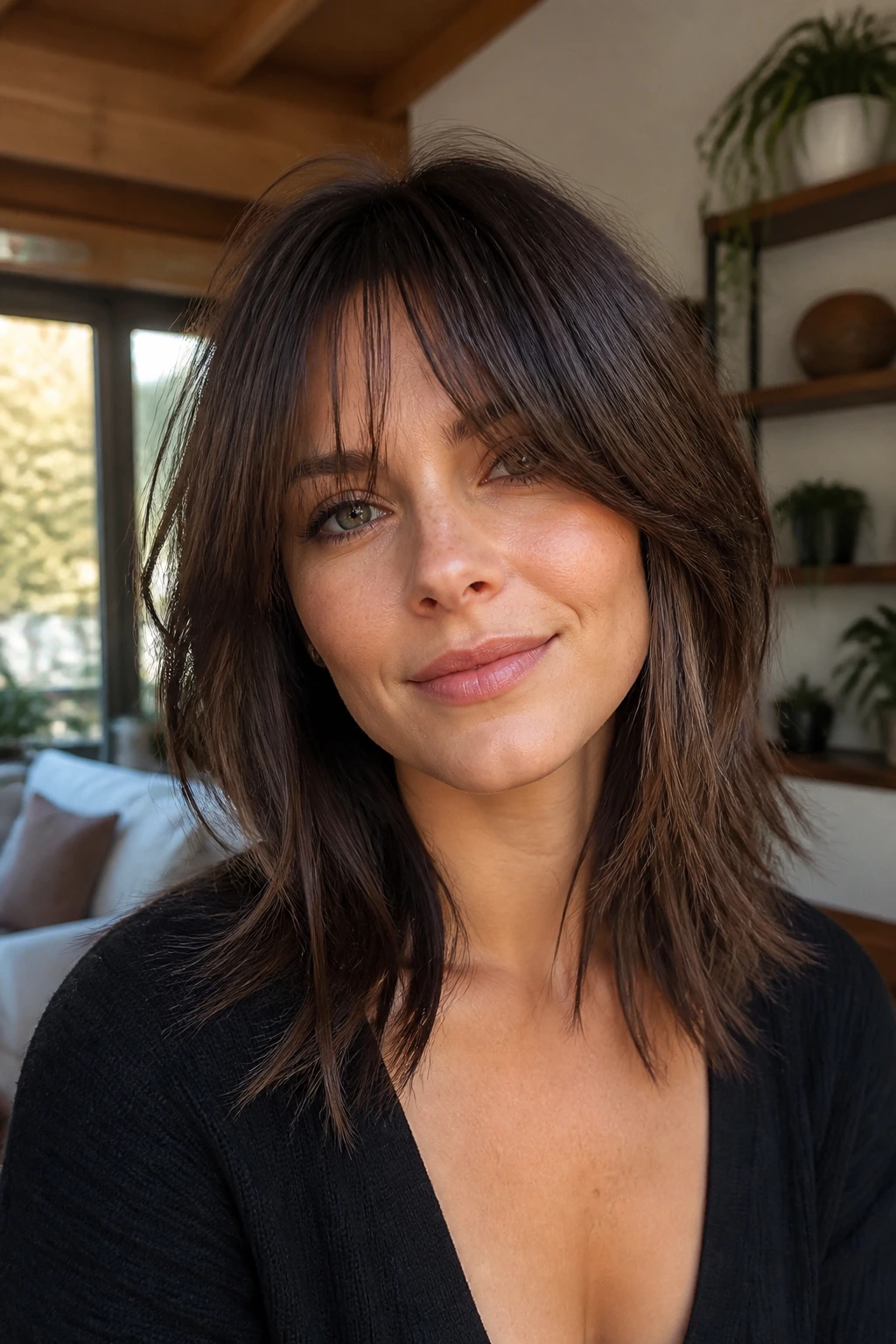
A razor-cut midi has a certain edge to it, and the fringe should match that edge without getting choppy for the sake of it. The razor softens the perimeter, especially around the collarbone, while the face-framing fringe keeps the front from feeling blunt. Done well, the cut looks airy but still has shape.
This is not the haircut to choose if your hair is already fragile or very prone to split ends. Razor work can make the texture look beautifully broken up, but it also exposes weakness fast. Thick or medium hair with some healthy density tends to wear it best.
The front should start near the cheekbones and drop into the rest of the layers with a quiet curve. If the pieces are cut too short near the temples, the shape can go a bit ragged around the face. Keep the shortest pieces soft, not spiky.
I like this cut on hair that naturally dries with a little swing. The razor gives it movement, and the fringe acts like a frame rather than a feature floating in space. That balance is what makes the midi feel intentional.
12. Curly Shag with Soft Curled Bangs
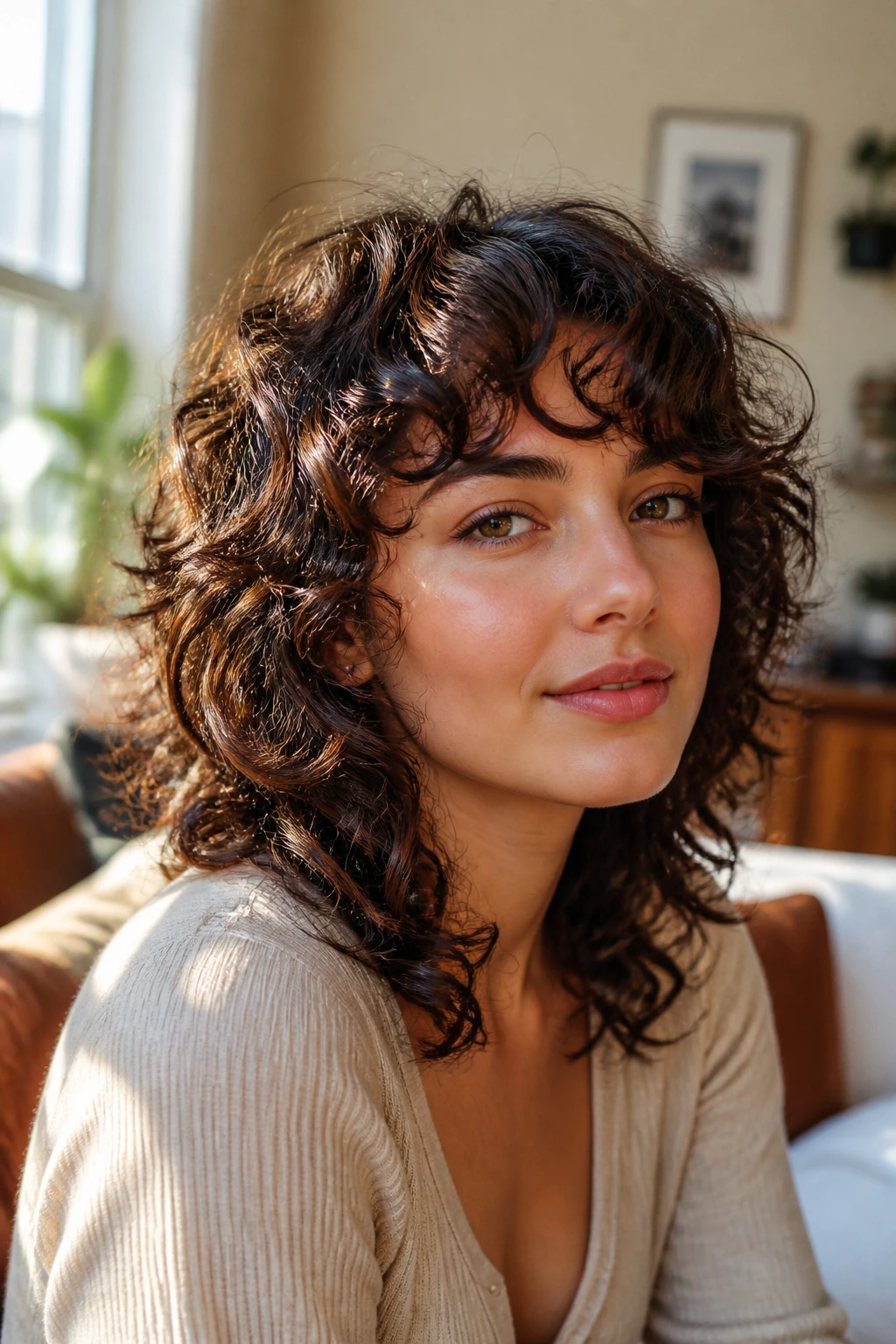
Curly hair and bangs are a good pair when the cut respects the curl pattern instead of flattening it. A curly shag with soft curled bangs lets the fringe spring into place rather than hanging like an afterthought. The result is lively, not puffy, if the shape is cut correctly.
The bangs should be left a bit longer than a straight-hair bang because curls shrink. That sounds obvious, but it gets ignored constantly. A curl that lands at the brow when wet may spring to a full inch above it once dry. If you want softness, not surprise, the cut has to account for that bounce.
This shape looks best when the layers around the face are deliberate and not over-thinned. You want the fringe to blend into the upper layers so there isn’t a hard separation between “bang” and “hair.” A dry cut is often the cleaner route here because the curl pattern can be seen in its natural shape.
A little curl cream goes a long way. Too much product weighs the bangs down and makes them stringy at the ends. If you’ve ever watched a curly fringe go flat in the middle and explode at the sides, you know exactly why restraint matters.
13. Blunt Bob with Airy Edge Bangs

A blunt bob sounds severe until you give it a fringe that can breathe. Airy edge bangs loosen the front so the bob doesn’t feel like one solid block of hair. The contrast is the whole appeal: a clean perimeter below, soft movement above.
This cut works best when the fringe is not over-thinned. People hear “airy” and think “take out a lot of hair.” Not quite. You want lightness at the ends, yes, but you still need enough density for the bangs to lie smoothly. Otherwise they split weirdly and look sparse instead of soft.
The bob itself should sit at the jaw or just below, with a crisp line that makes the face look a little more sculpted. The fringe can then break up that line without undoing the shape. That is what makes this combo feel fresh instead of fussy.
It’s a strong option for straight or slightly wavy hair, especially if you like haircuts that look polished with minimal fuss. One pass with a flat brush, a quick bend at the ends, and you’re done. Anything more can make it lose that clean, easy edge.
14. Soft Mullet with Feathered Fringe

The soft mullet is for people who want movement and a little rebellion, but not a hard-edged throwback. The feathered fringe keeps the front from looking too aggressive. Without it, the cut can tip into costume territory. With it, the whole thing feels modern and worn-in.
The key is keeping the bangs longer at the corners of the forehead and lighter in the middle. That shape helps the fringe break into the rest of the cut instead of sitting as one blunt curtain. It also gives you room to style the front to either side if you decide you’re not in the mood for a center part.
This cut really likes texture spray and a loose finger-dry. If you smooth it too much, the shape gets lost and the mullet lines become obvious in a bad way. A little roughness is your friend here.
Good for: medium to thick hair, wavy texture, and anyone who likes shape that changes a bit from day to day. If you want consistency and neatness every morning, this is not the cut for you. If you like hair that has a pulse, it’s a strong one.
15. U-Shaped Layers with Romantic Wisps
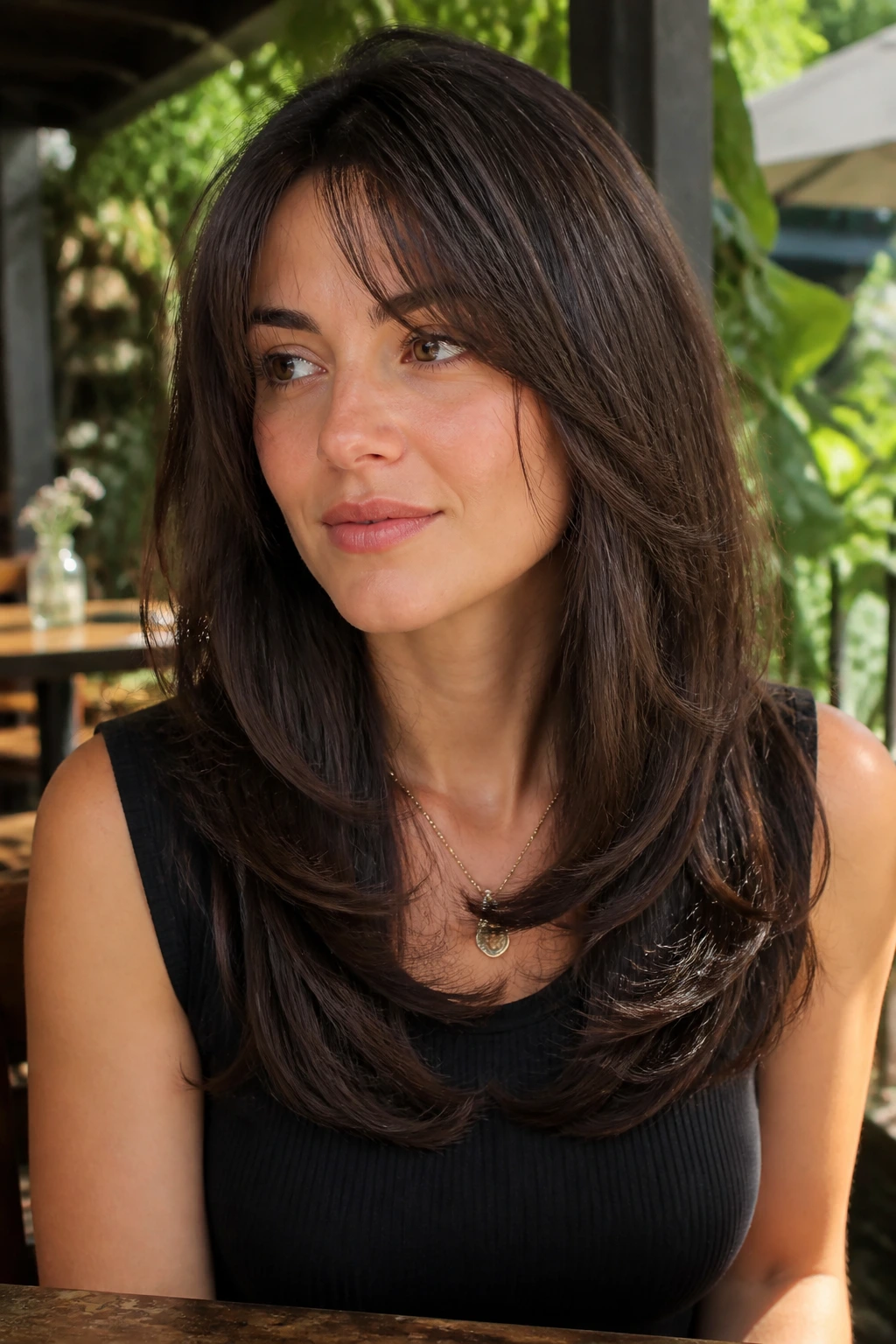
U-shaped layers are underrated because they keep the length looking lush without creating a hard edge. Add romantic wisps at the front and the whole haircut feels softer around the face, almost like the hair is moving on its own. It’s the kind of shape that looks simple from the outside and carefully considered up close.
The wisps should not be too short. Let them hang near the cheekbones or just under the eyes so they can merge with the front layers. That length keeps the cut from reading as “bangs plus long hair” and pushes it into a more blended, graceful place.
This is especially nice on hair with medium density and a little natural wave. The U-shape gives the back some fullness, while the wisps break up the front in a gentle way. It’s not dramatic. That’s the point.
If you wear your hair up half the time, these wisps are useful because they still do something even in a loose clip or a low knot. They fall out around the face in a way that feels deliberate, not messy. That matters more than people admit.
16. Side-Swept Wispy Bangs on Medium Length
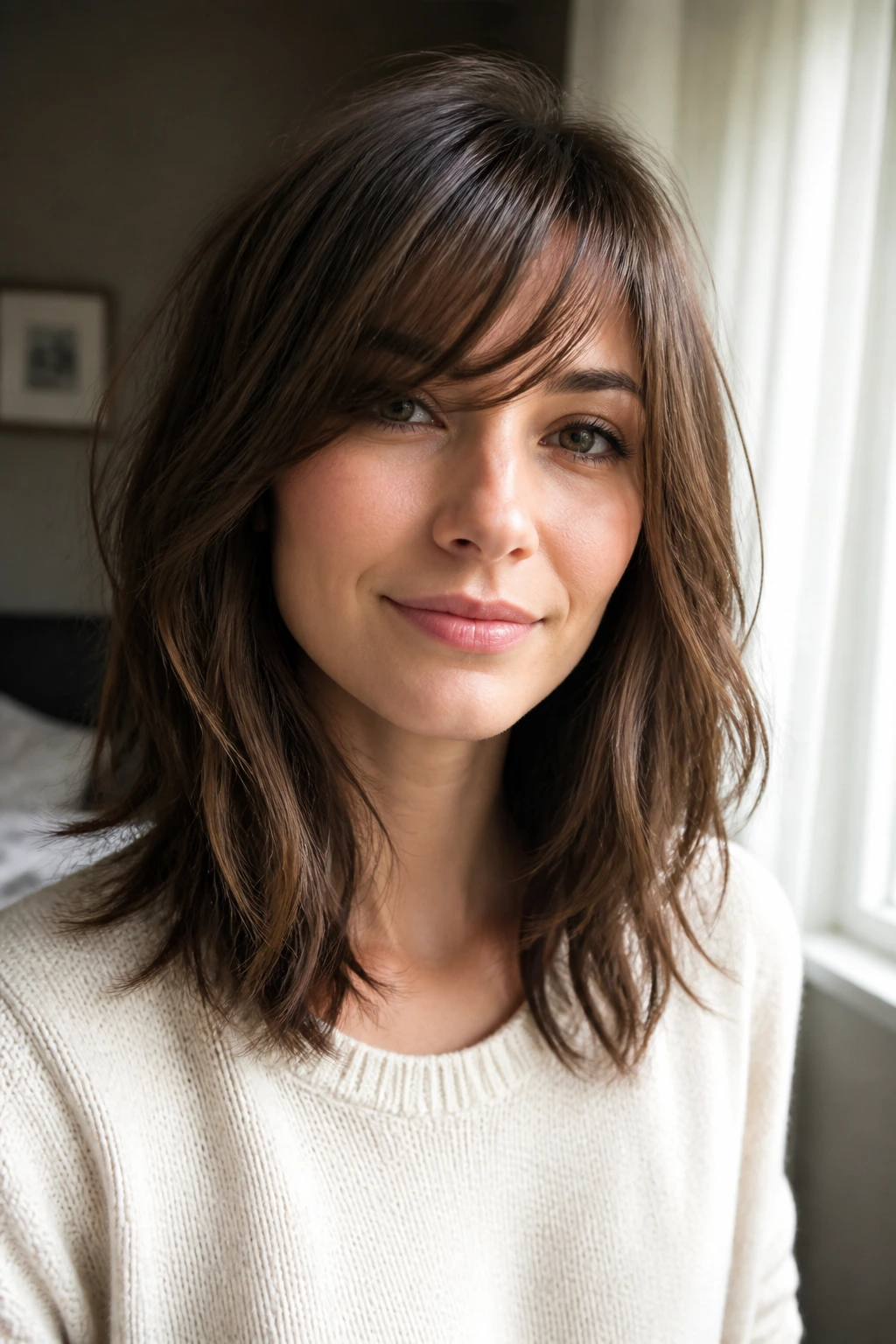
Side-swept wispy bangs are the classic “I want fringe, but I need options” answer. They don’t block the face, they don’t demand a perfect center part, and they tend to behave even when the weather or your schedule refuses to cooperate. On medium-length hair, they add shape right where the haircut can use it most.
Why this version stays practical
The sweep softens the forehead and draws the eye diagonally, which is helpful if your face shape feels a little long or angular. It also plays nicely with layers that stop around the collarbone. The whole look feels open rather than boxed in.
A good side-swept bang should have enough length to tuck behind the ear on one side and still fall forward on the other. If it’s too short, it loses the sweep and starts sitting like a random fringe. Too long, and it just becomes a front layer.
Best styling move
Dry the bang section in the opposite direction first, then sweep it across once it’s mostly dry. That gives the root a little lift without making the front puffy. A light touch of hairspray at the roots is enough. Heavy product will make the sweep collapse.
17. Shoulder-Length Cut with Bottleneck Bangs

Bottleneck bangs are having a long run because they solve a real problem: how to get a fringe that feels soft near the center and easy near the sides. On shoulder-length hair, they sit beautifully because the haircut has enough length to balance the slightly fuller center section.
The bang usually starts a touch shorter in the middle, then widens and elongates near the cheekbones. That shape is flattering because it frames the eyes without pretending the forehead doesn’t exist. I like that honesty. It feels more modern than a heavy curtain and less predictable than a side-swept fringe.
Shoulder-length hair gives this bang room to breathe. If the cut were much shorter, the bottleneck shape could feel too busy around the face. At this length, it blends into the rest of the layers and lets you pin pieces back if needed.
Use a round brush or even a bent finger-dry to shape the front. You do not need a perfect blowout. A slightly undone finish actually suits bottleneck bangs better than a glassy one.
18. Tousled Lob with Brushed-Open Bangs
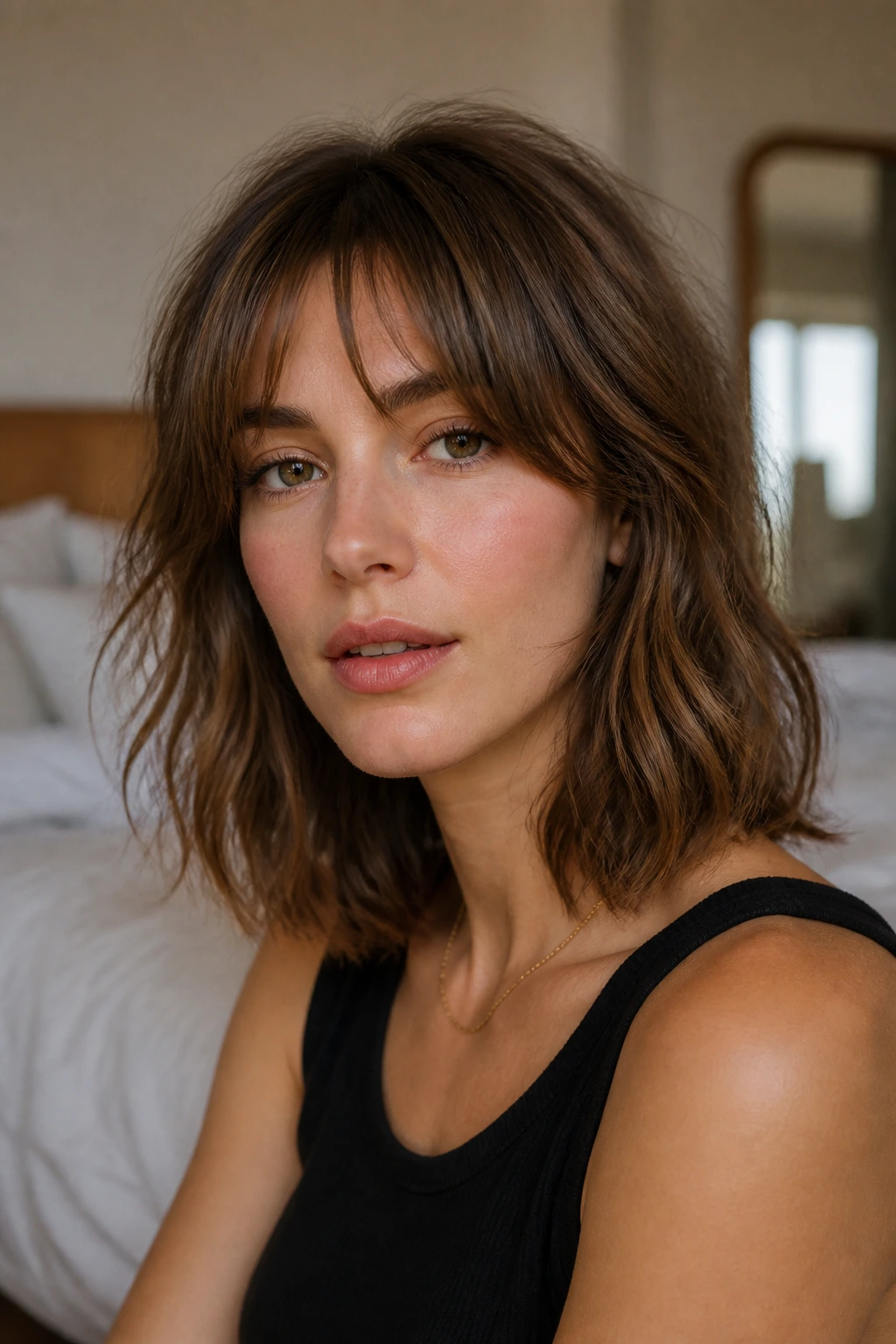
This is the haircut that looks like you ran your fingers through it three times and somehow got it right. The lob lands at the collarbone, the bangs are brushed open so they split softly, and the whole thing sits in that sweet spot between neat and undone.
What makes it work is the open fringe. Instead of a dense center, the bang is trained to separate, which keeps the forehead from feeling boxed in. That means the lob can stay low-key while still having some personality at the front. It’s a good cut for hair that leans slightly wavy, because the natural bend helps the fringe fall into two soft pieces.
A bit of root lift at the front helps a lot. Use a round brush or a small Velcro roller while the hair is warm, then let it cool before touching it. If you handle it too soon, the bang drops flat and loses the open shape.
This style is one of the easiest to dress up or down. Tucked behind one ear, it feels casual. Smooth the front and it reads cleaner. The haircut gives you room to change the mood without changing the shape.
19. Layered Razor Pixie with Grown-Out Fringe
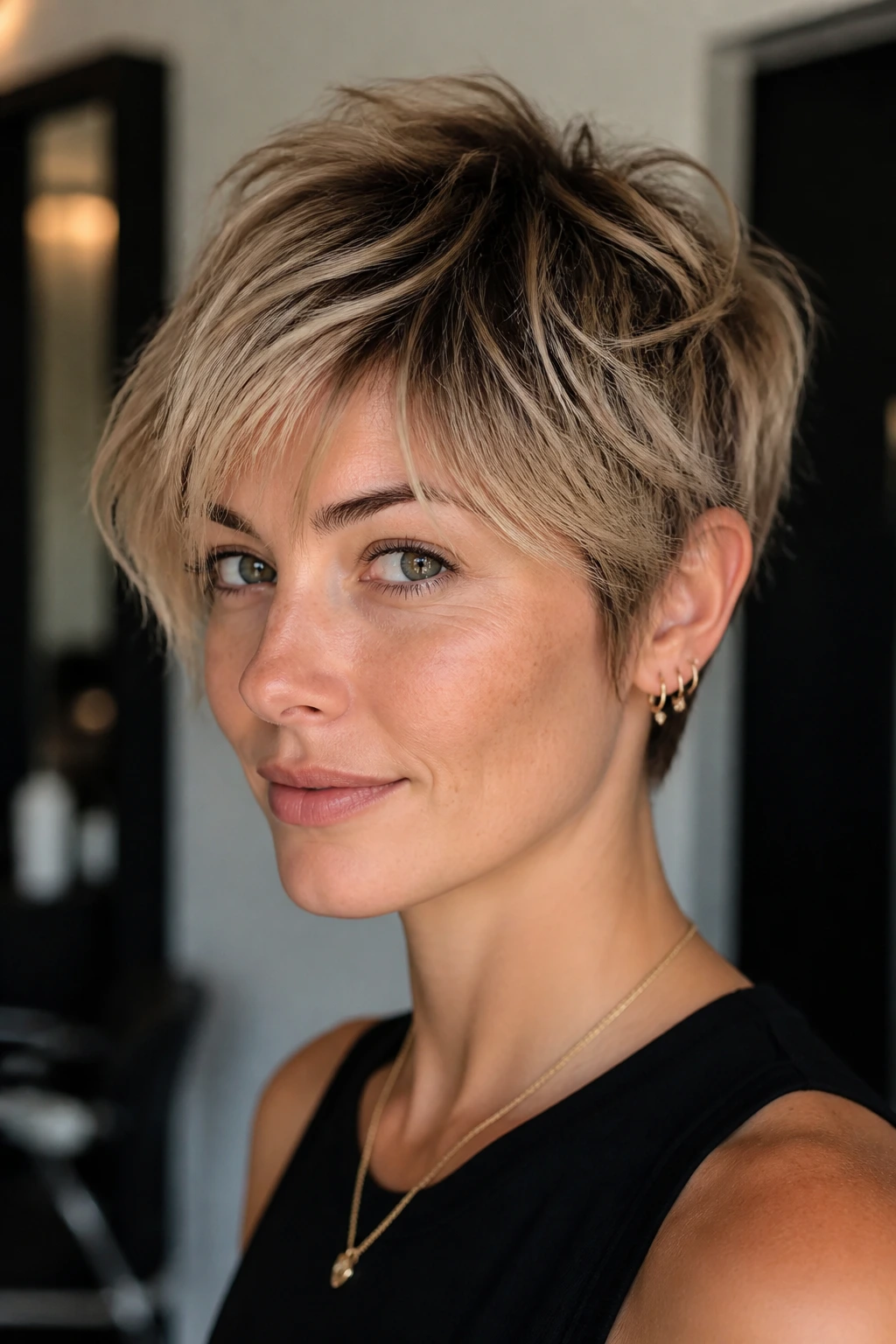
If you want short hair with softness at the front, a layered razor pixie with a grown-out fringe is a smart choice. The layers keep the top from looking bulky, while the longer fringe gives the cut a little slack around the forehead. That balance matters on short hair, where every millimeter is visible.
The grown-out fringe should not be mistaken for neglect. It’s intentional length that can be pushed to one side, brushed forward, or split lightly. The razor work in the top layers keeps the shape airy, but the fringe itself needs enough weight to sit where you want it. Otherwise it springs up and starts looking choppy.
This cut is a good option if you like a quick styling routine. A dab of cream or paste, a bit of finger direction, and you’re set. Just avoid overworking the front. A pixie only needs a small amount of product before it starts looking stiff.
For thicker hair, this version can remove a surprising amount of bulk without making the cut too airy. For finer hair, ask for less razoring and more point cutting so the fringe doesn’t disappear.
20. Long V-Cut with Barely-There Bangs
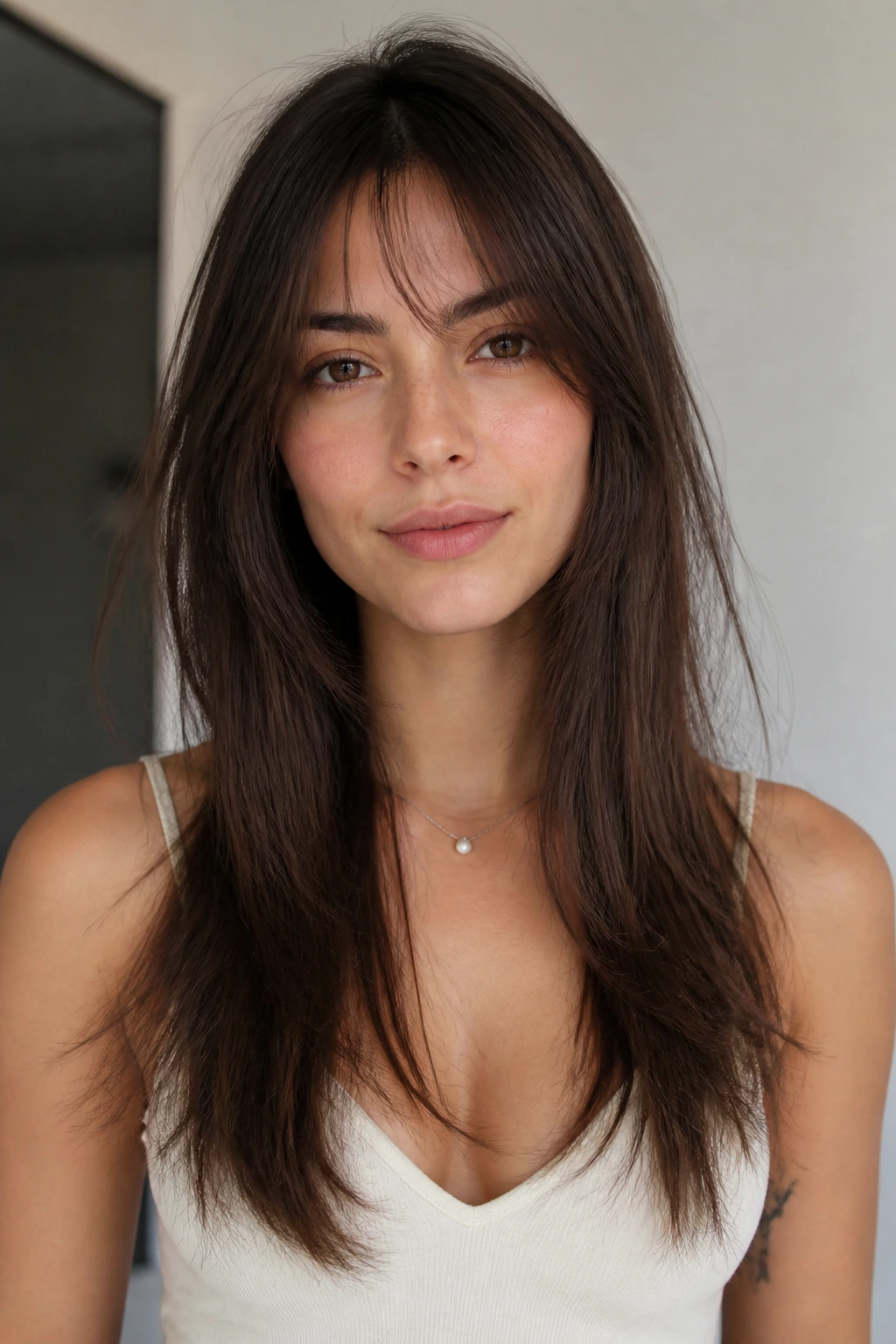
A V-cut on long hair can look plain if the front is left untouched. Barely-there bangs fix that without changing the character of the length. They give you a little movement around the eyes and cheekbones while the rest of the hair keeps its long, tapered shape.
The bangs should be sparse enough to let the forehead peek through. That’s the trick. You want suggestion, not coverage. It’s a delicate line, and it works best when the hair is healthy and the ends of the fringe are softened with careful point cutting.
This is one of the best wispy haircuts with bangs if you like long hair but want the front to feel lighter. It also grows out well because the fringe can slide into face-framing pieces instead of turning into an obvious band. That makes maintenance easier if you’re not eager for frequent salon visits.
The V-shape at the back gives the haircut visual length, while the barely-there fringe keeps the front from feeling heavy. It’s a quiet cut. But quiet is not boring when the shape is good.
How to Make Wispy Bangs Look Intentional
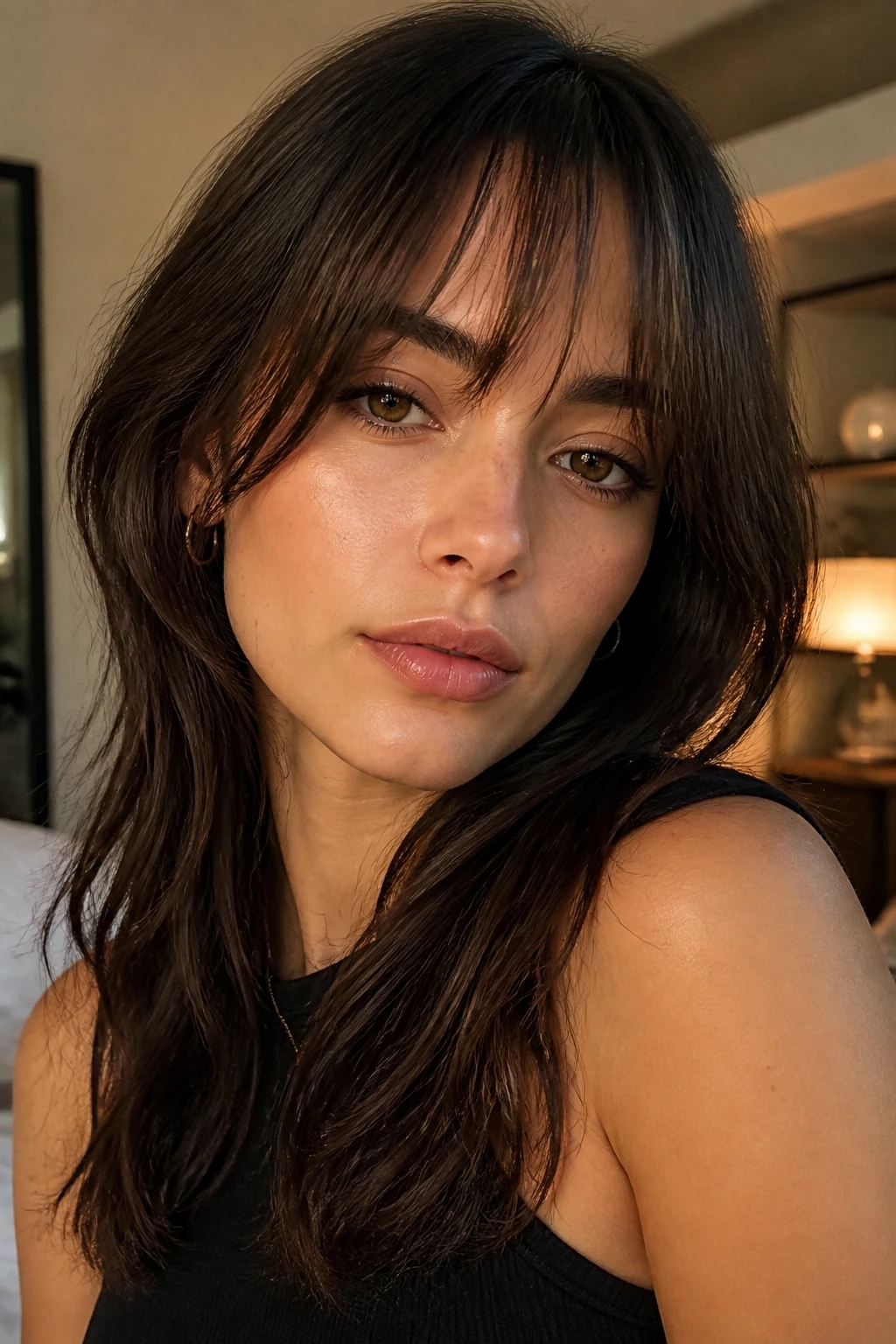
Soft fringe only looks effortless when someone has paid attention to the details. The difference usually shows up in the first five minutes after a wash, which is annoying and useful at the same time. Annoying because you can’t fake it forever. Useful because small habits make a big difference.
Blow-dry direction matters most. If your bangs dry flat against the forehead, they’ll cling and separate in the wrong places. Aim the dryer from side to side and upward at the roots for a few seconds, then finish by brushing the fringe into the shape you want. That tiny lift keeps the front from looking greasy by noon.
Use less product than feels safe. Wispy bangs collapse when they’re overloaded with cream, oil, or heavy texturizer. A pea-sized amount, warmed between your fingers, is usually enough for the front. If the fringe starts looking wet, you’ve gone too far.
Keep the texture uneven on purpose. The ends should not all sit at the same line. That broken edge is the whole point of wispy bangs, and it reads best when the center, sides, and face-framing pieces have slight differences in length.
Ask for a dry check at the salon. Hair behaves differently once it’s dry, especially around the face. A stylist who checks the fringe dry can adjust those tiny corners that make a cut either soft or weird.
Tools and Gear That Actually Help
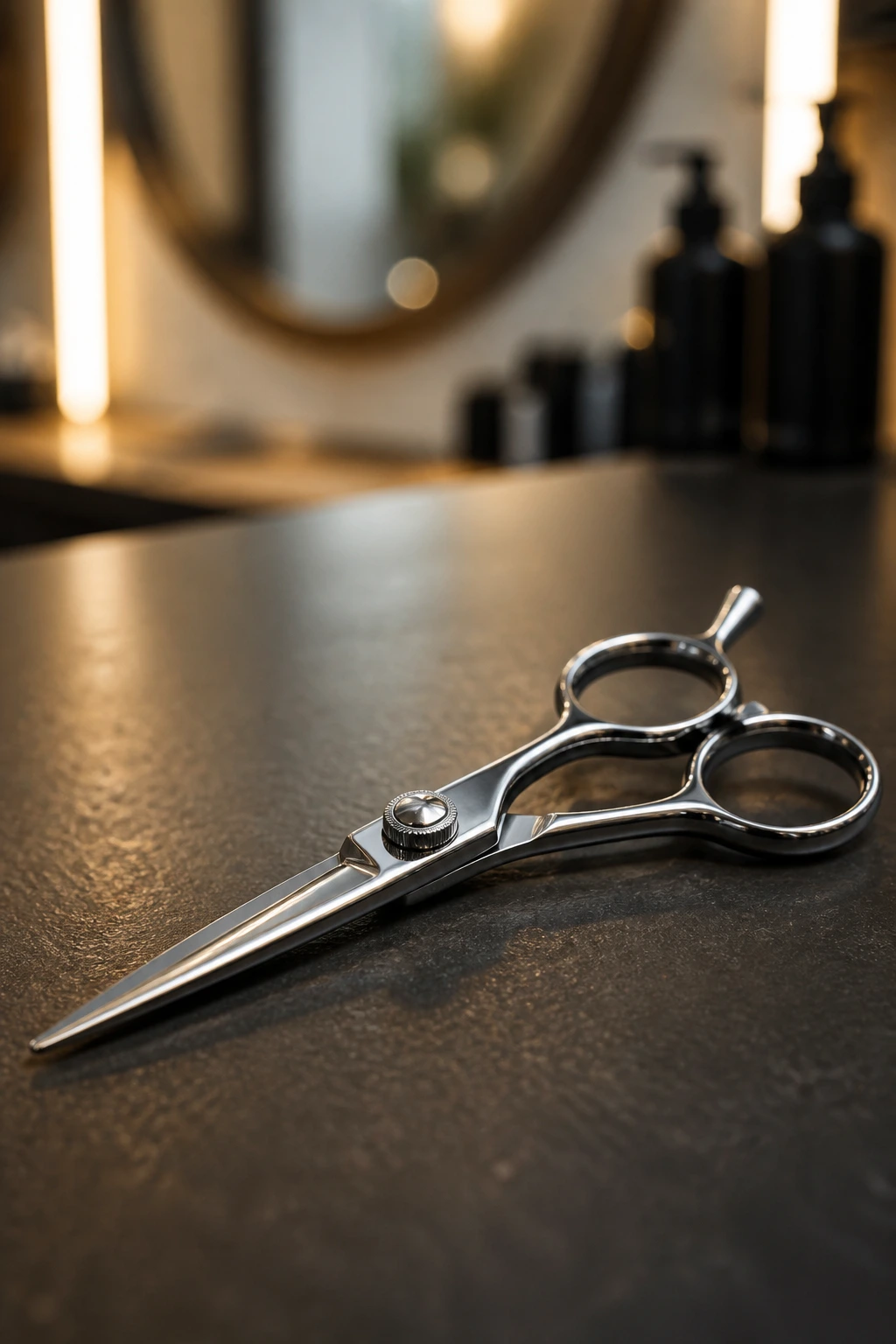
- Hair shears, not kitchen scissors: If you ever trim a fringe at home, sharp hair shears are the difference between a soft edge and a chewed-up line.
- Small round brush, about 1 to 1.25 inches: This size gives enough bend at the fringe without forcing a curl you did not ask for.
- Blow dryer with a nozzle attachment: The nozzle keeps air focused so the front doesn’t blow in every direction.
- Fine-tooth comb: Useful for sectioning the bang line cleanly and checking density before a trim.
- Sectioning clips: Keep the rest of the hair out of the way while you dry or style the fringe.
- Lightweight mousse or root spray: Helpful for giving the fringe shape without stiffness.
- Flexible-hold hairspray: Better than hard lacquer, which can make wispy pieces look crunchy.
- Dry shampoo: A small amount at the roots can keep bangs from separating into oily pieces.
- Mini flat iron: Optional, but useful if the front bends oddly and needs a quick correction.
- Hand mirror plus bathroom mirror: The side view matters. Fringe problems often show up from the profile before you notice them head-on.
How to Choose the Right Wispy Bangs for Your Hair
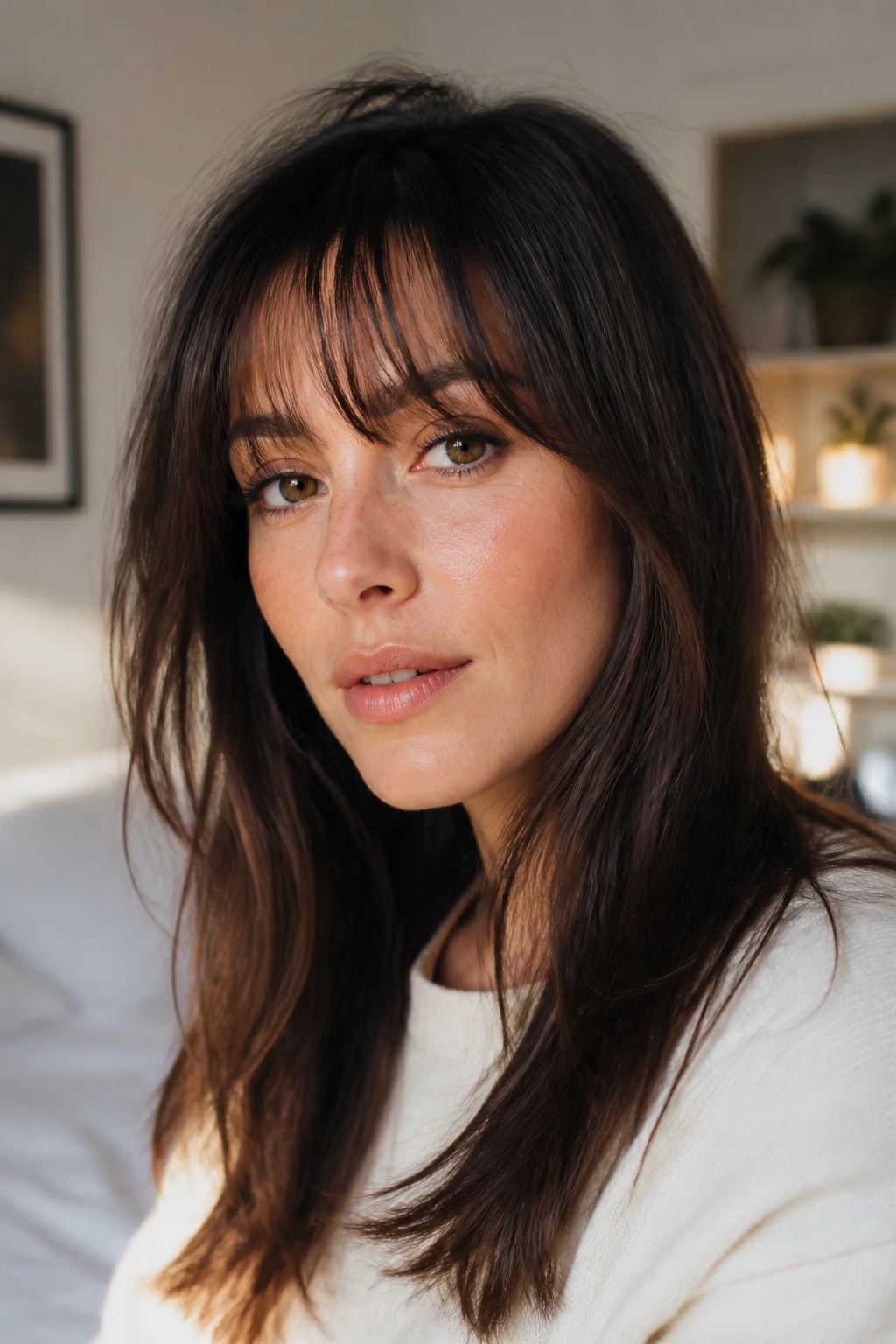
Hair texture matters more than face shape, and that’s where a lot of people start in the wrong place. A wispy fringe is not one generic cut. It’s a density choice, a length choice, and a question of how much your hair moves on its own.
Fine hair usually benefits from a lighter fringe with a little more separation. If the bang section is too wide, it can look flat and sparse. Thick hair needs more internal removal near the center and at the corners so the fringe doesn’t balloon. Curly hair needs the longest planning of all, because shrinkage can turn a soft fringe into a much shorter one than you expected.
Cowlicks deserve their own warning label. If the front of your hair naturally splits or flips at the hairline, a wispy bang can still work, but it needs to be cut with the cowlick’s direction in mind. Sometimes that means a slightly longer center or a side-swept start. Fighting the growth pattern is a waste of time.
Bring photos, yes, but bring the right kind. Show your stylist a few cuts on hair that looks like yours, not one perfect image on a different texture entirely. Ask where the shortest pieces should land when dry, not just when wet. That question saves more bad bangs than any clever wording ever will.
How to Wear Wispy Fringe from Morning to Night
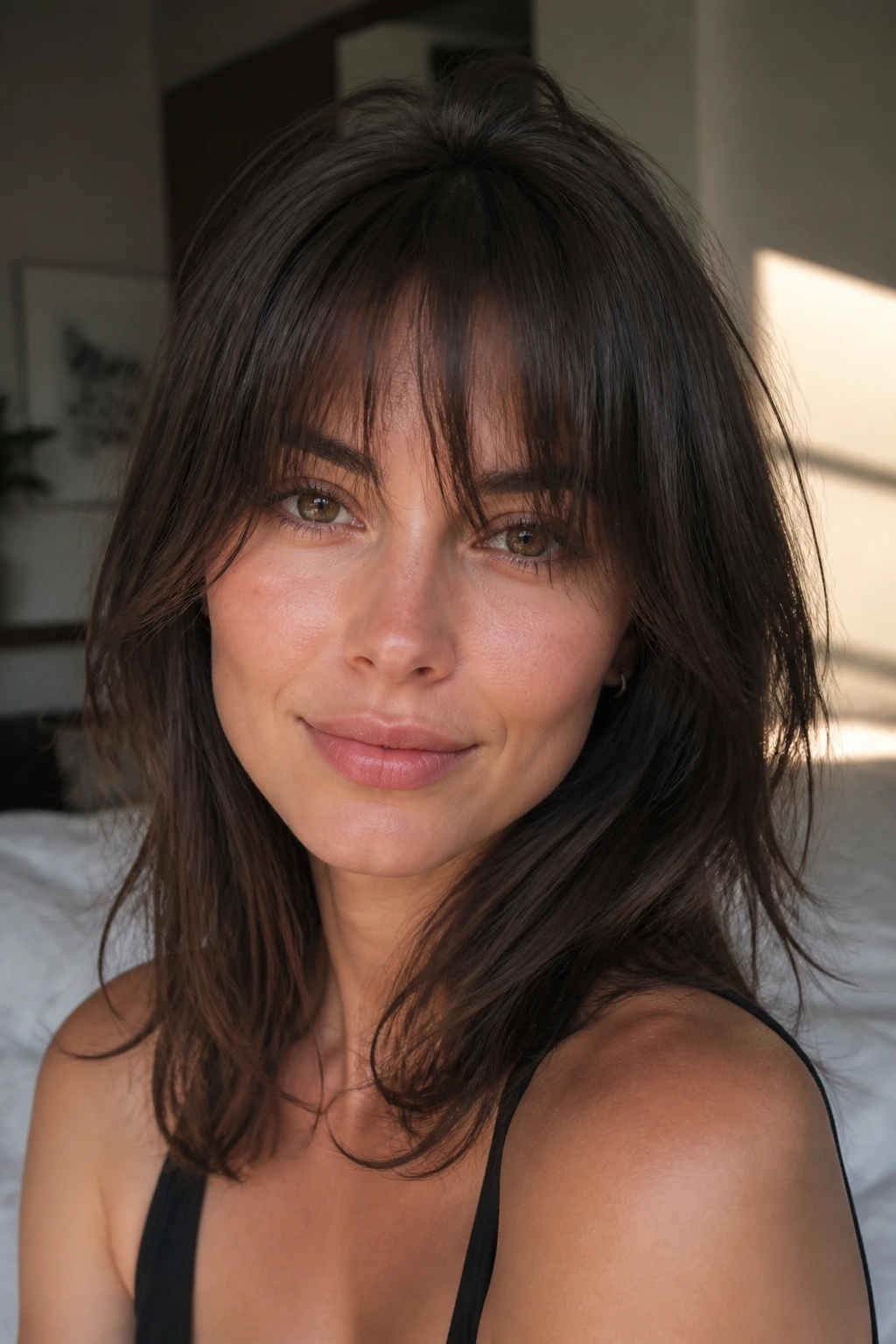
Everyday finish: Keep the front light, slightly piecey, and movable. A wispy fringe should look like it has been touched with fingers, not lacquered into place. If you can’t run a comb through it without breaking the shape, it’s too stiff.
Best pairings: These cuts like soft layers, collarbone lengths, lived-in waves, and anything that gives the front somewhere to blend. They get less charming when paired with a super-heavy, one-length perimeter that refuses to move.
How much fringe is enough: Less than most people request. That’s the surprise. The front should reveal some forehead and still frame the eyes. Once the bang section gets too wide, it stops reading wispy and starts looking dense.
Maintenance rhythm: A small trim every 4 to 6 weeks keeps the shape crisp. If you prefer a more relaxed grow-out, stretch that to 6 to 8 weeks and let the bang merge into the front layers. Both can look good. The haircut just changes character.
Common Mistakes That Make Wispy Bangs Go Wrong
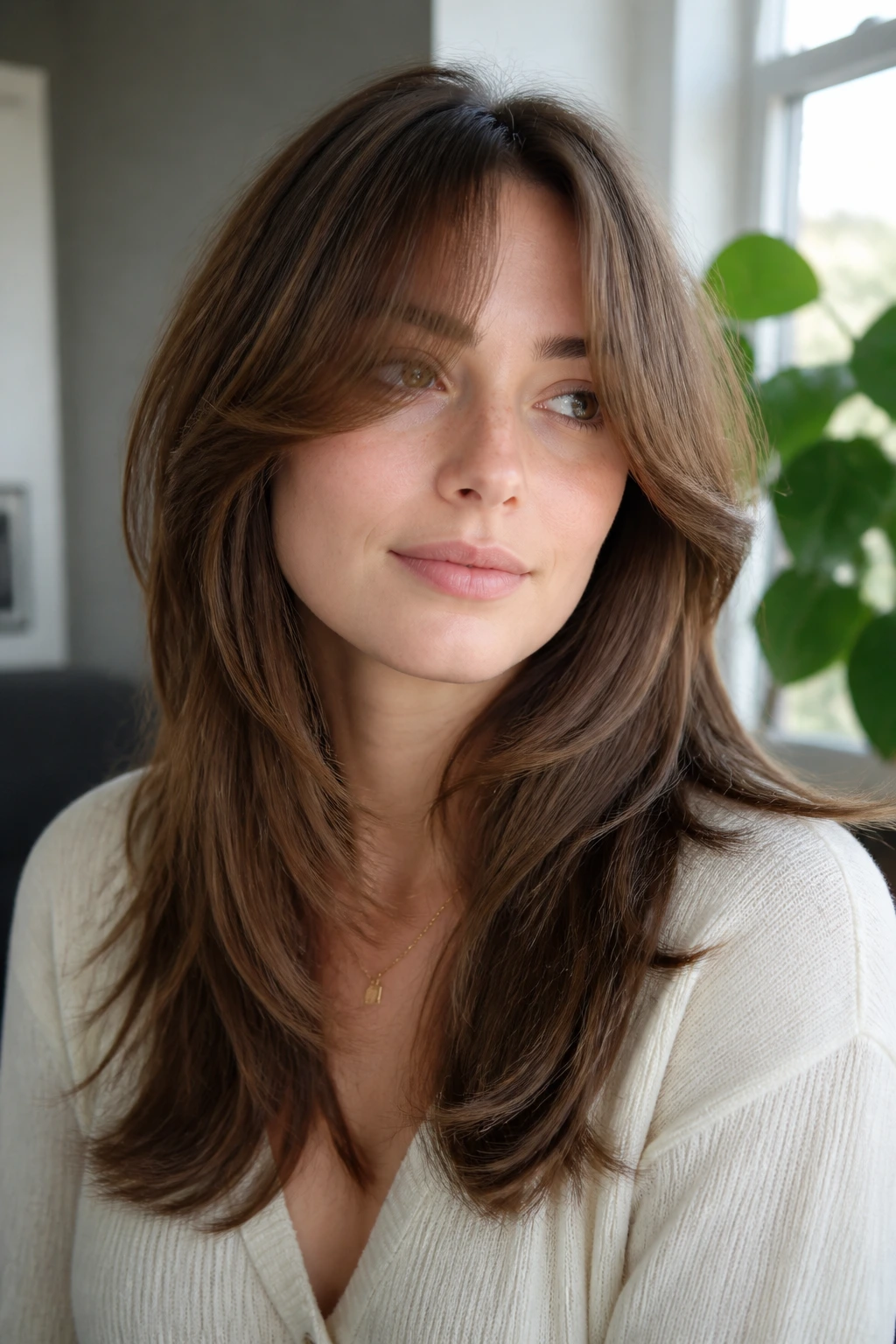
The first mistake is cutting them too thick. A fringe with too much density loses the airy effect and turns into a solid block across the face. The fix is to keep the bang section narrower and ask for soft removal at the ends, not the middle of the line.
Another one: trying to flatten a cowlick with product alone. It does not work. If your hair wants to split at the front, the cut has to respect that shape or the bangs will keep flipping the wrong way. Drying the fringe in the opposite direction for a few seconds helps, but the haircut has to be built around the growth pattern.
People also over-style wispy bangs into submission. Heavy creams, stiff sprays, and too much heat make the fringe lose the lightness that makes it useful in the first place. The fix is a smaller brush, less product, and a little air in the finish.
Last, don’t cut them dry at home with dull scissors. That’s how you get teeth marks and awkward gaps. If you want to keep the fringe tidy between trims, dust only the very ends and leave the shape to a proper salon cut.
Variations on the Wispy Bang Formula
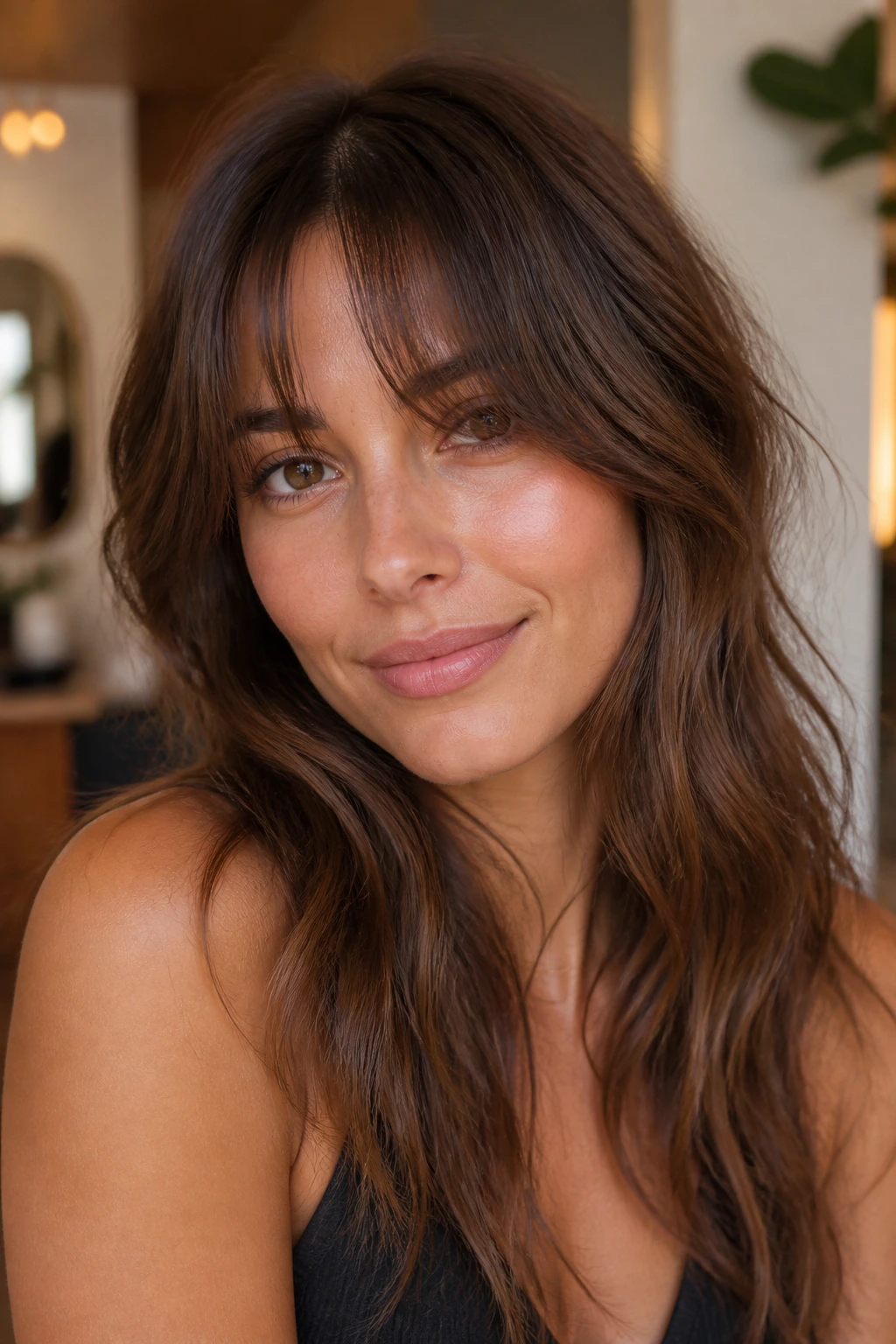
Curtain-Soft Switch: Keep the center a little longer and let the sides feather out more dramatically. This is the easiest version for people who want softness but need the fringe to part cleanly.
Curly Cloud Fringe: Leave more length, cut with the curl’s spring in mind, and let the bangs dry naturally. The result is fuller and softer than straight-hair wisps, with movement that looks built in rather than forced.
Razor-Soft Edge: Use a razor or point cutting to break the ends up more aggressively. This version suits thicker hair and layered shapes that need extra motion around the face.
Grown-Out Grace: Let the bangs drift into the front layers on purpose. This is the low-maintenance version for people who want fringe without a strict trim schedule.
Sharp-Soft Contrast: Pair a crisp bob or pixie with a feathered front. The edge below and softness above make the haircut feel sharper without becoming severe.
Keeping the Fringe in Shape Between Cuts

Wispy bangs live or die by what happens between appointments. If you go too long without a trim, the front starts splitting in weird places and falling into your eyes in a way that looks less soft and more accidental. For a clean brow-skimming shape, a trim every 3 to 5 weeks is usually the sweet spot. For a more relaxed curtain or grown-out fringe, 6 to 8 weeks can work.
Wash days matter too. Bangs get oil faster than the rest of the hair because they sit against skin and get handled constantly. A small puff of dry shampoo at the roots can buy you a day or two, but use a light hand. Too much and the fringe gets dusty instead of airy.
Sleeping on them is its own little battle. If you wake up with a cowlick or a bend, mist the front lightly with water and re-dry for 30 to 60 seconds with a brush or your fingers. That’s often enough to reset the shape. You do not need a full styling session every morning unless your hair has a lot of texture or a very stubborn front pattern.
If you exercise or wear hats often, expect the bangs to need more frequent touch-ups. Sweat and pressure flatten the roots fast. A quick blast of cool air or a few minutes pinned back after a workout usually helps the shape recover.
Questions People Ask Before Cutting Wispy Bangs
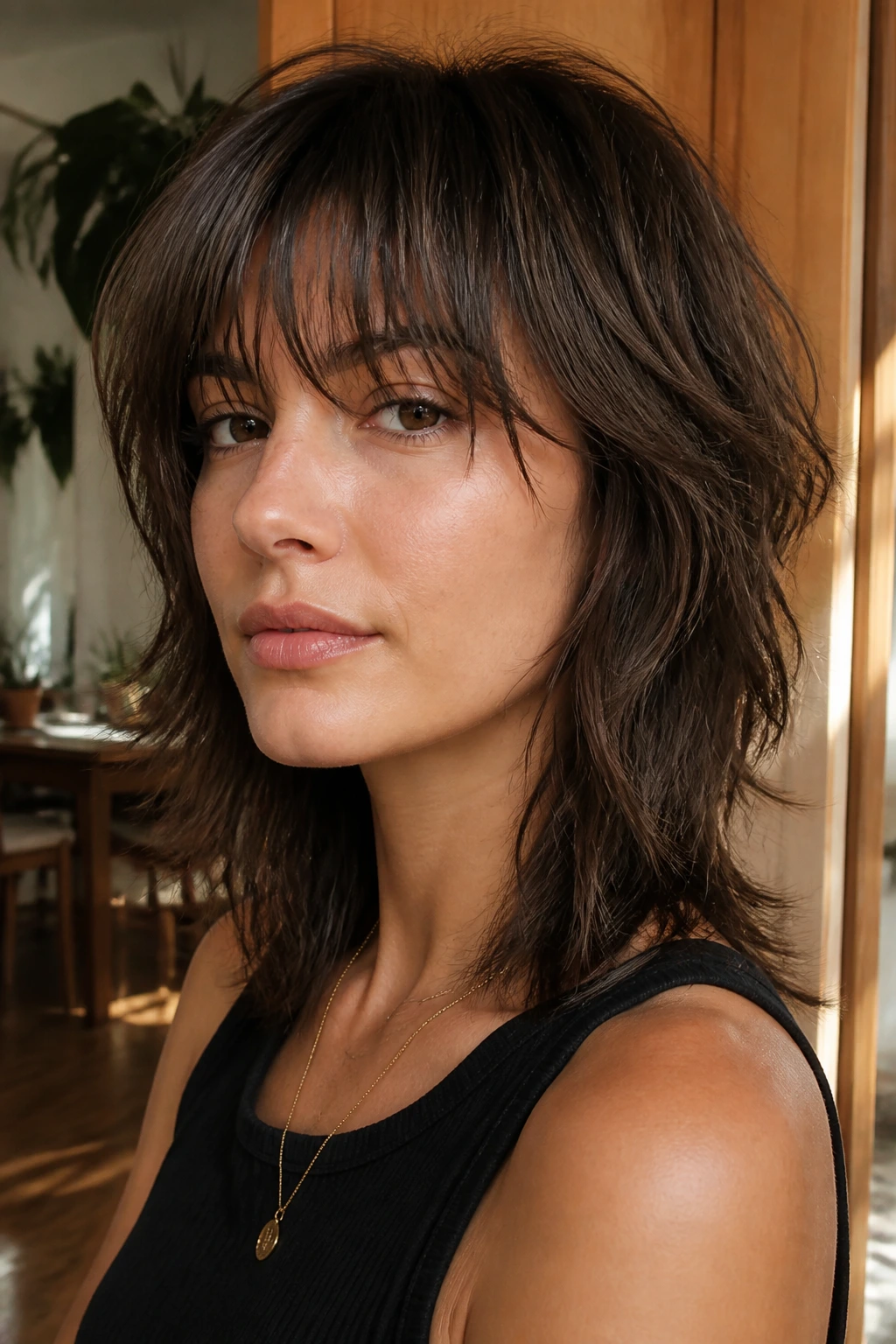
Do wispy bangs work on fine hair?
Yes, and they can be one of the better choices for fine hair because they avoid the heavy block that often swallows a thin hairline. The trick is keeping the fringe narrow enough and cutting the ends softly so it doesn’t look see-through in a bad way.
What if my hair is thick?
Thick hair can wear wispy bangs beautifully, but the fringe needs internal weight removal near the corners and center. If it’s only thinned at the very ends, it can puff out and sit too wide across the forehead.
Can curly hair do wispy fringe?
Absolutely, but the cut has to respect shrinkage and curl pattern. A curly fringe usually needs more length at the start and less aggression with thinning so the curls can fall in soft, separate pieces.
How do I explain this to a stylist?
Use plain words. Say you want a soft fringe with visible forehead, feathered ends, and enough length to grow out into face-framing layers. Bring photos of the finish you want, not just the vibe.
How often will I need trims?
Most wispy bangs need attention every 4 to 6 weeks if you want them to stay crisp. If you like a softer, more grown-out look, you can stretch that longer and let the shape loosen into the haircut.
What if I hate them after the cut?
Pinning, side-sweeping, and a little blow-drying usually change the feel enough to make the fringe less shocking. If the bangs are too short, they still grow faster than people expect, and they usually soften within a few weeks.
Do they need heat styling every day?
Not always. Wavy and straight hair can often be reset with a quick damp-brush dry, while curls may need a touch of product and finger shaping. The less severe the fringe, the less daily styling it tends to demand.
Can I grow them out without an awkward stage?
You can, if the cut is soft enough to begin with. Curtain-style and face-framing wisps blend out the cleanest, while blunt dense bangs take longer to turn into something cooperative.
The Soft Edge That Keeps Working
The best wispy haircuts with bangs don’t try to do too much at once. They make one small area of the haircut feel lighter, then let that choice change the whole shape. That’s why these cuts keep showing up in different lengths, textures, and moods. They have range.
What I always come back to is this: the fringe should look like it belongs to the haircut, not like it was dropped on top of it at the last minute. When the bangs are cut with enough care to respect the rest of the shape, they stop being a trend and start being a tool. A good one.
If you’re sitting with a reference photo and a little hesitation, start with the softest version that still gives you the outline you want. You can always go fuller next time. Going the other direction is the part that makes people reach for hats.
