



Short hair exposes every decision. With bob haircuts for short hair, there’s nowhere for a lazy line to hide, and that’s exactly why the good ones look so sharp. A clean bob can make the jaw look tidier, the neck look longer, and the whole head feel lighter. A sloppy one? You see it by the second mirror check.
The funny thing is that short bob haircuts are never just about length. They’re about weight removal, where the ends land, how the part falls, and whether the hair wants to bend out, tuck under, or puff sideways the minute humidity shows up. That’s why one bob can look sleek and another can look like it needs a trim before you’ve even left the salon.
So the trick isn’t chasing the loudest cut on a mood board. It’s matching the bob to the way your hair behaves on a normal Tuesday — not on the one perfect day when it was blow-dried by a magician. Get that part right, and short hair starts looking deliberate instead of difficult.
Why These Bob Haircuts Work So Well on Short Hair
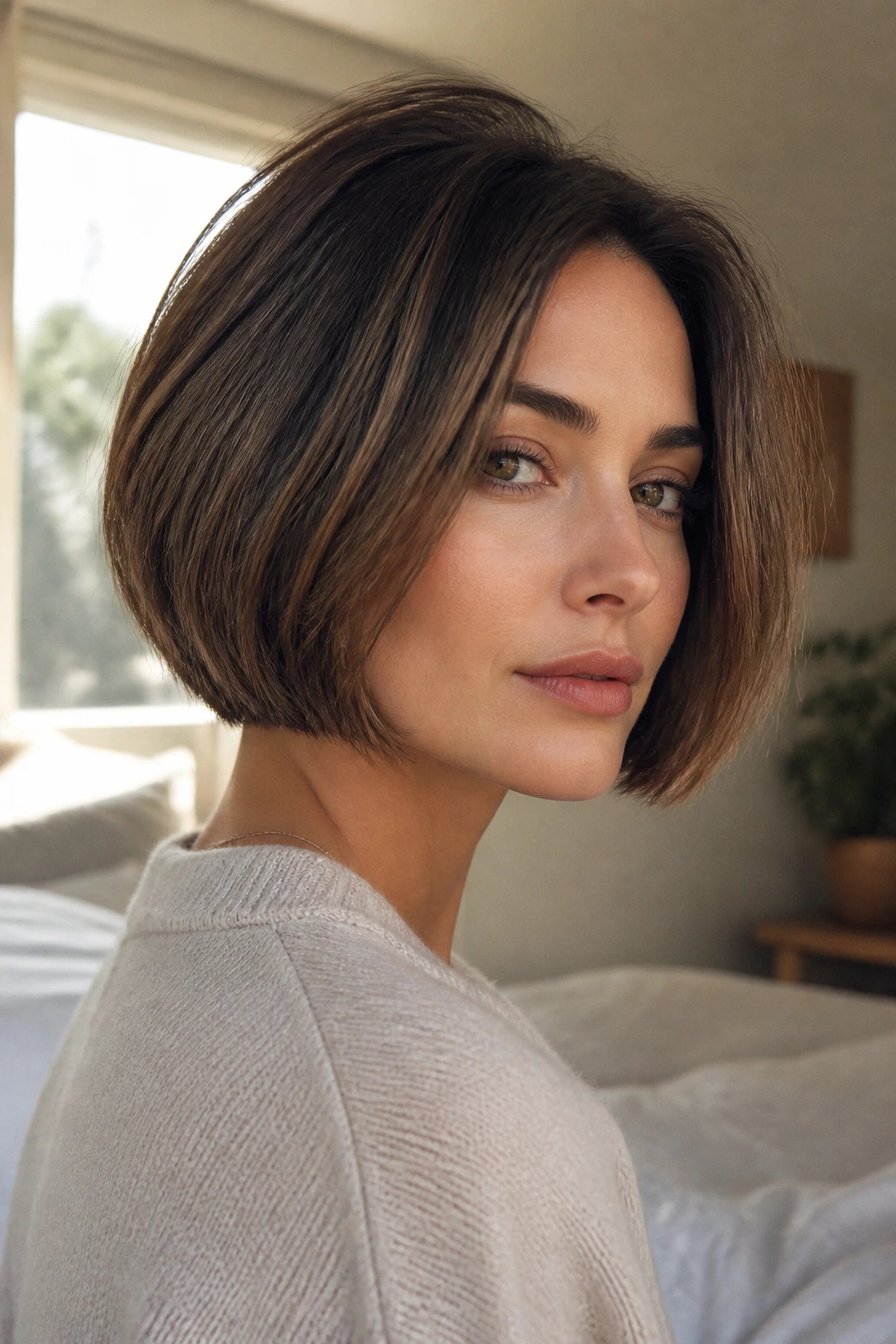
-
The perimeter does the heavy lifting: A sharp line at the jaw, cheek, or nape makes a short bob read as a real shape, not just “hair that got shorter.”
-
Texture stops looking accidental: On short hair, a wave, bend, or slight flip becomes part of the haircut instead of a styling problem you have to hide.
-
Growth looks cleaner: A well-cut bob can grow out for a few weeks without losing its outline, which matters if you hate constant salon visits.
-
Face-framing happens fast: A half-inch change at the front can shift the whole feel of the cut, especially around the cheekbones and chin.
-
Volume becomes easier to control: Short length takes some of the weight off thick hair and gives fine hair a better shot at lift without piling on layers.
-
The style can go polished or messy: The same bob can look sleek with a round brush or undone with a little texturizing spray, which is why people keep coming back to it.
How to Pick the Right Bob for Your Face, Hair, and Morning Routine
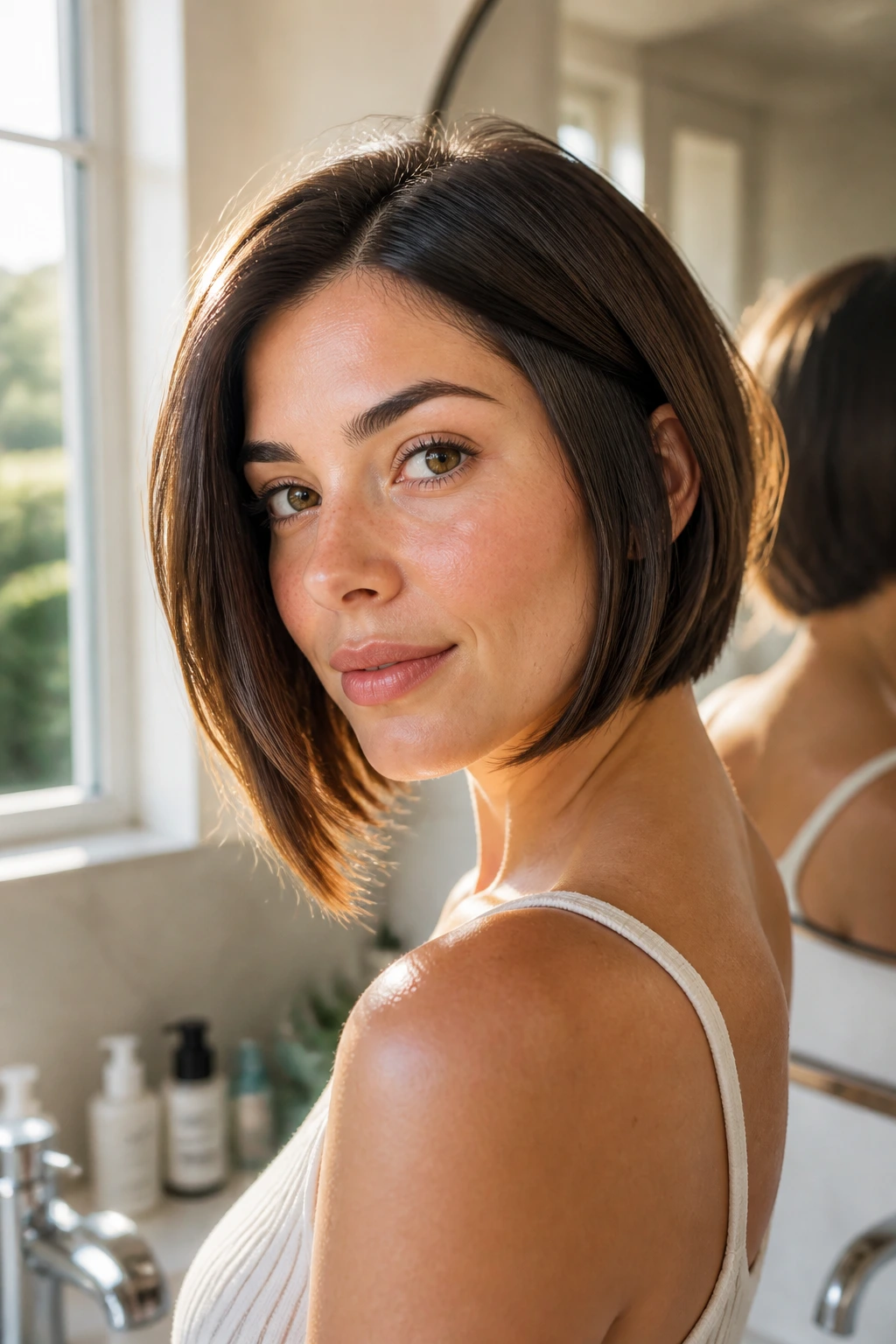
A bob is less about “rules” and more about where your hair naturally wants to sit. If your hair already bends under at the ends, a rounded or blunt bob will probably cooperate. If it kicks out at the neck and refuses to stay flat, you’ll usually do better with a bit of layering, a slight angle, or a cut that leaves room for movement.
Match the cut to density first
Fine hair usually likes cleaner edges and a little internal weight left in place. Too many layers can make the ends look stringy fast. Thick hair is the opposite story: it often needs some removal through the interior so the bob doesn’t puff into a triangle by lunchtime.
Pay attention to growth patterns
Crown cowlicks, neck swirls, and one stubborn side that flips outward matter more on a bob than on longer hair. If the back of your hair always kicks up, ask for a neckline that works with that motion instead of fighting it. Same with parts. A center part can make a blunt bob feel symmetrical and crisp, while a deep side part can break up heaviness without changing the cut itself.
Be honest about styling time
If you will not spend ten minutes with a brush and dryer, don’t order a cut that depends on a perfect bend. Choose a bob that air-dries well, or one that still looks decent after a quick rough-dry. There’s a big difference between a style that looks good on the salon chair and one that survives your bathroom mirror at 7:15 a.m.
The Tools That Make a Short Bob Behave
-
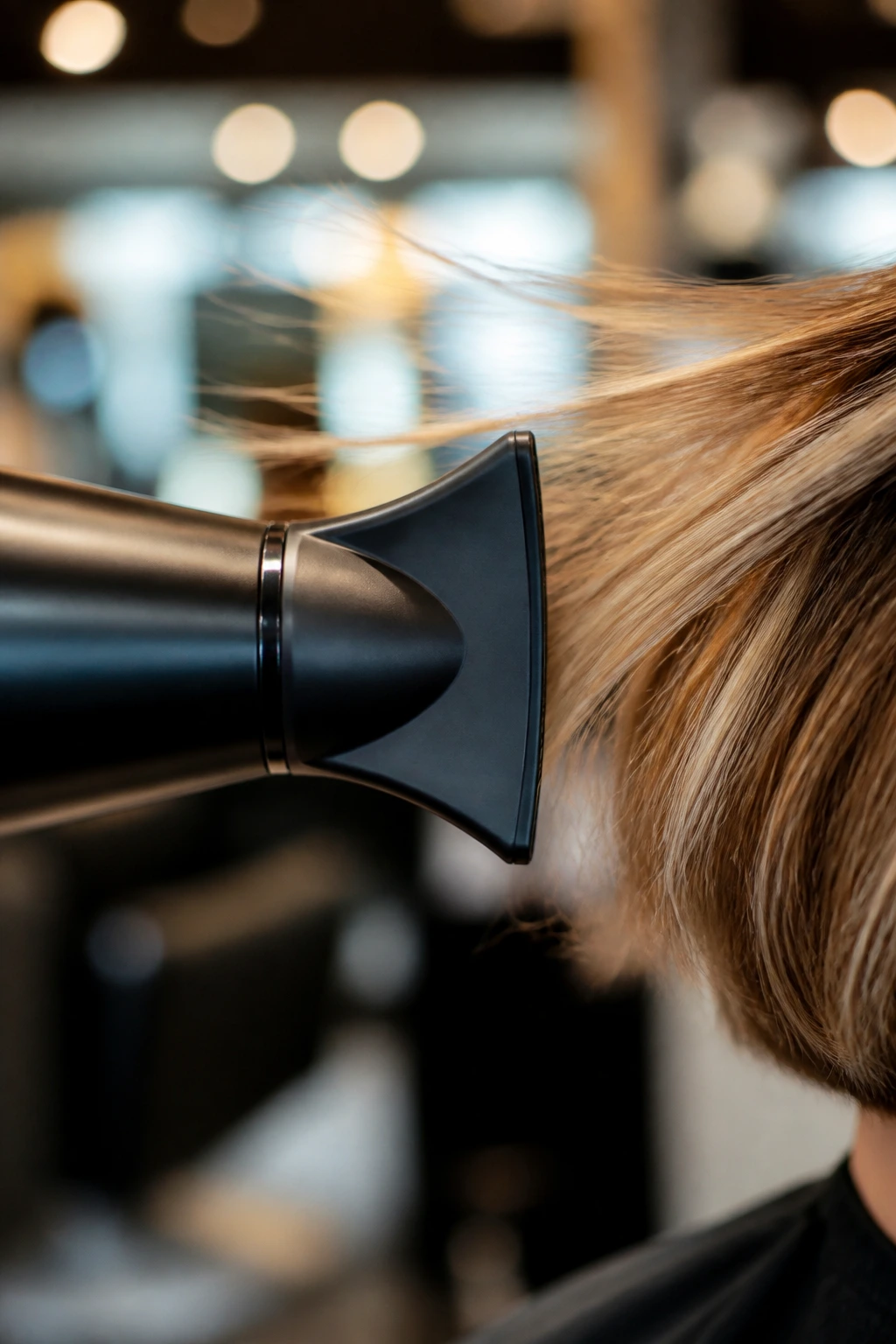
Blow dryer with a nozzle attachment: The nozzle directs air where you want it, which matters when you’re trying to keep a bob’s line smooth instead of blowing the ends into chaos.
-
1-inch round brush: Best for polishing the ends under or adding a soft bend without making the style look too curled.
-
Flat iron with smooth plates: Useful for blunt, angled, or glassy bobs that need a crisp finish. A wider plate can feel clumsy on short hair.
-
Heat protectant spray: Short hair still gets fried. A light spray before blow-drying or flat-ironing keeps the ends from drying out and sticking out.
-
Light mousse or root lift spray: Helps fine hair hold a shape at the crown without turning the bob stiff.
-
Texturizing spray: Good for choppy, shaggy, or wavy bobs when you want separation at the ends.
-
Wide-tooth comb and sectioning clips: Simple, boring, useful. They make the cut and the styling cleaner.
-
Dry shampoo: A little at the roots can keep short hair from collapsing when oils build up near the scalp.
1. Blunt Bob
A blunt bob is the haircut that makes short hair look expensive without trying to look expensive. The line is the whole point. When it lands cleanly around the jaw or just below it, the cut does this neat little trick where your face looks more defined and the hair itself looks thicker than it is.
I like this one best on straight or slightly wavy hair that lies down without much drama. Ask for a one-length perimeter with only the tiniest bevel at the ends if you want movement; too much internal layering kills the whole effect. If your hair is fine, the blunt line gives it a denser edge. If it’s thick, the stylist may need to soften the interior a little so the shape does not turn boxy.
Best for a clean, polished finish
This is the bob that looks right with a center part, a tucked-behind-the-ear moment, or a smooth blow-dry that curves the ends under by half an inch. It’s not fussy. It’s exact. And exact is the charm here.
2. French Bob

A French bob sits shorter, softer, and a little cheekier than the classic chin-length version. It usually skims somewhere around the cheekbone or jaw, and it often comes with a fringe that feels airy instead of heavy. The shape has that “I did not overthink this” energy, even when the cut itself is carefully planned.
What makes it work is the looseness around the face. You’re not locking the hair into a severe line. You’re letting it brush the skin a little, which makes the whole look feel lighter. If your hair has a natural bend, this cut can look fantastic with almost no effort. If your hair is pin-straight, ask for just enough texture at the ends to keep it from hanging there like a helmet.
What to ask for
- Chin-to-cheekbone length, not a long bob pretending to be short.
- A soft fringe, if you want one, cut to move instead of sit like a curtain.
- A little texture through the ends, especially if your hair is dense.
3. Textured Choppy Bob
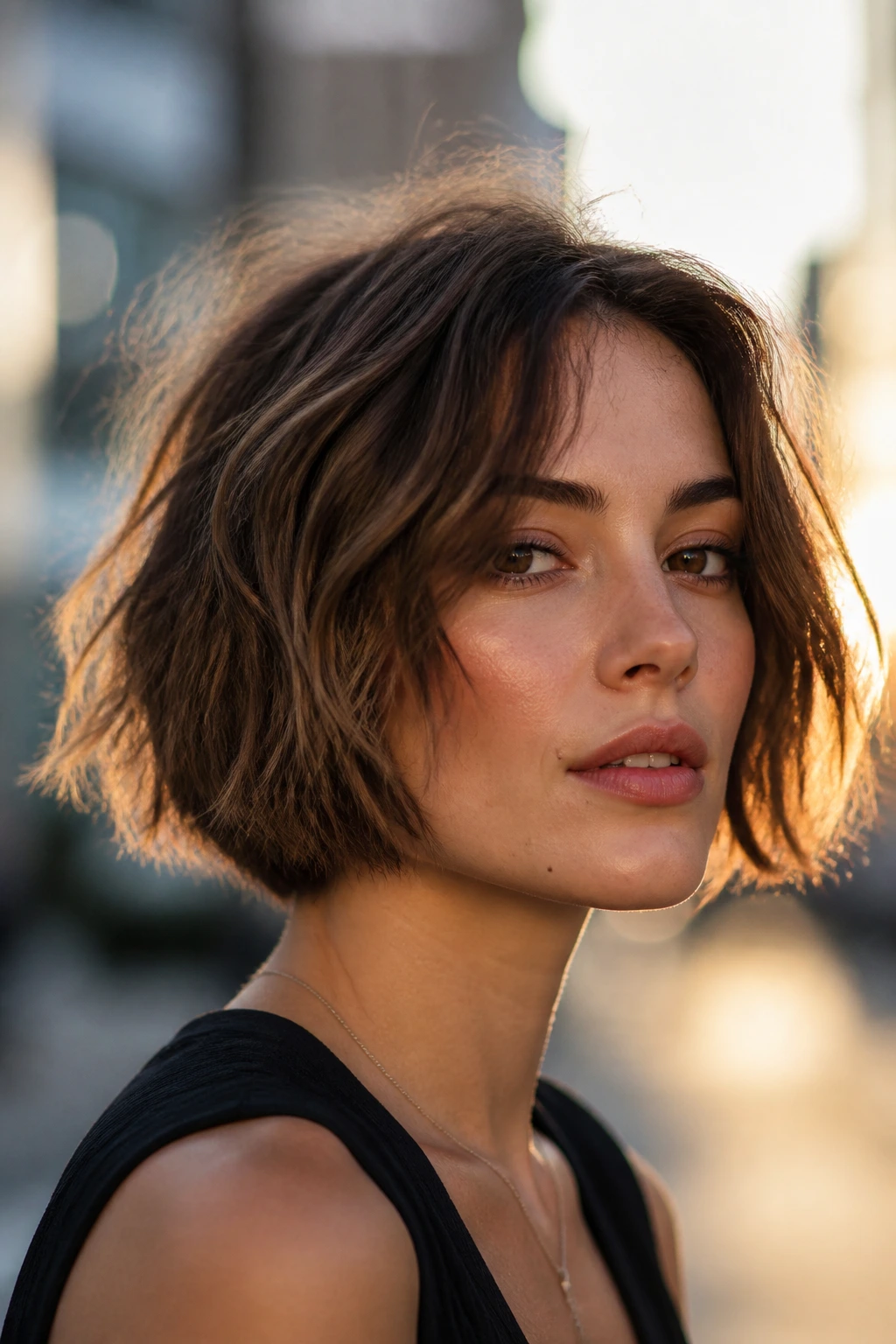
If your hair has some wave or thickness, a textured bob can save you from the “triangle” problem. The ends are point-cut or lightly razored, which breaks up the outline and gives the haircut room to move. It looks best when it is not too perfect. Too much polish defeats the point.
This is the bob I’d pick if you like a little mess in your hair and you don’t want to spend forever shaping it. A mousse at the roots, a quick diffuse-dry, and a touch of spray wax on the ends is often enough. The trick is restraint. If you overload it with product, the texture turns crunchy. If you underdo it, the ends can disappear.
The texture balance
Think piecey, not frayed. There’s a fine line between “lived-in” and “I forgot to brush my hair,” and the cut should land on the right side of that line.
4. A-Line Bob
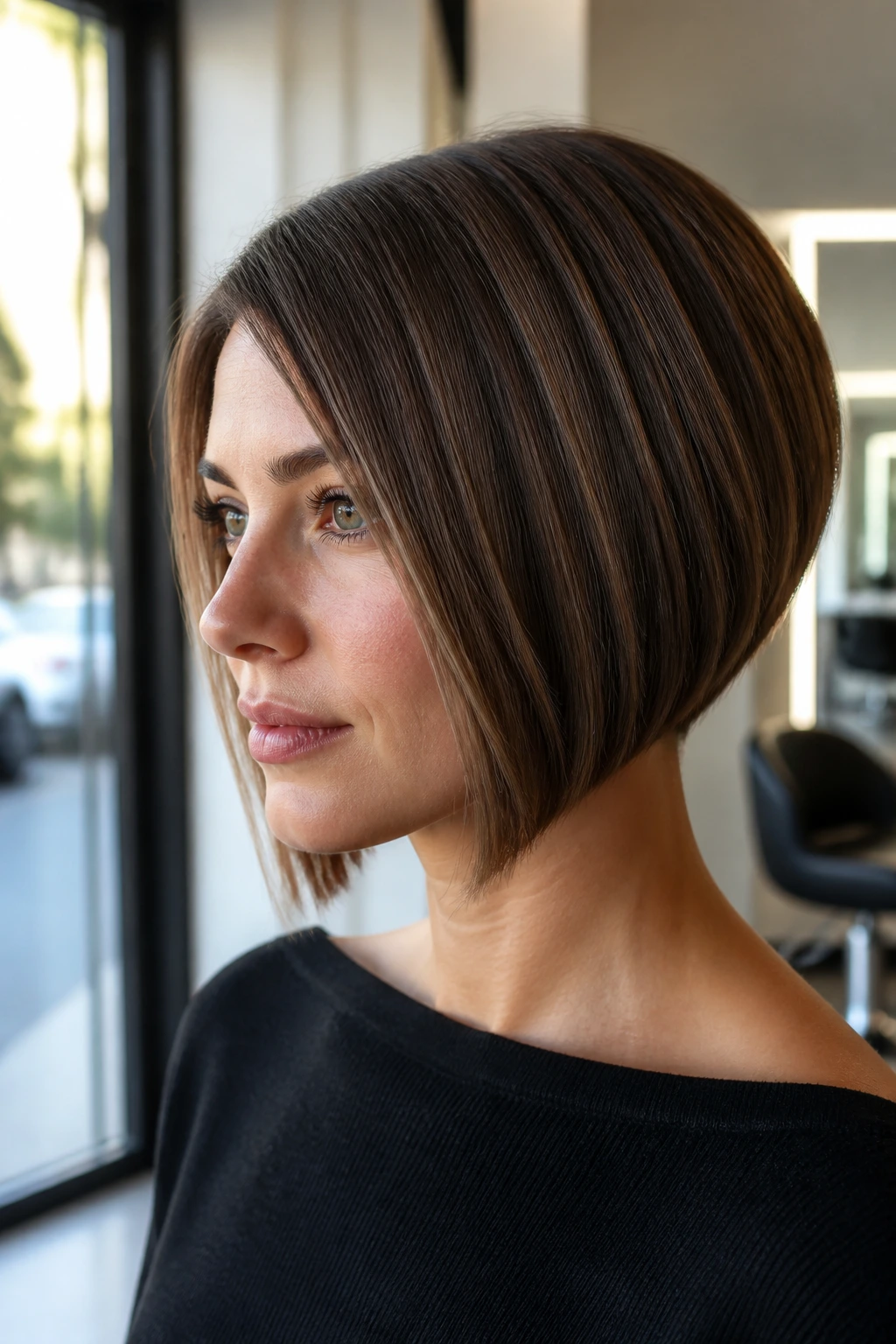
The A-line bob is all about that subtle forward sweep — shorter in the back, longer in the front, with the angle doing the flattering work. It’s one of those cuts that can make the neck look longer and the jaw look cleaner without screaming for attention. The angle does not need to be dramatic. In fact, the best ones usually aren’t.
A mild A-line works well if you want a little structure but do not want the hair to feel severe. Ask for the front to sit about 1 to 2 inches longer than the nape, then have the stylist check the balance from both sides. If the angle gets too steep, the front starts to take over the whole haircut. That can look cool, but it can also feel dated fast if the shape is too rigid.
Why it flatters so often
The eye naturally follows the line downward and forward. That’s what creates the slimming effect around the jaw and cheeks. It’s a simple illusion. A good one, too.
5. Inverted Bob
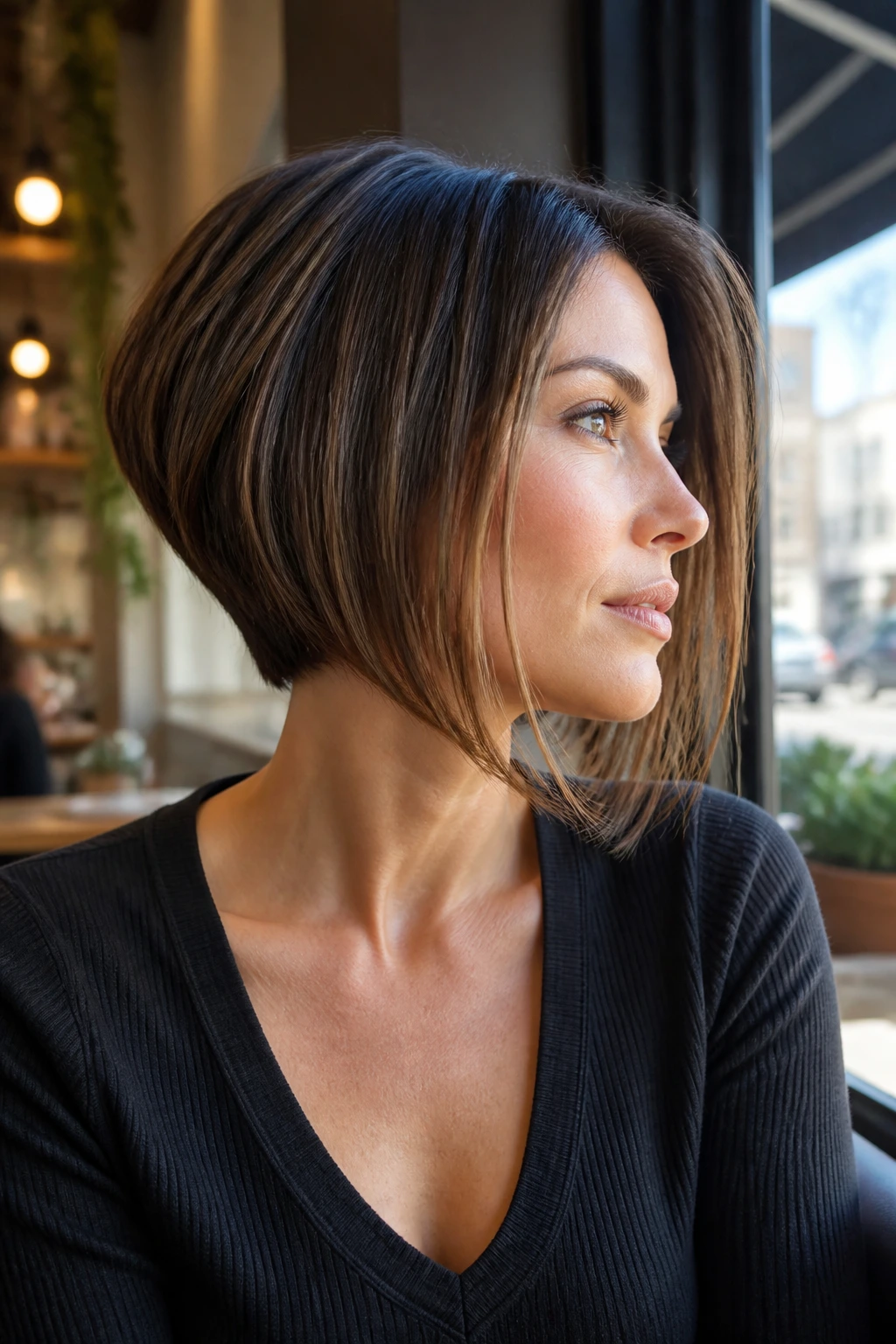
An inverted bob takes the A-line idea and pushes it harder. The back is stacked and shorter, the front stays longer, and the whole haircut has a more dramatic curve. It’s the kind of shape that gives thin hair a lift and makes straight hair look more sculpted. You can spot a good one from the side almost immediately.
This cut needs a stylist who knows where to stop. Too much graduation in the back and the bob turns bulky at the crown. Too little and the whole point disappears. I like inverted bobs on people who want shape without much daily styling, because the cut itself carries the silhouette. If you’re willing to round-brush the crown and tuck the ends under, even better.
The sweet spot
The best inverted bob doesn’t look puffed up in the back. It looks lifted. That’s a different thing, and it’s a better one.
6. Stacked Bob
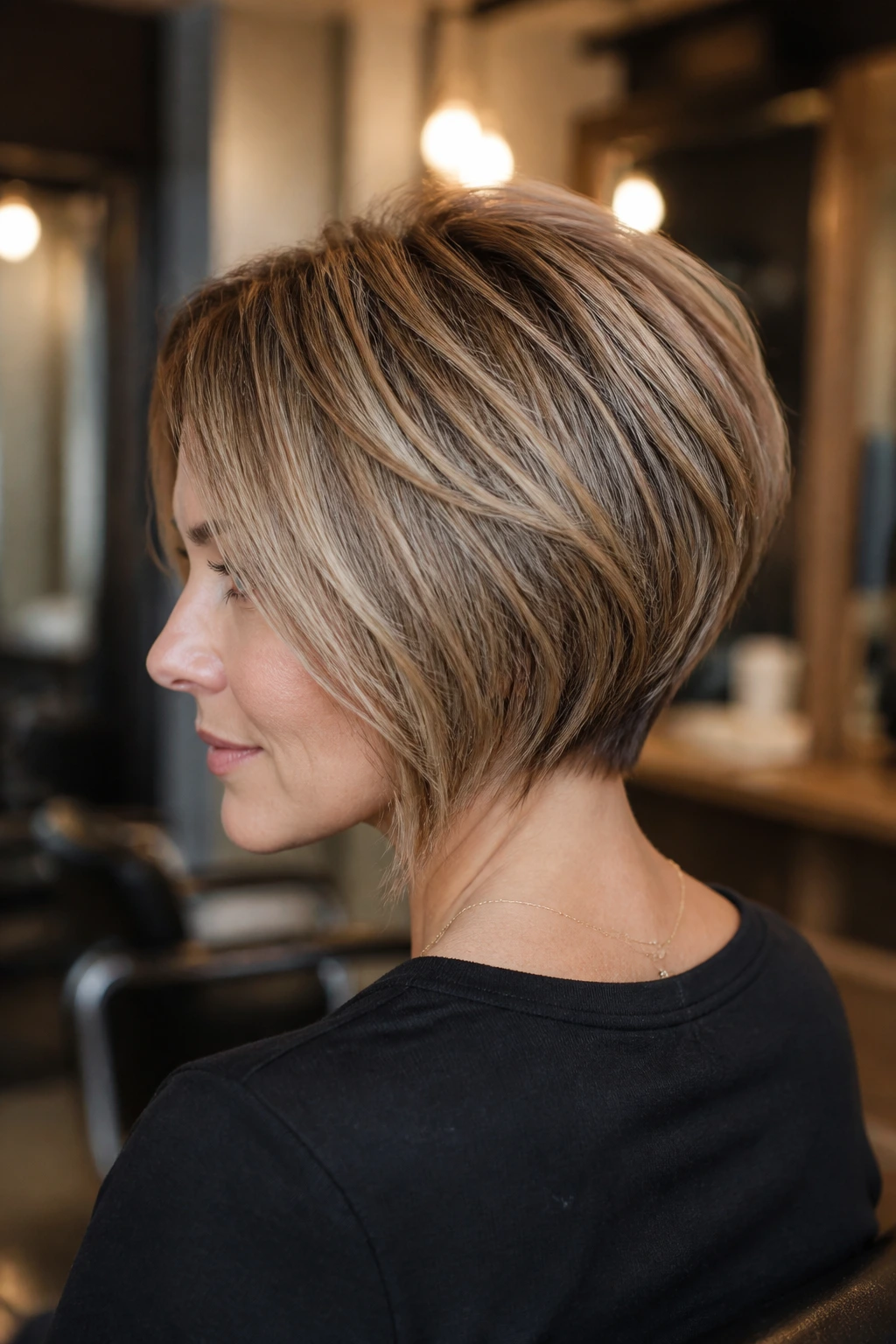
A stacked bob leans into volume at the back of the head, with layers built up to create a rounded shape. It’s especially useful if your hair is fine and flat at the crown, because the cut gives the illusion of fullness where you need it most. Done well, it looks structured and neat. Done badly, it starts to resemble a mushroom. There’s no polite way around that.
The key is proportion. The back should rise enough to support the shape, but not so much that the silhouette balloons. The front can stay slightly longer to keep the cut from feeling too dense. If your hair is thick, you’ll want the interior debulked so the stack doesn’t become heavy and triangular.
Seriously, this is one of those cuts where the angle matters more than the description. Bring a photo that shows the back profile. That matters.
7. Layered Bob
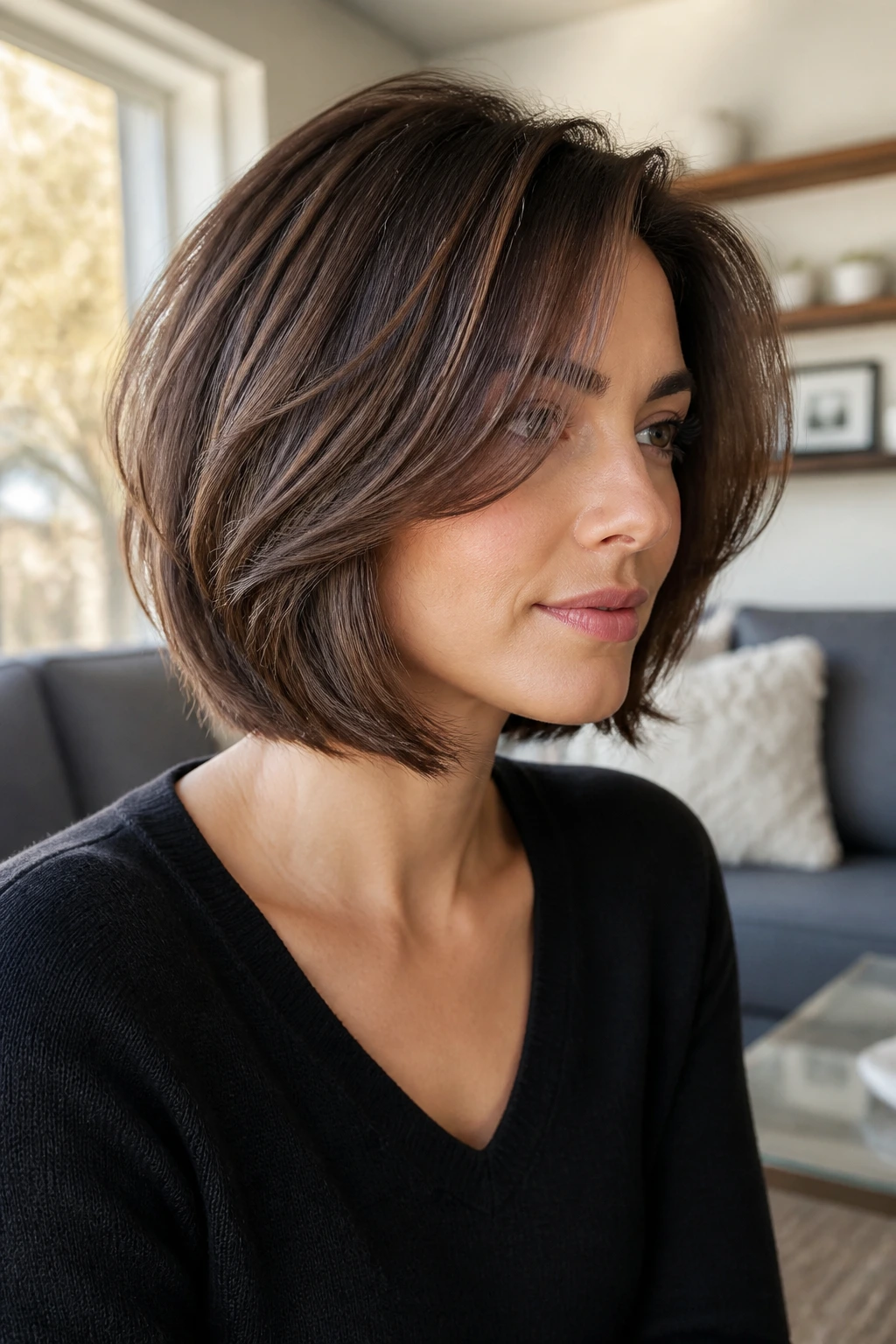
A layered bob is the quiet workhorse of this whole group. It still counts as a bob, but the interior layers remove weight and let the hair move. The finish is softer than a blunt cut and less dramatic than an inverted shape, which makes it useful if you want short hair without a hard edge.
This is the one to ask for if your hair is thick, wavy, or a little stubborn around the shoulders and neck. A few long layers inside the shape can stop the ends from stacking into a block. On fine hair, though, you want those layers kept light. Too much chopping and the ends start looking thin. The best layered bob still has a line. It just breathes more.
Where it shines
When you want a bob that looks good both blown out and air-dried, this is usually the safe bet. It gives you options without demanding a perfect routine.
8. Rounded Bob
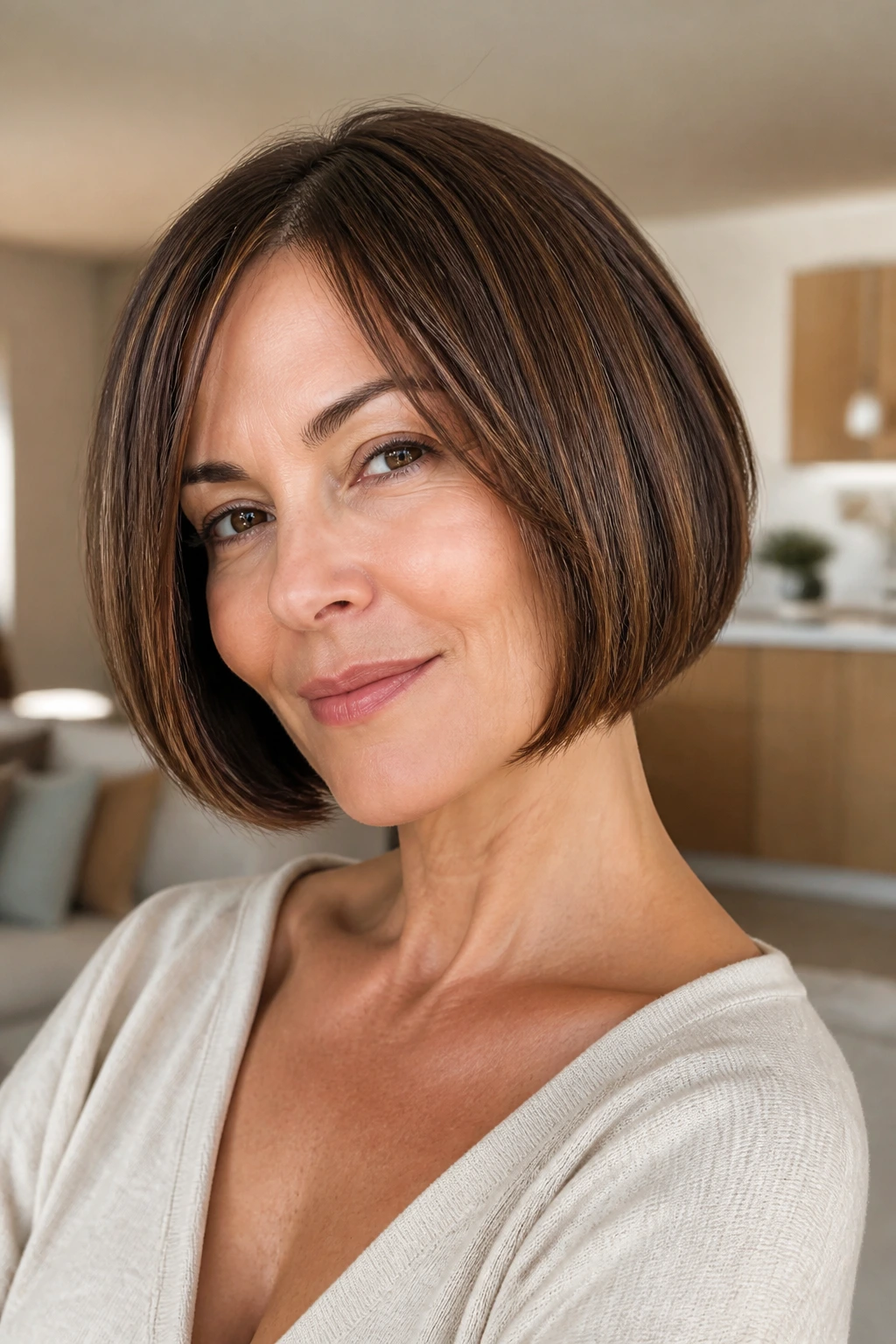
The rounded bob curves inward along the jaw and nape, which makes it feel softer than a blunt cut. The shape hugs the head a little more closely, and the ends often tuck under just enough to look finished. If you want a bob that feels classic rather than graphic, this is a good place to live.
It suits hair that already has some bend, but it also responds well to a brush and blow-dryer if you want to keep the curve intact. On a round face, a rounded bob can work if the line sits a bit lower and the side part adds a little lift. On a square face, the softness can take the edge off the jaw without hiding it.
A tiny detail matters here: the ends should curve, not curl. Too much roll and the haircut starts to look over-styled. Keep it light.
9. Side-Part Bob
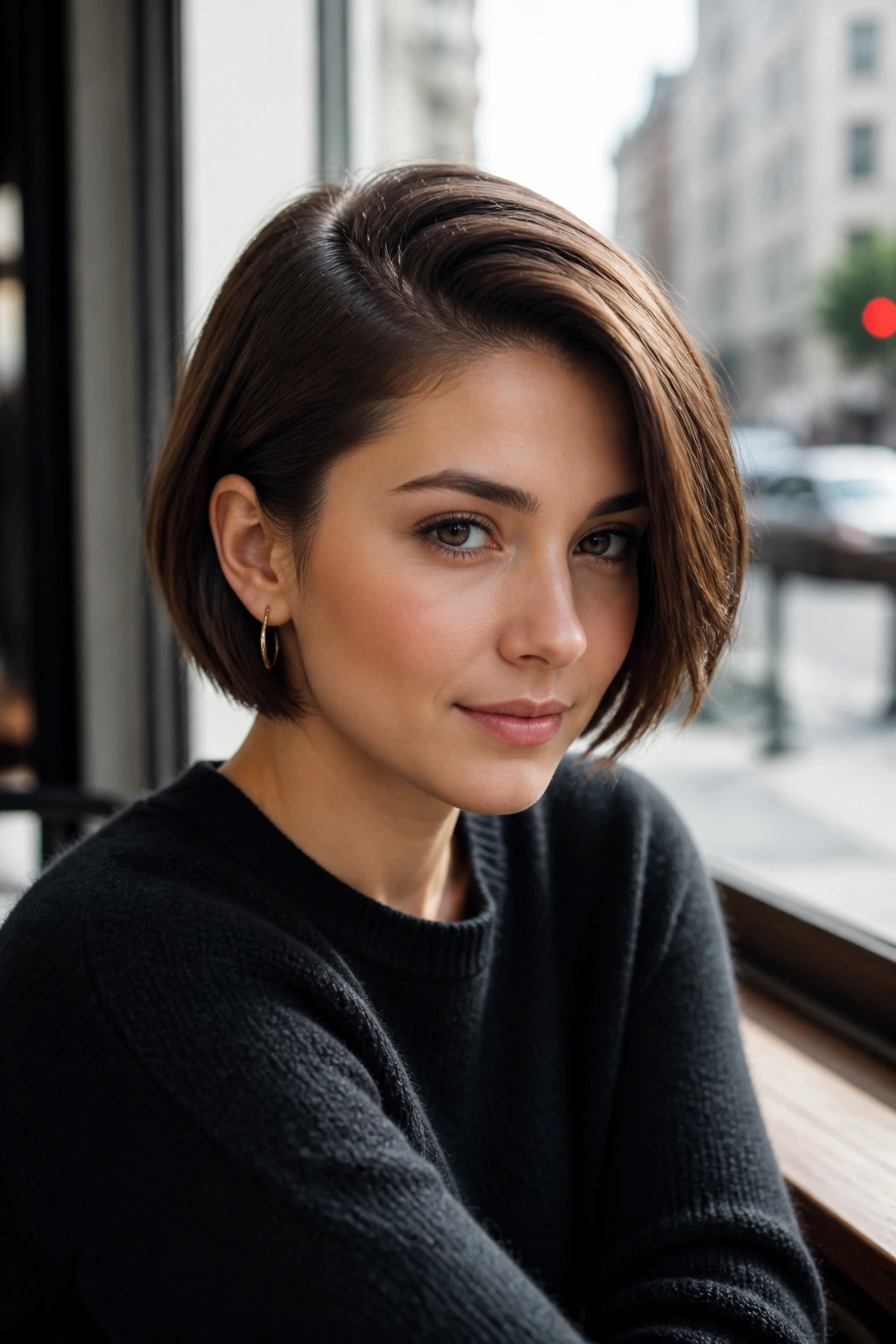
A deep side-part bob is the quickest way to get asymmetry without changing the cut itself. Shift the part a couple of inches off center, let one side fall heavier, and suddenly the whole bob has a different mood. It’s a useful trick for anyone with flat roots or a face that benefits from a little diagonal movement.
This cut can be blunt, layered, or lightly textured. The part does the visual work. If your hair tends to collapse at the crown, a side part gives you lift without teasing or piling on product. If your hair is dense, the side sweep can also make the style feel less blocky.
Little detail, big payoff
Tuck the lighter side behind one ear. That tiny move opens up the face and makes the haircut feel intentional, not accidental.
10. Curtain Bang Bob
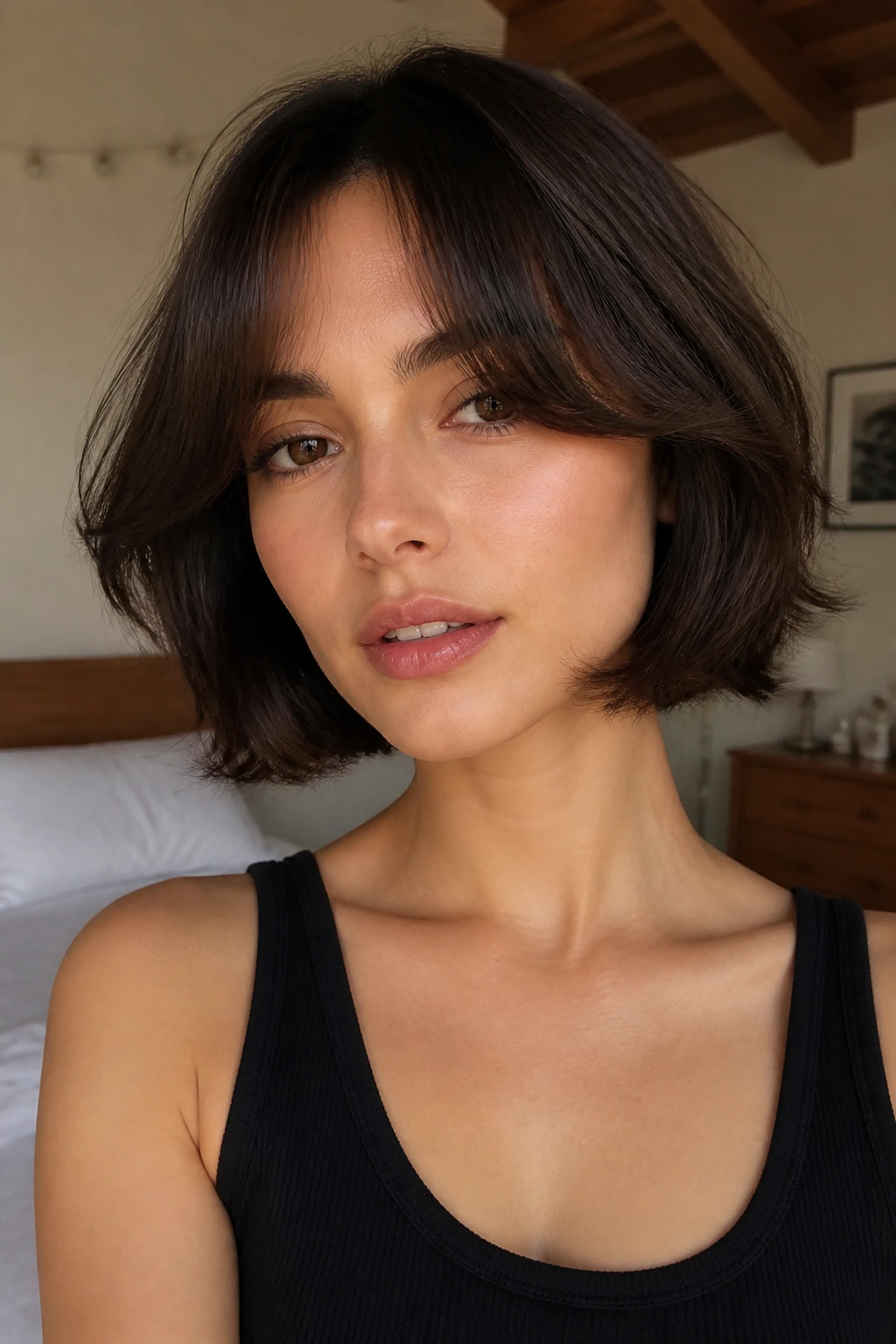
Curtain bangs change the whole temperature of a bob. They split in the middle or just off center, soften around the temples, and frame the face in a way that feels less severe than a full fringe. On short hair, that matters. A blunt bob with no fringe can read as sharp; add curtain bangs and the shape softens right away.
This cut works best when the bangs are cut to start around the cheekbone and blend into the sides without a hard shelf. Blow-drying them with a small round brush helps them open away from the face, which keeps the look airy. If the fringe is cut too short, it can fight the bob instead of supporting it. I’d rather see a curtain bang slightly longer than too blunt.
Who should look at this one
If you want to soften a forehead, balance a longer face, or make a short bob feel less severe, this is one of the easiest routes.
11. Micro Bob
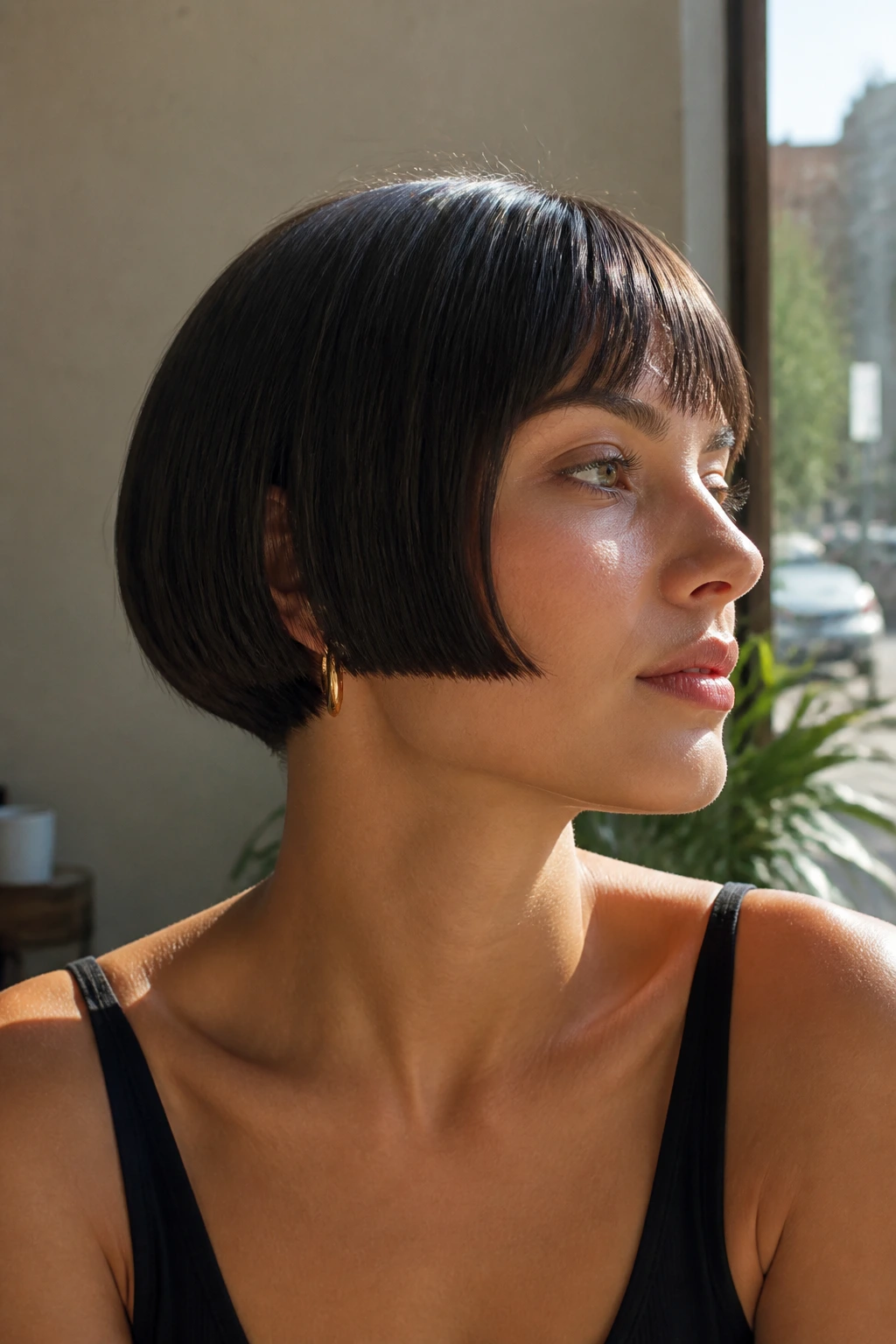
The micro bob is short, exact, and a little brave. It usually lands above the chin, sometimes kissing the cheekbone, and it leaves almost no slack in the shape. That’s why it reads so clearly. There’s no hiding anything here, which is also why it looks so good when the cut is precise.
This is not the bob I’d send a nervous first-timer toward. It needs clean lines, consistent growth control, and regular trims every 3 to 4 weeks if you want to keep the edge intact. It suits straight to softly wavy hair best, because aggressive cowlicks or strong bends can push the shape around. If your jawline is one of the features you like showing off, though, a micro bob can be sharp in the best sense of the word.
A tiny warning: the shorter it gets, the more the neck, ears, and sideburns matter. Everything shows.
12. Box Bob
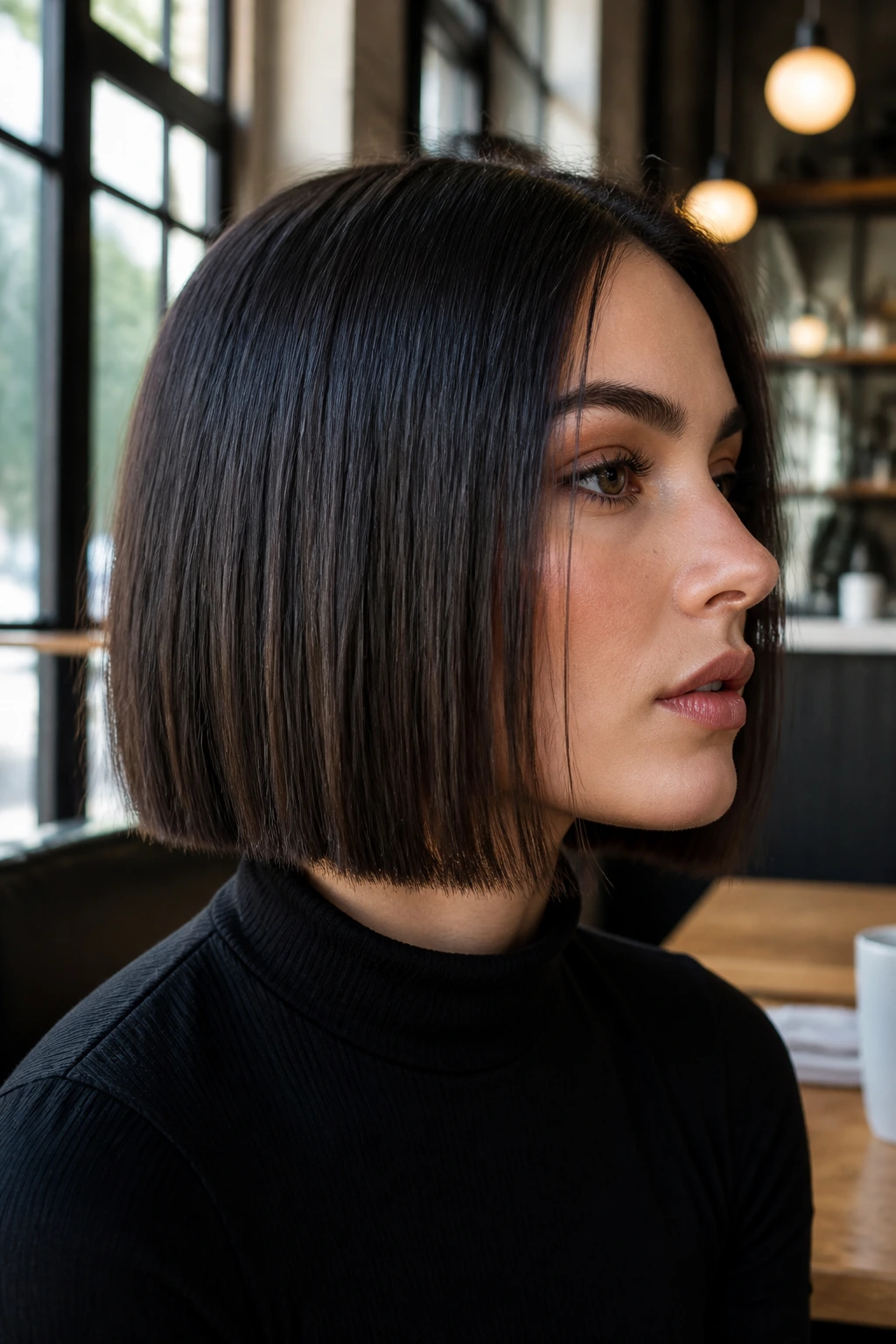
A box bob is blunt with attitude. The outline is square, the weight sits evenly around the head, and the effect is more graphic than soft. It can look almost architectural on straight hair, especially when the ends sit at the jaw and the shape stays flat and deliberate.
This one can be stunning on thick, straight hair because the density helps support the square line. On very thick hair, though, you need some internal debulking or the cut turns into a heavy wall. On fine hair, the box bob can look a little too sparse unless the perimeter is kept full. The right version has weight at the edge and control inside.
Nope, this is not the cut for someone who wants a wispy finish. It’s for someone who likes a strong shape and doesn’t mind a haircut that announces itself.
13. Shaggy Bob
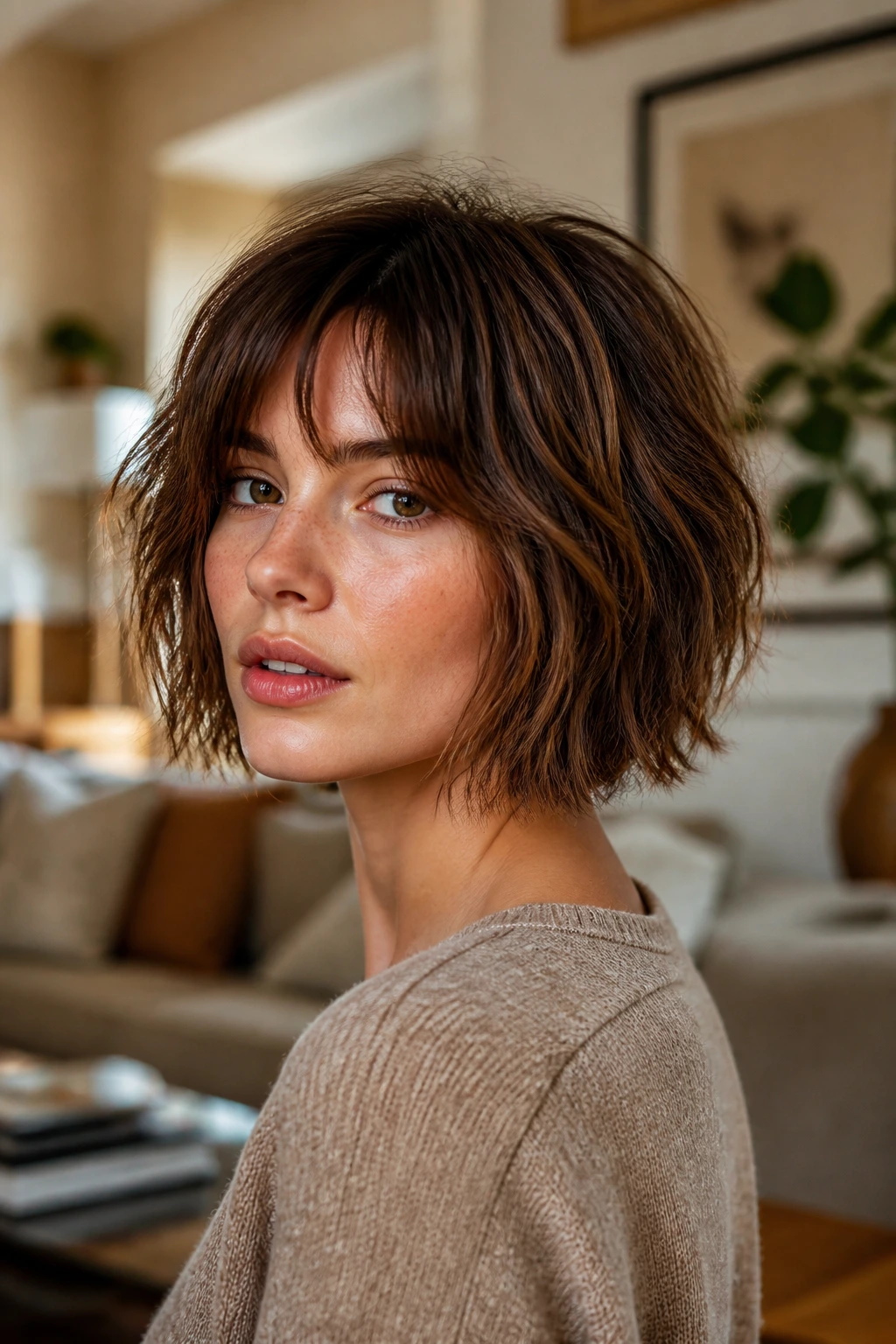
A shaggy bob takes the neatness out of a classic bob and leaves you with something looser, rougher, and more forgiving. The layers are more visible, the ends are broken up, and the whole cut can be worn with a bend that looks almost accidental. It’s a good answer for hair that refuses to lie flat in a polished way.
This cut is especially nice on wavy hair because the layers make the movement look like part of the plan. The shortest pieces around the crown and face stop the style from getting too heavy, while the longer bottom pieces keep it grounded. A little mousse, a rough-dry, and maybe a finger-twist at the ends are usually enough. If you need a haircut that doesn’t punish you for skipping a perfect blowout, this one deserves a look.
Texture first, polish second
A shaggy bob should feel airy, not sloppy. If the ends look shredded instead of soft, the cut has gone too far.
14. Curly Bob
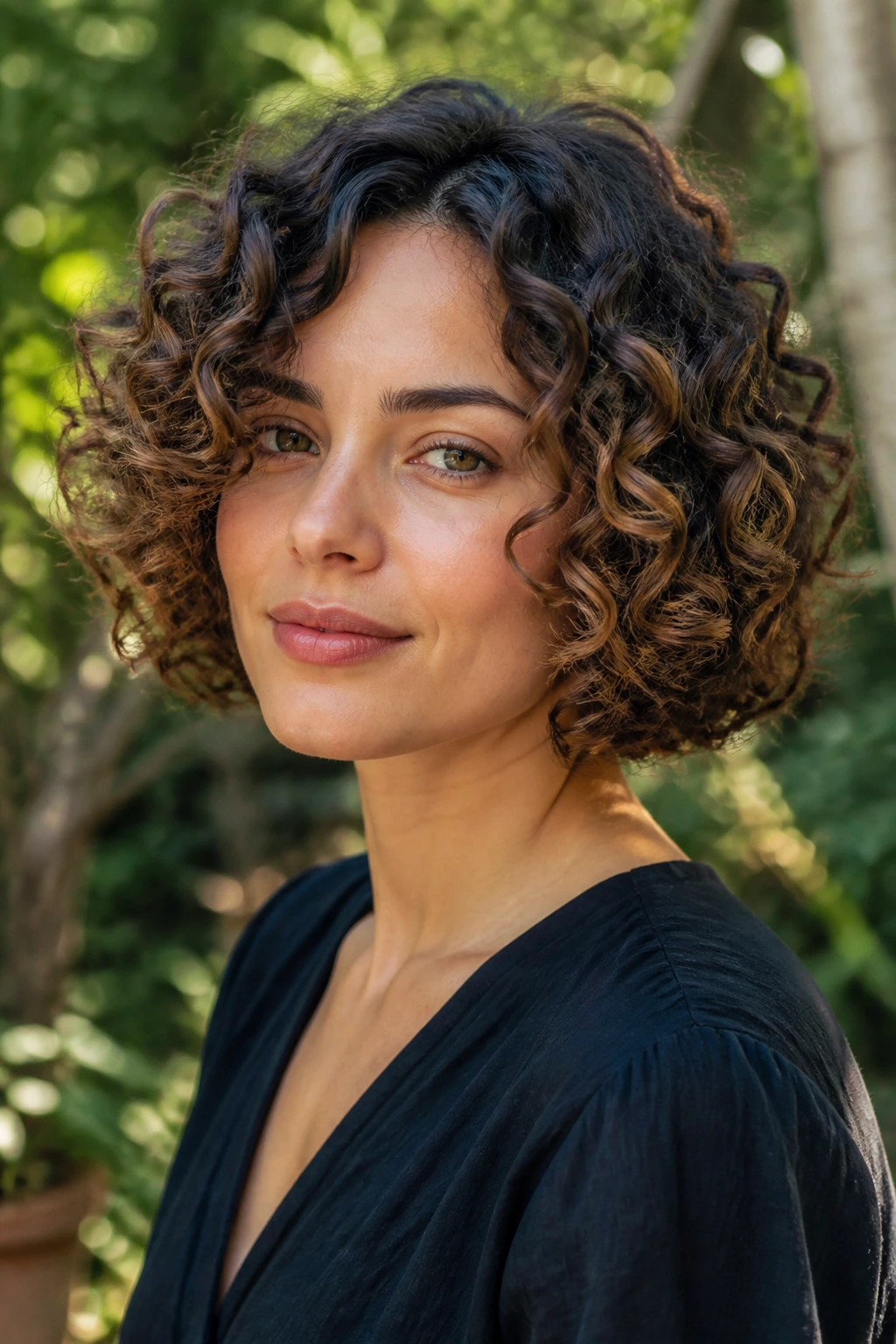
A curly bob is one of those cuts that gets better when the stylist respects the curl pattern instead of flattening it into a straight-hair idea of shape. The length usually lands somewhere between the chin and jaw, though shrinkage can change that fast. That’s not a problem. It’s the whole point.
The best curly bobs are cut with the curls in their natural state, or at least with the shrinkage taken into account. If your hair springs up two inches when it dries, the cut should already know that. Layering can help the curls stack well without turning the shape puffy, but too much layer removal can create frizz and gaps. A diffuser, a light cream, and patience usually beat a lot of heat.
What to keep in mind
- Cut for the curl, not the wet length.
- Leave enough weight at the perimeter so the shape holds.
- Keep the ends hydrated; dry curls at bob length can look ragged fast.
15. Sleek Angled Bob
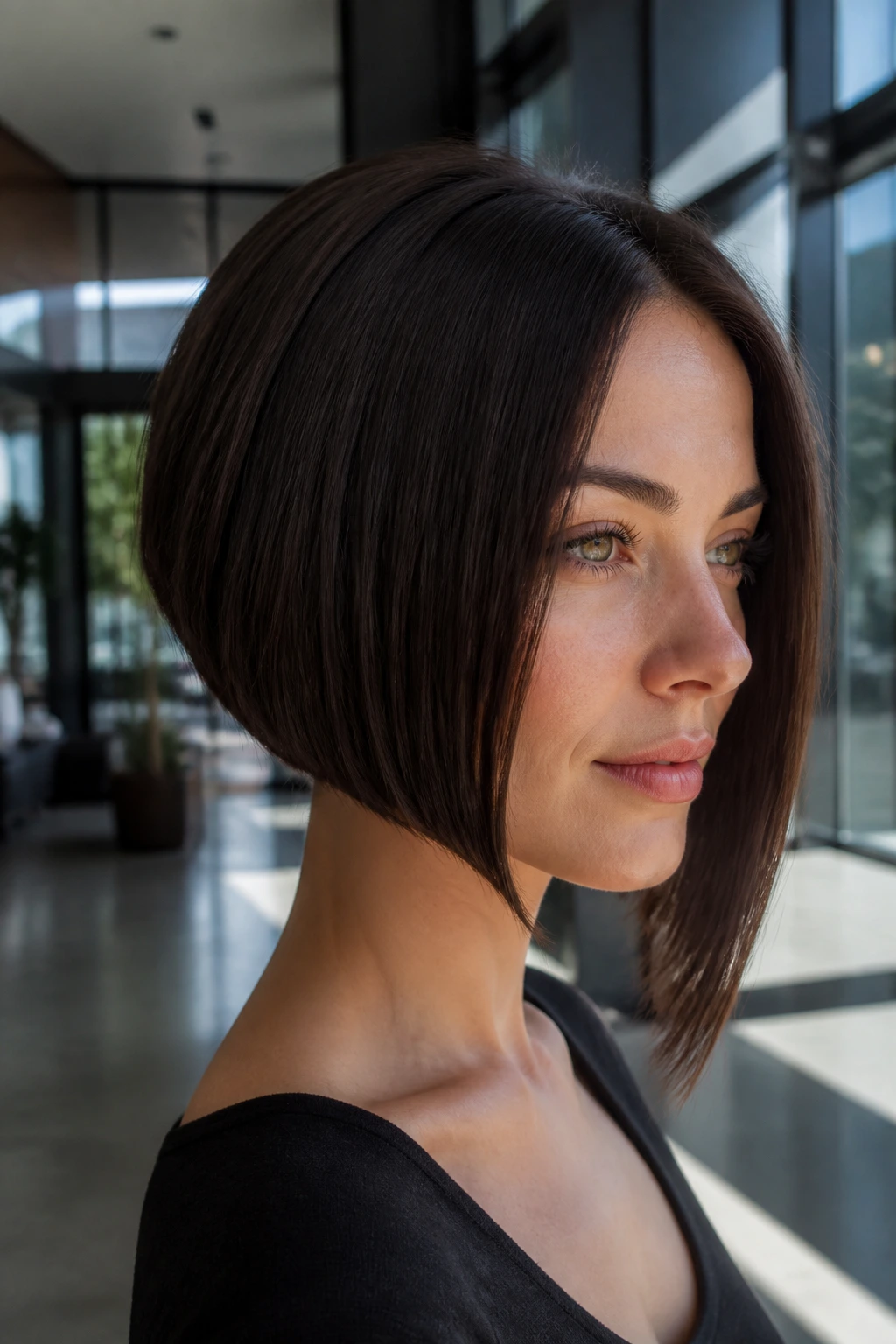
A sleek angled bob is the polished cousin of the A-line. The front is longer, the line is cleaner, and the finish is smoother. If the blunt bob feels too simple and the inverted bob feels too dramatic, this sits in the middle with a cleaner profile and a more intentional sweep.
The style benefits from a flat iron or a very disciplined blow-dry with a paddle brush. Ends should curve just a touch, not flip out. I like this shape on straight or coarse hair because those textures hold a straight line without collapsing too fast. A shine spray can help, but don’t drench the hair. The cut should still be the star.
This is a good choice if you like structure, sharp edges, and a bob that looks tailored rather than casual.
16. Bottleneck Bang Bob
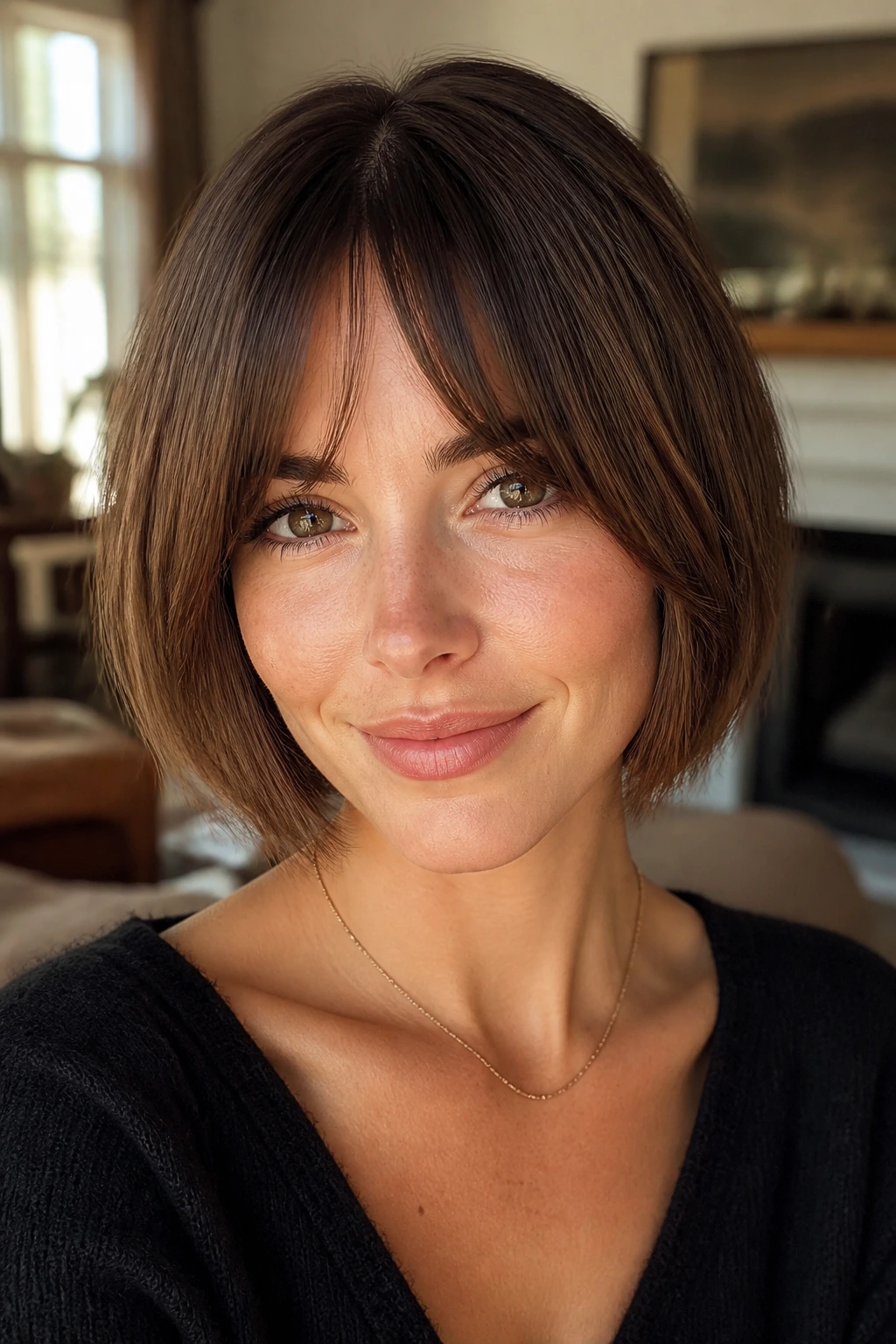
Bottleneck bangs narrow at the center and open wider near the temples, which makes them softer than a blunt fringe and more structured than curtain bangs. Add them to a bob and you get face framing that feels balanced, not heavy. The shape pulls attention toward the eyes without boxing in the forehead.
This cut is especially useful if you want bangs but worry about the straight-across effect. The fringe can be blended enough to move, while the bob itself stays short and clean. Ask for the shortest point of the bang to sit near the bridge of the nose or a little higher, then let the outer pieces fall into the cheekbone area. That creates the little bottle shape that gives the style its name.
Why it works
The fringe makes the bob feel modern without making it hard. That’s a rare combination, and it’s why this cut keeps hanging around.
17. Asymmetrical Bob
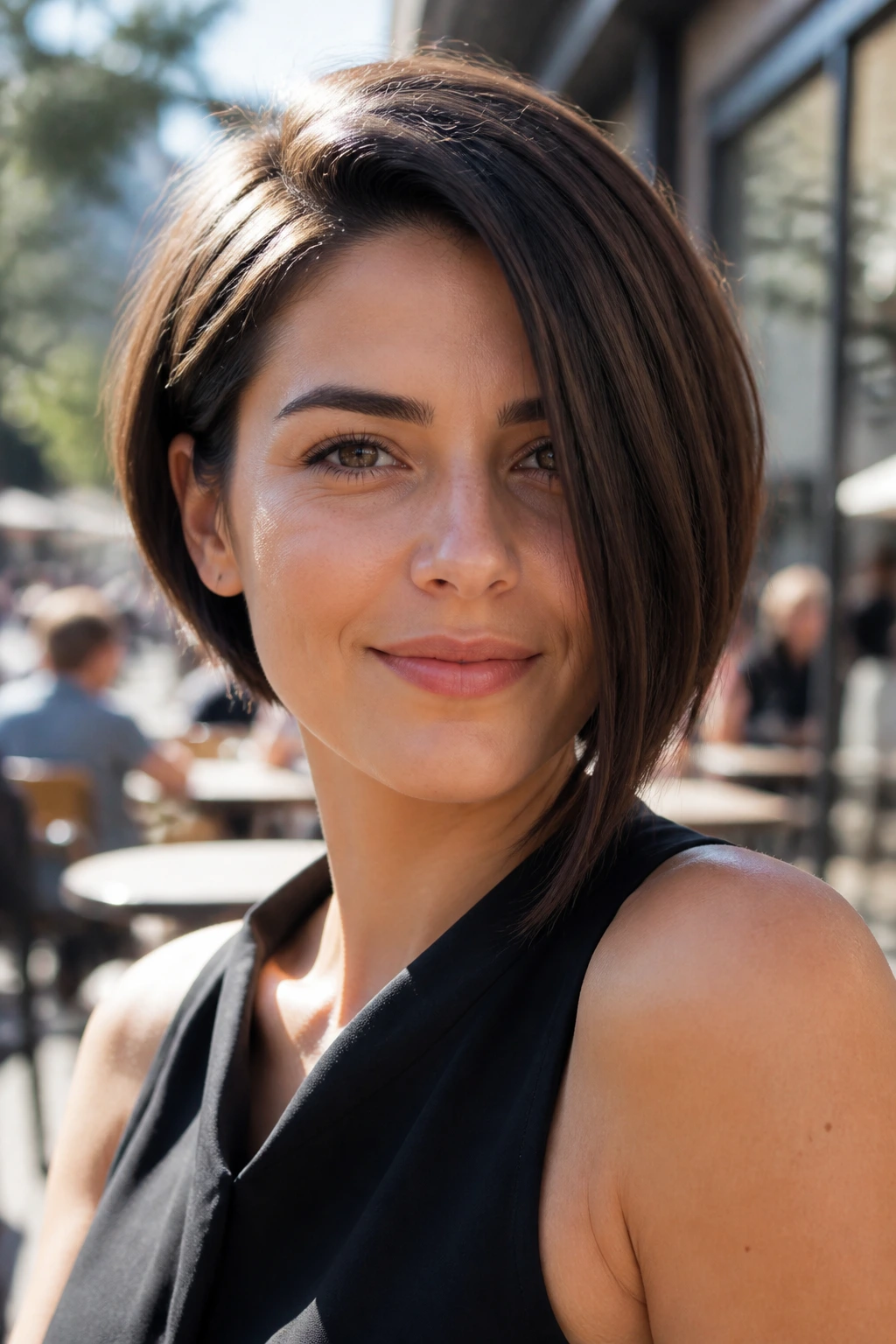
An asymmetrical bob uses uneven lengths on purpose, usually with one side a bit longer than the other. It’s a small change on paper, but visually it does a lot. The shape feels sharper, less predictable, and a little more alive than a perfectly balanced cut.
The imbalance can be subtle — maybe 1 to 2 inches difference — or more visible if you want a stronger effect. I tend to like the subtler version because it still reads as wearable after the first week. If the asymmetry is too extreme, the cut can start fighting your face instead of framing it. A good asymmetrical bob should feel like a shape, not a stunt.
If you wear one side tucked behind the ear and let the longer side fall forward, the contrast becomes even cleaner. Simple. Effective.
18. Feathered Bob
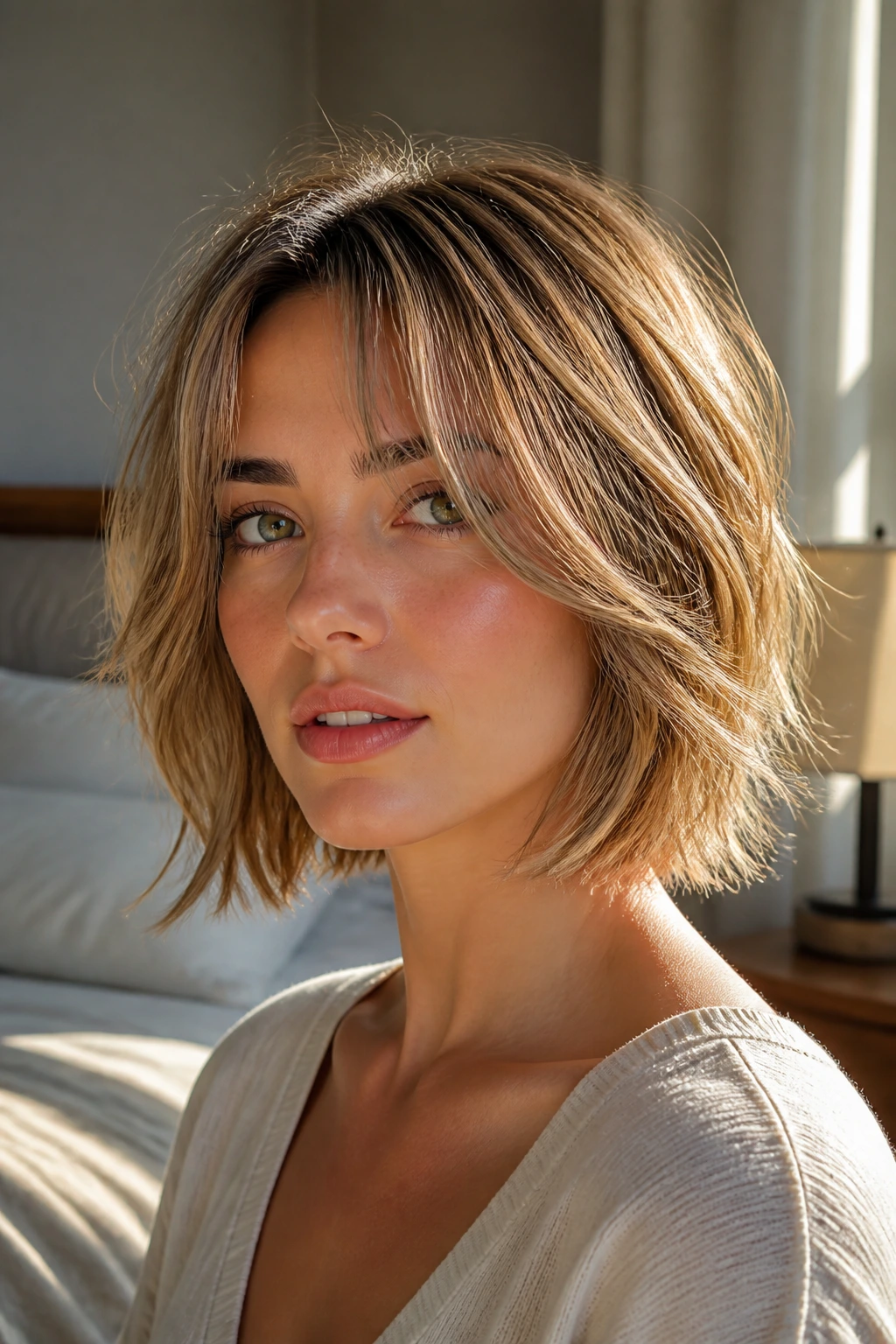
Feathered bobs take some of the weight off the ends and soften the whole outline. The layers are fine, directional, and usually cut so the hair moves away from the face instead of sitting in a block. It’s a gentler look than a shag and less rigid than a blunt bob.
This cut works best when you want softness around the jaw and neck without losing the bob’s basic structure. Medium-density hair usually handles feathering well. On very fine hair, too much feathering can make the ends look thin. On very thick hair, the feathered pieces can keep the shape from getting puffy. The line is still there. It just doesn’t shout.
A feathered bob can be a smart choice if you want a short haircut that feels lighter around the face without going fully layered.
19. Soft Wavy Bob

A soft wavy bob lives in that nice middle ground where the hair has bend, but not chaos. The waves are loose, the ends are rounded, and the shape never looks overworked. It’s the bob I’d choose for someone whose hair already wants to move and who would rather enhance that than flatten it.
The best version usually has a little internal layering to stop the waves from puffing at the sides. You can air-dry it with a lightweight cream, then bend a few pieces with a curling iron if needed. The goal isn’t a beach look and it isn’t a glassy blowout. It’s a soft contour around the head that still feels like hair, not styling.
The texture balance
If your waves are irregular, this bob is forgiving. The trick is to keep the ends from looking too sharp, because sharp ends and soft waves can fight each other in a weird way.
20. Tapered Nape Bob
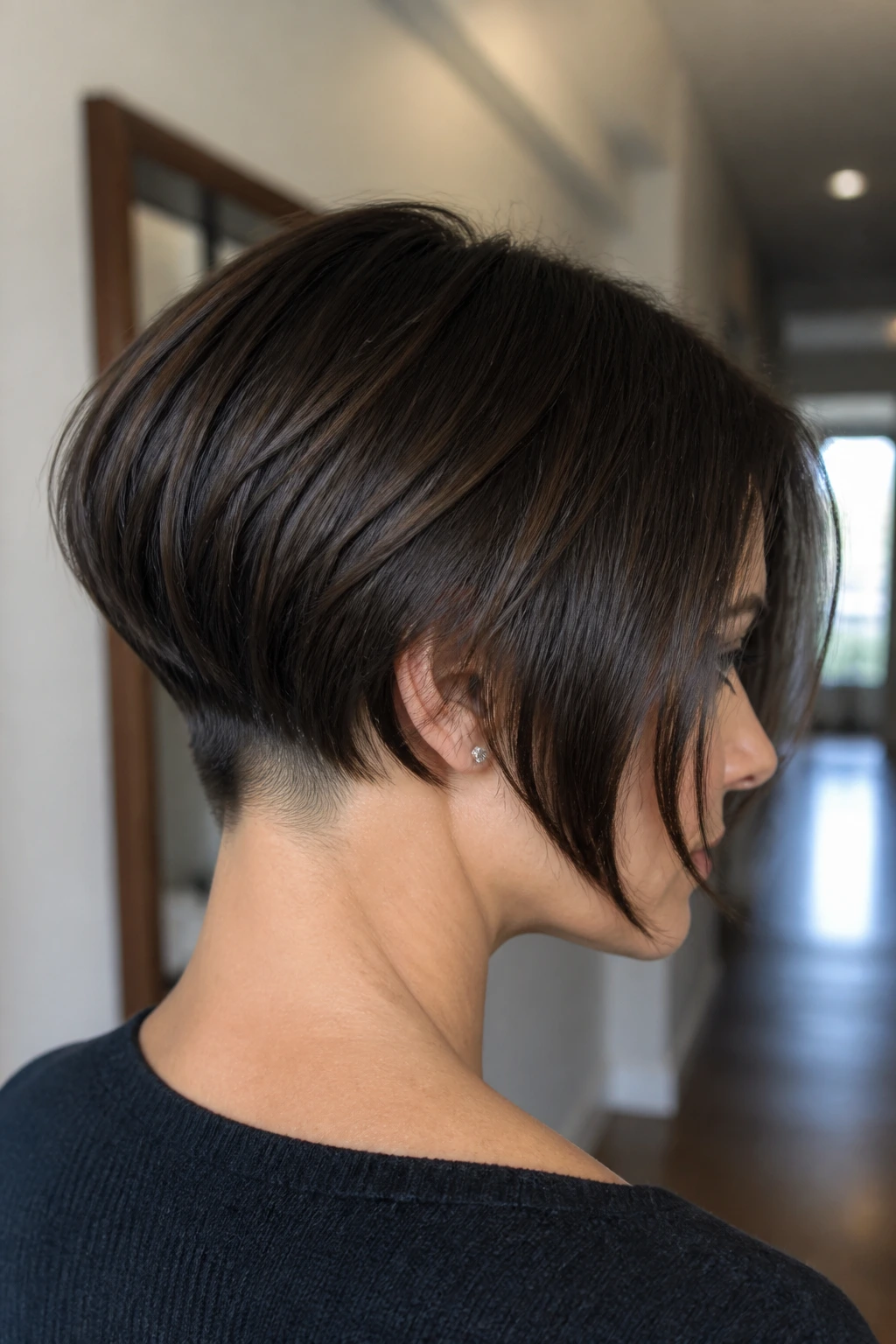
A tapered nape bob is neat around the neckline and fuller through the upper sections. It gives the back a tidy finish, which matters if you hate hair brushing your collar or collecting at the nape. The taper also helps the haircut sit closer to the head, which can make thick hair easier to handle.
I like this cut on people whose hair grows fast at the neck or who want a cleaner back view between trims. It keeps the silhouette crisp without forcing the front to be too short. You can pair it with a side part, a center part, or even bangs. The real action is at the nape, where the taper keeps the shape from bulging outward.
A clean neckline is underrated. You notice it every time you put on a jacket.
21. Undercut Bob
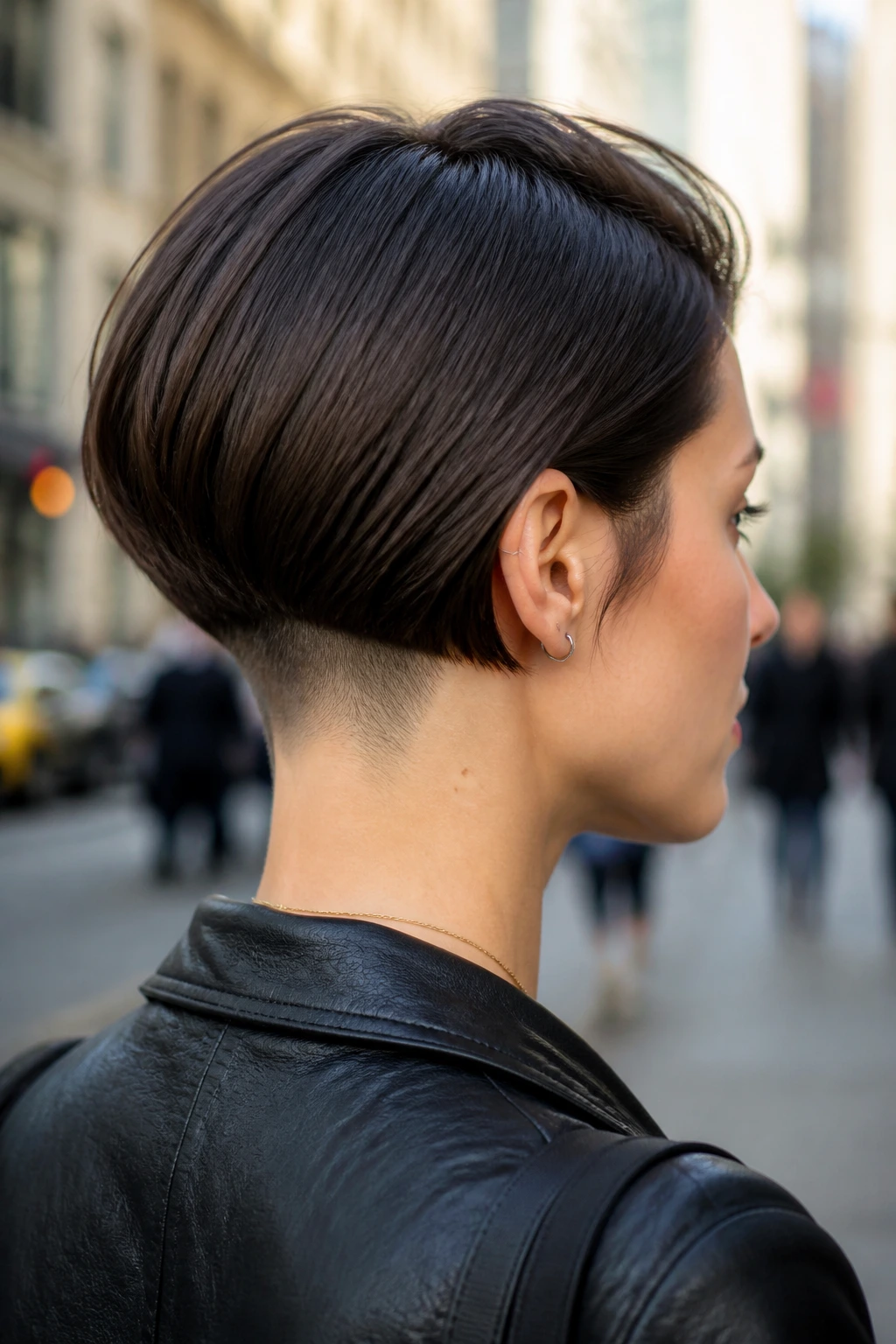
An undercut bob is the practical fix for hair that has too much bulk underneath. The hidden or visible lower section is clipped shorter, sometimes much shorter, so the top hair can fall more cleanly. On dense hair, this can be the difference between a bob that sits and one that swells.
The undercut can stay tucked away for a quiet version, or it can be made visible if you want the edge. Hidden undercuts are nice when you need bulk control but don’t want the look to go too punk. Visible ones bring more contrast and make the haircut feel deliberate even when the top layer is sleek. The tradeoff is grow-out. You’ll need to keep an eye on it, because that short section shows itself quickly once it starts pushing through.
Best use case
If you’ve ever had a bob turn into a triangle by day two, this is the kind of cut that solves the problem at the root.
22. Pixie-Bob Hybrid
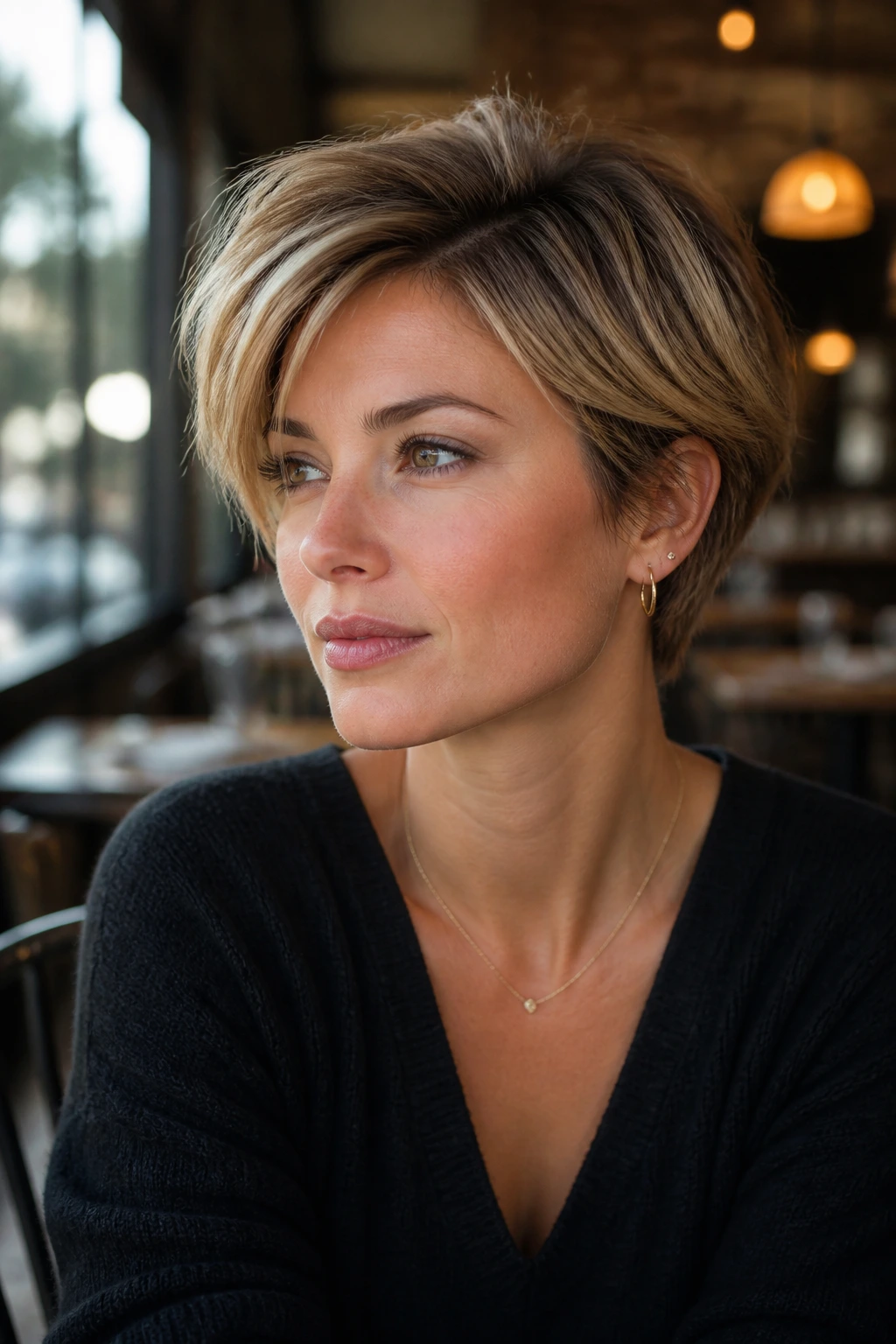
A pixie-bob hybrid is what happens when you want short, but not fully pixie-short. The nape is cropped close, the sides stay softer, and the top has enough length to tuck, sweep, or tousle. It keeps a bob-like sense of shape while borrowing the ease of a pixie cut.
This is a useful option if you’re moving shorter and want to test the waters before going all the way in. It also works well for people with strong facial features because the shorter length puts the face front and center. Styling is fast, but the cut still needs shape at the crown and around the ears so it doesn’t just collapse into “short hair.” Ask for enough length on top to move, not just stand up.
That little distinction matters. A lot.
How to Wear a Bob Without Fighting It Every Morning
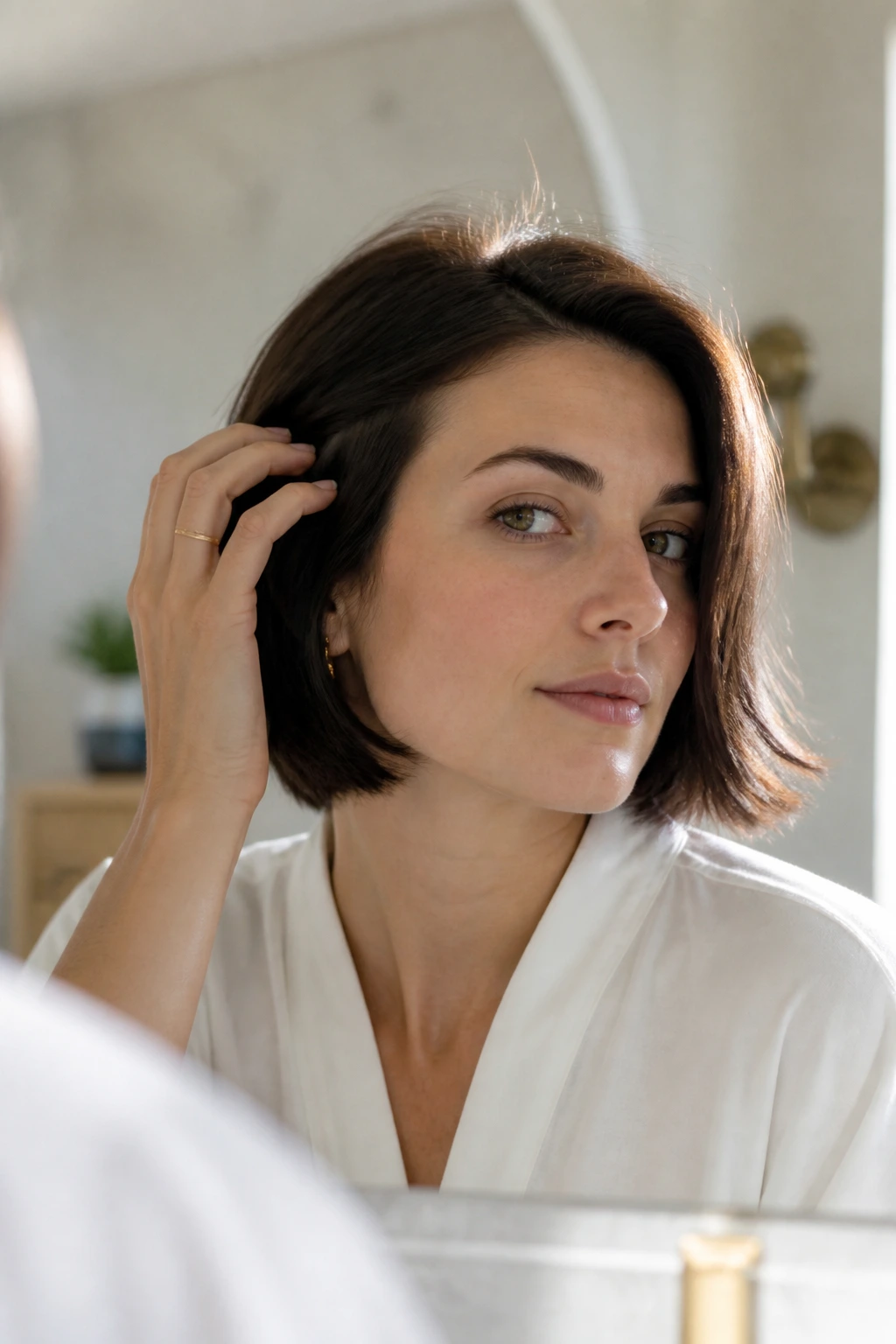
The best short bob haircuts are the ones that still look like themselves when you’re not trying too hard. That means your styling routine should match the cut, not the fantasy version of the cut. A blunt bob wants smoothness and a neat line. A shaggy or choppy bob wants a little grit and separation. A curly bob wants moisture first, shape second.
Blow-dry discipline: Aim the dryer downward if you want the cuticle to lie flat, and use the nozzle. It takes less time than battling frizz later. For a rounded or angled bob, a 1-inch brush can bend the ends under just enough to look finished.
Texture control: Use less product than you think. A short bob needs a dime-sized amount of cream or mousse, not a palmful. Heavy product can make the ends sag and the roots flatten, which is annoying because it makes a clean cut look tired.
Parting tricks: Changing the part by even an inch can wake up a bob that’s gone flat. A center part feels crisp. A side part gives lift. A slight off-center part is often the easiest on hair that has a cowlick or uneven growth at the crown.
The Mistakes That Make Bob Haircuts Look Off
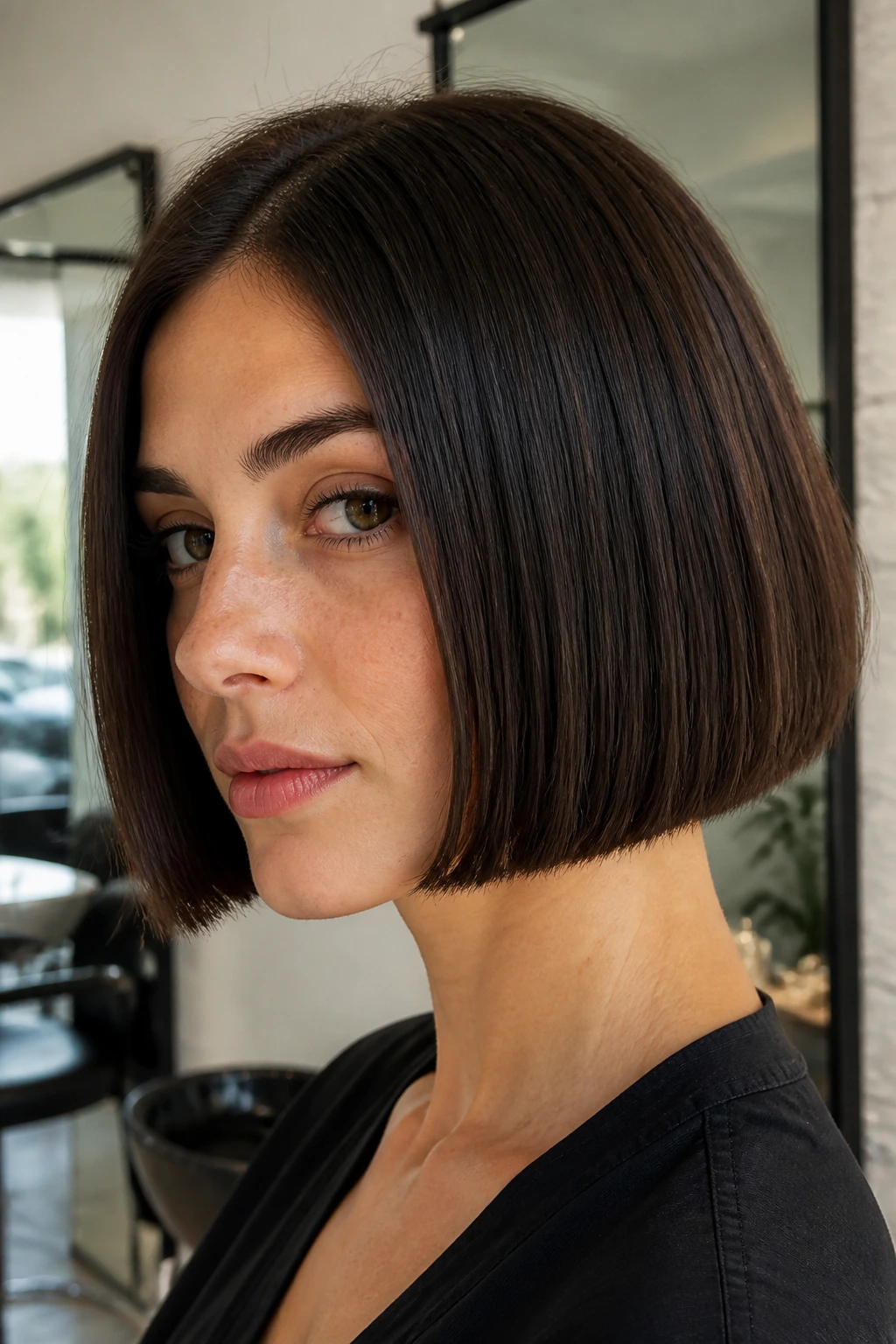
The mistake I see most is not asking for a real shape. People say “bob” and mean ten different things. The result is a cut that’s too vague at the salon and too annoying at home. Bring a photo, yes, but also say where you want the line to sit — jaw, cheekbone, chin, nape. That one detail changes everything.
Too many layers, too soon: Fine hair can look sparse if the interior gets shredded. The fix is to keep the line full and ask for only light internal removal. If your ends start looking see-through, the haircut was thinned too much.
Ignoring the neck and crown: A bob lives and dies by the back profile. If the nape is too heavy, it feels bulky. If the crown is too flat, the cut drags. Tell the stylist where your hair swirls, because that is where the shape usually goes wrong first.
Overstyling the finish: You do not need to curl every end into obedience. A bob looks better when the styling follows the cut’s natural shape instead of forcing a fake curl pattern. A slight bend is enough.
Choosing a high-maintenance cut for a low-maintenance life: A micro bob, a strong inverted bob, or a precise glassy bob can look gorgeous and still be a pain if you only wash-and-go. Be honest about how much upkeep you will actually do.
Variations Worth Trying When You Want a Different Mood

The Air-Dried Bob: This version leans into natural texture, whether that’s a soft wave or a little bend. Use a light cream, scrunch once or twice, and let the cut do the work. It suits people who want movement without a blow-dryer routine.
The Glassy Bob: Sleek, smooth, and very controlled. It’s all about shine and a crisp perimeter, with minimal layering and a clean part. Best for straight or coarse hair that can hold a polished finish without frizzing out.
The Grown-Out Bob: If you’re not ready to keep things short forever, ask for a bob that skims the jaw but leaves enough length to grow into a lob. This is the easier exit route. No awkward shock later.
The Fringe-Forward Bob: Bangs become the star here — curtain, bottleneck, or soft full fringe. The bob itself stays simple so the front pieces can do the face-framing. Good if you want the haircut to feel fresh without changing the whole shape.
The Low-Bulk Bob: Built for dense hair, this version removes weight underneath, often with hidden layers or a discreet undercut. It keeps the silhouette clean and stops the sides from puffing. This one is practical in the best sense.
Keeping a Bob Clean Between Salon Visits
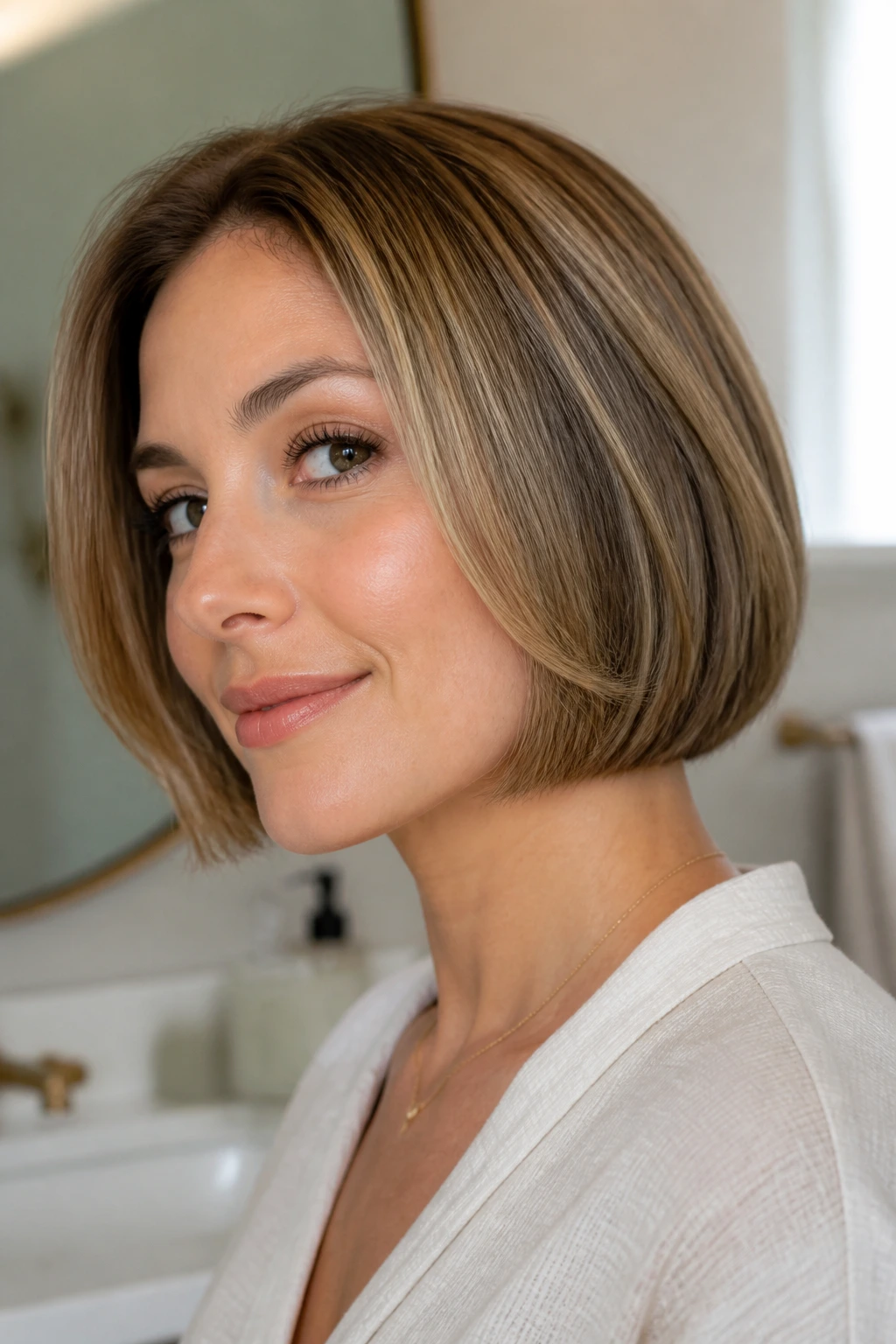
Short bobs hold their shape best when the perimeter stays tidy. For blunt, micro, and sharply angled cuts, a trim every 4 to 6 weeks keeps the line where it should be. Softer layered bobs and curly bobs can stretch closer to 6 to 8 weeks, especially if you don’t mind a little extra length. Once the neckline starts swallowing the shape, the haircut changes mood fast.
The nape is usually the first place that looks grown out. Hair there hits collars, flips, and gathers oil faster than the rest. If that bothers you, ask your stylist for a small cleanup between full appointments — just the neckline and sideburn area. It keeps the bob looking crisp without a full reshaping.
At home, dry shampoo works best at the roots, not sprayed all over the ends. The ends of a bob are already the driest part of the haircut. Hit them with too much product and they get dull and sticky. A light heat protectant before blow-drying, a satin pillowcase if your hair frizzes overnight, and a clarifying shampoo every couple of weeks if you use a lot of styling product can make a short bob behave better than people expect.
If you’re growing it out, ask for micro-trims instead of major changes. That keeps the shape from collapsing while the length catches up.
Which Bob Haircut Works Best for Fine Hair?
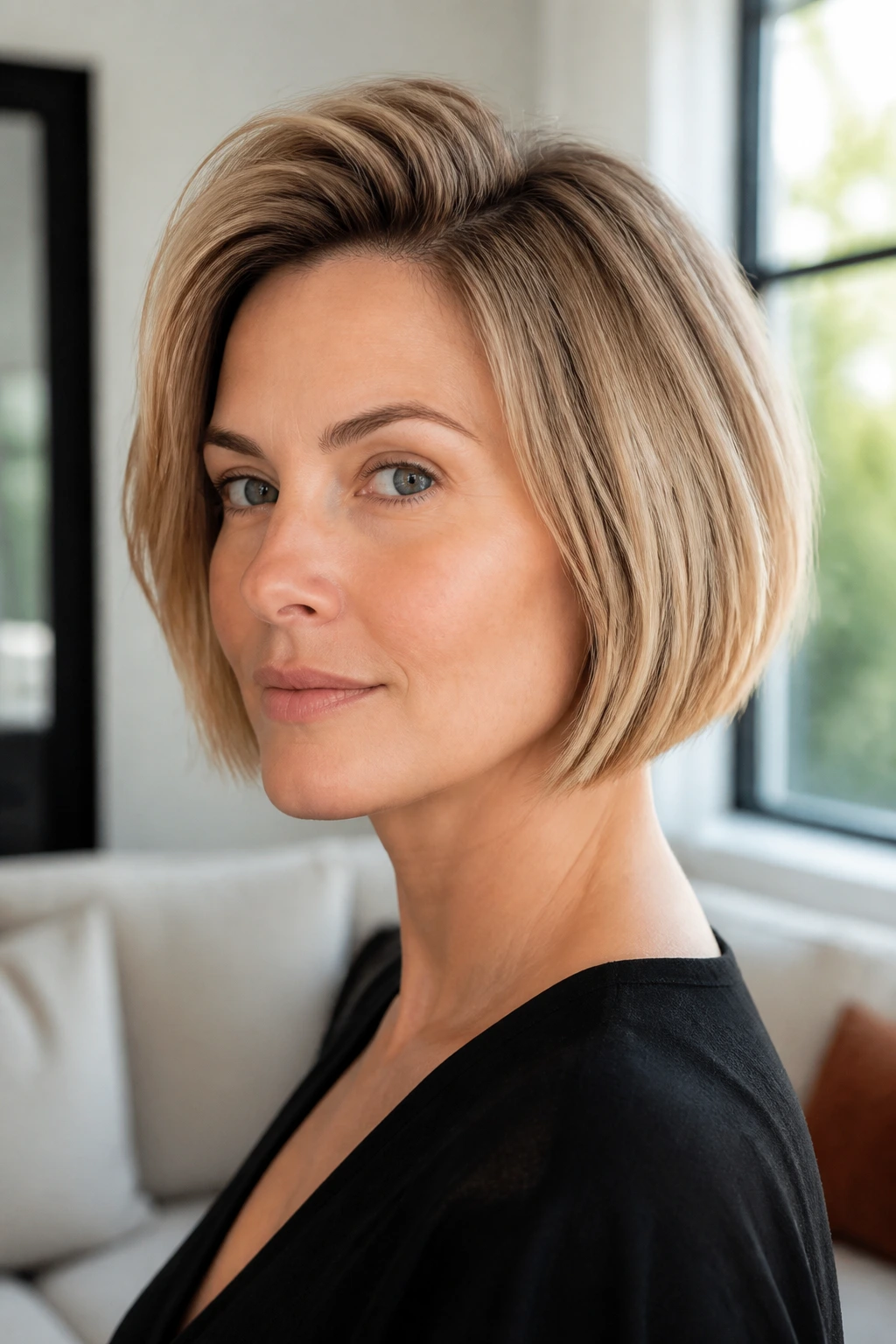
Fine hair usually looks best in bobs that keep a clean perimeter and don’t strip away too much weight. A blunt bob, a box bob, or a softly stacked bob can give the illusion of density because the edge stays full and tidy. Too many layers tend to make the ends disappear, and that’s where fine hair starts looking thin.
The other thing fine hair likes is a little lift at the roots. A side part, a root-lift spray, or a blow-dry that directs the hair away from the scalp can help the cut hold shape longer. If you want more movement, ask for internal texture, not heavy layering. That distinction matters. Internal texture keeps the outside line intact; aggressive layers can chew it up.
Can Short Bob Haircuts Work on Curly Hair?
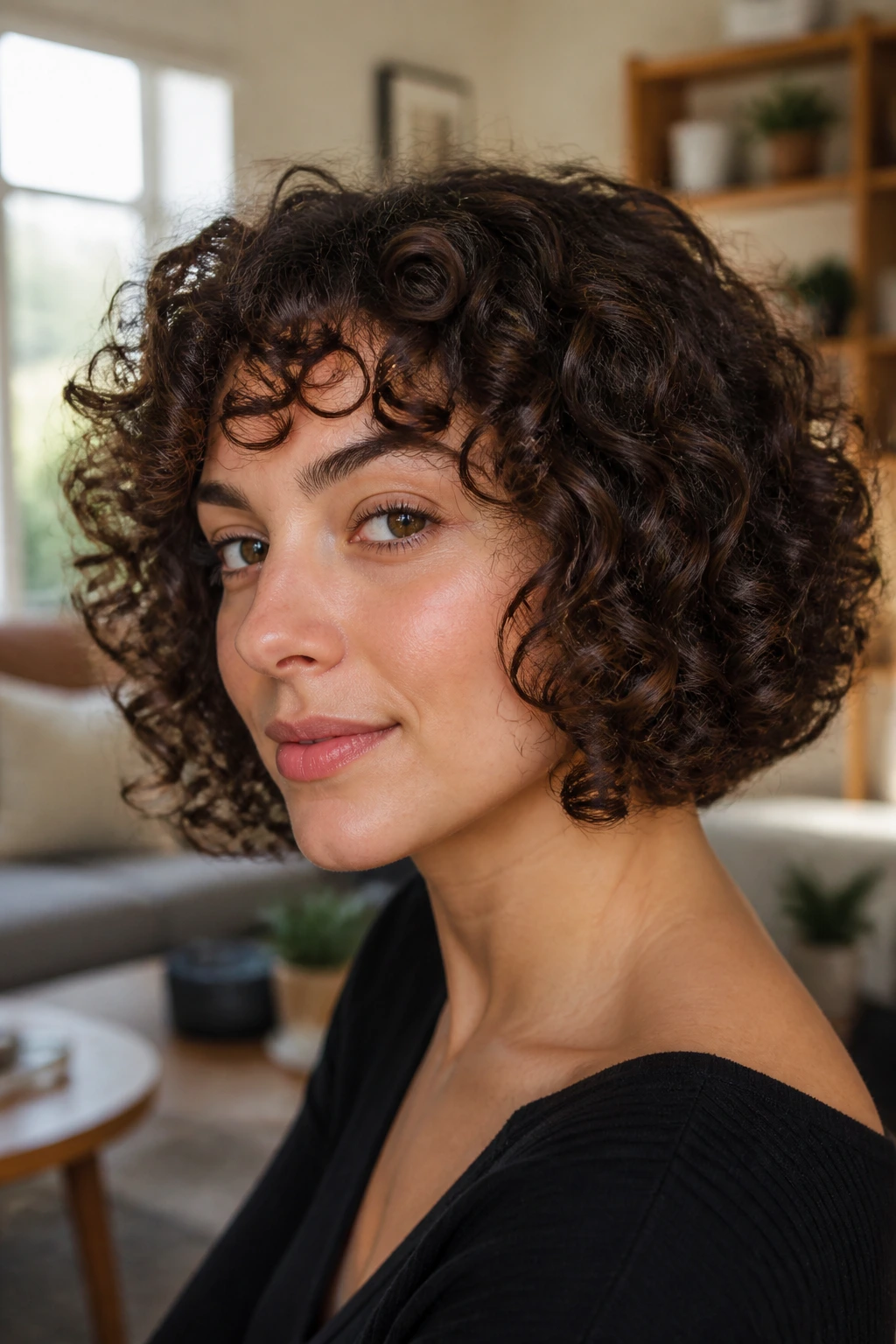
Absolutely, but the cut has to respect the curl pattern. A curly bob should be shaped around how the curls shrink, spring, and stack, not around what the hair looks like when it’s wet and hanging straight. That’s where people get into trouble. They cut for length, then the curls dry shorter and puffier than expected.
A good curly bob usually has enough weight at the bottom to keep the shape grounded, with light layering to stop bulk from building at the sides. It often looks best when it’s cut curl by curl or with the curl pattern in mind. If your curls vary from one side to the other, tell the stylist. Don’t assume symmetry will happen on its own. It won’t.
How Short Is Too Short for a Bob?
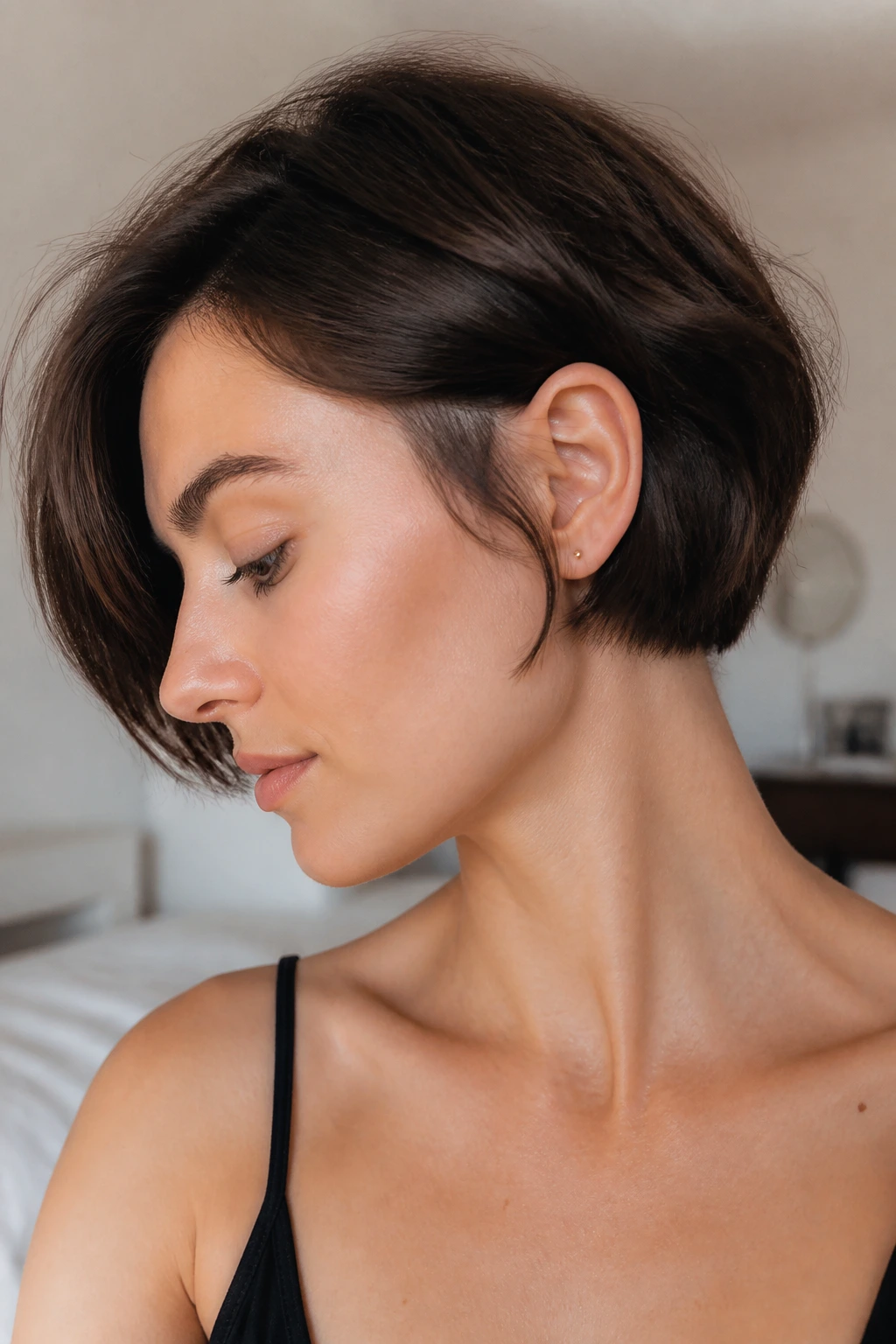
When the length goes above the chin and the shape starts sitting closer to the cheekbone or ear, you’re moving into micro bob or pixie-bob territory. That can be gorgeous, but it changes the maintenance level. The shorter the cut, the more obvious every cowlick, ear line, and nape swirl becomes. There’s less room to hide a growth pattern.
The real answer is not a measurement. It’s how much room you want for error. If you like to tuck hair behind your ears, twist it, or let it grow a little before your next appointment, don’t go too short. Leave some space in the front and sides so the cut still reads as a bob after a few weeks.
Do Bangs Make a Bob Easier or Harder?
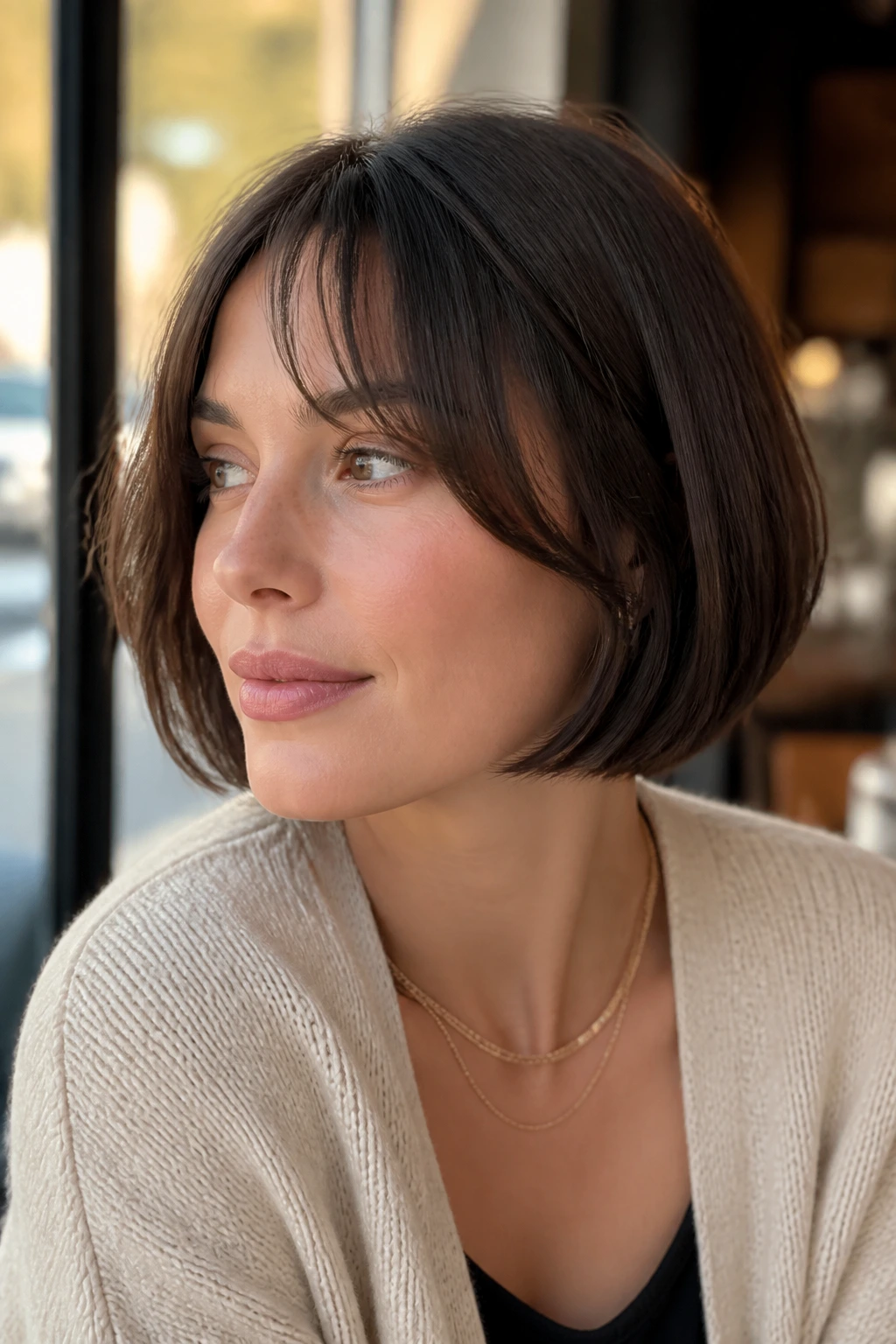
Both. Bangs can make a bob feel softer and more complete, especially if you like the haircut to frame the face. Curtain bangs and bottleneck bangs are the easiest place to start because they blend into the sides instead of sitting as a hard block across the forehead. A full blunt fringe makes a stronger statement and usually asks for more styling.
What makes bangs harder is not the fringe itself. It’s the commitment. Bangs need regular trimming, and they get oily faster than the rest of the cut. If you already know you dislike hair on your forehead by mid-afternoon, skip the straight-across fringe and go for something lighter around the temples.
What If My Bob Flips Out at the Ends?
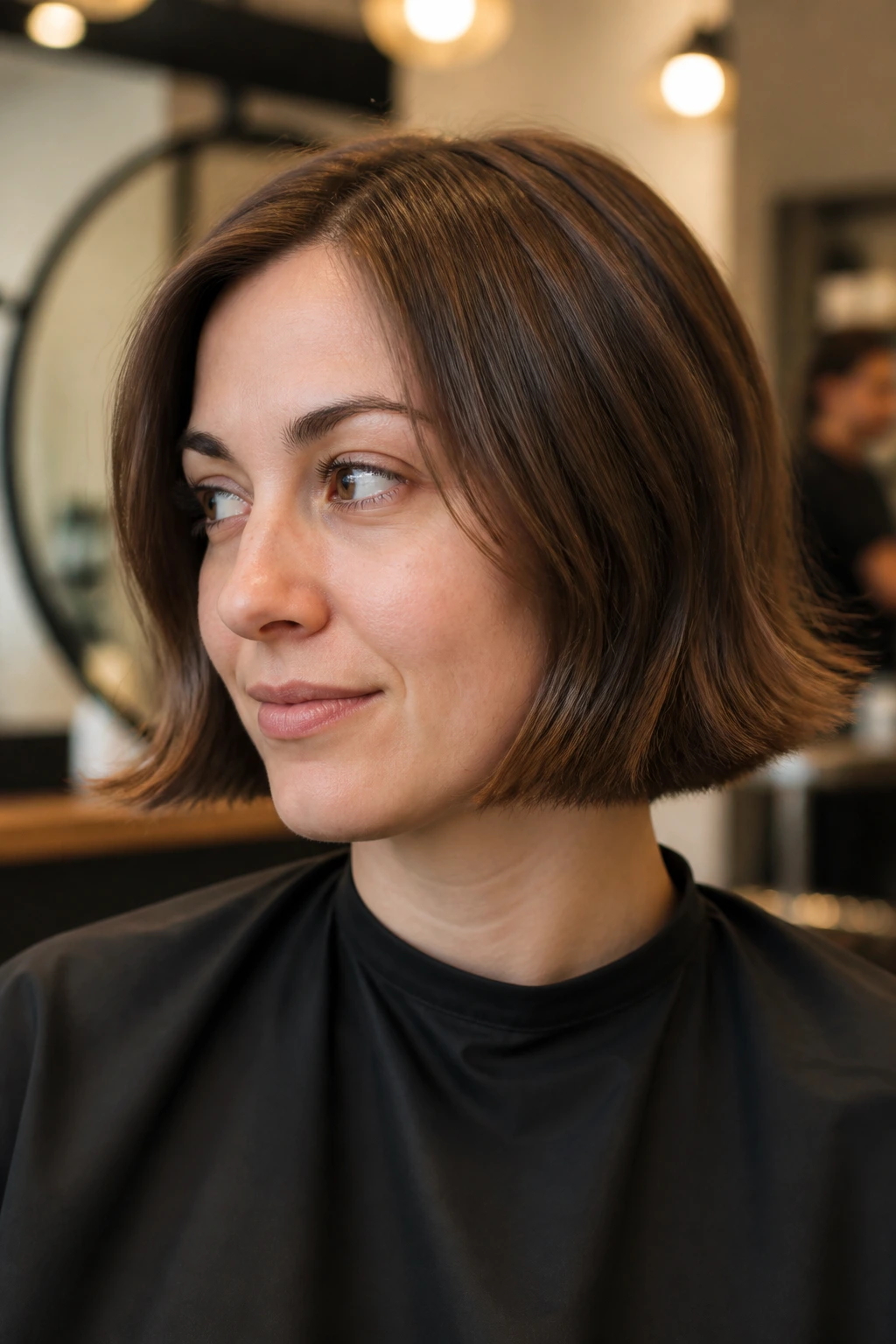
That usually means the cut is fighting your growth pattern, or the ends are too light for the way your hair falls. Sometimes the solution is simple: change the blow-dry direction and use a round brush to coax the ends under while the hair is still warm. Other times, you need a little more weight left at the perimeter so the shape has something to hang on to.
If the flipping is worst at the nape, mention your neck swirl to the stylist next time. A cut that ignores that spot will keep doing the same thing. And no, you do not need to flat iron every strand into submission. A small directional change often fixes more than heat does.
Can a Bob Grow Out Without Looking Awkward?
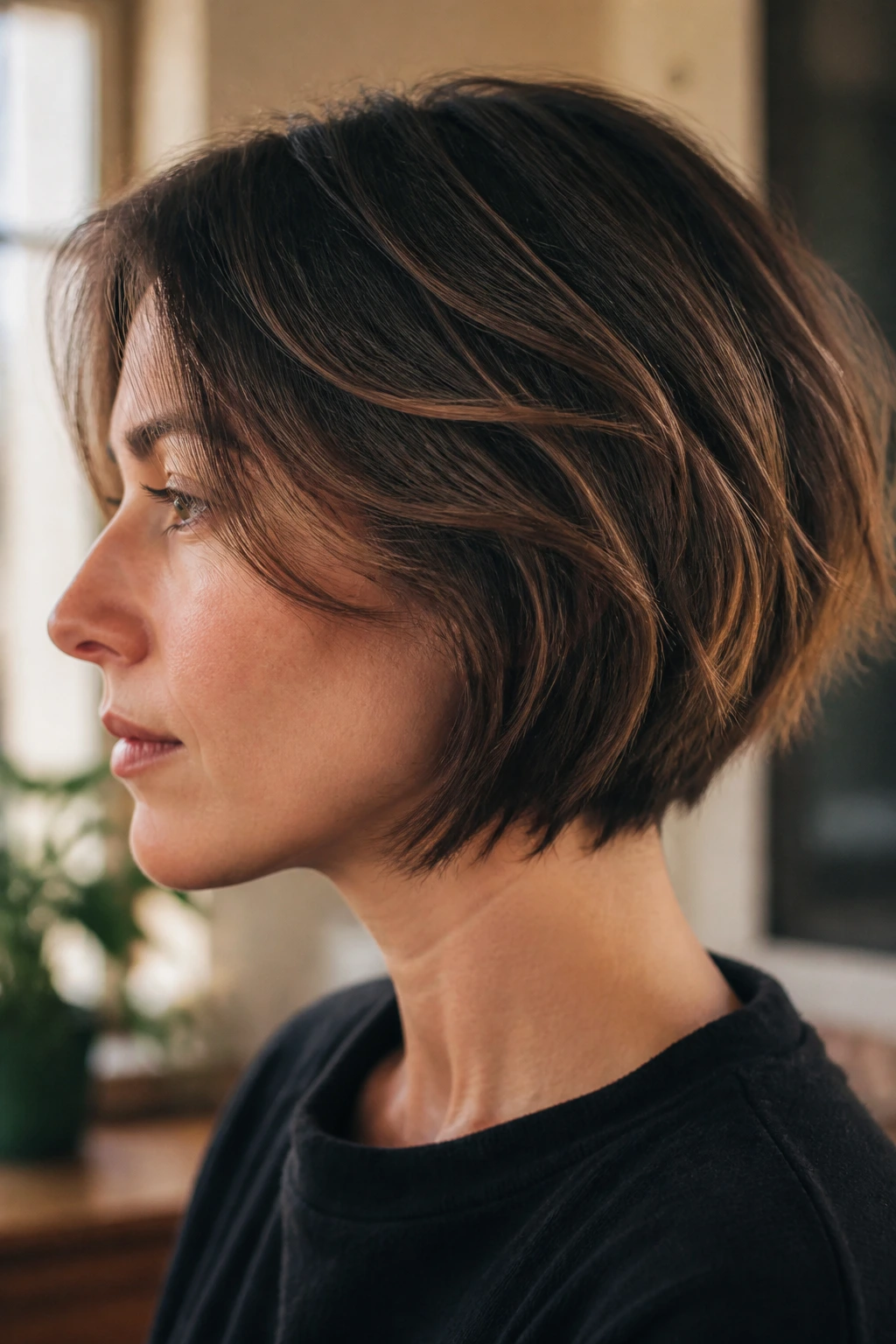
Yes, if the initial shape was planned with grow-out in mind. A slightly longer front, a soft perimeter, or a layered bob can move into a lob without leaving you stranded in the in-between stage. The cleanest grow-outs usually happen when the cut is not too extreme at the nape or crown.
If you want the easiest transition, ask for a bob that already has some movement in it. Hard edges are harder to grow out. That does not make them bad; it just means they need more upkeep. If you prefer low drama, keep the line a little softer from the start.
What Should I Tell My Stylist if I Want a Low-Maintenance Bob?

Be blunt about your routine. Say how often you wash, whether you air-dry or blow-dry, and how much time you’re willing to spend styling. Then point to the exact part of the haircut you care most about: the jawline, the nape, the front pieces, or the fringe. “Short bob” alone is too vague.
Bring one photo for the shape and one for the texture. That helps more than a dozen similar images. If you want an easier grow-out, ask for a cut that keeps length in the front and avoids an overly stacked back. If you want something that air-dries well, say that before the scissors come out.
The Shape That Keeps Its Edge
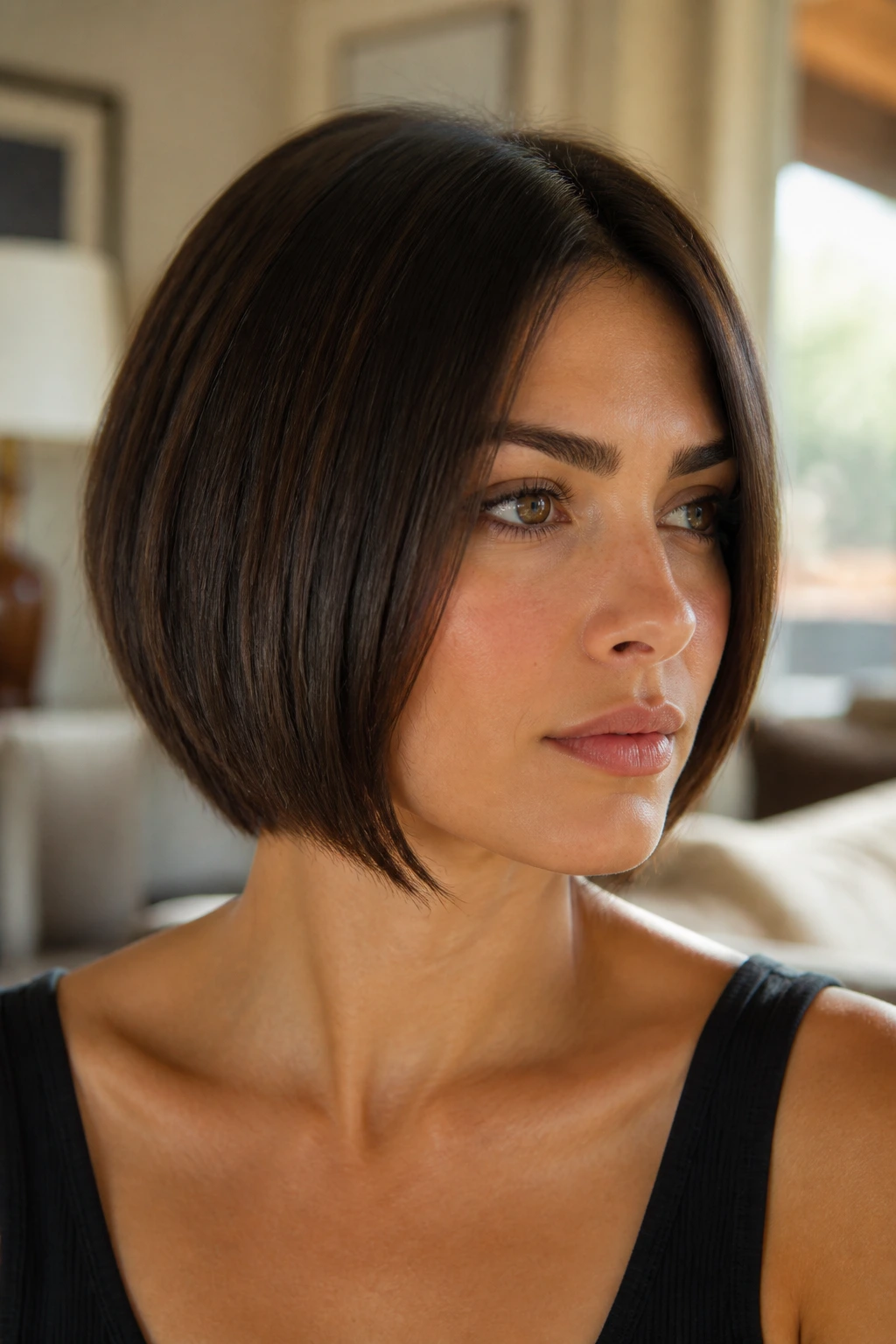
A good bob doesn’t need to be loud to matter. It just needs a clean perimeter, a smart balance of weight and movement, and a length that suits the way your hair actually behaves. That’s why bob haircuts for short hair stay useful long after a trend wave has moved on.
The best version is the one you can live with on a weekday morning, not just the one that looks neat in a salon mirror. If your hair has been carrying too much weight, one of these short bob shapes can change the whole feel of it — lighter, sharper, and a little more finished.
