



A shag haircut with an undercut has a sharper silhouette than most layered cuts because the bulk disappears where it usually gets in the way: at the nape, behind the ears, and under the crown.
That small shift changes the whole head shape. Hair that would normally sit heavy starts to swing. Curls stop building into a triangle. Straight hair gets a little air between the layers. And a cut that might have looked soft in a photo suddenly reads as deliberate when you see it from the side.
I like this combination most on hair that fights back. Thick hair gets relief. Fine hair gets a cleaner outline if the undercut stays small and low. Curly hair gets room to spring without spreading out like a mushroom cloud. The catch is placement. Too high, and you lose the shag. Too low, and you don’t get enough movement to matter.
These 23 versions run from quiet and wearable to full rock-and-roll territory, because “edgy” doesn’t have to mean the same thing on every head. Some are hidden until you tuck your hair. Some are loud the second you turn around. The trick is knowing where the weight comes off and where the layers keep their drama.
Why These Shag Haircuts With an Undercut Keep Showing Up in Salon Photos
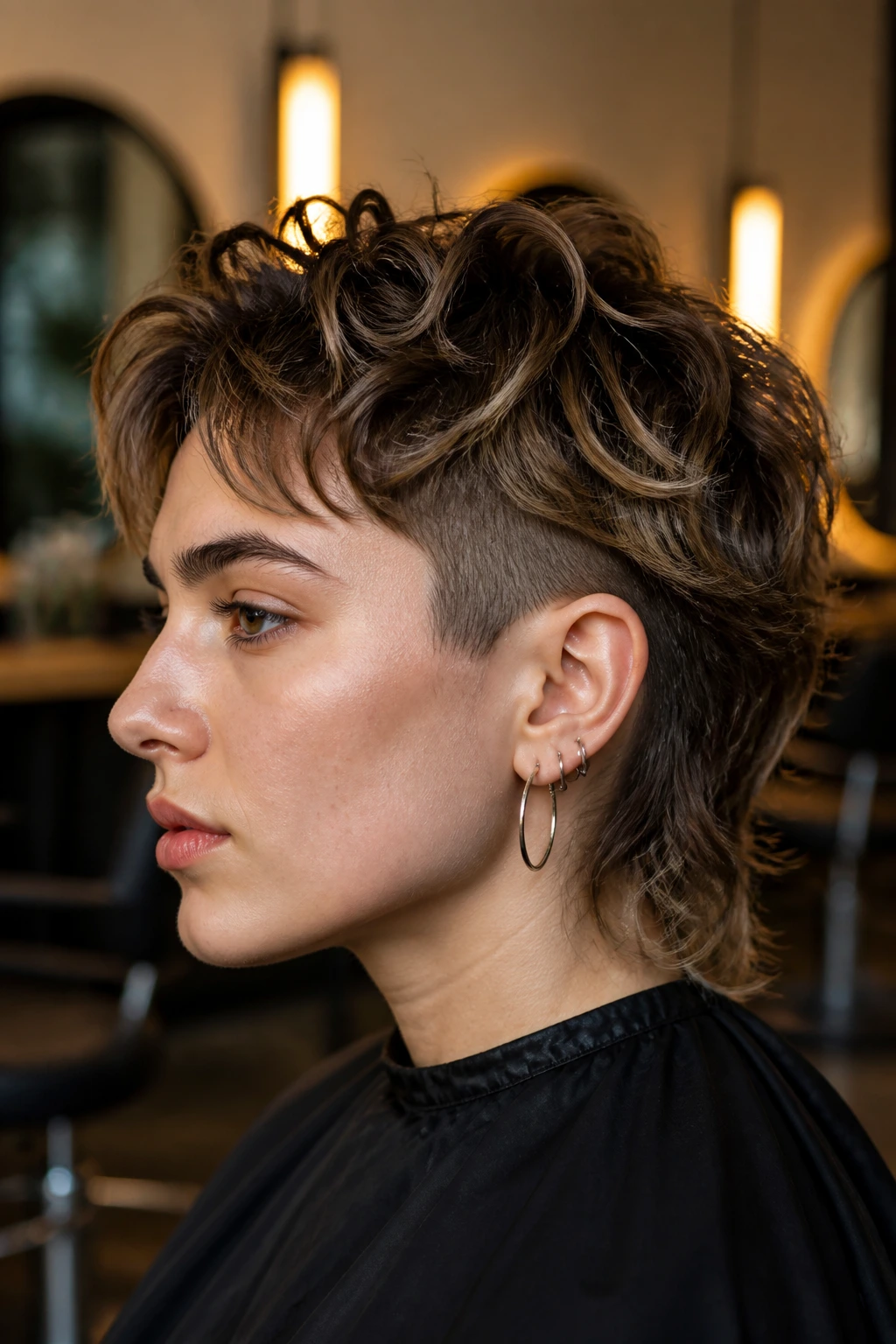
-
Weight Control: The undercut removes bulk where shag layers usually collapse, so thick hair stops puffing out at the nape and around the ears.
-
Built-In Movement: Choppy ends and feathered layers move better when they’re not sitting on a dense base, which is why the shape looks lighter even when the length stays the same.
-
Hidden Versatility: A low nape shave can stay invisible under loose hair, then show up only when you tuck one side behind the ear or throw your hair up.
-
More Edge, Less Helmet: The undercut breaks up the round, boxy outline that can happen when a shag is cut too evenly through the bottom.
-
Works With Texture: Straight hair gets bend and separation, wavy hair gets swing, and curly hair gets room to stack instead of spreading outward.
-
Better Grow-Out: A smart undercut grows out in stages, not all at once. That matters when you want the cut to stay sharp without becoming a maintenance trap.
1. Feathered Pixie Shag With a Clean Nape Undercut
A feathered pixie shag gets a lot sharper when the nape is clipped tight. The top keeps those airy, choppy layers, but the back stops puffing out against the collar, which is the curse of so many short cuts with texture.
Ask for the crown to stay a little longer than the sides so you can get lift without building a mushroom shape. Point-cut the top, then take the undercut low enough that it disappears under the visible layers. If your hair is dense, this is the shortcut that makes short hair behave.
Best for: thick straight hair, fine hair that needs a cleaner outline, and anyone who wants short hair without a bulky back.
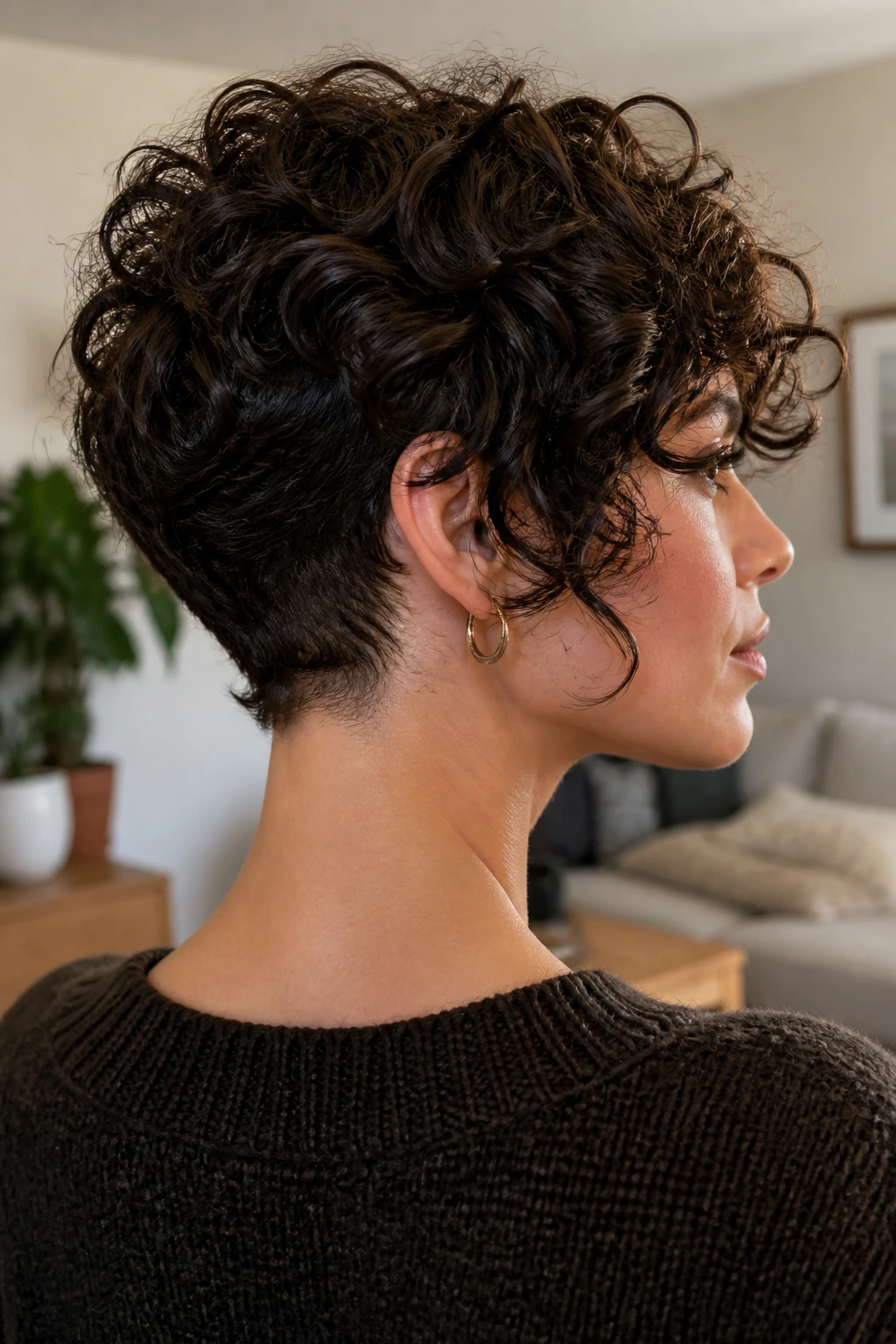
2. Curly Shag With a Hidden Undercut
Why do curls suddenly look lighter when the undercut is tucked under them? Because curls do not need all their bulk in the same place. A hidden undercut at the nape or just behind the ears lets the coil pattern stack upward instead of spreading into a triangle.
What to ask for
- Keep the undercut low and narrow.
- Cut the curls dry or nearly dry so shrinkage doesn’t fool anyone.
- Leave enough perimeter weight that the ends still look full when the curls separate.
This version is one of the smartest moves for dense curls that swell in humidity. The shave stays out of sight, the top layers keep their bounce, and the whole cut feels less heavy at the end of the day.
3. Wolf Cut Shag With a Temple Undercut
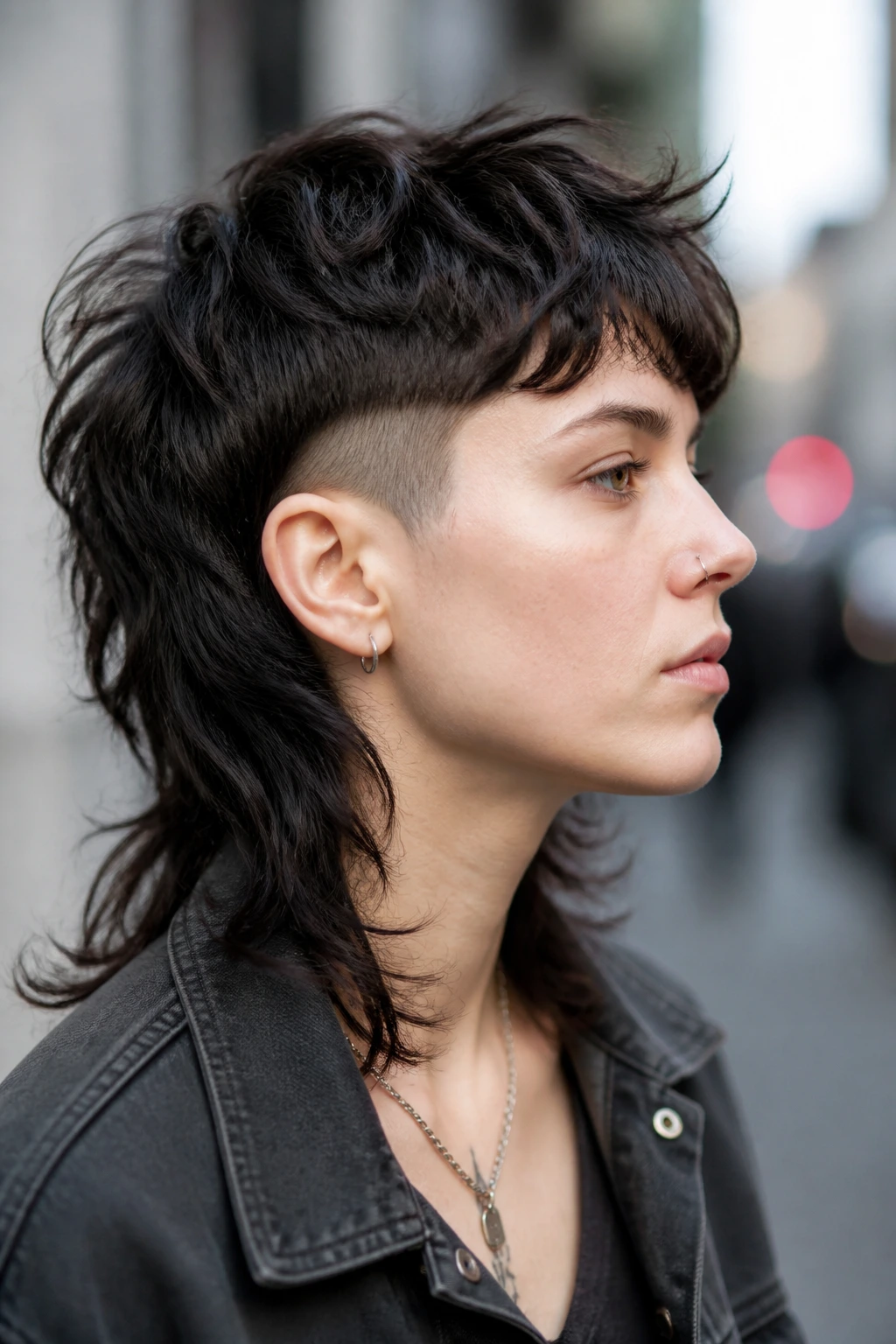
The temple shave changes the mood immediately. A wolf cut already leans choppy and rebellious; adding a small undercut at the temples gives the whole shape a sharper edge without turning the back into a full mullet.
I like this version on straight or slightly wavy hair because the temple area can get bulky fast. With a clean side shave, the bangs and crown layers have room to fall forward, and the face framing feels more intentional. It’s a strong look, yes, but not a noisy one.
If you tuck your hair behind the ear a lot, this cut gives you a little reveal every time. That tiny flash of scalp can do more work than a much bigger shave.
4. Shoulder-Length Shag With a Blunt Nape Undercut
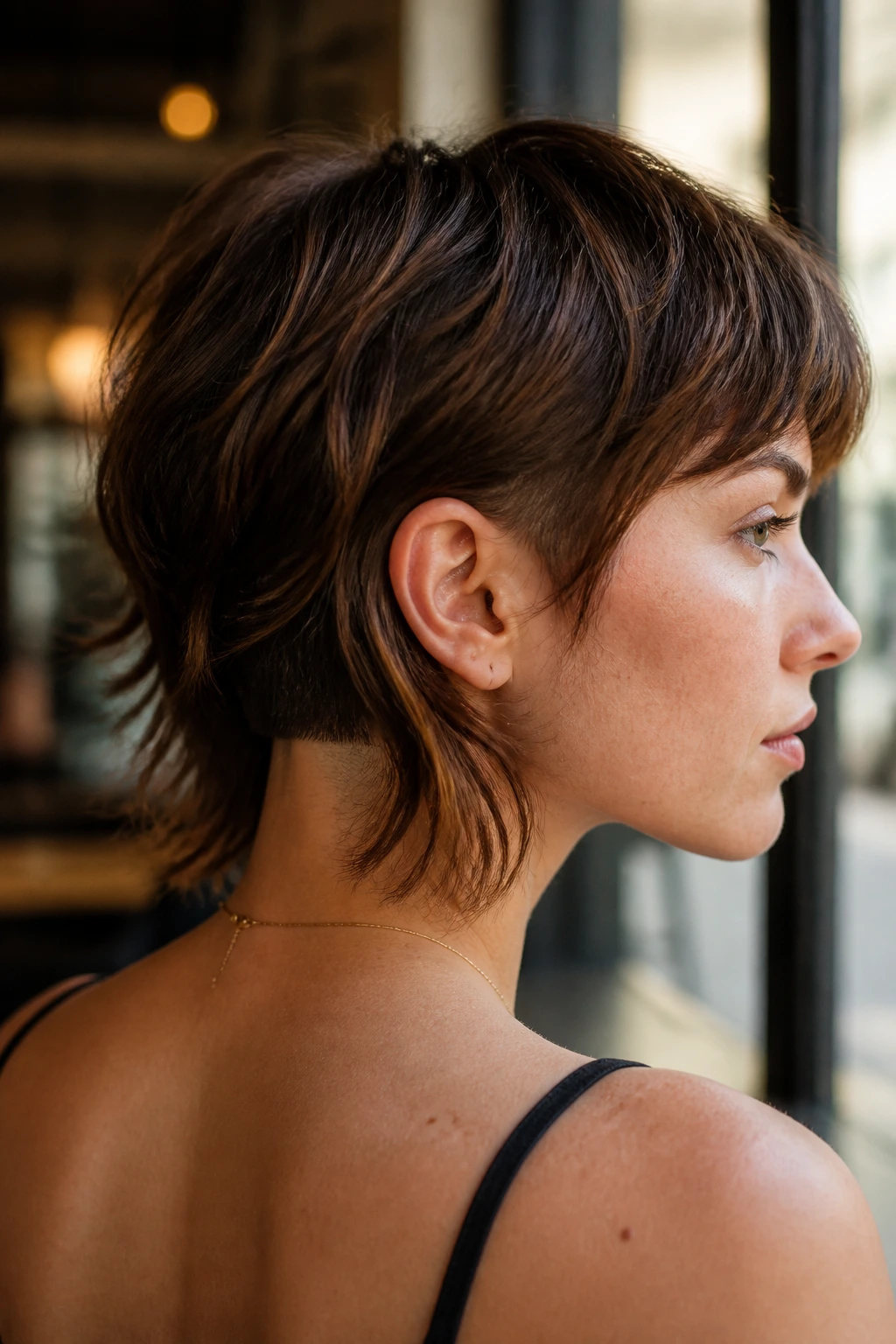
Shoulder-length shags can turn boxy fast when the back is too full. The undercut fixes that without forcing you into a short haircut. A blunt nape line, clipped low and kept clean, lets the outer layers skim the collarbone instead of kicking outward.
This is the version I point to when someone wants edge without drama. The top can stay soft and face-framing, while the underside keeps the silhouette narrow. It also grows out well, which matters if you hate salon visits for the sake of a 1/2-inch cleanup.
A shoulder-length shag with this kind of hidden structure works especially well on medium-density hair. It has enough body to show the layers, but not so much that it swallows the cut.
5. Long Shag With a Peekaboo Undercut
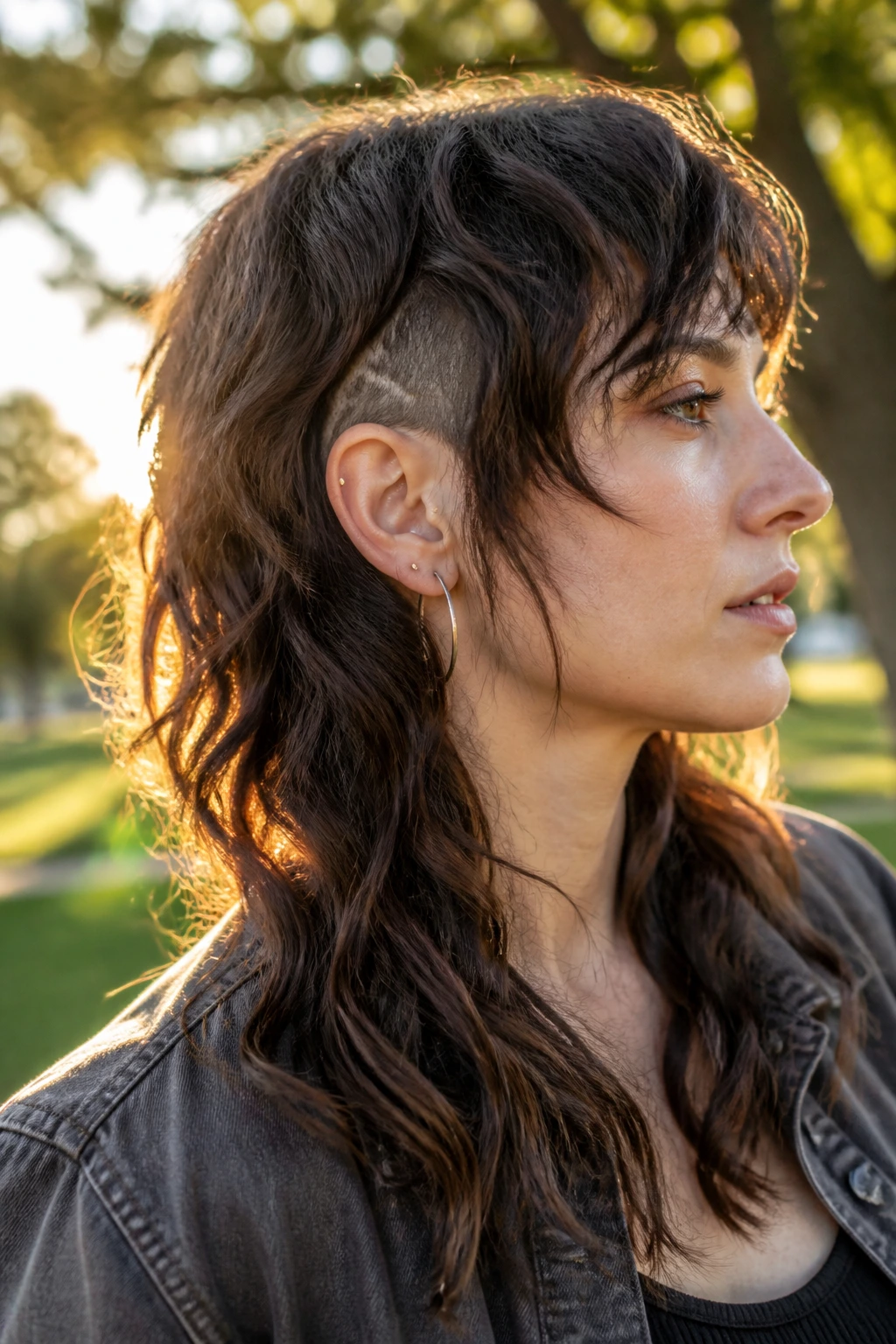
Unlike a full shave, this version hides under the length until you braid it, half-up it, or toss the hair behind your shoulders. That’s the appeal. You keep the softness and drama of long hair, but the underside is trimmed out so the ends don’t drag the whole shape flat.
A peekaboo undercut is best when the visible layers are cut with real movement — not just long, sleepy layers. The top needs enough texture to lift away from the scalp, or the undercut won’t show its value. When it’s done right, the hair swings more easily and feels lighter on the neck.
If you like to wear your hair down most of the time but want a small surprise when it’s up, this is one of the easiest ways to do it.
6. Micro Bang Shag With a Side Undercut
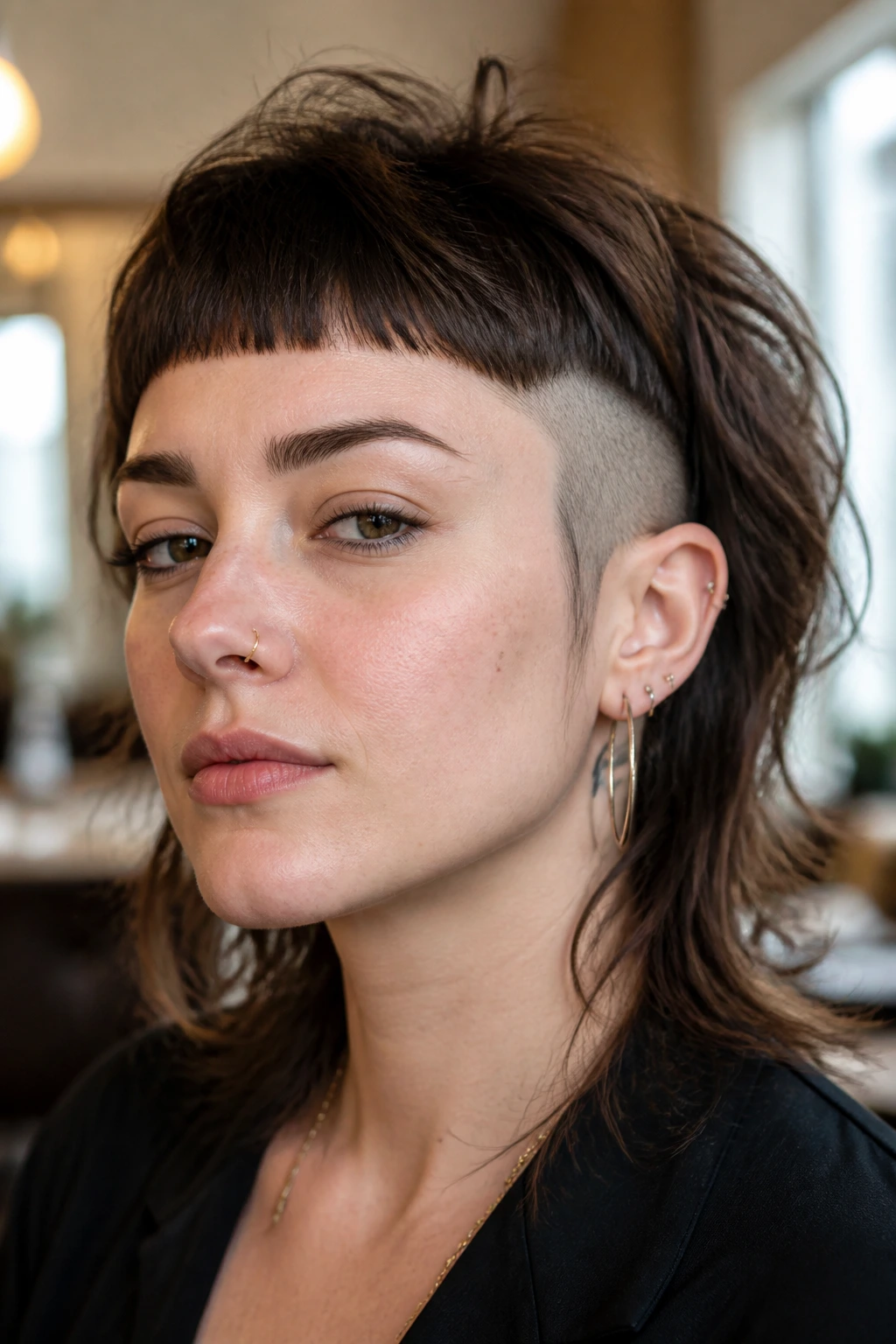
Micro bangs put all the attention up front, so the sides need to hold their own. A side undercut keeps the shape from ballooning around the temples and makes the fringe feel graphic instead of accidental.
Why the fringe needs the side shave
The short fringe can look severe if the sides are too full. Removing a little weight near the ear gives the top more contrast, which is what makes the cut read as fashion instead of just short hair.
A tiny side shave also helps if your hair sticks out near the part line. That area is often the first place a shag starts to look fuzzy by midday. Clean it up, and the whole cut settles better.
7. Razor-Cut Shag With a Disconnected Back Undercut
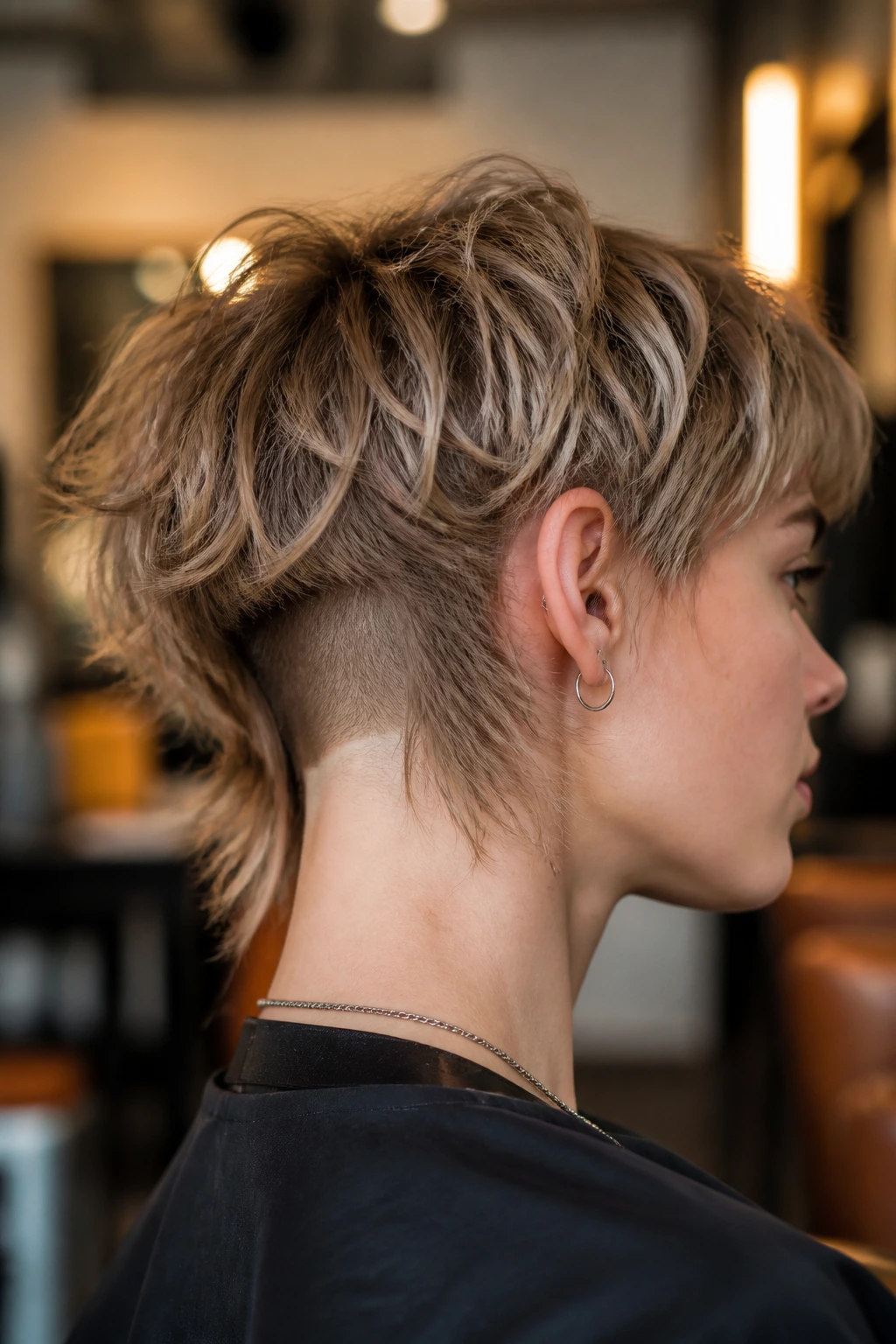
A razor-cut shag has a softer edge than a scissor-heavy cut, which sounds like a contradiction until you see it move. The razor gives the ends that broken, piecey finish, and the disconnected back undercut puts a hard line underneath all that softness.
That contrast is the point. Straight hair especially benefits from this kind of split personality, because a razor alone can look too wispy if the base is heavy. The undercut keeps the back lean, so the top layers can flick out instead of sitting in one flat sheet.
If you want the cut to look a little dangerous even when air-dried with no product, this is one of the strongest options on the list.
8. Curly Mullet Shag With a Tapered Fade
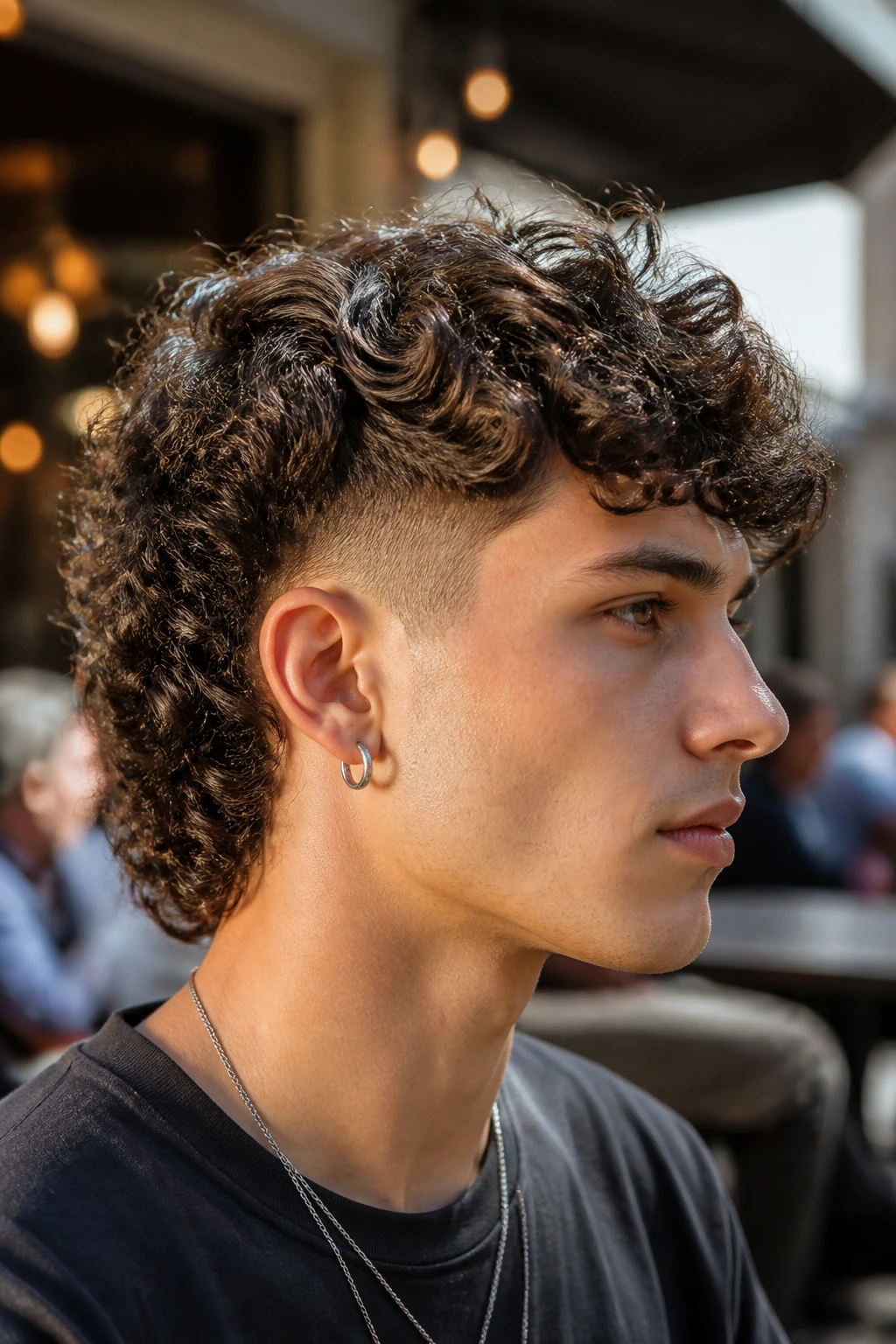
A curly mullet shag needs shape control more than it needs more layers. The tapered fade at the nape gives the curls a clean landing spot, while the longer crown and sides keep the movement alive.
Most people make the mistake of cutting curly mullets too high at the back. Don’t. Leave enough length around the occipital bone so the curls can stack without building a shelf. The fade should support the texture, not erase it.
This cut can feel sporty, almost athletic, but it still has that shaggy bend in the top layers. If you want your curls to look sculpted instead of puffed, this is a good direction.
9. Chin-Length Shag Bob With a Soft Undercut
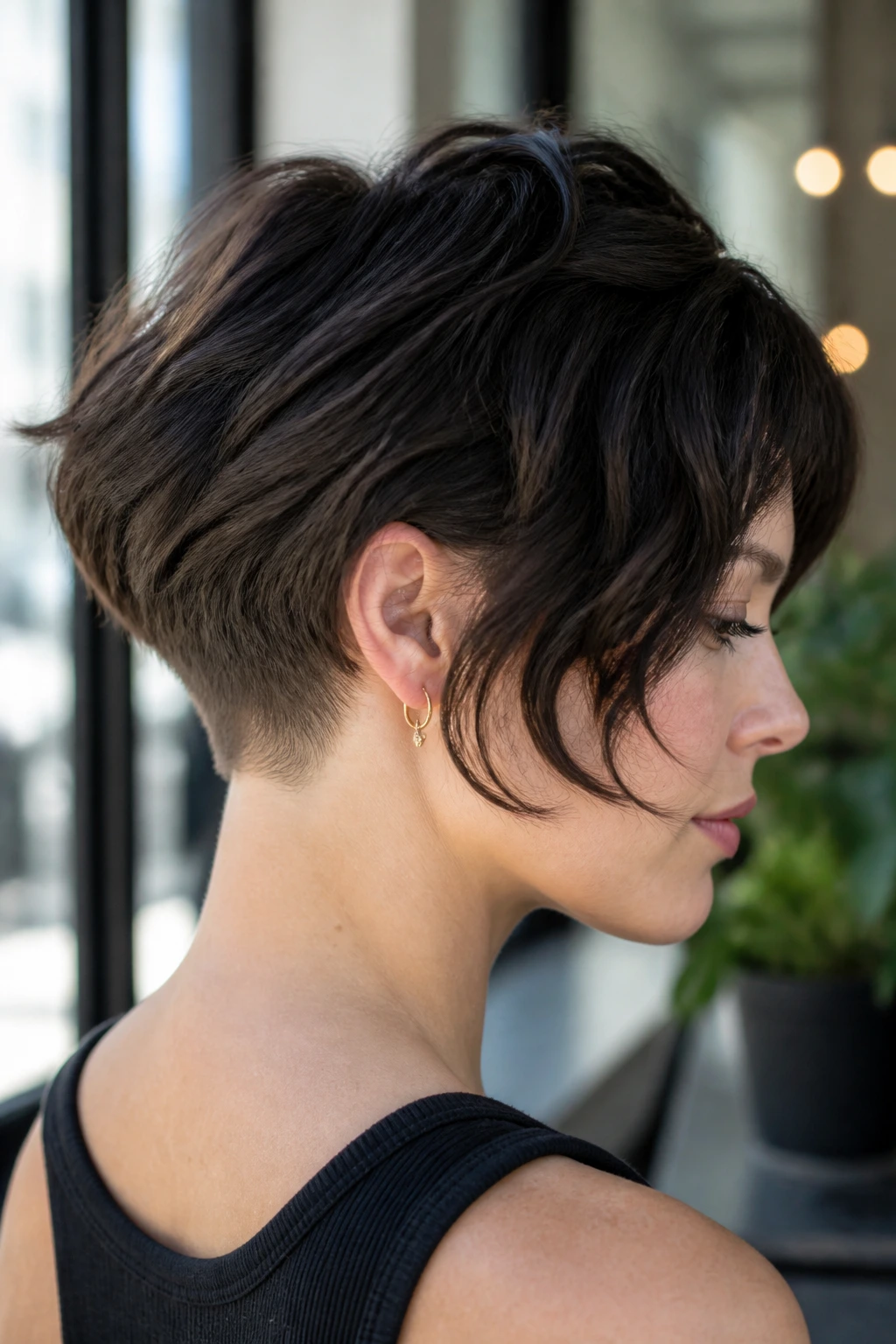
A chin-length shag bob is the cut that proves undercuts do not have to be dramatic to matter. A soft undercut underneath the back removes just enough density to keep the bob from kicking out at the jawline like a little triangle helmet.
The top layers stay cheekbone-friendly and swingy. The underside stays tidy. That’s the whole trick. On hair that flips inward and outward at the same time, the undercut gives the cut a better line so it lands where it should.
This one is especially useful if you want a bob shape but hate the bluntness that comes with too much width. It feels polished without becoming stiff.
10. One-Side Shag With an Asymmetrical Undercut
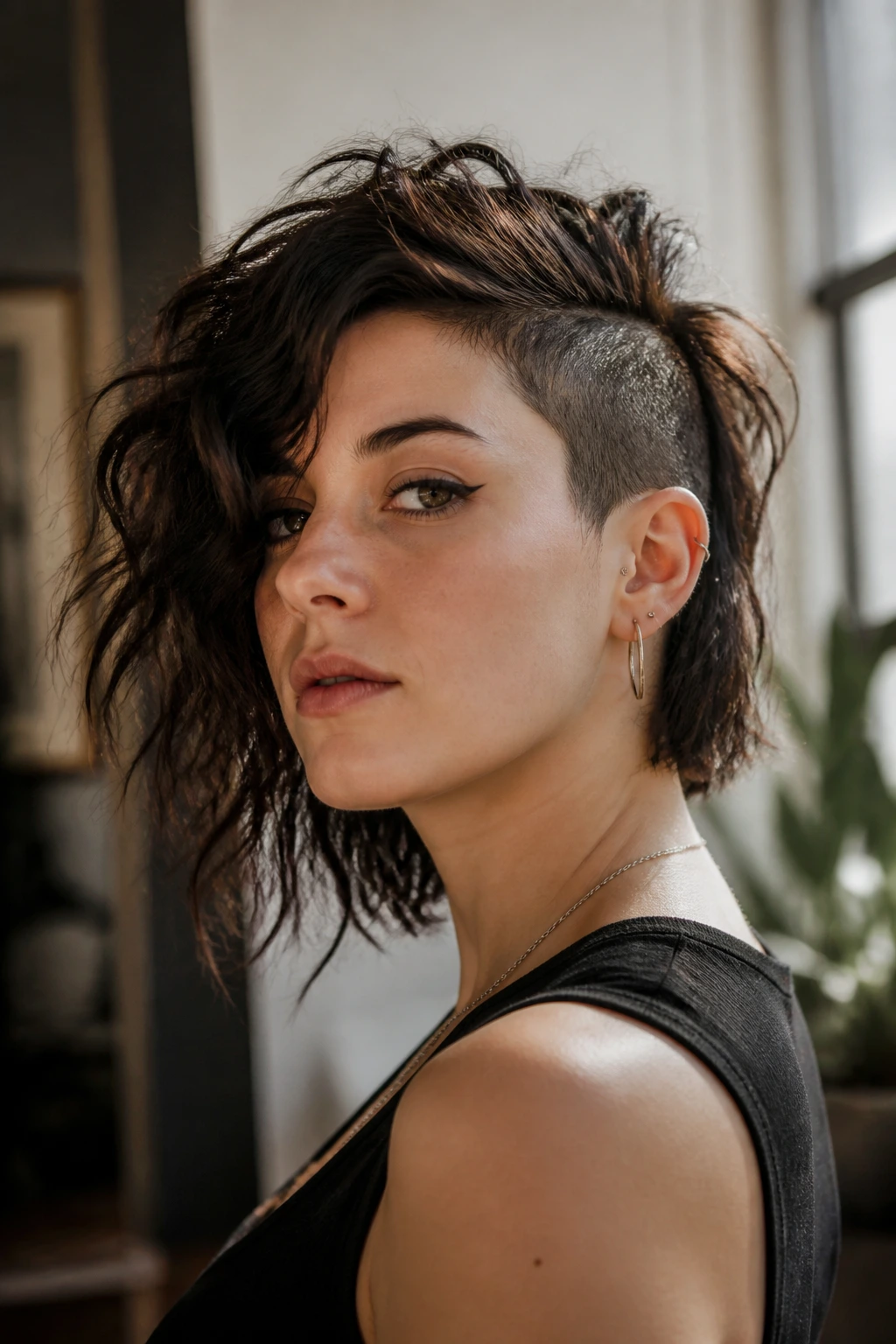
A one-side shag makes the undercut part of the design instead of hiding it. One side can stay longer and softer, while the other gets clipped shorter near the ear or temple. The imbalance is the look.
It works best when the longer side has enough fringe or face framing to balance the shorter side. If both sides are cut the same length through the front, the asymmetry can feel too obvious. But when the bangs or front pieces drape across the face, the shape looks lived-in and sharp at once.
This is the cut for someone who likes to tuck hair behind one ear and leave the other side loose. The reveal is half the fun.
11. Thick-Hair Relief Shag With a Deep Nape Undercut
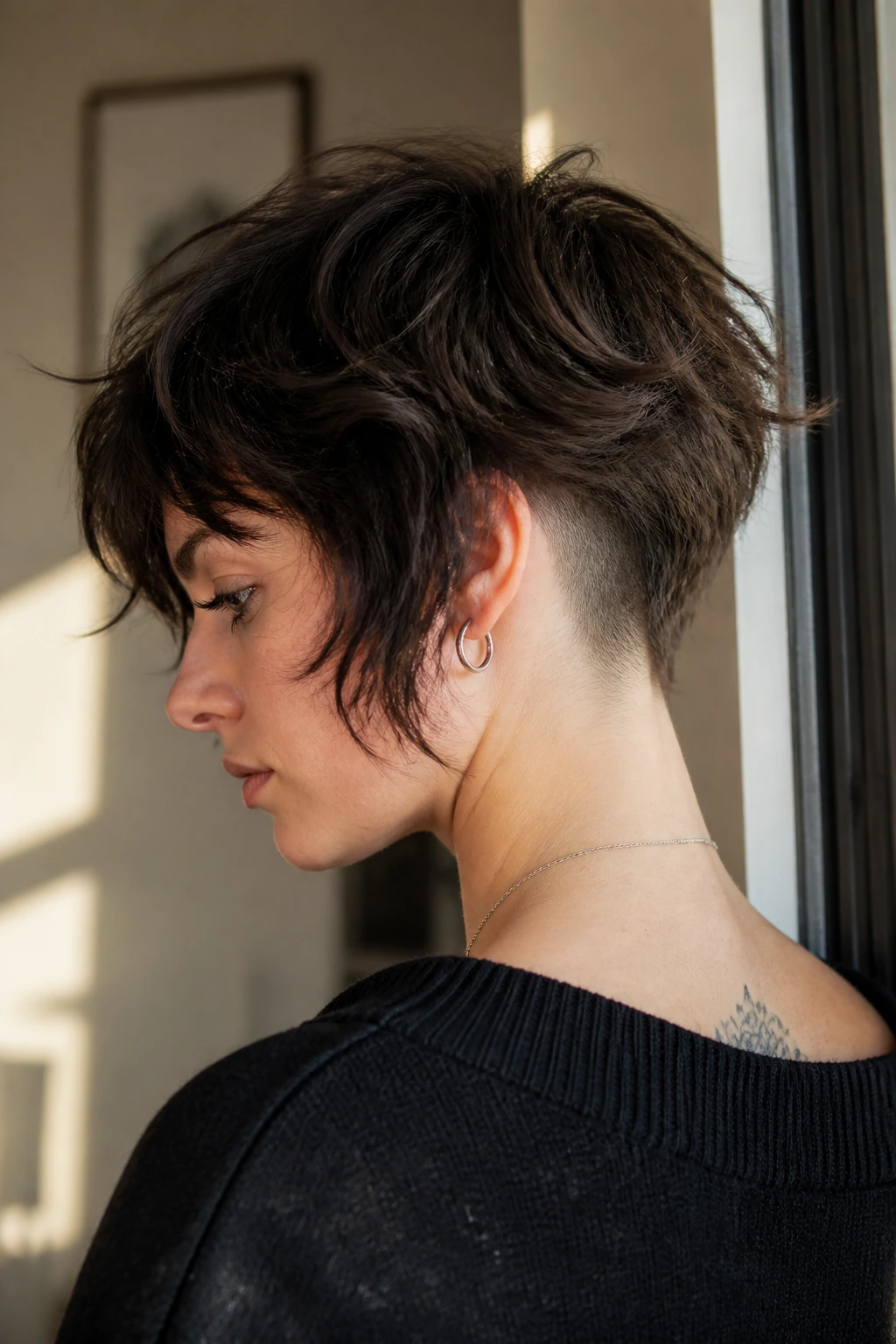
Thick hair needs space. A deep nape undercut removes a chunk of that density before it ever reaches the visible layers, which is why the cut can sit flatter at the neck without losing its shaggy texture on top.
The mistake here is thinning the top too much. Don’t do that. Keep the upper layers strong, then clear out the underside where the bulk gathers. That way the shag still has body, but it no longer turns into a heavy block by the end of the day.
If you’ve spent years fighting a back section that bulges under sweaters and collars, this is the version that can feel like a proper fix.
12. Fine-Hair Shag With a Tiny Hidden Undercut

Fine hair needs a careful hand. Too much undercut and the shape starts to look sparse; too little and you keep the limp, flat base that makes the whole style collapse. The sweet spot is a tiny hidden shave at the nape, paired with shorter interior layers that give the top a bit of lift.
The part most people miss
Fine hair does better when the undercut is narrow and low. You want a cleaner outline, not a dramatic removal of density. The visible layers should still overlap enough to create the illusion of fullness.
This version is not about blasting out as much hair as possible. It’s about controlling the silhouette so the cut doesn’t cling to the head in a sad little curtain.
13. Curtain Bang Shag With a Feathered Underlayer
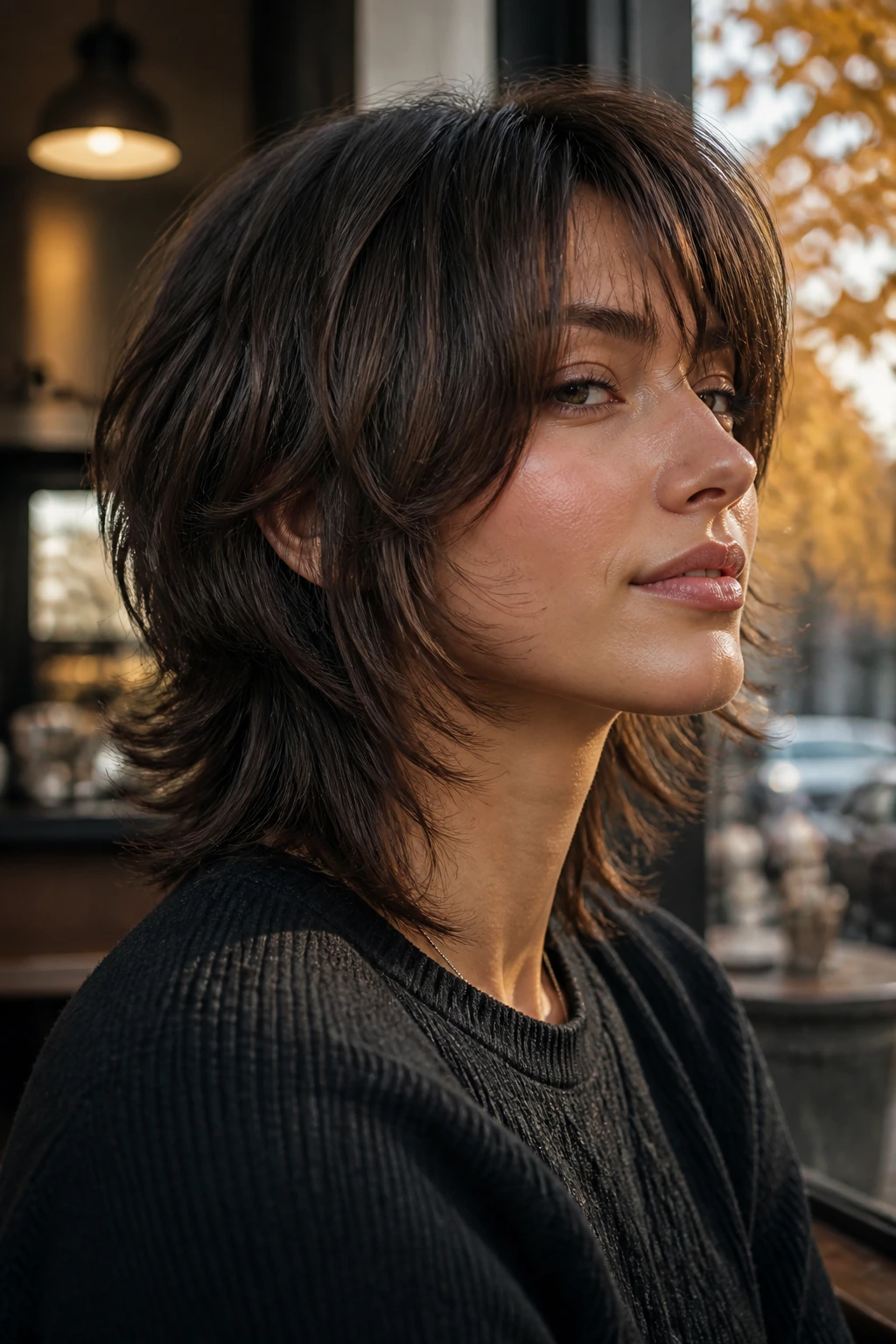
Curtain bangs already open the face. Add a feathered underlayer, and the whole cut starts to breathe. The hidden undercut keeps the back from filling in too much, which matters because curtain bangs can make the front feel softer than the rest of the haircut.
The face frame should move away from the cheekbones, not hang in one heavy piece. When the underside is cleaned up, the bangs separate more easily and the rest of the shag can bend around them instead of drooping beneath them.
This is one of the most wearable looks here. It still has edge, but it doesn’t shout about it at every angle.
14. Retro 70s Shag With a Clean Underlayer
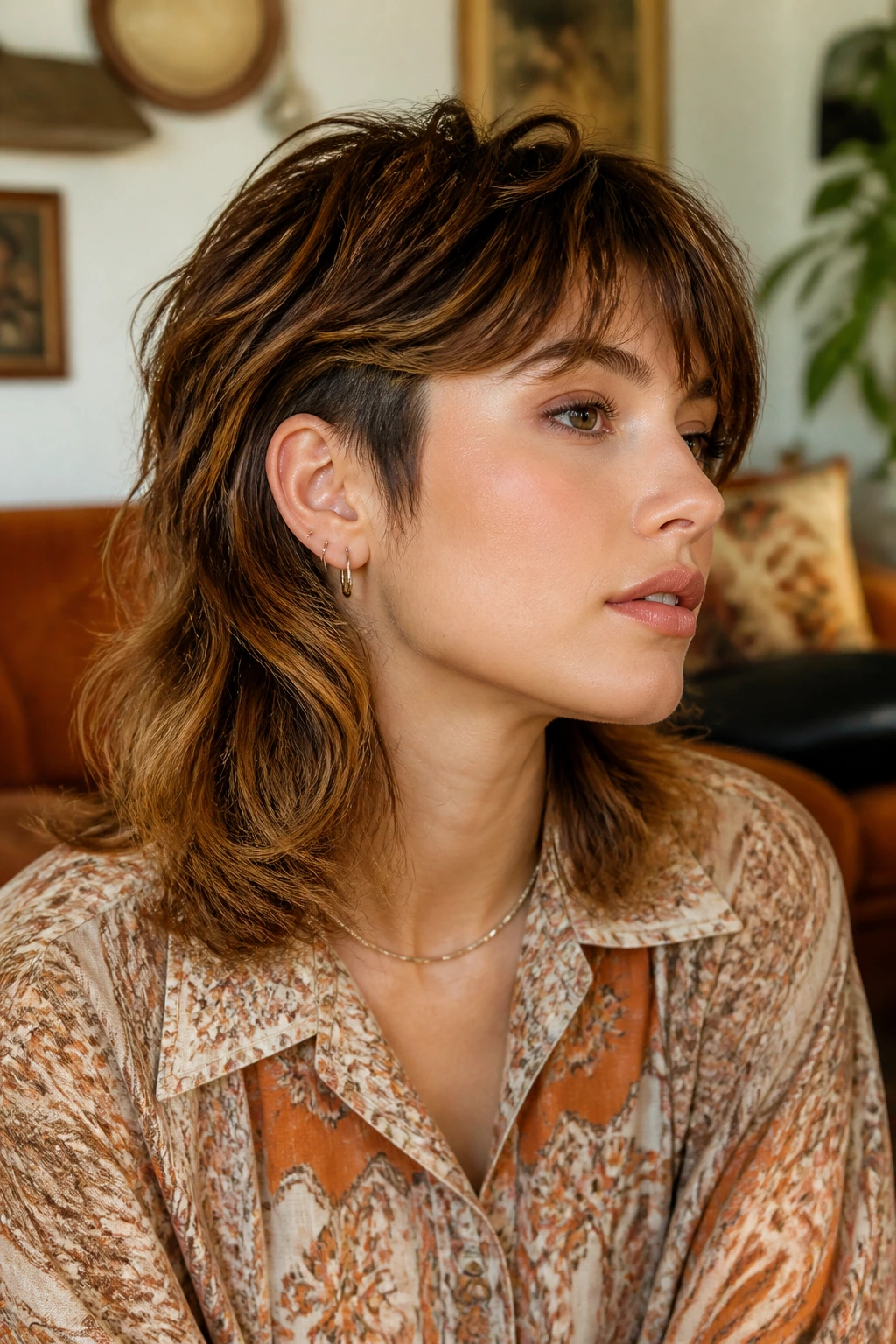
A retro shag can turn costume-y fast if the layering gets too neat. A clean underlayer keeps it from going puffy, while the feathered top gives you that old-school swing around the cheek and jaw.
I’d call this the softest option on the list. It’s got the 70s flip, the airy fringe, and the longer sides, but the undercut stops the shape from sitting like a bell. That matters more than people think.
If you want movement with a little nostalgia, this is the one that slips on easily. It looks especially good when blow-dried with a round brush and left a touch undone at the ends.
15. Glam Rock Shag With a Full Nape Undercut
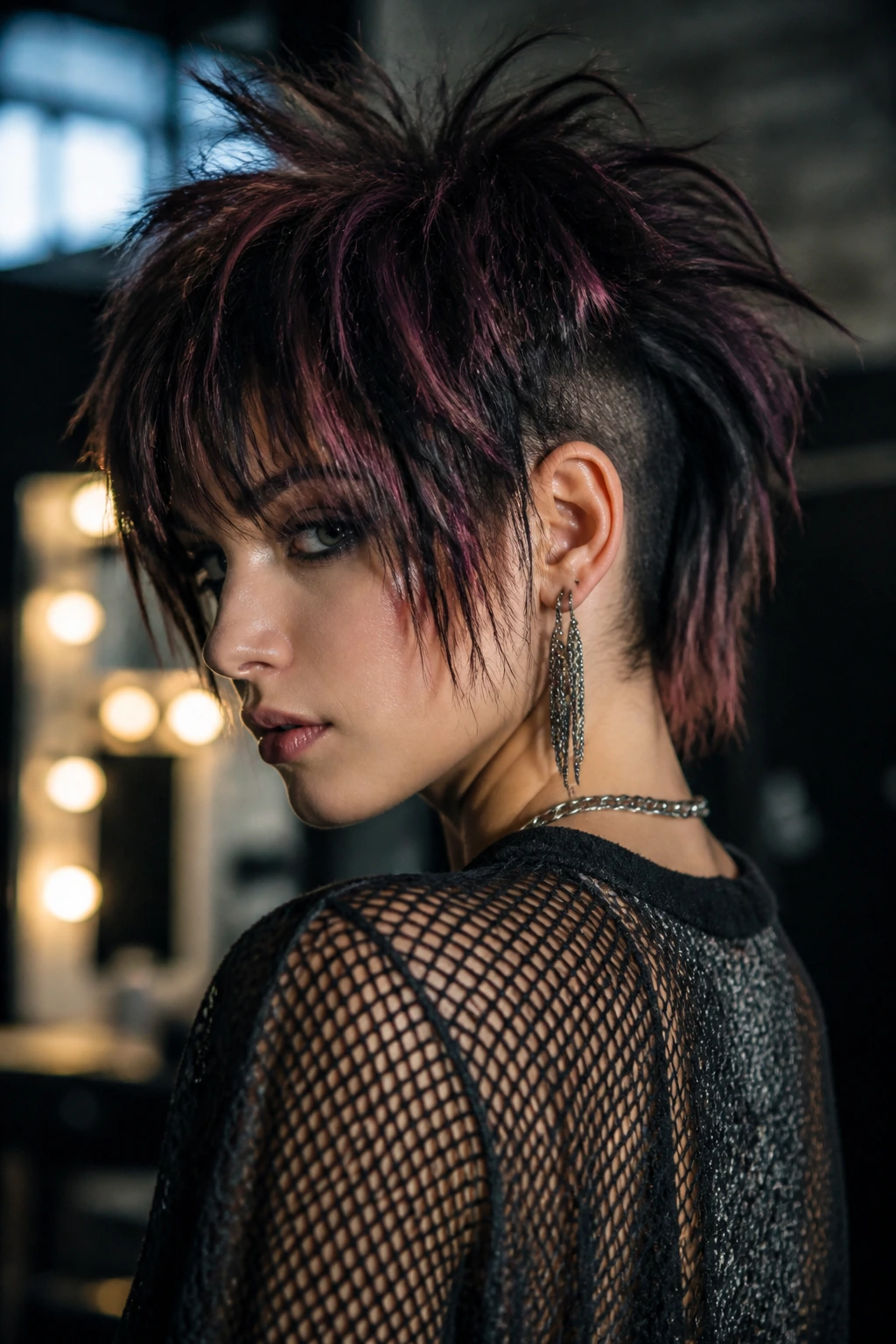
This is the version that knows it is being watched. The crown stays high, the fringe stays piecey, and the full nape undercut gives the back a hard, clean break that makes the top look bigger by contrast.
Use volumizing mousse at the roots and rough-dry the crown upward. That keeps the silhouette from collapsing. If the top is too soft, the whole cut loses its attitude and starts to look like a regular layered cut wearing boots.
Add a little color streak, if that’s your thing. Copper, black cherry, bleached tips — the haircut can carry it.
16. Wet-Look Shag With a Tight Undercut
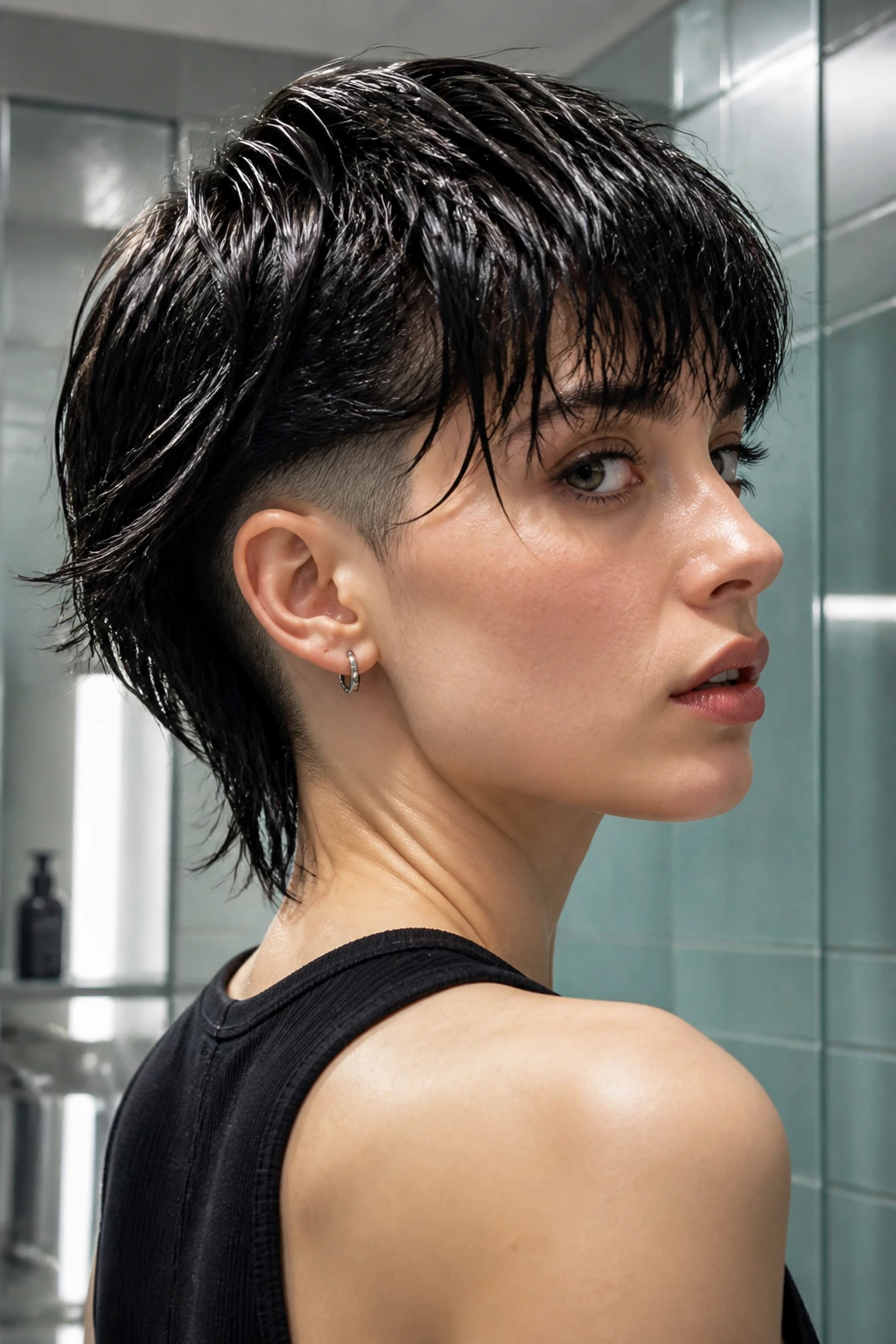
A wet-look shag works because the undercut cleans up the underside while the top is styled sleek and separated. You get a strip of control underneath and all the drama on top.
Gel alone can make this look stiff, so I prefer a strong cream-gel mix or a light gel brushed through damp hair. The layers should stay visible, not frozen into one helmet. The tighter undercut keeps the nape from puffing out once the product dries.
This one is sharp. Not soft-sharp. Sharp-sharp.
17. Choppy Shag With a Rounded Back Undercut

A rounded back undercut sounds subtle, and it is, but that’s why it works. Instead of shaving a straight line, the back is carved into a soft curve so the outer layers fall around it in a cleaner sweep.
That curve matters on hair that wants to flip outward. It gives the shag a better base, especially if the top is heavily textured and the ends are deliberately uneven. The shape looks a little like it was sculpted with scissors and clippers at the same time.
If you want edgy but not severe, this is one of the more forgiving choices.
18. Midi Shag With a Hidden Temple Undercut
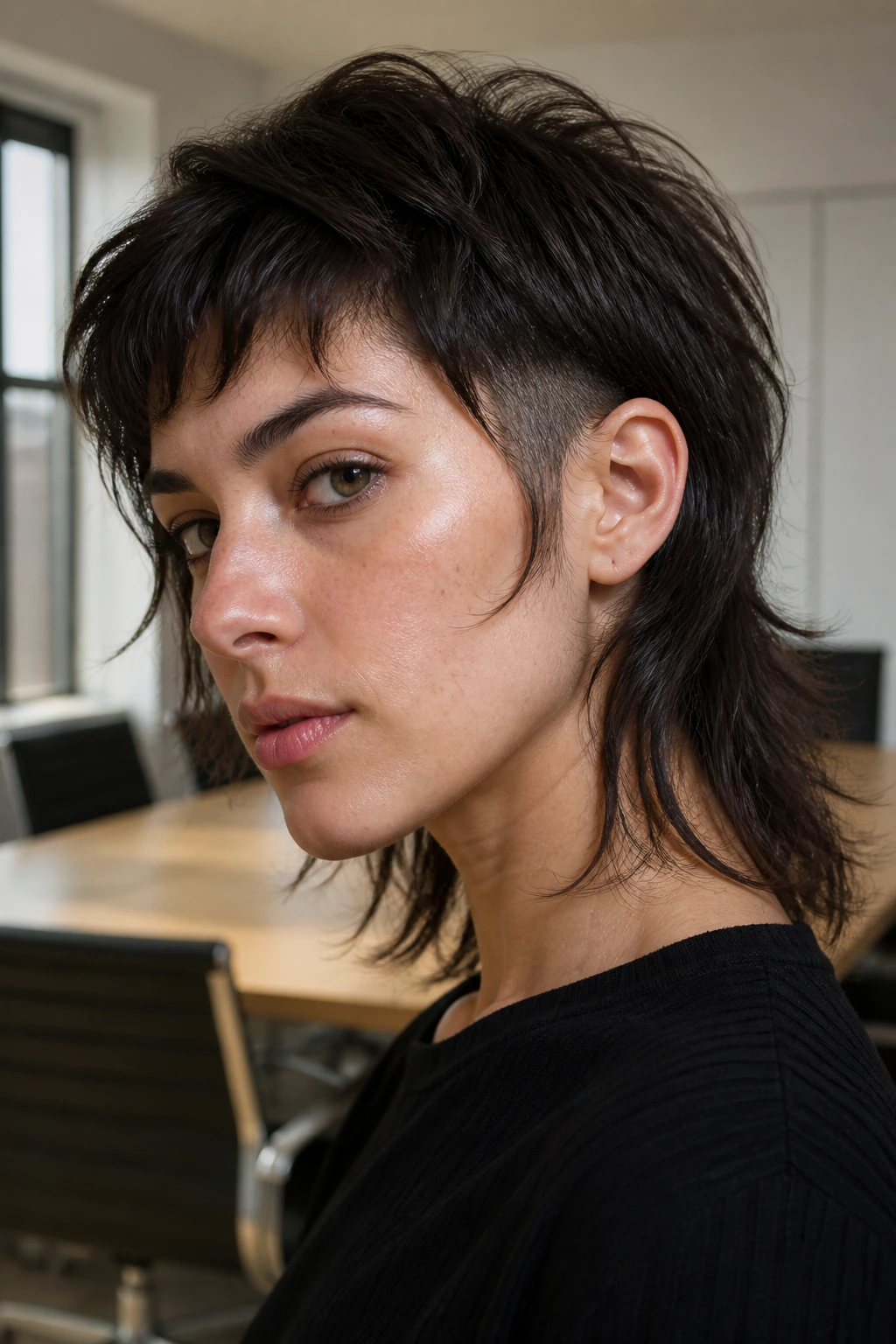
A midi shag sits in that awkward in-between zone where the hair is long enough to drape, but not long enough to hide poor shaping. A hidden temple undercut solves that by clearing weight where the hair tends to swell near the ears.
The best part is how quiet it is. You can wear the hair down in a meeting and no one sees much. Then you tuck one side behind the ear and the cut suddenly has teeth.
Best for
- people who want edge without a full shave
- medium-density hair that puffs at the temples
- anyone who wears glasses, because the cut sits cleaner around the arms
19. Piecey Crop Shag With a Clipper-Short Undercut
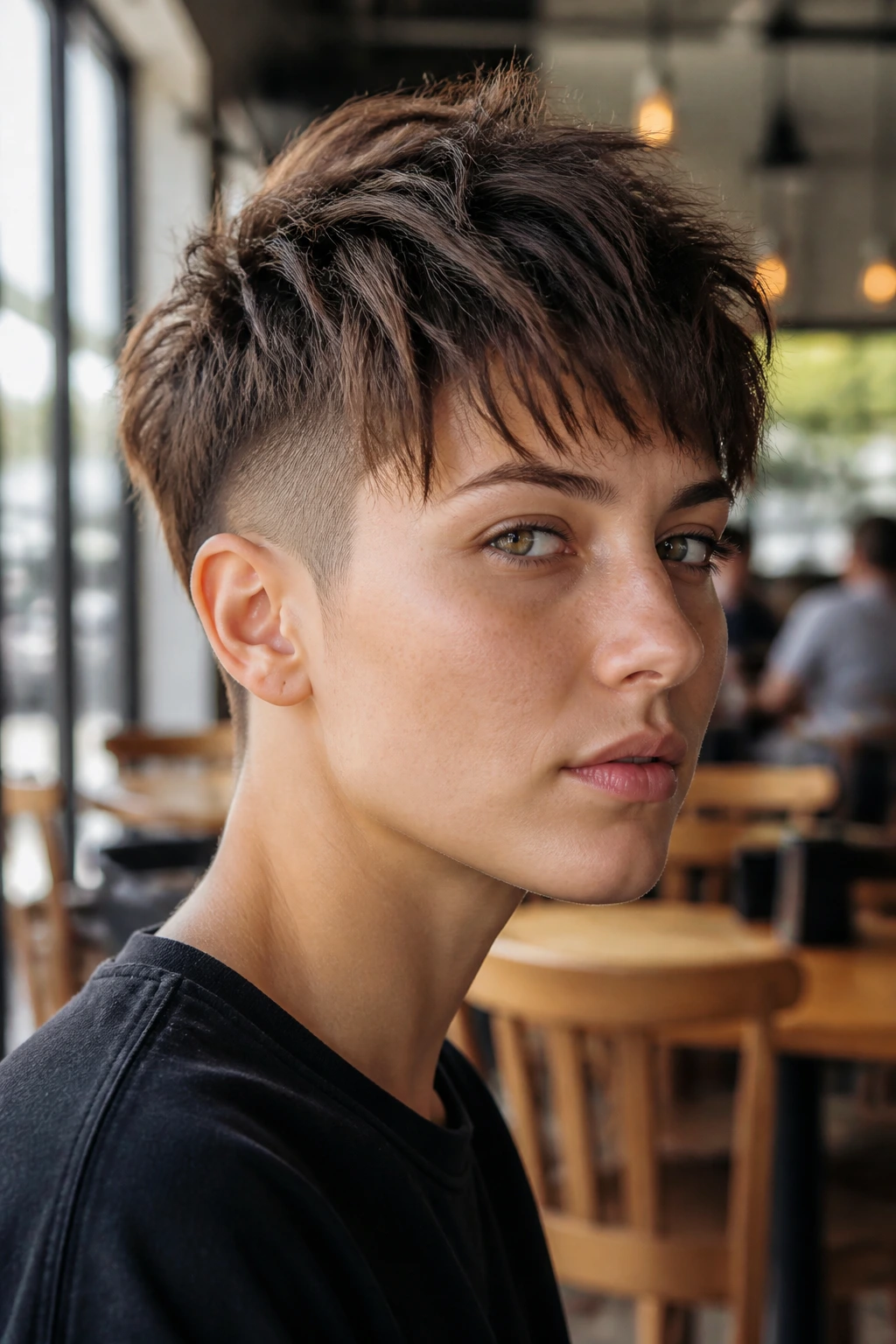
A piecey crop shag is all about separation. The top is short, textured, and a little messy on purpose, so the clipper-short undercut underneath keeps the silhouette from turning fuzzy.
This one loves a matte paste. Not a shiny cream. Not a heavy oil. You want the pieces to stand apart and fall back into place with your fingers, not slide together into one damp-looking mass.
It’s a blunt little haircut in the best way. If you want the shortest version in this collection and you don’t mind some maintenance, this is the one that reads the boldest.
20. Wavy Lob Shag With a Low Undercut
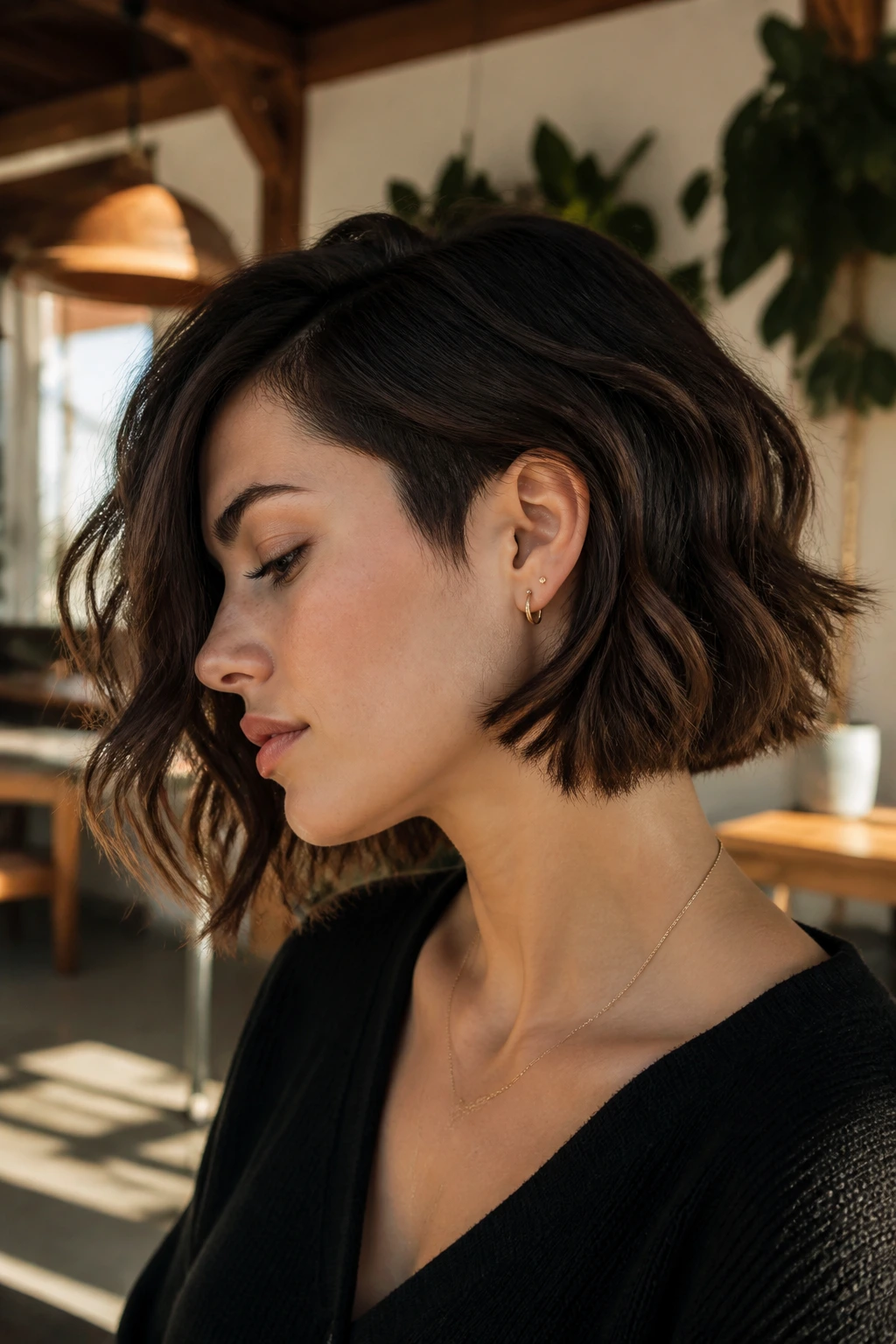
A lob gives you room to keep length without giving up movement, and the low undercut does the quiet work underneath. Wavy hair often builds weight at the ends first, so trimming out the bottom layer helps the bend show more clearly.
This cut is one of the easiest to live with. It behaves on second-day hair, it looks fine air-dried, and it doesn’t need a full styling routine to feel intentional. The low undercut keeps the neck from getting swamped when the waves expand.
If you like a cut that can go from loose to styled without much drama, this is a strong pick.
21. Asymmetrical Shag With a Long Fringe and Nape Fade
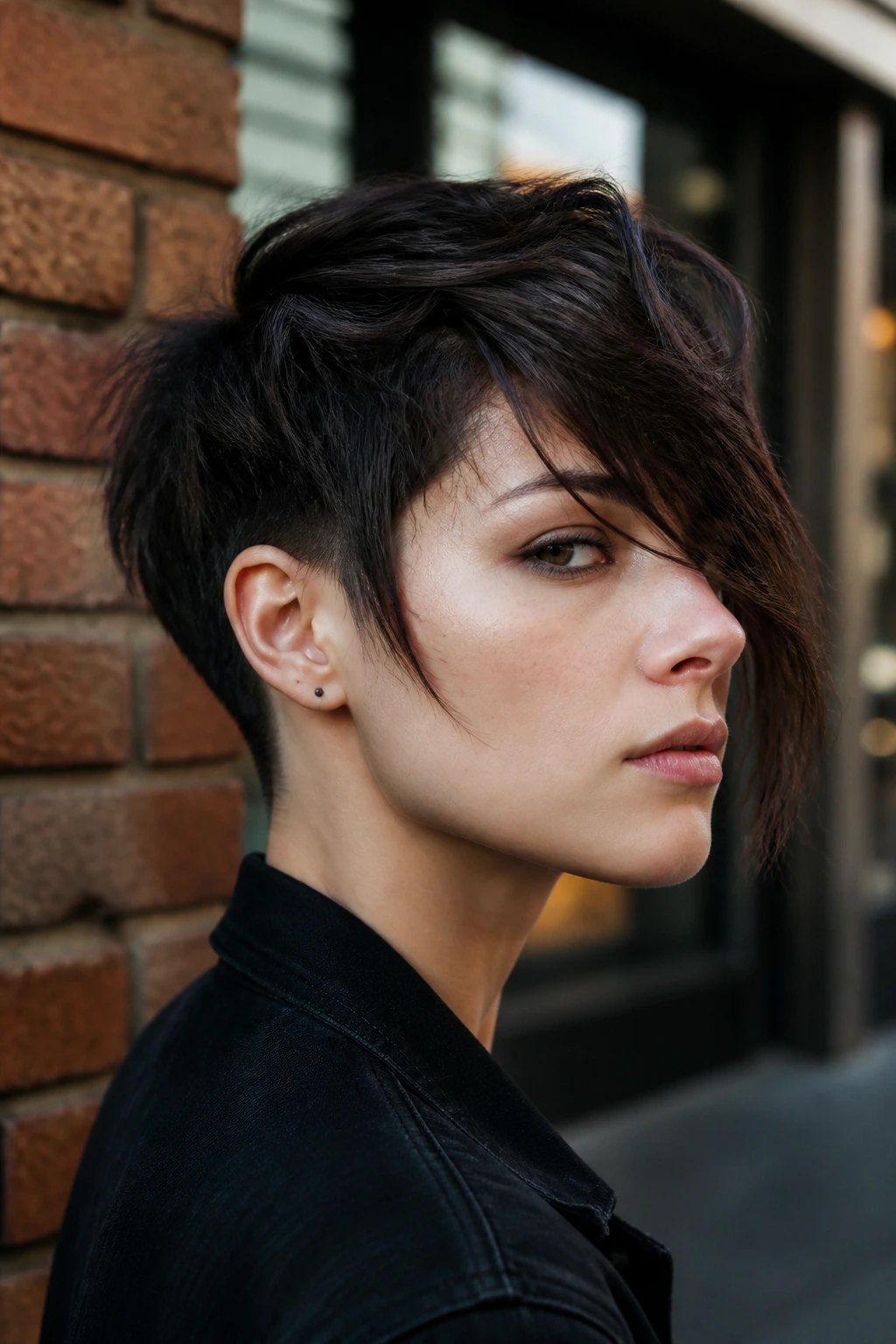
The long fringe is the anchor here. It pulls the eye forward, while the nape fade keeps the back clean so the haircut doesn’t feel bottom-heavy.
I like this look when the part sits a little off center. The fringe can sweep across the forehead, one side can tuck back, and the fade keeps the neckline tidy enough that the asymmetry still looks planned. It’s a smarter version of a punk cut — less noise, same attitude.
If your jawline is strong, the long fringe softens it. If your face is narrower, the asymmetry gives it some width.
22. Shagged Pixie With a Tapered Side Undercut
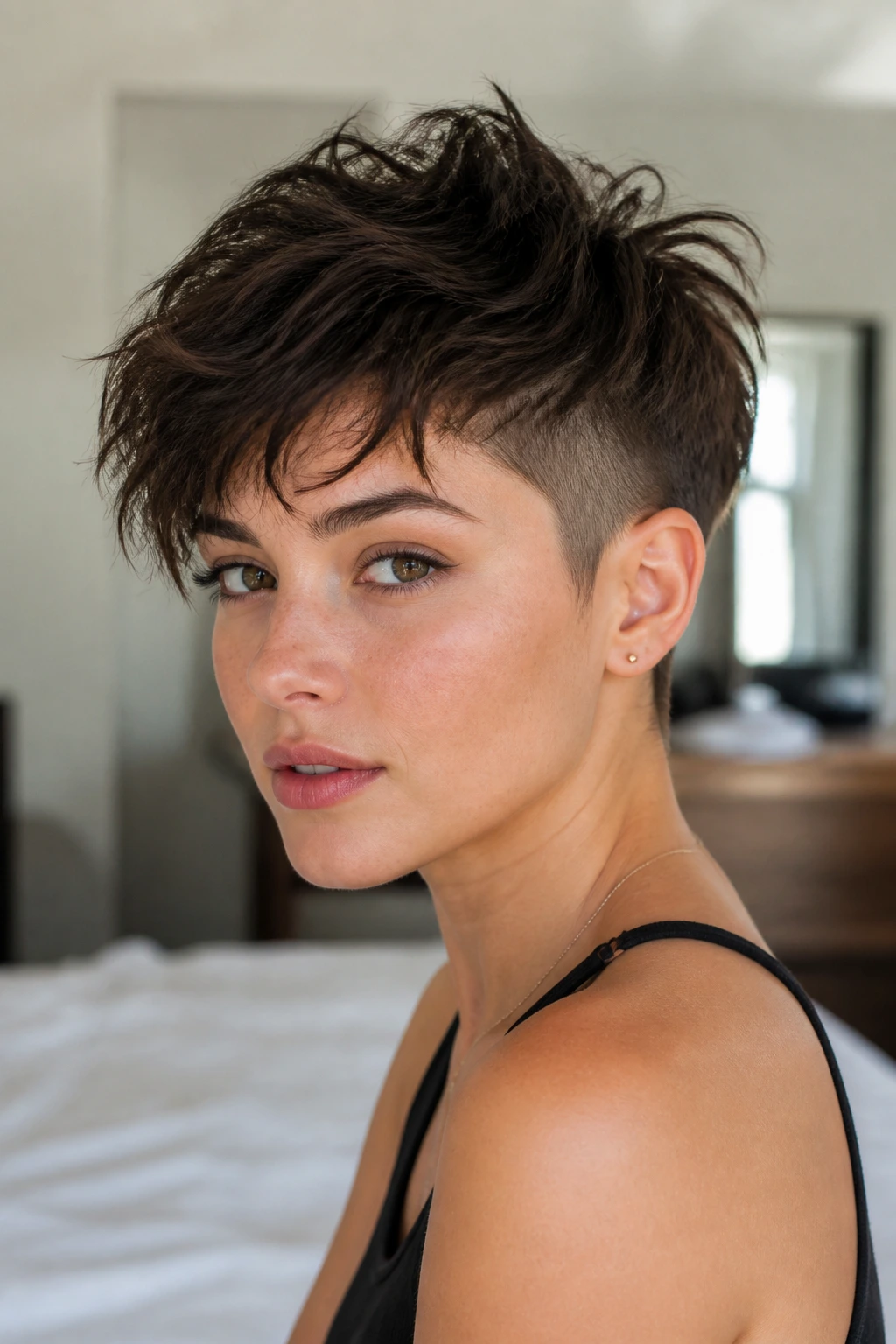
A shagged pixie is softer than a classic crop but shorter than a true shag, which makes the side undercut useful instead of decorative. The taper keeps the side from ballooning while the top stays messy and touchable.
This is a good cut for people who like short hair but do not want a severe line around the head. The side undercut gives the cut room to breathe around the ear, and the shag layers make the top feel less formal than a standard pixie.
It also grows out well. That’s a quiet bonus. The shape can slide into a longer crop without looking awkward for weeks.
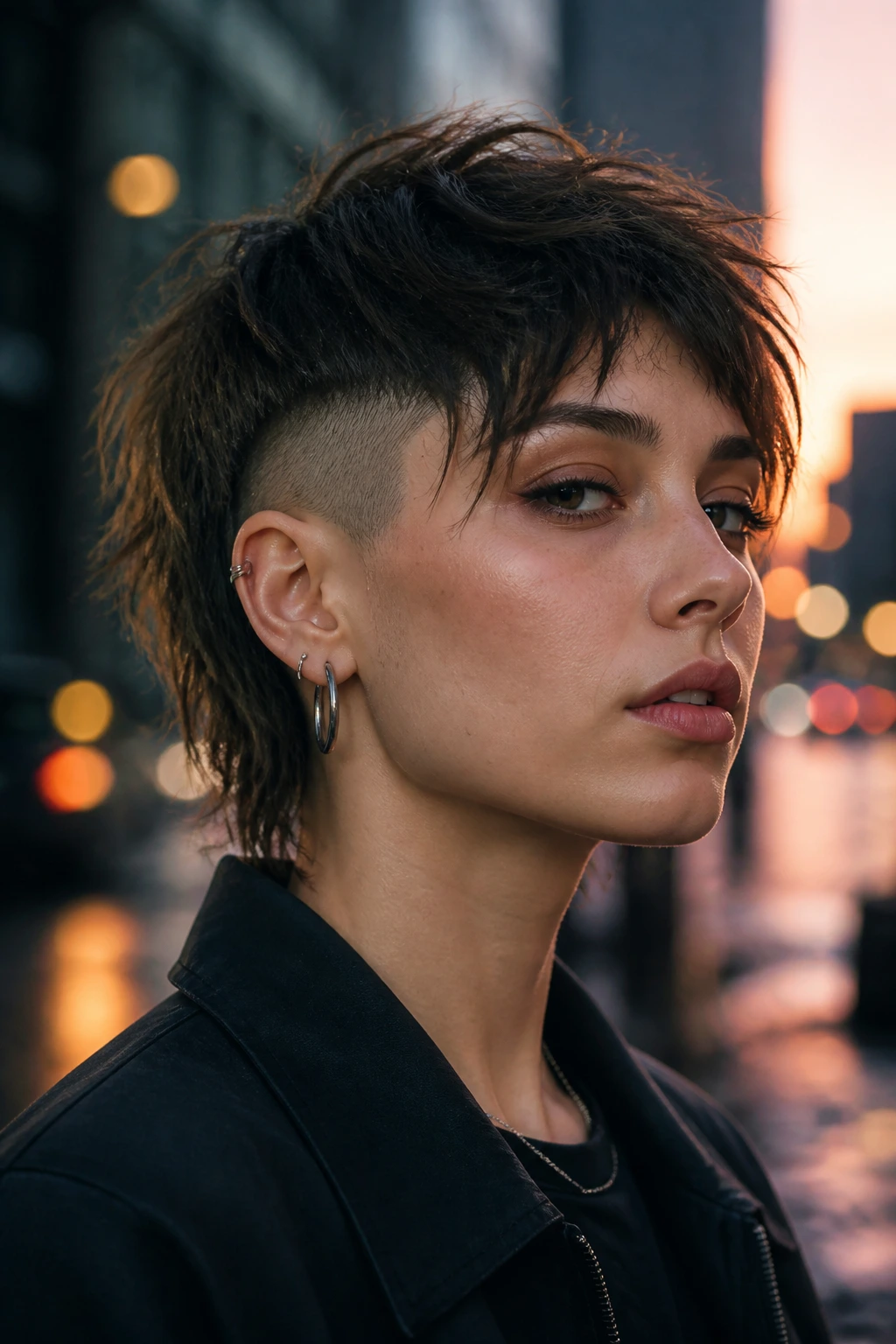
23. Rocker Shag With a Full Perimeter Undercut
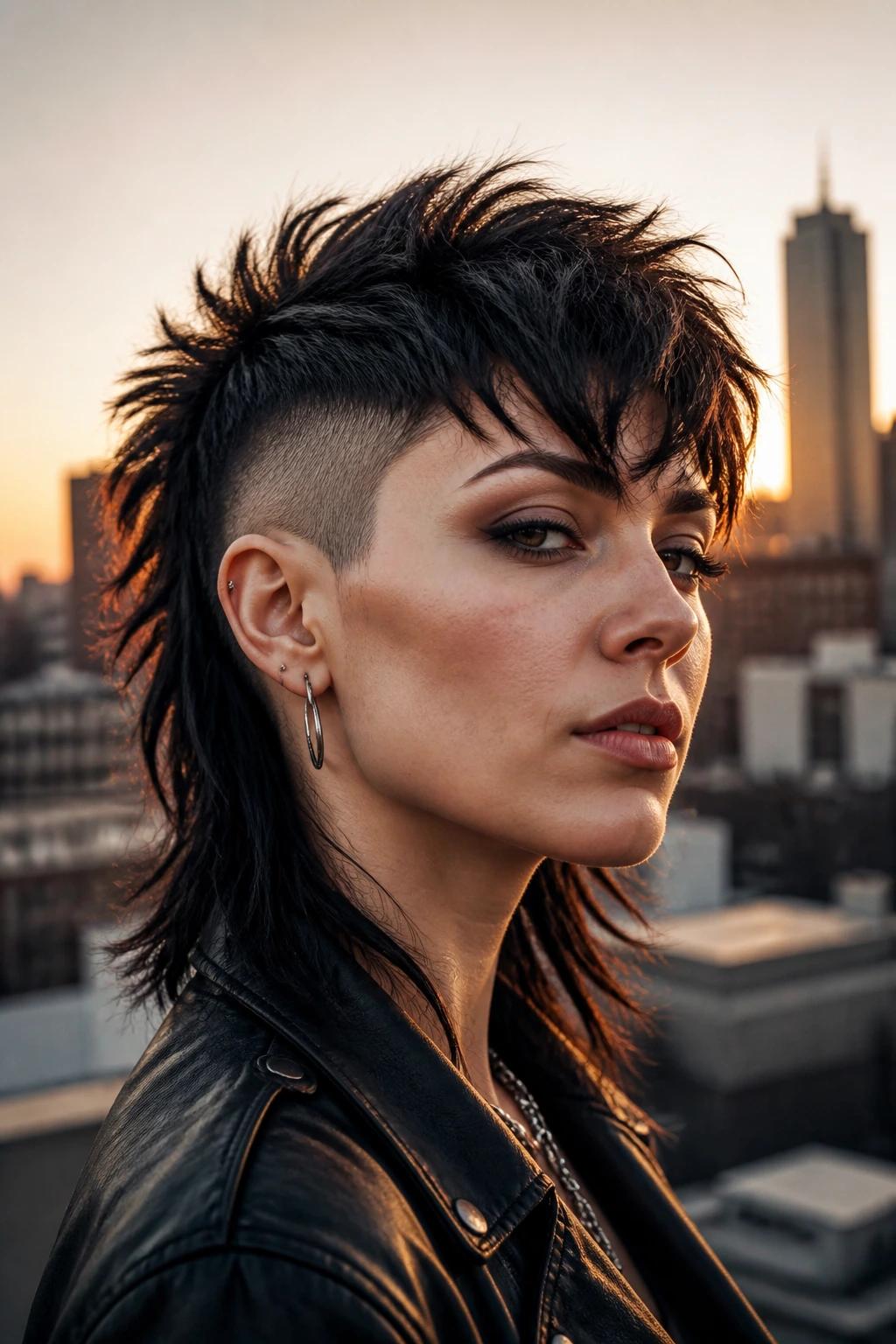
This is the loudest version in the set. A full perimeter undercut clears the entire bottom edge, which makes the choppy top layers sit higher and move harder.
It’s a strong choice if you want your hair to look visibly different from every angle. The sides, nape, and lower back all stay lean, so the top can do the drama work. Add rough texture, maybe some color, and the cut stops being just a haircut and starts being a look.
This is not the version for someone who wants to forget about their hair for three months. It needs shape upkeep. But if you like a little grit in your style, it pays you back every time you catch your reflection.
What Makes the Undercut Change the Whole Shag
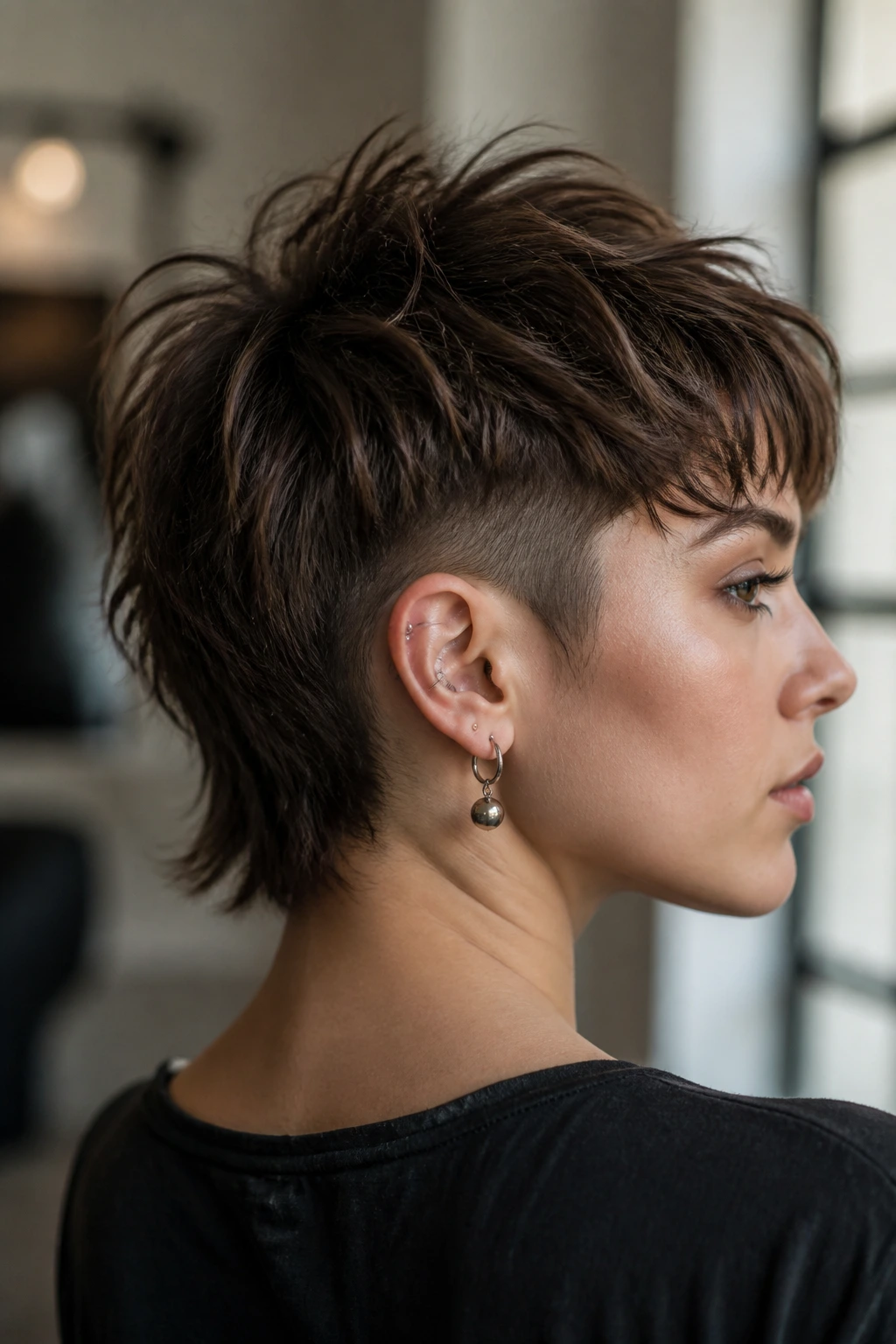
A shag is only as good as its weight balance. Leave too much bulk under the layers, and the shape starts to sit like a heavy curtain. Remove the right amount, and the top moves in a cleaner arc because it is not dragging a dense base around with it.
That is why a hidden undercut can matter more than an obvious one. The eye sees the texture on top, but the real work is happening below. The undercut at the nape or around the sides changes how the layers fall, how they dry, and how they grow out after the first few weeks.
The line between “edgy” and “messy” is often just one clean clipper pass. Short. Simple. Effective.
How to Choose the Right Version for Your Hair Density and Face Shape
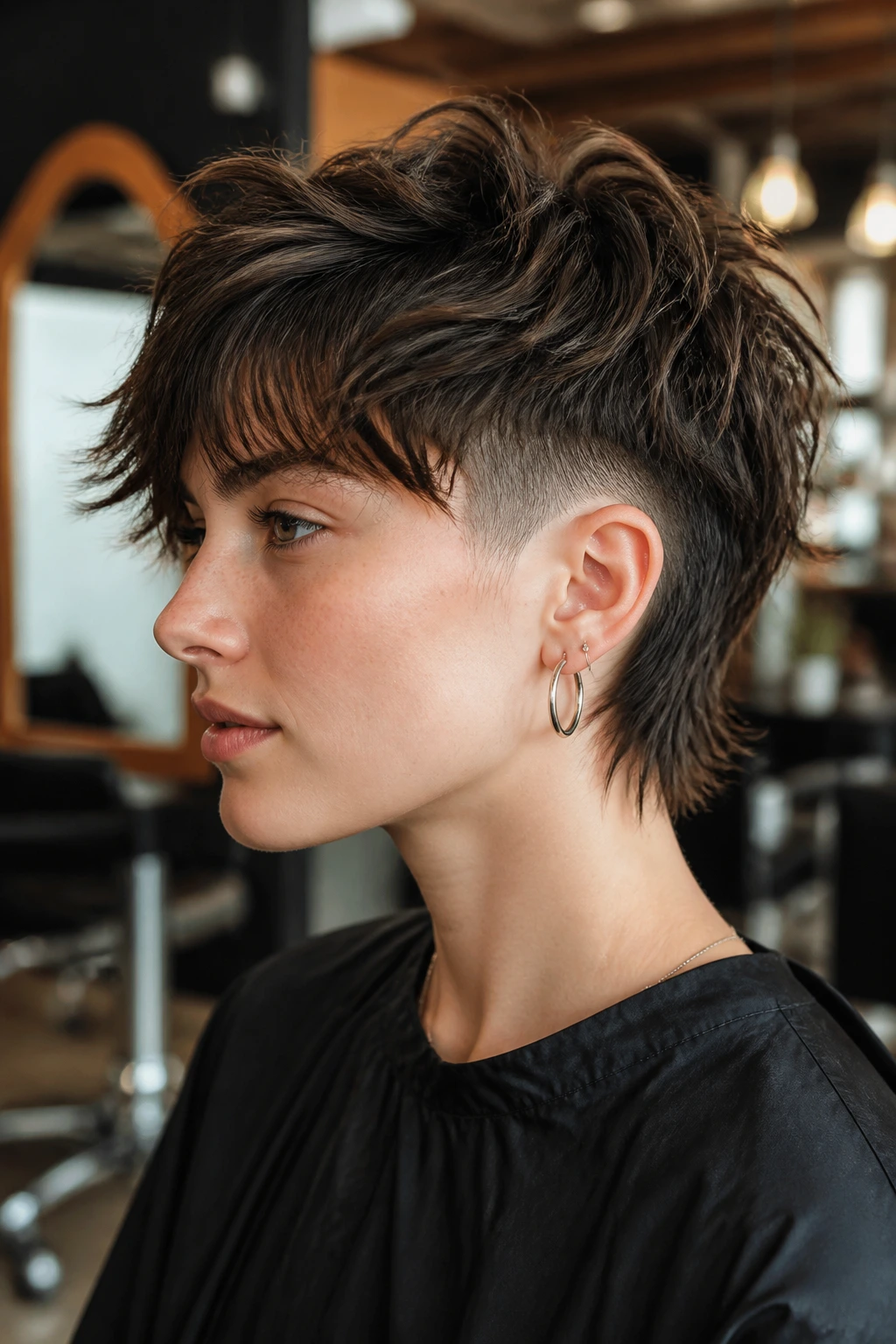
Thick and coarse hair
Go deeper with the undercut, especially at the nape and lower sides. If you skip that step, the shag can balloon out the moment it dries. Keep the visible layers strong so the cut still has movement.
Fine hair
Stay narrow and low. A tiny hidden undercut can clean up the outline, but too much removal makes the hair look thin around the neckline. Pair it with shorter crown layers and a light mousse.
Curly and coily hair
Ask for a dry or nearly dry cut so shrinkage doesn’t hide the line. The undercut should support the curl pattern, not fight it. Usually that means leaving enough perimeter weight for the curls to stack naturally.
Face shape
Round faces often look good with a little lift at the crown and less width at the cheeks. Square faces soften nicely with curtain bangs or feathered fringe. Long faces usually need some width at the cheekbone area and less vertical height on top.
Essential Tools for Styling and Maintenance
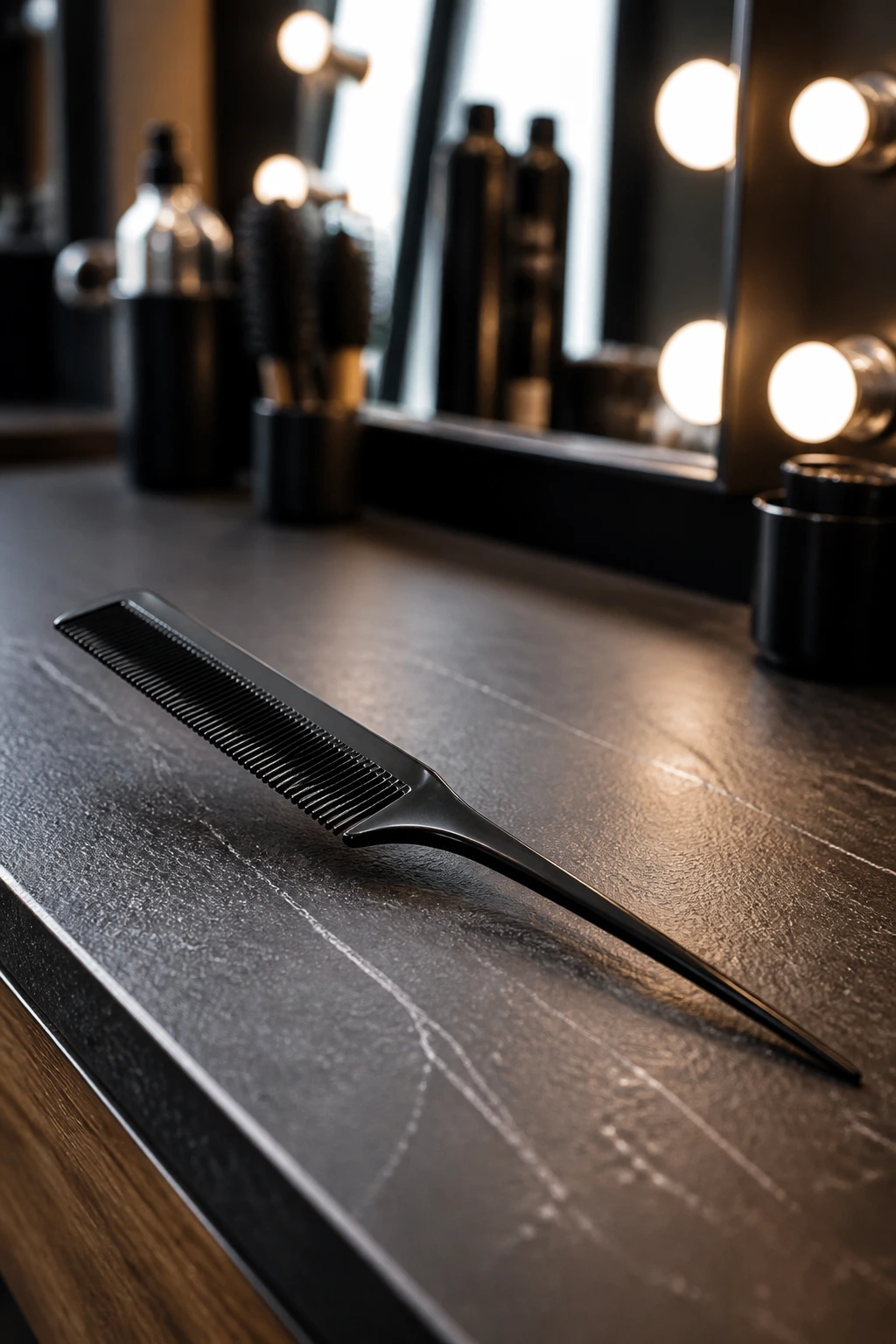
- Tail comb: Helps you part the hair cleanly so the undercut line stays precise.
- Sectioning clips: Keep the top layers out of the clipper path while you work around the nape and ears.
- Clippers with guards: Useful for maintaining the undercut at home; a guard gives you more control than freehand shaving.
- Texturizing shears: Good for softening the shag layers without chopping the shape into pieces.
- Round brush, 1.5 to 2 inches: Best for bending the top layers and giving the crown a bit of lift.
- Diffuser: Worth it if your shag is curly or wavy and you want the texture to stay defined.
- Blow dryer with a nozzle: Directs airflow so the layers do not scatter in every direction.
- Matte paste or lightweight cream: Gives piecey separation without making the hair greasy.
- Mousse or root foam: The better choice for fine hair or anyone who wants more lift at the crown.
- Hand mirror: The only sane way to check the back and nape line if you’re trimming at home.
How to Ask for the Cut Without Getting a Surprise
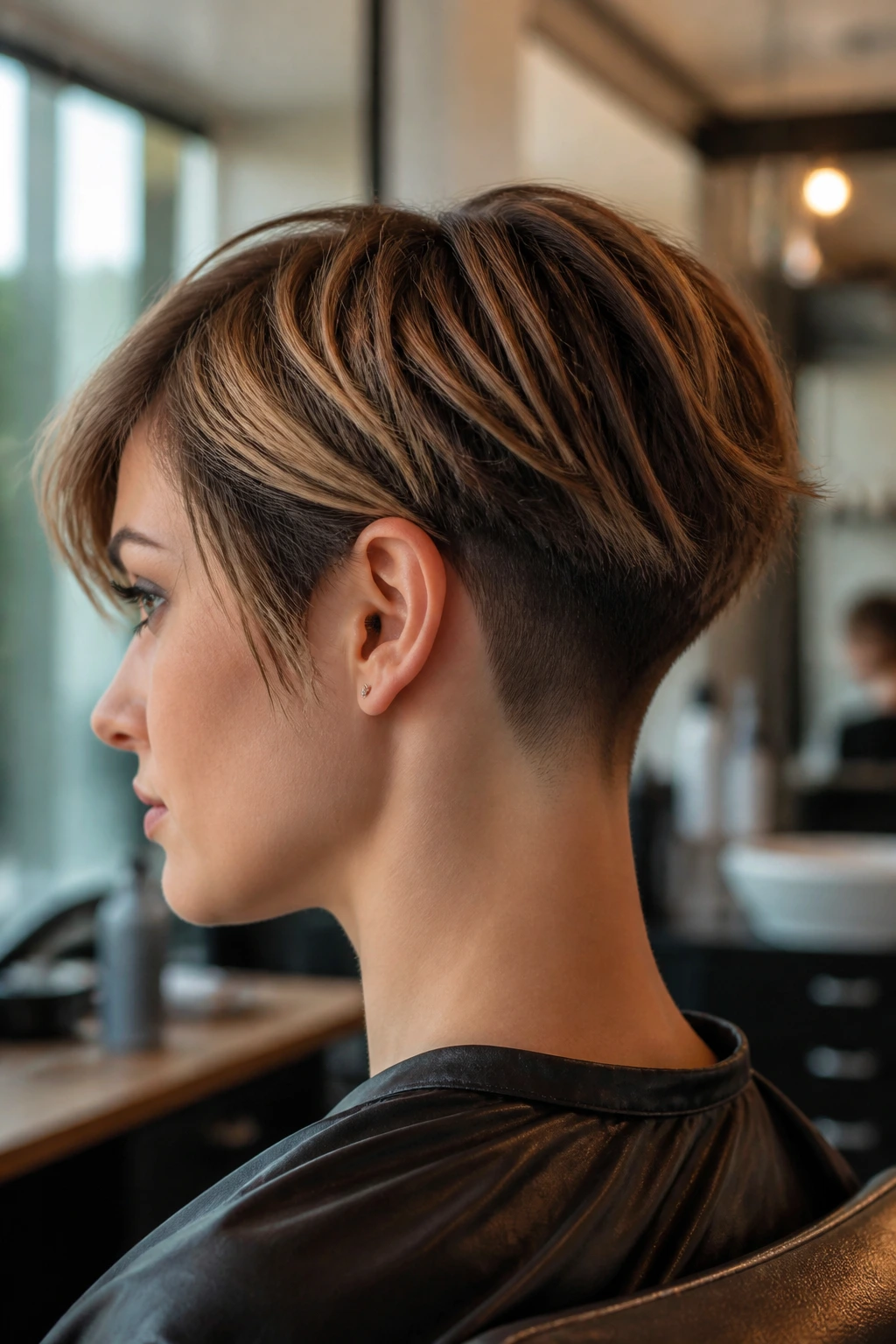
Bring photos. Not one photo. Three. Front, side, and back if you can find them. A shag with an undercut changes shape from every angle, and a single picture usually hides the part that matters most.
Say where you want the undercut to live. Nape only? Behind the ears? Temple area? Perimeter around the back? Those are not interchangeable. If you want the shave to stay hidden, say that out loud. If you want it visible when you tuck your hair, say that too.
Mention your routine. If you air-dry, the cut needs a different balance than if you blow it smooth every morning. If you wear glasses, pin your hair back often, or hate visible scalp, your stylist needs to know before the clippers come out.
Styling Moves That Keep the Texture Visible
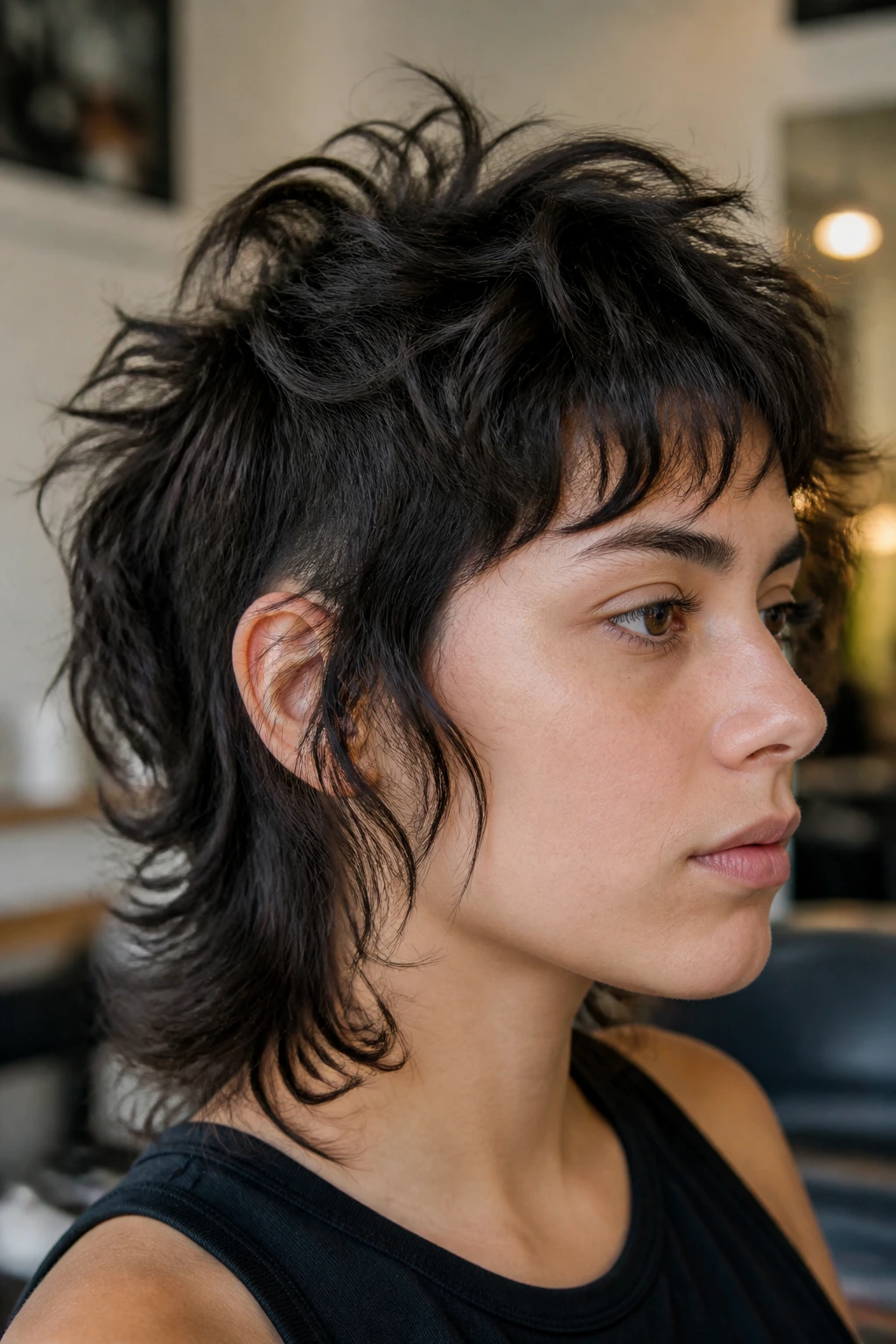
Start with less product than you think. The undercut already removes bulk, so heavy cream can undo the shape in one pass. For most shags, a little mousse at the roots and a pea-sized amount of paste at the ends is enough.
Dry the crown first. Lift it with your fingers or a small brush and aim the dryer at the roots before you worry about the fringe. That bit of root direction keeps the shape from collapsing under its own layers.
Use bend, not curl. A shag usually looks better with a soft twist at the ends than with a tight ringlet or a perfect blowout. A 1-inch iron, wrapped loosely and alternated front to back, gives the hair movement without making it look overworked.
For second-day hair, wake up the roots. A few spritzes of water at the crown, a quick blast with the dryer, and a touch of matte paste can bring the layers back without washing the whole head.
Common Mistakes That Flatten a Shag With an Undercut
-
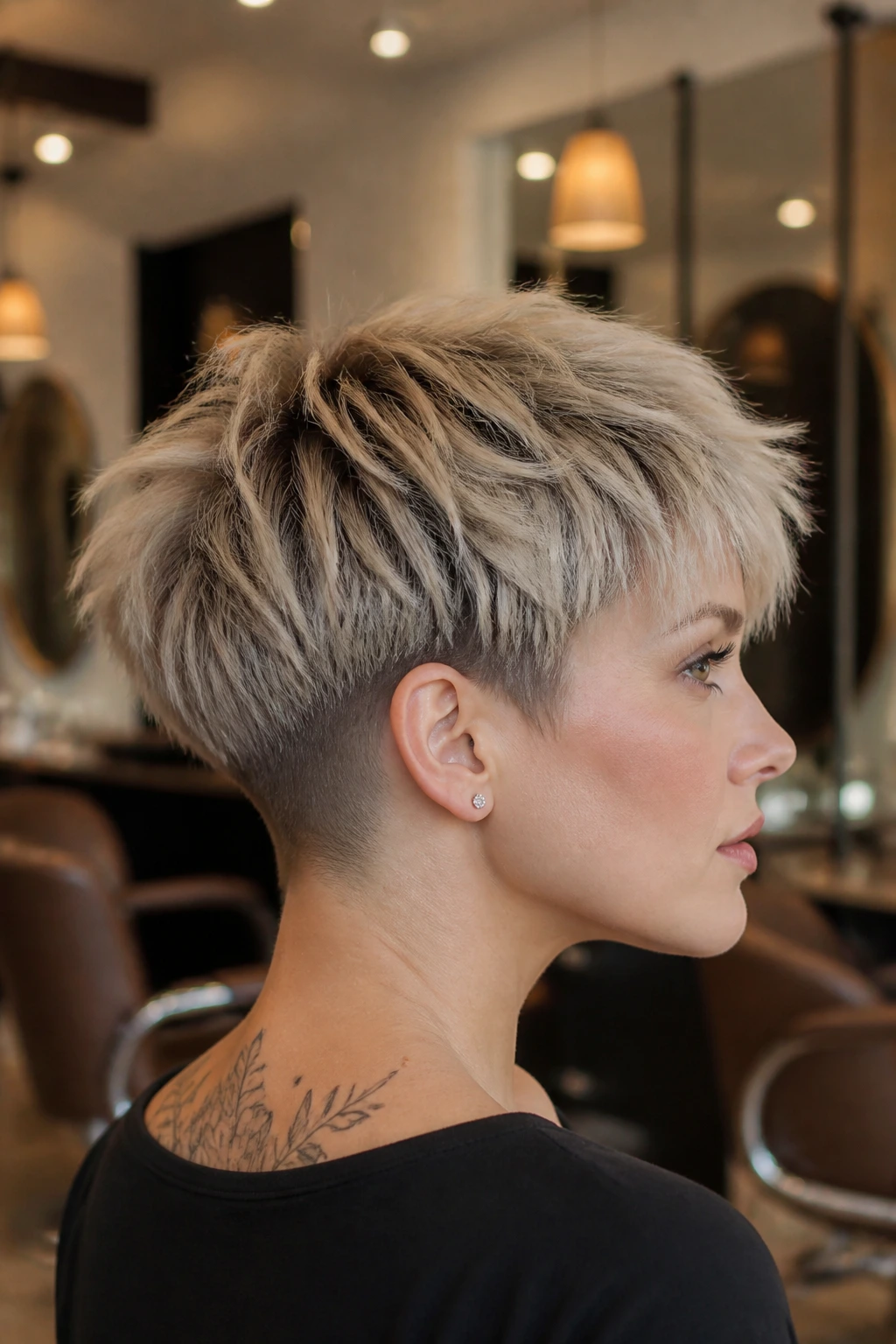
Taking the undercut too high: If the clipped area creeps above the occipital bone, the top can lose its shelf and the cut starts to feel disconnected in a bad way. Keep it low unless you want a visible contrast.
-
Thinning the top too much: The undercut should remove bulk underneath, not strip the visible layers into wisps. When the top is over-thinned, the shag loses its body and starts to look flimsy.
-
Using heavy oils or creams near the roots: These products weigh down the movement you just paid for. Put richer products only on the ends, and stay light at the crown.
-
Ignoring the grow-out line: A sharp undercut looks clean for a few weeks, then the edge begins to show. If you wait too long, it can create a shelf that sits awkwardly under the top layers.
-
Cutting curls the same way you cut straight hair: Shrinkage changes everything. Curly undercuts need more caution, and the visible layers should be checked in their natural state.
Variations and Adaptations to Try
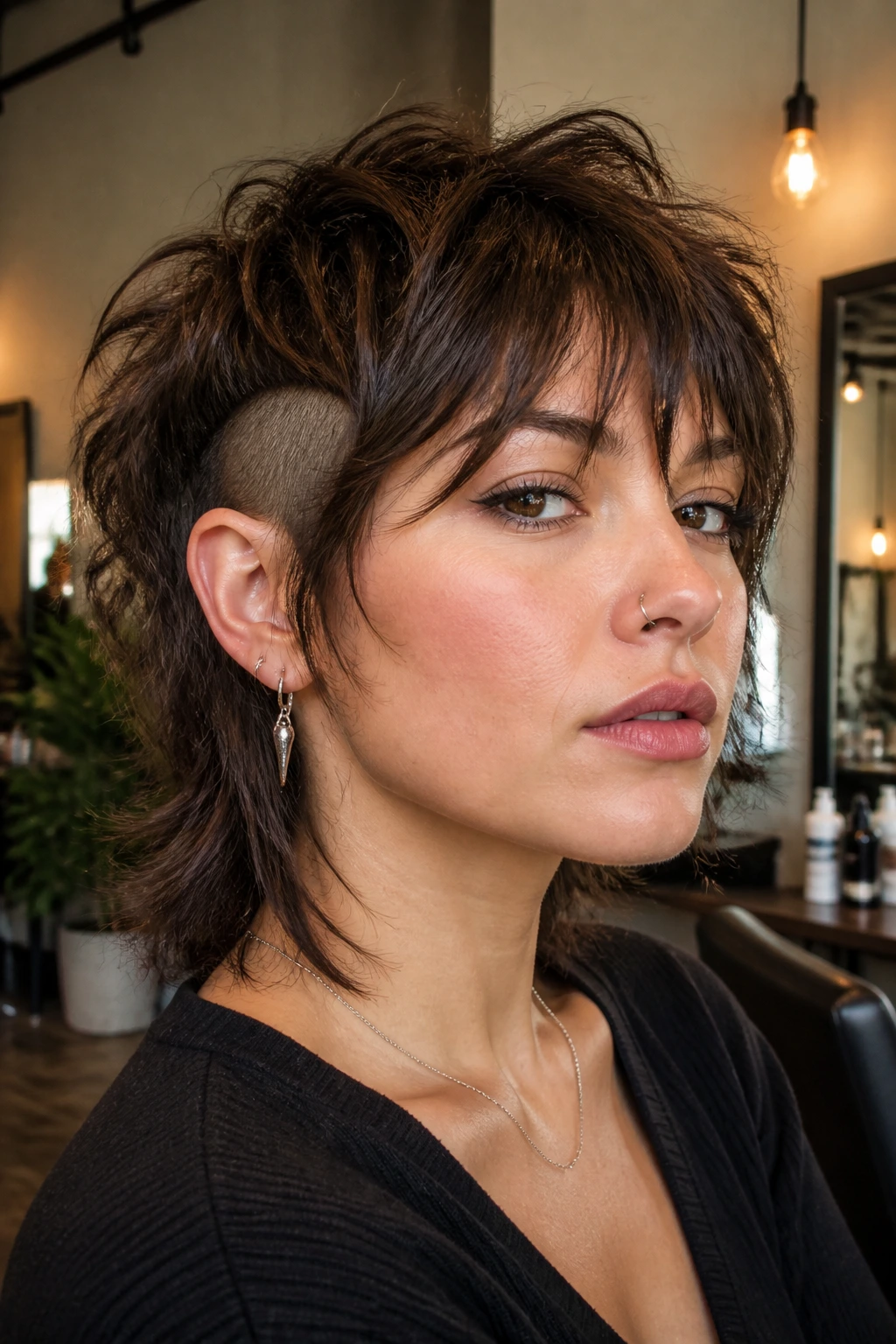
Office-Soft Version: Keep the undercut low and narrow, then leave the top layers longer around the cheekbones. You get the movement and the cleaner neckline, but nothing that jumps out when your hair is down. It’s a good choice if you want a subtle edge.
Curl-First Version: This version is cut around the curl pattern instead of around a straight silhouette. The undercut stays hidden and low, while the perimeter keeps enough weight for the curls to stack without frizzing outward.
Barbered Rock Version: Ask for a sharper clipper line at the nape and temples, then keep the top feathered and piecey. This one has more contrast and needs a bit more upkeep, but it reads clean instead of sloppy.
Grow-Out-Friendly Taper: If you hate hard edges, choose a taper instead of a stark shave. It softens into a bob, lob, or longer shag much more gracefully.
Fine-Hair Lift Edit: Keep the undercut tiny, then add shorter internal layers and a root mousse. The goal is lift, not removal. That distinction matters.
Trim Timing and Grow-Out Care
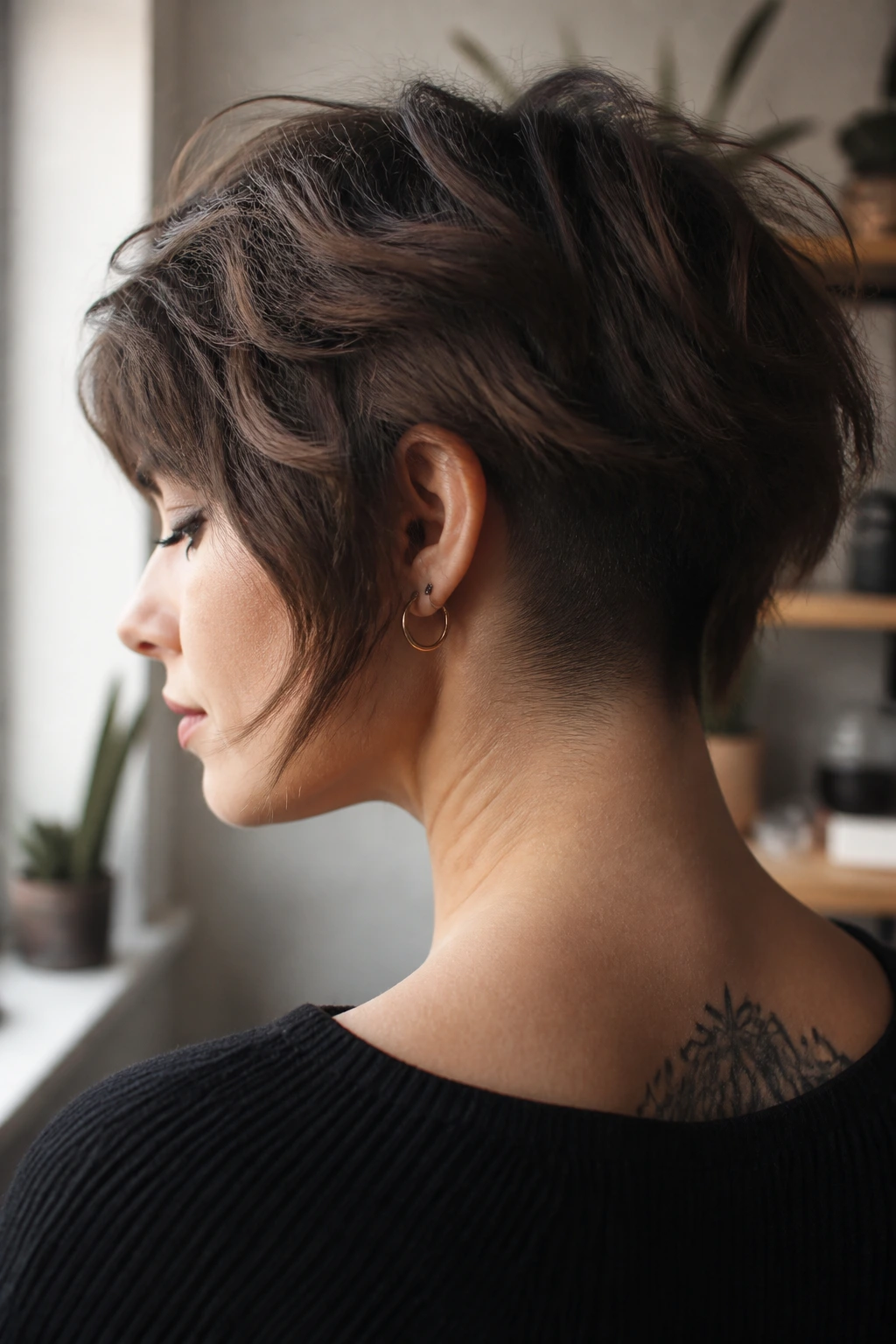
The undercut usually needs a cleanup every 4 to 6 weeks if you want it to stay crisp. The top layers can often go longer — 8 to 10 weeks is common for a reshaping visit, and curly hair sometimes stretches that a little because the shrinkage hides growth.
If you’re growing it out, ask the stylist to soften the line each time instead of leaving a hard shelf for later. That small request saves you from the awkward in-between stage where the undercut starts to show through the layers in a blocky way.
Between appointments, a hand mirror and a small clipper guard can keep the nape tidy. But don’t try to re-cut the whole shag at home unless you already know how the sections sit. The undercut is the easy part. The balance on top is where people get into trouble.
Frequently Asked Questions
Will a shag haircut with an undercut work on thick hair?
Yes, and thick hair is often where it makes the biggest difference. The undercut removes the bulk that makes the back puff out, so the shag layers can move instead of stacking into a heavy block.
Can curly hair wear this cut without looking too wide?
Absolutely, but the cut needs to respect shrinkage. A dry or nearly dry haircut with a low hidden undercut usually works better than a wet cut that looks tidy in the chair and explodes later at home.
How often will I need to trim the undercut?
Most people need a cleanup every 4 to 6 weeks if they want the nape or temple area to stay neat. If you’re fine with a softer grow-out, you can stretch it longer, but the edge will stop reading as clean.
What if I want the undercut to stay hidden?
Tell your stylist that directly and keep the shave low. A hidden nape or temple undercut can stay invisible under loose hair, especially if the top layers are long enough to cover the line.
Does this cut suit fine hair?
It can, but the undercut has to stay small. Fine hair loses volume fast if too much is removed, so the cut should focus more on silhouette and lift than on shaving away large sections.
Can I wear this cut smooth instead of messy?
Yes. A shag with an undercut can blow out into a smoother shape if you use a brush and a light cream. The undercut still helps the hair sit cleaner underneath, even when the surface looks polished.
Is a fade better than a true undercut?
A fade gives a softer grow-out and less contrast. A true undercut gives a sharper break and more edge. If you want a cleaner line and more drama, choose the undercut; if you want something that softens more gently, go with the fade or taper.
Can I maintain the undercut at home?
You can keep the nape tidy with clippers and a second mirror, but the shag layers themselves are a different story. The top shape is easier to ruin than people expect, so most of the real haircutting is better left to a stylist.
The Cut That Keeps Its Edge
A shag haircut with an undercut works because it solves a problem before it turns into one. The layers get to move. The neck gets a break. Thick hair stops building a wall under the top section, and curls stop spreading into a wide, shapeless halo.
That is why the best versions of this cut look as if they were made for the head they’re on. Some are hidden. Some are loud. Some sit right in the middle, which is where a lot of people actually live. If you want edge without losing control of the shape, this is the place to start — with a photo in hand, a clear idea of where the weight should disappear, and a stylist who knows how to let the layers breathe.
