



An asymmetrical bob haircut never bothers pretending it’s even, and that’s half the appeal. One side lands a little shorter, the other drifts longer, and the whole cut wakes up the face the second you turn your head. A difference of one or two inches can look sleek and controlled; push it harder and you get something sharper, almost architectural. Either way, the line does the talking.
What makes asymmetric bob haircuts so useful is that they can be tuned instead of copied. A stylist can keep the shorter side tucked at the jaw, let the longer side skim the collarbone, add a hidden undercut for thick hair, or soften the whole thing with waves so it reads more relaxed than dramatic. That flexibility is why this shape shows up on straight hair, curly hair, fine hair, dense hair, and every awkward in-between stage that usually frustrates people trying to find a flattering cut.
The mistake most people make is assuming the asymmetry has to be loud to matter. It doesn’t. Sometimes the smartest version is the one that looks almost normal from the front and quietly shifts once you move. That little shift is the whole trick, and the best versions use it with intent.
Why This Collection Keeps Working So Well
-
The angle does the slimming work for you: A longer front corner can visually stretch the face, while a shorter back removes bulk at the neck and crown.
-
You can dial the drama up or down: A subtle 1-inch difference reads polished; a 3- to 4-inch difference reads bold and fashion-forward.
-
It plays nicely with texture: Straight hair shows the line clearly, waves soften it, and curls make the shape feel fuller without losing the asymmetry.
-
The grow-out is easier than people expect: Because one side is already longer, the cut often grows into a lob without looking like you’re stuck in limbo.
-
It gives color something to work with: Highlights, balayage, or a single bright panel show off the diagonal shape better than an even, one-length bob ever could.
-
It can solve real hair problems: Fine hair gets sharper edges, thick hair gets movement, and rounder face shapes get a cleaner vertical line through the front.
1. Chin-Grazing Side-Swept Asymmetrical Bob
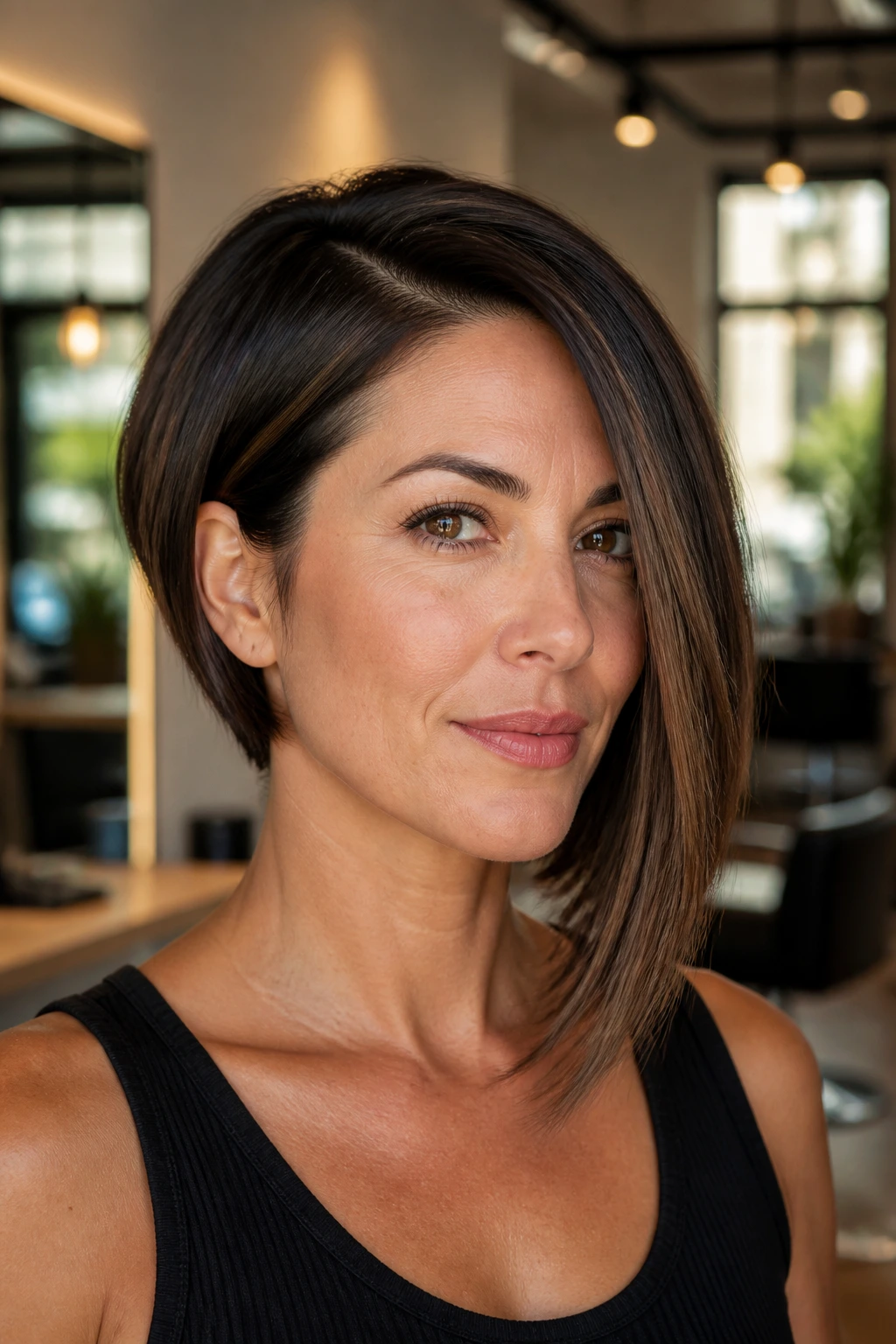
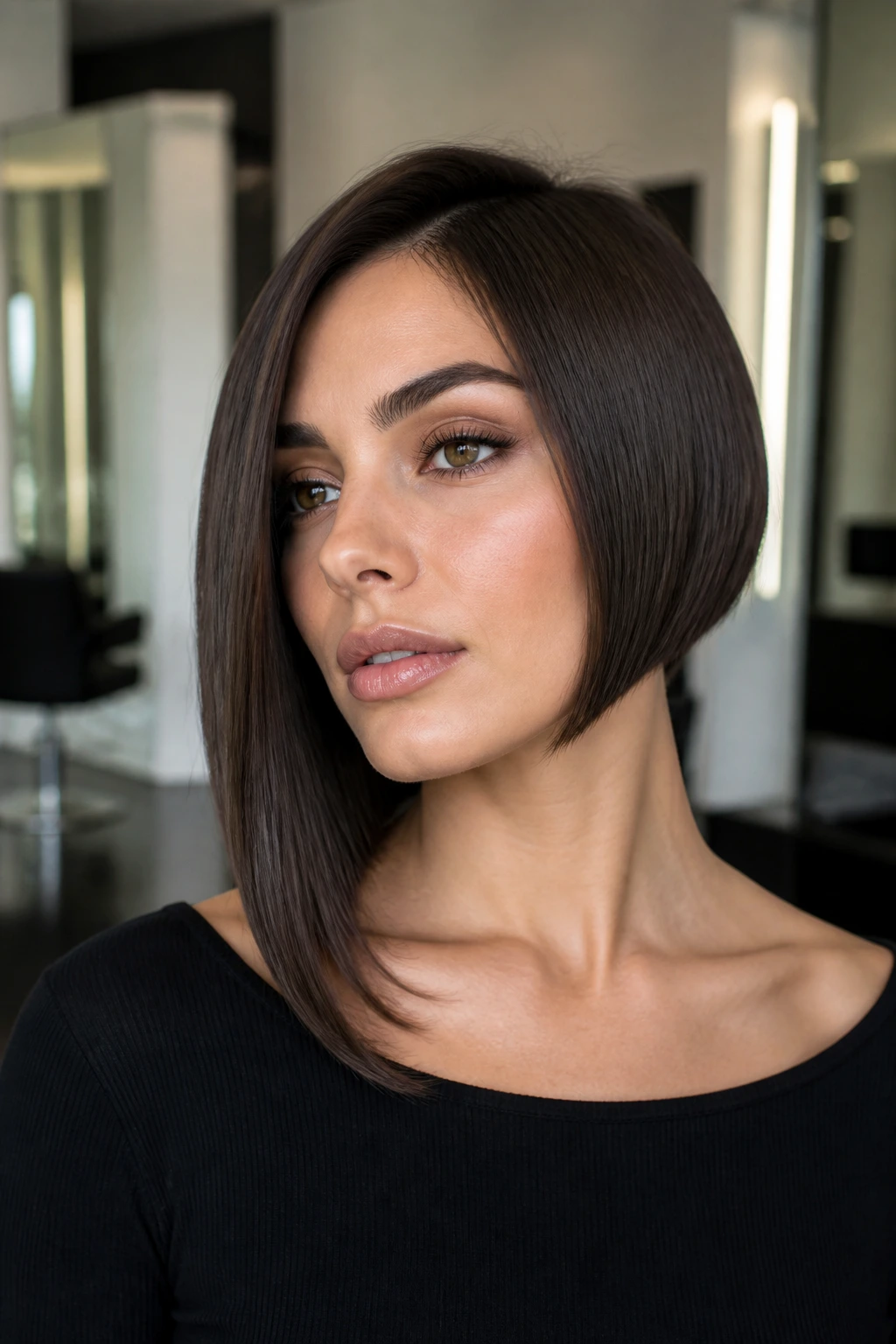
This is the version I recommend to people who want the asymmetrical bob haircut to read as chic before it reads as edgy. One side kisses the chin, the other sits a touch higher near the jaw, and the side part gives the whole cut a long diagonal line that feels clean without looking severe.
Why the side part matters
A deep side part changes the balance of the cut more than most people realize. It pushes weight to one side, so the shorter side can stay tucked and neat while the longer side swings forward and frames the face. On straight hair, the difference looks crisp. On wavy hair, it gets a little softer and more lived-in, which is often the sweeter spot.
- Works best when the longer side is about 1.5 to 2.5 inches longer than the shorter side.
- Looks especially good when the front piece falls below the jaw, not right at it.
- Needs a clean blow-dry if you want the angle to stay visible.
If your hair has a cowlick at the front, this cut can still work. You just have to place the part where the hair naturally wants to split, not where you wish it would.
Tip: Ask for the shorter side to stop just above the chin if you want a face-lifting effect without losing softness.
2. Glassy Angled Asymmetrical Bob
Here’s the blunt truth: if you want the cut to look expensive, the finish has to be smooth. A glassy angled asymmetrical bob depends on shine, tension, and a hard-edged line from the nape into the longer front corner.
The shape is most striking on hair that can hold a straight blowout or a flat-ironed finish without puffing up at the ends. The longer side usually drops toward the collarbone, while the shorter side hits closer to the cheekbone. That contrast becomes the whole point. No fluff. No random layers. Just a clean geometric sweep.
This is the version that looks best when the ends are tucked under by a small half-inch curve, not curled into a big bulb. Too much bend ruins the line. And if your hair frizzes easily, this style will tell on you, so the smooth finish matters more than the cut itself.
I’d call this the sharp suit of asymmetrical bob haircuts. Not because it’s stiff, but because it has a crispness that holds up in photos, meetings, dinners, and every other place where you want your hair to look deliberate.
3. Soft Wavy Asymmetrical Lob
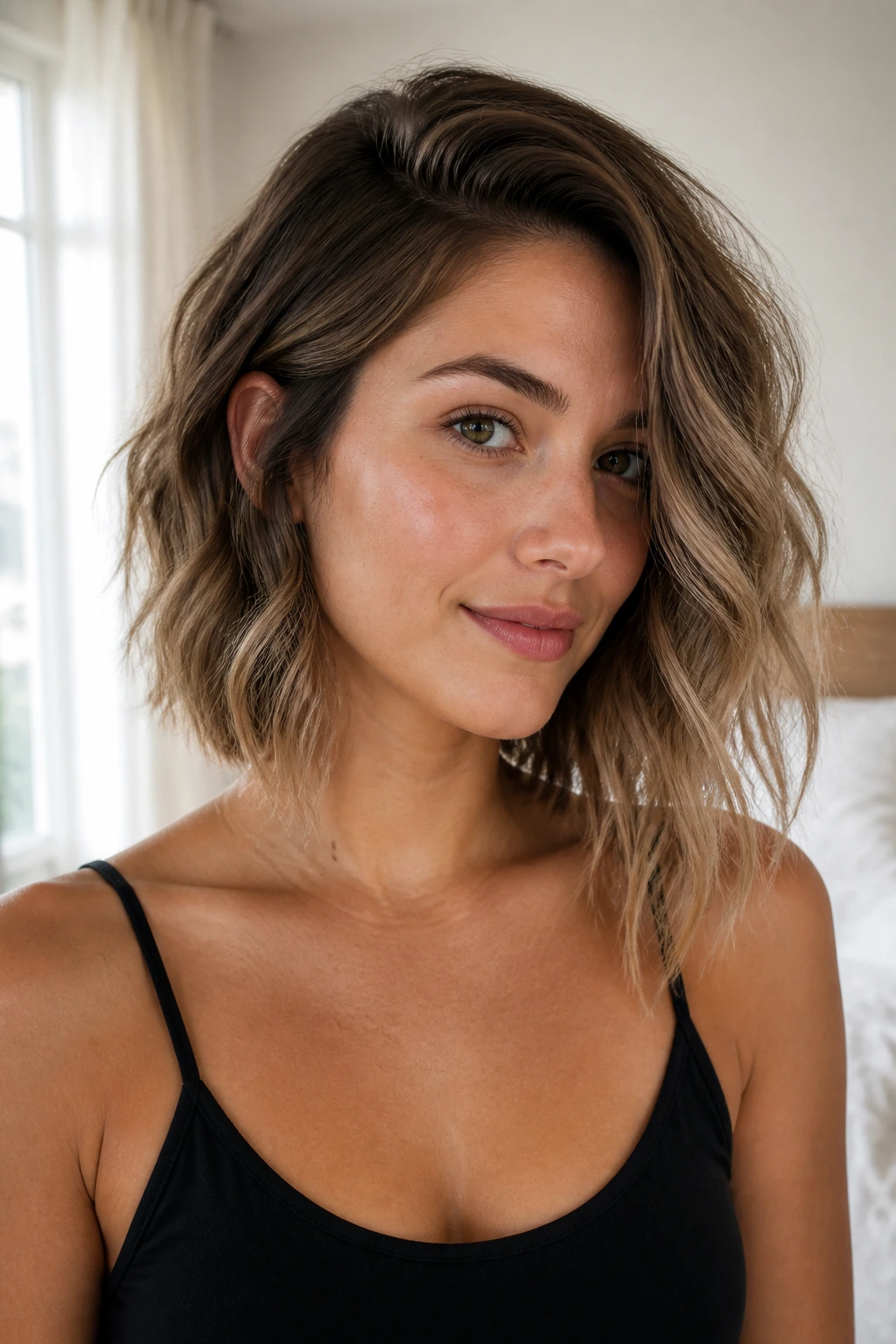
Why does this version feel easier to wear? Because the wave breaks up the angle just enough to keep it from looking too calculated. The longer side still drops lower, but the bends in the hair make the line feel fluid instead of rigid.
This cut works beautifully when the asymmetry is built into a collarbone-length bob, or lob, rather than a chin-length cut. That extra length gives the wave somewhere to move, which matters if your hair likes to swell up when it dries. A 2-inch difference between sides is often plenty here; you do not need a dramatic swing for the shape to register.
How to wear it
- Scrunch in a light cream or mousse when the hair is damp.
- Diffuse only until the roots are about 80 percent dry.
- Let the ends air-dry a little so they keep their soft bend.
- Tuck the shorter side behind one ear for a cleaner line.
The best thing about this version is that it looks intentional even when it’s slightly messy. That’s rare. And useful.
4. Stacked Nape Asymmetrical Bob
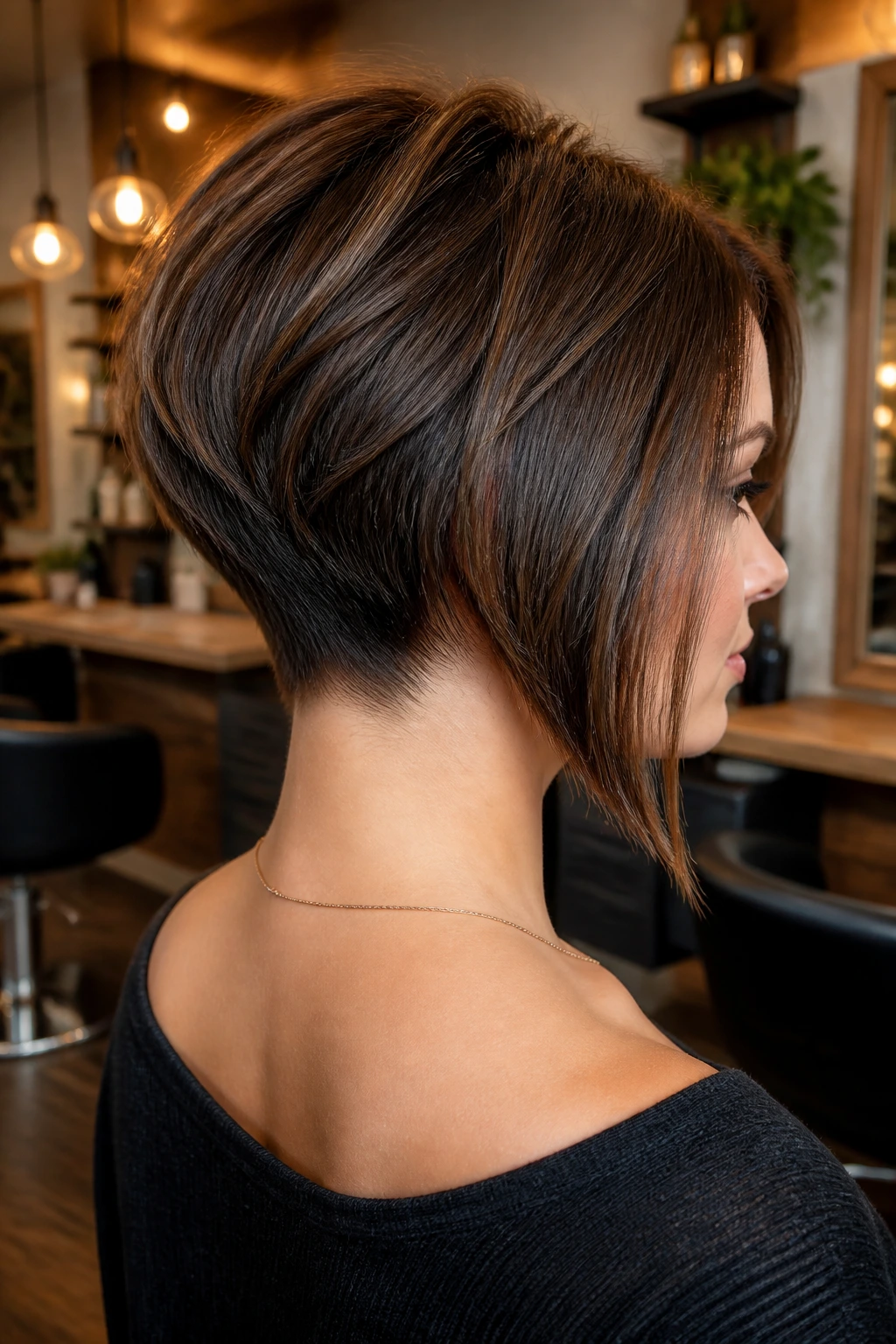
Picture a short, lifted back that graduates into a longer front corner. That’s the backbone of a stacked nape asymmetrical bob, and it’s the one I reach for when someone wants volume without a ton of styling every morning.
The stacked layers at the back remove weight from the lower section, which lets the crown sit a little higher. The asymmetry then pulls the front line forward so the cut doesn’t feel too “helmet” or too round. It’s a tidy trick. The profile looks sharper from the side than from the front, which is exactly why it works so well.
A few details matter here:
- Fine hair benefits from tighter stacking.
- Thick hair needs the interior de-bulking kept controlled so the back doesn’t balloon.
- A round brush and a quick root lift at the crown make the angle pop.
This cut is not for people who hate seeing the back of their neck. The nape is part of the design. If you want length everywhere, skip it. If you want clean lift and a strong profile, this one earns its keep.
5. French-Girl Asymmetrical Bob With Fringe

This is the cut that looks slightly imperfect in the best way. The fringe lands somewhere between brow-grazing and cheekbone-skimming, and the asymmetry underneath gives the whole thing a little wobble, like it was tossed on without trying too hard.
The key is restraint. Too much layering and it starts to feel busy; too much asymmetry and the fringe loses its softness. Keep the edges a little airy, let the bangs fall where they want after a rough blow-dry, and resist the urge to polish every strand into submission. That loose finish is part of the charm.
French-girl versions of asymmetrical bob haircuts tend to work best when the hair is naturally straight to wavy and has some bend at the ends. If your hair sticks out like a broom at the bottom, the fringe can feel disconnected unless the stylist adds subtle texture around the face.
This is one of those styles that looks prettier on day two, when the roots have a little grit and the bangs separate into pieces instead of forming one hard curtain. Annoying? Maybe. Worth it? Yes.
6. Curly Asymmetrical Bob With Shape on One Side

Can curly hair wear an asymmetrical bob without turning into a triangle? Absolutely, but the cut has to respect shrinkage. That means the stylist should shape the curls dry, or at least check them dry before making the final line.
The asymmetry here is usually subtler than on straight hair. A one-sided difference of 1 to 2 inches can be enough once the curls spring up. The longer side should be judged by where the curl actually lands, not where it hangs wet. That’s where people get burned. Wet curls lie. Every time.
What to ask for
Ask for curl-by-curl shaping at the ends and a little more length left on the side that needs visual weight. If one side is denser, the cut can lean into that and use the extra volume as part of the shape. A curl cream or gel-cast finish keeps the silhouette from puffing outward.
This version is my favorite when the goal is movement, not precision. The asymmetry gives the curls a direction. The curl pattern does the rest.
7. Blunt Edge Asymmetrical Bob
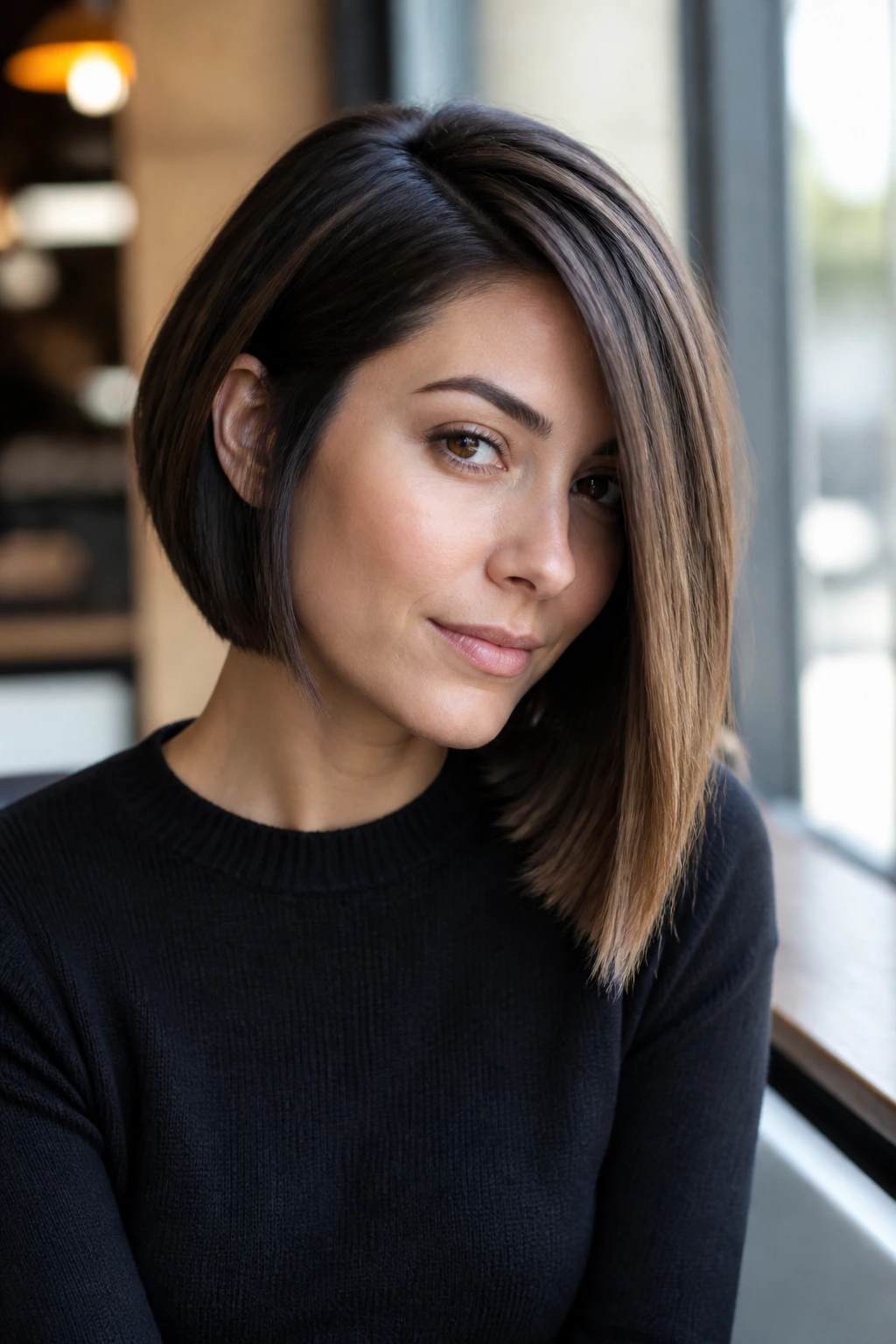
A blunt asymmetrical bob looks stronger than a layered one because the edge is the whole point. The ends hit with a clean line, and the difference in length becomes obvious without any texture doing the heavy lifting.
That bluntness can be a gift for fine hair. It makes the perimeter look denser. On thicker hair, the same blunt line can feel heavy unless the interior is lightly thinned, so the cut has to be controlled from the inside rather than shredded at the ends.
The nicest thing about this style is that it behaves. You can blow it out, tuck one side behind the ear, or wear it flat and close to the head, and the line still holds. The danger is over-layering. Once the edges get too wispy, the entire point starts to blur.
I like this cut on people who want asymmetry but don’t want obvious movement everywhere. It’s tidy. It’s honest. And it looks best when the ends are cut with a careful, deliberate hand rather than sliced up with texture for texture’s sake.
8. Asymmetrical Bob With Curtain Bangs
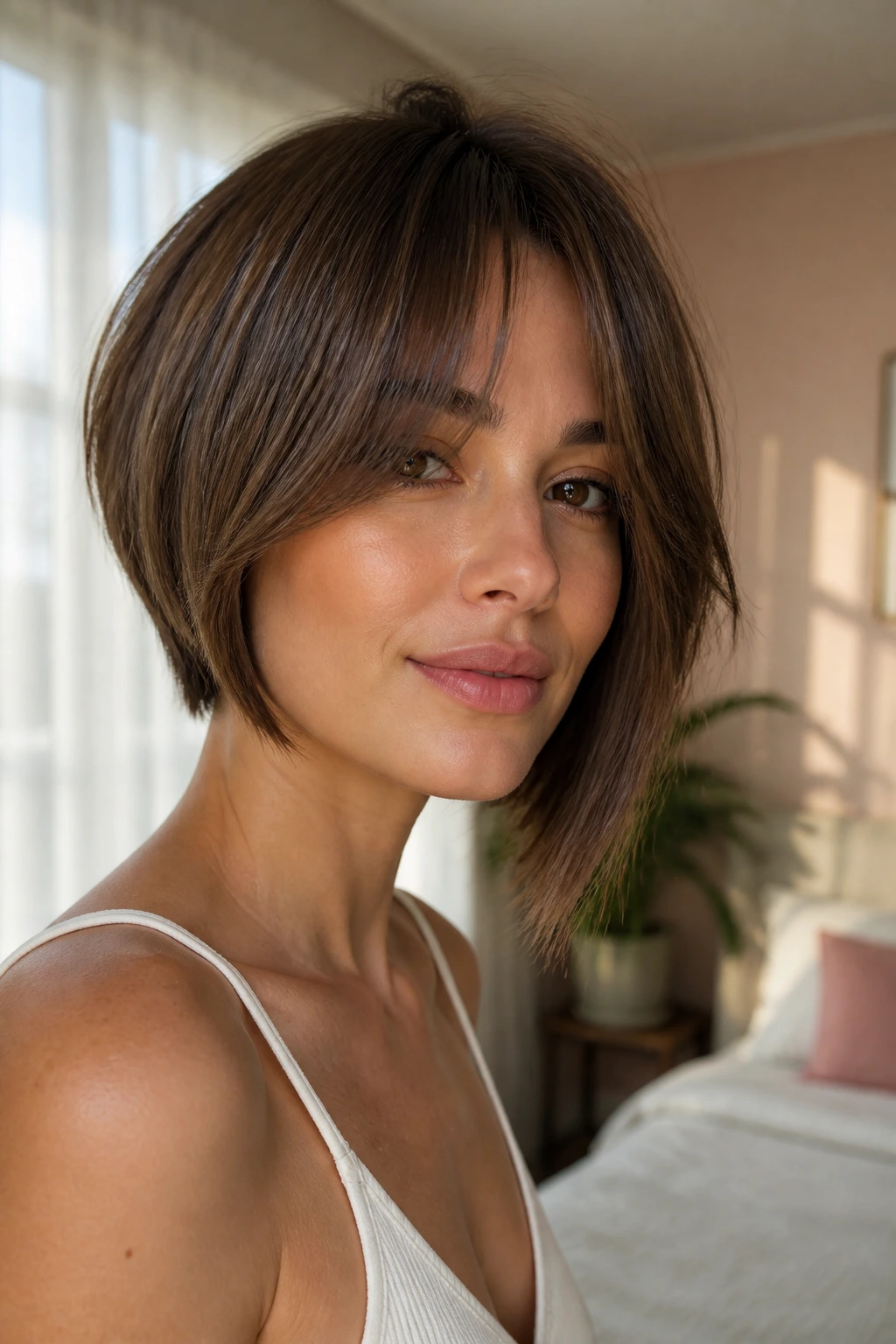
Curtain bangs soften the front of an asymmetrical bob in a way that a blunt fringe never will. They split around the center or just off-center, then fall into the longer side so the cut feels connected instead of chopped into separate parts.
This is a nice choice if you want the bob to frame the face but not crowd it. The bangs create a little opening at the forehead, and the asymmetry carries that line downward. The result is less severe than a pure angled bob, which matters if your face is already strong or angular.
A good curtain fringe should sit around the cheekbone at its shortest point and blend into the bob at the edges. If the bangs stop too high, they fight the shape. If they’re too long, they disappear. The sweet spot is that middle zone where they can be pushed open with your fingers and still fall back into place.
This style also buys you versatility. On a fresh wash day, it reads soft and airy. On day three, it can be tucked and pinned and still look like a deliberate cut. Not bad for a fringe that does half the work.
9. Undercut Asymmetrical Bob
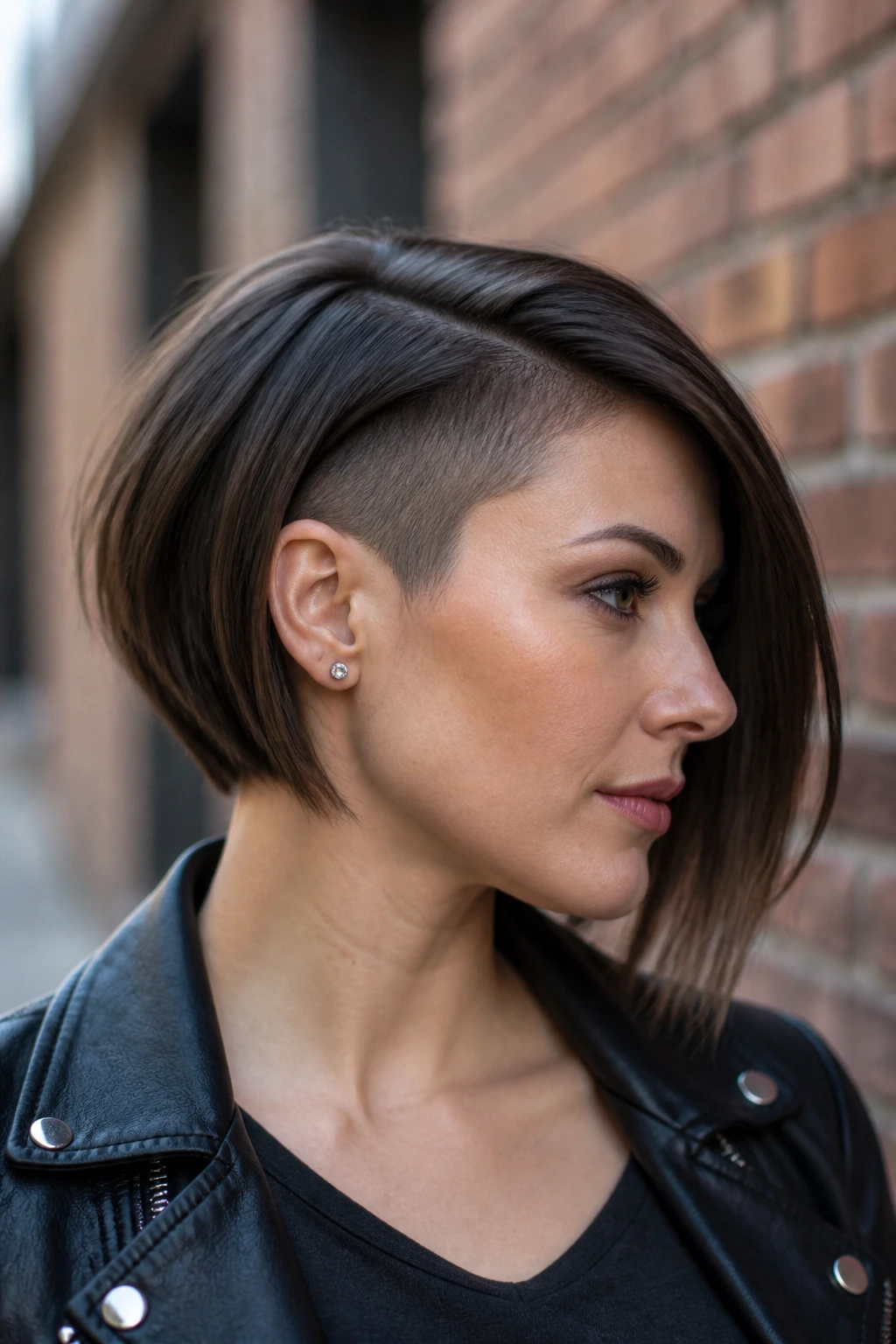
People who think asymmetrical bobs have to be soft usually change their mind when they see an undercut. A hidden shave at the nape, or one shaved side beneath the longer top layer, turns the whole haircut into something cleaner, cooler, and much lighter to wear.
The undercut removes bulk where thick hair usually collects: behind the ears, at the nape, or under the longer side that wants to puff out. That lets the top layer fall with more swing and less weight. The asymmetry then feels sharper because there’s less hair fighting for space.
This cut is not subtle in the maintenance department. The shave or very short section needs regular upkeep, and if you hate feeling the breeze on your neck, you’ll know it fast. Still, for dense hair, the payoff can be huge. Less triangle. Less heat at the nape. Better movement.
If you want to keep the undercut private, ask the stylist to place it underneath a longer top veil. If you want it visible, let the longer side reveal it when you tuck the hair behind your ear. Both versions work. They just tell different stories.
10. Copper Asymmetrical Bob With Warm Shine
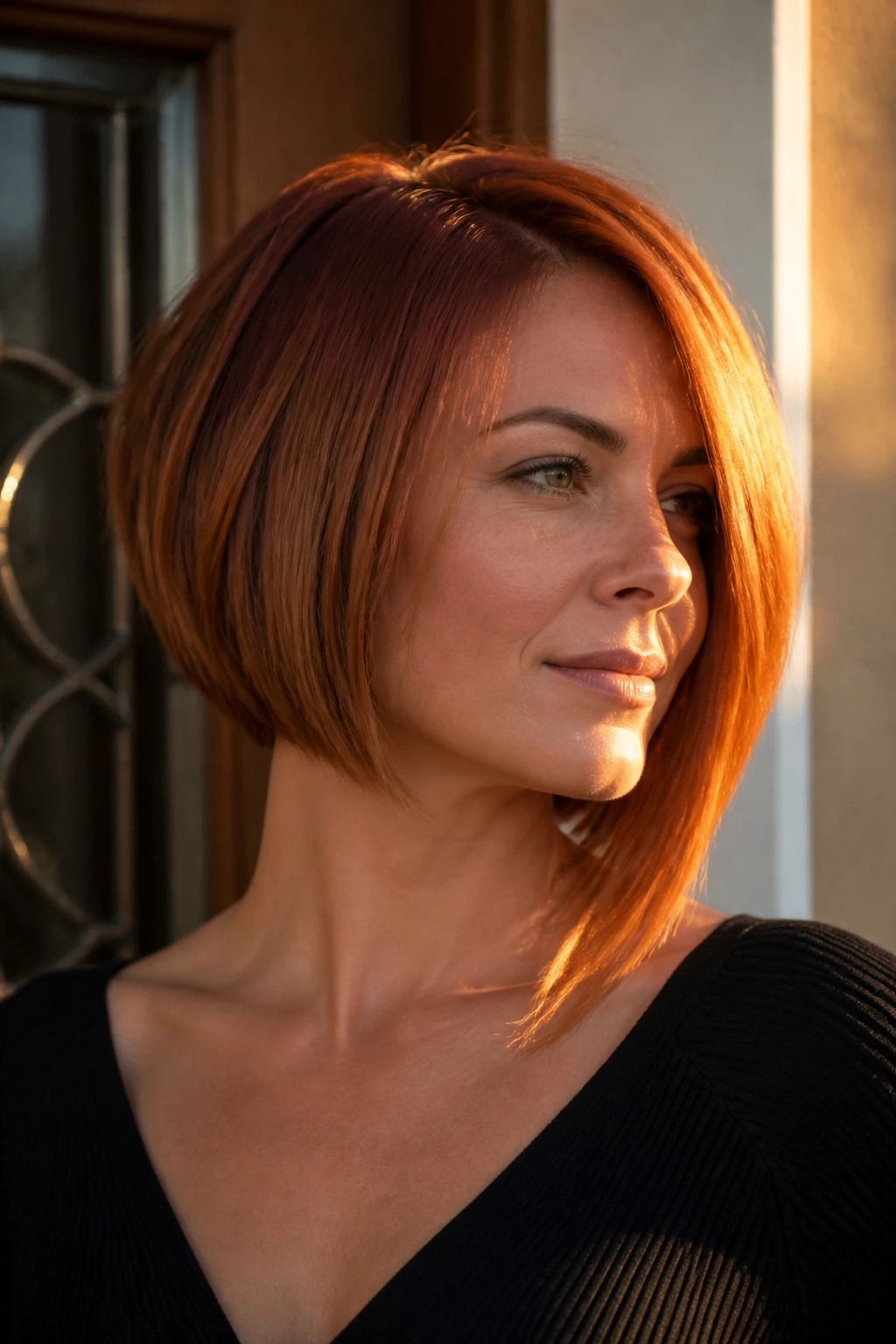
Color changes how asymmetry reads, and copper proves it better than almost anything else. The warmth catches the angled line, making the longer front corner stand out with a soft glow instead of a hard edge.
This cut and color pairing works especially well when the bob is smooth enough to show off the shine but not so polished that it looks stiff. A rich copper, auburn, or cinnamon tone gives the shape dimension even before the light hits it. The shorter side looks denser. The longer side looks brighter. That contrast is half the fun.
Maintenance matters here too. Warm shades fade fast if they’re washed too often with hot water and harsh cleanser. A color-safe shampoo, cooler rinses, and a glossing treatment every so often keep the tone from going dull and muddy.
I like copper on asymmetrical bob haircuts because the color does some of the styling work. You don’t need much else. A clean part, a little bend at the ends, and the whole cut wakes up.
11. A-Line Asymmetrical Bob With Highlights
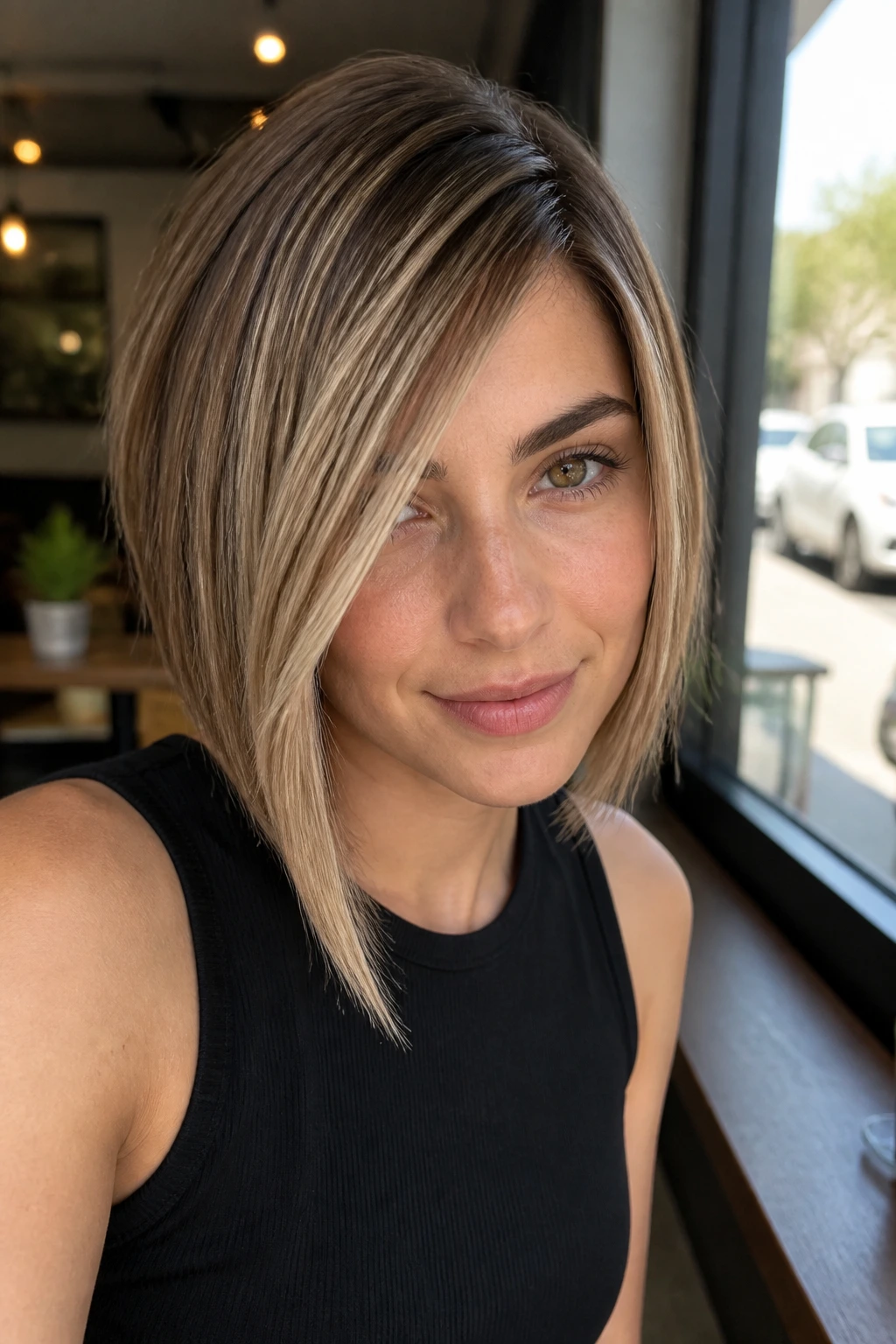
An A-line bob already tilts forward, so when you add asymmetry, the diagonal starts to feel almost sculpted. Highlights make that line easier to see. They catch the front corners, trace the movement, and keep the haircut from disappearing into one flat block.
This is a smart choice if you want the shape to look lighter around the face without cutting too much length off the back. The back can stay tighter and more contained, while the front gets brighter ribbons that visually extend the angle. Subtle money pieces at the front work especially well here, but chunky stripes can be useful if you want the angle to read from across the room.
Aline cuts and highlights have a tricky relationship. Too much light all over the head, and the line loses focus. Place the lighter pieces where the eye should go: front, crown, and around the longer side. Leave the nape a touch deeper if you want the shape to stay grounded.
This is one of those cuts that looks expensive in motion. The hair moves, the highlights catch, and the diagonal line stays easy to read. That’s a good combo.
12. Shaggy Textured Asymmetrical Bob

Not every asymmetrical bob needs polish. Some of the best ones look a little worn in, like the edges were cut with movement in mind from the start. That’s where the shaggy textured version shines.
Instead of a crisp perimeter, this cut uses point-cutting, soft interior layers, and a more relaxed line through the ends. The asymmetry still exists, but the texture breaks it up so the haircut feels casual rather than formal. It’s especially useful if your hair has a natural wave or if you prefer air-drying to a full blowout.
The danger here is overdoing the texture. Too many razored ends and the cut starts to fray. You want enough separation to keep the shape airy, not so much that the bottom looks chipped. The line should still be visible when you step back.
This cut suits people who like a little edge but don’t want their hair to look too “done.” There’s a reason it keeps coming back. It’s forgiving on day two, and it doesn’t throw a fit when the weather gets damp.
13. Graduated Off-Center Bob

What makes this version different is the part. Instead of the classic deep side part, the hair starts just off-center and then graduates unevenly so one side carries more weight than the other. The cut still has asymmetry, but it feels more controlled and less dramatic.
That makes it a good bridge haircut. If you’re nervous about a strong angle, this gives you a softer entry point. The back can be lightly stacked, the front can drop longer on one side, and the off-center part keeps the whole thing from feeling too stark.
The visual payoff
- The front reads longer without looking extreme.
- The crown gets a subtle lift from the shifted part.
- The shape stays wearable even when tucked behind the ears.
- The cut works well on straight, fine, or slightly wavy hair.
If you like haircuts that behave in an office but still have some personality after hours, this one is a dependable pick. Not flashy. Just smart.
14. Wet-Look Sleek Asymmetrical Bob
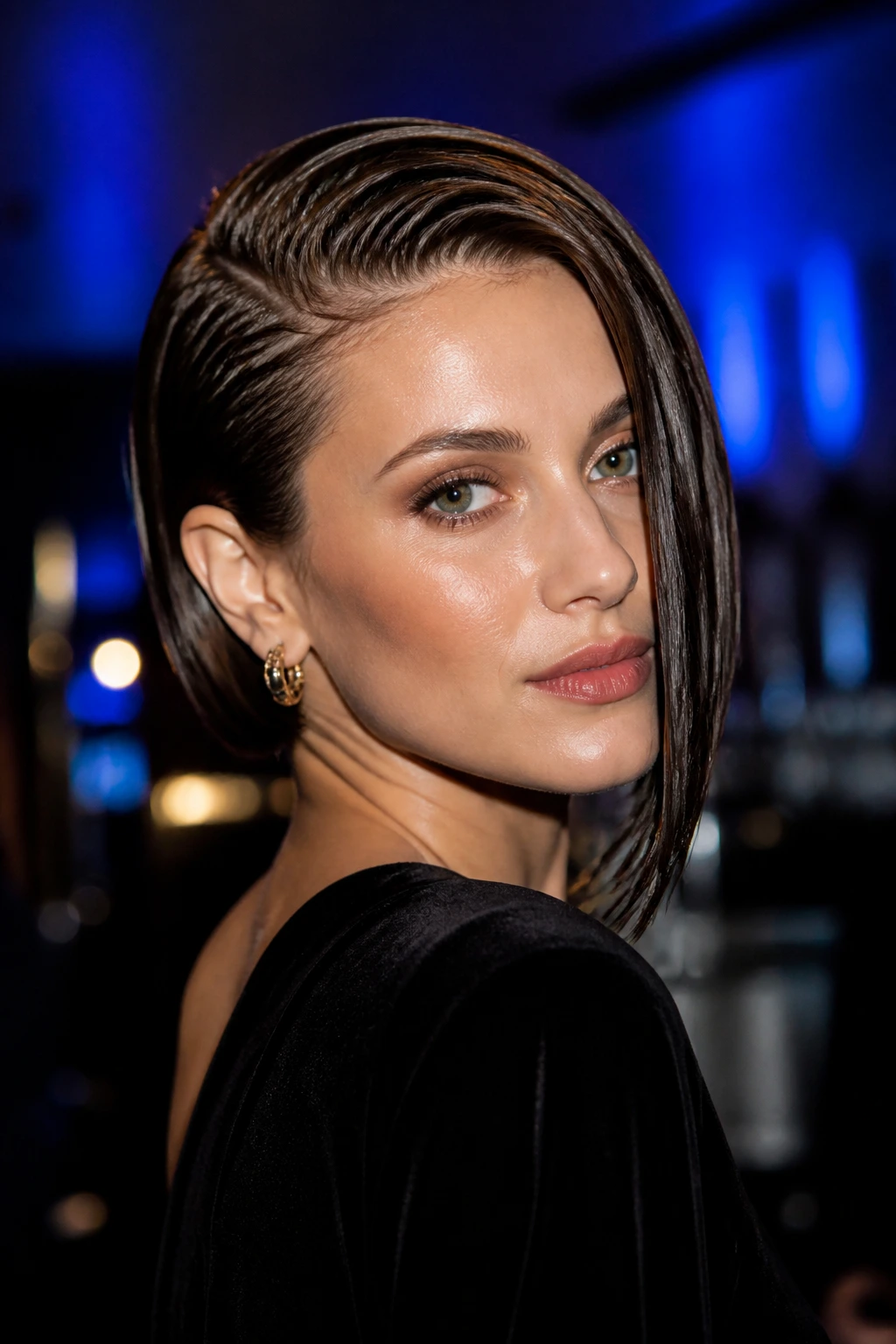
A wet-look asymmetrical bob can look theatrical in the best way when it’s done with a little restraint. The hair is smoothed back or combed into place with gel and shine cream, so the line of the cut becomes the star instead of the texture.
This style works because the product separates the hair from the idea of “bouncy blowout.” That means the diagonal shows up as a shape, not as a styling accident. The longer side can fall close to the cheek, the shorter side can stay slicked and tight, and the entire cut reads deliberate.
It’s best for evenings, events, or anyone who likes a sharper finish. But it can also be surprisingly wearable if you keep the shine controlled rather than drenched. Too much product, and the cut starts looking greasy instead of sleek.
The important thing is placement. Comb the hair into the part while it’s damp, apply product from root to mid-length, and leave the ends a little softer so they don’t look frozen. That small move makes the haircut feel modern instead of costume-y.
15. Choppy Inverted Asymmetrical Bob

An inverted bob usually sits shorter in the back and longer in the front. Add asymmetry, and you get a haircut with movement built into the bones. Add choppy ends, and the whole thing gets a little rougher, in a good way.
This version is useful for dense hair that tends to sit heavy at the bottom. The inversion removes weight; the choppy texture stops the line from feeling boxy. The asymmetry then gives the cut a clear direction so it doesn’t turn into a simple stacked bob with no personality.
The trick is not to over-chop it. A few intentional, uneven pieces around the front and lower perimeter are enough. If every edge gets shredded, the silhouette loses structure and starts fraying. That’s not the look.
I’d call this the denim jacket of asymmetrical bobs. It’s relaxed, a little tough, and easy to dress up or down depending on the styling.
16. Thick-Hair Asymmetrical Bob
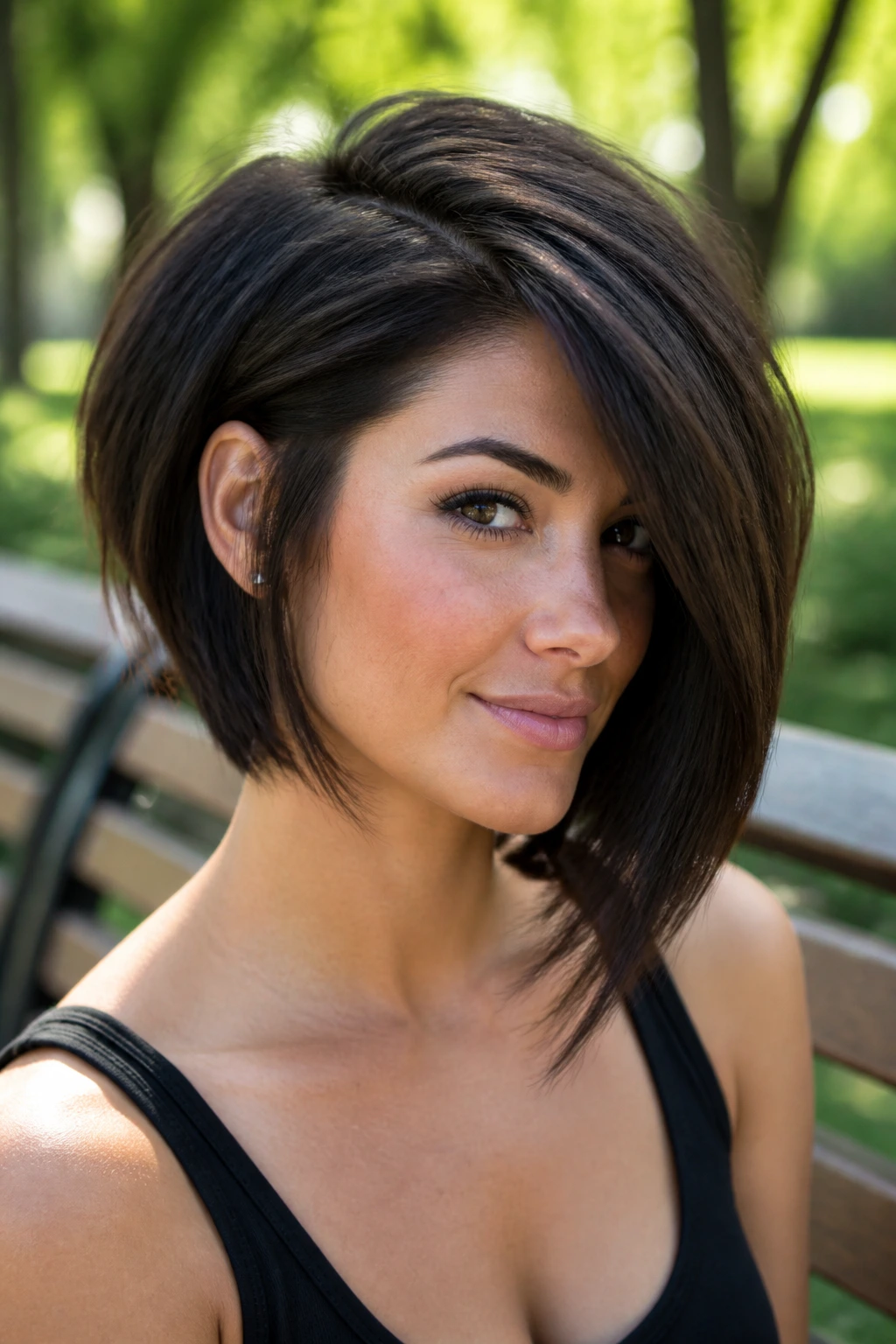
Thick hair can wear this shape beautifully, but the cut has to remove weight without turning the ends into a fuzzy cloud. That means the stylist should think in layers, not just length. Interior debulking, a strong perimeter, and careful graduation are the tools that matter.
The longer side can still fall forward and make the face look leaner, but the back needs enough support to stop the hair from puffing at the nape. If the hair is very dense, a hidden underlayer or a slight stack can keep the shape from mushrooming by midday.
One mistake I see all the time: people ask for a bob that’s “not too heavy,” and the stylist thins the ends too much. Bad call. Thick hair usually looks better when the edge stays strong. Remove bulk inside the cut. Leave the line clean.
This version is at its best when you can run your fingers through it and still feel the shape hold. That’s the balance. Enough movement to breathe, enough weight to stay put.
17. Fine-Hair Asymmetrical Bob
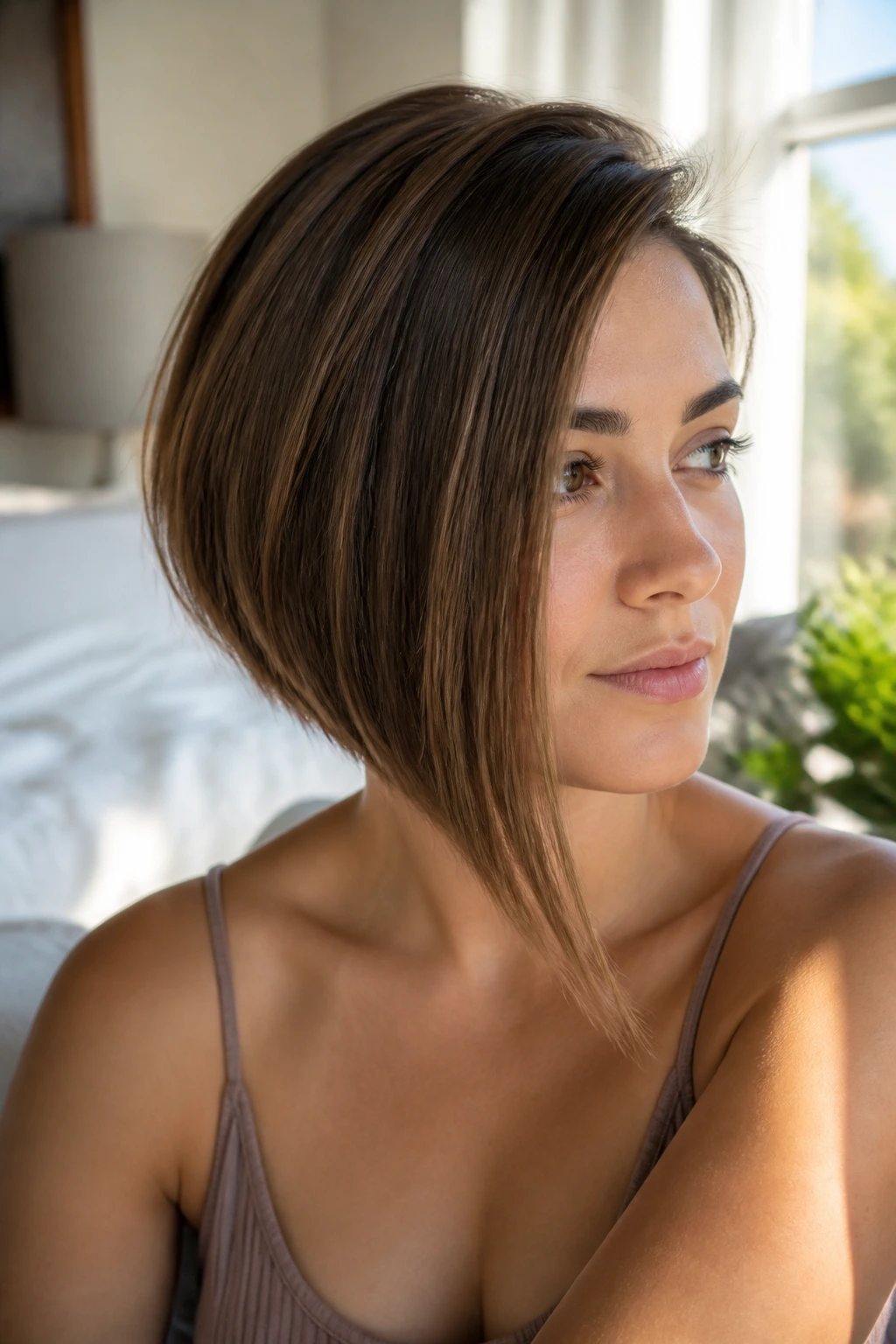
Fine hair needs the opposite approach. Keep the perimeter blunt, the asymmetry subtle to moderate, and the layers limited. Too much texture at the ends makes the hair look thinner than it is, and that’s the last thing most people want.
A slight angle from shorter back to longer front gives the illusion of fullness because the eye reads the shape as structured. A shorter nape can also create lift at the crown, which helps the top of fine hair avoid collapsing flat by noon.
What helps most
- A root-lifting mousse at the crown before blow-drying.
- A round brush for the top layer, not the whole head.
- A blunt edge that lands at the jaw or just below it.
- Light, strategic highlights instead of all-over lightening, which can make hair look wispy.
This is a haircut that looks better when it’s not overworked. Too much product weighs it down. Too much layering makes it look see-through. Keep it crisp, and fine hair suddenly has more shape than people expect.
18. Face-Framing Layered Asymmetrical Bob
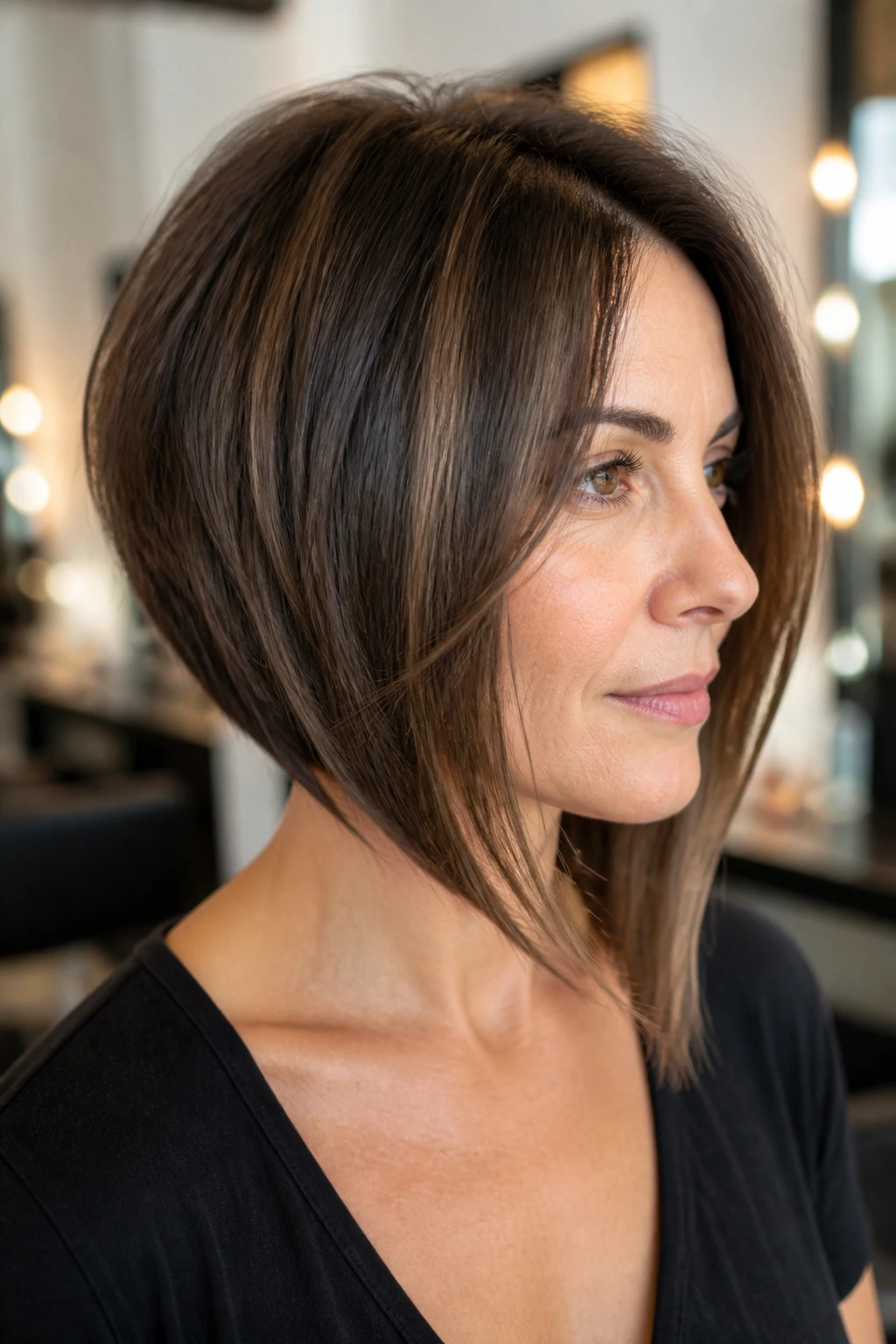
This cut is about directing the eye. Instead of putting all the interest into the diagonal line, it adds a few soft face-framing layers around the cheekbone and jaw so the shorter side doesn’t feel abrupt.
That’s a smart move for anyone with a longer face, a strong chin, or hair that falls flat around the cheeks. The extra pieces keep the front from looking like a hard chop, and they let the asymmetry feel connected to the rest of the head shape. It’s a more forgiving version of the cut, which is why so many people end up liking it more in real life than on paper.
The best layering here is small and intentional. You want two or three front pieces that blend into the longer side, not a full cascade of layers that competes with the bob. The strongest line should still live at the perimeter.
This is one of the easiest asymmetrical bob haircuts to wear when you want movement but still need the haircut to behave. It’s polished enough for work, soft enough for weekends, and versatile enough to survive a bad hair day without looking sloppy.
19. Braided-Accent Asymmetrical Bob
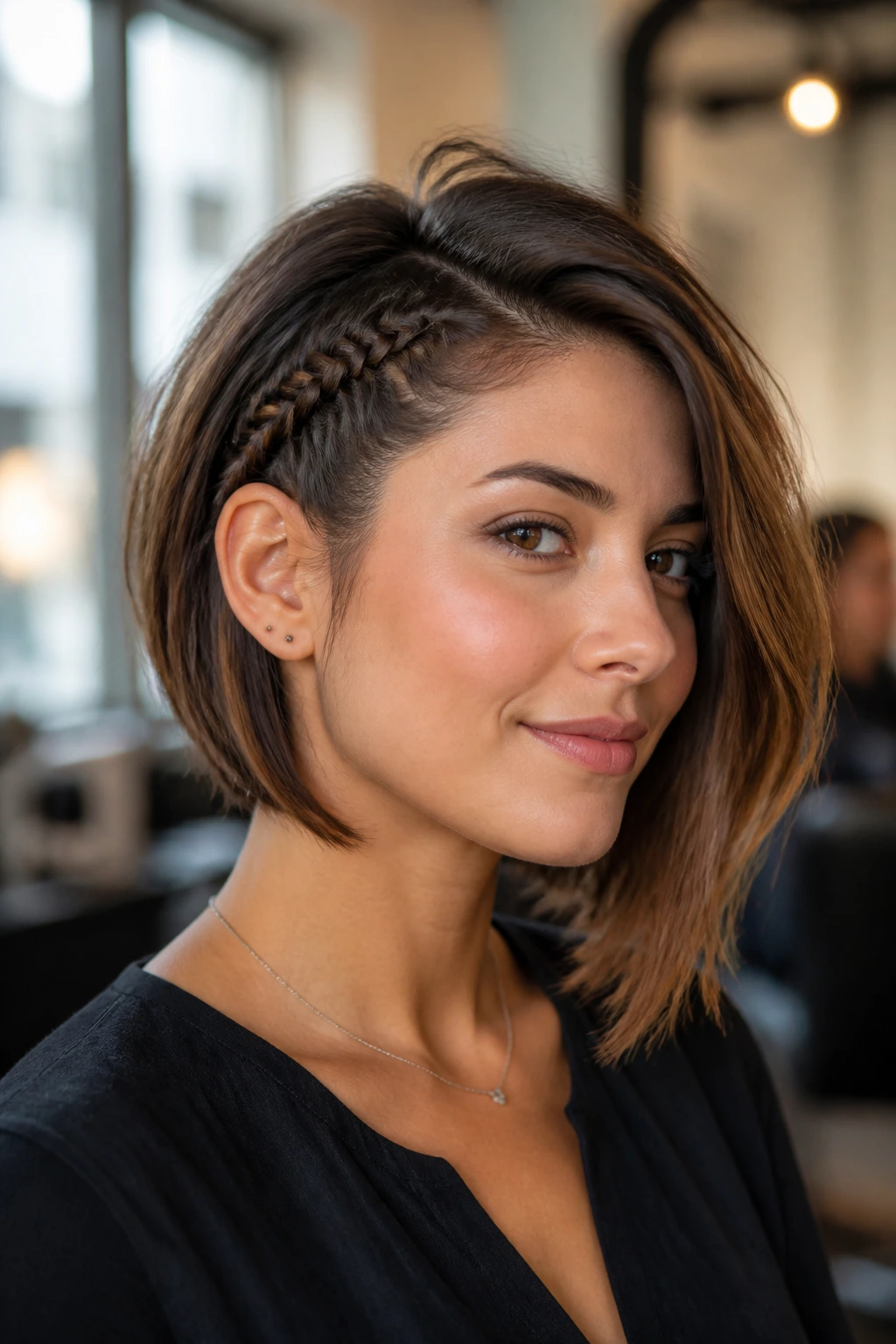
Sometimes the cut itself is only part of the story. A tiny braid on the shorter side, a temple braid along the part, or a tucked braid behind the ear can echo the asymmetry and give the whole style a little more personality.
This isn’t about turning the bob into a festival hairstyle. The braid is small, almost sneaky. It works because the haircut already has a directional line, and the braid makes that line visible in a new way. On the longer side, you can leave the hair loose and curved; on the shorter side, the braid controls the shape.
A braid accent is especially useful when you want to grow out an asymmetrical bob without losing the feeling of a deliberate cut. It gives you something to do on days when one side won’t cooperate. It also keeps shorter pieces away from the face without pinning them flat.
I like this for people who want a haircut that can change moods. Same cut. Different attitude. That’s the fun part.
20. Balayage Asymmetrical Bob
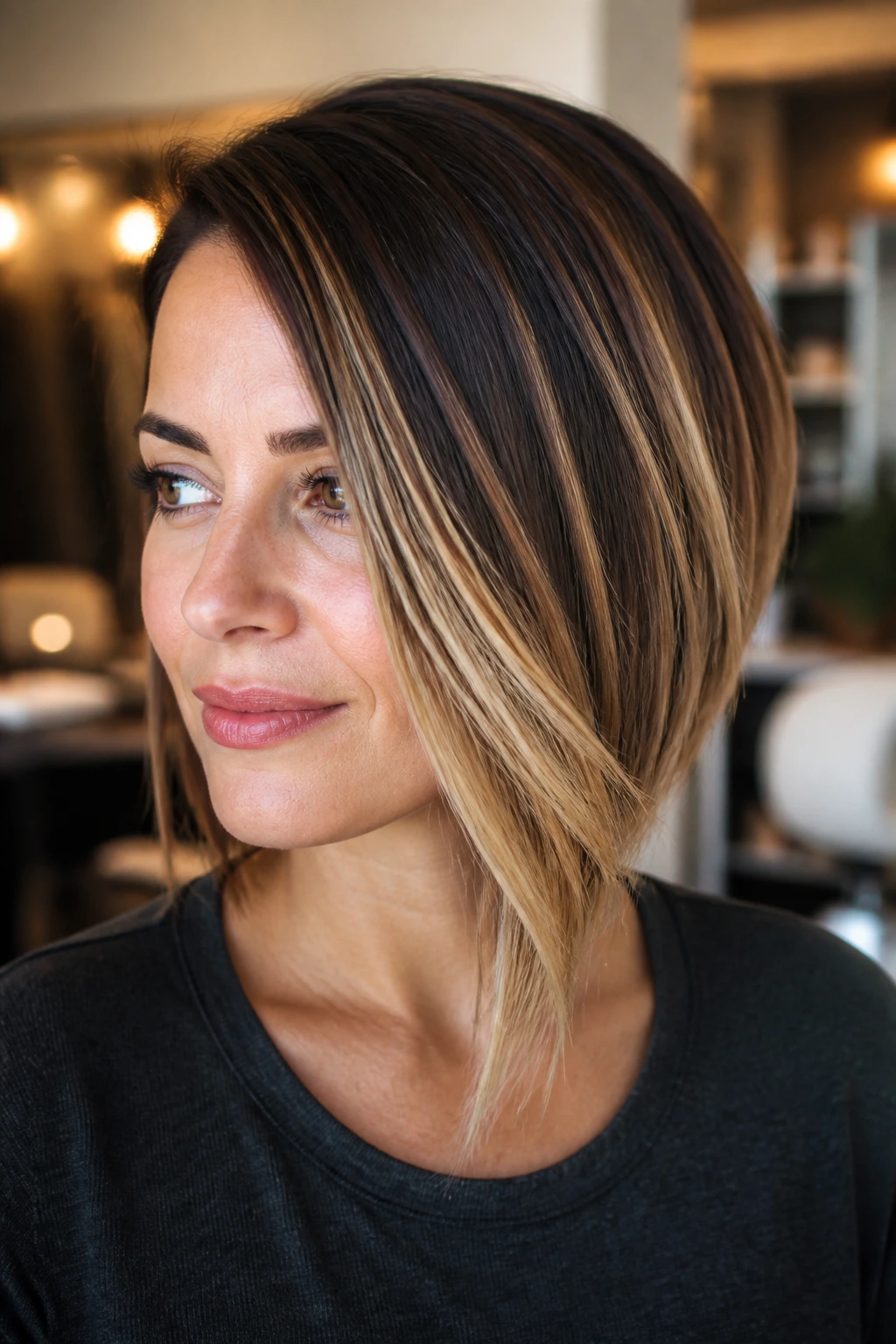
Balayage and asymmetry get along because both depend on movement. Hand-painted lighter pieces can follow the front angle, brighten the longer side, and keep the haircut from looking like one solid block of color.
The placement matters more than the tone. Put brightness where the eye should travel: around the front corners, through the upper layers, and near the ends of the longer side. Keep the nape a bit deeper if you want the understructure to show off the diagonal. If every section is equally light, the shape flattens out.
This is a good option if you want dimension without constant root maintenance. Soft grow-out works well on bobs because the length is short enough that the color doesn’t have to carry the entire haircut by itself. The cut still needs to be precise, though. Balayage won’t save a sloppy line.
A nicely placed balayage can make an asymmetrical bob look like it has more movement than it actually does. That’s the whole point. A little shadow here, a little brightness there, and the angle becomes easier to read from across the room.
21. Round-Face Soft-Edge Asymmetrical Bob
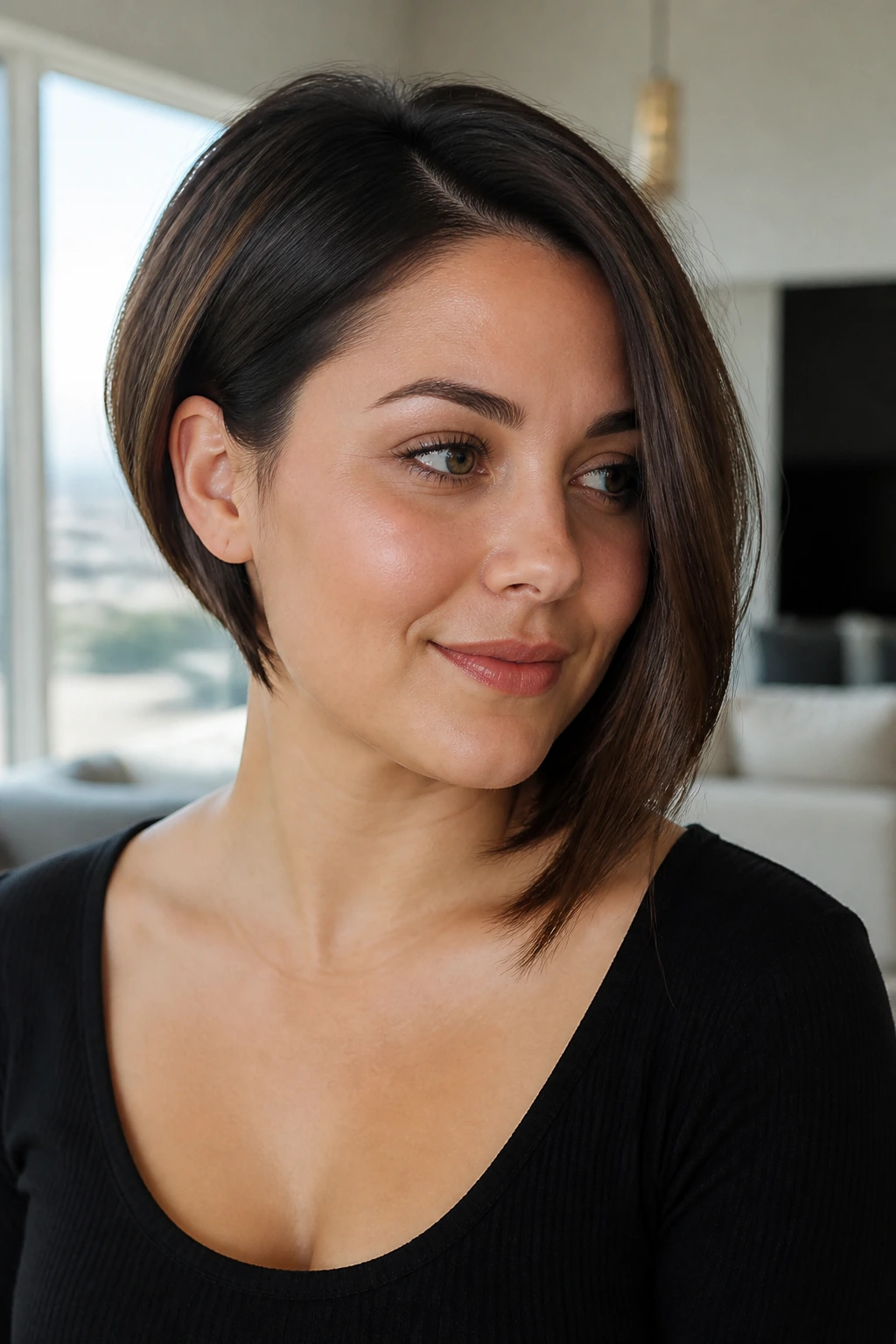
Round faces usually benefit from a bob that adds length through the front instead of width through the sides. A soft-edged asymmetrical version does that job well when the longer corner drops below the chin and the shorter side stays neat without puffing outward.
The part should sit a touch off-center, not dead center. That gives the face a vertical line to follow. The length at the front should move past the widest part of the cheek, which keeps the silhouette from stopping too early. Hard volume at the sides is the thing to avoid. It adds width where you do not want it.
What to ask your stylist
Ask for a longer front corner, a soft perimeter, and minimal bulk at cheek level. If you wear waves, keep them loose and mostly from mid-length down. If you wear it straight, tuck one side behind the ear for a cleaner, more lengthening finish.
This version is a good example of shape doing real work. The haircut doesn’t hide the face. It frames it better. That’s a much better deal.
22. Long Asymmetrical Lob With a Sharp Front Angle
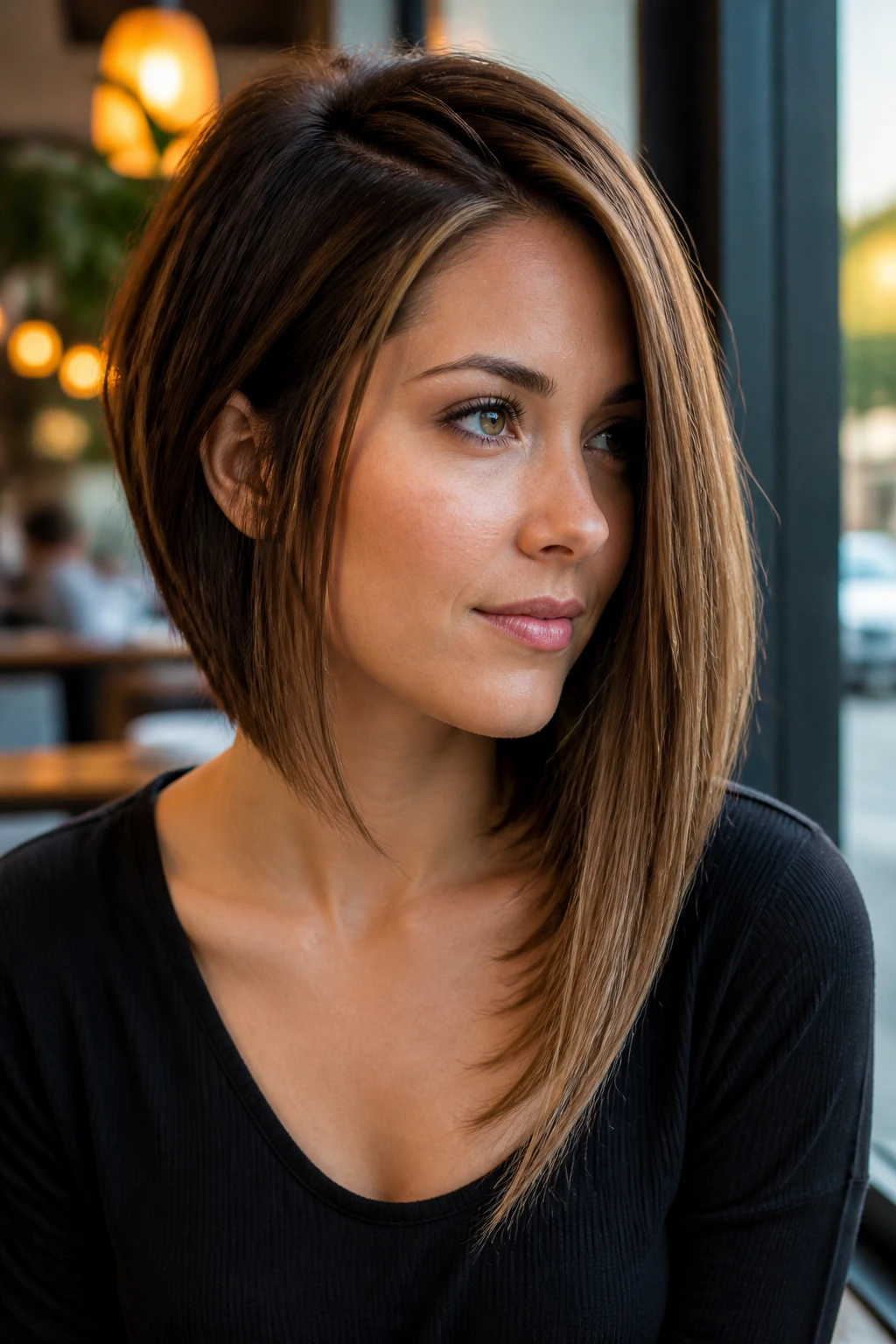
If you want the asymmetrical idea without giving up length, this is the one. The lob sits around the collarbone or just below it, and one front corner drops several inches lower than the other so the cut still feels intentional.
The long version is easier for people who aren’t ready to go chin-length, and it’s a comfortable place for grow-out too. You can wear it smooth, wave it, pin one side back, or let the longer front piece drape over knitwear and jackets in a way shorter bobs can’t. The front angle is still the star. The extra length just makes the cut more versatile.
I’d especially recommend this to anyone with hair that tangles at the nape or flips out at odd angles when it’s too short. The lob gives the hair enough room to settle. The angle keeps it from looking plain.
This is the safest place to start if you want asymmetry but you’re nervous about the commitment. It still makes a statement. It just does it with a longer runway.
What Makes Asymmetrical Bob Haircuts Work on Real Hair
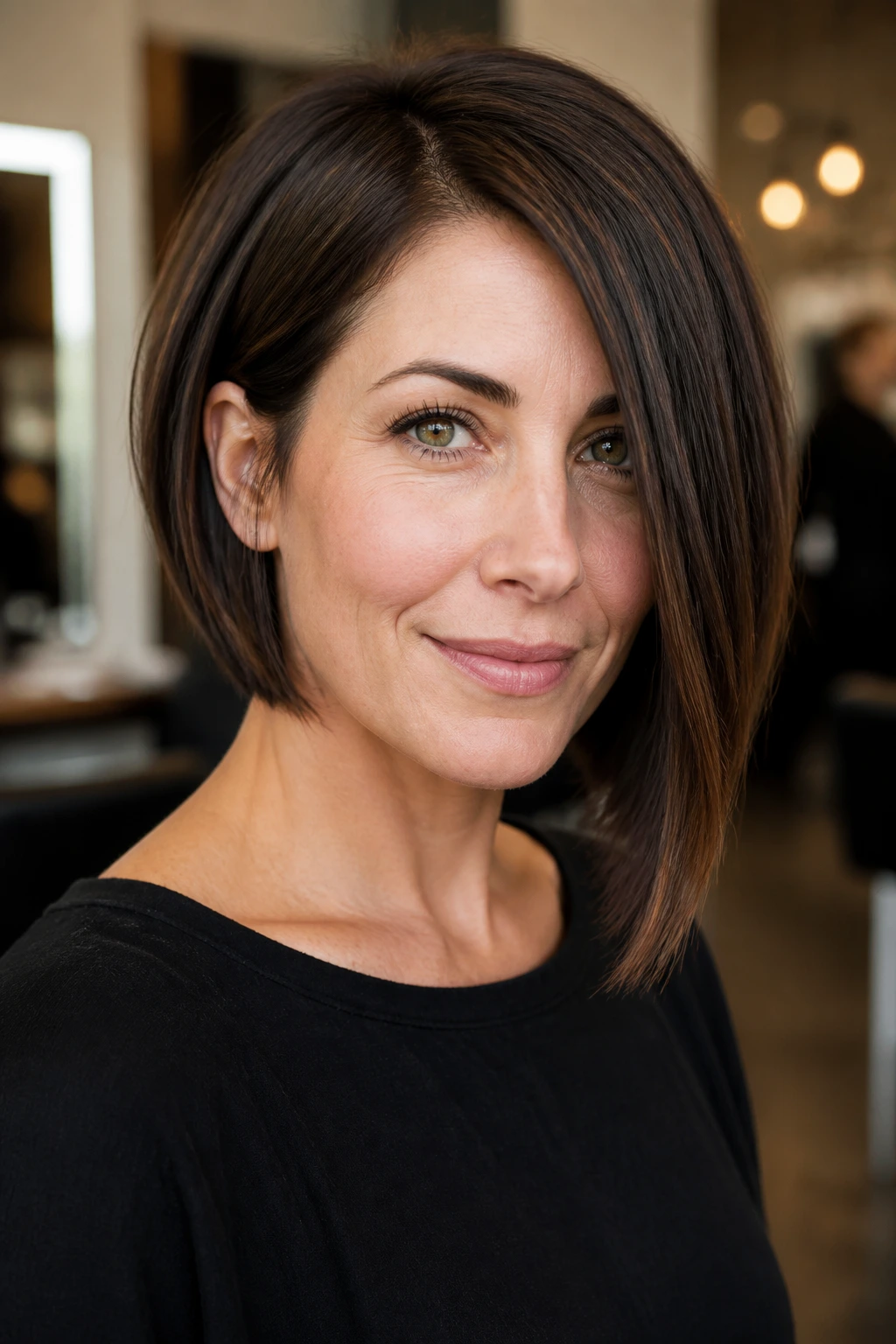
The best asymmetrical bob haircuts are not built on shock value. They’re built on balance. A skilled stylist chooses where the weight sits, how much length difference to create, and whether the cut should feel clean, soft, or a little wild around the edges.
The numbers matter more than people think. A one-inch difference between sides is subtle and polished. Two to three inches gives you a clear angle. Four inches or more starts to read dramatic, and that can be stunning if your hair is straight enough to hold the line. On curly hair, the visible difference shrinks once the curls dry, which is why the dry shape matters more than the wet one.
Texture changes the whole conversation. Straight hair shows the geometry. Wavy hair softens the transition. Curly hair turns the asymmetry into a fuller silhouette that needs room to spring. Fine hair usually looks better with a blunt perimeter and a cleaner angle. Thick hair usually needs interior weight removal so the line doesn’t turn boxy by lunchtime.
Part placement is the quiet hero. A center part can make the haircut feel balanced. A deep side part can make it feel sharper. Even a small shift of half an inch can change how the front pieces fall around the cheek and jaw. That’s why the same haircut can feel mild on one person and striking on another. The shape is only half the story. The part writes the rest.
Tools and Products That Keep the Angle Clean
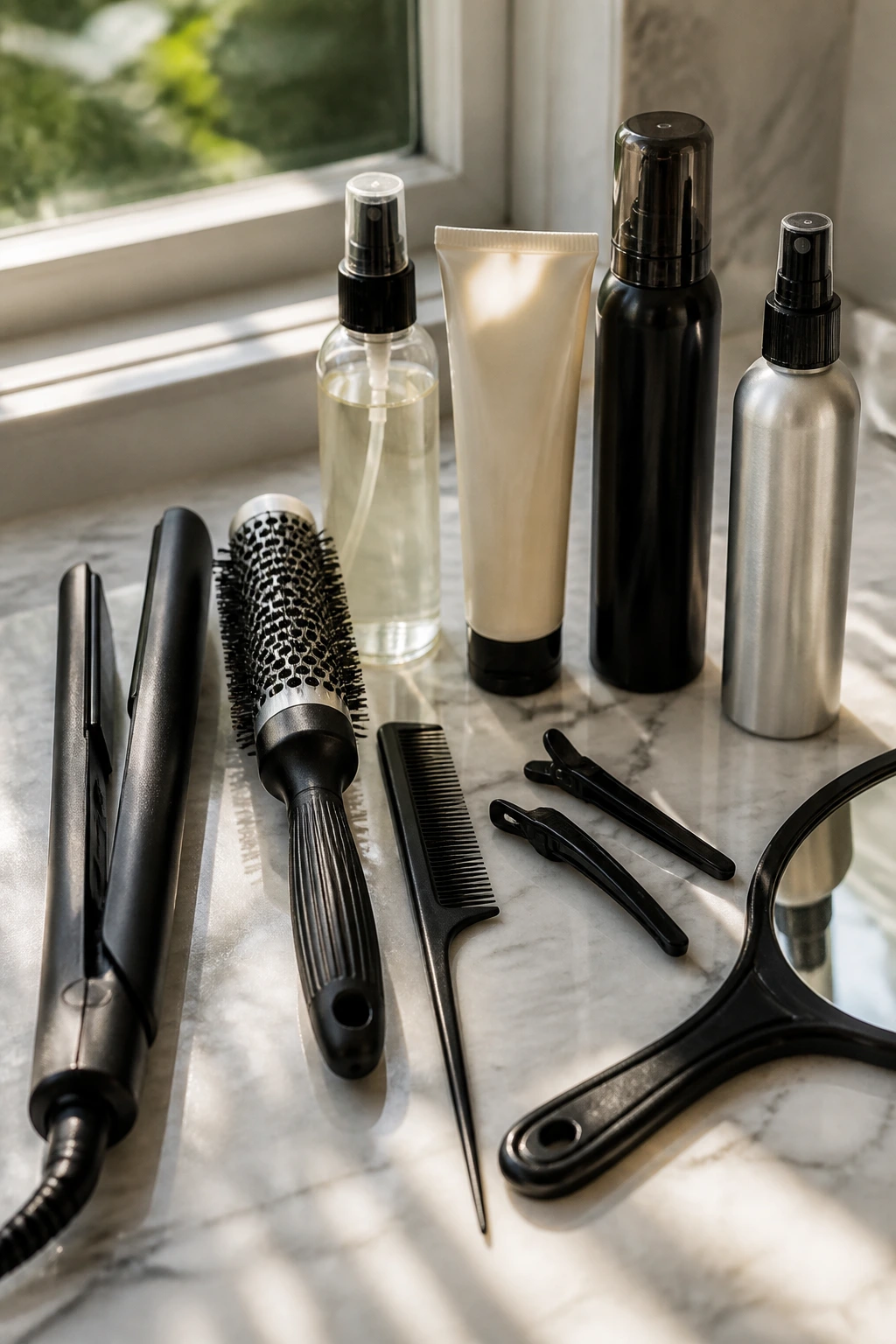
A good asymmetrical cut can survive a lot, but it still behaves better with the right tools. If you’re maintaining one at home, a few things earn their place on the counter.
- A narrow flat iron: Best for sharpening the front angle and curving the ends under by a half-inch.
- A round brush, 1.5 to 2 inches wide: Useful for blow-drying lift into the crown and smoothing the longer side.
- A tail comb: Helpful for setting a clean off-center or deep side part without dragging the hair around.
- Heat protectant spray: Non-negotiable if you use hot tools more than once a week.
- Light styling cream or smoothing serum: Good for glassy finishes and taming flyaways without collapsing the shape.
- Mousse or root-lift spray: Worth it for fine hair or stacked backs that need a little height.
- Texturizing spray: Best for shaggy or wavy versions when you want separation at the ends.
- Small clips or duckbill clips: Handy for setting the longer side while you dry the shorter side first.
- A hand mirror: Not glamorous, but useful if the back is stacked or undercut.
If you’re sitting in the salon chair, “graduation,” “weight line,” “internal debulking,” and “front angle” are the words that usually matter most. They tell the stylist how serious you want the asymmetry to be.
How to Keep the Shape Sharp Between Salon Visits
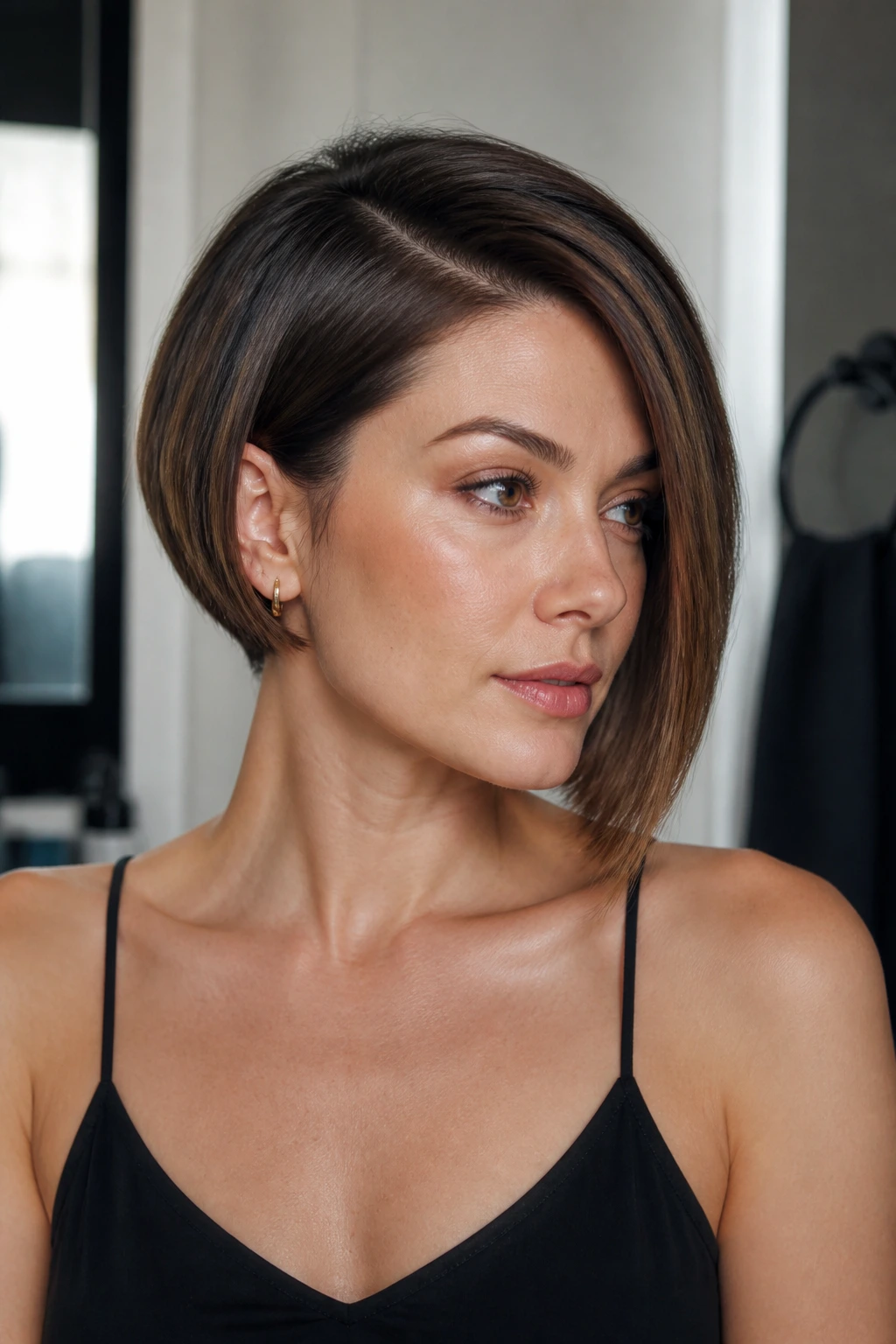
Asymmetry grows out in a slightly annoying way. The longer side gets longer, sure, but the shorter side often loses its crisp line first because it starts to blend into the rest of the bob. That’s why maintenance matters more here than it does on a simple one-length cut.
Most asymmetrical bobs need a trim every 6 to 8 weeks if you want the angle to stay clear. If you’ve got an undercut or a very short nape, that section may need attention a little sooner. The cut can still look good as it grows, but “good” and “exactly the shape I asked for” are not the same thing.
Daily upkeep is mostly about roots and ends. Dry shampoo at the crown can keep a stacked or angled bob from falling flat. A quick pass with a flat iron on the longer front corner takes less than five minutes and gives the cut back its edge. If your hair flips up at the ends, set them with a brush and cool shot while they’re still warm.
Night care helps too. A silk or satin pillowcase reduces friction, which matters more than people admit. Hair that’s already short and angular can get smashed or bent weirdly if you sleep on it rough. A loose tuck behind the ear and a quick morning refresh with a mist bottle can save the whole thing from looking tired.
Common Mistakes That Flatten the Shape
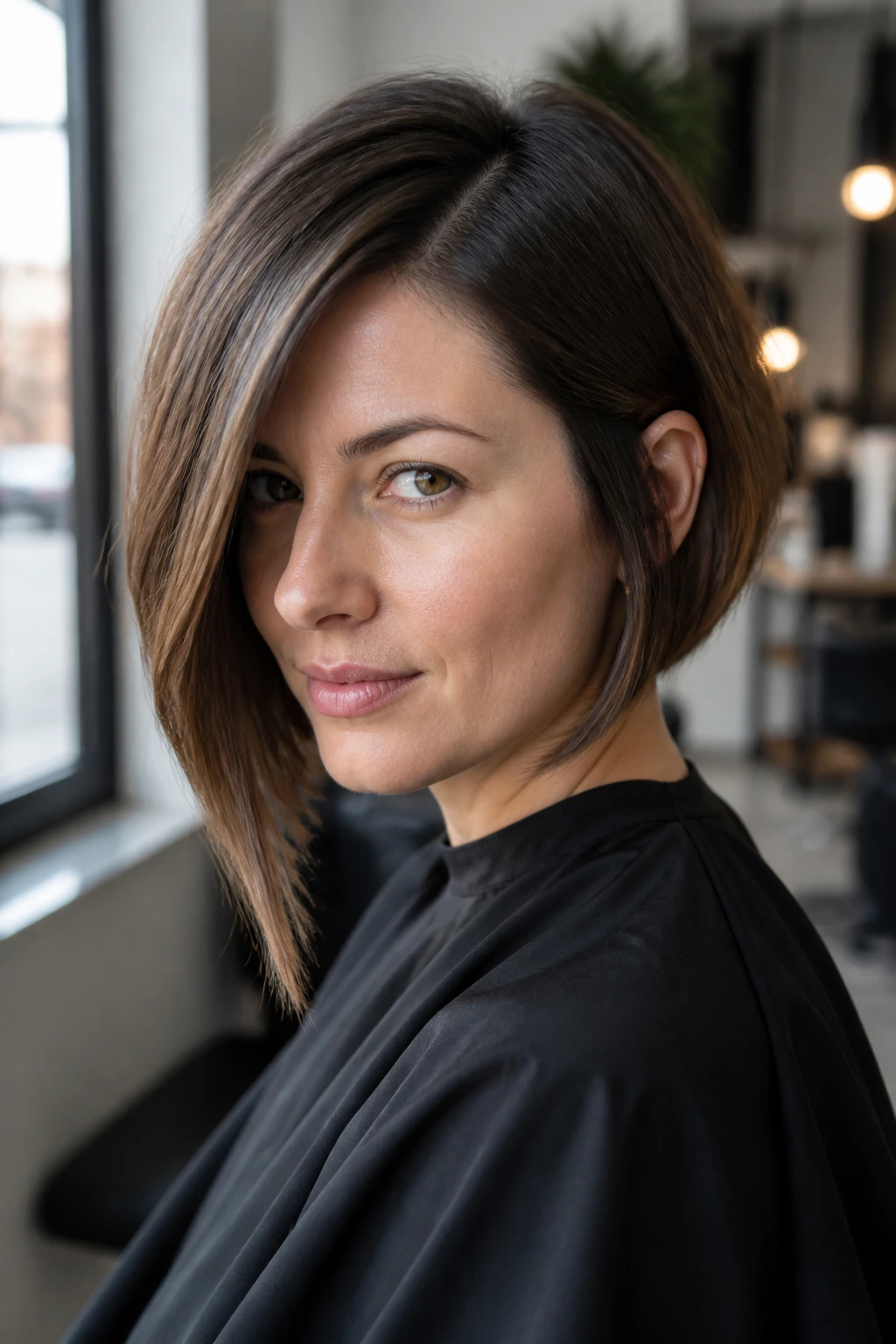
The biggest mistake is asking for asymmetry without deciding how much you actually want. If the difference is too small, the cut looks accidental. If it’s too big for your texture, it can look lopsided instead of intentional. The fix is simple: ask your stylist to show you the length difference from the front and side before they finish.
Another common problem is over-thinning the ends. Fine hair gets wispy. Thick hair gets fuzzy. Either way, the perimeter loses its line. A bob depends on the edge behaving, so the haircut should lose bulk inside the shape, not at the boundary.
People also forget about parting. A beautiful asymmetrical cut can look flat if you always wear the same part in the same place. Shift it a little. Even half an inch can change how the front falls and keep the style from getting stuck in one pattern.
The last big one: ignoring your hair’s natural bend. If your hair flips hard at the jaw, don’t ask for a line that sits right at the exact point where it kicks out. Move the length slightly above or below that spot. Small adjustment. Big difference.
Ways to Adapt the Cut for Texture and Mood

Soft and Office-Friendly: Keep the angle subtle, the ends blunt, and the part off-center rather than deep. This version looks tidy, dries fast, and won’t fight you on a weekday morning.
Sharp and Fashion-Forward: Push the length difference wider, keep the front corners clean, and wear the hair sleek. This is the one that looks strongest with straight styling and a strong jawline.
Curly and Airy: Ask for dry shaping, a little more room through the front, and very little thinning at the ends. Curly asymmetry needs movement, not precision for precision’s sake.
Thick-Hair Control Cut: Add interior weight removal and maybe a hidden undercut at the nape. The goal is to keep the silhouette from expanding instead of the hair itself.
Low-Maintenance Grow-Out: Choose a lob length and a smaller angle between sides. It still looks intentional once it gets a little longer, which is a blessing if you dislike constant trims.
Frequently Asked Questions
Will an asymmetrical bob work on curly hair?
Yes, but the cut should be shaped with shrinkage in mind. The visible difference between sides will be smaller once the curls dry, so the stylist needs to leave enough length on the longer side to account for that bounce.
How do I ask for the right asymmetry at the salon?
Bring a photo and be specific about how dramatic you want the difference to look. Saying “subtle,” “moderate,” or “strong angle” helps more than saying you want it uneven. If you know whether you prefer chin-length or collarbone length, say that too.
What face shape suits this cut best?
Nearly all of them can wear it with the right adjustment. Rounder faces usually look good with a longer front corner, while long faces often do better with a softer fringe or a little more width through the sides.
Is this cut hard to style every day?
Not if the line is cut well. A straight version may need a quick blow-dry or flat iron pass, but wavy and textured versions can be very low-fuss. The shorter the cut, the more it depends on shape at the root.
How often will I need trims?
Plan on every 6 to 8 weeks if you want the asymmetry to stay crisp. If the cut includes an undercut or very short nape, that area may need a touch-up sooner.
Can I wear bangs with it?
Yes, and curtain bangs are the easiest match. A blunt fringe can work too, but it changes the feel of the cut and makes the whole style read more graphic.
Will this make fine hair look thinner?
Not if it’s cut correctly. Fine hair usually does best with a blunt edge and a moderate angle, not lots of internal layering. The perimeter should look full, or the haircut loses its shape.
How do I grow it out without getting stuck in an awkward stage?
Move from a sharper bob to a longer lob, then soften the angle as it grows. You can also shift the part, add waves, or tuck one side behind the ear while the length catches up.
The Cut That Keeps Its Edge
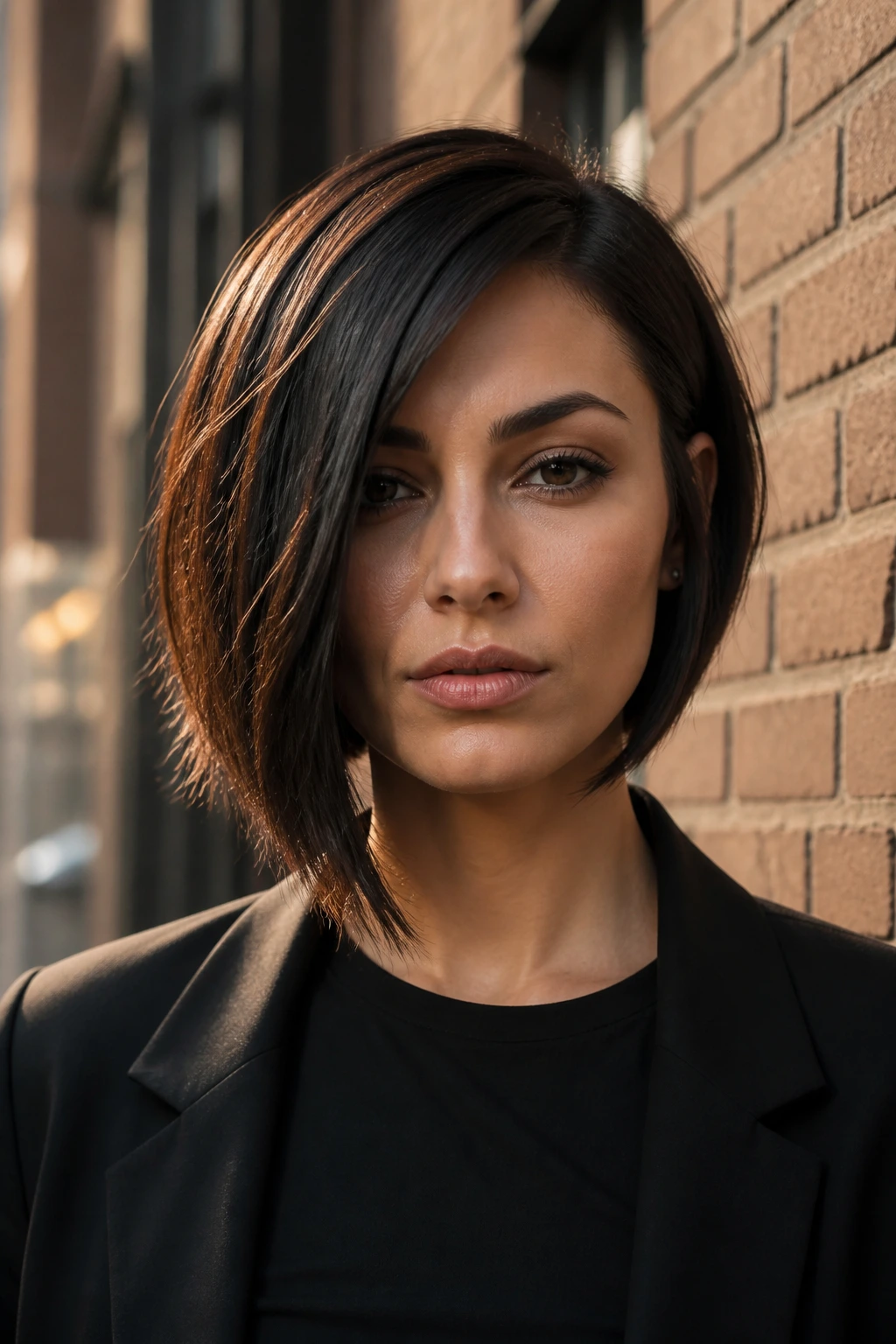
The best thing about asymmetrical bob haircuts is that they don’t ask you to choose between neat and interesting. They can be polished, messy, sharp, soft, short, long, curly, or sleek, and the diagonal shape still does its job.
What matters is matching the angle to the hair that’s actually on your head, not the version you wish you had. Get the weight line right, keep the ends honest, and the cut will carry more style than a dozen extra layers ever could.
A good asymmetrical bob has a little attitude built in. That’s the point.
