



A bob can sharpen a round face in a single snip — or make it look wider if the line lands in the wrong place. That’s the whole game with bob haircuts for round faces: not whether you can wear one, but which bob, where it hits, and how the weight falls around the cheeks and jaw.
The old “round faces can’t do short hair” rule has always felt lazy to me. A good bob is not about hiding your face. It’s about directing the eye. A side part breaks symmetry. A little lift at the crown adds length. Ends that land below the fullest part of the cheeks keep the cut from boxing in the face. And yes, a blunt bob can work — but only when the shape is handled with some discipline.
These 19 cuts cover the range from sleek and polished to airy and undone. Some are friendly to fine hair, some were made for thick hair, and a few are the kind of thing you can air-dry and walk out the door. The point is simple: a round face does not need to avoid bobs. It needs the right bob.
Why These 19 Bobs Work on Round Faces
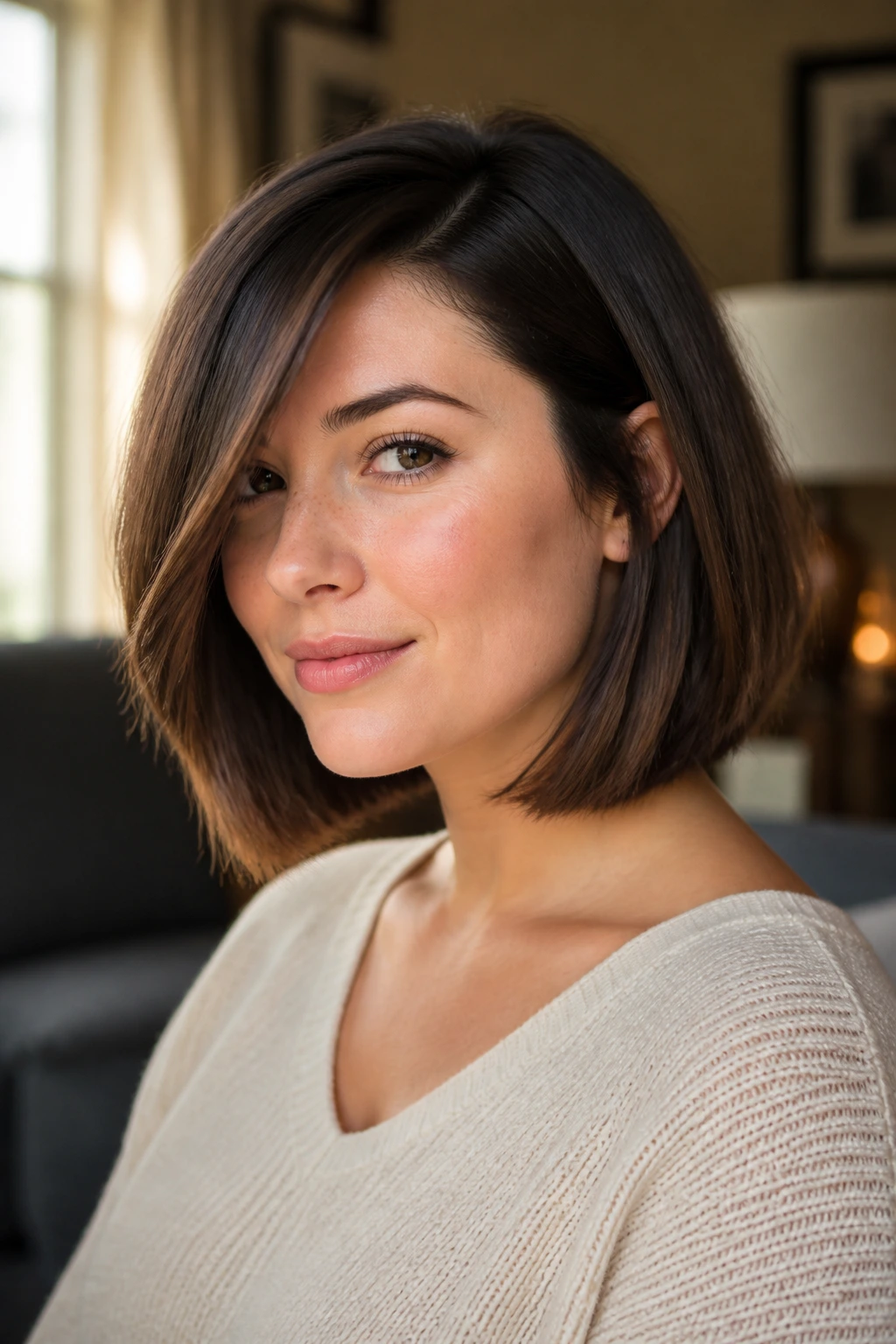
-
They move the eye downward: Length that lands at the jaw, collarbone, or just below the chin keeps the widest part of the face from being the haircut’s stopping point.
-
They use diagonals instead of blocks: Angled lines, side parts, and asymmetry create shape without piling bulk right at cheek level.
-
They put volume where it helps: A little lift at the crown makes the face read longer. Volume at the sides, especially at the cheeks, does the opposite.
-
They leave room for texture: Soft bends, invisible layers, and piecey ends keep the hair from turning into one round mass.
-
They give you options for bangs: Curtain bangs, side-swept fringe, and airy fringe can narrow the face line when they’re cut with restraint.
-
They work with your routine: A round face bob should fit the way you actually style hair — because the prettiest cut in the world is useless if it needs a 45-minute blowout every morning.
1. Collarbone-Grazing Angled Lob
This is the safest place to start if you want bob energy without cutting straight across the broadest part of your face. The front pieces graze the collarbone, while the back sits a touch shorter, which creates a clean diagonal and keeps the shape moving.
Why It Flatters a Round Face
The angle matters more than people realize. A lob that falls a few inches below the chin gives the face a vertical line, and that line is what softens the width. Ask for subtle internal layering so the ends don’t puff out at the sides. If your hair is wavy, this cut usually dries into a smooth bend instead of a triangle.
Styling Notes
- Blow-dry with a medium round brush and turn only the last 1 to 2 inches under.
- Part it slightly off center.
- Finish with a light texture spray from mid-lengths down, not at the roots.
Best for: fine to medium hair, and anyone who wants a bob that looks polished but not stiff.
2. Chin-Length Side-Parted Blunt Bob
A blunt bob at chin length can work on a round face if you give it one hard rule: do not let it sit exactly on the fullest part of the cheeks. Move it slightly below the chin and break the symmetry with a deep side part. That one change does a lot.
The clean edge gives the haircut structure, which is useful if your hair tends to go fluffy or vague when it’s too layered. A blunt perimeter is especially good on straight hair, because the line reads crisp instead of fuzzy. But the side part is the real trick. It shifts the visual weight away from the center of the face and stops the cut from feeling too circular.
Keep the ends sleek, not puffy. If your stylist texturizes the bottom too much, the shape can lose its punch. I’d rather see a precise line with a little bend than a badly thinned bob that flips out in random places by noon.
3. French Bob With Soft Fringe

The French bob has a reputation for being cheeky and short, but on a round face it needs a little discipline. The version that works here usually sits just below the cheekbones or brushes the jaw, with a soft fringe that never feels heavy or blunt.
What Makes It Work
The fringe should look airy, not helmet-like. Think wispy texture, a little separation, and a length that softens the forehead without chopping the face in half. If the bangs end too high, the face reads shorter. If they’re see-through and lightly piecey, they add interest without boxing you in.
This cut is especially nice on hair that has a natural bend. A French bob can look expensive in the best way when the ends are slightly imperfect — not sloppy, just lived-in. Ask for a tiny bit of movement at the ends so the haircut does not sit like a lid. That’s the mistake people make.
Best For
- Soft straight hair
- Fine hair that needs visual fullness
- People who like short hair but don’t want a severe line
4. Stacked Inverted Bob
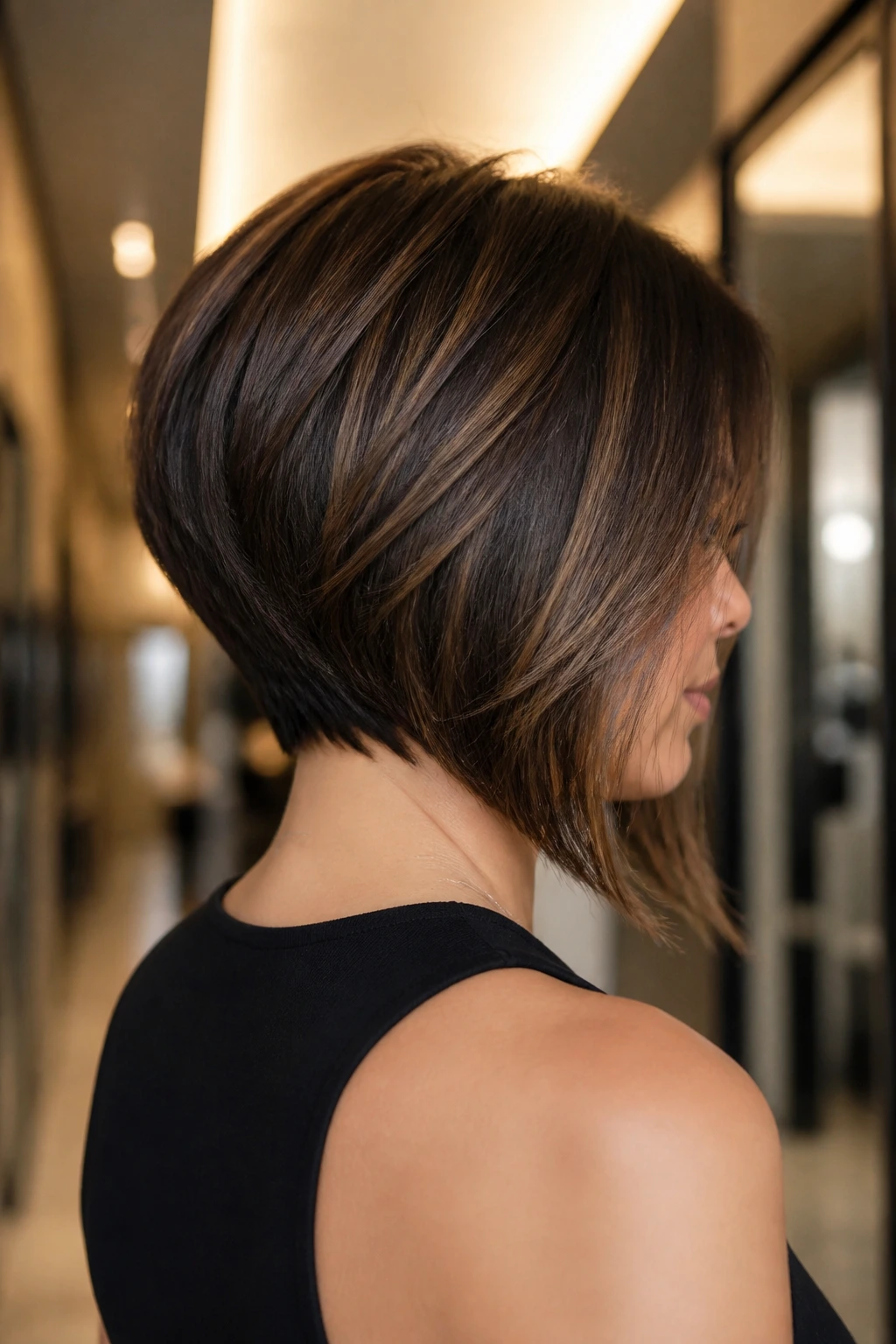
If your hair is thick and tends to flare out at the bottom, a stacked inverted bob can be a relief. The back is cut shorter and layered for lift, while the front stays longer and swings forward in a gentle slope. That forward movement is what helps a round face.
This is one of those cuts that looks sharp from the side and neat from the back. The stacked nape gives you a clean neckline, and the longer front pieces keep the silhouette from becoming too boxy. The result is tidy without feeling rigid.
The key is restraint. Too much stacking can create a helmet shape, especially if the stylist removes weight too high above the ears. You want lift at the crown, not puff at the sides. When it’s done well, this bob gives thick hair a shape that feels intentional instead of bulky.
5. Curtain-Bang Lob

This one works because it splits the difference between softness and structure. The collarbone-length lob gives the face room to lengthen, and the curtain bangs open in the middle so they frame the cheeks rather than closing in on them.
The shortest point of the bangs should usually hit somewhere around the bridge of the nose or just below the brows, then melt longer toward the cheekbones. That’s the part people often get wrong. If the bangs are too short and too full, they can make the face look rounder. If they’re longer and feathered, they create a soft V shape that narrows the center of the face.
I like this cut on hair that can take a round-brush blowout or a bend from a small flat iron. It has movement without looking fussy. And if you tuck one side behind your ear, the whole cut gets even better.
6. Wavy Bob With Invisible Layers

Invisible layers are the unsung hero of round-face bobs. The surface still looks smooth, but the inside has enough removal to stop the haircut from puffing out like a triangle. On wavy hair, that matters a lot.
The trick is to keep the perimeter below the cheekbones while letting the waves stack softly over each other. You’re not chasing a perfectly symmetrical shape here. You’re chasing a bob that bends around the face and then drops cleanly at the ends. A little salt spray, a diffuser, or even just scrunching in a light cream can make the texture look deliberate instead of frizzy.
This is a good cut if you want the hair to do some of the work for you. It looks best when it’s not over-brushed. Too much brushing turns the waves into fluff, and fluff at cheek level is not the goal.
7. Asymmetrical Bob

An asymmetrical bob is the haircut equivalent of stepping one foot slightly forward. That small imbalance changes the whole read of the face. One side sits a little longer, usually by an inch or two, which creates a diagonal line instead of a round frame.
Why I Like It on Round Faces
The cut doesn’t have to scream “fashion” to work. Even a gentle asymmetry is enough. A slightly longer front piece can pull the eye down the cheek line, while the shorter side keeps the neck exposed and the style from feeling heavy. On straight hair, the shape looks crisp. On wavy hair, it looks a little more relaxed and less severe.
Keep the part off center. A dead-center part can neutralize the effect, and then you’re missing the point. If you want the haircut to feel modern but not dramatic, ask for a subtle version rather than a hard one-side-longer situation.
8. Box Bob With a Deep Side Part
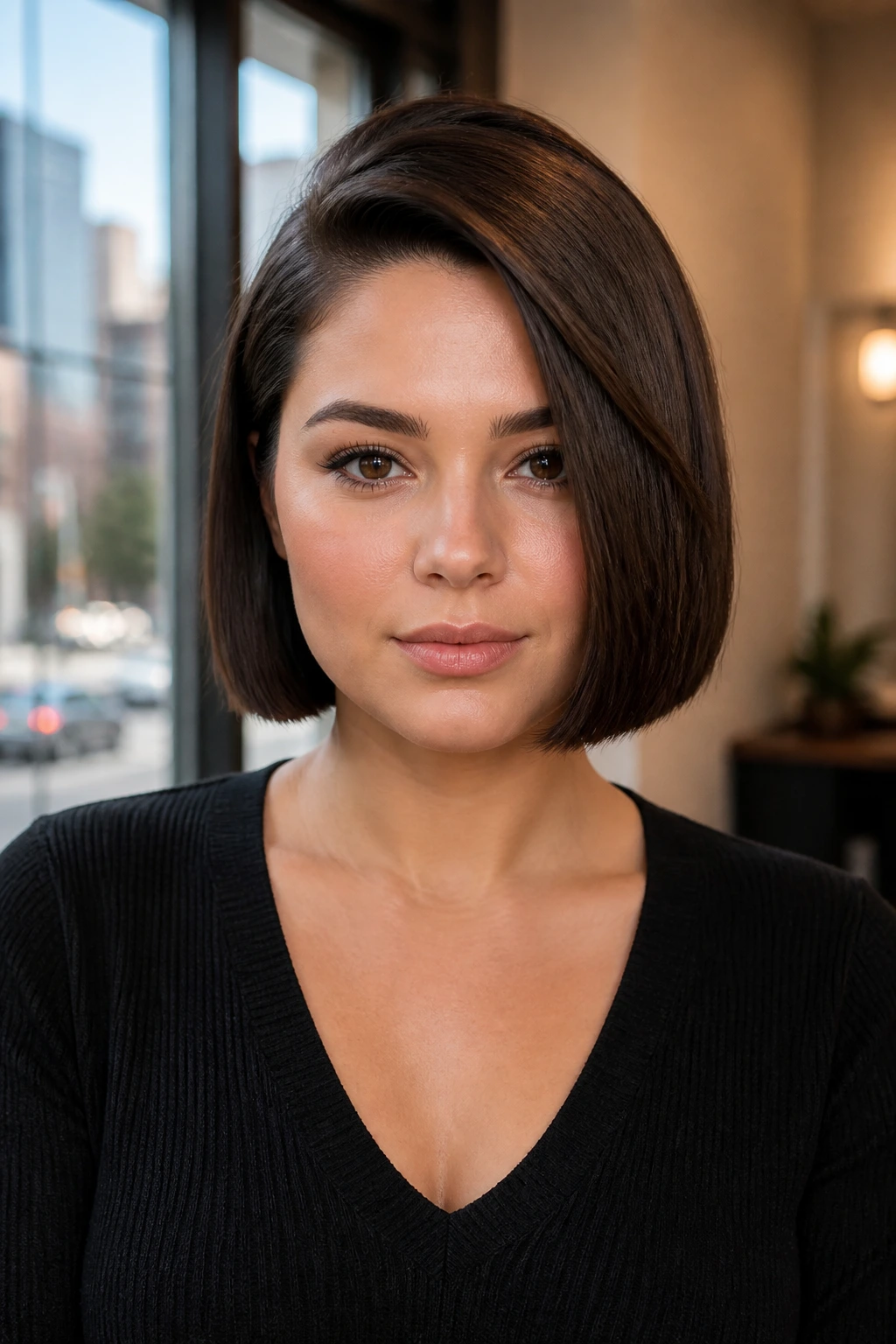
A box bob sounds severe on paper, and if you cut it wrong, it is. Done well, though, it can look strong and clean on a round face, especially when you break the symmetry with a deep side part. That part is what keeps the shape from reading too circular.
This cut is all about crisp edges. The ends sit full and blunt, usually around the jaw or just below it, and the overall silhouette has a solid bottom line. That fullness can be flattering when the face needs a little structure. The deep side part stops the cut from acting like a cap.
I’d use this on straight hair or hair that can be smoothed with a brush and a little heat. If your texture is very fluffy, the box shape can turn into too much width too fast. The fix is not more layering. It’s better control at the ends and a part that refuses to behave in the middle.
9. Curly Bob That Keeps Height at the Crown
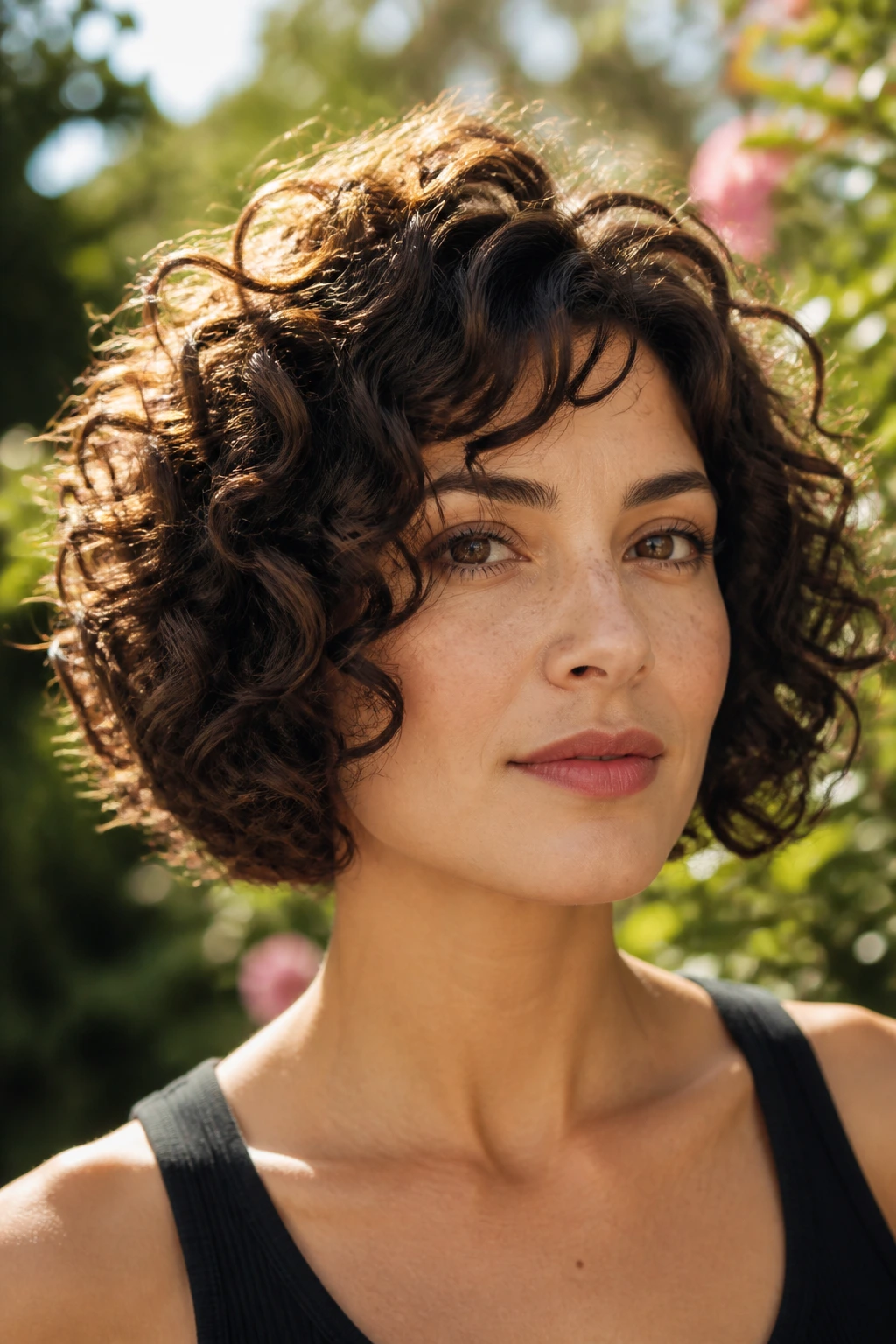
Curly hair and round faces can be a lovely match, but the cut has to respect the curl pattern. If you take too much off the sides, the haircut gets wide in the cheeks. If you leave enough length at the front and keep some height at the crown, the face opens up.
This bob should be cut in a way that works with shrinkage, not against it. In most cases, that means a dry cut or a curl-by-curl approach so the stylist can actually see where the shape lands. Ask for the perimeter to sit lower than you think it needs to, because curls bounce up more than straight hair. That’s not a warning; it’s a fact.
The styling move here is simple. Diffuse upside down for lift at the roots, then stop before the sides puff outward. A little gel or cream at the ends keeps the curl clumps defined. A round face loves this shape when the crown has height and the cheek line stays soft.
10. Italian Bob With Clean, Full Ends

The Italian bob has a nice old-school polish to it. It’s fuller at the ends, usually a little longer than the classic chin bob, and it tends to feel airy rather than rigid. On a round face, the version that works best lands at or just below the jaw, with enough length in front to create a downward line.
What I like here is the balance. The cut has body, but it does not need a lot of layering. In fact, too much layering can ruin the shape and make it look thin at the ends. Ask for clean, thick-looking lines and a bit of movement through the interior only if your hair is dense enough to handle it.
This is a nice cut if you want something elegant without looking fussy. It plays well with a center part or a soft side part, though I’d lean slightly off center for a round face. That tiny shift can keep the haircut from feeling too symmetrical.
11. Choppy Shag Bob

A choppy shag bob is for the person who wants the bob shape but hates the idea of hair sitting in one perfect helmet line. It’s lighter, messier, and more forgiving, especially if your hair has some wave or body already.
The layers are the whole story. They break up the density around the cheeks and add movement that stops the face from reading too wide. The ends should feel piecey, not shredded. There’s a difference, and it matters. Shredded ends look thin; piecey ends look intentional.
This cut often benefits from a soft fringe or a few face-framing pieces that start below the cheekbone. Keep the layers under control, though. A shag that’s too short around the cheeks will widen the face instead of slimming it. The sweet spot is airy at the ends and lifted at the crown, not fluffy all over.
12. Sleek Jaw-Skimming Bob
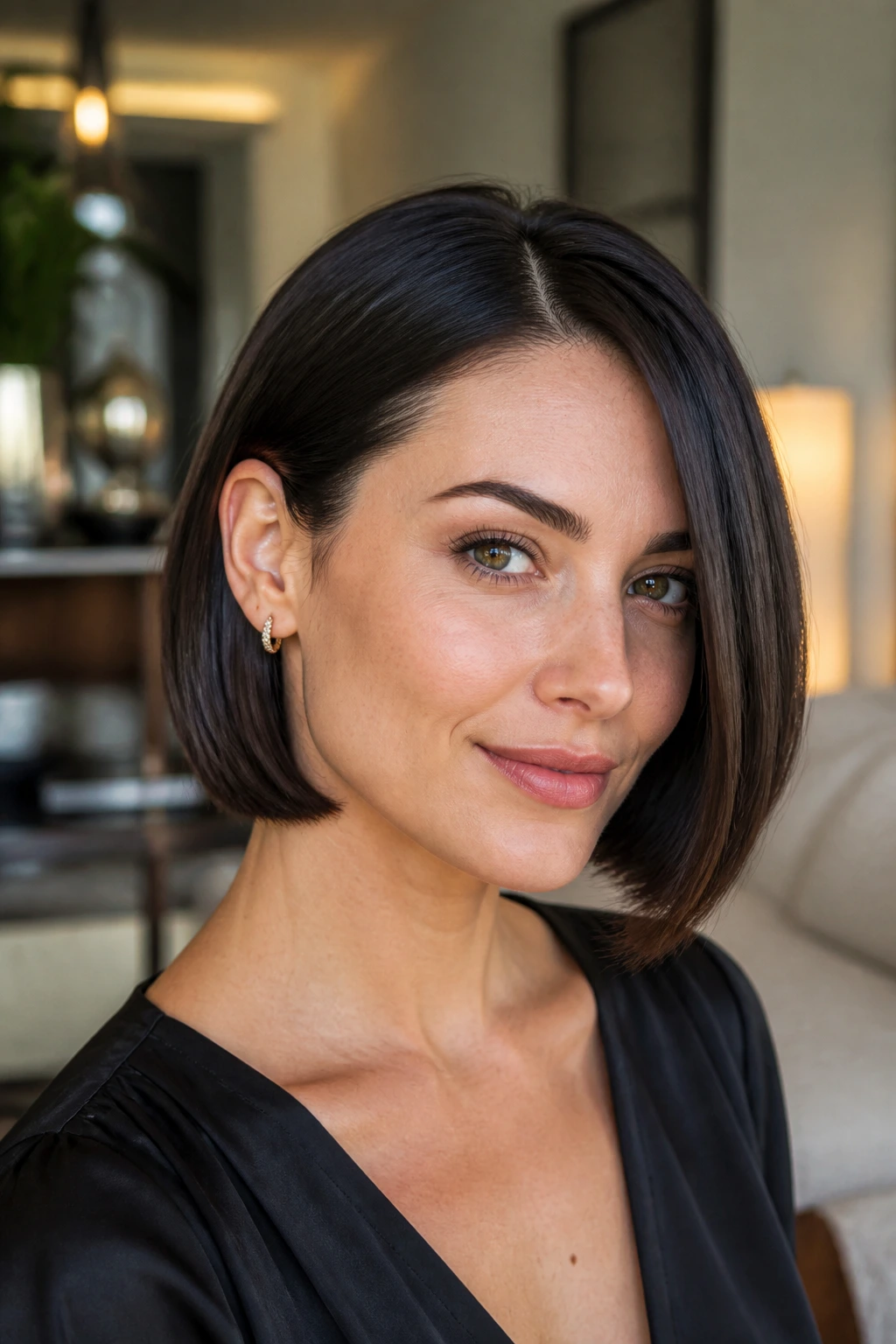
A sleek bob can absolutely work on a round face, but the line has to skim the jaw, not stop right on the widest point. That distinction is everything. The cut should feel polished, with enough length to slide past the chin by a hair.
This is the bob for someone who likes a precise finish. Flat iron it in one or two smooth passes, then tuck one side behind the ear so the line isn’t perfectly symmetrical. A touch of shine serum on the mids and ends keeps it from looking dry or stiff. You want glassy, not greasy.
The danger here is a blunt, perfectly centered version that sits too high. That can make the face look broad. Shift the part. Let the front pieces drop a little longer. Those tiny choices keep the sleek bob from becoming boxy.
13. Feathery Bob With Tapered Ends
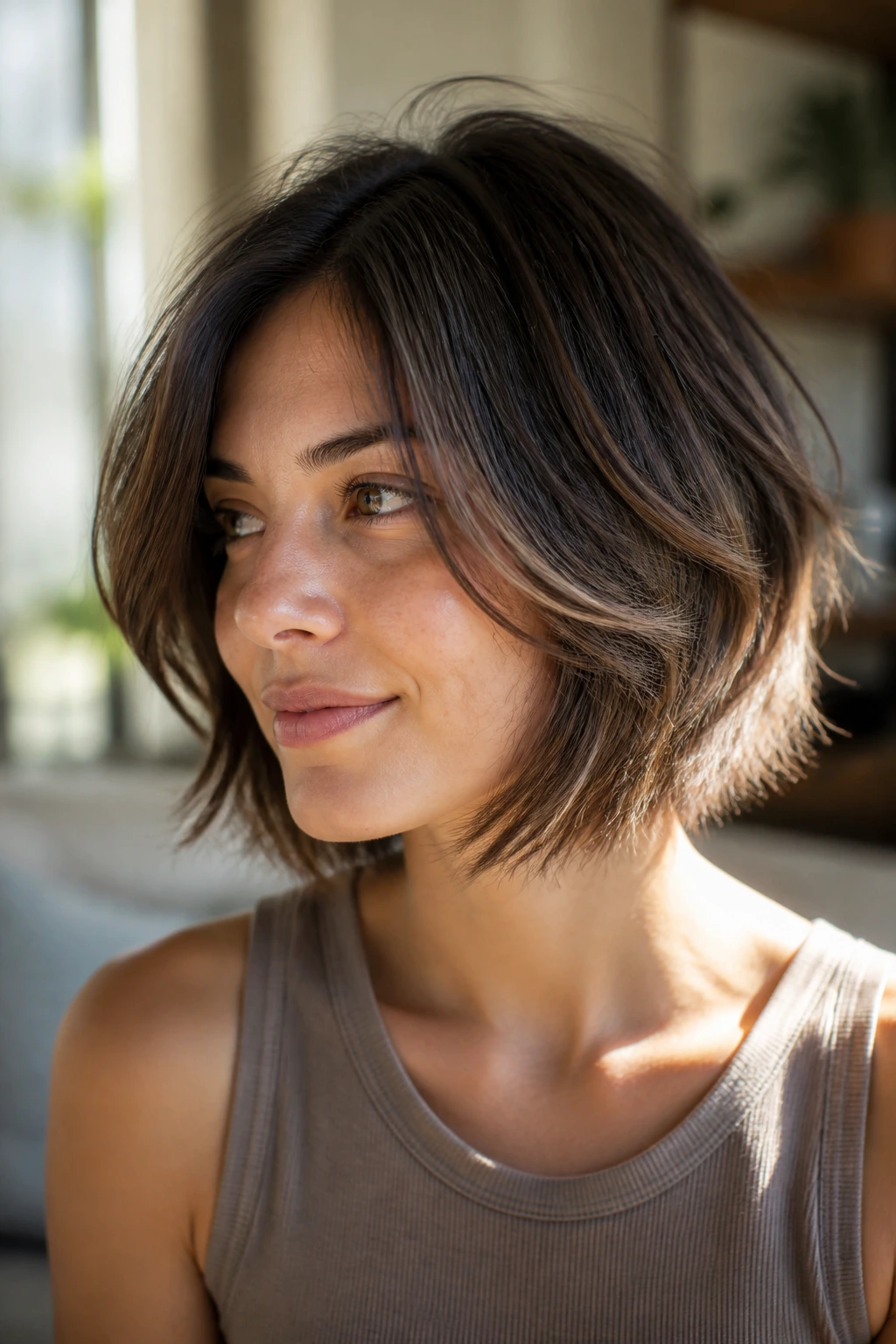
Feathered ends are underrated, especially on fine hair that needs movement but not a lot of bulk. This bob uses light tapering at the bottom so the perimeter feels soft rather than heavy. On a round face, that softness keeps the haircut from pressing in at the cheeks.
The best version usually lands between the chin and the collarbone. It is not the shortest cut in the room, and that’s part of its charm. The tapered ends make the overall silhouette feel a little lighter, while face-framing pieces keep the front from ballooning outward.
Where It Shines
- Fine or medium hair that flattens easily
- Hair that needs bounce without heavy layering
- People who want a cut that dries fast and still moves
A lightweight mousse at the roots helps the crown keep a little lift. A round brush can smooth the ends, but don’t overdo the curl under — too much inward bend can make the lower face feel crowded.
14. Shoulder-Skimming Long Bob
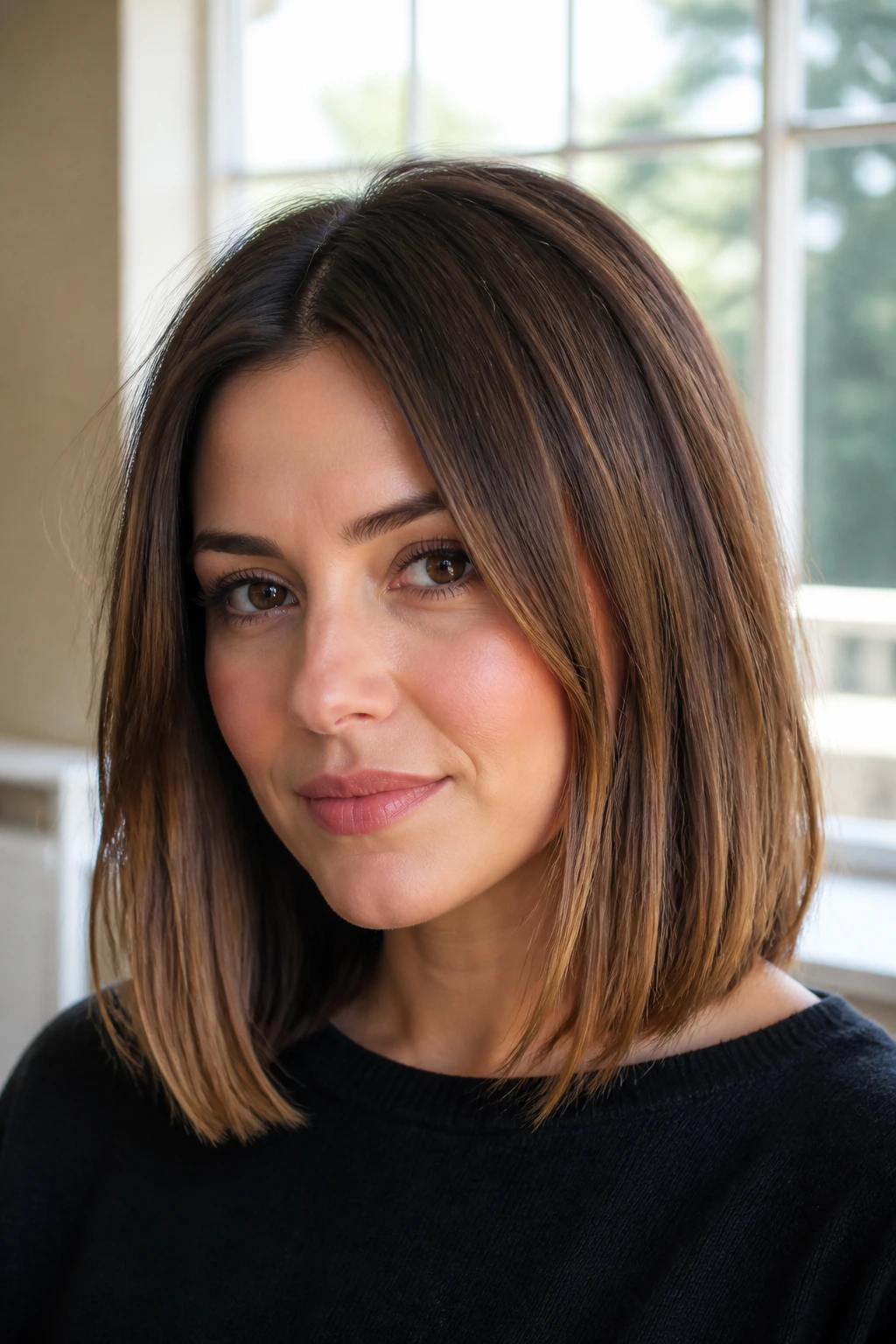
If you want something easy to wear and even easier to grow out, the shoulder-skimming lob is a smart choice. It leaves enough length to tuck behind the ears, clip up, or pull into a small ponytail, which is useful if you don’t love doing your hair every day.
On a round face, the length is the point. It gives the eye somewhere to go below the jawline, and that creates the long line people usually want from a bob. You can wear it blunt for structure or lightly layered for movement. I lean toward a clean perimeter with a tiny bit of face framing, just enough to stop the ends from feeling heavy.
This cut also behaves well in real life. It grows out gracefully. A lot of shorter bobs get awkward fast; this one doesn’t. If you’re nervous about going too short, this is the safe bridge between long hair and a proper bob.
15. Side-Swept Bob With a Tucked Side

One of the simplest ways to flatter a round face is to let one side fall forward and tuck the other behind the ear. That little asymmetry changes the silhouette in a way a lot of people overlook. A side-swept bob uses that idea on purpose.
The cut itself can be blunt, layered, or softly angled. What matters is how the hair is worn. A side part and a tucked side expose more of the cheek and jaw on one side, which keeps the style from feeling too even. The visible diagonal is what makes the face look longer.
This is also one of the easiest styles to fake at home. Even if your haircut isn’t deeply asymmetrical, a bobby pin or a tuck behind the ear can create the same visual effect. It’s a small trick, but it changes the whole mood of the haircut.
16. Graduated Nape Bob
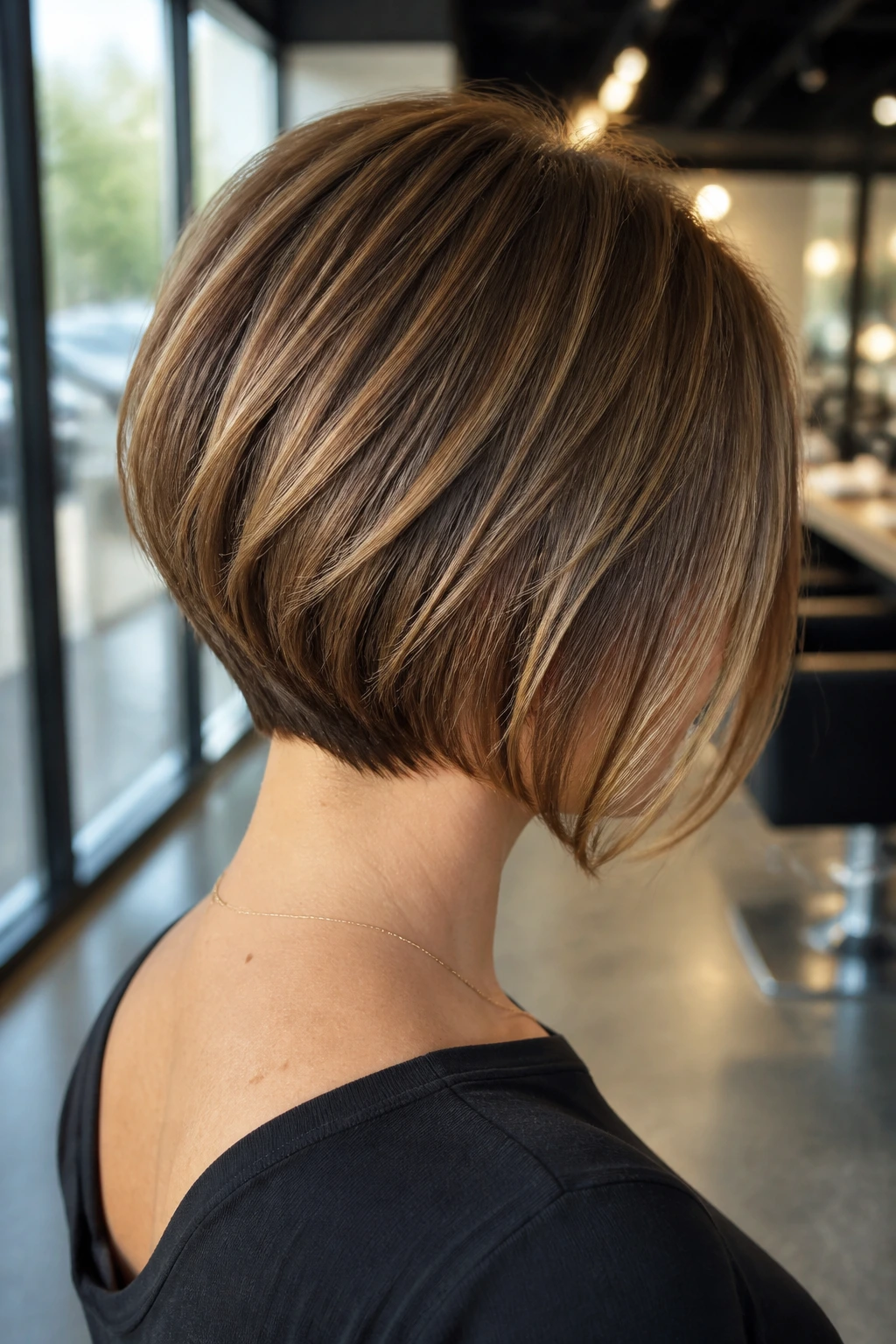
A graduated nape bob brings its structure to the back of the head, where it shortens toward the neckline and leaves the front a little longer. That rear lift can be flattering on a round face because it gives the head shape without widening the sides.
This cut works especially well if your hair is dense and tends to sit heavy at the neck. The graduation removes that weight and creates a cleaner outline. The front should stay long enough to slide past the cheek line, though. If the front gets too short, you lose the face-lengthening effect and all you’re left with is volume.
Keep the graduation soft if your hair is naturally wavy. Too much stack can create a shelf. A good graduated bob looks rounded from the back but not bulky from the side. That balance is what keeps it useful.
17. Tousled Blunt Bob With Texture Spray
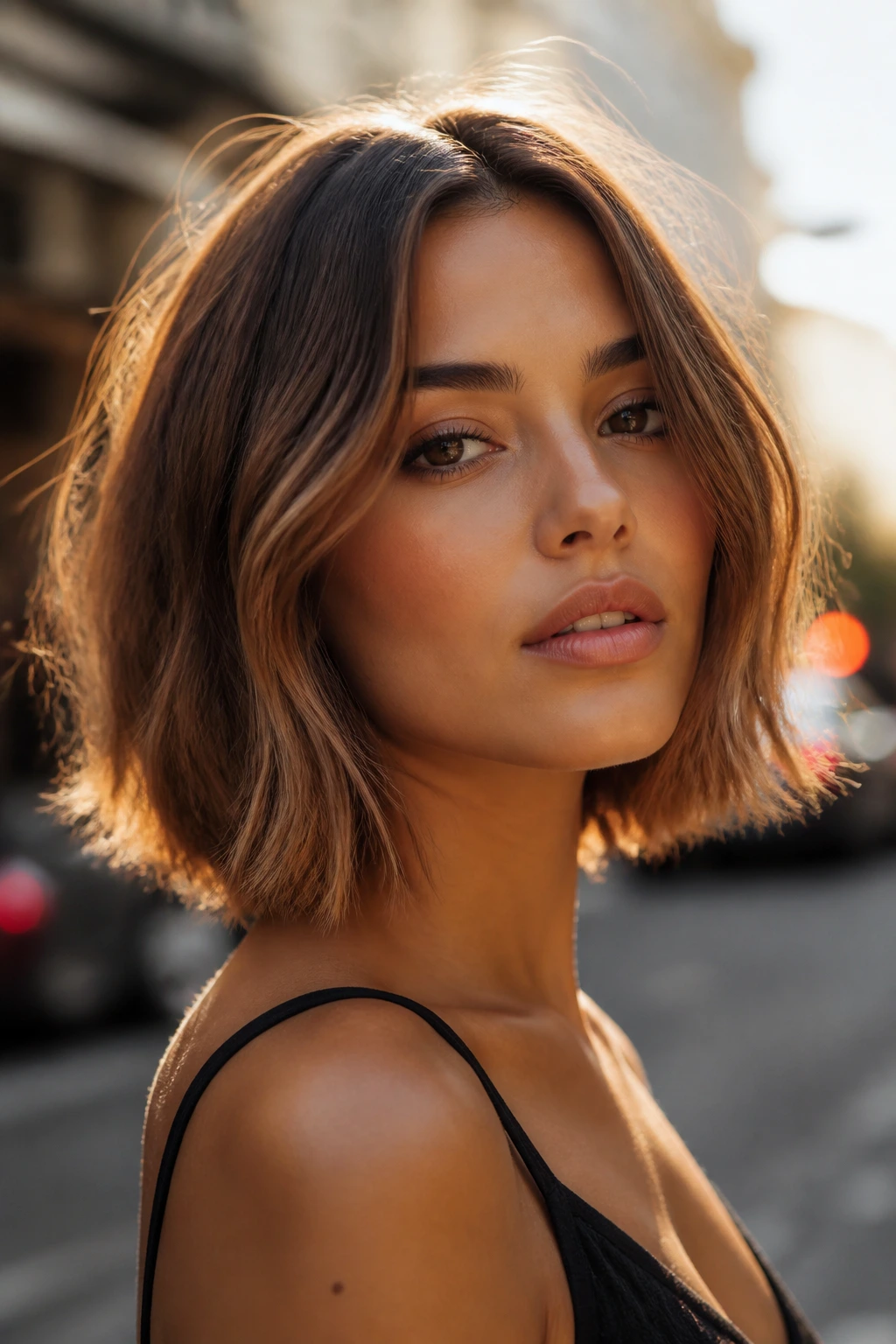
A blunt bob does not have to look severe. If you rough it up a little, add a bend or two, and keep the length below the chin, it becomes much easier to wear on a round face. The ends are still full, but the surface has movement.
This cut depends on restraint with the texture. A little spray at the mids and ends is enough. If you saturate the hair, it can turn crunchy and expand at the sides, which is exactly what you do not want. I prefer a small flat iron to bend a few front pieces away from the face and leave the rest alone.
The best part is how low-maintenance it can be. It doesn’t need precision every second of the day. A blunt base gives it shape, and the texture keeps it from looking too formal.
18. Undercut Bob for Thick Hair
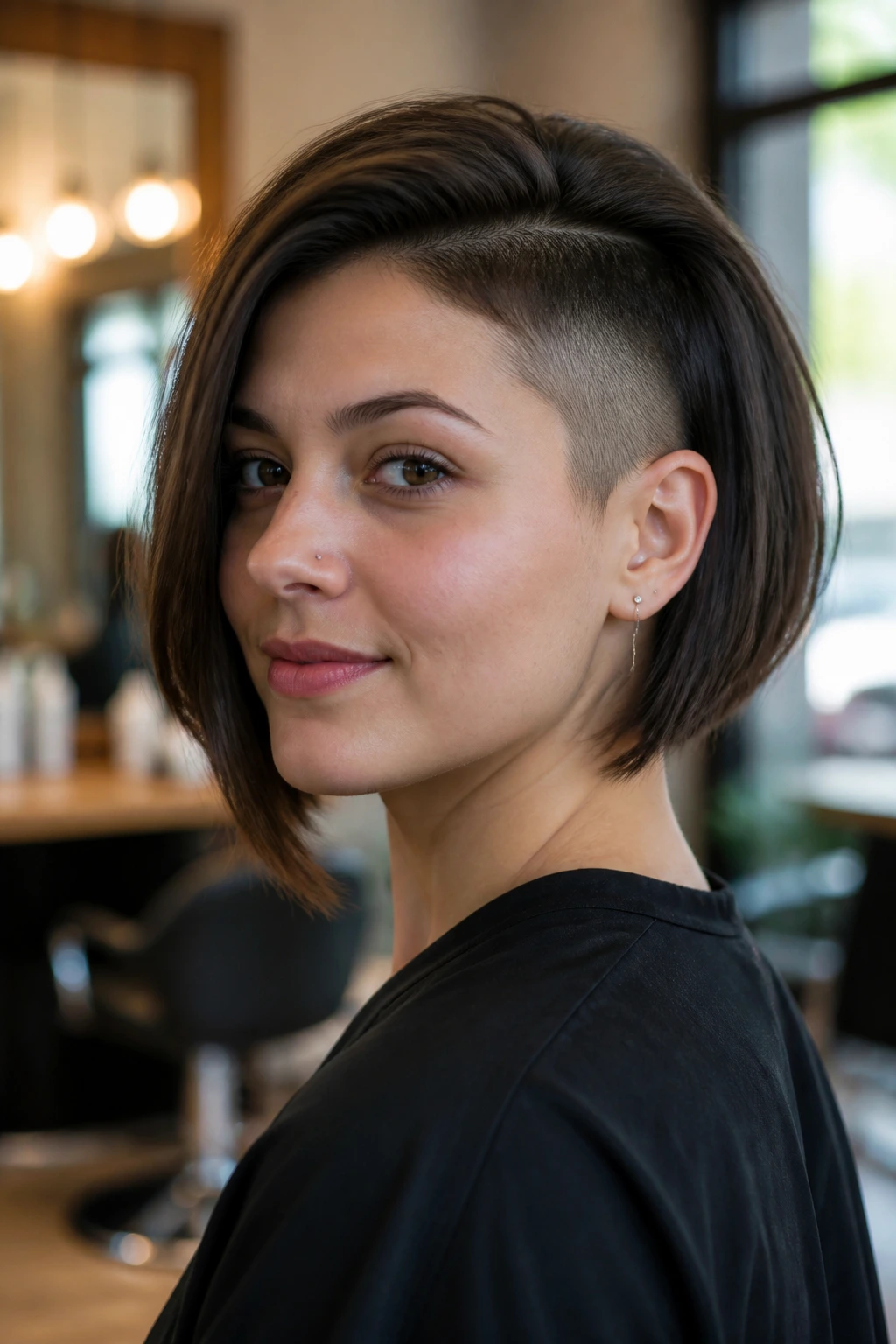
If your hair is thick enough to live its own life, a hidden undercut can change everything. It removes bulk from underneath, which lets the top layers lie flatter and keeps the bob from mushrooming around the cheeks.
That’s why this cut belongs on the list. Round faces usually look better when the sides don’t swell outward. An undercut helps control that, especially if your hair is heavy at the nape or behind the ears. You can keep the surface hair long enough to preserve the bob shape while taking out the bulk that causes puff.
This is not a DIY situation unless you truly know what you’re doing. The balance matters. A little too much removal and the bob can collapse. A good stylist will leave enough weight on top so the haircut still looks full, not hollow.
19. Soft A-Line Bob With Face-Framing Pieces
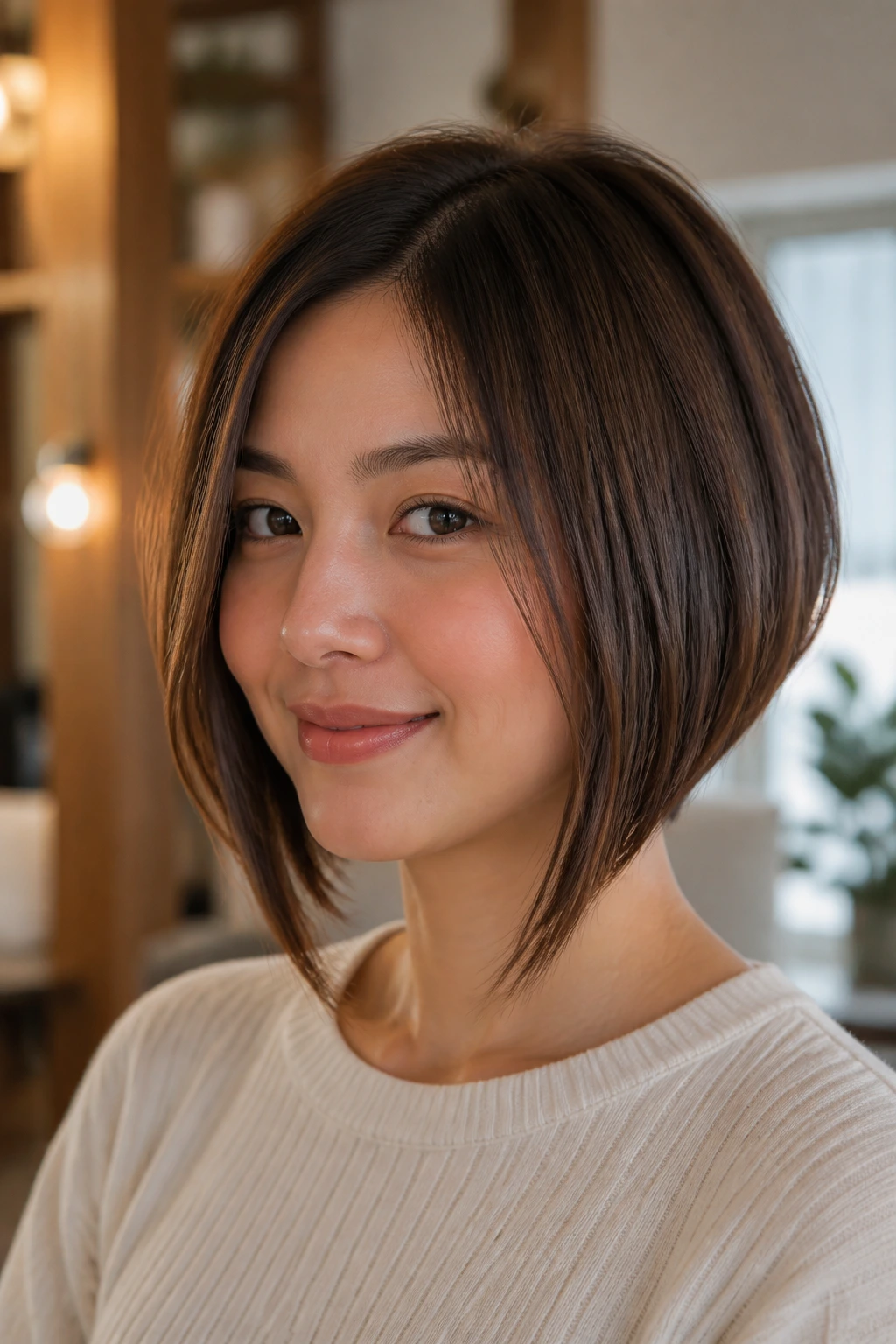
A soft A-line bob is one of those cuts that quietly does its job. The back is a touch shorter, the front drapes longer, and the face-framing pieces start below the cheekbone so they don’t hit the widest part of the face head-on.
I like this shape because it offers all the benefits of an angled cut without looking sharp or severe. It feels modern, but not chilly. The gentle slope gives the eye movement, and the front pieces can be tucked, waved, or smoothed depending on the day. That flexibility matters more than people admit.
If you want a bob that can go from straight to bent to messy without falling apart, this is one of the easiest options. It respects the round face instead of fighting it. That’s a better plan than trying to force drama where it doesn’t belong.
How Bob Haircuts Change the Shape of a Round Face
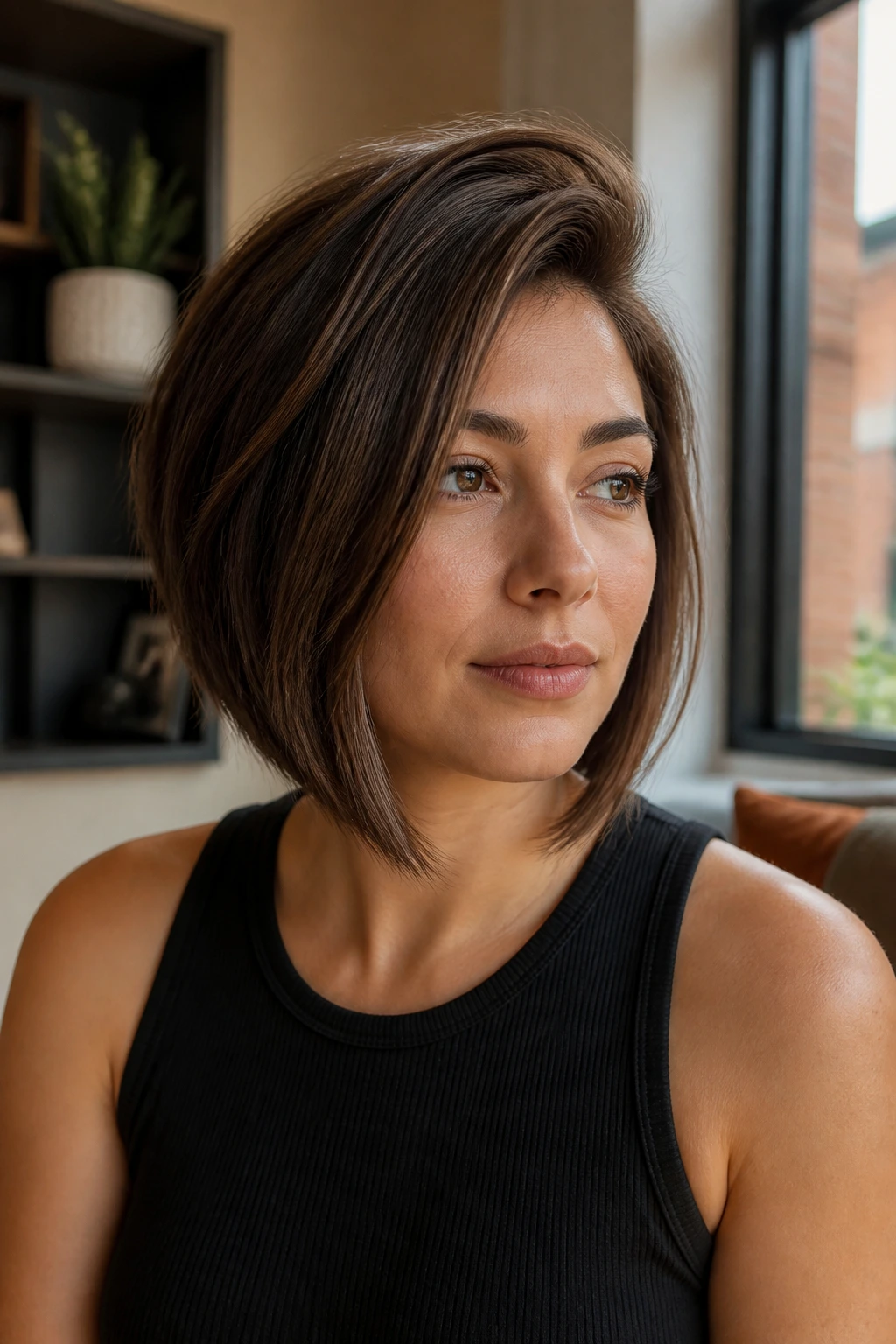
A round face usually has soft curves, fuller cheeks, and a width that reads close to its length. That does not mean you need to hide it. It means the haircut should create lines the face does not already have.
The three things that do most of the work are length, parting, and volume placement. Length below the chin adds vertical pull. An off-center or deep side part breaks symmetry. Volume at the crown adds height, which makes the face read longer. Put volume at the cheeks and you’ve just done the opposite.
Bangs are where people get nervous, and for good reason. Heavy blunt bangs cut the face in half. Softer fringe — curtain bangs, wispy fringe, side-swept pieces — can be better because they frame rather than block. The goal is not to erase roundness. It’s to steer it.
A good bob for a round face also respects density. Thick hair needs weight removed in the right places. Fine hair needs shape without too many chopped layers. Curly hair needs a perimeter that understands shrinkage. The face shape matters, yes. So does the hair itself.
How to Choose the Right Bob for Your Hair Texture
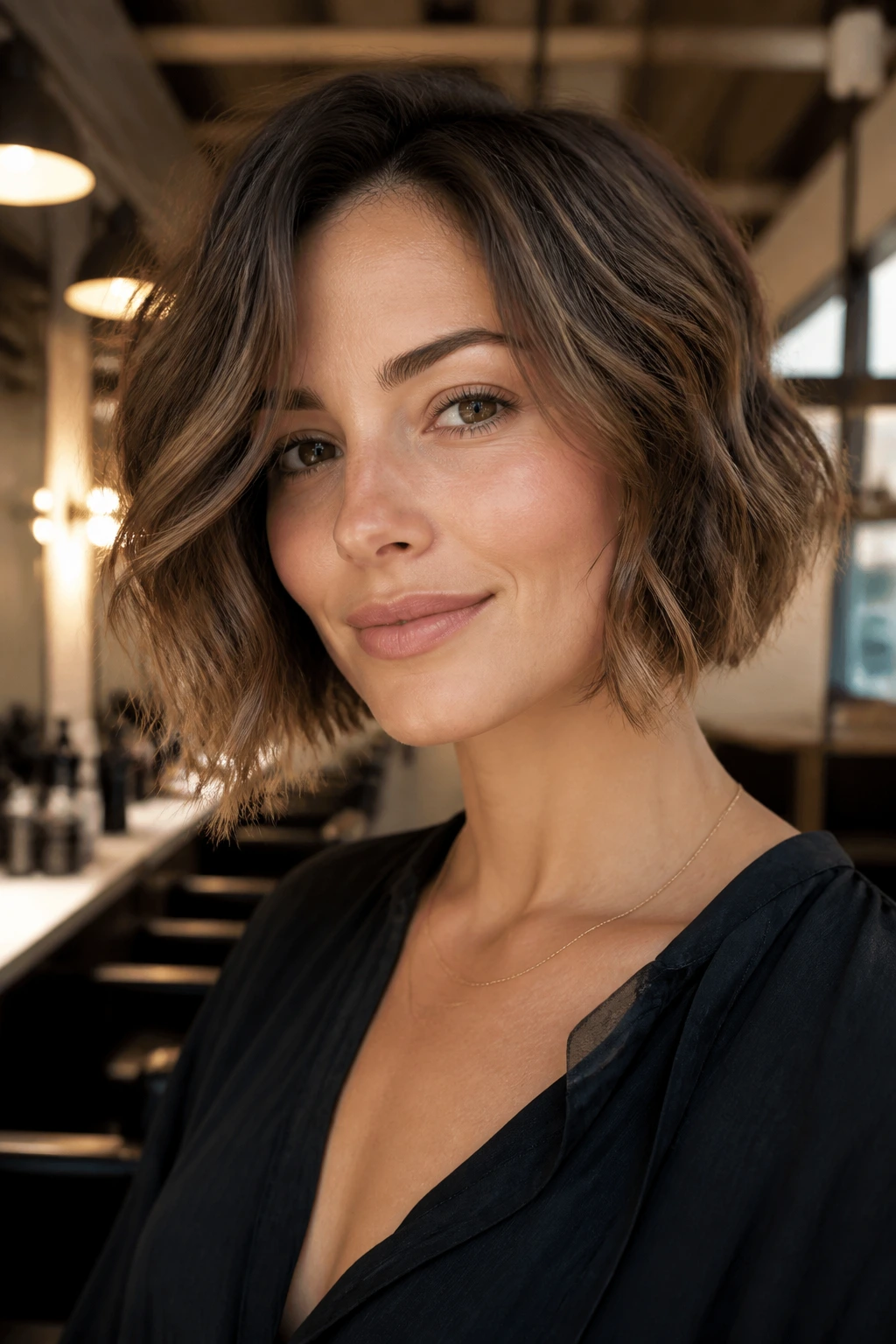
Fine hair: Go for the collarbone lob, the blunt bob, or the feathery bob. These shapes hold a line without asking fine hair to do too much. A little root lift and a clean perimeter usually beat heavy layering.
Thick hair: The stacked inverted bob, the graduated nape bob, and the undercut bob are the most practical choices. Thick hair likes structure, but it also likes relief. Removing bulk in the right spots keeps the style from expanding sideways.
Wavy hair: The invisible-layer bob, the A-line bob, and the tousled blunt bob are especially forgiving. Wavy hair already brings movement, so the cut just needs to guide it. Too many short layers can turn wave into puff.
Curly hair: Ask for the curly bob or a longer lob with curl-friendly shaping. Dry cutting helps the stylist see where the curls land, and it prevents a too-short result once the hair springs up.
Straight hair: You can wear almost any of these, but the sleek bob, box bob, and asymmetrical bob look especially clean. Straight hair shows line more than movement, so the cut has to be precise.
How to Talk to Your Stylist Without Guessing
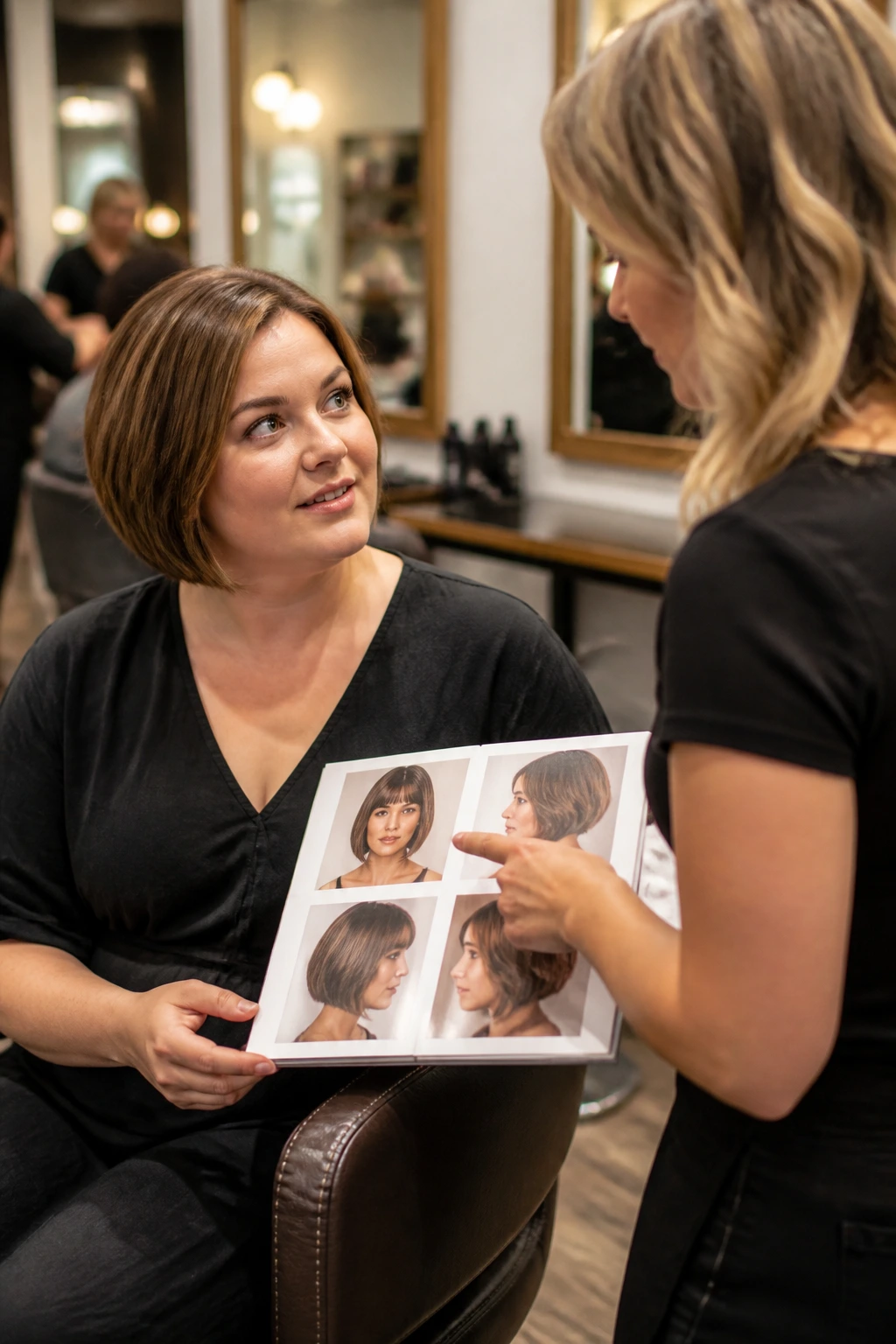
Bring photos. Not one photo. Three. One from the front, one from the side, and one that shows the length you want when the hair is tucked behind the ears. A single picture from social media can be misleading because lighting and styling do a lot of heavy lifting.
Say where you want the shortest point to land. If you want a round-face-friendly bob, be explicit: below the cheekbone, at the jaw, or at the collarbone. That language matters. “Short bob” is too vague. “I want the front to hit just below the chin and the back a little shorter” is useful.
Tell your stylist how you live in your hair. If you air-dry, say so. If you live in a claw clip, say that too. If your hair flips at the part line or you have one stubborn cowlick near the crown, that needs to be in the conversation before the scissors come out.
A good consultation also includes what not to do. If you hate volume around your cheeks, say it. If you never want bangs that sit in your eyes, say that. The haircut gets better when the stylist knows your habits, not just your inspiration photos.
Tools That Keep the Cut Looking Intentional
-
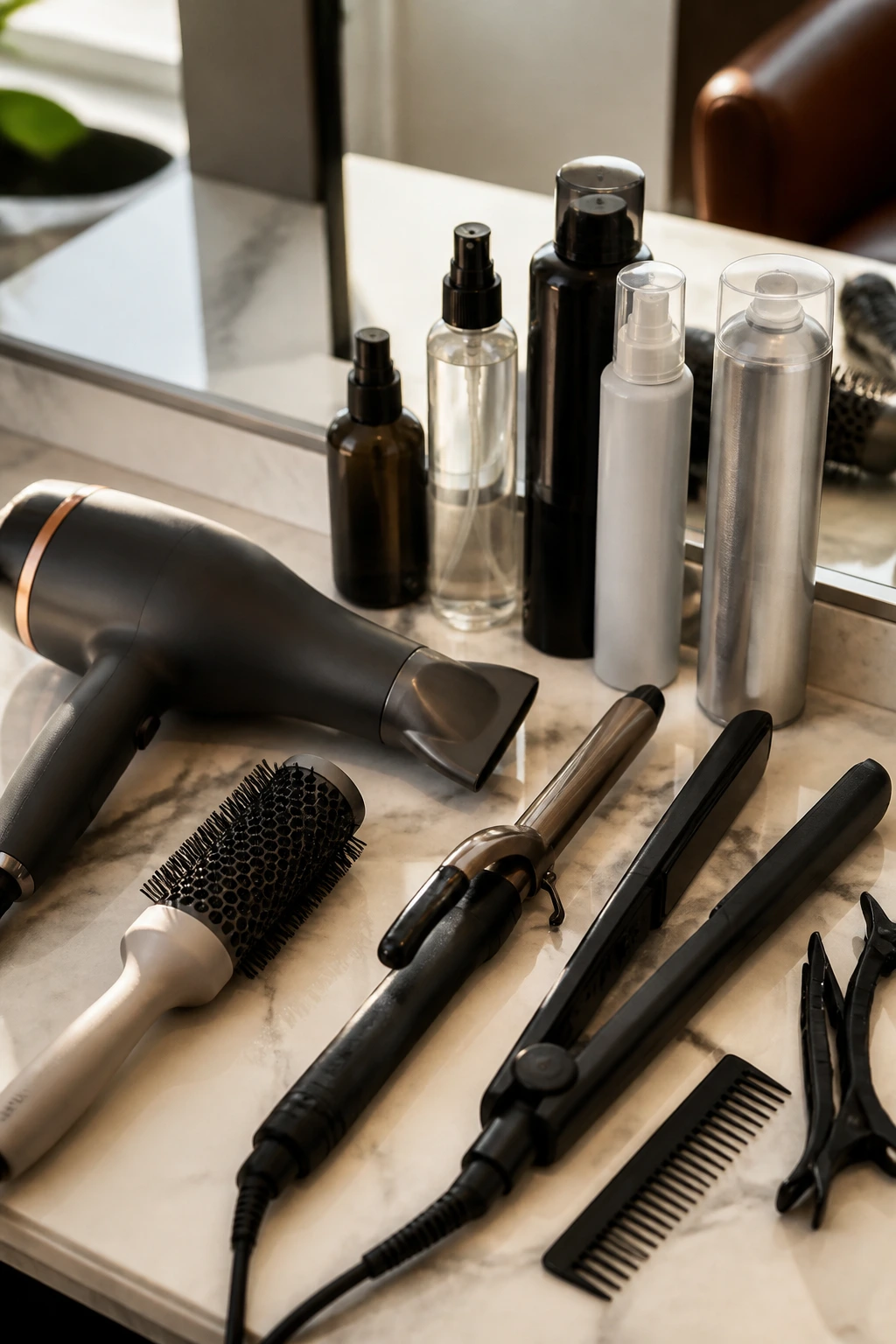
Blow dryer with a concentrator nozzle: Keeps the air focused so the ends dry smooth instead of frizzy.
-
Medium round brush: Useful for lifting the roots and turning the ends under without making them curl too hard.
-
1-inch curling iron or flat iron: Good for adding a soft bend to face-framing pieces and breaking up a blunt line.
-
Heat protectant spray: Necessary if you use heat more than once a week. Thin hair especially shows damage fast.
-
Texturizing spray: Helps a blunt or lob-length bob look piecey rather than flat.
-
Lightweight mousse or root lift spray: Gives crown height without the sticky feel of heavy products.
-
Tail comb: Handy for clean parts and sectioning when you style at home.
-
Clips: Keep the top sections out of the way while you dry the lower layers.
-
Dry shampoo: A decent one buys you an extra day or two between washes by controlling oil at the roots.
Styling Moves That Make the Face Look Longer
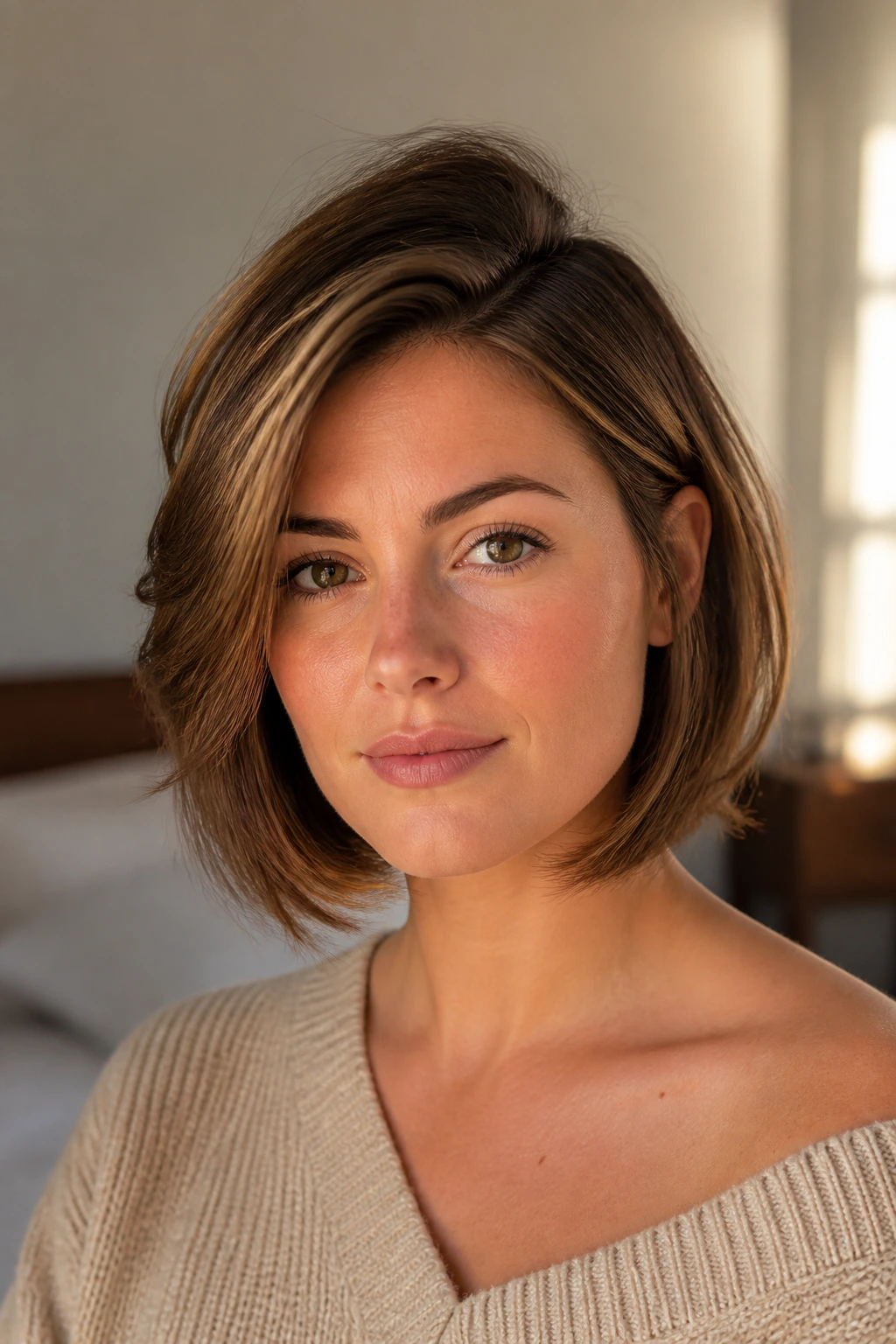
Start at the crown. If the top is flat, the face reads fuller. Lift the roots with mousse or root spray, then direct the hair upward with your dryer before you smooth the mid-lengths.
Keep the sides controlled. This is the part people mess up. If the cheeks puff outward, the face looks wider, even if the cut is correct. Use a brush or iron to keep the side pieces close to the head and let the movement happen below the jaw.
Use a part that breaks the circle. A slight off-center part is often enough. A deep side part adds more drama, but even a modest shift helps.
Don’t overcurl the ends. A hard inward curl under the chin can make the face feel boxed in. A soft bend is better. So is a little separation at the ends.
Finish with a light hand. Shine serum on the ends, texture spray where needed, and stop. Too much product collapses the shape fast.
Three Smart Ways to Adapt Any Bob
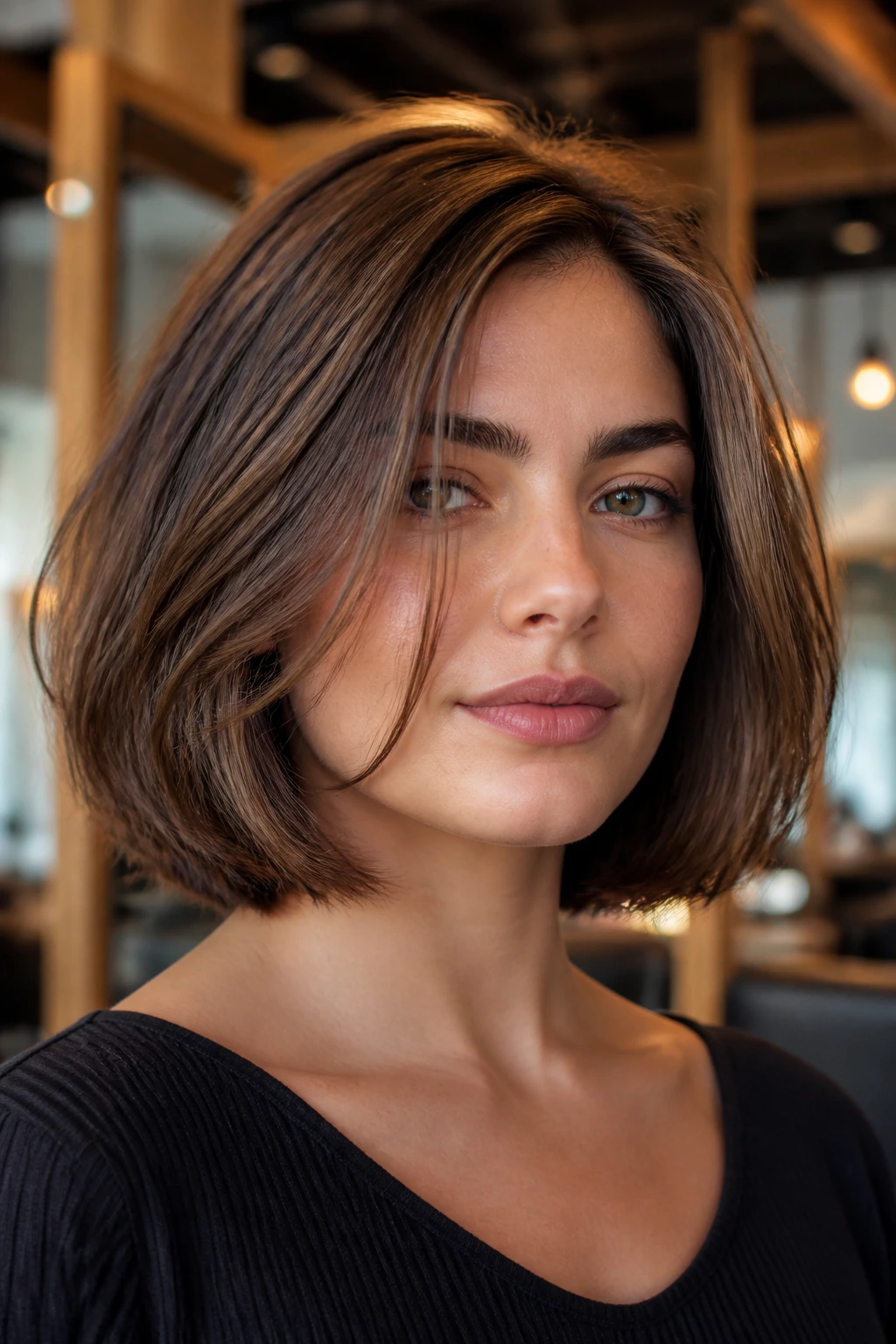
The Low-Drama Air-Dry Bob: Keep the length below the chin, ask for invisible layers, and let natural movement do the work. This is the version I’d choose for wavy or slightly textured hair that hates a blow dryer.
The Polished Side-Part Bob: Choose a blunt or lightly angled shape, keep the ends clean, and lean hard on a side part. This version looks sharper on straight hair and is the easiest one to dress up fast.
The Thick-Hair Relief Cut: Ask for an undercut, a graduated nape, or interior weight removal. The goal is not to thin the whole head. It’s to stop the haircut from turning into a triangle around the cheeks.
The Soft Fringe Version: Curtain bangs, wispy bangs, or side-swept fringe can all work if they stay light and land below the brow line in a controlled way. Heavy fringe at eyebrow height tends to shorten the face.
Common Mistakes That Add Width
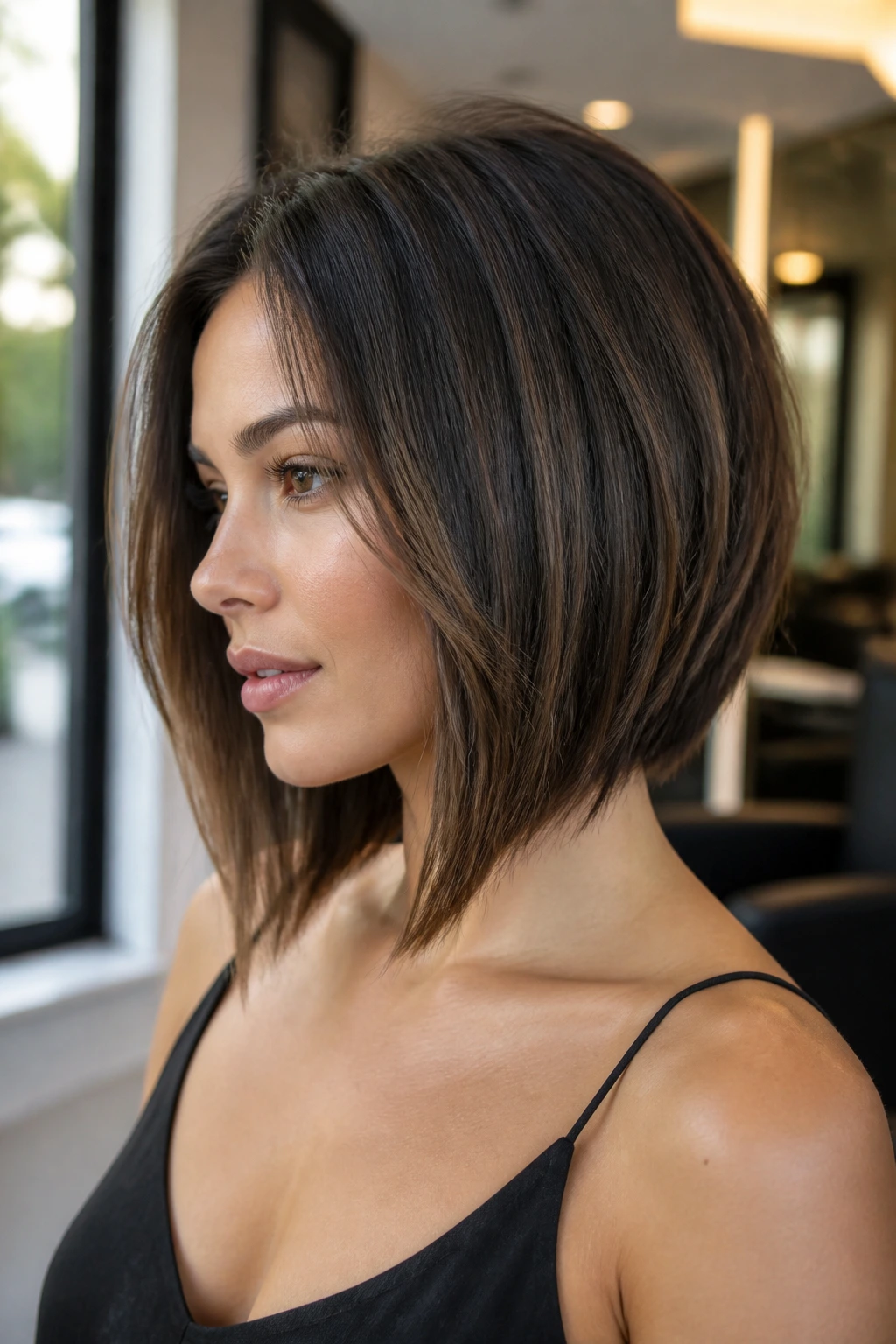
Cutting the ends at cheek level: This is the big one. If the bob stops right where the face is widest, it can make the cheeks look even fuller. Move the length below the jawline or add angle.
Too much width at the sides: Thick, blown-out sides can make the haircut read like a circle. Keep side volume under control and save lift for the crown.
Blunt bangs that are too short: Short, heavy bangs can shorten the face and make the roundness stand out. Softer, longer fringe tends to be easier.
Over-layering fine hair: Fine hair doesn’t need to be shredded into pieces. It needs shape. Too many layers can create little wisps that float at the cheeks and make the haircut look thin.
Ignoring your natural part: Fighting a stubborn cowlick is a waste of time. Work with the part that your hair wants, then refine it slightly if needed.
Styling only the ends: If you smooth the bottom but leave the roots flat, the whole cut looks wider than it should. The crown needs attention too.
Keeping the Shape Between Trims

A bob lives or dies by its line. Once the ends start to flip unevenly or the side pieces lose their angle, the whole cut gets lazy. For most bob haircuts for round faces, a trim every 6 to 8 weeks keeps the shape honest. Shorter bobs may need attention a little sooner if you want the line crisp.
Wash frequency matters more than people think. If your hair gets oily fast, the roots can collapse and make the face appear fuller. Dry shampoo at the roots buys time, but don’t layer it on for four days straight; that powdery buildup makes hair look dull and heavy. A clean scalp usually gives the bob more lift.
At night, a silk or satin pillowcase helps reduce bent ends and frizz around the cheeks. If your bob flips badly overnight, a loose clip at the crown can keep the front pieces from getting mashed flat. Morning refreshes are easier when you’re not starting from a bird’s nest.
Heat styling does not need to be elaborate. A quick pass with a round brush or a small flat iron on the front pieces is often enough. If you air-dry, shake the roots, tuck one side behind the ear, and leave some irregularity in the ends. A round face bob looks better with a little movement than with perfect stillness.
Frequently Asked Questions About Bob Haircuts for Round Faces
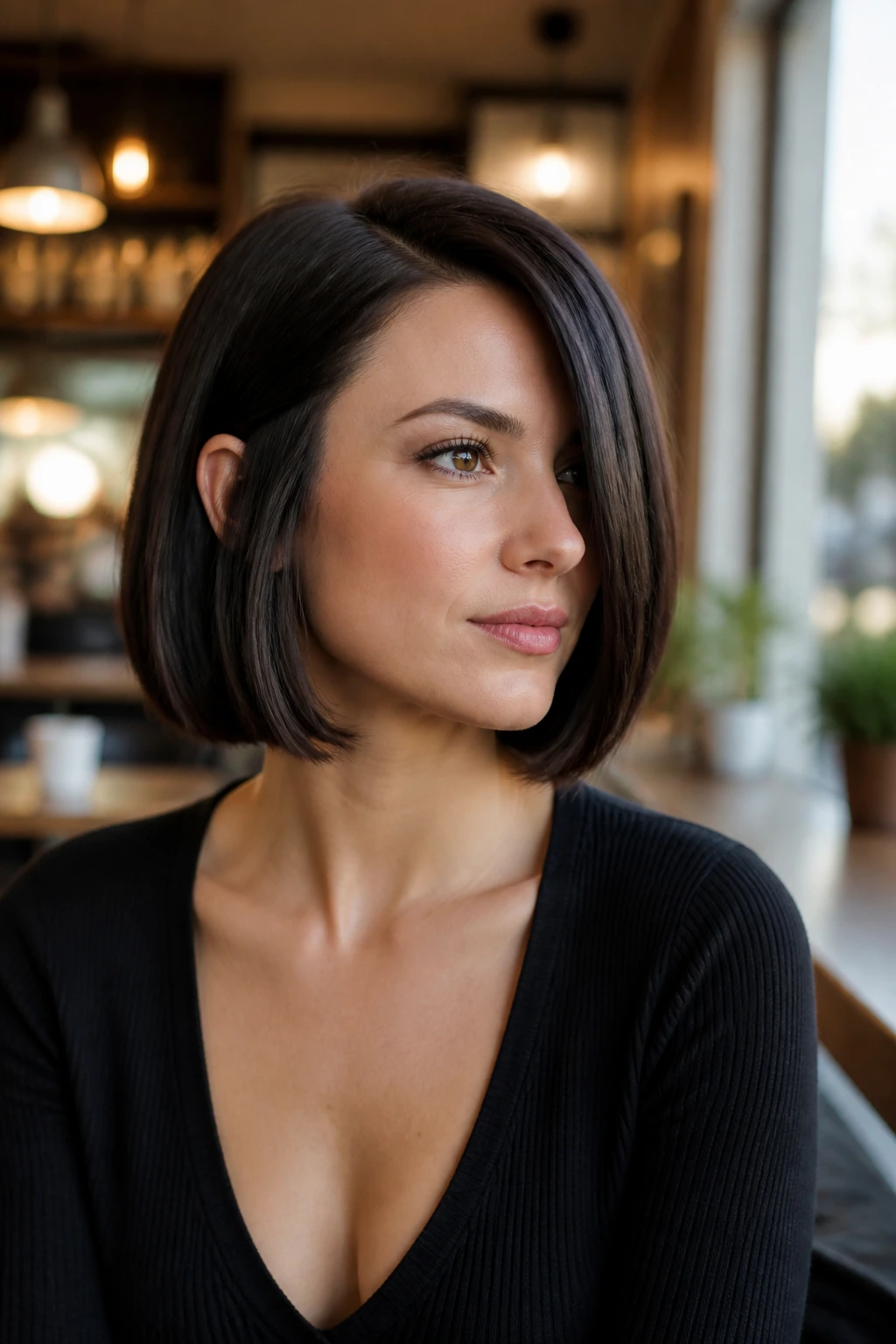
Can a bob really flatter a round face?
Yes, and the right one can flatter it a lot. The trick is choosing a length and shape that create vertical lines, especially below the chin, instead of stopping right at the cheeks.
What bob length is safest for a round face?
A collarbone lob is the easiest place to start. If you want something shorter, aim for a chin-length cut that sits slightly below the jaw, not at the cheekbone.
Are blunt bobs bad for round faces?
Not automatically. A blunt bob can look sharp and clean if the part is off center and the length sits in the right place. The trouble starts when the line is too short and too wide.
Do curtain bangs work with round faces?
They do, as long as they’re cut softly and not too short. Long curtain bangs that open at the center and taper toward the cheekbones usually work better than dense fringe.
Can curly hair pull off a bob on a round face?
Absolutely. Curly bobs can be excellent on round faces when the stylist respects shrinkage and keeps height at the crown. A dry cut is usually safer than guessing on wet curls.
How often should I trim a bob?
Every 6 to 8 weeks is a good rule for most bobs. If the cut is shorter or very precise, you may want a touch-up closer to the 5-week mark.
What if my hair keeps flipping outward at the ends?
That usually means the line is too blunt for your texture or the blow-dry is fighting the natural bend. A little internal layering, a round brush, or a soft bend from a flat iron usually fixes it.
Should I avoid center parts?
Not always. A center part can work on a longer bob or lob, especially if there’s movement in the front and height at the crown. On very short, blunt cuts, a slight side part is often easier.
The Shape That Knows When to Stop

A round face does not need to hide from a bob. It just needs a cut that knows where to stop, where to fall, and where to build a little height. That’s why the best bob haircuts for round faces are rarely the most extreme ones. They’re the ones with clean lines, smart length, and enough movement to keep the face open.
Bring one or two of these shapes to your stylist, be specific about where you want the ends to land, and pay attention to how your hair actually behaves on a normal Tuesday morning. That’s where the right cut shows up. Not in the mirror at the salon. At home, in motion, when it still looks good after a hat, a commute, or a rushed blow-dry.
