



A bob on curls can look expensive or lopsided in about ten seconds, and the difference is usually an inch, not a miracle. The best bob haircuts for long curly hair respect that strange, stubborn fact: curls lie when they’re wet, then reveal their true shape once they dry. A cut that looks tidy on the salon floor can balloon into a triangle by lunch. A cut that looks a little too long in the cape can dry into the clean, curved line you actually wanted.
That’s why long curly hair needs a bob with a little strategy behind it. Not every bob has to be blunt, and not every curl pattern wants the same amount of layering. Some shapes need weight left in the perimeter so the ends don’t fray. Others need the back lifted or the front kept longer so the whole silhouette doesn’t sink into the neck. The good ones do one thing beautifully: they give curls a home instead of fighting the way they move.
There are 33 directions here, and they are not variations on a single haircut with different marketing names. Some are soft and round. Some are sharp and angled. Some keep length in the front so you still feel attached to your hair, which is its own emotional category, and a real one. Some are for dense coils that need relief. Some are for finer curls that disappear if you layer them too hard. A few are excellent if you want a bob that grows out with grace instead of turning into an awkward shelf at the sides.
Why These 33 Bob Haircuts Work on Long Curly Hair
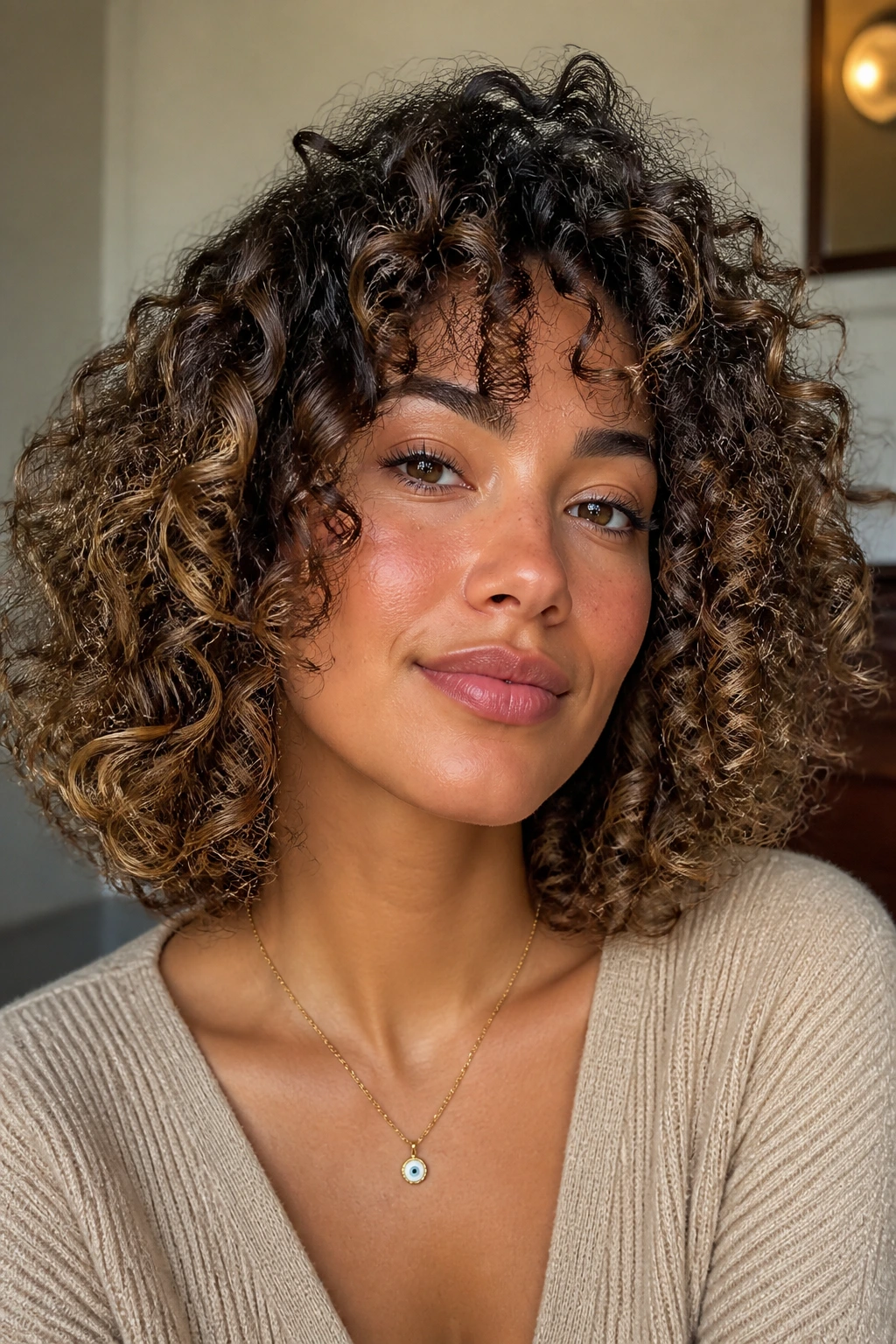
Shrinkage changes everything: curls can spring up 1 to 3 inches, sometimes more, so the same cut lands very differently wet and dry.
Weight is your friend, until it isn’t: some bob shapes need a little perimeter weight to stop the ends from flying apart, while others need strategic removal inside the shape so the hair doesn’t balloon.
The front and back do not have to match: long curly hair often looks better when the front stays a touch longer, especially if your curls are tight, springy, or dense around the jaw.
You can keep length and still get shape: a bob does not have to mean jaw-length. Collarbone-grazing, shoulder-skimming, and elongated bob cuts can still read as bobs once the curls dry.
Styling effort matters: some of these cuts air-dry with almost no drama; others look better with a diffuser and a few clips at the crown. That difference matters more than people admit.
Grow-out is part of the design: the better curly bobs still make sense when they’ve been out of the salon for six weeks and the ends have relaxed a little.
How Curl Shrinkage Changes the Shape of a Bob

Long curly hair does not behave like straight hair with a few bends in it. It behaves like a moving structure. Cut it wet and you may think you’ve left a nice collarbone bob. Dry it, and suddenly the sides sit at the jaw, the back climbs higher than expected, and the whole thing feels narrower than the mirror suggested. That’s not bad cutting in every case. It’s just math with springs in it.
A good curly bob is usually planned around the dry shape, not the wet illusion. That often means cutting longer than you think you need, then refining once the hair has fully dried in its natural pattern. It also means choosing where the weight should sit. Dense curls like a perimeter that carries some heft. Loose curls often need more movement inside the cut so the outline doesn’t feel heavy and helmet-like.
The simplest way to think about it is this: the curl pattern is part of the haircut, not an afterthought. If your stylist ignores how your hair clumps, bends, and expands, the final result can look blunt in the wrong places and thin in the wrong places. A curly bob works when the shape is built for the way your hair actually lives.
1. Collarbone Curl Bob
This is the bob I reach for when someone wants a change but isn’t ready to lose the safety net of length. The collarbone curl bob sits just long enough that the curls can bounce without feeling chopped off, and the ends usually land right where a necklace would rest. On long curly hair, that extra inch or two matters. It gives the shape a softer drop and keeps the profile from looking too square.
Why It Works
The collarbone length gives curls room to spring without exploding upward. It’s long enough to keep some weight at the bottom, which helps if your curls are springy 3B or 3C coils. It also grows out well, which is a quiet blessing when you are not in the mood for a strict maintenance schedule.
What to Ask For
- Keep the front grazing the collarbone when dry.
- Use light internal layering, not a choppy stack.
- Check the final line with the curls fully dry.
Best for: people testing a bob for the first time.
2. Rounded Bob With Soft Ends
A rounded bob is the version that makes curls look gathered, not scattered. The sides curve inward just a little, and the silhouette stays plush from cheek to chin. It’s especially nice on dense curls because it keeps the whole shape visually full without letting the bottom fray into a triangle.
The trick is restraint. Too many layers and the rounded bob loses its neat edge. Too little shaping and it starts to look boxy. I like this cut when the curls themselves are already lively; the haircut just gives them a softer boundary.
If your hair tends to puff at the sides, a rounded bob helps because the outline is controlled without being flat. It doesn’t fight volume. It corrals it.
3. Chin-Length Curly Bob
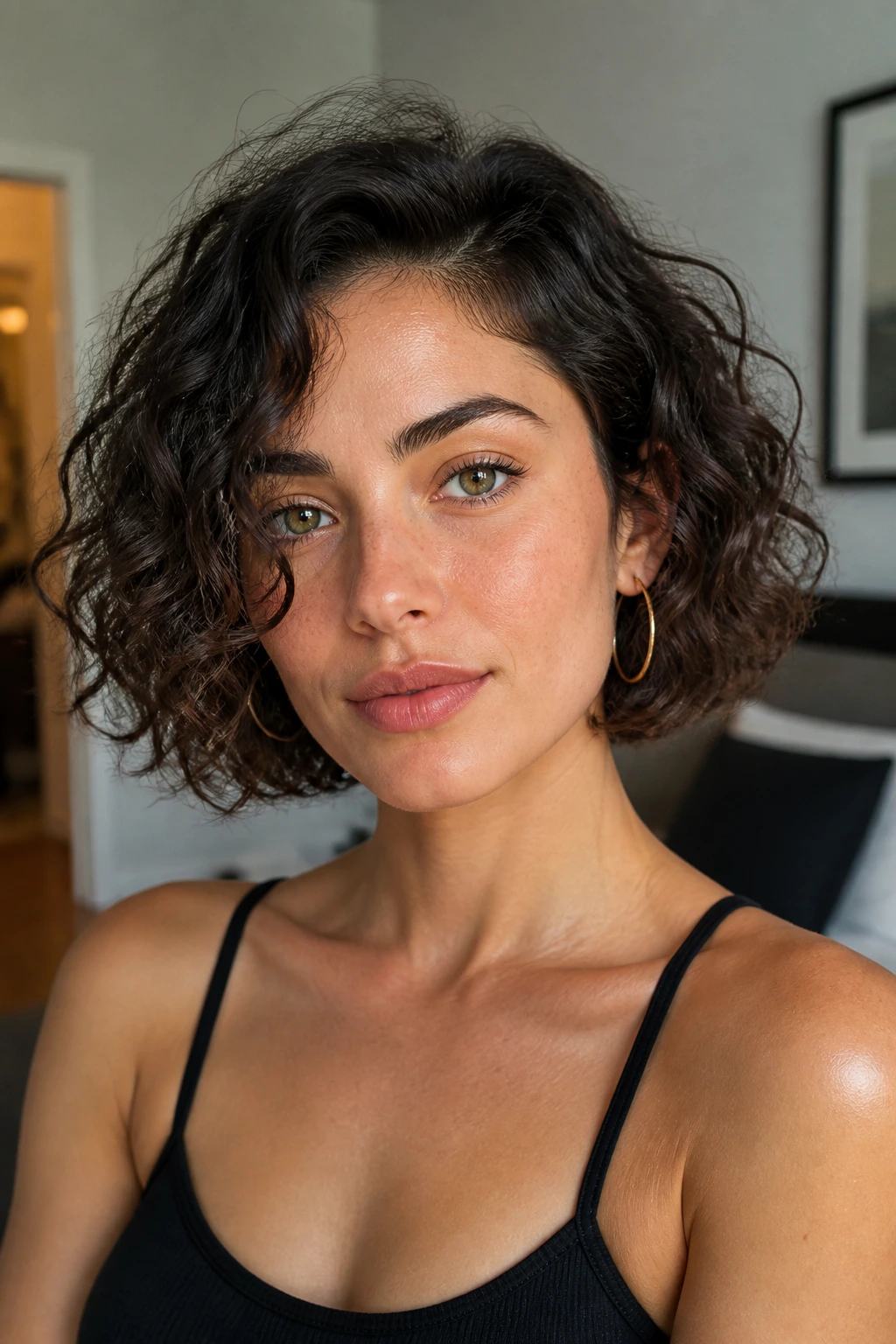
Why does chin length matter so much? Because that’s where the face starts paying attention. A chin-length curly bob hits in the most noticeable place possible, which means the curl pattern has to be clean and the shaping has to be smart. If the ends are ragged or over-thinned, the whole look turns fuzzy fast.
This cut is sharpest on curls that clump well on their own. Think springy waves, loose ringlets, or tight curls that still define themselves clearly when dry. When the texture is cooperative, the jawline gets a crisp frame and the curls sit with a little attitude. When the texture is fine or highly layered, it can go wispy in a way that looks unfinished.
How to Wear It
Keep the side part shallow and the product light. A chin-length bob looks best when the curls are defined, not saturated with cream. If your hair gets frizzy at the ends, smooth a tiny bit of gel over the last 2 inches only.
4. French Bob With Brow-Skimming Fringe

The French bob on curly hair is charming in the same way a good short coat is charming: it looks simple until you notice how much tailoring it takes. The length sits around the mouth or jaw, and the fringe kisses the brows when it’s dry. On curls, that fringe needs more room than straight hair would. If you cut it too short, it bounces right into the middle of the forehead.
This cut works best when the curls are defined enough to make the fringe feel deliberate rather than accidental. I like it on people who enjoy some personality around the face and do not mind using a diffuser for five to seven minutes to keep the fringe from drying sideways.
It has a little Paris-by-way-of-real-life energy. Not precious. Just sharp.
5. Italian Bob With Big, Airy Shape
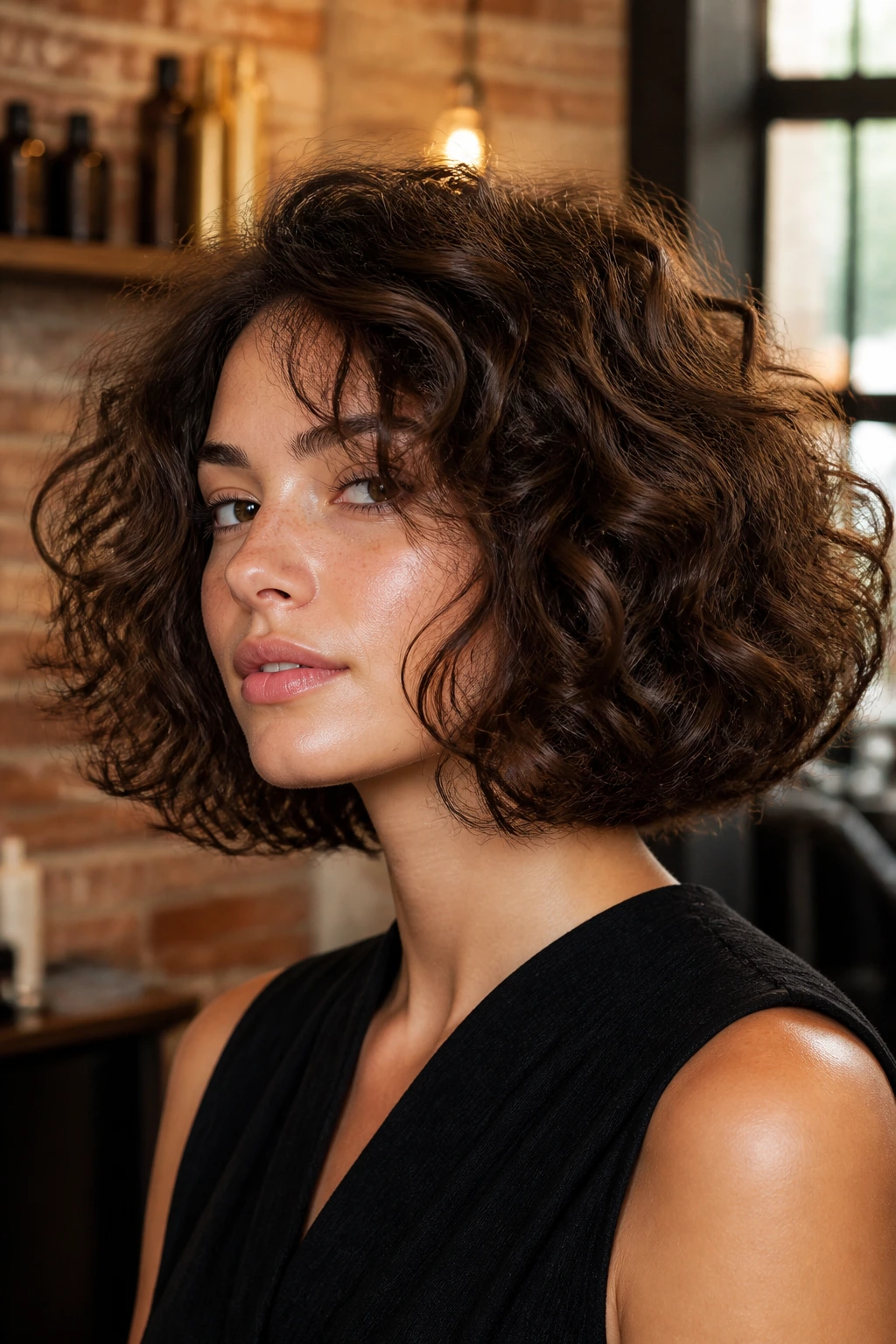
The Italian bob is less about exact length and more about silhouette. On long curly hair, it usually sits between the chin and upper shoulders with a fuller crown and ends that feel broad, not pinched. The point is movement with presence. You want the curls to lift and fall, not collapse into the neck.
This cut is excellent if your hair is thick but not coarse, because the shape likes body. It can also rescue curls that go flat at the roots and then explode at the sides. With the right shaping, the volume ends up looking intentional, almost architectural, instead of accidental.
If you’ve ever liked the idea of a bob but feared the “too short, too puffy” problem, this is one of the safer bets. The Italian bob gives the curls space to breathe.
6. Curly Shag Bob

A curly shag bob is what happens when movement gets priority over neatness, and I mean that as a compliment. The layers are more obvious here, the perimeter is less strict, and the result feels airy from top to bottom. On long curly hair, this cut can remove enough bulk to keep the crown from lying heavy while still leaving the ends soft and touchable.
Why It’s Different
The shag bob doesn’t ask curls to form a perfect border. It asks them to overlap in a loose, lived-in way. That’s why it suits people with dense curl patterns or a lot of natural volume. It can also make a round face look a little longer because the vertical movement draws the eye downward.
Ask Your Stylist For
- Shorter interior layers around the crown.
- Longer pieces around the cheeks and jaw.
- A perimeter that still reads as a bob, not a mullet.
Pro tip: if your curl pattern is uneven, this cut can make that inconsistency look like texture rather than a problem.
7. A-Line Curly Bob

An A-line bob keeps the front longer than the back, and on curls that slight angle gives the haircut some clean geometry. The line starts near the nape and drops forward toward the chin or collarbone. It’s tidy, but not stiff. The front length helps curls frame the face, while the shorter back keeps the silhouette from dragging.
This is a strong option if your hair feels heavy in back or if your curls bunch at the neck. It can also be a good answer for people who want a bob without giving up the sense of movement around the face.
The only caveat is balance. If the front is too long and the back too short, the angle gets dramatic in a way that can feel dated. Keep the transition smooth, and it stays elegant.
8. Stacked Back Bob
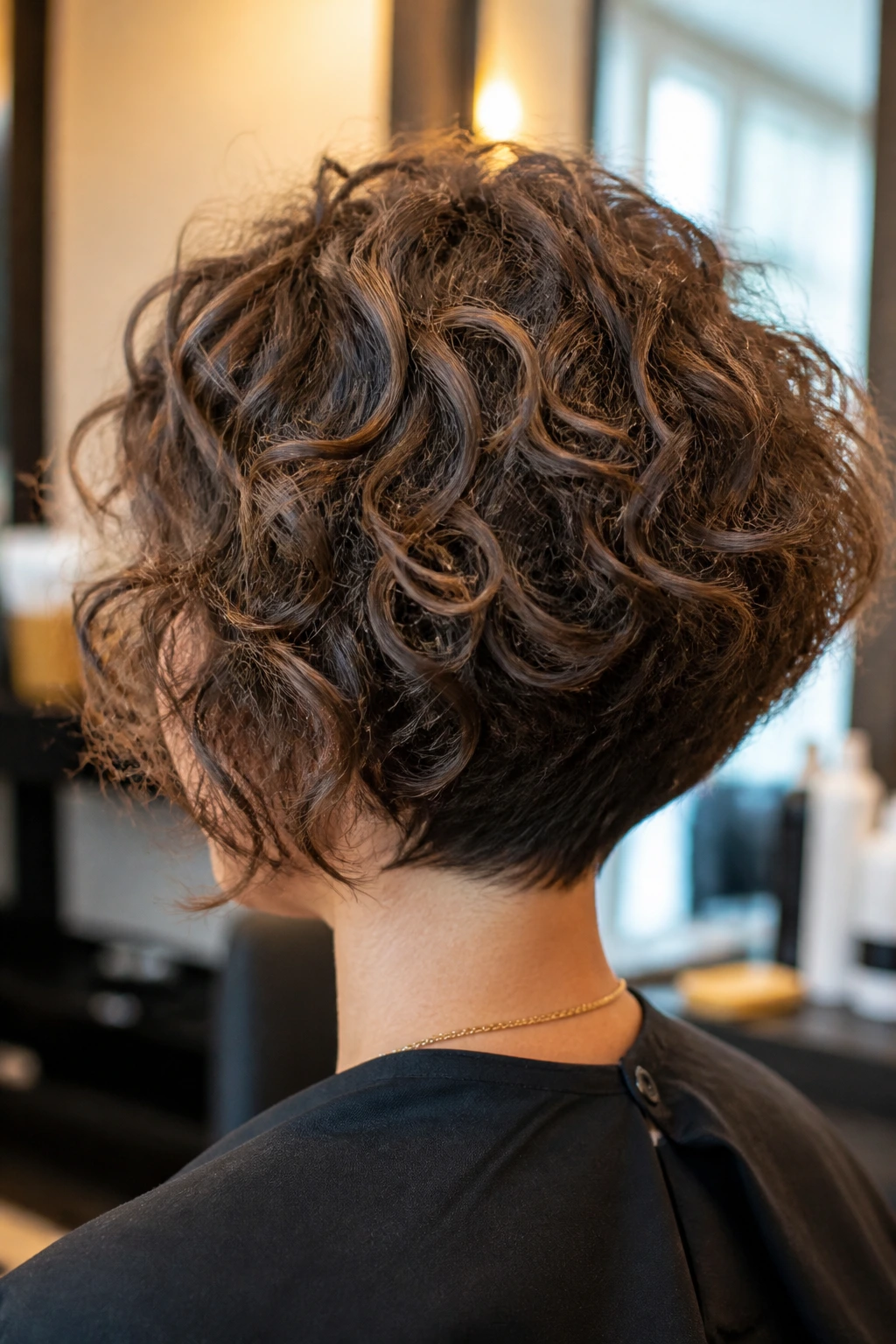
The stacked back bob does one thing very well: it builds lift where curly hair often needs it most. The back is cut shorter in a graduated way, creating a small shelf of volume at the crown and upper nape. On dense curls, that can keep the head from looking bottom-heavy.
This shape has more structure than a rounded bob. You see the architecture. That’s useful if your curls are thick, because a blunt one-length cut can sometimes sit too flat at the top and too wide at the sides. Stacking gives the back a little air and helps the curl pattern fold over itself nicely.
If your hair grows in a stubborn fan at the nape, this cut also helps the back behave. It isn’t subtle, but it is effective.
9. Inverted Curly Bob
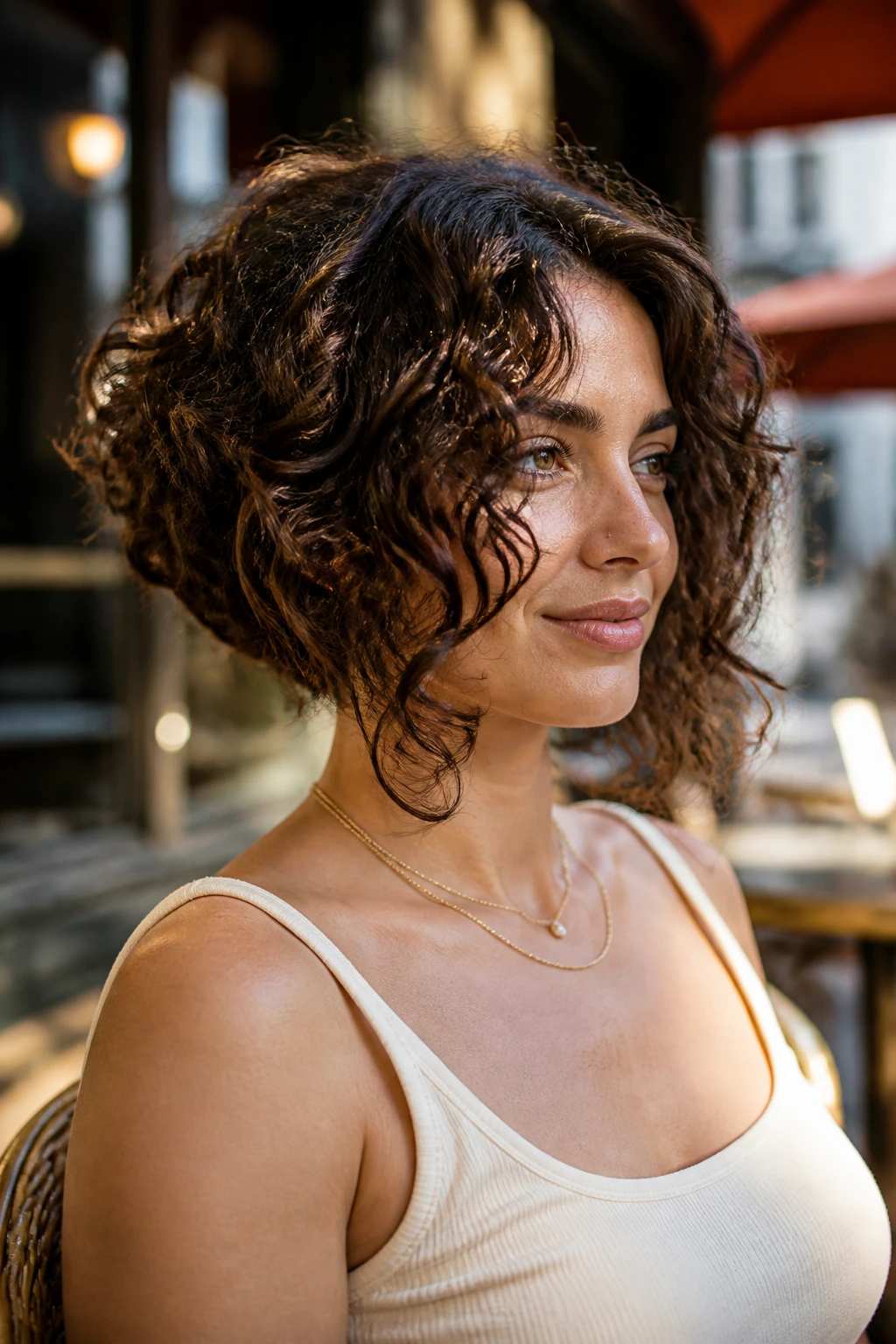
An inverted bob is the sharpened cousin of the A-line. The back is shorter and more tapered, while the front lengths fall forward with more drama. On curly hair, that contrast can be gorgeous because the curls soften the angle and keep it from looking severe.
This works particularly well when you want the neck area light and the front pieces long enough to brush the jaw or collarbone. It’s a good shape for people who wear one side tucked behind the ear or who like their curls to fall forward around the face. The front creates that flattering curtain effect without needing actual bangs.
It does require good shaping. If the back is cut too high, the curve can get too sharp and the grow-out turns awkward faster than you’d like. So yes, a little precision matters here.
10. Blunt Bob With Hidden Layers
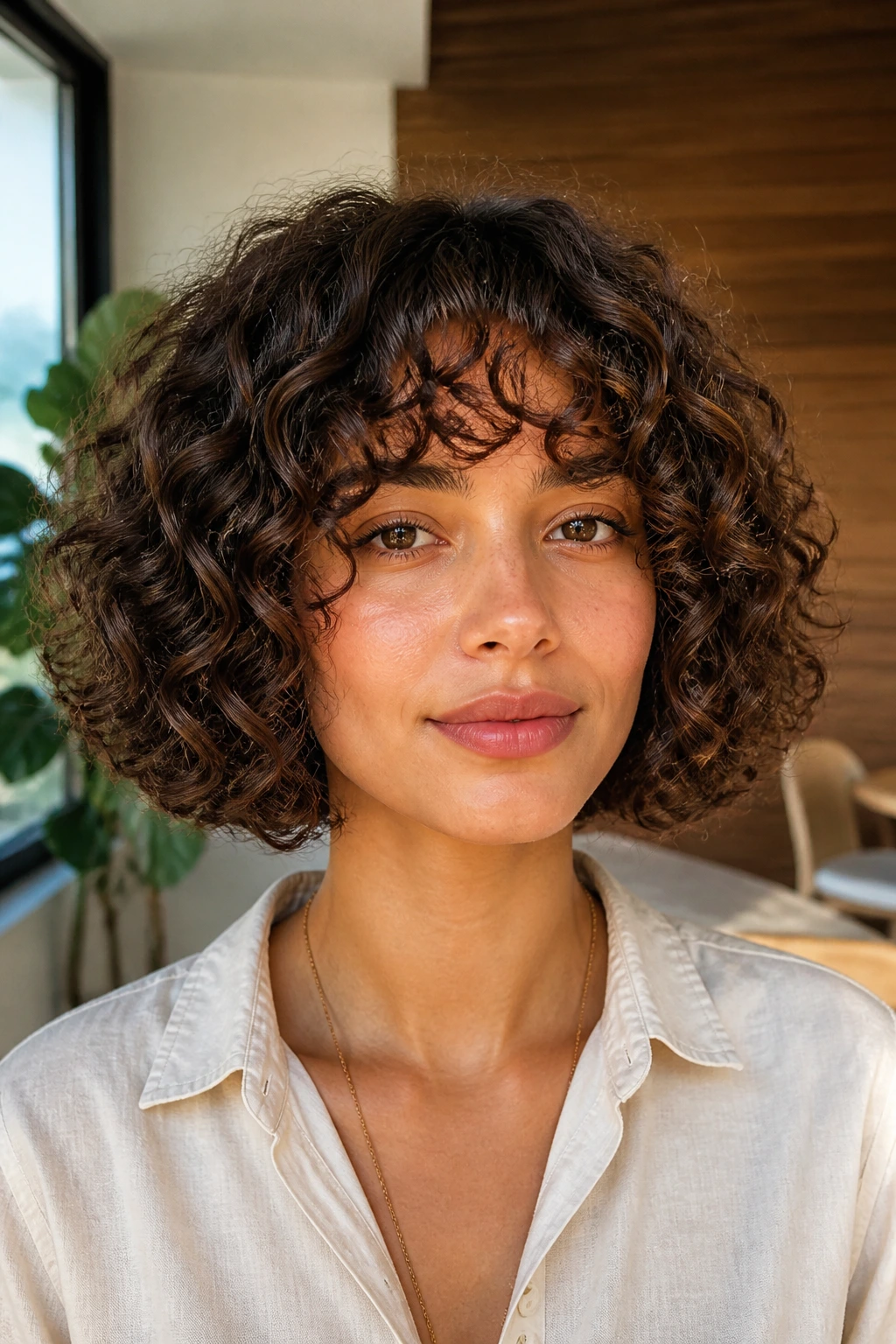
A blunt curly bob sounds almost contradictory, and that’s why it’s so useful. The outside line stays clean and heavy, but the inside of the cut gets a few carefully placed layers to stop the curls from stacking into one thick block. You keep the edge. You lose the triangle.
This is one of my favorites for dense hair that still wants definition. The blunt perimeter gives the bob a strong visual line, which is useful if your curls are loose enough to separate when dry. The hidden layers keep the movement from feeling rigid. It’s not a fluffy cut, and that’s the point.
The styling is usually simple. A leave-in, a gel, maybe a diffuser. Once the shape is right, the haircut does most of the talking.
11. Deep Side-Part Bob
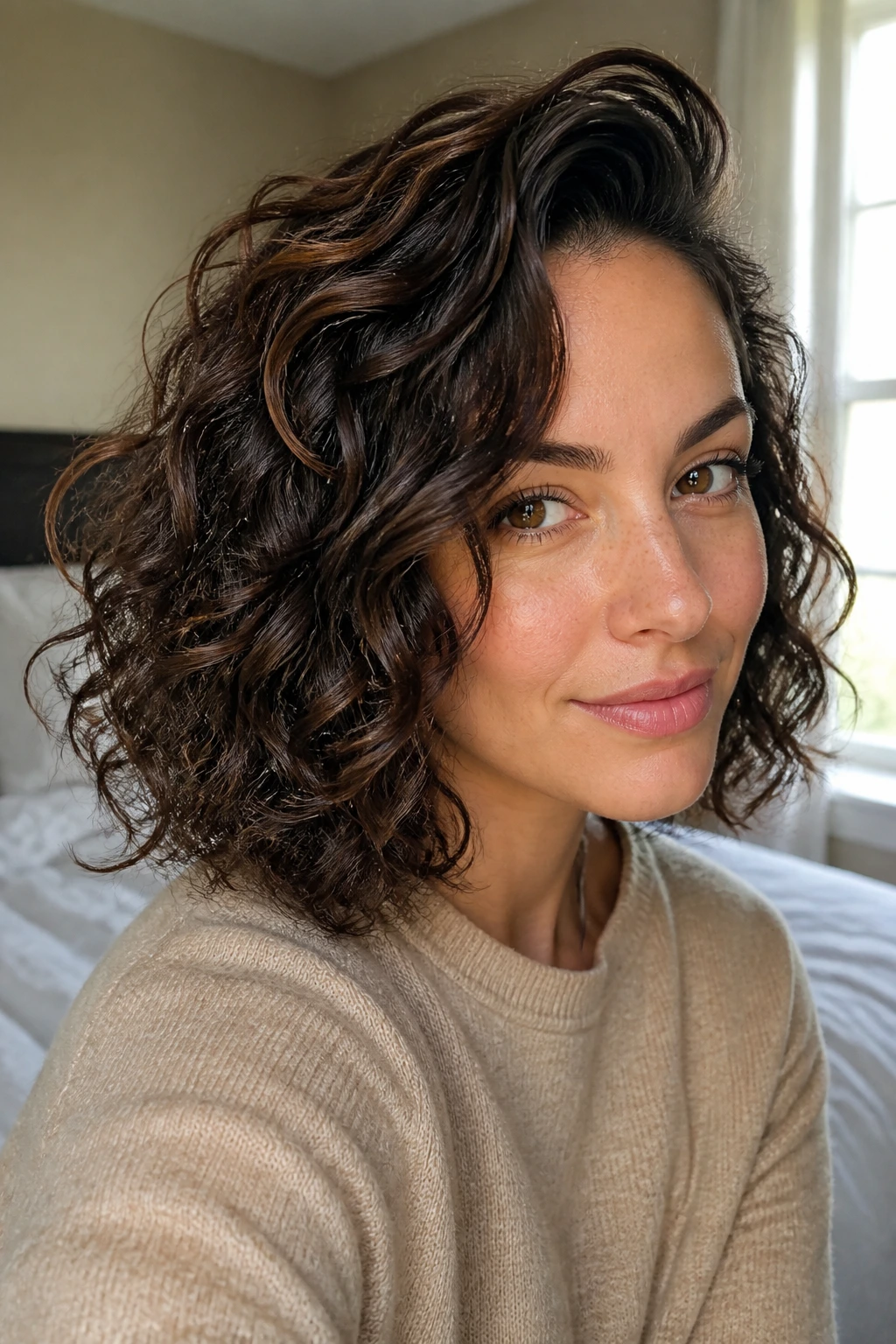
A deep side part can change the whole mood of a curly bob without changing the length at all. Shift the part a few inches off center, and the hair on one side lifts, the other side falls, and the face gets a diagonal line that looks a little more polished than a middle part.
This is the bob for days when you want volume at the crown without going shorter. It’s especially kind to round faces and softer jawlines because the asymmetry creates some visual length. On long curly hair, it can also help if one side tends to sit flatter than the other. The part gives the curls a new job.
One nice thing: it’s the cheapest haircut trick in the book. No scissors needed. Just a comb and a little nerve.
12. Center-Part Lob Bob

The center-part lob bob is for people who like balance and length in the same sentence. It usually sits at or just above the collarbone, with curls falling evenly on both sides. On long curly hair, the middle part makes the symmetry obvious, which is useful if your face shape already benefits from a clean vertical line.
This cut is calmer than the sharper bobs, but not boring. If the ends are blunt enough and the curls are defined, it can look quite sleek even without heat. The longer length also means the curls have enough weight to hang rather than float out from the head.
If you’re nervous about losing too much hair, start here. It reads like a bob, but it doesn’t feel like a drastic chop.
13. Curtain Bang Curly Bob
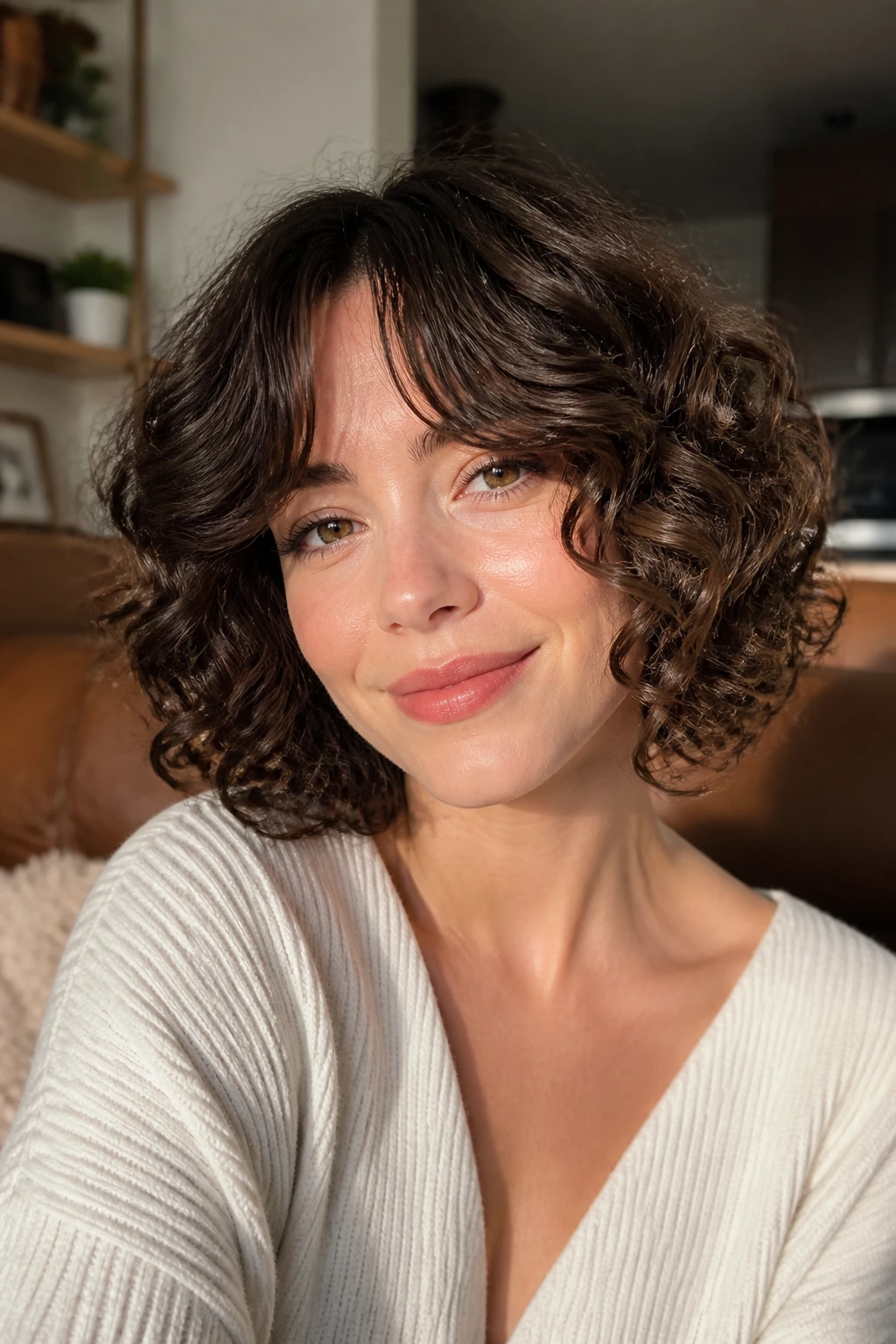
Curtain bangs and curly bobs get along better than people expect, as long as the fringe is cut with the curl pattern in mind. The bangs split softly at the center and sweep outward, blending into the sides. On long curly hair, that blend matters. A hard line across the forehead tends to bounce unpredictably.
This style is good if you want the face framed without committing to a fully short bob around the mouth or jaw. It gives a little softness near the eyes and cheekbones, and it can make a longer bob feel lighter. The key is not to over-thin the fringe. Curly bangs need enough density to stay visible once they spring.
I like this shape because it feels flexible. You can wear it loose, clip it back, or let it grow into the rest of the cut.
14. Bottleneck Bang Bob

Bottleneck bangs are narrower at the top and wider as they move down toward the cheekbones, and that shape makes a lot of sense on curls. The center stays a little shorter, which opens the face, while the sides taper out and merge into the bob. It’s a smart way to keep fringe without the full commitment of a heavy bang.
This works well on long curly hair because the bangs can shrink without stealing too much length from the rest of the haircut. It also gives the bob some movement around the eyes, which can keep the face from looking boxed in. The look is soft, but not vague.
If your forehead is small or your curls are especially springy, ask for more length than you think. Curly bottleneck bangs are a shrinkage situation first and a styling situation second.
15. Jaw-Skimming Face-Framing Bob
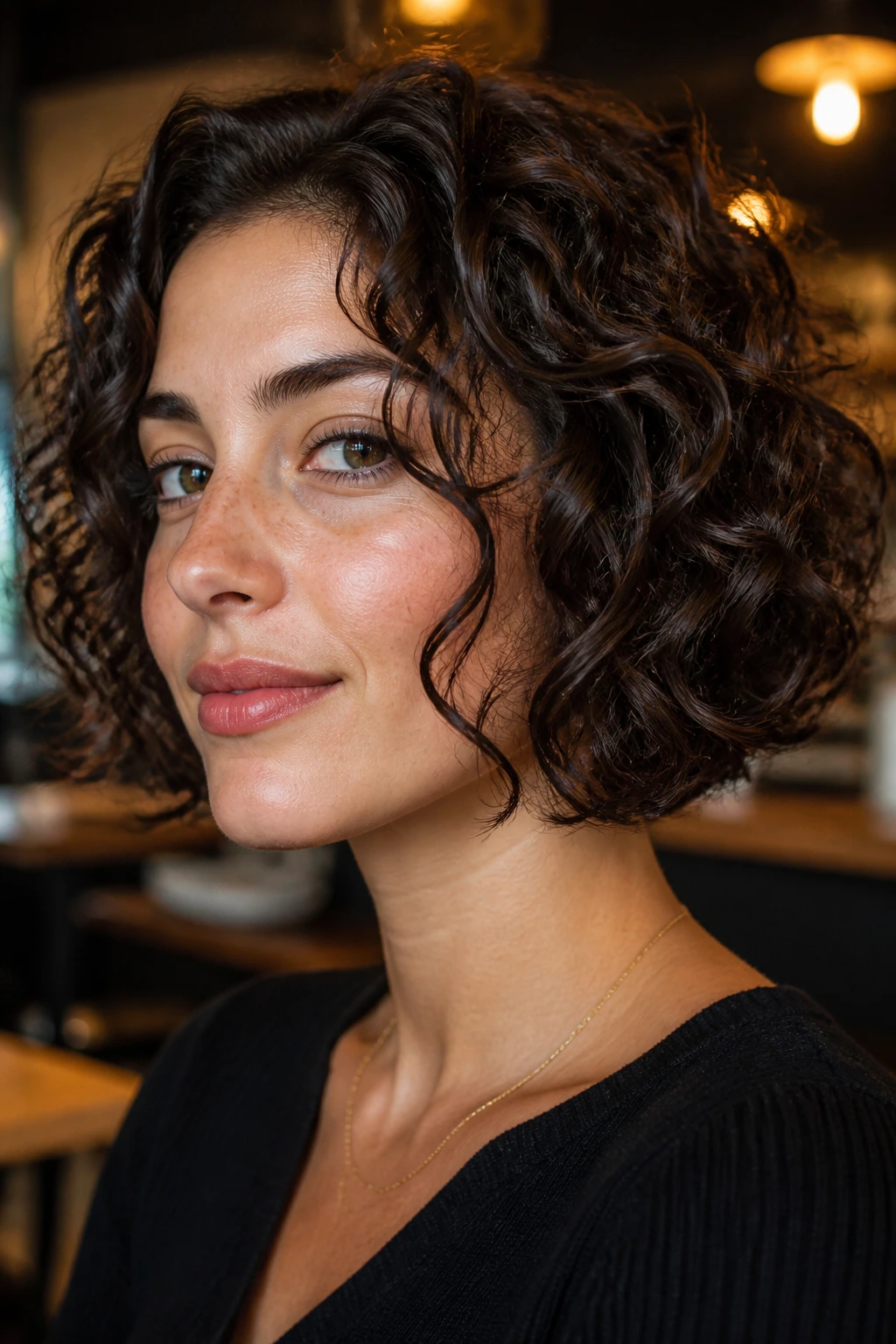
A jaw-skimming bob with face-framing pieces is one of those cuts that sounds simple and does a lot of work. The base length sits near the jaw, but the front pieces are carved so they fall in soft lines around the cheekbones and chin. On long curly hair, that framing can break up bulk around the face without making the haircut look thin.
This is a useful shape if you want your curls to move away from the neck but still want softness near the front. It’s also forgiving. A few pieces can dry tighter, a few looser, and the cut still reads well because the perimeter has a clear destination.
It’s especially nice if your hair tends to puff at the sides. The face-framing lines pull the eye inward instead of outward.
16. Dry-Cut Curl-by-Curl Bob
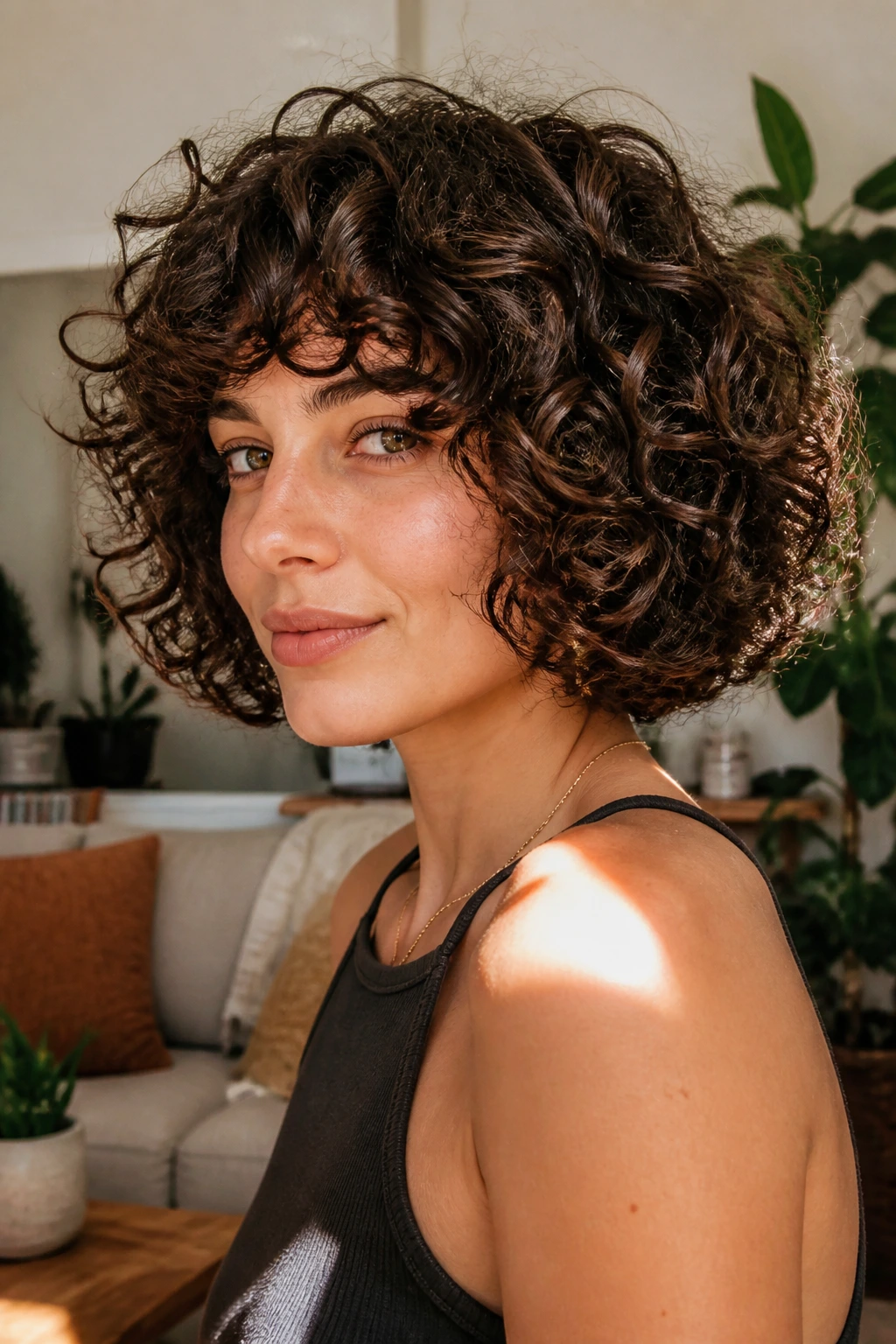
The dry-cut curl-by-curl bob is less about the silhouette and more about the method, but the result is a shape many curly people swear by. The stylist cuts the hair in its dry, natural state, following each curl’s actual fall rather than its wet memory. That matters more than people realize.
When long curly hair is cut dry, the stylist can see exactly where one curl shrinks higher than another, where the front needs a little more length, and where the side wants to sit. It’s a slower approach. It also tends to produce fewer unpleasant surprises. The bob lands where the hair already wants to live.
If you’ve had a bob before and felt like it betrayed you after the first wash, this is the method to ask about. The shape is built for the day-to-day reality, not just the salon mirror.
17. Razor-Textured Curly Bob
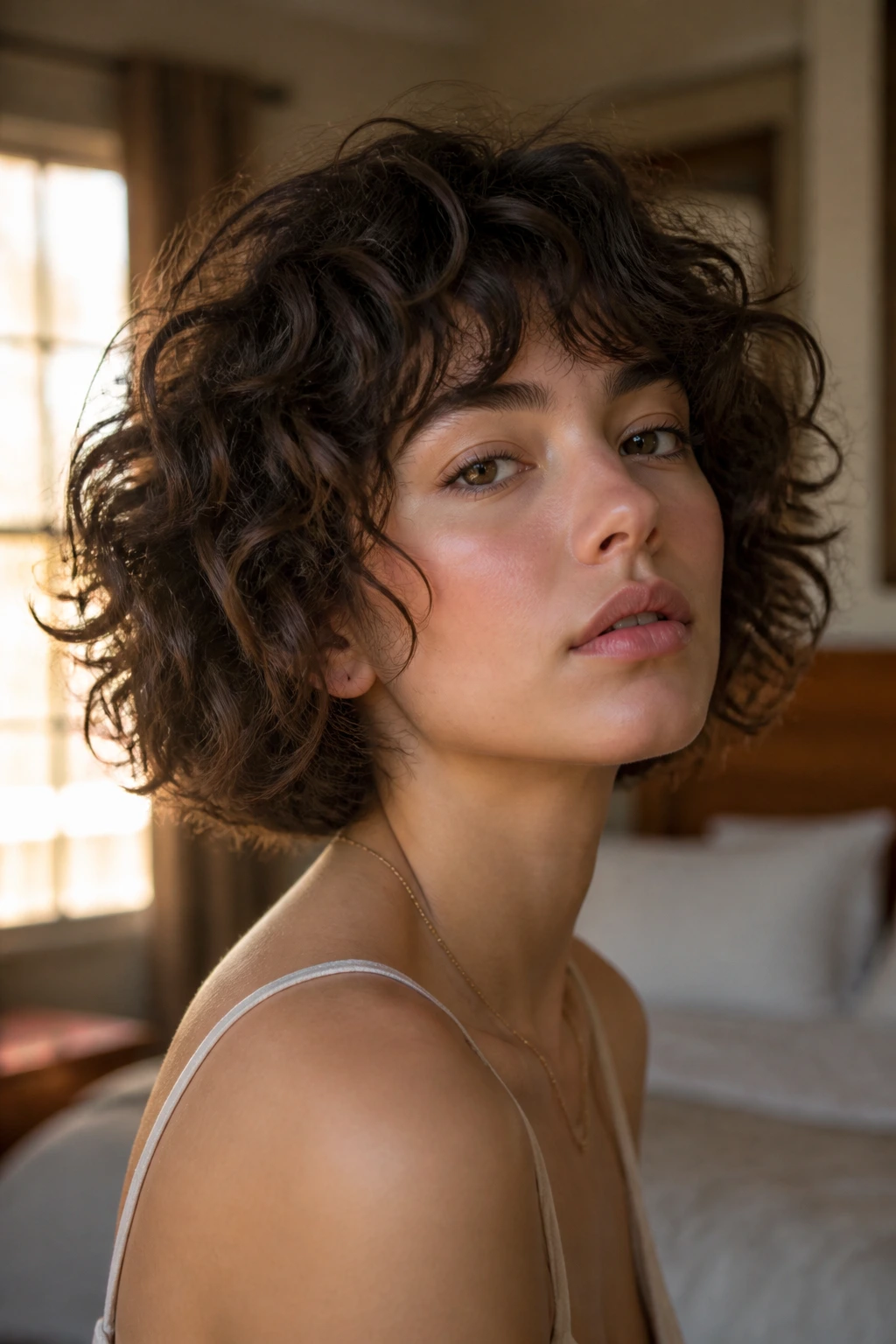
A razor-textured bob can be lovely on the right curls and disastrous on the wrong ones, so I’m always cautious here. On soft waves and looser curls, a razor can remove bulk and soften a hard edge, leaving the bob feeling airy rather than blunt. On very coarse or highly fragile curls, though, it can fray the ends if it’s overused.
When it works, it works because the ends move. The haircut loses that heavy, blocky feeling that some curly bobs get after a blunt cut. The curl pattern looks a little more piecey, a little more relaxed.
I’d keep this one for hair that already forms clean, separate clumps. If your ends tend to splinter, a gentler cutting method is safer. No haircut style is worth fragile tips.
18. Asymmetrical Curly Bob

The asymmetrical bob plays with imbalance on purpose. One side is a bit longer than the other, or the shape shifts so the line feels deliberately off-center. On curly hair, that asymmetry can look lively instead of severe because the curls soften the edge.
This cut is useful if you like a little drama but don’t want to go full fashion-editor sharp. The longer side gives movement and can visually lengthen the neck or jaw, while the shorter side keeps the bob from feeling heavy. It’s a good conversation haircut. People notice it.
The only thing to watch is proportion. If the difference is too large, the style starts to compete with the curl pattern. A small, well-balanced asymmetry usually looks better than a big one.
19. Boxy Density-First Bob
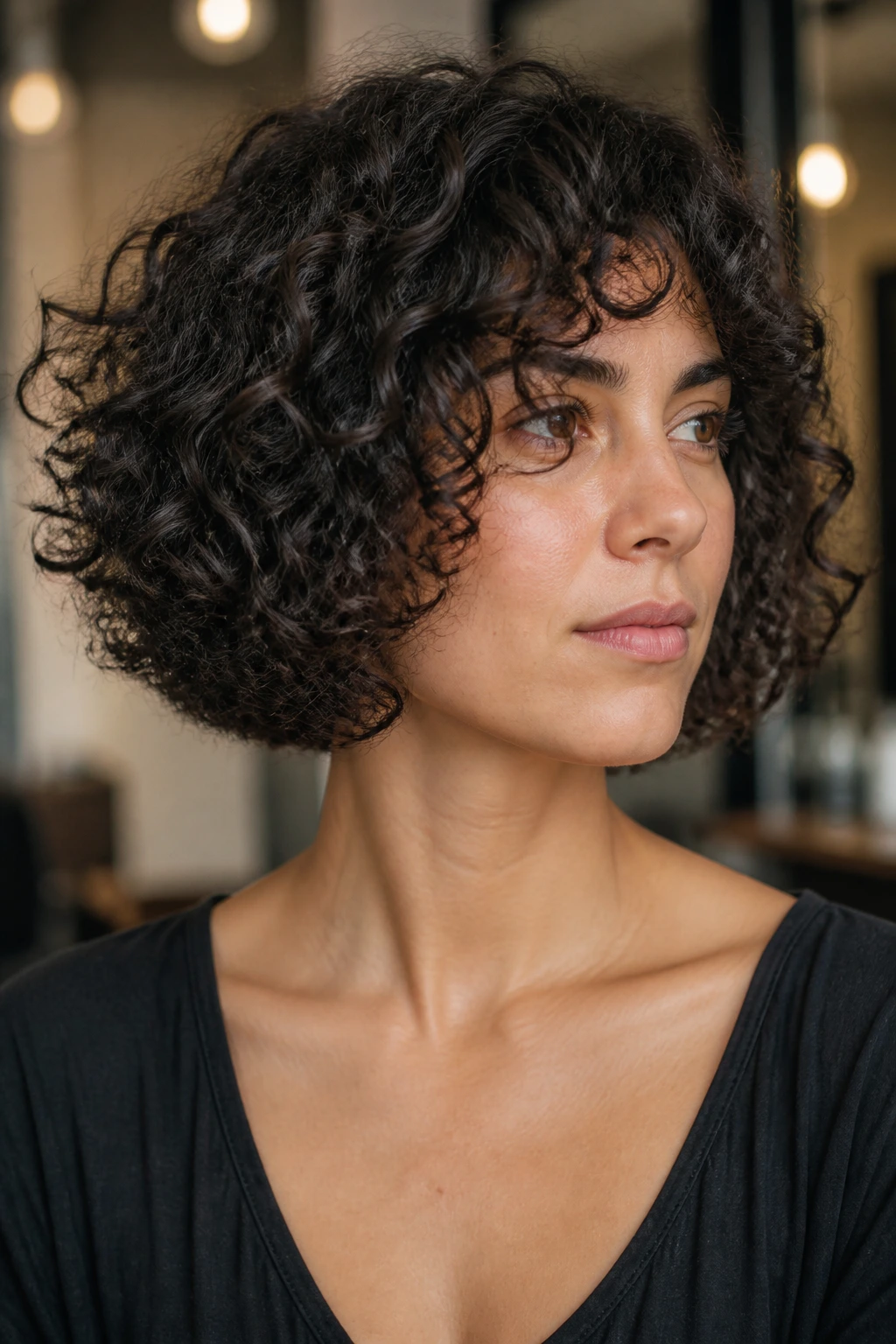
A boxy bob sounds unfashionable until you see the right version on dense curls. The shape keeps more width at the perimeter and resists over-layering, which can be a gift if your hair expands whenever humidity sneezes at it. Instead of trying to carve the bulk away, this cut lets the weight stay where it belongs.
That makes it a strong choice for coarse, thick, or very full curls. The silhouette is clean. The ends stay substantial. And because the cut is not trying to taper too aggressively, it often looks stronger between washes than a heavily layered version.
This is not the cutest bob on paper. It is often the most satisfying in real life. There’s a difference.
20. Graduated Crown-Lift Bob
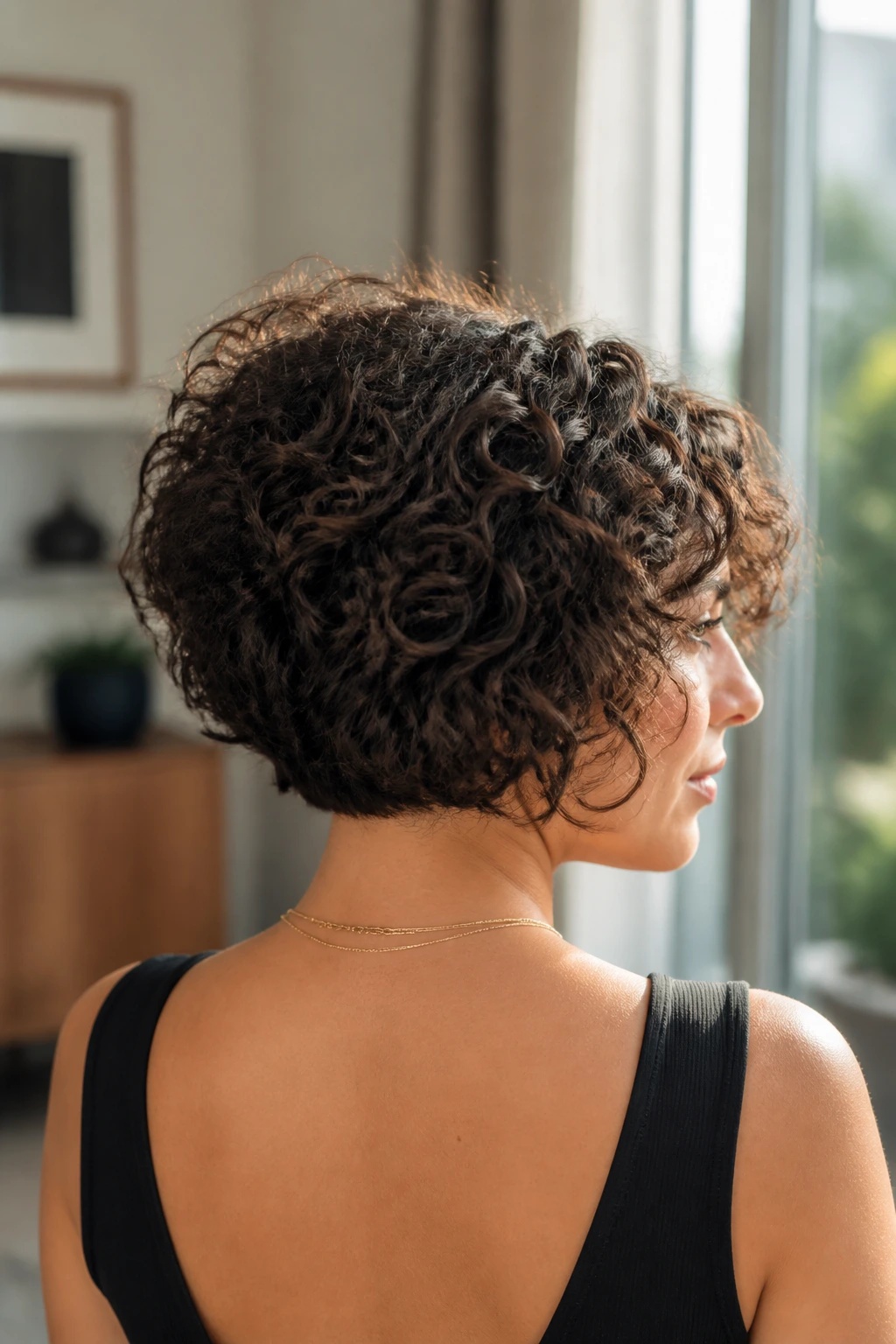
If your curls sink at the crown, a graduated bob can bring that area back to life. The back is cut with a gentle rise, so the crown sits a little higher and the shape has lift near the top of the head. This is different from a stacked bob in feel: it’s less about a sharp shelf and more about a smooth climb.
It suits people whose curls are dense below but flatter above, or anyone whose hair loses shape after a few hours. The graduation helps the back fold under while the top keeps some air. On long curly hair, that can make the entire haircut read smaller and neater without actually removing much length.
It also pairs well with side parts. The lifted crown gives the part somewhere to go instead of collapsing flat against the scalp.
21. Tapered Nape Bob
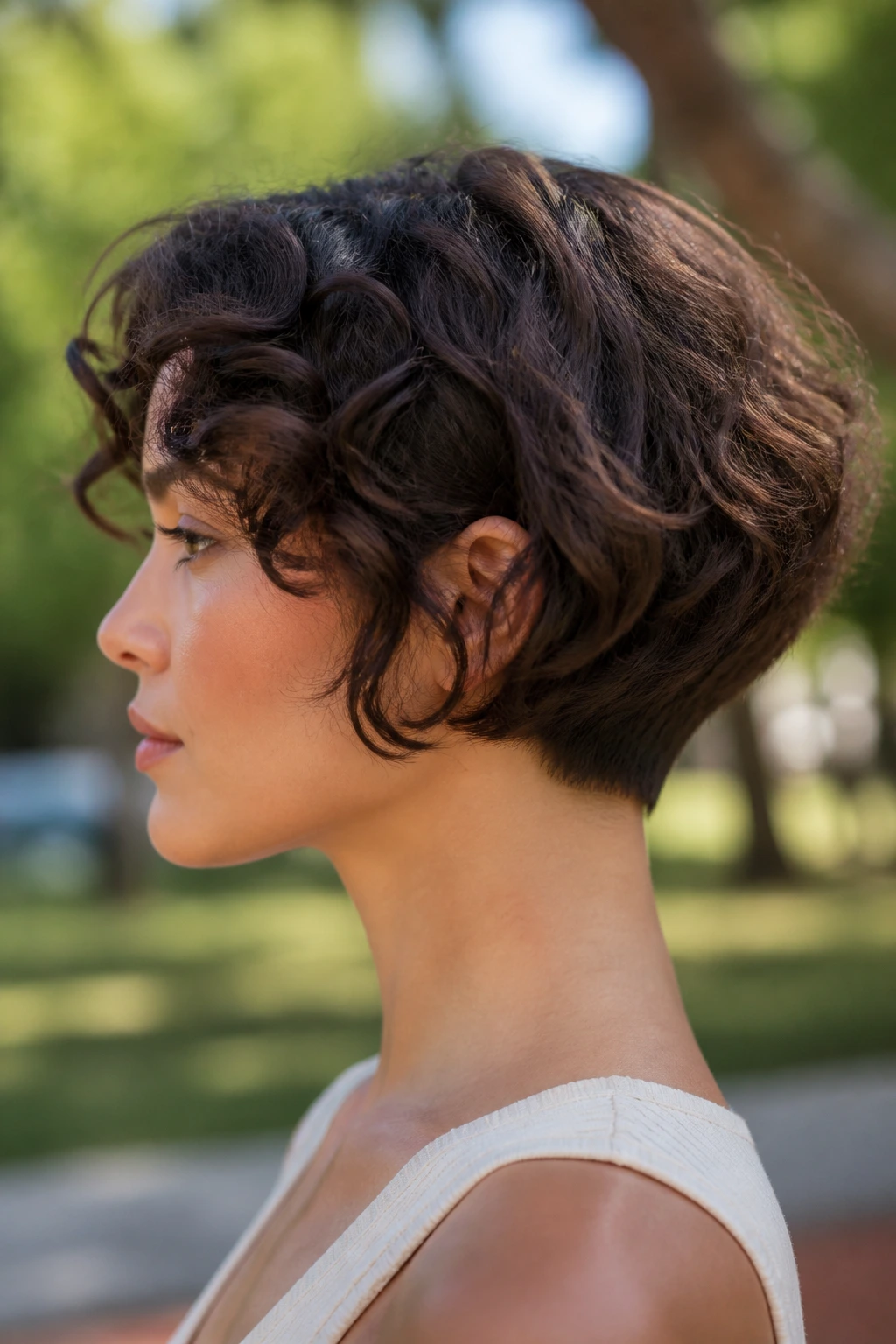
A tapered nape bob keeps the hair shorter and lighter at the neck, then lets the rest of the shape expand upward and outward. On long curly hair, that can feel like relief. The neck area stops collecting heavy layers of damp curl, and the shape sits with less friction under collars and scarves.
This is a sensible option if your hair grows thick at the nape or if your curls tend to knot there. It also gives the bob a cleaner finish from the side view. I like it on people who want a bob that stays tidy without feeling stiff.
If you wear your hair up sometimes, the tapered nape also makes low clips and half-up styles easier. The back lies down more cooperatively.
22. Wavy-Curl Hybrid Bob
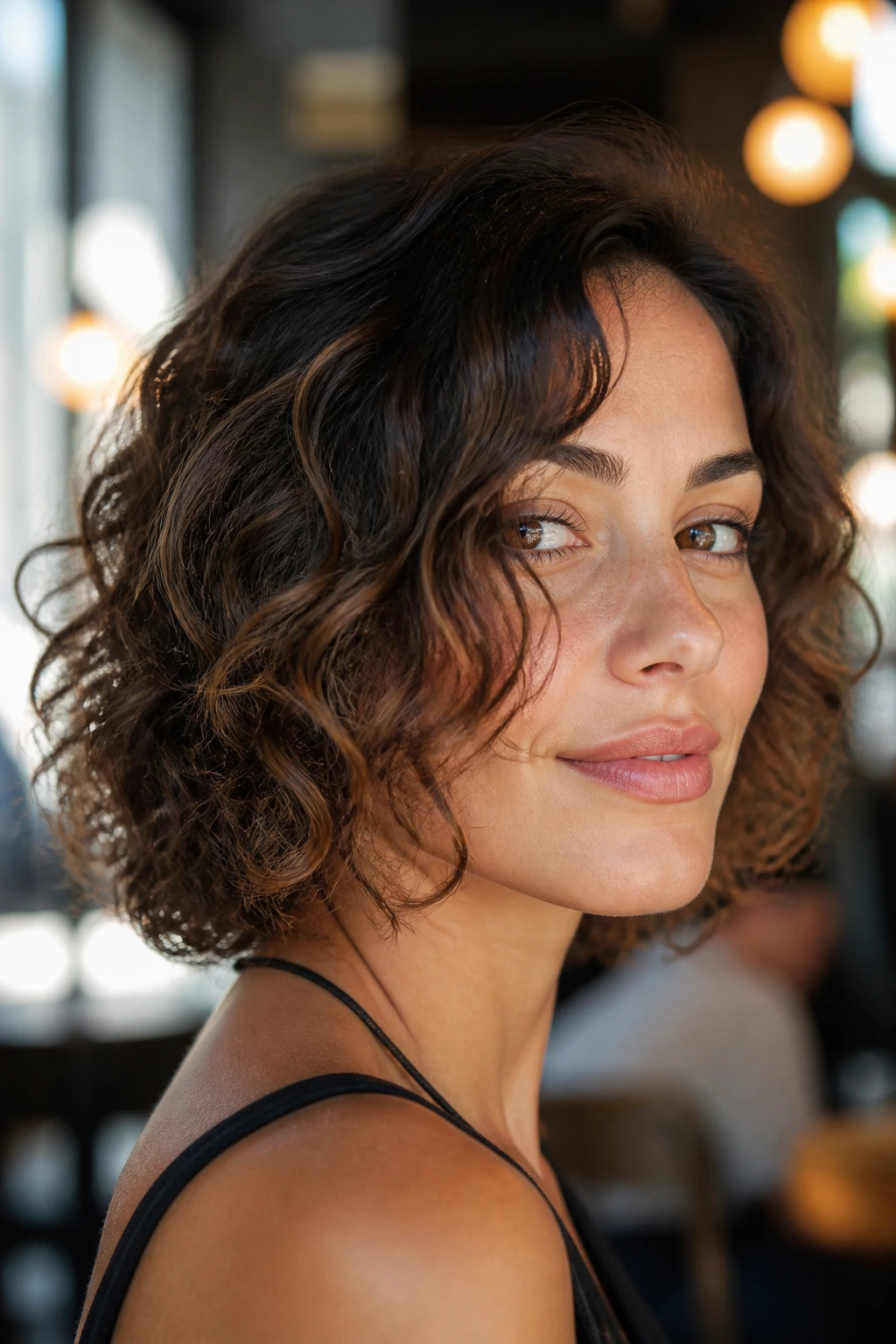
Not every head of hair is a single curl type. Some are wavy at the front, curlier underneath, and a little tighter around the nape. The wavy-curl hybrid bob is built for that mixed texture. It usually sits at the lob stage and uses moderate layers to keep the softer waves from disappearing while giving the tighter sections enough room to spring.
This cut avoids the mistake of treating all texture the same. If the top is looser, it needs some length. If the underneath is tighter, it may need weight removed so the whole shape doesn’t sit unevenly. The hybrid bob handles that split personality better than a one-length cut.
It’s a good reminder that “curly hair” covers a lot of ground. The more mixed your pattern is, the more useful this style becomes.
23. Nape-Length Rounded Bob

A nape-length rounded bob feels compact in the best way. The back sits close to the neck, the sides curve gently, and the overall shape stays tidy without being severe. On long curly hair, it can be a fresh reset, especially if the ends have been dragging for a while.
This cut works best when the curls have enough definition to keep the outline soft. If the texture is too fuzzy or the layers too short, the rounded shape can lose its clean edge. But on the right head, it looks efficient and polished, almost like the haircut has been pressed into a smooth curve.
It’s also one of the easier bob shapes to wear with earrings or high necklines. The nape stays open, which makes the silhouette feel lighter.
24. Piecey Layered Bob
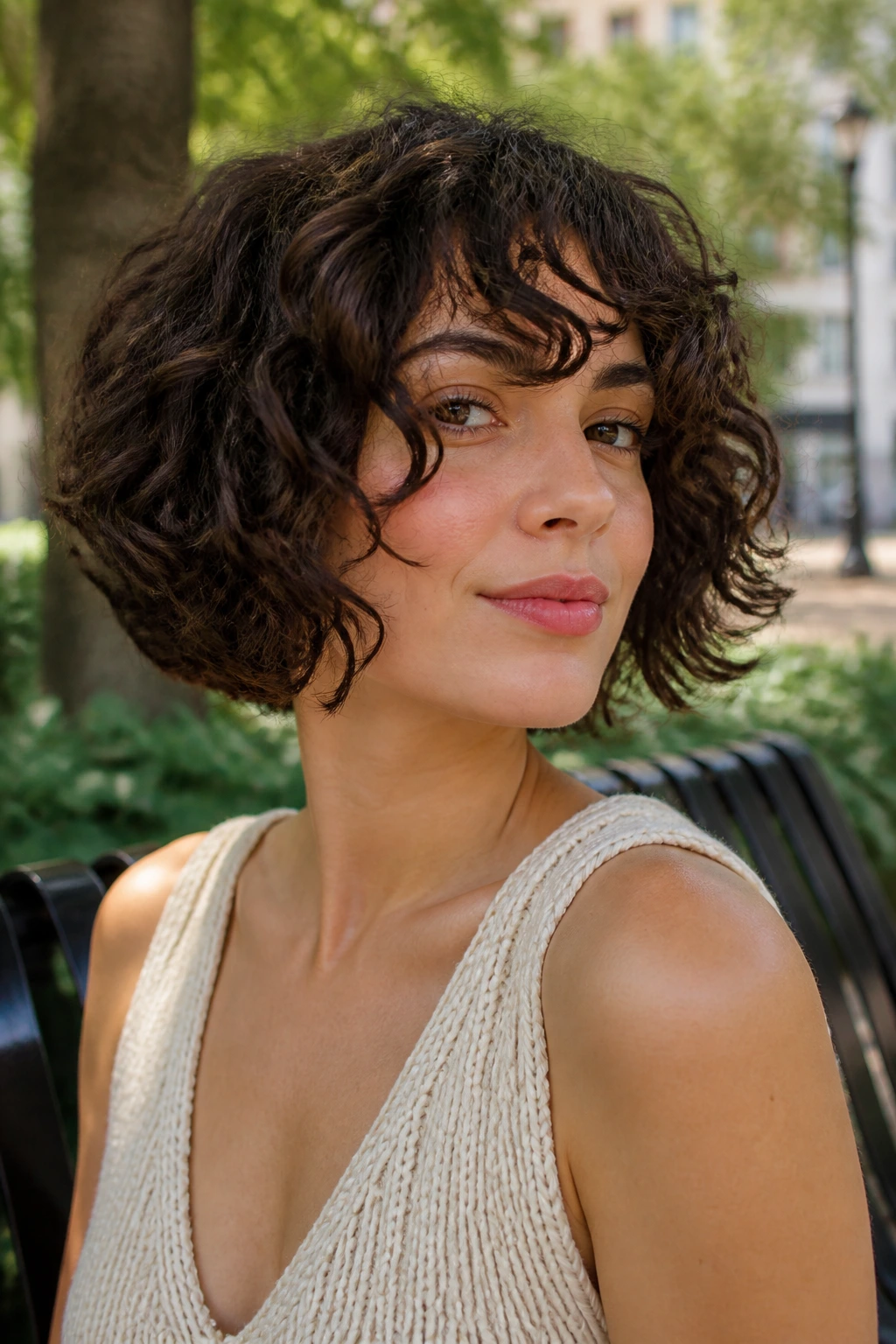
A piecey layered bob is for curls that like to separate into distinct clumps rather than one big mass. The layers encourage that division, giving the haircut a little air and a lot of movement. On long curly hair, it’s especially useful if you want the bob to feel less heavy but don’t want it to puff outward.
The biggest risk is overdoing the layers. Too many, and the haircut starts to look ragged instead of piecey. The sweet spot is usually a few well-placed interior layers that let the curls stack without choking each other.
I like this cut on hair that already has a playful texture. It feels less formal than a blunt bob and less structured than a shag. Somewhere in between. That middle ground can be very wearable.
25. Deep Side-Sweep Bob
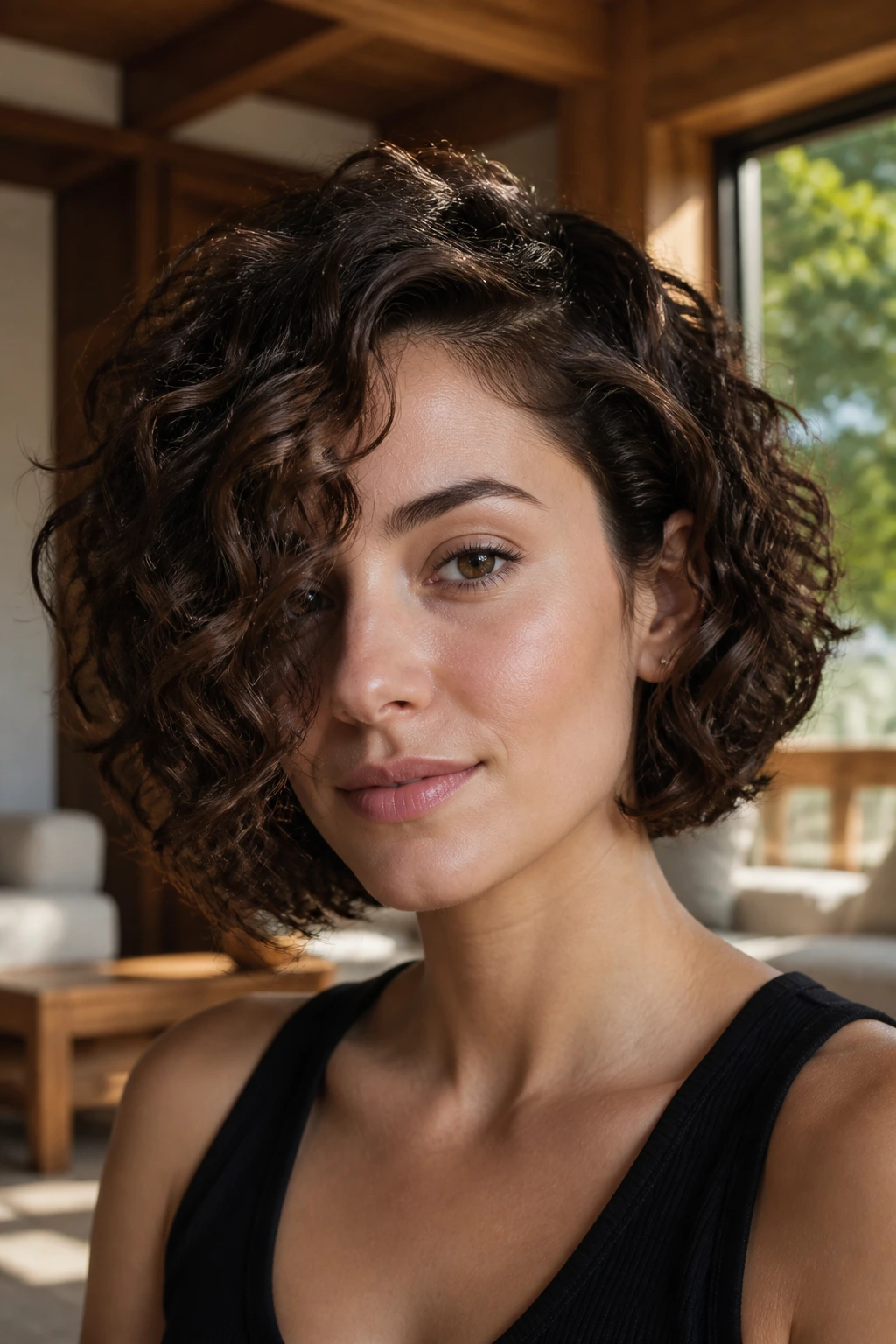
A deep side-sweep bob leans on one long front section that sweeps across the forehead or cheek and folds into the rest of the cut. The shape gives one side more visual weight, which can make long curly hair look softer and more sculpted at once.
This works well when you want the bob to frame the face but not sit symmetrically. It’s flattering around the eyes, and it can hide a growth pattern you don’t love along the front hairline. If your curls are springy, the sweep will sit higher and more textured; if they’re looser, it may read smoother and more dramatic.
It also has a nice side effect: it makes the haircut look intentional even on days when the back is slightly fuzzy. The front does the work.
26. Lob With Underlayer Removal
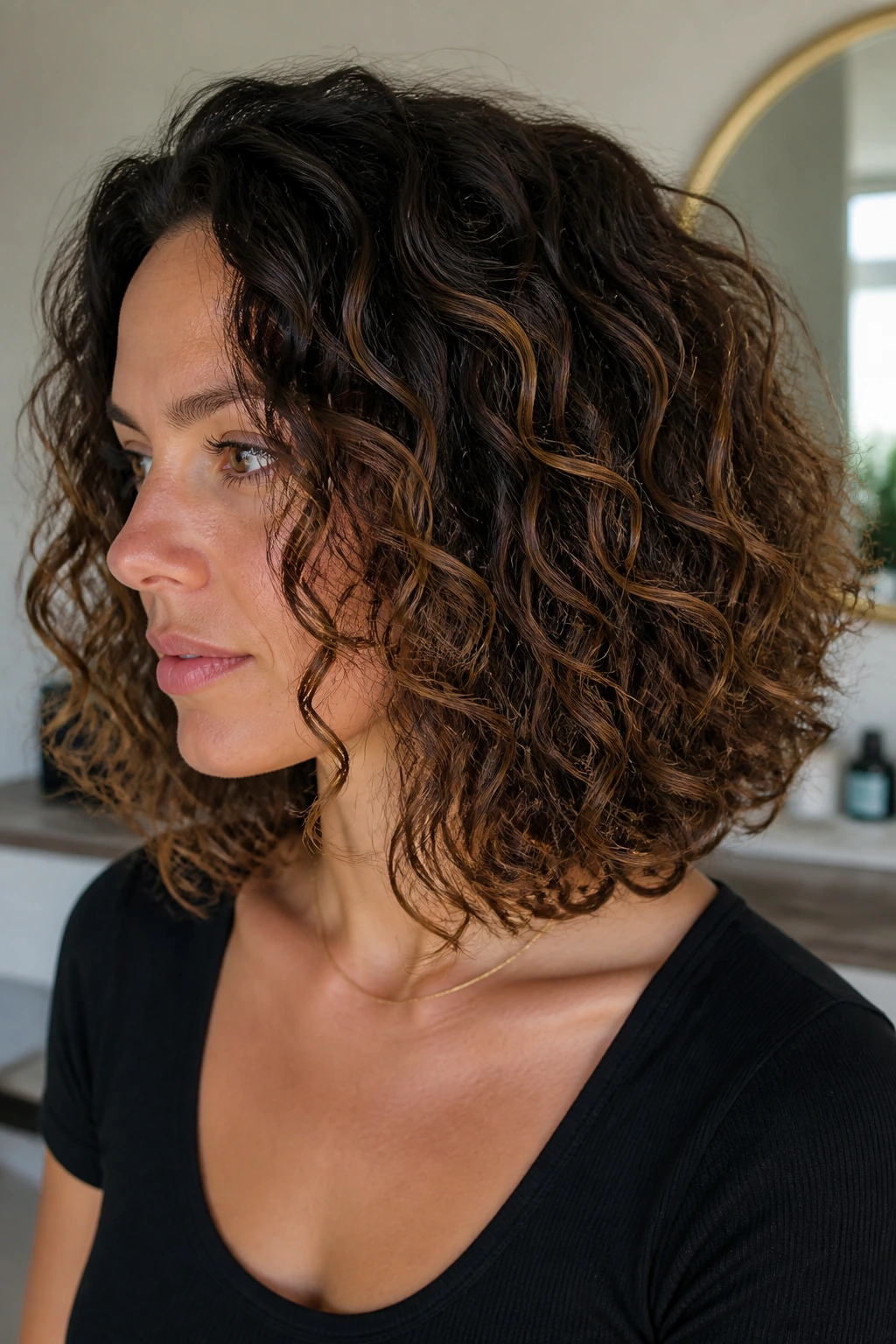
This is one of the most practical cuts on the list, which is probably why stylists quietly keep recommending some version of it. The top layer keeps the length, while the stylist removes weight from the underlayers so the curls don’t form one giant shelf. On dense long curly hair, that can make the whole head feel lighter without sacrificing the bob shape.
The lob length gives enough room for the curls to settle, while the removed underlayer keeps the interior from becoming hot and bulky. It’s not flashy. It just works. If you’ve ever had a bob that felt heavy around the collar or looked narrower on top than on the sides, this is a strong fix.
It’s also one of the better options if you like to tuck your hair behind the ears. The front still looks full.
27. Micro-Layered Airy Bob

Micro-layers are tiny, precise layers placed to break up density without changing the outline too much. On long curly hair, that makes the bob feel lighter and a little more buoyant. The shape stays bob-like, but the curls can move more freely through the body of the cut.
This is a good choice if your hair is coarse or thick enough to eat a blunt line for breakfast. The micro-layers prevent the haircut from sitting like a block. At the same time, they don’t cut so much away that the ends disappear. That balance is the whole point.
I’d call this a controlled haircut. You won’t see big dramatic layers. You will see a shape that behaves better on day three than a haircut with fewer moving parts.
28. Long Curly Bob With Long Bangs
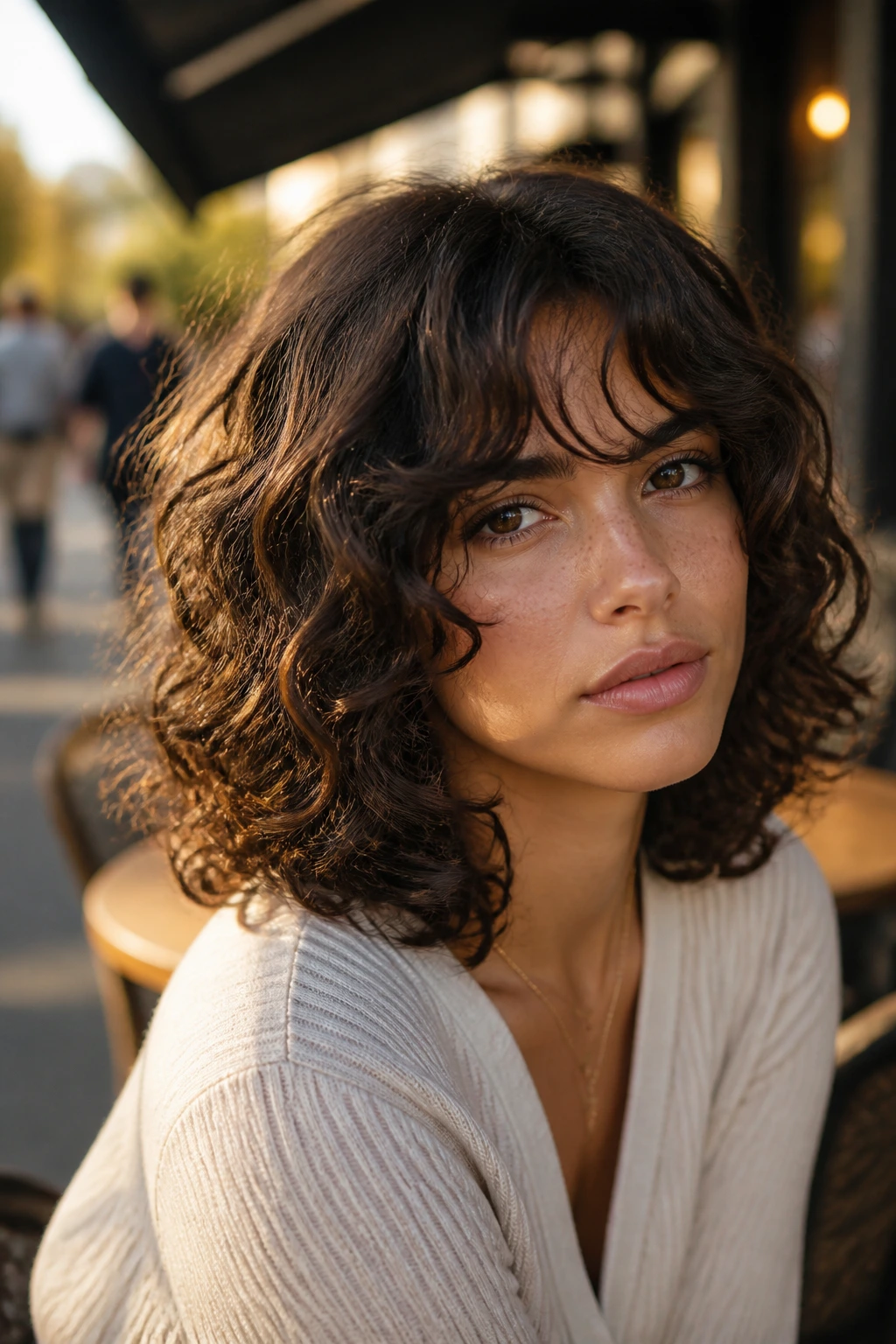
Long bangs are a useful compromise. They give you fringe without the daily panic of short bangs, and they blend nicely into a longer bob or lob. On curls, the length is especially helpful because the bangs shrink upward once dry. Keeping them long avoids accidental forehead gaps.
This cut is a good fit if you like the idea of face framing but want flexibility. The bangs can be worn forward, tucked away, or split down the middle. They also soften the transition between the front and the sides, which makes the whole haircut feel less abrupt.
It’s one of the easiest ways to make a bob look fresh without cutting the perimeter too short. The face does the styling for you.
29. Soft Undercut Bob
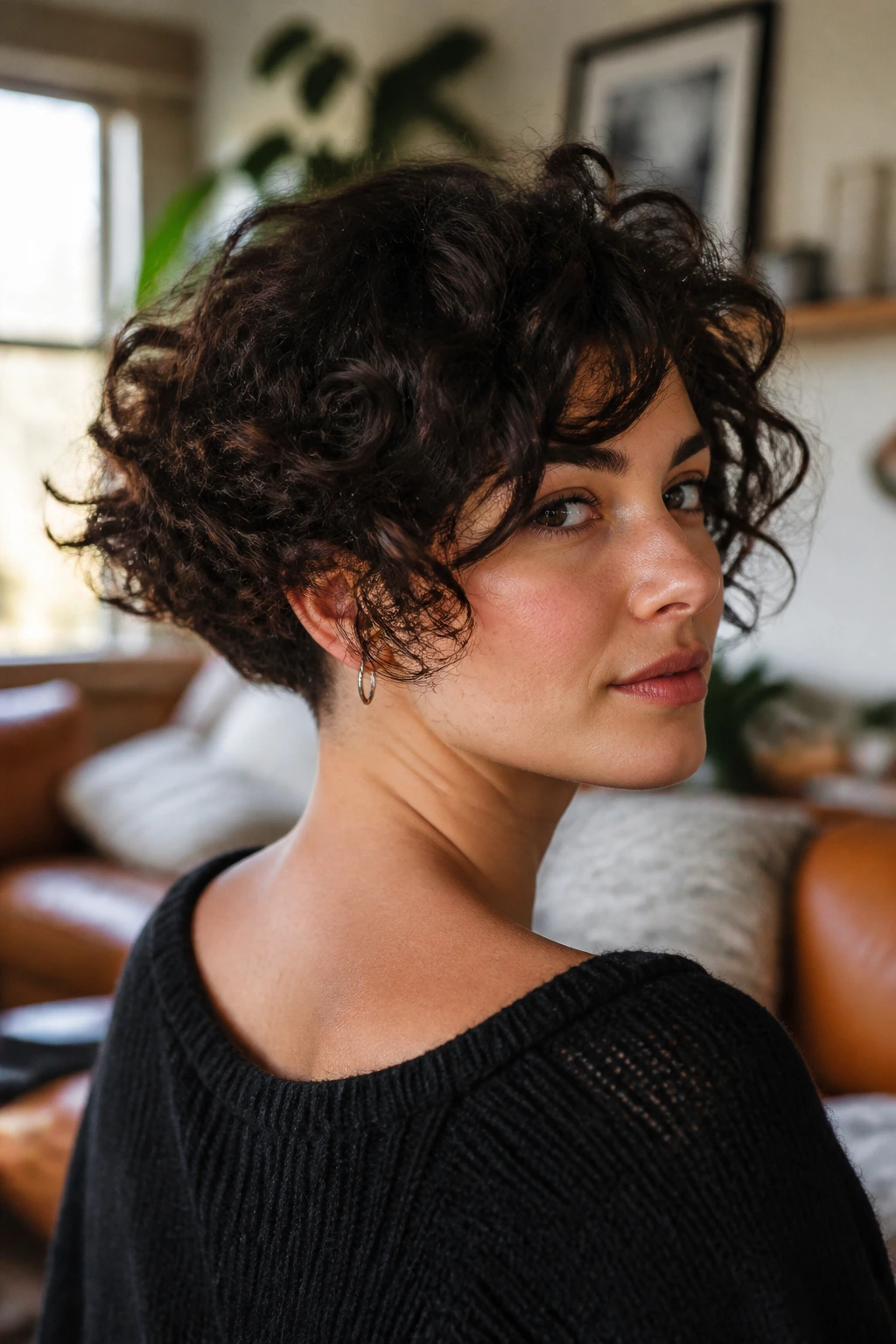
A soft undercut bob is for very dense curly hair that needs real internal relief. The undercut is hidden or partly hidden, usually at the nape or around the lower back of the head, so the visible shape still reads as a bob. What changes is the weight underneath. That weight can make a huge difference.
This is not the place to be timid if your hair feels hot, bulky, or stubbornly triangular. Removing some hidden mass can make the top layer sit better and reduce the time you spend fighting the shape every morning. It also helps if you live in humid weather and your curls tend to expand outward.
The word “soft” matters here. You want relief, not a patchy haircut. A good undercut should vanish into the design.
30. Bubble Bob for Curls
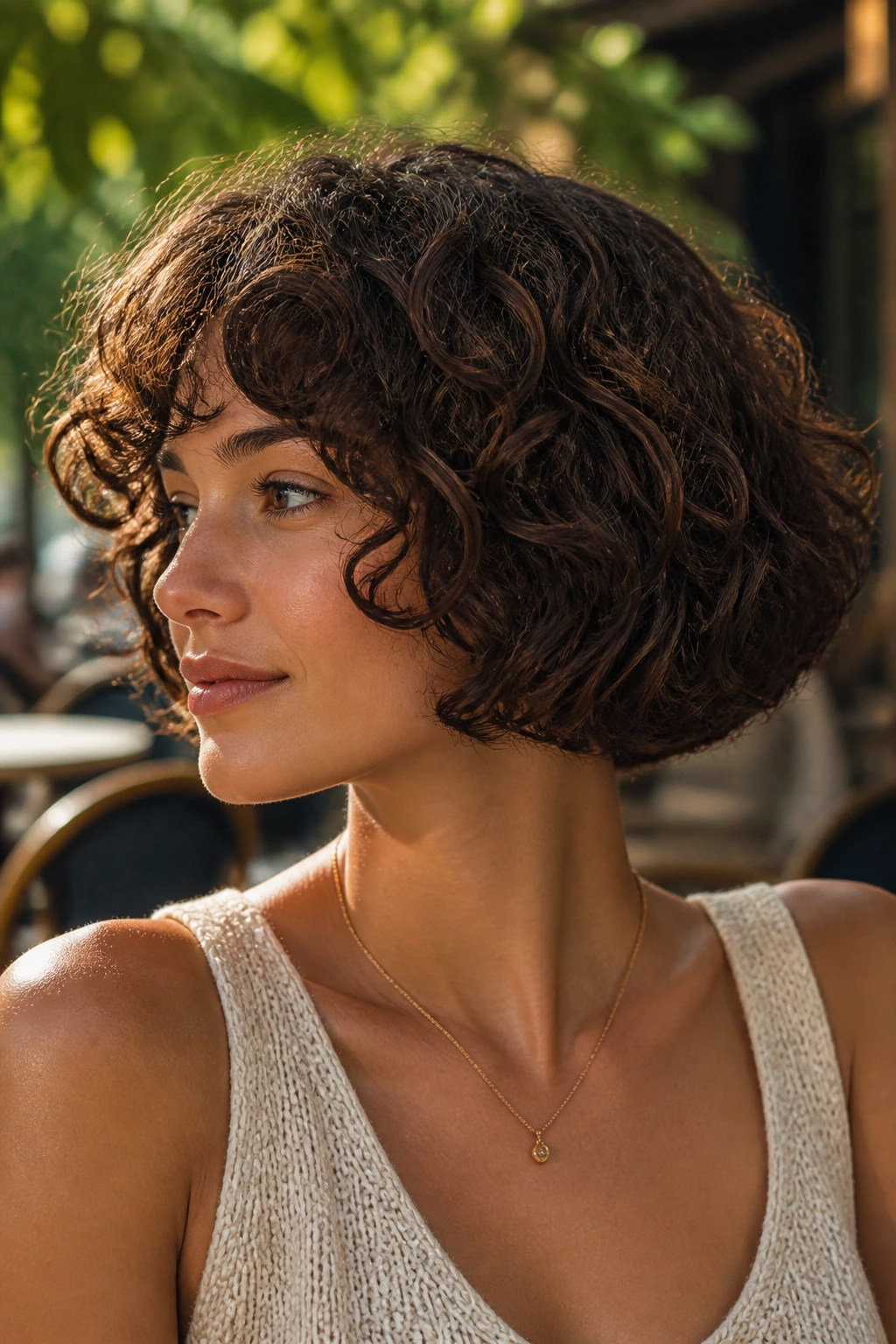
The bubble bob is rounded, full, and a little retro in the best way. On curly hair, it creates a lifted, curved outline that looks playful without getting sloppy. The sides and back are shaped so the curls settle into a soft dome rather than hanging straight down.
This cut works when you want volume to feel deliberate. Not big. Deliberate. It can be lovely on hair that naturally pushes outward, because the haircut uses that tendency instead of trying to flatten it. The bubble shape also photographs in a pleasing way from the side, which matters more than people admit when they’re choosing a haircut.
If your curls are thin, be cautious. The bubble bob can look sparse if the shape is built too wide. Density helps.
31. Face-Framing Lob Bob
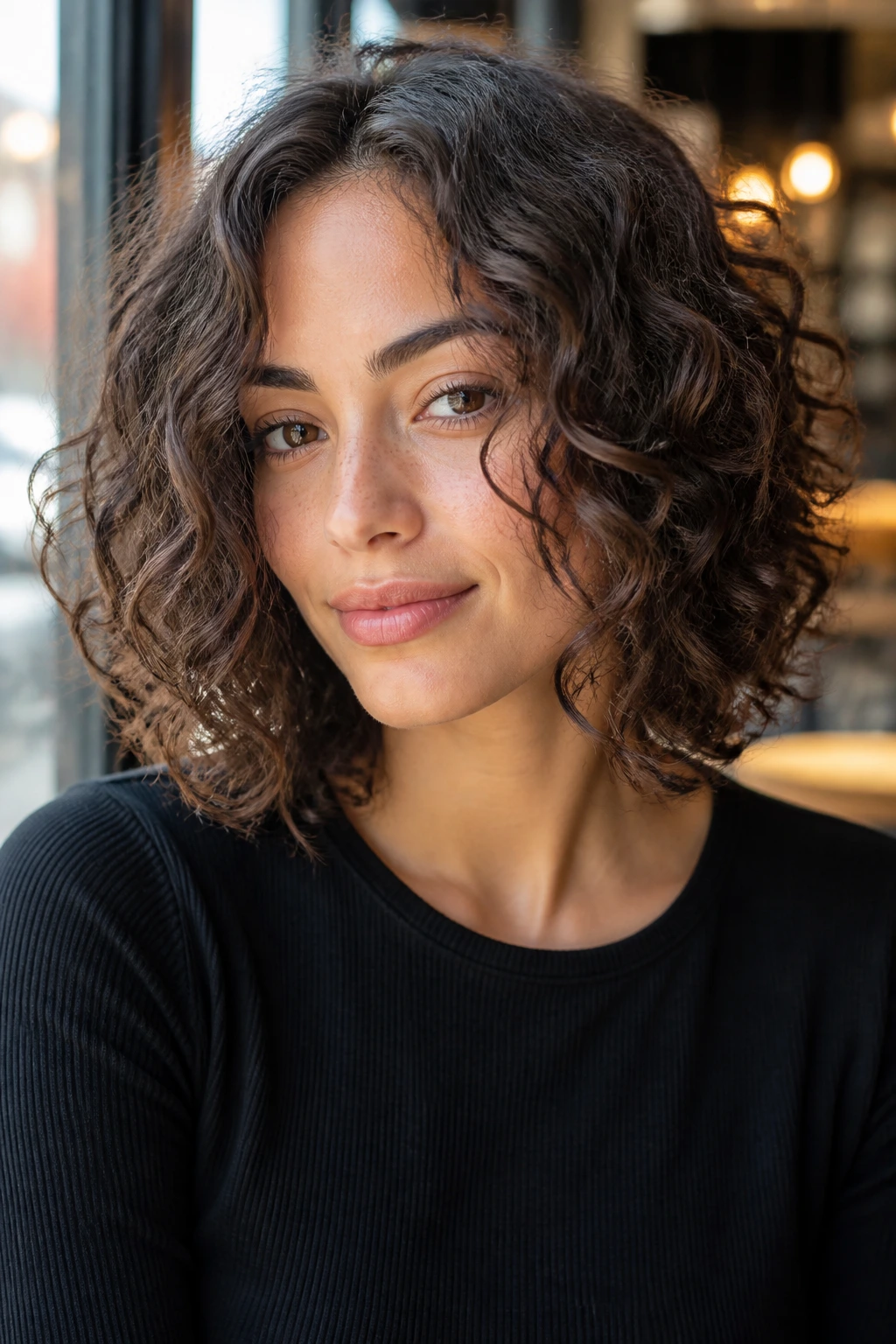
A face-framing lob bob keeps the length in the collarbone zone while carving in pieces around the cheeks and jaw. On long curly hair, this is one of the most forgiving choices because it gives shape without making the perimeter feel heavy. You get movement around the face and enough length in back to keep the haircut soft.
It’s a good option if you want to look like you changed your hair but did not make a dramatic statement about it. The framing pieces can be adjusted to suit your face shape, your curl pattern, and how much styling you want to do. A little goes a long way here.
If your curls are especially springy, ask that those face-framing pieces be left longer than the stylist thinks is necessary. They will rise.
32. Sculpted Volume Bob
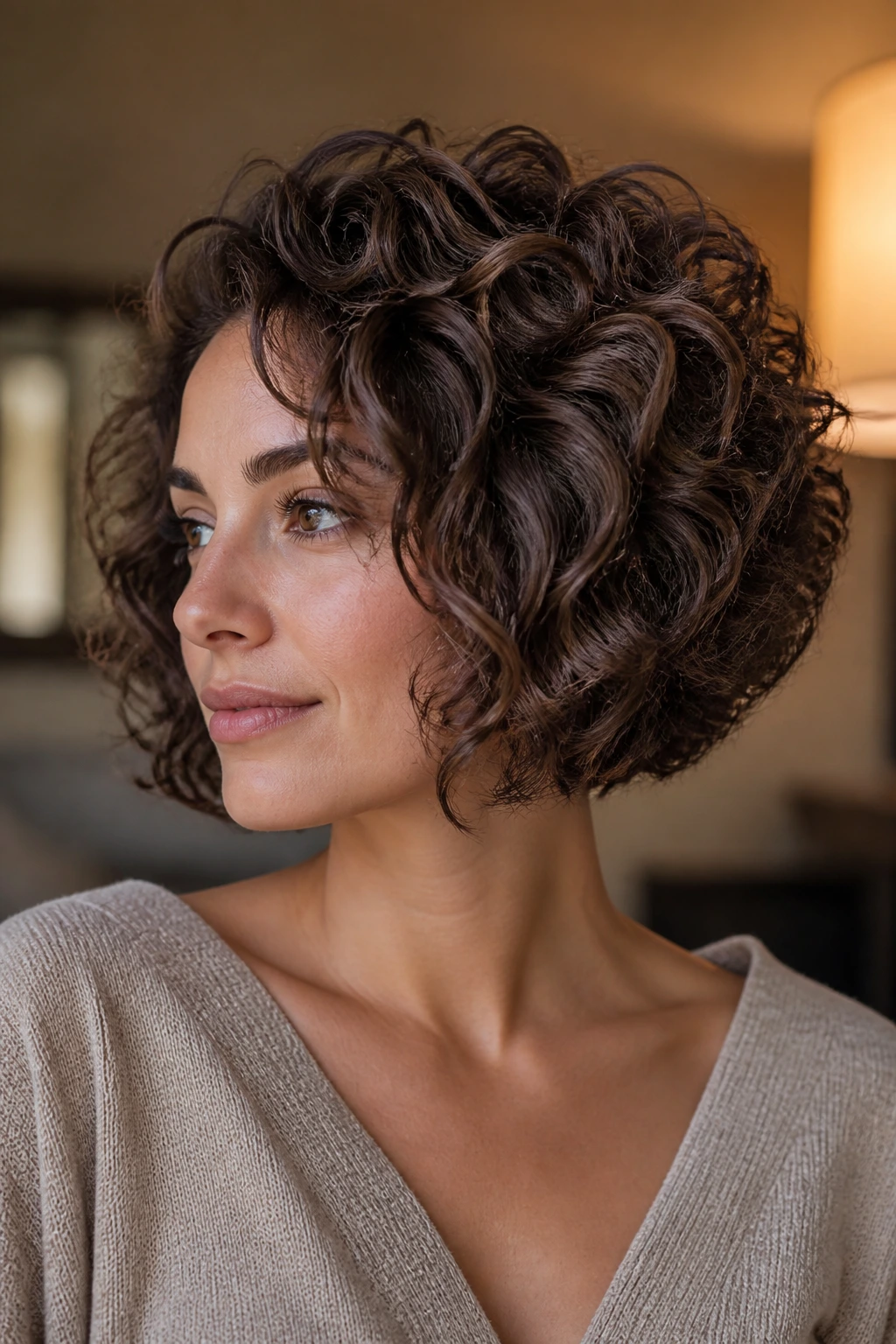
The sculpted volume bob is what happens when the stylist decides the volume should go somewhere on purpose. Usually that means the crown and upper sides get a little more lift, while the perimeter stays controlled. The result is a shape with body in the right places and less puff at the edges.
This is a strong cut for people with long curly hair who want fullness but not chaos. It can make the head look balanced from every angle, especially when the curls are diffused with a bit of lift at the roots. The silhouette feels tailored. Not rigid. Tailored.
It’s also a nice choice if your hair naturally falls flat at the top. The haircut gives the roots a bit of visual support, which saves you from having to fake volume every morning.
33. Grow-Out-Friendly Bob
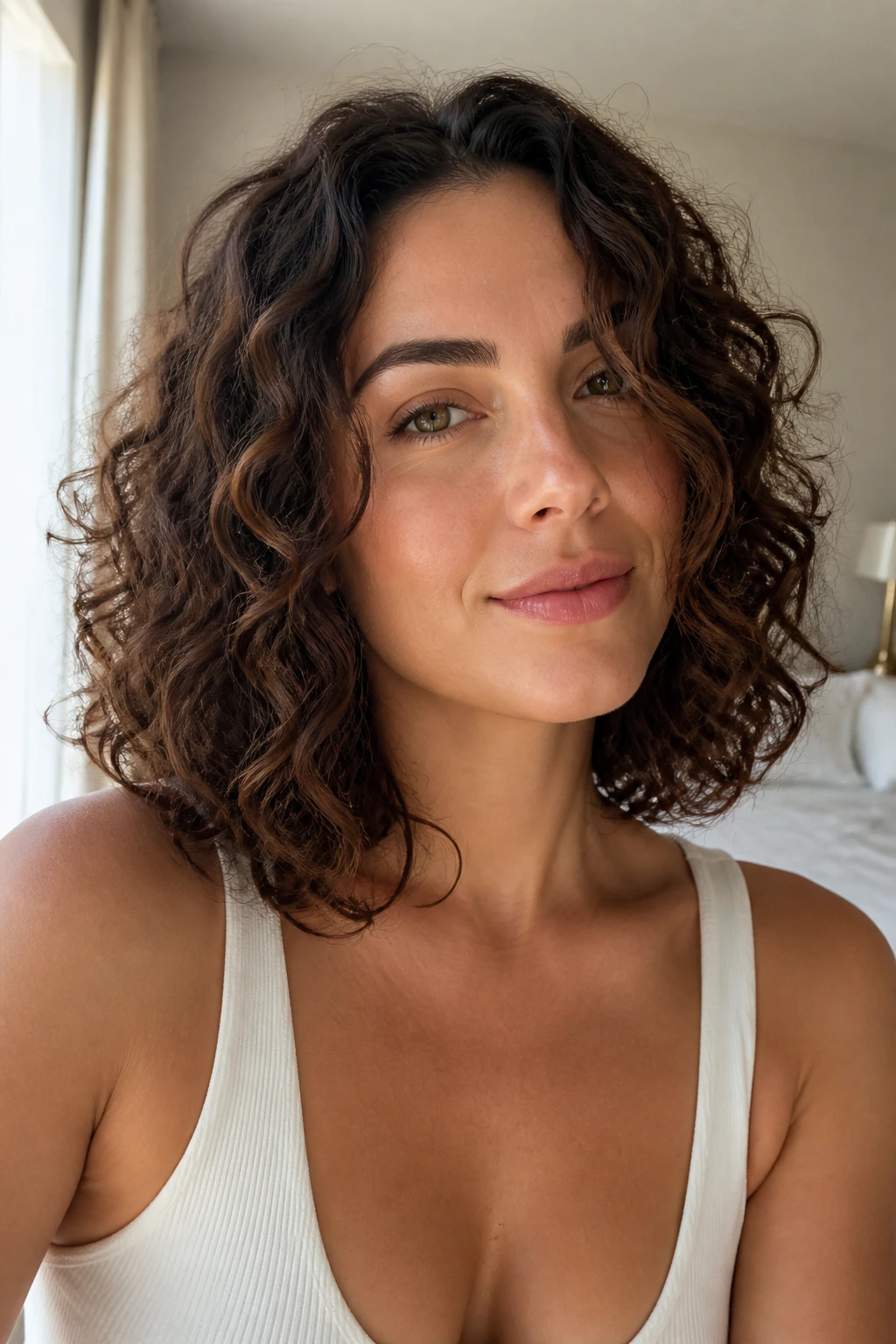
A grow-out-friendly bob is not one dramatic cut. It’s a shape designed to stay useful as the hair gets a little longer. Usually the front is left longer, the layers are kept soft, and the line is not too severe. On long curly hair, that means the haircut still reads clean even after eight to ten weeks.
This matters more than it sounds. A lot of bob haircuts look sharp for two weeks and awkward for six. A grow-out-friendly shape buys you time. It also suits people who do not want a strict trim calendar or who like to wear their curls differently from week to week.
I think of this as the practical bob. It won’t win points for drama, but it will keep looking like a choice instead of a mistake.
How to Choose the Right Bob Length for Your Curl Pattern
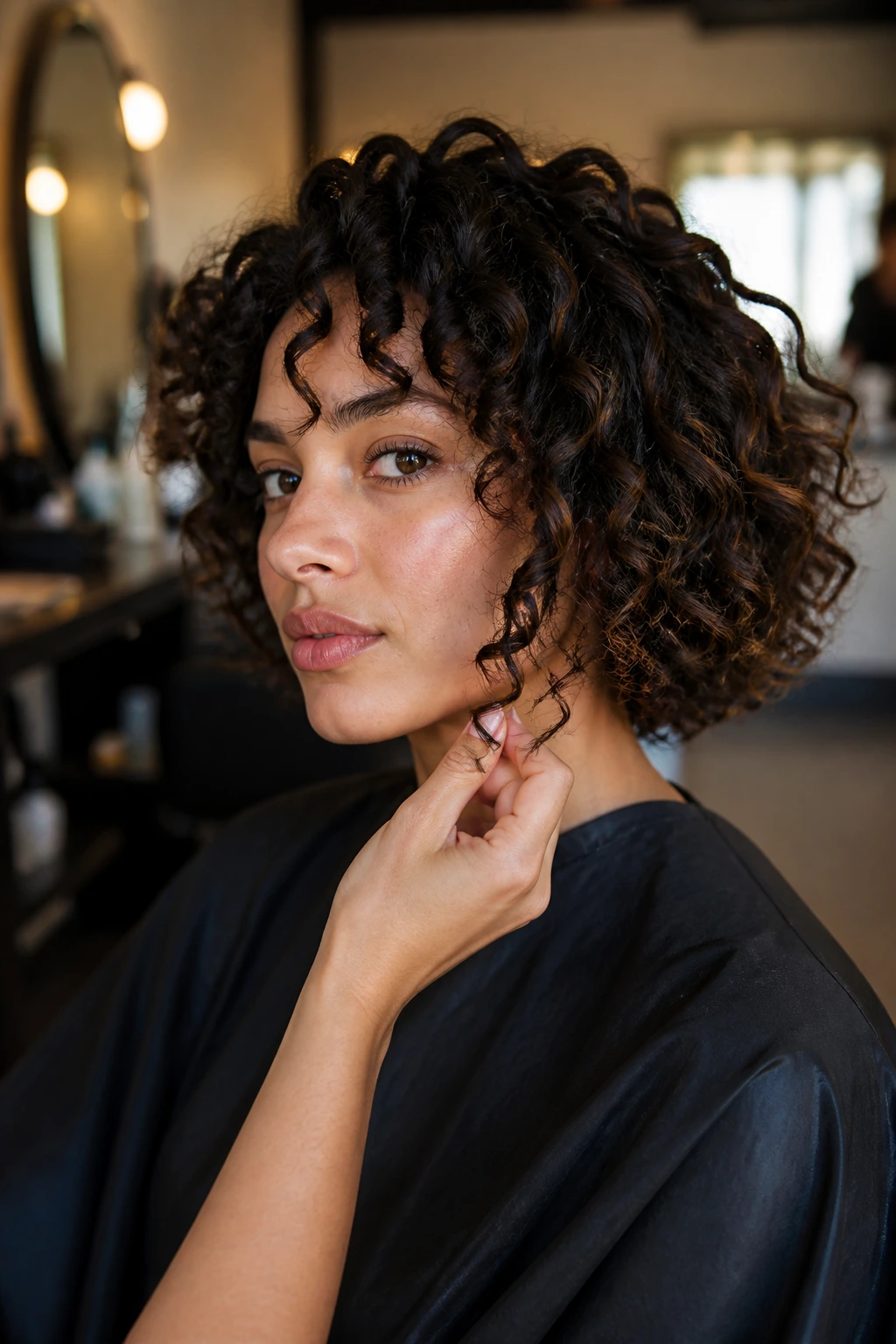
The first thing to decide is where your curls land when they are dry, not damp. That sounds obvious, but plenty of bad bob decisions happen because someone falls in love with a wet mirror. A curl that reaches the shoulder when wet may bounce up to the jawline once it dries. If you love shoulder length, ask for a little more. If you want jaw length, your stylist may need to leave the shape a touch longer than you expect.
Texture matters too. Fine curls can disappear if the bob is cut too aggressively with layers. Dense curls, on the other hand, often need some internal debulking or the haircut grows outward instead of down. A looser wave may live happily in a blunt lob, while a tight coil usually needs shape carved with a little more patience.
Face shape is part of the conversation, but I would not let it bully the whole decision. A square jaw can be softened with face-framing pieces. A longer face can be balanced with volume at the sides. The main question is simpler: do you want the bob to sit near the chin, the collarbone, or somewhere in between?
Essential Tools for Curly Bob Haircuts
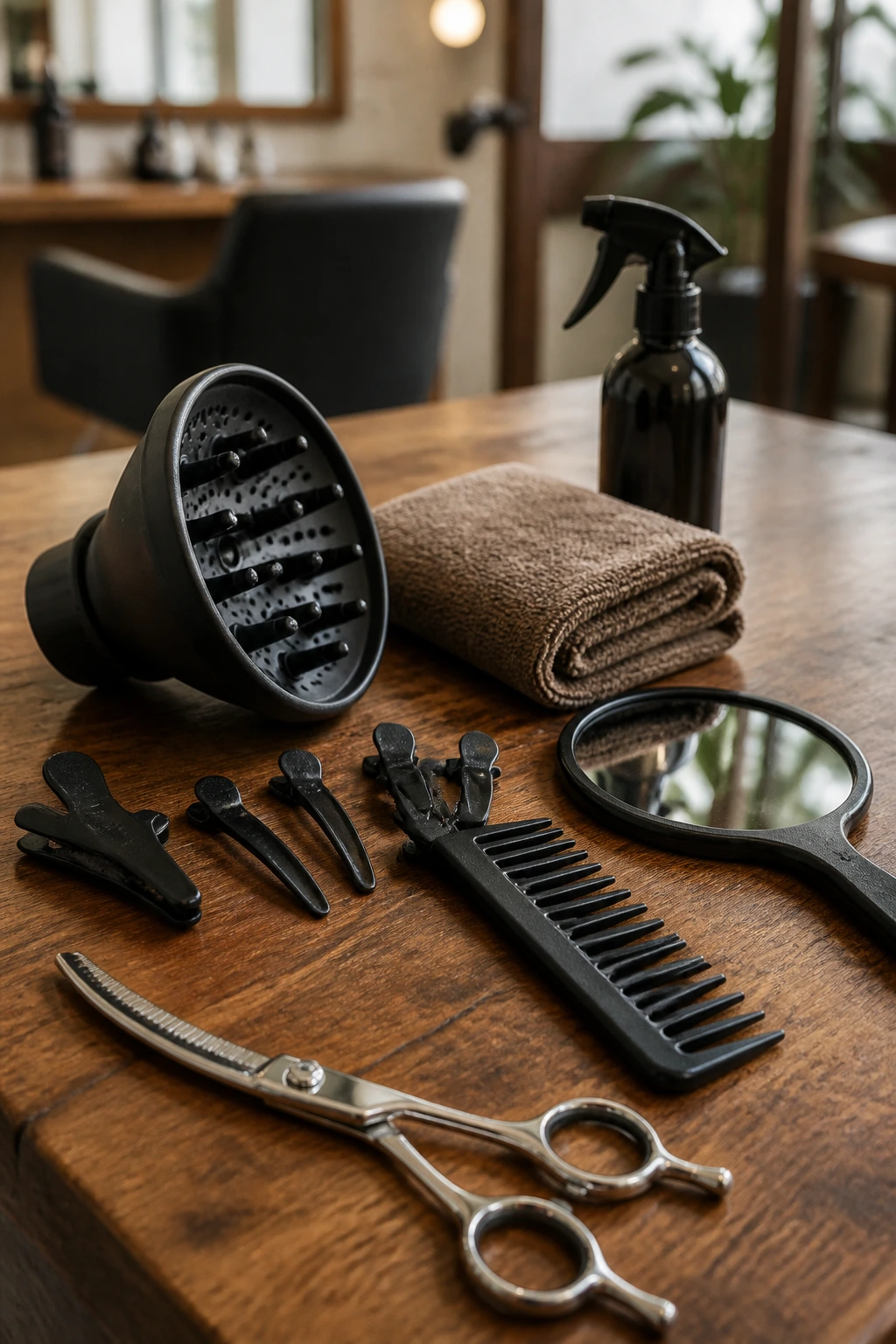
- Curly-hair shears: A stylist who cuts curls well usually uses sharp shears with clean edges; dull scissors chew up the shape fast.
- Diffuser attachment: This helps set the curl pattern without blasting the hair into frizz, especially at the crown and fringe.
- Wide-tooth comb: Best for detangling in the shower or distributing leave-in through wet curls without shredding clumps.
- Sectioning clips: Useful during a curl-by-curl cut or when you’re styling the bob in zones instead of all at once.
- Microfiber towel or cotton T-shirt: Better than rough terry cloth for squeezing out water without disturbing the curl pattern.
- Hand mirror: A cheap but useful way to check the back and nape after drying; bob shapes live and die by the rear view.
- Spray bottle: Handy for rewetting a flattened section on day two without washing the whole head.
Smart Salon Notes and Product Tips
A good curly bob starts before the first snip. Bring photos, but bring the right photos. A picture of a model with loose 2A waves is not a useful reference if your hair is dense 3C curls. Same haircut name. Different reality. Show your stylist images that match your curl pattern, your density, and your face shape, or at least come close enough to be honest.
Ask whether they cut curly hair dry, wet, or in a hybrid method. There is no single correct answer for every head, but the method should match the haircut. Dry cutting is often helpful for more precise bob shapes, while a wet cut may work if the stylist knows exactly how your pattern behaves. The key is that they explain the plan instead of guessing.
Product-wise, keep the lineup simple when the cut is fresh. A lightweight leave-in, a curl cream or gel, and a diffuser are enough for most bob shapes. Heavy oils can weigh down the top and blur the line. If your hair is fine, I’d be even more cautious. Too much product can turn a crisp bob into a stringy one in a hurry.
How to Style and Wear These Bobs Day to Day
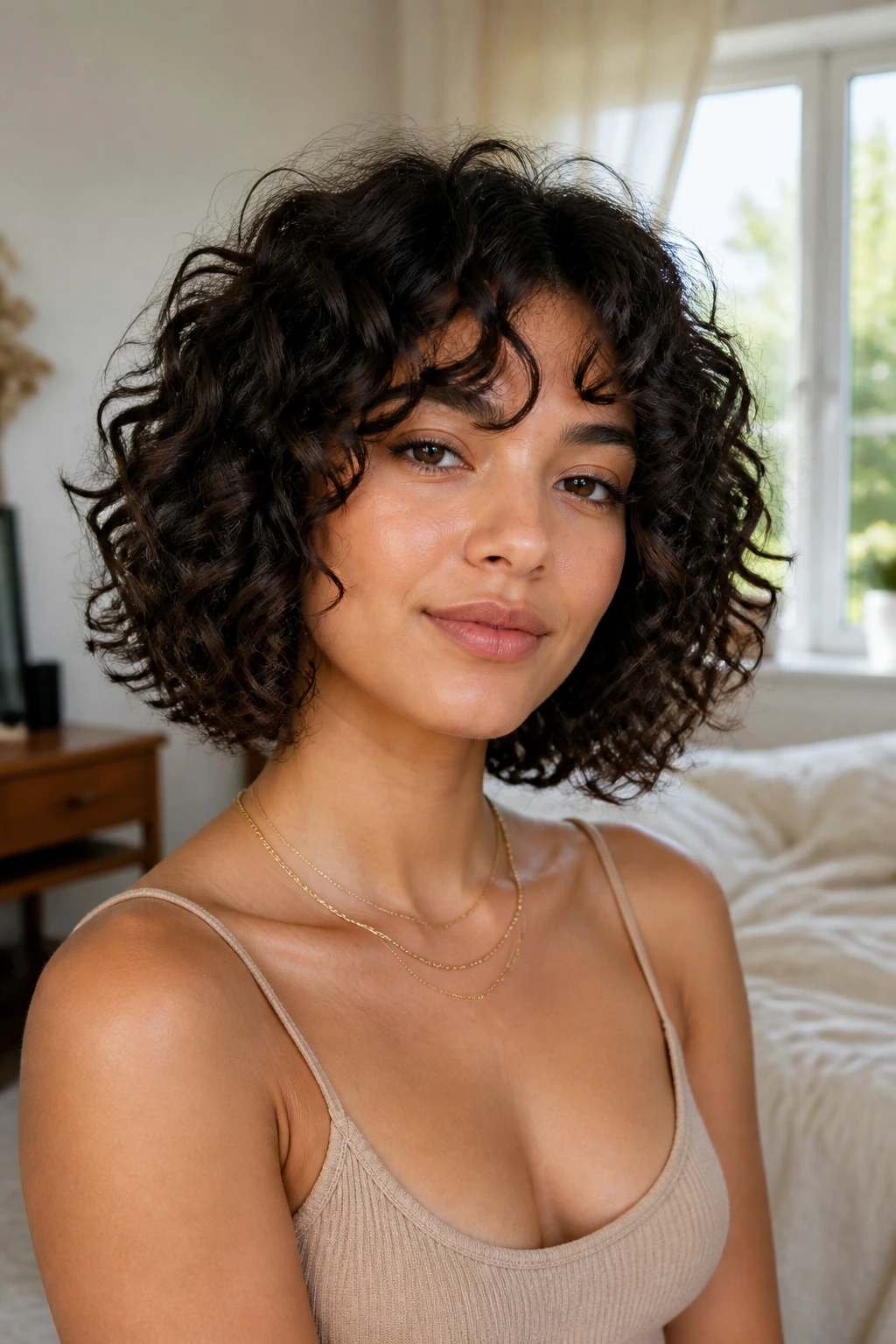
Presentation: Let the bob dry in the shape it was cut for. If the cut is rounded, encourage that curve with a diffuser. If it’s blunt, keep the roots lifted but the ends grouped, so the line stays readable instead of frizzing into a cloud.
Pairings: Side parts, curtain bangs, clips at the temple, and even a tucked-behind-one-ear finish can change the mood without changing the haircut. Big hoops and high necklines also suit these cuts because they keep the neck area visually clean.
Scale: Shorter bobs need tighter curl definition and more frequent trims. Longer bobs give you a little more room to ignore the hair on a busy morning. If your routine is minimal, live closer to the collarbone than the jaw.
Best match: Thick curls and coarse textures usually like more structure. Loose curls and waves often enjoy more movement. If you’re somewhere in the middle, a lob with a soft perimeter is usually the safest middle path.
Common Mistakes That Turn a Bob Into a Puffball
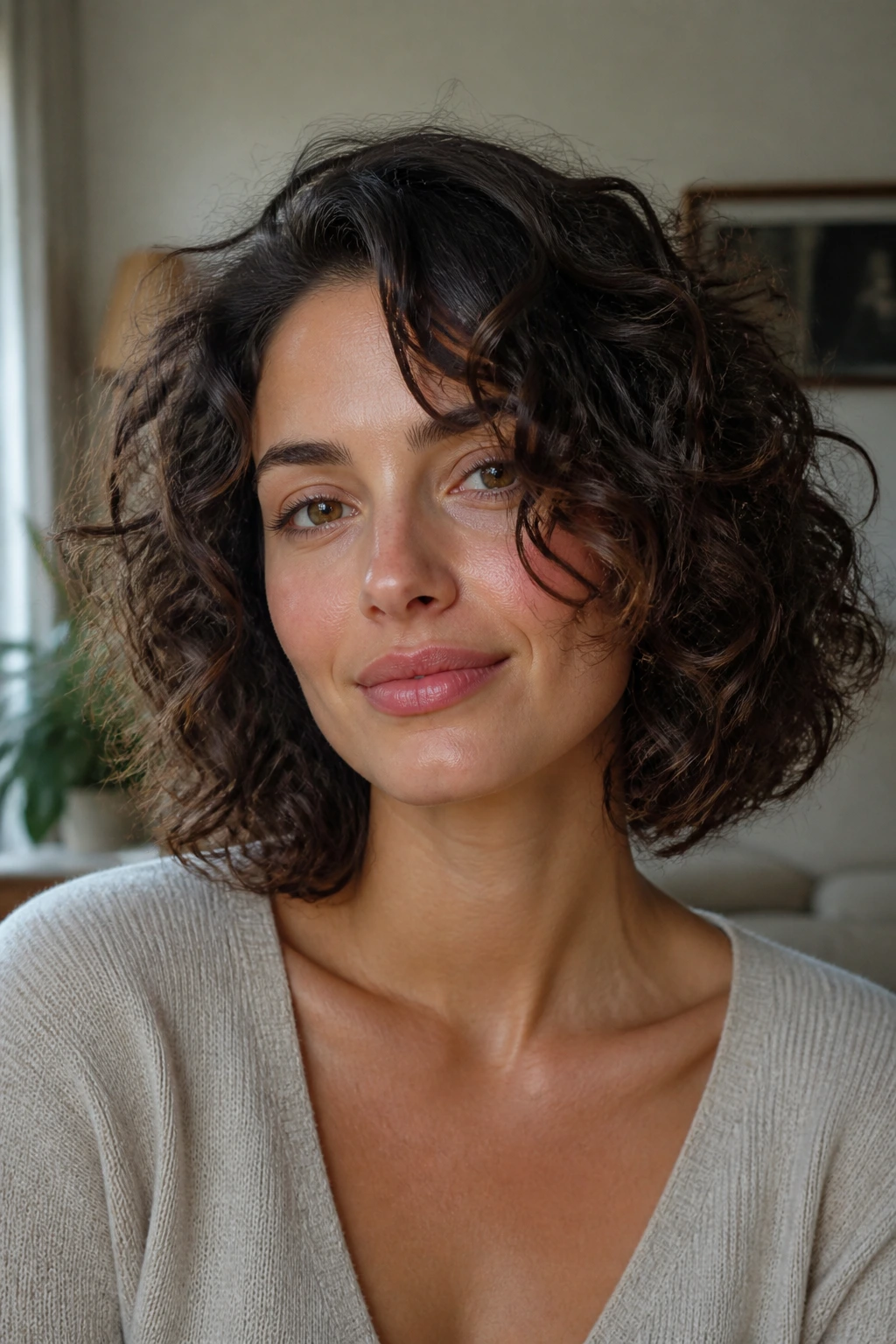
The biggest mistake is cutting curly hair too short while it’s wet. The curl springs up, the sides sit higher than expected, and suddenly the bob looks like it got startled. Leave more length than you think you need. Then check the dry shape before taking more off.
Another common problem is over-layering. Yes, layers can help. Too many layers, especially around the bottom third, can make long curly hair look thin at the ends and bulky at the sides. That’s how you get the triangle. A few well-placed interior cuts beat a hundred tiny snips.
Heavy cream is another trouble spot. If your bob starts out defined and turns limp by noon, the product may be too rich for the cut. Use less, and keep it closer to the mid-lengths and ends. The roots need room to breathe.
Last one: skipping trims because “it’s only a bob.” Nope. Curl shape shows split ends and uneven growth fast. If the perimeter starts looking fuzzy, the whole haircut loses its line.
Variations and Adaptations to Try

Fine-Curl Lift-Up: Keep the perimeter blunt and the layers light. This keeps thinner curls from disappearing into the haircut and gives the bob a stronger edge.
Dense-Hair Relief Cut: Add more interior removal and a slightly tapered nape. This cuts down on bulk where thick curls tend to swell, especially under the ears.
Bang-First Version: If you want fringe but fear the full commitment, start with long curtain pieces or bottleneck bangs. They frame the face and can grow into the bob if you change your mind.
Low-Maintenance Lob: Leave the length closer to the collarbone and avoid sharp graduation. It grows out quietly and tolerates skipped wash days a little better.
Drama-Forward Angle: Go more A-line or inverted if you want the haircut to read from across a room. The front length gives curls something to swing against the jawline.
Maintenance, Trim Cycles, and Grow-Out

Curly bobs need a different trim rhythm than long hair that can hide uneven ends. A good place to start is every 8 to 12 weeks, depending on how fast your curls grow and how crisp you want the outline to stay. If you’re wearing a blunt or angled shape, stay closer to the 8-week end. If your cut is soft, layered, or grow-out-friendly, you can stretch it longer.
Night care matters too. A satin pillowcase or bonnet can help preserve the shape at the crown and reduce the weird frizz halo that loves to appear along the nape. If you like to refresh in the morning, mist the worst sections with water and scrunch in a tiny bit of gel. Not a handful. A little. Too much refresh product makes the bob feel sticky by lunchtime.
Wash frequency depends on your scalp, not the haircut, but the haircut changes how the wash day feels. Shorter bobs dry faster, which is nice. They also reveal bad ends faster, which is less nice. Keep a small pair of trim appointments on the calendar and the haircut stays sharp much longer than you’d expect.
Frequently Asked Questions

Should curly hair be cut wet or dry for a bob?
Both methods can work, but dry cutting gives the stylist a clearer view of how your curls actually sit. Wet cutting can still work if the stylist knows your pattern well and checks the dry shape before finishing. If you’ve had surprise shrinkage before, dry cutting is usually the safer conversation to have.
What bob length is safest if I’m nervous about going short?
A collarbone or upper-lob bob is the least risky starting point. It keeps enough length that the curls still feel familiar, but it gives you a real shape change. If you love it, you can go shorter next time. If you don’t, it grows out without looking choppy.
Will a bob make my curls look puffy?
It can, if the haircut is too layered or too short for your density. A blunt perimeter, a rounded shape, or a lob with light interior removal usually behaves better. The key is matching the structure to how wide your curls naturally spread.
How do I ask for a bob without getting a triangle?
Tell the stylist you want the sides to stay controlled and the interior to lose weight where it matters. Ask for the dry shape to be checked before they finish. The phrase “keep the perimeter strong but remove bulk inside” is often more useful than saying “layer it a little.”
Can thick curly hair wear a blunt bob?
Yes, and it often looks fantastic when the cut is handled with care. Thick curls usually need a clean perimeter and just enough interior shaping to stop the bottom from sitting like a shelf. Too much thinning is the real problem, not thickness itself.
What if my curls shrink much more than I expect?
Leave more length in the initial cut and insist on a dry check before anything gets shorter. A good stylist will often cut cautiously, let the hair settle, and then refine. If the hair is already cut too short, styling can help, but there is no product that adds length back.
Which bob is easiest to style in five minutes?
A collarbone bob, a grow-out-friendly lob, or a blunt bob with hidden layers is usually the easiest place to live. These shapes need less daily correction and don’t demand perfect curl placement to look intentional. A diffuser helps, but they still behave pretty well with air-drying.
Can I wear bangs with a curly bob if my forehead is short?
Yes, but stay away from very short fringe unless you enjoy surprise bounce. Curtain bangs or long bottleneck bangs are kinder because they can fall, split, or tuck into the rest of the cut. Shorter foreheads usually do better with softness than with a hard line.
How often should I trim a curly bob?
Every 8 to 12 weeks is the sweet spot for most people. More structured cuts need trims sooner; softer lobs can stretch farther. Once the shape starts losing its edge at the sides or nape, the haircut reads tired even if the ends still look decent.
The Shape Worth Keeping
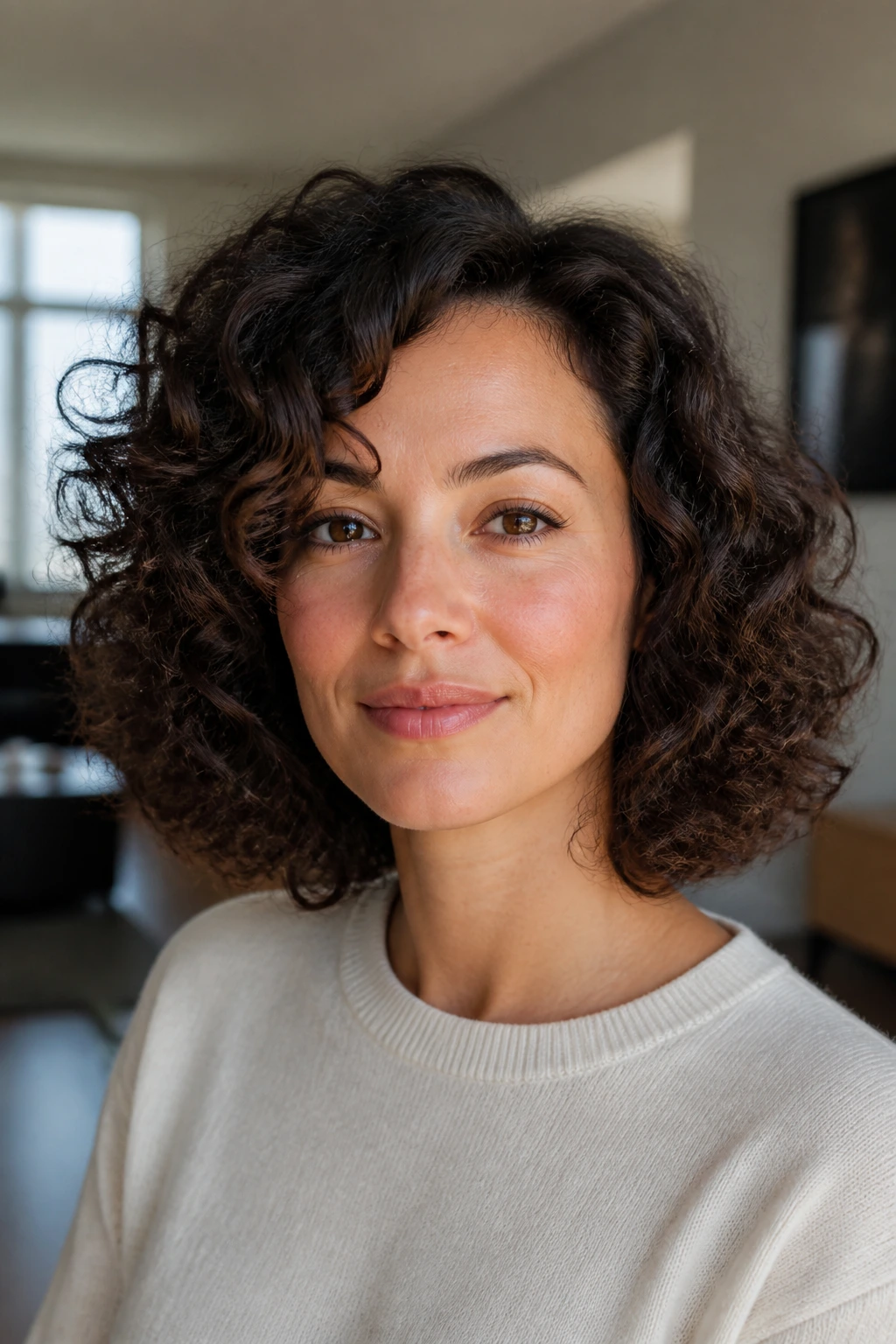
A curly bob works when it stops pretending curls are straight hair in a different mood. That’s the real shift here. The best versions use weight, shrinkage, and movement as part of the design, so the haircut still makes sense after it’s washed, slept on, and worn through a humid afternoon.
Some of these 33 cuts are clean and polished. Some are shaggy and loose. A few are pure structure. Pick the one that matches how much hair you want to manage before breakfast, because that’s the part nobody puts in a salon photo. The mirror matters. So does the day after.
If you’re going shorter, start with the shape you can live in, not the one that looks the loudest on a mood board. The good bob comes back every morning and still behaves.
