



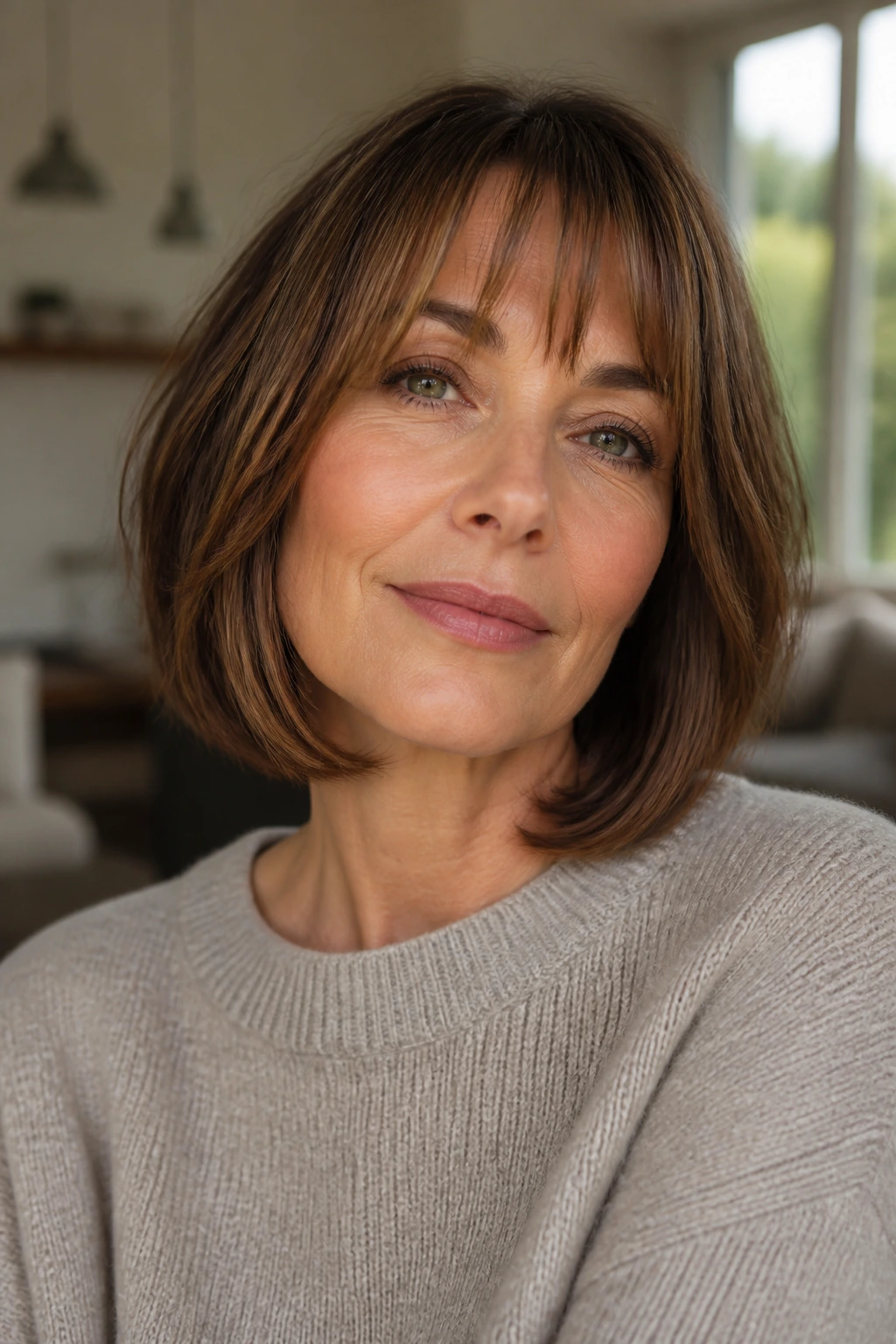
A good bob can change the way your whole face reads in a mirror. Add fringe, and the haircut starts doing a lot of quiet work: softening a forehead, nudging attention toward the eyes, shaving heaviness off a jawline, and making the haircut feel finished even on days when you have not wrestled it into perfection.
That is why medium bob hairstyles with fringe keep showing up on women who want something practical without looking plain. The length sits in that useful middle zone — long enough to tuck behind the ears, short enough to feel intentional — and the fringe gives you shape right where it matters most. Around the eyes. Around the brows. Around the front of the face, where a tiny change can make the biggest difference.
Hair after 40 often has a different personality. Some strands go finer. Some get wirier. Gray hairs can stand up with a mind of their own. Cowlicks become louder. A medium bob with fringe handles those changes better than a lot of cuts because it can be tailored in small, clever ways: heavier at the perimeter, softer at the fringe, more layered through the sides, or left sleek and blunt if your hair likes to behave.
The cuts below are not fantasy hair. They are the kinds of bobs that can actually live in the real world — on school runs, in office bathrooms, in front of a steamy mirror after a shower, and on the days when you have five minutes and a round brush that is missing one of its bristles.
Why These Medium Bob Hairstyles Stand Out After 40
-
The fringe changes the whole face frame: A well-placed fringe can soften a stronger forehead line and pull attention straight to the eyes without hiding your features.
-
Medium length keeps the haircut useful: Hair that lands between the jaw and collarbone still moves, still tucks, and still looks deliberate when it grows out a little.
-
These shapes work with texture instead of against it: Fine hair gets density from blunt edges, while wavy or thick hair gets relief from layering and point-cut ends.
-
They play nicely with glasses: Curtain fringe, side sweep, and feathered bangs can sit around frames instead of crashing into them.
-
The grow-out stage does not have to be ugly: Softer fringe styles can turn into face-framing layers, which buys you a longer stretch between salon visits.
-
They can look polished or undone: A smooth blowout gives one mood; a bend at the ends and a bit of texture spray gives another. Same haircut. Different energy.
1. Soft Blunt Bob with Feathered Fringe
This is the bob for anyone who wants structure without a hard edge. The perimeter is clean and one-length, landing around the jaw or just below it, while the fringe is feathered just enough to keep it from feeling severe. On fine hair, that blunt bottom line adds the look of density fast. On thicker hair, it stops the cut from puffing out at the sides.
Ask for the fringe to skim the brows and be point-cut through the ends. That detail matters. A blunt fringe can feel heavy on a face that already has strong features, but a feathered version breaks up the line and makes the cut easier to wear without a full styling session.
Why it works
The blunt base gives the haircut weight. The feathered fringe gives it air. That pairing is what keeps this style from tipping into helmet territory.
A round brush and a quick bend at the ends are enough. If your hair lays flat, flip the crown with the dryer first, then smooth the top layer last. The result should look neat, not lacquered.
2. Collarbone Bob with Curtain Fringe
If you have ever wanted a bob that does not feel like a commitment, this is the one. The length brushes the collarbone, which means it still reads as a bob, but the curtain fringe softens the whole front so the haircut feels relaxed. It’s also one of the easiest cuts to grow out because the fringe naturally becomes face-framing layers.
The center part matters here. Curtain fringe wants to fall away from the forehead in two soft panels, so ask your stylist to cut the shortest point around the bridge of the nose or slightly below, then taper the sides so they blend into the cheekbones.
Best for
- Hair that needs a little movement around the face
- Women who wear glasses and want the fringe to sit beside the frames
- Anyone who wants a cut that looks good air-dried with a small bend at the ends
This one does not need much fuss. A bit of mousse at the roots, a medium round brush, and a quick twist away from the face are enough to get the shape.
3. Textured French Bob with Airy Bangs
This cut has attitude, but not the try-hard kind. The length sits closer to the jaw, the ends are lightly textured, and the fringe is airy rather than thick, which keeps the whole thing light around the eyes. It has that slightly undone finish that looks better if you do not overthink it.
The French-bob shape is especially kind to hair that has lost a little density through the ends. The texture keeps the outline from looking blunt in a stale way, while the airy fringe opens the face instead of crowding it. If your hair has a natural bend, this is one of the easiest bobs to live with.
Styling note
Rough-dry the roots. Then let the fringe fall where it wants before giving it the smallest pass with a round brush or flat iron. If you polish every strand, the cut loses its charm. It wants a little looseness.
4. Layered Lob with Side-Swept Fringe
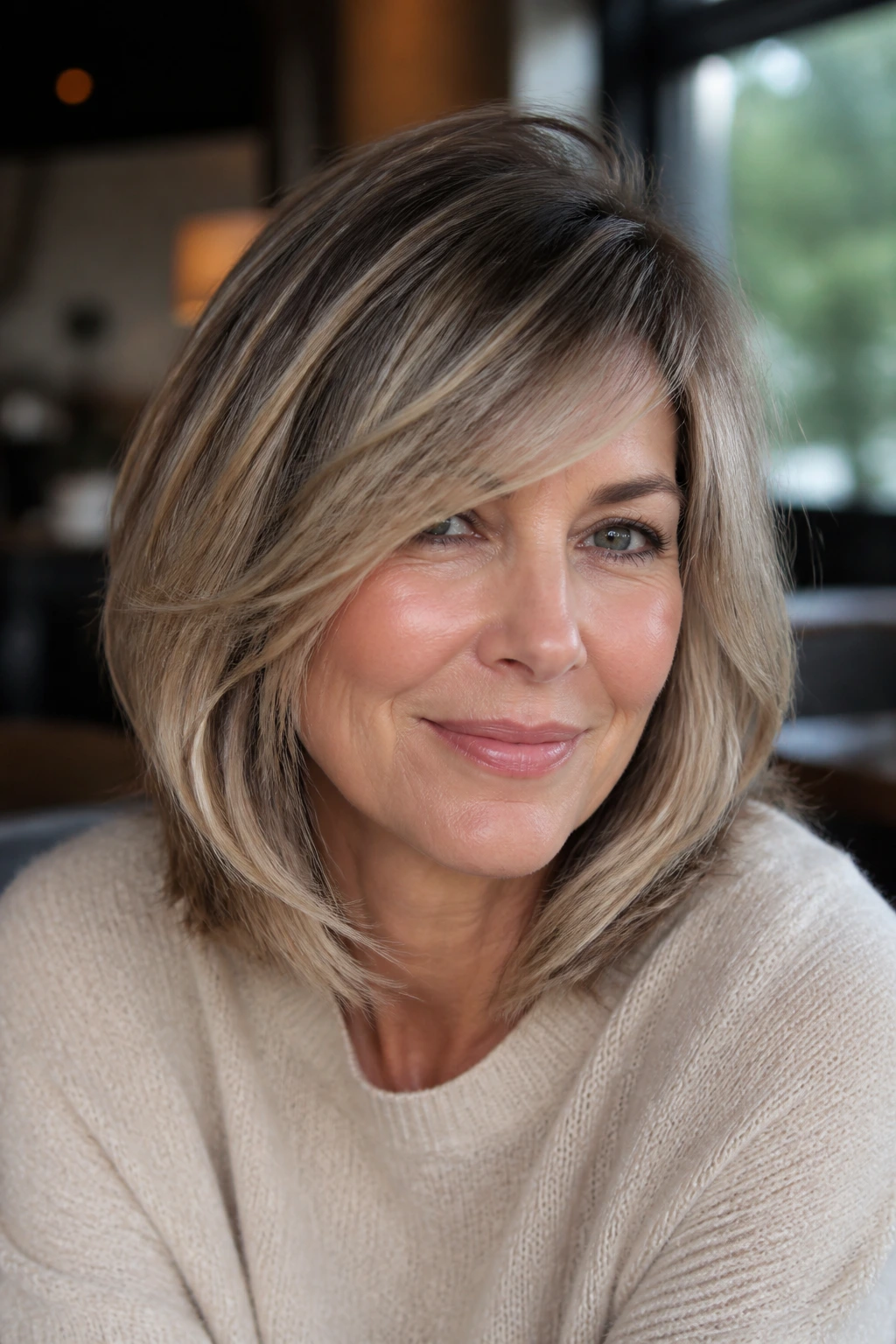
This is the answer when your hair is thick enough to build a small tent on its own. The layered lob keeps the bulk moving, and the side-swept fringe gives the front of the face a softer diagonal line. That diagonal is useful. It draws the eye upward and across rather than straight down.
A side fringe also buys you time on days when the hairline is not cooperating. Cowlick at the front? Part it a little deeper. One side a bit flat? Push the fringe over and let it fall in a wider sweep. This cut forgives small mistakes, which is one reason it hangs around in salon books for a long time.
The best version does not have choppy layers stacked all over the head. It needs movement through the mids and ends, not thinness at the base. You want swing, not stringiness.
5. Sleek One-Length Bob with Brow-Grazing Fringe
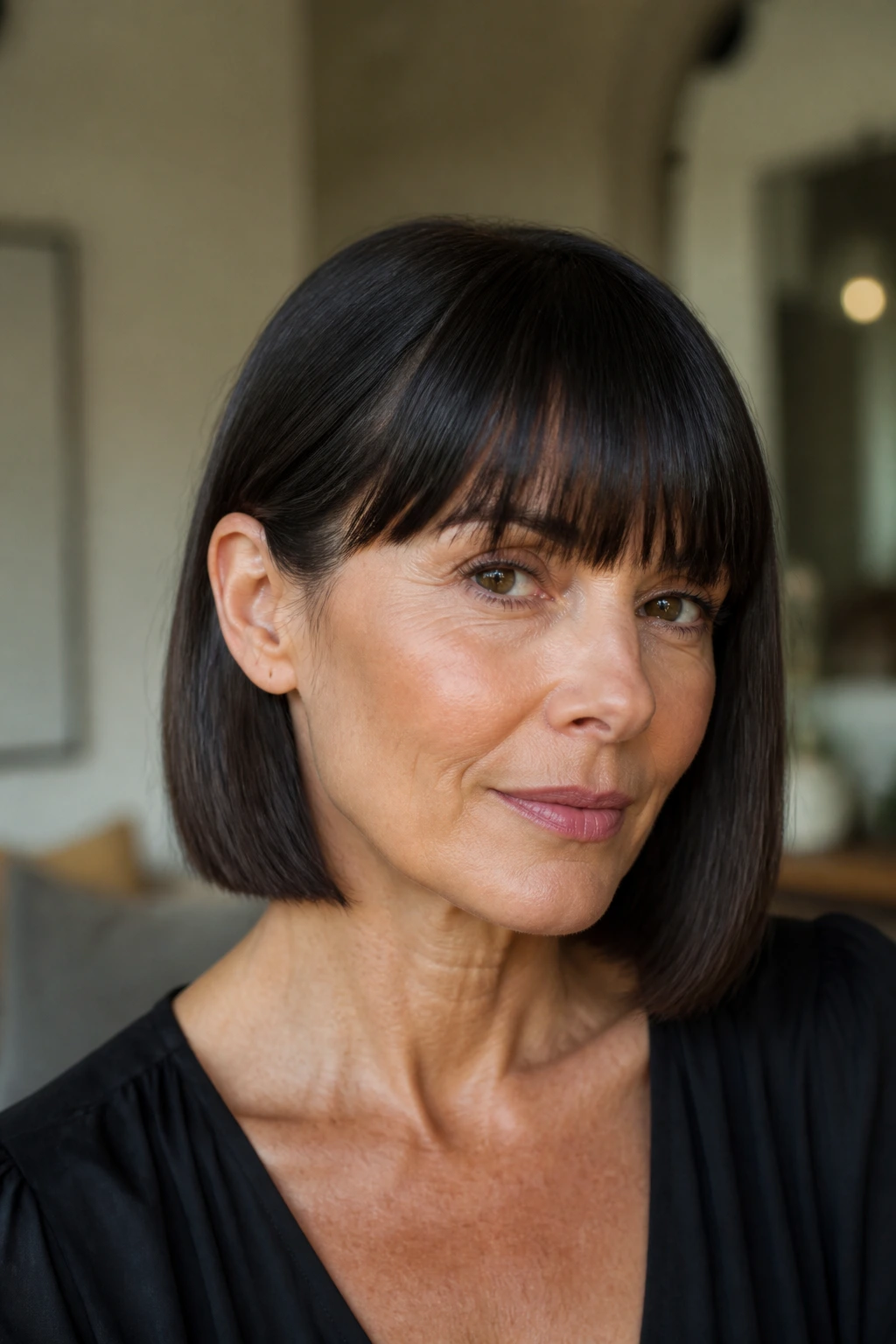
This one is for the people who like sharp lines and do not mind a little maintenance. The bob is one-length, smooth, and usually finished right at the jaw or a touch below it. The fringe sits at or just above the brows, which makes the face look framed and alert. Nothing is frilly here.
The trick is weight. A one-length bob can look flat if it is cut too short or too high at the nape, so the line has to be placed carefully. The fringe should be dense enough to read as a deliberate shape, not a wispy afterthought.
It looks especially good when the hair is glossy and tucked behind one ear on one side. That tiny asymmetry keeps the whole thing from feeling too rigid.
6. Wavy Bob with Wispy Fringe
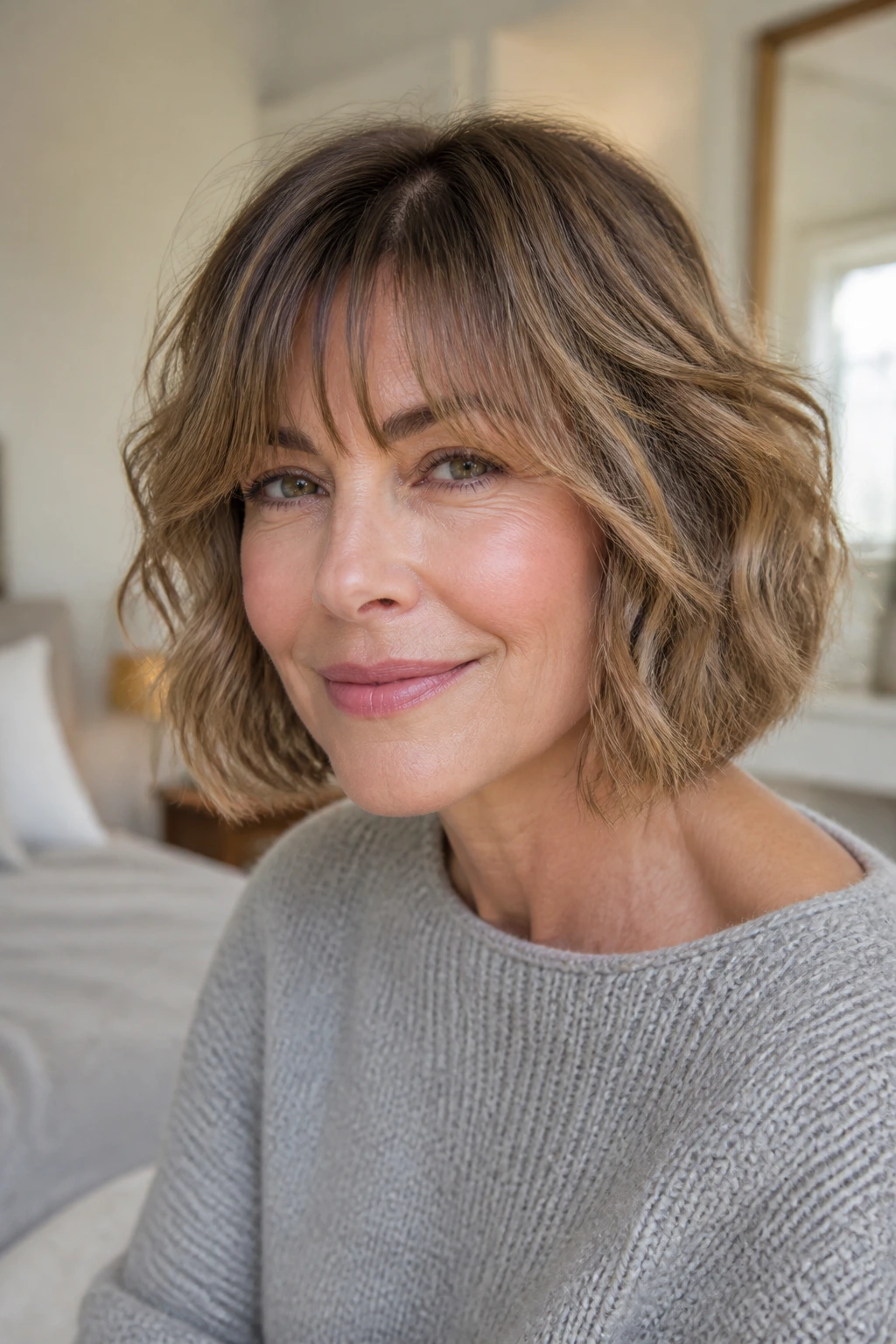
Natural wave loves a medium bob because the length is long enough to show off the bend but short enough to keep the shape from collapsing. Add a wispy fringe and you get a soft, face-opening line that looks good even when the rest of the hair dries on its own terms.
The fringe should stay a little longer than you think. Curly or wavy fringes spring up, and a bang that looks perfect when wet can land too high once it dries. Ask for softness around the ends, not a chunky straight-across strip.
A diffuser helps, but not in a precious way. A little curl cream, a quick lift at the root, and then stop touching it. That’s the whole game. The fringe should look piecey, not sprayed into place.
7. Inverted Bob with Piecey Fringe
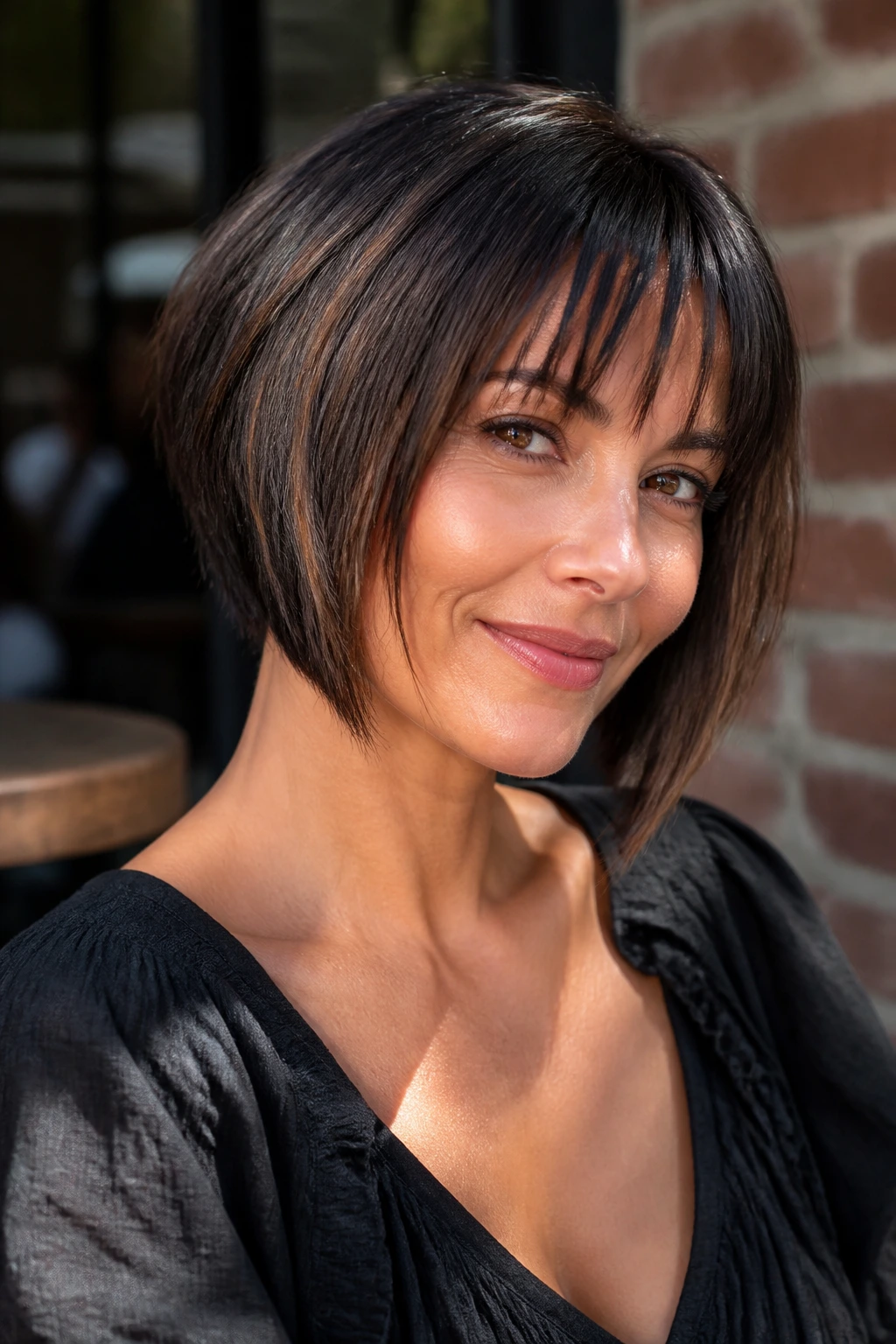
There is something clean and a little brisk about an inverted bob. The back is shorter, the front angles forward, and the silhouette gets a nice lift near the nape. Add piecey fringe and the shape stops feeling too formal.
This cut is useful if your hair tends to feel heavy at the back of the head. The graduated shape removes weight where you do not want it and leaves length where you do. The fringe should stay narrow enough to keep the forehead visible in places; that broken-up line keeps the cut from feeling too boxed in.
What to ask for
- Shorter, stacked back that does not bulk up at the neckline
- Longer front pieces that brush the jawline
- Fringe point-cut into separated pieces instead of a solid sheet
If you like a sharp silhouette but still want a little softness around the eyes, this is a strong choice.
8. Choppy Bob with Long Shag Fringe
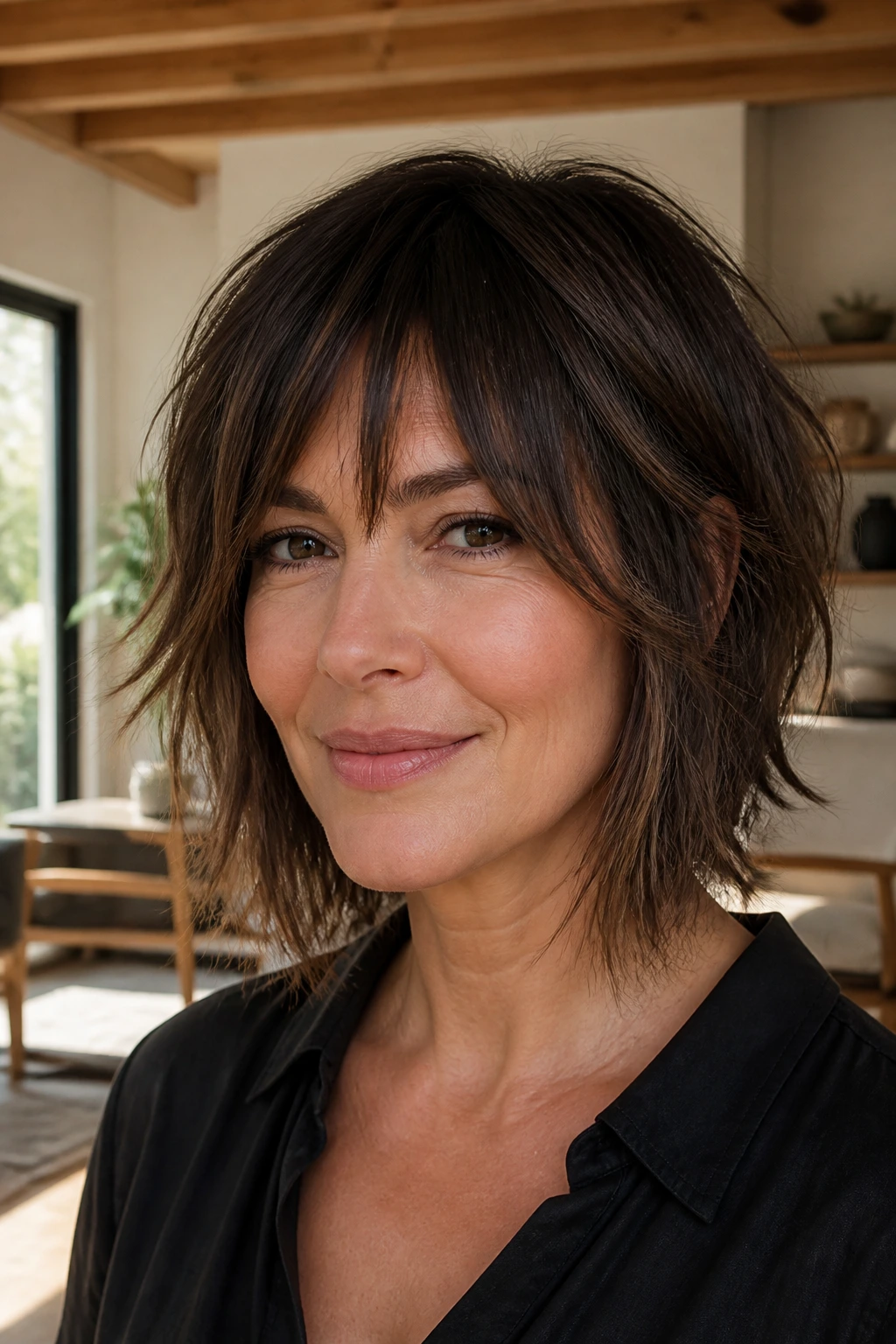
This one leans lived-in. Not messy. Lived-in. There’s a difference. The bob is cut with choppy layers through the ends, and the fringe drapes longer through the temples, almost like a shag that decided to behave itself.
It works well when your hair has texture and you do not want to spend twenty minutes building shape with hot tools. A little rough-drying, a squeeze of texture spray at the mids, and a finger-combed fringe are enough. If the hair is thick, the choppy layers stop it from ballooning out. If it is fine, the irregular ends keep it from looking flat and obvious.
This style likes movement. If you flatten it too much, it loses the point.
9. Rounded Bob with Soft Arc Fringe
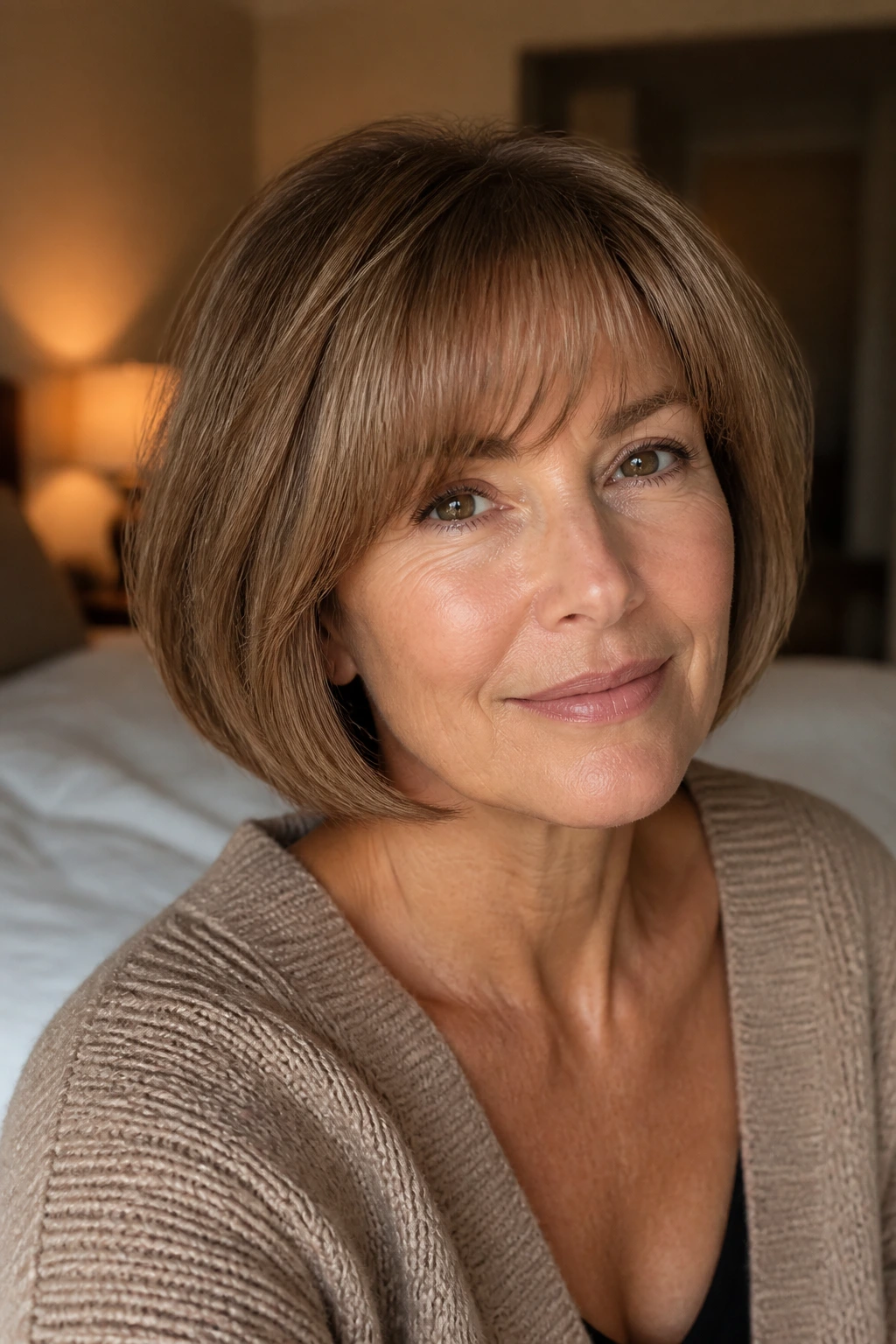
A rounded bob gives the haircut a curve that follows the head, which can be a blessing if you want something neat but not boxy. The soft arc fringe mirrors that shape at the front, sweeping lightly across the brows and lifting at the temples.
This is one of the best choices for someone who wants a controlled silhouette. The ends curve inward, the fringe softens the forehead, and the entire shape feels balanced. It does not shout. It simply sits well.
A soft blowout is enough. Start with the fringe, then work the ends under using a medium round brush. You do not need a high-volume finish. In fact, too much root lift can fight the rounded shape.
10. Angled Bob with Swooping Fringe
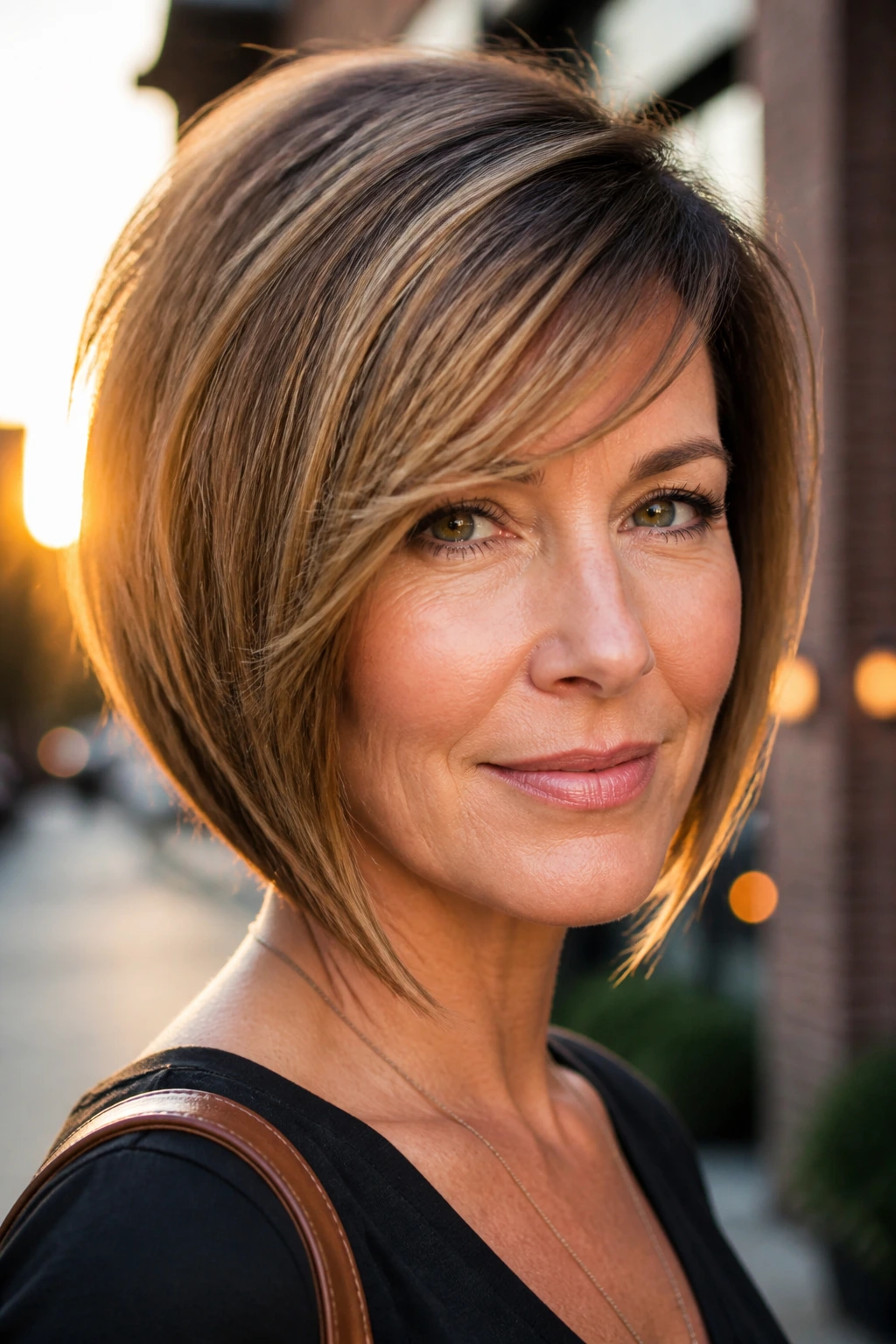
The angled bob creates a clean line from the back of the head to the front, usually with a noticeable length difference. Pair that with a swooping fringe and the haircut starts to feel longer and leaner through the face.
This is a good move if you want the bob to elongate rather than widen. The diagonal line pulls the eye downward at the front and keeps the silhouette from sitting too square. A swooping fringe does similar work at the top — it moves across the forehead rather than cutting it in half.
It’s a cut with a little momentum. When you turn your head, it catches nicely at the front. That swing is the point.
11. Curly Bob with Curly Fringe
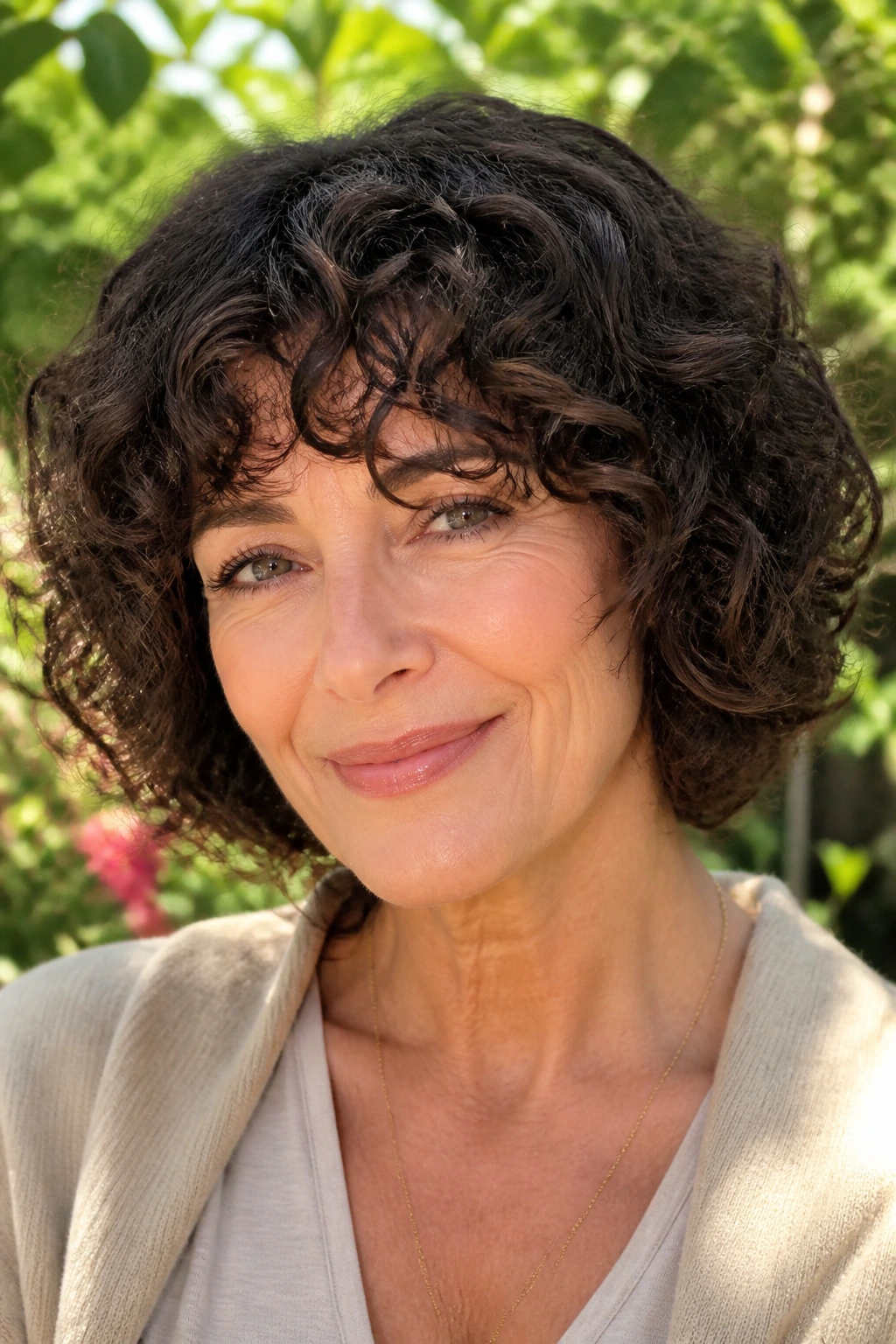
Curly hair with fringe is not a risky idea. It is a specific idea. The fringe just has to be cut for the curl pattern, not against it. A medium bob that sits around the jaw or neck gives curls room to spring without piling up at the shoulders.
Ask for the fringe dry-cut if the stylist knows how your curl behaves. A curl that looks cooperative when wet can shrink a full inch or more once it dries. The fringe should follow the curl clump, not fight it into a straight shape.
Moisture matters here. Leave-in conditioner, curl cream, and a diffuser on low heat keep the fringe from turning fuzzy. The shape should look springy and deliberate, not separated into little sticks.
12. Chin-Length Bob with Curtain Bangs
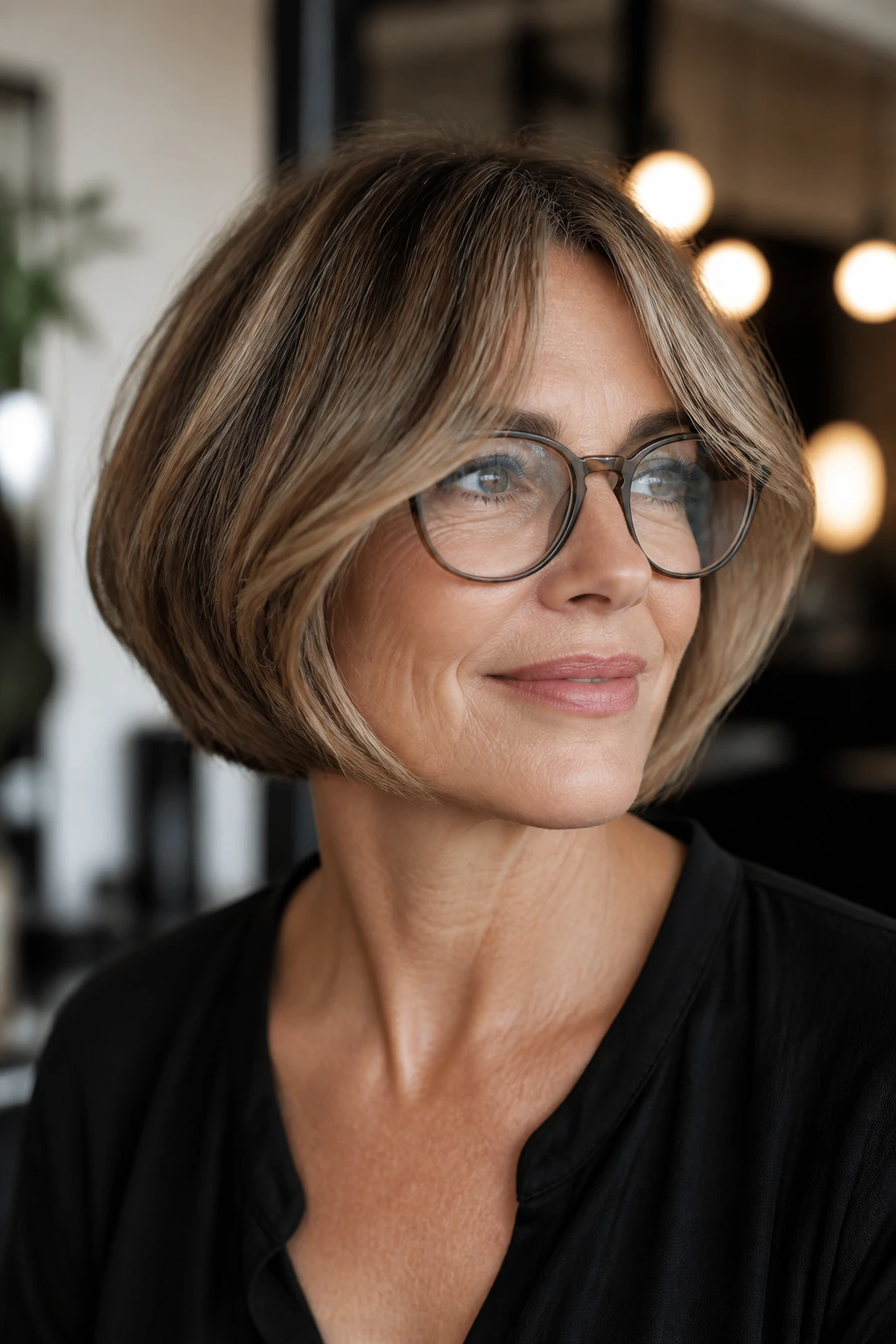
This is a short medium bob, and it works because the curtain bangs open the face. Chin length gives the line a clear endpoint, which can be useful if you want definition around the jaw but still need room to tuck hair behind the ears.
The curtain fringe is the forgiving part. It can split down the middle, fall wider around the temples, or be swept slightly off-center if the face needs more opening on one side. That flexibility matters on mornings when the hair refuses to sit exactly as planned.
If you wear glasses, this is a smart cut. The fringe can move above or beside the frames instead of landing right in them. That small detail saves a lot of irritation.
13. Midneck Bob with Heavy Straight Fringe
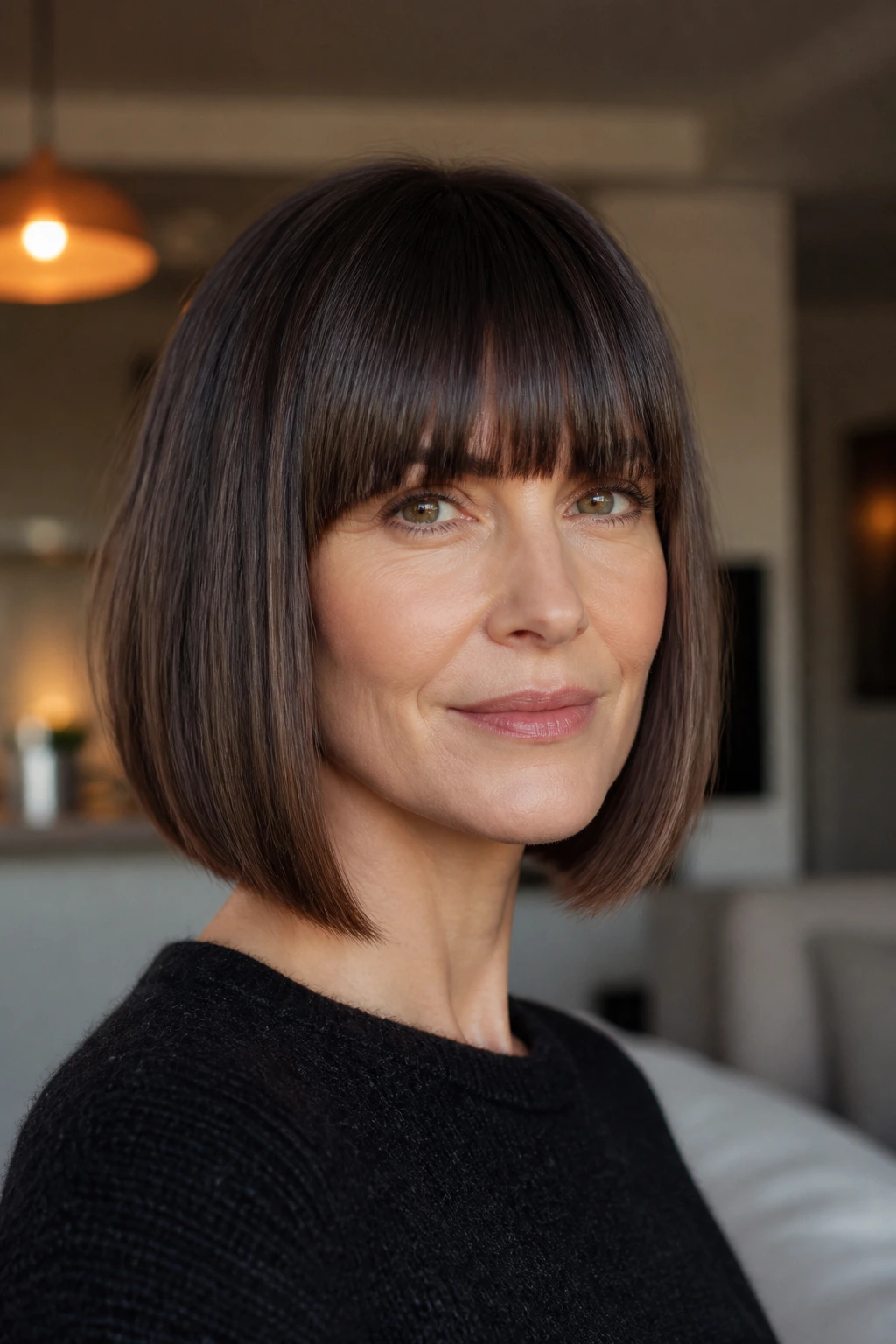
This cut is not shy. The bob lands around the midneck, and the fringe comes across in a fuller, straighter line. It feels graphic and deliberate, almost architectural, which is exactly why it can look so strong on the right face.
It suits hair that has enough density to support a solid fringe without gaps. If the hair is too fine, the bang line can split and look sparse by lunchtime. Thick hair, though, can carry this shape easily, and the weight helps the bob sit cleanly.
It does ask for upkeep. Straight fringe grows fast in the visual sense, even when the actual length change is tiny. If you love this style, a quick fringe trim every few weeks keeps it crisp.
14. Graduated Bob with Light Side Fringe
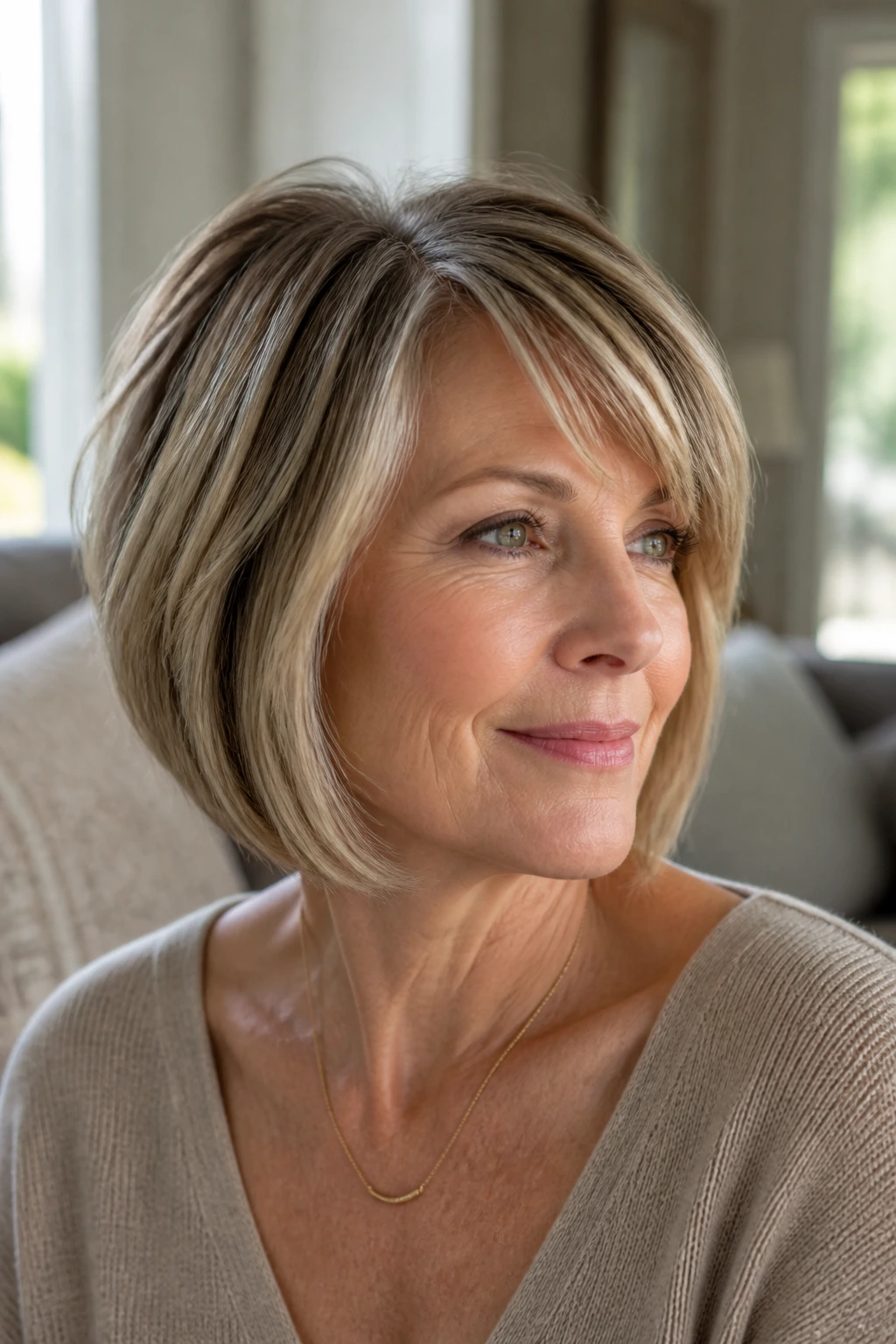
A graduated bob stacks softly through the back and keeps the perimeter neater through the sides. Add a light side fringe and you get lift without losing softness. It is a nice middle ground for anyone who wants shape but not drama.
The side fringe matters because it interrupts the roundness of the graduated shape. Without it, the bob can feel a little too precise. With it, the haircut gains a diagonal line that makes the face look longer and less boxed in.
This is a good option if you like structure in the back but want the front to stay easy. It does not need a lot of styling product. A little smoothing cream through the sides and a quick brush-over at the fringe is enough for most mornings.
15. Tousled Bob with Bottleneck Fringe
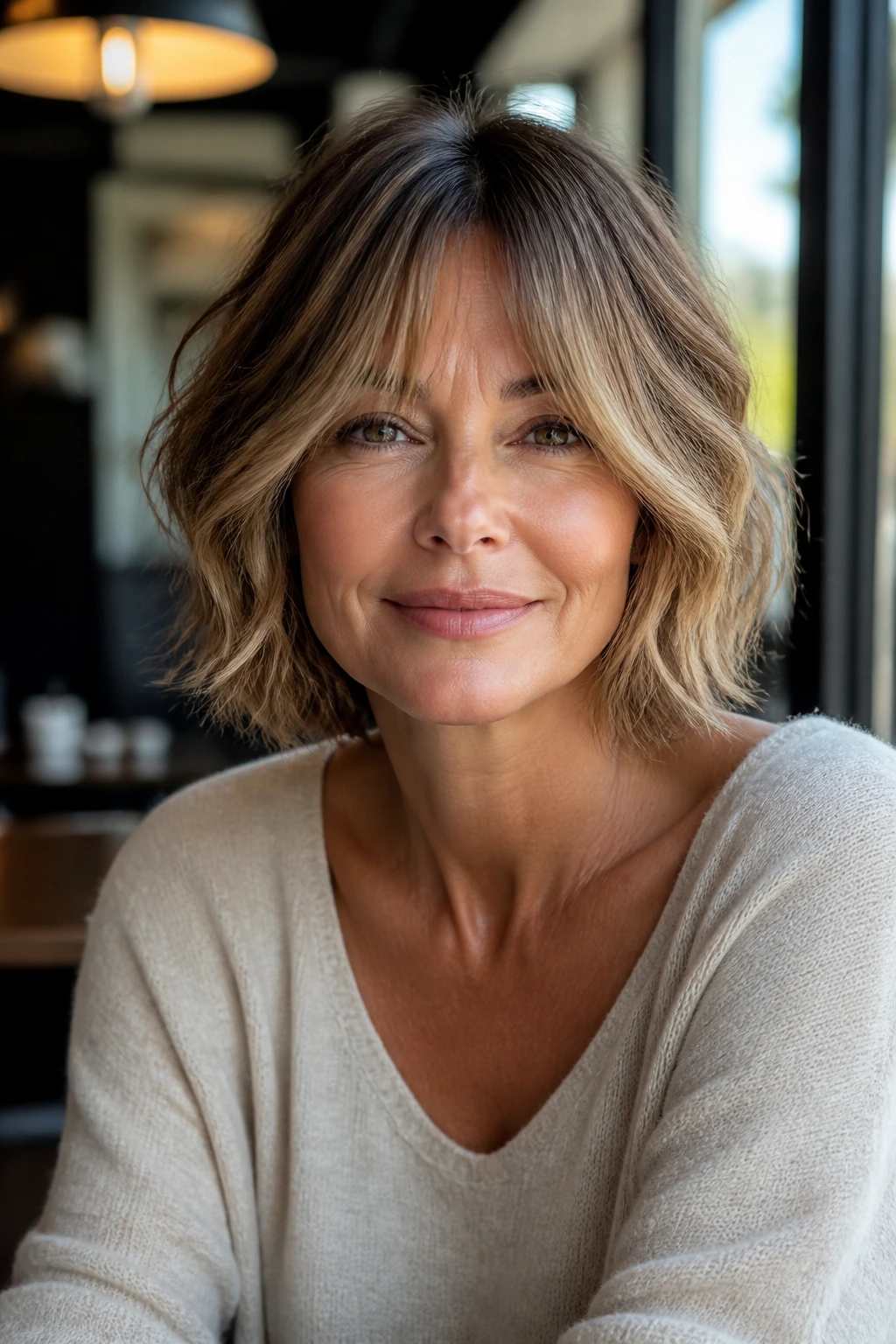
Bottleneck fringe starts narrow at the center and opens wider near the temples, which makes it a clever shape for a bob that wants movement. The tousled finish keeps the haircut from feeling too designed. It has that soft, slightly bent look that reads as casual without being sloppy.
This fringe type is especially nice if you do not want heavy forehead coverage. The center stays light, then the side pieces provide a frame where the face actually needs it. That shape can flatter a lot of faces because it leaves room for the eyebrows and creates a soft landing at the cheekbones.
A little wave spray and finger-drying are enough. If you overbrush it, the fringe loses its tapered feel.
16. Razored Bob with Grown-Out Fringe

A razored bob sounds edgy, and it can be, but the grown-out fringe keeps it wearable. The razor work takes weight off the ends and softens the line, while the fringe blends into the sides instead of stopping abruptly across the forehead.
This is a cut for someone who likes movement and does not mind a slightly imperfect finish. The razored edges can look airy in a good way, especially on thicker hair that needs some release around the perimeter.
It also grows out well. That matters more than people admit. A fringe that starts to blur into the sides after a month can be a blessing, not a flaw. You get a longer window before the haircut starts to feel stale.
17. Luxe Italian Bob with Center-Part Curtain Fringe
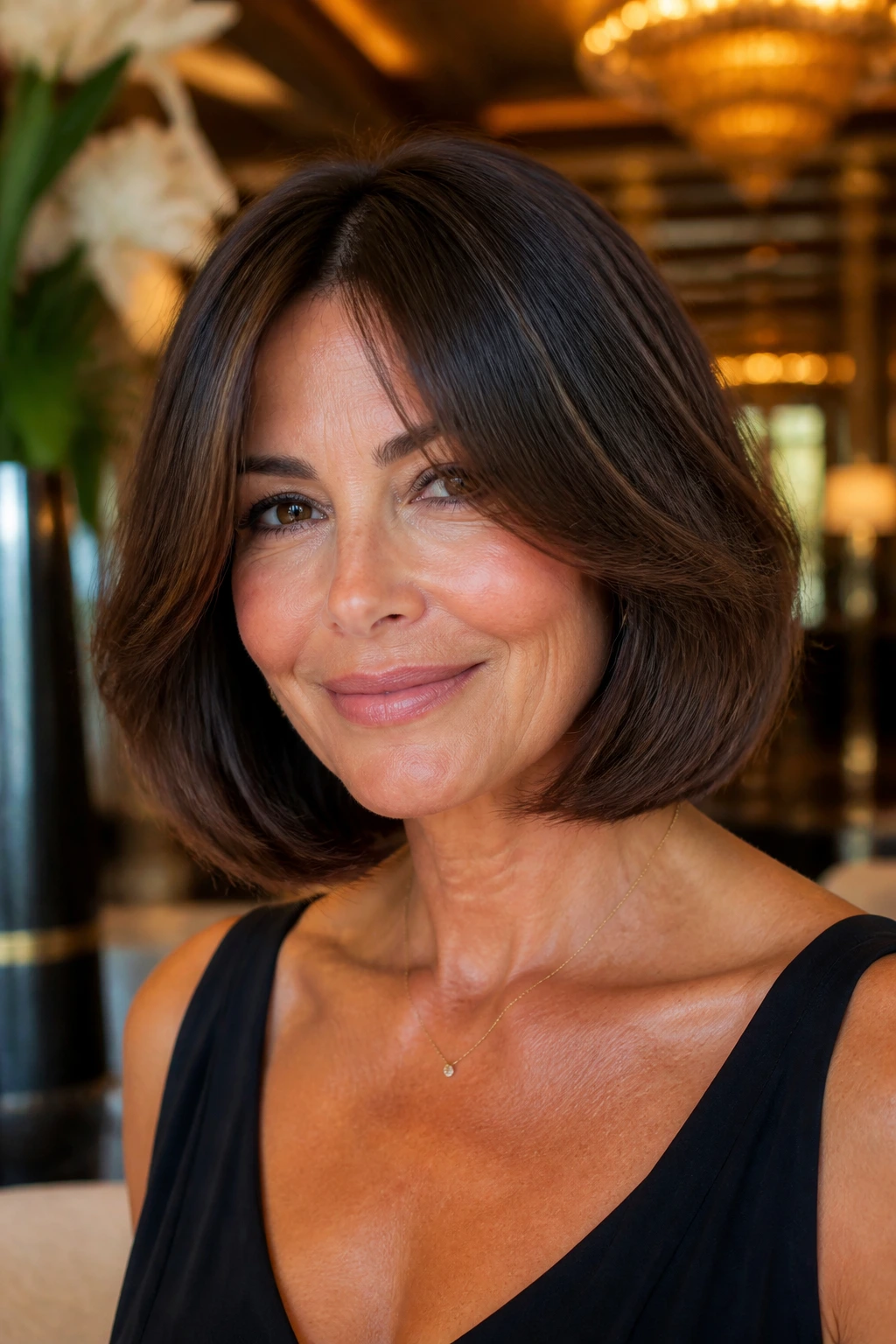
This bob has body. The ends turn under a little, the outline feels plush, and the curtain fringe opens from the center with enough volume to frame the cheekbones. It’s a style that looks like it has been brushed through, which is probably why it keeps a certain old-school polish.
The key is fullness without puffiness. The bob should feel thick at the line but not heavy through the ends. A large round brush or a hot brush can give that bend, though you can also get close with a blow dryer and a smoothing cream if your hair already has natural shape.
It suits people who want a softer, richer-looking bob rather than a sharp geometric one. The finish should read as smooth and controlled, not stiff.
18. Air-Dry Bob with Texture Fringe
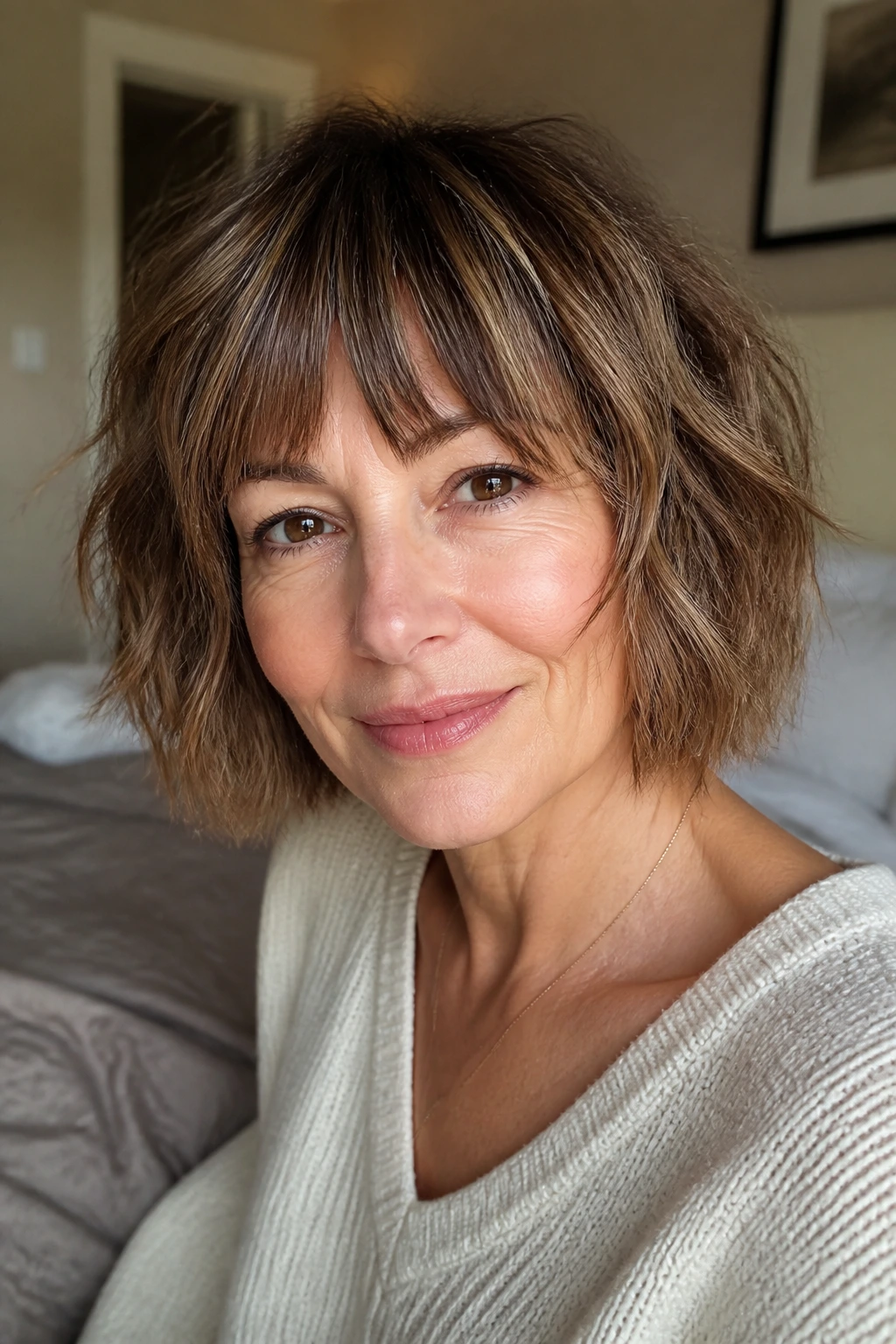
Some cuts ask for heat. This one does not. The air-dry bob with texture fringe is built for hair that already has a bit of bend, body, or wave. The fringe is textured so it does not form a solid curtain, and the rest of the bob is cut to fall into a loose shape as it dries.
This is one of the easiest styles to live with if your mornings are already crowded. A little mousse at the roots, a squeeze of cream through the mids, and a light rake through the fringe can be enough. Let it dry on its own. Mess with it too much and the texture goes fuzzy.
The best version looks deliberately incomplete in a good way. Not sloppy. Just relaxed.
19. Smooth C-Curl Bob with Soft Sweep Fringe

The C-curl bob turns the ends under in a soft half-curve, which gives the haircut a neat, finished look. Add a soft sweep fringe and the front starts to feel friendly instead of strict.
This shape works nicely on medium-density hair because the curve at the bottom gives a bit of bounce. It also flatters the neck and jaw by keeping the outline close to the face. If you like a clean shape but do not want a poker-straight bob, this is a solid middle ground.
The sweep fringe should be lightly angled, not deeply side-swept. You want just enough movement to keep the forehead open. The whole style should look tidy with a little softness around the edges.
20. Face-Framing Bob with Long Layered Fringe
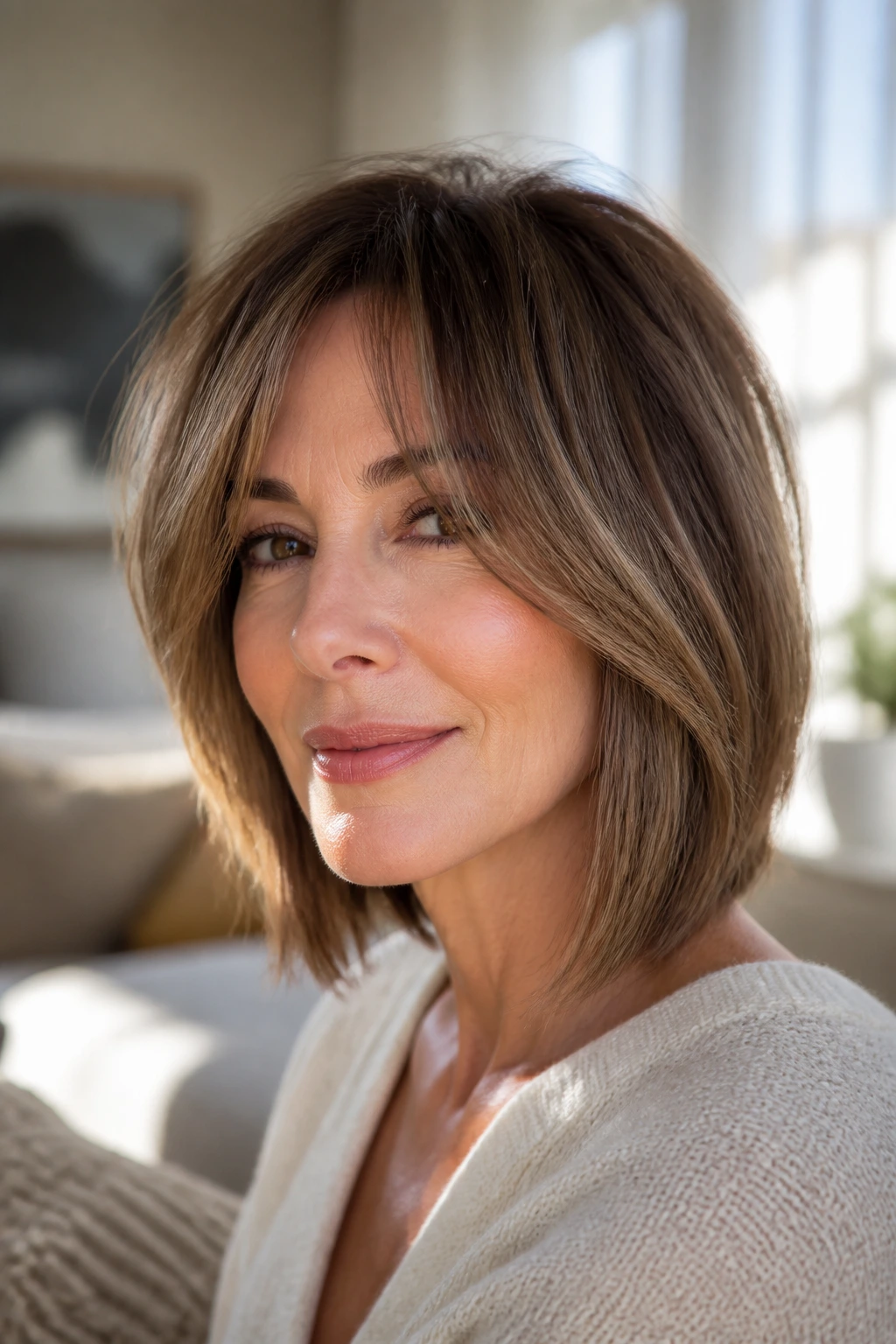
This is the safest bob in the group if you are nervous about fringe. The layers around the face are longer, which means the fringe can be worn forward, parted, or pushed aside without looking like a bad grow-out. The bob itself stays medium and flexible.
It is especially useful if your hair changes behavior from one week to the next. A longer layered fringe can handle a rough part, a cowlick, or a day when you do not feel like heat styling. It also gives you a soft path if you decide to grow it out.
There is nothing fussy here. The haircut should still look deliberate, but it does not need a perfect finish to work.
21. Salt-and-Pepper Bob with Sparse Fringe

Gray hair often has more texture and a little more stand-up than pigmented hair, and this cut respects that. The bob sits at a manageable length, while the sparse fringe stays light enough to avoid looking heavy against silver strands.
The best version does not hide the gray. It shows it off. A translucent fringe gives the forehead a frame without creating a dense curtain across the face, which can feel too much when the hair is already full of visual texture from the salt-and-pepper color.
This is a very good place to keep the styling simple. A smoothing serum on the ends, a little root lift, and a careful fringe trim can be enough to make the color and the cut work together instead of fighting for attention.
22. Glassy Blunt Bob with Invisible Layers and Fringe
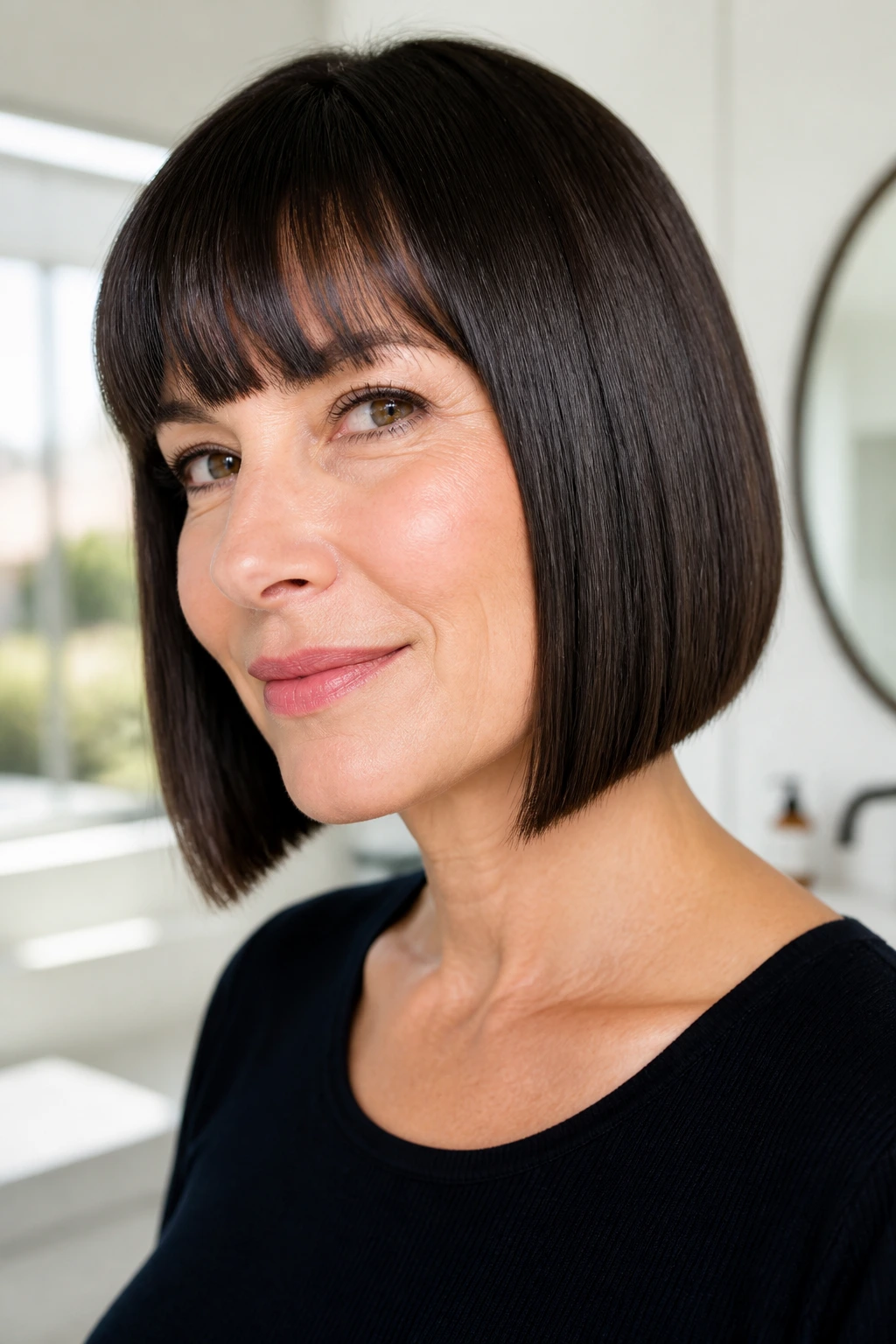
This haircut depends on shine and clean lines. The bob looks blunt from the outside, but subtle invisible layers stop the shape from puffing out. The fringe is compact and polished, sitting close to the brow line so the whole haircut reads as precise.
It suits hair that can hold a smooth finish. If your strands are frizzy or very coarse, you will need a serum or smoothing cream to keep the outline calm. If your hair behaves, though, the result is striking in a quiet, controlled way.
The point of invisible layers is balance. They remove a little internal bulk without changing the silhouette. That lets the cut keep its sharp edge while still moving.
23. Wedge Bob with Choppy Micro Fringe
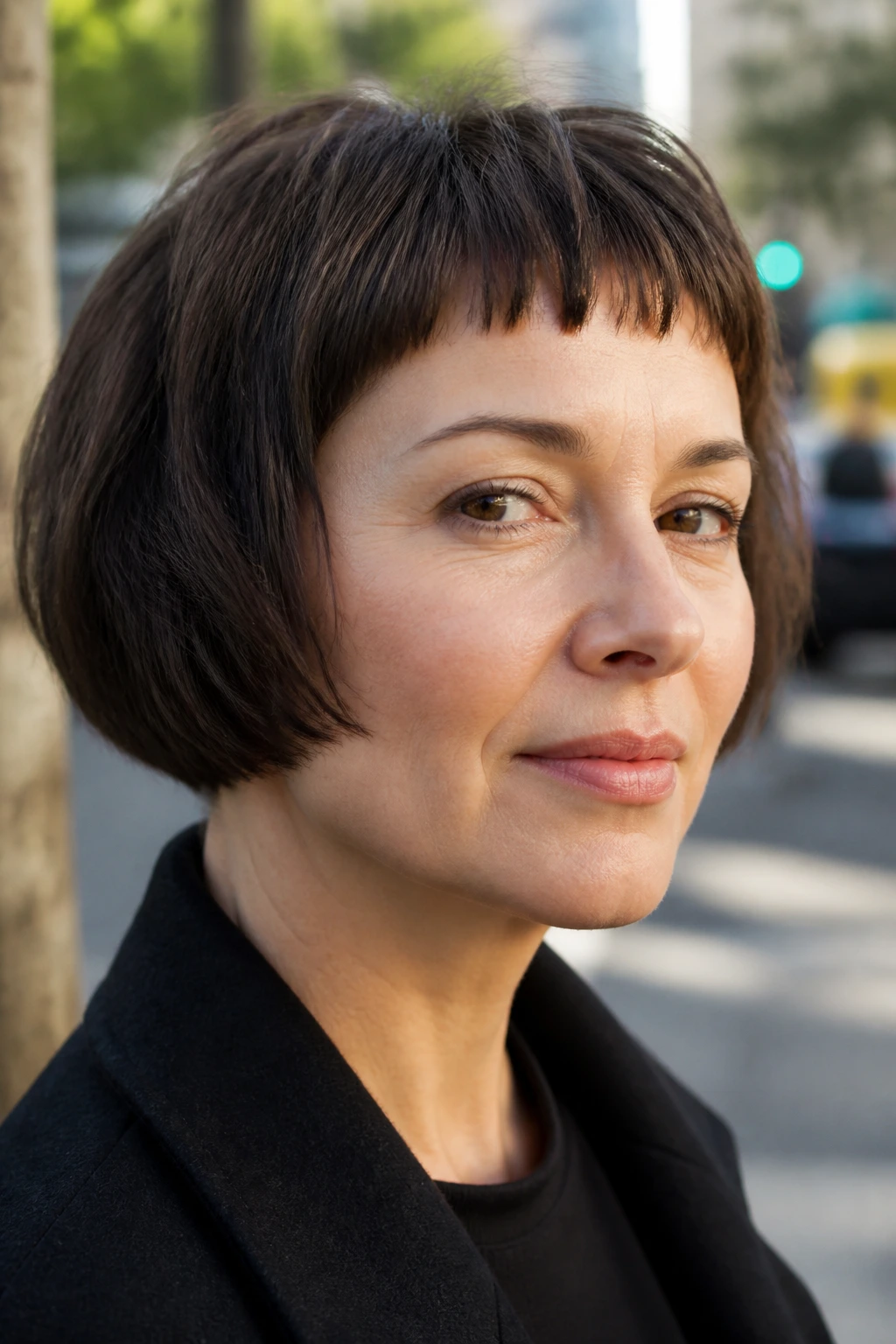
This one has a sharper profile. The wedge shape builds lift at the back and angles forward, while the choppy micro fringe gives the front a short, graphic edge. It is not for everyone. That is part of the appeal.
A micro fringe can be tricky on a face with a high forehead or a strong brow line, but if the rest of the haircut is soft enough, it can look fresh rather than severe. Keeping the fringe choppy helps it feel less like a hard line across the forehead.
If you like strong shapes and do not want the same bob everyone else is wearing, this is the one that makes a statement without needing color tricks or big styling.
24. Shoulder-Grazing Bob with Soft Shattered Fringe

This is the longest cut in the collection, and that is the point. It still reads as a bob because the shape is controlled, but it grazes the shoulders enough to feel gentle. The fringe is shattered and soft, which keeps the front from looking heavy.
It is a smart choice if you want to keep a little length while still cleaning up the outline around the face. The fringe can be brushed down, split slightly, or swept aside on humid days. The haircut gives you options.
Because the length sits at the shoulder line, it can flip out if the ends are not cut well. Ask for the perimeter to be cleaned up so it sits with purpose, not with a random flick.
25. Vintage Pageboy Bob with Full Rounded Fringe

There is a nice retro charm to a pageboy bob when it is done with a modern hand. The ends turn under, the line is smooth, and the full rounded fringe gives the face a clear frame. If you like a haircut that looks thought-out from every angle, this one has real presence.
The key is keeping the fringe rounded, not bowl-like. A little curvature through the sides helps it blend into the bob instead of sitting like a separate helmet. The ends should tuck in softly around the jaw.
This is a good match for straighter hair and anyone who likes a neat, tidy outline. It has a personality all its own.
26. Choppy Box Bob with Grown-In Fringe
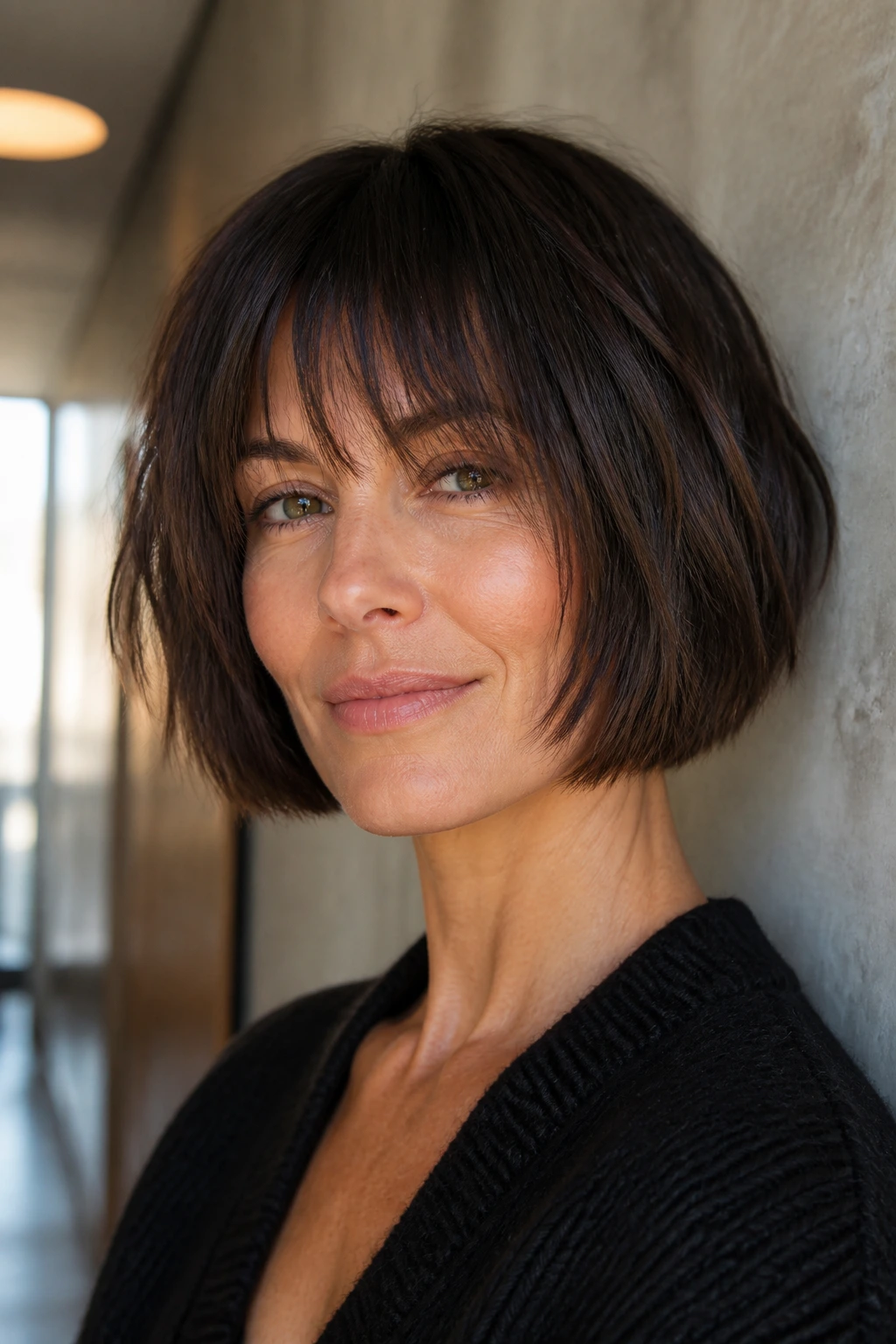
The box bob can be surprisingly flattering when it is softened with choppy ends and a grown-in fringe. The shape stays square and neat, but the texture breaks up the severity so it does not feel blunt in an aggressive way.
This cut works well on thick hair because the perimeter can carry weight without turning frizzy. The grown-in fringe means you do not have to keep the front line razor-sharp. In fact, a little softness is part of the appeal. It makes the haircut look a bit cooler, a little less polished, and more like it belongs to a real head of hair.
If you want a bob with edge but not a full fashion-editor commitment, this is a nice middle path.
27. Soft Permed Bob with Wispy Curved Fringe

A soft perm can give a medium bob body, bend, and a little lift that lasts longer than a blowout. Pair it with a wispy curved fringe and the whole style starts to feel airy rather than dense. It is especially useful for hair that has gone flat or stubbornly straight.
The fringe should stay light. Curled fringe can become bulky very fast if it is cut too full. A wispy curve across the forehead lets the texture show without blocking the face.
This style needs moisture and a gentle touch. A curl cream, a wide-tooth comb, and patience are worth more than aggressive brushing. Rough handling will frizz the fringe before the rest of the bob has a chance to behave.
28. Asymmetrical Bob with Side Drift Fringe
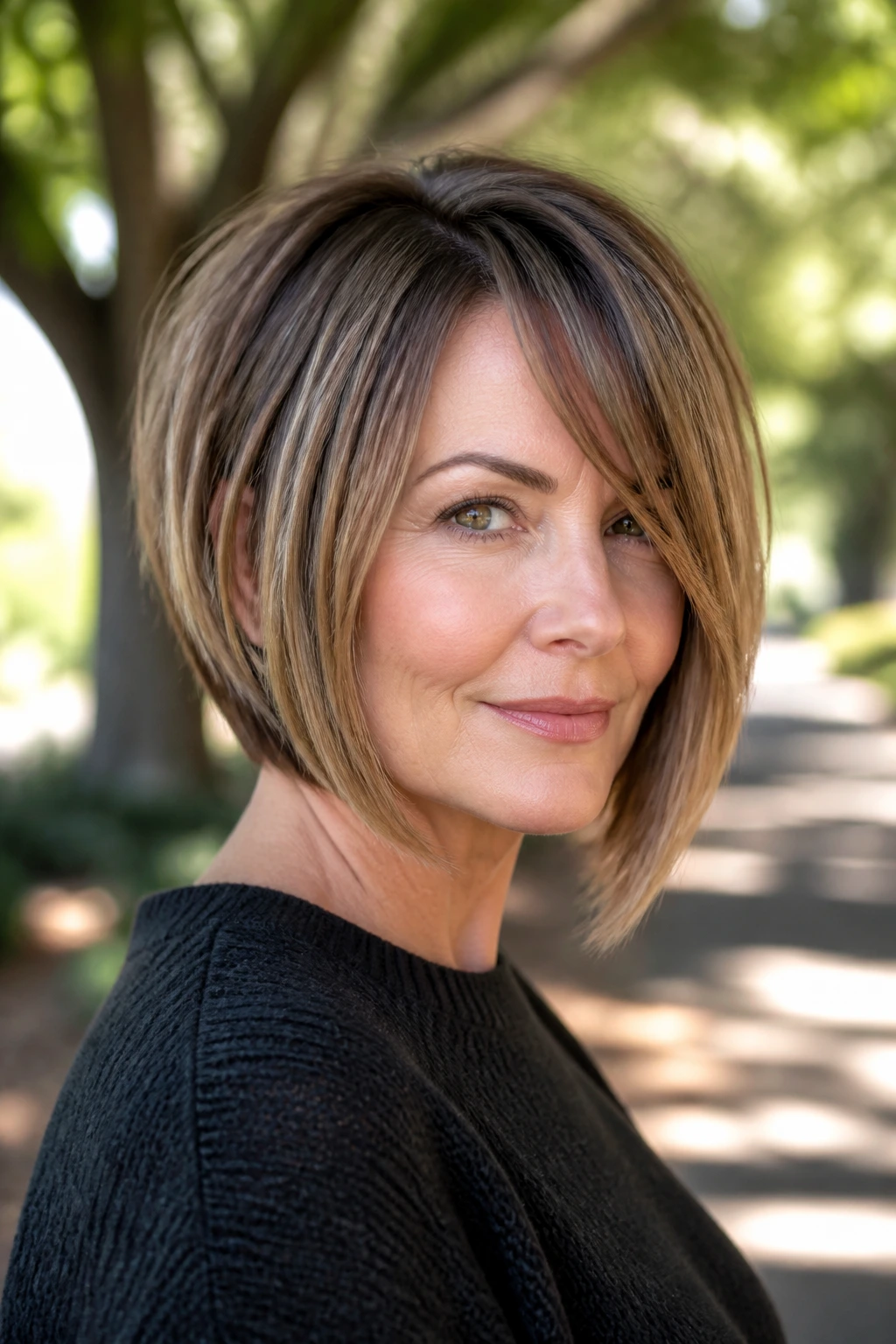
The asymmetrical bob gives you movement even when the rest of the haircut is simple. One side sits a little longer than the other, and the side-drift fringe follows that line instead of fighting it. The result is a bob that feels current without needing heavy styling.
This shape is especially useful if you want to distract from a feature you do not want to emphasize — a longer neck, a stronger jaw, one side of the face that carries more volume, or a part line that tends to misbehave. The angle creates motion. Motion softens things.
Keep the fringe light enough to sweep, not so heavy that it blocks the diagonal line. The whole point is to let the haircut move when you turn your head.
Why the Medium Bob and Fringe Combo Works So Well
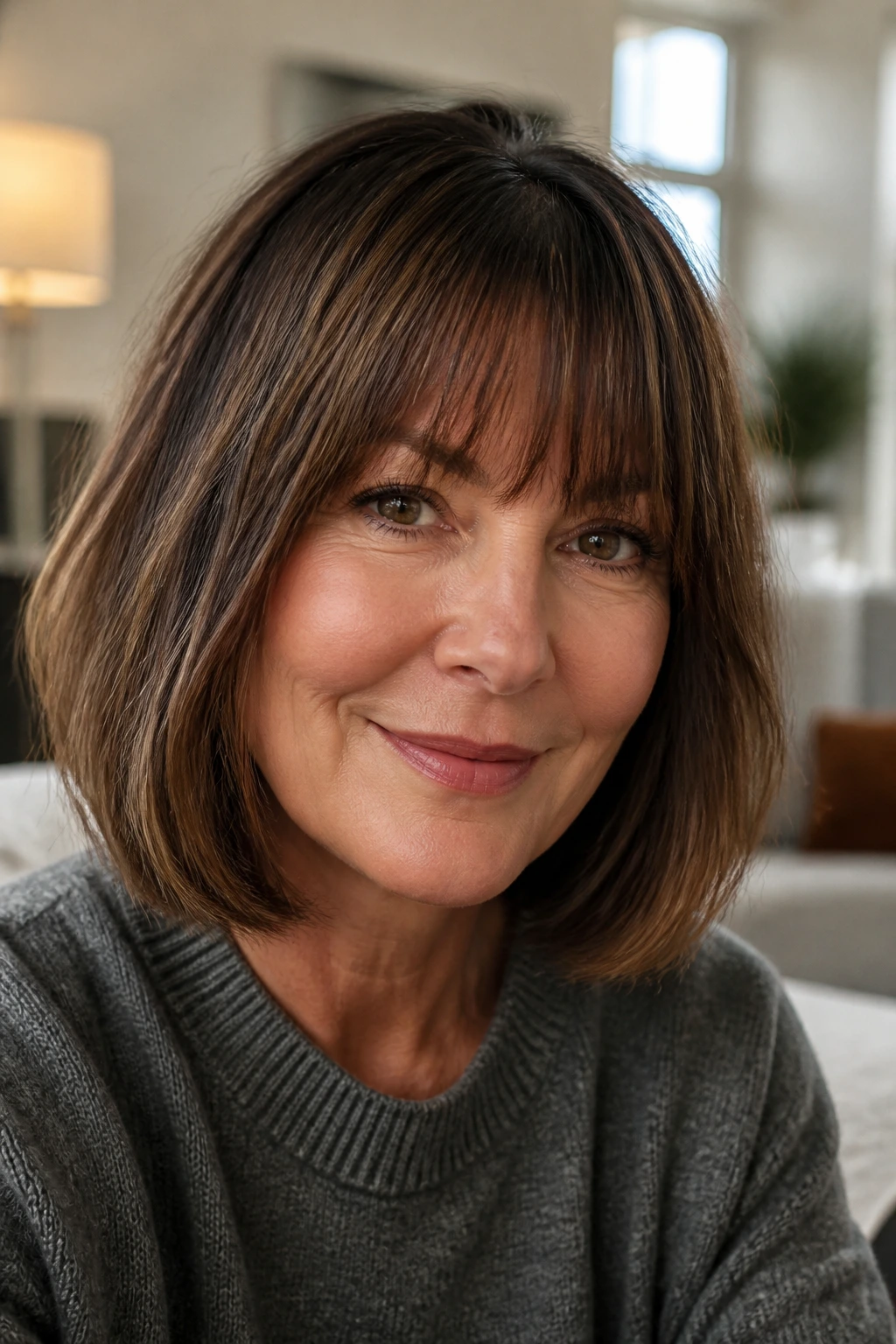
The real strength of this haircut combination is that it gives you two separate tools working at once. The bob handles the outline. The fringe handles the front. That split job is useful because not every face problem — or hair problem — can be solved by the same shape.
A medium bob can remove bulk from the shoulders, open up the neck, and make the whole cut feel lighter without going short-short. The fringe, meanwhile, can cover a forehead, soften a strong hairline, or direct attention toward the eyes. Put them together and you get a haircut that does not depend on massive volume or perfect curls to look finished.
There is also a practical side people forget. A medium bob with fringe tends to grow out in stages that still look intentional. First the fringe becomes a curtain. Then the sides blend into layers. Then the bob is a lob. It changes shape slowly, which is a gift if you do not want to live in the salon every three weeks.
The best versions do not chase youth. They make room for texture, for silver strands, for glasses, for a cowlick at the front, for a chin that deserves a softer line. That is why the haircut keeps working.
Essential Equipment for Styling and Salon Visits
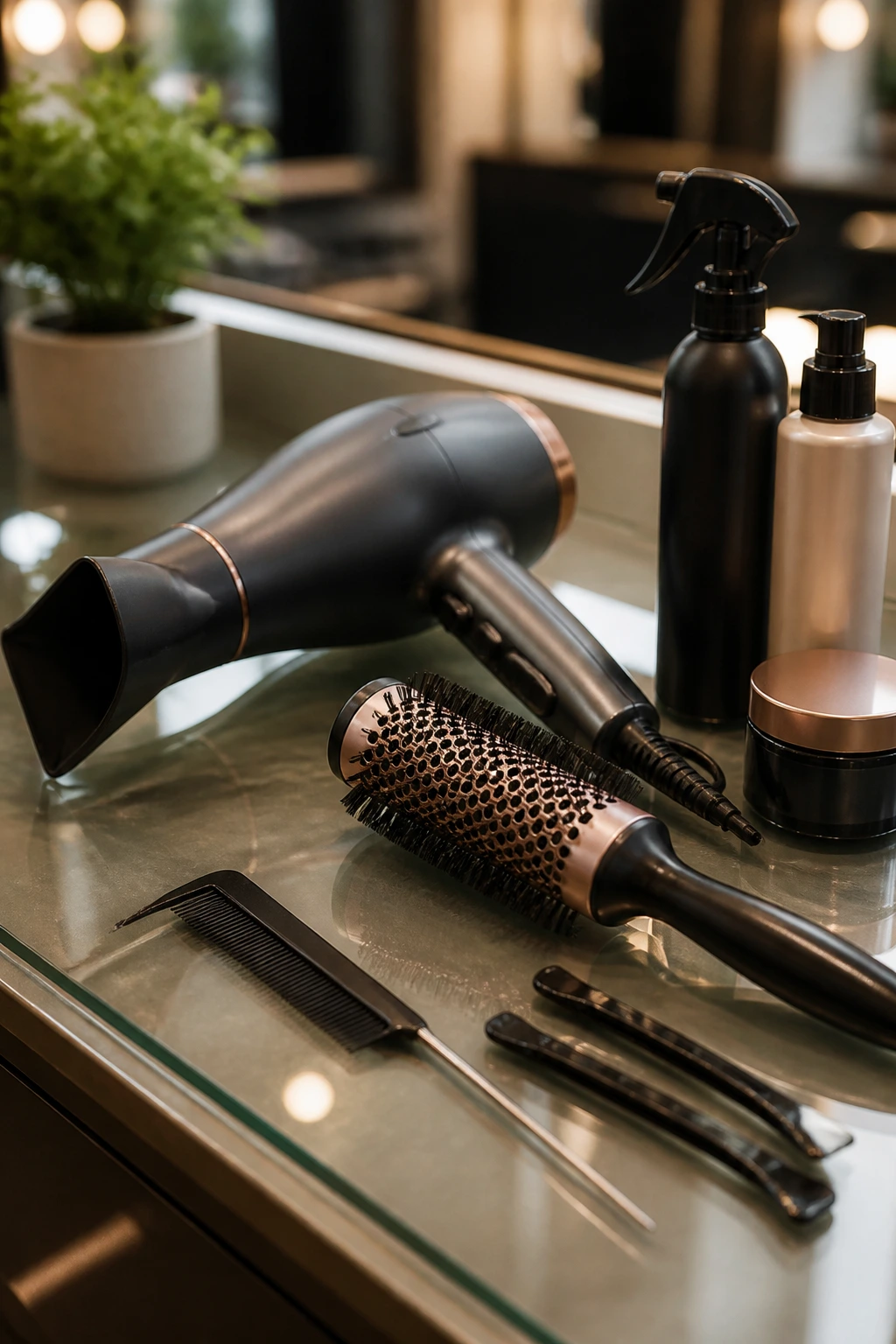
- A reference photo folder on your phone: Bring 3 to 5 examples, and make sure at least one has the same hair texture as yours.
- A tail comb: Useful for parting the fringe cleanly and checking whether the cut sits where you want it.
- A 1.25-inch or 1.5-inch round brush: The sweet spot for flipping the ends under or bending the fringe away from the face.
- A blow dryer with a nozzle: The nozzle matters. It keeps the airflow directed so the fringe does not puff out in every direction.
- A small flat iron: Handy for brow-grazing fringe, side sweep, or smoothing a piecey front on humid days.
- Heat protectant spray: Non-negotiable if you use any hot tool, even a quick pass on the fringe.
- Texturizing spray or lightweight mousse: Good for air-dried bobs, shaggy shapes, and piecey fringe.
- Smoothing cream or light serum: Helps blunt cuts, glassy finishes, and gray hair that frizzes at the ends.
- Sectioning clips: The fringe behaves better when the rest of the hair is out of the way.
- A diffuser: Especially useful for wavy or curly bobs that need lift without frizz.
How to Ask for the Right Length, Weight, and Fringe
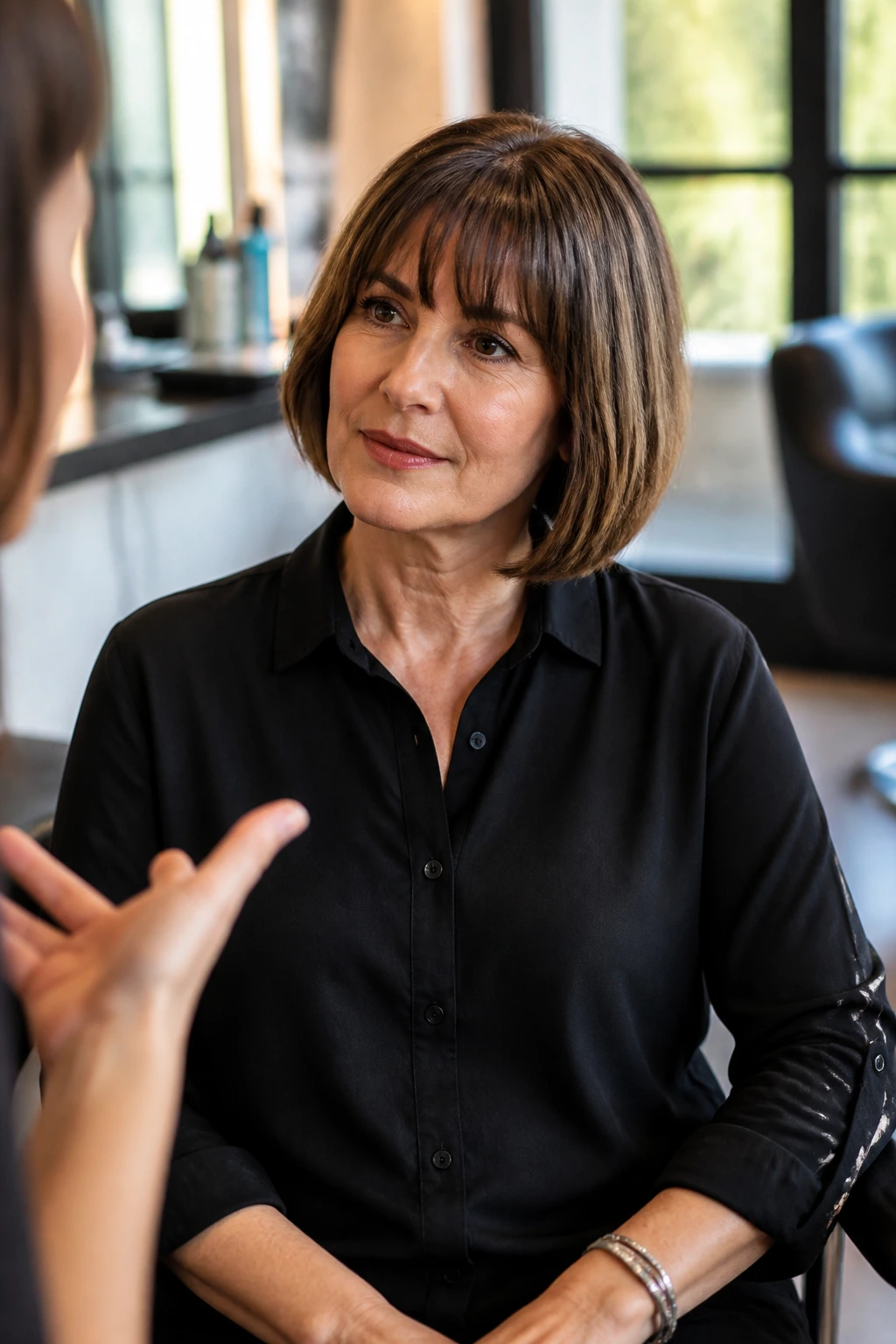
A salon visit goes better when you describe the haircut in pieces instead of one vague sentence. Say where you want the length to land — jaw, midneck, collarbone — and then talk about the fringe separately. Those are two different decisions, and they change the face in different ways.
Bring photos that show the front, side, and back if you can. One picture of a finished bob is not enough. A cut can look soft from the front and surprisingly heavy from the side, which matters if your hair is thick or your neck is short. If you wear glasses every day, show a photo that includes frames close in shape to yours.
Ask whether the fringe should be cut dry or wet. On wavy, curly, or cowlick-prone hair, dry cutting the front often gives a better read on how it will settle. On straighter hair, wet cutting can work fine, but the stylist still needs to check how the fringe moves once it is dry.
Tell them how much time you want to spend styling. That part matters more than people admit. A polished blunt bob and a textured air-dry bob are not the same lifestyle.
How to Wear These Cuts with Glasses, Gray Hair, and Everyday Clothes

Presentation: Keep the fringe line where your eyes can still breathe. A curtain fringe, soft side sweep, or feathered bang tends to sit better with glasses than a thick, straight fringe that lands right on the frame.
Best With: Thin metal frames, chunky black frames, and soft oval frames all interact differently with a bob. If your frames are bold, a softer fringe usually keeps the face from feeling crowded. If your frames are delicate, a sharper bob line can add the contrast the haircut needs.
Length Notes: If your neck is short or your jawline is strong, a slightly longer bob that hits near the collarbone can look easier than a chin-length cut. If your face is longer, a jaw-skimming bob with a fringe can shorten the visual line in a flattering way.
Style Mood: A sleek bob reads differently with a crisp shirt collar than it does with a knit crew neck. A textured fringe looks relaxed with a denim jacket and a little less formal with a blazer. The haircut can shift between those moods fast, which is half the fun.
Gray hair deserves a quick note too. Silver strands often shine best when the bob has a clean outline. Too many wispy ends can make the color look frayed; a tidy perimeter and a softer fringe usually look more intentional.
Additional Tips and Style Boosters
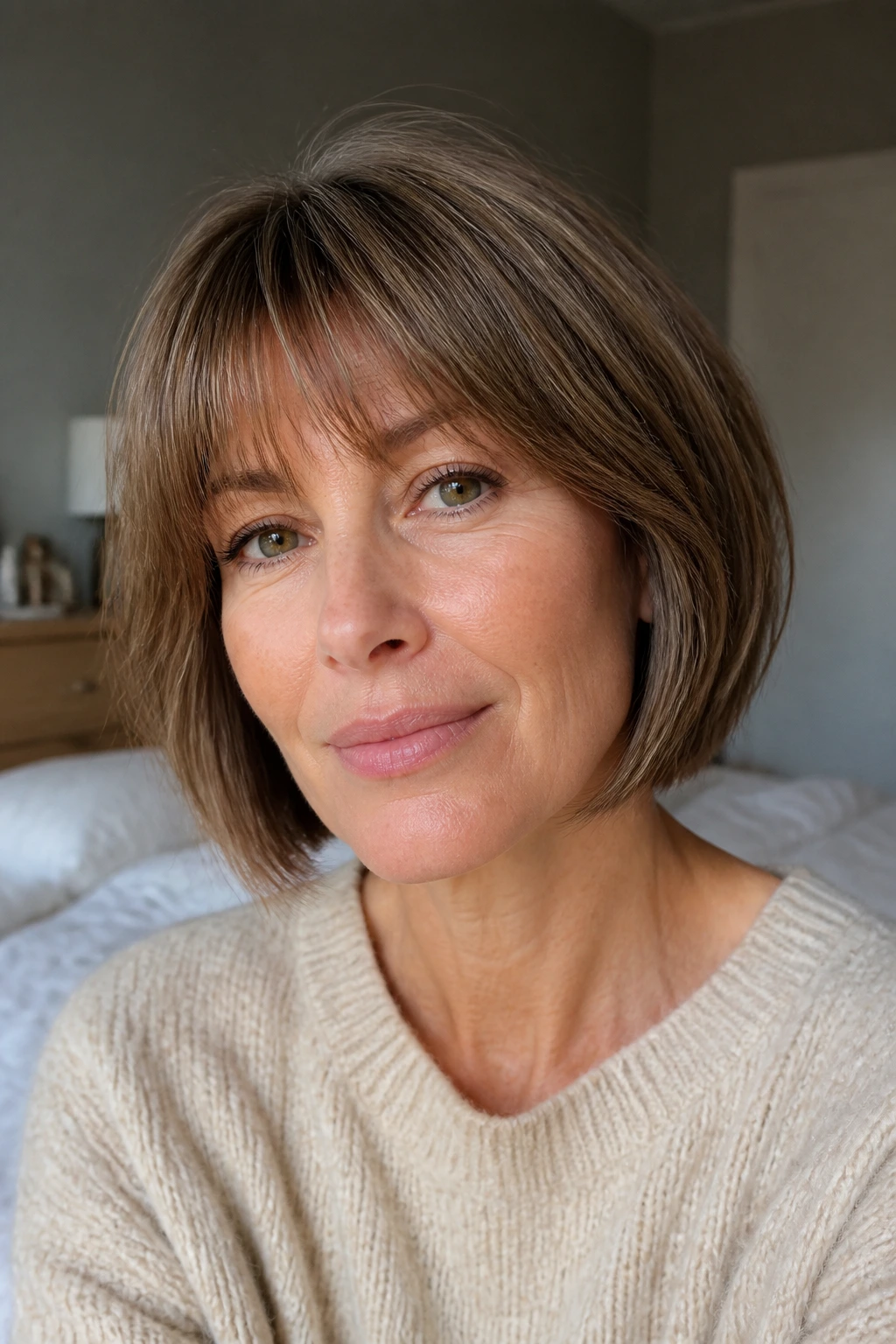
Root Lift: If your bob falls flat at the crown, flip the top section with a round brush while the hair is still warm from the dryer. A little lift at the root makes the fringe look fresher and stops the silhouette from collapsing.
Fringe Control: Use the smallest amount of styling product on the fringe. A pea-sized touch of cream or serum is enough for most hair. Too much product makes the front separate and go stringy by noon.
Texture Boost: If the bob looks too safe, add a bend with a flat iron only through the middle section of the hair, leaving the ends soft. That creates movement without turning the haircut into a curl festival.
Make-It-Yours: If you love polish, tuck one side behind the ear and wear a stronger lip. If you prefer softness, let the fringe split naturally and keep the ends slightly undone. The same bob can go either way.
Gray-Friendly Finish: A touch of shine spray on the outer layer can make salt-and-pepper or silver strands look clean without weighing them down. Use it lightly. A little sheen goes farther than people think.
Maintenance, Trims, and Between-Wash Care
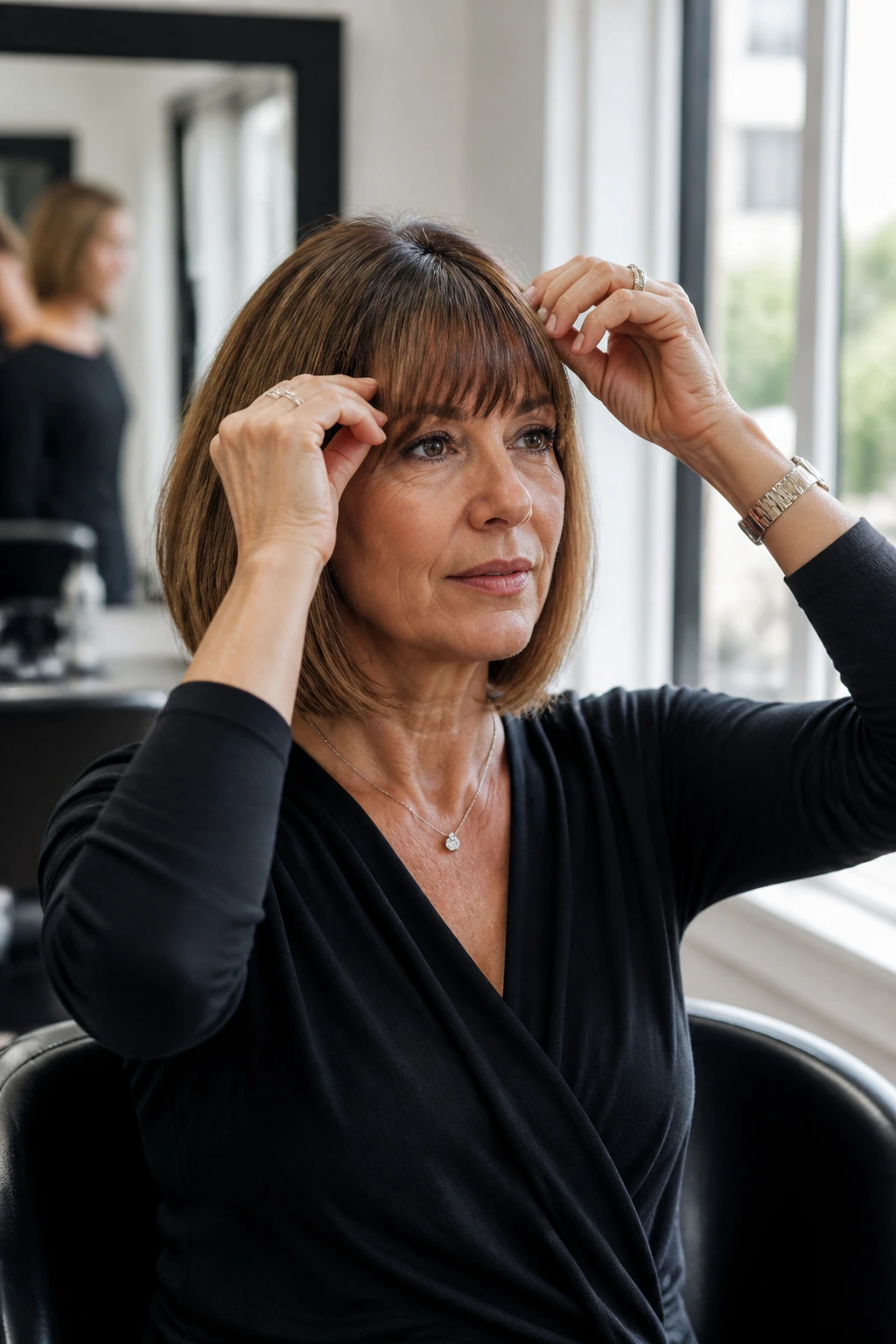
A medium bob with fringe stays sharp when you keep up with small trims. Straight, brow-grazing fringes often need attention every 3 to 4 weeks if you want the line to stay crisp. Softer curtain bangs and feathered fringes can go longer, usually 5 to 6 weeks, before they start falling into the eyes in a way that looks sloppy.
The bob itself usually holds shape longer than the fringe. You might not need a full haircut as often, but the outline still benefits from a clean-up every 6 to 8 weeks if the style is blunt or precise. Texture-heavy bobs can stretch a little farther, though the ends will still tell you when they need help.
On wash day, do not flood the fringe with heavy conditioner. Keep it off the roots and off the front unless the hair is very dry. The front of the haircut gets oil from the skin faster than the rest, which is why a fringe can go flat first. A dry shampoo puffed at the root line can buy you a day, sometimes two, but use a small amount or it gets chalky.
At night, a loose clip or soft bend at the fringe can help it wake up in a less awkward shape. If you sleep hot or move around a lot, the front piece can kink. A quick mist of water and a blow-dry on the fringe the next morning usually fixes it.
Variations and Adaptations to Try
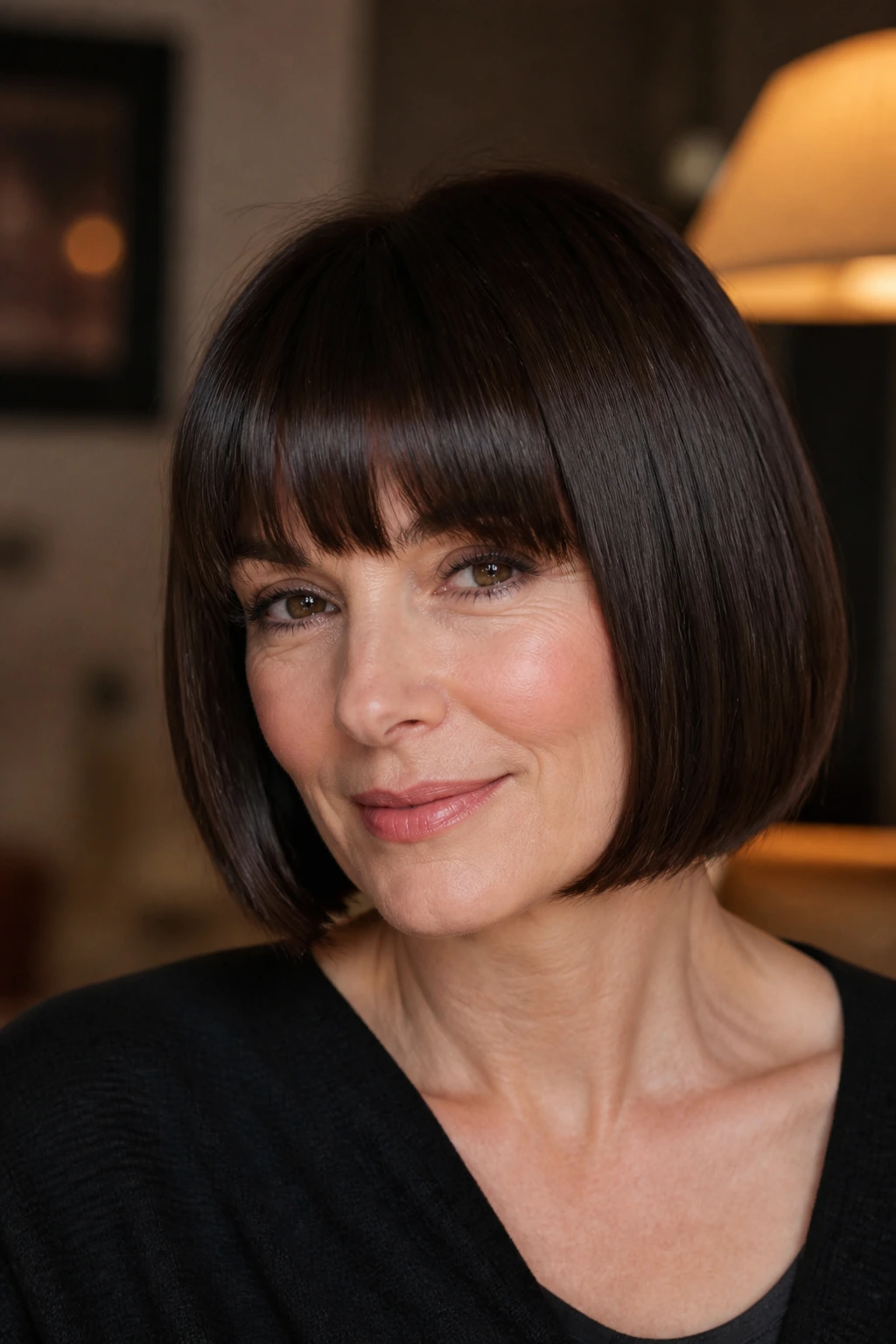
The Soft Glass Bob: Keep the line sleek and use a tiny amount of serum for shine. This works when you want a neat finish without heavy layering.
The Texture-First Bob: Ask for more internal movement and a piecey fringe. It suits wavy, thick, or slightly unruly hair that looks better with a bit of grit.
The Gray-Lift Bob: Use a translucent fringe and a clean perimeter so silver strands look intentional rather than rough around the edges.
The Glasses-Friendly Bob: Choose curtain fringe, side sweep, or a fringe that parts easily at the center. Frames need breathing room, and this version gives it.
The Low-Fuss Bob: Keep the fringe long enough to tuck away and the length just past the jaw. It takes less daily maintenance and grows out in a calmer way.
The Bold Edge Bob: Try a stronger angle, a fuller fringe, or a micro fringe if you like sharper lines and do not mind the upkeep. This one has the most personality and the least forgiveness.
Common Mistakes to Avoid
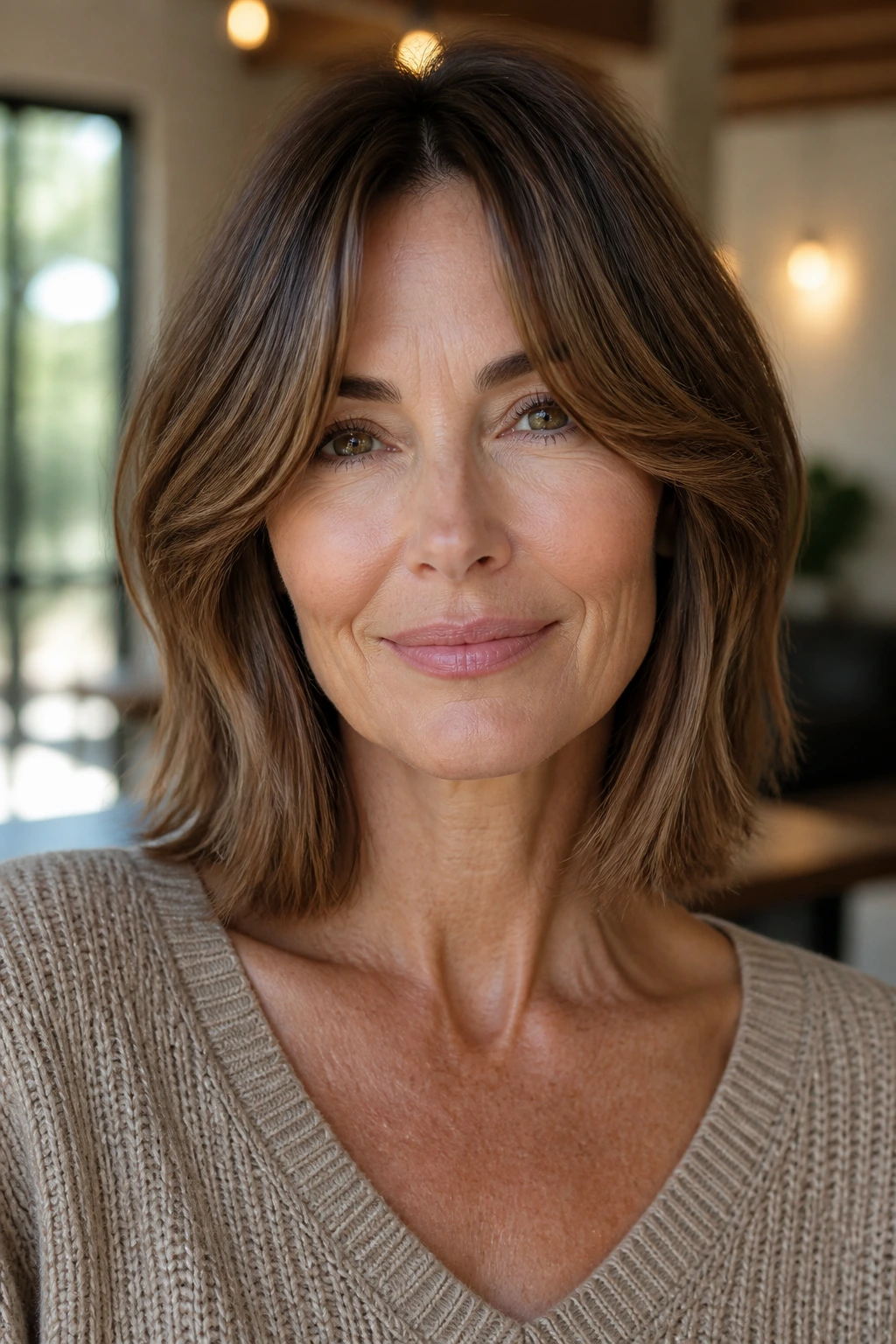
A bob with fringe can go wrong in a few very specific ways, and most of them come down to balance. Heavy fringe with too much volume at the sides can make the face feel boxed in. If that happens, the fix is usually to soften the fringe edges or add a bit of movement through the mids, not to chop more hair off.
Another common misstep is cutting the fringe too short when the hair is wavy or grows in a strong cowlick. Wet hair lies. Dry hair tells the truth. If your front pieces spring up once they dry, a bang that looked perfect in the chair may land awkwardly high an hour later.
Flat roots are another one. A medium bob can look tired if the crown goes limp, especially when the fringe is thick. A quick root lift with the dryer, or a little mousse before blow-drying, solves more than most people expect.
The last big issue is ignoring your glasses, if you wear them. A fringe that keeps brushing the frame all day will make you hate a cut that otherwise looks good. The stylist needs to know what sits on your face every single day.
Frequently Asked Questions

Can medium bob hairstyles with fringe work on fine hair?
Yes, and a blunt or softly blunt bob is often the easiest way to make fine hair look fuller. The fringe should stay light enough to avoid see-through gaps, but the bottom line of the bob can add a lot of visual weight.
Are curtain bangs better than blunt bangs for a bob?
Curtain bangs are easier to grow out and usually easier to wear with glasses. Blunt bangs create a sharper look and can be stunning, but they need more upkeep and more exact styling.
How often does a fringe need trimming?
Straight fringe often needs a trim every 3 to 4 weeks if you want it to stay tidy. Softer, longer, or curtain fringe can usually go a bit longer, especially if you do not mind a more relaxed shape.
Will a bob with fringe work if my hair is wavy or curly?
Absolutely, but the fringe has to be cut for the texture. Wavy and curly bangs need extra length at the start because they spring up as they dry, and the bob itself should leave enough room for movement.
What if my hair falls flat at the crown?
Choose a bob with a bit of internal structure — not too many heavy layers, but enough shape to support the top. A root-lift spray or mousse at the crown before blow-drying can make a bigger difference than adding more product to the ends.
How do I grow out a fringe without ruining the haircut?
Ask for the fringe to be softened into face-framing layers rather than cut into a hard line. That way, when it grows, it blends instead of dropping into your eyes all at once.
Can I wear a fringe if I have glasses?
Yes, but the fringe should be cut with the frame shape in mind. Curtain fringe, side sweep, and feathered bangs usually sit better than a dense blunt fringe that lands directly on the top of the glasses.
A Fringe That Keeps Working
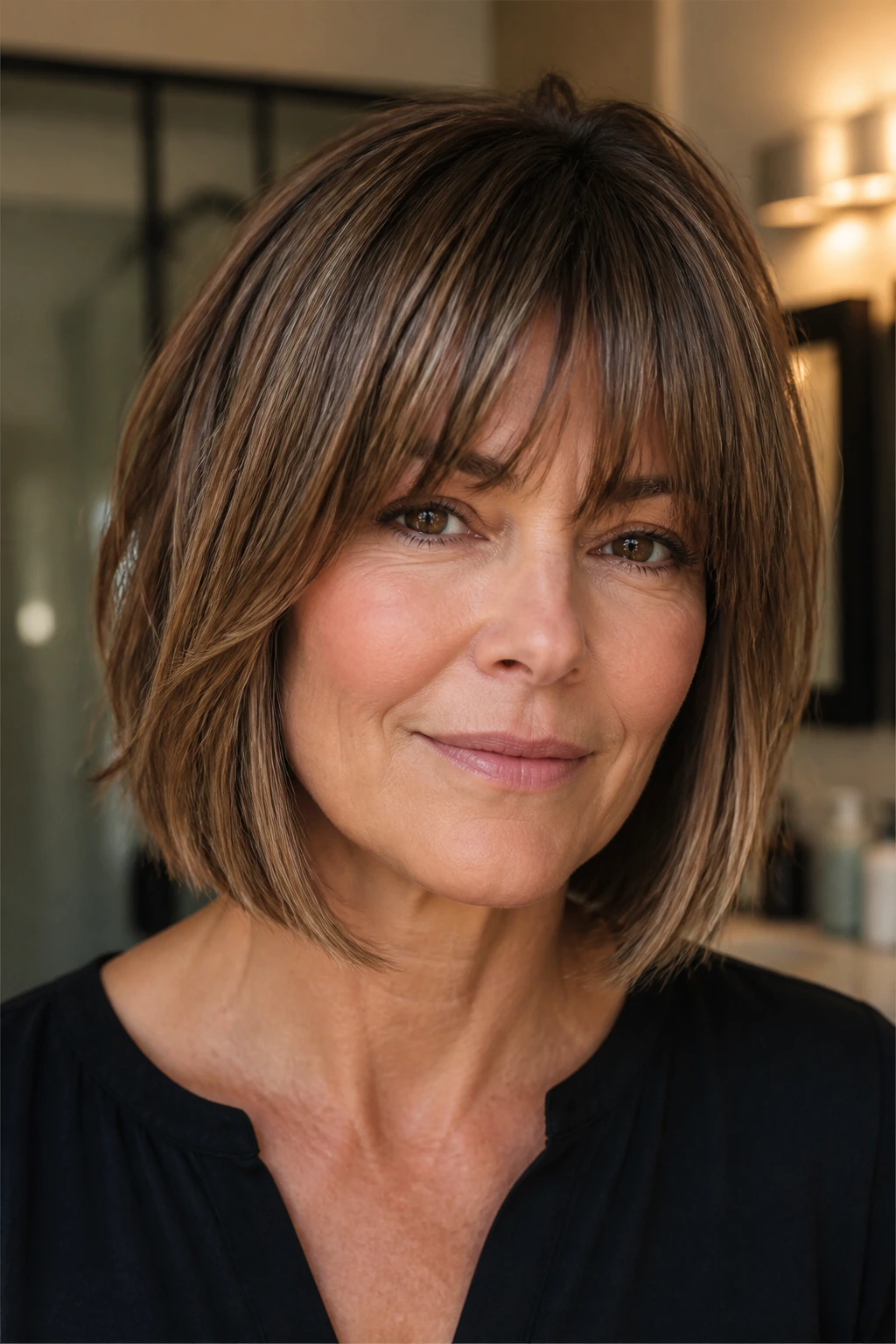
The nicest thing about a medium bob with fringe is that it does not need to be dramatic to matter. A few inches of length, the right angle at the jaw, and a fringe that knows where to sit can change the whole face without turning your morning routine into a project.
Some of these cuts are sharper. Some are softer. Some lean polished, some a little undone. The common thread is simple: they give the front of the hair a job, and they do it without wasting time. That is a useful haircut.
Pick the version that fits your texture, your glasses, your styling habits, and how much trim upkeep you can tolerate. The right bob will look good on day one, then keep looking good after the first, second, and third grow-out phase — which is the part that actually matters.
