



Brown textured bob haircuts have a way of making hair look expensive without acting precious about it. That’s the charm. A clean bob can look sharp, but add a little bend, a little movement, and a warm brunette tone — chestnut, mocha, caramel, cocoa, walnut — and suddenly the whole cut feels softer, richer, and much more alive.
That combination matters more than people think. Texture keeps the perimeter from looking heavy. Warm brown tones keep the color from flattening out under indoor light, which is exactly where a lot of brunette hair can go dull if the cut is too blunt or the toner leans too cool. A good textured bob gives the hair somewhere to move. A good warm brown gives the eye something to stay with.
The best part? These cuts are not one-note. Some are sleek and polished. Some are choppy and piecey. Some sit at the chin, some graze the collarbone, and some lean into curls or waves so the whole shape feels looser and less formal. That range is exactly why brown textured bob haircuts keep showing up in salons: they can be tailored without losing the point of the style.
Why These Brown Textured Bob Haircuts Work So Well
-
Warm tones keep brunette hair from going flat: Chestnut, caramel, mocha, and toffee catch light in a way ash brown often doesn’t, especially around the face and crown.
-
Texture removes the helmet effect: Point-cutting, slide-cutting, and soft internal layers stop the bob from sitting like one solid block.
-
The shape works on more than one hair type: Fine hair gets lift. Thick hair loses bulk. Wavy hair gets a cleaner outline instead of a triangle.
-
Grow-out looks better than most short cuts: A textured bob can soften into a lob without looking sloppy, which is a relief if you hate harsh salon lines.
-
The color and cut do half the styling for you: Warm brunette tones make the movement visible, so even a rough blow-dry reads intentional.
-
It can swing polished or undone fast: One pass with a round brush gives a tidy finish. A few bends with a flat iron turn it into something much looser.
1. Chestnut Jaw-Length Bob with Soft Fringe
This one lands right around the jaw, which is the sweet spot if you want a cut that shows off the neck but still has enough weight to look deliberate. The chestnut brown keeps it warm and glossy, while the soft fringe stops the whole thing from feeling too sharp. It’s a neat little trick. Short, but not severe.
Ask for a blunt-ish perimeter with light texturizing through the ends, then keep the fringe wispy rather than heavy. That fringe should graze the brows, not swallow them. If your hair has a natural wave, this cut wakes up fast with a diffuser and a bit of mousse at the roots. Straight hair needs a small bend at the ends so it doesn’t sit too tidy.
This is one of those brown textured bob haircuts that looks especially good when the color is multi-tonal. A few lighter chestnut ribbons around the fringe make the shape read softer, and the whole cut feels more dimensional in daylight.
2. Cocoa French Bob with Micro Layers
A French bob with cocoa brown color feels chic without trying too hard, and that is exactly why it works. The length usually sits just below the cheekbone, which gives the face a little frame without dragging the eye down. Micro layers keep the shape light, so the bob still moves when you turn your head.
The trick here is restraint. Too many layers and the cut loses its clean outline. Too little and it starts to puff at the sides, especially if your hair is dense. I like this best on straight to softly wavy hair that can hold a bend but doesn’t need serious control.
If you wear glasses, this is a strong choice. The short length clears the frames, and the cocoa tone keeps the look grounded instead of artsy in a way that feels costume-y. There’s a reason this one keeps coming back. It’s compact, flattering, and easy to wear on a random Tuesday.
3. Espresso Blunt Bob with Hidden Texture
The blunt bob gets a bad reputation because people imagine it as stiff. It doesn’t have to be. An espresso brown blunt bob with hidden texture gives you that clean edge at the perimeter, but the interior is lightly broken up so it doesn’t sit like a helmet.
That hidden texture matters most on thick hair. A stylist can remove weight from the middle layers without shredding the ends, which keeps the line crisp while making the cut easier to tuck, bend, and flip. Espresso brown deepens the whole effect; it makes the shape look glossy and rich, especially when the hair is straightened just enough to show the edge.
This is a good option if you like a sharp outline but don’t want to fight your hair every morning. It’s not fussy. It just looks expensive when the ends are kept neat and the shine is there.
4. Caramel Ribbon Bob with Face-Framing Pieces
Caramel ribbons change everything on a brown bob. They catch the curved lines near the face, and that little bit of brightness makes the haircut feel lighter even if the overall length stays at the chin or just below it. Face-framing pieces help too, especially when they start around the cheekbone and fall forward in a soft diagonal.
This cut is for people who want movement without going full shag. The shape is still a bob, but the front has enough softness to flatter rounder faces and soften stronger jawlines. If your hair is medium density, this one usually sits nicely with minimal product — a little cream, a little dry texture spray, and you’re done.
The color placement matters. Caramel works best when it’s not streaky. A few ribbons through the top layer and around the front pieces give the haircut depth, while the rest of the brown stays richer and deeper underneath.
5. Chocolate Shag Bob with Piecey Ends
This is the messier cousin in the group, and I mean that as a compliment. The chocolate shag bob uses shorter internal layers, broken-up ends, and a little extra air around the crown to build that lived-in shape people keep asking for at the salon.
The cut shines on wavy hair and on anyone who likes a “done, but not done too much” finish. If you air-dry it halfway and then rough it up with a diffuser, the piecey ends pop. A light chocolate brown keeps the texture visible without making the haircut look dark and heavy. It’s a very useful cut if your hair falls flat the minute you leave the house.
One caution: don’t overdo the thinning. A shag bob needs separation, not a ragged perimeter. If the layers are cut with care, the shape feels airy and modern. If they’re too chopped, it starts looking like you lost a fight with a razor.
6. Cinnamon Wavy Bob with Collarbone Sweep
Cinnamon brown does something nice on a longer bob. It adds warmth without screaming for attention. On a collarbone-length cut, those cinnamon tones move with the wave pattern and make every bend stand out a little more.
This version is ideal if you want the bob silhouette but don’t want to go short short. The length brushes the collarbone, which means it can be tucked behind the ear, clipped back, or worn with a deep side part when you want extra volume. Ask for soft, invisible layers through the mid-lengths so the ends don’t sit heavy.
Wavy hair loves this cut. A 1-inch curling iron, used in alternating directions, gives it the kind of bend that looks natural instead of curled-on-purpose. The cinnamon tone warms the whole effect. It feels cozy, but not sleepy.
7. Walnut Curved Bob with Tucked Ends
If you like a bob that curves in neatly at the jawline, walnut brown is a strong color choice. It has enough depth to make the silhouette look polished, but it’s warm enough that the curve doesn’t turn severe. That tucked-under finish is small, but it changes the whole mood of the cut.
This works especially well on straight hair or hair that can hold a round-brush blowout. The ends are cut to fall just under the chin, then shaped to tuck under slightly. A bit of root lift at the crown keeps it from going too flat. The result is tidy, smooth, and flattering in a way that never looks overworked.
I like this cut for people who wear structured clothes — crisp shirts, good earrings, clean necklines. The bob gives that same order. Walnut brown just softens the edges.
8. Mocha Bob with Curtain Bangs
Curtain bangs can change a bob from neat to flattering in about ten minutes. On a mocha brown base, they break up the face in a gentle way and keep the cut from looking too boxy. The length usually sits around the cheekbones, then opens out toward the temples.
This is a smart move if you want movement near the eyes and don’t mind a little styling. Curtain bangs need a round brush or a small hot tool to separate cleanly, especially if your hair wants to fall forward. The rest of the bob can stay simple — collarbone to chin length, soft texture at the ends, no drama.
Mocha brown gives the bangs depth, which matters more than people admit. Flat brown plus bangs can look heavy. Mocha, with a hint of warmth, keeps the whole shape airy enough to lift the face.
9. Golden Brunette Bob with Choppy Ends
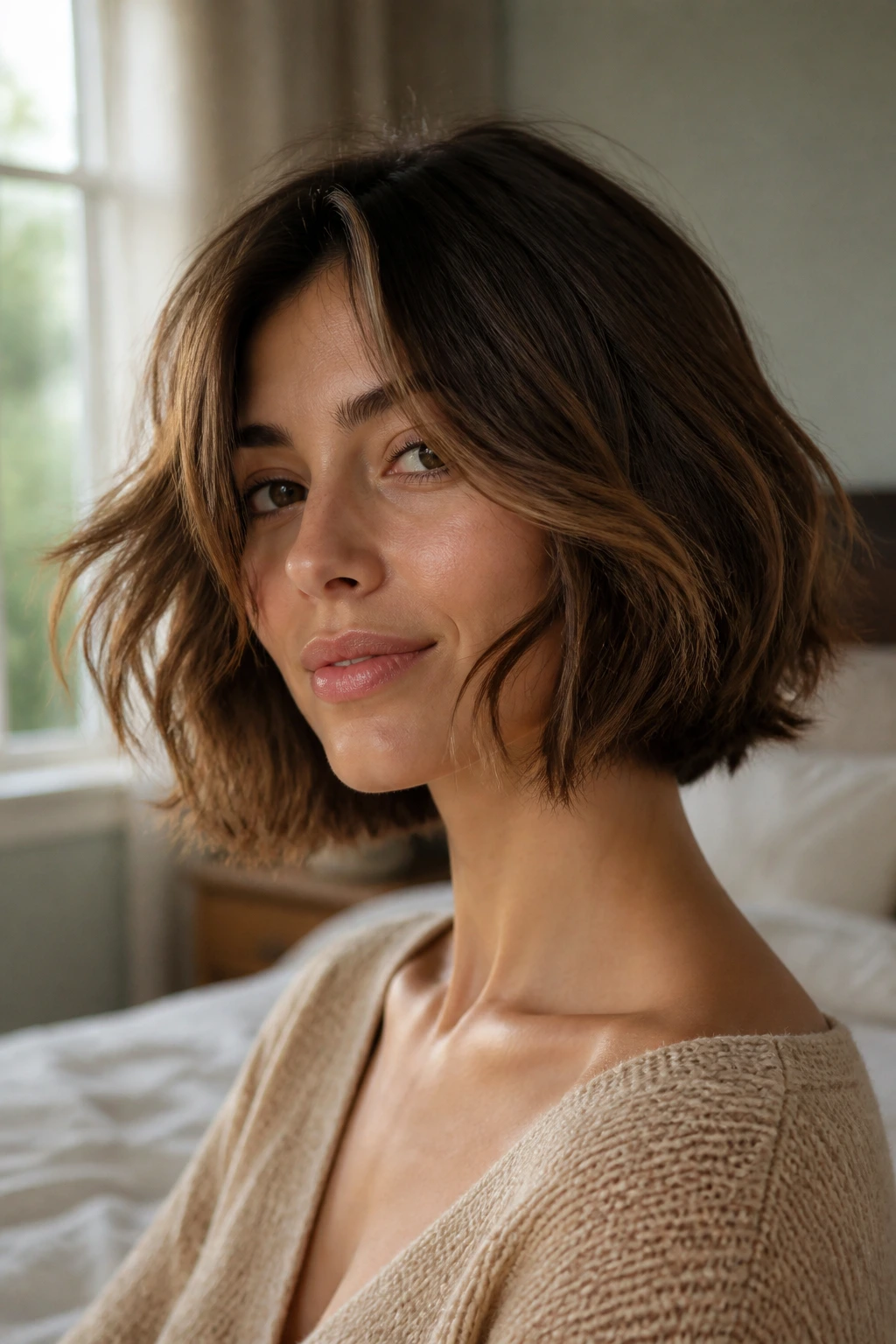
Golden brunette is what happens when brown hair catches enough warmth to stop looking one-dimensional. Add choppy ends and the whole cut wakes up. The perimeter stays short and clean, but the tips are broken enough to move when you shake your head.
This one works well if your hair is fine and tends to fall limp. The choppy ends create the impression of density, while the golden brunette tone reflects light and helps the cut read fuller. A dry texture spray at the mid-lengths can make a huge difference here. Too much serum, though, and the whole point disappears.
The shape leans casual, not polished. That’s the appeal. It’s the kind of bob that looks better after a little wear, which is rare and useful.
10. Toffee Rounded Bob for Thick Hair
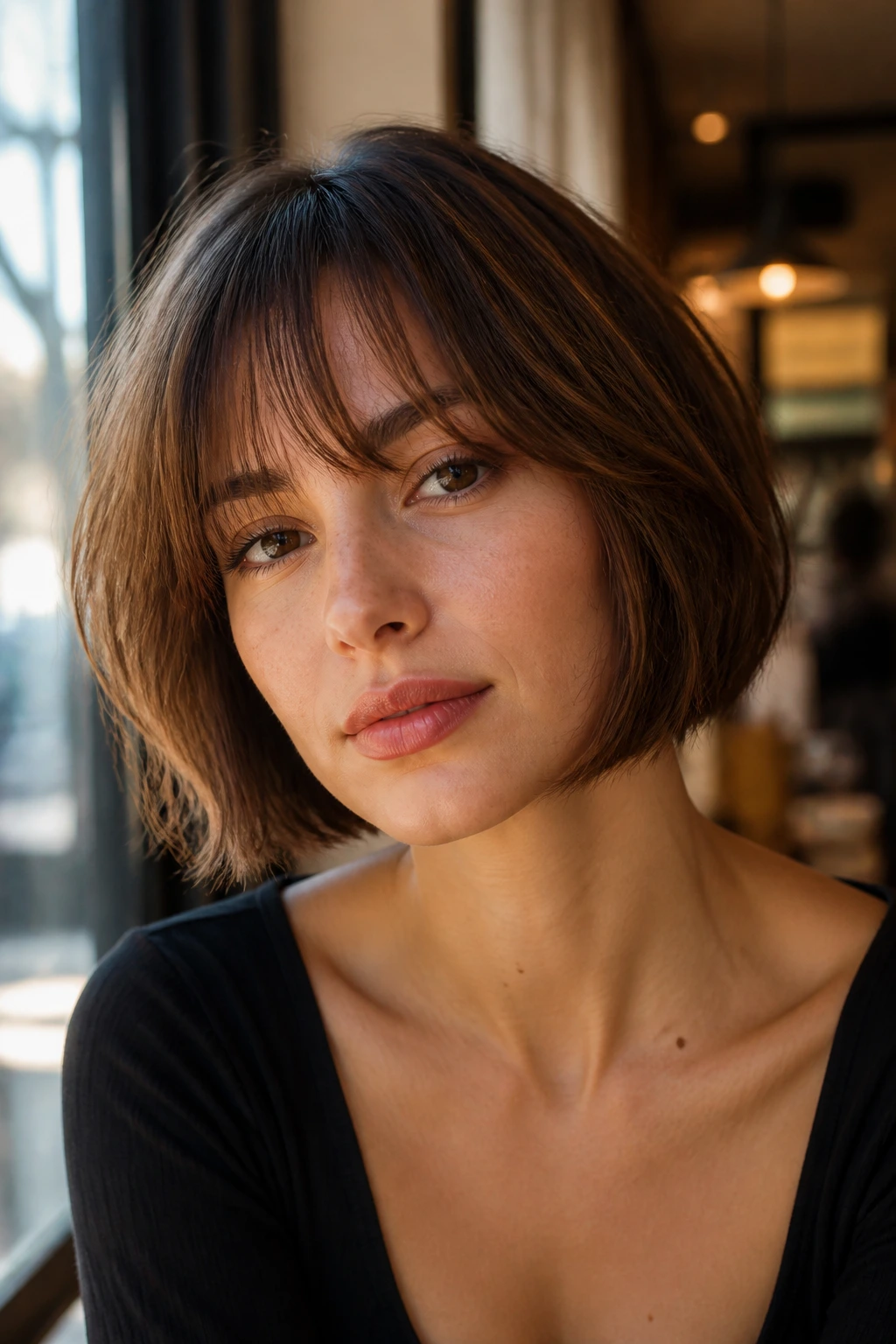
Thick hair needs a plan. A toffee rounded bob gives it one. The rounded shape keeps the sides from flaring out, while internal weight removal stops the cut from turning into a triangle by lunchtime.
Ask for the bulk to come out from the mid-lengths, not just the bottom. That’s where thick hair gets stubborn. The toffee tone softens the mass of the cut, especially if the colorist leaves a little depth underneath and paints warmth through the top layers. It’s a good compromise between control and softness.
This style loves a round brush and a concentrator nozzle. Blow-dry the crown first, then guide the ends inward just enough to create a smooth curve. You do not want a hard underflip here. It should feel rounded, not sculpted.
11. Mahogany Box Bob with Clean Edges
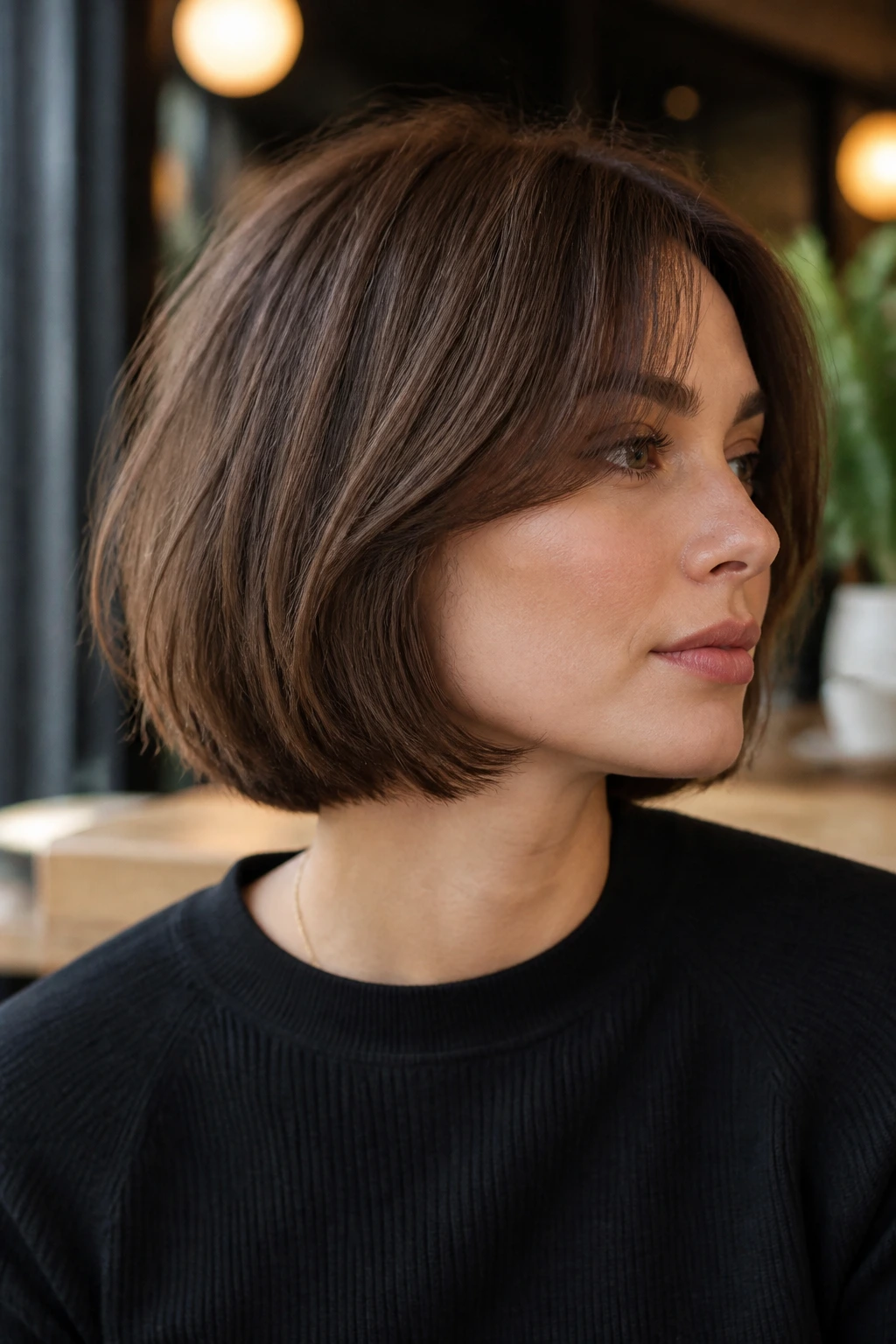
Mahogany is one of those brown shades that can look almost red in the right light. On a box bob, that richness gives the haircut a little drama without needing extra length or big layers. The edges stay clean. The shape stays square. The color does the talking.
This cut looks best when the perimeter is kept deliberate, with just enough texture to stop the ends from feeling heavy. If you have straight hair, this is a dream. If your hair is wavy, it needs some smoothing near the ends so the boxy outline stays visible.
The box bob is not shy, and that is fine. Pair it with a center part for more structure, or shift it slightly off-center if you want the mahogany tones to show in the front. Either way, it carries itself.
12. Hazelnut Curly Bob with Springy Layers
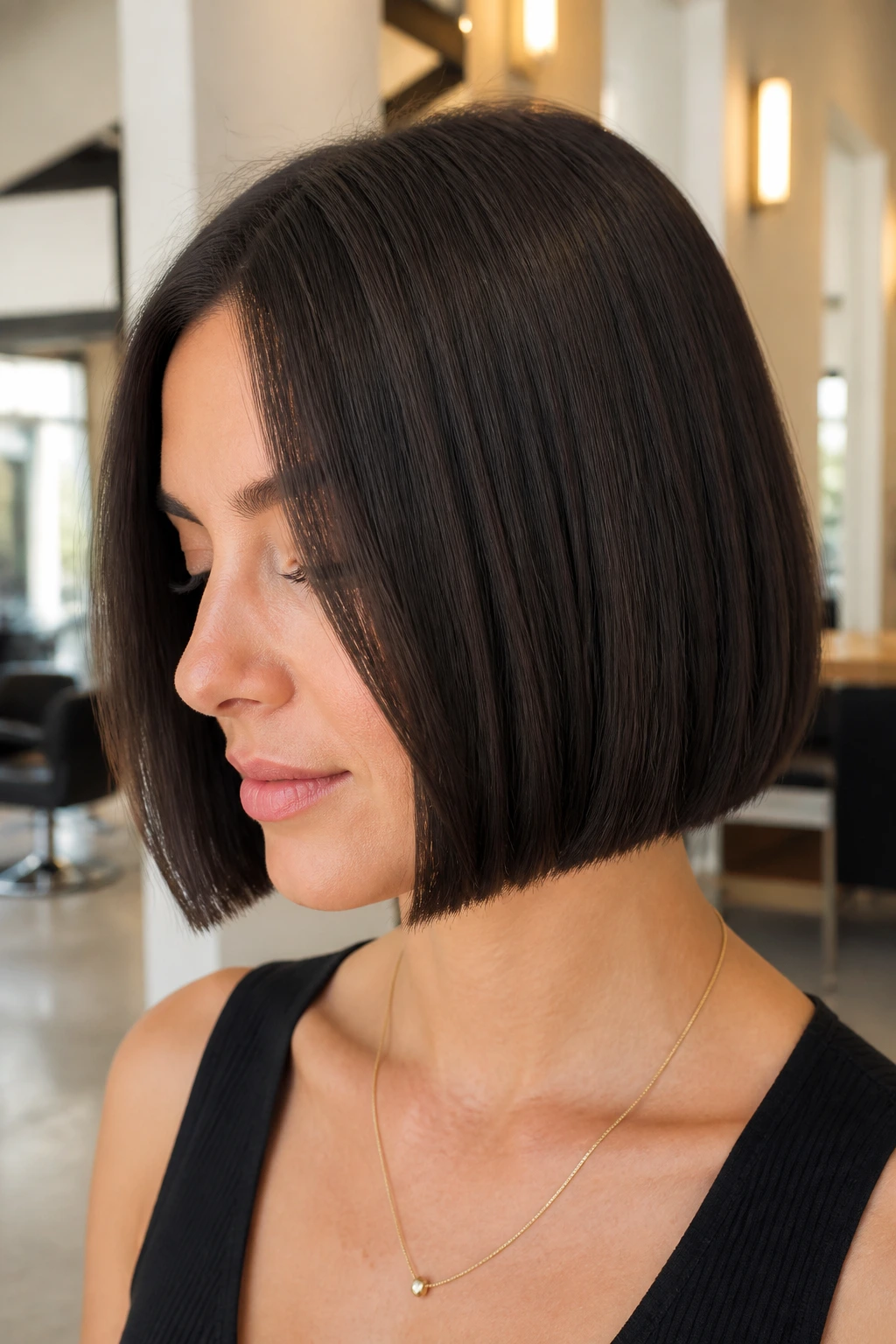
Curly hair and bob lengths can be a mess if the cut is wrong. A hazelnut curly bob with springy layers gets around that problem by respecting the curl pattern instead of fighting it. The layers are shaped to let the curls stack without puffing into a triangle.
The hazelnut tone is a good match because it gives the curls depth and warmth at the same time. Curls catch color differently than straight hair, so you want a tone that reads clearly without looking stripey. A curl-specific cream or light gel helps the shape hold after diffusing. Nothing heavy. Heavy product ruins the bounce.
This is one of the most forgiving styles in the whole group. It grows out well, it doesn’t need perfect symmetry, and it looks even better when a few curls sit a little differently from the rest. That’s the point. Movement beats polish here.
13. Textured Lob with Airy Ends
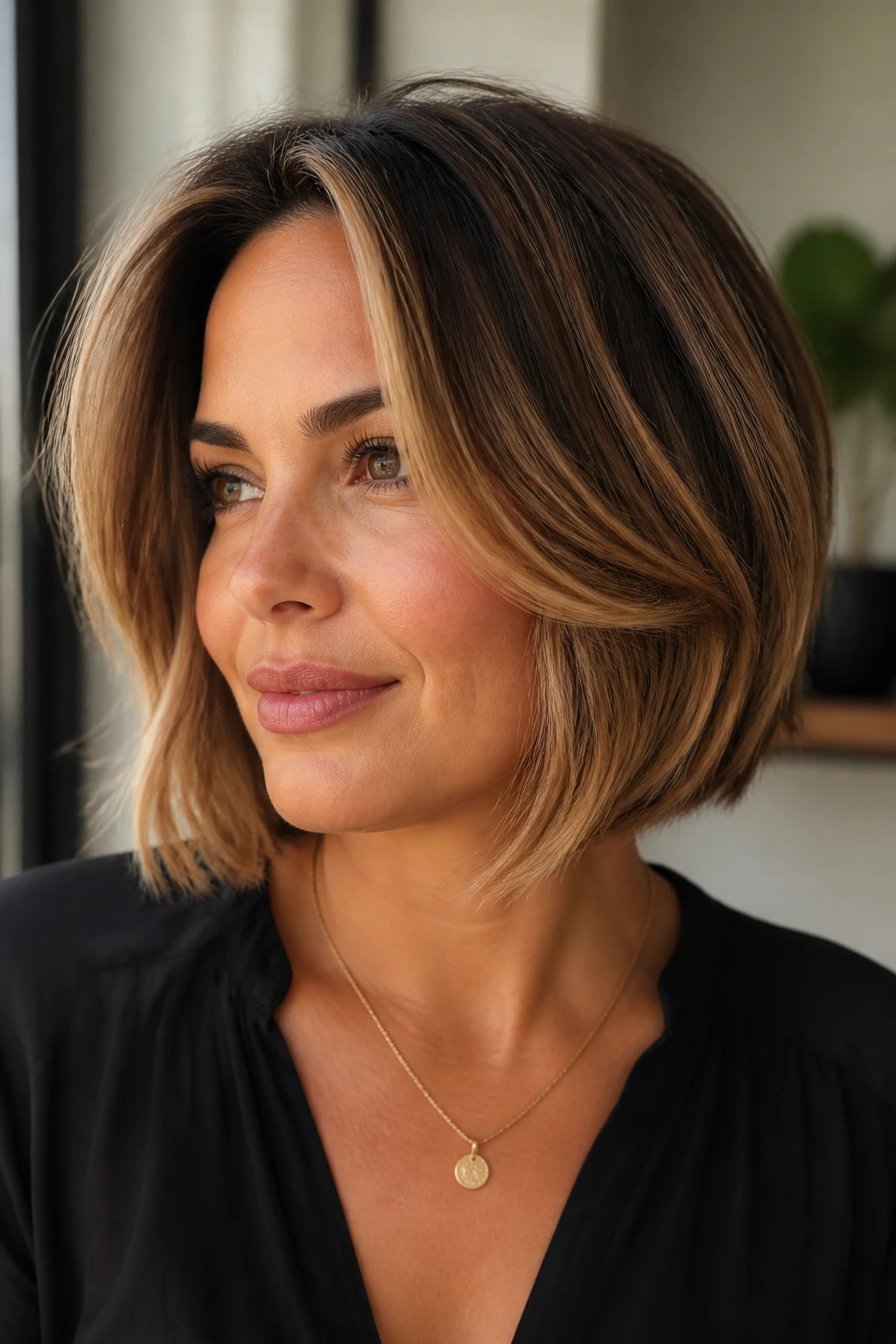
A textured lob is the longer, easiergoing sibling of the bob, and it earns its place here because the warm brown tones look especially good when the ends are airy instead of blunt. The length usually sits between the chin and collarbone, which gives you enough hair to tuck behind the ears or pull half back without losing shape.
This is the cut for someone who likes a bob in theory but wants a little more safety net. The airy ends keep the shape light, and the extra length makes it easier to grow out. A warm brunette base with subtle caramel or cocoa dimension gives the whole thing more movement in daylight.
I’d call this the least fussy option in the lineup. It can be styled straight, waved, or left alone if your natural pattern is decent. It still counts as a textured bob in spirit, and in practice that’s what matters.
14. Chestnut A-Line Bob with Longer Fronts
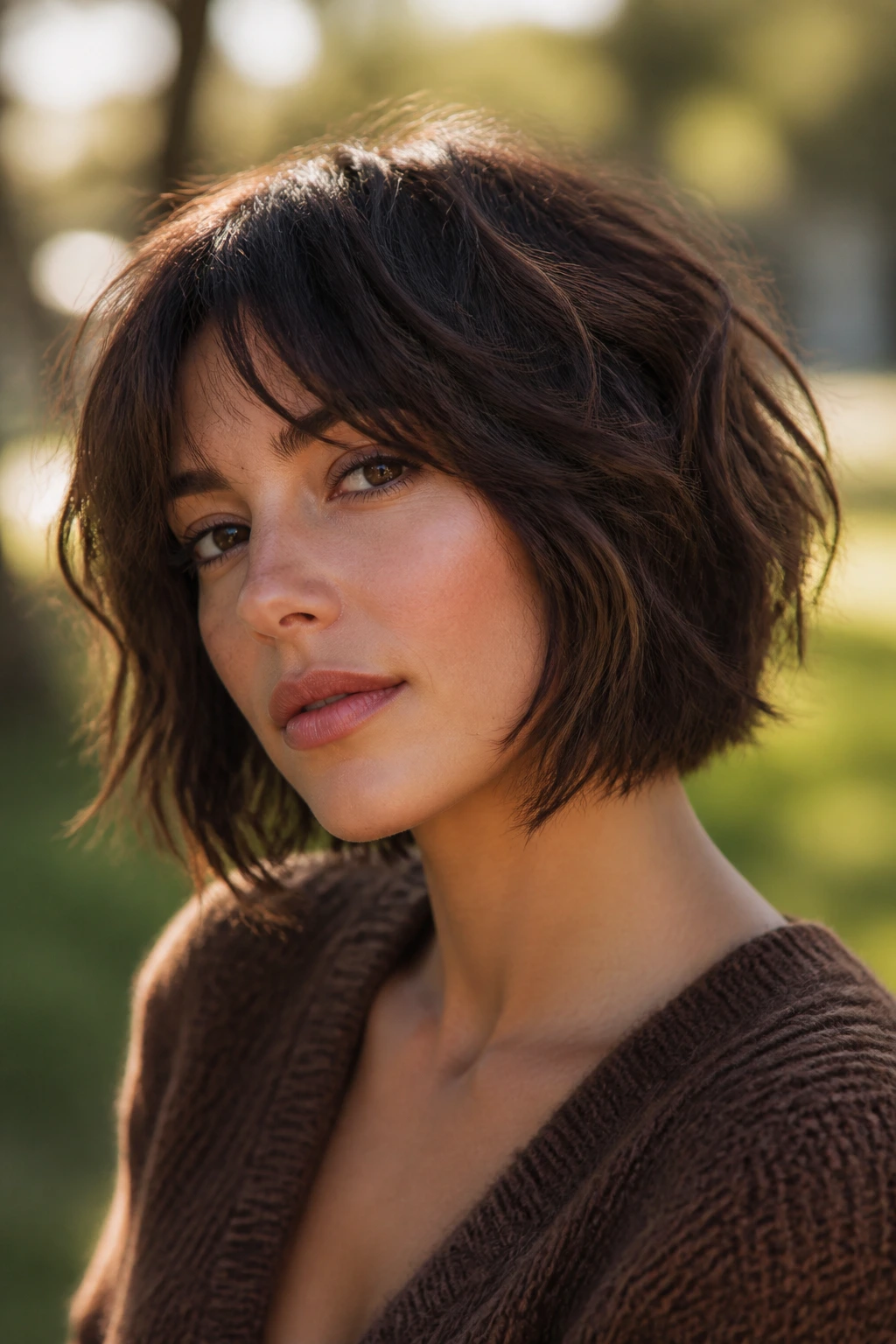
An A-line bob gives you angle. The back sits shorter, the front drifts forward, and suddenly the whole shape feels longer without losing the compact feel of a bob. Chestnut brown is a smart color here because it warms up the longer front pieces and keeps the cut from reading stark.
This works especially well if you like your jawline framed. The angle draws the eye down and forward, which can make the neck look longer and the cheeks a little narrower. Ask for soft texturizing only at the ends; too much layer work will flatten the geometry.
The A-line shape also behaves nicely when worn with a side part. The front pieces fall with a bit of swing, and that movement keeps the cut from feeling too engineered.
15. Deep Brunette Italian Bob
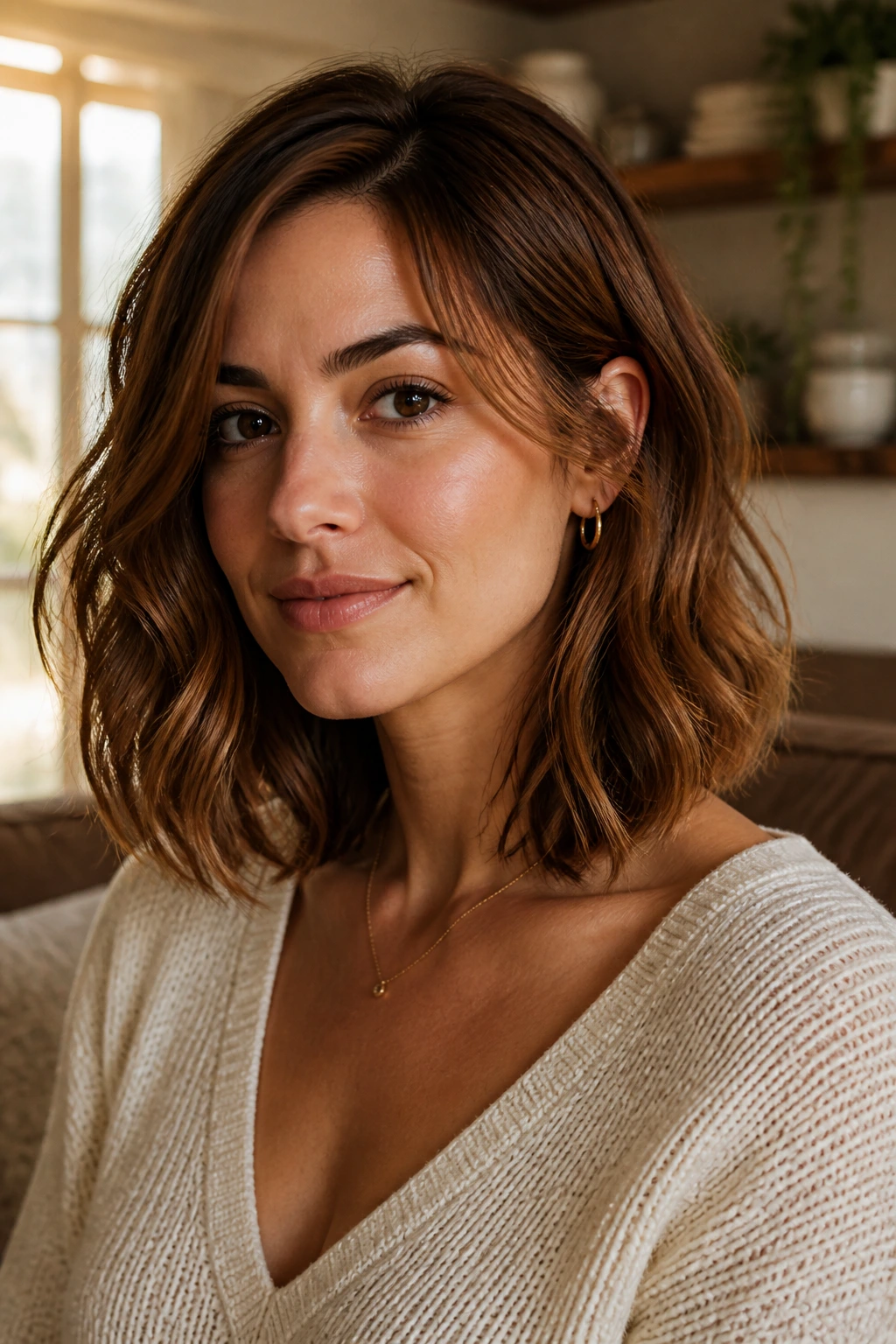
The Italian bob is a little more generous than the classic chin-length version. It usually sits around the jaw or just below it, with enough weight at the perimeter to create a plush, full outline. Deep brunette color gives it a shadowy richness that makes the shape feel denser than it is.
This is the bob for people who like hair with presence. Not fussy presence. Just enough weight to feel substantial, enough movement to keep it from looking stiff. A big round brush, a soft bend at the ends, and a center part or slight off-center part are usually enough.
One thing I love here: it looks especially good when the ends are tucked behind one ear. That small asymmetry keeps the cut from getting too symmetrical and lets the deep brunette tone show off its shine.
16. Honey-Glazed Chin Bob
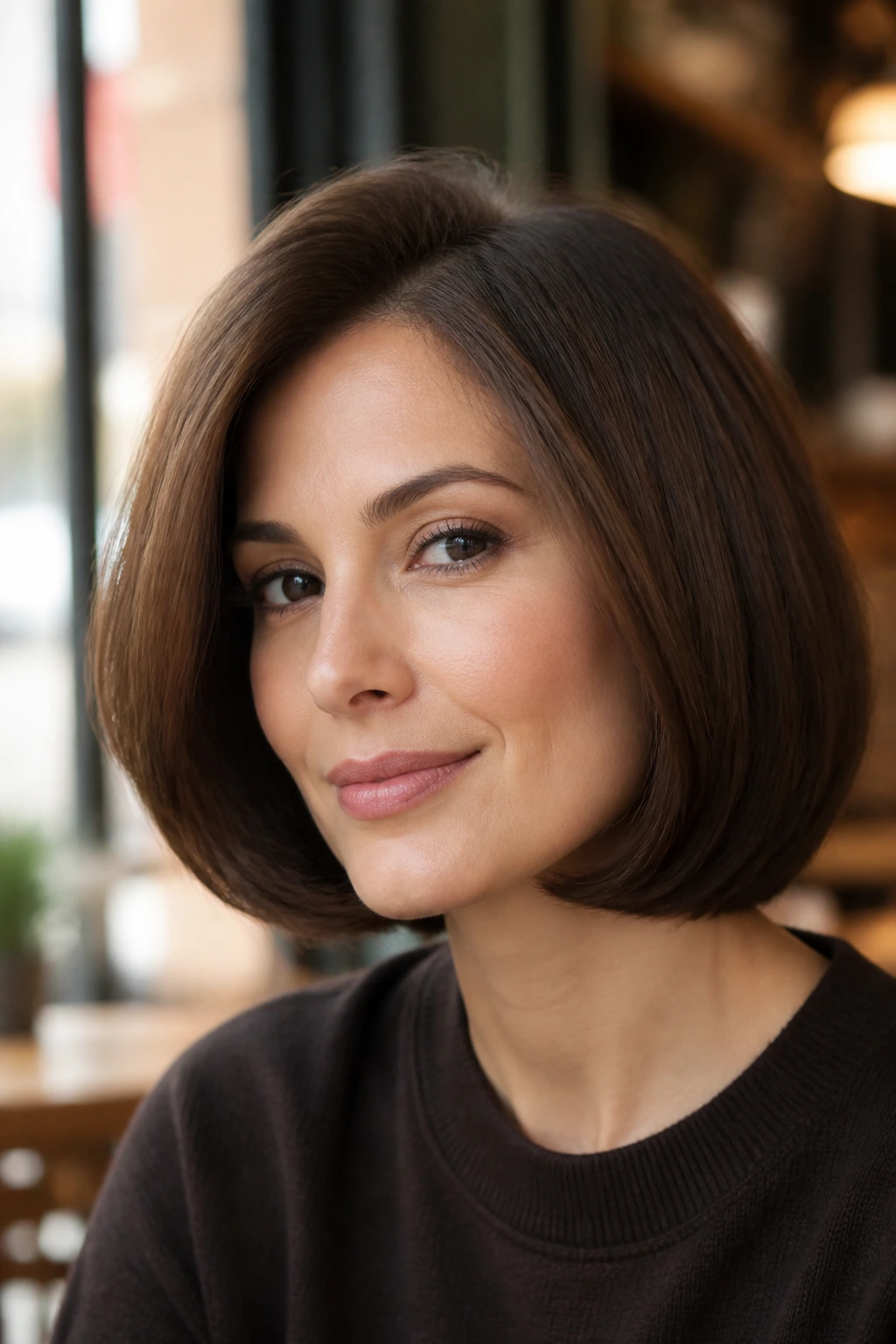
Honey tones on brunette hair can go wrong fast if they’re too yellow. Kept soft and glazed, though, they make a chin-length bob glow. This version feels lighter around the face and works well if you want warmth without pushing the color into caramel territory.
The chin length matters because it makes the style crisp. Too much length and the glaze can disappear. Too little and you lose the softness. Ask for clean ends with very light texture inside the bob so the perimeter stays visible. A shine spray helps the honey glaze reflect without looking greasy.
This is a good cut for someone who likes a little brightness near the skin. It feels friendly and low-drama, which is a nice change from the more sculpted bobs in the set.
17. Maple Tousled Bob with Side Part
A side part gives instant lift, and on a maple brown bob it creates a nice sweep across the forehead and crown. The color leans warm and slightly amber, so the part line and the loose texture at the ends show up clearly.
This cut works best when it is not over-styled. A root-lifting mousse, a rough blow-dry, and a few bends through the lengths are usually enough. The tousled finish keeps it from feeling too formal. If your hair is naturally straight, use a small iron and alternate the curl direction. If it already waves, you may only need a bit of cream and a quick scrunch.
The maple shade is a little brighter than cocoa or walnut, which makes this a nice option if you want warmth that still feels soft rather than red. It’s casual, but the kind of casual that looks planned.
18. Dark Chocolate Undercut Bob
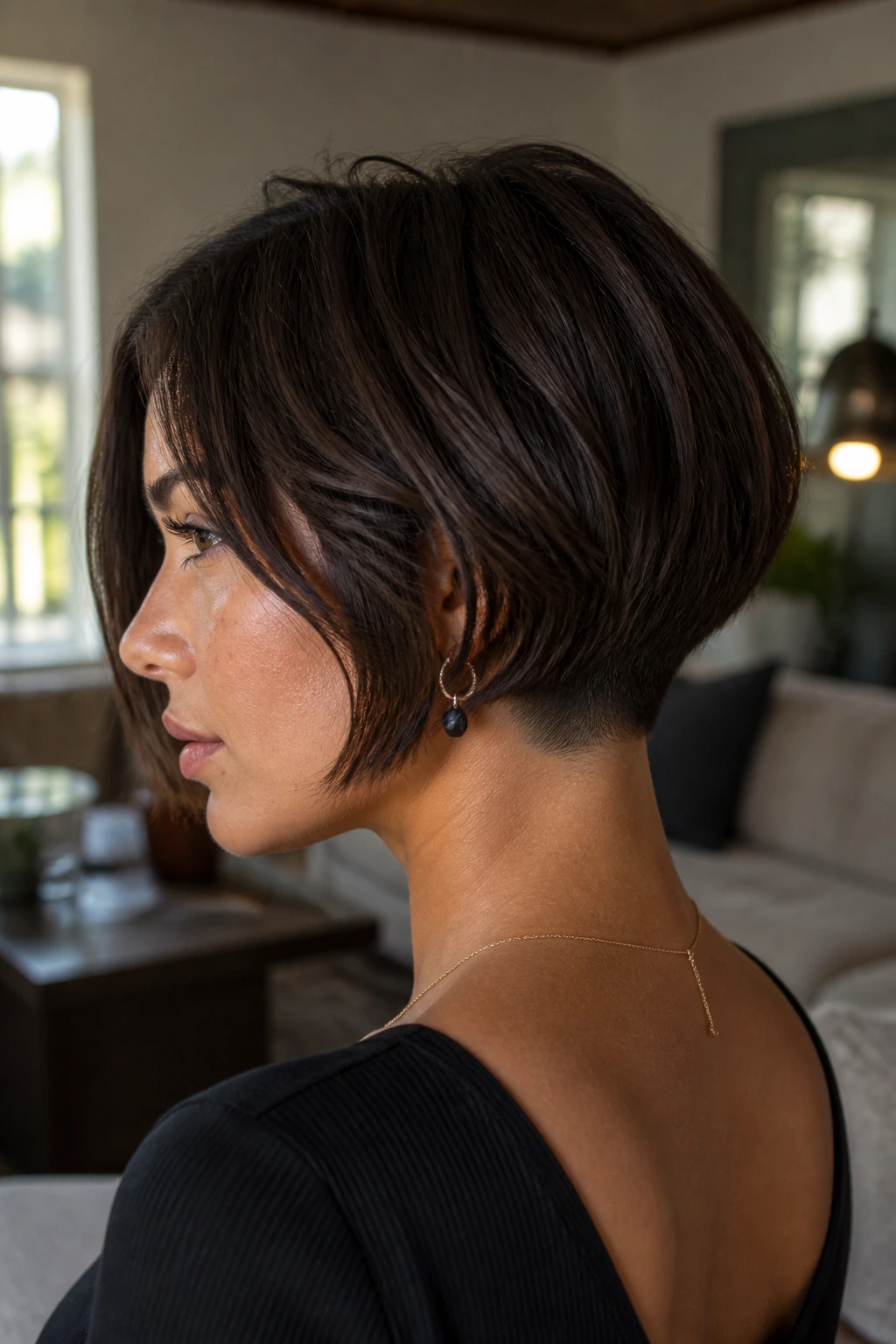
An undercut sounds dramatic because it is. But on a dark chocolate bob, it can be the most practical move in the whole lineup if your hair is dense or bulky at the nape. Removing weight underneath lets the top layer fall cleanly instead of bulging out.
This cut keeps the outer shape blunt or slightly textured, depending on your preference. The dark chocolate color helps the outline stay deep and clean, while the hidden undercut makes daily styling faster. It’s the kind of detail nobody sees until the hair moves, which is half the fun.
I’d only suggest this if you know you like a stronger silhouette. It isn’t a timid haircut. It gives you a little edge, a little lift at the back, and a lot less trouble in humid weather.
19. Cinnamon French Girl Bob with Airy Fringe
This one is all about texture that looks accidental but isn’t. The airy fringe sits lightly across the forehead, the cinnamon brown adds warmth, and the bob itself stays short enough to feel fresh without getting severe.
It’s a charming cut, honestly. Not precious. Not polished to death. The fringe should move with your eyebrows, not cover them. The ends need soft texturizing so the whole bob can bend and break apart a little when you finger-comb it. That loose finish is where the style lives.
If you like low-effort styling with a clear shape, this is a good pick. A touch of paste on the fringe and a mist of dry texture spray through the ends can carry the whole look. It’s the sort of brown textured bob haircut that looks better after a few hours of wear.
20. Sunkissed Brunette Bob with Soft Layers
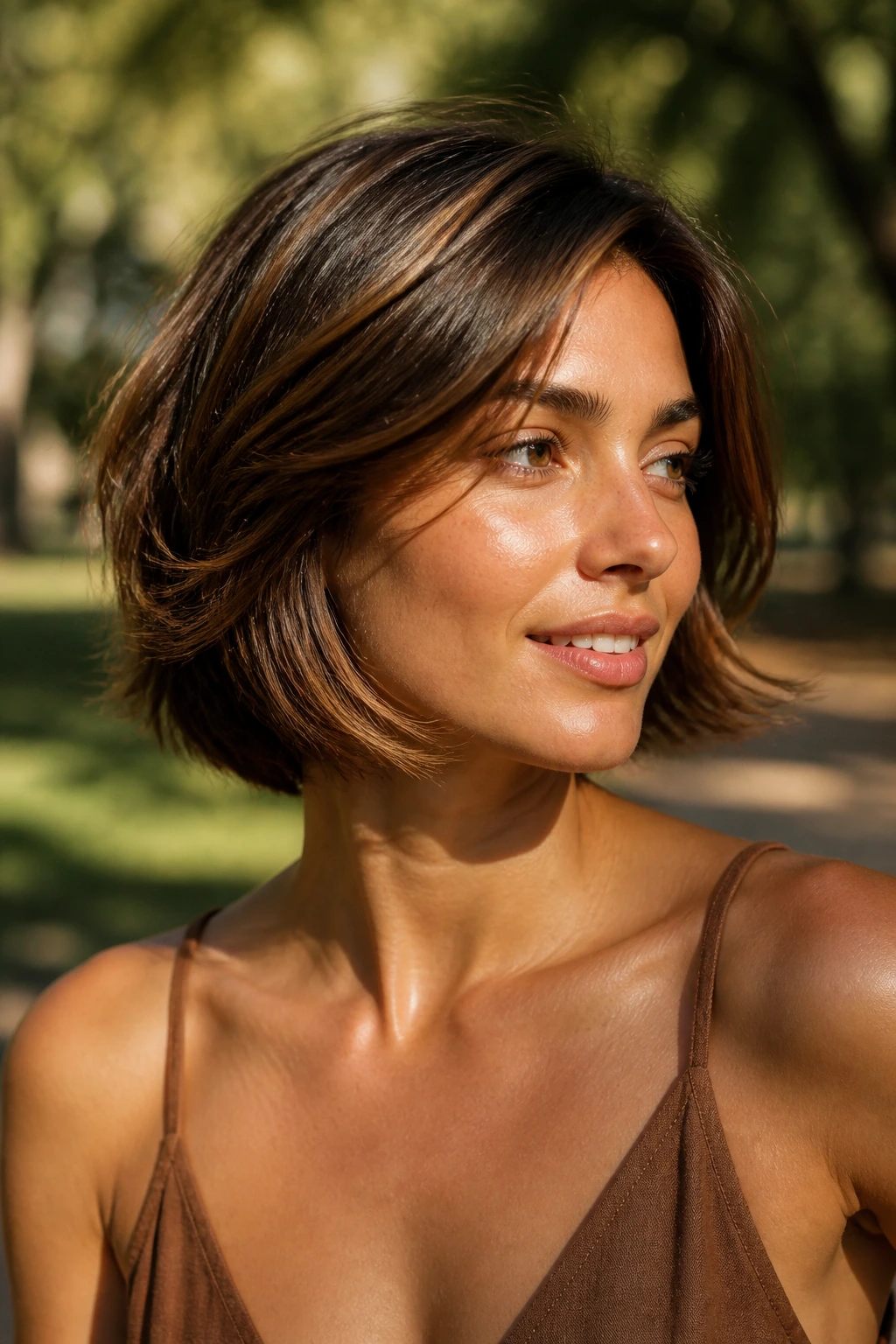
Sunkissed does not have to mean blonde. A brunette base with soft lighter ribbons around the top layer can make a bob look sunlit without losing the depth that makes brown hair so flattering. The layers here should be gentle, almost invisible, with enough movement to let the color change show through.
This cut is a smart choice if your hair needs brightness but not a full highlight overhaul. The soft layers keep the shape from sitting flat, and the warm brown base holds the cut together. On wavy hair, the layered movement becomes even more visible. On straight hair, a little bend at the ends keeps it from looking too perfect.
This is one of those styles that stays easy to wear even when the styling is lazy. That matters. Not every good haircut needs a full morning routine.
21. Walnut Bob with Side-Swept Bangs
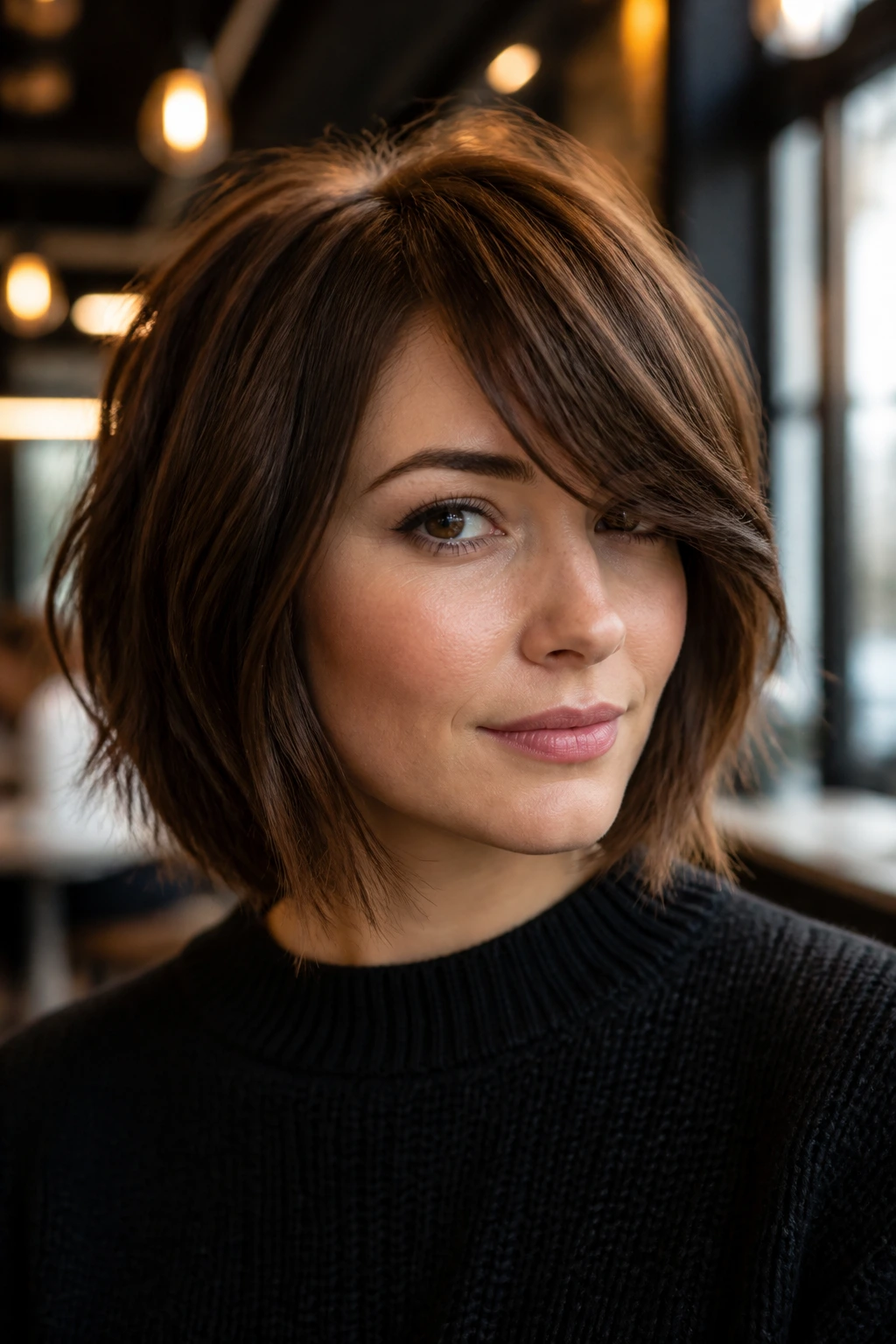
Side-swept bangs can soften a bob without shrinking the face shape. On a walnut brown base, the movement across the forehead feels rich and grounded, not flimsy. The rest of the cut can stay chin length or just below it, with enough texture at the ends to keep the whole shape alive.
This version works well if you don’t love a center part. The sweep draws attention to the eyes and gives the bob a little asymmetry, which is handy if your hair tends to flatten on one side. A medium round brush and a quick pass with heat at the fringe is usually enough to set it.
Walnut brown is a calm shade. It gives the cut some depth, but it does not steal the scene. That makes the bangs the star, which is exactly how this style should behave.
22. Espresso Wavy Bob with Deep Side Part
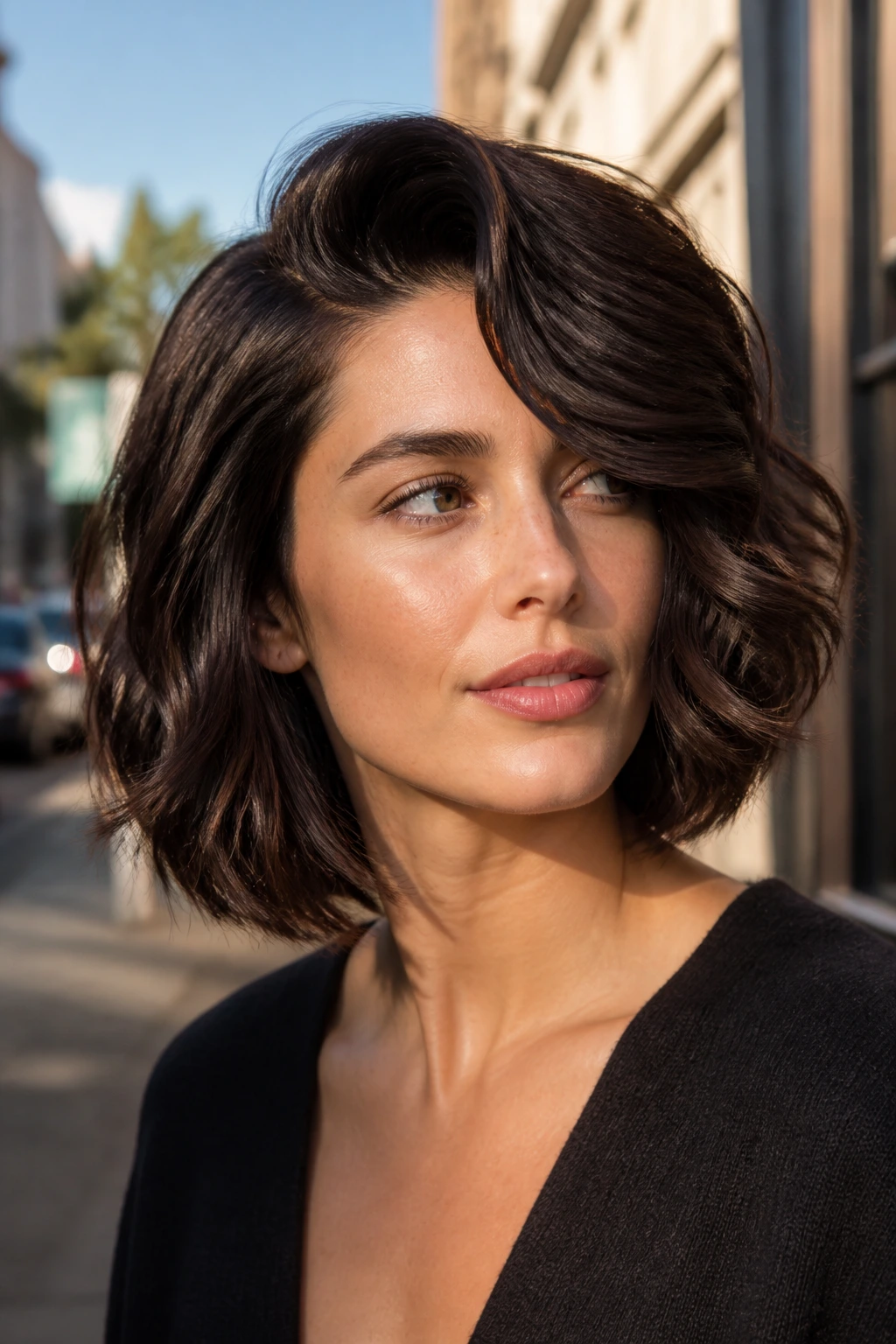
A deep side part changes the geometry of a bob fast. One side gets lift, the other side falls in a clean sweep, and the whole style feels more dramatic without needing more length. Espresso brown makes the contrast look richer, especially on wavy hair that can hold a little bend.
This is one of the most flattering options for round or square faces because the side part breaks up symmetry. The waves keep the shape soft, while the espresso shade gives it depth near the roots and underneath. If the color is glazed with a bit of shine, the movement shows up even better.
I like this cut when someone wants the bob to feel current but not overworked. It has a little mood. A little structure. Enough edge to feel intentional, enough softness to stay wearable.
Why Brown Textured Bobs Look Better in Warm Tones
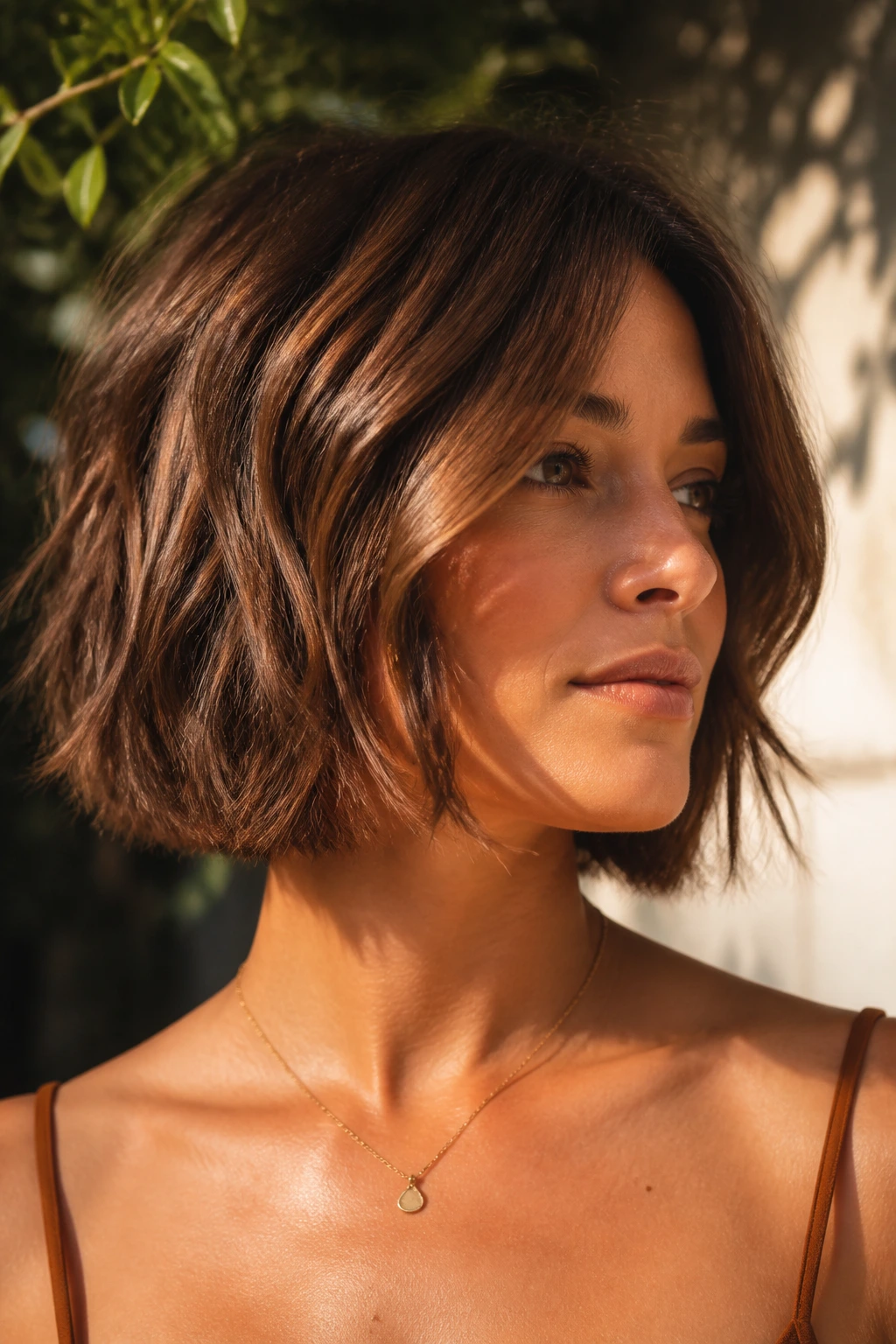
Warm tones change the whole read of a textured bob. Brown can go flat fast if the color is too cool or too even, especially on straight hair where the surface reflects light in one big sheet. Chestnut, cocoa, caramel, walnut, mocha, and toffee break that flatness up. They put depth near the roots and brightness near the bends, which is exactly where a textured cut needs help.
The texture itself matters just as much. A bob with point-cut ends, light internal layering, or a soft razored finish gives the hair places to move, and warm brown color exaggerates that movement in a good way. You notice the turns, the curves, the little bends around the jaw. The haircut stops looking like one shape and starts looking like a shape with dimension.
What the colorist is actually doing
A good warm brunette often uses a mix of lowlights, gloss, and soft ribbons rather than one flat dye job. A demi-permanent glaze can deepen the base without making it inky. A few lighter pieces around the face or crown help the cut catch light where you want your eye to go.
Why texture and tone should be planned together
If you cut the texture first and color later, you can still get a good result. But the cleanest brown textured bob haircuts are planned as a pair. The color should land where the movement lives. The cut should create that movement in the first place. Simple enough. Harder to fake.
Essential Tools for Styling These Bobs
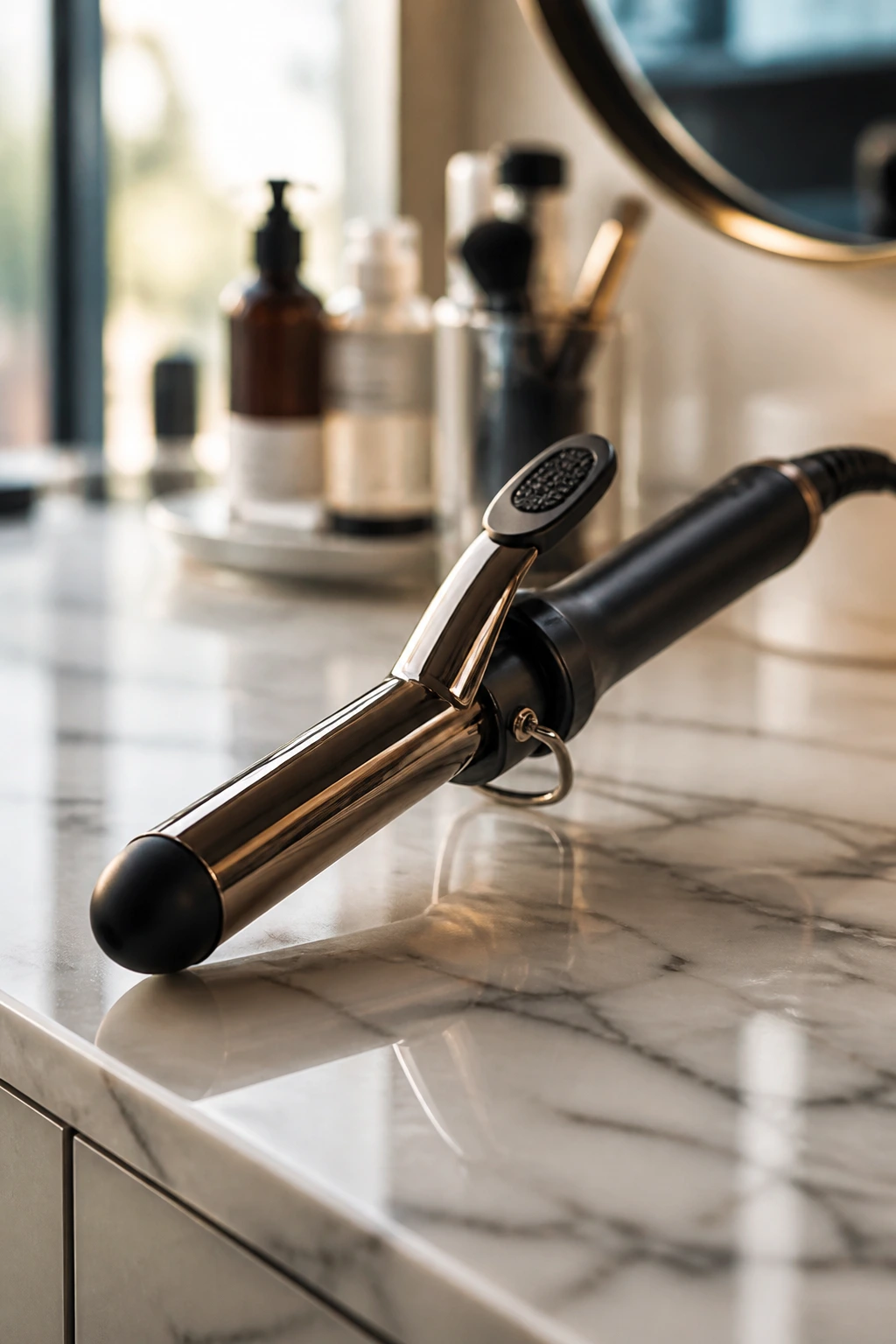
-
1-inch curling iron or wand: Good for adding a soft bend to the ends and breaking up a blunt line.
-
Blow dryer with concentrator nozzle: Keeps the cut smooth at the roots and helps direct the hair where you want it.
-
Medium round brush: Useful for rounding under a bob, lifting the crown, or shaping curtain bangs.
-
Heat protectant spray: Non-negotiable if you use hot tools more than once a week.
-
Texturizing spray or light dry spray: Gives piecey movement to shaggy or choppy bobs without making them stiff.
-
Light mousse: Helpful for fine hair that needs root lift and a bit of memory.
-
Shine serum: Best on the ends and mid-lengths, never near the scalp.
-
Duckbill clips: Great for sectioning the crown or setting the front while you cool it into shape.
-
Microfiber towel or old T-shirt: Reduces frizz if you air-dry or diffuse wavy hair.
-
Wide-tooth comb: Safer than a brush on damp curls and cleaner for keeping natural texture intact.
Smart Salon Notes and Product Picks
The first thing I’d tell you to ask for is movement with a perimeter. That phrase sounds small, but it matters. It tells the stylist you want the bob to keep its shape while still having texture inside the cut. If you ask for “lots of layers” without context, you can end up with something too thin at the ends and weird at the crown.
For color, warm brunette shades usually live in the chestnut, mocha, walnut, cocoa, toffee, and espresso family. If your hair already leans dark, a gloss or glaze can be enough to wake it up. If it’s lighter, ask for warm lowlights or caramel ribbons instead of going all over lighter. Too much ash can make a bob look dusty. Too much red can push it into copper territory. You want warmth, not brass.
Product-wise, keep the routine lean. A bob does not need a suitcase full of stuff. A good heat protectant, a root lifter, a texture spray, and one finishing serum are usually enough. If your hair is fine, skip heavy oils and stick to misted products. If it’s thick, choose creamier styling products but use less than you think you need.
How to Wear These Cuts Without Fighting Them
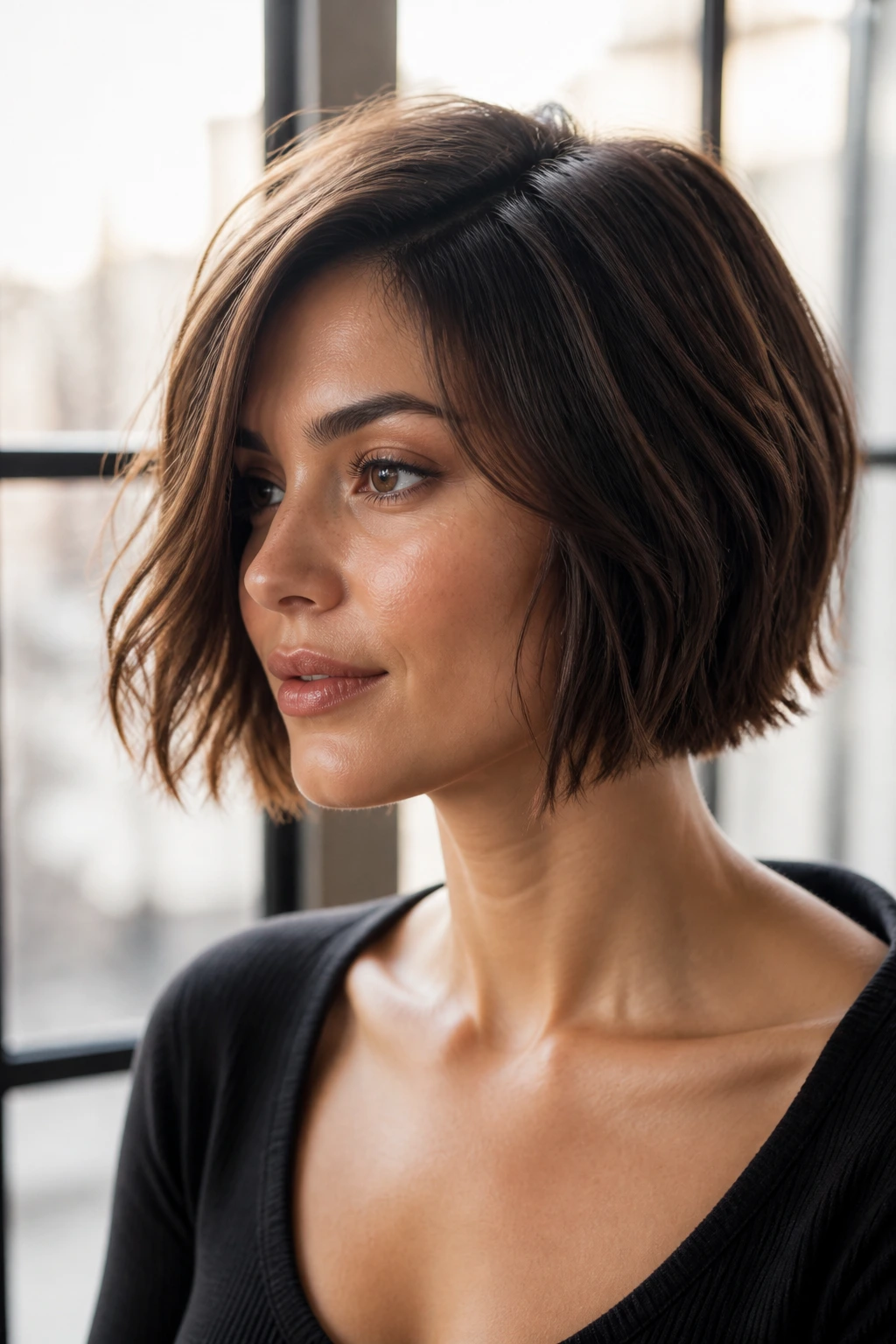
Presentation: Keep the shape visible. A brown textured bob looks best when the outline is still easy to read, so don’t bury it under too much product or over-curl the ends. A slight bend, a visible part, and a clean neckline do more than a ton of styling ever will.
Pairings: Bangs, side parts, earrings, and necklines all change how the cut reads. Curtain bangs make the look softer. A deep side part adds lift. Small hoops or studs let the jaw-length shapes stand out, while a collared shirt makes the sharper bobs look crisp.
Length Notes: Chin-length bobs show off the jaw and cheekbones. Collarbone-length lobs buy you more styling freedom. If you’re nervous about going short, start at the higher end of the bob range and have the stylist remove length later if needed. That is easier than asking them to put it back.
Finishing Touch: Use the least obvious product that still does the job. A few drops of shine serum on the ends, a dry texture mist at the crown, or a soft hold spray at the fringe is usually enough. If the hair feels sticky, you’ve gone too far.
Styling Tips and Shine Boosters
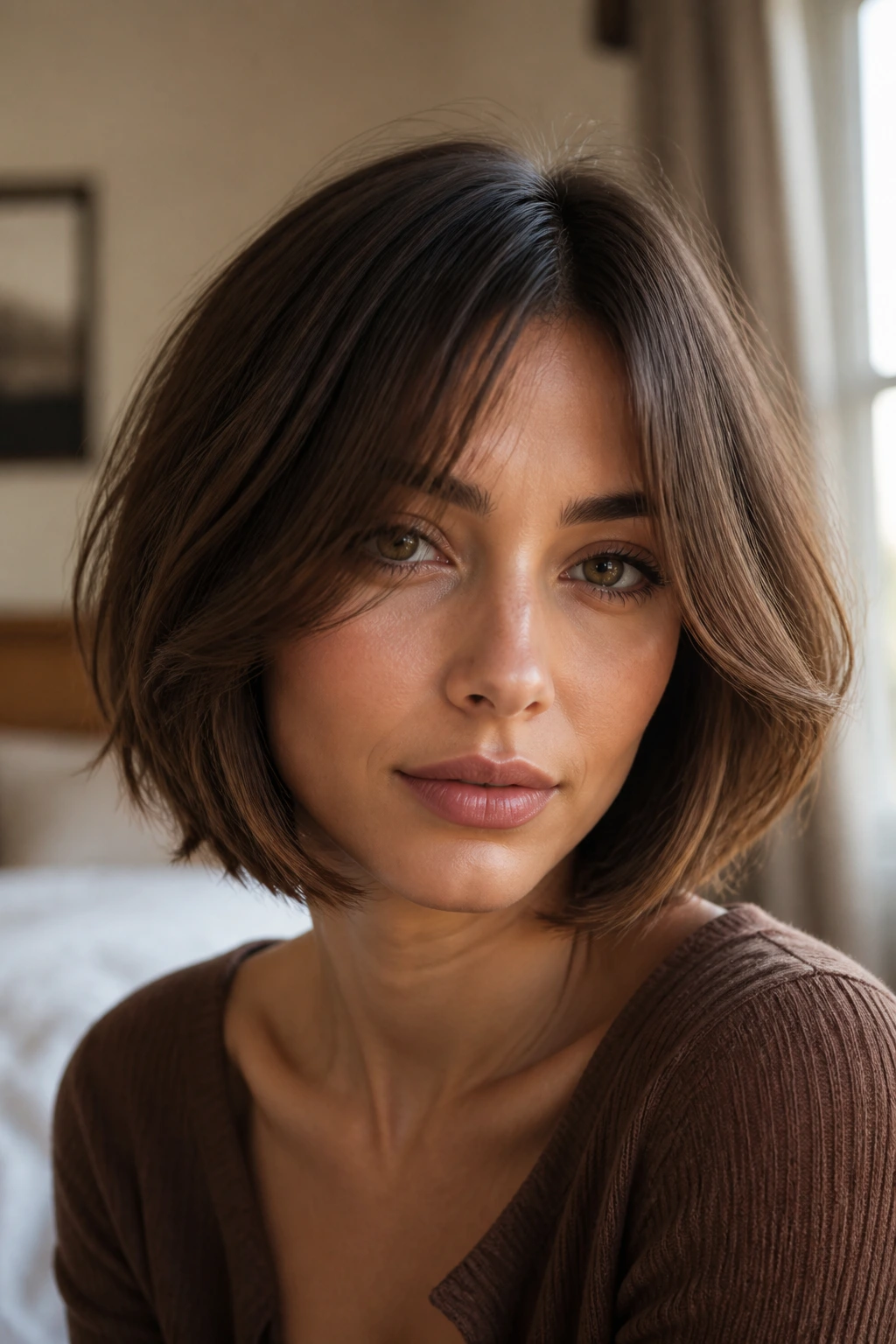
Texture Boost: On wavy or fine hair, dry the roots first, then mist the mid-lengths with texture spray and twist 1-inch sections around your fingers. That gives the bob a lived-in bend without needing to curl every strand. The trick is to leave the ends a little imperfect.
Color Boost: Warm brunettes look richer when they’re glossed, not just dyed. A salon glaze every few weeks, or a color-depositing conditioner in the right brown family, can keep chestnut and mocha shades from fading into dull beige. That little bit of shine changes everything.
Fringe Control: If you’re wearing curtain bangs or a soft fringe, style them first while they’re still damp. Use a round brush or a small roller, then let them cool in place before you touch the rest of the hair. That one habit saves you from the sad, split fringe that falls apart by noon.
Low-Maintenance Move: Ask for texture in the interior, not just the ends. It makes air-drying easier because the hair can break into shape on its own. A perfect blowout is nice. Being able to skip it is nicer.
Growth-Out, Trims, and Between-Salon Care
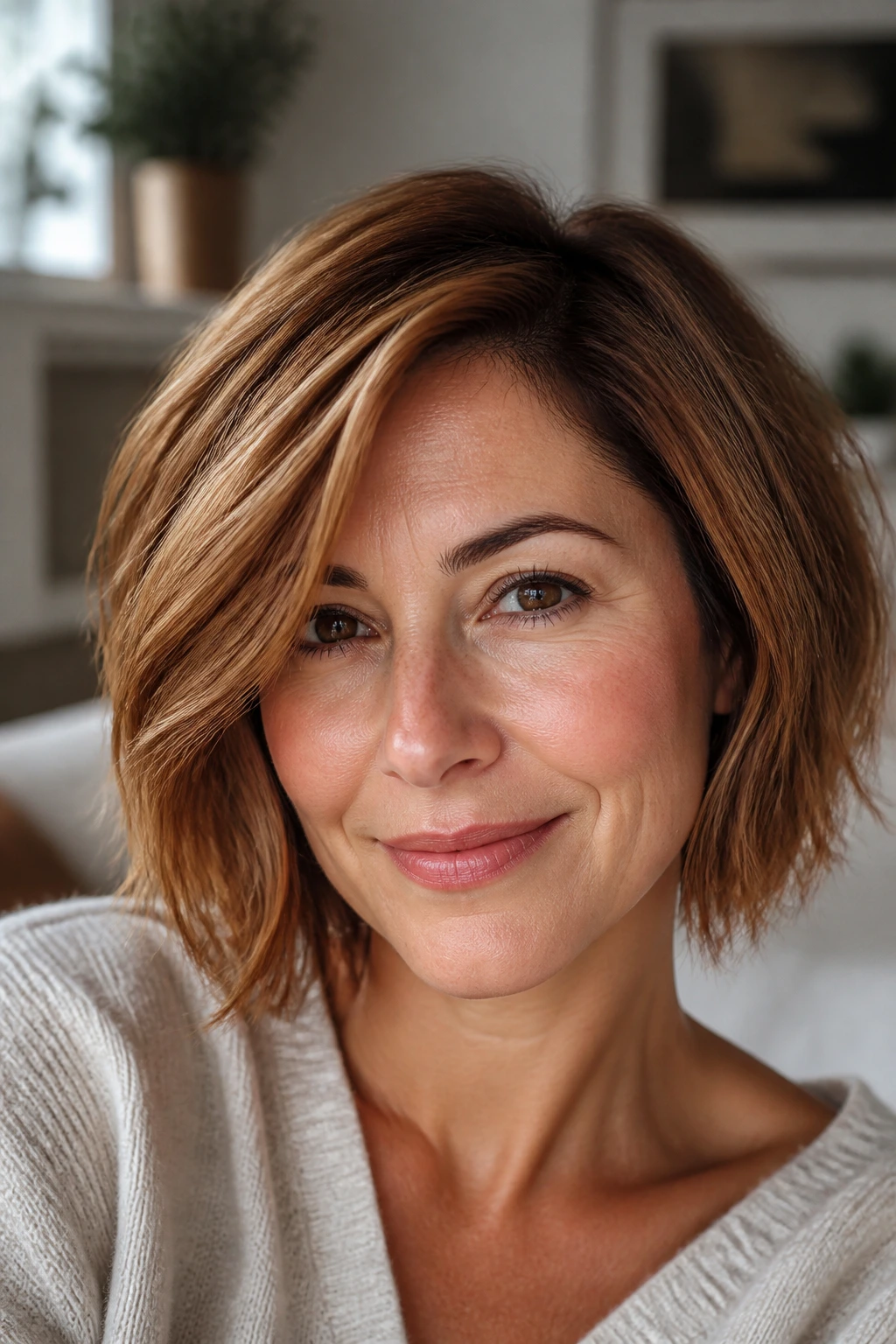
Bobs don’t usually fail because the cut is bad. They fail because nobody trims them on time. Most brown textured bob haircuts stay sharp with a trim every 6 to 8 weeks, and the sharper the perimeter, the more you’ll notice it slipping past that window. If you want a softer grow-out, you can stretch it a little longer, but the ends will start to feel heavier.
Color also needs attention. Warm brunettes lose their glow if they’re washed too aggressively, especially with strong clarifying shampoos. A sulfate-free shampoo can help, and a gloss or tone-refreshing treatment every 4 to 6 weeks keeps the warmth from turning muddy. If your hair is porous or highlighted, it may need a bit more moisture in the mid-lengths to keep the texture smooth.
At home, treat the shape gently. Dry the roots first if you blow-dry. Sleep on a silk or satin pillowcase if your hair frizzes easily. On day two, a light mist of water or leave-in conditioner at the front pieces is usually enough to reset the bend. Short hair gets messy faster than long hair. That’s not a flaw. It’s just part of the deal.
Variations and Adaptations to Try
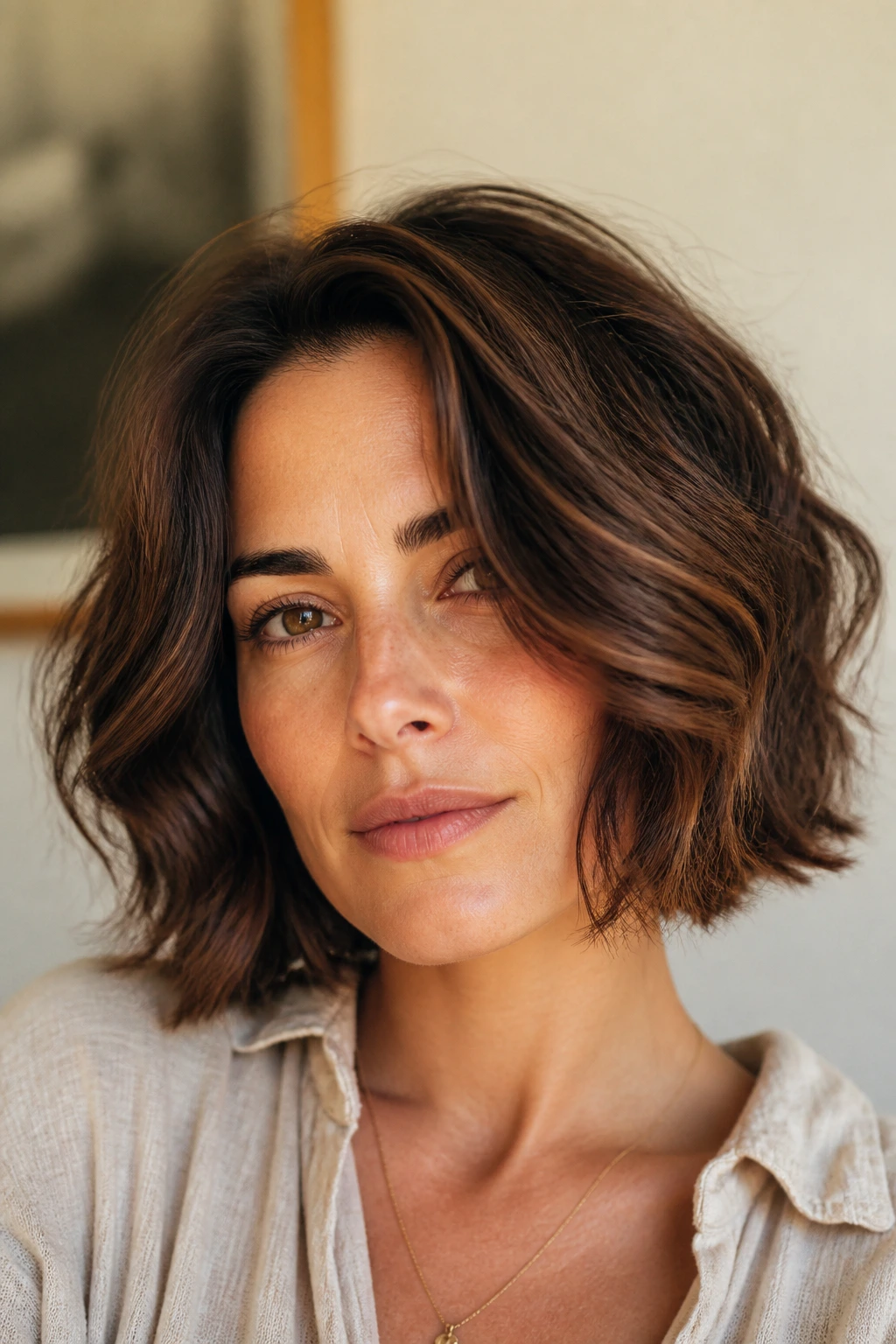
The Sleek Glass Bob: Keep the perimeter blunt, flat-iron just the outer layer, and use a chestnut or espresso glaze for shine. This version works when you want the bob to feel polished instead of airy.
The Air-Dry Wavy Bob: Ask for soft internal texture and medium-length ends, then let your natural wave do the work. A little mousse and a little scrunching are enough if your hair already has bend.
The Curly Cocoa Bob: Shape the cut around the curl pattern, then use hazelnut or cocoa color to deepen the texture. This keeps the curls springy and gives the bob a softer outline.
The Warm Highlight Bob: Start with mocha or walnut brown, then add caramel ribbons around the face and crown. It’s a good option if you want the haircut to look brighter without going blonde.
The Low-Maintenance Grow-Out Bob: Keep the length closer to the collarbone and ask for softer layers. This one loses its shape more gracefully, which is useful if you hate frequent salon visits.
Common Mistakes to Avoid
-
Cutting too much texture into fine hair: The bob can turn stringy fast. Keep the layers light and preserve enough fullness at the ends.
-
Going too cool with the brown tone: Ashy brunettes can make textured cuts look flat and dusty. Ask for warmth in the gloss, even if the base is deep.
-
Styling every strand into the same bend: That creates a stiff, overdone finish. Alternate directions with the iron or leave some ends straighter.
-
Overloading the hair with oil or cream: Brown bobs need shine, but too much product collapses the movement and makes the cut feel smaller.
-
Letting the perimeter grow too long: A bob that hits the wrong spot can lose its shape fast. If the line starts brushing your shoulders, it’s probably time for a trim.
Frequently Asked Questions
What face shapes suit brown textured bob haircuts best?
Almost every face shape can wear one, but the length and fringe make the difference. Chin-length bobs and curtain bangs flatter longer faces, while slightly longer lob versions or side parts help soften rounder cheeks.
Will a textured bob work on fine hair?
Yes, if the texture is placed carefully. Fine hair usually does better with light internal texture, a blunt or blunt-ish perimeter, and a root-lifting product rather than heavy layering that steals density.
What if my hair is thick and puffy?
Ask for bulk removal in the mid-lengths and a shape that curves in at the ends. A toffee rounded bob or a bob with a hidden undercut can keep thick hair from ballooning out.
Can curly hair handle a bob without turning triangular?
It can, if the cut is shaped around the curl pattern instead of against it. Springy layers and a curl-friendly brown tone, like hazelnut or cocoa, usually keep the shape balanced.
How often should I trim it?
Most bobs need a trim every 6 to 8 weeks to keep the line clean. If you like a softer, grow-out-friendly look, you can stretch a little longer, but the ends will lose their snap.
How do I ask for warm brown tones without brass?
Ask for chestnut, mocha, walnut, toffee, or cocoa warmth rather than golden blonde highlights. If you want brightness, request a soft glaze or caramel ribboning, not a yellow-heavy lift.
Do curtain bangs work with these cuts?
They do, and they can make the whole haircut feel softer. The key is to keep the bangs light and slightly longer at the center so they blend into the bob instead of sitting like a separate piece.
What should I use if I want the texture to show but not feel crunchy?
A light mousse at the roots and a dry texture spray through the ends usually does the job. Avoid stiff hairsprays unless you need hold for humidity; they can make a brown textured bob look overworked fast.
The Cut That Keeps Its Shape
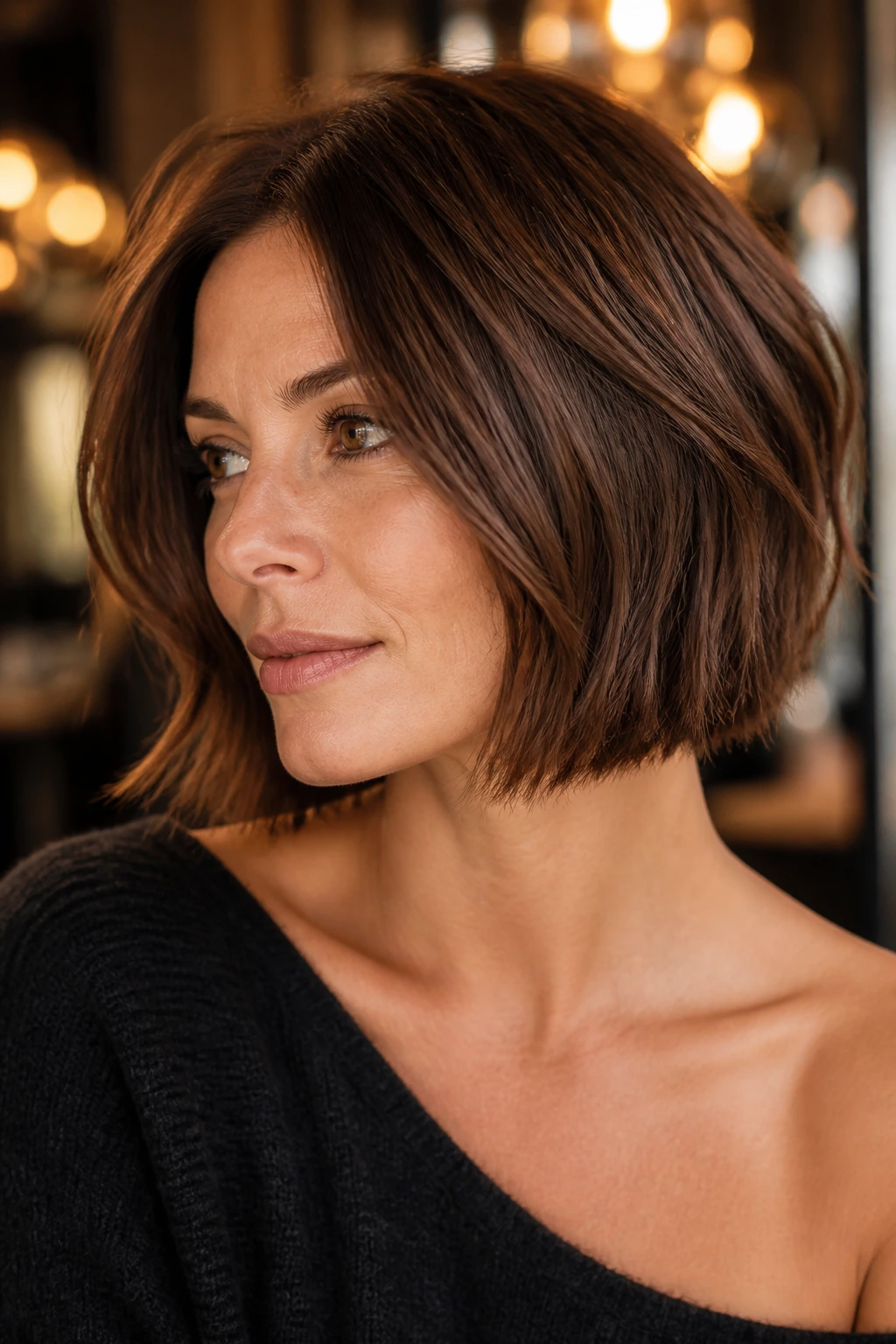
There’s a reason brown textured bob haircuts keep getting asked for in salons. They solve a few different problems at once. They give brown hair depth. They keep shorter cuts from feeling boxy. And they make the styling feel more forgiving, which is what most people actually want after the first enthusiastic week wears off.
Warm brunettes and texture are a smart pair. Together, they make movement easier to see, and they keep the whole style from sinking into one flat note. If you want a cut that can look tidy, loose, sharp, or softly messy without changing the basic shape, this is a good place to land.
A bob should earn its keep. These do.
