



Brown choppy bob haircuts have a specific kind of momentum: the ends move, the color bends, and the whole cut looks fuller than a blunt line ever does. Warm brunette shades—chestnut, caramel, toffee, mahogany, cocoa—keep the texture from feeling sharp or hollow, which is why this pairing looks so good on hair that needs shape without stiffness.
The best versions of this cut don’t look shredded or overworked. They look breezy, but they’re built with intention: point-cut ends, soft internal layers, maybe a little bend around the cheekbone, maybe a fringe that breaks up the forehead. That tiny broken edge changes everything. One clean line can sit there like a shelf. A choppy bob has lift, air, and a bit of attitude.
Warm brown tones do the other half of the work. They make the movement easier to see. A chestnut ribbon near the front or a caramel veil over the top layer can keep the cut from flattening out, especially when your hair is fine, naturally straight, or prone to looking one-note under indoor light. The result is polished without being fussy. That’s the sweet spot.
Why These Brown Choppy Bob Haircuts Work So Well
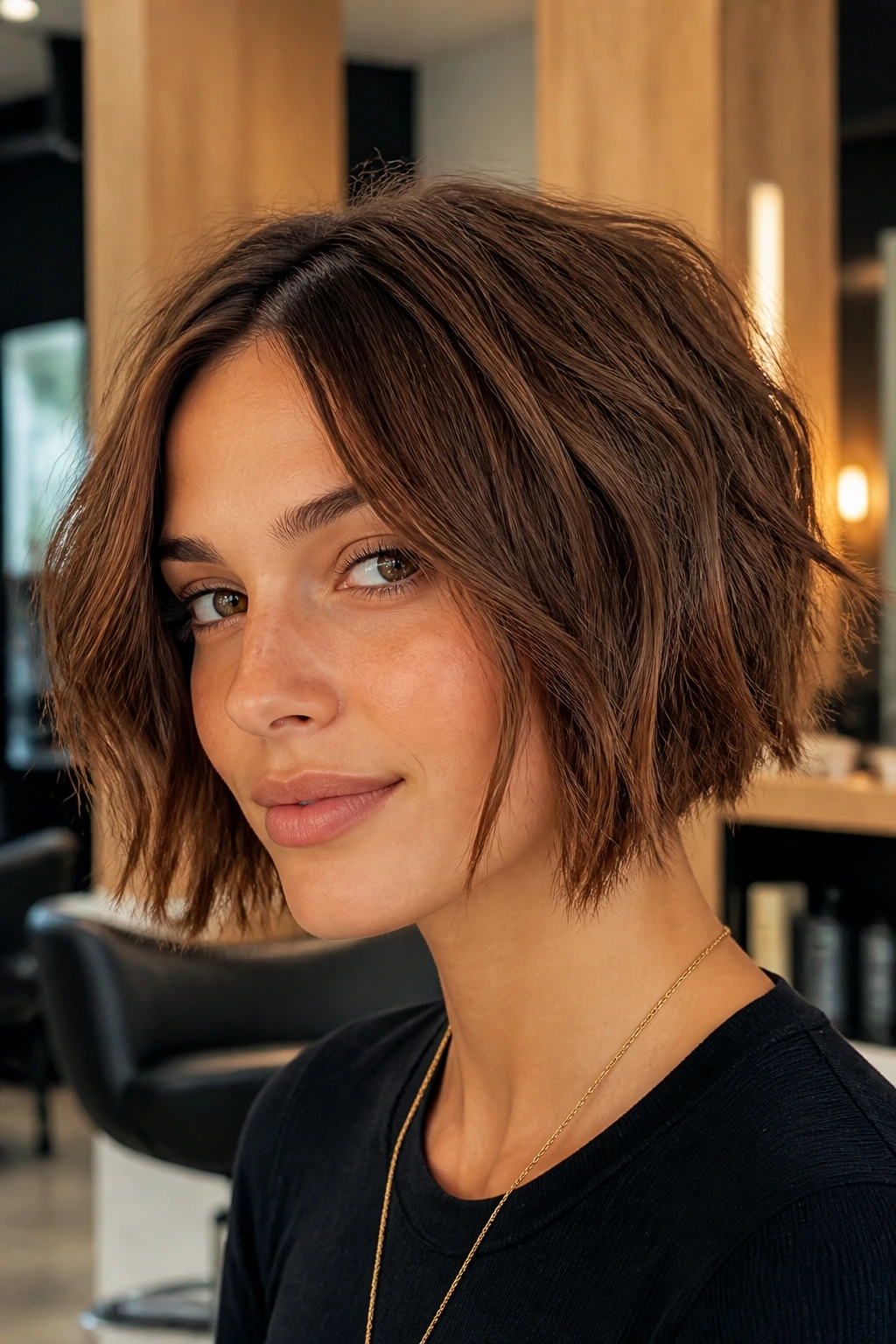
- The broken ends keep the shape soft: Point-cut or razored ends stop a bob from looking blocky, which matters when you want movement around the jaw and neck.
- Warm brunette shades add depth: Chestnut, toffee, cinnamon, and bronze catch light in a way that makes the layers easier to see, especially on medium to thick hair.
- Most of these cuts grow out with grace: A choppy bob doesn’t fall apart the way a strict one-length cut can; the texture keeps it looking deliberate for longer between trims.
- They flatter a wide spread of hair types: Fine hair gets lift, dense hair gets relief, and wavy hair gets shape without being forced into a stiff finish.
- The color can do as much as the cut: A subtle gloss, balayage ribbon, or darker root stretch changes the silhouette almost as much as the scissors do.
- They’re easy to dress up or down: Air-dry them messy, blow them smooth, or bend the ends with a flat iron; the cut holds all three moods without fighting you.
1. Chestnut Choppy Bob with Razor-Skipped Ends
Chestnut is one of those shades that quietly does the heavy lifting. On a chin-length bob with razor-skipped ends, it adds warmth right where the hair moves, so the texture looks lived-in instead of frayed. I like this version best on fine to medium hair because the broken perimeter gives the illusion of density without making the shape heavy.
What Makes It Work
The cut should sit around the jaw or just below it, with the ends point-cut in tiny, uneven bites. That keeps the line from reading too blunt. If your stylist adds a soft chestnut gloss over a brown base, the color catches on the broken edges and makes each piece easier to read from a few feet away.
A center part keeps it modern, but a slightly off-center part gives the whole thing a little swing. Either way, this is the kind of bob that looks good after a quick rough-dry and a touch of cream through the ends. No sculpting. No overthinking.
Best for: hair that needs body without a lot of product.
2. Caramel Ribbon Choppy Bob
Why does caramel work so well on a choppy bob? Because the lighter ribbons sit right on top of the movement and make the texture show up fast. A dark brown base with caramel pieces around the face and crown turns a simple bob into something that looks layered even when you’ve barely touched it with a brush.
The cut works especially well if you keep the front 1 to 2 inches longer than the back. That slight angle gives the caramel streaks a place to fall, and the whole shape feels a little lifted around the cheekbones. It’s a smart choice if you want dimension without going full balayage everywhere.
How to Wear It
Air-dry it halfway, then wrap just the front sections around a 1-inch iron for one bend each. Don’t curl the entire head into uniform waves; the point is to keep it loose and a little irregular. A mist of texture spray at the midlengths is enough.
3. Mocha Micro Bob with Airy Texture
A micro bob that ends just at or above the jaw can go flat fast if the texture is too neat. Mocha brown saves it. The shade is rich and deep, but not so dark that the cut disappears into one solid shape, and the airy texture keeps the ends from sitting like a helmet.
This version is sharp in a good way. The hair lands close to the cheekbones, and the perimeter should be softly shattered, not carved into a brick. If your face leans round or soft, this length creates a little edge without feeling severe. It’s tidy. It’s cool. It also shows off earrings better than longer bobs, which matters more than people admit.
Quick Details
- Length: jaw-grazing or slightly shorter
- Texture: point-cut ends, not razor-thin layers
- Best styling move: blow-dry with a small round brush for lift at the roots
- Color note: mocha looks best with a subtle reflective gloss, not a flat matte brown
4. Cinnamon Shag Bob
Cinnamon is the color you choose when you want warmth with a little spark. On a shaggy bob, it brings the layers forward so the haircut feels deliberate instead of messy. The shade has enough red-brown in it to warm the skin, but it still reads like brunette first.
This cut likes movement. A lot of it. Ask for layers that start around the cheekbones, then keep the ends feathered so the shape doesn’t balloon outward. The fringe can be light and broken, or you can go without bangs and let the front pieces do the work. Either way, the silhouette should feel a bit undone, like it was cut to move and not just to sit there.
A diffuser helps if your hair already waves. If it doesn’t, scrunching in a light cream and twisting two face-framing pieces while they dry gets you most of the look without turning it into a project.
5. Toffee French Bob
A toffee French bob has that tidy, slightly insouciant feel that makes people assume you did nothing at all. That’s the trick, though. The shape is clean at the neckline, but the choppy ends and warm brown tone keep it from feeling severe.
The best version lands somewhere between the jaw and the top of the neck, with soft internal texture and a fringe that sits just above the brows or skims them. Toffee brown works here because it warms the skin and gives the cut a softer outline than a cool brunette would. You get structure without that harsh little shelf some short bobs create.
If you like a natural finish, this is one of the easiest cuts in the bunch. Scrunch in a pea-sized amount of styling cream, tuck one side behind the ear, and let the rest fall where it wants. Done.
6. Espresso Wavy Bob with Soft Layers
Espresso brown can look flat if the cut is too polished. Add soft layers and a loose wave, and the whole thing wakes up. The shade is deep and glossy, but the movement breaks the darkness just enough so you can see every turn of the wave.
This is a smart pick for thicker hair because the layers remove bulk without turning the bob wispy. Ask for long internal layers rather than short, choppy ones all over. You want movement, not holes. A little extra length at the front keeps the silhouette elegant, especially if you wear it tucked behind one ear or swept into a side part.
A flat iron bend through the midlengths is enough. Keep the ends loose. When they flick in different directions, the cut looks more expensive than it does forced, and that’s where espresso brown really shines.
7. Maple Brown Blunt-Choppy Bob
Maple brown has a warm, honeyed cast that keeps a blunt-ish bob from feeling hard. This cut sits on the cleaner side of the choppy bob spectrum, which I prefer when someone wants texture but hates hair that looks shredded.
The perimeter stays full, but the ends are softly point-cut so the line doesn’t feel rigid. That matters. A truly blunt bob can make fine hair look sparse at the bottom, while a maple brown shade gives the shape some visual warmth and keeps the outline from reading too flat against the neck.
Best used when you want:
- A tidy silhouette with movement at the tips
- A color that reads warm in both sun and indoor light
- A style that works straight, curved under, or with one soft wave
This is one of the easiest brown choppy bob haircuts to keep polished without much work. A blowout brush and a drop of serum at the ends usually does the job.
8. Auburn Brown Bob with Side Sweep
Auburn brown is for anyone who wants their brunette to have a little fire in it. On a side-swept bob, the warmer red tones wrap around the face and make the cut look more dimensional than a straight-up brown ever could.
The side sweep matters here. It gives the style a sense of direction, and it softens the forehead without needing full bangs. Keep the bob somewhere around the chin to collarbone range, with the shortest layers just under the cheekbones. That way the auburn doesn’t sit only at the ends; it moves through the whole shape.
This one looks especially good with loose, brushed-out waves. You don’t want tight curls. You want bend, swing, and a little shine on the surface. A light gloss every so often keeps the red-brown from drifting dull.
9. Hazelnut Bob with Curtain Bangs
Hazelnut brown has enough warmth to feel soft, but enough depth to keep the bob from going too sweet. Add curtain bangs, and the whole cut opens up around the eyes without losing that chopped, pieced-out texture.
The bangs should start somewhere near the brow line and taper toward the cheekbones. That length gives you room to tuck, split, or sweep them aside when you’re tired of committing. The bob underneath can stay neck-length with broken ends that flick outward slightly. This is one of the better choices if you want the face-framing effect of layers without short fringe that needs daily babysitting.
A round brush at the bang area makes a big difference. Keep the rest of the bob a little rougher. That contrast—smooth fringe, tousled body—is what keeps hazelnut bobs from feeling too styled.
10. Cocoa Bob with Face-Framing Pieces
Cocoa brown has a deep, velvety look that suits a bob with face-framing layers. The color gives the cut weight; the layers take that weight back out. It’s a clean balance, and I reach for it when someone wants shape around the cheeks without the rest of the bob going thin.
The face-framing pieces should begin around the mouth or cheekbone, depending on how much softness you want. Longer pieces feel more relaxed. Shorter ones sharpen the outline and can make the jaw look more defined. Cocoa brown does the rest of the work by giving the hair a smooth, rich base that reads polished even when the texture is slightly broken.
This is a strong pick for straight or slightly wavy hair. The color shows best when the ends move in different directions by a fraction of an inch, not when every strand sits in the same place.
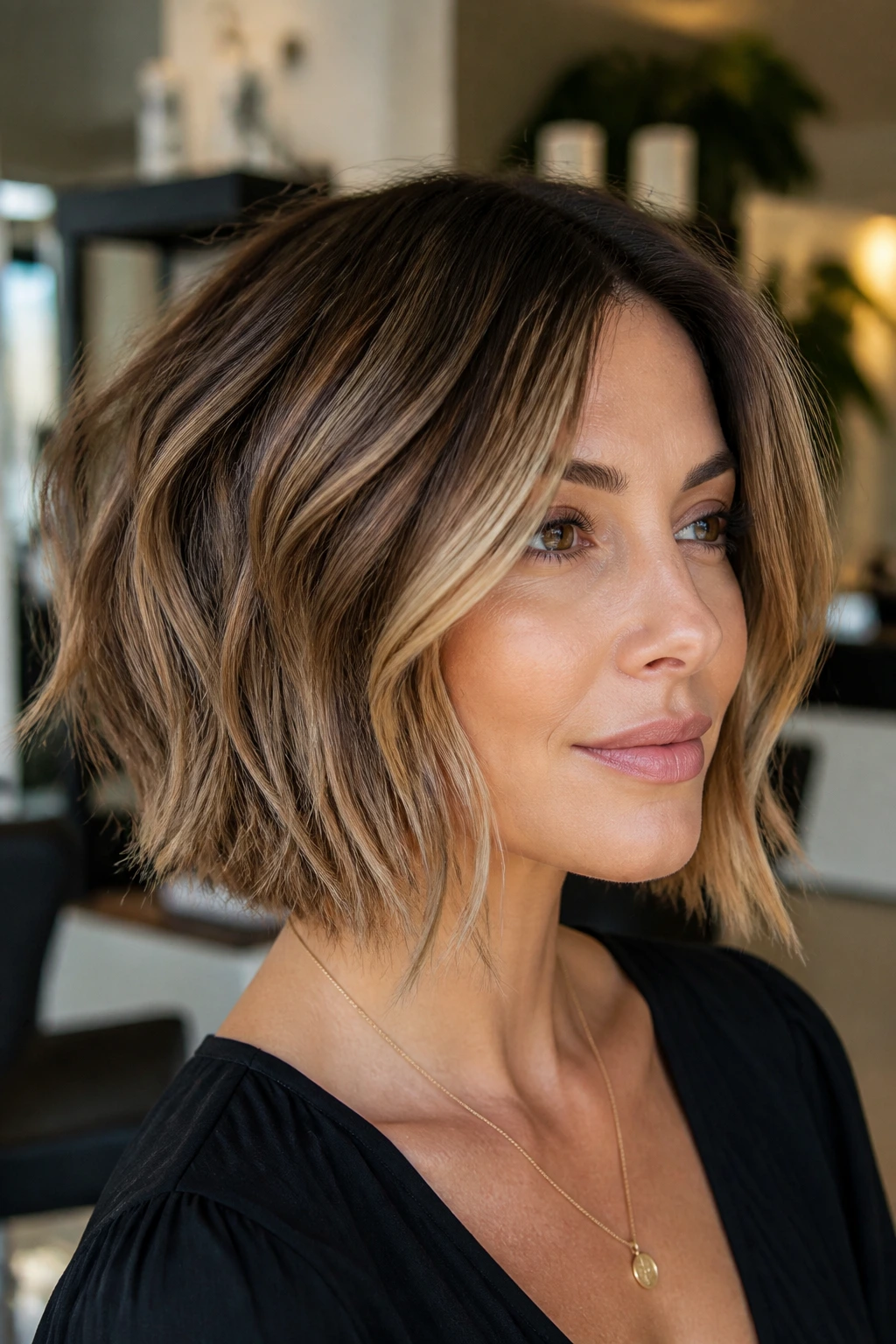
11. Bronde Choppy Bob with Warm Balayage
Bronde is still a brunette story, just one with more light at the edges. On a choppy bob, warm balayage keeps the layers visible from root to tip, which is useful if your hair naturally absorbs color and turns one-note fast.
The trick is to keep the base brown and let the lighter pieces sit where the haircut already wants movement: around the crown, through the front, and at the outer edges. You do not want chunky streaks. You want soft ribbons that look like sunlight found the haircut and stayed there.
This version suits people who like a little brightness near the face without bleaching the whole head. It also grows out well because the darker base anchors everything. If you’ve ever hated the stripy phase between salon visits, bronde is the safer move.
12. Walnut Layered Bob
Walnut brown sits in that flattering middle ground between light chestnut and deep brunette. On a layered bob, it feels tailored, which is a nice change from some of the more undone textures in this list.
This cut works best when the layers are carved internally, not stacked up the sides. You want weight control, not a puffy triangle. Walnut brown keeps the finish grounded and expensive-looking—yes, I said it, because this is one of the few cases where the color really does carry a lot of the visual load.
If your hair is thick, ask for:
- Internal layers to remove bulk
- Soft tapering at the nape
- A slightly longer front to prevent the shape from going boxy
- A warm walnut gloss every 6 to 8 weeks if the color fades quickly
It’s clean, strong, and easy to style with a brush-through blow-dry.
13. Copper-Brown Textured Bob
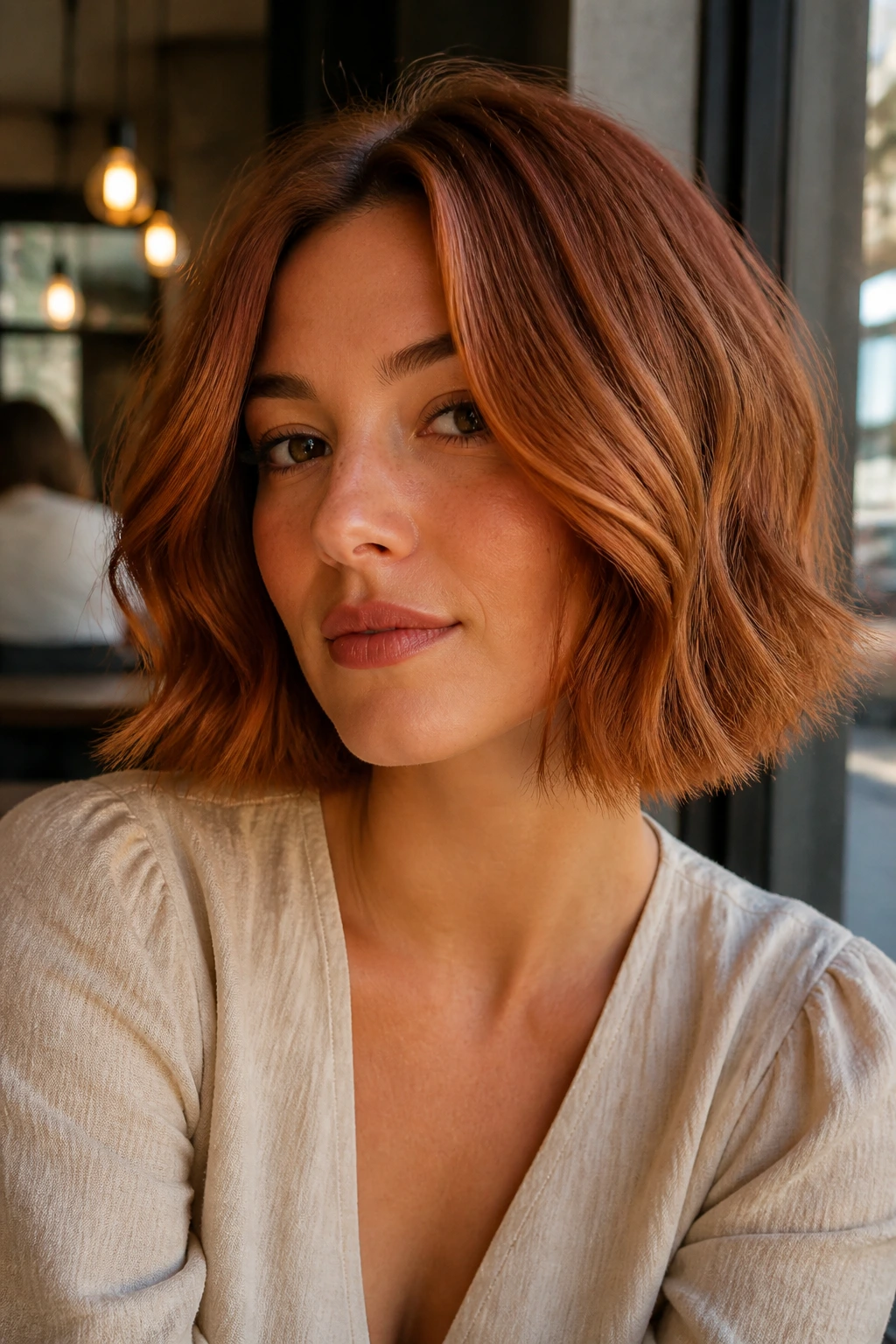
Copper-brown has a little more personality than a standard brunette, and that matters on a textured bob. The warm red undertone catches the broken ends and makes the whole haircut look lively, almost like the hair is moving even when you’re standing still.
The shape should stay choppy through the lower half, with the top kept a bit smoother so the color can glow instead of competing with too many layers. I like this one with a center part and a slight bend away from the face. It keeps the color from bunching up too much in one place.
A copper-brown bob does need a little care. Heat protection is non-negotiable, and a color-depositing conditioner can help keep the shade from fading into a muddy brown. Skip that, and the whole point of the color gets lost.
14. Nutmeg Brown Bob with Hidden Layers
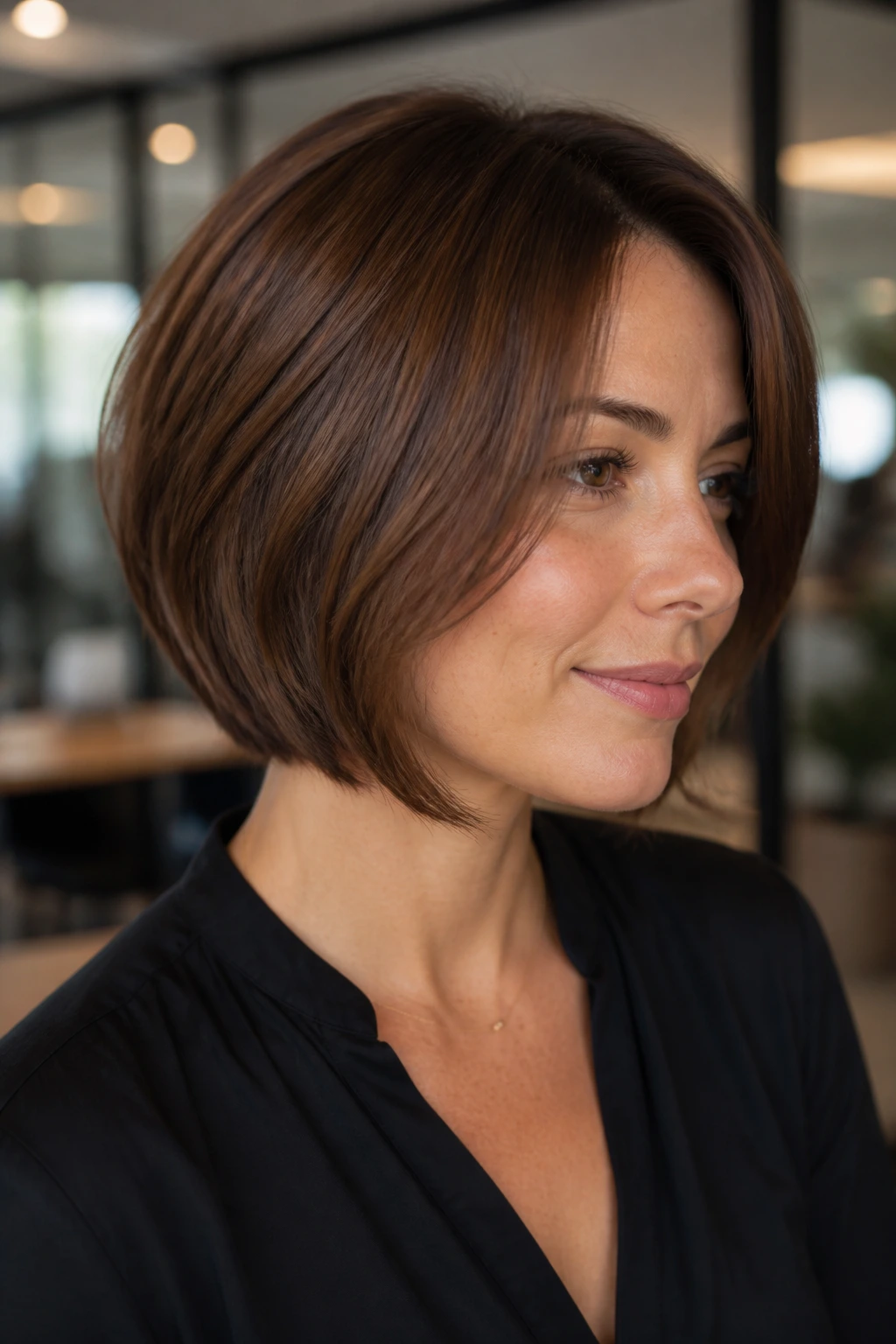
Nutmeg brown is warmer than mushroom brown and easier to wear if you want a natural-looking brunette that still has dimension. Hidden layers make the haircut behave, which is useful if your hair is dense and tends to swell at the sides.
The interesting part here is what you do not see right away. The outer line stays fairly smooth, but the internal layering removes weight, so the bob moves when you turn your head. That makes nutmeg a good choice for people who want softness without an obviously shaggy finish.
This is one of the better brown choppy bob haircuts for work settings or more classic wardrobes. It sits in a neat place visually, but it still has enough texture to keep the ends from reading stiff or frozen.
15. Honey-Brown Bob with Piecey Fringe

Honey-brown brings light to the face, and piecey fringe keeps the front from looking too sweet. The result is easy, soft, and a little cheeky. I like this cut on hair that needs a bit of lift right around the eyes, because the fringe breaks up the forehead without shutting it down.
The fringe should be light enough that you can separate it with your fingers. No solid curtain. No heavy bang shelf. The bob underneath can be chin length or a touch longer, with the ends broken up so the honey-brown pieces catch the light in different places.
If your hair is fine, this is one of the more forgiving choices. The lighter shade makes the fringe look fuller, and the choppy ends keep the rest of the bob from going limp by noon.
16. Dark Chocolate Inverted Bob
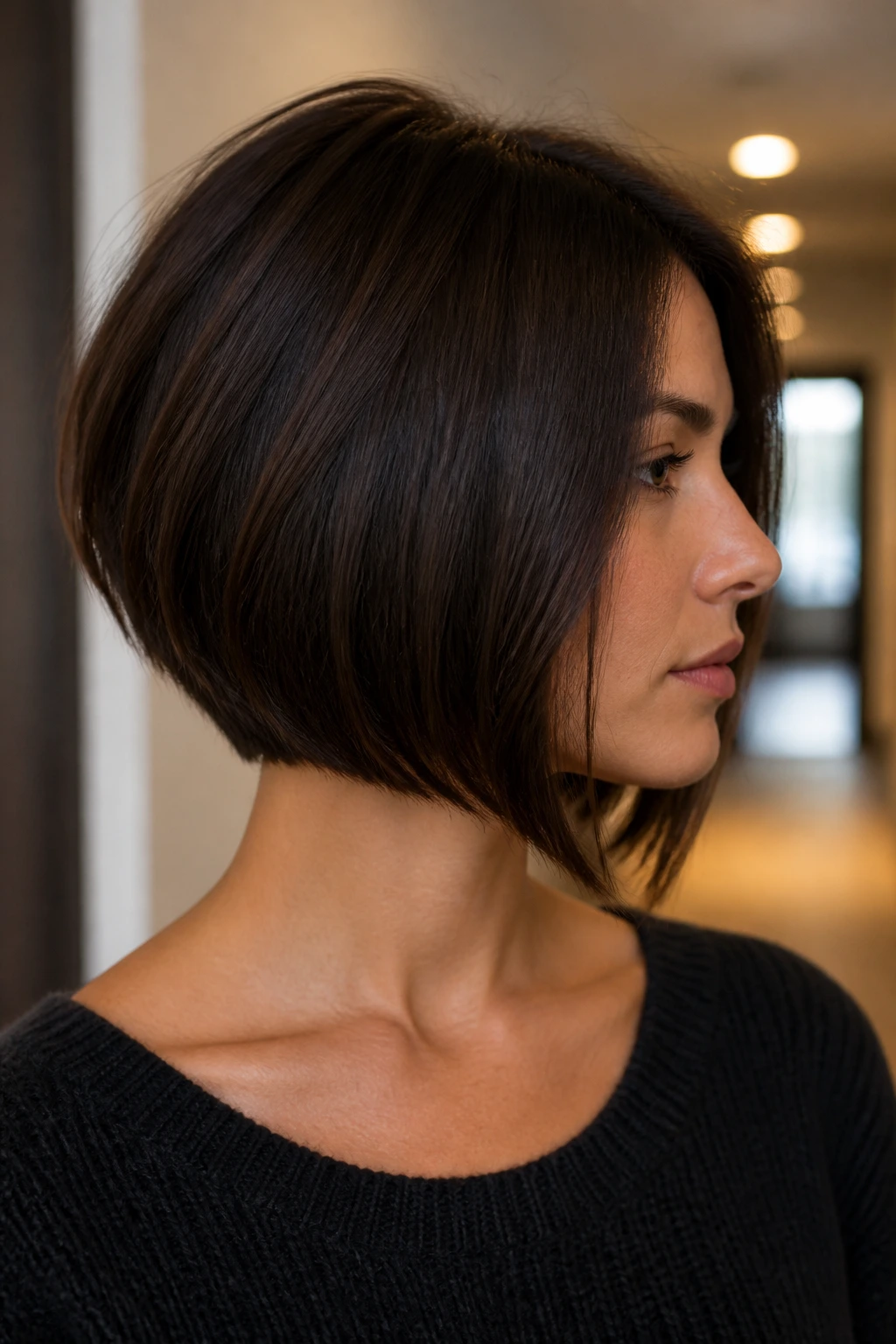
A dark chocolate inverted bob brings structure back into the picture. The back sits slightly shorter than the front, which gives the neckline a clean angle, while the warm deep brown keeps the cut from looking severe or flat.
This shape is for someone who likes a little precision. The front should skim the jaw or collarbone, depending on how dramatic you want the line. A tiny amount of texture through the ends softens the slope so it doesn’t look like a corporate haircut from the wrong decade.
It’s especially nice on straight hair, where the angle shows clearly. Add a bit of shine serum, tuck one side behind the ear, and the whole thing reads neat without feeling stiff. That balance is hard to get, and dark chocolate does it well.
17. Sandalwood Bob with Feathered Ends
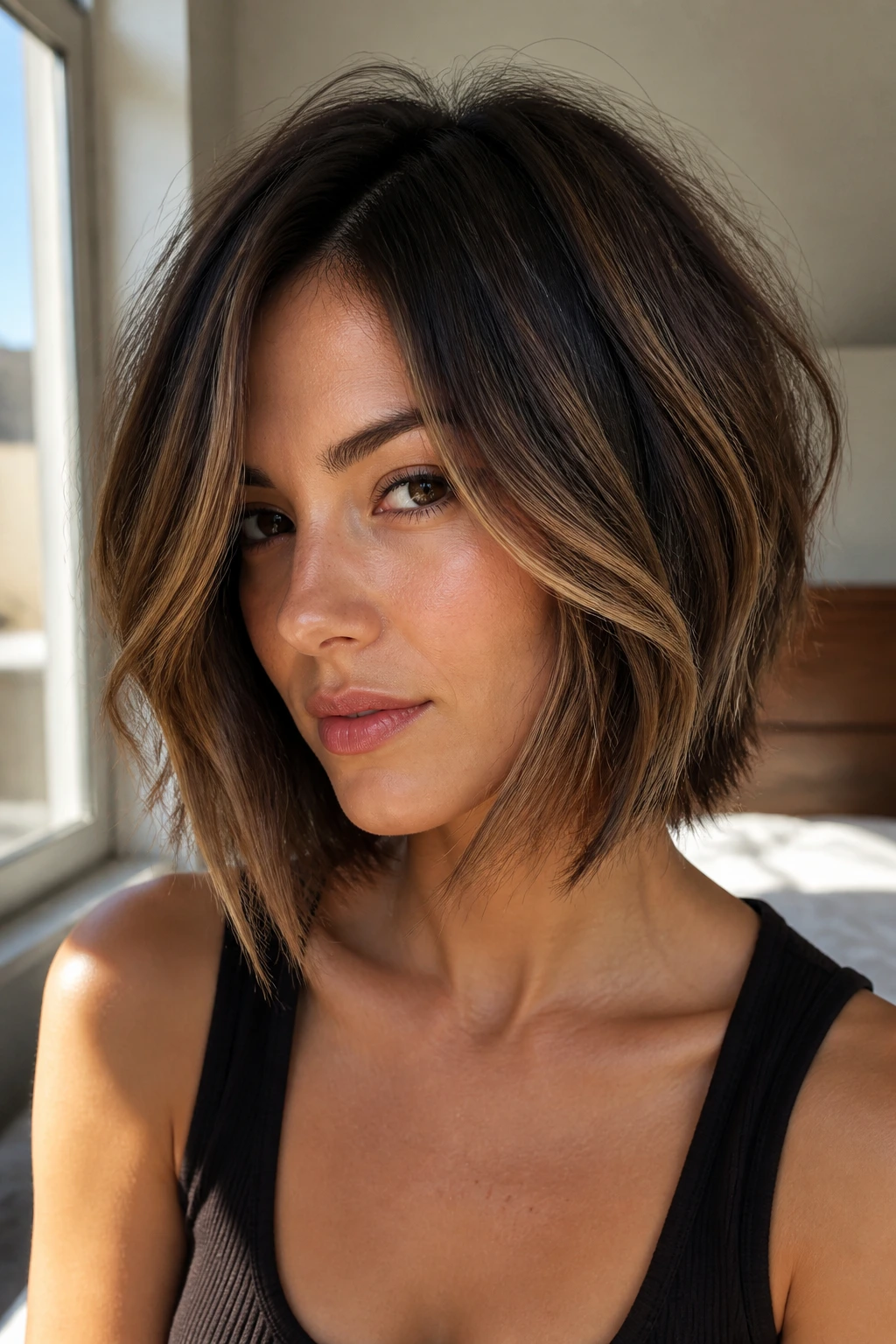
Sandalwood is a gentle warm brown, the kind that sits between beige and chestnut and doesn’t shout. Feathered ends make it feel even lighter, which is useful if your bob tends to look heavy near the bottom.
The feathering should happen mostly at the perimeter. You want the outline to brush the jaw and neck with a little movement, not fall in one blunt sheet. Sandalwood helps because it reflects light softly, so the haircut looks airy even when the hair itself is medium dense.
This cut works well for people who wear soft makeup, relaxed clothes, or anything that would feel too severe with a rigid bob. It has a calm look to it. Not boring. Calm.
18. Bronze Brown Bob with Flicked-Out Ends
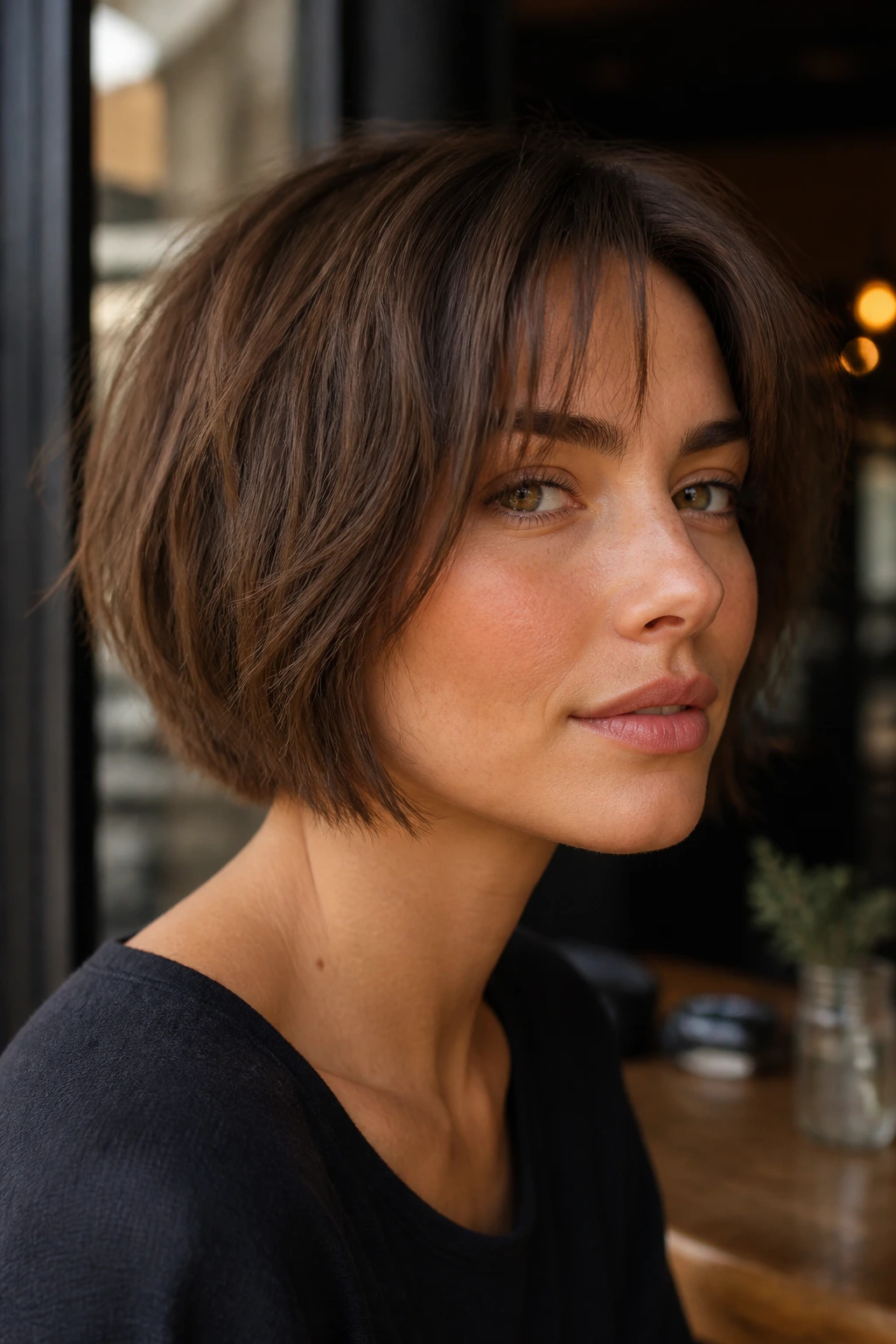
Bronze brown has that warm metallic sheen that can make a choppy bob look much more dimensional than a standard brunette. The flicked-out ends give the cut a bit of swing, and I like that because it keeps the style from sitting too close to the head.
The flick should be subtle. You’re not trying to recreate a retro flip from a blowout video. Just give the ends a tiny outward bend with a brush or iron so the bronze catches the light at the perimeter. That small turn is enough.
This is a good option if your hair is medium thickness and you want a bob that feels a little playful. The color does half the styling for you. The ends do the other half.
19. Chestnut Lob with Subtle Undercut
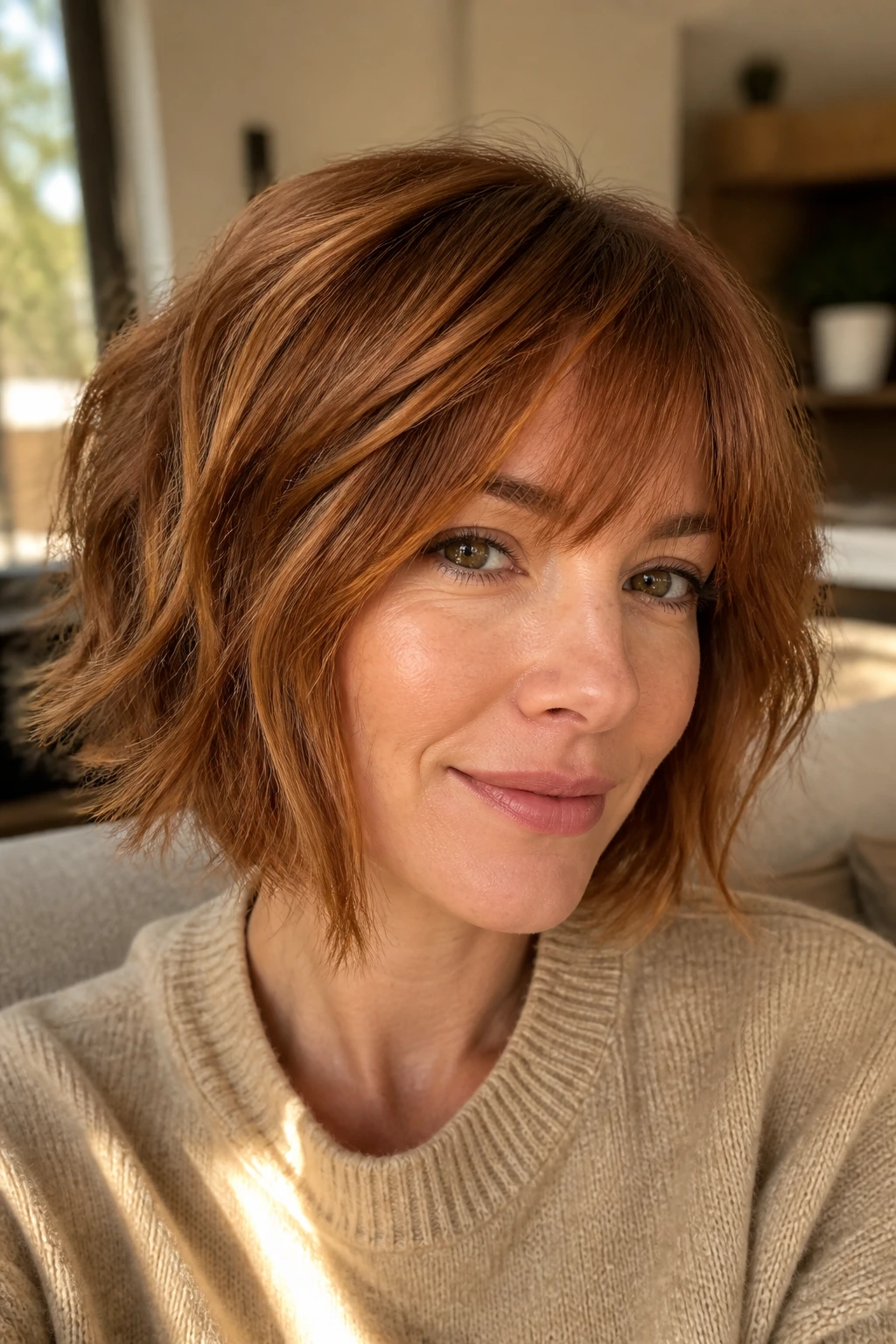
A lob gives you breathing room, and a subtle undercut removes bulk where you need it most. Pair that with chestnut brown, and you get a cut that looks full at the surface but feels lighter underneath.
The undercut should stay hidden unless the hair is lifted. That means the outer layers still fall cleanly over the shape, but the inside has less weight pushing it down. For thick hair, this is a lifesaver. Without it, the lob can turn into a triangular block by the second week after a cut.
Chestnut keeps the longer length warm and rich, which matters because longer bobs can go flat in the wrong color. A one-tone dark brown often makes a lob look heavier than it is. Chestnut adds enough dimension to keep the silhouette alive.
20. Toasted Almond Bob
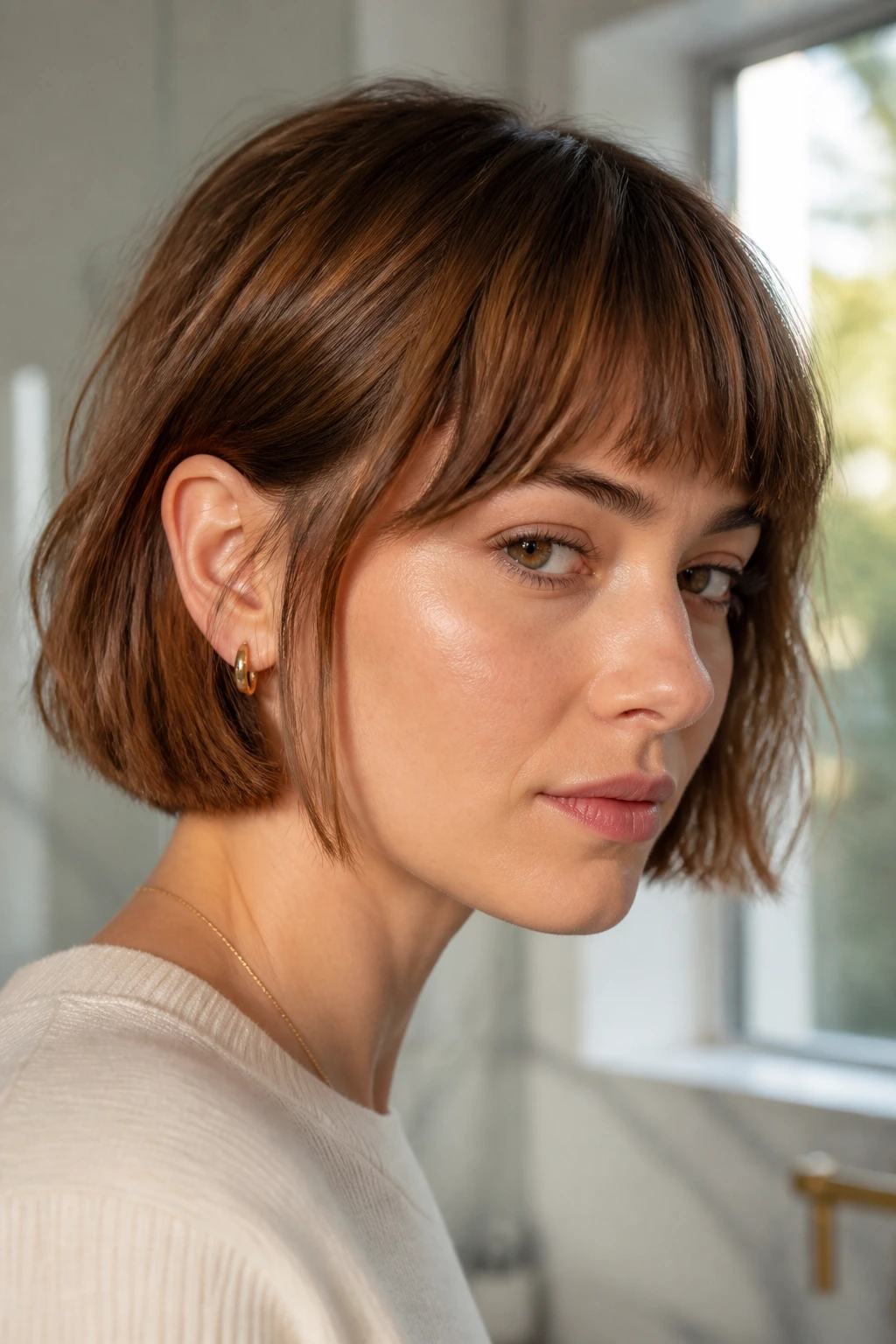
Toasted almond has a creamy brown softness that works especially well on hair with natural wave. It’s lighter than espresso, warmer than ash, and less golden than honey. In other words: easy to wear.
A toasted almond bob should have choppy internal texture, but not so much that it starts looking wispy. The point is to keep the ends loose and the crown a little lifted. If your hair leans straight, a few bends through the midlengths keep the shade from sitting flat. If your hair already waves, air-drying with a light cream is enough.
This is one of my favorite choices for people who want warmth without going red or copper. It feels soft around the face and still holds enough depth to work with neutral makeup and simple clothes.
21. Latte Brown Tousled Bob
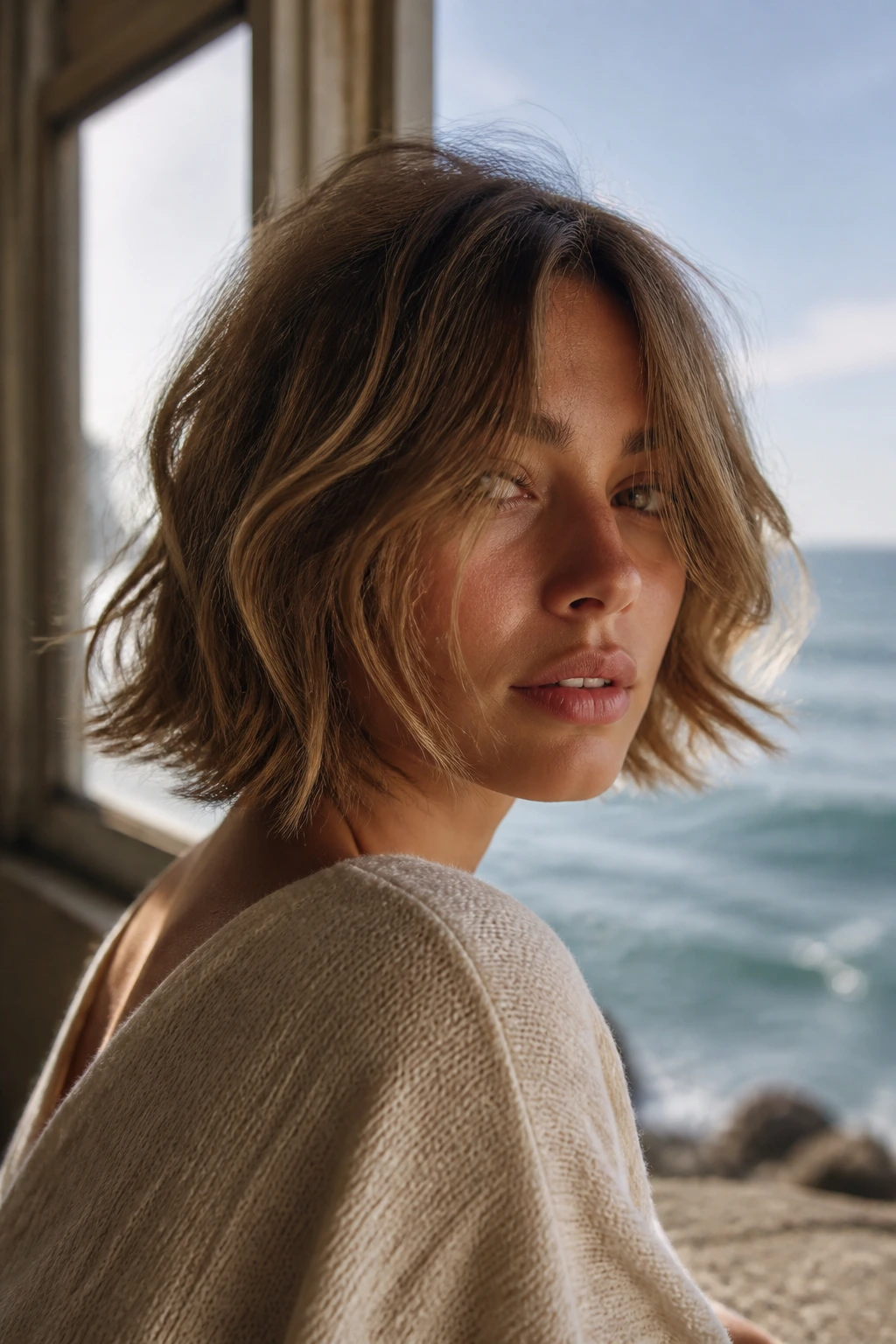
Latte brown is all about softness. It reads warm, creamy, and slightly sunkissed, which makes it a strong match for a tousled bob that lives in the middle of neat and undone.
The texture should look finger-raked, not curled into uniform waves. You want separated bends, a little volume at the crown, and ends that don’t all point the same direction. Latte brown helps because its lighter ribbons soften the outline of the cut, especially when the bob sits just below the chin.
This is a good one if you like hair that looks like it got air-dried on purpose. A spritz of sea-salt spray can help, but don’t overdo it. Too much, and the ends start looking dry, which defeats the point of the creamy color.
22. Mahogany Choppy Bob with Curved Nape
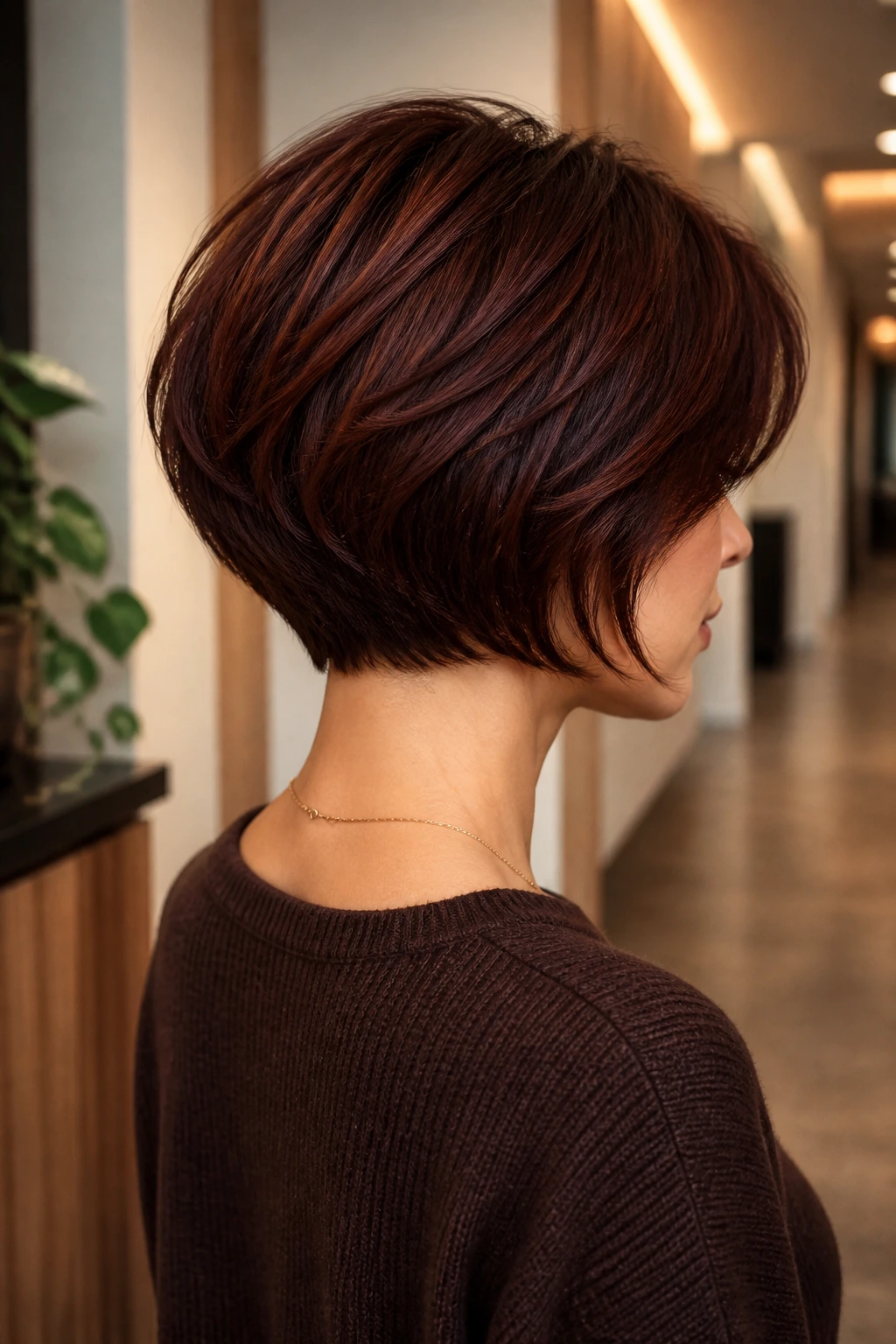
Mahogany brings drama, but in a controlled way. On a choppy bob with a curved nape, it gives the haircut a deep, rich finish while the rounded back keeps the silhouette tucked in neatly at the neck.
The curve at the nape is the interesting part. It stops the bob from sticking out at the back, which can happen when texture is added without shape control. Mahogany handles the visual weight, and the choppy ends keep the front from looking too formal. The result feels tailored and a little moody.
If you want a bob that looks polished from the side and still has movement when you turn your head, this is a strong finish to the list. It’s warm, dark, and not at all shy.
Why Warm Brown Color and Choppy Ends Play So Well Together
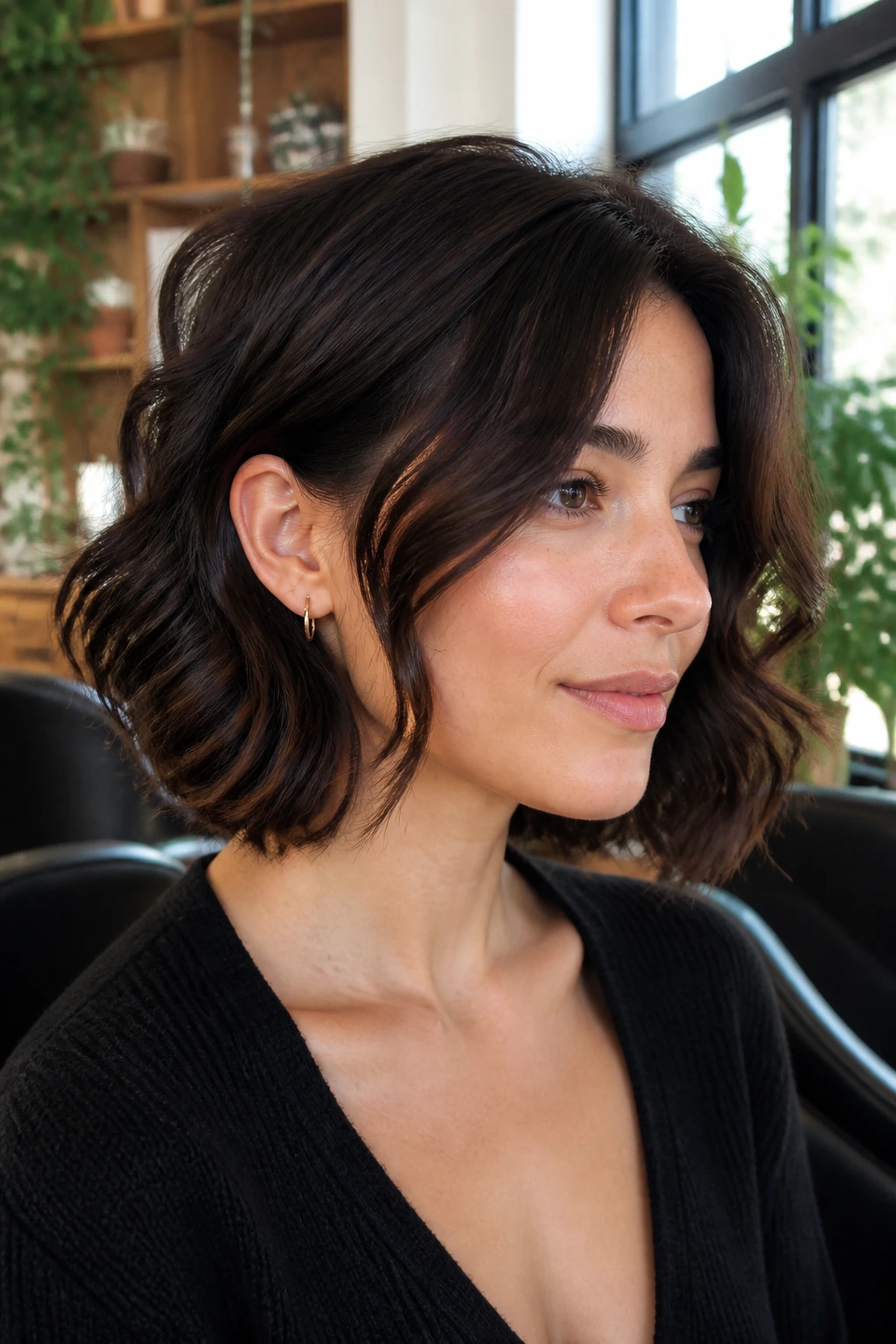
Warm brown tones and choppy ends solve each other’s problems. The cut brings movement, but movement can disappear in a flat color. The color brings depth, but depth can look heavy if the cut has no air in it. Put them together and you get a bob that keeps changing shape as you move.
That’s especially useful if your hair is fine, naturally straight, or prone to looking limp after a few hours. A warm brunette gloss—chestnut, caramel, nutmeg, bronze—creates tiny shifts in light across the surface. Those shifts make the piecey ends easier to see, which is the whole point of the style.
I also like this pairing because it saves you from chasing perfection. A brown choppy bob does not need every strand in the same place. It looks better with a little mess, a little bend, and a little root shadow. Clean, but not stiff. That’s the sweet spot.
The colorist move that matters most
Ask for dimension, not stripes. A good warm brunette should look like a color melt or soft gloss, not chunky highlights sitting on top of the hair. If the cut is choppy and the color is too rigid, the whole look starts fighting itself.
Essential Tools for Styling and Maintaining These Looks
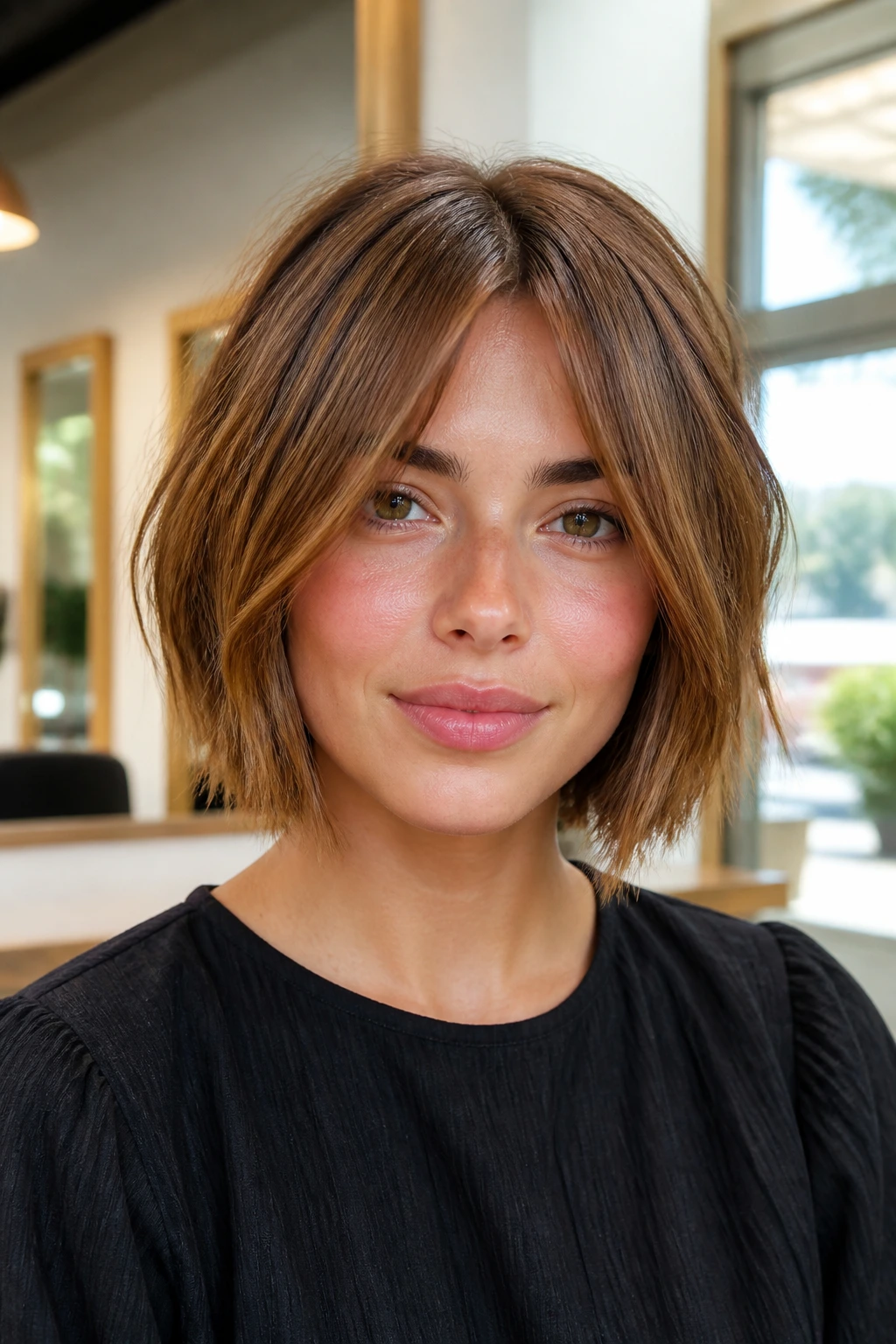
- A blow-dryer with a nozzle attachment: Directs air at the roots and keeps the bob from puffing out in random places.
- A 1-inch curling iron or wand: Best for adding a single bend through the midlengths without making the hair look curled on purpose.
- A round brush, medium size: Useful for smoothing the front pieces and giving the crown a bit of lift.
- Heat protectant spray: Non-negotiable if you use hot tools; choppy ends show damage fast.
- Texturizing spray or light dry texture mist: Helps the ends stay separated instead of sliding into one soft blur.
- Sulfate-free color-safe shampoo: Keeps warm brunette tones from fading too quickly and drying out the cuticle.
- A lightweight styling cream or serum: Tames frizz at the ends without flattening the shape.
- Duckbill clips: Helpful when you’re blow-drying the bob in sections and want the front to stay out of the way.
- Wide-tooth comb: Better than a brush when the hair is damp and you want to preserve natural movement.
How to Ask for the Right Brown Choppy Bob at the Salon
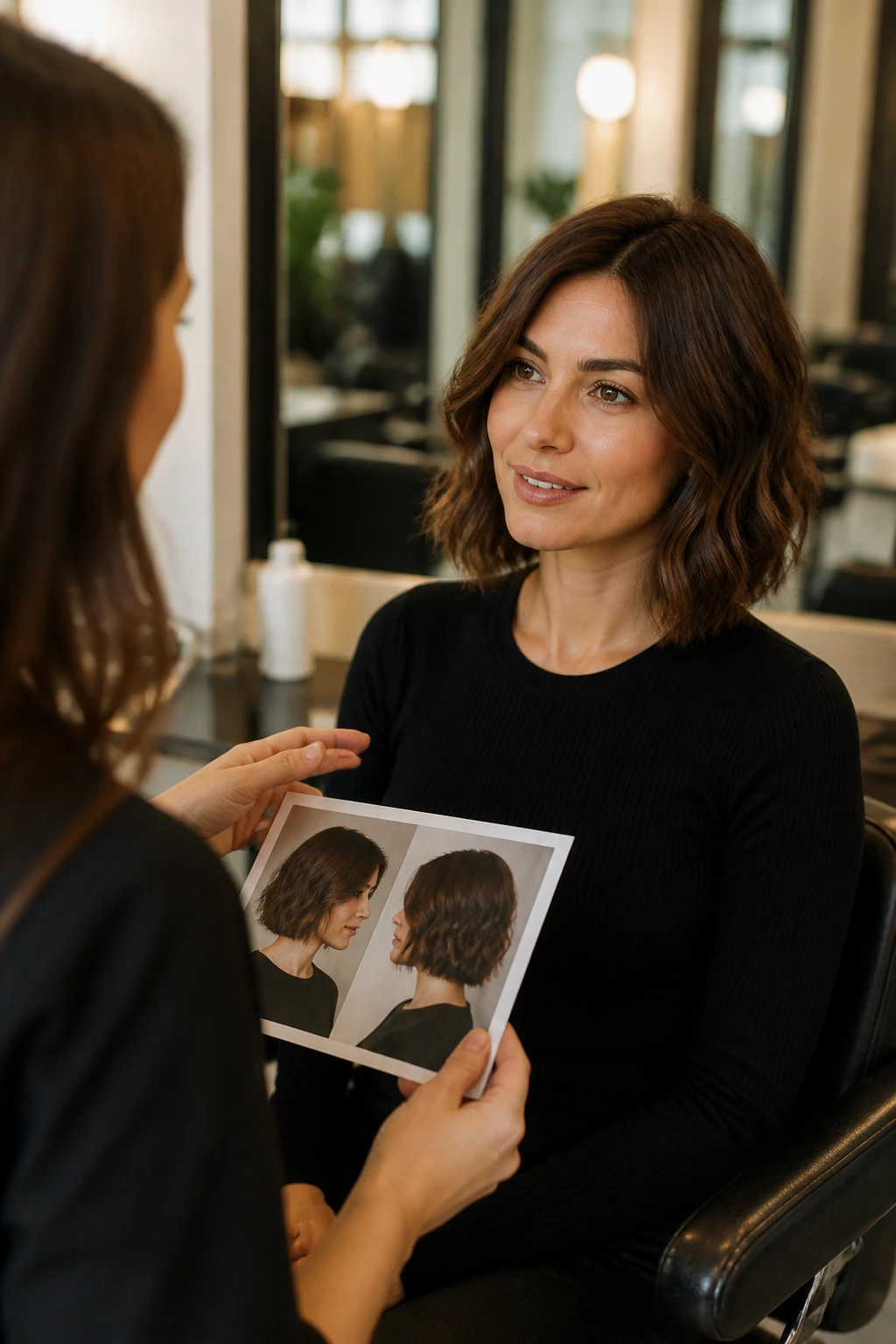
Bring pictures, but bring the right pictures. Show one image of the shape you like, one image of the color, and—if you can—one image of the texture level you want. People often hand over a photo of a blunt bob and then ask for choppy movement, which is how disappointment starts in the chair.
Use plain language. Say whether you want the cut to hit at the jaw, just below the jaw, or closer to the collarbone. Say whether you want the layers to be obvious or hidden. And say how much styling you’re willing to do in the morning, because that changes everything. A bob that needs a round brush every day is not the same as one that can air-dry and still look intentional.
If you want the warm tone to show, ask for a gloss, a warm balayage, or soft face-framing ribbons. Avoid asking for “brown” alone. That word covers everything from cool ash to deep mahogany, and the difference on a bob is huge.
How to Style a Choppy Bob So It Looks Piecey, Not Puffy
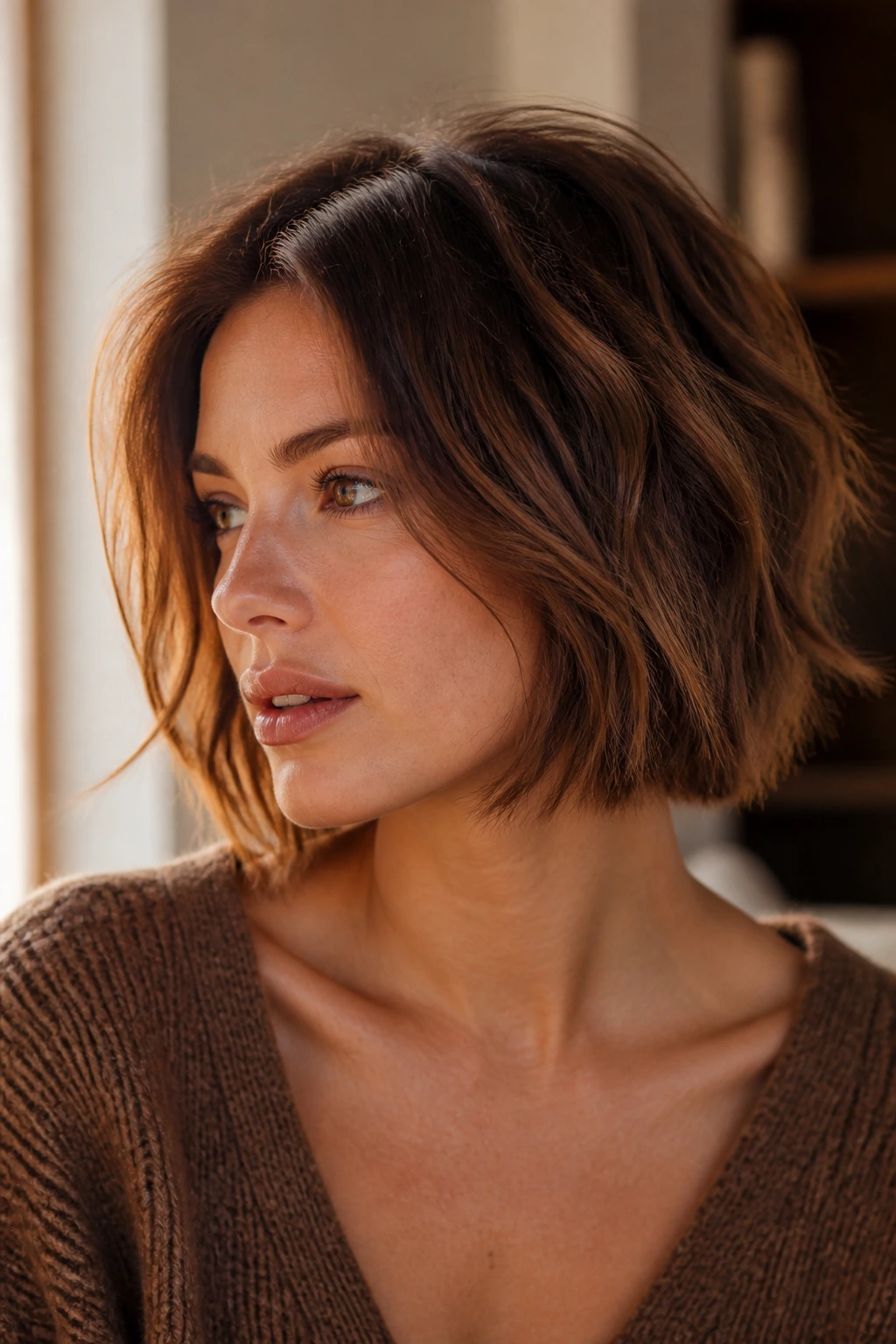
Start with damp hair and apply a small amount of heat protectant, then rough-dry the roots until the hair is about 80 percent dry. That’s the part most people skip, and it matters. If you go straight to a curling iron while the hair is too wet, the style loses shape fast.
Use a round brush or fingers to direct the front pieces away from the face. Then bend only the middle inch or two of a few sections with a wand or flat iron. Leave the ends free. That tiny irregularity keeps the style modern and stops the bob from turning into one big loop.
Finish with a whisper of texture spray at the midlengths and underneath, not just on the top layer. If your hair is fine, this makes the cut look denser. If your hair is thick, it keeps the bottom from getting bulky. A little goes a long way. Too much, and the warm brown color starts looking dusty.
Common Mistakes That Make a Choppy Bob Fall Flat
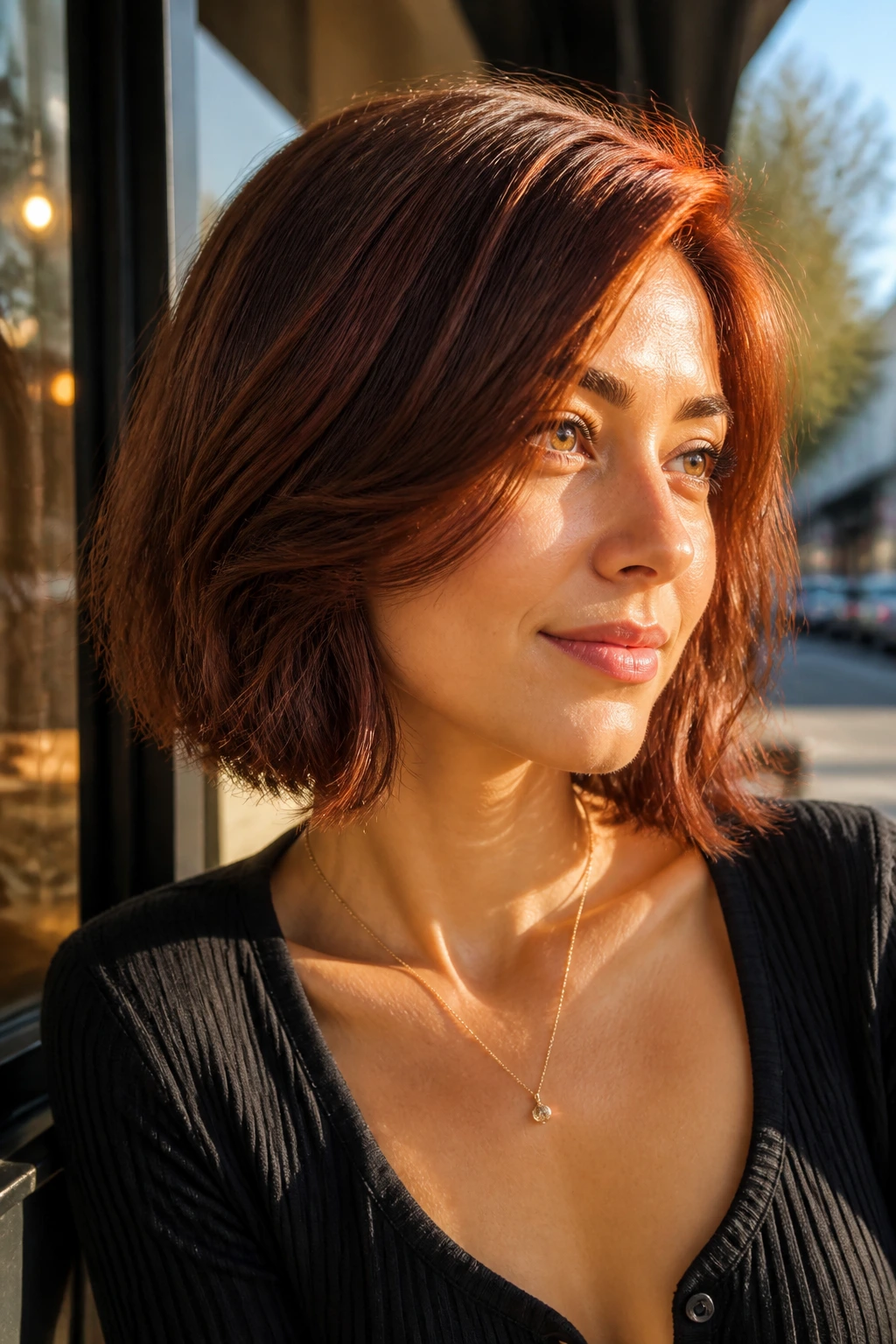
- Over-layering the whole head: The symptom is stringy ends and a bob that looks thin from every angle. The fix is to keep the internal layering controlled and leave some weight at the perimeter.
- Choosing a brown that’s too flat or cool: If the color looks muddy indoors, the texture disappears. Ask for chestnut, caramel, mahogany, or a warm gloss to keep the cut lively.
- Blow-drying every strand smooth: A perfectly sleek finish can erase the choppy edge. Leave a little movement in the ends or the haircut loses its point.
- Using too much texturizing spray: The hair starts to feel dusty and rough, and the shine vanishes. A light mist under the top layer is enough.
- Keeping the same blunt line for too long between trims: The bob grows into a triangular shape or loses its bite. If the ends start flipping in a strange way, it’s trim time.
Fresh Variations and Alternatives to Try
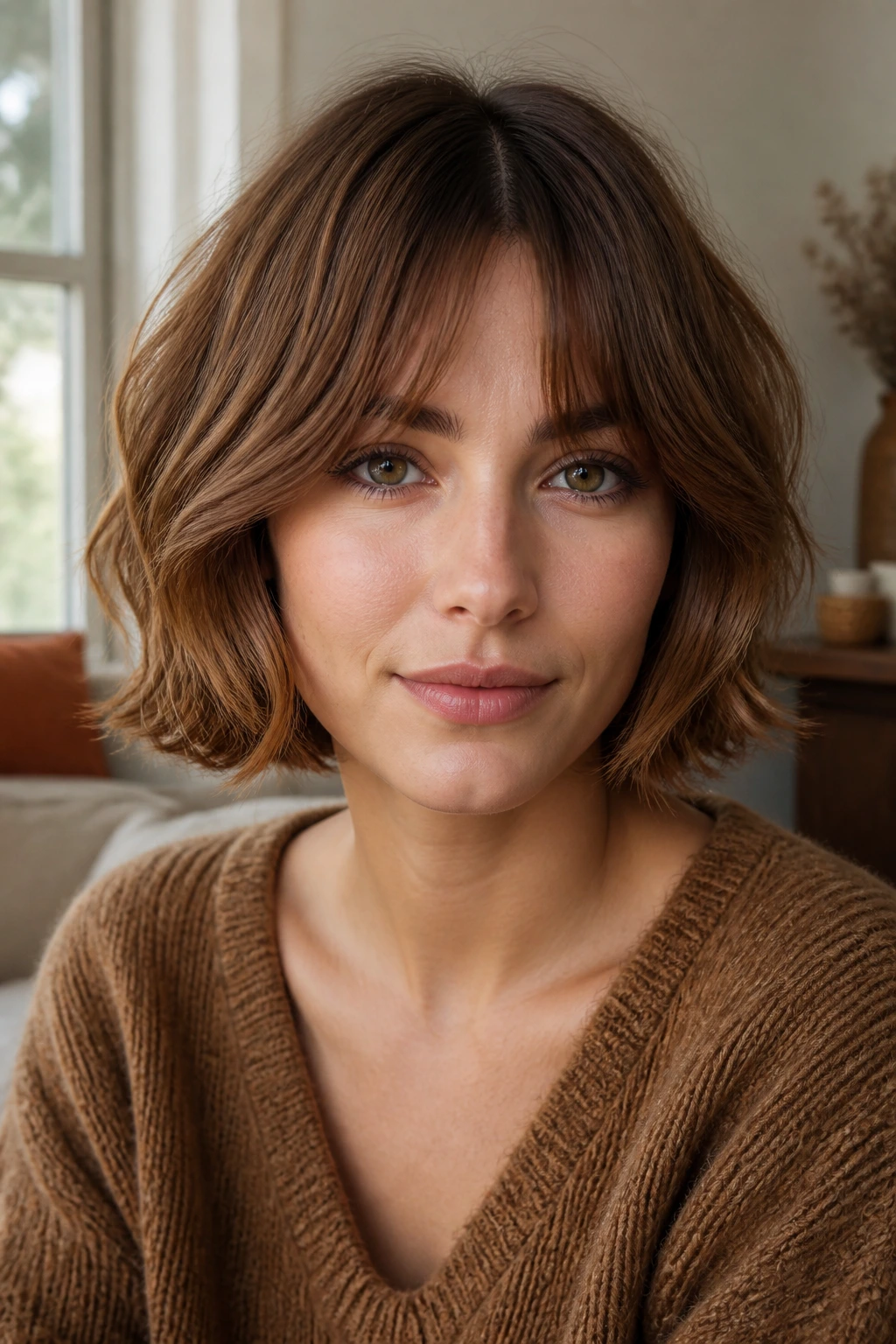
Soft Grow-Out Lob:
If you like the idea of a choppy bob but want more length, let it sit closer to the collarbone. The warm brown tones still show dimension, and the extra length makes the style easier to tuck behind the ears or tie half up.
Fringe-Forward Brunette Bob:
Add curtain bangs, baby fringe, or a side sweep if you want the front to do more of the talking. This version works especially well with chestnut, hazelnut, and toffee tones because the warmth softens the face frame.
High-Contrast Balayage Bob:
Keep the base deeper and place warmer ribbons just where the bob bends. The contrast gives the cut more visual lift, especially on medium-length hair that tends to lose its shape by midday.
Dense-Hair Shape Bob:
For thick hair, ask for hidden layers and a slightly tucked nape. This keeps the silhouette from ballooning while the warm brunette color keeps the haircut from feeling too chopped up.
Air-Dry Wave Bob:
If you hate hot tools, ask for a shape that looks good with natural wave and a little scrunching cream. Warm brown makes the irregular bends look intentional instead of fuzzy.
How to Keep the Shape Fresh Between Salon Visits
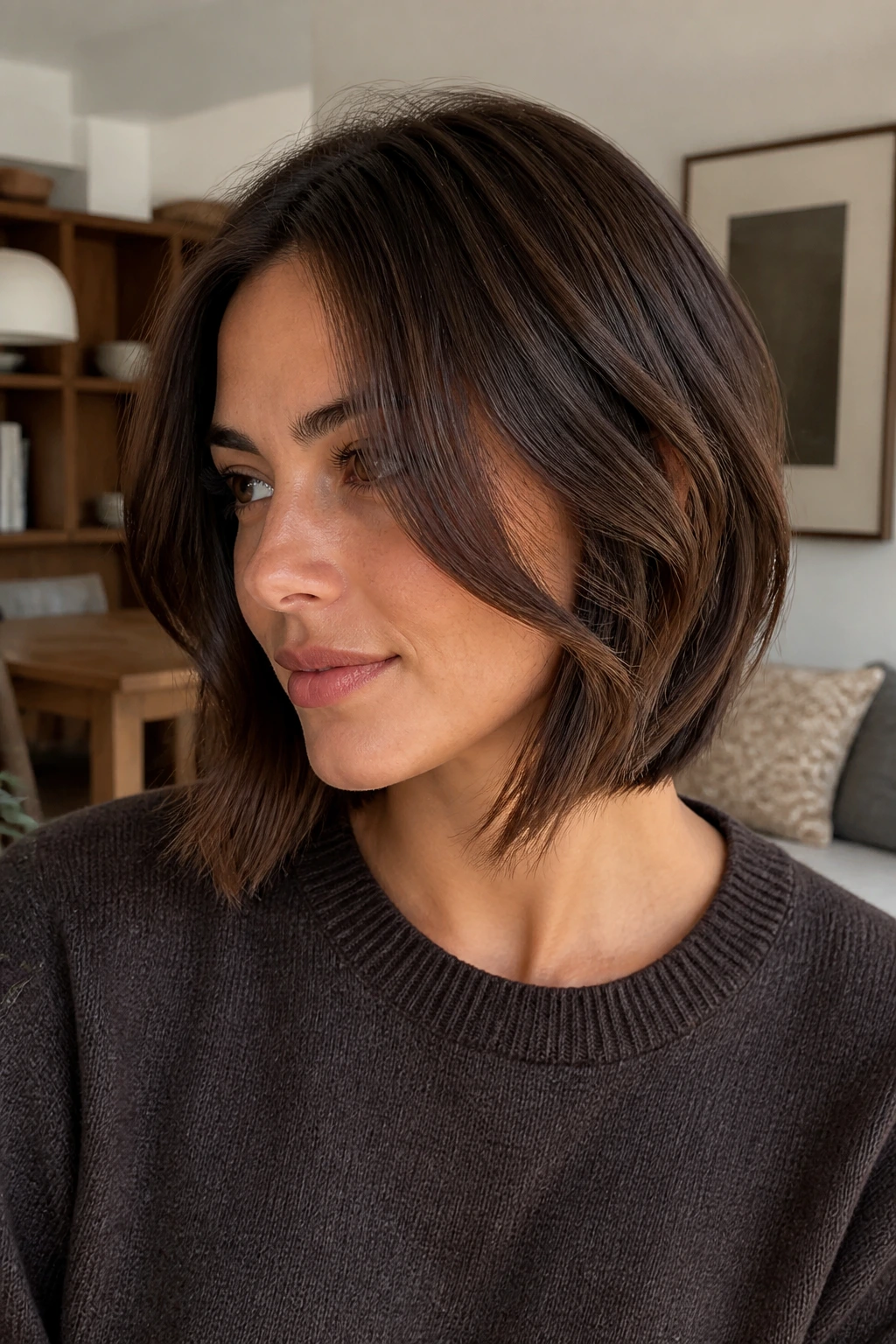
Trim the bob every 6 to 8 weeks if you want the choppy edge to stay crisp. If you’re growing it into a lob, you can stretch that a little longer, but once the line starts flipping out in a way you didn’t choose, the shape needs attention.
For color, warm brunettes usually stay nicest with a gloss or toning refresh every 6 to 10 weeks, depending on how often you wash and heat-style. If you use dry shampoo often, a clarifying wash once or twice a month can keep the roots from looking cloudy. Then go back in with a hydrating mask so the ends don’t feel parched.
At home, keep the styling light. Heavy oils, thick creams, and too much smoothing balm will smother the texture. A pea-sized amount is usually enough. The bob should still move when you turn your head.
Frequently Asked Questions About Brown Choppy Bob Haircuts
Will a choppy bob work on fine hair?
Yes, and it often works better than a blunt bob because the broken ends create the impression of more body. The key is not to over-layer the whole cut; you want texture at the perimeter, not gaps through the middle.
What’s the difference between a choppy bob and a shaggy bob?
A choppy bob still keeps a bob shape first and a shag shape second. A shaggy bob leans heavier into layers and fringe, while a choppy bob usually keeps a clearer outline around the jaw or neck.
How often should I trim it?
Most choppy bobs need a trim every 6 to 8 weeks to keep the texture purposeful. If you wait much longer, the ends start to lose their sharpness and the cut can look grown-out in a messy way, not a soft one.
Do warm brown tones make hair look thicker?
They can, especially when the color has subtle lighter ribbons or a glossy finish. Warm tones help the light bounce off the surface, which makes the broken ends easier to see and the overall shape feel fuller.
Can curly or wavy hair wear this cut?
Absolutely. The trick is to keep the layering controlled so the bob doesn’t spring up into a triangle. On wavy hair, choppy ends work especially well because the natural movement already helps the texture.
What should I ask for if I want this at the salon?
Say you want a bob with point-cut or soft, shattered ends, plus warm brunette dimension. Then be specific about length: jaw, chin, or collarbone. That one detail changes the whole mood of the haircut.
Can I keep my natural brown and still get this look?
Yes. A good cut does a lot on its own, and you can add a warm gloss or subtle face-framing warmth instead of a full color change. Even a small shift in tone can make the choppy texture stand out.
What if my bob looks puffy instead of piecey?
That usually means the layers are too short or the styling products are too heavy. Use less cream, more lightweight texture spray, and ask your stylist to keep some weight at the perimeter next time.
The Shape That Keeps Its Edge
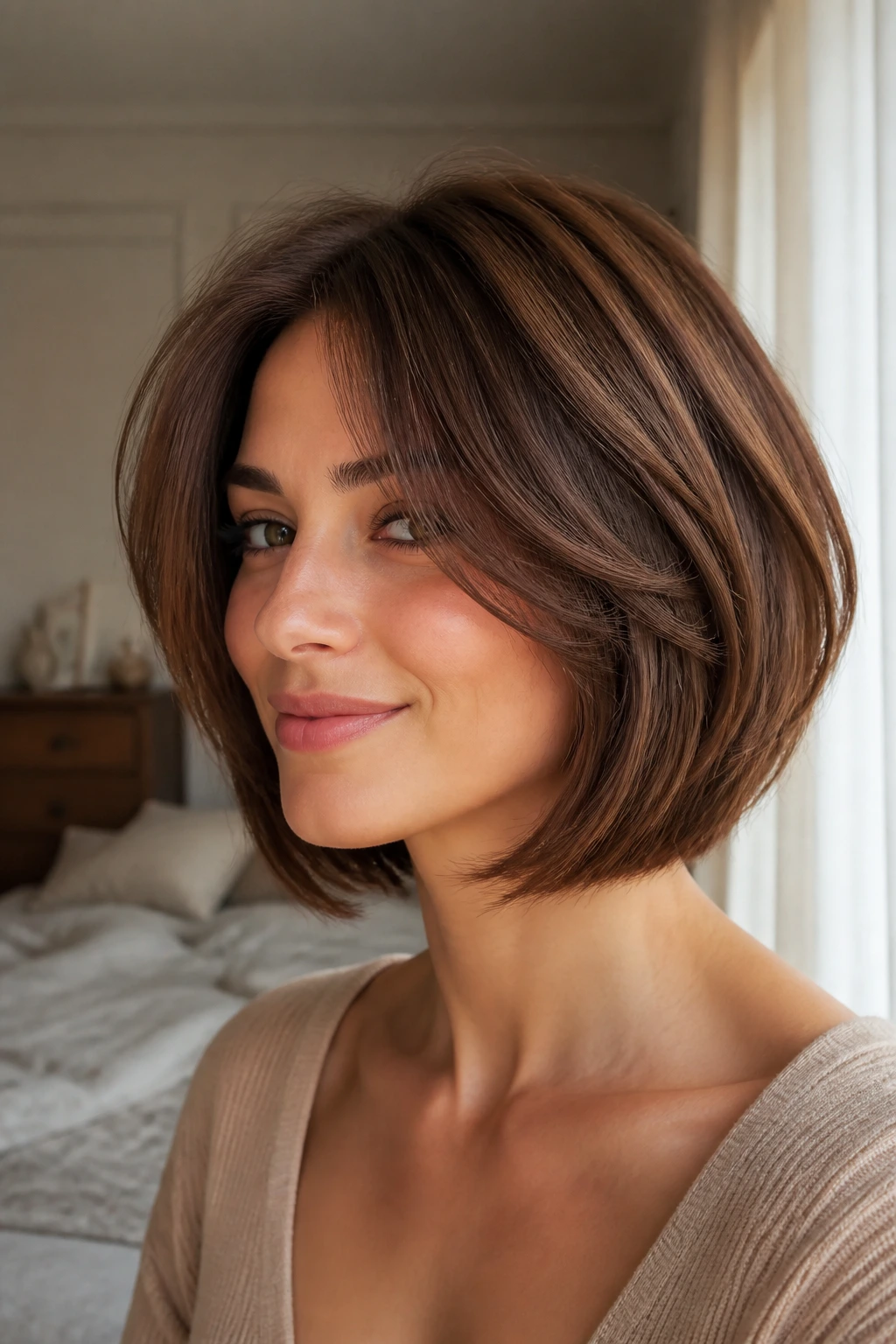
A brown choppy bob works because it gives you two things at once: a shape with intention and a color that keeps the shape visible. That combination is harder to ruin than people think. If the ends are soft, the tone is warm, and the length suits your face, the haircut does half your styling for you.
The smartest move is to match the degree of choppiness to your hair density and the warmth of your brunette shade to your skin and wardrobe. Do that, and the bob stops feeling like a haircut trend and starts feeling like your actual hair—just a better version with cleaner edges and a little more swing.
