



A bob that’s been blown out properly has a shape problem solved. The ends don’t just sit there. They turn under, flick out, or curve into a clean bend that makes the whole cut look intentional instead of half-finished.
That matters a lot with bob length blowout hair ideas. A chin-length cut, a soft lob, or a collarbone bob can collapse fast if the roots go flat or the perimeter gets fuzzy. The fix is rarely more hairspray. It’s usually better tension, the right brush size, and a finish that matches the cut instead of fighting it.
I keep coming back to the same point: the best blowout bobs are not all trying to be huge. Some are sleek. Some are airy. Some lean on one sharp flip at the ends. What they share is a real sense of shape from root to tip, so the hair looks like it belongs on your head rather than sitting on top of it.
Why These Bob-Length Blowouts Earn Their Keep
-
They give short hair a real silhouette. A one-inch bend at the ends keeps a bob from reading as flat or boxy by midafternoon.
-
They work with the cut you already have. A blunt bob, layered lob, or angled A-line all changes mood once the root and perimeter are styled on purpose.
-
They survive second-day hair better than you’d think. A little dry shampoo at the crown and a two-minute refresh around the face can bring the shape back without a full wash.
-
They can go polished or loose. The same bob can look boardroom-clean with a center part or soft and easy with a side sweep.
-
They make accessories matter. Hoops, sharp collars, barrettes, and sunglasses show up more when the hair lands between the jaw and the shoulder.
-
They’re not one-note. Bob length blowout hair ideas can look glossy, lived-in, retro, or airy, depending on how much volume you build at the root and what you do with the last inch.
1. Chin-Grazing C-Bend Bob
This is the bob I reach for when I want the haircut itself to do most of the talking. The line sits right around the chin, and the ends turn under in a soft C-shape that sharpens the jaw without looking severe. It’s neat, but not stiff. That matters.
Why it works
A chin-length bob has less weight than a lob, so the bend holds for longer if you dry it with real tension. Ask for a one-length perimeter with a slight bevel at the bottom, not a heavy shelf. If your hair is fine, the curved edge gives the illusion of density; if it’s thick, the bevel keeps the cut from puffing out like a triangle.
A 1 to 1.25-inch round brush is the sweet spot here. Too large, and the curve gets lazy. Too small, and you can end up with a twist instead of that clean, polished fold.
Best finish: a light mist of flexible-hold spray, then a quick pass with a cool shot.
Skip: heavy oil near the roots. It kills the shape fast.
2. Center-Part Collarbone Bob
Why does a collarbone bob look so calm when it’s blown out well? Because the length gives the air somewhere to move. The hair brushes the shoulders, the front pieces fall cleanly on either side of the face, and the center part pulls the whole look into something deliberate.
That’s the charm. It feels relaxed, but it isn’t lazy.
This is one of the easiest bob length blowout hair ideas to wear if you’re nervous about going too short. The added length means you can use a larger round brush, usually 1.5 inches, and build a softer curve through the mid-lengths instead of fighting for a tight curl at the ends. If your hair tends to separate in the middle, mist the roots with volumizing spray before blow-drying and clip the part while it cools.
3. Flicked-Out Italian Bob
The flicked-out bob has attitude. The ends kick away from the neck, the line stays clean, and the whole thing has that slightly breezy, off-duty feel that looks better when it isn’t overworked.
What makes it different
Unlike an under-curved bob, this one wants the brush to turn outward at the last inch or two. That outward movement keeps the cut from feeling too sweet. It also works especially well on medium-thick hair, because the density helps the flick stay visible instead of disappearing.
If you want the shape to last, rough-dry the roots first, then round-brush each section away from the face at the bottom. Finish with a whisper of texture spray through the ends, not the crown. Too much product at the top ruins the lift.
My take: this is the bob that looks best when you stop trying to make every strand obey.
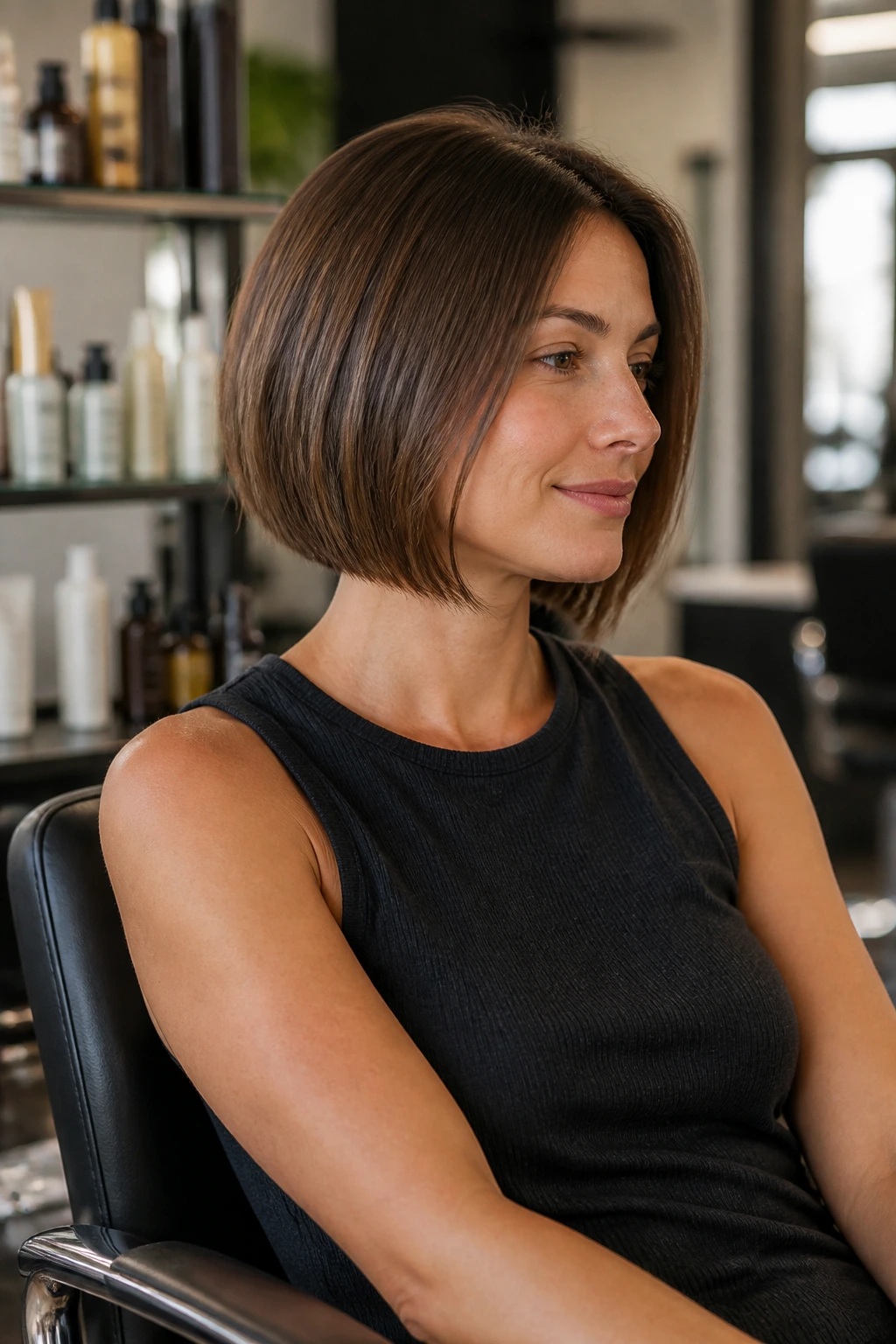
4. Glass-Straight Bob With Rounded Ends
Sharp. That’s the point.
A glass-straight bob with rounded ends is for days when you want the cut to read as polished from across the room. The surface is smooth, the part is clean, and the bottom edge barely curves under so it doesn’t feel hard. You get shine, line, and a little softness at the ends. That last part matters more than people admit.
Why it lands
A dead-straight bob can look flat or severe if the ends are too blunt. A tiny bevel solves that. Blow-dry with a concentrator nozzle and a paddle brush first, then use a round brush only on the last inch to tuck the edge under. If your hair is coarse, use a lightweight smoothing cream mid-shaft to ends. If it’s fine, skip the cream and finish with a mistable serum instead.
This style is not noisy. It doesn’t need to be.
5. Root-Lift Bombshell Bob
If your crown goes flat the second you walk away from the mirror, start here. A root-lift bombshell bob is all about height at the top and movement through the mids, so the silhouette feels bigger without the ends turning into a puffy mess.
The trick is balance. You want lift, not helmet.
Use mousse at the roots while the hair is damp, then blow-dry the crown forward and back in small sections with a medium round brush. Once the sections are hot and shaped, clip the top layers in place for a few minutes while they cool. That cooling step matters. A lot. It sets the lift so it doesn’t collapse the moment the hair meets air.
Velcro rollers work beautifully here, especially on fine hair. Place two or three at the crown while you finish makeup or get dressed, then take them out only after the hair is fully cool.
6. Deep Side-Part Volume Bob
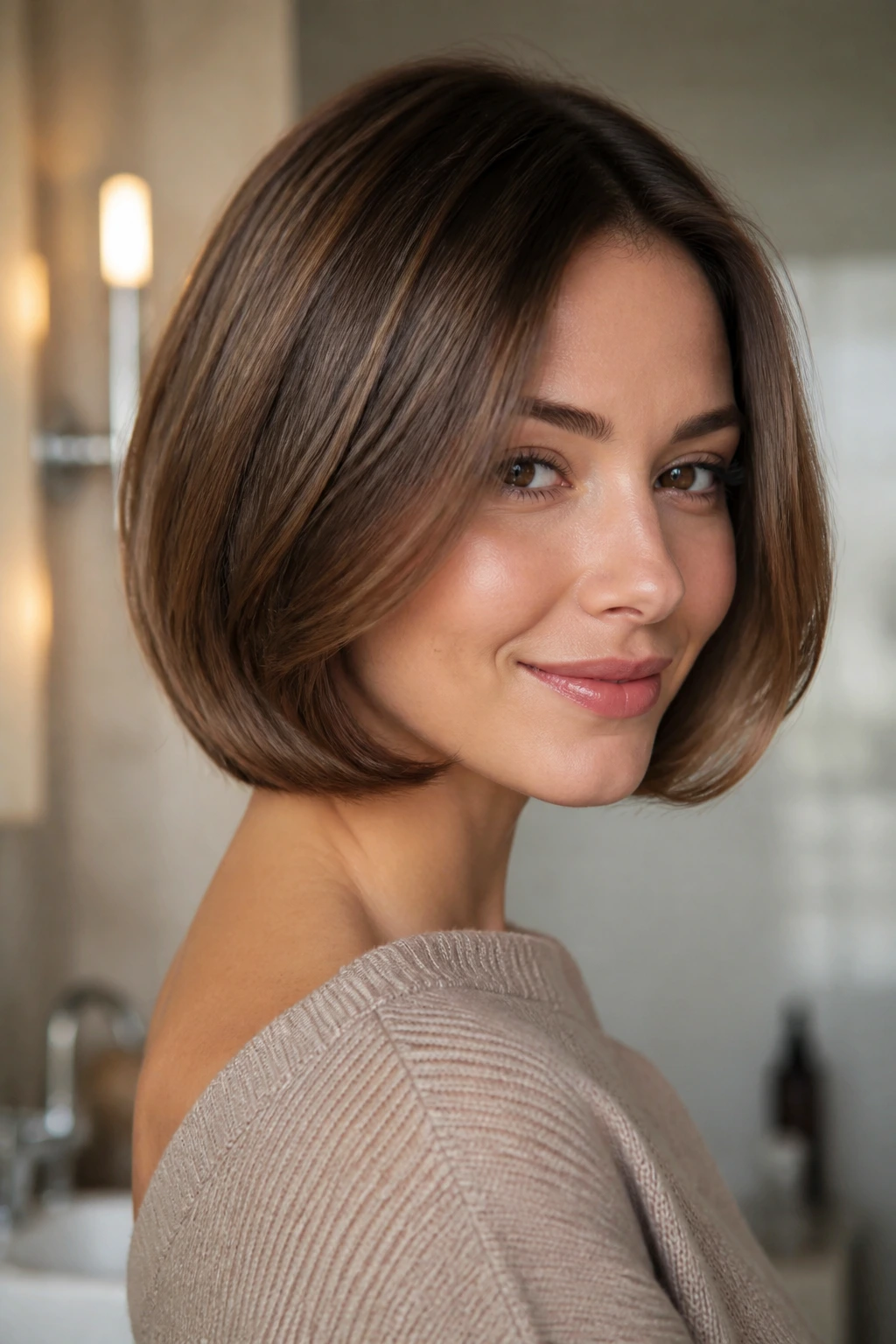
A deep side part changes everything. One side rises, the other drops, and the bob suddenly has a sense of motion even if the actual cut is simple.
This is one of my favorite bob length blowout hair ideas for anyone who feels their face looks wider when hair is parted down the middle. The side part breaks the symmetry and gives the illusion of more lift at the crown. It also helps if one side of your hair naturally behaves better than the other. Let that side work for you.
Blow-dry the heavy side first, pushing the roots opposite the part to create lift, then sweep them back once they’re mostly dry. Clip the part while it cools. If the ends need polish, turn only the front pieces under with the brush. The rest can stay softer. That contrast is what makes it look modern.
7. Angled A-Line Bob Blowout
The A-line bob is a little more serious in the back and a little more expressive in the front. The length angles down toward the jawline or collarbone, which gives the face a natural frame before you even touch a brush.
It’s a smart shape if you want your neck to look longer. It’s also forgiving when the back needs less maintenance than the front. Shorter back sections dry faster. Front pieces get the bend and movement.
Ask your stylist for this
Request a clean angle, not a stacked back. Too much stacking can make the back feel dated fast. You want a subtle slope with enough length in the front to catch the round brush and swing inward slightly. If your hair is thick, a little internal weight removal keeps the front from ballooning out.
The A-line really comes alive when the front panels fall just past the jaw and tuck under by half an inch.
8. French Bob With Airy Fringe

A French bob should look touched, not trapped. The fringe is light, the perimeter is short, and the whole thing has a bit of looseness that keeps it from feeling overstyled. It’s shorter than most people think, and that’s part of the charm.
What to watch for
If the fringe is too heavy, the style turns boxy. Ask for a soft, airy bang that can move a little at the brow, not a wall. I’d keep the ends piecey rather than blunt if you want that easy Parisian shape.
The styling itself is almost lazy in the best way. Rough-dry the roots with your fingers, then use a small round brush only on the fringe and the front curve. Don’t force every section into perfect symmetry. A French bob looks better when one side sits a touch looser.
Best for: hair that already has some natural bend.
Not ideal for: hair that fights every wave unless you’re willing to reset it after every wash.
9. Curtain-Bang Blowout Bob
Curtain bangs and a bob length blowout are a very good pair when the fringe blends into the sides instead of sitting like a separate haircut. The center opens up, the bangs sweep away from the face, and the rest of the bob gets to carry the movement.
This is one of those styles that looks soft from every angle. A small round brush helps here, but don’t overthink the barrel size. The fringe only needs enough tension to bend away from the face and land in that parted curtain shape. Once the bangs are dry, tuck the side sections under with the brush or a large roller for a few minutes.
If your forehead feels broader than you like, this is a nice fix. If your face is already narrow, keep the bangs a little longer so they don’t disappear into the sides.
10. Tucked-Back Ear-Skimming Bob
Some days the best styling move is the simplest one: tuck one side behind the ear and let the rest fall clean. A bob that skims the ears looks especially good when the ends are softly beveled, because the tuck creates shape without losing the line.
This style gives you that polished, almost editorial finish without needing dramatic volume. It also shows off earrings and jawline, which is probably why it keeps showing up in real life, not just mood boards.
Use a side part or a slightly off-center part, then blow out the hair smooth with the ends curved under by a fraction. Tuck the heavier side behind the ear and mist the tucked section lightly so it stays put. Don’t pin it too hard. The whole point is that it still feels movable.
11. Feathered Layer Bob
Feathered layers make a bob feel lighter at the cheeks and softer at the ends. If your hair is dense or puffy, this shape can be a relief. The blowout has somewhere to go, and the cut does not sit like one heavy block.
Why it flatters thick hair
Thick hair often looks best when it can break into pieces. Feathering removes some of the visual weight without making the cut thin at the bottom. Ask for movement around the face and through the top layers, but keep the perimeter strong enough to hold the bob shape. That balance is the whole game.
When you style it, work in narrow sections and direct each one away from the face as you dry. A medium brush gives you enough bend without over-curling the ends. A little styling cream in the mids can help the layers separate instead of clumping.
This is the bob that likes to move when you move.
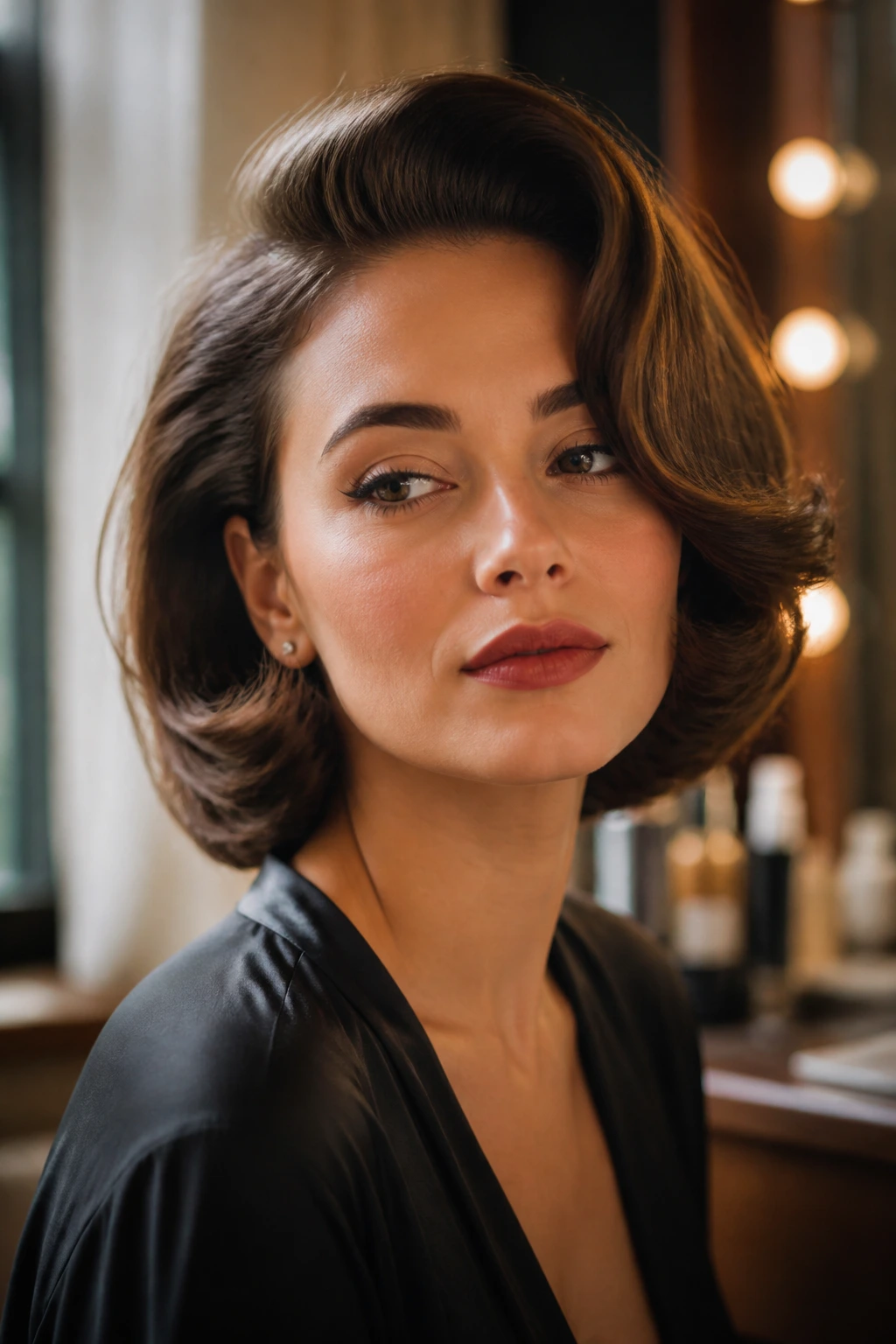
12. Old-Hollywood Side-Sweep Bob
There’s a reason a side-swept bob still feels dressed up. The shape has drama built in. One side lifts, the other curves across the forehead, and the ends settle into a smooth wave that looks finished even with minimal accessories.
This style likes a larger round brush or a set with big rollers. You’re not trying to create tiny curls. You want one broad bend, glossy and controlled. A shine spray helps, but only after the hair is completely cool. If you apply it too early, you flatten the shape and lose that soft lift.
A small opinion
I prefer this on medium-density hair. Super-fine hair can struggle to hold the sweep unless you prep the roots well, and very thick hair can look too full if the side wave is overbuilt. Somewhere in the middle, though, it’s excellent.
13. Soft Wave Blowout Bob

Not every blowout bob needs sharp ends or a hard line. Sometimes the nicest version is the one with a loose wave through the mids and a faint bend at the bottom. It feels easy, but the styling is still doing real work.
The trick is to keep the wave broad. If it starts looking too curly, the bob loses that clean length. A 1.5-inch brush helps, and so does drying the hair in the same direction on each side so the bend stays soft rather than random. If your hair already has a wave pattern, encourage it instead of fighting it flat. That usually looks better.
This is one of the best bob length blowout hair ideas for weekends, errands, and everything that does not need a stiff finish.
14. Razor-Textured Bob
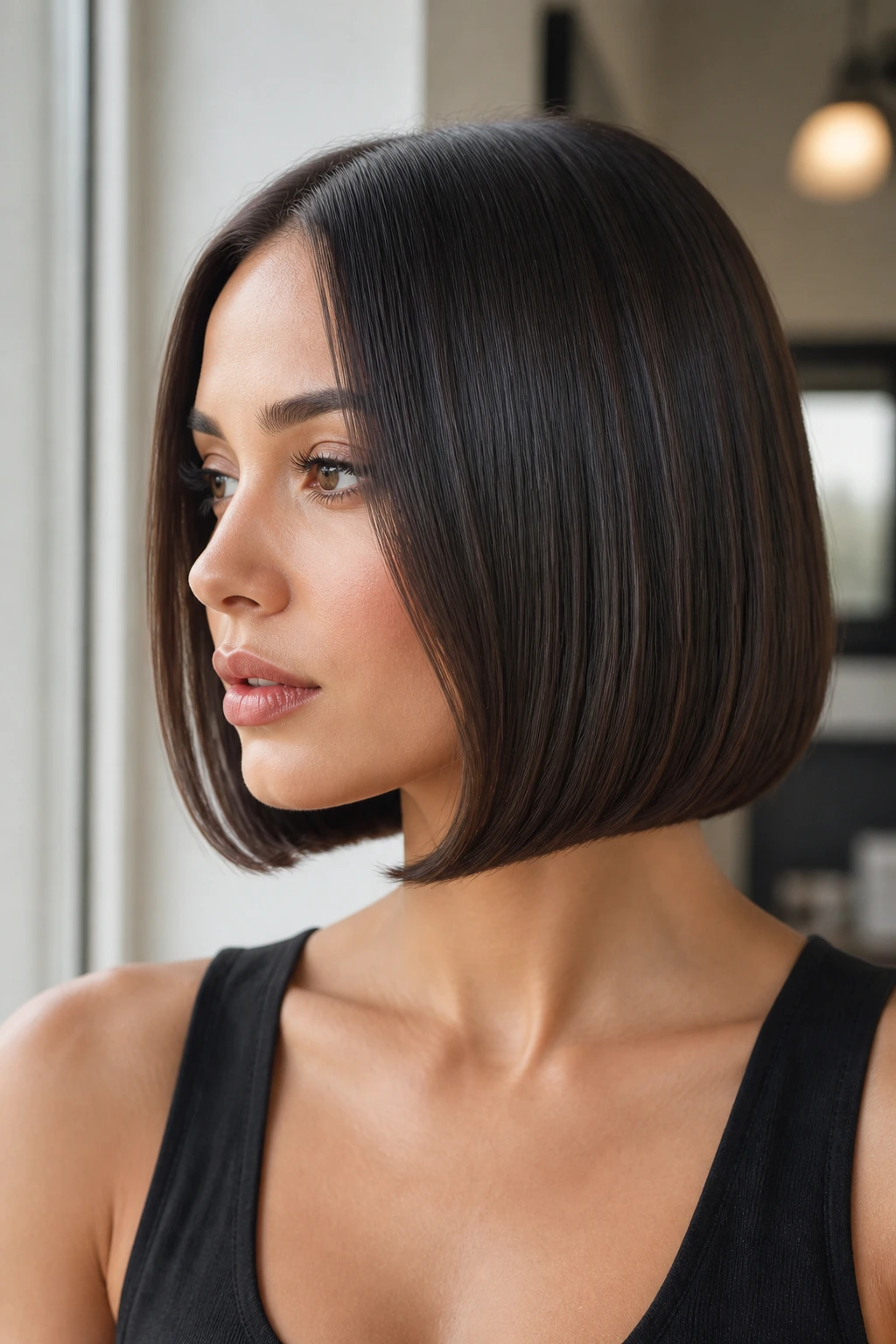
A razor-textured bob has a little edge to it. The perimeter is lighter, the ends are more piecey, and the blowout is less about shine and more about movement. It’s the bob for people who dislike the feeling of overdone hair.
What makes it work
A razor cut can look sloppy if it’s too thin at the ends, so the blowout has to keep the pieces separated but not frayed. Use a lightweight mousse or foam, then blow-dry with your fingers until the hair is about 80 percent dry. Finish with a brush only where you need smoothing. That gives you clean control without taking away the texture.
Avoid heavy creams here. They flatten the point of the cut and make the texture collapse into a mushy line. A dry texture spray on the ends is enough if you want a little more grit.
Best for: straight or slightly wavy hair that gets oily fast.
Avoid if: you want a very sleek, glossy finish.
15. Beveled Blunt Bob
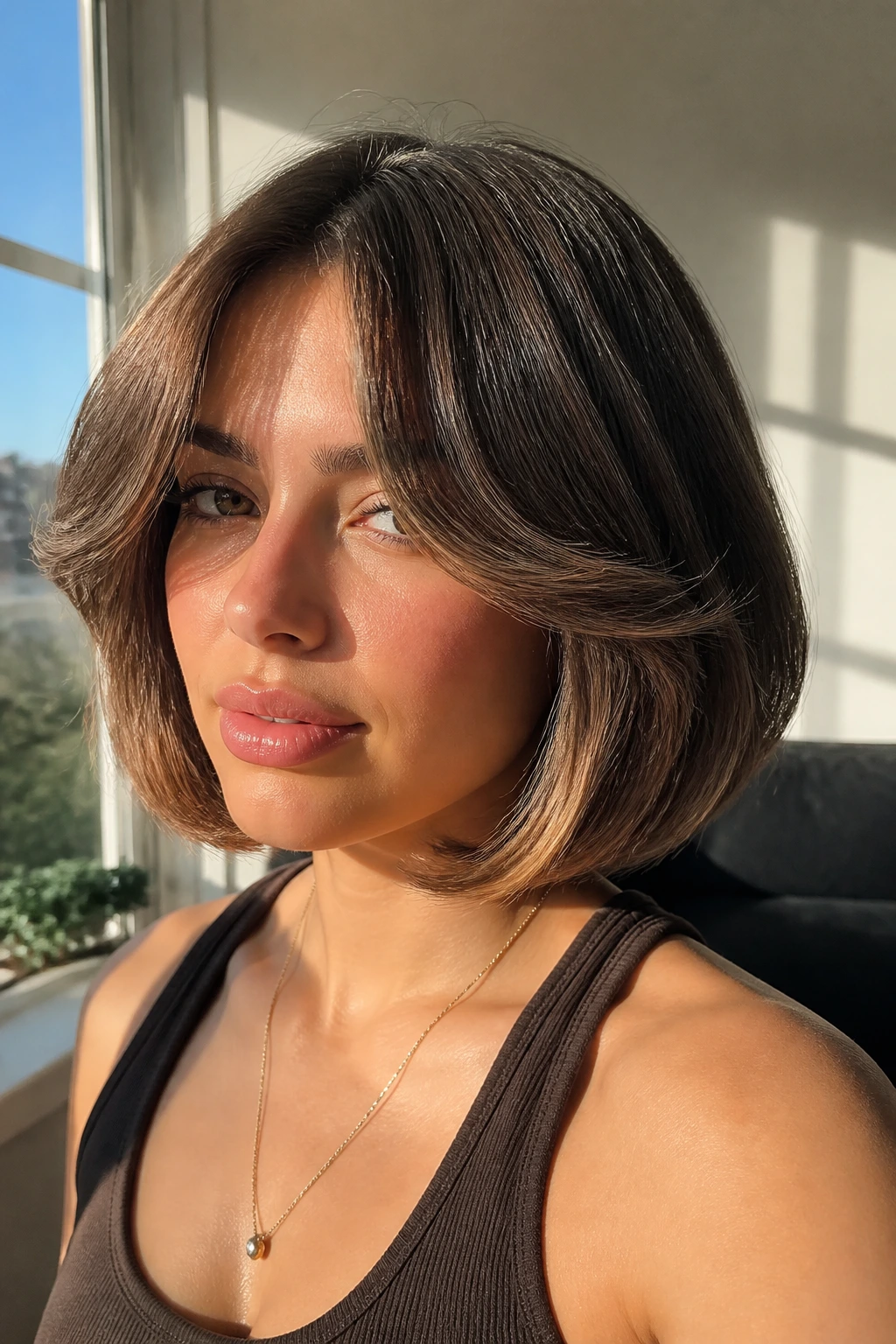
A blunt bob with a bevel is one of those haircuts that seems simple until you see it in motion. The bottom line is strong, but the edge has a slight curve so it doesn’t look like a ruler. That tiny bend is what keeps it from feeling severe.
It’s especially useful for thick or coarse hair, because the bevel prevents the ends from sticking straight out. Blow-dry the hair in sections, pulling the brush down and under at the final inch. You do not need a curl. Just a soft turn.
This is also a good choice if you like the idea of a precise haircut but don’t want the maintenance of a pin-straight glass bob every single day. The shape is clean enough to look intentional, and forgiving enough to wear without retouching every morning.
16. Collarbone Lob Blowout
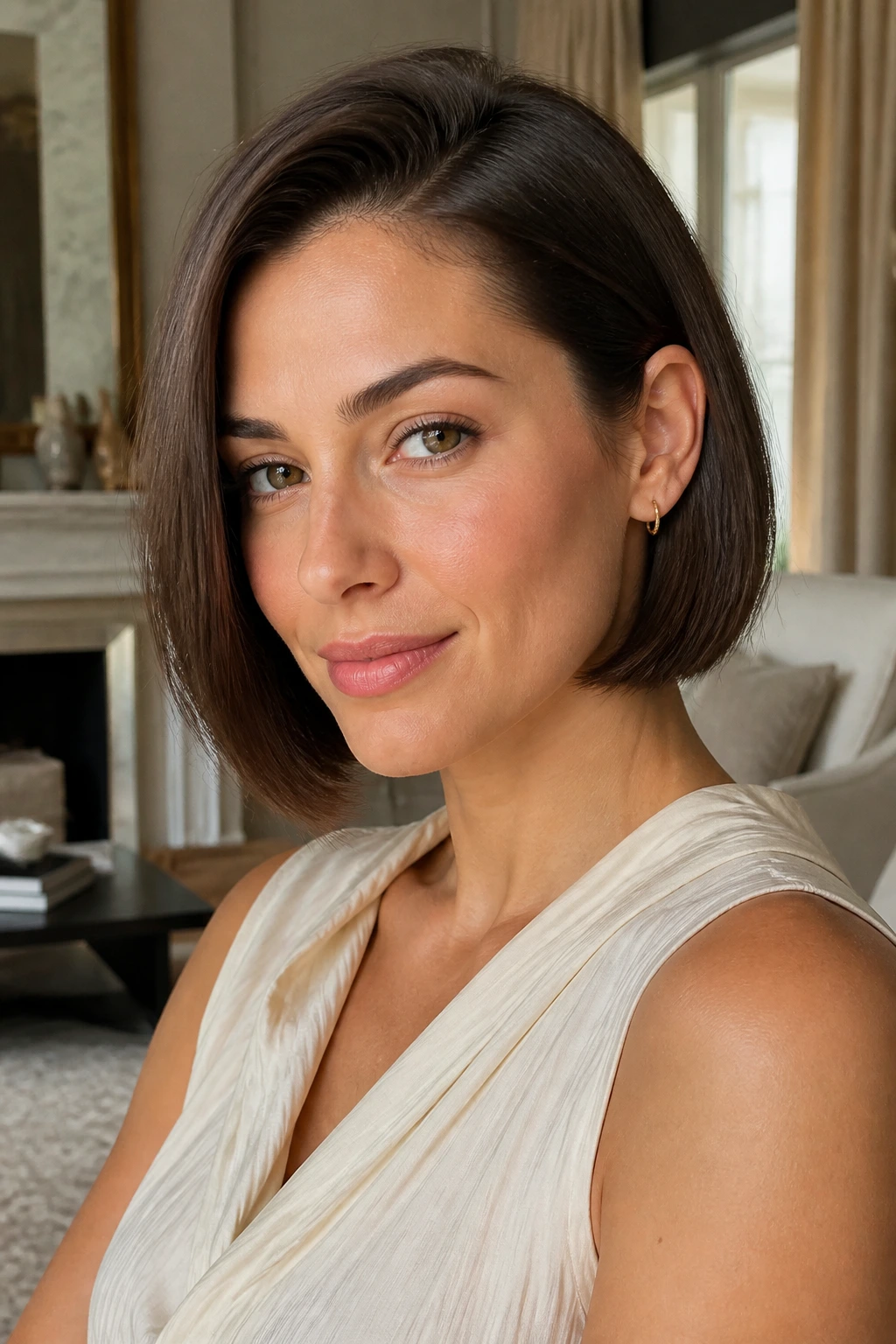
Technically, this is the generous edge of bob territory. I’m including it because the collarbone lob is where a lot of people end up when they want movement but don’t want to commit to a shorter cut. The length grazes the collarbone, which means the hair gets swing, not just shape.
It’s one of the easiest bob length blowout hair ideas to maintain because the extra inch or two buys you flexibility. You can wear it smooth, bend it at the ends, or give it a side sweep if you want more body. The blowout should feel airy through the mids and loose near the shoulders. If it gets too polished, it starts to look like a mini blow-dry helmet. Avoid that.
A 2-inch brush can work here if your hair is dense. Fine hair usually does better with something smaller so the bend stays visible.
17. Side-Swept Fringe Bob
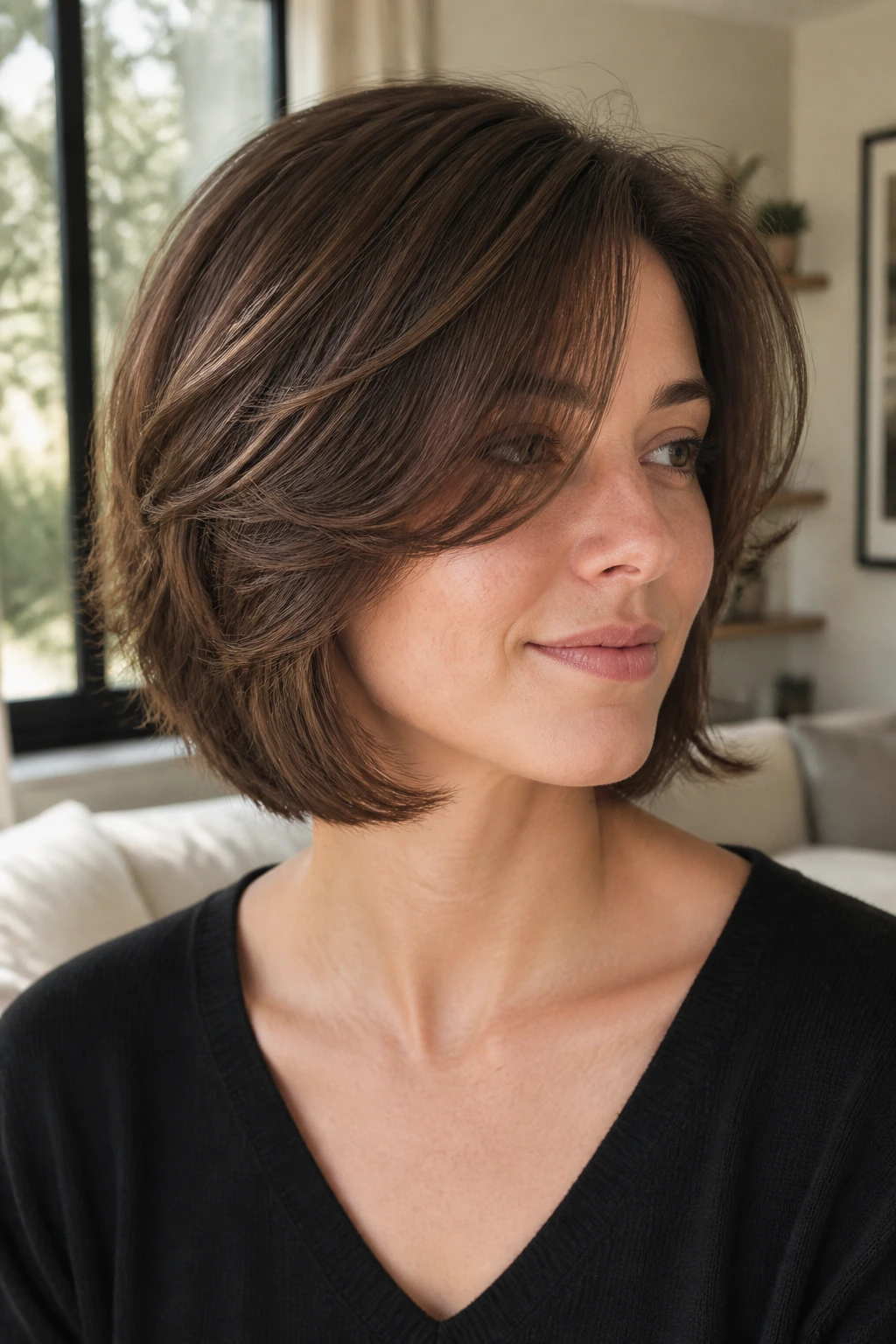
A side-swept fringe changes the whole face line. It softens a broad forehead, shifts attention toward the eyes, and makes the bob feel less centered and more fluid. That’s useful when you want movement without adding a lot of length.
How to style it
Blow the fringe in the opposite direction first. That little trick builds lift at the root, which keeps the sweep from lying dead against the forehead. Then bring it back across and shape the ends away from the cheek. The rest of the bob can stay smoother and straighter if you want a clean contrast.
This is also a nice option if your hairline grows in unevenly. A side fringe is easier to live with than a heavy straight bang, and it usually needs less daily correction.
18. Retro Flipped-End Bob
The flipped-end bob has a playful bent to it. The ends kick outward just enough to nod at retro styling, but the cut itself can stay modern. It’s a small change with a big effect.
This style works well when the brush turns outward only at the last inch of each section. If you overflip the ends, the shape starts to look costume-y. Keep the crown smooth, let the flip happen lower down, and finish with a light mist of spray so the edge stays crisp. A center part makes it feel cleaner. A side part gives it more attitude.
I like this on straight hair in particular because the shape shows up fast. On wavy hair, you may need a little more tension to get that clean outward turn.
19. Air-Dry Hybrid Bob
This one is for people who don’t want to stand in front of a dryer for twenty minutes every time. Let the hair air-dry until it’s about 80 percent set, then go back in with a brush just where the shape needs help: crown, front pieces, and ends.
The result is softer than a full round-brush blowout and less rigid than a pure air-dry. That balance can look very good on hair that has a little natural bend but still needs polish around the face. Use a root-lift spray at the beginning and a small amount of leave-in through the mids. Not much. Too much product is the fastest way to make this look heavy.
This is one of the more practical bob length blowout hair ideas because it works with the hair’s texture instead of trying to erase it.
20. Half-Pinned Glam Bob
A half-pinned bob is the quick fix when you want the haircut to look styled even if the day got away from you. One side stays loose and full, the other gets pinned back with a clip or barrette. The asymmetry gives it a dressed-up edge.
It’s especially good for second-day hair, because the pin can hide a section that’s gone a little flat while the rest of the style still looks on purpose. Keep the blowout smooth, then choose a pin that feels part of the outfit instead of an afterthought. A plain metal clip can look cleaner than a jeweled one if the hair itself already has enough shine.
Best pairing: side part, glossy ends, and one strong accessory.
Worst move: trying to pin back hair that is still too wet or too product-heavy. It won’t sit right.
21. Bottleneck Bang Bob

Bottleneck bangs are one of the better fringe choices for a bob because they soften the front without closing off the face. They start narrower at the center, then open around the cheekbones. The effect is subtle, which is exactly why it works.
The blowout should respect that shape. Dry the center of the fringe first, then the sides, and wrap each section away from the face with a small brush. If you rush the bangs, they collapse into one flat panel. If you do them carefully, they frame the eyes and cheeks in a way that feels balanced.
This is a strong choice for anyone who wants bangs but doesn’t want a straight, heavy line sitting on the forehead all day.
22. Evening-Ready Gloss Bob
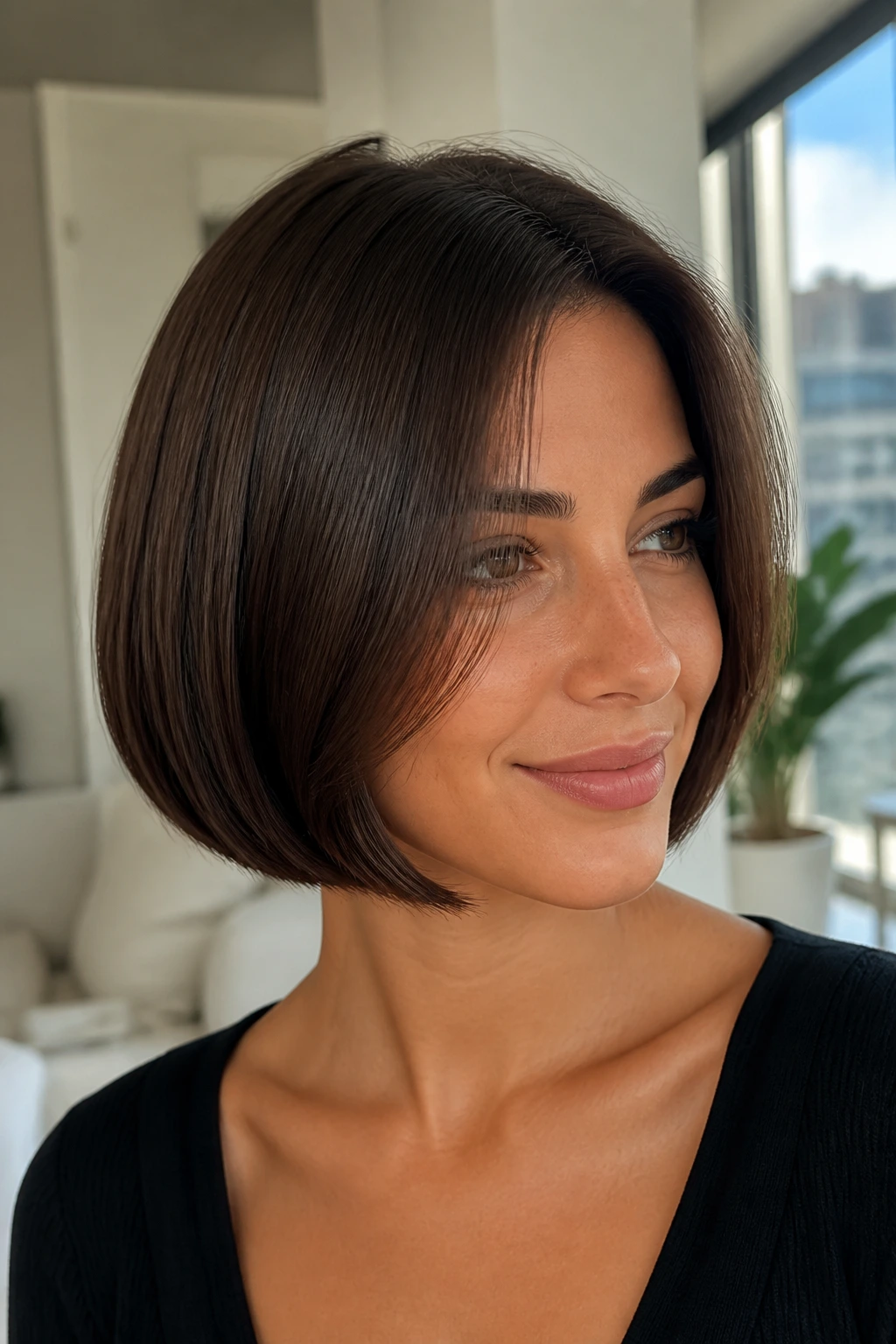
A glossy bob with a smooth part and polished ends is the style you wear when the hair needs to behave in photographs, under indoor lights, and next to a sharper outfit. It’s clean, reflective, and a little more formal than the rest of the collection.
The key is restraint. Dry the hair straight with a nozzle and brush, then use a round brush only to soften the ends by a fraction. Finish with the smallest amount of serum on the palms, swept over the mids and ends, never the roots. A deep side part or a tidy center part both work, depending on how much drama you want.
This one is not about volume. It’s about control. And when it’s done right, it looks expensive without trying to act expensive.
Why Bob-Length Blowouts Hold Their Shape So Well
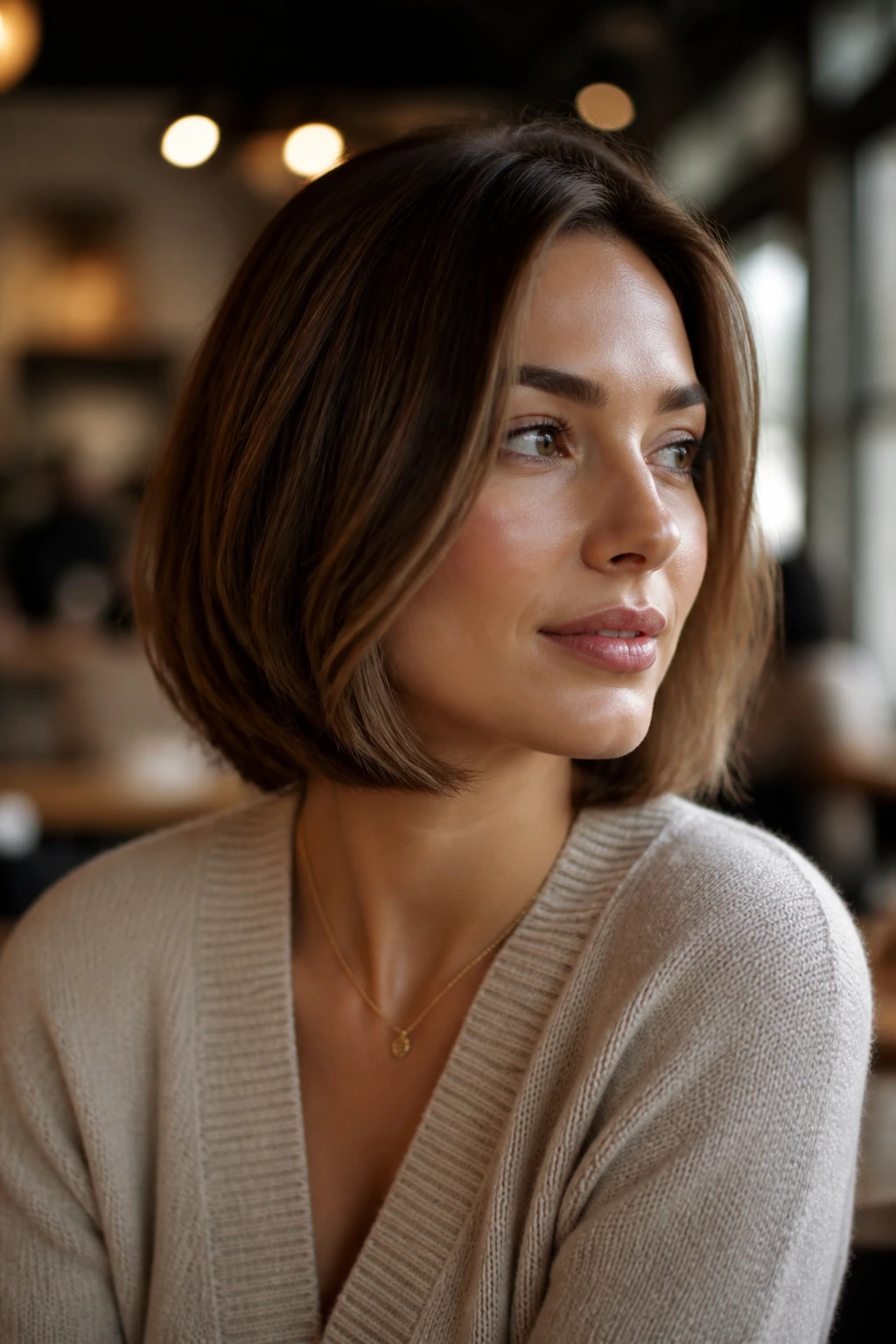
Bob-length hair sits in a sweet spot. It’s short enough that the roots can lift, but long enough that the ends still have swing. That means the shape can stay visible after the dryer is off, which is half the battle. A waist-length blowout has to fight gravity. A bob mostly has to be trained.
The cut matters just as much as the styling. A tiny bevel at the perimeter gives the brush somewhere to guide the hair. A clean blunt line keeps the shape crisp. Soft layers help thick hair move instead of expanding outward. Once you understand that, the styling stops feeling random.
Heat alone doesn’t do the job. The cool shot locks the bend, and the tension from the brush tells the strand where to land. That’s why a bob that was dried in sloppy sections looks tired fast, while one that was sectioned and cooled holds its edge through the afternoon.
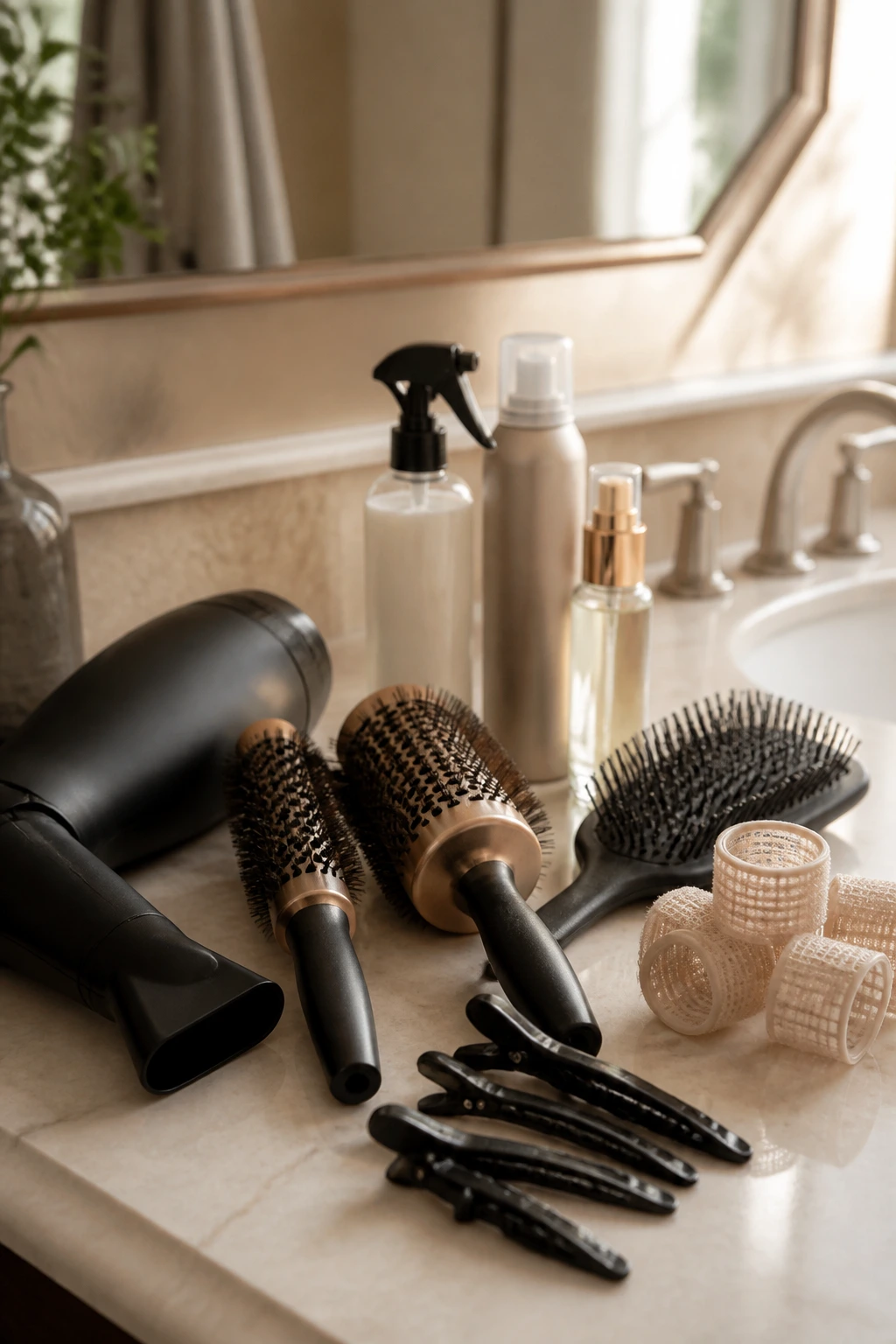
The Brushes, Dryers, and Clips Worth Owning
-
A blow dryer with a concentrator nozzle — The nozzle gives you directional airflow, which matters more than people think when you want a smooth bob.
-
A 1 to 1.25-inch round brush — Best for chin-length bobs and smaller bends around the face; it gives you control without turning the ends into spirals.
-
A 1.5 to 2-inch round brush — Better for lobs, collarbone lengths, and bigger volume through the mids.
-
Sectioning clips — Four or six strong clips make it easier to dry the hair in clean zones instead of chasing random pieces.
-
A vent brush or paddle brush — Handy for rough-drying the roots before you go back with the round brush.
-
Heat protectant spray — Use it every time. If the bottle claims thermal protection and humidity control, even better.
-
Volumizing mousse or root spray — Fine hair usually needs it; thick hair often needs less but still benefits at the crown.
-
Lightweight serum or shine mist — Keep it away from the roots and use only a small amount at the end.
-
Velcro rollers or large clips — Optional, but very useful if you want the crown to cool in shape.
Smart Cut and Product Picks
If you want these bob length blowout hair ideas to look good off the chair, start with the cut. A blunt bob with a subtle bevel gives you the cleanest curve. A layered lob gives you more movement. An angled A-line gives you face-framing without much effort. None of those choices is better for everyone. They solve different problems.
Fine hair usually does better with a cut that keeps the perimeter solid and the product light. A mousse at the roots, then a spray protectant, then a finishing mist is usually enough. Heavy creams can make the hair feel like it shrank in the middle of the day. Thick hair needs more help with slip, so a smoothing cream through the mids and a brush that can pull tension through bigger sections will save your arms and the style.
On the product side, look for formulas that say heat protection, frizz control, or flexible hold. The most useful stuff is rarely the loudest. A decent root spray, a blow-dry cream that doesn’t feel waxy, and a clean finishing spray will do more than a bottle full of glossy promises. If your hair lives in humidity, choose a finish spray with hold, not just shine.
How to Wear a Blowout Bob Without Fighting the Shape
Presentation: Keep the part where the haircut wants to sit. A center part makes a collarbone lob feel calm and modern. A deep side part gives the bob more drama. If the cut is chin length, let the ends curve a little and stop trying to force perfection into every section.
Accompaniments: Hoops, a sharp collar, a square neckline, or a simple barrette all work with this length because the hair stays out of the way enough to show them. Big earrings especially make sense when the hair ends at the jaw or just below it.
Portions: Think in terms of volume. Fine hair usually looks best with moderate crown lift and a clean finish through the mids. Thick hair can handle more height and more bend, but it still needs a perimeter that stays controlled.
Beverage Pairing: Morning coffee suits a soft center-part bob with loose ends; evening plans call for the glossy side-sweep or tucked-back version. That sounds silly, but the mood matters. A bob that’s too polished for a casual outfit can feel fussy, and one that’s too airy for a dressed-up look can seem unfinished.
Extra Lift, Extra Shine, Extra Movement
Shine Boost: A pea-sized drop of serum warmed between your palms is usually enough for the whole cut. Put it on the ends and the outer layer only. If your roots look wet, you used too much.
Customization: Want more drama? Switch the part and turn the front pieces away from the face. Want something softer? Leave the ends a touch looser and let the crown sit lower. One haircut can cover both moods if you’re not too precious with it.
Serving Suggestions: Barrettes at the temple, tucked-behind-ear styling, and a light mist of flexible spray can all change the feel without changing the cut. Small changes matter more with bob length hair than they do on long hair.
Make-It-Yours: Fine hair usually needs root lift and less cream. Thick hair wants more slip and a stronger brush. Wavy hair usually looks best when you keep the texture and polish only the face frame and ends. Straight hair can handle the cleanest, glossiest finishes.
The Mistakes That Make a Bob Go Limp
The first mistake is using too much product at the roots. The symptom is instant heaviness and a scalp that looks shiny before you even leave the mirror. Keep creams and oils off the crown. Root volume needs a clean base.
The second is grabbing the wrong brush size. A huge brush on a chin-length bob creates a weak bend. A tiny brush on a lob can create curls where you wanted movement. Match the barrel to the length.
The third is stopping before the hair is fully dry. Damp ends collapse fast. If the section feels cool but still a little soft, it hasn’t set yet.
The fourth is skipping the cool shot. Heat shapes the strand. Cooling locks it. If you release the section too early, the bend falls before it has a chance to settle.
The last one is over-brushing after the style is set. Once the hair has cooled, touch it less. Use fingers or a soft brush only at the surface. Too much combing fluffs the cut apart.
Named Variations and Easier Alternatives
The Sleek Office Bob: Keep the part neat, the root smooth, and the ends barely rounded. This version works when you want the cut to look tidy under a blazer or crisp collar.
The Bouncy Weekend Bob: Add more root lift, use a smaller brush, and let the ends turn a little farther under. It’s the more playful version of the same haircut.
The Soft Romantic Bob: Build a looser wave through the mids and keep the perimeter light. Curtain bangs or a side sweep make this one feel even gentler.
The Air-Dry Hybrid Bob: Great if you do not want a full blowout every time. Let the hair dry most of the way on its own, then polish the crown and front pieces with a brush.
The Event Bob: Use rollers, a deep side part, and a shine finish. This version is less about casual movement and more about holding shape under lights and cameras.
Keeping the Shape Going Between Washes
A blowout bob can usually make it through 2 to 4 days if you treat it well. Fine hair may need a refresh sooner. Coarser hair often stretches longer, especially if the scalp isn’t oily.
Sleep on a silk or satin pillowcase if you can. If not, wrap the hair loosely with a soft scarf so the ends don’t get crushed flat. In the morning, flip your part back into place and use a quick shot of cool air at the crown. That’s often enough to wake the style back up.
Dry shampoo belongs at the roots, not all through the lengths. Let it sit for 30 seconds, then massage it in with your fingertips and brush lightly. If the ends look tired, mist them with a tiny bit of water or leave-in and re-curve them with a round brush for 60 seconds.
For trims, a blunt bob usually needs a clean-up every 6 to 8 weeks if you want the line to stay sharp. A lob can stretch a little longer, around 8 to 10 weeks, depending on growth and how much shape you’re willing to lose.
Frequently Asked Questions
What length counts as bob length for a blowout?
Usually chin length to collarbone length. Shorter than that, and you’re closer to a crop or French bob. Longer than that, and the style starts drifting into lob territory, which is still fair game here.
Can fine hair pull off bob length blowout hair ideas?
Yes, and it often benefits the most from them. Fine hair gets more visible shape from root lift and a beveled edge, as long as you avoid heavy cream and oversized brushes.
Do I need a round brush to make a bob look blown out?
Not always, but it helps. A paddle brush can rough-dry and smooth the hair, yet the round brush gives you that bend at the ends that makes the style read as a true blowout.
How do I keep the ends from flipping the wrong way?
Dry each section in the direction you want it to land, and let it cool before you release it. If a stubborn piece keeps turning out, re-wet just that section and reset it with a brush and a few seconds of tension.
Can wavy or curly hair wear these styles?
Absolutely. The key is deciding how much natural texture you want to keep. You can smooth the crown and leave some wave in the mids, or stretch the pattern more fully if you want a neater finish.
What product should I use if my bob goes flat by noon?
Start with root-lift spray or mousse at the crown, then use a flexible-hold finish spray after the style cools. The problem is usually not a lack of hairspray. It’s too much weight near the roots.
How do I ask for the right cut at the salon?
Bring one or two reference photos and say whether you want blunt, beveled, layered, or angled. Those words matter. “Bob” alone leaves too much room for guesswork.
Will these styles hold in humid weather?
Some will, some won’t, and honesty helps here. Sleeker versions with a smoothing cream and humidity-resistant spray tend to survive better than airy feathered looks. If your climate is damp, keep the finish slightly polished and avoid overloading the lengths.
A Bob That Still Looks Intentional at 5 P.M.
The real strength of a good blowout bob is that it does not need to stay frozen to keep its shape. It can soften. It can loosen a little. The line still reads, and that’s the difference between a cut that looks styled and one that just looks done.
If you pick a shape that matches your hair density, use the right brush size, and cool the sections before you touch them, these bob length blowout hair ideas stay useful instead of ornamental. That’s what makes them worth copying. They work on a busy morning, under bright lights, and after a few hours of actual life.
Pick one shape, try it with the right tension, and pay attention to what your hair does at the crown and the ends. That’s where the answer usually is.
