



Wavy Italian bob haircuts have a particular kind of charm: the shape feels tailored, but the movement keeps it from looking stiff. The ends sit with a little weight, the wave bends instead of puffing, and the whole cut has that easy, lived-in polish that flat-out straight bobs can miss. When the length lands in the right spot — chin, jaw, or collarbone — the hair seems to settle into place instead of fighting the cut.
That balance matters more than people think. A lot of short cuts either go too blunt and heavy or too layered and airy. The Italian bob sits in the middle, and wavy texture is where it gets interesting, because the wave creates body without needing a lot of help. You get shape. You get movement. You do not get that helmet effect that happens when someone chops too aggressively around a bendy hair pattern.
Soft texture is the point here. Not stiff curls. Not overdone volume. Just hair that moves when you turn your head and still looks deliberate when it dries on its own. That is a hard line to hit, and it’s exactly why this cut keeps showing up in salons for people who want something chic without handing their morning to a round brush.
Why These Wavy Italian Bob Haircuts Work So Well
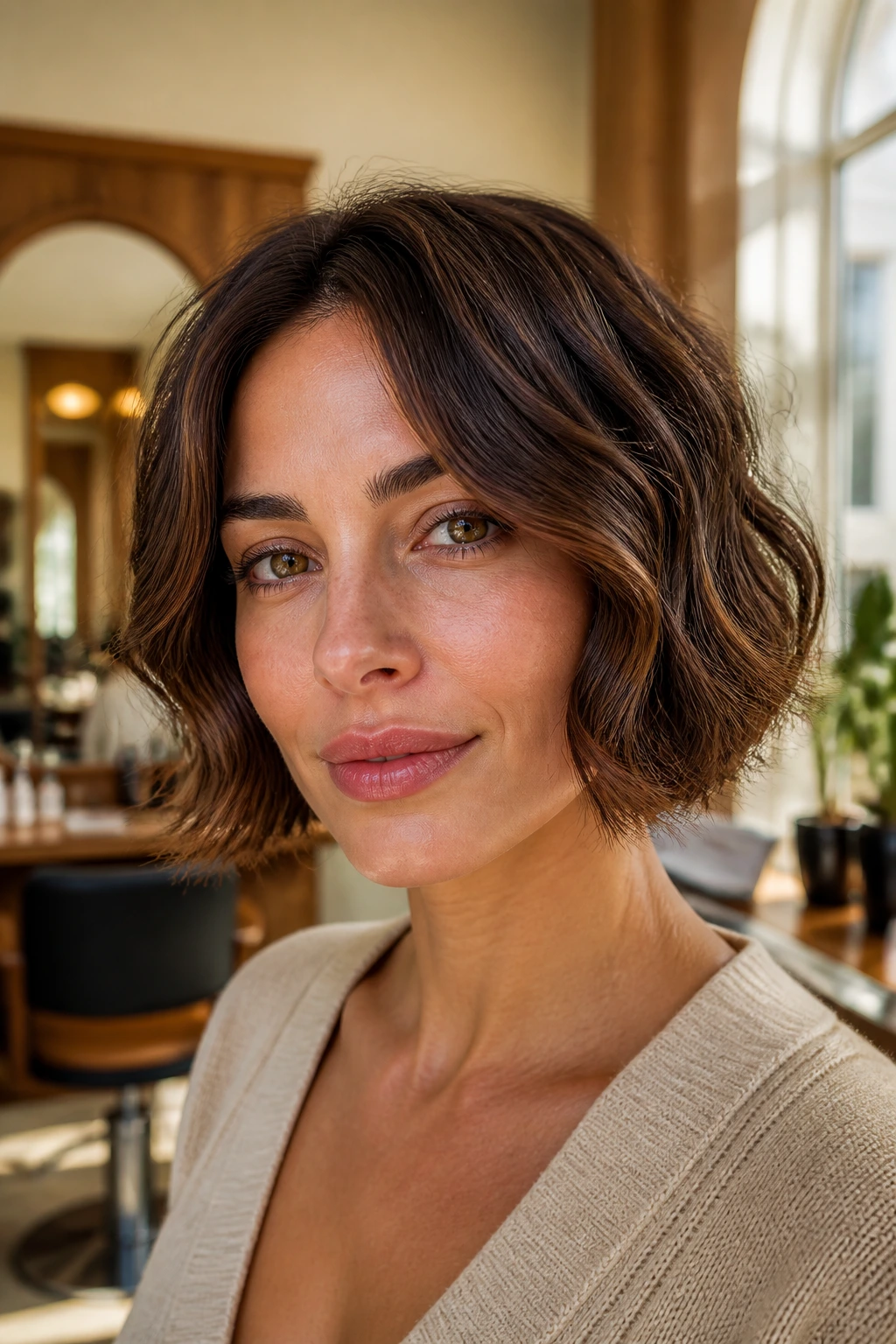
- The weight stays at the perimeter: That little bit of density at the ends keeps waves from springing out into a puffball, which is the number-one mistake on this haircut.
- The shape reads clean even when it air-dries: A good Italian bob still looks intentional at 80 percent dry, which is a gift if you do not want to spend 20 minutes fixing each side.
- The length can be adjusted without losing the idea: Chin, jaw, and collarbone all work; the trick is keeping the silhouette rounded instead of boxy.
- Soft texture looks richer than hard curl on this cut: Waves create bends and shadows along the line, so the haircut looks fuller without needing big root volume.
- It grows out without collapsing right away: When the outline is cut well, the bob keeps its basic shape for weeks instead of turning into a shapeless in-between length.
- It plays well with color and shine: Highlights, brunettes, copper, gray, and gloss treatments all show up more clearly when the surface has a little movement.
1. Chin-Length Italian Bob with Soft S-Waves
This is the version that makes people stare twice, because the line is short enough to feel modern but soft enough to dodge severity. The length usually sits right at the chin or a hair below it, which gives the wave a place to land instead of flipping out at random. On wavy hair, that little bit of structure matters. A lot.
Why It Flatters Soft Waves
A chin-length cut shows off the bend in the hair faster than a longer bob does. You get a clear outline at the jaw, and the wave creates a gentle ripple through the sides instead of expanding outward. That’s why this version looks clean even when it isn’t perfectly styled.
It also works well if your hair has fine-to-medium density. The shorter length helps the wave lift, but the Italian bob keeps the ends heavy enough to stay calm. Ask for a blunt-ish perimeter with just enough internal softening to keep the shape from feeling rigid.
- Best for: oval, heart, and narrower square faces
- Styling time: about 5 to 10 minutes with a diffuser or a few bends from a curling iron
- Salon note: ask for the front to graze the chin, not sit above it
- Texture note: works best when the wave has some bend, not a tight curl pattern
My favorite thing about this cut: it looks polished even when the hair has a little frizz at the crown. That’s not a flaw here. It’s part of the texture.
2. Collarbone Italian Bob with Face-Framing Bend
The collarbone version is the easiest place to start if you want the Italian bob shape without going all the way short. It falls just long enough to tuck behind the ears, clip back, or gather into a tiny half-up style, which makes it less intimidating than a jaw-length cut. The wave has room to stretch, and that keeps the finish soft rather than poofy.
This length also gives you a cleaner face frame. A few loose bends around the cheekbone and jaw can soften sharper features, while the longer front sections keep the haircut from feeling too severe. If you want a bob that still behaves like a bob but gives you a little more movement around the face, this is the one.
The reason it works so well is simple: collarbone length gives weight to the ends. That weight is what stops wavy hair from blooming outward after lunch. A stylist can point-cut the front just enough to remove the thickest corners, but the overall outline should stay smooth.
3. Side-Part Italian Bob with Rounded Ends
Can a side part change the whole mood of a bob? Absolutely. On wavy hair, a deep side part shifts the volume to one side, which gives the haircut a little lift near the crown without asking the ends to do all the work. It also softens the symmetry, which can make the bob feel less formal and a touch more lived-in.
The rounded ends are the part I care about most. A bob that ends in a hard, straight edge can look blunt in the wrong way when wave pattern hits it. Rounded ends curve under or slightly inward, so the hair falls with a smoother outline. The result is tidy, not stiff.
How to Style It
Use a light mousse at the roots, then blow-dry the top with a medium round brush if you want extra lift. If you prefer air-drying, flip your part while the hair is damp and let the roots dry in the opposite direction for a little natural push. That one small move can save a flat crown.
4. Bottleneck Bang Italian Bob
A bottleneck fringe changes everything here. It starts narrower between the brows, opens out toward the cheekbones, and gives the bob a softer frame than blunt bangs ever could. On wavy hair, that matters, because heavy straight-across bangs can fight the texture and end up looking like a separate haircut sitting on top.
This version works when you want a little facial softness without committing to a full fringe. The shorter center opens the eyes, while the longer sides blend into the bob and keep the line from feeling chopped up. It also gives a nice balance to wider foreheads or longer faces.
If you try this cut, ask for the bangs to be dry-cut or checked dry before the final snip. Wavy fringe shrinks, and it shrinks at odd angles. I’ve seen too many people end up with bangs that sit a full inch shorter than expected because nobody accounted for the bend.
5. Curved-Under Italian Bob with Loose Texture

This is the bob for someone who likes a neat shape but does not want a hard, lacquered finish. The curve under the perimeter gives the haircut its polished edge, while loose texture through the mids keeps it from feeling stiff. Think of it as a bob with a built-in soft turn, not a curl.
The shape is especially useful if your hair falls straight at the roots and wavy at the ends. A curved-under cut helps connect those two zones so the haircut does not look like it changes personalities halfway down the strand. That’s the whole game with textured bobs: making the line look intentional from root to tip.
It’s a smart choice for work-heavy or dressy settings, too. The silhouette looks tidy enough for a blazer, but the waves keep it from reading too buttoned-up. If you like a haircut that can handle both a crisp shirt and a messy sweater, this one earns its place.
6. Razored Italian Bob with Piecey Ends
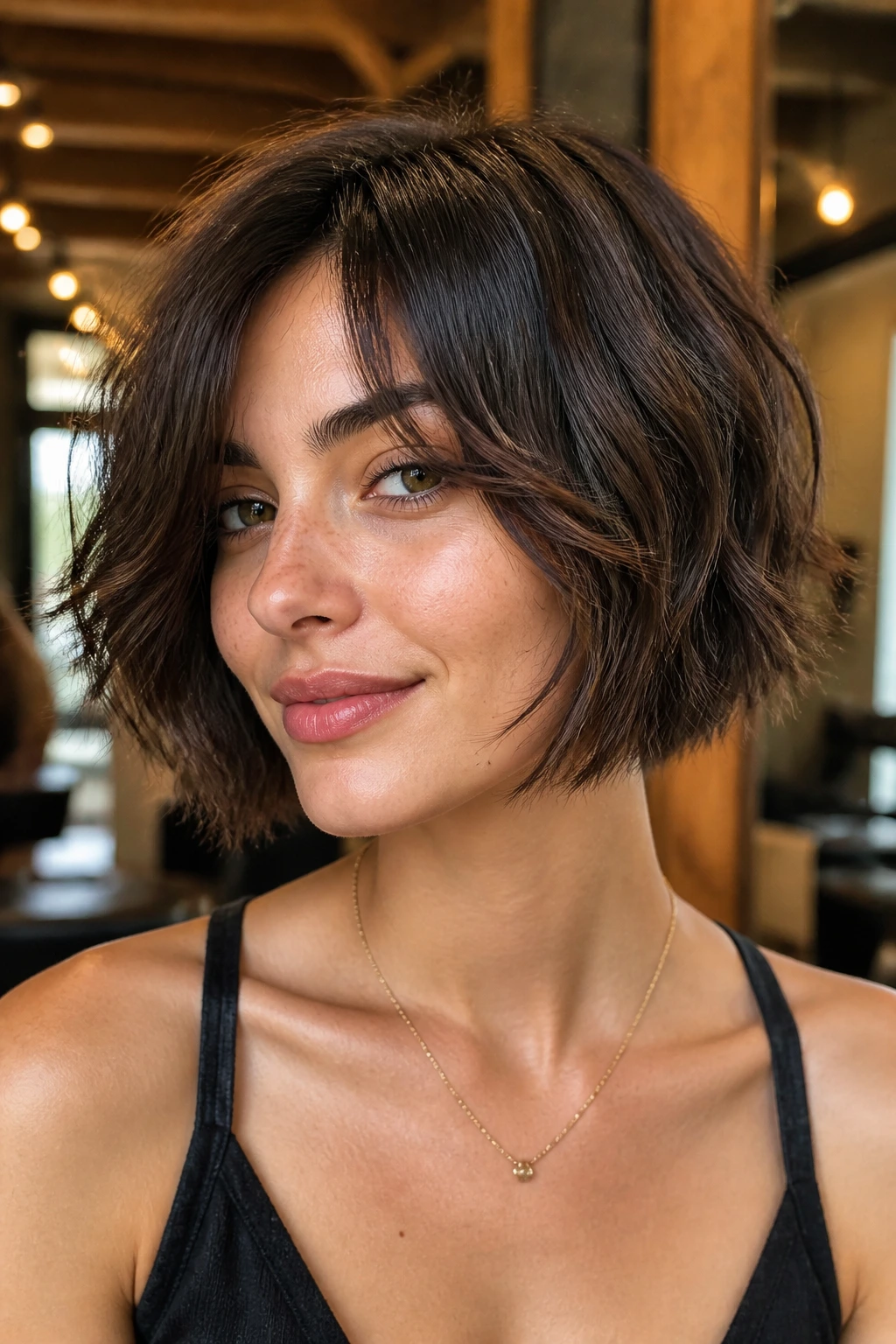
A razor can be brilliant here, but only in the right hands. Used well, it softens the ends and creates those separated, piecey edges that make wavy hair look more airy. Used badly, it frays the perimeter and makes the bob look tired by noon. There’s no middle ground.
This version works best on thicker hair that needs some internal release. The razor removes bulk without taking away the shape, so the bob still has body but stops sitting like a solid block. That piecey finish also helps waves show up with more definition, especially if the hair tends to clump.
The key is restraint. You want just enough texturizing to break up density, not so much that the bottom edge turns wispy. If your hair already feels fine, I would skip heavy razor work and stick with point cutting. Fine hair and aggressive razors do not usually get along.
7. Air-Dried Italian Bob for Wavy Hair

This is the version for anyone who wants the haircut to do most of the work. Air-dried waves sit best when the bob is cut with enough shape to hold the outline on its own. If the perimeter is too soft, the hair expands. If it’s too blunt, the wave bends in odd places. The sweet spot sits in the middle.
What Makes It Work
The haircut should be slightly shorter in the back and a touch longer toward the face, even if the change is subtle. That tiny angle helps the hair fall forward instead of ballooning out at the sides. It also gives your natural wave somewhere to settle while the hair dries.
A small amount of mousse or a lightweight curl cream at the mids is usually enough. Scrunch once or twice, then stop messing with it. Hands off matters more than people like to admit.
- Best styling product: light mousse or airy curl foam
- Drying trick: clip the roots at the crown for 10 minutes if they go flat
- Avoid: heavy oils before drying; they kill the bend
- Best finish: soft, not crunchy, with a little separation at the ends
8. Glossy Brunette Italian Bob with a Center Part
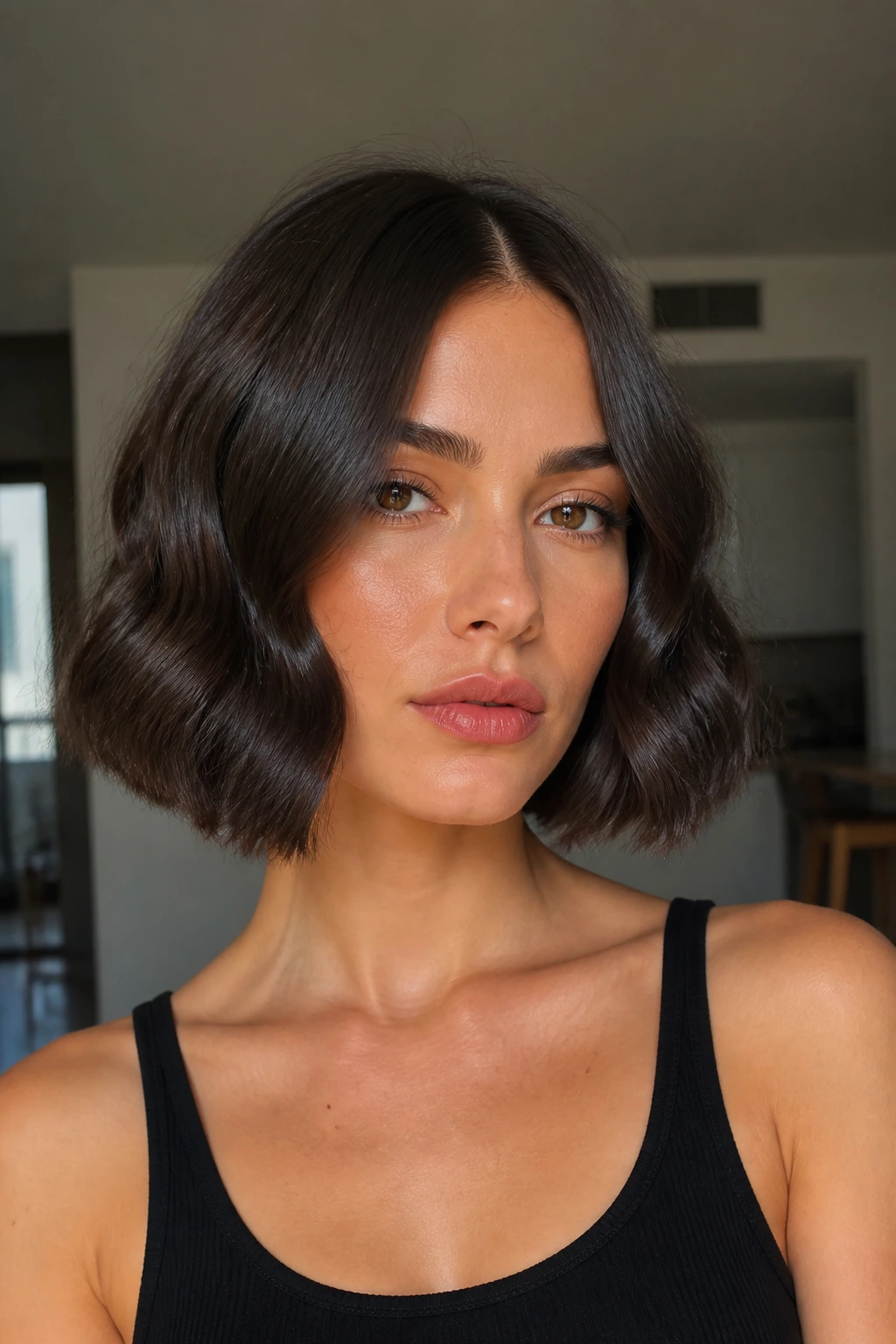
A center part can be ruthless on the wrong haircut. On this one, it’s elegant because the bob carries enough shape to support the symmetry. Add a glossy brunette shade, and the whole thing gets sharper in the best way. The shine shows off the wave pattern, so each bend looks deliberate instead of random.
This style is especially good if your hair naturally falls toward the middle. You are not forcing it into a part it hates. You’re using the line the hair already wants. That means less fight, less puff, and fewer weird cowlick battles near the front.
I also like this version on thick hair with some bend in it. The shine gives the haircut weight visually, which makes the ends look denser. If the color is a deep espresso, chestnut, or soft mocha, the waves catch light in bands instead of looking flat across the head.
9. Jawline Italian Bob with Invisible Layers
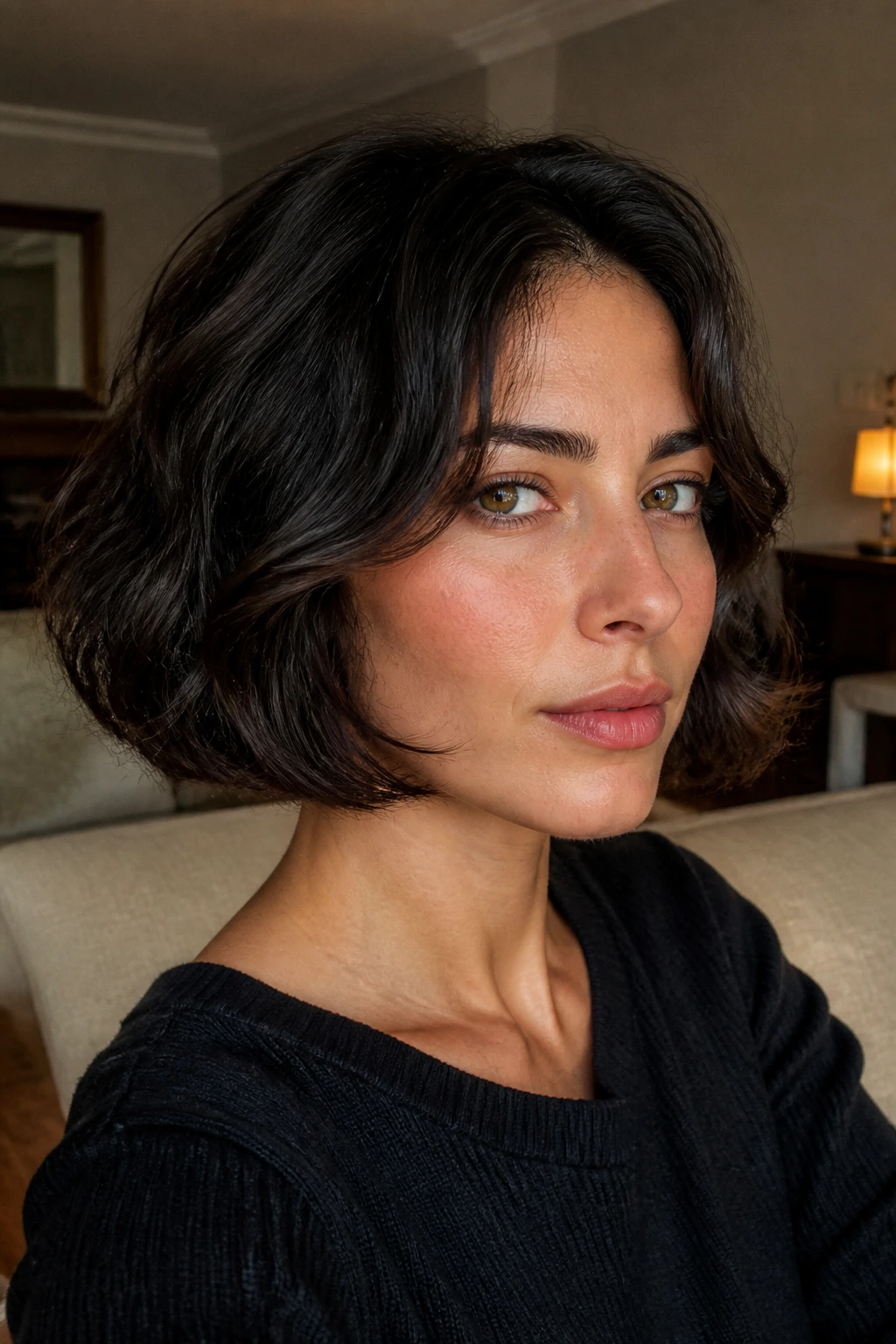
Can a jawline bob still look soft? Yes — if the layers stay invisible. This is the cut for someone who wants the cleanest outline possible while still letting the hair move. The perimeter lands right at the jaw, but the inside has a little shape built in so the bob doesn’t sit like a shelf.
That invisible layering is the quiet trick here. The stylist removes bulk from inside the haircut, not from the outer edge, so the line stays full while the movement gets lighter. It’s a better strategy than chopping visible layers into every section, especially if your wave is loose and tends to spread out.
How to Style It
Use a round brush only at the front and crown. Leave the bottom mostly alone. If you curl every inch of this cut, you lose the point of it. The best version has a calm base with just enough bend to show the contour around the jaw.
10. Soft Copper Italian Bob with Cheekbone Lift

Copper hair and a wavy Italian bob have a nice working relationship. The color adds warmth, and the shape gives the color a place to move. When the wave falls in soft bends, copper reflects light in little flashes instead of one flat surface, which makes the haircut look fuller.
This is a good choice if you want the bob to lift the face a bit. Ask for the front pieces to sit just under the cheekbone and angle slightly longer toward the jaw. That little detail pulls the eye upward and gives the cut some contour without adding heavy layers.
This one also likes texture spray. Not the crunchy kind. The drier, softer kind that gives separation to the ends. Copper can go brassy if overloaded with heavy shine creams, so keep the finish light and let the color do some of the work.
- Works well with: warm copper, apricot brown, or cinnamon tones
- Best face frame: cheekbone-skimming front sections
- Product note: use a heat protectant with light hold
- Finish: airy, touchable, and slightly undone
11. Longer-Fringe Italian Bob with a Clean Shape
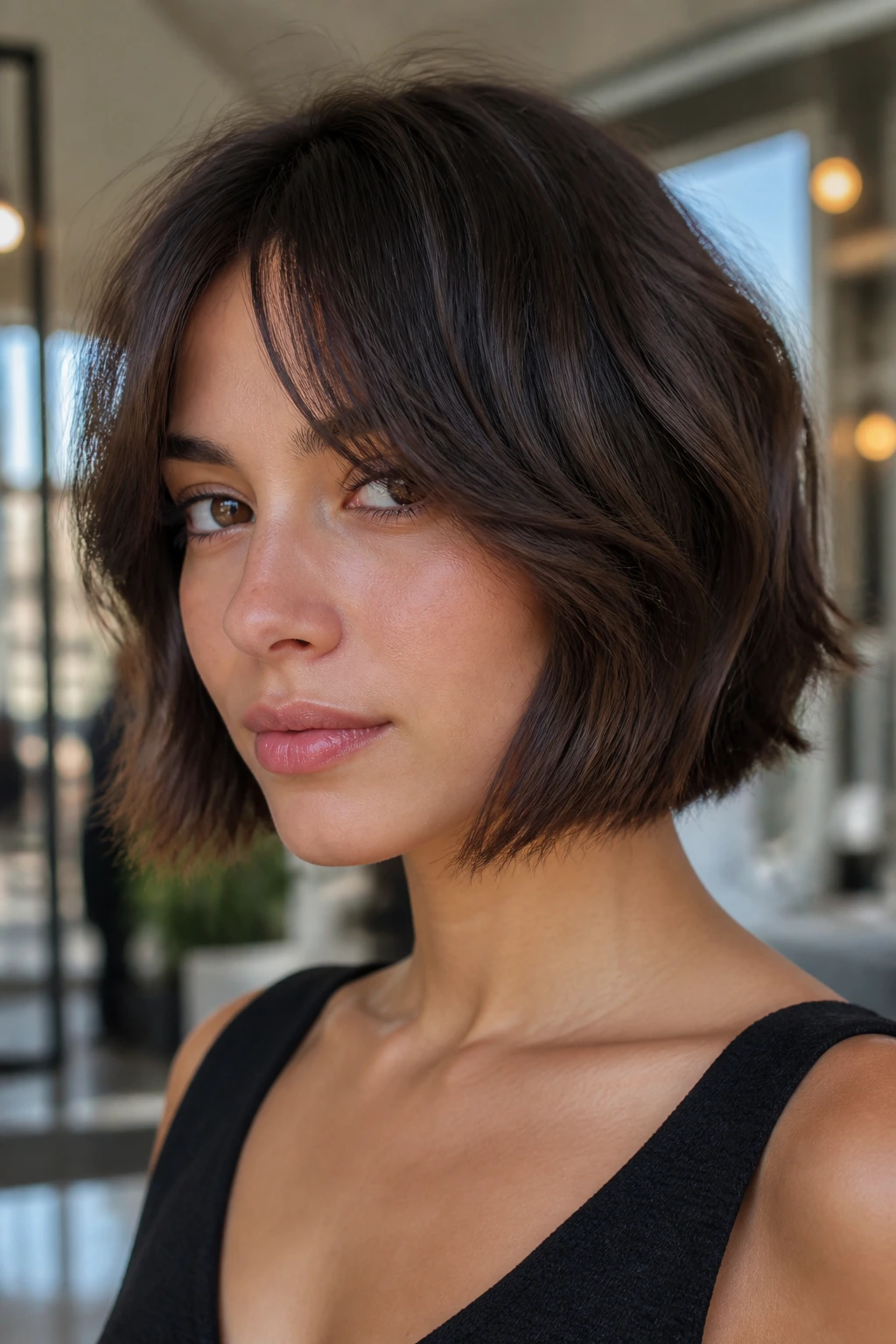
A longer fringe gives this bob more personality without stealing the whole show. The fringe can skim the brows, break around the eyes, or drift into a curtain shape, and that softness keeps the haircut from looking too stiff. On wavy hair, the extra length matters because fringe shrinks more than people expect.
The rest of the bob should stay clean. That contrast — soft front, tidy outline — is what makes the cut look expensive in a practical way. Not flashy. Just smart. The perimeter holds the silhouette while the fringe adds movement around the face.
This version suits people who like to tuck hair behind one ear and let a few pieces fall forward. It also works if you want to hide a forehead a little or soften a high hairline. Just don’t let the fringe get too heavy. Heavy fringe and wavy texture tend to make each other look clumsy.
12. Tousled Italian Bob for Thick Hair
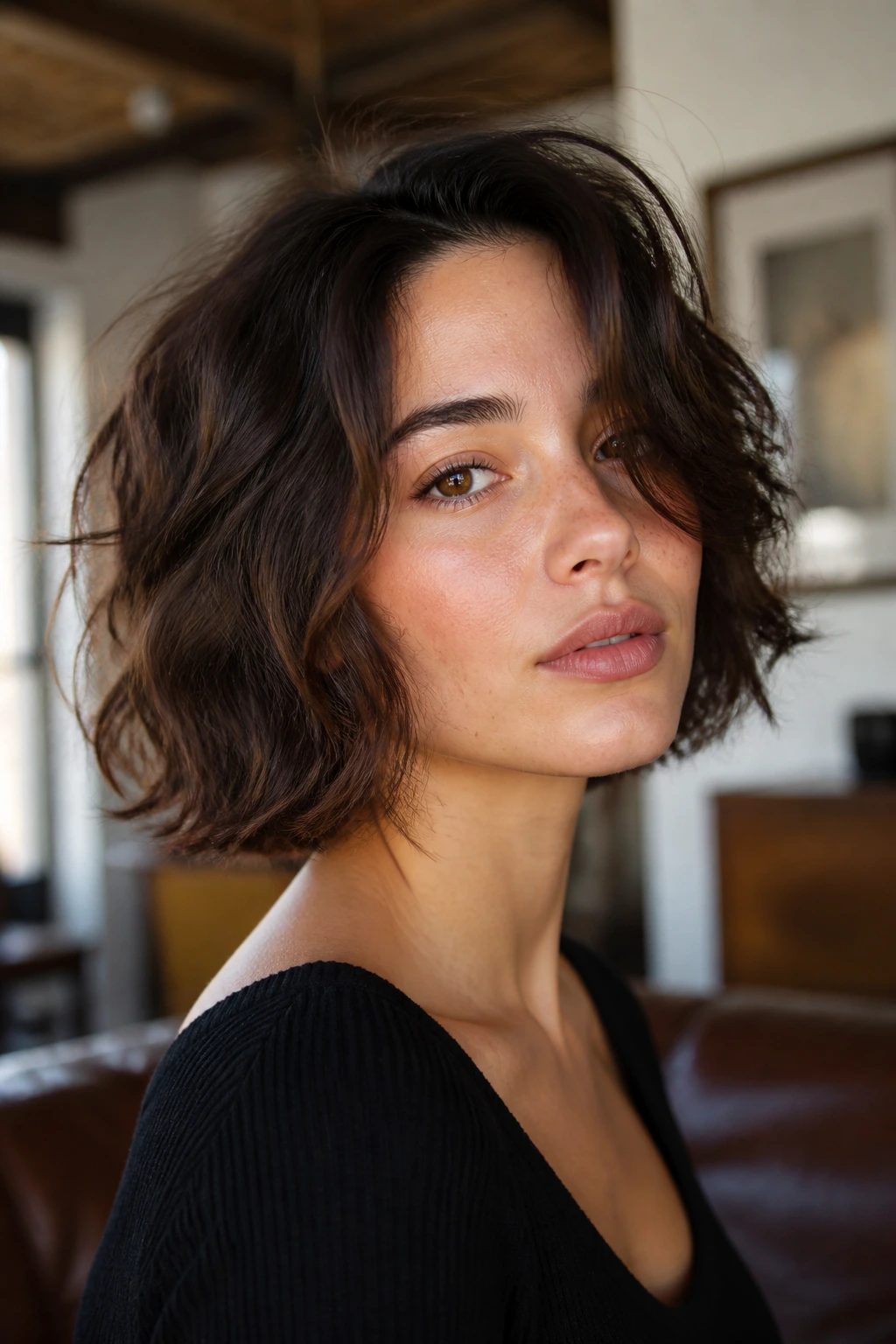
Thick hair can wear this cut better than most people think, but only if the shape is handled carefully. The trick is to remove bulk without hollowing out the silhouette. You want the ends to stay thick enough to hold the line, while the interior gets enough movement so the bob doesn’t swell into a triangle.
What Makes It Different
Unlike a shaggy bob, this version keeps the perimeter visible. The texture lives inside the haircut and around the face, not all over the head. That matters when the hair has real density, because too many short layers will make the ends stick out and the crown go wild.
A good stylist may use a mix of point cutting and minimal internal layering. I would avoid overtexturizing the bottom edge. Thick hair needs release, yes, but it also needs a solid base.
- Best for: dense, wavy, or coarse hair
- Avoid: high layers through the crown if you hate volume
- Great pairing: a side part or off-center part
- Finish: soft, full, and slightly broken up at the ends
13. Minimalist Blunt Italian Bob with Movement

A blunt edge does not have to mean a rigid haircut. On wavy hair, a blunt Italian bob can look incredibly soft if the wave lives through the mids and the ends are left clean. The straight line anchors the cut, while the natural wave gives it breath. That contrast is the whole appeal.
Why It Flatters Soft Waves
The blunt perimeter gives the eye a clear finish point. Instead of the hair fraying into layers, it lands as a single shape. Wavy texture then creates movement above and through that line, which keeps the cut from looking harsh.
This version is especially good if your hair is fine or medium-fine and you want the ends to look fuller. If the perimeter is too feathered, fine hair can look thin at the bottom fast. A cleaner edge solves that.
I’d ask for minimal thinning and a dry check on the final shape. You want the bob to move when you shake it out, not collapse into piecey bits everywhere. There’s a difference, and you can see it in the mirror instantly.
14. Salt-and-Pepper Italian Bob with Soft Bend
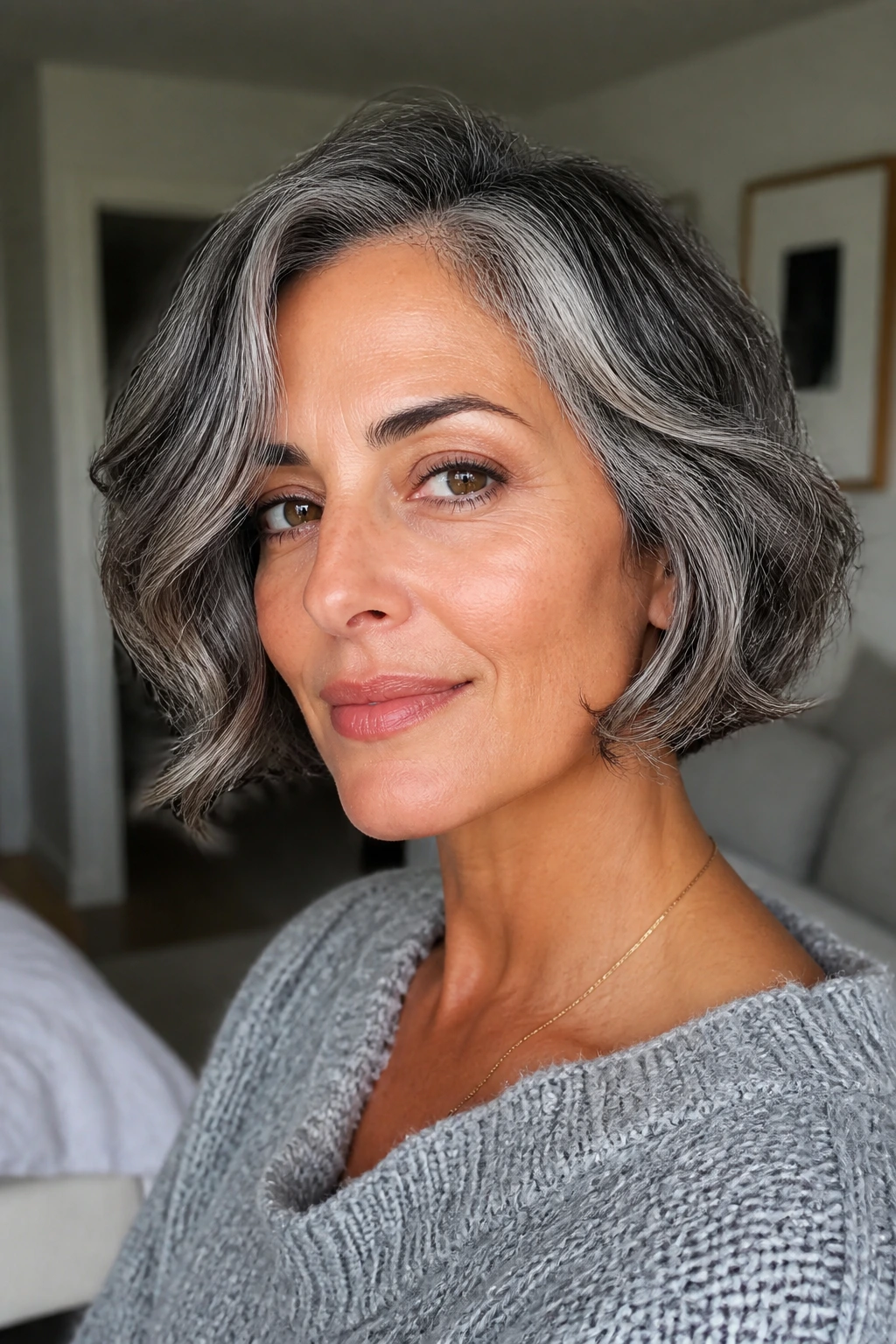
Gray hair gives this cut a different kind of shine. The silver strands catch light in a way that makes the wave pattern easier to see, and the bob shape keeps everything neat around the face. Salt-and-pepper color can look patchy in a long, loose style; in an Italian bob, it looks deliberate.
The soft bend keeps the haircut from feeling severe, which is important if the natural hair has gotten a little coarser over time. A small bend around the jaw and cheekbone brings movement back without trying to fight the texture. That makes the haircut feel current without trying too hard.
A purple shampoo can help keep the silver pieces clean, but do not overuse it. Too much will dull the shine, and shine is half the point here. A lightweight smoothing cream and a quick blow-dry at the roots usually do more good than a cabinet full of products.
15. Shoulder-Grazing Italian Bob with a Deep Side Part

Shoulder-grazing length gives you room to play. The bob still reads as a bob, but it has enough length for a strong side part, a loose tuck, or a half-up twist when you want hair off the face. That extra inch or two also helps wavy texture fall in softer ribbons instead of springing out at the sides.
This is the least risky entry point if you are nervous about going short. The cut keeps the Italian bob outline, but the longer length gives you more styling choices on a bad-hair day. And yes, some days do need a plan B. A shoulder-grazing bob is better at pretending it meant to be that way.
The deep side part is the best part here. It creates lift at the front and lets one side drape longer, which gives the cut a little drama without adding bulk. If your face is round or square, that offset can be especially useful.
16. Diagonal Italian Bob for Curvier Waves
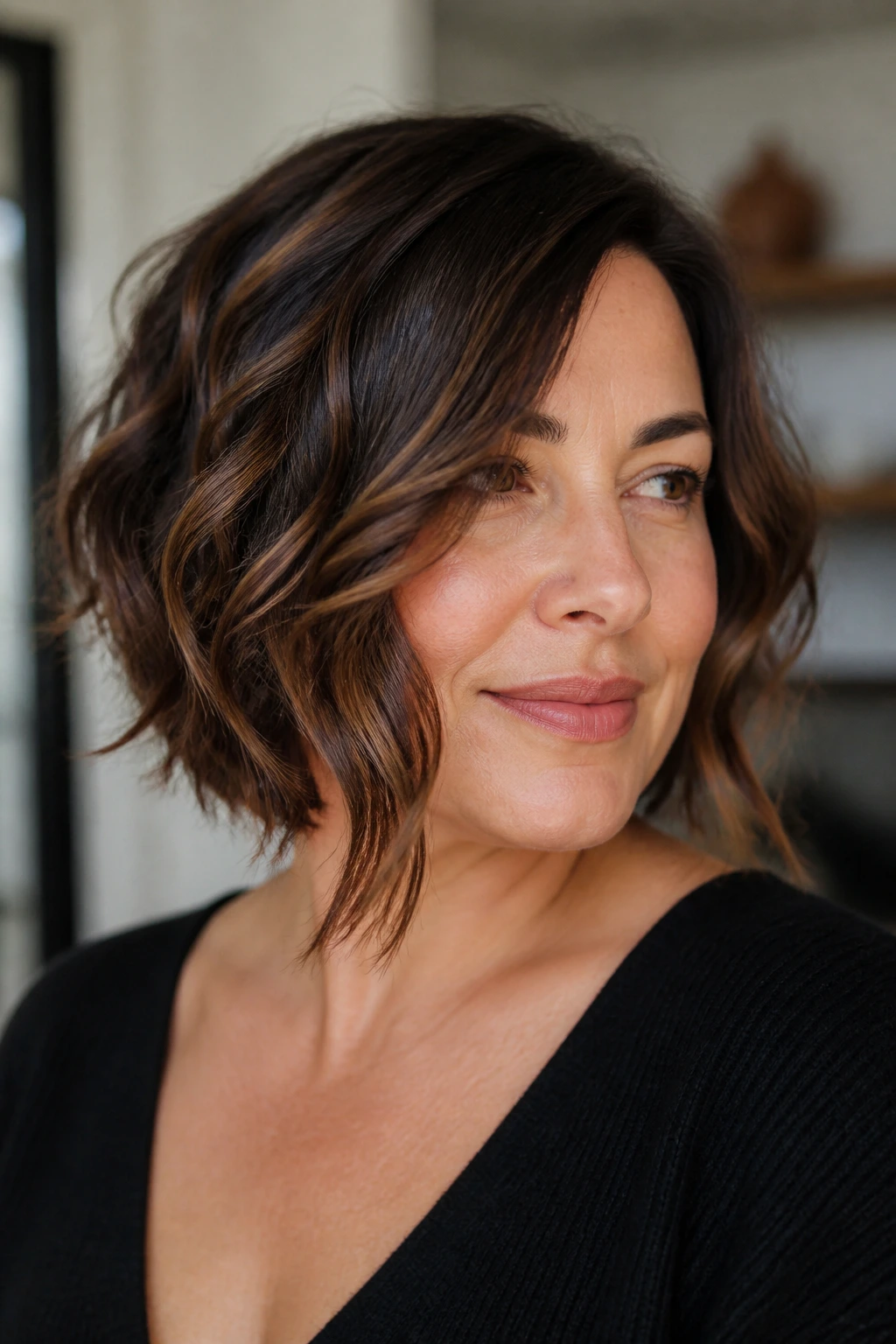
A diagonal perimeter is one of my favorite ways to handle stronger wave patterns. The front sits a touch longer than the back, so the hair falls forward with more movement and less mushrooming. That angle helps the wave collapse into a nicer shape instead of spreading evenly around the head.
This cut works when you want the face frame to feel intentional. The longer front pieces draw the eye downward and soften fuller cheeks or a wider jaw. The back stays compact, which keeps the silhouette neat from the side.
Key Details to Ask For
- Front length: just below the chin or slightly past it
- Back length: short enough to keep the neck open
- Layering: keep it internal, not choppy
- Styling: bend the front away from the face with a 1-inch iron if needed
The whole point is movement with direction. Not chaos.
17. Fine-Hair Italian Bob with Root Lift
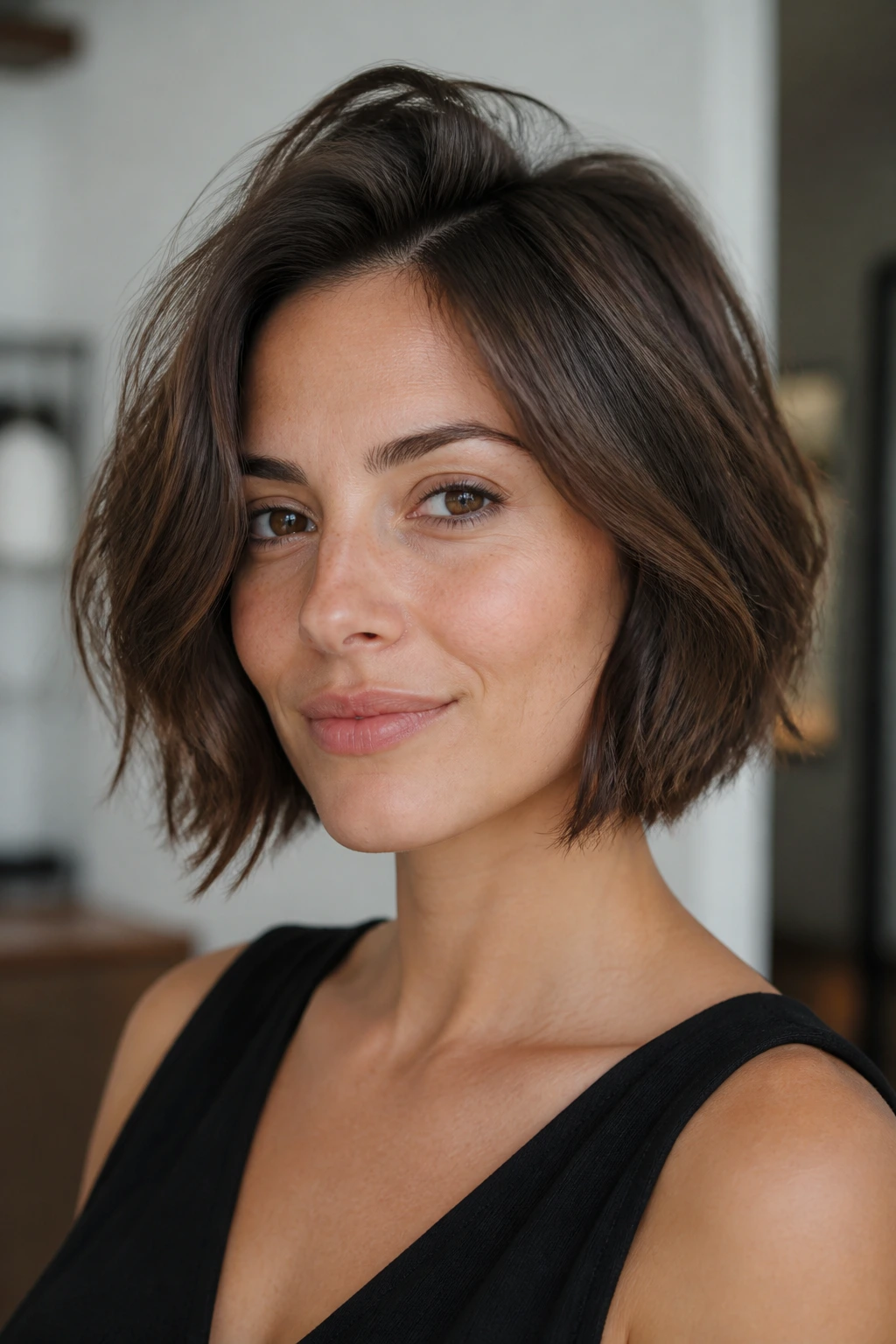
Fine hair needs a different kind of honesty. Too much layering, and the ends disappear. Too much length, and the whole cut goes limp. A fine-hair Italian bob solves that by keeping the outline compact and using root lift to create fullness where the eye wants it most.
What Makes It Work
The cut should stay a little shorter — usually chin to just below the jaw — so the hair doesn’t drag itself flat. Then the stylist should keep the layers minimal and focus on shaping around the face. That preserves density at the bottom, which is where fine hair most often looks weak.
A root-lift spray or foam helps, but only if you apply it at the base and dry it in with tension. Air-drying fine hair without any support often leaves the crown too flat. You want a little push at the roots, not a crunchy finish through the mids.
If your fine hair is also wavy, this may be the sweetest spot of all. The wave supplies movement, and the bob supplies outline. That combination can look thicker than it is, which is the one trick I never get tired of seeing.
18. Short Italian Bob with a Tucked Ear Length

This is the boldest version in the group, and it has a lot of personality for such a small cut. The length sits around the ear or just below it, so the hair can tuck cleanly and show the jaw, neck, and earrings. On wavy texture, that exposure makes the shape feel fresh rather than busy.
It is not the safest choice if you hate maintenance. Short bobs grow fast in visual terms, especially around the ears and nape. But when the cut is fresh, it looks crisp in a way longer versions can’t quite match. The wave gives it life, and the short length keeps the line sharp.
What It Suits Best
- strong cheekbones
- smaller or narrower faces
- wavy hair that keeps some bend when short
- anyone who likes a clean ear tuck and visible neckline
If you want softness, keep the texture gentle. If you want edge, let the front sit a little straighter. The cut can handle either mood.
How to Ask for the Shape at the Salon
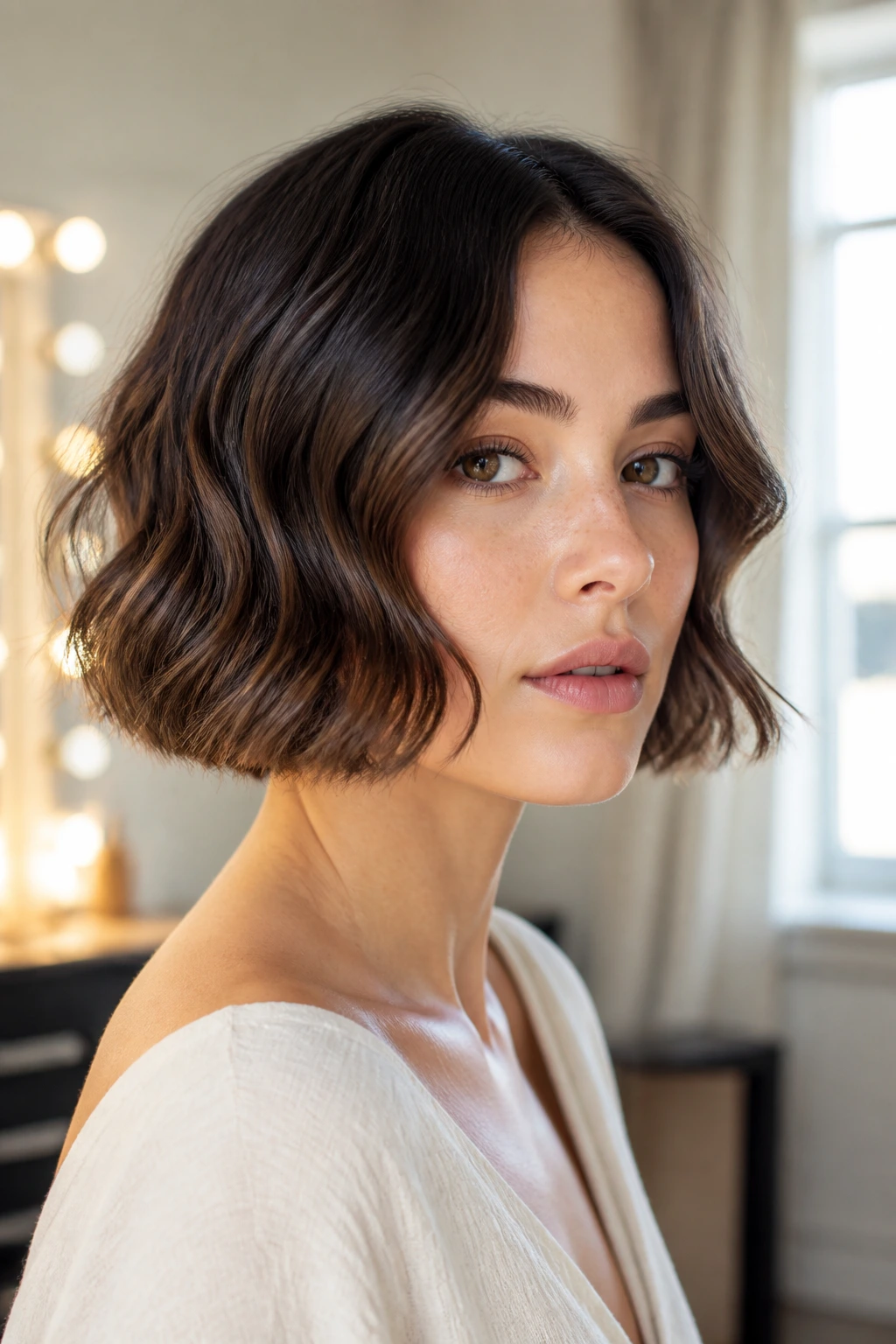
The fastest way to miss an Italian bob is to bring a photo and stop there. A good cut depends on where the weight sits, how short the back runs, and how much movement the stylist leaves in the interior. Tell them the length you want in plain language: chin, jaw, or collarbone. Point to the exact spot on the face if you need to.
Ask for a full perimeter with soft internal shaping, not a heavily layered bob. Those two things sound similar in casual conversation, but they behave very differently on wavy hair. A stacked or over-layered cut can puff at the sides. The Italian bob needs a clean edge first, then small adjustments inside the shape.
Say what you actually do with your hair. Air-dry only? Diffuse? Flat iron the front? Tuck one side behind the ear? Those details matter because they tell the stylist how much movement to leave in the cut. If you never use a round brush, do not accept a shape that only looks good after a 20-minute blowout.
How to Style a Wavy Italian Bob Without Losing the Softness

The goal is bend, not stiffness. Start with a lightweight mousse or foam at the roots and mids, then rake a tiny bit of cream through the ends if they get dry. Too much product at the bottom weighs the bob down and turns the texture greasy before lunch.
Start with damp, not soaking hair. If the hair is dripping wet, the product sits unevenly and the wave clumps in weird spots. Squeeze out water with a microfiber towel first, then scrunch once or twice. That keeps the shape cleaner.
Use heat only where it helps. A round brush at the front sections, a diffuser for the crown, or a few bends with a 1-inch iron on the sides is usually enough. You do not need to curl every piece. Half the charm of this cut is the variation.
Break the cast if you use gel. If your waves dry crunchy, wait until the hair is fully dry, then scrunch with clean hands or a tiny drop of serum. That softens the finish without making it flat.
The Tools and Products That Make This Cut Easier
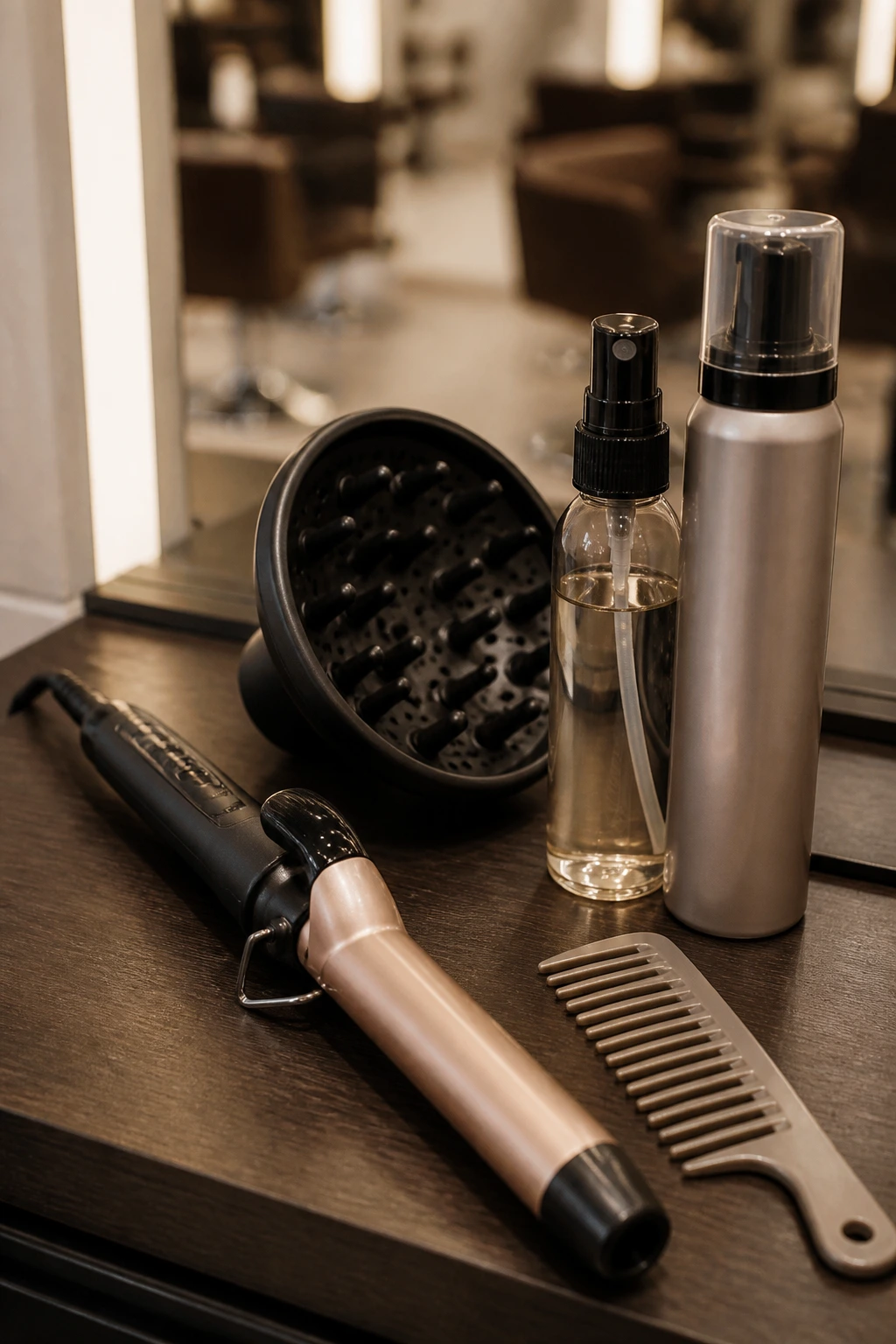
- 1-inch curling iron or wand: Best for adding a few soft bends to the front and side pieces without turning the bob into full curls.
- Medium round brush: Useful if you want a smooth bend at the ends and a little lift at the crown.
- Diffuser attachment: The safest way to dry wavy texture if frizz is part of the picture.
- Lightweight mousse or foam: Adds hold at the root and keeps the wave pattern from falling apart.
- Heat protectant spray: Non-negotiable if you use any hot tool, even on just the fringe or face frame.
- Microfiber towel or T-shirt: Helps remove water without roughing up the cuticle.
- Tail comb: Handy for clean parts and precise sectioning near the bangs.
- Texturizing spray: Good for the ends when the bob needs separation, not volume.
- Silk or satin pillowcase: Keeps the outline from getting crushed overnight.
Common Mistakes That Flatten the Shape

Over-layering the crown is the classic mistake. The hair puffs at the sides and the bottom goes thin. The fix is simple: ask for internal shaping, not visible layers stacked through the top.
Curling every section in the same direction makes the haircut look too round and too done. The finish turns pageant-y fast. Leave some pieces straighter, curl alternating directions, or bend only the front.
Using heavy creams all over the hair weighs the bob down. The roots collapse, the mids go sticky, and the wave loses definition. Keep rich products on the ends only, and choose mousse or light foam at the top.
Going too short for your density can make the hair spread outward. If your waves are thick or strong, chin length may feel too puffy. In that case, the collarbone or shoulder-grazing version usually behaves better.
Ignoring shrinkage is how fringe gets wrecked. Wavy bangs need extra length because they spring up as they dry. Cut them too short, and you spend weeks pinning them back.
Variations and Adaptations to Try

The Glassy Blowout Bob: Keep the same Italian bob shape, but smooth the waves with a round brush and finish with a light shine spray. This is the version for dressier settings or anyone who likes a cleaner surface.
The Air-Dry Lob: Let the length sit at the collarbone and lean into a looser wave pattern. It’s a calmer choice if you want the Italian bob idea without going fully short.
The Fringe-First Version: Add bottleneck or curtain bangs and let the rest of the cut stay simple. This works when you want the face frame to do more of the talking.
The Gray-Gorgeous Bob: Keep the length jaw to chin, keep the layers minimal, and let the silver tones show. A soft bend and a little root lift are usually enough.
The Thick-Hair Soft Sculpt: Use internal shaping plus a diagonal front so the bob sheds weight without losing its outline. This is the one I’d choose if density is your main issue.
How to Keep the Cut Fresh Between Appointments

The shape holds best when the ends stay even and the crown does not get overworked. A trim every 6 to 8 weeks keeps the perimeter from sagging into a longer, messier shape. If you wear bangs or a short fringe, that fringe may need a tiny clean-up every 2 to 3 weeks so it doesn’t fall into your eyes and lose the balance of the cut.
Sleeping habits matter more than people expect. A silk pillowcase or loose silk bonnet keeps the wave from getting crushed overnight, and that means less heat styling the next morning. If the hair wakes up bent in the wrong direction, mist the front with water, twist the face-framing pieces around your fingers, and let them dry for five minutes before deciding whether you need a tool.
Second-day refreshes are usually about the root and the front, not the whole head. A touch of dry shampoo at the crown, a little water on the mids, and a quick bend with your hands is often enough. Overwashing strips the natural movement that makes this cut look alive. For most wavy hair, the Italian bob looks better with a little grit than with a squeaky-clean finish.
If the shape starts to widen at the sides, that’s your cue. Don’t wait until it feels like a different haircut. A tidy trim and a small refinement at the perimeter will bring the whole thing back into line.
Frequently Asked Questions

What face shapes suit a wavy Italian bob best?
Oval and heart shapes wear this cut easily, but square and round faces can look excellent in it when the front is adjusted well. The real key is where the length lands and how much face-framing softness gets built in.
Can fine hair handle an Italian bob with waves?
Yes, but the cut needs restraint. Keep the layers minimal, avoid heavy thinning, and stay around chin to jaw length so the ends don’t look sparse. Fine hair often looks better in this shape when there is a little root lift and not too much product.
Will layers ruin the Italian bob shape?
Not if they stay mostly inside the haircut. The danger is visible, choppy layering near the perimeter, which can make the bob look shaggy instead of soft. Ask for invisible or internal layers if you want movement without losing the line.
Is this cut better with a middle part or side part?
Both work. A center part feels cleaner and a bit sharper, while a side part gives lift and softens the face. If your hair has a natural bend or a stubborn cowlick, follow that first and adjust from there.
How do you keep waves from turning into frizz?
Use lightweight products, dry with less friction, and avoid touching the hair while it sets. A diffuser on low heat or air-drying with a mousse usually works better than repeated brushing. Frizz often shows up when the cut is too layered or the ends are overloaded with cream.
Can curly hair wear this style too?
It can, but the perimeter usually needs a little more length because curls spring up more than loose waves. A stylist who cuts curly hair dry or understands shrinkage is worth seeking out. Otherwise, the bob can end up much shorter than planned.
What if the haircut flips out at the ends?
That usually means the perimeter is too light or the brush work is pushing the ends outward. Ask for a little more weight at the bottom and, when styling, curve the ends under with a round brush or a quick pass of a curling iron.
How often should I trim it to keep the shape?
Most versions need a trim every 6 to 8 weeks. If you wear bangs or a short face frame, those pieces may need attention sooner. The shorter the length, the faster the outline shows wear.
Soft Movement, Sharp Edges

The best wavy Italian bob haircuts do one thing very well: they keep the outline clean while letting the texture move. That is harder to pull off than it looks in photos. The haircut has to respect the wave, not wrestle it into submission.
If you want a bob that still has life when it air-dries, this is the shape to keep circling back to. Chin length, collarbone length, blunt or softly curved, center part or side part — the exact version matters less than the balance between weight and motion. Get that right and the cut stops being just a haircut. It starts doing the work for you.
