



A choppy bob with balayage has a specific kind of swagger. The cut keeps the ends broken up and loose; the color keeps the shape from looking like one solid slab. That combination matters more than people think. A blunt bob can start to feel heavy fast, especially if your hair is dense or naturally straight. A choppy bob haircuts with balayage approach fixes that by letting light land on the surface in uneven little flashes instead of sitting in one flat stripe.
That’s the part I like most. The hair moves. It doesn’t sit there and behave like a helmet. Point-cut ends, razor-soft edges, or light internal layering give the silhouette some air, and balayage does the quiet work of making every bend, flick, and wave look intentional even when the style is a bit undone.
Not every bob needs the same mood, either. Some versions read soft and sunlit; others are cooler, sharper, and a little more graphic. Length changes everything. So does texture. So does tone. The best thing about this haircut family is that you can keep the basic shape and still make it feel completely different with a new color placement or a slightly different edge.
Why These 22 Choppy Bob Haircuts With Balayage Keep Working
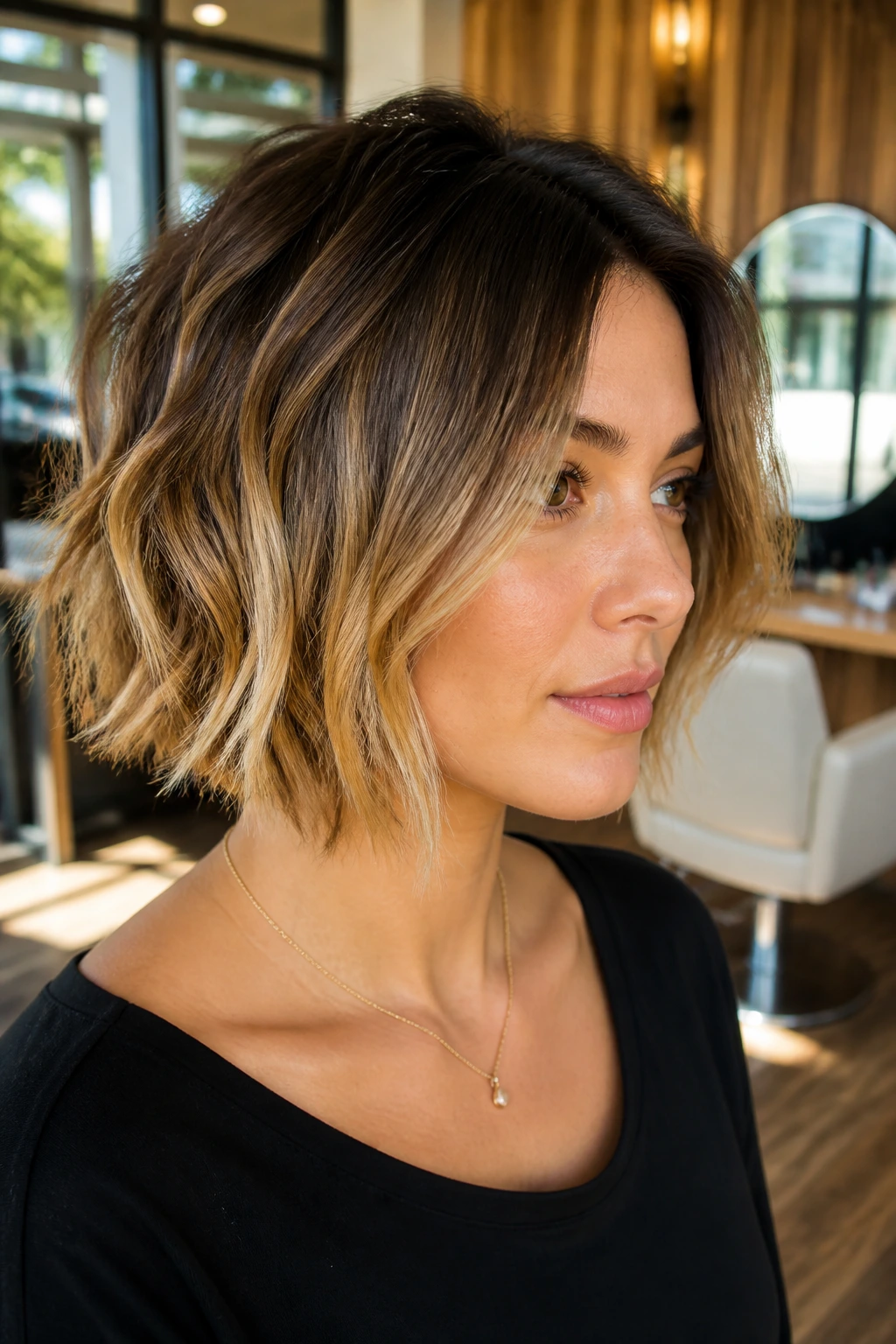
-
Movement Without Bulk: Choppy ends stop a bob from sitting like one heavy block, which matters most on straight or thick hair that wants to collapse into a shelf.
-
Color That Shows the Cut: Balayage lands on the raised parts of the hair, so the lighter pieces catch the eye right where the layers and bends happen.
-
A Softer Grow-Out: Because the brightest pieces sit away from the root, the color fades into the base more quietly than full foils do.
-
Easy to Tune: The same haircut can look soft, sharp, edgy, or beachy depending on the length, fringe, and tone.
-
Better With Real-Life Styling: This is one of those shapes that still looks good after a rough-dry, a bend with a wand, or a windy commute.
1. Chin-Length Choppy Bob with Honey Balayage
This is the kind of bob that lands right on the jaw and never feels stuck there. The ends are broken up just enough to keep the line from looking too square, and the honey balayage warms up the front pieces so the whole cut has a soft glow around the face.
I like this version on fine to medium hair because it gives shape without asking for a ton of volume tricks. If your hair falls flat at the sides, a chin-length bob with a little texture can make the head look fuller from the front. Blow it dry with a small round brush and bend the last inch under or out in alternating directions.
The tone matters here. Honey is friendlier than a high-contrast blonde, and it sits nicely on brown or dark blonde bases.
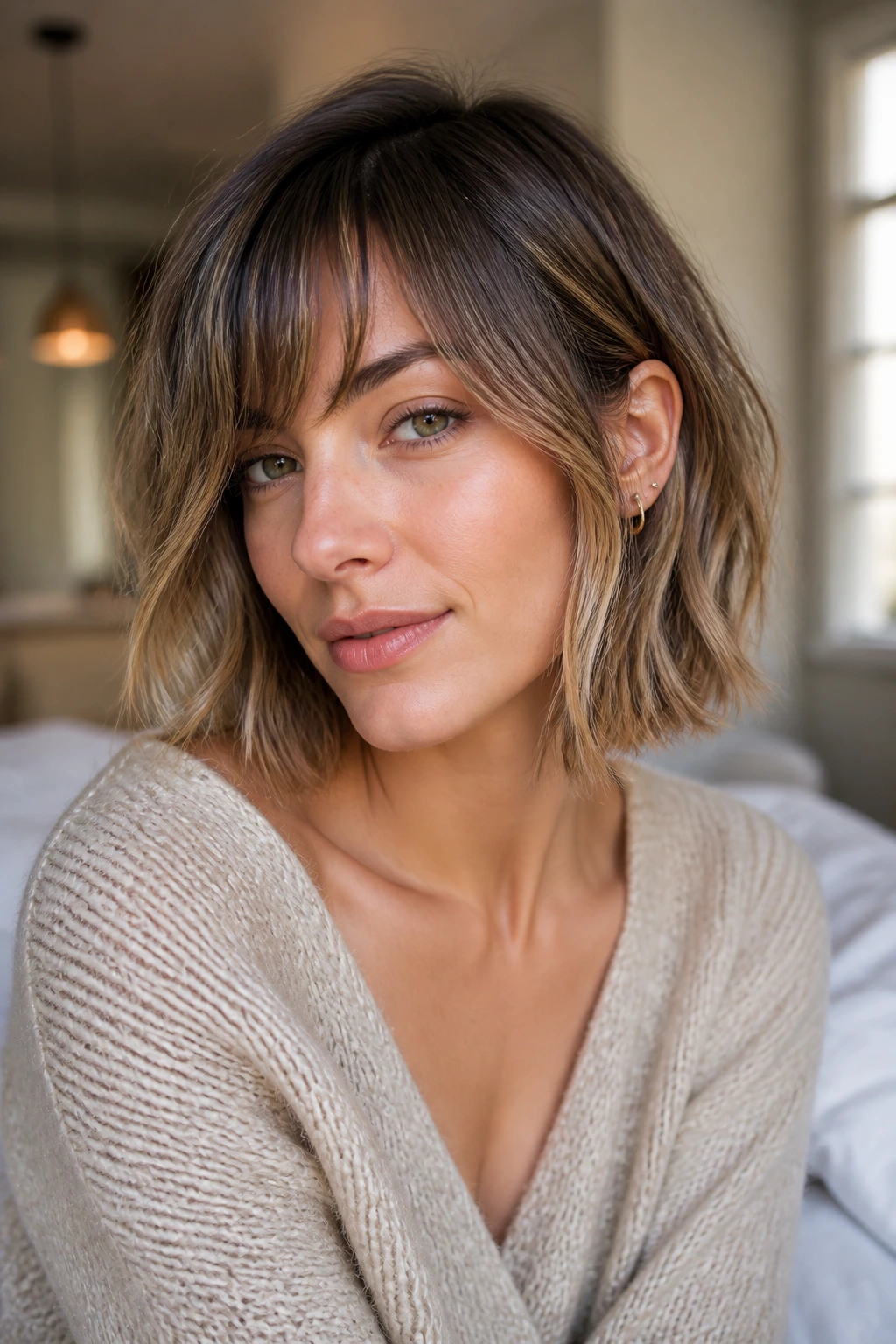
2. Textured French Bob with Beige Blonde Balayage
A French bob only works when the ends have a little bite. The cut is short, cheeky, and slightly cropped, usually with a fringe that skims the brows or splits softly in the center. Beige blonde balayage keeps it from turning severe.
This one is lovely on straight hair that needs a little bend, but it can also look sharp on waves if you let the texture stay a bit imperfect. The color should feel airy, not stripey. Ask for softer painted pieces through the top and a few brighter strands near the cheekbones so the cut doesn’t disappear into a dark cap.
Best for: anyone who wants short hair with attitude, not polish.
Style note: a dab of mousse at the roots and a rough-dry with your fingers is enough. Too much brushing makes the shape lose its edge.
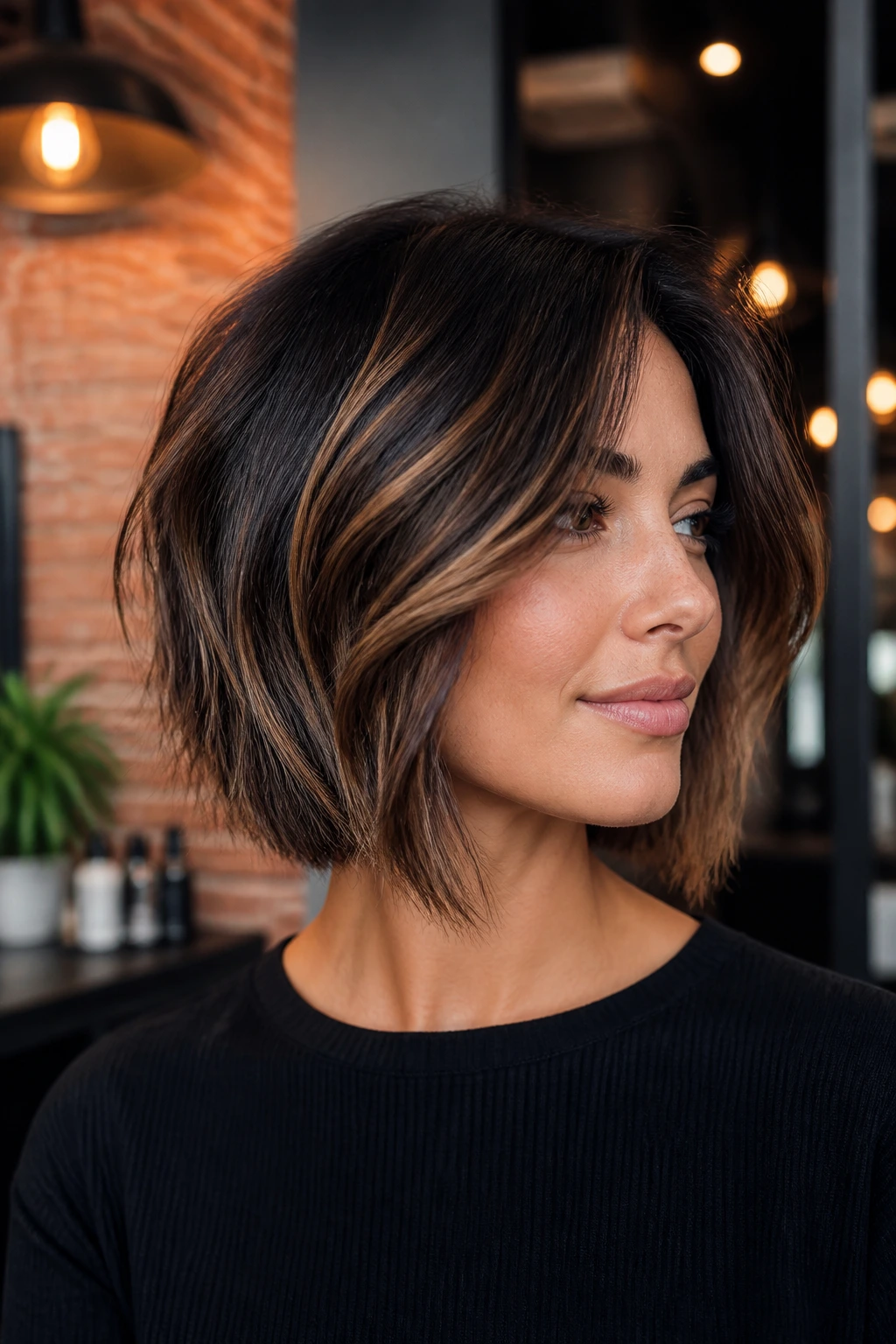
3. Layered Bob with Caramel Ribbons on Dark Brown
If a blunt bob feels too boxy on thick hair, this shape solves the problem fast. The layers sit inside the cut, so the perimeter still looks like a bob, but the bulk gets removed where it would puff out. Caramel balayage threaded through dark brown hair keeps the texture visible without making the color shout.
This is one of the best choppy bob haircuts with balayage for people who want dimension but don’t want to go light all over. The darker base keeps the haircut grounded. The caramel ribbons pick up movement when the hair turns, which makes the ends look separated in a good way instead of frayed.
A medium round brush and a little root lift spray are enough. You want the shape to feel cushioned, not blown out into a puffball.
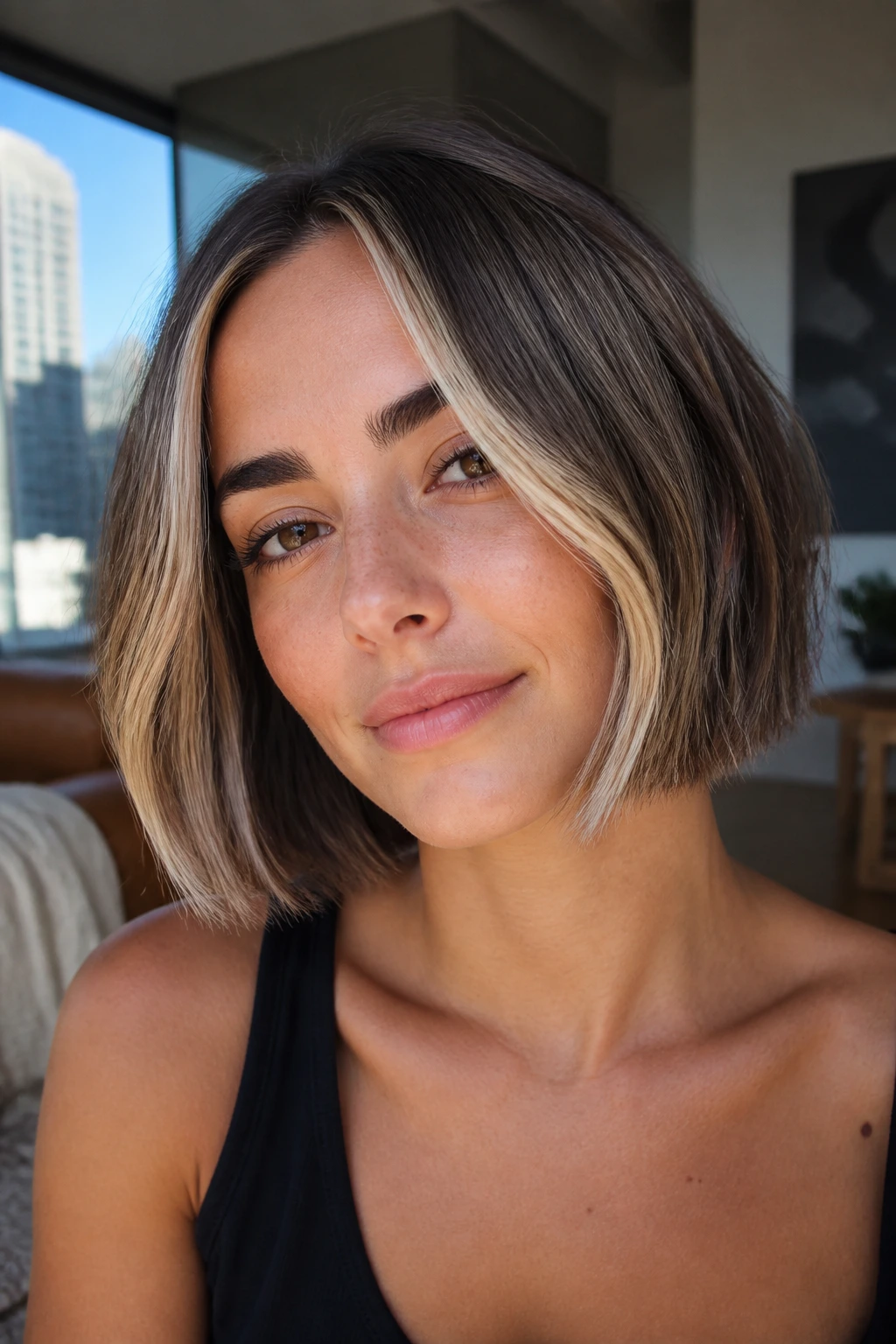
4. Jaw-Length Bob with a Face-Framing Money Piece
Want brightness without turning the whole head blonde? This is the move. The bob itself sits at the jaw, cut with enough texture to keep the ends from forming one hard edge, while the front gets a stronger money piece that pulls attention straight to the face.
That brighter front section changes the whole mood. It makes the haircut look sharper from the front and softer from the side, which is one of those small details that has a bigger payoff than people expect. If your face is round or heart-shaped, the front brightness can help stretch the eye line a little.
Ask for the lightest pieces to start around the cheekbones, not right at the root. That keeps the grow-out cleaner and stops the top from looking fried.
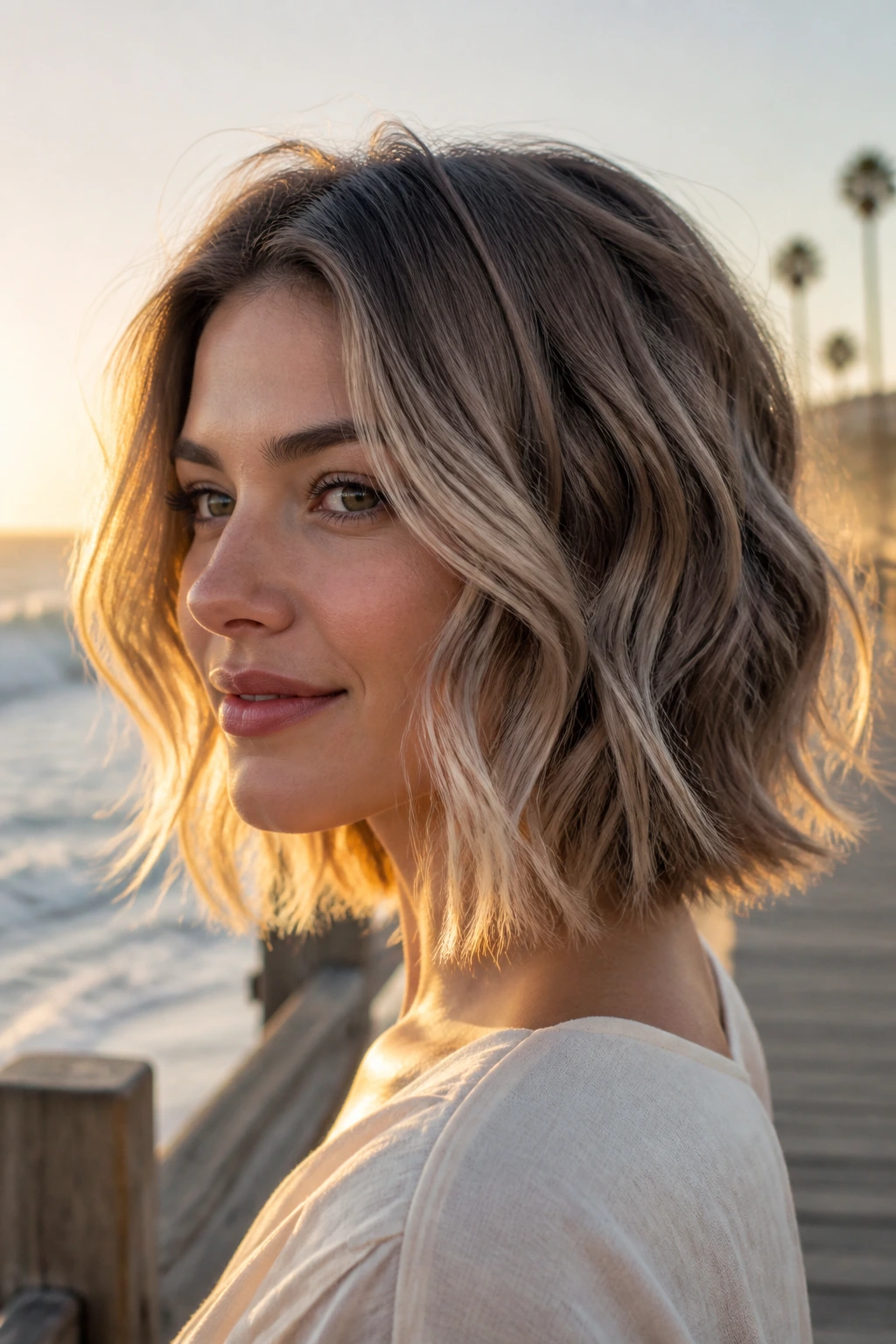
5. Wavy Bob with Ash Brown and Vanilla Balayage
Cool-toned hair with movement can be hard to get right. Too much ash and it turns flat. Too much blonde and it starts looking busy. This version gets the balance right by keeping the base ash brown and threading in vanilla balayage through the bends and ends.
The result is soft, not sleepy. The waves break up the color, and the cooler base keeps the lighter pieces from looking orange or brassy. It’s a smart pick if your skin tone reads cooler or if you simply don’t want warmth around the face.
A one-inch curling iron works better than a big barrel here. Wrap the sections away from the face, leave the last inch out, and rake them apart with your fingers after they cool. That little gap at the ends is what gives the bob its choppy feel.
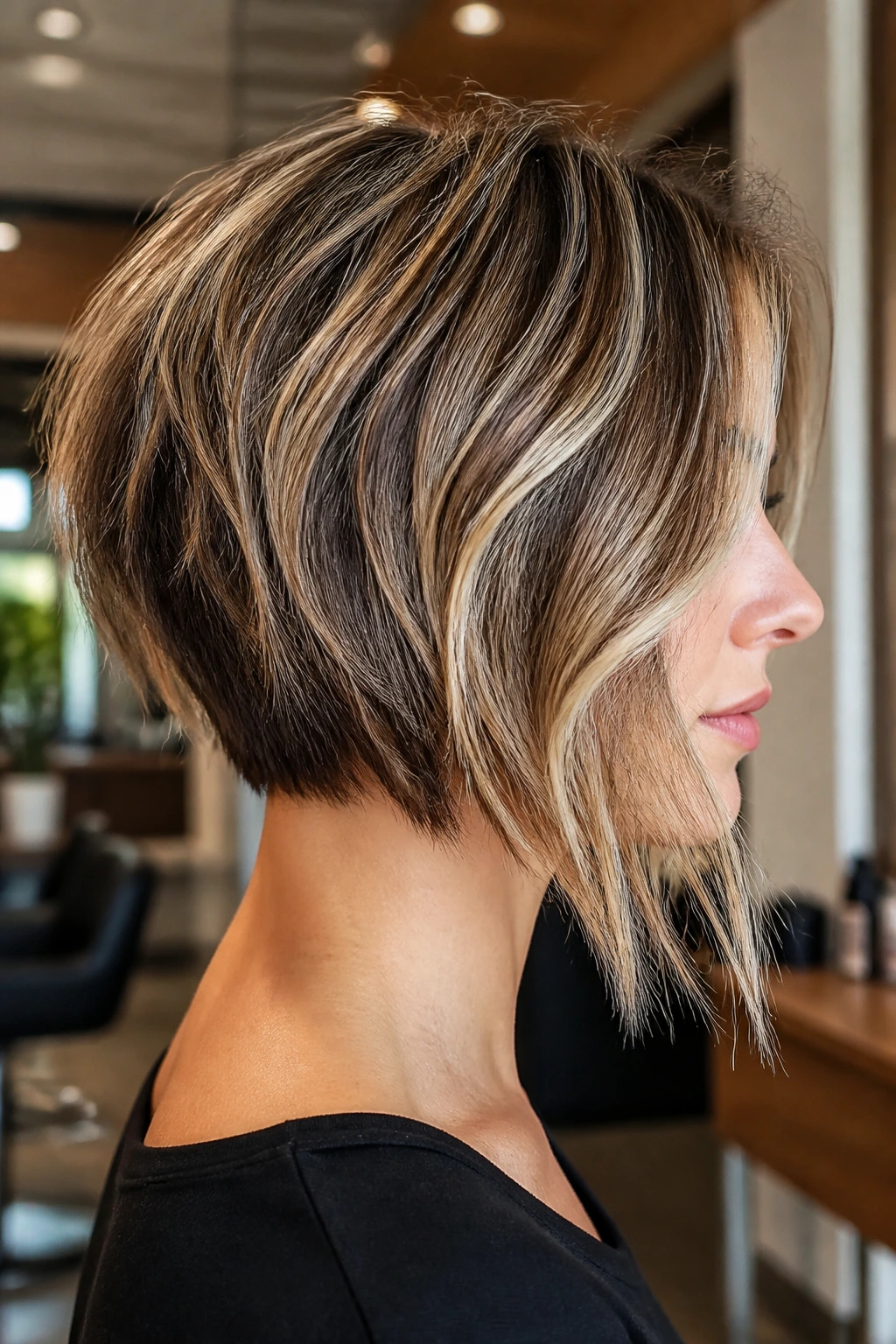
6. Inverted Choppy Bob with Champagne Highlights
This shape has a little built-in architecture. The back is shorter, the front is longer, and the line angles forward just enough to show the neck without making the cut look spiky. Champagne highlights placed through the crown and around the face keep all that structure from feeling stiff.
On thick hair, an inverted bob can save you from the triangle effect. The angle removes visual weight at the back, while the highlights stop the top from reading like one dark cap. On finer hair, it adds a bit of lift in the crown and a neat shape around the jaw.
Use a flat brush for the back and a round brush at the front. You want the nape to sit cleanly, then the front to swing. That contrast is the whole point.
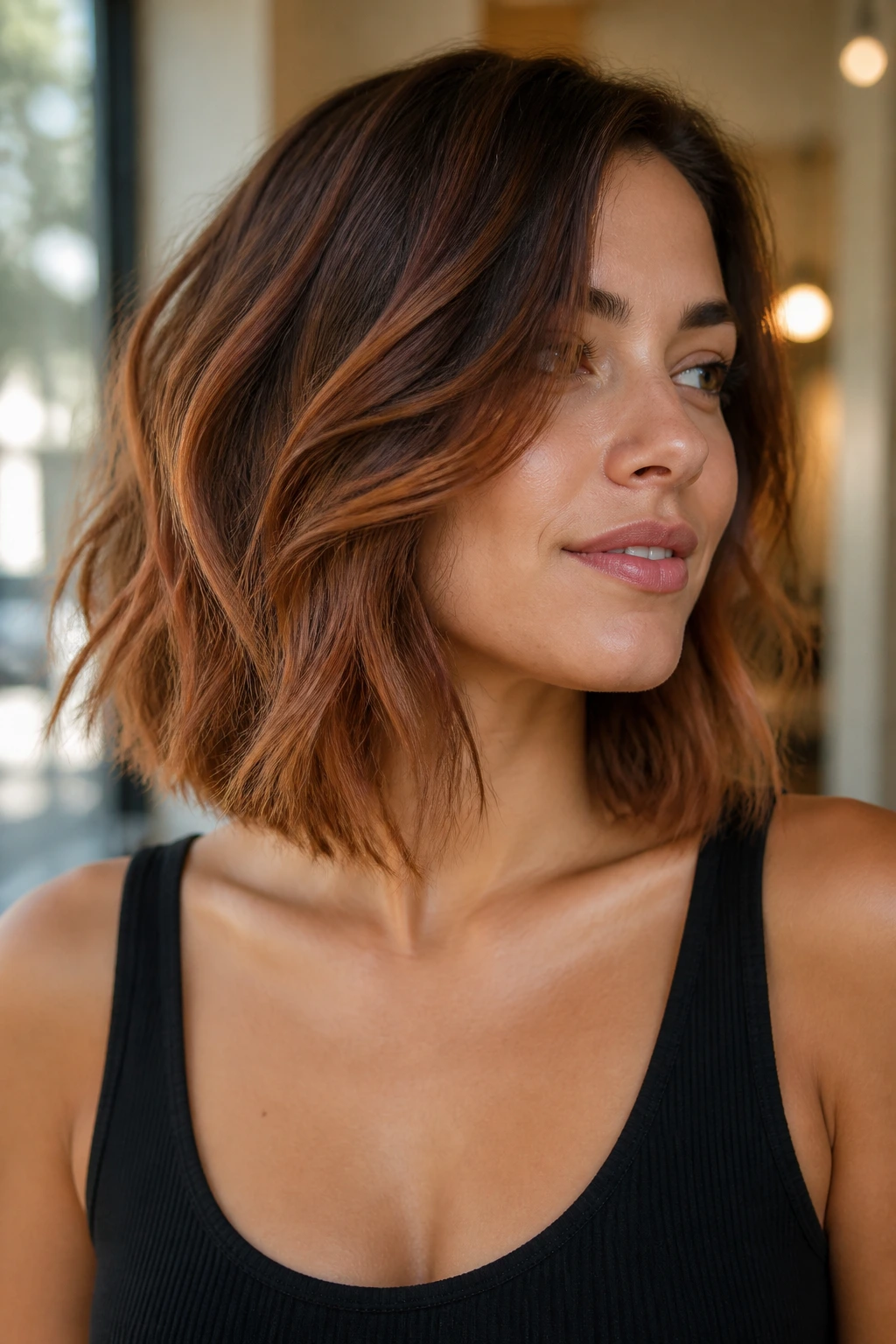
7. Collarbone Bob with Copper Balayage
There’s something nice about keeping the bob just a touch longer. A collarbone length gives the cut a little swing, and copper balayage makes the ends look lit from underneath instead of painted on top. On brown bases, it looks rich; on dark blonde bases, it looks warm and glossy.
This version suits people who don’t want to commit to a short bob but still want the shape to read as a bob, not a lob with a haircut crisis. The choppiness should be subtle here. Too many short layers and the ends start to feather out in a way that fights the length.
If your hair tends to go limp by midday, add a light mousse at the roots before blow-drying. Copper shows movement best when the body of the cut has a little lift.
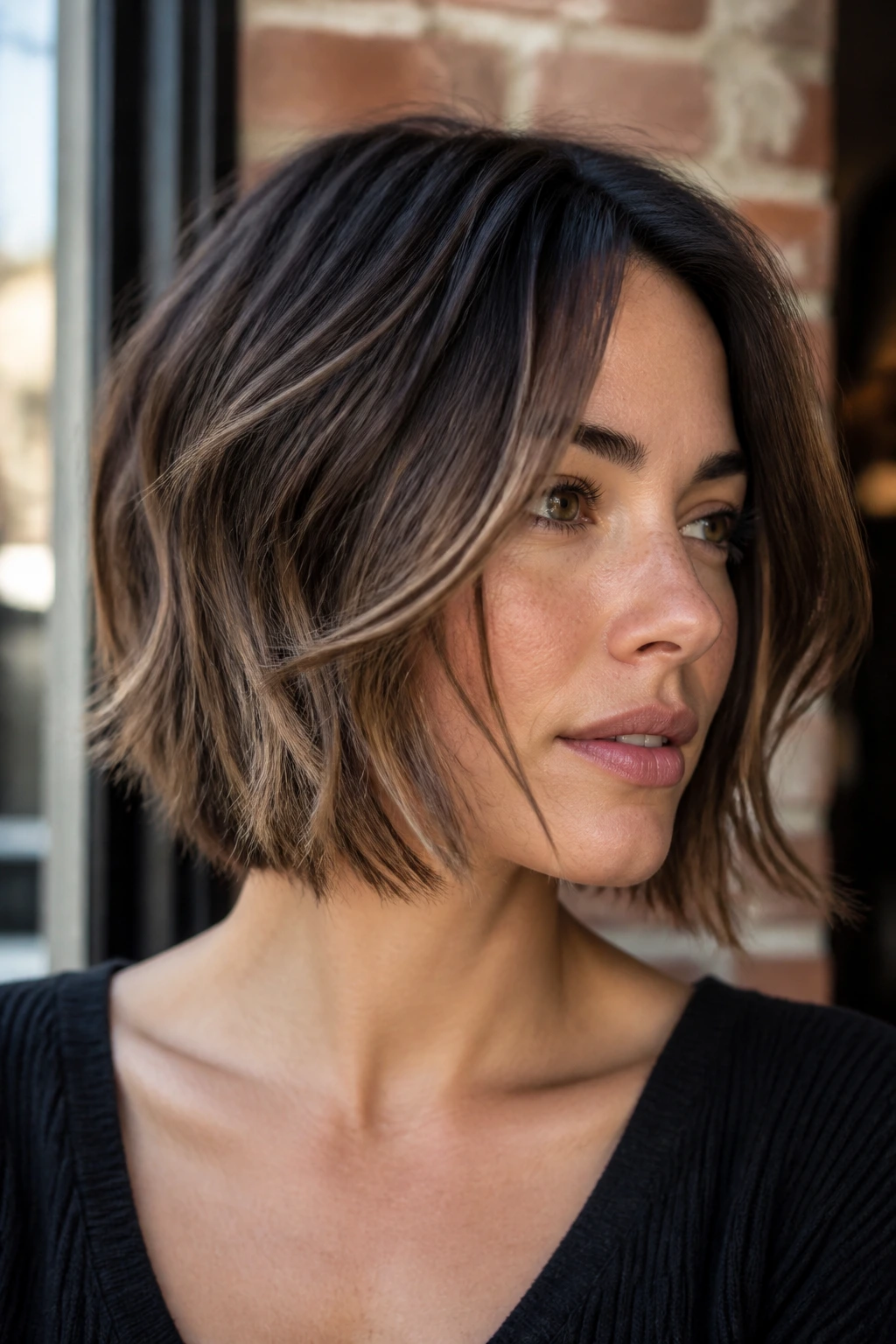
8. Piecey Razor Bob with Mushroom Brown Balayage
This is the cooler brunette answer to the softer caramel bob. Mushroom brown has that earthy, smoky tone that keeps the color from going red or orange, and the razor-cut ends make the whole style look airy instead of heavy.
I like this on straight or slightly wavy hair because the piecey finish is part of the charm. The balayage should stay close in tone to the base, with just enough lightness to catch the eye when the hair shifts. Think dimensional, not dramatic. It’s the kind of color that looks better the second day, after the hair has settled a bit.
A light texture spray at the midlengths helps. Skip heavy oils near the ends or the separated pieces will clump together and lose that sharp, feathered look.
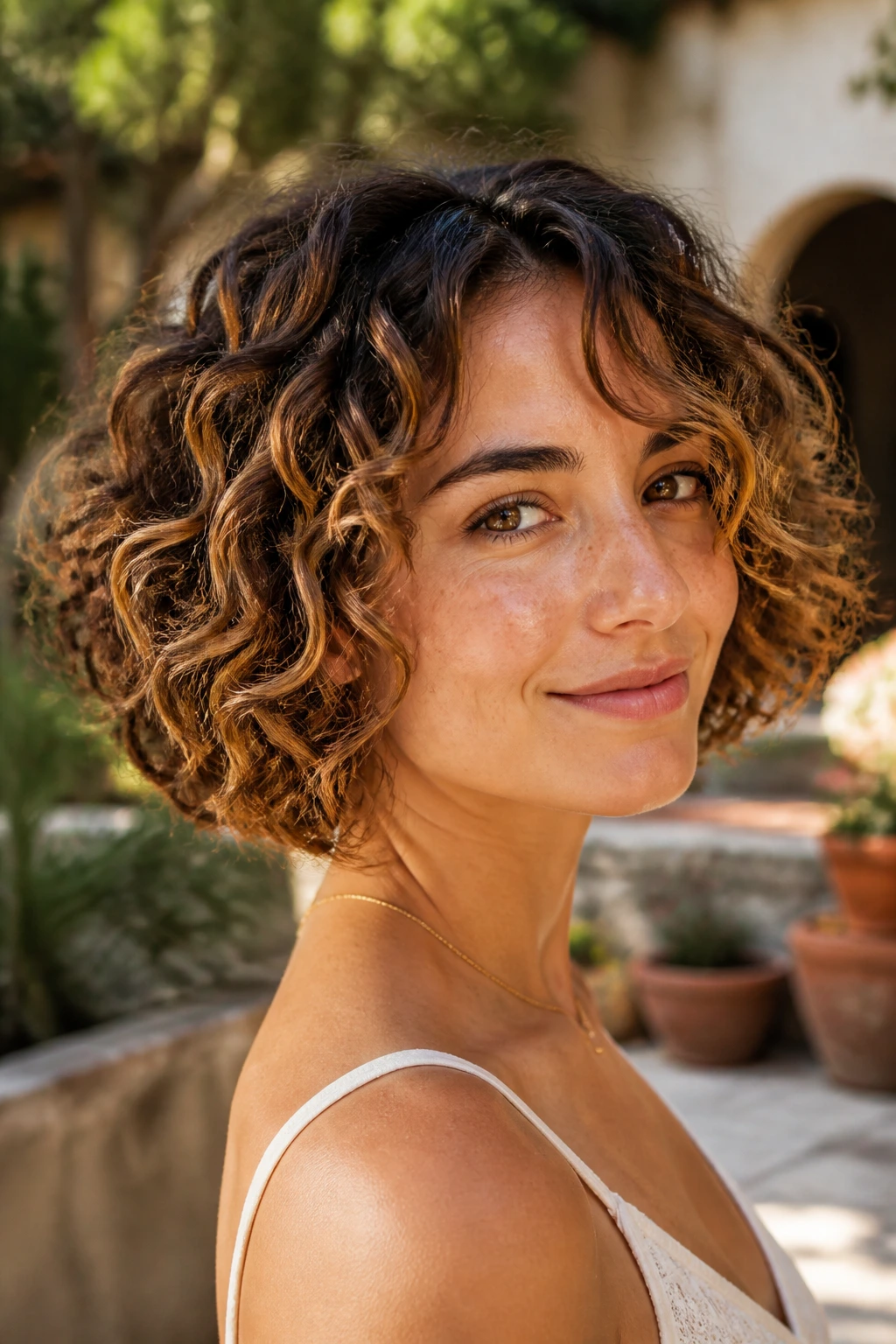
9. Curly Choppy Bob with Warm Bronze Balayage
Curly bobs can get ignored in haircut conversations, which is a mistake. When the curl pattern is respected, a choppy bob with balayage looks alive in a way straight hair can’t fake. Warm bronze ribbons painted through the curls give depth without breaking up the curl clumps.
The key is placement. The lighter pieces should sit where the curls naturally bend and stack, not scattered strand by strand. If the color gets too fine, the pattern turns fuzzy. If it’s too chunky, the cut looks blotchy. Bronze is a nice middle ground because it adds warmth without screaming orange.
Cut this one dry or mostly dry, and ask for length that accounts for shrinkage. Curl by curl, it’s a different haircut than it looks when wet.
10. Asymmetrical Bob with Sandy Beige Balayage
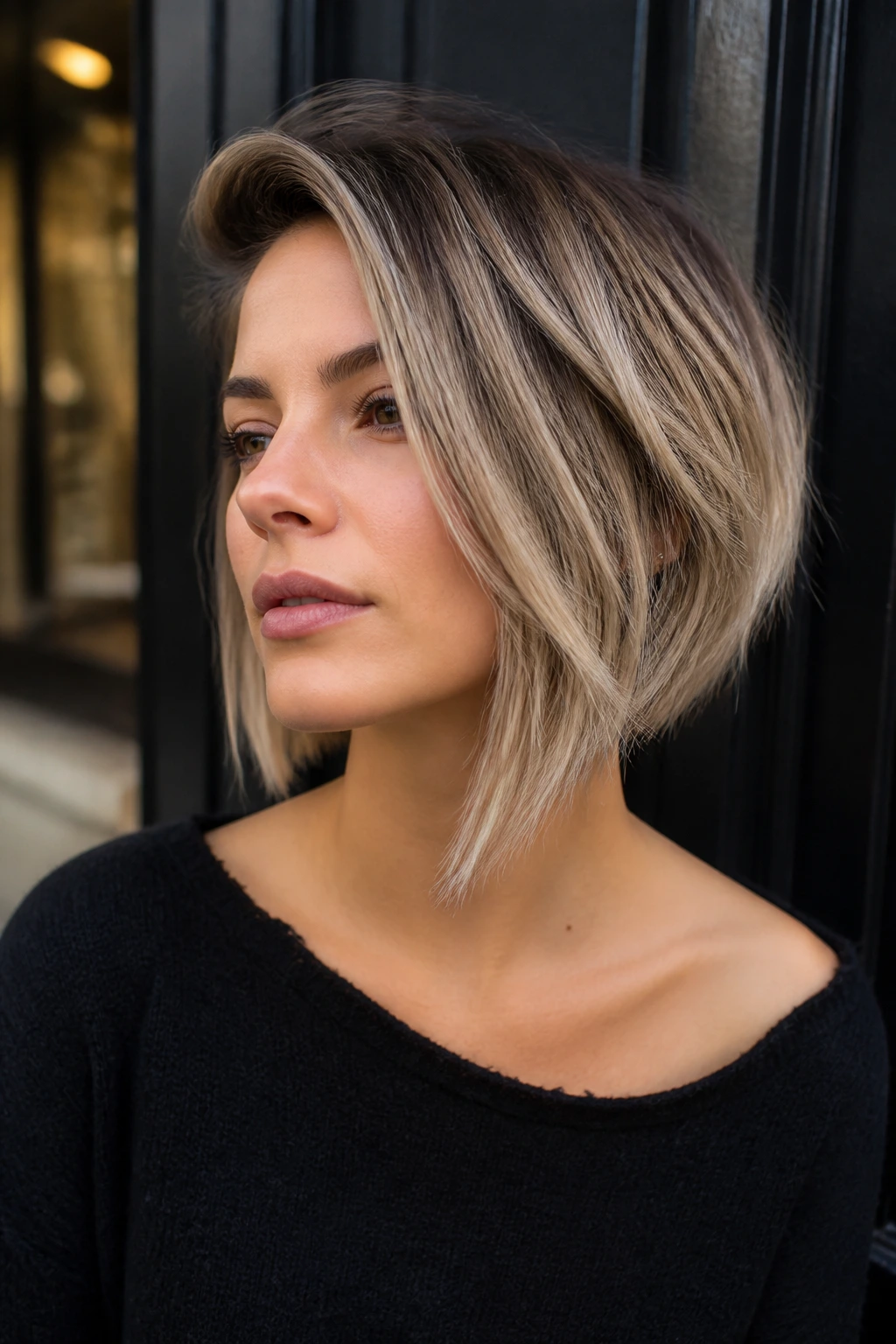
One side longer. One side shorter. Simple idea, sharp result. The asymmetry gives the bob some tension, and sandy beige balayage softens that edge so it feels wearable instead of theatrical.
This cut is especially good if your hair falls flat when it’s parted in the same place every day. An asymmetrical line gives the illusion of lift, and the lighter color on the longer side helps the eye follow the angle. The shape can look sleek or messy, depending on whether you bend the ends inward with a flat iron or let them kick out a little.
If you wear glasses, this one can be a winner. The longer side can sit just under the frame and make the haircut feel built around your face instead of floating beside it.
11. Lob with Rooty Blonde Balayage
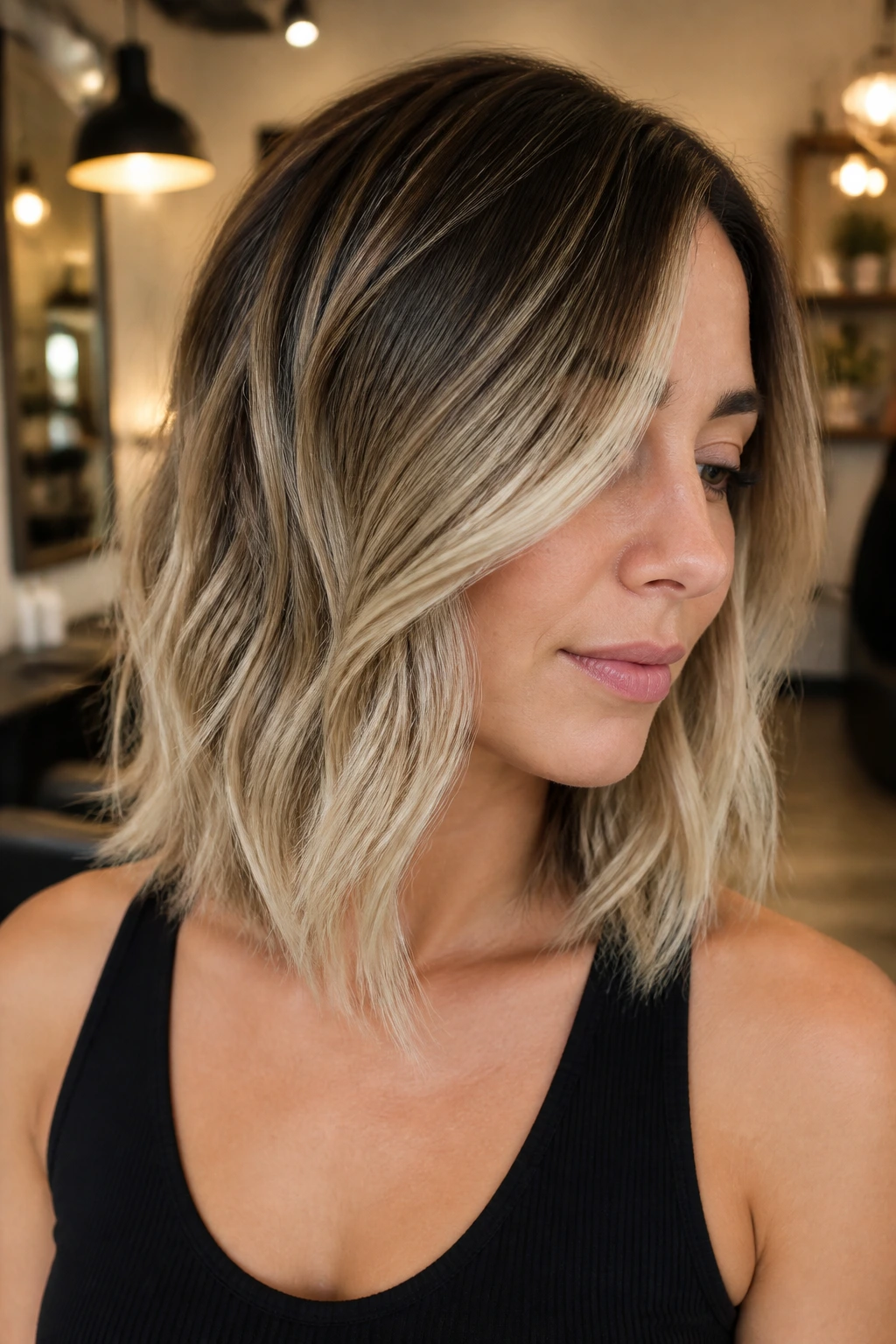
A lob with rooty blonde balayage gives you the easiest grow-out in the bunch. The length sits near the collarbone, which means the style can be tucked, waved, or clipped back, and the darker root keeps the blonde from needing constant salon rescue.
This is a good choice if you want lightness but hate the high-maintenance look of a fully highlighted bob. The darker root gives the whole haircut depth, and the choppy ends keep the lob from looking too polished. That root shadow also makes the blonde look softer in daylight. No harsh line. No zebra effect.
If you’re growing out a shorter cut, this is a smart landing spot. It buys you time without losing shape, which is rare and useful.
12. Angled Bob with Chestnut and Cinnamon Balayage
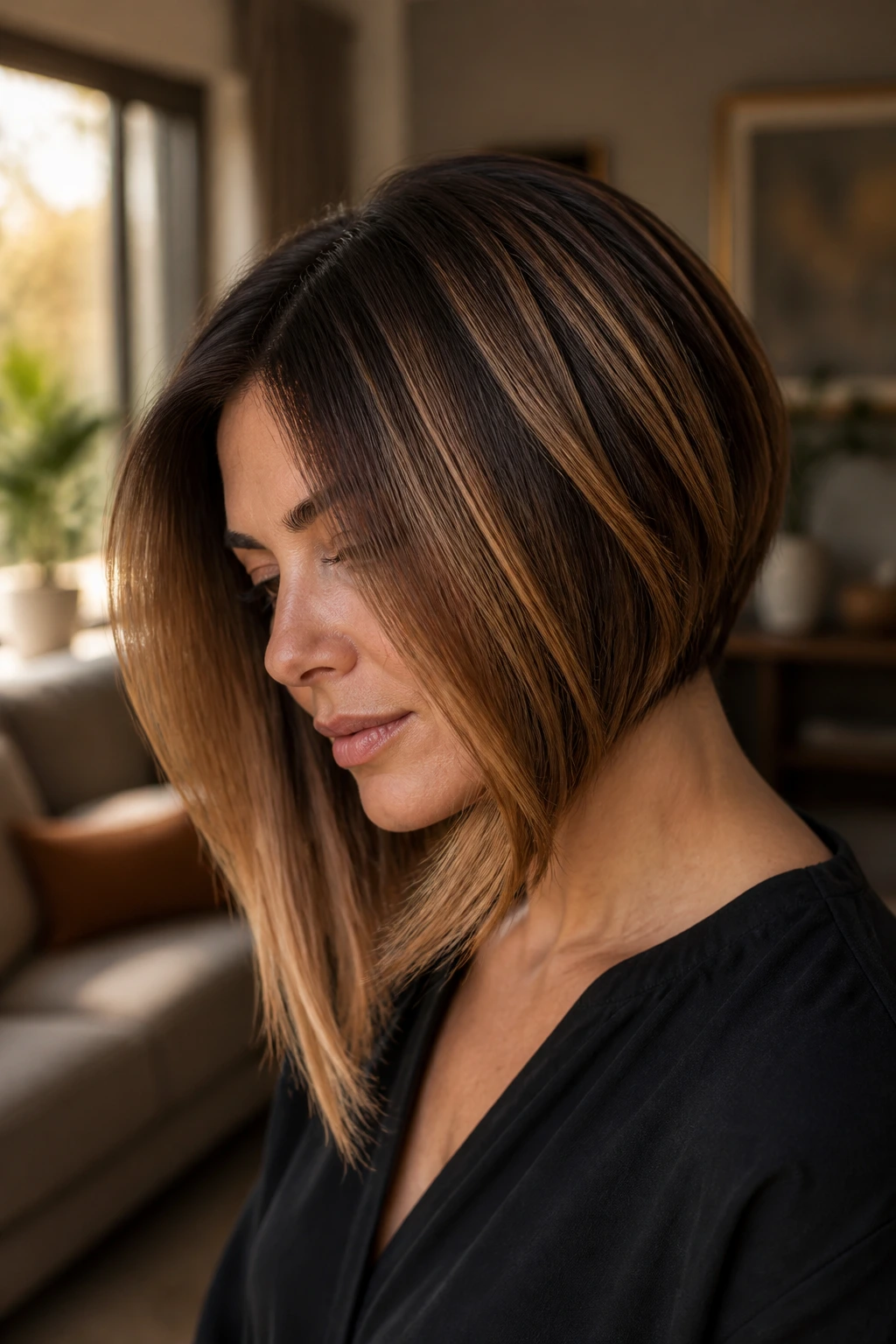
An angled bob does something satisfying to the profile. The back sits shorter, the front stretches forward, and the eye moves along that line in a clean, almost graphic way. Chestnut and cinnamon balayage soften the structure and keep the color from feeling flat against the cut.
This version works especially well on thick hair because the angle lets the hair move away from the neck. The warm tones also play nicely with layered styling; each bend in the hair catches one color differently. You end up with depth at the back, brightness at the front, and enough contrast to make the shape visible from across the room.
Ask your stylist not to over-thin the ends. The angle already does the shaping. Too much texturizing can make the front fray.
13. Shaggy Bob with Sun-Kissed Gold Balayage
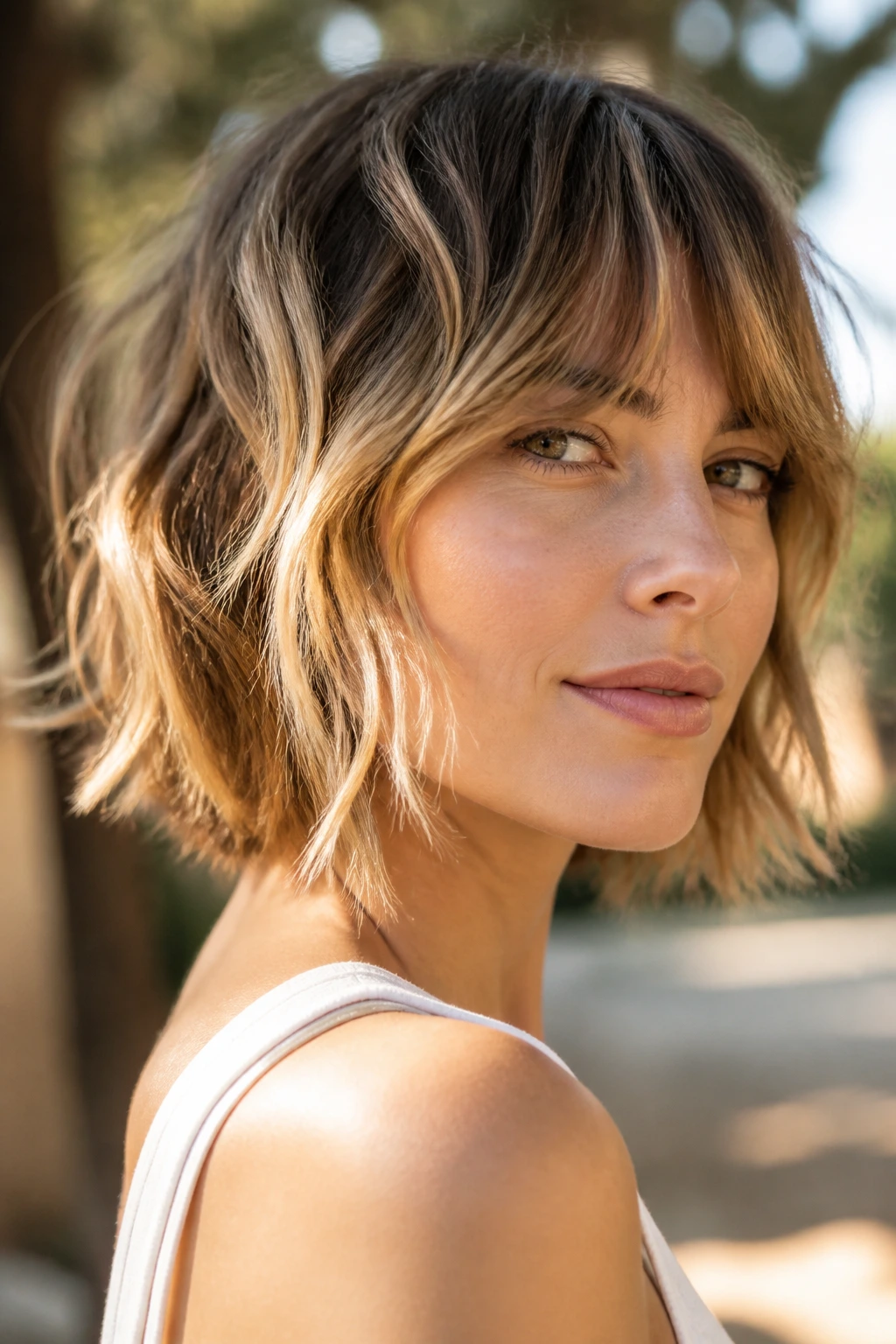
This one lives closer to a shag than a classic bob, and that’s the point. The layers are looser, the fringe is softer, and the ends are broken into irregular little pieces that move when you turn your head. Sun-kissed gold balayage gives it a worn-in brightness that looks natural on wavy hair.
It’s a nice haircut for people who don’t want a perfect outline. If your styling routine is more air-dry than blowout, this shape makes sense. The gold pieces should be placed where the layers flick outward, not just around the hairline, so the color shows when the cut moves.
A salt spray or lightweight wave spray is enough. You’re not trying to make the hair smooth. You’re trying to make the texture visible.
14. Blunt-Edge Choppy Bob with Soft Pearl Highlights
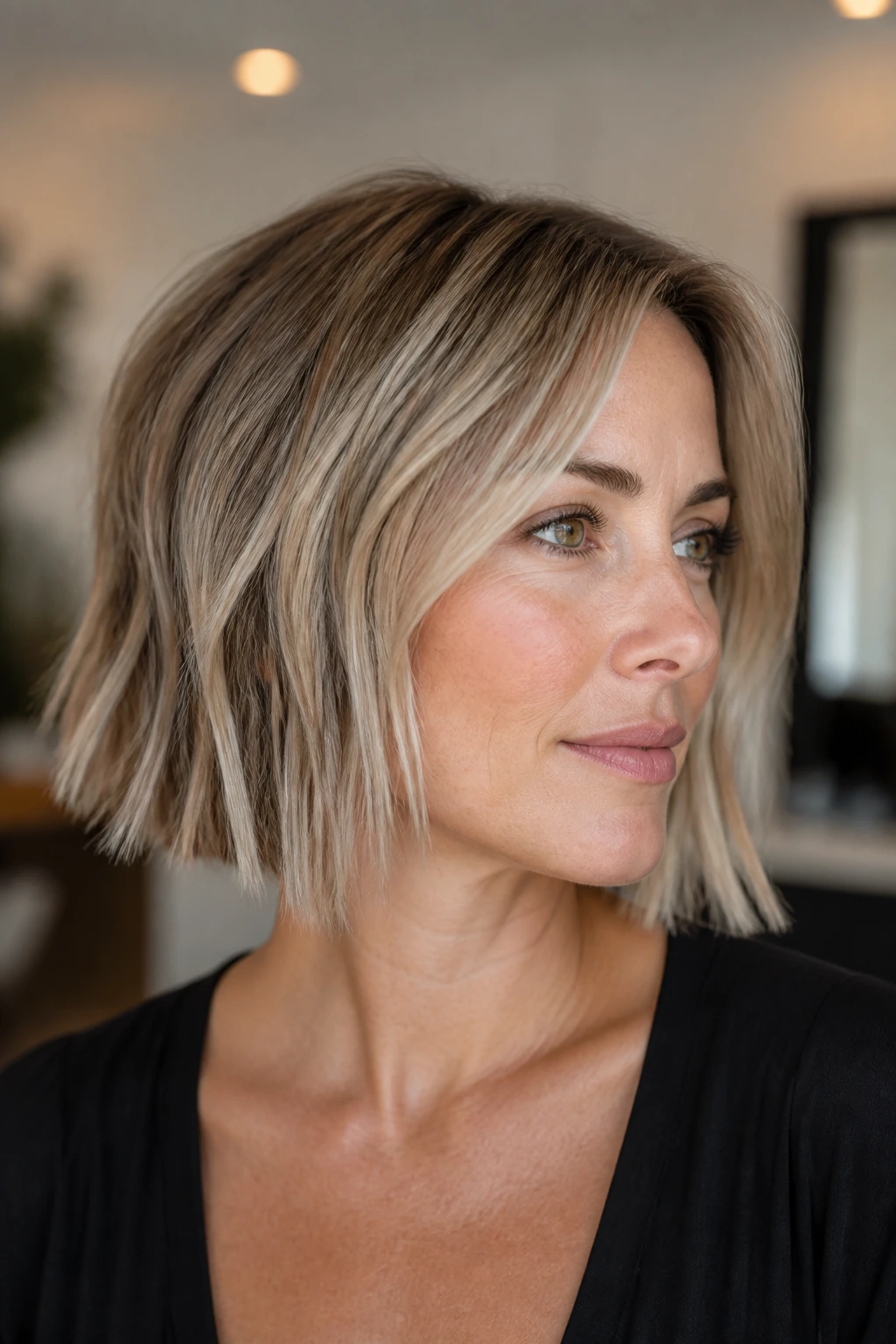
A blunt edge and choppy texture sound like opposites, but they can work together if the balance is right. The perimeter stays clean and crisp, while the ends get just enough point-cutting to keep them from locking into one hard line. Soft pearl highlights lift the surface without turning the bob bright.
This is one of my favorite options for fine hair that still needs shape. The blunt line creates the impression of thickness, and the internal texture keeps it from feeling stiff. Pearl-toned balayage is useful here because it reflects light in a softer way than icy blonde. You get dimension, not glare.
If your hair is very flat at the roots, a little root powder or volumizing spray near the crown can make a real difference. The cut wants lift, even if the color is quiet.
15. Side-Part Bob with Walnut Balayage
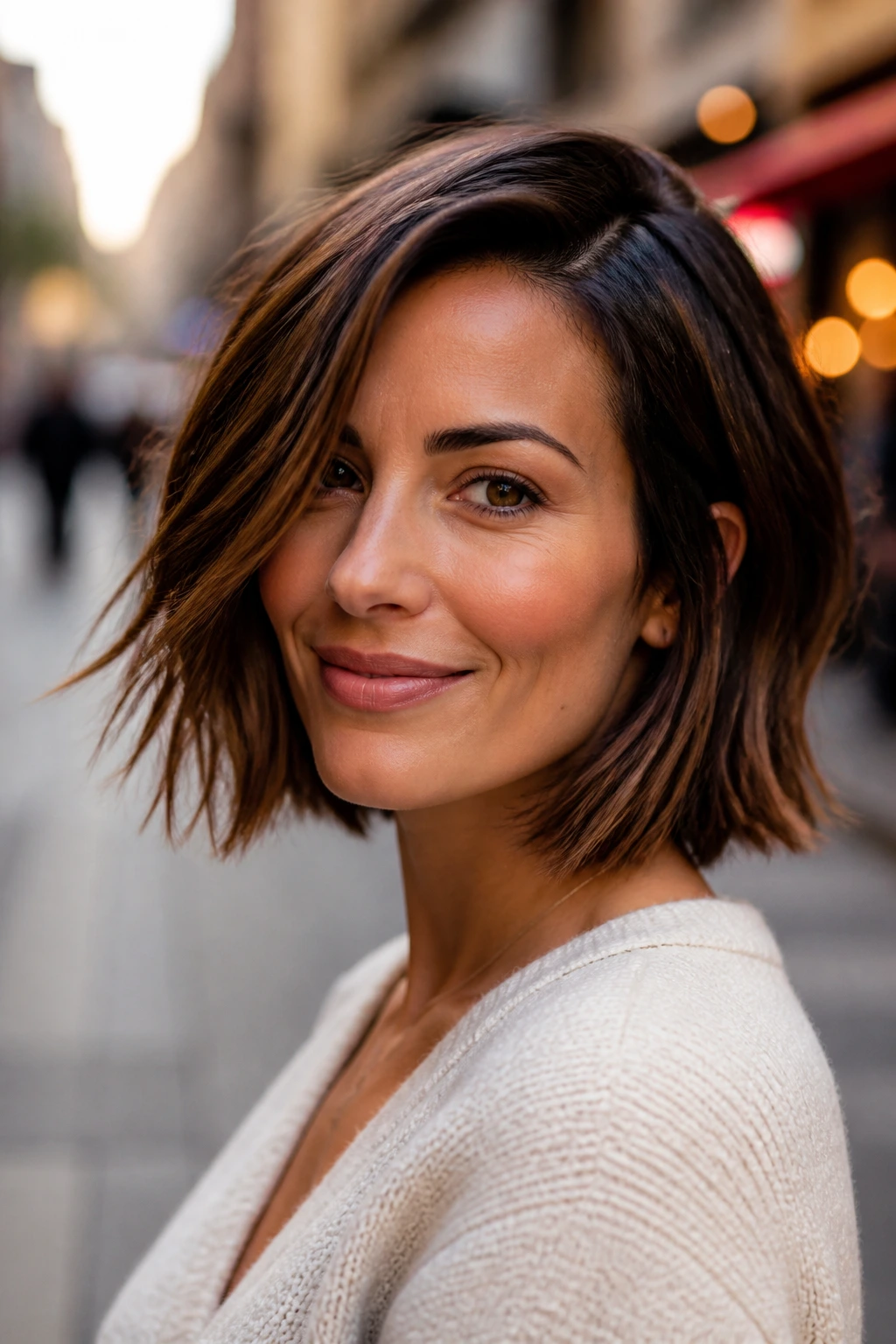
A side part changes the entire conversation. Suddenly the bob has swing, one side gets more volume, and the face frame feels a little more dramatic. Walnut balayage, with its deep brown and soft amber tones, keeps the look rich without pushing it into copper territory.
This haircut is good for people who want a bob that looks better once it’s been worn a few hours. The side part creates a natural bend, and the choppy ends stop the heavier side from sinking. If your hair is medium to thick, this shape can make the length feel lighter without actually shortening it much.
Try flipping the part to the opposite side every few washes. It wakes up the roots. Small thing. Big payoff.
16. Feathered Bob with Rose Gold Balayage
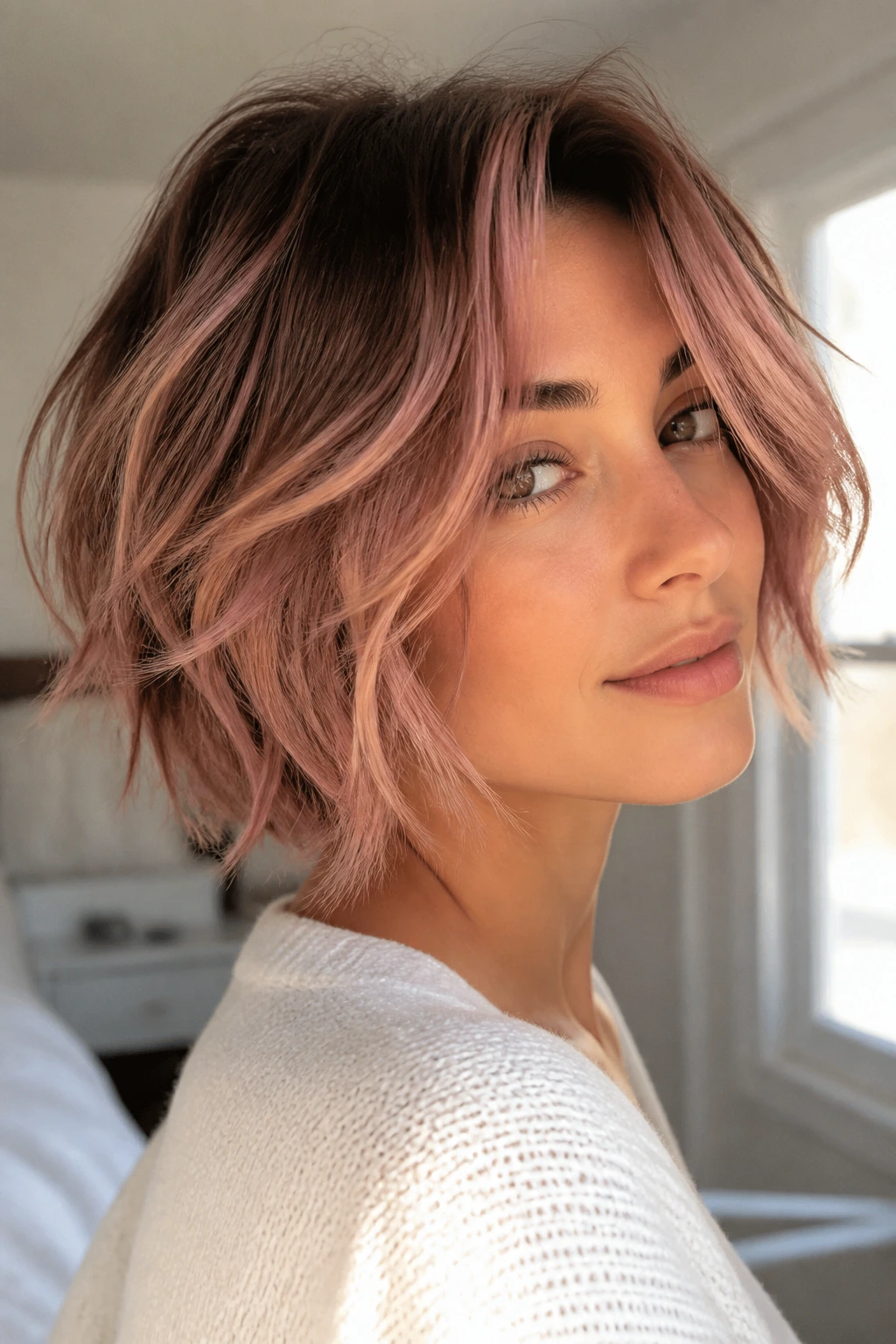
Rose gold is not the easiest tone to pull off on paper, but on a feathered bob it can look surprisingly clean. The softness of the layers keeps the color from feeling sugary or overdone, and the balayage placement lets the pinkish warmth sit in a few well-chosen spots instead of all over the head.
This version feels lighter than copper and less icy than blonde. It’s a good choice if you want the haircut to read fresh but not loud. The feathered ends help the rose gold move through the perimeter, and the overall shape stays airy.
If your hair pulls warm naturally, ask for more beige in the formula. If it’s already cool, a little more gold keeps the rose from turning dull.
17. Tousled Bob with Toffee Balayage
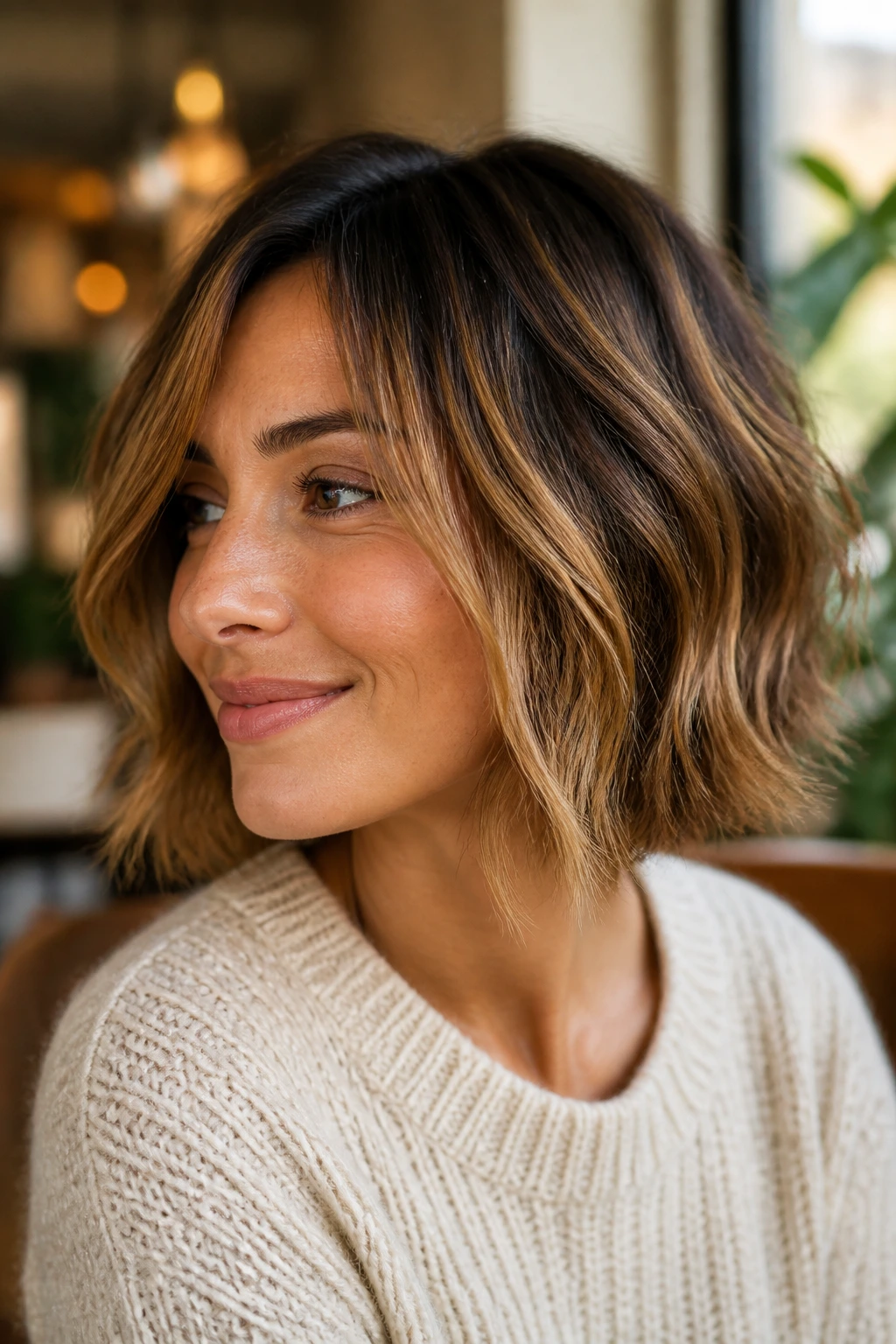
This is the easygoing one. The cut isn’t too short, the layers aren’t too sharp, and the toffee balayage gives the whole thing a soft, lived-in feel. On brown hair, the color sits somewhere between caramel and honey, which makes the texture look fuller.
I reach for this idea when someone wants a bob that still fits into a normal morning. A bit of mousse, a rough blow-dry, maybe a few loose bends with a wand, and you’re done. The trick is not to over-style it. Toffee looks best when the ends have a little separation and the roots keep some lift.
If you want volume without a round-brush marathon, this is the version to copy.
18. Micro Bob with Dimensional Brunette Balayage
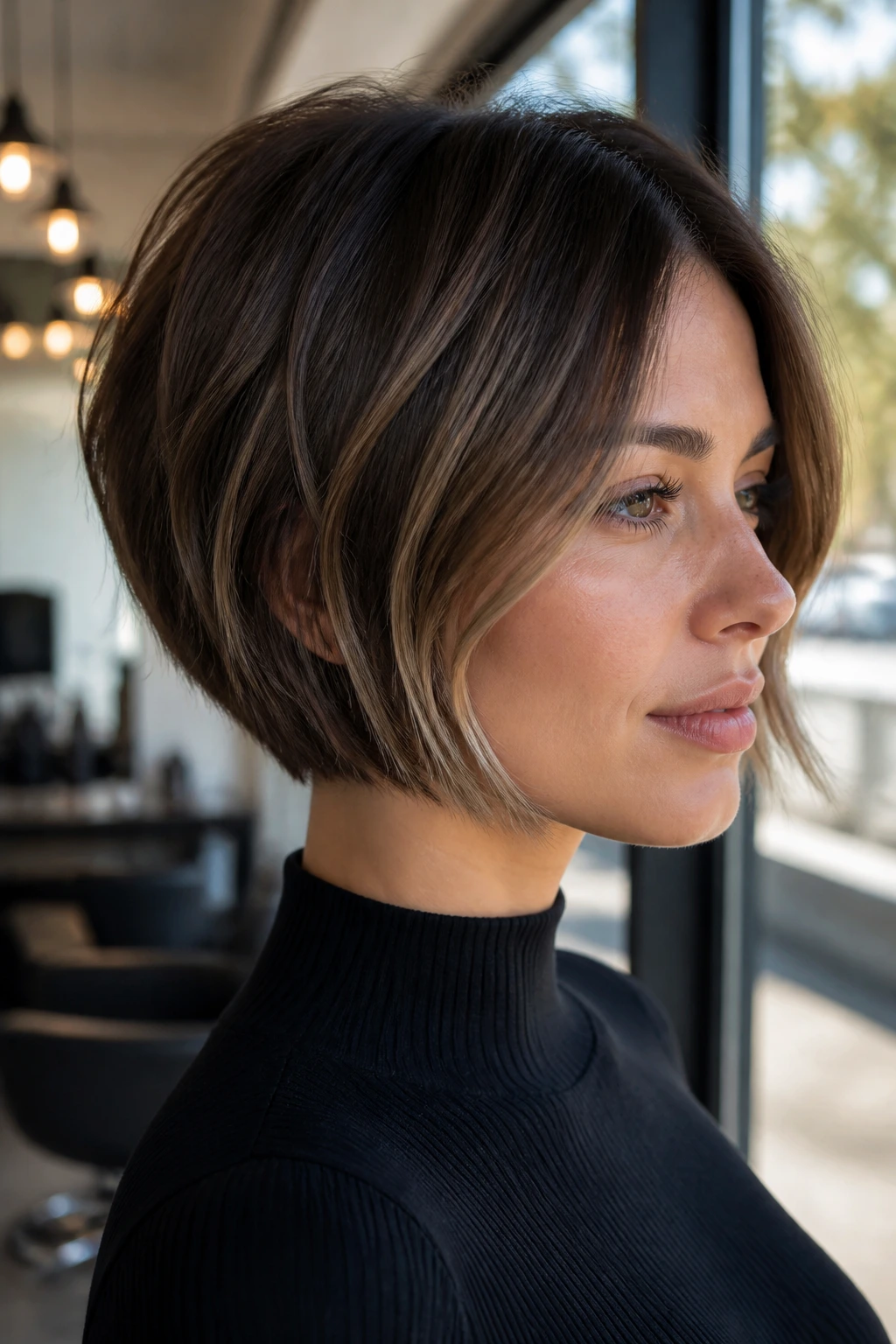
A micro bob is short enough to feel deliberate the second you see it. The line sits high on the neck, the ends are clean, and the shape shows off the jaw in a way longer bobs can’t. Dimensional brunette balayage keeps it from feeling flat or harsh.
This one is not for people who want to hide behind their hair. It makes the cut do the work. The balayage should be subtle, with a few lighter brunette threads placed through the top and sides so the shape doesn’t disappear into one solid block of color. On very dark bases, even a small shift in tone makes a difference.
It’s chic in a blunt, honest way. Short hair, but not boring.
19. Deeply Layered Bob with Platinum Ribbon Balayage
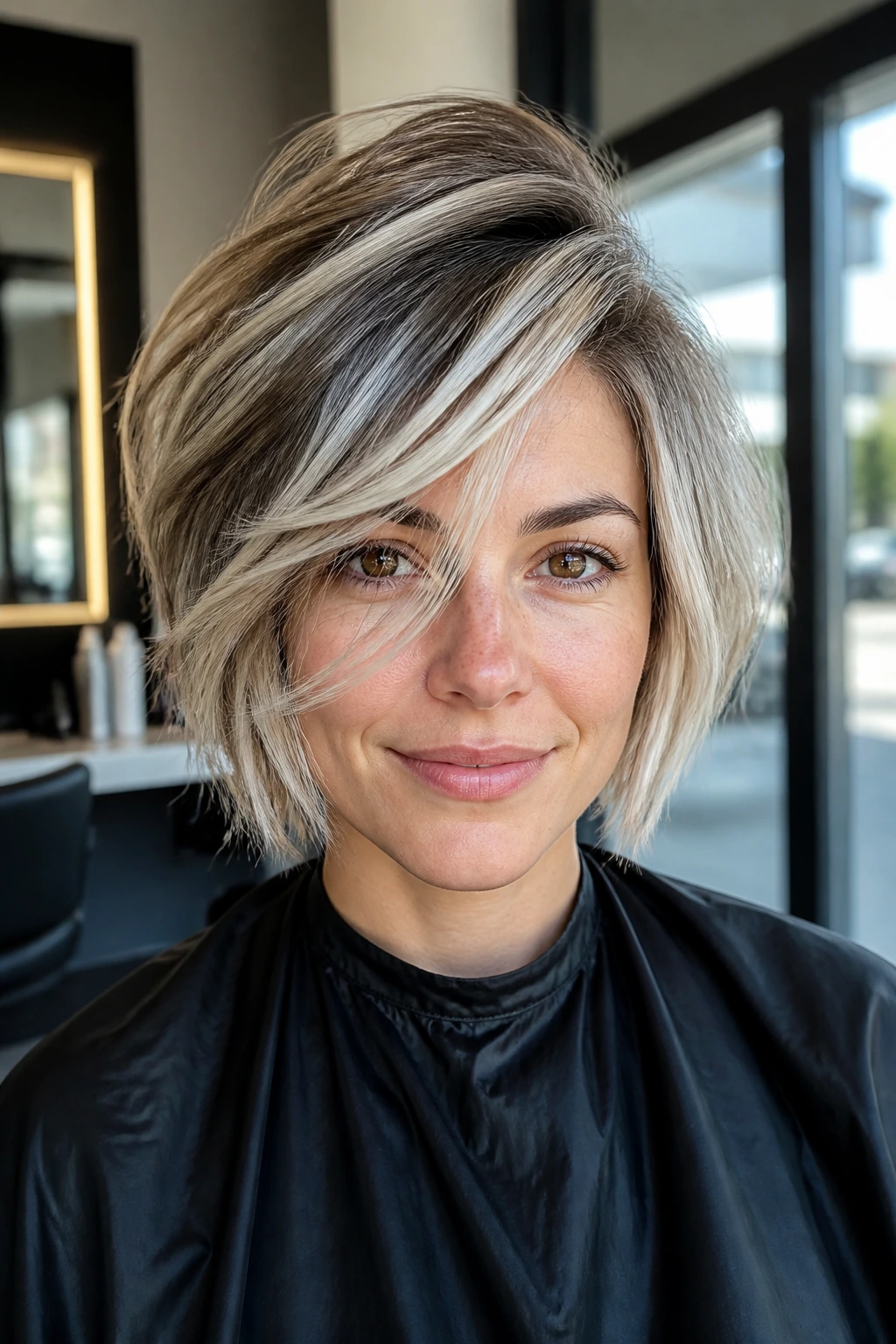
Here’s the bold one. Deep layers create a lot of lift, and platinum ribbons add contrast that reads from a distance. On thick hair, this can be gorgeous because the shape has room to hold the layers without collapsing into a triangle.
The catch is maintenance. Platinum is unforgiving if the cut goes stale or the color gets brassy. You need a stylist who understands how to keep the ribbons narrow enough to look woven in, not pasted on top. If the highlights are too wide, the bob loses its texture and starts to look striped.
Use this version if you want the haircut to feel a little dramatic. It likes a strong side part, a clean blowout, and a bit of attitude.
20. Wet-Look Bob with Smoky Beige Balayage
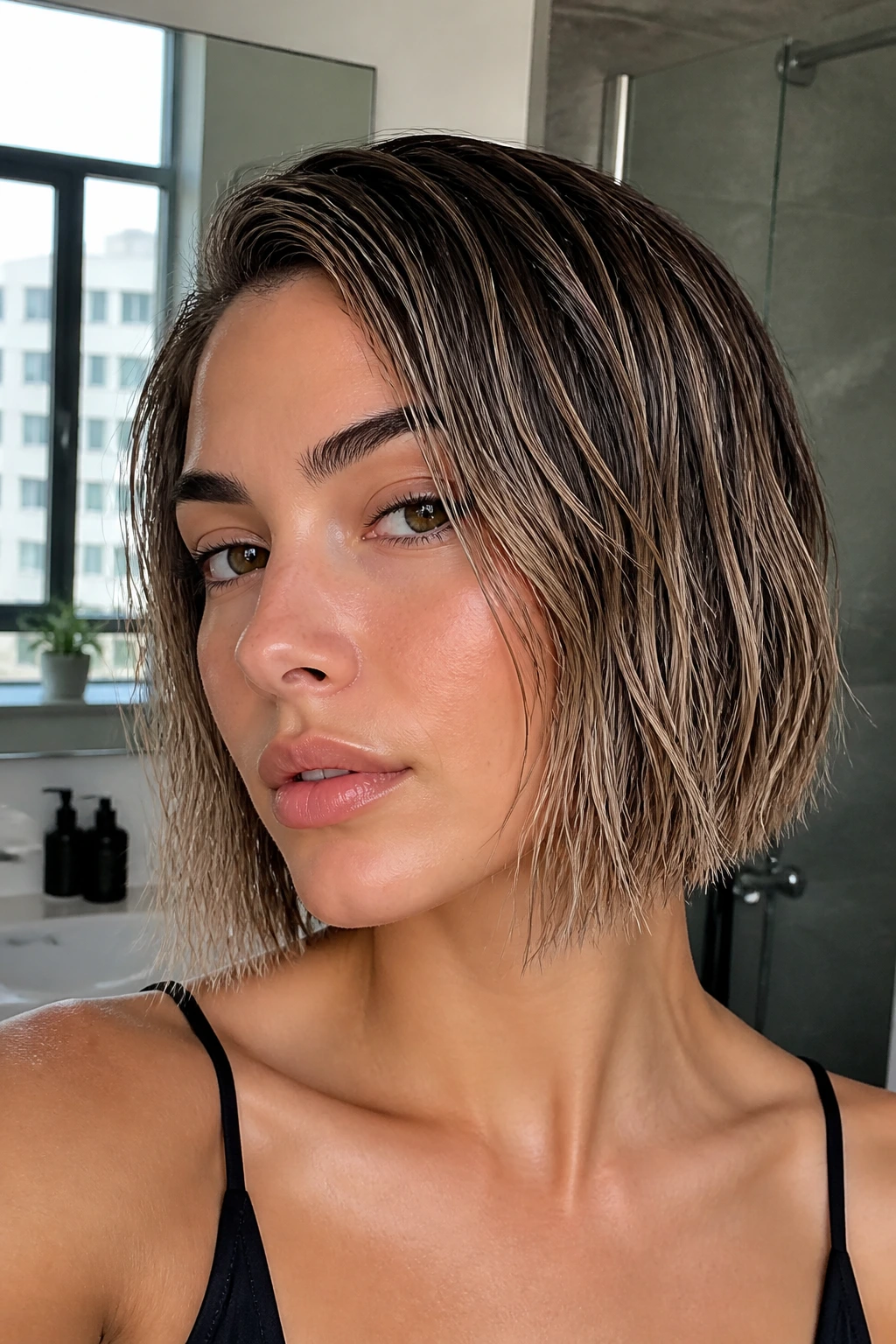
This is the sleek cousin in the group. The cut is still choppy, but the styling pushes it in a glossy direction: combed into shape, smoothed close to the head, and finished with just enough shine to catch the light. Smoky beige balayage keeps the color muted and expensive-looking without turning the hair flat.
The style works when you want polish but don’t want to lose the bob’s broken texture. The trick is leaving some irregularity at the ends. If the hair gets ironed perfectly straight from root to tip, the whole point disappears. Keep the perimeter neat. Let the ends stay a little uneven.
This is a strong choice for evenings, photos, or anyone who likes hair that feels controlled but not stiff.
21. Curved-Under Bob with Golden Apricot Balayage
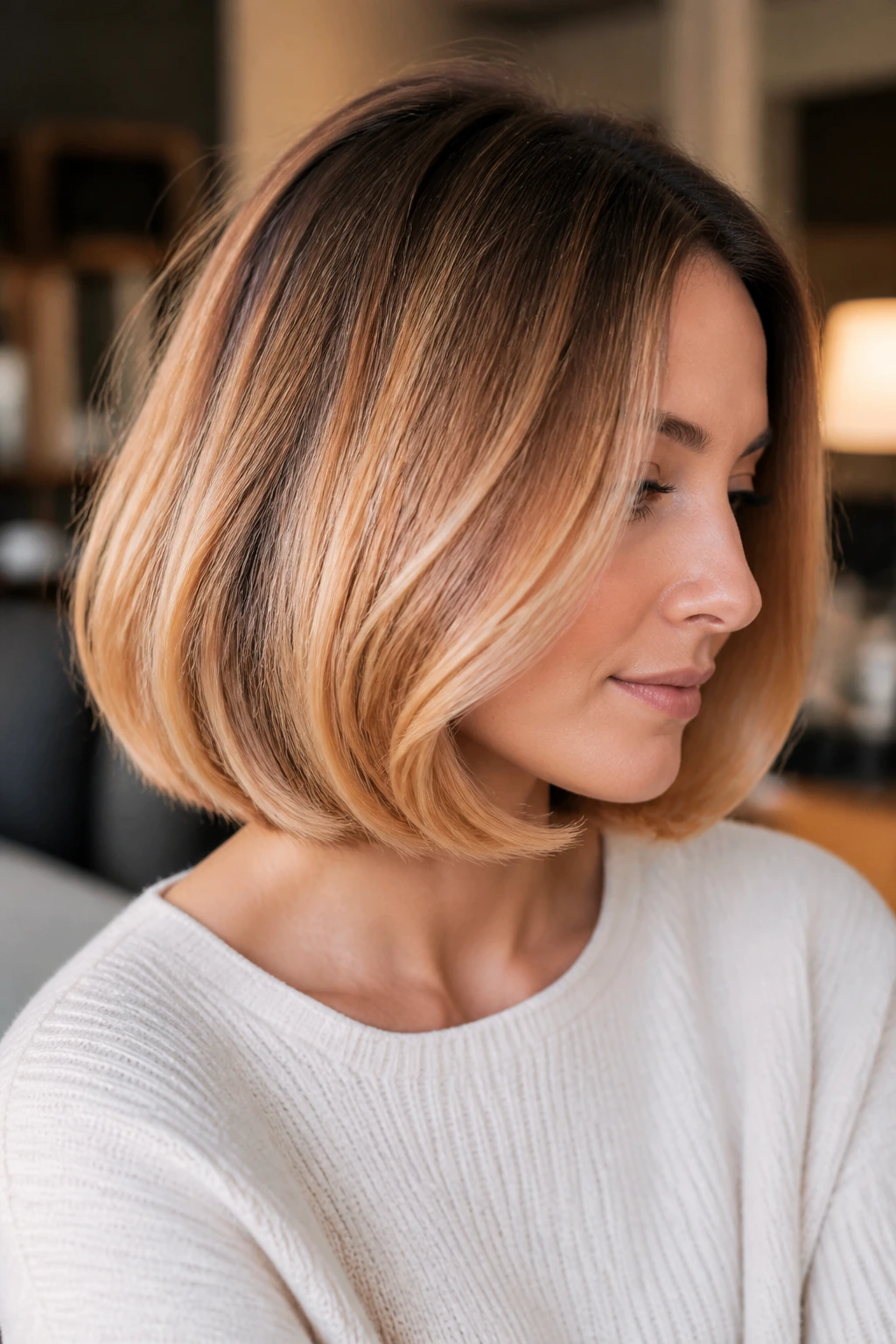
There’s a softness to a bob that curves under at the ends. It hugs the jaw, makes the neck look longer, and feels more rounded than angular. Golden apricot balayage adds warmth in a way that looks especially nice when the hair catches indoor light.
This shape can be a good fix if your hair tends to look sparse at the ends. The curve makes the bob seem fuller, and the apricot tone gives the ends a warmer outline. It’s a friendly haircut, not a severe one.
A round brush and a quick bend under the perimeter are enough. Don’t overdo the layering. The curve itself is already doing a lot of the visual work.
22. Airy Bob with Multi-Tonal Mocha Balayage
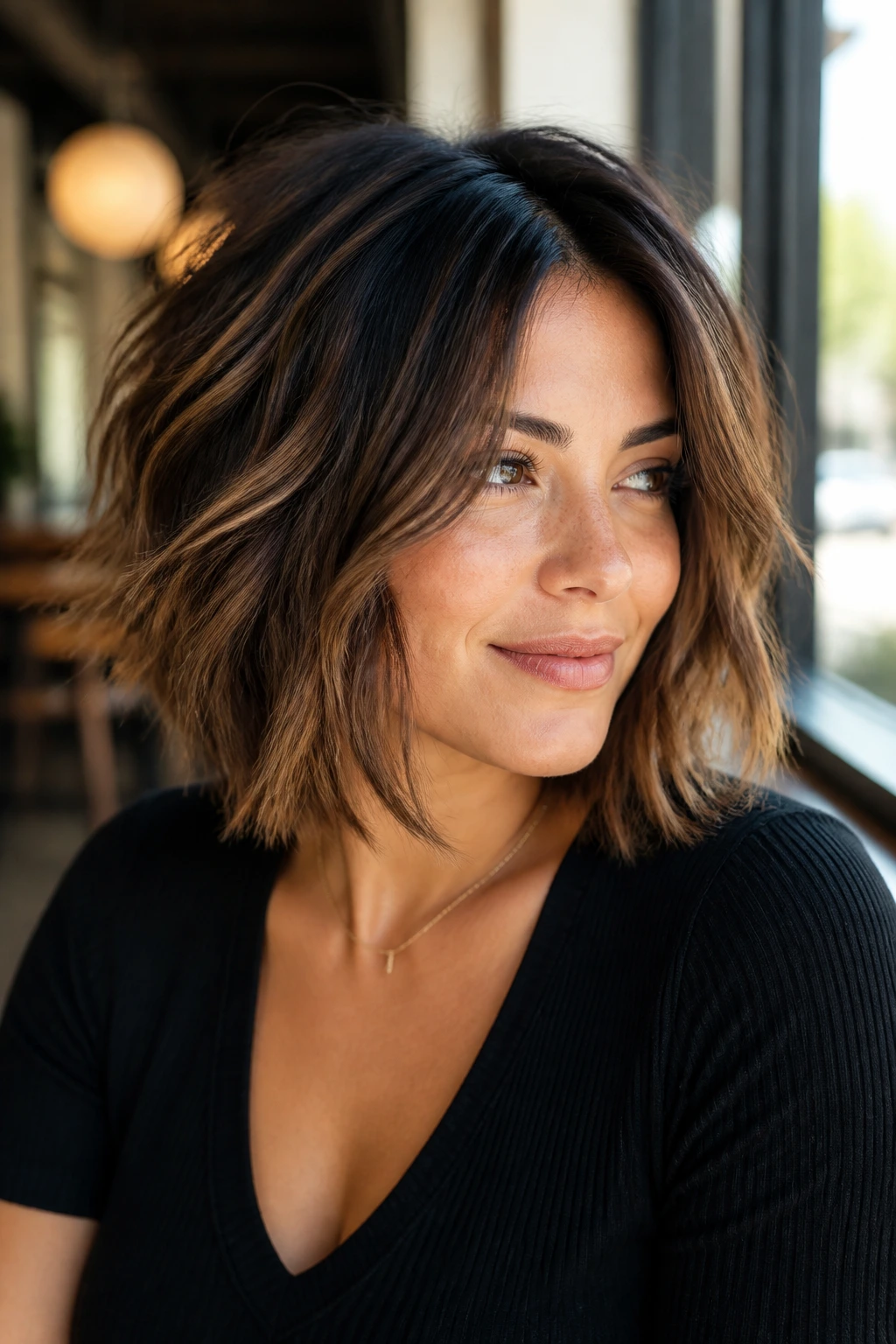
This is the brunette’s answer to a soft, dimensional bob. Instead of one flat brown, the hair carries a few mocha tones — lighter, deeper, cooler, warmer — all living inside the same family. The choppy ends keep those tones separate enough that you can actually see them.
It’s a strong option if you want brunette hair to look expensive without turning it blonde. The cut should stay airy, with visible movement through the ends and a bit of volume at the crown. The balayage should be subtle enough that you notice the dimension before you notice the color placement. That’s the sweet spot.
If your hair is naturally dark, this version gives you depth without a hard grow-out line. And that matters. A lot.
Why Choppy Layers Make Balayage Look Softer
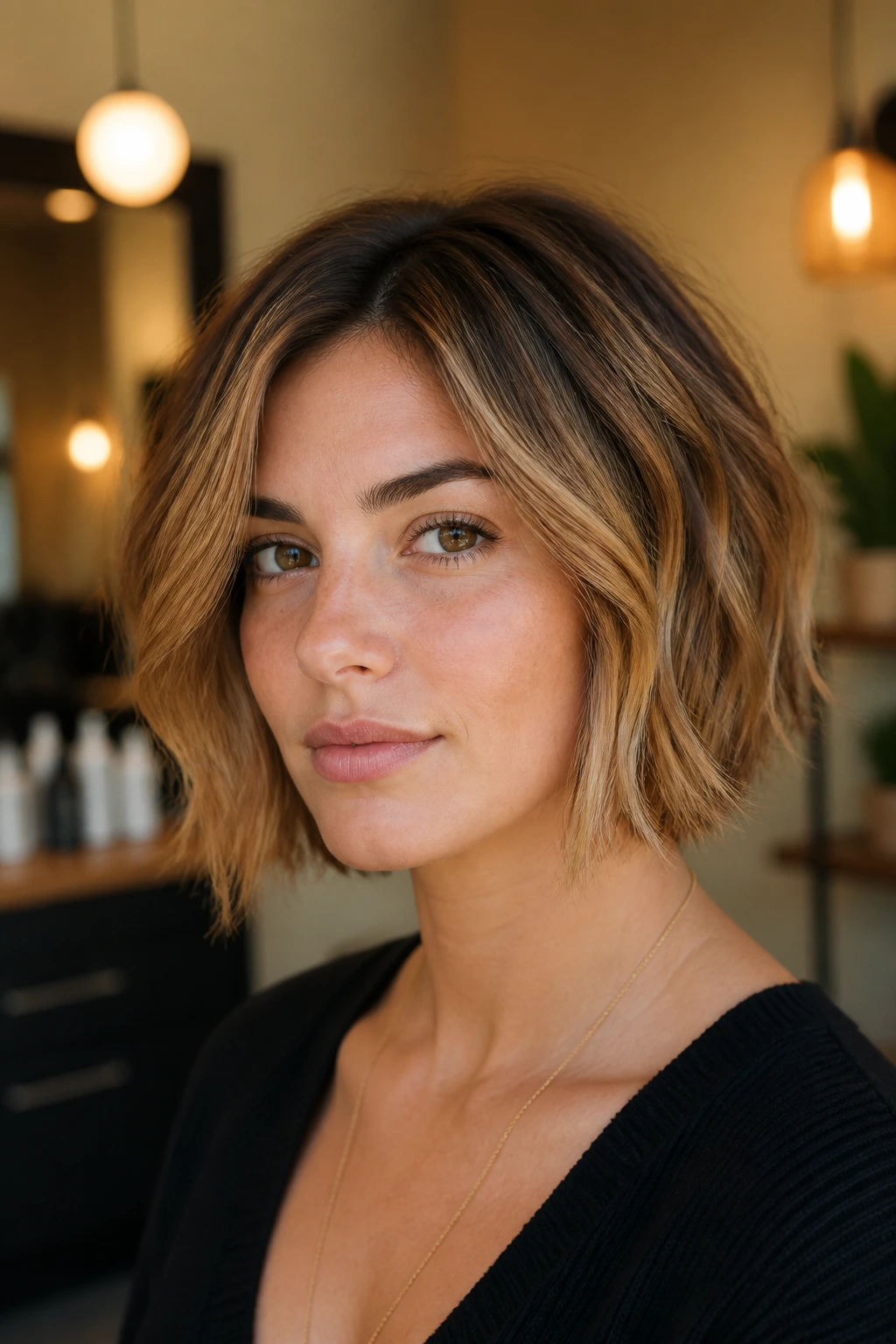
Balayage works best when the hair has somewhere for the light to go. On a flat, one-length bob, the color can sit like a stripe. On a choppy bob, the broken ends and small changes in length give the highlights room to flicker instead of shout.
That’s why this pairing looks so good in motion. The cut creates tiny ledges, and the balayage lands on those ledges in a way that feels soft and hand-painted. A good colorist usually leaves more depth at the root than people expect, then builds brightness through the midlengths and ends. On a bob, that depth matters. It keeps the shape from turning into a helmet of color.
There’s also a practical side. When the ends are textured, the grow-out looks less abrupt. You can go a little longer between color sessions because the root line doesn’t have to do all the visual work. The haircut does part of that for you.
How to Pick the Right Bob for Your Face and Hair Texture
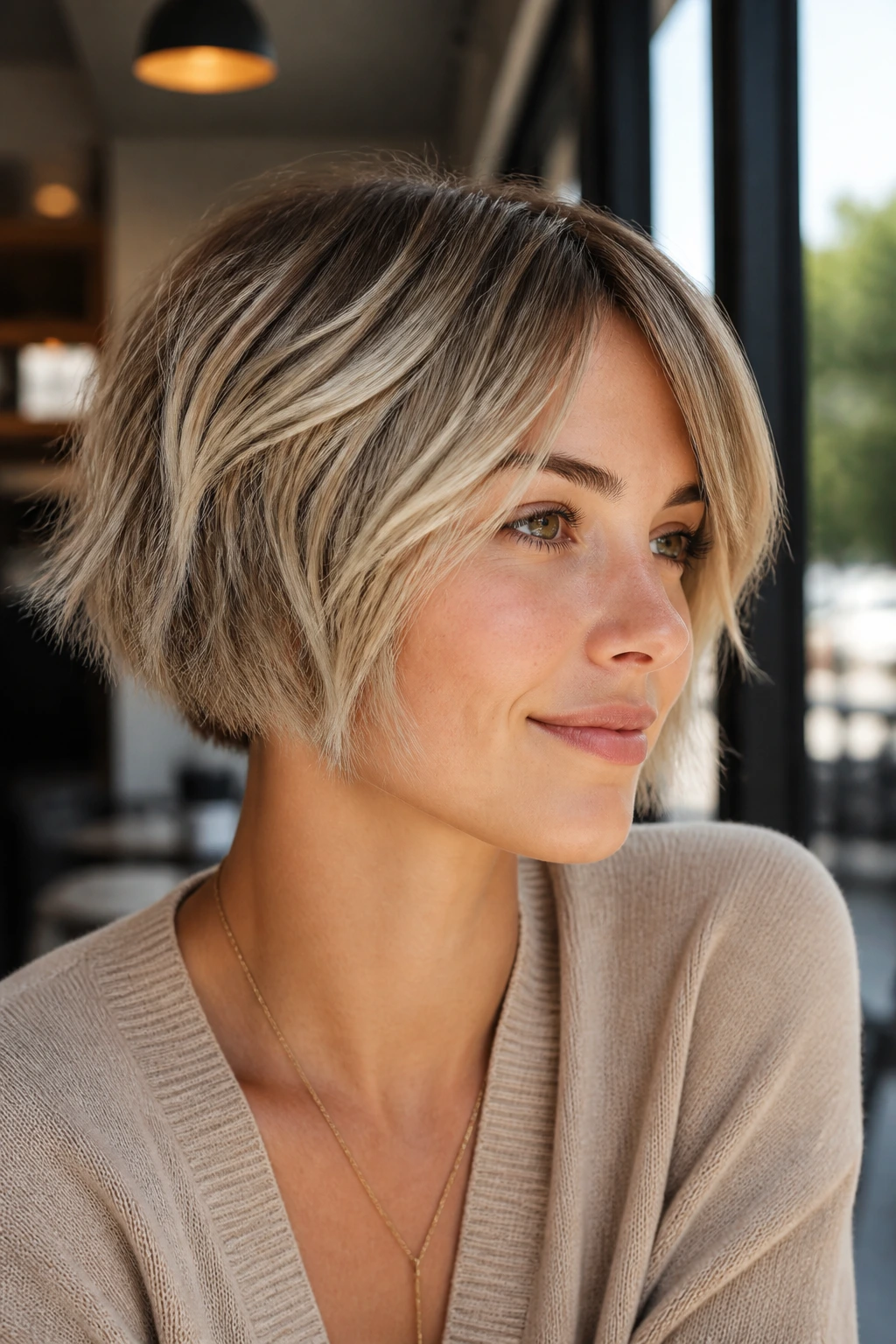
Fine Hair Wants Clean Lines, Not Too Many Short Layers
Fine hair usually looks better in a bob that keeps some weight at the perimeter. Too many short layers at the top and the ends start to look wispy fast. A chin-length or collarbone bob with soft choppiness works better than aggressive razoring.
Balayage can help here, too. Lighter ribbons placed around the face and through the ends create the look of fullness without needing more hair than you have.
Thick Hair Needs Bulk Removed in the Right Places
Thick hair can hold a choppy bob beautifully, but only if the weight is taken out underneath. If the cut keeps too much density at the corners, the whole shape can puff into a triangle. Ask for internal layering and point-cut ends rather than heavy thinning shears.
Color should support the cut, not fight it. Caramel, walnut, copper, and chestnut all work well because they show the shape without turning the bob into one bright surface.
Curly and Wavy Hair Need Space to Move
Curl shrinkage changes everything. A bob that looks chin-length when wet may land much shorter once it dries. Cutting dry or nearly dry helps the stylist respect the curl pattern, and balayage should be painted on the larger clumps so the highlights follow the shape of the curl instead of breaking it apart.
This is one place where choppiness helps a lot. The layers stop the shape from looking like a triangle and give the curls room to sit instead of stacking.
Straight Hair Needs Texture or It Will Go Flat
Straight hair is honest. It shows every line. If the bob is too clean, the haircut can look hard and a little rigid. A few broken ends, a slight angle, or a side part adds movement without turning the cut into a shag.
Balayage is useful here because it gives straight hair visual texture. Even a small amount of lightness through the midlengths can keep the style from looking like one solid sheet.
What to Ask for in the Salon Chair
A lot of bad bob cuts happen because the haircut and color are described in vague words. “Make it choppy” can mean six different things to six different stylists. Better to describe the shape, the edge, and the color placement separately.
Try this: “I want a bob that keeps some weight at the perimeter, but the ends should be point-cut or softly razored so it doesn’t look blunt.” Then say whether you want the length at the jaw, chin, or collarbone. If you like movement, tell them whether you style with a blow-dryer, wand, or mostly air-dry.
For the color, ask for balayage that starts in the midlengths and gets brighter toward the ends, with a softer frame around the face. If you want a root shadow, say so. If you don’t want high contrast, say that too. The difference between a soft beige bob and a striped one often comes down to one sentence in the chair.
Bring two photos if you can. One for the cut. One for the color. That avoids the common mess where a stylist loves the highlights but misses the outline, or nails the haircut and forgets the tone.
Tools, Products, and Small Things That Matter
-
Round brush, 1.5 to 2 inches: Useful for getting lift at the crown and a slight bend through the ends without making the bob too round.
-
Blow dryer with a nozzle attachment: The nozzle keeps airflow focused so the cut stays smoother and less puffy.
-
1-inch curling iron or wand: Best for quick bends in bob length hair; a larger barrel often makes the style too loose.
-
Heat protectant spray: Use it every time you style with heat, especially on balayage pieces that live at the ends.
-
Texturizing spray: A few sprays at the midlengths separate the choppy pieces and keep them from clumping.
-
Light mousse: Good for fine hair or flat roots; apply to damp hair before blow-drying.
-
Color-safe shampoo and conditioner: These help the balayage hold its tone and keep the ends from drying out.
-
Purple shampoo, if your bob is blonde-heavy: Use it sparingly so the lighter pieces stay clean without turning dull or silver.
-
Wide-tooth comb: Handy for curlier versions because it detangles without wrecking the shape.
-
Small sectioning clips: Makes styling easier when you’re working the hair in pieces instead of attacking the whole head at once.
How to Style the Cut at Home
The good news with a choppy bob is that it does not need perfect styling. The bad news is that if you flatten every strand, the cut loses all its charm. You need a little bend, a little separation, and a finish that doesn’t look too glossy unless you’re going for the wet look.
For a soft blowout, rough-dry the hair to about 80 percent first. Then use a round brush at the crown and front sections, rolling the ends just slightly under. Don’t chase symmetry. The whole point is that the ends don’t line up like soldiers.
For more texture, wrap 1-inch sections around a wand, leaving the last inch out. Alternate directions so the wave pattern doesn’t fall into one uniform curl. Once the hair cools, shake it out with your fingers and mist lightly with texture spray.
Air-dry versions need a little help at the roots. A small amount of mousse or curl cream goes in while the hair is damp, then the hair should be pushed into place and left alone. Touching it too much is where the frizz comes from.
Color Maintenance That Keeps Balayage Clean
Balayage is lower-maintenance than full highlights, but that does not mean maintenance-free. If the cut is short, the shape will show growth faster than longer hair does. Trim the bob every 6 to 8 weeks if you want the outline to stay crisp. Go longer and the ends start to flip, which changes the whole silhouette.
For color, a gloss or toner every 6 to 10 weeks keeps the tone from drifting too warm or muddy. Blonde-heavy versions may need purple shampoo once a week, left on for 2 to 3 minutes, especially if your water runs warm or hard. On brunette balayage, a color-safe cleanser and a good conditioner are often enough.
Heat is the other issue. Lower the styling tool to around 300 to 325°F if your hair is already lightened. Higher than that, and the ends start to feel rough fast. If the balayage looks dry before it looks faded, the solution is often moisture and a trim — not more color.
Common Mistakes That Flatten a Choppy Bob
-
Cutting too many short layers at the crown: The shape starts to puff out and the ends look thin. Ask for movement inside the cut, not a stacked dome.
-
Painting the balayage too high: The hair can look striped or wide at the root. Keep the brightest pieces lower through the midlengths and ends unless you want a dramatic money piece.
-
Thinning fine hair with a heavy hand: The ends go see-through and never recover their shape. Point-cutting usually gives a cleaner result.
-
Styling it too straight: A pin-straight bob can look severe and lose the choppy character. Leave a slight bend in the ends so the layers show.
-
Letting the trim schedule slide: Once the perimeter gets fuzzy, the whole haircut looks less intentional. Short bobs need regular clean-up, plain and simple.
-
Using too much oil or cream on the ends: The pieces stick together and the color stops showing. Use the lightest amount you can get away with.
Smart Variations and Edits
Longer Collarbone Version
Keep the length just below the shoulders and soften the layers. This works well if you want the feel of a bob but need enough length to tuck behind the ear or throw into a clip.
Fringe and Face Frame
Add a soft fringe, curtain bangs, or a brow-skimming piece in front. It makes the bob feel less severe and gives the balayage a place to shine around the eyes.
Cool Brunette Swap
Choose mushroom, ash brown, or smoky beige instead of honey or caramel. This shift works when you want the cut to feel quieter and a bit cleaner.
Curly-Friendly Shape
Keep the perimeter a little longer and let the layers follow the curl pattern instead of forcing a round outline. Balayage should stay broad and painted on the bigger clumps.
Sharper Evening Version
Ask for a cleaner line, fewer flyaway layers, and a gloss finish. The color can stay the same; the styling and edge do the work.
Frequently Asked Questions
Will a choppy bob with balayage work on fine hair?
Yes, but the cut needs restraint. Fine hair usually looks best with a clean perimeter and a few soft interior pieces, not lots of short layers that make the ends look thin. Balayage can help by creating the look of depth and fullness.
Is this haircut high-maintenance?
The color is easier than a full highlight schedule, but the cut itself likes regular trims. If you want the shape to stay sharp, book a clean-up every 6 to 8 weeks. Let it go longer and the ends lose that piecey look.
Can I get balayage on dark brown hair without going blonde?
Absolutely. Caramel, chestnut, walnut, copper, and mocha tones all work on dark brunettes. A good colorist will keep enough depth at the root so the finish looks dimensional instead of flat.
What if my hair is curly and shrinks a lot?
Ask for the cut to be done dry or nearly dry. That lets the stylist see where the curl lands instead of guessing. The balayage should be painted on larger curl clumps so the color follows the pattern instead of breaking it apart.
How do I stop the bob from flipping out at the ends?
That usually happens when the cut grows past its clean outline or the hair is dried too aggressively. A quick bend under with a round brush or flat brush can help, but a trim is the real fix if the ends have gone too long.
Can I air-dry this style?
Yes, and some versions look better that way. Use a light mousse or curl cream, then leave the hair alone while it dries. If you keep touching it, the choppy pieces can turn fuzzy.
Is balayage better than foils for this haircut?
For most choppy bobs, balayage gives a softer grow-out and a more hand-painted look. Foils can be useful if you want brighter contrast or a lighter blonde result, but they often read sharper and need more upkeep.
How do I grow this into a lob later?
Let the length pass the chin and keep the ends cleaned up as it grows. The bob shape can shift into a lob without looking awkward if you maintain the balance around the front and don’t let the back lag too far behind.
A Bob With Room to Move
The best thing about choppy bob haircuts with balayage is that they don’t ask hair to pretend it’s something else. Fine hair gets lift. Thick hair gets air. Wavy and curly hair get room to do what they already want to do. The color isn’t there to shout; it’s there to show the haircut off from different angles.
That’s the real trick. Pick the length that suits your face, decide how much texture you can live with, and let the balayage do the quiet work of making the shape look lived-in instead of rigid. If you want a bob that still feels fresh after a full day of wear, start with one that has enough movement to catch the light and enough structure to hold its line.
