



Feathered bob haircuts have a very specific trick: they make a bob look lighter at the ends without turning it into a shag. That sounds small. It isn’t. A blunt bob can sit there like a helmet if the hair is dense, straight, or just a little tired-looking at the ends. Feathering changes the silhouette. The edge starts to move. The whole cut feels airier.
My bias is simple: the best feathered bob does not look overworked. You should see shape first, texture second. The feathering should soften the line, not shred it. That’s where a lot of salon photos go wrong. Too much slicing, too many layers, and the bob stops looking like a bob.
There’s also a practical side people miss. Feathering can take weight off thick hair, add lift to fine hair, and make wavy hair look more deliberate when it dries with a bend. But the details matter. A feathered bob on a straight, heavy-haired client needs a different approach than one on curls or fragile gray hair. Same name. Different haircut.
The best cuts below lean on those differences instead of pretending one shape fits everyone. Some are sharp and polished, some are soft and whispery, and a few are a little more undone. That variety is the whole point.
Why These Feathered Bob Haircuts Stand Apart
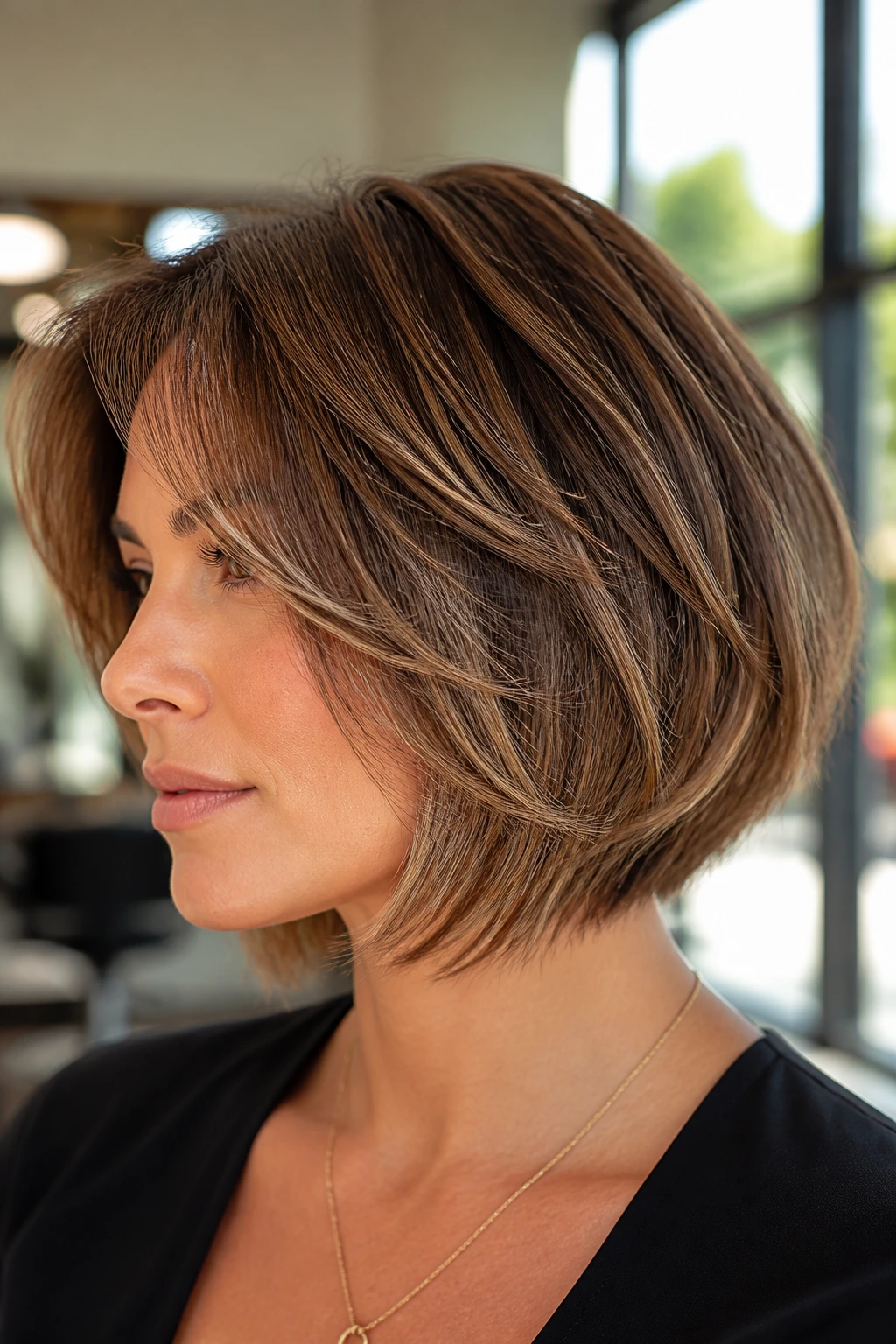
-
They keep the bob’s outline intact. Feathering should change the texture at the edge, not erase the perimeter that makes a bob read as a bob.
-
They work with hair density instead of fighting it. Fine hair needs gentle movement; thick hair needs weight removed in the right places; wavy hair needs the ends to be cut so they don’t balloon.
-
They style faster than a heavily layered cut. A good feathered bob often needs one round brush, a quick bend at the ends, or a light mist of texture spray. That’s it.
-
They grow out with less drama. The shape can stay clean for weeks because the feathering is woven into the cut, not chopped into obvious steps.
-
They can look polished or loose. Tuck one side behind the ear and it’s neat. Scrunch it with mousse and it gets softer and messier. Same haircut. Different mood.
-
They flatter the neck and jawline when the length is chosen well. A bob that hits at the jaw, chin, or just below it changes the whole read of the face.
1. Classic Chin-Length Feathered Bob
The chin-length feathered bob is the style that makes people realize how much movement a bob can have when the ends are treated with restraint. The line sits right at the chin, then the last half-inch to inch gets softened so it doesn’t look boxy. On straight hair, that tiny change keeps the shape from turning hard around the face.
Why this version works
A chin-length cut lands in a sweet spot for most face shapes because it shows the jaw without clinging to it. The feathering gives the edge a little lift, so the hair moves when you turn your head instead of hanging like a curtain. I like this cut best when the feathering stays concentrated around the perimeter and not all through the interior.
Good details to ask for
- Slight undercutting at the nape for a cleaner lay
- Soft point-cutting around the front edge
- Minimal top layering if the hair is fine
- A blunt base with feathered ends if the hair is thick
Best for: someone who wants a bob that looks styled even on a plain air-dry day. It’s calm, tidy, and never fussy.
2. Feathered Bob With Side-Swept Bangs
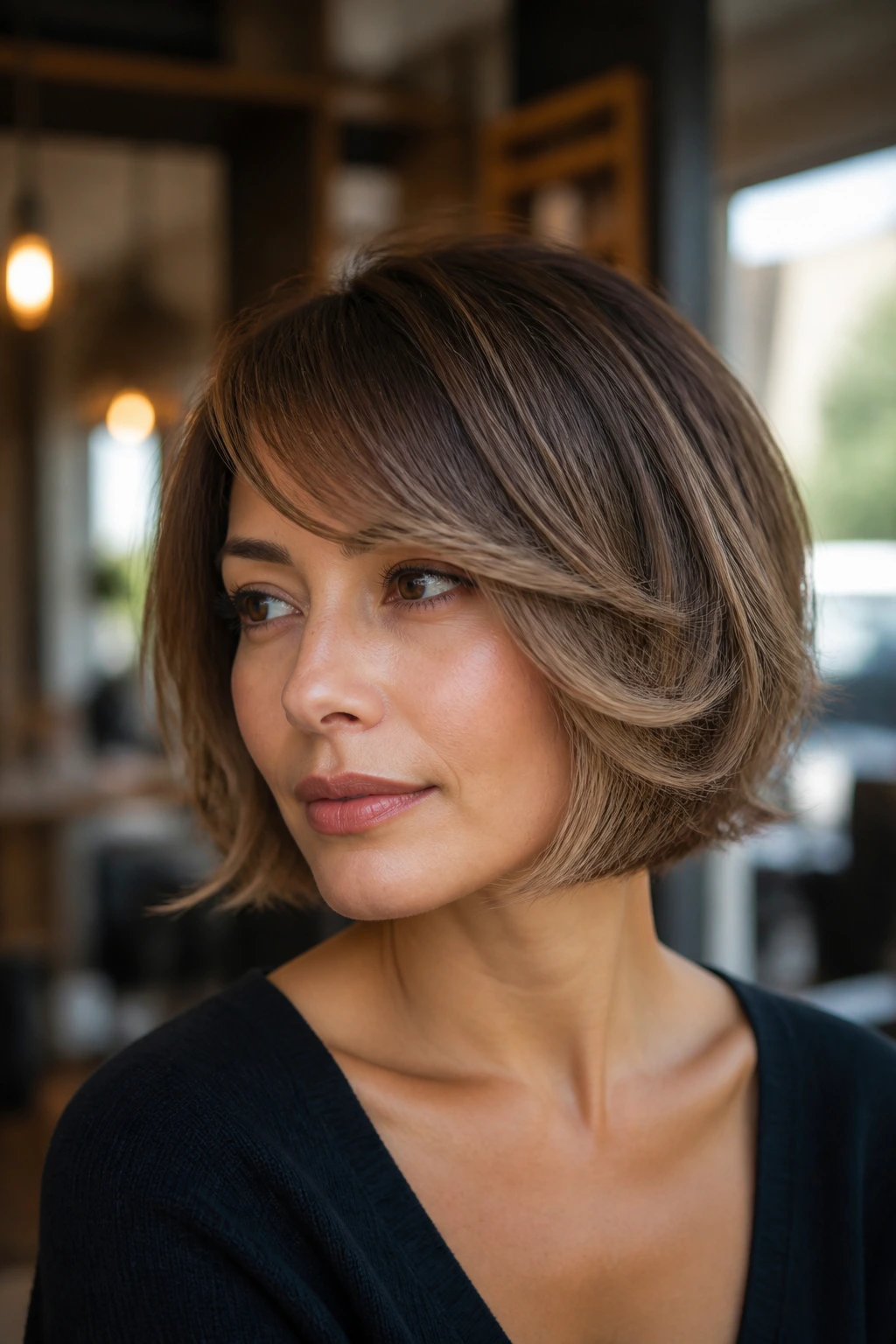
A side-swept bang changes everything here. It gives the cut a little motion before the bob even starts. That’s why this version feels softer around the face than a straight-across fringe. The bang slides into the feathered front pieces, so the whole haircut reads as one shape instead of two separate ideas.
The trick is to keep the bang long enough to blend, not so short that it fights the bob. If the hairline grows in quickly or the forehead is narrow, a bang that starts around the cheekbone usually behaves better than a short chopped fringe. And yes, the feathering should continue through the front so the bang doesn’t land as a heavy shelf.
I’d pick this cut for someone who likes a little polish without the maintenance of a full fringe. It’s easy to tuck, easy to pin, and easy to grow out if you change your mind.
3. French-Inspired Feathered Bob With Whisper Ends
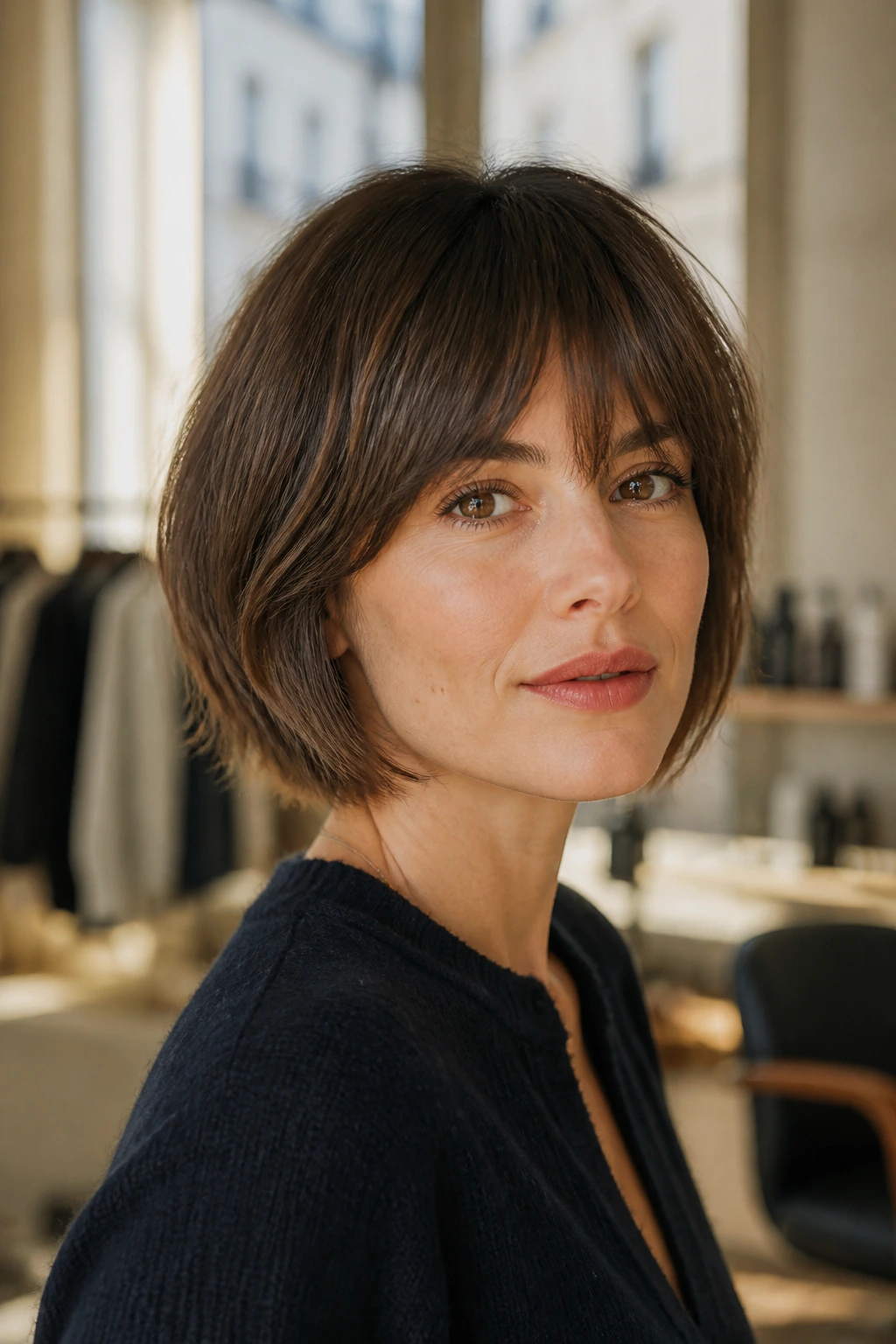
This one feels lighter and a little more lived-in. The length usually sits near the jaw, sometimes brushing just below, and the ends are feathered just enough to move instead of sit. The overall mood is soft, not fluffy. That distinction matters.
What makes it different
A French-inspired bob relies on shape first and texture second. You’re not looking for a lot of slicing or obvious layers. You want the edge to bend in a quiet way, especially if the hair is straight or only slightly wavy. That whispery finish is what keeps it from looking severe.
How I’d style it
- Air-dry until about 80 percent dry
- Bend the front pieces with a medium round brush
- Finish with a light mist of texture spray, not sticky hairspray
- Push the part slightly off center for a softer line
This cut loves a little imperfection. If every strand is blown perfectly smooth, it loses some charm. A slight bend at the ends is enough.
4. Stacked Feathered Bob for Fine Hair
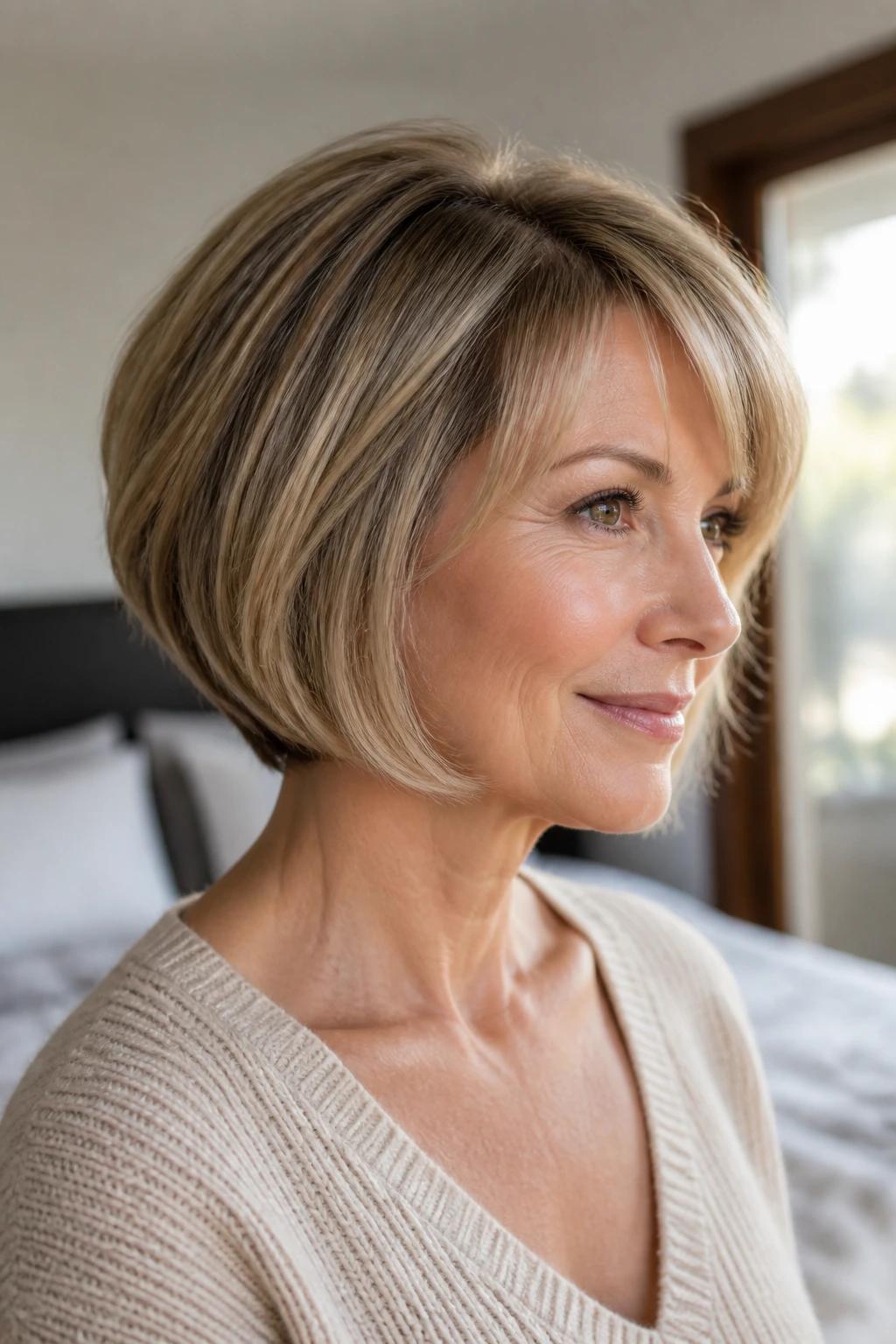
Fine hair can go flat fast, and a stacked feathered bob solves that without making the crown look puffy. The back is cut a touch shorter, with internal graduation that lifts the shape at the nape. Then the feathering at the ends prevents the line from feeling helmet-like.
The important part is moderation. Too much stacking on fine hair can make the crown too airy and the front too thin. I prefer a subtle stack and soft, feathered ends rather than a dramatic wedge. You want the haircut to look full from the side, not frizzy from the back.
This is the kind of bob that looks better after a quick round-brush blowout. Even ten minutes can change it. A root-lift mousse at the scalp and a small round brush at the crown will keep the back from collapsing by lunchtime.
5. Razor-Textured Feathered Bob for Thick Hair
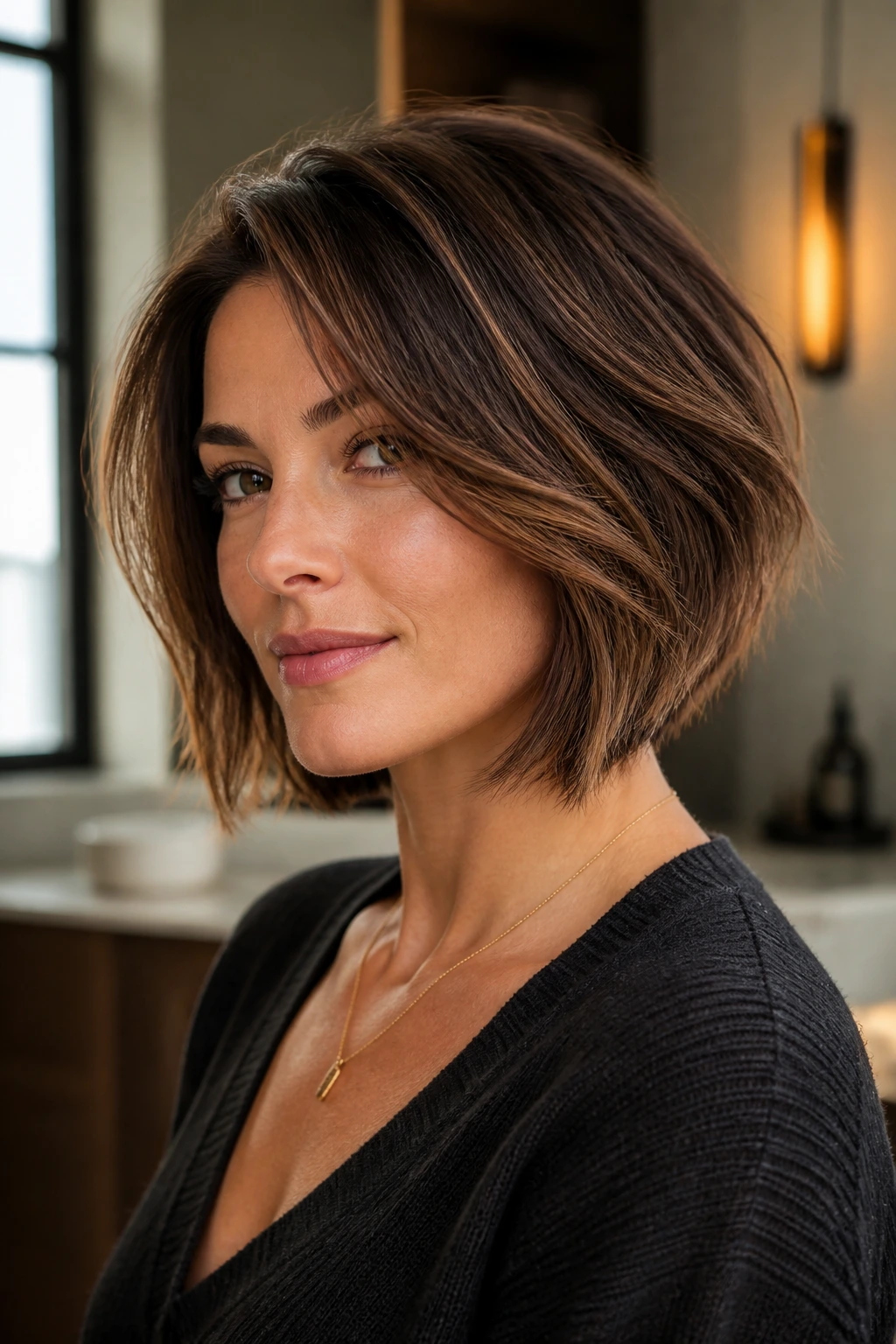
Thick hair needs subtraction. Not destruction. There’s a difference. The razor-textured feathered bob removes bulk from the right zones, especially through the ends and interior, so the cut stops feeling like a block. If the hair is coarse, heavy, or prone to puffing out at the bottom, this is one of the smartest ways to keep the bob light.
The mechanism
A razor or point-cut technique breaks up the edge so the hair doesn’t stack into a blunt shelf. That helps the shape swing inward instead of flaring out. The result is a bob that looks cleaner when it dries naturally, which thick-haired people tend to care about more than anyone else. No one wants to spend twenty minutes fighting the triangle.
Best features of this cut
- Softened perimeter
- Less bulk at the sides
- Easier tuck-behind-the-ear styling
- Better movement on heavy straight hair
I’d avoid over-thinning. If a stylist takes too much out, the ends can start to look wispy and uneven. Thick hair usually needs weight removed with care, not enthusiasm.
6. Wavy Feathered Bob With Collarbone Front Pieces
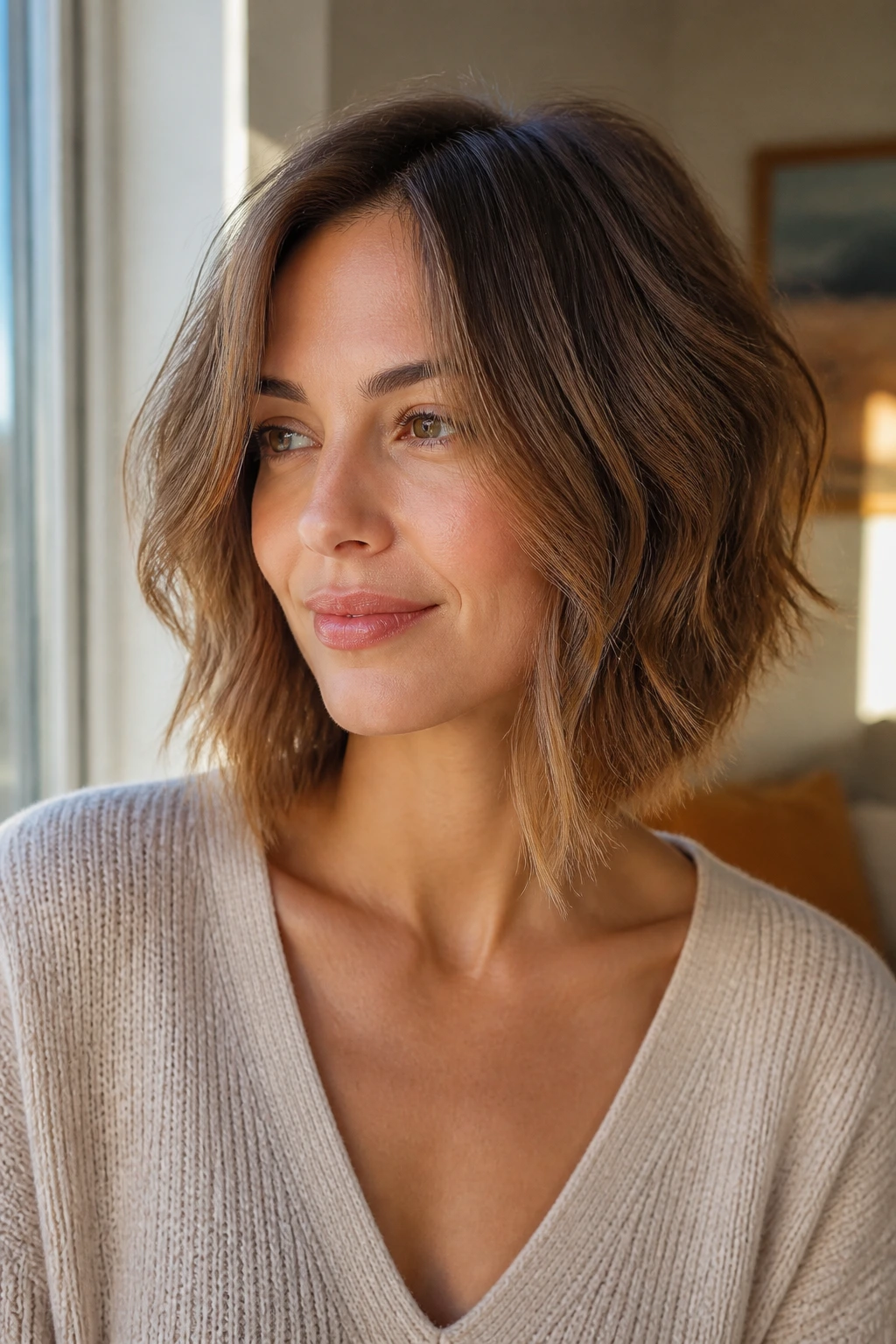
The first thing you notice is the swing. The second is the shape around the face. A wavy feathered bob with longer front pieces gives the cut a little forward motion, especially when the front grazes the collarbone and the back sits shorter. It’s a nice way to keep a bob from feeling too round.
What to ask for
Ask for feathering that follows the wave pattern instead of fighting it. That means the stylist should cut the front pieces to fall cleanly into the wave, not slice across them so the ends stick out. If your waves are loose, this cut can look casual and refined at the same time. If they’re tighter, the feathering should stay softer and longer.
A diffuser helps, but so does a patient air-dry. Scrunch in a light mousse, twist the front once or twice while damp, and let the ends settle on their own. The collarbone pieces keep the cut from feeling too short around the face, which is useful if you want a bob but not a tight crop.
7. Curly Feathered Bob That Respects the Curl Pattern
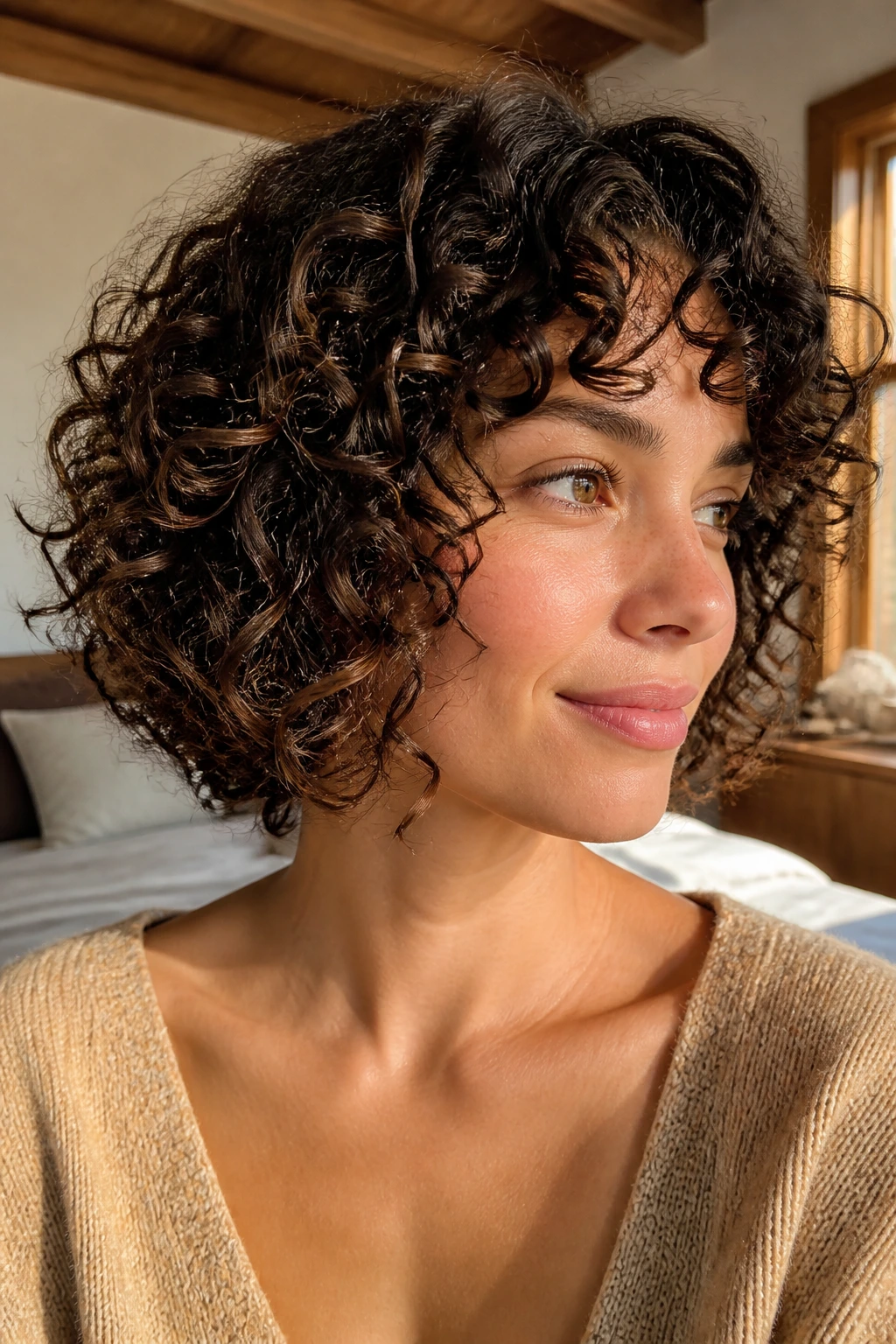
Curly hair does not like being bullied into a flat, feathered outline. So the best curly feathered bob is cut dry or nearly dry, curl by curl, with the feathering placed where the hair actually bends. That keeps the shape round and lively instead of puffed out.
A bad curly bob can feel like a helmet with frizz around the edges. This one avoids that by leaving enough length for the curls to spring. The feathering should be subtle, almost invisible when the hair is wet, and much more obvious once the curls dry. That’s the whole trick.
I like this cut for people who want movement without losing the curl family. It works especially well when the nape is kept a little cleaner and the sides are left to cascade. The result is shape without bulk, and curls that still look like themselves.
8. Inverted Feathered Bob With a Tucked Nape
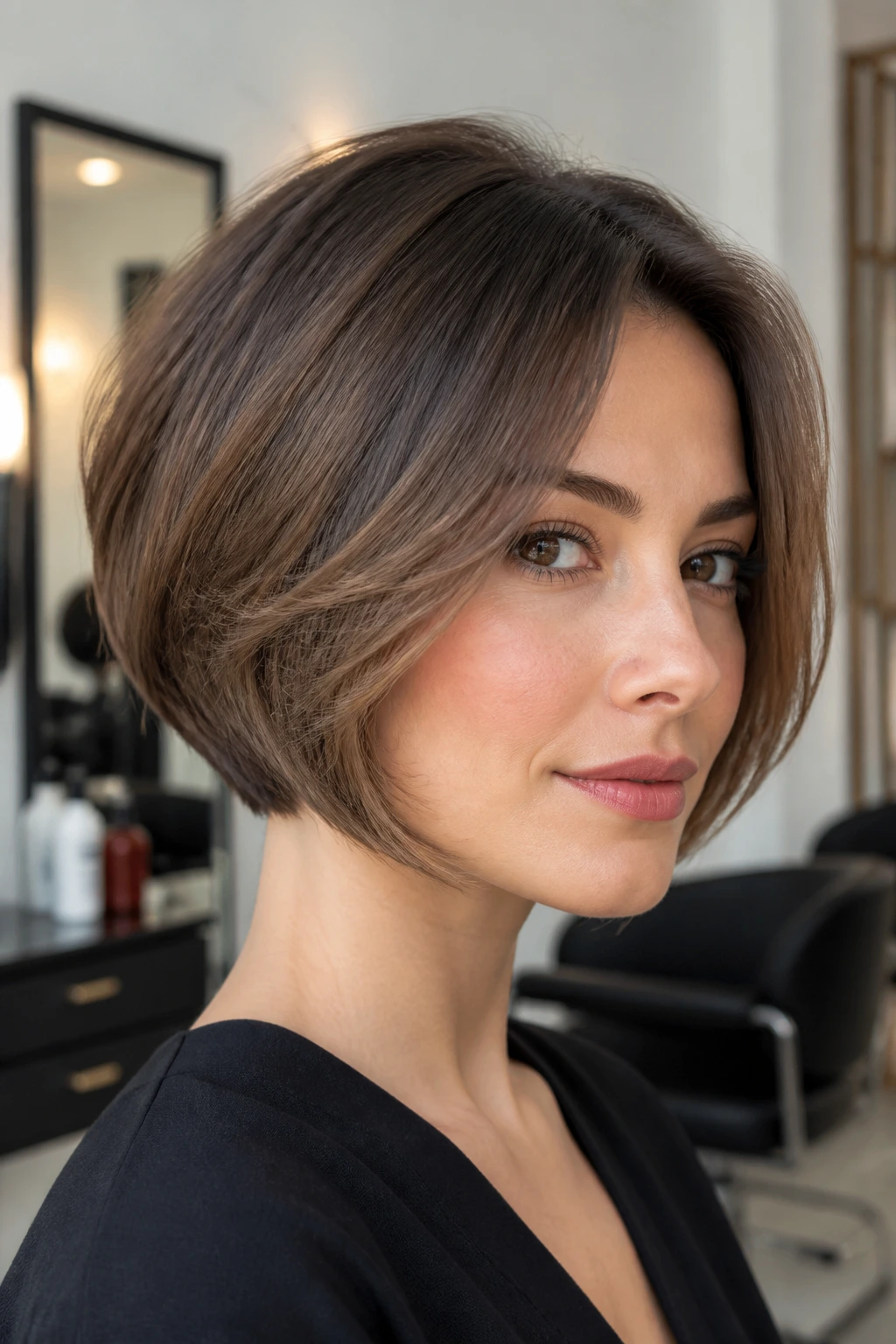
An inverted bob already has attitude. Add feathering, and the shape gets a little less severe. The back is shorter and usually more stacked, while the front grows longer toward the jawline. Feathering the ends stops the front from looking like two heavy panels hanging beside the face.
There’s a nice contradiction here. The cut looks structured, but it doesn’t feel stiff. That’s why it works so well on straight or slightly wavy hair. You get the clean angle without the hard edge. If the nape is trimmed closely, the neckline looks neat for weeks.
This is one of my favorite choices for someone who likes a sharper silhouette but doesn’t want the bob to read as severe. Tucked behind the ears, it looks almost tailored. Worn loose, it still moves.
9. Long Feathered Bob for Easy Grow-Out
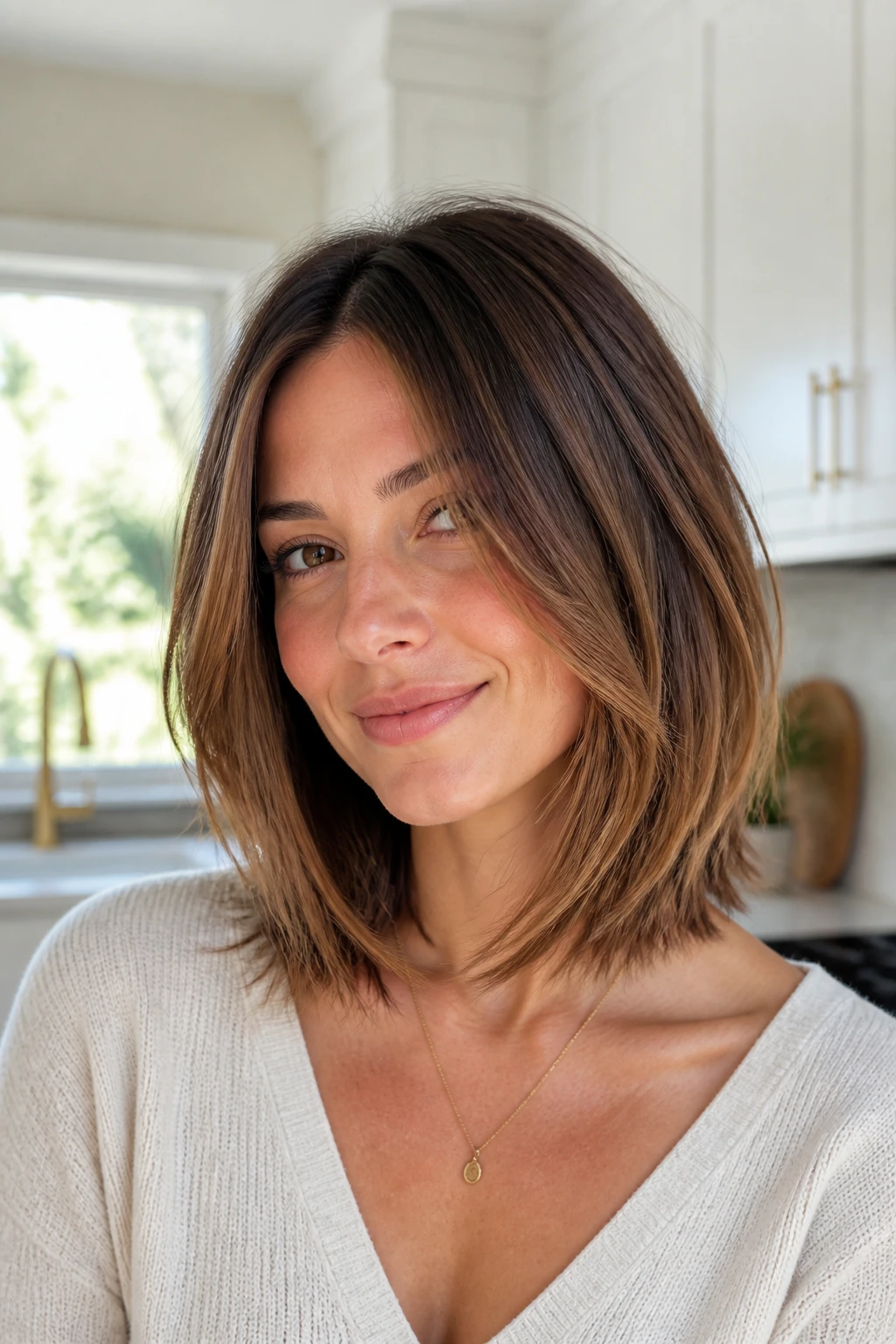
The long feathered bob, usually hitting between the collarbone and the top of the shoulders, is the safest bet if you’re nervous about committing. It keeps the bob feel, but there’s enough length that bad weather, lazy days, and uneven texture don’t wreck it.
The feathering matters more here than people expect. On a lob-length cut, the ends can start to look heavy fast. Soft point-cutting at the perimeter keeps the whole shape from feeling bulky. If you wear your hair in a half-tuck or low clip a lot, this is one of the few cuts that still looks intentional when the front pieces are a little bent or tucked away.
I prefer this version for people who want versatility more than drama. It can be straight, waved, blown out, or air-dried with a bit of texture spray. That flexibility is the point.
10. Feathered Bob With Curtain Bangs

Curtain bangs and feathered bob haircuts have a very easy chemistry. The bangs open the face without drawing a hard line across the forehead, and the feathered bob keeps the rest of the cut from feeling bottom-heavy. Together, they create a soft frame that doesn’t need much extra styling.
The question is balance. If the bangs are too short, they can overwhelm the bob. If they’re too long, they disappear into the sides. I like them starting around the nose or cheekbone, then tapering into the front layers. That gives the haircut a little swing every time you part it.
Best way to wear it
- Blow the bangs forward first, then sweep them apart
- Keep the ends of the bob lightly bent in or out, not flat
- Use a small amount of serum only on the bang ends
- Trim the fringe before it hits the lashes
This cut does not need heavy product. It needs direction. That’s a much easier ask.
11. Asymmetrical Feathered Bob With One Longer Side
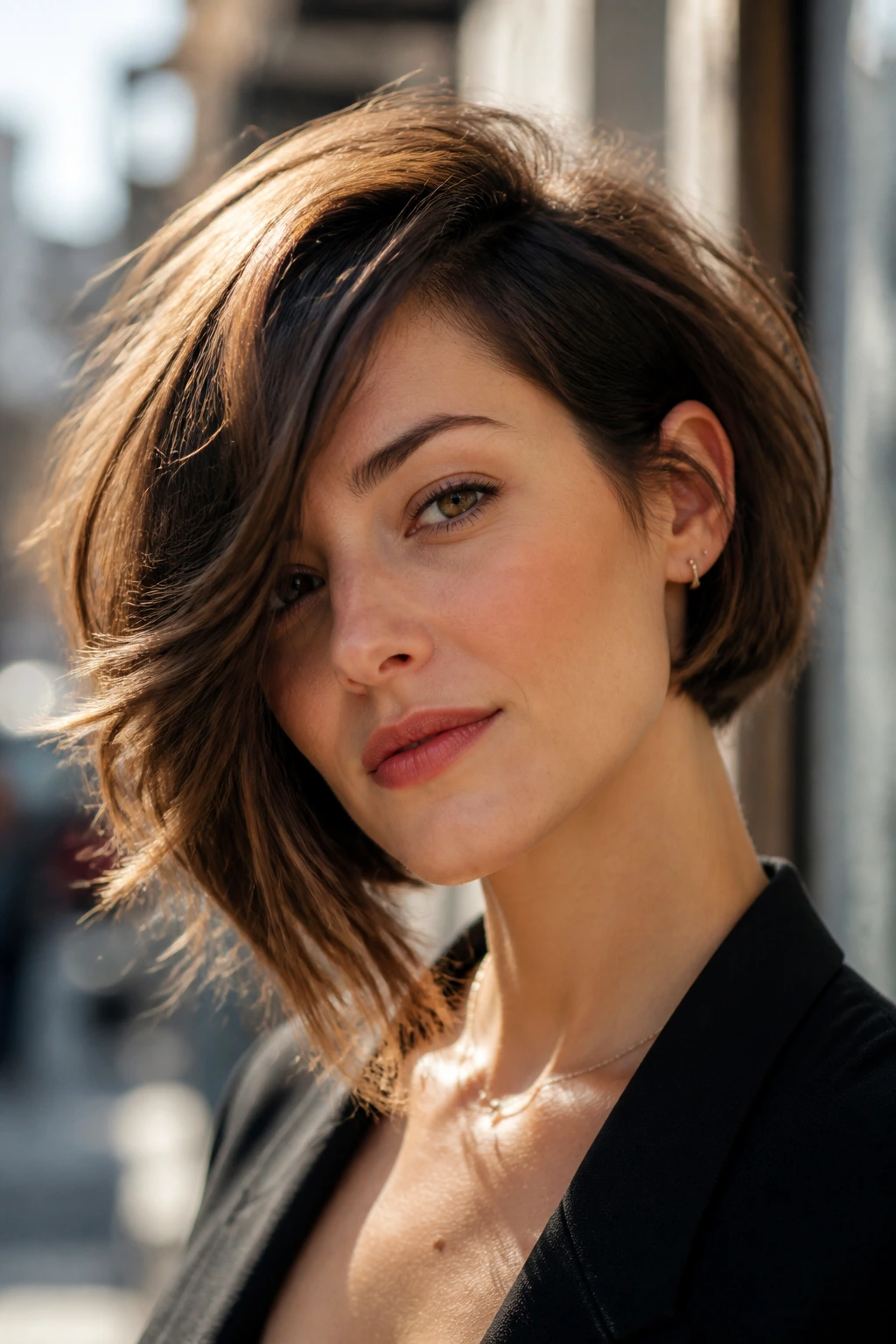
If you want a bob with a little edge, this is the cleanest way to get there. One side is left longer, usually by an inch or two, and the feathering softens the transition so the asymmetry feels deliberate instead of choppy. The asymmetry gives the cut motion even when the hair is still.
This works especially well on straight hair because the difference in length shows clearly. On wavy hair, it looks more relaxed and less graphic. Either way, the feathered edge prevents the longer side from feeling heavy. I’d keep the shorter side tucked neatly around the jaw so the shape reads as balanced, not lopsided.
It’s a good choice if you’re bored of the standard bob but don’t want something loud. There’s personality here, but it’s not shouting.
12. Piecey Feathered Bob With Micro Bangs
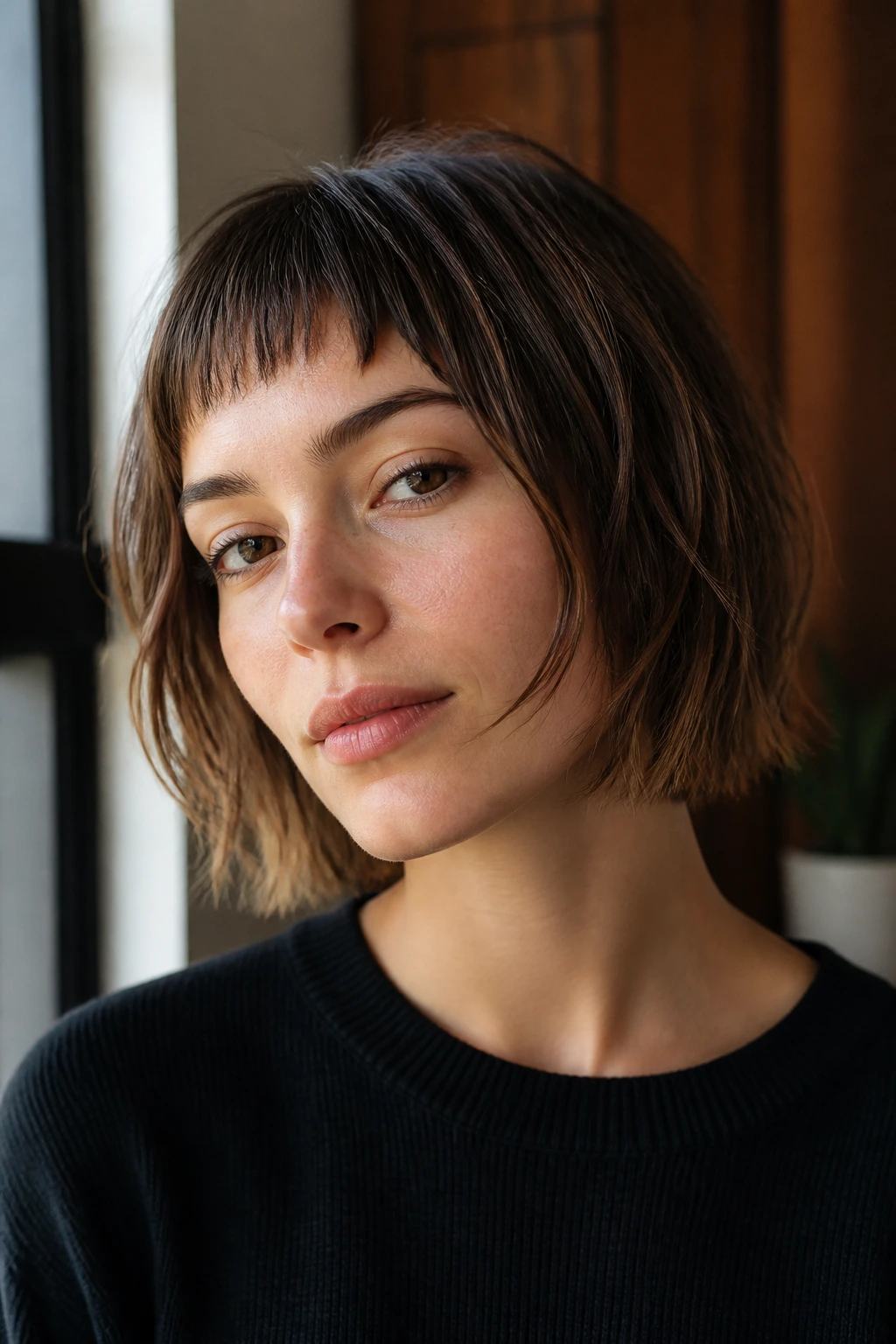
Micro bangs change the whole mood of a feathered bob. They pull the eye up fast, so the bob itself has to stay soft and controlled. That’s where the piecey feathering earns its keep. The ends should break into small, separate bits rather than a solid line, especially if the fringe is short and graphic.
I wouldn’t recommend this combo for every face or every hair type. It works best when the hair has some natural bend or texture. If the hair is very fine and slippery, the fringe can look disconnected. If it’s very thick, the micro bang can feel too blunt against the feathered body.
Still, when it works, it really works. The haircut feels modern without trying too hard. And it gives you a nice amount of styling freedom—slick it down, rough it up, or let the fringe stay a little uneven.
13. Silver Feathered Bob for Gray Hair
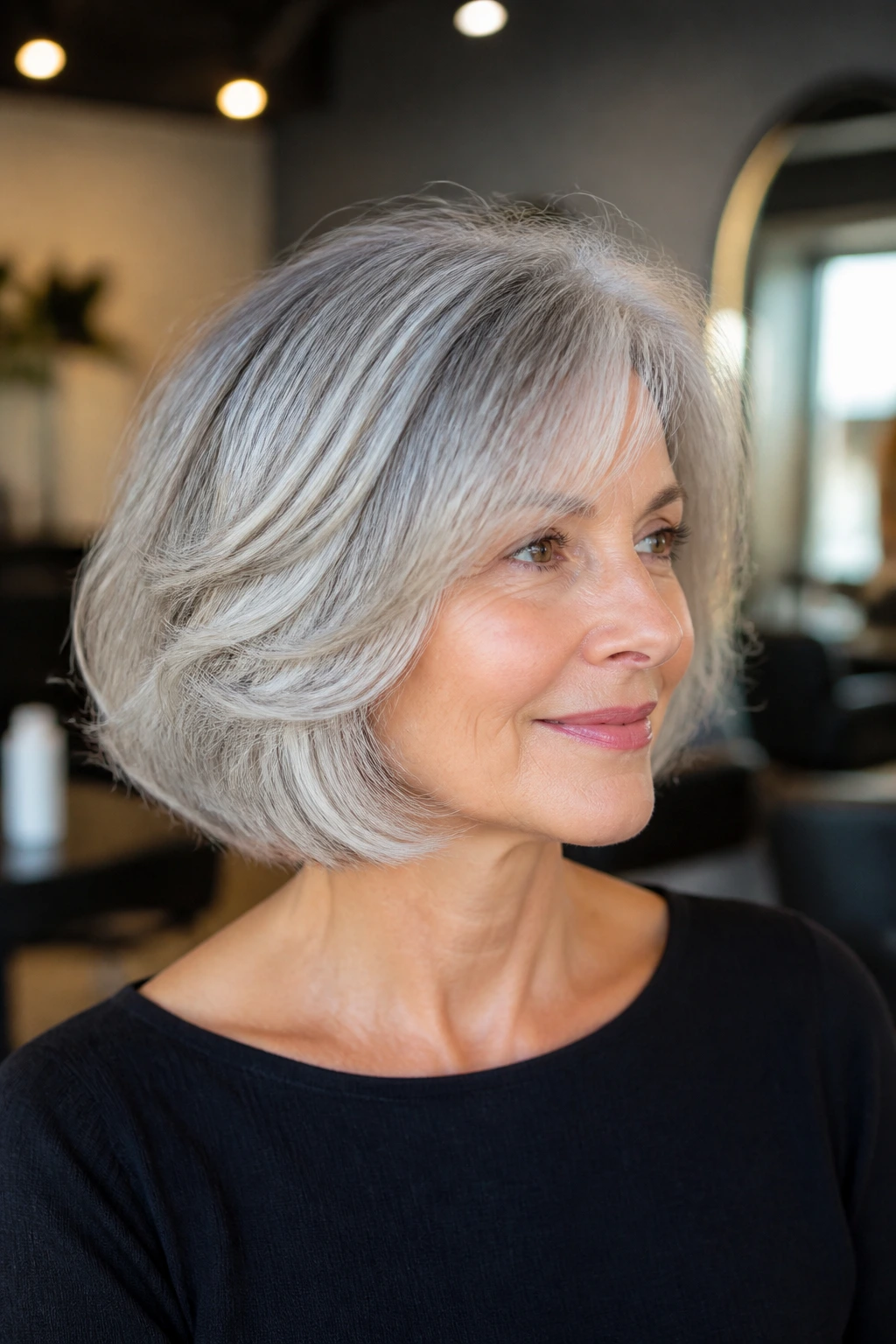
Gray hair often looks best when the haircut has enough movement to keep the color from reading flat. A silver feathered bob does exactly that. The feathering catches light at the ends, and the bob shape keeps the whole look clean instead of wispy. On coarse gray strands, that can be the difference between polished and puffy.
What to watch for
Gray hair can be dry, so the feathering should be soft, not aggressively thinned. A sharp cut line with a tiny bit of interior texture is usually better than lots of slicing. That keeps the ends from fraying. A lightweight smoothing cream can also help the silver reflect evenly instead of separating into fuzzy bits.
The beauty of this cut is that it makes texture part of the design. You do not have to fight the natural shift in hair color and texture that gray brings. You can work with it. That’s the smarter move, and it looks better.
14. Feathered Bob for Round Faces
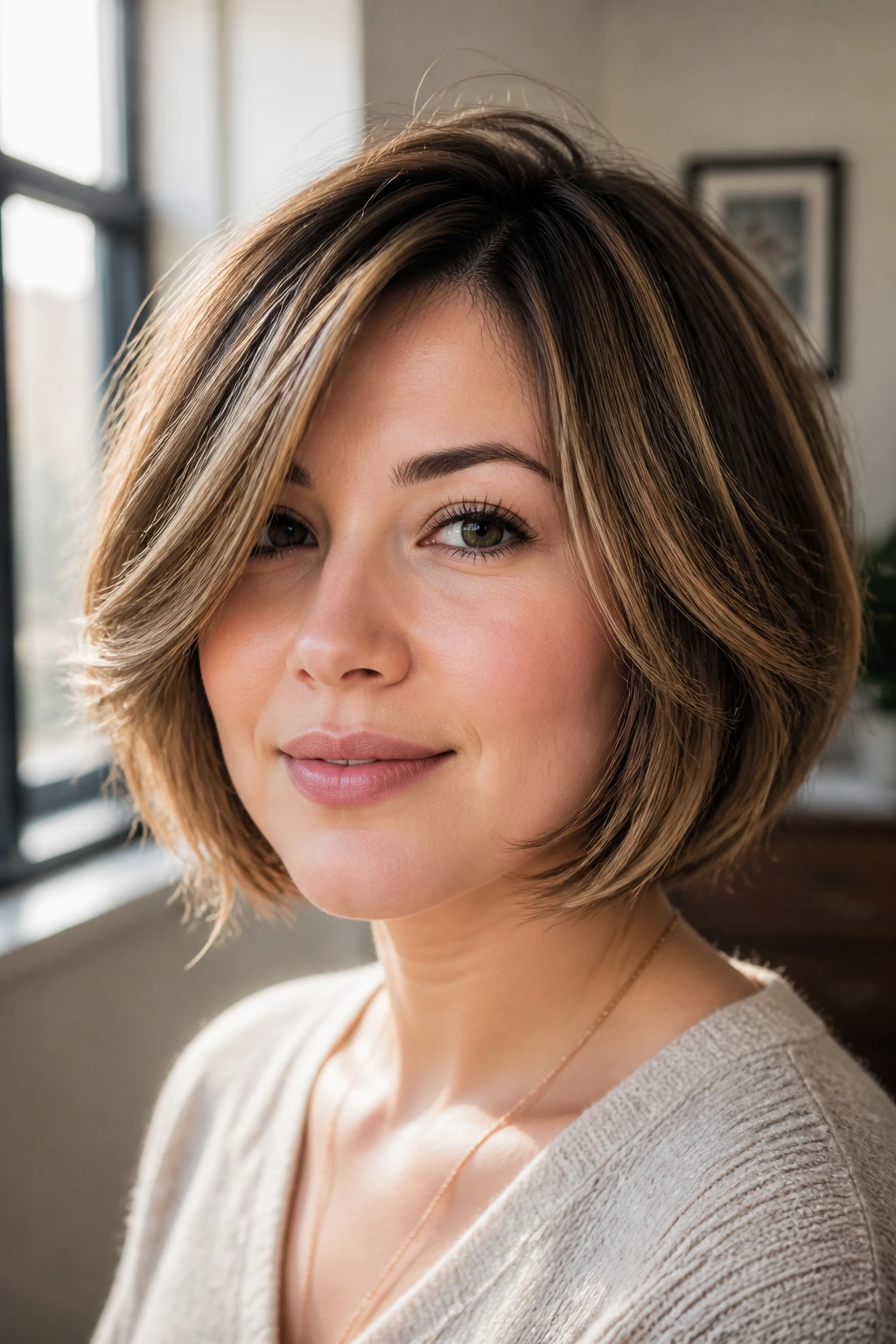
A round face usually benefits from a feathered bob that adds vertical lines and a little movement below the cheek. The cut should not stop exactly at the widest part of the face unless you want extra fullness there. I prefer a length that skims the jaw or sits a touch below it, with the front pieces feathered so they narrow the face a little.
The side part matters here. So does where the softest pieces land. If the feathering begins too high, the width moves upward and the face can look wider. If it starts around the jawline, the shape pulls down in a more flattering way. That’s the real game.
A round face does not need hiding. It needs balance. This cut gives you that balance without making the hair look stiff or overly long.
15. Feathered Bob for Square Jawlines
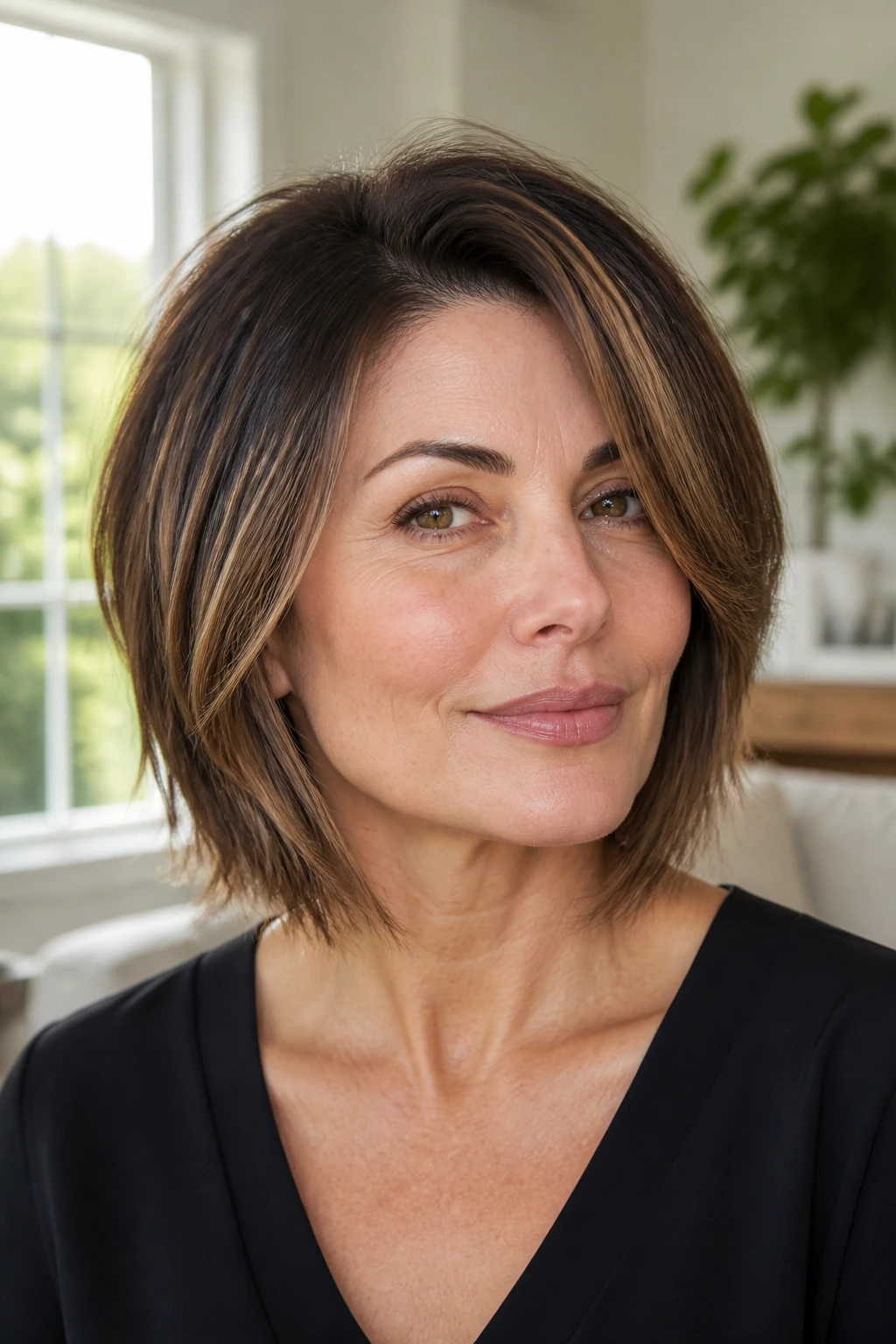
Square jawlines love soft edges. A feathered bob takes the angle off the lower face by keeping the perimeter airy and the front pieces a little longer. That stops the cut from landing right on the jaw with a hard line, which is usually the thing that makes square faces look more severe than they are.
I’d keep the layers subtle and the feathering concentrated around the front third of the cut. That way, the cheek and jaw get framed instead of boxed in. The ends can flick outward a little, or inward with a bend; both work as long as the shape doesn’t go flat and sharp.
This is one of those cuts that gets better when it is not too perfect. A tiny bit of lift at the roots and a bend at the ends gives the whole face some softness. Clean, not harsh. That’s the target.
16. Feathered Bob for Fine, Limp Hair
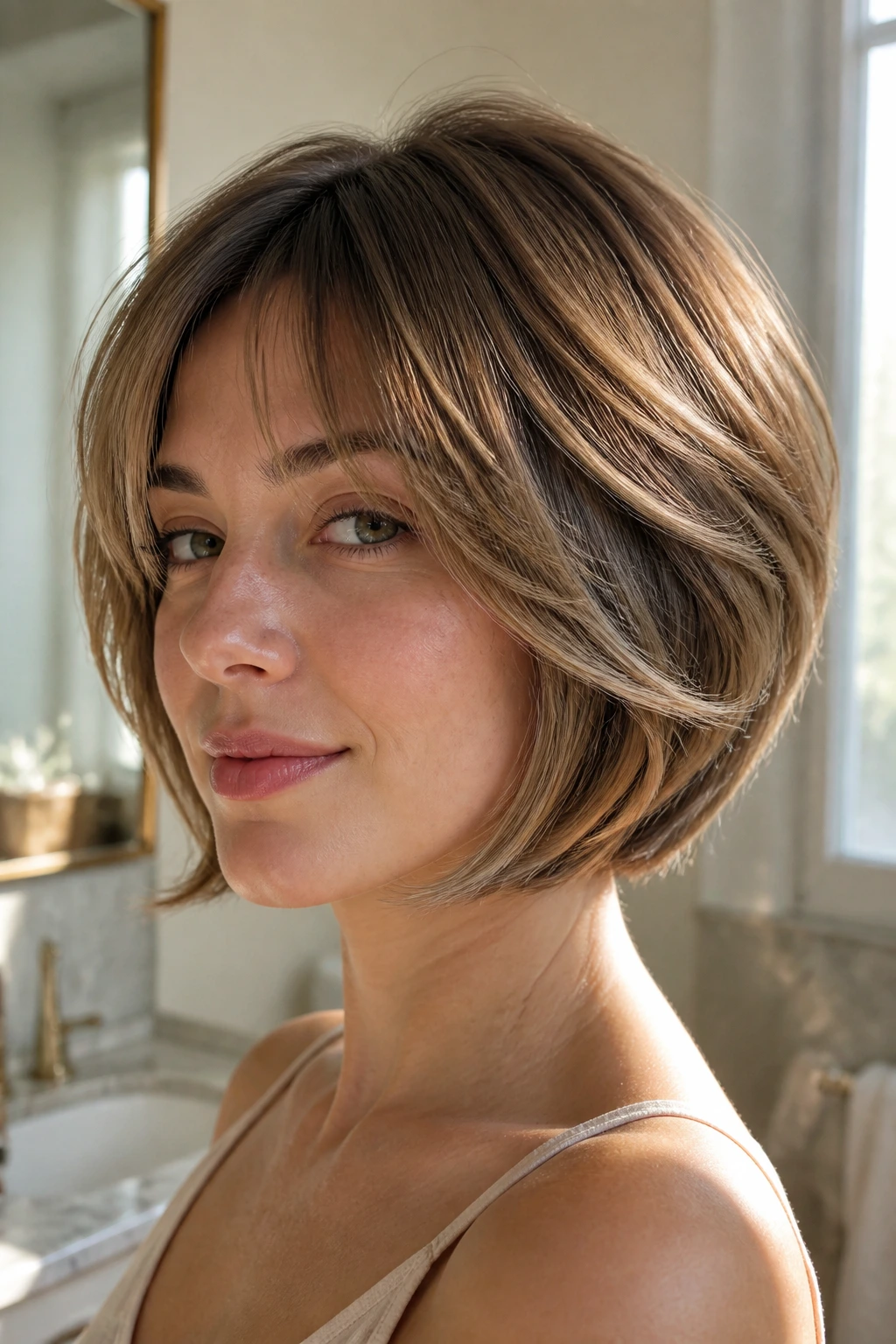
Fine hair can look thin if the cut is too layered, so the answer is not “more layers.” The answer is careful feathering at the perimeter and a bit of internal lift where the hair collapses first. That gives the hair movement without taking away the edge that makes the bob look full.
The right approach
- Keep the base line solid enough to read as a bob
- Feather only the last bit of the ends
- Add subtle lift at the crown, not through the whole head
- Use lightweight mousse, not heavy cream
A chin-to-jaw length often works best because the weight stays manageable. Too long and fine hair can go stringy. Too short and it can lose the sense of fullness at the sides. The cut should look like it has body even when you skip a full blowout.
17. Feathered Bob for Thick, Dense Hair
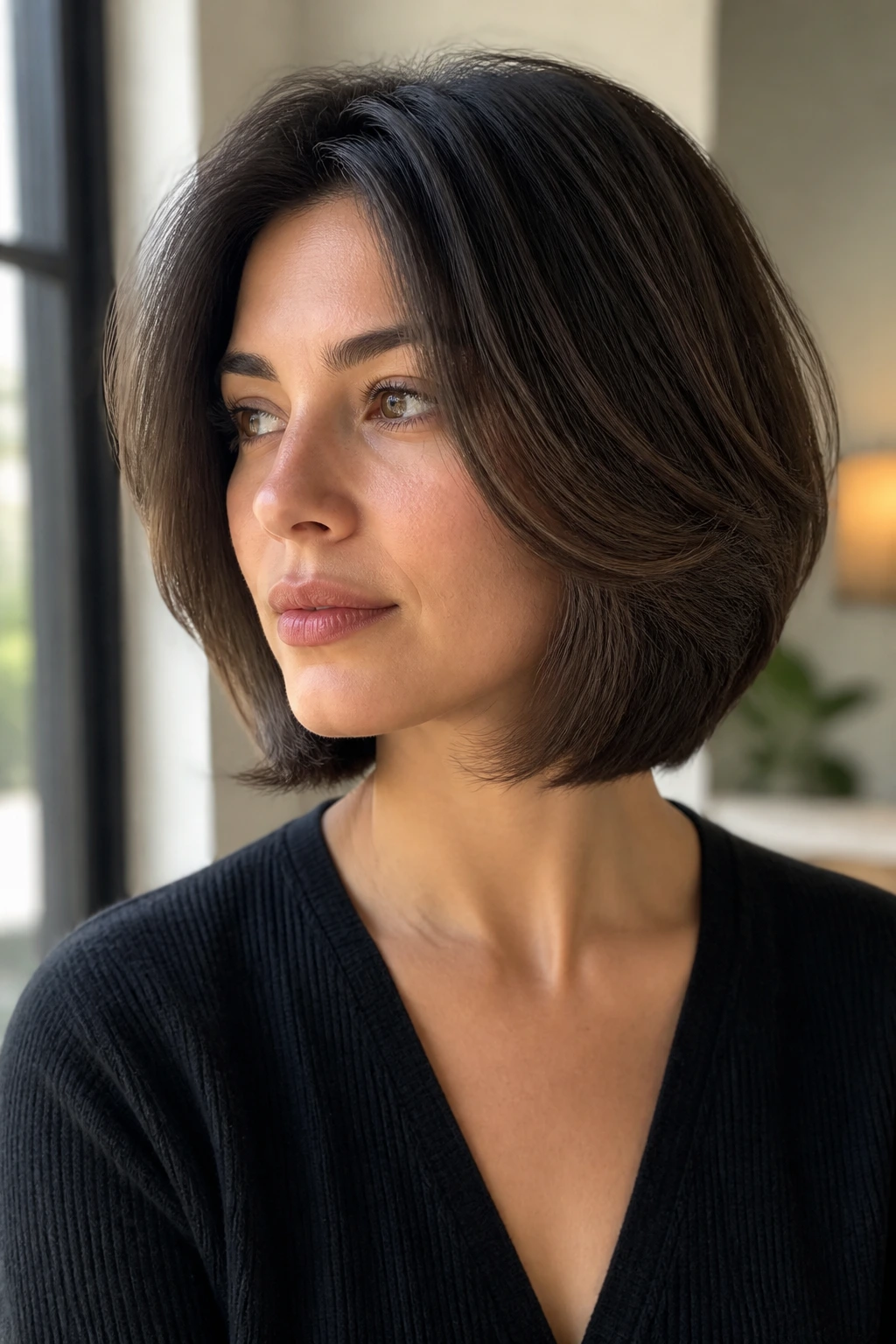
Thick hair needs a haircut that understands gravity. A feathered bob for dense hair removes bulk in a way that keeps the outline clean. The shape should still feel intentional at the bottom, not wispy or over-thinned. That means the stylist needs to be disciplined with where they carve weight out.
I’d ask for internal reduction through the mids and lower sides, with a stronger perimeter than you’d use on fine hair. That keeps the bob from exploding outward in humidity. If your hair has a strong wave pattern, the feathering should be longer and softer so the ends do not separate into frizzy bits.
This cut is especially useful if your hair takes forever to dry. Less bulk means faster dry time, less arm fatigue, and fewer battles with the round brush. Practical matters. They matter a lot.
18. Shaggy Feathered Bob With Air-Dried Texture
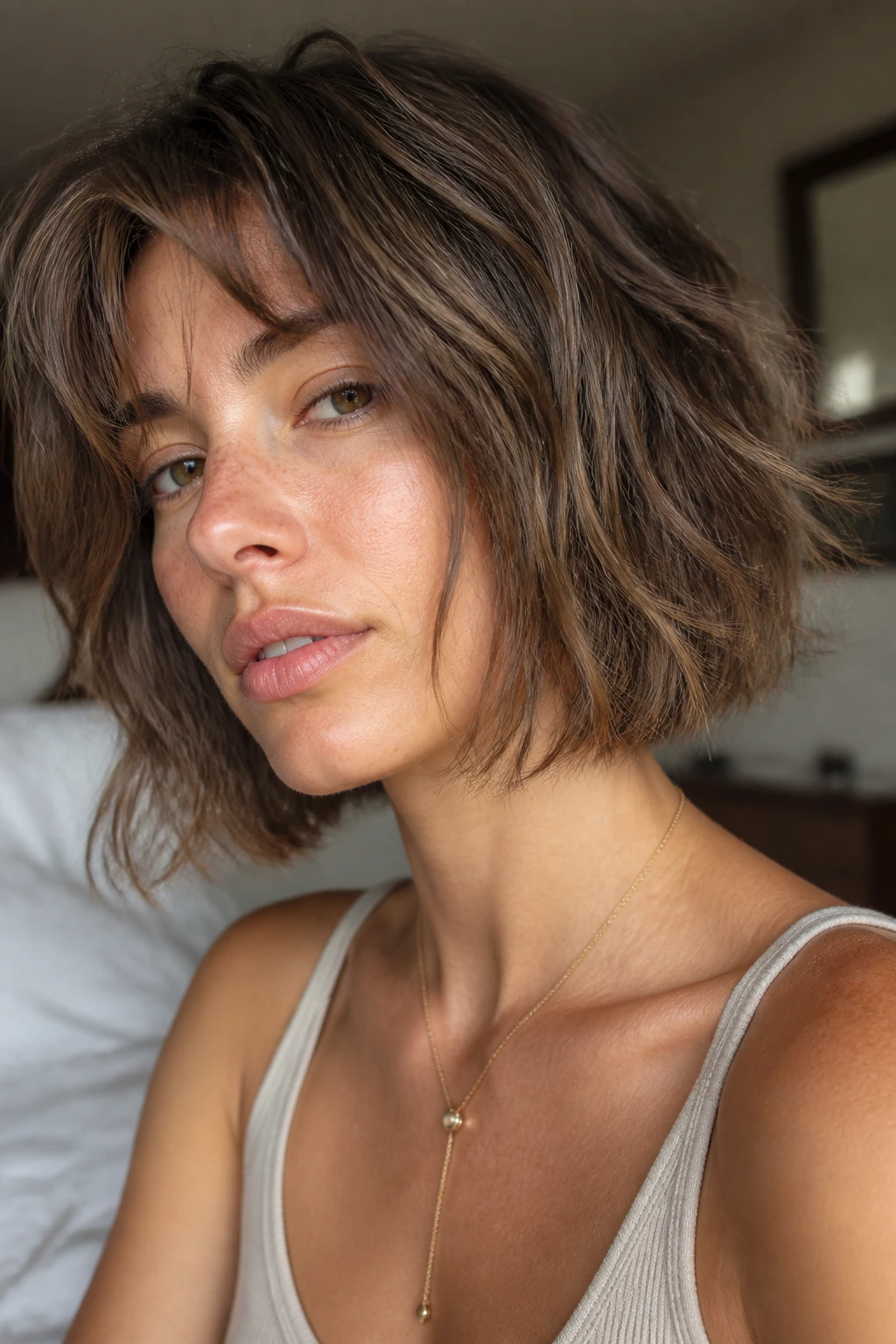
This is the least polished version in the group, and that’s the point. A shaggy feathered bob keeps the bob outline but lets the ends break apart a little more. It works best when the hair dries with a natural bend, because the feathering enhances that rough texture instead of trying to erase it.
The mood is casual, but not lazy. There’s a difference. The cut should still have a visible shape at the jaw or collarbone, with enough layering to keep the whole thing from feeling dense. A salt spray or lightweight mousse can help, but too much product kills the softness and makes the feathering look crunchy.
I like this cut for weekends, travel, and people who don’t want a blow-dry to decide their whole life. It looks best with a little imperfection in it. Clean enough to be deliberate. Loose enough to breathe.
19. Rounded Feathered Bob With Soft Internal Layers
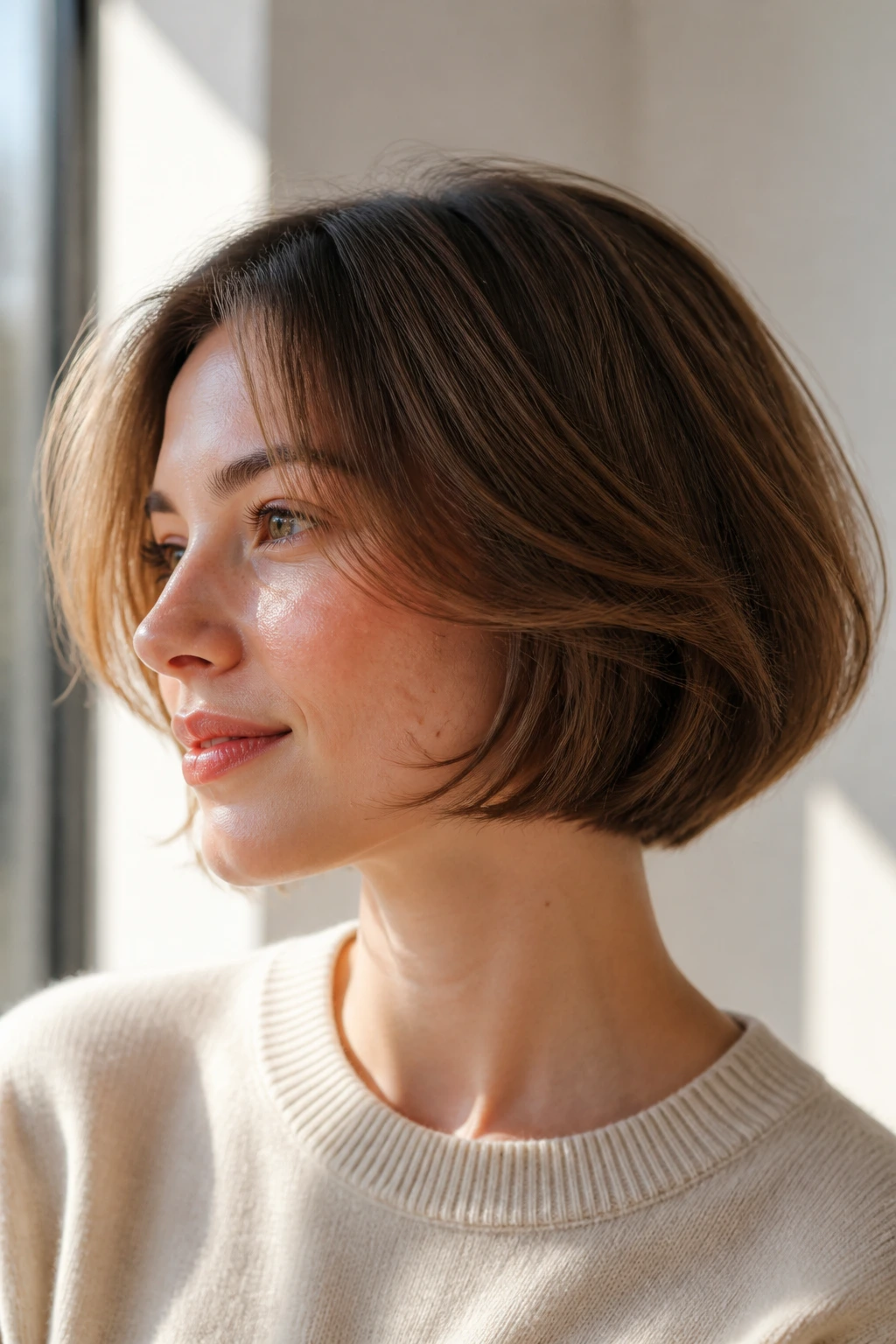
A rounded feathered bob is a smarter choice than many people realize. The curve at the sides gives the haircut a gentle shape, while soft internal layers prevent it from turning into a sphere. The feathering at the edges keeps the line from feeling too heavy around the face.
This one suits hair that tends to stick out at the sides. A rounded structure pulls the outline in and gives the bob a smoother profile. If the hair is naturally straight, the finish can be very neat. If it has bend, the shape gets softer and more touchable.
The crucial part is restraint. Too much roundness can look dated fast. But if the curve is subtle and the feathering is controlled, the cut has a nice, tailored feel that holds up well in real life.
20. Feathered Blunt Bob Hybrid

This is the cut for someone who wants clean lines but hates the stiffness that sometimes comes with a blunt bob. The perimeter stays mostly solid, yet the very ends are feathered just enough to break the visual weight. It’s the compromise that often works better than either extreme.
What makes it smart
A hybrid cut gives you the structure of a blunt bob and the movement of a feathered one. That means the shape still looks sharp at first glance, but it doesn’t lie there dead. On fine hair, the feathers prevent the ends from looking too heavy. On thick hair, they stop the line from feeling like a brick.
I’d call this the most office-friendly option in the list. It reads polished from across a room, then softens when you get close. Nice trick.
21. Feathered Bob With an Undercut Relief
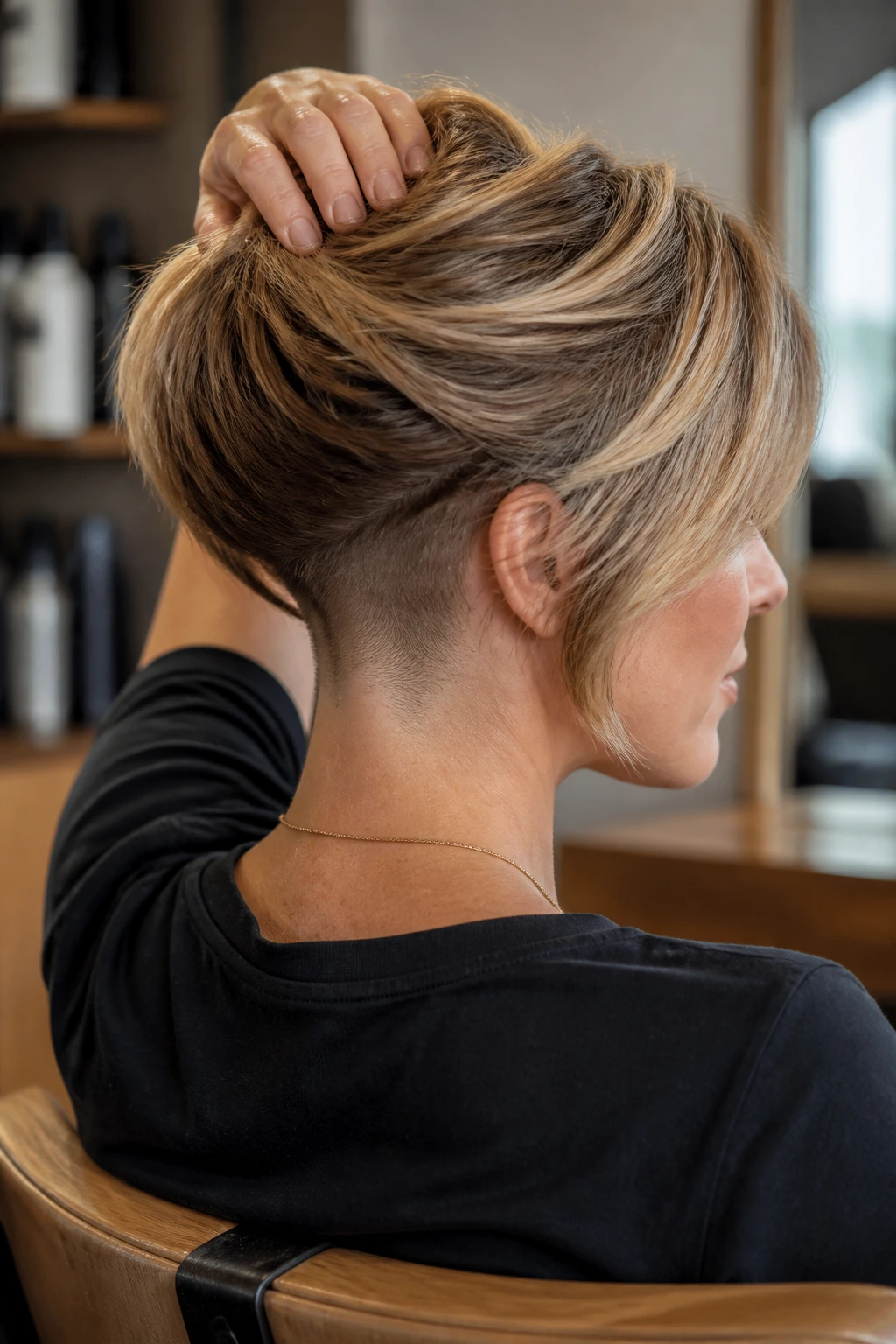
An undercut changes the silhouette from the inside out. Hidden weight is removed underneath, usually at the nape or lower sides, and the top layer stays feathered so the haircut still looks soft on the surface. It’s a practical fix for very dense hair that keeps collapsing into a mushroom shape.
You don’t have to show the undercut. That’s the beauty of it. The haircut can look like a standard feathered bob until the hair is lifted or tucked. Then the relief underneath makes sense. It dries faster, feels lighter on the neck, and sits flatter in humid weather.
This is not the most conservative choice, but it is one of the most effective when volume gets out of hand. If your hair takes too long to dry or feels bulky at the nape, this version earns its keep quickly.
22. Deep-Side-Part Feathered Bob That Swings on One Side
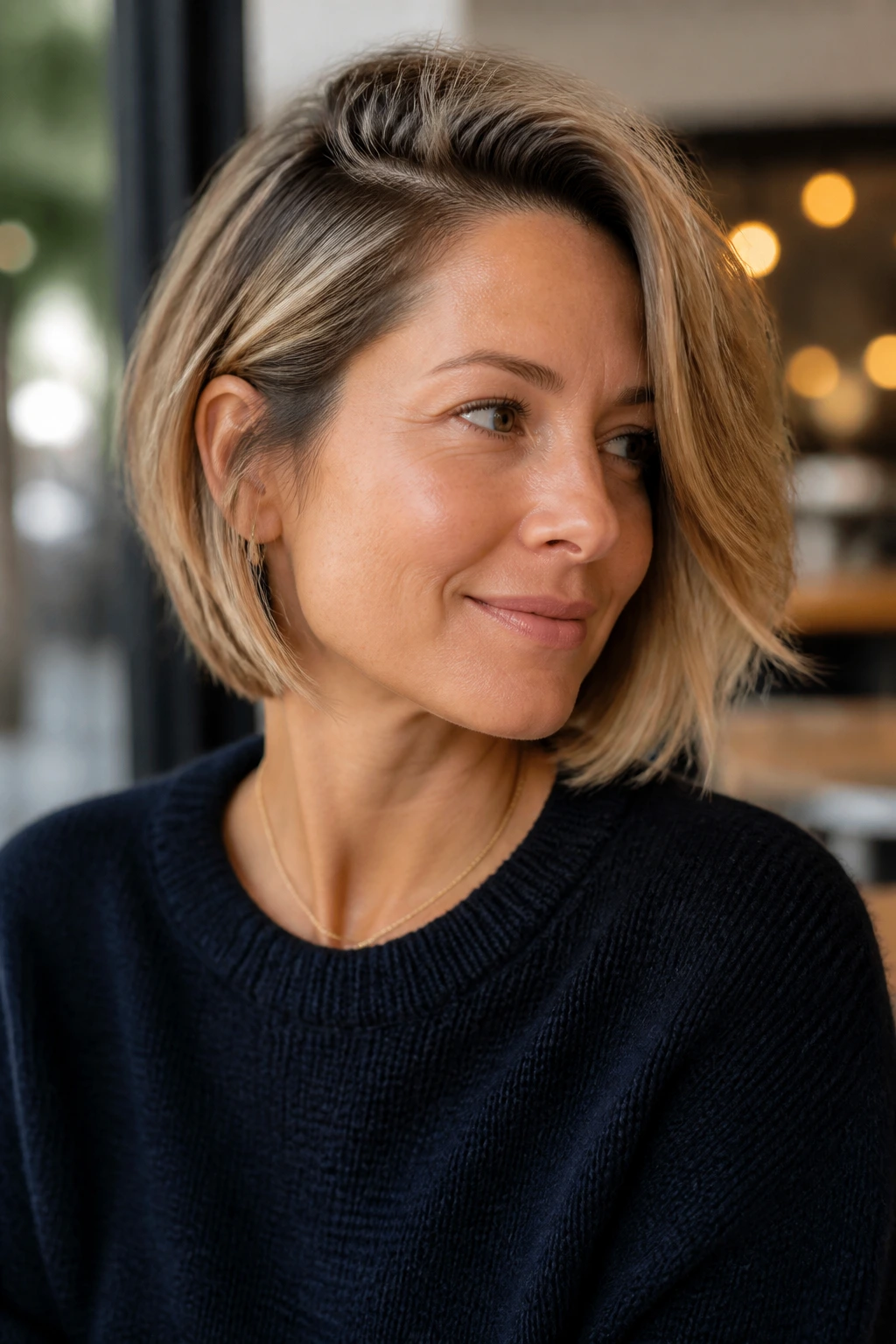
A deep side part can turn an ordinary feathered bob into something much more dramatic without changing the cut much at all. The hair falls heavier on one side, the feathered ends swing more clearly, and the face gets a sharp diagonal line that feels lively. It’s a small shift with a big payoff.
This works across straight, wavy, and even slightly curly hair, though the styling changes a bit for each. Straight hair will show the swing most clearly. Wavy hair gets a softer, more romantic line. Curly hair needs the part placed where the curl pattern naturally likes to split, or the shape will fight back.
If you want the bob to look different without asking for a new haircut, start here. A deep side part is free, fast, and surprisingly effective. Sometimes that’s all you need.
How Feathering Changes a Bob’s Shape
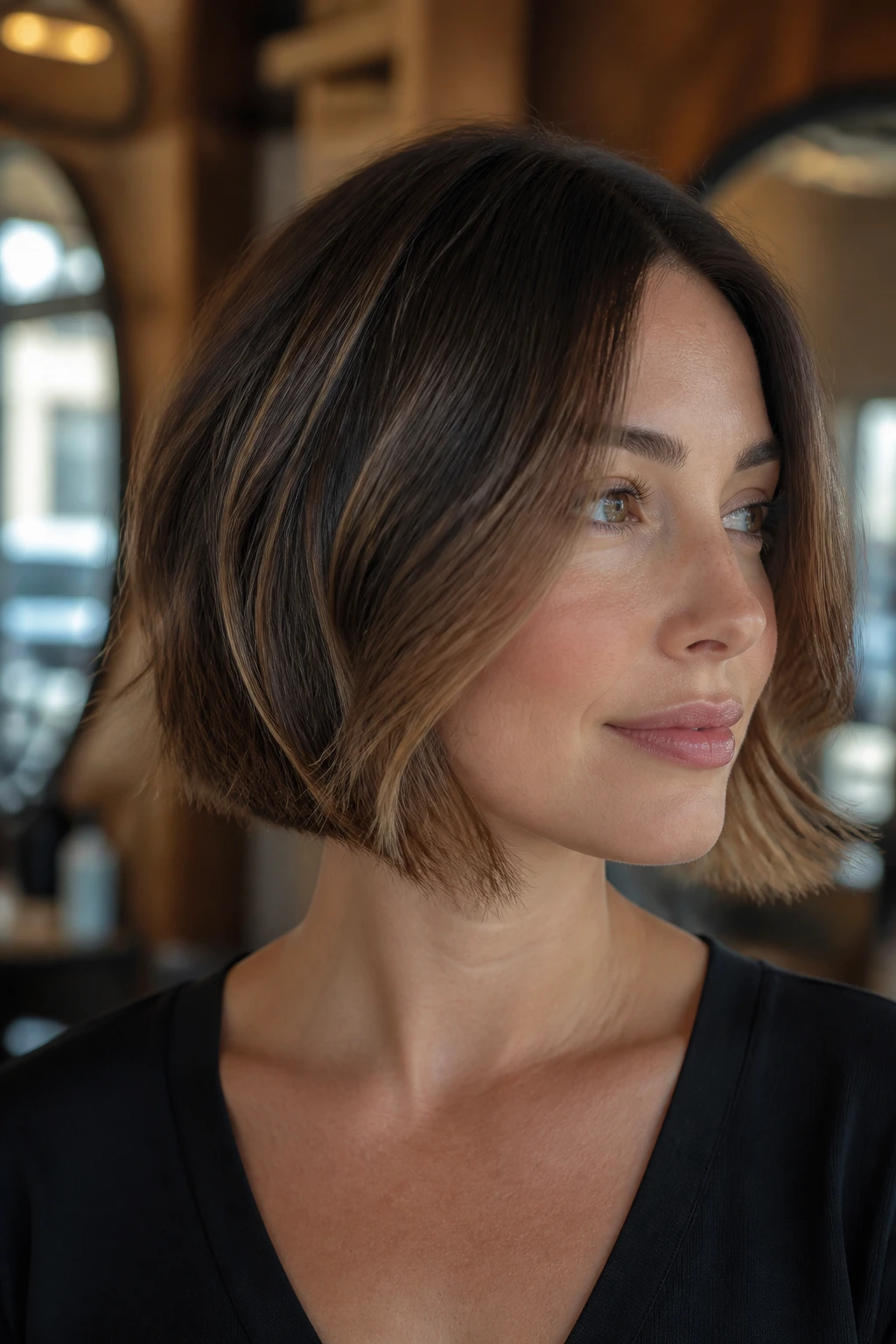
Feathering is not the same thing as “adding layers” and hoping for the best. In a bob, the feathered effect usually comes from point-cutting, soft slicing, or careful razoring at the ends and around the front. The goal is to remove visual weight where the hair would otherwise sit heavy, especially at the jawline and the bottom edge.
That matters because a bob lives or dies by its outline. The blunt perimeter gives it identity. Feathering gives it motion. If you take too much out, the haircut loses the very thing that makes a bob look sharp. If you leave too much weight, you get the shelf effect—wide at the bottom, flat at the top, and oddly stubborn.
The best feathered bobs use texture as a tool, not a decoration. On fine hair, a little feathering keeps the ends from looking thin. On thick hair, it prevents puffiness and shortens dry time. On wavy or curly hair, the feathering has to respect the bend pattern so the shape doesn’t flare out at random.
A good test: if the cut moves when you tilt your head but still reads as a bob when it’s still, the feathering is doing its job.
How to Ask for the Right Feathered Bob at the Salon
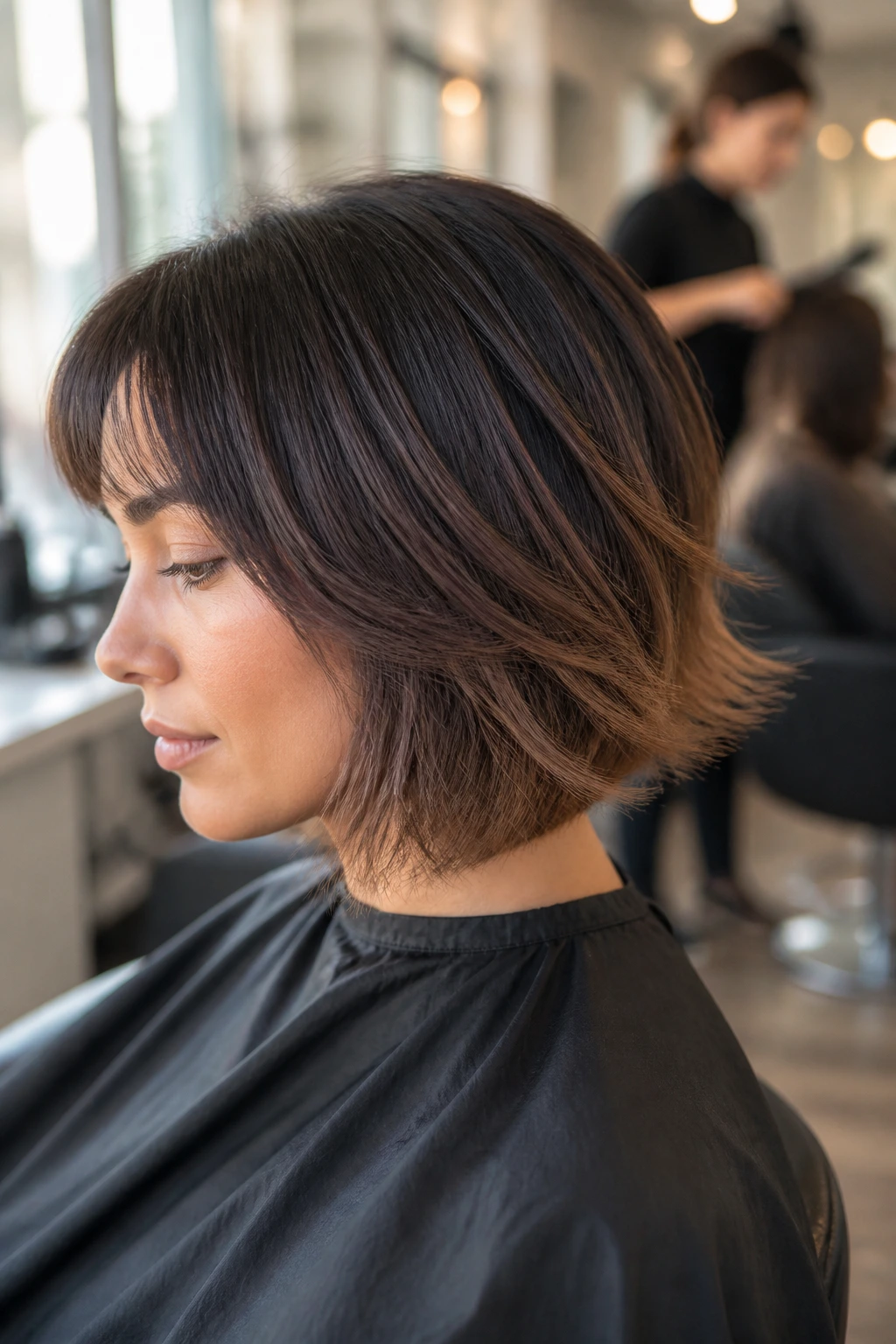
Bring a photo, yes, but do not stop there. A photo can show the mood, yet the styling in the picture might be doing half the work. Tell the stylist where your hair falls flat, where it gets bulky, and whether you want the feathering to be obvious or barely there. That detail changes the cut more than most people realize.
Ask where the weight should stay. That’s the sentence that helps. A bob needs some places left heavy on purpose, especially around the perimeter, or it starts to look flimsy. If your hair is thick, ask about removing bulk underneath. If it’s fine, ask for minimal interior layers and softer feathering only at the ends.
Mention your styling habit, not just your hair type. Air-dry people need a different shape than round-brush people. If you never use hot tools, say so. If you tuck your hair behind your ears half the day, say that too. The haircut should work with your habits, not against them.
And if a stylist reaches for too much texturizing at once, slow the conversation down. Feathering should solve a shape problem, not create a new one.
Easy Styling Moves That Keep the Ends Soft
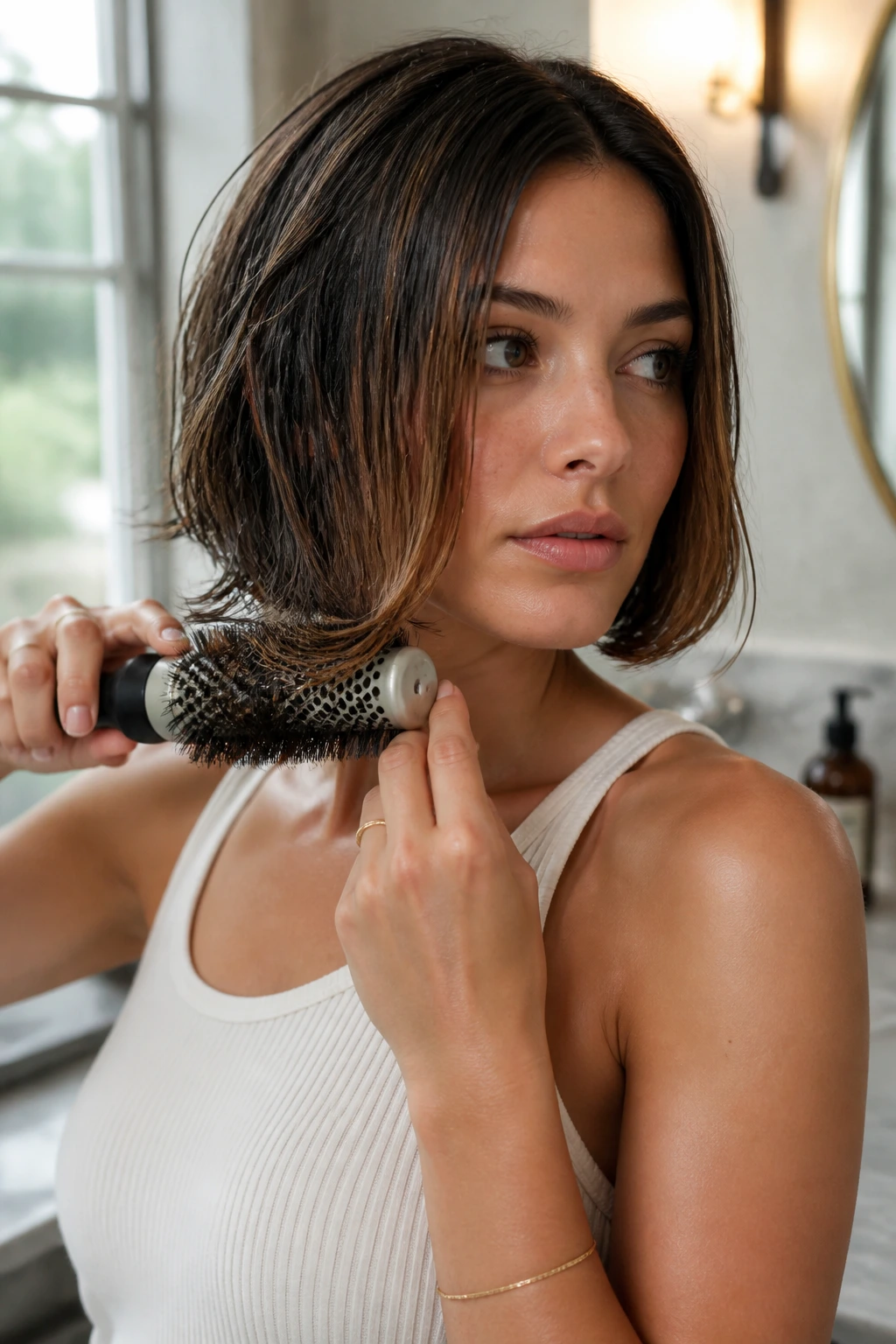
A feathered bob looks best when you decide what kind of finish you want before you start styling. If you want polish, use a round brush and curve just the last inch of hair under or away from the face. If you want a looser look, rough-dry first and only smooth the front pieces.
Round-brush finish: Use a 1.5-inch or 2-inch round brush on damp hair. Wrap the ends around the brush for 5 to 8 seconds with warm air, then hit the section with cool air before releasing it. That sets the bend without making the edge stiff.
Air-dry finish: Work in a light mousse from roots to mid-lengths, then scrunch the ends once or twice. Leave the shape alone until it is about 80 percent dry. Touch it too much and you break up the feathering into frizz.
Polished-but-not-flat finish: Run a small amount of smoothing cream through the mids and ends, then bend the front away from the face. That little outward flick can make the whole cut look intentional.
A feathered bob rarely needs a lot of product. It needs the right direction. Big difference.
Common Mistakes That Turn Feathering into Frizz
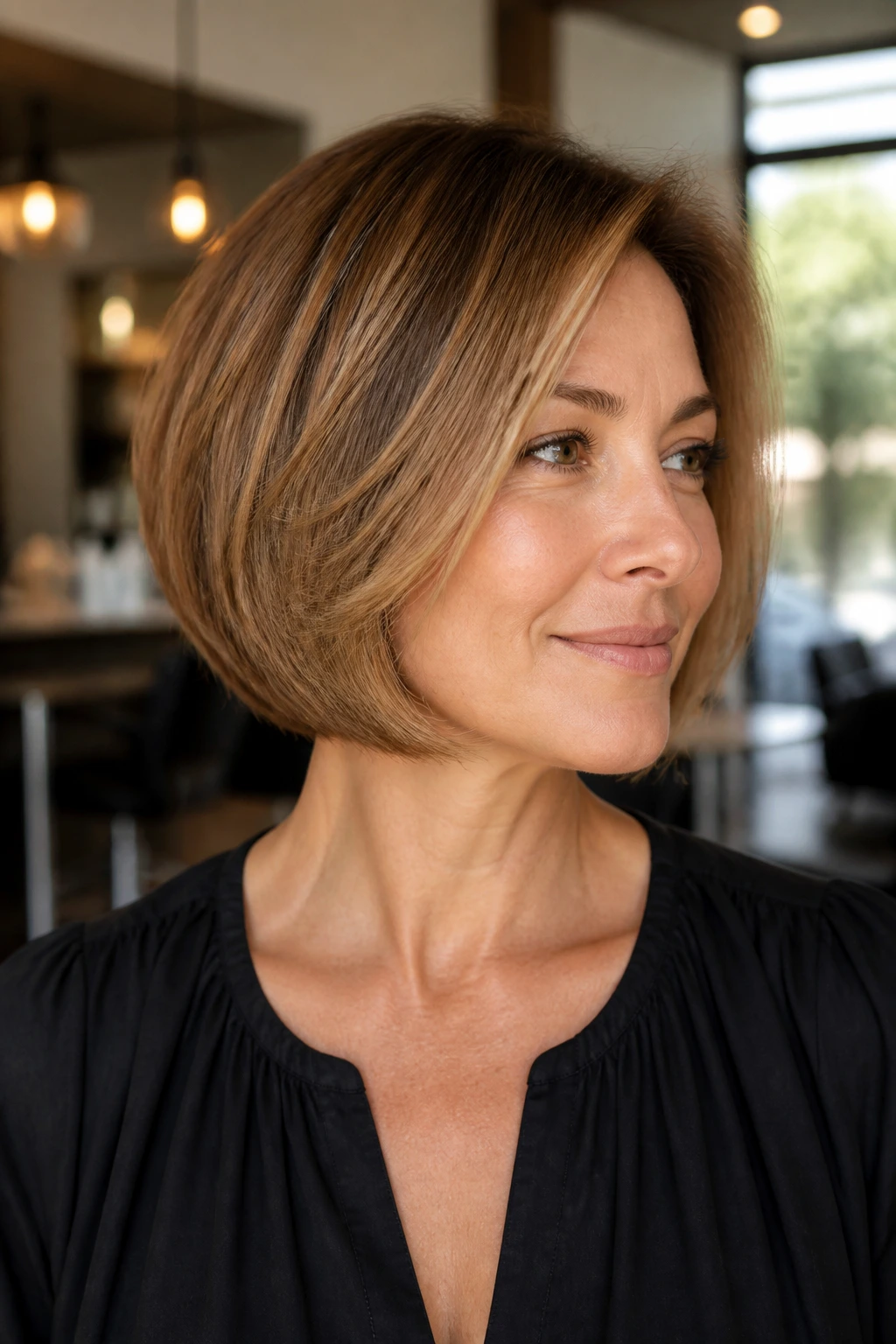
The most common mistake is asking for too much feathering on already-fine hair. The ends start to look sparse, and the bob loses its shape from the outside in. The fix is simple: keep the perimeter stronger and ask for texture only where the hair feels heavy.
Another problem is over-thinning thick hair. The haircut may look light in the chair, then puff up or separate weirdly once it dries. That happens when the interior is carved out too aggressively. A better approach is to remove bulk in controlled sections and leave enough weight at the bottom to keep the outline clean.
People also forget that feathering needs maintenance. If the ends get too dry, the texture reads as frayed instead of soft. A small trim every 6 to 8 weeks keeps the ends from splitting into a fuzzy line.
And one more: styling a feathered bob with heavy cream or too much oil. That can collapse the movement and make the cut look greasy at the ends. Lightweight products win here. They always do.
Five Ways to Change the Mood of the Cut
-
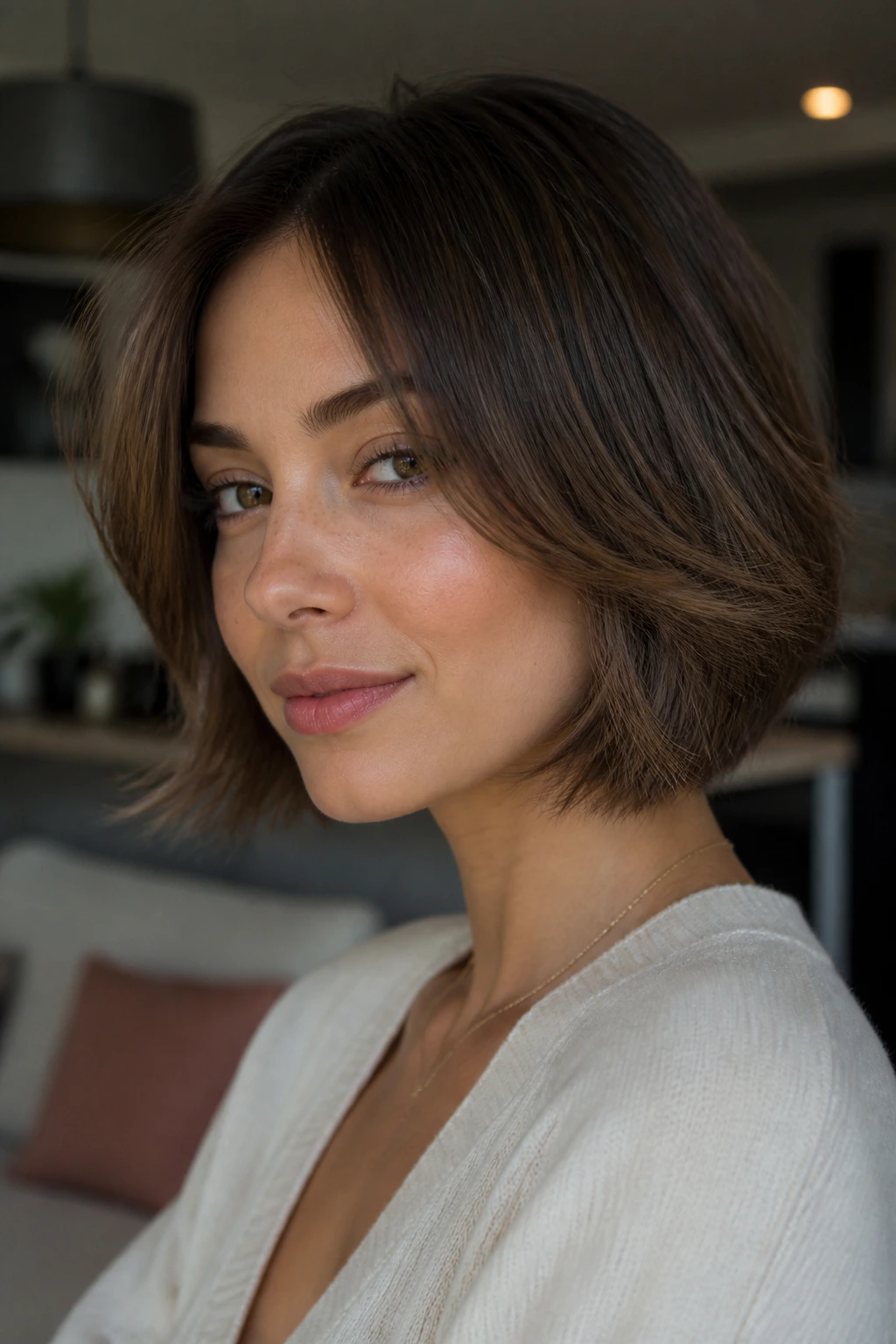
Soft Feather: Ask for barely-there point-cutting at the ends and a gentle bend at the front. This is the best pick if you want movement without obvious texture.
-
Razor Sweep: Use a razor on thick or straight hair to break up the perimeter and make the ends swing. Keep the interior clean so the cut doesn’t go too airy.
-
Curly Feather: Let the stylist cut the bob while the curls are dry or nearly dry, then feather only where the curl pattern can handle it. That keeps the shape round and frizz in check.
-
French Bend: Keep the length near the jaw, part it slightly off center, and style the ends with a soft inward curve. It feels casual, but the line is still tidy.
-
Hybrid Edge: Keep the perimeter mostly blunt and add feathering only to the front and lower sides. This works well if you want a polished bob that still moves.
Tools and Brushes That Pull Their Weight
-
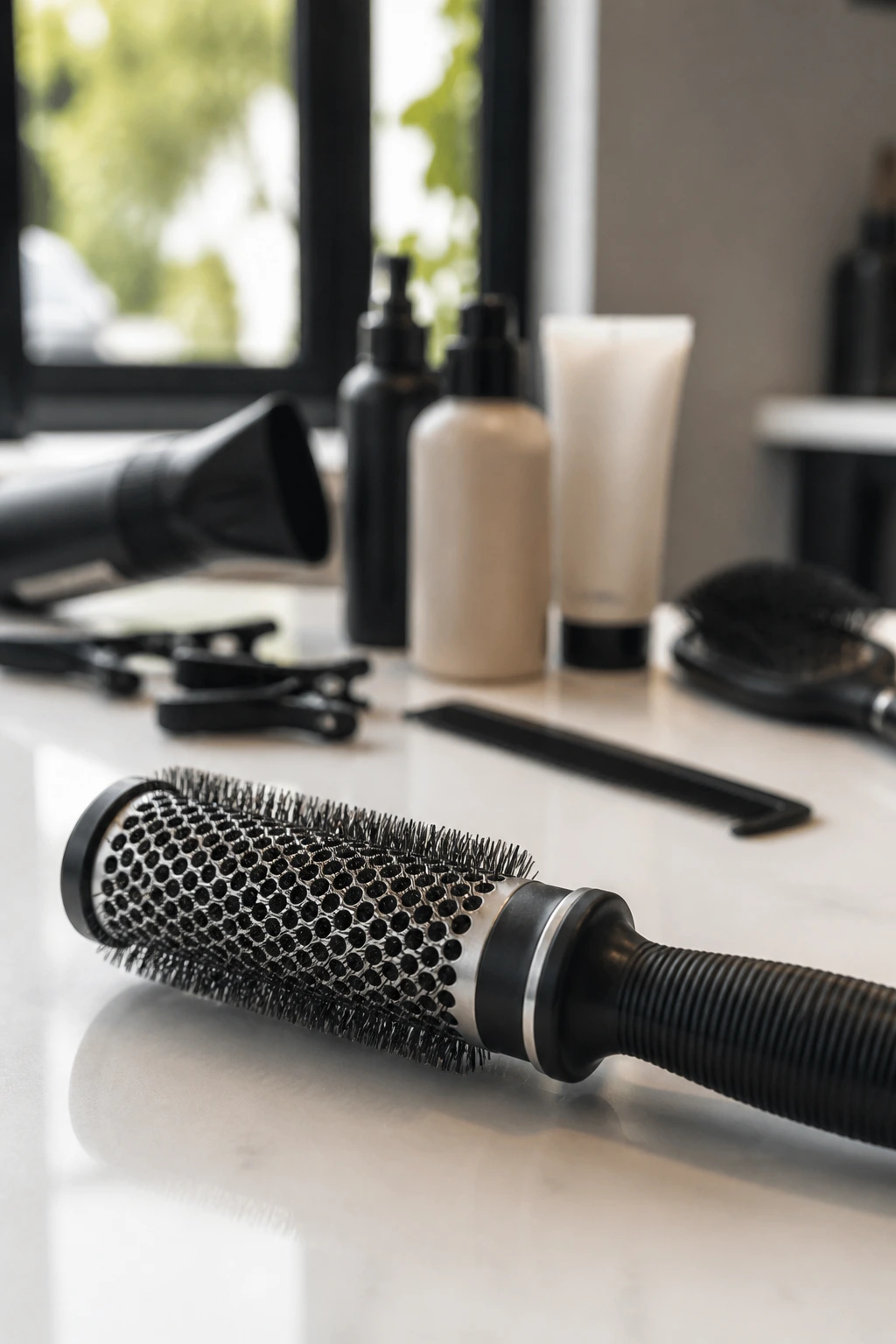
1.5-inch round brush — Small enough to shape the ends without making the bob balloon at the sides.
-
Blow dryer with a concentrator nozzle — Helps direct airflow so the feathering lands where you want it.
-
Lightweight mousse — Adds lift at the roots without leaving the ends sticky or stiff.
-
Texture spray — Useful for shaggy or air-dried bobs when you want piecey movement.
-
Smoothing cream — Best for straight or frizz-prone hair that needs soft control through the mid-lengths.
-
Tail comb — Handy for making a clean part and separating sections before blow-drying.
-
Section clips — Not glamorous, but they make styling easier, especially on thick hair.
-
Fine-tooth finishing brush — Good for smoothing the surface after the shape is set.
Keeping a Feathered Bob Fresh Between Trims
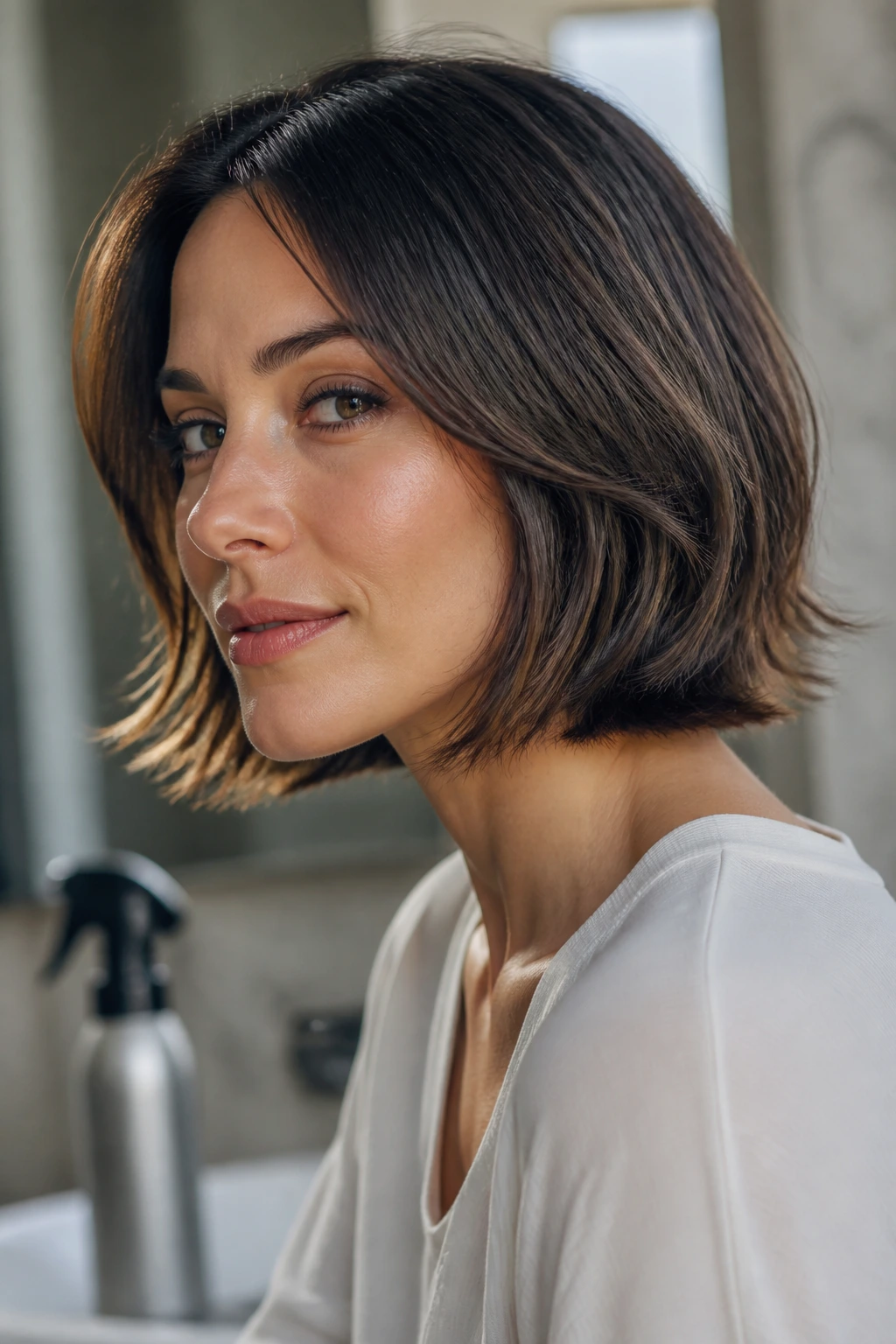
Feathered bobs hold their shape best when you trim them before the ends get tired. For most hair types, 6 to 8 weeks is the sweet spot. Thick hair may stretch a little longer, while fine or straight hair often shows regrowth faster because the shape loses its edge sooner.
At home, keep the ends from drying out. Feathering looks soft when the hair has some slip; it looks frayed when the ends are brittle. A small amount of leave-in conditioner on damp hair is usually enough. If you use heat, keep the temperature moderate and stop as soon as the bend is set. You do not need to cook the shape into place.
Sleep matters too. A loose clip or silk pillowcase helps the ends stay smooth, especially on layered or wavy versions. And if your bob starts flipping in weird directions after a couple of days, a quick mist of water and a brush-through at the ends usually fixes it faster than restyling from scratch.
Questions People Ask Before They Cut Their Hair
What’s the difference between a feathered bob and a layered bob?
A layered bob can mean a lot of things, from subtle internal layers to obvious steps. A feathered bob usually focuses on softer, lighter ends and a more blended finish. The shape still reads as a bob, just with more movement at the edge.
Will a feathered bob work on fine hair?
Yes, if the feathering is kept light. Fine hair needs a clean perimeter and only a little texture at the ends, or the cut can start to look stringy. The goal is lift, not subtraction for its own sake.
Is feathering good for thick hair?
Very. Thick hair often needs feathering to remove bulk and stop the bottom from puffing outward. The key is not to thin the hair too aggressively. Clean weight control beats heavy texturizing every time.
Can I air-dry a feathered bob?
You can, and some versions look better that way. Wavy, shaggy, and French-inspired feathered bobs often dry nicely with a little mousse and a hands-off approach. Straight hair may need a quick bend with a brush or flat iron on the ends.
How often should I trim it?
Every 6 to 8 weeks is a safe rhythm for most feathered bobs. If your hair grows fast or the ends lose shape quickly, book closer to 6 weeks. Waiting too long can make the feathering look worn instead of soft.
What should I tell my stylist if I want it soft, not choppy?
Say you want a bob with feathered ends and minimal internal thinning. That wording helps steer the cut away from a jagged, over-layered look. Bring a photo that shows the outline you want, not just the texture.
Can curly hair really wear a feathered bob?
Yes, but the cut has to follow the curl pattern. Curly feathering should be subtle and placed where the curls already create movement. If the curl is cut too short or too aggressively, the shape can spring out wider than you intended.
A Bob That Moves Instead of Sits Still
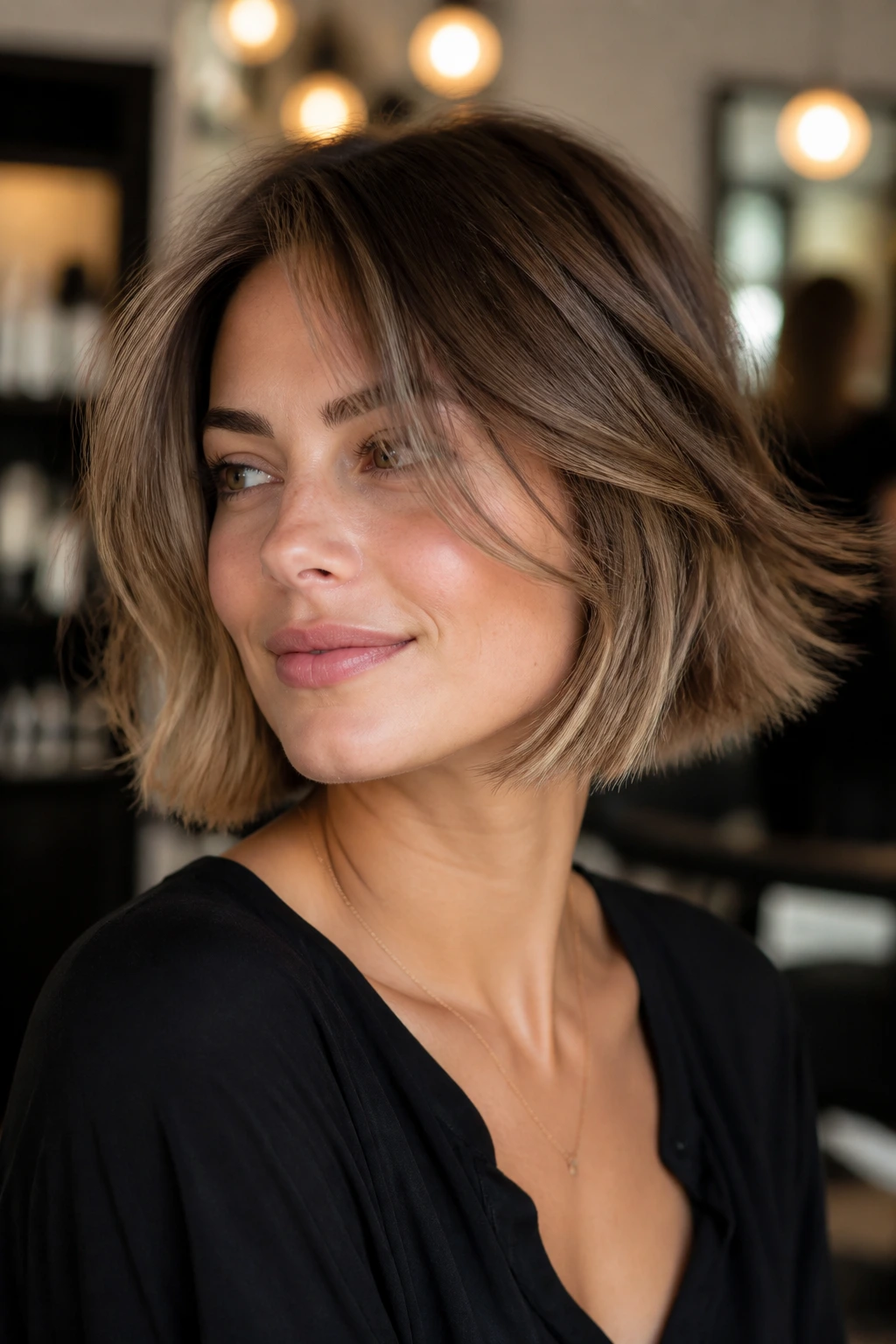
The thing I like most about feathered bob haircuts is that they solve a shape problem without making the haircut look busy. That’s rare. A blunt bob can be too hard, and an overly layered bob can drift into mush. Feathering sits between those two and, when it’s done well, gives you a cut that feels lighter the minute you put it on.
Pick the version that matches your hair’s actual behavior, not the one that looks best on a mannequin head. Heavy hair needs weight removed carefully. Fine hair needs a stronger line. Wavy and curly hair need feathering that follows the bend instead of flattening it. Small choices. Big difference.
If you walk into the salon with one clear idea, make it this: ask for movement without losing shape. That’s the whole game.
