



Fine hair after 40 has a way of telling on you. One uneven cut, one heavy conditioner, one bad styling day, and the whole shape can go soft at the roots and stringy at the ends. Choppy bobs for fine hair over 40 work because they give the eye a line to follow while still breaking up the surface enough to keep the style from collapsing into one flat sheet.
The sweet spot is not “more layers.” That’s where a lot of people get burned. The better move is a cut with a visible perimeter, a little movement inside the shape, and enough length in the right places to keep the bob looking like hair, not wisps. When it’s done well, you can tuck it, wave it, bend it under, or let it dry with a little roughness and it still looks intentional.
The range here is wider than people think. Short and sharp can work. So can a longer bob that brushes the collarbone. Fringe changes the whole read. A side part changes it again. The trick is choosing the version that respects your density, your face, and the amount of time you actually want to spend in front of a mirror.
Why These Bobs Work So Well on Fine Hair After 40

-
A solid outline makes fine strands read fuller: A clean jawline, chin line, or collarbone line gives the eye a border, and that border matters more than another round of over-layering.
-
Choppy texture creates movement without stealing weight: The best version of “choppy” lives inside the haircut, where it can break up flatness without making the ends look wispy.
-
The right bob plays nicely with changing density: Temples, crown, and the front hairline often need a softer approach after 40, and these cuts build that in without looking fussy.
-
Most of these shapes style fast: A good bob should fall into place with a round brush, a flat iron bend, or a rough dry and a little root lift. If it needs a twenty-minute battle every morning, the cut is doing too much.
-
Color and shape work together: Soft highlights, lowlights, or gray blending can make the movement inside a choppy bob show up much more clearly, especially in daylight.
-
Length is part of the illusion: Fine hair often looks better when the cut stops at a point that lets the ends settle — jaw, chin, or collarbone — instead of drifting past the shoulders and going blank.
How to Read the Shape Before You Book It
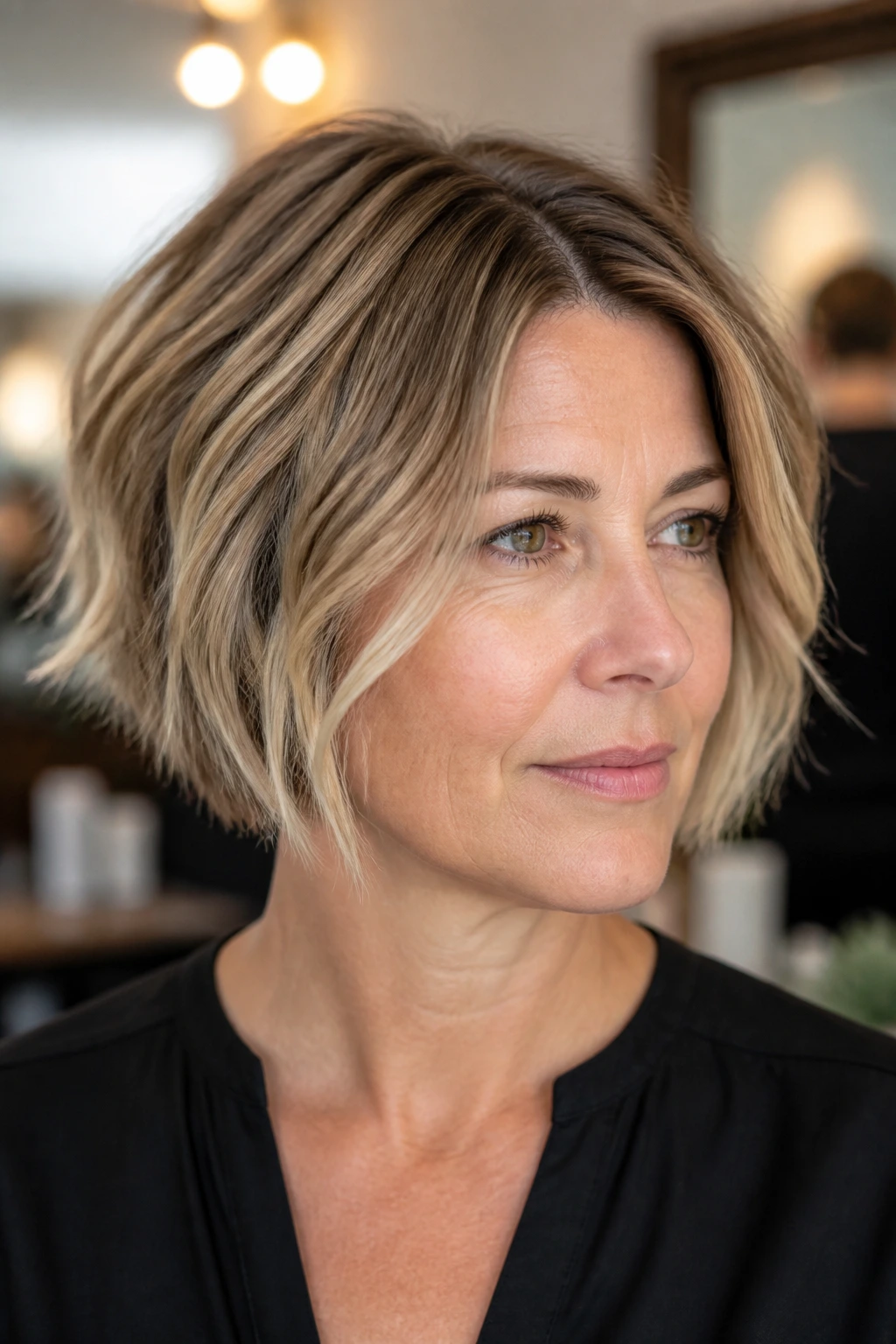
Fine hair and thin hair are not the same thing, and that distinction changes everything. Fine hair has a small strand diameter. It can be dense or sparse. Thin hair means fewer strands overall. If you have fine but dense hair, you can carry a little more texture. If your hair is fine and sparse, the perimeter has to stay firmer or the ends disappear.
The perimeter is the anchor
The outside line is what people see first. If that edge is too shredded, the whole cut reads thin no matter how many products you use. A bob with a strong perimeter has more visual body, even when the roots are flat on day two.
Choppiness belongs inside the shape
The best texturizing softens the interior and leaves the ends with enough presence to hold the outline. That means point cutting, slide cutting, or gentle internal removal — not aggressive thinning at the bottom six inches.
The part matters more than most people admit
A center part can look sleek. A side part can create lift. A deep side part can cover a weak temple area. Your natural growth pattern decides a lot here, and fighting it usually makes the haircut look harder than it should.
Styling time should shape the cut
If you air-dry most days, you need a bob that dries with a little bend on its own. If you blow-dry, you can carry more structure. If you own exactly one hot tool and use it under protest, the cut should still hold up without drama.
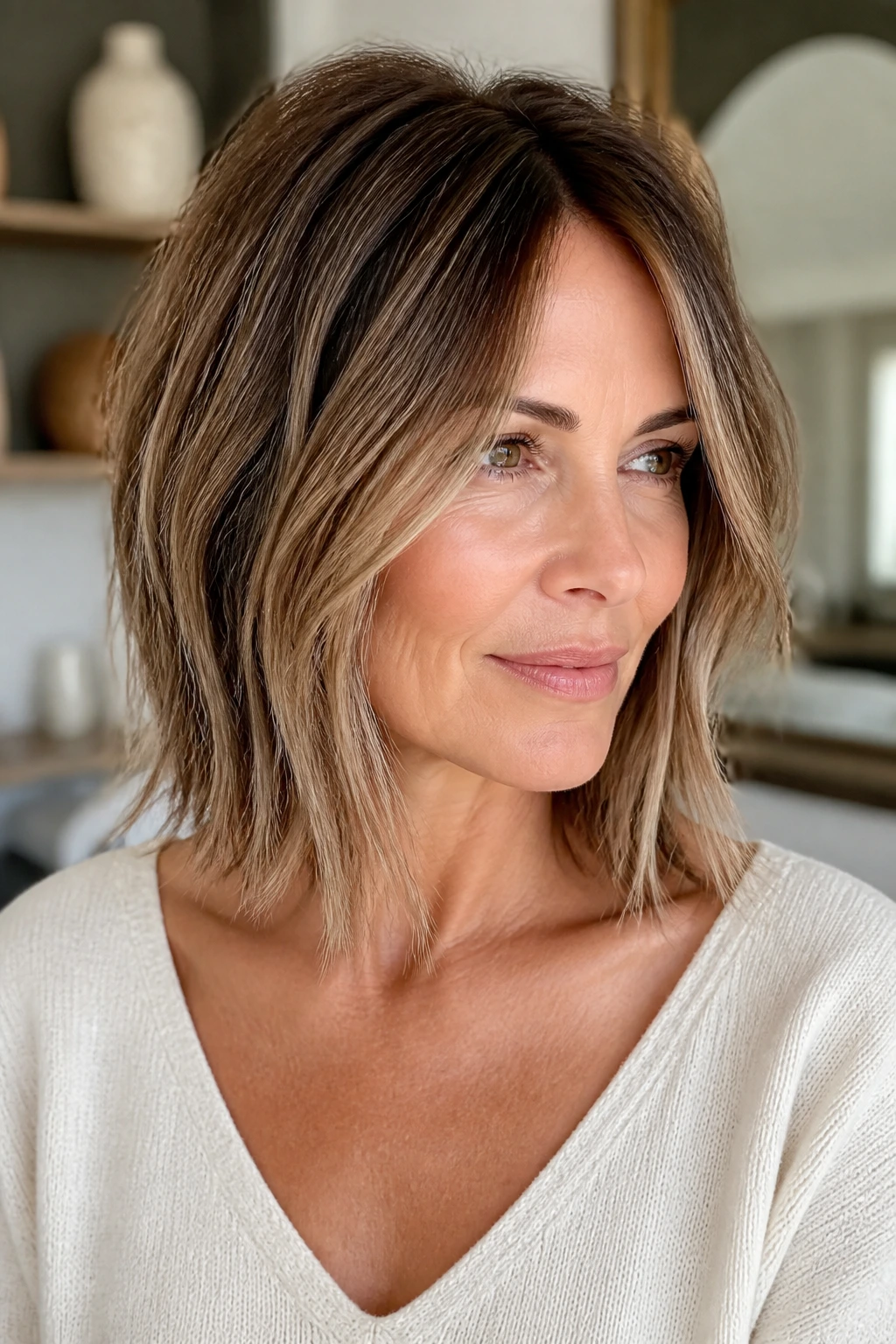
1. Jawline-Grazing Choppy Bob
This is the safest place to start if you want a short cut without going too short. The jawline gives fine hair a clear stop point, so the eye reads the shape as full even when the roots are doing their usual flat little number by afternoon.
The choppiness belongs in the middle of the haircut, not hacked into the bottom edge. Ask for the perimeter to sit right at, or just below, the jaw, with soft point-cut texture through the interior. If your hair bends easily, a quick blow-dry with a round brush is enough. If it’s straighter, a one-inch iron through the front pieces keeps the line from looking stiff.
Best for: round and oval faces, soft jaws, and anyone who wants a bob that still tucks behind the ears.
Watch for: over-thinning at the ends. That’s how the shape turns weak.
2. Collarbone-Skimming Choppy Bob
Why does a longer bob often look thicker than a shorter one? Because it lets the ends settle instead of floating around in a tiny, nervous halo. A collarbone-skimming version gives fine hair a little more weight, which can be a mercy if your strands fall limp as soon as they get a drink of conditioner.
The cut works best when the front pieces are left long enough to brush the collarbone and the interior layers start around the cheekbone. That gives movement without stripping away the silhouette. I like this length for people who still want enough hair to tuck, pin, or tie back in a pinch.
Salon note
Ask for softness around the front, not a heavy stack of layers all over the head. If your hair flips at the shoulders, keep the front pieces a touch longer so they bend instead of kicking out.
3. French Bob With Micro Bangs
Short, clean, and a little cheeky. That’s the appeal here. A French bob with micro bangs can look sharp on fine hair because the compact shape keeps everything together, and the short fringe adds a second visual line across the face.
It does need the right hairline. If your cowlicks fight at the front, or your forehead grows hair in multiple directions, this one can turn temperamental fast. But when the fringe sits softly — not in a hard shelf, not pasted down — it gives the haircut a little bite. On straight or softly wavy hair, it’s especially good with a quick rough dry and a light touch of paste on the ends.
A small warning: keep the bangs airy. Micro bangs that are cut too thick can swallow the face and make fine hair look helmety.
4. Soft A-Line Choppy Bob
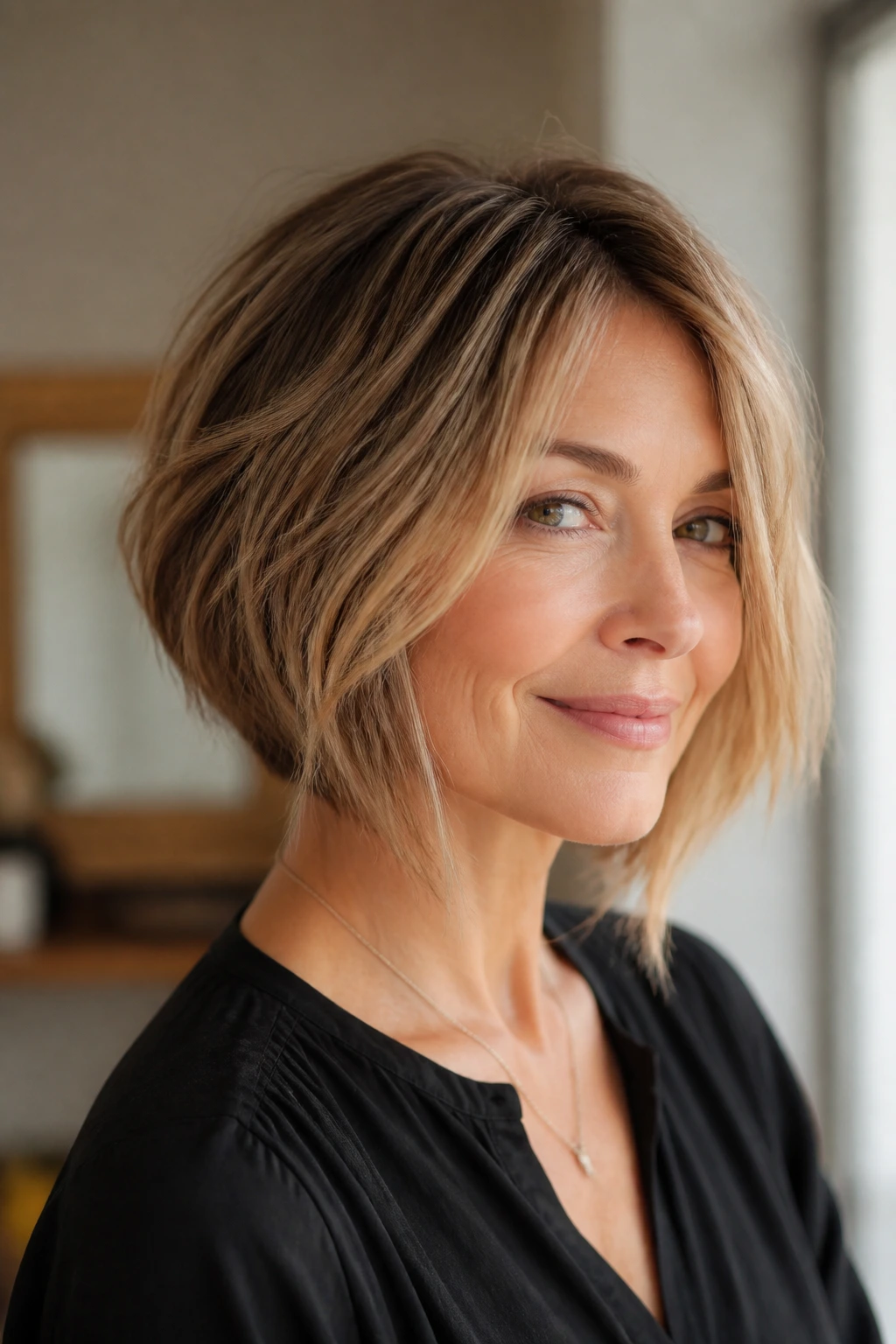
A hard A-line can look too severe on fine hair. Soften it and the whole thing breathes.
The front should be longer than the nape, but not so much longer that it starts to look like two different haircuts arguing with each other. A gentle A-line gives the face some length and keeps the back from puffing up in a weird little shelf. The choppiness belongs through the middle and upper side sections, where it can move when you turn your head.
This shape is nice if you want definition around the jaw but don’t want a blunt chin-length cut. It also behaves better than a pure one-length bob when the hair starts to lose lift at the crown. Ask for a front that’s about 1 to 2 inches longer than the back, then let the stylist break up the interior with a light hand.
5. Stacked Choppy Bob
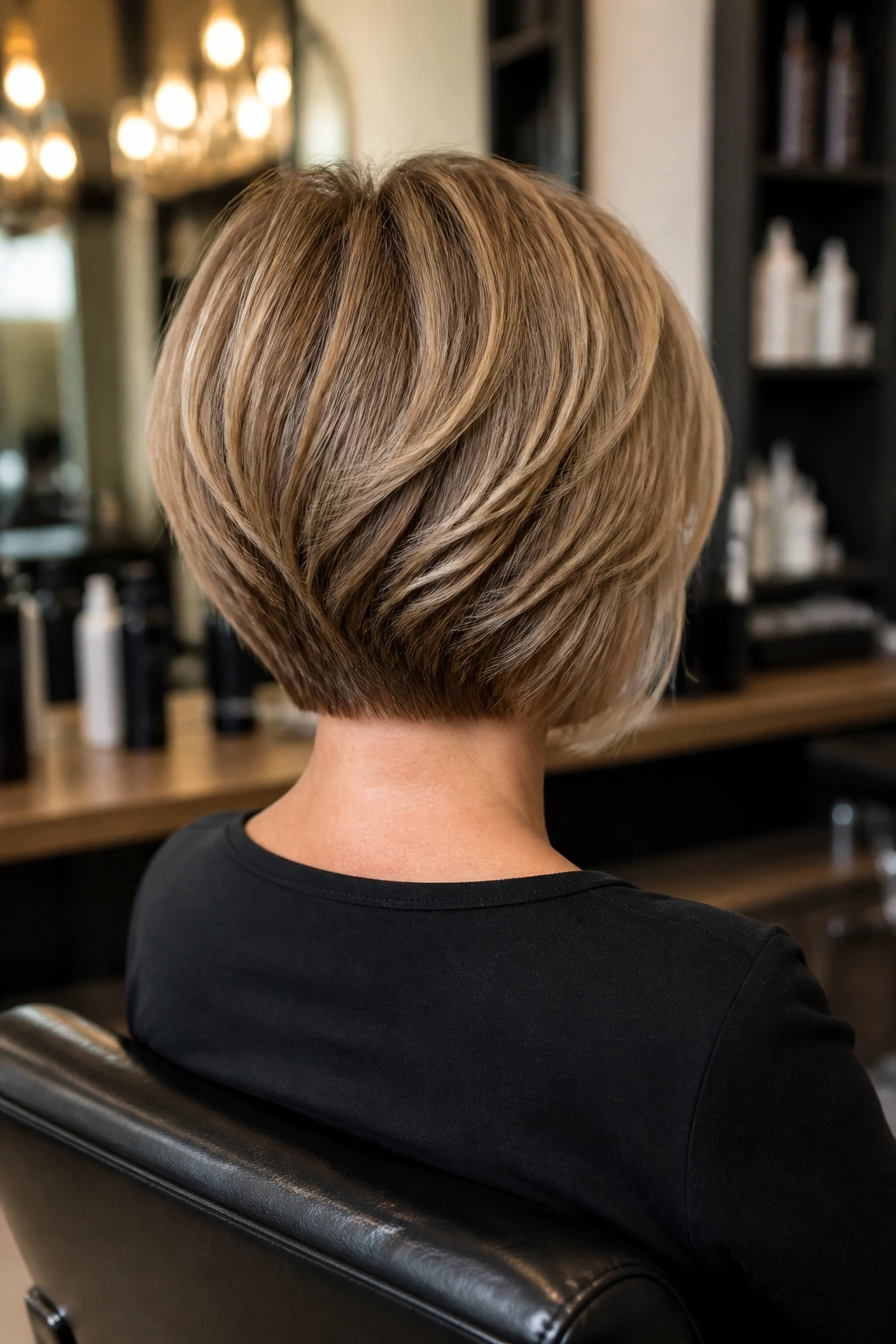
Stacked does not have to mean bulky. That’s the part people get wrong.
A soft stack gives the back of the head some lift, which can help if your crown goes flat as soon as you leave the chair. The trick is to keep the graduation controlled so the nape doesn’t puff out and the top doesn’t lose too much hair. On fine hair, too much stacking can expose the scalp and make the shape look carved rather than full.
Ask for a gentle graduation through the back, then keep the surface layers light and broken up. This cut usually needs a little blow-dry help at the crown, but not much. A round brush, a blast of heat at the roots, and a cool shot are enough to make the back sit nicely.
6. Side-Swept Fringe Bob
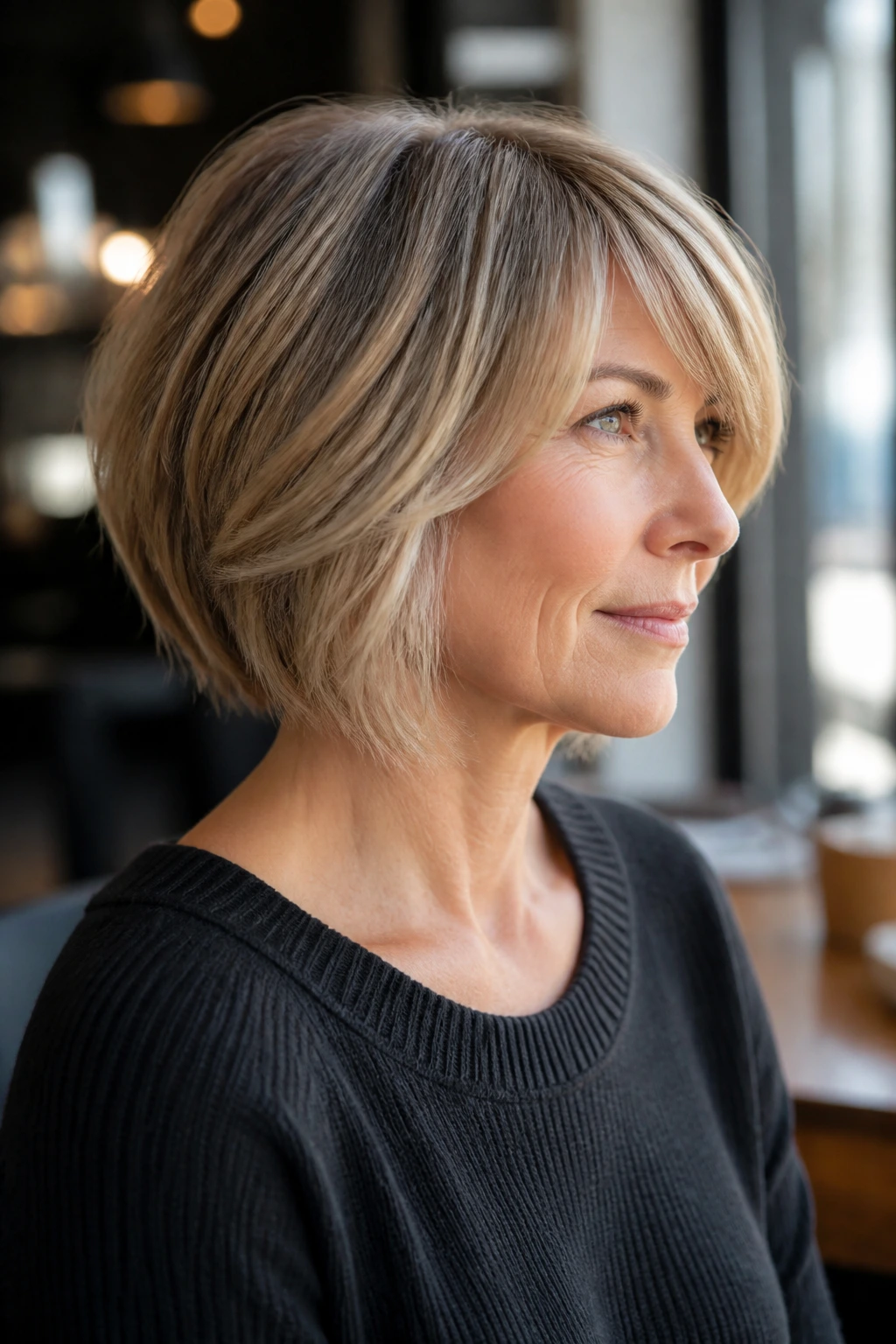
When the temples feel a little sparse, a side-swept fringe can do more than a bottle of styling spray ever will. It brings the eye forward, adds movement around the face, and gives the front of the haircut a softer, denser read.
The fringe should start high enough to create lift, usually around the brow or just above, then melt into the cheekbone area. If the shortest piece lands too low, it can drag the face down. If it’s too thick, it starts acting like a curtain and the haircut loses air.
What to ask for
Say you want the fringe to be light enough to move off the face, not cut into a heavy side wall. No blunt edge. No deep thinning around the temples. This one works well with glasses, strong brows, and faces that need a little diagonal line.
7. Center-Part Piecey Bob

A center part can be elegant on fine hair when the cut is built for it. The mistake is thinking the middle part itself does all the work. It doesn’t. The roots need a little lift, the ends need a little separation, and the top has to avoid lying flat like wet paper.
This version works best when the bob sits around chin to collarbone length, with broken-up front pieces that frame the cheekbones. The ends should have movement, not fuzz. A root spray at the crown and a quick lift with clips while you do your makeup can change the whole shape.
If you wear your hair straight, this is a good one for a flat iron bend at the front. If it’s wavy, you only need to coax the face frame into place and leave the rest alone.
8. Blunt-End Bob With Internal Texture
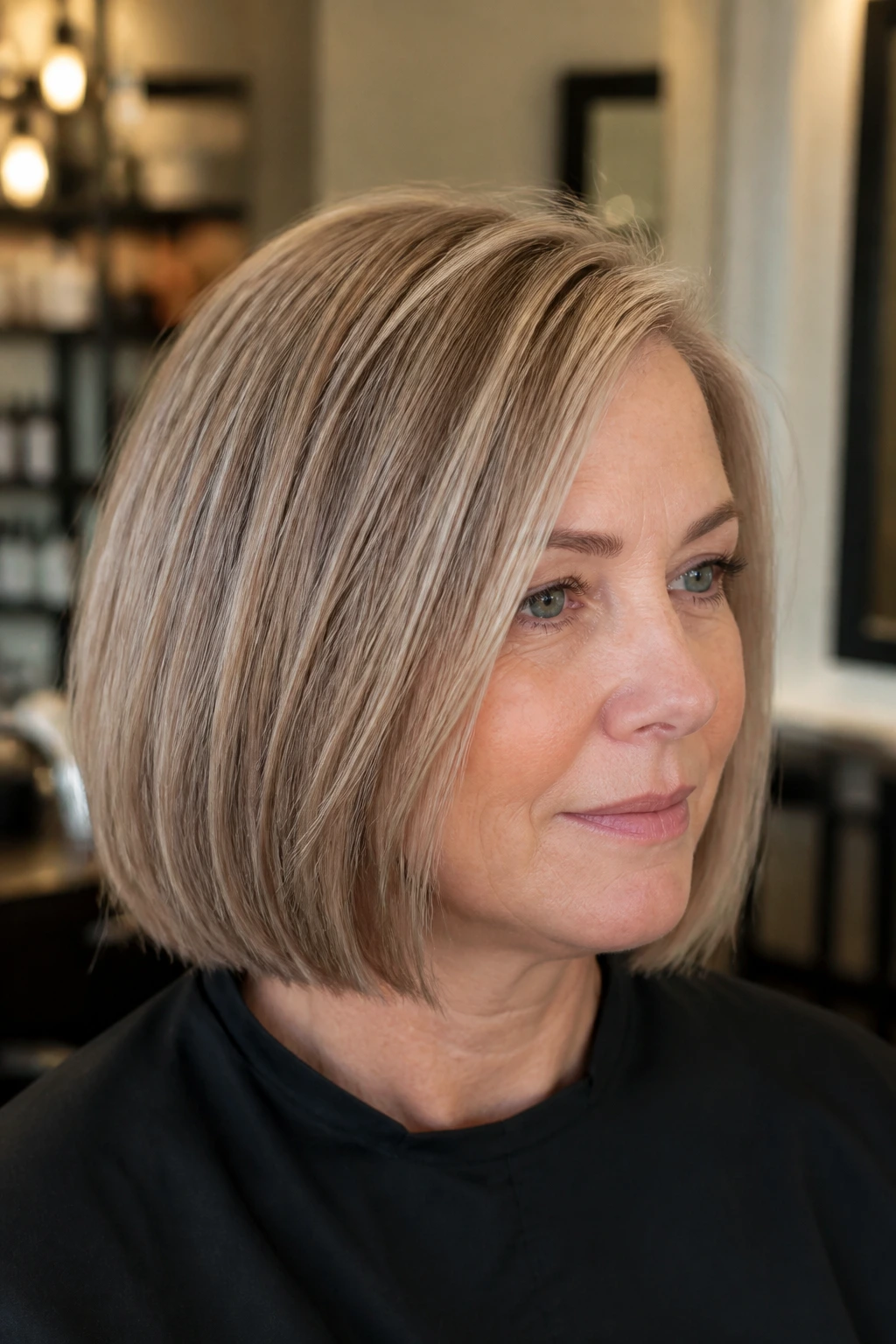
This is the cut I reach for when fine hair has been over-layered one too many times. The perimeter stays solid, which gives the illusion of density, while the inside gets just enough texture to keep the hair from hanging in one block.
The request matters. Ask for the last inch or so at the bottom to stay clean and full. Then let the stylist remove weight inside the shape instead of at the edge. That way the haircut still has a firm line when it dries, but it doesn’t feel heavy or helmet-like.
Best for: fine hair that tends to fray at the ends, especially if you don’t want a lot of daily styling.
Skip if: your hair is already fragile from bleaching or heat. Too much texture there can create a rough finish fast.
9. Razored Bob With Airy Ends
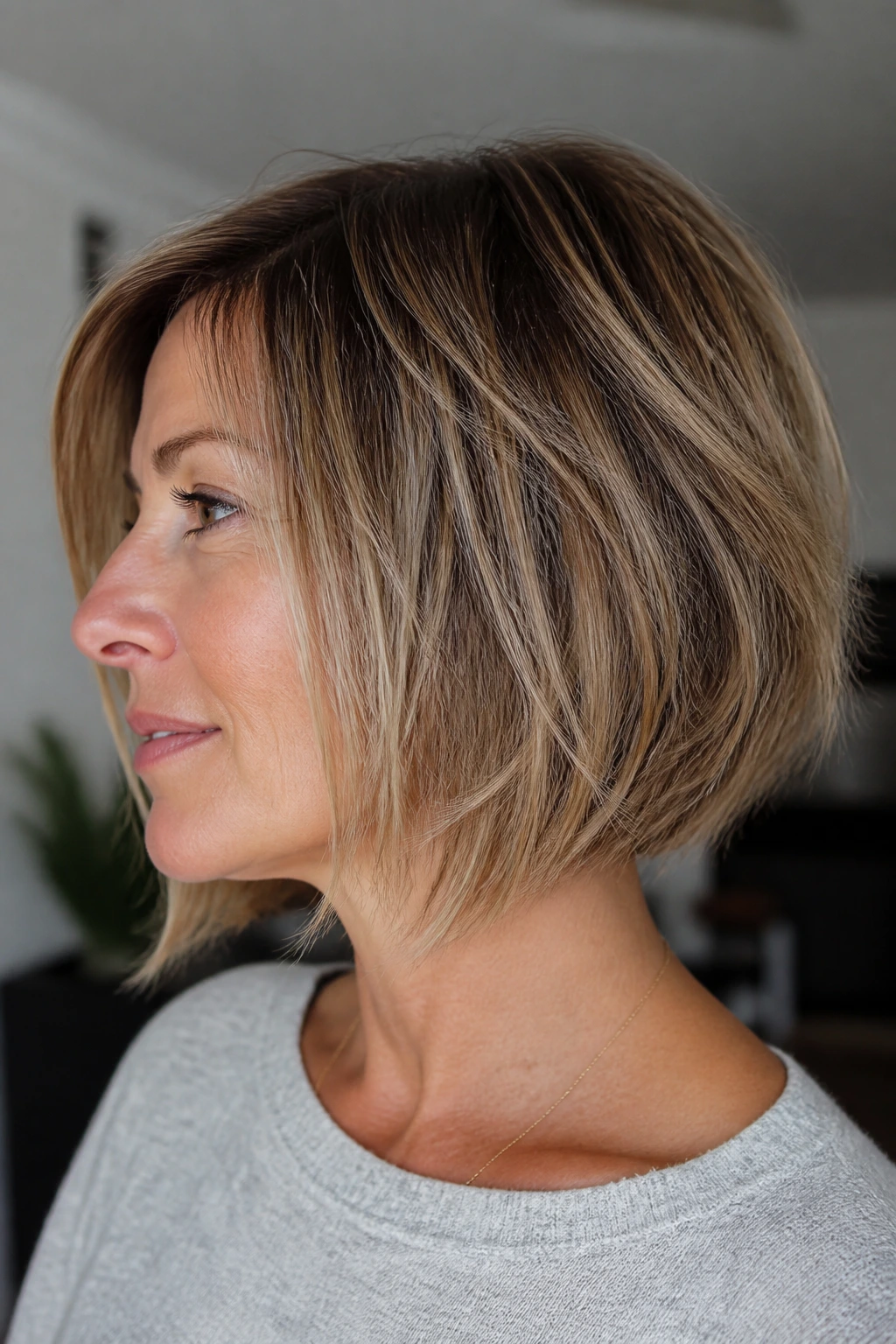
Can a razor help fine hair? Sometimes, yes. Sometimes, absolutely not.
A soft razor finish can make the ends feel lighter and move better, especially on hair that has a slight wave. The problem is that razor work on delicate or porous hair can turn fuzzy by the second day. If your strands are healthy and you like a piecey, undone finish, this can be a smart choice. If your ends already split or your hair feels fragile after coloring, I’d be cautious.
The key is restraint. A good stylist will use the razor to soften the surface, not to erase the perimeter. You want airy ends, not see-through ones. Style it with a light cream through the mid-lengths and a tiny bit of separation on the tips.
10. Wavy Choppy Bob
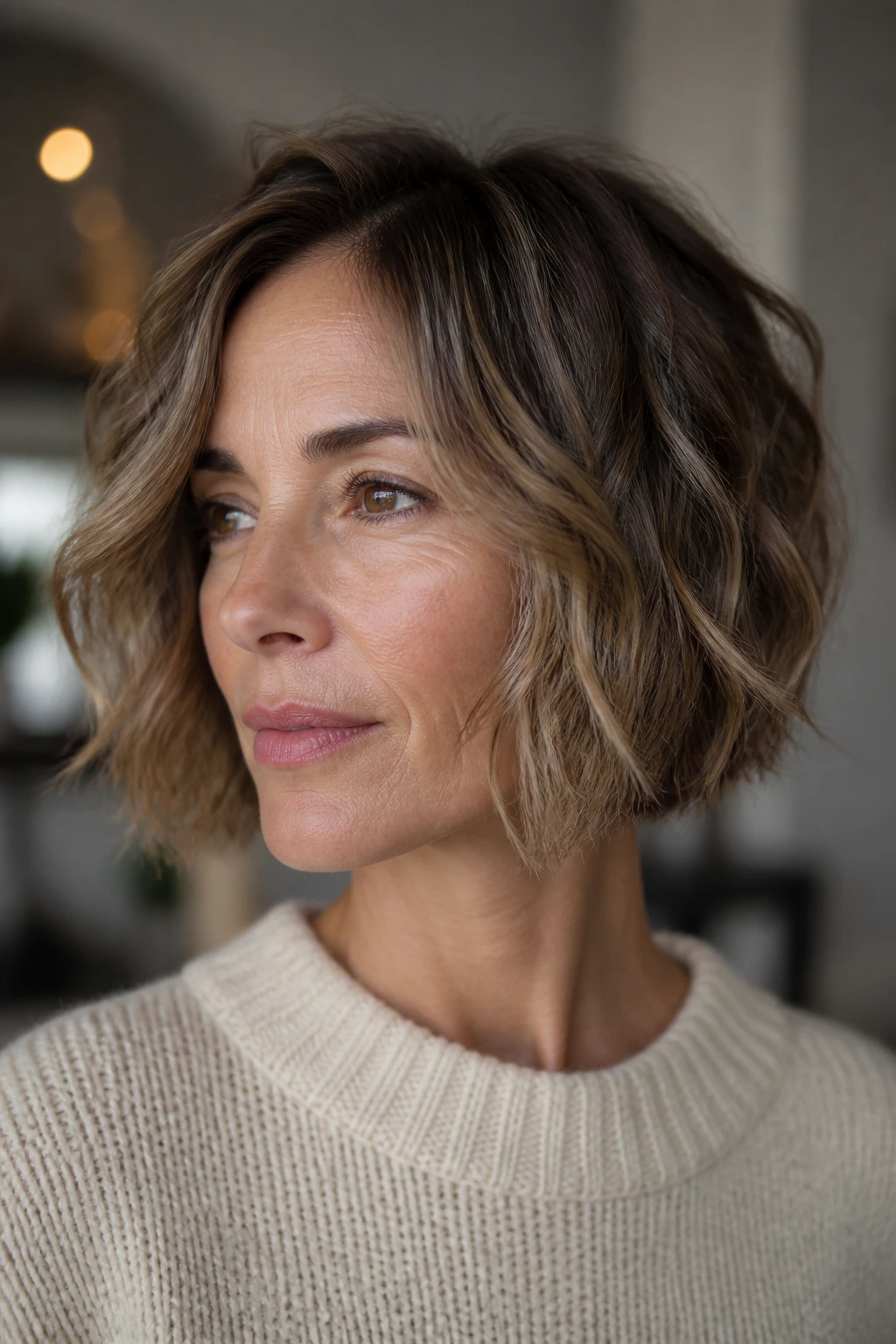
You can spot this one before it’s dry. The wave catches the broken ends and gives the cut motion even when the hair is doing its own thing.
On fine hair, the trick is to keep the base strong enough that the wave doesn’t collapse the shape. Use a mousse at the roots, scrunch through the mid-lengths, and diffuse until the roots are dry and the ends are about 80 percent there. Then stop touching it. Seriously. Every extra pass of the hand can turn a nice piecey wave into a frizzy cloud.
If your wave pattern bends away from the face, lean into it. Don’t fight it with a flat brush just to force a polished finish. The relaxed version usually looks thicker.
11. Curved Chin-Length Bob
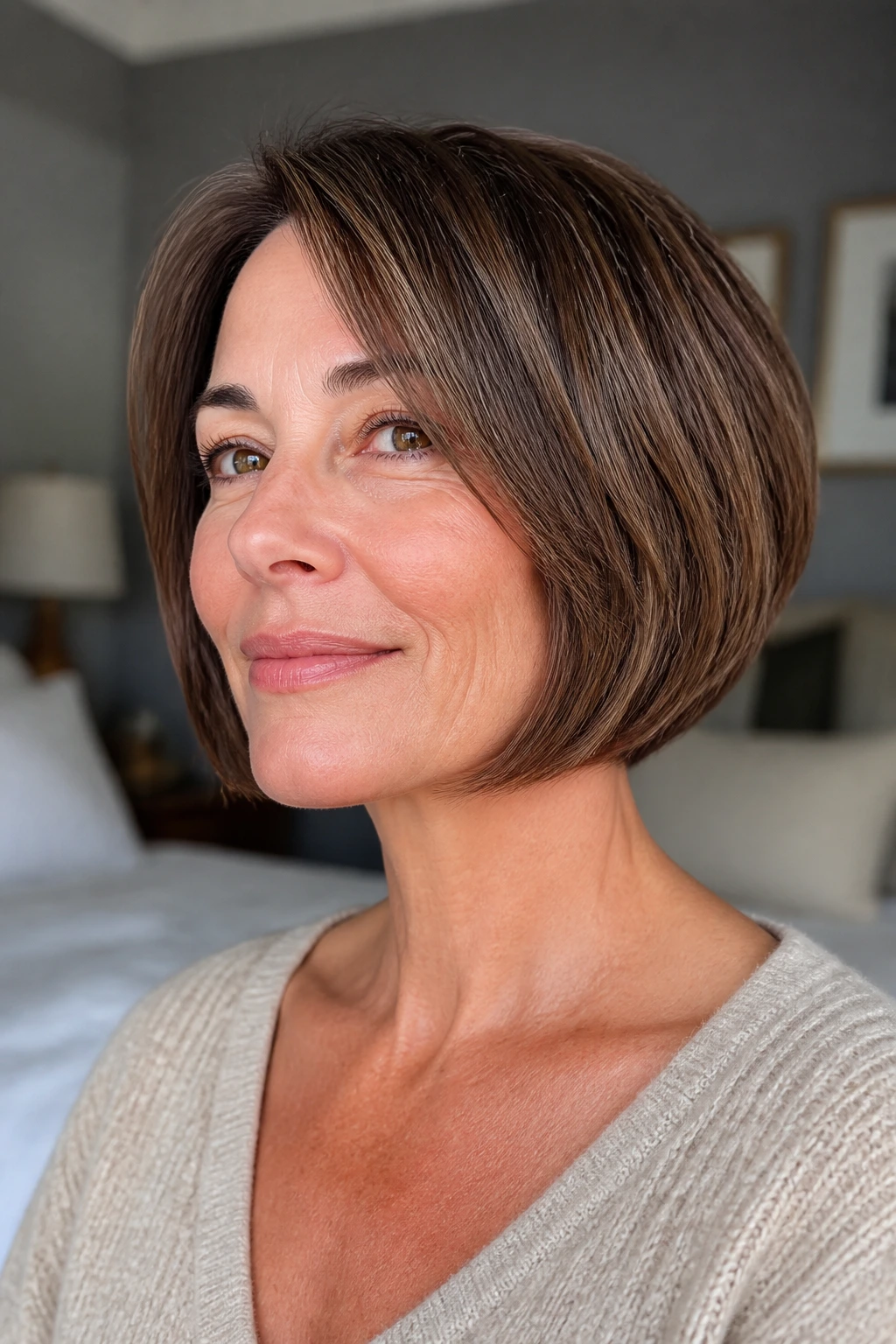
Unlike a straight bob that hangs in one line, a curved chin-length bob bends inward and hugs the jaw. That small curve changes the entire read of the cut. Fine hair suddenly looks more deliberate, more framed, and less like it was left to fend for itself.
This version is especially good if your chin and jawline are areas you want to highlight. It can also help if the ends tend to flip outward in a random way, because the curve gives that movement a shape to follow. Ask the stylist to bevel the ends under by a quarter inch or so, not to carve the bottom into a hard shelf.
The cleaner the line, the fuller the hair often looks.
12. Bixie-Bob Hybrid

Some heads of hair want less length but aren’t ready for a full pixie. That’s where the bixie-bob lands. It borrows the short, lifted top of a pixie and keeps enough side and back length to still read as a bob.
For fine hair, that top lift is the whole point. It gives the crown a little air and keeps the sides from dragging the face down. The outline stays compact, so the haircut looks neat even when you’ve only had time for a quick finger style and a bit of root spray.
Who it suits: people who want movement, low weight, and a stronger silhouette.
Who should think twice: anyone who wants to tuck hair behind the ears or keep enough length for a ponytail. This one gives up that flexibility.
13. Choppy Bob With Curtain Bangs

Curtain bangs can do a lot of quiet work for fine hair. They soften the forehead, add width where the face needs it, and give the front of the haircut a fuller look without taking a blunt chunk out of the density.
The shortest point should land near the cheekbone, then slide down into the bob. If the bangs are cut too short, they pop up and expose too much scalp. If they’re too thick, they swallow the face. You want a soft split down the center with enough movement that the fringe opens when you blow-dry it away from the face.
This is a good cut if you like a little softness around the eyes and don’t want the whole haircut to depend on volume at the crown.
14. Angled Lob With Choppy Layers
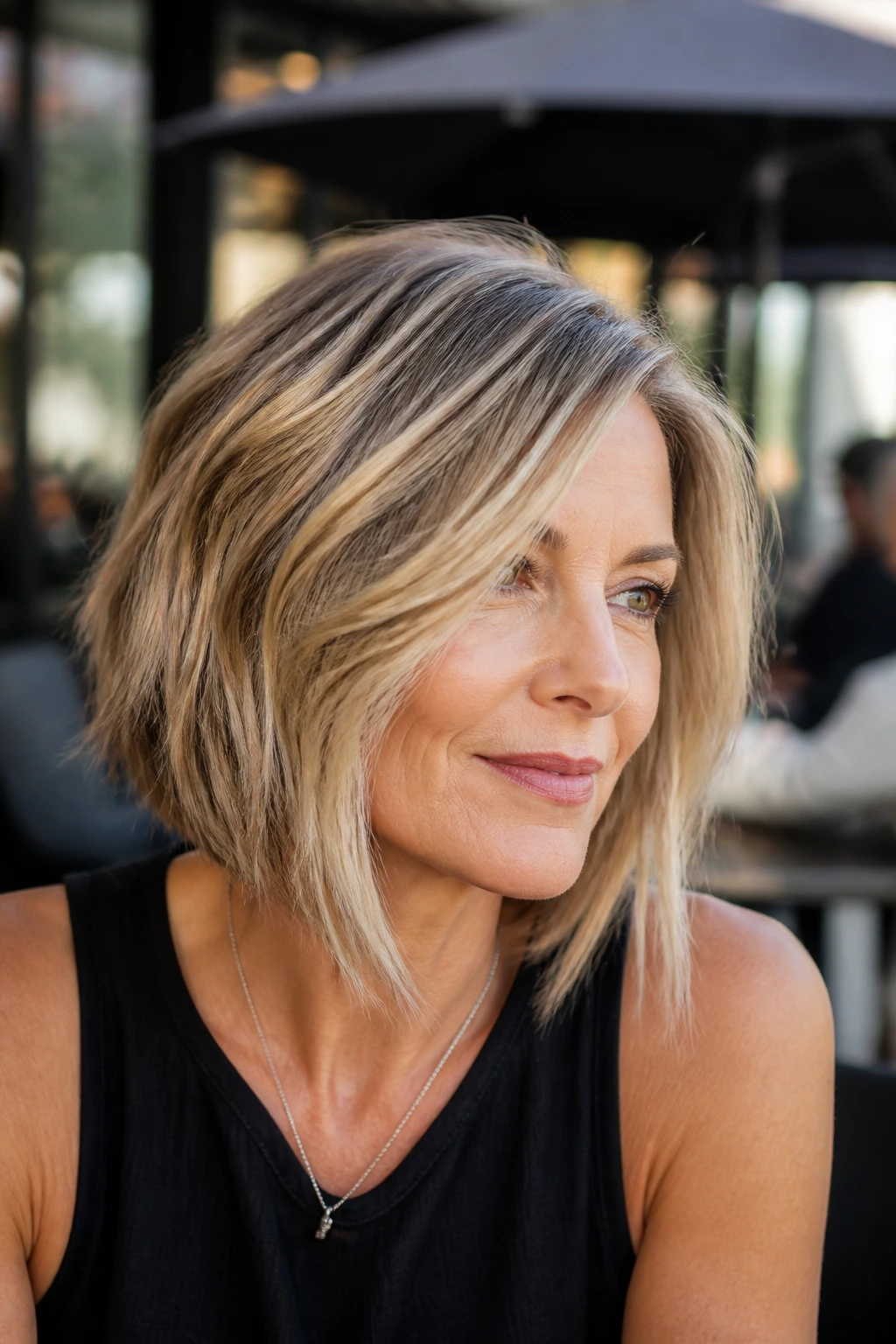
If you keep tucking your hair behind your shoulders, this longer shape probably makes more sense than a shorter bob. The angled lob gives you length in front, which helps fine hair feel less fragile, while the subtle angle keeps the back from looking boxy.
The choppy pieces should stay around the face and collarbone. I would not scatter them all over the head. Too much internal carving can make a long bob look thin and restless. This is the style for someone who wants a clean outline but still wants hair that moves when she walks.
It also grows out well. That matters. A lot of bob cuts only look right on the first day out of the salon. This one keeps its shape for longer, which is worth a lot.
15. Tucked-Behind-Ear Bob

What makes a tucked bob look intentional instead of accidental? Length, balance, and a clean line around the ear.
One side should be long enough to slide behind the ear without springing out again. The other side can stay loose, which creates a soft asymmetry that gives the haircut some personality. On fine hair, this is a smart way to make the bob feel styled without adding volume where you don’t want it.
It’s especially nice with earrings or glasses. The tuck opens up the face and lets the cut frame the features instead of sitting on top of them. If the hair at the temple feels too short to tuck smoothly, leave it a touch longer next time. That one detail changes everything.
16. Disconnected Bob With Hidden Underlayers
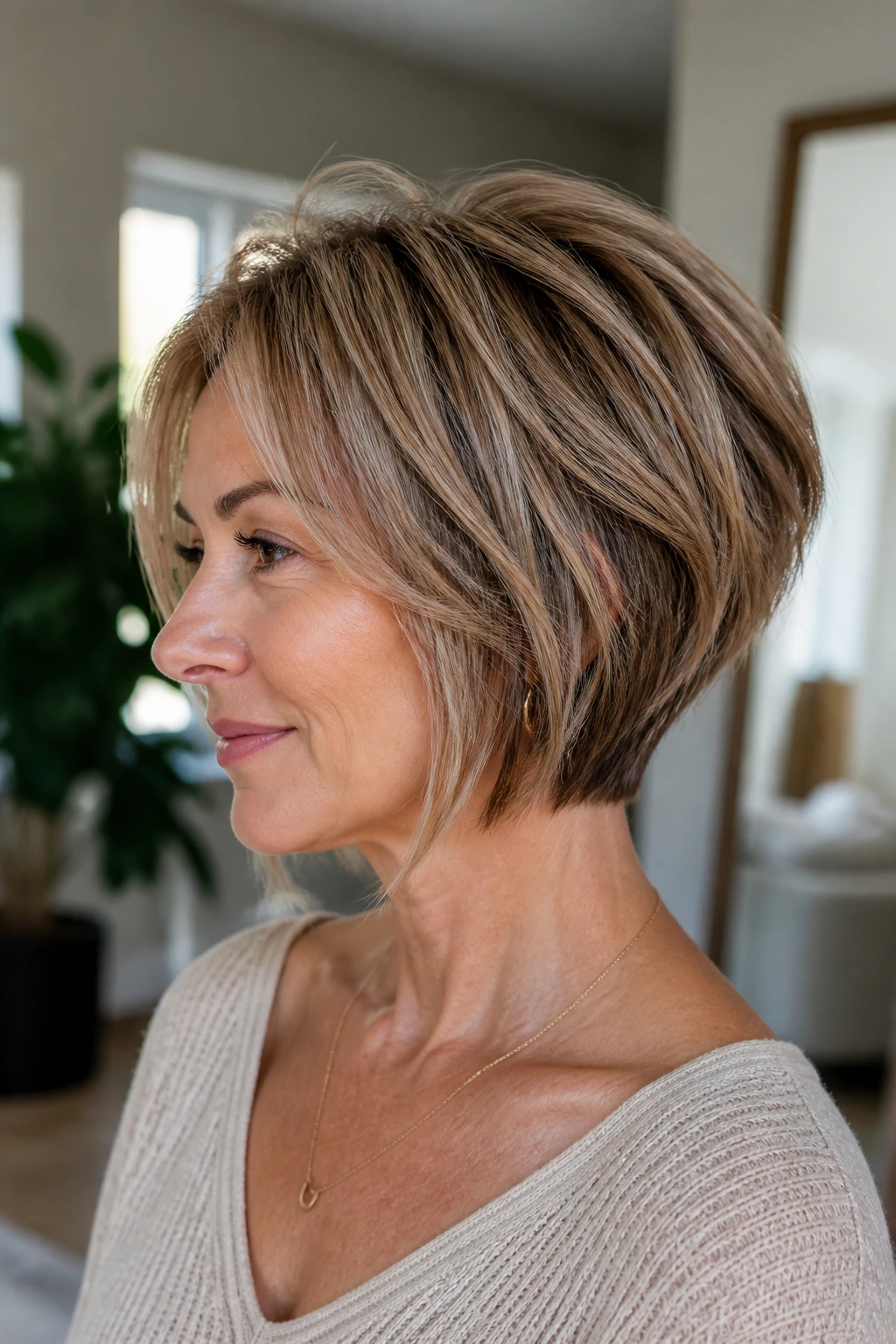
This one is sneakier than it looks. The top layer stays intact, while the underlayers are cut shorter so the top can sit with a little more lift. Done well, it gives fine hair movement without obvious choppy marks on the surface.
The danger is overdoing the disconnection. If the underlayers are taken out too aggressively, the top can start floating over empty space and the whole shape gets weird. On hair with some density, though, it can be a brilliant fix for a flat crown or a heavy bottom section.
I like this cut when the ends need relief but the outer line still needs to look full. It’s a more advanced bob, which means the stylist has to be careful with the balance. No rushing. No shortcuts.
17. Messy Italian Bob
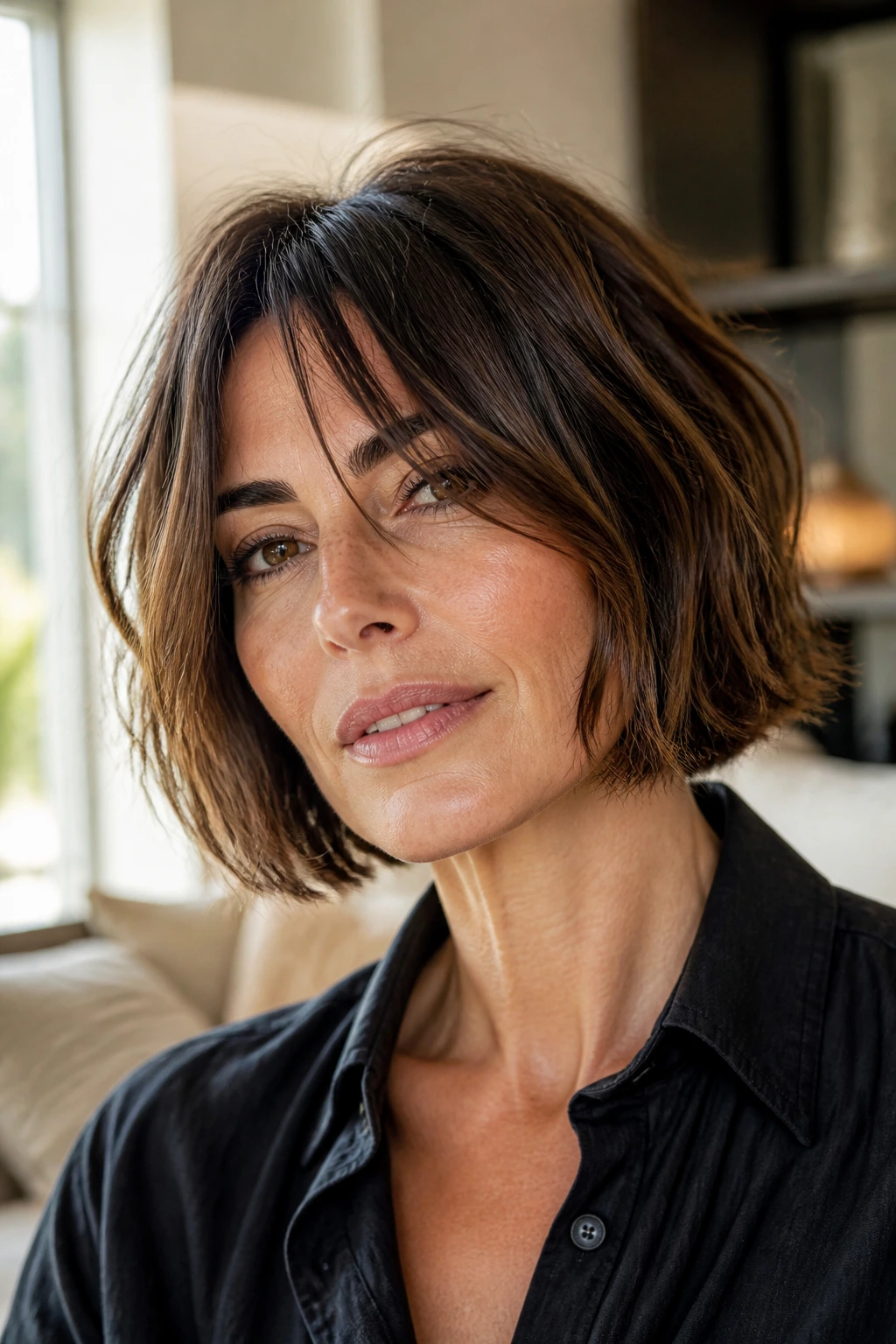
Picture a bob that skims the jaw, bends a little at the ends, and never looks like it spent an hour being forced into place. That’s the spirit here.
The Italian bob, adapted for fine hair, needs a blunt base and enough texture to make the movement believable. Not beachy. Not shaggy. Just softly undone. A rough blow-dry, a small round brush, and a tiny bit of cream through the mid-lengths are usually enough. The result feels fuller because the lines aren’t over-polished into weakness.
This is a nice middle ground if you want polish without stiffness. It has a little softness around the edges, which helps fine hair keep a more natural read.
18. Choppy Bob With Hidden Crown Lift
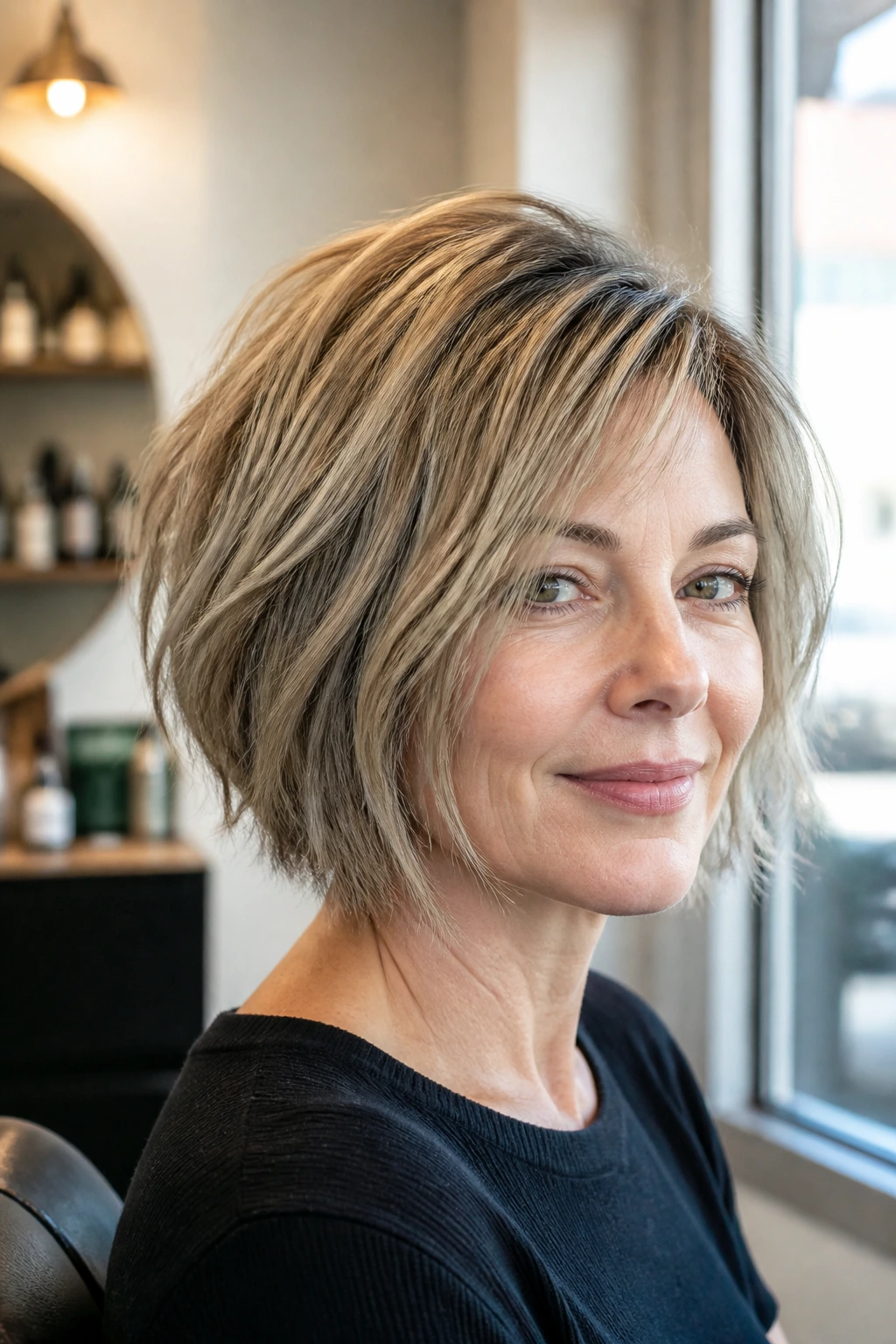
The crown is where fine hair often gives up first. That’s why this version matters. The lift lives underneath the outer layer, so the surface still looks neat while the top sits a little higher off the scalp.
Ask for hidden crown layers rather than obvious top layers. The hair should move up where it needs volume, not collapse into a split canopy. A root-lifting spray and a couple of clips while the hair cools help a lot here. If you blow-dry, aim the nozzle at the roots first and leave the ends alone until the top is set.
This cut is good for people who complain that every bob “goes flat in five minutes.” That problem usually starts at the crown, not the ends.
19. Shoulder-Skimming Shag Bob

A full shag can get too wispy on fine hair. This hybrid keeps the bottom edge of a bob while borrowing enough shag movement to stop the hair from hanging like a curtain.
The face-framing pieces can start around the cheekbone, and the top can carry a little lift, but the ends should still feel anchored. That anchor is what keeps the style from drifting into thinness. If your hair has a natural wave, this cut can be a good compromise: enough mess to feel modern, enough shape to avoid looking like you gave up halfway through styling.
A diffuser helps. So does a light hand with texture spray. Too much product turns the movement crunchy, and nobody needs that.
20. Inverted Bob With Feathered Back
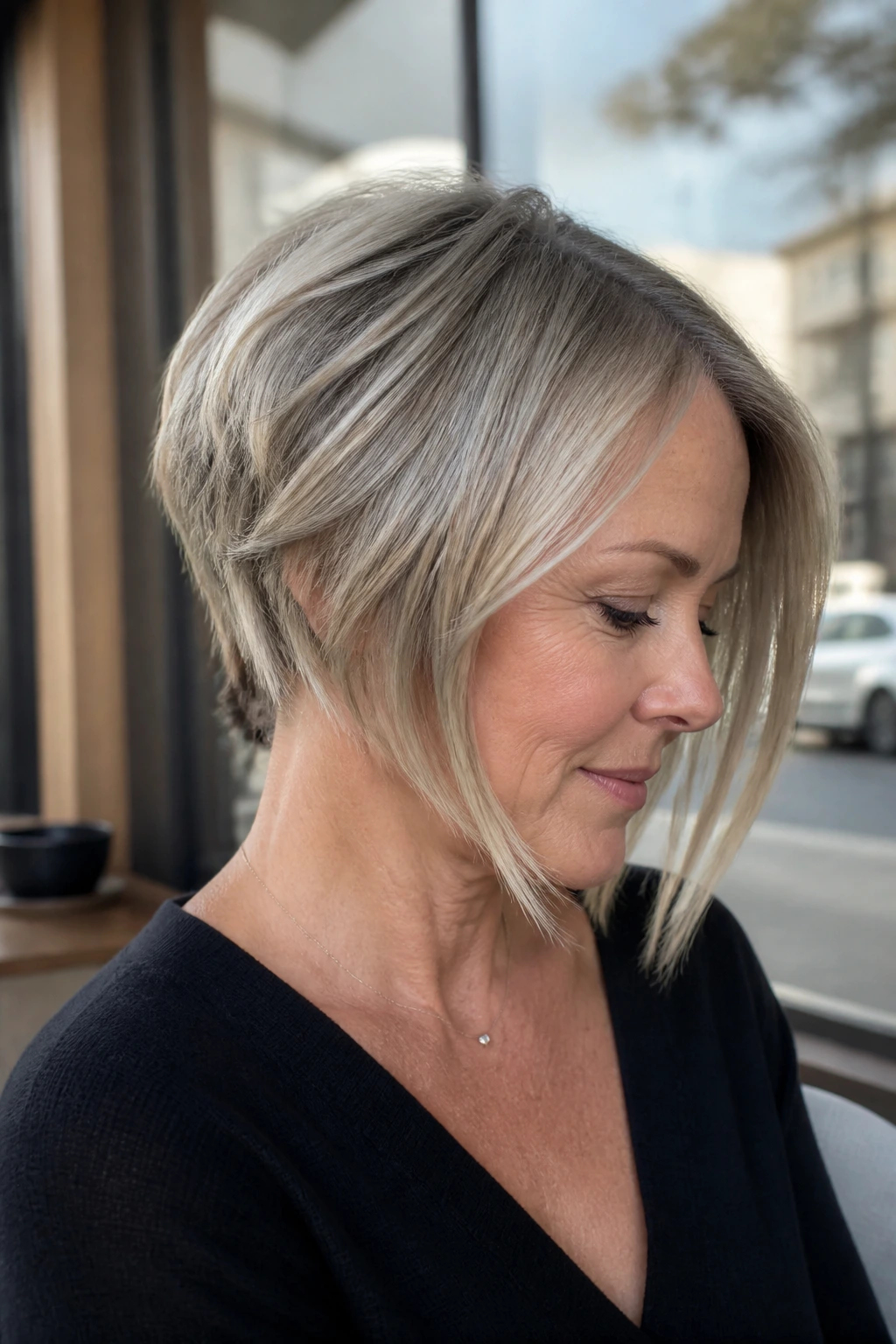
Why does a shorter back change the whole silhouette? Because it lifts the shape where fine hair usually sags.
An inverted bob gives you that clean forward angle from nape to face, and the feathered back softens the transition so the cut doesn’t feel severe. On fine hair, the back should be tight enough to create lift but not so short that the scalp shows through. The front stays longer, which gives the face a frame and keeps the haircut from reading too sharp.
This is a good choice if you like a defined neck, a crisp outline, and a style that can be tucked under with a round brush in a few minutes.
21. Salt-and-Pepper Choppy Bob
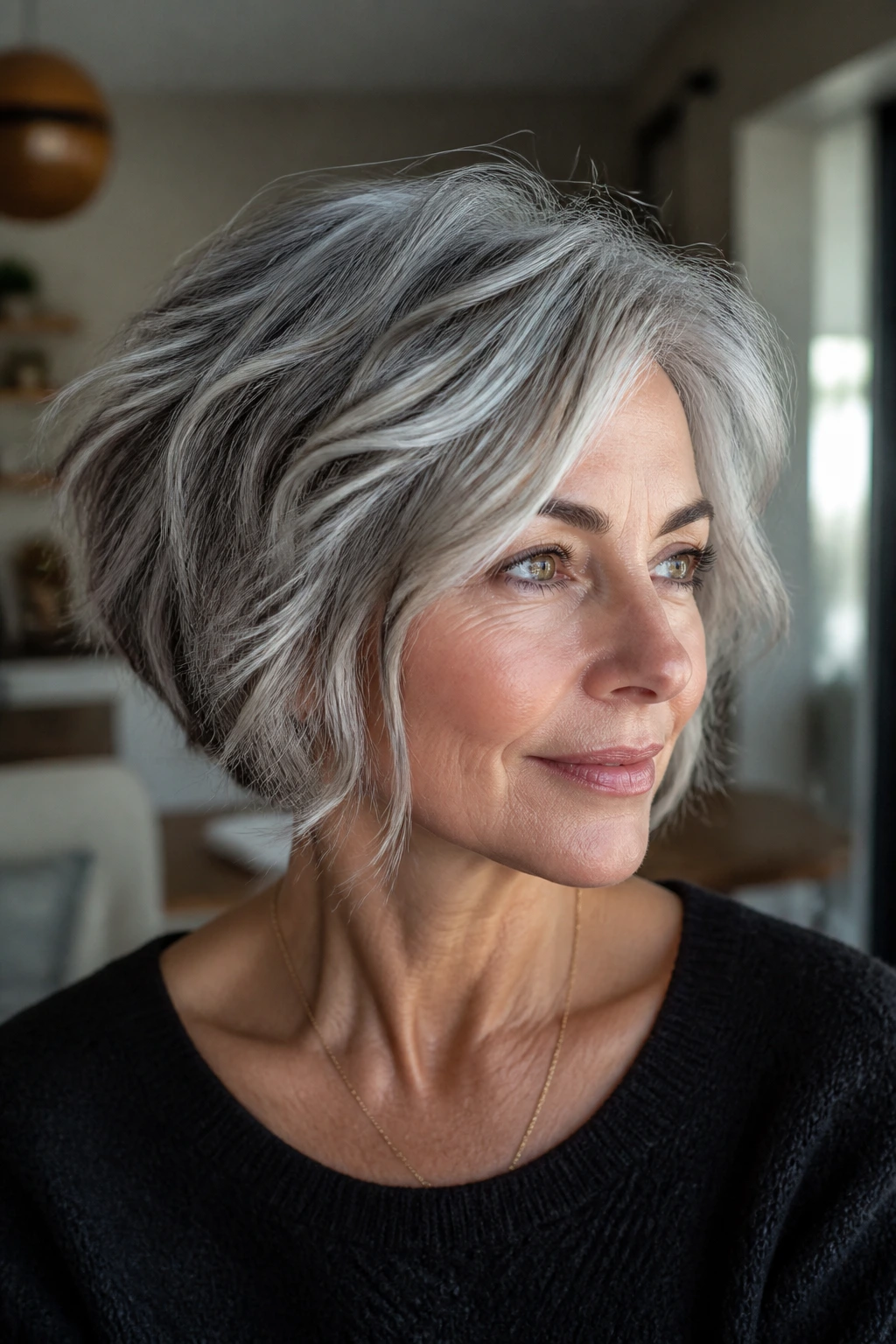
Gray hair can look striking in a choppy bob, but only if the cut respects the texture. Silver strands reflect light differently, and a little movement keeps them from reading flat or wiry.
A gloss treatment helps the tone stay clean. Soft lowlights can also add depth near the roots, which makes the hair appear denser without pretending it’s something it isn’t. I’d avoid aggressive thinning here. Gray hair often gets drier, and over-texturing it can make the ends flare out in the wrong way.
This shape works well when the cut is modest and the finish is soft. The texture should be there, but the line should still feel calm.
22. Glasses-Friendly Choppy Bob

If you wear glasses, the bob has to cooperate with the frame arms, the temples, and the cheekbones. Hair that lands right in the middle of that zone tends to look messy even when the cut is good.
The simplest fix is to keep the front pieces either above the frame or well below it. A length that sits right on top of the glasses arms tends to fight with them all day. A side sweep or a light fringe can also help open the face so the frames don’t take over. The cut should feel tidy when the glasses are on and still look balanced when they come off.
This is one of those detail cuts that makes daily life easier. Small thing. Big payoff.
23. Flip-Out Ends Bob

A controlled flip at the ends can give fine hair some life without piling on volume everywhere. The shape feels playful, but it still looks polished when the root stays smooth and the ends are beveled.
This works best when the bob is cut with enough length to let the flip happen on purpose. If the ends are too short, the flip can look accidental and a little old-fashioned in the wrong way. A round brush or a one-inch iron through the last inch is enough. Bend the ends outward, then stop. Don’t keep revisiting them or they’ll separate too much.
If your hair naturally wants to turn out, this cut lets it do that in a controlled way. Sometimes the hair was never the problem. The cut was.
Practical Ways to Ask for the Cut at the Salon
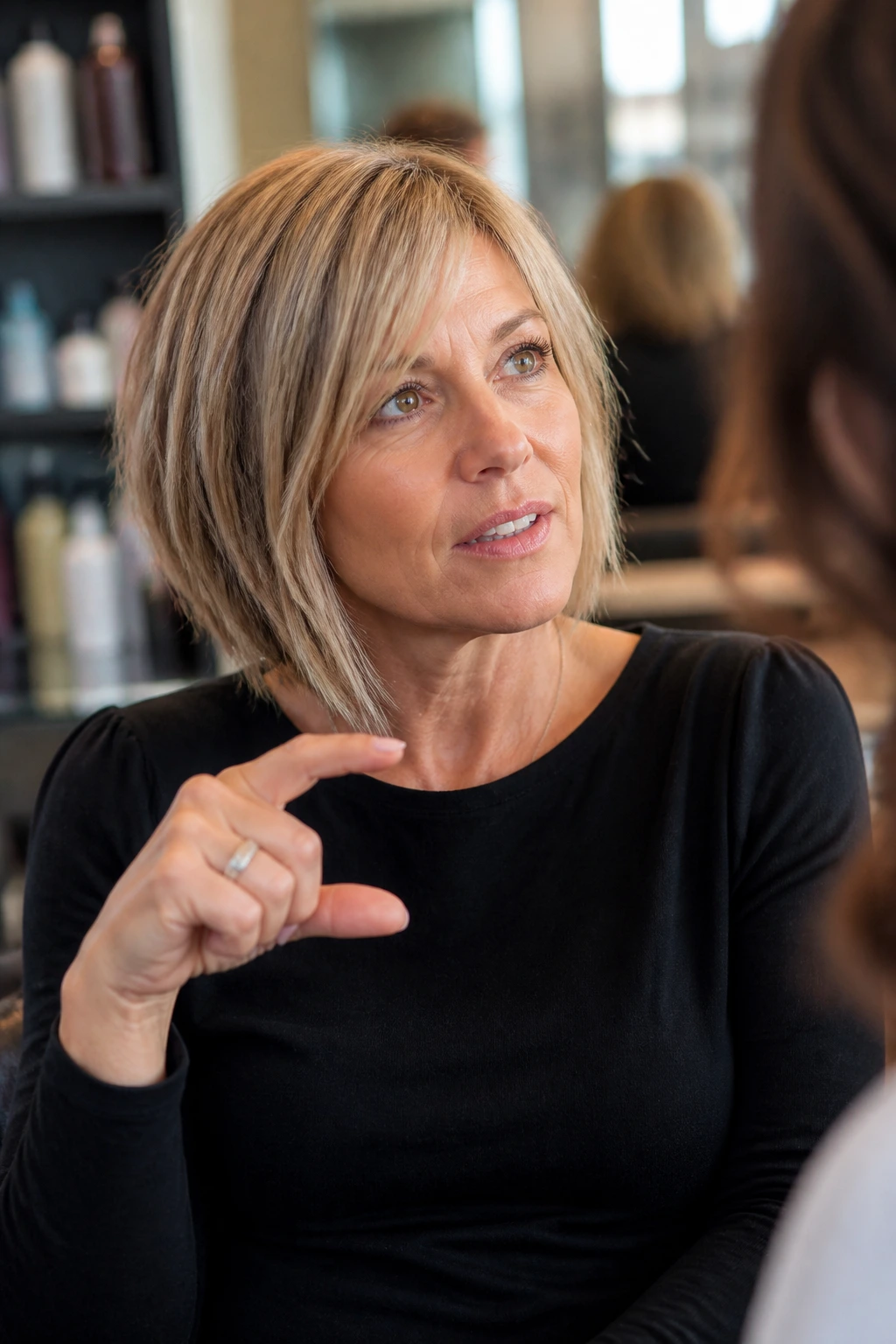
Bring photos, but bring the right kind. A photo of a bob with thick, coarse hair won’t help much if your strands are fine and silky. You want images that match your density, your part, and your styling habits. If you air-dry, say so. If you heat-style once a week and call it a victory, say that too.
Use plain words at the chair. Tell the stylist where you want the length to land — jaw, chin, collarbone, just below the ear. Say whether you want the perimeter to stay strong or soften up. If you have fine hair that gets wispy fast, ask for internal texture instead of heavy thinning at the ends. That one phrase matters.
Be specific about trouble spots. Temples. Crown. Nape. One side that grows faster than the other. Cowlick at the front. These things affect the cut more than people think. If you wear glasses, tuck hair behind your ears, or want to clip one side back, say it before the scissors come out.
And if you hate high-maintenance styling, say that with no apology. The haircut should fit your life, not the other way around.
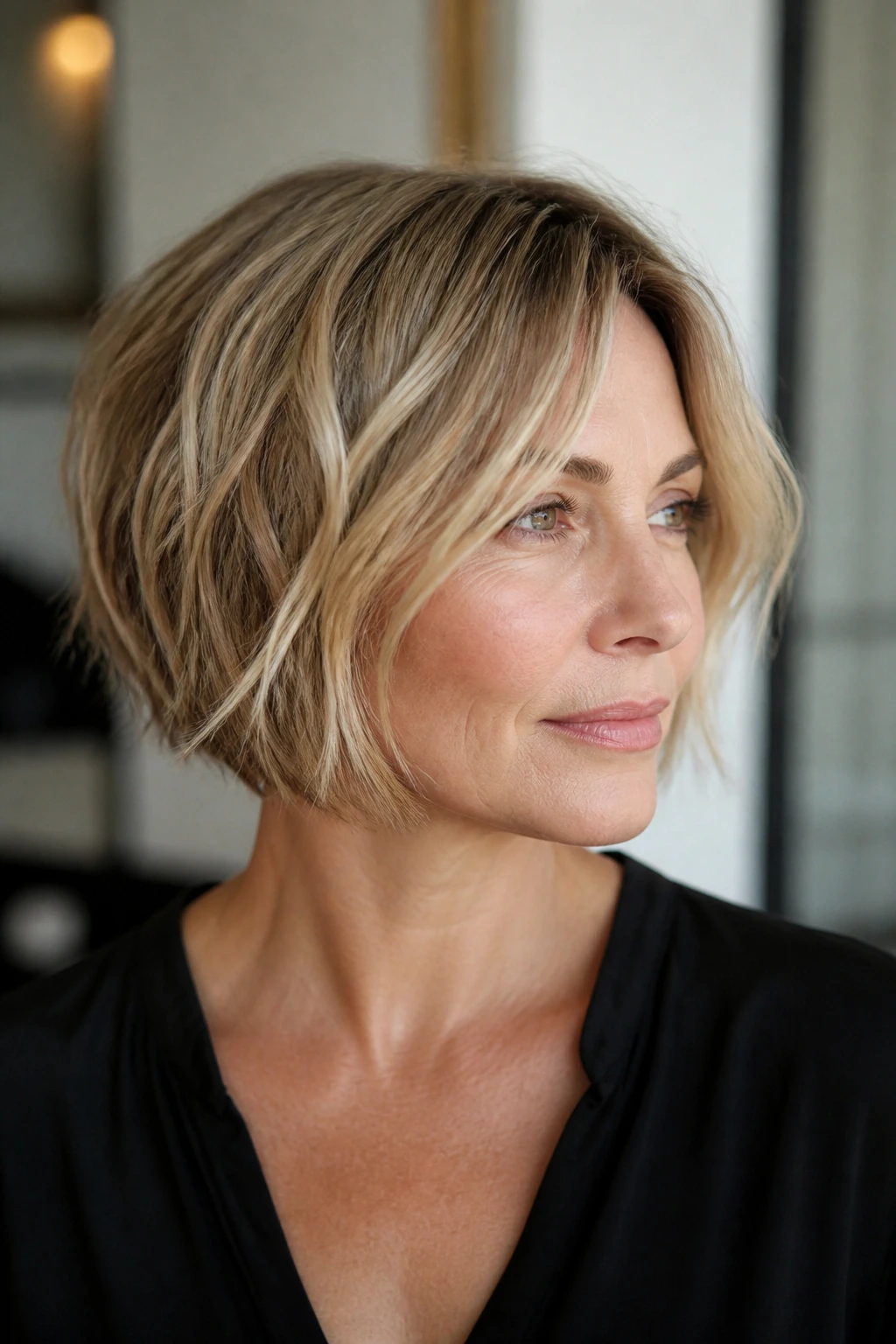
Common Mistakes That Make a Choppy Bob Look Thin
-
Too many short layers at the top: The crown can go see-through fast. Fix it by keeping the strongest layers lower and leaving the outer line intact.
-
Thinning the ends too hard: Fine hair starts to look ragged instead of full. Ask for point cutting or gentle internal texturing, not aggressive thinning shears at the bottom.
-
Ignoring the natural part and cowlicks: A bob that fights the roots needs extra effort every morning. Cut and style it on the part your hair already wants.
-
Using heavy cream at the root: Fine hair loses lift fast when the product starts at the scalp. Put smoothing cream only from the ears down, and keep it light.
-
Overdoing texture spray: A little grit helps. Too much makes the ends feel dry and separated. Spray from a distance and use your hands sparingly.
-
Cutting the fringe too thick: Heavy bangs can swallow fine hair. Keep fringe pieces airy, especially around the temples and cheekbone.
Fresh Variations and Easy Swaps

Air-Dry Ease Bob
Keep the length around the jaw or collarbone and ask for soft internal texture only. This version is built for mousse, scrunching, and getting on with your day, not for a perfect blowout. It suits hair with a natural bend and a low tolerance for hot tools.
Glossy Gray-Blend Bob
This one leans on color as much as cut. Soft lowlights near the root and a shine-heavy finish help gray or silver strands look fuller and less dry. The shape should stay modest and clean so the color can do its work.
Polished Office Bob
If you like a neater finish, keep the perimeter stronger and the layers more controlled. A slight bevel at the ends and a side part make the cut look tidy without feeling stiff. Good if you spend half your life in meetings and the rest of it running errands.
Piecey Weekend Bob
This version is looser, more separated, and a little less precise. A texturizing spray and a rough finger dry give it movement fast. It’s the one I’d choose if you like hair that looks better when it’s not over-touched.
Soft Fringe Swap
If full bangs feel like too much, keep the fringe light and side-swept or split it into curtain pieces. You still get softness around the face, but you avoid the maintenance that comes with a blunt front. This tweak makes a bob easier to live with.
Tools and Styling Products That Help
-
Blow dryer with a narrow nozzle: Directs airflow at the roots so you can build lift instead of blasting the whole shape flat.
-
1-inch round brush: Small enough to bend a bob under the chin or around the cheekbone without creating giant curls.
-
Flat iron with slim plates: Useful for a quick bend at the ends or a soft wave through the front pieces.
-
Volumizing mousse: Adds grip at the roots and helps fine hair hold shape after blow-drying. Use a golf-ball-sized amount at most.
-
Root-lift spray: Best sprayed close to the scalp before drying, especially at the crown and temples.
-
Texturizing spray: Gives piecey separation through the mid-lengths and ends. A little goes farther than people think.
-
Light finishing cream or serum: Keeps the ends smooth without flattening the whole bob. Use it only on the bottom inch or two.
-
Duckbill clips or small sectioning clips: Handy for setting the crown while it cools, which helps the shape stay lifted.
-
Dry shampoo: Useful on day two or three to keep the roots from going limp and shiny at the same time.
Keeping the Shape Between Salon Visits

A choppy bob lives or dies by upkeep. Fine hair grows out fast in the wrong places, and a shape that looked crisp at the sink can go soft in two or three weeks if you ignore it. Plan on a trim every 6 to 8 weeks if you want the perimeter to stay clean. If you wear bangs, the fringe may need a touch-up closer to every 3 to 4 weeks.
Washing rhythm matters too. Fine hair usually shows buildup faster than thicker hair, especially if you use mousse, spray, or dry shampoo on repeat. A clarifying wash every 2 to 4 weeks can keep the roots from feeling coated. Don’t scrub the ends to death; work the shampoo into the scalp and let the rinse clean the rest.
At home, keep hot tools away from the same section every day. Fine hair doesn’t forgive repeated high heat. If you need a refresher, use a quick blow-dry at the roots and leave the ends alone. A silk or satin pillowcase helps the style survive the night with less static and less bend in the wrong place.
Color upkeep matters if your bob depends on dimension. A gloss, glaze, or soft root blend keeps the texture visible. When color goes dull, the cut often looks flatter than it really is.
Questions People Ask Before They Go Short

What length is most flattering for fine hair after 40?
Jaw, chin, and collarbone are the safest zones. They give the hair enough line to look full without making it feel heavy or dated.
Should fine hair get layers or stay blunt?
A little of both usually works best. A blunt perimeter keeps the outline full, while internal texture gives the bob movement without shredding the ends.
Are bangs a good idea with fine hair?
Yes, if they’re soft. Side-swept or curtain bangs can make the front look denser, while thick blunt bangs can eat up too much hair.
Can I air-dry a choppy bob?
You can, if the cut is built for it. Ask for enough shape in the perimeter and enough soft texture inside the cut so it doesn’t dry into random bends.
What if my hair flips out at the ends?
Leave a little more length at the perimeter and ask for a bevel instead of a hard, straight edge. A controlled flip-out can look intentional; an unplanned one usually means the cut is too blunt or too short.
How often should a choppy bob be trimmed?
Most fine hair needs a refresh every 6 to 8 weeks to keep the shape from sagging. Bangs and side fringes often need attention sooner.
Will this work if I wear glasses?
Yes, if the cut avoids landing right on the frame arms. Keep the front pieces either a touch above or well below that line.
What if my crown is flat no matter what I do?
Choose a bob with hidden crown lift, a gentle stack, or a subtle inverted shape. Then dry the roots first, before you touch the rest of the hair.
A Bob That Still Moves

A good choppy bob doesn’t ask for constant rescue. It should hold a shape when you’re in a hurry, soften when you tuck it behind one ear, and keep enough movement that it never looks stiff in bright light. That’s the real win here — not “more volume” in the abstract, but a haircut that knows where to stay full and where to break apart.
Fine hair after 40 can be beautiful when the cut stops fighting it. Pick the version that matches your texture, your part, and your patience level, then let the line do its job. The right bob should make getting ready easier, not louder, and the best part is how little it needs once it’s cut well.
