



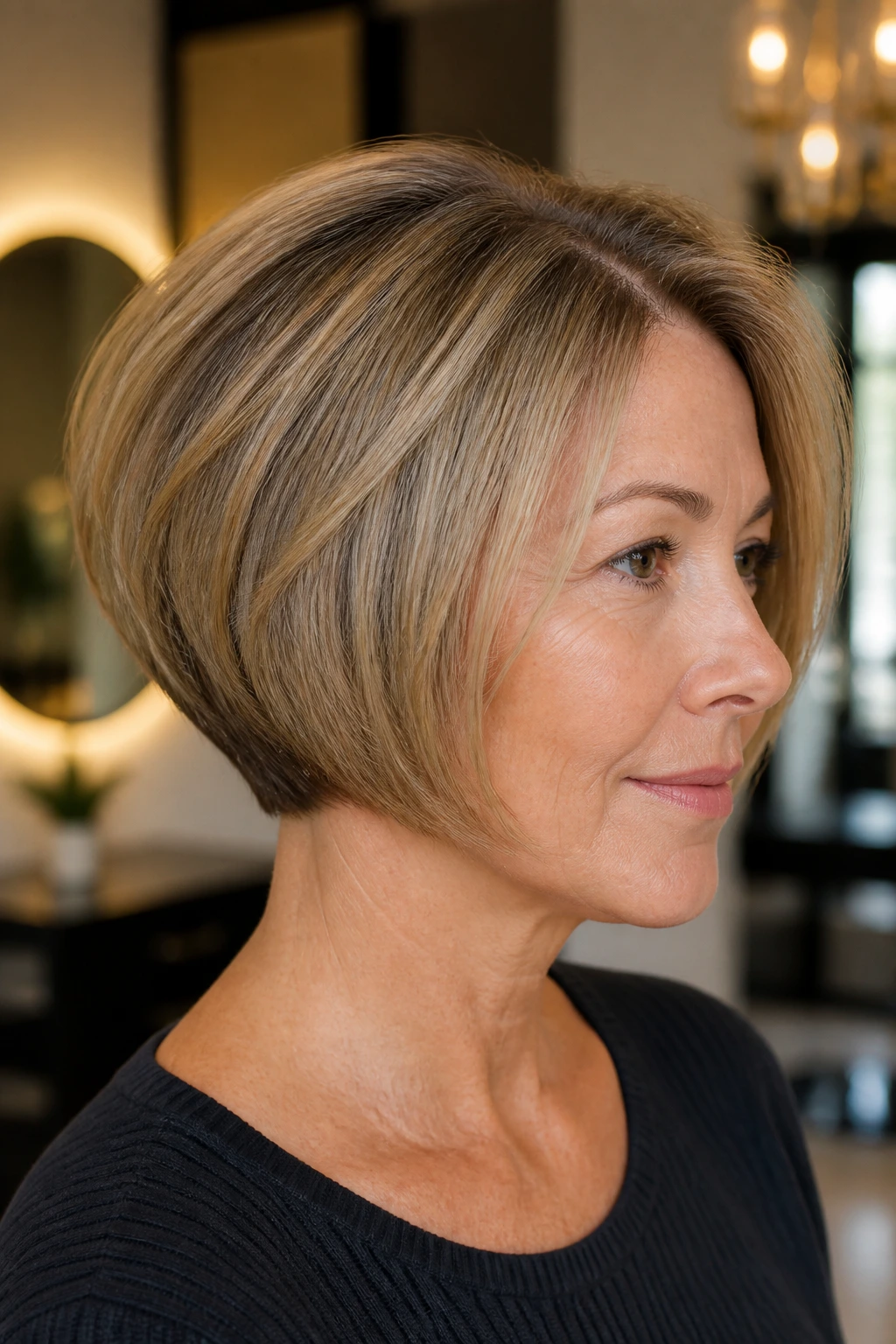
A stacked bob can look sharp or flimsy in about two inches. The difference lives in the back angle, the crown lift, and whether the nape was cut with intention or just hacked off and hoped for the best.
On short hair, that matters more than people think. A good stacked bob for short hair does three jobs at once: it lifts the back, keeps the neck line clean, and gives the front enough length to avoid the helmet effect. A bad one sits wide, collapses at the crown, and grows out in a way that feels messy before the month is out.
I’ve always had a soft spot for stacked cuts that keep their shape without begging for daily babysitting. The best versions do not need a ton of product. They need a smart silhouette, a clean nape, and enough graduation to make the whole head look more deliberate from the side than a flat one-length bob ever could.
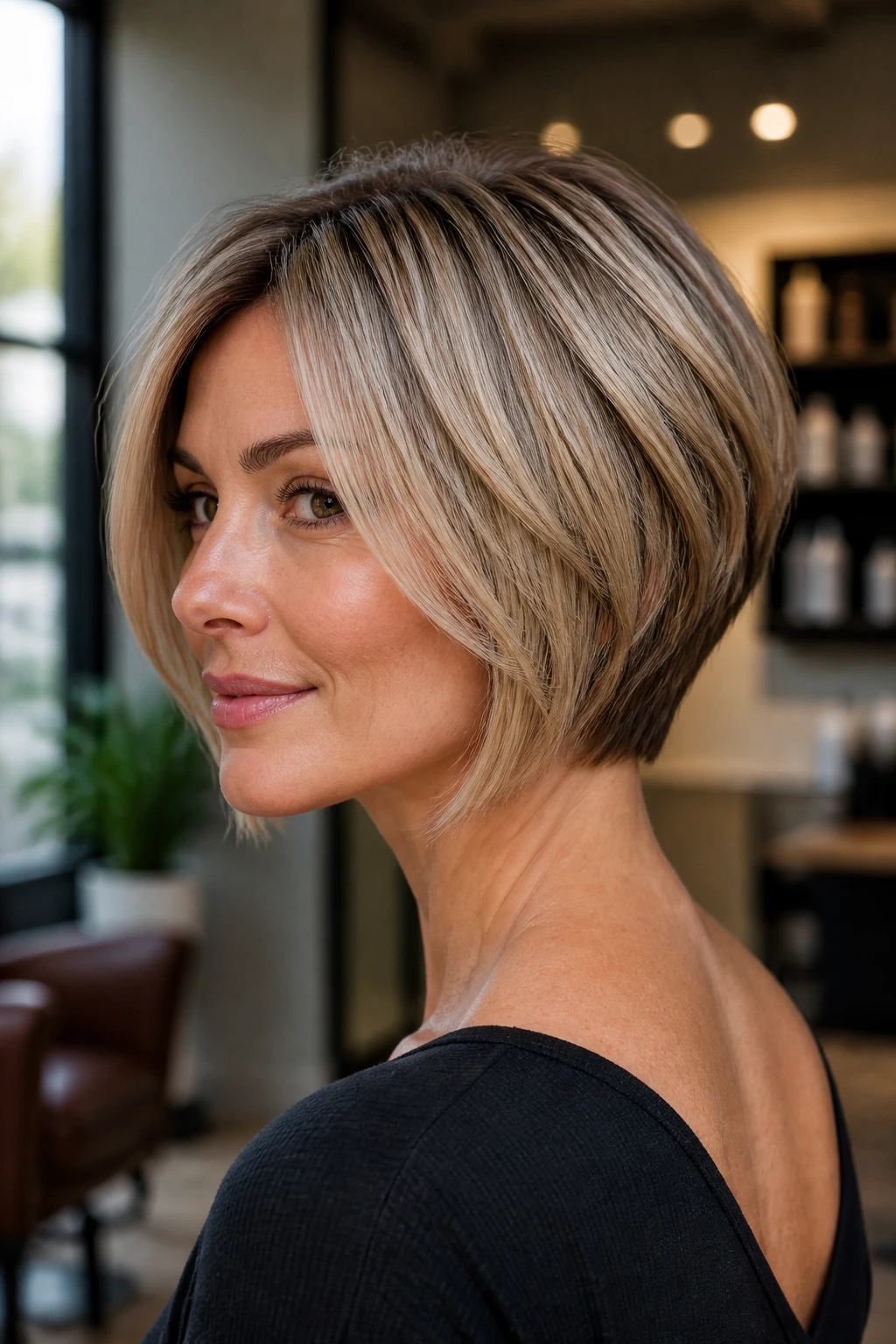
Why These 38 Stacked Bobs Stand Out
-
Built-in lift: The stacked shape gives short hair height at the back, so the cut holds its outline even when you air-dry in a hurry.
-
Different moods, same structure: Some versions below are sleek and polished, others are choppy or curly, but the graduation keeps them readable as bobs rather than mushroomy crops.
-
Friendly to fine hair: A short stack can fake density where fine hair usually goes limp, especially around the crown and nape.
-
Good with thick hair too: When the weight is removed in the right places, thick hair stops ballooning out at the sides.
-
Easy to tailor: Front length, bang shape, and texture all change the look without destroying the silhouette.
-
Works from the side: A stacked bob has to look good in profile. That’s the whole point. If the back line is clean, the cut reads crisp instead of flat.
What Gives a Stacked Bob Its Lift at the Back
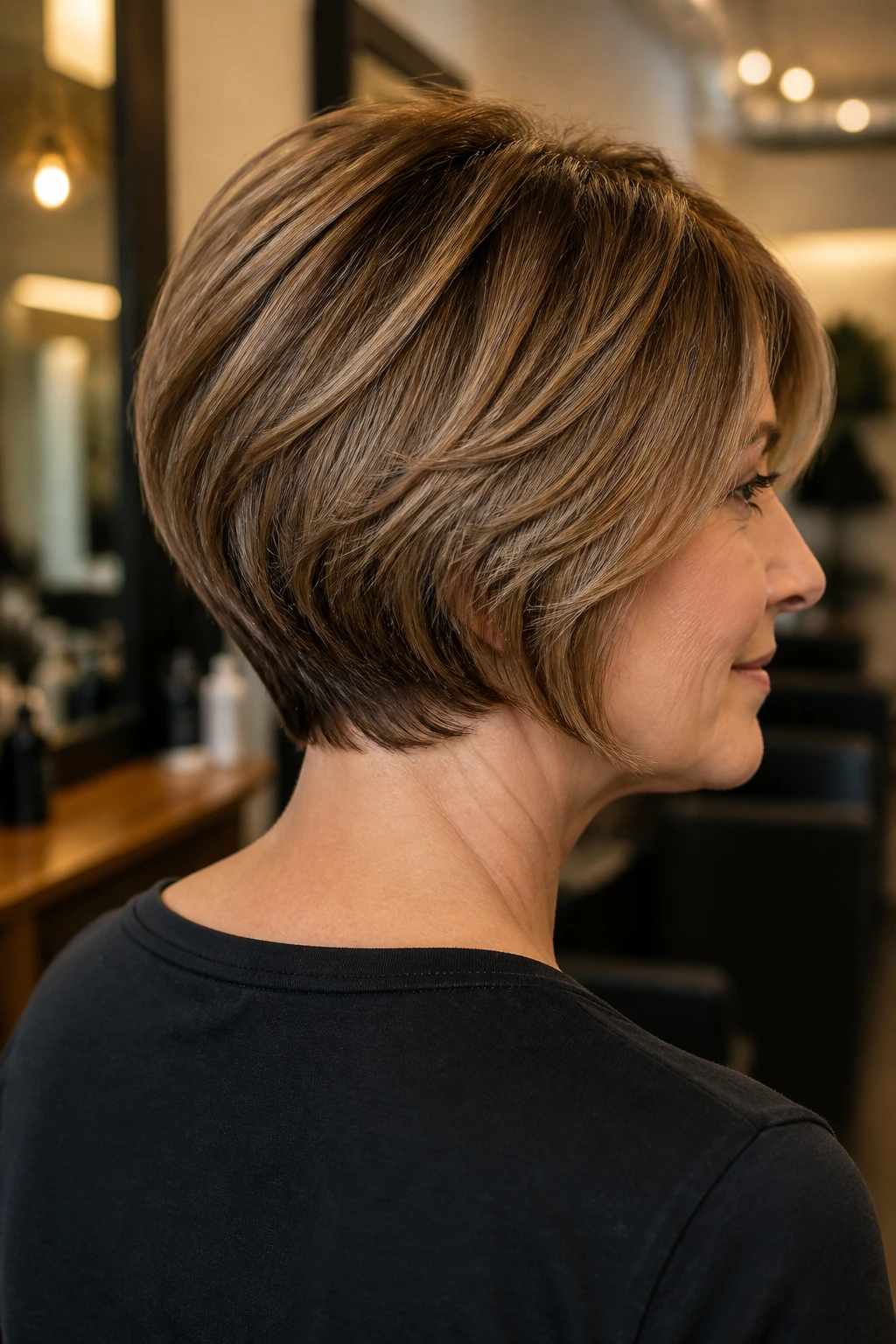
A stacked bob is really a lesson in angles. The back is cut shorter and layered in a graduated way so the hair curves inward instead of hanging straight down. That little arc matters. It gives the cut a built-in bend at the nape and a touch of height at the crown, which is why these bobs look fuller than a blunt crop of the same length.
The shape depends on weight control. Too much weight left in the back and the bob turns boxy. Too much thinning and it starts to look wispy, especially on the ends. The sweet spot is a clean stack that leaves enough body to show the layers but not so much bulk that the hair kicks out at the jaw.
There’s also a big difference between a stacked bob and a plain inverted bob. An inverted bob can be angled from back to front without much internal stacking. A true stacked bob usually has more visible graduation in the back, which is what creates that little shelf of volume at the nape. Small difference. Huge effect.
1. Rounded Classic Stacked Bob
This is the version that makes people understand the cut in one glance. The back curves cleanly into the neck, the crown gets a gentle lift, and the front stays close enough to the jaw to keep the shape tidy. On short hair, that rounded outline is hard to beat because it looks neat even when it’s not freshly styled.
Why it holds up so well
The roundness softens the stack, which keeps the cut from reading too severe. It’s especially useful if you want short hair that still feels feminine and polished without turning fluffy at the ends. A light blow-dry with a round brush is usually enough.
Best for:
- Fine to medium hair that needs shape.
- Anyone who likes a clean neck line.
- People who want the bob to sit in place with minimal fuss.
Quick tip: Ask for the shortest point to sit just above the nape crease, not high on the head. That one detail keeps the back from looking like a helmet.
2. Angled Stacked Bob With a Longer Front
This is the cut for someone who wants the drama to live in the profile. The back is stacked, yes, but the front drifts longer toward the chin, which makes the whole shape feel sharper and a little more modern. The effect is strongest when the front grazes the jawline and moves in a clean diagonal.
The angle works because your eye follows the line. It makes the neck look longer and the jaw look more defined. If the front gets cut too short, the whole thing loses that swing. Too long, and it stops reading like a bob at all.
I like this one on straight or slightly wavy hair. It keeps its edge. Curly hair can wear it too, but the front has to be cut with shrinkage in mind or the angle disappears once the curl springs up.
3. Chin-Length Graduated Bob
A chin-length graduated bob gives you a little more presence around the face while keeping the back tight. It’s a smart middle ground if you want short hair but do not want the cut riding too high on the head. The stack stays tucked under the outer length, which keeps the silhouette smooth.
What makes it useful
The chin length gives you movement. You can tuck one side behind the ear, flip the ends under, or let it swing forward on a side part. That extra inch or two changes everything. It keeps the haircut from feeling too cropped, especially if you wear earrings or glasses.
How to wear it
- Blow-dry with a medium round brush for a tucked-under curve.
- Let it dry straight and add a tiny bit of serum to the ends for a clean finish.
- If your hair puffs easily, keep the top layer a touch longer than you think you need.
4. Jaw-Grazing Stack With Soft Layers
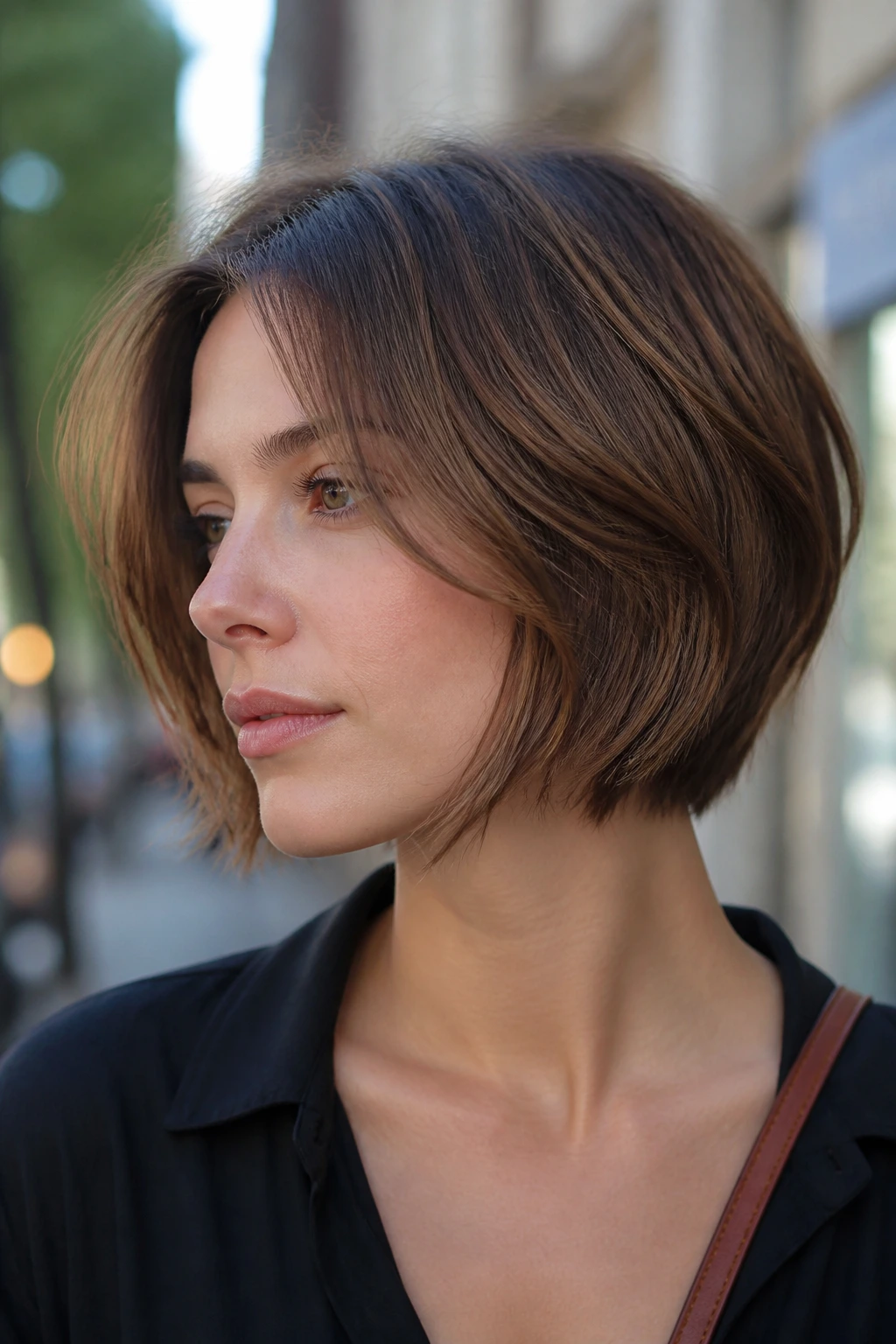
This one sits right at the jaw, which gives the cut a softer, more forgiving edge. The stacked back still gives lift, but the layers melt into the side pieces instead of cutting off abruptly. The whole thing feels a little less rigid than a classic graduated bob.
That softness matters if your face tends to get overwhelmed by blunt lines. It also helps if you want movement without obvious choppiness. The trick is to keep the layers internal and controlled, not shredded.
I’d choose this version for thick hair that needs shape but hates looking overworked. A few soft layers at the right points will trim the bulk without exposing the ends.
5. Sleek Stacked Bob With a Sharp Nape
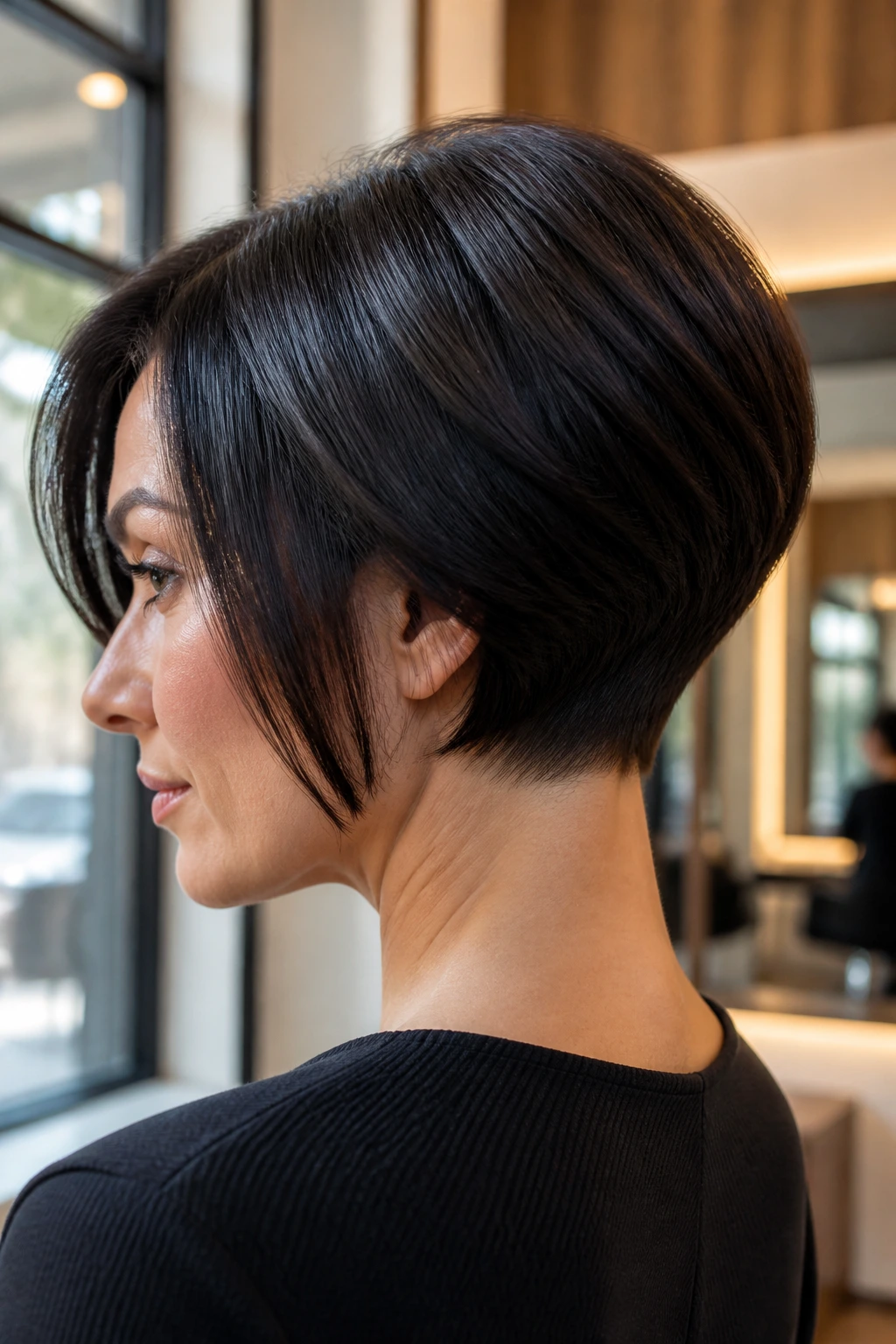
If you like a bob that looks deliberate from every angle, this is the one. The nape is crisp, the top lies smooth, and the finish is almost architectural. A flat iron or a disciplined blow-dry is part of the deal here. There’s no pretending otherwise.
The sharpness comes from keeping the stack close to the head and cleaning up the lower line. It’s not a fluffy cut. It’s a precise one. That precision looks especially good on dark hair or hair with a single-tone color because the outline stands out.
Best if you want: a cut that reads polished in daylight and under office lights.
Avoid if you hate styling: this one looks best when the top surface is smooth, not left to do whatever it wants.
6. Tousled Short Bob With Piecey Ends

This is the version for people who want the shape, but not the stiffness. The stack is there, yet the finish is broken up with a bit of texture so the ends separate into soft pieces rather than one solid line. It looks best with a rough-dry and a pea-sized bit of paste.
The key is not to overdo the texture. Too much spray and the cut turns dry and crunchy. Too little and it falls flat. You want movement in the ends and a little lift in the back, not a cloud.
This one is especially good if your hair has a slight wave and does that half-helpful, half-annoying thing where it wants to bend but not commit. A little texturizing cream usually solves that.
7. Curly Bob With Lift at the Crown

Curly hair changes the rules. It always does. A stacked bob on curls works when the crown is lifted and the perimeter is cut to respect shrinkage, not fight it. The best version feels round but not triangular, which is a fine line and worth getting right.
The stack helps curls sit closer to the head in back, so the cut does not balloon out. That matters. A curly bob without enough stacking can turn into a wide triangle by the afternoon.
How to wear it
Diffuse on low heat, stop when the roots are about 90 percent dry, and let the last bit air-dry. If you keep touching it while it dries, the curl pattern gets fuzzy and the top loses its shape. Curly stacked bobs need less fuss than people think, but they do need a clean cut.
8. Wavy Stacked Bob With Air-Dried Movement
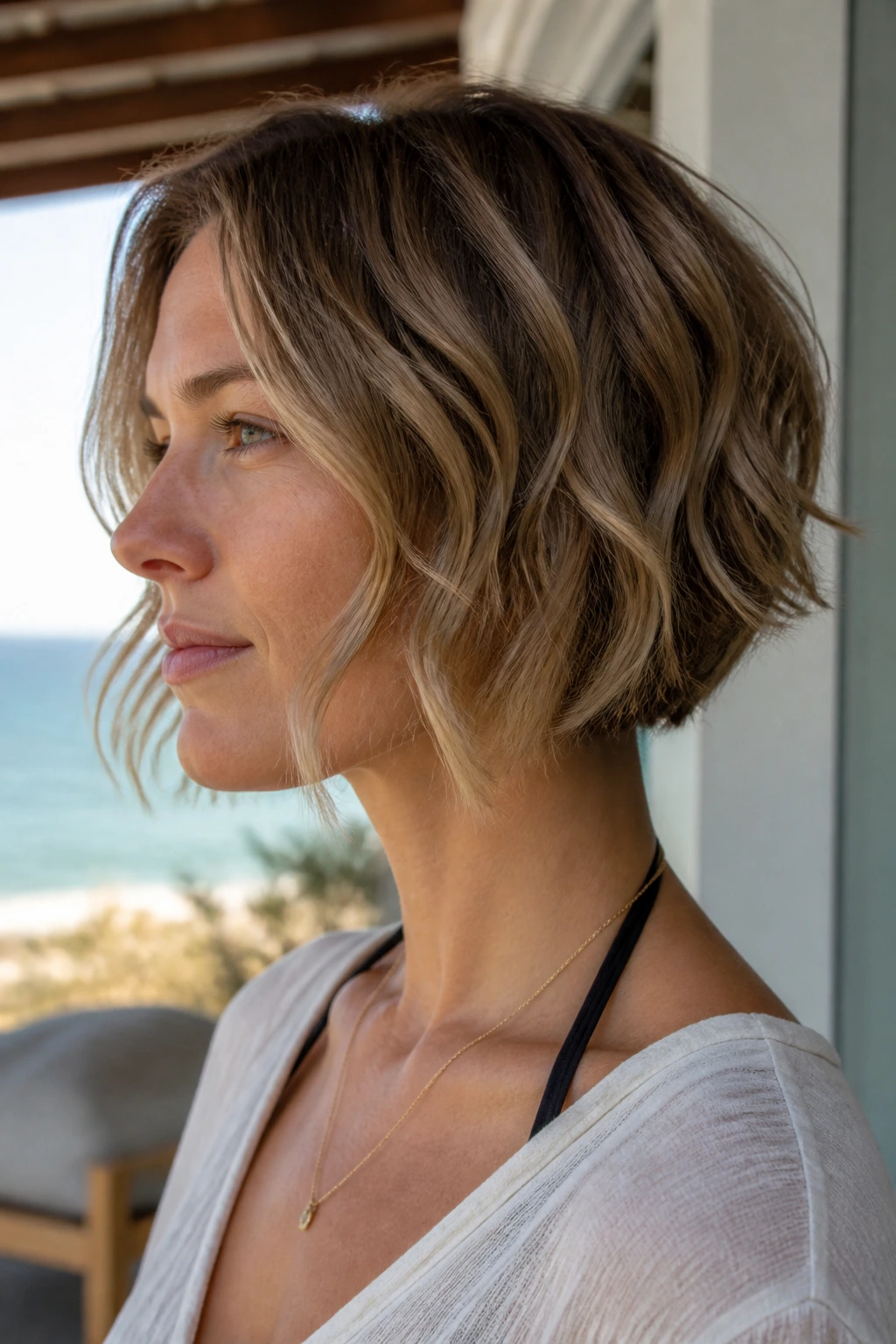
This is one of the easiest-looking versions to wear, which is part of why it works. The wave pattern does the softening, while the stack keeps the back from puffing out. You get shape without a hard edge.
A salt spray can help, but only if your waves are loose and cooperative. If your hair is already dry, a light cream is usually better. The cut wants bend, not stiffness.
I like this style when the goal is short hair that looks like it happened naturally, even though it absolutely did not. The best waves fall around the jaw and curl in slightly at the nape. That little inward turn makes the back stack look clean instead of bulky.
9. Side-Part Stacked Bob With a Deep Sweep
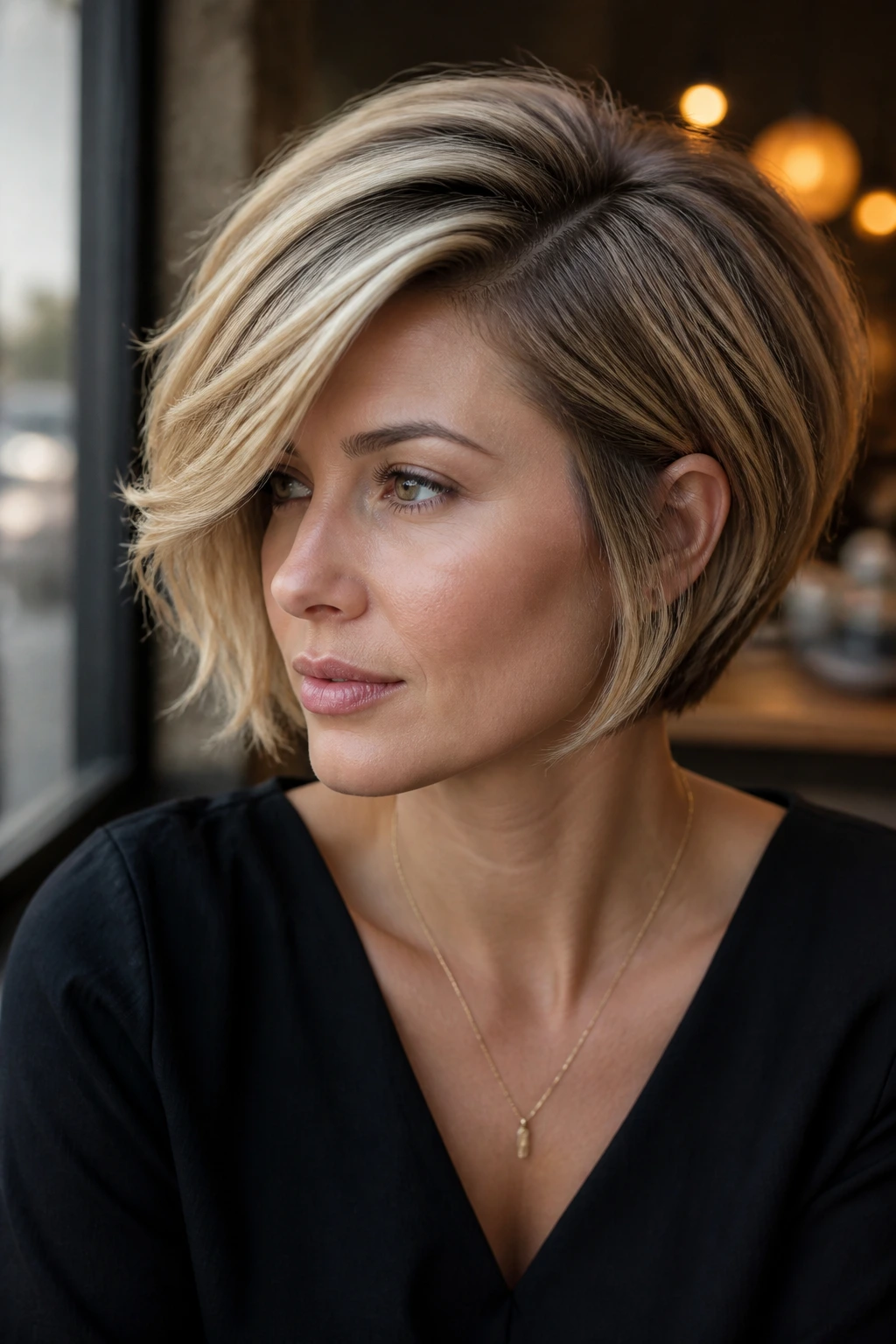
A deep side part changes the whole personality of a stacked bob. The back still does the heavy lifting, but the front gets more drama because one side falls heavier across the forehead and cheek. It’s a simple switch that makes the cut feel less symmetrical and a little more lived-in.
The part matters more than the length here. A side part can soften a sharper bob, hide a cowlick at the front, and create the illusion of extra volume where the hair usually lies flat. That makes it a solid choice if you’ve got fine hair at the hairline.
Best for:
- Heart-shaped or oval faces.
- Hair that prefers falling to one side.
- Anyone who wants a little more movement without changing the cut.
Small detail, big payoff: place the part while the hair is still damp, then dry it in the same direction. If you switch later, the root memory fights you.
10. Middle-Part Stacked Bob for Clean Lines
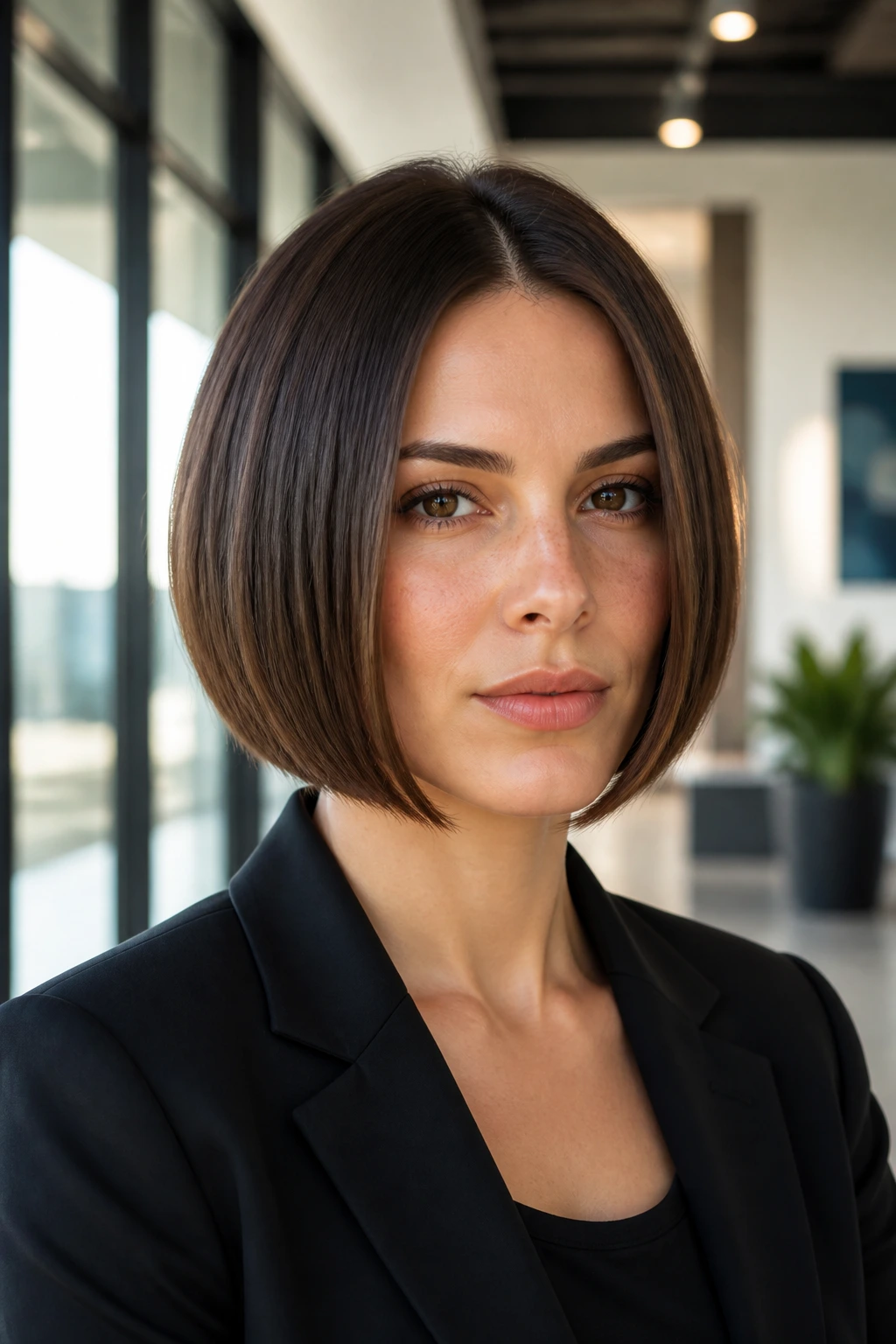
A middle part makes a stacked bob look more graphic. The symmetry exposes the shape, which means the back has to be clean. There’s nowhere to hide, and that’s exactly why the style feels sharp. It’s a good look when you want structure rather than softness.
The middle part works best when the front pieces are cut with enough length to frame the face without flopping inward. If they’re too short, the bob can feel severe. If they’re too long, the stack disappears.
This version is great on straight hair and on anyone who likes a more balanced, almost tailored look. It’s one of those cuts that looks expensive when it’s done well. Not because of the label. Because the lines are honest.
11. Inverted Bob With a High Back
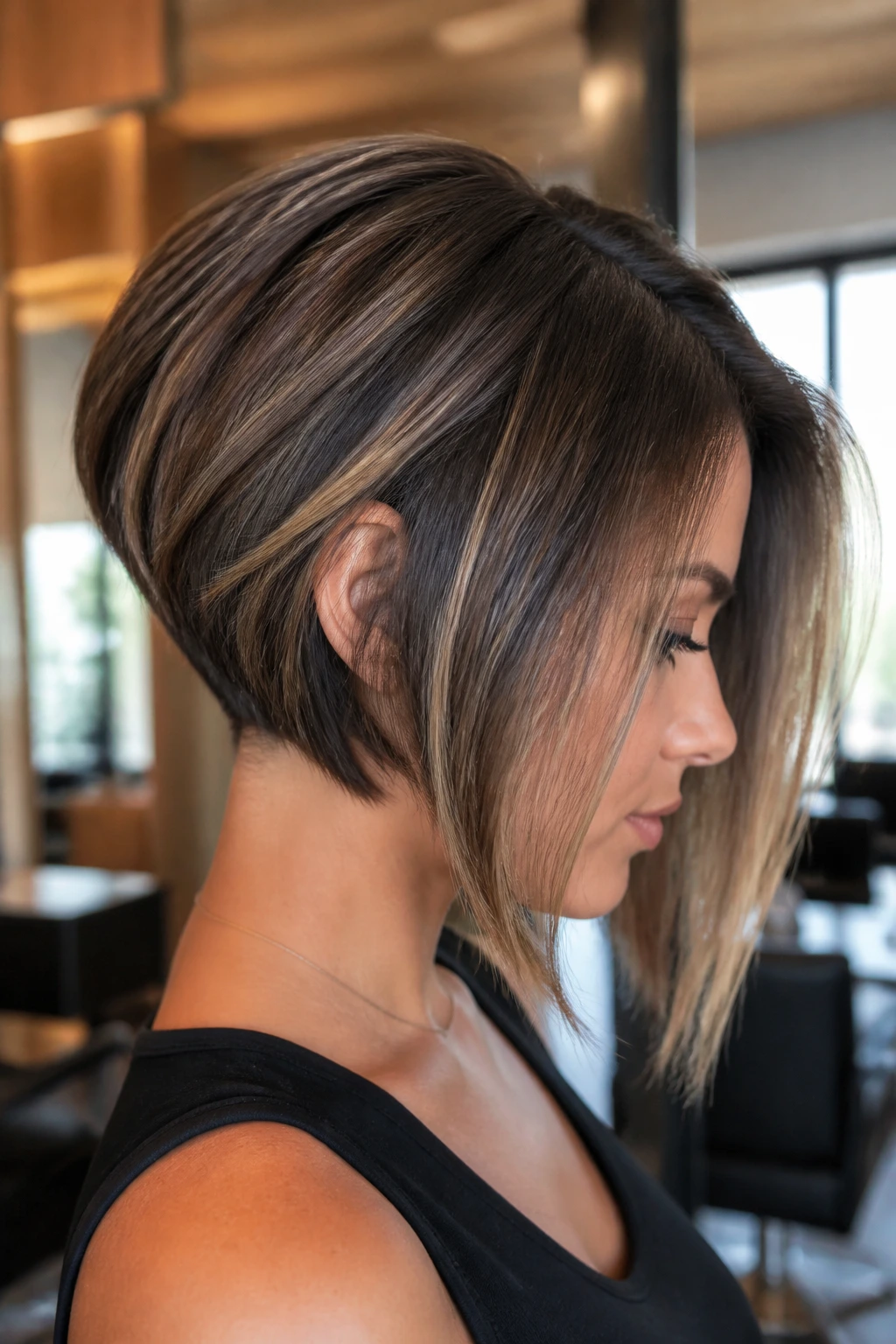
This is the more dramatic cousin in the family. The back sits noticeably shorter, and the front length drops with real intent. The result is a shape that leans forward from the neck, which gives the whole cut a lifted, almost forward-motion feel.
The high back is what makes it work. If the graduation is too low, the style loses its edge. If it’s too high, the shape can start to feel stacked in the old-school sense — too rounded, too obvious. The sweet spot is a back that feels elevated without looking overbuilt.
I’d choose this if you want a bob that says something from the side. It’s not quiet. That’s the point.
12. A-Line Stacked Bob With a Tapered Neck
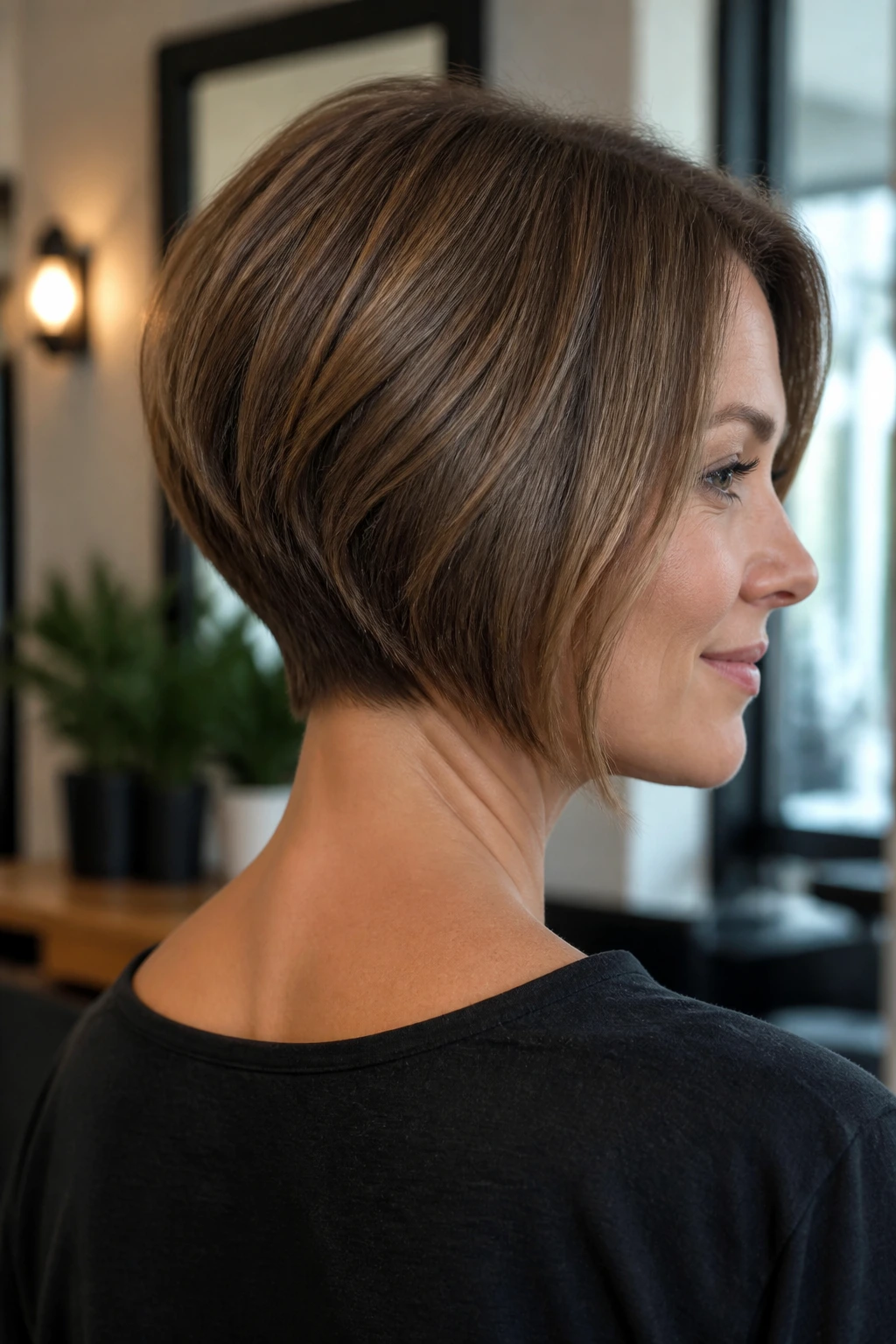
An A-line stack is all about the taper. The back hugs the neck, while the front gradually gets longer in a clean, slanted line. It’s a little softer than the high-back inverted version, and that makes it easier to wear day to day.
The neck area is where this cut earns its keep. When the taper is neat, the bob looks freshly done even as it grows out. If the taper is sloppy, the whole profile gets heavy fast.
How to style it
Use a round brush only on the back and let the front stay a touch looser. That contrast keeps the line visible. A dab of serum at the ends helps the front pieces stay sleek without getting stringy.
13. Asymmetrical Bob With One Longer Side
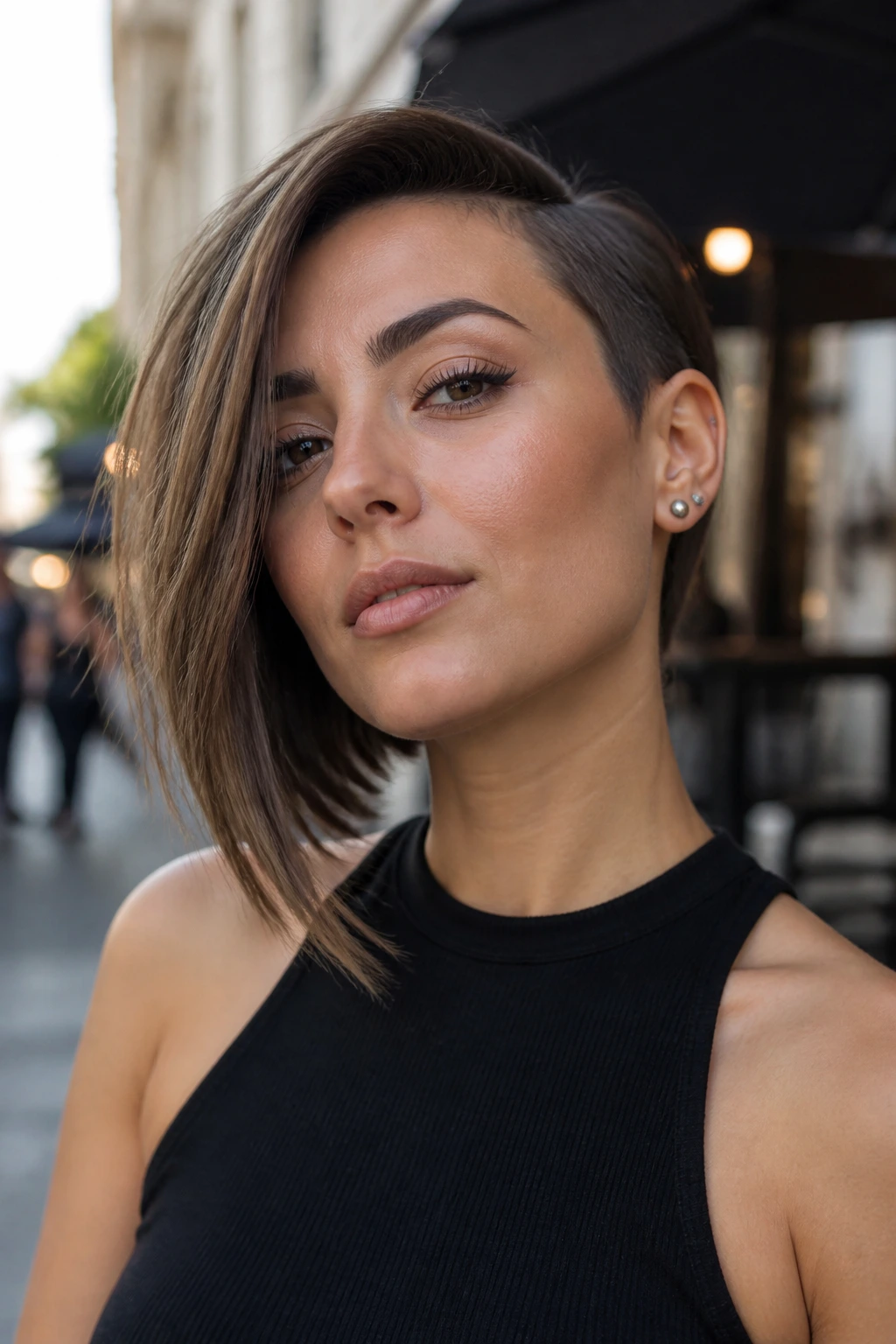
Asymmetry gives the stacked shape a little attitude. One side stays longer, the other side sits tighter, and the contrast makes the cut feel sharper without needing a lot of layers or texture. It’s a strong move on short hair because it breaks up the predictability of the classic bob.
The key is balance. The longer side should feel intentional, not like one side simply missed the scissors. If the lengths are too close, the effect disappears. If they’re too far apart, the cut starts to look costume-like.
This style works well if you like strong lines and do not mind a haircut that gets attention from the side. It’s one of the few short cuts that can look edgy without being messy.
14. Rounded Stack With Blunt Ends
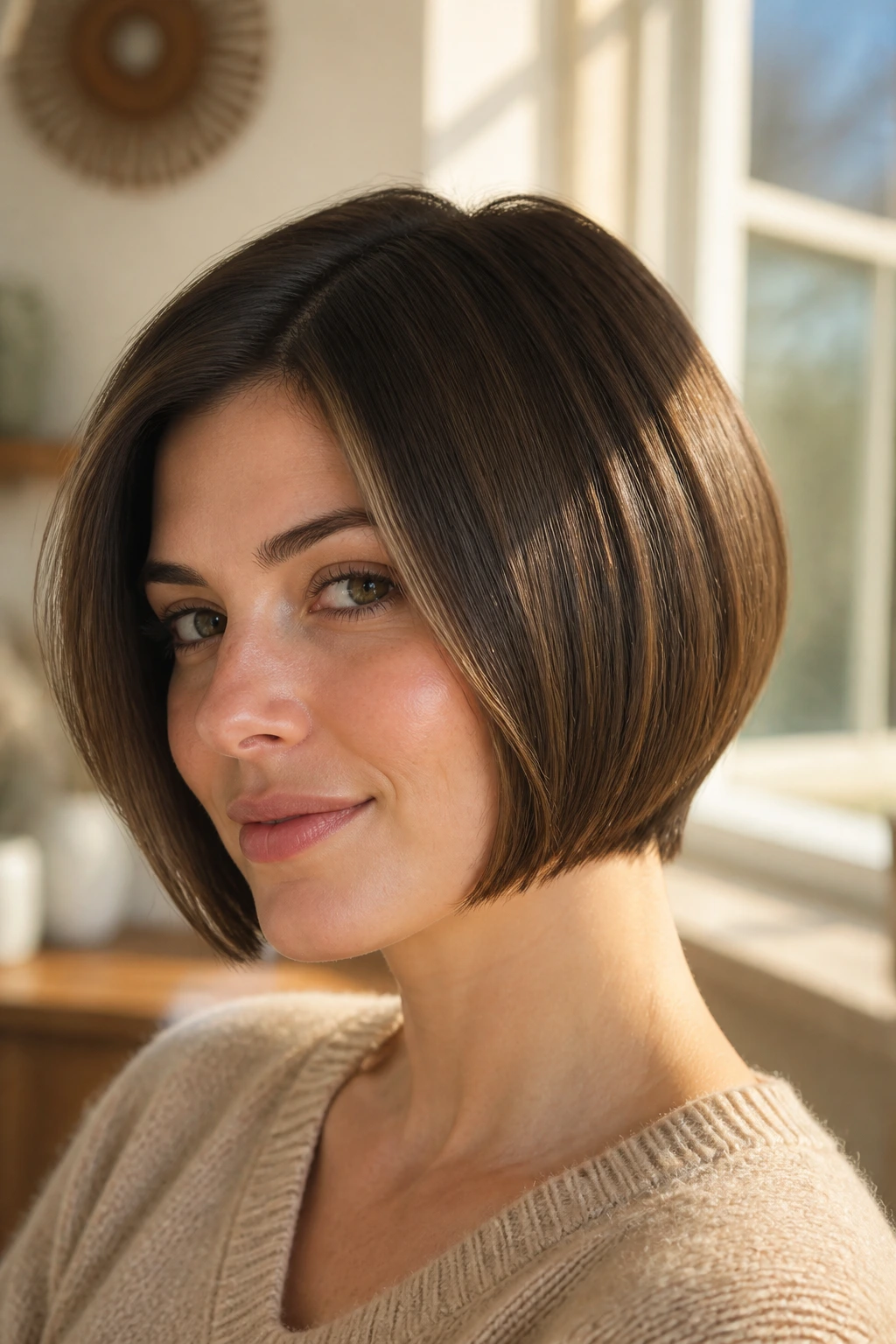
This version keeps the rounded back but ends the perimeter with a blunt line. That combo creates a nice tension: soft curve underneath, strong edge at the bottom. I like it because the blunt ends keep the bob from feeling frayed, which can happen when a lot of stacking gets too airy.
The best part is how it behaves in real life. The blunt edge makes the shape read clean even on second-day hair, while the rounded stack keeps the crown from collapsing. It’s a very workable mix.
If your hair is fine, this can make the ends look thicker. If your hair is thick, it gives the silhouette more control. Either way, it’s a cut with a little backbone.
15. Feathered Bob With Soft Movement
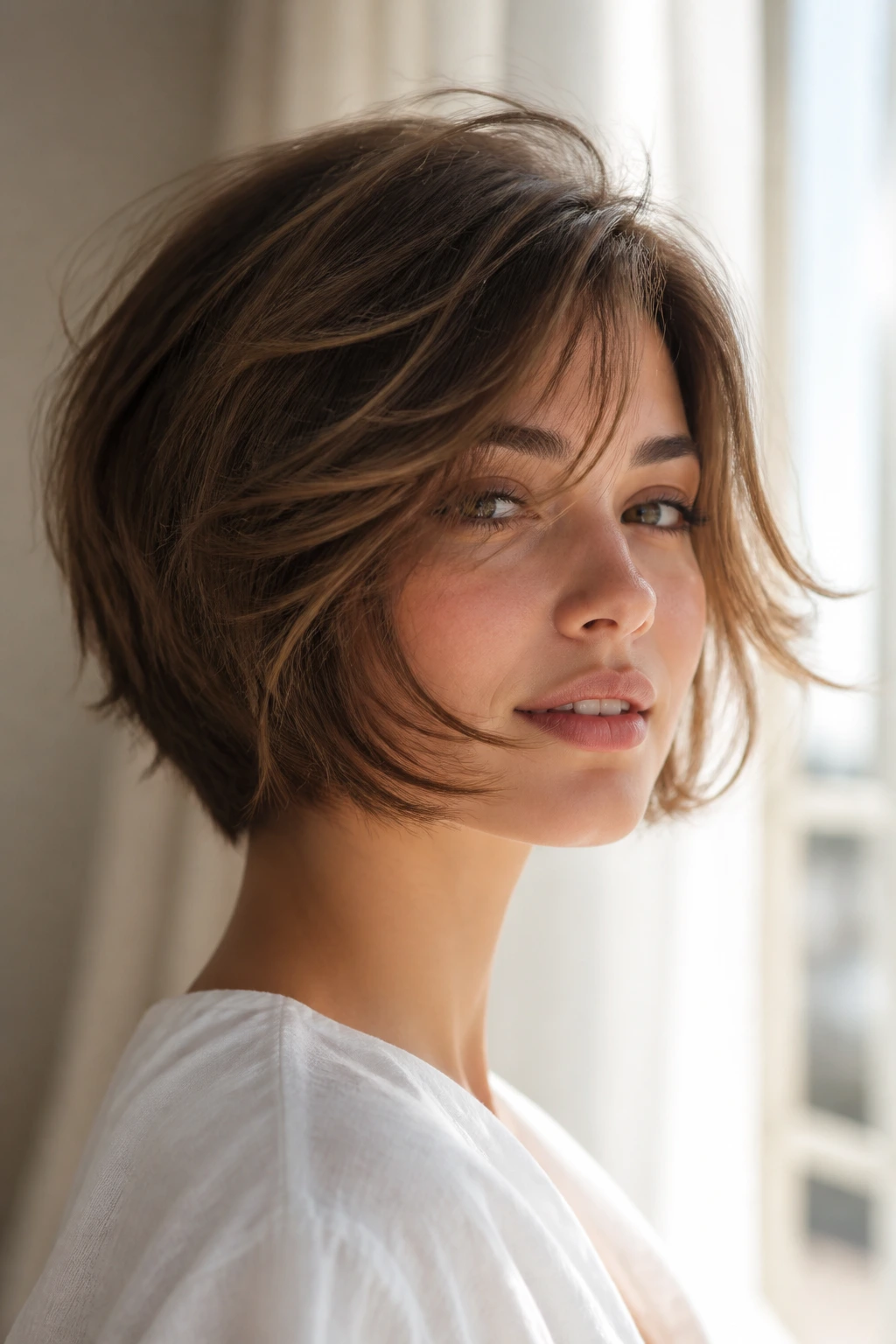
Feathering softens the whole stack. Instead of sharp internal lines, the layers melt into one another and the ends move a little more freely. That makes the bob feel lighter around the face and easier to wear if you dislike anything too precise.
The danger with feathering is overdoing it. Too much and the cut loses shape. Too little and it looks like an ordinary layered bob with no stack at all. You want movement, not fluff.
This is a nice option for hair that tends to feel heavy around the jaw. A soft blow-dry with a paddle brush can keep the feathering smooth while still letting the stack show at the back.
16. Choppy Stack With Broken-Up Ends
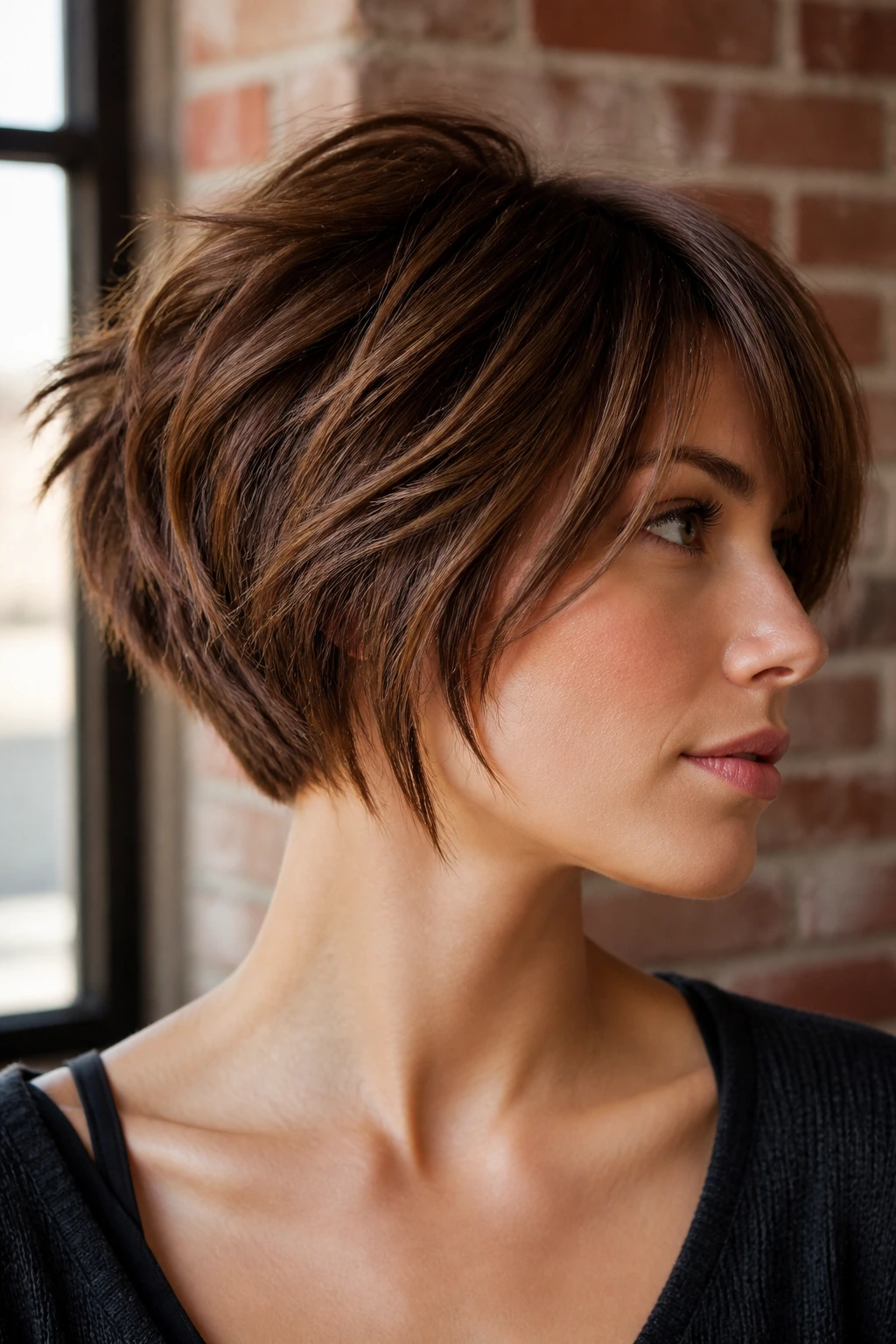
This is the rougher, more piecey sibling in the lineup. The layers are visible, the ends are shattered a little, and the overall effect is less polished on purpose. It can look very good on hair that naturally wants a little grit.
The back stack still matters here, maybe even more than in a sleek cut. Without that structure, the choppiness just looks random. With it, the haircut feels like it has energy.
A matte paste or dry texture spray suits this style. Skip anything too glossy. Shine can flatten the whole point of a choppy bob.
17. Shag-Influenced Short Bob
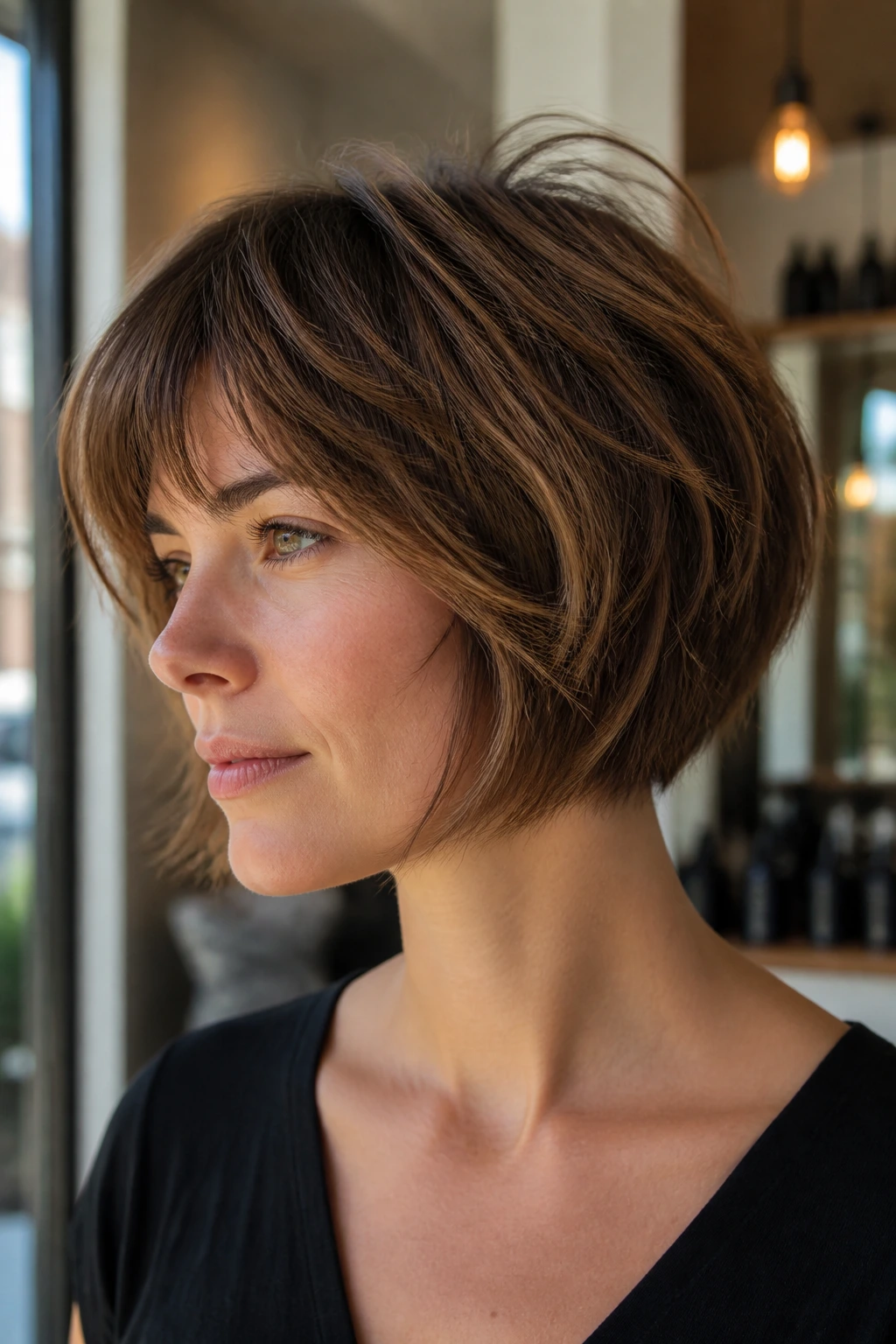
A shag-influenced stack leans into movement and irregular layers. The crown gets a little lift, the ends stay lived-in, and the shape never looks too neat. It’s the kind of cut that forgives a less-than-perfect styling day.
What I like about this version is that the stack can be softer because the shag texture does some of the visual work. The cut feels a little freer, a little less formal. Good if you want short hair that still has personality.
Styling note
Air-dry it with a bit of mousse, then pinch out a few pieces around the face once it’s dry. That last part matters. It keeps the shag from turning into a cloud.
18. Curtain Bang Stacked Bob

Curtain bangs and a stacked bob get along better than they should. The bangs split at the center or slightly off-center, then sweep toward the cheeks, which keeps the face open while the back stays compact. The contrast between soft front movement and tight rear structure is the whole appeal.
The fringe needs enough length to bend, not just sit there. If it’s cut too short, the curtain shape can’t do its job. If it’s too heavy, it blocks the face and fights the bob.
This is a strong choice if you want the cut to feel current without tipping into trend-chasing. The bangs change the tone. The stack keeps it disciplined.
19. Bob With Blunt Bangs
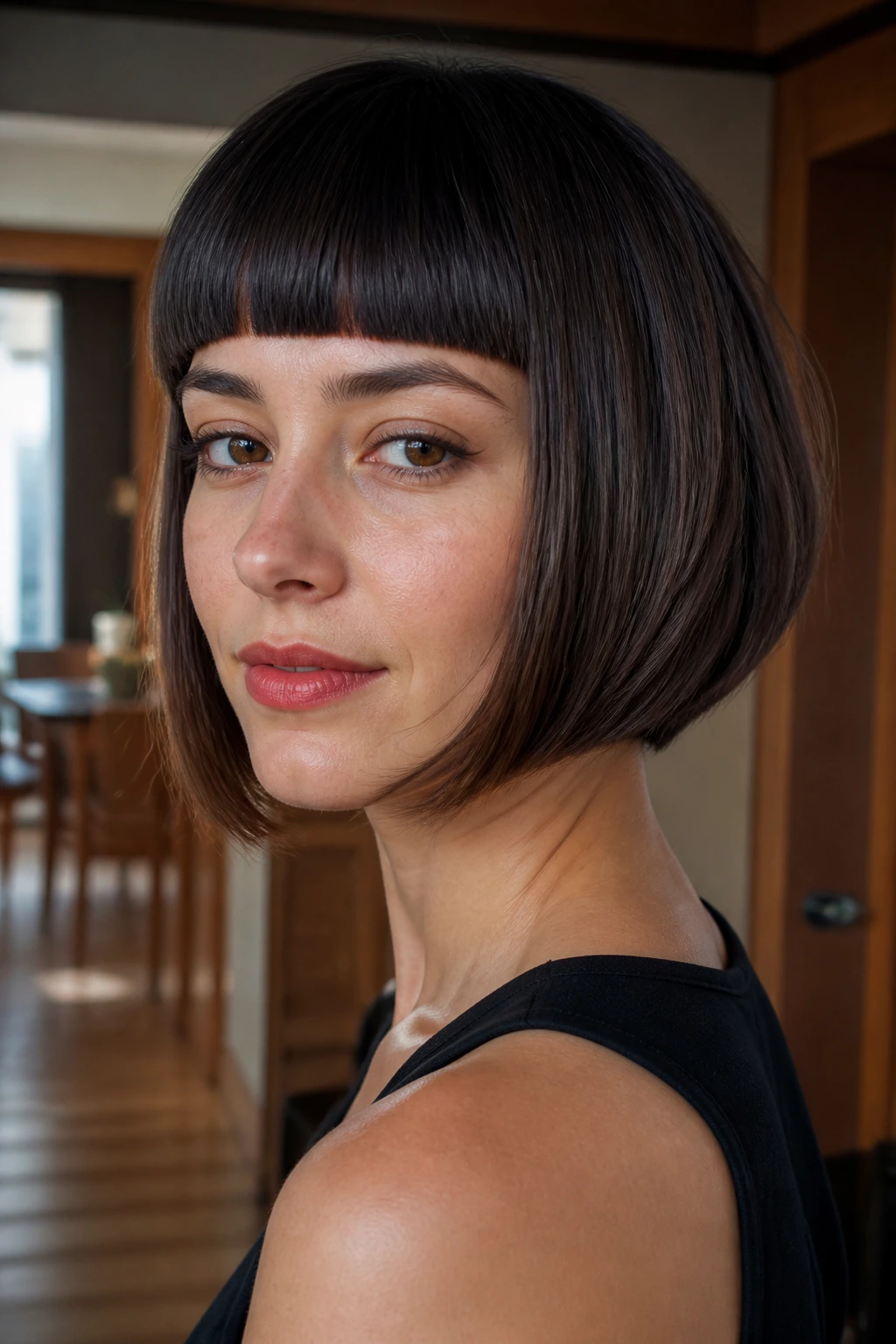
Blunt bangs make a stacked bob feel sharper and a little bolder. The fringe creates a solid line across the forehead, while the back stack keeps the rest of the cut from feeling too heavy. It’s a high-contrast look, and that contrast is what gives it punch.
The bangs need to be cut straight but not helmet-thick. A little internal softening helps them sit flat without sticking out. If your hairline swirls or your forehead gets oily fast, this style needs more maintenance than the rest.
Still, when it works, it really works. The clean fringe and the stacked neck line make the whole haircut feel deliberate from root to end.
20. Wispy Fringe Stacked Bob
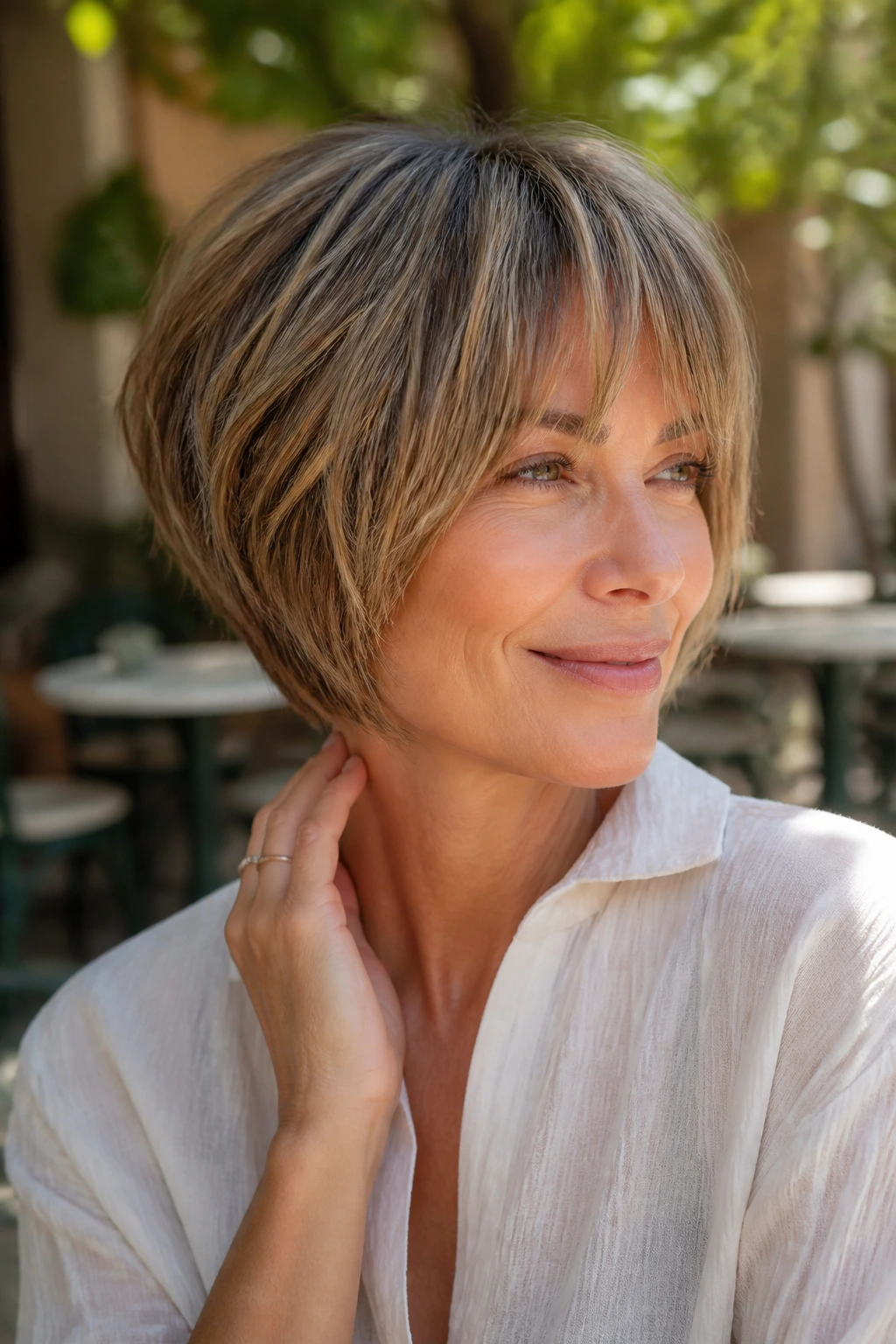
Wispy fringe does the opposite of blunt bangs. It lightens the forehead and softens the whole look, which can be useful if the stacked back already feels strong. The bob reads airy instead of graphic.
The fringe should be sparse enough to move on its own. If it’s too dense, it stops looking wispy and starts behaving like blunt bangs’ nervous cousin. Keep the ends broken up so the fringe doesn’t sit in a single straight line.
This version is easy to wear with glasses and nice for people who want face framing without a lot of commitment. It’s gentle. That’s not a bad thing.
21. Stacked Bob for Fine Hair
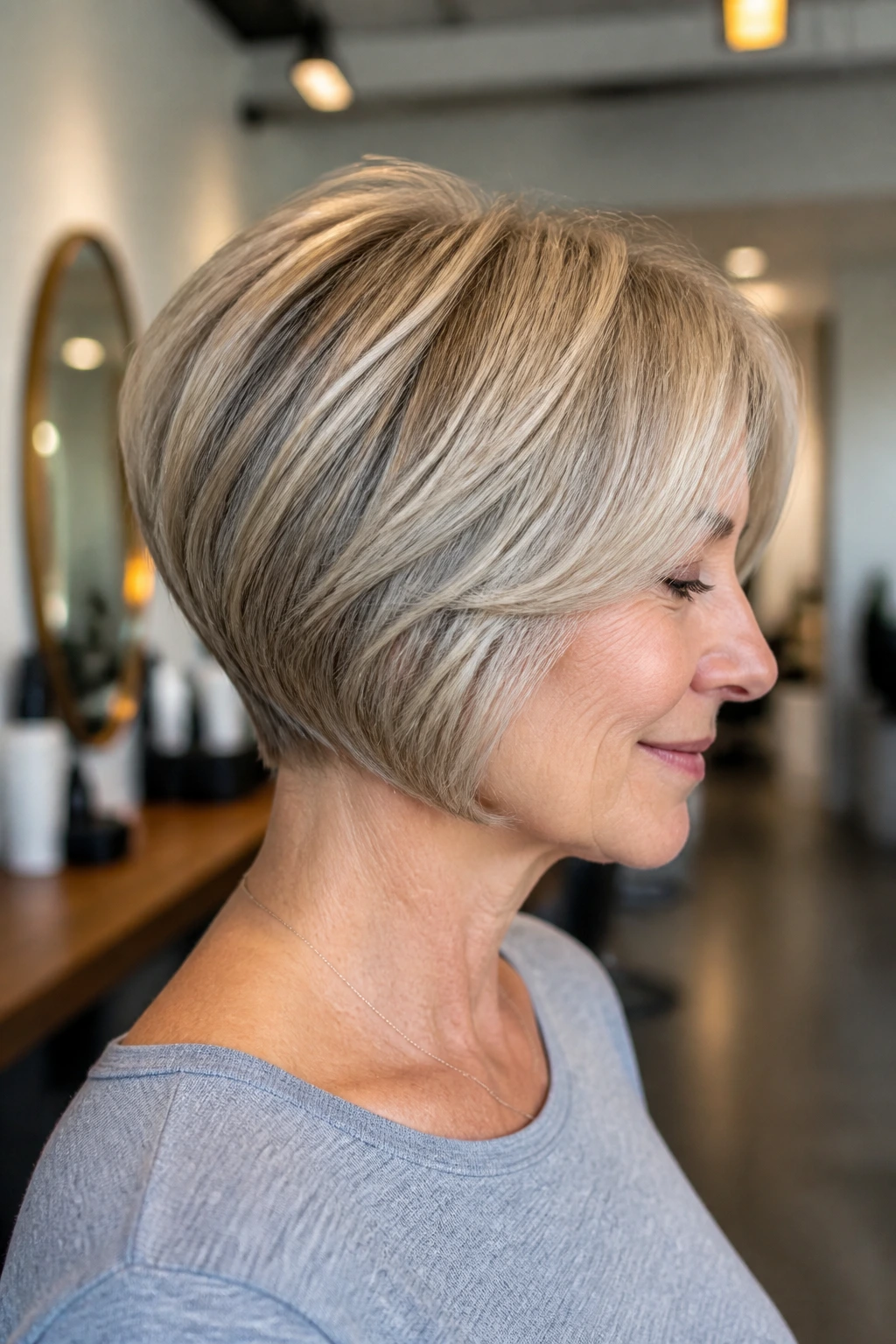
Fine hair needs structure more than it needs length. A stacked bob gives it that structure by moving weight up and away from the ends, which helps the crown look fuller and the nape sit closer to the neck. The cut does a lot of the heavy lifting before you even touch a styling tool.
The trick is not to over-layer the ends. Fine hair can go see-through fast if the haircut gets too airy. Keep the stack controlled and the perimeter full enough to show density.
A root lift spray at the crown and a quick round-brush pass at the back usually do the job. You do not need a huge amount of product. Fine hair usually looks better when the formula stays light.
22. Stacked Bob for Thick Hair
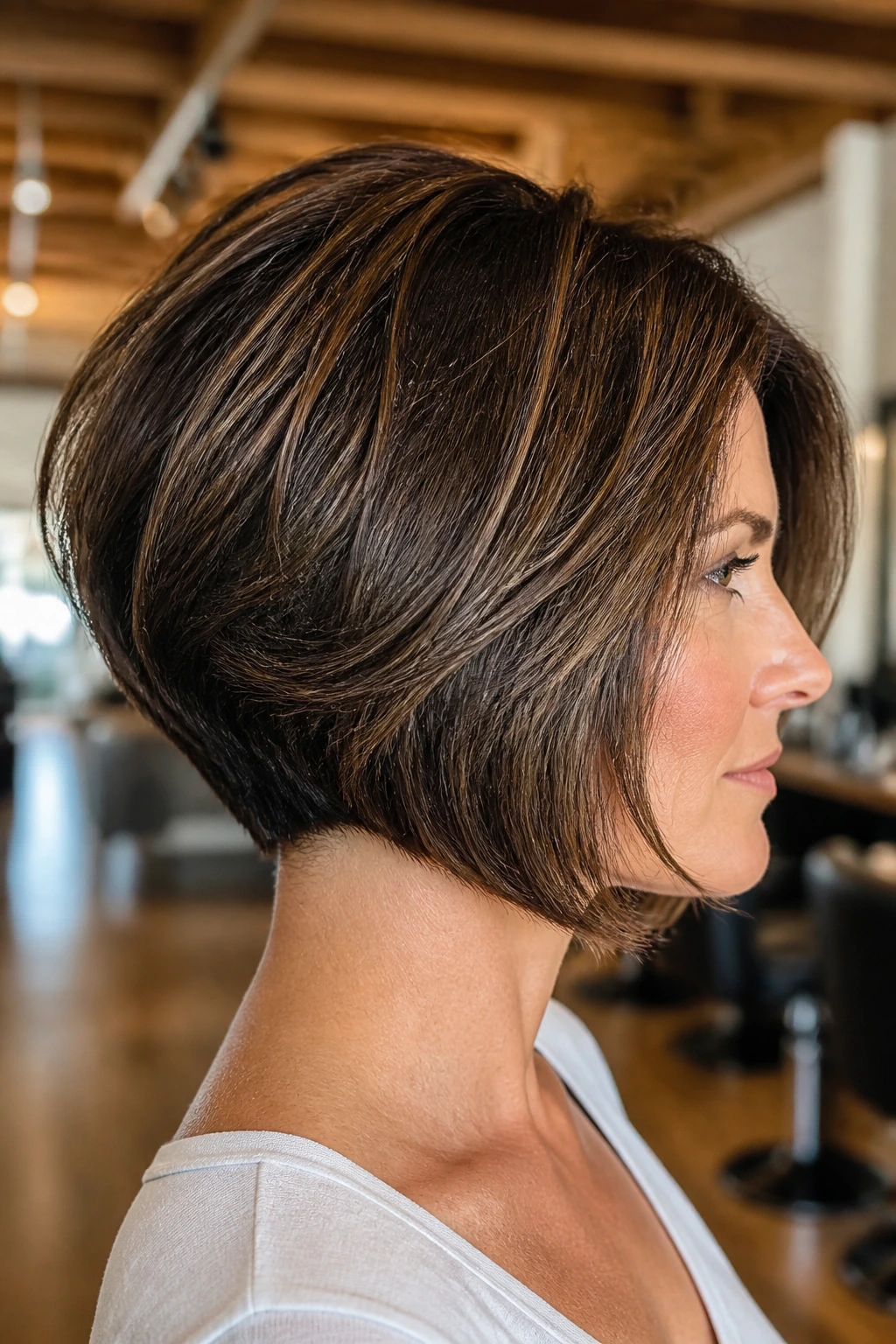
Thick hair loves a stacked bob when the bulk is managed well. The graduation removes weight from the back while keeping the outline tidy, which stops the cut from ballooning around the jaw. That control matters more on thick hair than on almost anything else.
The danger is over-thinning. Once thick hair gets razored too hard, the ends can fray and flip in odd directions. A cleaner internal removal of weight usually works better than aggressive texturizing.
This is one of the rare times I’d say less is more and mean it literally. Keep the stack strong, the ends solid, and the profile shaped. The cut will do the rest.
23. Stacked Bob for Straight Hair
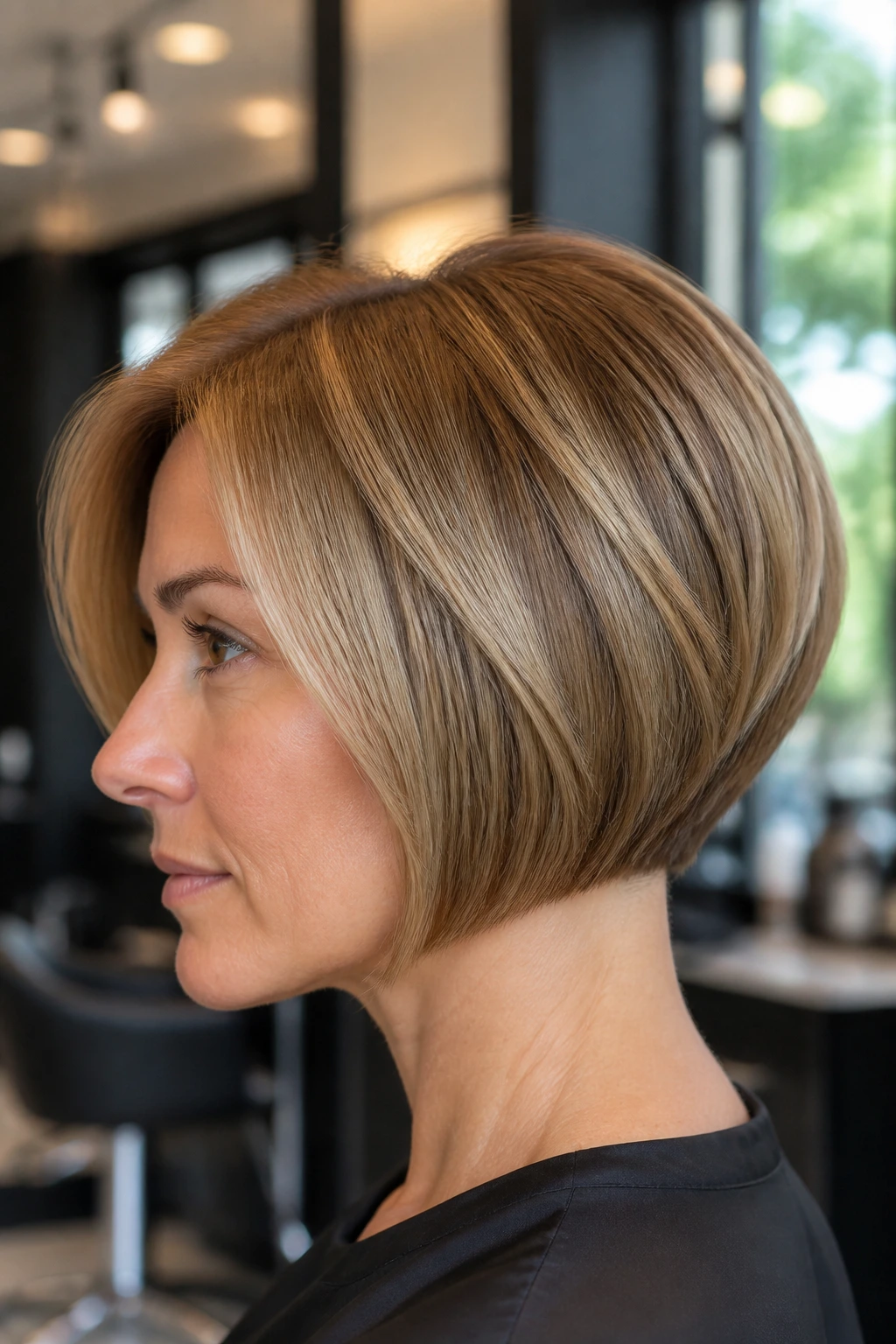
Straight hair makes the stack obvious. Every line shows, every angle shows, and any unevenness shows even more. That sounds unforgiving, but it also means a good cut looks fantastic because the geometry is right there in plain sight.
The best version keeps the nape smooth and the crown slightly elevated. If the straight hair is very fine, the stack should stay moderate. Too much graduation can leave the front too thin compared with the back.
A quick flat-iron pass on the outer layer can sharpen the finish, but do not iron the life out of it. Straight hair can go limp if you chase perfection too hard.
24. Stacked Bob for Coily Hair
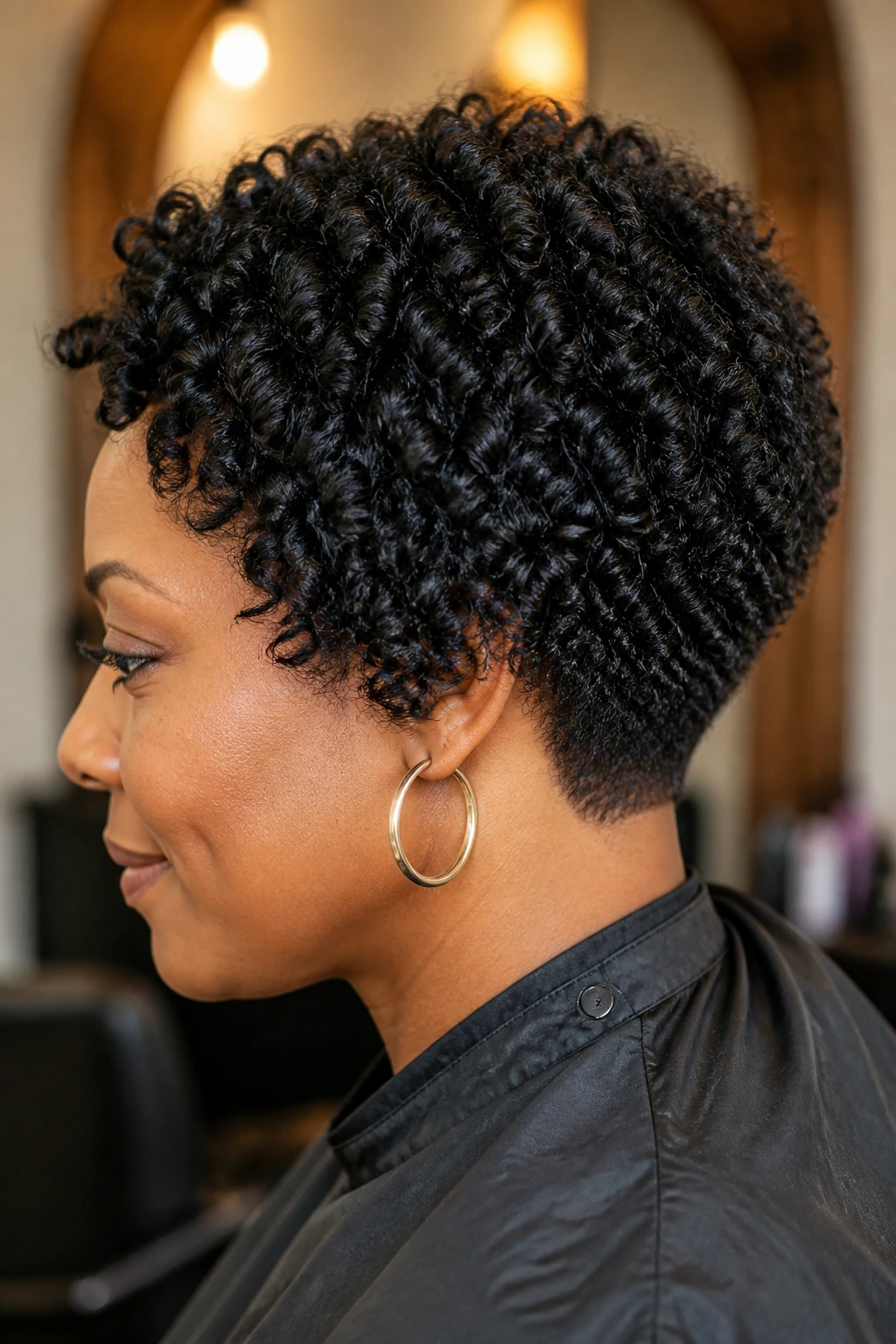
Coily hair needs the stack cut with shrinkage in mind, not against it. A dry cut or a curl-by-curl approach often makes more sense here because the visual length changes so much once the hair springs back. The silhouette matters. The exact wet length does not tell the whole story.
The stack helps coily hair sit neatly at the nape instead of building too much width at the sides. It can look stunning when the shape is balanced. The wrong stack, though, turns into a triangle fast.
This style usually looks best when the edges are clean and the crown has enough room to breathe. A light cream and a careful pick at the roots can keep the outline tidy without stretching the curl pattern.
25. Copper Stacked Bob
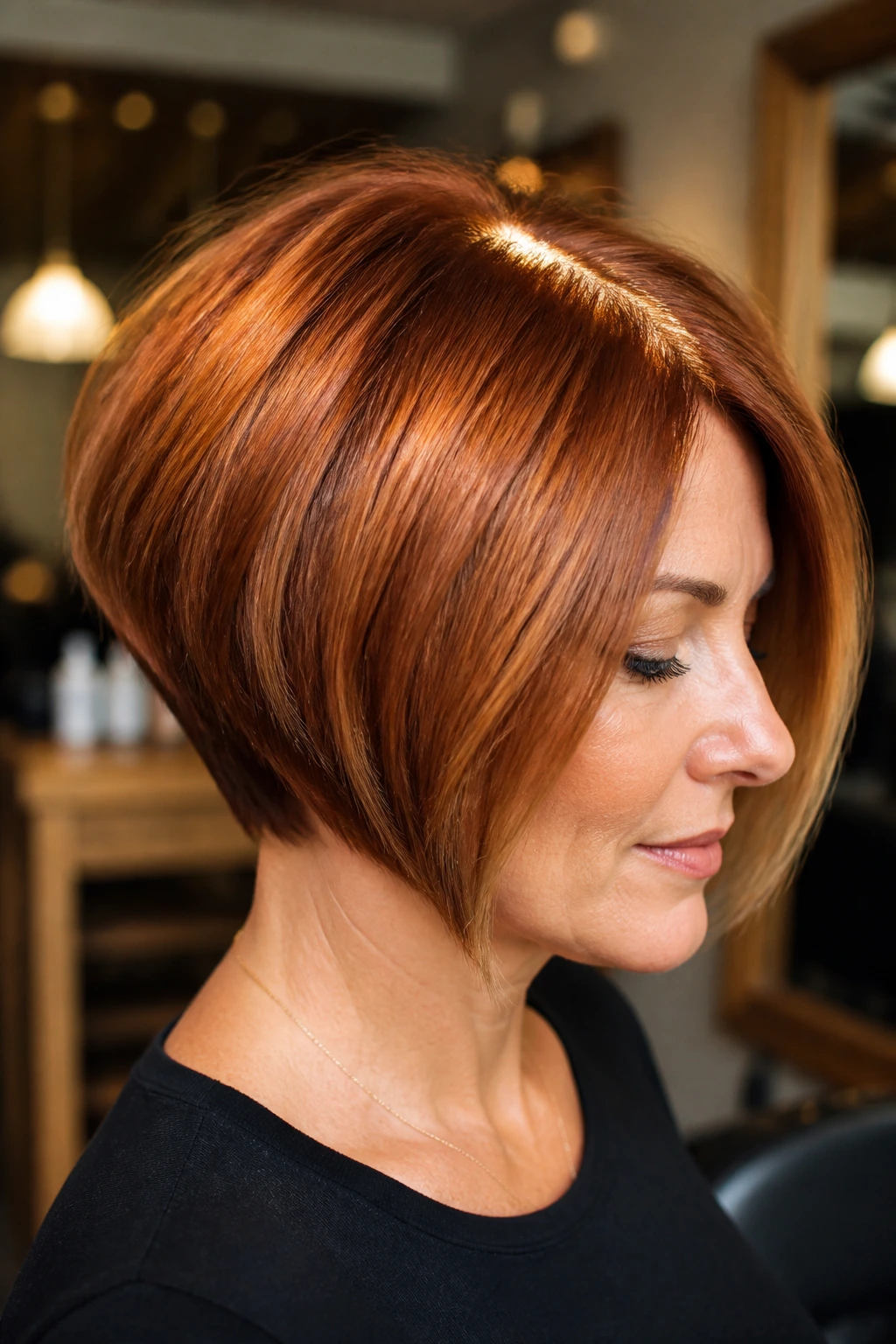
Copper makes a stacked bob warmer and more dimensional. The graduation shows through color beautifully because the lighter pieces around the crown catch the shape of the layers, while the deeper tones near the nape give the cut some anchor. It’s one of those color-cut pairings that makes the structure easier to see.
Copper works especially well if you want the haircut to feel lively without changing the actual shape. On short hair, the color can do some of the visual work the layers would otherwise have to do alone.
Keep the finish glossy. Copper looks dull fast if the hair is dry, so a smoothing cream or color-safe conditioner matters more here than in a neutral brown.
26. Platinum Short Stacked Bob
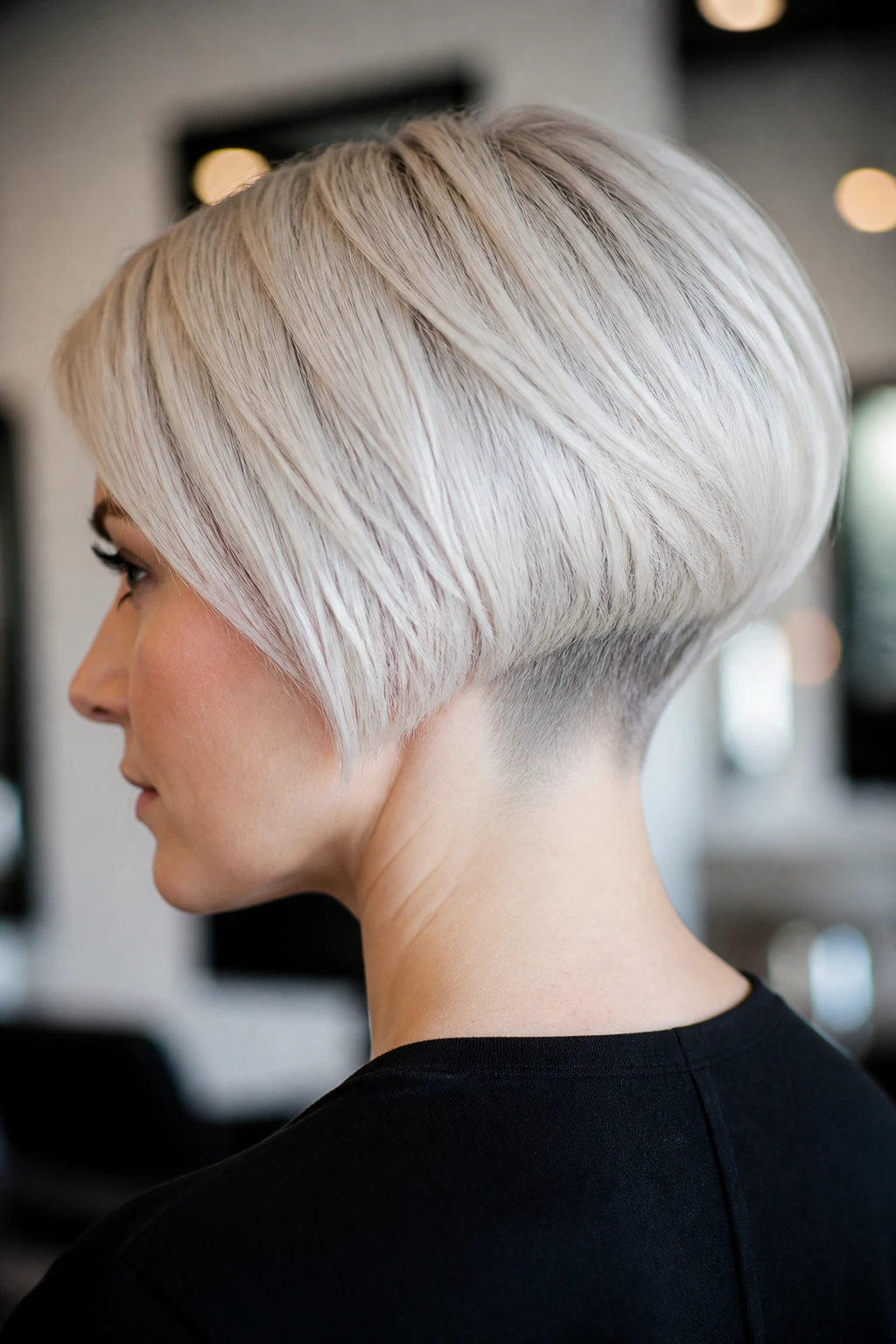
Platinum turns a stacked bob into a very crisp shape. The color removes visual softness, which means every angle and layer stands out. That can be gorgeous on a short cut, but it also means the haircut has to be immaculate. There’s nowhere to hide a sloppy nape.
This version is a favorite if you like a strong, graphic finish. The bright tone makes the stack read like architecture. It’s dramatic without needing extra length or complicated styling.
Just be honest about upkeep. Platinum asks for serious toner care and a little more patience with heat tools. Dry, brittle ends show faster on this color, and short hair is unforgiving about that.
27. Smoky Brunette Bob
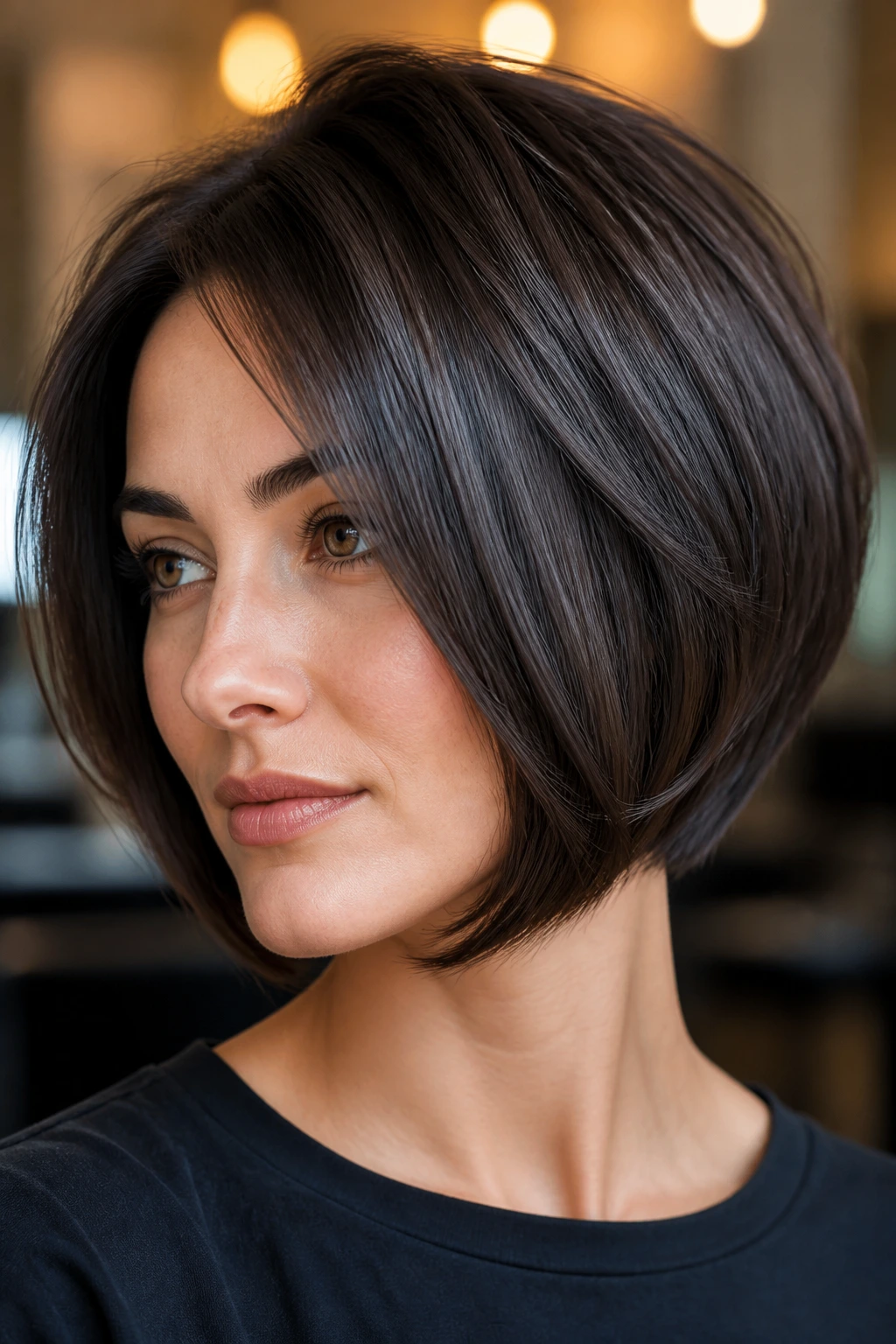
Smoky brunette gives the stack a quieter, denser feel. The color softens the transition between layers, which can be useful if you want the haircut to feel less obvious and more refined. It’s a good choice for people who like shape but do not want the haircut to shout.
The cool brunette tones also make the outline feel cleaner against the skin, especially around the neck and jaw. That contrast can be very flattering on short cuts. The bob looks grounded.
A gloss treatment or a shine serum helps this shade stay rich. Without it, smoky brunettes can flatten visually, and the stack loses some of its depth.
28. Salt-and-Pepper Stacked Bob
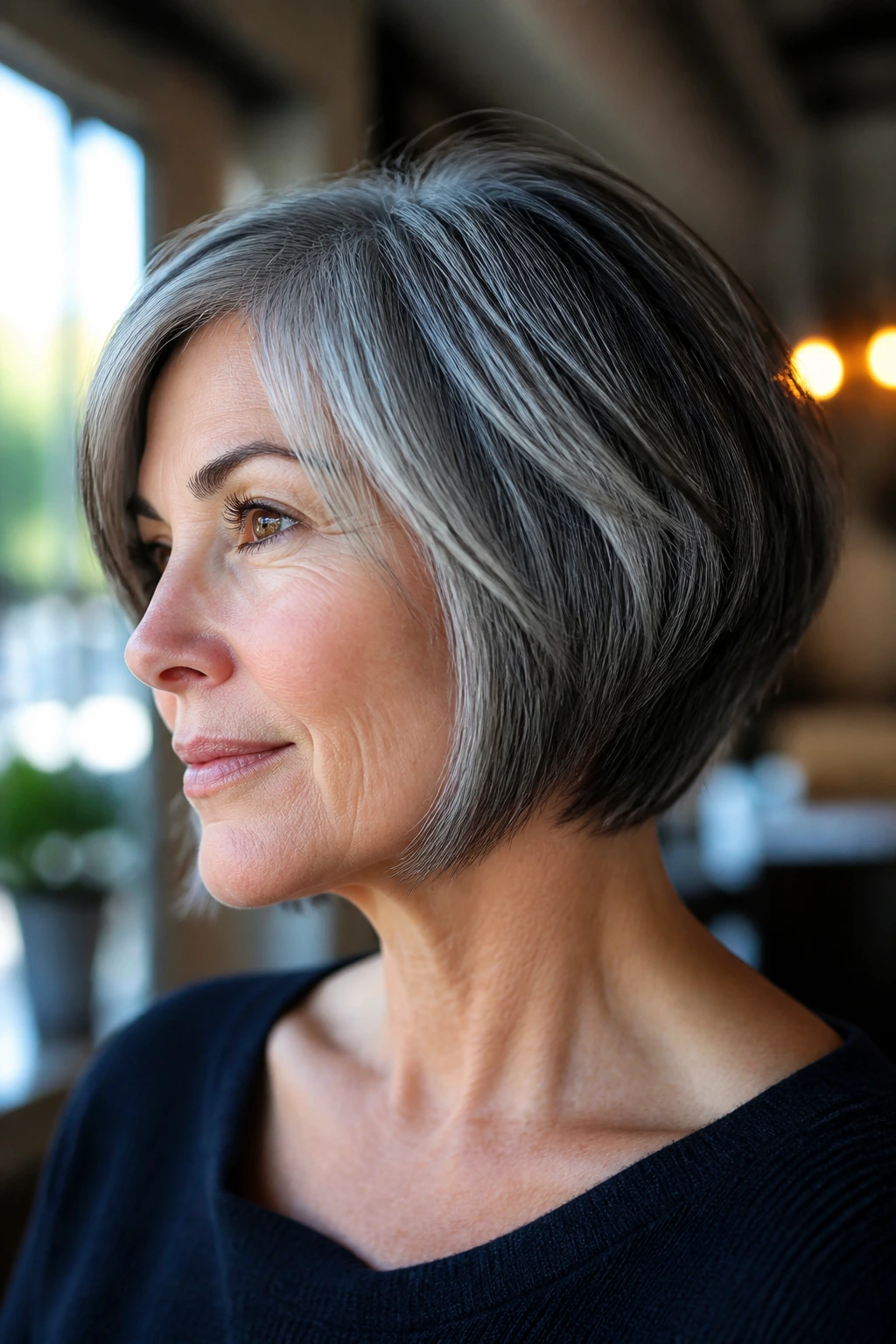
Salt-and-pepper hair looks particularly strong in a stacked bob because the layers show off the natural mix of tones. Gray, silver, and darker strands move through the cut in a way that makes the shape feel alive. The stack keeps the silhouette neat so the color can do its thing.
This version works best when the haircut respects the natural density of the hair. Too much thinning can make the lighter strands fray and look fuzzy. Keep the line strong and the texture soft.
I like this style because it does not try to hide anything. It lets the hair look like hair. That always looks better than pretending otherwise.
29. Hidden Highlight Bob
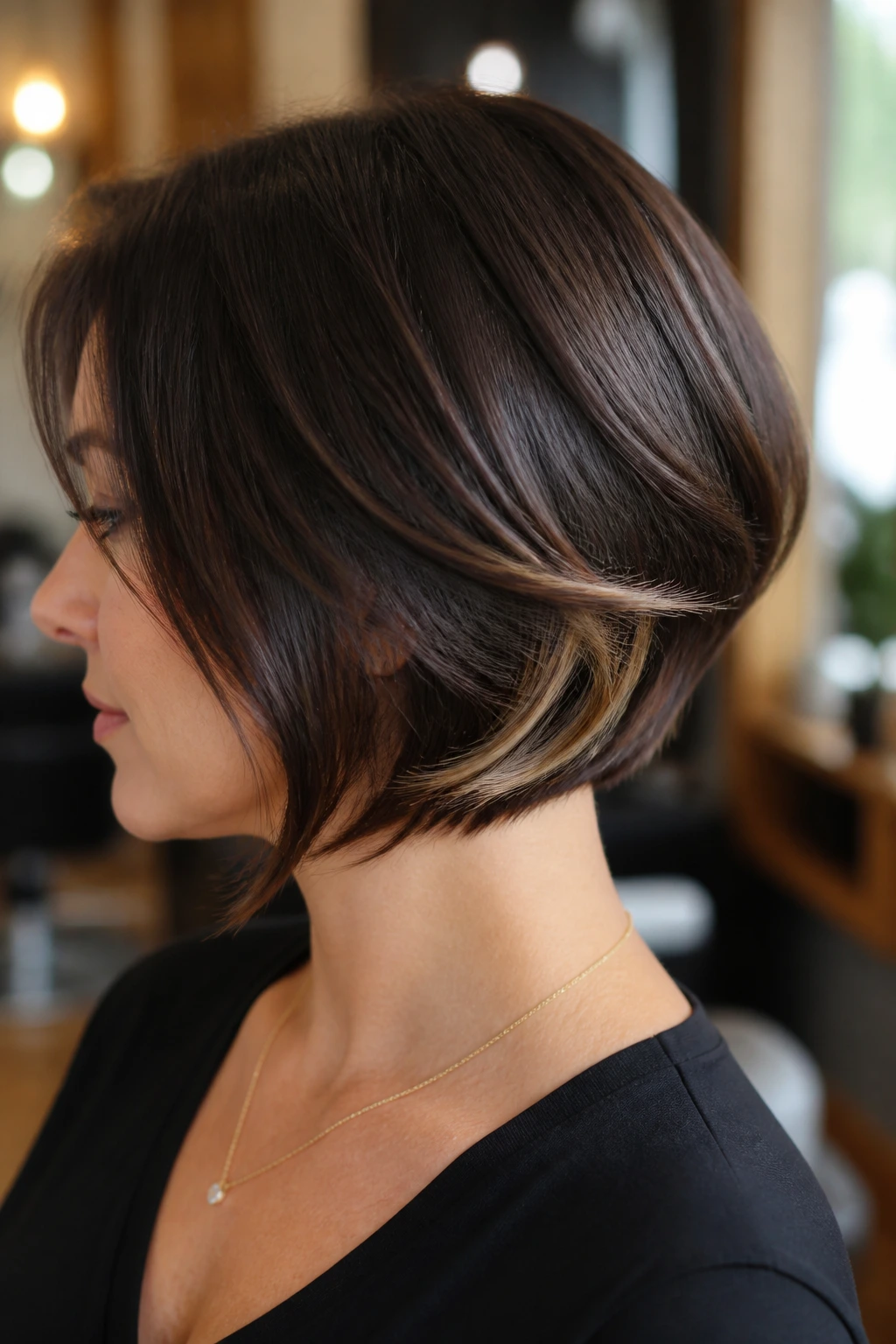
Hidden highlights sit underneath the top layer, which means they flash when you move and disappear when the hair settles back down. On a stacked bob, that hidden dimension is fun because the layers naturally reveal the color at the nape and around the back curve.
The best part is subtlety. You can keep the top surface darker and cleaner while the lower layers carry the brightness. That keeps the haircut from looking streaky.
This is a good option if you want color without constant maintenance on the outer surface. The stack helps the hidden tones peek through in just the right places. A smart cut and a careful placement of lightness do more than a chunky highlight job ever could.
30. French-Inspired Short Stacked Bob
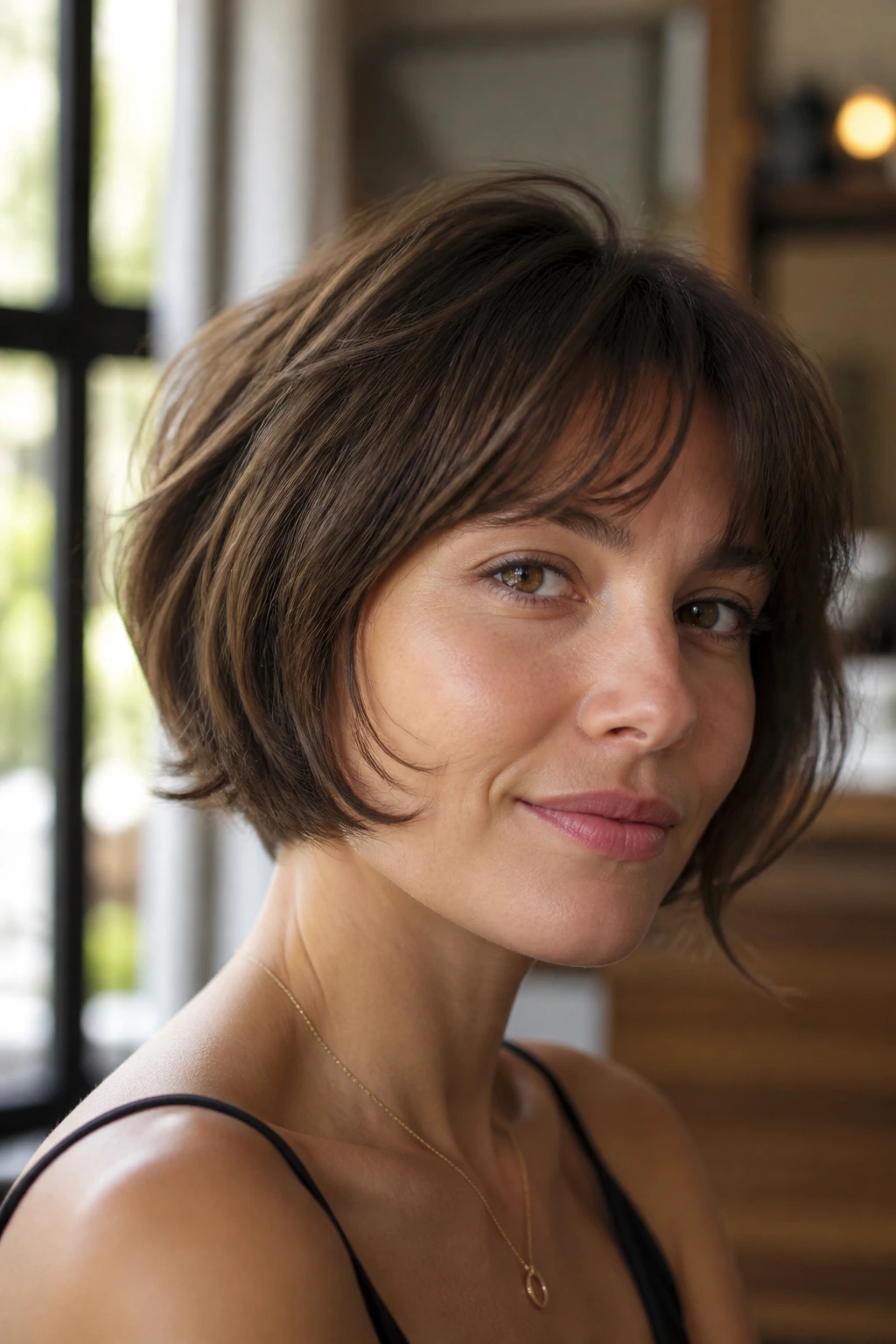
The French-inspired version is less about perfection and more about ease. The stack is still there, but the finish feels slightly undone, a little cheeky, and never too polished. It’s the kind of bob that seems to have taken five minutes even when it took twenty.
The length tends to stay compact, often around the jaw or a touch shorter, with soft internal shape rather than heavy layering. That keeps the cut from becoming fussy. A bit of natural bend is part of the charm.
This is the one I’d recommend if you like style that looks casual but not careless. It wants movement, not stiffness. A touch of mousse at the roots and a loose finger-dry usually gives it enough personality.
31. Minimalist Clean-Line Bob
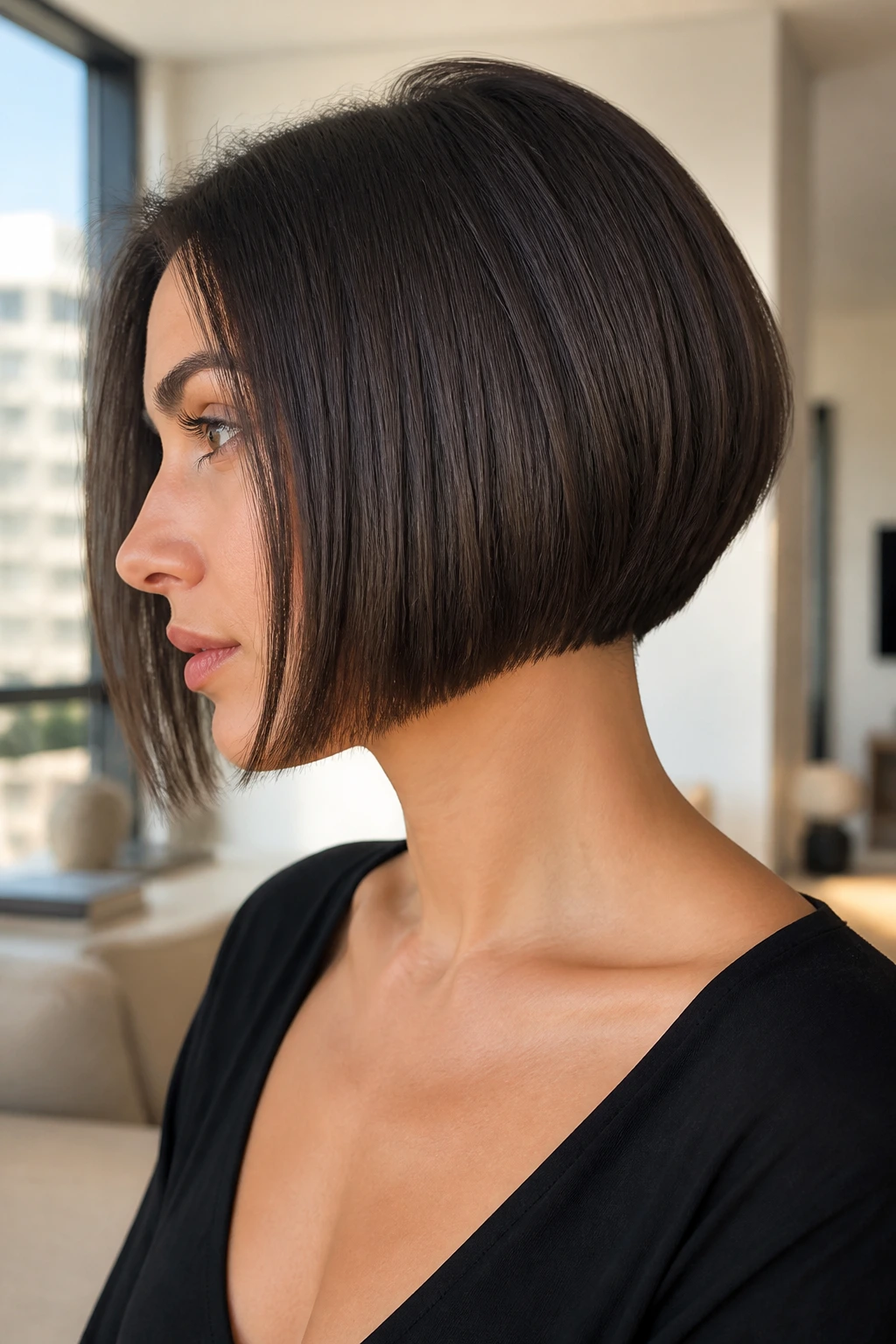
Minimalism is not the same as boring. A clean-line stacked bob relies on exacting edges, a controlled nape, and almost no visible fluff. The shape has to stand on its own because there’s no texture trick to hide behind.
This style is especially good for straight hair and for people who like a tailored look. The front and back need to meet in a way that feels precise. If the lines are uneven, the whole idea falls apart fast.
Use this cut if you like a sharper wardrobe and a haircut that behaves. It pairs well with tucked-in collars, earrings, and a strong side profile. The haircut is the accessory.
32. Edgy Undercut Bob
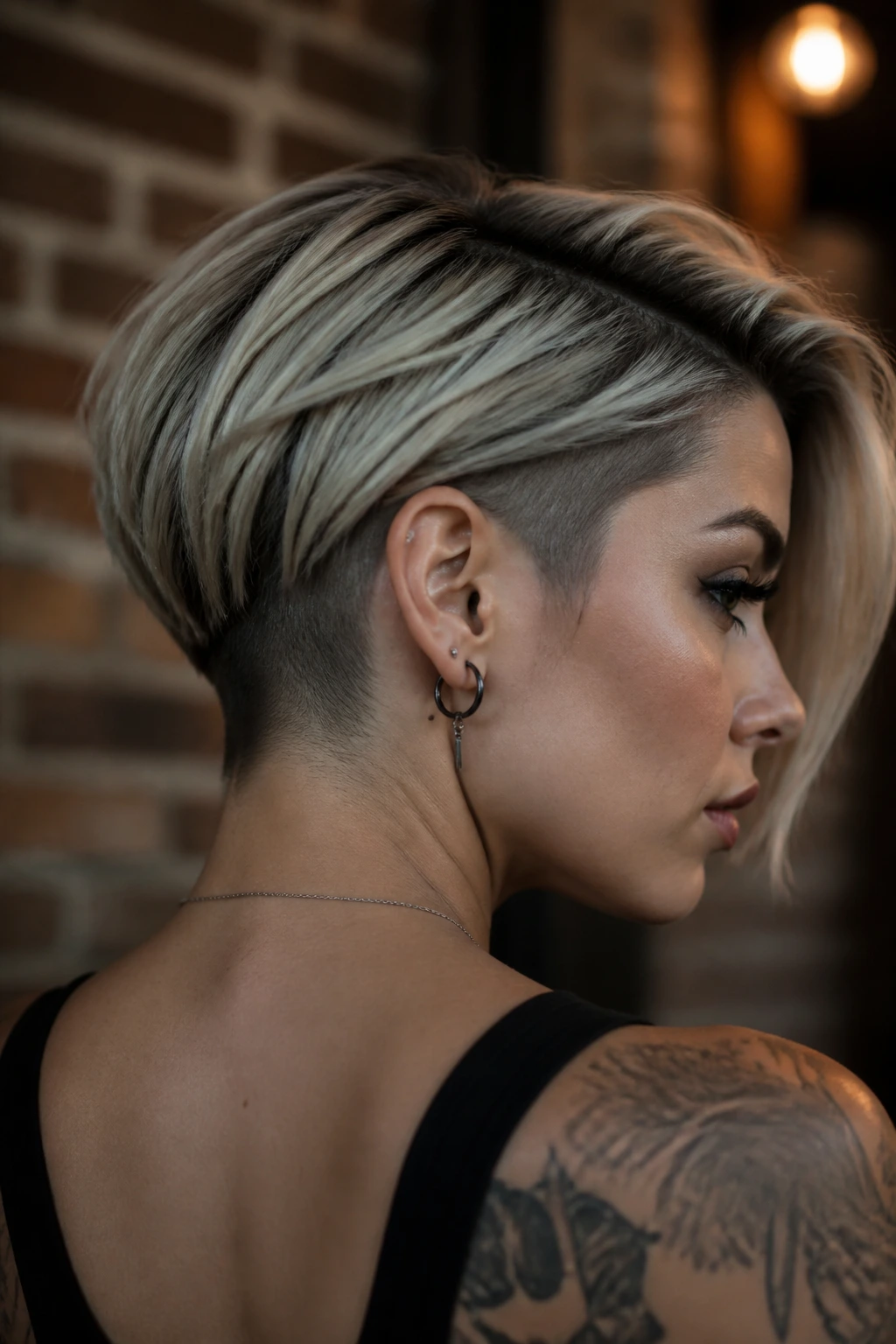
An undercut at the nape changes the whole mood. It removes bulk underneath the stack, which makes the upper layers sit more cleanly and gives the bob a little bite. The hidden shave can be tiny or fairly obvious depending on how much contrast you want.
The undercut is useful for thick hair that gets puffy in the back. It also helps hot climates, sweat, and general annoyances of wearing short hair close to the neck. Practical and a little rebellious. That’s a nice combination.
You do need to keep up with the grow-out. Once the undercut softens, the shape can lose its clean edge. Trims matter here more than in a softer stack.
33. Blowout Stacked Bob
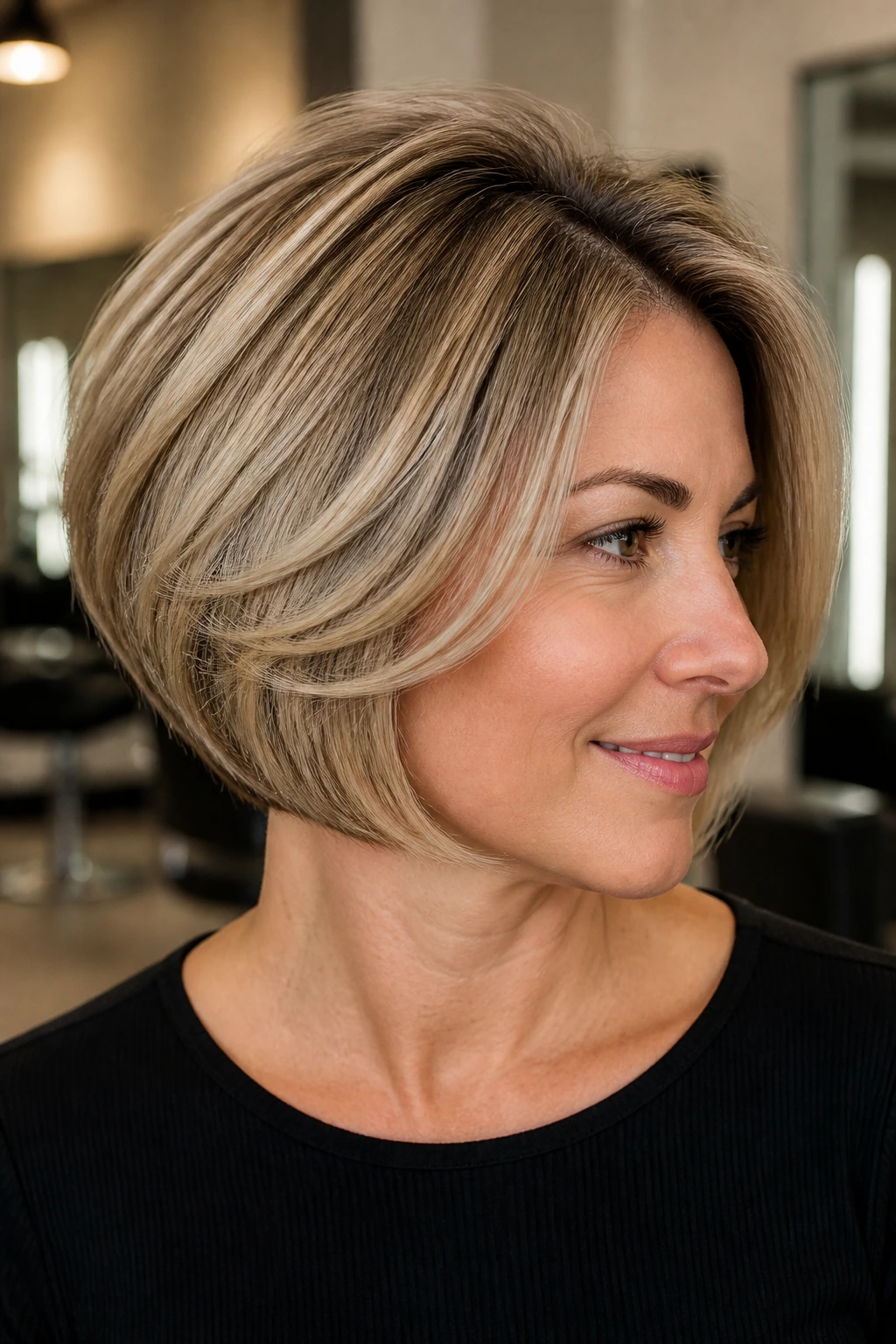
This is the version that loves a round brush. The hair is blown under at the ends, the crown gets lifted, and the stack shows itself best when the back has a polished bend. It’s one of the most flattering ways to wear short hair if you want movement without mess.
The blowout finish works because it reinforces the geometry of the haircut. The layers are already there; the brush just makes them behave. A nozzle on the dryer and a medium brush usually give the cleanest result.
If you like your short hair to feel finished, this is a strong choice. It looks like effort, but not like too much effort. That balance is harder than it sounds.
34. Air-Dry Stacked Bob
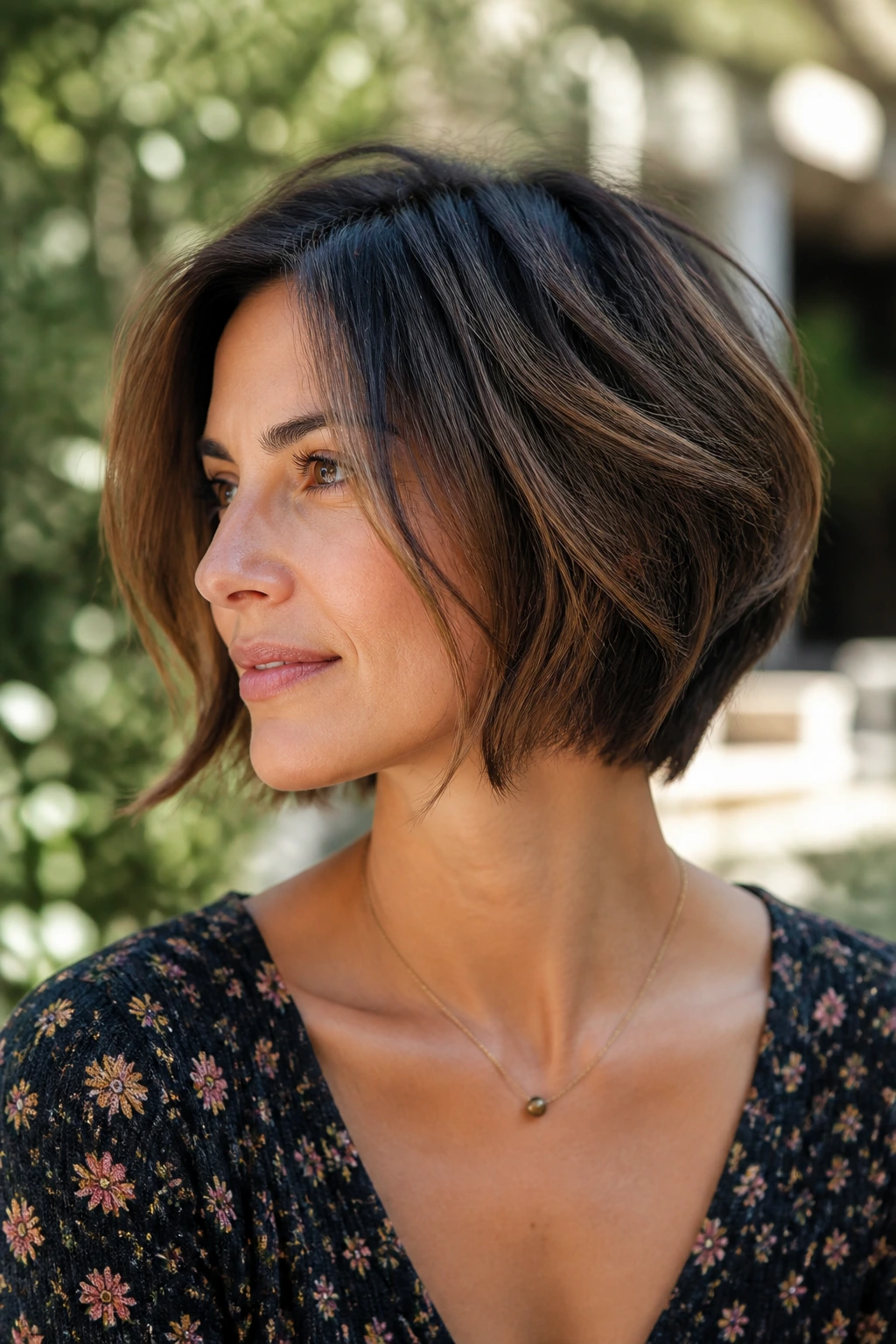
An air-dry stack is for people who refuse to live at the blow-dryer. The cut has to be precise enough that the shape survives on its own, which usually means the back stack is soft but still obvious and the front length is controlled. The hair dries into shape instead of being forced there.
This version works best with natural bend, a little wave, or enough density that the hair does not collapse to the scalp. A lightweight mousse or cream helps the outline hold while it dries.
Air-drying does not mean doing nothing. It means using the cut’s geometry instead of fighting it. There’s a difference, and it shows.
35. Office-Polished Bob

This one is about neatness. The stack stays controlled, the sides sit tucked, and the finish looks tidy enough for a long day without constant touch-ups. It’s not stiff. It’s just disciplined.
A center or slight side part both work here, but the ends should stay smooth and the nape should stay clean. This is the version that looks good with a blazer, a crew neck, or even a plain T-shirt because the haircut itself provides the polish.
If you want a bob that never looks half-done, this is the safer bet. Less texture. More shape. That usually ages well.
36. Face-Framing Stacked Bob
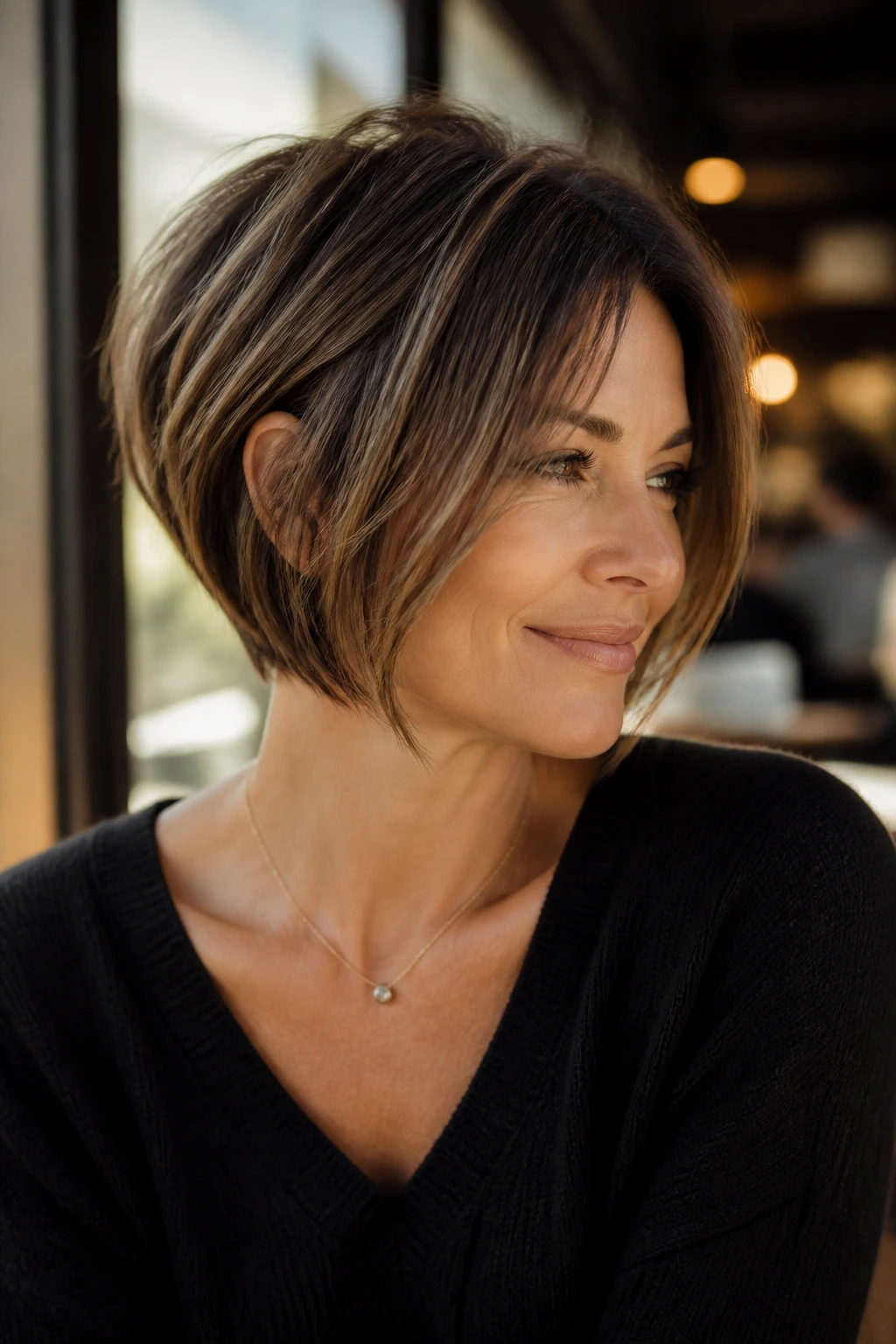
Face-framing pieces can soften a stacked bob right where it matters most — around the eyes, cheeks, and jaw. The back stays short and lifted, but the front gets a little movement that draws attention forward instead of making the whole cut live at the nape.
The face-framing bits should be deliberate, not random. If they’re too short, they get jumpy. If they’re too long, they stop framing and start hanging there.
This is a smart choice if you want the bob to flatter your features without looking overstyled. A little bend around the cheekbone is often enough.
37. Soft Volume Bob
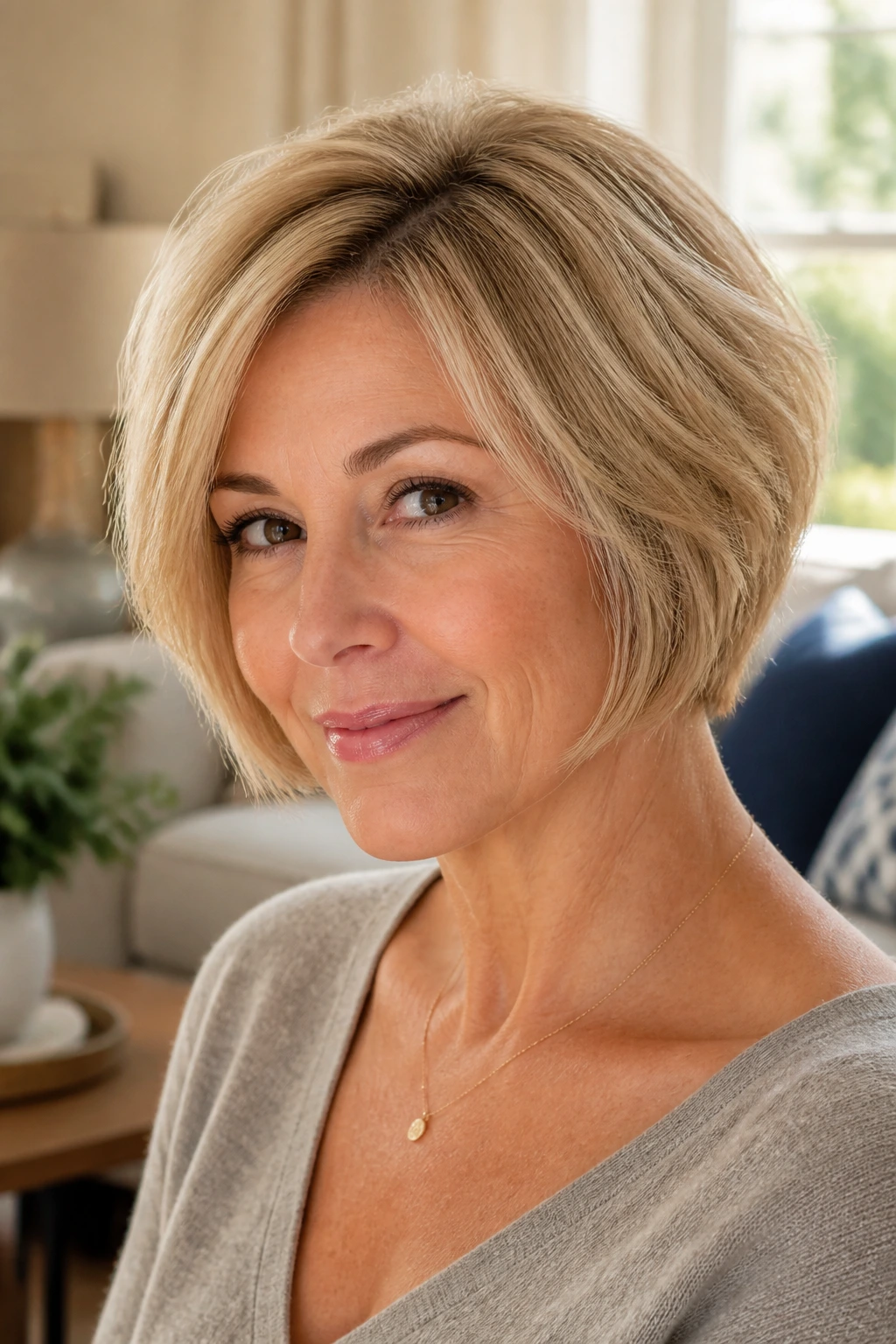
Soft volume is the version for people who want body without crunch. The stack creates height, but the overall outline stays gentle and rounded. It’s one of the easiest cuts to live with if you dislike sharp edges.
The volume should start at the crown and melt down toward the nape. That keeps the bob from puffing wide at the sides. A light mousse and a quick root lift with your fingers can be enough.
I like this cut because it feels friendly. Not dramatic. Not severe. Just shaped.
38. Cropped Bob With Micro Nape
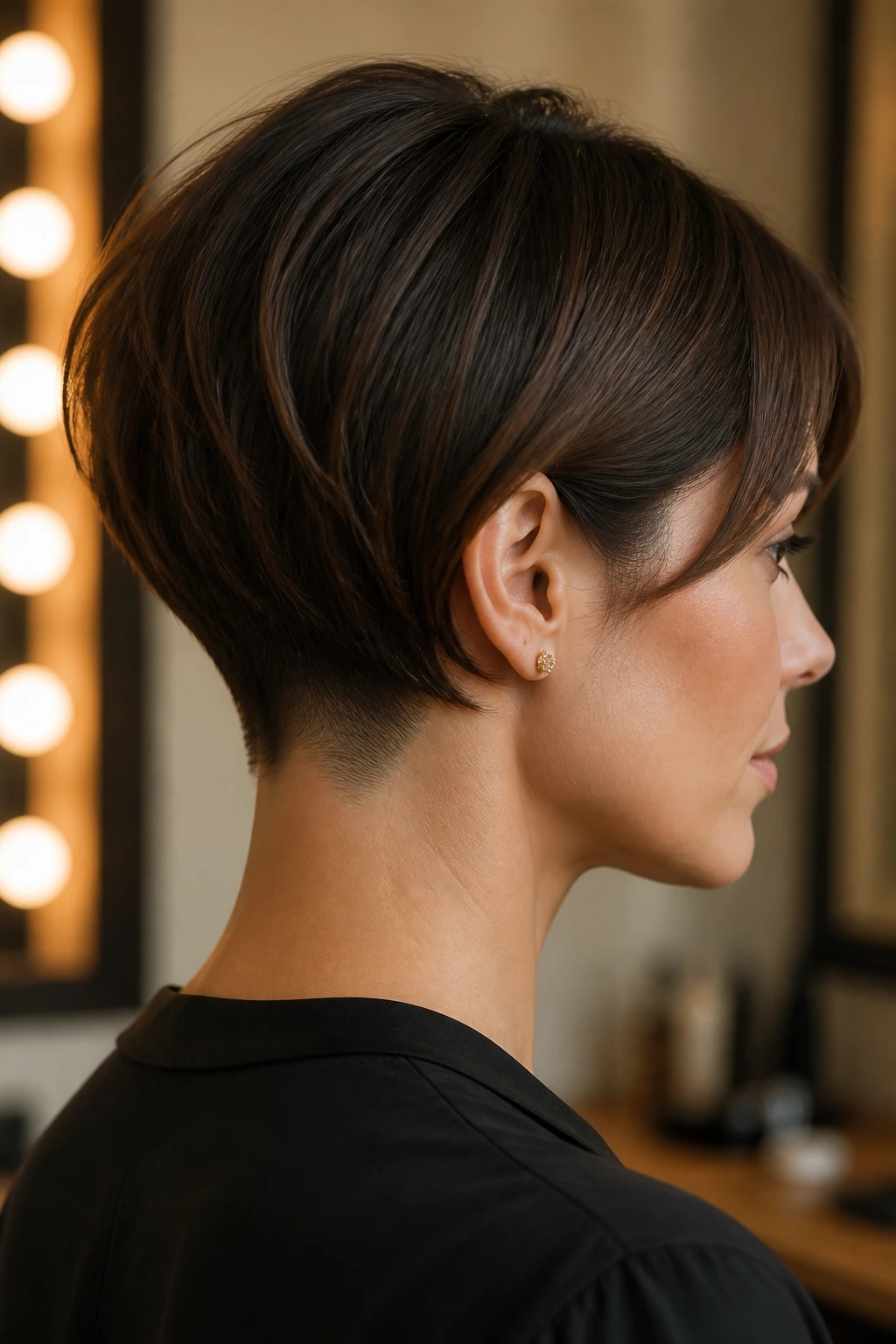
The micro nape version is the shortest, cleanest end of the spectrum. The back is cropped close, the stack is tight, and the silhouette feels almost tailored to the neck. It’s a bold little cut, and it has a clear point of view.
The front can stay slightly longer so the style still reads as a bob instead of a pixie trying on a wig. That contrast is what gives it balance. If the whole thing is too short everywhere, the shape loses its bob identity.
This cut suits people who like precision and are happy to revisit the salon regularly. It grows out fast. But while it’s fresh, it has one of the cleanest outlines in the whole stack.
How to Style a Stacked Bob in Under 15 Minutes
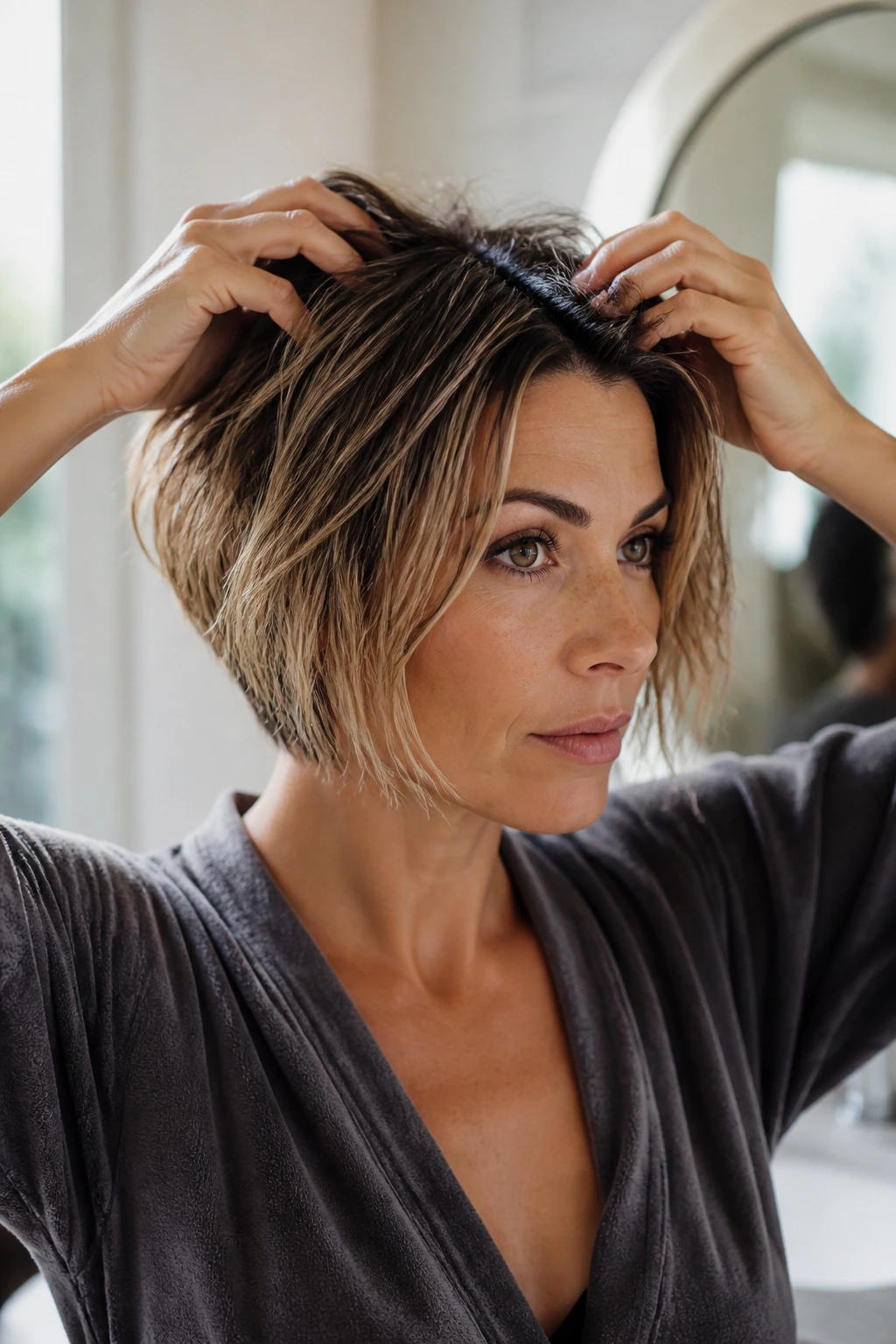
The nice thing about a stacked bob is that the cut already wants to behave. You are not fighting long lengths or trying to invent volume from nowhere. You are mostly nudging the shape back into place.
Air-Dry: Work a small amount of mousse through damp roots, then finger-comb the ends and leave the crown alone. If you keep touching the top while it dries, the lift collapses and the back gets fuzzy.
Quick Blowout: Use a medium round brush and dry the nape first, directing the hair under as you go. Once the back is set, move to the front and smooth the ends so the profile stays clean.
Sleek Finish: A flat iron pass at a moderate heat can tighten the outer line, but only do the surface. If you iron the whole head pin-straight, the stack loses its bend and the cut starts looking flat.
Texture Finish: Rub a pea-sized bit of matte paste between your palms and press it into the ends. Don’t rake it through the roots unless you want the crown to go compact. A stacked bob wants root lift and end separation, not product everywhere.
Tools That Make Short Stacked Bobs Easier at Home
-
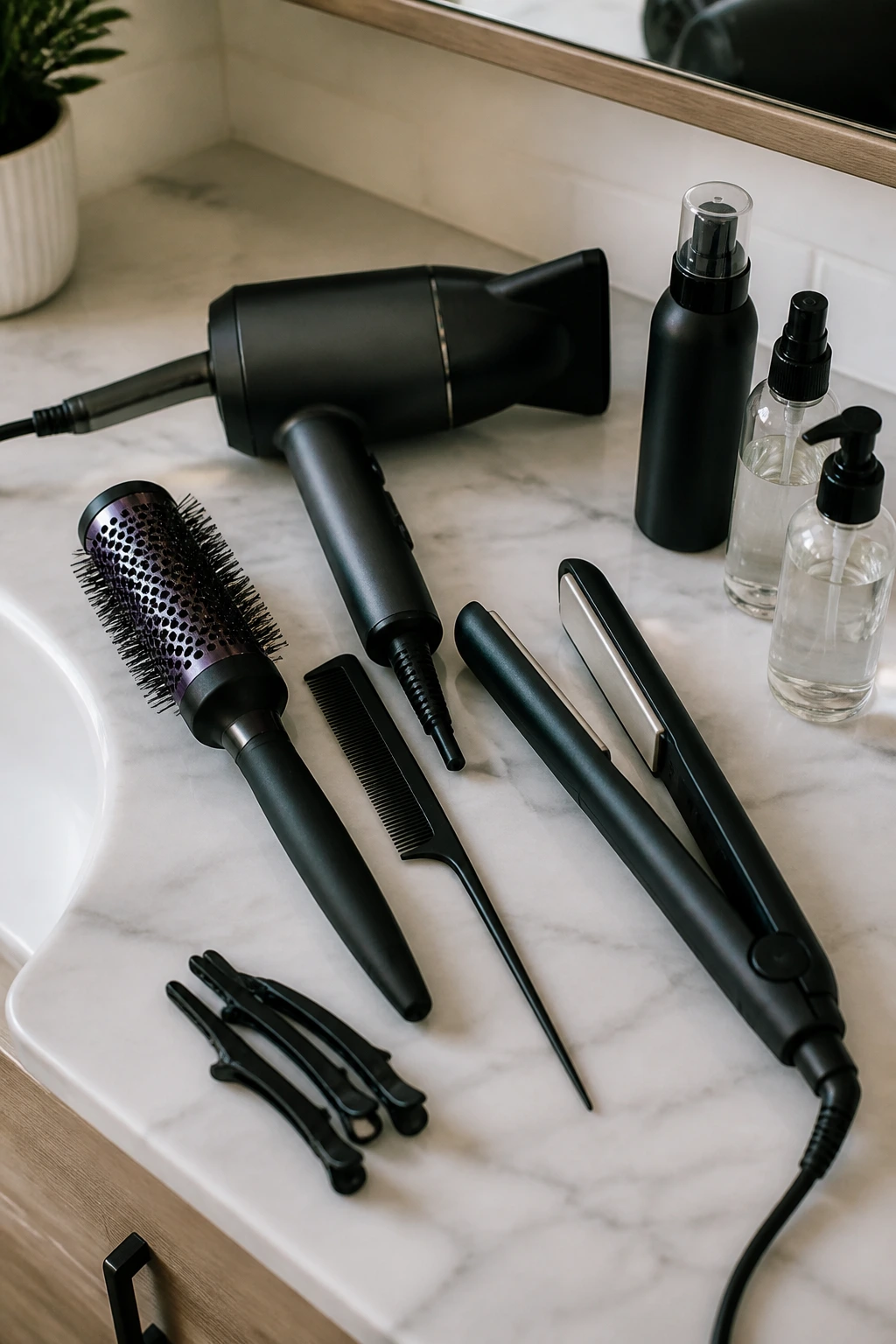
Blow dryer with a nozzle attachment: Keeps the air directed where the stack needs it instead of blasting the layers apart.
-
Medium round brush: Best for tucking the nape under and giving the crown a little curve.
-
Tail comb: Useful for cleaning the part and lifting sections at the root before drying.
-
Flat iron with adjustable heat: Handy for polishing the outer layer, especially on straight or slightly wavy hair.
-
Lightweight mousse: Gives the crown lift without making short hair sticky or heavy.
-
Texturizing spray: Good for piecey finishes and slightly undone styles, but use a light hand.
-
Smoothing serum: Keeps the ends from frizzing out on sleek or color-treated versions.
-
Duckbill clips: Help section the top away from the back while you dry the nape first.
-
Heat protectant: Worth using any time you touch the hair with hot tools. Short hair still gets fried.
How to Ask for the Cut So the Back Stays Clean
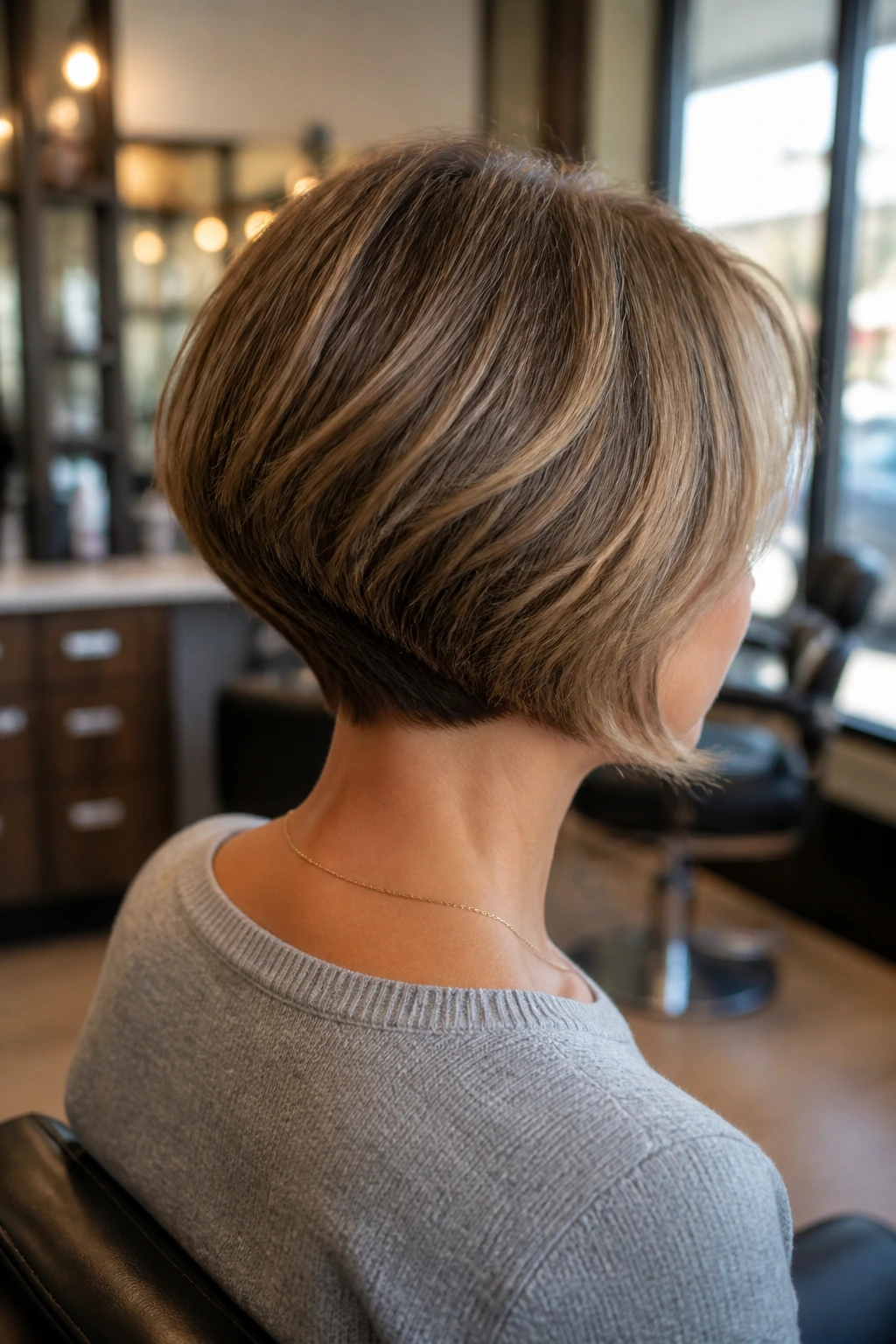
Bring a photo of the side and the back. One front view is not enough. A stacked bob lives in the profile, and if you only show the face angle, the stylist has to guess what you mean at the nape.
Say whether you want a high stack or a soft stack. That sentence does more work than “I want a bob.” A high stack means more visible graduation and lift at the back. A soft stack means a gentler transition and a grow-out that behaves better.
Say these things out loud
- How short you want the nape to sit.
- Whether the front should hit the jaw, chin, or lower.
- If you wear your hair straight, wavy, or curled most days.
- Whether you want the cut to be sleek, piecey, or rounded.
- How often you’re willing to come back for trims.
If your hair is curly, coily, or prone to a stubborn nape cowlick, ask how the stylist will cut it dry or adjust for shrinkage. That one question prevents so many bad bob stories.
Common Mistakes That Flatten a Stacked Bob
-
Stacking the back too high: The shape starts to look mushroom-like and the crown feels overbuilt. Keep the graduation tight at the nape and let the upper layers carry the body.
-
Thinning the ends too aggressively: The perimeter frays, especially on thick or color-treated hair. Ask for controlled debulking instead of aggressive razor work if the hair already feels fragile.
-
Ignoring the growth pattern at the nape: Cowlicks and strong whorls can push the back outward. A good cut respects the direction the hair wants to go, not the direction you wish it would take.
-
Leaving the front too short: The bob loses balance and can make the face look wider. If you want a softer line, keep the front long enough to skim the jaw or chin.
-
Using too much product: Heavy creams and thick sprays collapse short hair fast. Start with half the amount you think you need, then add more only if the ends are still fluffy.
-
Skipping trims too long: The stack grows out into a blunt wedge and the clean back line disappears. Short bobs need maintenance more often than long hair. That’s the deal.
Variations and Adaptations to Try
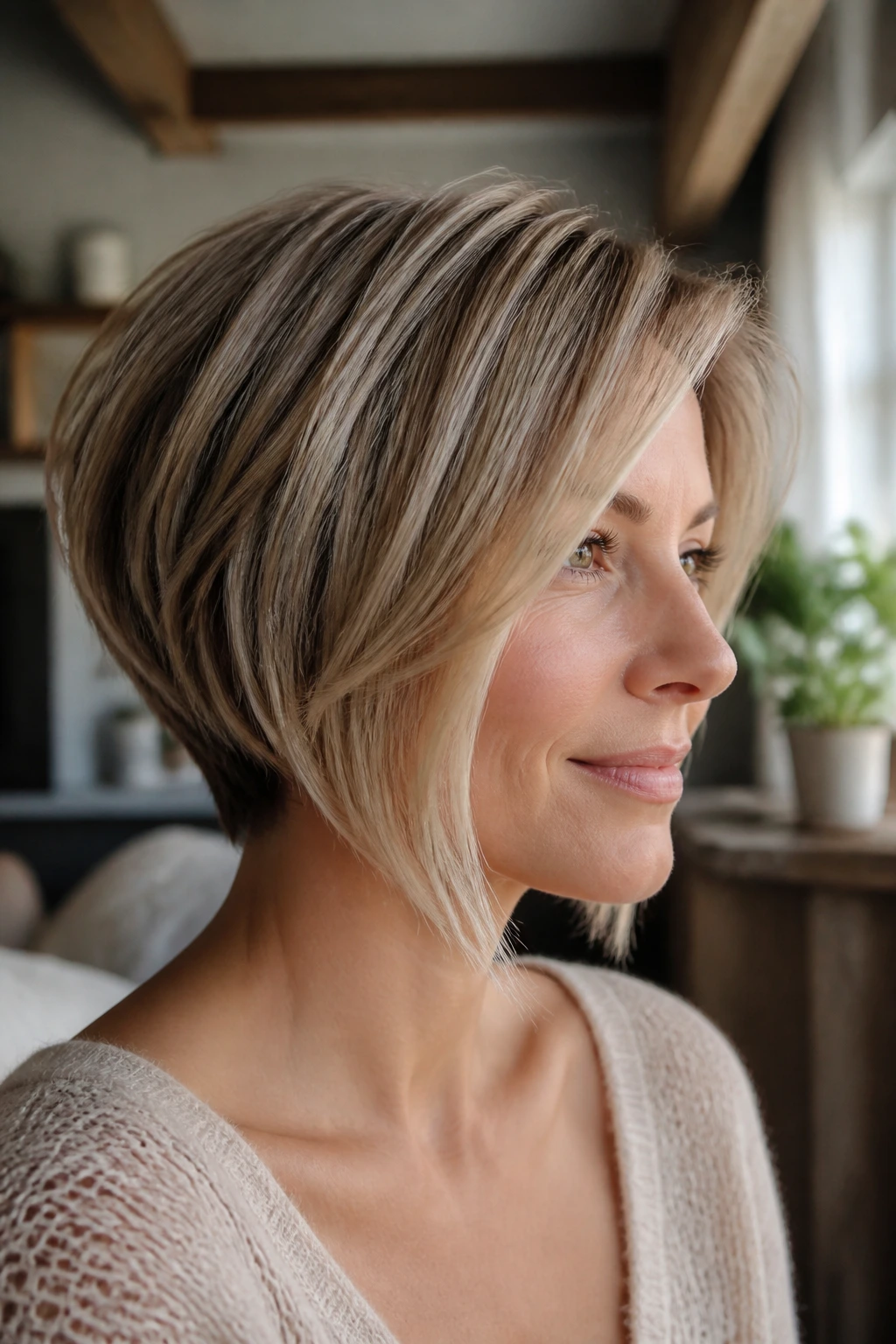
The Soft Stack: Ask for less dramatic graduation and a little more length through the front. This version grows out more gracefully and suits people who want shape without a sharp silhouette.
The High-Contrast Stack: Keep the back short and the front noticeably longer for a stronger profile. It’s the bolder choice, and it looks best when the nape line stays very clean.
The Curl-Forward Stack: Let natural curls or waves do some of the styling work, and cut the stack with shrinkage in mind. This version fits textured hair that needs room to spring but not bulk at the sides.
The Shaved-Nape Stack: Add a hidden or visible undercut at the neck to remove weight. It helps thick hair sit closer to the head and makes hot-weather styling easier.
The Color-Driven Stack: Pair the haircut with highlights, lowlights, copper, or silver tones that show off the layers. Color can make the graduation easier to read, especially on darker or very straight hair.
Keeping the Cut Sharp Between Appointments
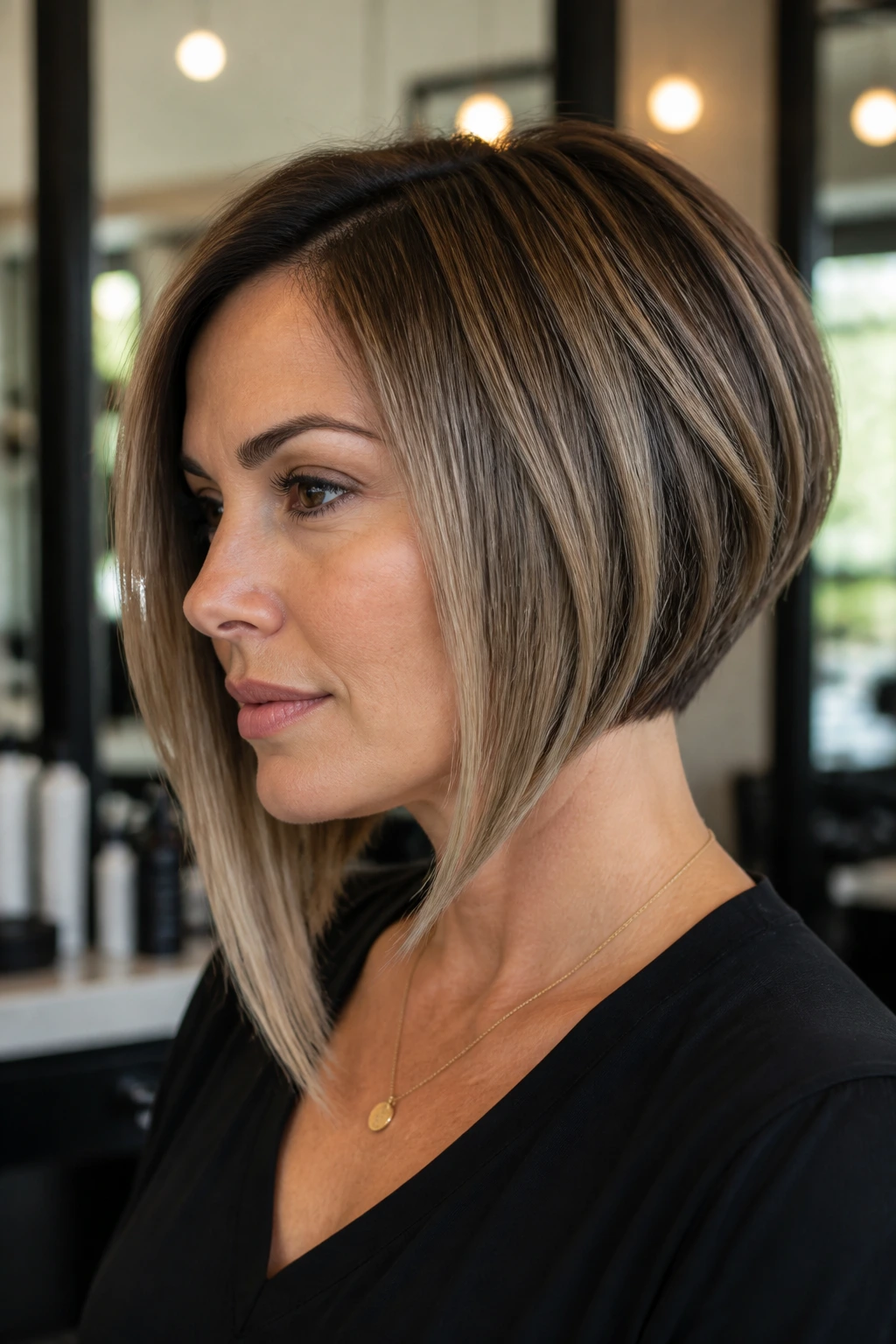
Short stacked bobs look best when you stay ahead of the grow-out. For most versions, a trim every 4 to 7 weeks keeps the back clean and the front balanced. Softer stacks can stretch a little longer. Sharper, more precise cuts need the shorter end of that range.
At home, dry the nape first after washing. That’s where the shape lives. If the back dries crooked or puffy, the rest of the cut has to work twice as hard. A few minutes with a round brush or even a quick finger-dry can keep the line honest.
Sleep matters too. A silk pillowcase or a loose clip at the crown can stop the ends from folding weirdly overnight. If your bob gets flattened at the back, mist the roots lightly in the morning and bend the top layer back into place with your hands before reaching for hot tools.
Frequently Asked Questions
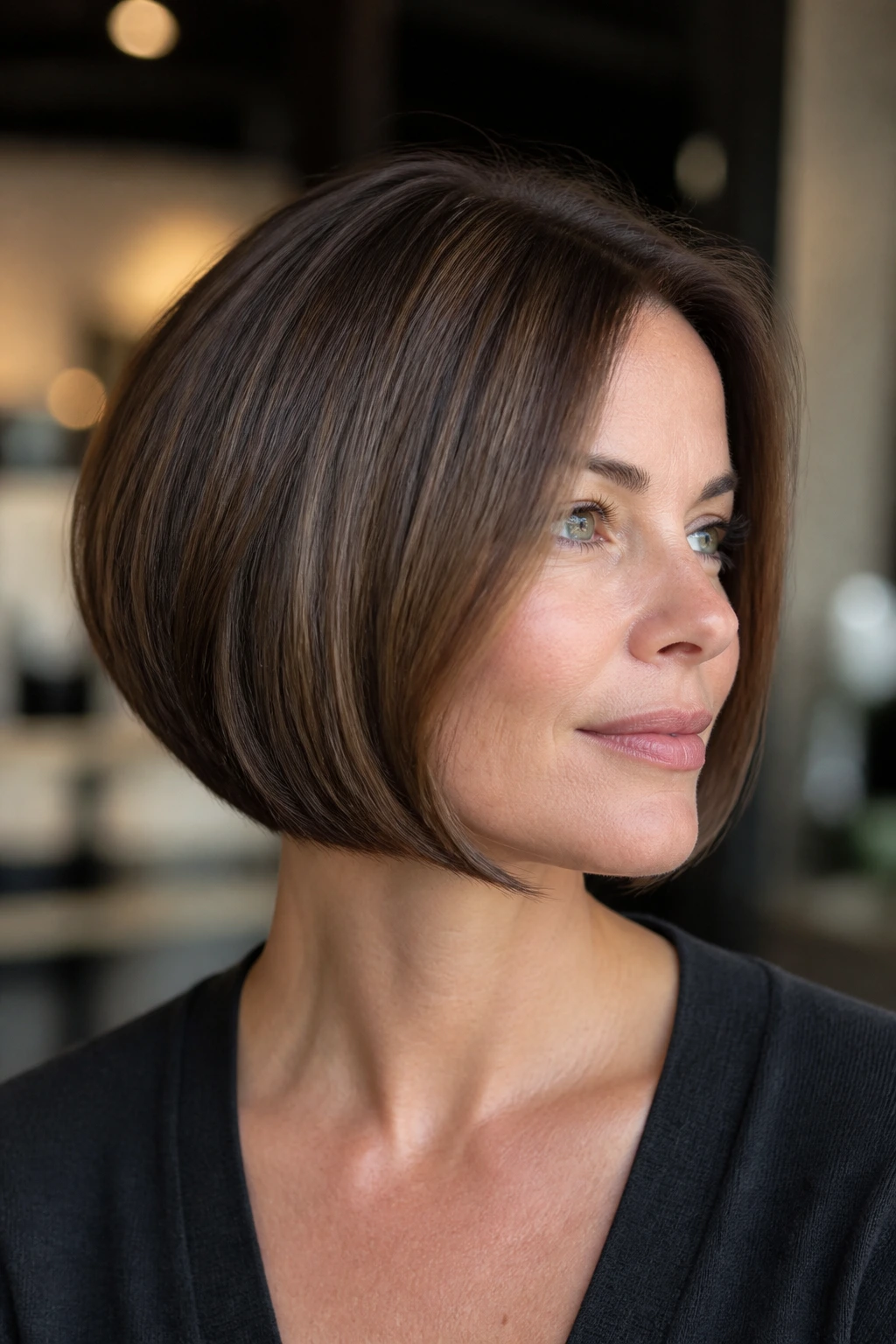
What’s the difference between a stacked bob and an inverted bob?
A stacked bob has more visible graduation in the back, so the nape lifts and curves inward more clearly. An inverted bob usually focuses more on the angle from back to front, and the stack can be softer or less obvious.
Will a stacked bob work on fine hair?
Yes, and it can be one of the better short cuts for fine hair. The trick is not to over-thin the ends. Keep enough weight in the perimeter so the hair looks full rather than wispy.
Can curly or coily hair wear a stacked bob?
Absolutely, but the cut needs to respect shrinkage and texture. Curly and coily hair often benefits from a dry cut or a styling pattern that follows how the curls actually land once they set.
How often should I trim a short stacked bob?
Most need a trim every 4 to 7 weeks. If the stack is sharp and the nape is cropped tight, stay closer to 4 or 5 weeks. Softer versions can go a little longer before the shape starts to blur.
Can I air-dry a stacked bob?
Yes, if the cut was made with your natural texture in mind. Air-drying works best when the hair has some natural bend or density and you use a light mousse or cream to keep the roots from collapsing.
What should I do if the back flips out?
That usually means the stack has grown too long or the ends were not cut to tuck under. A small trim usually fixes it. At home, a round brush and low heat can temporarily persuade the nape back into line.
Does this cut work with bangs?
It does, and bangs can change the whole mood. Blunt bangs make the cut look stronger, curtain bangs soften it, and wispy fringe keeps the front light if the back already has enough structure.
Can I grow out a stacked bob without it looking awkward?
Yes, but you have to let the back catch up on purpose. Ask for softer transitions during the grow-out phase so the back doesn’t turn into a stubborn wedge. A few staged trims are usually better than one dramatic grow-out.
A Short Cut With Real Shape
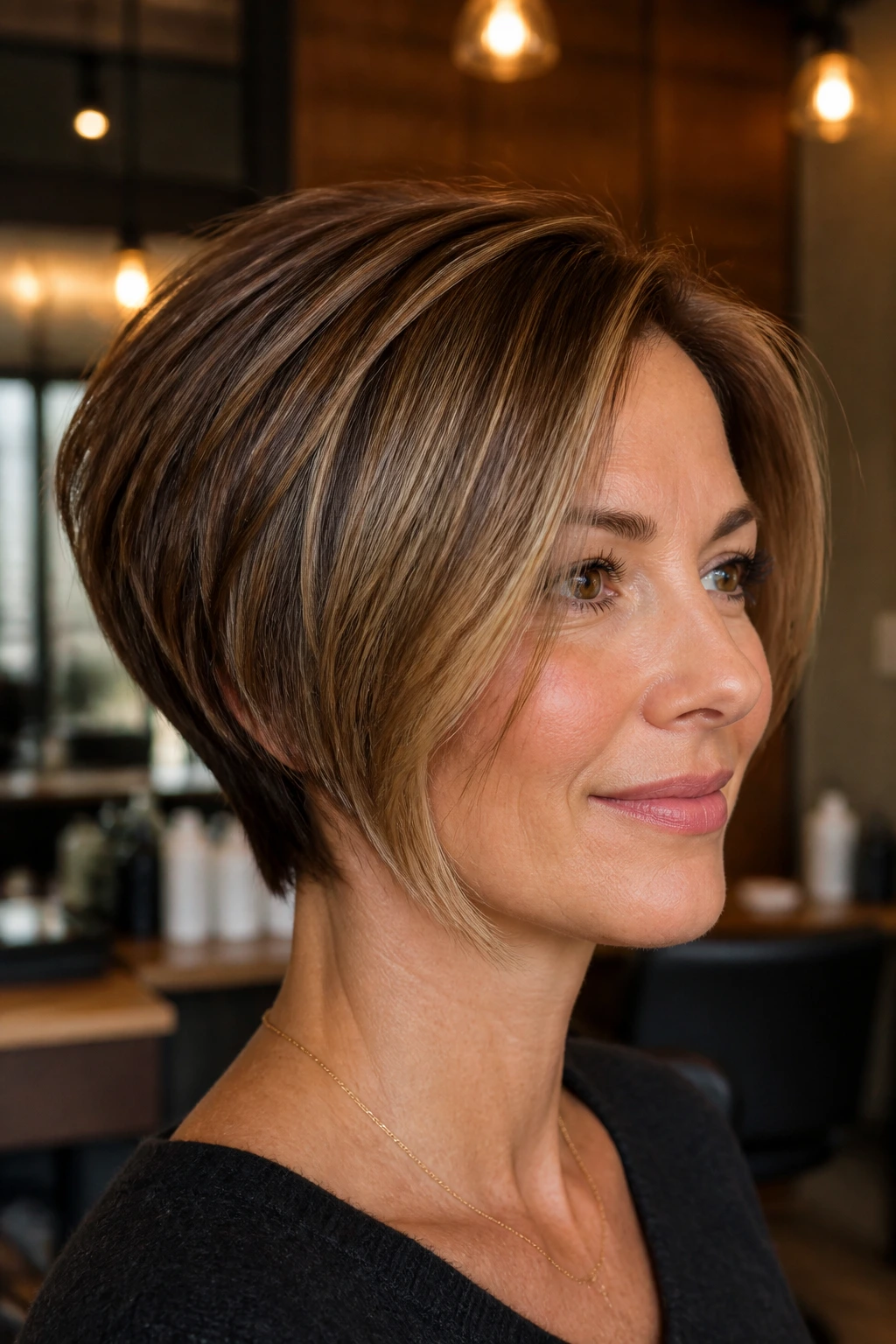
The reason stacked bobs keep showing up again and again is simple: they do more with less hair. The right graduation can make short hair look fuller, cleaner, and more intentional from the back, which is where a lot of bob cuts quietly fail.
Pick the version that matches your texture and your habits, not the one that looks best on a screen for three seconds. A stacked bob should feel like it belongs to your hairline, your neck, and your morning routine — not like a borrowed idea. Get the angle right, and the rest tends to fall into place.
