



Copper hair color does something strange in the best way: it can look soft and peachy in one room, then flash like a fresh penny in daylight a few minutes later. That shape-shifting quality is why so many people keep coming back to copper hair color ideas when they want warmth with a little attitude. It isn’t one note. It’s a whole family of tones, from pale apricot to deep auburn, and the difference between “too orange” and “rich and dimensional” usually comes down to placement, depth, and how much light is touching the hair.
If you’ve ever stood in front of a salon mirror wondering whether copper would look bold or brassy on you, that hesitation makes sense. Copper is one of those shades that rewards a good plan and punishes a sloppy one. On the right base, it looks glossy and expensive. On the wrong base, or with the wrong maintenance, it can drift fast and turn muddy at the ends. The good news is that copper also plays beautifully with balayage, highlights, glossing, money pieces, and root smudges, which gives you far more room to tailor it than people realize.
The trick is knowing which version of copper does what. A level 8 strawberry copper behaves nothing like a smoked chestnut copper on a level 5 brunette. One reads bright and airy. The other reads warm, grounded, and a little moody. Both can look excellent. The point is to match the tone to the hair you actually have, the upkeep you’re willing to live with, and the kind of glow you want when your hair moves.
Why These Copper Shades Keep Working
-
Copper adds warmth without flattening the hair: The red-orange-gold family creates reflected light, so even a deeper copper can look shinier than a flat brown with the same level.
-
Balayage gives copper room to breathe: Hand-painted ribbons keep the shade from turning into one solid block of color, which matters because copper looks best when the eye can catch different tones.
-
There’s a copper for every maintenance appetite: A root-shadowed auburn copper can go weeks longer between appointments than a bright tangerine blonde.
-
The shade can be tuned toward peach, penny, or rust: That flexibility is what makes copper hair color ideas so useful; you are not locked into one exact vibe.
-
It flatters texture in a very real way: Waves, curls, and shags pick up copper differently on each bend, so the color can look more dimensional with less effort.
1. Strawberry Copper Balayage
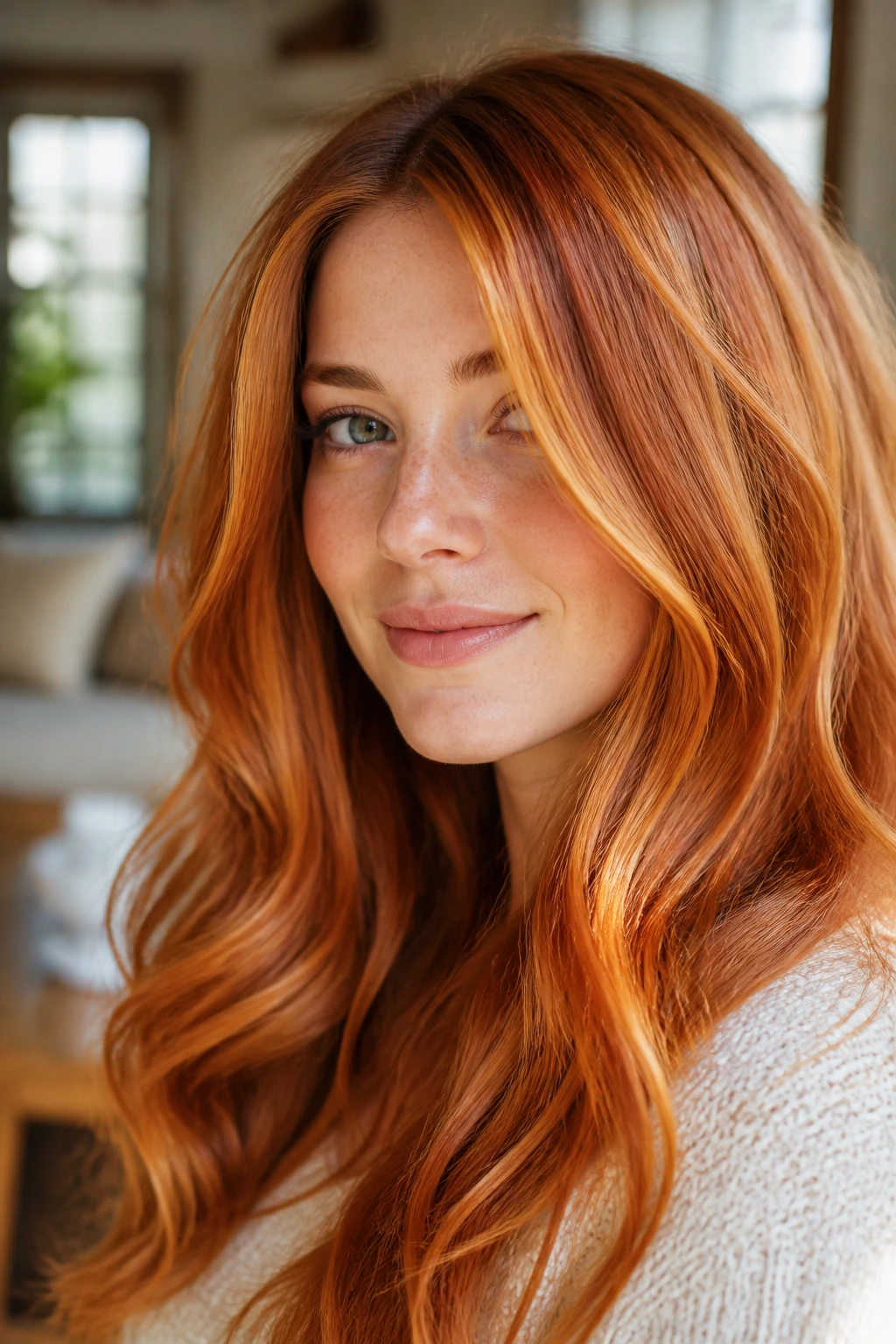
Strawberry copper balayage sits in that sweet spot where the hair looks sunlit, not painted. It has enough peach to keep the copper soft, but enough red-gold to stop it from drifting blonde. On a level 7 or 8 base, it reads like melted sherbet in motion. That sounds delicate, and it is, but it is not timid.
Why It Works
This shade works because the lighter ribbons keep the copper from becoming heavy. When the balayage is placed around the face and through the top layers, the eye sees brightness first and depth second. That order matters. A solid copper can feel dense fast; this version feels airy.
It also grows out with less drama than an all-over vivid copper. The darker base at the root softens the transition, especially if the colorist leaves a slight shadow near the scalp. That means you can wear it for a few more weeks before the contrast starts shouting at you.
What to Ask For
- Fine hand-painted lightening on mid-lengths and ends
- A strawberry-copper gloss over lifted pieces
- A soft root melt in a deeper peach-brown
- A finish that keeps the ends warm, not yellow
Tiny Detail That Matters
If your hair is porous from old highlights, ask for the gloss to be checked on the ends first. They will grab fast. Too fast, sometimes.
2. Ginger Copper Bob
A ginger copper bob is sharp in the best possible way. The cut does half the work here. Clean ends, a blunt line, and a vivid ginger-copper tone make each movement of the hair feel deliberate. This is the shade for someone who wants copper to look like a choice, not a whisper.
The bob length keeps the color from overwhelming the face. That is the real advantage. On longer hair, a bright ginger can spread out and start to feel loud. On a bob, the color sits in one neat frame, and the copper tone looks polished even when you rough-dry it and call it a day.
A little root shadow helps, especially if your natural base is darker than the copper. It keeps the color from looking like a wig line at the scalp. Ask for a glaze that leans ginger rather than orange-red if you want the tone to feel wearable in plain indoor light.
3. Burnished Penny Copper
Burnished penny copper is the adult version of bright copper. It has that polished, reflective quality you see on a well-kept coin, but without sliding into fire-engine territory. On medium brown or dark blonde hair, it gives depth first and shine second. That is why it looks expensive.
H3: Best on Hair That Can Hold Gloss
This shade is especially good on straight or softly waved hair, because the glossy finish shows up best when the light can skim across the surface. If the hair is very porous, the tone can blotch unless the colorist fills it carefully first. That pre-fill step is boring. Also necessary.
It’s a smart pick if you want something more refined than bright ginger but warmer than auburn. Think of it as copper with its edges filed down just enough. The result reads richer in low light and flashes brighter near windows.
4. Copper Money Piece on Brunette
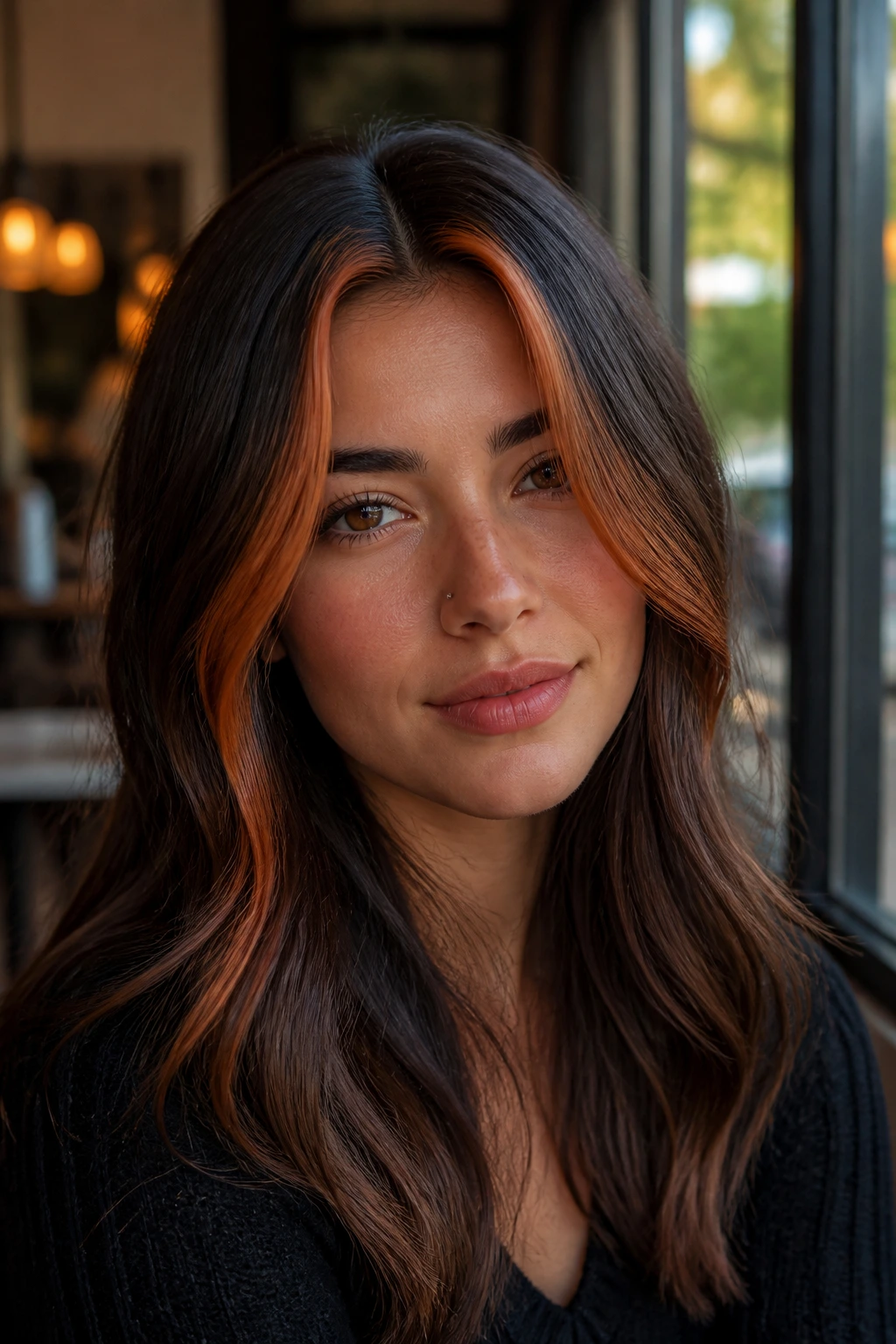
If you want copper without giving up your brunette base, the money piece is the move. Bright copper around the face does a lot of work with very little commitment. The rest of the hair can stay chocolate, espresso, or chestnut while the front panels carry the warmth.
That contrast is what makes it good. Your eye goes straight to the face-framing pieces, and the copper gets the spotlight where it matters most. On long, dark hair, this is often the most flattering way to test the shade before going all in.
Ask for a softer transition at the roots so the money piece doesn’t look stripy. A few fine balayage pieces behind the front sections help the color blend into the rest of the hair instead of stopping abruptly at the temples. It’s a small thing. It changes everything.
5. Rose Copper Melt
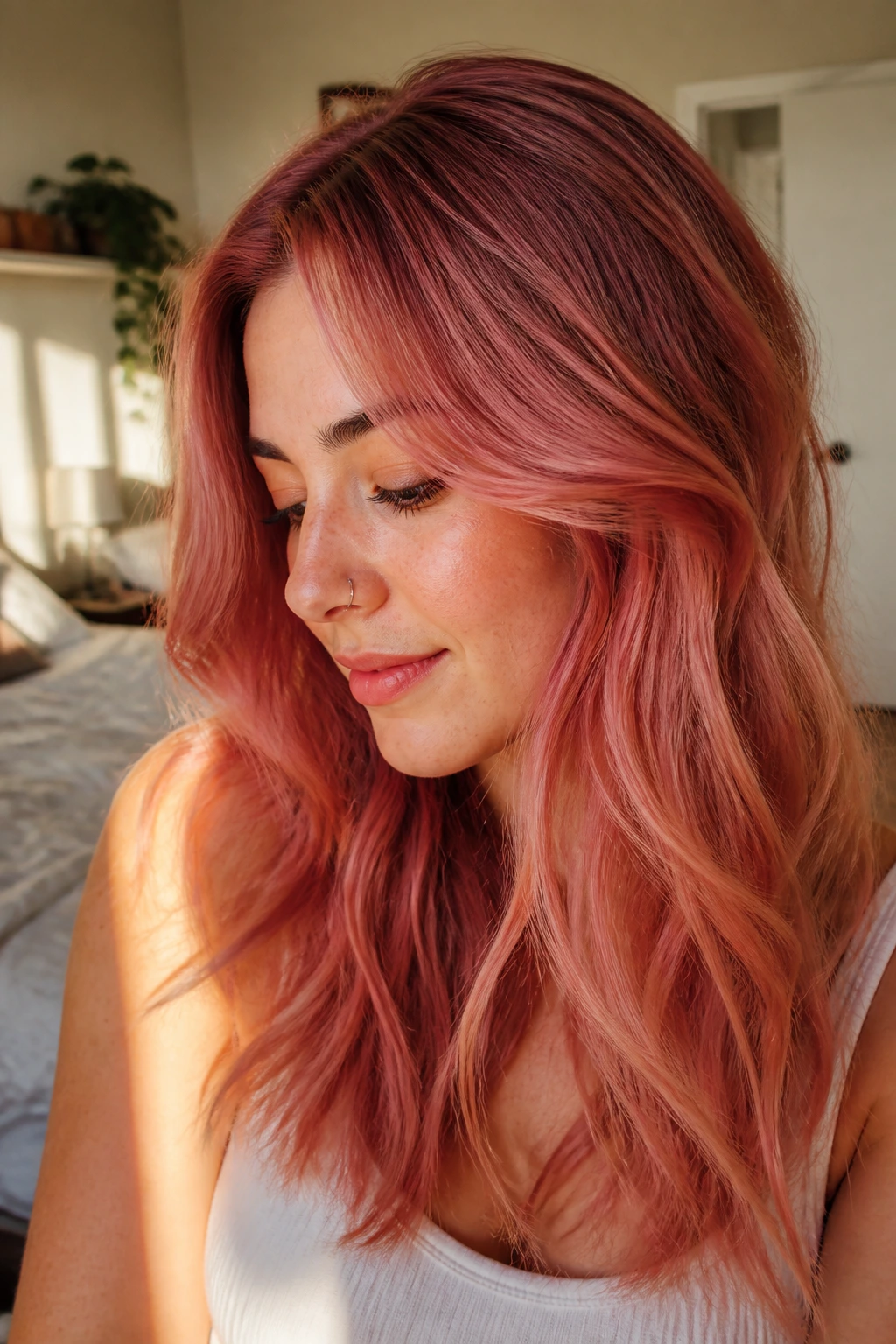
Rose copper lives between pink and copper, but it should not look sugary. The best versions have a muted rose note that sits under the warmth, not on top of it. On neutral or cool undertones, that balance keeps the shade from reading too orange.
The melt effect matters here. Instead of placing one flat copper all over, the color shifts from deeper rose at the root to a brighter copper through the mids and ends. That soft gradient is what makes the style feel smooth rather than stripey. It also gives the hair a kind of quiet depth that one-tone reds rarely manage.
This is one of the copper hair color ideas I’d point to when someone wants warmth but doesn’t want the full “fire hair” look. It has personality, but it doesn’t need a warning label.
6. Deep Auburn Copper Lob
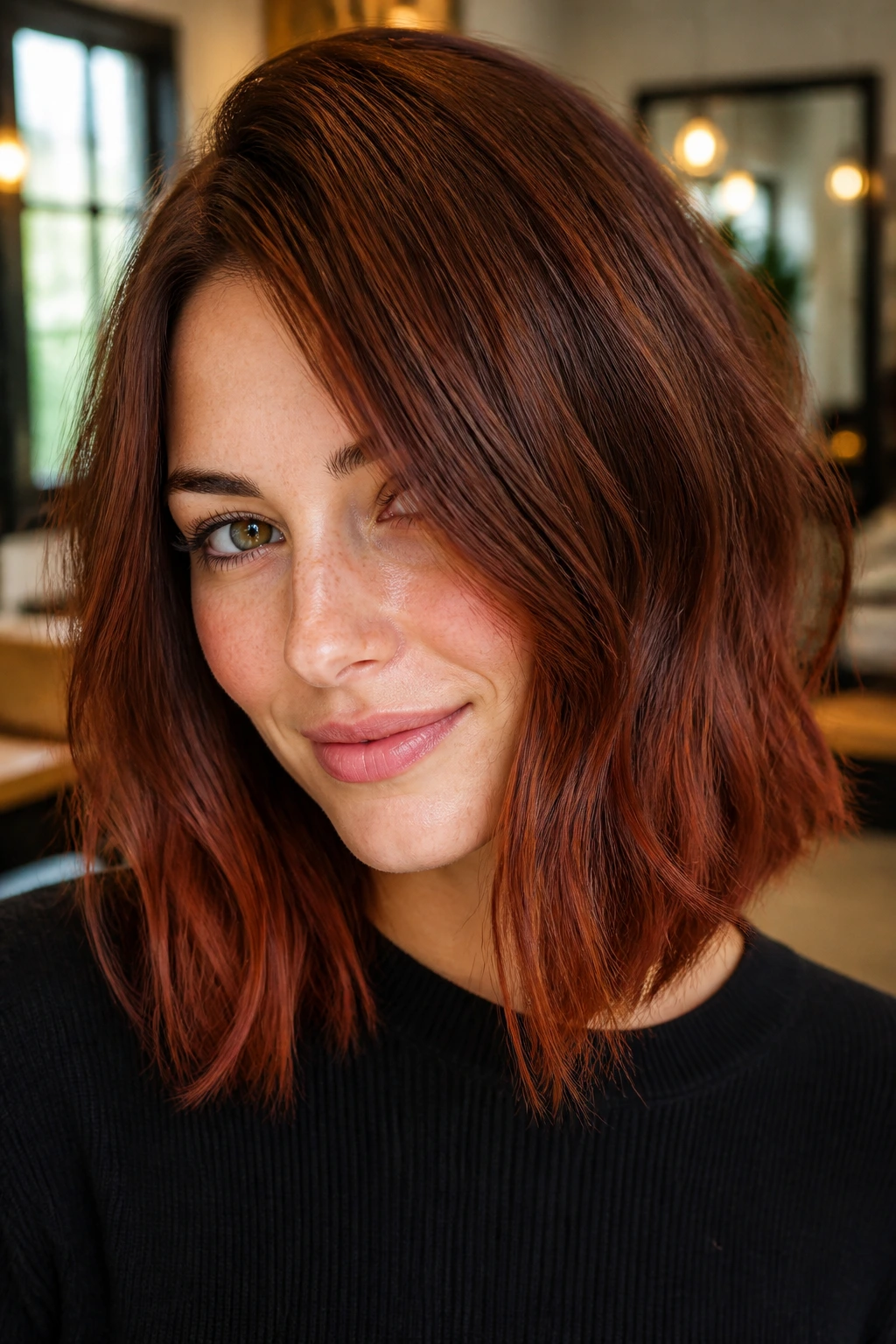
A lob gives deep auburn copper enough surface area to show off, but not so much that it becomes heavy. The length lands somewhere between bob and shoulder-grazing cut, which means the shade can move from rich brunette to glowing copper depending on the light. That shift is the whole appeal.
The deeper auburn base makes this version easier to wear in settings where bright red-orange would feel like a lot. The copper comes through in the mid-lengths and ends, especially if the colorist uses fine ribbons instead of a full saturation. You get warmth. You do not get clown-bright orange.
What makes it feel expensive?
A soft bevel at the ends and a gloss that leans red-brown, not pumpkin. If the tone is too yellow, the whole thing goes flat. If it’s too red, the auburn disappears.
7. Cinnamon Copper Pixie
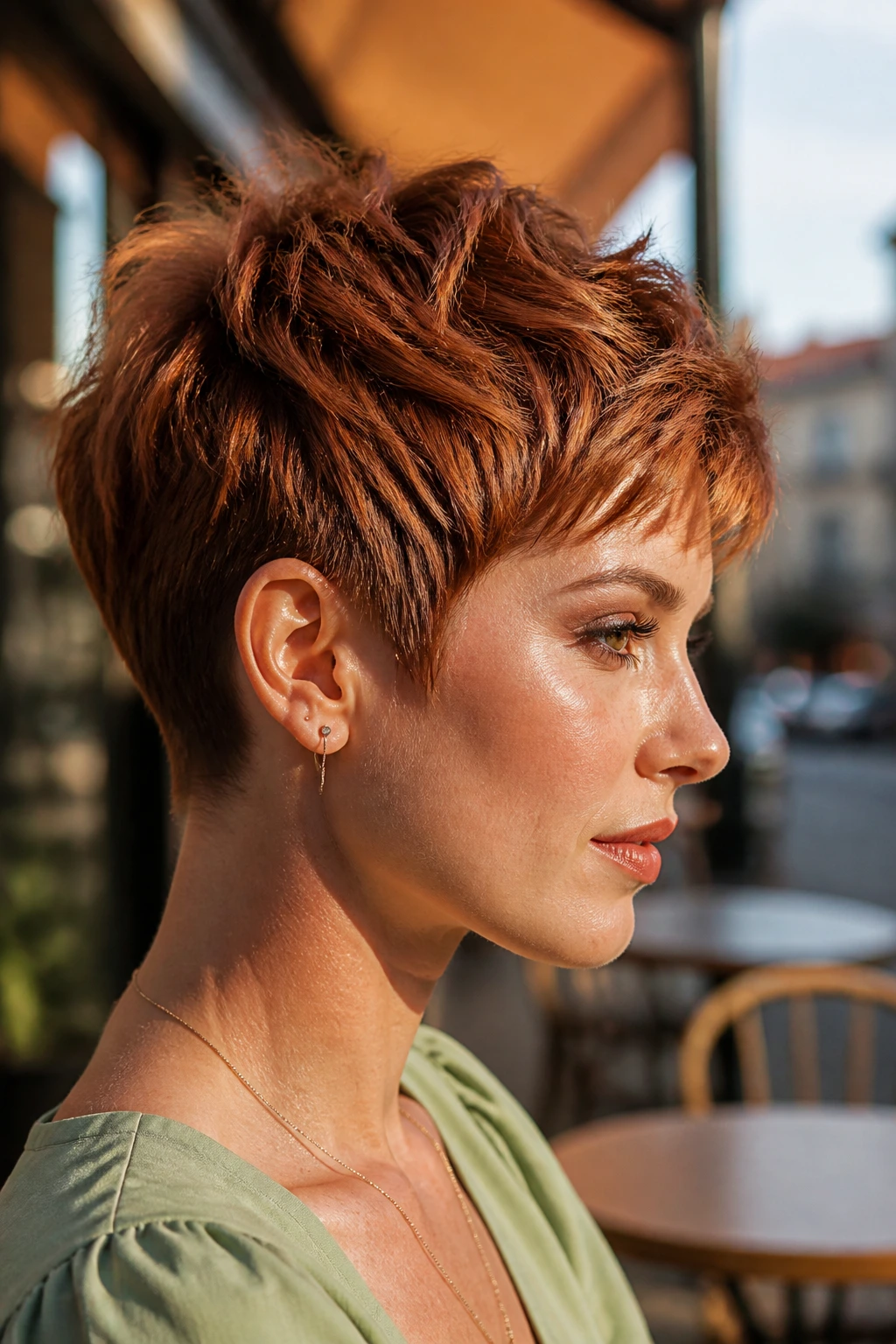
Short hair shows copper in a different way. On a pixie cut, the color lands fast. There’s nowhere for it to hide, which means a cinnamon copper tone can make texture, growth, and piecey separation look intentional instead of accidental. That is a gift on a cut this short.
This shade is especially good if you like warmth with a little spice, but you don’t want the maintenance of a full bright copper. Cinnamon keeps the color in a brown-red lane, which means it fades more gracefully. You’ll still need refreshing, of course. Reds never stay put for long. But the grow-out is less dramatic than a brighter penny tone.
A little extra depth at the roots helps the pixie keep shape. Without it, the top can look too uniform. With it, every little edge and direction change gets emphasized.
8. Apricot Copper Curls
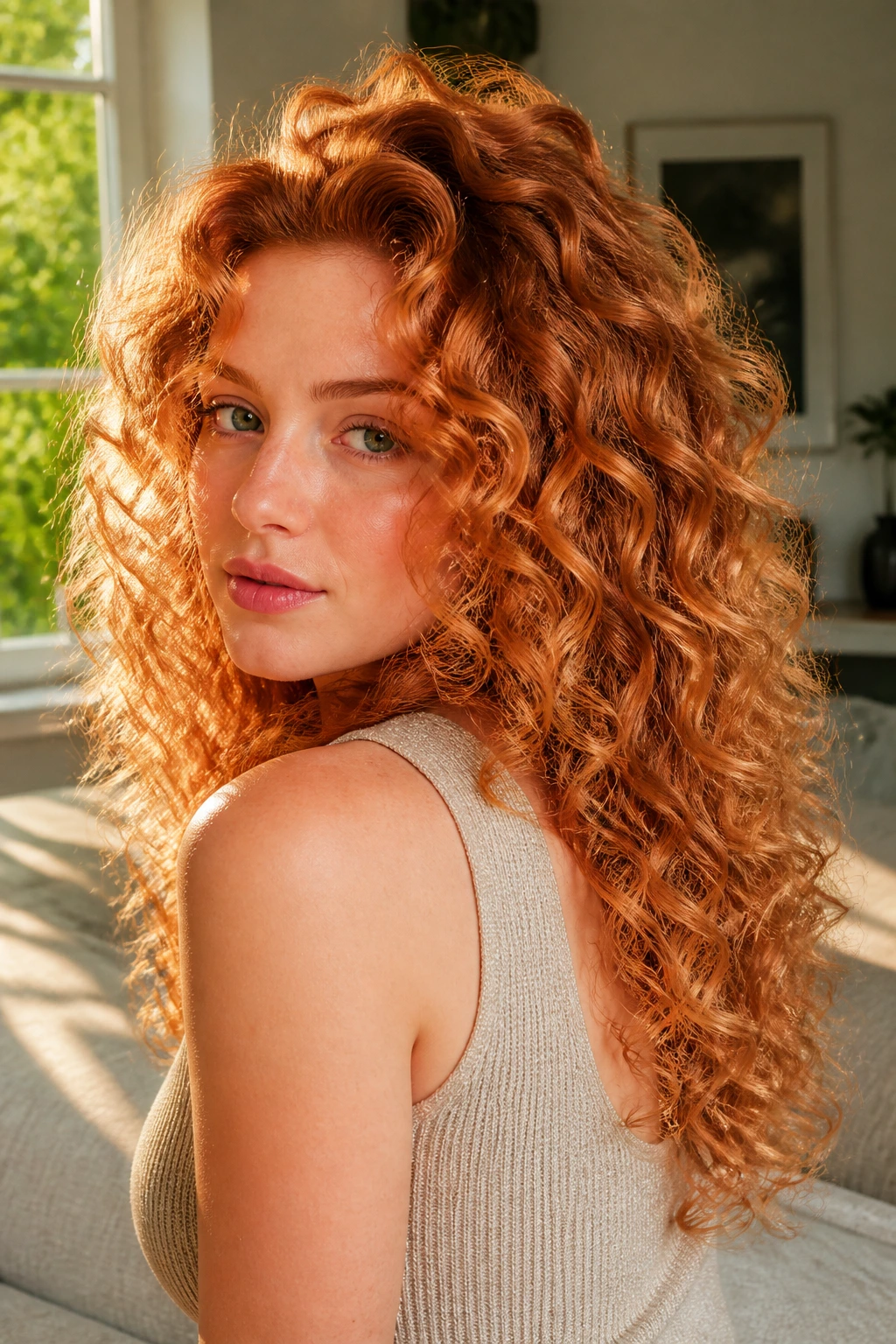
Curls and apricot copper get along because both like movement. On curly hair, a warm apricot tone catches the raised parts of each coil while the interior stays darker, and that contrast creates instant dimension. You don’t need a loud formula for this to work. You need smart placement.
The colorist should keep the lightening gentle, especially if the curl pattern is tight or already dry. Painted ribbons through the outer surface of the curls are usually enough. Over-lighten curly hair and the whole look turns frizzy faster than you’d like. Skip that mistake.
This version feels cheerful without going neon. The apricot note softens the copper so the curls read plush and airy. If the shade starts to fade, a warm color-depositing mask can push it back toward peach instead of letting it go dull.
9. Smoked Copper Brunette
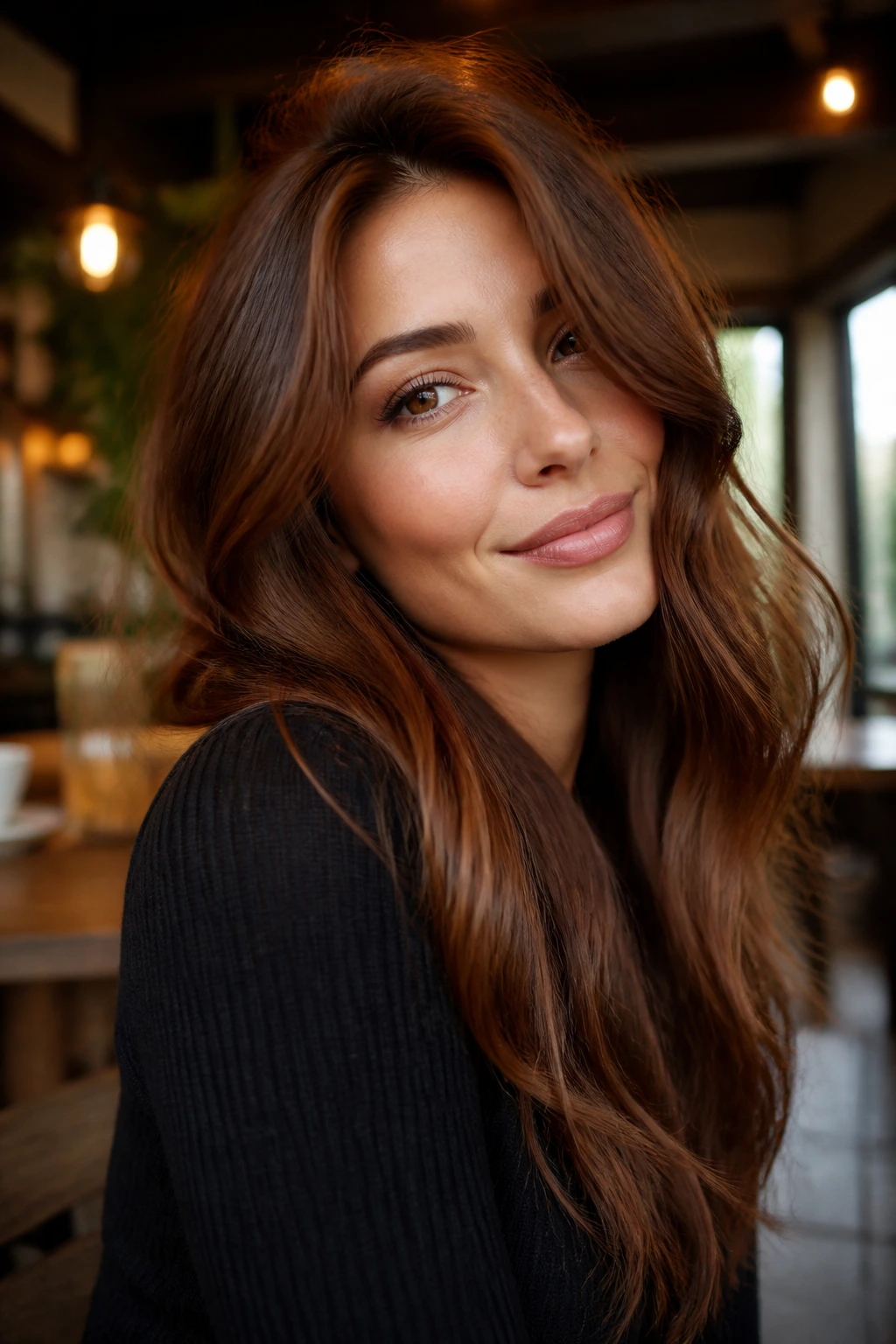
Smoked copper is for people who want warmth but not a bright red story. The base stays brunette, and the copper comes through as a smoky sheen rather than a loud statement. Think chestnut with a lit-from-within edge. The result is calm, not flat.
That restraint is the point. On long hair, especially, a smoky copper brunette keeps the overall silhouette deep while still picking up bronze and rust tones in sunlight. It’s one of the easiest copper directions to wear in a professional setting because it reads as rich brown first and copper second.
The best version usually includes a soft gloss rather than heavy pre-lightening. That keeps the hair looking healthier and cuts down on maintenance. If you love warmth but hate obvious grow-out lines, this is a sensible place to start.
10. Copper Gold Face-Framing Layers
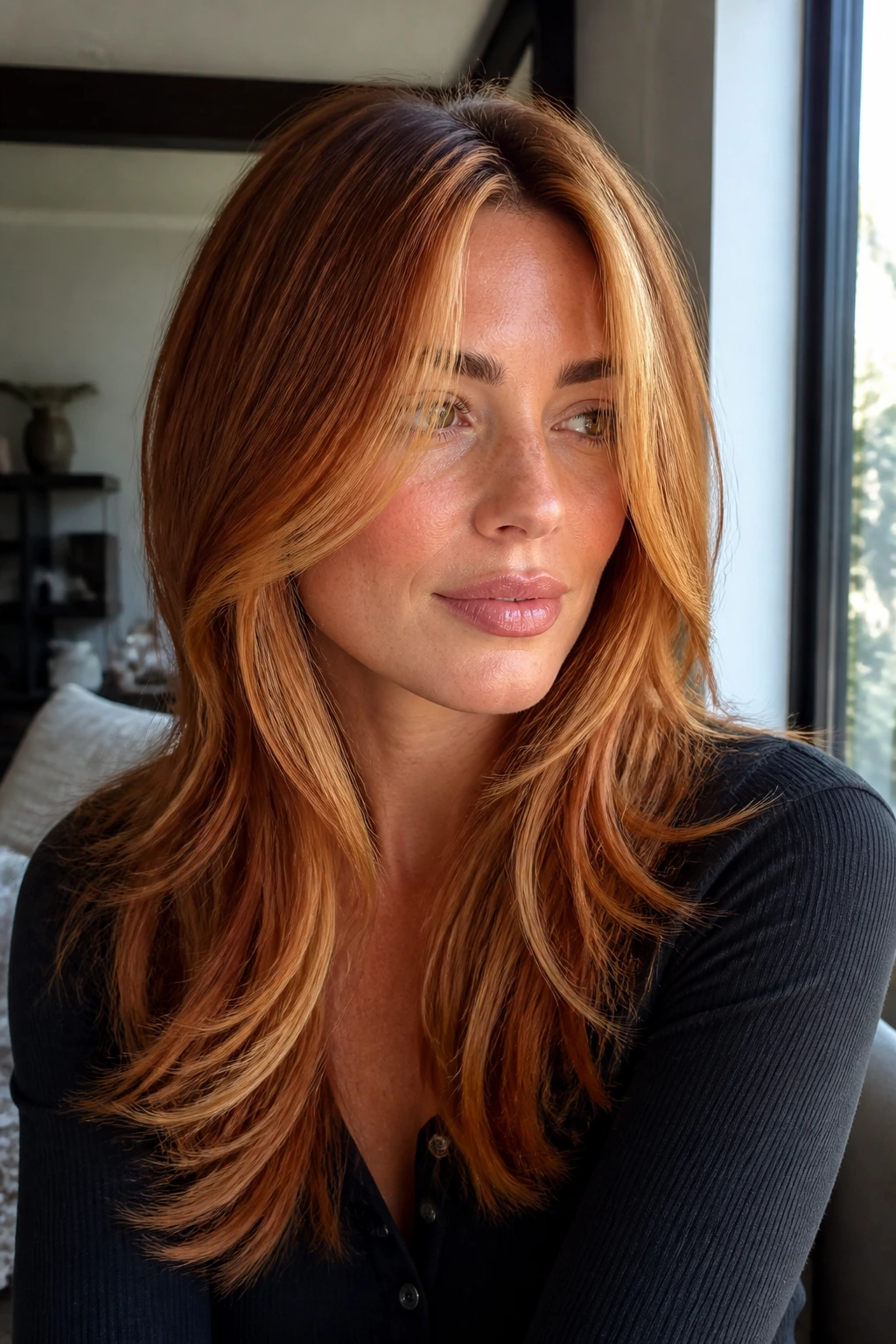
Bright copper around the face can wake up layered cuts fast. When the front pieces are lifted a little more gold, the eyes, cheekbones, and jawline all get framed by warmth. The rest of the hair can stay a notch deeper so the whole look doesn’t lose shape.
H3: Where to Place the Brightest Bits
The most flattering placement usually starts just off the part and sweeps down through the front layers. That gives you brightness where you see it in the mirror every day, not just when your hair is pulled back. It also keeps the grow-out manageable because the lighter pieces are concentrated instead of scattered everywhere.
This style works especially well if your haircut has long face-framing layers or curtain bangs. The copper catches on the movement and makes the layers look more intentional. It’s a small amount of color with a big visual payoff.
11. Bright Tangerine Copper
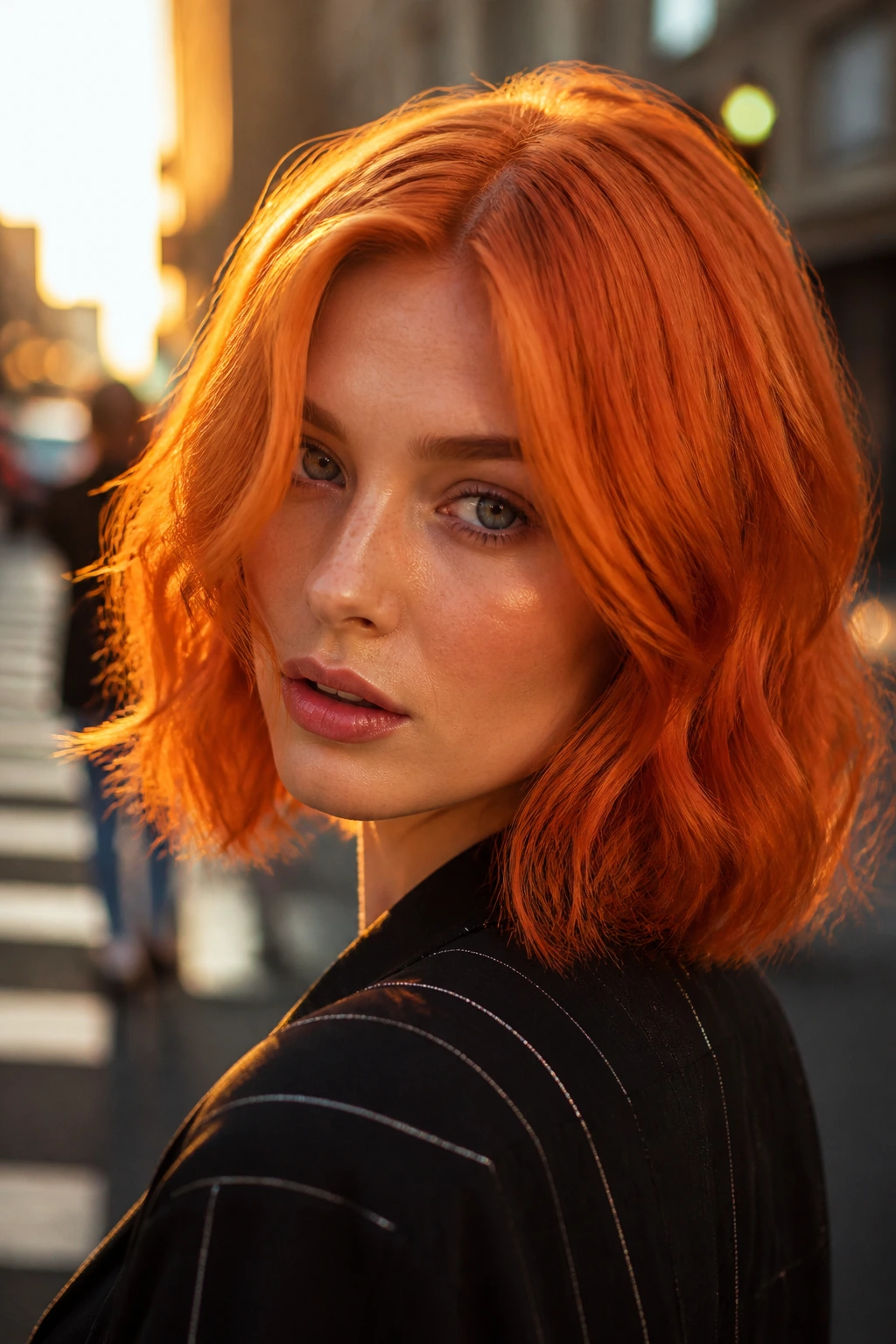
Bright tangerine copper is not shy. It is the loudest end of the copper family, the kind of shade that turns heads from across a room and needs a little confidence to carry it well. On a pale blonde base, it can look almost electric; on a slightly darker base, it turns more orange-red and grounded.
This shade is best if you want your hair to feel like the main character. But it comes with a catch: bright tangerine fades fast if you wash too often or use hot water every time. A color-depositing conditioner helps. So does a wash schedule that doesn’t treat your hair like a dish towel.
I like this shade on blunt cuts and simple waves. It doesn’t need extra texture to do its job. The color itself is the event.
12. Copper Balayage on Curly Hair
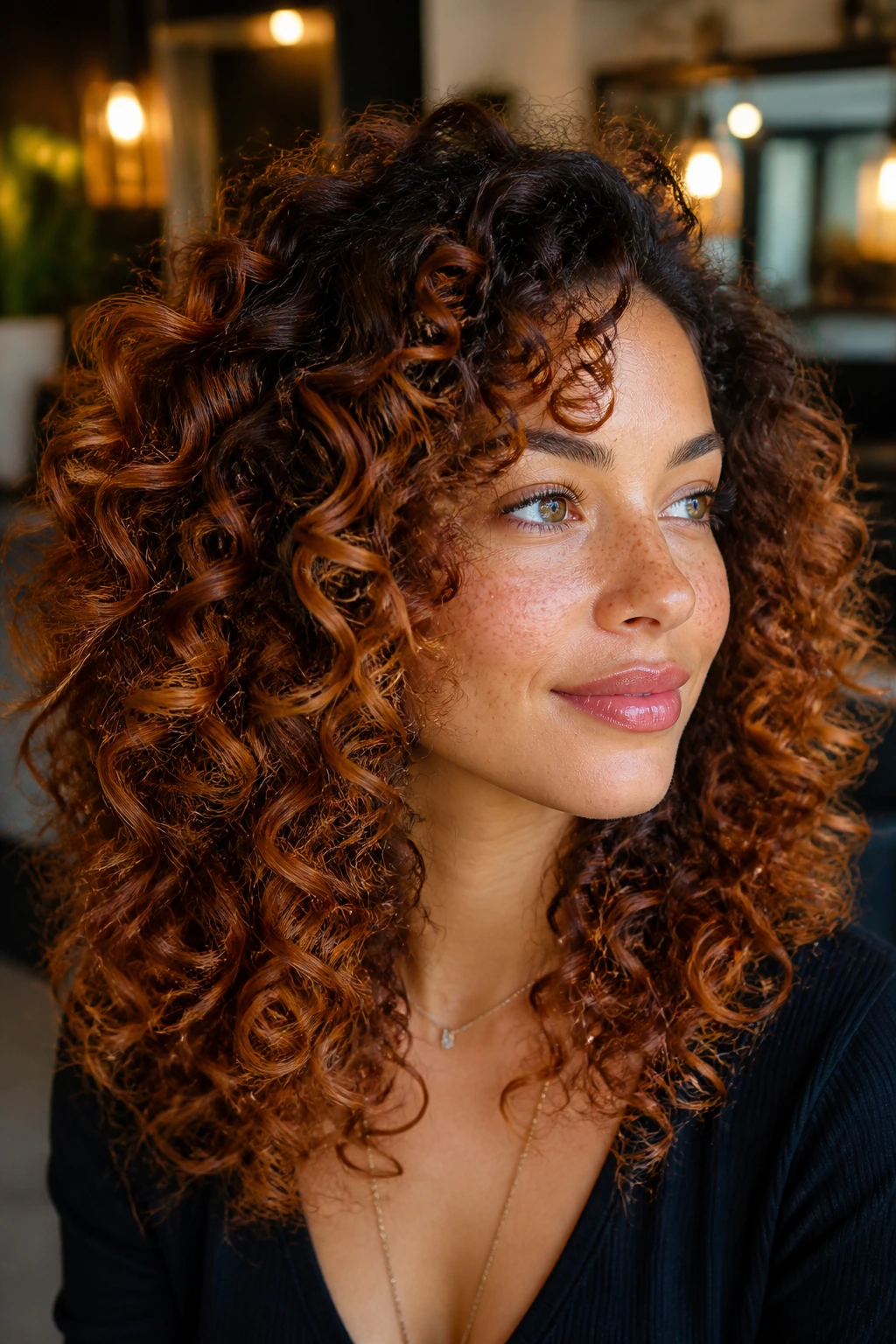
Copper balayage on curls is one of those styles that makes people think the hair is naturally glowing. The reason is simple: curls create built-in shadows, and copper on the outer curve of each curl catches the light without erasing the pattern underneath. You get depth and shine at once.
The placement has to respect the curl pattern. A colorist who paints every curl the same way usually ends up with a flat look. Better to work in ribbons that follow the shape of the curl clumps, leaving some darker pockets inside. That contrast is what makes the style look full instead of puffy.
If your curls are dry, ask for a gentler lightening strategy and a gloss-heavy finish. Copper on curls should look plush. Not crispy. That part matters more than people think.
13. Metallic Copper Gloss
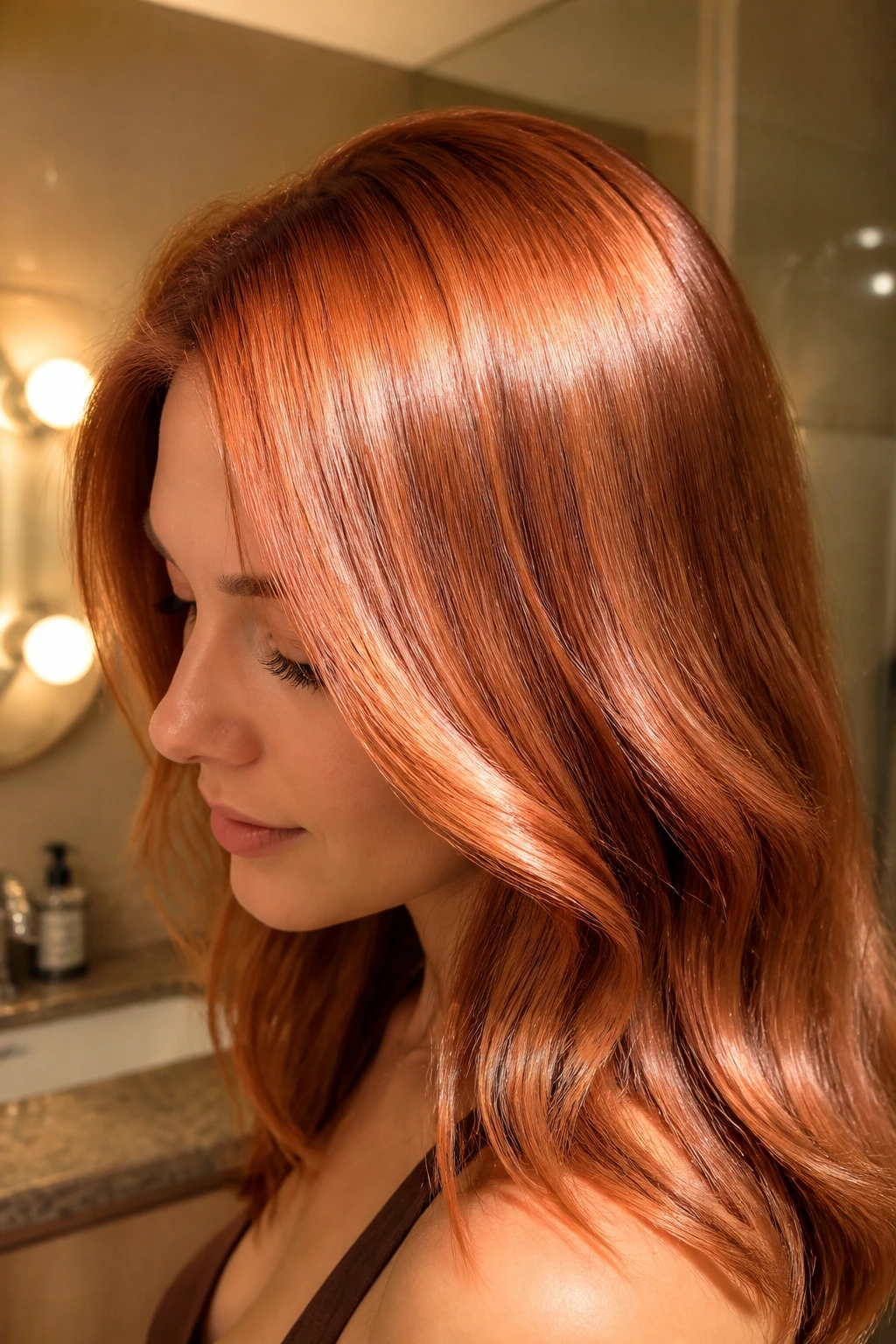
Metallic copper gloss is one of the easiest ways to refresh a faded red without changing your whole head. The finish is reflective and smooth, almost like polished metal under warm light. It works best on pre-existing copper or auburn hair that needs a color reset more than a total redo.
The beauty of this option is that it can sharpen the tone without adding much stress to the hair. A gloss adds shine, deposits pigment, and softens rough edges from previous color jobs. If your copper has started to look dull or hazy, this is the fix I’d reach for before anything stronger.
It is also a good choice for people who want copper hair color ideas but don’t want visible stripes or obvious highlights. A gloss can keep the whole head unified while still adding life. Quiet, but not boring.
14. Rusted Copper Shag

A shag cut and rusted copper get along because neither one is trying to look too neat. The shag brings choppy ends, layers, and movement; the rusted copper tone adds a weathered warmth that looks especially good when the hair falls a little messy. Perfectly polished isn’t the goal here. Texture is.
This shade often has a deeper red-brown base with rusty copper pieces woven through the top and around the face. That keeps the cut from disappearing into a single brown block. You want the layers to show up. This color helps them do that.
If you air-dry a shag, the copper pieces can catch randomly in the bends and flicks of the hair, which gives the style a lived-in feel. It’s one of the few cases where a bit of imperfection makes the whole thing better.
15. Soft Copper Ombré
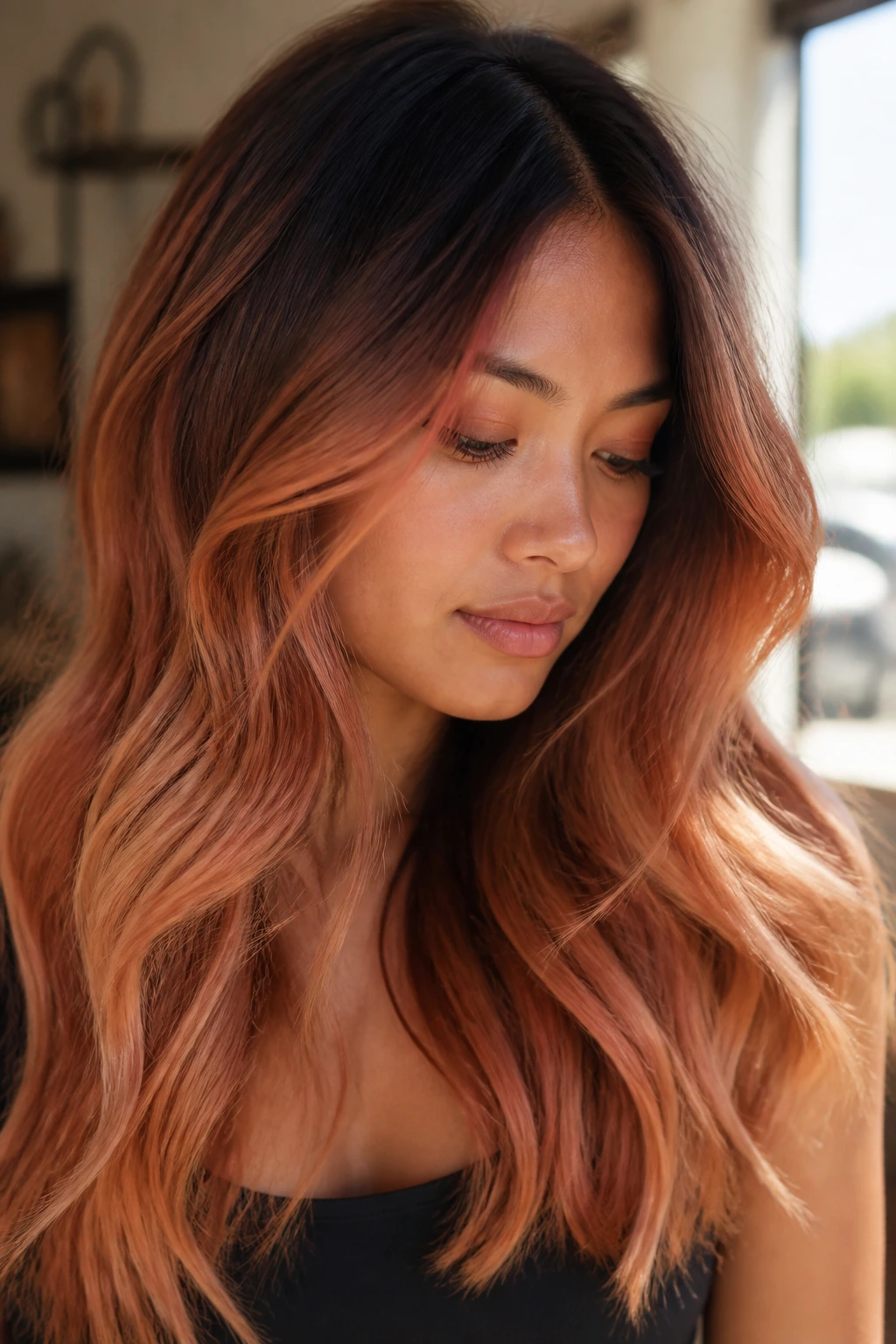
Soft copper ombré is the low-drama way to wear warmth on longer hair. The root stays deeper, the mids drift into copper, and the ends lighten just enough to catch the light. Nothing here is abrupt. That softness is the point.
The ombré pattern is useful because it gives you the look of brightness without asking every inch of hair to carry the same color load. That helps grow-out, especially if your natural hair is dark brown or medium brown. The root line stays less obvious, and the whole style remains wearable longer.
This is a good shade if you’re not sure how far into copper you want to go. It gives you a clear yes or no without forcing a full commitment. Also, it looks good twisted into low buns. A useful detail, not a tiny one.
16. Spiced Chestnut Copper
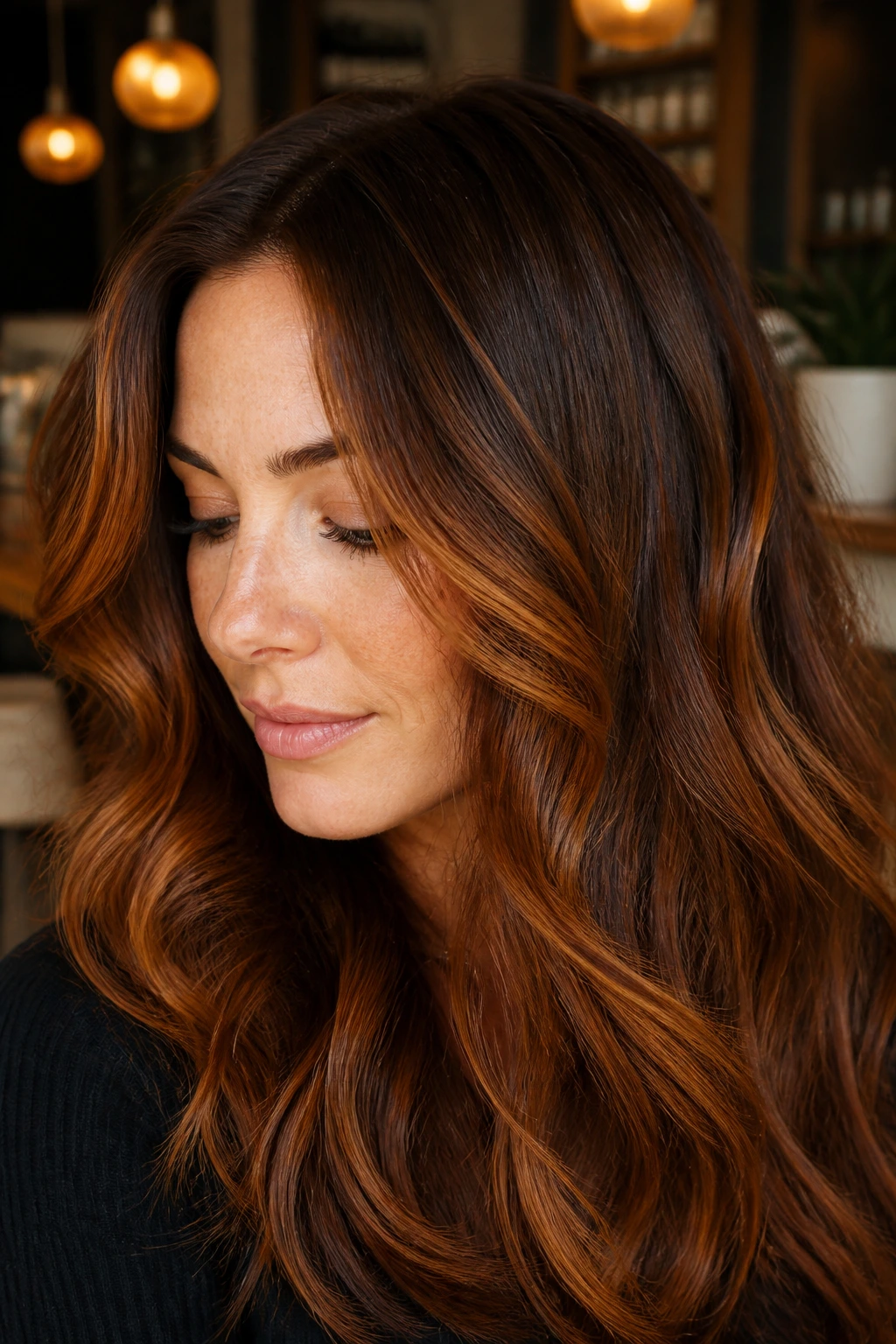
Spiced chestnut copper is the brownest shade in this group, and that’s why it works. It keeps the warmth folded into a chestnut base, then lets copper peek through in the light. If you’ve ever wanted red hair that still feels grounded, this is the lane.
The spiced part matters. A touch of cinnamon, clove, or bronze in the formula keeps the chestnut from looking flat and keeps the copper from looking cartoon-bright. It’s a color for people who want richness more than shoutiness.
On medium to deep brunettes, this can be done with less lightening than a brighter copper. That means less stress on the hair and a smoother fade. Sometimes restraint is the prettier option.
17. Copper Peekaboo Highlights
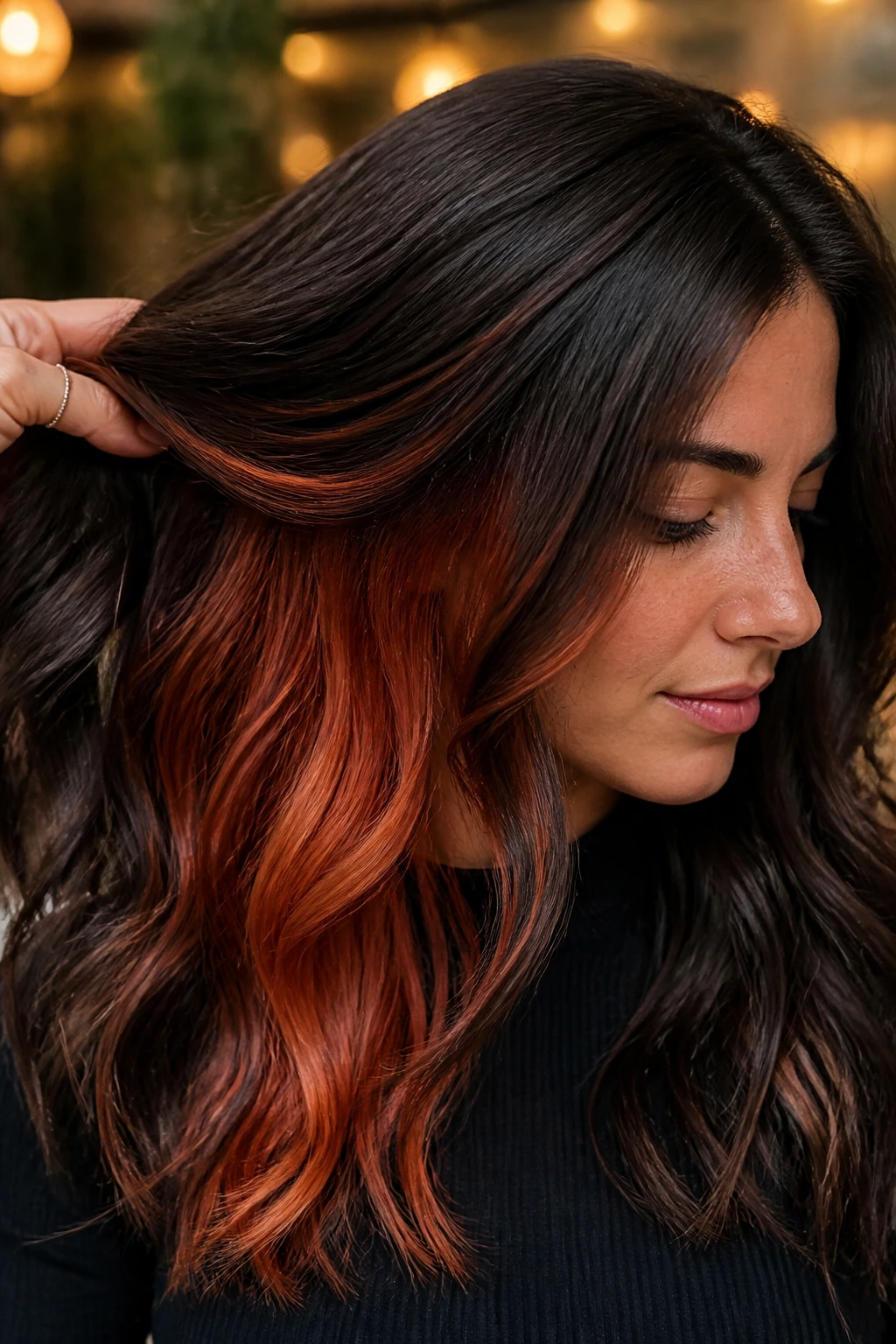
Peekaboo highlights are the sneaky cousin in the copper family. The brightest ribbons hide under the top layer and flash only when the hair moves, gets tucked behind the ear, or is pulled into a half-up style. It’s fun without being constant.
This approach works especially well if you have to keep your color low-key most of the time but still want a little color payoff. Copper peekaboo pieces can be vivid, rose-gold, or burnt orange depending on how much contrast you want. The top layer stays calm. The underneath layer gets to have a little drama.
Because the color lives under the surface, it also grows out in a softer way than all-over copper. You may still need toning, but the maintenance is more forgiving than a fully visible vivid shade.
18. Peach Copper Blonde
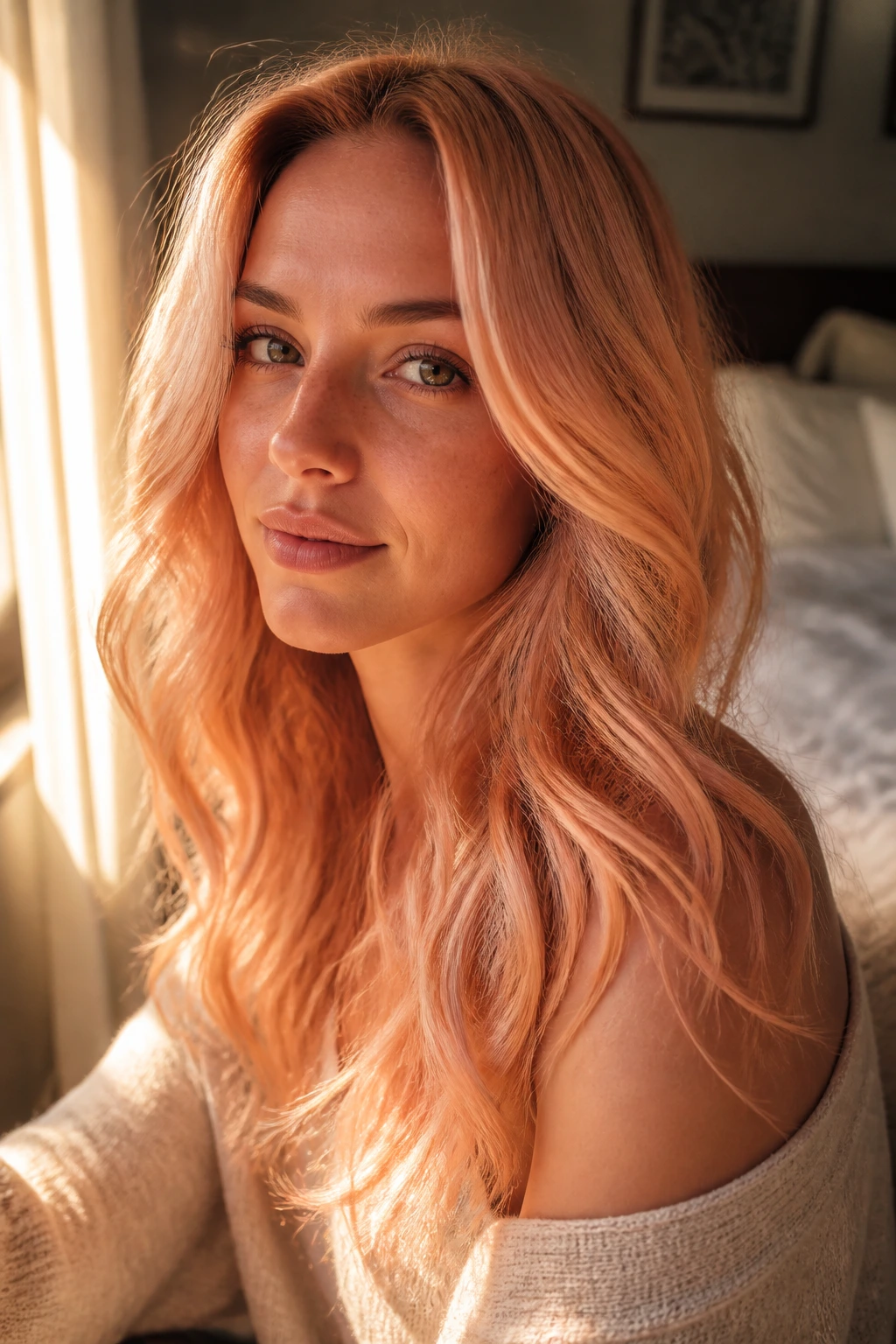
Peach copper blonde sits right at the edge of blonde and red, and it can look especially pretty when the tone is kept soft rather than brassy. The peach note gives the hair a light, airy feel while the copper keeps it from sliding into standard strawberry blonde. There’s a difference, and you can see it.
The best versions usually start with a light base. If the hair is too dark, the peach disappears and the copper gets muddy. If the hair is too pale, it can look washed out. So the level matters more here than with deeper copper shades.
I like this on beachy waves and layered cuts because the movement helps separate the peach from the blonde. The result feels bright but not sugary. That balance is harder to pull off than it looks.
19. Dimensional Copper with Lowlights
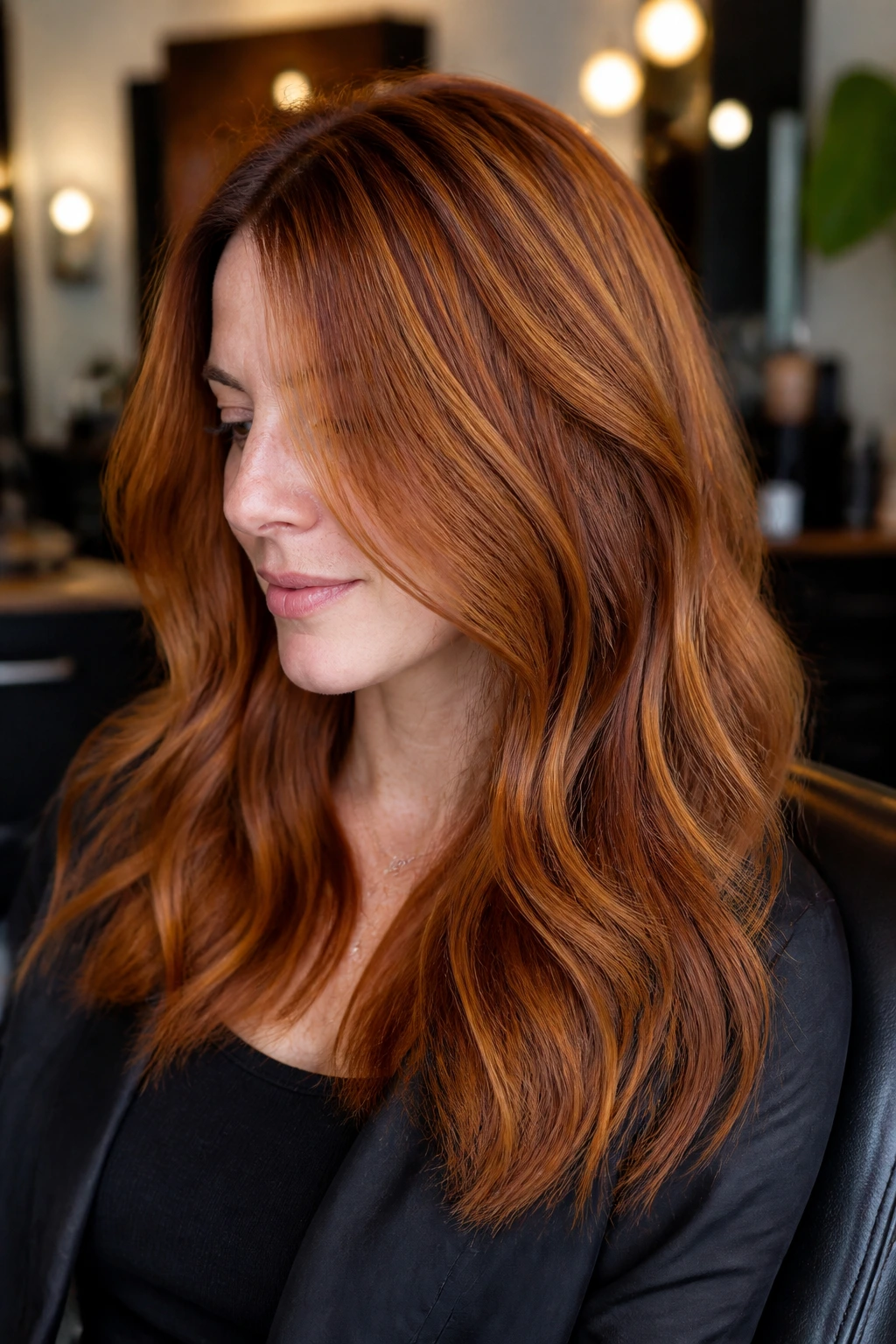
Dimensional copper with lowlights solves a common problem: flatness. If a copper formula is too even, the whole head can read like one color block, and the shine doesn’t have anywhere to go. Lowlights fix that by dropping in deeper caramel, auburn, or mahogany pieces between the brighter copper sections.
That contrast gives the eye something to chase. The color looks thicker, richer, and less salon-fresh in the obvious way. If your hair is fine, this can make it seem fuller. If your hair is thick, it helps stop the copper from looking too broad or solid.
This is also a good strategy when copper has started to fade and turn washed-out. A few deeper ribbons can bring back shape without forcing a full recolor. Small change. Big payoff.
20. Mahogany-Copper Ribbon Highlights
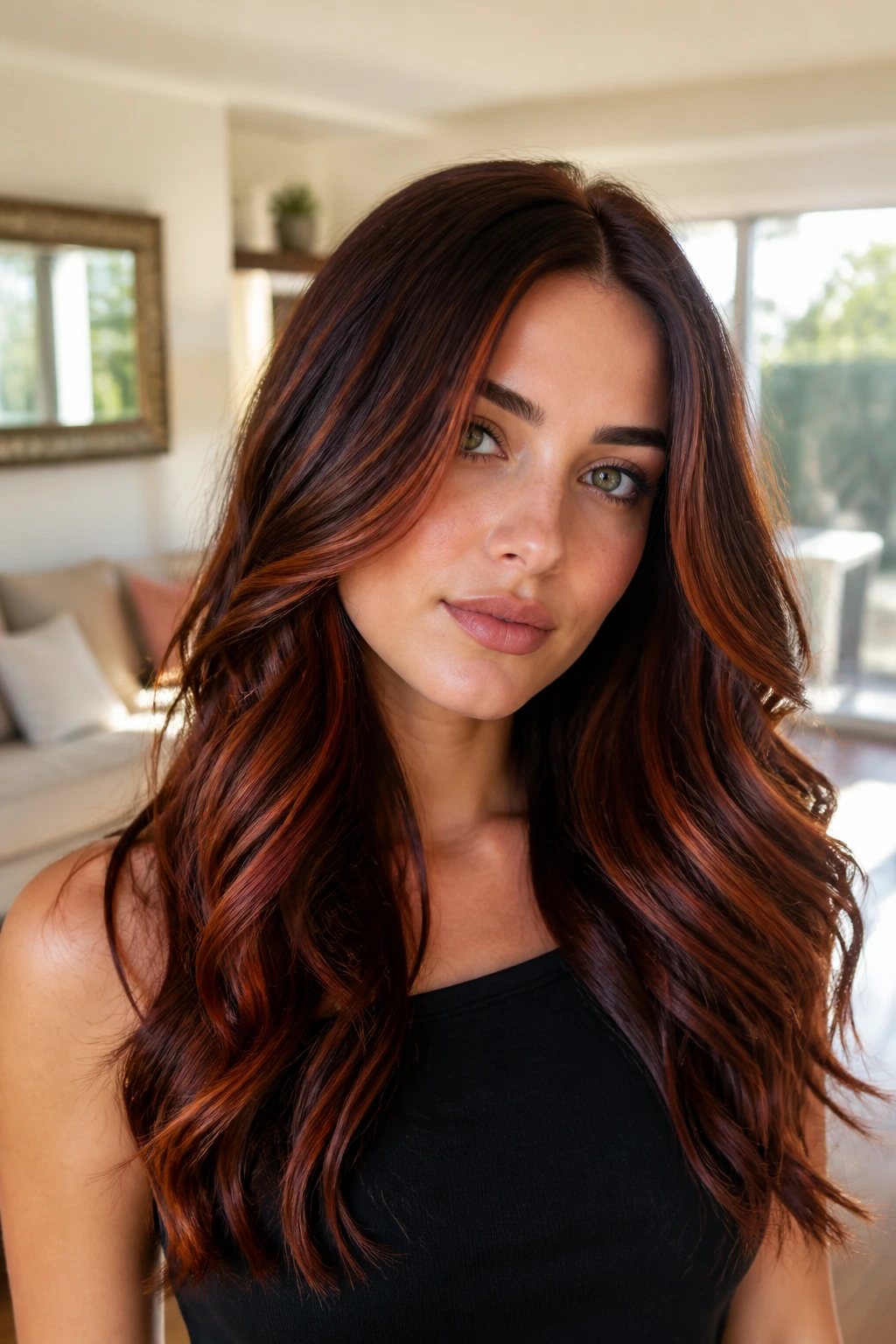
Mahogany-copper ribbon highlights are for people who like depth with their warmth. The mahogany base keeps the overall look dark and sultry, while copper ribbons run through it like thin flashes of ember. It’s rich without leaning purple, and warm without going orange.
The ribbon placement should be narrow and deliberate. Too wide, and the color loses the layered effect. Too sparse, and you miss the whole point. The sweet spot is enough copper to catch light when the hair moves, but enough mahogany to keep the style grounded.
This one is especially good on longer cuts and smooth blowouts. The contrast between the dark base and the copper strands can look almost satin-like when the hair is brushed out.
21. Warm Copper Root Shadow
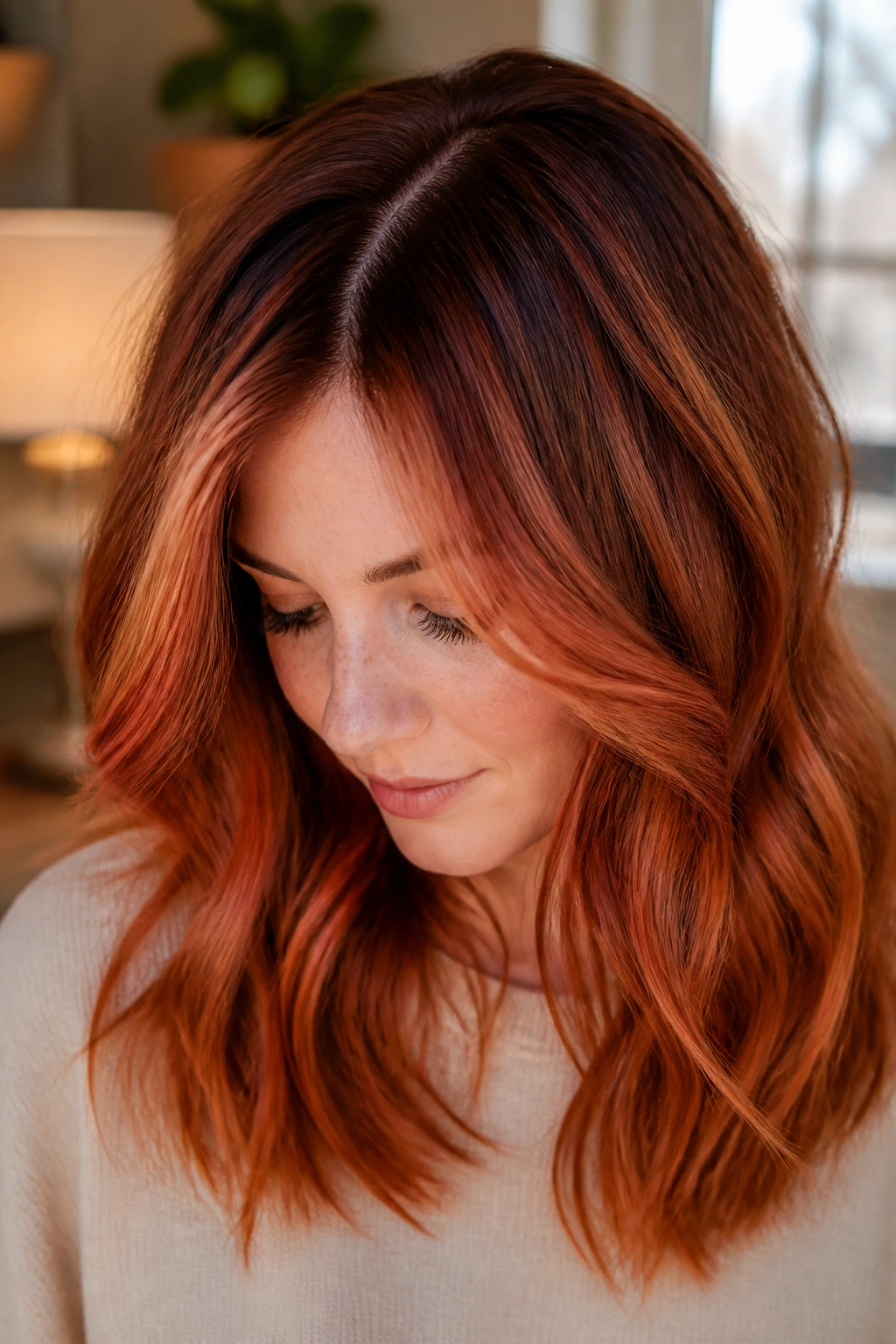
A warm copper root shadow is one of the smartest maintenance choices in the whole group. The darker root gives the copper room to grow out, which means the regrowth looks soft instead of like a hard line. If you hate obvious appointments and still want color, start here.
The shadow root should not be muddy or gray. It needs warmth in it—brown with red undertones, not flat ash. That warmth bridges the darker root into the copper mids and ends, and it keeps the whole style looking intentional as weeks pass.
This technique works across a lot of hair lengths, but it shines on lobbed cuts and long layers because the grow-out can stay hidden in the movement. It’s practical. Which, frankly, is a trait more people should ask for in a red shade.
22. Copper Sunrise Waves
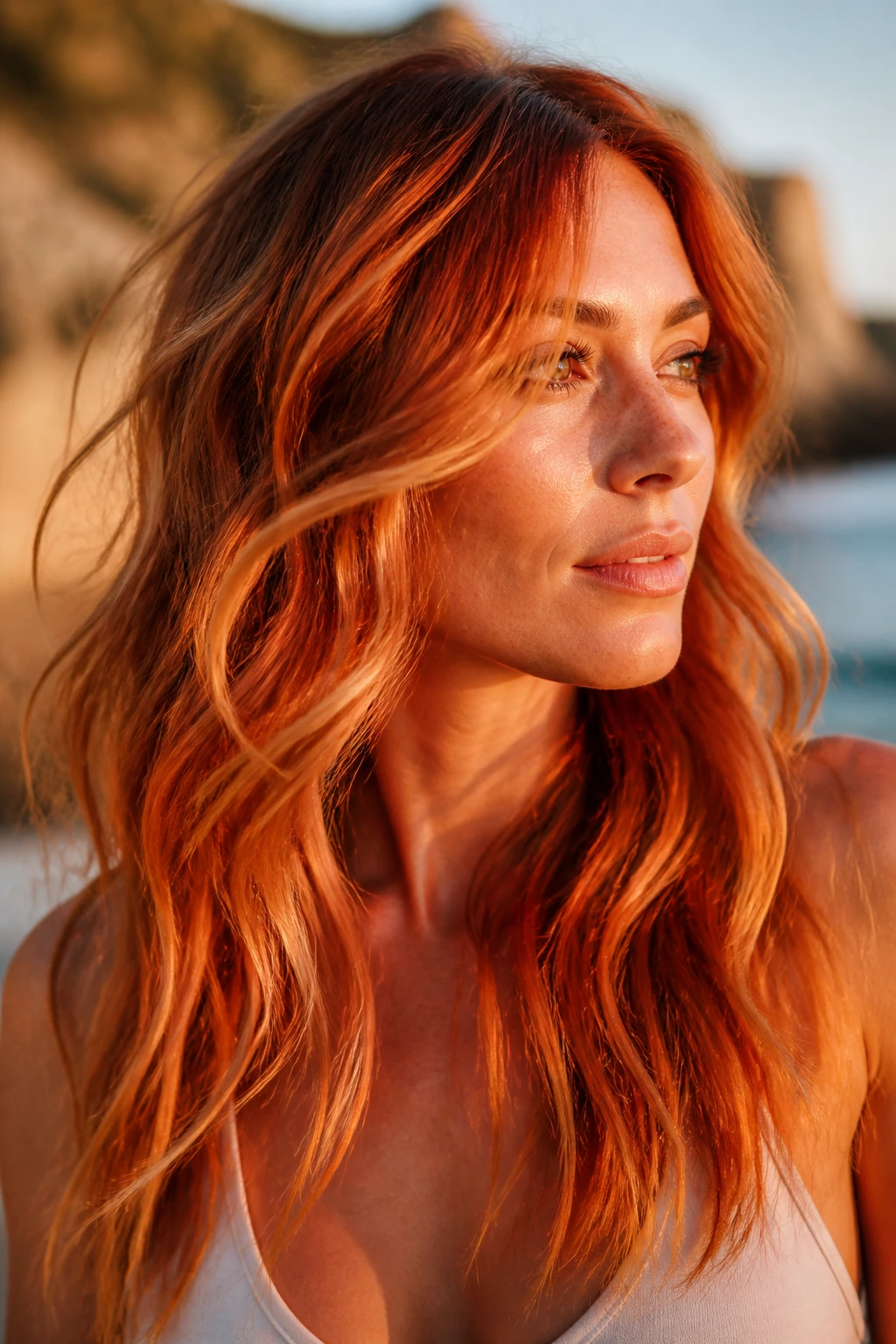
Copper sunrise waves are the brightest, most layered finish in the set. They mix gold, apricot, and vivid copper into one moving surface, so the hair seems to change color as the waves shift. It has that early-day glow without looking frosted or icy. Warm all the way through.
The trick is to keep the placement varied. A few brighter pieces around the face, softer gold through the mids, deeper copper underneath. That mix keeps the color alive in motion. If everything is the same brightness, sunrise turns into flat orange. Nobody wants that.
This is a good final choice if you want your copper to read unmistakably warm and bold. It is the shade people notice first. It also rewards good styling—soft bends, a clean part, and a little gloss make the whole thing wake up.
Why Copper Looks Different on a Swatch Ring Than on Your Head

A swatch ring is tidy. Hair is not. That difference is half the battle with copper. On paper or under salon lights, copper can look brighter, cleaner, and more even than it will once it sits on your own porosity, your old color, and the way your cut catches light. A level 7 copper on smooth virgin hair can look like a bright penny. The same formula on pre-lightened ends may turn almost peach at the tips and deeper at the root.
That is why placement matters as much as the color itself. Balayage, money pieces, lowlights, and root shadows are not decorations. They control how the shade behaves when it grows and when it moves. If you want a copper that stays readable from day one to week six, you need some darker anchor points. If you want a copper that looks airy and bright, you need enough lift in the right places to let the warmth shine instead of sitting on top like paint.
Copper also changes in different lighting more than some brown or blonde shades. Daylight pulls out the orange-gold side. Indoor warm bulbs deepen the red. Cool office light can make the same head of hair look more muted. That is normal. It is also why a photo in natural window light tells you more than a selfie taken under a bathroom bulb.
Essential Tools and Products for Copper Hair
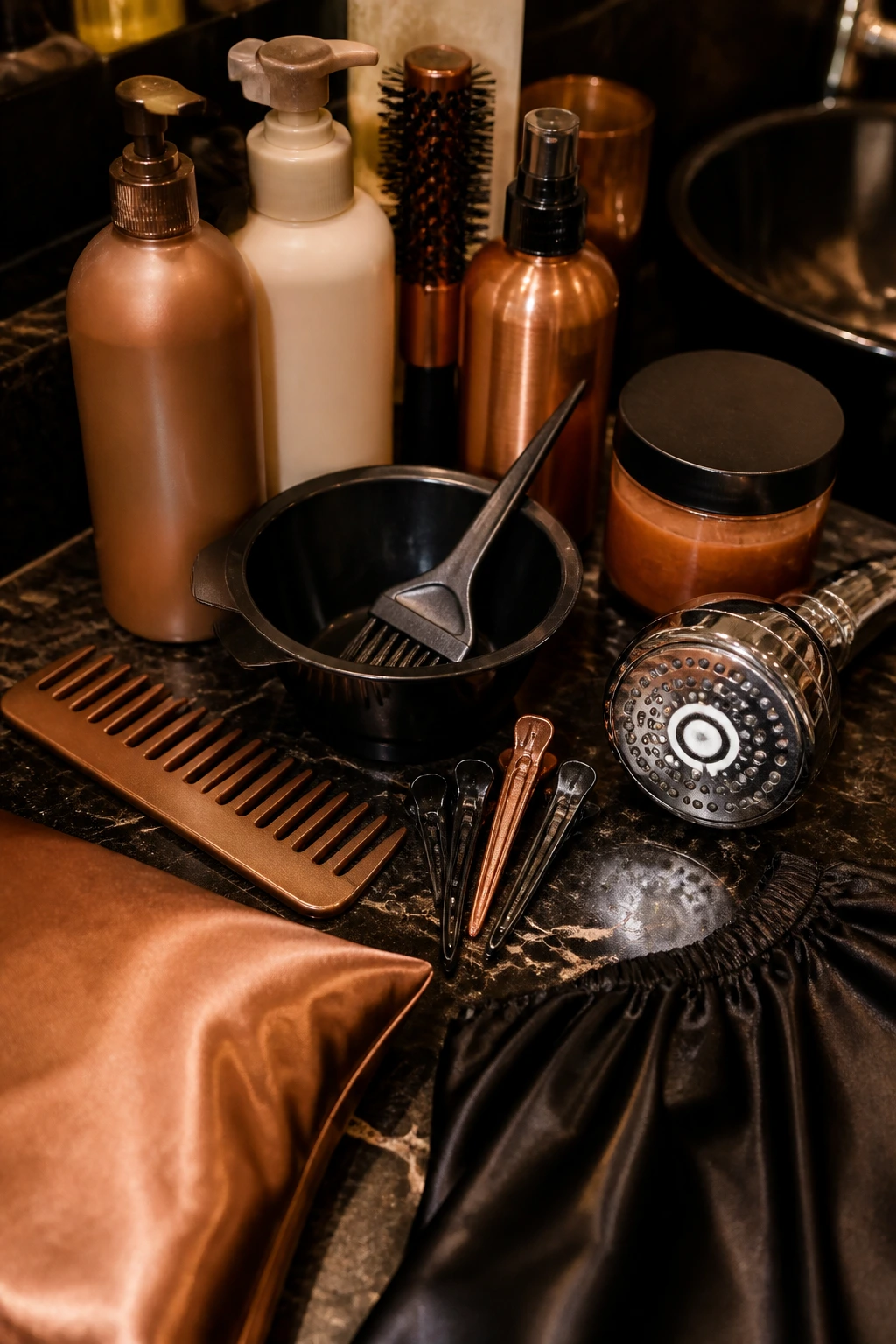
- Wide-tooth comb: Helps detangle without ripping through fresh color or curls.
- Tint brush and bowl: Useful for glosses, root melts, or any at-home color-depositing treatment.
- Sectioning clips: Keep balayage, money pieces, and gloss application clean and controlled.
- Color-safe shampoo: A gentle cleanser keeps copper from sliding out with every wash.
- Sulfate-free conditioner: Softer cleansing and conditioning help preserve the warmth.
- Color-depositing mask or conditioner: Pick a copper, auburn, or warm-gold shade to refresh faded lengths.
- Heat protectant spray: Essential if you blow-dry, curl, or flat-iron the hair.
- Silk or satin pillowcase: Cuts down on friction, which matters more when the ends are lightened.
- Shower filter: Optional, but useful if your water is hard and tends to dull warm tones.
- Salon cape or dark towel: Copper stains can show on light fabric, and nobody wants that mess on laundry day.
Smart Shade Selection and Reference Notes
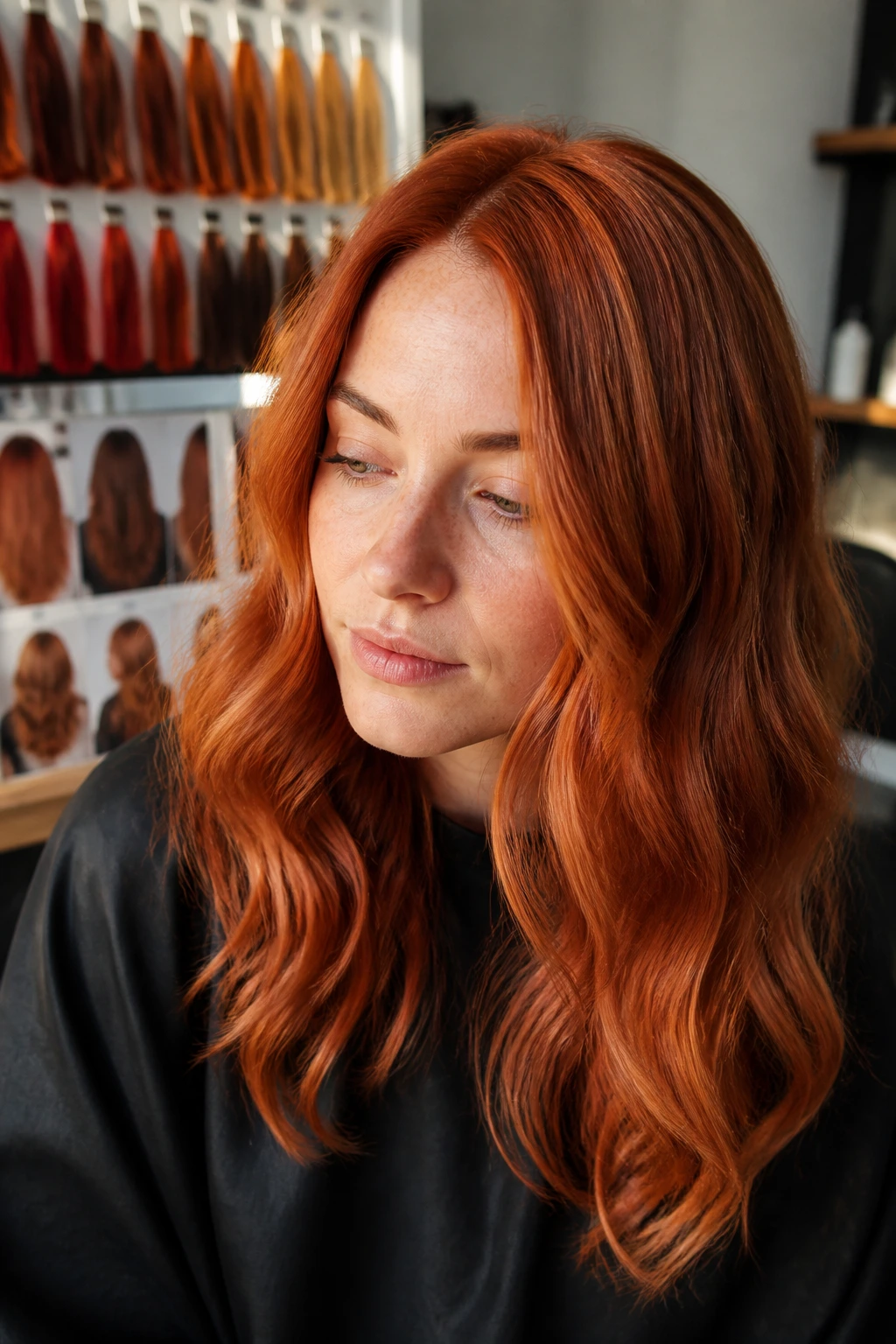
Choosing copper well starts with knowing what you already have. Base level matters first: a level 4 or 5 brunette will usually need either strategic lightening or a deeper copper-brown formula to read warm instead of mahogany. A level 7 or 8 base has a much easier time showing apricot, strawberry, or penny tones. That’s not a preference thing. It’s color theory and porosity doing their jobs.
Undertone matters next. If your natural skin tone runs peach, gold, or olive, copper often blends beautifully without much adjustment. If your complexion leans rosy, some versions of copper can look sharper or more contrasty, which can be a good thing if you want a little edge. The shade should not fight the face. It should wake it up.
Porosity changes everything. Ends that were lightened before usually grab copper faster and fade faster, which is why a good colorist often fills the hair before depositing the final tone. Skipping that step is how you end up with hot roots and washed-out mids. Nobody needs that headache.
Bring two or three reference photos and know what you like in each one. Maybe one photo has the depth you want, another has the placement, and a third has the exact amount of brightness around the face. That is much more useful than handing over one image and saying “this.” Hair color is built from choices. Be specific about the choices.
How to Wear Copper Hair So It Reads Warm, Not Muddy

Lighting: Copper looks strongest in daylight, especially near a window, because natural light separates the red, gold, and orange notes instead of collapsing them into one flat tone. If you want the shade to pop, a clean center part or a soft off-center part usually shows more of the color at the front than a deep side part. Harsh overhead light can make copper look stronger than it really is, so check it in a mirror by a window before you panic about the result.
Styling: Loose waves are the safe bet because they let ribbons, highlights, and lowlights catch the light one bend at a time. That said, a straight blowout can look even more polished on burnished or metallic copper because it makes the shine obvious. Curls need a bit more moisture and definition; if the ends frizz, the copper can look fuzzy instead of rich.
Makeup Pairing: Peach blush, warm bronzer, bronze shadows, and terracotta lips all sit well with copper hair. If the copper is deep and mahogany-heavy, a berry lip can look sharp. If it’s bright and peach-forward, keep the makeup a little softer so the face doesn’t compete with the hair.
Wardrobe Notes: Cream, camel, olive, navy, charcoal, and black all make copper stand out without screaming. Gold jewelry usually plays better than silver with warmer shades, but a brushed silver earring can work if the copper is more rose-toned.
Additional Tips and Color Boosters
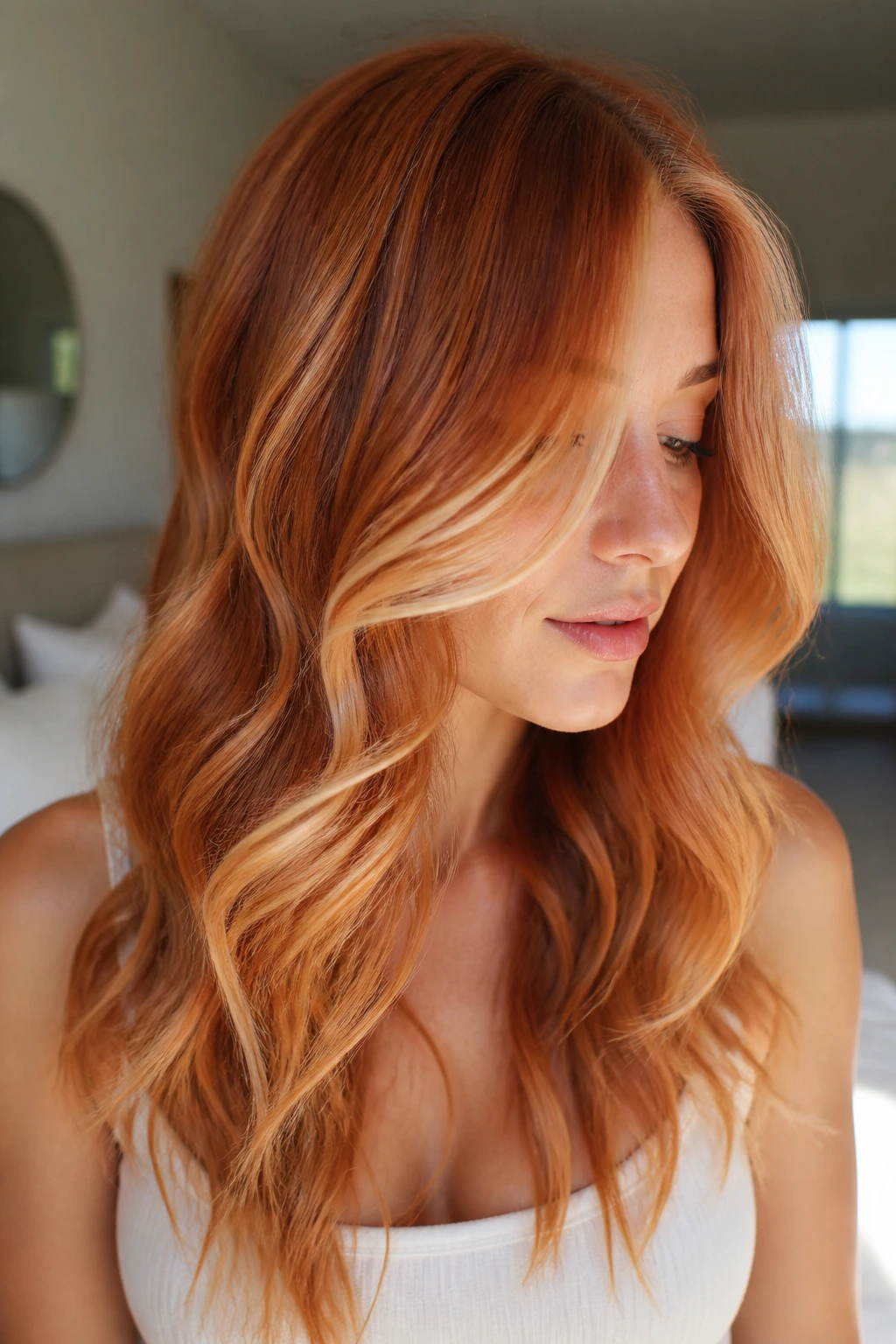
Gloss Boost: If your copper starts to look tired, ask for a clear or tinted gloss every 4 to 6 weeks. It refreshes shine faster than a full recolor and usually costs your hair less in the long run.
Customization: Want softer warmth? Push the formula toward apricot or peach. Want something moodier? Add auburn or chestnut depth. Want it bolder? Ask for brighter face-framing pieces and a deeper root shadow so the contrast has somewhere to live.
Dimension Boost: A few lowlights can rescue copper that looks too one-note. I’d rather see three tones working together than one tone shouting for attention. That layered look is more forgiving as the color fades.
Make-It-Yours: If you keep washing out warm shades fast, a copper-depositing conditioner once a week can keep the tone from slipping. If you need lower drama, lean into smoked copper, root shadows, or peekaboo placement instead of all-over brightness. Small change. Better wear.
Maintenance, Washing, and Refreshing the Tone
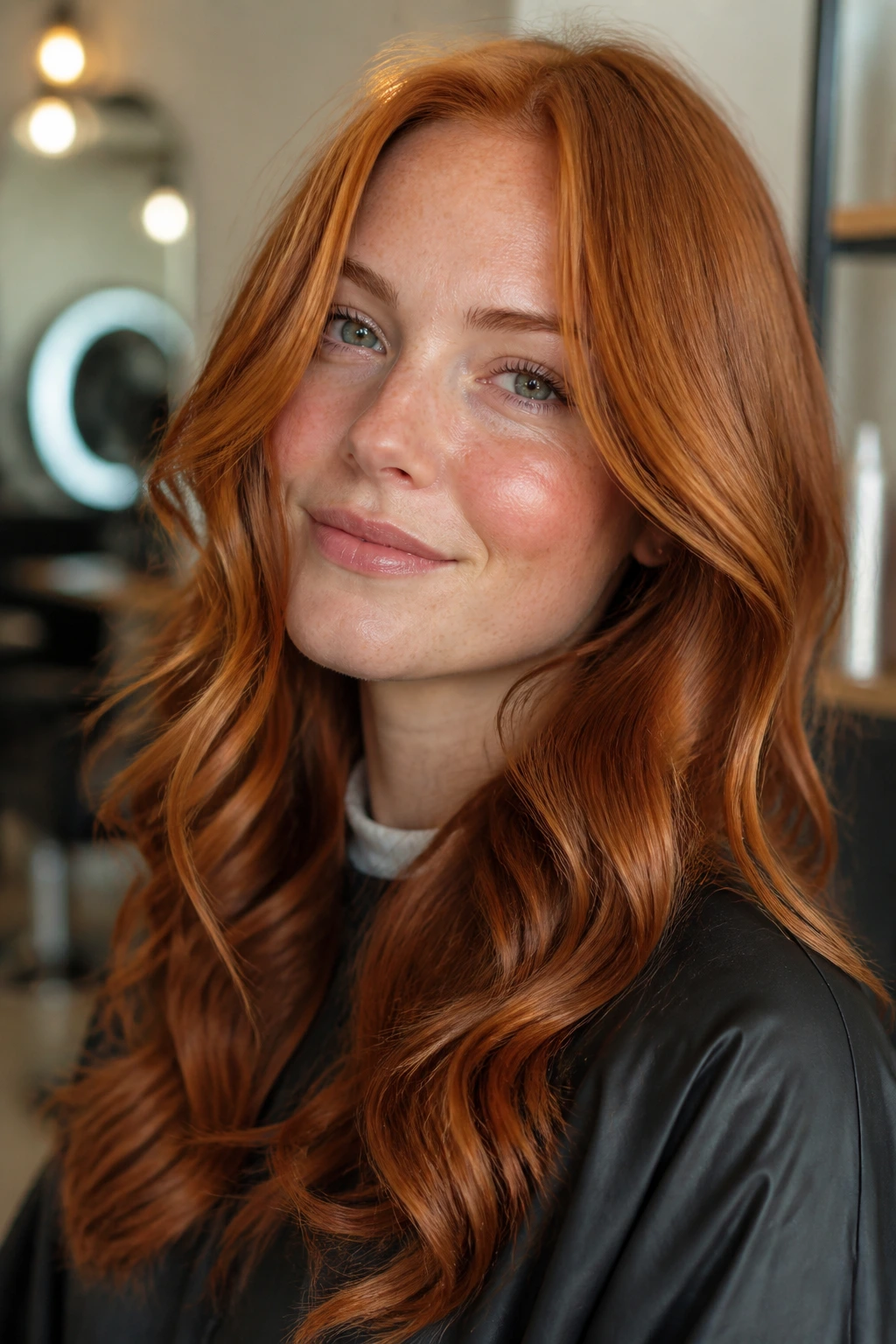
Copper fades. That is part of the deal. The key is to slow the fade instead of pretending it won’t happen. Most warm copper shades do best with 2 to 3 washes per week, lukewarm water, and a gentle shampoo that doesn’t strip the cuticle open like a cheap detergent. Hot water is rough on warm dyes. It softens the tone faster than people expect.
Fresh color usually holds better if you give it a short buffer before the first wash. A 48-hour wait is a sensible baseline for many permanent and demi-permanent formulas, though your colorist may tell you something else depending on the product used. After that, stretch your shampoo days a little if you can. Dry shampoo helps, but don’t coat the scalp in half a can and call it a plan.
For the ends, a color-depositing mask every 1 to 2 weeks can keep copper from drifting pale or brassy. Bright tangerine and peachy shades usually need more attention than smoky auburns. Gloss appointments every 4 to 6 weeks are common when you want the tone to stay intentional. If you’re wearing balayage, the lightened ribbons may need toning on a slightly different schedule from the root area, because porous ends fade first and fastest.
Heat styling is fine, but use a protectant every time. And if you spend a lot of time outside, a UV spray is worth the trouble. Sun doesn’t just lighten the hair; it can flatten the copper note and leave you with a weird orange-beige halfway version of the original color. That is nobody’s best look.
Common Mistakes to Avoid

The biggest mistake is choosing copper too bright for the base you have. On a dark brunette, an ultra-bright tangerine reference photo can turn into a copper-brown compromise unless the hair is lightened first. The fix is to ask whether the goal is brightness, warmth, or contrast. Those are not the same thing.
Another problem is ignoring porosity. Ends that have been bleached before will grab the copper fast and lose it fast, which can leave you with hot roots and faded ends. The symptom is obvious: the top looks rich, the bottom looks washed out. A proper fill and a smart gloss schedule usually solve it.
Purple shampoo abuse is a sneaky one. People see “brass” and grab purple shampoo like it’s a universal fix. On copper, it can mute the warmth you actually wanted and leave the tone dull or muddy. If the color skews too yellow, use it sparingly. If the copper is healthy and warm, skip it.
The fourth mistake is assuming one copper formula works on every hair texture. Fine hair can go translucent fast. Thick hair can swallow the tone unless there’s enough saturation. Curly hair needs placement that respects the curl pattern or you end up with random bright spots. The fix is to color for the texture, not just the target shade.
Last: forgetting the grow-out plan. A vivid copper with no root shadow looks fresh for about five minutes and then starts announcing itself loudly. If you want lower maintenance, ask for a softer root, deeper lowlights, or a balayage pattern that already looks lived-in.
Variations and Adaptations to Try
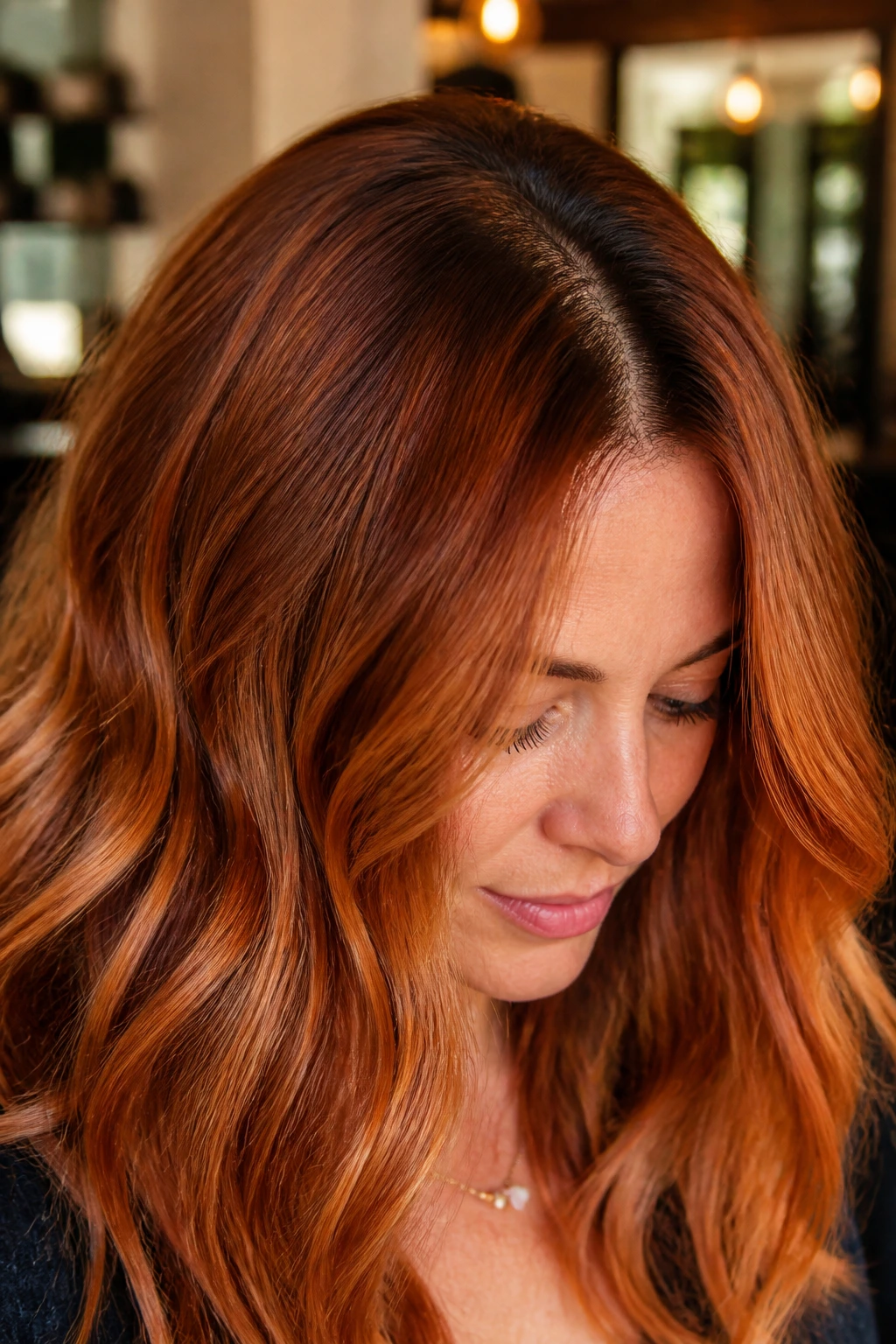
Low-Maintenance Root Melt: Keep the roots one to two levels deeper than the mids and ends. This makes the copper look softer as it grows and buys you a few extra weeks before the line gets obvious.
Curly-Hair Definition Copper: Place brighter copper on the outer curve of curls and keep the interior a touch deeper. The pattern makes the curl clumps look fuller, not frizzier, which is the whole point.
Gray-Blend Copper: If you’re blending grays, ask for a copper-brown base with fine warm highlights instead of a flat vivid red. The gray mixes into the warmth better when the shade has multiple tones.
Vivid Statement Copper: Push the formula brighter toward tangerine or penny and keep the cut simple. A blunt bob, lob, or long wave gives the color a cleaner stage to stand on.
Soft Workplace Copper: Choose chestnut, smoked copper, or rose copper with a low-contrast money piece. You still get warmth and shine, but the look stays quiet enough for conservative settings.
Frequently Asked Questions About Copper Hair Color
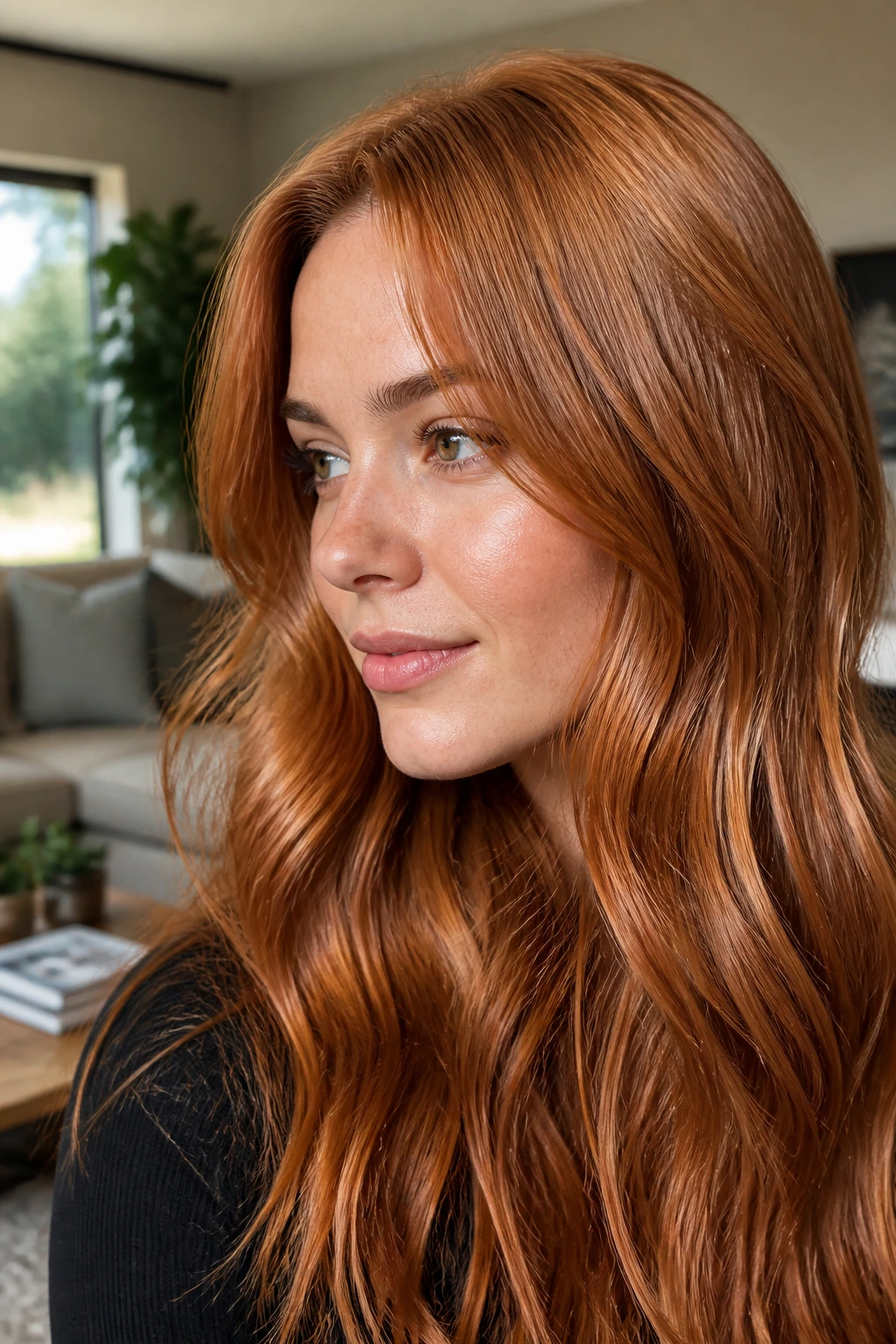
Will copper hair work on dark brown hair?
Yes, but the result depends on how bright you want it. On a dark base, copper usually reads as auburn or smoked copper unless you pre-lighten sections for balayage or face-framing pieces.
Is copper hair high maintenance?
Bright copper is. Smoky copper, root-shadowed copper, and copper balayage are easier to live with because the grow-out is softer and the shade does not need as much constant refreshment.
Can I get copper balayage without bleaching the whole head?
Absolutely. Many copper balayage looks only lighten selected ribbons, which keeps the damage lower and the grow-out softer. That is one of the smartest ways to wear the color.
How do I stop copper from turning brassy?
Use lukewarm water, a color-safe shampoo, and a copper or auburn color-depositing conditioner when the tone starts to fade. If the shade gets too yellow, a toning gloss from a colorist can bring it back into balance.
What if my copper turns too orange?
Ask for a gloss with more red-brown or rose undertone, depending on what looks off. Too-orange copper usually means the formula needs a little more depth, not more brightness.
Can copper hair blend gray without looking fake?
Yes, if the formula has enough brown or auburn depth. A flat vivid red can make gray strands stand out sharply, while a layered copper-brown usually blends better.
What’s the easiest copper shade to maintain?
Smoked copper brunette or a warm copper root shadow. Both keep the hair looking warm while giving you a softer grow-out and less obvious fade.
Should copper hair be styled curly or straight?
Either works, but they show different things. Straight styling emphasizes shine and saturation, while waves and curls show off dimension and ribbon placement. Pick the finish that matches the kind of copper you chose.
A Glow That Grows Out Well
Copper only looks like one color from a distance. Up close, it’s a whole rack of moods: peach, penny, rust, rose, ginger, auburn, chestnut, gold. That range is why it keeps pulling people back. You can wear it loud, you can wear it soft, and you can make it behave with the right cut and placement.
The best version is the one that fits your actual life, not the one that looks hottest for ten minutes in a salon mirror. Bring a reference photo, know your base, and decide how much upkeep you’re willing to give it. That’s where the good copper lives.
