



A good foilayage doesn’t shout. It moves in ribbons, leaves the root soft, and lets the ends brighten just enough that the color looks like it belongs there. That’s the whole appeal, really. The grow-out doesn’t fight you. It settles in.
What makes foilayage so useful is the blend of two different instincts: the painterly freedom of balayage and the extra lift you get from foil. That foil wrap matters. It traps heat, pushes stubborn hair a little farther, and helps the bright pieces stay clean instead of muddy—especially on brunette, red, or previously colored hair that never quite lifts evenly in open air. If you’ve ever seen highlights that looked striped at the salon and flat three weeks later, you already know why this technique has such a loyal following.
The best foilayage is not about turning everything blonde. It’s about placing light where hair moves: around the face, through the mids, at the bend of a wave, under the top layer where it flashes when you tuck one side behind your ear. That’s the difference between color that feels painted on and color that feels built into the cut.
Why These Foilayage Ideas Are Worth Saving
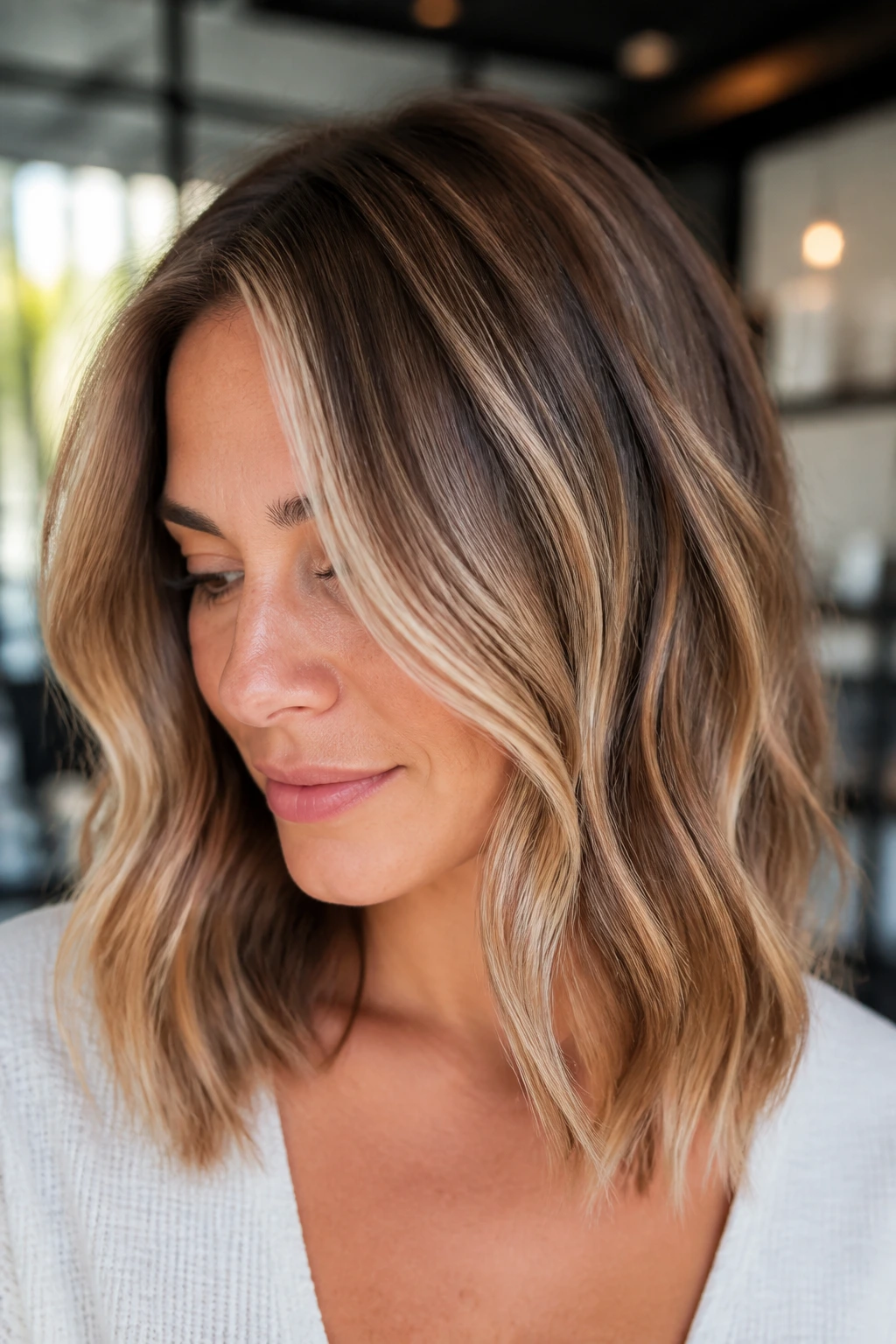
- Soft Grow-Out: The root stays deeper on purpose, so the line of regrowth reads like a plan, not a problem.
- More Lift Where Hair Fights Back: Foils help darker or resistant hair reach beige, caramel, copper, or blonde without that dull halfway stage.
- Placement You Can Actually See: Brightness can sit around the face, under the crown, or through the ends, which means the dimension shows when hair moves.
- Works Across Textures: Wavy, curly, and straight hair all take foilayage differently, and that flexibility is the point.
- Tone Choices Are Wide Open: You can steer the result warm, cool, neutral, smoky, or glossy without changing the whole structure of the color.
- Salon Photos Make More Sense: A foilayage photo tells your colorist where the lightness lives, which is far more useful than a flat “make me blonde” request.
1. Creamy Beige Ribbon Foilayage on a Dark Blonde Base
Creamy beige is the shade I’d point to first if someone wants softness without drifting into brass. On a dark blonde base, the ribbons can live one or two levels lighter than the natural color, which keeps the overall look calm instead of frosty. The result is the kind of dimension you notice in motion, not all at once in a mirror under bad bathroom lighting.
Why It Reads Soft Instead of Stripy
The trick is keeping the lightness in narrow, diffused panels rather than heavy slabs. Beige toner over a level 8-9 lift gives the hair that muted, satin finish that sits between gold and ash. Too much contrast at the root and it starts to feel noisy; too little and the dimension disappears. This version lands in the middle.
Ask for fine foils through the mids and ends, then a softer face frame that starts below the cheekbone. That keeps the front bright enough to wake up the skin, but not so bright that it takes over the whole haircut.
Best Notes to Give Your Colorist
- Keep the root shadow around one level deeper than the mids.
- Ask for beige, not icy silver.
- Leave a few darker strands around the part for movement.
- Finish with a clear or neutral gloss if your hair already leans warm.
My favorite part: this one still looks good after a week of dry shampoo and a quick ponytail.
2. Caramel Melt Foilayage for Deep Brunettes
Caramel on deep brunette hair has to earn its place. If the ribbons are too pale, they scream. If they’re too orange, they look accidental. The sweet spot is a warm caramel that sits about two to three levels lighter than the base and melts through the midlengths instead of sitting on top like frosting.
A lot of brunette foilayage fails because the lightness is concentrated at the ends only. That can look thin. I prefer to see some of that caramel start higher, especially around the temples and upper sides, where the hair catches movement every time you turn your head. It gives the color a better shape.
This is the version I’d choose for someone who wants warmth but does not want to live in brass. The color should look rich, not orange-copper. If the hair has old box dye or a very dark natural base, a single appointment may only get you partway there, and that’s fine. Good brunette lift often happens in stages.
3. Mushroom Brown Foilayage with Cool Midlights
Why does mushroom brown look so clean when it’s done well and so flat when it isn’t? Because the tone lives in a narrow lane. You need beige, taupe, and muted brown all talking to each other without letting gold take over. Foilayage helps because it lifts enough to create visible contrast, then the toner pulls the whole thing back into that smoky, soft-focus range.
What Makes It Work on Medium Bases
This is a strong choice if your natural hair sits around level 5 or 6 and you want movement without blonde. The midlights matter as much as the lighter pieces. They keep the color from looking like a single shade with streaks floating through it. I like this on hair that already has some natural depth left in the ends.
How to Ask for It
- Cool beige ribbons, not pale yellow lift.
- A soft root shadow that stays near the natural base.
- Midlights in taupe or muted chestnut.
- No harsh money piece unless you want extra front brightness.
If your hair tends to go warm fast, this is one of the better choices because the smoke in the toner helps hold the line.
4. Copper Veil Foilayage for Chestnut Hair
Chestnut hair with copper foilayage has a glow that open-air balayage often misses. The foils help the copper read clear and shiny instead of flat and brownish, especially when the base has a little red already hiding in it. The effect is subtle at first glance, then more obvious when the light hits the ends.
Picture a chestnut sweater with a thin line of warm copper thread running through it. That’s the feeling. Not loud. Not neon. Just enough warmth to make the texture of the hair look deeper and more alive.
I like this approach on layered cuts because the copper lands differently on each length. Shorter face pieces catch it early, while the longer back sections hold the warmth in a slower, more grounded way. If you want the result to stay refined, keep the copper close to the natural family—burnt copper, cinnamon copper, soft auburn—not bright pumpkin.
5. Face-Framing Money Piece Foilayage with Soft Ends
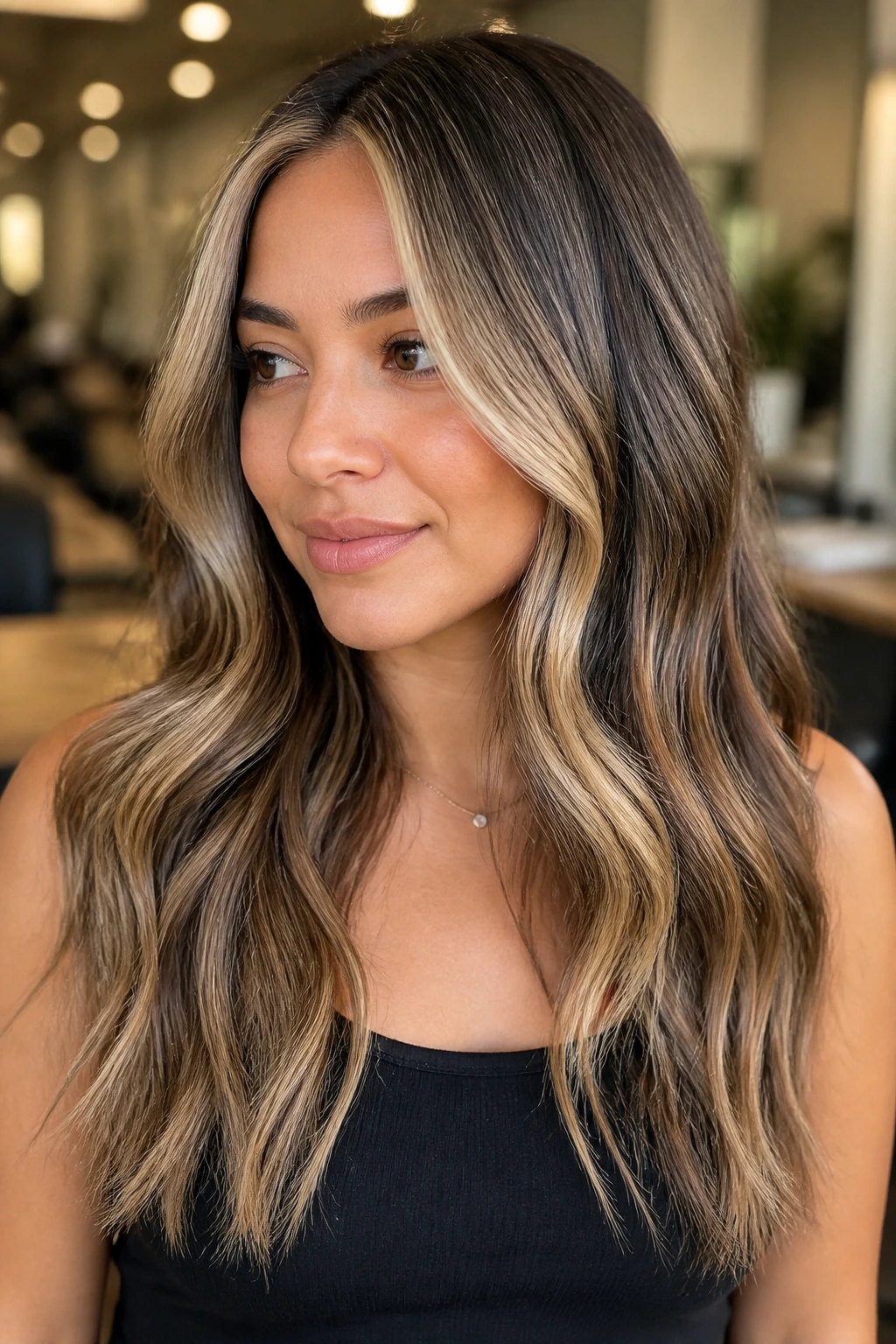
This is the one people ask for when they want the front of the haircut to do the heavy lifting. A bright money piece can wake up the whole face, but in foilayage form it doesn’t need to look harsh. The brightness starts near the part, then softens as it falls into the longer front layers and ends.
The key is restraint through the back. If the front is bright but the rest of the head stays too dark and unmixed, the color looks split in half. I’d rather see a controlled contrast: a little more lift at the temples, some lighter ribbons around the cheeks, and softer, warmer pieces through the crown and back. That way the front gets attention without hijacking the whole look.
What to Tell the Stylist
If you wear a middle part, ask for both sides to be balanced. If you wear a side part, the heavier side should get the brightest ribbon. And if your haircut has curtain bangs, place a few foils behind them too; otherwise the bangs can look disconnected from the rest of the color.
6. Reverse Foilayage to Put Depth Back Into Blonde Hair
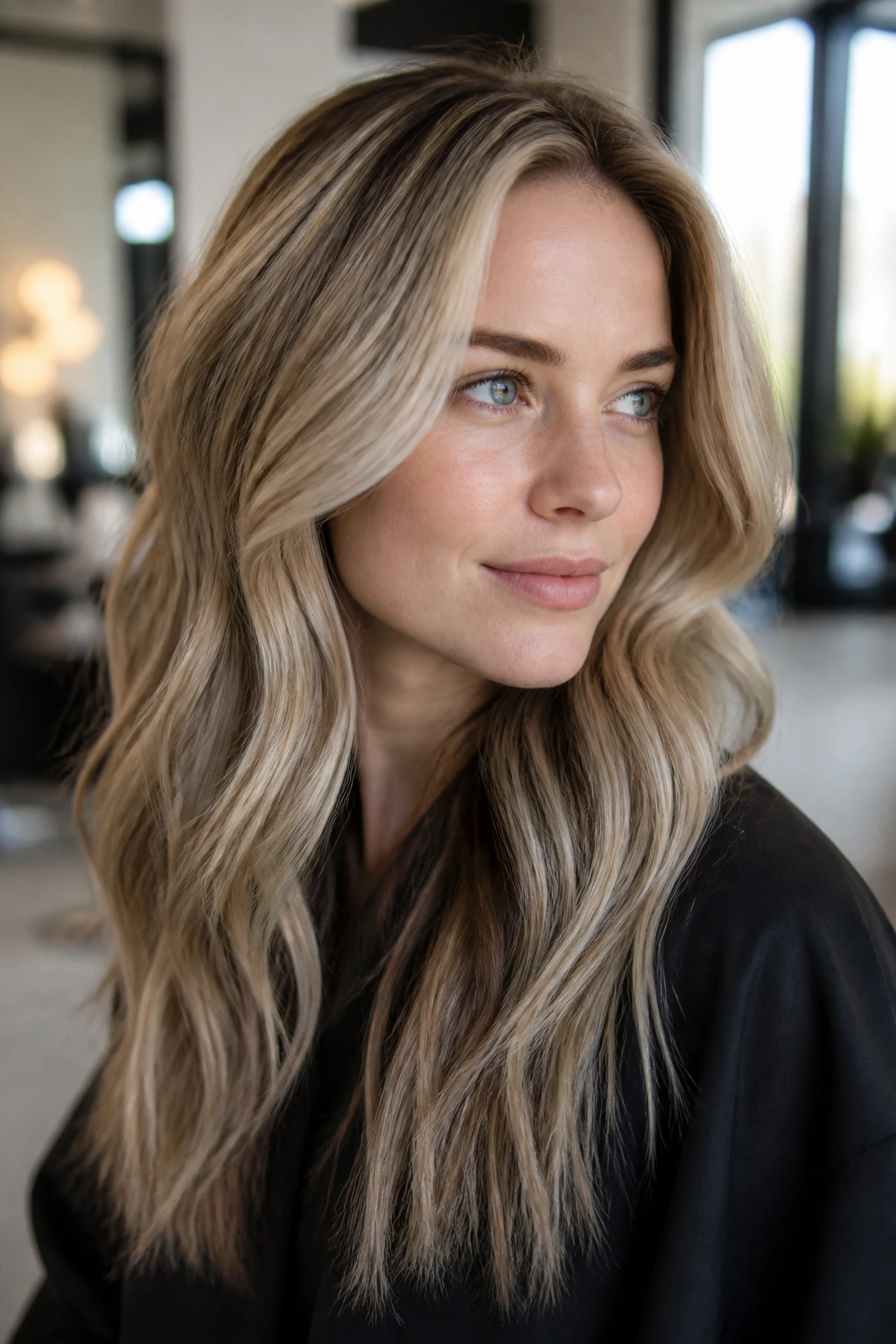
Reverse foilayage is the answer when blonde has gone too bright, too flat, or just too loud. Instead of adding more lift, you add back depth with lowlights and shadowed panels so the hair regains shape. That extra darkness doesn’t make the hair look heavier. It makes the blonde look intentional.
This works especially well on hair that has been highlighted over and over until the mids feel washed out. A few deeper ribbons through the interior layers can bring the cut back to life. The blonde starts to move again instead of floating in one pale sheet.
Best For
- Over-lightened blondes that need contrast.
- Fine hair that lost shape after too many highlights.
- Clients who want a cooler, more grounded blonde without going brown again.
- Grown-out color that needs a reset without a full correction.
I’m a fan of reverse foilayage because it respects the haircut. Not every blonde needs more brightness. Sometimes it needs a little shadow to make the light matter.
7. Honey Blonde Foilayage on Light Brown Hair
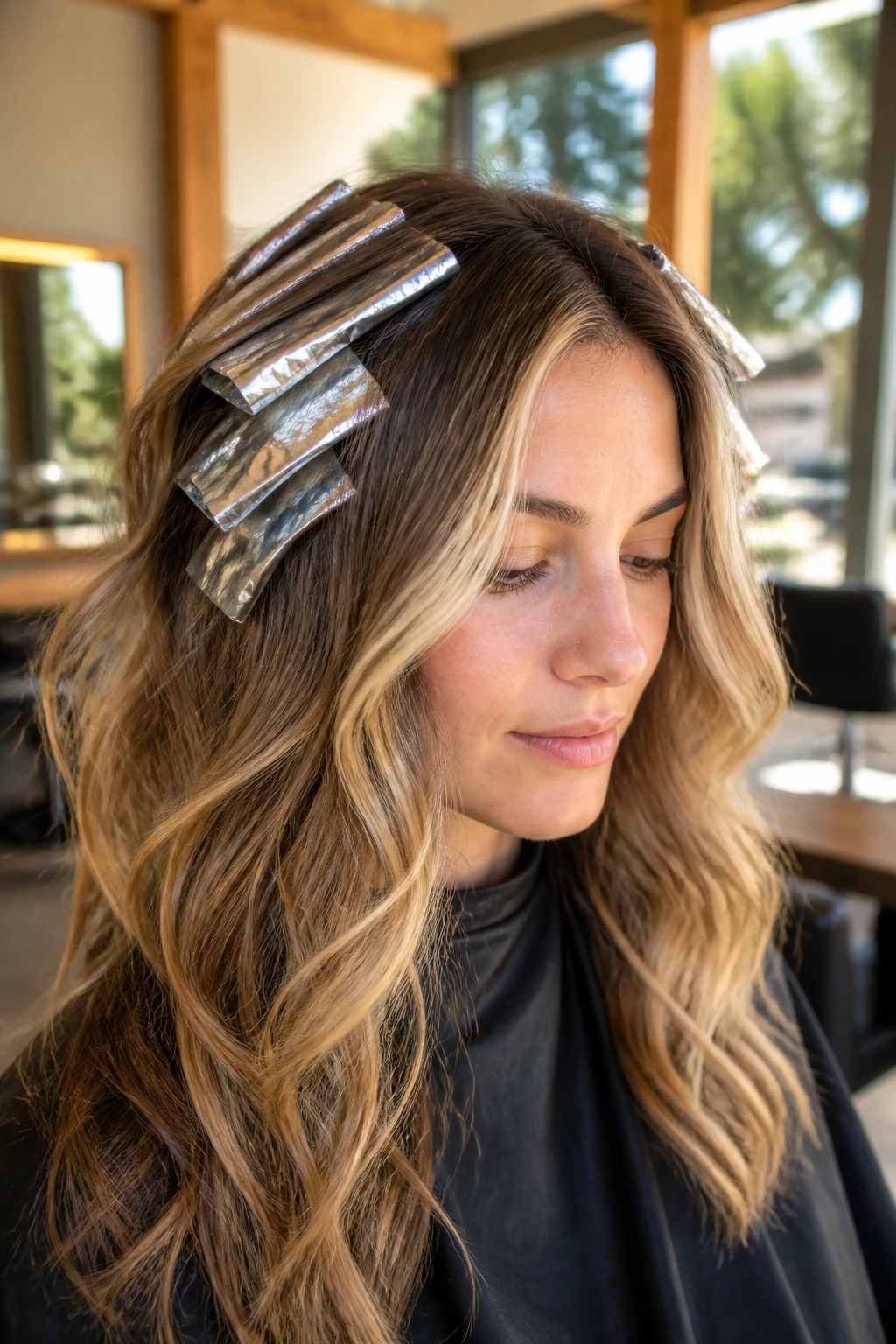
Honey blonde on light brown hair can look sunlit without reading yellow, but only if the lift stays controlled. Foilayage gives you that control. The light pieces can be packed a bit tighter through the front and loosened toward the back, so the hair keeps its shape while the brightness lands where people actually see it.
Why It Stays Wearable
Honey tones sit in a friendly middle ground. They reflect warmth, but they don’t tip into orange the way some golds do. On a light brown base, that means the result feels bright and soft at the same time. It’s a useful choice if you want visible color change without needing a very pale blonde.
Ask For
- Fine foils around the hairline.
- Broader ribbons through the mids.
- A gloss that keeps the honey tone clear, not brassy.
- A root shade close to the natural color for easier grow-out.
This is one of those looks that gets better with a little texture. A loose bend in the hair makes the ribbons show up far more than a stiff, straight finish.
8. Ash Bronde Foilayage with a Shadow Root
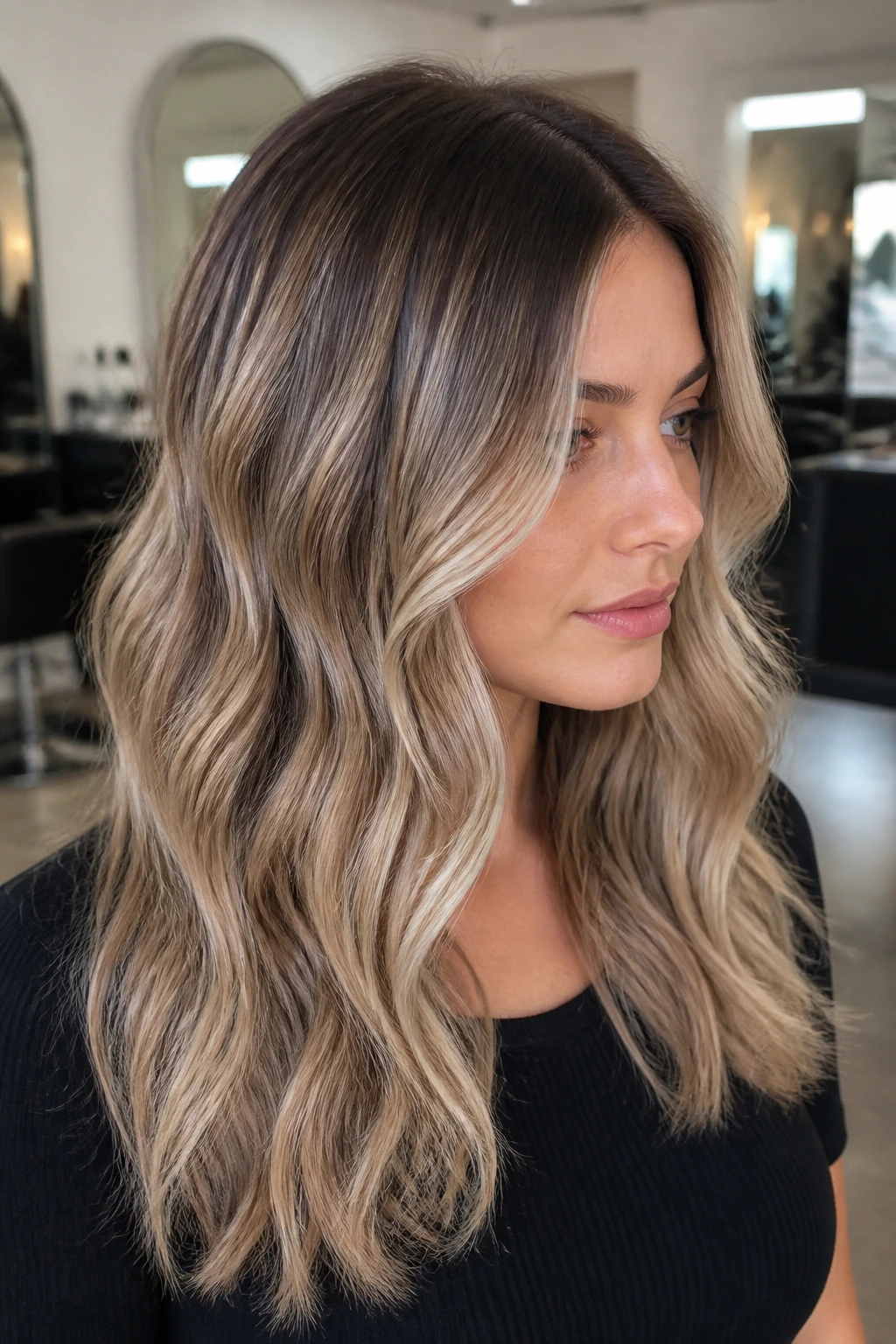
Ash bronde works when the blonde and brunette sides stay in conversation. Too much ash and the hair can go flat. Too much brown and the blonde disappears. Foilayage lets you thread in just enough lighter pieces to keep the result dimensional, then a shadow root ties everything together.
The shadow root matters more here than people think. It stops the lighter mids from floating away from the base. I like this version on someone who wants a cooler finish but still wants the hair to look soft, not gray. A good ash bronde should read as clean and smoky, not dull.
If you have warm undertones in your skin, keep the ash part more beige than blue. That tiny shift keeps the face from looking drained. Cool hair can be lovely. Dead-looking hair is not.
9. Champagne Veil Foilayage for Fine Hair
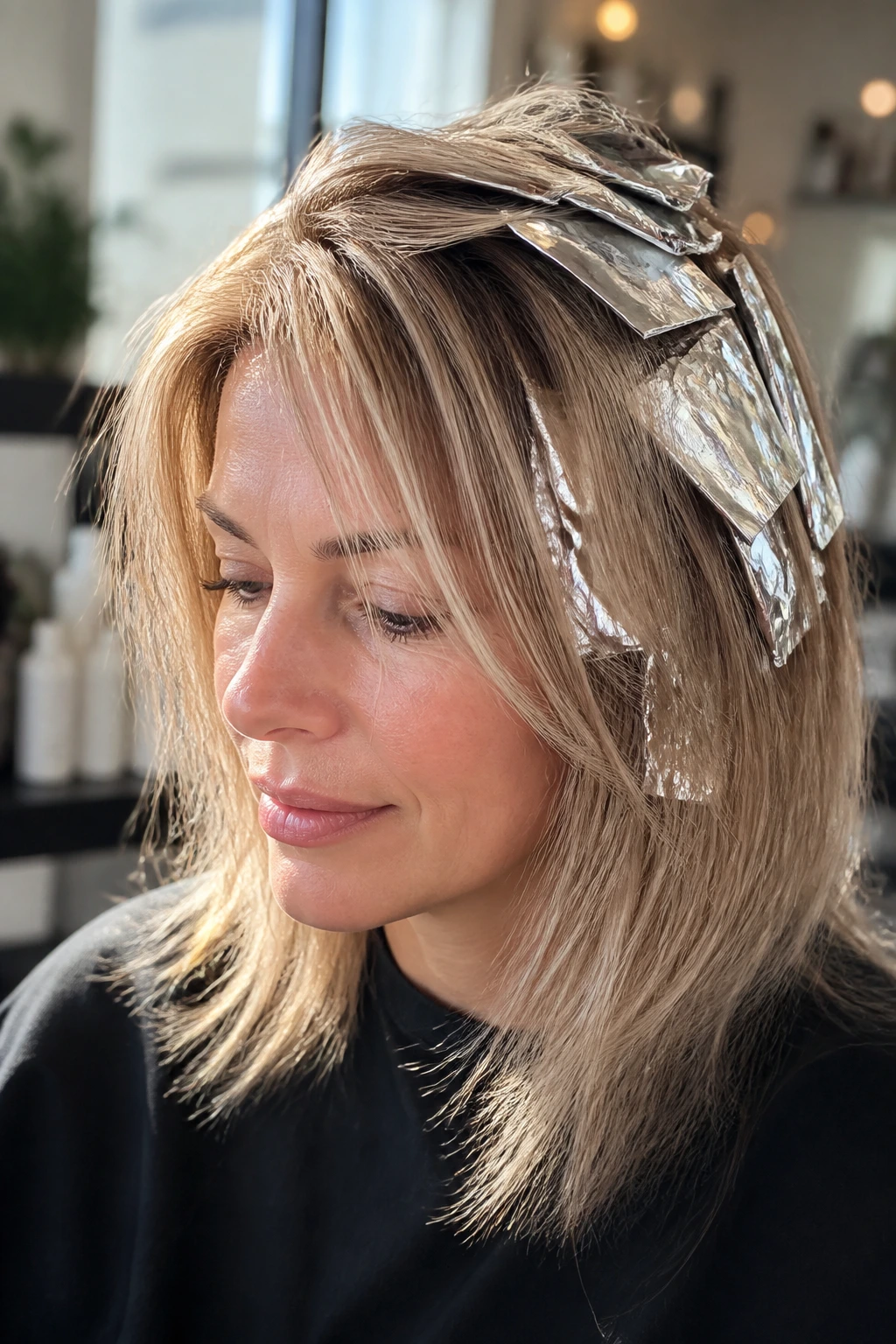
Why does champagne foilayage work so well on fine hair? Because it creates lightness without asking the hair to carry too much contrast. Fine hair can look see-through if the blonde is too chunky or the root is too harsh. Champagne sits in that soft, luminous zone where the hair looks brighter but still full.
What to Watch For
The foils should be fine and well spaced, not wide and heavy. On fine strands, a little lift goes a long way, and too much brightening can make the ends look wispy. I also prefer to keep the toner creamy rather than icy. Champagne needs a soft sheen, almost like the color of pale straw with a pearl finish.
Good Pairings
- Chin-length bobs that need movement.
- Lobs with a slight wave.
- Layers that aren’t too choppy.
- A root smudge that keeps the grow-out neat.
Do not overdo the lightener on fragile hair just to chase a pale blonde result. The hair will look thin before it looks bright, and that’s a bad trade.
10. Toffee Swirl Foilayage for Medium Brunettes
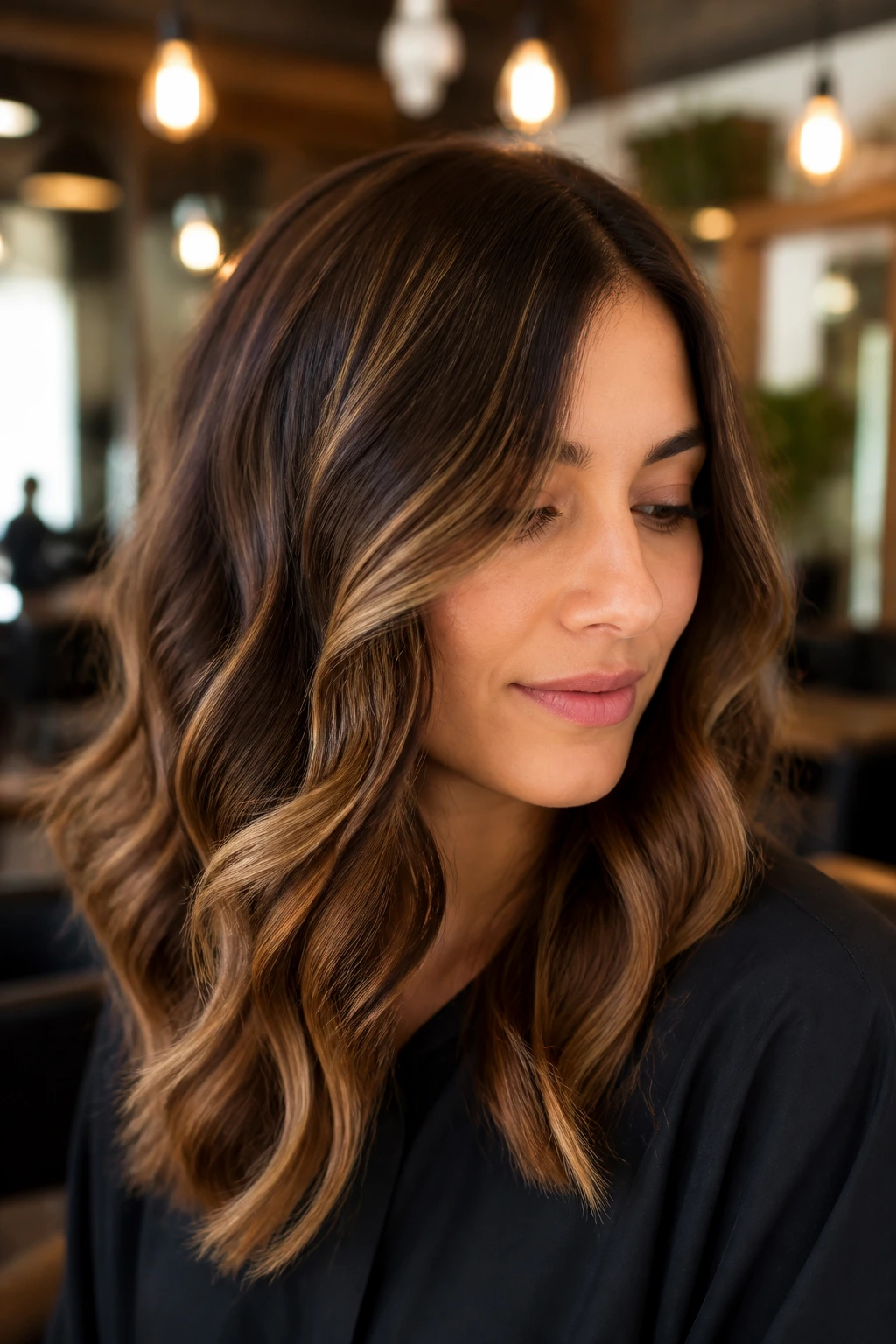
A medium brunette base gives you room to play with toffee, and foilayage is the cleanest way to do it. The color should look like ribbons of warm candy poured through the mids—soft, glossy, and a little richer at the root. The difference between good and bad here is placement. Good toffee foilayage bends with the haircut. Bad toffee foilayage sits in obvious strips.
Why It Flatters So Many Haircuts
Toffee has enough warmth to catch light, but not so much that it turns copper or orange. On layered cuts, the lighter pieces can hug the bends and flip of the hair. On blunt cuts, the ribbons need to be finer so the line stays clean. That makes this a flexible choice if you wear your hair both up and down.
Key Detail
Keep at least some of the foils concentrated below the top layer. If everything is bright on the surface only, the color can look busy. Hidden depth underneath gives toffee foilayage the little bit of shadow it needs.
11. Smoky Espresso Foilayage on Black Hair
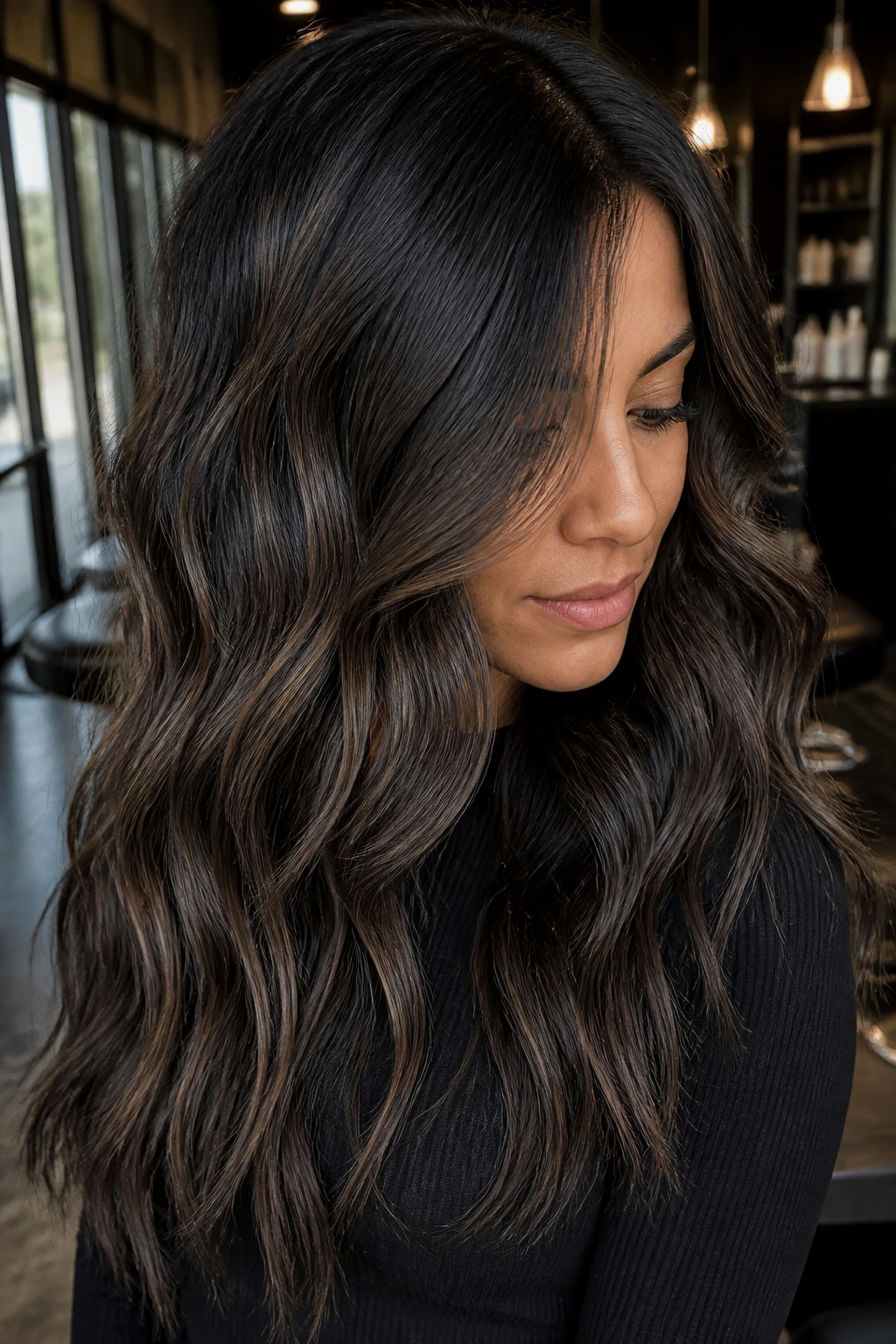
Black hair does not need to lose its identity to gain dimension. That’s the mistake I see most often. Smoky espresso foilayage keeps the base deep and uses just enough lift to make the surface move. The bright pieces should look like dark chocolate when they’re inside, then turn soft espresso or warm mocha when the light hits.
This is one of the few foilayage looks where the goal is not obvious brightness. It’s texture. The hair should read richer, not lighter for the sake of it. If the contrast jumps too far, the black base starts to look patchy. Keep the lift subtle and let the shine do half the work.
A glaze or demi tone in the espresso family usually helps this look settle nicely. It smooths the transition between the darkest areas and the lifted ribbons, which is what keeps the color from looking disconnected.
12. Strawberry Brunette Foilayage with Copper Threads
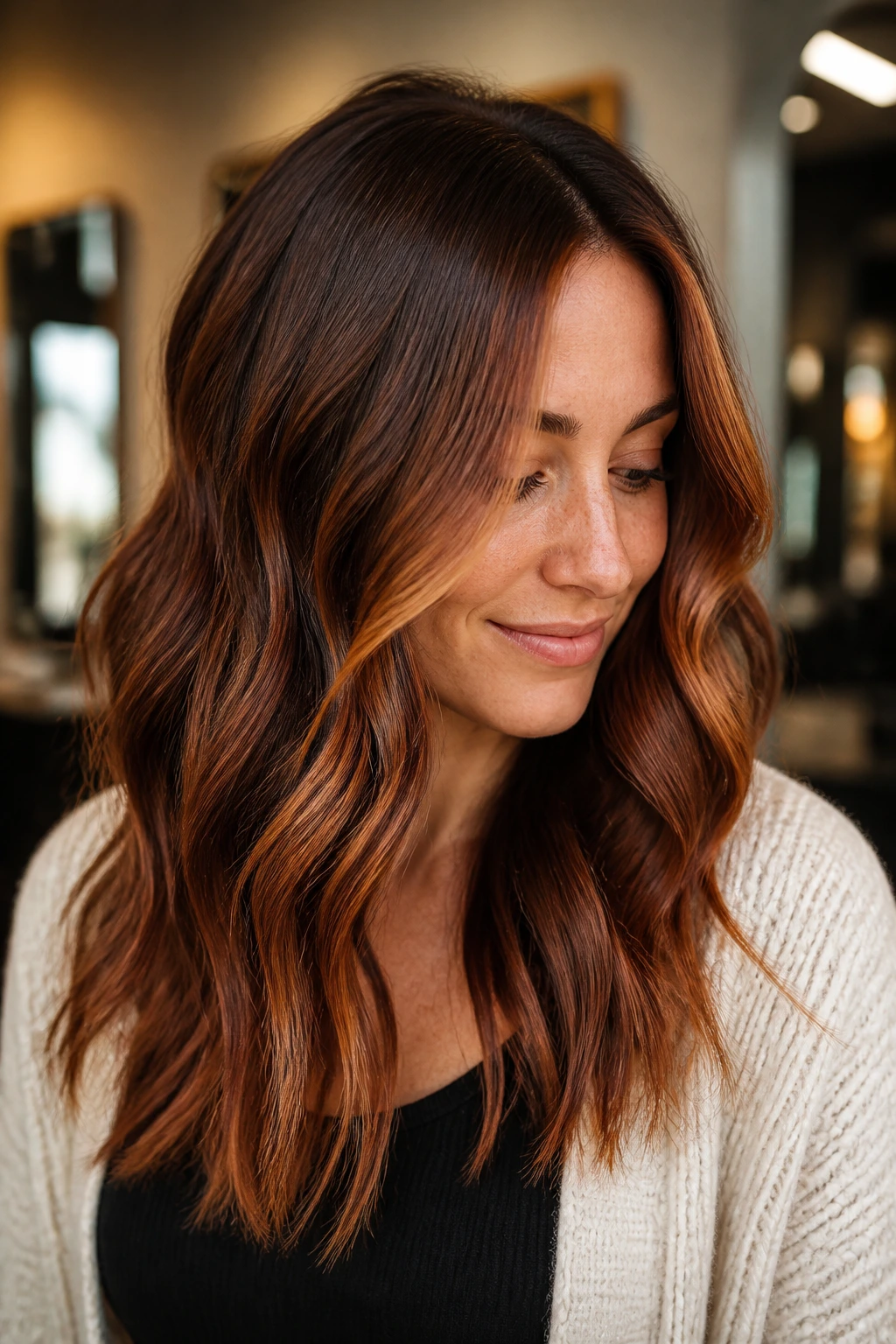
Strawberry brunette is a clever middle path for people who want warmth but don’t want full red. It sits somewhere between chestnut and copper, with enough brunette left in the base to keep the color grounded. Foilayage helps the red-copper threads show up cleanly instead of disappearing into the brown.
Unlike straight copper, this version is quieter at the root and richer at the ends. That makes it a strong choice if you love warmth but hate the maintenance of brighter red. The color fades into a softer brunette-copper blend rather than dropping off a cliff.
Best For
- Dark blondes and light brunettes who want more warmth.
- People whose hair pulls red naturally.
- Layered cuts that can show different tones as they move.
- Anyone who wants a little red without a full copper commitment.
If you love red but fear commitment, this is the place to live.
13. Pearl Blonde Foilayage with Cool, Milky Ends
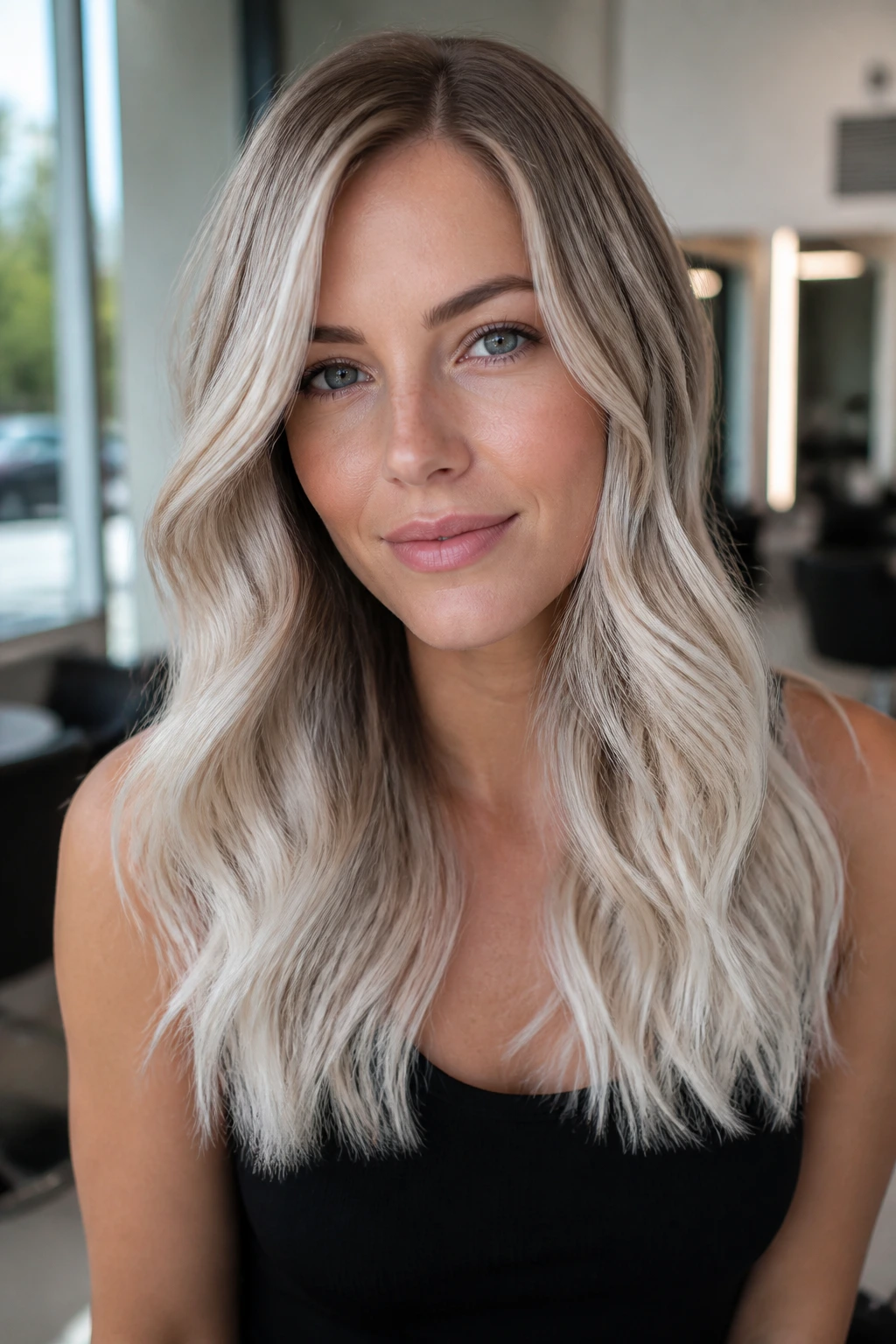
Pearl blonde has a slipperier, cooler feel than beige blonde. It’s softer than platinum, but brighter and more polished than beige. Foilayage lets you place the lift in ribbons first, then glaze the ends to get that milky finish that looks almost luminous in daylight.
Why It Needs Careful Placement
Pearl blonde can turn flat if the lighter pieces are too uniform. I prefer a mix of fine foils and a few slightly broader panels through the front and ends. That makes the finish look layered rather than washed out. The root should stay a touch deeper, or the whole thing can drift into a single pale sheet with no shape.
A Note on Toner
The toner here needs to be cool, but not violet-heavy. Too much violet and the hair can go chalky. Pearl blonde looks best when it has a clean, glossy sheen—like the inside of a shell, not a dusty pastel.
14. Golden Copper Foilayage for Warm Skin Tones
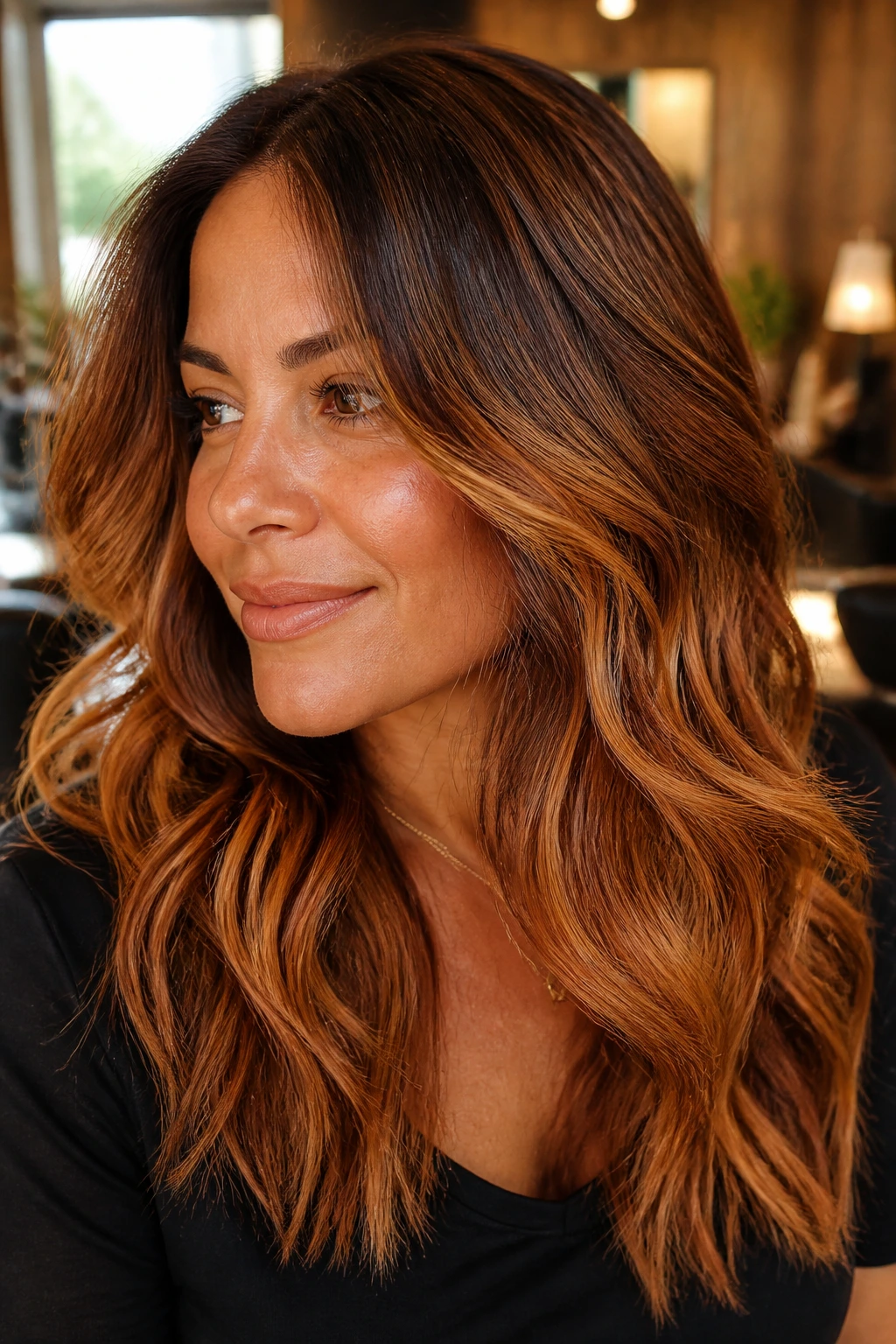
Golden copper is one of those shades that can look very rich or very messy depending on the exact tone. Foilayage gives it a cleaner edge. The lifted pieces catch the gold, while the darker base keeps the copper from running wild. When it’s right, the hair looks warm and polished without going brassy.
This is a strong pick if your skin already likes warm colors. A little gold around the face can make the whole look come alive, especially on layered cuts and waves. I’d keep the root soft and the mids a touch more copper than the ends, which lets the color melt down instead of stopping abruptly.
What Keeps It Elegant
- Use copper that leans gold, not orange.
- Leave some chestnut in the lowlights.
- Ask for a gloss that preserves shine.
- Keep the brightest pieces near the front and upper mids.
Warm hair gets a bad reputation when it’s overdone. Done well, though, it looks expensive in the plainest sense of the word: it looks well cared for.
15. Curly-Hair Foilayage with Stretched Dimension
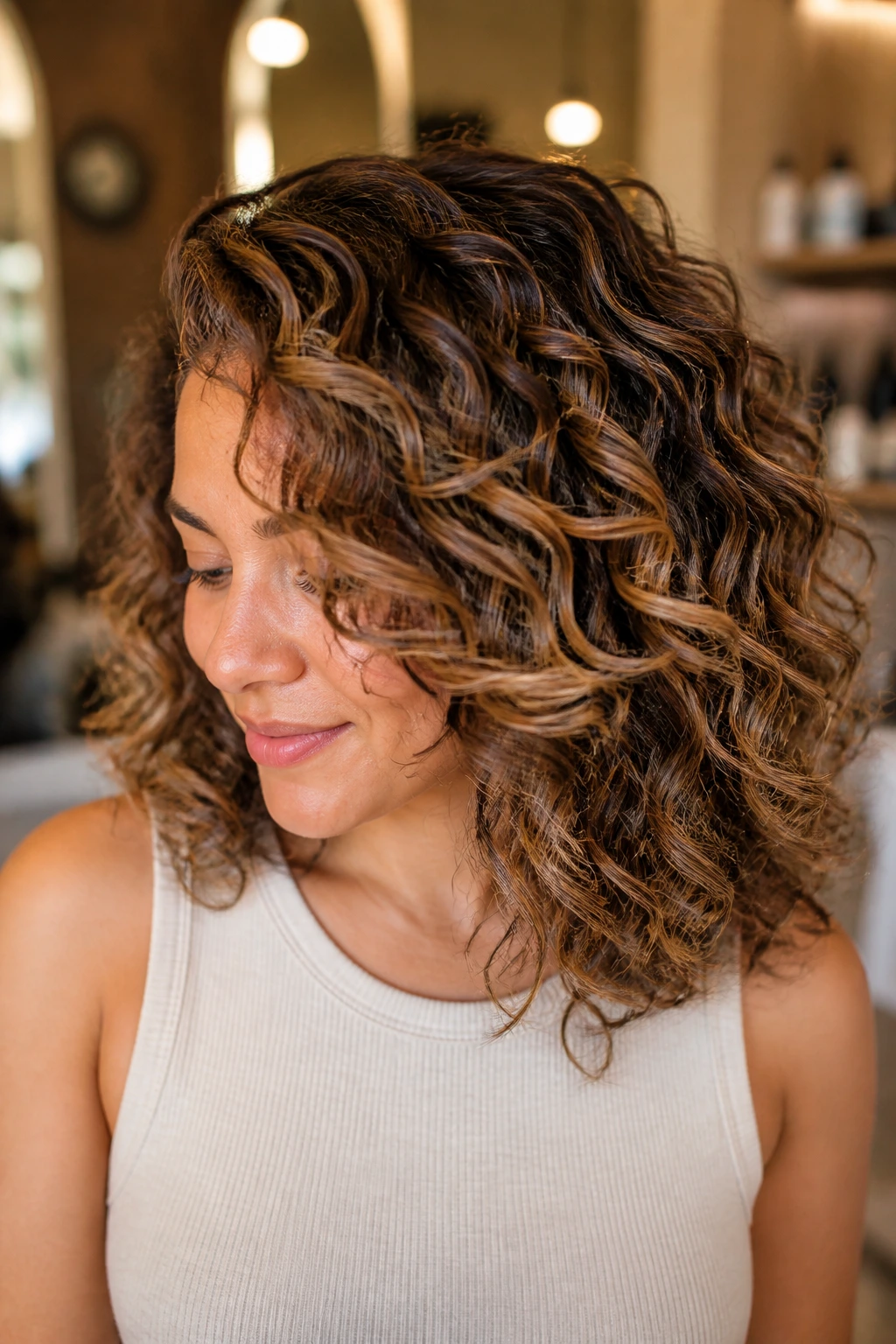
Curly hair needs its lightness placed where the curls actually open. That sounds obvious until you see how many color jobs ignore the curl pattern and place foils as if the hair were straight. Foilayage works beautifully on curls because the foils can push lift where the coil tends to hide it, especially around the outer halo and upper sides.
What to Ask For
Ask your colorist to map the curl pattern before placing anything. Brightness should live on the outside of the curl and through the long spirals, not jammed into the tightest interior coils. That keeps the curls from looking frizzy or broken. The ends usually need less lift than people expect.
A good curly foilayage should look dimensional even when the hair is dry and diffused. Wet curls lie to you. Dry curls tell the truth. If the placement is right, the ribbons pop when the hair shrinks up, then soften again when it’s stretched.
16. Sleek Straight-Hair Foilayage with Airy Ribbons
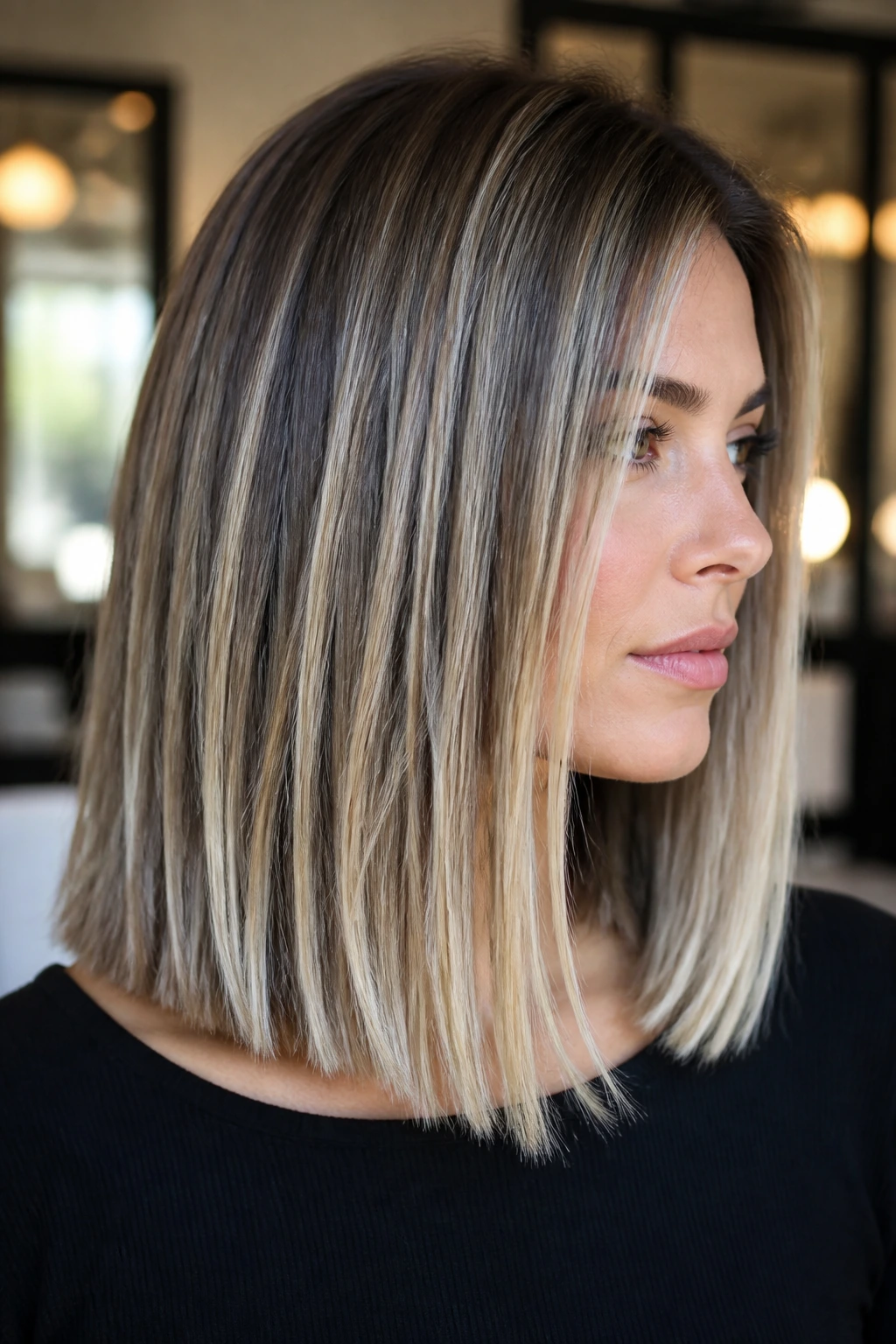
Straight hair can make foilayage look either elegant or overworked. There’s not much in between. The version I like uses airy, fine ribbons placed in a staggered pattern so the brightness changes as the hair moves. On pin-straight hair, the contrast needs to be gentler and more deliberate, because every line shows.
The best straight-hair foilayage has some hidden lift underneath the top layer. That way, when the hair swings, you get flashes of light instead of a flat surface. If everything is too bright on top, the color can look stripey. If it’s only underneath, it disappears. Balance matters here.
A soft blowout with a round brush is enough to make this color read. You do not need dramatic waves. Sometimes the cleanest result is the one that looks barely touched until the light moves across it.
17. Peekaboo Foilayage Hidden Under Layers
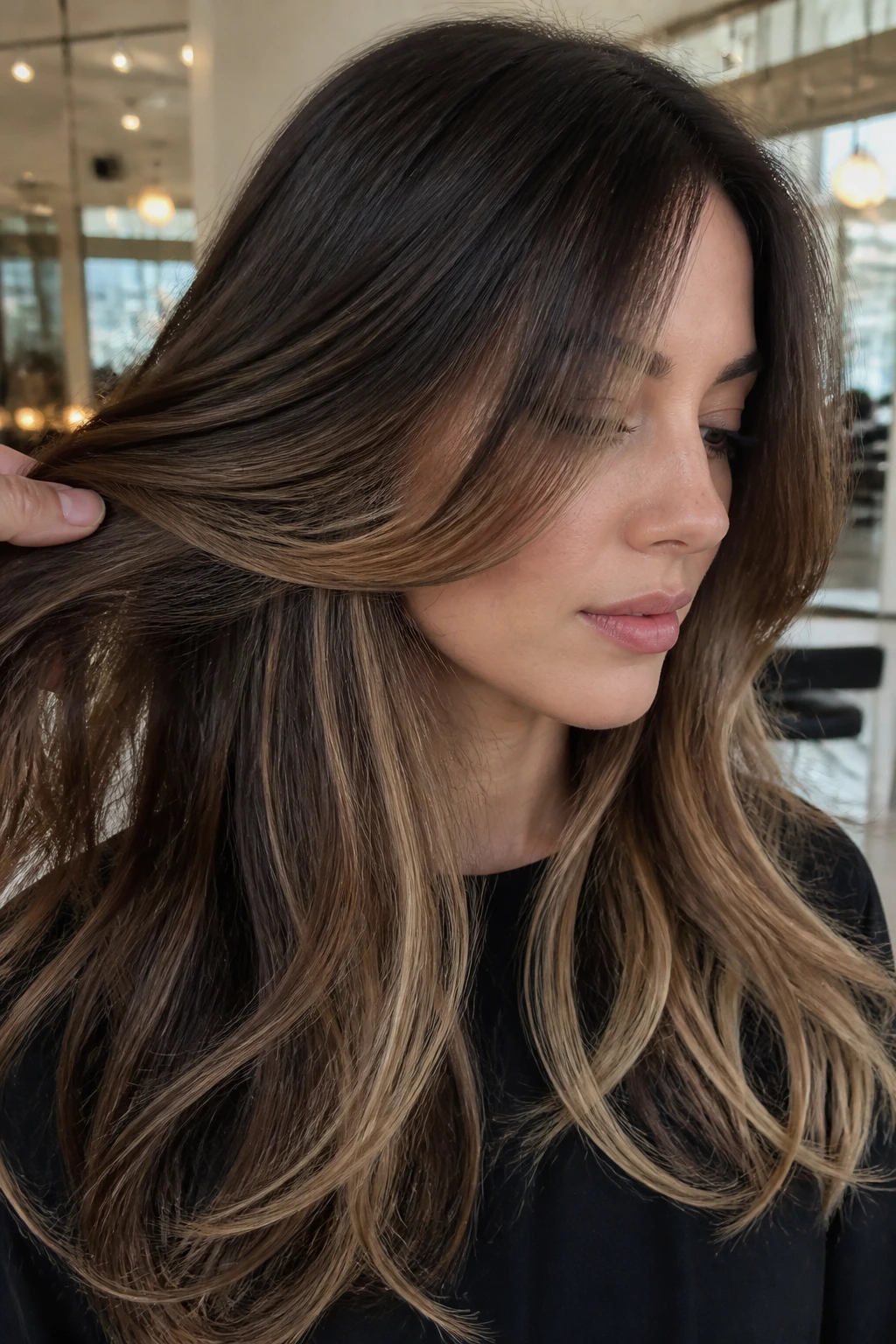
Peekaboo foilayage is for people who want dimension but don’t want the whole head talking at once. The color lives under the top layers, near the interior and the lower sections, so it only appears when the hair moves, flips, or gets tucked back. It’s a quieter kind of fun.
This version is excellent for people who work in more conservative settings or simply prefer a color that feels a little secret. The base stays mostly intact, which also makes the grow-out easier. You can keep the surface close to your natural color and still have something interesting happening underneath.
I like peekaboo placement on layered cuts because the haircut does half the work. Every swing of the hair reveals a different patch of light. That makes the color feel deeper than a single surface layer ever could.
18. Contour Foilayage Around the Hairline and Crown
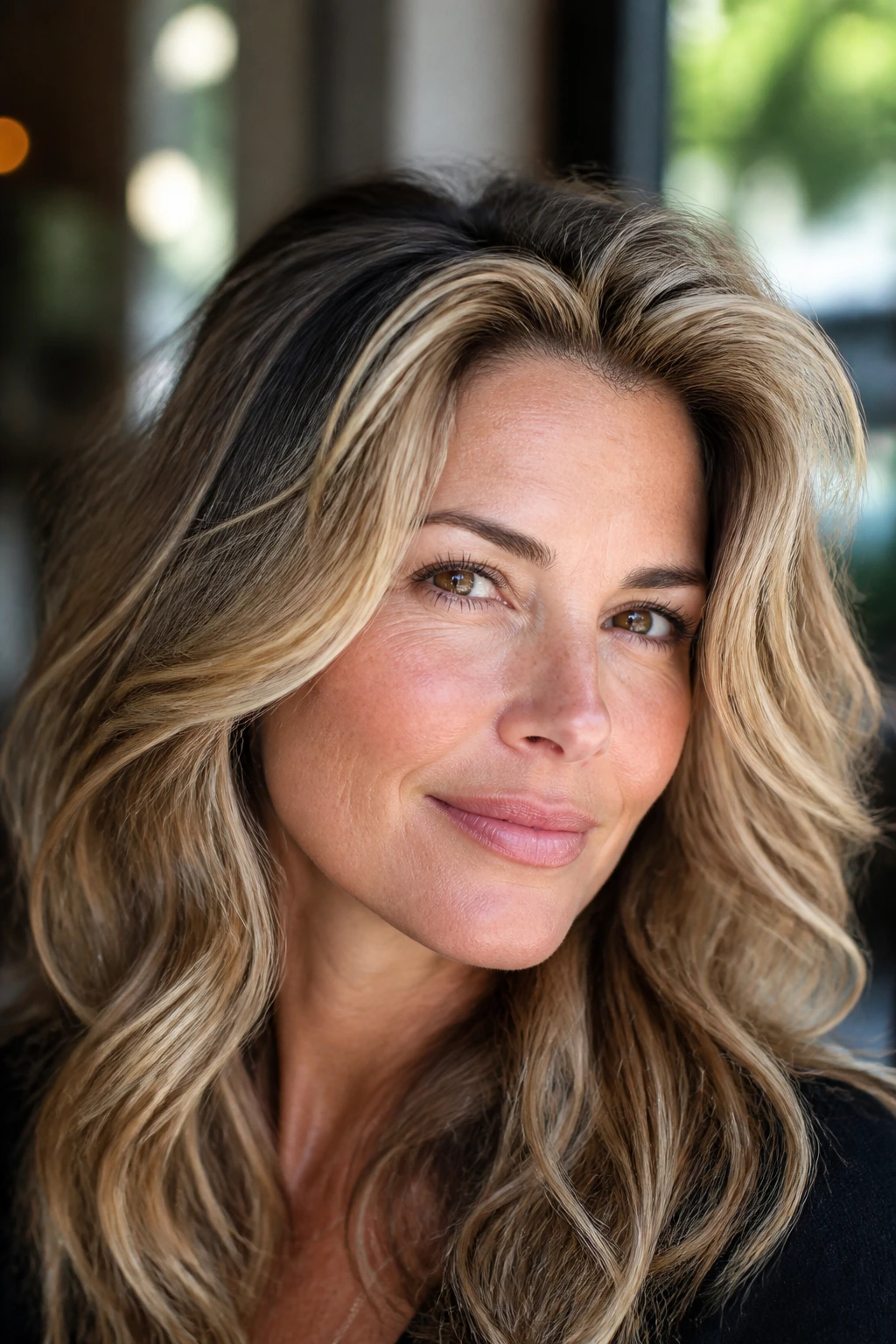
Contour foilayage borrows the logic of makeup contouring: brighten where you want attention, keep depth where you want shape. Around the hairline and crown, that means a few strategic ribbons can change how the whole cut reads. The face gets framed, the top gets lift, and the rest stays calm.
Why It Looks Polished
The crown is where flat color dies first. A little light up top gives the hair air and keeps the silhouette from collapsing. Around the hairline, the brighter pieces can soften the forehead, cheekbones, or jawline depending on where they fall. That’s why this technique works so well on layered cuts and bobs that need a little visual movement.
My Rule
Do not spread the brightness evenly. Uneven, but intentional, is what makes contour foilayage work. A few brighter pieces near the part, a few around the temples, and softer depth elsewhere will usually beat a uniform highlight every time.
19. Walnut Foilayage with Low-Contrast Depth
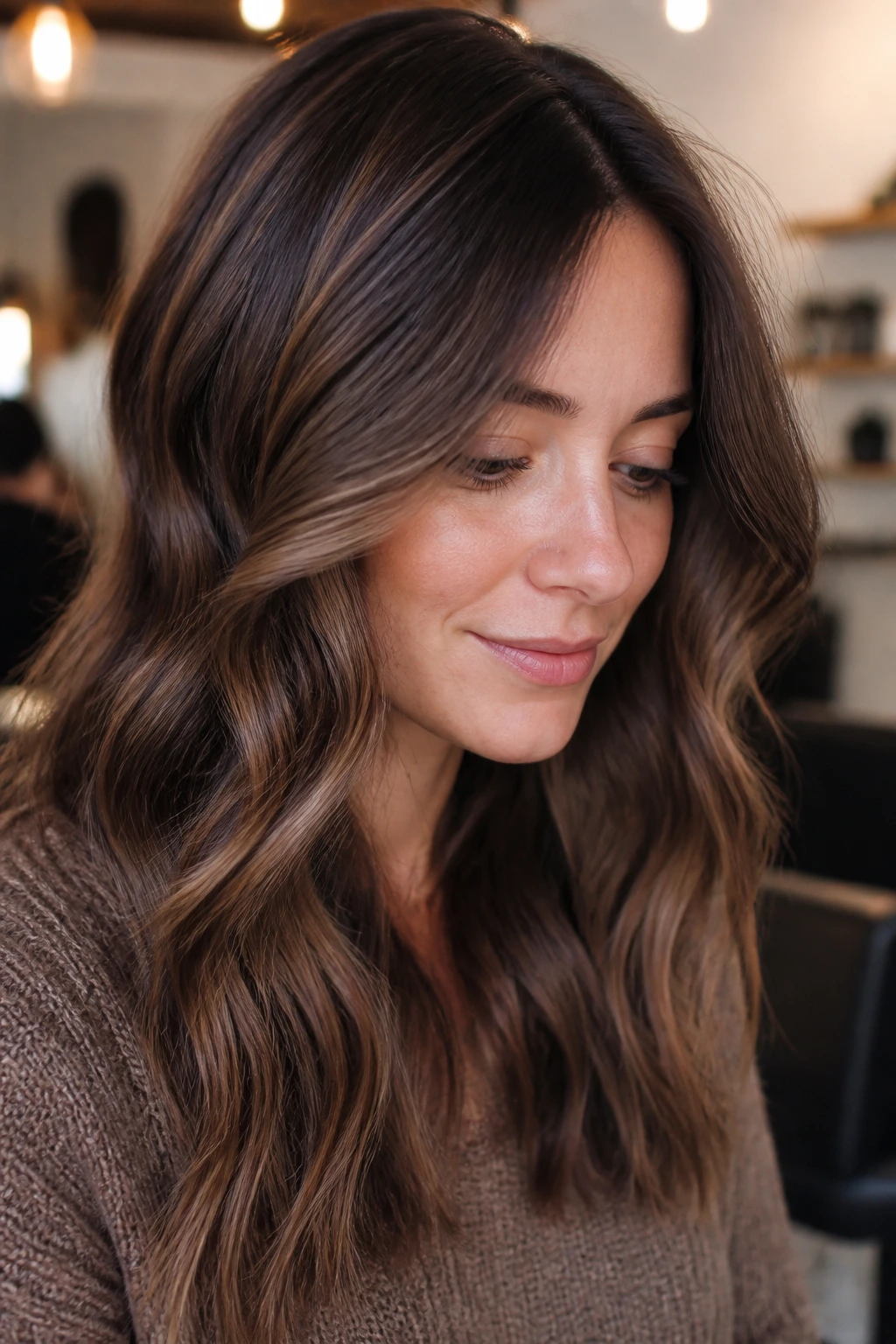
Walnut is for the person who wants dimension but hates obvious contrast. The tone stays in the brunette family, with soft walnut, mocha, and muted caramel playing together. Foilayage gives the lifted pieces enough definition to show, while the low contrast keeps the look grounded and expensive in the plain sense of “I can’t quite tell what changed, but the hair looks better.”
This is a useful option if you wear a lot of dark clothes or prefer a natural makeup look. The hair won’t fight the rest of your style. It will sit beside it. I also like walnut foilayage on mid-length cuts because the subtle movement shows best when the hair has a little swing.
If you’re nervous about going lighter, start here. It’s one of the least risky ways to add depth and shine without committing to a major blonde shift.
20. Platinum Veil Foilayage for Bright Blonde Lovers
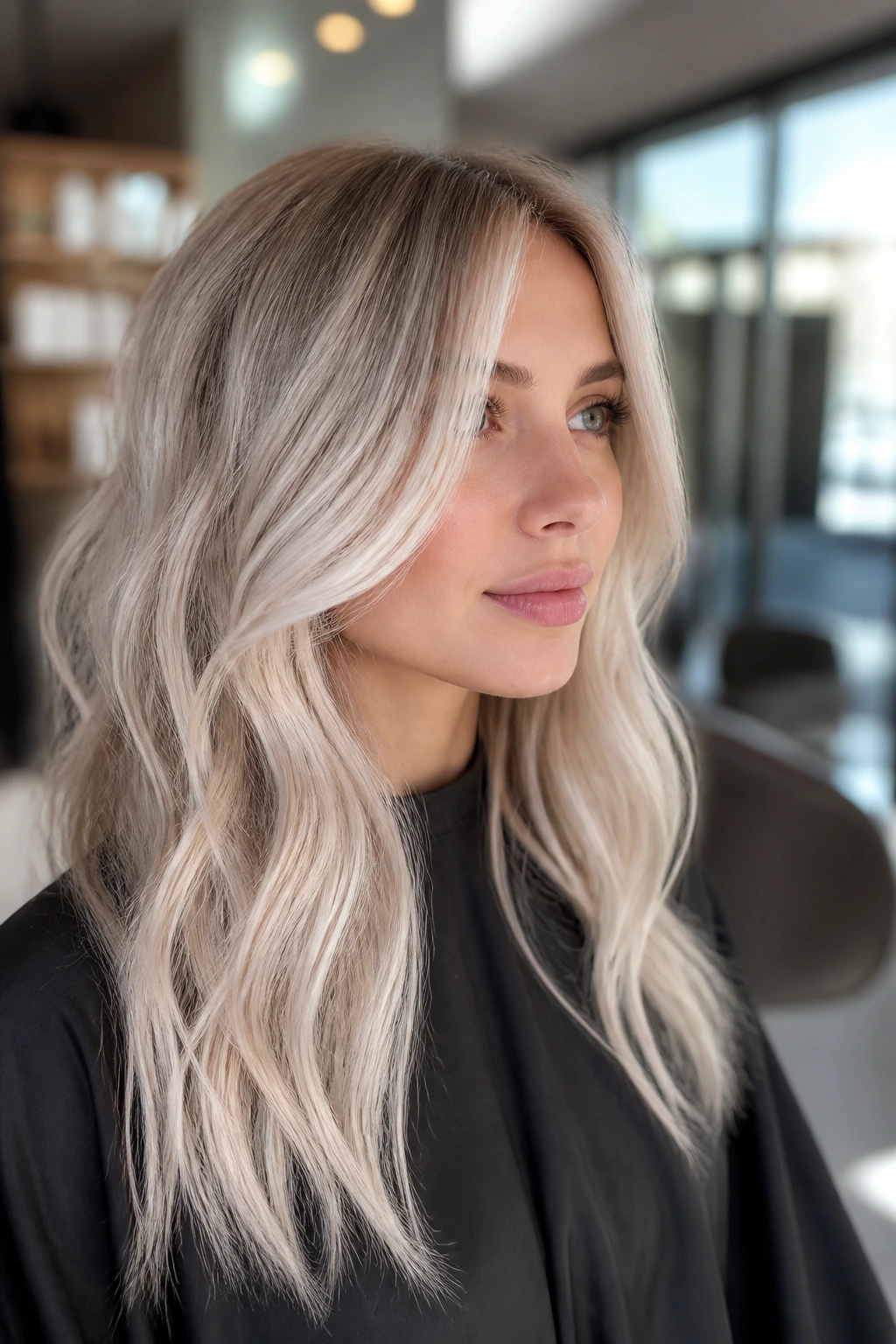
Platinum veil foilayage is not for someone who wants a whisper. It’s for the person who wants brightness but still wants a shadowed root and a little softness around the edges. The “veil” part matters: the platinum should be distributed in fine, controlled ribbons, not dumped on the head like a sheet.
The best version has a cooler root melt so the platinum can look deliberate instead of stark. That transition keeps the hair wearable between appointments. Without it, the grow-out turns noisy fast. On the right base, this can be gorgeous—icy, clean, and very reflective.
Good to Know
- This usually works better on hair that already lifts well.
- Fine foils keep the platinum from looking blocky.
- A gloss refresh matters here more than on warmer looks.
- Heat styling can make the tone look yellow if you skip protectant.
Bright blonde is lovely. Blunt, over-processed blonde is not. There’s a difference.
21. Rose Beige Foilayage with a Soft Blush Cast
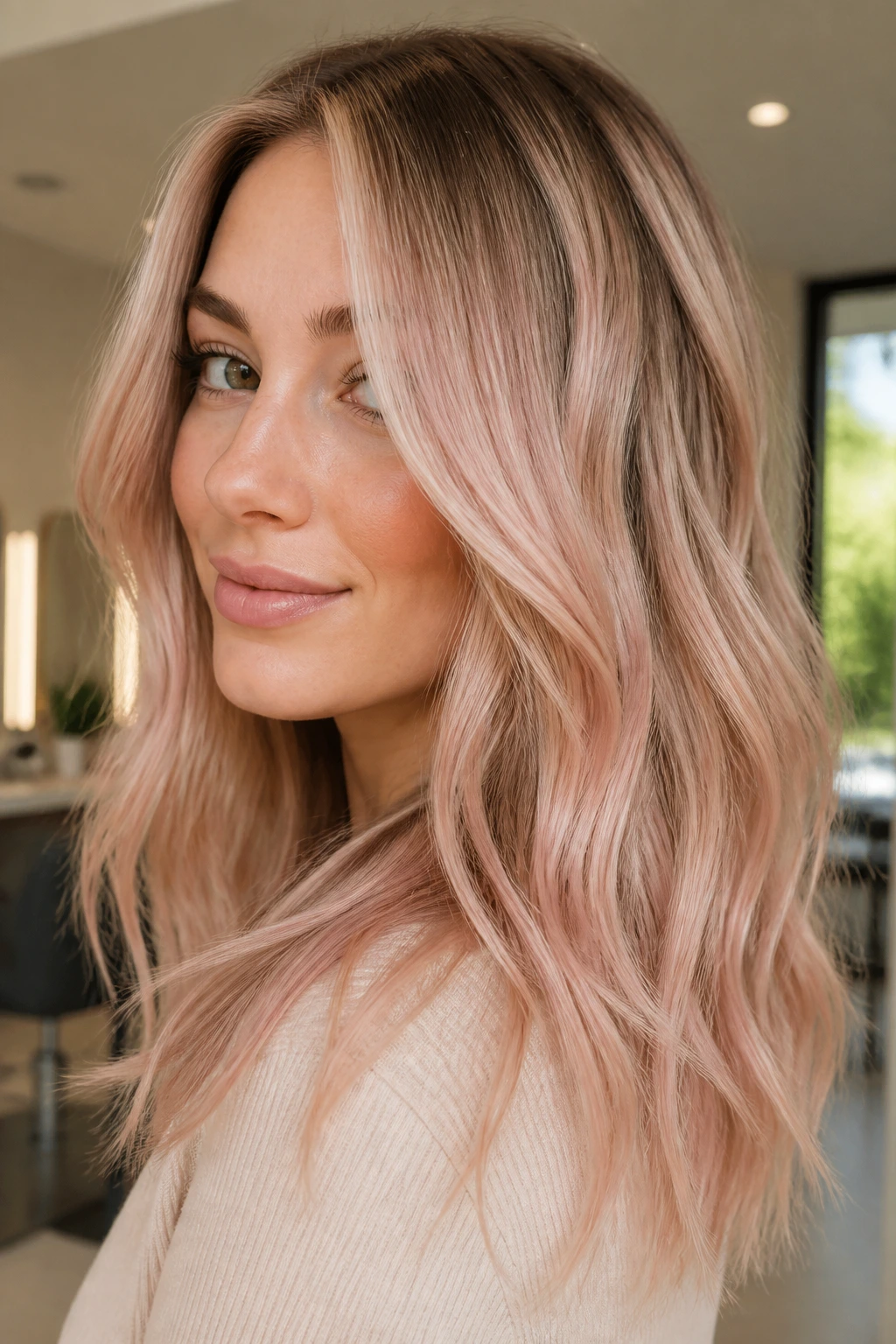
Rose beige is one of my favorite ways to keep light hair from feeling tired. It sits between neutral beige and a faint blush tint, which makes the color feel fresh without crossing into pastel overload. Foilayage gives the light pieces enough lift to hold the rose tone, while the base stays soft and natural.
Why It’s So Wearable
The rose note is subtle enough that it reads as warmth, not pink hair. That matters. You want the blush effect to live in the reflection, not shout from across the room. On lighter bases, the result can feel very soft and airy. On darker blonde bases, it becomes more of a warm beige with a pinkish cast.
I’d choose this if you like neutral makeup, cream sweaters, and hair that looks as if it has a filter on it without actually needing one. A little odd to say, but that’s the closest description I have.
22. High-Contrast Bronde Foilayage with a Dark Root
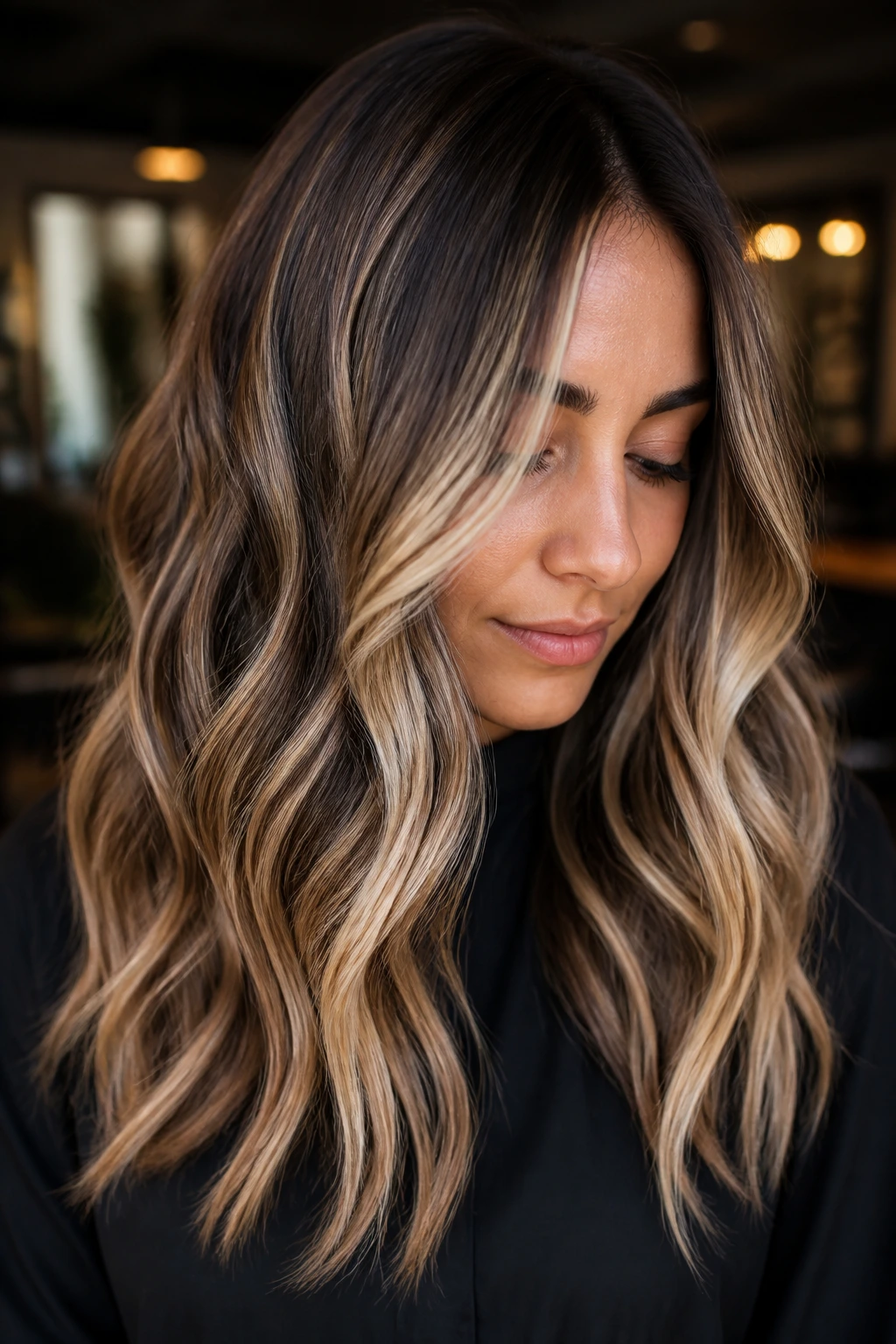
High-contrast bronde is for people who like seeing the difference. The root stays deep, the ribbons go lighter, and the in-between tones do the hard work of blending the two. It sounds dramatic, but foilayage keeps the dramatic part under control by softening the transition through the mids.
This look is stronger than the low-contrast versions in the list, yet still easier to wear than a full blonde. I like it on layered cuts and long bobs because the contrast shows through the movement. The ends can be beige, honey, or even a smoky blonde depending on how much warmth you want to keep.
If your hair is naturally dark and you want the color to read from across the room without looking blocky, this is one of the best options. The root gives it depth. The ribbons give it life. The trick is not to overfill every section with light, or the whole thing turns muddy.
Why Foilayage Gives You Softer Lift Than Classic Highlights
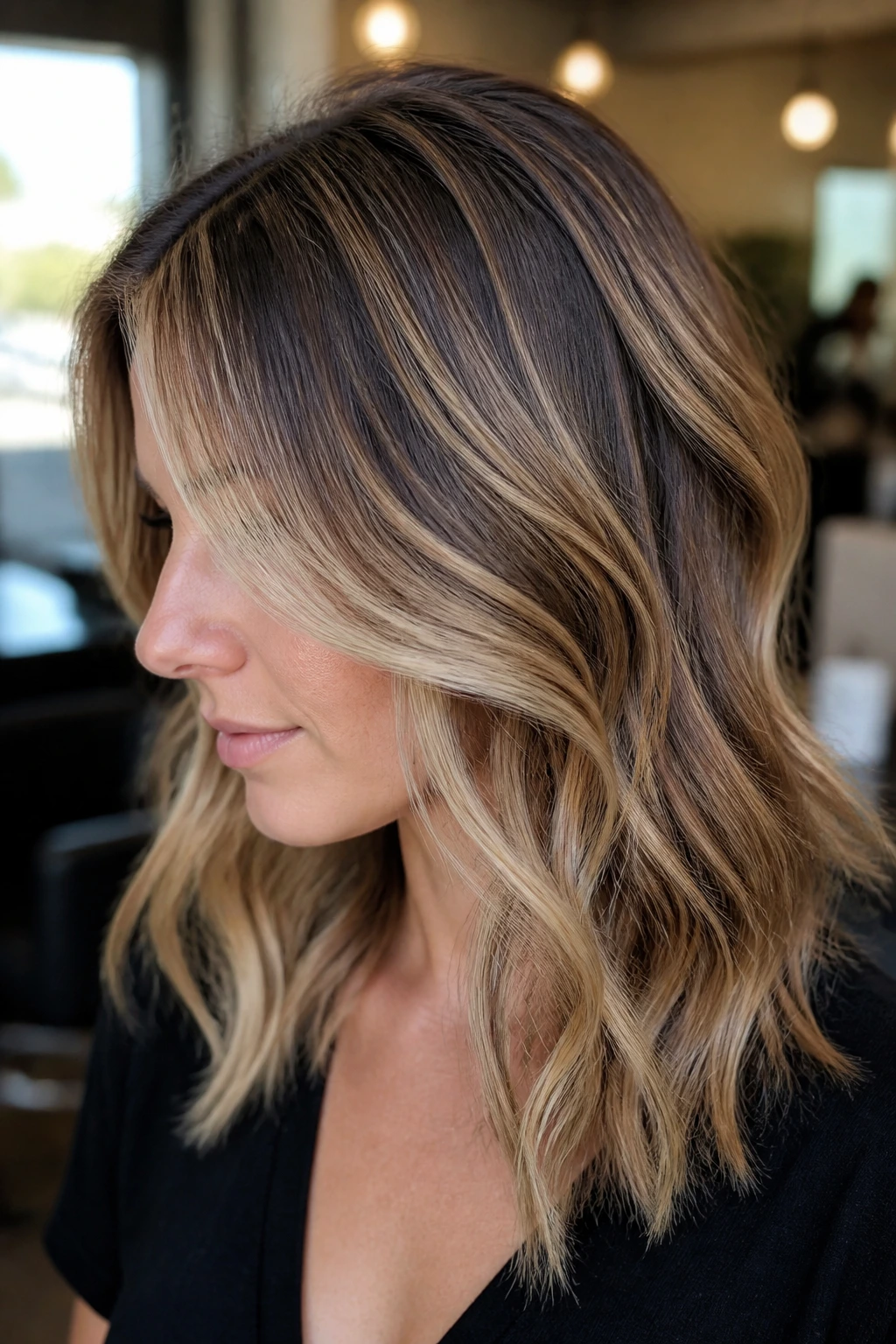
Foilayage lives in the space between painted freedom and controlled lift. That’s why it often looks softer than classic highlights. Traditional foils can stack brightness from root to tip in a very even way, which is neat but not always flattering. Foilayage lets you keep the hand-painted irregularity while still using the foil to push selected sections lighter.
The foil itself changes the chemistry of the lightening process. Heat stays inside the packet, the section processes more evenly, and resistant hair usually lifts cleaner. On darker brunettes and reds, that matters a lot. You can get to a beige, caramel, or blonde result without burning through the whole head just to make one stubborn panel cooperate.
What I like most is the grow-out. A regular highlight often leaves a stronger line near the scalp. Foilayage tends to leave a softer bridge between the new growth and the lighter pieces, which means the color can sit quietly for longer.
Essential Tools for Foilayage Appointments
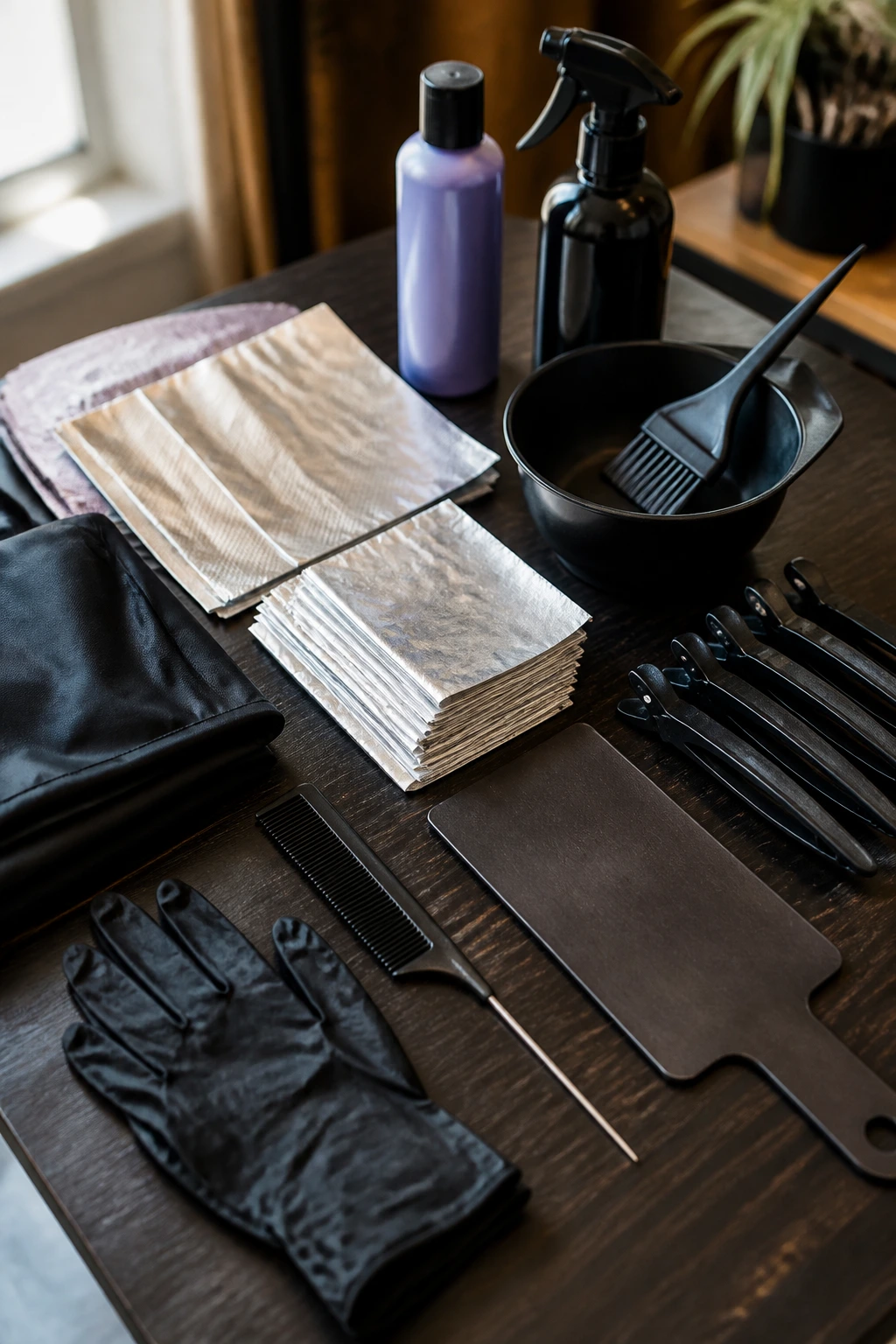
- Foil sheets or pre-cut foils: The whole technique depends on clean separation and controlled lift.
- Balayage board or paddle: Helpful for hand-painting sections smoothly before folding them in foil.
- Sectioning clips: Small duckbill clips or sturdy clamps keep the haircut organized.
- Tail comb: Good for clean partings and fine weave placement.
- Color brush and bowl: Use a brush that can hold enough product for even saturation.
- Lightener and developer chosen for the hair history: Previously colored hair needs a different approach than virgin hair.
- Bond builder: Worth having on the table when the hair is already dry, porous, or layered with old color.
- Toner or demi-permanent gloss: This is what turns raw lift into beige, smoky, pearl, copper, or rose-beige.
- Gloves and a cape: Basic, yes. Still necessary.
- Purple or blue shampoo: Optional, but useful for blondes and cool brunettes between appointments.
- Heat protectant spray: Non-negotiable if the hair is being blown out or styled with hot tools after coloring.
Smart Shade Choices for Base Color, Toner, and Maintenance
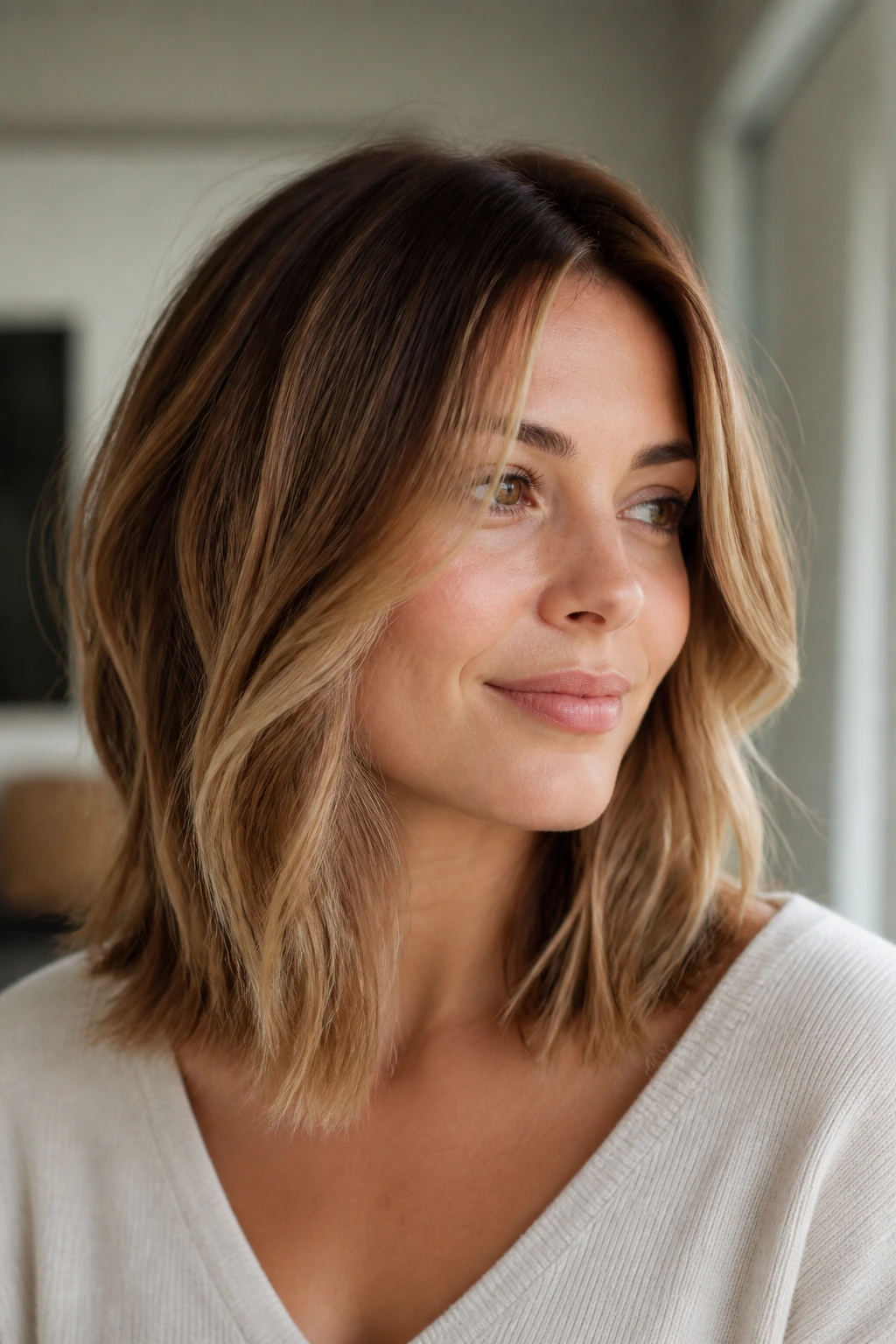
The smartest foilayage starts before the foils even go in. Base color matters more than people think, because the same blonde ribbon can look beige, brassy, or flat depending on what’s underneath it. A level 5 brunette with a warm pigment load will not behave like a level 7 dark blonde. The toner needs to respect that.
I’d always bring two photos to a colorist: one in daylight and one indoors. Lighting changes foilayage faster than almost anything else. A caramel look can read amber in the sun and cinnamon indoors. A pearl blonde can look icy in one room and soft beige in another. If you know which version you want to live with, say that out loud.
If your hair has old color, permanent dye, or a heavy gloss history, mention it. That history controls how far the hair lifts and how clean the tone looks afterward. And if you like warmth, say so. People often ask for “natural” and end up surprised when the toner leans too ash. Natural can mean beige, gold, smoky, or copper. Be specific.
How to Wear Foilayage So the Dimension Shows Up
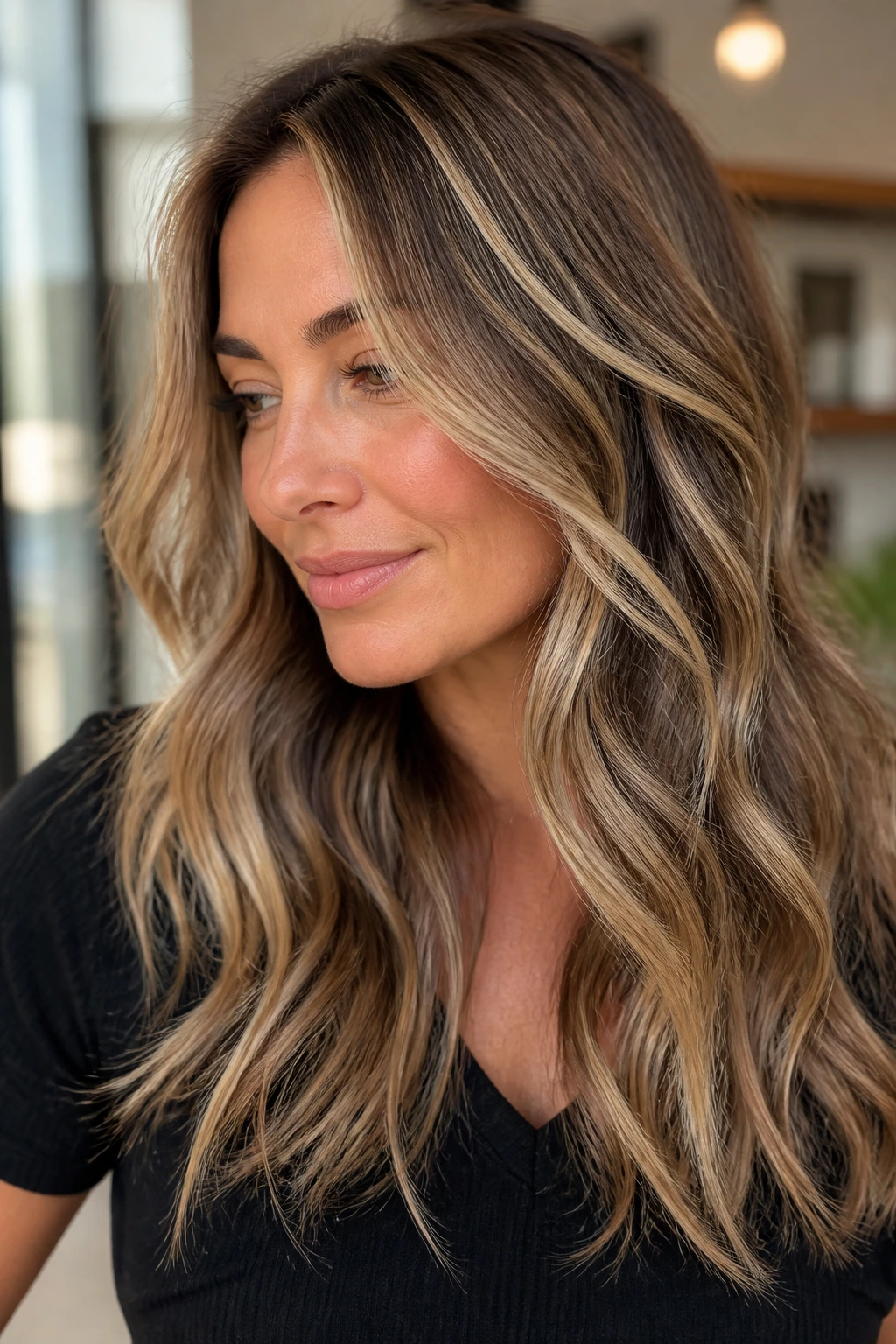
Styling shape: Loose bends, a brushed-out wave, or a round-brush blowout shows foilayage better than pin-straight hair. The ribbons need motion to do their work, and a tiny curve at the ends is usually enough.
Best cuts: Long layers, curtain bangs, collarbone lobs, and soft shags give the color room to move. A blunt cut can still work, but it needs more deliberate placement because there’s less texture for the light to hide in.
Parting choice: A center part makes symmetrical face-framing bright pieces look clean. A side part gives you a little more lift at the heavier side and can make a darker root look richer. If your part changes a lot, tell the colorist so the front foils don’t end up fighting the way you actually wear your hair.
Finish: A glossed or blow-dried finish usually shows the dimension better than a rough, air-dried one. The surface reflects the light, and the ribbons become easier to see. If you’re curly, a diffuser or curl cream can do the same job without flattening the pattern.
Additional Tips and Tone Tweaks
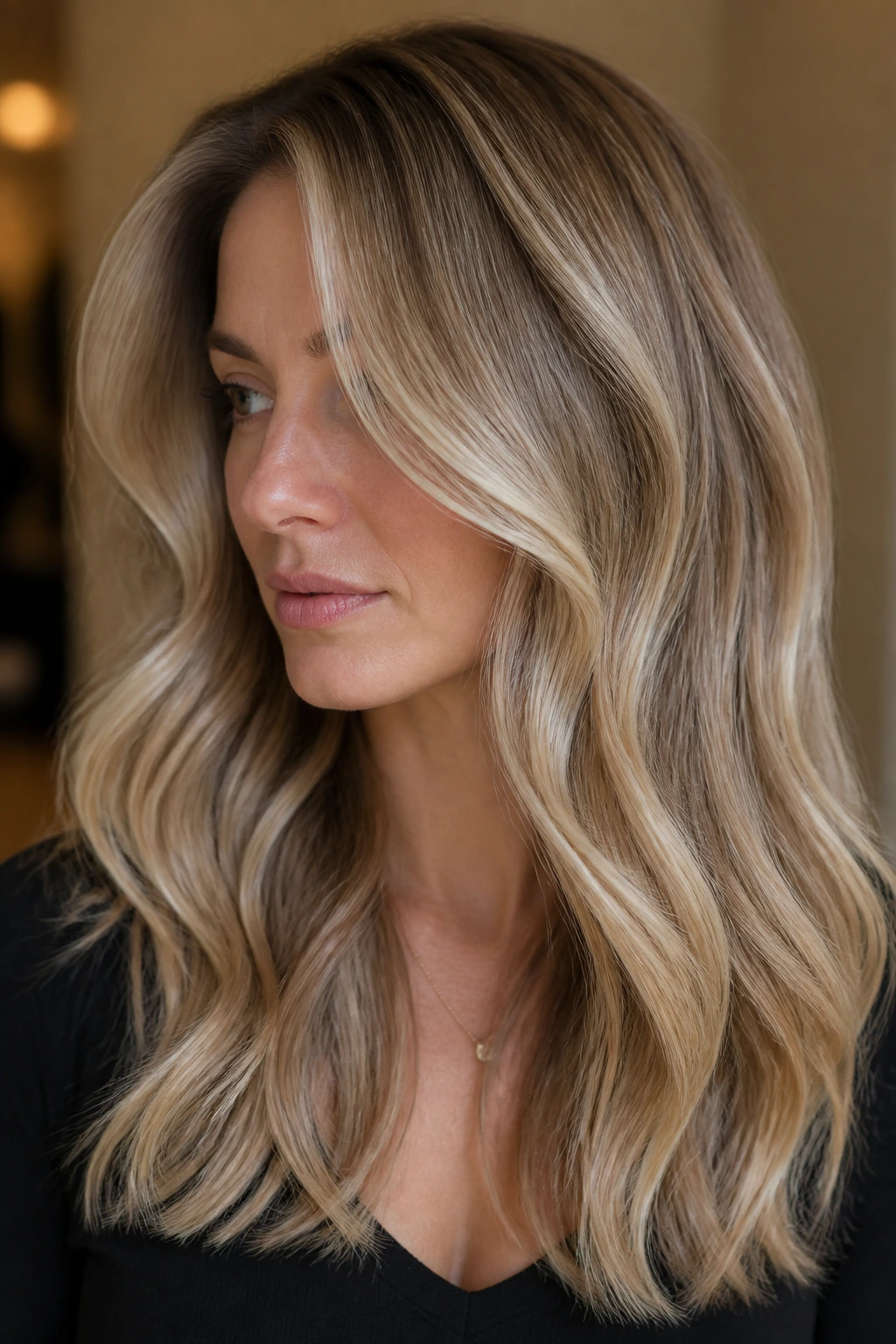
Placement Control: If you want the look softer, keep the brightest pieces below the part line and around the face. If you want more punch, place one or two stronger ribbons in the front and keep the back more muted.
Tone Control: Beige and pearl tones read softer than flat ash. Warm bronze and caramel tones read richer, not brighter, so they’re useful when the goal is dimension without a lot of obvious blonde.
Gloss Move: A demi gloss every 6 to 8 weeks keeps the color from drifting muddy or chalky. It’s a small appointment, but it does a lot of work, especially on porous ends.
Make-It-Yours: For low-maintenance wear, keep the root one to two levels deeper than the mids. For a bolder result, raise the contrast at the face frame and let the rest of the head stay quieter.
Finishing Touch: A light serum on the mids and ends can make the ribbons read cleaner than a heavy oil. Too much product smothers the detail. A little shine is enough.
How to Keep Foilayage Fresh Between Salon Visits
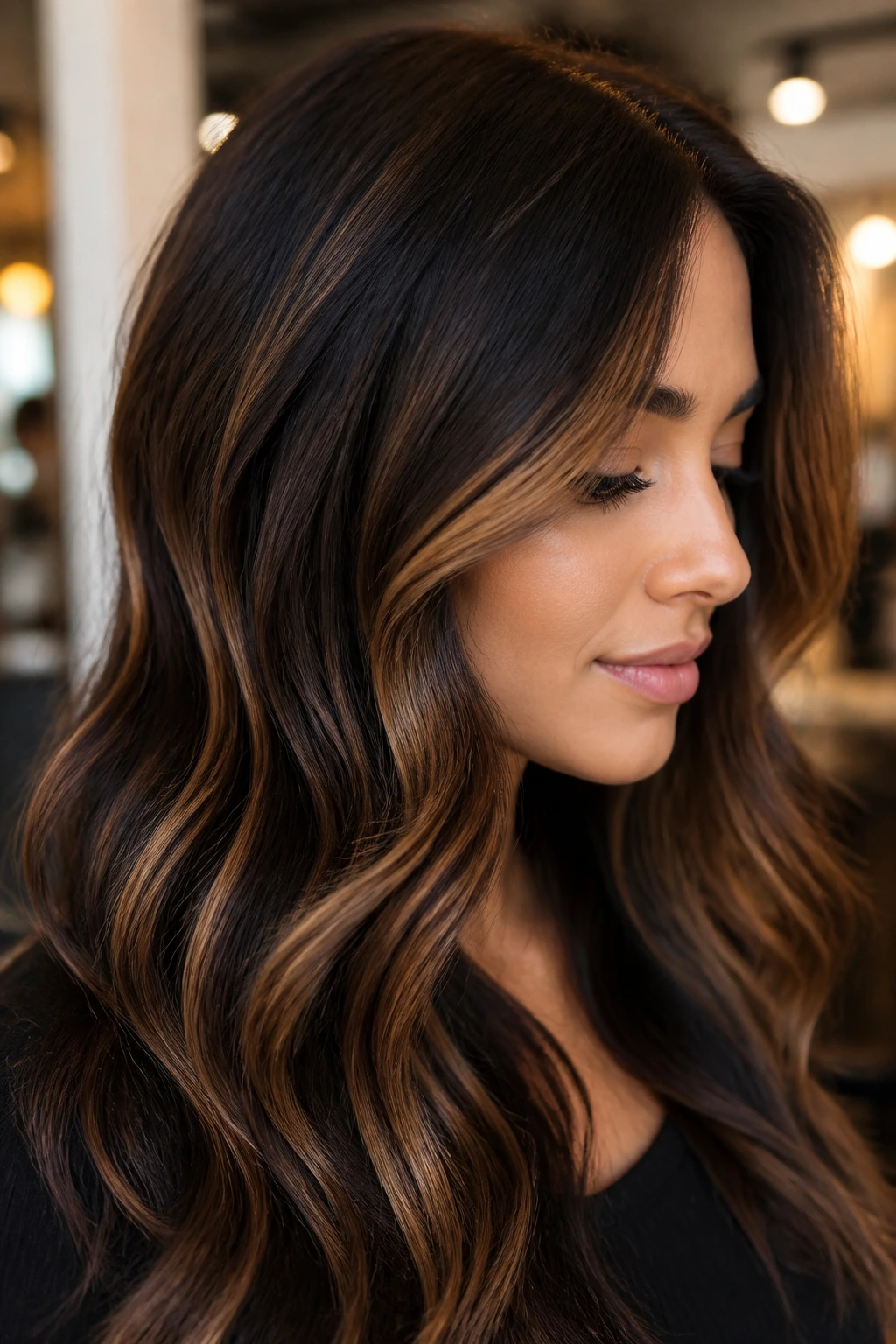
The first 72 hours matter. Skip heavy clarifying shampoo right after coloring, and keep the water lukewarm instead of hot. Hot water roughs up the cuticle and can make toner fade faster, especially on lighter blonde and pearl looks. A gentle sulfate-free shampoo is usually the safer daily choice if your hair is dry or porous.
Gloss refreshes are the secret weapon here. Many foilayage looks hold their shape best with a toner or demi glaze every 6 to 10 weeks, depending on how fast your hair fades and how hard the water is where you live. Blondes and rose-beige tones usually need the most attention. Brunette and caramel looks can often stretch longer.
Purple shampoo can help, but it’s easy to overdo. Once a week is often enough for cool blondes. On warmer brunettes, a blue shampoo or color-safe wash used too often can strip the richness you actually wanted. If the ends start to look dull or chalky, back off.
Heat protectant is not a suggestion. Blow-dryers, flat irons, and curling wands all chew up toner over time. If you use hot tools often, a trim every 8 to 12 weeks keeps the lighter ends from fraying and helps the color look cleaner between appointments.
Variations and Adaptations to Try
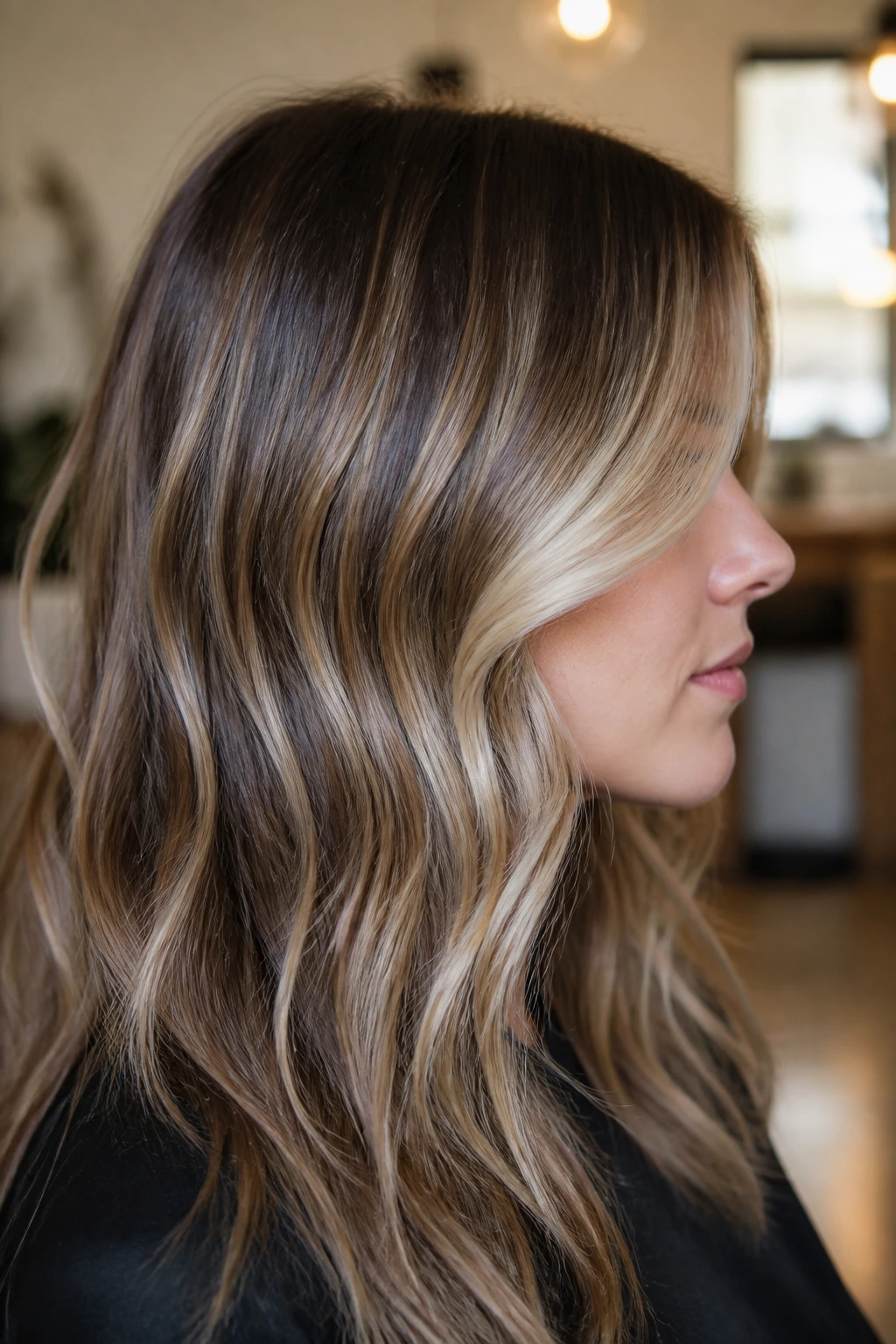
The Barely-There Ribbon: Cut the contrast by one level and keep the lighter pieces fine and sparse. This version works well if you want movement more than obvious color change, and it’s easier to maintain on hair that fades fast.
The Bright Face Frame: Push extra lift around the hairline and keep the back softer. This gives the haircut a little more presence in photos and can make a simple blowout look more finished.
The Cool Smoke Edit: Lean the toner toward beige, mushroom, or pearl. It suits people who wear a lot of black, gray, or crisp neutrals, and it keeps brunettes from going orange.
The Warm Honey Edit: Pull the tone toward caramel, gold, or copper-beige. This is the one to choose if your skin likes warmth and you want the hair to look rich rather than icy.
The Curly Halo Map: Place the lightness around the outer halo and long curl ribbons instead of through the tightest interior areas. That protects the curl pattern and makes the dimension show where the hair opens up.
The Grey-Blend Approach: Use foilayage to soften early gray around the temple and part while leaving plenty of depth. The grow-out is gentler, and the gray doesn’t have to be fully covered to look blended.
Common Mistakes to Avoid
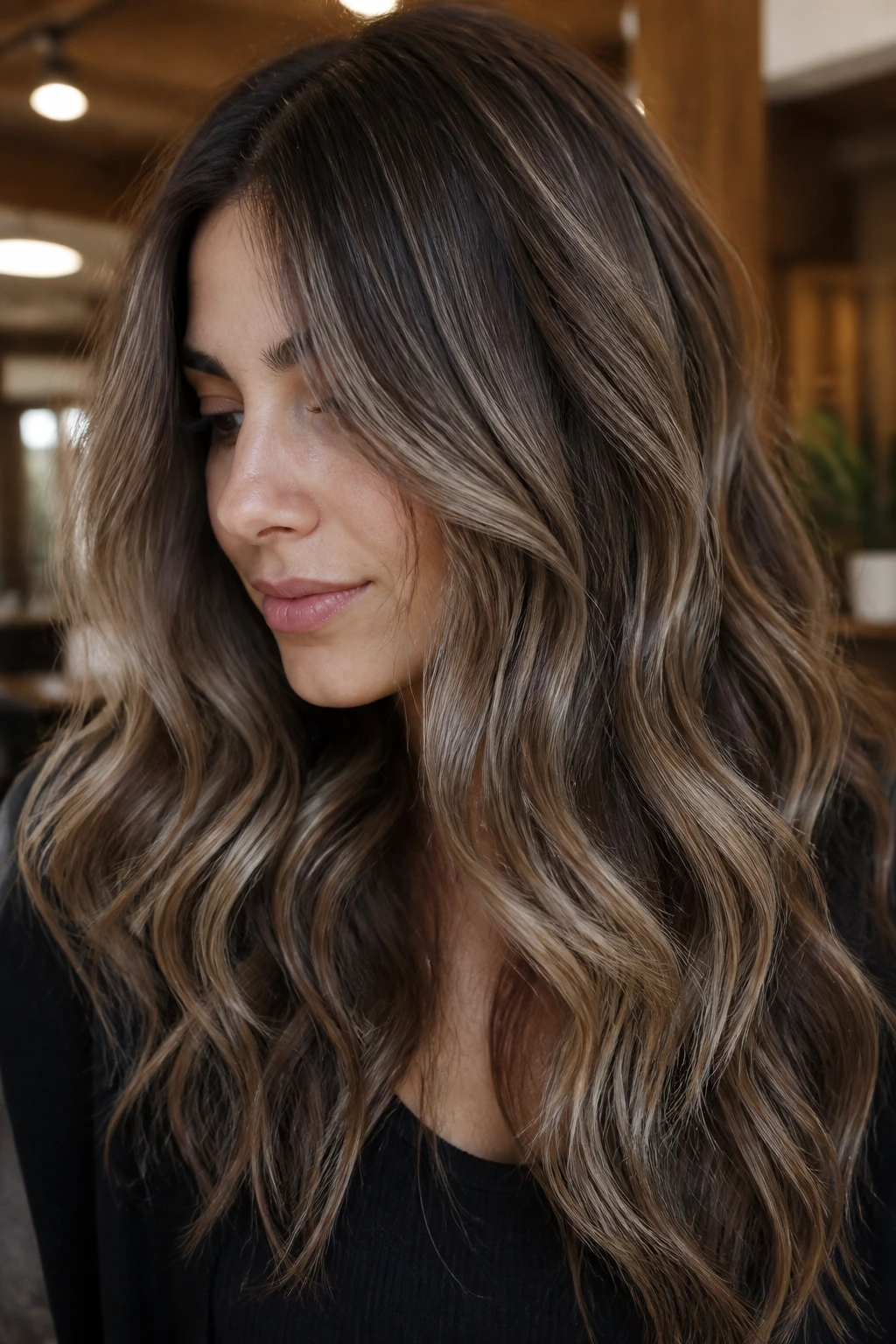
The first mistake is chasing too much brightness at the root. The hairline ends up looking striped, and the grow-out gets harsh fast. A deeper root shadow fixes that.
Another common problem is choosing toner by trend instead of by undertone. Ash can look chic on one base and muddy on another. If the lifted hair still shows gold or orange underneath, the toner has to answer that, not fight it blindly.
People also try to lighten dark or previously colored hair in one dramatic pass. That’s how you get bands, breakage, and a color that looks loud in the wrong places. Staged appointments usually do a better job and leave the hair in better shape.
Skipping the front is another one. The back might look lovely, but if the hairline stays flat, the whole style feels unfinished. Even one or two brighter ribbons near the temples can fix that.
And yes, purple shampoo can backfire. Used too often, it leaves blonde and pearl tones dull, chalky, or flat. Use it like a correction tool, not a daily habit.
Frequently Asked Questions About Foilayage
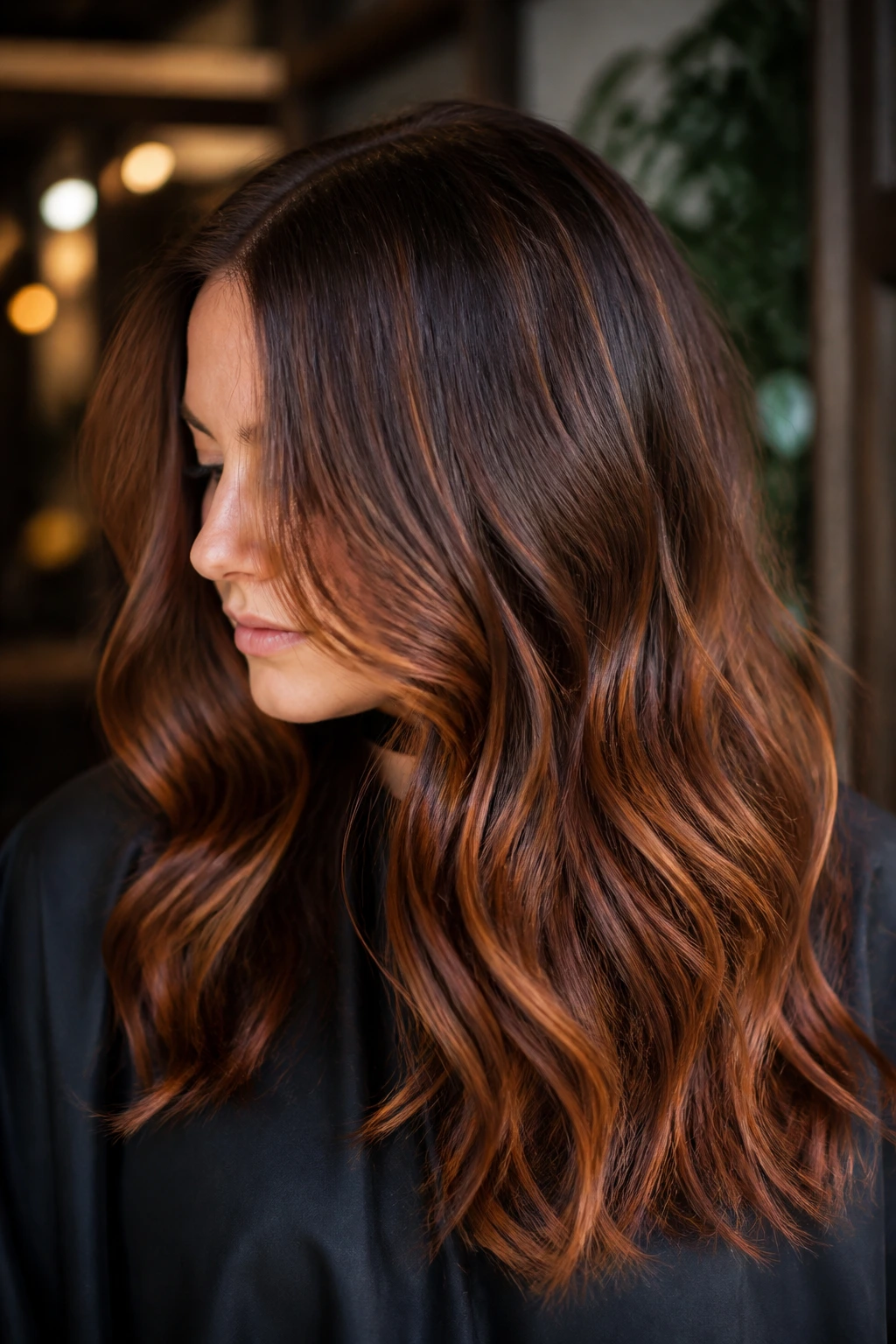
What’s the difference between foilayage and balayage?
Balayage is usually painted open-air for a softer, more diffused lift. Foilayage still uses hand-painting, but the sections go into foil, which traps heat and usually gives more lift and clearer brightness.
Does foilayage work on dark hair?
Yes, and that’s one of the reasons people like it. Dark hair often needs the extra lift from foils to reach caramel, beige, or blonde without looking muddy.
Can foilayage be done on curly hair?
Absolutely, but placement matters more. The foils should follow the curl pattern so the lighter pieces sit where the curls open, not buried inside the densest coil.
How often does foilayage need a refresh?
Most people book a gloss or toner refresh every 6 to 10 weeks and a bigger color appointment less often, depending on how soft they want the grow-out to look. Blonde and cool tones usually need earlier toning than caramel or brunette looks.
What if my highlights look stripey?
That usually means the placement was too even or the contrast was too strong at the root. A gloss, some lowlights, or a reverse foilayage pass can soften the line and bring back movement.
Can foilayage help blend gray hair?
Yes, especially if the goal is blending rather than full coverage. Fine, diffused ribbons around the part and temples can blur the gray into the natural base instead of painting over it.
Is foilayage lower maintenance than full blonde?
Usually, yes. Because the root stays deeper and the lightness is concentrated in selected sections, the grow-out tends to look softer and less urgent than an all-over blonde job.
What should I bring to my color appointment?
Bring 2 or 3 photos that show the root depth, the ends, and the front pieces you like. One image alone can be misleading, especially when lighting changes the tone more than people expect.
Soft Dimension That Grows Out Cleanly
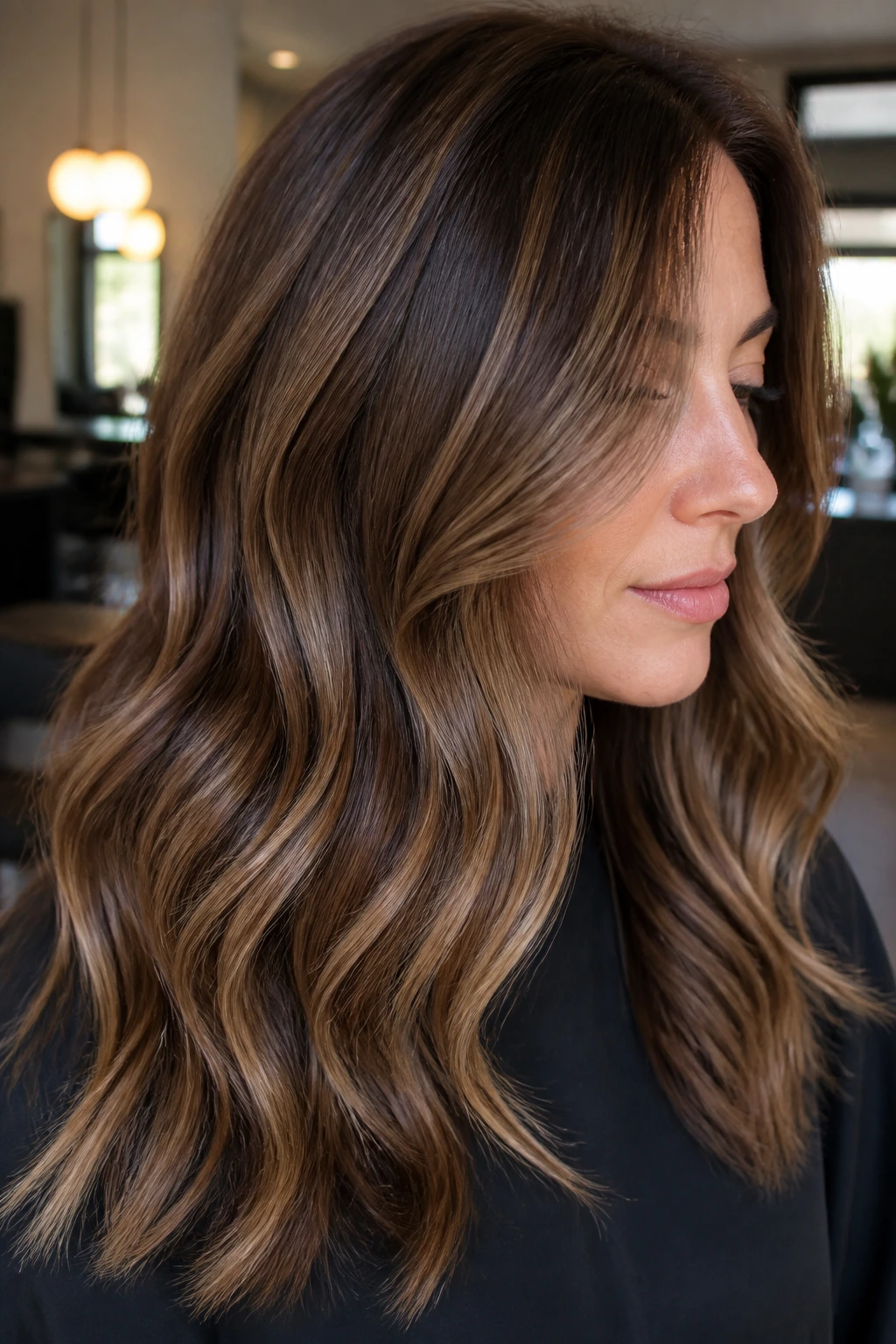
Foilayage works because it gives the hair room to breathe. The root isn’t forced to do too much. The brightness lands where movement can show it. And the tone can stay warm, cool, smoky, or pearl without losing the soft outline that makes the whole thing wearable.
That flexibility is what keeps this technique useful across brunettes, blondes, red tones, curls, straight cuts, and everything in between. Bring a photo, know whether you want warmth or coolness, and tell your colorist where you want the eye to land first. The rest is placement, patience, and a good gloss when the tone needs a tune-up.
