



Short blonde hair color ideas look simple until you sit in the chair and realize how unforgiving cropped hair can be. A bob shows every stripe. A pixie exposes the hairline. A bixie can go from chic to muddy in one bad toner choice, and there’s nowhere for that mistake to hide.
That is why the good versions are never just “blonde.” Beige, champagne, mushroom, butter, pearl, honey, oat milk — those names matter because each one changes how short hair reflects light around the temples, fringe, and nape. On a cropped cut, a tiny shift in tone can make the whole shape look sharper, softer, cooler, or warmer.
Short hair also gives you a few advantages long hair never quite does. A root shadow can make a pixie look deliberate instead of grown out. Face-framing brightness can pull attention straight to the eyes. And when the cut is clean, the color can do less heavy lifting — which is exactly why some of the smartest blonde looks are also the least fussy.
Why These Short Blonde Ideas Work on Real Hair
-
Short hair shows tone fast: A bob or pixie doesn’t have much length to disguise brassiness, so beige, pearl, and mushroom tones read more clearly than flat “blonde” ever will.
-
Root shadow matters more here: On short cuts, even a half-inch of depth at the scalp can keep the color from looking striped three weeks later.
-
Texture changes everything: The same blonde looks softer on a wavy crop, sharper on a blunt bob, and much more polished on a smooth pixie.
-
Less length means more precision: A few foils around the hairline or a narrow money piece can change the whole face without bleaching every strand.
-
Maintenance can be smarter, not heavier: The right short blonde often needs glossing and toning, not constant full-lightening.
1. Creamy Beige Pixie Blonde
Creamy beige blonde is the pixie color I reach for when someone wants softness without drifting into yellow. On a close crop, that beige tone keeps the cut from looking harsh, which matters more than people think. Short hair sits right against the face; if the blonde is too bright or too ash-heavy, you feel it immediately.
Why It Works on a Pixie
Beige sits in that useful middle ground between warm and cool. It makes the hair look light, but not chalky, and it gives the fringe and crown a little depth instead of one flat slab of color. Ask for level 9 to 10 lift, then a beige gloss with a neutral base so the finish stays creamy.
- Best for: Fine to medium hair that needs a softer, airier look.
- Ask for: A shadow root that’s only one level deeper than the mids.
- Avoid: Pure yellow toner. It can look brassy fast on short hair.
- Upkeep: Gloss every 4 to 6 weeks keeps the beige clean.
Pro tip: Keep the fringe just a touch deeper than the crown. It gives the pixie shape instead of making the whole cut look washed out.
2. Icy Platinum Buzz Cut
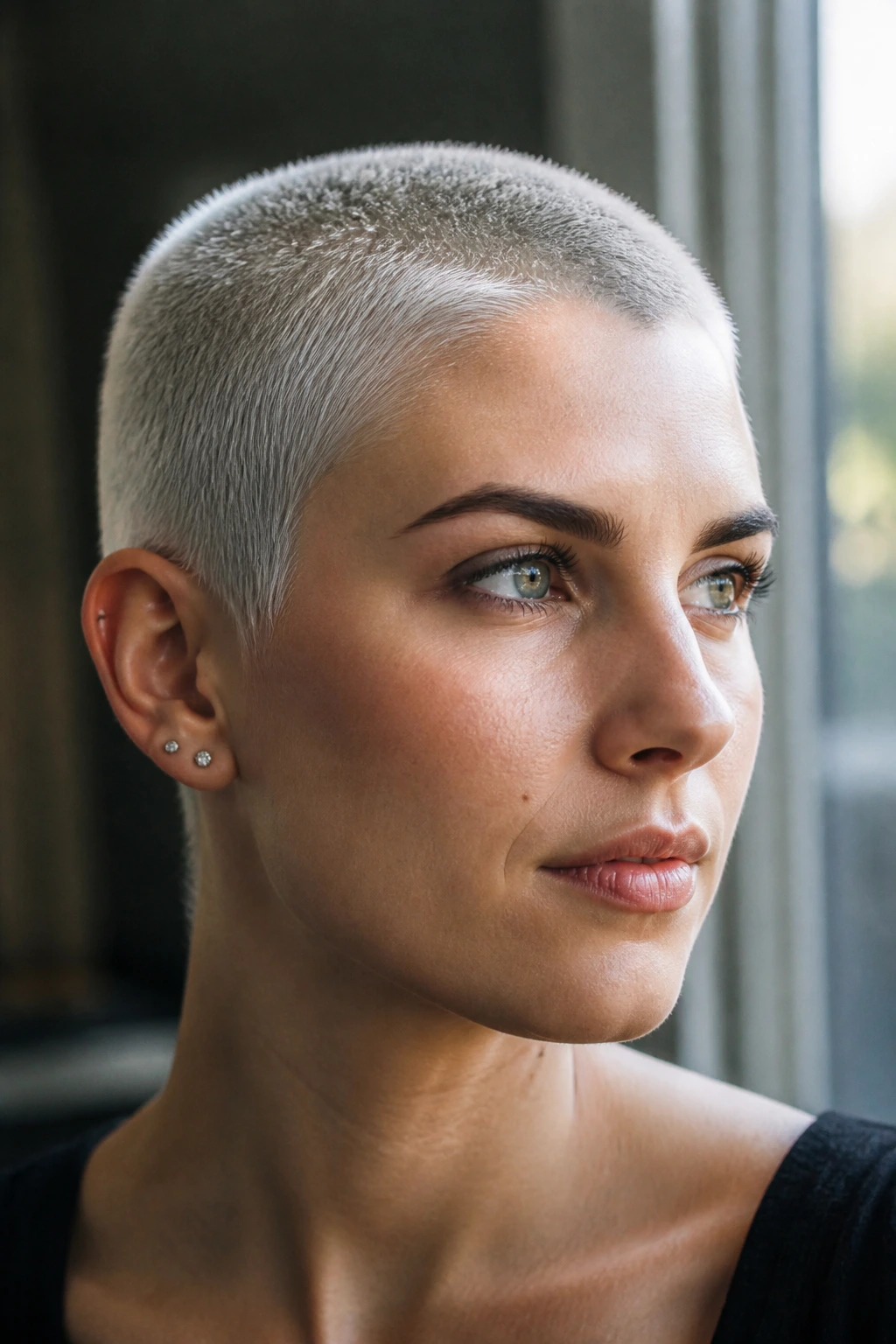
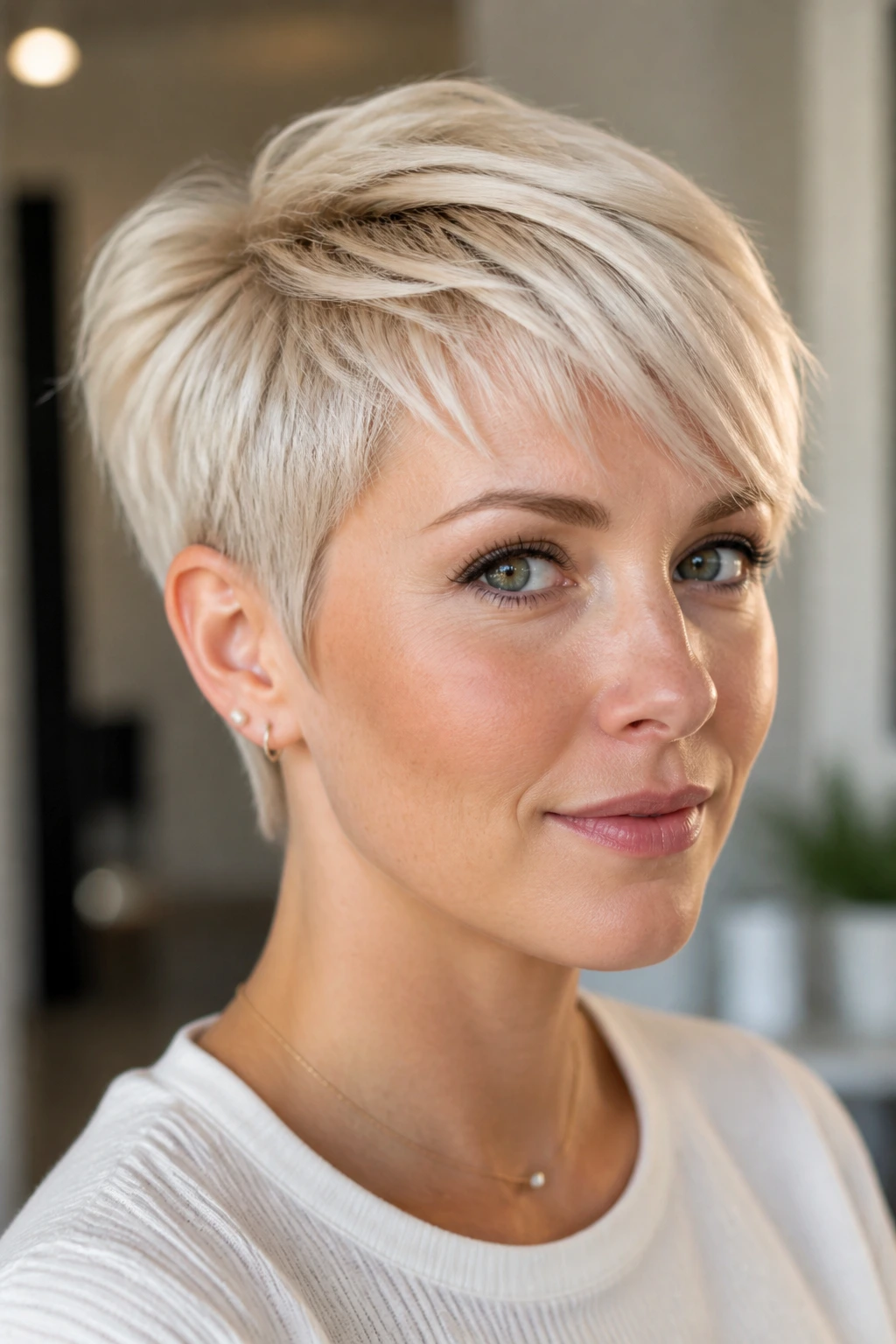
If you’re going to go platinum, a buzz cut is the least complicated place to do it. There’s less hair to saturate, less room for uneven lift, and the whole result reads intentional instead of overworked. That said, platinum on very short hair is brutally honest. Every missed spot shows.
The charm here is the contrast: a pale, almost white finish against a clean, tight shape. It looks sharp because it has no room to wobble. I’d call it the most high-maintenance low-length blonde on the list, which is a fancy way of saying it’s easier to bleach than a long haircut, but harder to get wrong.
Tell your colorist you want a level 10 icy finish with no yellow cast and a soft tone at the edges so the result doesn’t look raw. If your scalp is sensitive or your hair has old color in it, this is not the shade to rush.
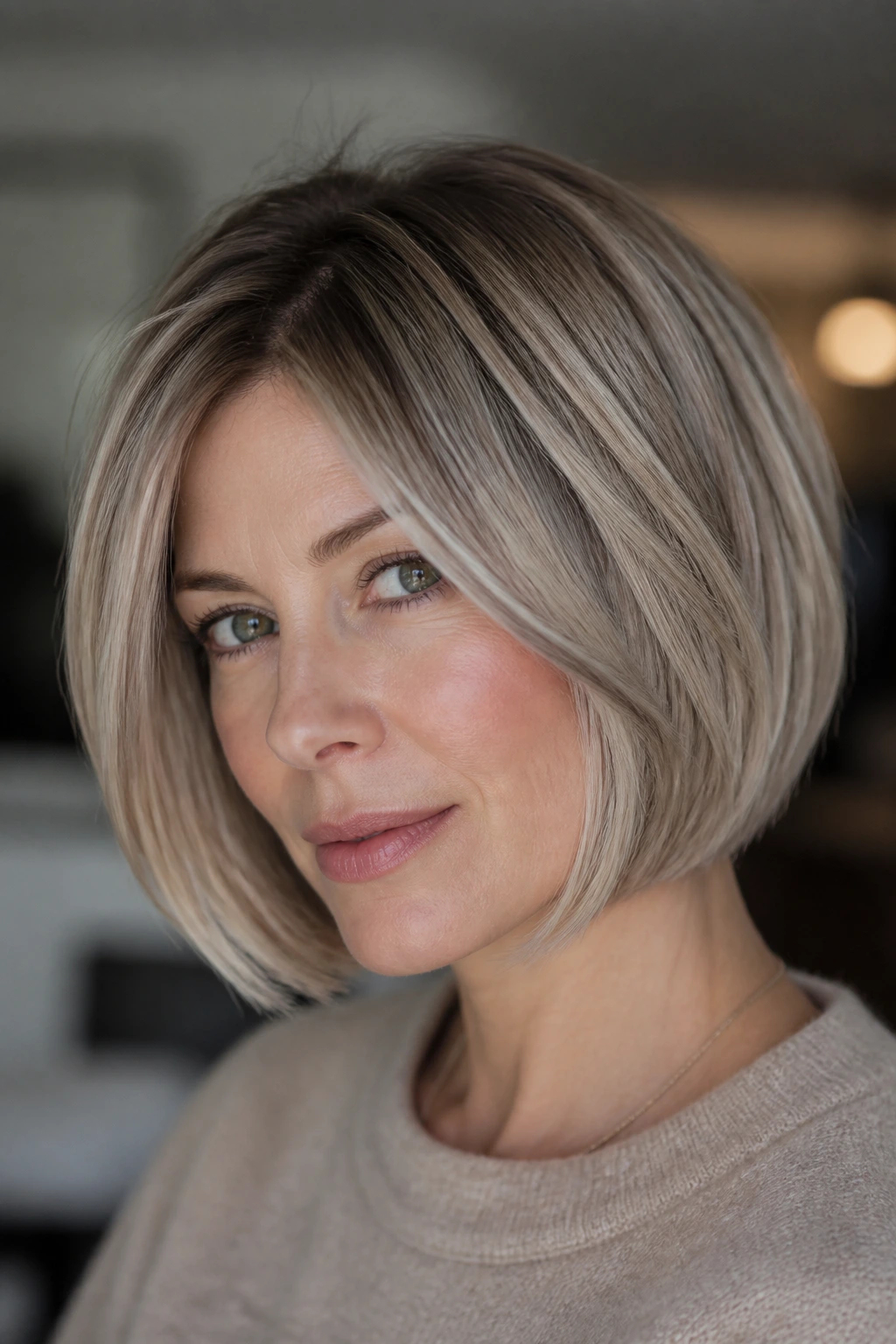
3. Mushroom Blonde Bob
Why does mushroom blonde keep showing up on short bobs? Because it gives the haircut dimension without screaming for attention. The color lives in that smoky beige zone — a little ash, a little taupe, a little softness — and it’s one of the easiest ways to make a blunt bob look expensive without making it light all over.
What Makes It Different
Mushroom blonde is what happens when you stop trying to make blonde bright for its own sake. It works because the darker root and cooler lowlights break up the shape, especially around the jaw and neck. On a bob, that movement matters. Straight across ends can look heavy; mushroom tones make them look tailored.
Ask for a root shadow and soft beige babylights through the surface, not streaky foil panels. If your natural hair is medium brown or dark blonde, this shade grows out with less drama than a bright blonde bob.
4. Honey Ribbon Lob
A honey ribbon lob is for the person who wants blonde but doesn’t want to look like they spent the afternoon fighting a toner bowl. It’s warmer, shinier, and more lived-in than icy blonde, and the ribbon placement keeps the cut from turning flat. On a lob, those lighter pieces move around when you turn your head. That motion is the whole point.
The best version doesn’t bleach every strand. Instead, it places honey-toned ribbons a shade or two lighter than the base, usually from the cheekbone down. That lets the darker roots stay useful. They anchor the color and keep the blonde from looking overprocessed.
This is one of the easiest short blonde looks to wear if your skin has golden or peach undertones. It also hides regrowth better than a full-head platinum because the eye sees blend, not line.
- Color story: Warm blonde through the mids with deeper roots.
- Cut pairing: Soft, collarbone-skimming lob or a slightly stacked bob.
- Best finish: Loose waves or a bend through the ends.
- Maintenance: Toner every 6 to 8 weeks, not every month.
5. Champagne Blended Bob
Champagne blonde works because it has lift without looking loud. On a short bob, that pale beige sheen catches light in a clean, glassy way, especially if the ends are blunt and the surface is smooth. It’s a polished color, but not a stiff one. There’s enough warmth in it to keep the face from going gray.
I like this shade most on hair that can hold a shine serum or gloss. It makes the whole bob look expensive in the plainest sense of the word — neat, glossy, and tidy at the edges. If the cut has a little internal layering, even better. The champagne tone will reflect differently on each section and avoid that helmet effect short blondes can get.
Ask for soft beige highlights, a neutral toner, and a very light root melt. If the colorist starts talking about “bright ice,” steer it back. Champagne is supposed to feel creamy, not frozen.
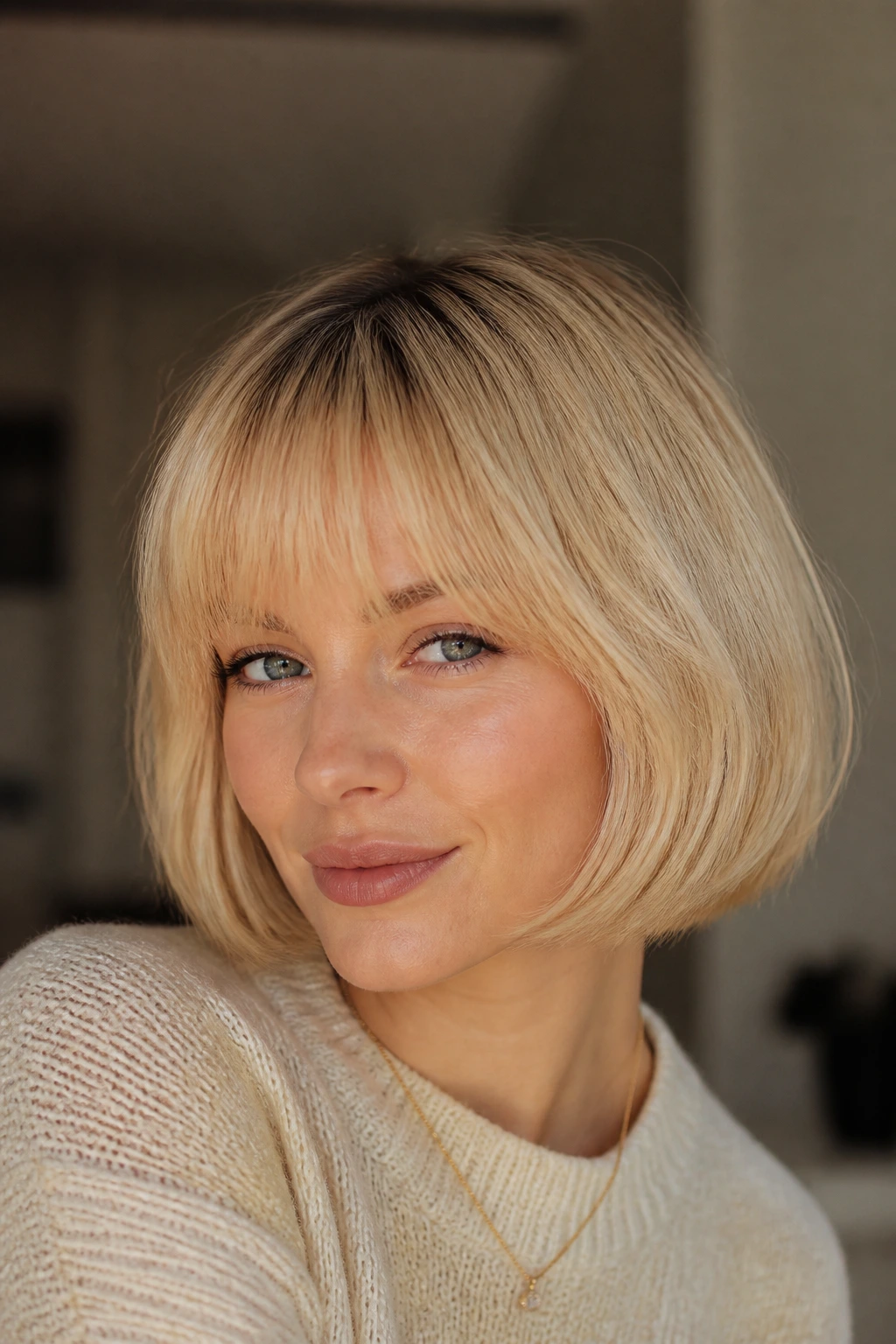
6. Butter Blonde French Bob
Butter blonde on a French bob has a certain old-film softness to it. The color is warm, but not orange. The cut is blunt, but not severe. Put those together and you get a short blonde that feels airy around the face, especially if the fringe sits just above the brows.
This shade is useful if your natural base already leans warm. A cold toner would fight your hair and your skin at the same time, which is a waste of everyone’s afternoon. Butter blonde lets the warmth stay, but edits it into something smoother.
Tell your colorist you want pale butter, not banana. That distinction matters. Too much gold can look brassy on a short bob, especially in overhead light. A soft beige-gold glaze usually does the trick, and it keeps the finish from getting flat.
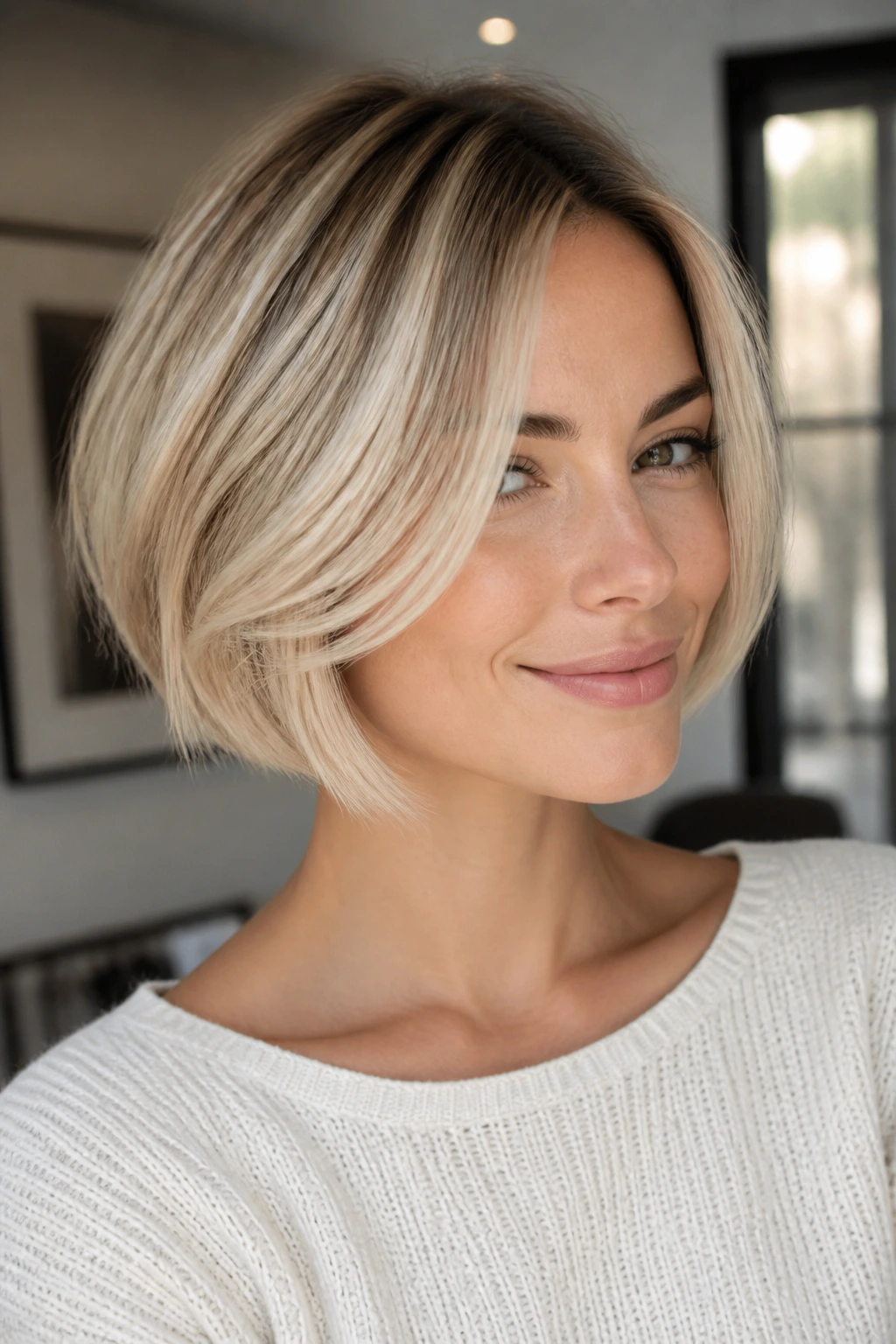
7. Rooted Beige Bixie
A rooted beige bixie is the low-drama blonde that still looks done. The bixie — that bob-pixie hybrid with a little length on top and a shorter neck — gives the color room to show off movement without demanding a full bleach every few weeks. The root shadow is the reason it works.
How to Ask for It
Keep the root slightly deeper, then fade into beige through the top and sides. The blonde should be brightest where the hair lifts around the crown and front, not around the whole perimeter. That keeps the shape alive as it grows out.
- Best for: Busy schedules and anyone tired of obvious regrowth.
- Best cut companion: Piecey bixie with longer top layers.
- Toner direction: Beige-neutral, not dusty ash.
- Touch-up rhythm: Root refresh every 6 to 10 weeks, depending on how fast your hair grows.
There’s a reason this one keeps showing up on real heads instead of just mood boards. It buys you time.
8. Pearl Blonde Crop
Pearl blonde has a cool sheen that looks almost iridescent in daylight. On a short crop, that matters because the cut exposes every angle at once. The color feels crisp, but the pearl reflect softens it just enough to avoid the flat, chalky look some cool blondes get.
This is one of the better choices for straight hair or a crop with a little bend on top. The smooth surface lets the tonal shift show. If the hair is porous or overlightened, though, pearl blonde can go dull fast. You need the tone to sit on a clean canvas.
What to Watch For
- The hair has to be lifted evenly to a pale yellow first.
- A violet-heavy toner can push the result too gray.
- A soft gloss is better than a harsh matte toner.
- The nape tends to fade first because of friction.
If you want crisp, cool, and a little reflective without going full silver, pearl is the lane.
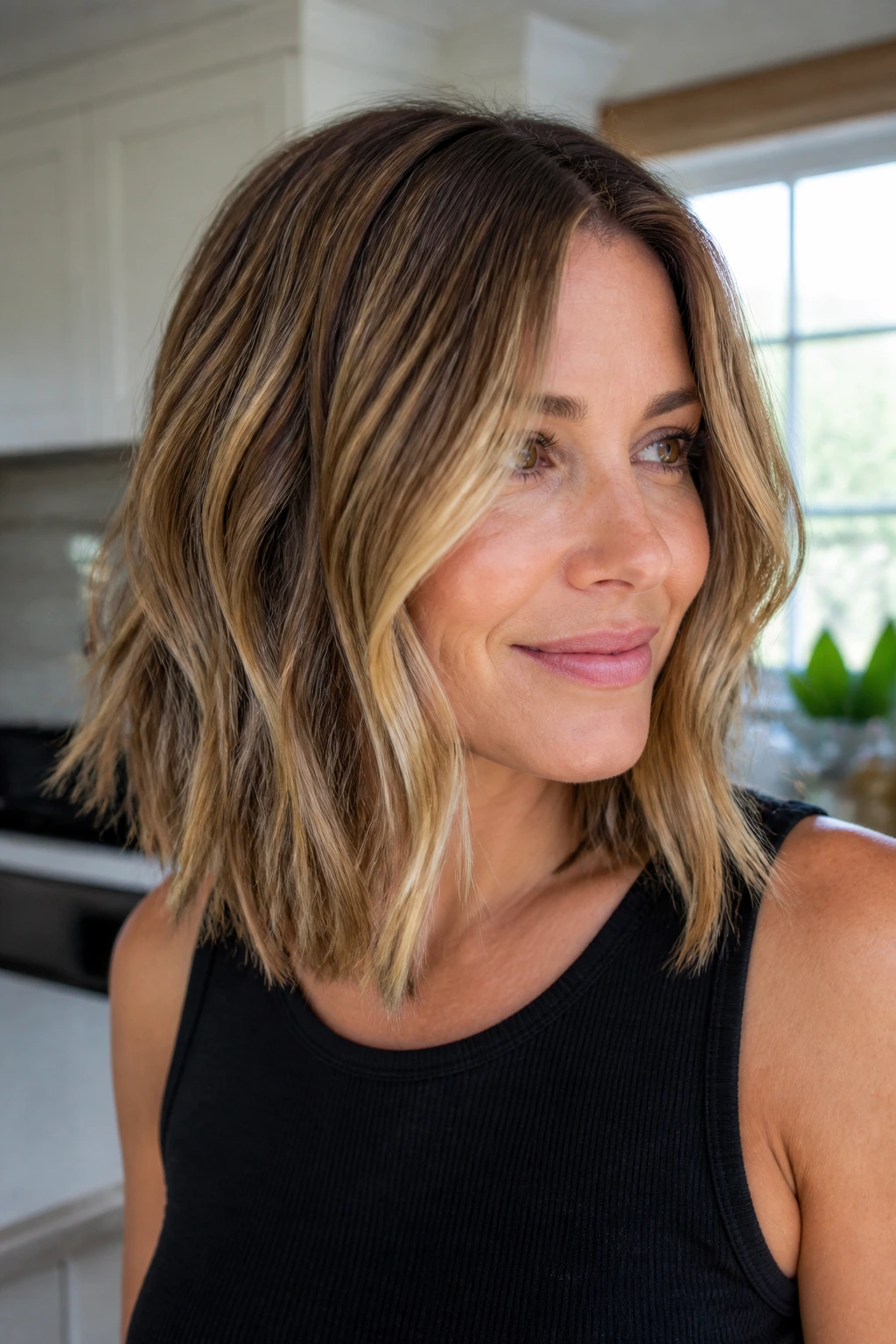
9. Bronde Shaggy Bob
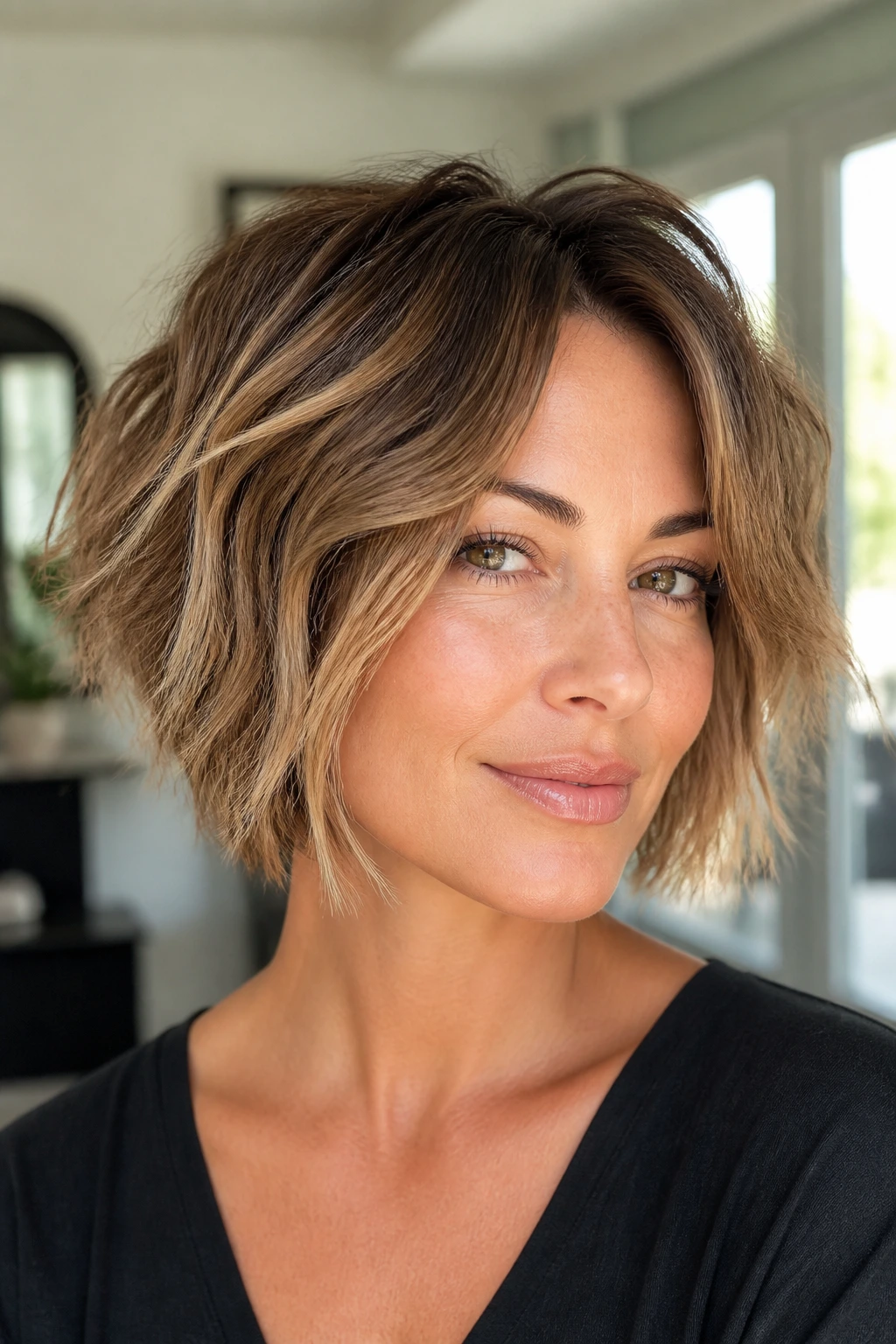
Bronde is what happens when you stop forcing short hair to pick a side. It’s brown enough to keep depth, blonde enough to read bright, and shag layers make the whole thing move. On a short shaggy bob, that mix is a gift. The ends look feathered, the crown has lift, and you don’t have to babysit every root.
This is the color I’d suggest for someone who wants blonde but hates the look of hard regrowth. It’s also a smart way to make finer hair look thicker because the darker pieces create the illusion of density. A single tone can make short hair look thin. Bronde usually fixes that.
The key is placement. Keep the lighter pieces around the face and surface, then let the interior stay a shade deeper. The result reads sunlit, not stripey.
10. Sunlit Bob with Face-Framing Highlights

If a bob feels flat around the face, face-framing highlights are the fastest correction I know. Two bright front pieces can change the whole cut without turning it into all-over blonde. On short hair, that’s a nice trick because the brightness lands exactly where the eye goes first.
The color itself can be warm, neutral, or cool. What matters is placement. The pieces should start near the temples and cheekbones, then soften toward the ends so they don’t look like two isolated stripes. If your bob is blunt, these highlights cut through the shape and stop it from feeling too heavy.
Ask For It Like This
Tell your colorist you want two front sections lifted one to two levels lighter than the rest of the hair, with soft transition at the root. If you wear a side part, put the brighter side on top. If you wear a center part, keep the brightness balanced so the line doesn’t split the face unevenly.
11. Vanilla Cream Pixie
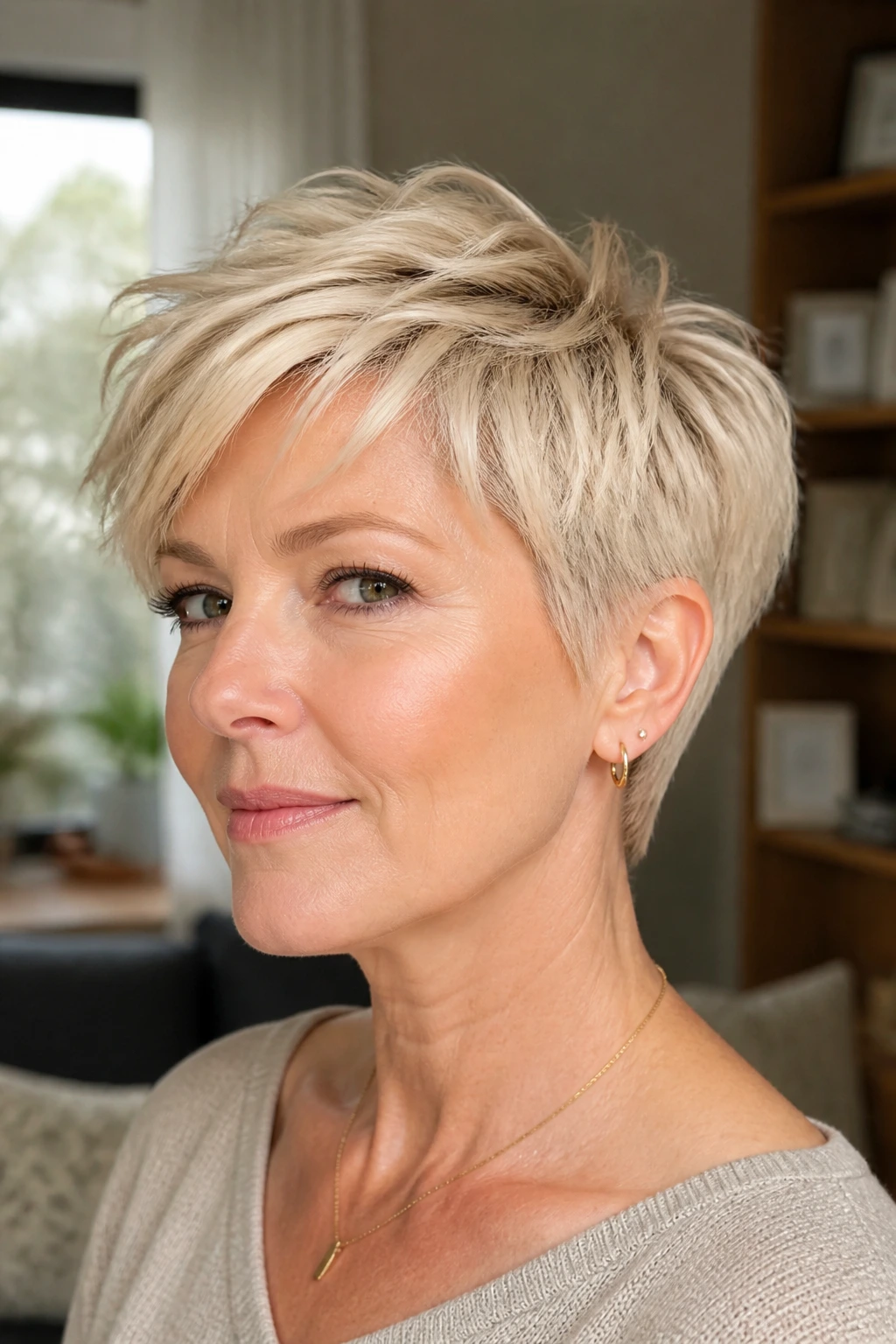
Vanilla cream is the blonde that makes a very short cut feel deliberate instead of severe. It’s lighter than beige, softer than platinum, and just warm enough to keep the skin from looking washed out. On a pixie, that balance is the whole game.
This shade suits warm and neutral undertones especially well. The color should look creamy, not yellow, and definitely not flat. I’d avoid a toner that pushes too icy here, because vanilla cream lives in the middle — it has lightness, but it still wants a little roundness.
A pixie in this shade looks best when the ends are textured. Choppy layers help the cream color catch tiny shifts in light, which stops the haircut from feeling like one solid block. If your stylist can preserve a bit of depth at the nape, even better. It keeps the crop from floating away from the head.
12. Sandy Caramel Short Cut
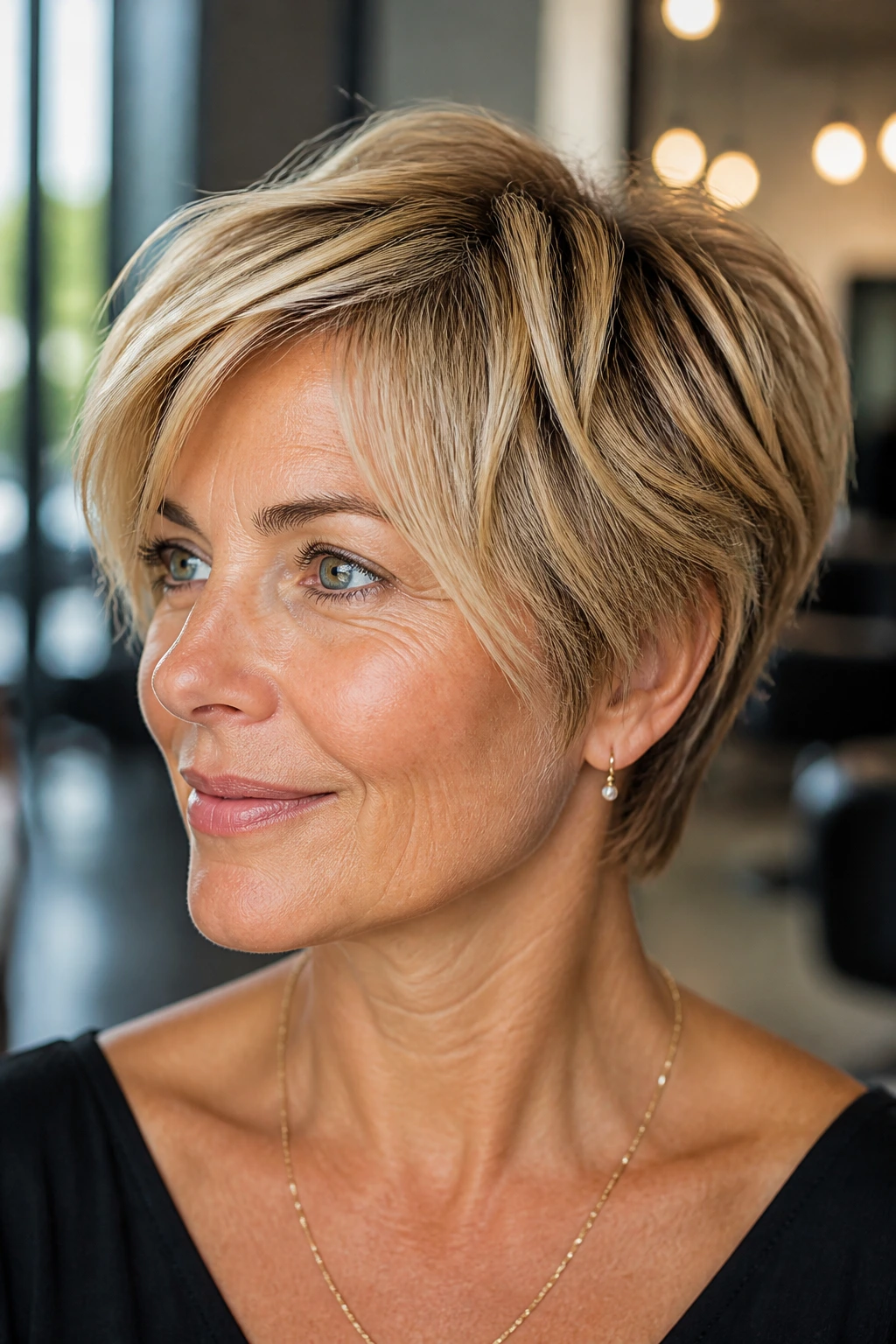
What if you want blonde, but you also want depth? Sandy caramel is the answer. It reads warmer and richer than beige, and on a short cut it gives the illusion of thicker hair because the tonal contrast creates shadow where you need it. This is especially good for dense bobs or cropped cuts with a lot of natural texture.
The trick is to use caramel lowlights sparingly, not paint the whole head brown. Keep the sandy blonde on the top sections and around the face, then tuck the deeper tones underneath. That gives the haircut lift from the outside and body from the inside.
It’s a strong option if your hair color naturally sits in the dark blonde or light brown range. Instead of fighting that base, you work with it. The result is softer growout and less frequent toning, which, honestly, is the part most people end up appreciating.
13. Silver Blonde Crop
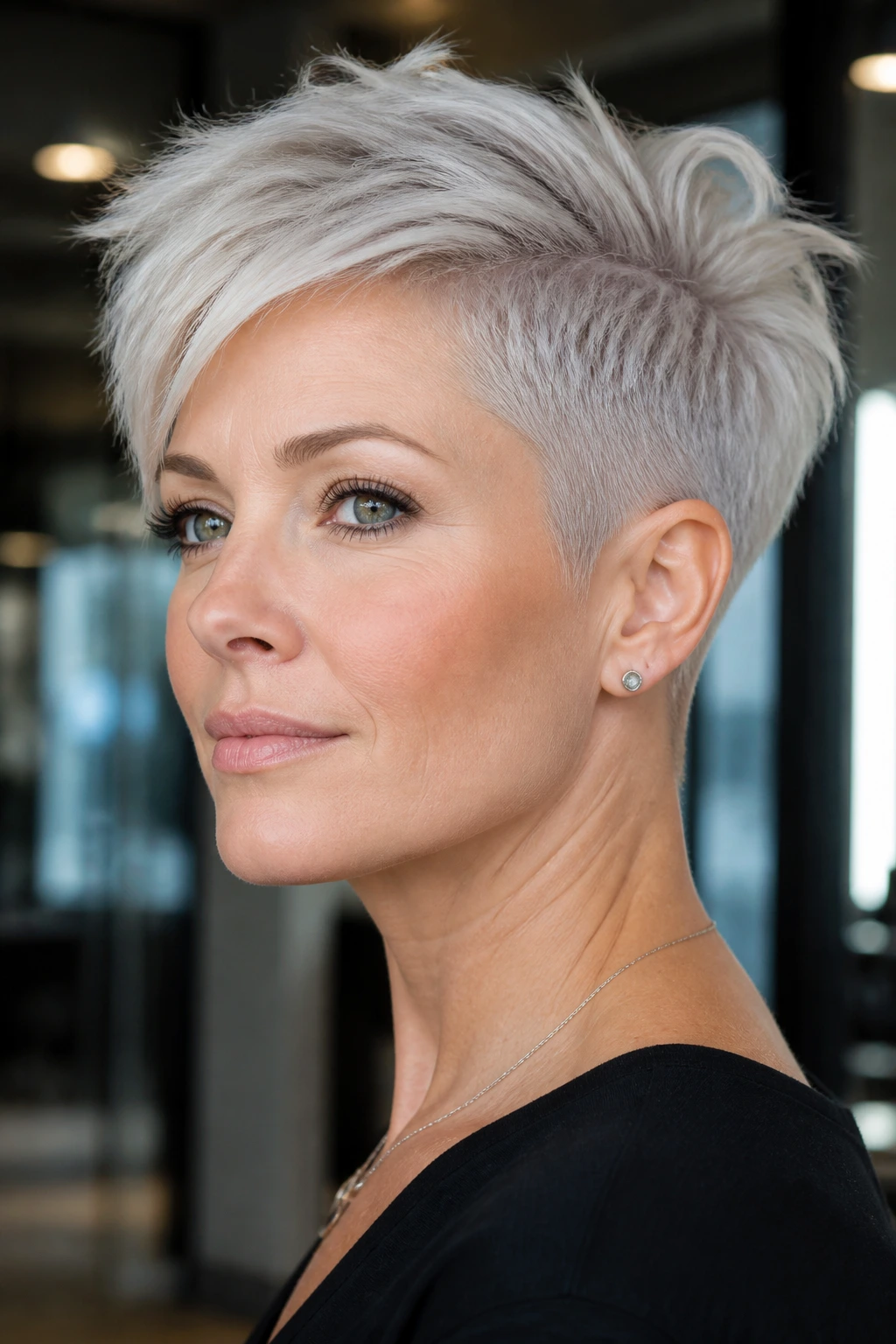
Silver blonde is the one that looks almost metallic when the light hits it right. On a short crop, that finish feels sharp and intentional, not aging or washed out. The reason is simple: the shorter the cut, the more the color reads as a design choice rather than a full-head commitment.
This look needs a very clean lift, because any leftover yellow will clash with the silver tone. It also needs some maintenance — no way around that. I’d reserve it for hair that can handle regular glossing and for someone who doesn’t mind purple shampoo showing up in the weekly routine.
The payoff is a cool, editorial finish that looks especially good with a tidy neckline and strong side profile. If your cut has an undercut or a deep side part, silver blonde can look almost architectural.
14. Strawberry Blonde Bob
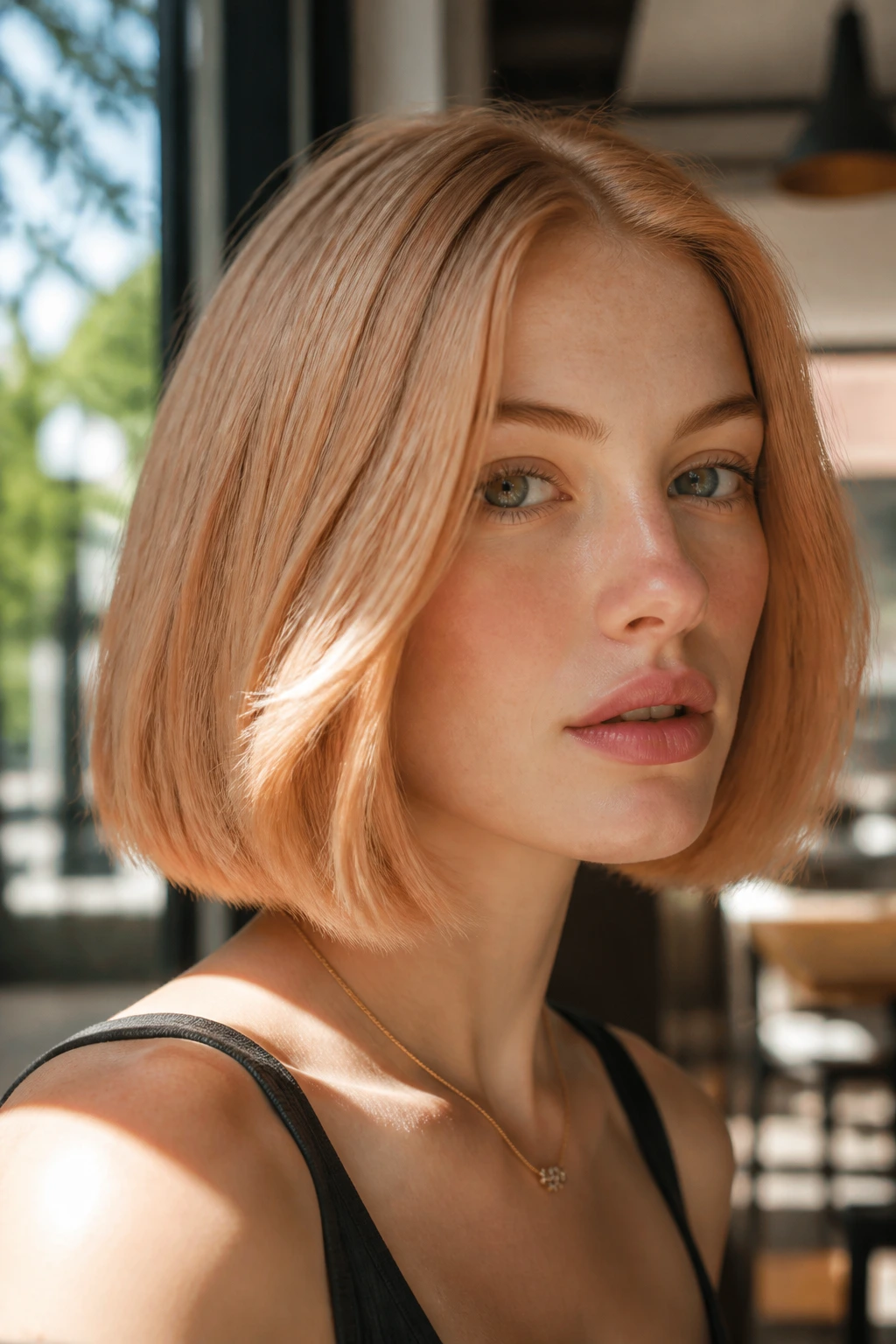
Strawberry blonde is the friendliest blonde on this list. It sits between gold and copper, which gives a short bob warmth and a little cheek color effect around the face. On freckles, fair skin, and rosy undertones, it can look almost tailor-made.
The shade works best when it stays soft. Too much copper and it stops reading as blonde. Too little, and it falls flat. The balance lives in that blush-gold zone where the hair catches light with a slight rose cast, especially in natural daylight.
I like strawberry blonde on blunt bobs because the color keeps the shape from looking severe. It softens the line around the chin and jaw without needing a lot of extra styling. If you want a short blonde that feels lively rather than icy, this is a strong pick.
15. Oat Milk Blonde Lob
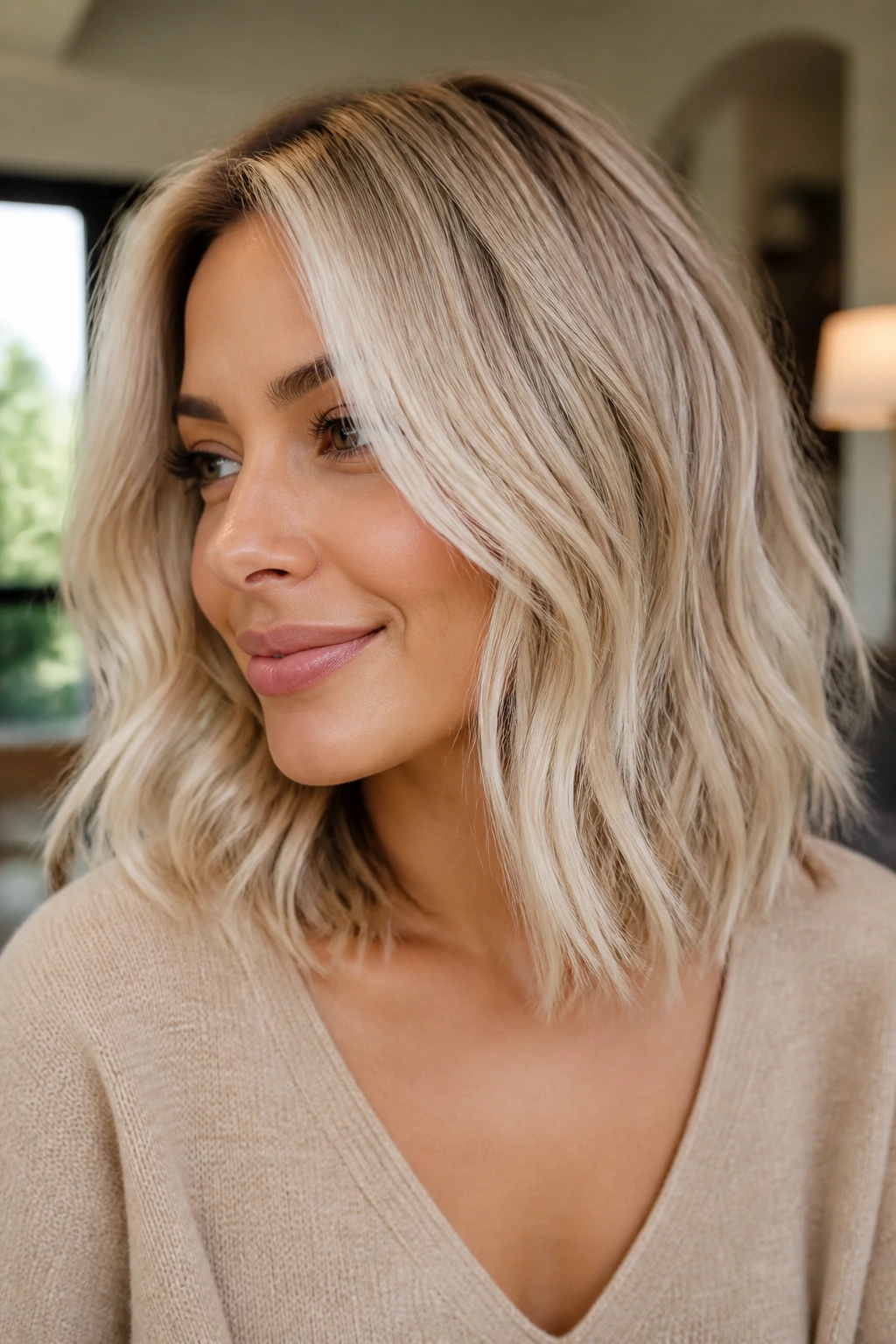
Oat milk blonde is the quiet one in the room, and that’s exactly why it works. It has a muted cream tone that doesn’t scream for attention, but it still gives short hair a clean, light finish. On a lob, the softness shows up in the mids and ends, where the color looks almost powdered and smooth.
This is a good choice if you dislike high contrast. There’s enough depth in oat milk blonde to keep the hair from looking bleached to death, and enough lightness to brighten the face. It sits beautifully on medium skin tones and looks especially nice when the cut is slightly wavy, not poker-straight.
Keep the gloss neutral or slightly warm. If the toner gets too gray, oat milk loses its charm and starts to look dusty. You want creamy, not chalky.
16. Toasted Almond Balayage Bob
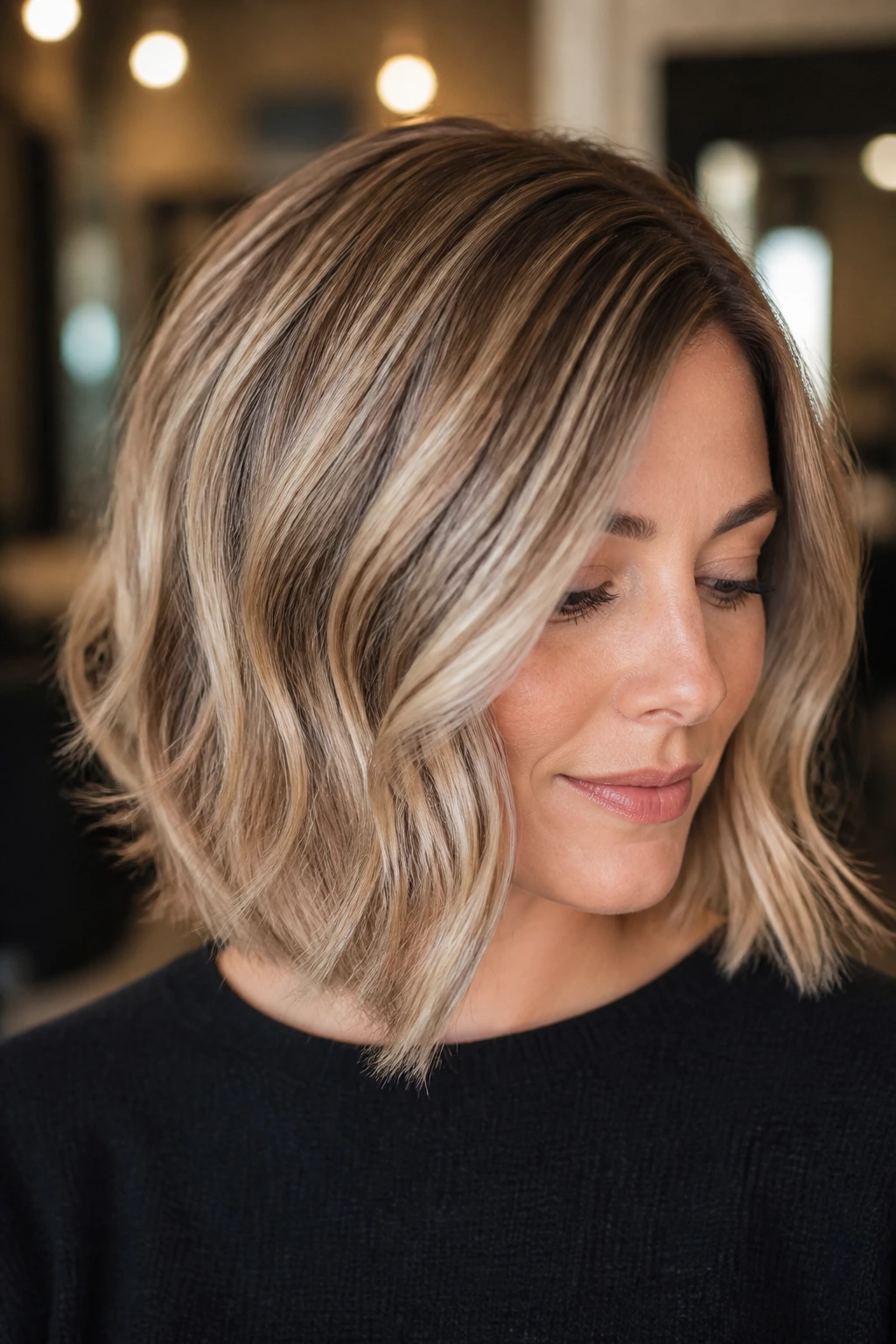
A toasted almond balayage bob is what I’d call the grown-out blonde that still looks expensive. The darker pieces are intentional, not neglected, and the lighter ribbons sit against them like highlights rather than stripes. On short hair, that contrast gives the cut a lot of shape.
Balayage is useful here because the painted placement follows the motion of the bob. The color can be brighter around the face and softer toward the back, which keeps the hair from turning boxy. It also stretches the life of the blonde. You can go longer between salon visits because the root line is part of the design.
If your hair is thick, this is especially good. The darker lowlights stop the style from becoming a pale puffball. And if your hair is fine, the mix of tones can make it look denser than a one-tone blonde ever will.
17. Champagne Ash Pixie
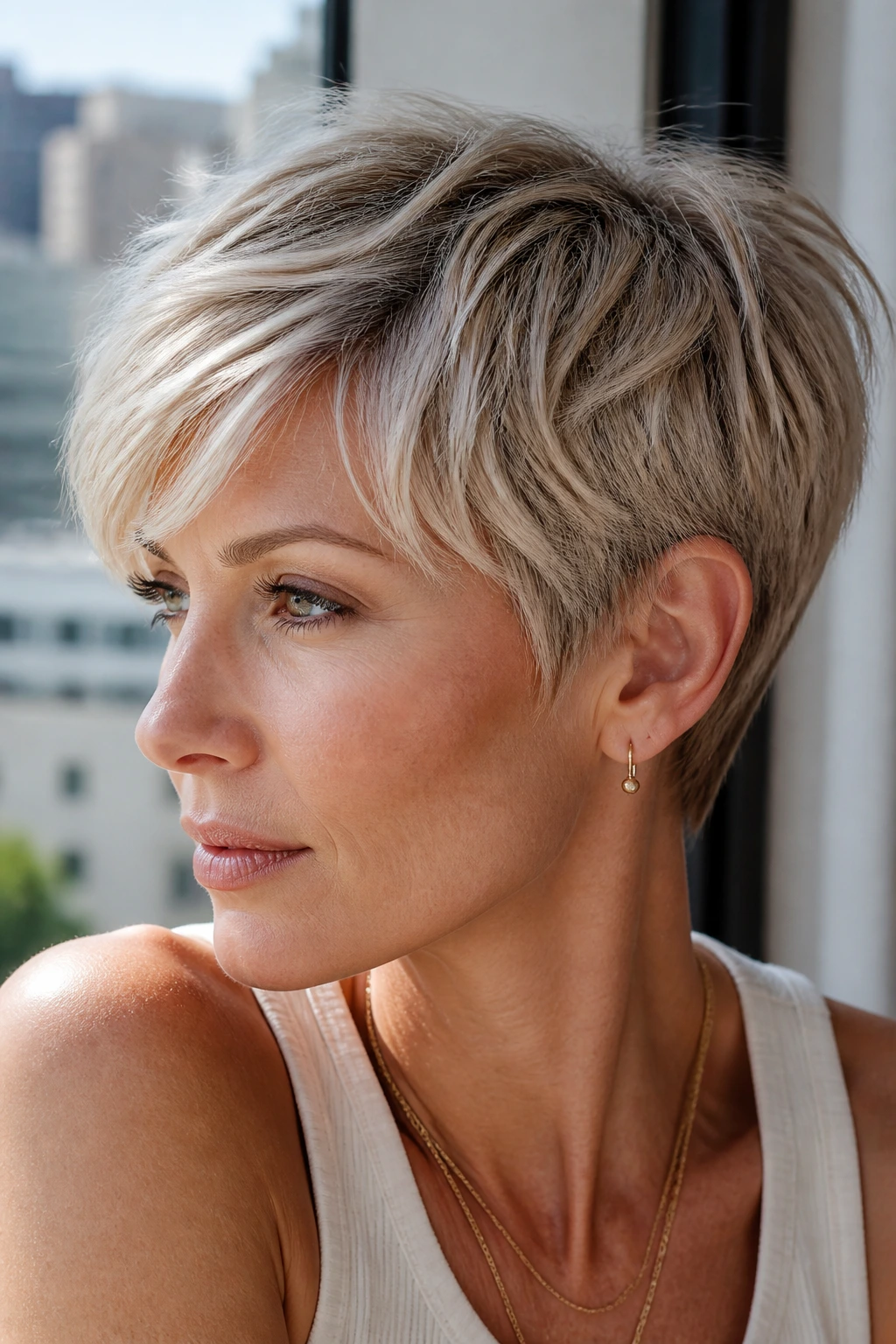
Champagne ash is for people who want a cooler blonde but don’t want the finish to go flat. The ash keeps the yellow out, and the champagne tone gives just enough warmth so the skin doesn’t look drained. On a pixie, that balance is cleaner than a straight silver or a pure beige.
This shade shines when the cut has some movement on top. The ash pieces make the texture visible, while the champagne gloss keeps the whole thing from feeling muddy. I’d avoid it if your hair is very porous and grabs pigment fast; the cool tone can tip too gray if the toner is left on too long.
Ask for a beige-ash glaze, not a blue toner. Blue and silver can overcorrect on short hair and leave it looking flat in ordinary light. The best version of champagne ash still feels soft around the edges.
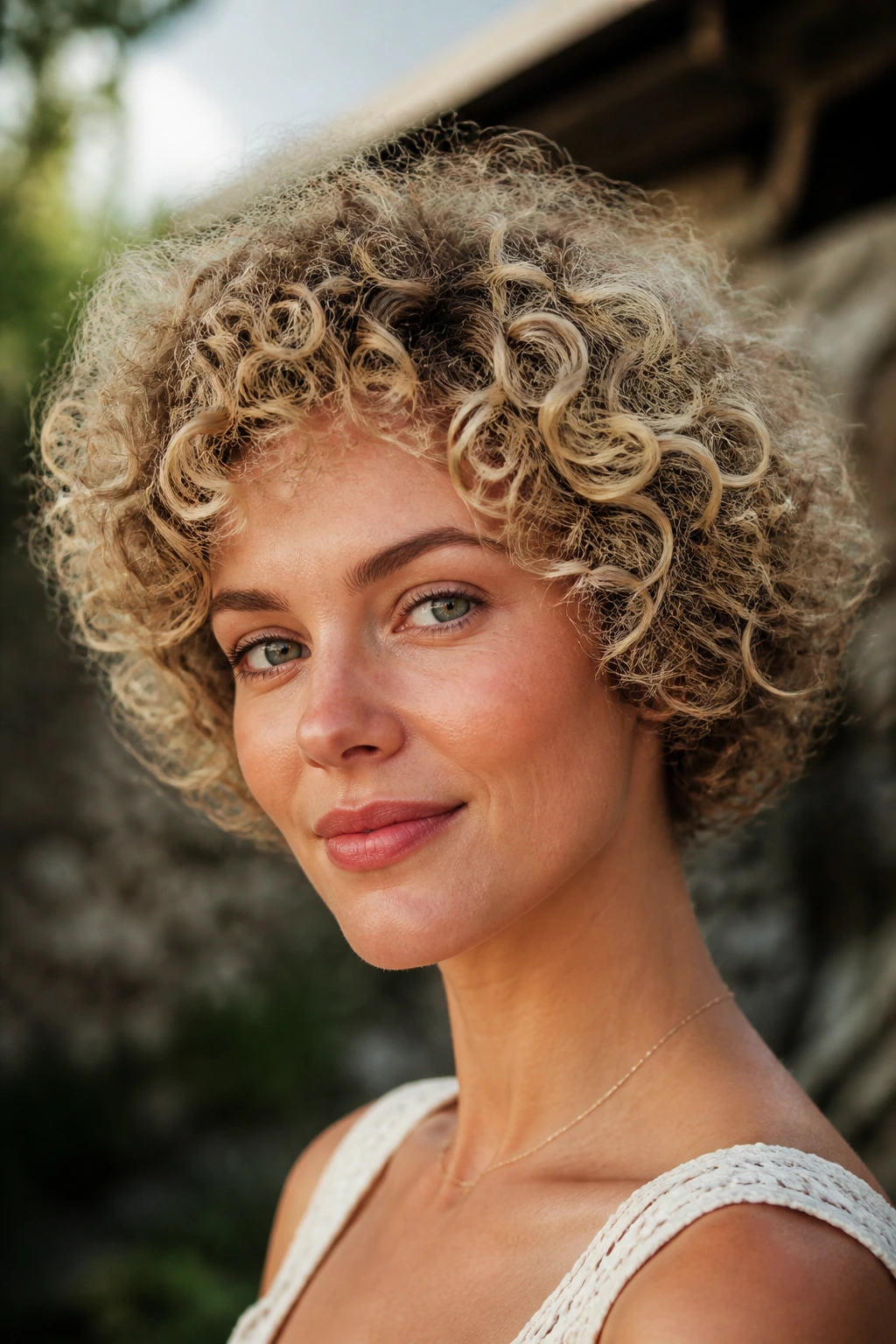
18. Golden Wheat Curly Crop
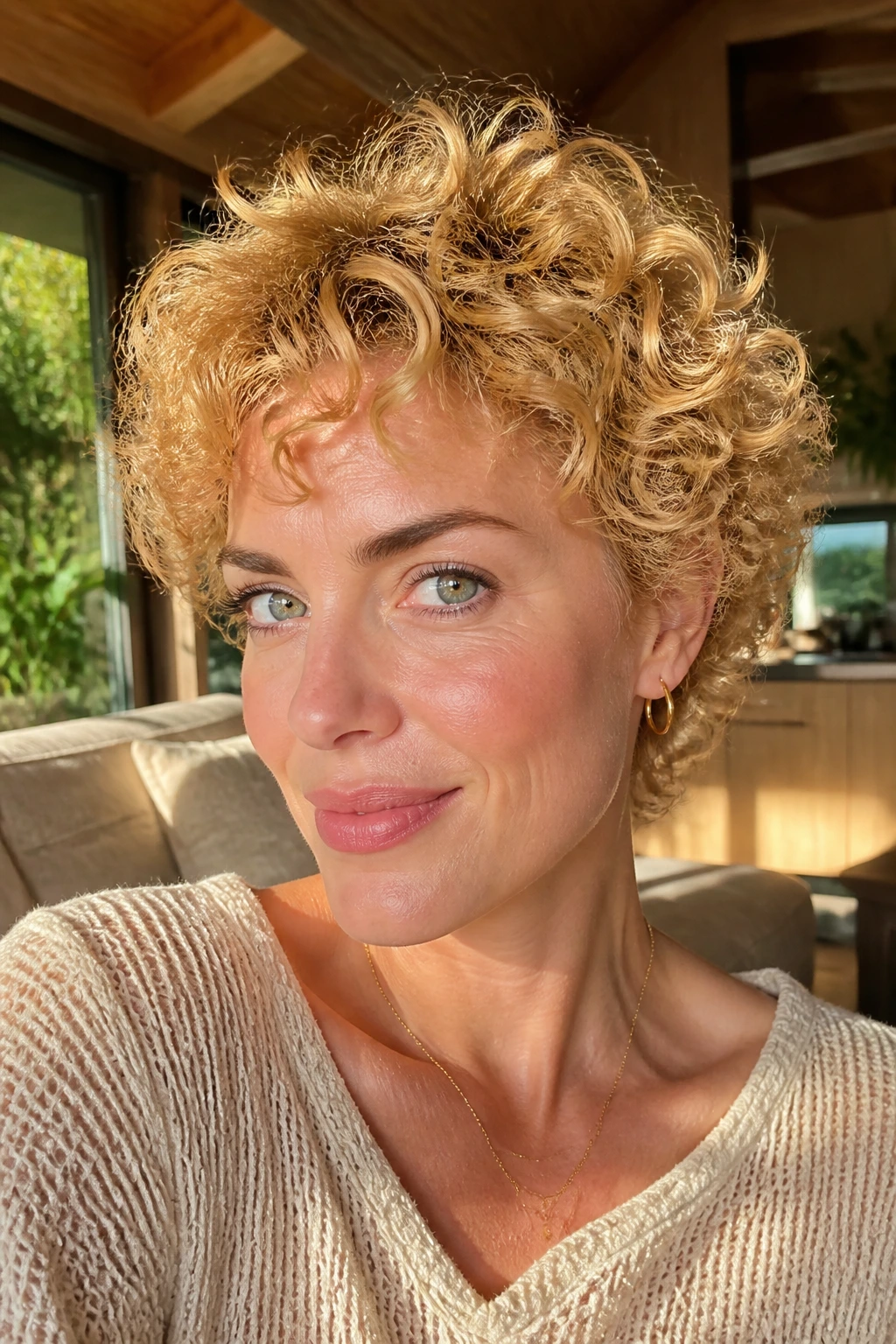
Curly short hair likes light in the right places, not bleach everywhere. Golden wheat blonde works because it highlights the curl pattern without stripping the texture down. When curls are short, the color can sit on the surface of the coil and make the shape read more clearly from a few feet away.
This is one of the few warm blondes that can look especially natural on curls. The golden tone mimics how sun would lift the outer layer of the hair over time. Keep the lightest pieces around the halo, the front, and the top sections where the curls naturally catch light first.
What Makes It Work
- Placement over saturation: A few well-placed highlights beat an all-over blonde job.
- Tone: Golden wheat stays soft, not orange.
- Cut pairing: Short curly crop, curly bob, or rounded bixie.
- Maintenance: Hydrating masks matter because curls show dryness fast.
If you want the blonde to look part of the curl, not pasted on top of it, this is the lane.
19. Pearlized Money Piece Bob
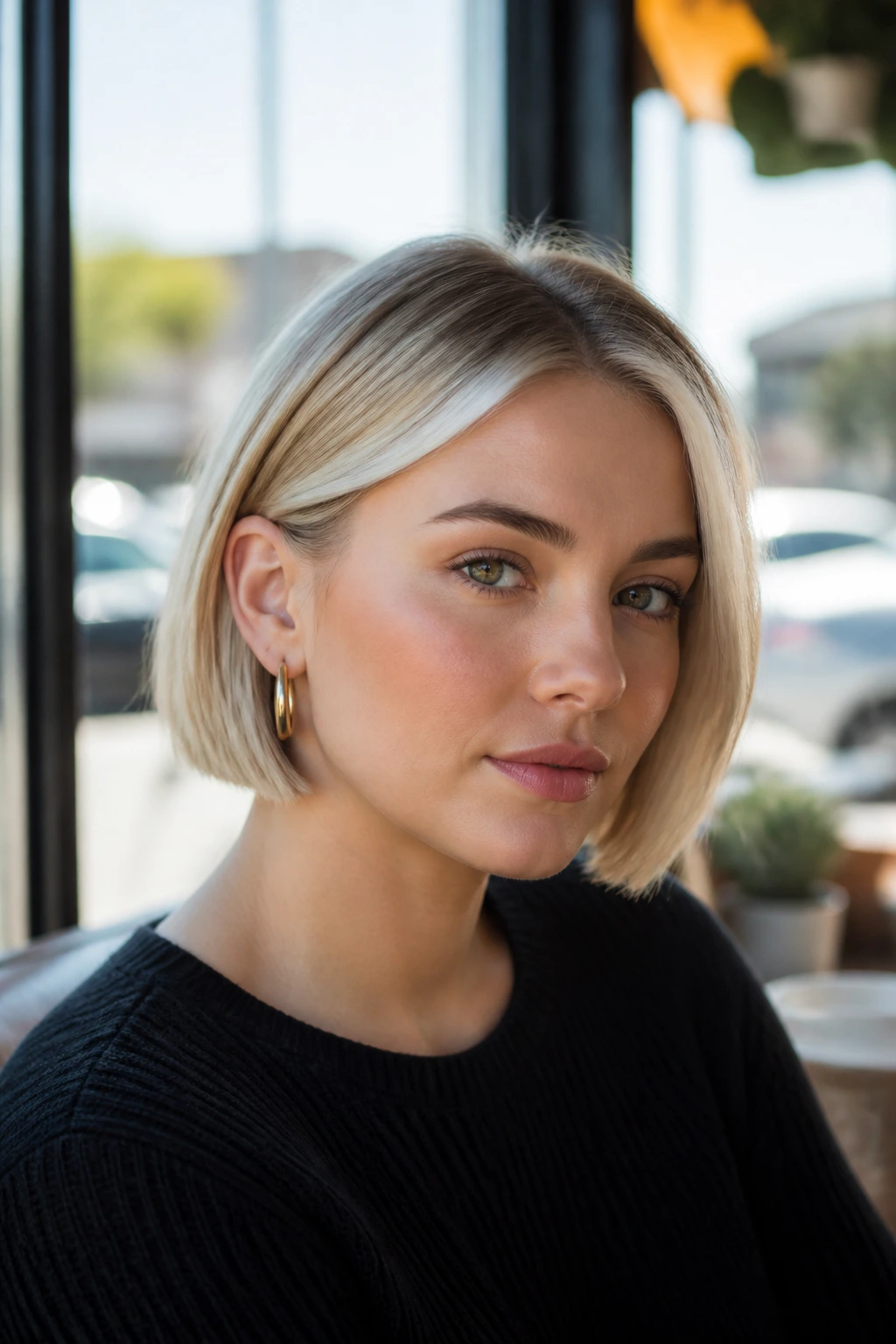
A money piece on a short bob is a blunt instrument in the best way. It puts brightness exactly where the face needs it and leaves the rest of the cut calmer. Pearlized, instead of plain blonde, gives the front pieces a cooler sheen that stops them from looking stripey.
This style is strong if you tuck your hair behind your ears, wear a side part, or like a bob that changes shape during the day. The front pieces stay visible even when the rest of the hair moves. That’s why the money piece works so well on short hair. It keeps paying rent.
Tell your colorist you want the front sections brighter and cooler than the rest, but still blended into the side panels. If the money piece is too chunky, it can look disconnected. The trick is brightness with a soft edge, not a hard stripe.
20. Nordic Ice Crop
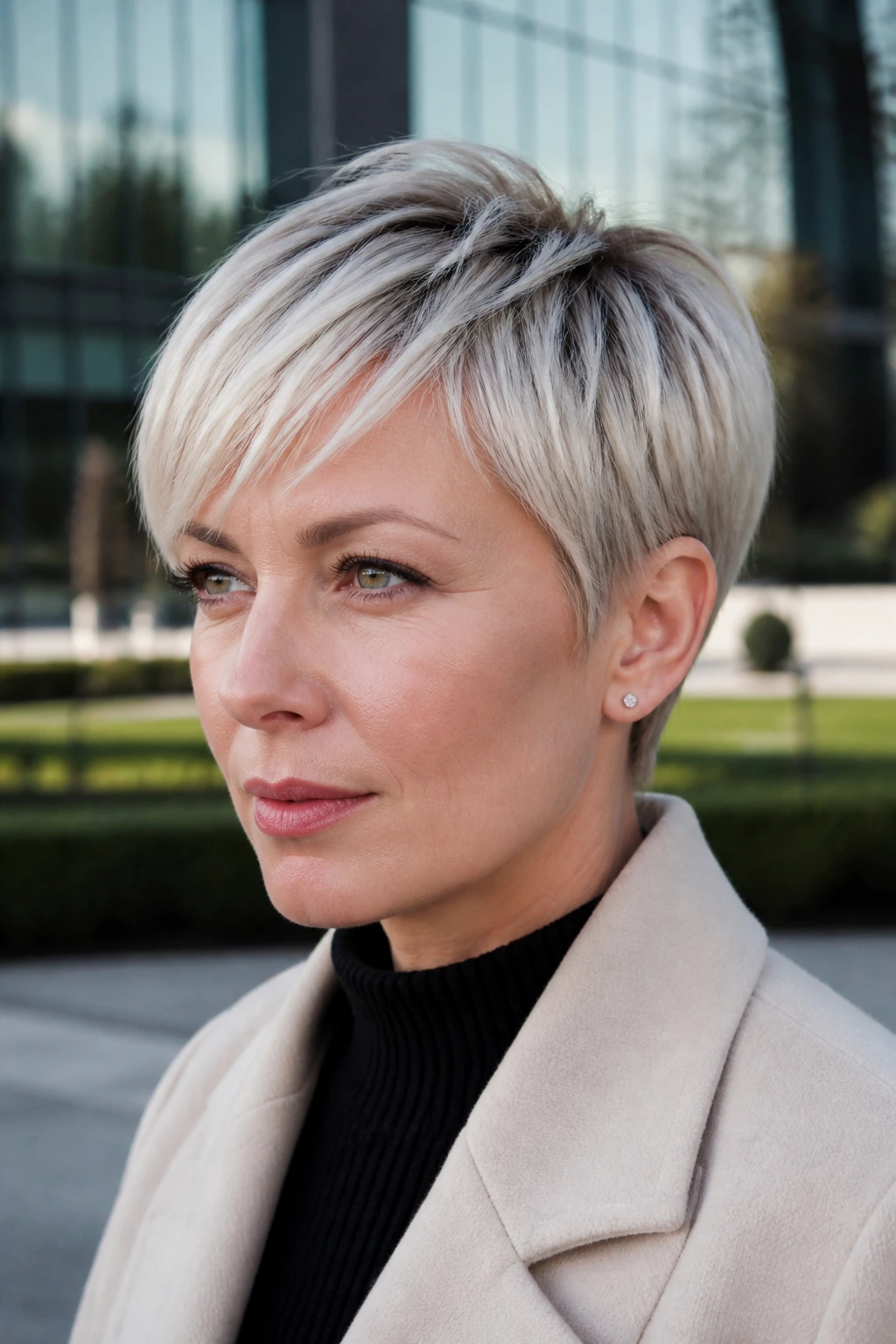
Nordic ice is the palest, coolest end of the blonde spectrum, and on a short crop it can look sleek instead of severe. The hair is so close to the head that the color reads almost like a finish on the cut itself. Clean lines matter here. If the crop is uneven, the blonde will show it.
This shade usually needs the most careful lightening, because any leftover warmth will peek through. You want the end result pale enough to hold a cool toner without going murky. A soft root smudge helps a lot. It keeps the scalp area from looking overexposed and gives the color somewhere to sit.
I’d pair it with a sharp crop or a slightly rounded bowl-inspired shape. The color and the cut need to agree on the mood. If one is soft and the other is severe, the whole look gets confusing fast.
21. Smoked Vanilla Undercut
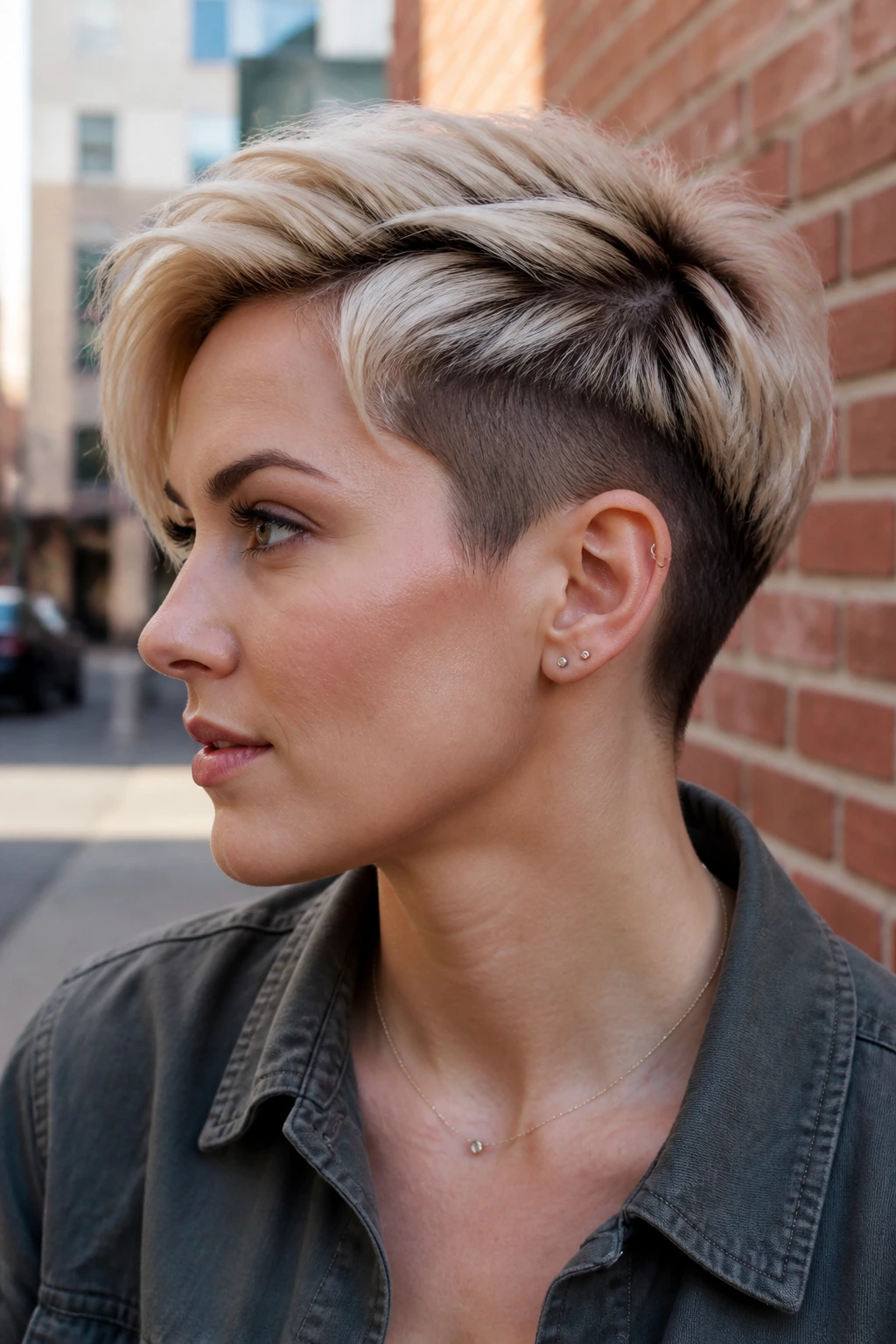
Smoked vanilla with an undercut is for someone who likes a little edge under the softness. The top layers stay creamy and light, while the hidden sections underneath carry a deeper, smoked tone. When the hair moves, that contrast pops. When it’s still, it looks controlled.
This works especially well on thicker short hair because the undercut removes bulk and gives the blonde more room to breathe. The smoked vanilla tone on top keeps the lightness from feeling too sweet. It’s a good balance if you want blonde with some grit.
You can push this further with a side shave or leave the undercut subtle. Either way, the point is contrast. The top shouldn’t look like a solid bleach job; it should look layered, with a little shadow underneath.
22. Buttery Dimensional Wavy Bob
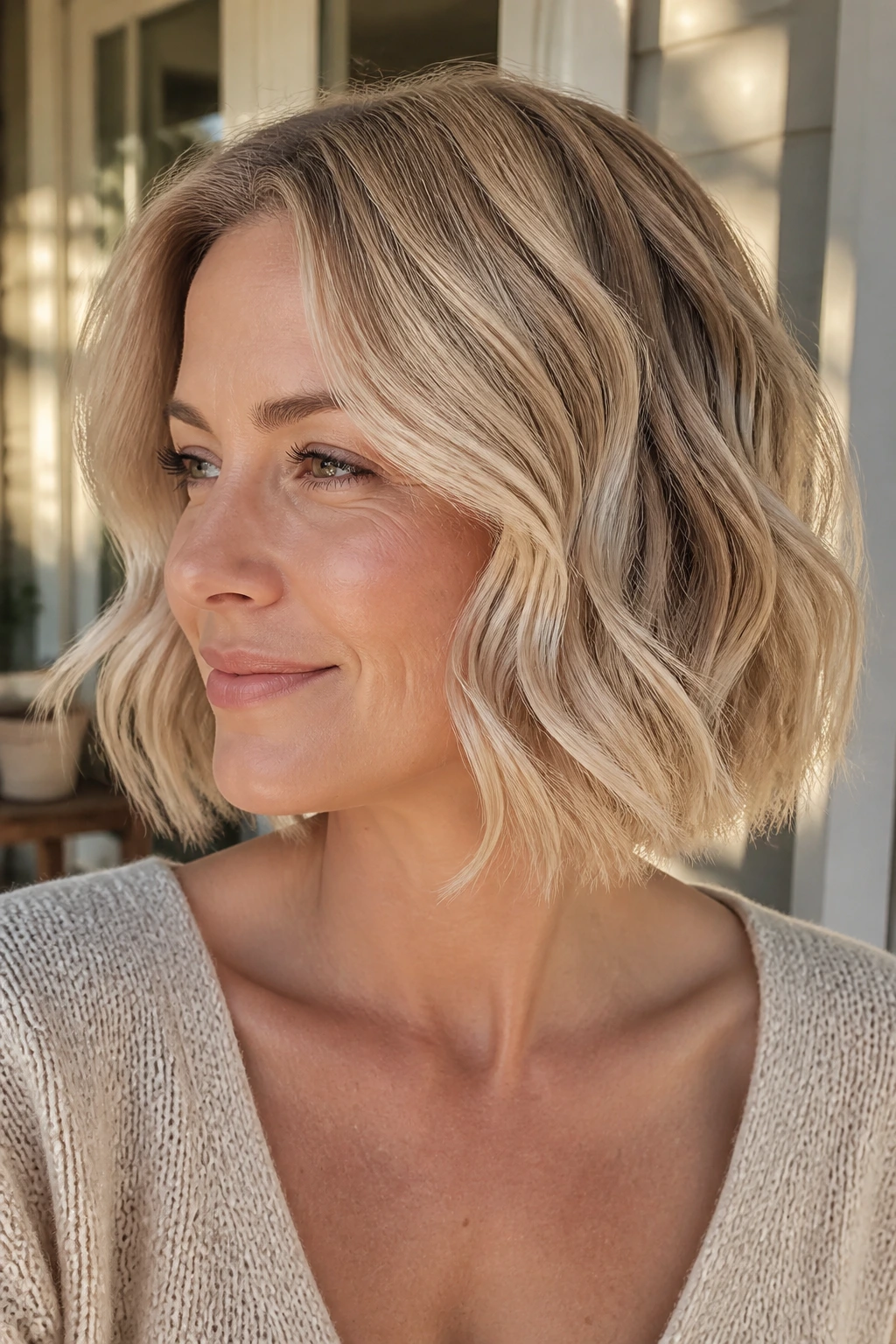
A buttery dimensional wavy bob is the blonde that forgives a lot and still looks finished. The base stays a touch deeper, the ribbons are warmer and lighter, and the wave pattern does the rest. On short hair, that mix creates movement you can see from across the room.
This is one of the easiest ways to avoid the “one-color blonde block” problem. The waves break up the tone, the butter pieces catch light, and the deeper lowlights keep the style from going flat at the bottom. It’s a sensible choice if your bob lives somewhere between polished and tousled.
Ask for multiple tones, not one flat highlight color. The best version usually mixes beige, pale gold, and a soft root melt. It’s not flashy. It just works.
Why Short Blonde Reads So Cleanly
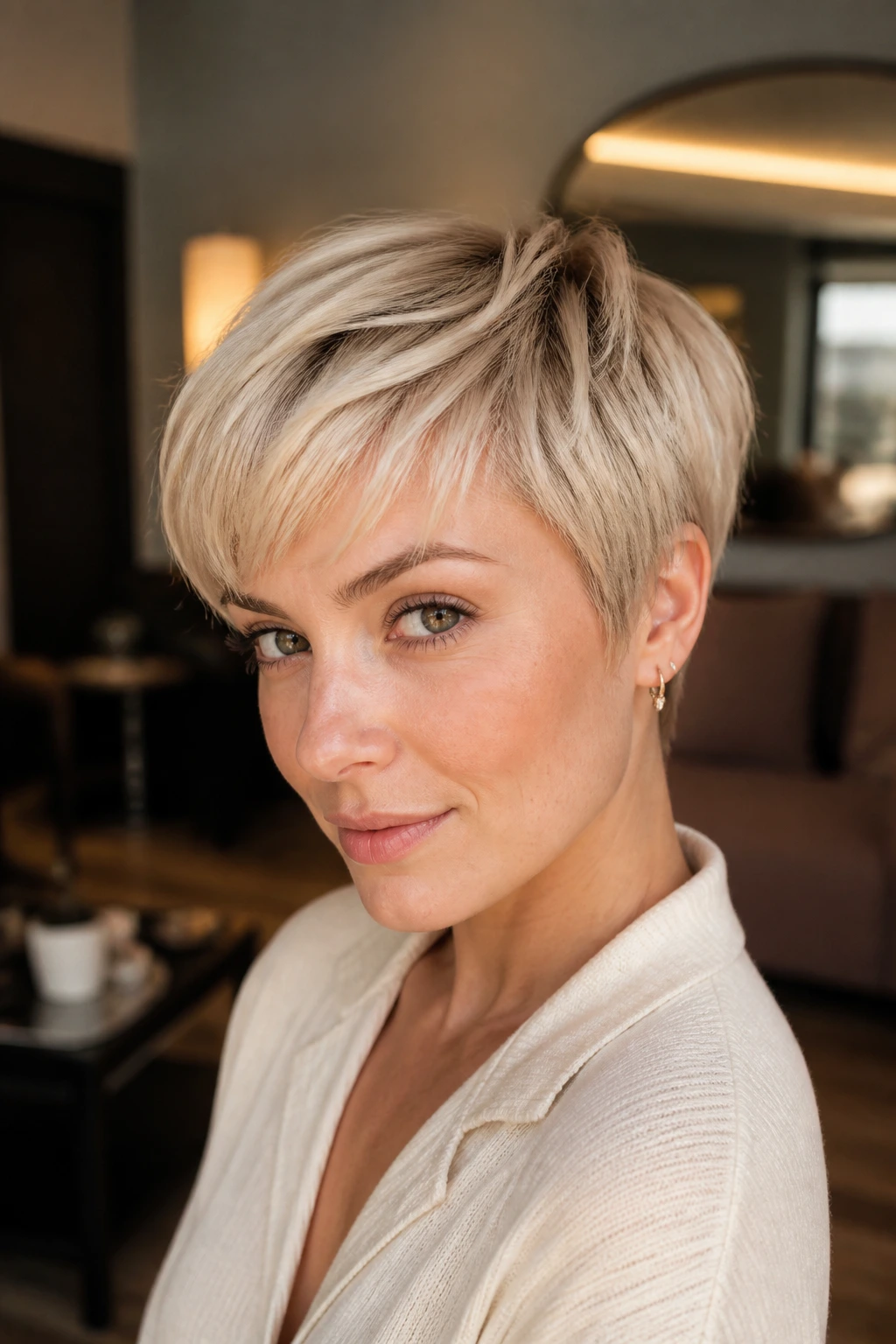
Short blonde hair has a strange advantage: it looks expensive when the tone is disciplined. Long hair can hide a lot of mistakes in movement and layering. A bob or pixie cannot. Every highlight placement, every toner choice, and every root shift shows up in a way that is almost brutally honest.
That honesty is useful. A tight crop lets you see whether the blonde needs more warmth, more shadow, or more depth around the root line. It also means the color can do a very specific job. A bit of pearl near the front opens the face. A root melt makes a bixie feel intentional. A clean beige gloss turns a blunt bob from flat to precise.
Short hair also makes toner work harder. There’s less hair to reflect color, so the finish has to be right. When it is, the result is crisp in a way that longer blonde hair often isn’t. You notice the line at the jaw, the shine on the crown, the little flick at the nape. That’s the fun of it. The color and the cut stop competing.
Essential Tools for Salon Visits and At-Home Upkeep
-
Tint brush and color bowl: Useful for applying toner or gloss evenly at the roots and front sections.
-
Sectioning clips: Short hair still needs clean sections, especially around the crown and hairline.
-
Foils or balayage board: Handy if you’re doing highlights or face-framing pieces with precision.
-
10-volume and 20-volume developer: Your colorist may use these for toning or gentle lift; at home, follow the exact formula.
-
Purple shampoo: Good for keeping yellow out of cool blondes, but don’t overdo it.
-
Color-safe sulfate-free shampoo: Helps short blonde hair keep shine between appointments.
-
Deep conditioning mask: Use weekly if your hair has been lifted to pale blonde.
-
Bond-building treatment: Optional, but useful if your hair has been bleached more than once.
-
Microfiber towel: Reduces frizz and friction on short, delicate ends.
-
Heat protectant: Necessary if you blow-dry or use a flat iron, even on a pixie.
Picking the Right Blonde Tone for Your Base Color
The starting point matters more than the inspiration photo. If your natural hair is dark brown and you want icy platinum, the process will be harder than if your hair is already dark blonde. That’s not a moral judgment. It’s chemistry. Short hair may be smaller, but it still has to lift through the same underlying pigment.
If your base is level 4 to 5, lean toward rooted beige, toasted almond, mushroom blonde, or bronde. Those shades give you brightness without asking the hair to go all the way pale. If your base is level 6 to 7, honey ribbons, butter blonde, and champagne tones usually behave better. A little depth will keep the short cut from looking hollow.
If your natural color is already level 8 or lighter, pearl, vanilla cream, silver blonde, and Nordic ice become more realistic. Even then, porosity matters. Short hair that’s been lightened before often grabs toner too fast at the ends and too slowly at the roots. That’s why a gloss, not a heavy toner, is often the cleaner choice.
Skin tone plays a role too, but I’d treat it as a guide, not a rule. Warm skin often likes honey, butter, or strawberry. Cool skin can handle pearl, silver, and ash. Neutral skin gets away with almost anything if the cut is clean.
How to Wear These Shades With the Cut You Have
Silhouette: A blunt bob makes champagne, oat milk, and pearl read polished because the line of the haircut stays visible. A pixie or bixie looks better with beige, rooted blonde, or mushroom tones because the depth helps the top and sides separate.
Texture: Waves love ribboned color. Straight styles often need a little more dimension at the root or underneath so the blonde doesn’t turn into one bright sheet. Curly crops need thoughtful placement around the curl pattern, not random foils all over the head.
Parting: Center parts show symmetry, so balanced highlights matter. Side parts can handle stronger face-framing pieces and a brighter money piece on the heavier side. If you switch your part around a lot, ask for the lightest pieces to sit where the hair naturally falls in both directions.
Finish: Glossy blondes — champagne, vanilla cream, oat milk — look best with smooth styling and a tiny amount of serum. Cooler blondes — silver, pearl, Nordic ice — need clean blowouts or crisp air-dried texture so they do not read dull. Rooted blondes usually look best with a little bend in the ends, because the texture helps the blend do its job.
Maintenance Rhythm: Higher-contrast blondes need more frequent toning. Lived-in blondes need less, but they still need a gloss every so often to keep the mids from going flat.
Practical Tips for Keeping Blonde Bright Between Appointments
Tone Enhancement: If the blonde is starting to look tired, a clear or beige gloss can wake it up faster than another full highlight session. On short hair, a gloss often changes the whole head in one visit because there isn’t much length to dilute the effect.
Customization: Add lowlights if the blonde feels too airy, especially on fine hair or a blunt bob. A few deeper strands underneath can make the cut look thicker and stop the top from looking pale and hollow.
Styling Details: Use a lightweight mousse or root lift spray at the crown for pixies and bixies. Blonde on short hair looks better when the shape has a little lift; flat roots make even a great color feel ordinary.
Make-It-Yours: If your skin runs warm, stay with butter, honey, strawberry, or toasted almond. If you run cool, lean into pearl, champagne ash, or silver. Neutral undertones can borrow from both camps, which is the luxury position, frankly.
A tiny bit of dry texture spray can help too, but don’t bury the blonde under product. Short hair shows buildup quickly, especially around the crown and fringe.
Root Touch-Ups, Glosses, and Wash-Day Maintenance
Short blonde hair does not always need more bleach. Often it needs more planning. A rooted beige bob can go 6 to 10 weeks before a refresh, while a platinum crop may need toner or root work every 3 to 5 weeks if you want it to stay crisp. The shorter the cut, the more obvious regrowth becomes around the hairline, sideburns, and nape.
For wash day, a sulfate-free shampoo is the safest default. Use purple shampoo only when the blonde starts tipping yellow — usually every third to fifth wash for cool blondes, and less often for warm blondes. Leave it on for 1 to 3 minutes, not a full coffee break. If the hair starts looking dull, khaki, or over-toned, back off immediately and switch to a moisturizing shampoo.
Heat styling needs a lighter touch on short hair because the ends are closer to the tool. A heat protectant is non-negotiable before blow-drying or ironing. If you use a flat iron, keep the pass quick and the temperature moderate. Short blonde hair can singe faster than people expect, especially around the fringe and temple pieces.
Deep conditioning once a week helps, but don’t drown fine hair in heavy masks. Short blonde wants softness and shine, not wax.
Variations and Adaptations to Try on Short Blonde Hair
Shadow-Root Blonde: Keep the scalp area one to two levels deeper than the mids. This makes platinum, champagne, or beige blondes last longer between appointments and gives the cut a softer growout line.
Cool Beige Melt: Blend ash and neutral beige through the top so the blonde feels modern without going icy. This works especially well on blunt bobs and pixies that need a clean edge, not a loud contrast.
Honey Contour Blonde: Place warmer pieces around the face and crown, then keep the underside deeper. It brightens the skin and gives the haircut a little depth, which is handy if the cut feels too flat.
Bronde-to-Blonde Lift: Start with a deeper brown-blonde base and pull the lighter pieces only where the eye lands first. This is a smart route for darker natural hair because it builds toward blonde without forcing every strand to the same level.
Curly Halo Blonde: On curls, lift the outer halo and front sections first, then leave the interior a touch deeper. The curl pattern shows better, and the blonde reads as part of the texture instead of sitting on top of it.
Common Mistakes That Make Short Blonde Look Flat or Fried
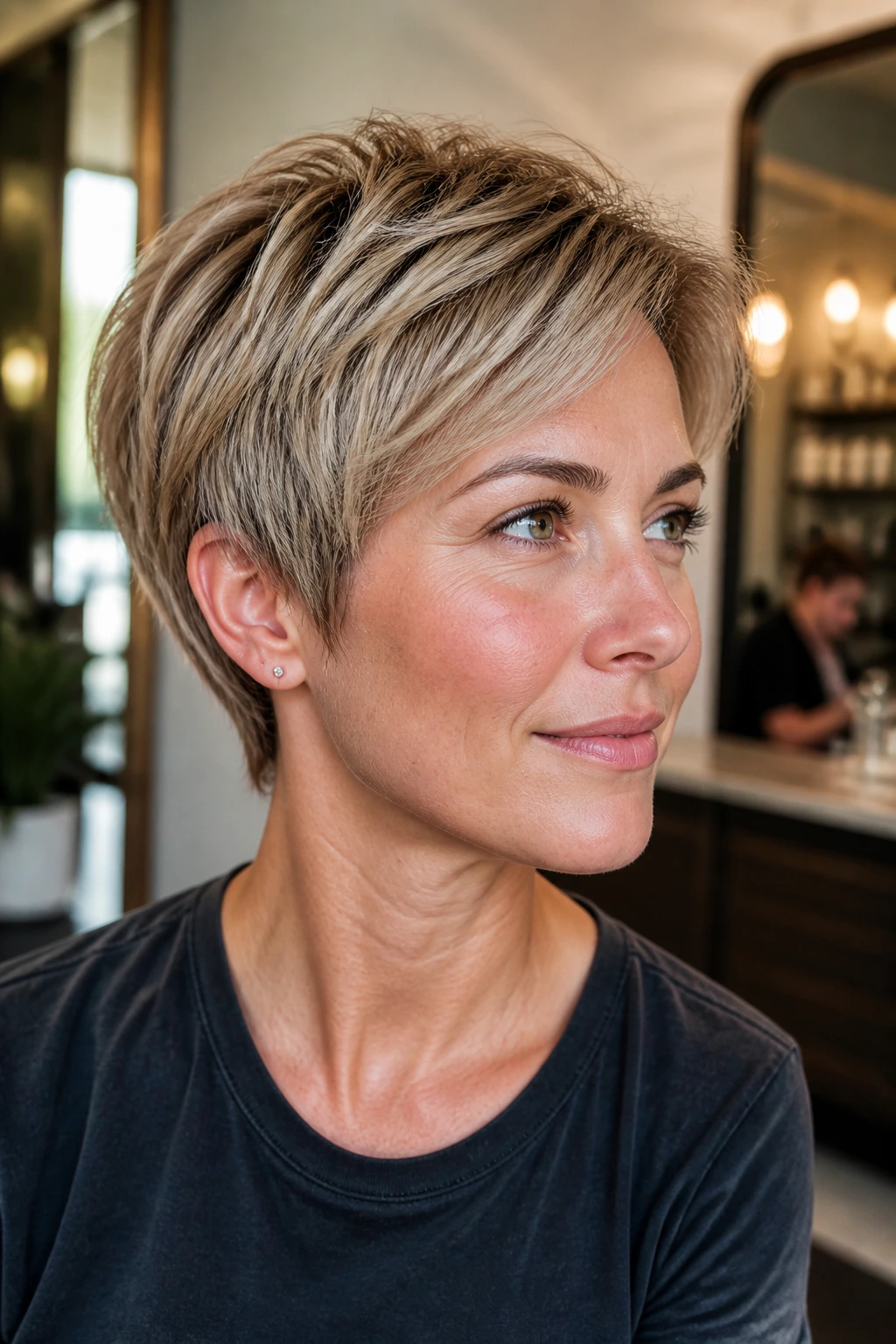
The first mistake is chasing one flat shade across the whole head. Short hair needs movement. If every strand is the same pale level, the cut can look like a helmet, especially on bobs and crops. The fix is simple: keep a root shadow, add lowlights, or brighten only the pieces that frame the face.
Another problem is over-toning. Purple shampoo, ash toner, and silver gloss can be useful, but too much of any of them turns blonde dull and smoky. The symptom is hair that looks dry even when it isn’t. The fix: use cool products less often and rinse them sooner.
Bleaching the hairline too aggressively is a sneaky one. The front pieces usually lift fast, and that can leave the face frame brighter than the rest of the head. It reads stripey. A softer application around the temples and a controlled gloss at the front solve that.
People also forget that short hair shows porosity. If the ends have been lightened before, they may grab toner dark or muddy while the roots stay pale. That’s why a colorist often applies toner in stages. It’s not fussy. It’s necessary.
Last, don’t ignore the cut itself. A harsh blonde on a very blunt line can look stiff, while a soft blonde on an edgy undercut can feel too polite. Color and shape need the same attitude.
Frequently Asked Questions About Short Blonde Hair Color Ideas
Which short blonde shade is easiest to maintain?
Rooted beige, bronde, and toasted almond are usually the easiest because they let the regrowth blend into the design. You can stretch appointments longer without the color line shouting at you from the mirror.
Can you balayage a pixie or bixie?
Yes, but the placement has to be precise. On very short hair, balayage usually means hand-painted brightness around the top, fringe, and face frame rather than big sweeping panels.
How often should short blonde hair be toned?
Cool blondes often need toner every 4 to 6 weeks, while warmer blondes can sometimes go 6 to 8 weeks or longer. If the shade starts turning yellow, smoky, or muddy, it’s time for a refresh.
Is platinum possible on dark hair if the cut is short?
Possible, yes. Easy, no. Short hair can make the process faster, but dark hair still has to lift through the same pigment stages, and that can take more than one session if you want the result to stay healthy.
What if my blonde turns brassier at the roots than the ends?
That usually means the roots are lifting warmer or the toner is fading faster there. A root-smudging gloss can rebalance the line, and using purple shampoo too often will not fix it if the lift itself is uneven.
Can I keep dark roots with short blonde hair?
Absolutely. In fact, a soft root shadow is one of the best ways to make short blonde look intentional. It also helps the cut grow out without that obvious stripe at the scalp.
What works better for fine hair: babylights or a full blonde?
Babylights usually win. They keep the blonde light and airy without exposing every strand, and they make fine hair look fuller than a full, flat bleach job often does.
Does curly short hair need a different blonde placement?
Yes. Curls need brightness where the hair actually curves and catches light, not a random all-over pattern. A halo placement around the outer curls and face frame usually looks cleaner than forcing highlights through every section.
A Short Blonde That Fits the Cut
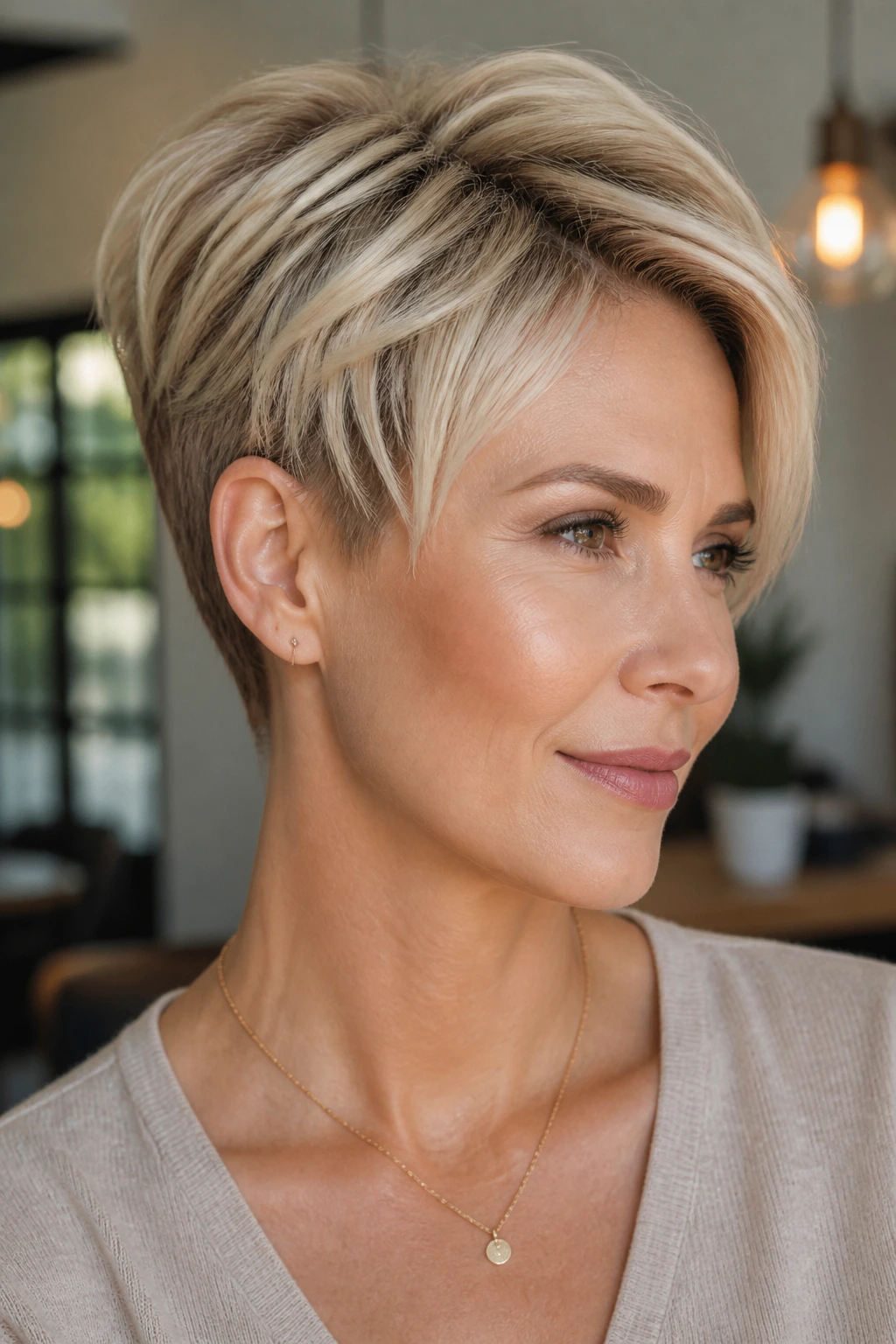
The best short blonde hair color ideas are the ones that respect the haircut instead of fighting it. A pixie wants precision. A bob wants balance. A bixie wants movement and a little shadow so it doesn’t collapse into one pale shape. That’s the real trick: choosing a blonde that supports the silhouette.
Pick the tone that matches how much upkeep you’ll actually do, not just the photo you saved. Beige, champagne, mushroom, honey, pearl, and silver all have a place. The good ones do more than lighten the hair. They give the cut a reason to exist.
