



Long hair changes red color in a way a bob never can. Copper spills across layers, cherry tones hide in the shade until the light hits, and a smart root shadow can keep the whole thing from turning into one flat block of pigment. That’s why the best red hair looks for long hair are never only about the shade. Placement matters. Depth matters. Shine matters more than people think.
The length gives red somewhere to go. On a short cut, the eye takes in the whole color in one glance. On waist-length hair, you get movement, overlap, and little shifts from root to mid-length to end. A ribbon of auburn near the face can read soft in the mirror and dramatic outside. A dark cherry gloss can look almost brown indoors, then flash wine-red the second you turn under daylight. Long hair is basically a moving color board, and red is one of the few families that actually gets better when there’s more of it to work with.
That also means red can go wrong faster on long hair if the tone is blunt, the ends are thirsty, or the placement ignores how the hair falls. The good versions look expensive because they have a plan. The bad versions look like a stain with good intentions. The difference is rarely the word “red” itself. It’s the mix of undertone, saturation, and where the eye lands first.
Why These Red Looks Earn Their Place on Long Hair
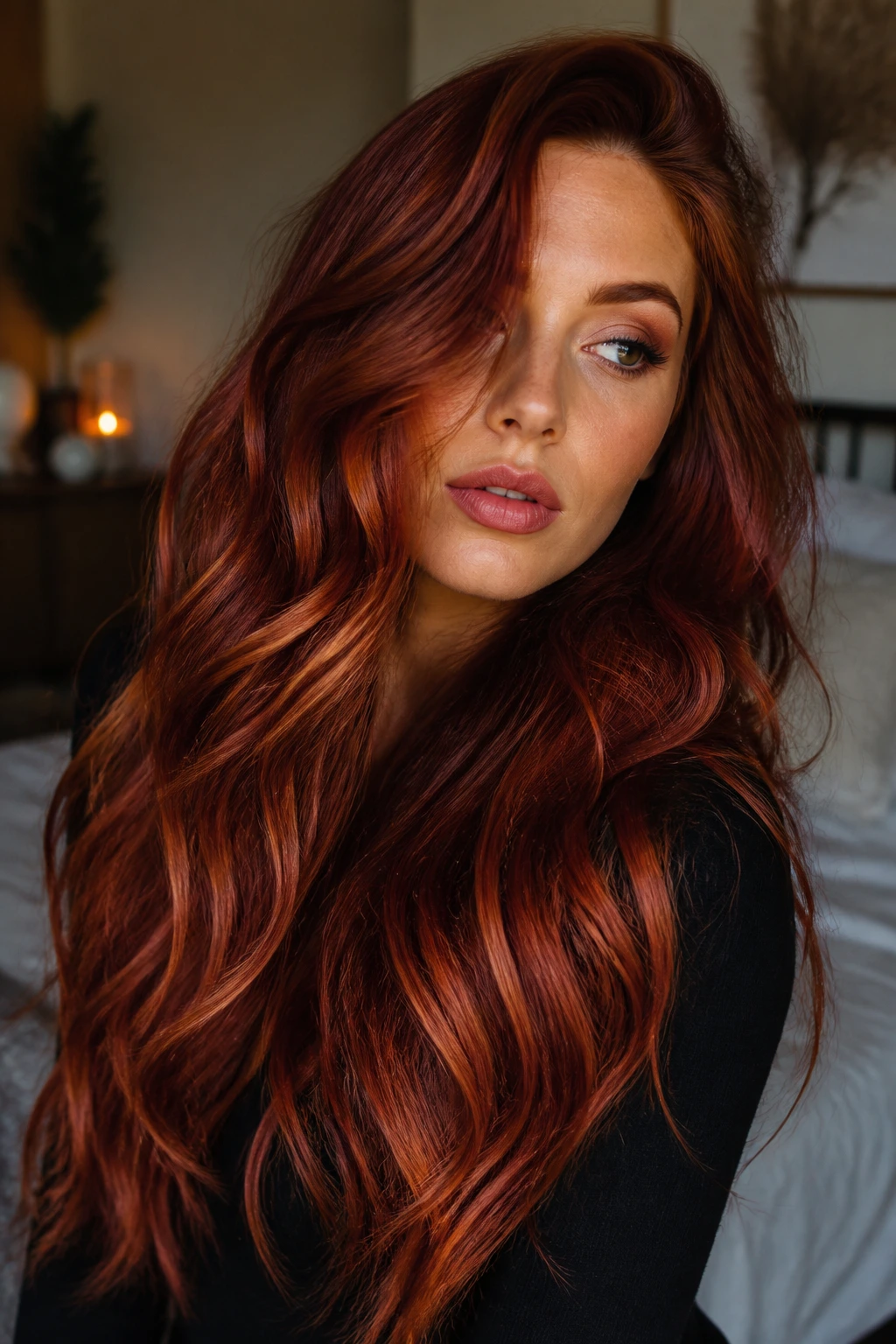
- Range: This collection runs from soft copper to deep merlot, so you can match the shade to your wardrobe, your skin tone, and your patience for upkeep.
- Movement: Long hair gives red room to shift between panels, ribbons, and gloss layers instead of reading as one flat color.
- Grow-Out: Several of these looks use root depth or balayage placement, which keeps regrowth softer when your hair is past the shoulders.
- Face Brightening: Copper, cinnamon, and auburn near the front can warm the face without forcing you into full-head bleach.
- Low-Commitment Options: Peekaboo panels, dip-dyed ends, and money-piece placement let you test red before you sign up for an all-over change.
- Styling Flexibility: The same red can read polished in a straight blowout, glossy in waves, or almost molten in a braid, which is half the fun.
Why Red Reads Differently on Long Lengths
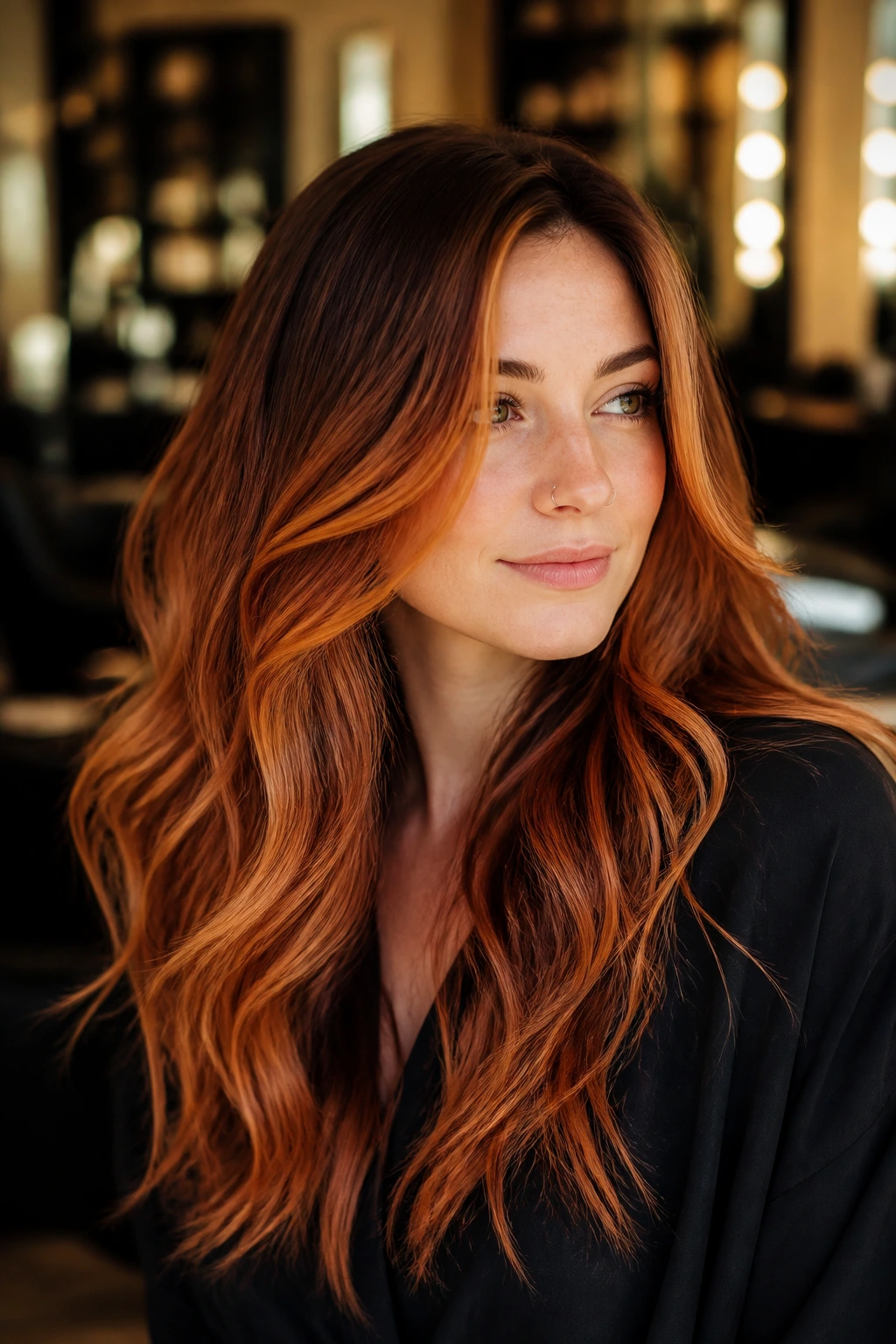
Long hair doesn’t just show color. It stretches it out, and that changes everything.
A red that feels loud on a chin-length cut can look surprisingly refined when it’s broken across layers and ends. The eye follows the movement, not just the pigment. That’s why a copper balayage can seem softer than a copper all-over color, even when the actual shade is brighter. The placement gives the red room to breathe.
Roots, mids, and ends all tell different stories
The root area usually needs a little more depth than the ends. If everything starts at the same brightness, long hair can turn into a sheet of color with no break points, and that’s when red starts to look heavy. A half-inch to one-inch shadow at the root keeps the look grounded and makes the brighter pieces read richer by comparison.
Layers matter more than most people admit
A blunt one-length cut can handle red, but layers are where the color starts to sing. Every bend in the hair catches light at a different angle, which means copper, cherry, and auburn can stack up into a more dimensional finish. On long hair, even subtle tone shifts show up. A warm root, a neutral mid-length, and a glossy end are not “extra.” They’re the whole point.
Straight hair and curly hair show red in different ways
Straight styles show the line of the color. Waves and curls show the texture of it. If the hair is very smooth, you’ll notice gloss, shine, and stripe placement first. If it’s textured, you’ll get softer blending and more flicker between red and brown. Both work, but they ask for different formulas and different styling habits.
That’s the lens I’d keep in mind while reading the list below. Some of these looks are bold and bright. Some are quiet until the light turns. A few are deliberately low-key, because long hair doesn’t need to shout to look expensive.
1. Burnished Copper Waves
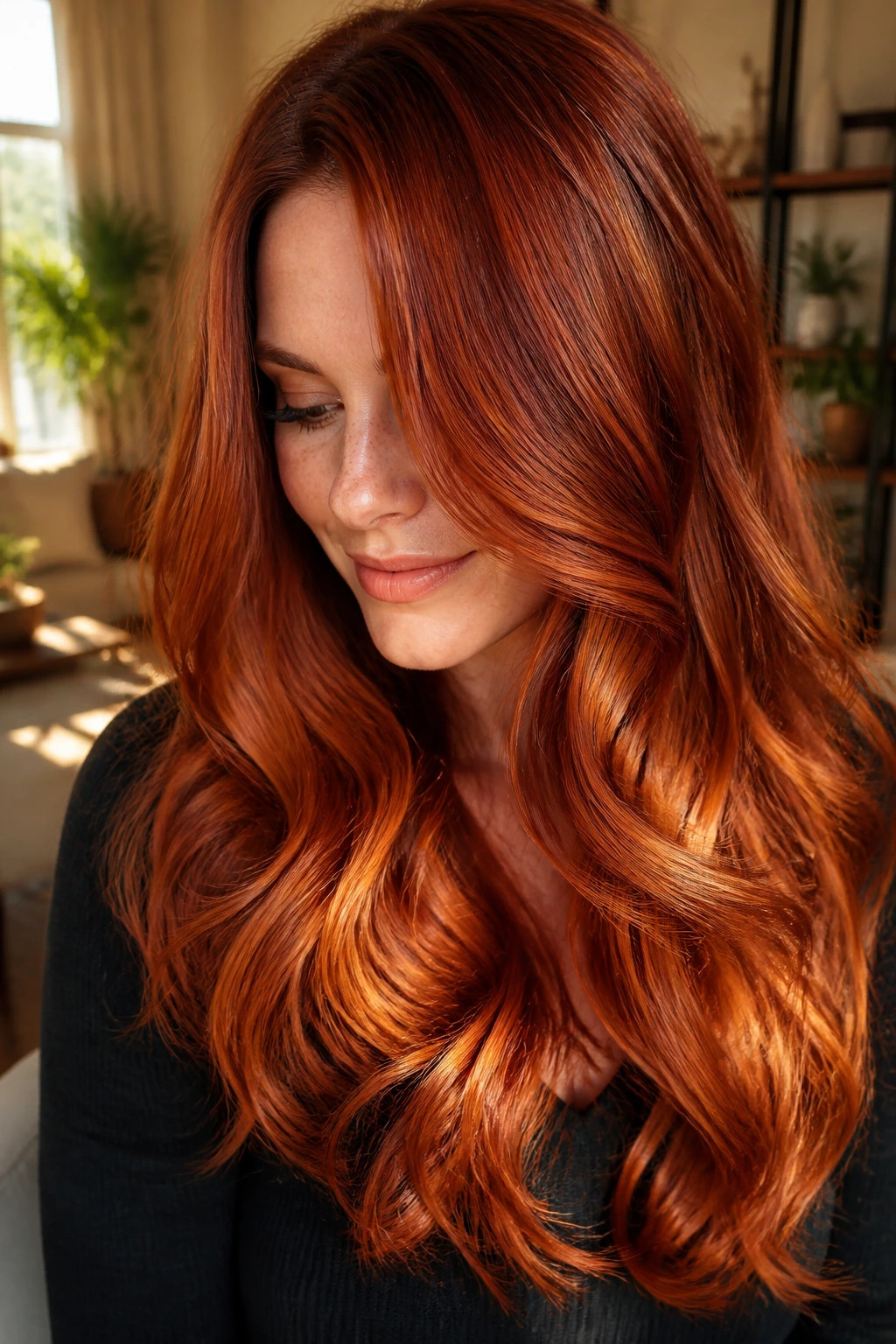
Burnished copper is the shade I reach for when someone wants red without drifting into cartoon territory. On long hair, it gives you that warm, sun-hit glow that sits somewhere between copper penny and toasted orange peel. Big waves help the color move, especially if the cut has long layers that keep the ends from hanging like one heavy curtain.
Why it works
Copper reads best when the hair has enough length to show off tonal shifts. On long waves, the lighter pieces catch on the outer bend and the deeper pieces hide underneath, so the whole style looks more layered than a flat single-process color. If the base sits around level 7 or 8, the result is richer and less brassy than trying to force copper onto a very dark starting point.
A glossy finish matters here. Copper without shine can go dull fast. With shine, it looks deliberate. And that’s the difference.
Best styling move
Use a 1.25-inch curling iron and leave the last inch out on every wrap. That little omission keeps the ends soft and stops the color from reading too uniform.
2. Cherry Cola Curtain Layers
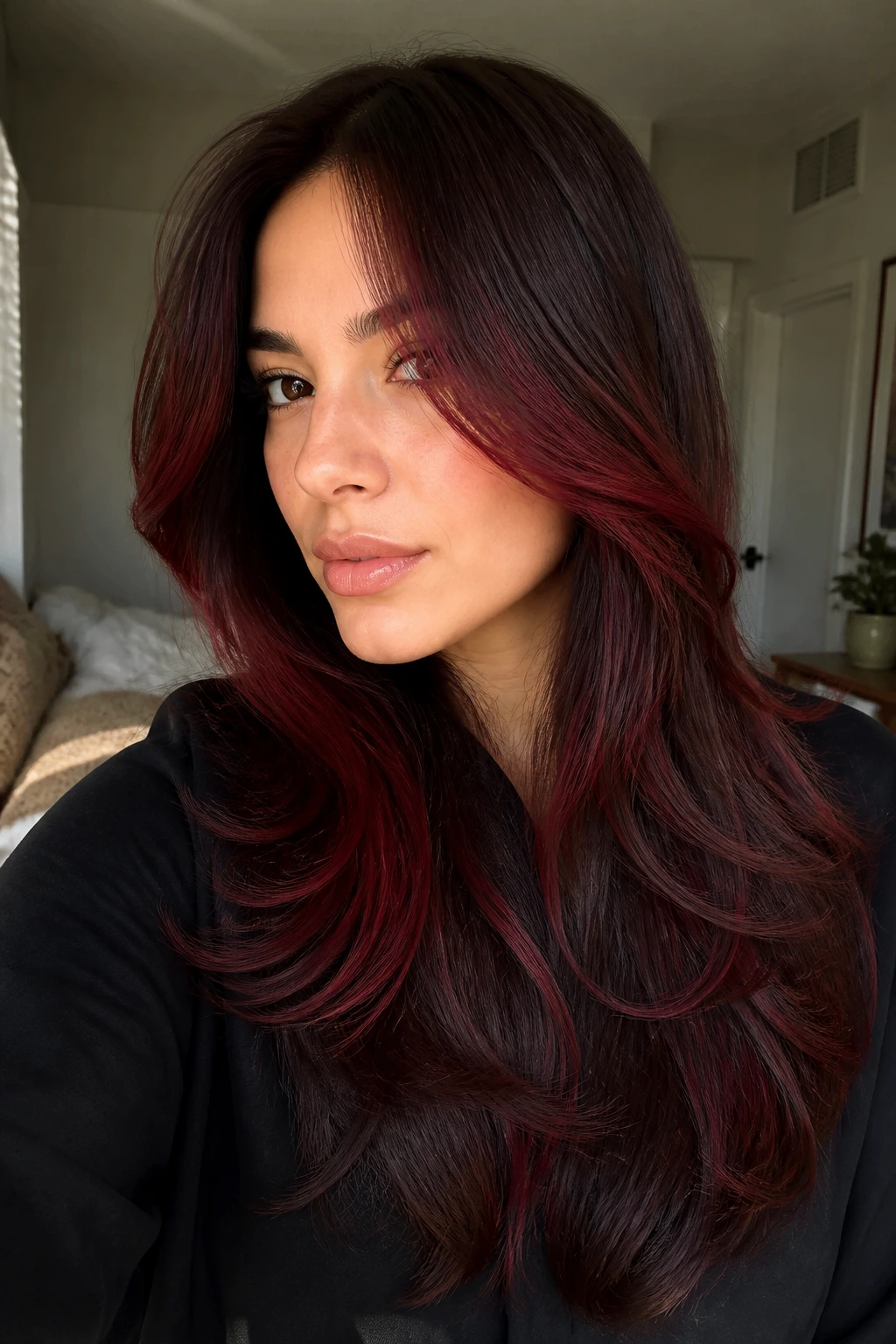
Cherry cola is one of those shades that looks almost brown until it moves. That makes it perfect for long hair with curtain layers, because the front pieces can show a flash of red while the longer back sections stay deep and moody. It’s a very good choice if you want red that feels grown-up instead of bright and obvious.
What makes it different
The cola base keeps the color grounded, while the cherry notes show up in direct light or when the hair is blown forward around the face. On long layers, that contrast is the whole trick. You get the drama without needing a full vivid red service.
This shade works especially well on medium brunettes who do not want to fully lift the hair. A gloss or demi-permanent formula can add enough red-violet tone to make the color look rich, not striped. That’s the sweet spot.
3. Ruby Balayage with Deep Roots
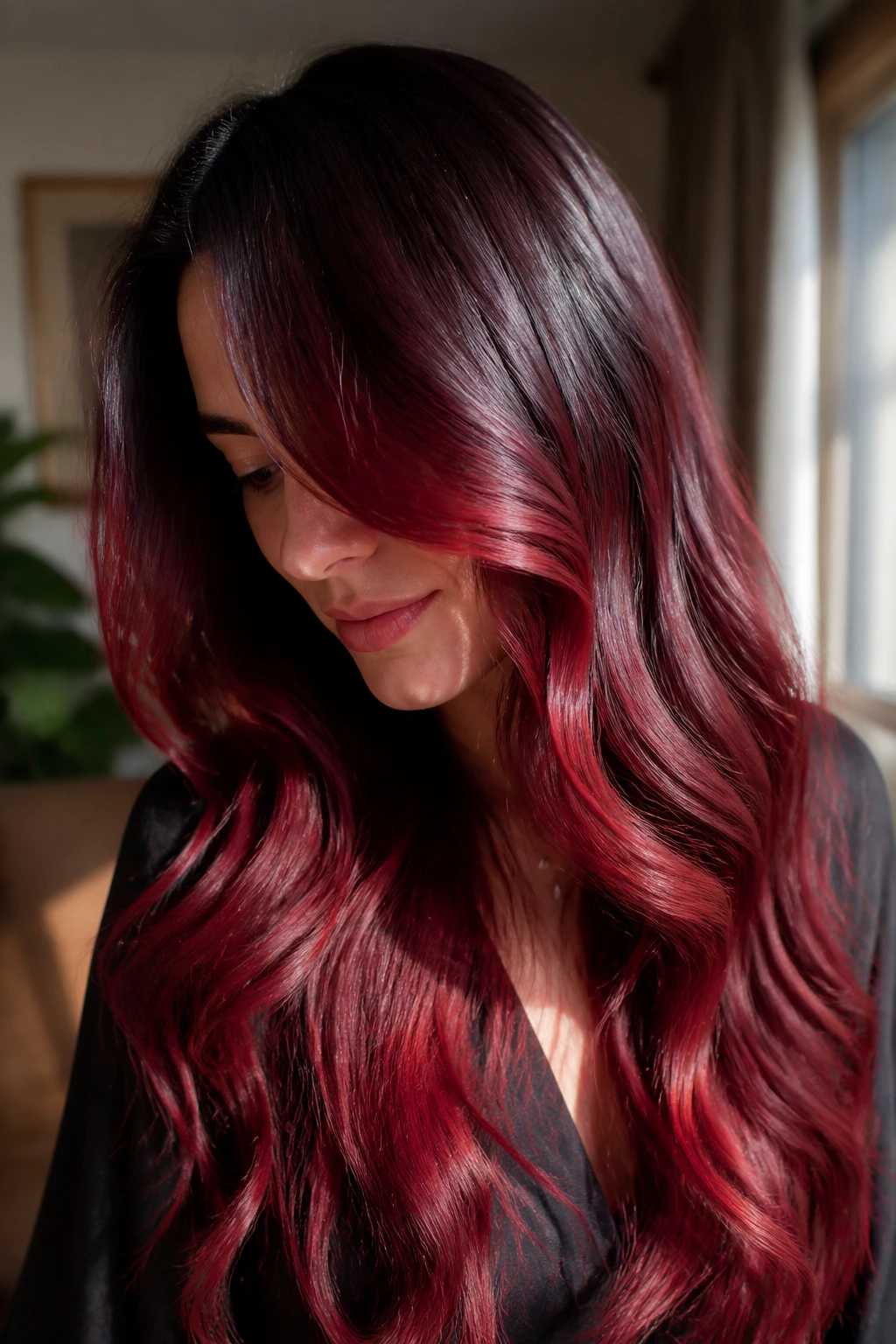
Ruby balayage gives you red that looks painted rather than poured. The roots stay deep, sometimes nearly brown, while ruby ribbons appear through the mids and ends. On long hair, the result feels expensive because the eye keeps finding new spots of brightness as the hair moves.
Why it works on length
Long hair can carry balayage without looking patchy, which is a real problem on shorter cuts. The extra length lets the red ribbons travel from shoulder to tip, and that makes the color feel intentional. A deeper root also buys you more time between salon visits, because regrowth is part of the design instead of a problem to hide.
If you wear your hair in loose bends, ruby balayage looks even better. The contrast between root and ends gives the color a bit of depth, and depth is what keeps red from looking like a single note.
Quick note
Ask for the brightest pieces to sit around the face and upper layers, not only at the bottom. Otherwise the whole look can disappear when your hair is down.
4. Cinnamon Money Piece and Soft Ends
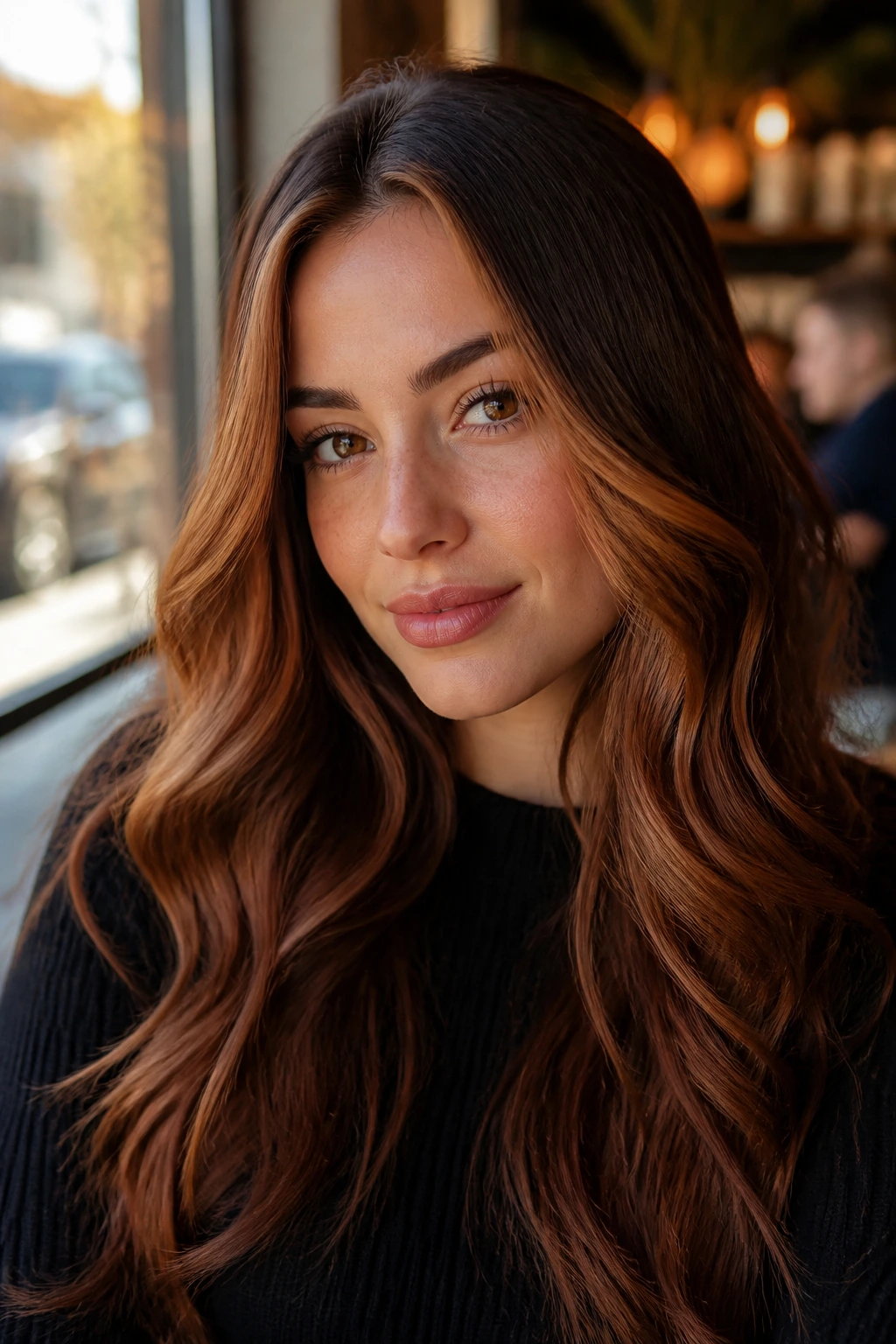
Cinnamon near the face is a smart little cheat. You get warmth where people actually look first, then softer red-brown lengths that don’t demand constant touch-ups. On long hair, this balance keeps the look from tipping into costume.
Why it flatters long hair
A money piece only works when the rest of the hair backs it up. Cinnamon at the front can lift the skin and make the eyes feel brighter, but the long lengths need to stay a shade or two quieter so the style doesn’t get noisy. That contrast is what makes the front sections feel special.
This is the red look I’d point someone toward if they want a first step into color. It gives you the mood of red hair without forcing a dramatic all-over change, and it still looks good when pulled half back or tucked behind the ears.
Style it this way
A soft blowout with a round brush beats tight curls here. The face-framing pieces should sit loose enough to move when you walk.
5. Merlot Velvet Lengths
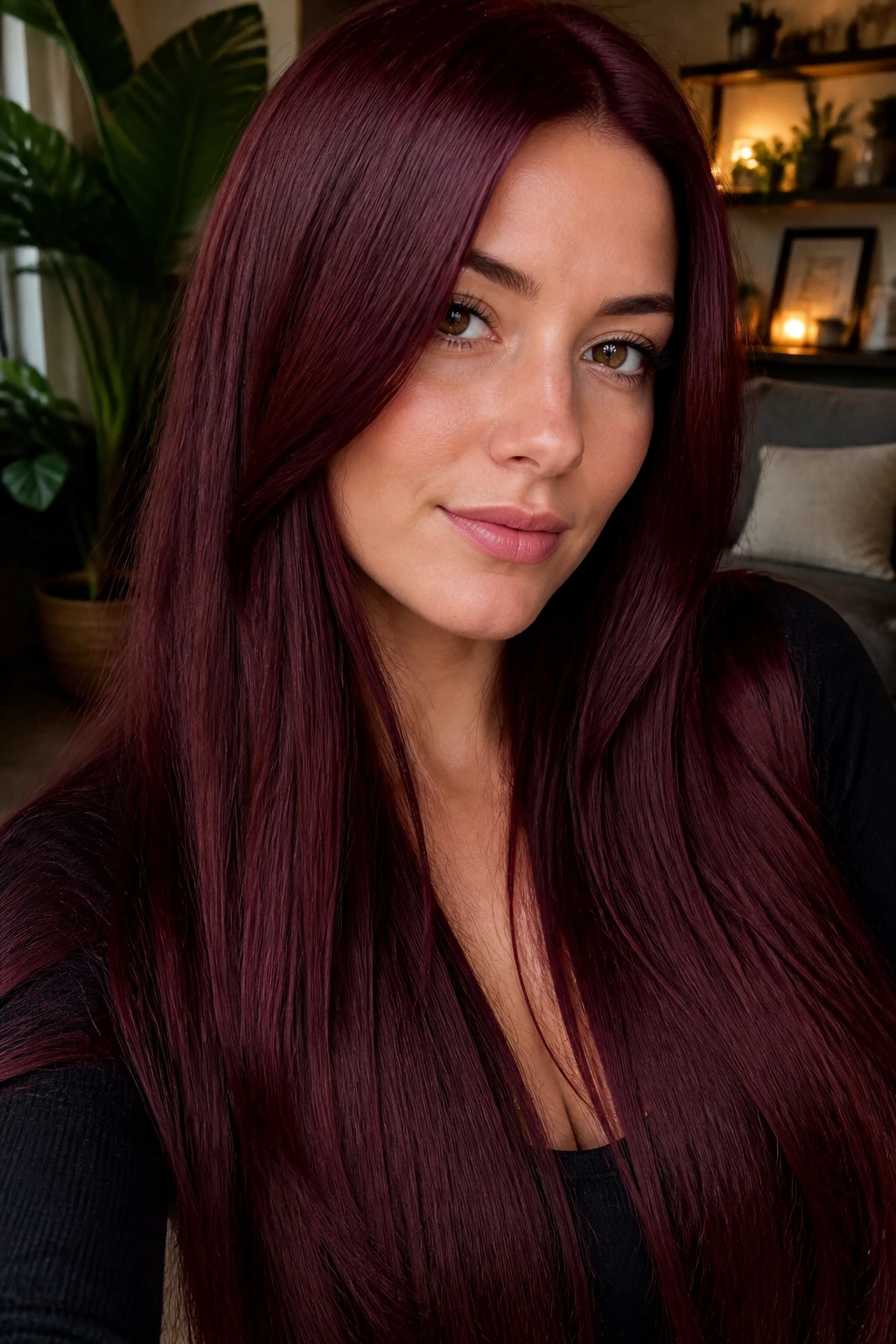
Merlot is one of the best deep reds for long hair because it has enough depth to feel polished and enough wine tone to stay interesting. When the hair falls straight, it looks almost lacquered. When it bends, the red-violet undertone flashes through and keeps the color from going flat.
The appeal is in the finish
This shade works best when the hair has healthy shine. Long hair can sometimes expose dryness at the ends, and merlot will show every rough edge if the cuticle is frayed. A smooth gloss treatment or a well-blended demi color keeps the finish looking plush instead of porous.
I like merlot on people who want red but hate obvious orange. It’s less fiery than copper, less bright than ruby, and much more forgiving on very long lengths.
Nope, it’s not the loudest red in the room. That’s the point.
6. Strawberry Copper Melt
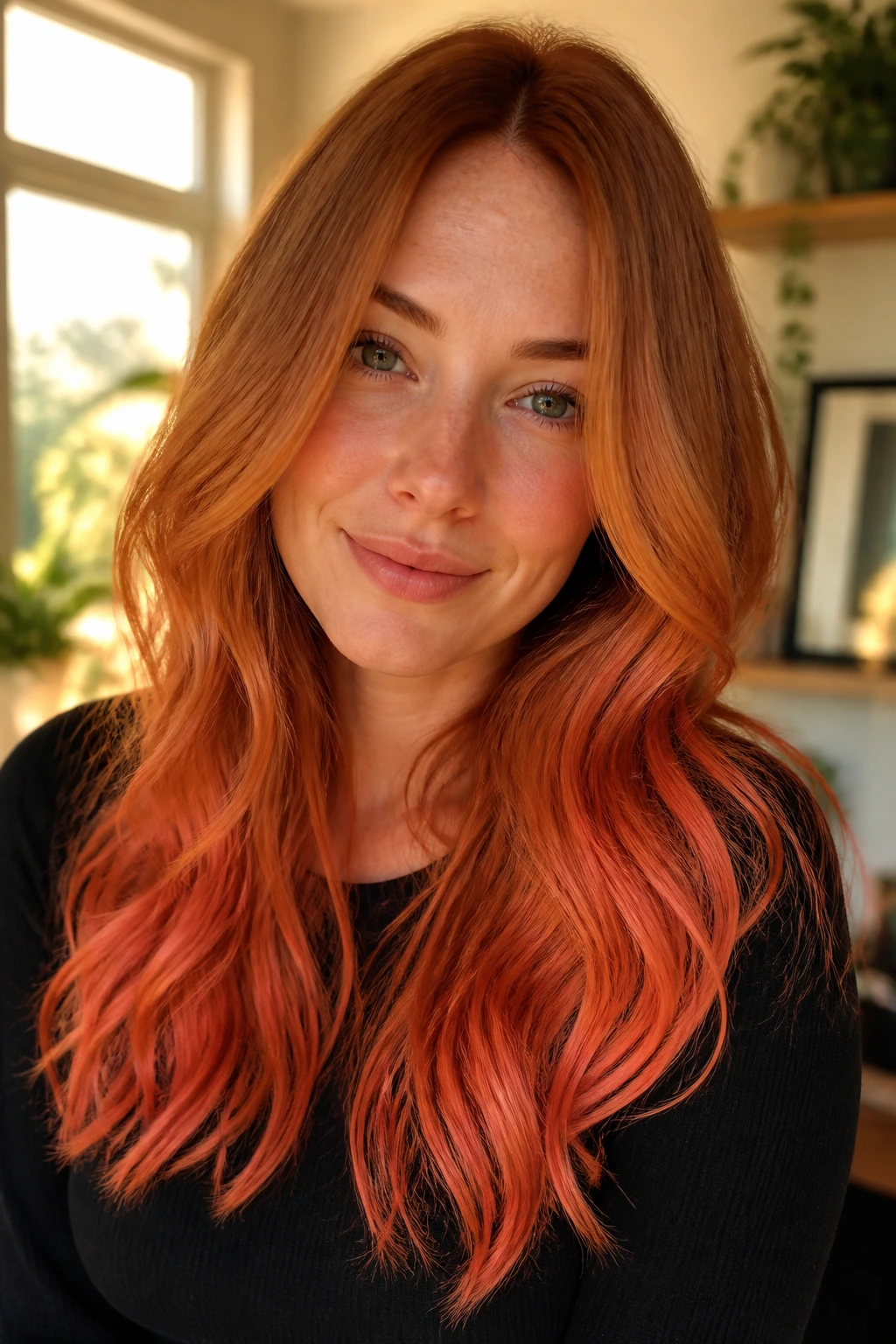
Strawberry copper is lighter, airier, and a little sweeter than the deeper reds above it. On long hair, a melt from a soft golden base into strawberry ends can look almost like the hair is lit from within, especially if the cut has long, soft layers.
Best on lighter brunettes and dark blondes
This shade depends on a base that can hold warmth without turning muddy. It’s a much easier fit on hair that already sits near level 7 than on very dark hair. The melt effect matters too. If the transition from root to end is too abrupt, strawberry red starts to look blocky, and that ruins the softness.
The best versions keep the root zone muted and let the brighter tones gather toward the lower half of the hair. That gives the eye somewhere to travel. And on long hair, travel is everything.
What to ask for
Ask for a soft copper glaze at the mids and a slightly brighter strawberry tone on the very ends. That tiny difference makes the whole style look like a deliberate gradient instead of a rushed color job.
7. Auburn Money Piece and Soft Ends
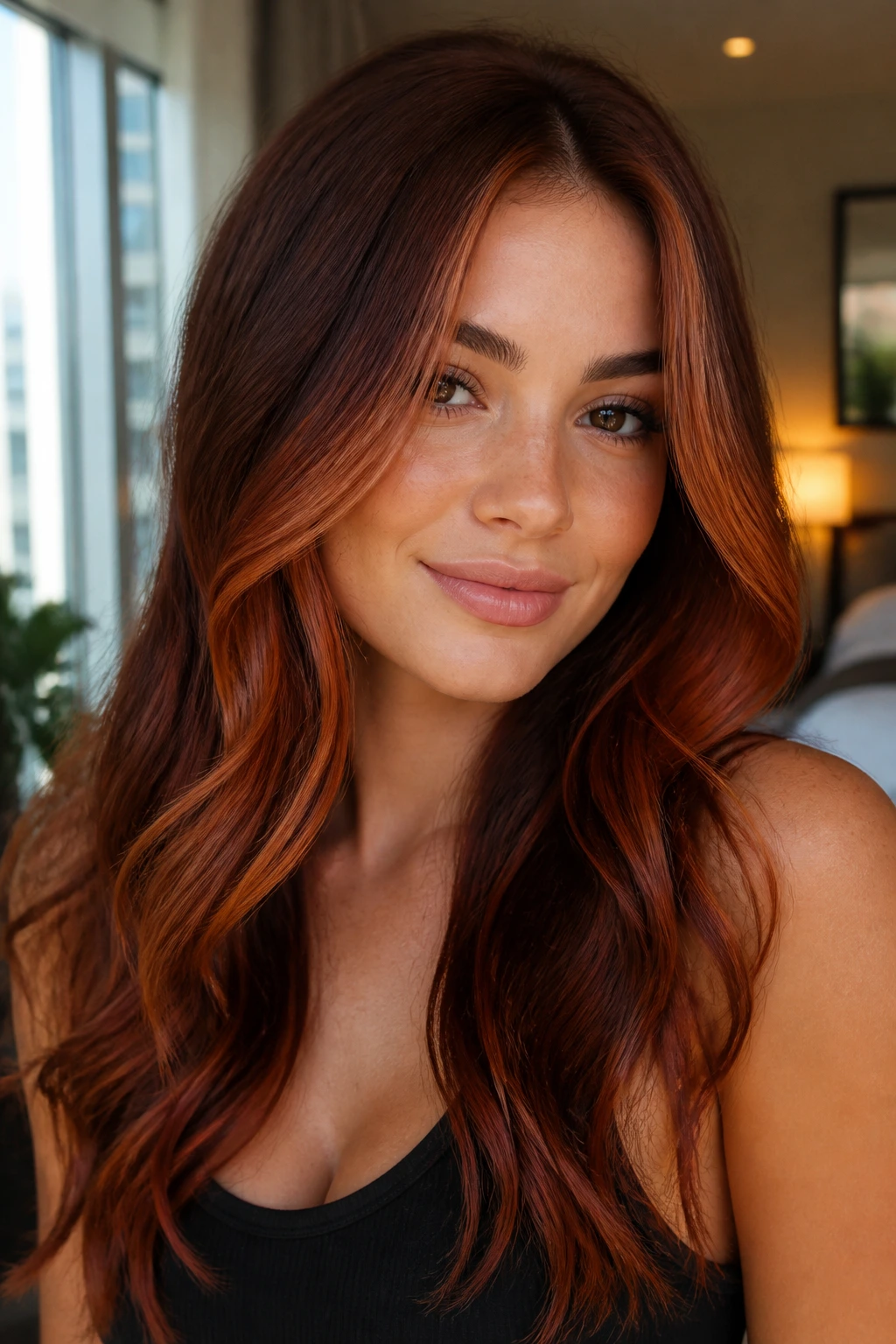
Auburn is the sensible cousin in the red family, but “sensible” doesn’t mean boring. Put it around the face, keep the rest of the hair one or two shades quieter, and long hair suddenly looks fuller and more expensive. The contrast does a lot of work for very little maintenance.
Why it’s so effective
The money piece draws attention upward, which is useful if the ends of the hair are naturally darker or a little weaker from heat styling. Long lengths benefit from that kind of visual balance. The brighter front breaks up the weight of the hair and makes the whole cut look lighter.
This also plays well with waves. The auburn front pieces frame the face, while the longer sections fade into softer red-brown territory. It’s one of the easiest red looks to wear with a blazer, a plain tee, or a dress with no fuss around the neckline.
A small warning
Keep the front panels narrow. If they’re too wide, the look starts to feel stripey instead of sleek.
8. Scarlet Ombré on Layered Hair
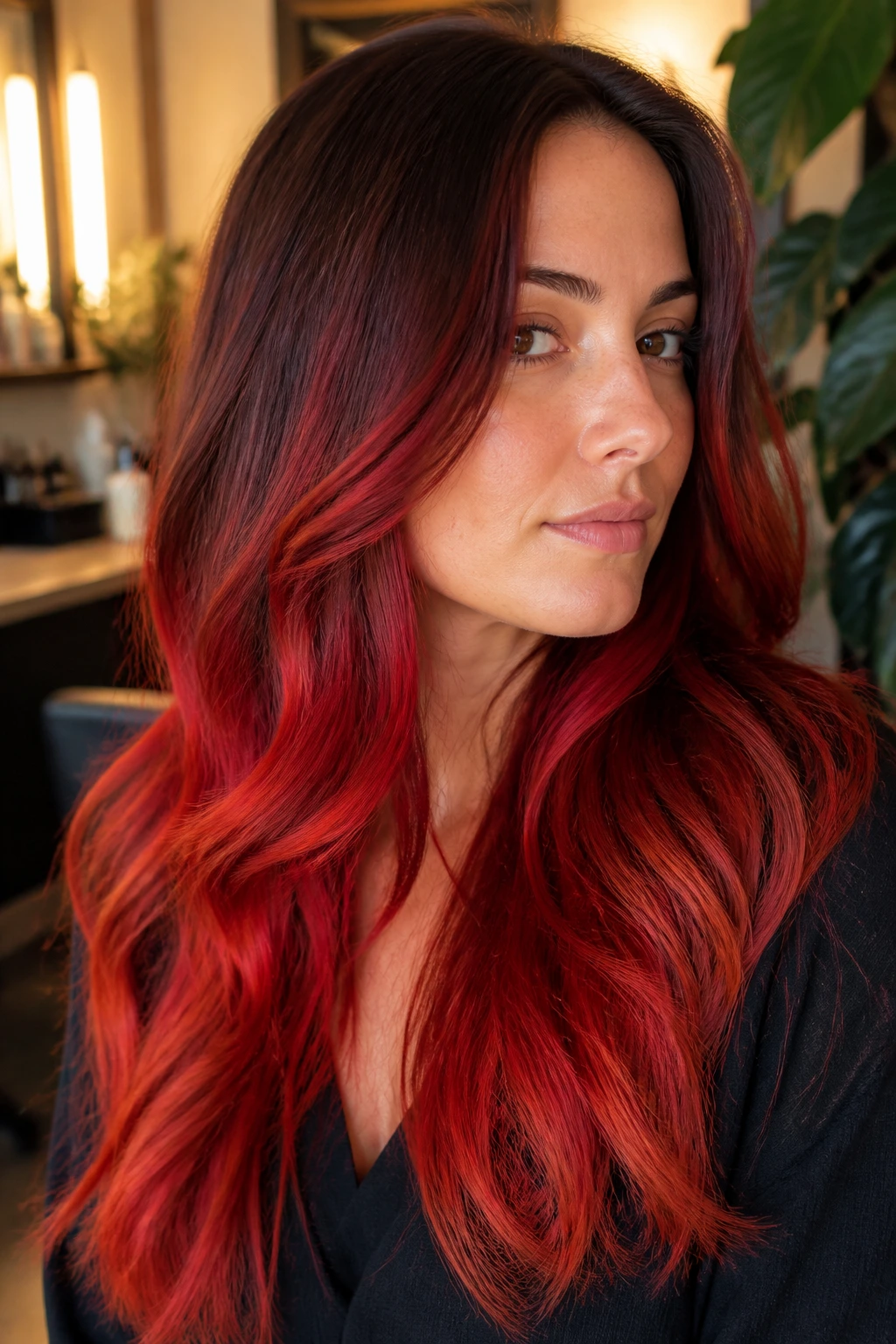
Scarlet ombré is not shy. It starts deeper and pushes brighter toward the ends, which gives long layered hair a dramatic finish without making the scalp area fight the color. If you want movement and a little edge, this is a strong choice.
Why layers help
On a one-length cut, ombré can look like a hard line. Layers break that line apart and make the transition read more naturally, especially when the brighter scarlet pieces land on the bottom third of the hair. The result is bold, but not clunky.
This is also a useful style for people who like to wear their hair curled. The ends pick up the brightest color first, which means every bend shows off the gradient. That’s where the magic sits.
Best styling note
Use soft, brushed-out waves. Tight curls can make the fade look too abrupt, while loose bends let the red move from shade to shade.
9. Rusted Copper Micro-Lights
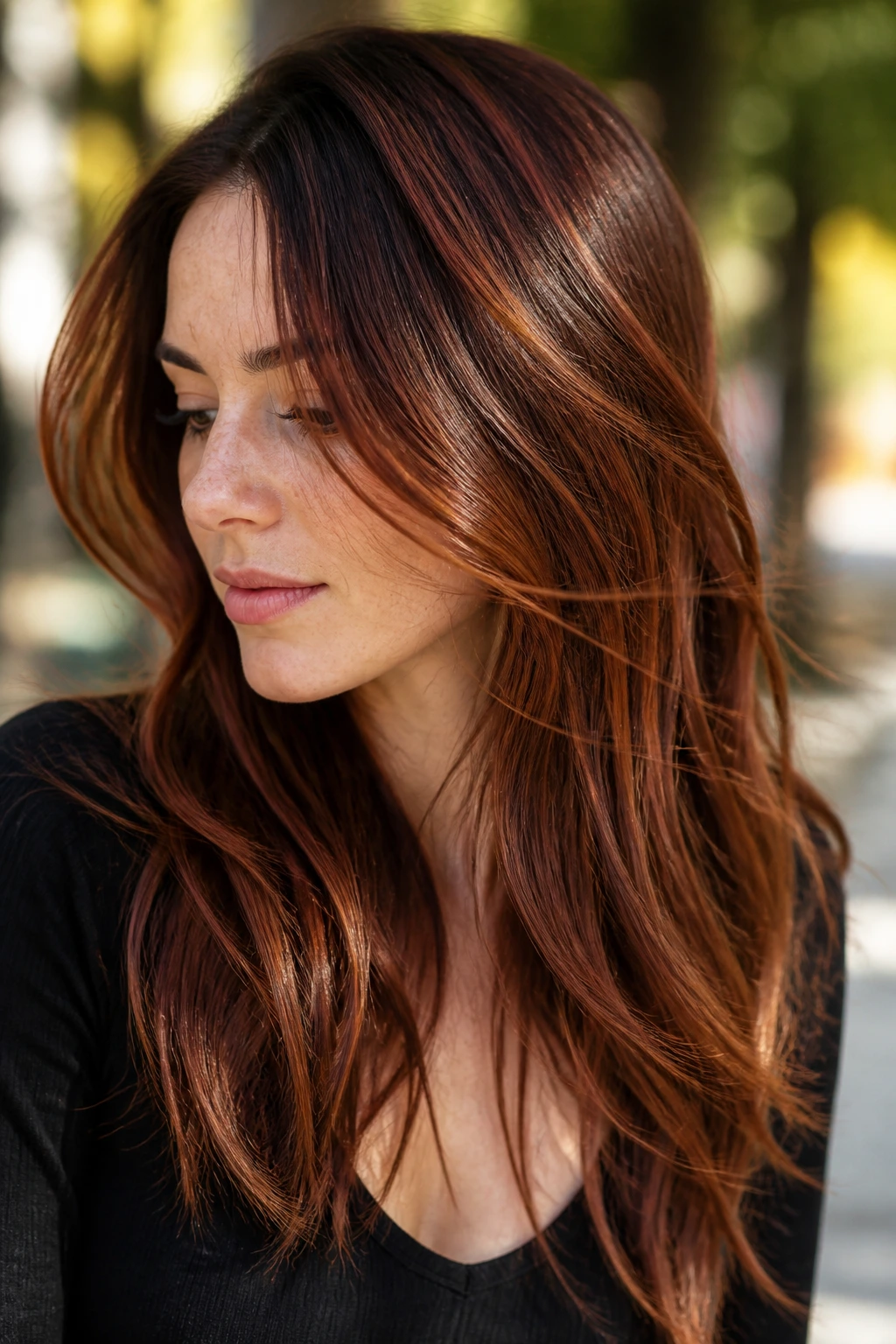
Micro-lights are for people who want dimension without large obvious streaks. On long hair, tiny rust-red pieces woven through a darker base create a flicker effect that looks especially good when the hair moves. It’s subtle, but not invisible.
What makes it smart
Long hair gives micro-lights room to repeat. A few thin red threads near the face, a few through the mids, a few toward the ends—that’s enough. Because the pieces are small, the grow-out is gentle, and the shade doesn’t scream for attention every time you skip a salon appointment.
This is one of my favorite red looks for anyone who likes their color to show up in motion rather than in a static mirror shot. You see it when the hair swings. You see it in braids. You see it in a half-up twist. That quiet flicker is the whole appeal.
- Works well with naturally brown bases.
- Looks softer than chunky highlights.
- Needs less upkeep than all-over red.
- Holds up nicely in long layered cuts.
10. Black Cherry Gloss on Straight Lengths
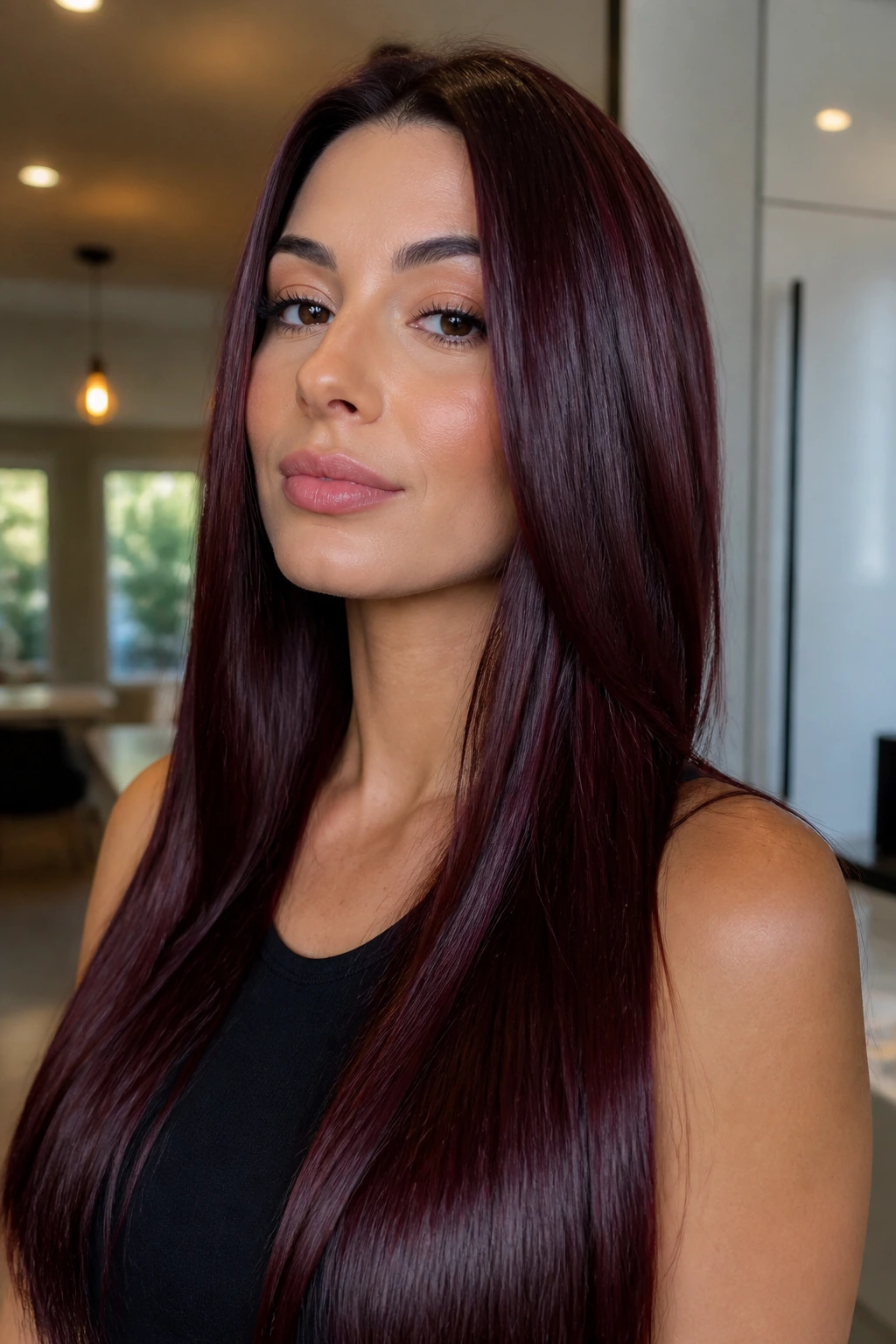
Black cherry gloss is the shade that looks almost severe at first glance, then turns rich and juicy the second the light changes. On long straight hair, it’s a very clean, very sleek effect. There’s no confusion about the finish. It’s glossy, dark, and just red enough to catch the eye.
Why it reads so well on straight hair
Straight lengths show depth more than texture, and black cherry depends on depth. The dark base gives the red-violet tone somewhere to sit, while the gloss makes the surface look polished. If the hair is healthy, this shade can look almost mirror-like under indoor light.
It’s a strong choice for people who want red but still prefer darker hair overall. And unlike brighter copper shades, black cherry doesn’t need every strand to be equally lifted. That makes it easier to live with on long hair that may already have different porosity from roots to ends.
My take
If you hate brass and love shine, this is one of the best bets in the whole list.
11. Pumpkin Spice Ribbon Highlights
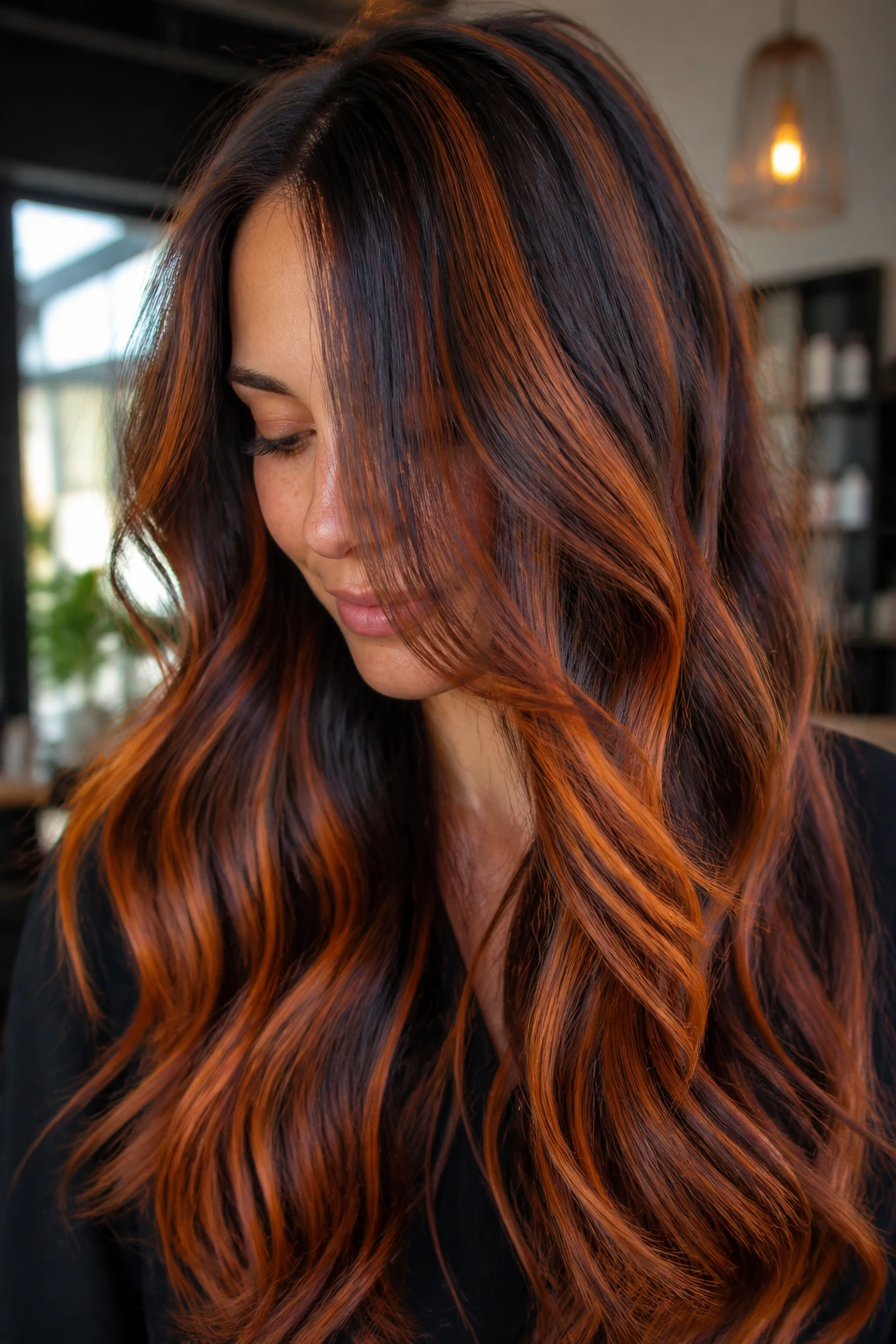
Pumpkin spice ribbon highlights are bolder than micro-lights and softer than chunky streaks. They sit in that nice middle ground where the red-orange pieces are visible, but they still melt into the surrounding brunette or auburn base. Long hair is the right canvas for this because the ribbons can travel from crown to ends without looking chopped up.
Why it works
Ribbon highlights need enough length to show the contrast between the lifted strands and the darker hair around them. On long hair, that contrast creates movement with every turn of the head. The brightest pieces can be thicker around the face and narrower through the back so the look stays balanced.
There’s also a practical upside. Because the ribbons are spread out, the grow-out is softer than a dense full-head red. You can stretch the maintenance a bit, which matters if you’re not eager to live at the salon.
Best fit
If your natural base is warm brown, this look usually blends more easily than if your hair leans very cool or very dark.
12. Flame-Tipped V-Cut
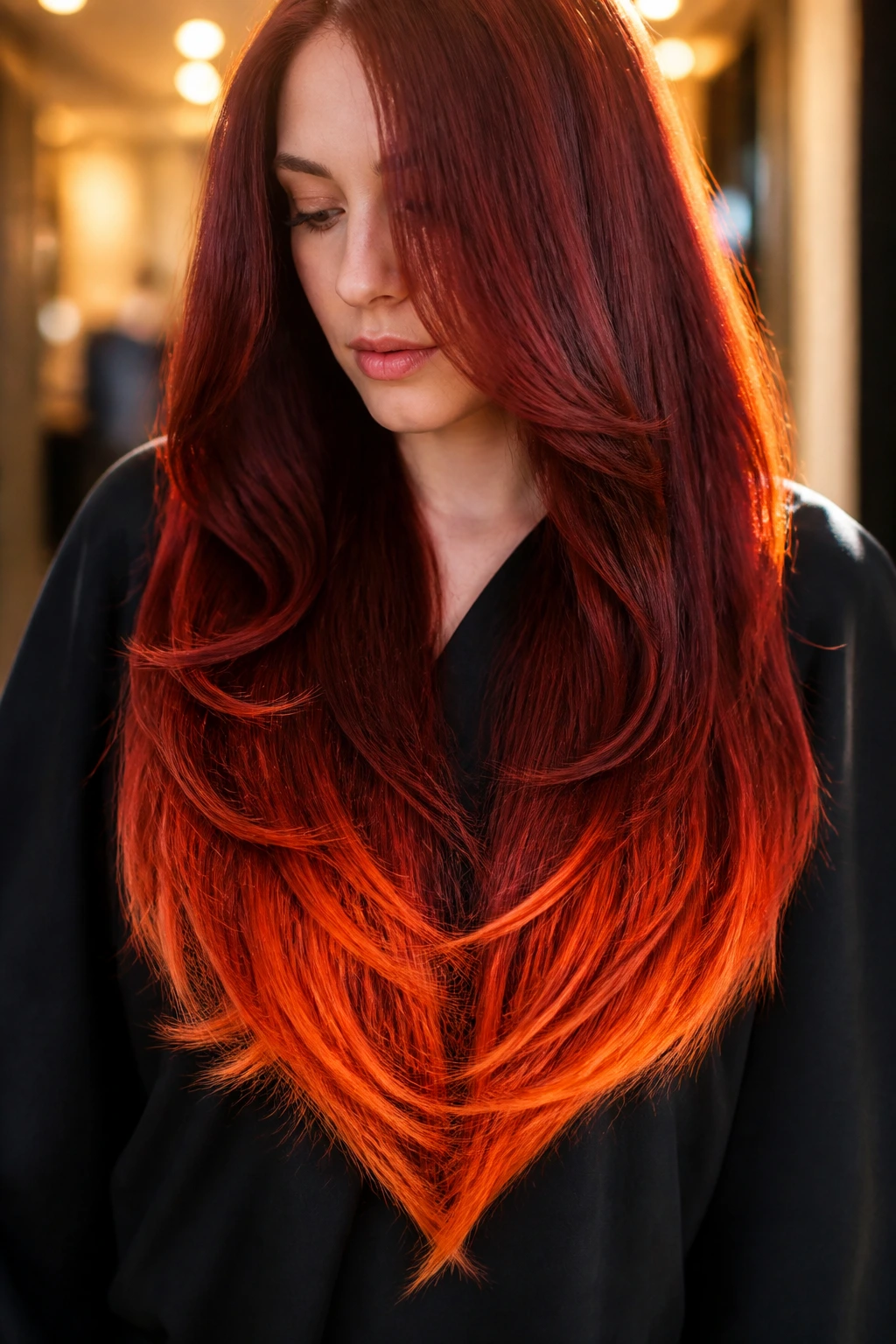
A V-cut gives red somewhere dramatic to land. When the brightest color is concentrated toward the pointed ends, the whole shape looks sharper, almost like the hair has been outlined in heat. It’s a strong visual, and long hair is one of the few lengths that can carry it without feeling messy.
Why this shape matters
The V-cut already pulls the eye downward. Add flame-toned ends and the color starts to read like motion, not just dye. The layered sides soften the look so it doesn’t feel like a costume piece. That balance is the hard part, and the cut does a lot of the work.
This is a particularly good option if you wear long hair loose most of the time. The pointed ends and brighter tips are visible even from the back, which is part of the appeal.
A flat iron can make the color look sharper, but soft bends give it a more natural fire effect.
13. Rose Gold Red Balayage
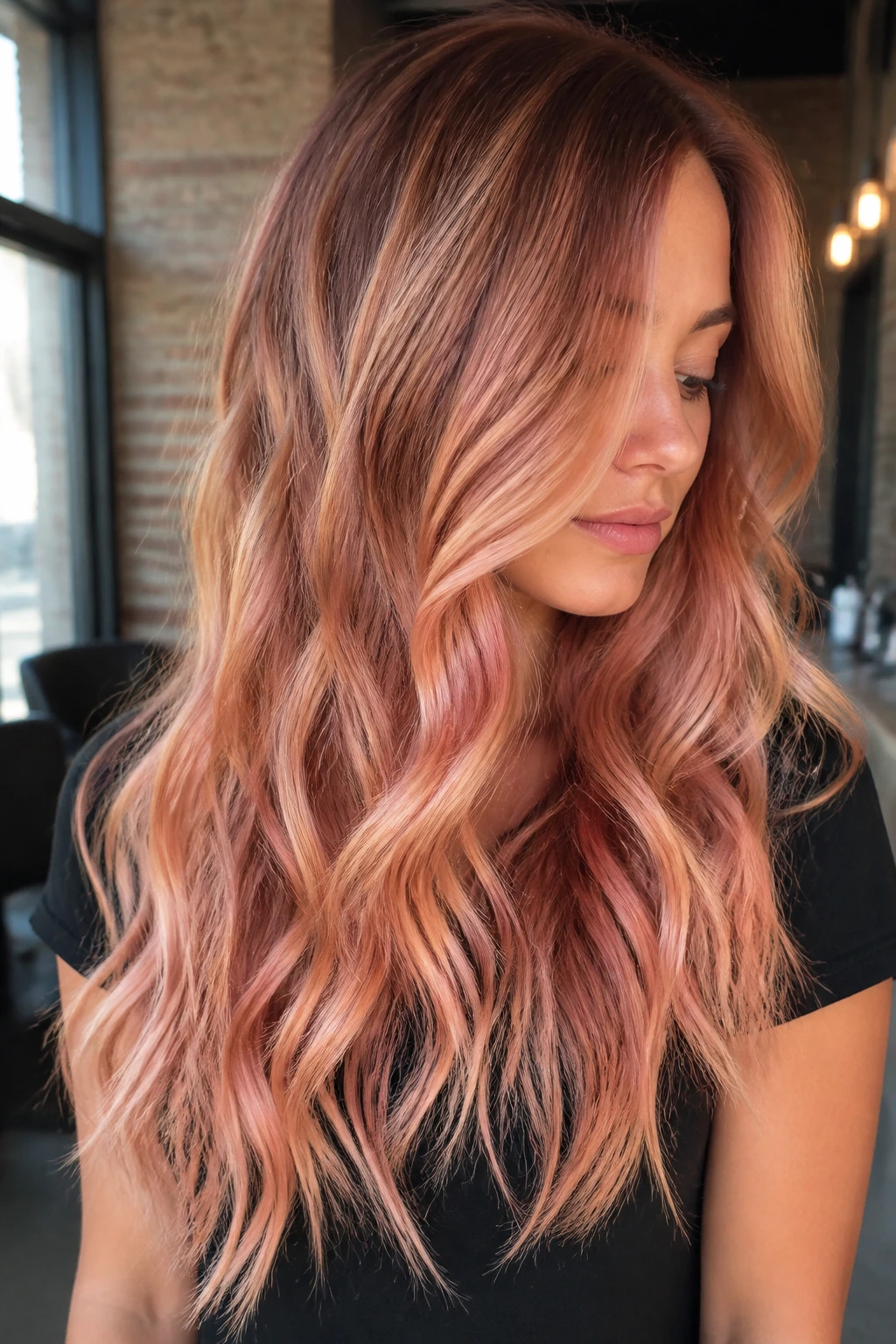
Rose gold red leans softer than copper and a little more polished than strawberry blonde. On long hair, it looks especially good when the lighter pieces are balayaged through the mids and ends rather than packed into thick foils. The result is airy, not dense.
The tone is doing the heavy lifting
Rose gold sits in that delicate space where red meets pink and warm gold. That means it can look sweet in daylight and more muted indoors. On long lengths, that shifting tone keeps the style interesting without making it loud.
This is a useful look for blondes and light brunettes who want a red family shade but do not want to commit to deep crimson. The balayage placement keeps the root area soft and lets the brighter tones live where the hair moves most.
Styling note
Loose waves make the rose-gold pieces pick up light in a way straight hair sometimes misses. You want visible bends, not curls so tight they break the color apart.
14. Cranberry Dip-Dyed Ends
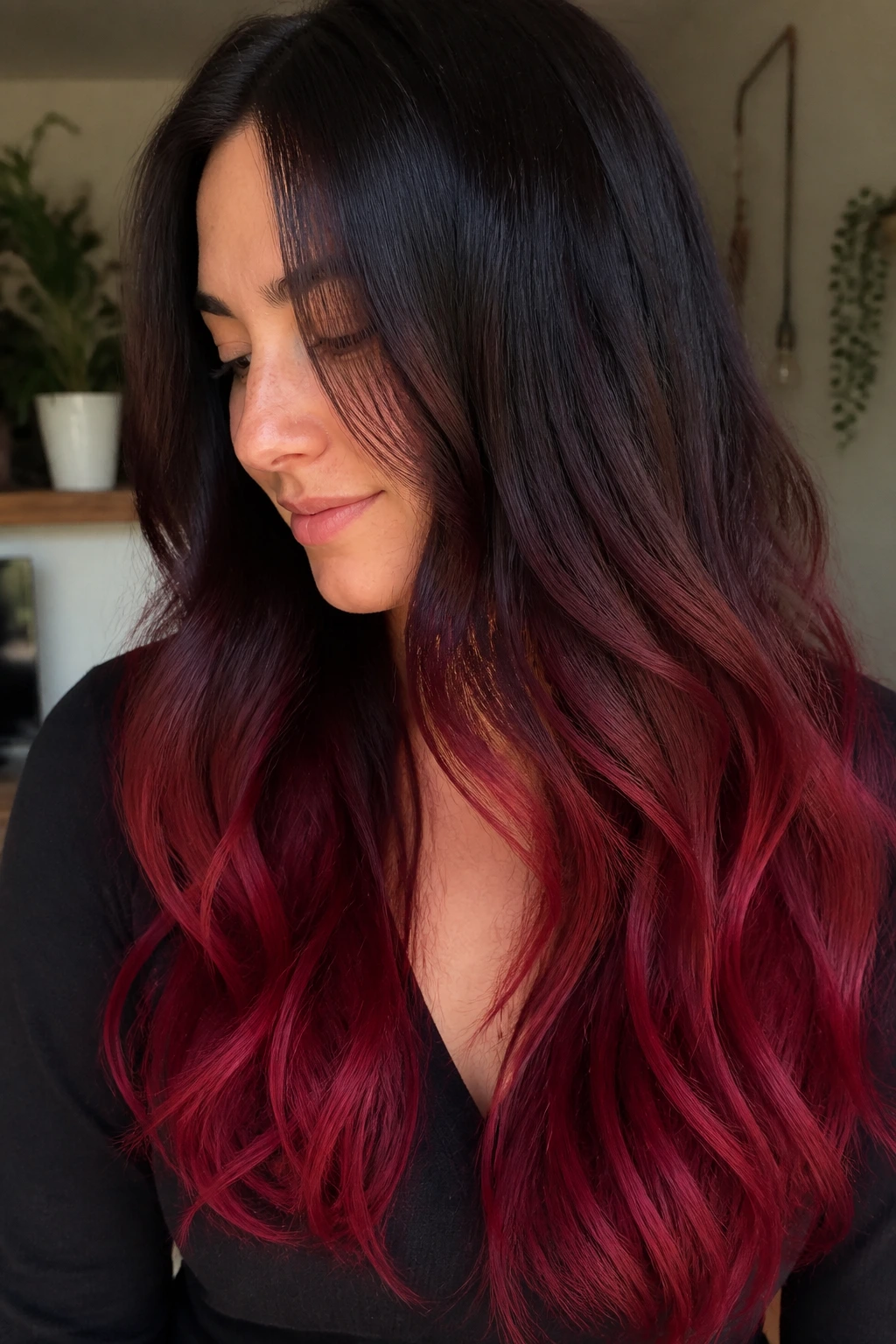
Cranberry dip-dye is the low-commitment end of the red spectrum, and long hair gives it extra room to look intentional. The top stays dark or natural, while the lower portion turns berry-red and glossy. It’s edgy, but not reckless.
Why it works on long hair
The longer the hair, the more the dip-dye has a chance to feel like a choice instead of an afterthought. You need enough length for the transition to breathe. Otherwise it can look like the color was simply abandoned halfway down the strand.
Cranberry is a good choice if you like bold color but do not want to maintain a red root. The ends can be refreshed quickly, and since the color sits away from the scalp, regrowth is not the issue it would be with a full-head red.
Quick note
This look pairs well with straight styles, braided styles, and half-up knots. The ends become the focal point, so show them off.
15. Mahogany Silk Shine
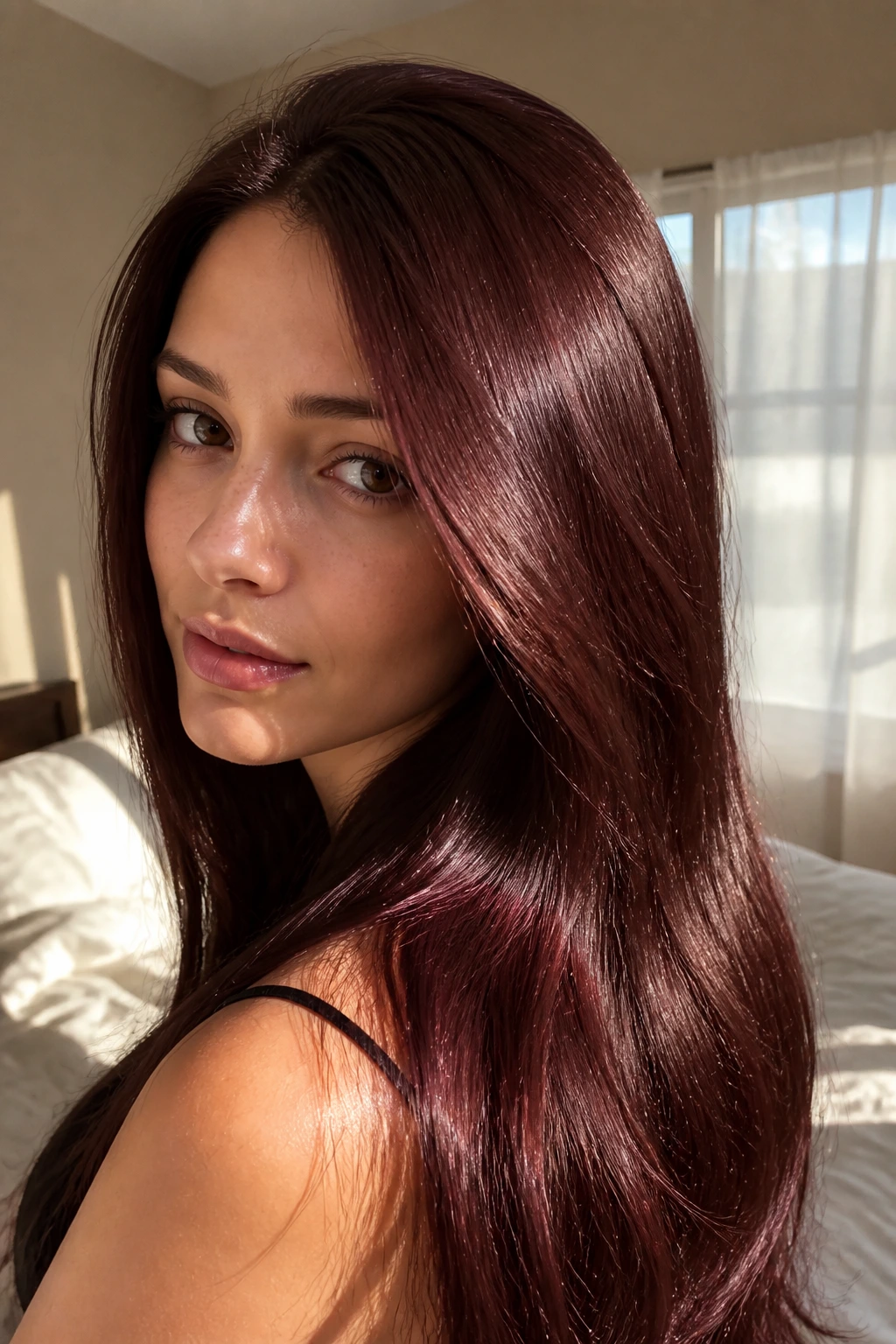
Mahogany is deep, warm, and quietly rich. On long hair, especially when it’s worn straight or smoothed into a loose bend, the color can feel almost velvety. It sits closer to brunette than copper, which makes it one of the easiest red-adjacent shades to live with.
Why I like it
Mahogany works because it doesn’t ask for too much. It gives the hair warmth, depth, and a red-brown undertone without forcing a dramatic shift. That makes it a good bridge color for someone moving away from brown but not ready for vivid red.
The shine matters more than anything else here. A matte mahogany can look flat. A glossy mahogany can look like the hair has extra density, which is one reason this shade is so flattering on long lengths.
Long straight layers are a sweet spot. They show off the shine and keep the color looking smooth from root to tip.
16. Copper Peekaboo Panels
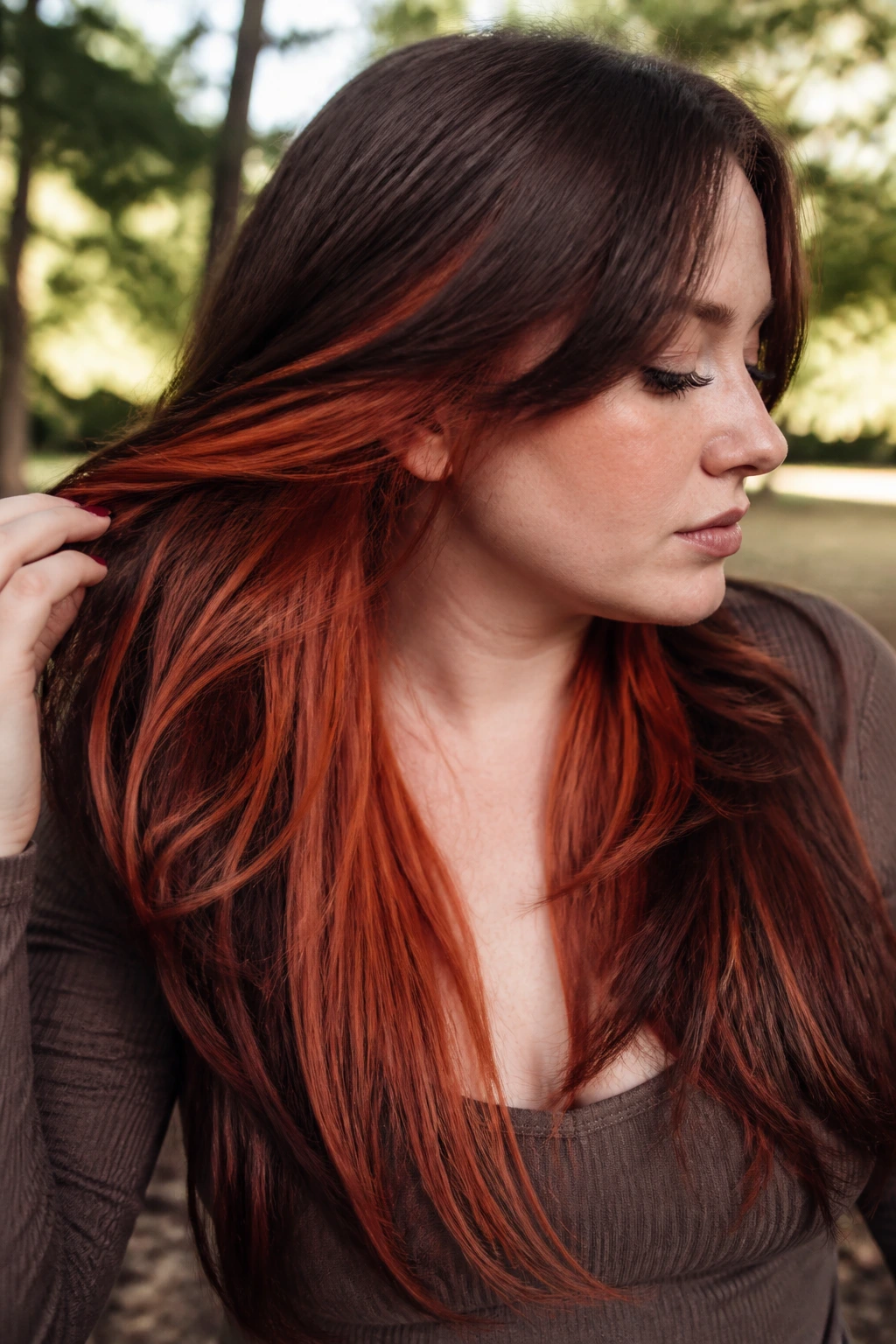
Peekaboo color is made for long hair. The top layers can stay neutral while copper panels hide underneath and flash when the hair swings or gets tucked behind the ear. It’s one of the smartest ways to wear red if you want a surprise effect rather than an all-day headline.
What makes it fun
The hidden placement keeps the color from overwhelming the surface. That means you can wear it to work, then let it show when you braid the hair, throw it into a half-up style, or pin one side back. Red gets all the attention without having to sit on top of the head.
I especially like this on long layered cuts, because the panels peek through at different points instead of all appearing at once. That staggered reveal makes the color feel more playful.
Best for: people who like a little drama but don’t want to see it every second.
17. Blood Orange on a Dark Brunette Base
Blood orange on dark hair is not for the faint of heart. It’s bright, spicy, and full of contrast. Long hair gives that contrast a place to repeat, so the shade doesn’t look like one loud stripe stuck on top of a dark base.
Why it works
The brunette base keeps the color from veering into neon territory, while the orange-red pieces deliver the punch. On long hair, the brightest bits can sit around the face and through the outer layers, where light naturally hits them first. That makes the color look alive rather than painted on.
This is the look I’d call the most “readable” of the vivid reds. You know exactly what it is the second you see it, and that can be a good thing if you want your hair to do the talking.
A smoothing serum helps here. Bright red-orange can look a little dry if the finish is fuzzy.
18. Ginger Spice Blowout Color
Ginger spice is brighter than auburn and less saturated than scarlet. On a long blowout, it looks clean and polished, with the kind of smooth movement that makes the color shift as the hair swings. It’s a very flattering shade when you want warmth without deep burgundy heaviness.
Why the blowout matters
Ginger has a tendency to look most expensive when the cuticle is smooth and the strands all move in the same direction. A round-brush blowout shows off the gloss and keeps the color from getting lost in texture. The shape matters as much as the pigment.
This is also one of the best red looks for very long hair that tends to tangle. A smooth blowout cuts through visual clutter and lets the color line do the work.
My opinion
If you want a red that looks polished rather than fiery, this is a strong place to start.
19. Cherry Bomb Streaks
Cherry bomb streaks bring back a bit of that high-contrast, retro energy people often try to soften away. On long hair, the streaks can be placed strategically through the mids and ends so the color feels bold but not chaotic. It’s a loud look, and that’s the fun of it.
Why it avoids looking dated
The trick is spacing. Too many streaks and the hair starts to feel stripy. Too few and the color disappears. On long hair, the streaks can be spaced wider through the back and denser around the face, which keeps the eye moving.
This shade works best when you commit to styling it with a bit of polish. Loose waves, a smooth blowout, or a sleek braid all make the red pieces look more deliberate. Air-dried and fuzzy can make the streaks feel busier than they need to be.
Watch for this: if the streaks start at exactly the same height on both sides, the look can get stiff fast.
20. Brick Red and Caramel Blend
Brick red is earthier than cherry and less bright than copper, which makes it one of the easiest red tones to wear on long hair. Add caramel pieces and the whole look starts to feel warm, dimensional, and much softer around the face.
The blend is the point
Brick alone can look heavy. Caramel alone can look too golden. Together, they create a red-brown mix that feels grounded and soft at the same time. On long layers, the two tones can separate just enough to show movement without creating harsh stripes.
This is the shade I’d send to someone who says they want red but worries it will look too “done.” It’s approachable. It has depth. It behaves nicely in braids.
A center part and long waves make it feel modern. A side part gives the caramel a little extra lift around the face.
21. Spiced Garnet Waves
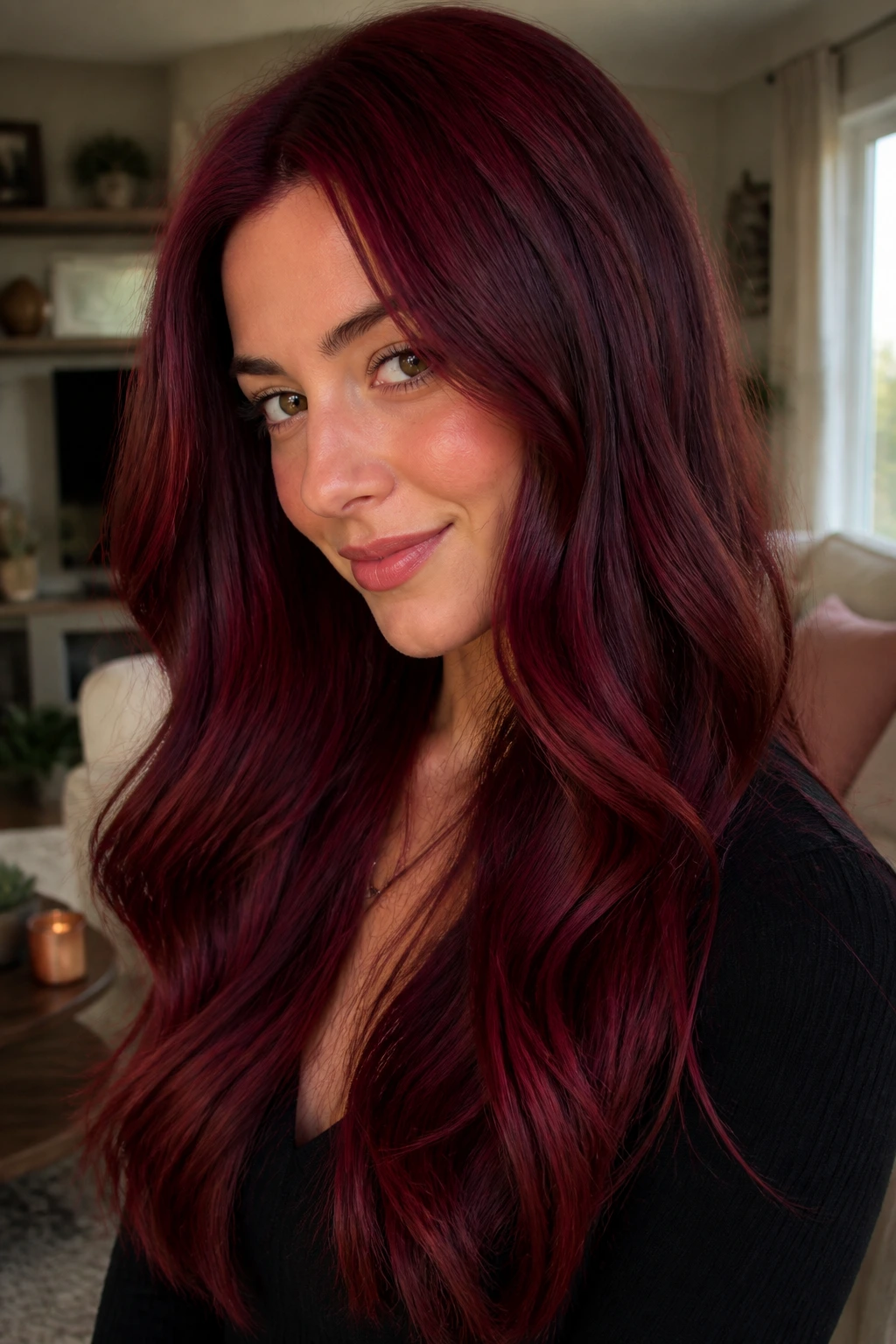
Garnet brings a cooler, jewel-toned red into the mix. On long waves, it has a rich, almost gemstone quality that looks especially good against dark clothing and pale skin, though it can work on many complexions if the undertone is tuned properly.
Why it stands out
Compared with copper or cinnamon, garnet leans deeper and a little moodier. That matters on long hair, because the color can otherwise wash out if it’s too light or too warm. Waves help the darker red catch bits of light so the shade doesn’t disappear.
I like garnet when the goal is elegance without softness. The color has edge. It just isn’t screaming.
If the hair is naturally dark, this can be one of the least disruptive red looks to maintain, since the base doesn’t need to be pushed very far away from its starting point.
22. Cider Copper With Curtain Bangs
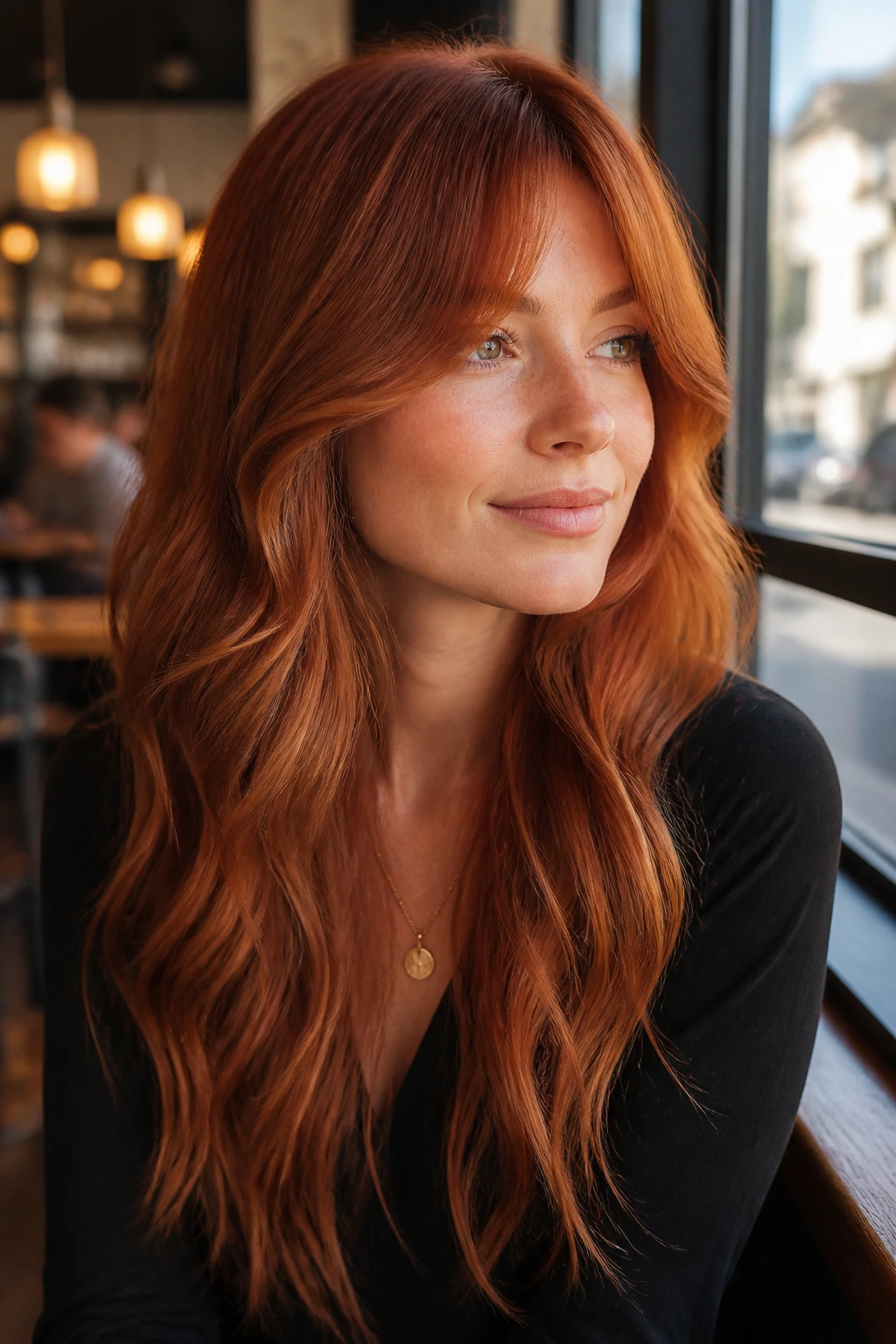
Cider copper is warm, slightly spicy, and made for movement around the face. Curtain bangs give it a frame, and long lengths keep the rest of the color from becoming too concentrated in one place. The result feels relaxed, wearable, and a little playful.
Why this combo works
Curtain bangs and red are a good pair because the bangs break up the forehead area while the rest of the hair carries the color down the body. That stops the look from feeling top-heavy. On long hair, the copper can travel from the fringe into the lengths without losing its shape.
This one is especially flattering when the bangs are lightly bent away from the face. Too straight, and the color can feel severe. A soft bend keeps the whole style airy.
It’s a nice choice if you want the haircut and the color to cooperate instead of competing.
23. Velvet Auburn Face Frame
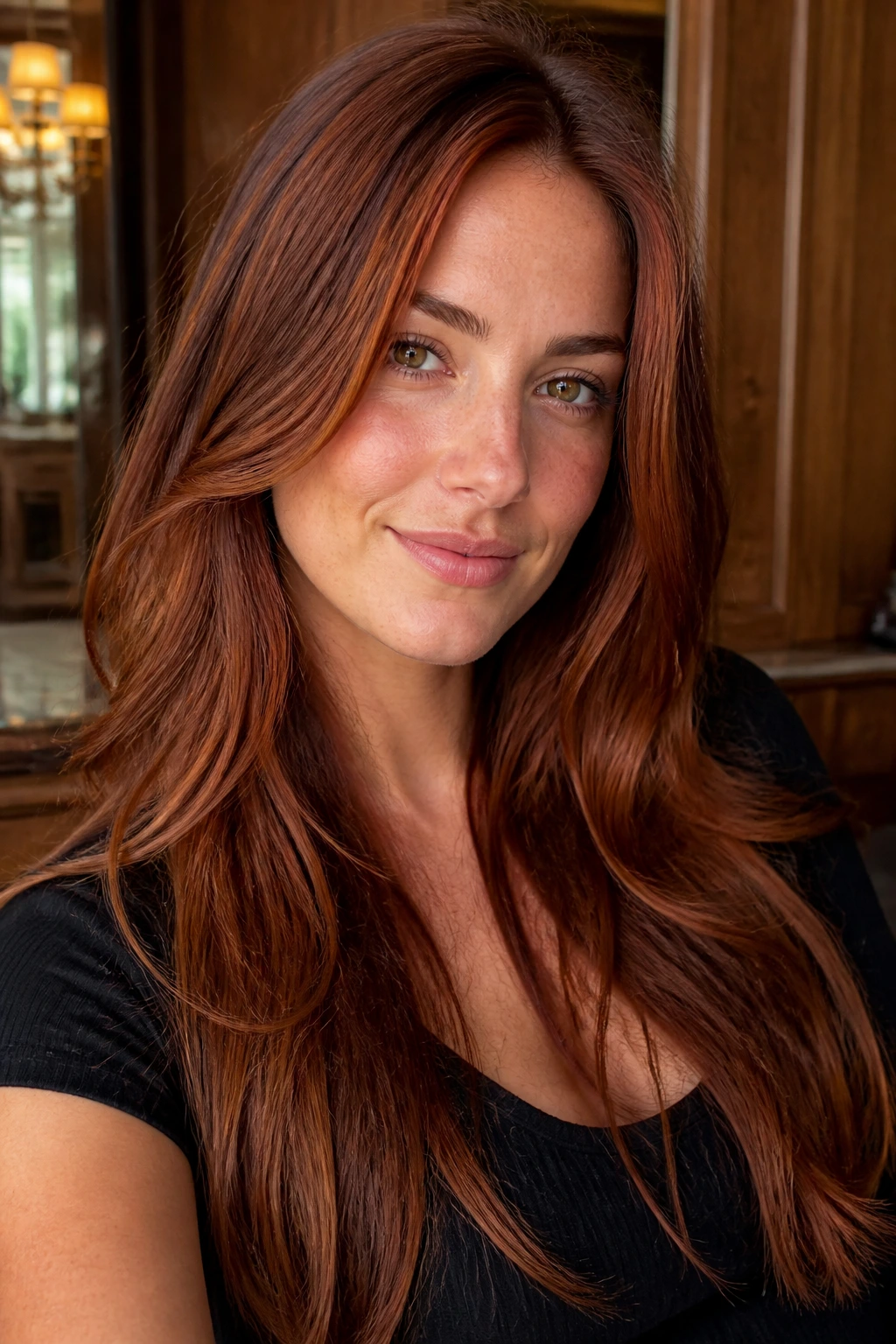
Velvet auburn is the grown-up red a lot of people end up loving once they’ve worn brighter shades for a while. The face frame gives you enough warmth to light the complexion, and the longer lengths keep the color from feeling like a gimmick.
Why it’s a quiet winner
Auburn is one of those tones that rarely looks wrong. It behaves well in office light, outdoor light, and evening light, which makes it very forgiving. On long hair, a soft face frame and richer ends can make the cut look thicker and more expensive without a huge maintenance burden.
This is a good one if you prefer polished over punchy. It doesn’t beg for attention, but it gets it anyway, which is usually the better deal.
Quick styling note
A slightly off-center part keeps the face-framing pieces from looking too symmetrical.
24. Sunset Red Ombre
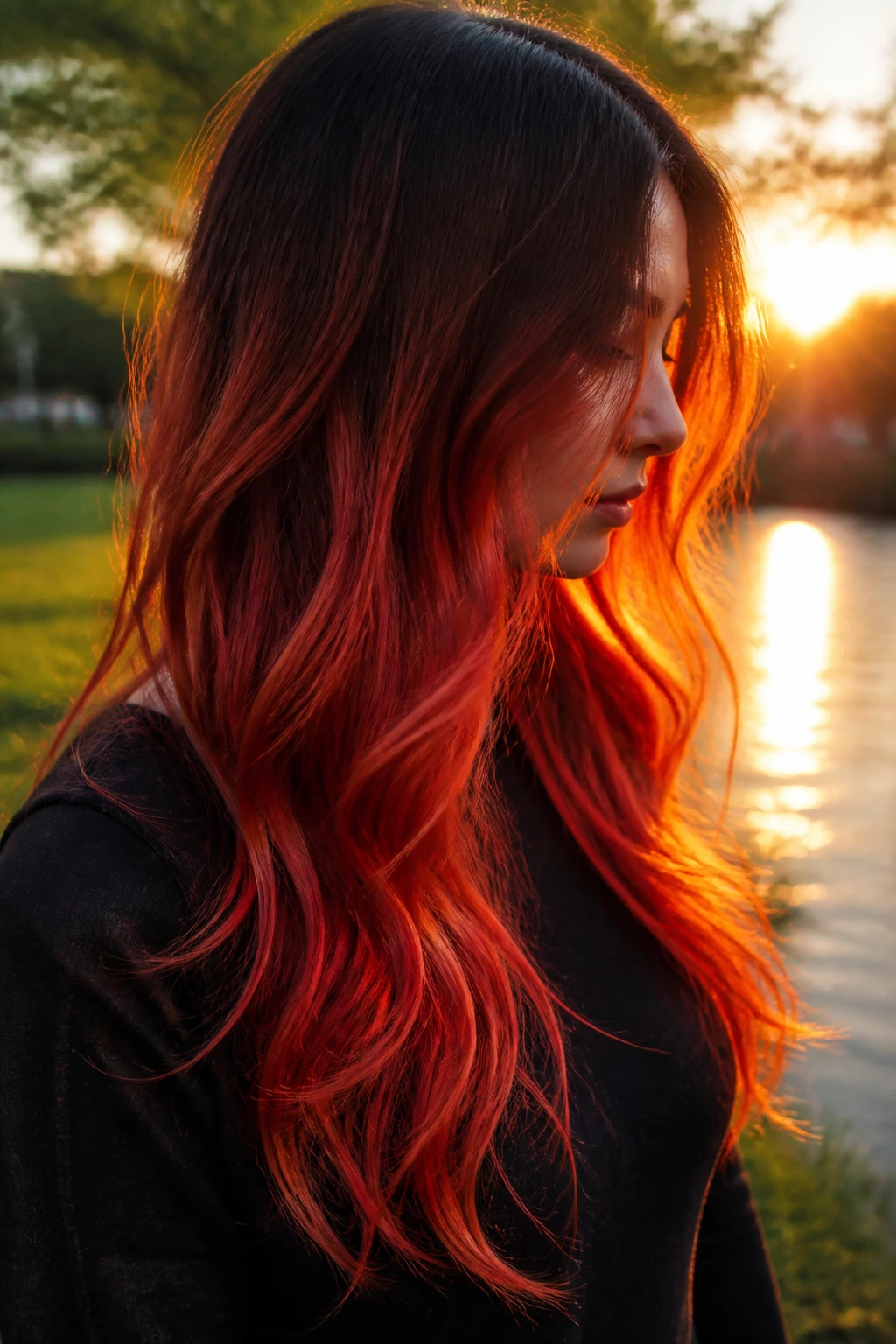
Sunset red ombre blends orange, red, and a little golden warmth into one long gradient. On long hair, that gradient has room to develop properly, which matters because ombre needs distance to read as soft rather than abrupt. This is the most literal “movement” look in the bunch.
What to look for
The transition should not happen in one obvious line. It should slide. On layered long hair, the gradient can start higher in some sections and lower in others, which makes the color feel more natural and less like a painted stripe.
This is the red look for someone who wants brightness and drama, but also wants the ends to feel lifted and airy. It’s not subtle. It is, however, very photogenic in the plainest possible sense: the movement sells it.
A loose wave makes the sunset colors do their best work.
25. Mulled Wine Gloss
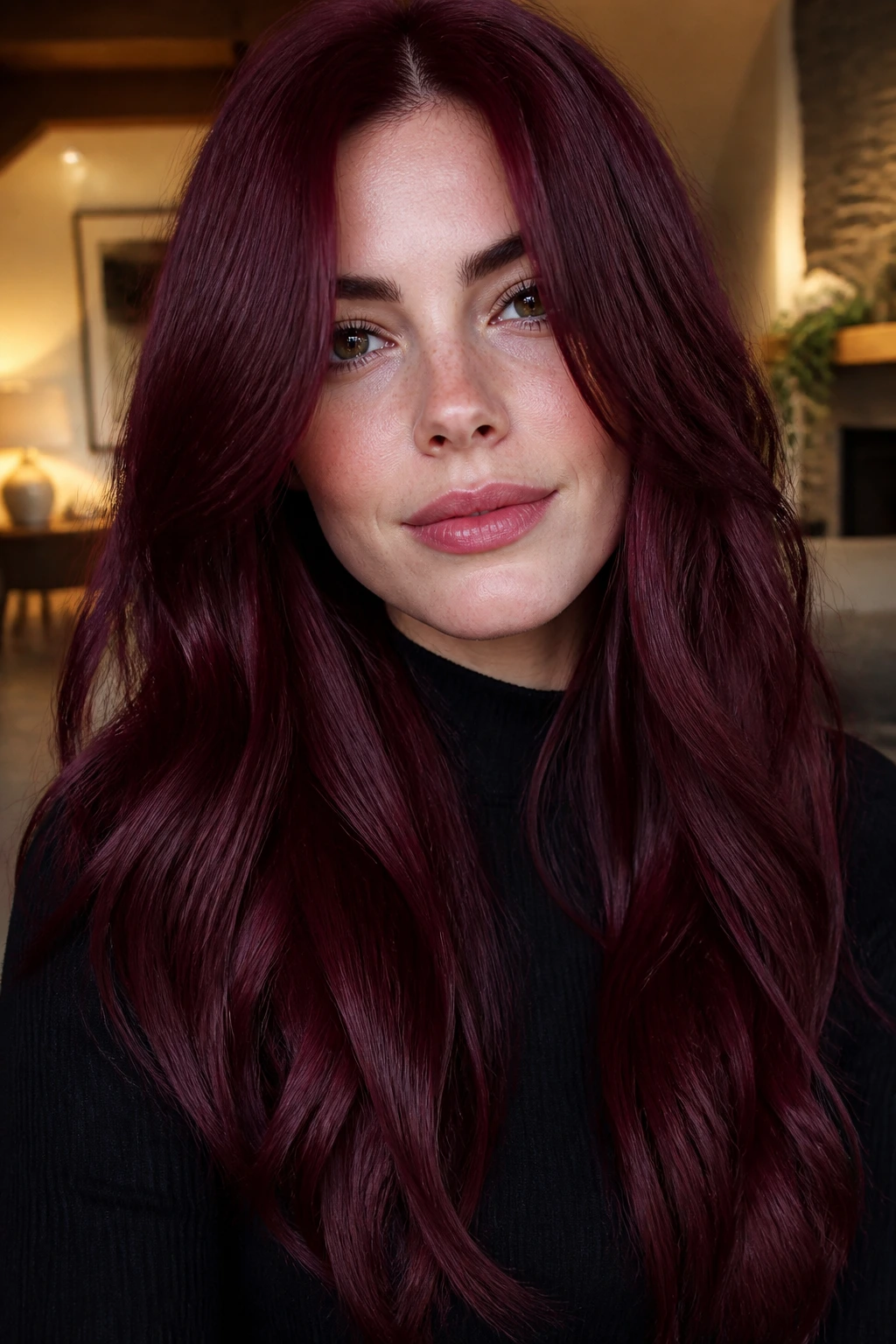
Mulled wine is deep, cool-leaning, and just moody enough to feel special. On long hair, the gloss treatment is the whole story. You’re not looking for big contrast. You’re looking for a smooth, wine-dark surface with a red-violet undertone that comes alive under light.
Why it’s useful
This is a strong choice for very long hair that needs one shade to unify multiple textures or lengths. The gloss can blur differences between roots, mids, and ends while still adding color interest. That makes the hair look healthier and more even.
I like this shade for anyone who wants red but has little interest in obvious copper. It’s softer on the eye, easier to style, and less likely to read as brassy after a few washes.
The finish matters more than the tone. If it looks silky, it works.
26. Paprika Red Chunky Ribbons
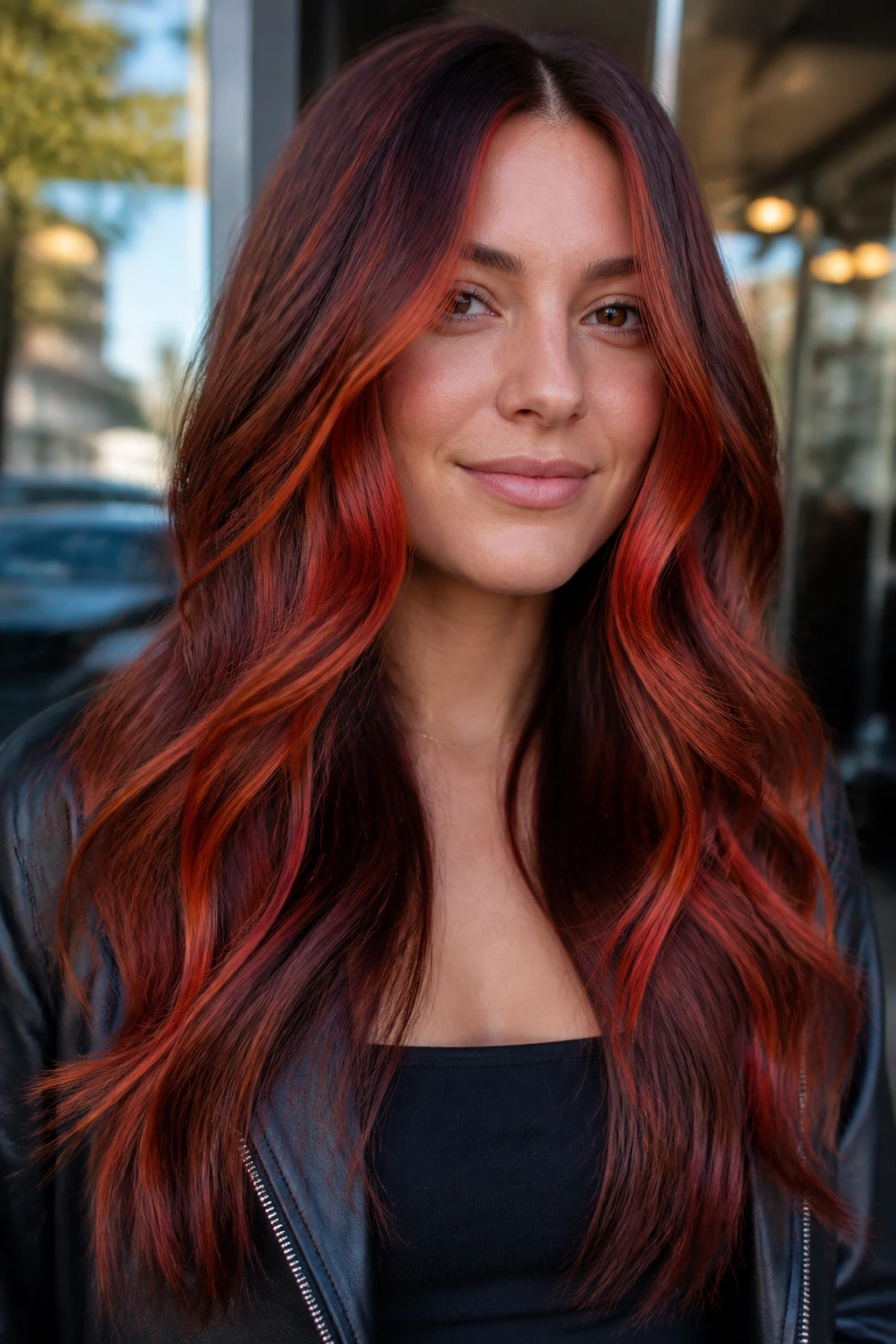
Paprika red is spicy, bright, and a little brash in the best way. Chunky ribbons bring back some boldness, but long hair gives those pieces enough space so they don’t look like an accident. You get contrast without chaos.
Why it works on long layers
Chunky ribbons are risky on short hair because the placements can feel crowded. On long hair, the spacing can breathe. The red pieces can sit through the outer layers while the darker base shows underneath, which keeps the style from becoming one solid orange-red mass.
This one suits people who want their hair to have a little attitude. Not a lot of attitude. Just enough.
If the ribbons are too uniform, the look gets stiff. If they’re slightly irregular, the whole thing feels more modern.
27. Toned-Down Red Brunette Melt
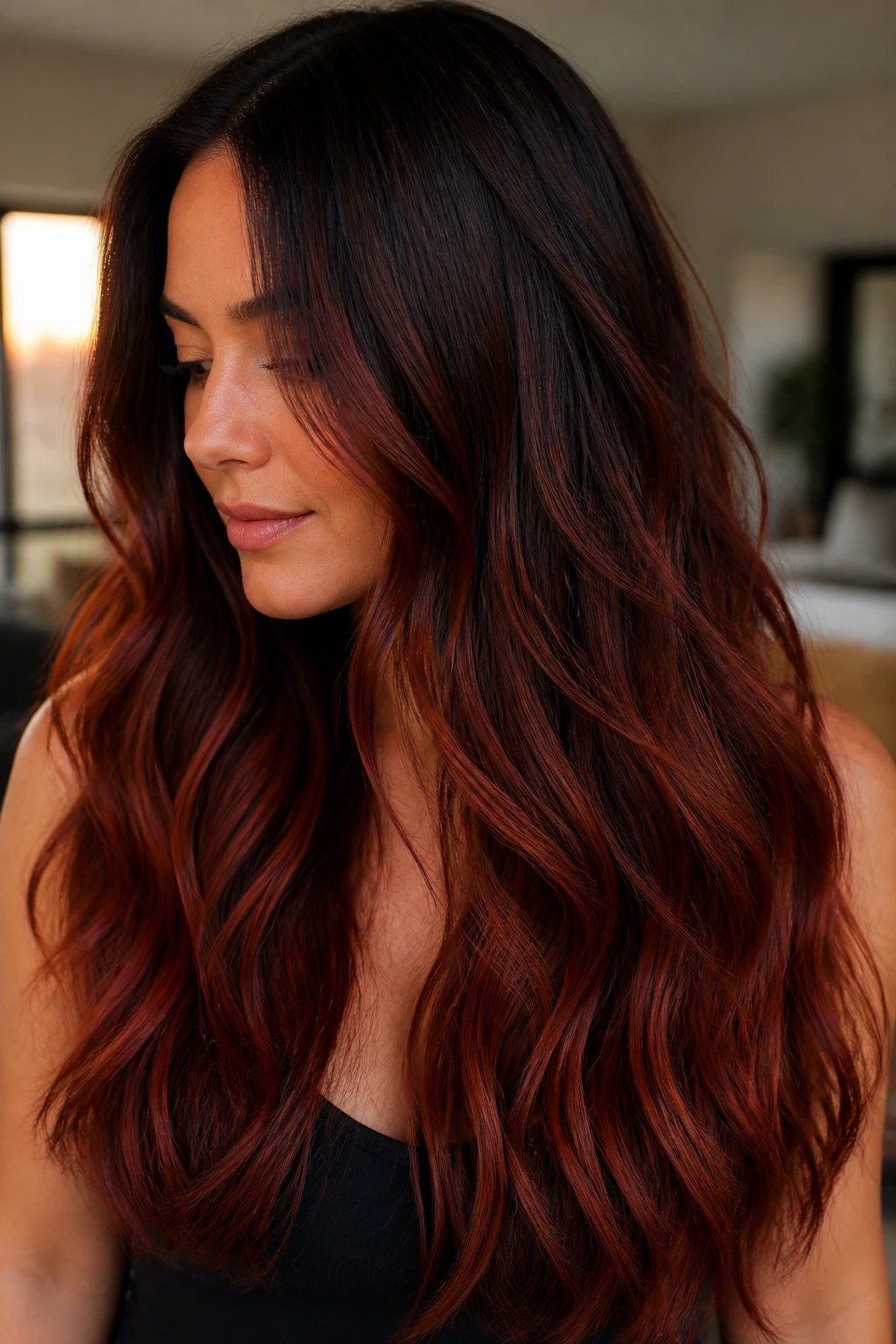
This is the red for people who say they want red, then panic when they see anything bright. The brunette melt keeps most of the depth at the root and folds in subtle red-brown warmth through the mids and ends. On long hair, the shift is gentle but visible.
Why it’s such a good fallback
Long hair can carry a very subtle color change because the length itself provides the drama. You don’t need a bright red to make the style work. A softened red-brown melt can look smarter, richer, and easier to maintain, especially if the hair is naturally dark.
This is one of the best choices for low-maintenance wearers who still want the red family in the room. It won’t steal the show. It will improve the show.
And sometimes that’s the better job.
Why Red Hair on Long Lengths Needs Its Own Care Routine
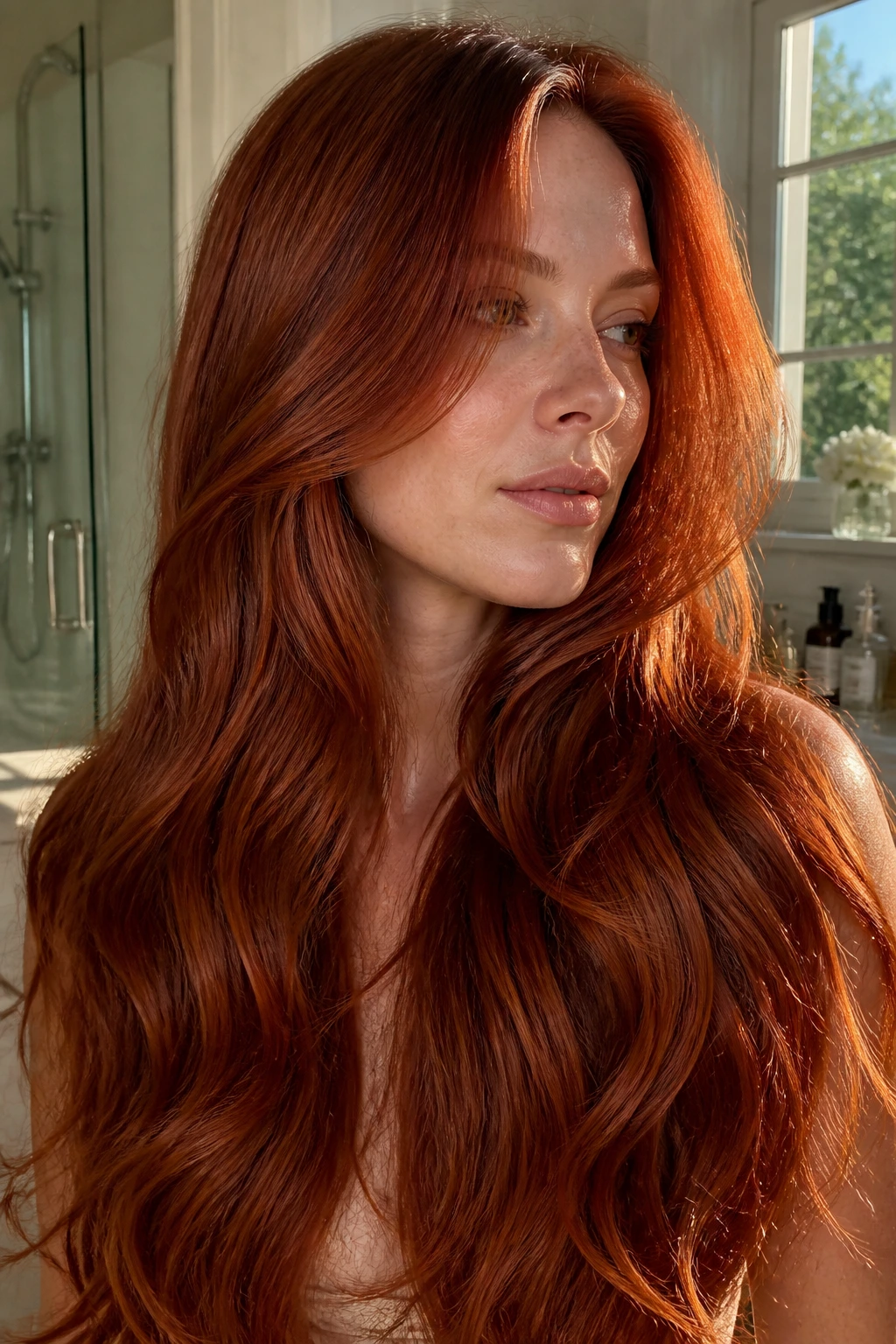
Red is beautiful, but it’s not lazy. The pigment can fade faster than brown, and long hair gives fade more places to show up: the sunlit front pieces, the drier ends, the mid-lengths that get the most heat, the crown that gets washed first and hit with shampoo runoff. If you’ve ever seen red hair turn patchy after a few weeks, it wasn’t your imagination.
The good news is that long hair can hide some of that shift if you plan for it. Root depth helps. Balayage helps. Tinted glosses help. So does keeping the ends hydrated enough that they don’t grab color unevenly. Red likes a smoother canvas. That’s not a metaphor. Rough, porous hair really does lose its pigment faster and often goes dull before it goes pale.
You also want to think about where the light lands. The face-framing pieces and outer layers will fade first because they get the most sun, the most styling, and the most touching. If you know that going in, you can put the brightest money pieces where they’ll matter most and let the quieter sections fade a little without ruining the whole look.
Essential Tools for These Looks
- Color-safe shampoo and conditioner: Use formulas marked sulfate-free or color-safe if you want red tones to stay richer between washes.
- Wide-tooth comb: Long red hair shows tangles fast, and a wide-tooth comb is gentler on wet, color-treated strands.
- Heat protectant spray: Pick one that covers up to your usual styling temperature; red fades faster when you keep hitting it with hot tools.
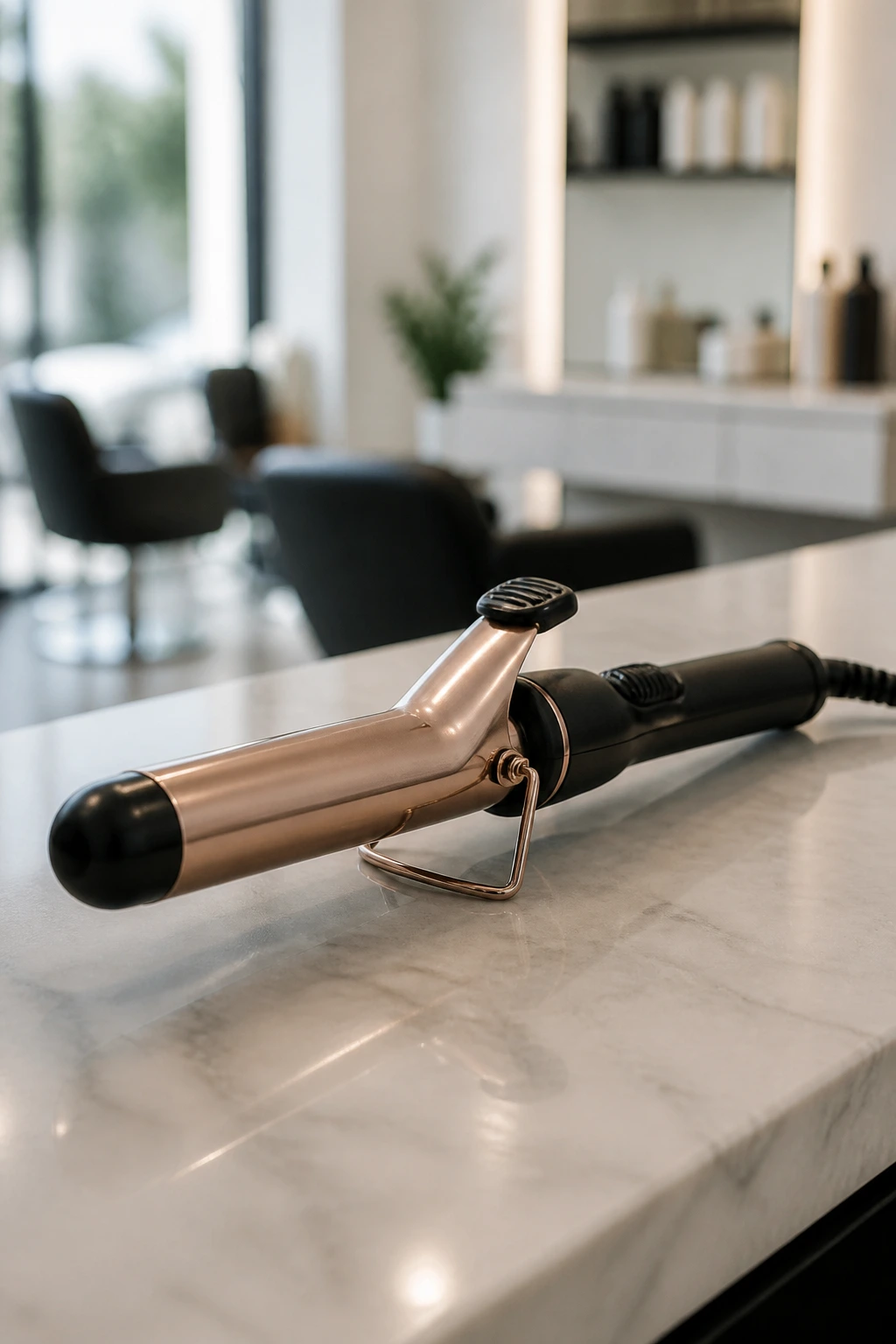
- 1-inch or 1.25-inch curling iron: The barrel size shapes loose waves that show off red dimension without turning the hair into a tight spiral.
- Boar-bristle or mixed bristle brush: Helpful for smooth blowouts on merlot, mahogany, and cherry shades.
- Tinted gloss or color-depositing conditioner: A red or copper refresh can buy you a few weeks of shine without a full color service.
- Shower filter: Worth it if your water runs hard; mineral buildup can make red look tired and muddy.
- Silk pillowcase or bonnet: Helps reduce friction on the fragile ends where red fades first.
- Sectioning clips: Useful for blow-drying, root touch-ups, and keeping long hair organized while styling.
- Gloves and an applicator brush: Non-negotiable for any at-home refresh because red pigment stains faster than people expect.
Smart Shade Shopping and Formula Notes
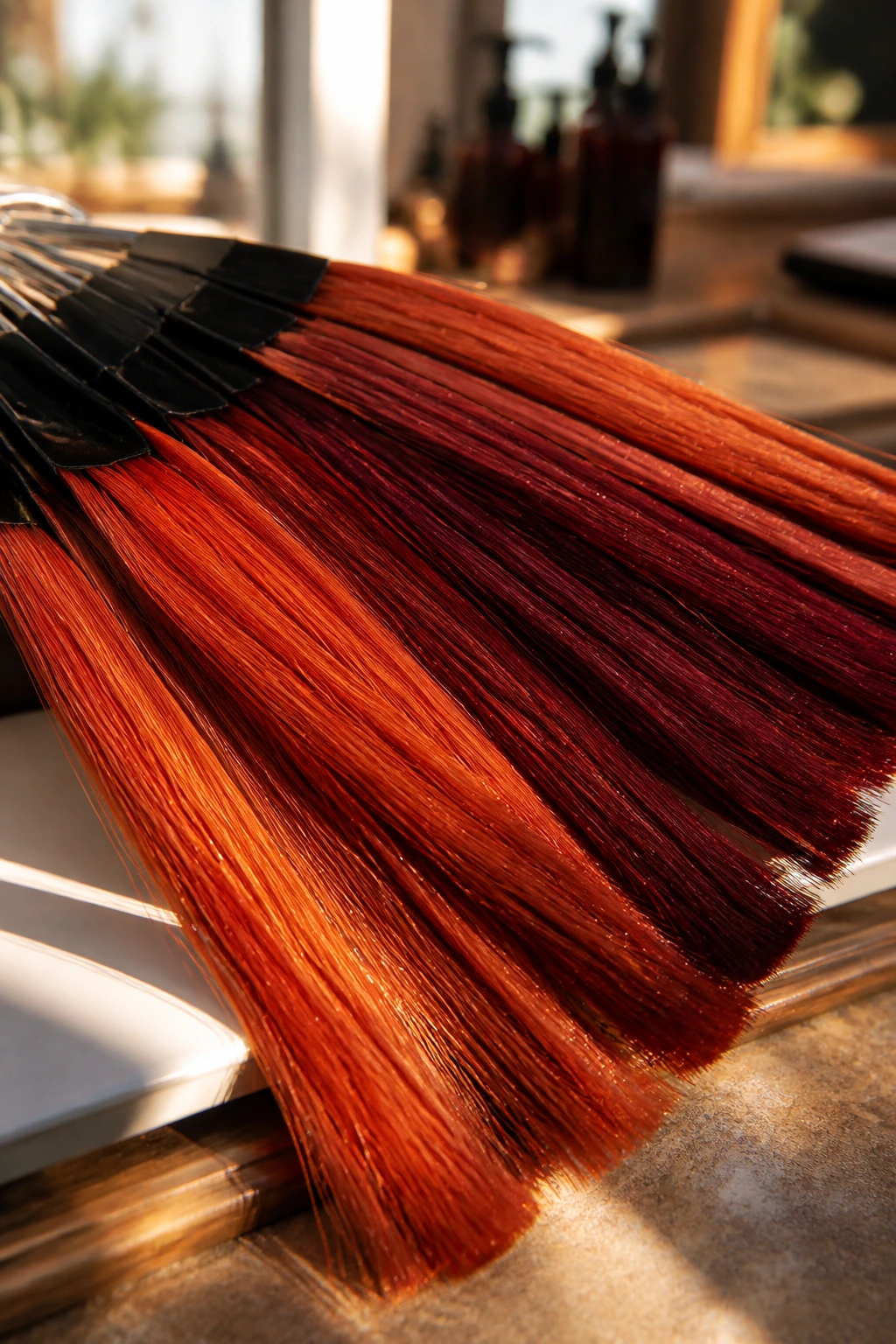
A lot of red hair disappointment starts in the shade name. “Red” is too broad to be useful. Copper, auburn, cherry, merlot, garnet, strawberry, paprika—those are not synonyms. They sit at different levels and different undertones, and the wrong choice can make the color fight your skin instead of waking it up.
If you’re at the salon, ask where the brightness will live. That question helps more than asking for “a red balayage.” Brightness near the face reads differently from brightness only at the ends, and long hair can handle more placement detail than most people realize. If you want softness, ask for a root shadow or a deeper base with brighter ribbons. If you want drama, ask the colorist to keep the deeper tone low and let the lighter red travel through the outer layers.
Products matter too. A gloss or demi-permanent red is usually a smarter choice when you want shine and a shorter commitment window. Permanent red can be useful for gray coverage or major color change, but on very long hair it can feel harder to refresh cleanly if the ends get porous. Porous ends grab red fast and let it go even faster.
If you’re lightening first, strand-test the ends. Long hair almost always has different porosity from root to tip, and that means the lower half can pull warmer or brighter than expected. A quick test on a hidden section saves you from the patchy “why is my end red and my mid-length orange?” problem that shows up in real life and not just on mood boards.
How to Wear These Shades in Daily Life
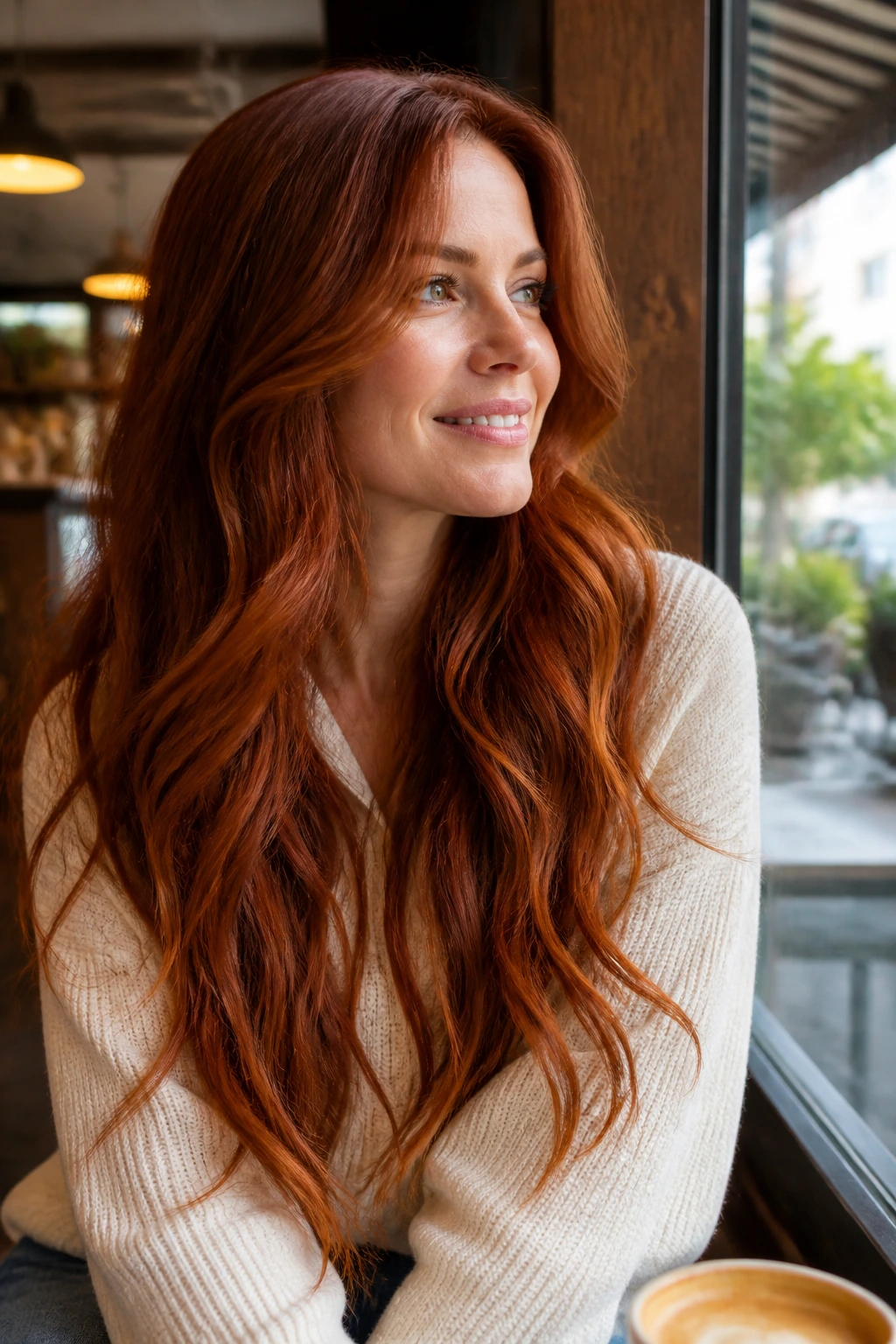
Presentation: Loose bends, soft waves, and smooth blowouts show red dimension better than pin-straight hair with zero movement. If the shade is deep—merlot, mahogany, black cherry—a sleek finish makes it look richer. If the shade is brighter—copper, scarlet, paprika—a bend through the mids and ends keeps it from reading one-note.
Wardrobe Pairings: Cream, camel, black, navy, forest green, and denim make red hair look richer because they let the color stand on its own. Very cool gray can work too, especially with cherry or garnet, but neon tops and overly shiny fabrics can fight the hair for attention. The hair should lead, not compete.
Makeup Notes: Warm reds tend to like peach, bronze, and brown liner. Cooler reds can carry berry lips and softer rose blush. You do not need to match the hair exactly. That usually looks too tidy and a little costume-like.
Best Placement: If you want the look noticed first, keep the brightest pieces around the face and upper layers. If you want the color to feel more expensive and subtle, let the vivid parts hide lower and reserve the top for deeper red-brown tones.
Additional Tips and Shine Boosters
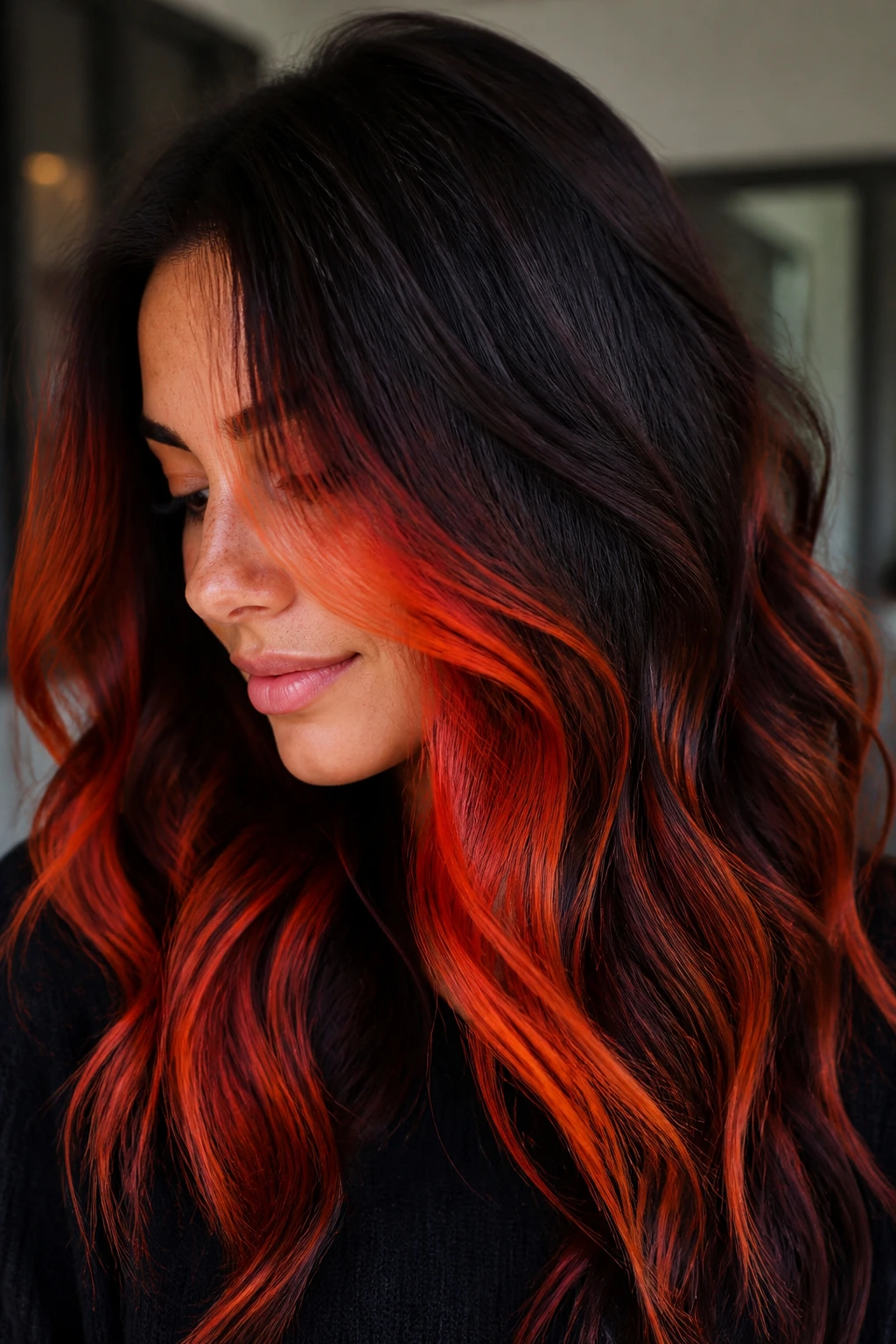
Gloss Enhancement: A clear or tinted gloss every 4 to 6 weeks keeps red looking fresh. I’d take shine over extra saturation most days; shiny red reads richer than dull bright red.
Customization: If you love red but hate obvious upkeep, ask for a shadow root or a root melt. If you want more edge, push the ends brighter and keep the crown deeper.
Heat Strategy: Stay under 325°F when you can. Hot tools at very high heat strip tone faster than people expect, and long hair usually means more heat exposure simply because there’s more hair to style.
Serving Suggestions: A side part can soften stronger reds; a center part makes ribbons look cleaner and more symmetrical. A few face-framing bends around the cheekbones can also make the color look more deliberate.
Make-It-Yours: Copper works for warm skin tones, cherry and garnet lean more dramatic on cooler ones, and mahogany is the safest bridge if you want to stay near brunette territory. There is no prize for choosing the loudest red in the room.
Common Mistakes to Avoid
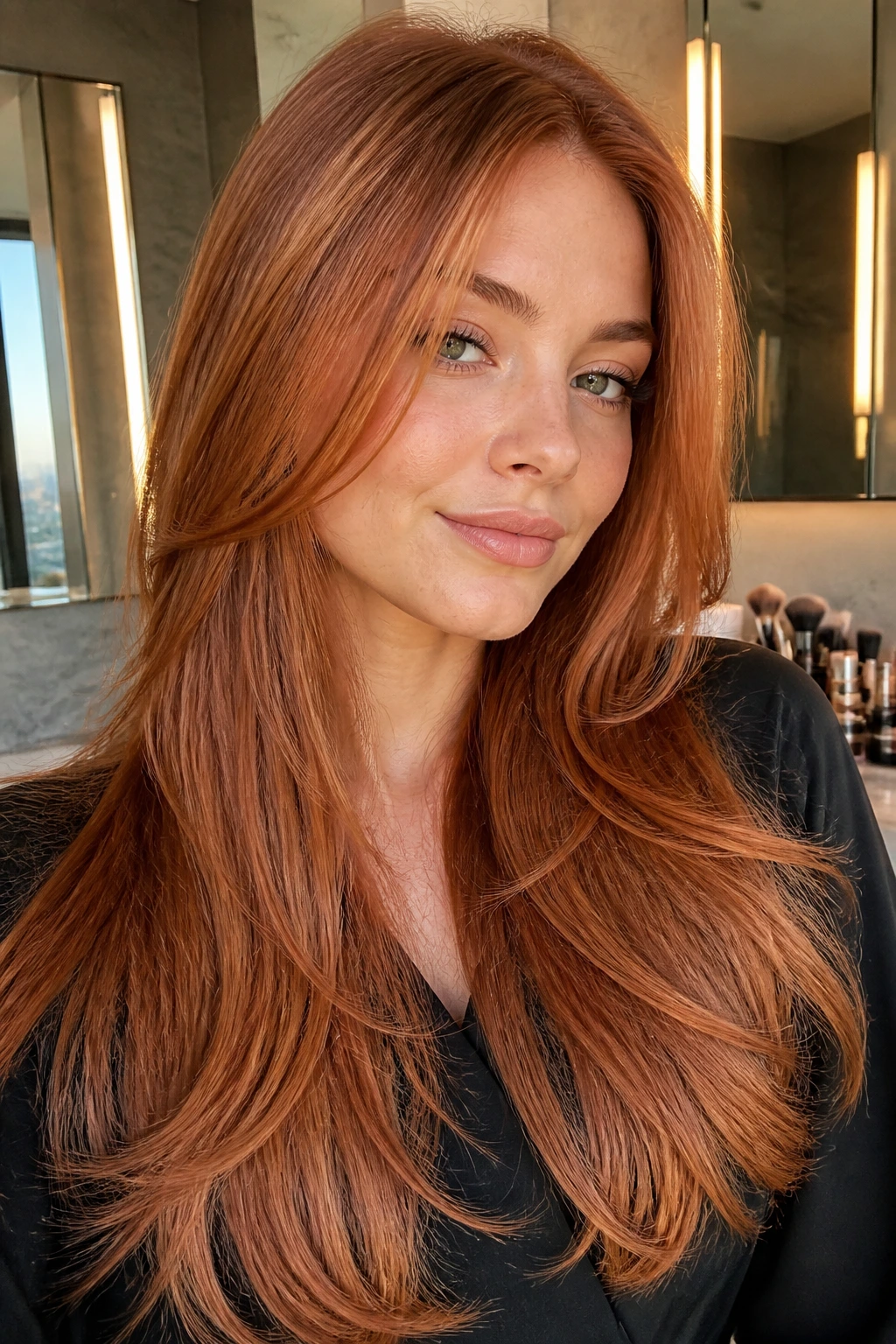
The first mistake is choosing a red based on the swatch alone and ignoring the base you’re starting from. A copper swatch can look dreamy on a level-8 blonde and muddy on a level-4 brunette. The fix is to ask what the shade will look like on your starting level, not on paper.
Another common problem is over-lightening the ends of long hair. Long lengths are often the most porous part of the head, which means they grab color fast and then fade fast. If the ends are already fragile, ask for a gentler lift and a stronger deposit formula. Brightest is not always best.
People also forget that red fades first at the front and along the outer layer. Those pieces get the sun, the hot tools, the brushing, the pins, the whole mess. If you want a long-lasting look, place the strongest red where the hair moves most, not only where the ends happen to be thickest.
Washing too often is another easy way to kill a red tone early. Hot water and frequent shampooing pull pigment down the drain. Lukewarm water, color-safe shampoo, and fewer wash days keep the shade livelier for longer.
And then there’s the “all red, all the time” mistake. On very long hair, a single flat shade can look heavy. A little root depth, a gloss difference, or a face-frame ribbon gives the eye something to follow.
Variations and Adaptations to Try
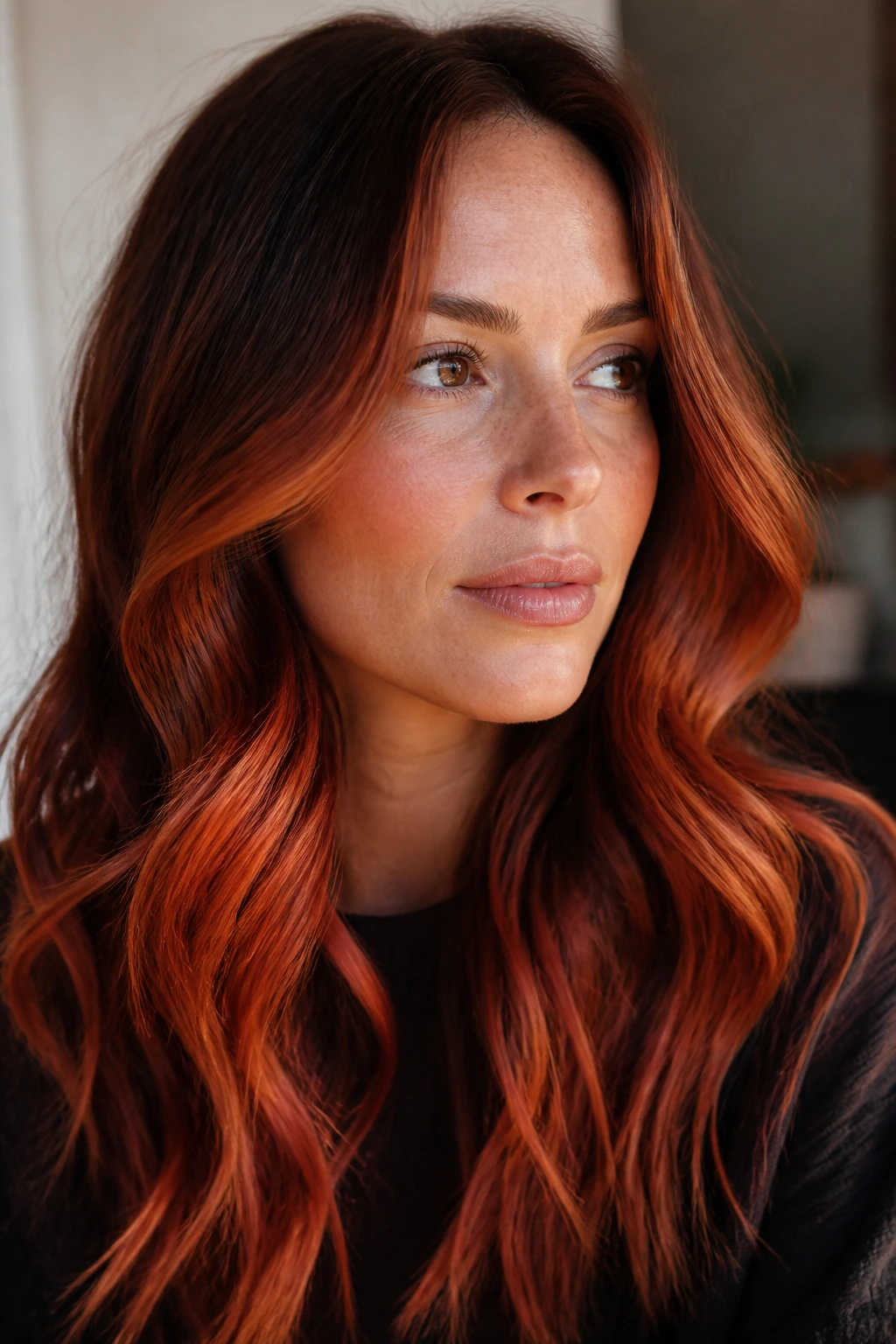
Soft Office Auburn: Keep the roots deeper and ask for auburn only through the front panels and lower mids. It reads polished in daylight and doesn’t demand a loud wardrobe.
Curly Ribbon Red: If your hair is naturally curly, place the brightest red on the outer curve of the curl pattern instead of trying to paint every strand evenly. The curl will do the blending for you.
Low-Commitment Peekaboo Red: Hide copper, cherry, or paprika panels under the top layer and keep the visible surface neutral. You get the color surprise without a heavy maintenance schedule.
Gray-Friendly Copper: If gray coverage is part of the job, choose a warmer copper or auburn with enough depth to blur the gray instead of highlighting it. Too-light red can leave gray pieces looking brighter than intended.
Vivid Fantasy Lengths: Want something louder? Push the ends into scarlet, blood orange, or cherry bomb territory and keep the root shaded. Long hair can handle the contrast better than most cuts.
Rooted Brunette Melt: If you like red but need the grow-out to stay soft, keep the root close to your natural brunette and melt red-brown tones through the mids and ends. It’s the easiest version to live with over time.
Fading, Refreshing, and Long-Term Maintenance
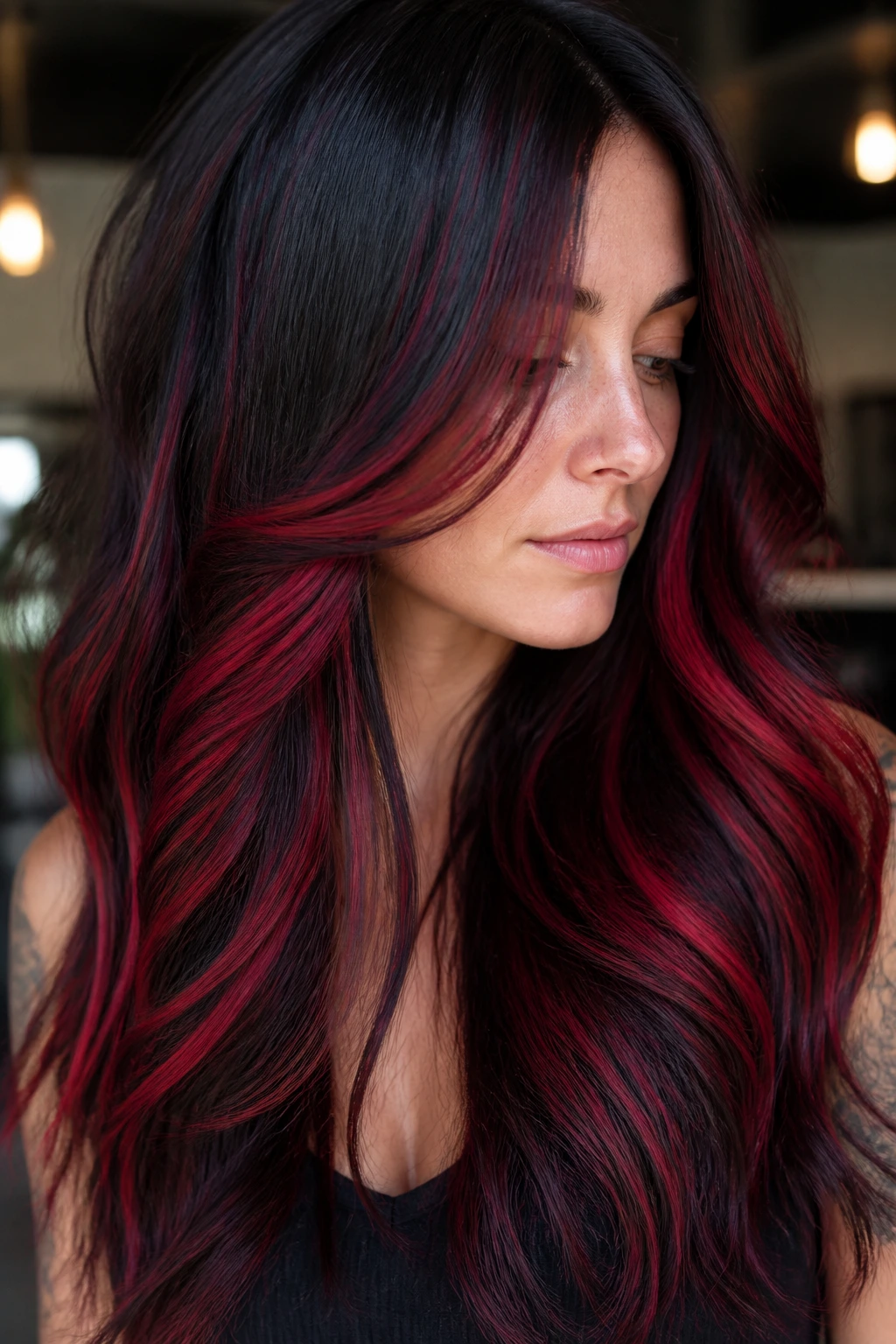
Red fades in layers, which is annoying and useful at the same time. Annoying because the front pieces and ends usually soften first. Useful because you can plan around it. A good red on long hair should be refreshed before it looks tired, not after it has gone dull and patchy.
For most color-treated red shades, washing two or three times a week is enough. If your hair gets oily faster than that, use a light dry shampoo at the roots and keep the lengths out of the blast of hot water. When you do wash, keep the water lukewarm. Hot water is rough on red pigment and even rougher on already dry ends.
A color-depositing mask or conditioner once a week helps maintain copper, cherry, or auburn tones between appointments. Use it on towel-dried hair, leave it on for the time listed on the product, and rinse it out fully so the ends don’t get stained darker than the mids. Gloss services usually make sense every 4 to 6 weeks, while root touch-ups depend on the look—softer balayage can stretch longer, vivid all-over red usually cannot.
Heat styling should be kept as gentle as possible. If you wear waves often, let the curls cool before brushing them out; that helps the shape last without more heat. And if you’re out in the sun a lot, a UV-protectant spray is not a vanity product. It actually helps keep the front layers from bleeding color too quickly.
The deeper the red, the longer it tends to stay. The brighter the copper or scarlet, the faster it asks for a refresh. That’s normal. Plan for it instead of fighting it.
Questions People Ask Before Going Red
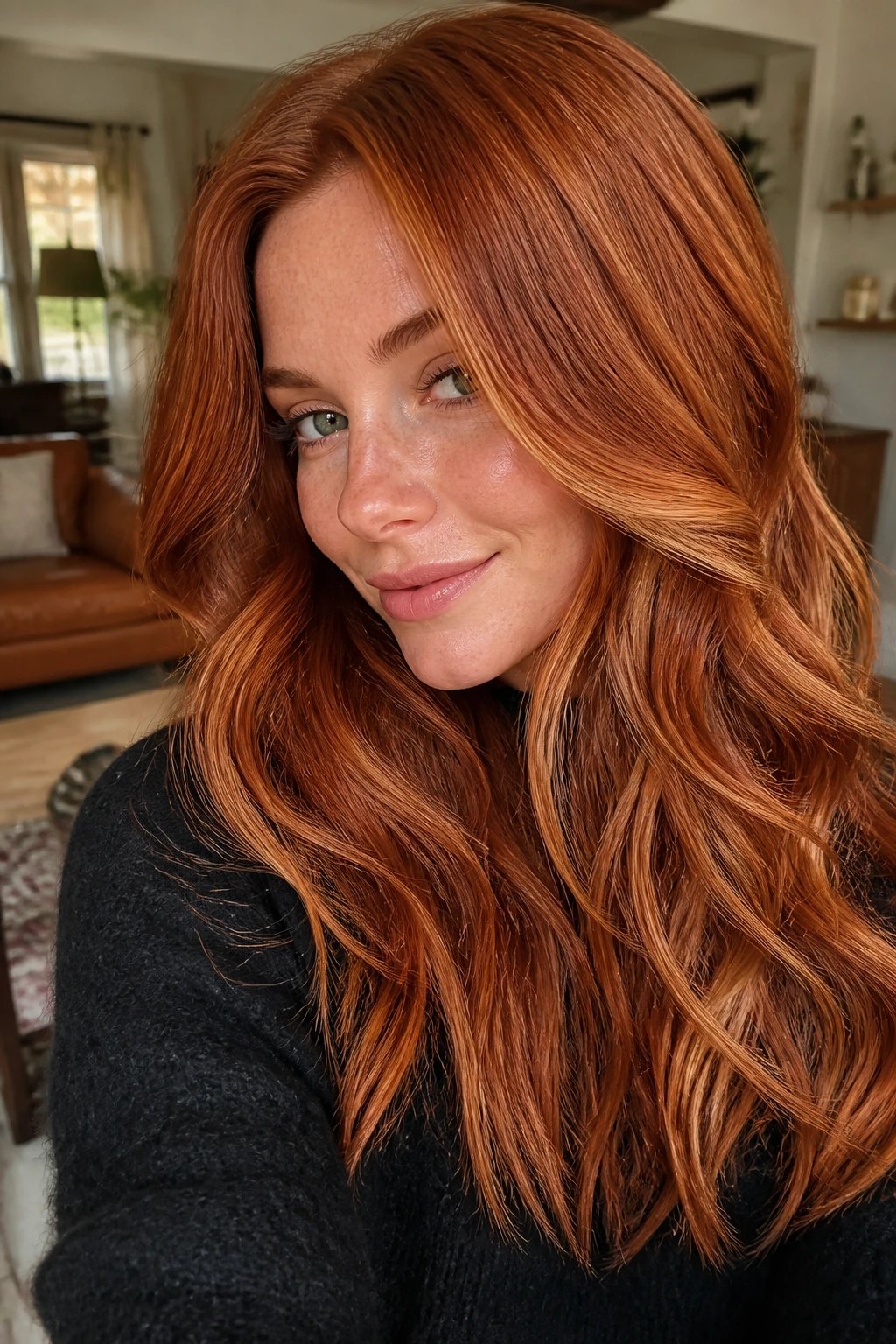
Will red show up on dark brown long hair without bleach?
Sometimes, yes—but mostly as a deep sheen rather than a bright color shift. If you want cherry, merlot, or mahogany, a demi-permanent gloss may be enough. If you want copper or scarlet to read clearly, some lift usually helps.
Which red shade is easiest to maintain on long hair?
Mahogany, black cherry, and rooted auburn are the easiest to live with. They fade more gracefully than bright copper or paprika and don’t show regrowth as sharply.
Does red make long hair look thicker?
Often, yes. Rich red-brown tones can add the illusion of density, especially when the shade has a glossy finish and the placement avoids thin, stripey highlights. Flat, dry red does the opposite, which is why shine matters so much.
Why does my red turn orange after a few washes?
That usually means the cooler red-violet pigment washed out first, leaving the warmer undertone behind. A color-depositing conditioner or gloss can help balance it, and cooler water during washing slows the shift.
Can curly long hair wear red without looking patchy?
Absolutely, but the placement needs to follow the curl pattern. Painted ribbons, balayage, and face-framing reds usually blend better than hard block color on curls.
How often should I refresh a red balayage?
A gloss every 4 to 6 weeks keeps the tone lively, while the actual color placement may only need a full refresh every 8 to 12 weeks depending on how bright you went. Soft root shadows stretch longer than vivid panels.
What if my ends grab color too fast?
That’s porosity talking. Pre-fill the ends with a gentler warm tone first, then add the red. It keeps the lower half from turning darker or louder than the rest of the hair.
Can I go red if I wear my hair straight most of the time?
Yes, and straight hair actually shows dark reds like merlot, black cherry, and mahogany especially well. Just be aware that straight styles also expose uneven tone and dry ends faster, so the finish has to be smoother.
The Long-Length Advantage
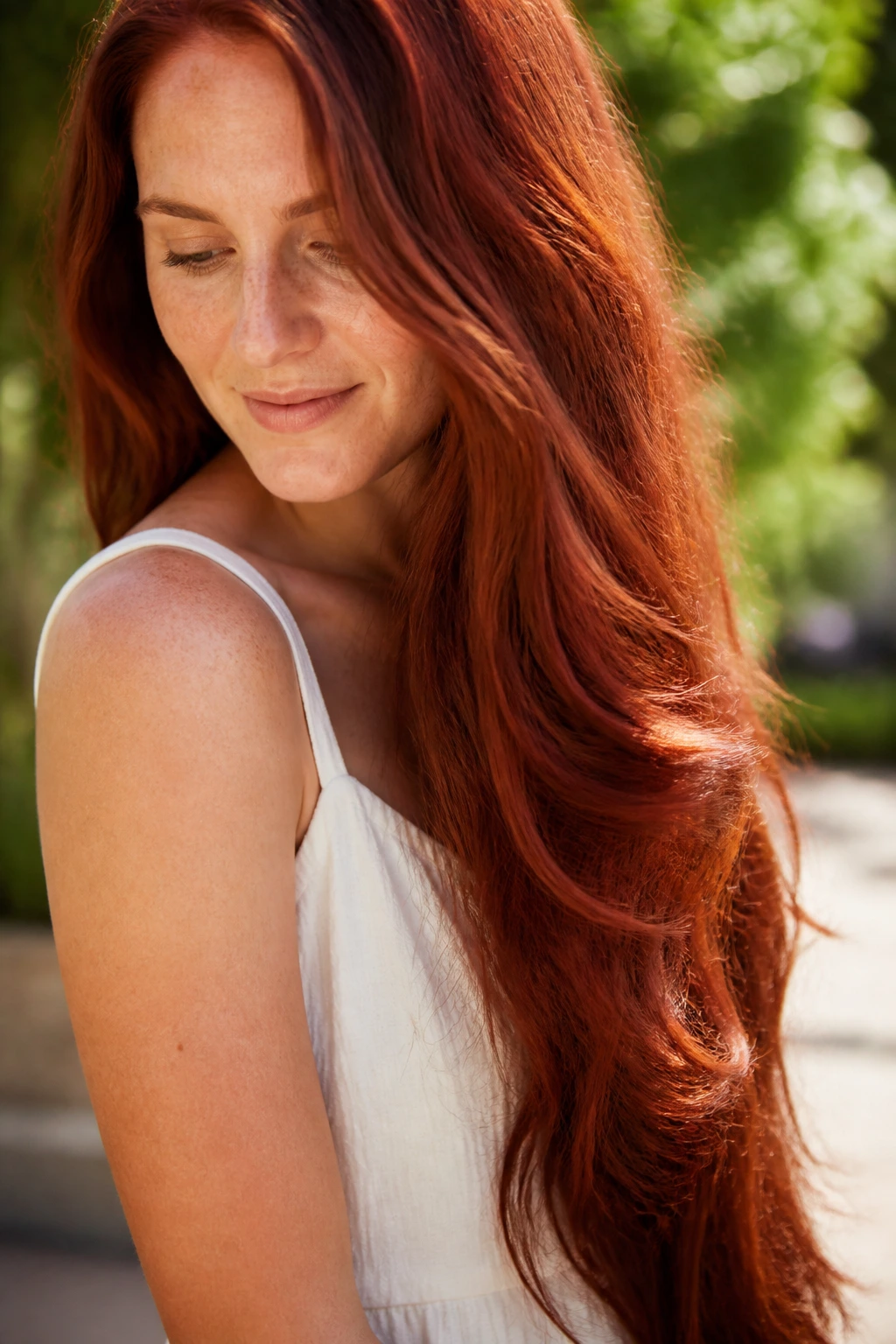
Long hair gives red something shorter cuts cannot: time. Time for the tone to shift from root to mid-length to end. Time for a copper ribbon to flash once and disappear. Time for a deep cherry gloss to look nearly brown, then suddenly wine-dark when you move under daylight.
That’s why red on long hair can feel so satisfying when it’s done well. The color has range. The cut has range. The two should work together, not fight for attention. Once you start thinking in roots, ribbons, ends, and shine instead of in one flat “red” category, the whole palette opens up.
Pick the version that matches your upkeep, your base color, and the way you actually wear your hair. That part matters more than chasing the brightest shade in the room. And if you get the placement right, long hair will do the rest.
