



Hair color gets smarter after 50. Not smaller, not duller — smarter.
The best hair color ideas for women over 50 do one job I care about more than any trendy shade chart ever will: they put movement back into the hair. That means a tone that softens gray regrowth, keeps the face from looking washed out, and doesn’t turn the ends into a dry-looking blob of one flat color. Once hair changes texture — and it usually does — the same color that worked at 35 can start behaving badly at 55. Too dark can look hard. Too ash can go muddy. Too much blonde can make fine hair look thinner at the crown. None of that is flattering, and none of it is mysterious.
What works better is dimension. A little depth at the root. Light where the hairline needs it most. A gloss that keeps silver from reading yellow. A copper that looks expensive instead of brassy. The good looks are rarely the loudest ones.
So I pulled together shades and placement ideas that actually make sense on real hair: hair with silver threads, hair that’s finer than it used to be, hair that has gone a touch dry at the ends, hair that needs a little lift without a weekly salon hostage situation. The best pieces are the ones that look good on day one and still look intentional when the grow-out starts showing.
Why These Color Ideas Work Better Than Flat All-Over Dye
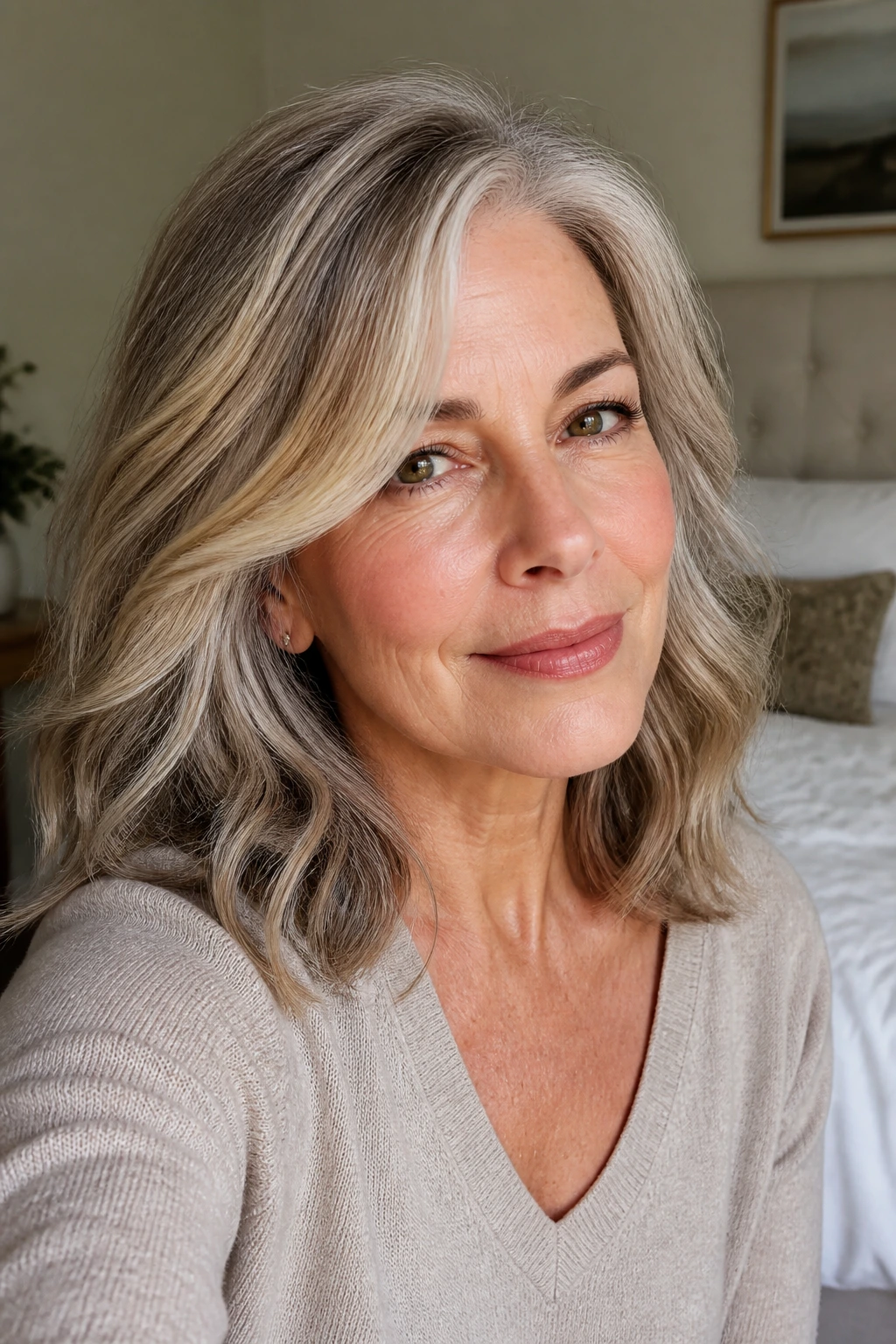
Soft regrowth: A root shadow or blended base means you’re not staring at a hard stripe two weeks after color day.
Face-framing brightness: The right lighter pieces around the hairline can wake up the face faster than a full head of blonde ever will.
Texture-friendly tone: Dimensional color hides dryness and rough cuticles better than a single opaque shade.
Gray-friendly choices: Several of these looks work with silver instead of fighting it, which usually means calmer grow-out and less brass.
Salon or DIY flexibility: Some shades are easy to request as a gloss or glaze; others need a colorist with a steady hand and foil control.
Better on real hair: These are chosen for how they move on straight, wavy, curly, and coarse hair, not how they look on a perfect swatch card.
1. Soft Champagne Blonde for a Bright, Creamy Finish
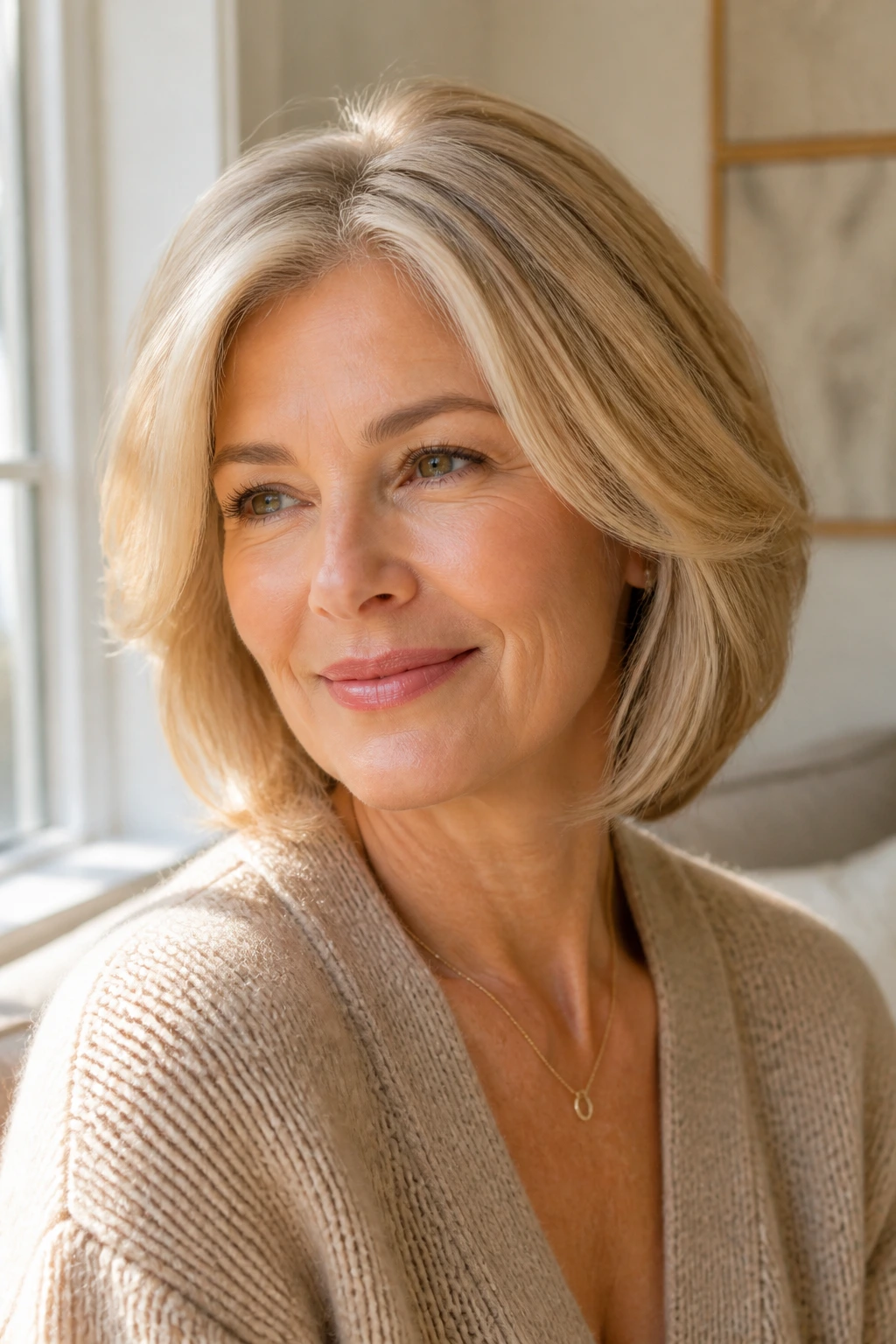
Soft champagne blonde is one of my favorites because it avoids the two usual blonde traps: yellow heat and washed-out pallor. The color sits between beige and pearl, with just enough warmth to keep skin from looking flat. On women over 50, that matters more than people admit. Pale hair can either lift the face or drain it, and champagne usually lands on the right side of that line.
What to Ask For
Ask for a level 8 to 9 beige blonde with fine highlights around the hairline and a soft root shadow that’s one shade deeper than the lightest pieces. That tiny bit of depth keeps the crown from looking striped. If your hair is already light, a demi-permanent gloss in a champagne tone can do more for shine than another round of lightening ever will.
This shade is strongest on medium to fair skin with neutral or warm undertones, but it can work on deeper complexions too if the brightness is placed where it counts. The trick is avoiding a flat, all-over bleach job. You want creaminess, not chalk.
Best for: Fine to medium hair that needs lift near the face.
Avoid if: Your hair is fragile and already over-lightened. Start with a gloss first.
Good salon words: champagne, beige blonde, root shadow, face-framing lights, demi gloss.
One thing I’d insist on: keep a little depth at the nape and underneath. Blonde looks richer when the underlayers aren’t screaming for attention.
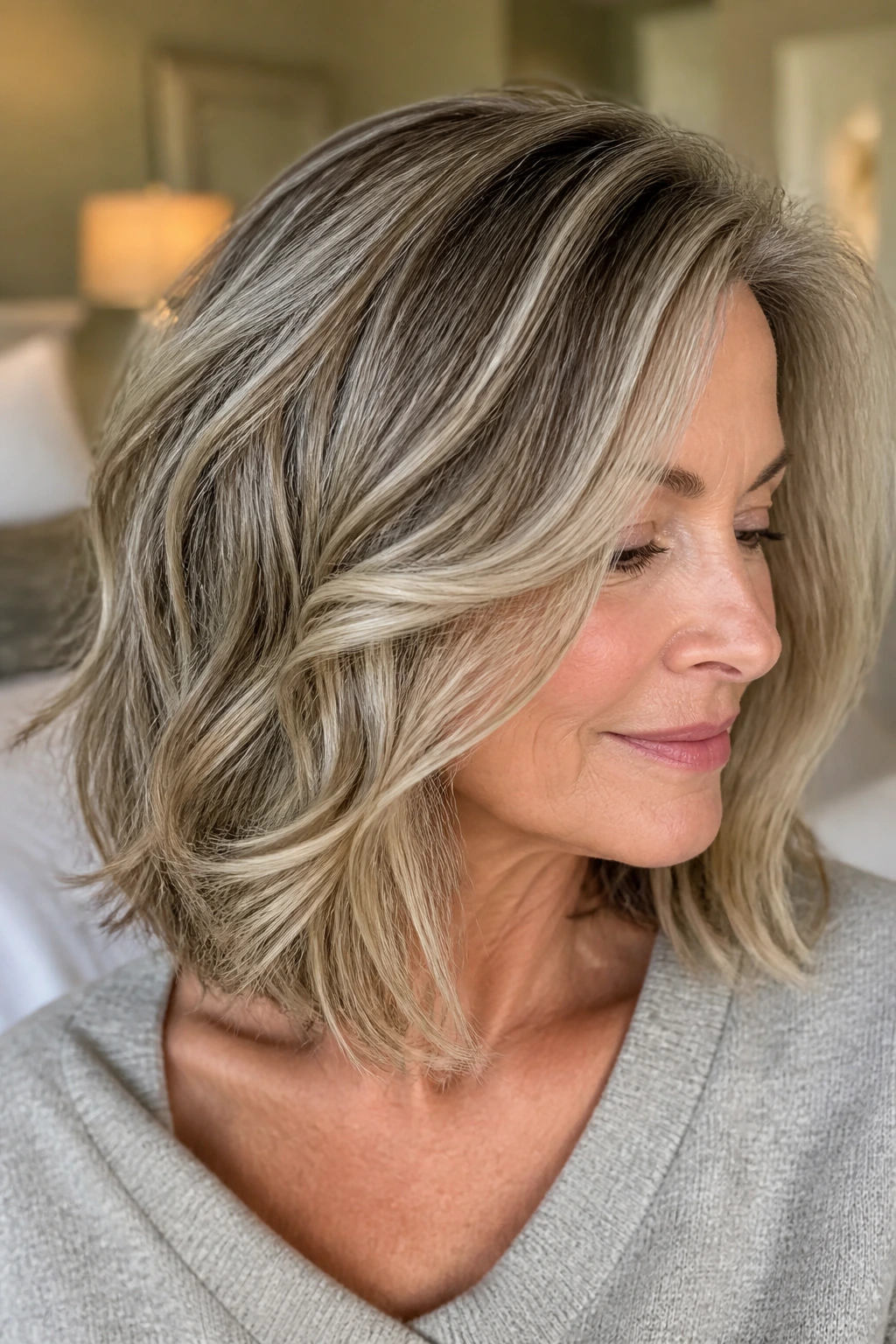
2. Mushroom Brown When You Want Cool, Soft Depth
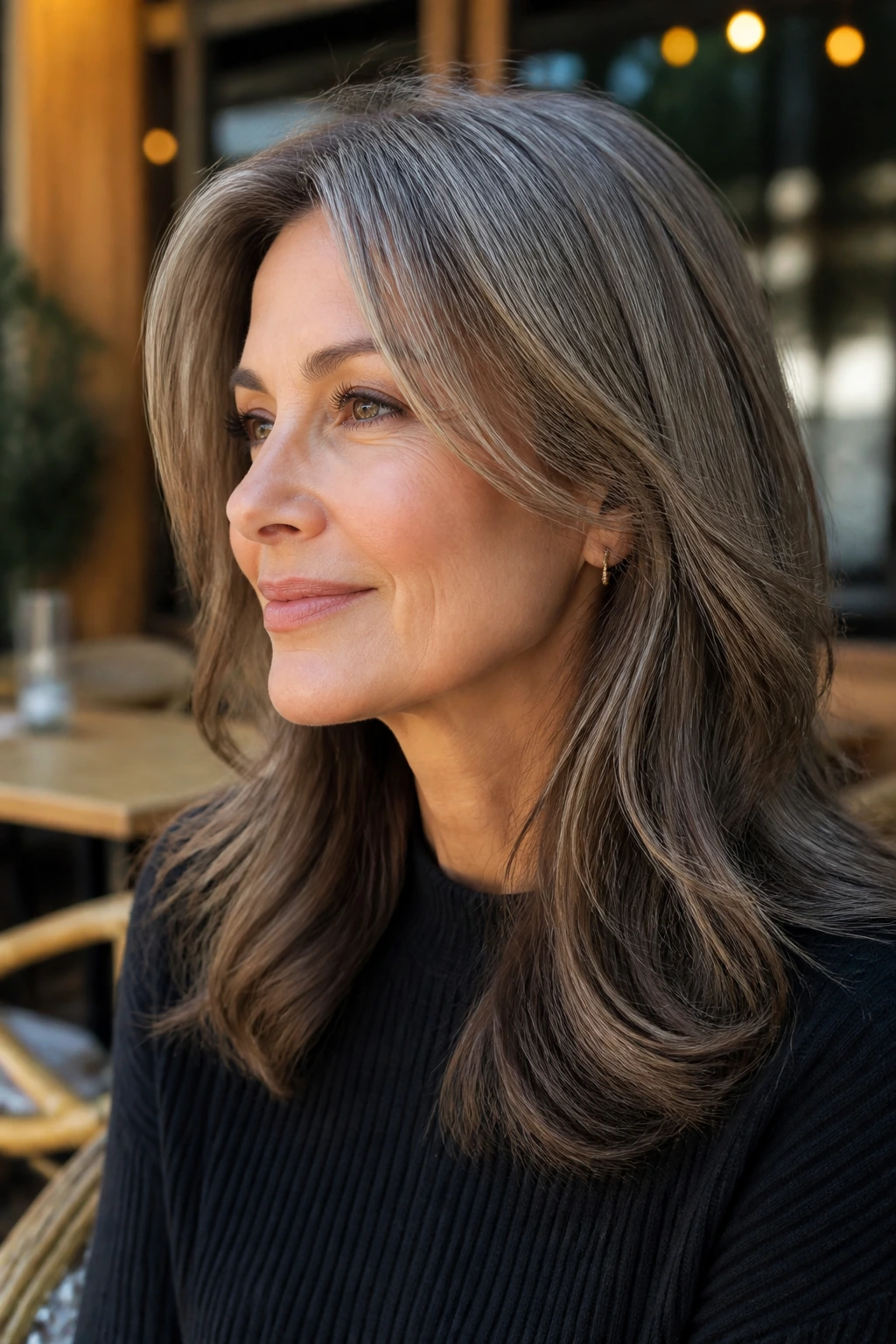
Mushroom brown has a quiet edge to it. It’s cool, taupe, and smoky without drifting into that flat gray-brown that can make the hair look dusty. On mature hair, that matters. A good mushroom brown gives you depth without the heavy inkiness that happens when someone goes one shade too dark and calls it “rich.”
This shade is especially kind to hair that has begun turning silver at the temples. The cool tone lets gray pieces blend instead of fighting them, so the grow-out line softens. And because mushroom brown sits in the middle range — not too light, not too dark — it doesn’t punish texture the way a jet shade can. Coarse strands often look smoother in this tone because the color doesn’t bounce too much red or gold back at you.
Where It Shines
- Gray hair at the temples
- Medium skin with cool or neutral undertones
- Straight or wavy hair that needs a softer edge
If you’re asking a colorist for this, say you want a neutral-cool brunette with smoky lowlights. That language matters. “Mushroom” can mean different things to different stylists, and you want the taupe side, not the muddy one.
Good line to remember: the best mushroom brown looks like expensive fabric, not flat paint.
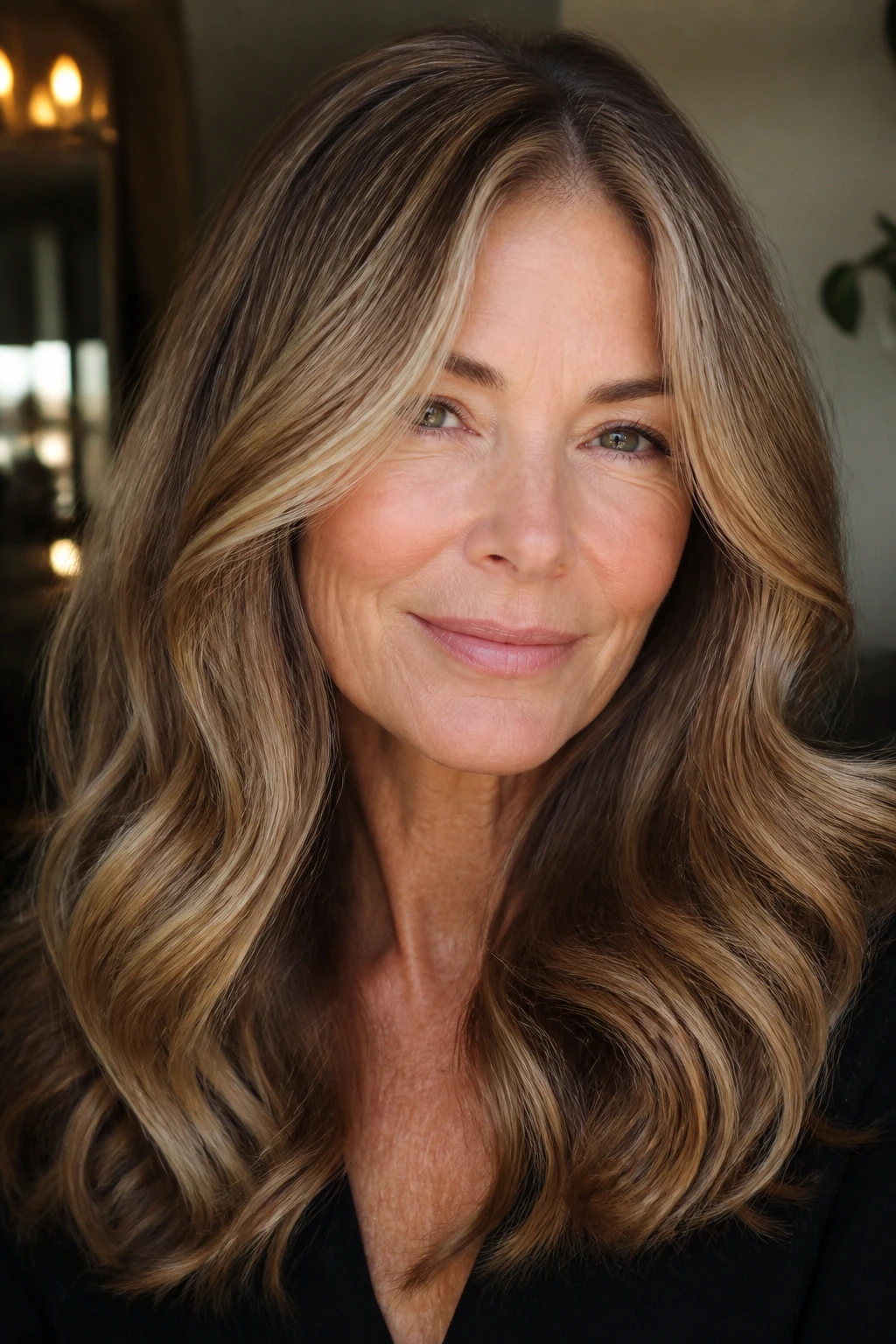
3. Caramel Balayage That Keeps Brunette Hair Lively
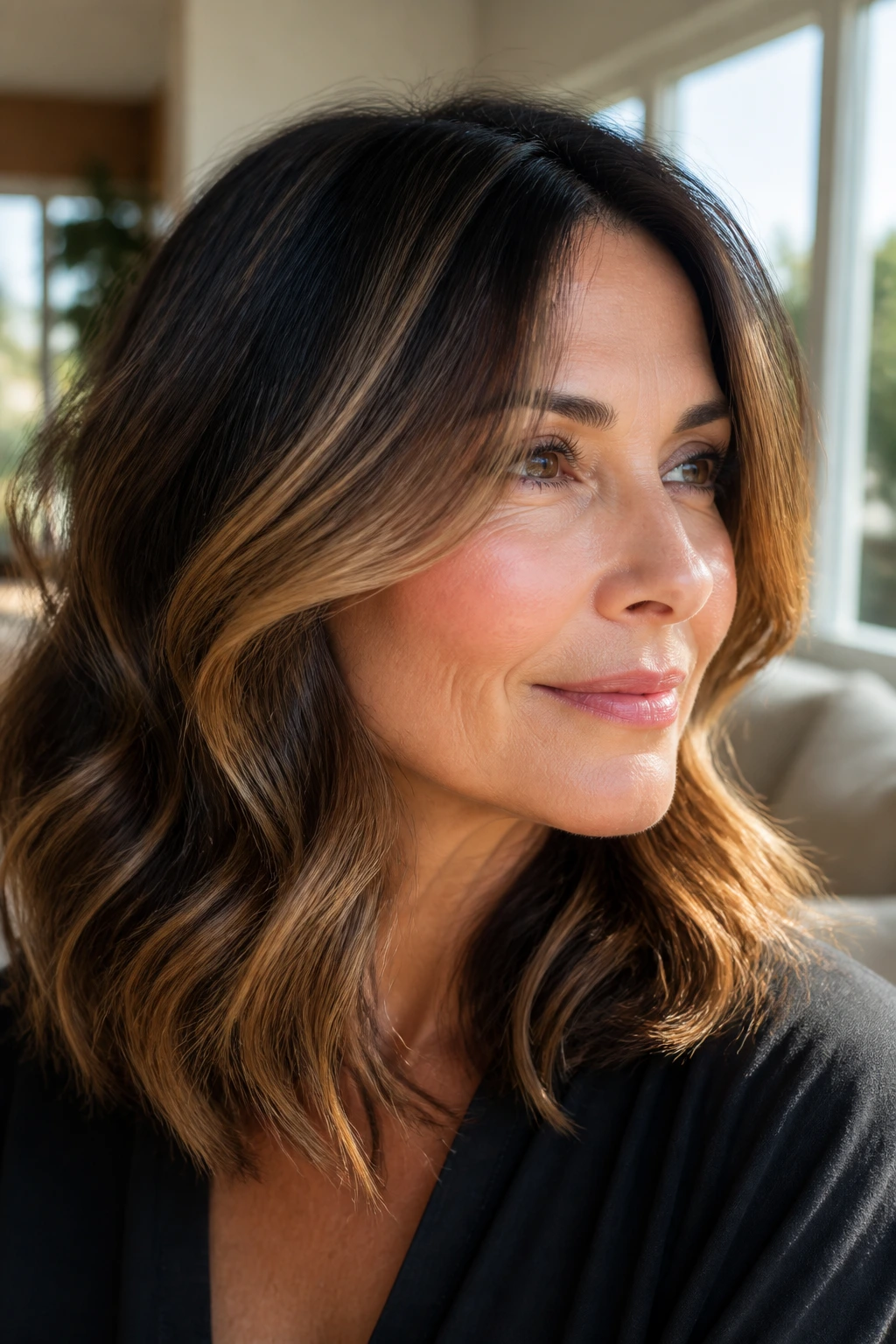
Caramel balayage is one of those shades that earns its keep on darker bases. The lighter pieces are painted where the sun would naturally hit — around the face, through the top layer, and sometimes just on the ends — so the color looks built in rather than stamped on. That matters when hair has a little more texture or a little less density than it used to.
The reason this works so well after 50 is simple. You keep the richness of brunette, which prevents the hair from looking washed out, but you add enough caramel to keep the style from going heavy. It’s not a full-head blonde look. It’s a controlled lift. That control is the whole point.
Ask For This Placement
- Soft ribbons around the cheekbones
- A few brighter pieces just above the ears
- Mid-length brightness, not chunky ends
- A root shadow for slower grow-out
Balayage also plays nicely with glasses. That’s not a small thing. Light at the temples and around the eyes can help the frame of the face pop instead of competing with it.
Pro tip: if your hair is naturally dark, keep the caramel closer to golden-brown than orange. Orange caramel can look loud fast.
4. Silver Smoke Blend for Women Who Want Gray to Look Intentional
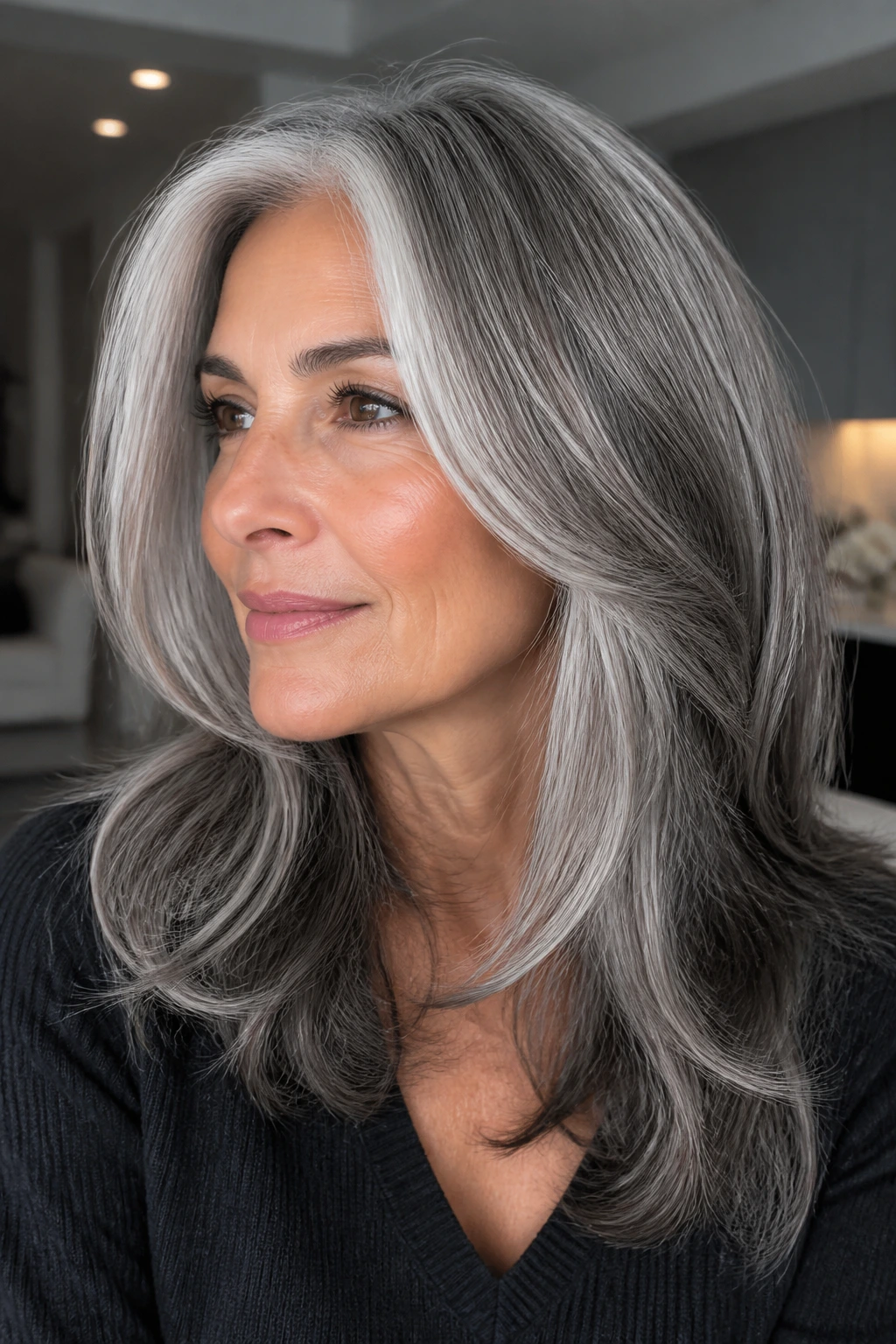
What if you stopped trying to hide the gray and made it look polished instead? That’s the whole idea behind silver smoke blend. Instead of fighting silver growth, the colorist threads in cool lowlights, a smoky gloss, and a few brighter ribbons so the silver becomes part of the design.
It works because silver hair is rarely one flat tone. It’s white in some places, steel in others, and sometimes a touch yellow near the crown if the hair is porous. A smoke blend helps unify all of that. The result reads deliberate, not accidental. And that’s a relief if you’ve spent years worrying about the line of demarcation every six weeks.
What to Request
Ask for a blend, not a cover-up. Those are different jobs.
- Silver and white pieces left out on purpose
- Smoky lowlights at level 7 or 8
- A cool gloss to mute warmth
- A soft finish around the hairline
This is one of the few looks that can actually get better as it grows. The root isn’t the enemy here. It’s part of the design.
Why It Feels Modern Without Trying Too Hard
Because the color has contrast, but not drama. Because the silver is framed rather than buried. Because a good smoke blend doesn’t fight the texture of mature hair — it works with it.
5. Rich Chestnut Gloss for Shine Without a Big Color Commitment
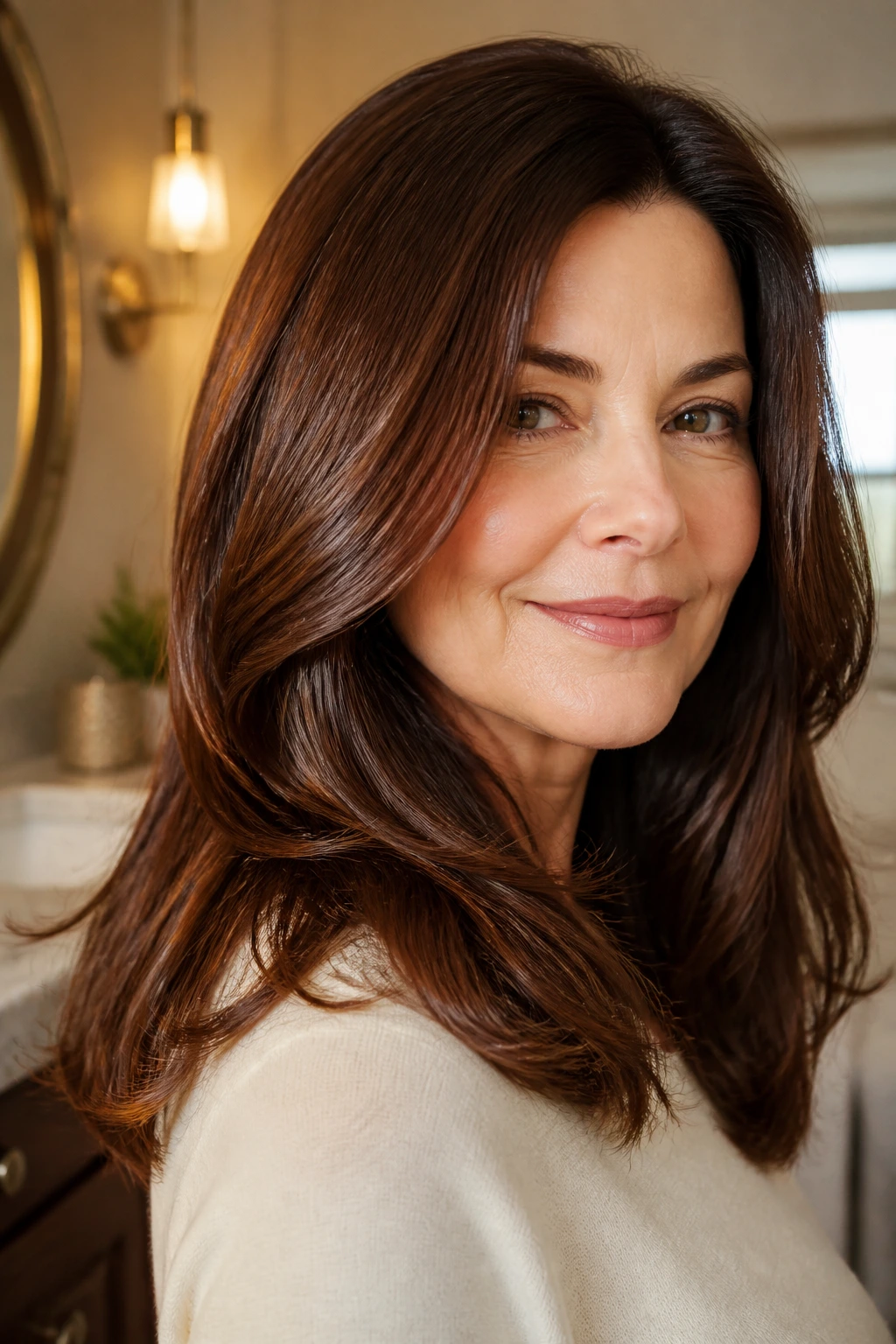
A chestnut gloss is the color equivalent of a polished leather shoe. Clean. Deep. A little red when the light hits it. Not flashy, just well kept.
This is one of the easiest ways to refresh brown hair after 50, especially if the ends have gone a little translucent or dull. A demi-permanent gloss adds reflect, smooths the color family, and gives the hair a denser look. I like it for women who do not want highlights but still want movement. The chestnut tone does the heavy lifting.
The nice thing about chestnut is that it flatters a lot of skin tones without making you choose between warm and cool camps. It sits in the middle. That means it won’t make cool skin look green, and it won’t make warm skin look orange. On slightly graying hair, it creates a soft auburn-brown finish that looks expensive in a very unshowy way.
A gloss also makes sense if your hair is porous. Porous ends grab color unevenly, and a chestnut glaze can even that out without turning the whole head too dark. That’s a useful trick.
6. Honey Bronde for a Softer, Less Contrasty Grow-Out
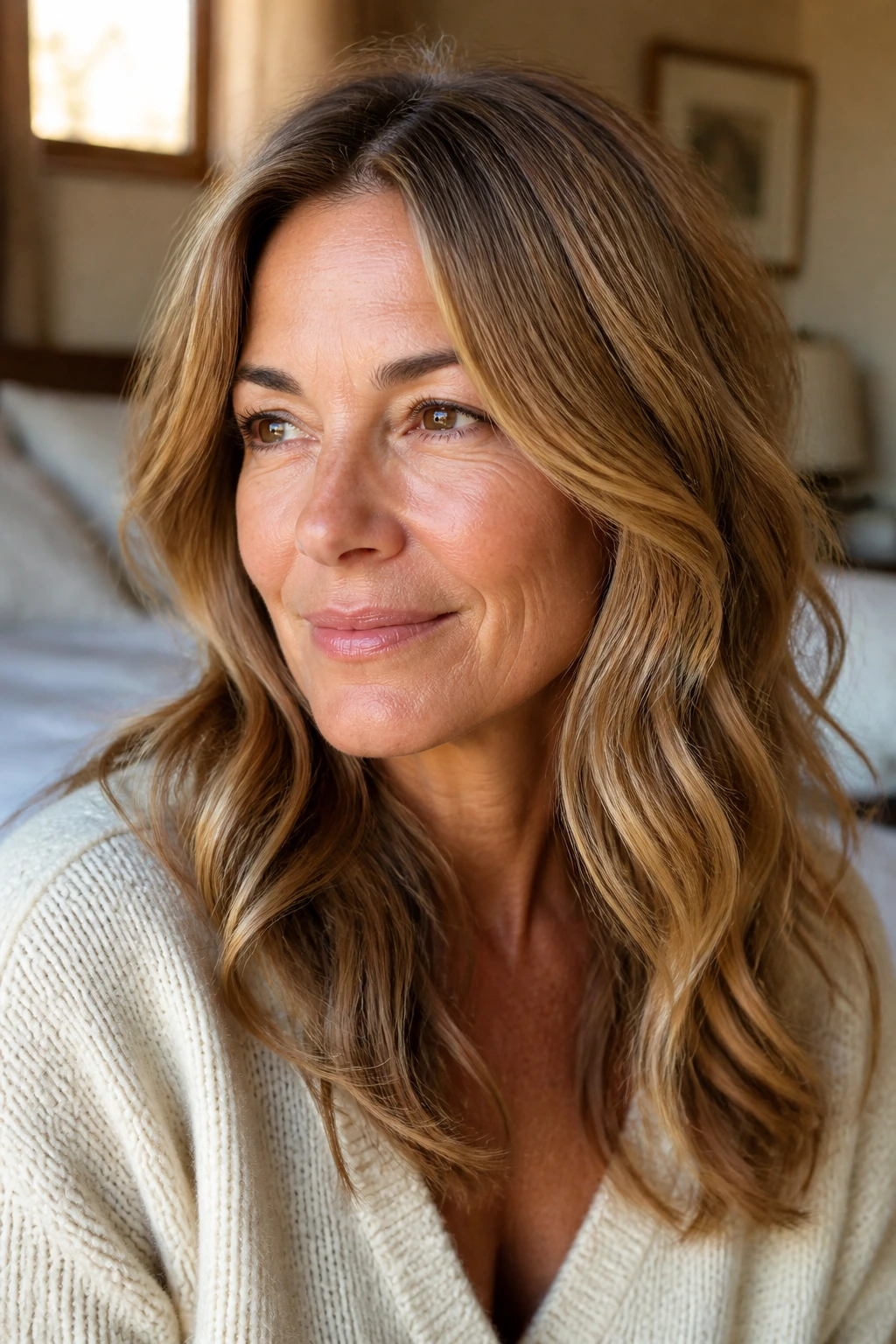
Honey bronde lives in that sweet spot between brunette and blonde that people keep trying to describe and usually get wrong. Done well, it gives you the brightness of lighter hair with the depth of brown still underneath. On women over 50, the lower contrast matters. Harsh contrast can make regrowth look obvious and can make hair texture look rougher than it is.
This shade is especially helpful if your natural color sits around medium brown and you want to lighten things up without committing to a full blonde maintenance schedule. Honey brings warmth, but not brass. Bronde keeps the base stable, which means the grow-out is softer and the hair still has some weight at the root.
Why I Like It
Because it doesn’t insist on one identity. It borrows from both sides, and that’s exactly why it works on mature hair.
Best for: Medium brown hair, wavy hair, and anyone who likes a sun-kissed look that won’t scream “retouch me.”
Ask for: fine highlights, soft mid-lights, and a honey glaze rather than chunky blonde pieces.
Skip the mistake of: pulling the light all the way through the ends if they’re already fragile. Leave some depth there. It looks better and grows out better.
7. Dimensional Copper When You Want Warmth With a Pulse
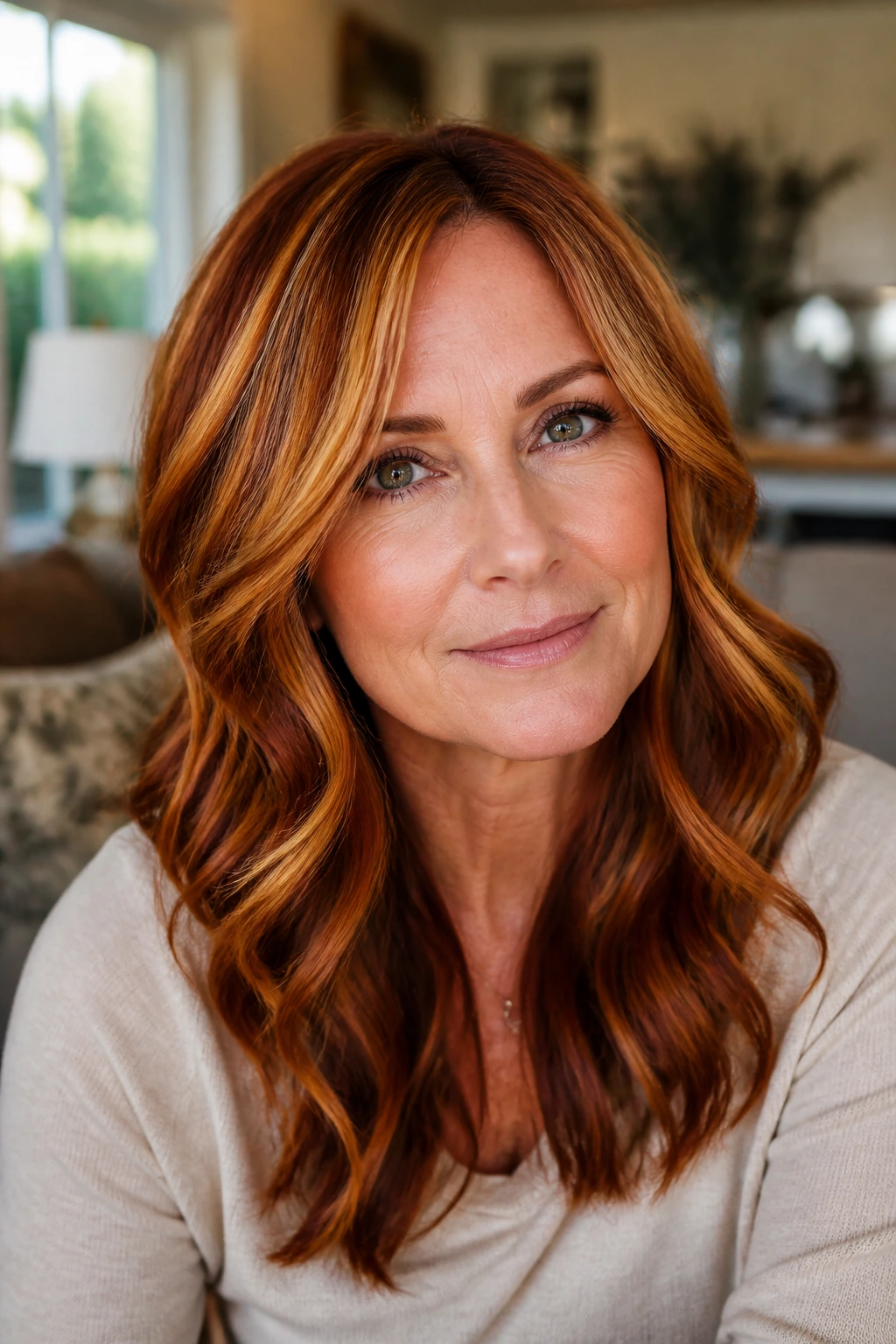
Copper is not the same thing as red hair. That’s a mistake people make all the time. Copper can be soft and refined, with enough gold and rust to warm the face without veering into clown-bright territory. On women over 50, a dimensional copper often looks better than a flat red because the dimension keeps the hair from looking like a single block of color.
I’ve always thought copper looks best when it’s broken up with a little brown underneath. That gives the shade somewhere to land. It also makes the color look expensive rather than loud. On skin that has lost a little natural pink over time, copper can be a small miracle. It wakes up the complexion fast.
A Good Copper Has Layers
- Penny tones near the face
- Cinnamon or rose-gold midtones
- A slightly deeper base underneath
- Shine, always shine
If you’re color-shy, ask for a copper glaze over brown hair before going full head. It gives you the warmth without the maintenance headache of a brighter permanent copper.
One blunt truth: copper fades fast. If you love it, be ready for a color-depositing conditioner and a gloss refresh.
8. Beige Brunette with Babylights for Fine Hair That Needs Lift
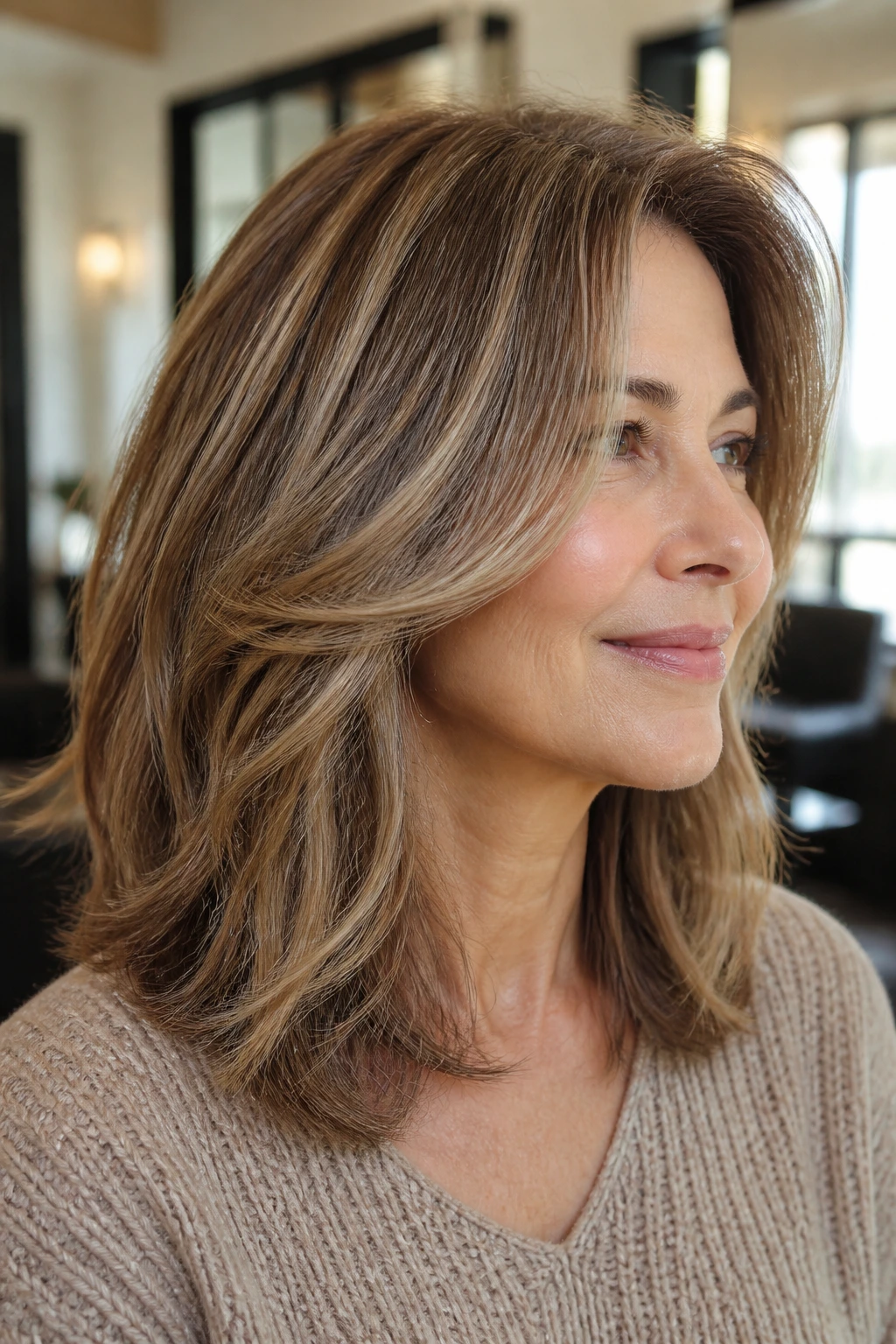
Fine hair after 50 can get snappy about color. Too dark and it looks flat. Too light and the scalp starts showing through like a spotlight. Beige brunette with babylights handles both problems by adding tiny, delicate highlights through a neutral brown base. The babylights are narrow enough that they don’t break up the density, but they still catch light.
This is a terrific option if you want your hair to look fuller without screaming “highlighted.” The beige tone keeps the bright pieces from turning gold or orange, and the brunette base preserves the sense of thickness. It’s one of those looks that seems understated until you see it in motion.
Why It Works on Fine Hair
A few very light ribbons can make the whole head feel more layered. Not because the hair is actually thicker, but because your eye reads the changes in tone as texture. That’s a useful trick when the strands themselves are delicate.
Ask for baby-fine foils near the part and temples, then a soft glaze over the rest. I would not overload the ends. Fine hair ends can go see-through fast.
Best paired with: a blunt bob, soft lob, or shoulder-length cut with movement.
9. Soft Auburn for a Gentle Red That Doesn’t Shout
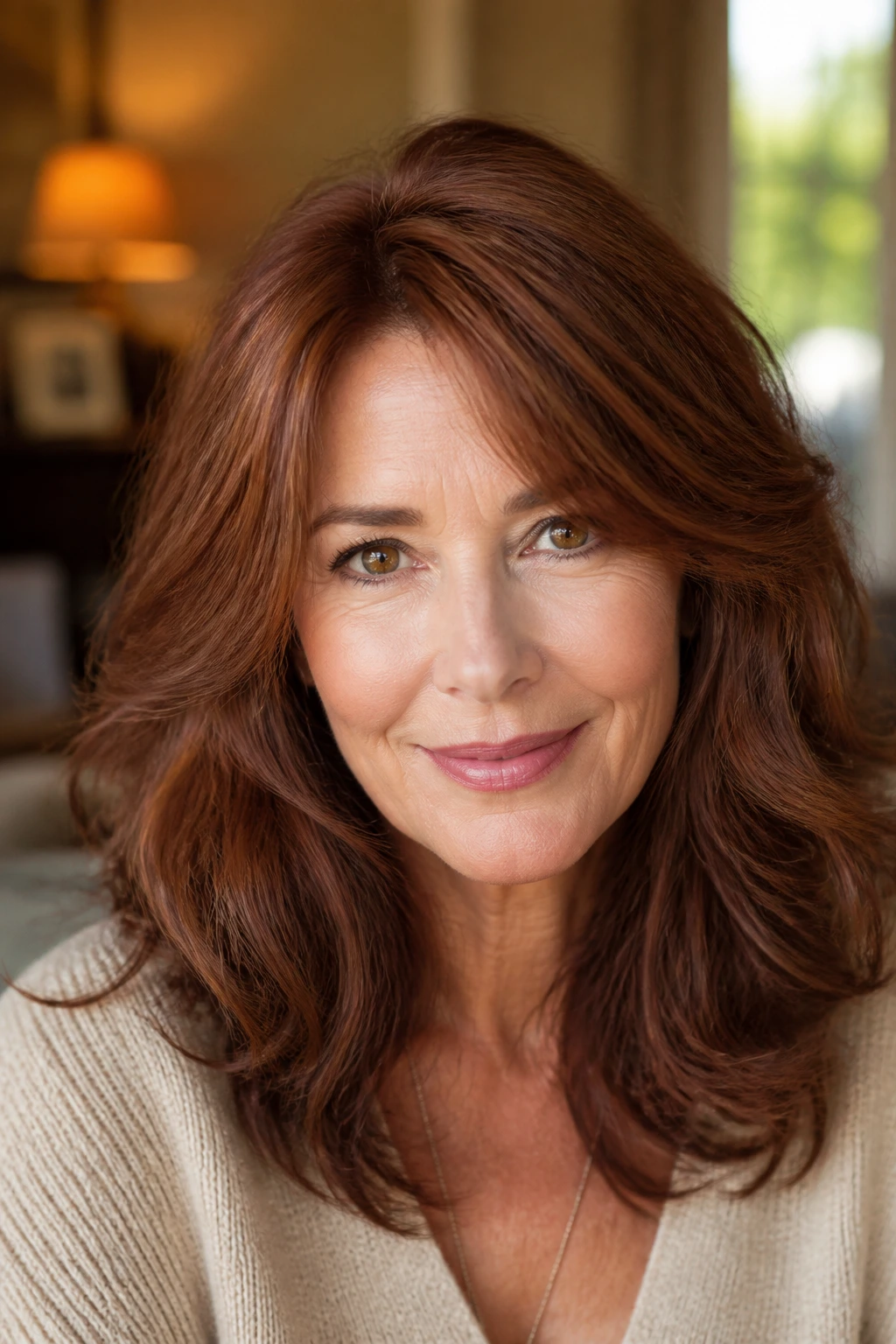
Soft auburn is one of the best hair color ideas for women over 50 who want warmth but hate the idea of bright red maintenance. It’s brown first, red second. That matters. You still get the warmth, the coppery flicker, and the healthy-looking reflect, but the overall effect stays grounded.
A good auburn can make pale skin look less tired and olive skin look more alive. It also does a nice job on hair that has started to lose pigment unevenly. Gray strands tend to pick up auburn a bit more softly than a stronger red, which means the blend looks more natural as it grows.
There’s a version of auburn that can read costume-like. Skip that. Ask for a muted, brown-based auburn with a gloss finish. That usually lands in the level 5 to 6 range, which is dark enough to feel rich and light enough to show warmth.
Auburn works best when the light stays inside it. If the color is too opaque, it gets stiff. If it has a little translucency, it moves.
10. Espresso with Mocha Ribbons for a Deep Base That Still Moves
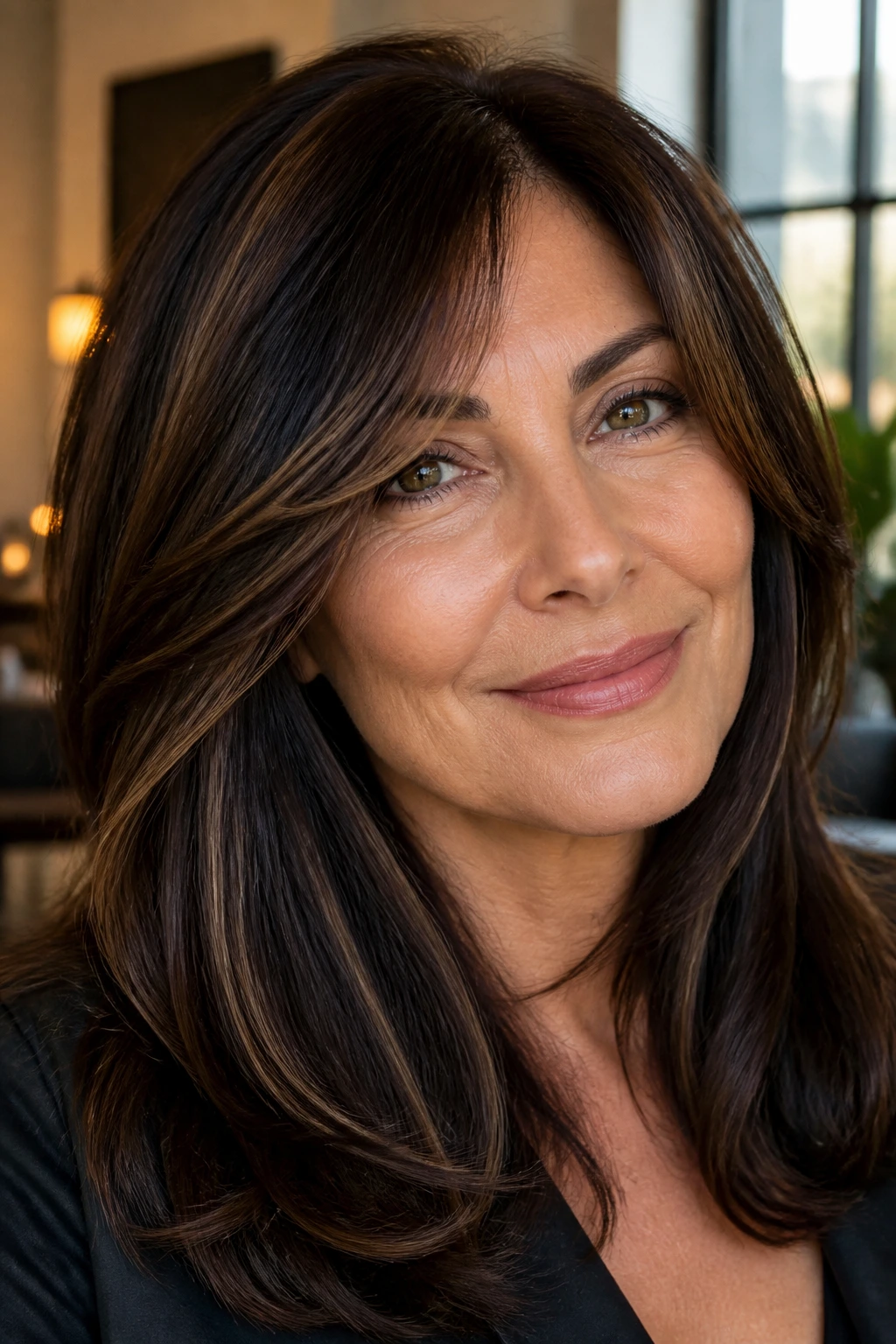
A deep espresso base can be gorgeous, but only if it isn’t one flat curtain of darkness. That’s where mocha ribbons come in. Thin, slightly lighter brown pieces woven through the top layers keep the color from swallowing the face. This is a smart choice if you like dark hair but don’t want the hard edge that often comes with all-over permanent brunette.
The contrast should be subtle. You’re not trying to make chunky streaks. You’re trying to break up the mass so the hair shows shape. On women with stronger features or naturally fuller brows, espresso and mocha can look polished and grounded. On softer faces, the mocha ribbons keep the look from going stern.
The Sweet Spot
- Espresso base at the roots and underneath
- Mocha or cocoa ribbons through the top
- A gloss to keep the darker pieces reflective
- Face-framing brightness kept soft, not blond
If your hair is fine, be careful with this one. Too dark a base on thin hair can reduce the look of volume. A shade or two lighter than black is usually the right move.
11. Pearl Blonde for a Cool, Clean Finish
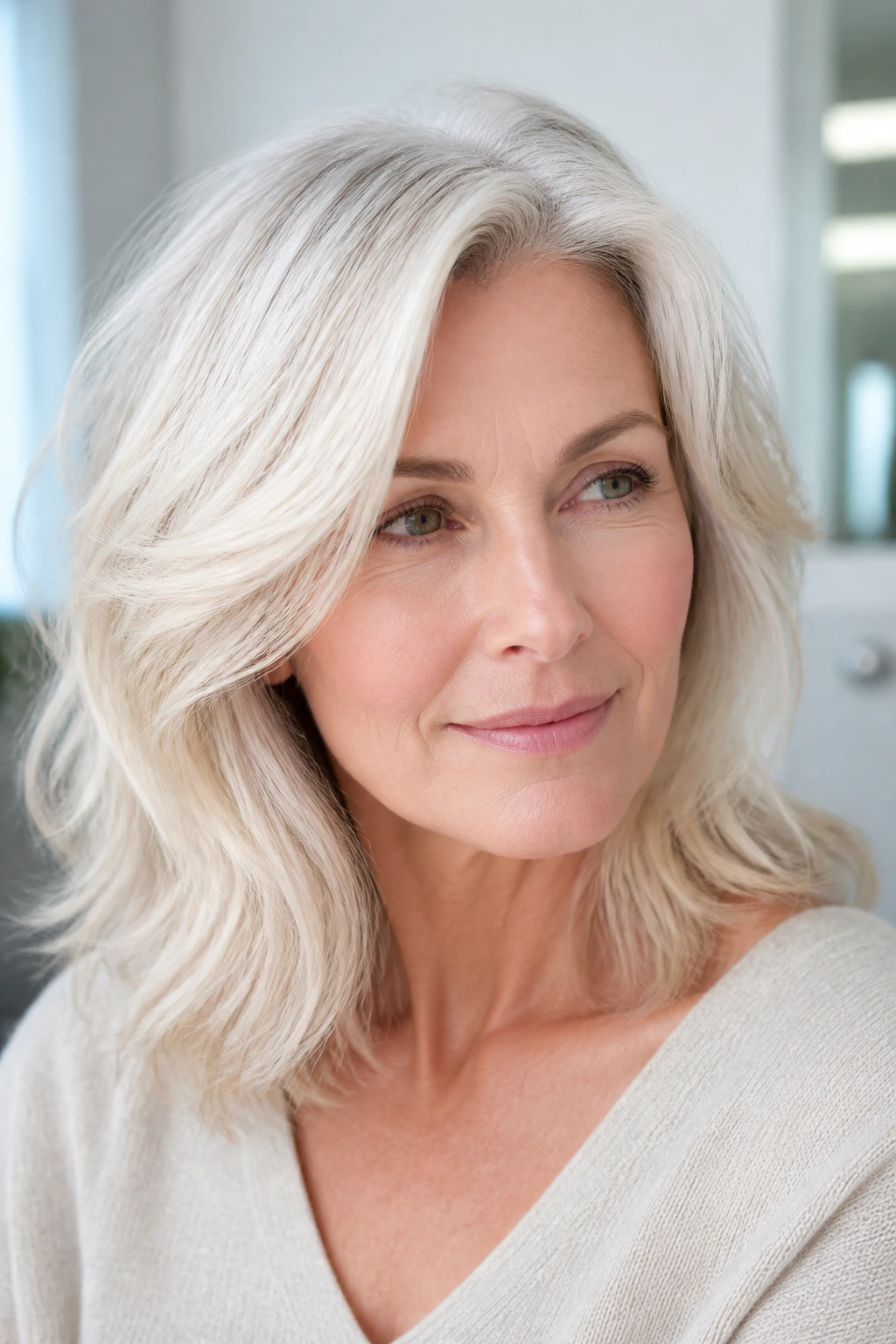
Pearl blonde is the answer for anyone who likes blonde but hates yellow. It’s cool, creamy, and a little reflective, with enough softness that it doesn’t look icy in a harsh way. On women over 50, pearl blonde can make the skin look fresher, especially if the complexion has gone a bit red or uneven.
This shade needs a careful hand. Hair that’s already porous will grab tone unevenly, and yellow ends can ruin the effect fast. A good pearl blonde often comes from a light base plus a soft toner, not from pushing the hair over and over with more bleach. That distinction matters more than most people realize.
How to Keep It Clean
Use a purple shampoo once a week, not every wash. Too much can make the blonde look gray and chalky. A sulfate-free cleanser and a lightweight mask are your friends here.
Pearl blonde looks best on cuts with movement — a lob, layered bob, or longer hair with soft waves. Flat ironing it bone-straight can make the whole thing look harder than it is.
If you want the polish without the frost, pearl beats platinum.
12. Walnut Brown for Depth That Doesn’t Feel Heavy
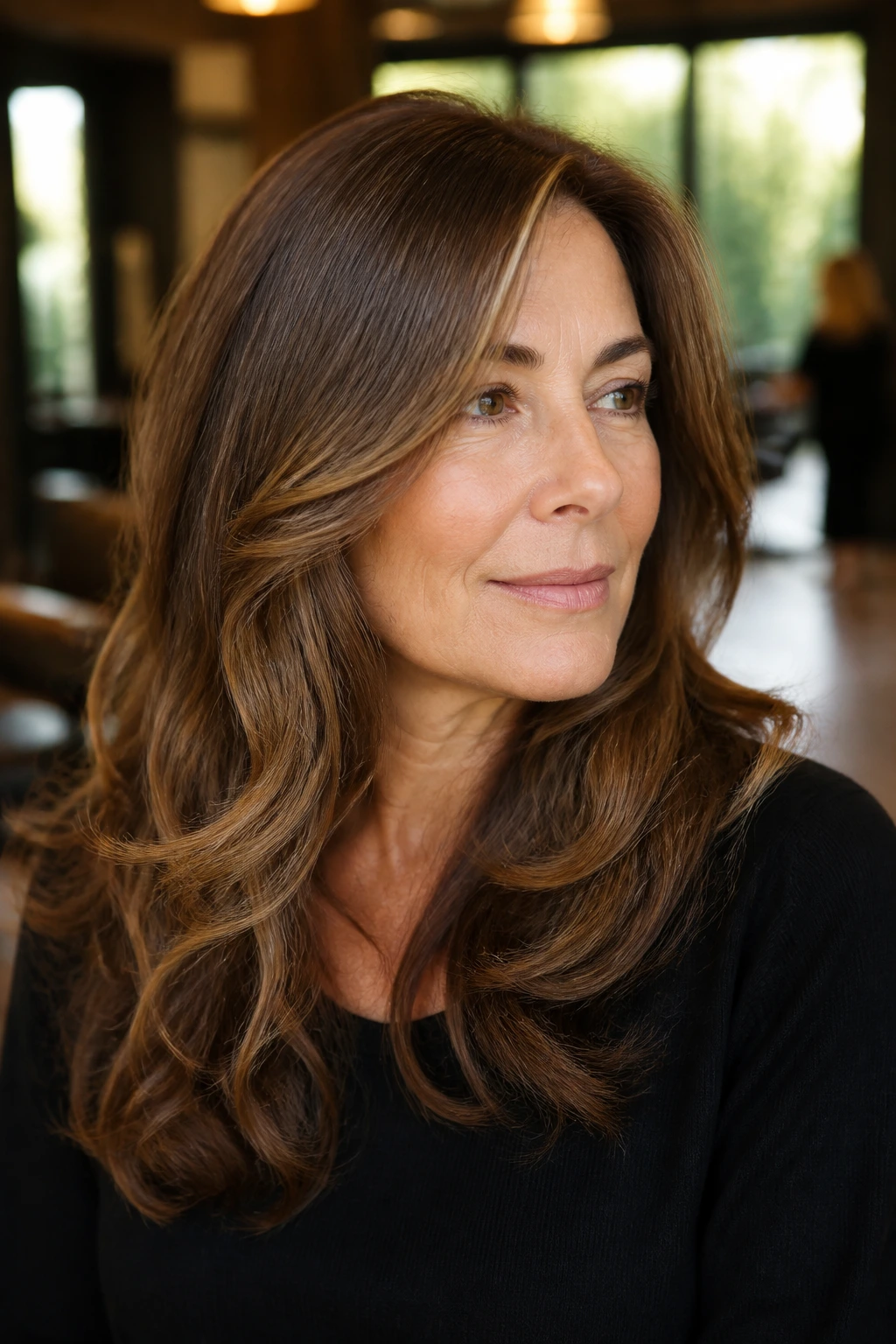
Walnut brown sits in the middle of the brunette family, which is exactly why I like it for mature hair. It has enough warmth to keep the face from looking drained, but it isn’t so warm that it throws unwanted orange. Think brown with a faint gold edge and a smooth, walnut-shell depth.
This is a shade that flatters texture. Coarse hair looks less bulky. Medium hair looks richer. Even fine hair can wear it well if there are a few soft highlights around the face. I especially like walnut brown for women who are transitioning away from darker dye but are not ready to go light. It makes the hair look substantial without feeling severe.
A gloss in walnut tones can refresh faded brunette without needing a full color service. That’s handy, and it’s less damaging. The color also behaves well with silver regrowth because the contrast isn’t as sharp as it would be with black or espresso.
Best detail to ask for: a brown base with a soft neutral-gold reflect, not a red sheen.
13. Cinnamon Glaze for Warmth That Feels Polished
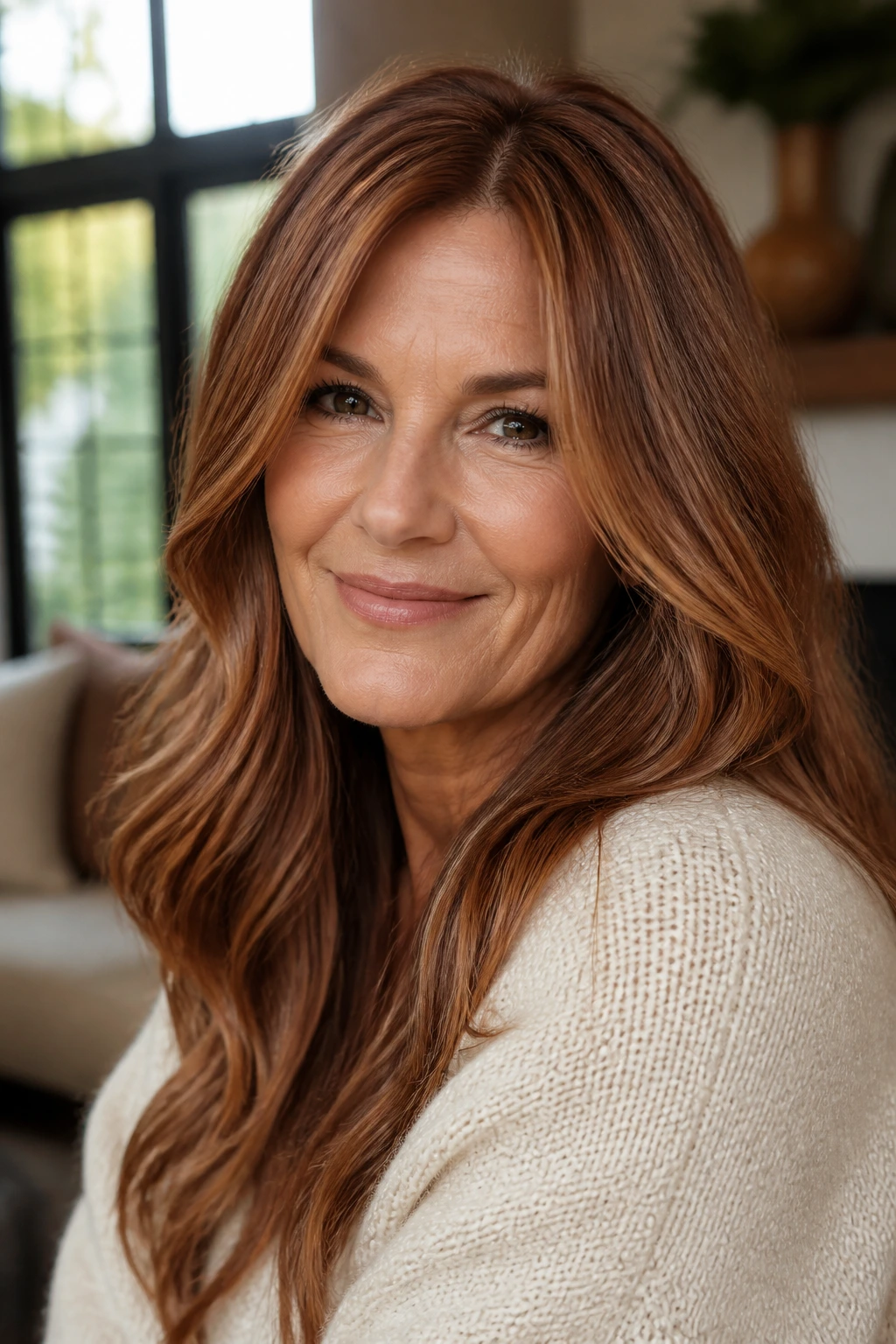
Cinnamon glaze is one of those shades that makes sense the second you see it on hair with a little texture. It gives brown hair a warm red-brown finish, but because it’s a glaze, the effect stays sheer enough to move with the light. On women over 50, that softness matters. A heavy red can look loud. A cinnamon glaze looks intentional.
What I like most is how it works on previously colored hair. If your brunette has gone dull or has a bit of gray coming through, a cinnamon gloss can warm everything up without pretending the gray isn’t there. It softens the contrast and gives the hair a healthier, more touched-up feel.
This is a good choice for anyone with hazel eyes, warm skin, or a wardrobe full of camel, olive, cream, and denim. The shade plays nicely with those colors. It also works well in fall-toned makeup, though I’m not wild about overdoing the blush with it. Let the hair do the warming.
If chestnut feels too brown and copper feels too strong, cinnamon lives right between them.
14. Smoky Charcoal Blend for a Chic Gray Transition
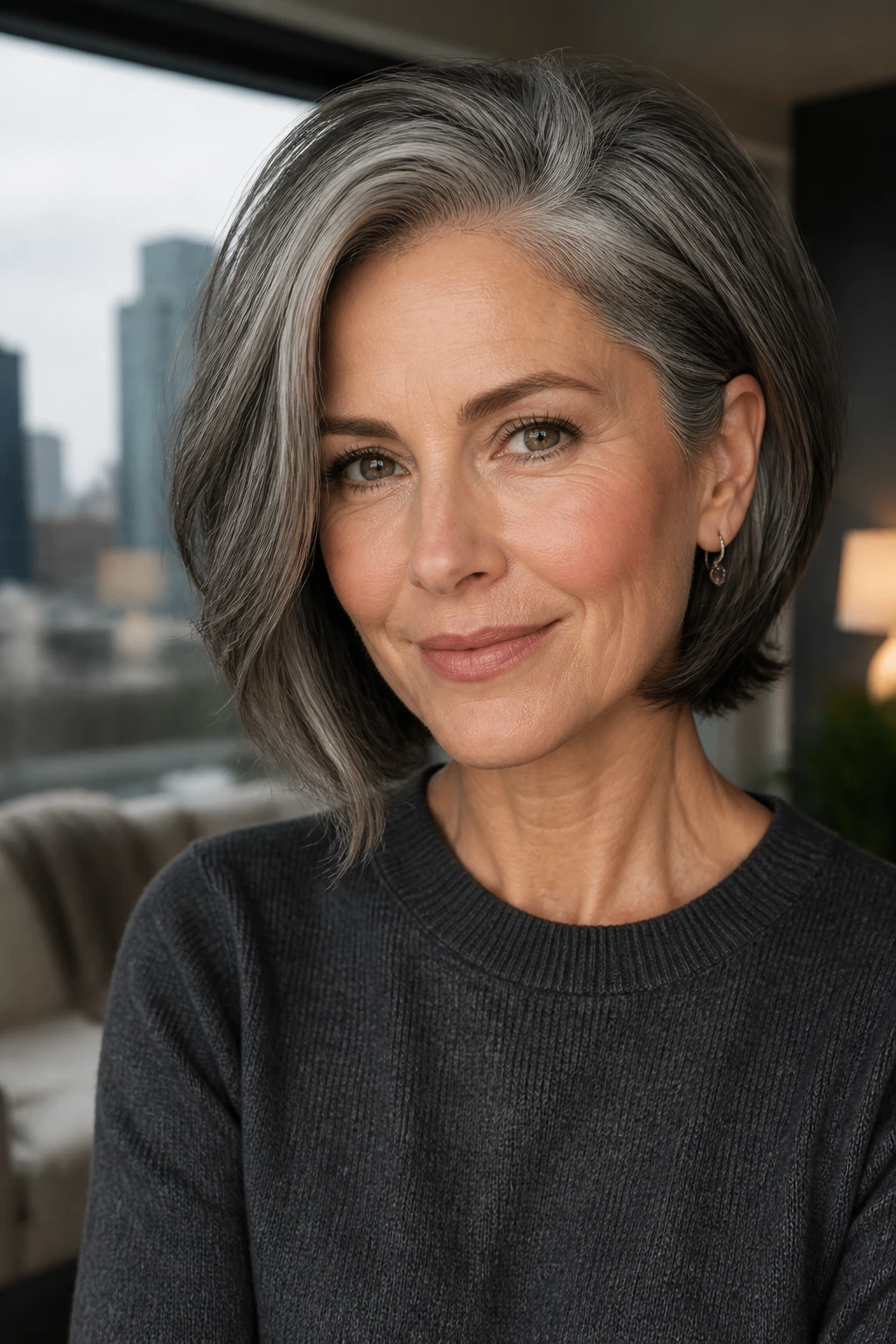
Smoky charcoal blend is for the woman who wants her gray transition to look deliberate, not apologetic. It mixes darker ash tones with silver, charcoal, and a soft steel gloss so the hair reads as a designed gradient rather than a grow-out problem.
The beauty of charcoal is that it gives gray hair structure. White strands can be bright, almost fluorescent, and charcoal tones anchor them. That’s useful if the hair has gone very white around the temples but still holds darker pieces at the back. Instead of covering everything, the blend lets the natural variation do its job.
This shade pairs well with short cuts and layered mid-length styles because the dimension shows more clearly when the hair moves. A one-length, very long charcoal blend can sometimes fall flat. A little shape helps. So does a shine product with a thin, watery finish rather than a thick oil.
One caution: charcoal is not black. Black can make regrowth obvious and harsh. Charcoal keeps the edge softer.
15. Strawberry Blonde for Warmth With a Little Playfulness
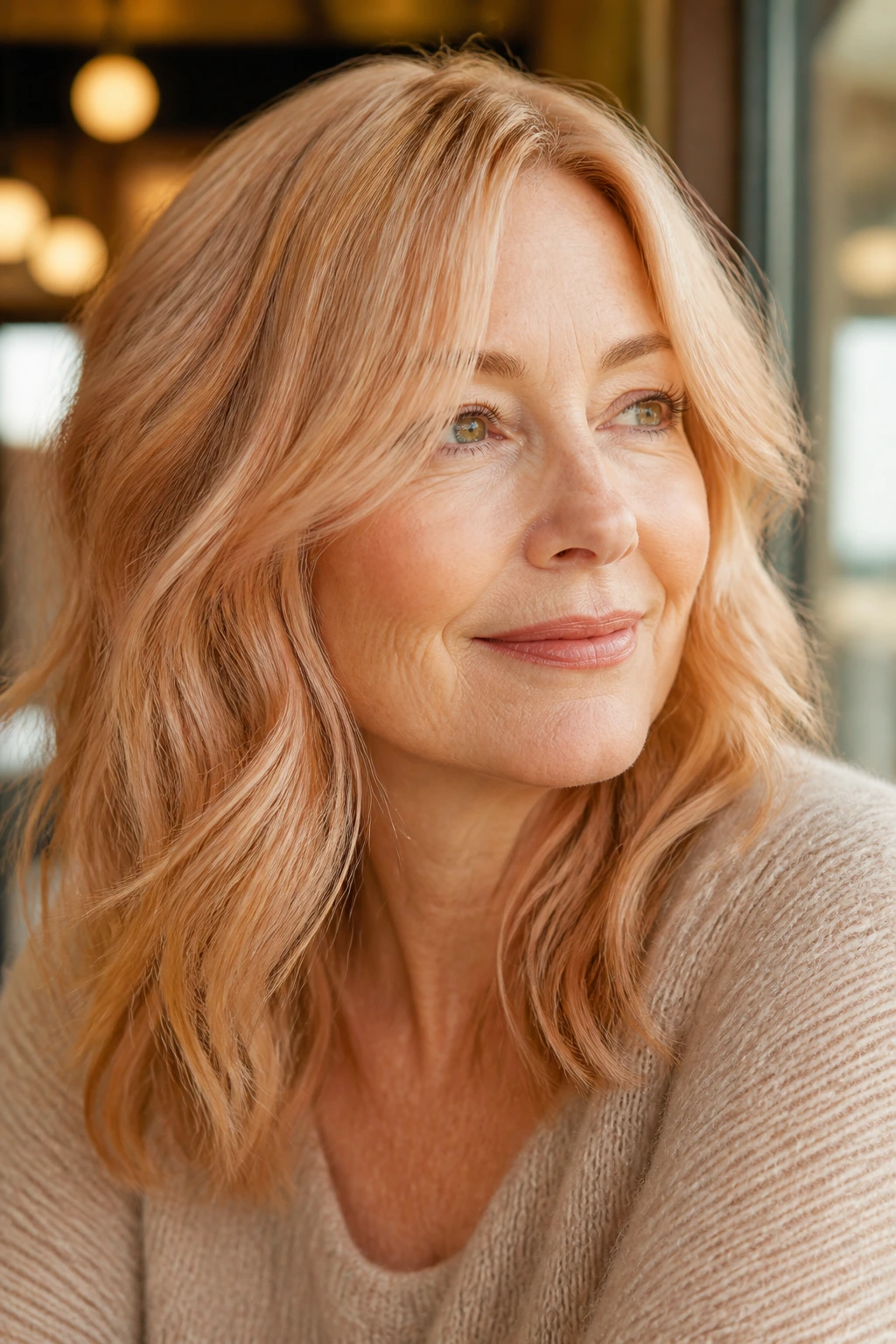
Strawberry blonde should never look like orange pretending to be blonde. The good version is a delicate mix of gold, pink, and pale copper over a light blonde base. It’s soft, a little unusual, and surprisingly flattering on women over 50 who want warmth without going fully red.
I like strawberry blonde on skin that has neutral undertones or a slight flush to it already. The color picks up that natural rosiness instead of fighting it. It can also soften the look of pale eyebrows and silver at the temples, especially when the tone is kept sheer and not over-saturated.
Why It Stays Pretty
Because the best strawberry blonde has transparent layers. You can see the blonde under the pink-gold finish, and that keeps the color from turning opaque or costume-like. If you want to wear it, ask for a soft glaze or demi-permanent color rather than a hard permanent red.
This is a lovely option for shoulder-length waves, chin-length bobs, or soft layered cuts. The movement matters. Still hair can make it look more copper than strawberry.
16. Rose Gold Melt for Lighter Hair That Wants a Softer Edge
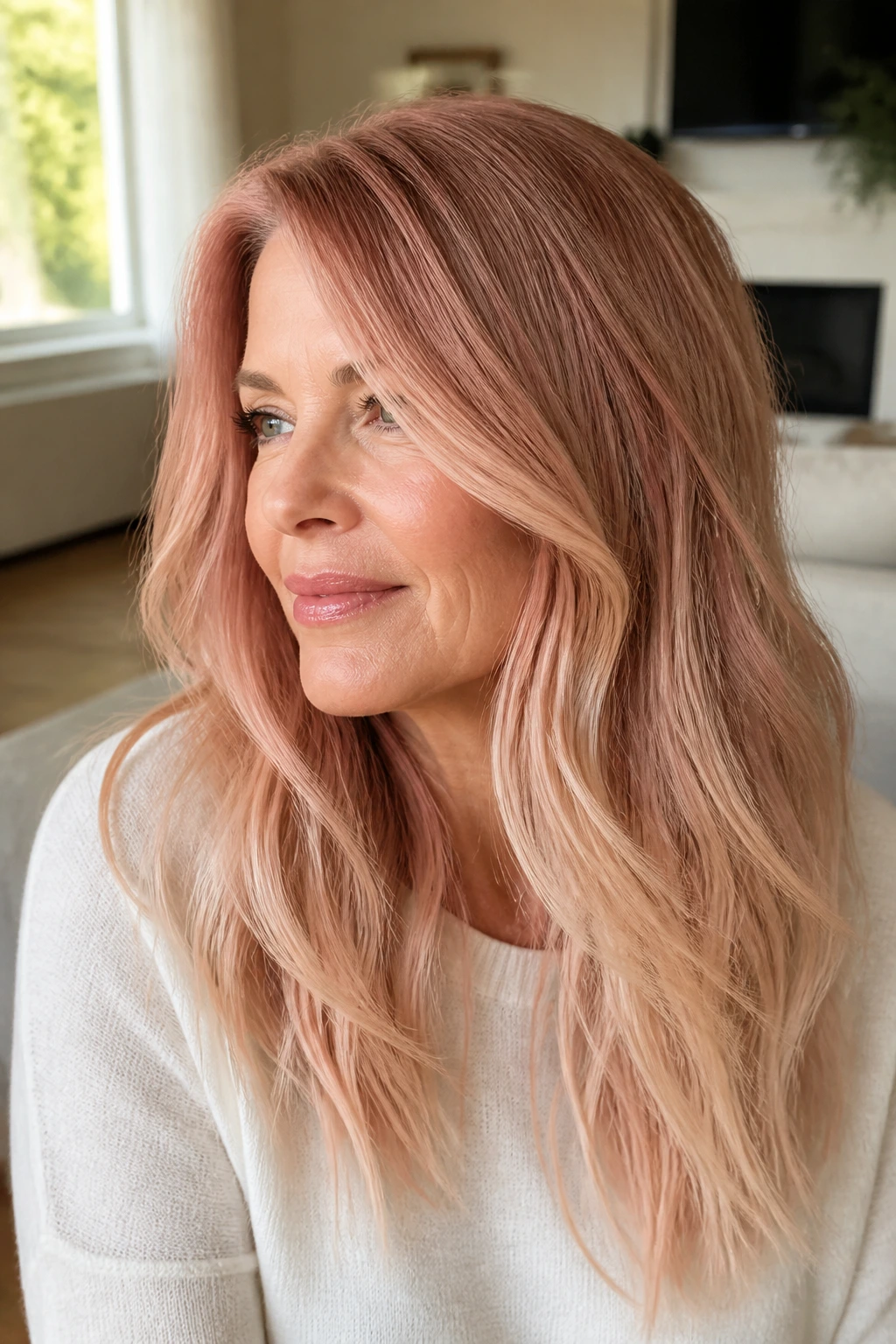
Rose gold melt is one of the easiest ways to add a little personality without committing to a loud color. It works best on light blonde or light brown bases, where the rose tone can sit on top like a wash rather than a solid block. On women over 50, that softness is the win. The color looks deliberate, a bit playful, and far less harsh than a full pastel job.
A melt means the shade shifts gradually from root to mid-length to tip. That transition keeps the grow-out forgiving. If you’ve got a few silver pieces mixed in, rose gold can actually make them look like part of the plan. The key is to keep the pink muted. Too much pink, and you’re in salon-cotton-candy territory. Too little, and the color disappears.
This is a good choice if you already wear warmer jewelry — gold hoops, rose-gold frames, bronze makeup. It picks up those details without demanding a wardrobe overhaul.
My favorite version: pale rose over beige blonde with a deeper root shadow. Quiet, but not boring.
17. Ashy Bronde for Women Who Hate Brass
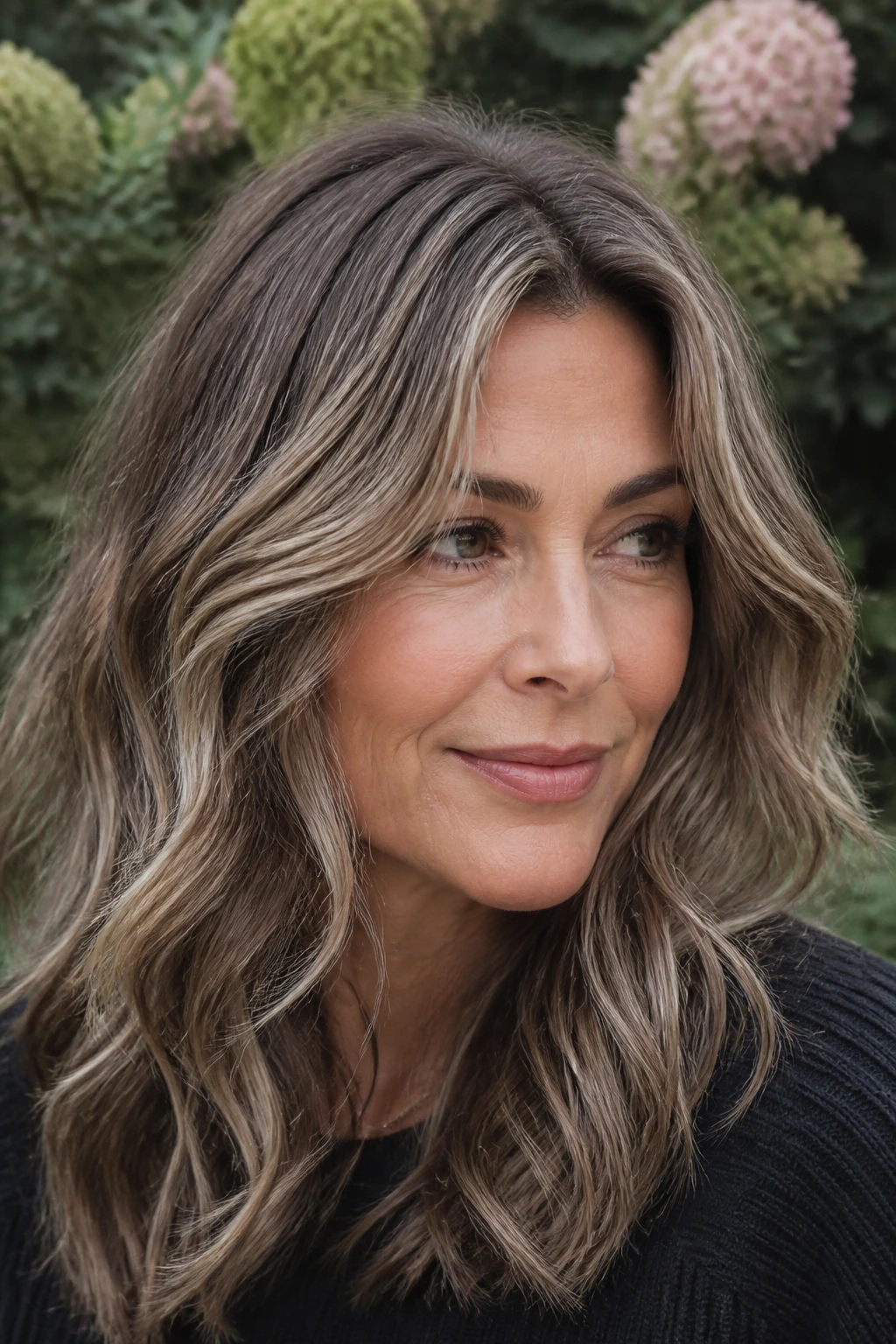
Do you want brightness without yellow? Ashy bronde is the answer. It gives you the lightness of a brunette-blonde mix with a cooler, sandier finish that stays away from brassy gold. On women over 50, that can be a lifesaver, especially if the skin tone runs cool or the hair tends to pull orange after coloring.
Brass is often the problem, not the shade itself. Ashy bronde solves that by keeping the pieces neutral-cool while still leaving enough depth underneath to preserve fullness. The base looks like a dark beige brunette, and the lighter strands are more smoke than gold. It’s restrained, and that’s why it works.
How to Ask for It
Tell your colorist you want a cool brunette base with beige-ash ribbons. Ask for a toner that stays in the neutral range instead of anything golden. A lot of colorists default warm, because warm is forgiving. But if your hair always turns too orange, you need to say so.
Best for: cool skin, green or gray eyes, and hair that has a tendency to pick up warmth fast.
18. Golden Honey Highlights for the Easiest Brightening Trick
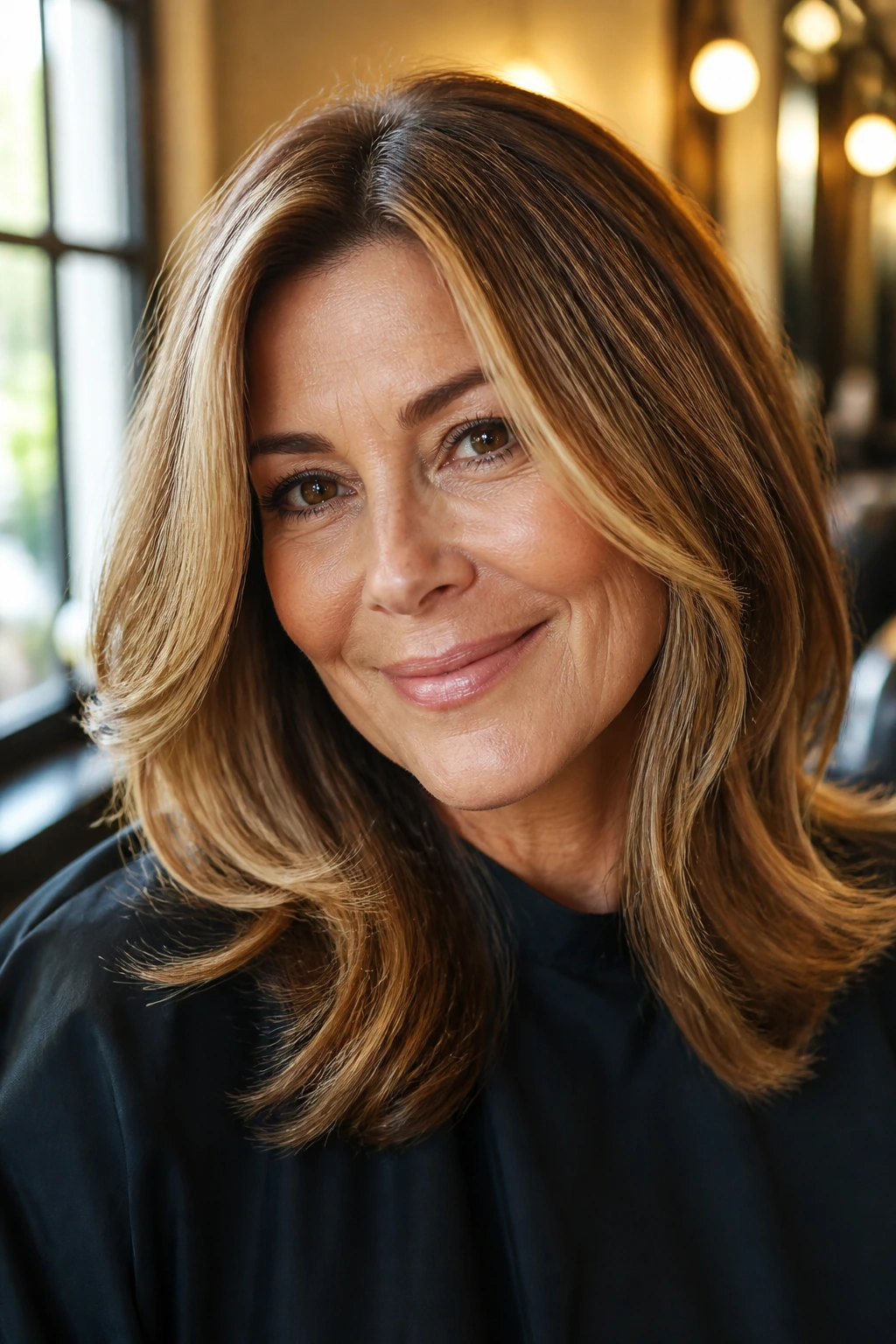
Golden honey highlights are the most forgiving brightening choice on this list. They add light without changing the whole identity of the hair. If you’re attached to your natural brown or dark blonde base, this is a smart way to wake it up. The gold stays soft, and the honey keeps it from turning sharp.
This look works especially well when the highlights are concentrated around the face and top layers. That placement matters more than most people think. A few well-placed foils near the eyes can make the skin look fresher than a whole head of lighter hair that sits too far from the face to matter.
The real trick is keeping the honey tone rich. Pale yellow highlight is not the same thing. Honey should look warm and glossy, almost like light passing through tea. It’s a shade that makes sense on layered cuts, shoulder-length blowouts, and soft curls.
If your hair feels heavy, honey highlights can give it lift without cutting a single inch.
19. Cool Graphite for a Strong, Modern Gray
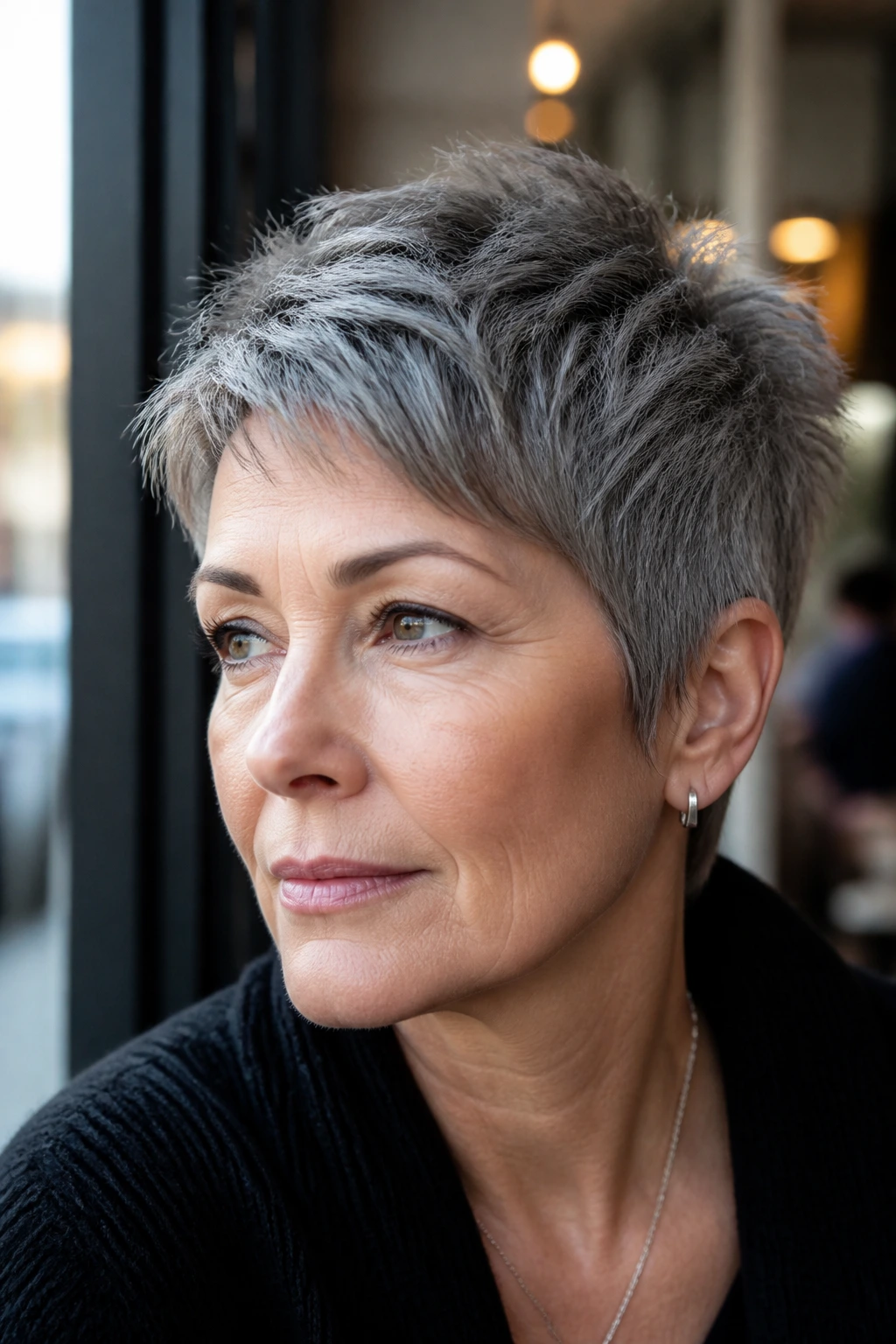
Cool graphite is deeper and more dramatic than silver smoke, but it still lives in the gray family. The shade has a steel-like finish, with charcoal undertones that make it feel sleek rather than flat. On women over 50, it can be a striking way to wear gray without turning washed out.
I like graphite on women whose natural gray is already turning a strong silver-white. Instead of trying to force it warm or brown, graphite leans into the coolness and gives it shape. It’s especially good on short cuts, textured pixies, and sharp bobs because the color shows off the line of the haircut.
This is not the easiest shade to maintain if you have a lot of porous hair. Cool tones fade faster on dry strands, and they can drift dull if you skip glosses. But when it’s fresh, graphite has a clean, expensive-looking finish that feels sharp in the best way.
Best use case
If you want gray hair to look purposeful, polished, and not soft-focus, graphite does the job.
20. Mahogany Brown for Richness With a Red Undertone
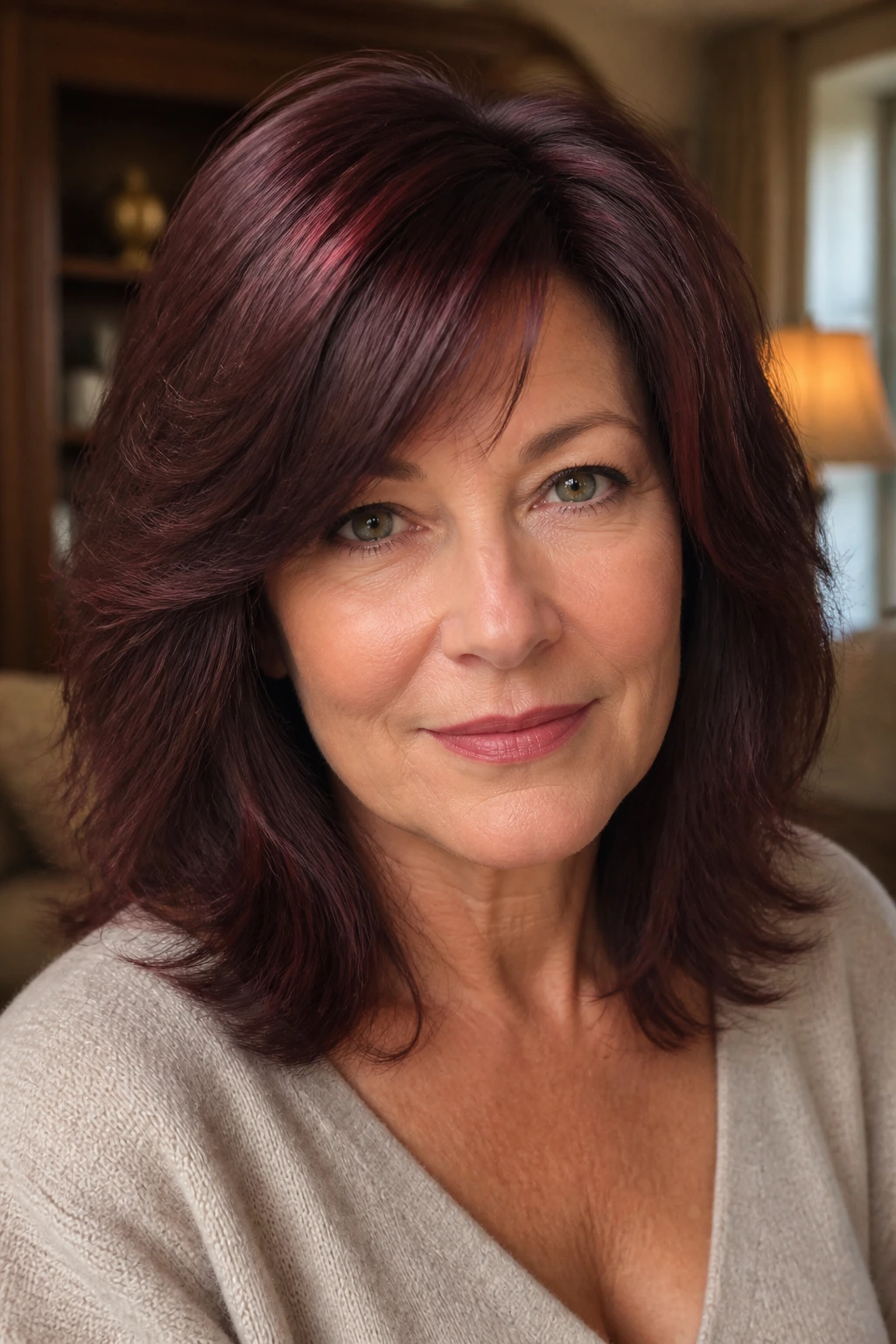
Mahogany brown has more depth than auburn and more warmth than espresso. That balance is why it flatters thicker hair so well. The red-violet undertone gives the hair a healthy glow without making it look like an obvious red dye job. It’s one of those shades that reads expensive because it has complexity, not because it’s loud.
On women over 50, mahogany is especially useful if the complexion has gone a bit sallow or if the natural brown has lost some red pigment over time. A mahogany gloss or demi-permanent color can bring that missing warmth back in. It also helps dense hair feel less heavy because the reddish reflect catches light inside the shape.
A little caution: if the hair is very fine, too much mahogany can look too dark. In that case, keep the base slightly lighter and add mahogany only in the mid-lengths and ends.
What I like most: it works with both cool and warm makeup, which is rare for a red-brown.
21. Icy Beige Blonde for a Bright Finish That Stays Soft
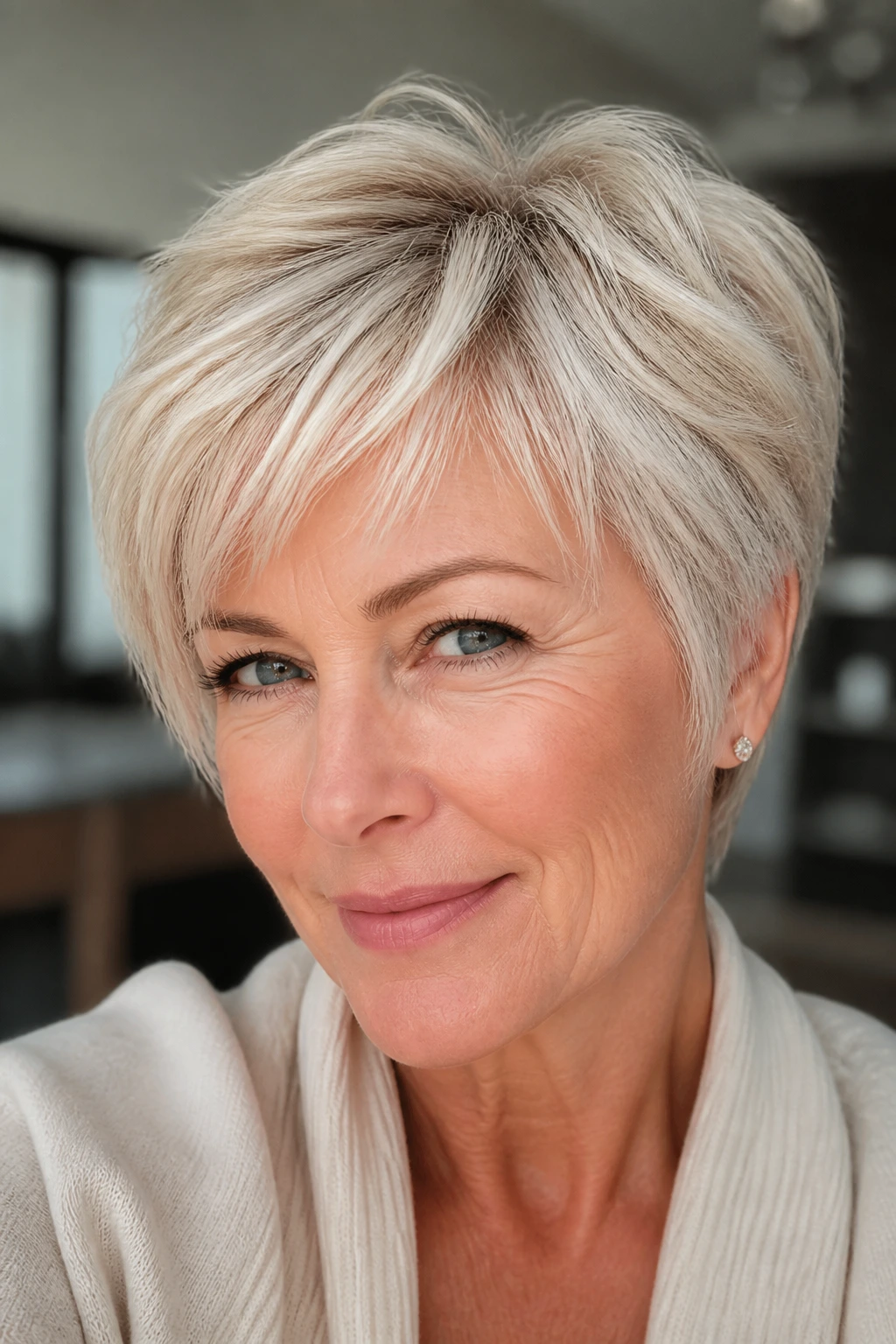
Icy beige blonde gives you the brightness of platinum’s cousin without the hard, white-blonde edge. It’s cooler than champagne, softer than stark icy blonde, and usually more wearable on mature hair because it still carries a bit of beige. That little bit of warmth keeps the color from looking dry.
This is the shade people ask for when they want to go light but not yellow. The best version has a pale, clean base with a toned finish that stays creamy rather than chalky. It can be stunning on short crops, sleek lobs, and layered cuts that move. It can also be unforgiving if the hair is already fragile, so I’m going to be blunt: this is a maintenance shade, not a set-it-and-forget-it shade.
How to make it work
- Keep the root a shade or two deeper
- Use a violet or blue-violet shampoo sparingly
- Add regular glosses so the blonde doesn’t go dry and flat
- Trim the ends often, because icy tones show damage fast
If you want brightness with restraint, this is the blondest blonde I’d recommend before the upkeep starts getting annoying.
Why Dimension Wins When Hair Changes Texture
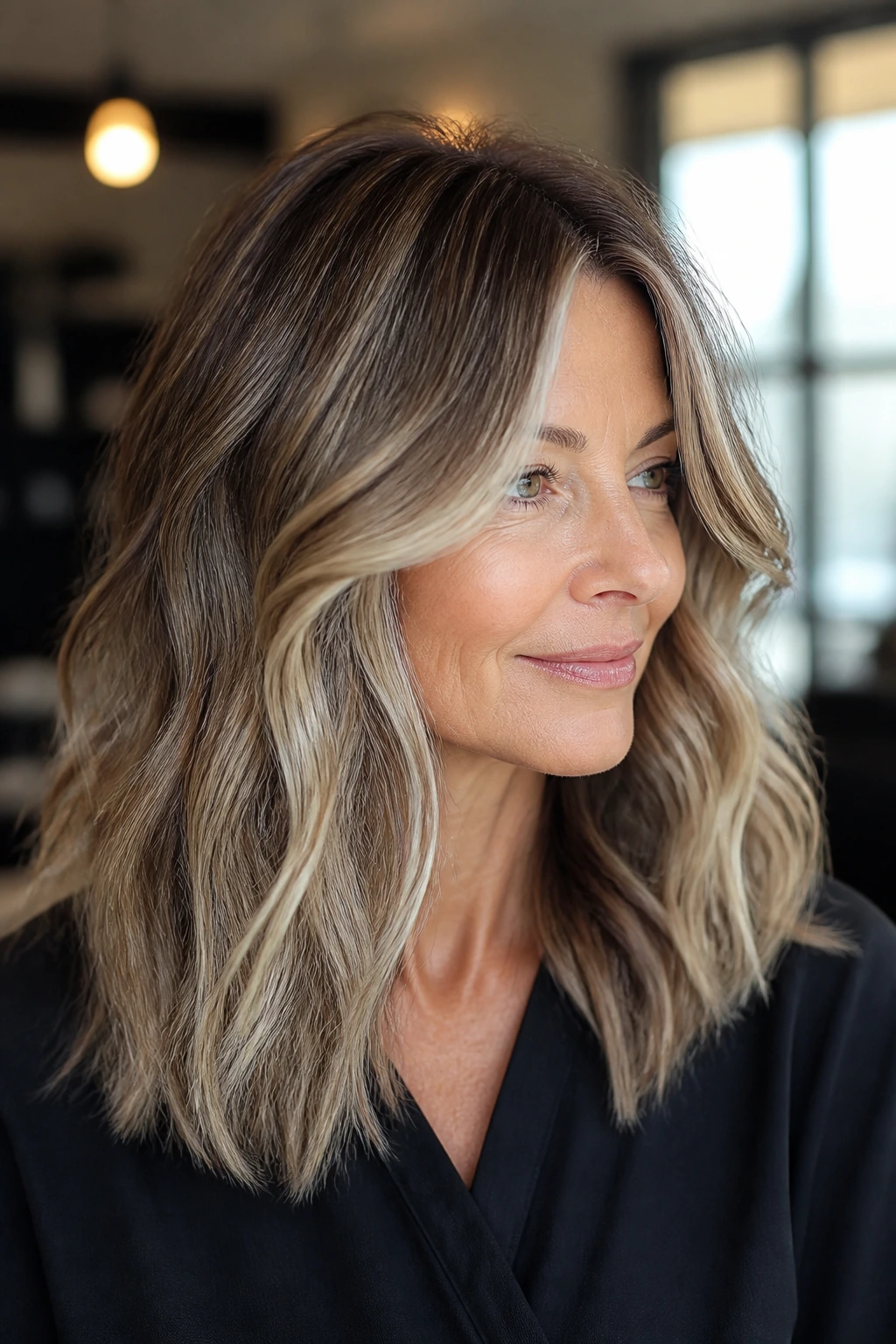
Flat color has a way of exposing everything hair hides at 30. Dry ends. A slightly wider part. Fine strands that don’t hold much volume on their own. Dimension fixes that by giving the eye more to read. Instead of one sheet of brown or blonde, you get light bouncing between tones, which makes the hair feel fuller and more alive.
That’s one reason root shadow, babylights, balayage, and glosses show up so often in the best hair color ideas for women over 50. They’re not just pretty techniques. They’re practical ones. They soften grow-out, make texture look more intentional, and keep the color from tipping into the flat, painted-on look that ages hair faster than the number on a birthday card ever could.
I’m also a fan of dimension because it buys time. A root that’s one or two shades deeper won’t betray you as fast. A few lighter ribbons can carry a style through weeks of wear. And a gloss can revive color without another full chemical service. That’s the kind of common-sense maintenance I trust.
Essential Tools for These Color Ideas
- Color-safe shampoo: Pick one that doesn’t strip toner in two washes; sulfate-free helps if your hair is colored blonde, copper, or graphite.
- Purple or blue shampoo: Purple handles yellow in blonde; blue helps mute orange on brunette and light brown bases.
- Demi-permanent gloss or glaze: Best for shine, tone, and gray blending without a heavy grow-out line.
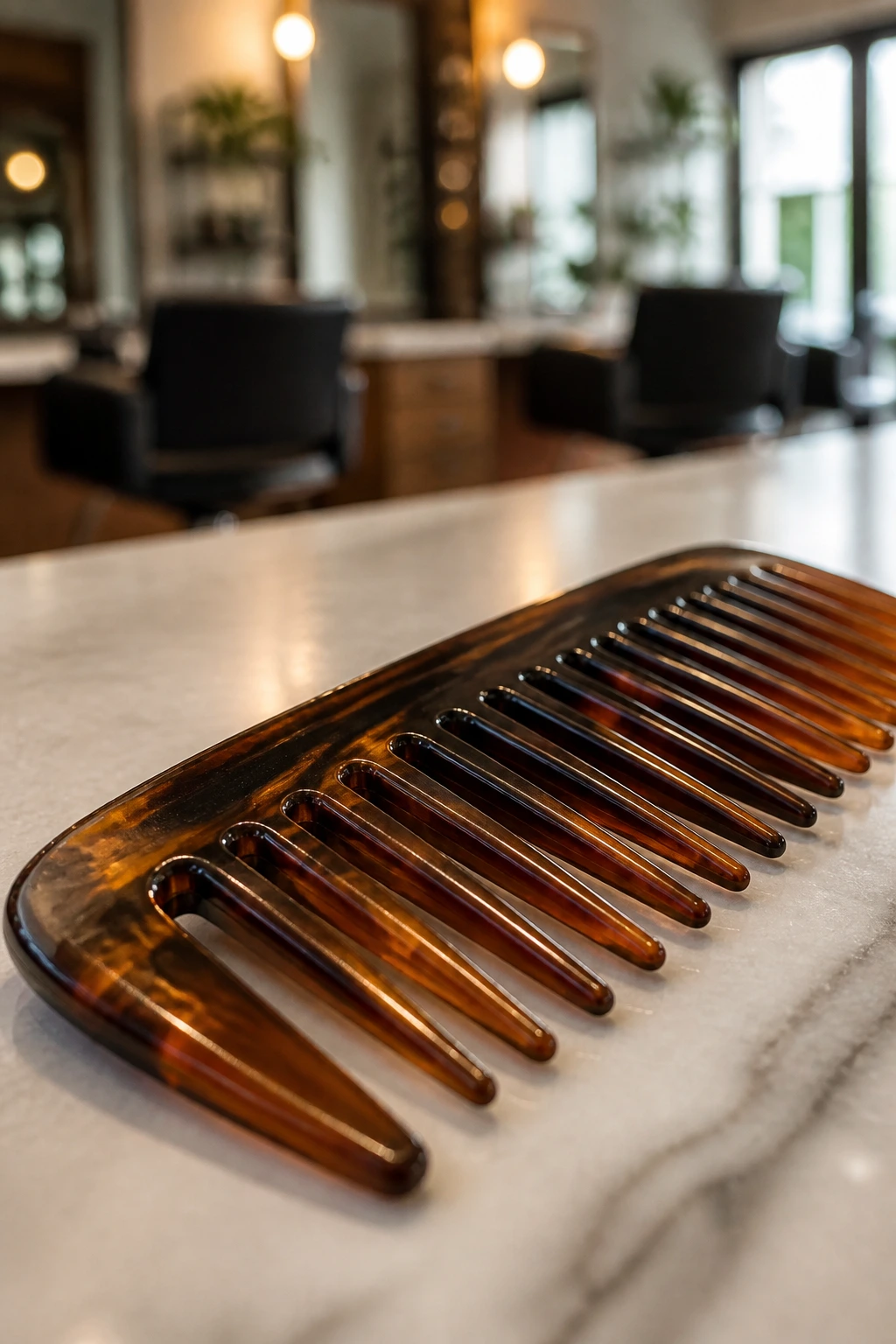
- Wide-tooth comb: Useful when hair is porous and tangles faster after coloring.
- Sectioning clips: These matter for balayage, babylights, and root shadow placement.
- Tint brush and bowl: If you color at home, a brush gives more control than slapping product on with gloved hands.
- Color-protecting mask: A weekly mask keeps porosity from eating your toner alive.
- Heat protectant: Blow-drying or flat-ironing without one is how blonde and red tones go dull early.
- Clarifying shampoo: Use sparingly, maybe once every 2-4 weeks, to clear mineral buildup that can turn blonde yellow or brunette muddy.
- Salon cape or old towel: Dye stains do not care how nice your bathroom is.
Smart Shade Selection and Product Choices That Save Regret Later
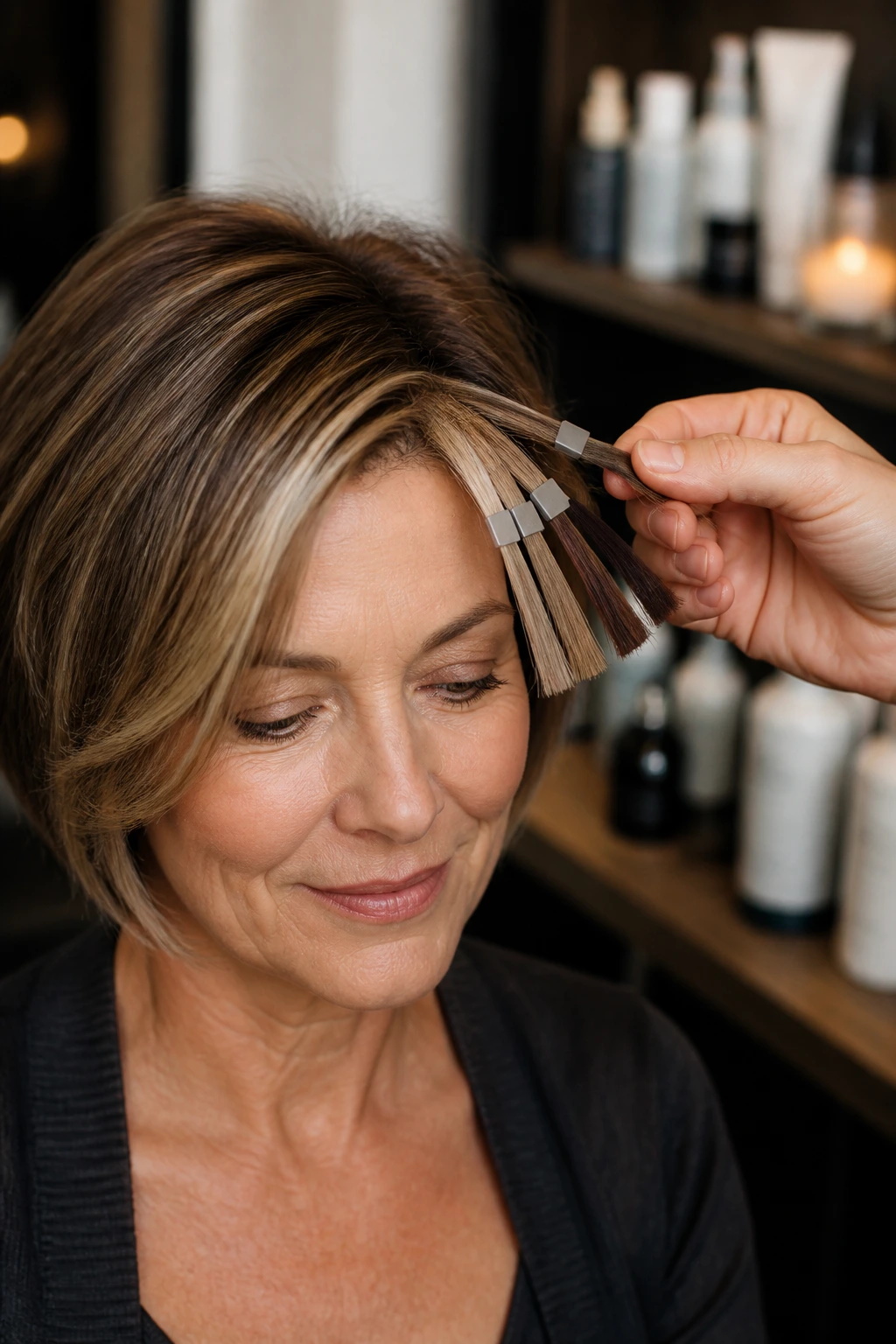
Color cards lie a little. Not maliciously. They just don’t tell you how porous hair behaves once pigment hits it. That’s why a strand test matters more than a pretty swatch. If your hair grabs warmth fast, you need to know whether the shade will land honey, brass, or orange. If your gray is resistant, you need to know whether demi-permanent color will actually grip it or just sit there and wash away.
Permanent color has its place, but women over 50 often get better results from demi-permanent glosses, low-ammonia formulas, and careful placement. Those methods are gentler and easier to adjust. They also let you keep some natural variation, which is the thing that makes these colors look believable.
If you’re buying products at home, look at developer strength with a cool head. Ten volume is gentler for deposit-only work. Twenty volume pushes more lift, but it also pushes more stress. Thirty volume is where a lot of DIY jobs turn into straw. Use the lightest developer that gets the job done. That’s not fancy advice. It’s just a good way to keep the hair attached to the head.
And if you’re going to the salon, bring words that mean something: root shadow, babylights, lowlights, gloss, toner, face-framing pieces, level 7 or 8, neutral-cool beige. Those phrases help a stylist understand the shape of the result you want. “Make it lighter” is too vague. Hair color is not the place for vagueness.
How to Wear These Colors So They Look Expensive, Not Overworked
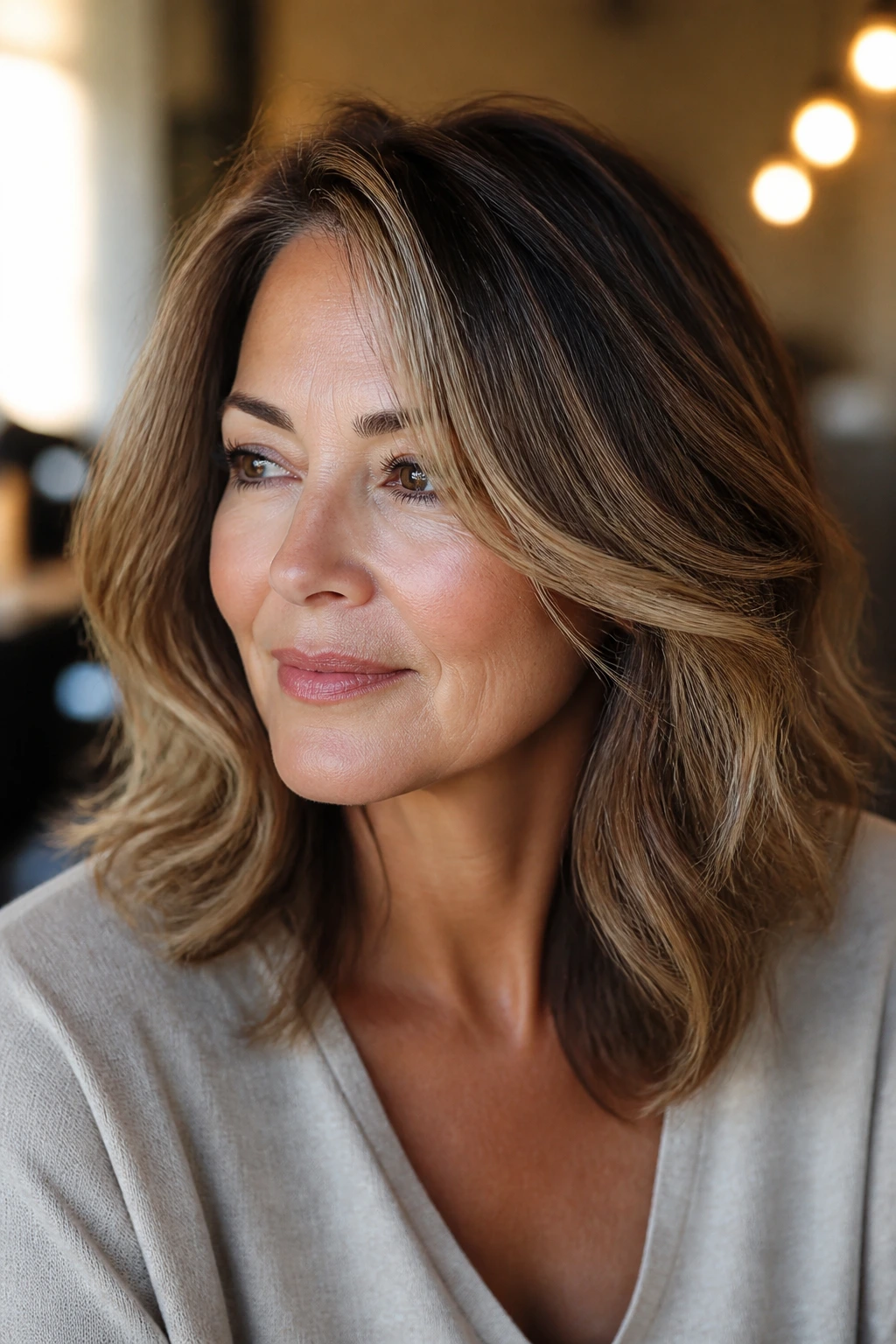
Placement: Keep the brightest pieces where the eye goes first — around the face, at the part, and sometimes across the top layer. Deep color underneath gives the hair weight.
Styling: Soft bends, big round-brush blowouts, or a loose wave show dimension better than pin-straight hair. If the cut is short, a little piecey texture makes graphite, silver, and bronde shades look sharper.
Makeup Pairing: Warm shades like copper, honey, chestnut, and mahogany play well with peach, bronze, and soft terracotta makeup. Cooler shades like mushroom brown, pearl blonde, and graphite usually look better with taupe, plum, soft rose, or cool beige.
Wardrobe Notes: Cream, navy, camel, charcoal, olive, and soft black are the easiest clothing colors to wear with almost all of these shades. Very bright neon colors can fight the subtler blondes and browns.
Additional Tips and Color Boosters Worth Using
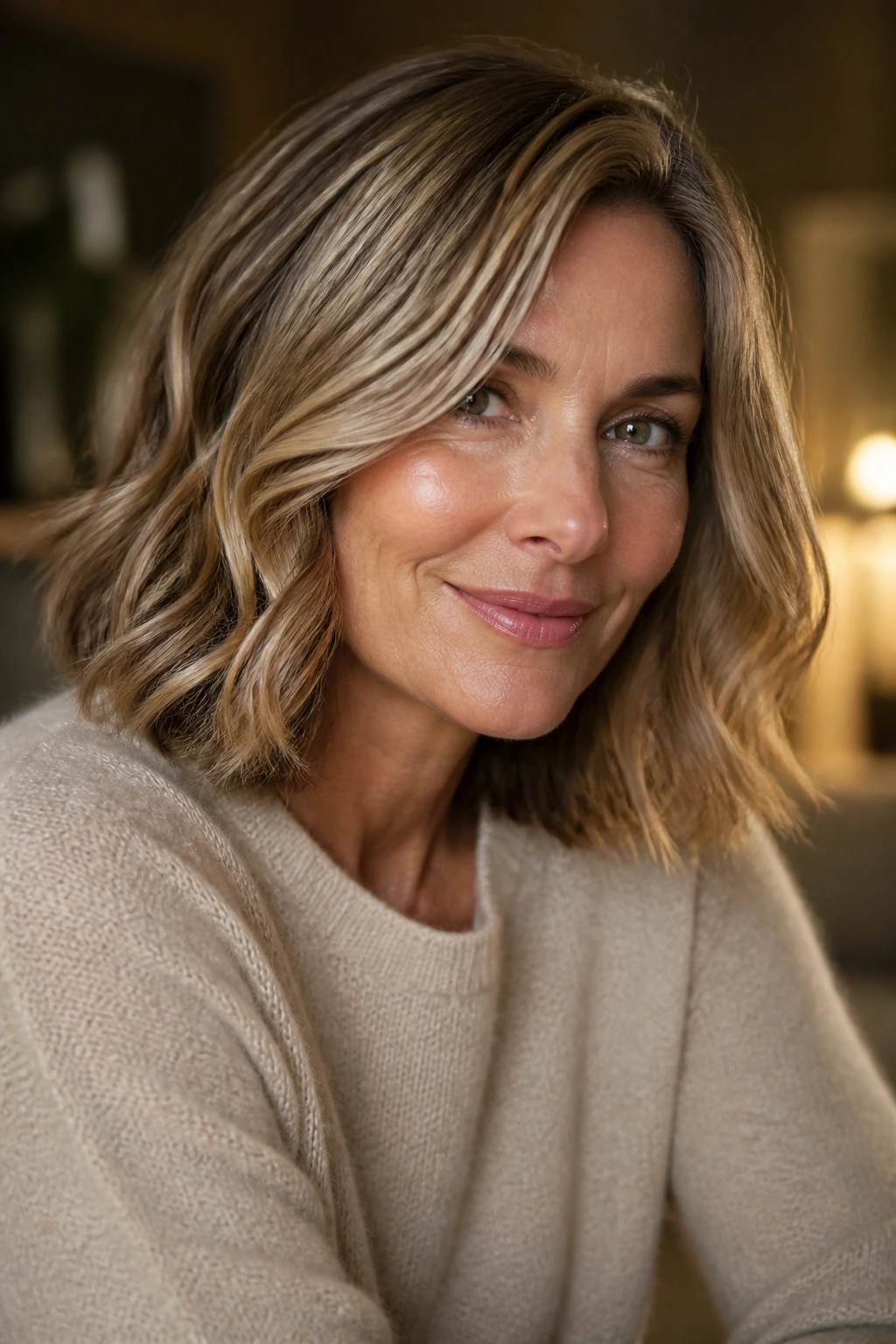
Gloss Booster: A clear or tinted gloss every 4-8 weeks keeps the hair reflective. That matters most on blonde, copper, and graphite shades, where dullness shows first.
Gray-Blending Trick: If you want to reduce the line at the temples, ask for a few finer lights there instead of trying to cover every silver strand. It looks softer and grows out cleaner.
Texture Trick: If the ends are rough, keep the color slightly deeper there. Light ends on dry hair can look transparent fast.
Make-It-Yours: Fine hair usually benefits from smaller, more delicate highlights; thick hair can handle chunkier ribbons and deeper lowlights. Curly hair often looks best with more contrast and a softer root, because the curls break up the color naturally.
Serving Suggestion, Hair Edition: A fresh trim, a clean neckline, and a little shine spray on the mid-lengths can change how the color reads in a mirror. People ignore the cut and then blame the shade. That’s backwards.
Growth-Out, Maintenance, and Refresh Timing That Actually Makes Sense
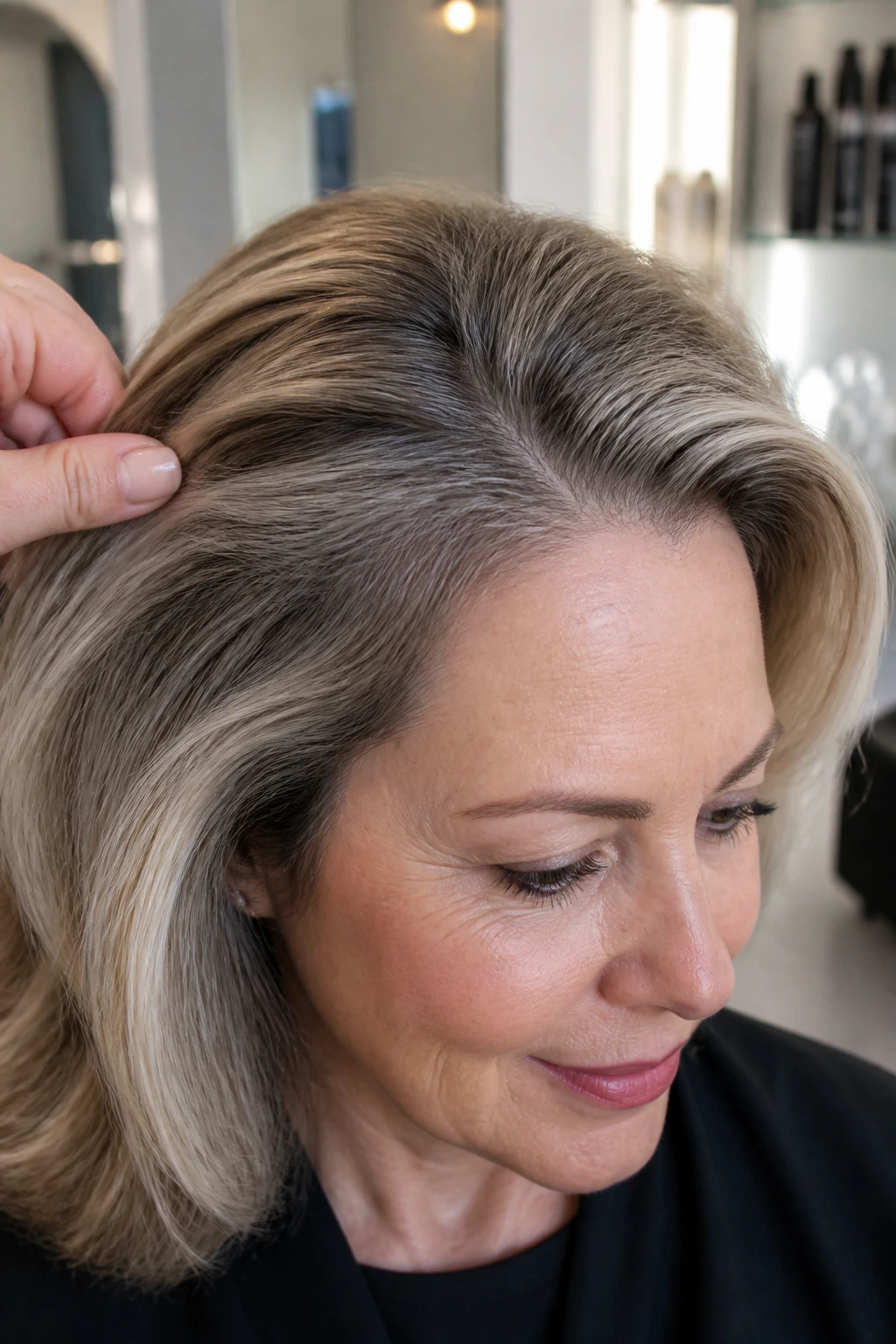
The color you choose is only half the job. The other half is how it behaves three weeks later, then six, then ten. If a shade needs constant retouching to stay flattering, it isn’t a good fit for your life, even if it looks gorgeous on appointment day.
Blondes and cooler shades usually need the most attention. Plan on a toner or gloss every 4-6 weeks if you want pearl blonde, icy beige, or cool graphite to stay clean. Copper and strawberry blonde fade faster in another way — they lose saturation first — so a color-depositing conditioner once a week can stretch the tone between salon visits. Brunettes like mushroom, walnut, mocha, and chestnut often last a bit longer, especially when the root is kept soft.
For highlight-heavy looks, a salon refresh every 8-12 weeks is a sensible window. Balayage can stretch longer than foils, sometimes 12-16 weeks, because the root area is intentionally softer. If your hair is very porous, though, gloss more often. Porous hair drinks up everything and then gives it back in a hurry.
At home, store unused color only if the instructions say it’s safe. Mixed dye usually should not sit around. Once it’s combined, the clock starts ticking. Keep sulfate-free shampoo, mask, and heat protectant in regular rotation. That’s boring, but boring is what keeps color from fading into a straw-like mess.
Variations and Adaptations to Try
The Gray-Blend Shortcut: If you’re nervous about full coverage, ask for 50% gray blending instead of full hide-and-seek. It softens the line and looks more natural on growing-out roots.
The Warm-Up Version: If cool tones make your skin look flat, shift mushroom brown toward beige, charcoal toward soft brown, or pearl blonde toward champagne. One degree warmer can change everything.
The Low-Maintenance Root Shadow: Keep the base one to two shades deeper than the lightest pieces. That gives you softer grow-out and less obvious regrowth.
The Bold Copper Shift: For women who want more color payoff, move from cinnamon to true copper, but keep the ends slightly deeper so the shade doesn’t wash out.
The Sensitive-Scalp Swap: Ask for ammonia-free or low-ammonia formulas, and choose glosses and demi-permanent color whenever lift isn’t needed. The color payoff is often enough, and the scalp will thank you.
The Fine-Hair Lift: Use tiny babylights instead of big streaks. Small placement creates movement without exposing too much scalp.
Common Mistakes to Avoid With Mature Hair Color
Going too dark to “cover” gray: This often makes regrowth look harsher, not softer. A deep inky brunette can also make the skin look more tired. If you need depth, stop one or two shades lighter than black and add dimension instead.
Choosing ash without enough balance: Cool tones are useful, but all-ash hair can go flat or muddy if the base is too dull. Add beige or neutral lowlights if the hair needs a little life.
Over-lightening the ends: Hair that’s already dry will show damage fast once you bleach it too far. Keep the brightest pieces near the face and crown if the ends are fragile.
Skipping toner or gloss: Bleached blonde without toner turns yellow. Brunette without a gloss can look matte and stripy. The shine step is not extra. It’s part of the color.
Ignoring porosity: Porous hair grabs pigment fast, then fades unevenly. A strand test tells you far more than a product label. Use gentler formulas and keep conditioning treatments steady.
Forgetting the haircut: Color can’t fix a dead shape. If the ends are ragged or the layers are grown out in a strange way, even a great shade will look tired.
Frequently Asked Questions
Which hair color is most flattering for women over 50?
The flattering color is the one that works with your skin tone, gray pattern, and hair texture. In practice, that often means dimensional shades like champagne blonde, mushroom brown, caramel balayage, or soft auburn rather than one flat color from root to tip.
Is it better to go lighter or darker after 50?
Lighter usually softens facial contrast, but too light can thin out the look of fine hair. A shade that’s one or two levels lighter than your natural base, plus some face-framing brightness, often gives the best balance.
What color covers gray the best?
Permanent color covers gray more fully, but it isn’t always the prettiest answer. Many women get a better-looking result from gray blending, lowlights, or a demi-permanent gloss that softens the silver instead of trying to erase it.
How often should highlights be refreshed?
Most highlights look tidy for about 8-12 weeks. Balayage can stretch longer, while baby lights around the part may need toning sooner if your hair pulls yellow or orange.
Can I wear blonde if my hair is getting thinner?
Yes, but keep some depth at the root and underneath. Fine hair usually looks fuller when it has a little contrast and shadow, not when every strand is the same pale tone.
What if my hair turns brassy fast?
Use a blue shampoo for orange brass and a purple shampoo for yellow brass, but don’t overdo it. If the tone keeps shifting, the shade itself may be wrong for your underlying pigment, and a cooler gloss or deeper base can help.
Is box dye okay for these looks?
For solid brunette touch-ups, maybe. For balayage, bronde, graphite, or silver blends, not really. Those looks depend on placement and tone, and box dye tends to flatten both.
Can I transition to gray without looking unfinished?
Yes. A smoky silver blend or charcoal lowlight pattern can make the grow-out look intentional while the natural gray comes in. The key is matching the gray’s brightness with the rest of the hair instead of covering everything at once.
The Shades That Age Well
The best hair color ideas for women over 50 are not the loudest ones, and they are rarely the ones built around full coverage alone. The good shades make room for gray, give the face some light, and leave the hair with enough depth to look like hair instead of a painted surface. That’s the difference between color that just hides and color that actually flatters.
If you want the easiest route, start with dimension: a root shadow, a few lighter pieces near the face, and a tone that respects your skin instead of fighting it. Small changes can shift the whole feel of the cut. And once you find the right family — champagne, mushroom, copper, graphite, walnut, honey — it gets much easier to keep the color feeling like yours.
