



Feathered haircuts have a way of making hair look lighter the second it moves. Not thinner. Lighter. The ends stop behaving like one hard shelf and start shifting in little soft pieces, which is why a good feathered shape can rescue everything from a dense lob to a pixie that’s begun to puff out at the sides.
That soft, wispy texture isn’t an accident. It comes from cutting methods that break up the perimeter — point cutting, slide cutting, razor work, careful overdirection — so the hair falls in tapered layers instead of one blunt line. When it’s done well, the result feels airy around the face and a little less boxy through the ends. When it’s done badly, you get frizz, see-through tips, or that awkward “I asked for movement and got random holes” problem. The difference is usually in the shape, not the drama of the haircut.
The 22 feathered haircuts below cover long, medium, short, straight, wavy, curly, thick, and fine hair, because feathering isn’t one look. It’s a family of looks. Some are polished and soft around the cheekbones. Some lean shaggy. Some barely whisper; others have a little swing to them. The sweet spot is finding the version that keeps your hair soft without draining all the weight out of it.
Why Feathered Haircuts Keep Their Soft Edge
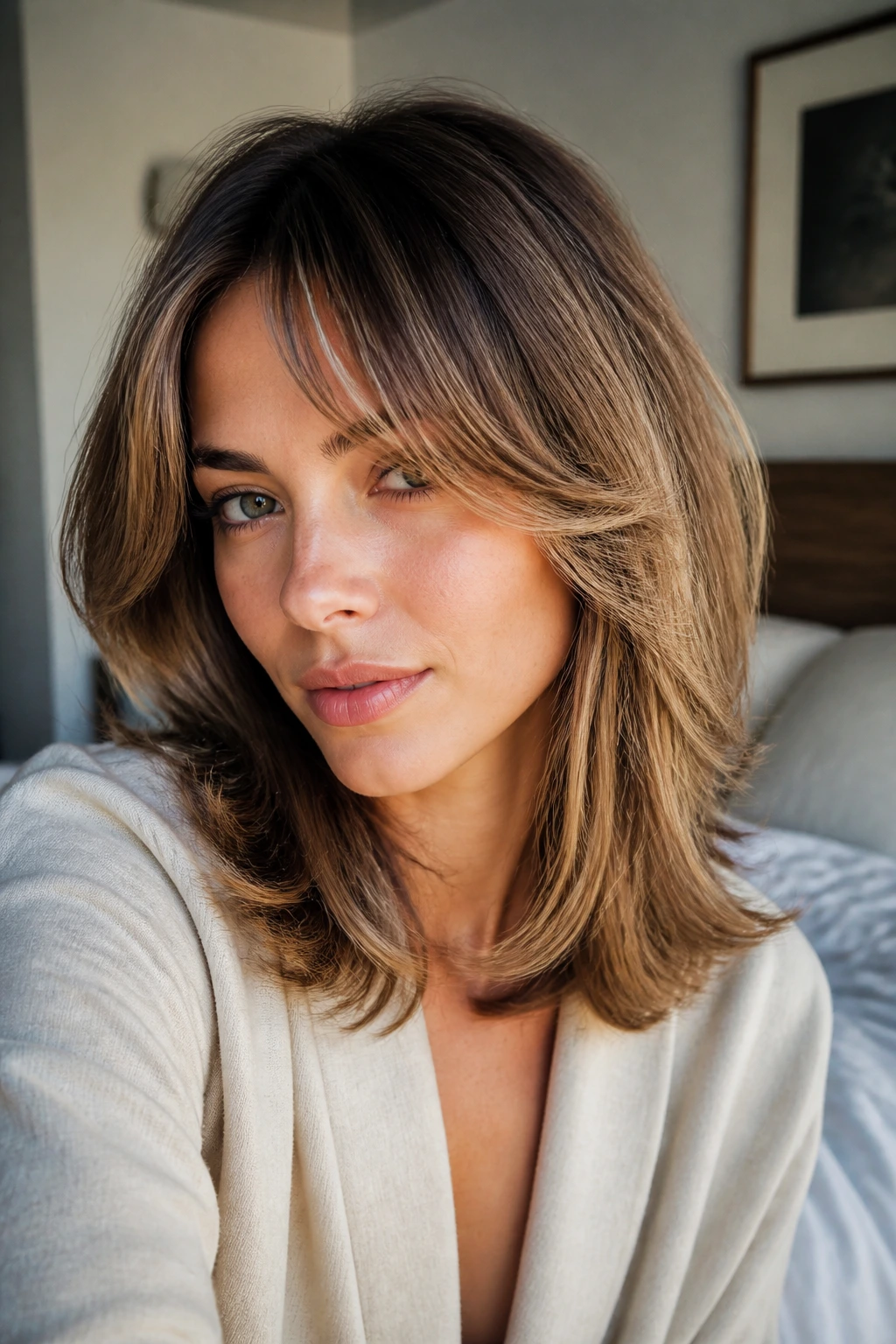
Movement: Feathering breaks up the ends so hair shifts when you turn your head, instead of hanging in one stiff curtain.
Shape control: You can keep length or volume or both, depending on where the feathering starts and how deep the layers go.
Face framing: Wispy front pieces soften jawlines, cheekbones, and foreheads without needing a blunt fringe.
Easier grow-out: A feathered shape tends to blur as it grows, so the line doesn’t go ugly as quickly as a hard bob or one-length cut.
Styling flexibility: These cuts work with a round brush, a diffuser, a quick blow-dry, or even air-drying if the layer placement is smart.
Texture without bulk: Thick hair can lose some of that helmet feeling, while fine hair can get a little lift if the layering stays controlled.
1. Long Feathered Layers with Curtain Bangs
Long feathered layers with curtain bangs are the haircut equivalent of opening a window in a stuffy room. The lengths stay there — no dramatic chop — but the shape stops feeling heavy at the ends. When the curtain bangs are cut to blend into the cheekbone and jawline, they soften the whole front of the face and make the long layers look intentional instead of just long.
Why it works
The magic is in the transition. Instead of dropping from bangs to length in one blunt jump, the hair slides from the fringe into the front layers, then into the mid-lengths, then into the ends. That creates a soft diagonal line that flatters straight hair, loose waves, and even denser textures that usually fall flat at the crown.
- Keep the curtain bangs long enough to hit around the cheekbone.
- Ask for the layers to start below the chin so the ends still feel full.
- A 2-inch to 2.5-inch round brush gives the best bend around the face.
Best for: Anyone who wants movement without giving up length. It’s especially good if your hair tends to collapse at the front and puff out at the bottom.
2. Chin-Length Feathered Bob
A chin-length feathered bob is the easiest way to make a blunt bob stop feeling boxy. The hemline still sits at the jaw, which gives the cut some backbone, but the ends are softened so the bob doesn’t read like a helmet. That little bit of breakup around the perimeter makes a huge difference on square and round face shapes.
The trick is to keep the feathering light. If the stylist takes too much weight away from the bottom, the bob loses its clean line and starts looking scraggly. Done right, the cut holds its shape while the edges flick outward just enough to catch the light and move around the neck.
This one works beautifully with a side part and a quick bend from a flat brush or round brush. You do not need a giant blowout. A soft tuck under one side and a slight flip on the other side is usually enough.
3. Soft Feathered Lob with Bend
Why does a lob look better when the ends are feathered instead of cut blunt? Because that mid-length zone can turn into a hard block fast. A feathered lob avoids that problem by breaking the line into small, airy pieces, so the shape still feels polished but never thick or static.
The bend matters. A lob with feathered ends looks best when the last inch or so doesn’t cling straight to the shoulders. A little undercurve, a little outward flick, a little bend from a 1.25-inch iron — that’s what keeps the cut from sitting flat against the collarbone.
How to style it
Use a light mousse at the roots, rough-dry until the hair is about 80 percent dry, then finish with a round brush or a large curling iron. Keep the bend loose. Tight curls fight the point of feathering and can make the ends look too busy.
4. Feathered Pixie with Side Sweep
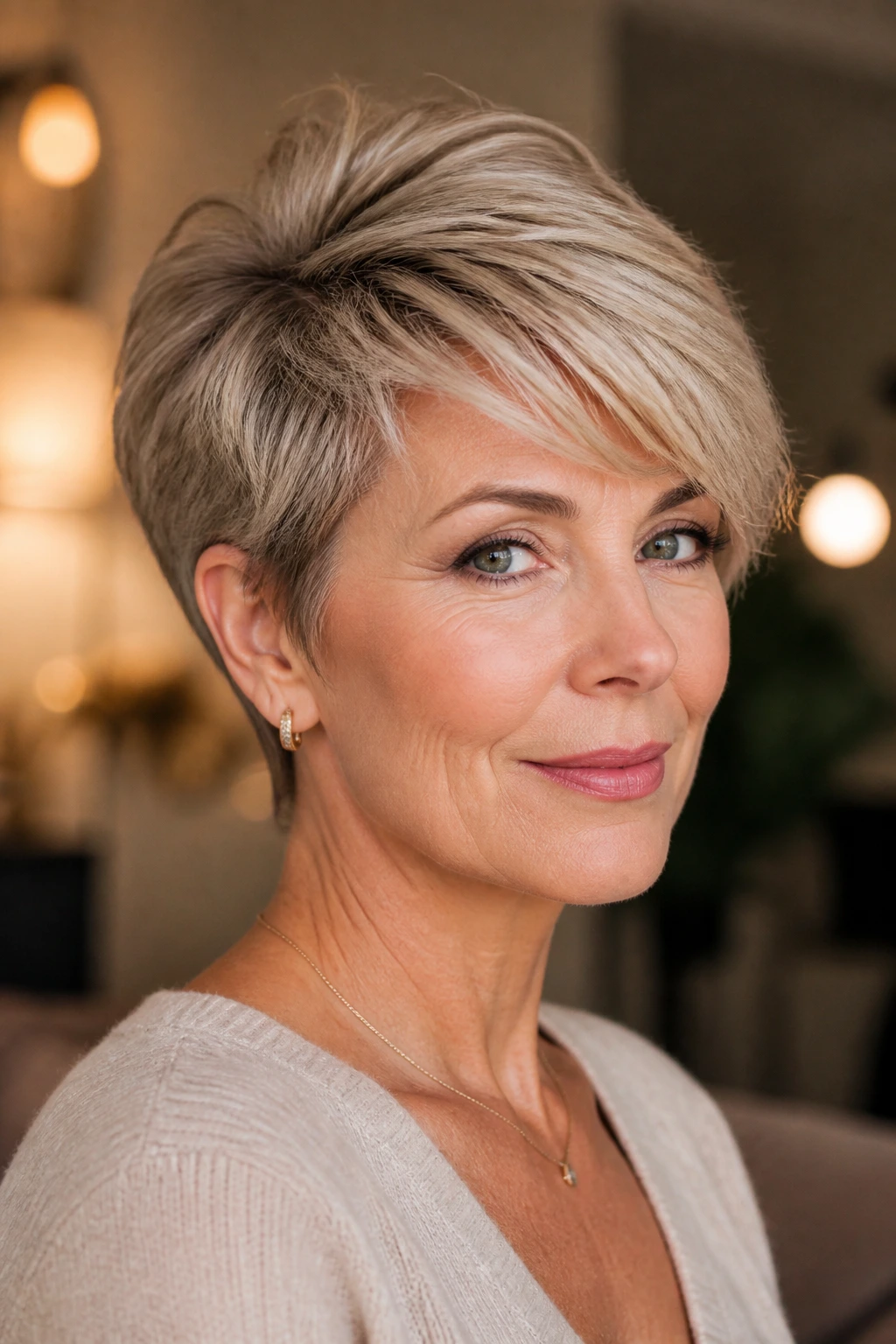
When a pixie starts feeling helmet-like, feathering is the fix. A feathered pixie with a side sweep keeps the top soft and piecey, while the sides and nape stay close enough to the head to keep the shape clean. The result is short hair that still moves, which is the whole point.
The best version keeps the fringe longer on one side and slightly shorter through the crown. That gives the cut a diagonal line instead of a blunt cap. It’s sharper than a classic soft pixie, but not as edgy as a spiky crop.
- Keep the top layers around 1.5 to 3 inches, depending on density.
- Taper the nape so the neckline stays neat between trims.
- Use a pea-sized amount of styling cream, not a heavy wax.
A feathered pixie grows out well if the perimeter is kept tidy. Once the sides start pushing past the ears, the softness can tip into shapelessness fast, so this is a cut that likes regular shaping.
5. Butterfly Cut with Wispy Ends
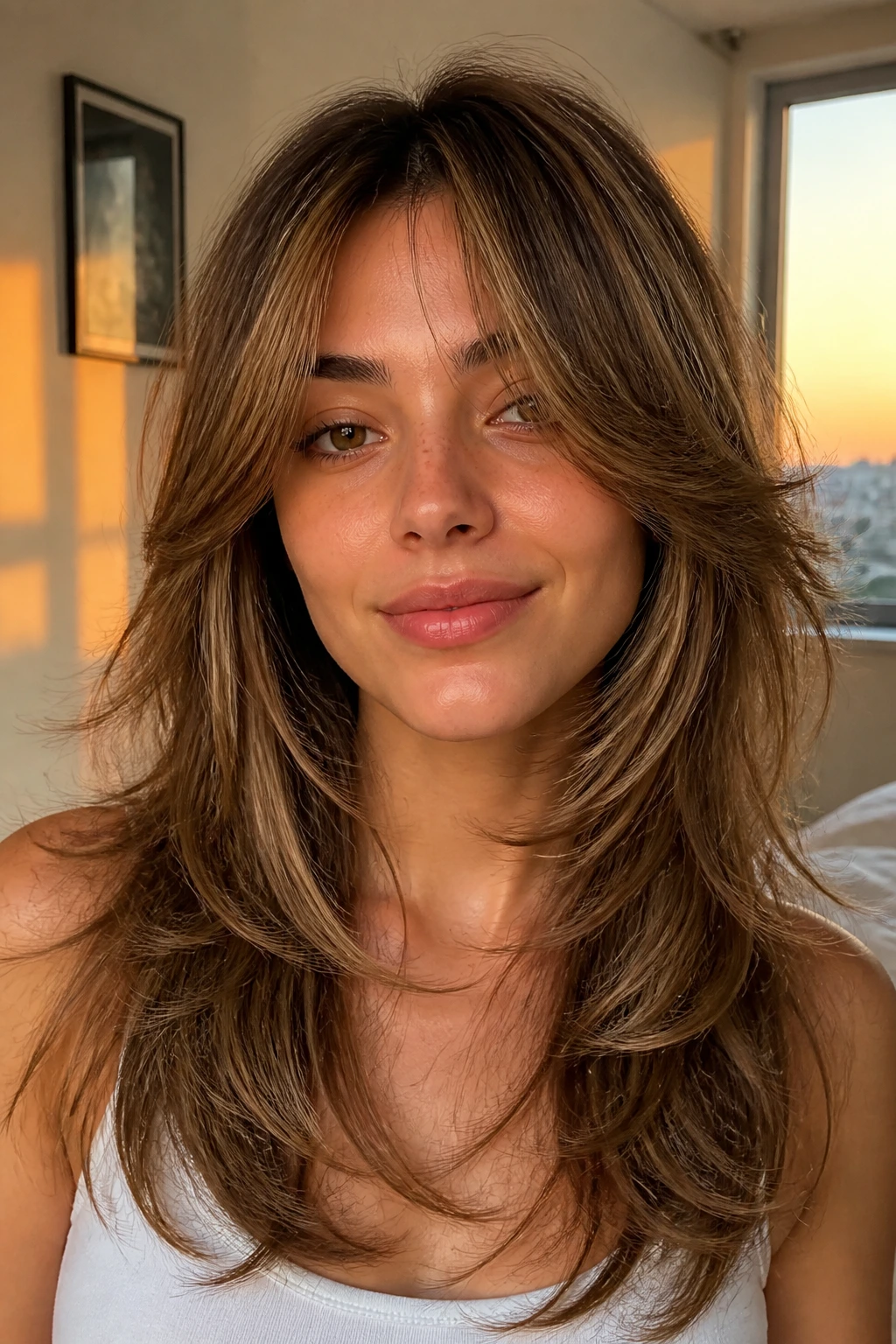
The butterfly cut has become a favorite for a reason: it gives you the illusion of shorter layers around the face without losing the long feel through the back. Feathered ends make that split-level shape softer. Instead of two obvious zones, the whole haircut flows.
The front pieces tend to start near the cheekbones or mouth, then swoop into longer layers that skim the ribs or shoulder blades. That’s a lot of movement, and on thick or dense hair it can look almost cloudlike when it’s blown out. The wispy ends keep it from turning rigid.
On straight hair, this cut shines with a round brush and a little lift at the crown. On wavy hair, it can be air-dried with a light cream and still keep that fluttery shape. It is one of the few layered cuts that can feel glamorous without looking overworked.
6. Feathered Shag with Piecey Fringe
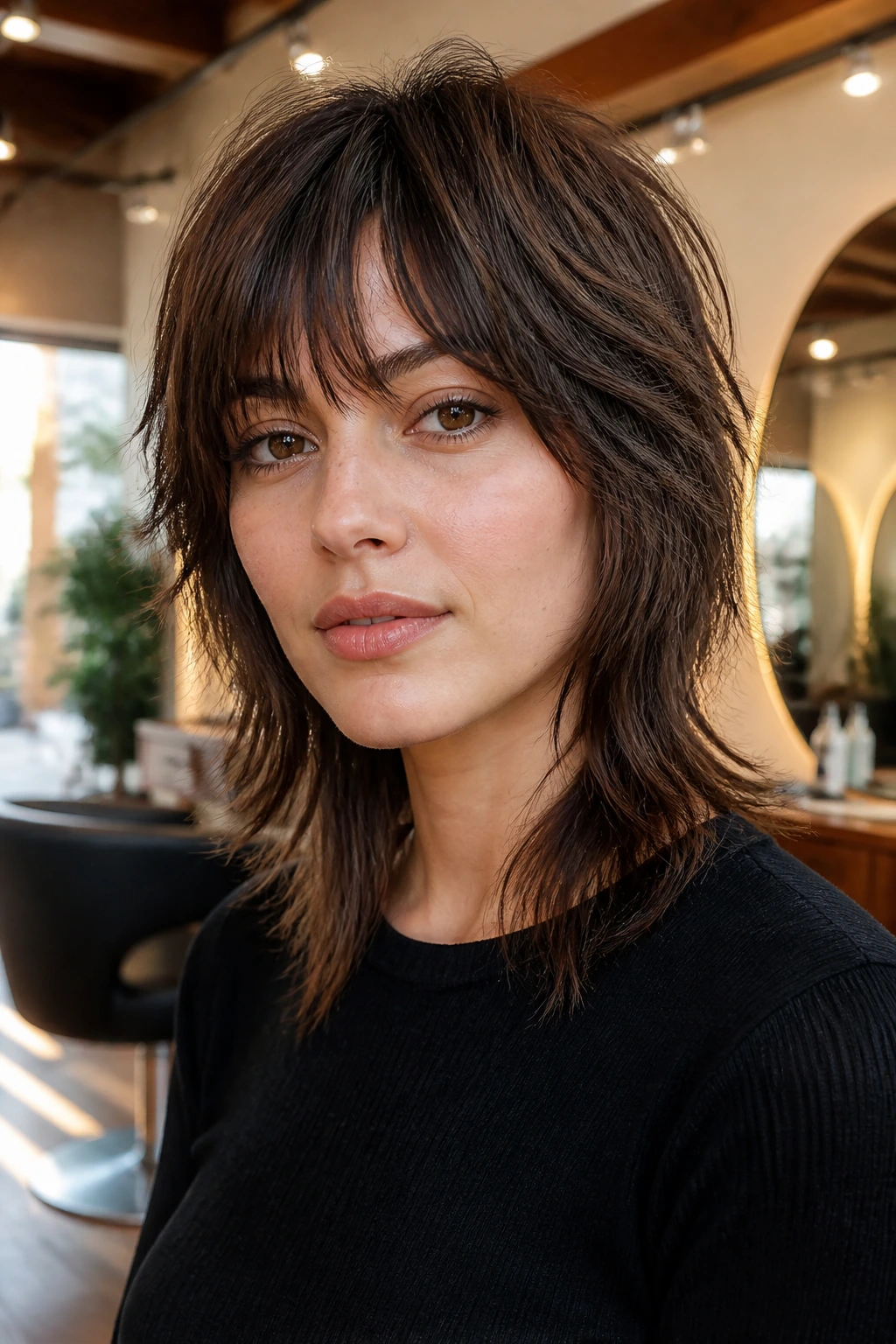
A feathered shag is not the same thing as a shag with random choppiness. The difference is in the end finish. A good feathered shag keeps the texture broken up, but the layers still move in a direction instead of exploding outward like static.
The fringe is where this cut earns its personality. A piecey fringe, cut with soft separation rather than a hard line, lets the front of the haircut feel lived-in from day one. Pair that with airy layers through the crown and the cheekbones get a little lift without the whole cut looking overdone.
Best for people who want edge without heaviness
If your hair likes a bit of natural bend, this is a smart cut. It works especially well when the top layers are shorter than the rest, but the stylist keeps the base line soft enough that the grow-out doesn’t turn into a triangle.
7. Shoulder-Length Feathered Cut with Face-Framing Layers
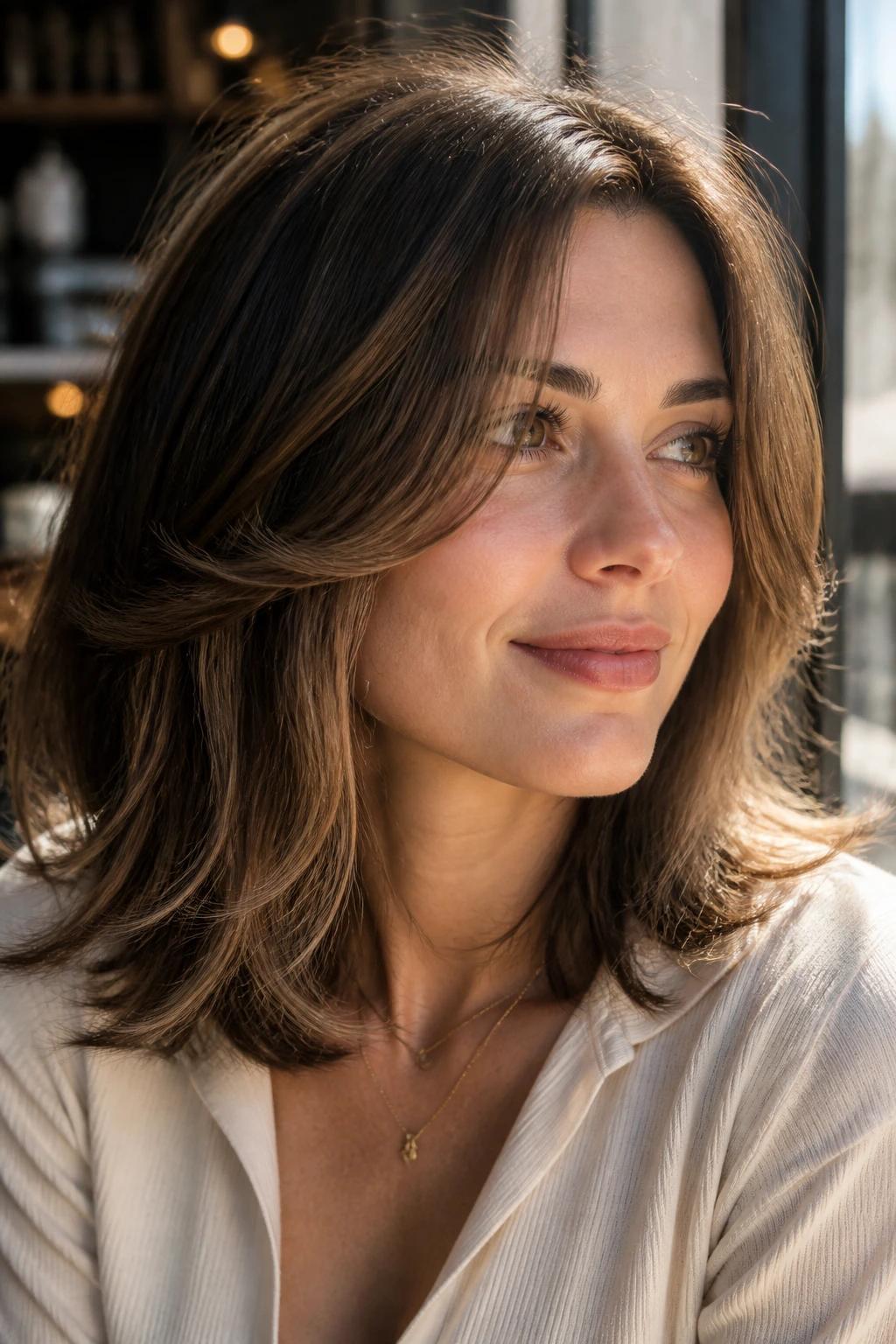
Shoulder-length feathered haircuts sit in that sweet spot where the hair is long enough to tuck behind the ears, but short enough to feel fresh. Add face-framing layers and the whole shape gets a softer edge right where people look first: around the eyes, cheeks, and jaw.
This cut is useful because it does not ask for a big styling routine. You can blow-dry it smooth, let it dry with a slight wave, or bend the front pieces away from the face and stop there. The feathering keeps the ends from sitting like a blunt block on the shoulders, which is a common complaint with medium-length hair.
It’s also one of the easiest cuts to live with if you’re growing out a shorter style. The layers can be tightened up at the front while the length stays in place. That means less of the awkward in-between stage.
8. Feathered C-Cut for Straight Hair
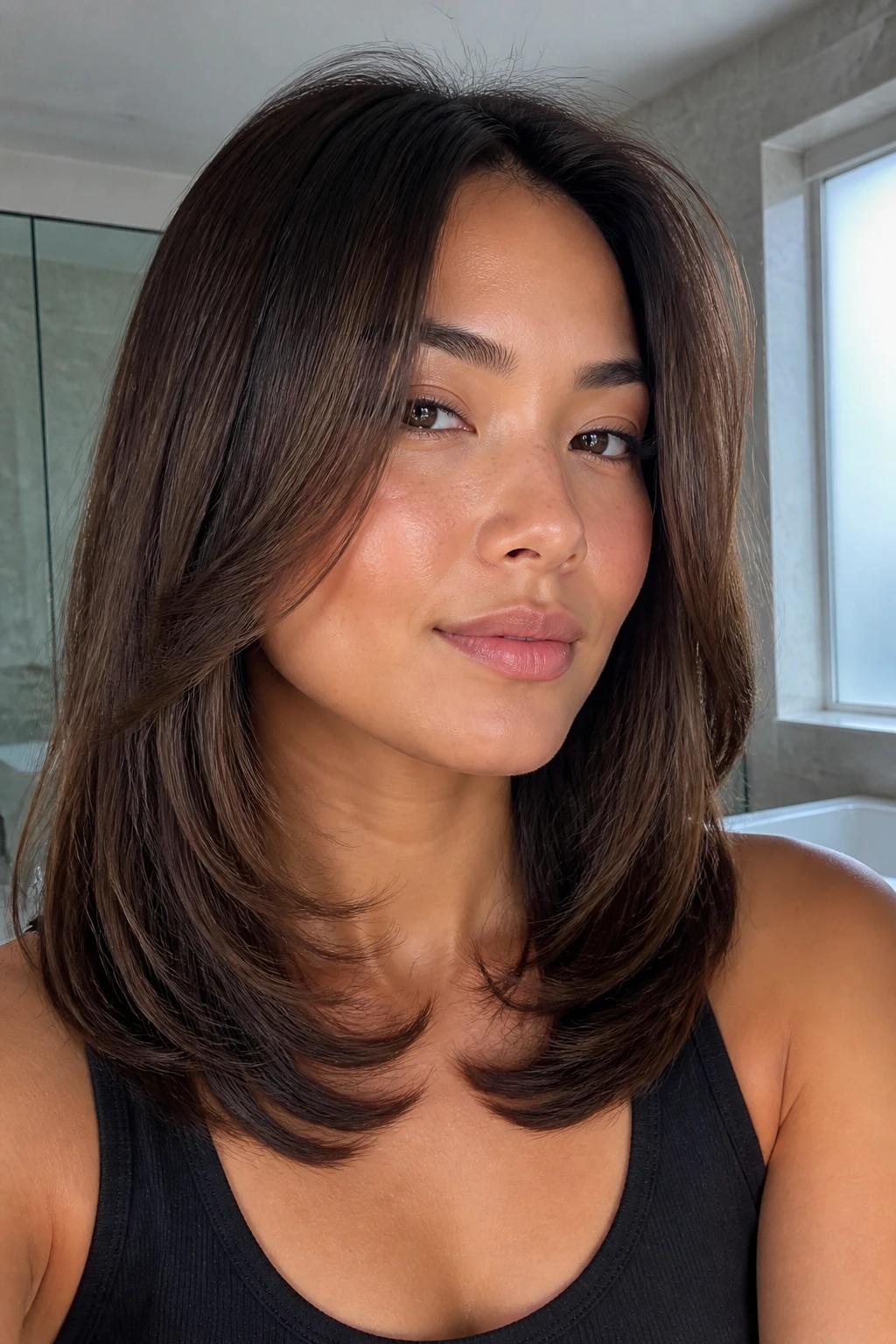
Straight hair can be the hardest to feather well, because every cut line shows. A feathered C-cut solves that by curving the layers inward at the ends so the shape feels rounded instead of flat. The perimeter isn’t chopped into a hard shelf; it bends around the body a little.
The C-shape matters because straight hair can expose every mistake. If the layers are too short or too disconnected, the cut starts looking stringy. If the ends are too blunt, the whole thing feels heavy. A soft C keeps both problems in check.
This is a strong choice if your hair falls naturally smooth and you want some movement without constant curling. A large round brush or even a quick pass with a flat iron at the very ends is enough to show the shape.
9. Feathered Wolf Cut with Softer Crown
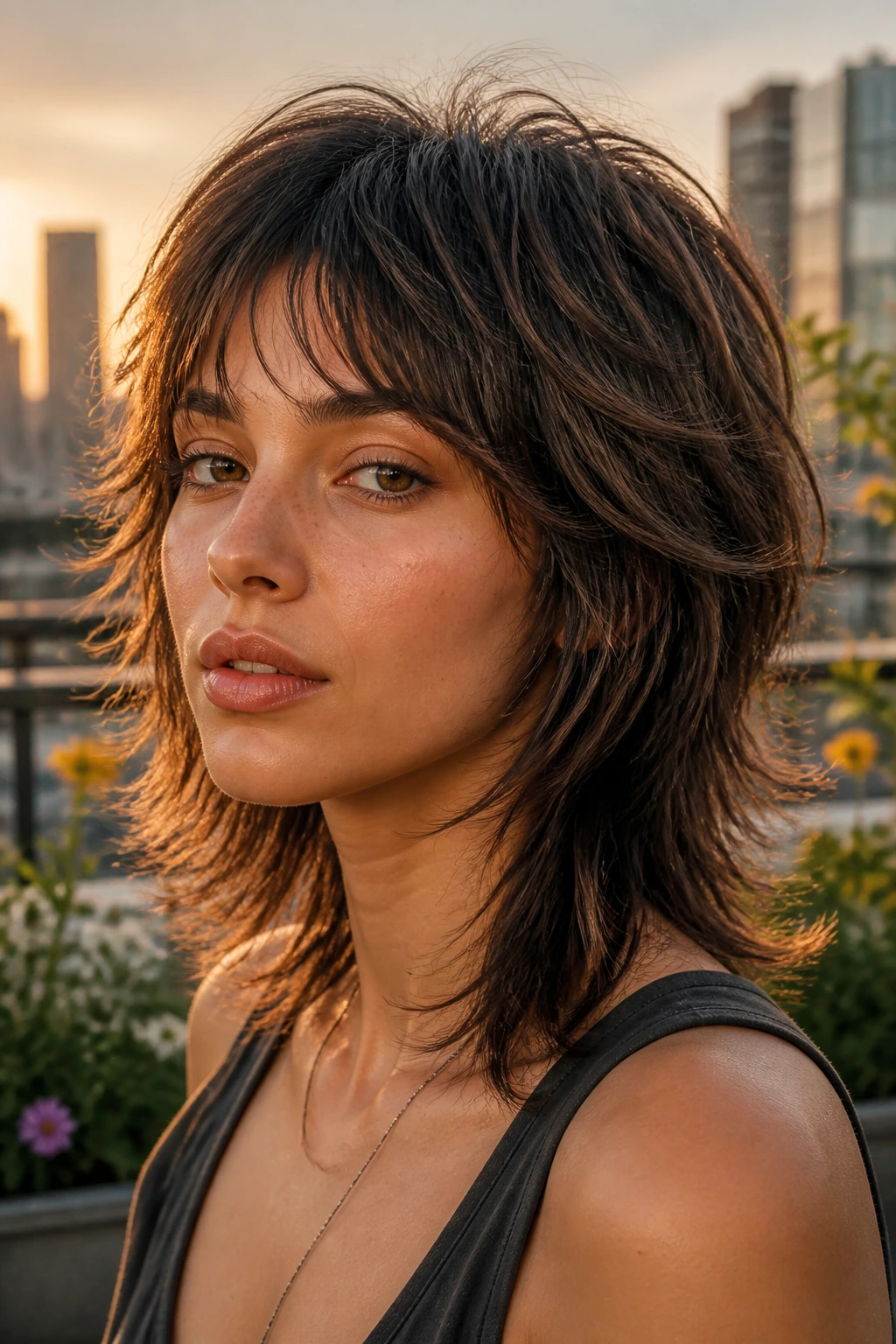
Does a wolf cut have to be loud? Not at all. The softer feathered version keeps the shaggy spirit, but reins in the crown so the top doesn’t stick out like it’s trying to leave the room. You still get texture. You just get it in a cleaner, more wearable package.
What makes this version easier to wear is the balance between the top and the ends. The crown layers are shorter, yes, but not shredded. The lower lengths stay more connected, so the haircut looks deliberate rather than rebellious for the sake of it. That matters if you want the movement without committing to a full mullet mood.
Styling note
Use a diffuser on wavy or curly hair, or a light blow-dry with your fingers if your hair is straight. Too much brushing kills the separation that makes this haircut work.
10. Feathered Midi Cut with Airy Ends
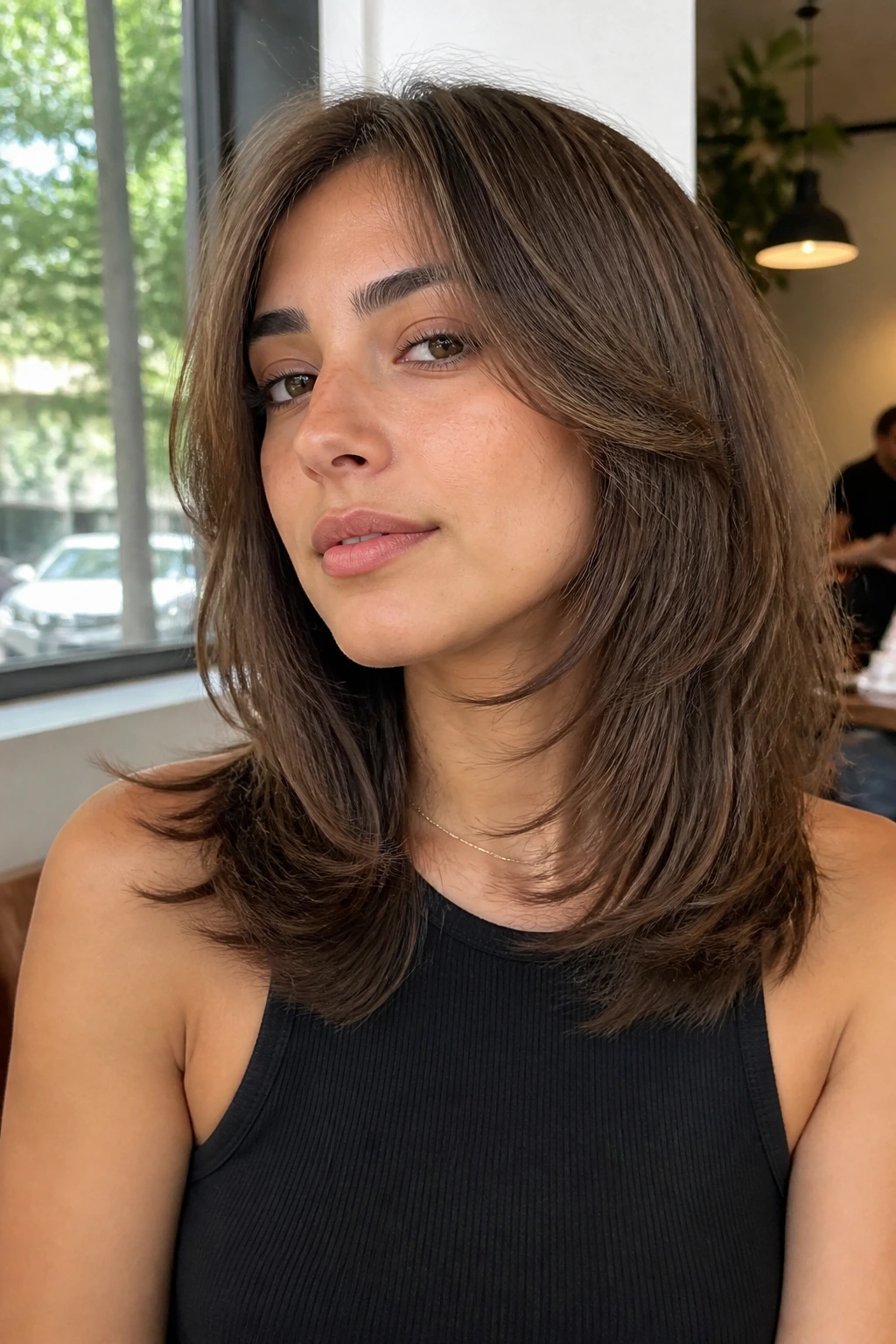
A midi cut lands between the lob and the longer layered look, and it’s a good place for feathering because the length gives the layers room to breathe. The ends can be softened just enough to remove the blocky feel, while the middle lengths keep the haircut from becoming too thin.
This shape is one of the easiest to wear with everyday hair. It sits well in a low ponytail, flips nicely over one shoulder, and still shows movement when worn down. The feathering should be subtle here. You’re aiming for lift, not a shredded finish.
- Ask for the layers to stay connected through the sides.
- Keep the last inch soft, not razor-thin.
- A smoothing cream on damp hair helps the ends fall in one direction.
The best midi versions look expensive in the plainest sense of the word: the shape does the work, and you do not need ten products to make it behave.
11. Layered Feathered Cut for Thick Hair
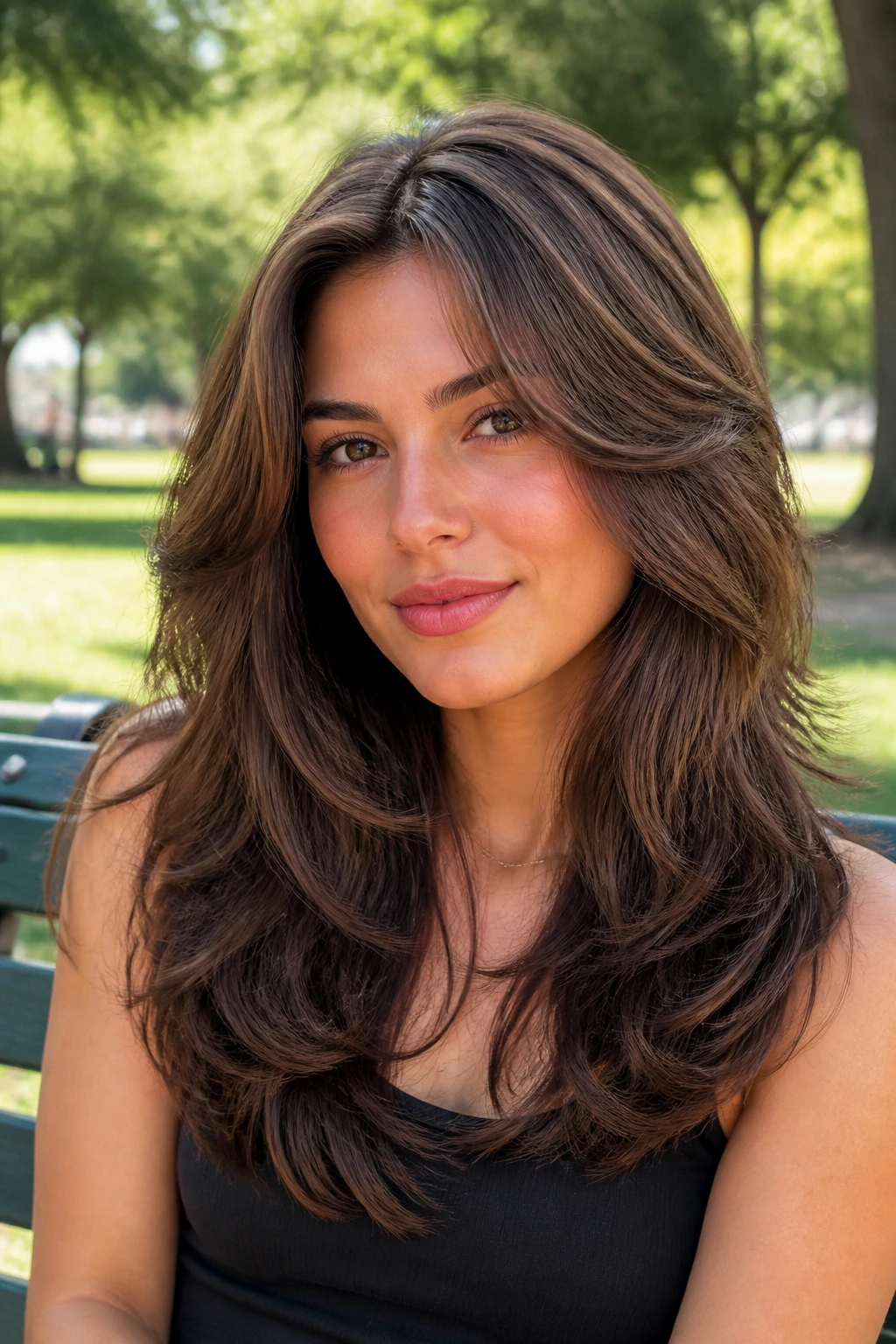
Thick hair needs a different kind of feathering. Too much texturizing, and the ends go fuzzy. Not enough, and the haircut turns into a solid block that steals air from the face and neck. The sweet spot is internal layering with a softly broken perimeter.
This is the haircut that takes the weight out of the middle, where thick hair tends to balloon. Once the interior is opened up, the top stops sitting so flat, and the ends stop looking dense in photographs and in real life. That’s the part people usually want fixed.
A good stylist will keep some weight at the very bottom so the cut doesn’t feel stripped. That’s worth asking for. Thick hair can handle movement, but it needs a base line to keep the shape from puffing into a triangle.
12. Feathered Cut for Fine Hair and Lift
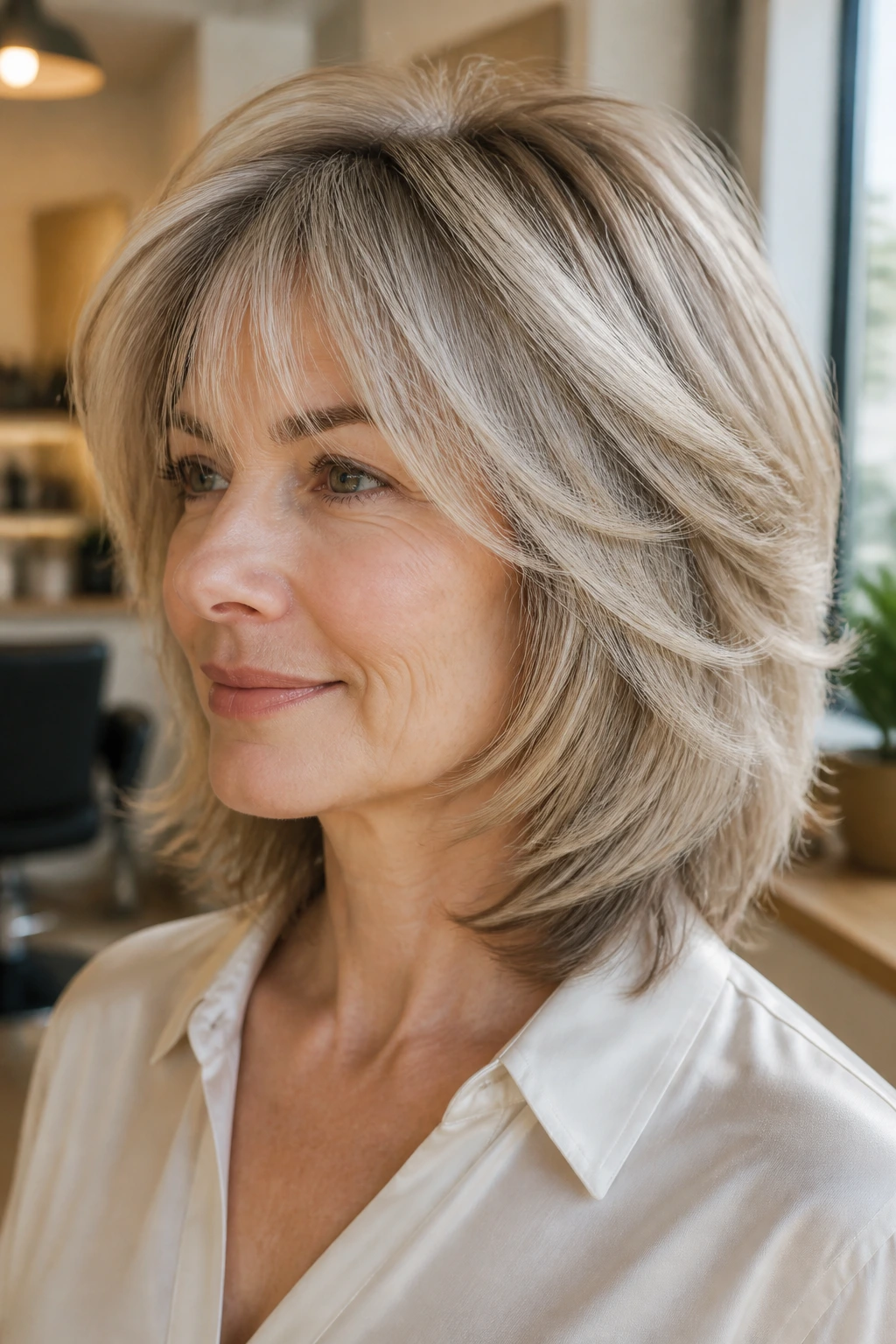
Fine hair can wear feathering, but it needs a lighter hand. If the layers are cut too deep, the ends turn wispy in the wrong way — see-through instead of soft. The trick is to keep the structure controlled and put most of the visual texture around the face and crown.
This cut works because it creates the feeling of lift without removing the only density the hair has. A little layering at the top and some feathered face framing give movement where the eye reads volume. At the ends, a soft bevel matters more than heavy texturizing.
Best for: Fine hair that goes limp near the roots but still has enough body through the mid-lengths. If your ponytail is thin but your strands are plentiful, this can be a sweet spot.
Use mousse at the roots and a cool shot from the dryer at the end. Heavy oils are usually a bad trade here. They flatten the whole point of the cut.
13. Feathered Curly Cut with Round Shape
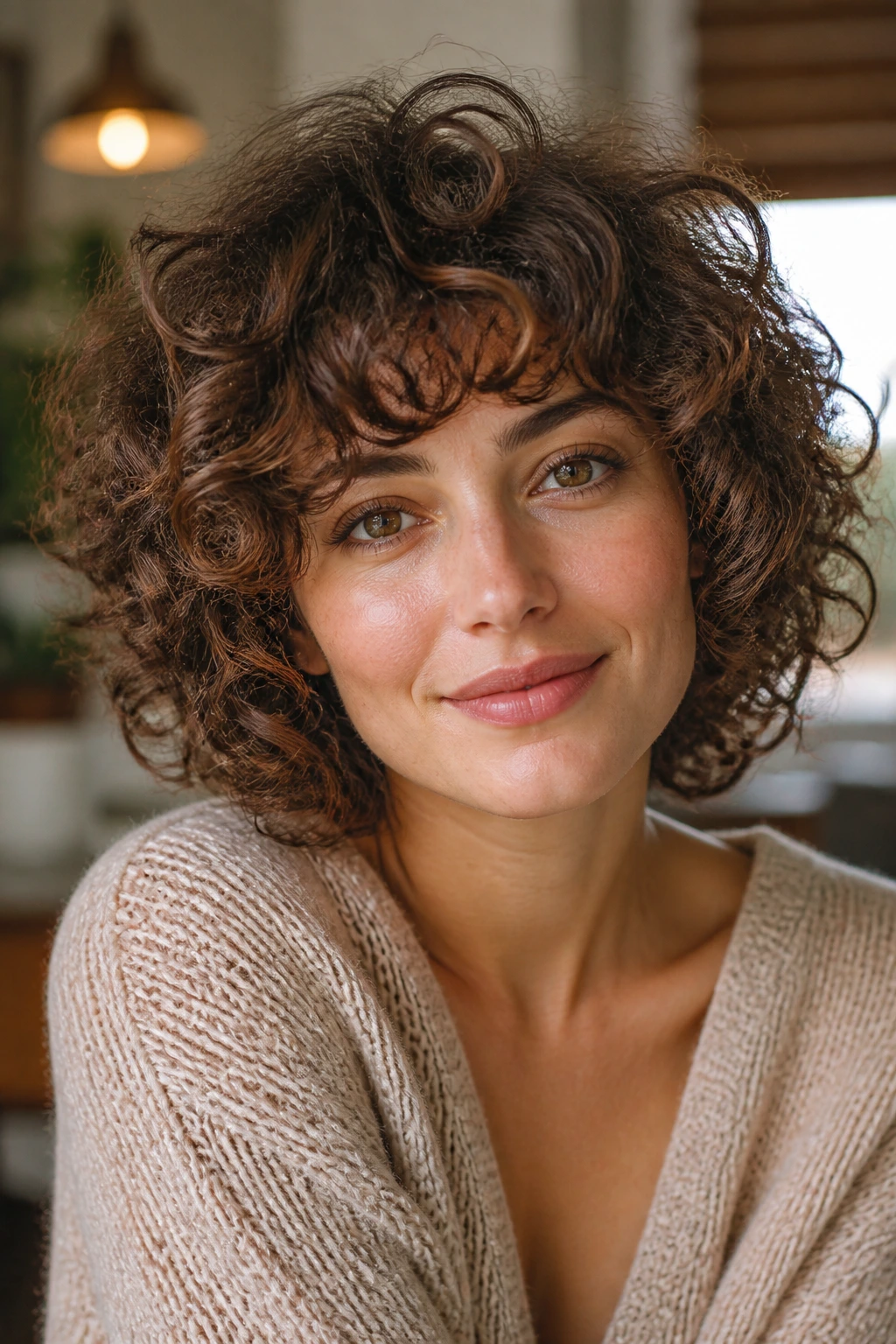
Curly hair can absolutely be feathered, but the haircut needs to respect the curl pattern first. A round shape keeps the silhouette soft, while feathering around the surface helps separate the curls so they don’t clump into one heavy dome.
The key is restraint. You want the ends to taper gently, not get sliced into a ragged fringe. Curl-by-curl trimming, or at least trimming when the hair is dry and in its natural state, keeps the shape honest. Wet curls lie. Dry curls tell the truth.
If your curls are loose to medium, the feathered finish can make them springier and lighter around the face. Tight curls can carry the same idea, but the layers usually need to be longer to avoid the dreaded pyramid shape.
14. Feathered Wedge Bob
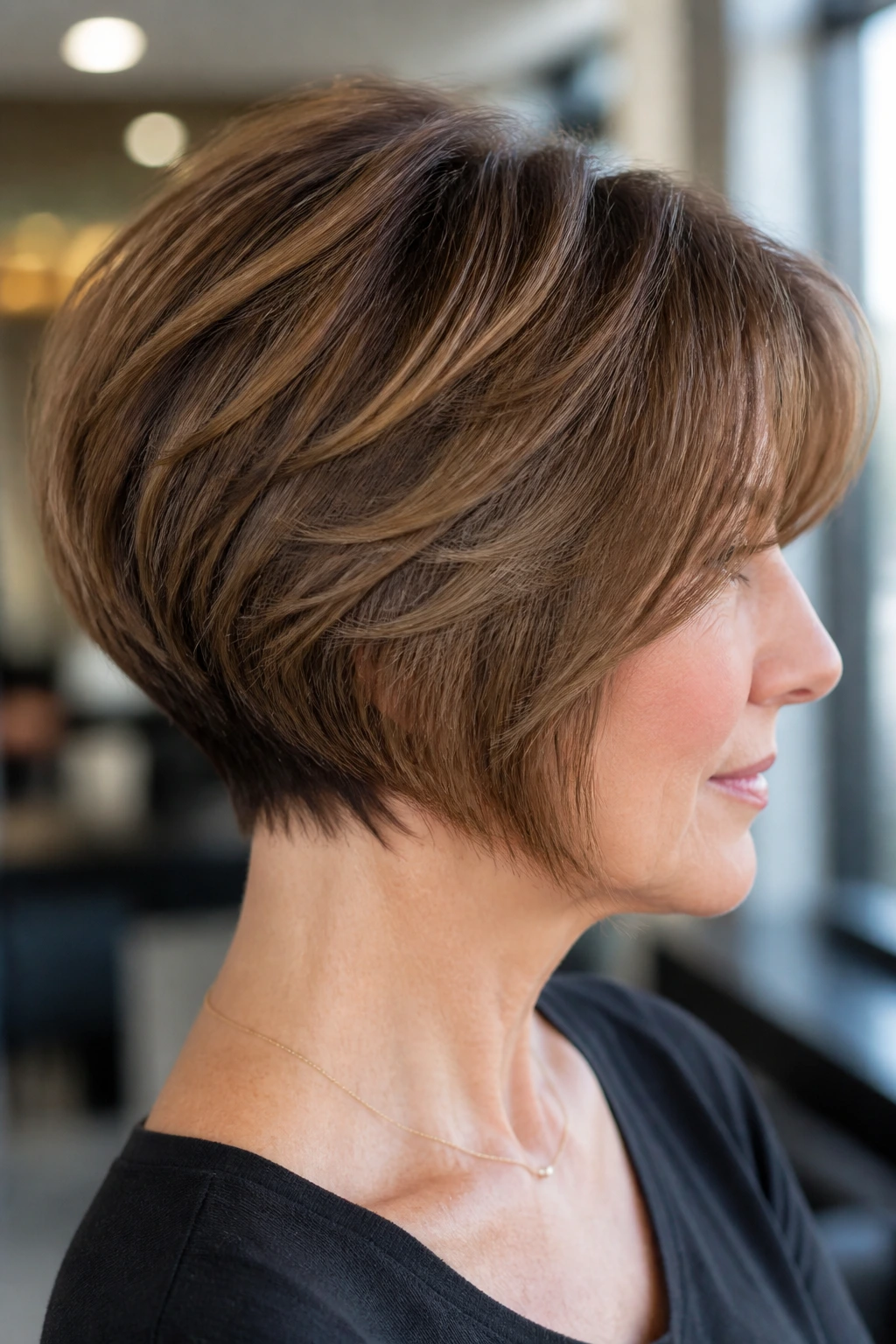
A feathered wedge bob sounds old-school until you see the right version. Then it reads crisp, modern, and clean around the neck. The wedge shape gives the back a little lift and the feathering softens the edge so the cut doesn’t feel severe.
This cut is especially useful if you want a neat neckline and a strong profile without a stiff finish. The back sits snug, the sides angle forward, and the ends flick just enough to keep the whole shape from feeling carved in stone. It’s a bob with backbone.
The styling needs aren’t huge, but the blow-dry matters. A paddle brush can flatten the volume too much. A round brush or vent brush gives the ends enough bend to show the feathering instead of hiding it.
15. Feathered Bixie Cut
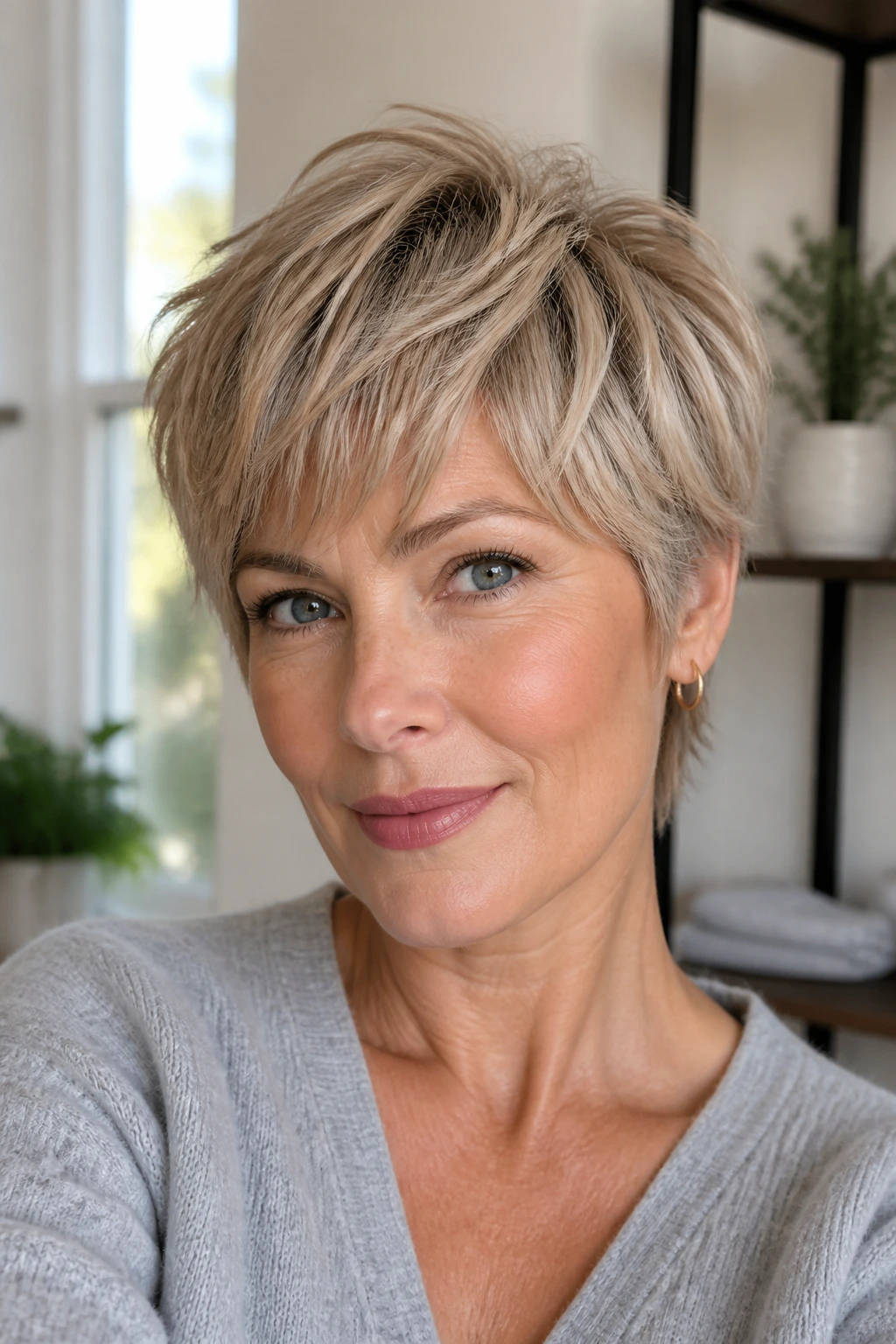
The bixie lives between a bob and a pixie, and feathering is what keeps it from looking like an awkward halfway point. With a little softness on top and tapered edges around the ears and nape, the cut feels intentional, not transitional.
This one works when you want short hair but not a super-close crop. There’s usually enough length on top to sweep across the forehead or tuck to one side, while the back stays neat and light. That combination makes the bixie easy to wear and easy to grow out, which is part of its appeal.
For styling, a dab of texture paste through the crown is usually enough. Overworking the top makes the cut spiky. A little separation is better.
16. Long Layers with Feathered V-Shape
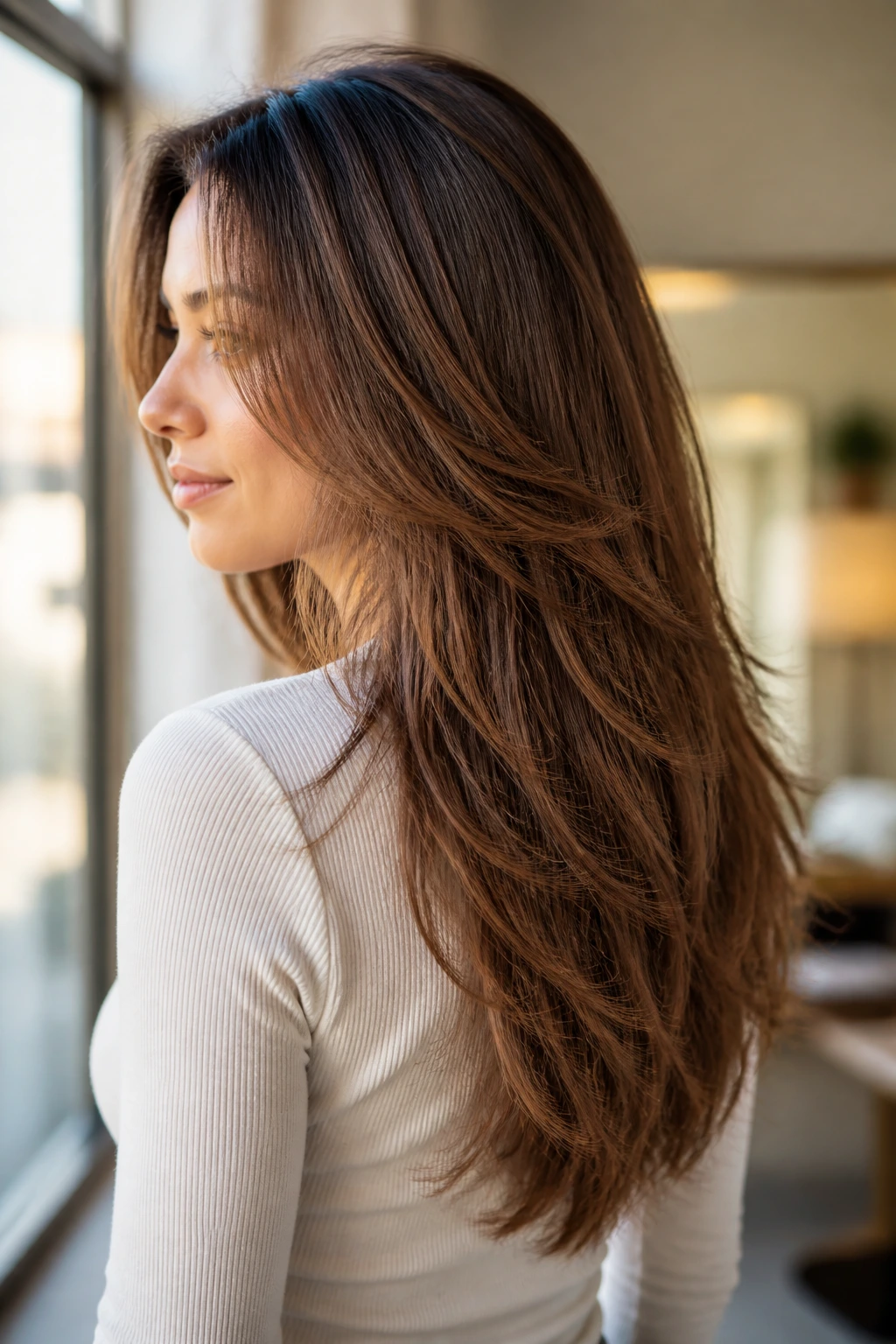
A V-shaped cut can look sharp in a way that doesn’t suit every head of hair. Feathering takes the edge off. The length still falls to a point at the back, but the ends are softened enough that the shape reads fluid instead of severe.
The V works best when the layers are long and gradual. Short, aggressive layers break the line too much and make the back look narrow. With feathering, the front pieces still frame the face, and the back keeps its long sweep without hanging like a single blade.
This is a strong option if you like to wear hair down most of the time and want it to move when you walk. It looks particularly good on thick straight hair and on wavy hair that can hold a soft bend.
17. Feathered U-Cut with Soft Edges
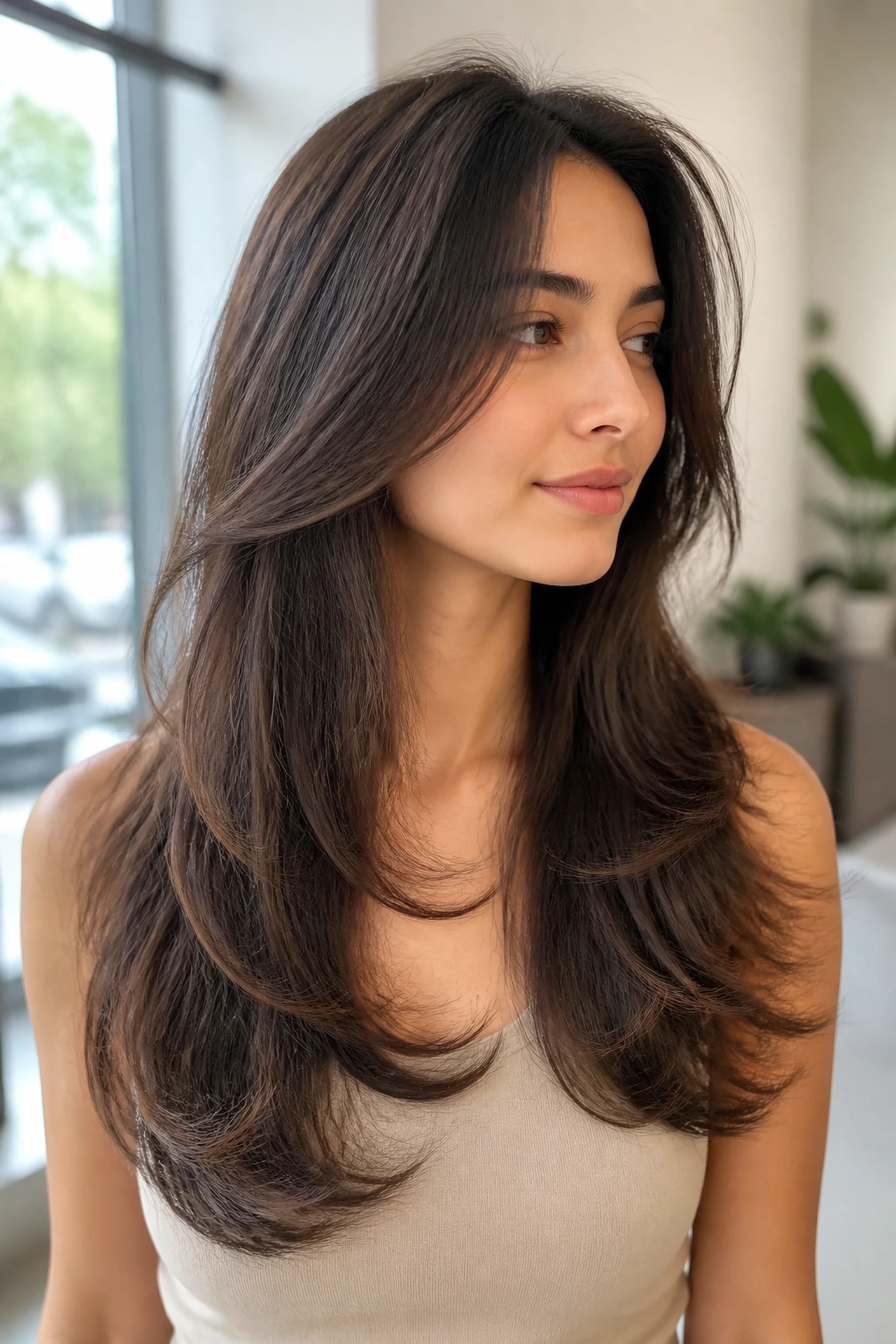
The U-cut is gentler than the V because the back rounds out instead of dropping to a point. Feathered edges make that curve feel even softer, which is why this shape works so well on medium to long hair that needs movement without losing a lot of length.
It’s a quieter cut than the butterfly or the shag. That’s not a flaw. Some heads of hair just need better contour, not more drama. The U-shape gives the ends a smooth arc, and the feathering stops the perimeter from feeling heavy when it dries.
If you wear your hair with a center part, this cut tends to look especially balanced. The front layers slide back naturally, and the rounded hemline keeps everything from going flat at the shoulders.
18. Feathered Mullet with Tapered Neckline
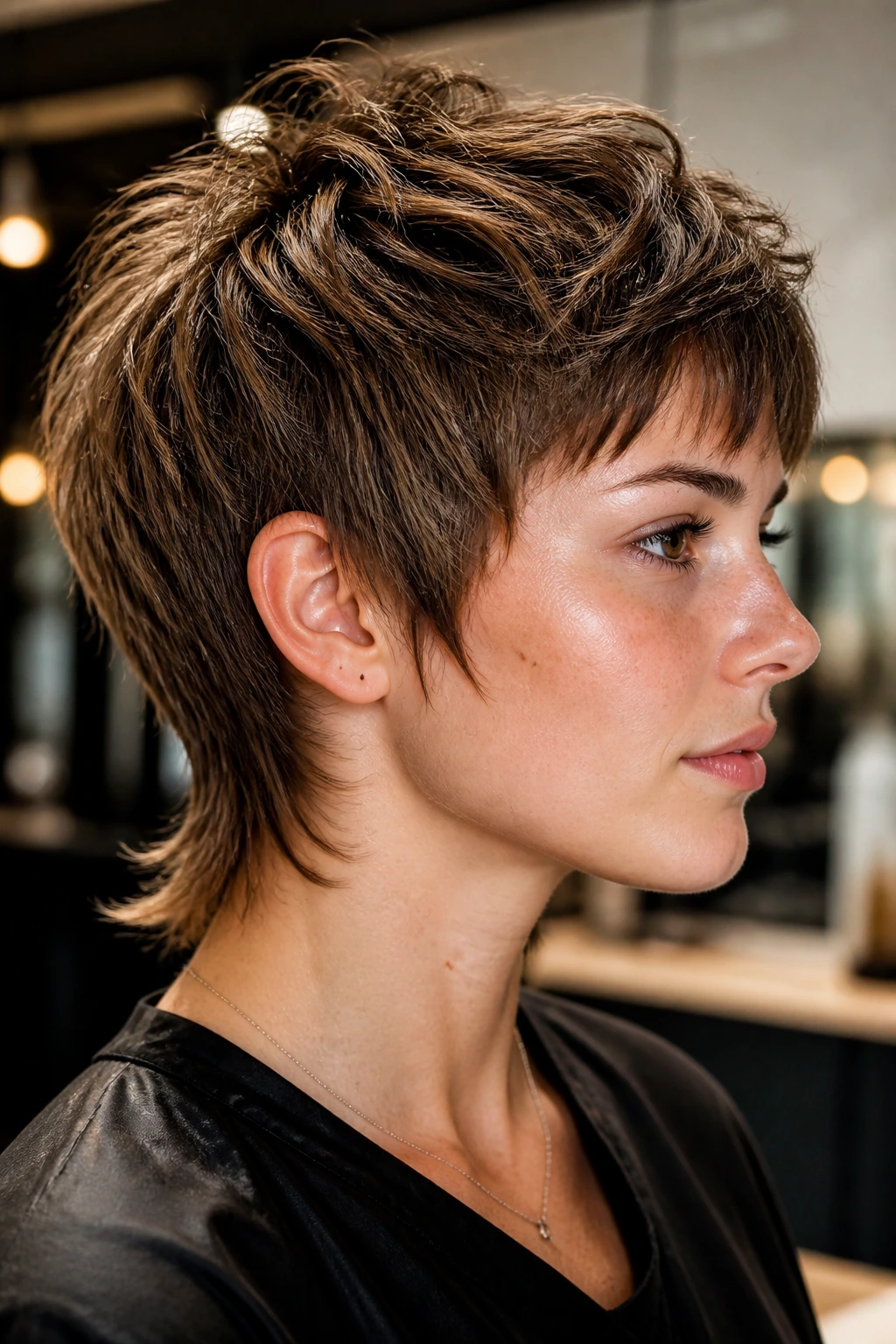
A feathered mullet can look cool or it can look like a mistake from 1987. The difference is softness. When the neckline is tapered and the crown is feathered instead of hacked apart, the shape keeps its attitude without turning harsh.
This version works because the top and back are still distinct, but the transition is smoother. The front can stay short and textured, the sides can carry a little length, and the nape stays close to the neck. That combination gives you movement without the stiff, overbuilt silhouette that scares people off.
Who should try it
If you like a little edge, wear your hair wavy, and don’t mind styling with fingers more than a brush, this cut makes sense. If you want polished and conservative, skip it. No amount of feathering will change the attitude baked into the shape.
19. Feathered Bangs with Long Length
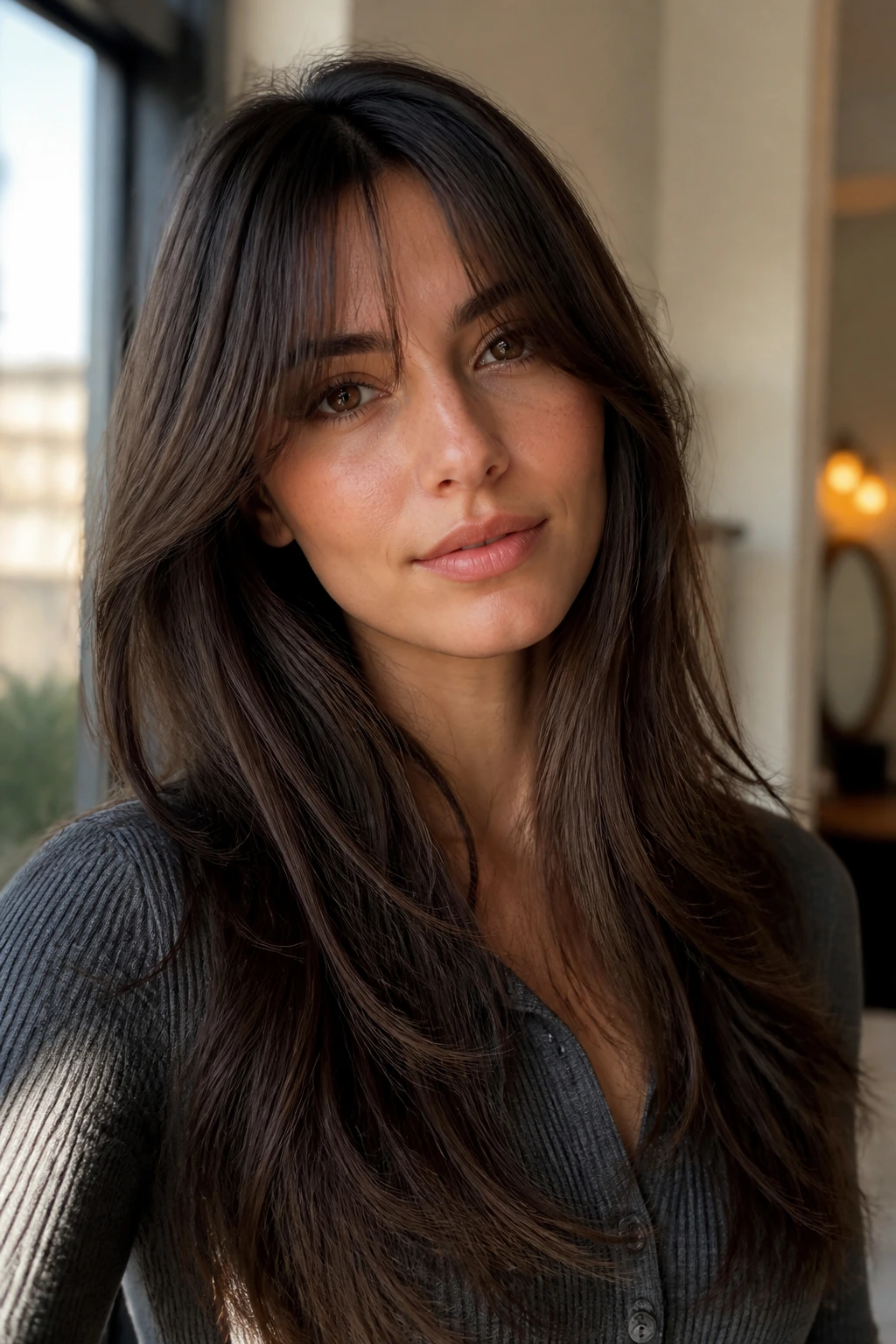
Feathered bangs can change a long haircut faster than chopping off six inches. The fringe softens the forehead, breaks up the top line, and gives the whole style a more relaxed finish. When the bangs are long enough to blend into the sides, they look airy instead of blunt.
This works well for people who want a visible change without losing length. The bangs can be side-swept, parted in the center, or brushed forward with a slight bend. What matters is that the fringe doesn’t sit like a hard curtain.
Keep them a touch longer if your hair grows fast or if you wear glasses. Short feathered bangs can get fussy on the wrong face. Long, wispy ones are easier to live with.
20. Razor-Feathered Cut for Sleek Hair
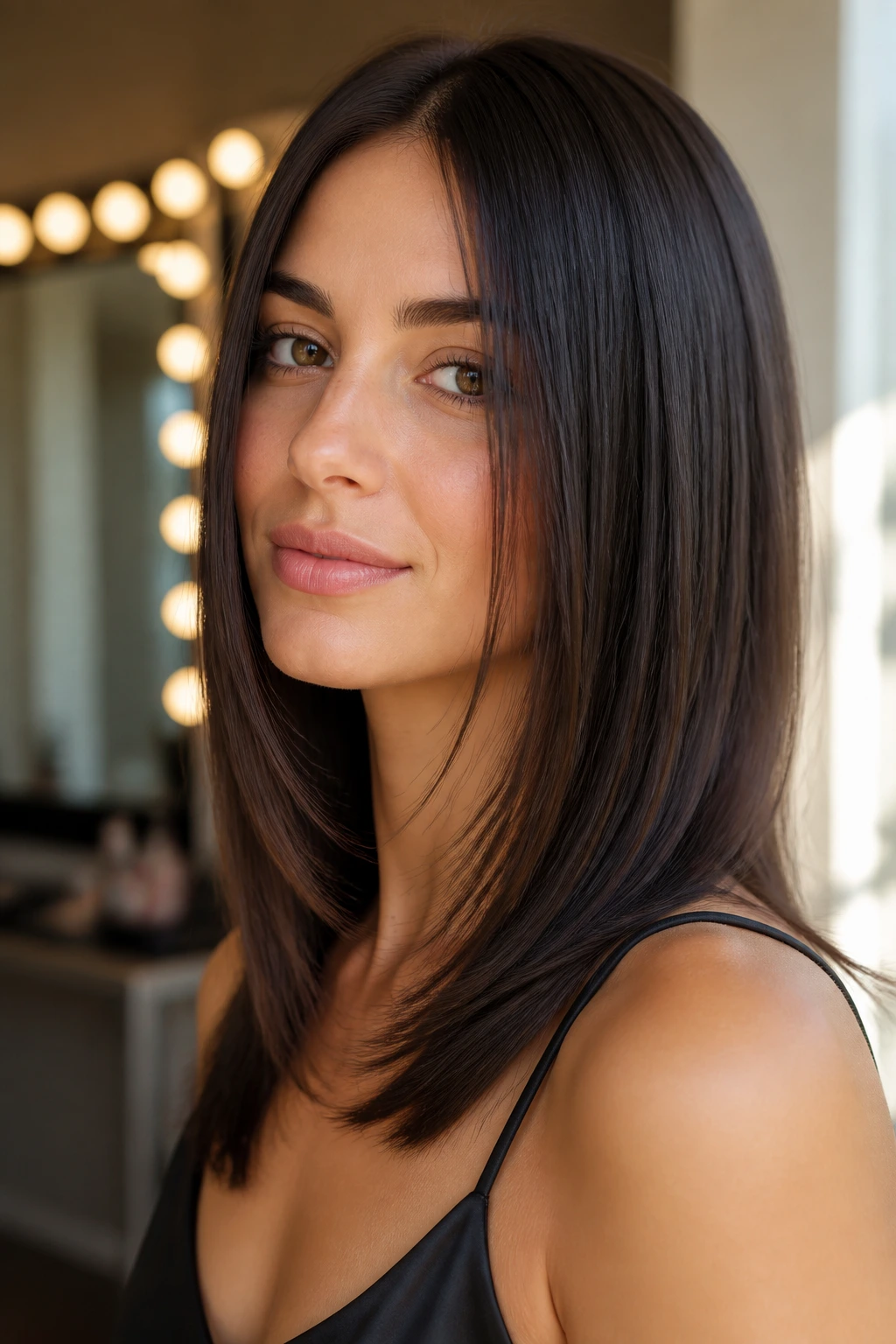
Razor feathering on sleek hair can look gorgeous when the hair is healthy and the cutting hand is careful. The ends become translucent in the best sense: soft, layered, and lightly separated without losing the clean line. On straight hair, that subtle breakup is what keeps the style from looking flat.
But this cut asks for judgment. On dry, brittle, or heavily bleached hair, a razor can make the tips look rough. In that case, scissors and point cutting are safer. Sleek hair can take razor work well when the strand is strong enough to hold a smooth edge.
The finished cut usually needs a little polish from a blow-dry or flat iron pass. The point is to show off the softness at the ends, not to make the whole head look shaggy.
21. Feathered Cut for Wavy Hair and Natural Bend
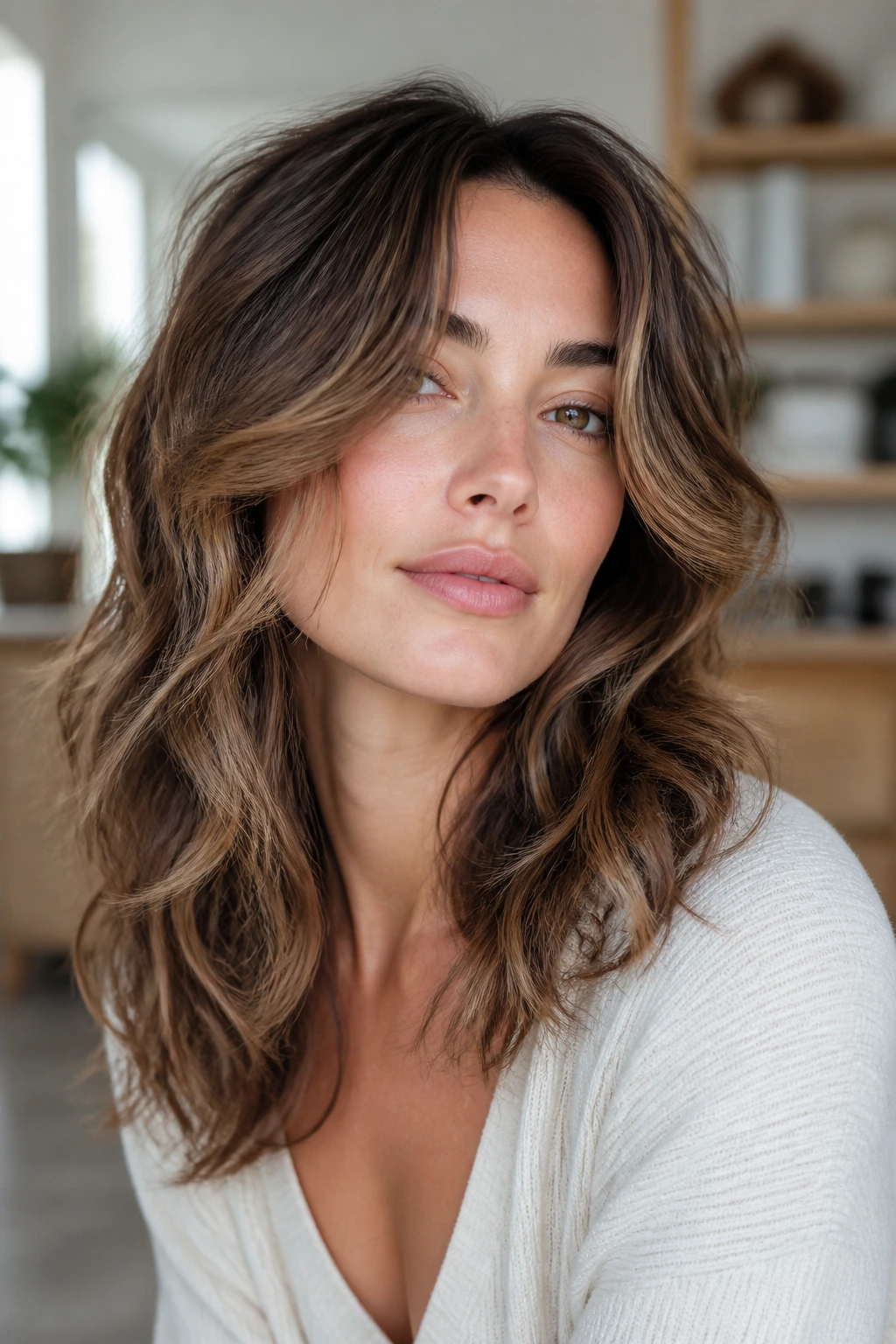
Wavy hair gets a head start with feathering because the natural bend already wants to move. The haircut should work with that bend, not crush it. Soft layers around the face and lightly feathered ends help the waves fall in loose ribbons instead of puffing out at random.
A good wavy feathered cut avoids heavy thinning at the bottom. That’s where a lot of wavy hair cuts go wrong. If the ends are stripped too hard, the wave pattern becomes frizzy and uneven. Keep the line soft, keep the layers connected, and the hair usually does the rest.
Air-drying with a small amount of cream, then scrunching once when the hair is about halfway dry, often gives enough shape. You do not need to force curls out of waves. That fight never ends well.
22. Feathered Crop with Tapered Nape
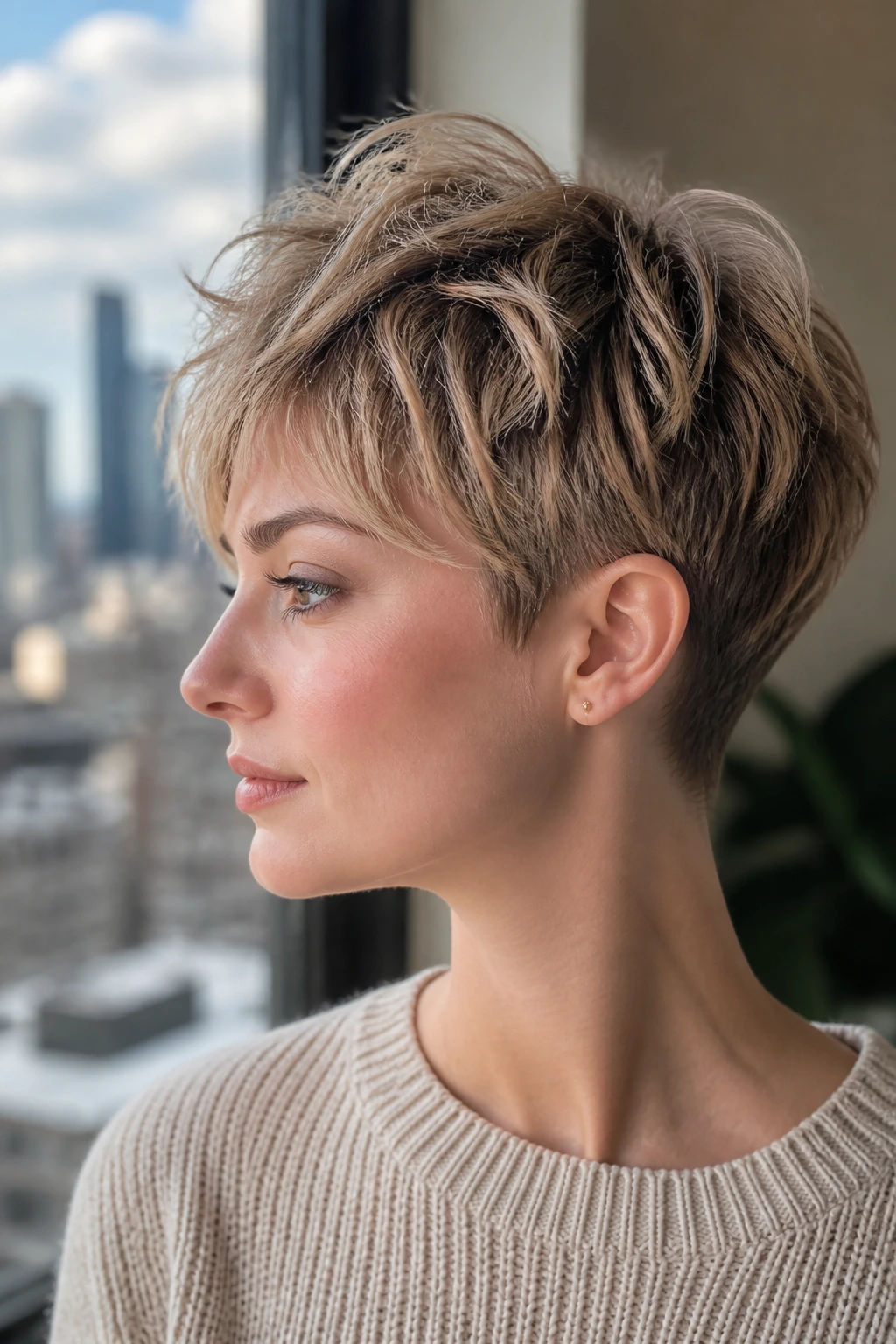
A feathered crop with a tapered nape is short hair with breathing room. The close neckline keeps the cut neat, while the top stays soft and wispy instead of sharp or spiky. It’s clean without looking severe, which is a narrow lane and a useful one.
This cut shines when you want low drying time and a shape that stays off the neck. The top can be swept forward, lifted slightly at the crown, or broken up with a tiny bit of styling paste. Because the nape is tapered, the cut keeps looking deliberate even a few weeks after a trim.
It’s a strong choice for people who like short hair but don’t want the top to feel hard or dense. The feathering keeps the silhouette light. The taper keeps it tidy.
What Feathering Actually Does to a Haircut
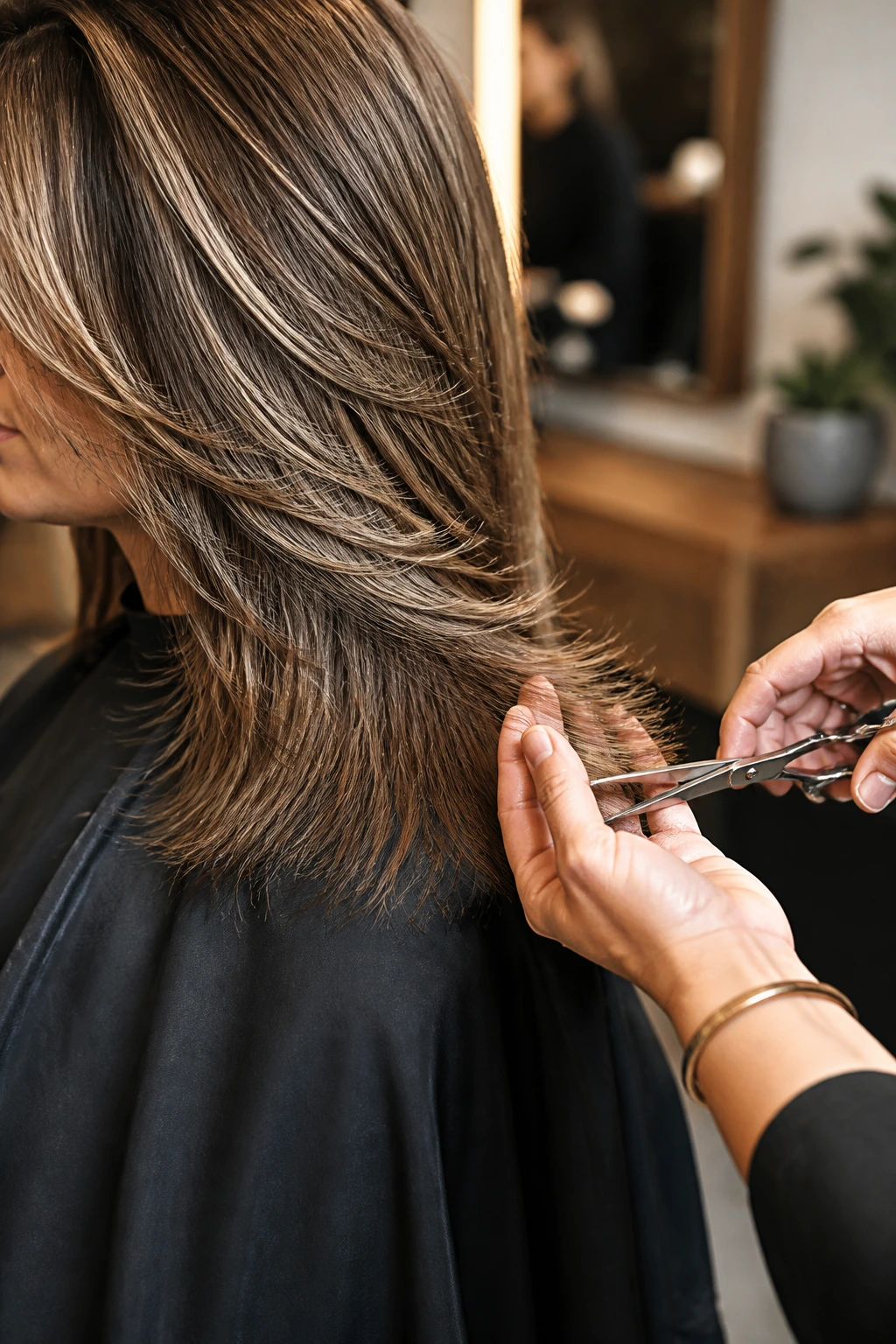
Feathering sounds airy, but the technique is practical. At the chair, it usually means breaking the ends into softer, directional pieces so the haircut doesn’t sit as one solid block. The most useful tools for that are point cutting, slide cutting, and careful razor work. They each remove weight in a different way, and the result depends on the hair type under the scissors.
Point cutting chops into the ends at an angle. It’s the safest choice for a lot of hair because it softens the line without shredding the strand. Slide cutting glides along the hair shaft and can create a more blended, tapered finish when the hair is healthy and the hand is controlled. Razor feathering can produce the softest, wispiest edge on straight or medium-texture hair, but it can also rough up fragile ends if the hair is already dry or damaged.
That’s why feathered haircuts are not one-size-fits-all. Thick hair can take deeper internal layering. Fine hair usually needs a lighter touch. Curly hair often needs the shape cut around the curl pattern instead of against it. The goal is always the same, though: soften the edge, keep the movement, and don’t break the haircut into a mess.
Essential Tools for Feathered Haircuts at Home
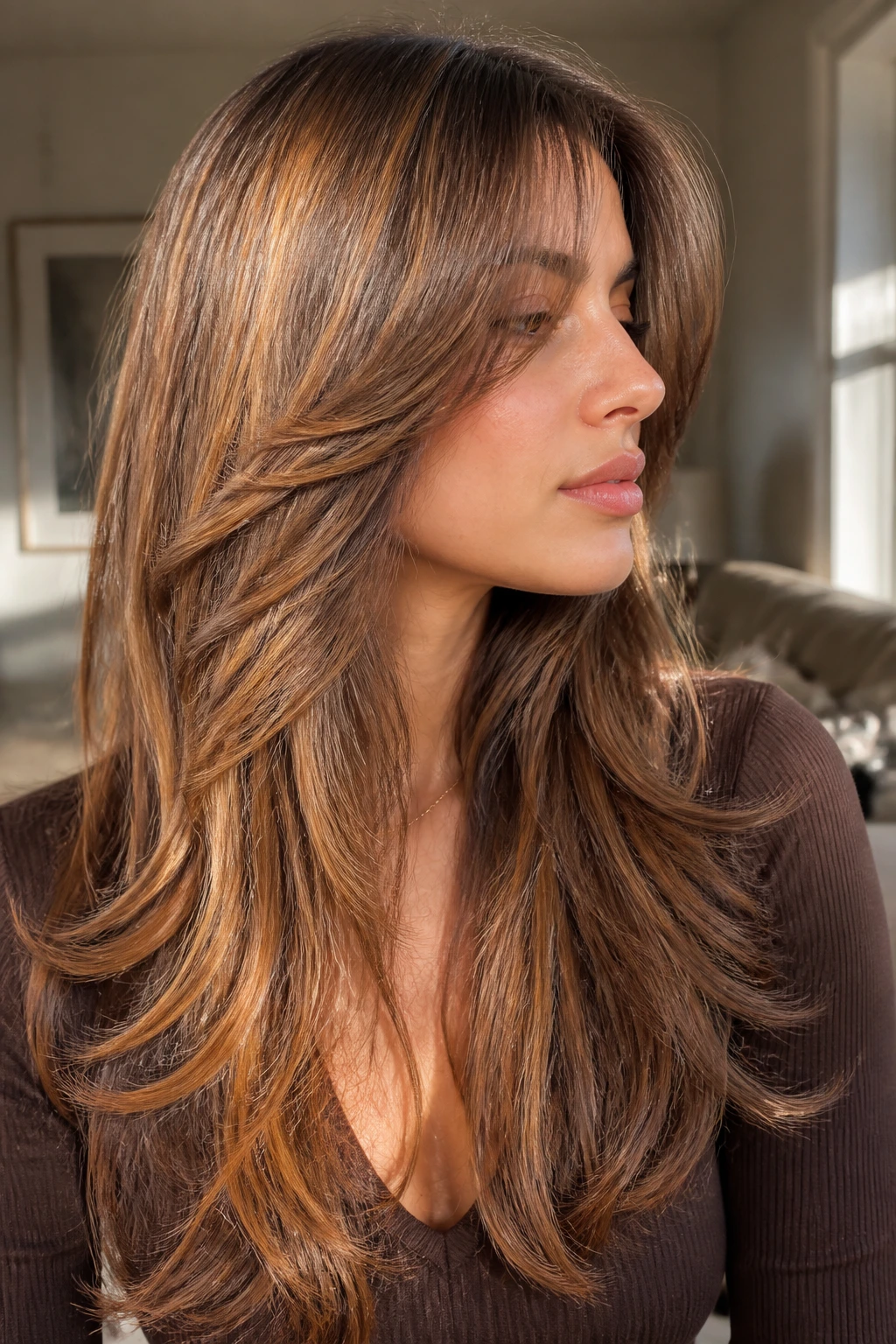
- Blow dryer with a nozzle attachment: The nozzle directs airflow so the feathered ends don’t scatter before you shape them.
- Round brush, 1.5 to 2.5 inches: Smaller brushes create more bend; larger brushes keep the finish softer and less curled.
- Vented brush or paddle brush: Useful for quick drying and smoothing without flattening every layer.
- Lightweight mousse or root lift spray: Gives the crown some rise without turning the ends sticky.
- Heat protectant spray: A must if you use a round brush, flat iron, or curling iron on the front pieces.
- Texturizing spray: Best on dry hair when you want the pieces to separate a little more at the ends.
- Fine-tooth styling comb: Handy for parting and for tightening the fringe without overbrushing the layers.
- Small clips: Keep the front layers out of the way while you dry the back in sections.
- Light finishing cream or serum: Use only on the last inch or two so the wispy finish stays visible.
How to Ask for Feathering at the Salon
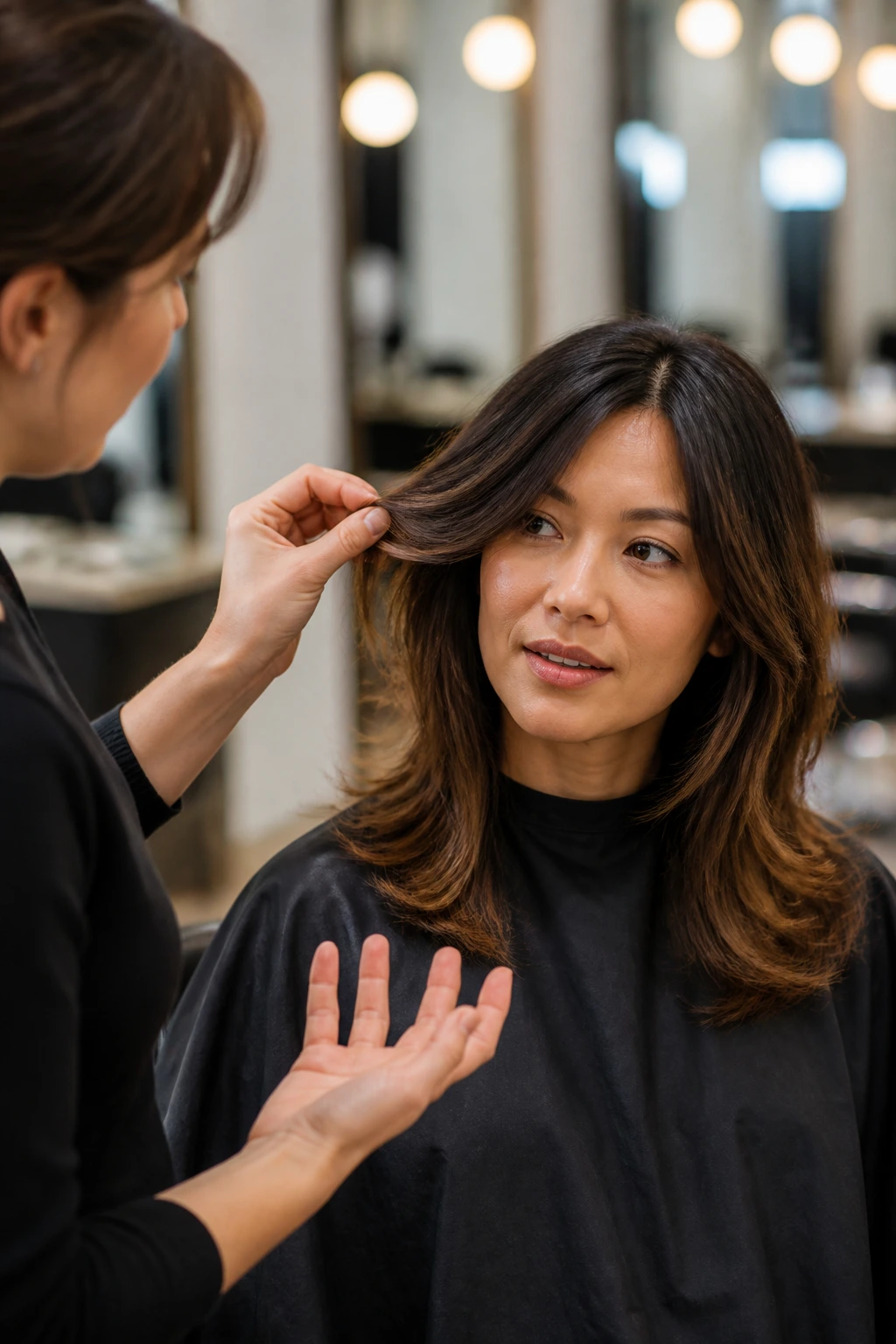
The easiest way to get the cut you want is to describe the shape, not just the vibe. Say whether you want a soft perimeter, a strong fringe, layers that start high or low, and how much length you’re willing to lose. That matters more than the word feathered by itself, because one stylist may hear “soft bob” and another may hear “razor-sharp shag.”
Bring photos that show the front, side, and back if you can. One picture of a model facing forward hides a lot of the haircut. A side shot tells the truth about the layers, and a back shot shows whether the shape is rounded, tapered, or disconnected. If you like the finish but not the color, mention that too. Hair color can change how feathering reads, especially when balayage or highlights catch the layer ends.
Say how you style your hair on a normal day. Air-dry only? Flat iron every morning? Blow-dry once and go for three days? That changes the way the layers should be cut. A stylist can feather a cut to work with your real routine, but only if you say what that routine is.
How to Style Feathered Haircuts So the Ends Stay Wispy
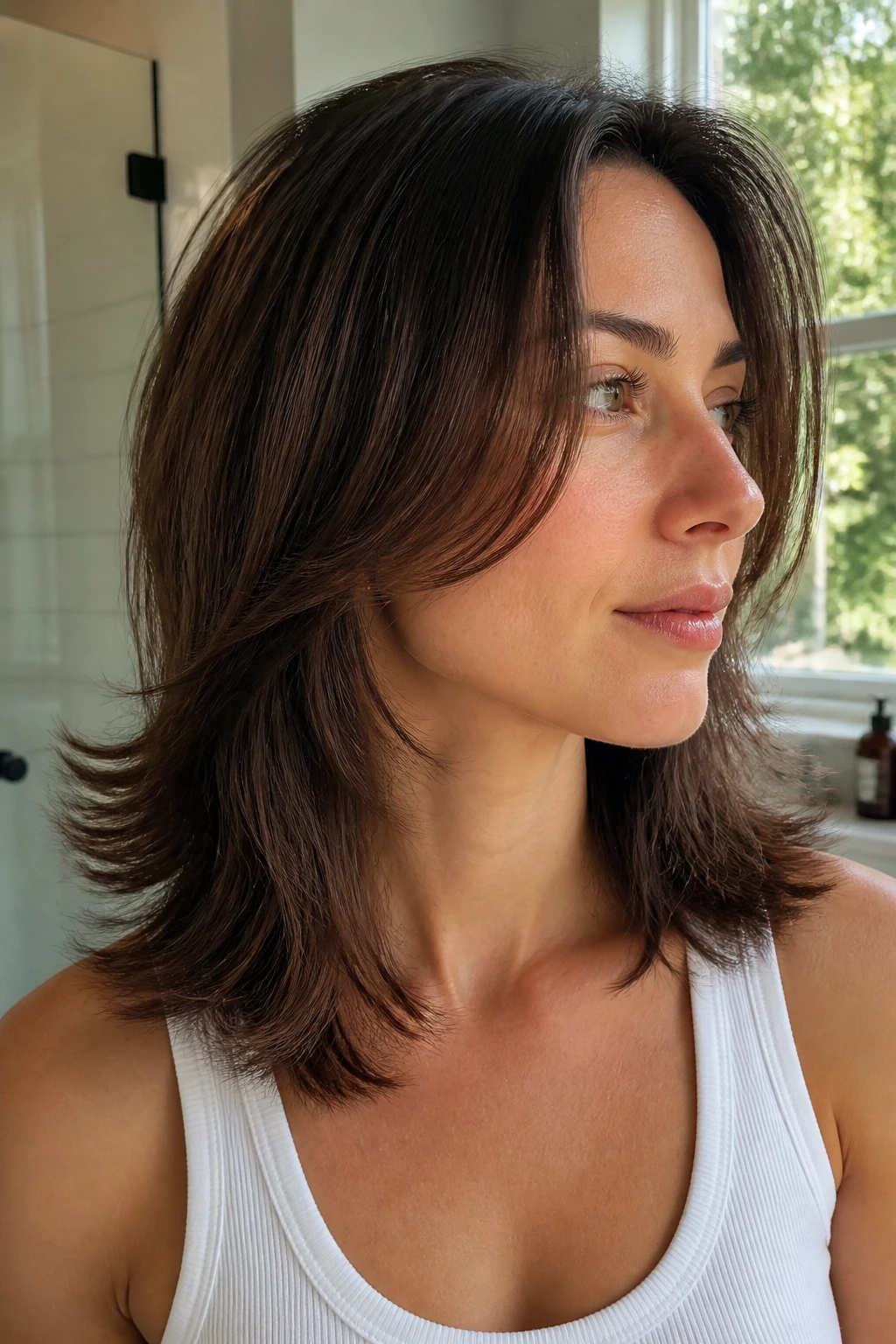
Feathered haircuts lose their shape when the roots go flat and the ends get overloaded. That means the styling job is about restraint. Start with a light product at the roots — mousse, volumizing spray, or a small amount of root lifter — then keep the heavier stuff away from the tips.
Blow-dry in sections if you want the softest result. Direct the hair away from the face in the front, then use a round brush to lift the crown and bend the ends slightly under or outward depending on the cut. A feathered bob usually wants a subtle curve. A shag or wolf cut can handle a little more separation. Don’t force every piece to do the same thing. That’s how feathering gets flattened into sameness.
Air-drying can work too, especially on wavy or curly hair, but the product matters. A light cream or mousse is enough. Heavy oils and thick curl custards tend to weigh down the wisps and make the ends clump. Once the hair is dry, use your fingers or a tiny bit of texturizing spray to separate the front layers. Keep the product on the outer half of the strand, not the scalp.
When a Feathered Cut Needs a Trim
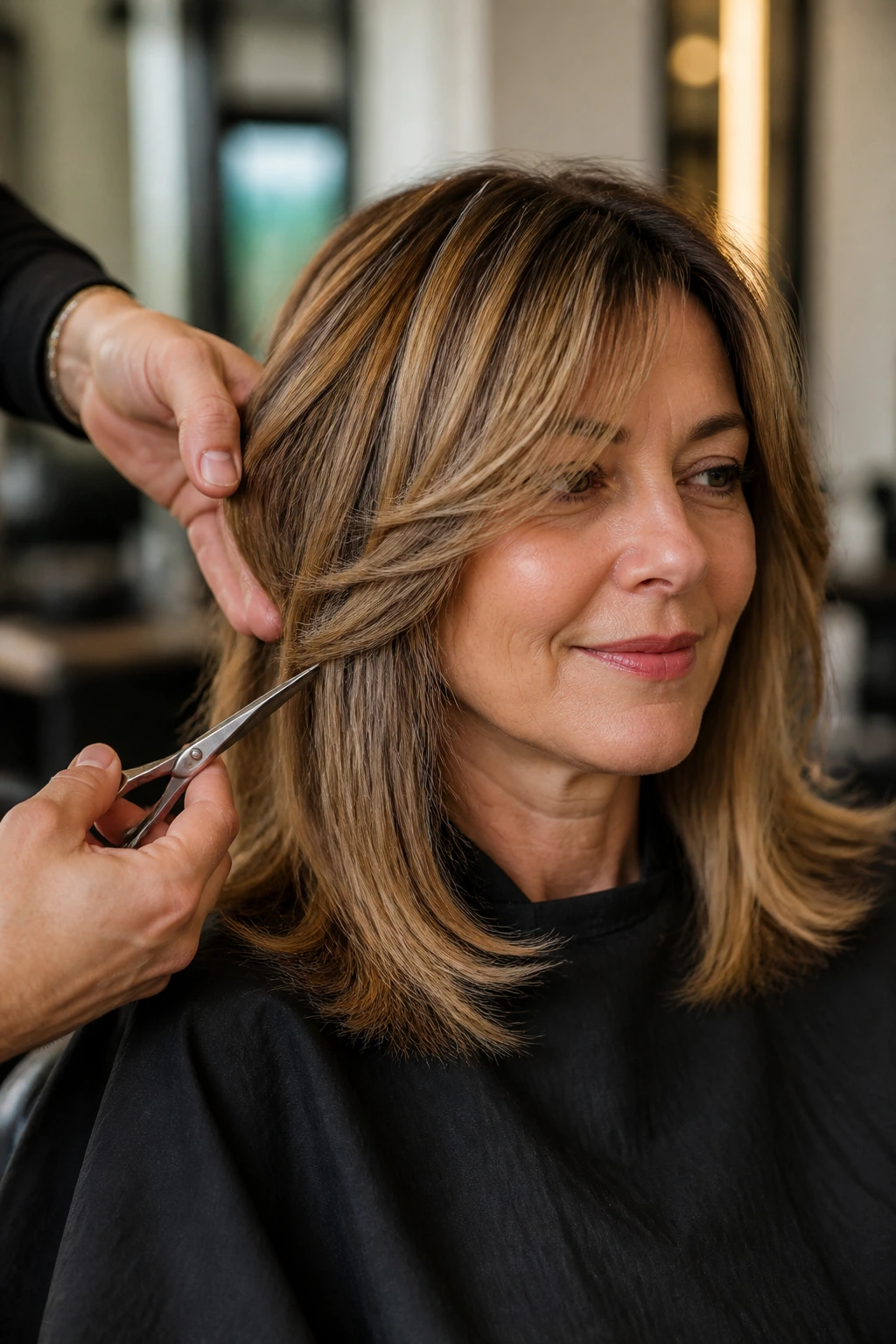
Feathered shapes tell on themselves when they start growing out. The ends may stay soft, but the layers lose their separation and the face frame can drop in strange places. That’s the signal to book a trim. Short feathered cuts like pixies, bixies, and crop shapes usually need shaping every 4 to 6 weeks. Bobs and lobs can stretch to 6 to 8 weeks. Longer layered versions often hold for 8 to 12 weeks if you only need dusting.
The other clue is in the styling time. If you suddenly need twice as long to get the front layers to sit right, the shape has probably shifted. Same if the crown goes flat or the ends start flipping in a way you never asked for. Grow-out does not have to be dramatic, but it does need maintenance.
A good trim doesn’t mean starting over. Usually it means cleaning the perimeter, refreshing the face frame, and tightening the layers so they keep their soft movement. That small reset changes everything.
The Mistakes That Turn Feathering Into Frizz
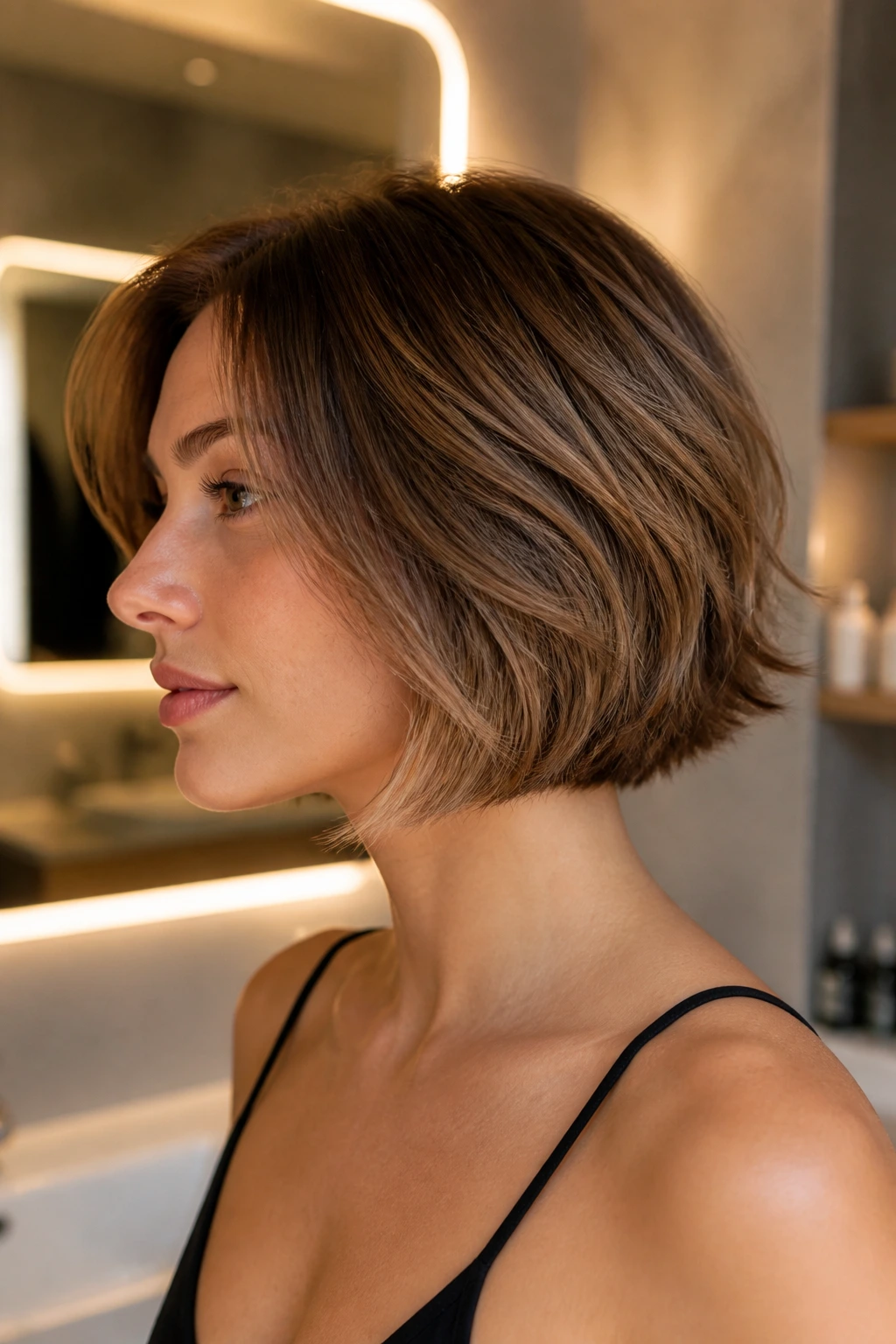
The first mistake is over-thinning the ends. You see it when the haircut looks airy for one day, then ragged after the first wash. The fix is to keep some weight at the perimeter and let the softness happen above the line, not only on the line.
Another common problem is asking for a razor finish on hair that’s already dry or damaged. That can leave the ends fuzzy, especially on fine or color-treated hair. Scissors and point cutting usually protect the strand better. If the hair is fragile, gentler is smarter.
People also ask for too much layering around the crown and then wonder why the top goes flat. Too many short pieces up high can make the haircut lose its body. You want movement, not a hollow top.
The last big one: styling feathered haircuts with heavy cream, thick oil, or too much heat. Those choices glue the wisps together or scorch the shape into a harsh bend. Use less product than you think. Then stop. That restraint is part of the look.
Feathered Variations and Alternative Shapes
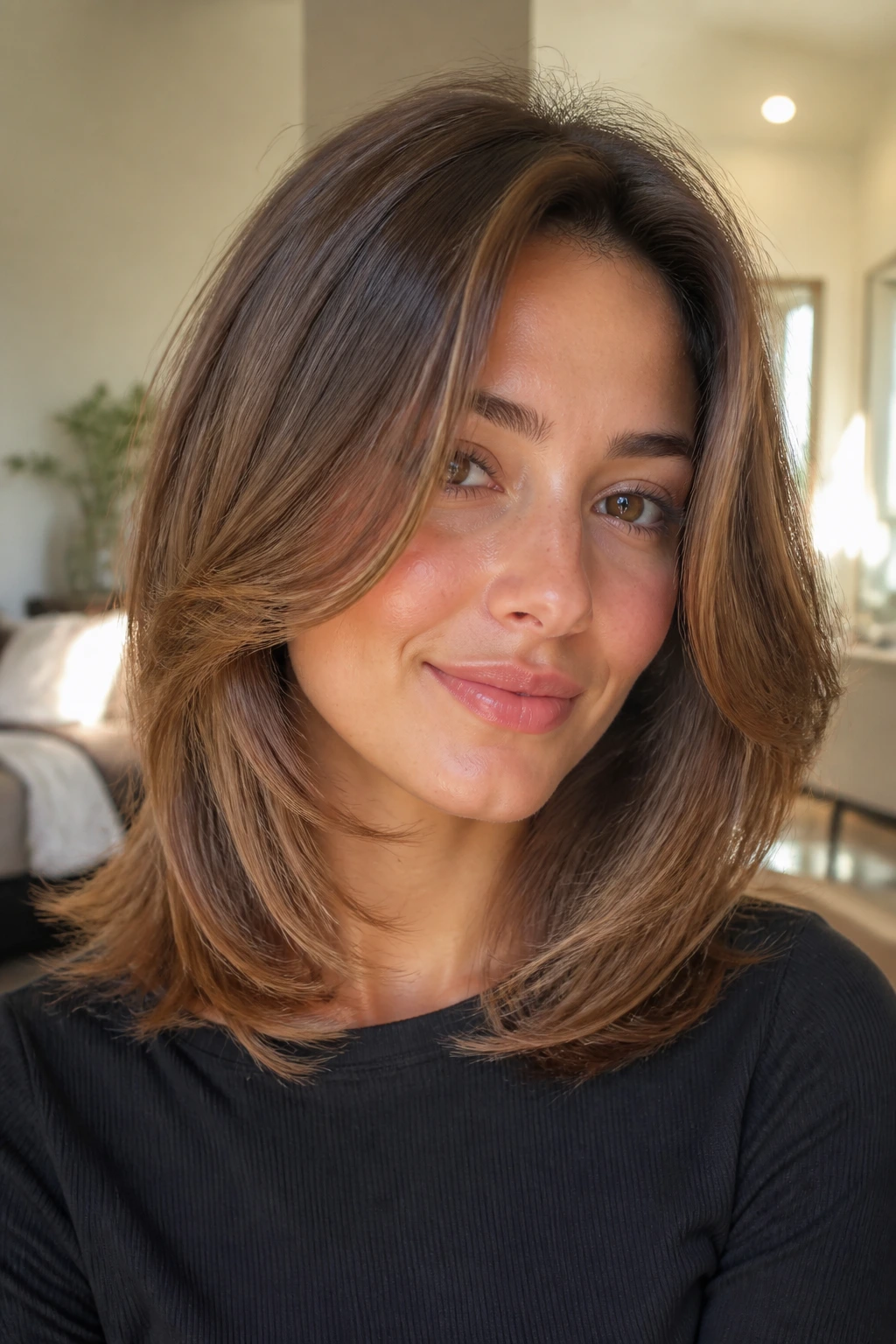
Soft Blowout Feathering: This version keeps the layers longer and the face frame more polished, with a round-brush finish that reads glossy rather than shaggy. It works when you want movement but still like a clean silhouette.
Air-Dry Feathering: The haircut is shaped so the layers fall nicely even when you do almost nothing to them. Wavy and curly textures usually like this version best, especially if your routine is short on patience.
Piecey Editorial Feathering: Shorter front layers, a little more separation, and a sharper edge through the crown make this one feel bolder. It is for someone who likes texture that shows up from across the room.
Low-Commitment Feathering: Keep the length mostly blunt and feather only the front and surface layers. This is the safest option if you want softness but worry about losing density.
Curly Feathering: The layers are cut to support the curl pattern rather than fight it. The result is softer around the face and lighter at the bottom without wrecking the shape.
Frequently Asked Questions About Feathered Haircuts
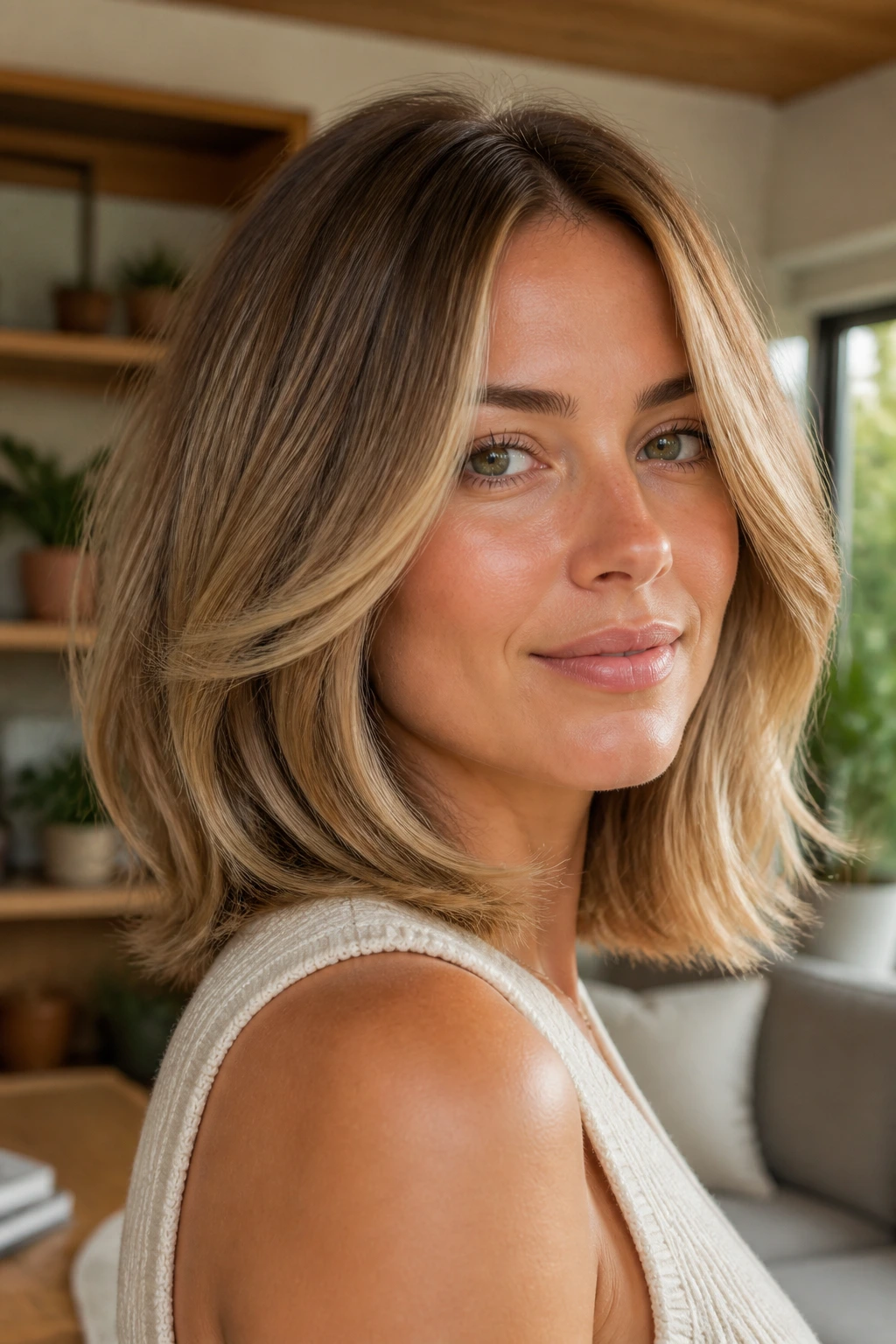
What exactly is a feathered haircut?
A feathered haircut uses cutting techniques that taper the ends so the hair looks soft, light, and separated instead of blunt. The effect can be subtle on long hair or more obvious in short crops and shags.
Is feathering the same as layering?
Not quite. Layering changes where the hair sits in relation to the head, while feathering changes how the ends behave. You can have layers without much feathering, and you can feather the perimeter of a cut without making it heavily layered.
Does feathering work on fine hair?
Yes, but lightly. Fine hair usually needs controlled feathering near the face and crown, with more weight left at the ends so the haircut doesn’t go see-through.
Can curly hair be feathered?
It can, but the haircut should respect the curl pattern. Curly feathering works best when the shape is cut in a way that supports the curl’s natural spring instead of slicing it into uneven pieces.
How do I ask for feathered hair at the salon?
Ask for soft layers, a tapered perimeter, and a face frame that blends into the rest of the cut. Bring pictures, and tell the stylist how much volume you want to keep at the bottom and how you style your hair on a normal day.
Will a feathered haircut need a round brush every morning?
Not necessarily. A blowout gives the softest version, but many feathered cuts can be finger-styled, diffused, or air-dried if the layers were cut with that in mind. The brush just makes the shape cleaner.
How often should I trim it?
Shorter feathered cuts need shape-ups more often, usually every 4 to 6 weeks. Long layered versions can go longer, but once the front pieces stop blending or the ends lose their lightness, the haircut is ready for a refresh.
What if the cut turns out too choppy?
Ask for a blend pass rather than a brand-new haircut. A stylist can often soften harsh layers by cleaning up the ends, adjusting the face frame, and restoring some weight at the perimeter.
Soft Movement, Less Bulk
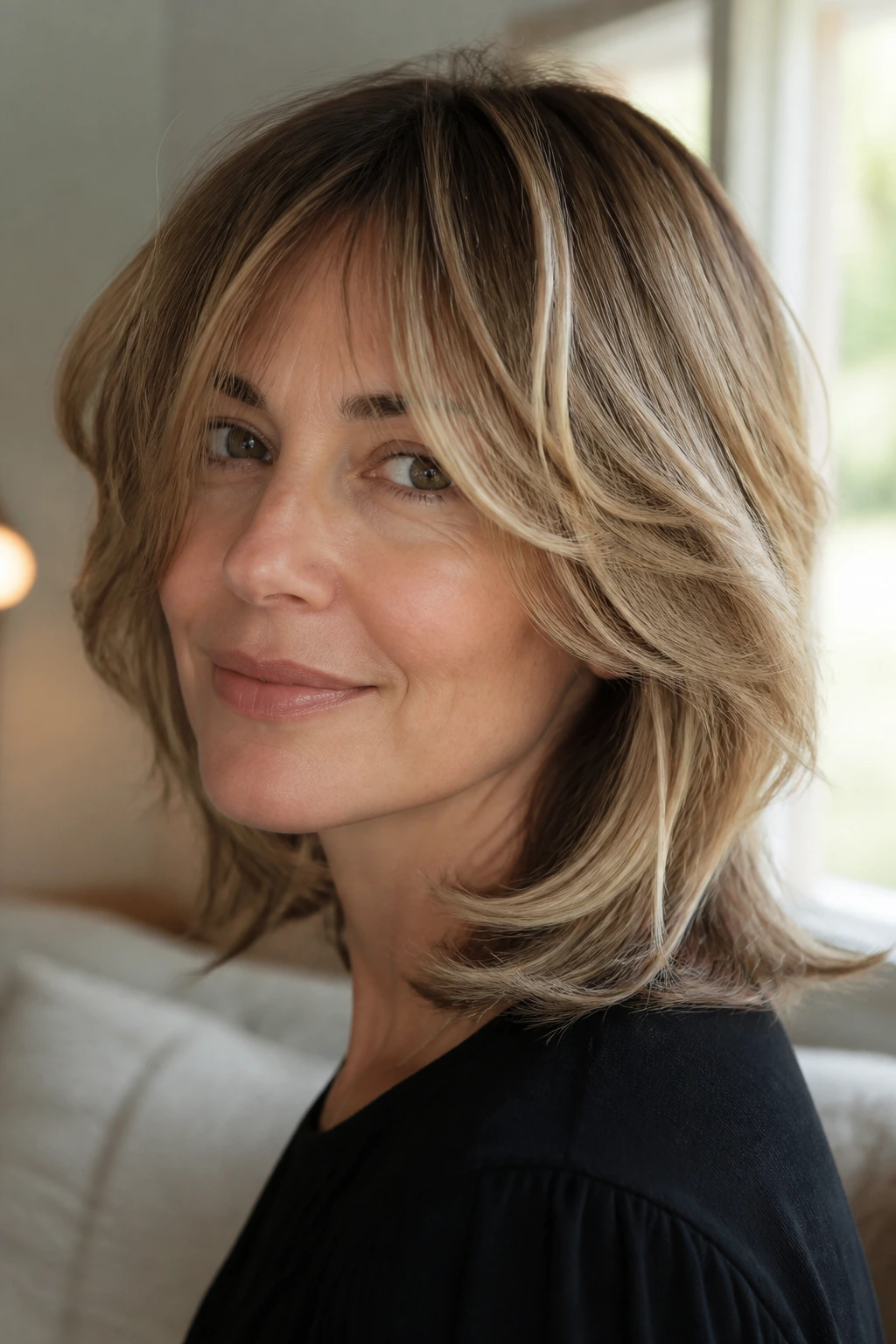
The nicest thing about feathered haircuts is that they don’t ask your hair to be one thing. They let it move, bend, swing, and settle without trapping it inside a hard line. That’s why these cuts keep showing up in different forms — long, short, shaggy, polished, curly, sleek — and why the right one can make your hair feel more like itself.
A good feathered shape is never just about taking hair away. It’s about placing the softness where it belongs. Get that part right, and the haircut does the rest when you walk, turn, tuck it behind your ear, or let it dry on a lazy morning. There’s a reason this family of cuts keeps coming back. It solves a problem people actually have.
