



Long hair changes the math of hair color. A ribbon of caramel that would look ordinary on a bob can travel from collarbone to waist and suddenly read expensive, layered, and deliberate. A bad placement does the same thing in the opposite direction. On long lengths, the eye has time to follow every line, so chunky stripes, muddy toner, and flat roots show up fast.
That’s why hair color ideas for long hair need more thought than “pick a shade you like.” You’re not painting a small surface. You’re working with a moving, porous, multi-tonal canvas where the ends are older, the mids may be healthier, and the roots often need help joining the conversation. A good color plan uses that to its advantage. A lazy one leaves the hair looking like it was dipped in one note and sent home.
Some of the best looks here are soft and wearable. Some are loud in a way that still feels polished. A few need a salon chair and a patient colorist. A few can be done with a demi-permanent glaze or a well-placed gloss if your base already cooperates. The first group are the workhorses. The later ones are for people who want the color to say something.
Why Long Hair Gives Color More Room to Play
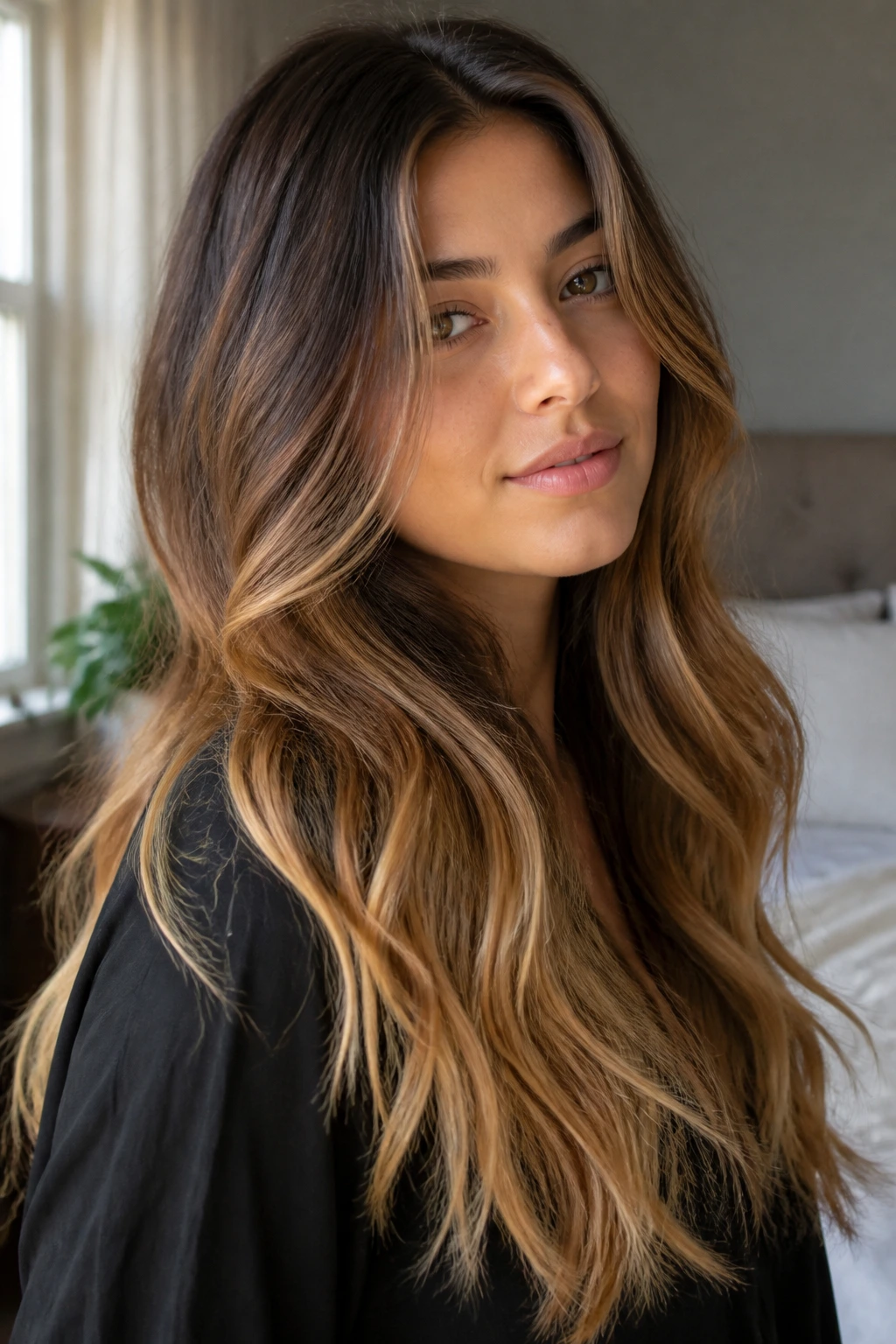
-
Dimension reads better on length: On long hair, a balayage panel has space to fade from dark to light instead of stopping abruptly near the ears, which makes the whole look feel smoother.
-
Root regrowth matters more: A soft root shadow or smudge buys you weeks of grace because the grow-out line is stretched over more inches instead of sitting right at the scalp.
-
Ends need gentler chemistry: The last few inches usually have the highest porosity, so they grab toner fast and can turn dull, smoky, or overly warm if you treat them like virgin hair.
-
Movement changes the whole look: Waves, braids, and blowouts expose different slices of color, so long hair rewards ribboned highlights, peekaboo panels, and color melts that look flat on shorter cuts.
-
You can mix tones without chaos: Long lengths let a stylist combine warm and cool pieces in one head of hair without the result looking busy, because the eye sees the contrast as movement instead of clutter.
1. Soft Caramel Balayage Through the Mid-Lengths
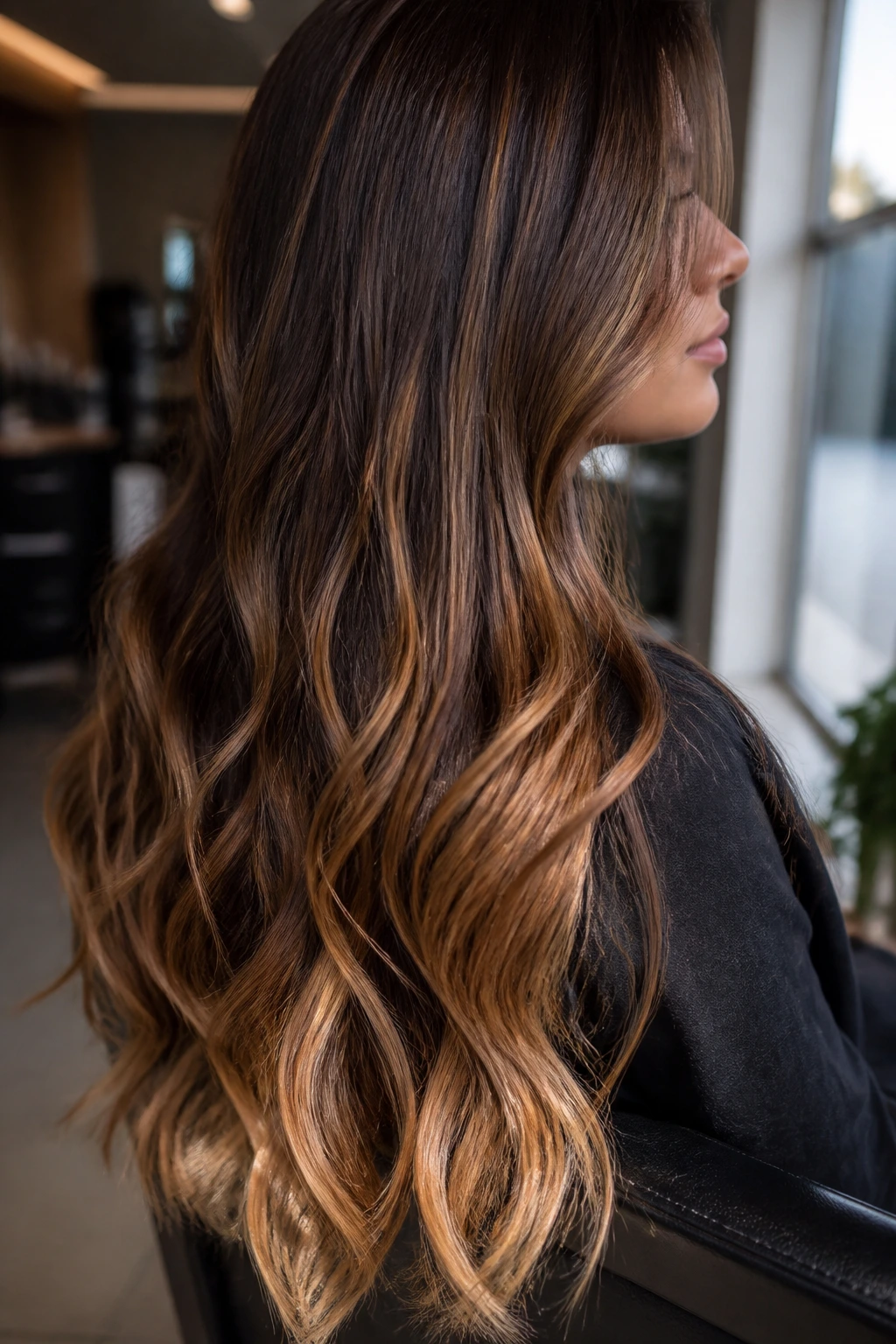
Soft caramel balayage is the shade I reach for when someone wants long hair color that looks lived-in from the first day. The warmth sits in the mid-lengths and ends, where long hair usually needs the most visual lift, and the root stays deeper so the whole thing grows out without a hard line. It’s one of those colors that looks even better when the hair moves, because the lighter ribbons catch on bends instead of sitting in a flat strip.
The trick is placement, not volume. On waist-length hair, I like the brightest pieces to begin around the cheekbone or just below it, then feather down through the lower half. That keeps the crown from getting too light too fast. Ask for a beige-caramel tone, not orange-gold. The difference is small in the bowl and huge in real life.
For curly or waved long hair, this shade is especially kind. The pattern breaks up the color, so the caramel shows in flashes. Straightened, it reads smoother and glossier. Either way, it avoids the blunt “striped” look that can happen when foil highlights are stacked too close together.
2. Face-Framing Money Piece in Warm Beige
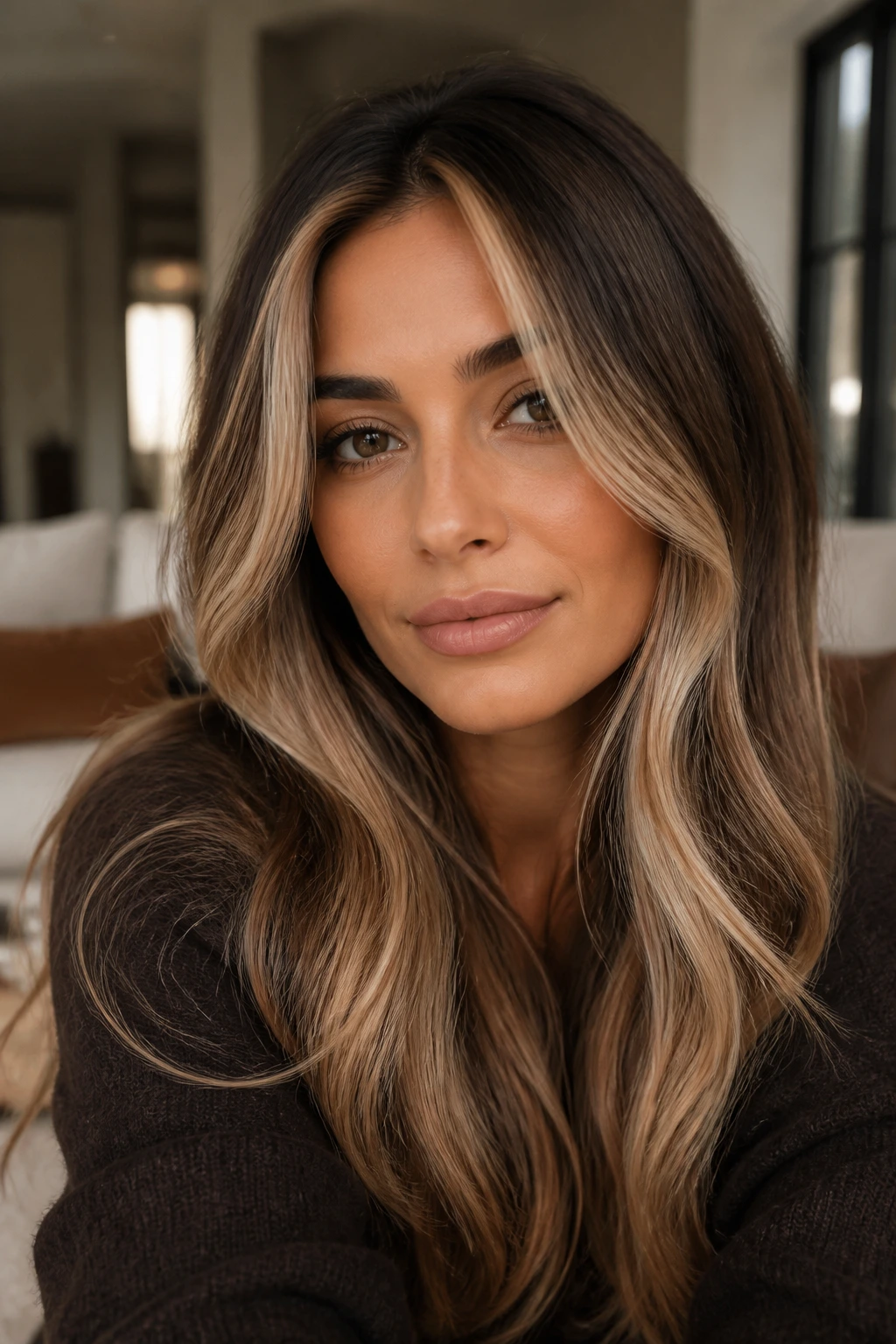
Can a single bright section change the whole haircut? Absolutely. A face-framing money piece does more for long hair than people expect because it gives the eye a landing point right where the hair falls around the face. If the rest of your length stays deeper, the contrast feels crisp instead of loud.
The best version is warm beige, not icy platinum. Beige has enough softness to sit next to brown, dark blonde, or light brunette bases without turning harsh around the hairline. I like these panels to be about 1 to 1.5 inches wide, with the root feathered slightly so they don’t look like two disconnected curtains. On long hair, that little fade matters.
What to ask for
- Bright face-framing pieces that start a touch below the root.
- A beige toner instead of a silver one.
- A soft melt into the front sections, not a hard block.
- Long layers or curtain bangs if you want the color to sit in motion.
This is the kind of look that works hard in photos, but it also holds up in daily life because the lighter bits are concentrated where you actually see them most.
3. Espresso Brunette with a Mirror Gloss
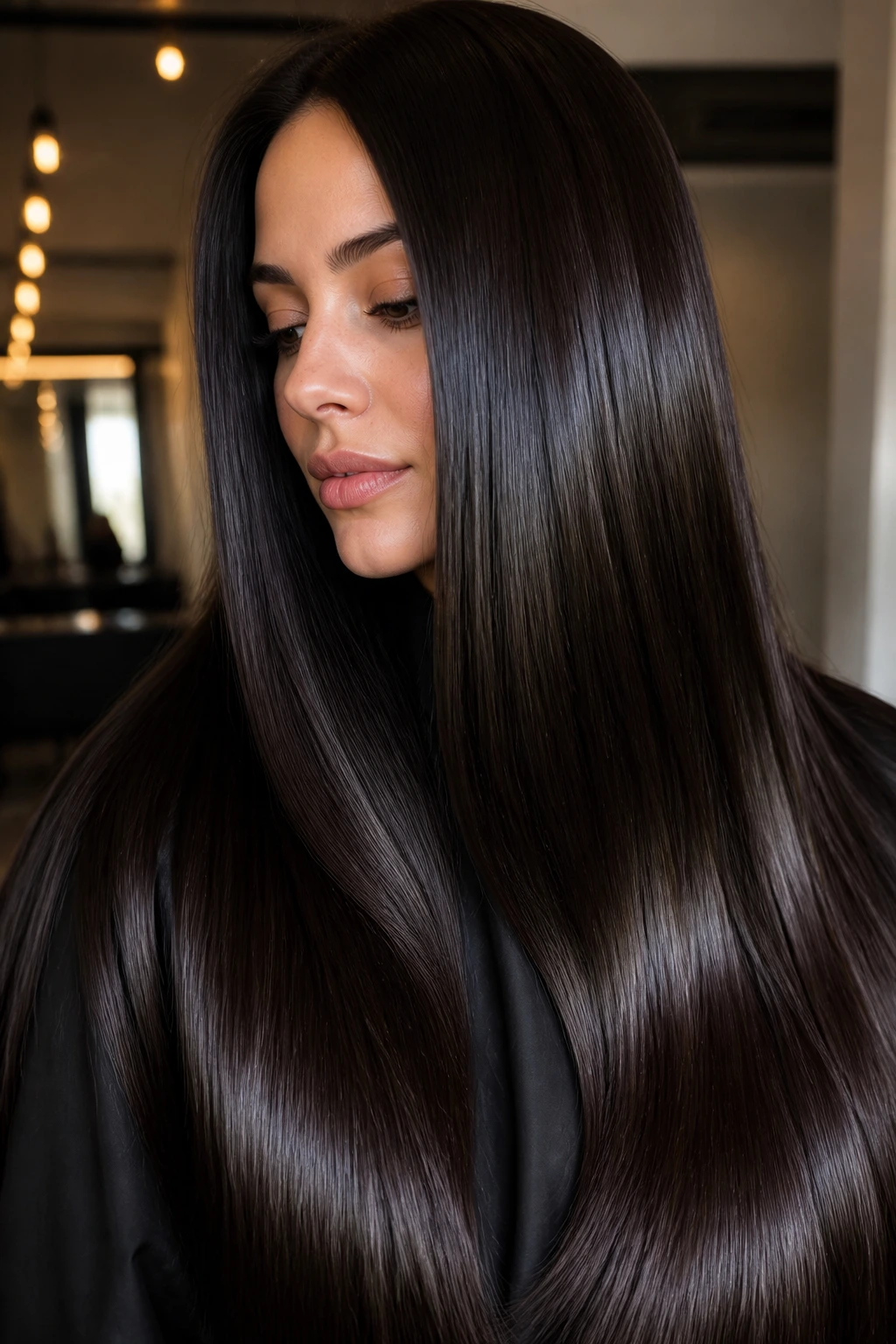
A deep brunette with a high-shine gloss is one of the cleanest color ideas for long hair. It doesn’t fight the length. It sharpens it. The color is close to espresso, sometimes just a touch cooler than the natural base, and the shine does the heavy lifting. When the finish is good, the hair looks thick and sleek even if the strand count is modest.
What makes this different from a plain dark brown is the gloss. A demi-permanent glaze or clear shine treatment smooths the cuticle enough that the surface reflects light in long ribbons instead of scattered flashes. On straight long hair, that reflection runs end to end. On waves, it glints at the bends and makes the movement look more expensive than it has any right to.
This is also one of the easiest shades to live with. There’s no bleaching to fight, no brass to panic over, and no urgent root chase every month. The only real rule is to keep the ends trimmed so the shine doesn’t get lost in dry, see-through tips.
4. Honey Blonde Ribbons Woven Into Brown Hair
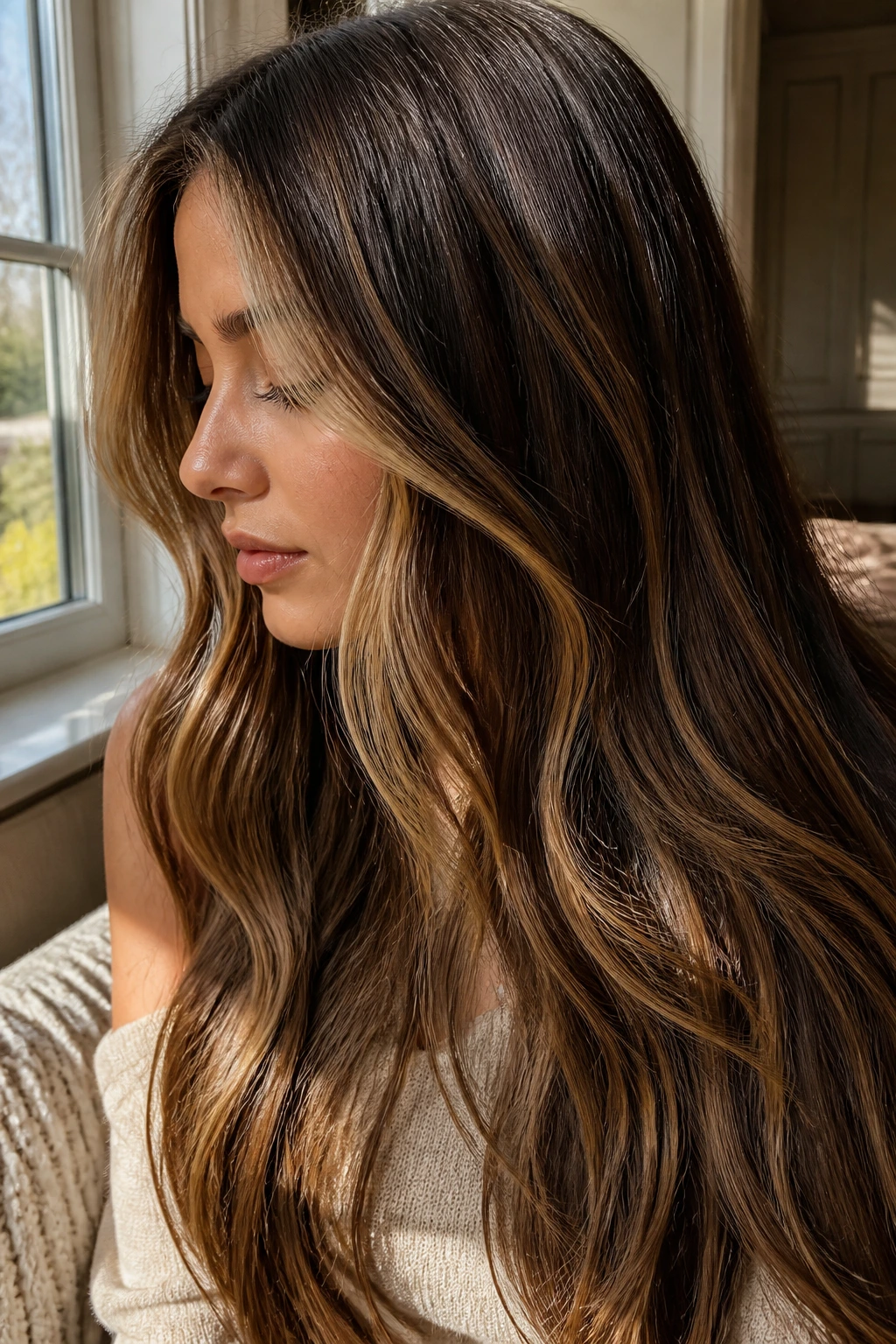
Why does honey blonde look so good on long brunettes? Because the warmth travels. A few thin, well-placed ribbons can move from dark brown roots into golden mid-lengths and finish at a soft honey blonde without looking like a color block. The warmth feels sun-warmed instead of bleach-burned.
Long hair gives you room to space those ribbons apart. That matters. If the highlights are packed too tightly, the whole style turns streaky and the depth disappears. Ask for thin to medium sections, painted with softer saturation near the root and more brightness toward the ends. The result should feel like light was catching pieces of the hair over time, not all at once.
This shade is especially good if you wear loose waves or bend the hair with a round brush. The honey pieces show up between darker panels and keep the length from reading heavy. On very straight hair, the contrast is cleaner. On textured hair, it feels more organic. Either way, it’s a safer bet than a full head of bright blonde if you want movement without a lot of upkeep.
5. Mushroom Brown for Cool-Toned Depth
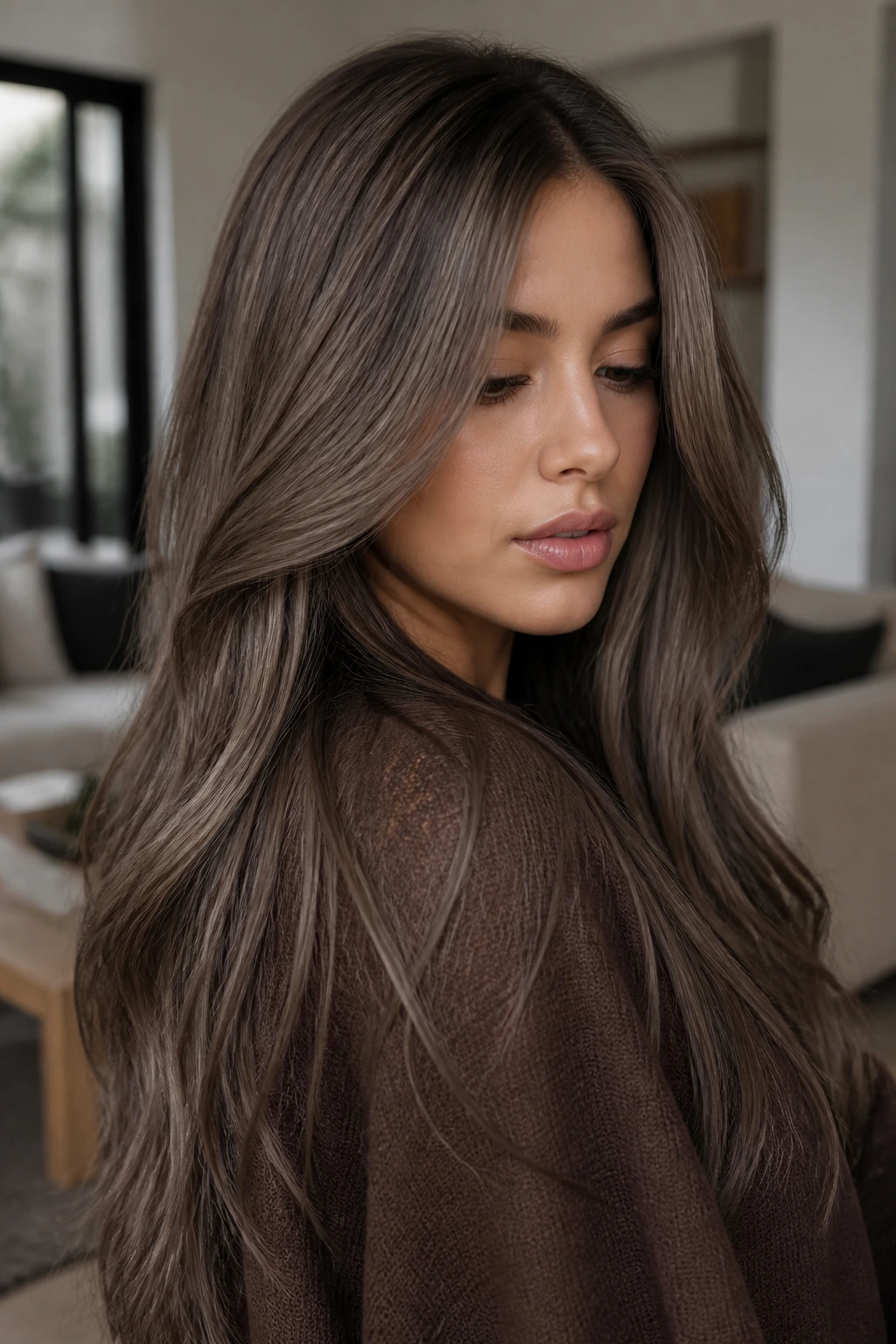
Mushroom brown is the answer for anyone who is tired of warm hair but does not want to go flat or black. It sits in that beige-gray zone between brunette and ash blonde, and on long hair it gives the length a smoky, tailored look. The color is cool, but not muddy. That distinction matters.
This shade works best when there’s still some light and dark variation left in the hair. A long cut with subtle lowlights underneath and cooler ribbons over the top keeps the color from reading like a single block of taupe. If your hair is naturally warm, your colorist may need to neutralize the brass first, then add a mushroom gloss over the lifted pieces. That’s where the softness comes from.
It’s not a loud color. That’s the point. On long hair, loud isn’t always better. Mushroom brown gives the ends a muted sheen and makes layered cuts look sharper, especially if you like middle parts, long curtain bangs, or a straight blowout that shows off the tone shift from root to tip.
6. Copper Cinnamon Melt from Root to Ends
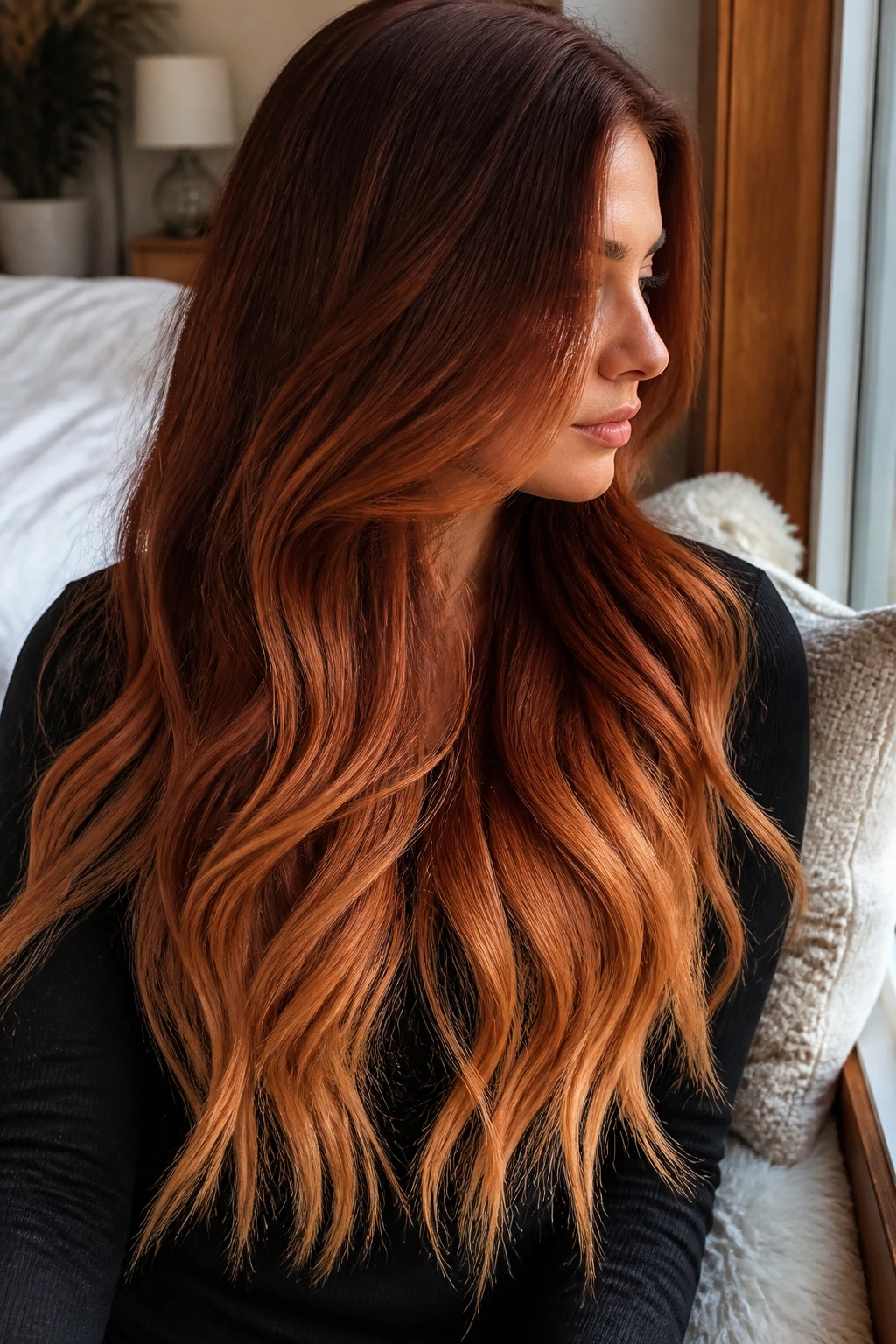
Copper on long hair can look flat if the formula stops at one red note. A cinnamon melt is better. It starts with a richer auburn or chestnut base near the root, then warms into copper through the mid-lengths, finishing with a brighter cinnamon glow toward the ends. That slow shift keeps the color alive.
The big catch with copper is fade. Red pigment leaves the hair faster than brown or blonde pigment, especially on porous ends. On long hair, that means the lower half can lose its shine first and start looking dusty. A gloss every four to six weeks helps, and a sulfate-free shampoo isn’t optional here if you want the color to keep its depth.
This color loves layered long cuts. The movement lets the warmer strands peek through instead of sitting on top like a paint job. If you like your hair in braids or loose buns, the copper tones will braid through the darker sections and look richer than they do worn pin-straight. There’s a reason redheads keep coming back to this family of tones. It has personality without shouting.
7. Rose Gold Ends on a Blonde Base
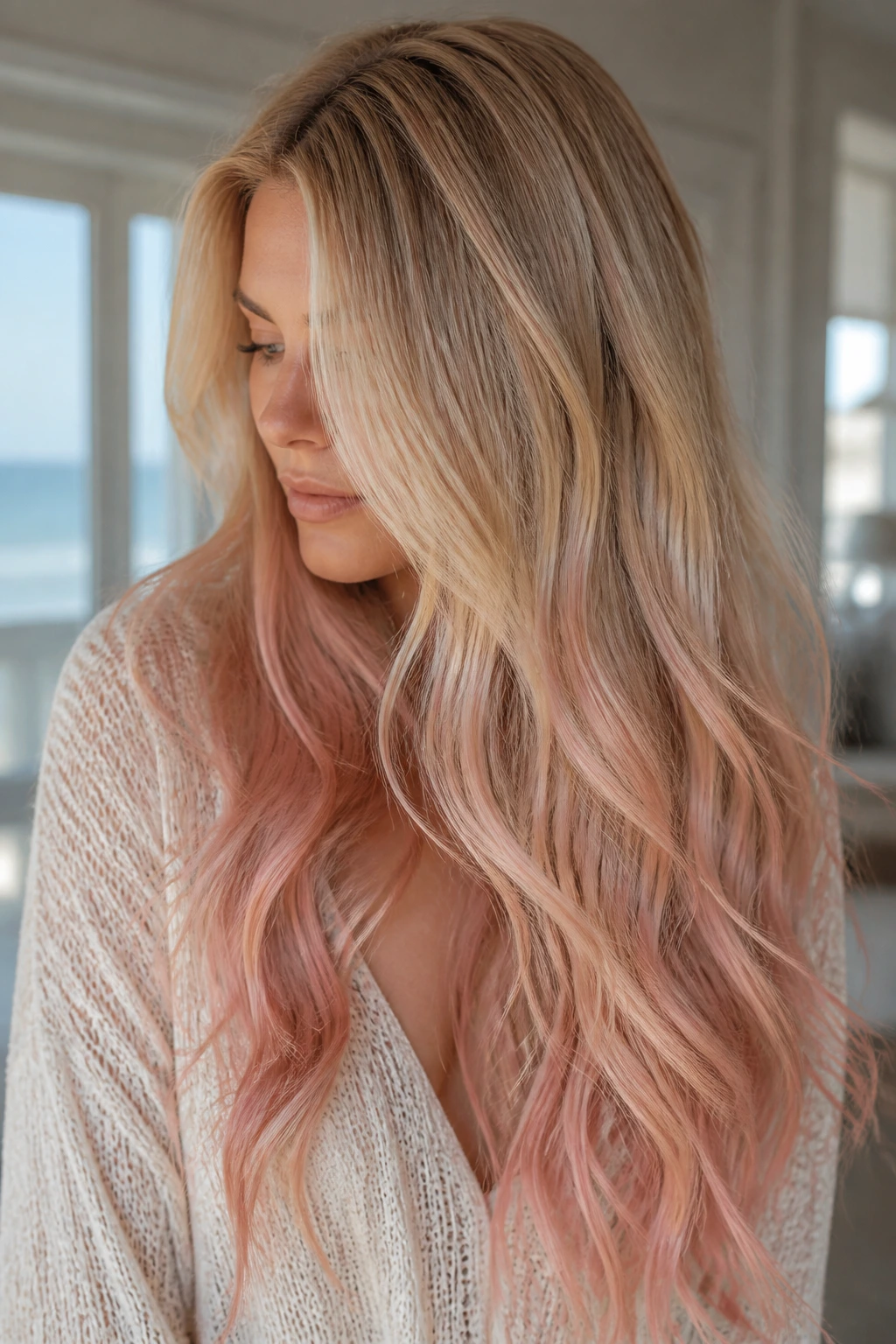
Rose gold ends are a smart way to add color without covering the whole head. They work best on blonde or pre-lightened long hair because the pink-gold blend needs a pale base to read properly. On darker hair, the shade turns muddy fast. On light hair, it looks soft and a little playful, like blush brushed onto the last few inches.
The ends are the place where a little color can have the most impact. On long lengths, a rose-gold fade creates a distinct finish when the hair swings. You see it in braids, low ponytails, and waves, but it doesn’t dominate the top half of the head. That makes it a nice choice if you want something noticeable that still feels easy to live with.
If you want it to last, ask for a semi-permanent stain or a pastel gloss rather than a permanent pink. The fade is part of the charm. As the rose washes out, it usually leaves behind a softer peach-gold cast that still looks intentional. That’s the sweet spot, actually. Not raw pink. Not flat blonde. Somewhere in the middle.
8. Platinum Blonde with a Soft Shadow Root
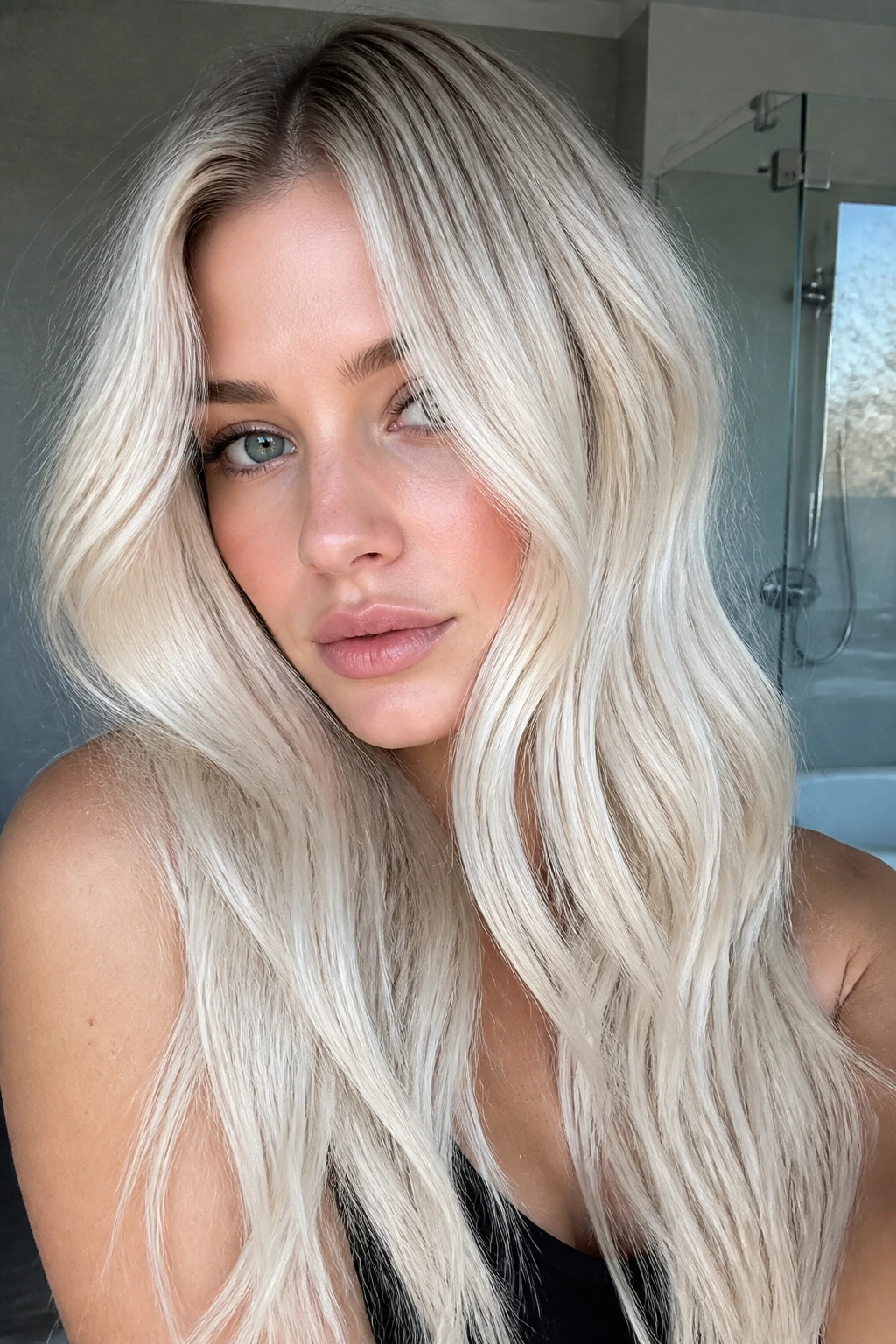
Platinum long hair is not subtle. It should not be. The appeal is the contrast between the icy lengths and the soft depth at the scalp, which keeps the grow-out from looking like an accident. Without a shadow root, platinum on long hair can look harsh fast, especially around the part line. With one, it looks deliberate.
The root shadow is doing real work here. A level 6 to 7 base, melted into pale blonde lengths, gives the color a place to breathe. I like the shadow to stay narrow at the front and slightly deeper at the crown so the root doesn’t fight the rest of the hair. The ends need bond support and careful toner, because lightened long hair can go chalky if it gets pushed too far.
This is one of the higher-maintenance choices on the list. It’s gorgeous. It’s also a commitment. Expect toning every few weeks, purple shampoo only when the blonde starts to yellow, and a deep mask if your ends feel rough when you twist them. Platinum can look brittle if you ignore the condition of the hair. That’s the trade-off.
9. Chunky 90s Highlights with a Clean Base
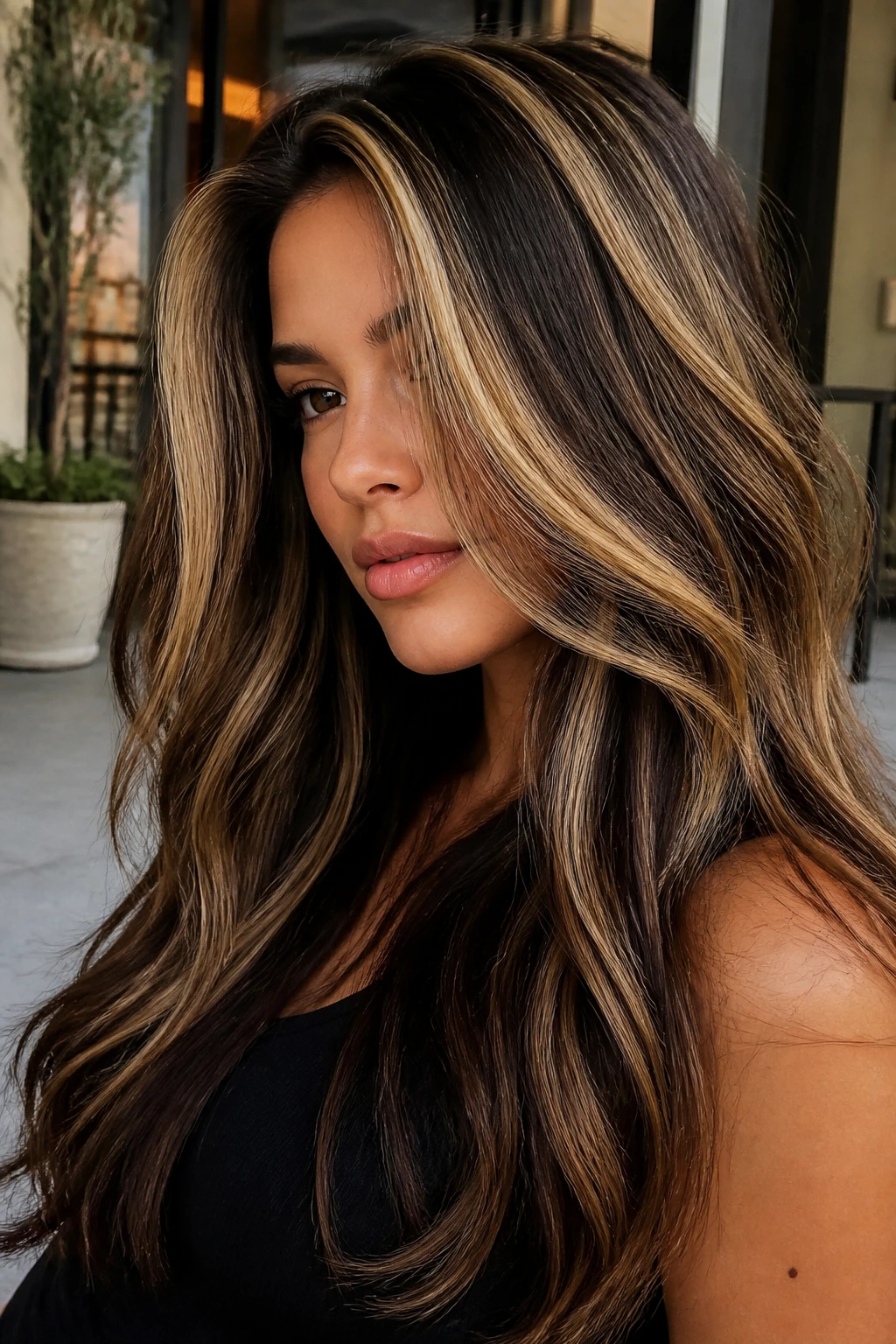
Chunky highlights are back because they make long hair look bold without needing a full-head bleach job. The key is to keep them intentional. Thick ribbons placed with space between them, especially around the face and through the top layers, create that familiar 90s contrast without drifting into zebra territory.
On long hair, those wider panels have room to travel. That’s what makes them work. A chunky piece near the front can stay visible as the hair moves back over the shoulder, and the lower sections can be left deeper so the color has something to sit against. Ask for foils about half an inch to an inch wide if you want the classic feel, or slightly softer ribbons if you want a modern version.
This style is best on hair with a little cut and shape. Long layers, a U-shaped perimeter, or curtain bangs keep the contrast from sitting too stiffly. It’s a sharp look, yes, but it needs movement to avoid looking stuck to the head. That part matters more than people think.
10. Bronde Ribbons with Soft Lowlights
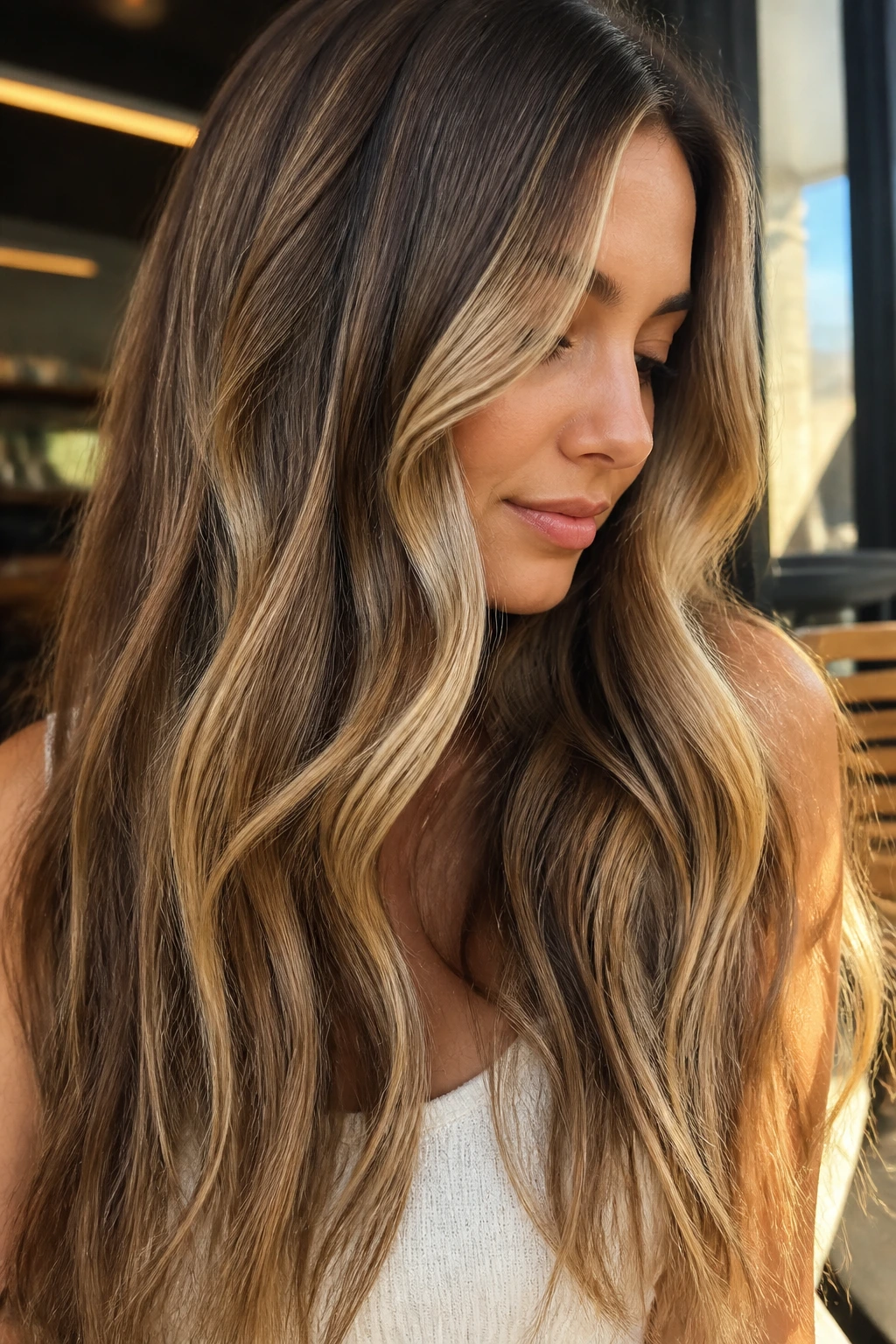
Bronde is one of those shades that sounds vague until you see it done well. On long hair, it’s usually the cleanest bridge between brunette and blonde, with lighter ribbons and deeper lowlights working together so the hair never reads one-note. The point is not to be halfway. The point is to have both tones showing at once.
I prefer bronde on longer lengths because the extra space lets the blond pieces spread out naturally. A few thin bright ribbons through the mid-lengths, plus lowlights just under the top layer, make the surface look fuller and the movement easier to see. If the hair is thick, the lowlights matter even more. They keep the lighter pieces from swallowing the cut shape.
This is a smart choice for someone who wants brightness without giving up depth at the root. It also grows out better than full blonde because the darker threads stay present between appointments. On a braid, the mix looks woven. On waves, it looks almost like sunlight has been layered in different passes.
11. Midnight Navy Peekaboo Panels Under the Top Layer
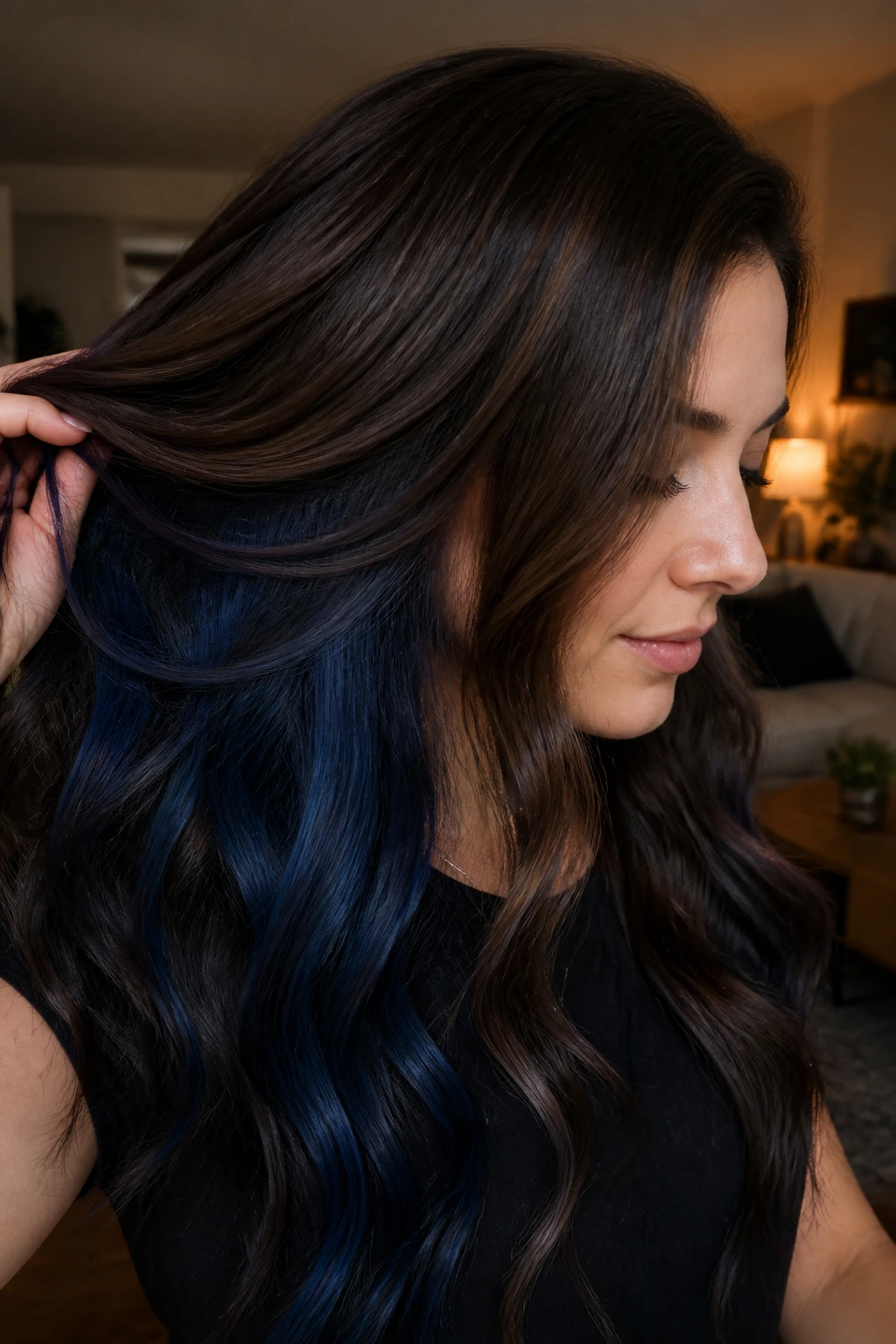
Underlayer color can be pure fun on long hair because you get two moods in one head. Midnight navy is one of the best versions of that idea. From the top, the hair can look brunette or black. Flip it, braid it, or pin it up, and the blue shows up like ink under glass.
This works best when the navy is laid onto pre-lightened panels. On a dark base, direct dye can still read deep and moody, but the blue won’t glow the same way. The sections under the top layer should be broad enough to show when the hair moves, but hidden enough that you can keep the look quiet if you need to.
Where peekaboo color lives
- Under the crown and lower sides.
- Around the nape for updos.
- Beneath long layers that can swing open.
- In braids and half-up styles where the underside gets revealed.
This is the kind of choice that suits long hair because the length gives you hiding space. You can keep the top polished and let the blue appear only when you want it to.
12. Cherry Cola Brunette with a Red Sheen
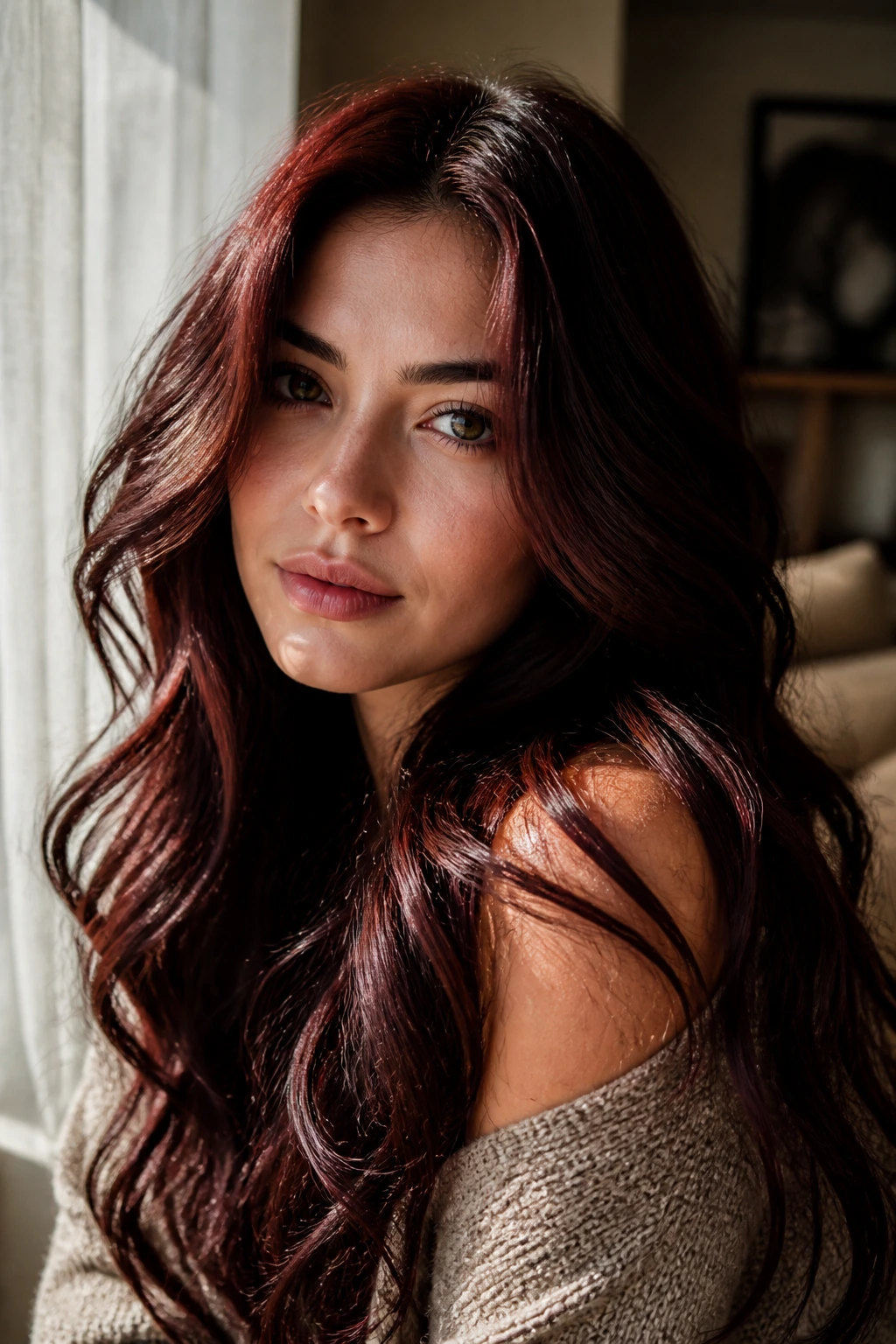
Cherry cola is one of my favorite ways to add red without going full copper or burgundy. The base stays dark brown, almost cola-deep, and the red shows up as a wine-colored sheen when the light hits it. On long hair, that subtle shift is more interesting than a flat red because the color changes as the strands turn.
The success of this shade depends on how much warmth you want to see indoors. In soft light, it can look like a rich brunette. In sun or under a bright window, the cherry note wakes up. That makes it a good choice for people who want color that isn’t always shouting. The red is there, but it doesn’t run the whole show.
If you wear your hair curled, the shade gets even better. Every bend in the strand reveals a different part of the pigment, so the hair looks deeper and glossier. It’s also a good fit for longer cuts that can handle a darker root and a reflective finish. There’s nothing fussy about it. It just looks expensive when the tone is right.
13. Beige Blonde with a Soft Root Shadow
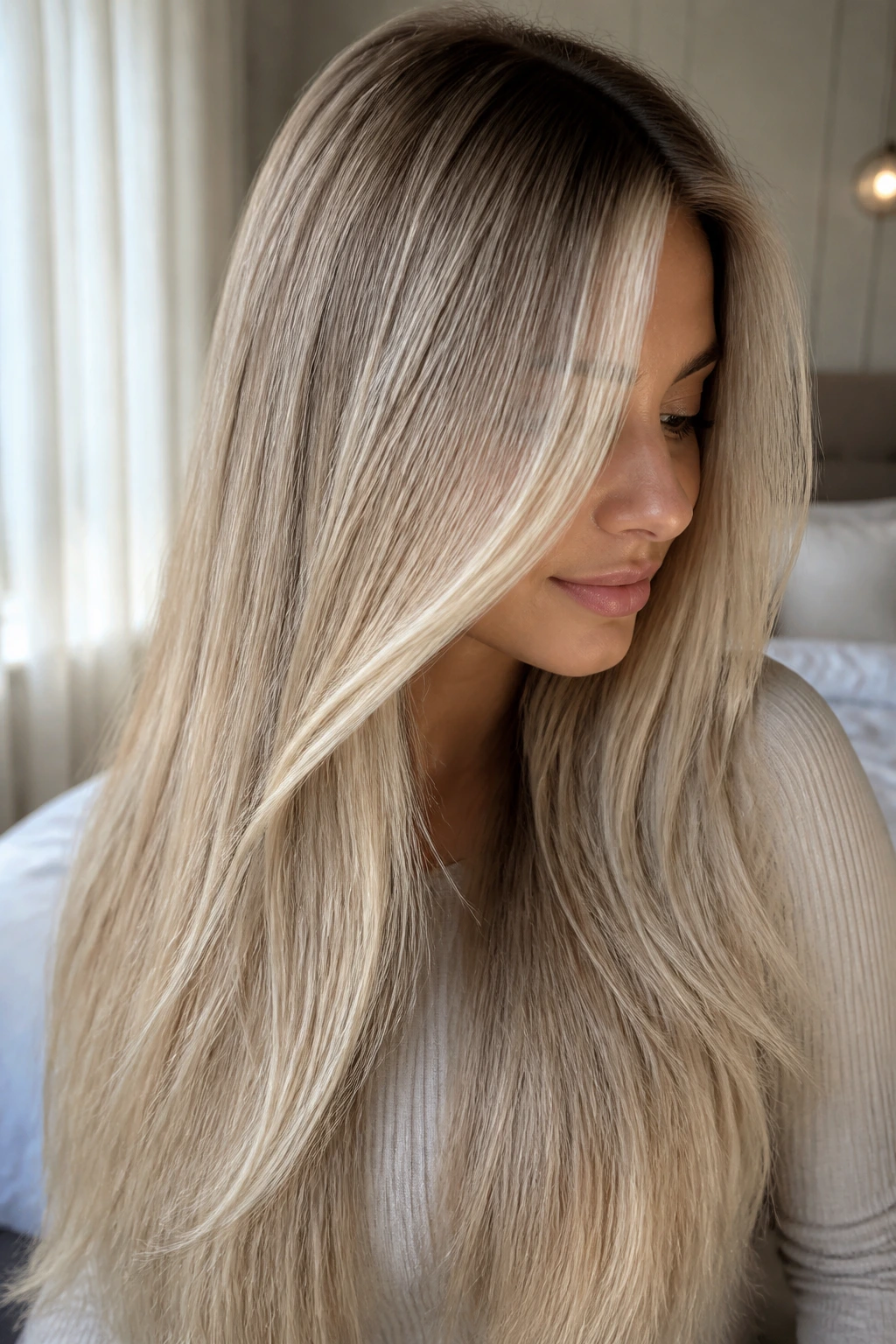
Beige blonde is the shade for people who want light hair without the icy edge of platinum or the yellow pull of warm gold. On long hair, beige has a clean, soft look because the color can run through the length without getting too bright too fast. A root shadow keeps the top from looking bleached to the scalp.
The reason this shade works is balance. The blonde is pale enough to read as light, but the beige tone keeps it from turning chalky or brassy. That makes it easier to wear with long, layered hair because the strands don’t reflect in one flat color. They shift between cream and sand depending on the light.
If your base is naturally dark, this is still possible, but it usually takes more than one session to get the lift cleanly. That’s not a flaw. It’s just the reality of going pale without breaking the hair in the process. A soft root shadow gives the color room to grow, and long hair needs that breathing room more than short cuts do.
14. Cool Ash Blonde with Lowlights for Depth
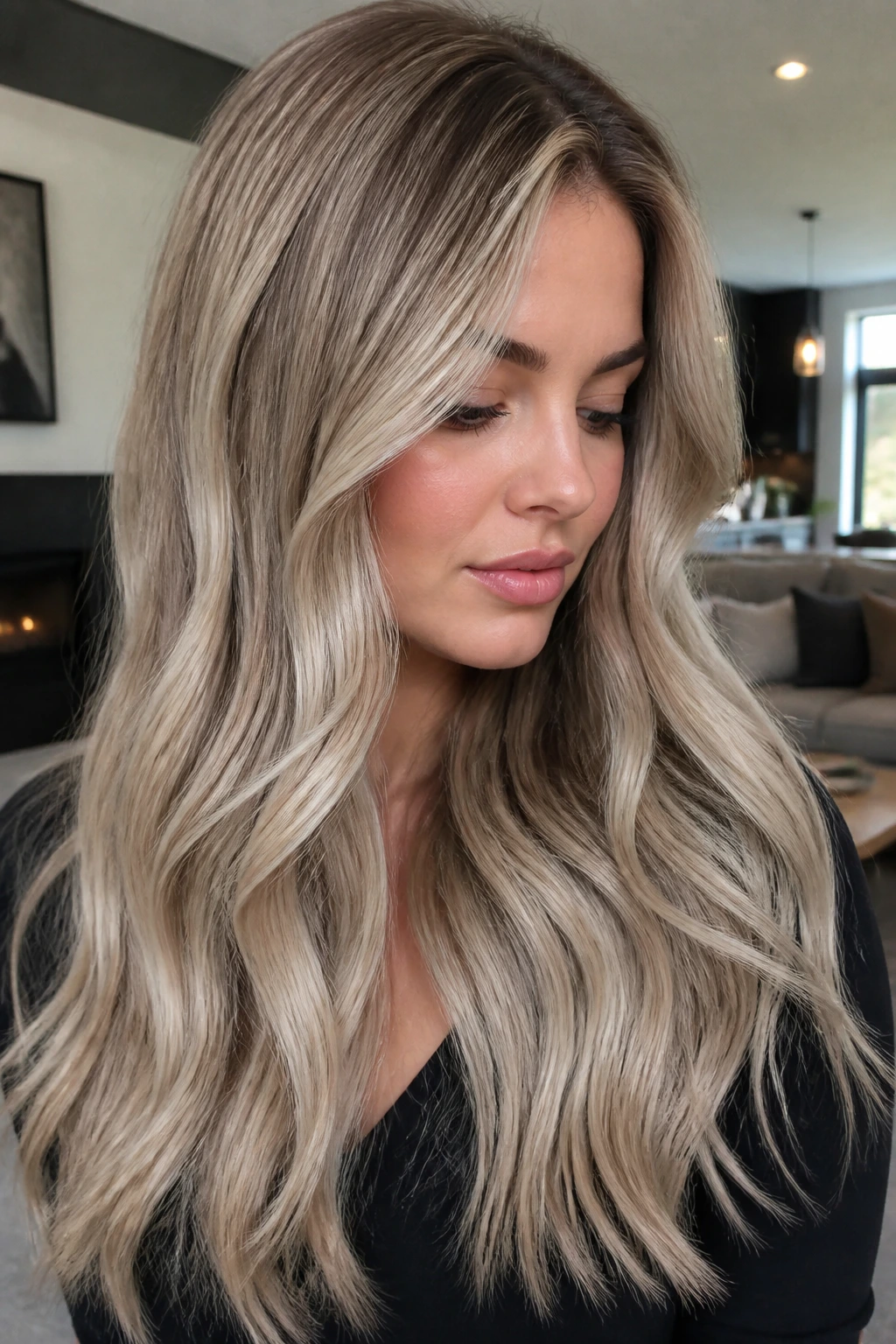
Ash blonde gets a bad reputation when it’s done too flat. On long hair, though, it can look sharp and modern if there’s enough lowlight underneath to stop it from turning washed out. The right version is cool, smoky, and a little quiet — not gray, not silver, just muted enough to cancel brass.
This is a shade that rewards texture. Loose waves, bends, and layered cuts keep the ash pieces from looking like one solid matte sheet. I especially like it when the lowlights are one or two levels deeper than the blonde so the length doesn’t disappear. That tiny bit of contrast saves the shape.
It’s also a practical option if your hair pulls warm quickly. You’ll still need purple shampoo, but not in the aggressive, over-done way that leaves the hair looking purple on purpose. Use it lightly. Once a week is usually enough. Any more and the tone can go dull fast, which is the opposite of what most people want from ash blonde.
15. Vanilla Cream Blonde with Feathered Babylights
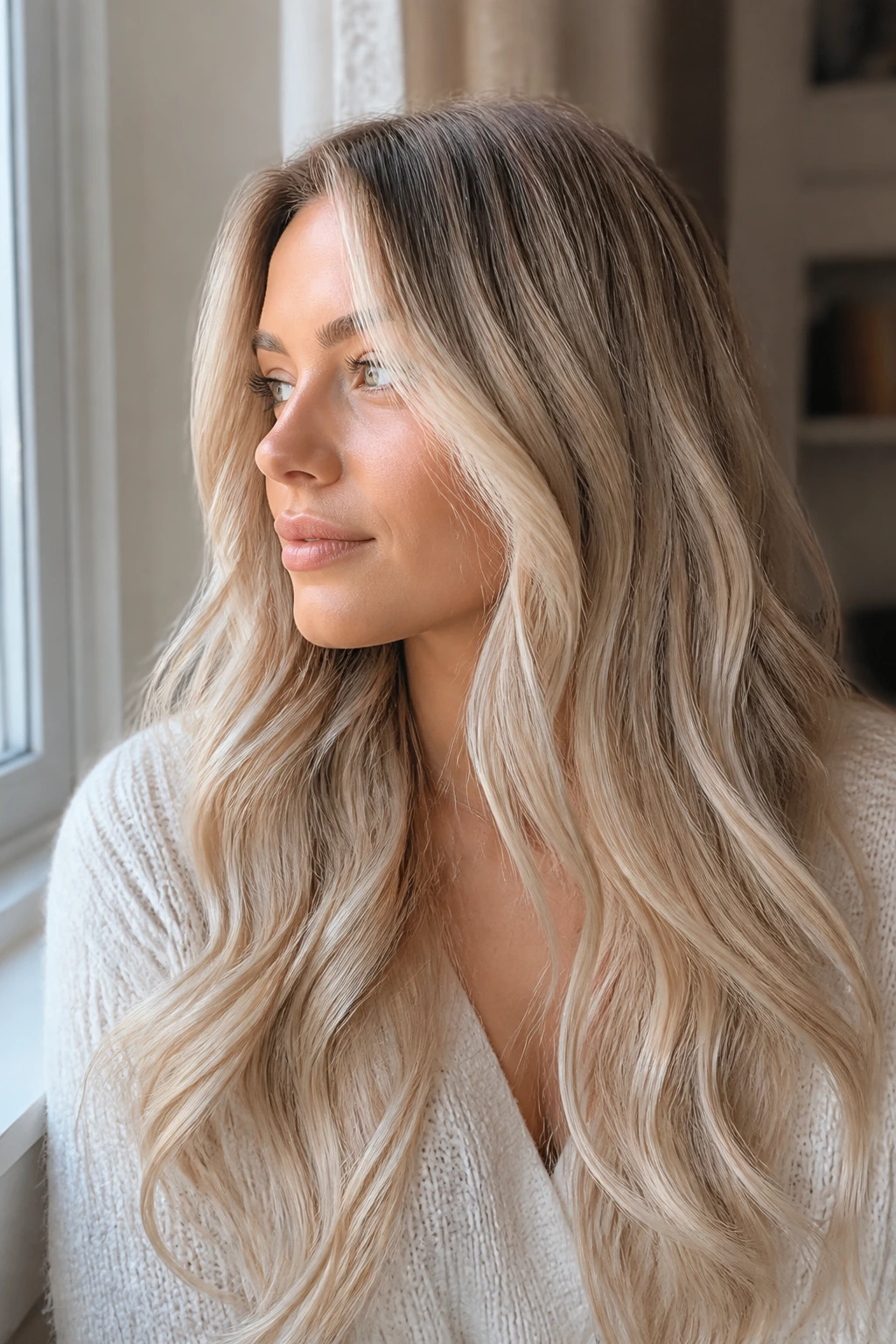
Vanilla cream blonde sits between warm beige and pale blonde, and that middle ground is what makes it so easy on long hair. It’s soft, not flat. Bright, not icy. The color looks especially good when it’s built from fine babylights that blur together instead of from chunky sections that announce themselves from across the room.
Long hair gives this shade a chance to breathe. The lighter pieces can travel from mid-length to ends, while the root stays soft enough that the grow-out doesn’t punch you in the face. I like this look on hair with long layers, because the cut helps the pale pieces shift instead of hanging in a single curtain.
If you want the blonde to stay creamy, keep your water temperature lukewarm and avoid overusing purple shampoo. That product is useful, but it can make vanilla blonde look a little dusty if you lean on it every wash. A better move is a gentle color mask once a week and a gloss when the brightness starts to fade.
16. Auburn Melt from Crown to Ends
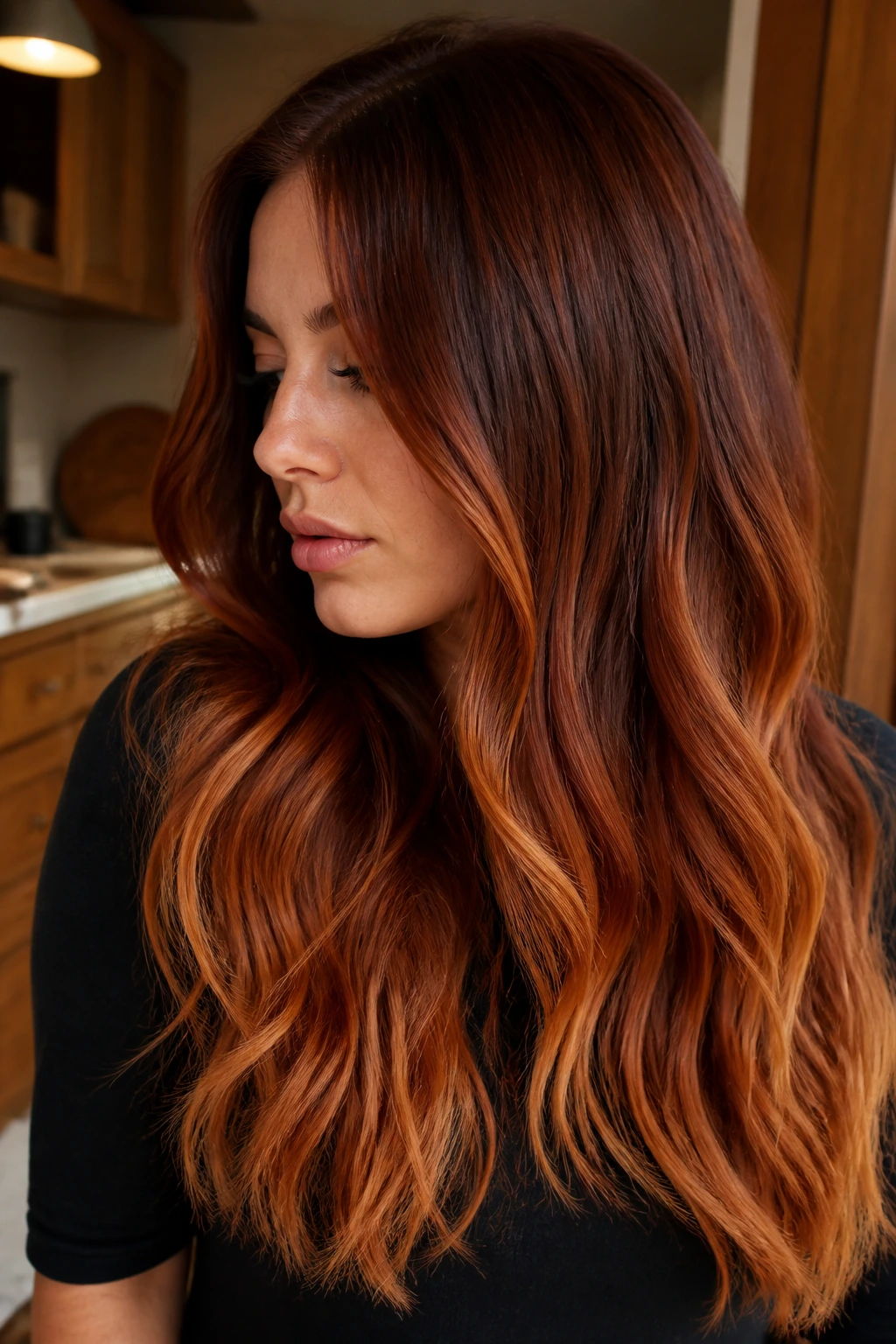
Auburn is richer than copper and warmer than brown, and that middle space is exactly why it works on long hair. An auburn melt starts deeper near the root, then warms through the mids before finishing with a brighter red-brown on the ends. The color shift looks expensive when the hair is long enough to carry it.
This shade is a good fit for people who want warmth but don’t want to commit to a true red. It’s calmer. Less shouty. On waves, the tonal move from brown to auburn becomes visible every few inches, which keeps the style from reading as one solid sheet. Curly hair is especially good here because the shape brings the different notes forward naturally.
The one catch is maintenance. Red tones fade, and long ends soak up that fade faster than the roots. A tinted conditioner or gloss helps keep the auburn from turning flat. If you like color that softens rather than screams, this is a very good place to land.
17. Smoky Lavender on Dark Hair
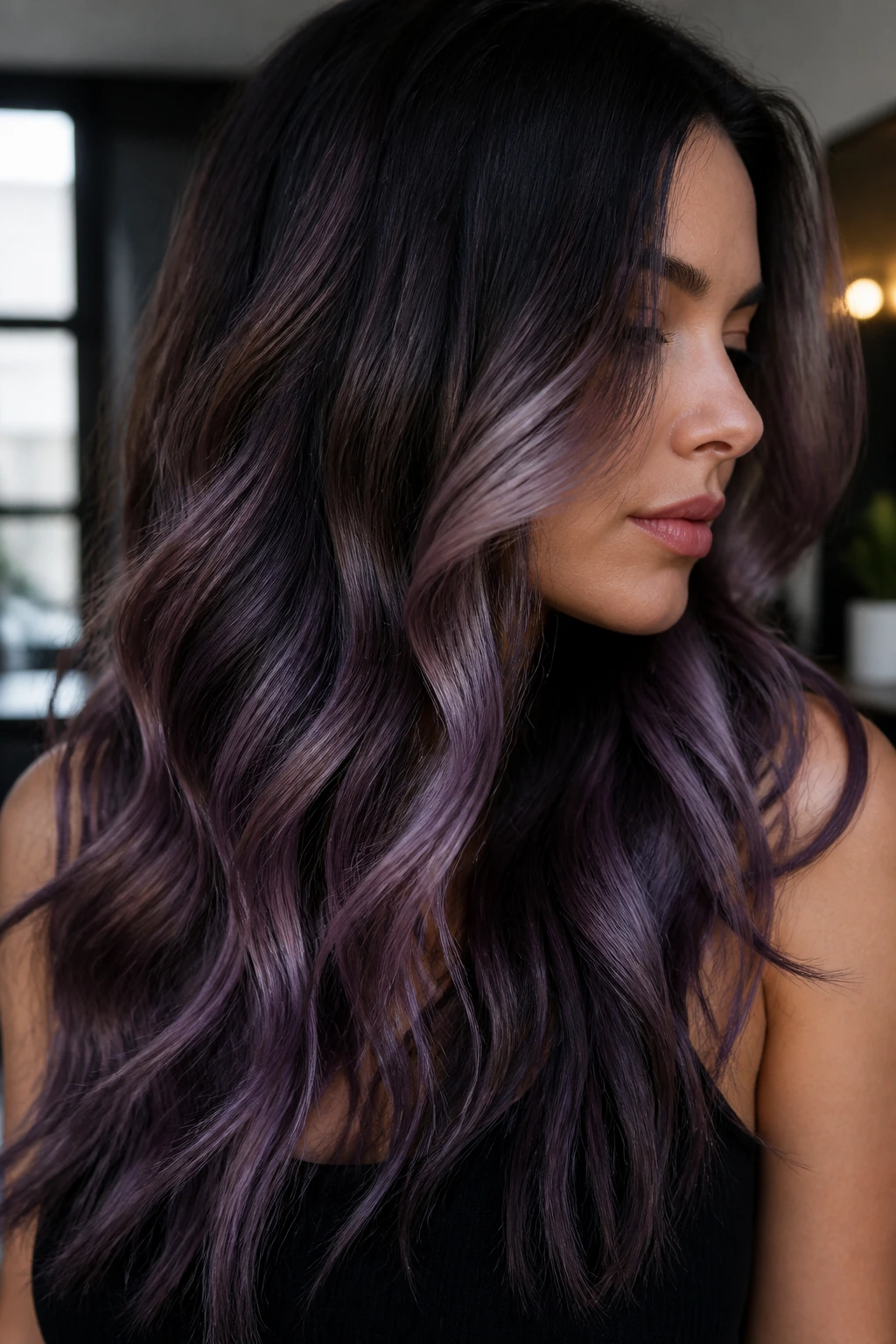
Smoky lavender is for people who want fantasy color without the sugar-high version of it. On dark hair, the shade needs pre-lightened panels or a lighter base to show properly, but the payoff is worth it. The lavender isn’t candy pastel. It’s muted, almost dusky, with a little gray in the mix so it feels grown-up rather than costume-ish.
The best placement on long hair is usually through the mid-lengths and ends, or in broad panels under the top layer. That keeps the color from overwhelming the face. It also lets the lavender fade through lilac and silvered mauve, which is part of the charm. On long hair, fade is not a problem to be feared. It’s part of the story.
This shade looks especially good when the hair is waved loosely or twisted into a half-up style. The soft movement shows off the smoky tone shift. If the hair is very dark and very resistant, the lavender may need more lift than you’d expect, so patience matters. Rushing the bleach is how people end up with yellow hair and a disappointing purple glaze on top.
18. Teal Underlayer That Shows in Braids and Buns
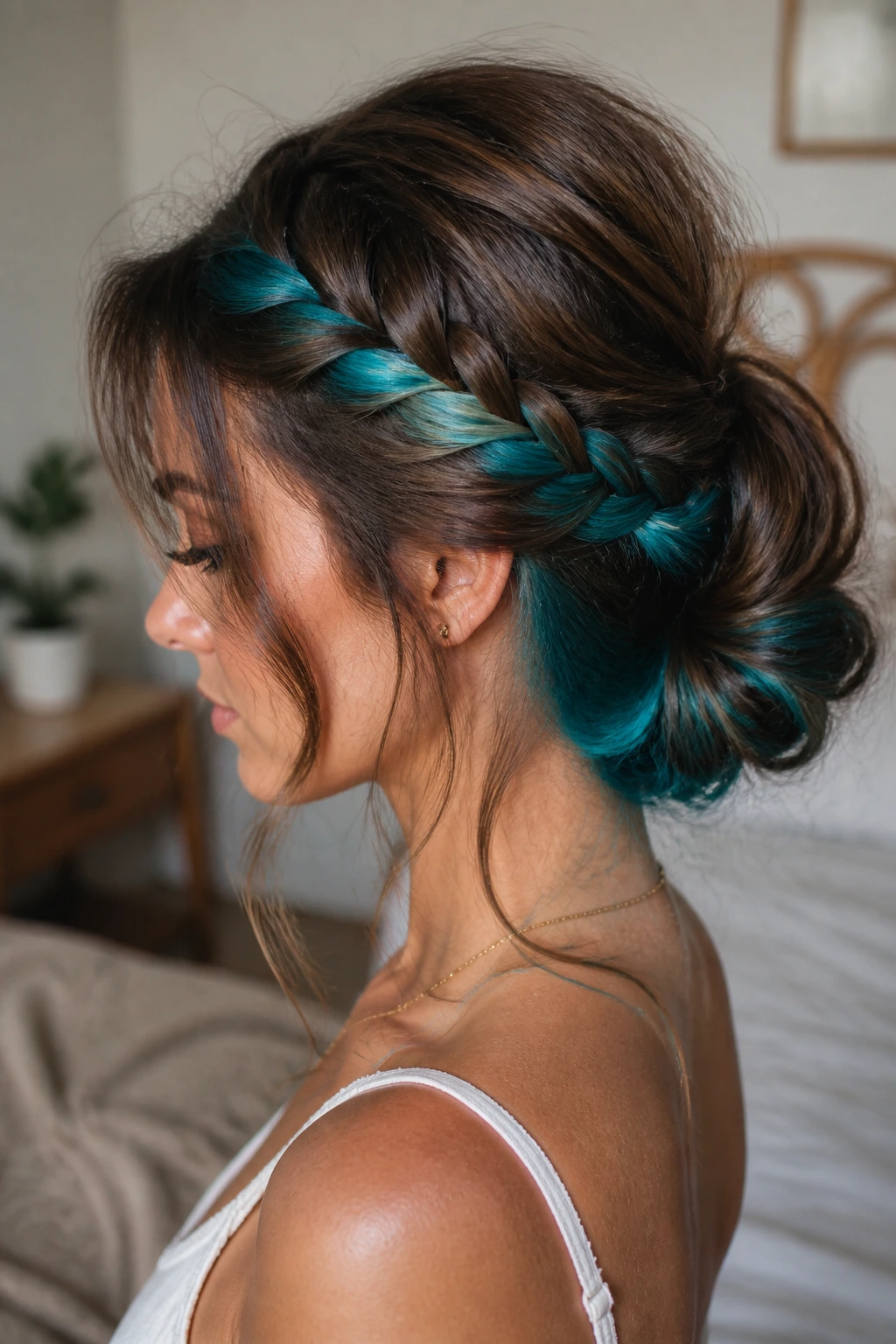
Teal underlayer color is one of the smartest ways to wear bold color on long hair because it can hide when you need it to. From the front, the hair can stay natural or softly highlighted. From the side or underneath, the teal flashes through the lower sections like a secret.
Long hair makes this idea better because there’s more room for concealment and reveal. A braid can thread the teal through the base. A low bun can show a little panel at the nape. A half-up style can leave the top neutral and let the color live underneath. That flexibility is the whole appeal.
Best if you want hidden impact
If your workplace is strict or your style changes with the day, this is a strong choice. The color can be as bright or as smoky as you want; I like teal with a touch of blue-black in it because it holds shape even after a few washes. Use direct dye on pre-lightened sections if you want the color to stay vivid. On darker hair, it’ll read deeper and moodier, which isn’t a bad thing at all.
19. Warm Chestnut with Auburn Lights
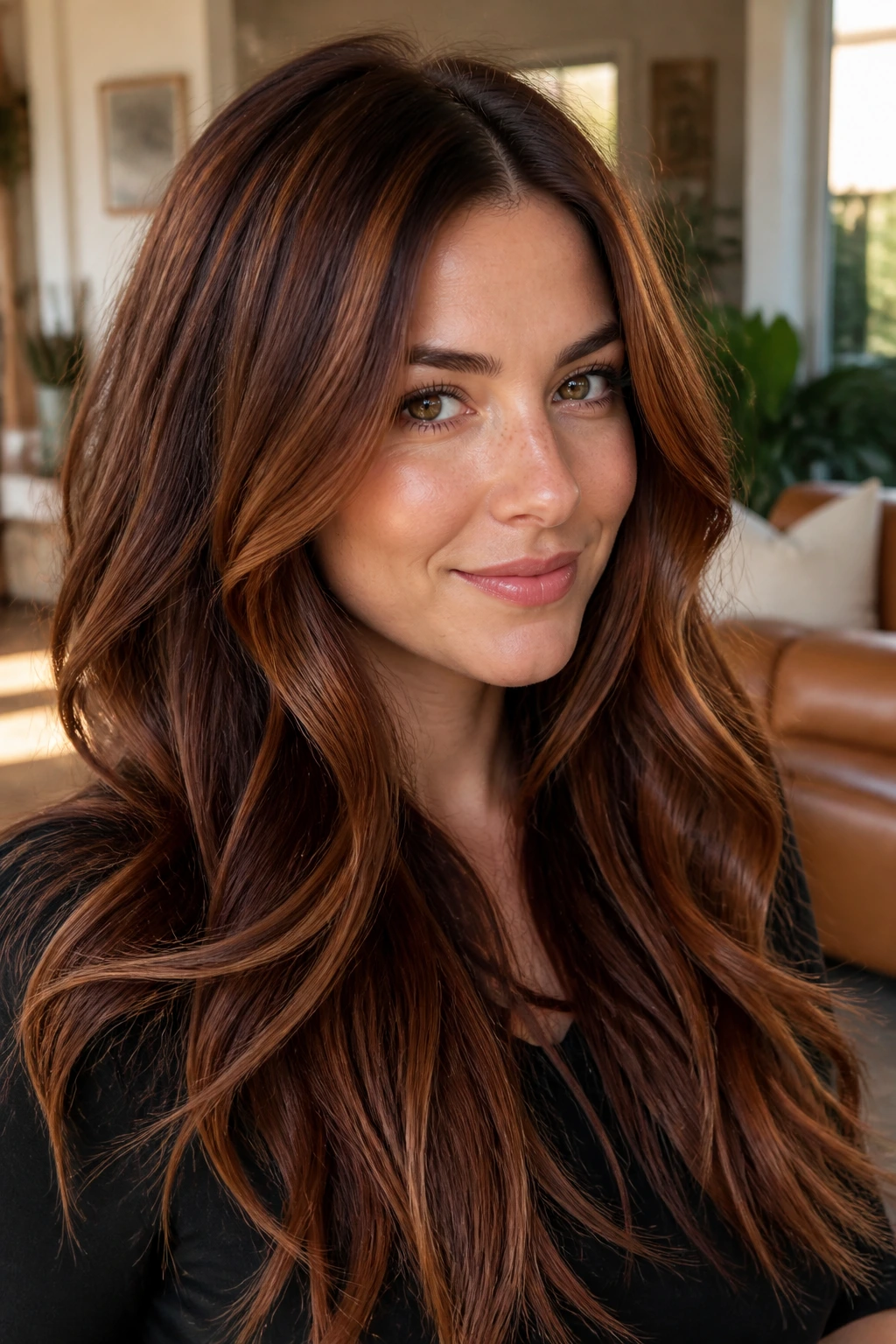
Chestnut with auburn lights is the quiet cousin of full red. The base stays rich and brown, and the lighter strands are warm enough to glow without turning orange. On long hair, that matters because the hair already has plenty of visual real estate. You do not need the color to shout to get noticed.
This is a very forgiving choice for people who want warmth but still need something that looks polished in a ponytail. The auburn lights run through the outer layers and around the face, so the color shows where the hair moves and where the part falls. On a long blowout, the contrast feels soft and healthy rather than high-drama.
It’s also easier to maintain than true copper or red because the chestnut base keeps the style grounded as the highlights soften. When the auburn fades, it usually still leaves behind a warm glow rather than a weird pink cast. That makes a big difference if you hate constant salon upkeep.
20. Peachy Rose Gold for a Soft, Warm Finish
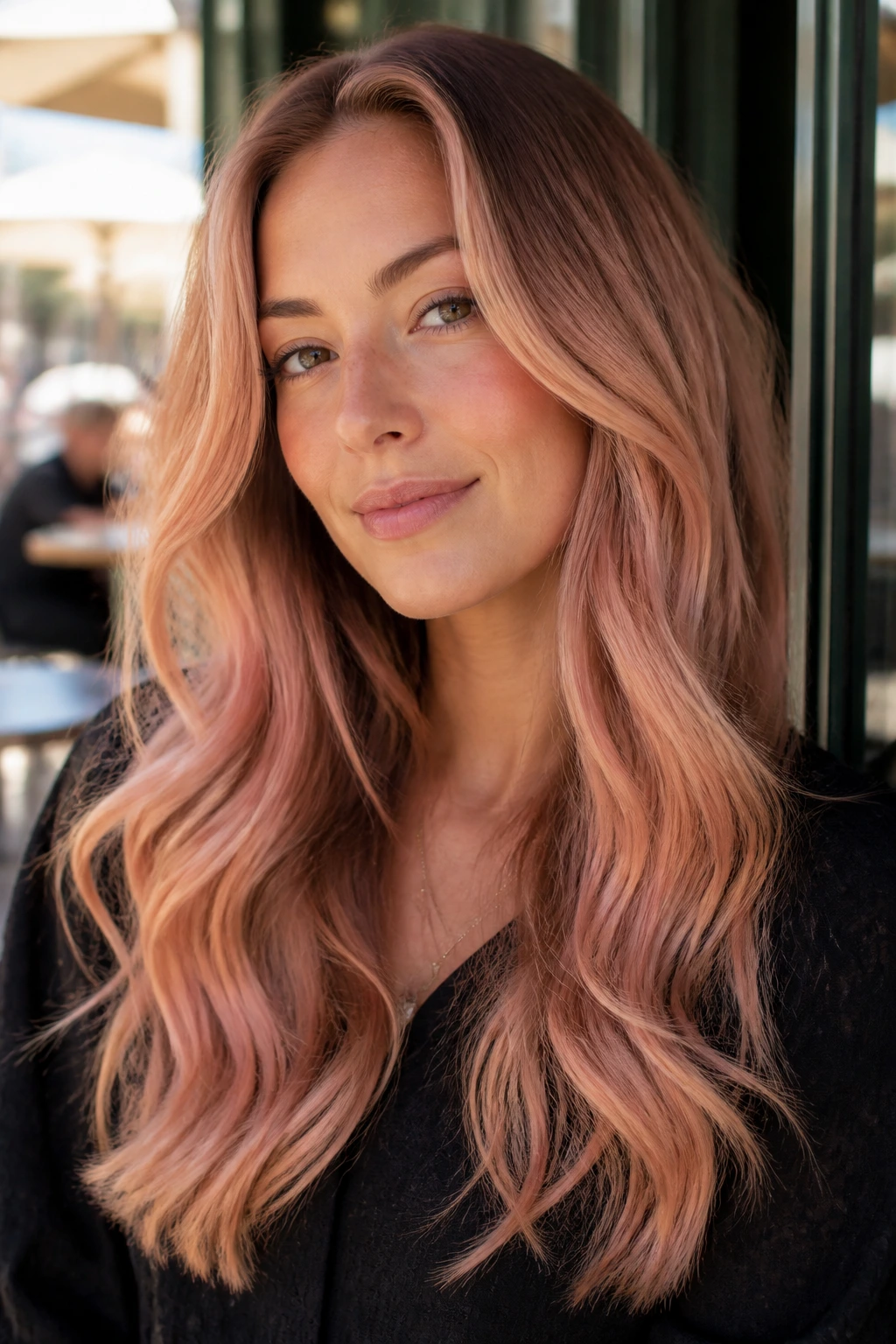
Peachy rose gold is brighter than beige, warmer than pink, and softer than copper. On long hair, that combination reads especially well because the color can wash from the face into the ends without one hard stop. It’s flattering in motion and even better in daylight.
This shade works best on blonde or lightened hair. Think of it as a warm blush glaze laid over a pale base. Too dark, and it disappears. Too saturated, and it starts looking like a fashion shade instead of a wearable one. The sweet spot is soft enough that the peach comes through first and the rose sits behind it.
I like it on long hair that’s styled in loose bends or big curls. The different tones show at the ridges and folds. If you want something playful but not sugary, peachy rose gold hits that middle ground. It fades gracefully too, which is more than I can say for most bright pastel shades.
21. Toffee Ombre with a Long, Slow Fade
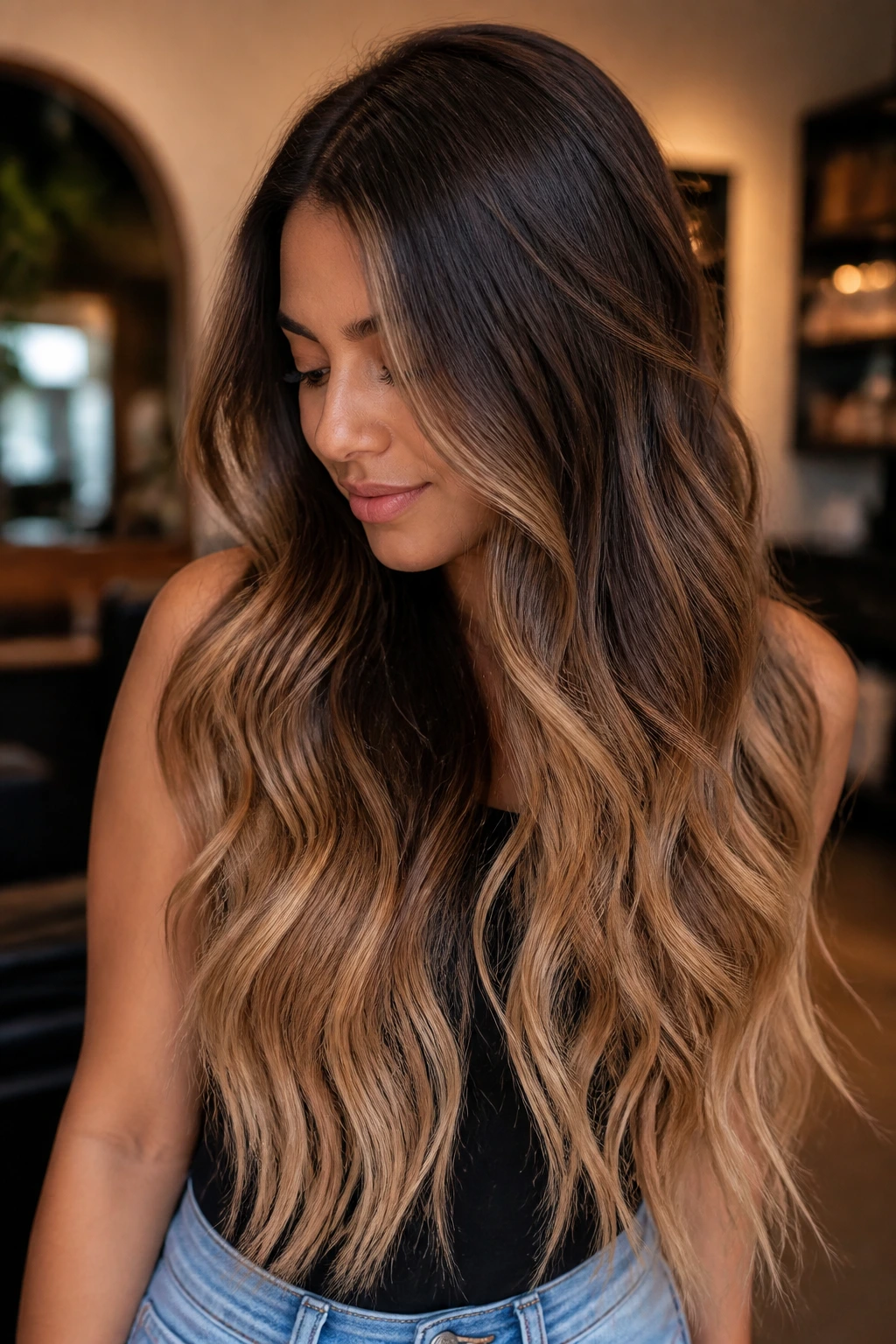
Toffee ombre is not the same as balayage, even though people lump them together. Ombre is about the vertical fade. On long hair, that fade has room to travel, which is why it looks better here than on shorter lengths. Darker roots melt through caramel mids and end in a richer toffee blonde that feels deliberate from top to bottom.
The shape of the fade matters. You want a soft transition, not a hard horizontal line halfway down the head. Long hair gives you enough canvas to stretch that shift out. Ask for the brightest point to live in the lower third of the hair, where the ends can carry it without overpowering the root.
This is a good choice for people who like a little drama but still want low-maintenance grow-out. The root can stay darker longer, and the toffee ends keep the look from getting heavy. If you wear the hair in waves, the gradient looks even more natural. In a braid, it becomes a neat little ribbon of color changes.
22. Jet Black with a Blue Sheen
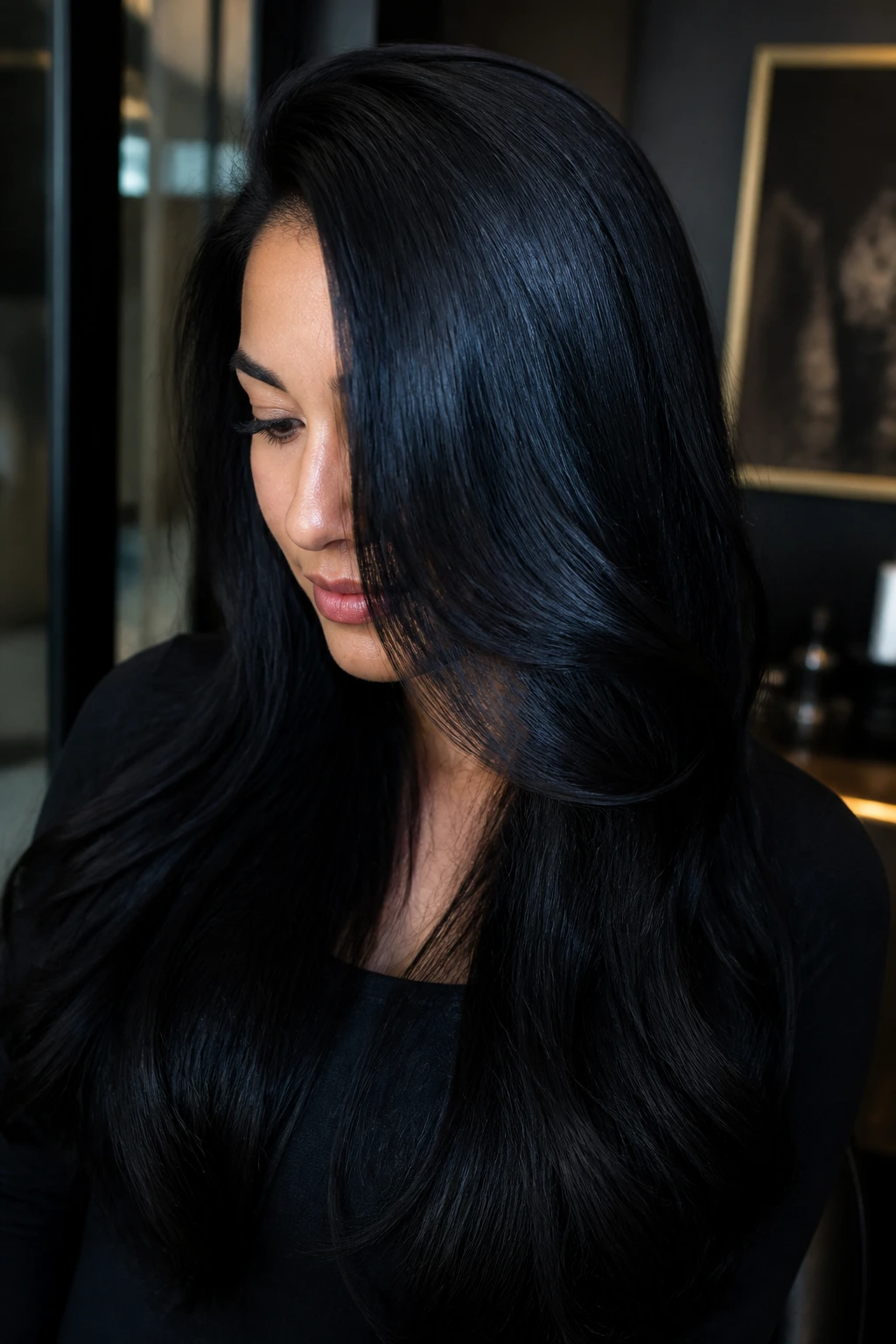
Jet black on long hair sounds plain until the light hits it. Then the blue sheen wakes up, and the whole style changes. The best version is not flat ink-black. It has a blue-black finish that shows in strong light, especially on sleek, healthy lengths. That reflective edge makes the hair look dense and polished.
Long hair gives this color something to do. The shine runs along the full length, and if the cut is clean, the ends don’t get lost in the dark. I like this shade best when the hair is worn straight or in a smooth wave, because texture can hide the reflective finish. If you want the color to read clearly, a smooth blow-dry helps.
This shade also plays well with strong brows, red lips, and simple clothes. The hair does the work. There’s no need to pile on more. If you want a dark color that still has movement, blue-black is a smarter pick than a plain boxed black, which can look harsh and one-dimensional on long lengths.
23. Graphite Silver with Charcoal Lowlights
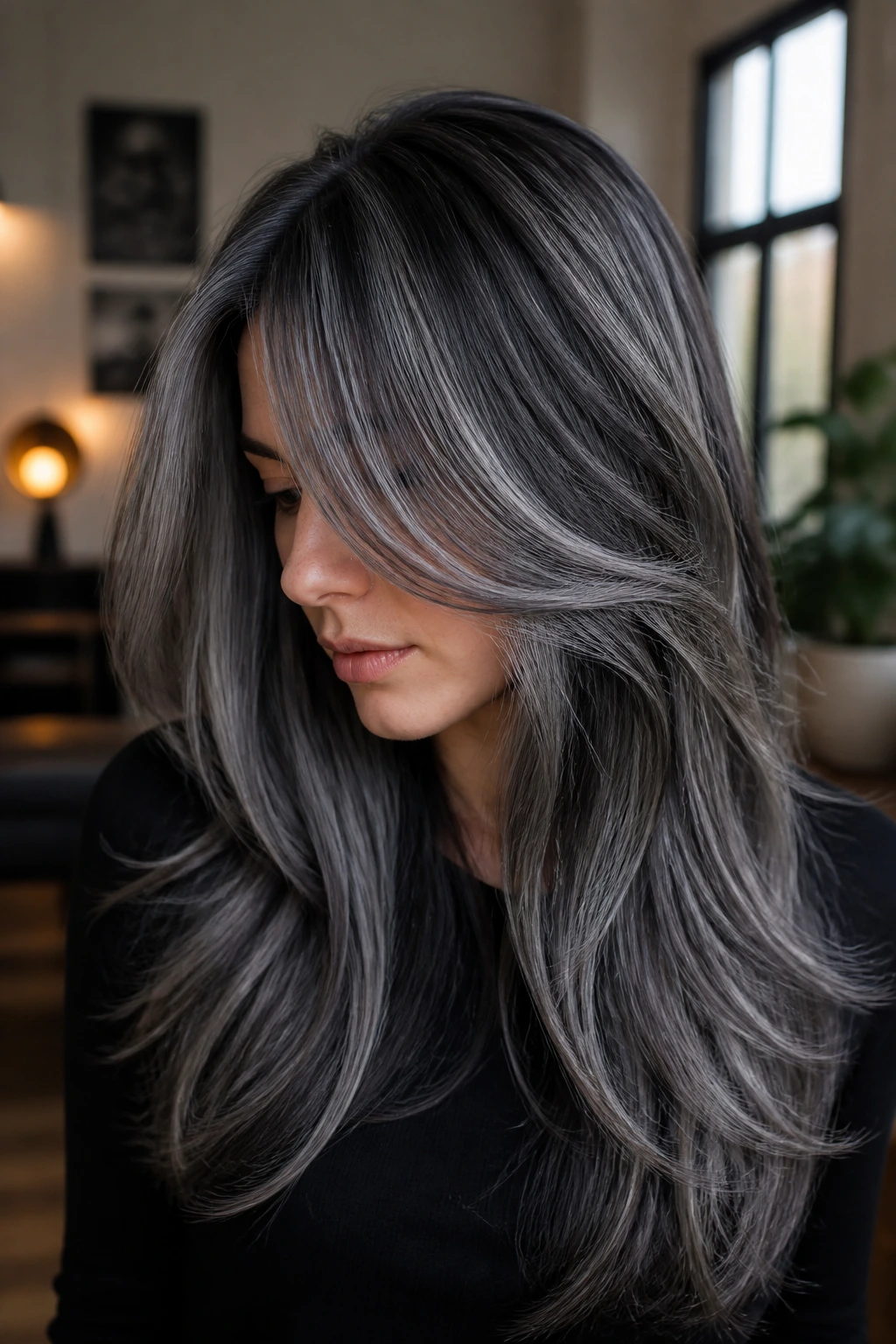
Graphite silver is what happens when silver hair keeps its shape. The color is cool and metallic, but the charcoal lowlights keep it from flattening into a bright, washed-out gray. On long hair, that depth matters because too much silver can make the length look thin at the ends.
The nicest versions have a smoky base with cooler silver panels layered over it. That lets the color shift between steel, ash, and pewter as the hair moves. It’s a strong look, and it works especially well on long cuts with layers because the lowlights create enough break-up to show the shape of the hair.
How to keep the silver from flattening
Use purple shampoo carefully, not constantly. Too much can over-tone the hair and make it read dull or violet. A clear gloss between salon visits keeps the metallic finish sharp. If your ends are porous, ask for a little extra conditioning at the bowl, because graphite silver can look crisp at the root and tired at the bottom if the hair is dry.
Why Long Hair Changes the Color Placement Game
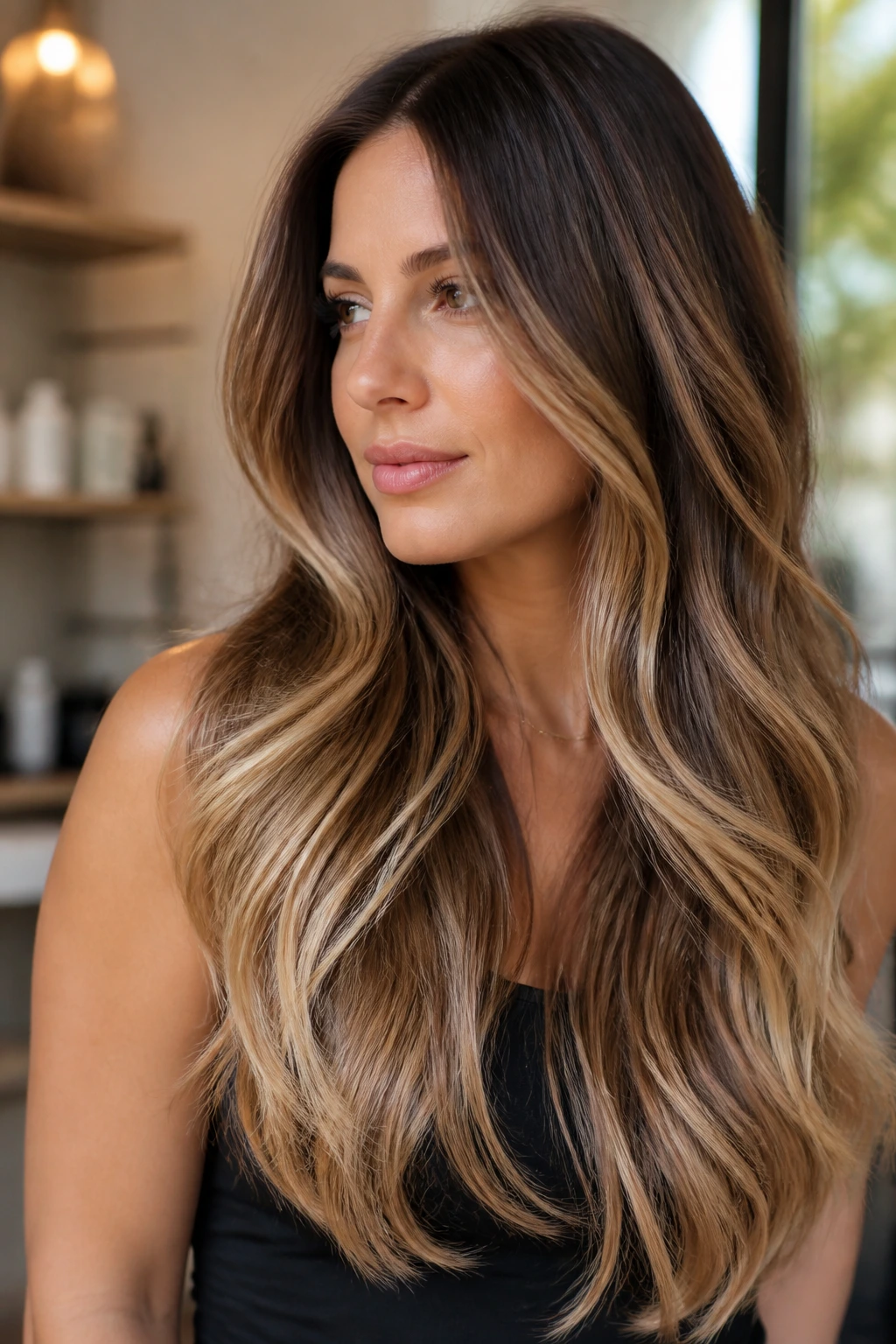
Long hair is generous, but it is not forgiving in the way people expect. There’s more room for the shade to move, which means there’s also more room for mistakes to show. A highlight placed too high on the head can look stripey for months. A toner chosen too cold can turn the last three inches flat and dusty. A root that’s meant to be soft can grow out into a stark line if the stylist doesn’t stretch it enough.
Porosity is the other big piece. The ends of long hair have lived through more washes, more heat, more sun, and usually more friction from coats, car seats, and pillowcases. They accept pigment faster and lose it faster. That is why a smart color plan often uses a slightly different formula on the mids than on the ends. It’s not overkill. It’s how you stop the bottom half from looking dull while the top still looks fresh.
There’s also movement. Long hair doesn’t sit still the way a bob does. It gets tucked behind ears, swept into braids, flipped over one shoulder, and tossed into clips. That movement is why ribboning, lowlights, peekaboo panels, and soft melts are so useful. They let the color reveal itself in pieces instead of all at once. Flat color has a hard time surviving that kind of motion. Multi-tone color thrives there.
Tools That Make Consults and Styling Easier
A good color plan starts long before the first foil goes in. Bring the right tools to the consultation, and half the battle is already won. I’m not talking about anything fancy. I’m talking about the simple, useful stuff that keeps the appointment clear and the styling manageable once you get home.
-
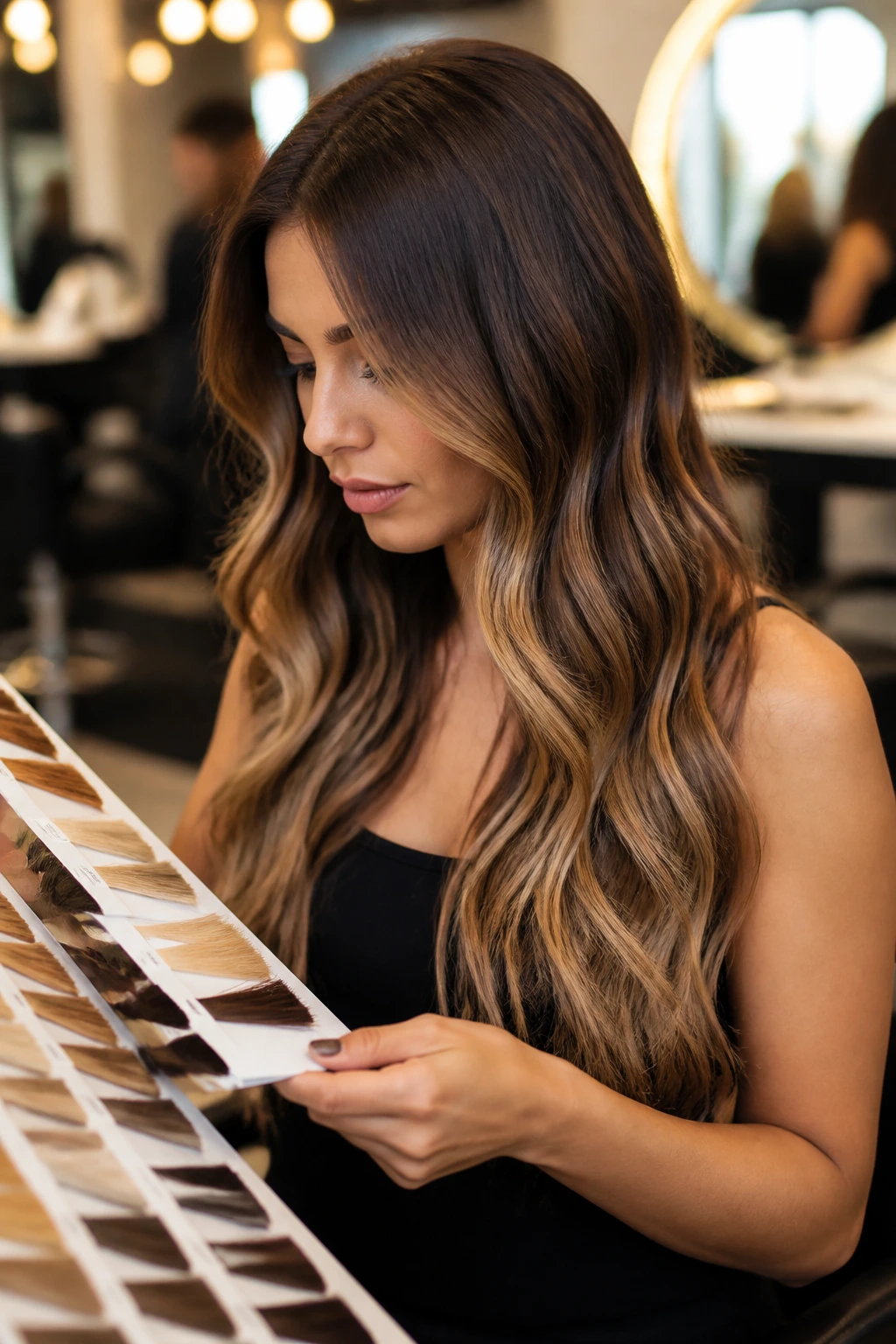
3 reference photos: Bring one of the shade you want, one of a color you do not want, and one of how you normally wear your hair. That saves more time than a long explanation.
-
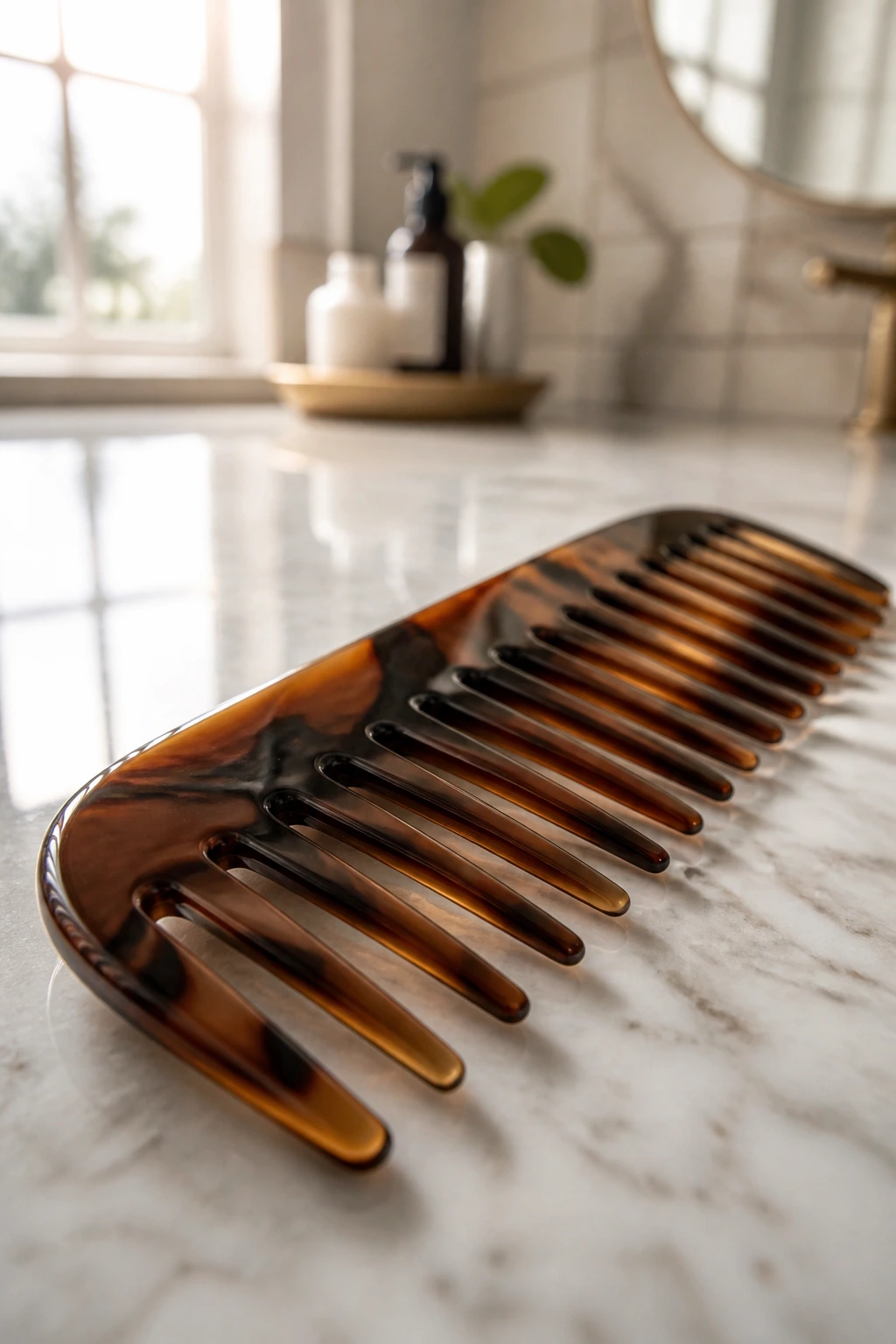
A wide-tooth comb: Useful for detangling long, color-treated hair in the shower without ripping through wet ends.
-
Sectioning clips: Long hair tangles around itself. Clips make styling, toning, and blow-drying less annoying.
-
Color-safe shampoo and conditioner: Look for sulfate-free formulas if your shade is warm, red, or pastel; they usually hold tone better.
-
Purple or blue shampoo: Purple helps blondes; blue helps brown hair that pulls orange. Use both with restraint.
-
Heat protectant spray: Long colored hair gets more vulnerable at the ends. A light mist before blow-drying or ironing helps keep them from getting rough.
-
Silk or satin pillowcase: It cuts down on friction, which matters more on hair that reaches the shoulders and below.
-
Deep mask or bond-builder: Especially worth it if your hair has been lightened more than once.
-
Optional shower filter: If your water is hard, a filter can reduce mineral buildup that dulls blonde and silver tones.
Smart Shopping and Shade-Choosing Tips
Picking a hair color for long hair is easier when you stop thinking in names and start thinking in levels, tone, and upkeep. “Honey blonde” can mean four different things in four different salons. “Brunette balayage” can be warm, cool, soft, or stripey depending on how it’s built. Bring photos, yes, but bring a clear idea of maintenance too.
The best reference photos show more than one angle. A front shot tells you where the face-framing pieces sit. A side shot shows how the color fades through the length. A back shot tells you whether the ends are actually bright or just lit by good photography. Long hair changes under different light, and salon mirrors do not tell the whole story.
Think about your base color honestly. A level 3 brunette won’t get to pale vanilla blonde in one gentle appointment without a lot of work. That doesn’t mean you can’t move lighter. It means the path matters. If your hair is already porous, ask whether the colorist plans to use a bond builder, a root shadow, or a second session. Those details are not extras. They’re the difference between shiny and fried.
How to Wear These Colors on Long Hair
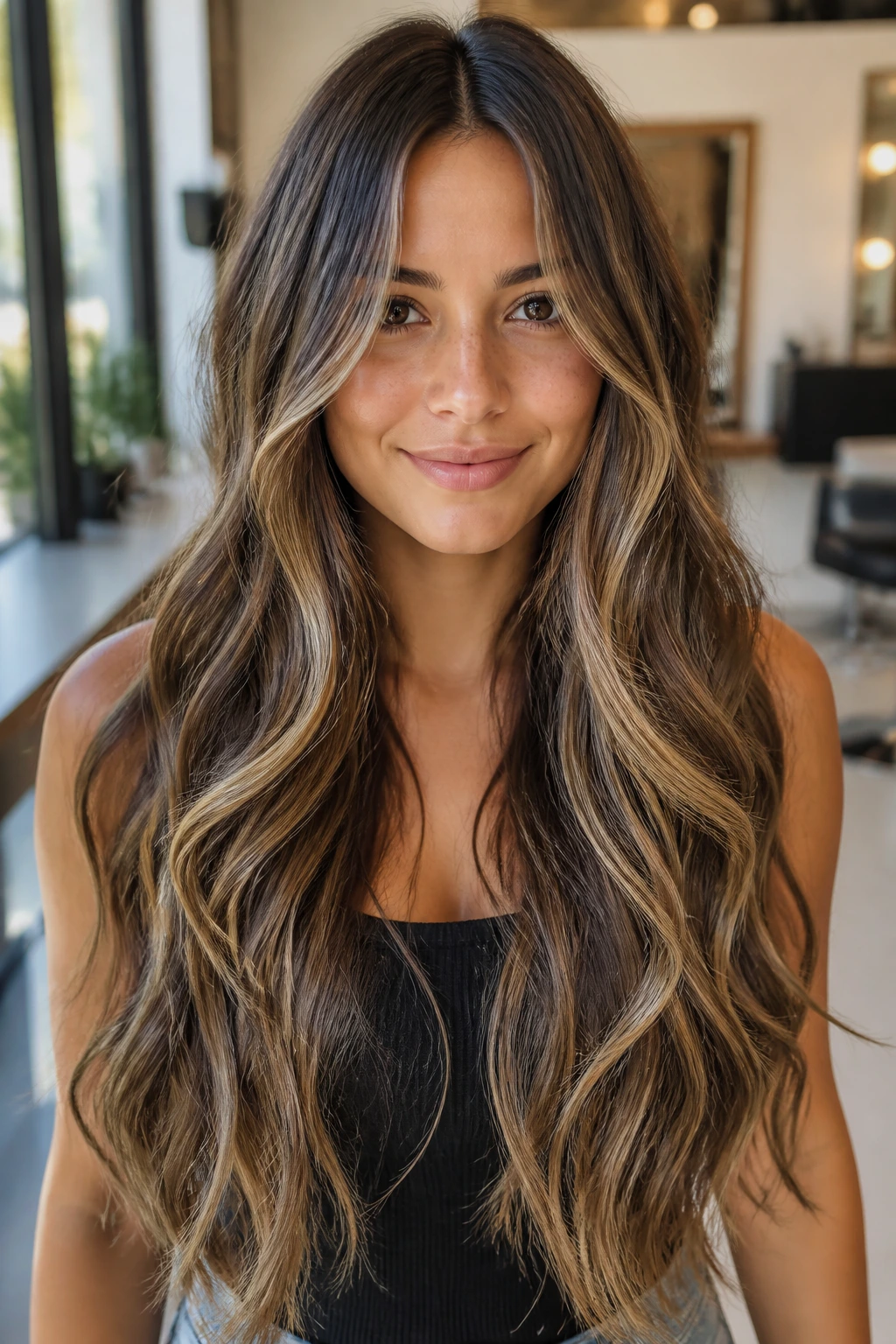
Presentation: Long color looks best when the style lets the tones move. Loose waves show off ribbons and balayage; a glossy blowout makes dark shades like espresso, blue-black, and graphite silver look richer; braids reveal hidden colors like navy and teal in a way that straight hair cannot.
Accompaniments: The cut matters more than people admit. Long layers, soft curtain bangs, and a U-shaped perimeter help the color fall in pieces instead of one heavy curtain. If the hair is one blunt length, many of these shades will still work, but the movement will be less obvious.
Proportion: Do not lighten every inch just because the hair is long. On most heads, the nicest result comes from a mix of deeper root, brighter mid-lengths, and softer ends. If you want a bolder look, ask for more than one bright zone — face frame, crown ribbons, and a few lower panels — rather than bleaching the whole surface.
Finish: The last touch should match the shade. Use shine spray on dark brunettes, a cool-toning mask on blondes, and a tinted conditioner on reds and coppers. Long hair shows the finish in a way short hair often hides, so that final step is not decoration. It is part of the color.
Extra Tricks That Keep Long Color from Falling Flat
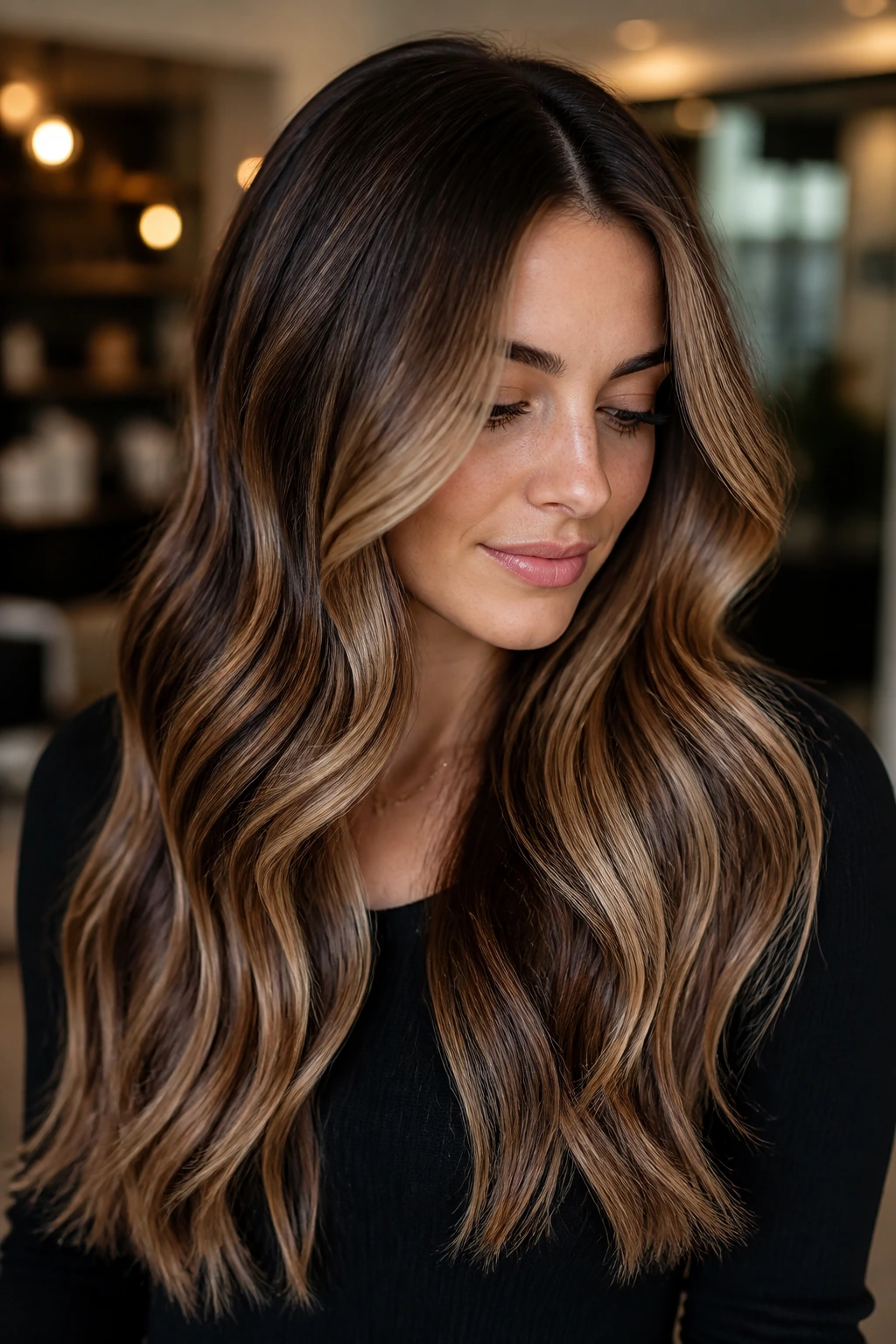
Flavor Enhancement: A clear gloss can rescue almost any of these shades between salon visits. On brunettes, it deepens shine. On blondes, it softens the brass. On red and copper tones, it adds that freshly-colored look without changing the whole head.
Customization: If you want a softer version of any color, ask for more root shadow and fewer lightened pieces around the crown. If you want more contrast, ask for brighter face-framing sections and a deeper underneath. Long hair can carry both without looking messy, as long as the placement is intentional.
Serving Suggestions: A long, clean trim every 8 to 12 weeks keeps ends from looking sparse, especially on blondes and silvers. For styling, a bend with a 1.25-inch iron is usually enough to show off ribboned color without turning it into pageant hair. And yes, a middle part can make these colors look sharper than a side part, depending on your face shape.
Make-It-Yours: Fine hair usually looks fuller with brighter pieces kept closer to the face and less saturation at the ends. Thick hair can handle more lowlights and wider panels. Curly hair often benefits from painting the color where the curl clumps open up, not where the hair sits flat on the scalp.
Keeping the Color Fresh Between Appointments
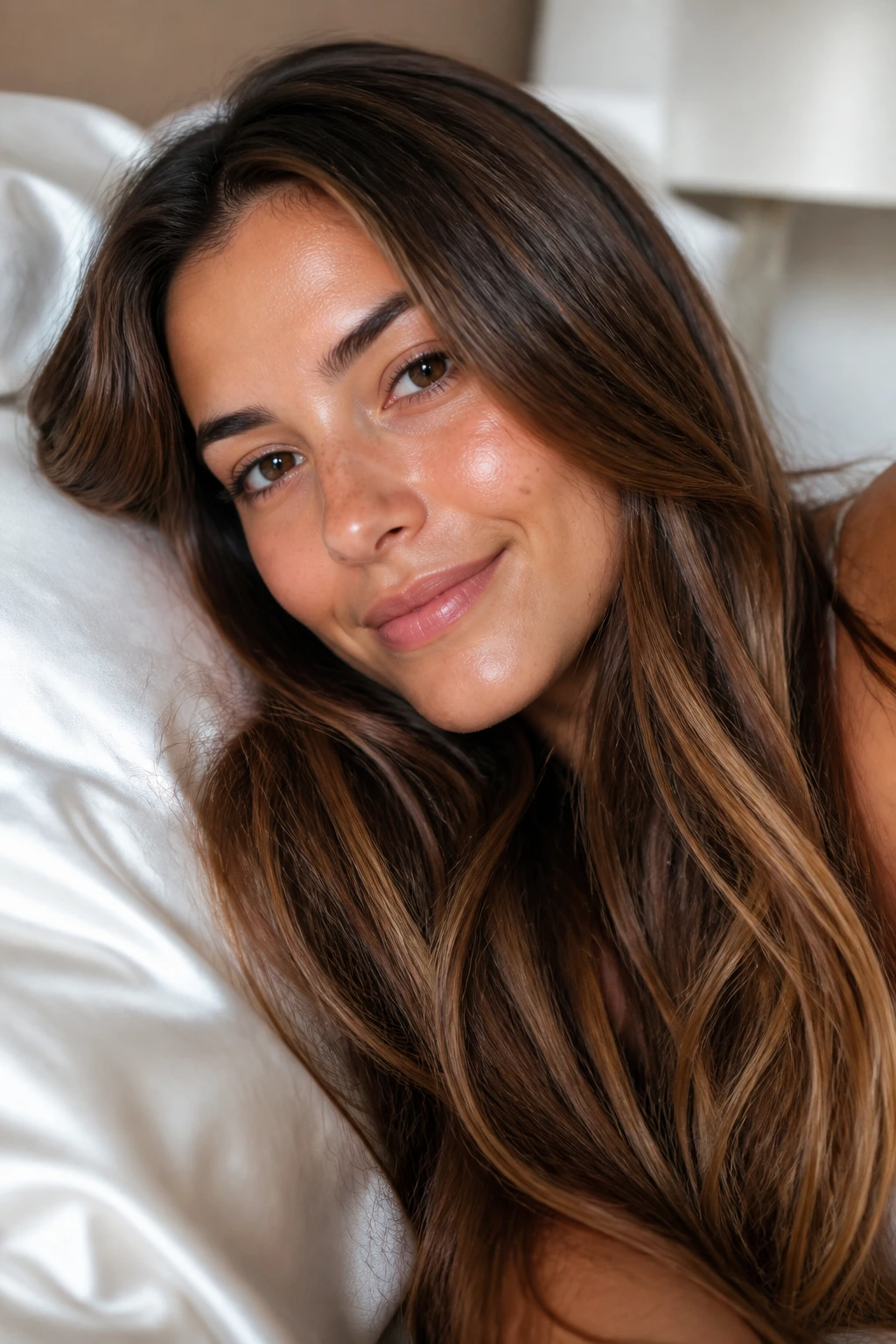
Long colored hair is easier to maintain when you stop chasing one perfect shampoo and instead build a small routine around the shade. Reds and coppers usually need the most attention. Expect to refresh the tone every 4 to 6 weeks if you want them to stay rich. Brunettes with glosses can stretch farther, often 6 to 8 weeks, before they start looking faded. Blonding work is the most variable of all; toner may need a refresh every 4 to 8 weeks depending on how quickly your hair pulls yellow.
Washing less often helps, but it is not a magic trick. If your scalp needs cleansing every other day, use cool water on the lengths and keep the shampoo near the roots. The ends do not need to be scrubbed; they need to be rinsed. That small shift keeps the lower half from drying out and losing tone faster than the rest of the head.
Heat protection matters every single time you style. Long hair has more exposed length, so every pass of a blow-dryer or flat iron affects a bigger surface. A light spray before drying, plus a finishing cream on the ends, will usually keep the cuticle smoother. Sleep on silk or satin if you can. The amount of friction it cuts down on is not dramatic in a flashy way, but it adds up fast. That’s especially true for blondes, coppers, and pastels, which show dryness quicker than brunette shades.
Variations and Adaptations to Try
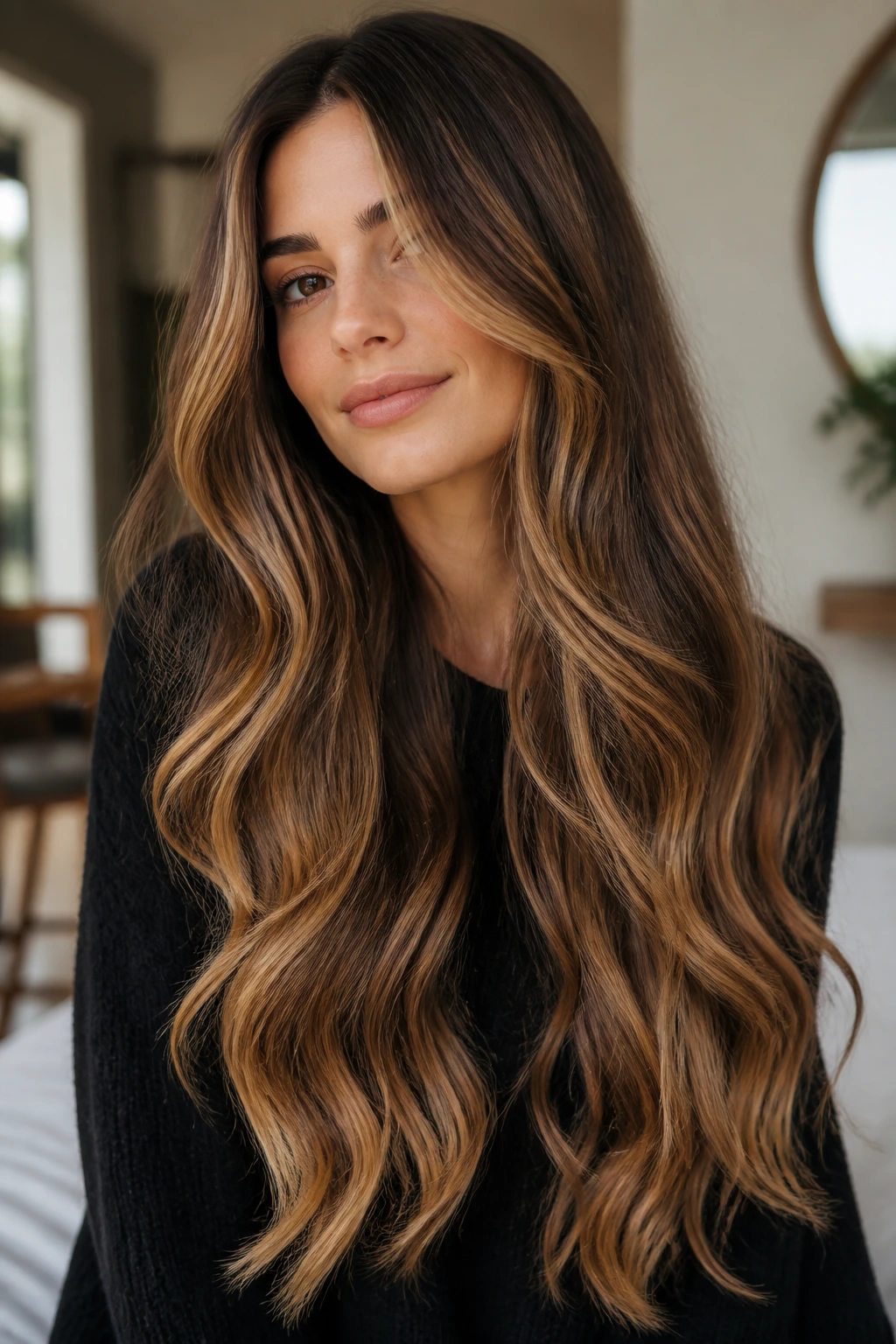
Low-Maintenance Root Melt: If you like the color ideas but hate salon upkeep, keep the root closer to your natural shade and let the bright pieces start lower. This works especially well for caramel balayage, bronde, and toffee ombre. Grow-out looks softer, and you can go longer between touch-ups.
High-Contrast Frame: If you want a stronger look, keep the face-framing pieces brighter and leave the rest of the hair deeper. This is the cleanest way to wear platinum, beige blonde, or honey ribbons on long hair without bleaching the whole head. The result is punchier around the face and calmer everywhere else.
Curly-Hair Version: Curly and wavy long hair loves placement that follows the curl pattern instead of fighting it. Ask for ribbons and panels where the curls open up naturally, then keep the root a little deeper. That makes shades like copper cinnamon, auburn melt, and mushroom brown read in motion instead of as one block.
Gray-Blending Version: If you’re blending silver strands, mushroom brown, graphite silver, and cool ash blonde can all be adjusted to work with the gray instead of hiding it. The better move is usually a soft lowlight plus a gloss, not a hard cover-up. Long hair gives gray blending room to look polished rather than patchy.
Salon-Safe Fantasy Color: For navy, teal, lavender, and rose gold, ask for direct dye on pre-lightened panels rather than an all-over fantasy color. You get the fun tone without having to bleach every inch of length. That keeps the underside and ends easier to maintain.
Common Mistakes That Show Up Fast on Long Hair
The first mistake is choosing a photo without checking the cut and texture. A color that looks soft on layered waves can turn blunt and stripey on one-length, stick-straight hair. The fix is simple: bring photos that match your own hair shape, not just the shade.
The second mistake is treating the ends like the roots. Long ends are older, drier, and more porous. If you bleach or tone them the same way you treat virgin hair, they can grab too much pigment and look muddy, hollow, or fried. A smart stylist will usually soften the formula on the ends or protect them during lightening.
Another common miss is forgetting about the grow-out line. A bright blonde or strong fashion shade can look great for two weeks and then feel harsh once the root starts coming in. If you want less stress, ask for a root shadow or melt from the start. Long hair gives you space to do that. Use it.
Then there’s the brass problem. People buy a purple shampoo, use it constantly, and end up with dull, over-toned blonde. Purple helps when yellow starts creeping in. It does not replace toner, and it does not fix orange. Blue shampoo is the better tool for orange-brassy brunette hair, but that only works if the tone issue is actually orange and not red. Different problem. Different fix.
Questions People Ask Before They Book
Can I get one of these shades if my hair is very dark?
Yes, but not all of them in one appointment. Dark hair can handle caramel, cherry cola, chestnut, and blue-black more easily than platinum or pastel shades. If you want something light, expect a lift plan, possibly more than one session, and a realistic conversation about how much warmth will stay in the hair.
What long-hair color hides grow-out best?
Soft balayage, root-melted bronde, and toffee ombre are the most forgiving. They keep depth at the scalp and let the brighter pieces start lower, so the regrowth line is less obvious. A full platinum root, by contrast, shows every millimeter of new growth.
Is balayage better than highlights for long hair?
Often, yes, if you want softness and a slower grow-out. Balayage lets the color sit in ribbons, which suits length well. Foil highlights are still useful when you want stronger lift, more brightness, or a chunkier effect like the 90s highlight look.
How often should long colored hair be toned?
Blondes may need toner every 4 to 8 weeks, depending on how quickly they yellow. Reds and coppers usually need gloss or refreshers a bit more often because they fade faster. Brunettes with a clear gloss can stretch longer, especially if they wash gently and limit heat.
Will color ruin the ends of long hair?
Color itself is not the whole problem. Bleach, repeated heat, hard water, and rough brushing are usually the bigger culprits. If your ends are already dry, ask for a bond builder, a trim before coloring, and a plan that keeps the brightest work away from the last inch or two.
Can I do any of these at home?
A gloss, a tinted conditioner, or a gentle root refresh can work at home if the color is already in the right family. Platinum, silver, navy, and anything that requires lift are better left to a salon unless you already know exactly how your hair reacts. Long hair is expensive to fix when it goes wrong.
What if my hair is curly or coily?
That texture can carry these colors beautifully, but the placement has to follow the curl pattern. Ribboning, face-framing pieces, and thoughtful lowlights usually look better than rigid stripes. Ask for a color plan that respects shrinkage and the way your curls open when they dry.
A Color Plan That Can Grow With the Hair
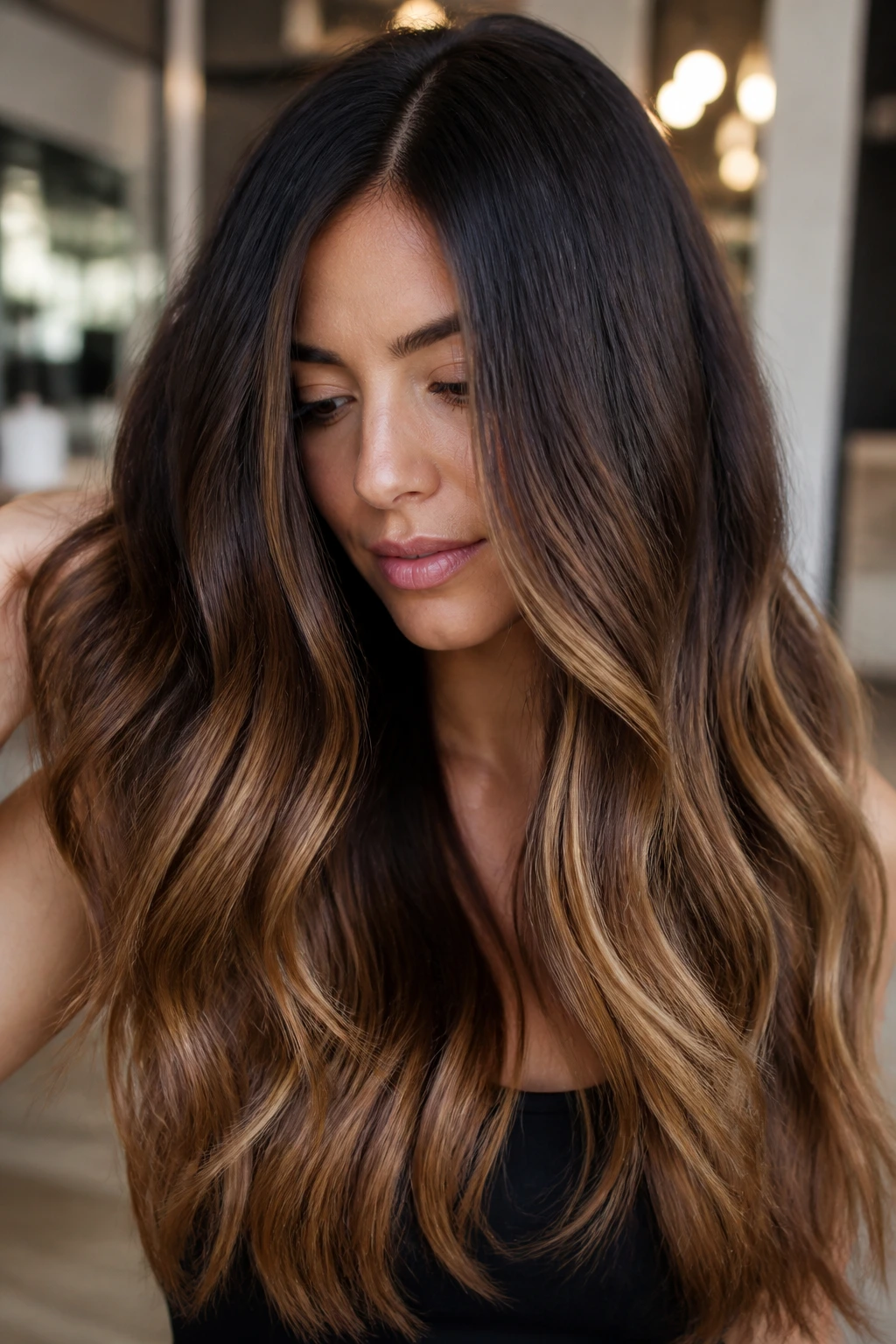
Long hair rewards color that has somewhere to go. That’s the real difference here. A good shade doesn’t just sit on top of the length; it moves through it, softening at the root, deepening through the mids, and landing cleanly at the ends. When that happens, the color looks deliberate even as it grows out.
The best part is that you do not have to pick the loudest option to make an impression. A glossy espresso brunette, a soft caramel balayage, or a well-placed shadow root can do more for long hair than a hard, over-lightened blonde ever will. If you want drama, it’s here. If you want polish, that’s here too. The trick is choosing the shade that suits your upkeep, your texture, and the way you actually wear your hair.
Pick one look that matches your life first. The shine and movement will take care of the rest.
