



A polished office hairstyle is less about looking formal and more about looking deliberate. A low bun, a crisp side part, or a smooth ponytail can change how your face reads before you say a word. The hair does not have to be shellacked into place. It just needs clean lines, a sensible shape, and enough hold to survive a commute, a coffee run, and a chair back flattening the crown halfway through the morning.
Work hairstyles fall apart in two annoying ways. They either collapse by lunch, or they look so overworked that they belong on a runway, not in a meeting. The sweet spot sits in the middle: neat without being stiff, controlled without turning your hair into a helmet, and polished enough that you do not keep touching it every ten minutes. That balance is what makes office hair so worth thinking about.
I care a lot about the small details here. A half-inch difference in where the part lands can make a style look sharper. A little smoothing cream on the crown can keep flyaways from frizzing into a halo under fluorescent lights. And if you have ever watched a beautifully done ponytail collapse after one blazer-on, blazer-off cycle, you already know why the details matter.
Why These Work Hairstyles Earn Their Keep
-
Fast before work: Several of these styles take under 10 minutes once your hair is dry and detangled, which matters when your morning is already packed with keys, email, and a half-finished breakfast.
-
Built for real workdays: These looks are chosen for long meetings, headset use, and jacket collars that rub the nape of your neck all day.
-
They respect different hair textures: Fine hair, thick hair, curls, waves, and short cuts all get a lane here instead of being forced into the same sleek-ponytail script.
-
They look good from the side and the back: A lot of hairstyles look fine in a mirror and strange in a conference room. These hold their shape from multiple angles.
-
Easy to dress up or down: Swap a plain elastic for a wrapped one, add a barrette, or smooth the front more tightly. The base style still works.
-
Second-day hair gets a job: A little lived-in texture helps several of these styles stay put, which is one of the few useful gifts of yesterday’s blowout.
1. Sleek Low Bun
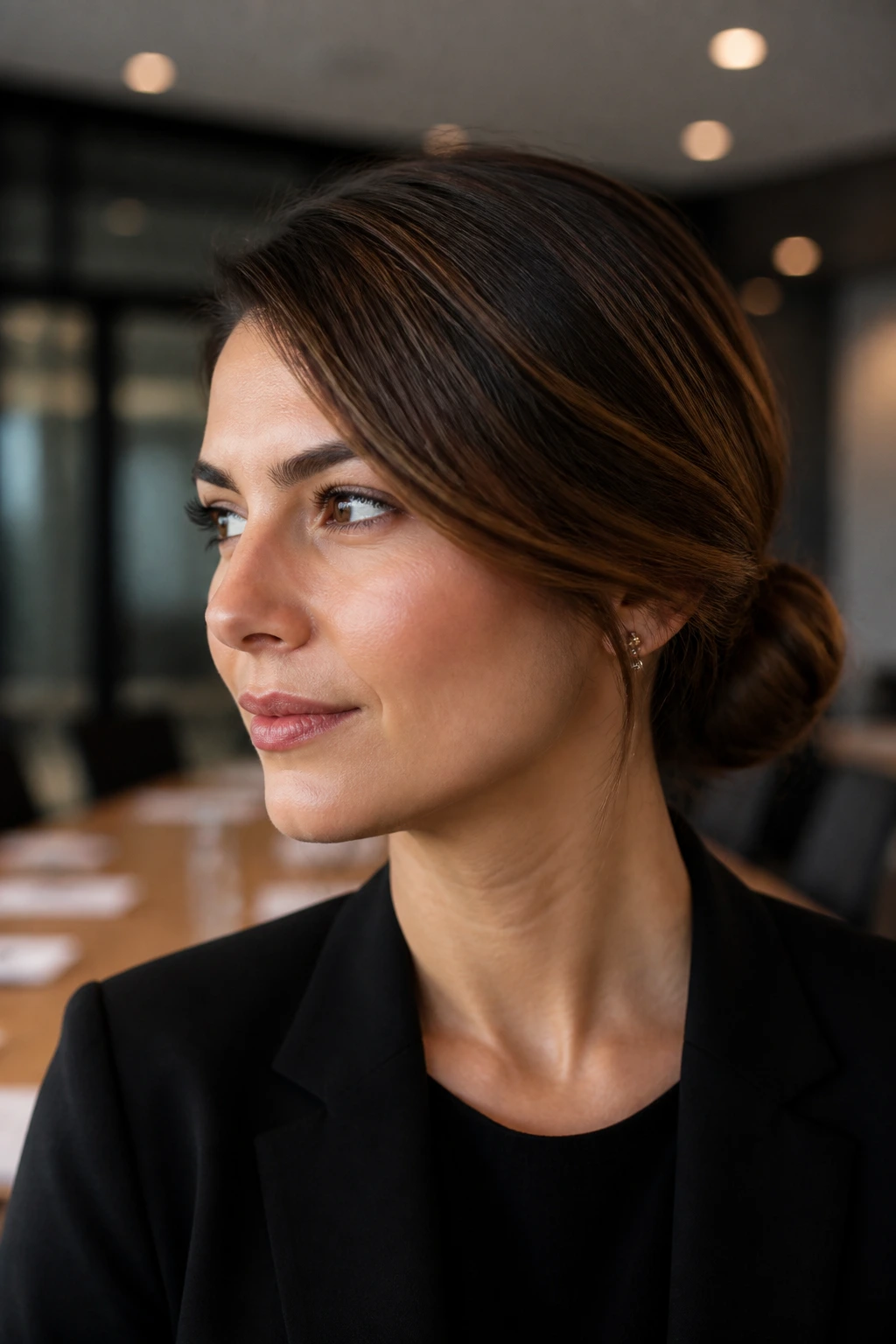
A sleek low bun is the quiet overachiever of office hairstyles. It sits at the nape, keeps the neckline open, and gives you that clean, finished look that never seems to fight with a blazer collar or a pair of drop earrings. When the crown is smoothed properly and the bun is tucked compactly, it looks intentional from every angle.
Why It Holds Up
The shape works because all the loose movement gets pulled into one controlled point. That means fewer flyaways near the face and less frizz fighting the back of your head after you remove a coat. It also suits both straight hair and hair with a bit of wave; the style benefits from that texture instead of needing to erase it.
A low bun is especially useful when your hair is a little oily at the roots. That tiny bit of natural grip helps the bun stay in place. If your hair is freshly washed and too slippery, a small amount of texture spray at the roots changes the whole story.
- Works well with a center part or a shallow side part.
- Needs 2 to 5 bobby pins, depending on hair thickness.
- Looks sharper when the bun is wrapped close to the head, not puffed out.
- Best paired with a smoothing cream or light gel on the hairline.
Best tip: Brush the crown flat before you tie the hair back. Trying to smooth the surface after the bun is already secured usually leaves bumps you cannot fully fix.
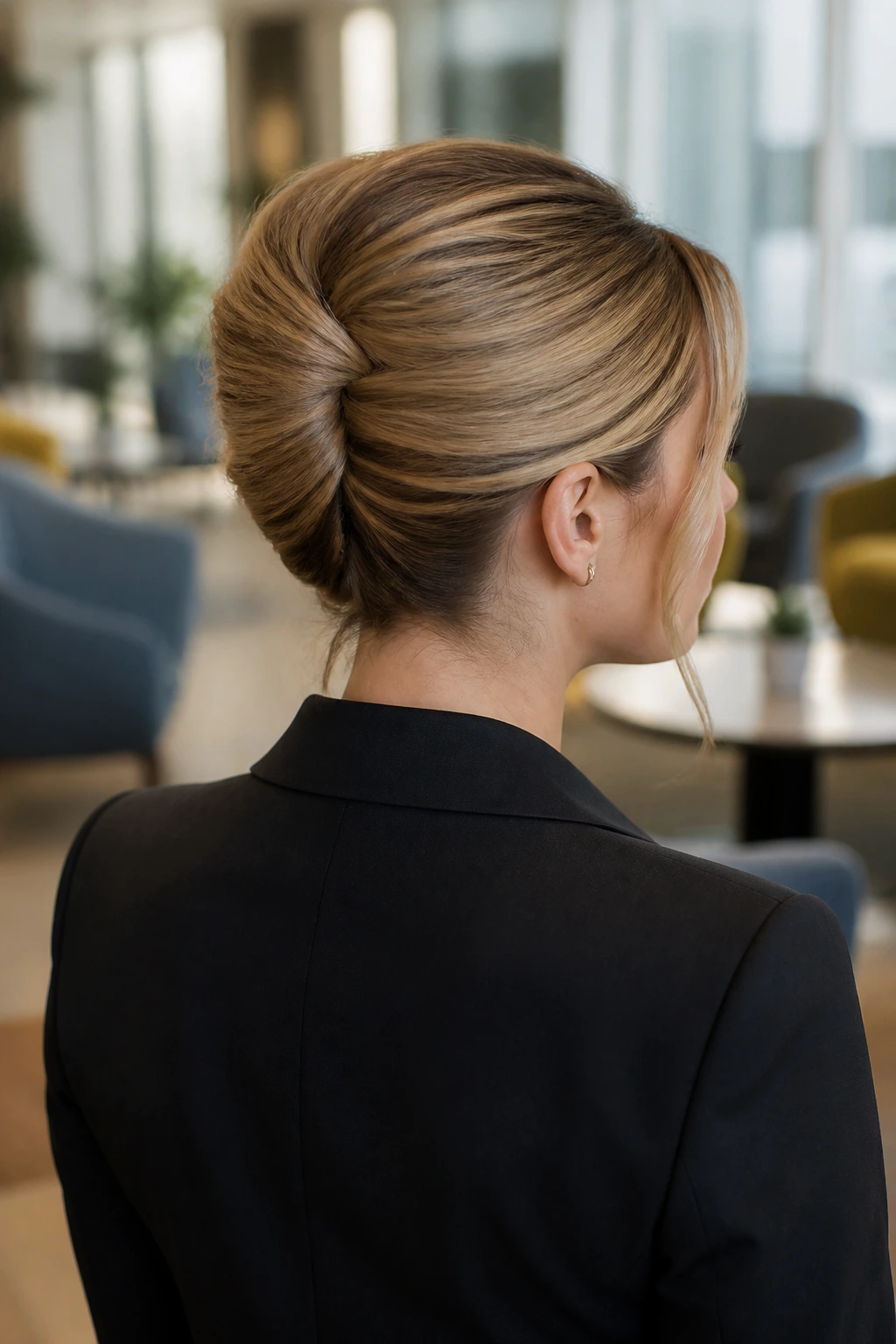
2. French Twist
A French twist has a slightly old-school edge, and I mean that as a compliment. It can look severe if you pull it too tight, but when the roll is soft and the surface is clean, it gives the kind of office polish that says you meant every inch of it.
What Makes It Different
Unlike a bun, a French twist builds vertical shape at the back of the head, which is useful if you want height without teasing the crown into a mess. It also keeps hair tucked away neatly, so long layers are less likely to slide forward during the day. The style works best on medium to long hair, though shorter layers can be pinned in with patience and a few extra pins.
The trick is to keep the roll snug, not squeezed. If the twist is too tight, it can pull at the scalp and look formal in a way that feels dated. If it is too loose, it falls apart before lunch. There is a narrow lane here, but once you find it, the result is clean and strong.
A matte hairpin or a plain comb can look more refined than decorative clips for this one. The style itself already has presence.
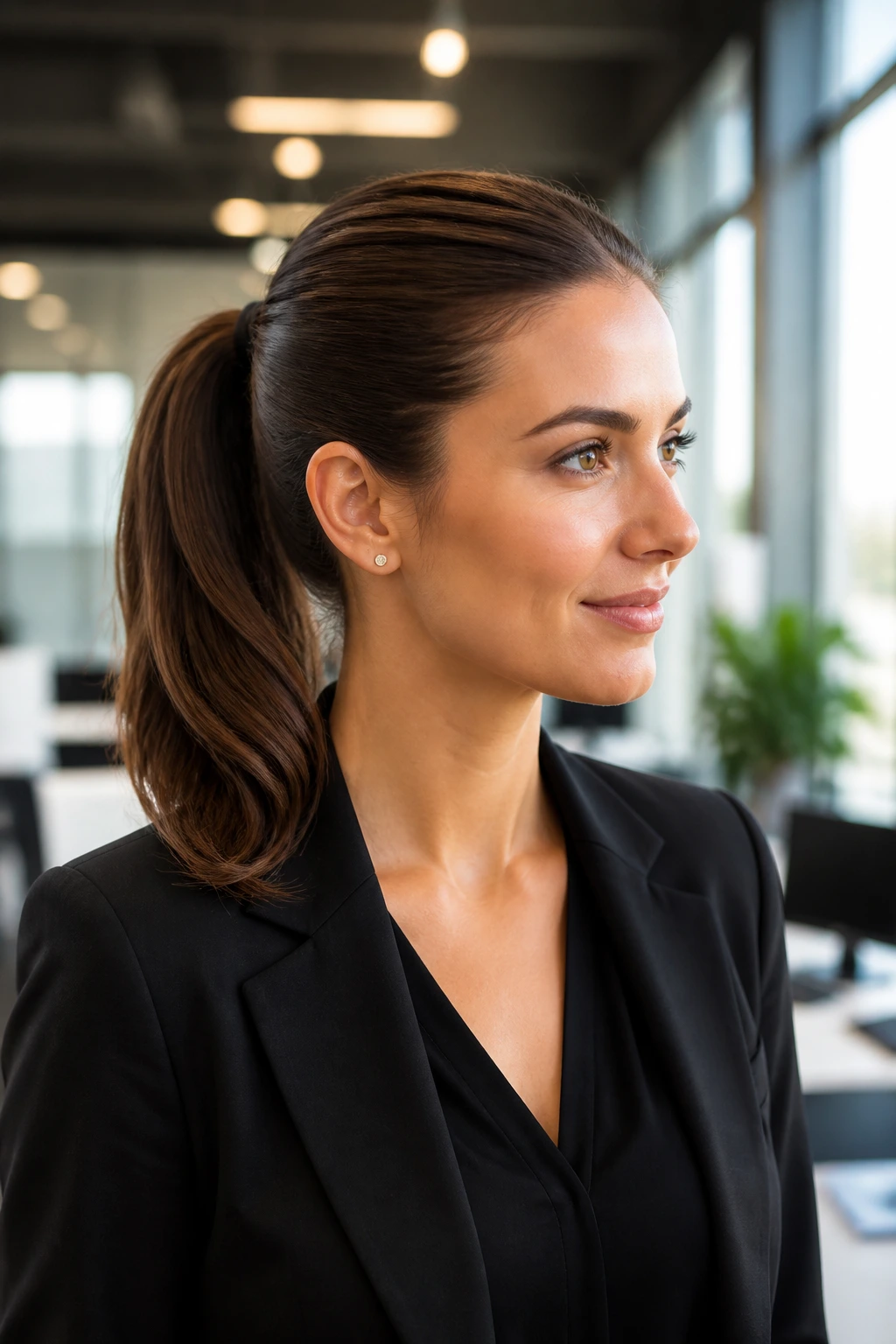
3. Polished Ponytail
Why does one ponytail look like you are headed to the gym and another look like you run the meeting? The answer is in the base. A polished ponytail sits on smooth roots, with the elastic hidden or wrapped and the length arranged with purpose instead of left to hang in a rough line.
How to Keep It Office-Clean
Start with a part that suits your face and the neckline of your top. A center part gives this style a sharper feel; a side part softens it. Smooth the front with a small amount of cream or gel, then gather the hair at mid-height or slightly lower. Too high and it starts drifting casual. Too low and it can feel heavy under a collar.
A wrapped section of hair around the elastic makes a bigger difference than people expect. It turns a basic ponytail into something that looks finished. If your hair is thick, use two elastics stacked one over the other so the ponytail does not sag by noon.
- Best for medium to long hair.
- Works on straight, wavy, or blow-dried hair.
- A boar bristle brush helps keep the crown flat.
- A small clamp at the base can keep heavy hair from slipping.
Best tip: Keep a spare elastic in your bag. The style is simple enough that one broken tie should not ruin your whole morning.
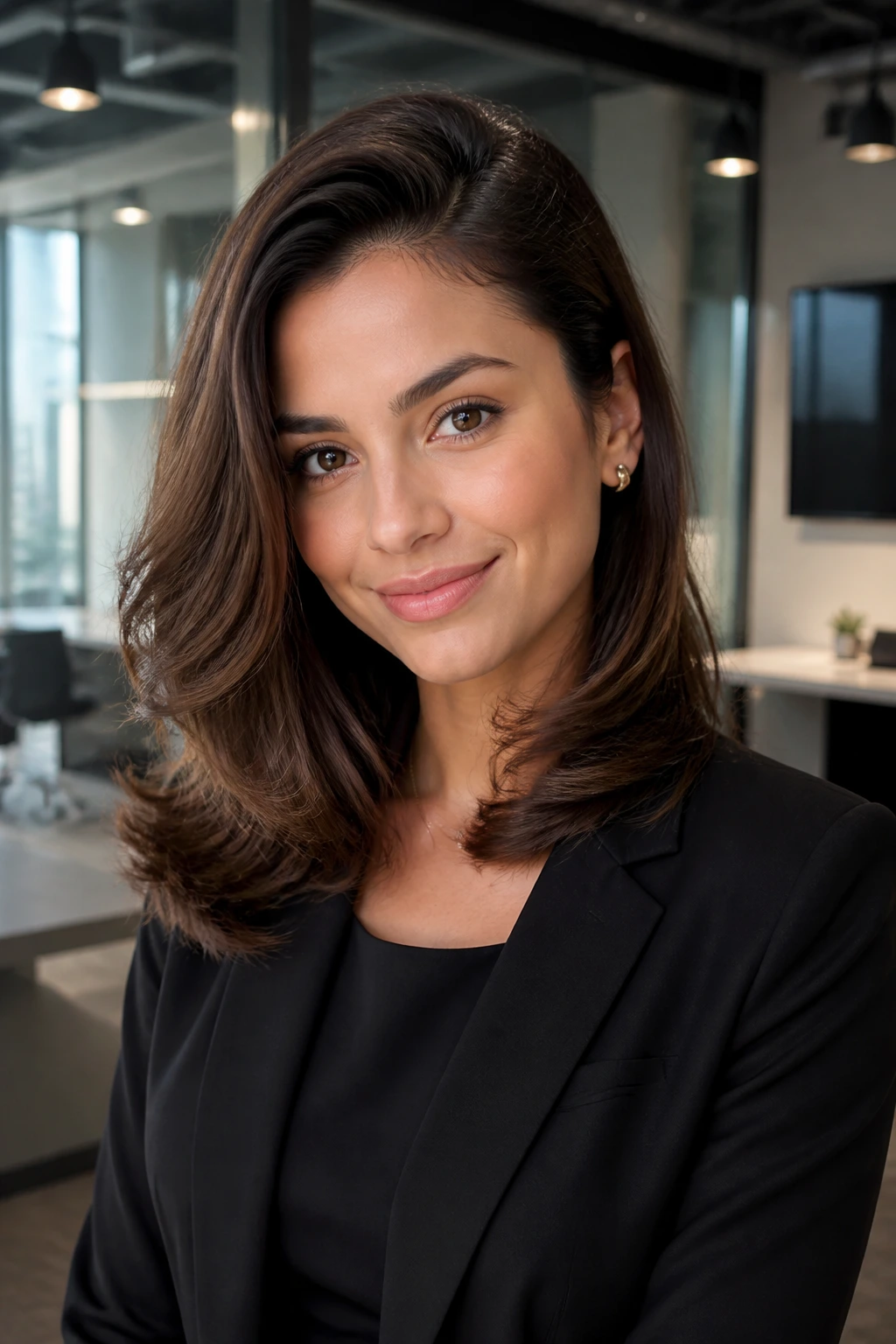
4. Deep Side-Part Blowout
A deep side-part blowout has a little more movement than a bun or ponytail, but it still reads as crisp. The side part changes the mood immediately, and the blown-out ends give the hair body without making it messy. On shoulder-length or longer hair, this is one of the easiest ways to look put together without pinning a single strand.
The shape works because the roots sit flatter on one side and lift slightly on the other, which frames the face instead of boxing it in. The ends should curve under just a bit. Not a curl. Not a wave that swings around. Just enough bend to keep the style from hanging flat under office lighting.
I like this look when the hair needs to do two jobs at once: look polished in person and still hold shape after a full day. A round brush, a blow dryer, and a quick cool shot at the end make a big difference. Skip the heavy oils near the roots. They will flatten the lift you just created.
- Best on medium to long layers.
- Great when your hair already has a smooth base.
- Needs a heat protectant and a round brush.
- Works well with a barrette on the tucked side.
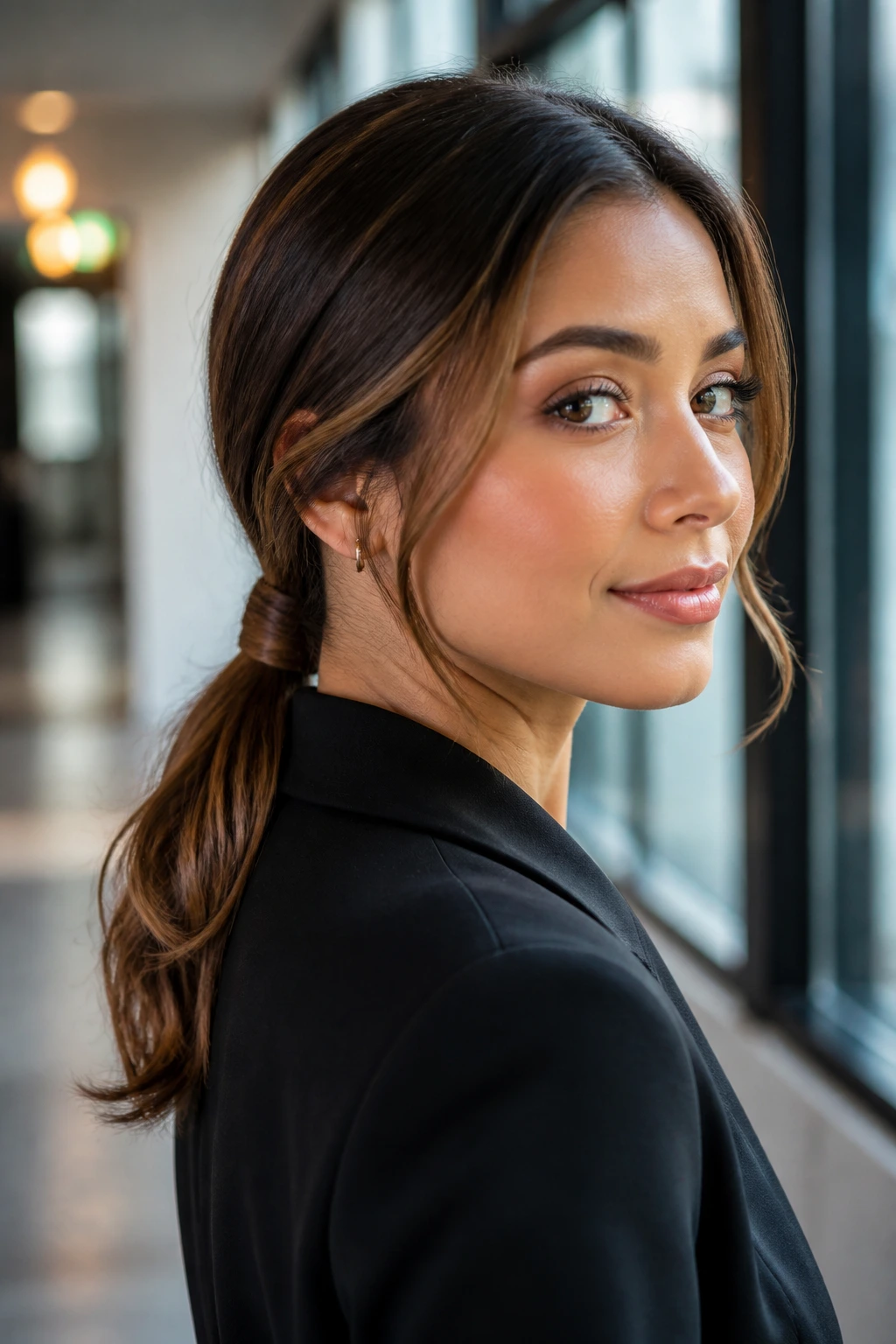
5. Wrapped Low Ponytail
A wrapped low ponytail is one of those styles that looks more expensive than it is. The ponytail sits low and calm, but the wrapped base cleans up the elastic so the whole thing feels finished. It is especially good when you want length visible without the loose ends getting in your face.
The finish depends on restraint. Keep the crown smooth, but do not press every inch of texture out of the hair. If the surface is too perfect, the style can look stiff. A little movement near the ends keeps it modern. The wrapped section matters here, because it breaks the visual line and makes the ponytail look deliberate instead of tossed together.
This style handles long hair well, but it also works on collarbone-length cuts if the ends are blunt enough to sit neatly. If your hair has layers, a small amount of texturizing spray at the ends helps them stay together instead of feathering out.
One more thing. Tight is not the goal. Controlled is.
6. Soft Waves on a Lob
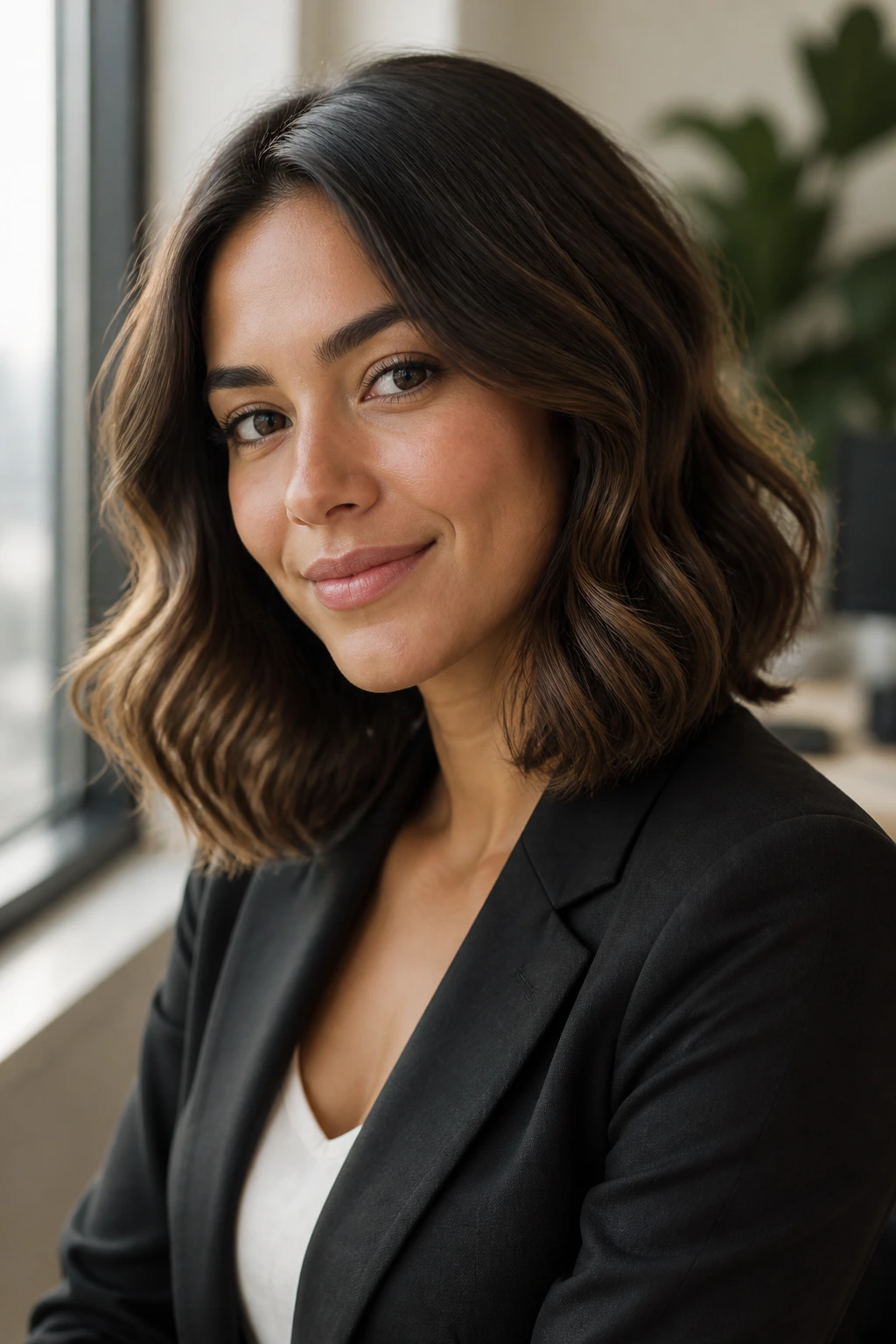
A lob with soft waves is the office version of “I did something with my hair, but I did not spend an hour on it.” The waves should be broad and smooth, not beachy and broken. Think bent lengths, not crunchy texture. That difference matters a lot in a workplace setting.
What Makes It Different
A straight lob can look sleek, but soft waves add movement around the jawline and shoulders, which makes the haircut feel less static. This is especially good if your hair tends to go flat by midday. A gentle bend keeps the shape alive. If you use a flat iron, twist the wrist just enough to create a loose arc at the mid-lengths and stop before the ends get too curly.
This look suits fine to medium hair because the waves create body without needing heavy products. Thick hair can wear it too, but the sections should be larger so the finish stays soft. A side part gives it a slightly more formal mood; a center part leans cleaner.
If your office leans conservative, keep the texture controlled and the shine level moderate. If your hair has a little natural wave already, even better. You are not trying to fight it. You are refining it.
7. Low Chignon with a Side Sweep
What makes a low chignon feel more polished than a loose bun? Usually the answer is the side sweep. That front section gives the style a clear line, and the tucked knot at the nape keeps the whole look anchored. The result is calm, not fussy.
A good chignon sits close to the head and looks balanced from the front and the side. If you have layers around the face, pin them back softly so they blend into the sweep instead of hanging out awkwardly. The style is excellent for medium to long hair, and it works well for days when you want the hair fully off the neck.
The chignon can lean formal fast if you over-smooth it. Leave a trace of softness near the hairline so it does not feel theatrical. One or two hidden pins usually keep it secure; six pins jammed in from every direction is how you end up with a headache.
A satin-finish spray helps more than a stiff lacquer. You want shape, not shell.
8. Half-Up Twist
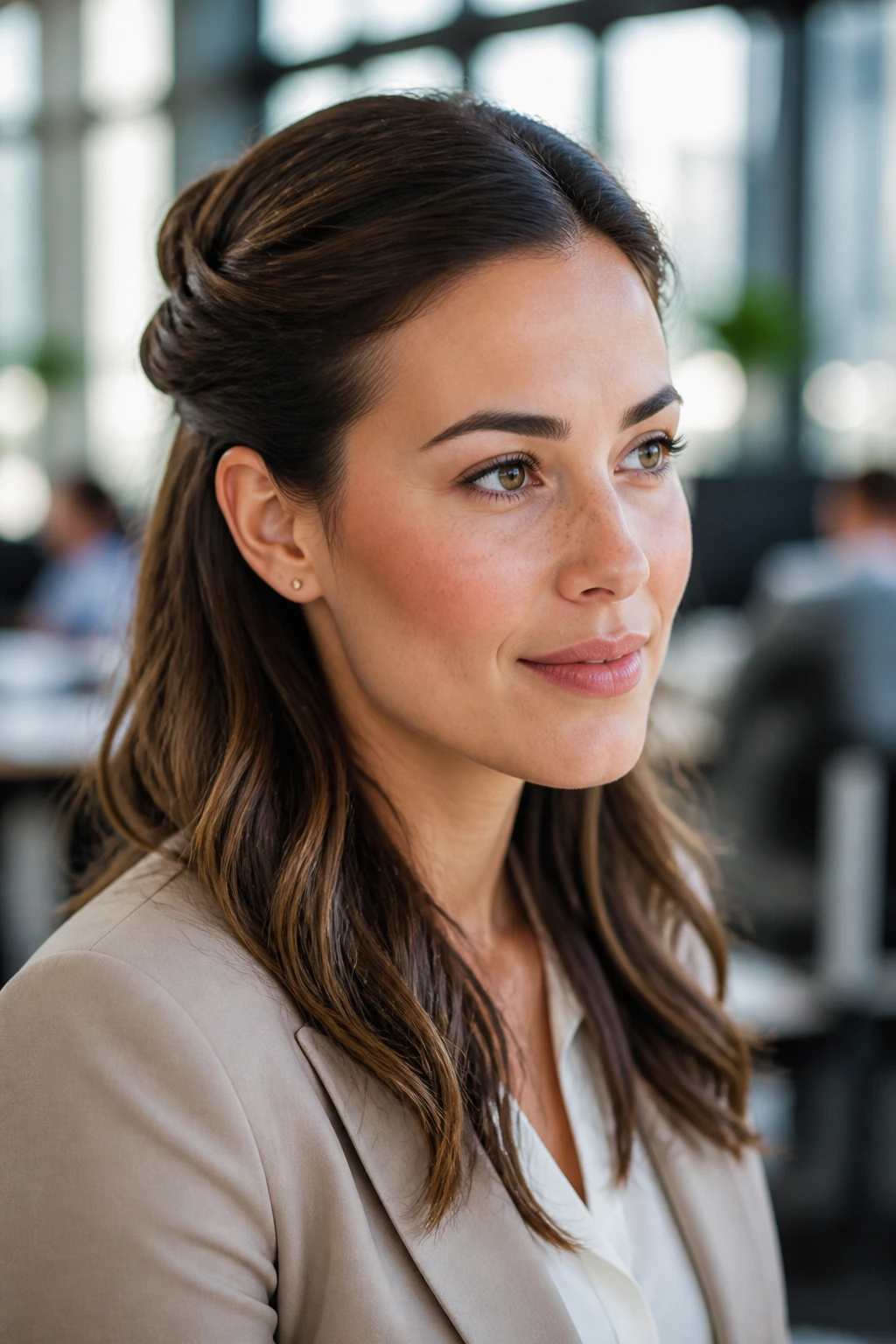
A half-up twist is the best answer when you want some hair down, but not all of it in your face. It gives the front a neat frame, keeps the crown from puffing up, and still lets the length show. For many haircuts, that is the sweet spot between casual and too formal.
The style works because it holds the front sections away from the eyes without flattening the rest of the hair. That means you can keep movement through the ends while making the top half look organized. I prefer this on medium-length hair and layered cuts, where a full updo can feel severe.
Best For
- Hair that frizzes at the temples.
- Layers that keep slipping out of a ponytail.
- Days when you need to look tidy but not stiff.
Use a small clip, a pair of bobby pins, or a tiny elastic to secure the twist. If your hair is silky, rough up the base a little with dry shampoo first. It gives the pin something to grab.
9. Straight Hair Tucked Behind the Ears
Straight hair tucked behind the ears sounds almost too simple, but that is exactly why it works. The style lets the haircut speak for itself. A sharp bob, a blunt lob, or long, smooth layers all look cleaner when the front sections are tucked neatly and held with a slim barrette or a clean ear tuck.
This is the look I reach for when the hair is fresh, sleek, and not in the mood for a lot of manipulation. It reads crisp on camera and in person, especially when the part is precise and the ends are smooth. If you wear glasses, the tuck also clears the frame, which keeps the whole face from looking crowded.
The key is not to over-fix it. One side tucked can look slightly more relaxed than both sides, and that imbalance often feels more modern. If the hair is fine, tuck it behind the ear and pinch a small bobby pin underneath to keep it from sliding forward. If it is thick, a dab of lightweight cream at the ends stops the front pieces from puffing up around the ear.
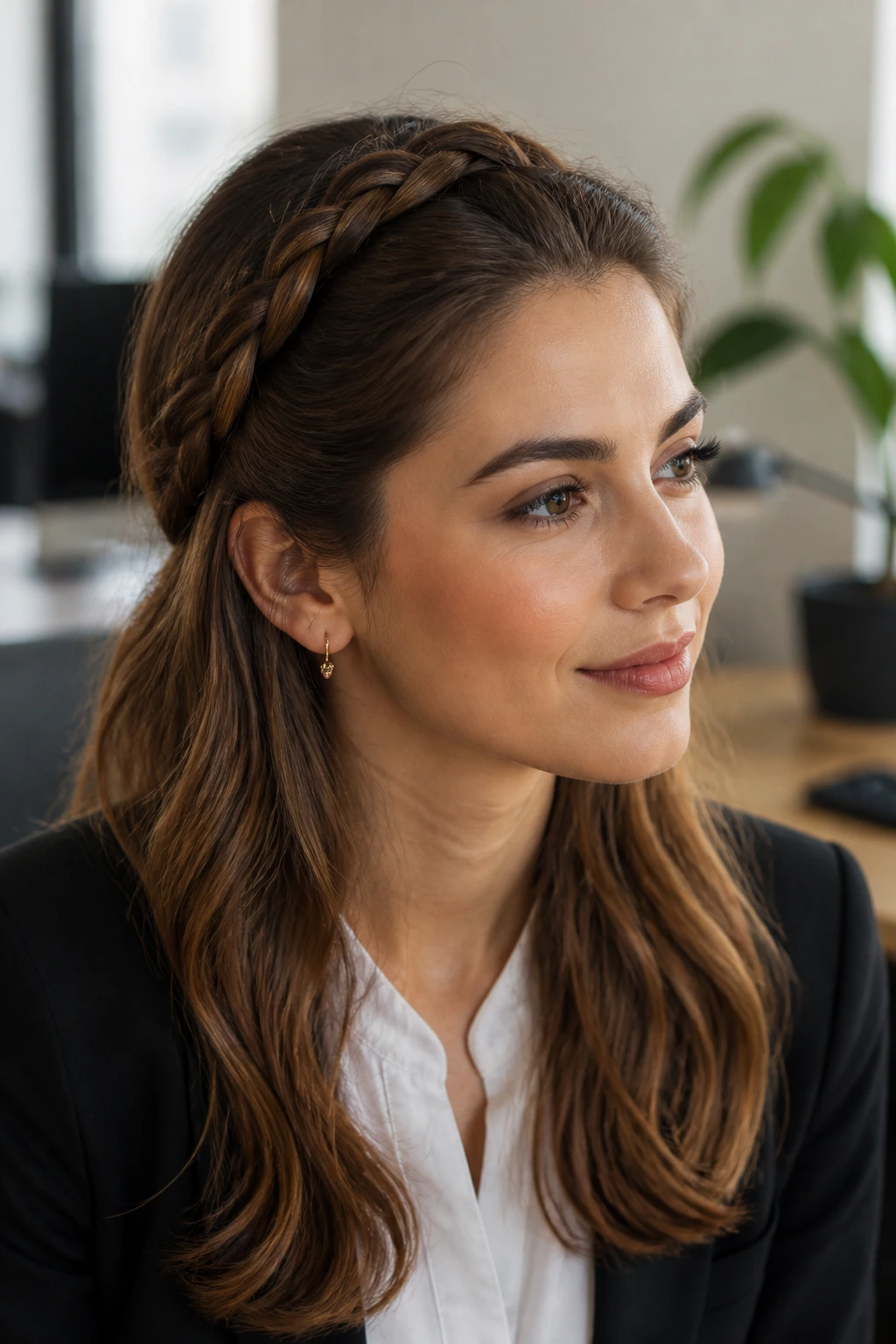
10. Braided Headband Crown
A braided headband crown is a smart choice when you want hair off the face without pulling everything back. It gives the crown a built-in structure, and the braid itself acts like an accessory. In an office setting, that reads as more intentional than a loose headband and less formal than a full braid halo.
The style works best when the braid is neat but not tiny. A thin braid can disappear in thick hair. A braid that is too chunky can start looking costume-like. I like it when the braid follows the hairline and blends into the rest of the style instead of sitting on top of it like a separate object.
If your hair is layered, smooth the loose sections with a brush so the contrast between braid and length feels clean. This one is especially handy for growing-out bangs. The braid gives them somewhere to go besides your eyelashes.
A little shine spray on the braided section helps the pattern show without making the rest of the hair greasy.
11. Bubble Ponytail
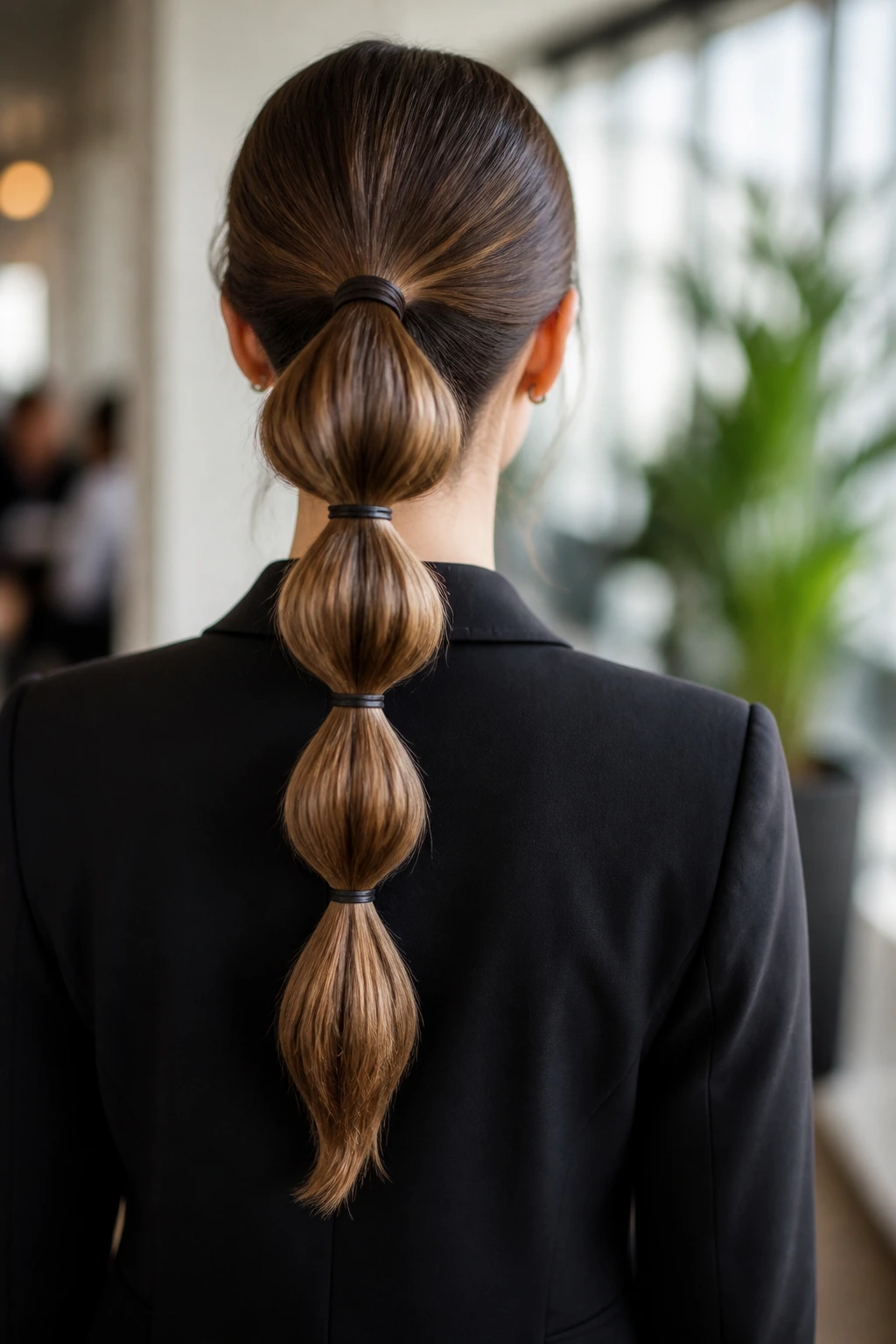
A bubble ponytail is a polished ponytail with a little more shape, and that shape is what keeps it from feeling flat. Instead of one long drop, the ponytail is tied into rounded sections with clear spaces between them. Done neatly, it looks graphic and deliberate.
Unlike a standard ponytail, the bubble version breaks up the length so it feels styled all the way down. That matters on long hair, where a plain ponytail can turn into a heavy line. The bubbles also help disguise a ponytail that has less volume at the ends, because the visual interest comes from the spacing, not just the thickness.
Keep the sections even and not too far apart. If the bubbles are giant and uneven, the style starts leaning playful in a way that may not suit every office. Small, tidy bubbles are the move. Clear elastics or matching thin bands work best, and a quick pull on each section adds roundness without messing up the shape.
This is a good style when you want something different but still controlled.
12. Blunt Bob with Curved Ends
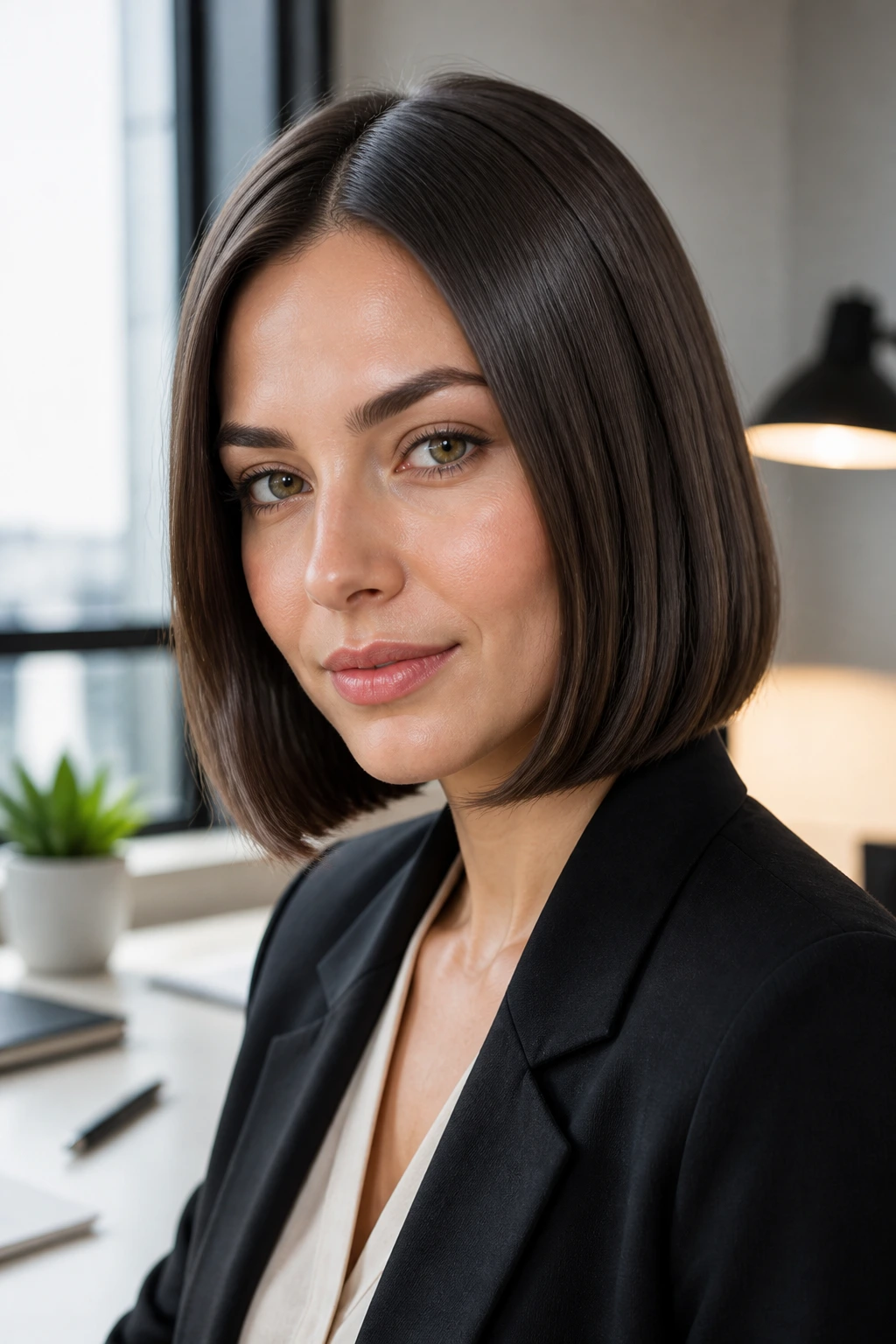
A blunt bob earns its polish from the cut, and the styling should respect that. Curving the ends under just a touch keeps the line clean and stops the bob from flipping out in random directions. That little bend gives the haircut weight, which is exactly what a work hairstyle needs.
The style is strongest when the part is sharp and the surface is smooth. A center part looks modern and direct; a side part softens the geometry a little. Either way, the ends should look deliberate, not forced. If you have a flat iron, use it on medium heat and run it through the last inch of the hair with a slight inward turn.
This is one of the best looks for fine hair because the blunt line creates the illusion of thickness. Thick hair can wear it too, but the underlayer should be trimmed cleanly so the shape doesn’t puff out at the base. A light serum on the ends is enough. Heavy oil will separate the pieces and kill the sharp line.
The bob should feel crisp, not stiff. There is a difference.
13. Claw-Clip French Twist
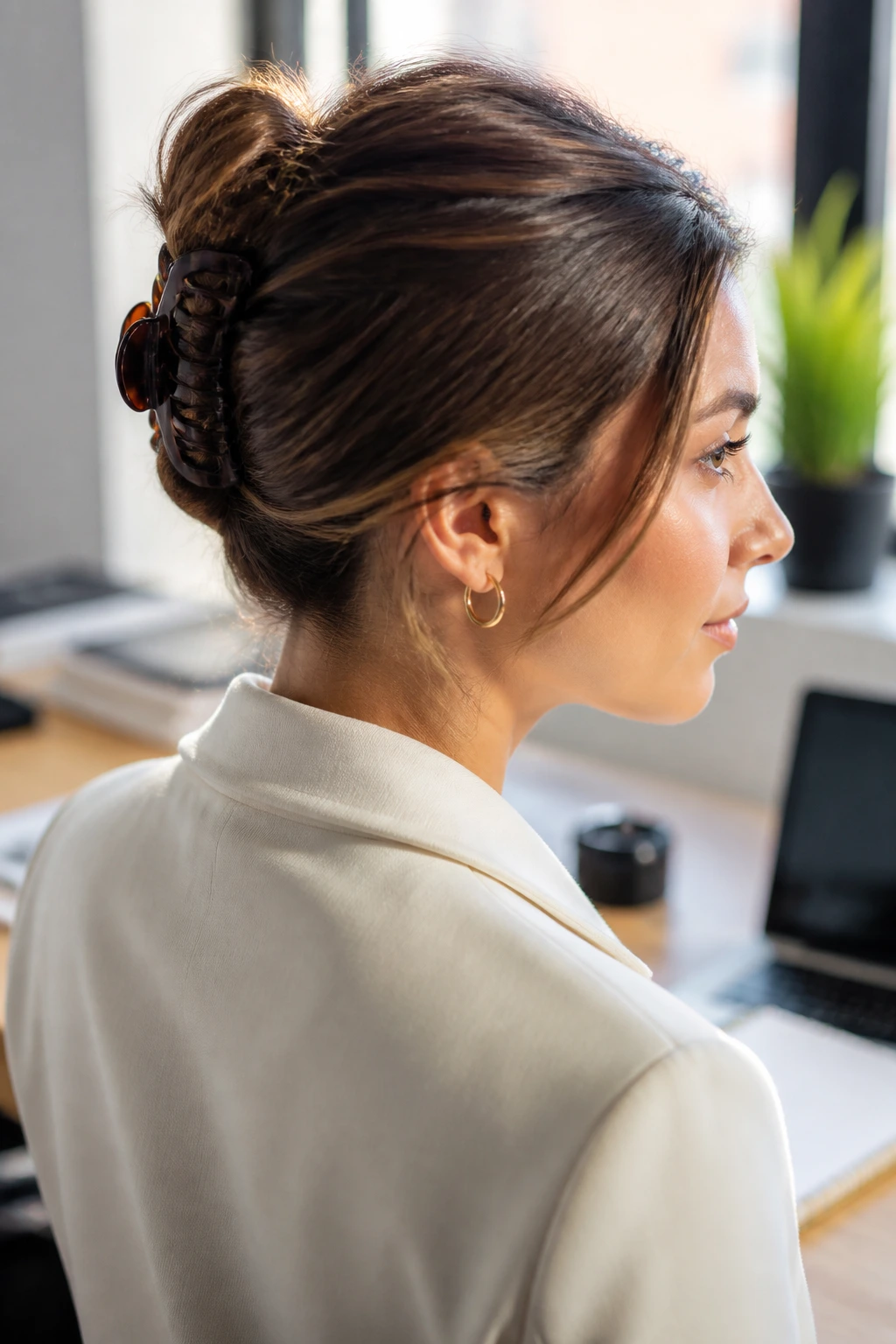
If you keep a claw clip in your desk drawer, this one is worth learning. A claw-clip French twist gives you the height and neatness of a twist without demanding perfect pin work. It is especially good for busy mornings, because the clip does most of the holding while you tidy the surface.
The trick is to twist the hair upward first, then fold the length back down into the clip so the ends disappear cleanly. If the clip is too small, the twist will wobble. Too large, and it looks clunky. A medium clip with a firm grip is the sweet spot. Matte or tortoiseshell finishes usually read more office-friendly than neon or oversized novelty shapes.
This style works best on medium to thick hair because there is enough bulk for the clip to grip. Fine hair can still wear it if you tease the base a little or pre-spray the roots with texture spray. It is not the most formal style here, but it has a practical polish that feels useful, not precious.
14. Defined Natural Curls with a Side Part
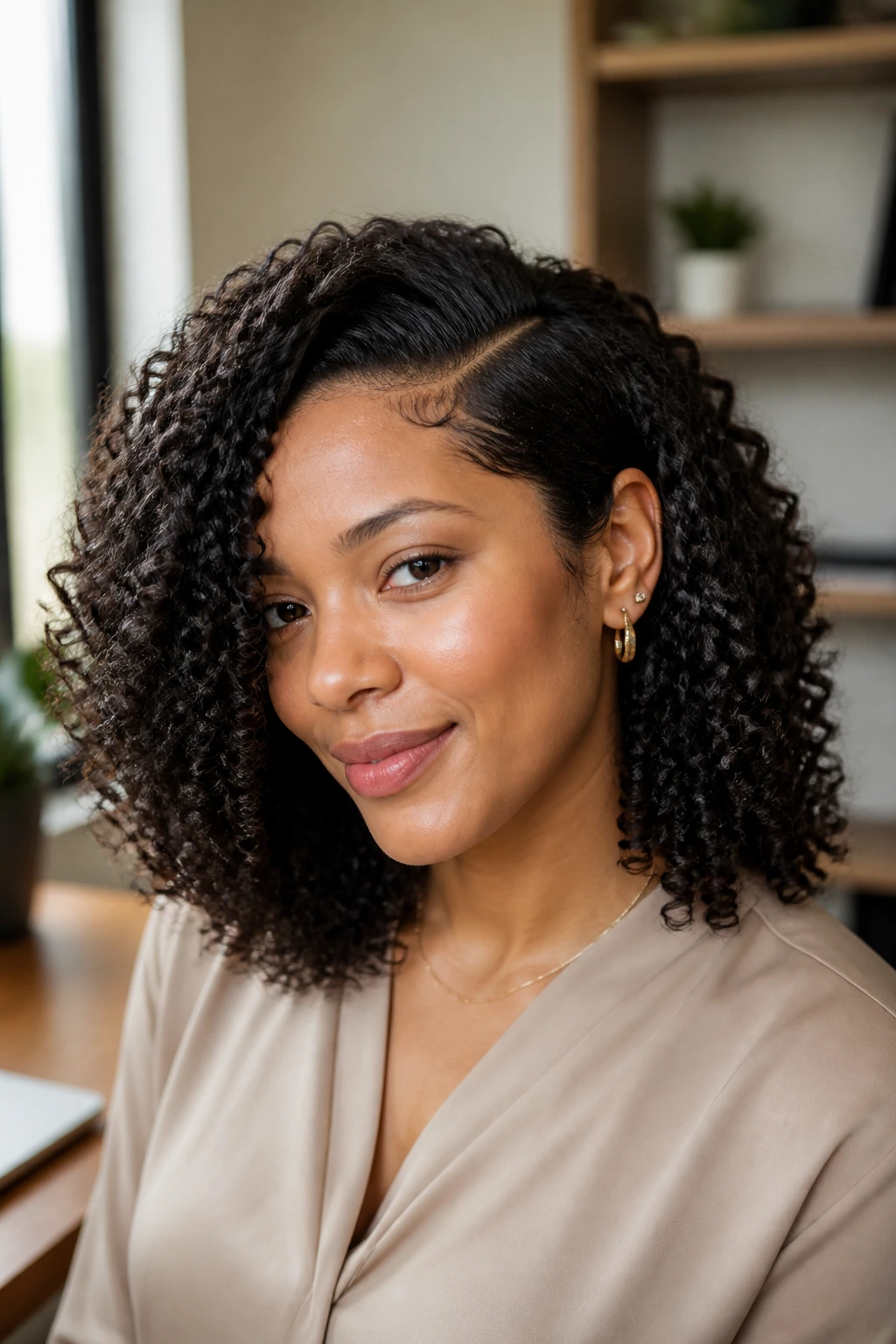
Natural curls do not need to be smoothed into submission to look office-ready. They need shape. A clean side part, a little curl cream, and enough hold to keep the curl pattern defined will do more for a work look than flattening the texture ever could.
The trick is structure, not control
When curls are fully defined, they look intentional instead of accidental. The side part gives the style direction, and a gel or custard layer keeps the curl clumps together through the workday. I like this better than frizz-fighting everything into a stiff surface. Soft frizz can be fine. A puffy triangle shape usually is not.
Diffusing on low heat helps if you want speed, but air-drying with clips at the roots can also work when the schedule allows. Pick whichever route lets the hair keep its curl pattern. If your curls shrink a lot, shape the style while the hair is still damp and let the ends settle where they want to be.
- Use a curl cream under the gel if the hair is dry.
- Clip the roots for lift if the crown collapses.
- Scrunch out the cast only when the hair is fully dry.
- Keep a small bottle of water to refresh any flat pieces at the ends.
15. Pixie With a Side Sweep
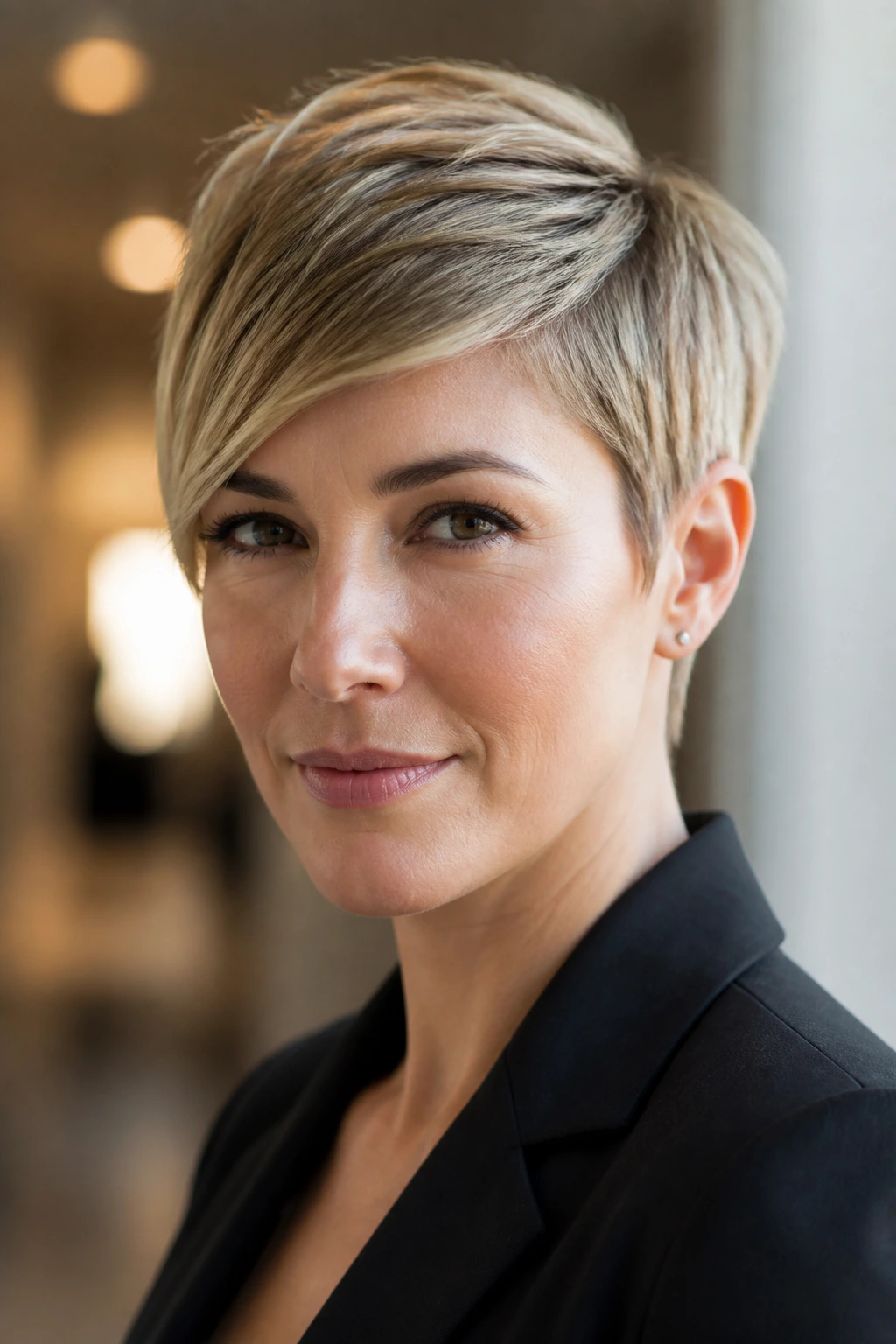
A pixie cut can look incredibly sharp in an office, but the shape matters. A side sweep across the forehead softens the cut and keeps it from reading too severe. It also gives the haircut a clear direction, which is half the battle with very short hair.
This style is all about small decisions. A pea-size amount of wax or pomade can define the fringe without making it greasy. Too much product turns a pixie into a sticky helmet, and nobody wants that. Use your fingers to push the top in the direction you want, then stop touching it. The hair usually looks better once it settles.
The side sweep works especially well if the sides are tapered or the nape is clean. It shows the cut on purpose. If your hair is straight, the sweep will stay smooth; if it has texture, the movement makes the style look more relaxed. Either way, it is the sort of short cut that still has shape by the end of the day.
16. Low Knot With Face-Framing Pieces
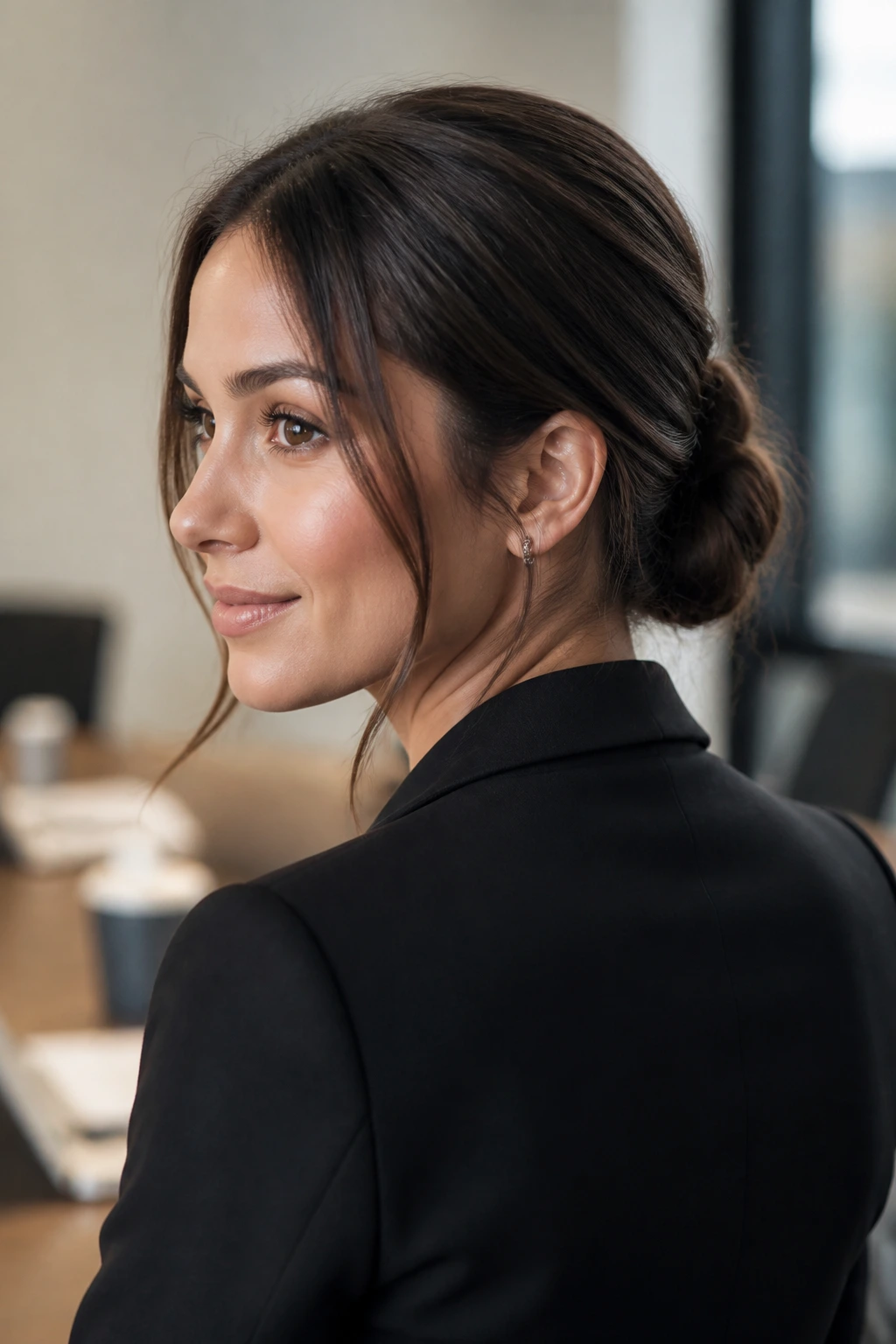
A low knot with face-framing pieces has a little less severity than a fully slick bun, which is why I like it for days that start with a presentation and end with a late email reply. The knot stays neat at the nape, while a couple of soft pieces near the cheekbones keep the look from getting too stern.
The face-framing sections should be chosen with care. Too short, and they pop out awkwardly. Too long, and they hang like afterthoughts. A length that skims the cheekbone or jawline usually looks right. Curl the ends lightly if your hair is very straight; that keeps the pieces from sticking straight out and looking accidental.
This style is good for medium to long hair and especially useful when you want to hide second-day texture at the ends. Smooth the top, twist the knot, pin it low, then pull the front pieces forward with your fingers. The result feels softer than a rigid bun but still clear enough for office settings.
There is a reason people keep coming back to this shape. It does not fight the face.
17. Rope-Braid Bun
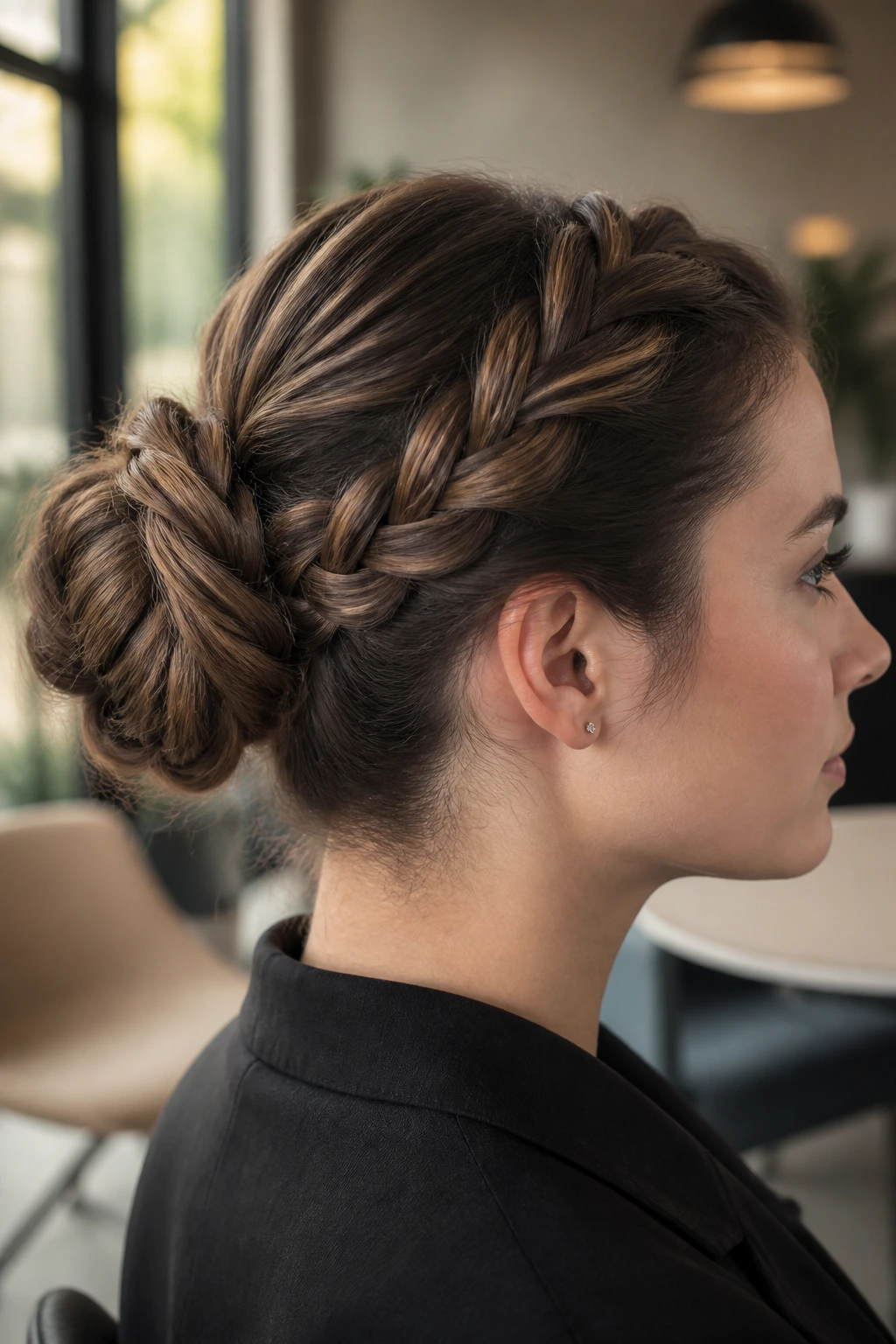
A rope-braid bun is what happens when you want a little more texture than a plain bun but do not want the messiness of a loose twist. The braid pattern gives the bun visible lines, and that texture helps the style hold. It is especially useful on hair that is too smooth for a standard bun to stay put.
When to choose it
Choose this one if your hair slips out of pins easily, if you work in a place where neat texture matters, or if your bun needs to survive a long day without turning fuzzy at the base. Two twisted sections are often easier to control than a full three-strand braid, which makes the rope braid a little more practical for rushed mornings.
Start by dividing the ponytail into two parts, twist each section in the same direction, then wrap them around each other in the opposite direction. That twist-lock structure is what makes the braid hold. Coil the braid into a bun and pin the perimeter. If pieces stick out at the end, tuck them under instead of trying to force them flat with more spray.
The finish should look tidy, not tight. A little texture in the braid is part of the appeal.
18. Curved-End Blowout
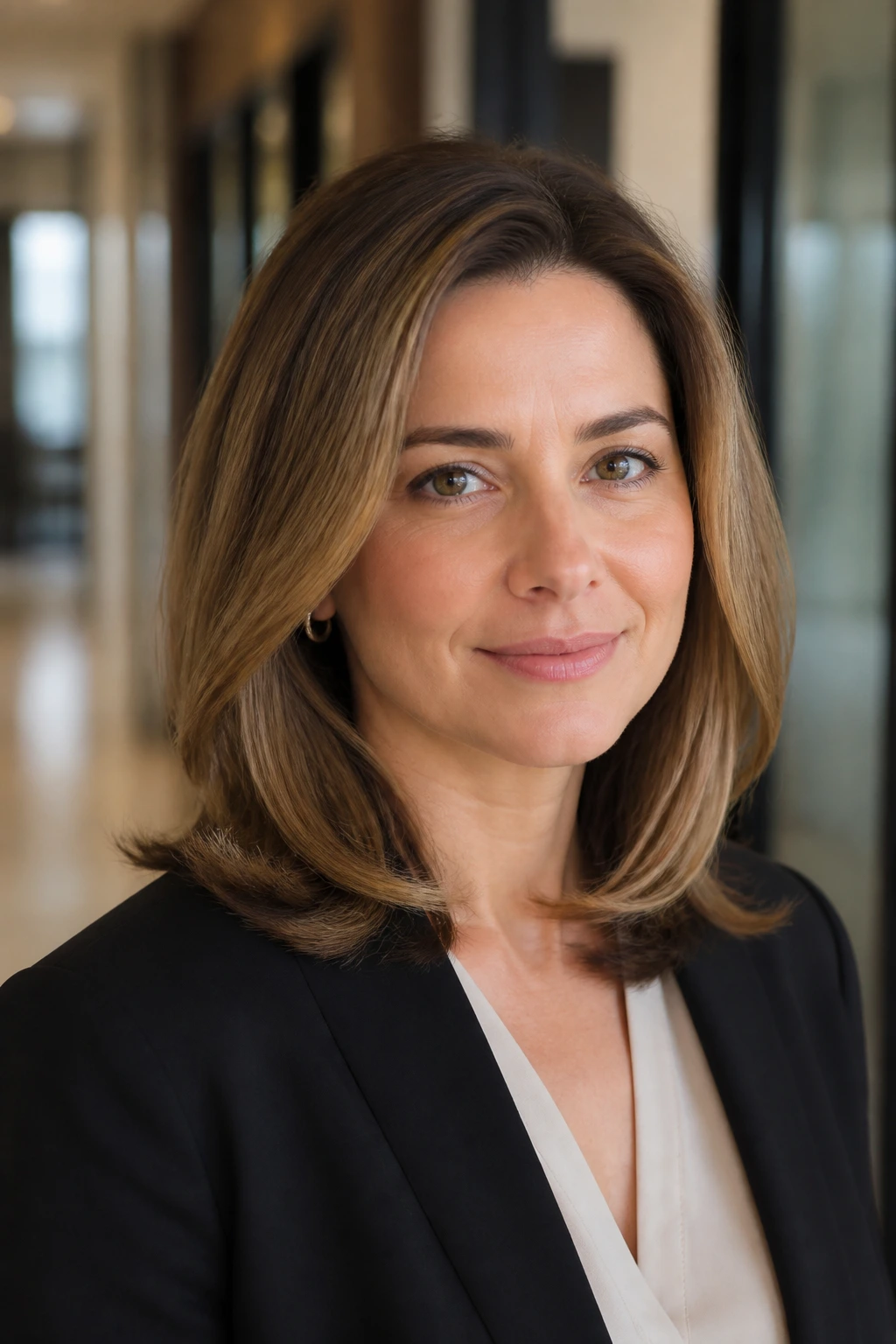
The curved-end blowout is one of my favorite office styles because it looks polished without screaming for attention. The hair moves, but it does not swing wildly. The ends bend under just enough to give the cut shape, and that shape makes even a simple shirt look more finished.
The bend is the whole point. If the ends are flipped, the style starts feeling old-fashioned. If they are perfectly straight, it can look flat and unfinished. The middle lane is where the style lives. A medium round brush or a large-barrel brush gives the curl just enough memory to hold through the workday.
This style is especially useful on layers. A flat finish can make layers look stringy, while a small bend brings the shape back together. If you have fine hair, a volumizing mousse at the roots helps the blowout last. Thick hair needs sectioning. Do not rush the bottom half. That is where the shape either holds or goes fuzzy by noon.
A cool shot at the end matters more than most people think. Heat sets the shape. Cool air locks it in.
19. Tucked Faux Bob
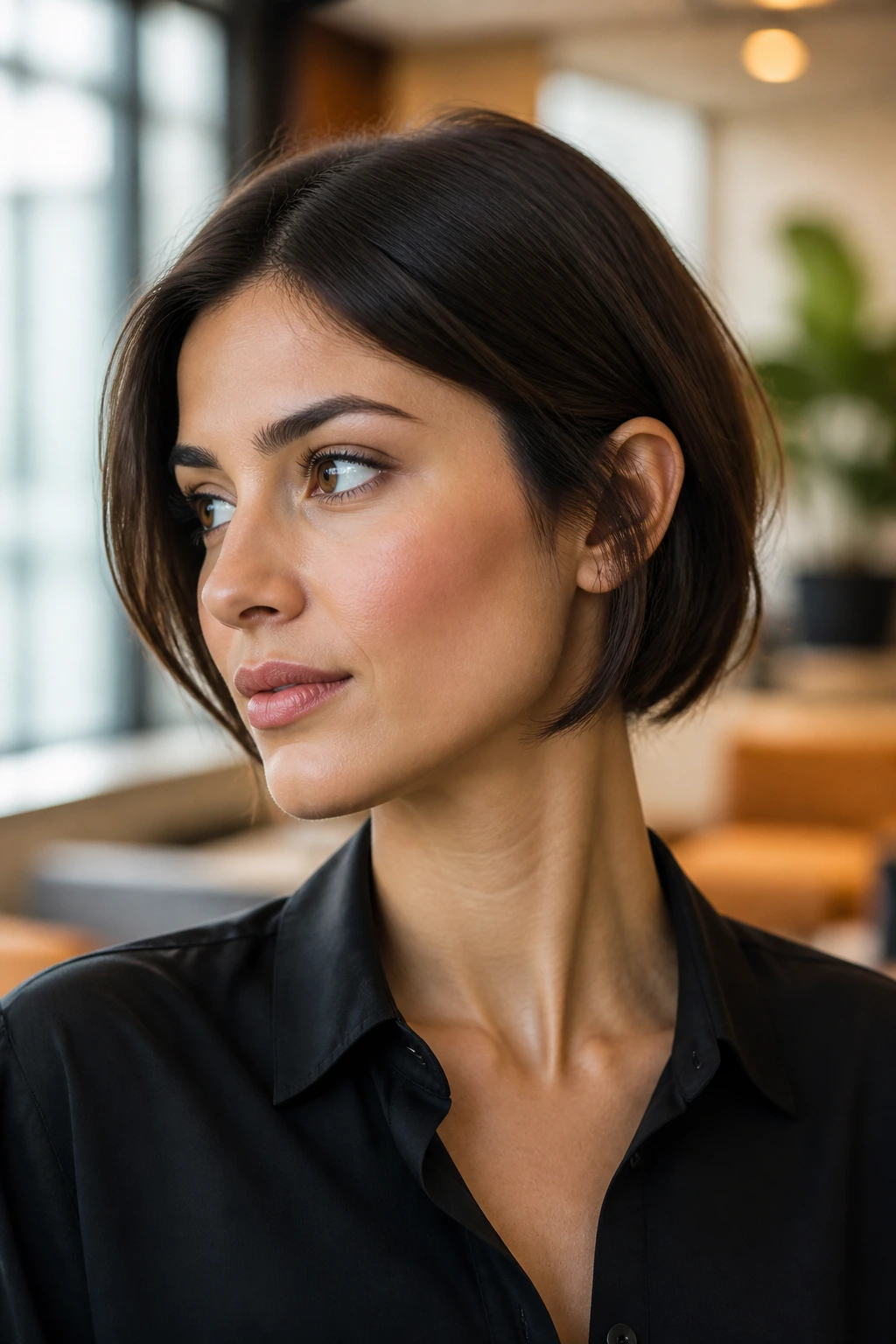
A tucked faux bob is a little bit clever, but not in a showy way. Long hair gets pinned under and around itself so it reads like a shorter cut from the front. That makes it a good option when you want the neck open and the overall silhouette a little sharper.
It works best on medium to long hair with enough length to fold under without sliding apart. If the hair is freshly blow-dried, add a little texture spray before tucking. Otherwise, the smooth surface can make the pins lose their grip. The finished shape should look soft at the edges and more compact near the nape.
This style is useful for a work event where you want a cleaner neckline without committing to an actual haircut illusion that flatters some face shapes more than others. It can also be a smart way to hide damage at the ends. The trick is to keep the hidden pins secure and the visible top layer smooth enough that the style still looks like a real choice.
20. Half-Up Barrette Style
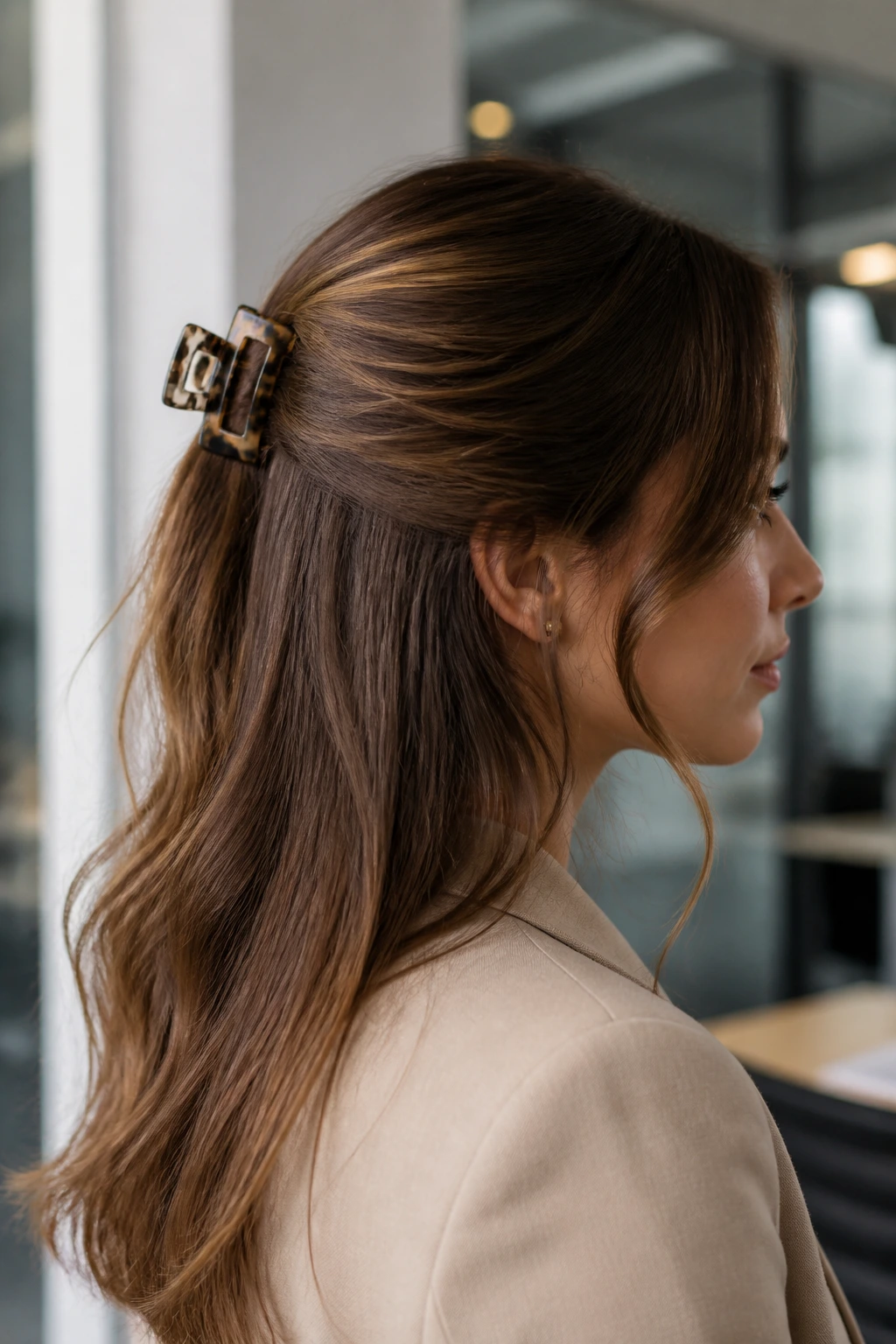
A good barrette can do more than three bobby pins and a prayer. The half-up barrette style proves it. When the top section is pulled back smoothly and fastened with one strong clip, the whole look feels neater, faster, and more finished than a loose half-up knot.
The barrette matters here. Choose one with a secure clasp and enough length to hold the hair without crushing it. Metal, resin, and polished tortoiseshell finishes usually read clean and office-friendly. A barrette that slips or pops open every time you lean back in a chair is not worth the trouble.
This style works on shoulder-length hair, lobs, and long layers, especially when the front pieces need control but you still want the rest down. If your hair is thick, gather only the top third. If it is fine, you can take a slightly wider section so the clip has enough to hold.
A small bend through the loose ends keeps the style from looking too flat. The clip gives structure. The movement keeps it human.
21. Center-Part Sleek Ponytail
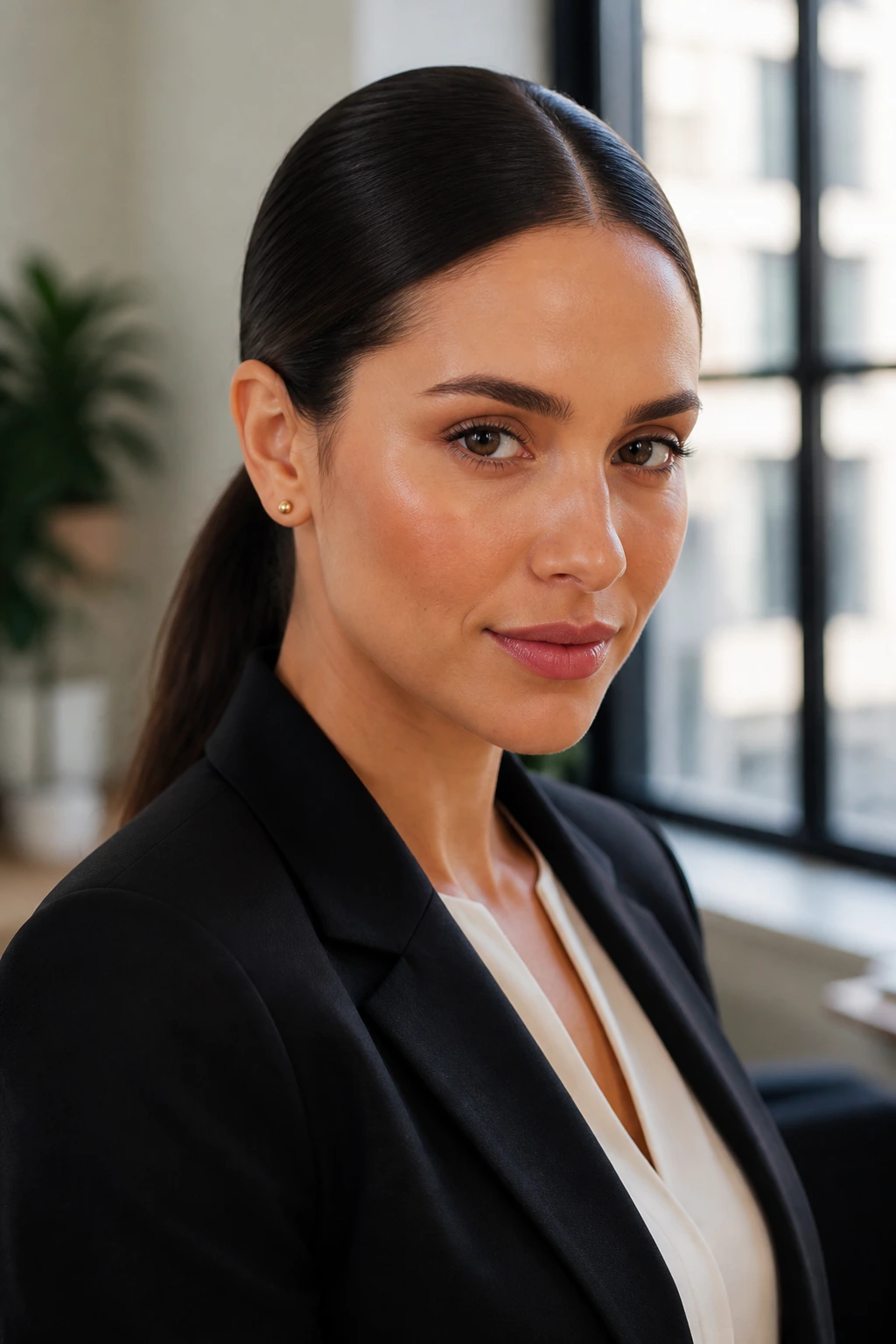
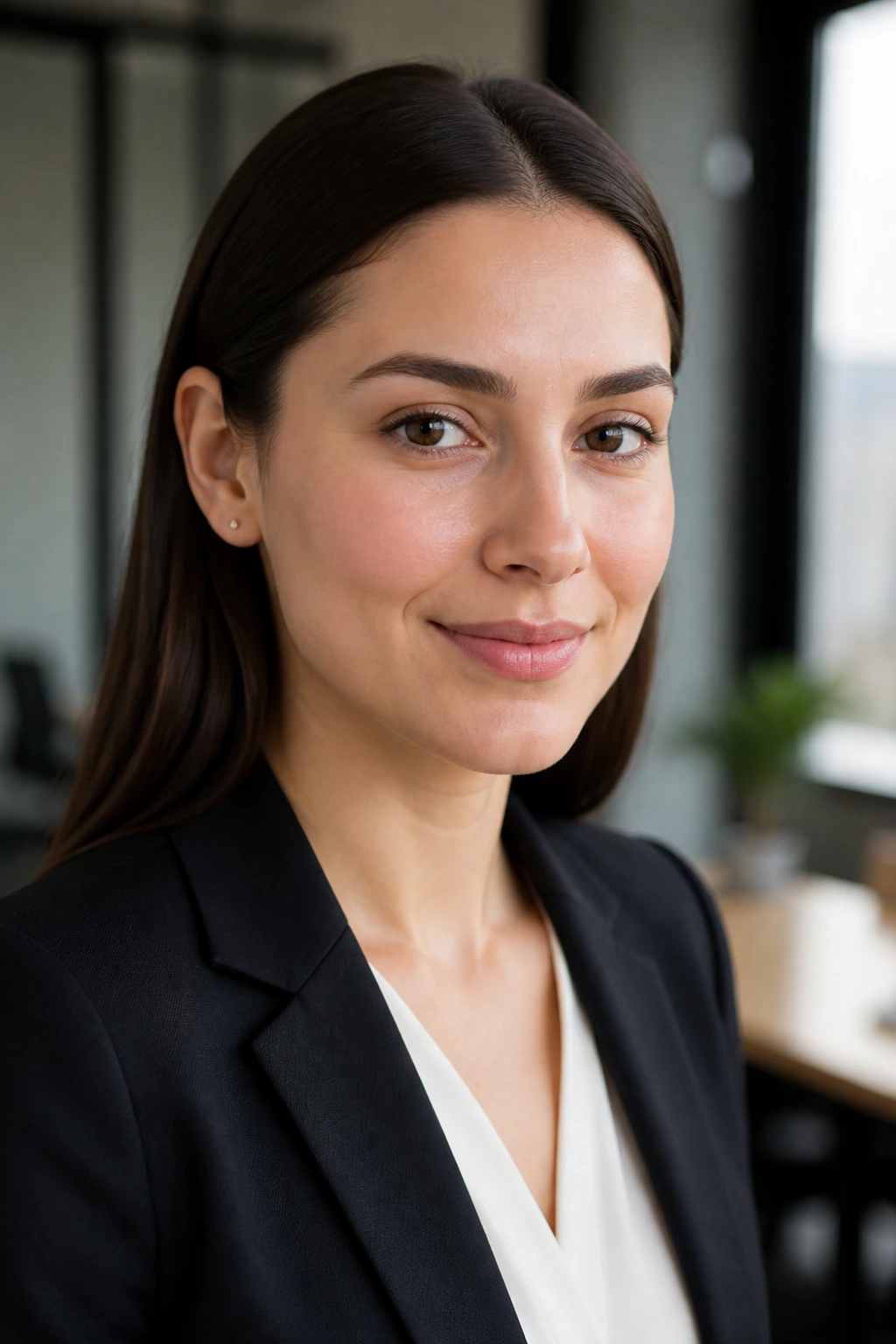
A center-part sleek ponytail is the sharpest version of a ponytail I trust for office wear. It has a clean line down the middle, smooth sides, and enough tension to look disciplined without looking severe. The whole effect is minimal and strong.
The center part gives the face a symmetrical frame, which helps if you wear blazers, collared shirts, or anything with a lot of structure around the shoulders. A little gel at the hairline keeps the part crisp. Then gather the ponytail low or mid-height, depending on how formal you want it to feel. Low sits quieter. Mid-height has a little more energy.
This is a style that benefits from a polished finish more than volume. The crown should lie flat, and the ponytail should look tidy at the base. If your hair is thick, secure it with a strong elastic and wrap a slim section around it. If it is fine, backcomb the ponytail lightly near the base for a touch of body.
No frills. That is the appeal.
22. Twisted Halo Half-Up
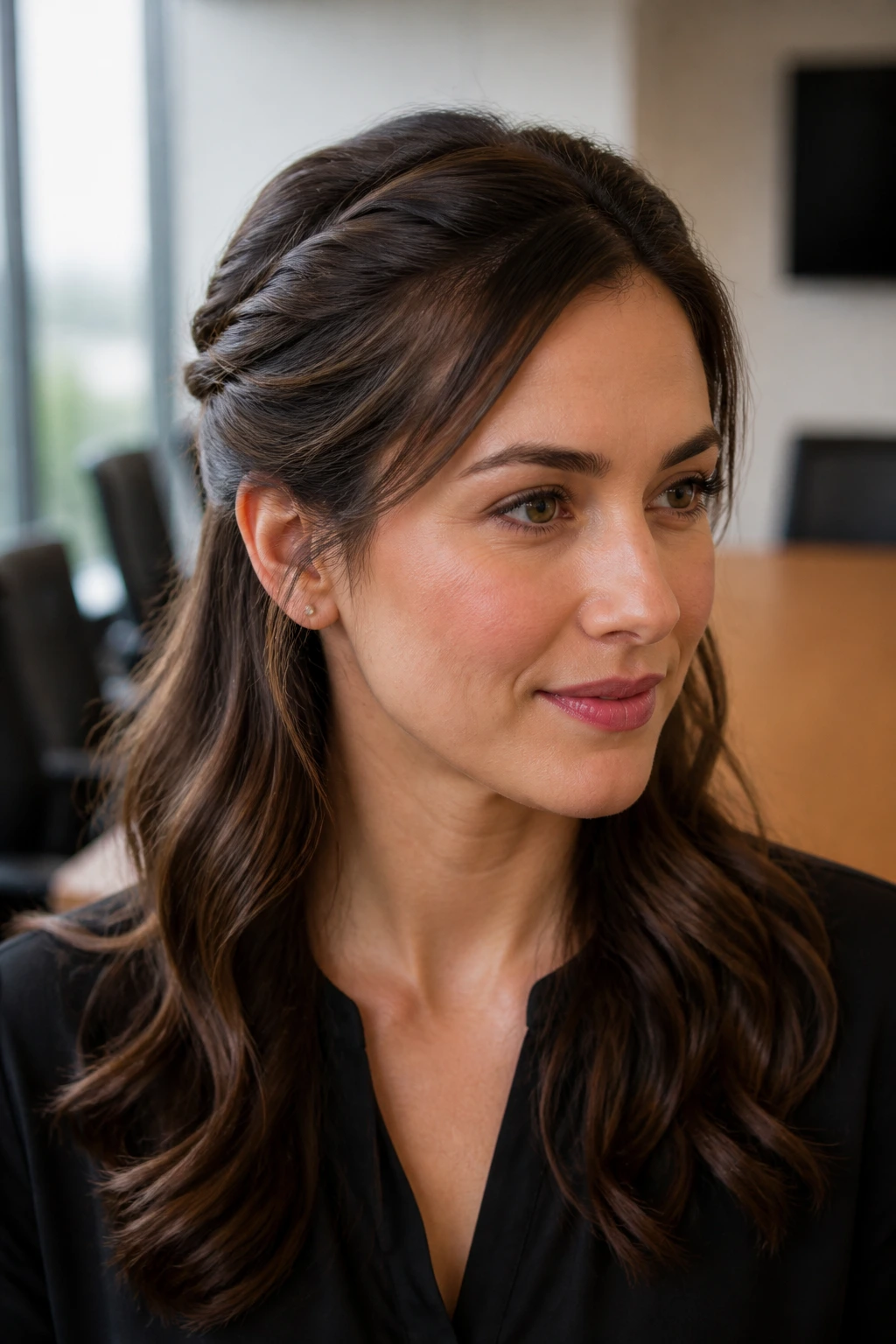
A twisted halo half-up gives the face a softer frame while keeping the hair away from the temples. It has a gentler shape than a braid crown, and the twist makes it feel a little less formal. In an office, that balance can be useful when you want polished hair that still moves.
The style works especially well on medium and long hair with some layer around the face. Twist small sections from each side toward the back, then pin them where they meet. The key is to keep the twist low and smooth so it blends with the rest of the hair instead of sitting like a separate band. If you have bangs or grown-out fringe, this is a nice way to give them a job.
I prefer this on days when the front sections want to fall forward but the rest of the hair still looks good down. It fixes the problem without taking everything up into a full updo. A little shine spray on the twisted pieces helps them read clean in person and on camera.
23. Pinned Waves
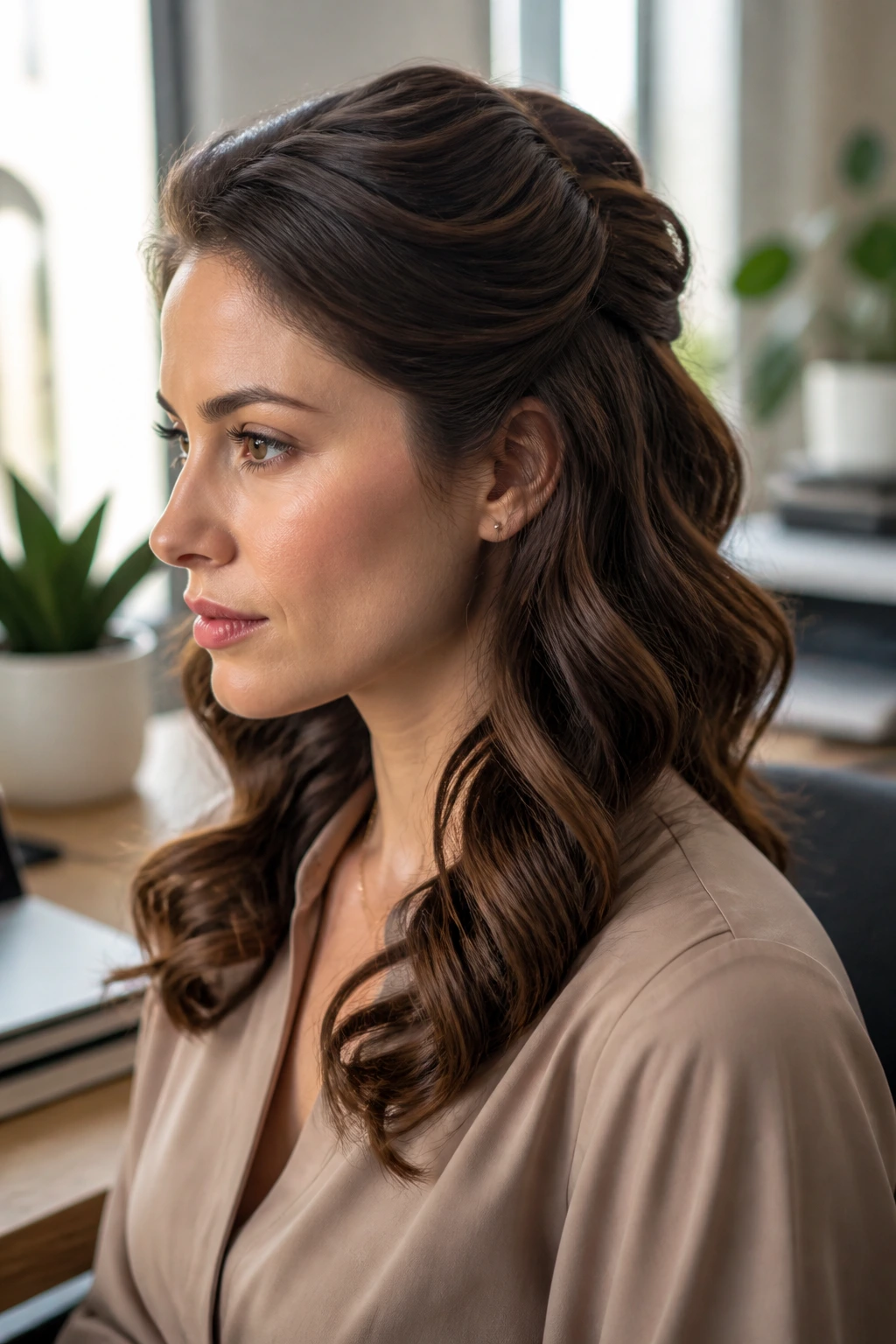
Pinned waves are a smart compromise when you want movement but also need the hair out of the way. The waves stay visible through the lengths, while the front sections are pinned back neatly at the temples or just behind the ears. The result feels controlled without getting rigid.
What makes this office-friendly is the restraint. The waves should be soft enough to look intentional but not so loose that they spill into your face every time you glance down at a keyboard. Pinning the front slightly higher opens the face and shows earrings or glasses more clearly. A pair of hidden pins or a small decorative clip is usually enough.
This works well on medium to long hair and especially on cuts with some face-framing pieces. If the hair is too freshly curled, let it cool before pinning or the waves will collapse. If the waves are too flat, lift the roots with a little dry shampoo at the front.
The style looks calm from the front and a little more interesting from the side. That is a nice place to be.
24. Smooth Long Layers With Bent Ends
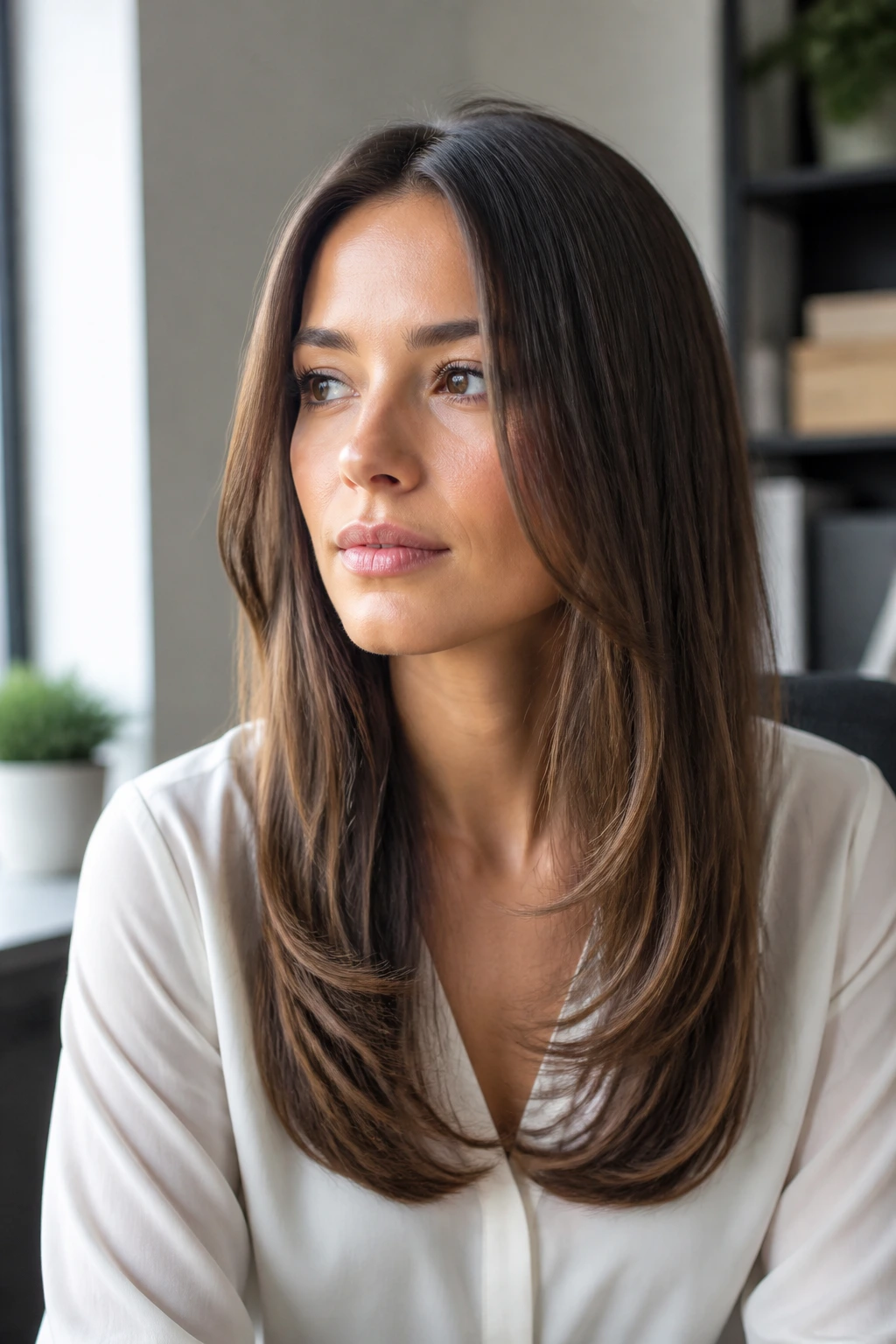
Straight long hair can look too plain for the office if the ends fall like wet rope. Bent ends fix that. A subtle bend at the bottom of long layers gives the cut shape and keeps the length from looking heavy. The style stays clean, but it no longer feels unfinished.
This is the move when your hair is naturally long and you do not want to pin it up every day. The bend can come from a flat iron, a round brush, or a quick blow-dry pass at the ends. Don’t curl the hair into a spiral. Just turn the tool enough to nudge the ends inward or outward in a controlled way.
The best part is how forgiving it is. A tiny bit of texture at the ends can hide yesterday’s flatness, and the layers fall better around the shoulders. Use a light serum only on the last inch or two. If you put it near the roots, the whole style loses lift and starts clinging to the scalp.
This is a quiet style. Quiet does not mean boring.
25. Office-Ready Top Knot
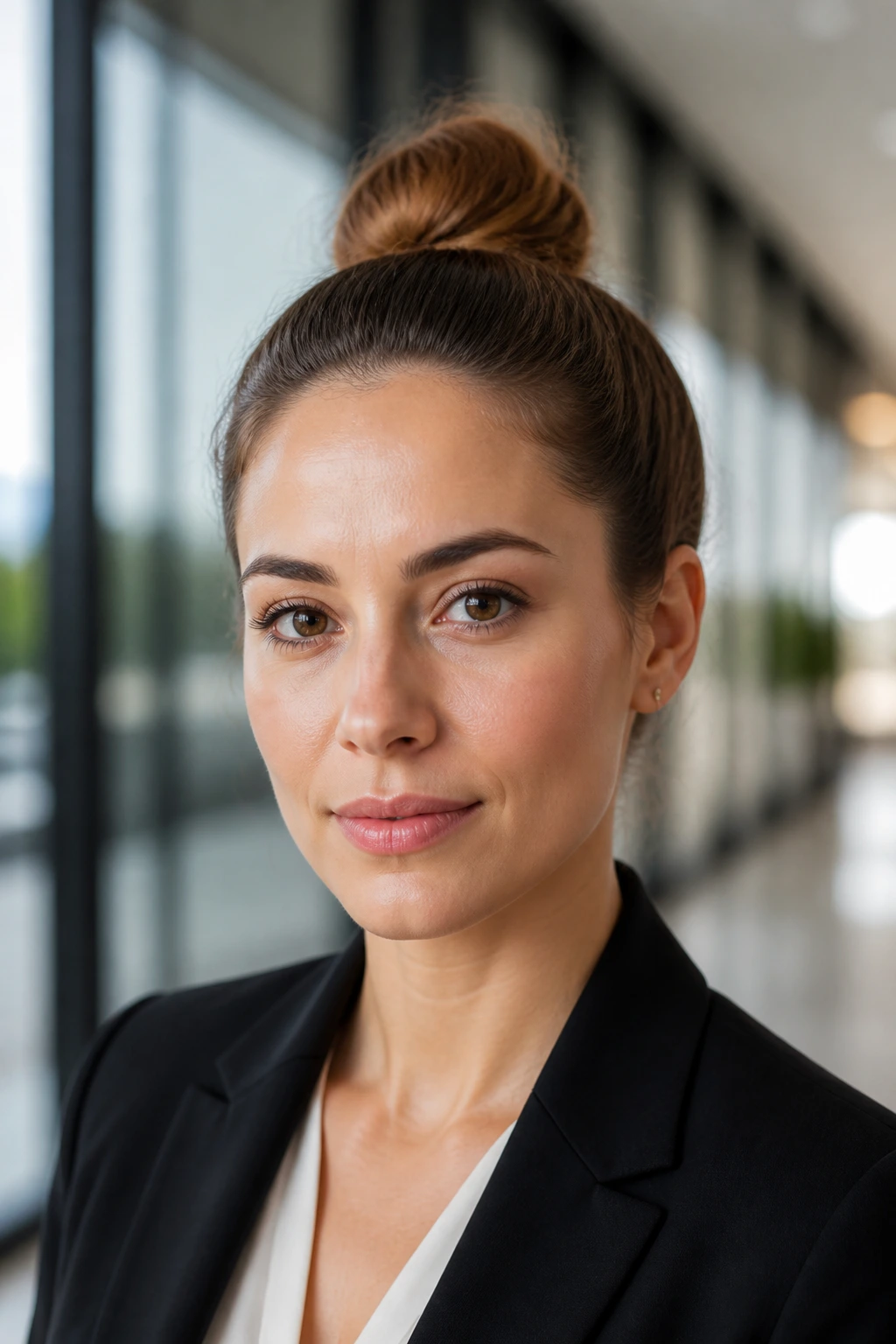
A top knot can work in an office if it is tidy, proportioned, and not perched like a muffin. The goal is a compact knot that sits high enough to clear the collar but low enough to look intentional. A smooth crown and a wrapped base keep it from drifting into sloppy-bun territory.
The style is useful on rushed mornings, on humid days, and on days when you want the neck clear because your shirt has a strong collar. If the knot is too large, it can feel playful in a way that does not always suit a professional setting. Keep it small. Keep it neat. Keep the edges controlled.
I like this best when there is a little root texture from day-old hair. It gives the knot grip and keeps the shape from sliding. Fine hair can also wear it with the help of dry shampoo and a second elastic hidden underneath. Thick hair needs more pins, obviously, and a little patience at the wrap stage.
The top knot should look like a choice, not an emergency.
What Makes a Work Hairstyle Look Intentional
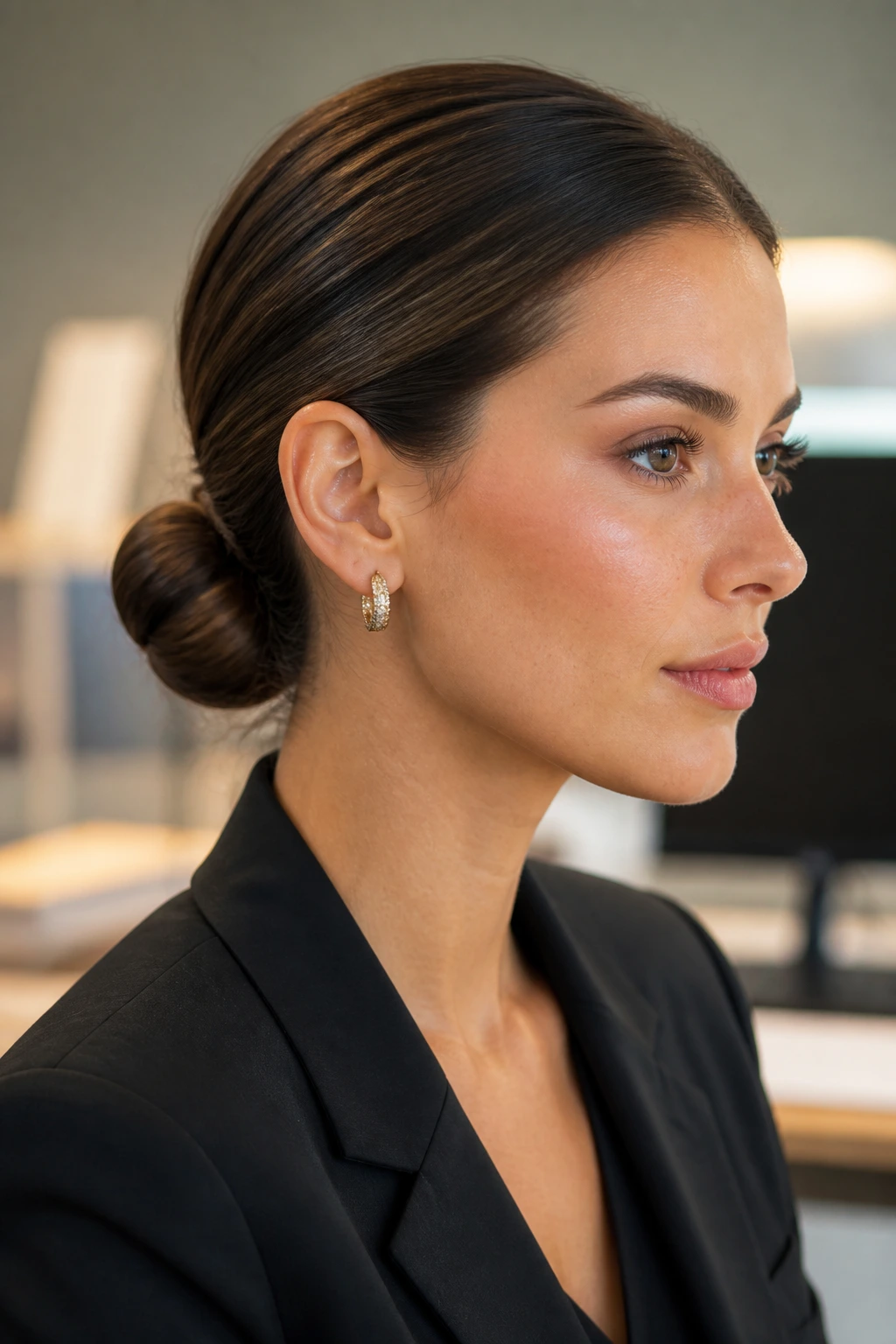
A polished office hairstyle usually comes down to four things: the part, the crown, the ends, and the finish around the face. Get those right, and even a very simple style starts looking composed. Miss all four, and the hair can look like it happened to you instead of being chosen.
The part does a lot more than people expect. A center part makes a style feel cleaner and more direct. A deep side part adds shape and can soften a strong jawline or a sharp collar. If the part is crooked or fuzzy, the whole style loses its edge.
The crown matters because that is where sloppiness shows first. A smooth crown with a bit of control at the hairline looks polished in a way loose curls never can. And the ends? They need a decision. Either tuck them, bend them, wrap them, or define them. Leaving them floating in every direction is what makes a style feel unfinished.
One more thing. Over-sprayed hair often looks older than lightly controlled hair. Aim for touchable hold, not armor.
The Tools and Products That Actually Help
You do not need a giant vanity of hair gear to make office hairstyles work. You need a few tools that do their job without fuss.
- Boar bristle brush: Best for smoothing the crown and distributing a little natural oil through the top layer.
- Tail comb: Useful for clean parts, sectioning, and tightening up a ponytail without starting over.
- Good hair elastics: Thin black elastics, snag-free bands, and clear mini elastics each solve a different problem.
- Bobby pins in two sizes: Standard pins hold buns and twists; smaller pins help hide flyaways or anchor short layers.
- Flexible-hold hairspray: Keeps shape without turning the hair into a stiff shell.
- Dry shampoo: Adds grip at the roots and saves styles that need a little texture to stay put.
- Heat protectant: Necessary for blowouts, bent ends, and any style built with a flat iron or curling tool.
- Smoothing cream or light serum: Tames frizz at the hairline and keeps ends from looking dry.
- Medium claw clip: Makes quick twists and French-clip styles possible when you are short on time.
- Round brush or paddle brush: A round brush creates bend; a paddle brush keeps long hair sleek.
If you wear your hair up often, keep extras in your bag. A spare elastic, one bobby pin, and a travel-size spray save more mornings than people admit.
Product Picks and Hair-Type Notes That Matter
The right product changes the shape of a style, not just the shine. Fine hair wants lightness and grip. Thick hair wants control. Curly hair wants definition before anything else. If you treat all hair the same, the style usually fails in a predictable way.
For fine hair, go light on oils and creams. A dry shampoo at the roots and a flexible spray at the finish often do more than heavy smoothing products ever will. Fine hair usually benefits from styles with built-in structure, like a low bun, a wrapped ponytail, or a slick part.
Thick hair is the opposite problem. It needs sectioning, tension, and enough pins to survive movement. A cream that softens the surface without making it slippery helps a lot. Thick hair also does well with braids, French twists, and knots that can anchor bulk close to the head.
Curly and coily hair look best when the curl pattern is honored instead of flattened. A leave-in, a curl cream, and a gel with real hold can shape the hair without turning it hard. For these textures, the “office polish” comes from definition and clean parting, not from forcing the hair straight.
If your office has dry air or strong air-conditioning, choose products with less alcohol and more flexible hold. The hair will thank you around hour six.
How to Wear These Styles to the Office
Presentation: Keep the front section tidy and choose one clear shape. A bun, twist, or ponytail looks more professional when the crown is smooth and the shape at the back is easy to read from a few feet away.
Accompaniments: These styles work best with collars, blazers, knit tops, and glasses that do not fight the hairline. A sleek bun or side-part blowout pairs well with structured necklines. Softer waves and half-up styles suit open collars and simple earrings.
Portions: If your hair is short, use the styles built for cleaner edges, like the pixie sweep or tucked bob. Medium hair can handle almost anything here. Long hair usually needs either more pins or more smoothing time, especially if it is thick. Give yourself an extra 5 minutes when the style includes braids or a wrapped base.
Beverage Pairing: Think about the part of your day that includes coffee, water, tea, or a headset. Styles like the low bun, wrapped ponytail, and French twist handle drink breaks and desk movement better than loose waves. That sounds silly until you have hair stuck to lip balm and a paper cup in the same hand.
Extra Tricks for Shine, Hold, and Speed
Shine Boost: A pea-size amount of serum rubbed between the palms and pressed onto the ends does more than coating the whole head. Put it on the last 2 inches of hair and stop there.
Hold: Spray the crown lightly before smoothing it with a brush, not after everything is already tied. The product gets where it needs to be, and the style holds better.
Time Saver: Prep hair the night before. Blow-dry it fully, section it loosely, and sleep with a satin pillowcase or a soft wrap. In the morning, you are shaping, not starting from zero.
Style Upgrade: One narrow barrette, a clean tortoiseshell clip, or a pair of small gold pins can make a basic style look deliberate. Pick one accent, not three.
Humidity Move: If the air is wet, use a little more hold at the hairline and a little less oil at the ends. Humidity attacks the crown first. Protect that area.
Common Mistakes That Make Office Hair Look Fussy
The first mistake is pulling everything too tight. A style can be neat without yanking the scalp or stretching the hairline flat. If your forehead looks wider than usual or your temples feel sore, the style is too tight and needs to be loosened a little.
Second, too much product makes hair look dirty before lunch. Heavy oil near the roots, over-sprayed bangs, or a thick wax layer at the crown all flatten the style and pick up dust. Use less than you think, then add a tiny bit more only if the hair truly needs it.
Third, people choose accessories that do not match the scale of the hairstyle. A giant clip on fine hair looks clumsy. A tiny barrette in thick, long hair gets swallowed and slips out. Match the accessory to the amount of hair it has to hold.
Fourth, skipping the front section is where many styles go wrong. The back may be perfect, but if the part is crooked and the hairline is fuzzy, the whole look reads unfinished. Spend the extra minute at the temples and along the part.
Fifth, trying to force every style to work on day-one clean hair is a waste of time. Some of the best office hairstyles need a little grit. If the hair is too slippery, add dry shampoo or wait until the next morning.
Ways to Adapt These Styles for Different Hair Lengths and Textures
The Five-Minute Version: Use a low ponytail, a barrette half-up, or a quick low knot. These take the least prep and still look tidy when you smooth the front and leave the part clean.
The Heat-Free Version: Choose twists, buns, braid crowns, or pinned waves made from natural texture. A damp-set or overnight twist can look polished without a blow dryer if you let it dry fully before touching it.
The Fine-Hair Version: Go for styles with built-in structure: wrapped ponytails, sleek buns, French clips, and side parts. Fine hair usually needs root texture more than extra product, so dry shampoo is your friend.
The Thick-Hair Version: Pick styles that anchor bulk close to the head. French twists, rope-braid buns, low chignons, and center-part ponytails hold better when there are more pins and a little more tension.
The Curly-Hair Version: Work with shape, not against it. Defined curls with a side part, pinned half-up styles, and low buns that preserve texture at the ends usually look more polished than flattening everything.
The Short-Cut Version: Pixie sweeps, tucked bobs, and side-pinned styles create clean lines without needing long lengths. A short style looks sharp when the edges are deliberate and the finish is light.
How to Keep Them Fresh Through the Week
Most office hairstyles do best on day one. Some hold into day two with a little refresh. A few, especially the low bun, low twist, and tucked styles, can stretch further if you protect them overnight.
For updos, wrap the hair with a satin scarf or sleep on a satin pillowcase. That cuts down on friction at the hairline and keeps the shape from frizzing into a puff. In the morning, mist the crown lightly with water or a leave-in spray, smooth with your hands or a brush, and tighten only the loose spots.
Ponytails and blowouts usually need more help by the next day. Dry shampoo at the roots, a quick re-bend of the ends, and a fresh elastic can revive them fast. If the ends look dull, use a drop of serum, not a full palmful.
Curly styles depend on the curl pattern. Some need a water refresh and a bit of gel at the perimeter. Others need the roots fluffed and the front re-parted. As a rough rule, sleek styles last 1 to 2 days, curled or waved styles last about 1 day before they want a touch-up, and pinned updos can stretch to 2 days if you protect them at night.
Frequently Asked Questions About Work Hairstyles
How do I make a work hairstyle look polished without spending forever on it?
Start with a clean part and one controlled shape. A low bun, wrapped ponytail, or barrette half-up can look deliberate in under 10 minutes if the crown is smoothed first.
What’s the best office hairstyle for humid weather?
Low buns, French twists, and pinned curls usually hold up better than loose blowouts. Hair tied close to the head has less surface area for humidity to puff up.
Can I wear a messy bun to work?
Yes, but it needs boundaries. Keep the base neat, the crown smooth, and the bun compact; otherwise it starts reading like a house hairstyle instead of an office one.
What if my hair is too slippery to hold a style?
Add dry shampoo at the roots and a little texture spray before you pin or tie it back. Freshly washed, silky hair often needs grip more than more product.
Are heat tools necessary for these styles?
No. Several of them work on natural texture, especially twists, buns, and pinned styles. Heat mainly helps with blowouts, bent ends, and sharper parts.
How do I keep flyaways under control without making my hair stiff?
Use a small amount of smoothing cream or a light hairspray on a brush, then sweep the surface once. Spraying directly onto the hair usually creates too much buildup.
What hairstyle works best with bangs or grown-out fringe?
Side parts, half-up twists, braid crowns, and low buns with face-framing pieces give bangs somewhere to live. If the fringe is long enough, tuck or pin it rather than trying to force it flat.
Which styles work on short hair?
Pixie sweeps, tucked bobs, and pinned side sections are the easiest. Short hair looks most polished when the edges are clean and the direction is clear.
A Sharper Office Hair Routine
The best office hair is not the fanciest hair. It is the hair that holds its shape after the commute, stays calm under fluorescent light, and still looks like a choice when you catch your reflection at 4 p.m. That usually comes down to a clean part, a controlled crown, and one finish detail that keeps the style from looking accidental.
Pick two or three of these looks that suit your texture and your mornings, then repeat them until they become fast. Repetition is underrated. So is a good bobby pin.
One good work hairstyle can save a whole outfit. Two or three in regular rotation can save the week.
