



Formal half up half down hairstyles solve a problem that full updos and loose waves often create on the same night: one can feel too severe, the other can wilt by dessert. The sweet spot sits in the middle. A little control at the crown. A little movement through the ends. And, when it’s done well, enough structure that the style still looks intentional after hugs, champagne, and a few hours under warm lights.
I keep coming back to this family of styles because it does a lot of quiet work. It lifts the face, keeps earrings visible, and gives the back of the hair enough shape to show up in photos. The best versions do not look half-finished; they look like someone made a choice. The difference lives in the details — where the twist sits, how tight the anchor is, how much hair stays loose around the cheekbone.
The styles below cover sleek, romantic, braided, vintage, and textured options, because formal hair is not one-size-fits-all. A polished center part changes the mood completely from a soft braided halo. A ribbon tie can make a style feel dressier than another layer of curling ever will. That balance is the whole game, and it starts with the styles that hold their shape without looking stiff.
Why These Formal Half Up Half Down Hairstyles Work So Well
-
They keep the crown under control: the top section stays anchored, so you do not get that split, puffy look that loose curls can develop in humidity.
-
They still move when you walk: the loose length sways and falls naturally, which makes the style feel finished instead of frozen.
-
They make room for accessories: pearl pins, combs, veils, and long earrings all have space to show without fighting the hair.
-
They flatter more face shapes than a full-up style: leaving the lower half down softens the jaw and keeps the cheek area from looking boxed in.
-
They are easier to refresh: if one curl drops, you only need to touch the top third of the hair, not rebuild the whole style.
-
They work across hair textures: straight, wavy, curly, coily, thick, and fine hair can all be adapted with the right anchor points and product choice.
1. Polished Twisted Crown Half-Up
A polished twisted crown half-up is the style I reach for when the outfit is already doing a lot and the hair needs to behave. Two smooth sections sweep back from the temples, twist once or twice, and meet at the center of the back head, where they’re pinned flat and hidden under a small veil of loose hair. The result is calm from the front and quietly detailed from behind.
Why It Stays Neat
The twist matters because it gives the hair a direction without making the crown bulky. A clean twist is easier to pin than a loose braid, and it leaves fewer fuzzy ends poking out after a long dinner. Keep the sections about 1½ inches wide near the temples; if they’re too thick, the twist starts to look heavy.
- Best for: medium to long hair, especially straight or soft waves.
- Good match for: drop earrings, bateau necklines, and dresses with a lot of beading.
- Watch for: slippery roots. A small mist of texturizing spray at the crown helps the pins bite.
Tip: cross two bobby pins in an X pattern under the twist. It sounds fussy. It isn’t. It keeps the whole center from drifting down an inch by the time photos start.
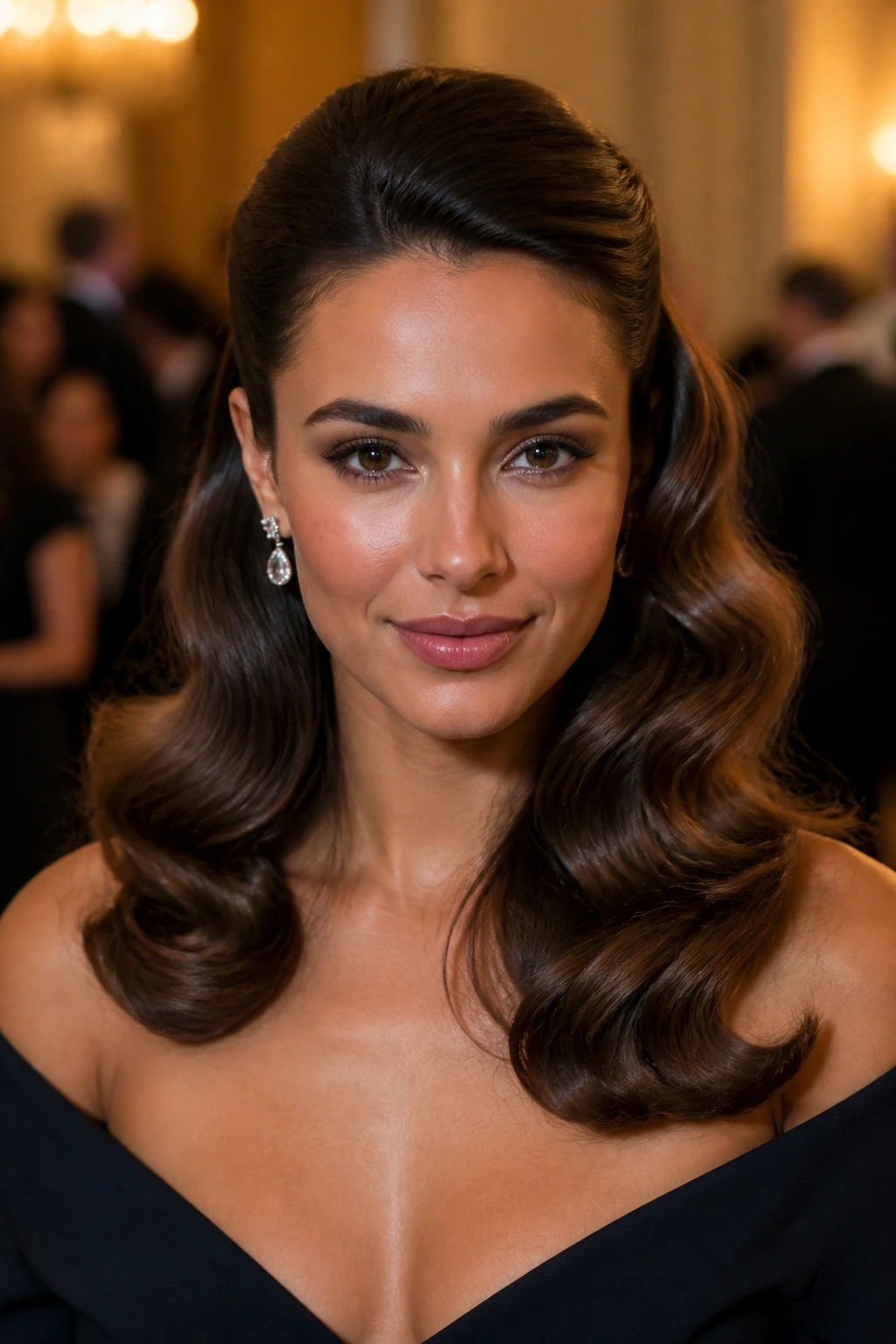
2. Soft Hollywood Waves with a Hidden Barrette
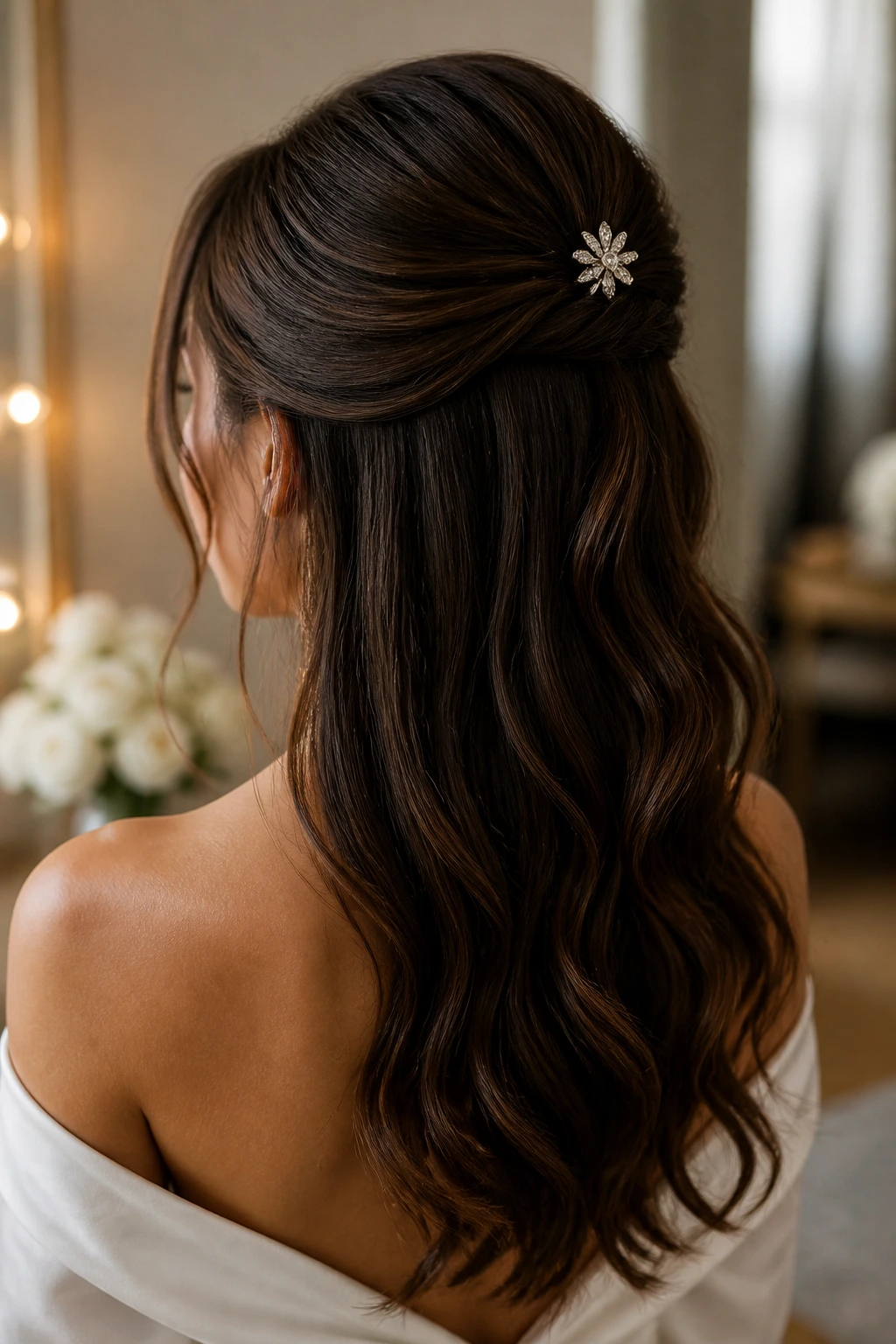
A hidden barrette can carry a formal half up half down look farther than people expect. The top section gets smoothed back just enough to expose the face, then secured with a clip tucked under a blanket of brushed-out waves. From the front, you get softness. From the back, you get that expensive-looking curve where the hair falls in one long, glossy sheet.
The key is not overloading the top section. If you pull back too much hair, the style becomes a half ponytail. If you pull back too little, the clip looks accidental. Aim for a section that starts above the ears and ends just below the crown. Curl the lower length with a 1¼-inch iron, let it cool fully, then brush the curls into one large wave pattern.
This style feels especially strong for black-tie events because it moves like loose hair but still has a fixed point in the back. I like it with a satin dress and one clean piece of jewelry. Too many extras start to fight the softness.
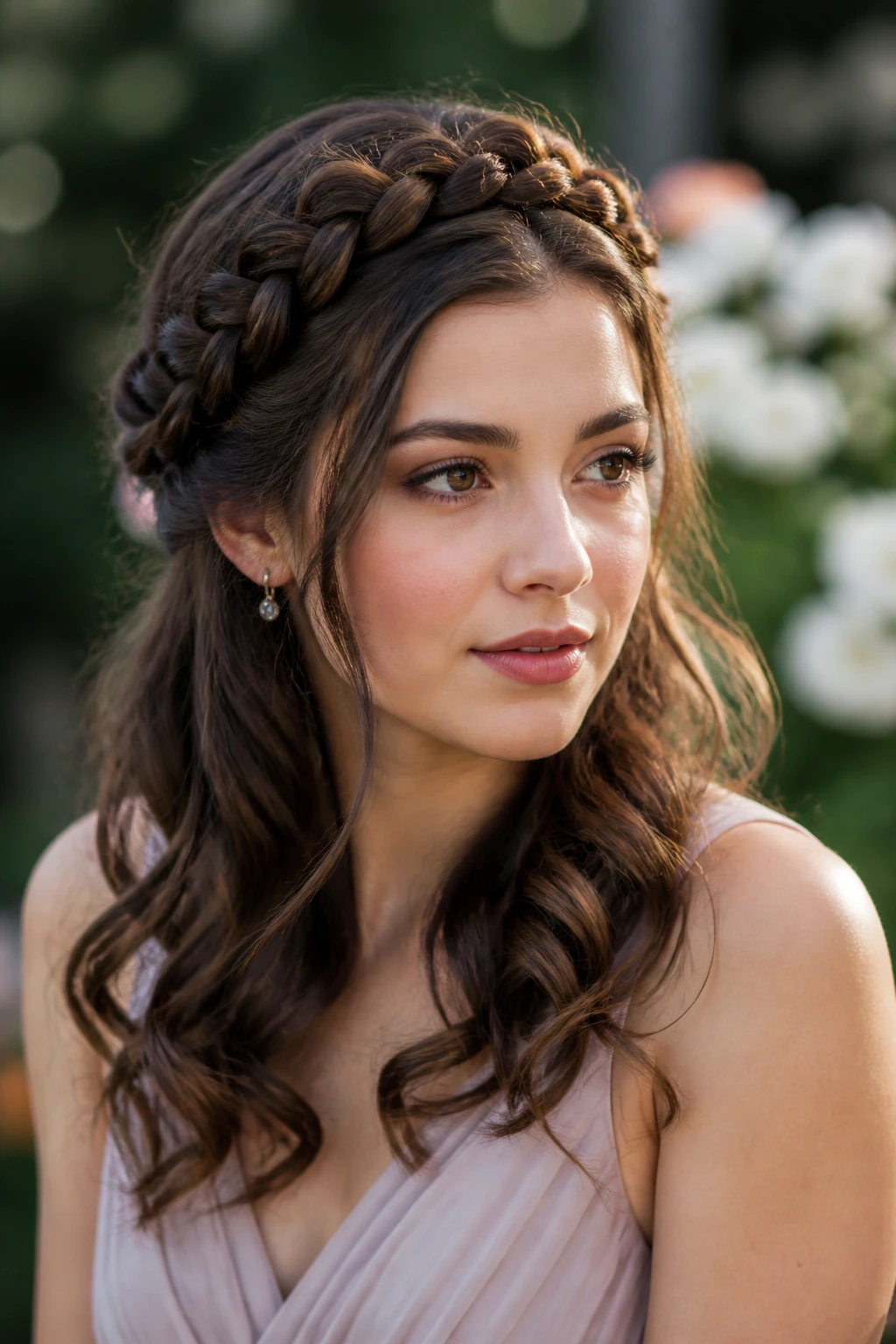
3. Braided Halo Half-Up
Why does a braided halo read as formal instead of casual? Because the braid becomes a frame, not the whole hairstyle. It sits across the top half of the head like a narrow crown, with the rest of the hair left loose and curled beneath it. The braid gives structure, and the loose length keeps the look from turning too severe.
How to Build It
Start by parting the hair where you actually wear it, not where you think a braid should begin. Braid one section from temple to temple, or work with two smaller braids that meet at the back if your hair is shorter. Keep the braid tight enough to hold, but not so tight that the scalp shows every stitch.
A halo braid is one of the few formal styles that can handle a veil or headpiece without looking crowded. It also helps thick hair stay off the cheeks while leaving enough length down the back to move. If your hair is layered, leave the shortest face-framing pieces out on purpose. They make the braid look softer, not sloppier.
4. Sleek Center-Part Half-Up Ponytail
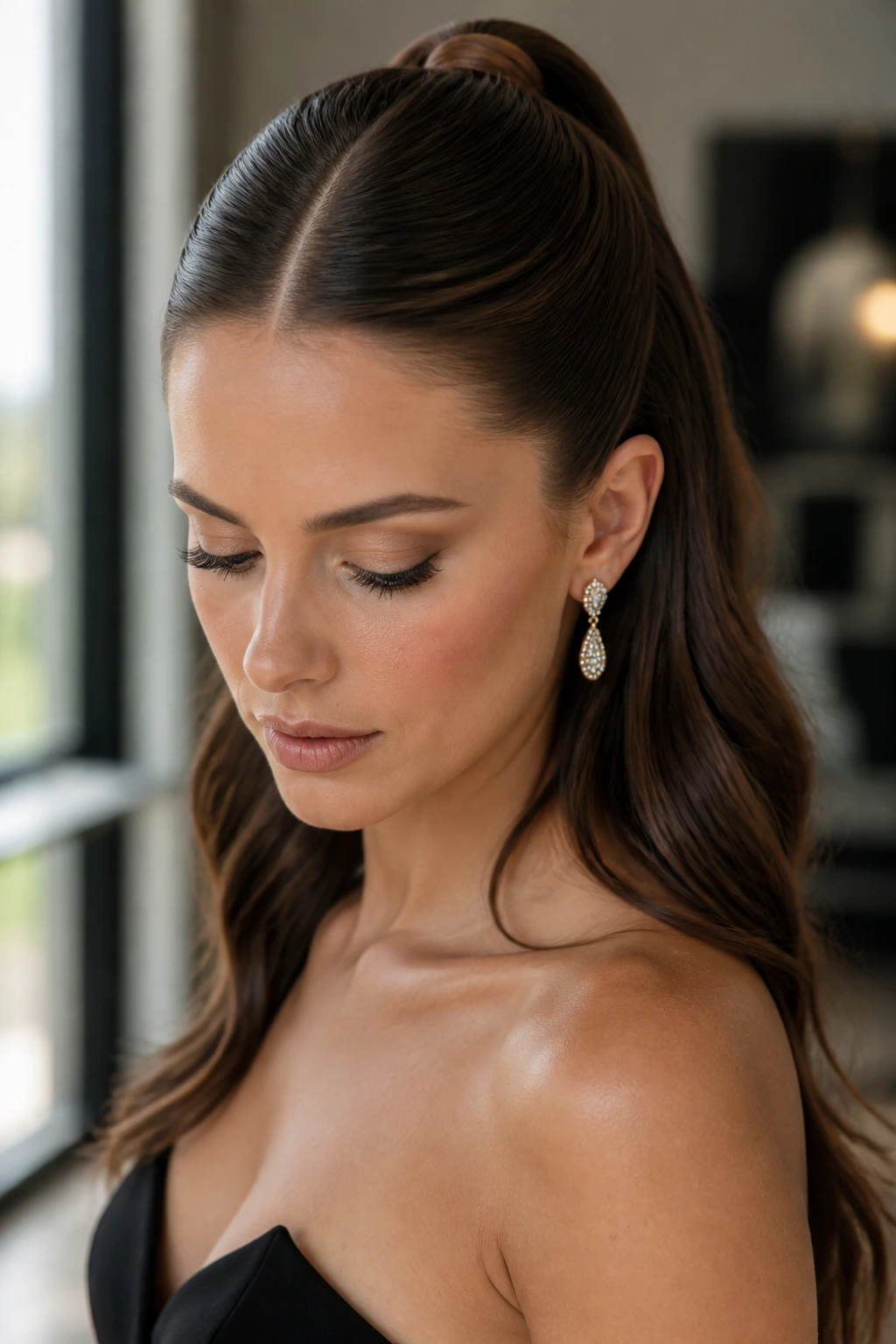
Unlike a low ponytail, a sleek center-part half-up ponytail gives you clean lines at the top and movement below the elastic. The upper section gets combed smooth, parted dead center, and gathered at the crown into a small ponytail that sits higher than a classic half-up knot. The loose length underneath can stay straight for a modern finish or get waved if the dress calls for more softness.
The charm here is restraint. A center part makes the look feel sharp, and the ponytail lifts the eye without making the hair feel overdone. Keep the elastic narrow and wrap one thin strand around it to hide the band. That tiny move makes more difference than people think.
This is the style I’d pick for a gown with a strong neckline, especially something asymmetrical or sculptural. It lets the dress stay in charge while the hair keeps the face open. If your roots tend to puff, smooth them with a light cream before you part. Not serum. Cream. Serum near the part can slide.
5. Pearl-Pinned Volume Half-Up
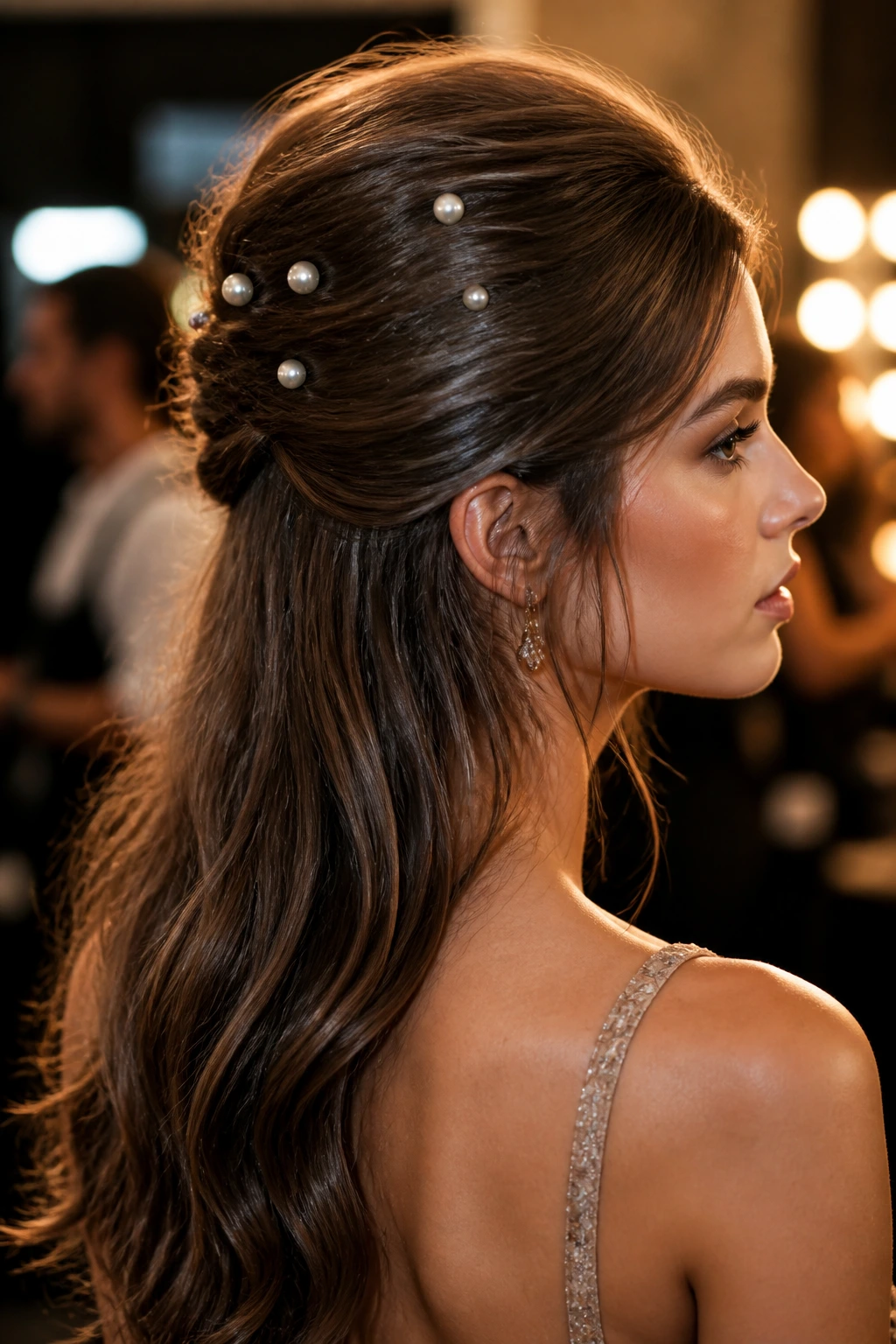
Pearl pins are not subtle, and that is exactly why they work here. The crown gets a little teasing for lift, the upper section is pinned back loosely enough to keep some softness, and the pins are dotted across the twist or fold like tiny lights. The style looks richer when the volume is lifted at the crown instead of shoved low toward the nape.
This one leans formal fast. You do not need a complicated braid or a dramatic curl pattern; you need height, clean pin placement, and a hair surface that has been smoothed before the pins go in. Backcomb the crown lightly with a fine teasing brush, then mist it with flexible spray before pinning. If you pin first and spray later, the hair shifts.
The strongest version uses three to five pearl pins, not fifteen. Too many and it starts to look like decoration for decoration’s sake. Keep the lower hair glossy and simple. That contrast is what makes the pearls feel intentional.
6. Rope-Twist Side Sweep
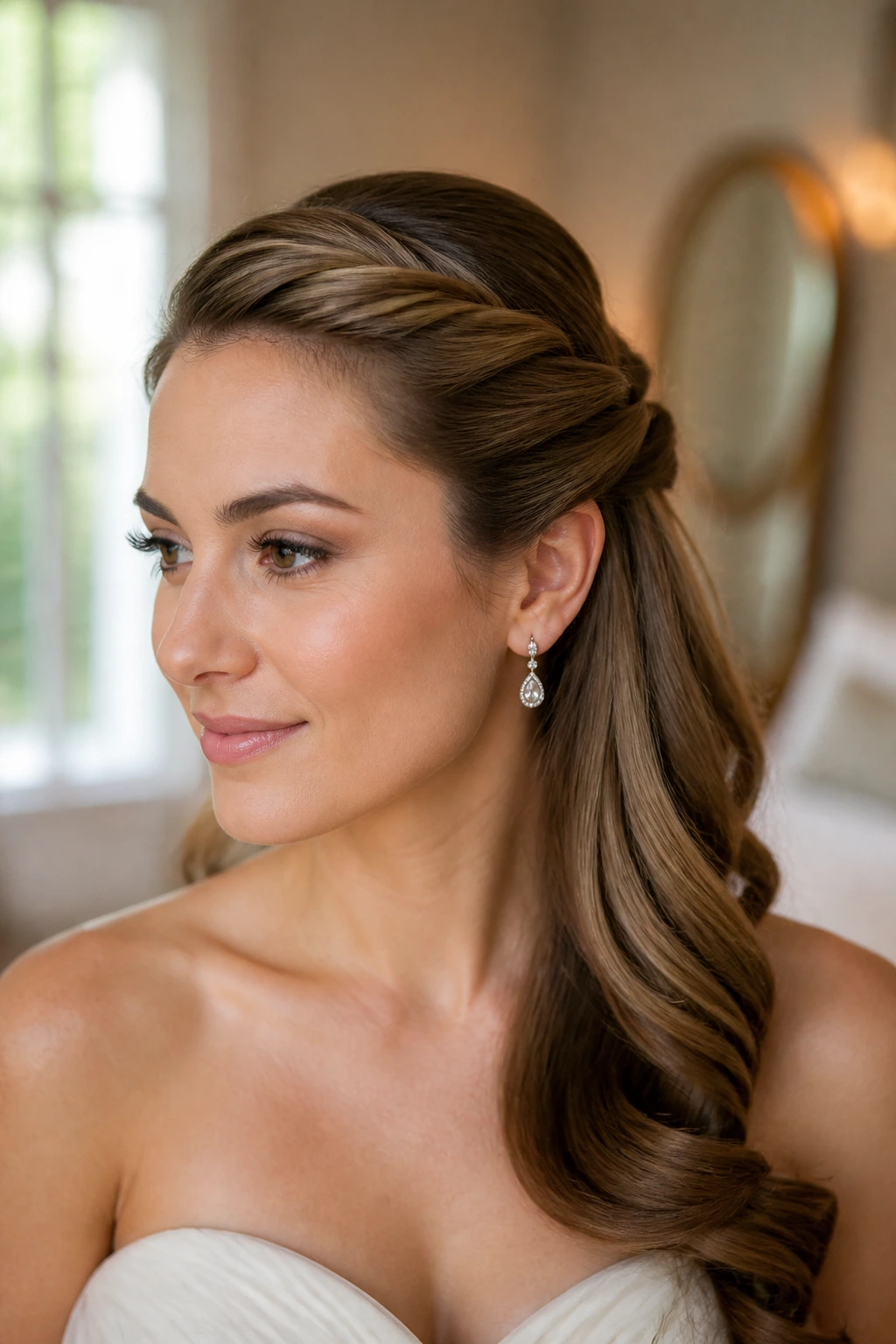
A rope-twist side sweep is the answer when a straight-down style feels too plain but a braid would steal too much attention. The hair is parted to one side, then small sections from the front are twisted away from the face and swept back toward one ear before being pinned. The lower length can stay smooth or be curled into wide bends.
It pairs beautifully with one-shoulder dresses because the hair follows the line of the neckline instead of competing with it. The twist gives the front some direction, and the side sweep makes earrings visible on the exposed side. If your hair is fine, use two pins per twist. If it’s thick, anchor each twist with one pin plus a U-pin beneath it.
What Makes It Different
The shape feels softer than a braid and cleaner than a loose clip-back. That in-between quality is what makes it useful for formal settings that still want movement. It also photographs well from the side, which matters more than people admit.
7. Waterfall Braid Half-Up with Loose Curls
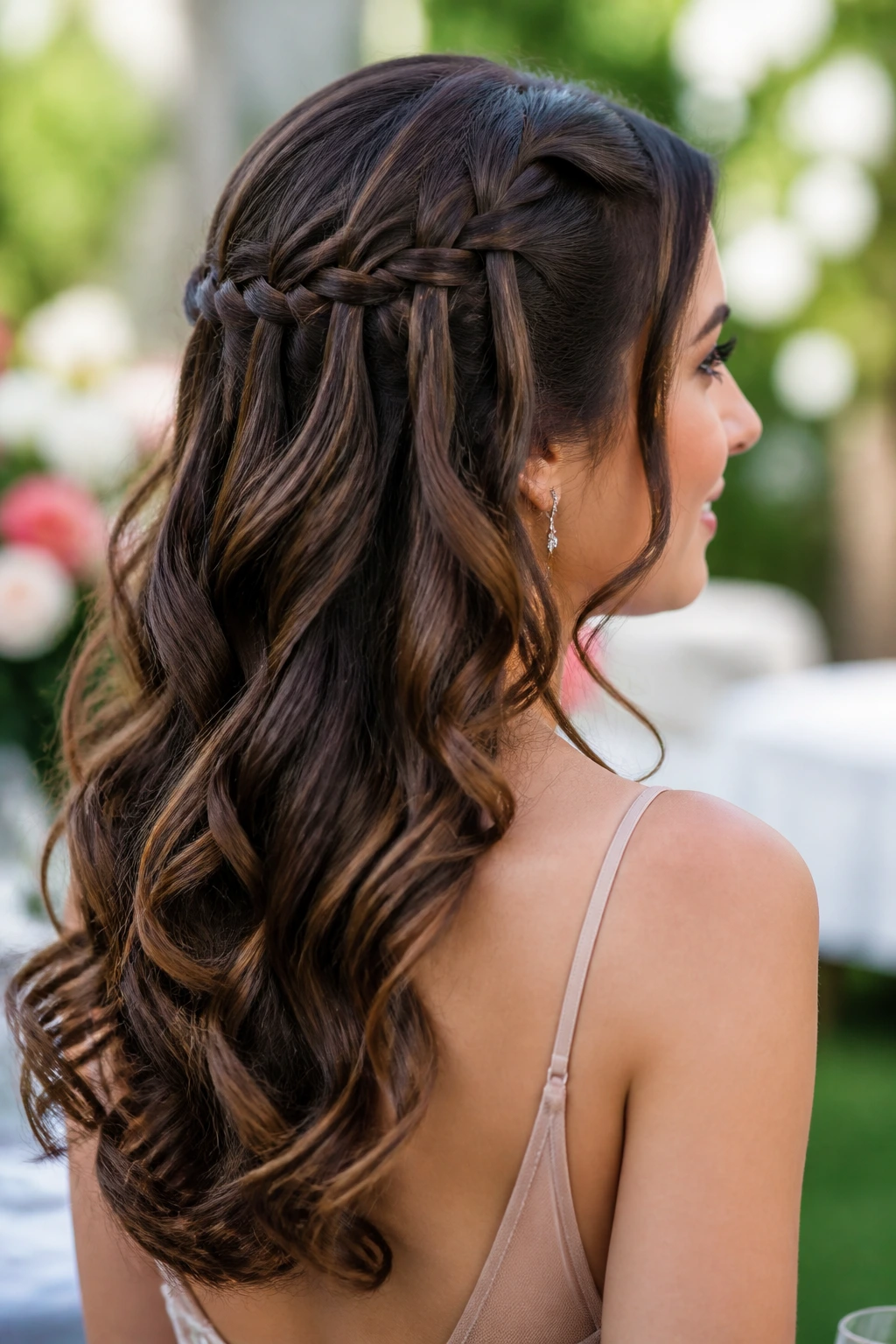
A waterfall braid is one of the few braid styles that still feels airy after the hair is dressed up. The braid travels across the back of the head, and instead of trapping every strand, it releases one piece at a time so the lower hair cascades through the gaps. When the loose length is curled, those released strands look like they’re falling through lace.
This style wants medium to long hair, and it likes a little grip. Freshly washed hair can be too slippery, so a one-day-old base usually works better. Curl the lower half with a medium barrel iron, then brush those curls into soft waves before braiding. If the braid is too tight, the waterfall effect disappears and it reads as a regular plait.
I like this look for weddings and garden parties because it has motion without looking fussy. It also plays nicely with hair combs, especially small crystal ones tucked above the braid. Don’t hide the braid under accessories. Let it do the talking.
8. Low Knotted Half-Up Chignon
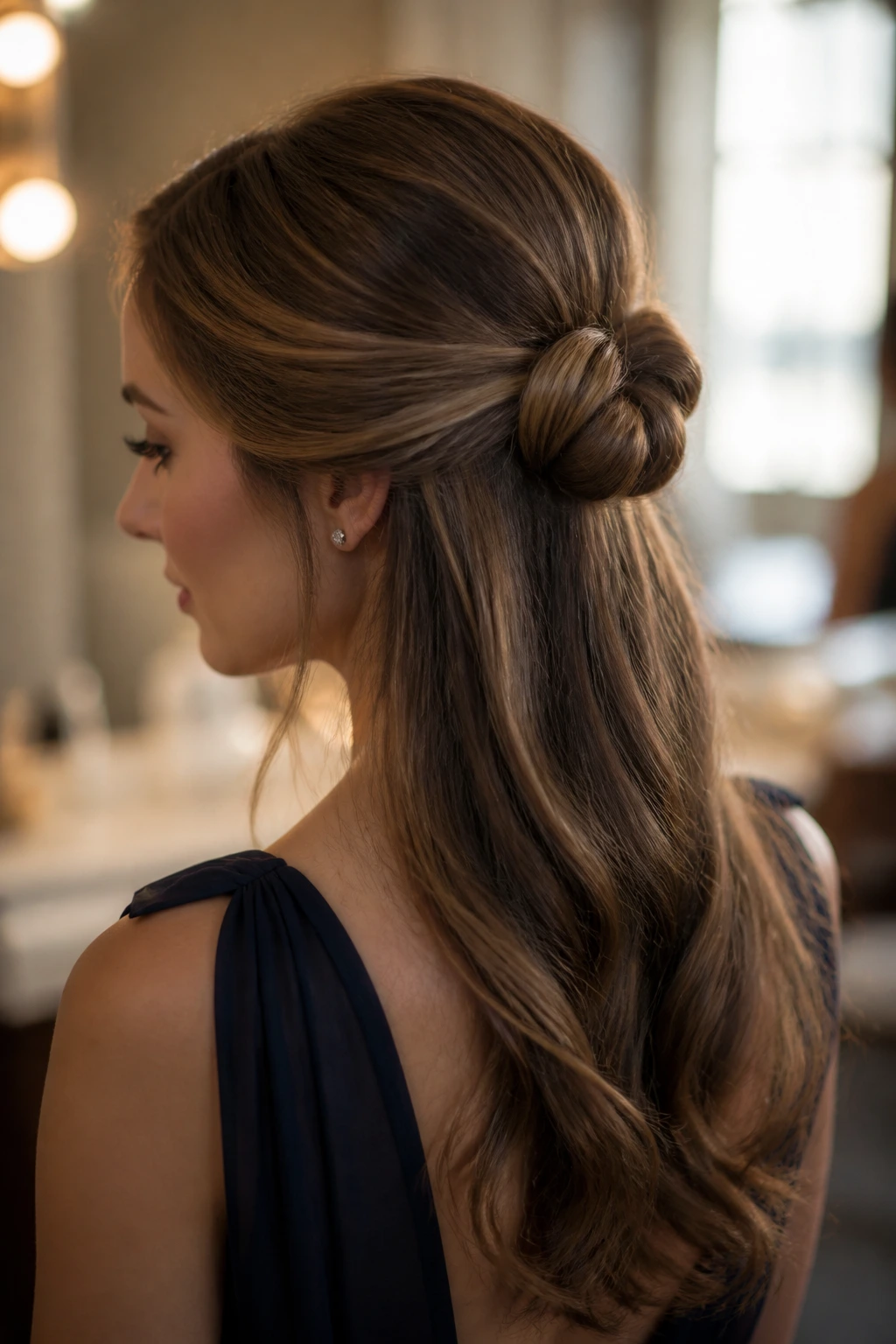
A low knotted half-up chignon is for someone who likes clean lines and does not want a lot of fluffy volume floating around. The upper half of the hair is gathered at the back and folded into a small knot or mini chignon, with the rest left down in a straight, waved, or brushed-out finish. The knot sits just above the midpoint of the head, not at the nape.
That placement matters. Too low and the style becomes a partial bun. Too high and it starts to look playful instead of formal. Keep the knot compact and secure it with pins from underneath, then smooth the top with a light brush so the crown doesn’t puff up later.
This style works well with structured gowns and sharp jewelry because it brings a little order to the silhouette. It’s also a smart option for someone who wants the elegance of an updo without giving up the movement of loose hair. If you’re wearing a high neckline, keep the knot small. Big knots compete with collars.
9. Ribbon-Tied Half-Up Bow
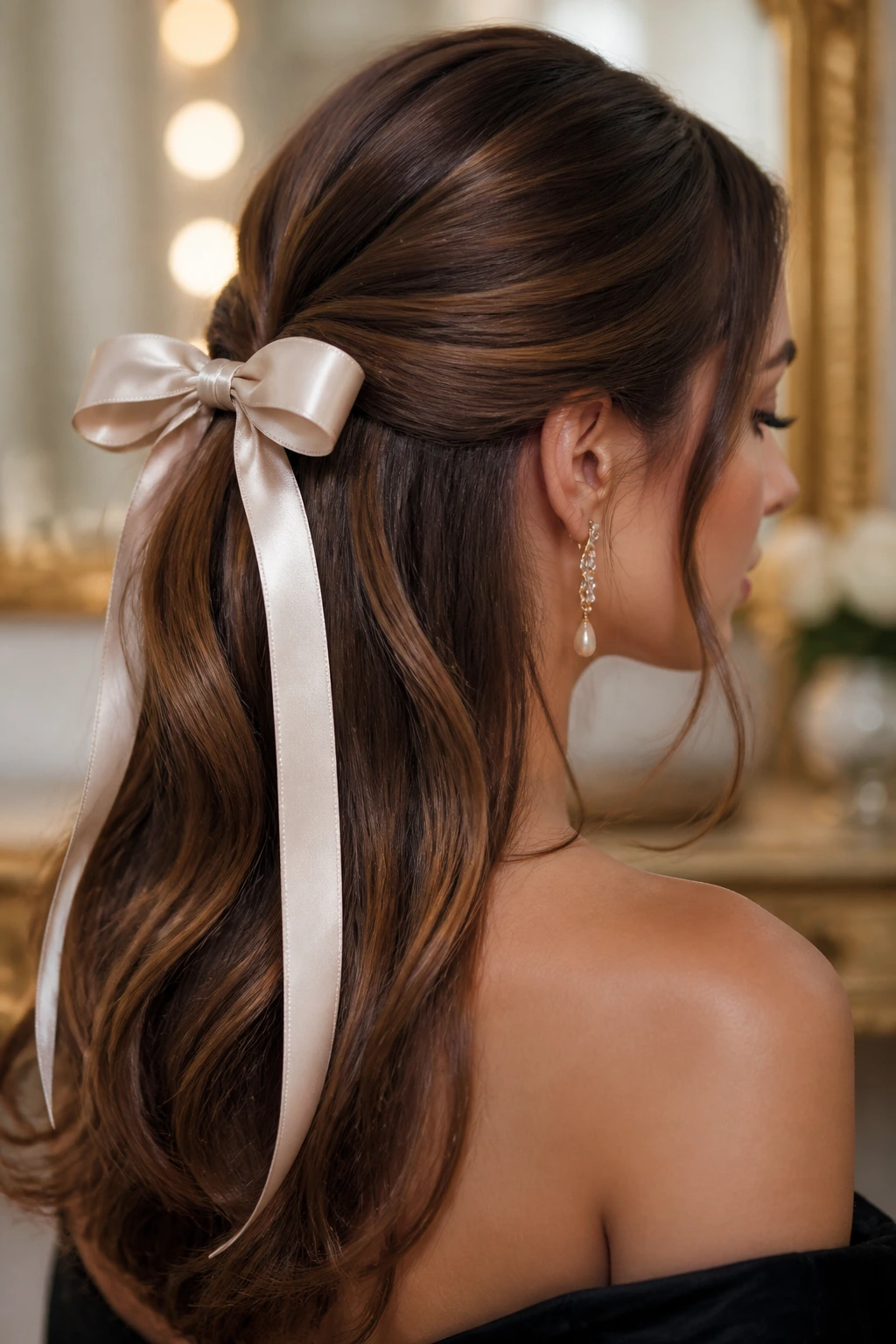
A ribbon-tied half-up bow can look sweet, but with the right ribbon weight and placement, it reads as formal rather than childlike. The top section is gathered into a low half pony or folded loop, and a satin ribbon is tied around the base with the tails left long enough to echo the dress. The lower hair stays loose and polished, giving the ribbon a clean backdrop.
Choose ribbon with body. A limp ribbon collapses and looks sad by the end of cocktail hour. Silk satin or grosgrain holds its shape better, and a ¾-inch to 1-inch width is usually enough. Match the ribbon to a dress detail, a shoe color, or a lip shade if you want the whole look to feel coordinated without shouting.
This style is less precious than people assume. It can be romantic, yes, but it can also feel sharp and modern if the hair is straight and the bow is tied tightly. The trick is to keep the bow small and tidy. Huge loops make it drift into costume territory.
10. Bubble Half-Up Ponytail
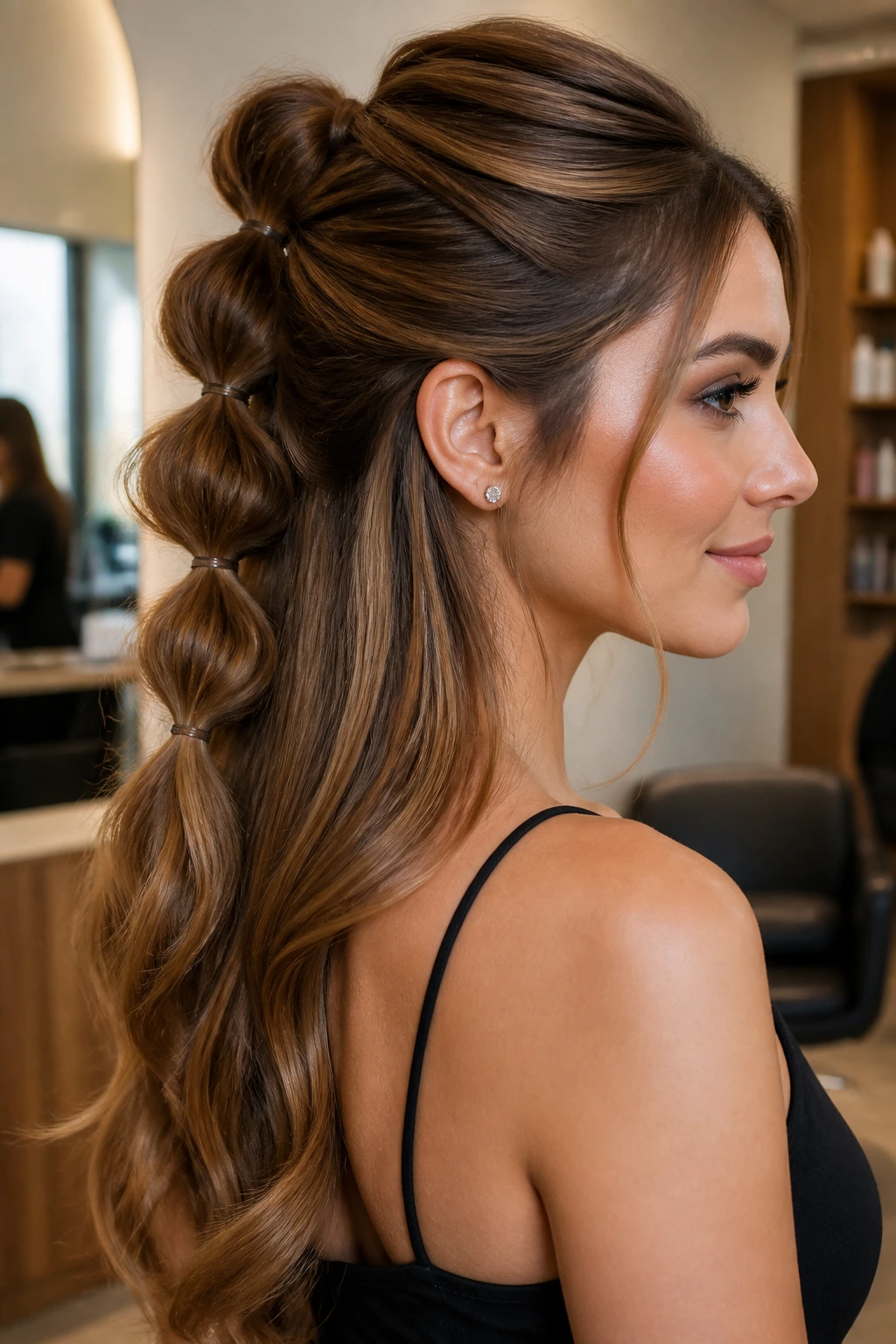
Bubble ponytails are often treated like a playful style, but the half-up version can look very polished when the bubbles are even and the hair is smooth. The top section is pulled into a half ponytail, then secured with several clear elastics down the length, with each section gently puffed between bands. The lower hair can stay straight for a crisp line or curled for a softer finish.
The bubbles should be even, not bloated. Space the elastics about 1½ to 2 inches apart, then tug each section outward just enough to create roundness without exposing the band. If the hair is thick, flatten the top with a brush and a tiny bit of smoothing cream before you gather it. If it’s fine, lightly tease the sectioned areas before you add the next elastic.
This style works best when the rest of the look is clean. A dramatic necklace or a loud dress can make the ponytail feel busy. Keep the accessories simple and the part tidy, and the whole thing will feel deliberate rather than school-dance casual.
11. Crisscross Back Detail
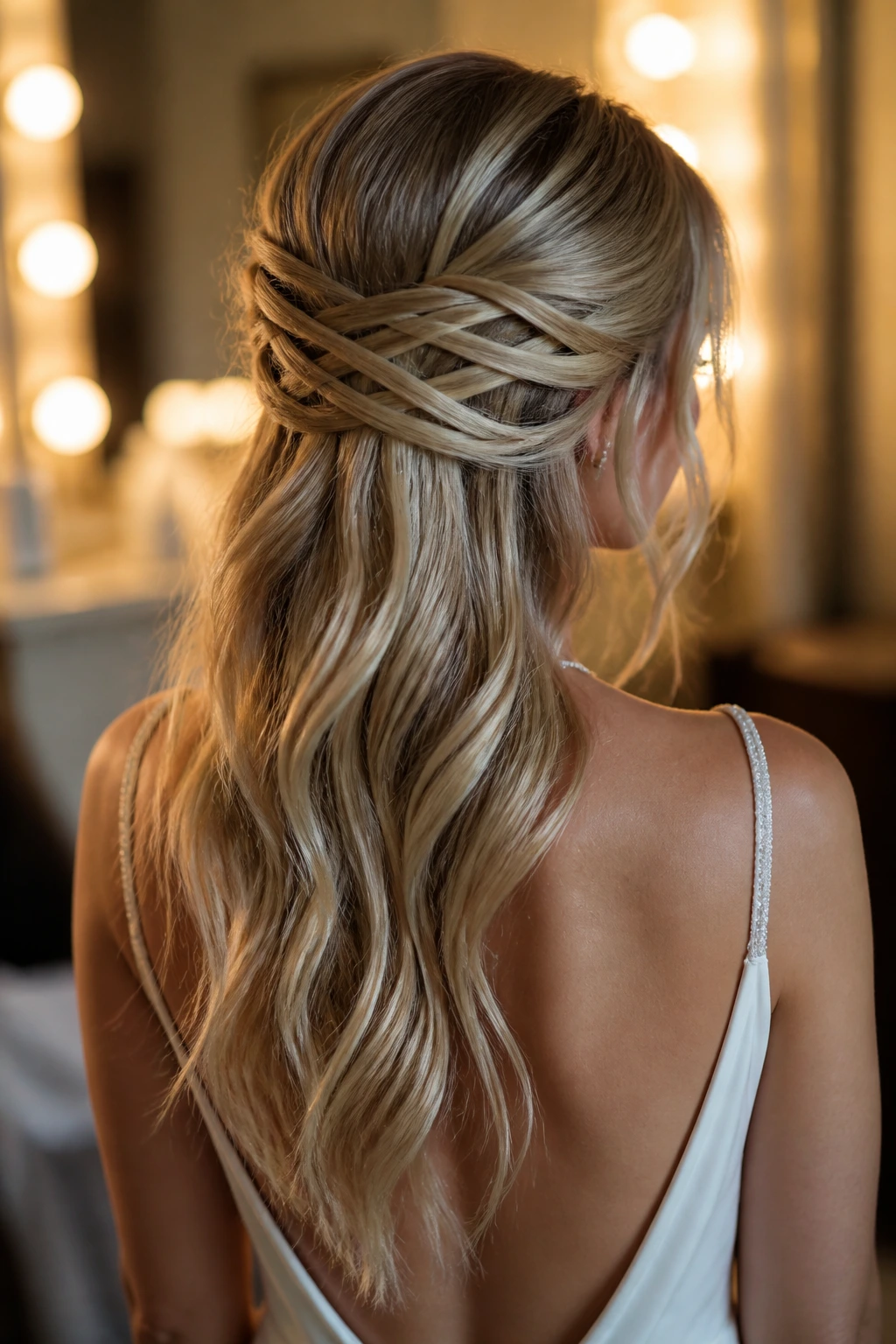
The crisscross back detail is one of my favorite ways to make a half-up style look more expensive than it actually is. Small sections from each side are crossed over one another like a lattice, then pinned flat so the pattern sits neatly across the back of the head. The rest of the hair falls loose underneath, which gives the pattern a nice little reveal.
This look is especially good for backless dresses. The crisscross pattern adds something to the rear view without dropping a full braid or a heavy knot into the frame. Keep the sections narrow — about the width of two fingers — so the lines stay elegant. Wider sections make the pattern look chunky.
A little shine spray on the crossed sections helps the geometry show up. Not too much. You want light catching the lines, not a greasy top layer. If you have layered hair, this style can hide the shorter pieces better than a plain twist because each cross can tuck in loose ends before they escape.
12. Tousled Crown Puff for Natural Texture
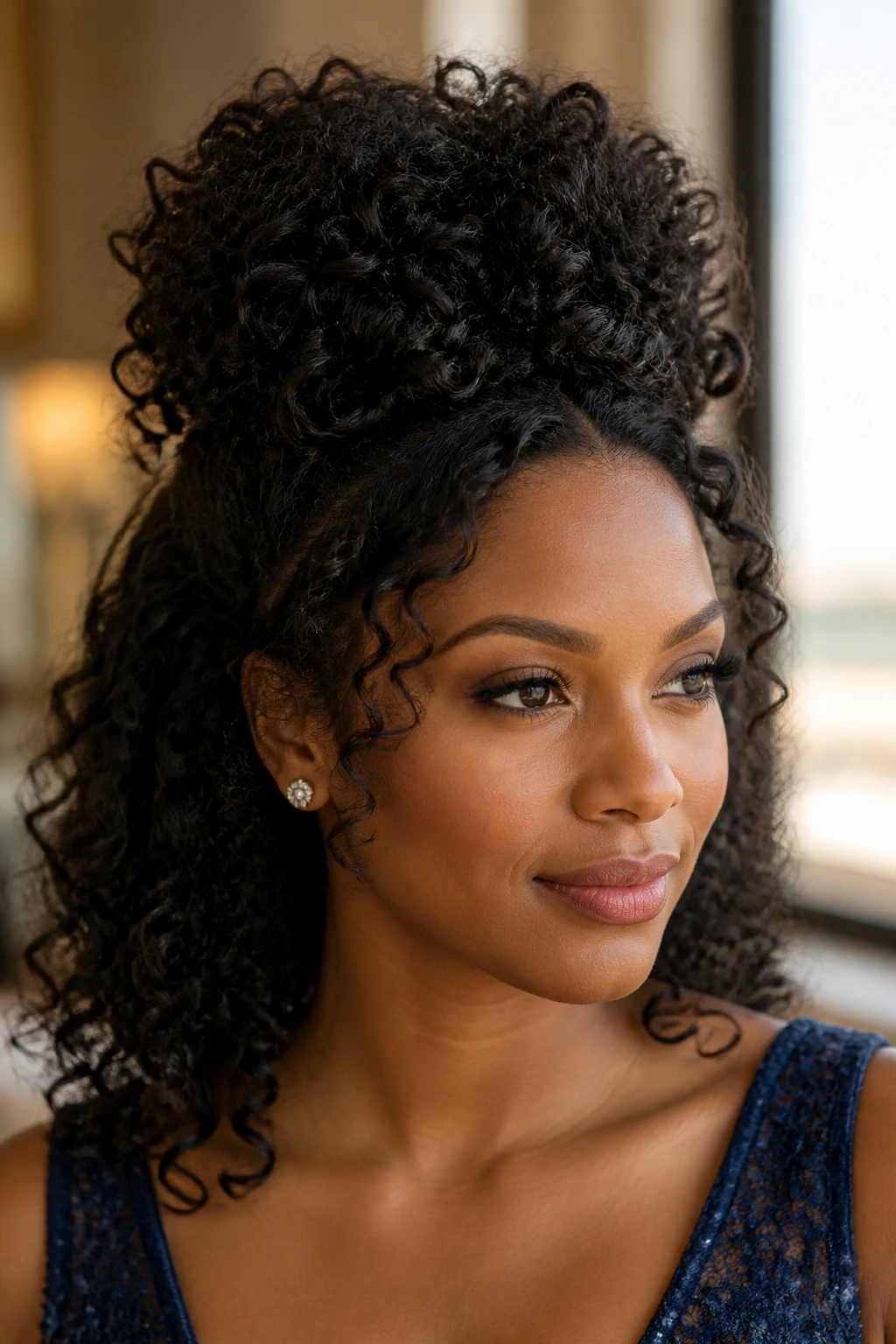
A natural texture half-up style should not try to flatten coils into something they’re not. The crown puff version embraces the shape already in the hair. The top section is gathered and lifted into a soft puff or sculpted fold, while the rest of the curls, coils, or waves stay out and defined. The result has height at the crown and a really satisfying contrast in silhouette.
The best version starts with moisturized, stretched hair that still has body. Too much cream will make the style slump. Too little and the puff frizzes out fast. A light gel at the edges and a stronger hold product at the anchor point usually gives the right mix. Keep the puff centered or slightly off-center depending on the neckline.
This style looks especially strong with earrings and bare shoulders because it keeps the face open without making the hair feel stripped back. If you want a more formal finish, wrap a small braid around the base of the puff or add a jeweled pin where the section meets. That one pin can change the whole read.
13. Side-Swept Half-Up with Face-Framing Pieces
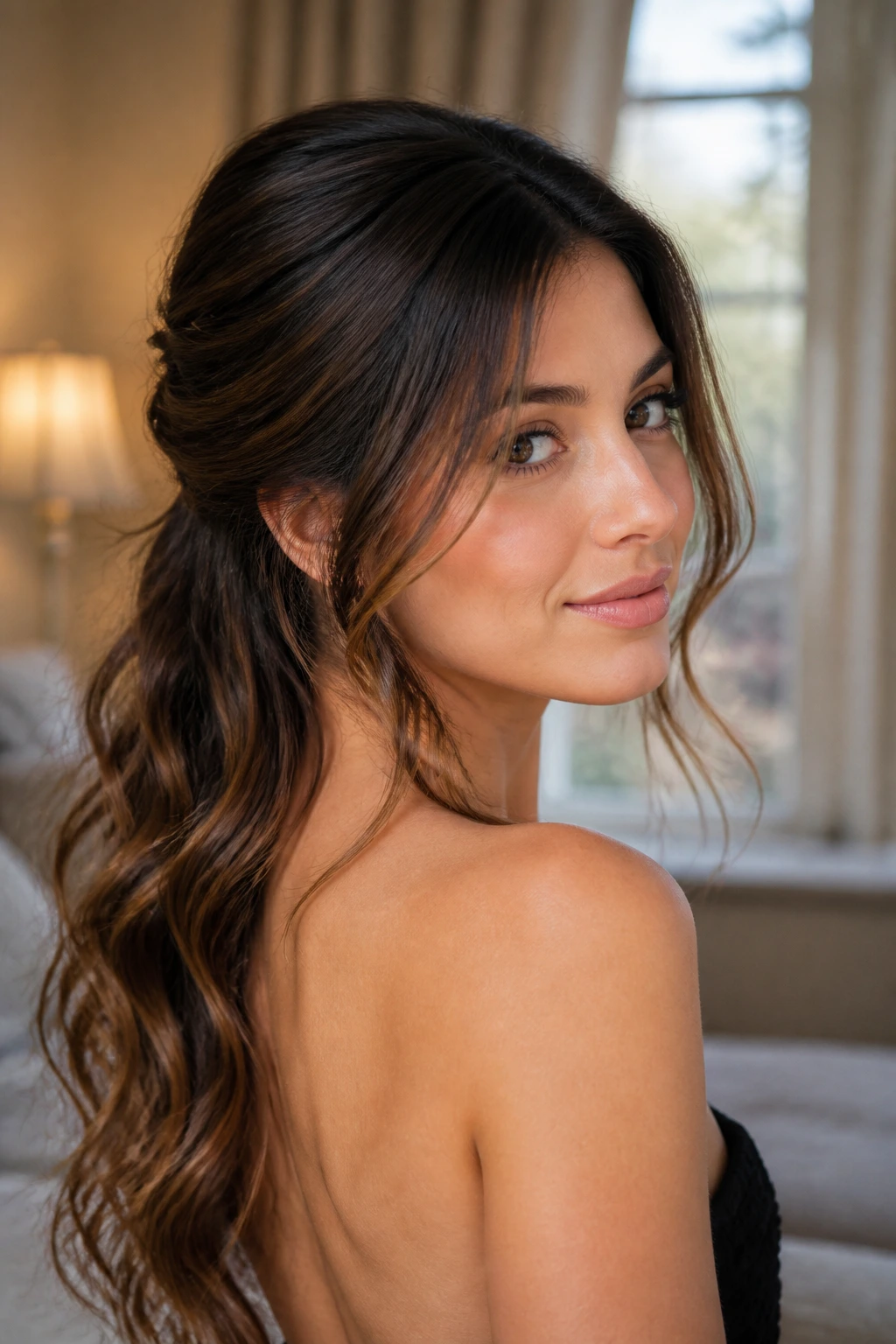
A side-swept half-up style has a little drama built in before you even curl the ends. The hair is parted deeply to one side, then gathered back in a loose sweep that leaves two or three face-framing pieces out in front. Those front pieces should be intentional, not accidental. Too thin and they disappear; too thick and they start fighting the eye.
This is a forgiving style for rounder faces because the diagonal line lengthens the look and keeps the front from feeling square. It also likes large earrings because one side of the face is more open. Curl the front pieces away from the face if you want them to sit softly, or leave them straighter for a sharper line.
The Back View Matters
The back should not be an afterthought. Gather the sweep into a polished anchor or a twisted fold so the style has a center. If the front is soft and the back is sloppy, the whole thing loses its shape. A clean back makes the loose front pieces feel deliberate.
14. Fishtail Accent Half-Up
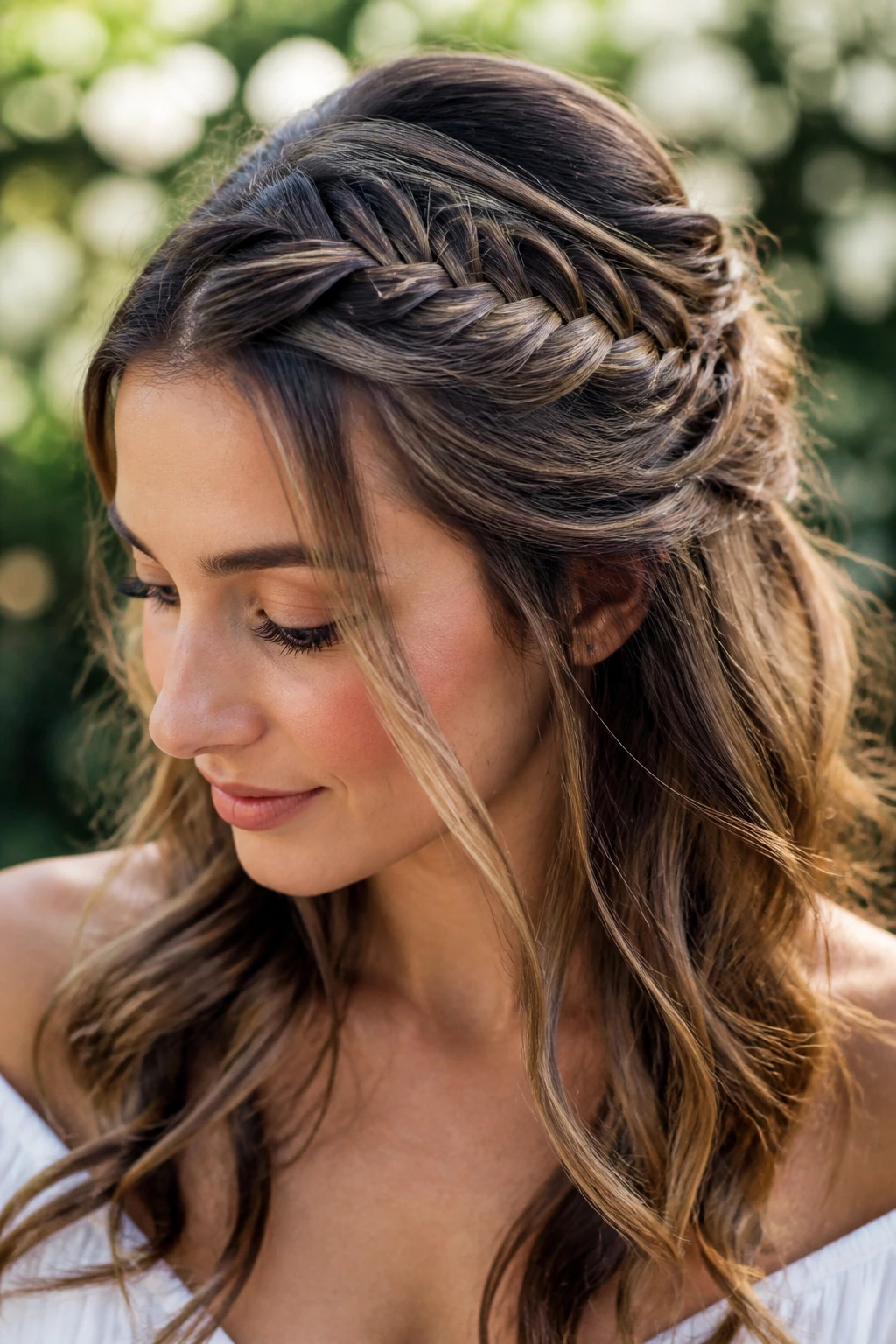
A fishtail accent braid brings texture that reads more detailed than a standard three-strand braid. Instead of taking over the whole hairstyle, it runs through just the top section or a side panel, then feeds into a pinned half-up shape. The loose hair beneath gives the braid room to stand out.
Fishtails work best when the sections are kept small and even. If the weave gets too loose at the start, it can look flattened by the time you’re done. Start on slightly roughened hair, braid a narrow strip from each side, then gently pull the edges once the braid is secured. That loosening step is what gives it dimension.
This style is a good middle ground for someone who wants detail but not a full crown braid. It can lean romantic with waves or sharper with straight lengths. My preference is the brushed-out wave version, because the braid pattern and the soft ends give each other something to do.
15. Braided Bun Half-Up
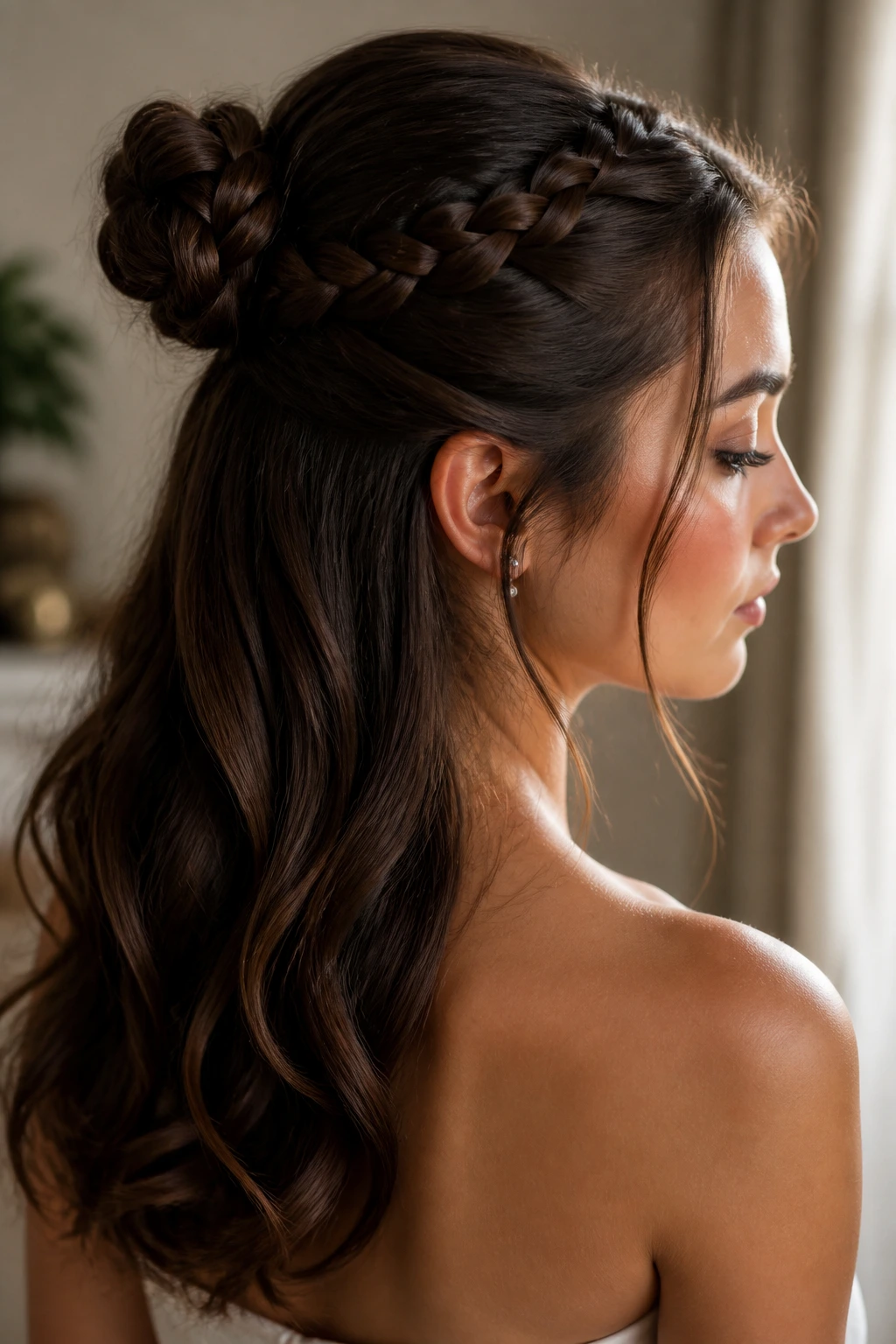
A braided bun half-up gives you more structure than a twist and more polish than a casual knot. The top section is braided, wrapped into a small bun at the back of the crown, and pinned so it sits like a compact ornament over the loose lower hair. That shape is neat, but it still has texture, which saves it from feeling too severe.
This style shines with medium-thick hair because the braid gives the bun something to hold onto. Fine hair can do it too, but the braid needs a little texture spray first. Keep the bun small and centered, then leave the lower hair either sleek or softly curled depending on the outfit. If you go too large with the bun, the half-up balance disappears.
It’s one of the most practical formal half up half down hairstyles on this list because it survives movement well. Braid, wrap, pin. Done. No elaborate machinery, no weird bulk at the nape, no awkward gap between the top and bottom sections.
16. Minimal Sleek Clip-Back
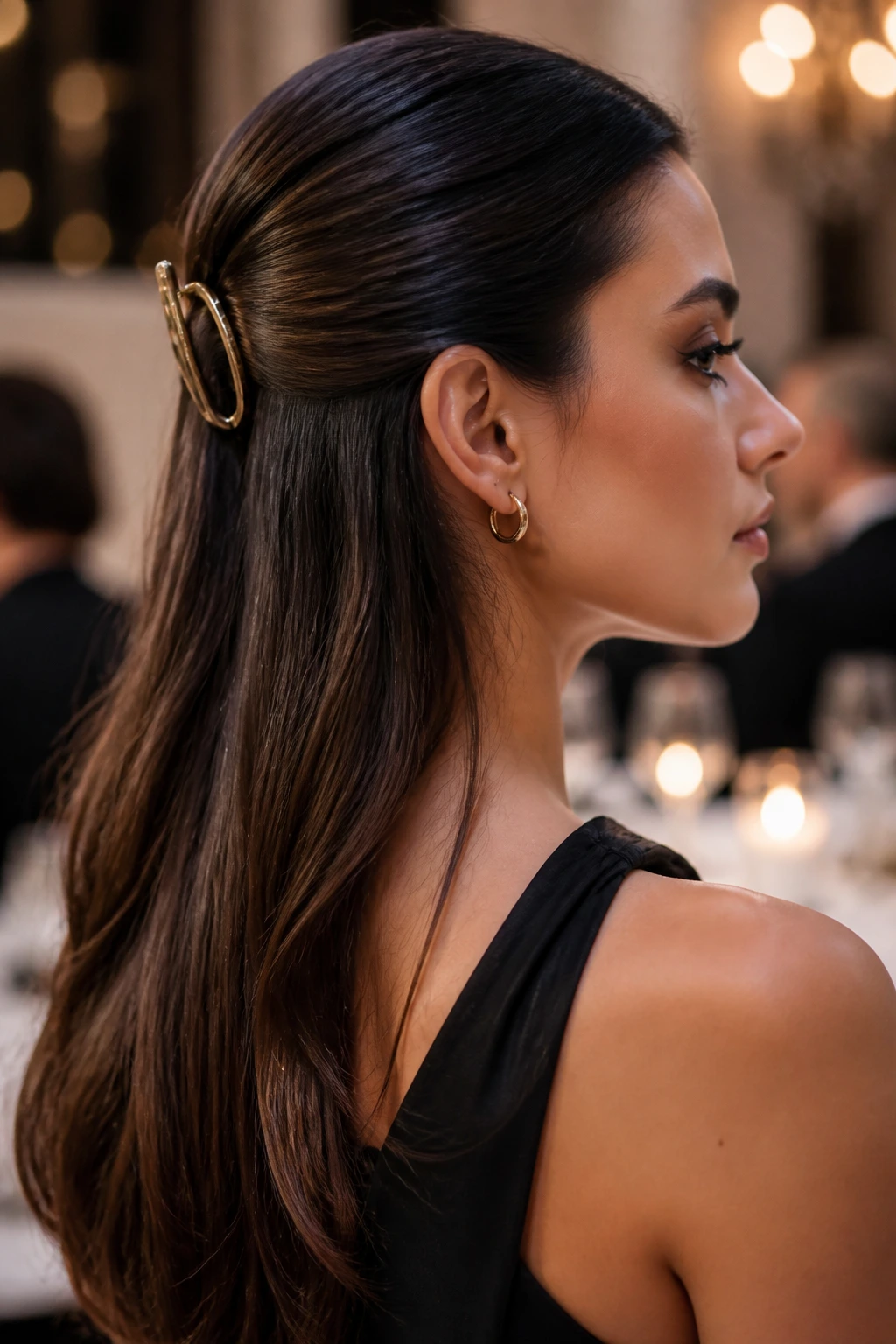
Sometimes the cleanest option is the best one. A minimal sleek clip-back pulls the top section away from the face, smooths it flat, and secures it with one sculptural clip that sits like a piece of jewelry. The rest of the hair can hang straight or with soft bends, but the top needs to be sharp enough to contrast with the loose length.
This style is strongest when the clip has shape. A plain plastic barrette can look like an afterthought. A brushed metal clip, pearl bar, or slim tortoiseshell piece feels more finished. Place it just above the occipital bone so it catches the back view without sitting too low.
It works especially well for evening events with strong makeup or bold earrings because it doesn’t fight for attention. The hair becomes a frame, not the headline. That restraint can be very effective.
17. Floral Accent Half-Up
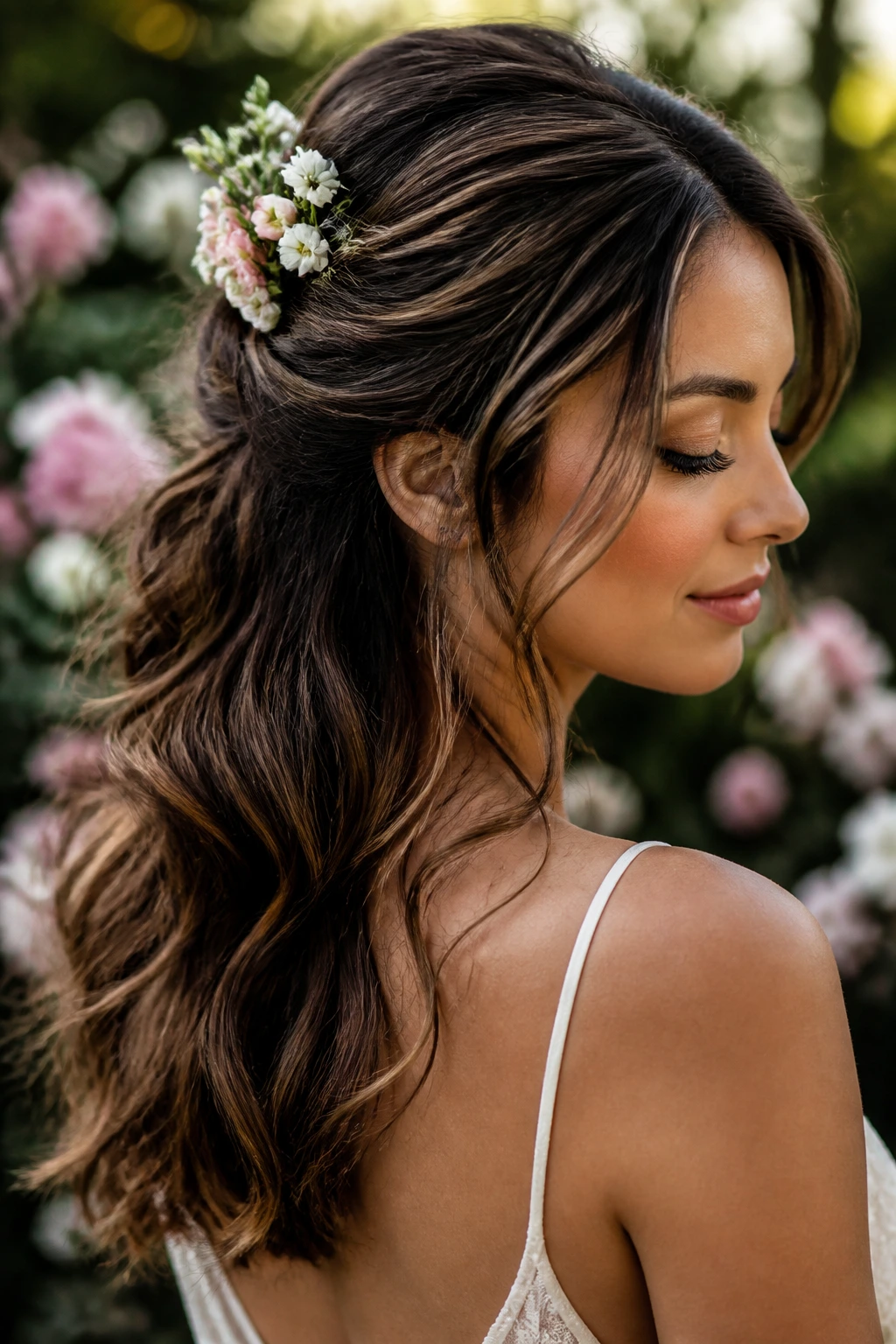
A floral accent half-up can go wrong fast if the flowers are too large or too numerous. Keep them small. A few fresh blooms, a miniature floral comb, or even tiny preserved flowers tucked into a twist can give the style a formal lift without pushing it into costume. The rest of the hair should stay clean and controlled so the flowers feel like a detail, not a theme.
The best placement is along the pinned section, not scattered across the loose hair. Flowers belong where the structure is. If you’re using fresh flowers, prep them close to the event and keep the stems trimmed very short. Anything too long will poke out and feel awkward against the scalp.
This works beautifully for outdoor ceremonies, spring dinners, and dresses with soft fabric. I’d avoid overly structured flowers with very sleek hair unless you want contrast on purpose. A gentler wave pattern usually makes the whole thing easier on the eye.
18. Soft Roll Half-Up
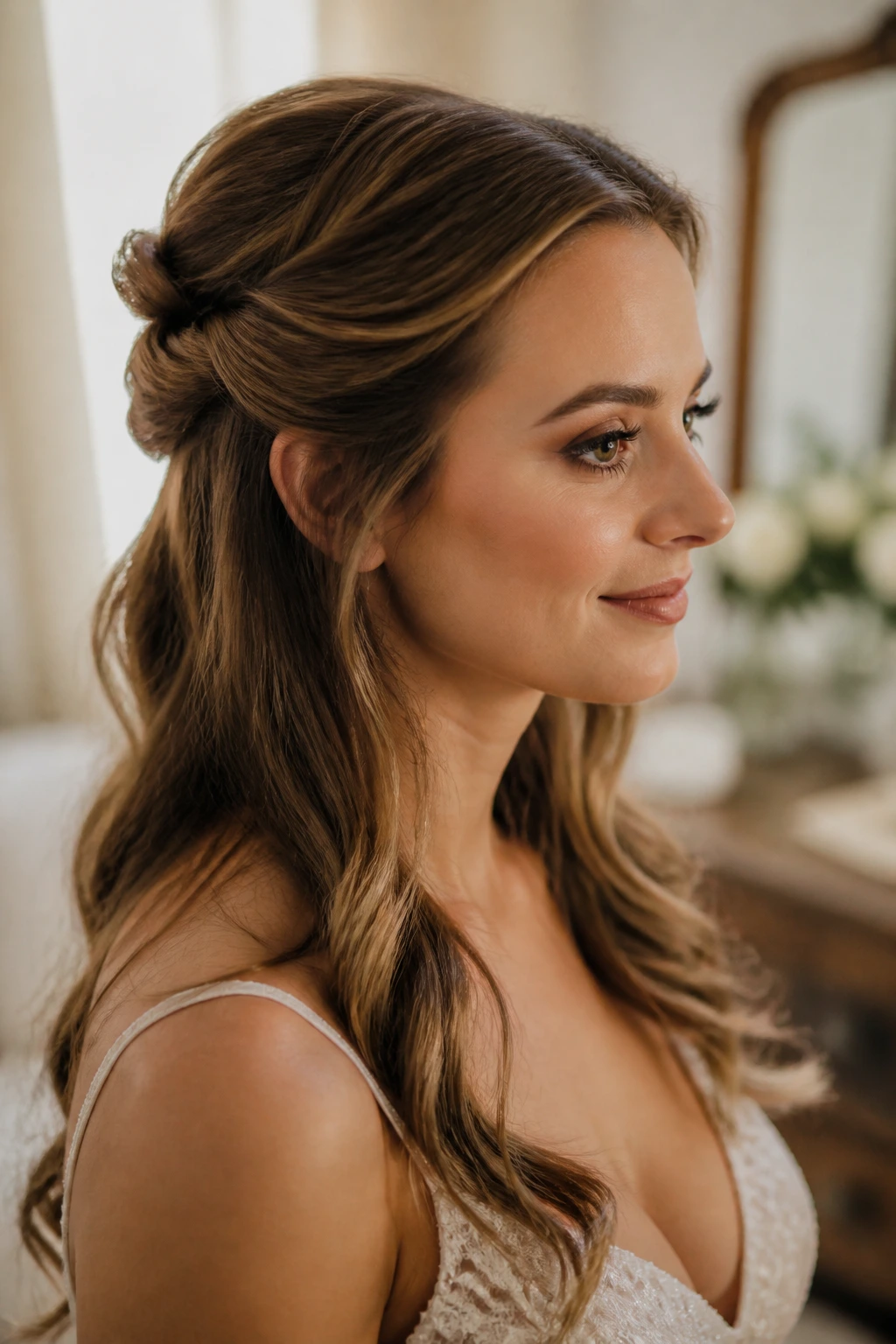
The soft roll half-up has a vintage spine. Each side section is rolled backward from the temples and pinned toward the center, creating a smooth curve that feels like an old movie without looking costume-y. The loose hair below can be brushed into waves or kept softly straight if you want a cleaner line.
The roll is all about tension. Too loose and it collapses. Too tight and the curve looks hard. Work in small sections, roll the hair inward with your fingers, and pin from underneath so the pins disappear. A little setting spray on each section before rolling helps the shape hold.
This style suits dresses with simple necklines and a little structure in the shoulders. It has that calm, deliberate feeling that makes formal dressing look easier than it is. If your hair is layered, pin the shorter pieces first and let the longer surface hair cover them. That keeps the roll smooth.
19. Double Twist Half-Up for Shorter Hair
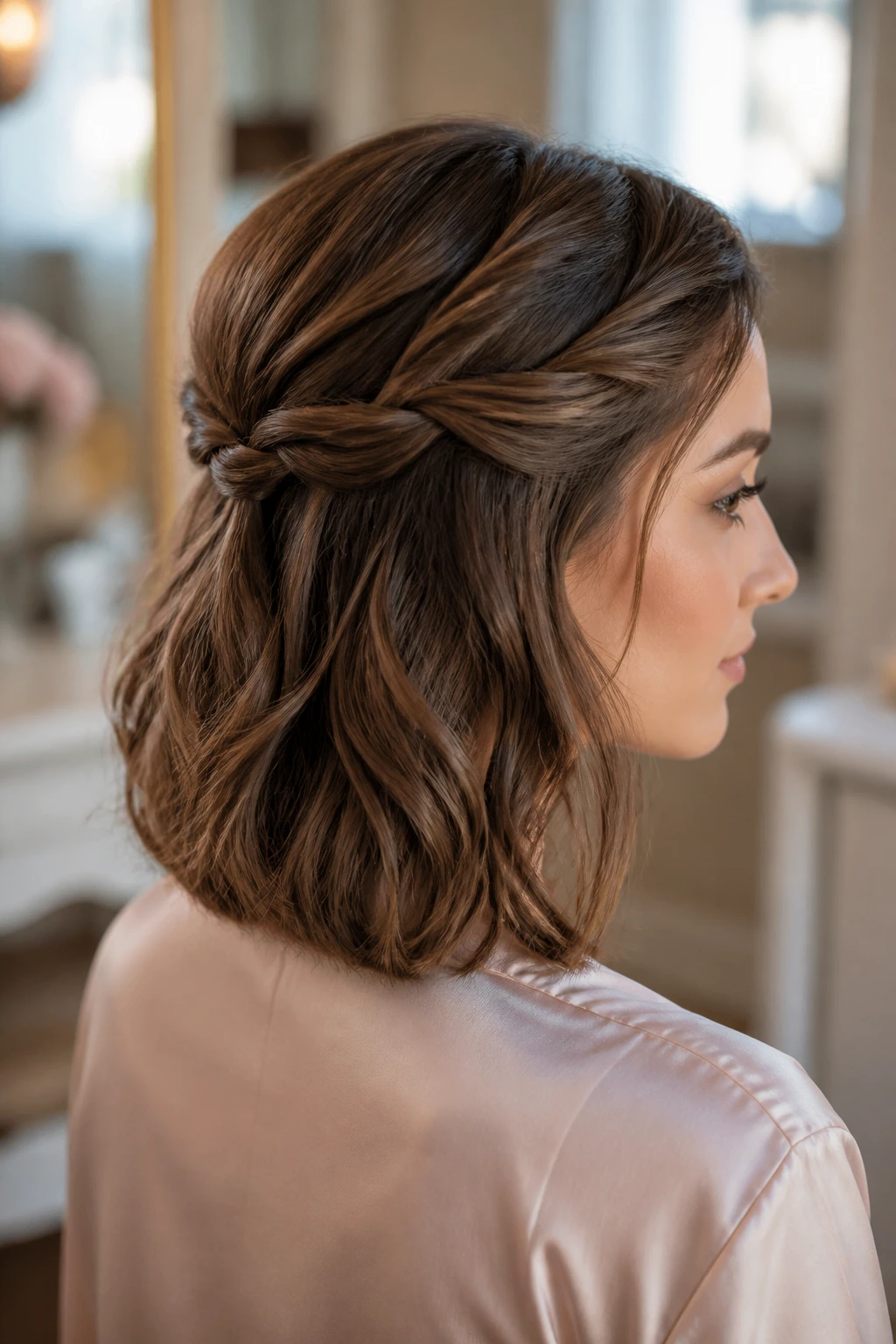
Shorter hair often gets ignored in formal styling advice, which is a shame, because a double twist half-up is one of the easiest ways to make a lob or shoulder-length cut look intentional. Two small twists start near the temples or just behind them, then meet at the back and are pinned into a neat center point. The loose lengths below can be curled or left with a polished bend.
The smaller scale is the whole trick. Do not try to force a big cascading look on shoulder-length hair; it will fight back. Keep the twists slim and the pins close to the scalp. Tiny sections hold better and look cleaner on shorter cuts.
This style is a lifesaver for formal events when you want softness around the face but do not have enough length for a dramatic braid. It also works nicely with side pieces tucked behind one ear, which can make the whole shape feel even more elevated.
20. Glam Half-Up with Cascading Waves
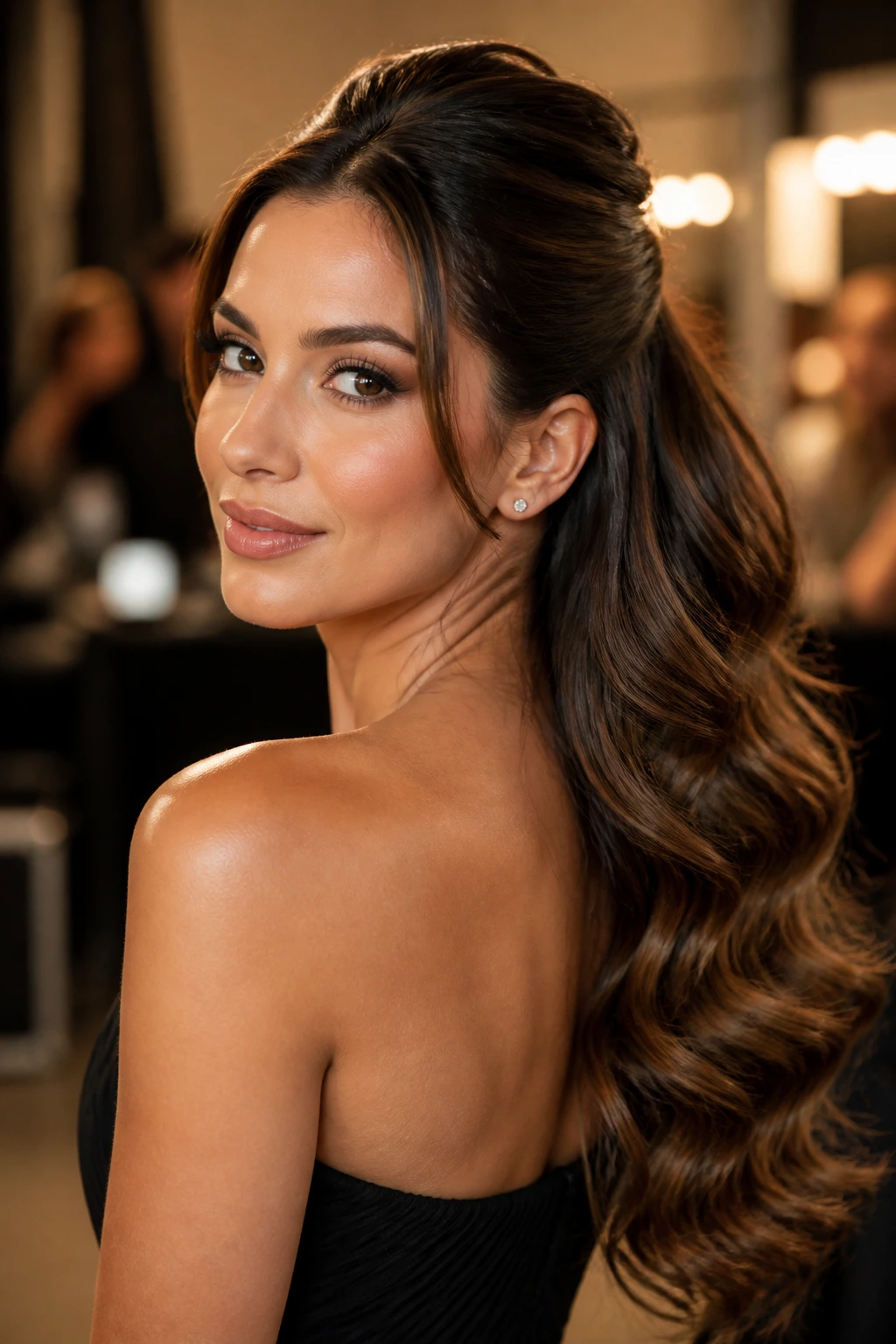
A glam half-up with cascading waves is the closest thing this category has to a full red-carpet answer. The top section gets lifted, smoothed, and pinned so the crown has height, while the lower hair falls in large, brushed-out waves that move in one long curve. It’s dramatic, but it isn’t heavy if the curls are shaped well.
The wave pattern matters more than the curl pattern. Use a large-barrel iron, set the hair in alternating directions, then brush the curls out once they’re completely cool. That gives you those thick, fluid bends instead of tight ringlets that spring apart. Secure the top with hidden pins and a light mist of flexible spray, not a helmet of lacquer.
This style is for big nights: weddings, galas, award dinners, the kind of event where the hair should enter the room before you do. Keep the accessory count low. The waves are already doing enough work.
Why Half-Up Styling Holds Its Shape Better Than Fully Loose Hair
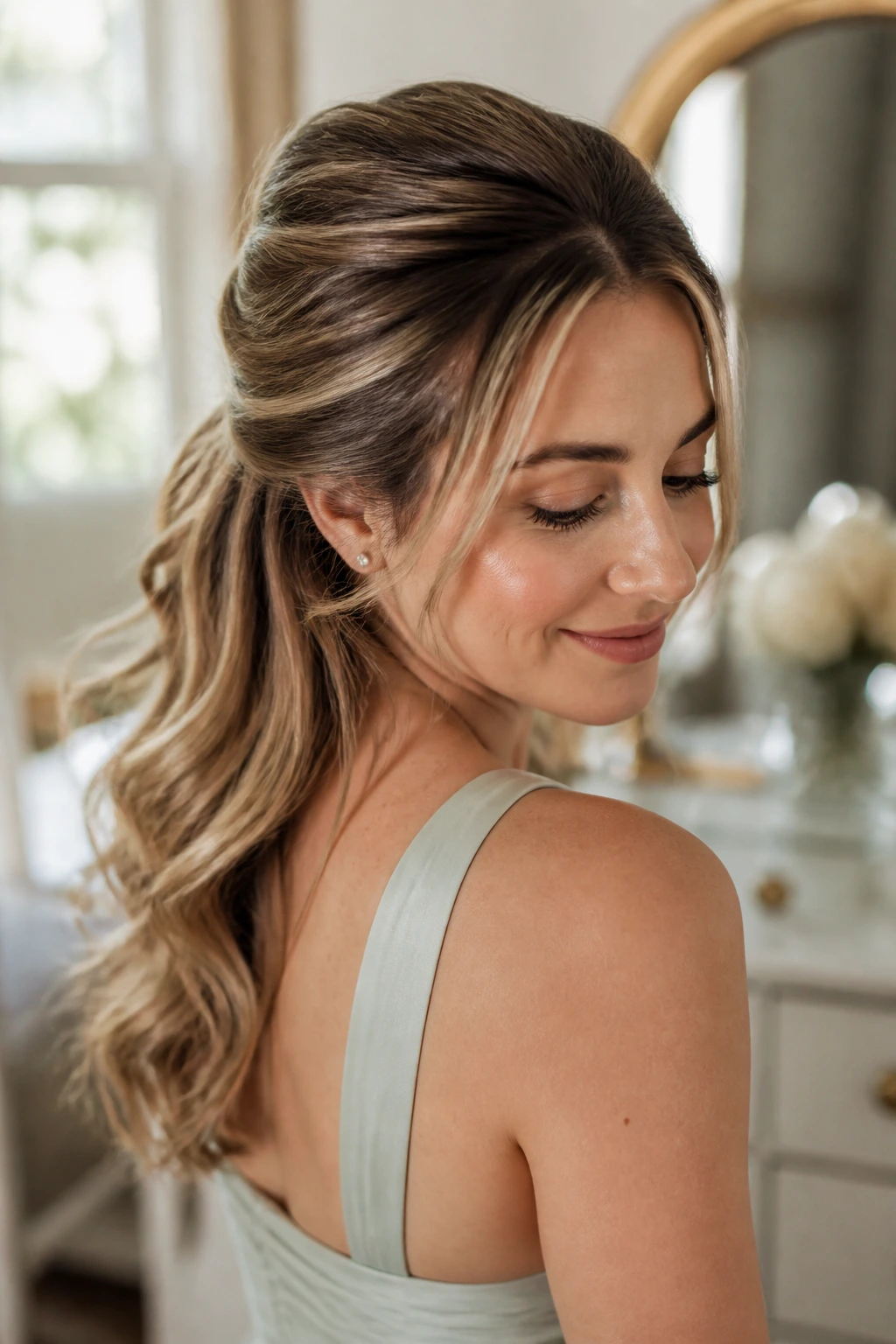
A half-up style has one real advantage that loose hair never gets: the top section is doing the holding while the bottom section gets to move. That split matters on long event nights. Hair rubs against shoulders, wraps around coat collars, catches on jewelry, and collapses under humidity. When the top is secured, the face frame stays clean even if the lower length softens a little.
There’s also a practical visual reason these styles feel so polished. Your eye reads the top anchor first, then the loose hair second. That gives the style a center of gravity. Without that anchor, long hair can look beautiful in the mirror and messy in motion. With it, the look stays readable from the front, the side, and the back.
The Part That Does the Heavy Lifting
The crown and upper sides need grip. Not grease. Not stiffness. Grip. A little texture spray, a decent pin pattern, and enough tension to keep the section from sliding are what make the style last through a ceremony, dinner, and the sort of dancing that turns a curl into a bend.
Essential Tools for These Looks
-
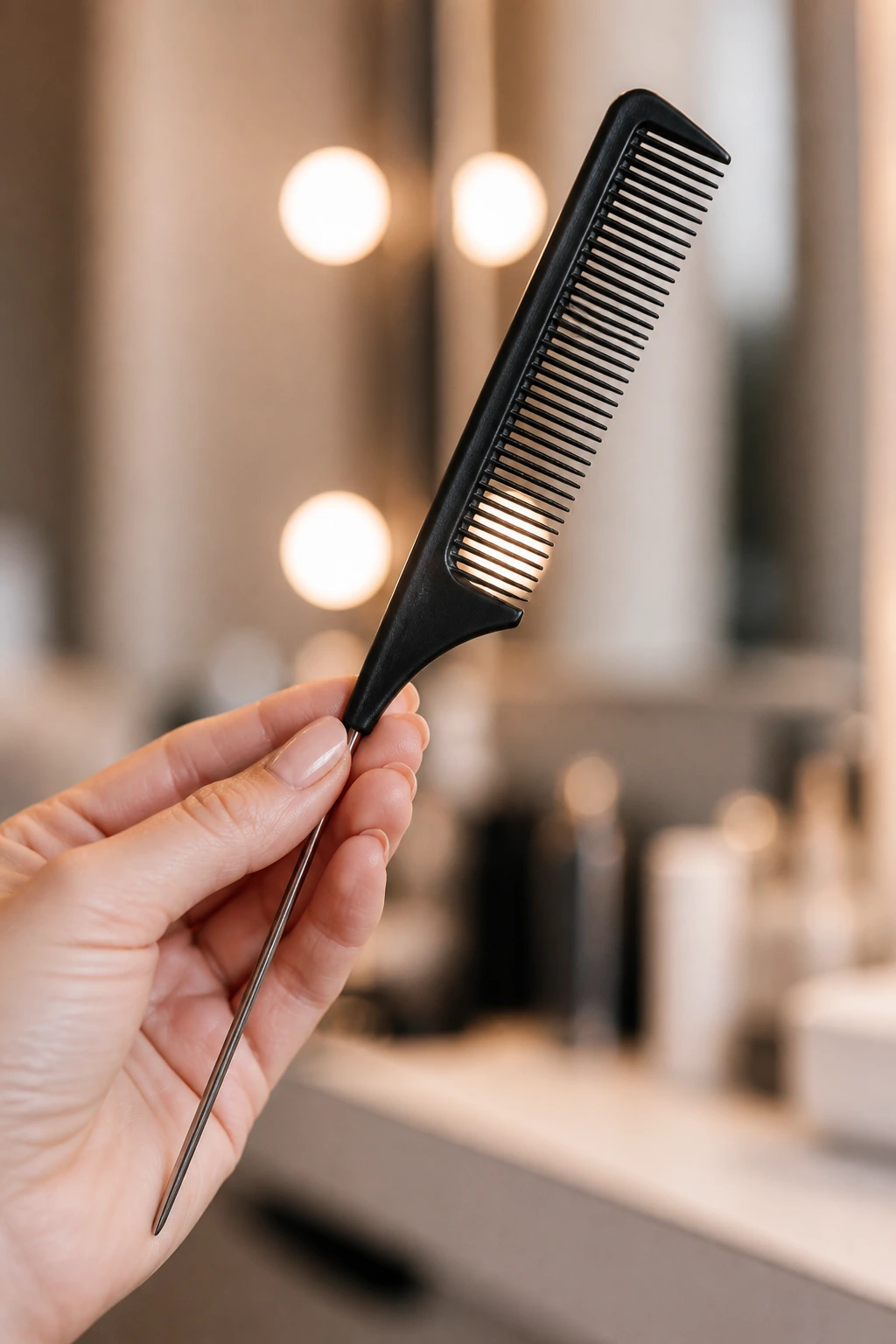
Rat-tail comb: the pointed end makes clean parts and neat sectioning, which matters more than people think.
-
Sectioning clips: keep the loose hair out of the way while you work one side at a time.
-
Clear elastics: useful for bubble styles, small pony bases, and hidden anchors.
-
Bobby pins in your hair color: the difference between “pinned” and “pin is showing” lives here.
-
U-pins: especially helpful for buns, rolls, and softer pinned shapes that need less visible hardware.
-
Teasing brush or fine-tooth comb: lifts the crown without turning it into a rat’s nest.
-
1-inch to 1¼-inch curling iron: gives a wave pattern that still holds after brushing out.
-
Flat iron: useful for sleek center-part styles or for smoothing the top layer before pinning.
-
Flexible-hold hairspray: keeps the hair movable, which is exactly what you want for most formal half-up looks.
-
Texturizing spray: adds grip to clean hair and helps pins stay put.
-
Heat protectant: not optional if you’re using hot tools. The hair should not smell scorched by the end.
-
Mini finishing brush or clean toothbrush: smooths baby hairs and tames flyaways without flattening the whole style.
Choosing the Right Prep Products for Your Hair Type
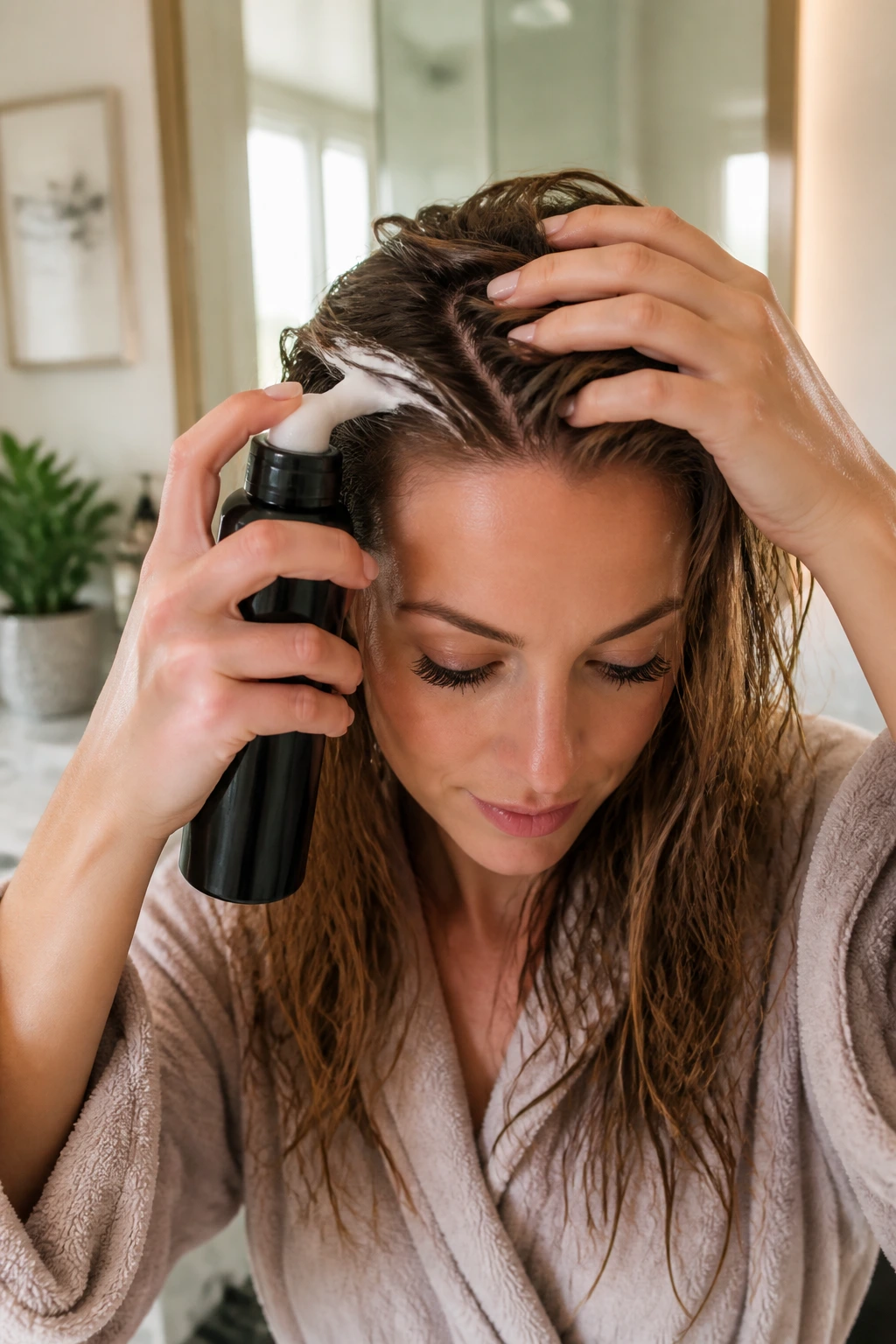
The product choice makes or breaks formal half up half down hairstyles long before the first pin goes in. Fine hair needs lift and grip, not weight. Thick hair needs smoothing at the top and structure underneath. Curly and coily hair needs enough moisture to keep the shape defined, but not so much that the style goes soft and slides apart.
For fine hair, I like a mousse at the roots on damp hair, then a light texturizing spray once it’s dry. That combination gives the upper section enough bite to hold a twist or clip without looking stringy. Skip heavy oils near the crown. They may feel nice in your hands, but they are too slippery under pins.
Thicker or coarser hair usually needs a smoothing cream before blow-drying, especially along the part and hairline. That helps the top lie flat while the lower length keeps its body. If the hair has a mind of its own, use sectioning clips and work in layers. Trying to pin all of it at once is how styles get bulky in the wrong places.
Curly and coily textures usually do best with a leave-in that defines but does not weigh the hair down, plus a gel or edge control product for the front and sides. The goal is not to erase the texture. It’s to shape it. And if the hair is freshly washed, give it time to dry fully before styling. Damp roots and formal pins do not get along.
How to Wear These Styles With Jewelry, Necklines, and Veils
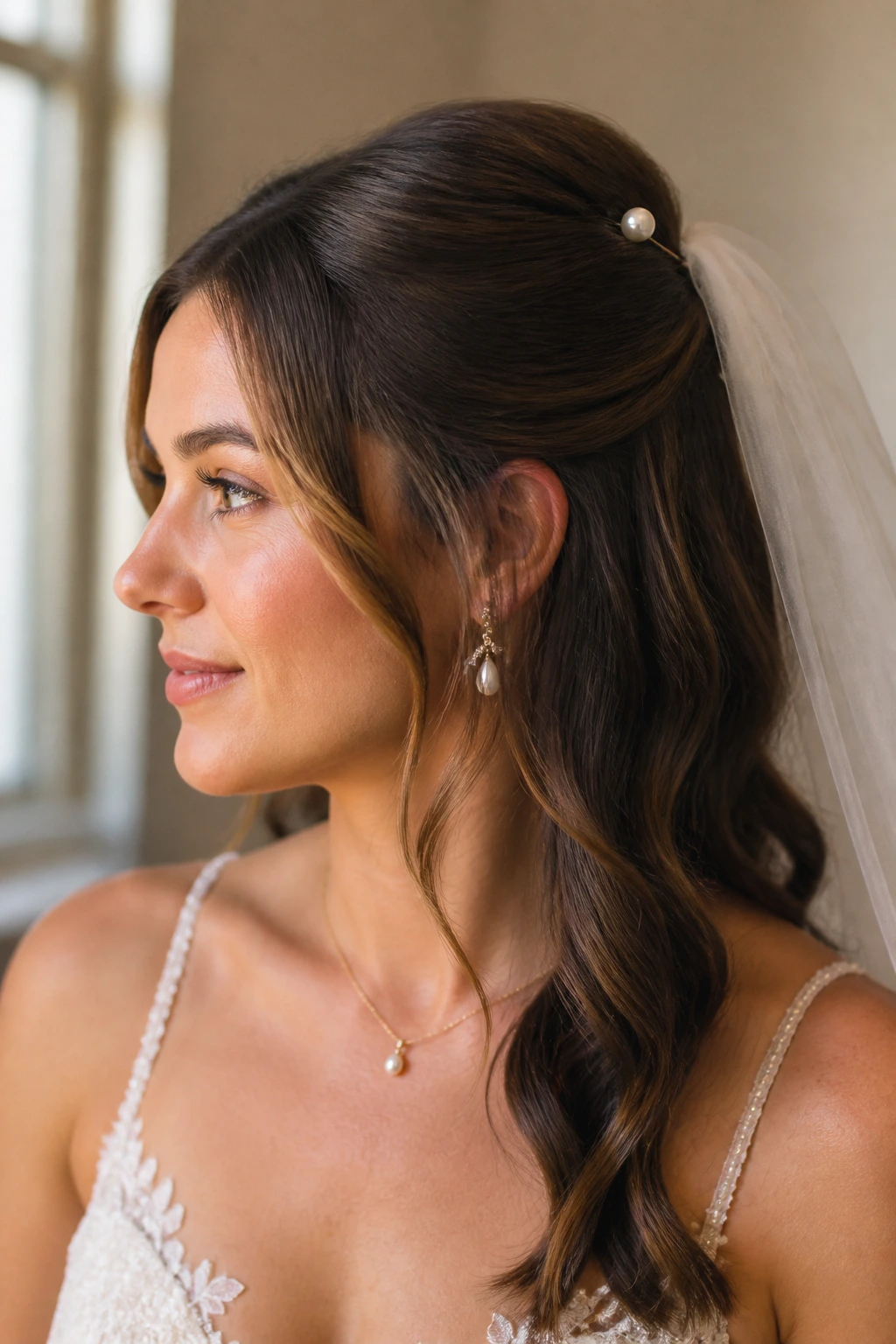
Presentation: Keep the half-up section high enough to open the face, usually between the ear line and the crown. If it sits too low, the hairstyle loses its lift and starts to blend into the length.
Accessories: Pick one main accent and let it do the work. Pearl pins, a crystal comb, a satin ribbon, or a small floral clip is enough. If you wear all four, the eye has nowhere to land.
Outfit Pairings: Strapless, sweetheart, and off-the-shoulder necklines can handle a little volume at the crown. High necks and halters usually look cleaner with sleeker top sections and fewer side pieces. One-shoulder dresses often want asymmetry, so side sweeps and rope twists make sense there.
Veils and Headpieces: A veil comb should sit under the pinned area, not on top of soft teased hair. If the base is too fluffy, the comb slides. Press it into a compact anchor point, then hide the join with a twist or braid.
For jewelry, think in terms of balance rather than matching. Big earrings usually want a cleaner top section. A detailed neckline often asks for hair that stays off the shoulders. The rule isn’t rigid, but the visual push and pull matters. You want the dress, face, and hair to take turns speaking.
Additional Tips for a Cleaner Finish and Better Hold
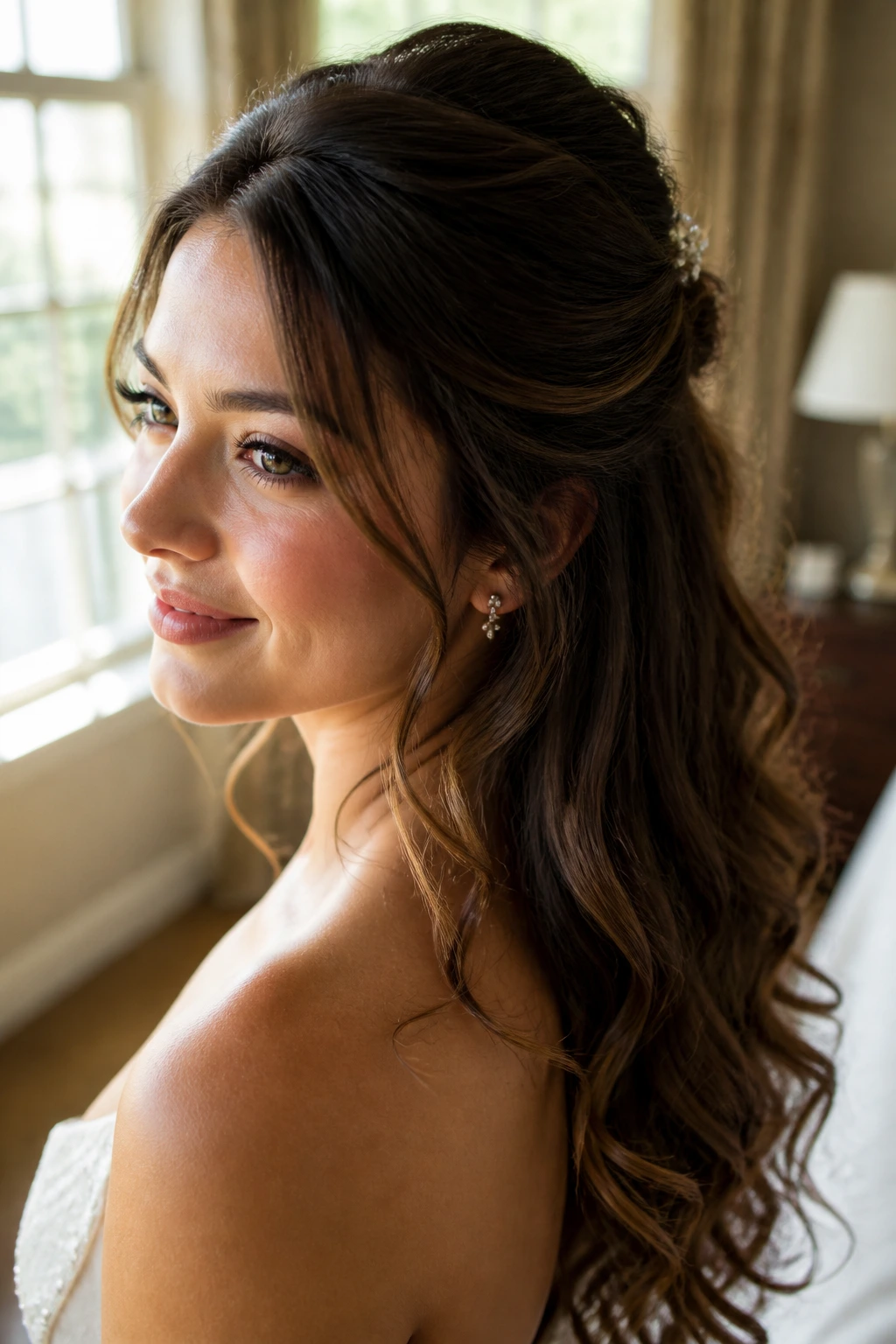
Texture Enhancement: If the hair is too clean, the style can collapse before the first toast. One day-old hair, or a few sprays of texturizing mist at the roots, gives pins something to grab.
Anchor Points: Two crossed bobby pins beat one straight pin almost every time. The hair is less likely to slide, especially under a twist or a small bun.
Polish Without Stiffness: Spray hairspray onto a clean toothbrush or edge brush and smooth the hairline with that instead of hosing the whole head. You get control without that crunchy shell.
Make-It-Yours: Swap a plain twist for a braid, a metal clip for pearls, or a center part for a deep side part. Small changes shift the whole mood more than a full restyle would.
If you want the style to feel expensive, focus on the part and the back view. People glance at the front first, sure, but the cleanest styles have a back shape that looks as thought-through as the face frame.
Common Mistakes That Flatten the Style
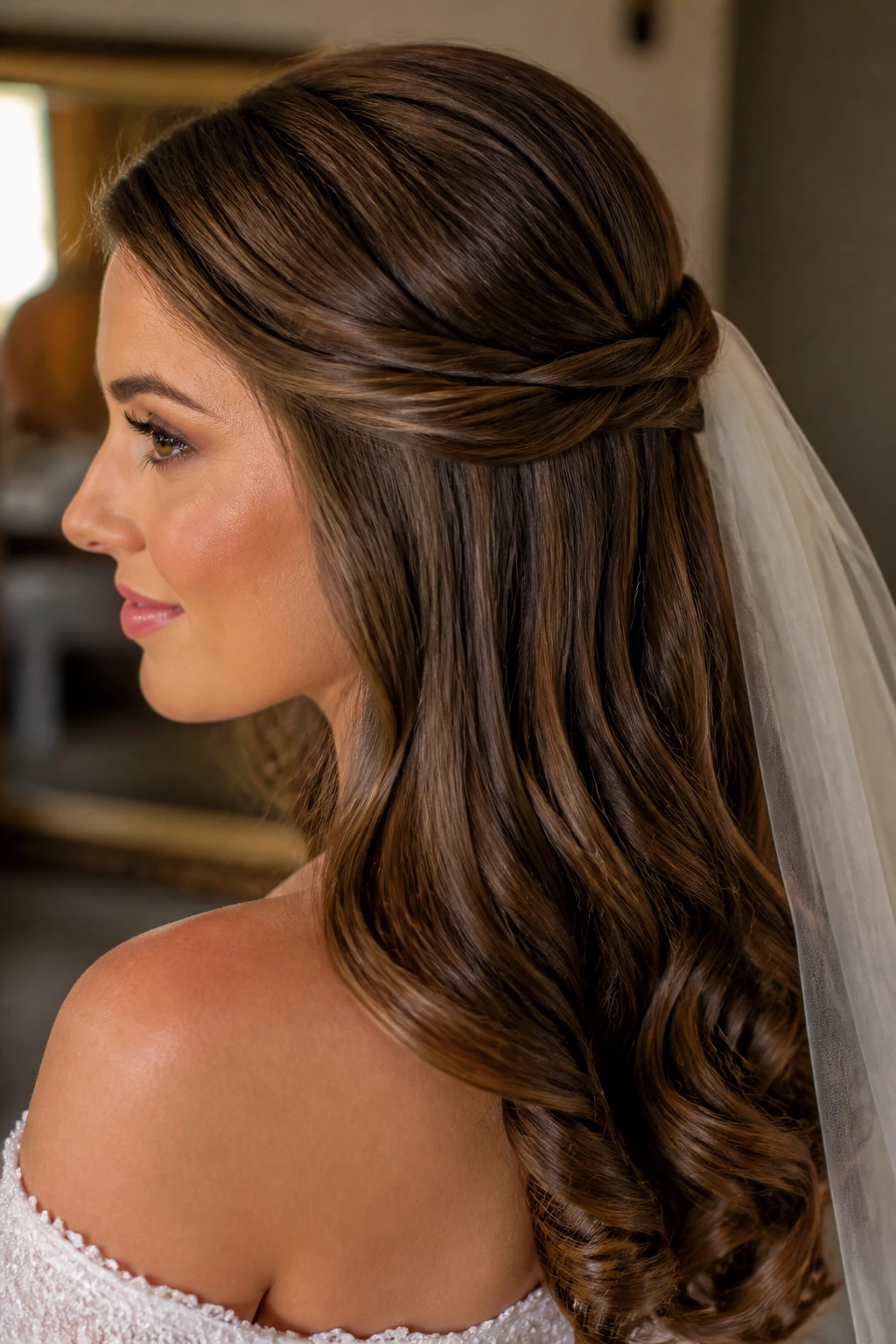
The first mistake is over-smoothing the crown with too much serum or oil. The hair looks glossy for five minutes, then the top starts sliding and separating. The fix is simple: use a light cream or mousse before blow-drying, then save heavier shine products for the ends.
Another common problem is pinning everything at one point. The style may look secure in the mirror, but the weight pulls down as soon as you move. Spread the tension across two or three small anchor spots instead of stacking all the pins in one tiny knot.
People also curl the lower hair and then pin the top while the curl is still warm. That sounds efficient. It isn’t. Warm hair shifts as it cools, and the whole half-up section can loosen around it. Let the curls cool fully before you brush them or pin anything over them.
A fourth mistake is hiding all the texture. Formal hair does not need to be flat to be neat. If you over-brush the wave pattern out of existence, the style can look stiff and overworked. Leave a little movement in the lower half. It gives the hair a softer line and keeps the shape from going cardboard-flat.
Variations and Alternate Directions
The Red-Carpet Sleek: Take the sleek center-part half-up and push the polish further with a flat iron and a metal barrette. This version is sharp, modern, and best when the dress has strong lines or bold cutouts.
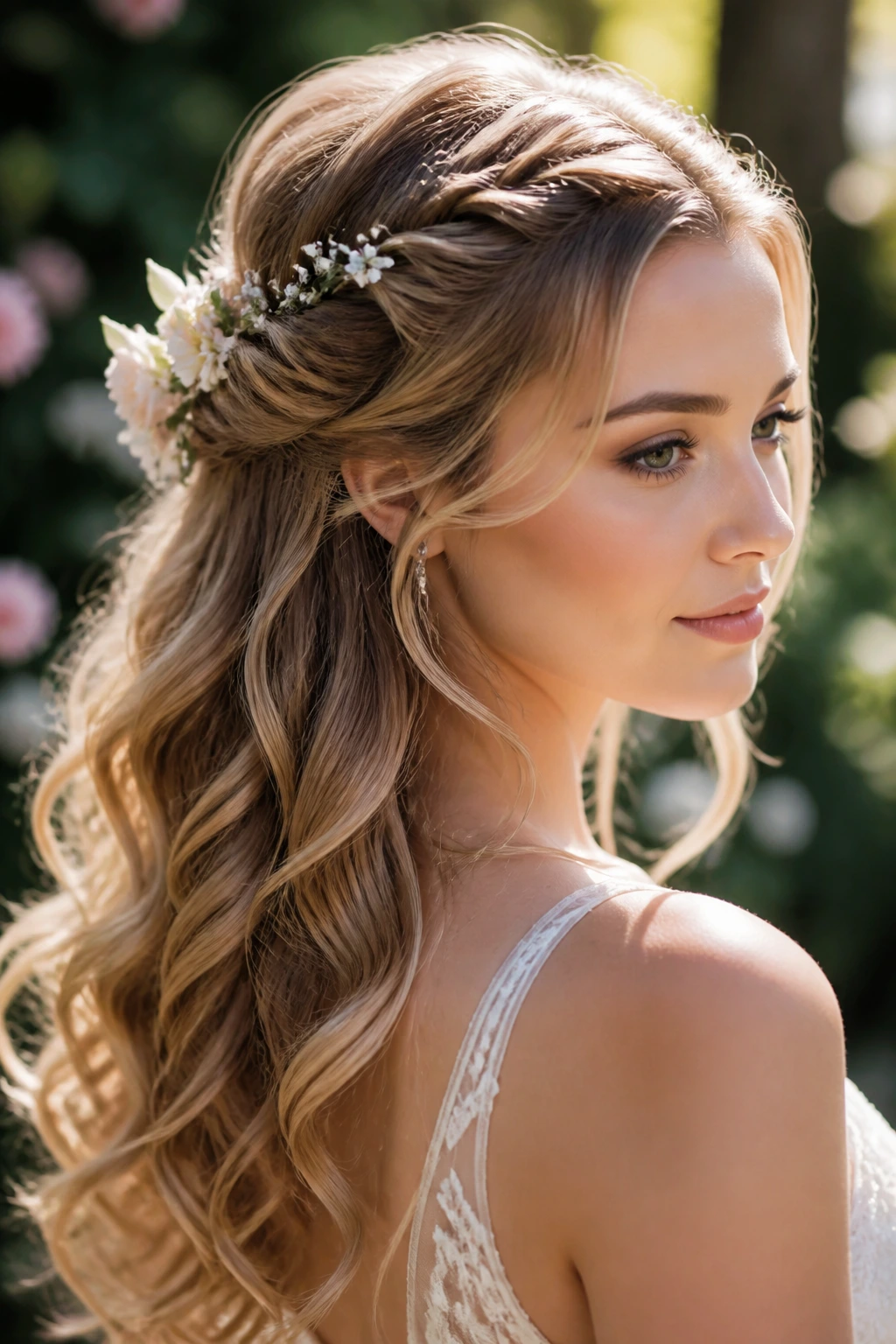
The Romantic Garden: Use the twisted crown or waterfall braid as the base, then tuck in a few tiny flowers or a floral comb. It works best with soft fabrics, outdoor settings, and hair that already has a bit of wave.
The Textured Natural Finish: Keep curls, coils, or waves visible instead of trying to smooth them into one uniform sheet. This version looks strongest when the crown is lifted and the edges are neat, not when the whole style is forced into one texture.
The Minimal Black-Tie Line: Strip the style down to a clean clip-back or low knot with the hair smoothed glossy and the length left straight. It reads mature and formal without extra decoration.
The Short-Hair Friendly Edit: Use two small twists, a slim braid, or a compact half pony with a hidden elastic. Shoulder-length hair can look elegant here if the proportions stay small and deliberate.
Make-Ahead, Freshness, and Touch-Up Plan
A formal half-up style usually holds best when the building blocks are done ahead of time and the final pinning happens close to the event. If you’re curling the lower hair, do that first and let it cool for at least 20 to 30 minutes before brushing it out. Hot curls lose shape fast if you rush them. If the style uses braids or twists, you can set those sections the night before and keep them clipped or loosely wrapped.
For an event that lasts through dinner and dancing, plan on the style staying neat for about 6 to 10 hours if the base was prepped properly. More structured versions with hidden pins and texture spray can go longer. Outdoor humidity shortens that window, so carry a small emergency kit: 4 bobby pins, a travel spray, and a tiny comb.
Overnight preservation matters if you’re building part of the style the day before. Sleep on a silk pillowcase or wrap the lower length in a silk scarf so the curls do not get crushed. If the crown was teased, protect it by pinning the top section loosely and smoothing it out in the morning with your fingers, not a brush. A brush will flatten the lift.
If you need a mid-event refresh, do not redo the whole style. Lift the top section with one hand, slide in one hidden pin at the anchor, and mist the surface lightly. That usually fixes the droop in under two minutes.
Frequently Asked Questions
Can formal half up half down hairstyles work on fine hair?
Yes, but the prep has to be smarter. Fine hair usually needs root grip, a little texture spray, and smaller sections so the pins have something to hold onto. Big, loose twists can slide out; compact shapes hold better.
What is the best way to keep the style from slipping?
Build two anchor points instead of one. Cross the pins, keep the crown from being too silky, and avoid putting conditioner near the roots on styling day. Slipping almost always starts at the root, not the ends.
Can I do one of these styles on shoulder-length hair?
Absolutely. The double twist, minimal clip-back, and side-swept versions are especially good for shorter lengths. The trick is to keep the sections small and stop trying to make the hair do what a longer length would do.
Should the hair be curled before or after the top section is pinned?
Curl the lower length first, let it cool, and then build the half-up shape. That order keeps the pinned section from getting in the way and makes the back look cleaner.
How do I make the style look formal instead of prom-like?
Keep the accessory choice restrained and the finish smooth. One pearl pin, a clean braid, or a sleek clip usually reads more grown-up than multiple sparkly extras and overly bouncy curls.
Can I wear a veil with a half-up style?
Yes, and the veil often sits more securely here than on very loose hair. Place the comb under a compact pinned section or braid so the veil has a firm anchor. Soft teasing alone is not enough.
What if my curls fall flat halfway through the event?
Focus on the lower half first. A few twists of the ends around your fingers, plus one quick mist of spray, can revive the wave pattern. If the crown starts to drop, add one hidden pin at the anchor instead of restyling the whole head.
How much hairspray is too much?
If the hair feels stiff before you leave the mirror, you’ve gone too far. The style should still move when you turn your head. Flexible hold is usually the better choice because formal hair needs structure, not helmet weight.
The Last Pin
The best formal half up half down hairstyles do one thing better than people expect: they keep the face open without flattening the hair’s personality. That’s a useful line to remember when you’re standing in front of the mirror deciding between a full updo and loose waves. Half-up styling gives you a little architecture and a little motion. That’s why it keeps showing up at weddings, dinners, and the kinds of nights where the back of the hairstyle matters as much as the front.
Pick one shape, one accessory, and one finish. The moment you start stacking too many ideas into the same head of hair, the style loses its line. Keep the crown secure, the lower length soft, and the back view clean, and the whole thing will carry itself longer than you’d expect.
