



Loc styles for brides work best when they look engineered, not forced. Locs already bring shape, memory, and a little architecture to the hair, which means a wedding style can lean into the texture instead of fighting it. The wrong move is piling on so many pins, sprays, and ornaments that the whole thing feels stiff by dessert.
A bridal hairstyle with locs has to survive a long chain of tiny tests: the veil lift, the hug from an aunt who means well, the photographer crouching on the floor for a lower angle, the dance floor, the weather, the tearful part. That is where locs earn their keep. They hold pins differently than loose curls, and once you understand that, the styling opens up fast.
Some brides want a clean low knot. Others want braided crowns, side sweeps, wrapped buns, or a little motion down the back. The good looks are never random; they match the dress neckline, the weight of the locs, and the amount of ornament you can wear without the style collapsing into clutter.
Why These Loc Looks Feel Special on a Wedding Day
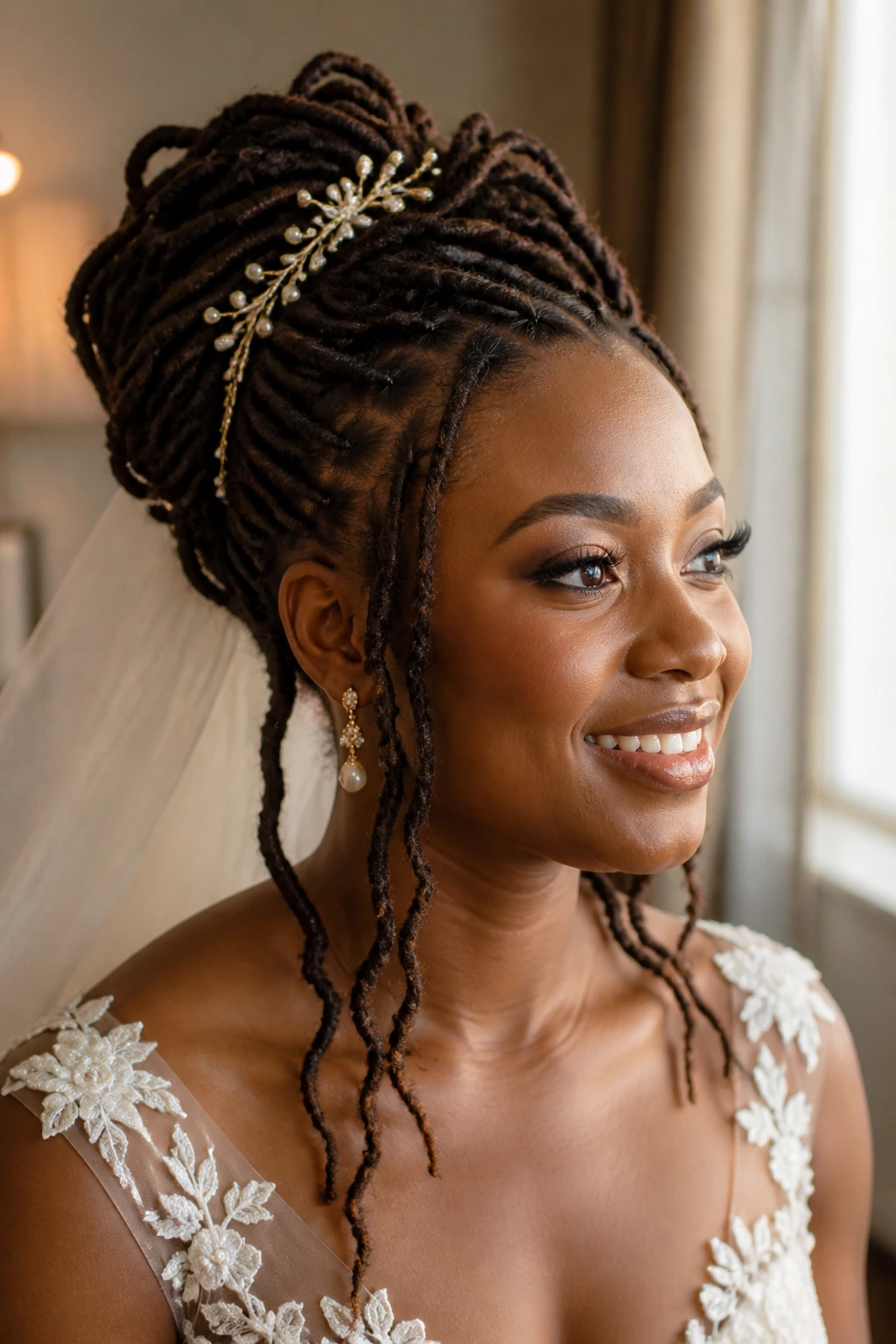
- Built-in structure: Locs already have body, so a bridal style can stay full without relying on piles of teasing or heavy extensions.
- Works across lengths: Short, medium, and long locs all have a lane here, from tucked mini buns to sweeping cascades.
- Plays well with accessories: Pins, pearl cuffs, jeweled clips, and veils sit neatly in locs when the shape is planned first.
- Frames the face on purpose: A few softened strands near the temples can change the whole mood, especially with a strapless or sweetheart dress.
- Holds through a long event: A style that starts with solid anchor points tends to survive the ceremony, photos, dinner, and the part where nobody is standing still.
1. Halo Crown With Face-Framing Spirals
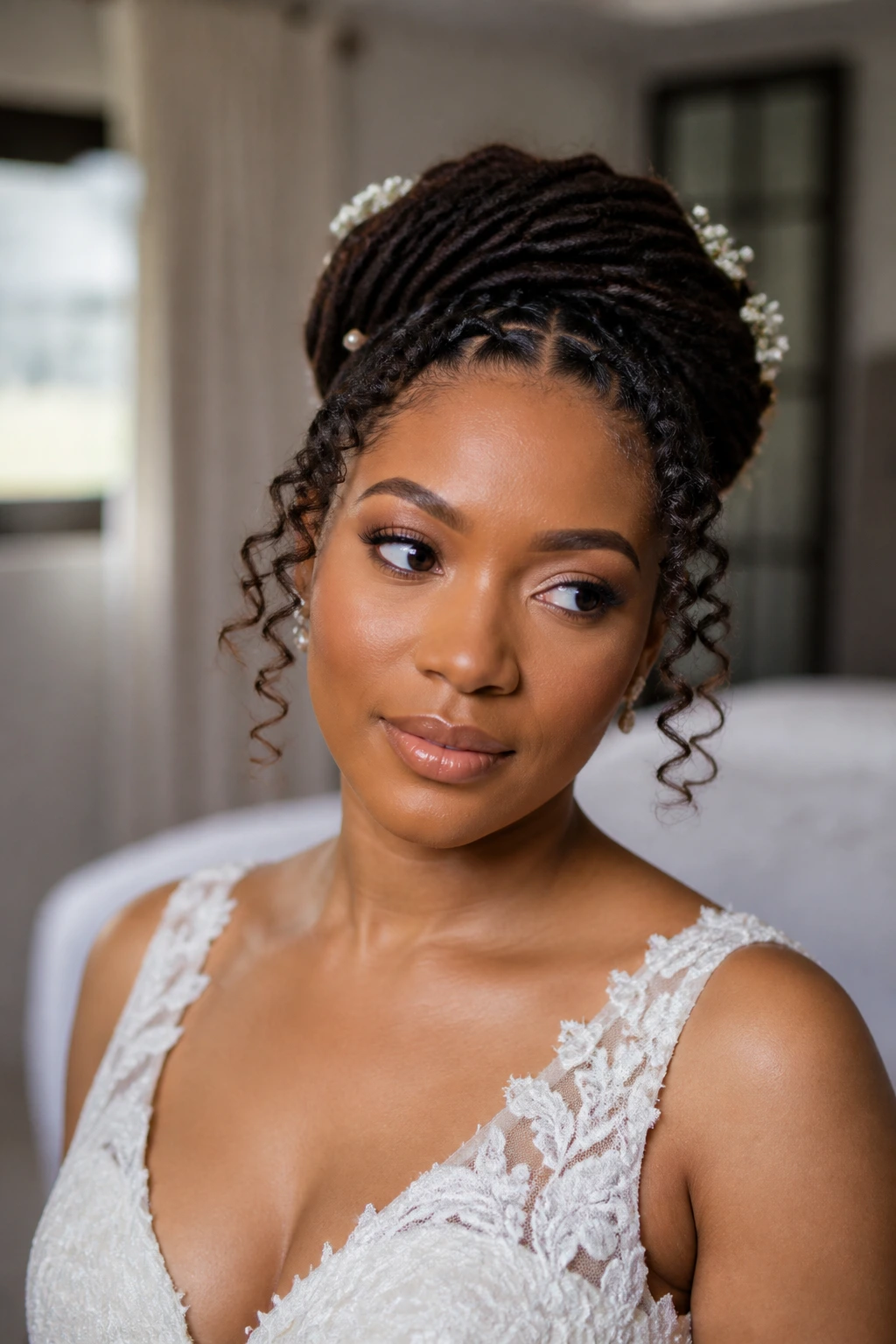
A halo crown is one of those loc styles for brides that looks soft from the front and more complicated than it really is. The locs circle the head close to the hairline, then a few thin pieces are left out around the temples so the face doesn’t disappear into the style. It has a gentle, almost classical feel, which is why it works so well with sweetheart necklines and lace gowns.
The best part is the balance. The crown gives you enough structure for pins and small flowers, but the loose pieces keep it from feeling severe. If your locs are medium length or longer, this shape holds especially well because the weight settles evenly around the head instead of pulling everything to one side.
2. Low Twisted Chignon With a Veil Comb
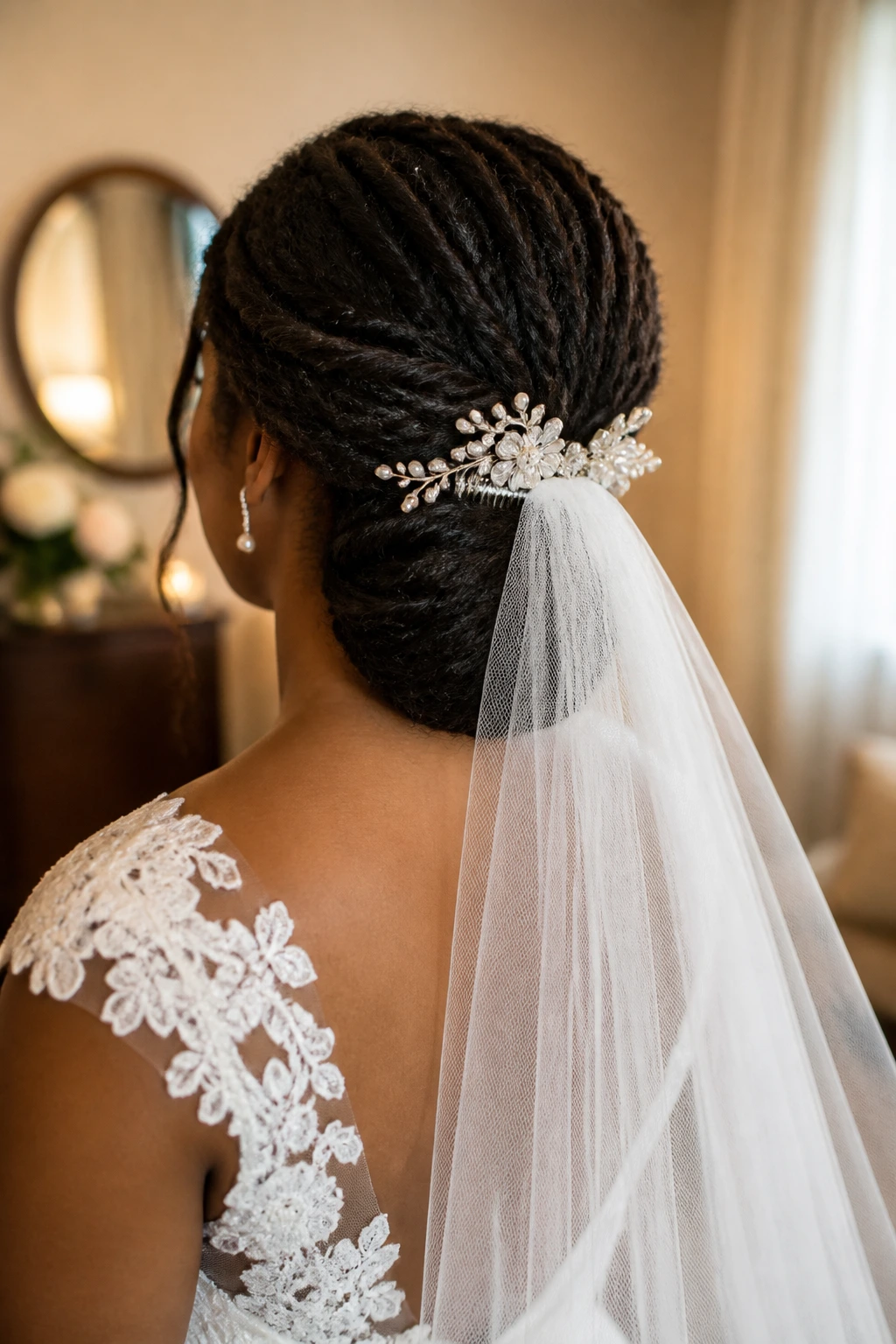
A low chignon sits at the nape like it has been there for years. For brides with locs, that matters because the style looks calm even when the rest of the outfit is doing plenty. Twist the locs into a compact knot, pin the base tight, and leave a clean pocket for the veil comb so it doesn’t fight the bun.
This is the style for anyone who wants the dress to take center stage. It works with high necks, long sleeves, and cathedral veils, and it keeps the back of the neck clear, which is a relief if the ceremony runs long or the weather gets warm. A tiny pearl pin or one comb placed just above the bun is enough. More starts to feel noisy.
3. Side-Swept Loc Cascade Over One Shoulder
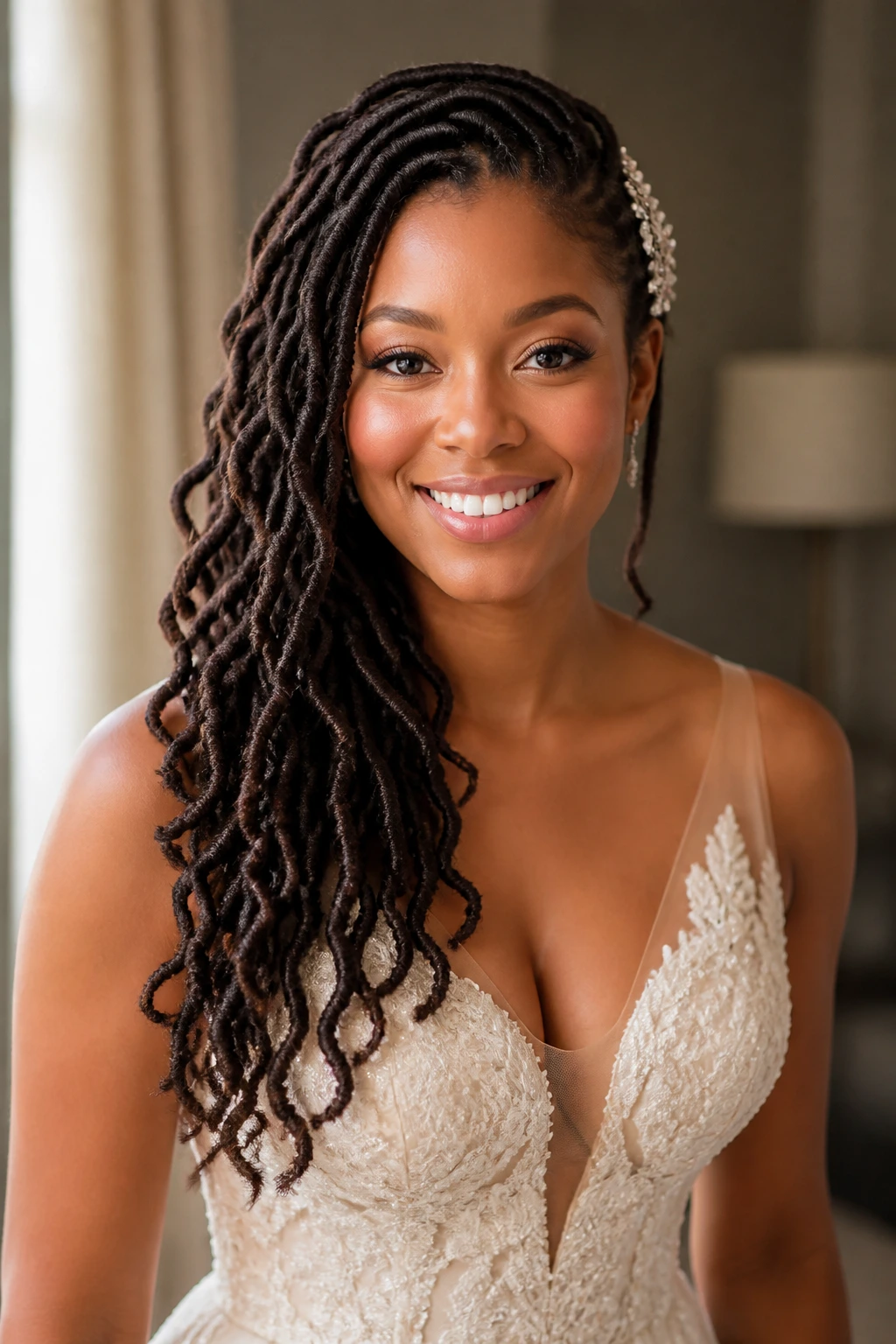
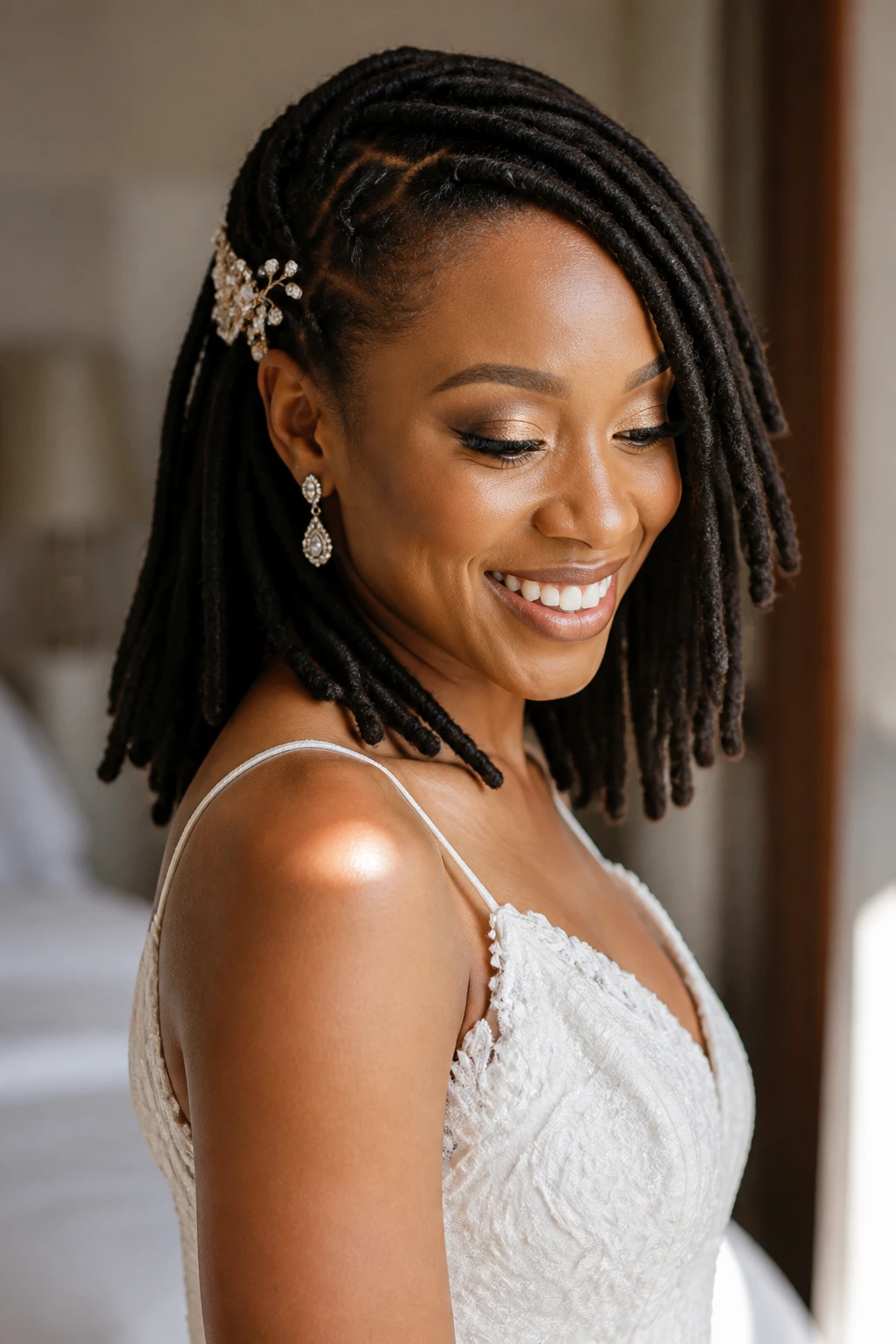
Side-swept locs feel a little romantic and a little deliberate, which is a useful combination on a wedding day. The hair is gathered low and brought across one shoulder, letting the length show instead of hiding it. That single line from crown to shoulder looks especially sharp with an asymmetrical or one-shoulder dress.
The trick is in the contour. Pin the opposite side flatter than you think you need, then let the cascade land with some movement, not a stiff wall of hair. If the locs are longer, a few ends can be curled or tucked so the style does not read as heavy. A jeweled clip near the ear finishes it without stealing the scene.
4. Wrapped High Bun With Polished Edges
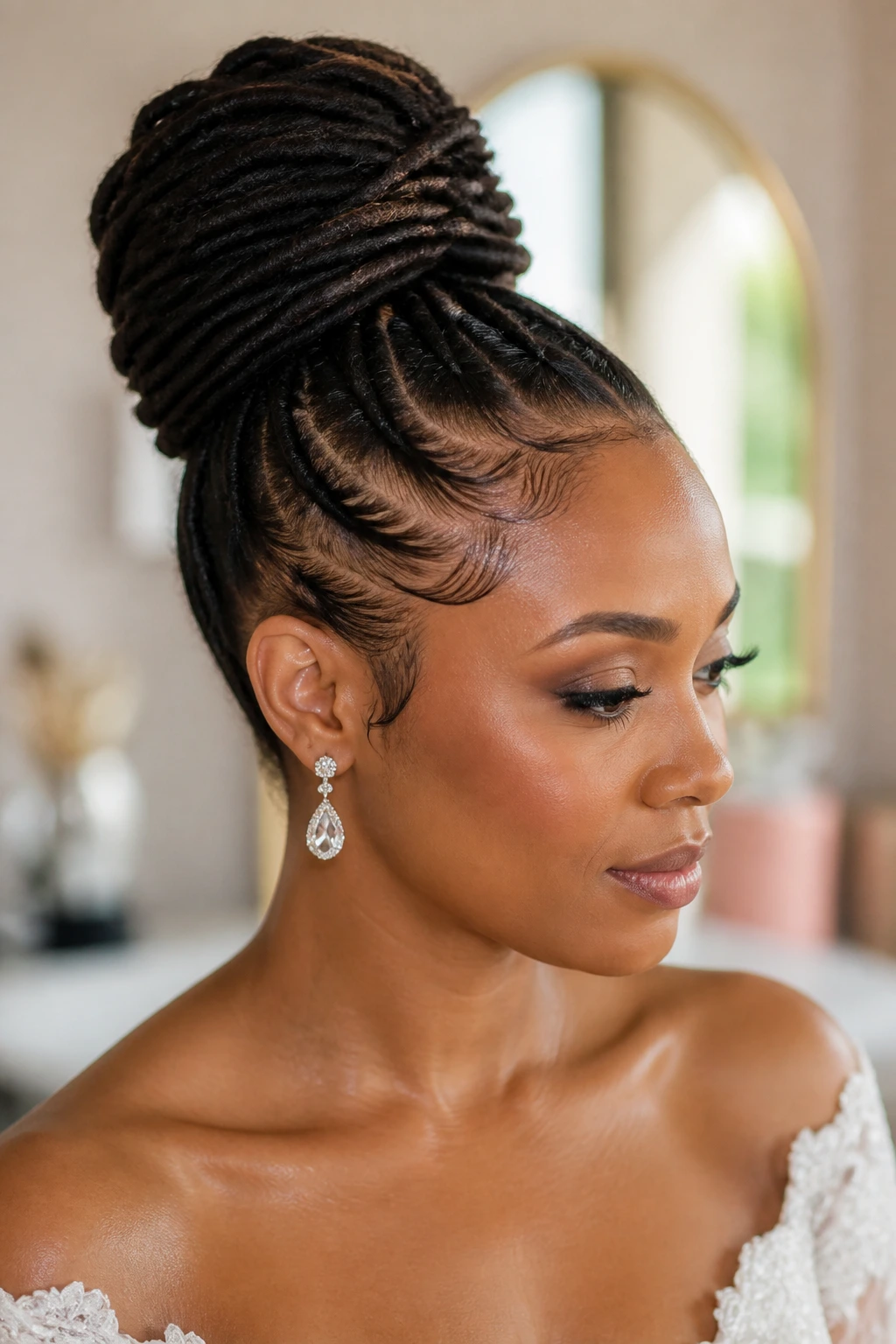
A high bun changes the whole posture of a bridal look. It lifts the face, opens the neckline, and makes the earrings matter. With locs, the bun should be wrapped rather than squeezed, so the texture stays visible in the turns of the knot instead of being crushed flat.
This one shines with strapless dresses and gowns that already have clean lines. Keep the base sleek, smooth the hairline carefully, and let the bun itself carry the interest. A couple of gold cuffs or a thin vine comb can sit at the edge of the bun, but the style reads best when the shape is doing the work. No drama needed. It already has enough.
5. Half-Up Loc Waterfall With Soft Tendrils
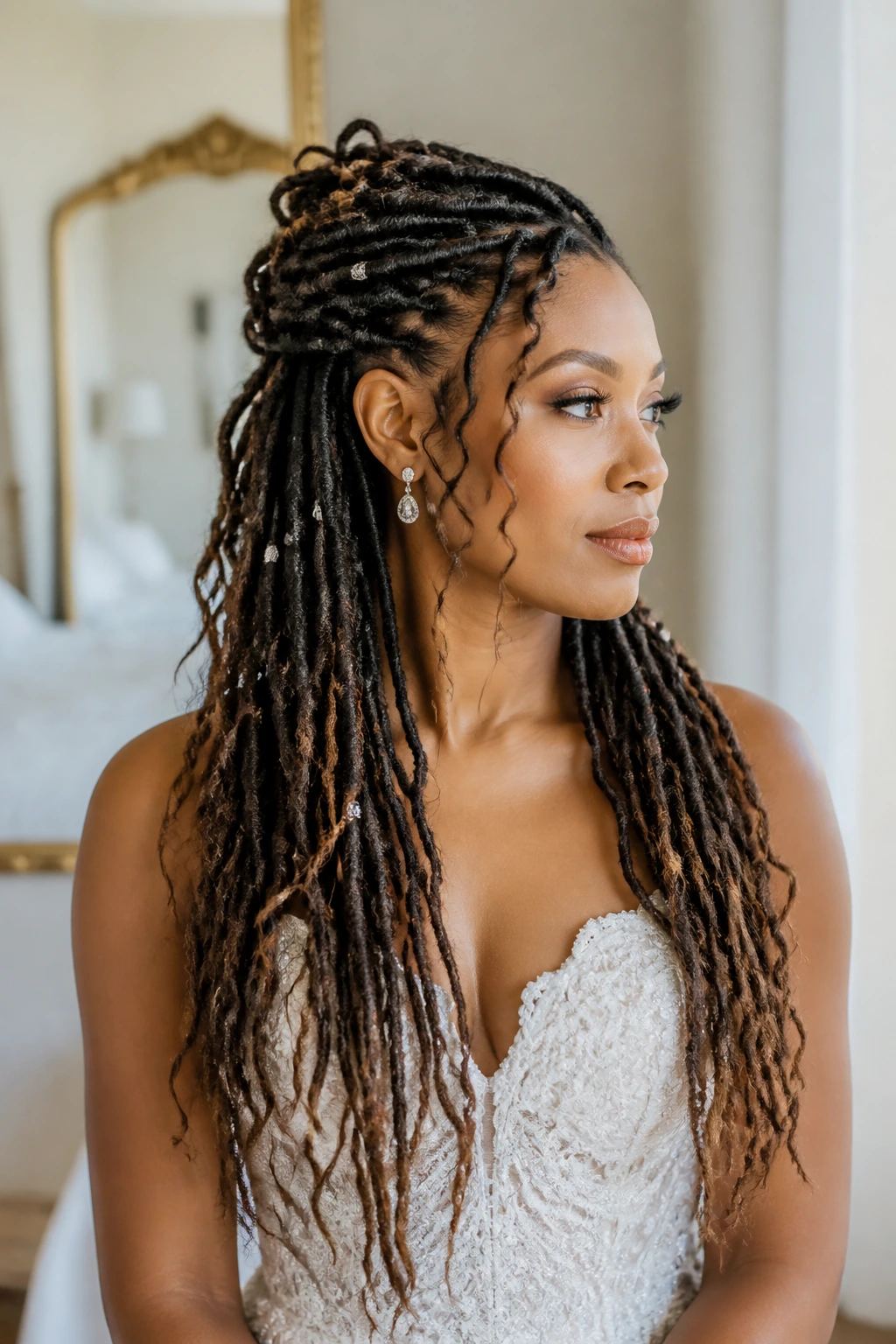
Half-up loc styles for brides are a smart answer when you want movement and control at the same time. The top section is pinned or braided away from the face, while the rest falls freely down the back in a soft waterfall. That split gives you ceremony neatness without losing the texture that made you choose locs in the first place.
It also photographs well from multiple angles because the style changes as you turn. From the front, it feels airy. From behind, it keeps the length visible. If the locs are thick, keep the top section compact so the style does not swell too wide at the crown. A few curled or beaded ends make the lower half feel intentional instead of loose.
6. Braided Crown Circling the Hairline
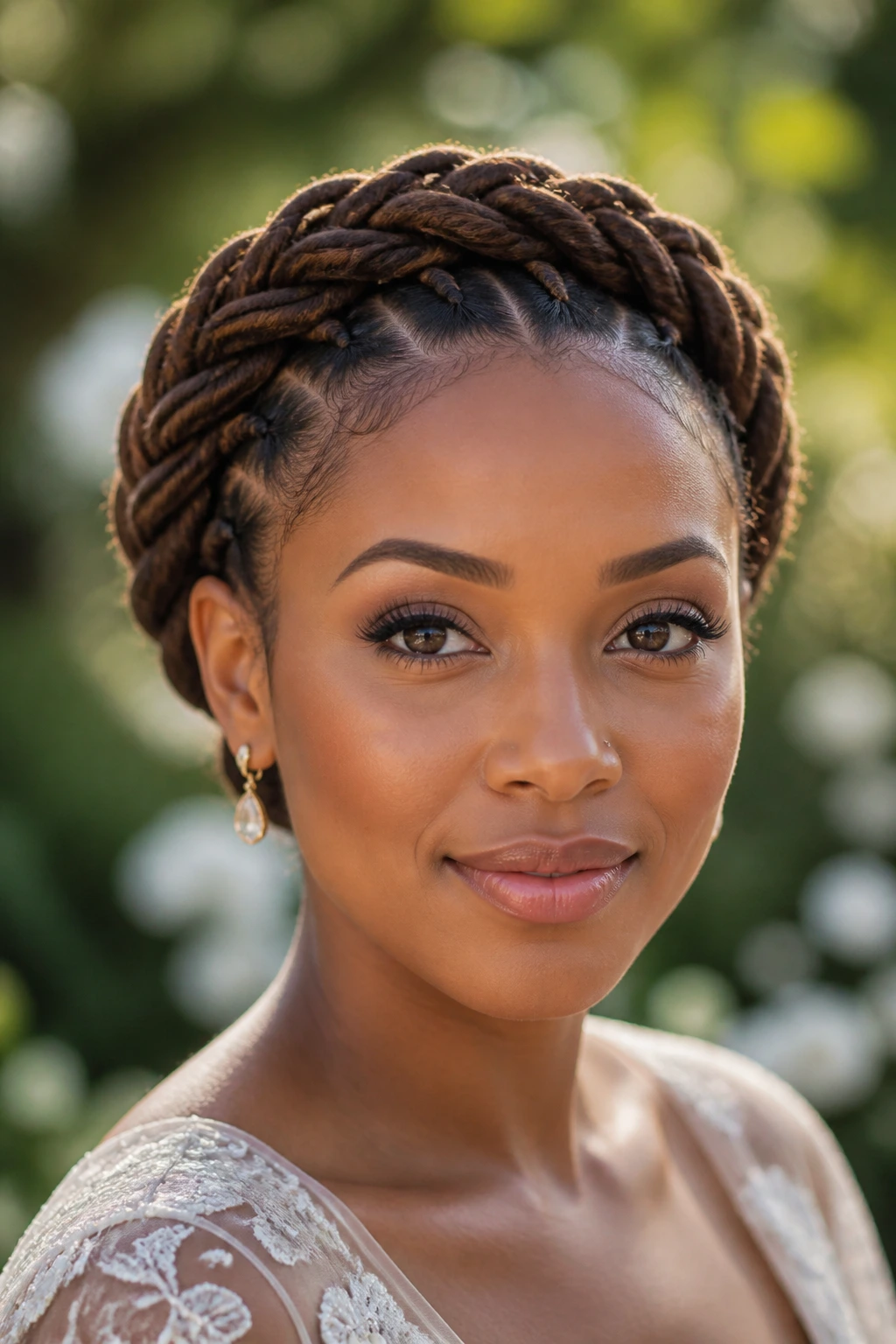
A braided crown brings a slightly bohemian mood to a bridal look, but it can still feel formal if the sections are tight and the parts are clean. The crown follows the hairline like a frame, which keeps the face open and gives you a built-in place for tiny floral pins or a narrow veil comb.
This style is especially useful for outdoor weddings or dresses with softer fabrics like chiffon and tulle. It has enough texture to look finished in bright light, which matters more than people think. Sunlight is ruthless. If the locs are short-to-medium, the crown can be built with a few anchor braids so the rest of the style remains light.
7. French Roll Loc Updo With Pearl Pins
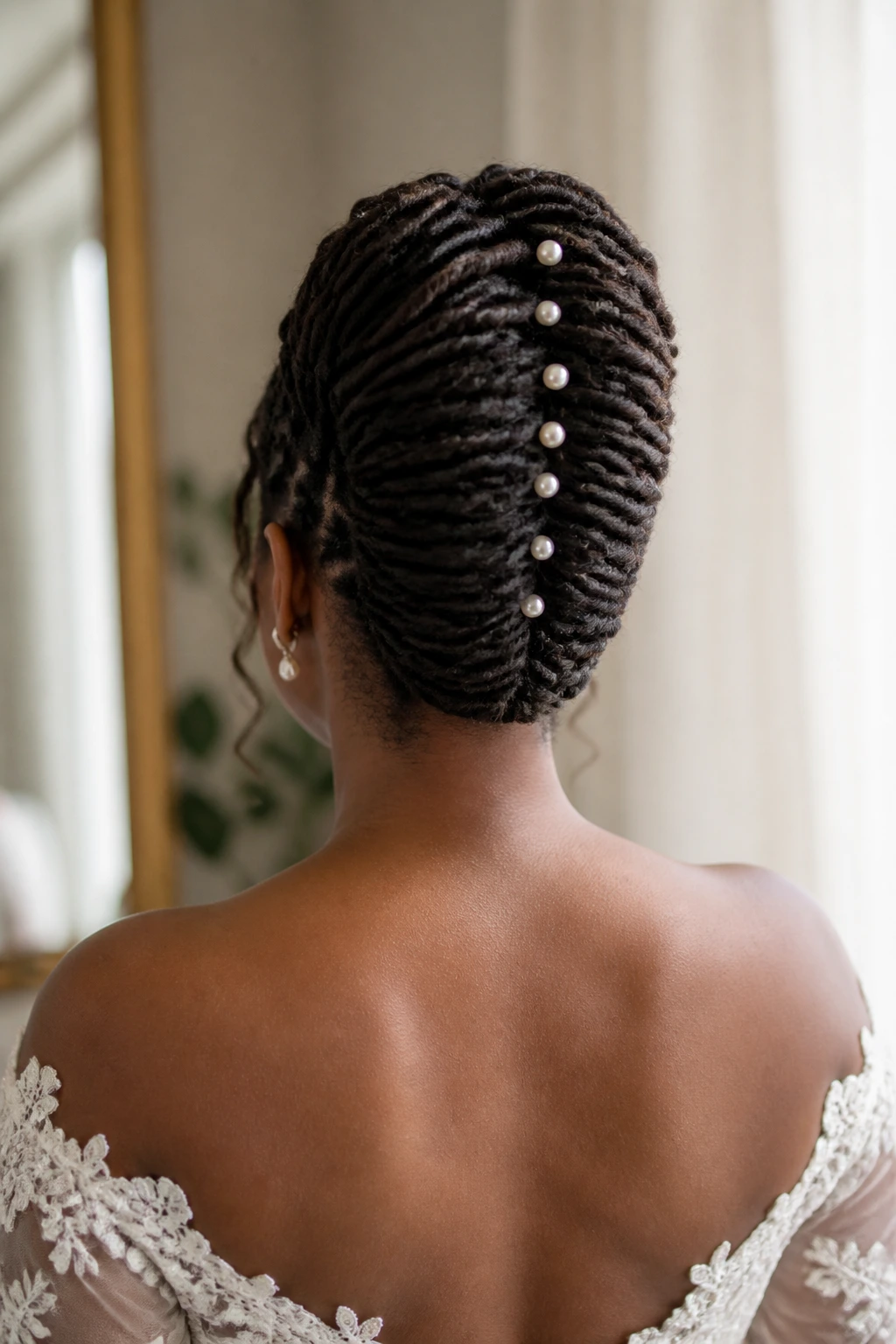
There’s something satisfying about a French roll on locs because the vertical line is clean and the texture adds just enough depth. The locs are folded inward along the back of the head, then pinned in a narrow column that feels elegant without being fussy. Pearl pins work well here because they echo the shape rather than fighting it.
This is a good pick for brides who want their hairstyle to stay tidy through lots of movement. The roll keeps the center of gravity close to the head, so it holds up better than a wide, heavy bun. It also plays nicely with gowns that have a deep back or a dramatic collar. The style lets the dress breathe.
8. Sculpted Faux Hawk For Long Locs
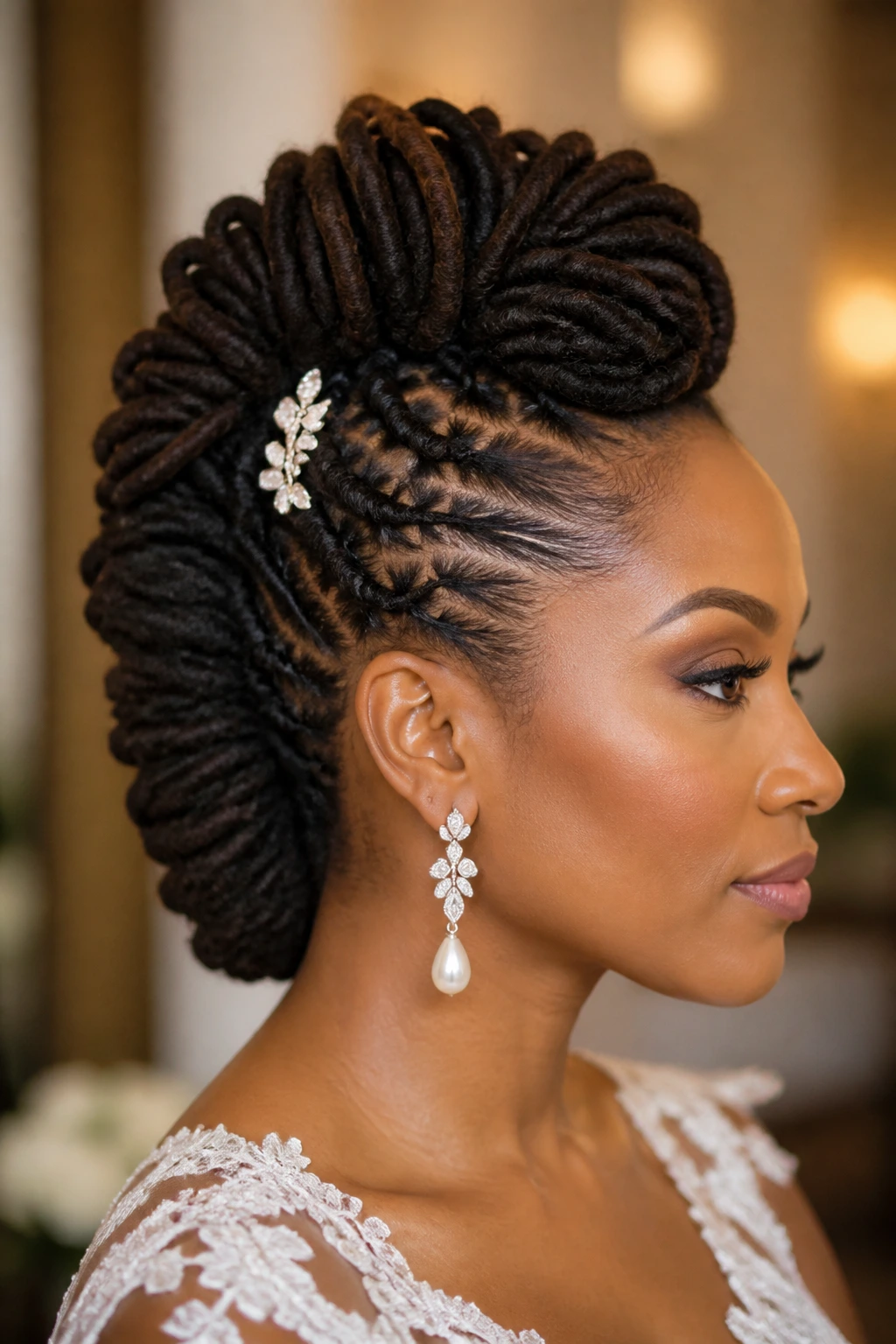
A faux hawk made from locs has edge, but it can still feel bridal if the sides are polished and the center ridge is shaped carefully. The locs are pinned upward along the center of the head, leaving the sides smooth or tightly tucked. The result is bold without looking like you borrowed it from a concert.
This one suits brides who want their hair to say something. It works especially well with sleek satin gowns, modern tailoring, or a reception outfit that needs more attitude. If you want to soften it, add one narrow jeweled clip near the temple. If you want to lean in, a row of gold cuffs down the ridge will do the job.
9. Tucked Bob-Style Updo For Short Locs
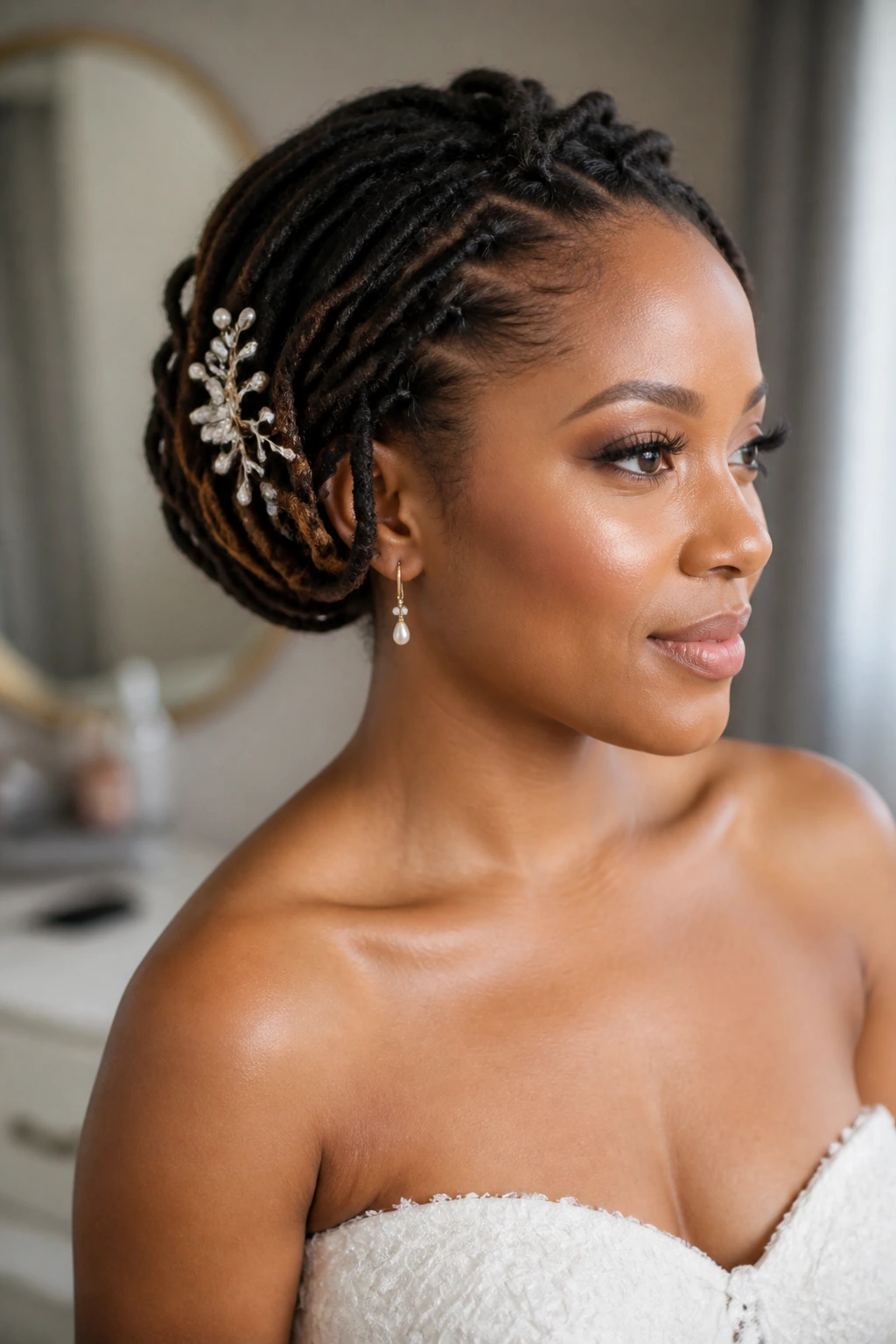
Short locs do not need to be treated like the “small version” of a longer style. Tucked into a bob-style updo, they can look deliberately chic and very finished. The ends are folded under, pinned into a curved outline around the head, and shaped to sit just below the ear line.
This is one of the better options when the bride wants clean lines and no extra bulk. It’s also kinder on the scalp than a style that keeps trying to force short locs into a huge shape they don’t want to hold. If you have starter locs or microlocs, keep the accessory weight low and let the shape do the talking. That tiny profile can be striking.
10. Floral Low Bun With Fresh Or Silk Blooms
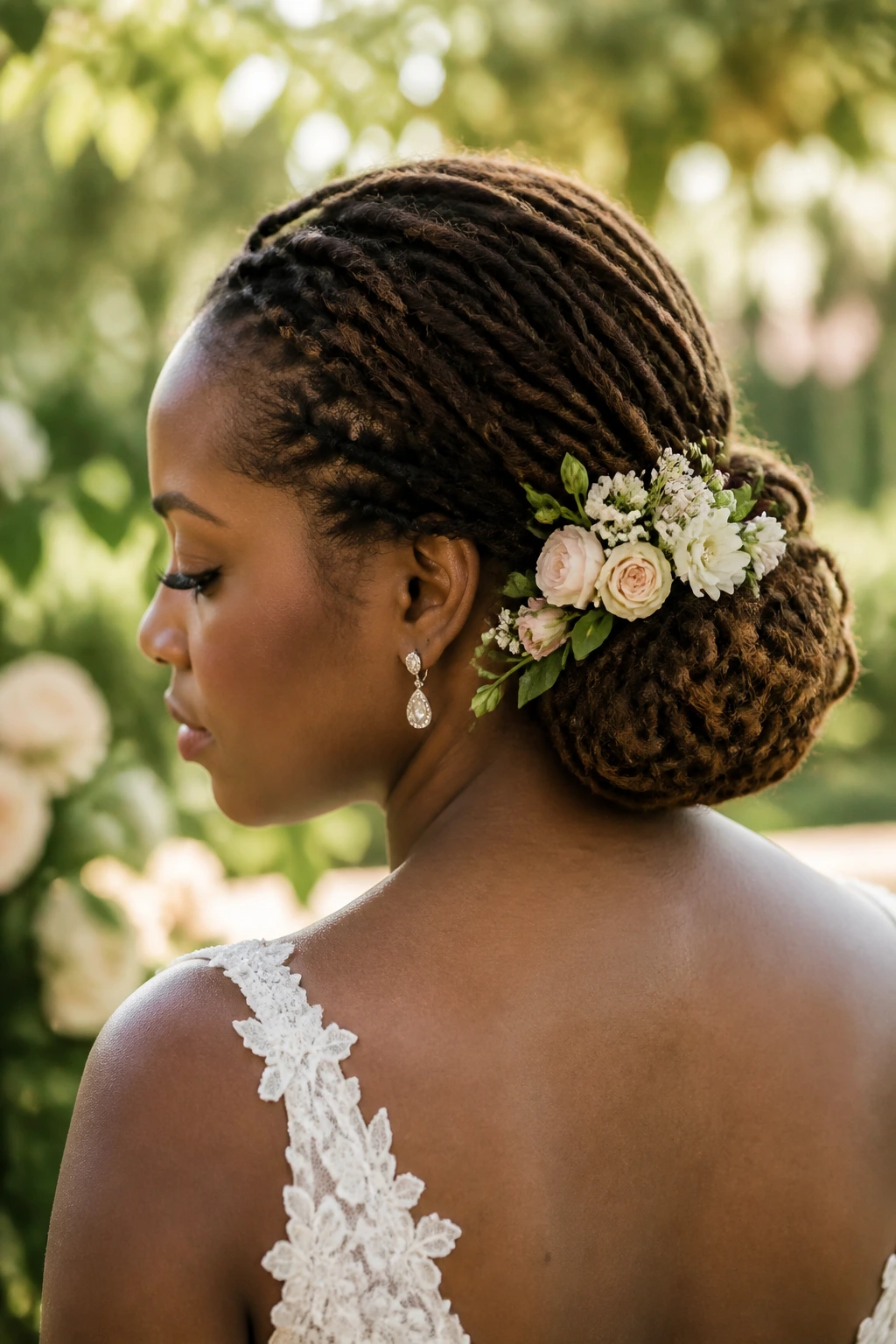
A floral low bun works because the flowers sit where the eye already wants to rest: near the nape, close to the neckline, right in the middle of the silhouette. The locs are gathered low, then blooms are tucked into the outer edge of the bun so they look embedded rather than pinned on top like afterthoughts.
Fresh flowers are lovely, but silk or preserved blooms are the safer choice if the day will be long or warm. Heavy stems can shift, so trim them down and secure each piece separately. A single statement flower often looks sharper than a crowded cluster. The bun stays elegant, and the flowers feel chosen, not scattered.
11. Half-Up Waterfall With Beaded Ends
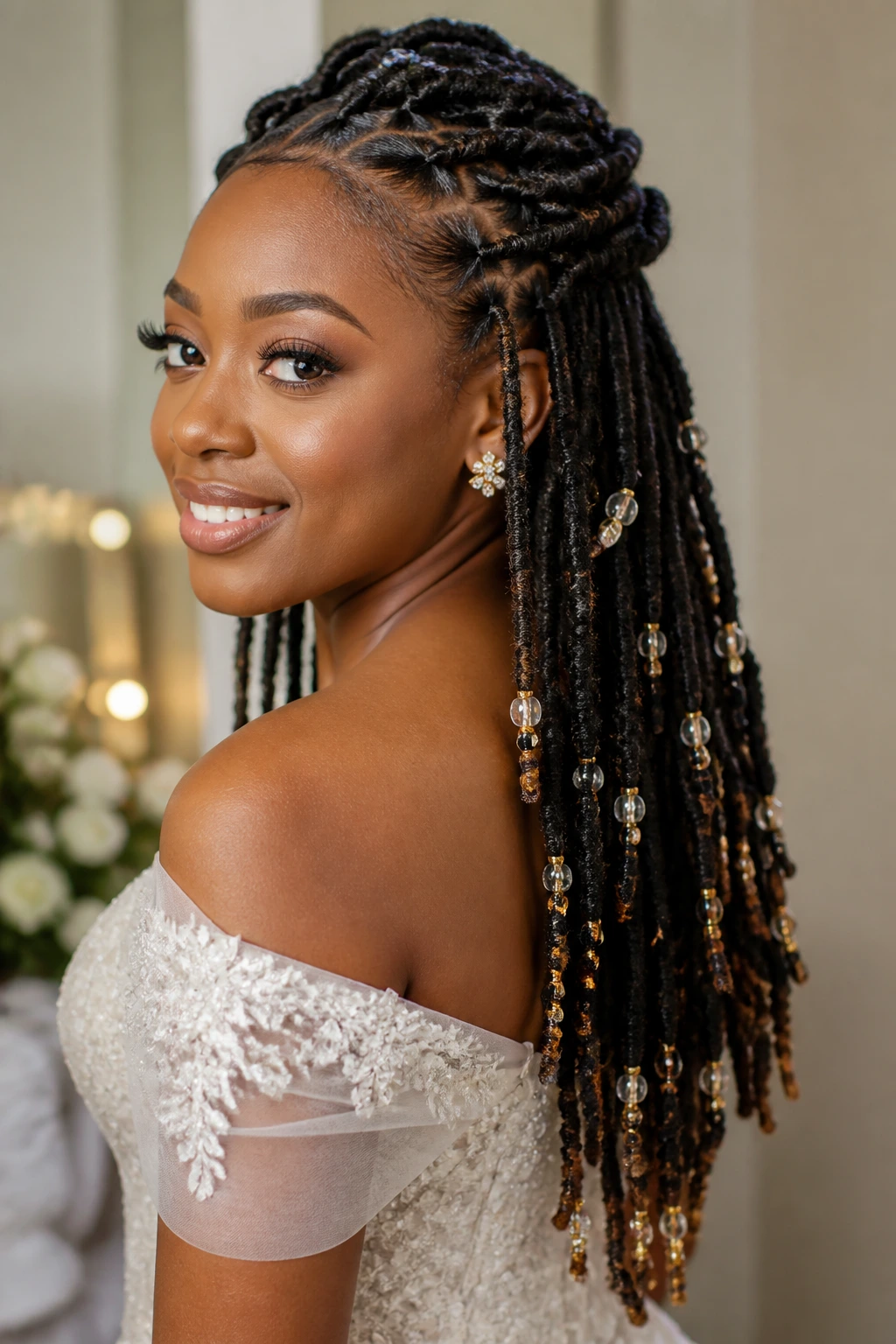
Beaded ends change the rhythm of a bridal hairstyle. Instead of one long sweep of locs, you get a subtle pattern of movement and sound, especially if the beads catch light when you turn your head. The half-up waterfall version keeps the crown neat and lets the lower section stay loose enough to show the details.
The key is restraint. Too many beads can make the hair feel busy and pull at the ends. Use them where they’ll be visible in photos, not everywhere. This style is especially good for brides who want a little personality without moving all the way into full ornament territory.
12. Sleek Middle-Part Ponytail With Wrapped Base
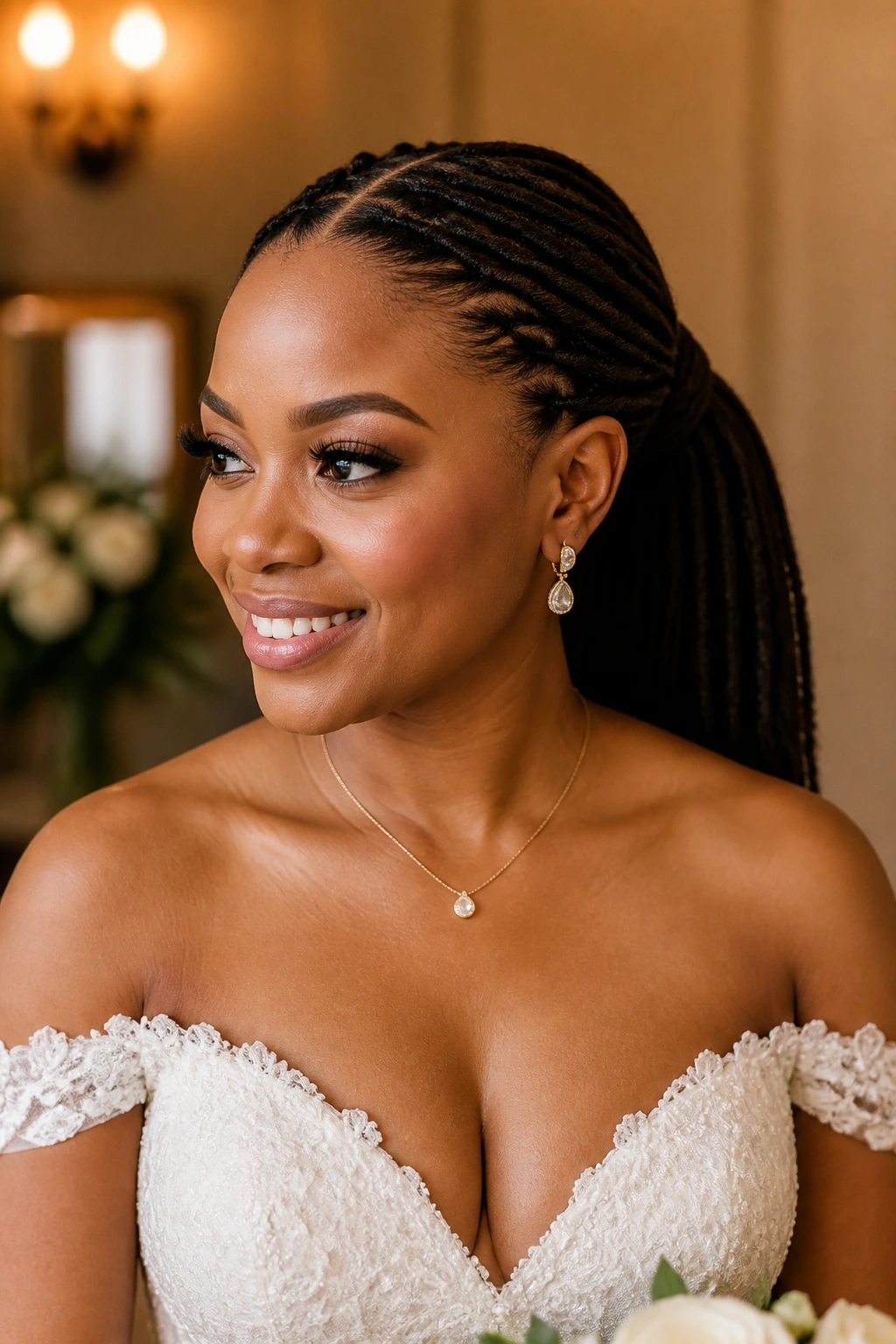
A middle-part ponytail can look very modern on locs, especially when the base is wrapped with a section of hair so the elastic disappears. The center part keeps the face symmetrical, and the ponytail itself can hang straight, slightly curled at the ends, or braided down for more control.
This works best with gowns that have clean necklines or sharp tailoring. It keeps the face open and the profile long, which is useful if you want the dress and earrings to show. The important part is the finish: brush the front smooth, secure the base firmly, and make sure the wrap section lies flat. A ponytail only looks bridal when it looks intentional.
13. Rope-Twisted Low Bun For Clean Necks
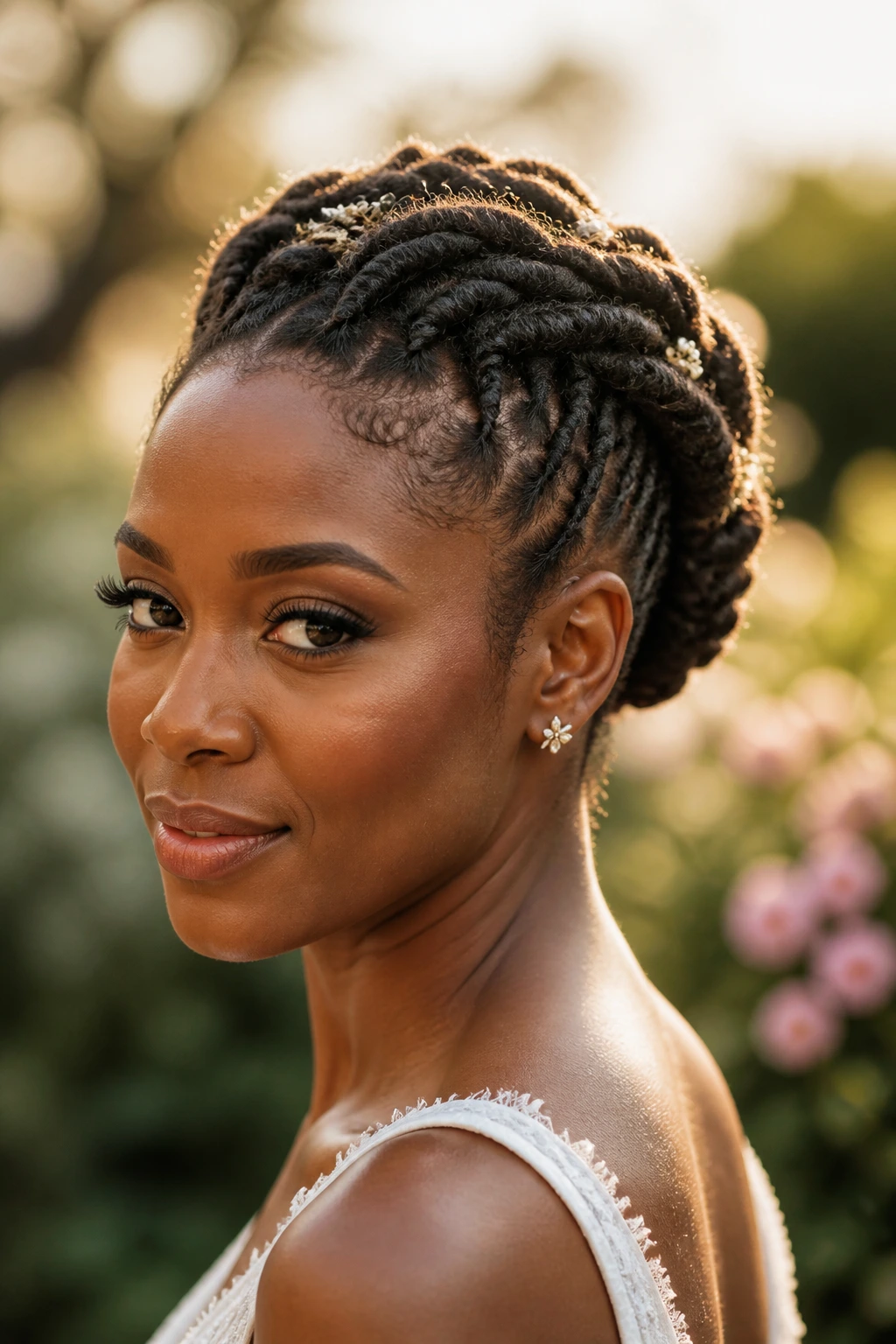
Rope twists feeding into a low bun give the style a woven, handmade feel that fits bridal hair really well. The twists create visible lines, then the bun at the nape gathers everything into one controlled shape. It is tidy without being flat.
This one is especially flattering with high necks, halters, and dresses that already have a lot going on near the collarbone. You don’t need much more than the hair itself. If you want extra detail, one or two small pins on the twist line are enough. Keep the bun low and slightly off-center if you want a softer profile.
14. Goddess Updo With Looser Front Pieces
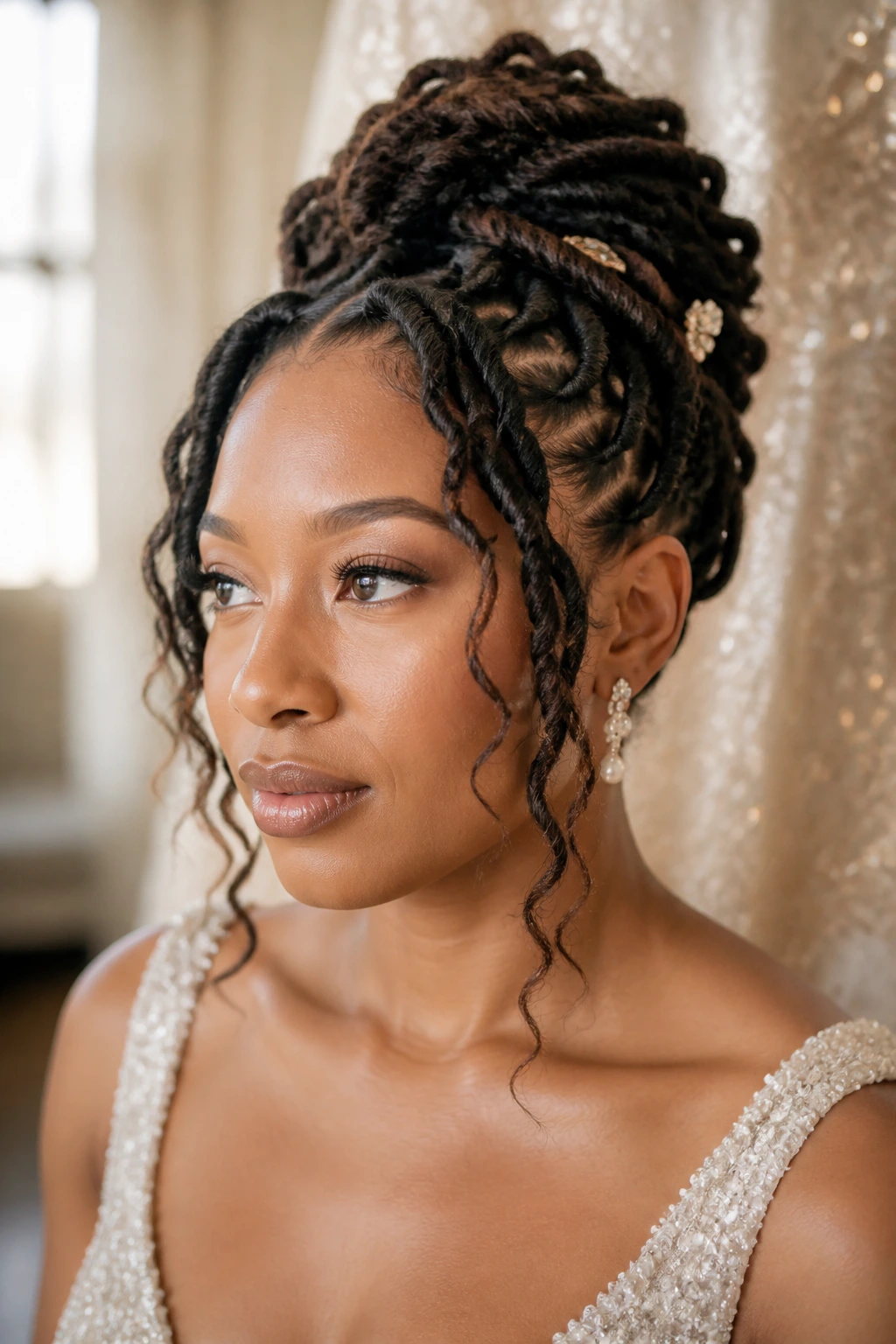
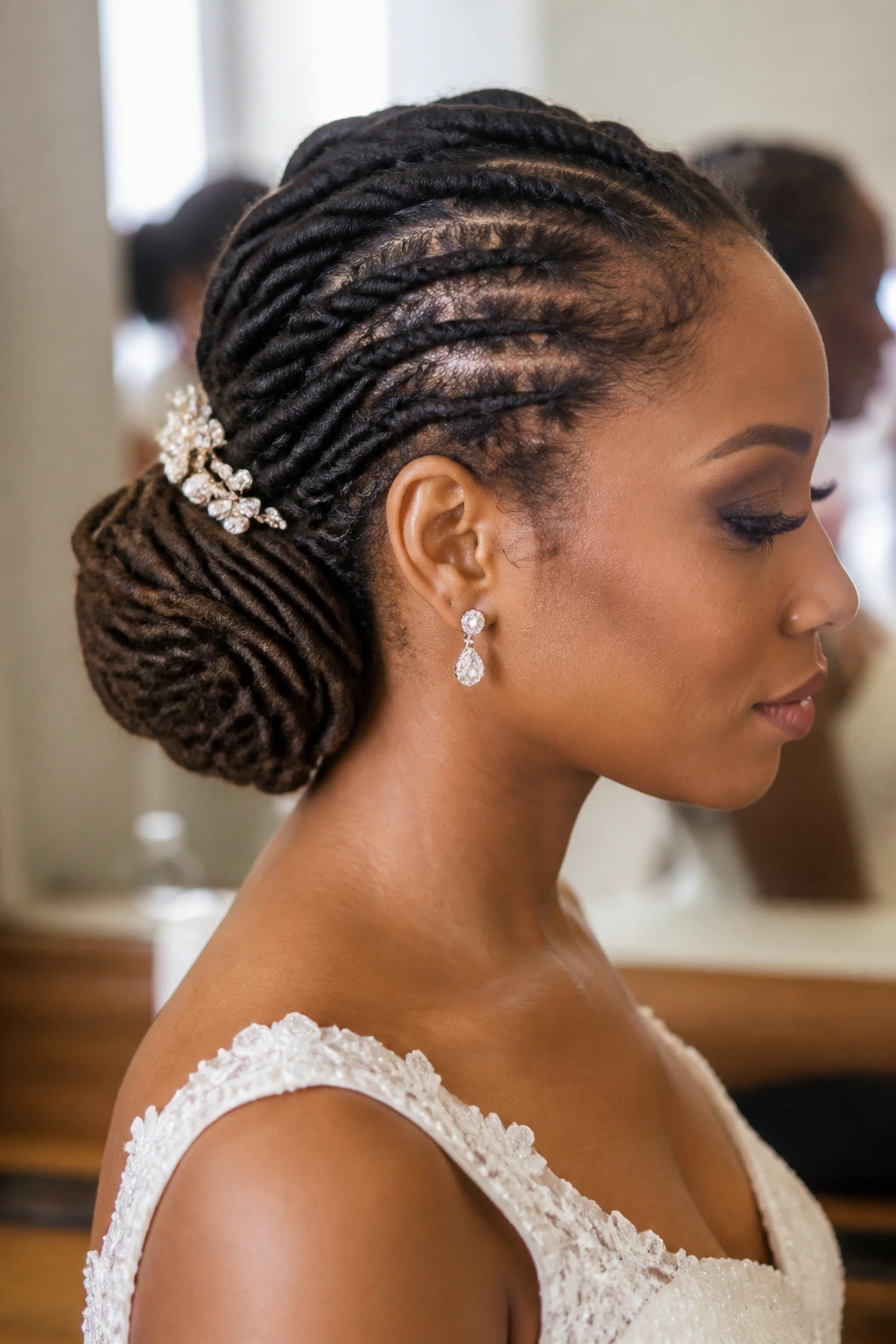
A goddess updo gives you a little softness around the face without losing the security of a pinned style. The locs are shaped into an updo, but a few front pieces are left looser and smoothed into gentle curves. The result feels less formal than a tight knot and less casual than a full-down style.
That middle ground is useful. A lot of brides want movement near the cheeks and forehead because it keeps the hairstyle from feeling too stern in close-up photos. This version works well with beaded dresses, softer sleeves, or makeup that leans luminous rather than sharp. A good stylus here is balance, not volume.
15. Veil-Friendly Bun With Hidden Anchor Points
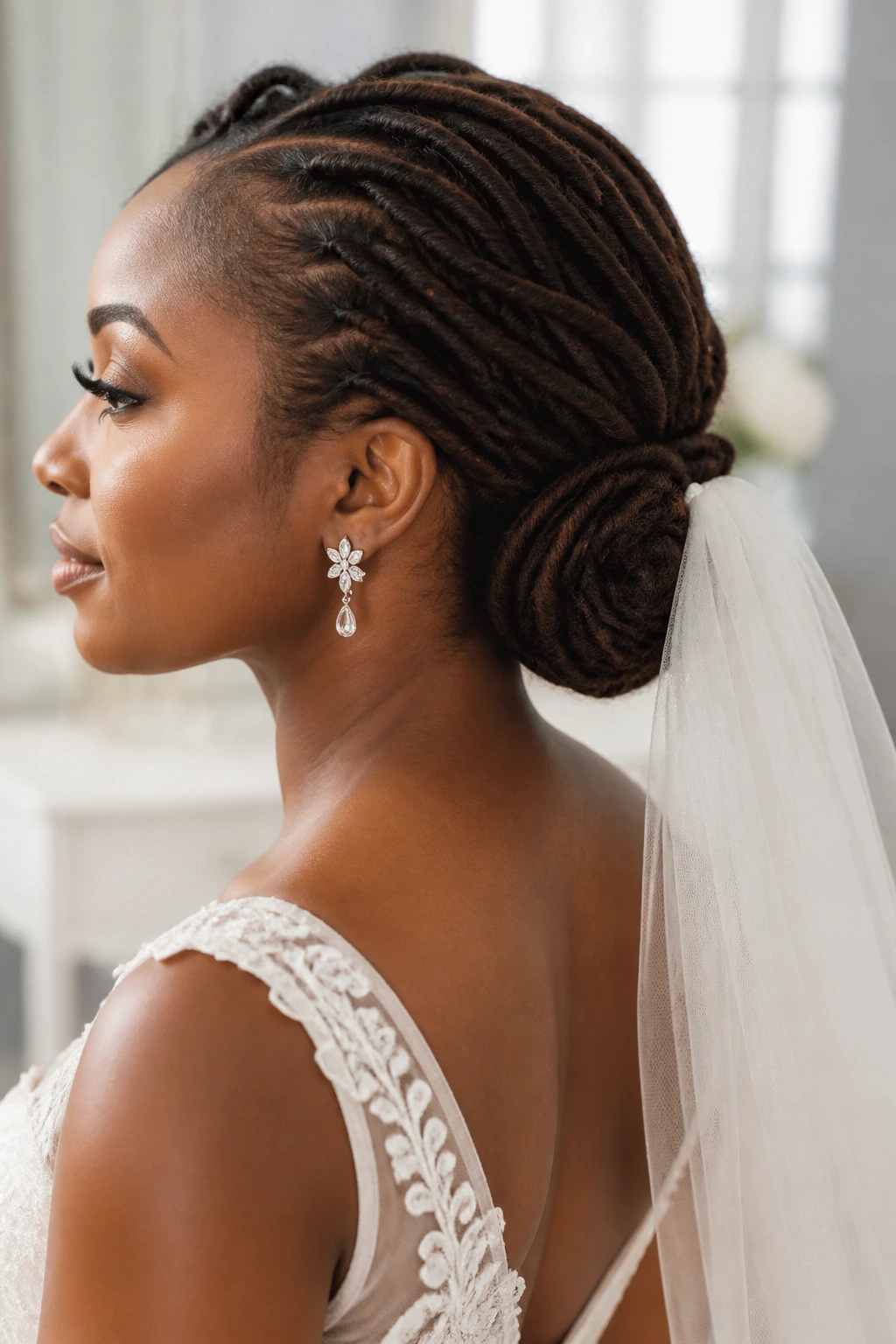
Some loc styles for brides are designed around the veil first, and this is one of them. The bun sits low and compact, but the hidden anchor points inside the shape give the veil comb something solid to grab onto. That matters more than the outside finish, because a veil that slips is a problem nobody wants to think about during vows.
The style should look almost deceptively simple from a distance. Underneath, though, it needs tight pinning and a smooth base. If the locs are long, fold the ends inward before inserting the comb so there’s no bulky ridge. This is a practical style disguised as an elegant one.
16. Deep-Side-Part Bun With Soft Volume
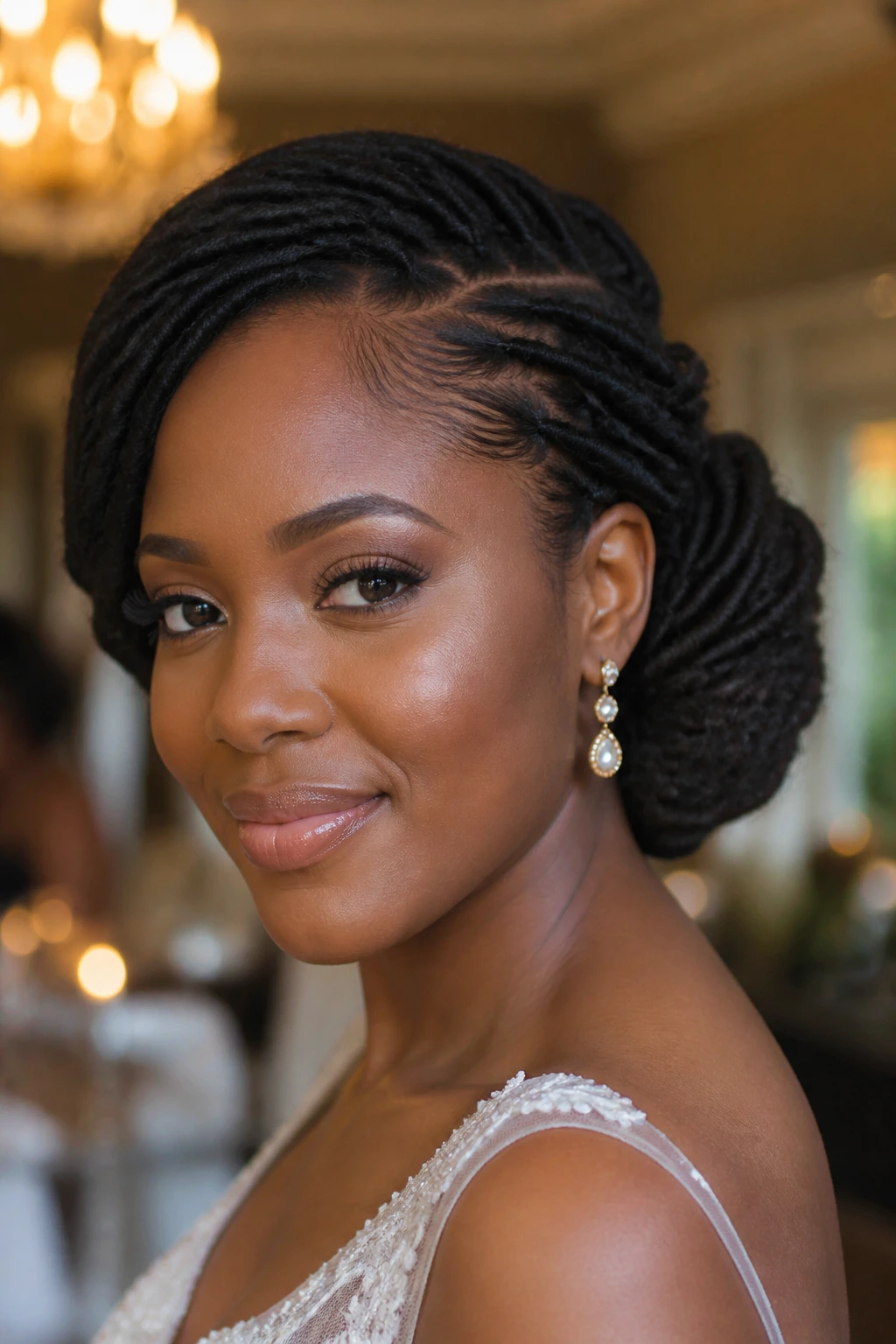
A deep side part gives the face a little drama before the bun even begins. Once the locs are swept to one side and gathered low, the bun takes on a soft asymmetry that feels graceful without looking overbuilt. It’s a good answer for brides who don’t want the strictness of a centered style.
This shape works especially well with one-shoulder gowns or dresses with a little movement in the bodice. The part creates a visual line that the eye follows, and the bun anchors it at the nape. If the hairline is carefully smoothed and the crown gets a little controlled lift, the whole style feels more expensive than it is.
17. Double Crown Braids Feeding Into a Knot
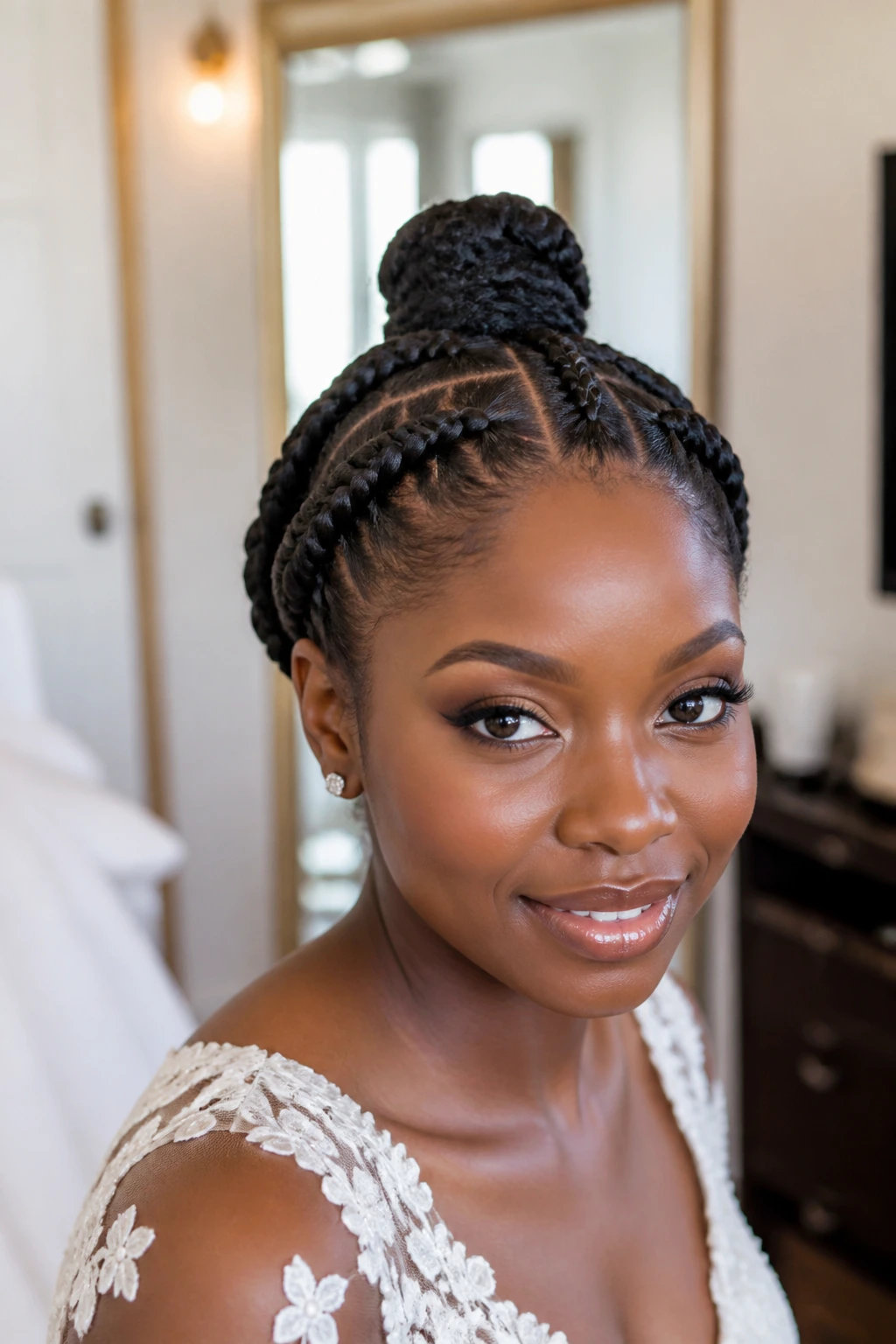
Two braids running along the crown and meeting at a knot create one of the neatest ways to frame locs on a wedding day. The braids act like rails, guiding the eye toward the bun while keeping the top of the head tidy. It’s organized, but not stiff.
This style is a good fit for brides who like detail they can actually see up close. The braids show better in photos than a plain swept-back crown, and they can be decorated with tiny pearls or thread wraps if the dress needs a little echo. Keep the knot compact, and the whole look stays balanced.
18. Loc Mohawk With Gold Cuffs
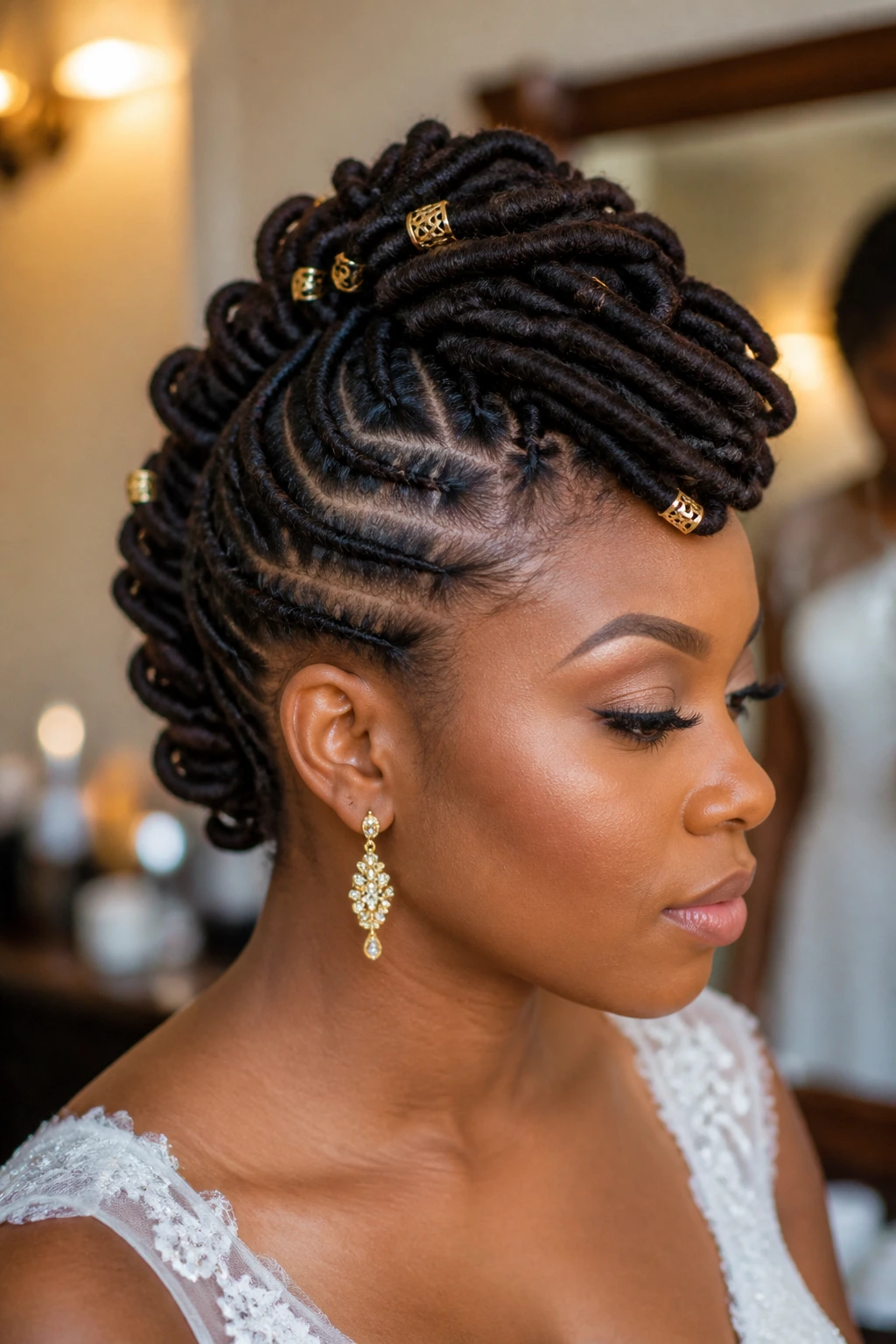
A mohawk made from locs is not shy. The sides are pinned close, the center strip is lifted with shape, and the whole silhouette stands up with confidence. Gold cuffs make sense here because the style already has attitude; the metal just sharpens the edges.
This is a strong choice for fashion-forward brides, city weddings, or a second look after the ceremony. It pairs especially well with structured gowns and strong makeup. If you want it to feel less hard, leave a few softer pieces near the temples. If you want full edge, keep the parting crisp and the cuffs evenly spaced.
19. S-Curve Pinned Updo For a Sculpted Finish
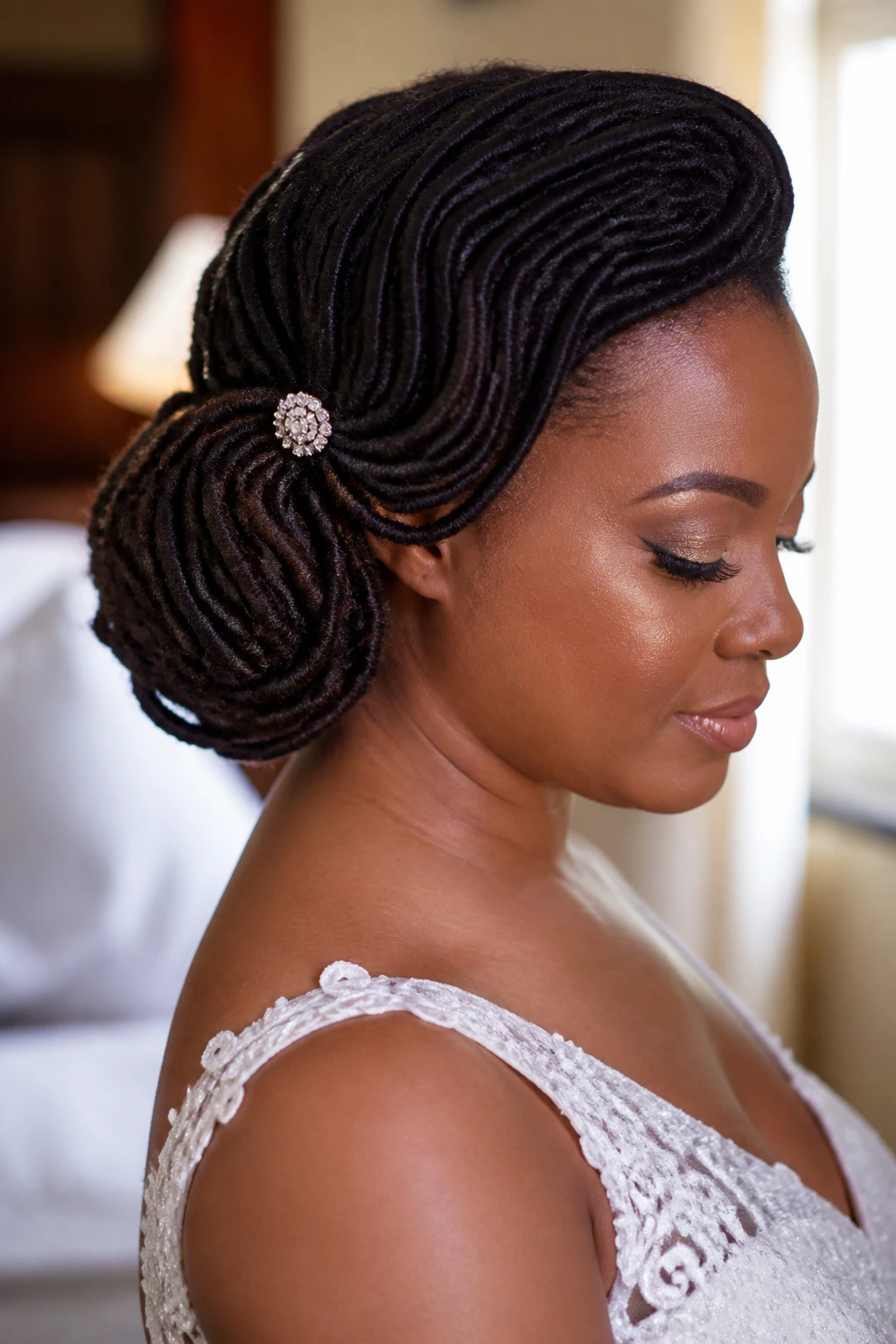
The S-curve updo has a pleasing visual flow because the pinned locs move in a soft wave across the head instead of forming a single lump of hair at the back. The curve gives the style motion even when everything is secure. It looks especially good from the side, which is useful because wedding photos are rarely straight on.
This shape is a little more architectural than a bun, and that’s its charm. Brides with medium to long locs can use the length to create the curve without stuffing the style full of extra bulk. One sparkly pin placed at the bend of the S is usually enough. Anything more can crowd the line.
20. Knotted Bun Tied With Satin Ribbon
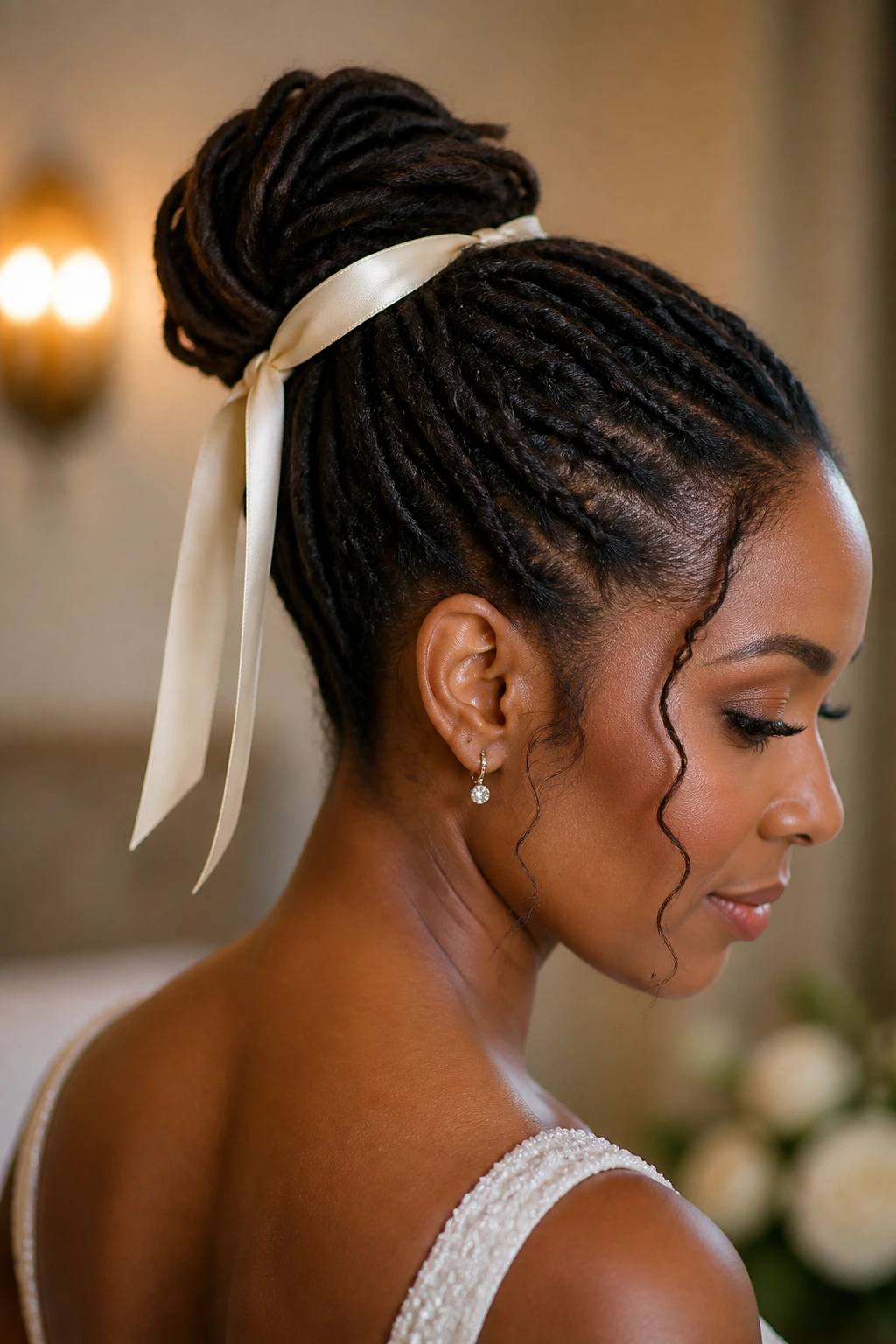
A satin ribbon can change the mood of a loc bun fast. Instead of reading plain, the bun gains one long soft note that trails or wraps around the knot. If the ribbon matches the bouquet, sash, or veil edge, the whole look feels tied together without looking matchy in a stiff way.
The bun itself should stay simple so the ribbon gets room to matter. Use the ribbon as a finishing detail, not a rescue. A narrow ivory ribbon is safer than a thick one, especially if the dress already has lace or texture. The result is quietly romantic, which is often better than trying to be louder than the gown.
21. Low Ponytail Wrapped in Loc Strands
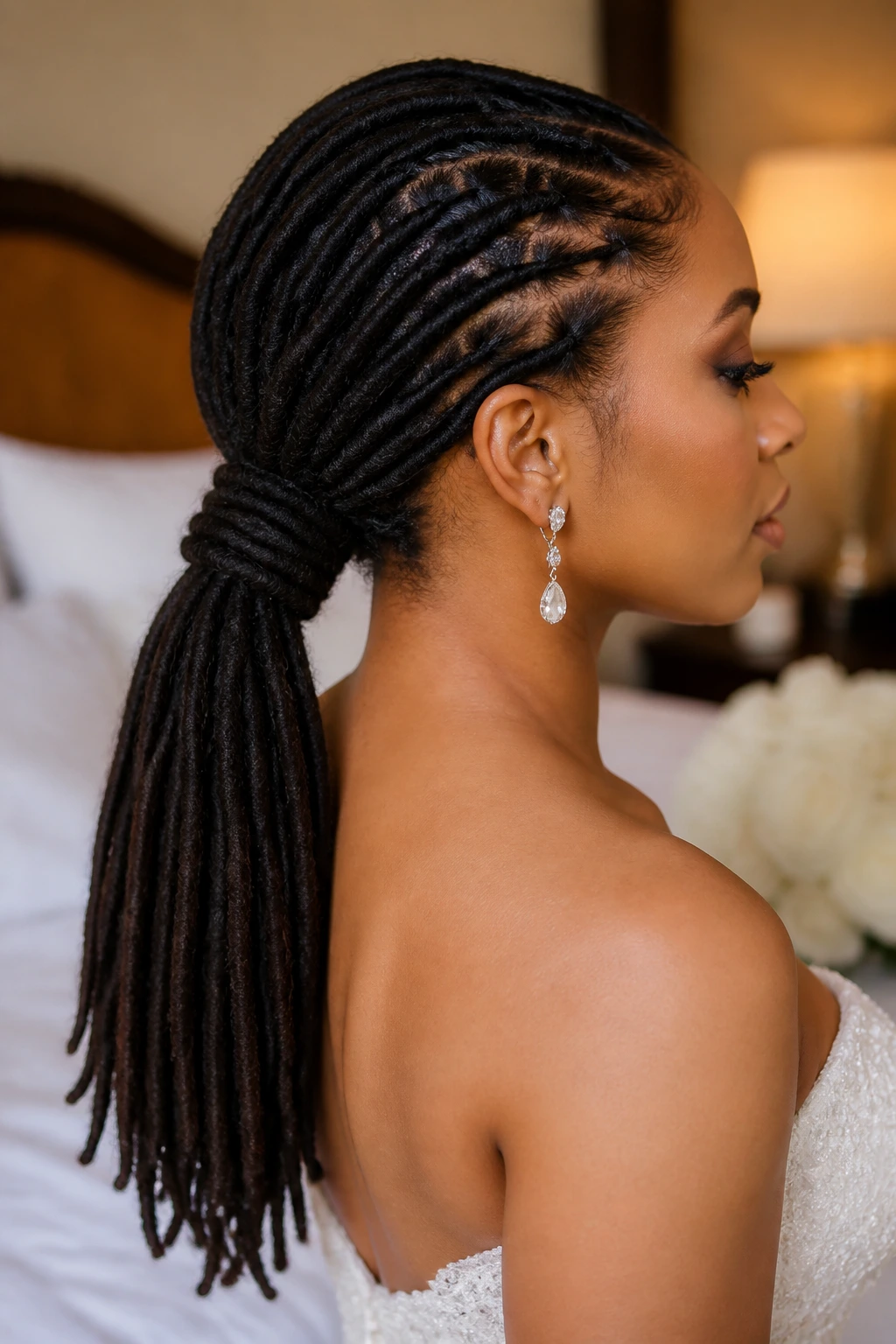
A low ponytail with a wrapped base is a practical style that still reads polished. The locs are gathered at the nape, the elastic disappears under a wrapped section, and the tail can be left straight, braided, or lightly curved at the ends. It keeps the silhouette long and clean.
This is a very useful option when you want to wear earrings without competing with a wide bun or a lot of volume at the crown. It also makes a nice choice for brides who plan to change into a second dress later and want a hairstyle that can adapt. The ponytail should sit low enough to feel elegant, not sporty.
22. Victory Roll-Inspired Bridal Loc Style
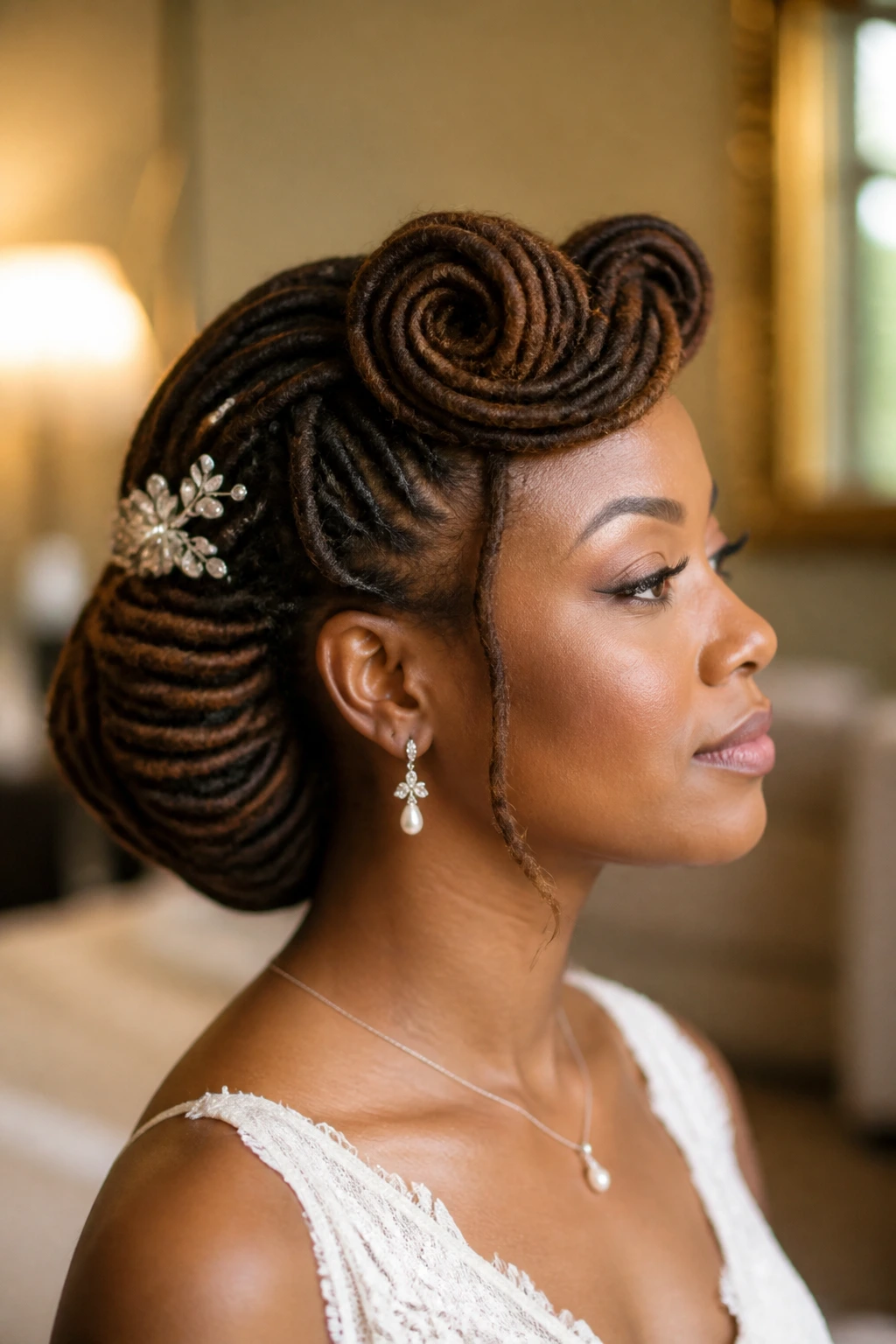
Vintage brides with locs have more options than people assume, and a victory roll-inspired shape proves it. The front is rolled and tucked to create a sculpted wave near the forehead, while the rest of the locs are pinned low or carried into a neat bun. The effect is retro without feeling like costume.
This works best when the gown has a bit of old-Hollywood structure or when the makeup leans classic. The roll gives the face a frame that looks especially nice in profile. Keep the roll tight enough to hold its shape but not so tight that it presses flat against the scalp. That small bit of lift matters.
23. Cascading Side-Pinned Locs
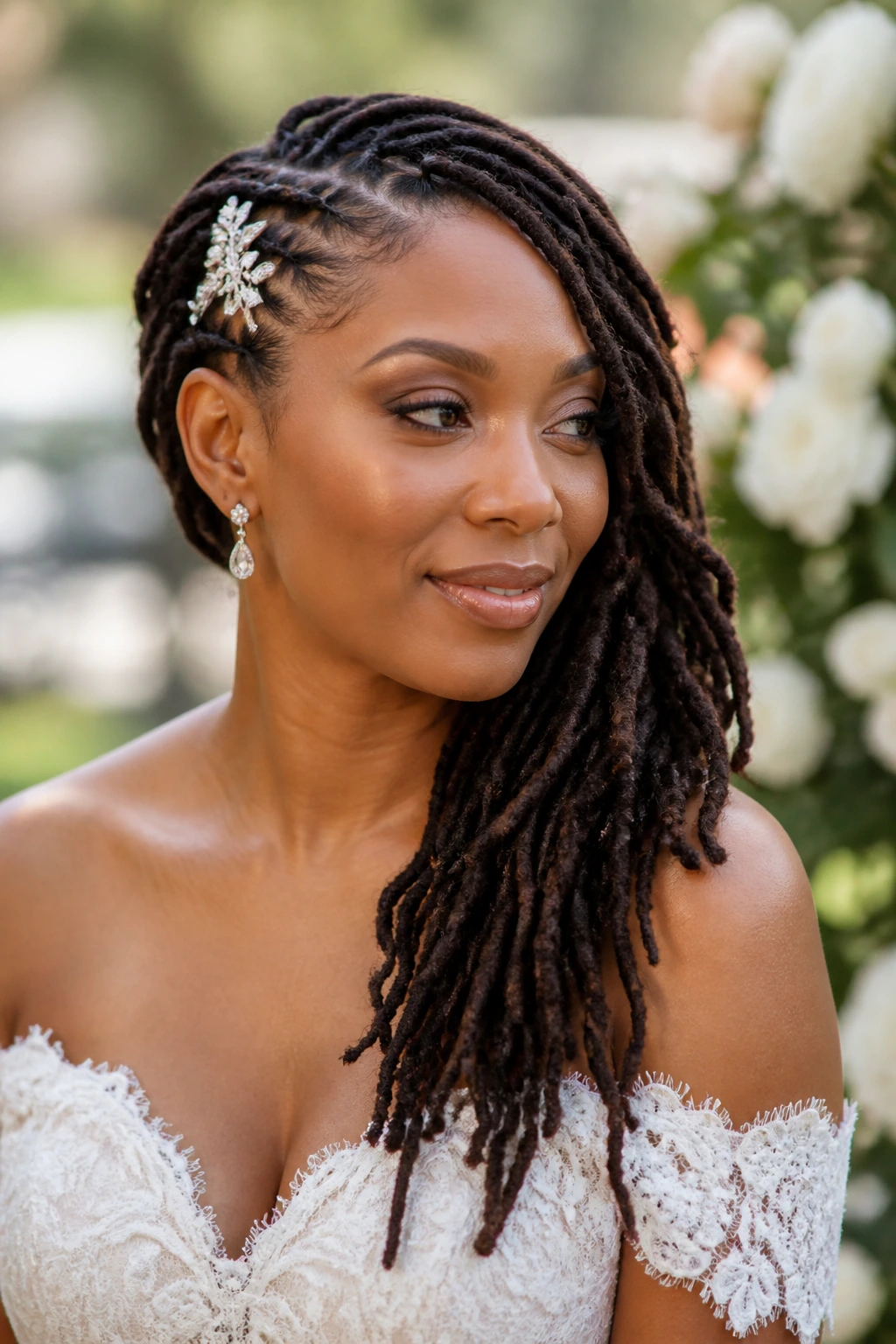
If you like the idea of wearing your locs down but want the front under control, side-pinned cascading locs are a strong middle path. One side is lifted and pinned back, while the rest falls in a controlled sweep over the shoulder or down the back. The style keeps motion, but it doesn’t let the hair take over the dress.
This shape works nicely for brides who want to show length without losing face visibility. A small jewel clip at the pinned side can act like a hinge, pulling the whole look together. It’s especially pretty with soft sleeves or gowns that already have detail near the neckline. The style should feel like a curve, not a curtain.
24. Petite Top Knot for Shorter Lengths
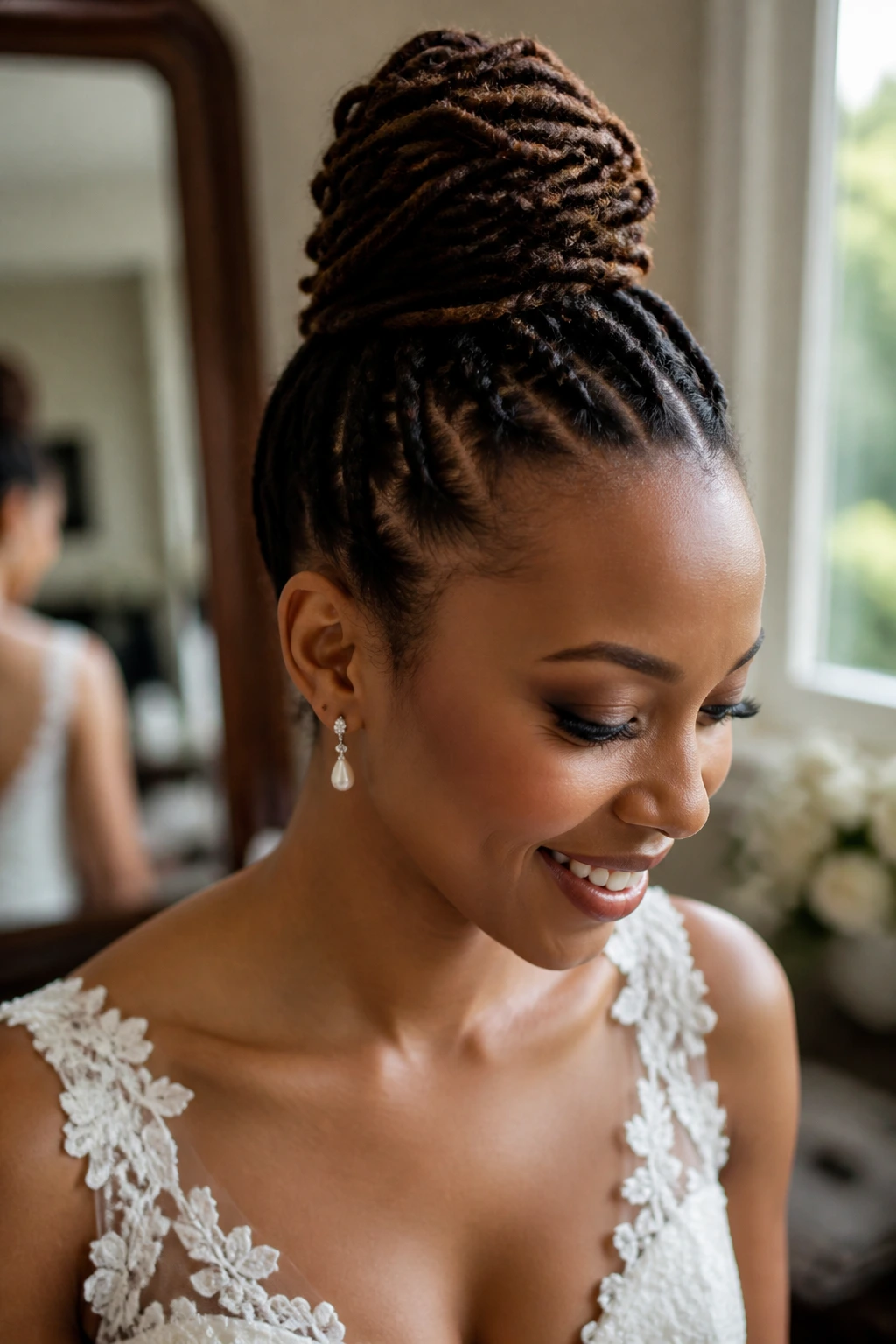
Short locs can make a petite top knot look adorable in the least childish sense of the word: compact, neat, and fully intentional. The knot sits high but small, so the head shape stays visible and the style doesn’t try to become something the hair length won’t support.
This is one of the best loc styles for brides who want a clean profile and minimal fuss. It pairs well with statement earrings because it keeps the neck open and the crown lifted. If your locs are short, do not fight for a giant knot. A well-formed small one looks far better than a stretched-out bun that keeps threatening to fall apart.
25. Asymmetrical Bun With Side Bangs
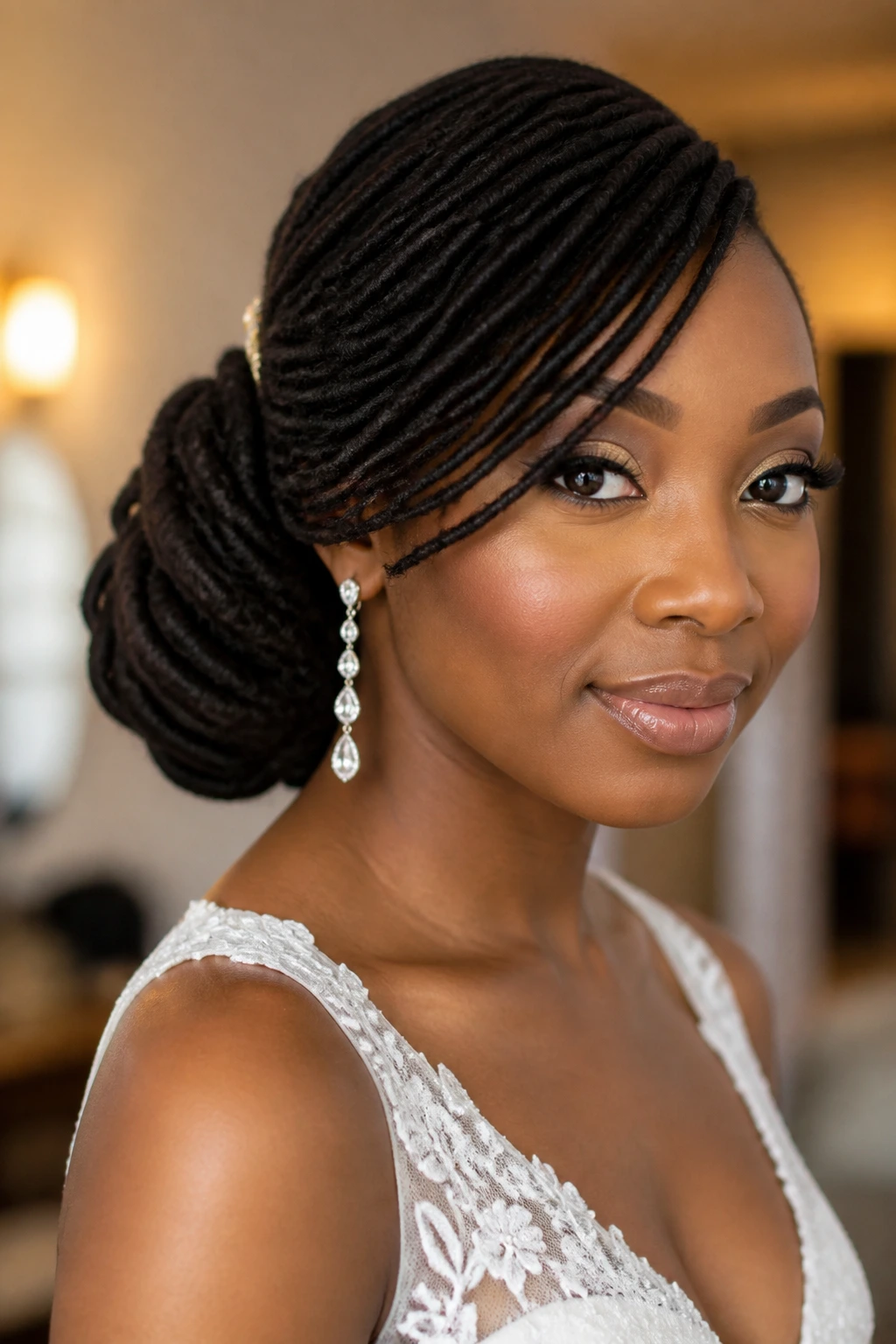
An asymmetrical bun makes the shape feel modern without needing extra decoration. The bun sits lower on one side of the head, while the opposite side stays smoother, creating a visible tilt that feels elegant rather than accidental. Side bangs or a few swept pieces soften the front and keep the face from looking overexposed.
This style is useful if the dress has a strong diagonal detail, an off-center neckline, or a big shoulder element. The hair can echo the line of the gown instead of competing with it. Keep the bun compact and the sweep intentional. Asymmetry looks best when it looks chosen, not hurried.
26. Basketweave Updo With Tucked Ends
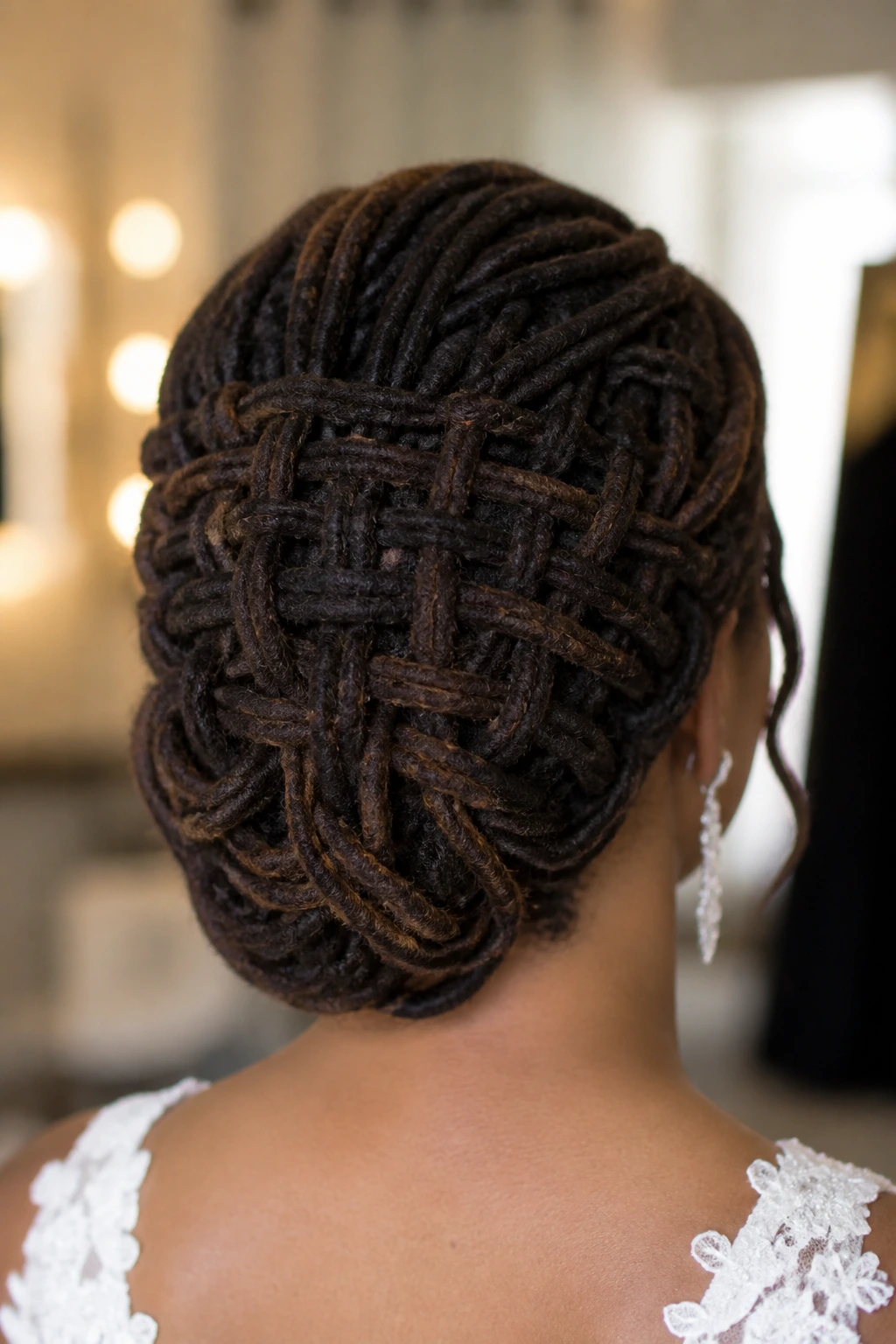
A basketweave updo brings texture into the styling itself, not just the locs. Sections are crossed and layered so the back of the head shows a woven pattern before the ends are tucked away. It’s detailed enough for a formal gown but still secure enough to survive a full day.
This one is for brides who like people to notice the back of the hairstyle. That’s not a small thing. Many wedding looks are designed only from the front, then fall flat once the veil comes off. Basketweave detail gives you something interesting from every angle, which is where good bridal hair earns its keep.
27. Twisted Halo With a Veil Comb
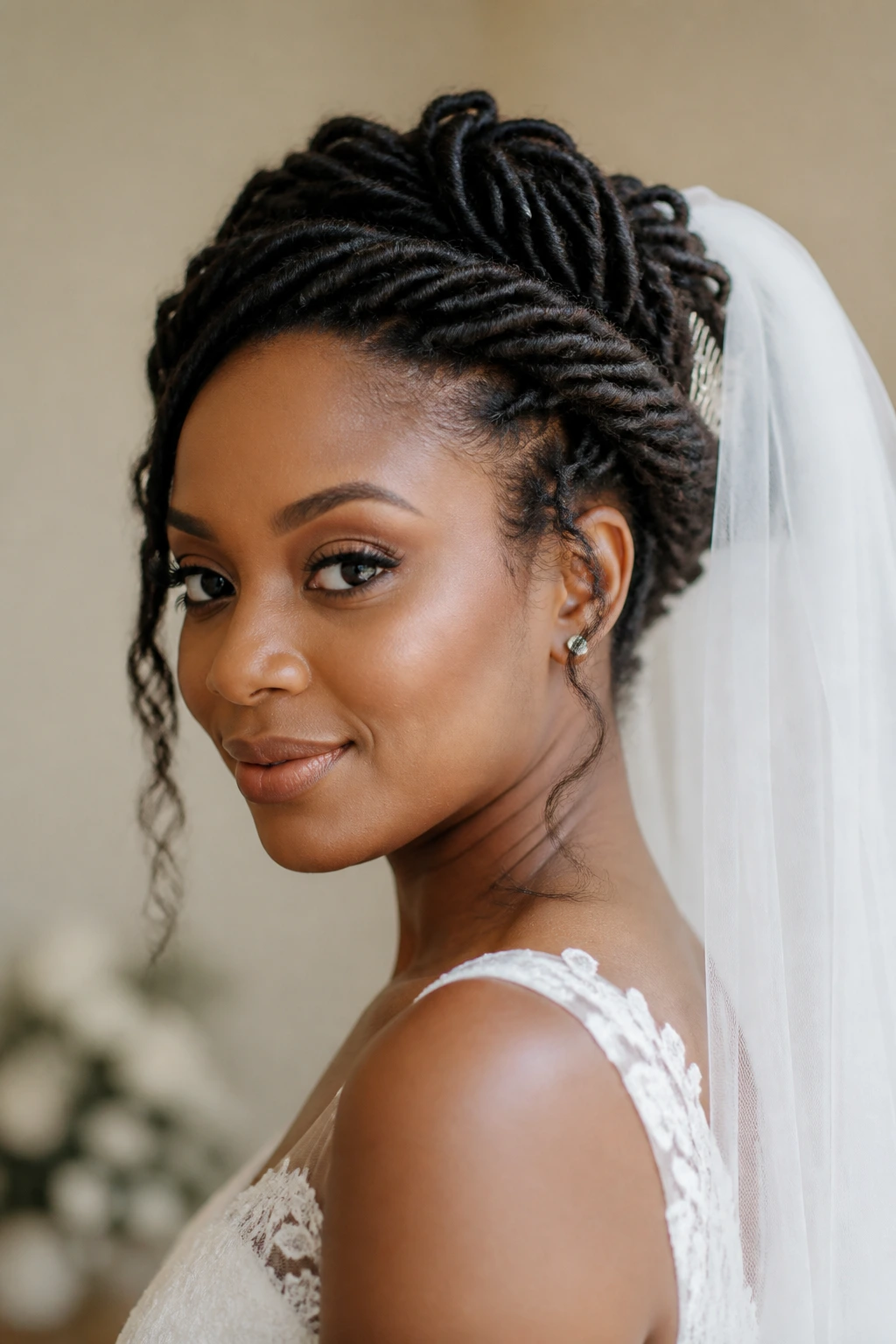
A twisted halo sits close to the head like a narrow braided crown, and the veil comb can anchor just under or just behind it so the pieces don’t fight each other. The halo gives the style a romantic frame, while the veil adds movement behind it. Together, they look layered rather than crowded.
This style is especially useful if you want the front of the hair to stay clean during the ceremony and still want a soft outline around the face. Keep the halo smooth and the veil attachment low enough that it doesn’t tug. If the locs are thick, use fewer, larger twists instead of trying to force tiny sections into a line.
28. High Crown Puff With Loc Fringe
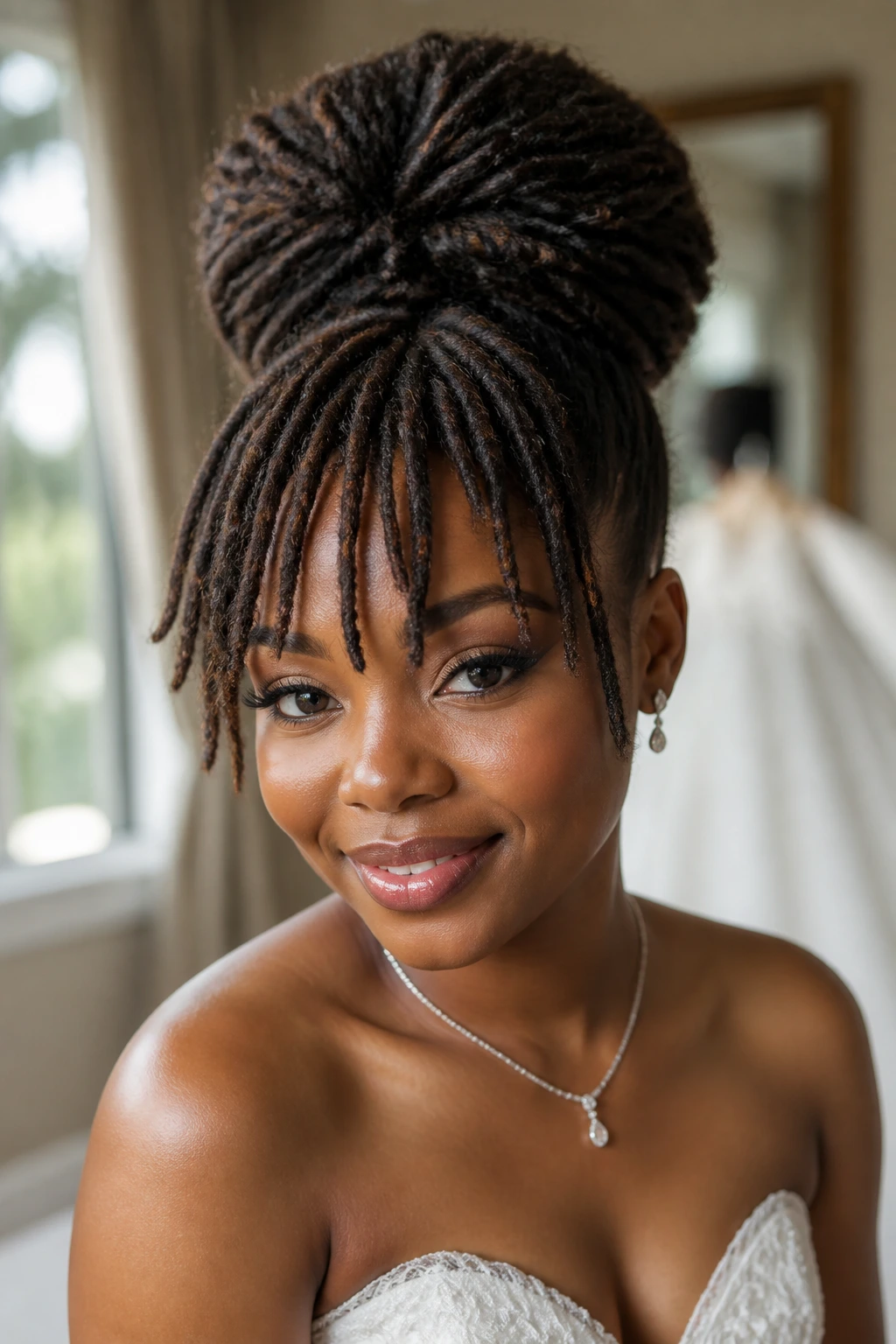
A high crown puff gives a bridal look height and air, which can be a relief if the dress is already long, wide, or richly detailed. The locs are lifted at the crown, while the front fringe or front pieces stay soft enough to frame the forehead and temples. It’s a little regal, a little relaxed.
This works well for brides who want their face to stay open and bright in photos. It also keeps the hair off the neck, which matters if the wedding is warm or the gown sits close at the shoulders. A puff only looks right when the base is smooth and the lift is controlled. Otherwise it just gets fluffy. Nobody wants that.
29. Sculpted Low Knot With Glassy Edges
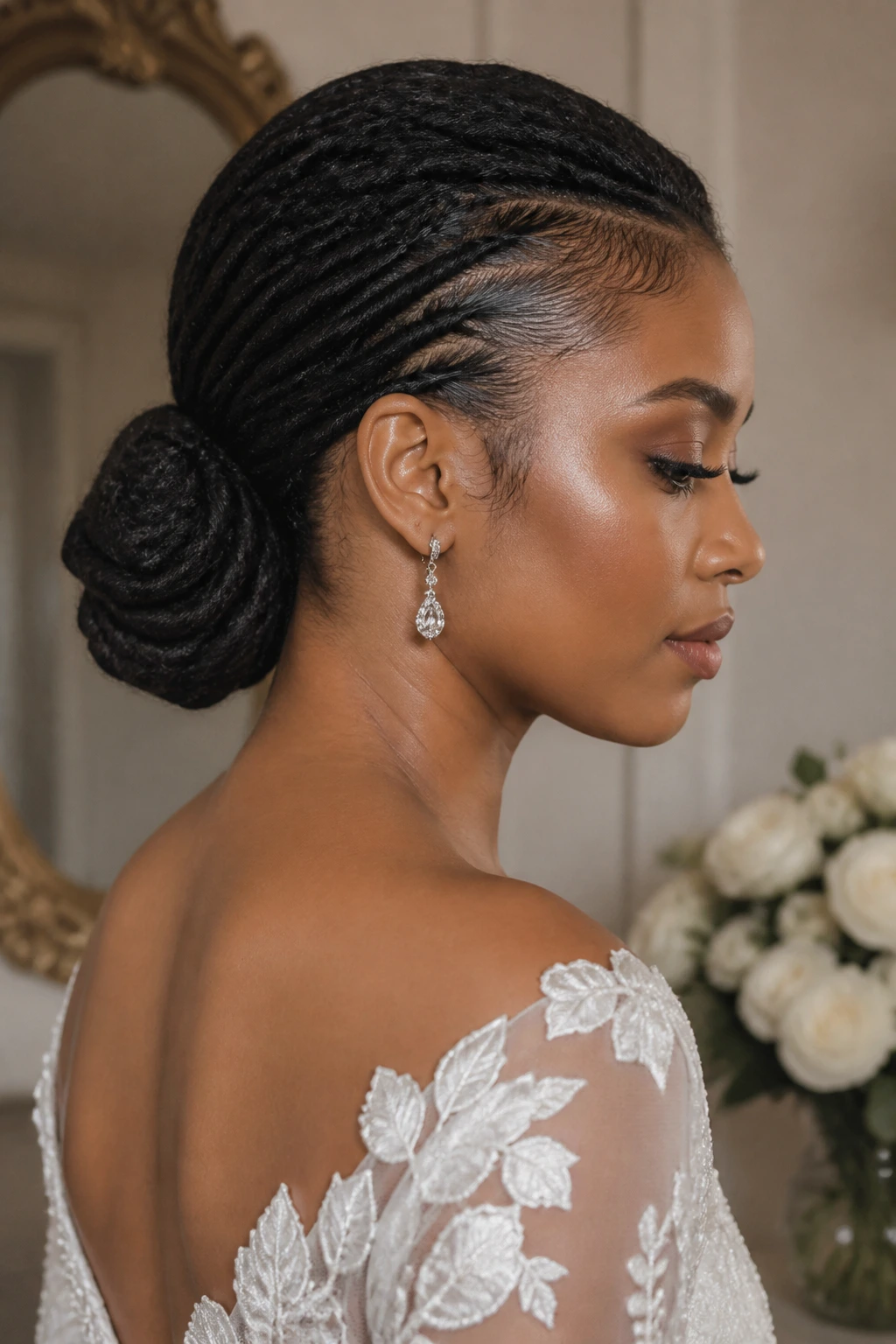
A low knot can look almost tailored when the edges are smoothed and the finish is clean enough to reflect light. With locs, the knot should still show texture in the turns, but the outline can be sleek and deliberate. That contrast is what gives it polish.
This is one of the better choices for minimalist brides or anyone wearing a gown with crisp lines. The style doesn’t need sparkle to feel finished. If you want accessories, choose one subtle comb or a few tiny pins placed off-center. The shape itself should carry the look, and the hairline should be neat without being plastered down.
30. Half-Up Rope Twists With Loose Ends
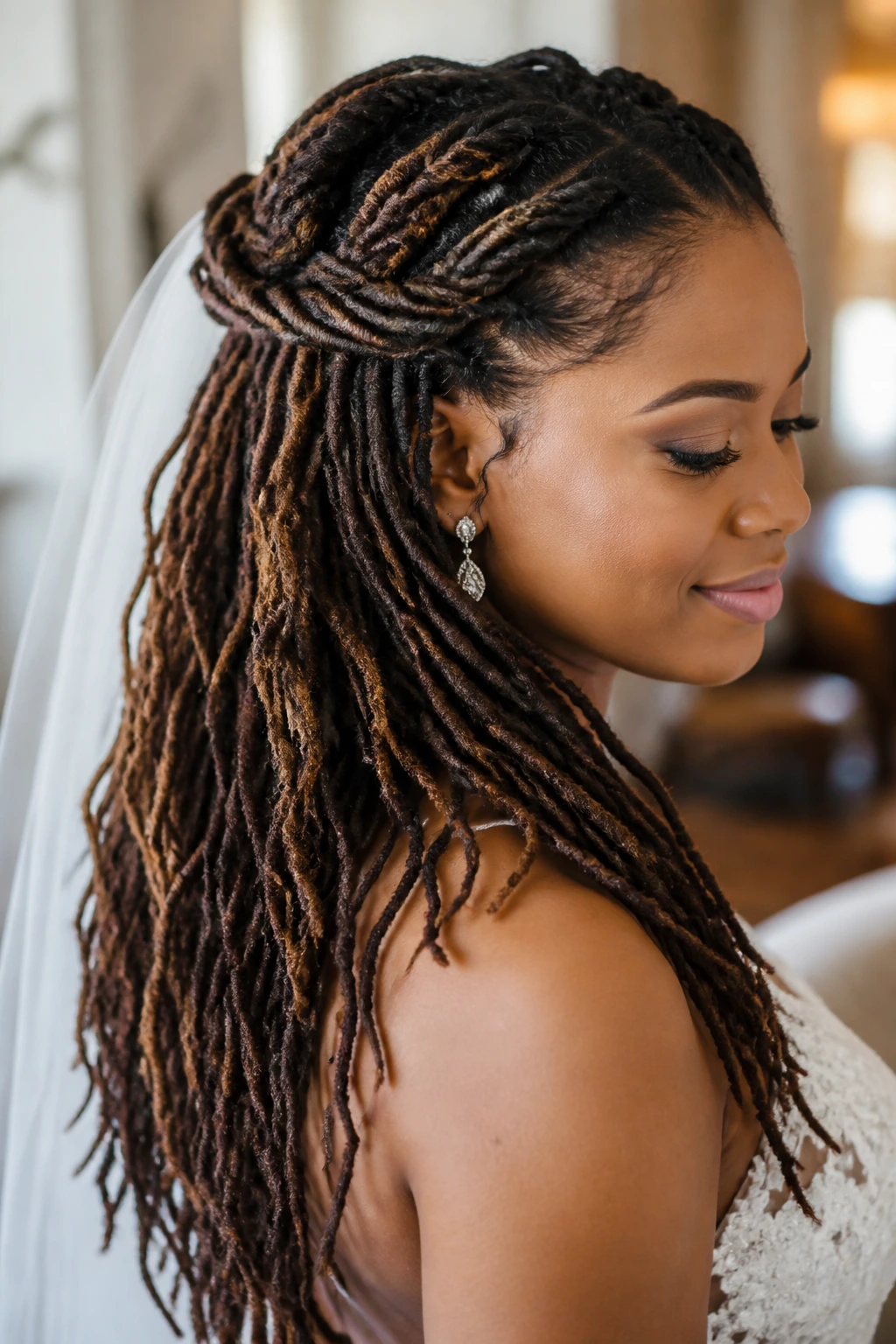
Half-up rope twists are a good way to control the top half of locs while leaving the rest free to move. The twists feed upward and back, creating texture near the crown, then the loose ends fall below in a way that still reads bridal rather than undone.
This style is especially nice for brides who want visible length and a little movement during the reception. It also gives you room for a veil or hair vine without covering the whole hairstyle. Keep the top section snug enough that it does not loosen under its own weight. A style like this depends on the top doing its job.
31. Romantic Side Sweep With Jewel Clips
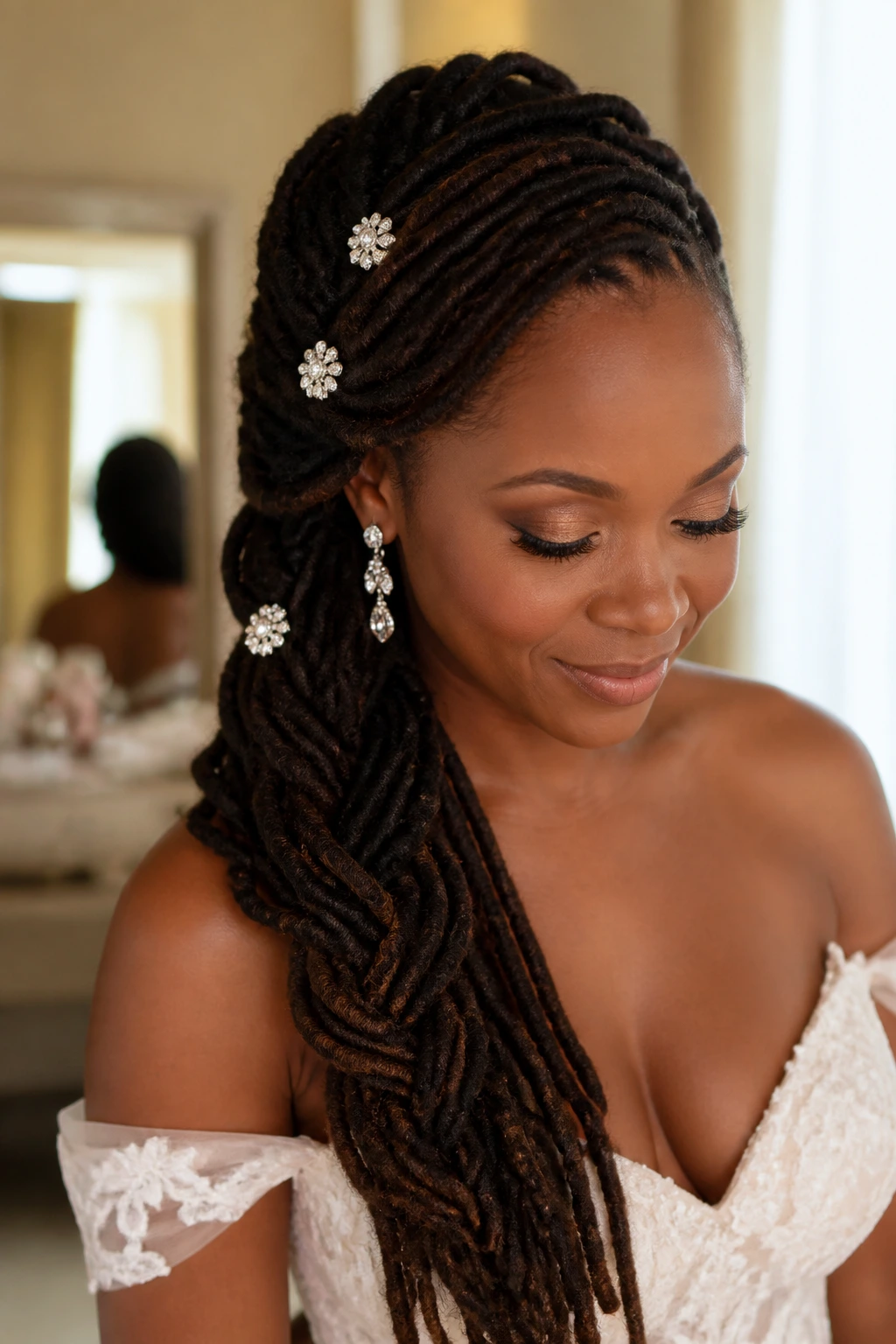
A romantic side sweep works because it creates a strong line from one side of the head to the other, and the jewel clips can live right along that line. The locs are gathered and swept low, then clipped so they arc across the shoulder or back. It’s soft, but there is structure under the softness.
This suits brides who want a little glamour without full volume at the crown. The clips should be spaced with care; too many and the style starts looking crowded. Two or three good pieces are enough if they’re placed where the light catches them. The sweep should still feel like hair first, ornament second.
32. Flower-Focused Bun With One Statement Bloom
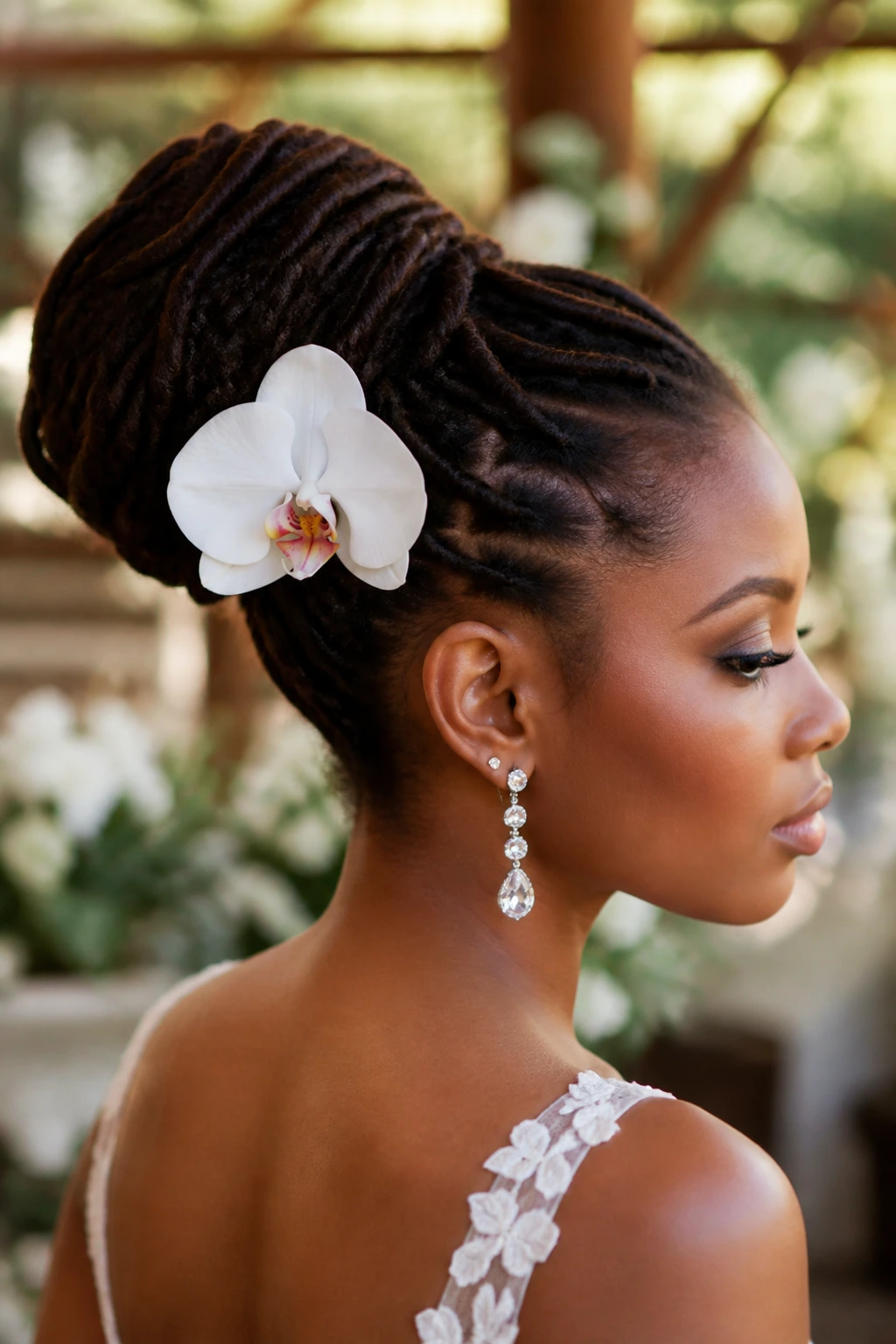
One statement flower can do more than a whole cluster if the bun itself has a strong shape. The locs are gathered into a simple knot or coil, then a single bloom is tucked into one side where it becomes the focal point. That’s a smart move when the dress already has lace, beading, or texture.
Fresh flowers can be beautiful, but one silk bloom chosen to match the bouquet may hold up better through a long day. The idea is to let the flower feel like part of the hairstyle rather than an extra object attached at the end. Clean shape. One clear accent. That’s enough.
33. Textured Roll-And-Tuck Updo
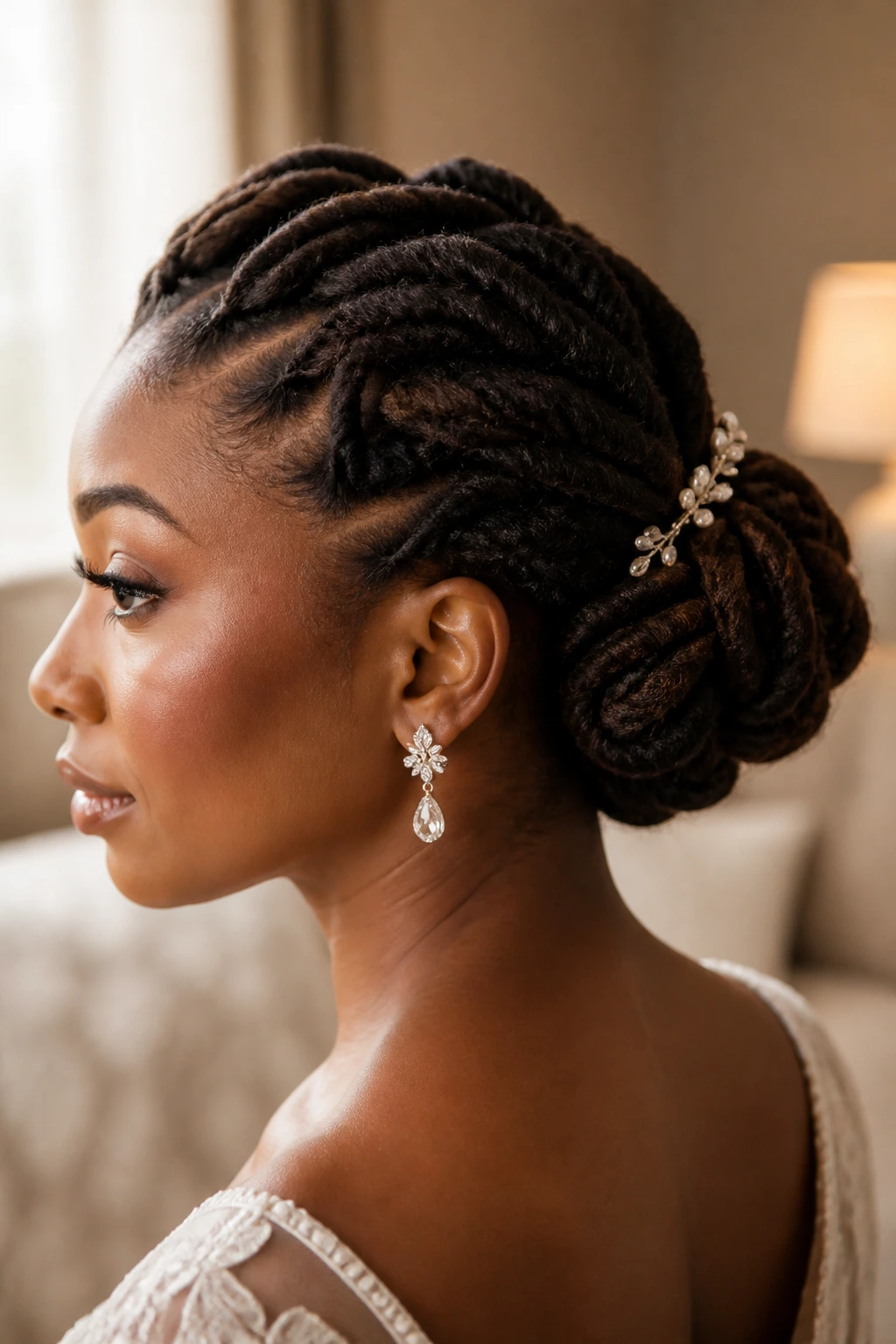
The roll-and-tuck style is a quiet workhorse. Locs are rolled inward in sections and tucked into a low, rounded updo that stays close to the head. The visible texture keeps it from looking plain, and the tucking keeps it secure without demanding a huge amount of accessory support.
This is a very good option if you want the hairstyle to stay comfortable for hours. No heavy pull at the crown, no large bun pressing into the back of the head, and no extra bulk around the veil comb. It’s one of those looks that doesn’t scream for attention, but it rarely photographs badly. That counts.
34. Statement Updo With Beaded Loc Ends
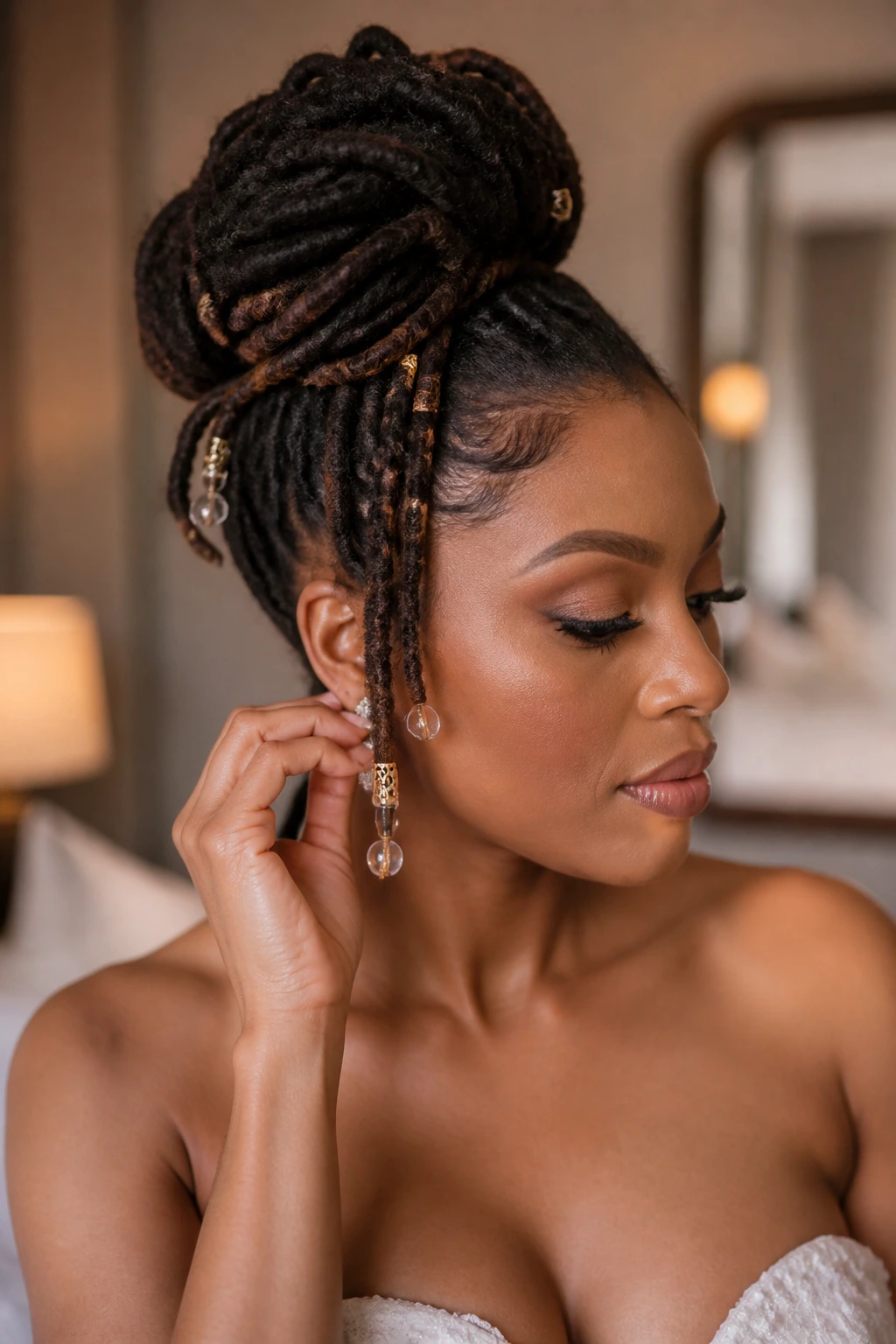
Beaded loc ends turn the edges of an updo into part of the design. Instead of hiding every strand, the style lets a few ends remain visible, then decorates them so the finish has movement and detail. It’s a nice option if you want the hairstyle to feel personal and handcrafted.
The important part is spacing. Beads should be placed where they can be seen, not stuffed everywhere until the look clinks. This style works especially well with simple gowns because the hair carries more of the visual interest. If the dress is already busy, keep the beads small and limited to one zone.
35. Loose Loc Crown With Invisible Pinning
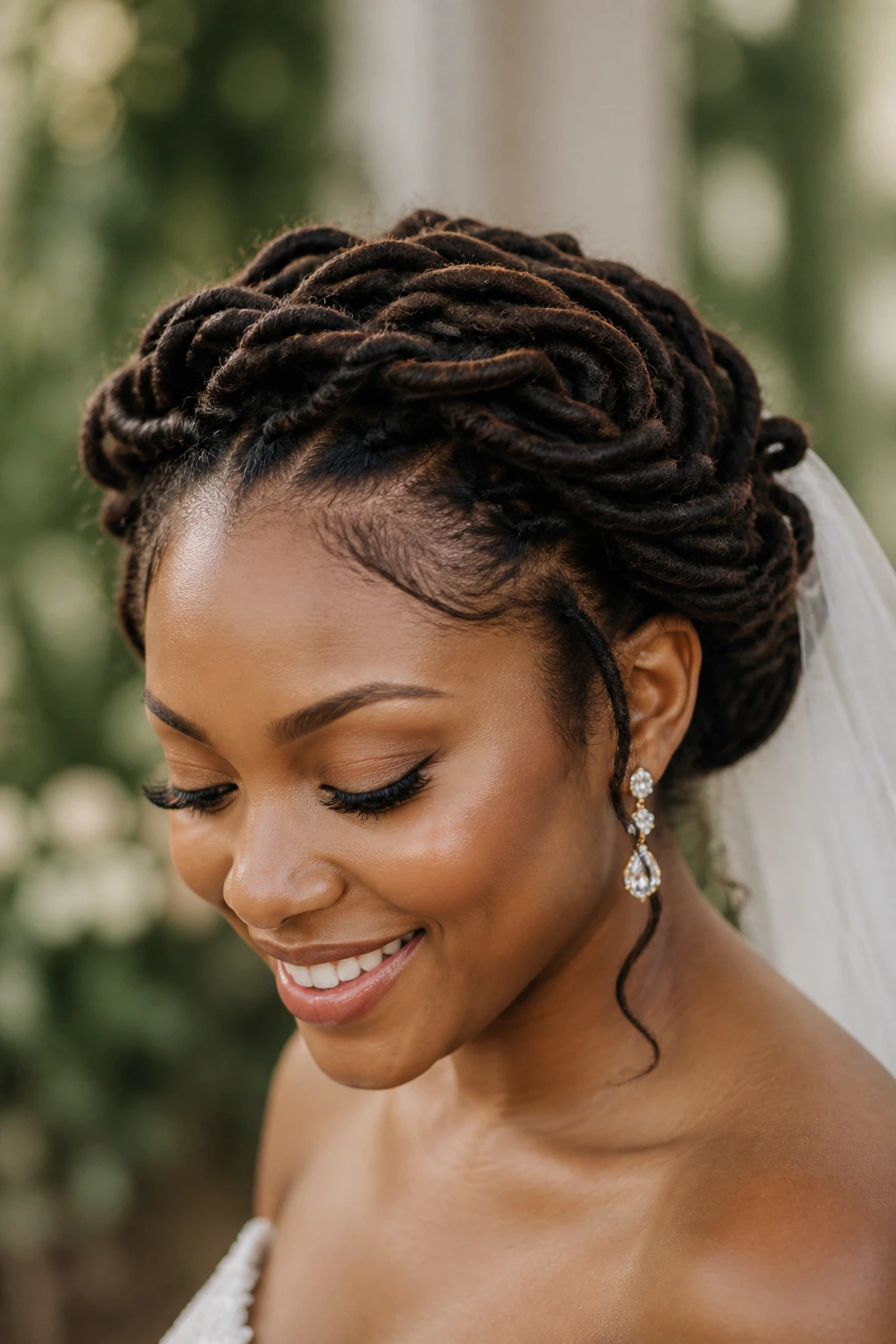
A loose crown sounds contradictory, and that is the point. The locs are shaped to trace the head in a circle, but the pins stay hidden so the result feels soft from the outside. It’s a gentler cousin of the braided crown, with less tension and more visual ease.
This version is useful when the bride wants the hair to feel natural but still controlled. It suits locs with enough length to curve around the head without strain. The secret is pinning under the surface and checking the shape from the back. A crown that looks good only from the front isn’t doing its job.
36. Minimal Sleek Pullback for Modern Gowns
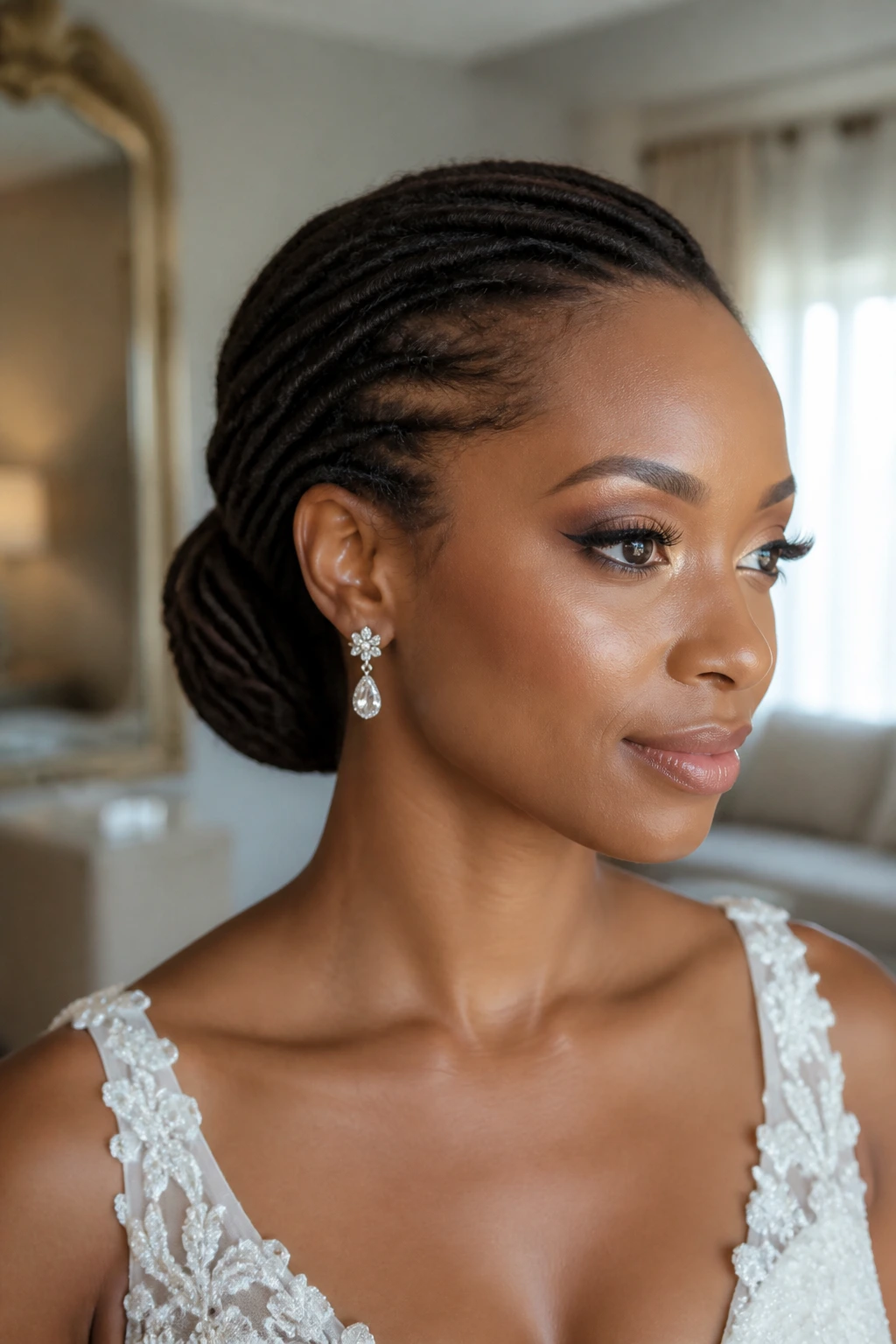
Some gowns need a hairstyle that doesn’t argue with them. A minimal sleek pullback does exactly that. The locs are brushed or smoothed away from the face and held back with a low, controlled anchor, leaving the neckline open and the dress lines sharp.
This style is not shy, even though it looks simple. It puts the focus on bone structure, makeup, and garment shape. That can be a relief when the dress already carries drama through cut or fabric. Use a finishing product sparingly so the roots look clean rather than greasy, and keep the silhouette taut. Minimal only works when it’s precise.
37. Side-Part Cascade With Jewel Clips
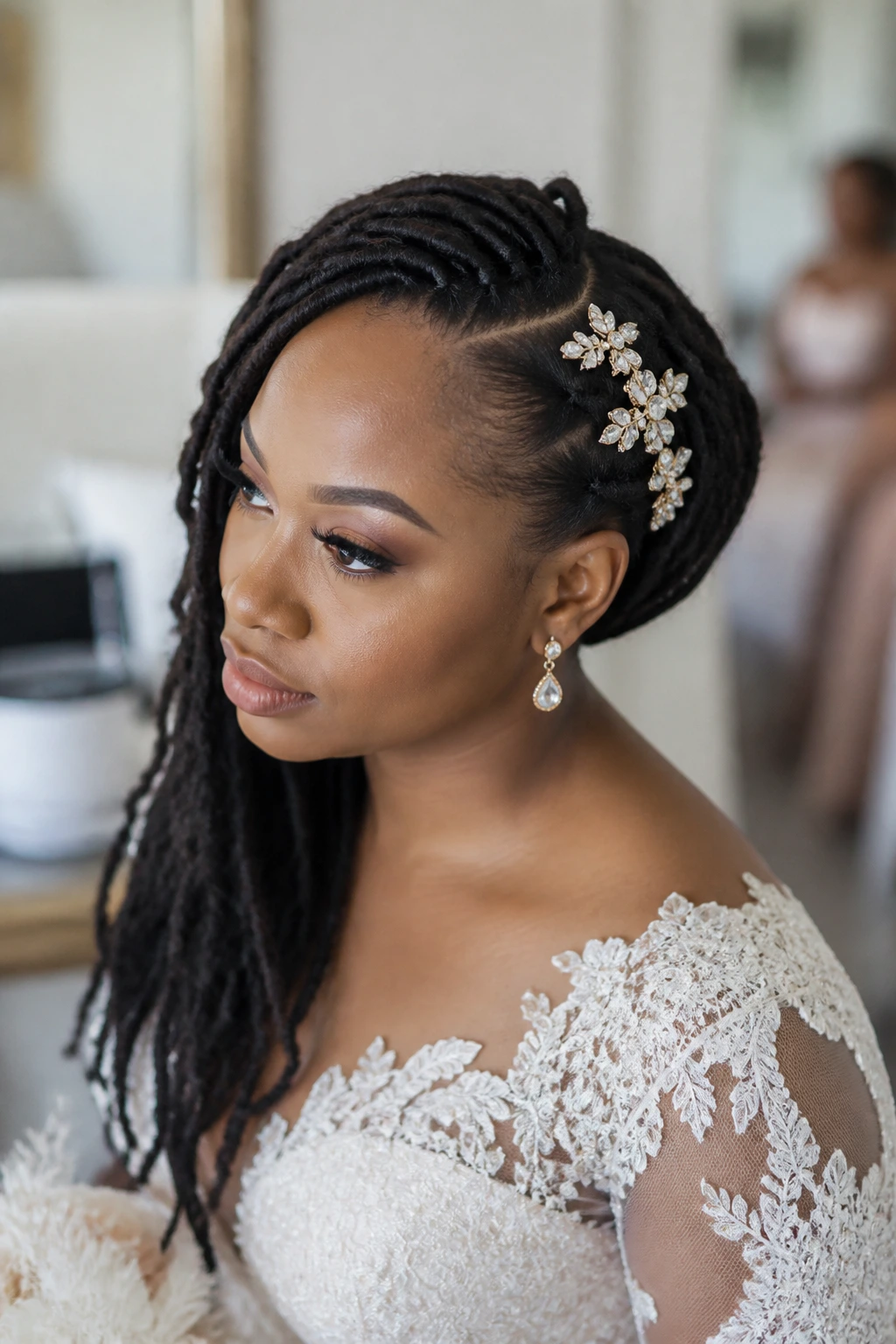
A deep side part followed by a cascade of locs gives the hairstyle a little more movement than a centered fall. The jewel clips sit near the part or just above the ear, where they catch light without taking over the whole head. It’s an easy way to make a looser style feel bridal.
This one suits brides who want to wear their locs down but still want a clear sense of intention. The part creates a shape; the clips sharpen it. If the hair is long, allow the cascade to trail with a little variation in length rather than forcing every strand to line up. That unevenness reads softer in photos.
38. Regal Wrapped Updo With a Long Tail
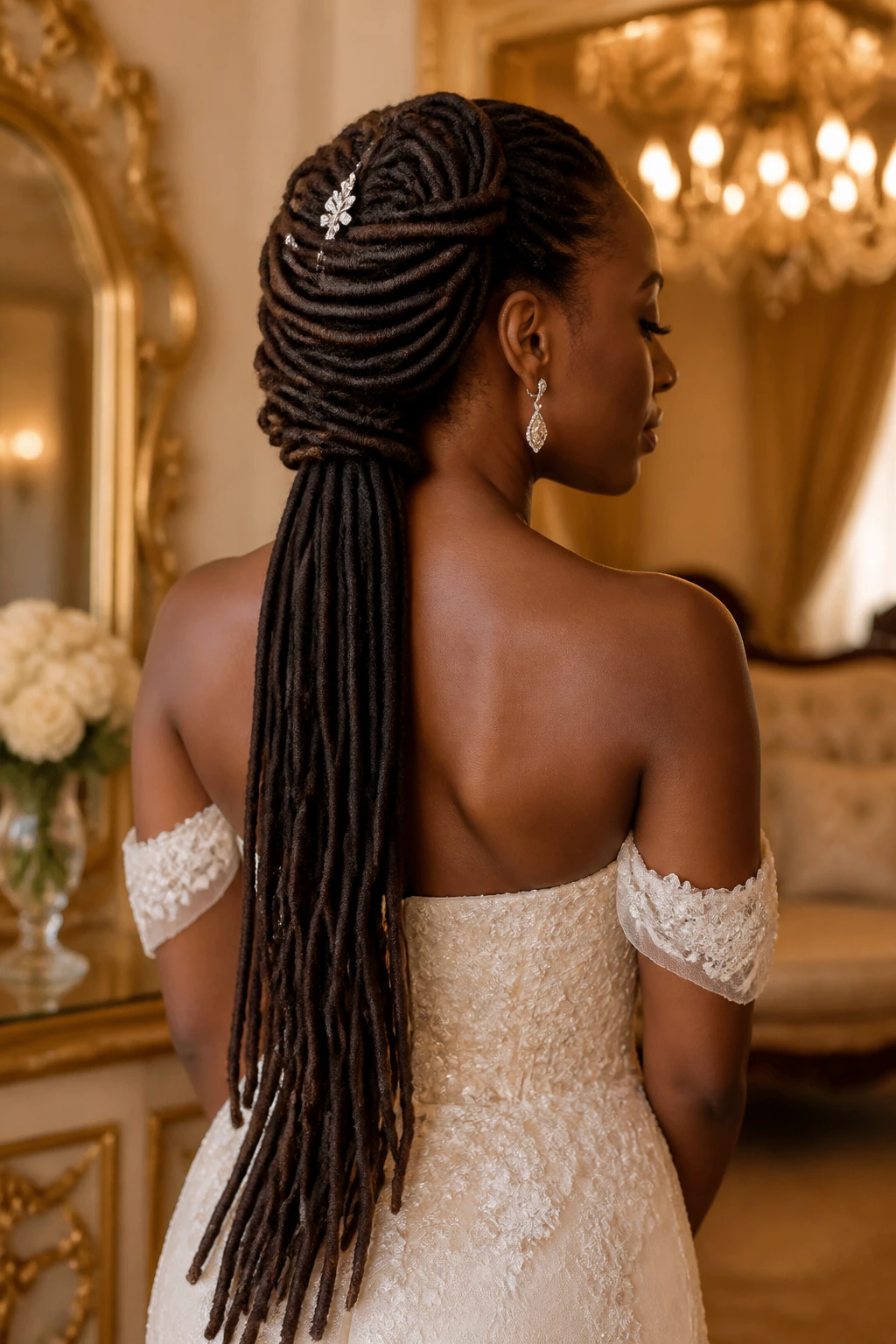
A regal wrapped updo with a long tail gives you two moods at once: the security of a wrapped knot and the drama of length. The base is built tightly at the back of the head, while a long section of locs is left to trail down, braid, or fold along the spine. It feels formal, but not sealed off.
This is the style for brides who want to make an entrance and still have movement after the ceremony. The tail can be wrapped with thread, cuffed lightly, or left clean and simple. Just keep the base strong enough to carry the weight. If the foundation is weak, the tail becomes the whole problem.
Why Loc Texture Makes Bridal Styling Hold Up Better
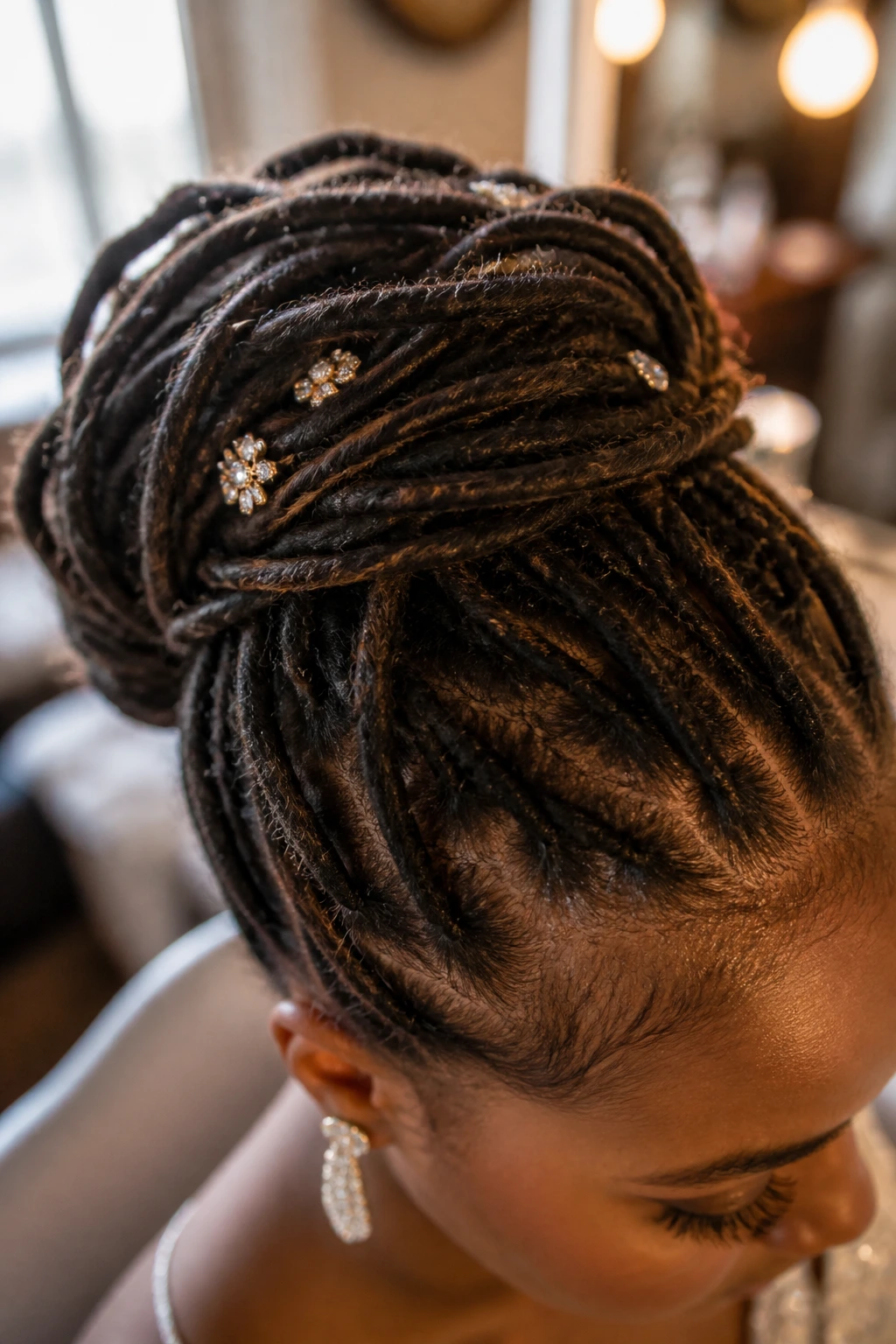
Locs have an advantage that straight or loose-curled hair doesn’t always get: they give pins something to grip. That sounds small until you’ve watched a style lose its shape because the hair is slippery, silky, or freshly pressed. Locs have texture, and texture is useful. It lets a stylist anchor twists, tuck ends, and build height without loading the head with half a box of bobby pins.
Pins, Pressure, and Shape
The best bridal loc style doesn’t rely on tension alone. It uses the weight of the locs, the direction of the part, and the placement of the pins to make the structure feel stable. If a bun starts with a solid base, it can last through hours of movement without looking chewed up by the end of the night.
What matters most is balance. Too loose, and the style slips. Too tight, and the scalp starts complaining halfway through photos. The sweet spot sits in the middle: firm enough to hold, gentle enough to forget.
Why Trials Are Worth the Time
A hair trial shows you things a mirror won’t. You’ll notice whether the bun feels heavy after fifteen minutes, whether the veil comb sits where you want it, and whether the style eats your earrings. That is the kind of detail that saves the day.
If the locs are long or dense, a trial also shows whether the look needs more anchor points than you expected. Sometimes a style that looks clean in the chair needs one extra hidden pin at the nape or a smaller accessory. That’s normal.
Essential Tools for Bridal Loc Styles
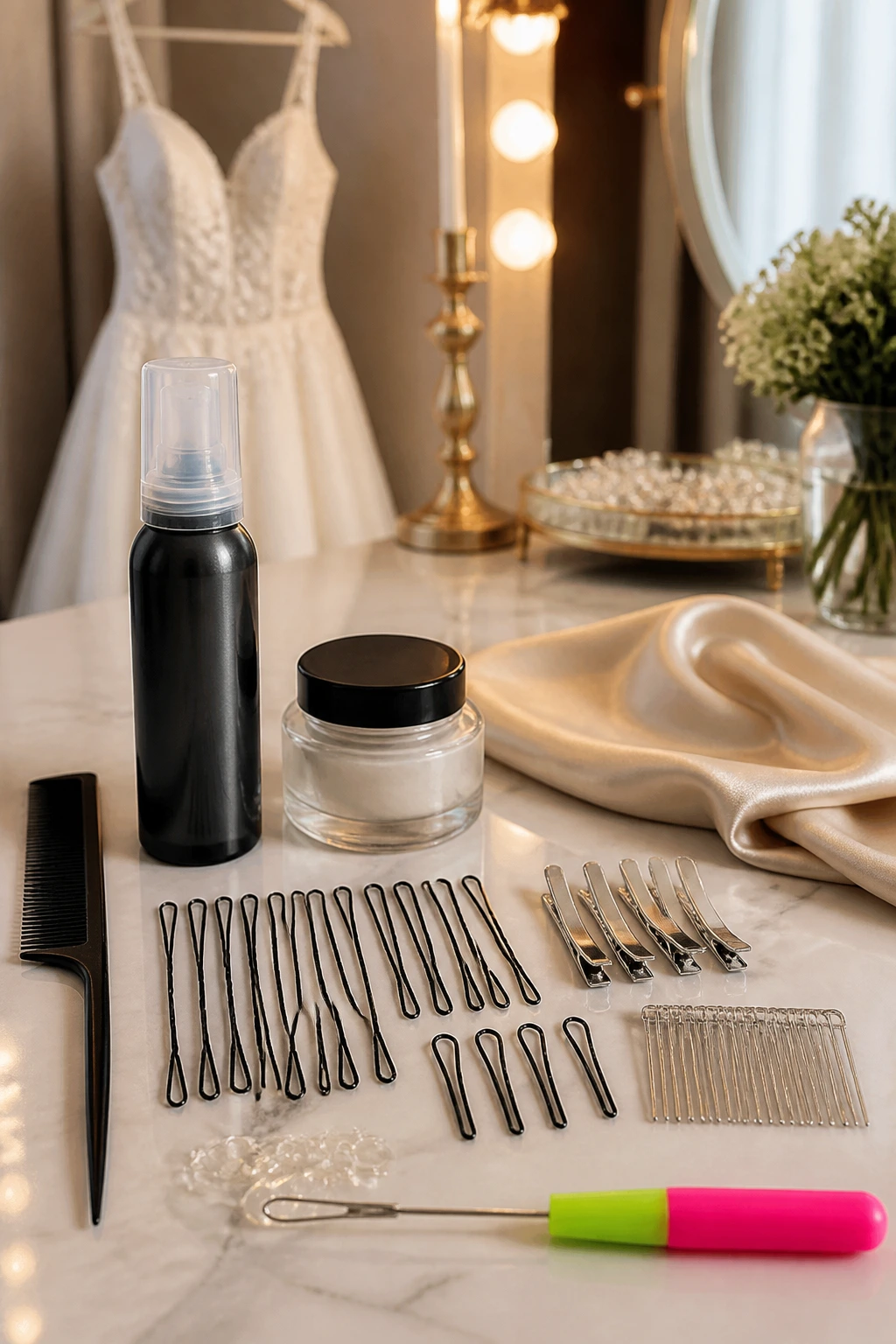
- Rat-tail comb: Useful for crisp parts and clean sectioning, especially when the style depends on symmetry.
- Lightweight mousse: Helps tame flyaways and give the roots a smoother finish without soaking the locs.
- Water-based edge control: Better for neat hairlines than greasy products that can make pins slide.
- Long bobby pins and U-pins: The workhorses of bridal loc styling; long pins anchor dense sections more securely.
- Duckbill clips: Good for holding sections while you build a bun or twist pattern.
- Small clear elastics: Handy for tying off tiny sections before tucking or braiding.
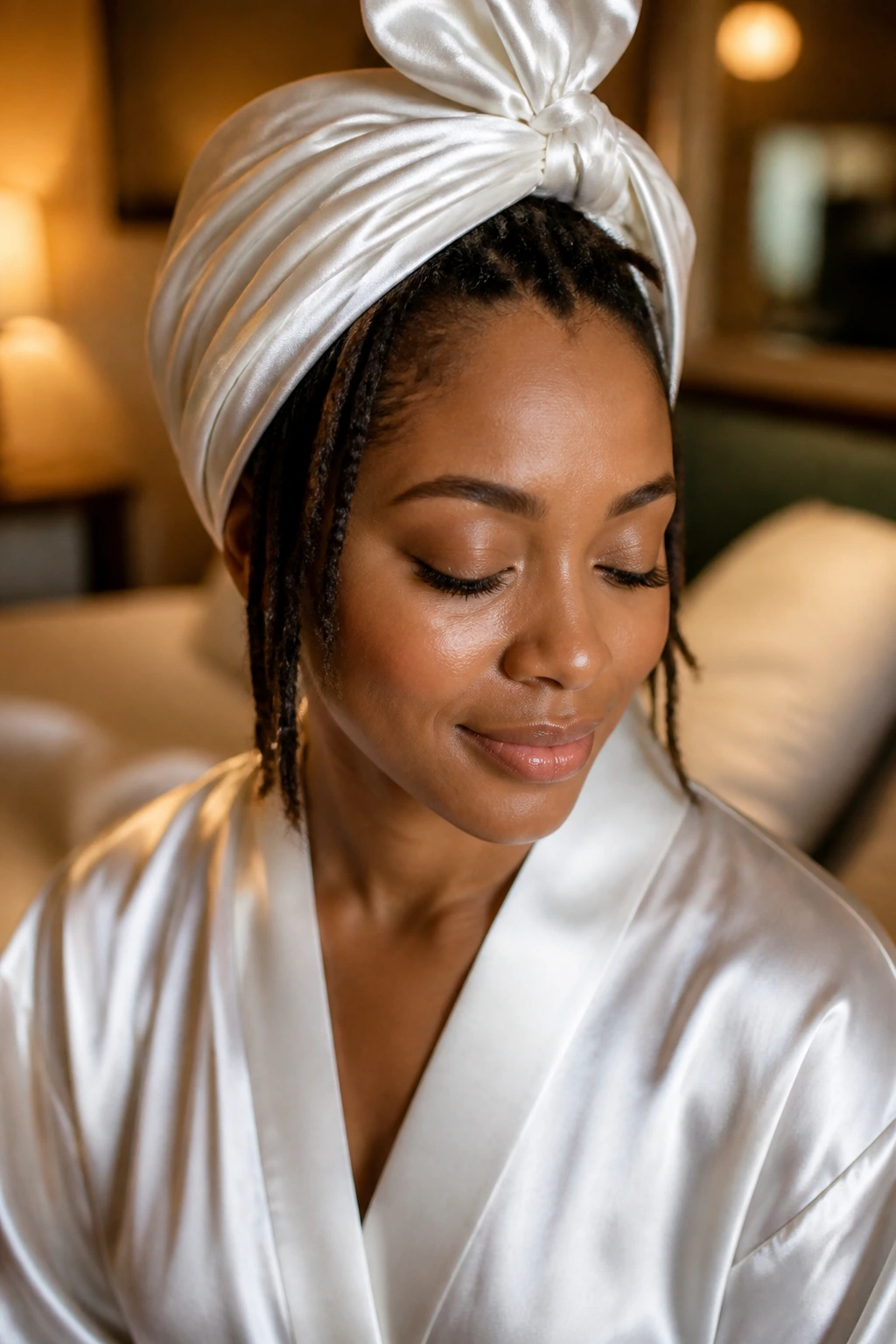
- Satin scarf or bonnet: Keeps the finished style smooth while you get dressed or sleep the night before.
- Veil comb or hair vine: Choose one that can sit inside or above the style without adding weight.
- Loc jewelry, cuffs, or thread wraps: Use these sparingly so they don’t overcrowd the shape.
- Hand mirror: Essential for checking the back before you leave the chair.
- Spray bottle with water: Helps rework small sections without drenching the whole style.
- Optional crochet needle: Useful for hiding ends or tightening a tucked section if the style needs a little extra support.
Smart Accessory Picks for Wedding-Day Locs
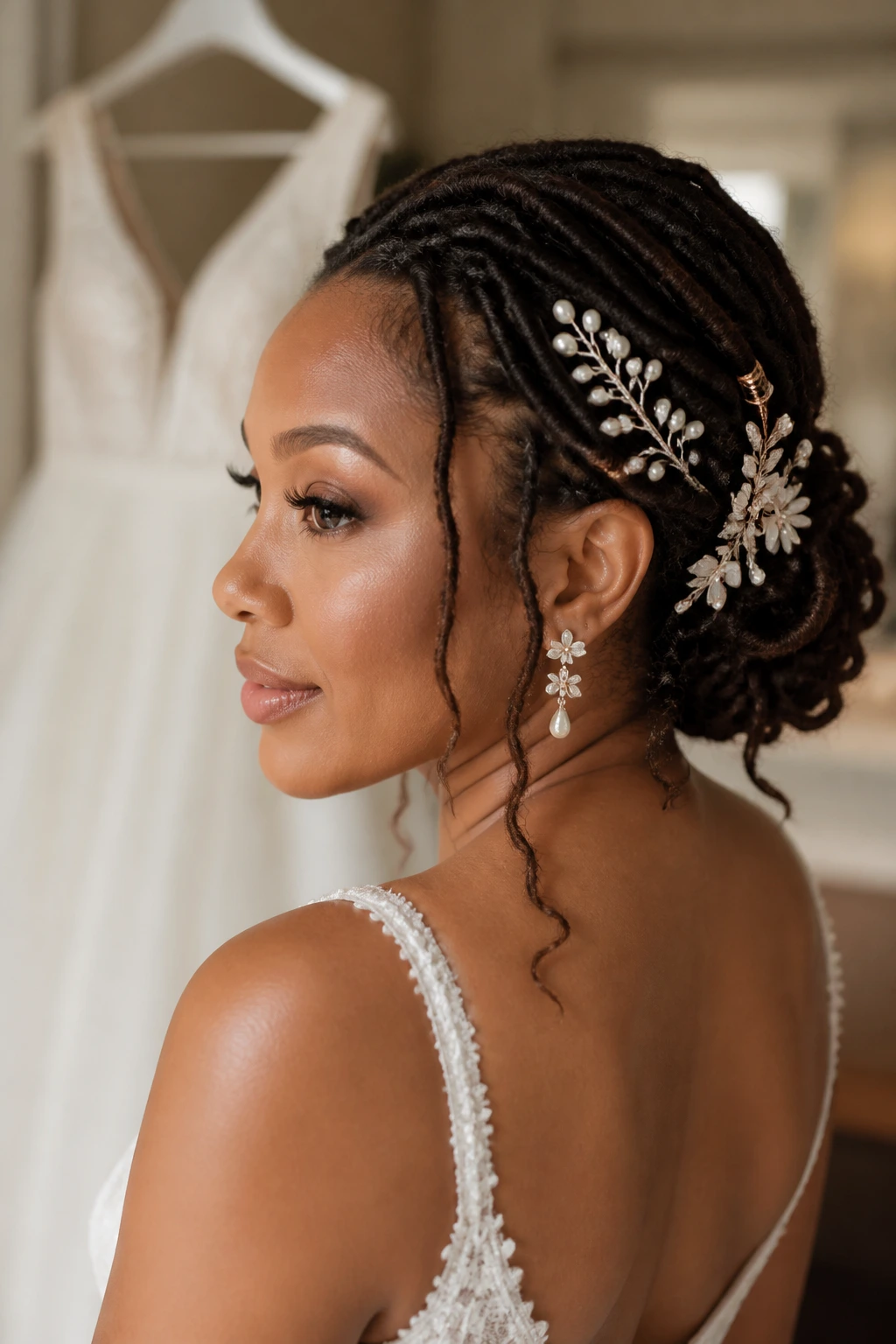
Heavy accessories are the easiest way to spoil a good bridal loc style. A row of metal combs or thick jeweled clips can drag on the hairline and flatten the shape before the ceremony starts. Better to choose pieces that look substantial but weigh very little. Thin-backed pearl pins, wire-based floral combs, and small cuffs usually behave better than chunky ornaments.
The finish matters too. If the dress has silver embroidery, silver-toned accessories make the whole look feel deliberate. If the gown is warm ivory with gold accents, gold or champagne metal tends to sit more naturally. The goal is to echo the dress, not match it like a uniform.
Flowers deserve a little skepticism. Fresh blooms can be gorgeous, but some of them wilt fast, bruise easily, or need too much stem to stay in place. Silk or preserved flowers are often the quieter win because they hold shape and don’t drip, droop, or stain the hair products underneath.
How to Match the Style to the Dress, Veil, and Jewelry
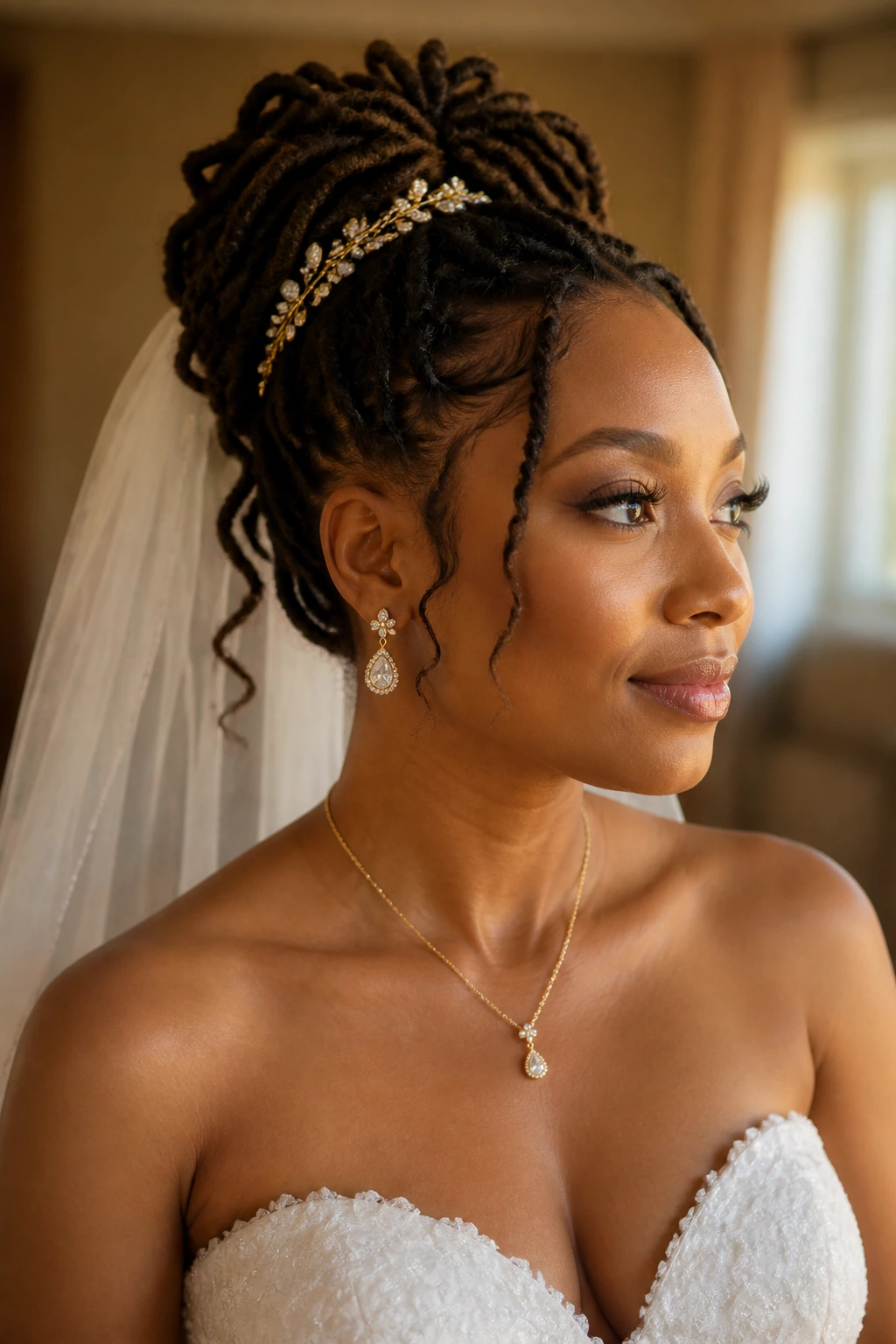
Presentation: Choose the hair silhouette to answer the dress. A strapless gown can take a high bun or crown, while a high neckline usually looks cleaner with a low chignon or side sweep. If the bodice is busy, keep the loc style calmer. If the gown is spare, the hair can carry more shape.
Accompaniments: Earrings should feel like part of the same sentence. Long chandeliers like open necks and pulled-back styles; studs or small drops suit fuller crowns, halos, and side sweeps. If there’s a veil, place it after the style is fully built so the comb doesn’t distort the shape you worked for.
Portions: Volume has to scale with the dress. A huge ballgown can swallow a tiny bun, while a sleek column gown can look overwhelmed by a giant crown. Think in proportion, not in drama alone.
Beverage Pairing: Keep the getting-ready drink simple: water, herbal tea, or a small celebratory sip in a covered glass. Sticky drinks and fresh curls do not belong in the same sentence. I’d skip anything that can splash on the front of the gown or leave a ring on the edge of the mirror.
Extra Tips for Comfort, Shine, and Shape
Texture Enhancement: A light mousse at the roots and a soft brush over the hairline can sharpen the part without making the locs feel stiff. Let the product dry before pinning so the style holds its shape.
Customization: Swap pearl pins for gold cuffs, or thread a thin ribbon through a crown braid if the bouquet has a similar color. Small changes make the look feel personal without adding chaos.
Comfort Check: Press behind the ears, the nape, and the crown before you leave the chair. If a pin pokes when you move your head, it will get worse during dancing.
Photo Test: Take three quick phone shots in window light: straight on, three-quarter view, and from behind. That catches gaps, lopsided volume, and accessories that vanish from the camera.
Make-It-Yours: Brides who want less formality can leave a few front locs loose. Brides who want more structure can tighten the part, raise the crown, or add one stronger accent piece. Small shifts change the mood more than people expect.
Common Mistakes Brides Make With Loc Updos
The most common mistake is overloading the style with heavy accessories. If the combs, pins, and flowers start tugging at the same section, the locs shift and the hairstyle loses its clean shape. The fix is to pick one focal piece and let everything else stay quiet.
Another trouble spot is too much tension at the hairline. A tight pull can look crisp in the chair, then turn into a headache before photos are finished. If the style feels “snug” in a way that makes your forehead itch, it’s too tight.
Then there’s skipping the trial. A style can look fine in theory and still fight your veil, neckline, or earrings in practice. Even a short trial reveals whether the bun sits too low, the crown is too wide, or the front pieces keep falling into your eyes.
The last big one is choosing a shape that doesn’t match the loc length. Short locs need a different plan than waist-length ones. Trying to force a shape that the hair can’t support leads to slipping, pins everywhere, and a style that feels improvised.
Variations and Adaptations to Try
Short-Loc Bride Edit: Use tucked buns, petite crowns, or sleek pullbacks if the locs are short or still maturing. Keep the accessories light so the style stays balanced and doesn’t sink at the roots.
Veil-First Version: Build the hairstyle around the veil comb from the start instead of adding the veil at the end. This works best with low buns, French rolls, or compact knots that leave a firm anchor zone.
Flower-Garden Finish: Replace metal ornaments with one statement bloom or a few tiny silk florals. This version suits outdoor ceremonies, softer dresses, and brides who want the hair to feel organic rather than jeweled.
Modern Minimal Edit: Strip the look down to a sleek pullback, a low ponytail, or a clean chignon with no visible extras. It’s sharp, polished, and easy to wear with structured gowns or simple tailoring.
Reception-Ready Switch: Keep the ceremony style tidy, then remove the veil or one accessory for the reception. A side sweep or wrapped bun can look softer and move better once the formal part is over.
Make-Ahead, Night-Before, and After-Event Care
The smartest bridal loc styles start before the wedding morning. If the hair is getting retwisted or refreshed, do it with enough time for the scalp to settle and the locs to dry fully. Damp locs under pins or a veil comb are asking for trouble, and they can flatten in odd places.
The night before, wrap the style in a satin scarf and avoid stacking anything heavy on top of it. If the style is going to be built in full on the wedding day, prep the locs by sectioning, moisturizing lightly, and making sure the roots are dry and clean. Too much product can make the finish slippery.
After the event, remove heavy pins gently and do not yank the veil comb out in a hurry. If the style can be preserved for one more day, cover it with a satin bonnet or scarf and sleep on a smooth pillowcase. For a full take-down, separate the pins slowly and use a little water or lightweight conditioner on stubborn sections rather than ripping at the locs.
If the hair held a lot of spray or edge control, wash it out within a few days so buildup does not sit on the scalp. A clean scalp feels better than a perfect style that stayed in too long.
Frequently Asked Questions About Loc Styles for Brides
Can I wear a veil with locs?
Yes, and locs often give the veil comb a better grip than slippery hair would. The key is to place the veil after the main shape is finished, then anchor it into a compact section with enough support underneath.
How far in advance should I get my bridal loc style ready?
If there’s a retwist or a fresh shaping needed, give yourself a few days rather than doing everything at the last minute. The style should be fully dry and comfortable before the wedding morning begins.
What if my locs are short?
Short locs can still look polished in petite buns, tucked bob shapes, crowns, and sleek pullbacks. The trick is not trying to force too much bulk. A smaller, cleaner silhouette usually looks stronger.
Can I use flowers and jewelry together?
Yes, but one of them should lead and the other should support. A single flower with tiny pins works better than a flower cluster next to a heavy crystal comb. Too many focal points turn the hair into a bulletin board.
Which style works best if I’ll be dancing a lot?
A low chignon, wrapped bun, or tucked updo usually holds up best because the weight stays close to the head. High styles can still work, but they need firmer pinning and a good trial run.
Do locs need a lot of product for a bridal style?
Not usually. A little mousse, edge control, and maybe setting spray are enough in most cases. Too much product makes locs sticky and can cause pins to slip instead of helping them hold.
How do I keep bobby pins from sliding out?
Insert them against the direction of the loc’s grain and anchor them into a denser section, not a soft outer layer. Long pins and U-pins often hold better than short, flimsy ones on thicker locs.
Should the style match the dress exactly?
Not exactly. It should echo the dress. If the gown is ornate, the hair can stay simpler; if the dress is clean and minimal, the loc style can carry more visual detail.
The Look That Feels Like You
The strongest bridal loc style is the one that keeps its shape without making you feel dressed up as somebody else. That might be a halo crown, a low chignon, a side sweep, or a wrapped bun with one small flower tucked into the side. The common thread is not the silhouette. It’s the intention behind it.
A wedding day puts hair through a strange little marathon, and locs are well suited to the job when the shape is chosen with care. The right pins, the right accessories, and a style that respects the length will do more for the look than a pile of extra decoration ever will.
Choose the version that lets you lift your chin, smile in photos, and forget about your hair for a few hours. That’s the real win.
