



Straight hair is brutally honest about color. Put a chunky highlight on a pin-straight section, and there’s nowhere for it to hide. Put a muddy toner on a glossy brunette base, and the whole thing can read flat from three feet away. That’s exactly why hair color ideas for straight hair need a different eye than color choices for waves or curls.
The upside is huge. Straight strands throw light in a clean, uninterrupted line, so good placement looks sharper, cleaner, and more expensive-looking than it does on textured hair. Bad placement also shows faster. You can see a harsh root, a stripey foil line, or a tone that’s gone brassy in a mirror before anyone else even comments on it.
So the best shades for straight hair are the ones that understand that honesty. Soft melt. Fine ribbons. Controlled contrast. A glaze that makes the surface gleam instead of a color block that sits there like a sticker. That’s the sweet spot, and it’s where these ideas live.
Why These Shades Work So Well on Straight Strands
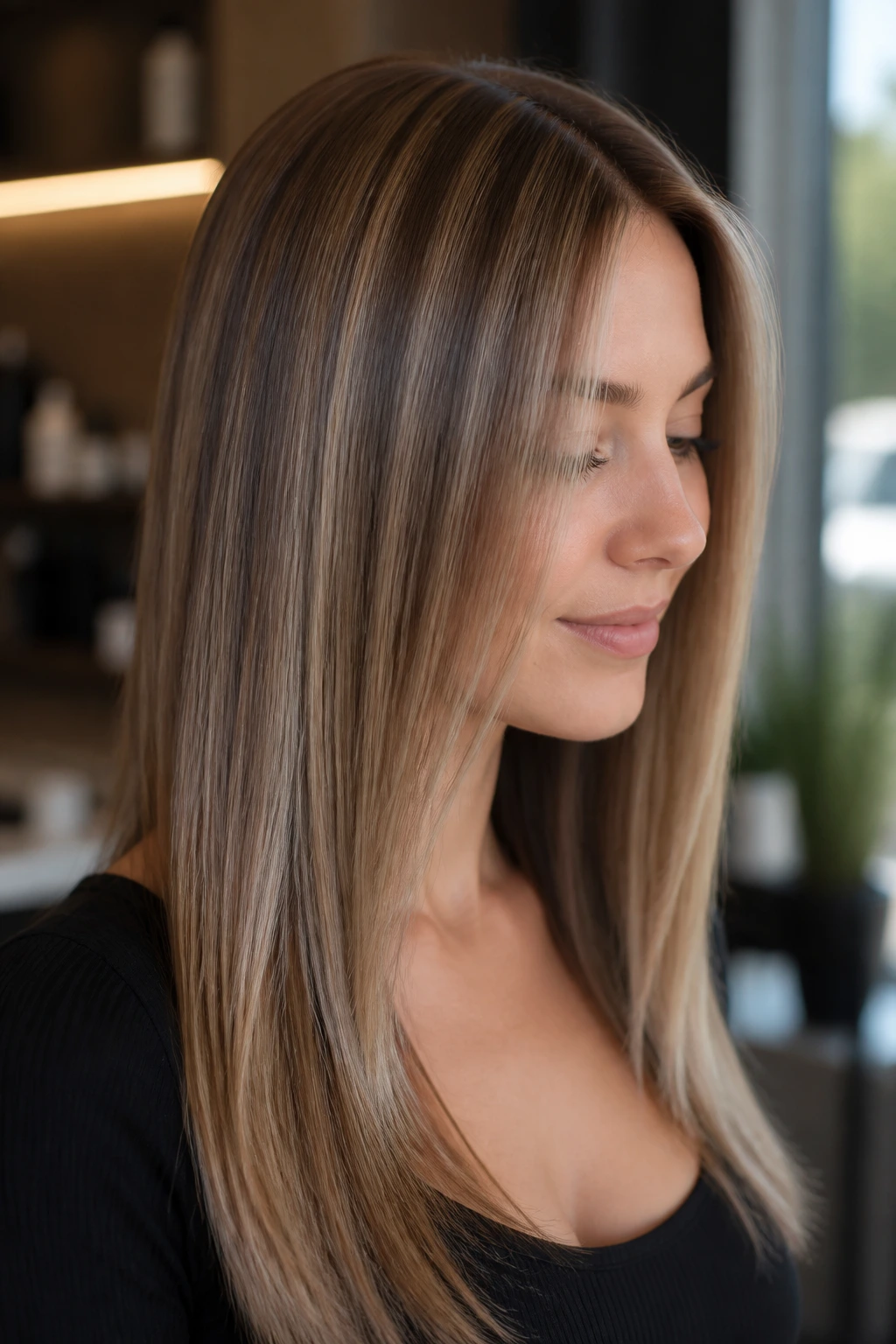
- Fine placement beats chunky contrast: Straight hair exposes every line, so babylights, soft foils, and narrow face-framing pieces look richer than thick stripes.
- Gloss changes everything: A clear glaze or demi-permanent toner can make straight hair look smoother because light reflects off the surface in one clean band.
- Root depth keeps color from falling flat: A soft shadow root stops blondes and lighter brunettes from looking washed out, especially when the hair is long and sleek.
- Warm and cool tones read very differently: On straight hair, ash, beige, honey, copper, and burgundy each show their undertone more clearly than they do on textured hair.
- Low-contrast color is easier to wear: If you want something polished, straight hair often looks better with a softer transition than with a dramatic line from dark to light.
- Cuts matter as much as color: A blunt bob, one-length lob, or glassy long layers changes how the color sits; straight hair color is never only about the dye.
1. Espresso Gloss with a Mirror-Shine Finish
Espresso is one of those shades that doesn’t need a lot of help, but on straight hair it gets a little arrogant in the best way. The color sits deep and even, then the light slides over it instead of getting tangled up in texture. If your hair is naturally medium brown or darker, this is the kind of shade that makes ends look denser and a blunt cut look more deliberate.
Why it works on straight hair
Straight strands show off the cleanest version of a dark brunette gloss. The trick is to keep the tone rich, not inky. Ask for a demi-permanent espresso or deep chocolate glaze with a soft, neutral-brown finish, not a flat black-brown that can swallow all the dimension. On long straight hair, that little bit of warmth at the edges keeps the color from looking like a helmet.
A blunt bob or collarbone-length cut makes this shade even better. There’s a nice tension between the sharp cut and the liquid shine. If your hair is very fine, espresso can also make it look thicker at the ends, which is one of the few beauty tricks that actually works the way people claim it does.
Best for: medium to deep natural brunettes, shiny hair, and anyone who likes a crisp, polished look.
Ask for: a glossy brunette glaze with neutral undertones and no harsh black base.
Skip if: you want obvious dimension; this is all about surface shine and depth.
Tiny detail that matters: if your ends are porous, have your colorist refresh them with a slightly lighter brunette formula so they don’t go hollow at the bottom.
2. Mushroom Brown with Cool Beige Depth
Mushroom brown is what happens when brunette stops trying so hard and starts looking expensive. It has that cool, earthy softness—brown, beige, and a little ash moving together without any one note shouting over the others. On straight hair, the color reads as quiet dimension instead of obvious highlight stripes.
The reason it works is simple: straight hair loves a controlled tonal shift. Mushroom brown gives you that without jumping into full blonde territory. If your natural color pulls warm, a mushroom brunette glaze can neutralize the orange that tends to show up on straight lengths after a few washes. The result is a soft, dusty finish that looks especially good on long, one-length cuts and sleek lobs.
If you’re tired of hair that turns copper when the sun hits it, this is your lane. It’s also forgiving if you don’t want to live in the salon every four weeks. The grow-out blends well because the shade is built from multiple browns rather than one hard color line.
3. Caramel Ribbons Through a Deep Brunette Base
Why do caramel ribbons work so well on straight hair? Because the movement is all visual. There’s no curl pattern to scatter the light, so every narrow ribbon has to do real work. When the highlights are fine enough and the base stays deep, the effect looks deliberate instead of streaky.
The key is placement, not just color. Ask for thin caramel foils around the face and through the mid-lengths, then let the stylist keep the roots a shade or two deeper. On straight hair, that root depth gives the lighter pieces a place to land. Without it, caramel can float too high and the whole look starts to feel disconnected.
How to wear it
- Keep the front pieces slightly lighter than the rest so the color shows when your hair is tucked behind one ear.
- Ask for highlights that are woven, not chunked. Big panels show every line in straight hair.
- Pair this with a center part if you want a sleeker result, or a soft side part if you want the face-framing pieces to do more of the talking.
The best version of caramel brunette looks like the sun did the work quietly. Not loudly. Quietly is the point.
4. Honey Blonde Face-Framing Lights
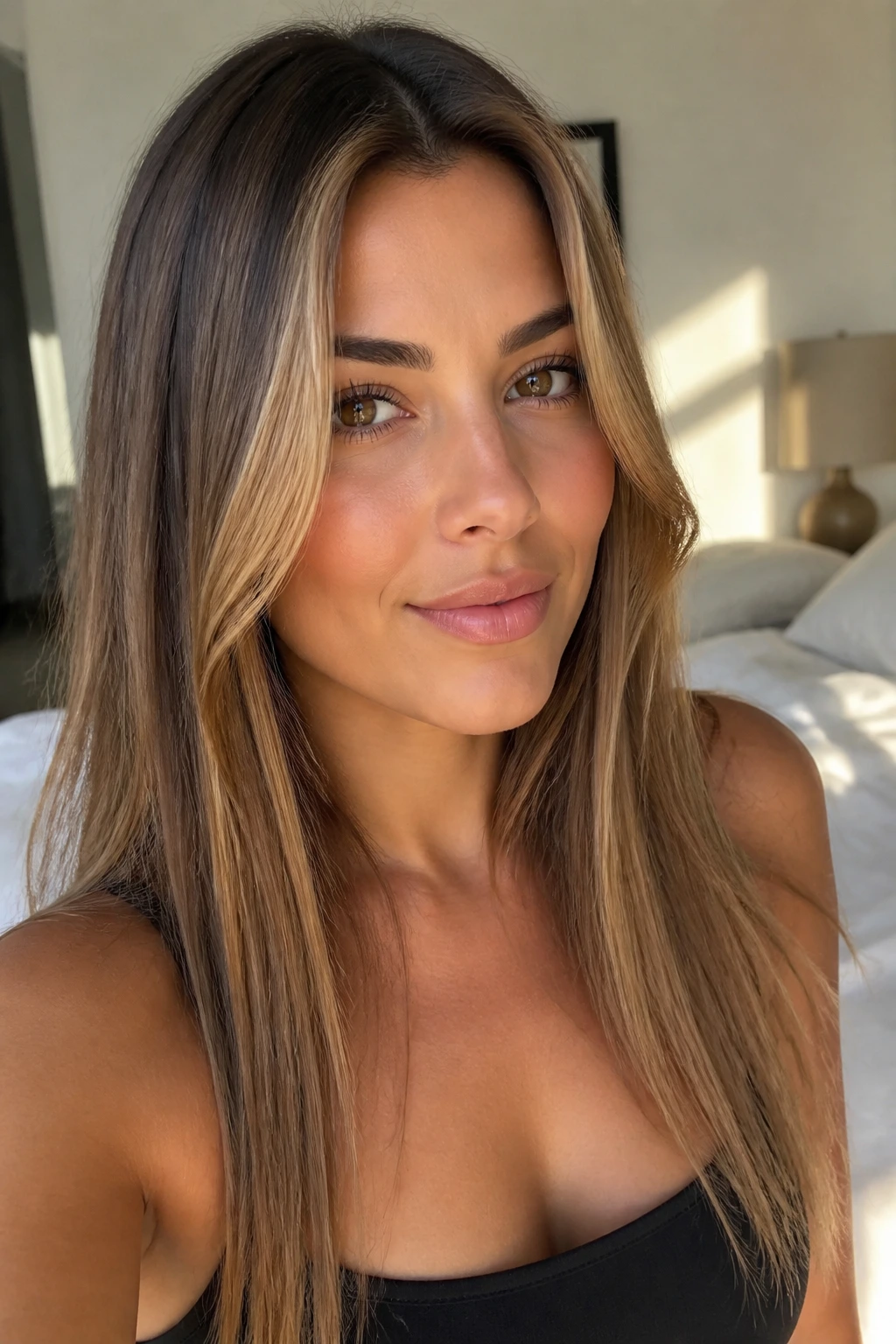
A straight blowout can look almost too perfect sometimes, and honey face-framing lights break that up without wrecking the clean finish. They brighten the front of the hair, catch the cheekbones, and keep the overall color from sinking into one flat tone. On medium brunettes, they’re especially flattering because the warmth reads soft rather than brassy.
The magic is in the contrast. Leave the back darker and concentrate the honey around the part line and the first inch or two near the face. That gives straight hair a built-in frame, which is useful if your ends are blunt or your hair hangs in a single sheet. It adds shape without relying on layers to do the whole job.
You can push this look warmer with golden honey or keep it creamier with beige honey. Both work, but the warmer version feels sunnier and the beige version looks more polished. If your hair is very straight and fine, this is one of the easiest ways to get dimension without making the strands look sparse.
5. Beige Blonde with a Soft Root Shadow
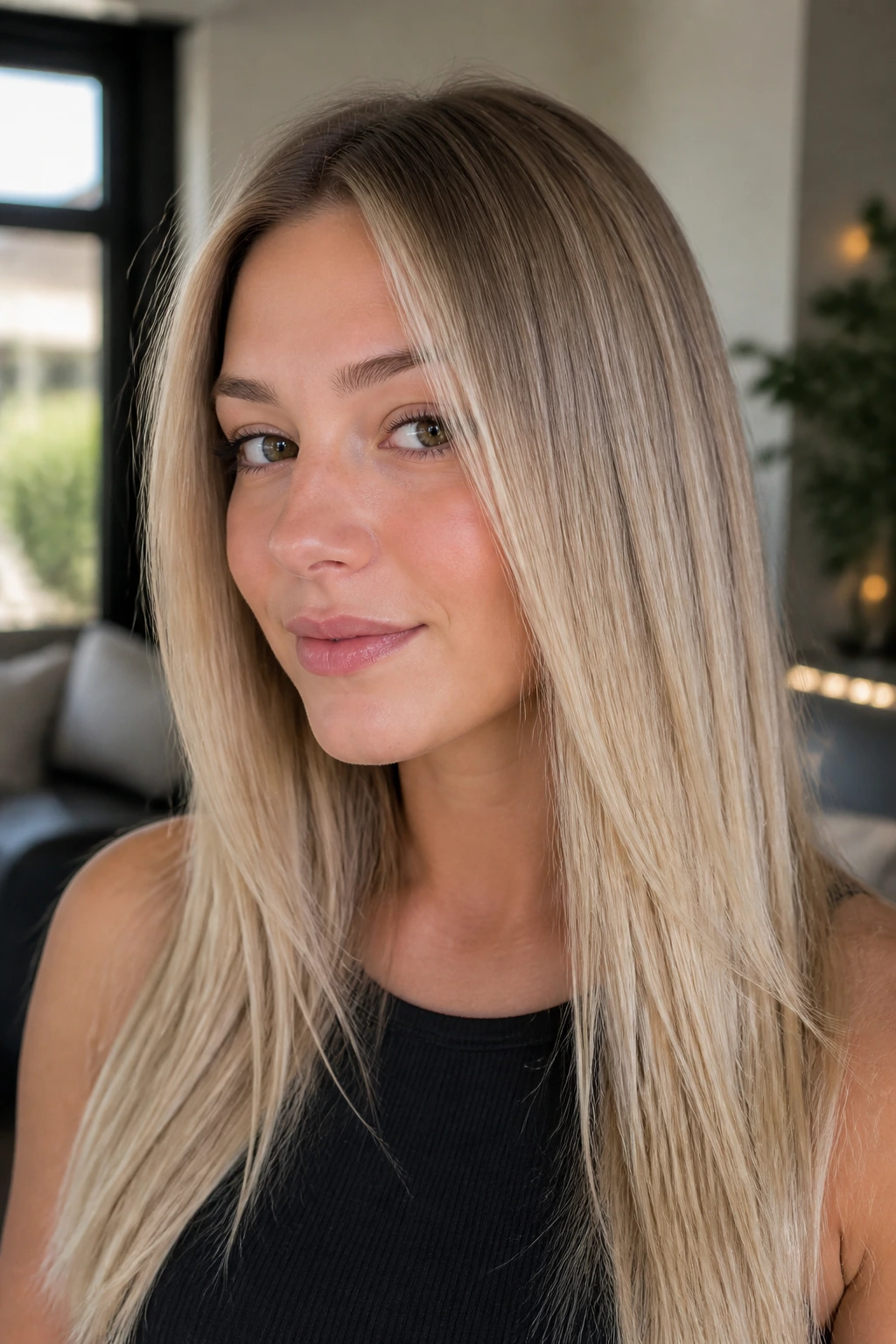
Beige blonde is the blonde that knows how to behave. No icy glare. No orange notes. No loud yellow. Just a creamy, soft neutral that sits somewhere between warm and cool, which is exactly why it flatters straight hair so well. Straight lengths can make blonde look harsh fast; beige keeps the edges soft.
The root shadow is the thing that makes this version work. A slightly darker root gives the blonde somewhere to grow from, and on straight hair that transition reads cleaner than a hard root line ever will. It also makes maintenance less frantic, which matters if you like a smooth, reflective finish but don’t want a full highlight appointment every few weeks.
This color shines on long hair that’s cut in blunt ends or very subtle layers. The blonde reflects light across the surface, while the shadow root keeps the top from looking bleached-out. It’s the sort of blonde that looks better on day two, which is a rare and useful trait.
6. Copper Penny All Over
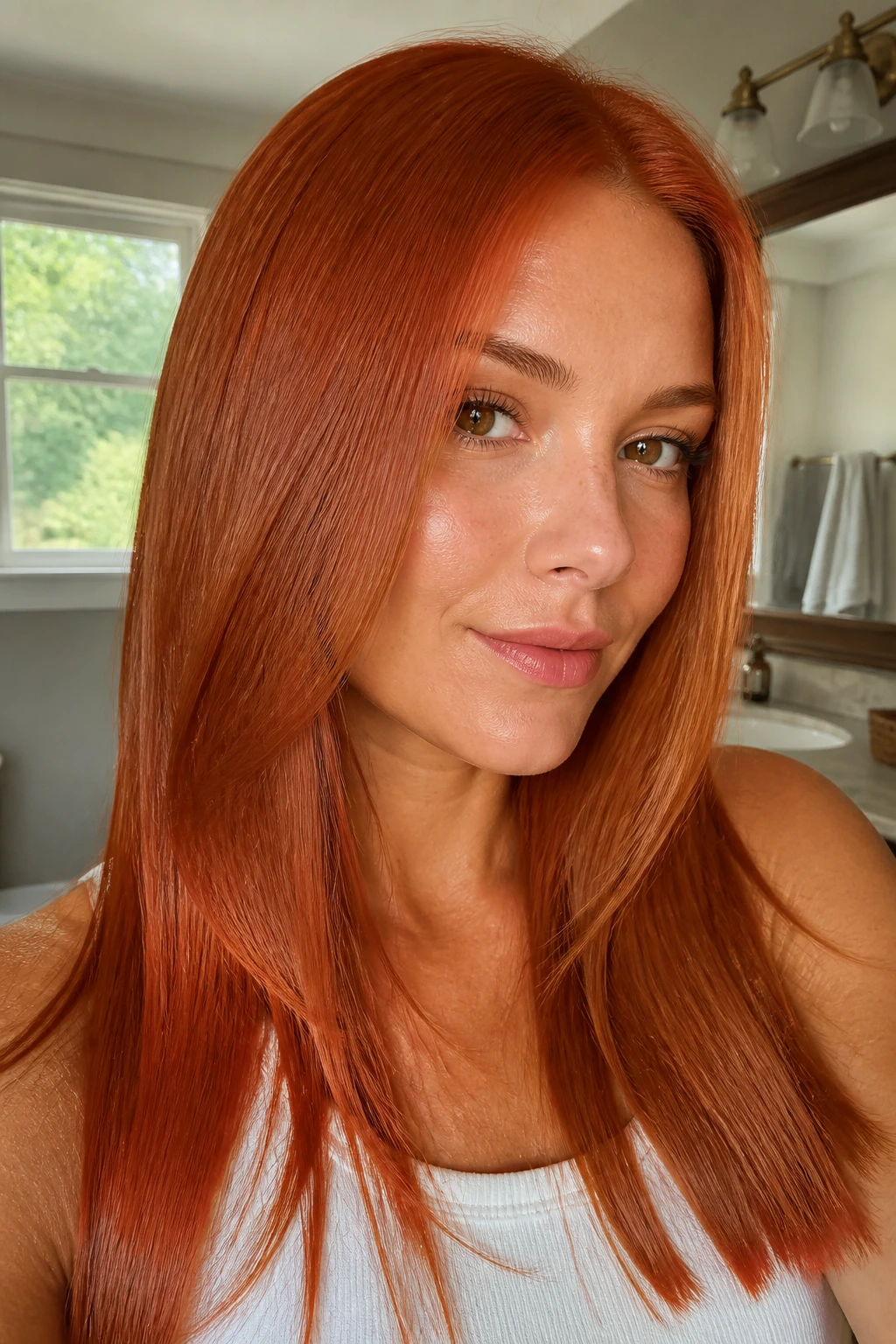
Copper penny is not shy. Good. Straight hair can carry that kind of confidence because the color stays uninterrupted from root to tip, which means the copper looks intentional instead of patchy. A true penny tone has more warmth than auburn and more depth than a bright orange-copper, so it gives you shine without drifting into clown territory.
The best copper on straight hair is clean and even. If the formula is uneven, the straighter the hair, the faster you’ll see it. That’s why an all-over copper works better than a few random warm pieces on a dark base. The uniformity makes the color look modern instead of costume-ish.
What to ask for
- A copper formula with red-orange warmth, not pumpkin orange.
- A gloss or demi-permanent finish if you want a softer grow-out.
- A haircut with blunt ends or polished layers, because copper loves a smooth shape.
If your skin has peach, golden, or neutral undertones, this can be a knockout. If your hair tends to fade fast, budget for gloss refreshes, because copper leaves in a hurry when you wash it hard.
7. Cinnamon Brunette with Warm Undertones
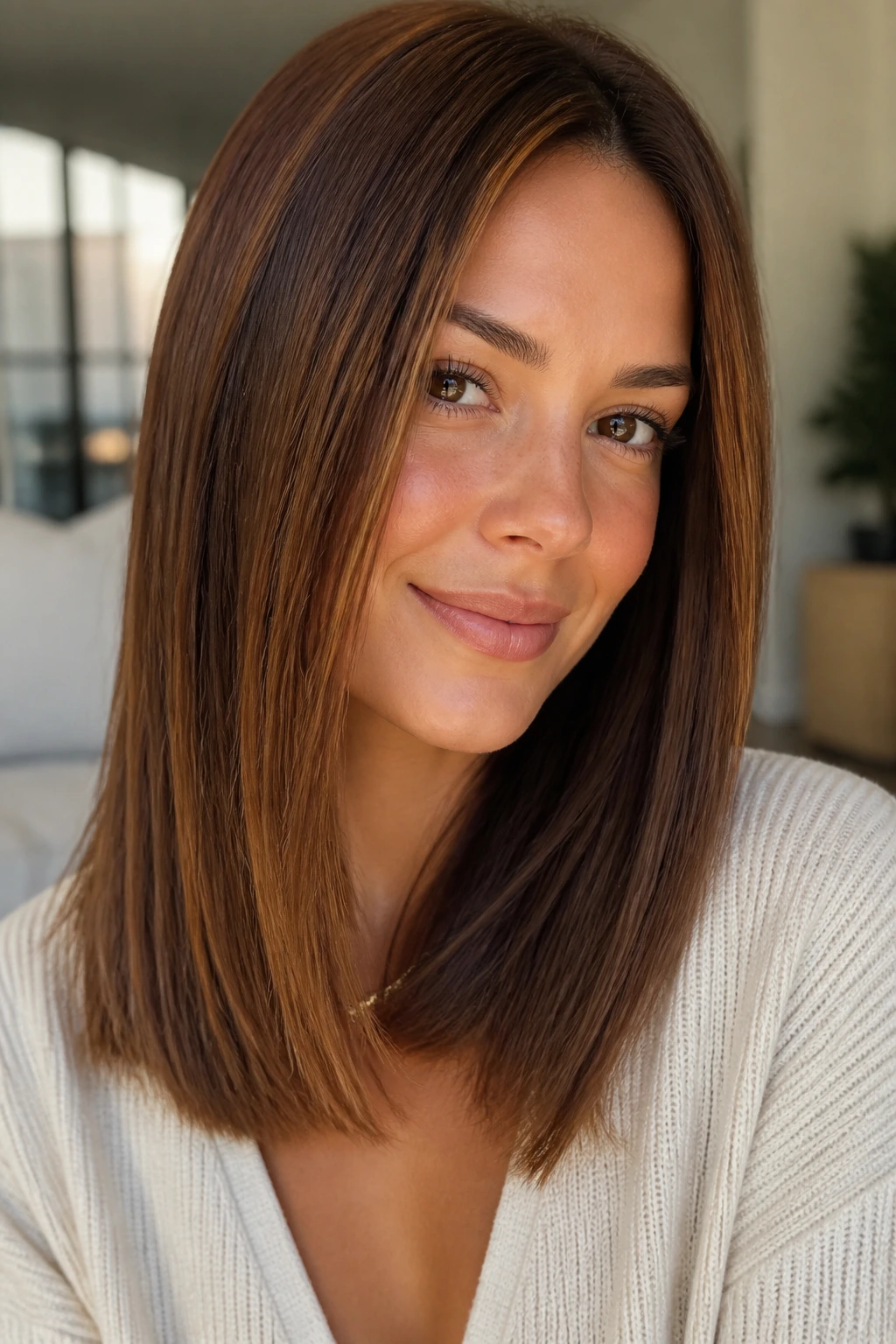
Cinnamon brunette sits in that useful middle ground where the hair still reads brown from a distance, but up close you see warm spice and a little rust. On straight hair, the tone keeps the color from disappearing into one solid brown sheet. That matters more than people think. Brown can go dull fast when the hair is long and straight.
The appeal here is restraint. You’re not announcing copper. You’re letting warmth live in the brunette formula itself. That makes cinnamon a nice option if you want your straight hair to feel richer without committing to a bright red family. It’s also flattering on blunt cuts because the shade creates depth along the line of the ends.
A good cinnamon brunette has movement at the surface. If your colorist adds a soft gloss over the mids and ends, the strands look smoother and the warm undertones catch light in a way that plain chocolate brown can’t. It’s especially good if you wear sleek styles often.
8. Rose Gold Melt
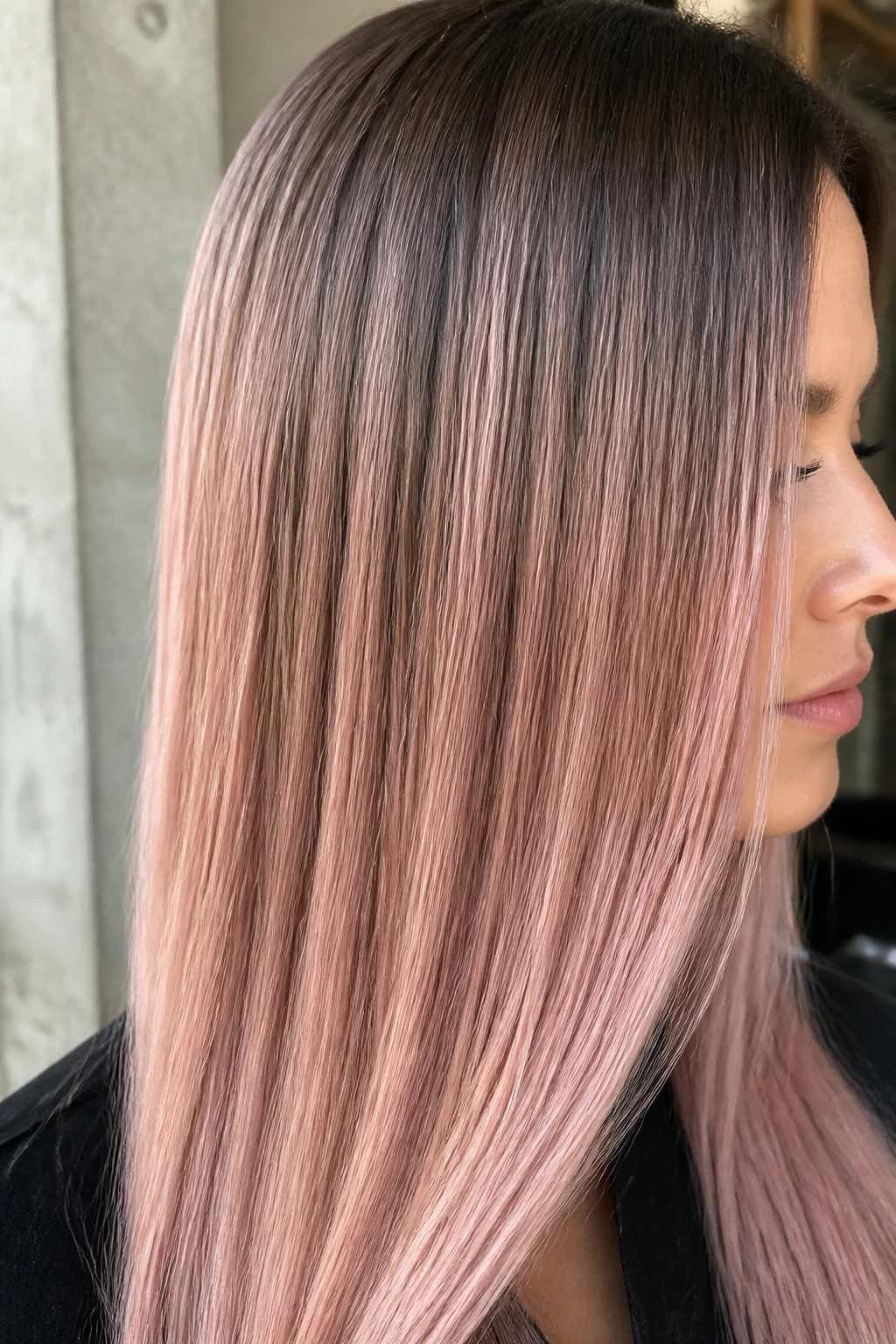
Rose gold on straight hair works best when it’s treated like a melt, not a block of pink dye. The blend should move from a deeper beige-blonde or soft brunette root into a rose-toned mid-length and then soften toward the ends. On straight hair, that gradient reads elegantly because you can actually see the shift. There’s nowhere for it to hide.
The tone itself should stay dusty. Too much magenta and it turns loud. Too much gold and it loses the point. A blush-tinged rose gold with beige in it looks more grown-up and less like a festival wig, which is a good thing unless that’s the goal.
This color is one of the better choices if your straight hair has a blunt cut and a calm wardrobe. It adds color without needing a whole personality shift. A side part can make the melt feel a little more dimensional, while a center part keeps it sleek.
9. Smoky Bronde with Low-Contrast Balayage
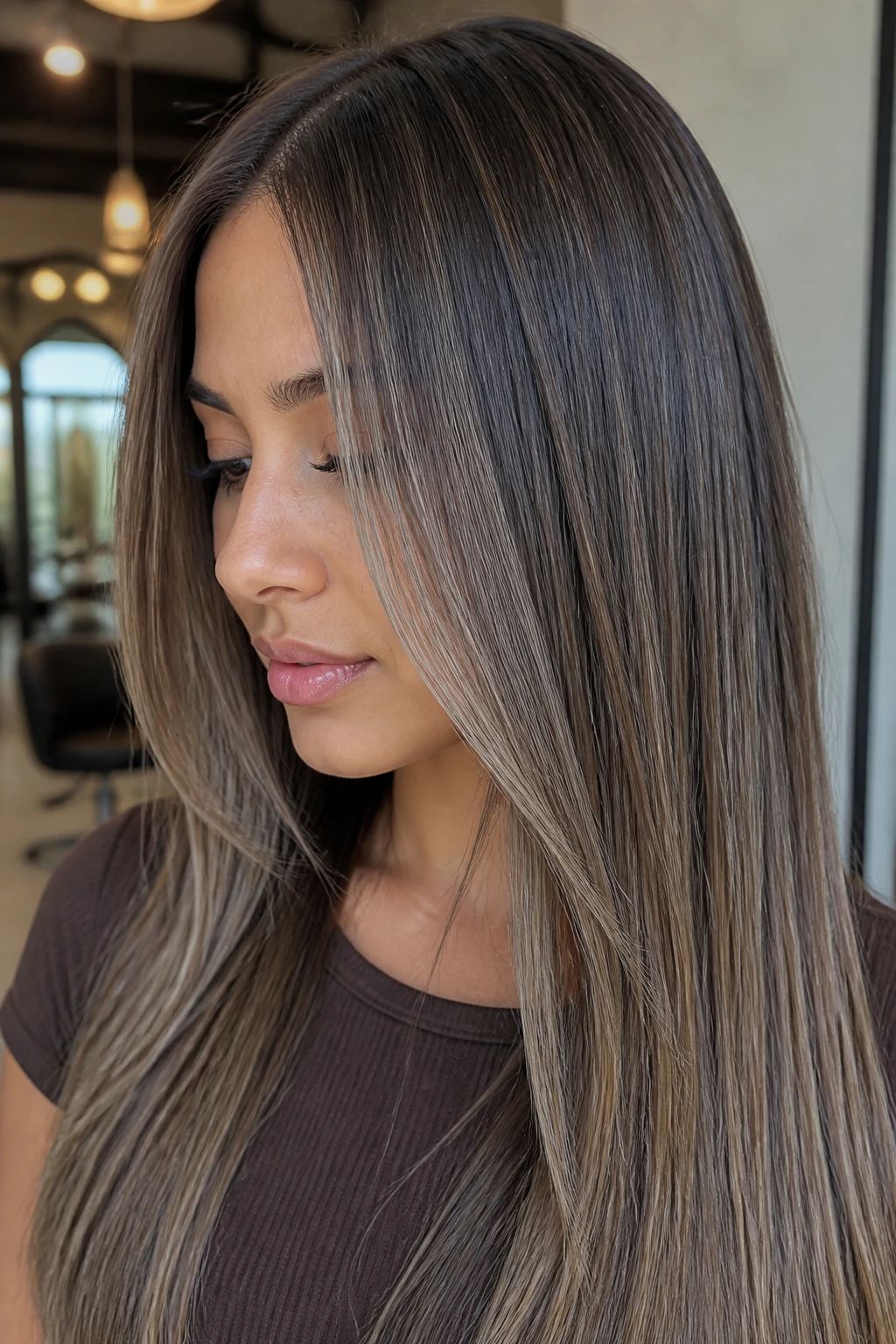
Is bronde even a real shade? In practice, yes. It’s the answer for people who can’t decide between brown and blonde and don’t want the hair to look like it was decided by committee. Smoky bronde keeps the base cool and soft, then layers in low-contrast balayage so the whole thing looks blended from the first wash.
Straight hair is where this shade earns its keep. High-contrast balayage can look stripy on a sleek surface. Smoky bronde avoids that by keeping the lift controlled and the tone muted. The color sits in the hair instead of on top of it. That’s the difference.
How to get the most from it
Ask for balayage pieces that are one to two levels lighter than your base, not six. That small shift keeps the style polished. If your natural color is dark blonde or light brown, this approach can give you dimension without screaming highlight.
It’s also a good fit if you like your hair straight because the color won’t fight the cut. It moves with the line of the hair. That’s the whole appeal.
10. Jet Black with Blue-Black Shine
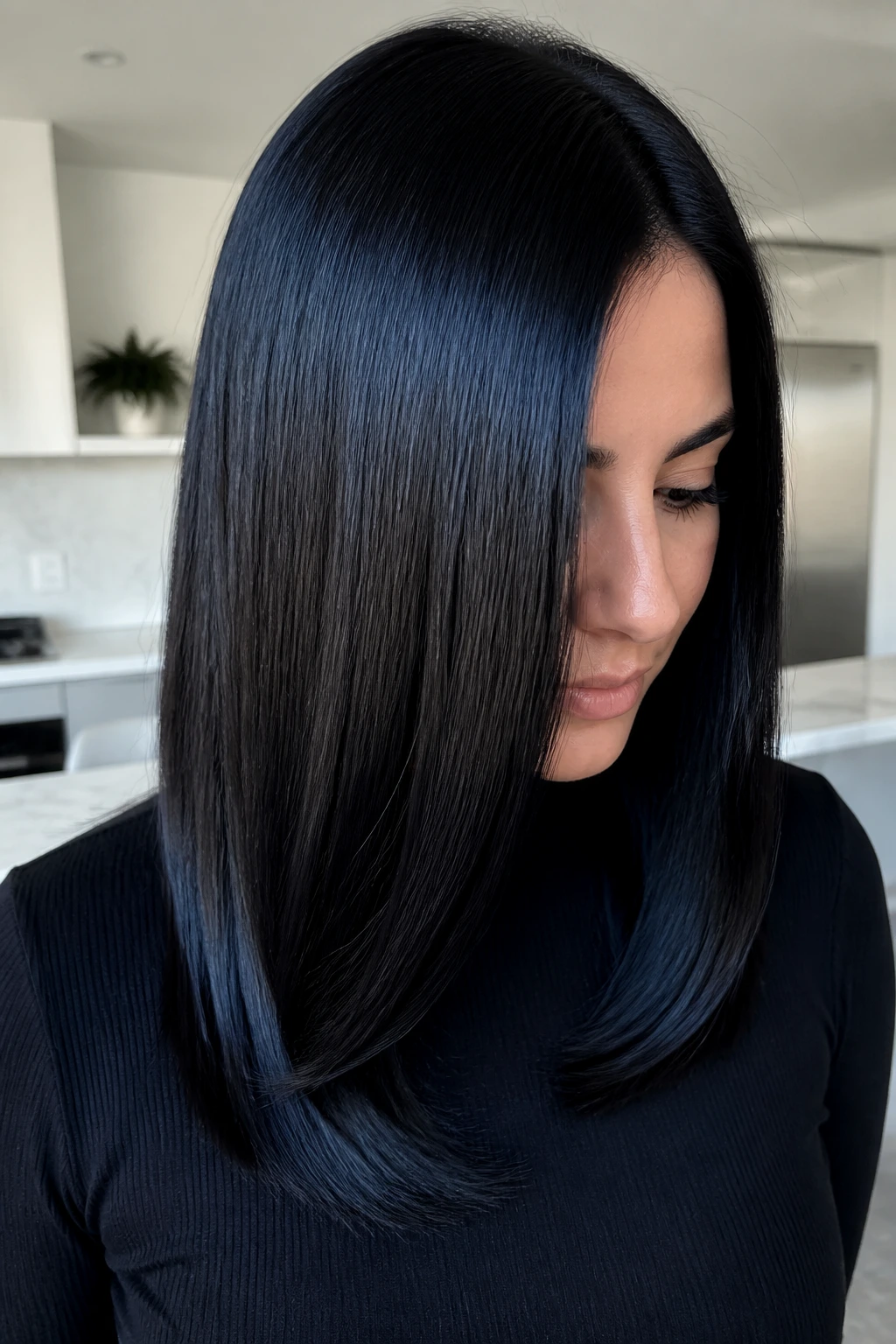
Jet black on straight hair can look almost liquid when it’s done well. There’s a reason this shade keeps coming back: the shape of straight hair turns black into a mirror. Add a blue-black sheen and the color stops reading flat. It catches light with a cold, inky edge that feels sharper than soft brunette.
The trick is to keep the hair healthy. Black shows damage faster than lighter shades do because rough ends break the surface line. If your straight hair is dry or over-processed, jet black will highlight that in a way that isn’t flattering. Smooth cuticles, regular glossing, and disciplined heat use matter here.
This color loves clean cuts. A blunt lob, a sleek long cut, even a sharp fringe can look extremely strong in black. If you want drama without highlights, this is one of the cleanest ways to get it.
11. Burgundy Wine Lengths
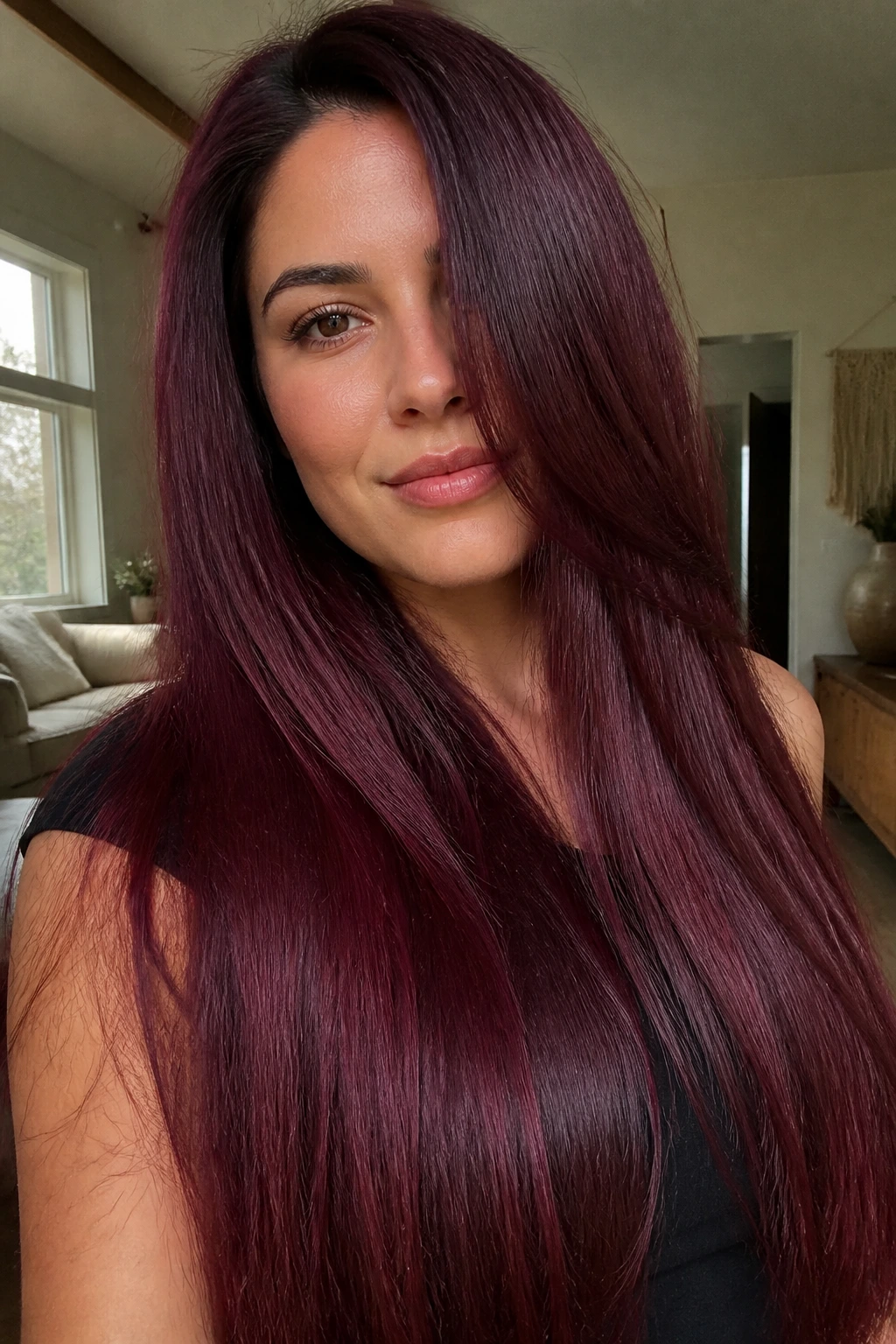
Burgundy wine on straight hair has a richness that curls can sometimes swallow. The straight surface lets the red-violet tone sit there and glow. Not neon. Not wine-stain red. Something deeper, darker, and more velvet-like, especially when the light hits the mid-lengths.
This works best on brunettes who want to warm things up without going copper. Burgundy has enough depth to stay wearable, but enough color to change the whole mood of the hair. On straight hair, it can make long lengths look thicker because the tone has more visual weight than pale blonde.
A gloss-based burgundy is a smart choice if you want the shade to fade gracefully. Permanent red tones can be stubborn, and when they start to go, they go in odd ways. A softer deposit gives you a more predictable grow-out, which is easier to live with.
12. Plum Velvet Ends
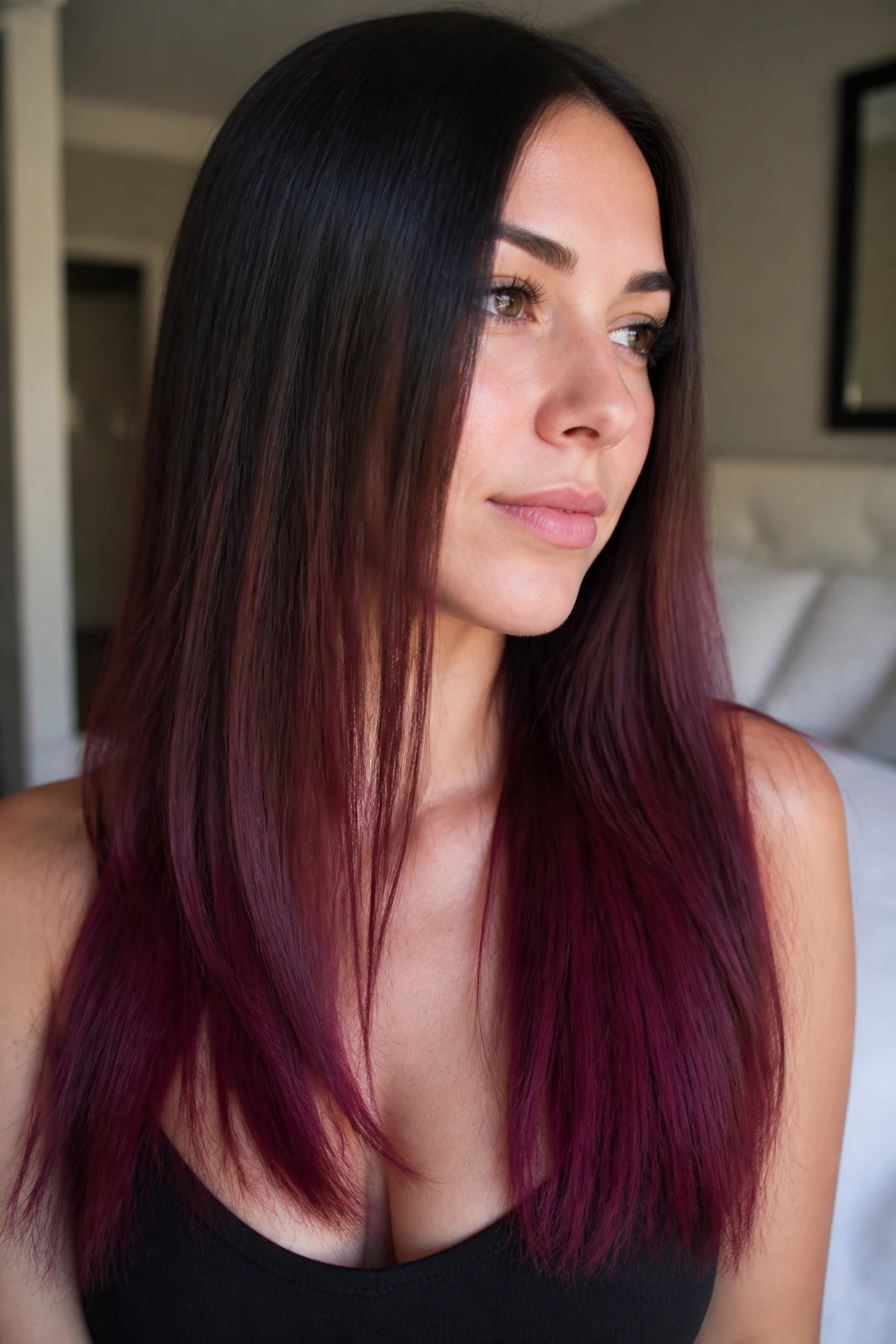
Plum velvet ends are for people who want something a little moody without dyeing the whole head an obvious fantasy color. The roots can stay brunette or dark blonde, then the lower half of the hair shifts into a plum tone that looks deeper and softer than purple. On straight hair, the contrast reads cleanly.
The reason this works is that straight hair shows the fade from one color to another in a controlled way. If the transition is softly blended, the ends look like they were dipped in a rich stain. If the transition is harsh, it turns patchy fast. So the blend matters more than the exact shade.
This is a nice compromise if you want a fashion color that still looks wearable at work or in a more conservative setting. The plum only announces itself when the hair moves. That’s its charm. Well, that and the way it looks against dark clothes.
13. Champagne Blonde with Fine Babylights
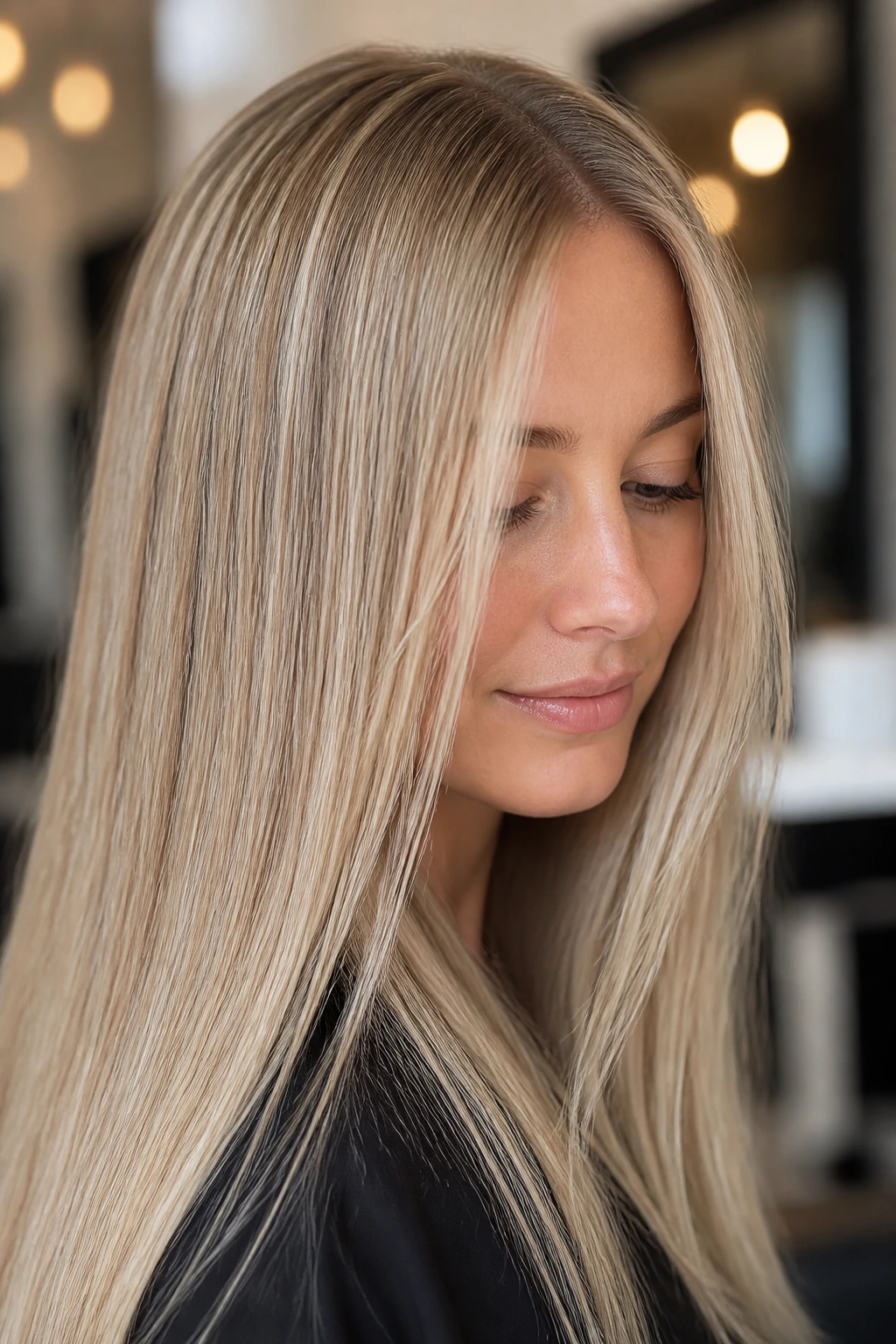
Champagne blonde is the blonde that doesn’t feel like it’s trying to outshine the rest of your features. It sits in that pale beige-gold zone that looks soft on straight hair because the fine babylights create a delicate shimmer rather than obvious stripes. If your hair is naturally dark blonde or light brown, this can be a clean, polished shift.
The baby-lighting matters. Straight hair makes huge highlights look blunt. Fine sections, painted close to the root but not flooding it, keep the color delicate. Ask for many narrow pieces rather than a few wide ones, and you’ll get more depth from the same amount of lightness.
This shade also plays well with a smooth blowout or flat-ironed finish. The surface looks reflective, not chalky. If your hair tends to go dull in winter or under indoor lighting, champagne blonde can perk it up without turning it brassy.
14. Golden Bronde
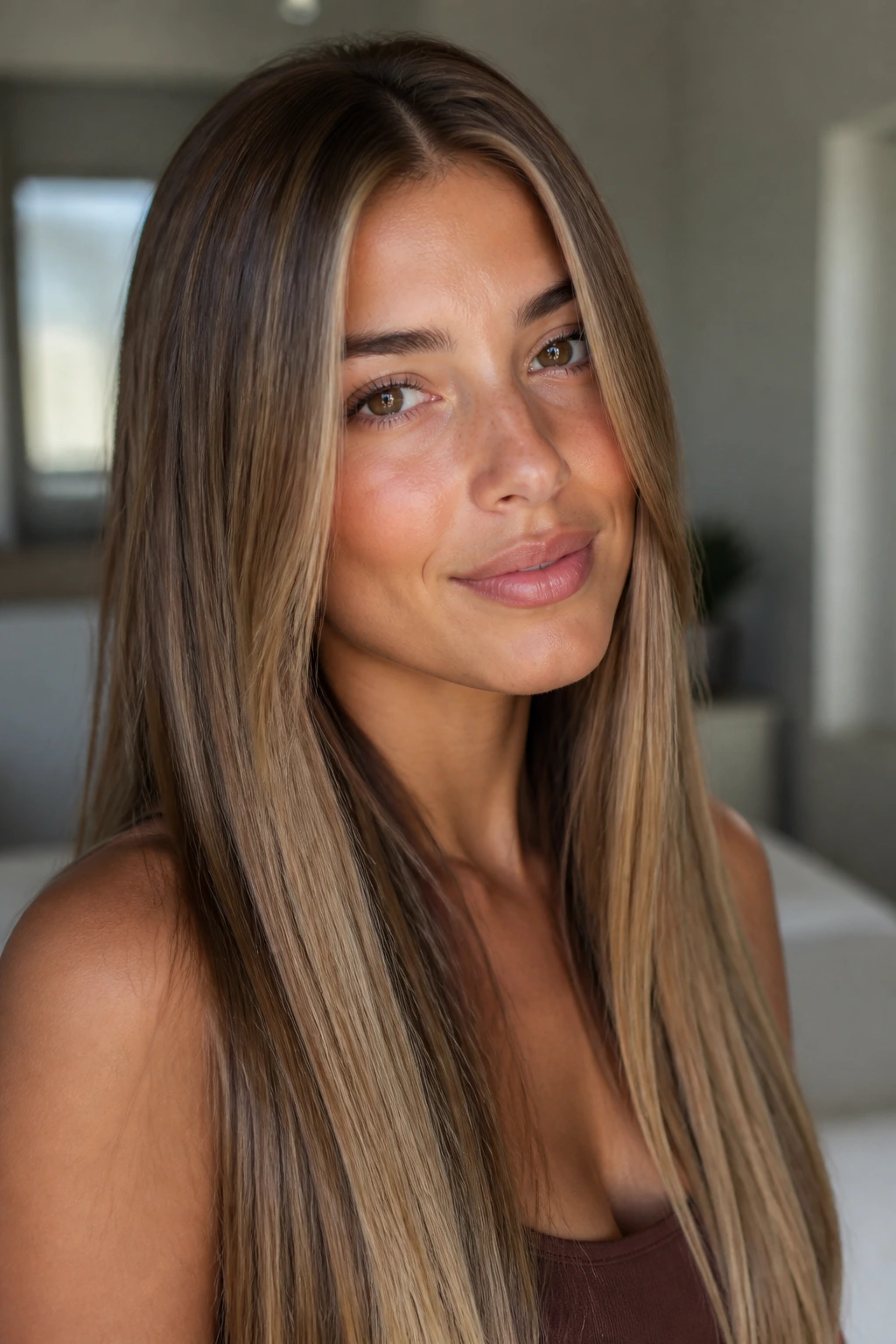
Golden bronde is one of those shades that saves people from choosing between brunette and blonde when the real answer is somewhere in the middle. On straight hair, the warm gold pieces catch the light along the lengths, while the darker base keeps the color grounded. The effect is easy to wear and, more importantly, easy to read.
Compared with a cooler bronde, golden bronde feels sunnier and softer. It’s flattering on straight hair that needs a little movement but not a lot of contrast. If your ends are fine, the gold can make them look more alive. If your hair is thick, the warmth stops it from looking heavy.
A root shadow helps here too. Otherwise the light pieces can float too high and make the whole thing look disconnected. Ask for a controlled blend through the mids and ends, then keep the highlights soft around the face so the brightness doesn’t overwhelm the cut.
15. Money Piece Around a Center Part
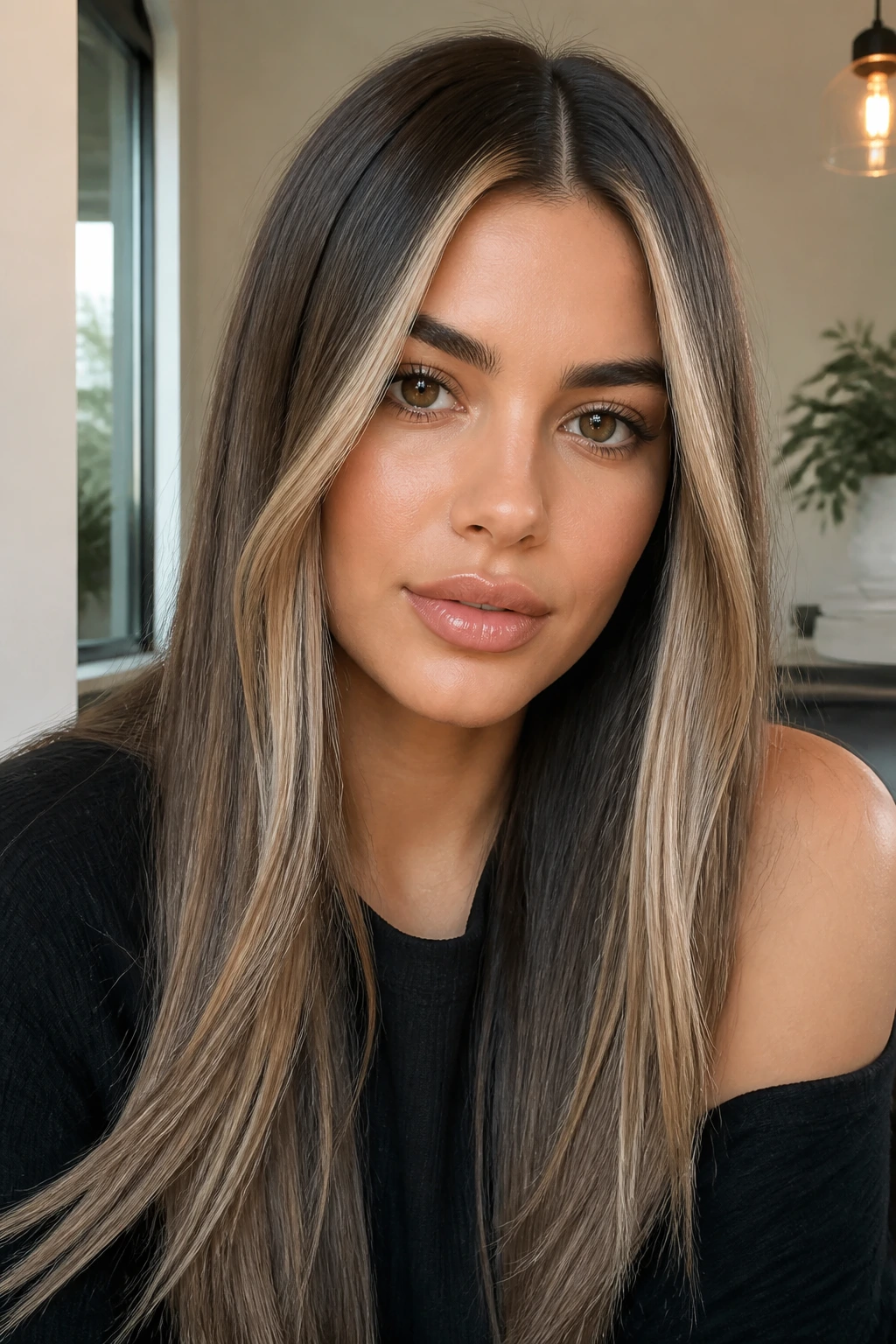
Why do money pieces matter so much on straight hair? Because a center part gives them a clean runway. The bright front section frames the face, and because straight hair doesn’t have waves to break up the line, the contrast looks crisp and immediate. One good face-framing panel can do more than a full head of heavy highlights.
This is a smart choice if you want a change without changing the entire head. Keep the base close to your natural color and lighten just the front pieces two to four levels, depending on how bold you want to go. On straight hair, the key is to blend the back portion well so the front doesn’t look pasted on.
How to wear it
Use this with a blunt lob if you want the light to hit the front edges hard. Pair it with long straight hair if you want the face-framing pieces to soften a darker base. Either way, the center part makes the placement feel intentional.
It’s a small move with a big visual payoff.
16. Reverse Balayage for Over-Lighted Hair
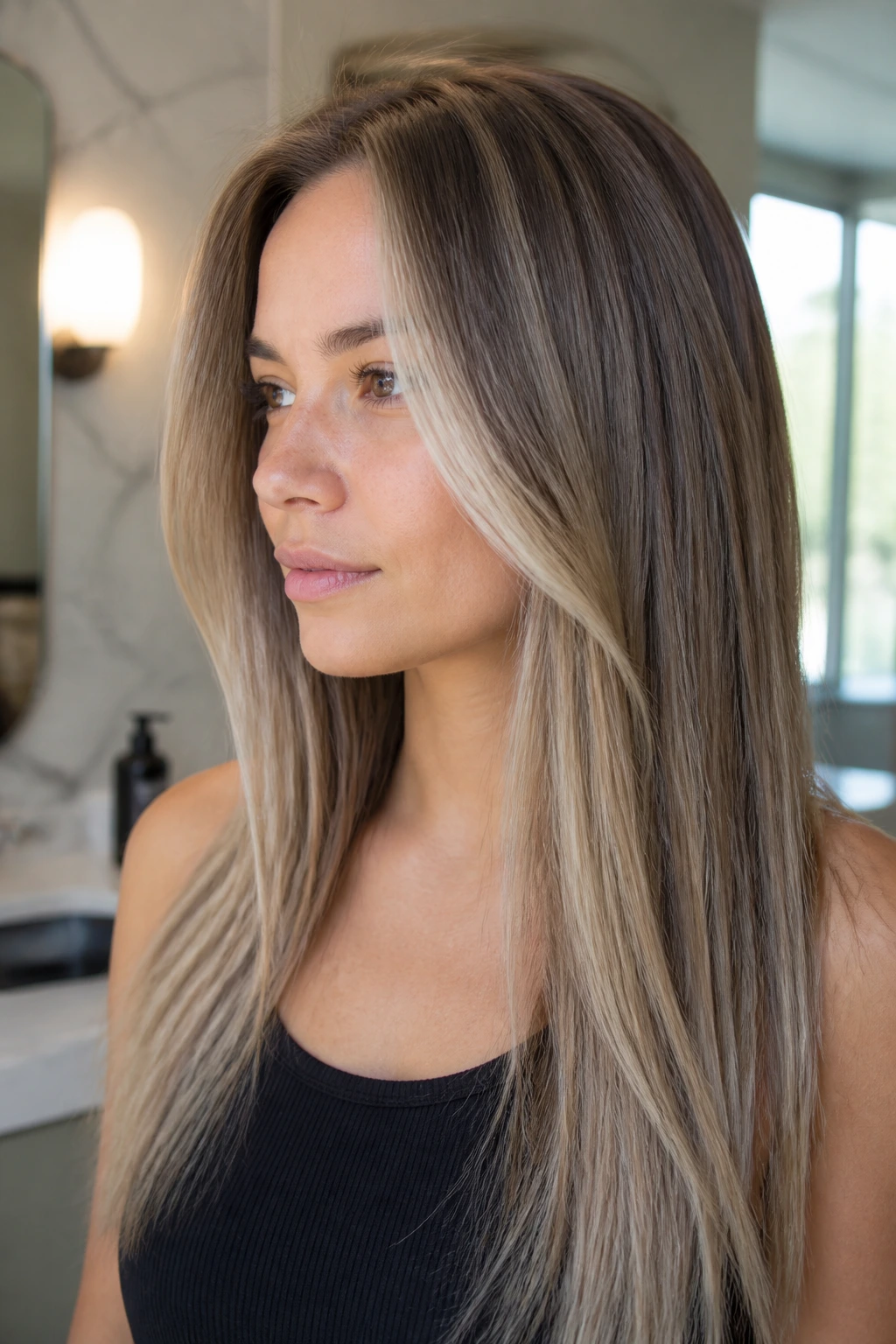
If your hair has been lightened one time too many, reverse balayage can be a sanity-saving move. Instead of adding more blonde, the colorist paints in deeper tones—cool brunette, beige brown, smoky lowlights—to restore depth. Straight hair takes to this especially well because the added darkness shows clearly and gives the hair shape again.
The reason over-lightened straight hair looks tired is simple: the eye has nowhere to land. Everything is equally pale. Reverse balayage gives the strands contrast, which makes the cut and the texture come back to life. It also looks more natural as it grows because the darker pieces blend into the base instead of fighting it.
This is one of the few color moves that can make straight hair feel less thin without changing the length. If your hair feels a little wispy after too much bleaching, this is the repair path I’d reach for first.
17. Peekaboo Panels Under the Top Layer
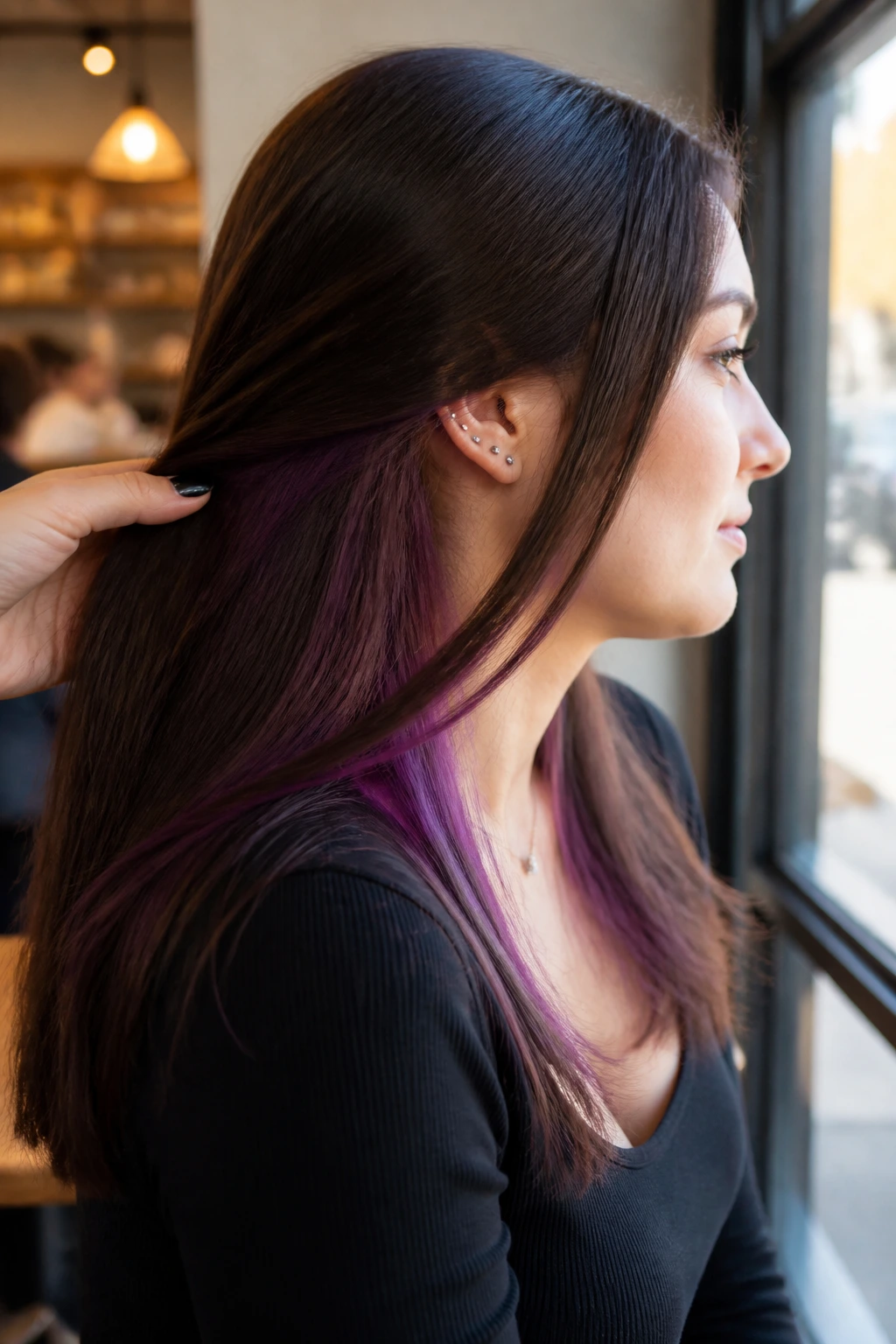
Peekaboo panels are the fun color choice for people who like a neat outer layer and a little surprise underneath. On straight hair, they work because the hidden panels only flash when the hair moves, gets tucked behind the ear, or is worn half up. That gives the style a clean front view and a more playful interior.
The panel color can be anything from cherry red to teal to lavender, but the placement is what keeps it wearable. Keep the top layer close to your natural shade and place the vivid color underneath or along the nape. Straight hair makes the reveal sharper, which is exactly the appeal.
If you want fantasy color without committing to full-head maintenance, this is a smart route. It lets you scratch the itch for something bright while still giving you an easy, polished day-to-day look.
18. Icy Silver Blonde
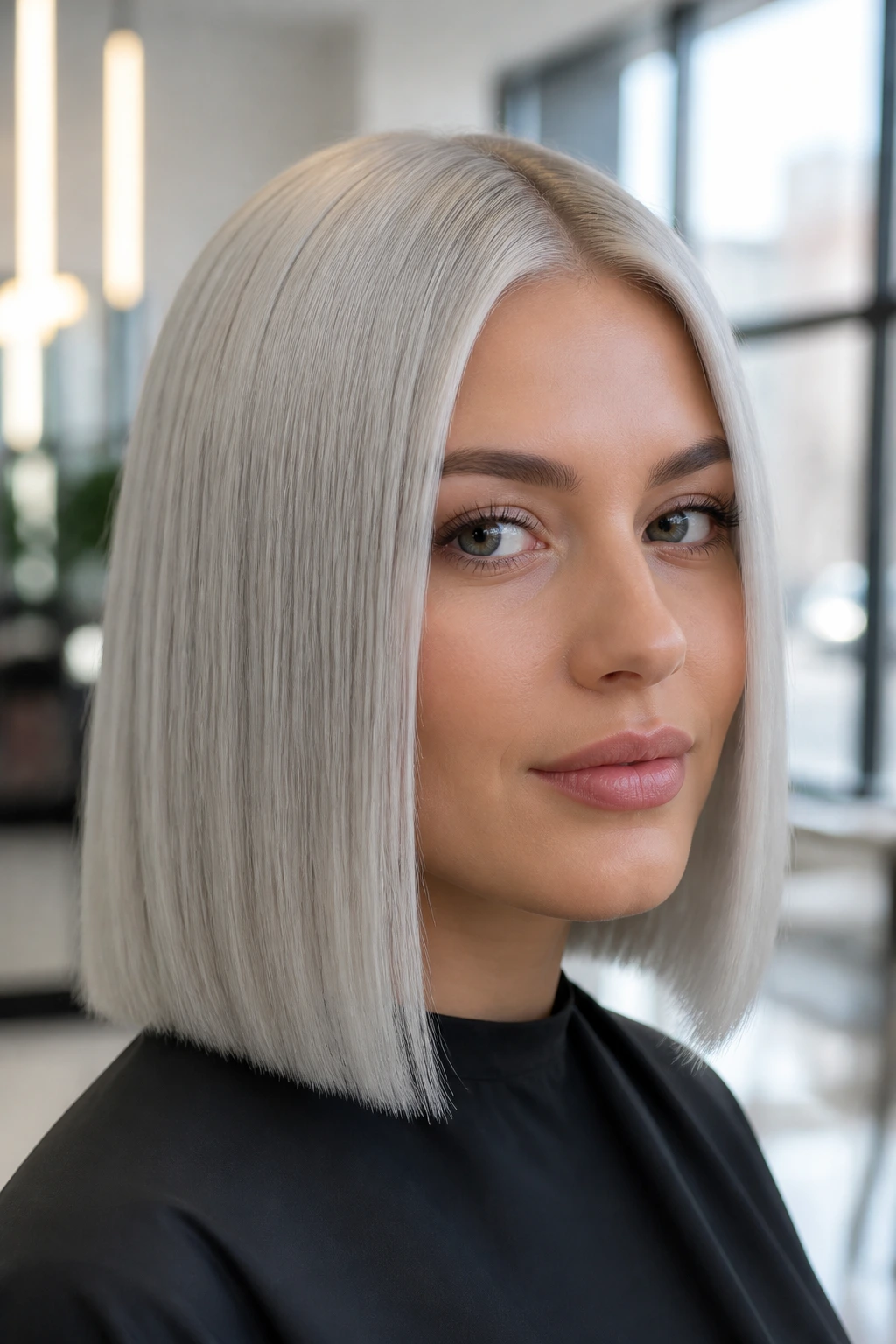
Icy silver blonde is gorgeous on straight hair when it’s done with discipline. The color has to be lifted evenly and toned carefully, because any yellow left behind will show immediately. On straight strands, that silver finish looks clean and metallic. Very sharp. Very deliberate.
The best version doesn’t look gray in a dull way. It looks cool, reflective, and almost chrome-like. That means the hair needs strong moisture, gentle cleansing, and a toner schedule that doesn’t wait until the brass gets obvious. Straight hair shows that shift fast. Which is useful, because you can catch it before the color gets muddy.
This shade loves simple styling. A blunt cut, a center part, and a smooth finish let the color do the heavy lifting. If your wardrobe leans cool-toned, silver blonde can be a stunning fit. If you wear a lot of warm beige or tan, it can still work, but the contrast will feel stronger.
19. Soft Peach Tint
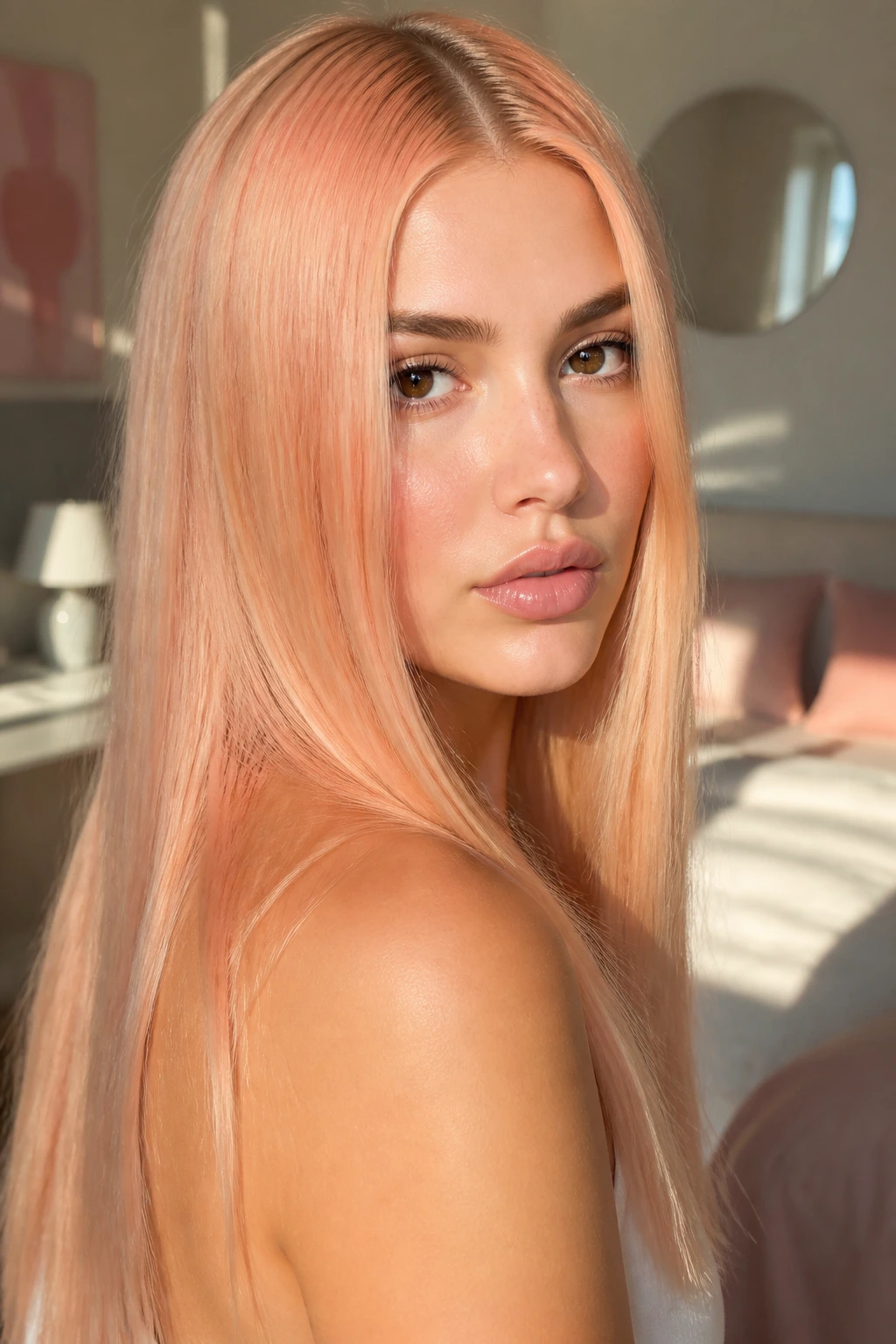
Soft peach is one of the prettiest low-commitment fashion shades for straight hair because it behaves more like a wash of color than a heavy dye job. The best version sits on blonde or very light brown hair and looks like a pale peachy veil rather than neon coral. On straight strands, that subtlety matters. You can see the tint without it taking over.
The color works because straight hair holds pastel tones in a clean sheet. There’s no curl pattern to scatter the pigment, so the shade reads softly but distinctly. Ask for a diluted direct dye or a peach gloss if you want the gentlest version. If you want more impact, go slightly warmer at the ends and keep the roots creamy.
This is a good choice if you like playful color but don’t want something that clashes with every outfit you own. It feels fresh, and yes, a little fragile in the best way.
20. Black Cherry Shine
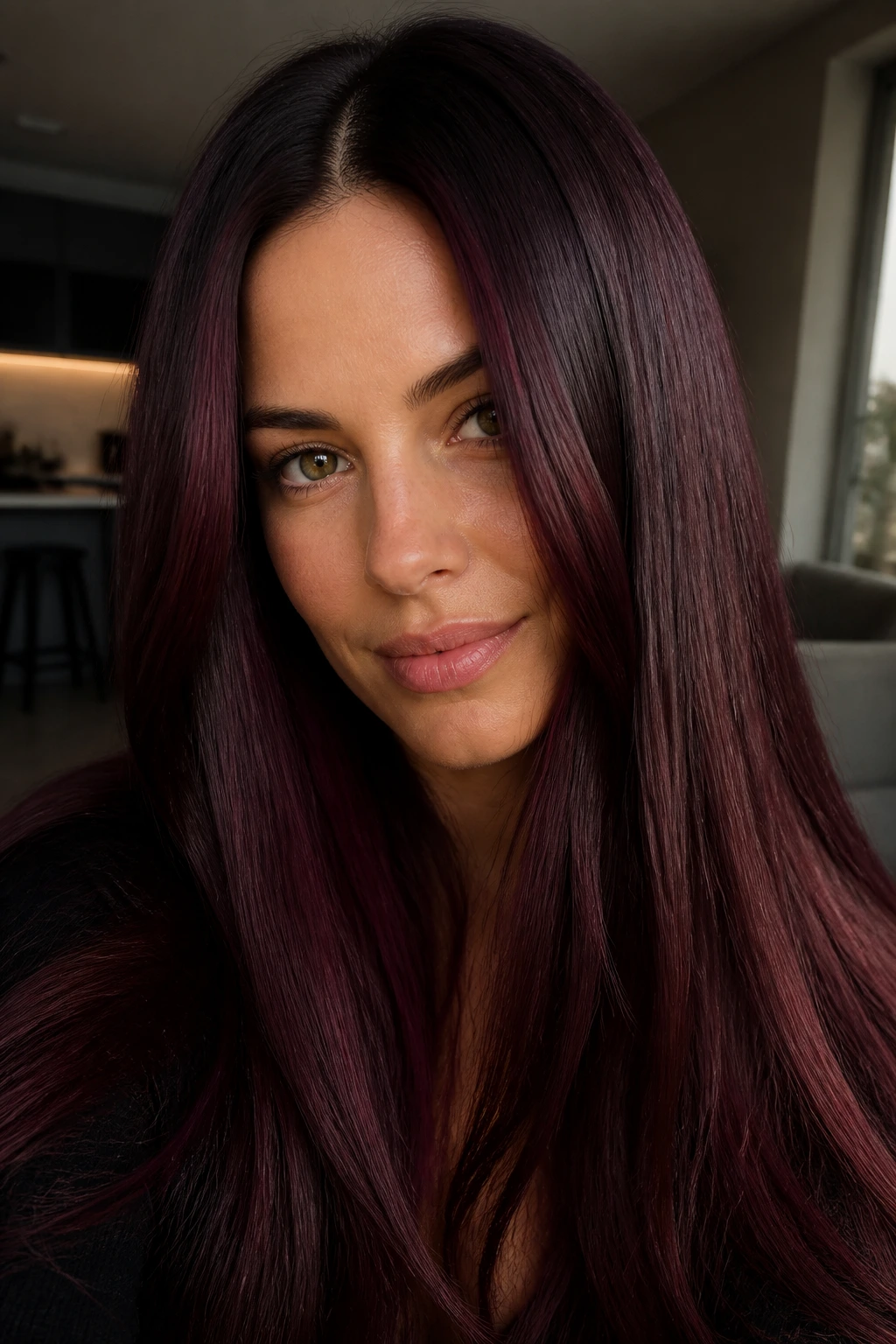
Black cherry is what happens when deep brunette gets a red gloss with a little attitude. The color stays dark enough to feel wearable, but the cherry tone blooms when light hits it. Straight hair shows that shift beautifully because the finish is uninterrupted from root to tip.
This is a clever shade if you’re drawn to red but don’t want to go fully copper or burgundy. It has the richness of a dark brunette and the edge of a wine-red reflect. On straight hair, the shine is the thing. You want the surface to be polished so the cherry tones appear and disappear as you move.
It’s also one of the nicer options for long straight hair that can sometimes read heavy. The red notes lighten the visual weight without making the hair pale. If your natural base is dark, this shade gives you color without a dramatic grow-out line.
21. Mocha Ombré from Root to Tip
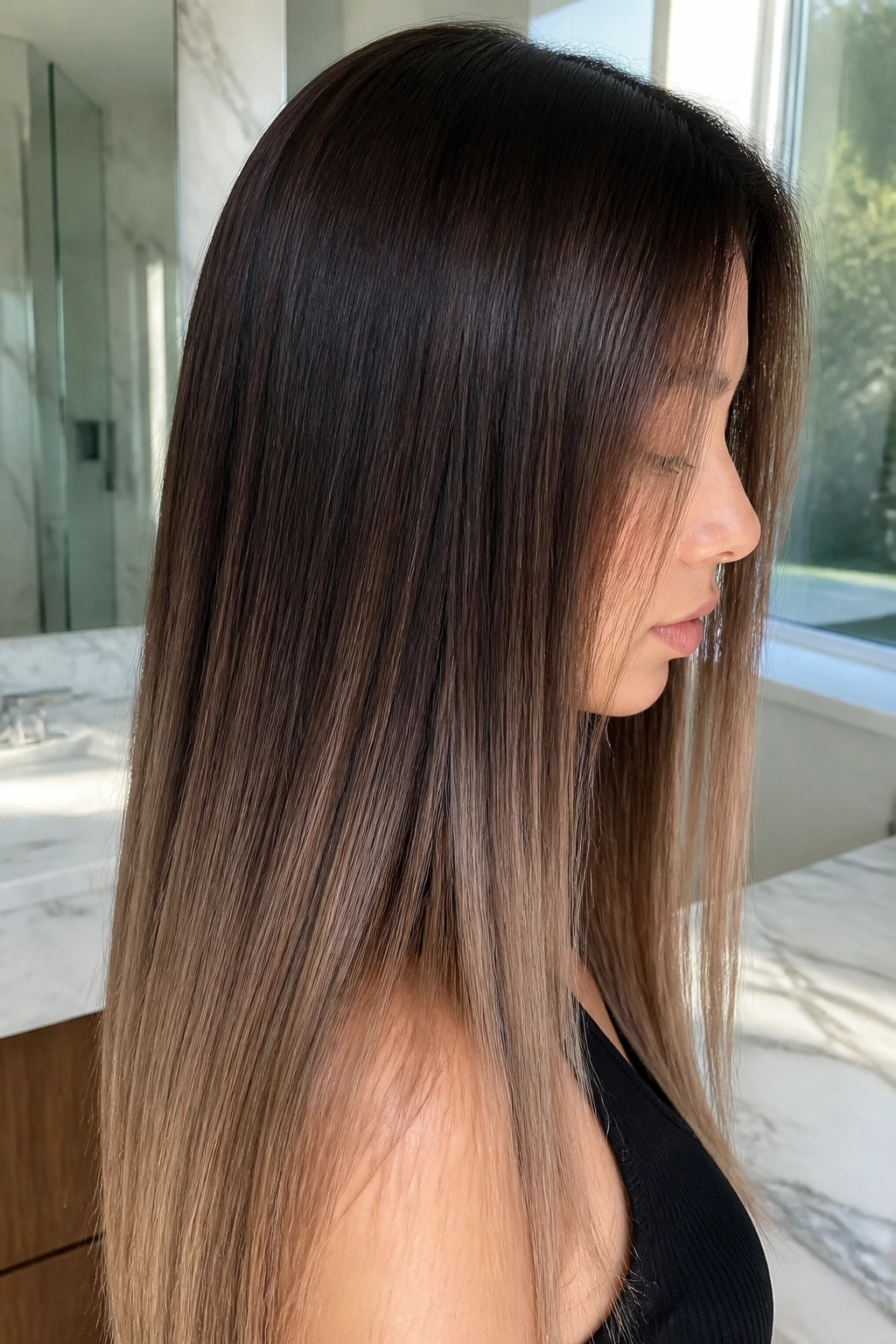
Mocha ombré is subtler than the word ombré makes it sound. Think deep coffee root, softened mid-lengths, and a slightly lighter mocha end that stays in the brunette family. On straight hair, that long fade gives the length some shape, which is useful when the cut itself is simple.
The best mocha ombré doesn’t look like the ends were forgotten. It looks planned, with the lightening kept close enough to the base that the change feels smooth. Straight hair can make a bad ombré look blocky, so the transition has to be thoughtful. Not dramatic. Thoughtful.
This shade is excellent if you want dimension without blonde maintenance. It gives the eye a place to travel down the hair, and on straight lengths that’s a real advantage. The color feels warm, soft, and polished without being fussy.
22. Sandy Beige with Seamless Babylights
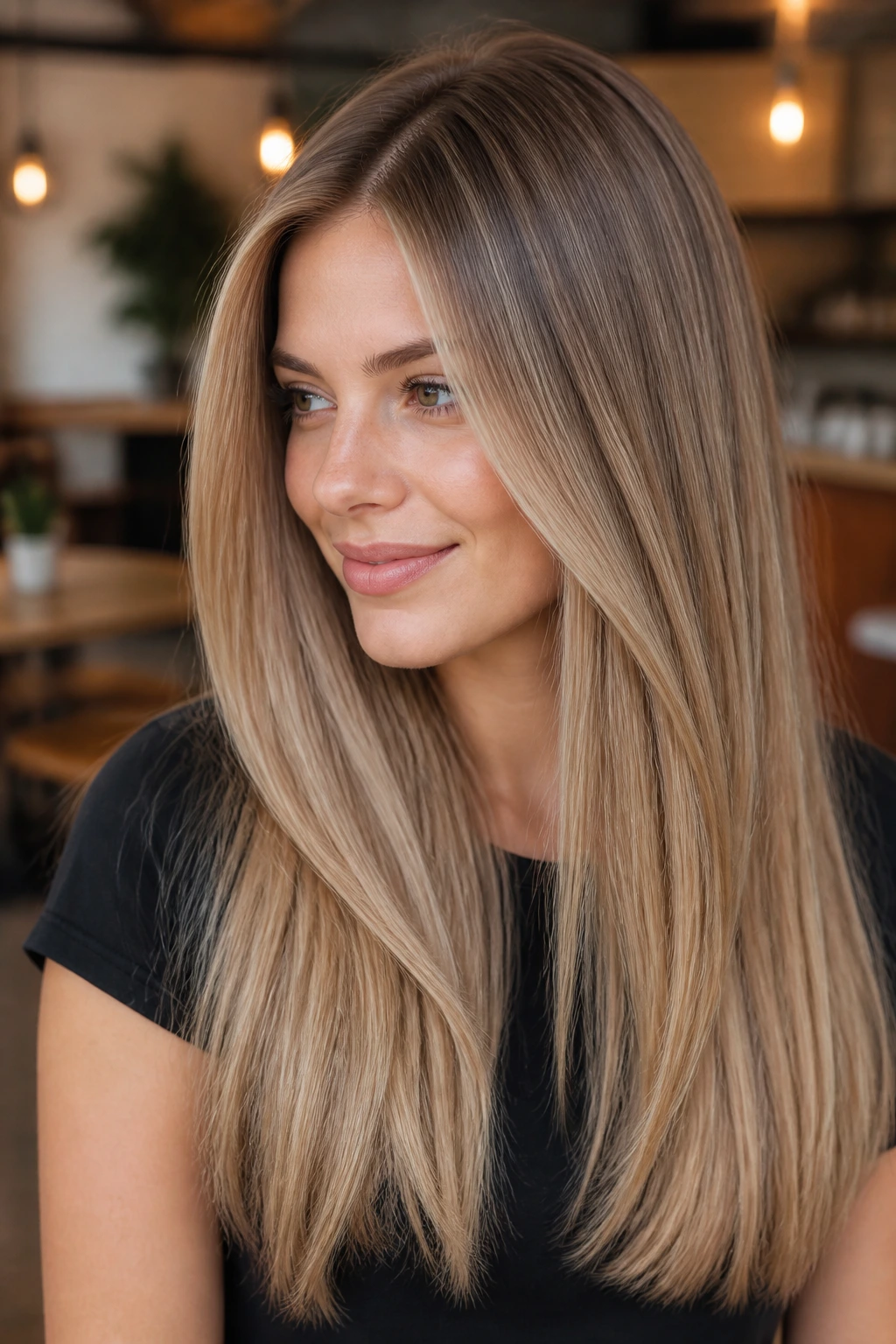
Sandy beige is the kind of color that quietly makes straight hair look expensive. It’s neutral, sun-soft, and low contrast, which means the highlights blend into the base instead of sitting on top of it. The babylights are fine enough to create texture without ever turning stripy.
This look works especially well if your hair is medium blonde or light brunette and you want something that feels lived-in rather than freshly foiled every six weeks. The beige tone keeps the blonde side from going icy, and the sandy note gives a little warmth so the whole thing doesn’t wash out your face.
It’s also one of the easiest shades to wear with a blunt cut because the color adds movement where the haircut doesn’t. On straight hair, that can be exactly what you need. Clean lines. Soft tone. No drama unless you want it.
Why Straight Hair Makes Color Placement So Obvious
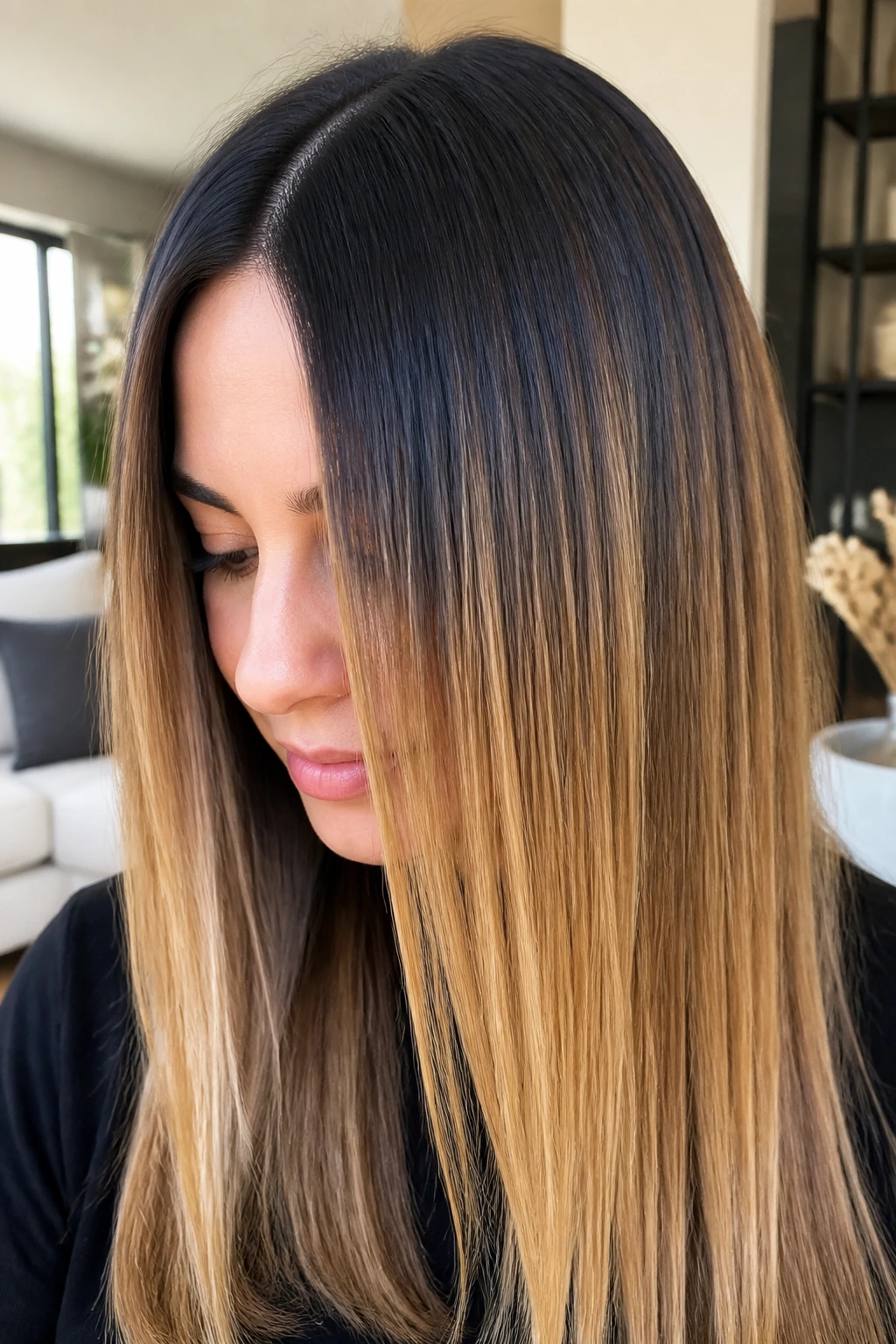
Straight hair doesn’t blur the edges for you. That’s the whole point, and the whole headache. A balayage sweep that looks soft on waves can look blocky on straight lengths if the painted section is too wide or the transition too abrupt. On the upside, when the placement is good, you can actually see it. The gloss, the depth, the fine shifts in tone—straight strands show all of it.
That means color planning matters more than people think. A center part can expose the root line. A blunt cut can make the ends look heavier and make the color feel denser. Long layers can help, but they don’t fix bad placement. The smartest straight-hair color ideas use a blend that still looks good when the hair is lying flat, because that’s usually how it spends most of its life.
Heat styling plays into this too. A flat iron can make a tone look shinier, but it can also make brass show faster if the hair is already stressed. So the finish has to be chosen with the maintenance in mind. A color that only works on curled hair is the wrong color for straight hair. Plain and simple.
How to Choose a Shade That Won’t Look Flat
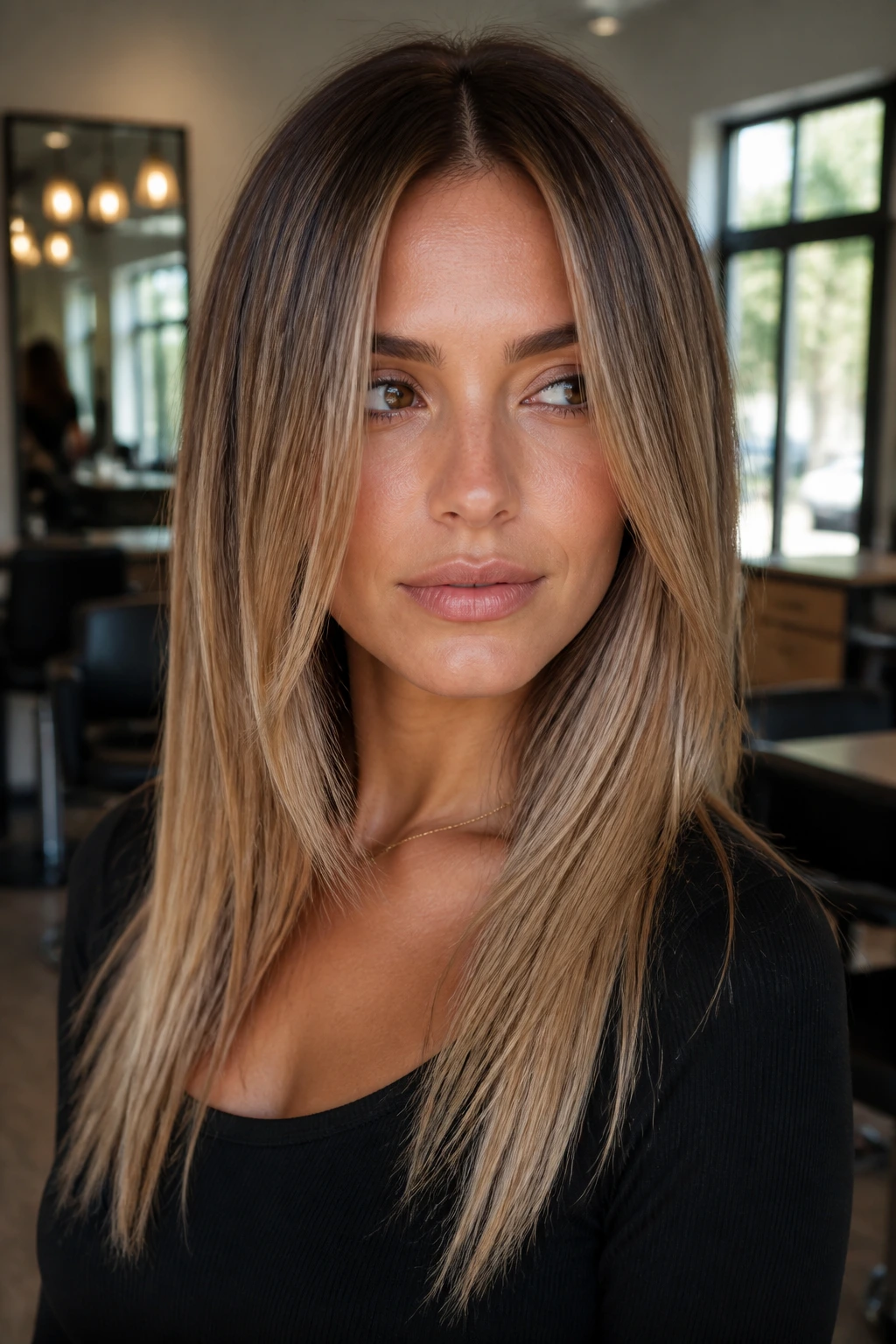
Start with your natural level, not a Pinterest photo. If your base is a level 4 brunette, jumping straight to pale blonde means more upkeep and a harsher grow-out. If your base is a level 7 dark blonde, a beige blonde, champagne blonde, or soft bronde will usually look cleaner and need less correction. The hair’s starting point matters more than the fantasy shade on your mood board.
Undertone matters just as much. Warm skin often likes honey, copper, cinnamon, black cherry, and golden bronde. Cooler skin usually plays well with mushroom brown, beige blonde, silver blonde, plum, and smoky brunette. Neutral skin gets to steal from both sides, which is rude but convenient. The real test is whether the color seems to wake your face up or drag it down.
Also think about your wardrobe and your usual makeup. If you wear peach blush, warm nude lipstick, and gold jewelry, icy silver may feel disconnected. If you live in black, charcoal, and silver accessories, copper can be a striking contrast. Straight hair shows the color clearly enough that it should feel like part of your look, not a costume change.
How to Ask for the Look Without Getting Stripey Highlights
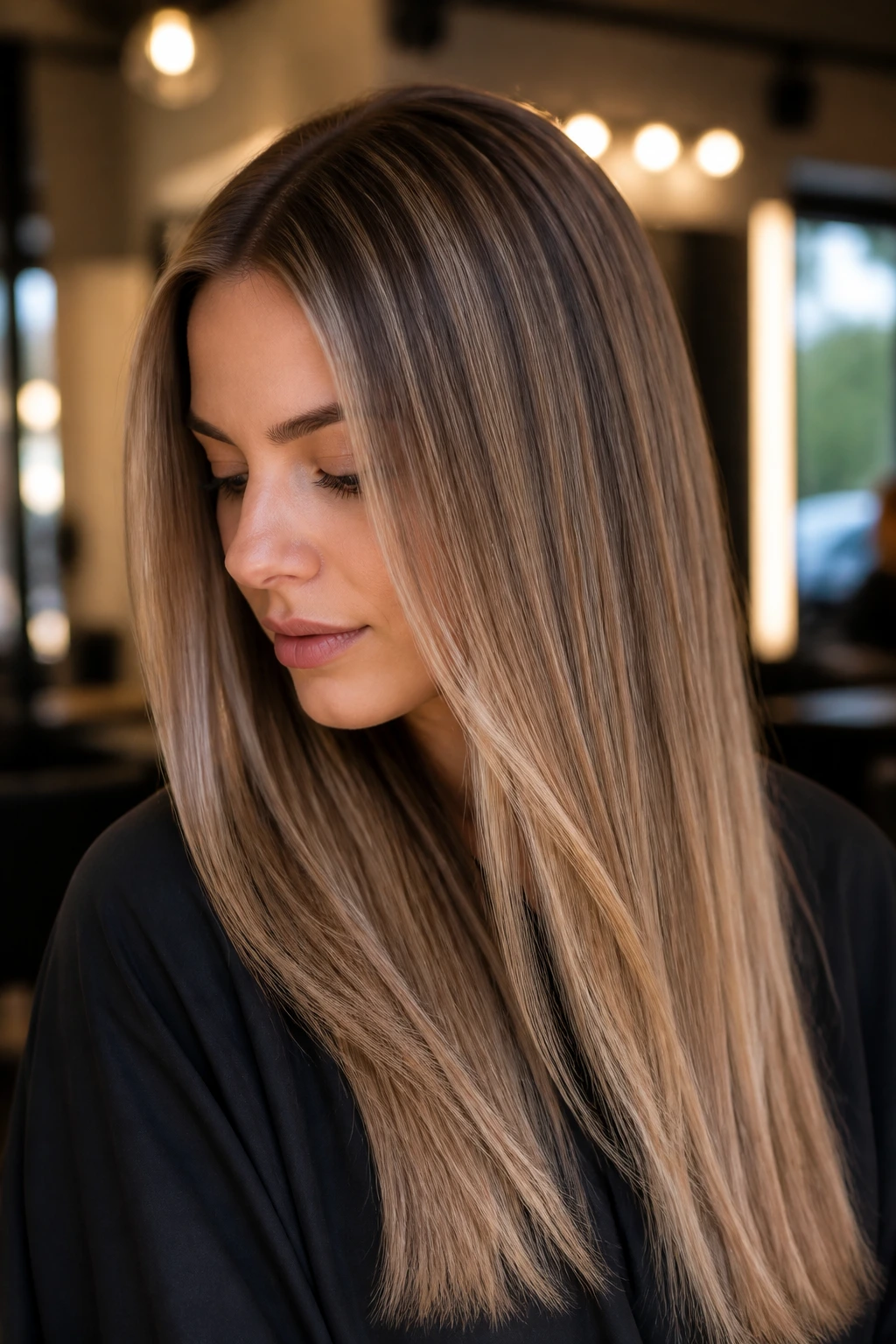
Bring photos, but bring the right photos. A screenshot of the final color is useful; a picture of somebody with wavy hair and salon lighting is less useful than people think. Ask your colorist what the placement would look like on straight hair, because the same foil pattern can behave differently once the hair is flat-ironed and parted down the middle.
Use words that describe the finish, not only the shade. Say you want soft contrast, fine ribbons, a shadow root, or a glossy melt if that’s what you mean. If you say “blonde highlights” and stop there, you may get chunks. If you say “thin babylights that still look soft when the hair is straight,” you’re steering the result in a much better direction.
Bring up your styling habits too. If you air-dry straight or wear a hot tool every day, your colorist needs to know. That changes how porous your hair gets, how quickly tone fades, and whether you should lean lighter or stay deeper. Little detail. Big difference.
Essential Tools and Products for Straight Hair Color
- Color-safe shampoo: Choose a sulfate-free formula so the tone doesn’t wash out too fast, especially on reds, coppers, and pastels.
- Deep conditioner or mask: Straight hair shows dryness at the ends first, and a weekly mask keeps the surface smooth instead of straw-like.
- Heat protectant spray: Flat irons and blow dryers can rough up the cuticle fast; use a protectant before every hot tool session.
- Purple shampoo or blue shampoo: Use purple for blonde and silver tones, blue for brunette brass; don’t overdo it or the hair can look dull.
- Gloss or toner refresh product: A clear or tinted gloss helps keep shine on straight hair because the reflective surface is part of the look.
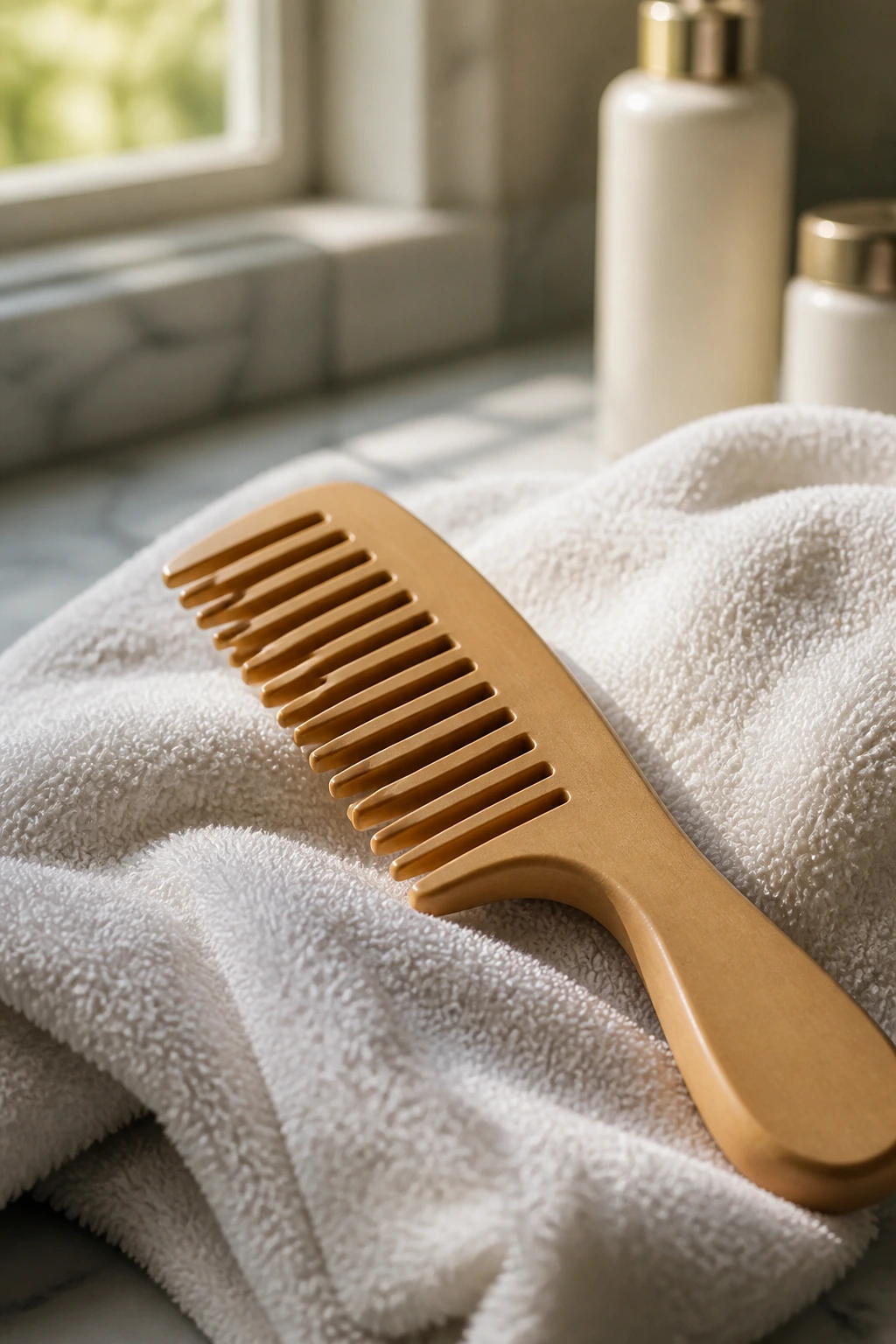
- Wide-tooth comb: Helps distribute conditioner without roughing up the hair while it’s wet.
- Microfiber towel or soft cotton T-shirt: Less friction means less frizz and less breakage, which matters when the color needs a smooth finish.
- Boar bristle or mixed-bristle brush: Useful for polished blowouts and for distributing scalp oils down the length of straight hair.
- Sectioning clips: Fine placement is easier when you can keep the hair organized during styling and root touch-up work.
- Shower filter, if your water runs hard: Hard water can leave blonde, silver, and copper tones looking muddy faster than you’d expect.
Keeping Straight Hair Color Clean Between Appointments
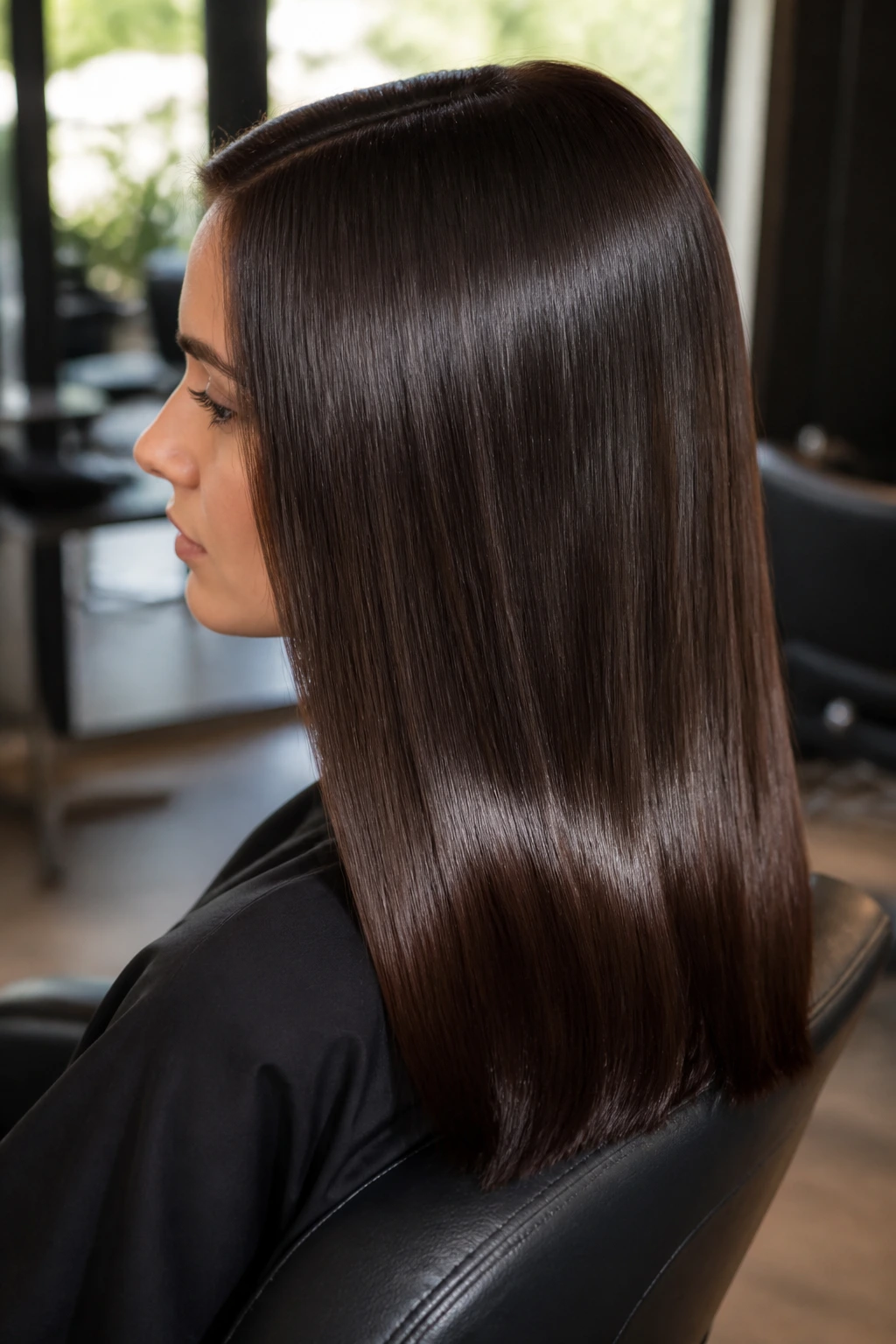
A good color on straight hair can go a long time if you stop fighting it. Washing less often helps, but the type of washing matters too. Use lukewarm water, not hot water, because heat opens the cuticle and lets pigment slip out faster. And if you’re wearing silver, blonde, copper, or red, that matters a lot.
Gloss schedules are worth paying attention to. A brunette glaze can often stretch a bit longer than vivid red or pastel tones, but once straight hair starts to look dull, it shows fast. For blondes and silvers, a toner refresh every 4-8 weeks is common. For brunettes with caramel or caramel-copper movement, a gloss every 6-10 weeks keeps the depth from fading into mush.
Practical upkeep that actually helps
- Wash 2-3 times a week if your scalp allows it.
- Use dry shampoo on the roots, not the lengths, so you don’t cloud the finish.
- Trim every 8-12 weeks if you wear blunt ends; split ends make color look tired fast.
- Lower the flat iron heat to the lowest setting that still smooths your hair. Burnt ends don’t shine.
- Protect the hair from sun and pool water if you’re wearing blonde, copper, or silver; those shades fade and shift quickly.
Straight hair color looks best when the surface stays smooth. That’s the whole game.
Common Mistakes That Make Straight Hair Color Look Flat
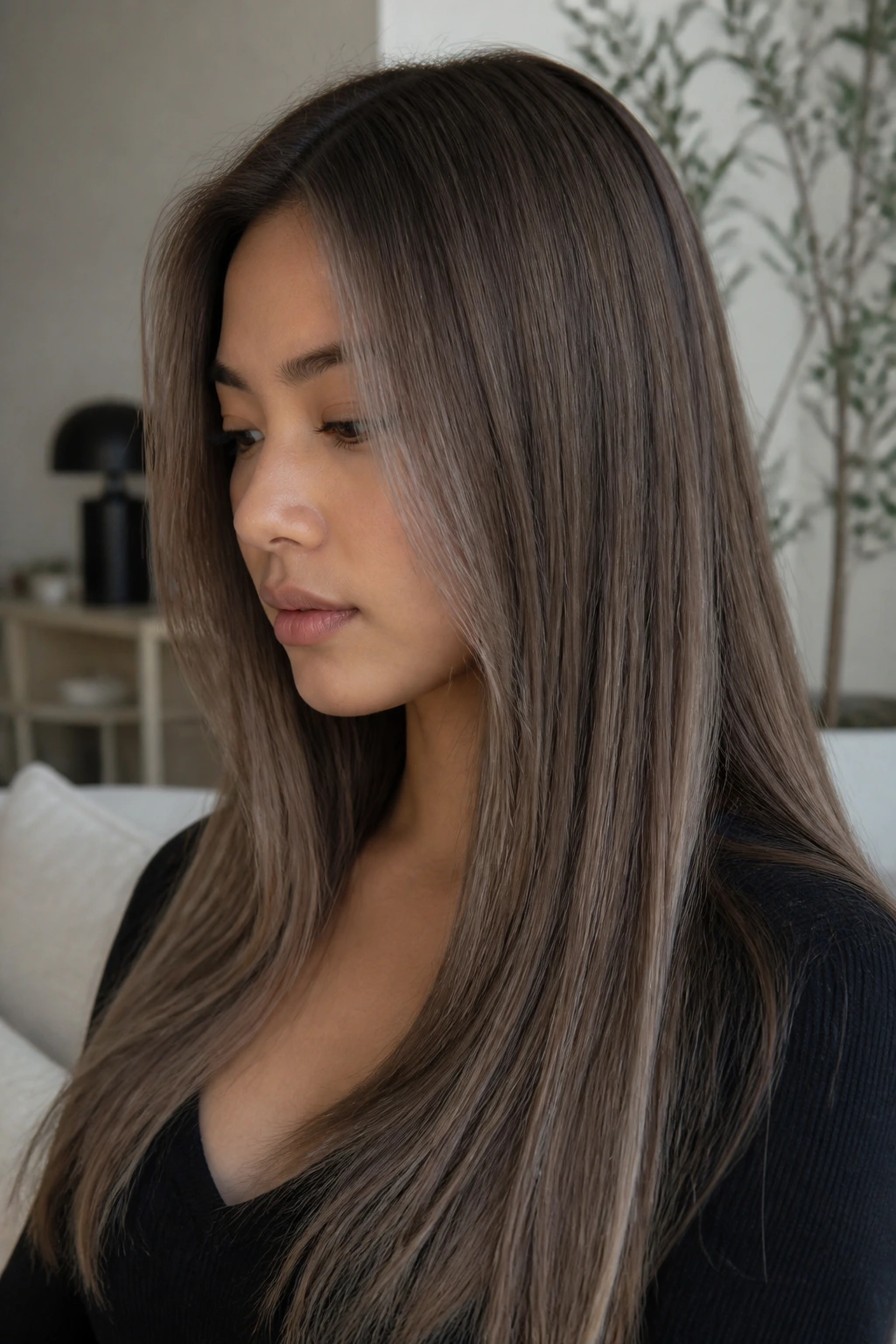
The first mistake is too much contrast in the wrong place. Thick blonde stripes or high-contrast money pieces can look harsh on straight hair because the eye reads every boundary. The fix is narrower sections, softer blending, and a root shadow that gives the brighter pieces somewhere to settle.
Second, people ignore the cut. A color built on a lived-in wave photo can look totally different on a blunt one-length cut. If the haircut is sharp, the color often needs more blend; if the haircut is soft, you can usually carry a little more contrast. Color and cut are not separate jobs. They lean on each other.
Third, brass is left too long. On straight hair, warm fade shows quickly, especially in blonde, beige, and cool brunette shades. Purple or blue shampoo can help, but the real fix is toning before the hair goes too far. Waiting until it looks orange usually means a stronger correction is needed.
Fourth, people over-style fragile color. Flat ironing already-lightened hair every day at high heat turns polished into brittle. The texture gets rough, and straight hair tells on roughness immediately. Use protectant, lower the temperature, and give the hair an off day now and then.
Fifth, the base isn’t respected. Going too light too fast on dark hair can leave the ends porous and the color patchy. A slower lift with a better gloss often looks richer than a rushed blonde that needs constant repair.
Variations and Low-Commitment Alternatives
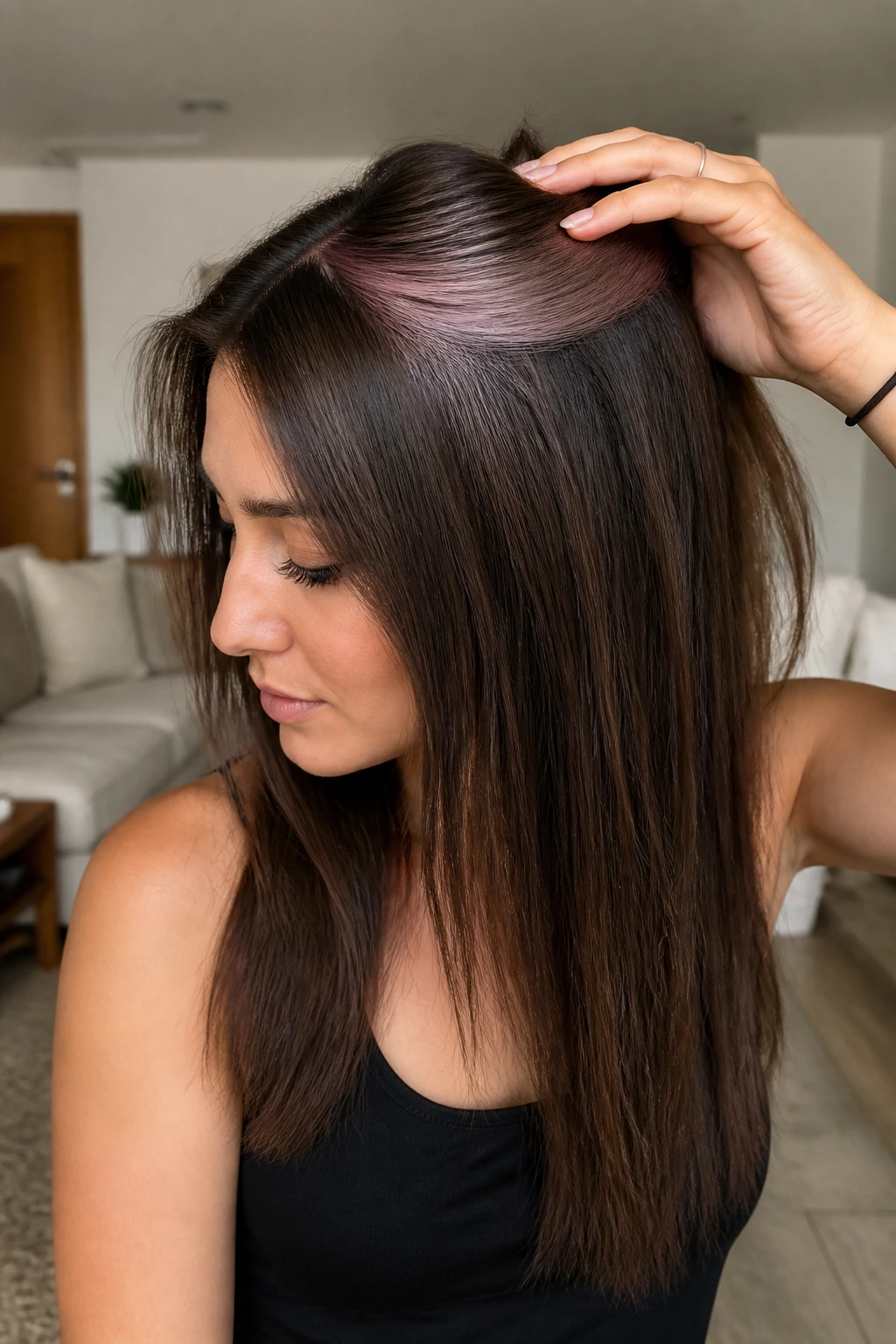
Gloss-Only Brunette: If you want a change without highlights, ask for a deep brunette gloss in espresso, mocha, or cinnamon. Straight hair shows shine beautifully, so a gloss can change the whole mood without the upkeep of lightening.
Half-Head Brightening: Keep the bottom and back deeper, then brighten only the top layer and face frame. On straight hair, that gives you movement where people actually look first, and it cuts down on salon maintenance.
Pastel Underlayer: Try peach, lavender, or rose under the top section if you like a flash of color without a full commitment. Straight hair reveals the hidden panels in clean slices when you tuck it back or pull it half up.
Cooler Brunette Shift: If your hair pulls too warm, move into mushroom brown, smoky bronde, or ash brunette with lowlights. The straight finish makes cool tones look crisp, not muddy, as long as the formula isn’t too dark.
Dimensional Blonde Without Bleach Burnout: Ask for babylights, beige toner, and a root shadow instead of aggressive full-head lightening. The result looks softer on straight hair and usually grows out with less obvious regrowth.
Frequently Asked Questions
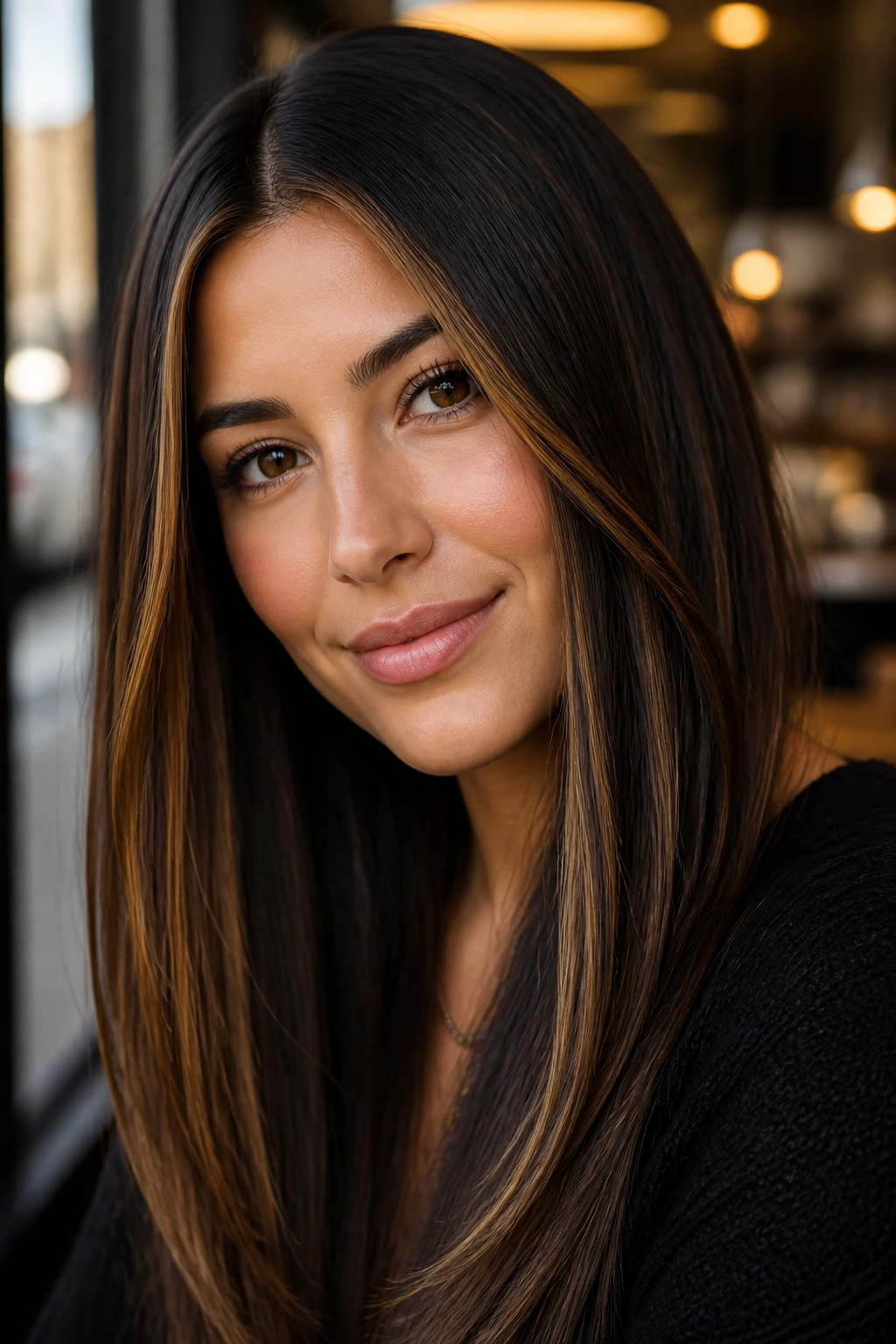
Which hair color looks best on straight hair if I want low maintenance?
Soft brunette shades with glossing, mushroom brown, smoky bronde, and beige blonde with a shadow root tend to be the easiest to live with. They grow out more cleanly on straight hair because the blend stays soft instead of turning into a harsh line.
Can straight hair carry chunky highlights, or should I avoid them?
It can carry them, but the placement has to be deliberate. Chunky highlights on straight hair work best when the contrast is part of the design, not an accident; otherwise they can look stripey fast. Fine ribbons and babylights usually age better.
What hair color makes straight hair look thicker?
Deeper brunettes, espresso glosses, and reverse balayage can make straight hair look fuller because they add visual weight and depth. A blunt cut plus a rich, glossy shade often gives more thickness than a lighter color with too much contrast.
Is copper hard to maintain on straight hair?
Yes, a bit. Copper and red tones fade quickly, and straight hair shows the fading sooner because the surface is so even. A color-depositing conditioner and regular gloss appointments help keep the tone from washing out into dull brown.
Will blonde make straight hair look flat?
It can if the blonde is too uniform and too light. Beige blonde, champagne blonde, or sandy bronde with fine babylights keeps the dimension alive. A shadow root also helps the color hold shape.
What should I avoid if my straight hair is fine?
Avoid heavy block color and wide highlights that sit only on the top layer. Fine hair benefits from softer placement and a tone that adds depth at the base. Over-lightened ends can make it look thinner than it is.
Can I do fashion colors on straight hair without a full bleach job?
Sometimes. Peekaboo panels, soft peach tints on blonde hair, and rose gold overlays can work with partial lightening or a pre-lightened base. Dark hair usually needs some lift first, but you don’t always need a full-head bleach session.
How do I keep my straight hair from turning brassy?
Use the right toning shampoo for your color family, wash with lukewarm water, and avoid over-washing. Brass tends to show most on straight hair because the finish is so even, so regular glossing is more effective than trying to scrub the problem away.
Should I choose warm or cool tones for straight hair?
Choose the tone that fits your skin and your wardrobe, then make sure the placement is soft enough for the cut. Warm shades like copper, honey, and black cherry feel richer on some faces, while cool shades like mushroom brown, silver, and smoky bronde look sharper on others.
Straight Hair Loves Clean Color
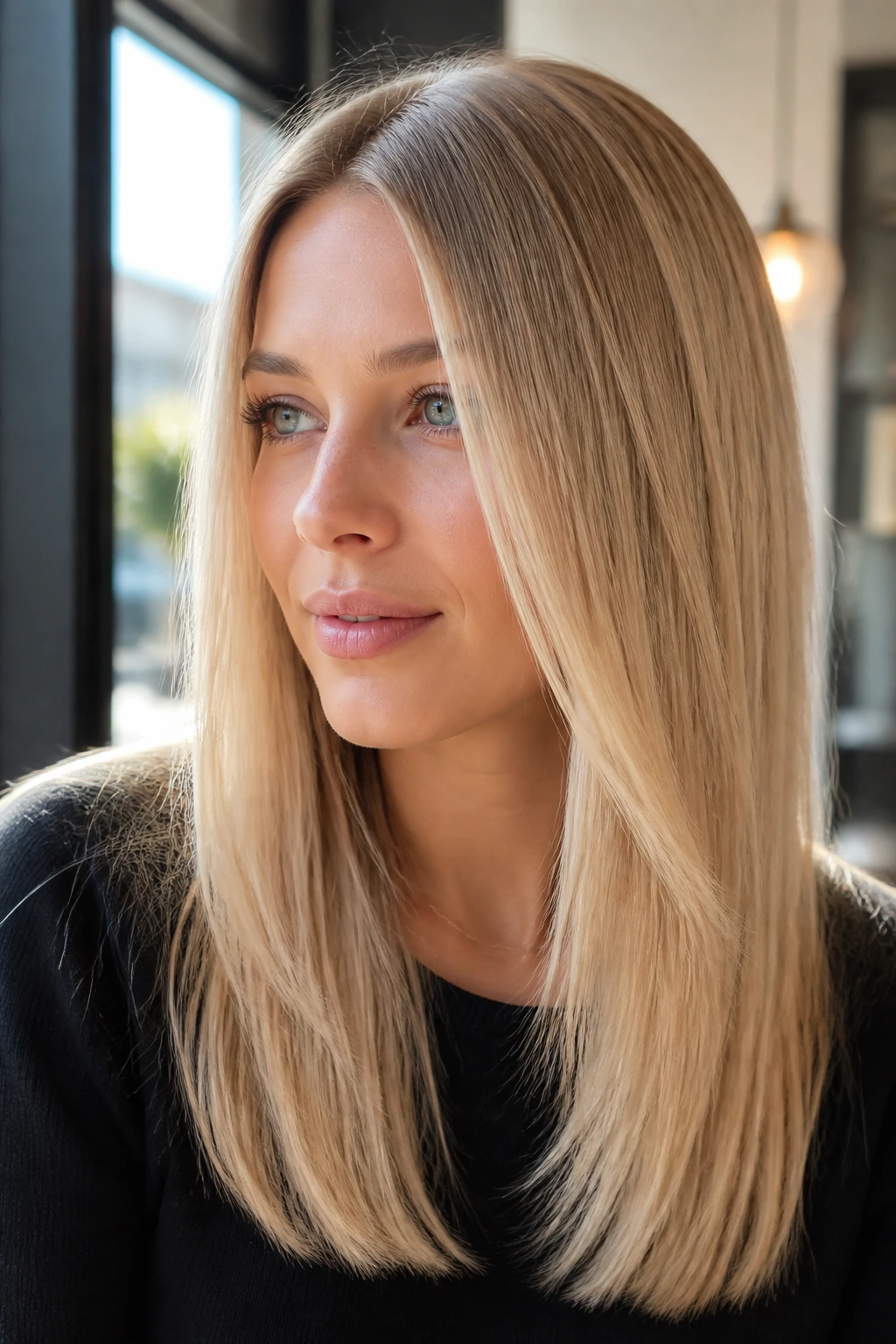
Straight hair is not forgiving, but that’s half the fun. When the placement is smart, the tone is balanced, and the finish is glossy, the color looks crisp in a way textured hair can’t quite duplicate. A good brunette melt looks smoother. A beige blonde looks cleaner. A copper gloss looks warmer. The hair doesn’t need extra motion to sell the shade.
So the smartest move is usually the simplest one: match the color to the way the hair actually falls. If you wear it sleek, choose a blend that still looks natural in a flat mirror. If you like a blunt cut, let the color add the movement. If you want boldness, make the contrast intentional and keep the edges clean. That’s where straight hair color really starts to work.
A shade that holds up on straight strands will usually look better in everyday life, not just in the salon chair. And that’s the version worth chasing.
