



Ombre on medium-length hair has a useful trick up its sleeve: it can look polished without asking you to babysit your roots every three weeks. The darker base keeps the grow-out calm, and the lighter ends catch on a lob, a collarbone cut, or soft layers in a way that long hair often can’t. On this length, the gradient has room to breathe.
That’s why ombre hair looks for medium length hair stay interesting when a lot of other color jobs start to feel fussy. The transition sits in a sweet spot. It’s low enough to feel deliberate, high enough to show movement, and short enough that the ends don’t get stringy or see-through if the colorist keeps the lift under control.
I’m especially fond of medium-length ombre when the blend starts somewhere around the cheekbone and softens through the last third of the hair. That little shift matters. Put it too high and it can look stripy; too low and the whole thing disappears when you tuck your hair behind your ear. The good versions have shape, shine, and a clear reason for being there.
Why These Ombre Looks Earn Their Keep
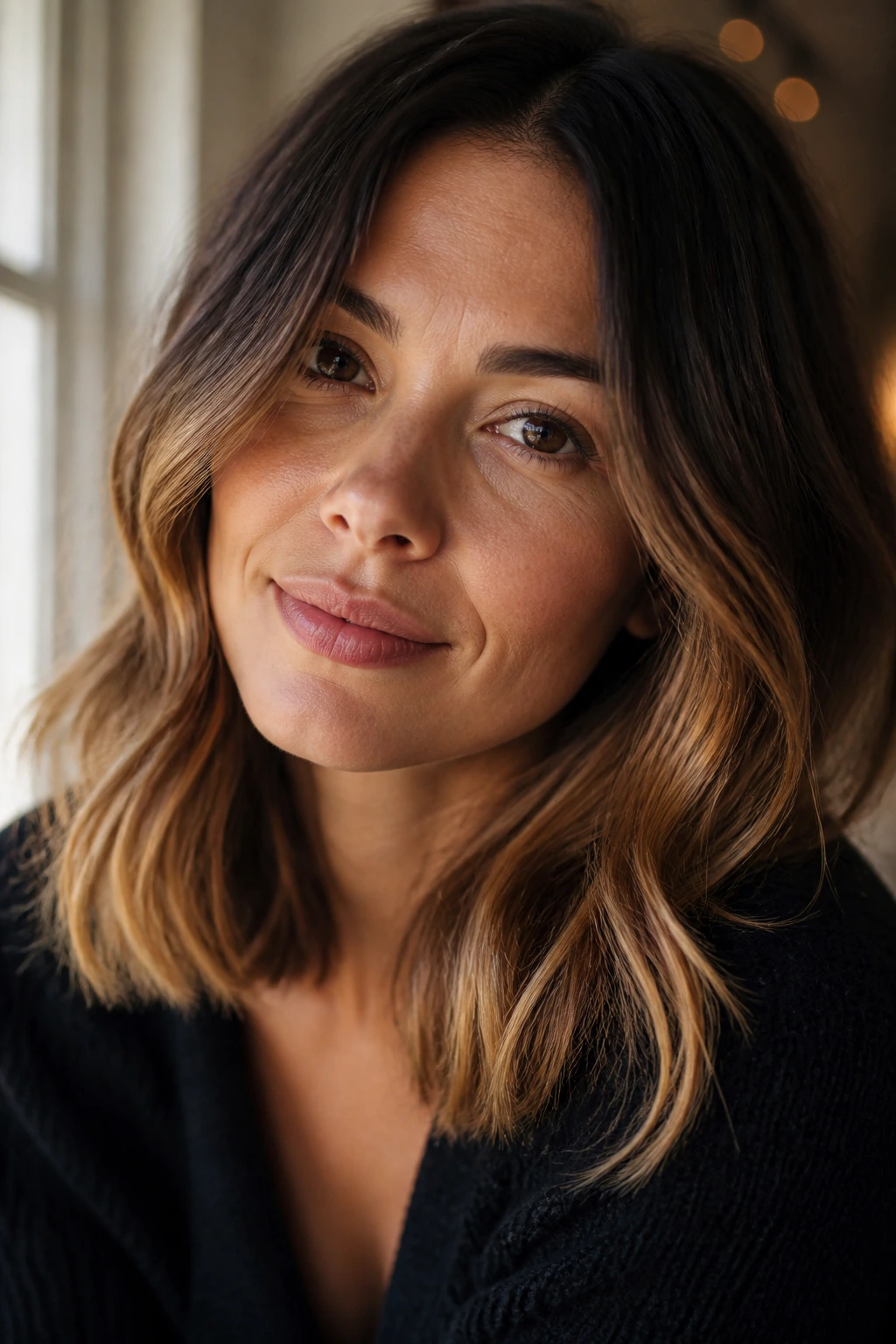
- Soft Grow-Out: The darker root gives you a cleaner, slower fade, so the color doesn’t turn into a hard line the minute your hair starts growing.
- Medium-Length Sweet Spot: A collarbone cut shows the shift between root and end without needing waist-length hair to make the point.
- Easy to Tune Warm or Cool: The same ombre structure can go caramel, ash beige, copper, silver, or blue-black, depending on what your base wants.
- Works With Movement: Loose bends, waves, and even a blunt blowout make the gradient visible in a way that flat color never quite does.
- Salon-Friendly or Softer DIY: Subtle root melts and glossed ends are easier to live with than a high-contrast platinum dip.
- Built for Personal Style: You can keep it natural, make it smoky, or push it into fashion color territory without changing the whole haircut.
1. Soft Cocoa to Caramel Melt
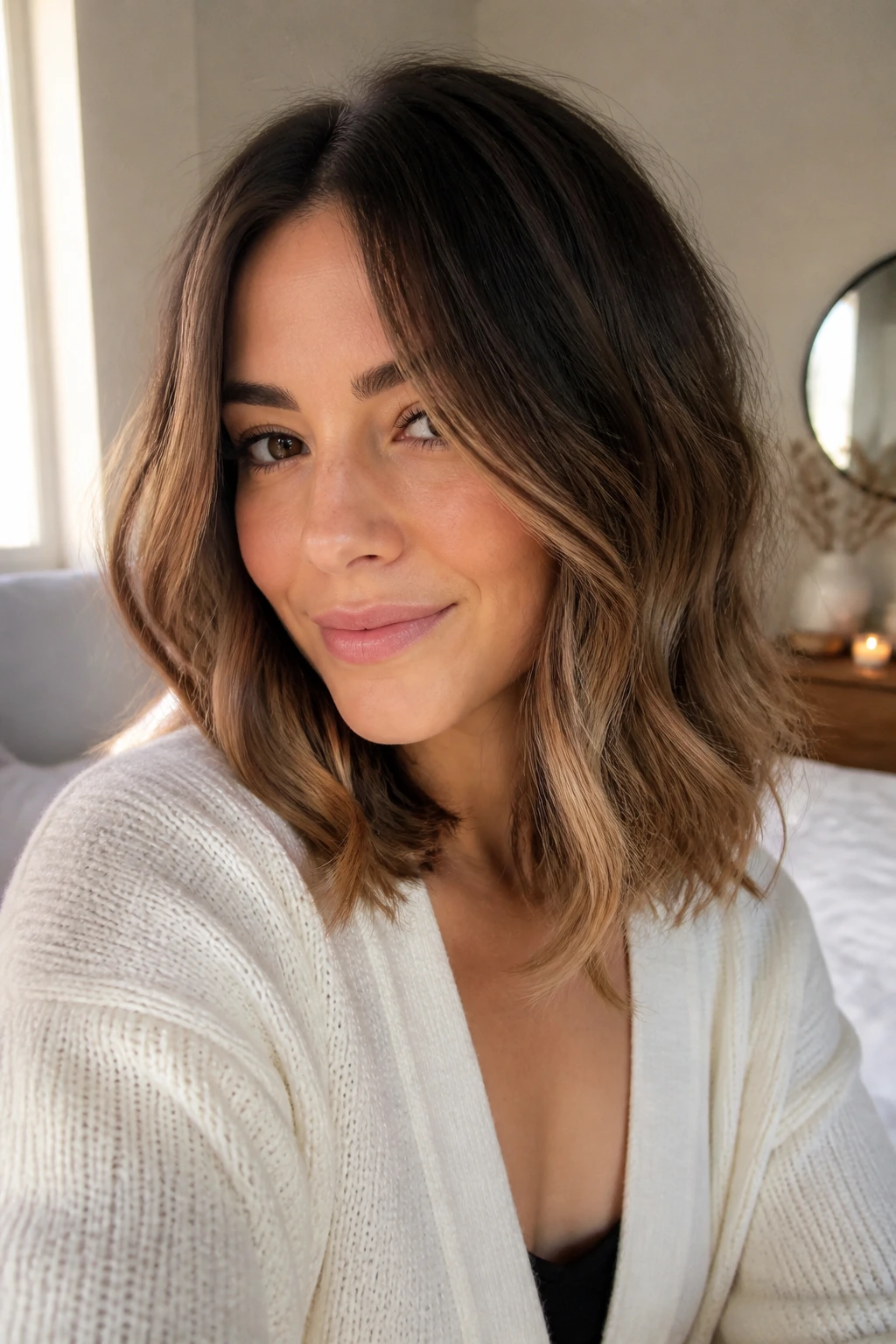
Soft cocoa at the roots fading into caramel at the ends is the kind of ombre that never shouts. It just sits there looking expensive in a quiet way, especially on a collarbone lob with a few loose bends through the bottom half. The transition should feel creamy, not stripey, and the best versions keep the lighter color a little lower so the front pieces still frame the face.
Why It Flatters Collarbone Cuts
On medium-length hair, this blend works because the darker root has enough room to stay soft while the caramel ends show from every angle. If the lighter color begins around the cheekbone and deepens toward the last 3 to 4 inches, the hair keeps its shape instead of looking over-bleached. That matters more on this length than people think.
- Best on natural brunettes around levels 4 to 5.
- Ask for a root shadow about 2 inches deep.
- Keep the caramel toned beige-gold, not orange.
- Add a loose bend with a 1.25-inch iron to show the fade.
Quick tip: If your ends are already porous, stop the lift one shade earlier and tone it warmer. Over-lightened caramel can go hollow fast.
2. Espresso to Beige Blonde
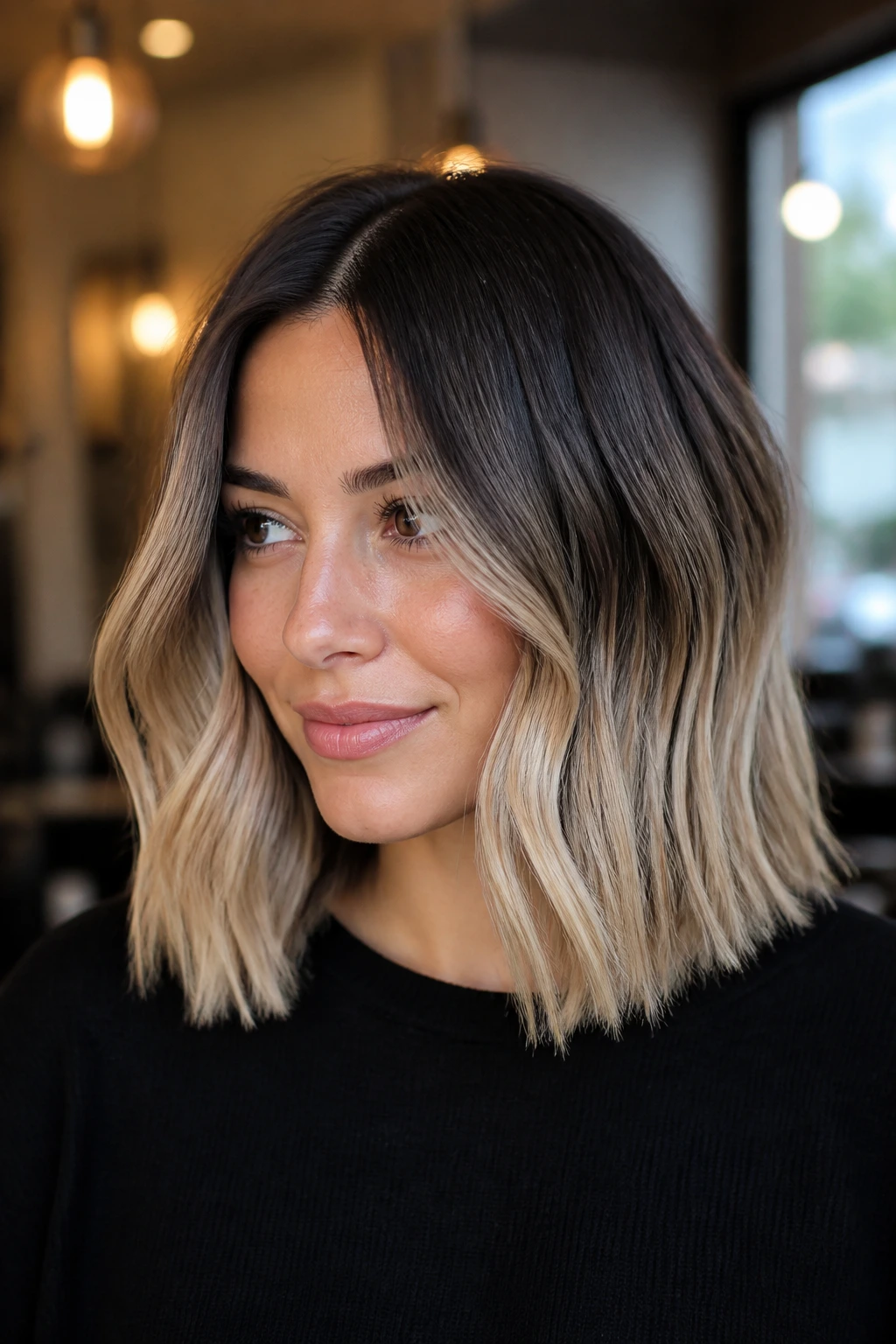
A beige-blonde finish against espresso roots is one of the cleanest ways to make medium hair look sharper without turning it into a full blonde project. The contrast is there. It’s just controlled. What makes this version work is the toner: beige, not yellow; soft, not icy.
The haircut matters here. A blunt lob keeps the ends heavy enough to hold the lighter shade, while soft face-framing layers keep the darker top from feeling too blocky. I like a slight off-center part with this one because it breaks up the vertical line and keeps the blonde from reading as one big sheet.
A straight blowout makes this ombre look sleek, but a few wide waves make the ends appear thicker. That’s the version I’d choose if your hair is fine and you’re worried about the blonde looking thin at the bottom.
3. Chestnut to Copper Glow
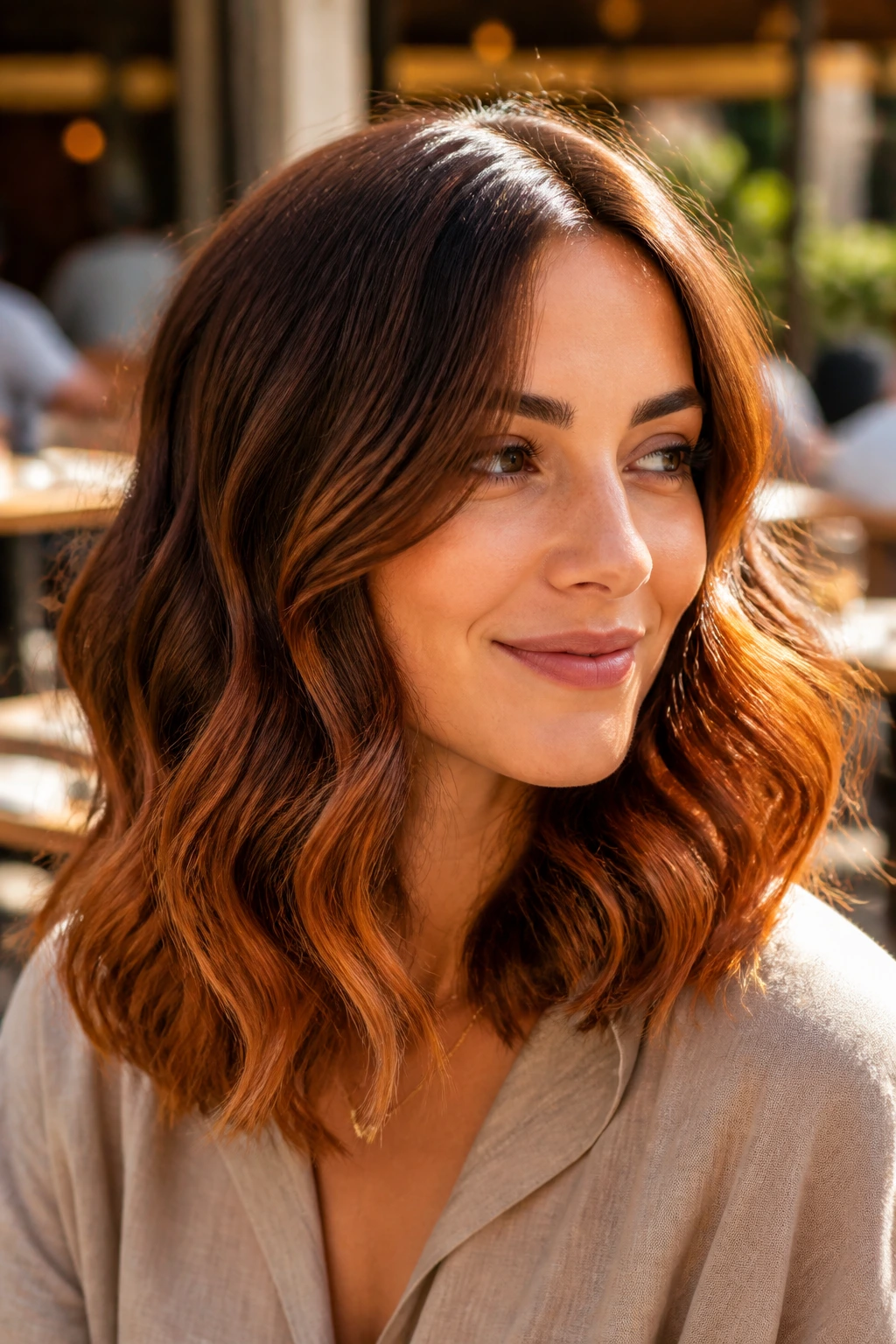
Can ombre look warm without sliding into brass? Absolutely, and chestnut fading into copper is the proof. It’s especially flattering on medium-length cuts because the copper sits close enough to the face to throw light onto the skin, but the chestnut root keeps the whole thing grounded.
How to Wear It
This look needs movement. Not tiny curls. Bigger bends. If the hair is too curled, the copper can get noisy and the color stops reading as a fade. A gloss every 6 to 8 weeks keeps the copper from drying out into a muddy brick tone, which is where warm reds go if nobody pays attention to them.
If your natural color is already around level 5 or 6, this is a very workable ombre. If it’s darker, the lift should stay controlled so the copper doesn’t go neon.
4. Mushroom Brown to Ash Blonde
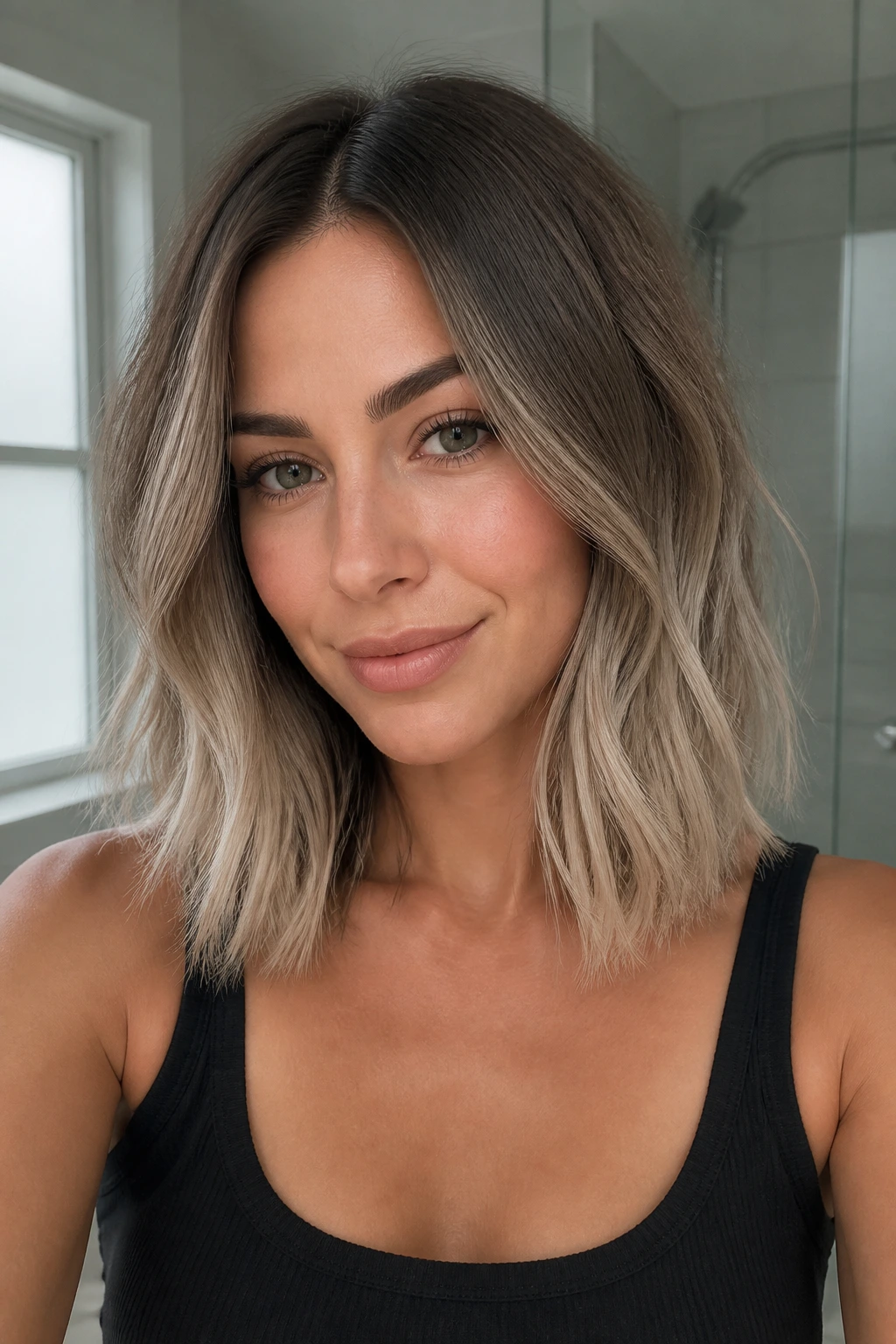
Some people want ombre, but they do not want warmth. That’s where mushroom brown into ash blonde earns its keep. The brown root has a cool, taupe edge, and the blonde ends stay beige enough to avoid that hard silver-platinum look that can be brutal on medium hair.
The key detail is balance. Too much ash and the hair starts looking dusty. Too little and you’re right back in warm territory. A level 5 mushroom root drifting into a level 8 ash-blonde end gives you that cool, smoky gradient that looks especially good on blunt lobs and straightened hair.
- Ask for a neutral-to-cool toner, not a white-blonde finish.
- Use purple shampoo sparingly, about once every 3 to 4 washes.
- Keep the lightest pieces below the chin so the cut doesn’t look hollow.
- This one plays nicely with silver jewelry and cool-toned makeup.
5. Dark Brunette to Honey Ends
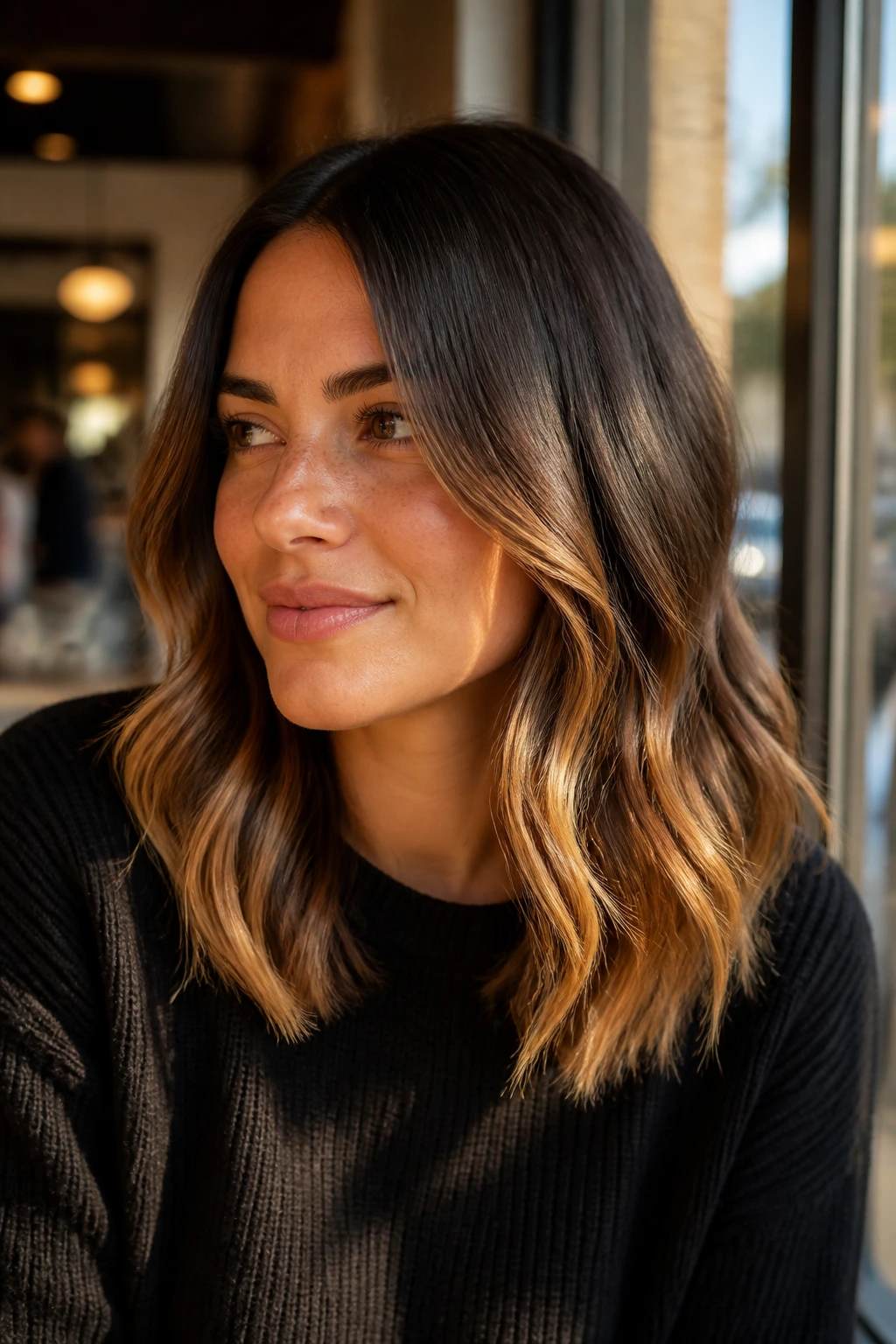
Dark brunette melting into honey ends has a sun-warmed feel that medium-length hair wears very well. The ends glow, but the darker top keeps it from looking overworked. On a cut that hits the shoulders, the honey catches the outer curve of the hair and makes the whole style look fuller than it really is.
I like this version on layered hair more than on a super blunt line. Layers let the honey show in little flashes instead of one heavy block at the bottom. If your hair is thick, ask the colorist to keep the transition soft and a little diffused so the ends don’t feel heavy.
This is one of those looks that looks even better after a day or two. The color settles, the cut bends a little, and the honey stops looking freshly dyed.
6. Black Ink to Mocha Smoke
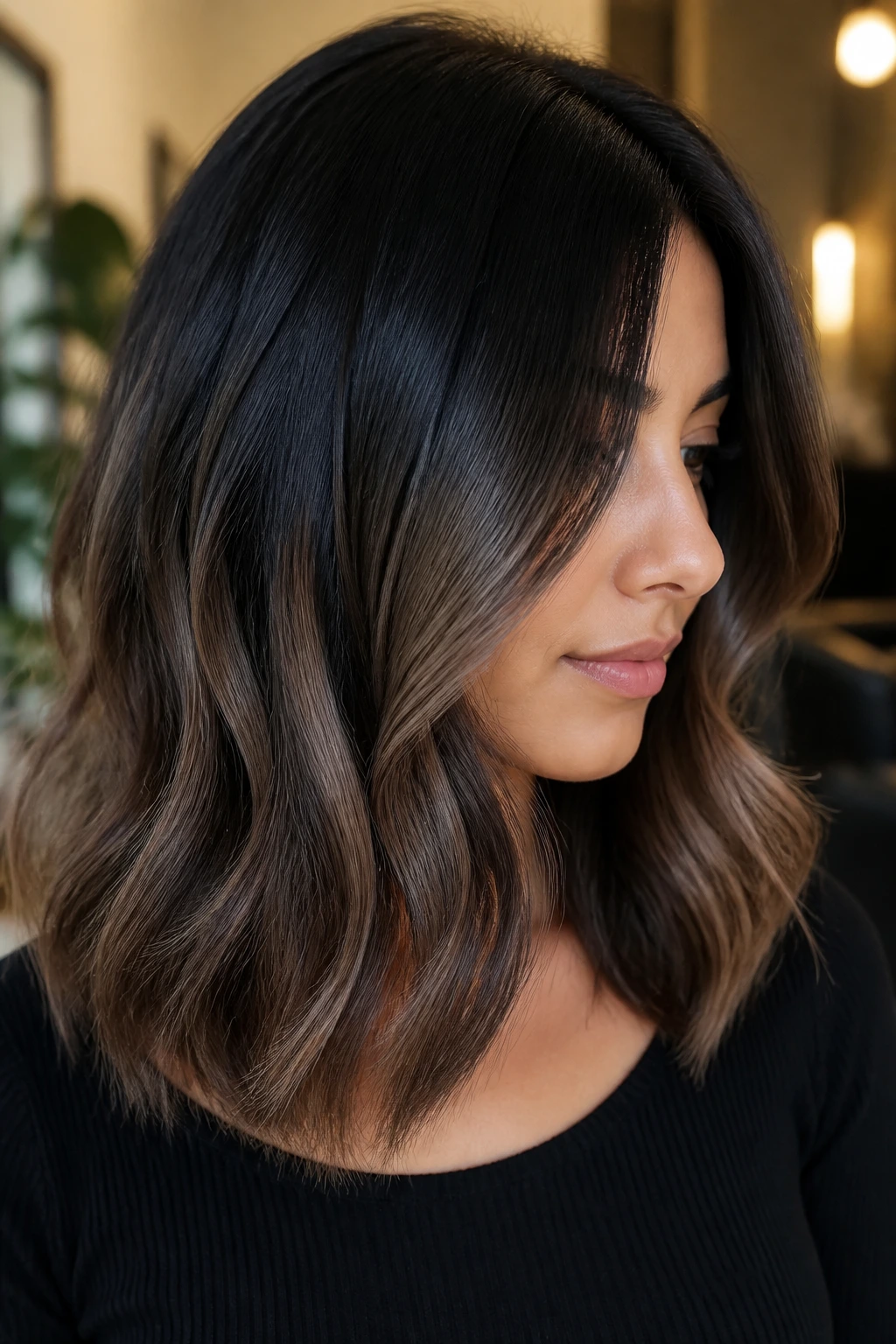
Black ink roots fading into mocha smoke are for people who like drama but don’t want a loud blonde moment. The gradient stays dark the whole way down, which makes medium-length hair look glossy and dense. You get the contrast from depth, not brightness.
What Makes It Different
Unlike a caramel ombre, this one doesn’t rely on light ends to make a point. The shift happens through tone: black at the top, then softened mocha through the mid-lengths and ends. That makes it a good choice for finer hair, because the color itself creates thickness.
If the ends are lifted to a level 5 or 6 and toned cool, the result feels polished instead of flat. Keep the finish shiny. Matte products can make the whole thing look dull, and this color needs reflection to work.
7. Auburn to Apricot Fade
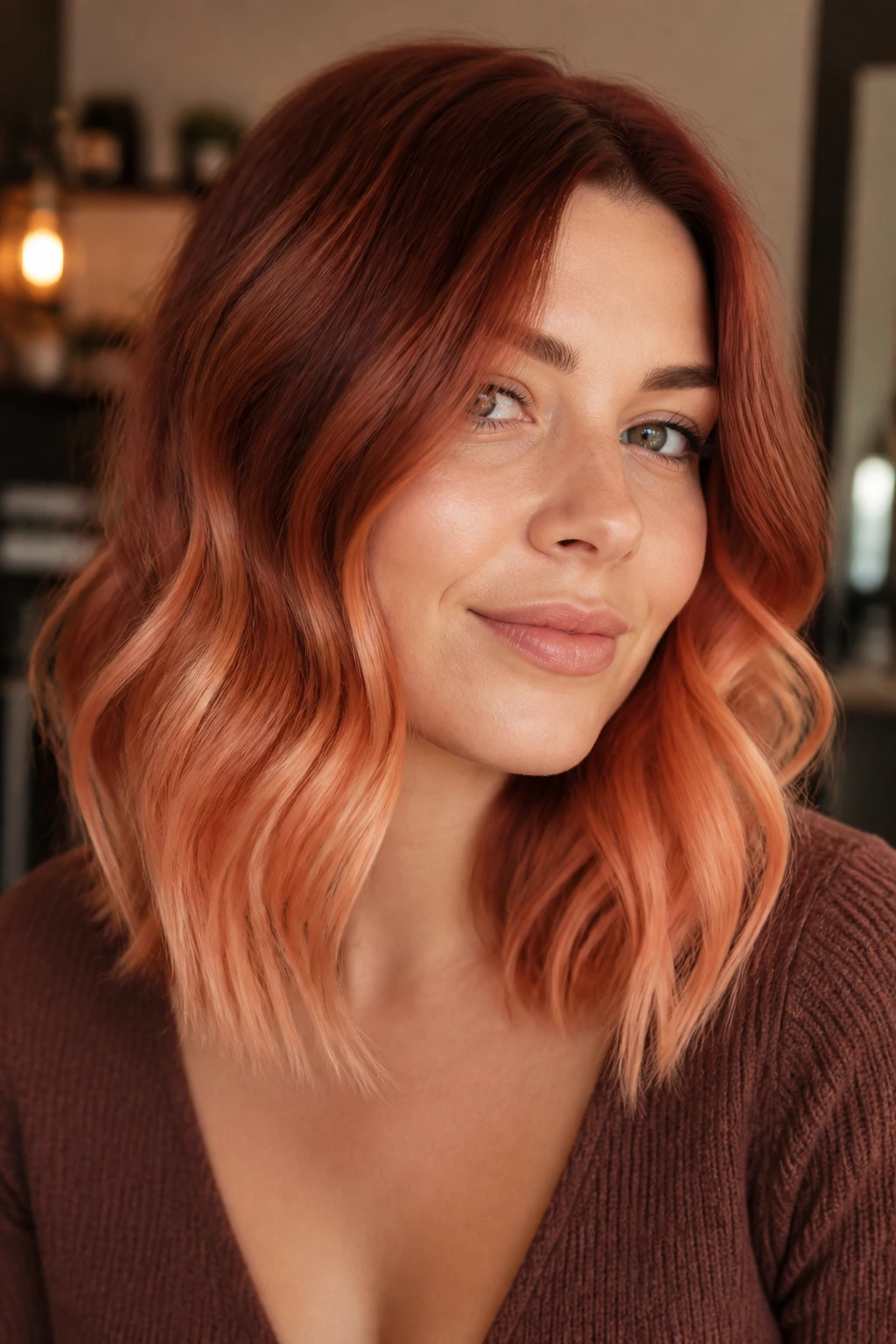
Auburn fading into apricot is one of the few ombre looks that can feel cheerful without tipping into cartoon territory. On medium hair, the apricot sits in the perfect spot to brighten the lower half and still leave the roots rich enough to frame the face. If the auburn is deep and the apricot is soft, the whole thing feels believable.
Where the Lift Should Start
Start the lightening lower than you would for blonde. Red pigment is stubborn, and over-lifting auburn can strip the life right out of it. A soft apricot tone around the last 3 inches usually looks better than an aggressive peach. You want glow, not erased color.
A wavy lob makes the fade visible in a good way. Straight hair can work too, but the gradient reads more gently when the ends have a little bend.
8. Mahogany to Rose Gold
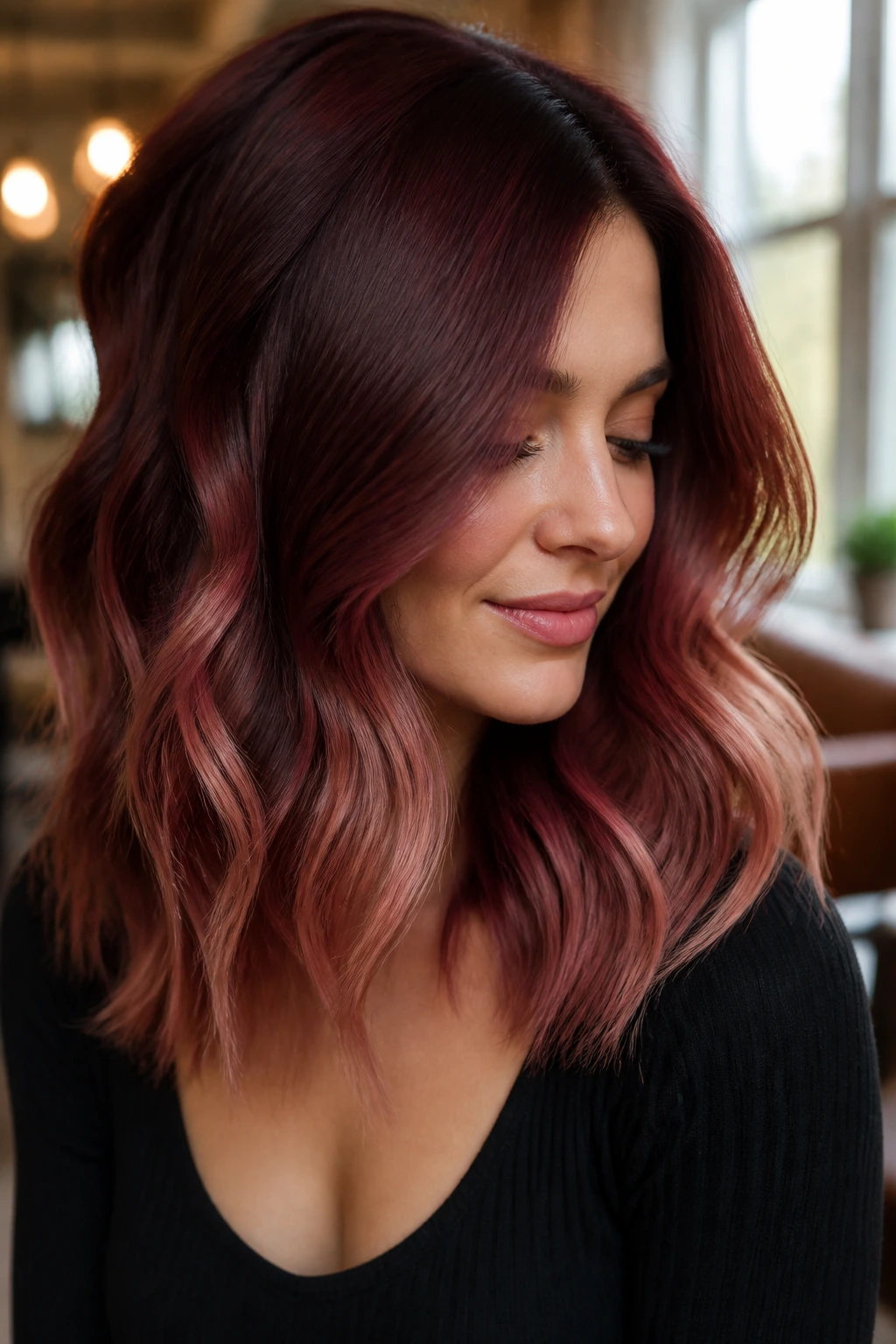
Rose gold over mahogany sounds like it should be too pretty to wear, but on medium-length hair it lands with more depth than flash. The mahogany gives the color some meat at the roots, and the rose gold only needs to sit on the bottom section to make the look come alive. You do not need much.
The trick is to keep the rose gold slightly muted. Pink-beige is better than bubblegum. If the ends are too bright, the gradient loses the richness that makes this pairing worth doing. A soft wave, especially one that starts mid-shaft, makes the rose tones appear woven through the hair instead of painted on top.
This is one of my favorite choices for people who want warmth with a little personality. It’s not shy. But it’s not screaming either.
9. Chocolate to Platinum Dip
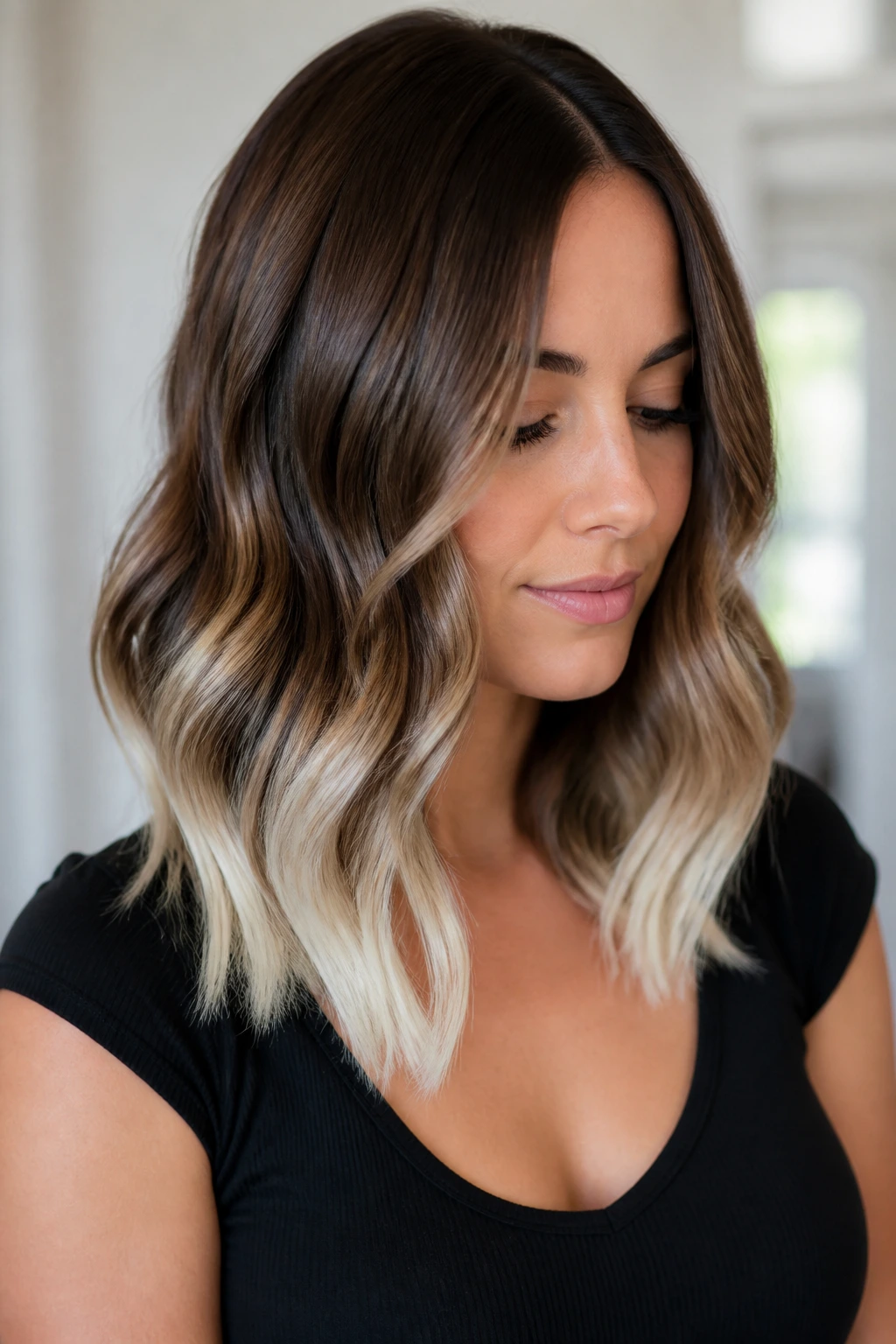
Can medium hair pull off a stark chocolate-to-platinum dip? Yes, if the cut is healthy and the transition is handled with a light enough hand. The bluntness of the contrast is the point here, but the ends still need to be toned cleanly or they’ll read yellow instead of platinum.
How to Wear It
This look works best when the platinum is limited to the last few inches. On medium-length hair, that keeps the line from swallowing the cut. If the hair is fine, a too-wide platinum section can make the ends look sparse, which is exactly what you don’t want.
I’d keep the style simple: smooth blowout, soft bends, or a polished wave. The color is already doing the heavy lifting.
10. Brunette to Bronze Shine
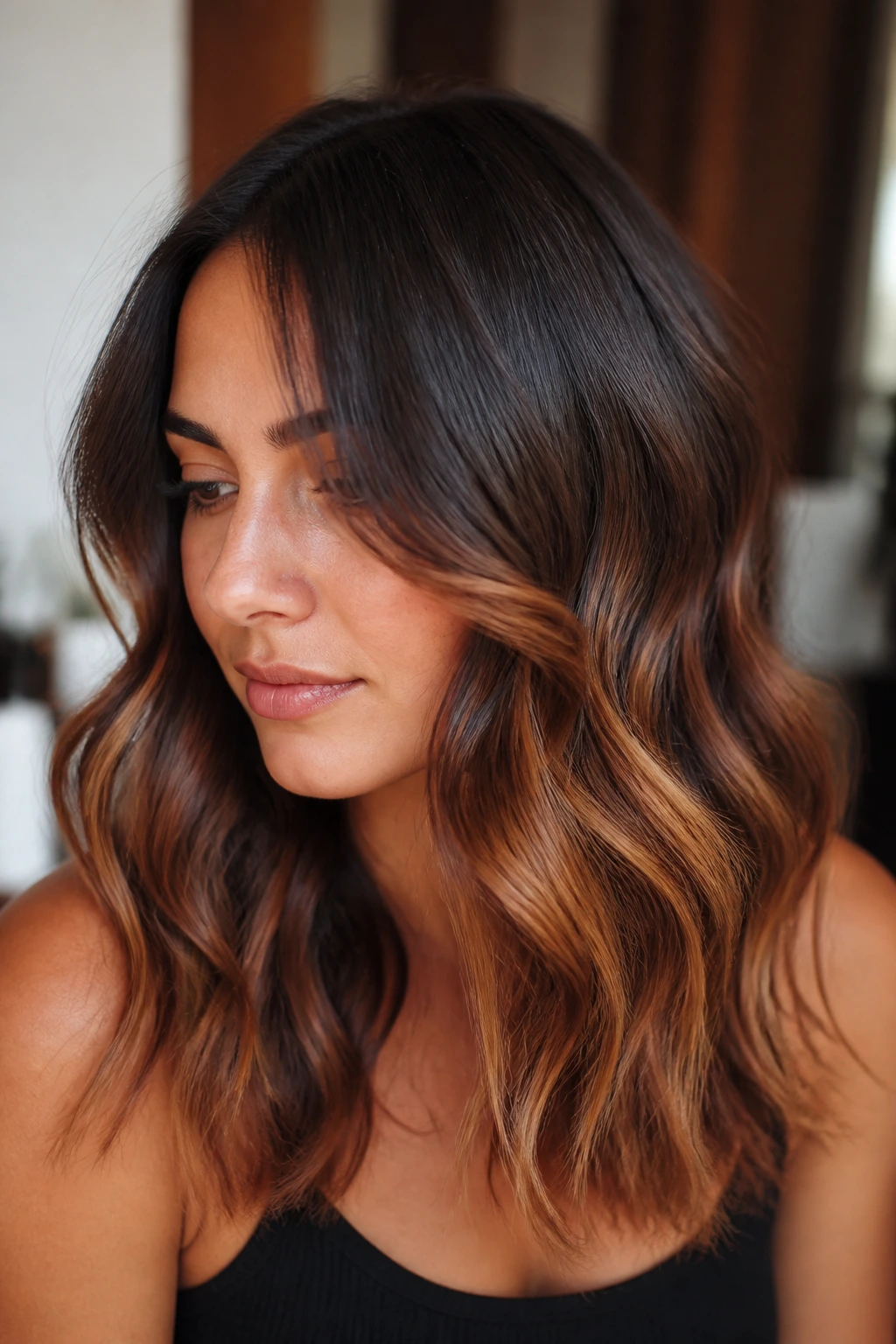
Bronze is a sneaky good ombre shade. It sits between caramel and copper, which means it gives warmth without wandering into orange. On medium-length hair, that middle ground is useful because the color shift stays visible even when the hair is tucked behind the ears.
A good bronze ombre should look glossy first and colored second. If the toner goes too gold, the ends can look flat. If it leans too copper, you lose the metallic feel that makes bronze special. Ask for dimension through the final 2 to 4 inches, not a solid band of lightness.
This one is especially flattering on hair with a little natural wave. The bends break up the bronze and keep it from feeling one-note.
11. Bronde Melt with Lived-In Ends
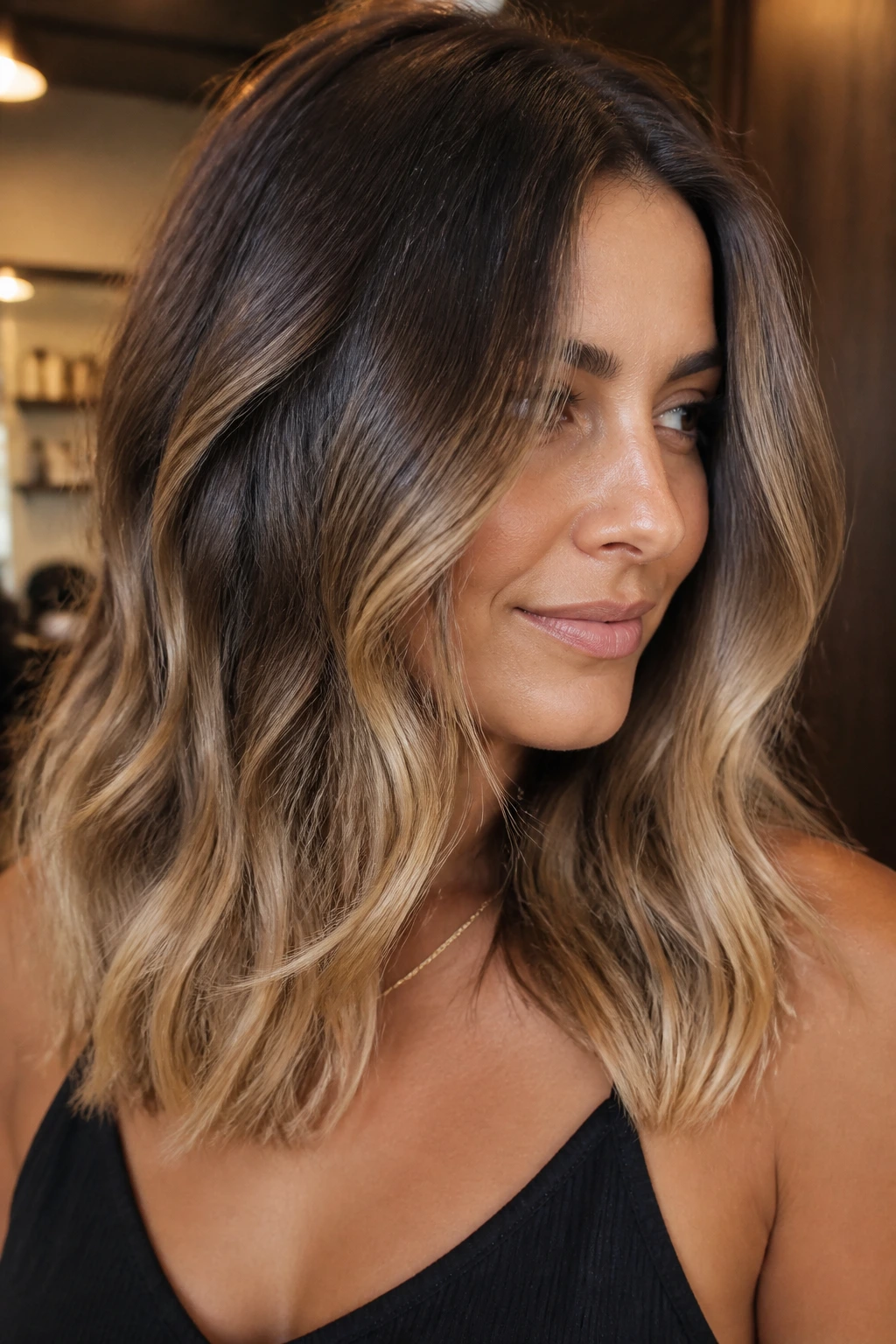
Bronde is what happens when someone refuses to choose between brown and blonde, and honestly, that’s often the smarter answer. On medium-length hair, a bronde melt gives you the depth of brunette with the brightness of blonde, but the transition stays soft enough to grow out in peace. The ends should look sun-kissed, not bleached.
The best bronde ombre doesn’t draw attention to itself from across the room. It looks like your hair simply decided to stop being one flat color. That’s the whole charm. Add a loose wave or a round-brush bend, and the lighter ends show up in ribbon-like sections.
I’d pick this for anyone who wants a lighter finish but hates hard maintenance. It gives you some lift without forcing the whole head into one identity.
12. Cool Taupe Ombre
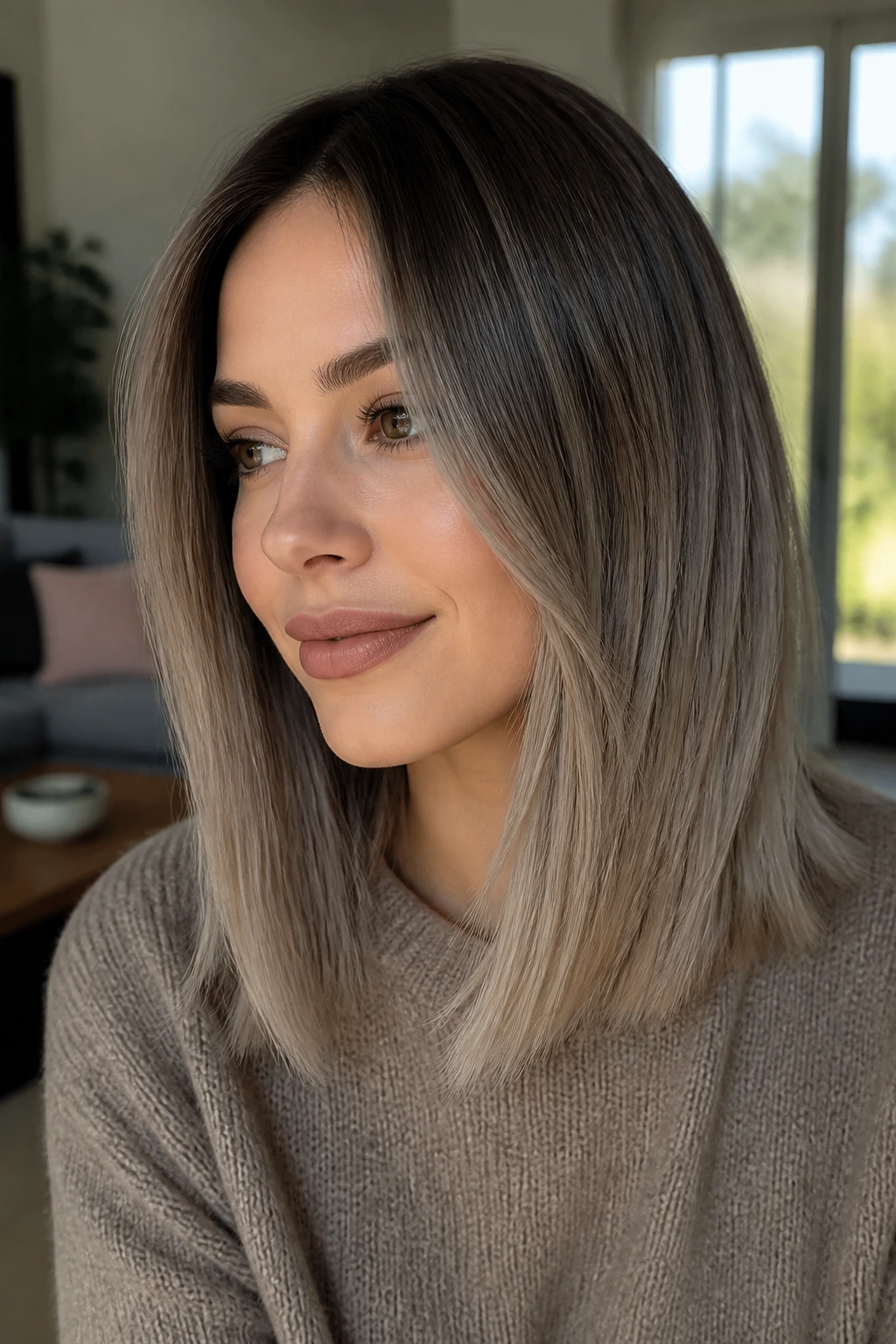
Cool taupe is the answer when ash blonde feels too pale and mushroom brown feels too dark. It’s a quieter shade, and that’s why it works so well on medium cuts with blunt ends or a soft lob shape. The whole look stays modern without trying too hard.
What Makes It Different
Compared with a beige blonde ombre, taupe has a dustier, more neutral edge. That makes it easier to wear if your skin leans cool or neutral. The color also hides grow-out lines better because it doesn’t swing warm and coppery as it fades.
Keep the root shadow soft and the toner cool, but not smoky enough to turn gray. That balance is what keeps it wearable.
13. Cinnamon to Strawberry

Cinnamon fading into strawberry is a bold move that still feels soft when the cut is medium length. The cinnamon root gives the color structure, and the strawberry ends catch enough light to make the whole look feel fresh. It’s prettier on layered cuts than on hard, blunt lines because the lighter pieces can break up the red.
Why the Mid-Length Length Matters
On longer hair, strawberry can drift too far from the face and lose some of its impact. Medium length keeps it close enough that the warm end tone shows when you turn your head or pull one side behind your ear. The result feels intentional, not costume-y.
If your hair is naturally warm, this is a friendly shade family. If it’s cool, ask for the strawberry to stay muted and pinked down a little.
14. Cherry Cola Fade
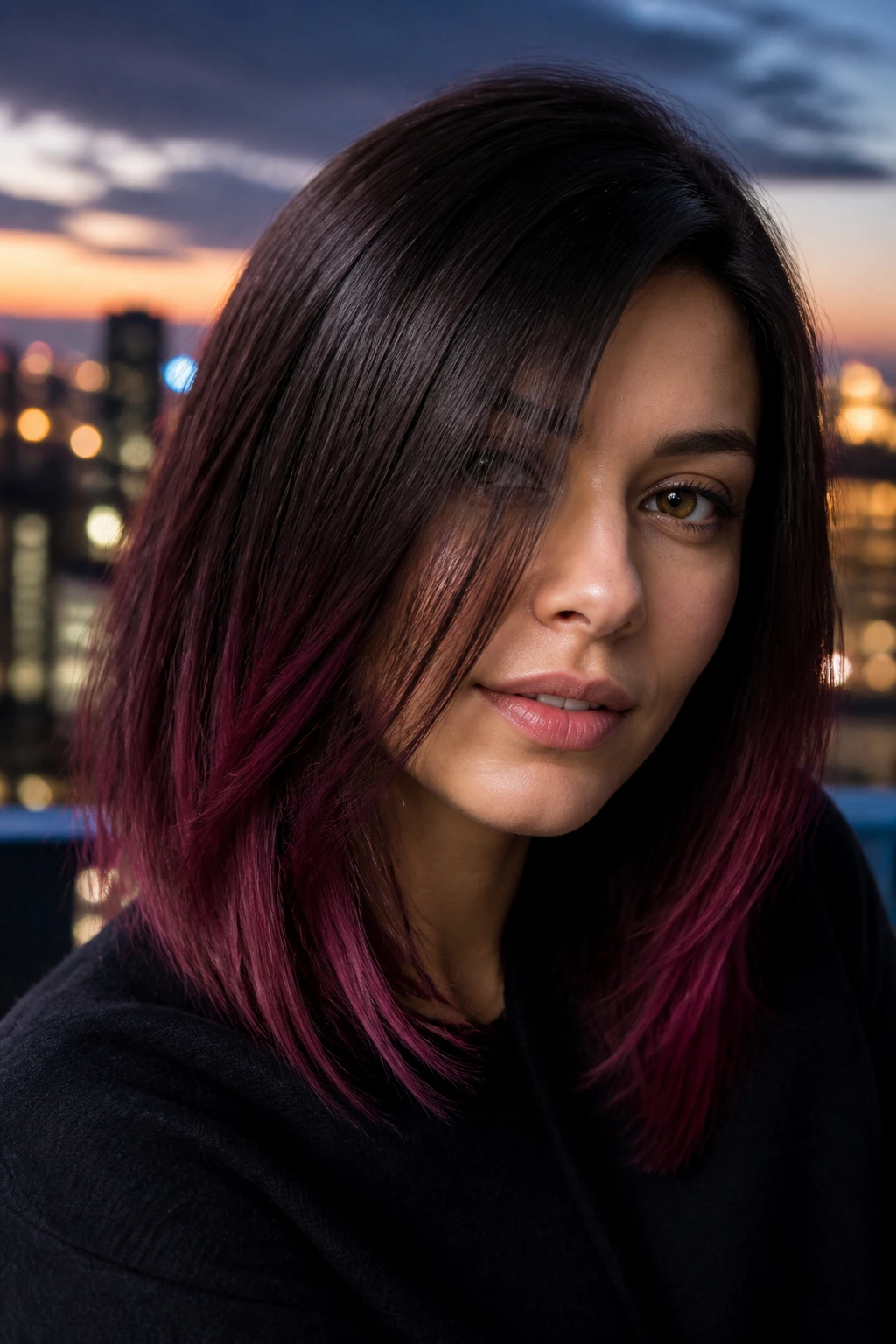
Cherry cola ombre is dark, glossy, and a little moody in the best way. It keeps the root deep and adds red-violet through the ends so the color shifts only when the light hits it. On medium-length hair, that subtle change makes the style look richer instead of louder.
The biggest mistake with cherry cola is making the red too bright. It doesn’t need to be fire-engine vivid. It needs depth. A deep wine tone blended into brown-black hair is enough to create the effect, especially on a straightened lob where the sheen can do half the work.
I’d choose this if you want something different from brown without stepping all the way into bright fashion color.
15. Burgundy to Plum
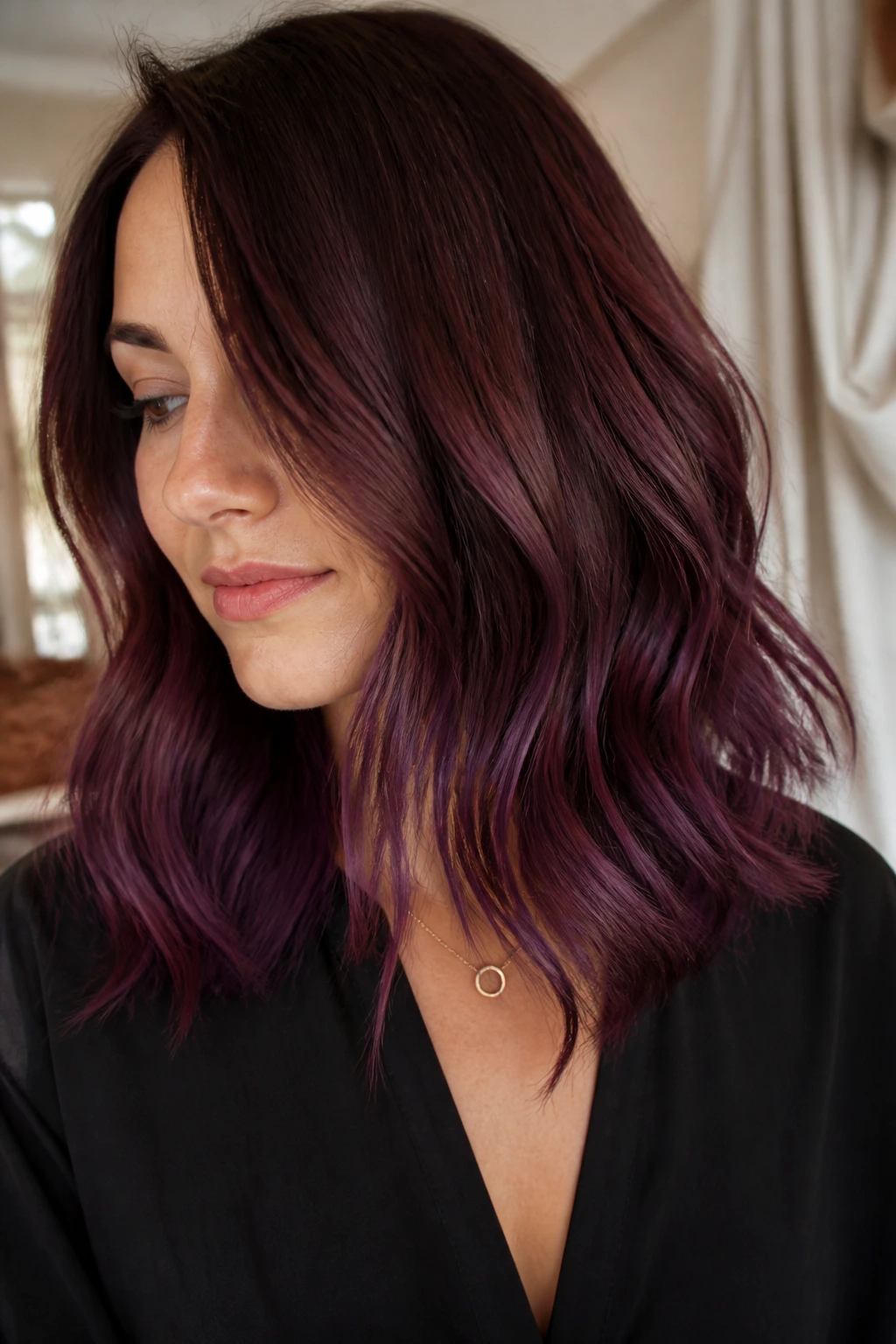
Can a dark ombre still read as dimensional? Absolutely, and burgundy sliding into plum is a good example. The colors are close enough to feel smooth, but the temperature shift keeps the ends from disappearing into the root. On medium-length hair, that matters because the color change has less distance to travel.
How to Wear It with Low Shine
This pair looks strongest with a satin finish, not a high-gloss mirror shine. A soft wave through the bottom third shows the burgundy and plum as separate notes instead of one dark blob. If your hair is thick, ask the colorist to leave a few deeper pieces through the ends so the plum doesn’t wash out.
This is a strong option for cooler wardrobes and simple cuts.
16. Caramel to Champagne Blonde
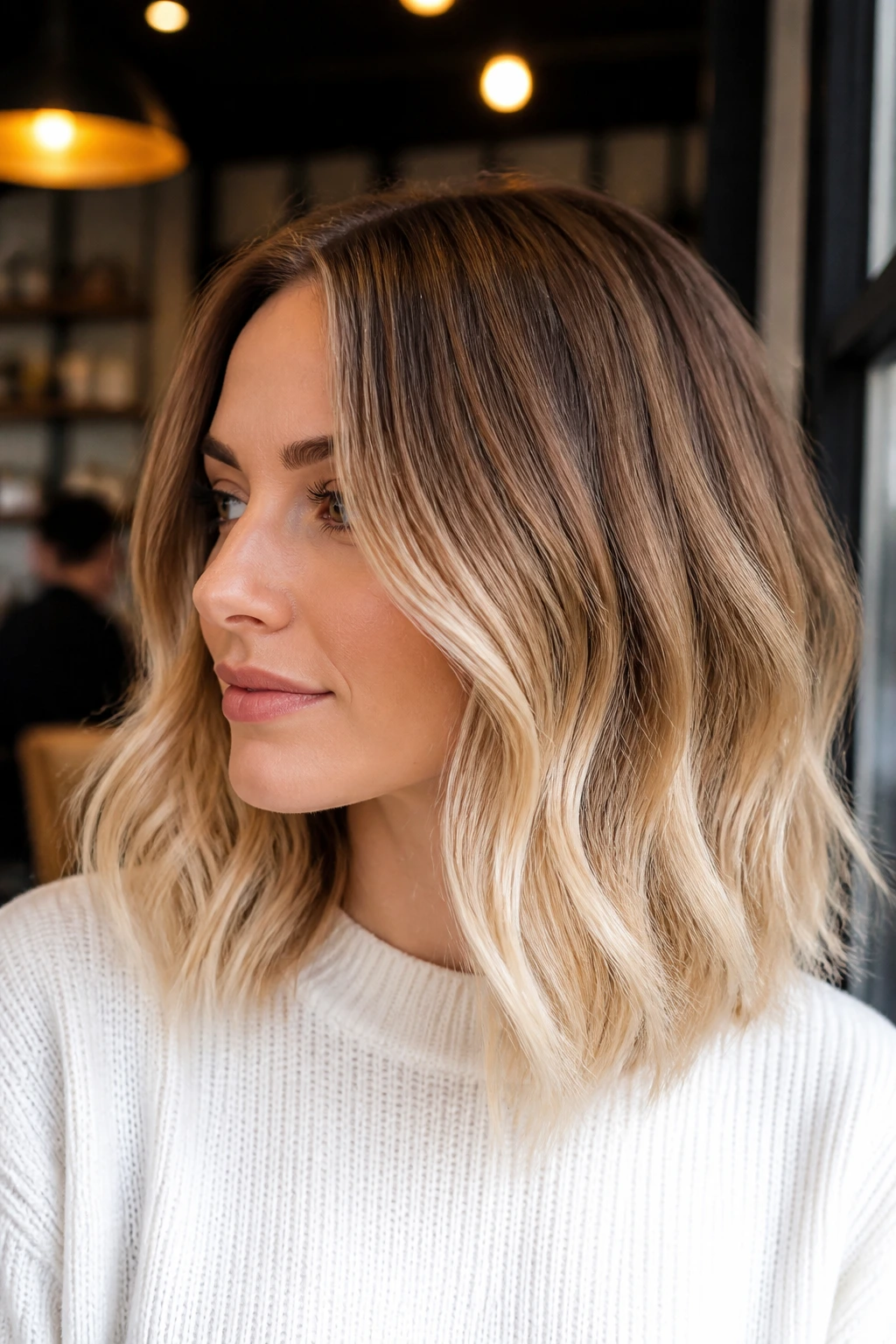
Caramel into champagne blonde is the kind of ombre that makes a shoulder-length cut look more expensive than it has any right to. The caramel gives warmth near the root, while the champagne ends brighten the perimeter with a soft beige glow. It’s lighter than bronde, but not as stark as platinum.
A good champagne tone should look a little creamy, not icy. That keeps the whole gradient smoother on medium hair, where you can see every transition point. Blow-dry it with the ends rolled under or give it a loose wave, and the blonde catches in different places instead of looking flat.
This one is smart if you want blonde-adjacent hair without living in toner appointments.
17. Mocha to Sandy Blonde
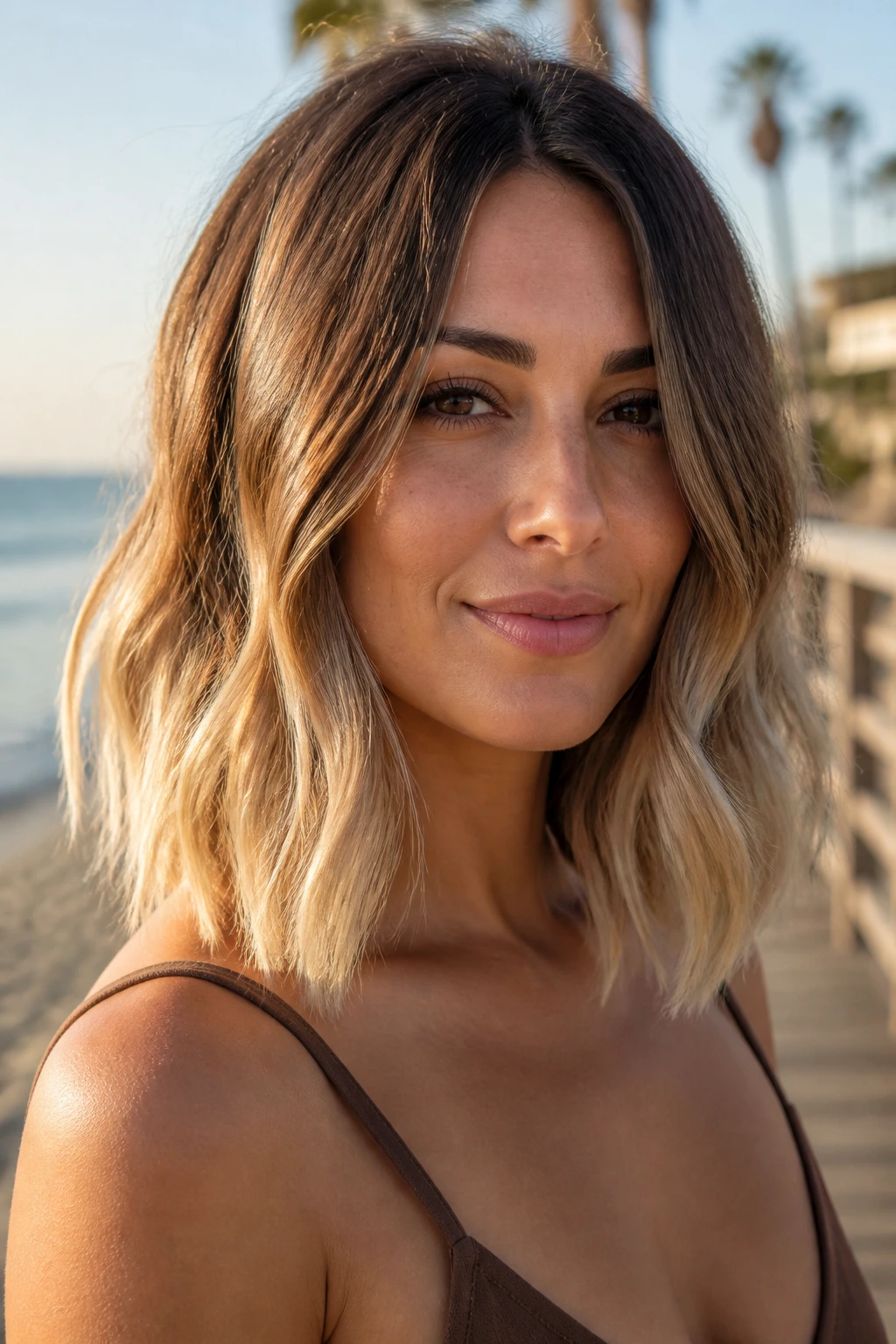
Mocha fading into sandy blonde is a useful middle-ground ombre for people who like brightness but don’t want obvious contrast. Sandy blonde has that muted, beach-worn feel without the yellow edge that can make medium hair look fried. The mocha root keeps the scalp area grounded.
The strength of this look is how it behaves in ordinary light. It still shows dimension indoors, and outside it gets a little softer rather than louder. That’s rare. On a collarbone cut with texture, the sandy ends show up in thin bands that keep the cut from looking heavy.
If you tend to wear your hair wavy more than straight, this is a strong choice.
18. Dark Root to Silver Smoke
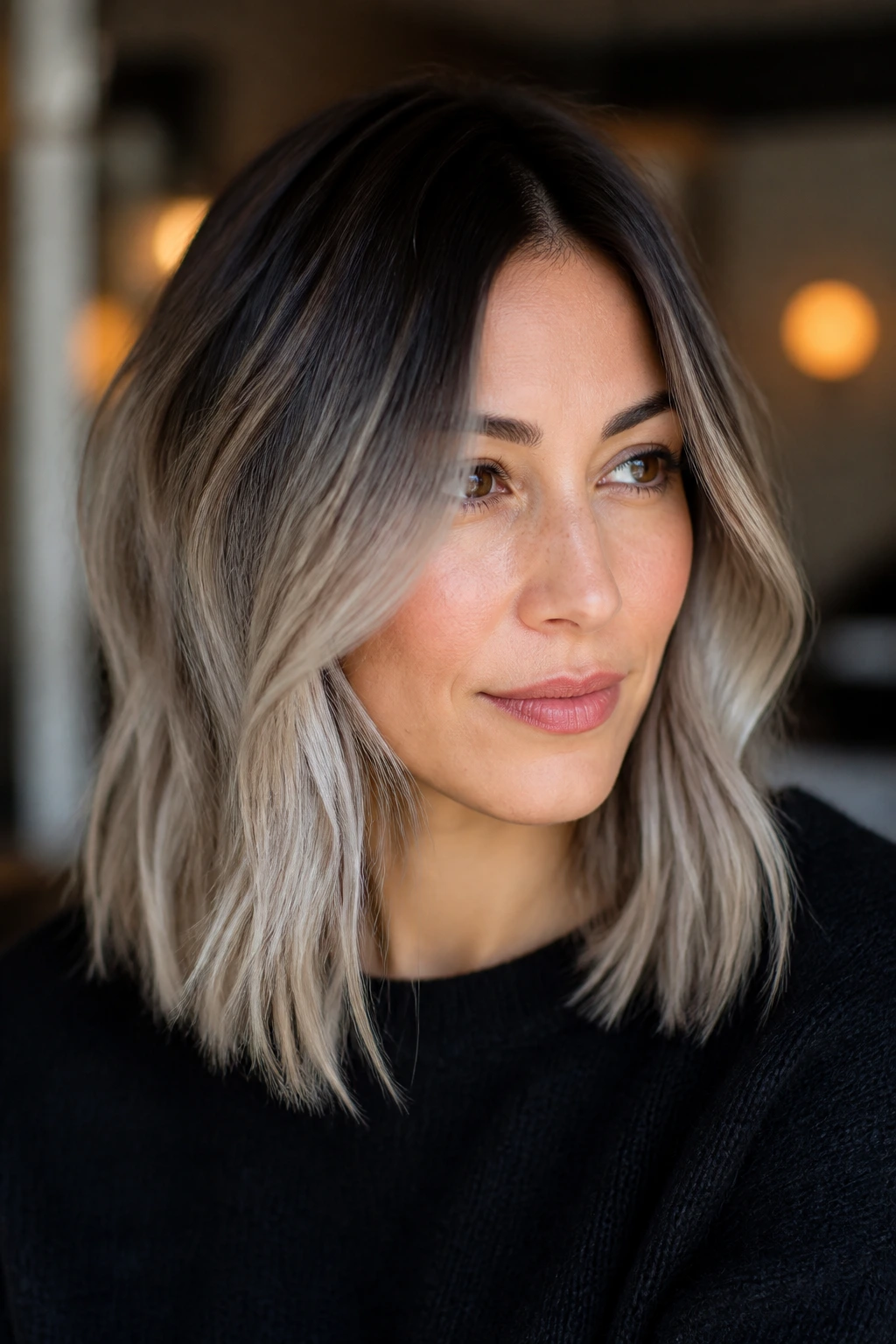
Silver smoke on medium-length hair has edge, but it works best when the root stays dark enough to anchor the whole thing. A black or deep brown root drifting into silver-beige ends keeps the color from looking costume-like. The effect is cooler and more modern than a full silver block.
Comparison Angle
Unlike platinum, silver smoke doesn’t need to look bright to make its point. It’s about tone, not flash. That makes it better for anyone who wants a cooler finish without bleaching every section to the edge of invisibility.
I’d wear this on a straight lob or soft waves. Both show the metallic tone well. The key is maintenance: cool-toned shampoo, yes, but not so much that the hair turns purple-gray.
19. Midnight to Blue-Black
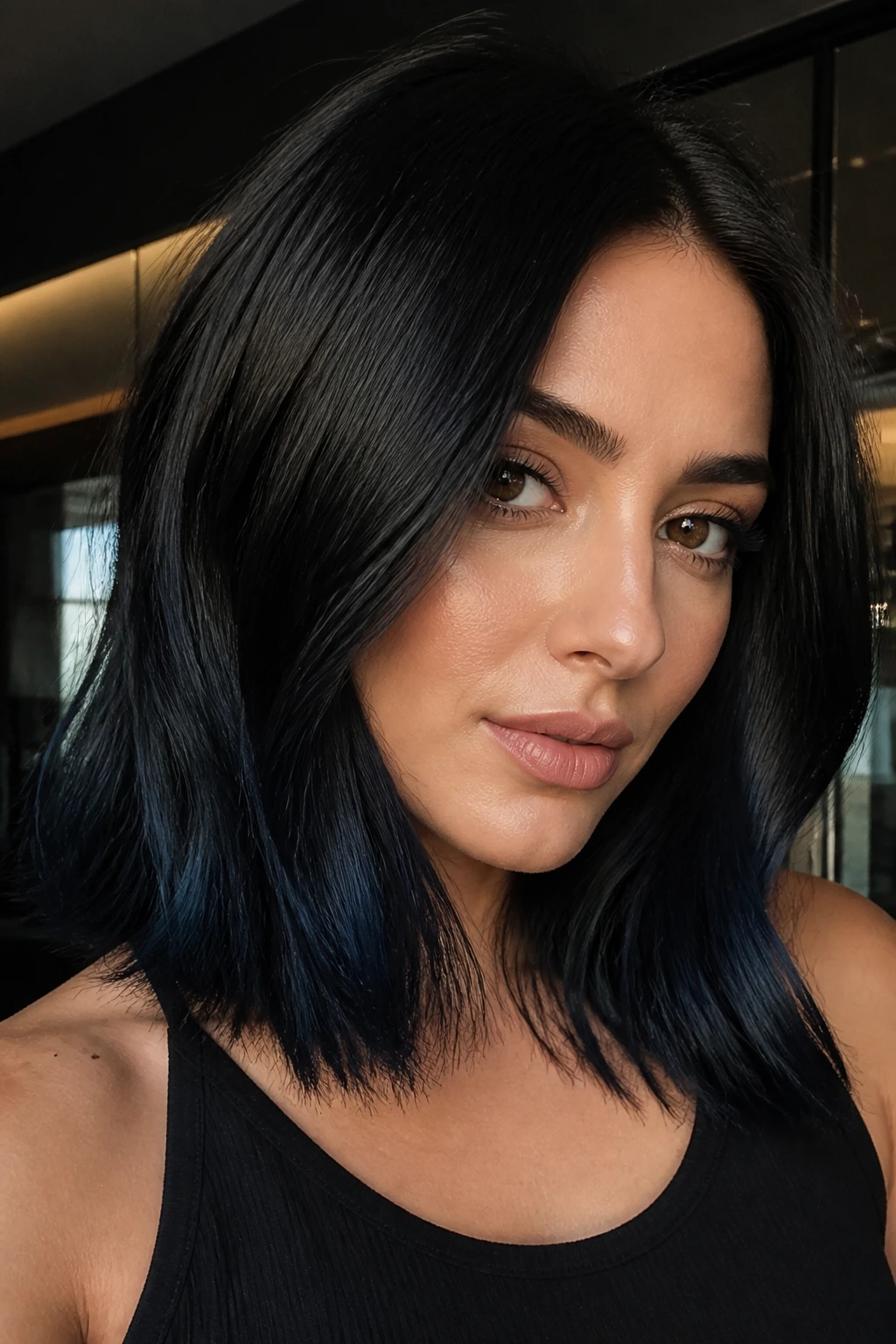
Midnight to blue-black is for people who like color that reveals itself slowly. In low light, it can read almost black. Under daylight, the blue tone shows up at the ends and around the face. Medium-length hair gives that shift enough room to work without needing a dramatic cut.
What Happens in Different Light
This is the sort of ombre that rewards movement. A blunt, one-length lob can carry it, but a little texture makes the blue-black ends catch light in a cleaner way. Keep the blue tone deep, not neon. This is about sheen and shadow, not obvious color.
A gloss between salon visits keeps the finish looking inky instead of faded. If the ends start looking greenish, the toner has gone off the rails and needs correcting quickly.
20. Brunette to Teal Tips
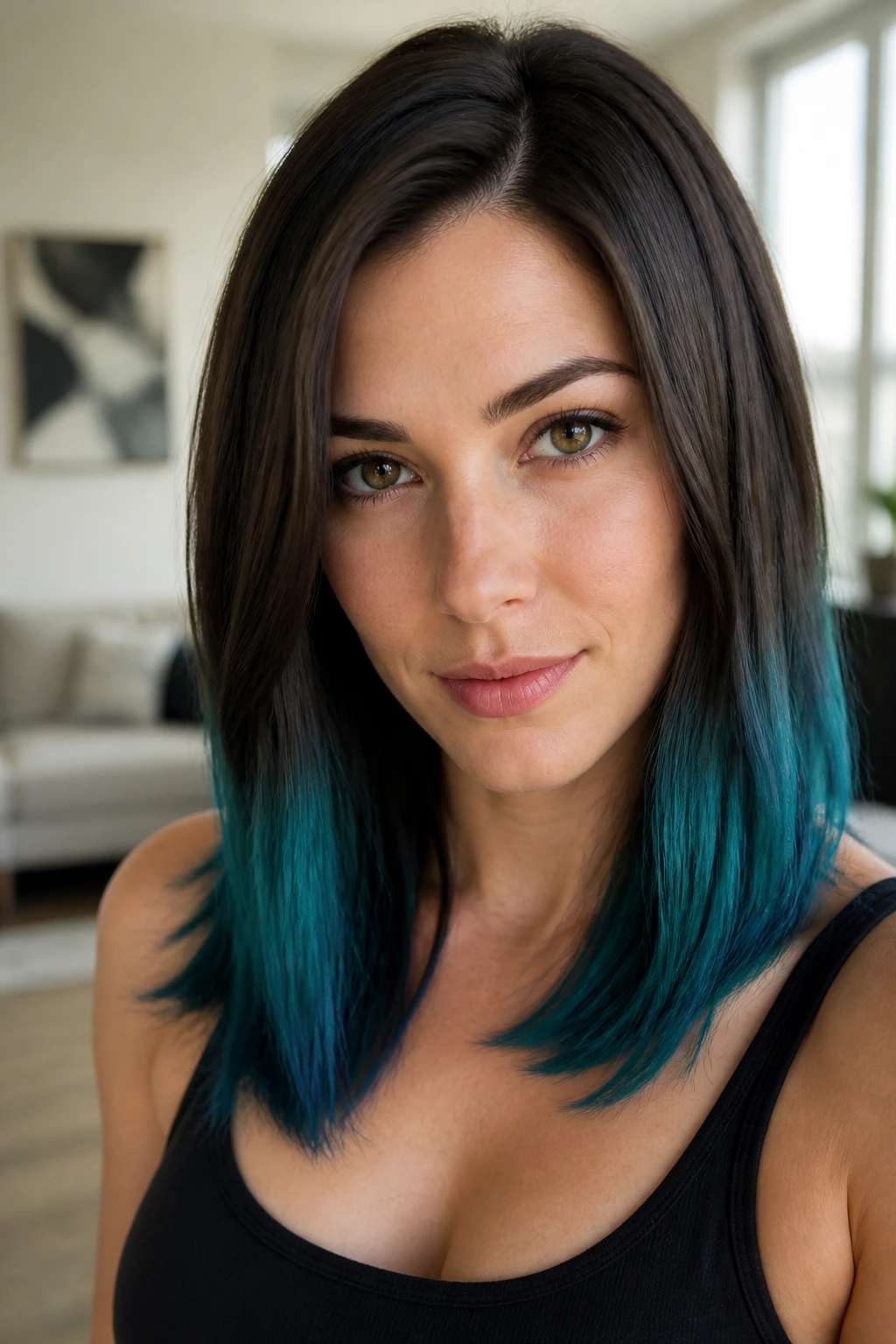
Teal tips on brunette hair are a surprisingly practical fashion-color choice for medium length. The reason is simple: you only need the last few inches to do the talking. That makes the look less fragile than all-over teal, and it lets the brunette base stay solid and easy to live with.
A strong teal works best when the roots stay untouched and the ends are lifted enough to hold the pigment cleanly. If the underlying blonde is too yellow, the teal turns murky. If it’s too white, the color can look cold and flat. Aim for a clear, cool base.
This one loves blunt cuts and sleek finishes. The color becomes the edge.
21. Black to Emerald Fade
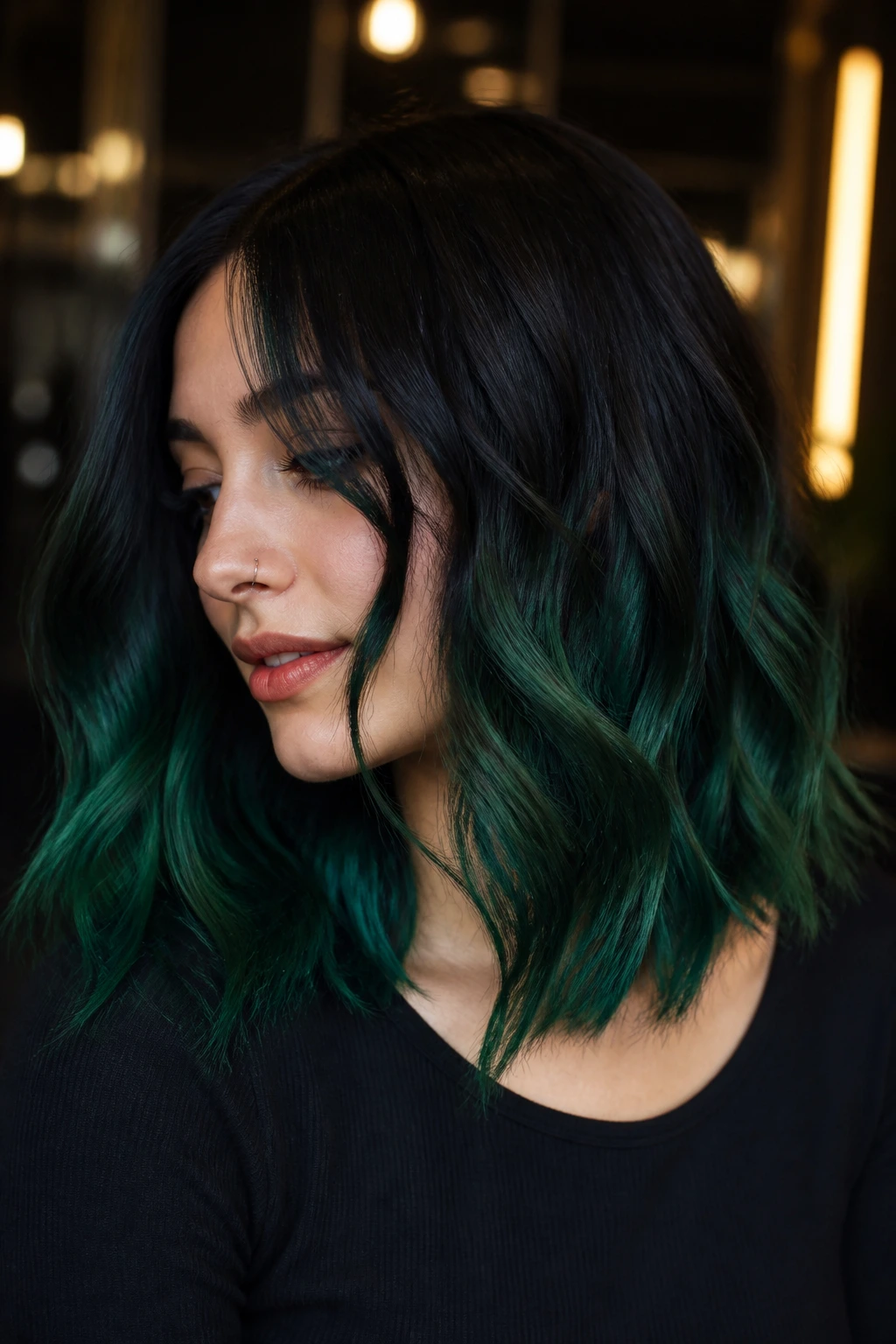
Can a jewel-tone ombre look refined on medium hair? Yes, if the emerald is deep and the blend starts low. Black roots into emerald ends give you contrast that feels rich, not costume-heavy. The green should stay dark enough to look like velvet in shade and emerald in light.
How to Keep the Ends Saturated
Emerald pigments show better when the hair is pre-lightened evenly, so patchy lift will sabotage the whole thing. A direct dye over yellow ends tends to skew swampy. Keep the pre-lightening clean and even, then use a deep emerald deposit on top.
Loose waves help here, too. The color catches along the bends, and the hair stops looking like one flat dark sheet.
22. Espresso to Vanilla Latte
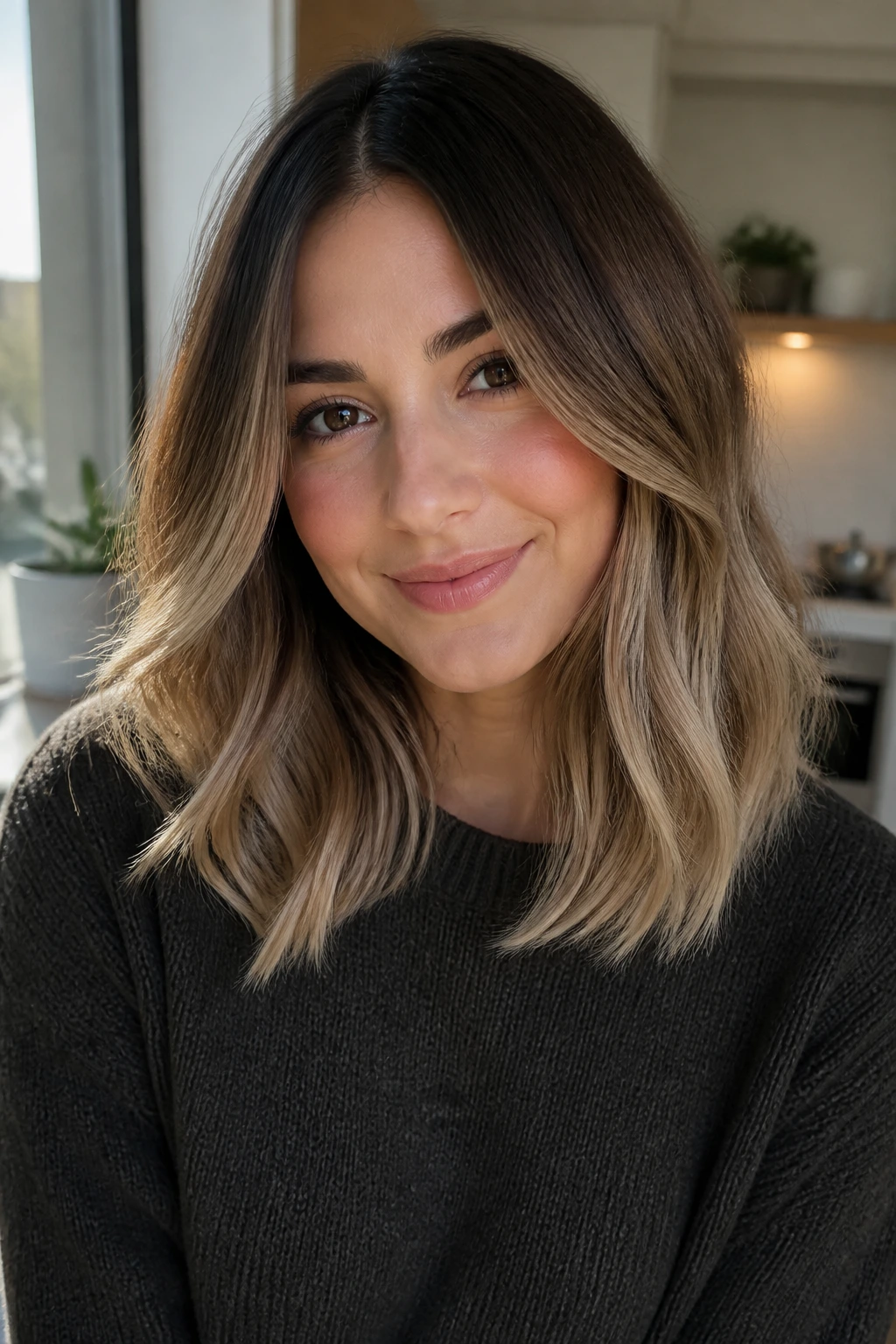
Espresso into vanilla latte is a softer take on blonde ombre, and that softness is why it works so well on medium-length hair. The ends are light, but they aren’t screaming for attention. The creamy vanilla tone makes the finish feel smooth, not stark.
This is a nice choice if you want lightness around the face but don’t want the upkeep of a full blonde. Keep the transition diffuse through the mid-lengths so the change feels gradual. On medium hair, a gradient that skips too quickly from dark to light can look chopped up.
I’d pair this with a slightly rounded blowout. It gives the vanilla ends some shape and keeps them from hanging limp.
23. Golden Brown to Sunlit Ends
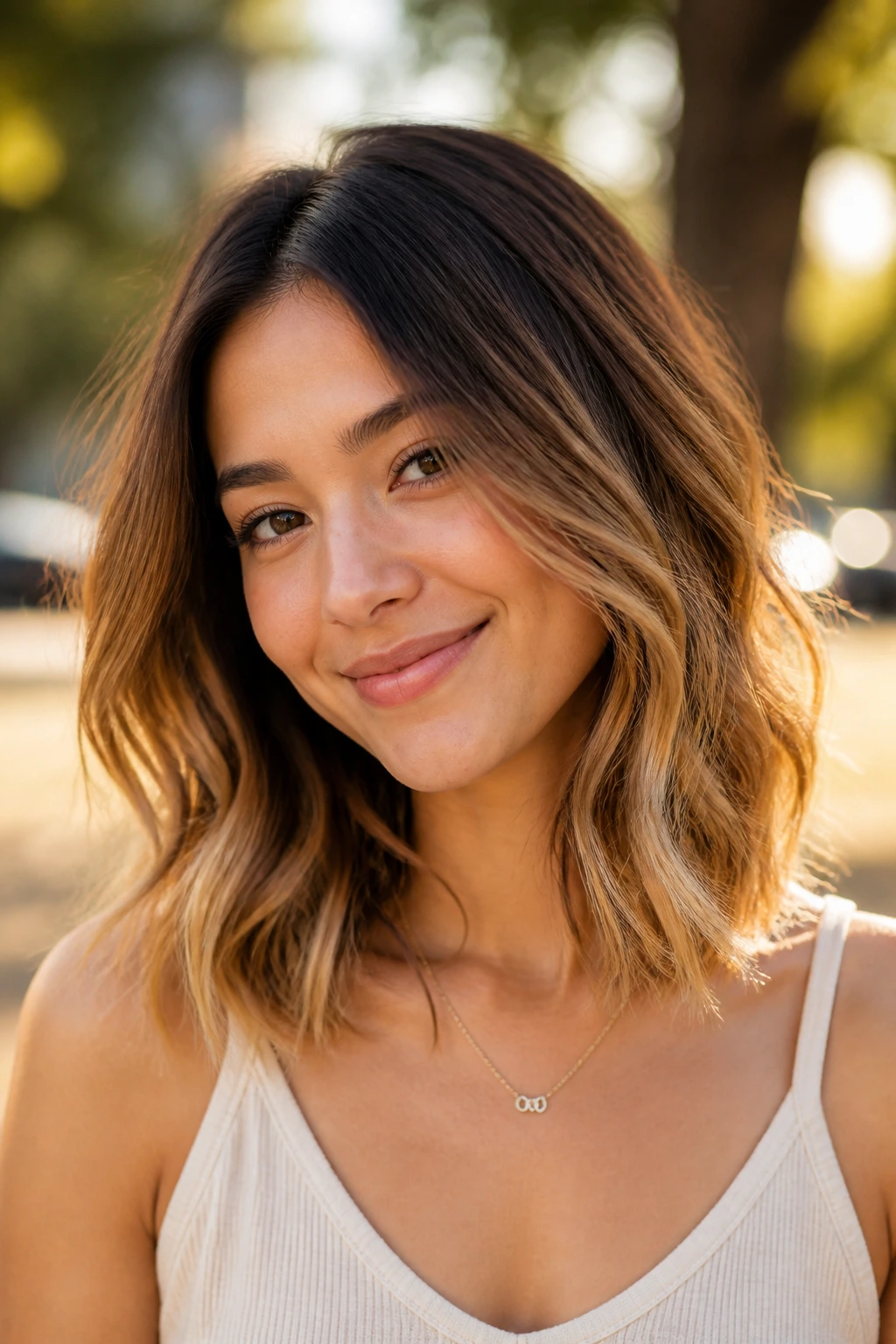
Golden brown fading into sunlit ends is the classic ombre for people who want warmth without a big contrast jump. The gold tone is gentle on medium hair because the lighter ends stay believable next to the darker top. If the haircut has face-framing layers, even better — the gold pieces move and catch light instead of sitting there like a painted stripe.
The nice thing about this look is how forgiving it is. The grow-out stays soft, the tone fades in a friendly way, and the hair still looks lived in after a few washes. I’d keep the ends slightly warmer than neutral, because gold loses personality fast when it’s over-toned.
A loose bend from mid-shaft down is enough to show it off.
24. Gray Blending Ombre
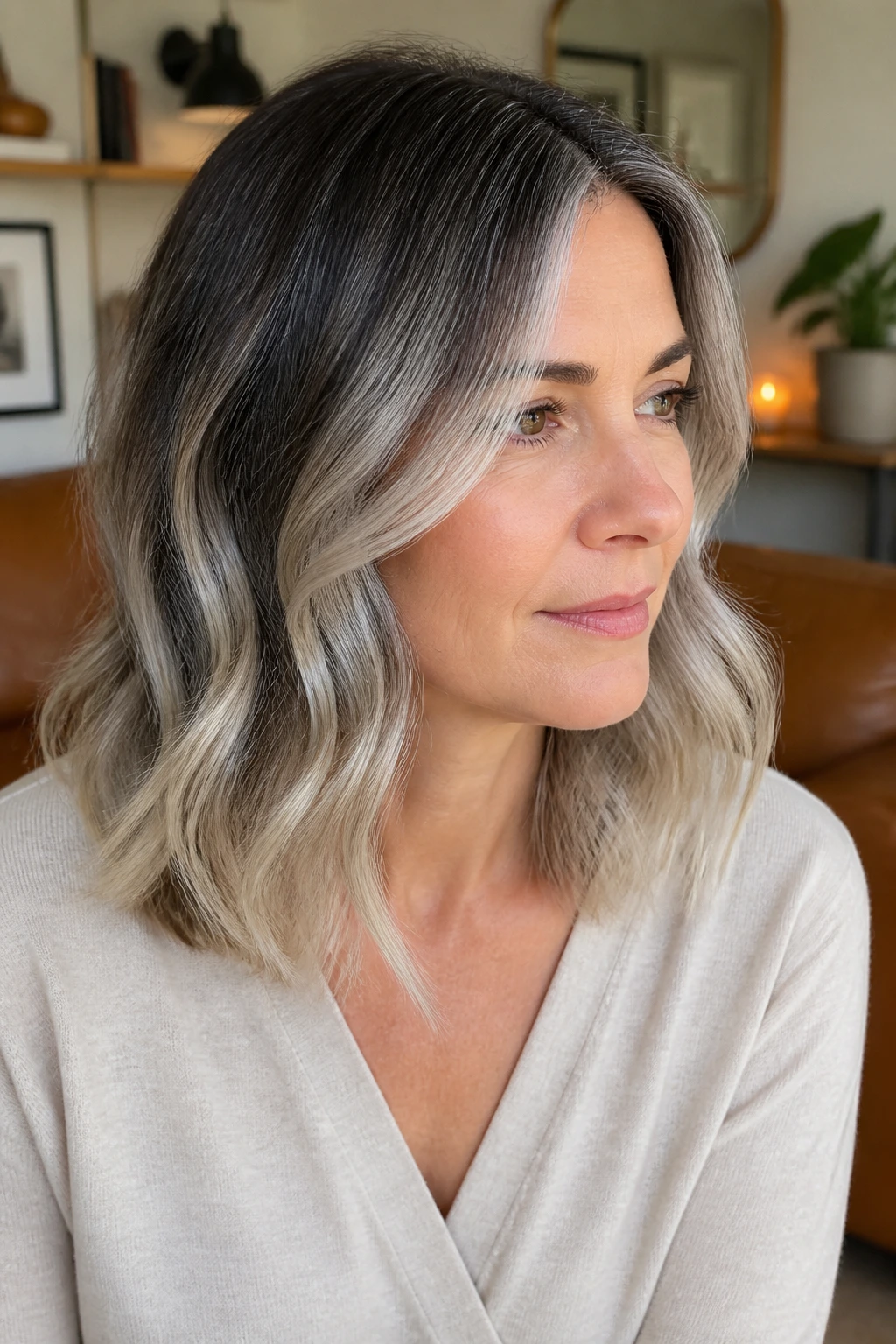
Gray blending ombre is not the same thing as hiding gray hair, and that difference matters. The root stays dimensional, while the lighter ends and face-framing pieces shift toward silver-beige or soft ash to echo the natural gray instead of fighting it. On medium-length hair, this can look tidy and intentional without a heavy line of demarcation.
Why This One Ages Well
Compared with full coverage color, gray blending gives the grow-out a softer edge. That’s useful if you’re between salon visits or if you want less contrast at the scalp. The hair can still look polished, but it doesn’t demand rigid root touch-ups.
I’d recommend keeping the finish glossy. Gray blending looks flat if the hair is dry, and medium-length cuts need shine to keep the layers from reading frayed.
25. Soft Peach Ombre
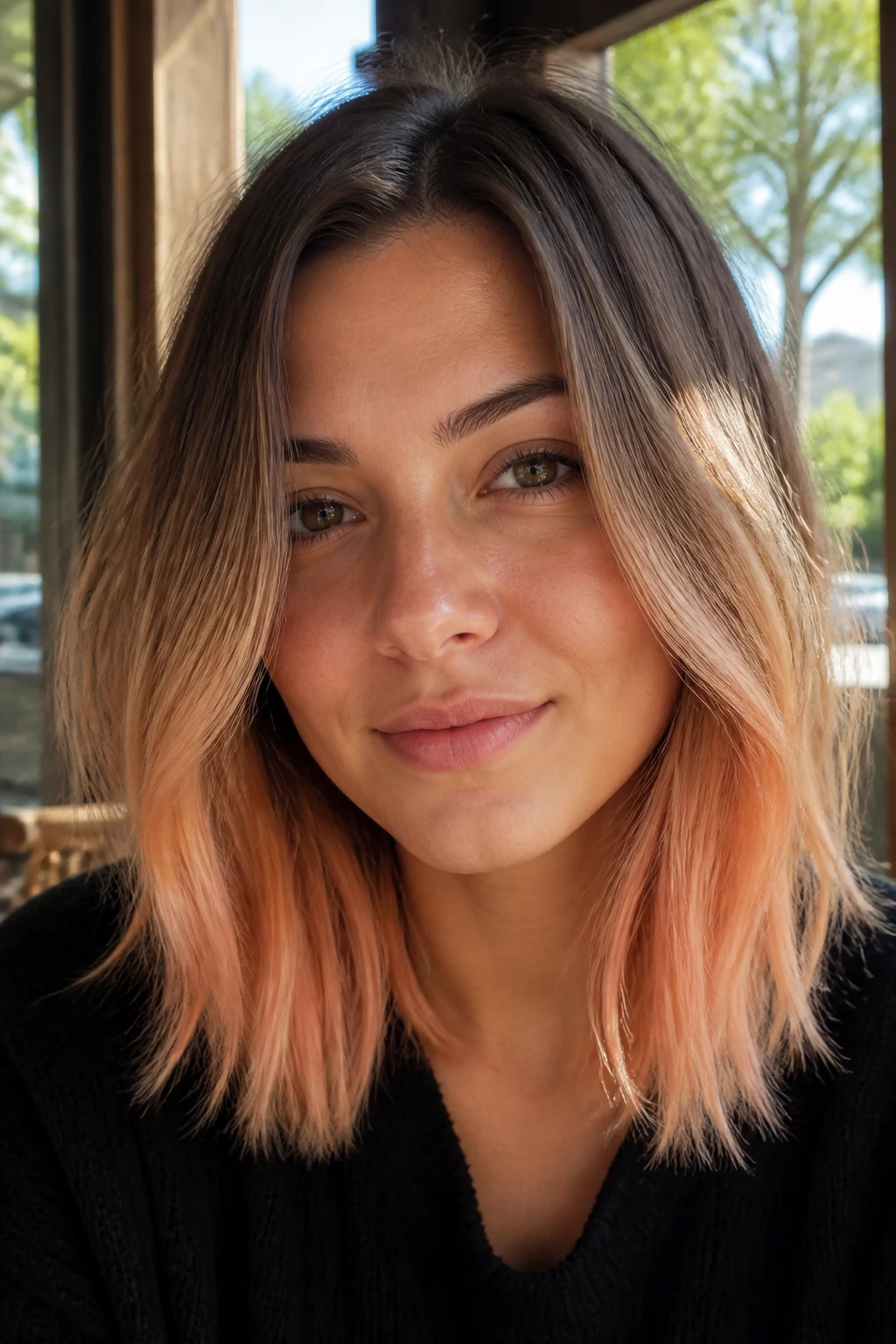
Soft peach ombre is one of the prettiest pastel options for medium hair because it doesn’t need a long canvas to make sense. The peach sits gently on lifted ends and gives the whole cut a warm, airy finish. It works especially well when the base is blonde or very light brown, because peach needs a pale foundation to stay clear.
Where the Peach Should Sit
Keep the peach mostly below the ears and through the bottom half of the hair. If it moves too far up the shaft, it starts to overwhelm the face. On collarbone-length hair, that placement lets the pastel show when the hair sways, which is where it looks best anyway.
Use a color-safe shampoo and cool water. Warm water strips pastels fast, and peach is no exception.
26. Lavender Smoke
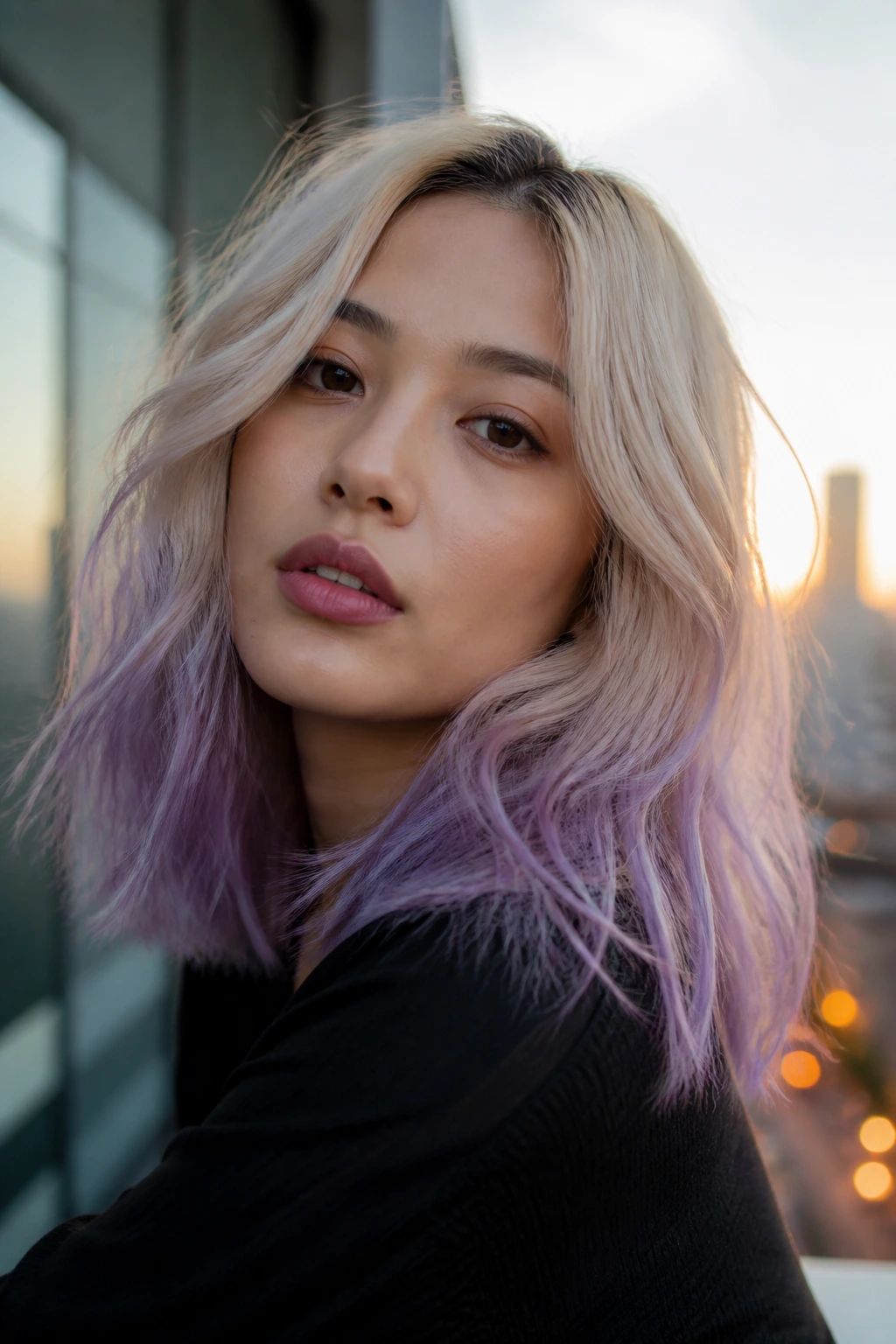
Lavender smoke has a quiet edge that feels more wearable than a bright purple ombre. The smoke part matters. It keeps the lavender from turning candy-bright, especially on medium hair where the ends need some weight to hold the color. The best version sits over a pale yellow or neutral blonde base.
A washed-out base is the fastest way to ruin this look. If the hair isn’t lifted cleanly, lavender gets muddy in a hurry. Once it is in place, though, the color can look soft and cool for several washes if you avoid harsh clarifying shampoo and too much heat.
This is a good one for people who like fashion color but don’t want it to shout from across the room.
27. Red Velvet Fade
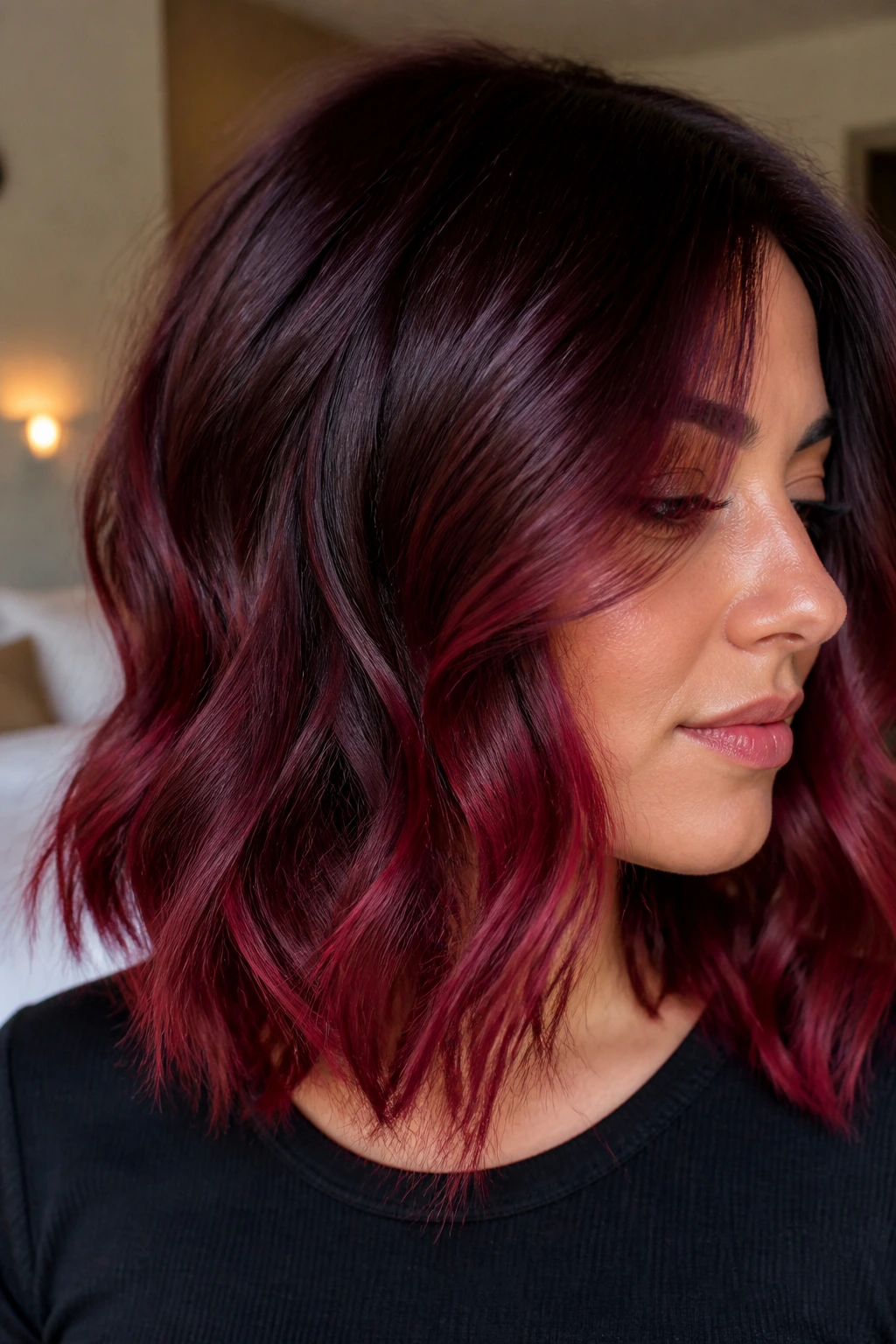
Red velvet fading from deep root to berry ends gives medium-length hair a richness that reads almost like fabric. The darker top keeps the red from going too neon, while the berry end tone adds just enough lift to show movement. It’s one of the better choices if you want red but don’t want copper.
How to Keep It from Looking Flat
Red tones need dimension. A single flat red can look like a helmet on medium hair, especially if the cut is blunt. Ask for a blend that keeps a few deeper pieces in the mid-lengths so the berry has something to sit against.
Soft waves help separate the tones. Straight hair can work too, but you’ll want shine, because red without shine tends to look tired.
28. Butterscotch Ends on a Lob
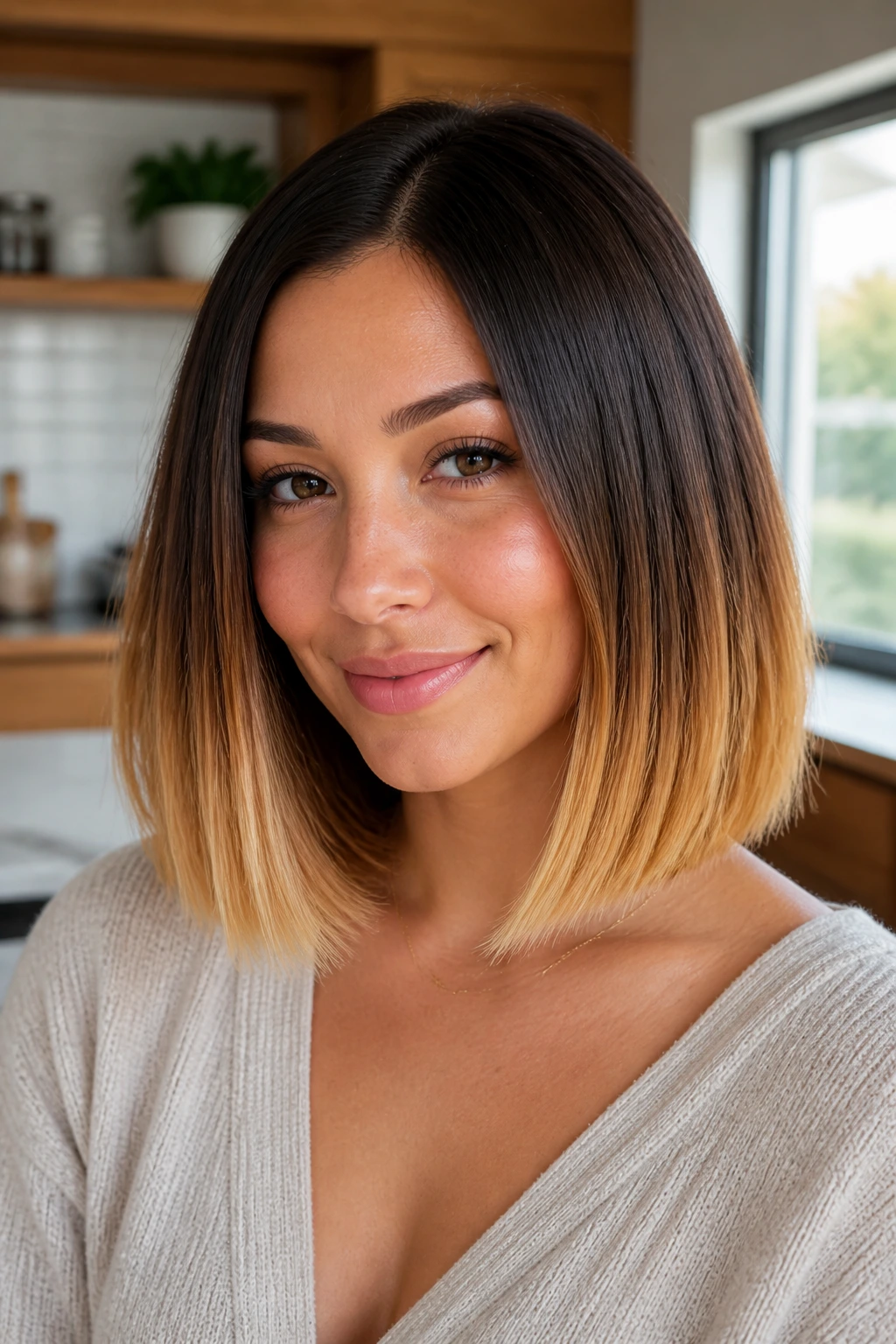
Butterscotch ends on a lob are sweeter than caramel and warmer than beige, which is why they look so comfortable on medium-length cuts. The bluntness of a lob gives the color a clean edge, and the butterscotch keeps the bottom from feeling heavy. It’s a friendly ombre. No drama, just warmth.
If the hair is one-length and thick, add a little internal texture so the light ends don’t sit like a shelf. I’d keep the lighter color concentrated from chin level down. That placement gives you movement without letting the whole head turn gold.
This is a good option for someone who likes their color readable but not loud.
29. Sable to Mushroom Melt
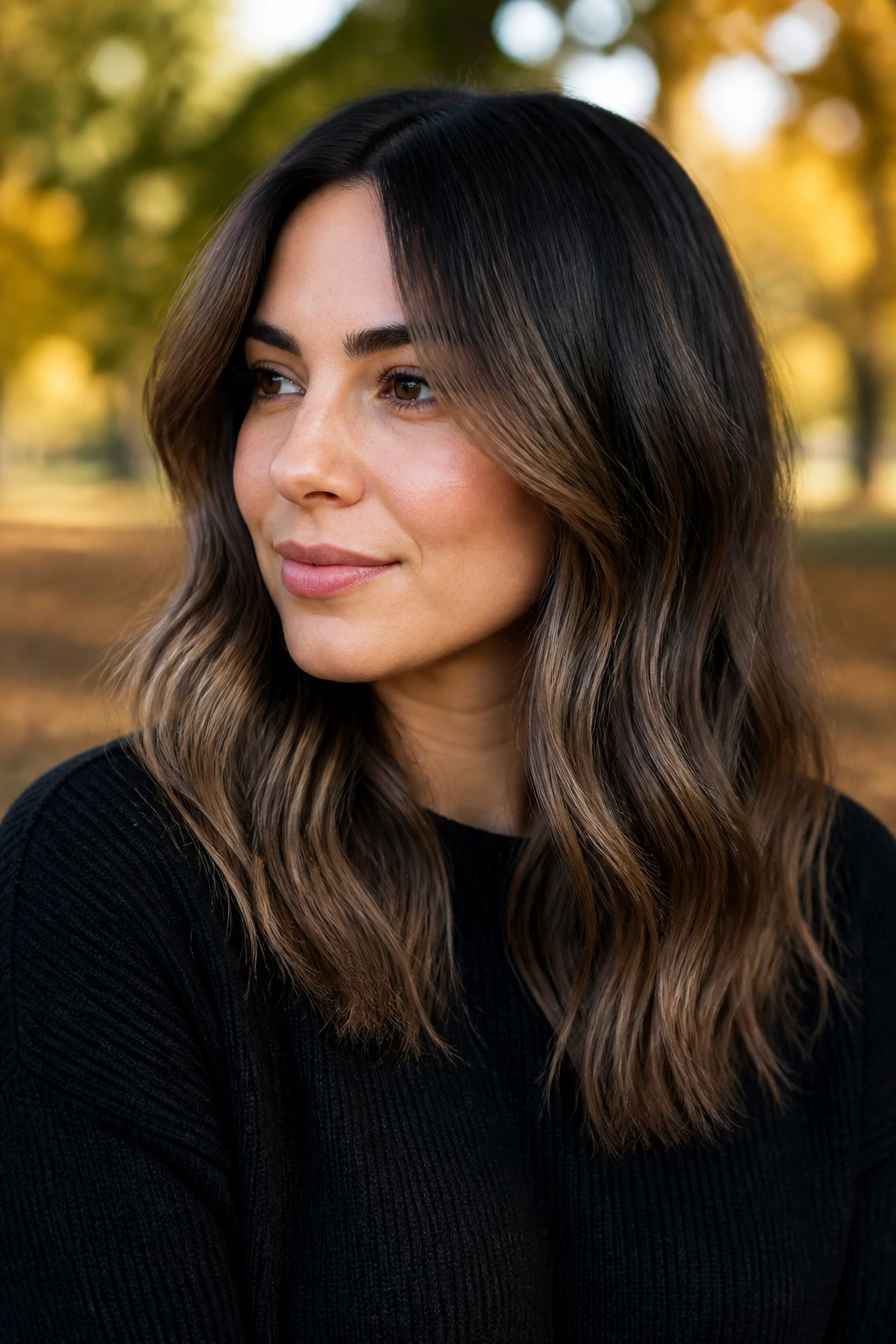
Sable into mushroom brown is a cool, understated ombre that works especially well when the base color is already deep. The mushroom tone through the ends softens the contrast and keeps the hair from looking like it was painted with two separate colors. On medium-length hair, that smoothness is the entire point.
This look is quietly flattering on thick hair because the cool mid-tone breaks up density. It also grows out well, since the transition is mostly tonal rather than dramatic. If you want a low-maintenance brunette look that still has movement, this is a strong candidate.
A gloss with a neutral or slightly cool finish keeps the mushroom tone from turning flat.
30. Bronze to Copper Melt
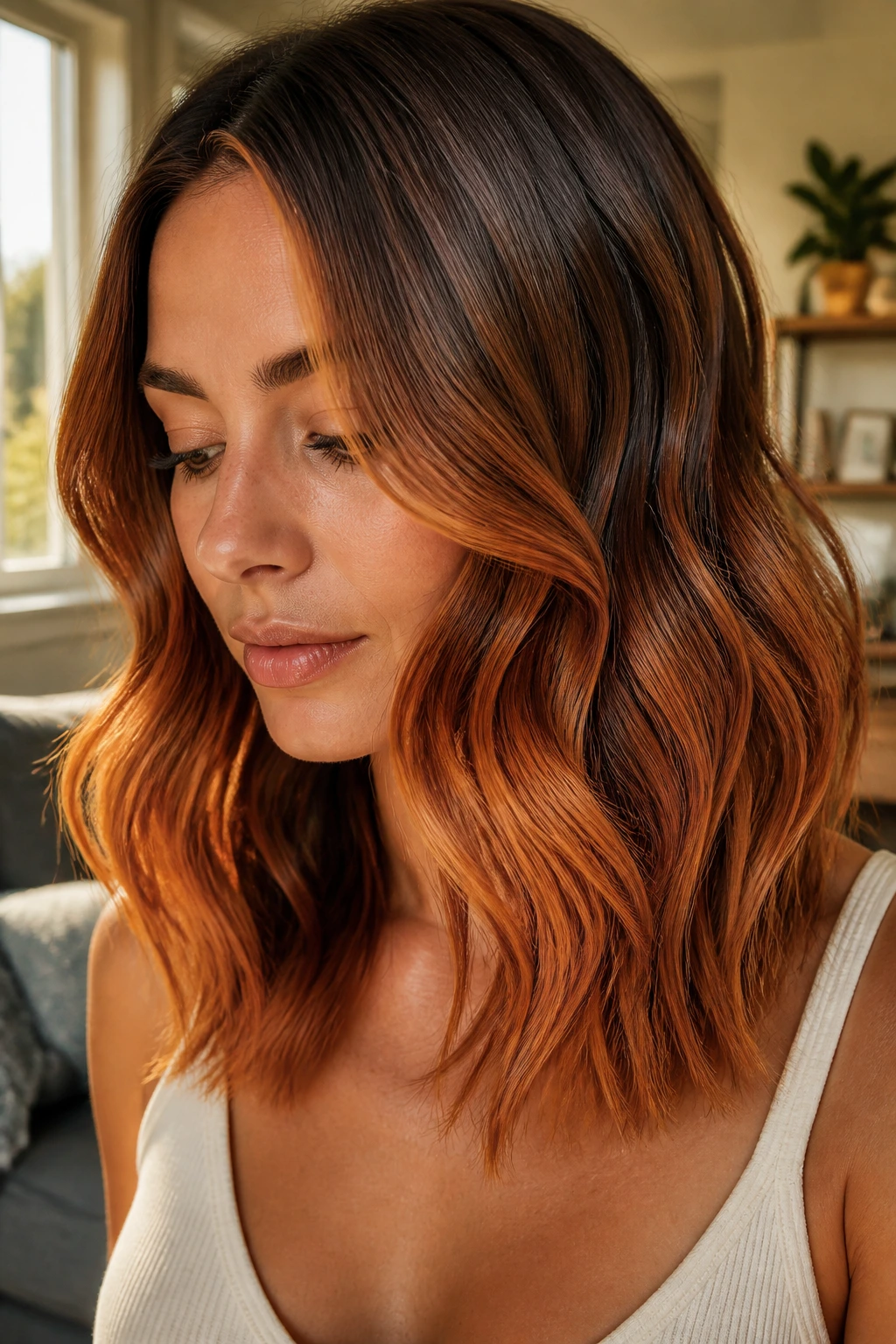
Bronze melting into copper is warmer and louder than caramel, and that’s why it stands out on medium hair. The bronze gives the roots some depth, while the copper through the ends catches light in a way that looks almost fiery without going full red. It’s a good call if your skin leans warm.
Comparison to Caramel
Compared with caramel, bronze has more metallic depth and less sweetness. That makes it better if you want color that feels richer and less beachy. It also looks especially good on layered cuts, where the copper pieces can separate instead of blending into one block.
Keep the gloss shiny and the waves loose. That’s where this color gets its best shape.
31. Beige Brown to Icy Beige Tips
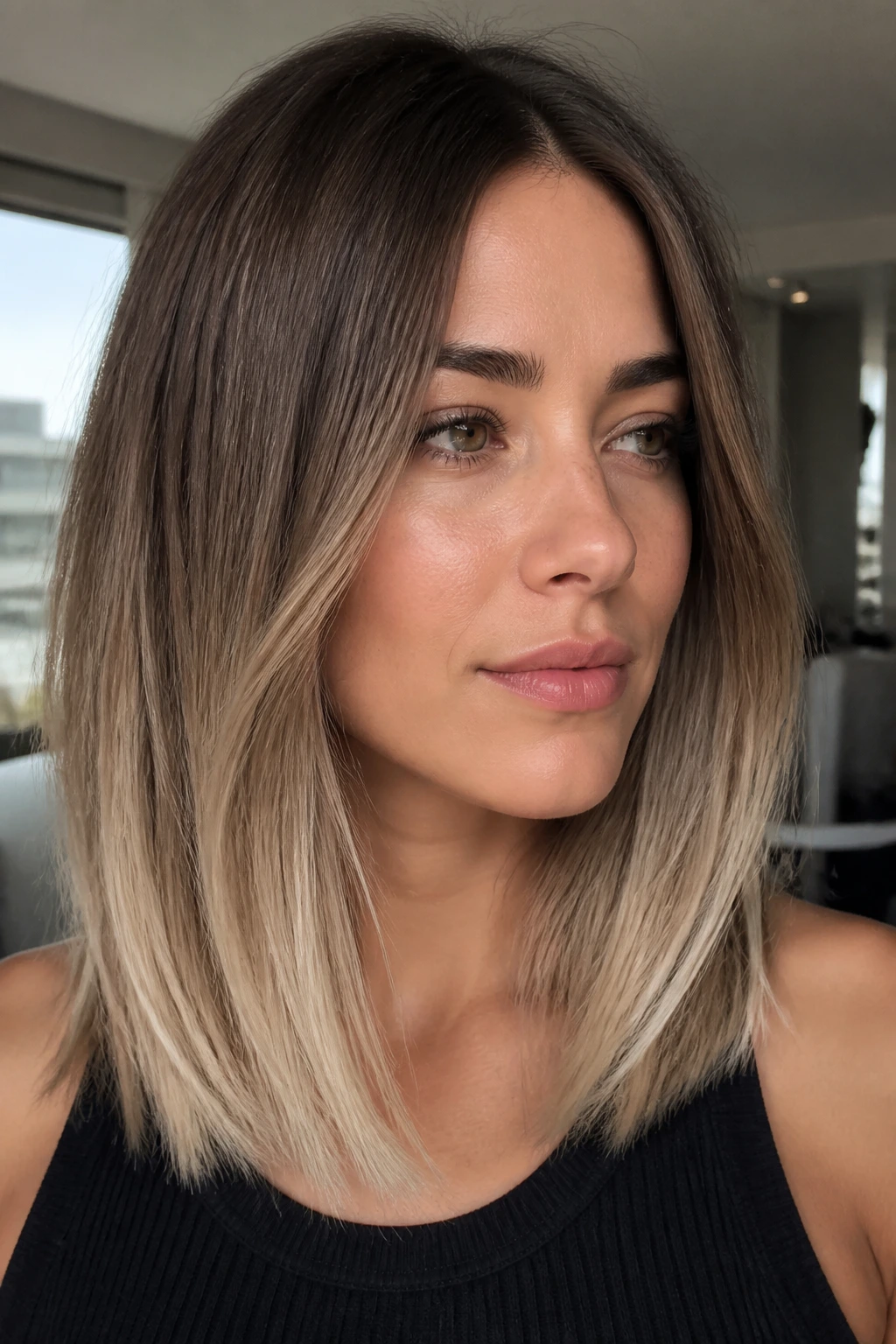
Beige brown into icy beige tips is a neat, modern ombre when you want brightness but not gold. The base stays soft and neutral, and the tips shift lighter without diving all the way into platinum. On medium-length hair, that restraint makes the cut look sleek instead of over-processed.
A low-contrast beige ombre is a smart choice if your hair is naturally medium brown and you want to stay believable. The icy beige at the bottom should be cool enough to feel fresh, but not so pale that it loses texture. I prefer this on smooth, straight styles where the clean color line can do the talking.
If your hair runs porous, tone carefully. Beige turns hollow fast when the hair is thirsty.
32. Rooted Honey with Face-Framing Lift
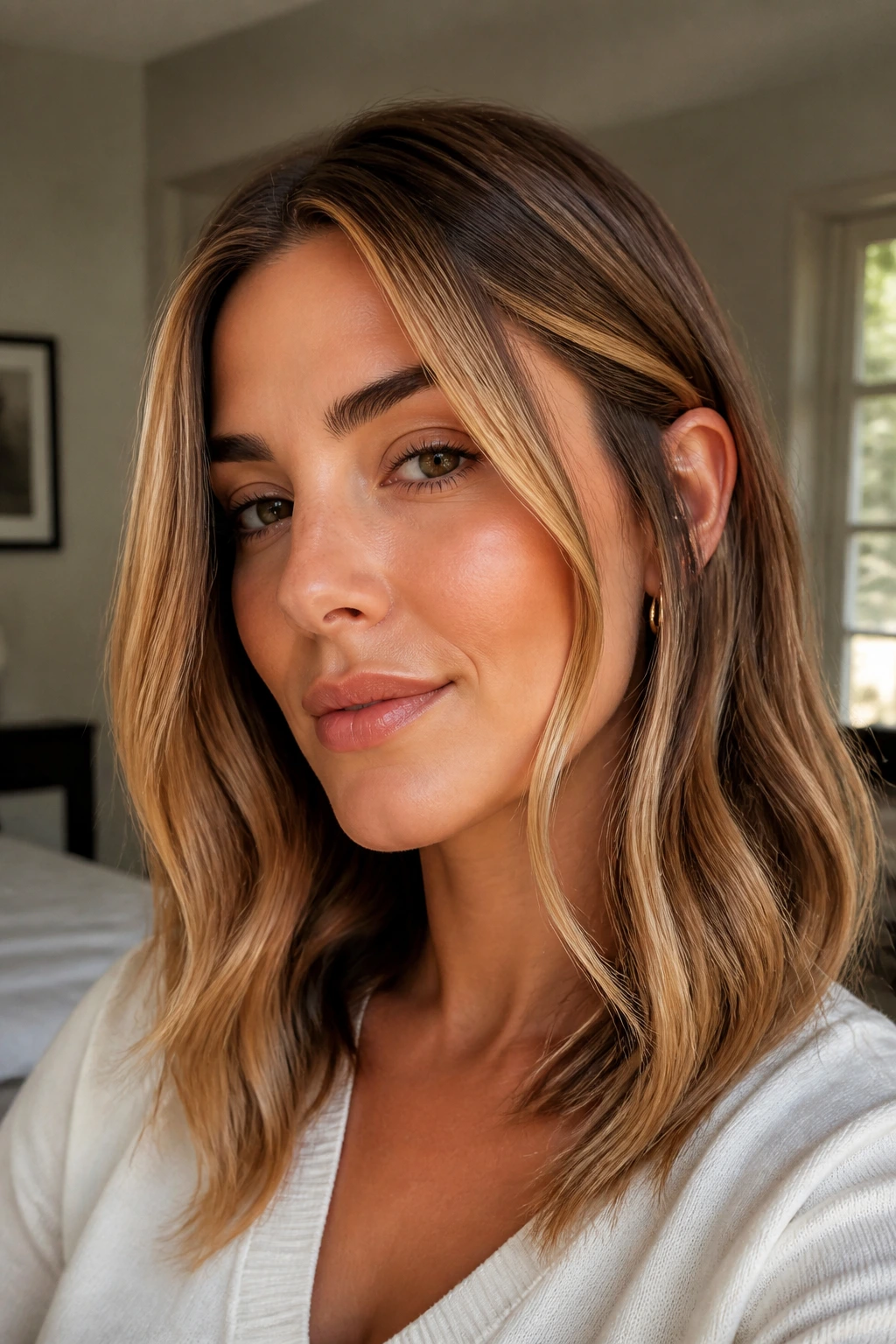
Rooted honey with face-framing lift is one of my favorite medium-length ombre tricks because it doesn’t ask the whole head to do the same thing. The face-framing pieces brighten first, and the rest of the honey drifts through the lower half of the hair. That creates movement around the face, which is where most people actually look.
Why the Front Does the Heavy Lifting
On medium hair, the front pieces are the ones you see tucked behind the ear, flipped over one shoulder, or blown back from the face. Lighter honey there makes the cut feel open. The back can stay deeper, which keeps the style from going flat.
This is a good pick if you want brightness without a full head of light ends. It’s also easier to maintain because the most visible pieces are the ones you refresh first.
33. Soft Sand to Vanilla Cream
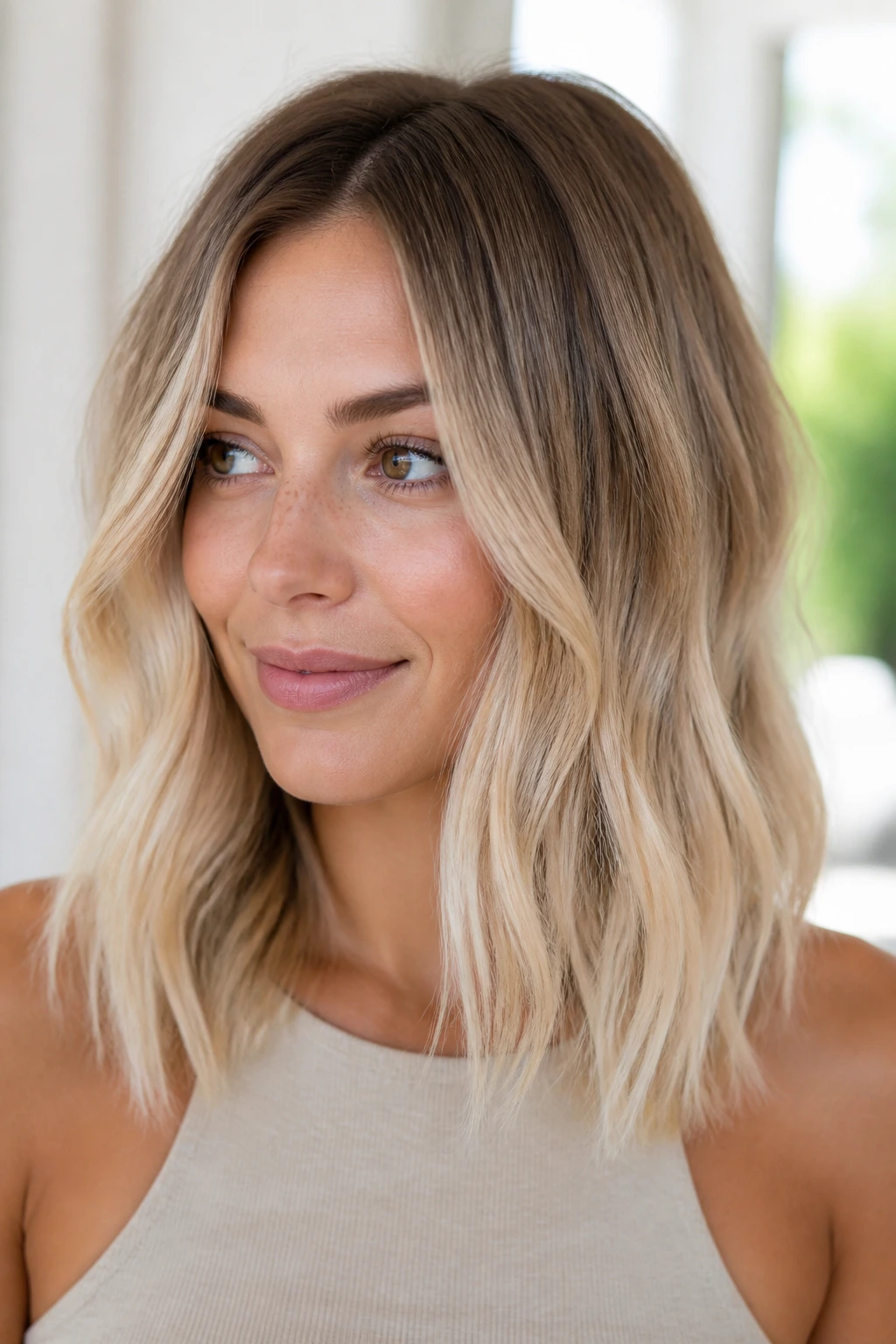
Soft sand fading into vanilla cream is the polished neutral that sits between beige blonde and blonde-blonde. It feels light, but not icy. On medium-length hair, the transition can start low enough to keep the root area grounded while the ends open up into a creamy finish that looks clean in straight styles and loose waves.
This one works because neither shade fights the haircut. Sand keeps the base believable, and vanilla cream gives the ends enough lift to show movement without turning chalky. If your hair is naturally light brown or dark blonde, this can be a very wearable ombre with a softer grow-out than full blonde.
I’d choose it for anyone who wants brightness, but not a loud color story.
Why Ombre Sits So Well on Medium Length Hair
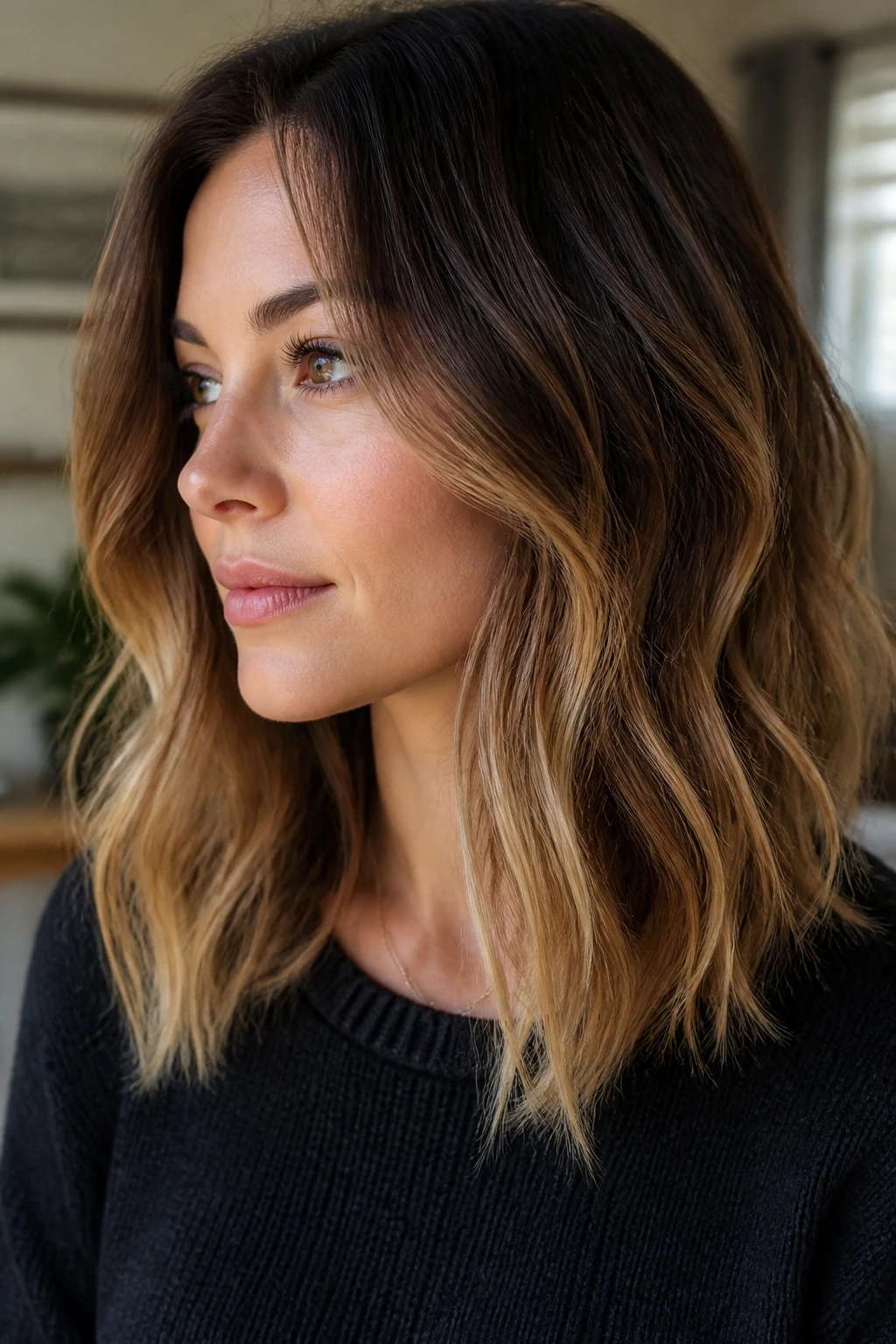
Medium-length hair gives ombre a useful amount of runway. There’s enough length for the color to travel, but not so much that the ends get swallowed by all that extra hair. The fade reads clearly on a lob, a shoulder-grazing cut, or a blunt mid-length shape, which is why this length often looks more balanced than very long hair.
A shorter cut can make ombre look abrupt if the transition is too high. Very long hair can make the fade drift down so far that the lighter ends lose impact. Medium hair lands in the middle, and the middle is where ombre behaves best. The darker root stays soft, the lighter ends still show, and the whole thing looks intentional instead of stretched.
The haircut matters more than people admit. A blunt line gives you a neat finish and a stronger color edge. Soft layers give the fade movement. If your hair is dense, the blend can sit a little higher. If it’s fine, the transition usually looks better when it starts lower and the ends stay creamy rather than paper-light.
The Tools That Make the Blend Cleaner
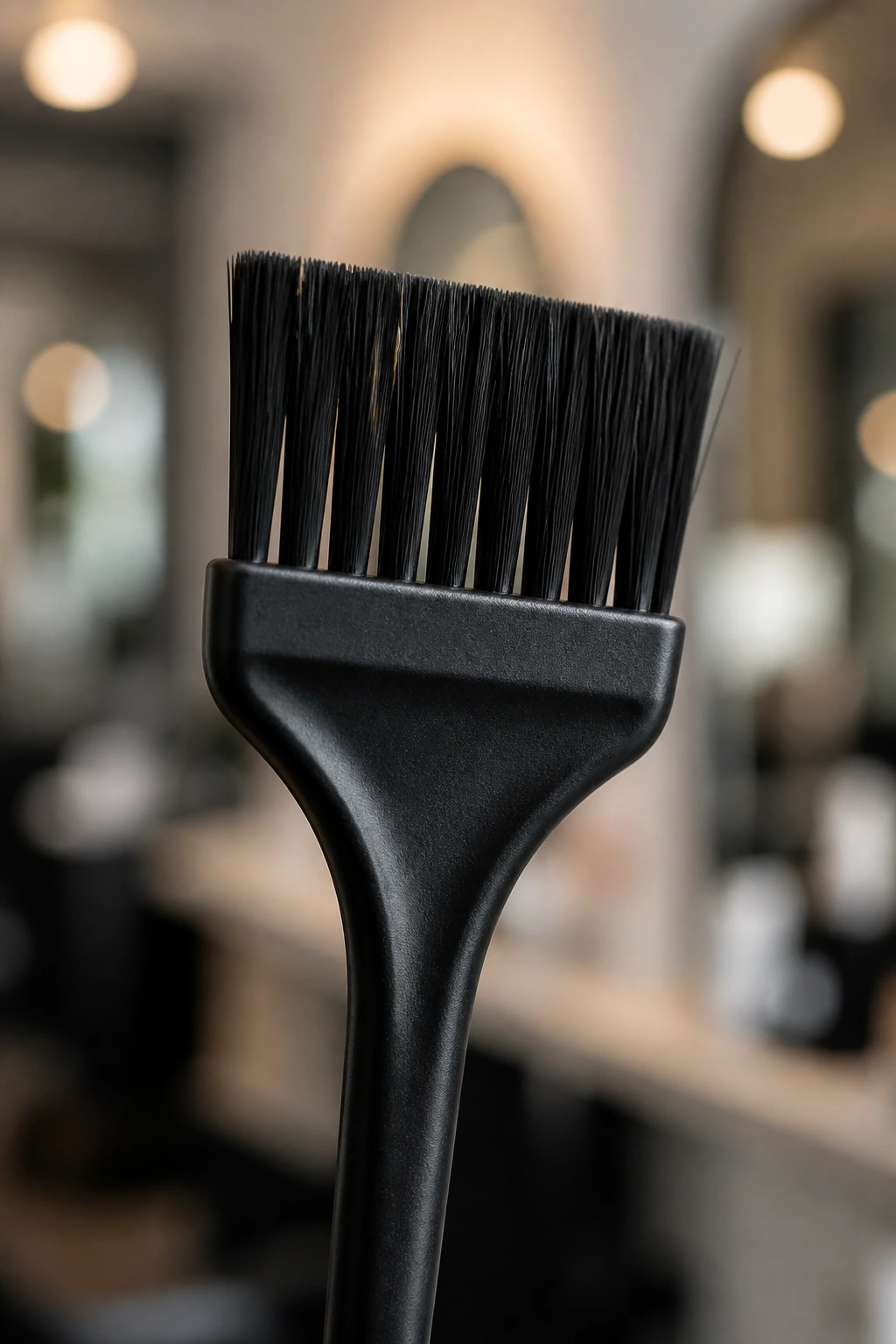
A clean ombre blend depends on more than the dye bowl. You need the right tools to section, paint, tone, and style the hair so the color actually shows up the way it should.
- Color brush and bowl: A tint brush helps feather the lightener or gloss through the mid-lengths instead of dumping it in one place.
- Sectioning clips: Keep the crown, sides, and nape separated so the blend stays even.
- Foils or balayage boards: Foils give more lift and control; boards help with painting soft, diffused ends.
- Gloves: Lightener and toner are not worth getting under your nails.
- Wide-tooth comb: Useful for detangling without roughing up freshly lightened hair.
- Microfiber towel: Better than a bath towel for soaking up water without frizzing the ends.
- Heat protectant: If you style with a blow-dryer or iron, this matters more than whatever spray claims to smell like paradise.
- Purple or blue shampoo: Pick the one that matches the tone you’re trying to keep out; purple for yellow, blue for orange.
- Color-safe conditioner: Keeps the ends from drying into straw after toning.
- Gloss or glaze: Great for refreshing shine and smoothing the tone between bigger color appointments.
Picking the Right Base Shade, Lift Level, and Toner
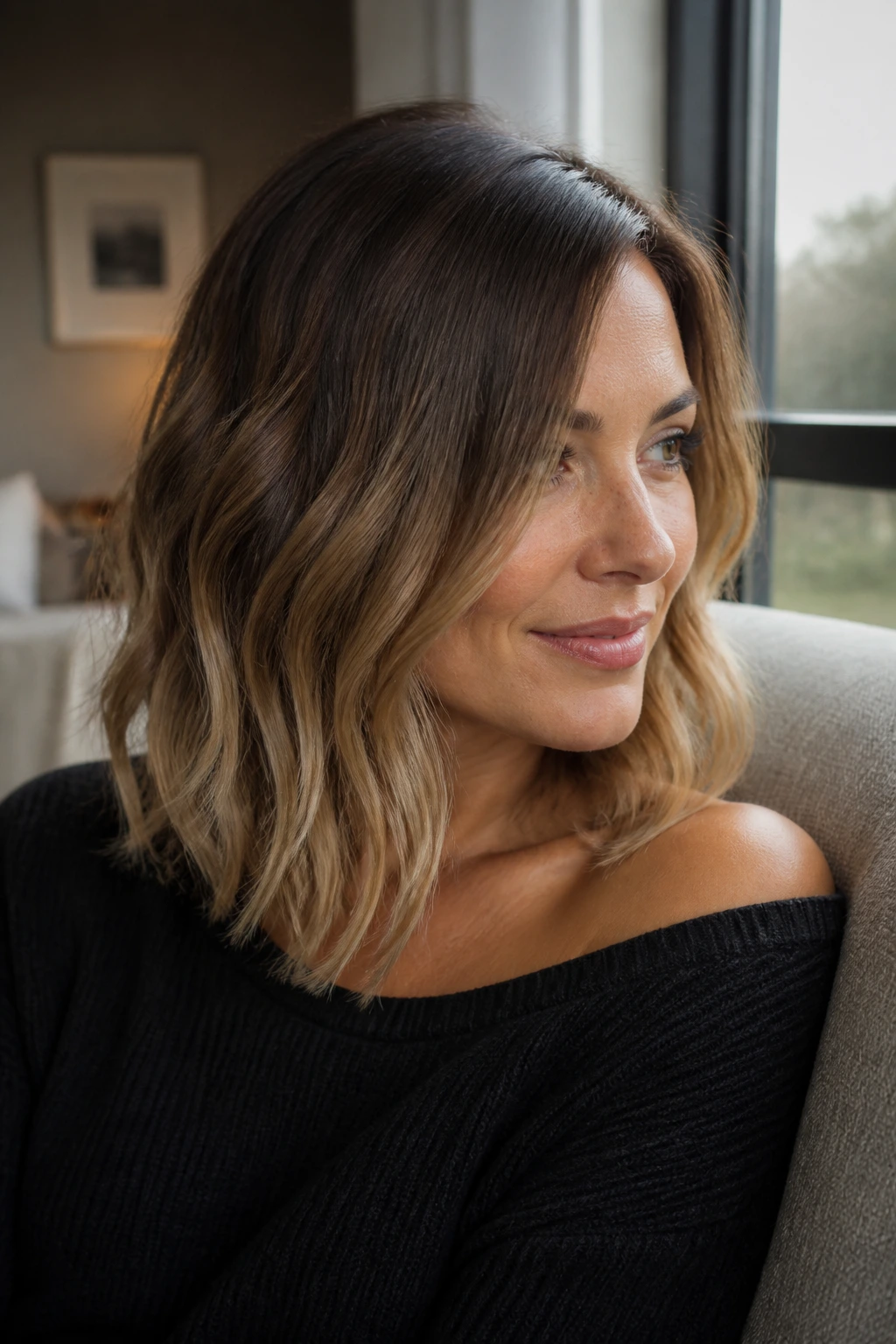
This is where a lot of ombre jobs go off the rails. The inspiration photo looks easy, but the real work is matching the base, the lift, and the toner to the hair you actually have on your head. A level 4 brunette will not behave like a level 6 dark blonde, and pretending otherwise is how people end up with orange mids and gray ends.
The smartest way to shop for this look is to compare your base to the photo before anything else. If the model has a cool brown root and your hair is warm copper, the end result will never match exactly unless the formula is adjusted. Bring photos with medium-length cuts, not waist-length waves. The proportion matters. The blend on a lob is not the same as the blend on long layers.
For toner, think in terms of direction, not fantasy. Beige softens. Ash cools. Gold warms. Champagne sits in the middle. Silver-beige can mute yellow, but it can also flatten porous ends if you overdo it. If your hair is already damaged, a gloss with a softer deposit may be better than pushing for a big lift and trying to rescue it later. That later part is expensive and annoying.
If your hair has old box dye, speak up. Old dark dye lifts unevenly and tends to expose warm patches first, especially through the mid-lengths. A colorist can work around that, but they need to know before the foil hits the hair.
How to Style Ombre So the Gradient Reads
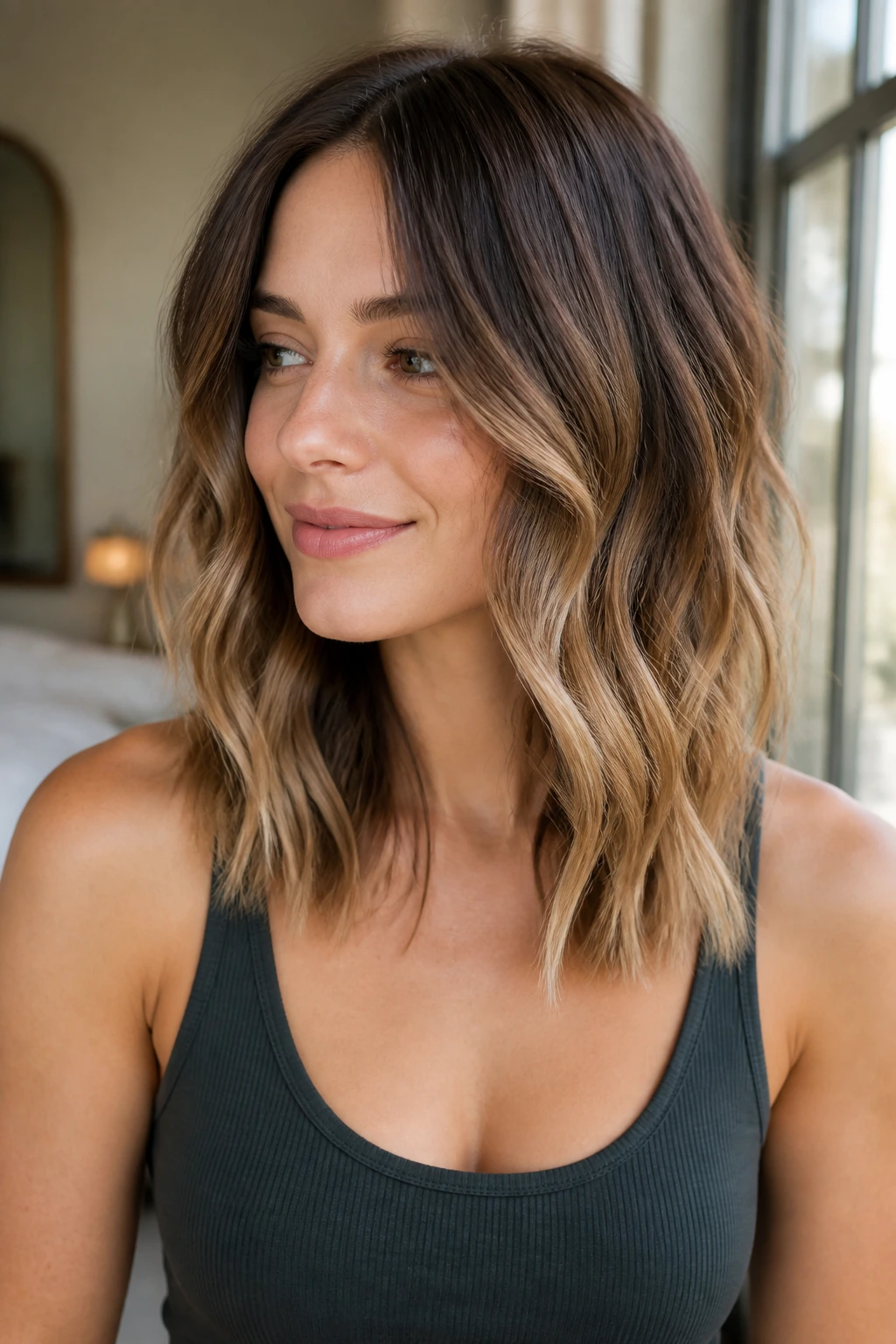
A good ombre can vanish if you style it badly. Flat hair hides the fade. One-inch curls can make it busy. The sweet spot is usually some kind of soft bend that lets the ends separate just enough to show the color shift.
Loose Waves: Use a 1 to 1.25-inch iron and wrap each section away from the face for 6 to 8 seconds. Let the curl cool in your hand before you brush it out. That cooling step matters; it keeps the wave from collapsing into mush.
Straight and Sleek: Blow-dry with a round brush and finish with a light serum on the ends. Straight hair shows a cleaner gradient, especially on smoky or beige ombre, but the ends need to look healthy or the whole thing can read dry.
Curly and Coily Hair: Ombre sits beautifully on curls when the lightest color is painted where the curl falls, not just where the hair is stretched. Ask for a color placement that respects the pattern of the curl, or the fade will look uneven in motion.
Parting Choice: A middle part makes the gradient feel symmetrical. A slight side part shows more of the face-framing pieces and can make the ombre feel softer around the cheekbone.
Extra Tricks for Cleaner Blends and Shinier Ends
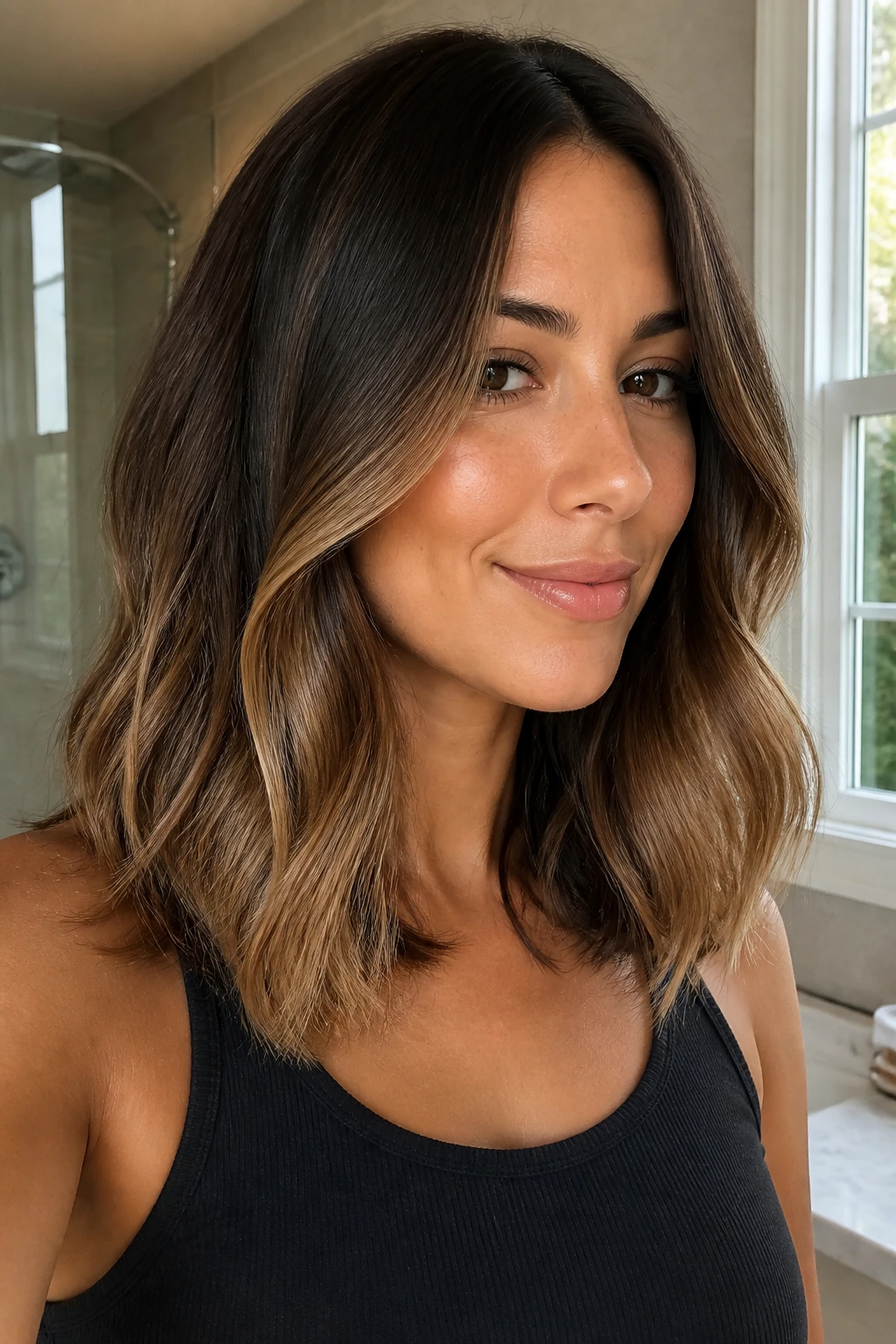
A good ombre is mostly about placement, but the finishing touches decide whether it looks fresh or tired. Glossing is the easiest win. A clear or lightly tinted gloss can smooth the cuticle and deepen the shine on the ends, which matters a lot on medium-length hair because the bottom section is where dryness shows first.
Face-framing lift is another smart move. Even if you keep the overall fade subtle, a few lighter front pieces can make the whole style look deliberate. I like that trick because it gives the eye a place to land. The back can stay darker and softer.
Customization: If your hair is thick, ask for a slightly higher blend so the darkness doesn’t eat the lighter ends. If it’s fine, keep the lighter color more concentrated at the bottom 2 to 4 inches. That keeps the hair from looking wispy. You can also use a root-smudge or shadow root for a softer grow-out if you hate obvious regrowth lines.
Serving Suggestions: Use a light finishing oil on the last inch only. Too much product near the mids can make the ombre disappear under grease, and nobody wants that.
The Color Mistakes That Make Ombre Look Harsh
The first mistake is pushing the contrast too high for the haircut. If the light ends start too far up on medium-length hair, the color can look chopped into blocks instead of blended. The fix is simple: keep the transition lower and soften the mid-shaft with a root melt or gloss.
Another problem is choosing the wrong tone for the base. Warm brown roots with icy ends can look disconnected if the toner fights the natural pigment. That usually shows up as a grayish patch or a muddy line. Match the undertone family first, then decide how cool or warm you want the finish to be.
Over-bleaching the ends is a classic mistake, too. People think lighter is better. It isn’t. Ends that are pushed past a pale yellow stage can go hollow, frizzy, and see-through. Stop at the point where the hair still has some strength, then tone from there.
Skipping haircut shape is another one. A blunt, heavy cut may need slightly softer placement to avoid a hard color shelf. A layered cut can carry more contrast. The haircut and the color have to agree, or the whole thing looks confused.
Variations and Adaptations Worth Trying
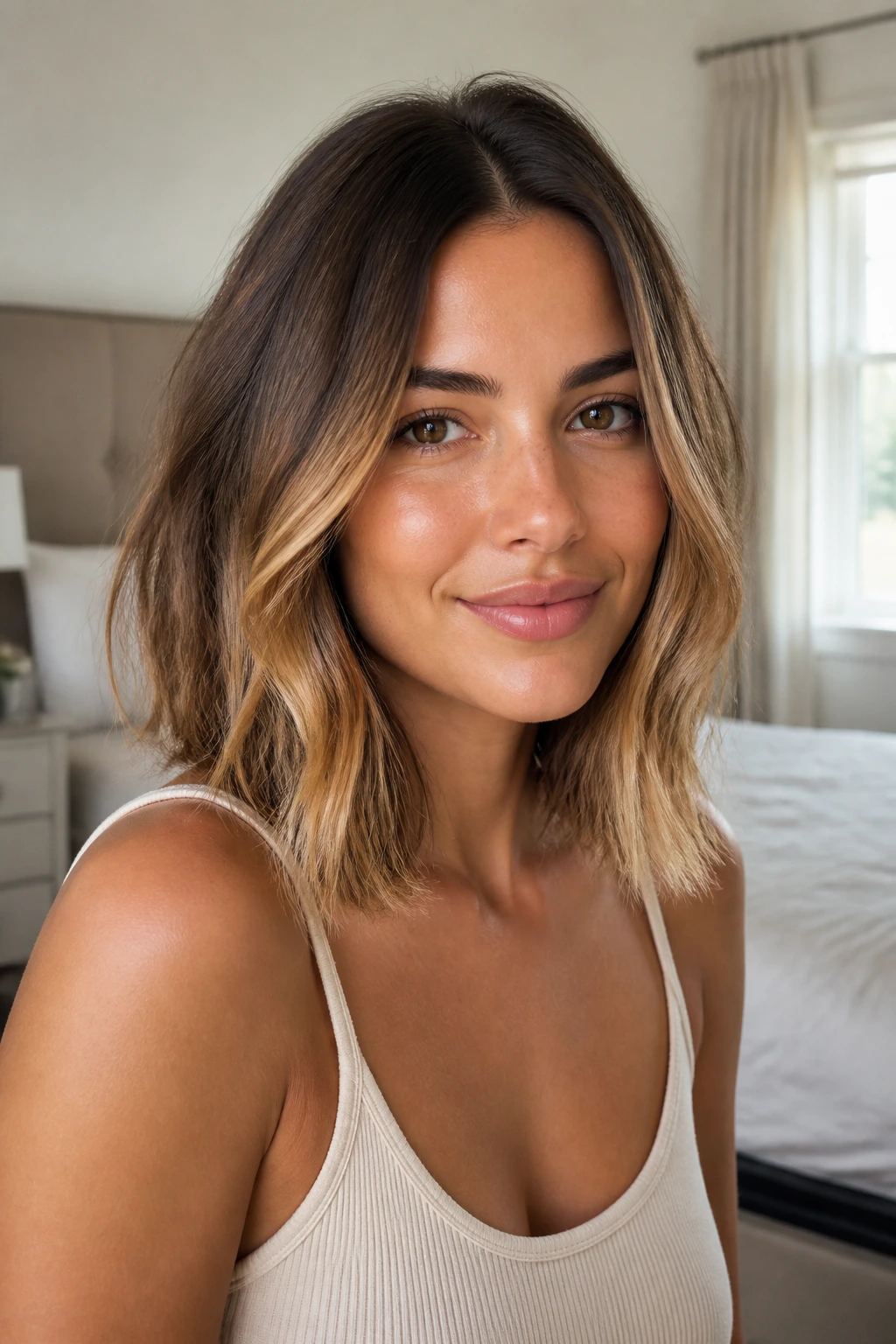
Low-Commitment Melt: Ask for just a soft root shadow and a 2- to 3-inch lightened end section. This is the easiest version to live with if you want movement but hate touch-ups. It works especially well on shoulder-length hair that’s worn straight.
High-Contrast Statement Ends: Keep the root deep and push the ends a few levels lighter for a sharper finish. This suits blunt lobs and polished blowouts, where the color line can stay crisp. It does need more toner maintenance, so it’s not the lazy choice.
Curly-First Ombre: Place the lighter color where curls naturally sit, not only on the bottom third. That keeps the fade visible in the shape of the curl rather than in a stretched-out straight shape. Good for ringlets, waves, and texture-rich hair.
Gray-Friendly Beige Blend: Use a neutral brown root and smoky beige ends to blend natural gray with the color job. This is a strong pick if you want to soften regrowth without full coverage every time.
Fashion-Color Dip: Start with a natural brunette base and add teal, lavender, or peach only to the ends. Medium hair is a good length for this because the color stays visible without taking over the whole head.
Keeping the Ends Soft Between Color Sessions
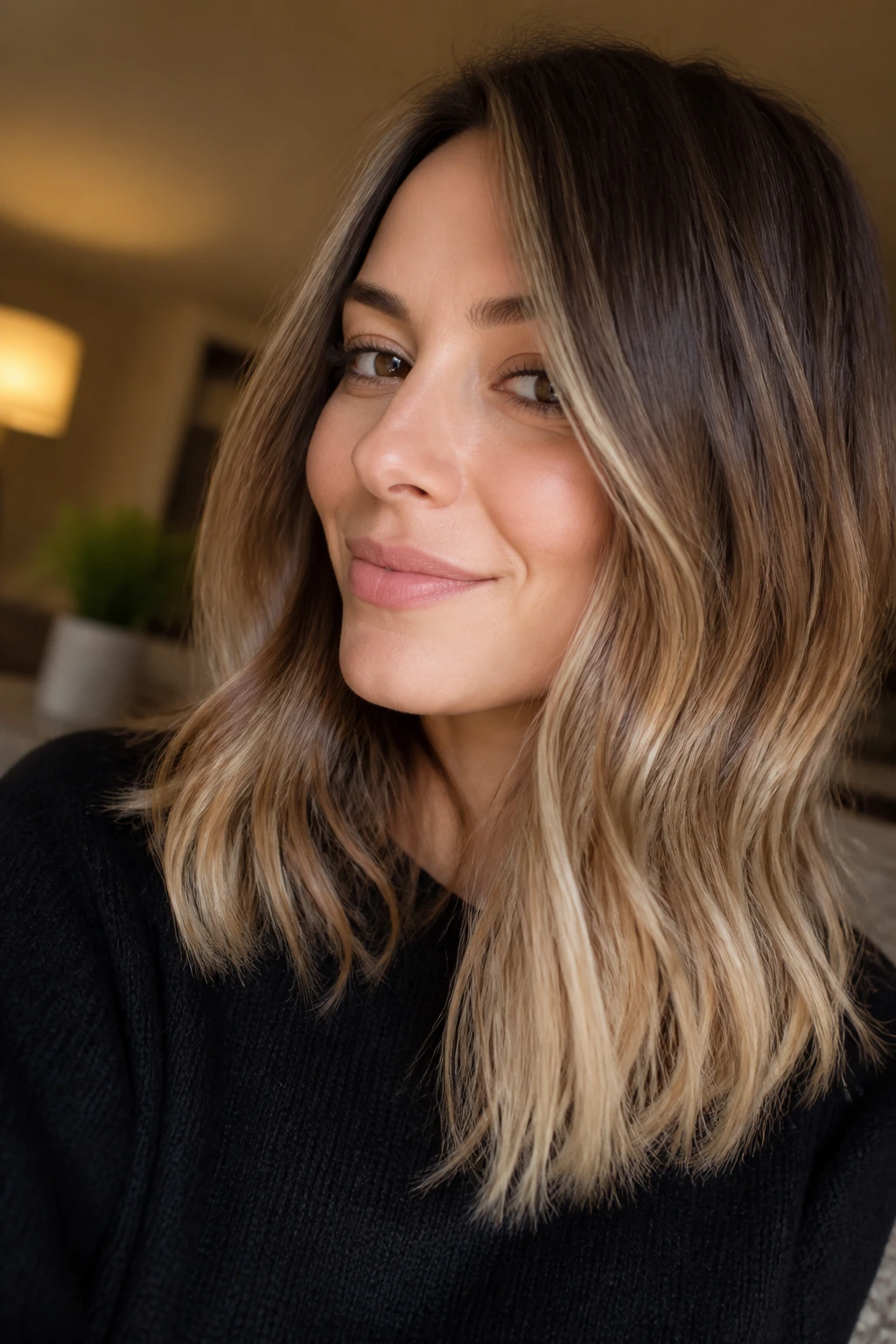
Ombre lasts better when you treat the ends like they’re fragile, because they are. The lighter sections usually need color-safe shampoo, cool rinsing, and a conditioner that actually leaves the hair slippery. If the ends feel rough when wet, they’ll look worse when dry.
Wash 2 to 3 times a week if you can. More often than that tends to strip tone from the lighter sections. Use purple shampoo only when the blonde starts drifting yellow, not on every wash. For copper, rose gold, and peach tones, use a color-depositing mask or gloss every few weeks to keep the shade from going flat.
A trim every 8 to 10 weeks keeps the bottom line from getting thin and tired. Medium-length ombre looks best when the ends still have weight. If the cut gets stringy, the color can’t save it. Heat protectant is non-negotiable if you use hot tools, because the lighter ends burn faster than the darker roots and they show damage sooner.
Frequently Asked Questions About Ombre on Shoulder-Length Hair
Does ombre work better on medium hair than on very long hair?
Often, yes. Medium hair shows the transition without losing the lighter ends in too much length, so the fade reads cleanly and still has shape.
What base color makes ombre easiest to wear?
Medium brunette and dark blonde bases are the easiest starting points because they already give the color a built-in shadow. Very dark hair and very light hair can still do it, but the formula changes a lot.
Can fine hair handle ombre without looking thin at the ends?
It can, as long as the lightest shade doesn’t start too high. Keep the gradient lower and use a blowout or soft wave so the ends have visible body.
How often does ombre need toning?
Most lighter ends need refreshing every 4 to 8 weeks, depending on how warm your hair pulls and how often you wash it. Fashion colors fade faster than beige or caramel shades.
Is ombre less damaging than full blonde?
Usually, yes, because the root area stays darker and fewer sections need heavy lifting. The ends still take stress, though, so don’t treat them like they’re invincible.
Can curly hair wear ombre well?
Absolutely, and sometimes better than straight hair. The color moves with the curl pattern, which makes the gradient look natural when it’s placed with the curl’s shape in mind.
What if my hair turns orange during lightening?
That usually means the lift stopped too early for the target shade. A toner can soften the warmth, but if the orange is strong, the hair may need a gentler second appointment instead of forcing it in one day.
Should I choose warm or cool ombre?
Choose the one that matches your base and the clothes you wear most. Warm shades — caramel, bronze, honey — feel softer on golden or olive skin. Cool shades — ash, taupe, silver-beige — tend to look sharper on cooler tones.
Shades That Stay Interesting
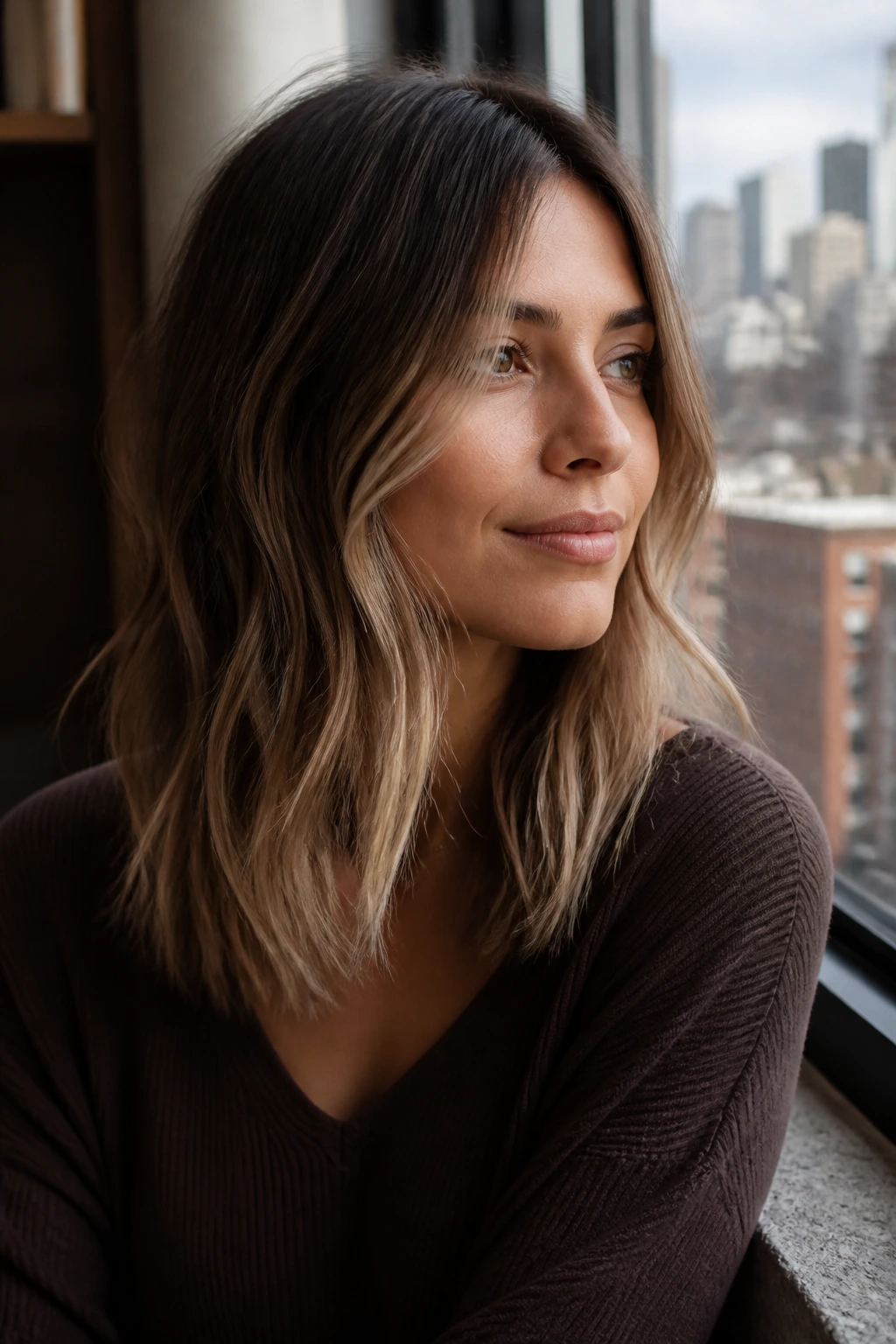
The best ombre hair looks for medium length hair have one thing in common: they respect the haircut. They don’t fight the length, and they don’t pretend a shoulder-grazing cut needs the same placement as waist-length waves. That’s why the good versions keep their shape even after a few washes and a rushed blow-dry.
If you choose the shade with your base color, texture, and daily routine in mind, the color does half the styling for you. That’s the real win. Not flash. Not drama for its own sake. Just a gradient that looks like it belongs on your head every time you catch it in the mirror.
