



Medium-length hair has a sweet spot people underestimate. There’s enough length for ribbons of color to move, but not so much that a bad placement can hide in the ends. That’s exactly why balayage can look polished on a shoulder-grazing cut one day and stripey the next if the light pieces start in the wrong place.
Balayage is hand-painted by design, which means the result depends on the rhythm of the hair itself: where it bends, where it flips, where it falls against the cheekbone or collarbone. On a lob, those details matter more than they do on very long hair. A half-inch of brightness near the face can change the whole read of the cut, and toner at the bowl decides whether that brightness turns beige, honey, mushroom, pearl, or copper.
That range is the fun part. Medium-length hair can wear soft caramel, smoky bronde, champagne blonde, copper ribbons, icy beige, and barely-there brunette dimension without looking overloaded. The same length can lean expensive and understated or bold and glossy, depending on how much contrast you put near the face and how far you let the light pieces travel.
Why These Balayage Looks Work So Well on Medium Length Hair
-
The color shows faster: On shoulder-grazing hair, a small shift in placement reads immediately, so the light pieces don’t need to be heavy to make an impact.
-
The grow-out stays softer: Because balayage is painted rather than packed in from the root, the regrowth line usually looks blurred instead of blunt, which matters when the cut sits right by the face.
-
The cut and color can work together: Layers, blunt ends, curtain bangs, and lobs all change how the light moves, and these looks use that movement instead of fighting it.
-
There’s room for contrast without chaos: Medium length gives you enough canvas for face-framing brightness, but not so much space that the color starts to feel busy.
-
Styling makes a visible difference: A loose wave, a sleek blowout, or a straight finish changes how the same balayage reads, which gives you more mileage from one color appointment.
-
Maintenance can be smarter: You can refresh a money piece, gloss the ends, or deepen the root without redoing the entire head every time.
Why Balayage and Medium-Length Hair Click So Hard
Balayage on medium length hair works because the cut has a built-in tension. It’s long enough to show a gradient, but short enough that every painted section has to earn its place. That makes the placement feel intentional when it’s done well. It also means sloppy work shows fast. No hiding, no pretending.
The nicest versions use depth near the scalp and brightness where the hair moves: around the cheekbones, through the perimeter, and across the ends that brush the shoulders. On a collarbone cut, the lightest pieces often look best a little lower than people expect. Too high and the color can make the haircut look floaty. Too low and the whole thing disappears when the hair swings.
A good colorist also thinks in terms of texture. Wavy medium hair can take softer ribbons; straight hair needs either cleaner contrast or more controlled blending, because the pattern doesn’t get broken up by bends. Curly hair needs the paint mapped around curl clumps, not just sections on paper. That’s the part most mood boards skip. The hair in motion matters more than the hair standing still.
1. Honey Beige Balayage with Soft Waves
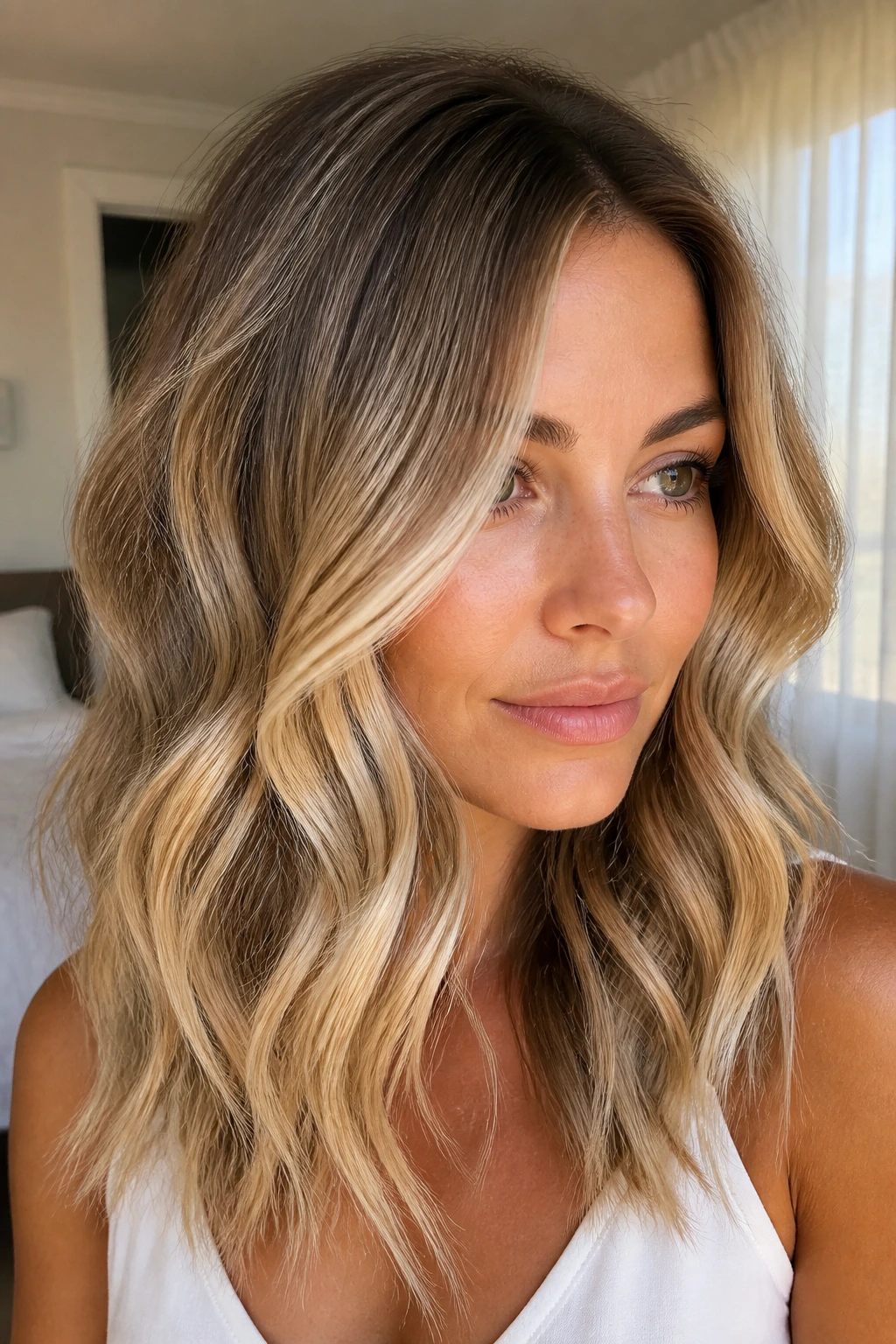
Honey beige is one of those shades that looks calm from across the room and quietly expensive up close. The base stays a little deeper, then the light pieces drift into a beige-gold finish that avoids the obvious yellow cast some blondes pick up. On medium-length hair, soft waves make the whole thing feel like the color is sliding through the cut rather than sitting on top of it.
Why it works: The warmth sits in the middle lane. Not too gold, not too ashy. That makes it easy to wear on brunettes who want brightness without losing depth at the root. Ask for the brightest ribbons around the cheekbone and collarbone, with lighter saturation through the ends and less near the crown.
Styling note: A 1-inch iron or a round-brush blowout brings the beige dimension forward. If the hair is left pin-straight, the color looks cleaner and a little more editorial.
Best for: Anyone who wants a softer blonde result that still has warmth on the skin.
2. Mushroom Brown Balayage on a Wavy Lob
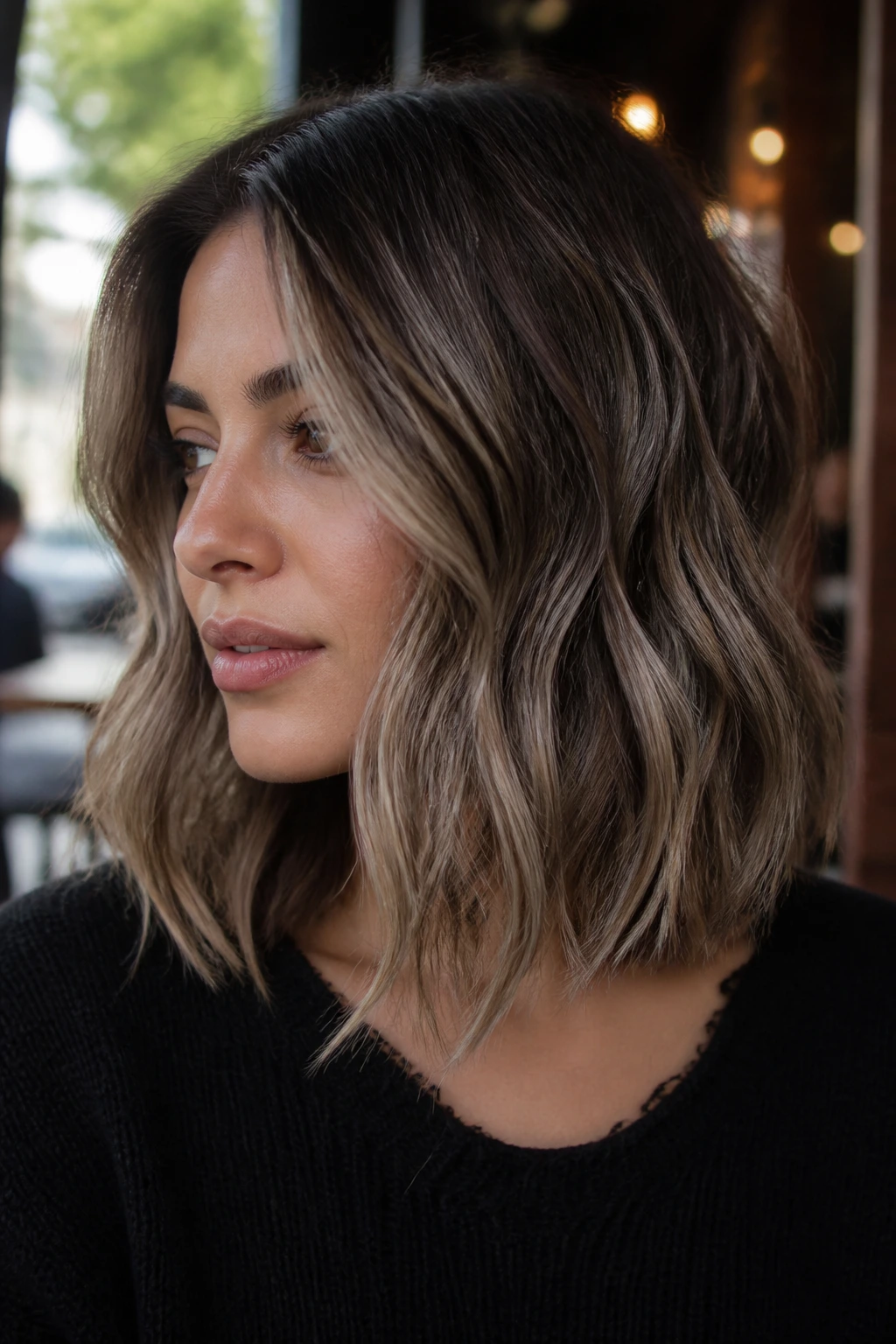
Mushroom brown is the color people ask for when they want dimension but don’t want the warmth that creeps into traditional caramel work. It lives in that cool, earthy space between taupe and soft brown, and on a wavy lob it looks especially grounded. The result is subtle enough to pass as “good hair” before anyone notices the color trick.
Why it works: Cool tones need a little texture to keep from looking flat, and waves give the mushroom finish something to catch on. The painterly pieces should stay thin through the top layer and a touch more obvious around the face. That keeps the whole look from sinking into one dark block.
What to ask for: A root that stays close to your natural base, then ash-brown ribbons and a neutral gloss over the lightest pieces. If your hair lifts orange, this is the right family to keep brass under control.
3. Bright Money Piece Blonde on a Darker Base
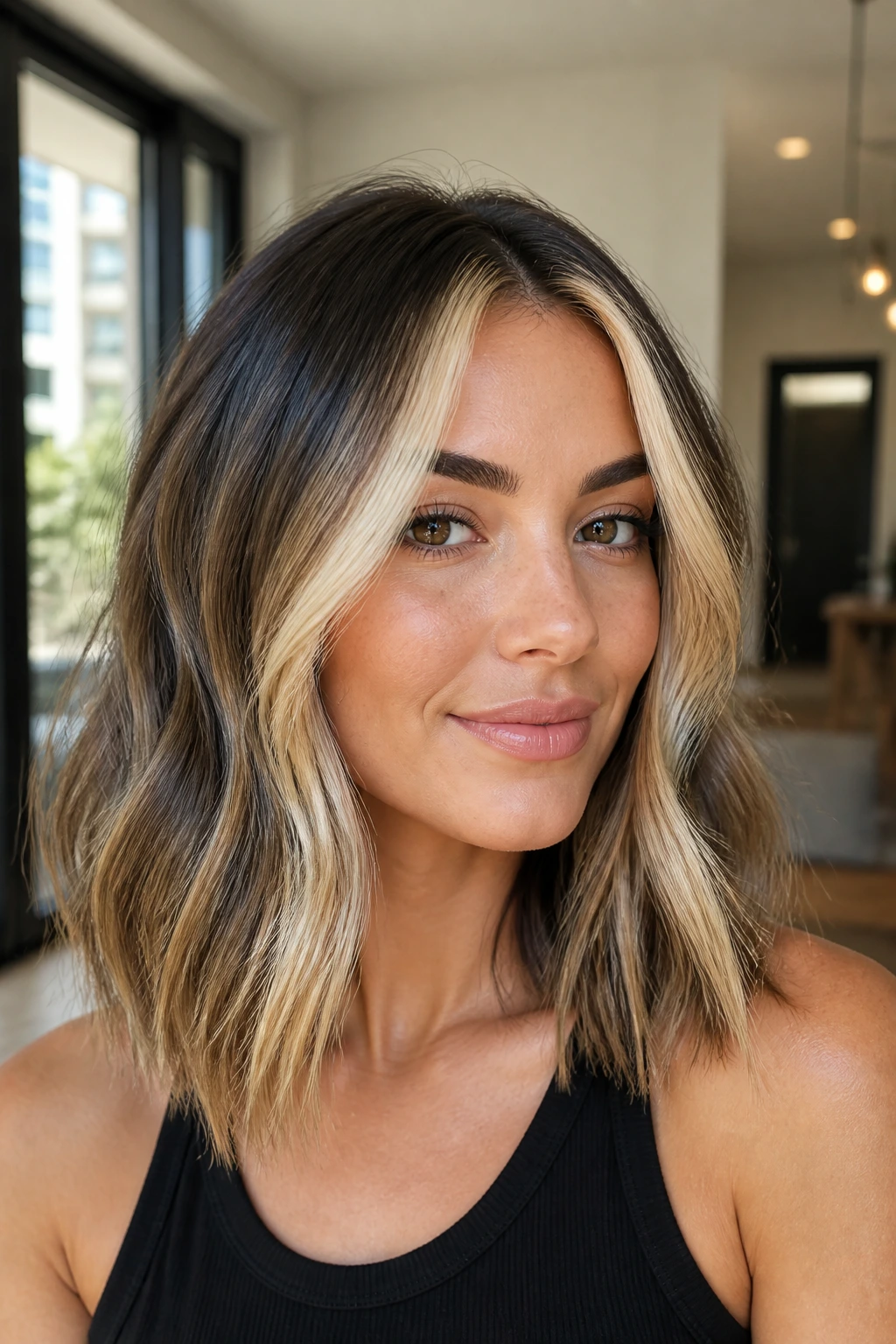
This is the dramatic one. A bright money piece can make a medium-length cut look sharper in minutes, especially when the rest of the hair stays darker and softer through the sides and back. The contrast is what gives it energy. Done well, it feels modern. Done carelessly, it looks like a stripe. The line between those two is placement.
Keep the brightest sections at the front and let them start around brow or cheekbone level instead of right at the roots. That tiny shift stops the face frame from looking pasted on. The rest of the balayage should stay more blended and a shade or two softer, so the front pieces have room to work.
Best worn with a center part if you want symmetry, or a subtle off-center part if you want the contrast to fall a little more casually. A flat iron finish makes the money piece read crisp. Loose waves soften the edge if the color feels too bold.
4. Smoky Bronde with Long Face-Framing Pieces
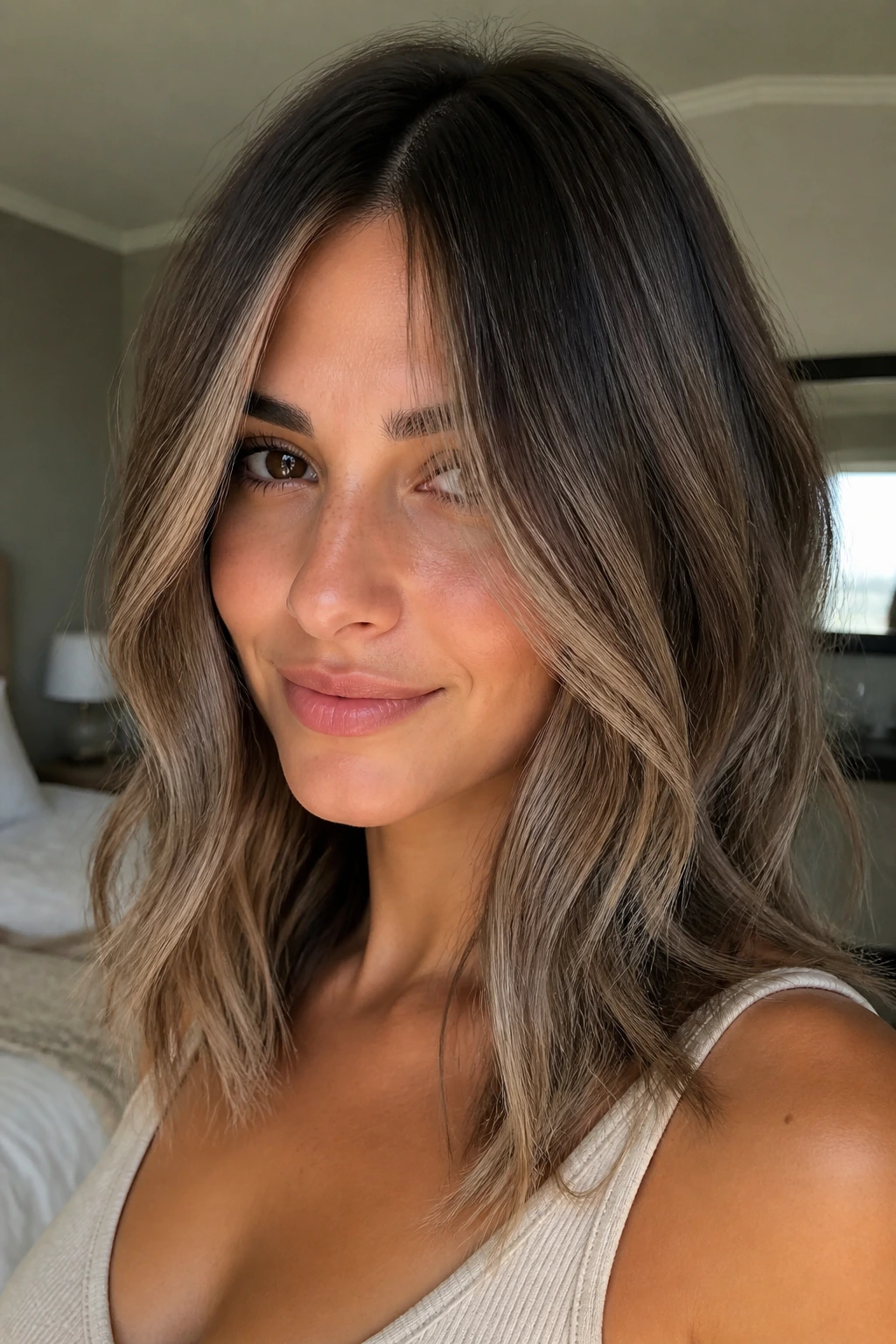
Bronde works because it doesn’t force the hair into one camp. It keeps brunette depth at the root and through the interior, then lifts the front and lower lengths into a smoky beige-blonde that looks sunlit without turning brassy. On medium-length hair, long face-framing pieces help the blend look intentional rather than patchy.
The best versions leave some darker ribbons under the top layer. That hidden depth matters. Without it, the color can slide toward flat blonde, and medium-length hair loses the movement that makes balayage interesting in the first place.
Ask for face-framing pieces that begin around the temple and soften down toward the ends, with a beige or neutral toner rather than a very gold one. It’s a strong choice for someone who wants brightness but still likes seeing brunette reflected in the mirror.
5. Cinnamon Ribbon Balayage for Warm Brunettes
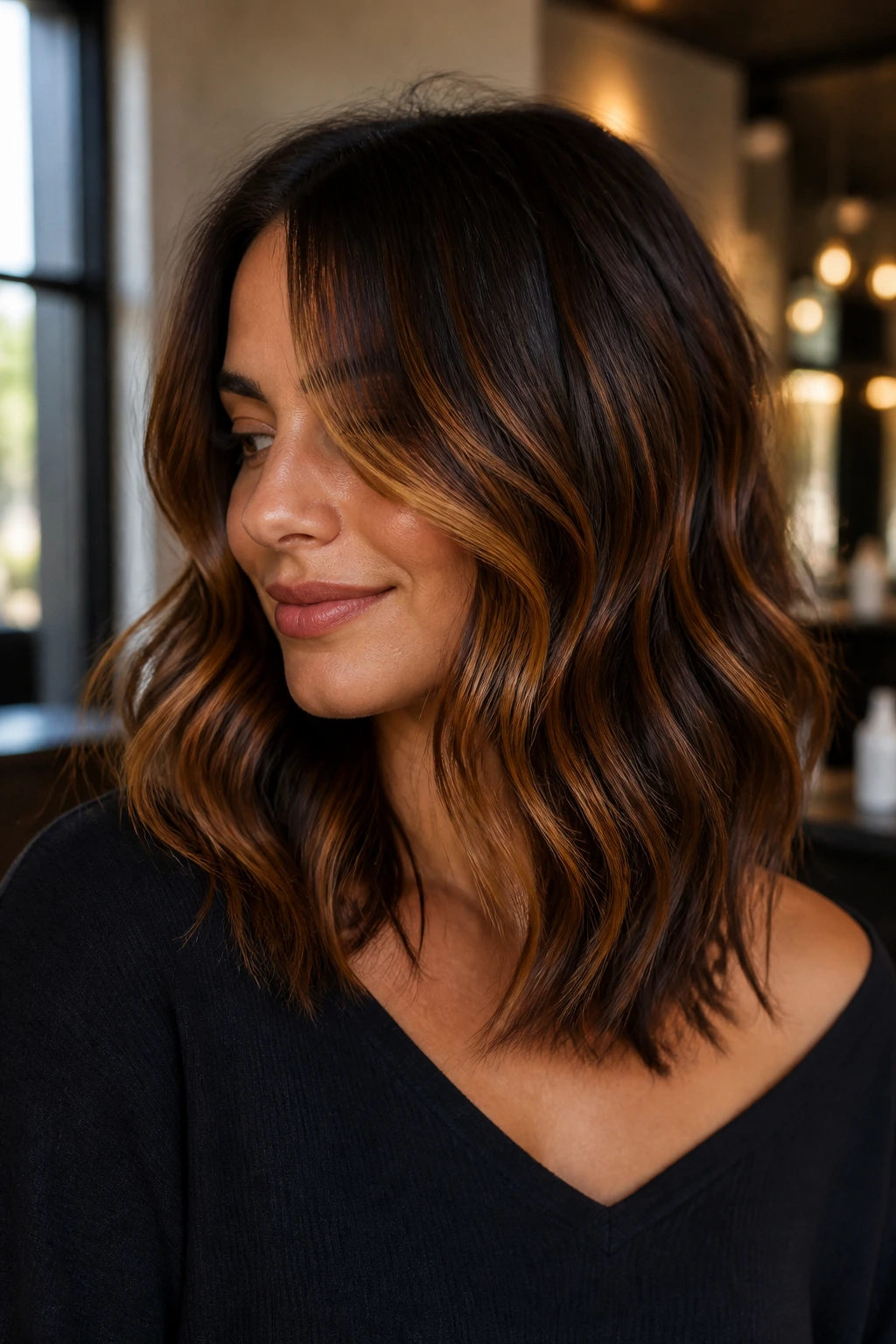
Cinnamon ribbon balayage has a little heat in it, but not the loud kind. The shade sits between auburn and caramel, which gives dark brown hair a spicy lift that still feels believable. On medium-length cuts, the warmth catches along bends and layered ends in a way that almost mimics natural sun oxidation, only cleaner.
The trick is not to over-lighten the whole head. Keep the base rich, then add cinnamon and toasted copper ribbons mostly through the mid-lengths and perimeter. The face frame can be a touch brighter, but the crown should stay grounded or the color loses shape.
This is one of the better choices for warm undertones, though it also works on cooler skin if the cinnamon leans a bit more muted than orange. Straight hair shows the ribboning clearly. Soft waves make the warmth move.
6. Ash Blonde Balayage on Dark Blonde Hair
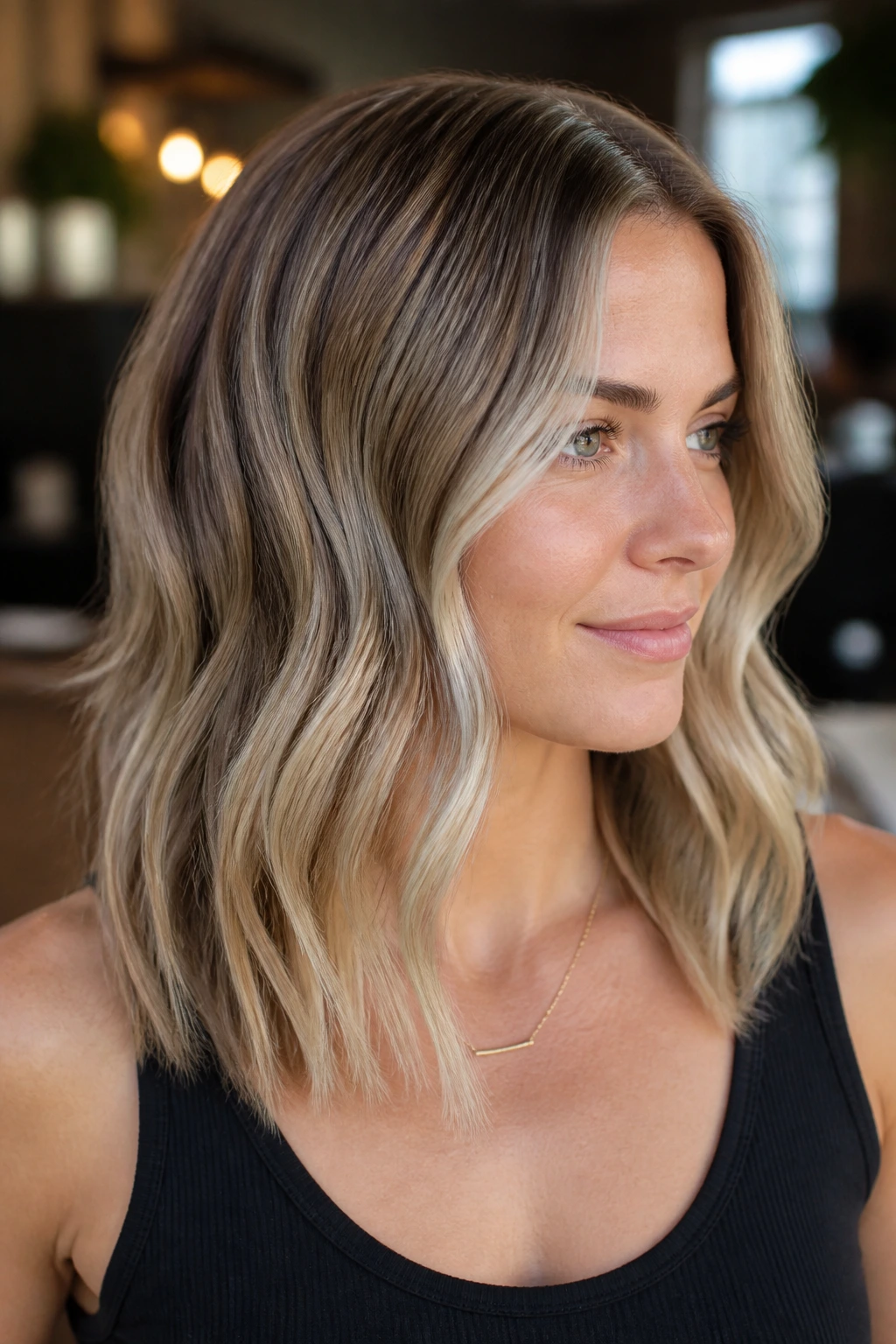
Ash blonde is a cooler answer to the problem of brass. It works best when the starting base is already dark blonde or light brown, because the goal is not pure platinum; it’s a controlled, pale finish with enough smoke in it to keep the color from turning yellow. On medium hair, that restraint is what makes it wearable.
The lightest pieces should stay thin through the top and a little thicker at the ends. If the whole head gets lifted evenly, the ash tone can go chalky. Keeping the root slightly deeper gives the blonde a cleaner frame and prevents the cut from flattening out.
A gloss matters here. So does patience. Ash shades tend to look strongest right after toning, then soften a little after a few washes, which is usually a good thing. The result should feel cool, not dusty.
7. Caramel Melt on Shoulder-Length Layers
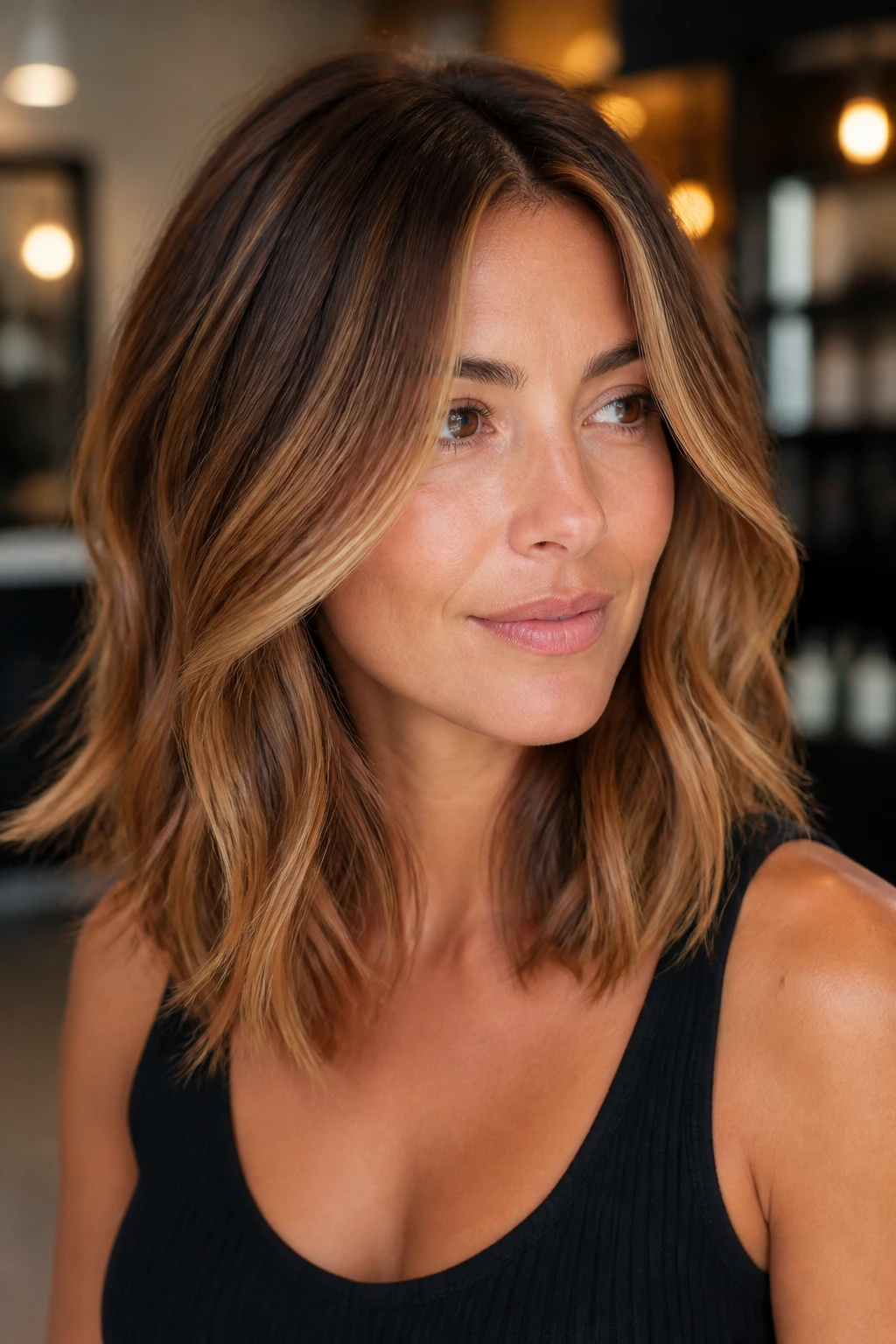
Caramel melt is the dependable favorite for a reason. The transition from deeper root to golden brown ends feels smooth, and shoulder-length layers give the color somewhere to spread without turning it choppy. It’s the kind of balayage that looks good in motion and still makes sense when the hair is tucked behind one ear.
Ask for a soft root shadow and hand-painted caramel through the lower half, with a little extra brightness around the face. The layers matter here. When the cut has shape, the caramel lands on different planes and the whole head looks fuller.
This is one of the easiest looks to live in if you like warm color but don’t want a hard maintenance line. It grows out without drama, and it looks especially good with a loose bend through the ends.
8. Chestnut and Toffee Balayage
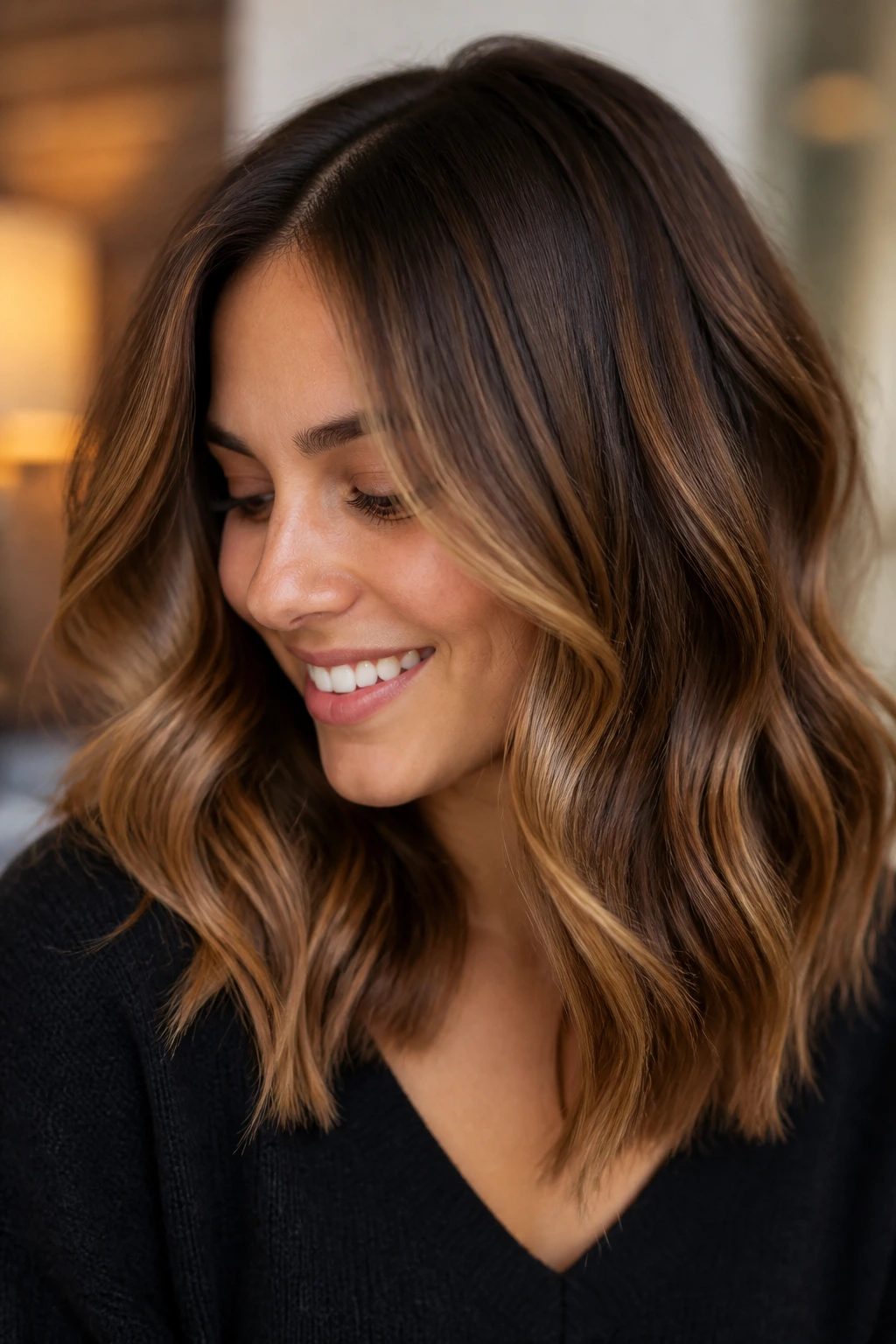
Chestnut and toffee is a richer, darker version of dimension. It’s not about making the hair lighter everywhere. It’s about placing warm toffee pieces against a chestnut base so the color catches without losing weight. Medium-length hair benefits from that balance because the cut can still hold shine, which is half the appeal here.
The toffee should sit where the eye naturally lands: around the front, through the mid-lengths, and across the bottom third of the hair. If the contrast gets too wide, the result starts to look stripy. A soft gloss keeps the chestnut from reading matte.
This is a smart option for brunettes who want warmth but don’t want to cross fully into blonde territory. It also photographs well under indoor light, which matters more than people admit.
9. Champagne Beige Balayage with a Center Part
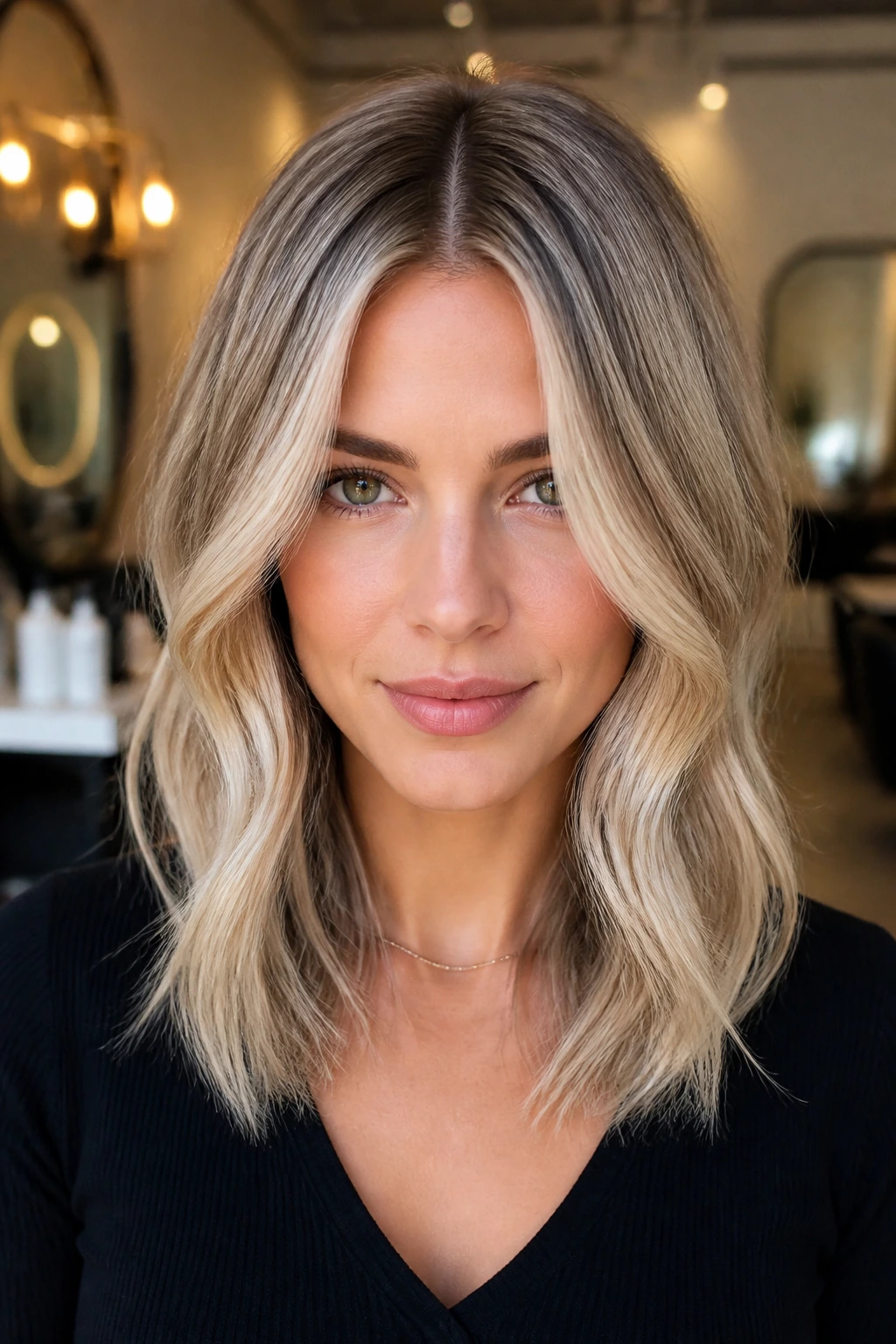
Champagne beige is about polish. It’s pale enough to brighten the face but toned down enough to avoid the loudness of a high-lift blonde. With a center part, the look becomes symmetrical and almost tailored, especially on a clean lob or a soft, blunt cut.
The key is restraint at the crown. Keep the roots smudged and let the brightness begin a little below the part line, then travel through the front panels and ends. That makes the center part feel like a design choice instead of a mistake.
Champagne beige can lean expensive when the toner is quiet and the finish is glossy. Too much gold makes it feel heavy. Too much ash makes it look flat. The sweet spot is somewhere between cream and soft pearl, with enough shine to show the moving pieces.
10. Vanilla Cream Ends on a Collarbone Lob
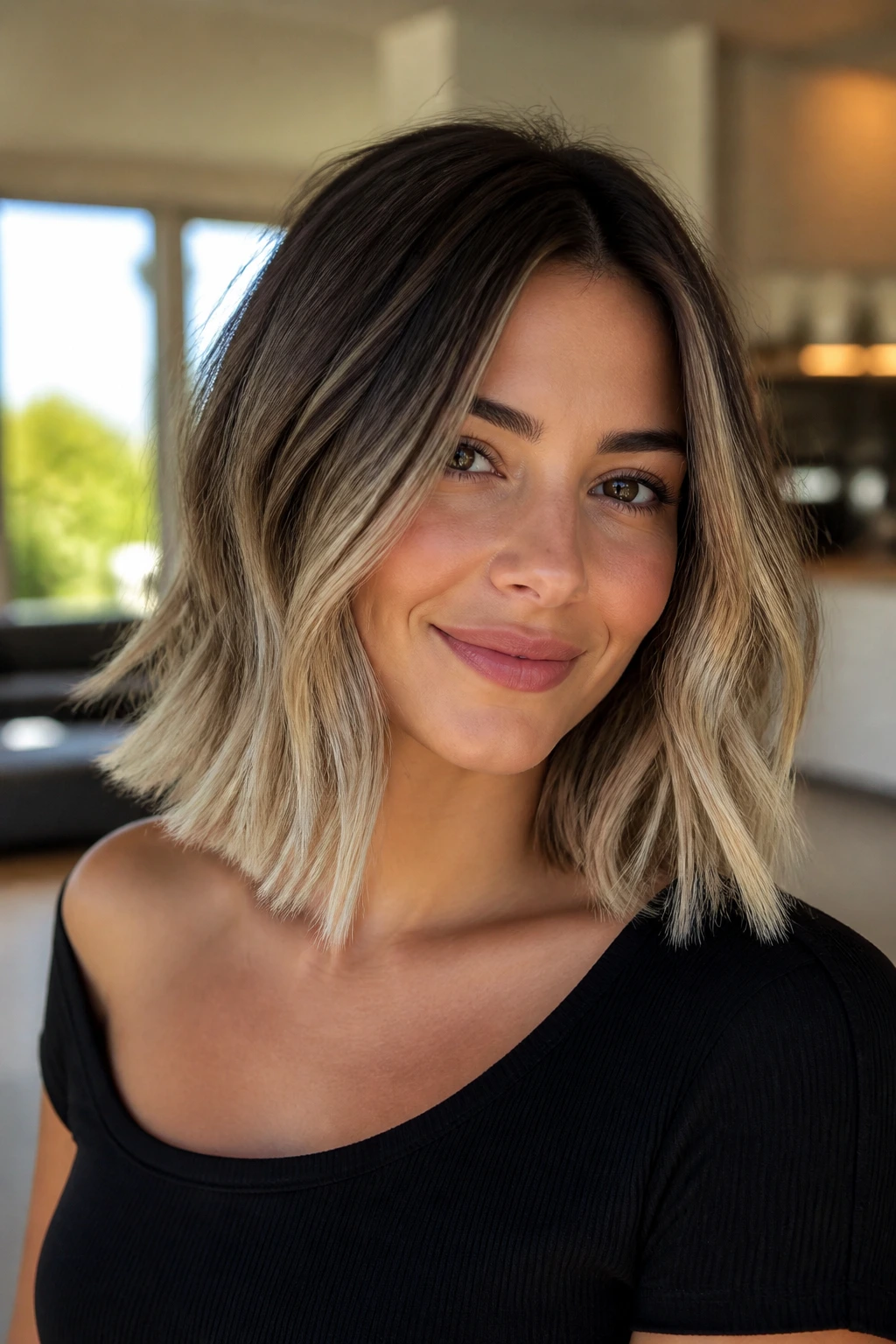
Vanilla cream ends work because they give the haircut a clear finish. On a collarbone lob, the lighter ends draw the eye down to the perimeter, which can make the cut look cleaner and a little longer. The trick is to keep the root and mid-lengths deeper so the cream doesn’t wash out the shape.
This style looks especially good on blunt ends or slightly textured lobs. Straight styling makes the contrast obvious; loose waves soften it. If you want a color that feels airy without being icy, this is a neat middle road.
Ask your colorist to keep the brightest tone on the last few inches and to feather the transition before the ends. A harsh line at the bottom is the fastest way to make this look cheap. Softness is the whole point.
11. Chocolate Cherry Balayage
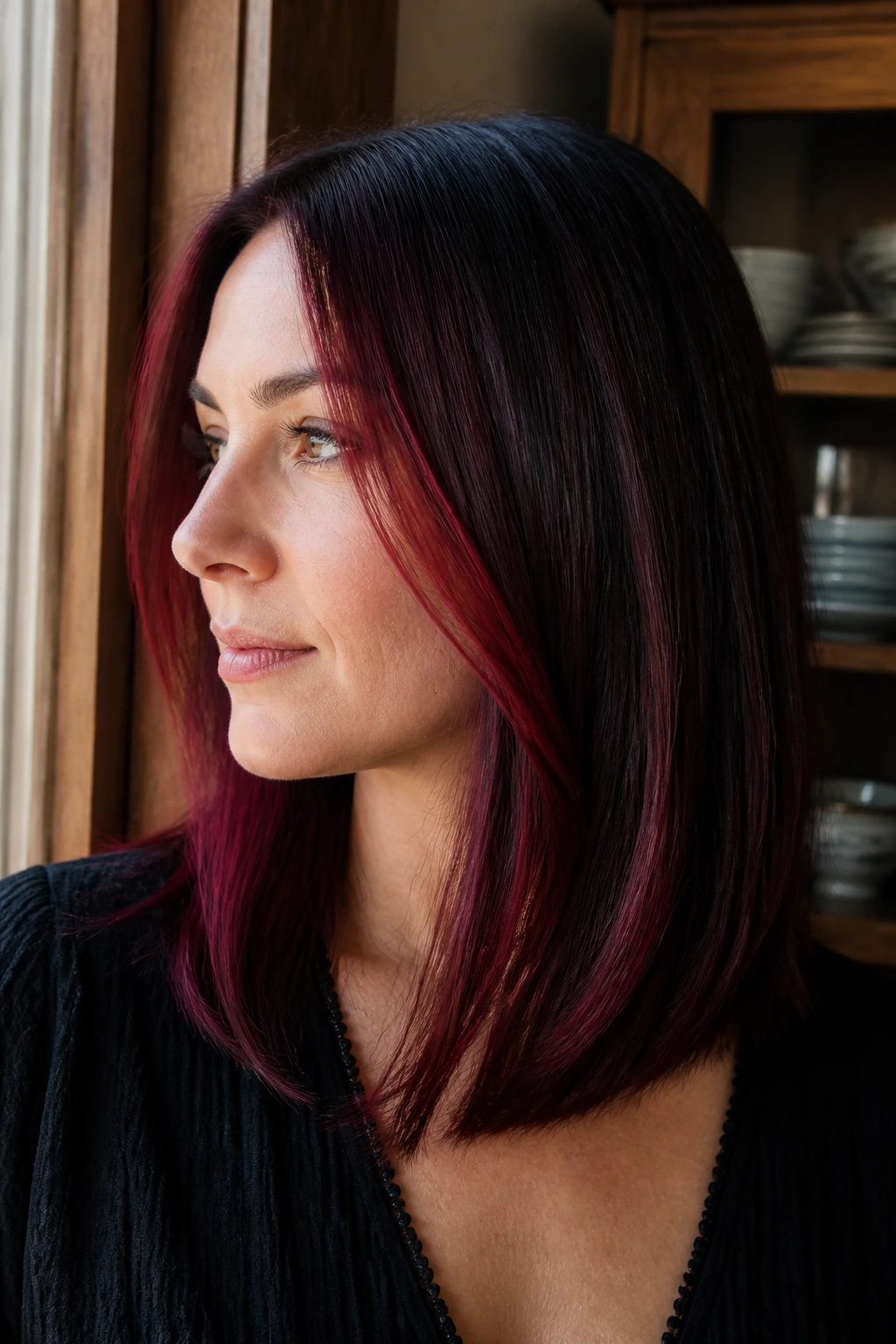
Chocolate cherry is one of the most underrated brunette upgrades. In low light, it reads like deep brown. In sun or bright indoor light, the red tones wake up and the whole cut gets a richer edge. On medium-length hair, that flicker is enough. You do not need a full redhead transformation to get the effect.
The best version starts with a dark chocolate base and then slides cherry or burgundy ribbons through the mid-lengths and face frame. Keep the brightest red close to the front and the lower third, where the color can move a little. Too much red at the root and the look can turn dense.
This is a good choice if you want a brunette shade that feels a little moodier than caramel but less warm than copper. It looks especially nice with glossy straight styling, where the red reflects in thin, sharp lines.
12. Copper Balayage with Warm Glow
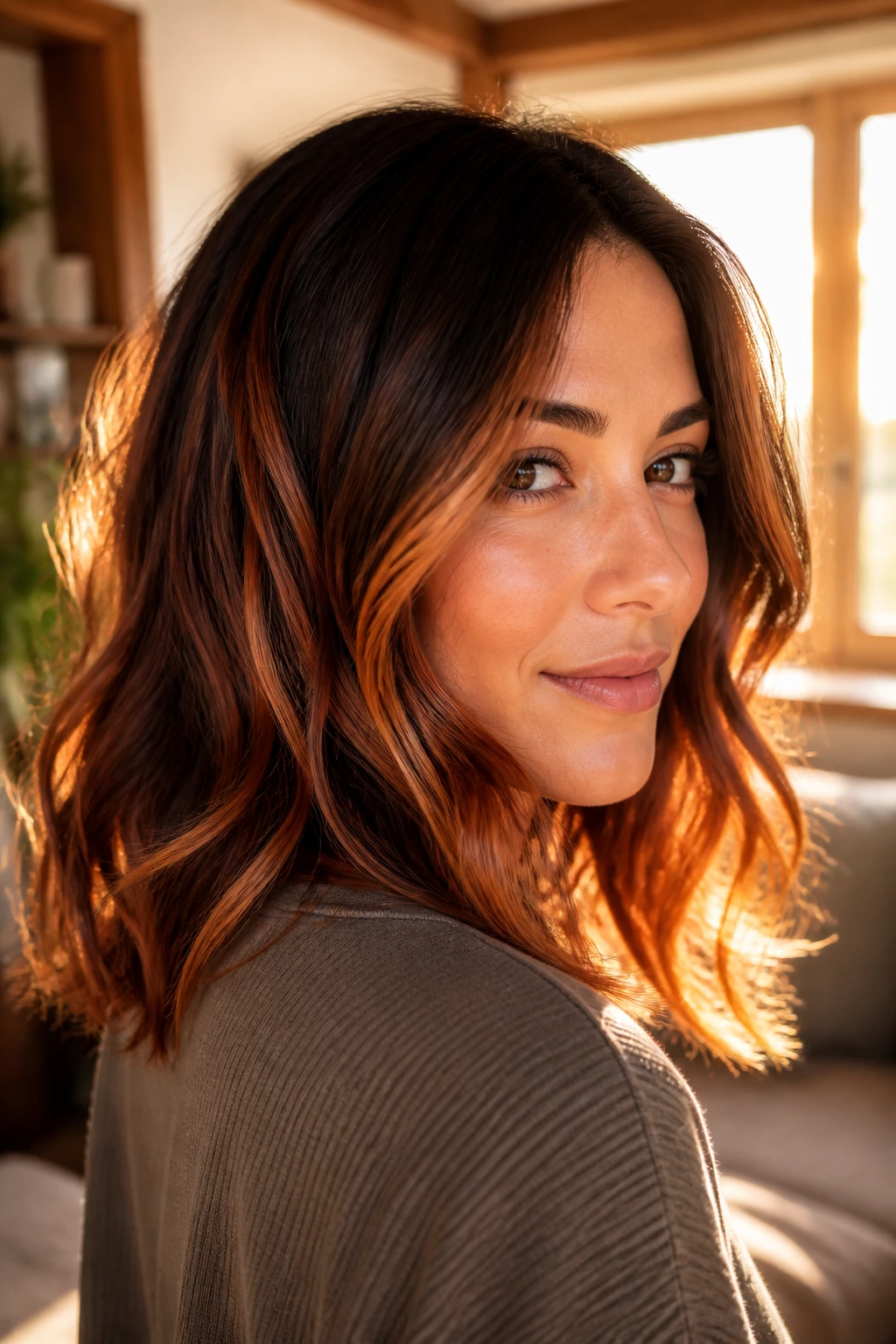
Copper balayage brings heat without needing a full all-over red. The shine is the point. On medium-length hair, copper pieces painted through a darker base create a flickering effect that looks especially good when the hair swings at the shoulders. The key is keeping the root rich so the copper has somewhere to land.
Ask for copper ribbons rather than one solid copper veil. That gives the hair movement and keeps the finish from flattening. If the base is naturally brunette, a copper gloss over lighter pieces can do more than a heavy lift. Sometimes the toner matters more than the lightener.
This look loves shine spray, but not too much. A light hand on the ends is enough. Too much oil and the copper slips into a greasy read, which is not the same thing at all.
13. Smoky Mushroom Balayage
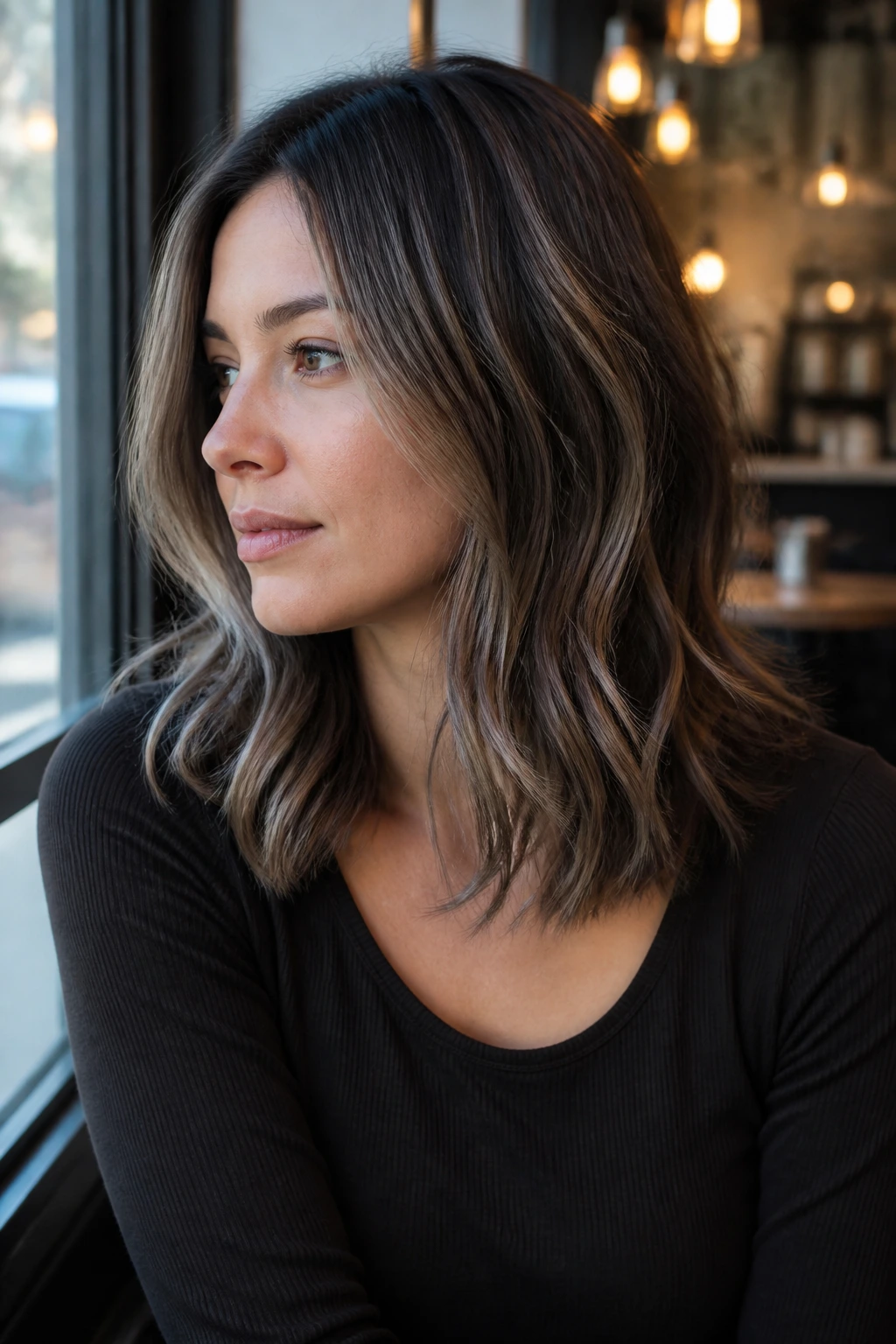
Smoky mushroom sits in a cool taupe lane that feels quieter than blonde and more interesting than basic brown. It’s especially good on medium-length cuts because the color has enough room to breathe without needing a lot of lift. The result is soft, cool, and very controlled.
A nice smoky mushroom blend usually keeps the base close to natural and adds muted ribbons in the mid-lengths rather than hitting the ends too hard. That keeps the finish dimensional without making the hair look dry. A neutral-to-cool gloss is the finishing move here, not an afterthought.
This one suits people who hate brass and also hate obvious highlights. It’s not flashy. That’s the charm. It looks like the hair was born that way, only with a little more depth at the front.
14. Sandy Beige Balayage
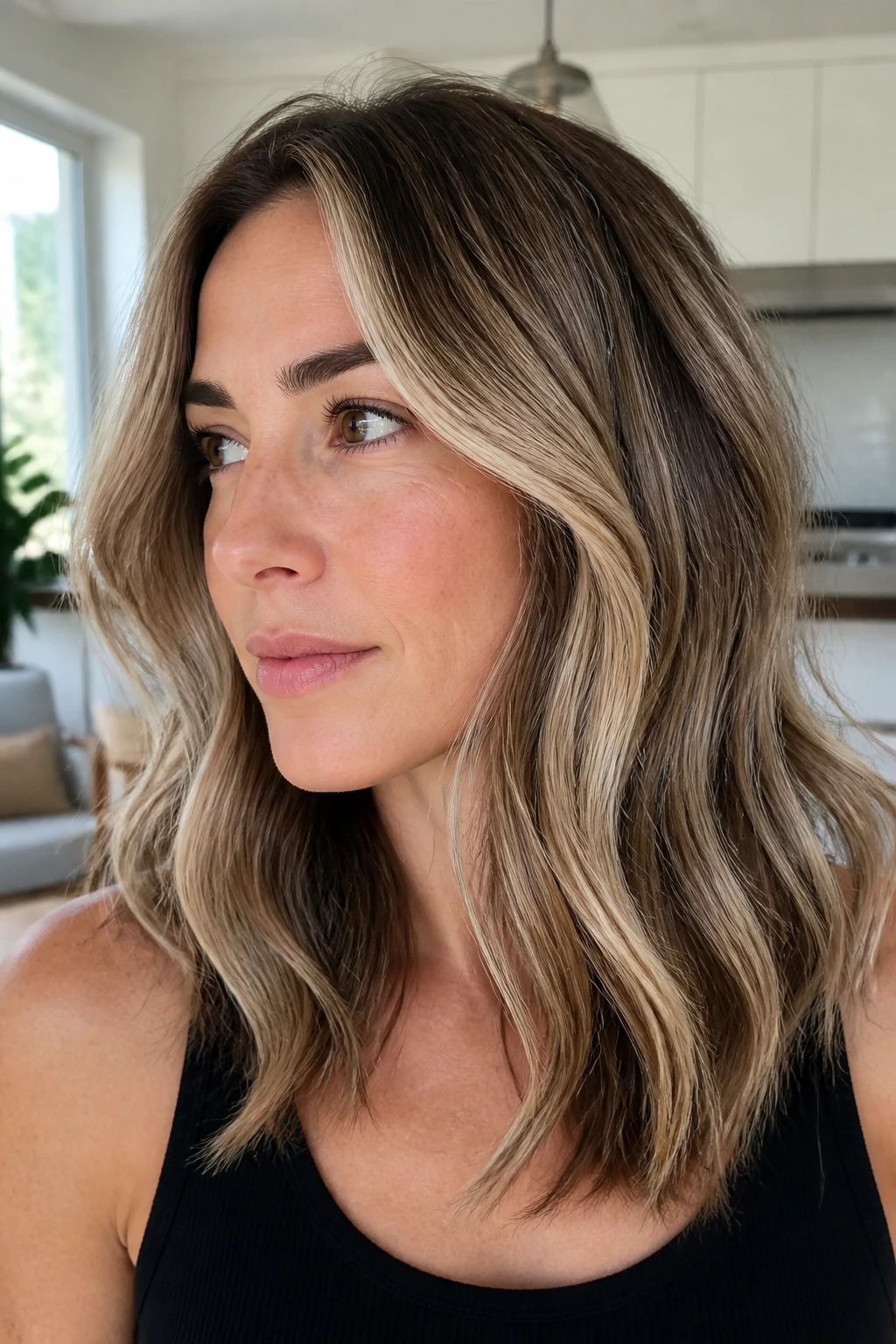
Sandy beige is the neutral friend in the lineup. It doesn’t lean too golden, too cool, or too pink, which makes it easier to wear across different undertones. On medium-length hair, sandy beige works well when the cut already has a little texture, because the neutral tone can otherwise look too even.
What makes it interesting is the placement. Keep the lightest beige around the face and lower mid-lengths, then let some darker strands stay visible underneath. That contrast stops the color from washing out in bright light.
If you want a blonde that doesn’t yell for attention, this is a solid answer. It gives brightness without the drama of icy tones or the warmth of honey. Clean, soft, and practical. That’s the appeal.
15. Bronze Balayage for Deep Brunettes
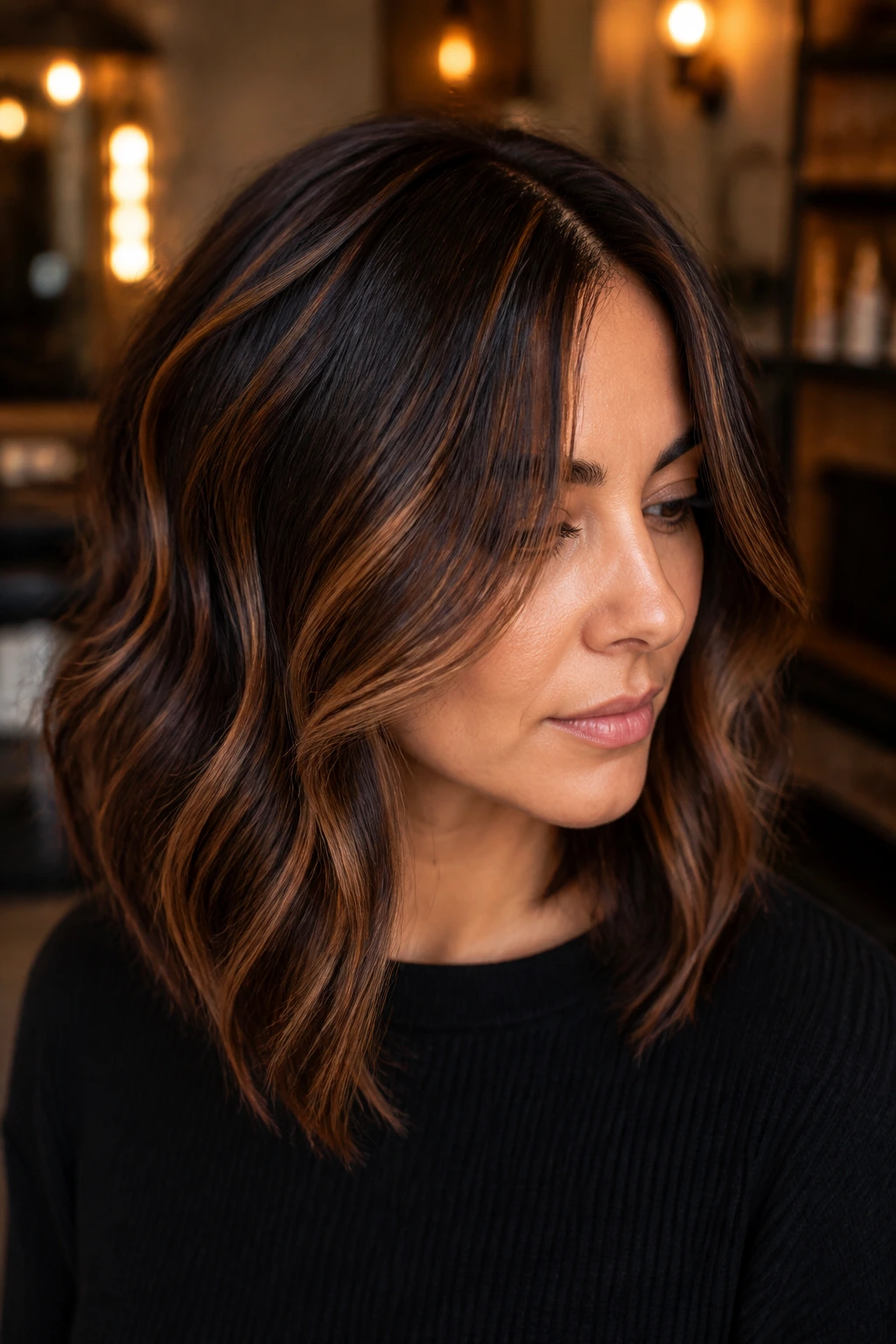
Bronze balayage is warm, polished, and much more dimensional than it sounds on paper. Against a deep brunette base, bronze pieces can read almost metallic when the light hits them, especially on medium-length hair where the ends move near the shoulders. That movement matters. It keeps the bronze from sitting like a flat layer.
The placement should stay mostly through the top surfaces and the face frame, with some of the bronze feathered into the ends. If the pieces are too chunky, the result loses that liquid quality. A gloss with warm reflect helps here, but the base should stay dark enough to create contrast.
This is a strong pick if you like brunette hair but want people to notice the shine first. Not the bleach. The shine.
16. Pearl Blonde Balayage
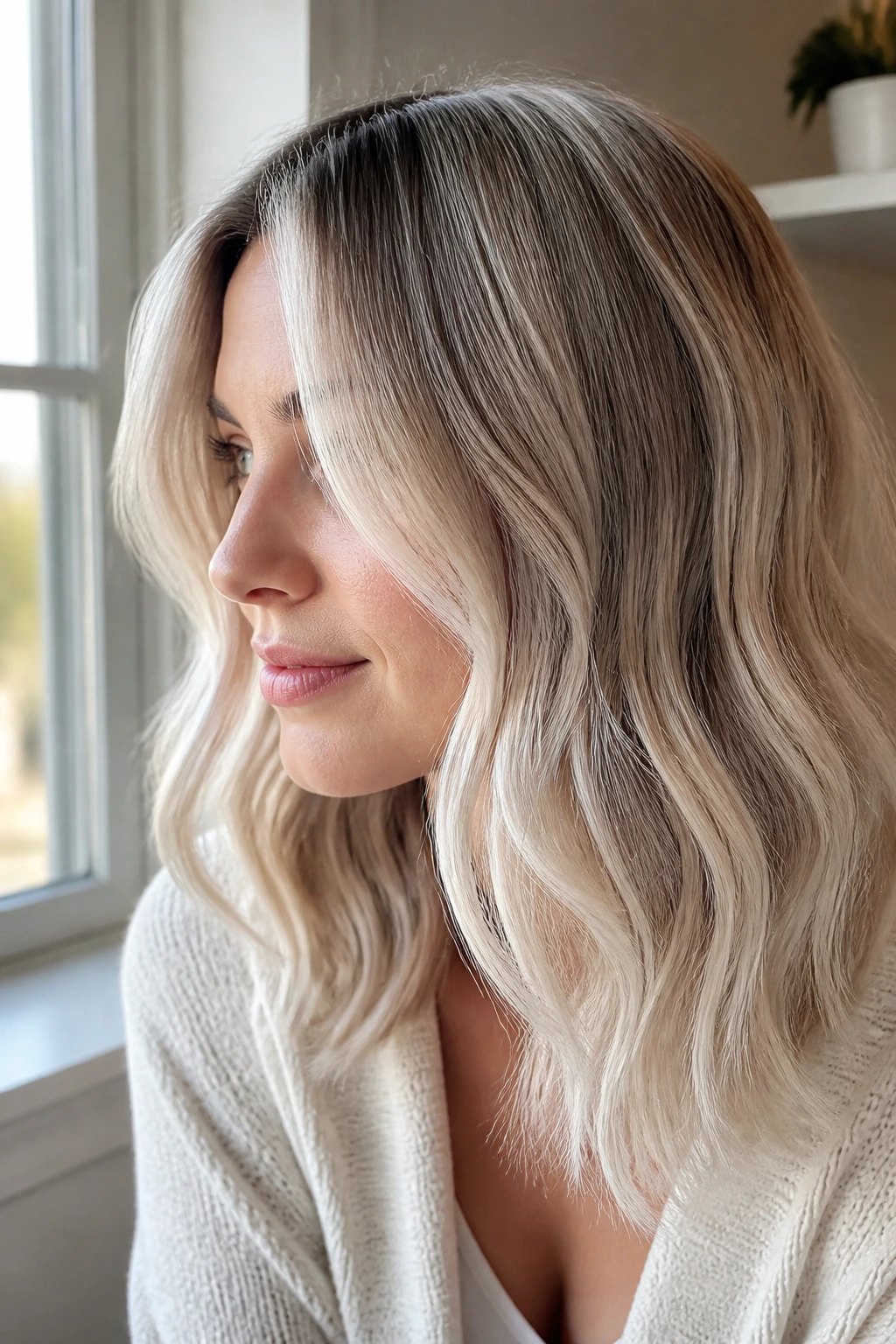
Pearl blonde sits in that creamy cool zone that reads soft rather than stark. It works especially well on medium-length hair when the colorist keeps a hint of depth at the root and then lets the pearl tones open through the mid-lengths and ends. The effect is expensive-looking without needing a lot of obvious contrast.
The toner matters a lot here. Pearl blonde can go yellow if the finishing tone is too warm, but it can also go flat if it gets pushed too ash-heavy. The best versions keep a translucent, milky quality that reflects light instead of swallowing it.
Waves help, but sleek styling can be beautiful too. Pearl blonde likes clean lines. If the cut is blunt, the color gets a sharper frame. If the cut is layered, the sheen moves more.
17. Golden Apricot Balayage
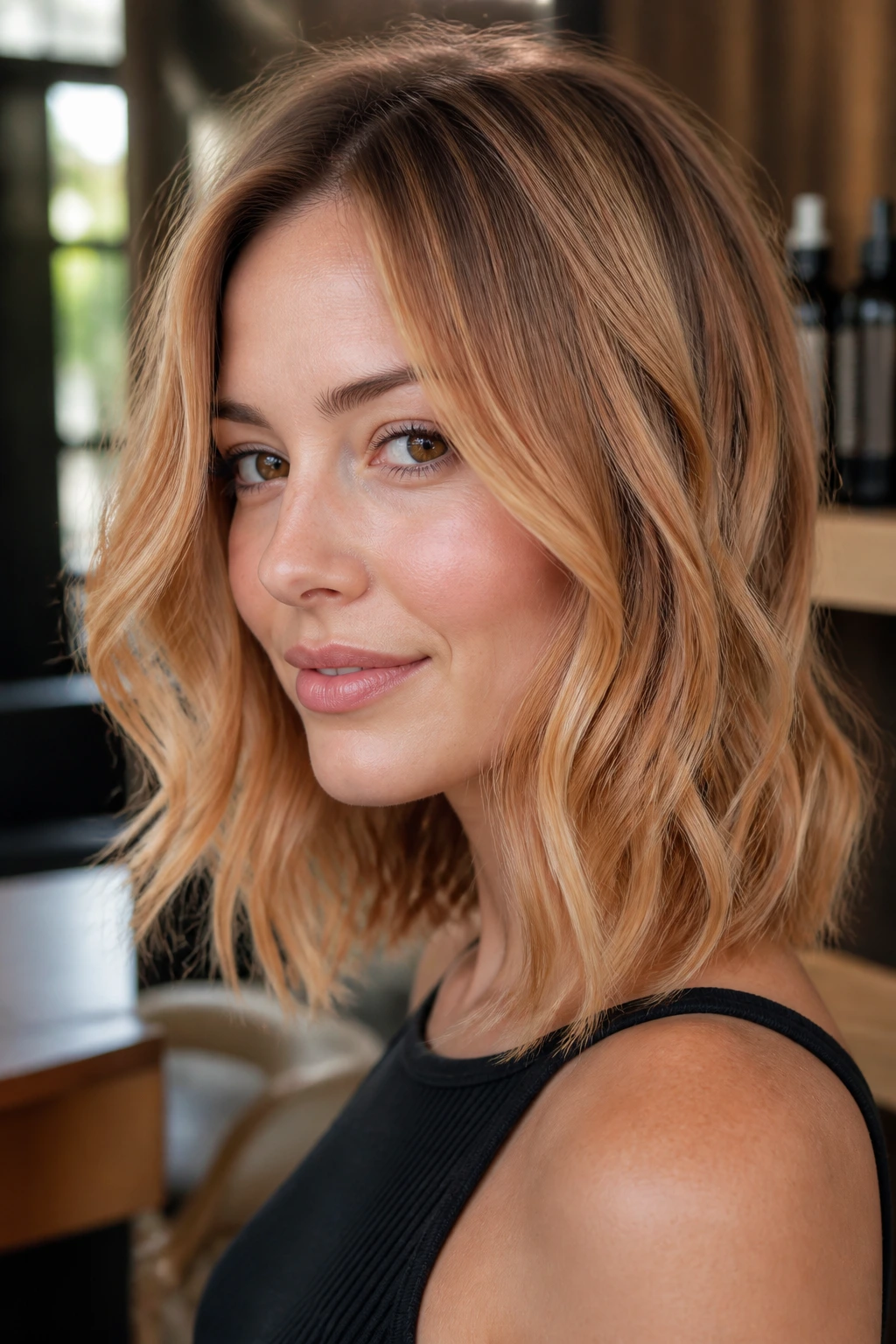
Golden apricot has a touch of peach in it, which gives the hair a softer, fresher warmth than plain gold. On medium-length hair, it can sit somewhere between blonde and copper and still feel balanced. That makes it a nice choice for anyone who wants warmth without the usual caramel shortcut.
The tone works best when it’s painted in thin, airy sections rather than broad panels. Keep the base muted and let the apricot show mostly on the outer layers and front pieces. The hair should look like it’s catching warm light, not like it was dipped in one color.
This shade loves texture. Loose bends show the peach-gold shifts better than a stiff blowout. If your wardrobe lives in neutrals, this shade brings some life back into the face without needing a full color overhaul.
18. Espresso Balayage with Barely There Highlights
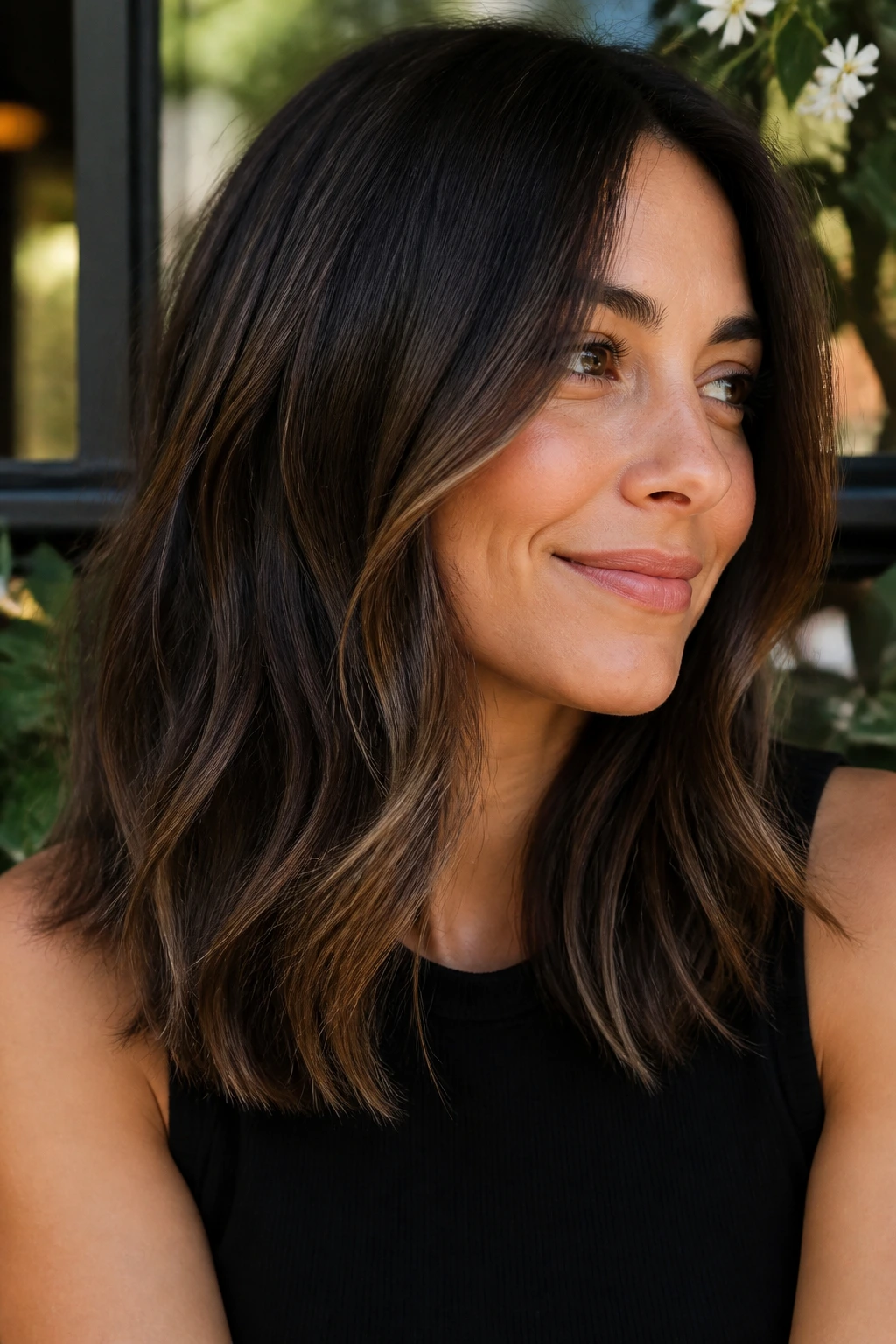
Not every balayage needs to shout. Espresso balayage is proof. On medium-length hair, a deep brown base with only a few barely-there highlights can still create movement, especially if the pieces are placed around the face and through the lower half of the hair. It’s subtle, but not boring.
The point here is shimmer, not contrast. The highlights should be only one or two levels lighter than the base, then toned back so they blend instead of pop. A gloss finish matters more than extra lift. This is the kind of color that rewards healthy-looking hair because the shine does a lot of the work.
It’s a smart choice if you want dimension at work, in photos, and in real life without looking like you spent the afternoon chasing brightness. Quiet hair can still be interesting.
19. Rose Gold Balayage
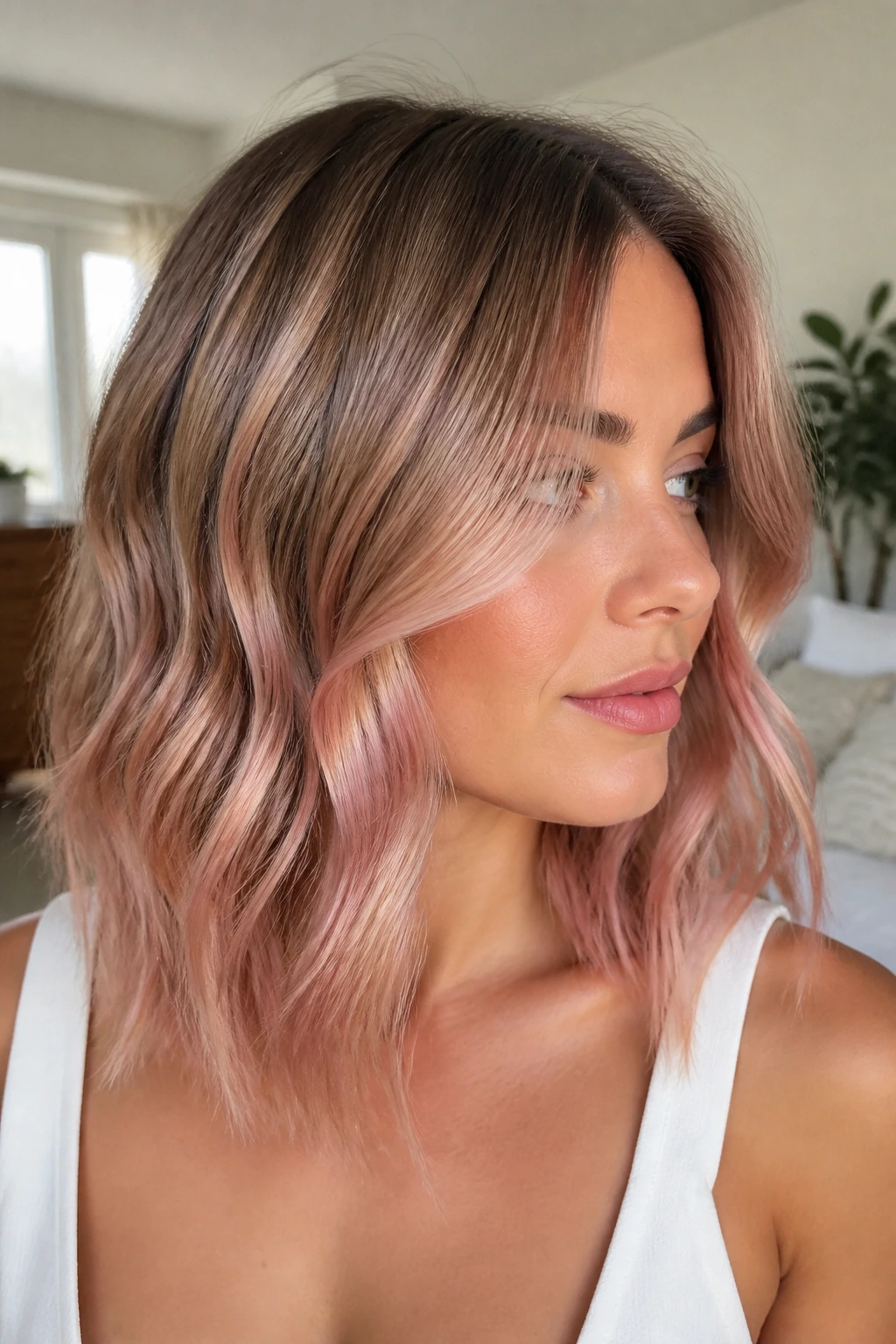
Rose gold balayage has a soft pink-beige cast that sits beautifully on medium-length hair when the pieces are kept airy. It can lean romantic, modern, or slightly metallic depending on how much blush tone is left in the gloss. That range is the reason people keep coming back to it.
For a wearable version, keep the root neutral and let the rose gold appear mostly on the mid-lengths, ends, and around the face. Too much pink near the scalp can look heavy. The lightest pieces should remain translucent rather than opaque.
This shade works best on hair that’s already lightened enough to hold a soft pastel tone. It fades faster than beige or honey, so the maintenance is a little more involved. Still, when it’s fresh, it has a clean brightness that plain blonde doesn’t always give.
20. Buttery Blonde Balayage
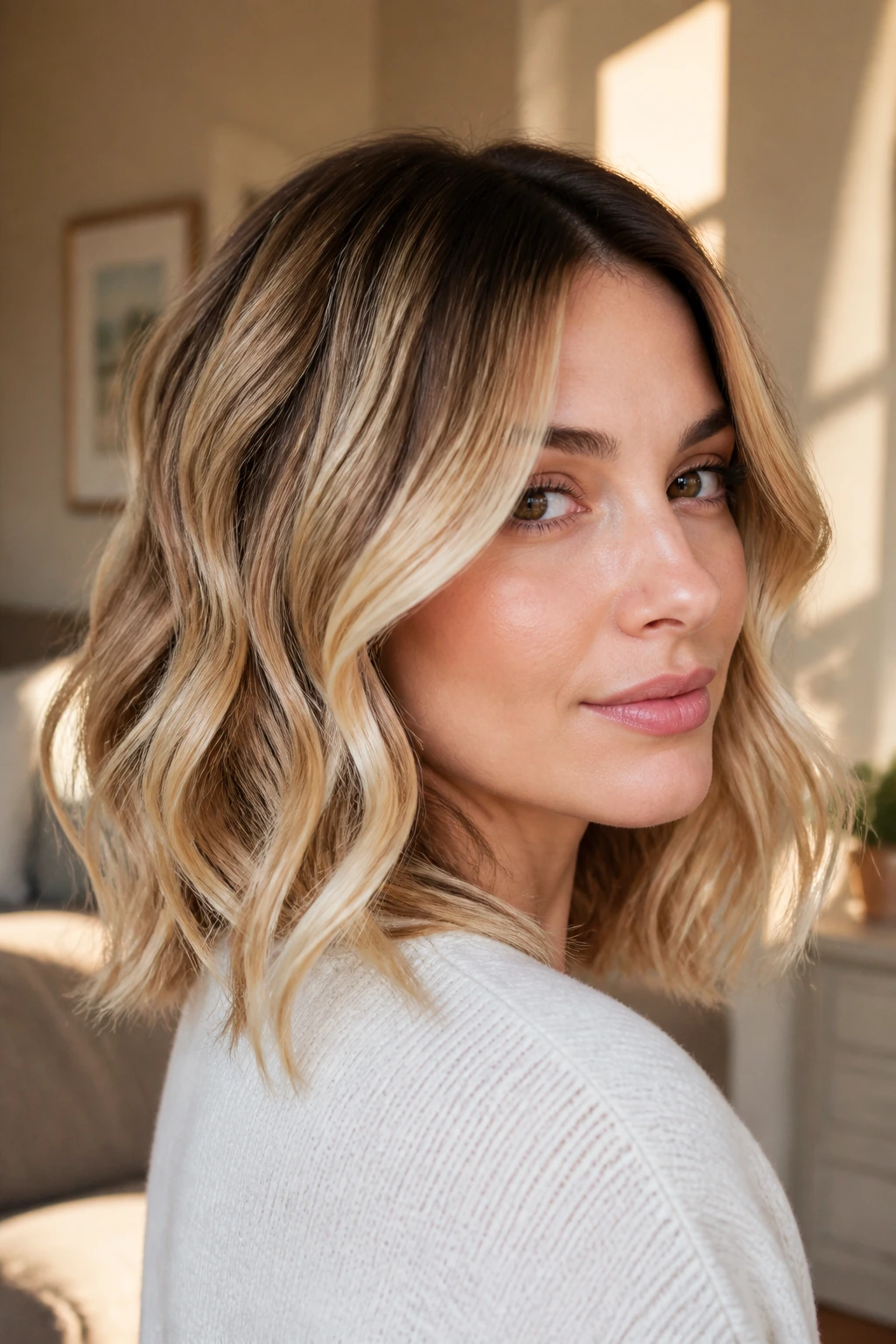
Buttery blonde is warm, creamy, and easy on medium-length hair when the base has enough depth to support it. The hair looks sunlit, but not pale. That softness matters, because shoulder-grazing cuts can turn high-lift blonde into a hard block if there isn’t enough contrast near the root.
Ask for buttery pieces through the front, the lower mid-lengths, and the ends, with a darker root smudge that keeps the whole thing anchored. If the blonde is too uniform, the cut loses shape. A little darkness at the top is doing more than people think.
This is the kind of color that looks best in soft waves or a round-brush blowout. It wants movement, not stiffness. If you like warm blonde but hate anything yellow, ask for a beige-leaning toner instead of a gold-heavy one.
21. Mocha Balayage with Ribbon Lights
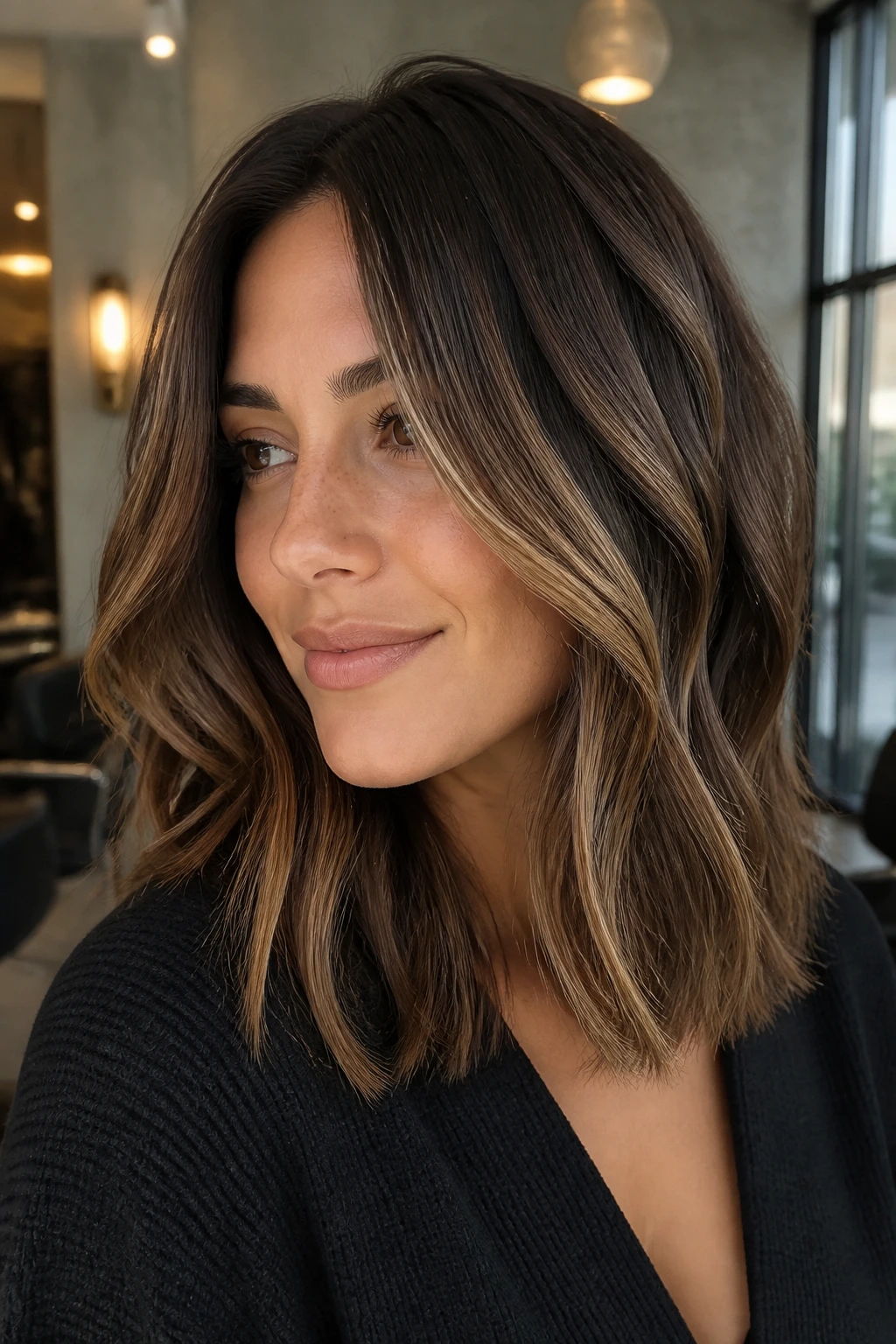
Mocha balayage is all about rich depth. The base stays deep and cool-warm in that coffee shade, while thin ribbon lights cut through the mid-lengths and ends. On medium-length hair, that contrast makes the cut look thicker because the eye sees multiple layers of color.
The placement should be deliberate. Put the ribbon lights where the hair bends and flips, not in big obvious chunks. That creates movement without turning the look into a highlight map. A soft root shadow and a neutral gloss keep the mocha side of the color from getting muddy.
It’s a good fit if you want dimension but don’t want to cross into obvious blonde territory. The result feels polished, especially on a blowout with a little bend at the ends.
22. Sun-Kissed Brunette Balayage
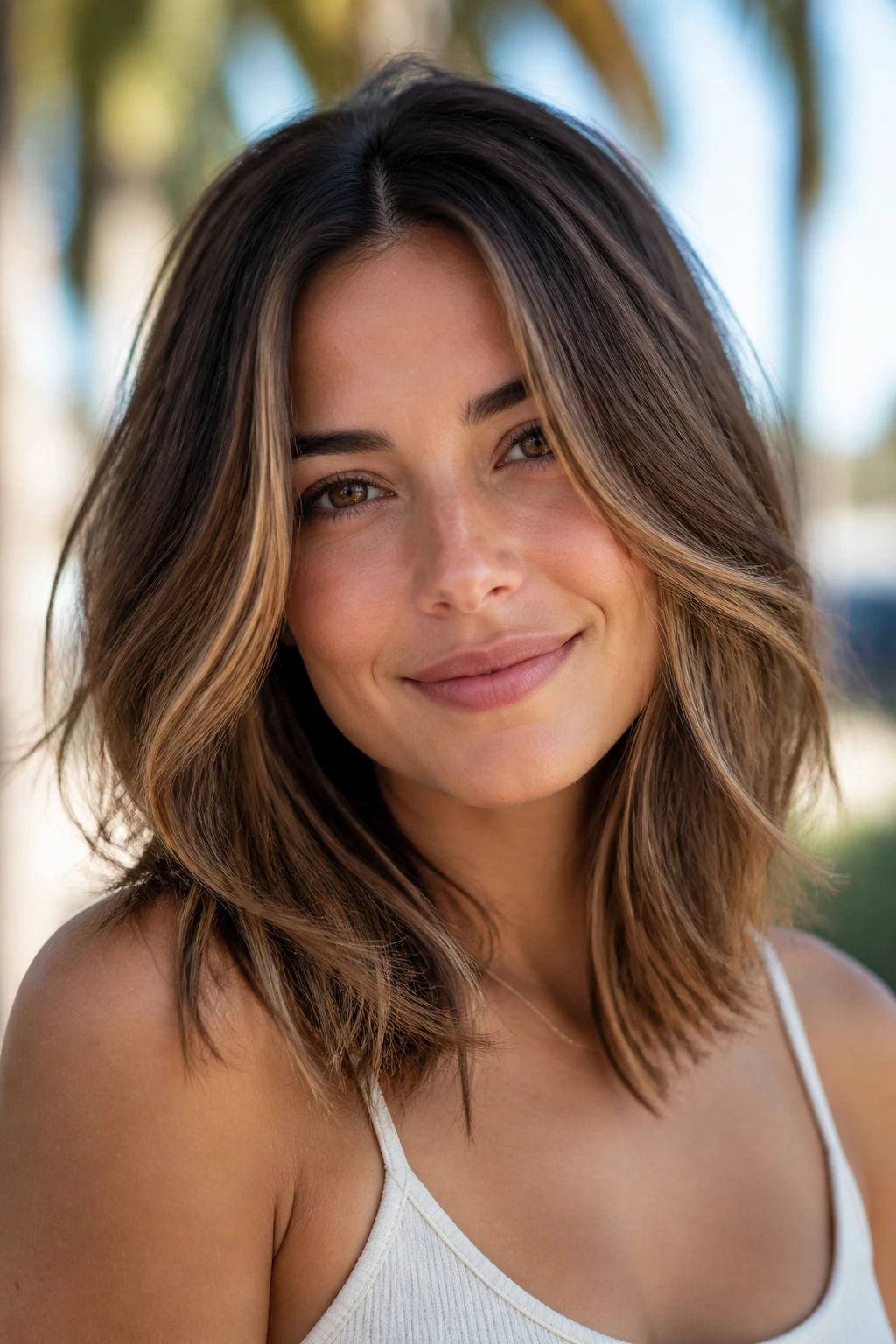
Sun-kissed brunette is the classic for a reason. It brightens brown hair without making it look overworked. On medium-length hair, the best versions keep the face frame lighter and the rest of the head softly sprinkled with caramel or beige pieces that follow the natural movement of the cut.
The important part is restraint at the top and brightness near the perimeter. The hair should look like it picked up light where it naturally would, not like each section was highlighted for attention. That subtlety is what keeps the color from aging fast.
This is a very flexible look. Straight styles make the placement feel tidy. Waves make it feel breezier. Either way, it’s one of the easiest balayage ideas to live with if you want dimension that doesn’t fight your haircut.
23. Icy Beige Balayage
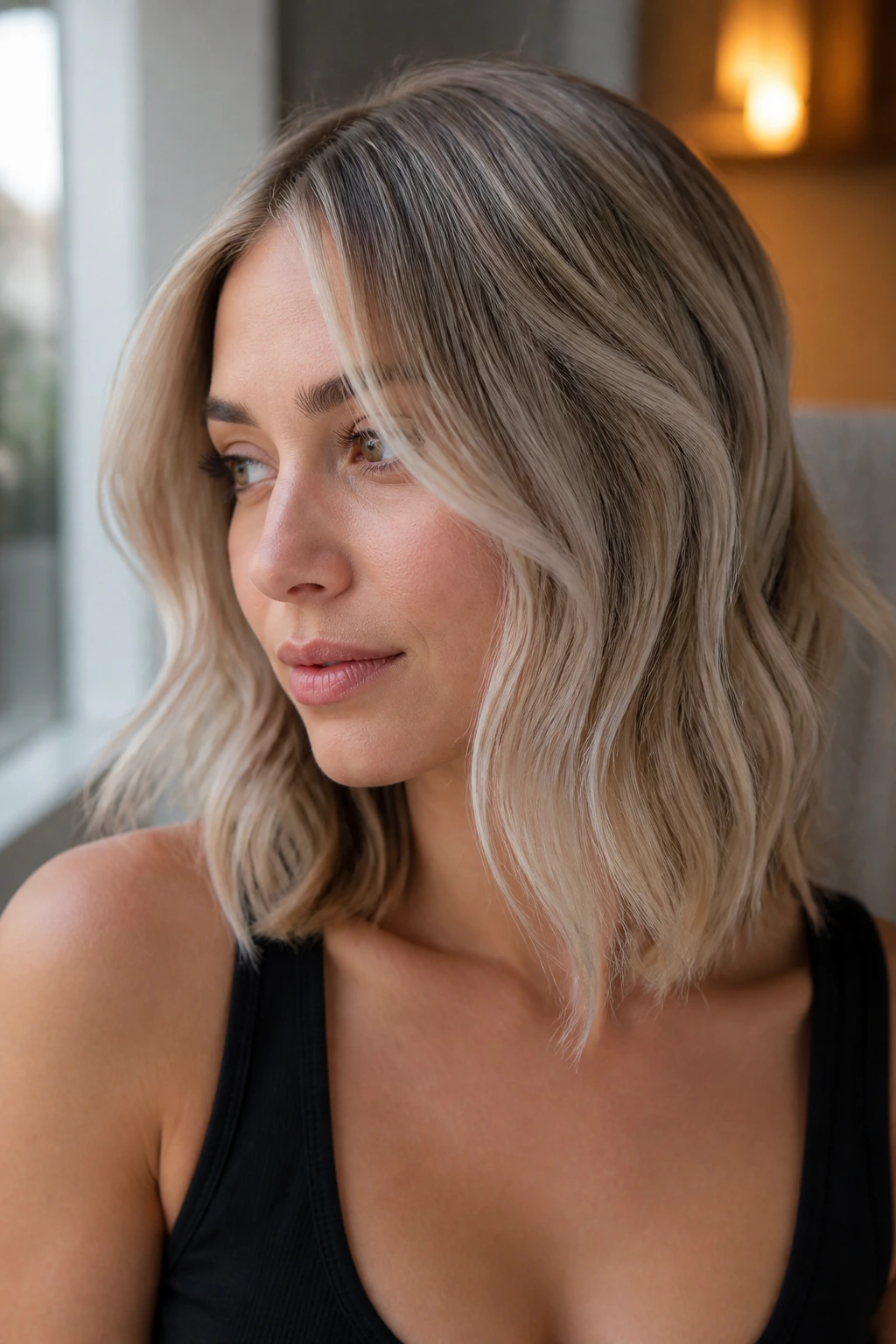
Icy beige is the cooler, cleaner cousin of traditional blonde. It’s pale, but not white. Beige, but with a colder edge that stops it from drifting yellow. On medium-length hair, the look can feel sharp in a good way, especially when the cut has blunt ends or a sleek finish.
The success of this shade depends on tone control. The lift has to be clean enough that the beige doesn’t turn muddy, and the toner has to stay cool without going flat. If the base is too warm, the result can lose that icy softness fast.
This is not the lowest-maintenance choice on the list. It asks for care. But when the tone is fresh, the effect is crisp and bright in a way that plays well with clean makeup and simple clothing.
24. Spiced Maple Balayage
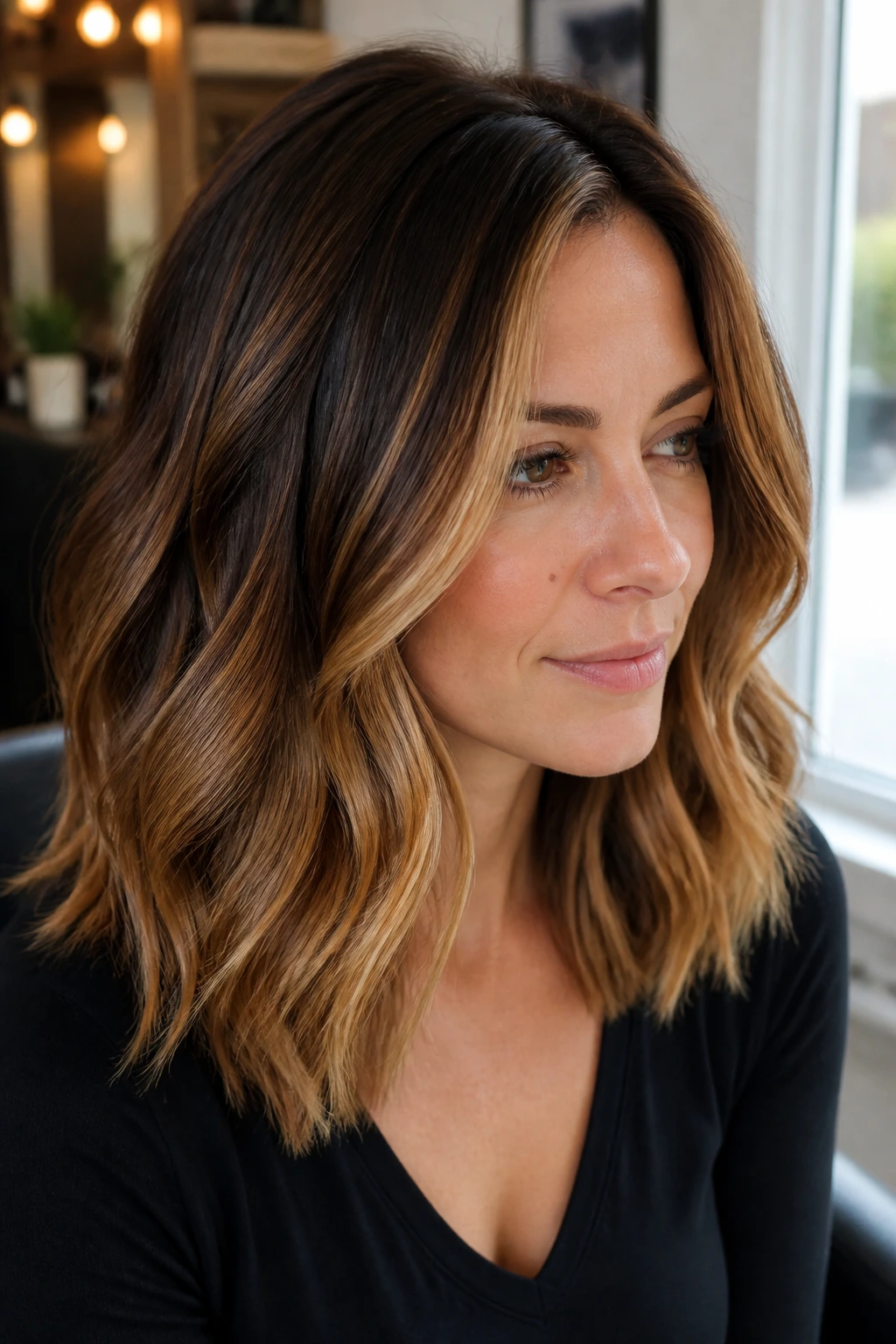
Spiced maple sits in a warm amber lane that looks especially rich on medium-length brunettes. It has just enough red and gold to feel lively, but not so much that it becomes copper-heavy. The best versions use the spice tone as an accent rather than the whole story.
Ask for darker roots, maple-toned ribbons through the mid-lengths, and a little extra brightness at the front panels. On shoulder-length hair, that front emphasis keeps the color from disappearing when the hair is tucked or pinned back. A gloss can deepen the maple and keep it from looking dusty.
This is a nice middle ground for people who want warmth that feels grown-up. It has more character than caramel. Less intensity than red. Easy to wear, but not plain.
25. Soft Ombré Balayage Blend
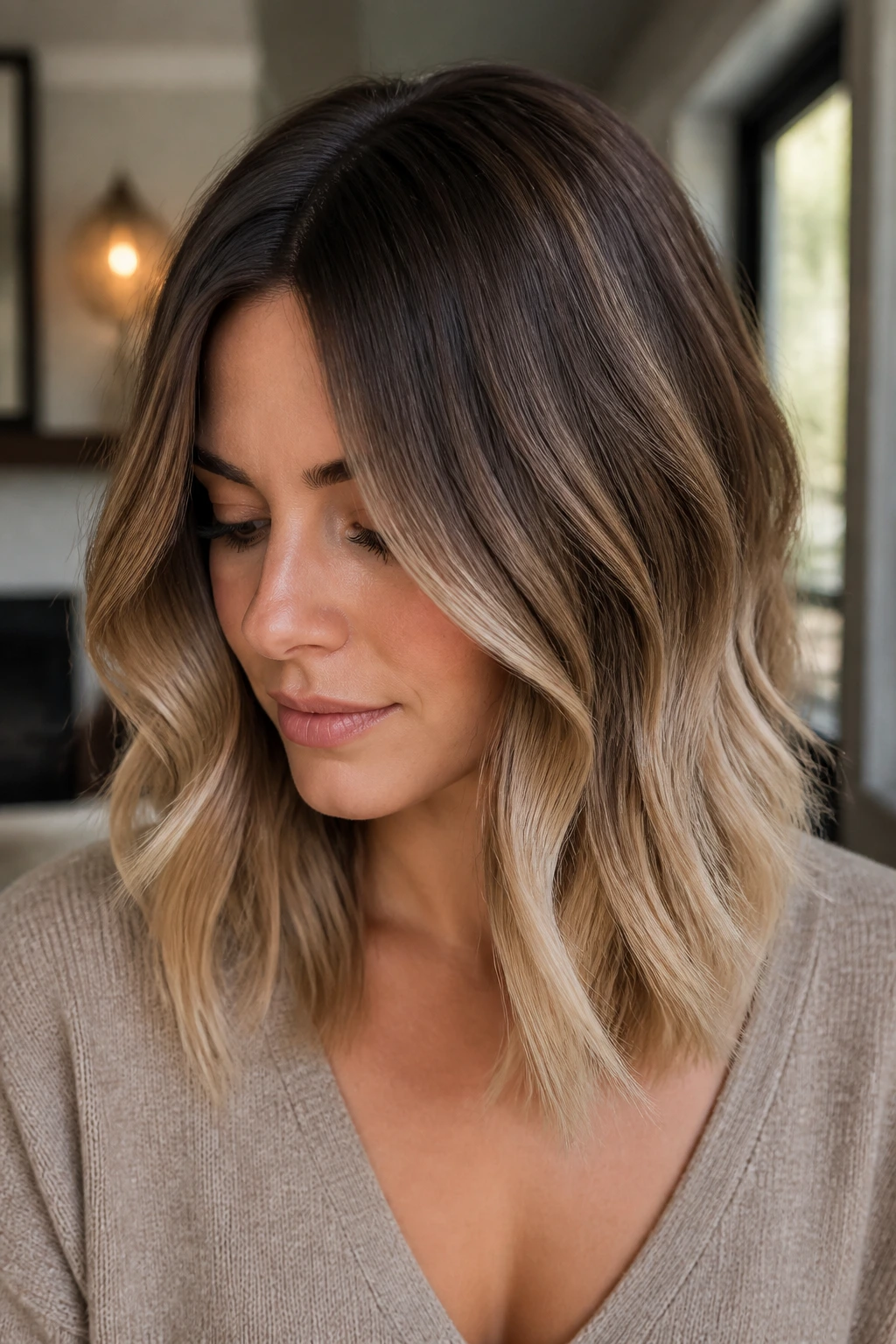
A soft ombré blend is not the same thing as harsh ombré from a decade ago. The transition is slower, the roots stay deeper, and the light pieces open gradually through the mid-lengths and ends. On medium-length hair, that slower gradient can make the cut look longer without killing the shape.
This is a good option if you like balayage but don’t want piecey ribbons everywhere. It keeps the eye moving down the hair in one clean line. The best versions have a root shadow that is only one or two levels deeper than the mids, so the blend feels intentional.
It works well on blunt lobs and on layered cuts that need a little extra visual length. The color itself does not need to be dramatic. The smooth fade is the point.
26. Curly Balayage with Diffused Ends
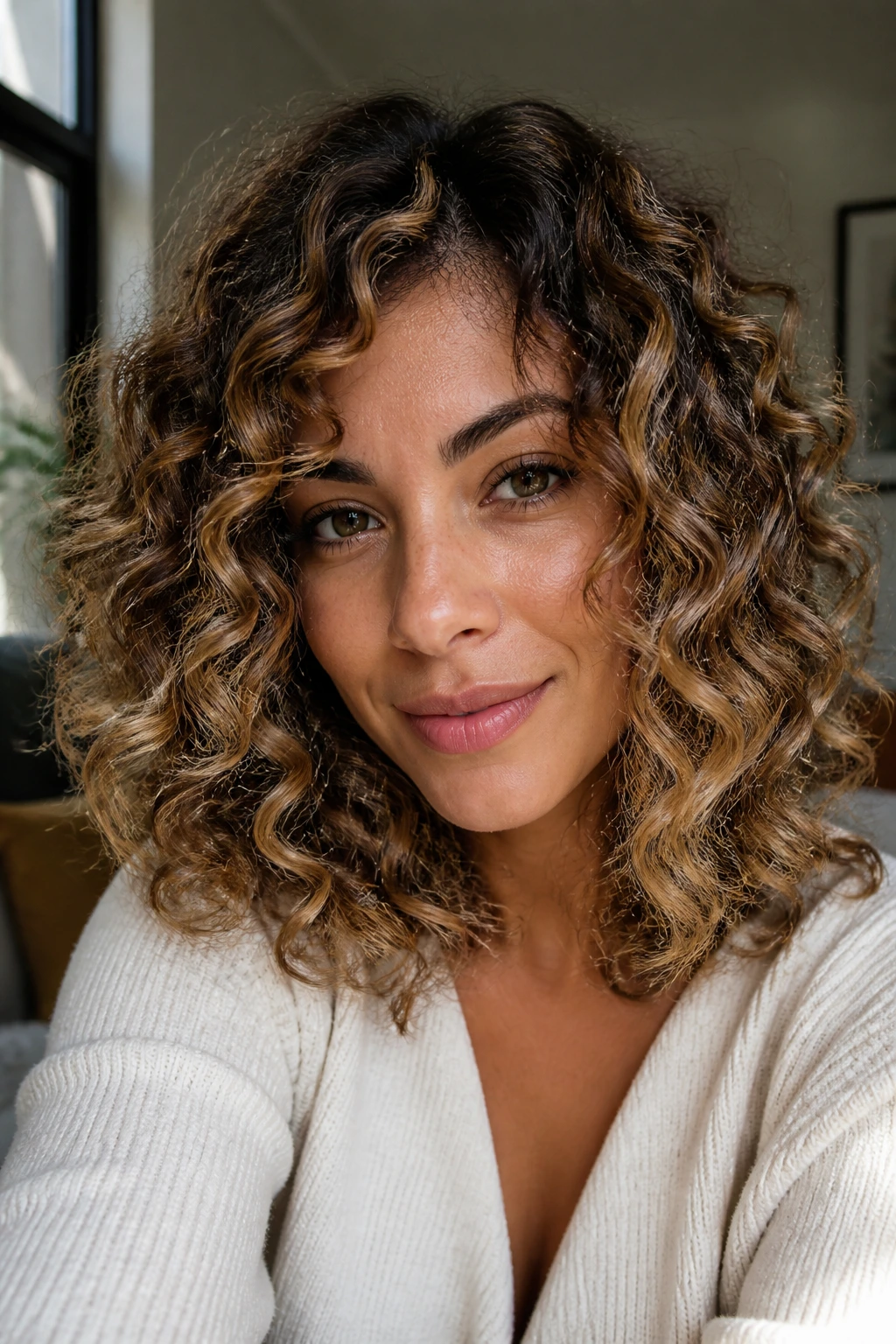
Curly hair changes the rules a bit. Balayage on curls should follow the curl pattern, not fight it, which means the light pieces need to land on the outer curves and around the face where the curls catch the light. On medium-length curls, diffused ends help keep the shape from looking chopped or dry.
The color should not be painted like straight hair under tension. That’s the fast way to get a patchy result once the curls spring back. Instead, think in curl clumps and softer saturation at the ends. A gloss can keep the surface reflective without stripping the curl pattern.
This style is best when the haircut already has enough room for movement. If the curls are heavy at the bottom, a little brighter face frame can lift the whole look without changing the rest of the head.
27. Straight and Sleek High-Contrast Balayage
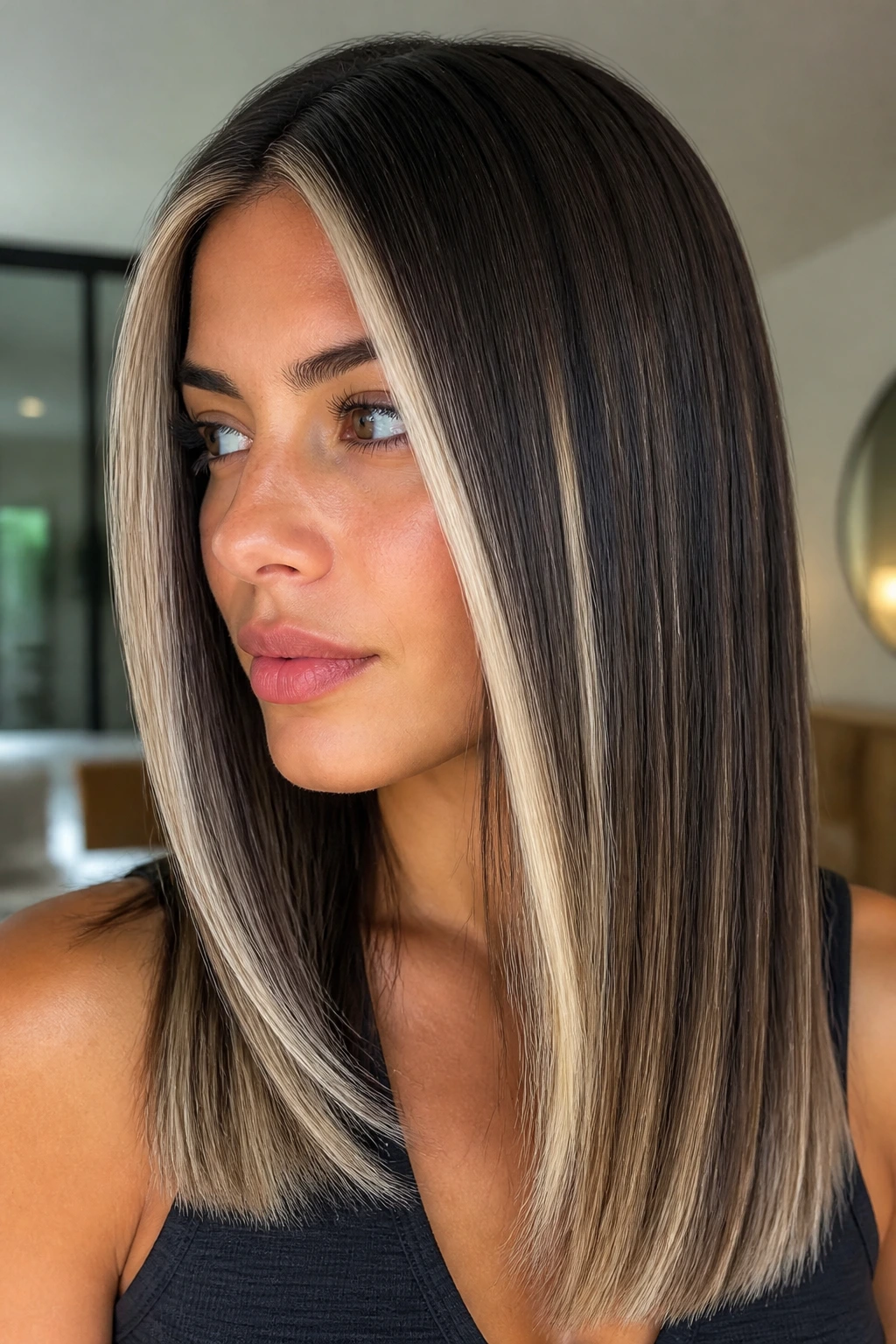
Straight hair tells the truth. That’s why high-contrast balayage on a sleek medium-length cut can look so sharp. The contrast doesn’t get softened by bends or waves, so the placement has to be clean, narrow, and controlled. The payoff is a polished, graphic finish that feels deliberate.
Keep the lightest pieces mostly around the front and through a few lower ribbons, then let the rest stay deeper. Too many bright sections on straight hair can turn busy fast. A rounded flat-iron pass or a smooth blow-dry makes the ribbons sit in straight, elegant lines.
If you wear your hair straight most of the time, this kind of balayage can look more expensive than a heavily blended wave look because the shape is crisp. The haircut and the color support each other instead of competing.
28. Layered Lob with Peekaboo Lowlights
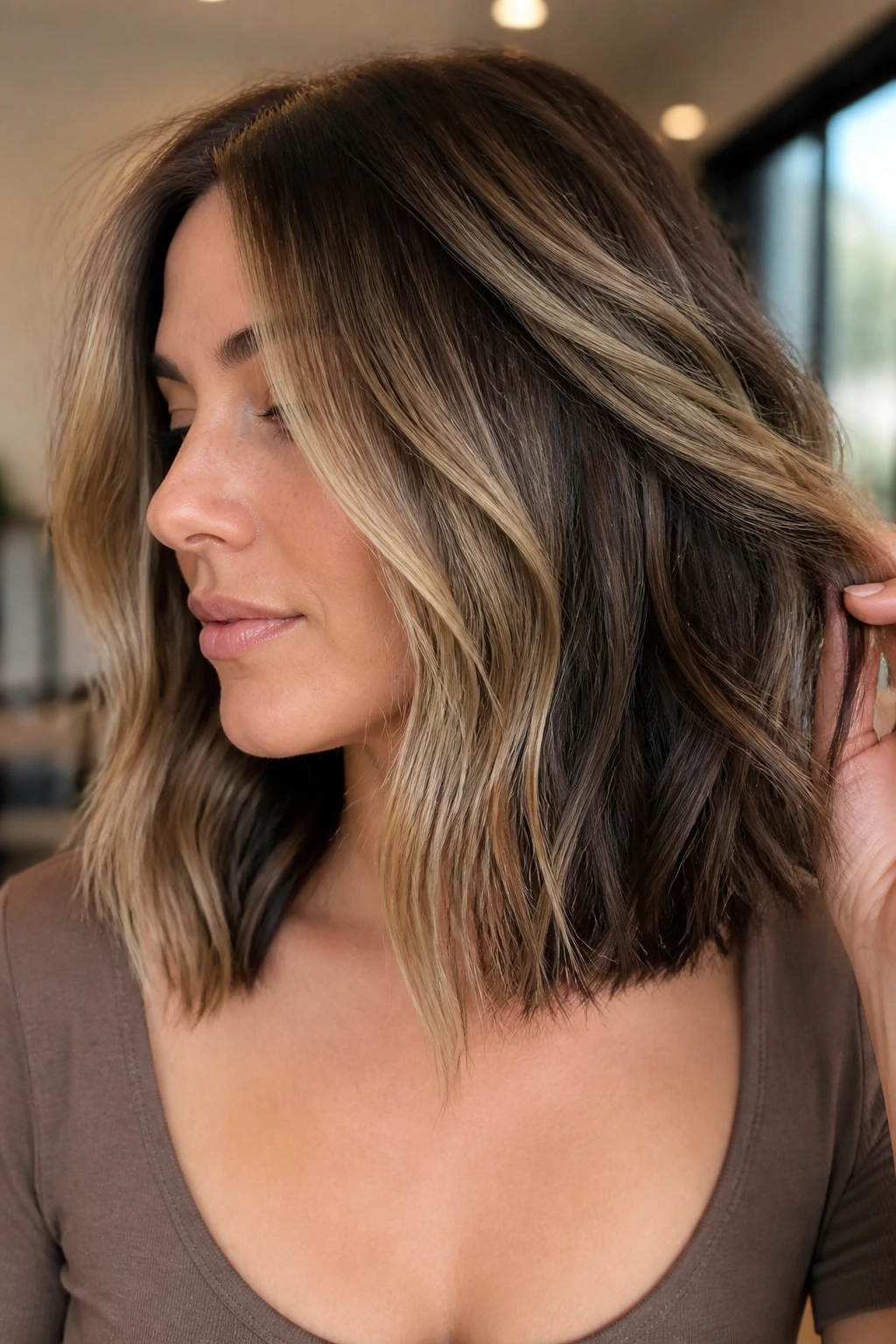
Peekaboo lowlights are the opposite of flashy, and that’s why they work. On a layered lob, the darker strands hiding underneath the lighter top layer create depth the moment the hair swings. Medium-length hair benefits from that hidden dimension because it keeps the finish from looking too airy at the ends.
The lowlights should be thin, cool or neutral, and placed underneath the surface rather than throughout the top. The top layer can still be bright, but the hidden depth keeps the haircut looking fuller. It’s one of the easiest ways to make fine hair seem less see-through without going blunt and heavy.
This is a smart pick if your hair already has highlights and needs more structure, not more light. The best part is that it looks different from every angle.
29. Mid-Length Shag with Sweeping Balayage
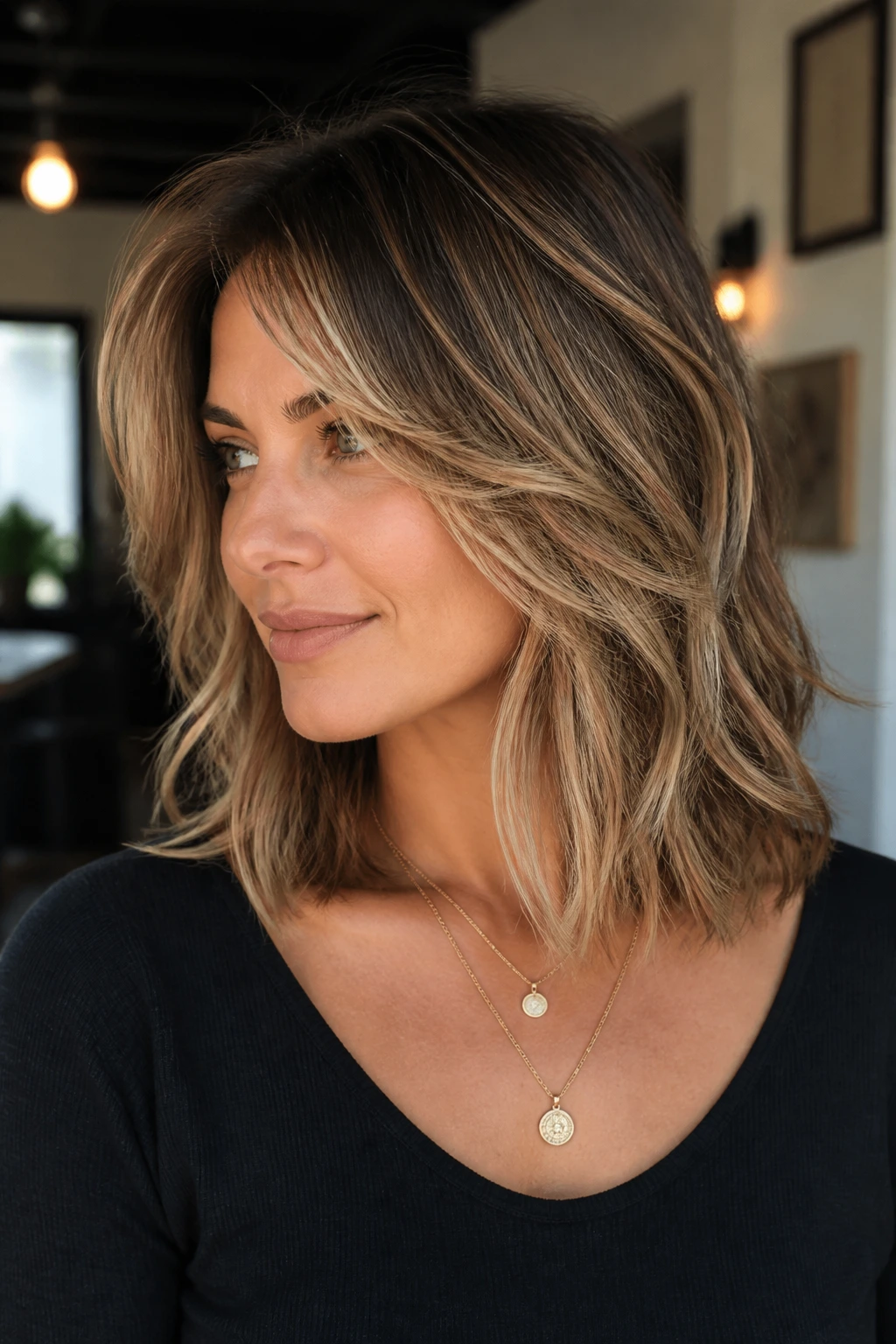
A shag without color can look fragmented. Add sweeping balayage, and the layers suddenly make sense. The texture gives the color something to cling to, while the color keeps the layers from getting lost. On medium-length shags, the sweep of the paint should follow the movement of the cut, not sit in rigid bands.
This is a good place for mixed tones: a deeper root, brighter front panels, and softer ends that don’t all match perfectly. That variation makes the shag feel lived-in instead of overprepared. A matte texturizing spray can be useful, but don’t drown the ends in product or the lighter pieces will look dusty.
If you like a cut that already has personality, this version gives it more shape. Not more work. Just more movement.
30. Dimensional Red Balayage
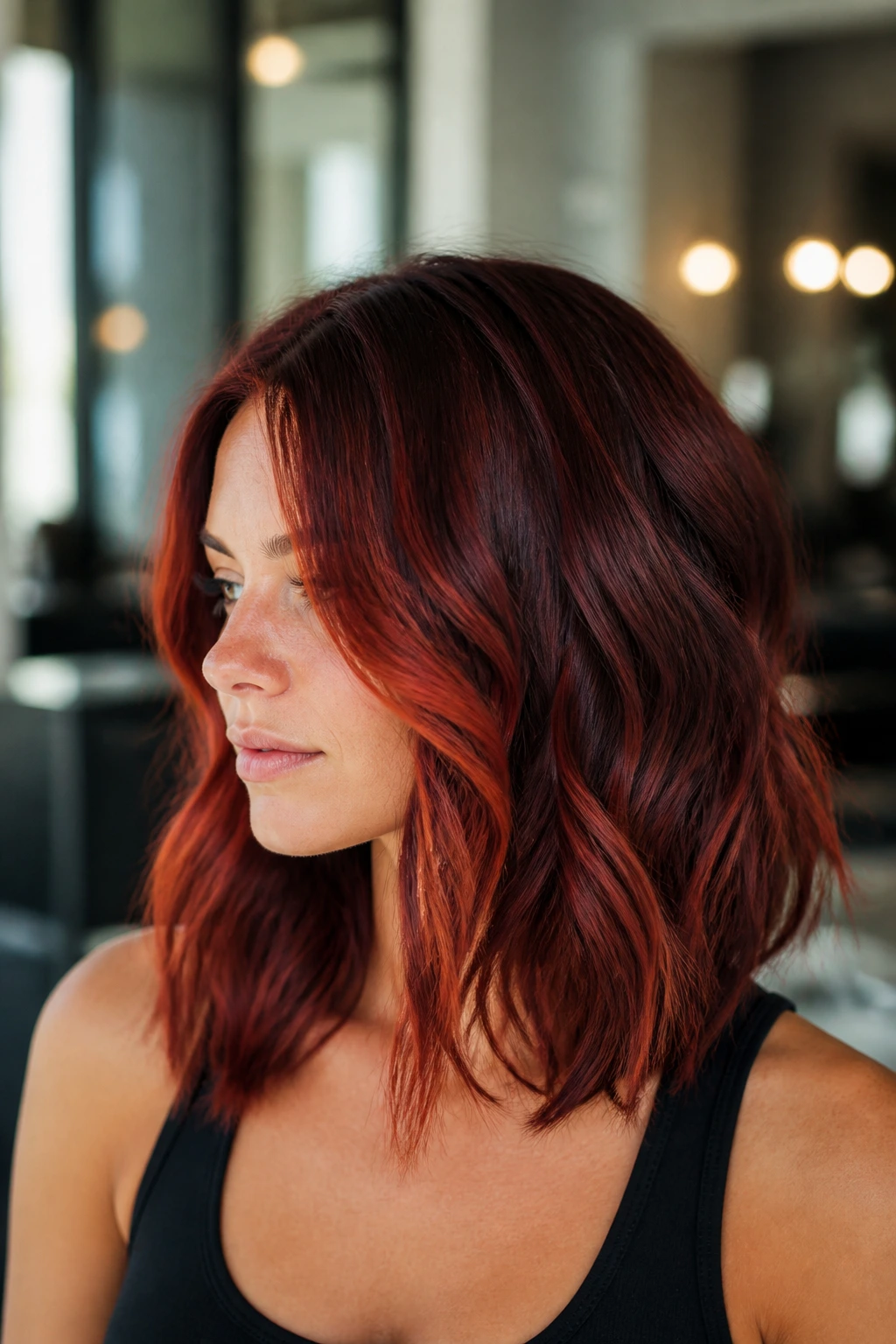
Dimensional red balayage is for people who want color with a pulse. Instead of one flat red all over, the look layers copper, cherry, and auburn against a deeper base so the hair catches different tones as it moves. On medium-length hair, that shifting quality is part of the appeal.
The roots usually stay richer and deeper, then the red tones build through the mid-lengths and face frame. That keeps the color from turning one-note. Red tones fade fast if they’re overwashed, so the finish should be polished and the maintenance realistic.
This is a strong choice if you want the hair to feel warm and vivid without crossing into costume territory. The difference is in the depth. Keep it.
31. Beige Blonde with Shadow Root
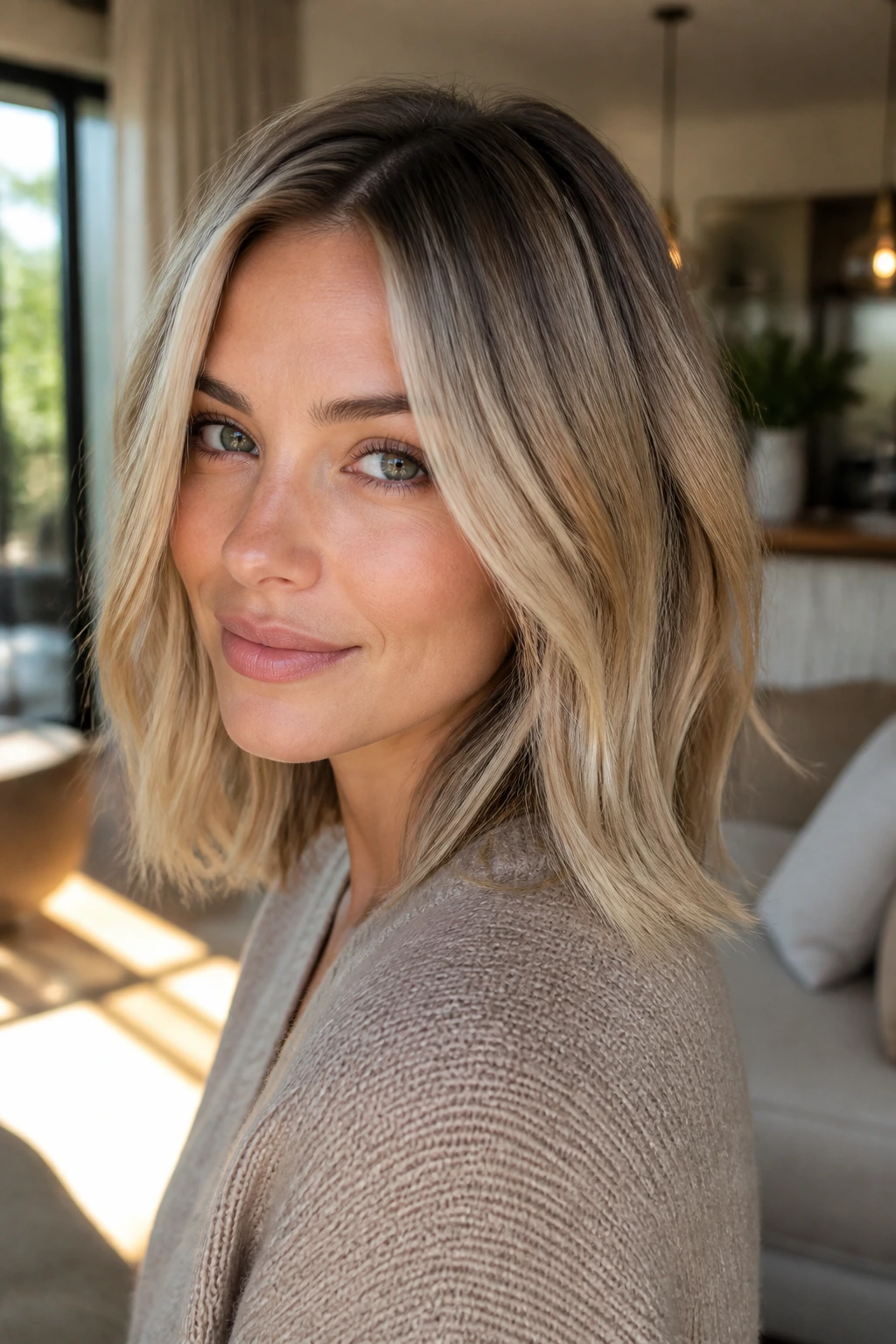
Beige blonde with a shadow root is one of the cleanest lived-in looks on the list. The darker root gives the blonde a frame, while the beige lengths keep the result soft and wearable. On medium-length hair, that shadow root also prevents the cut from looking too top-heavy.
The root should not be a harsh band. It needs to blur into the beige, especially around the front hairline. That transition is where the skill shows. A good shadow root makes the grow-out pleasant instead of obvious.
If you want blonde that survives a few weeks without looking overgrown, this is the safe bet. It works with waves, blowouts, and sleek styles, which is why it gets worn so much. There’s a reason for that.
32. Cinnamon-Kissed Collarbone Bob
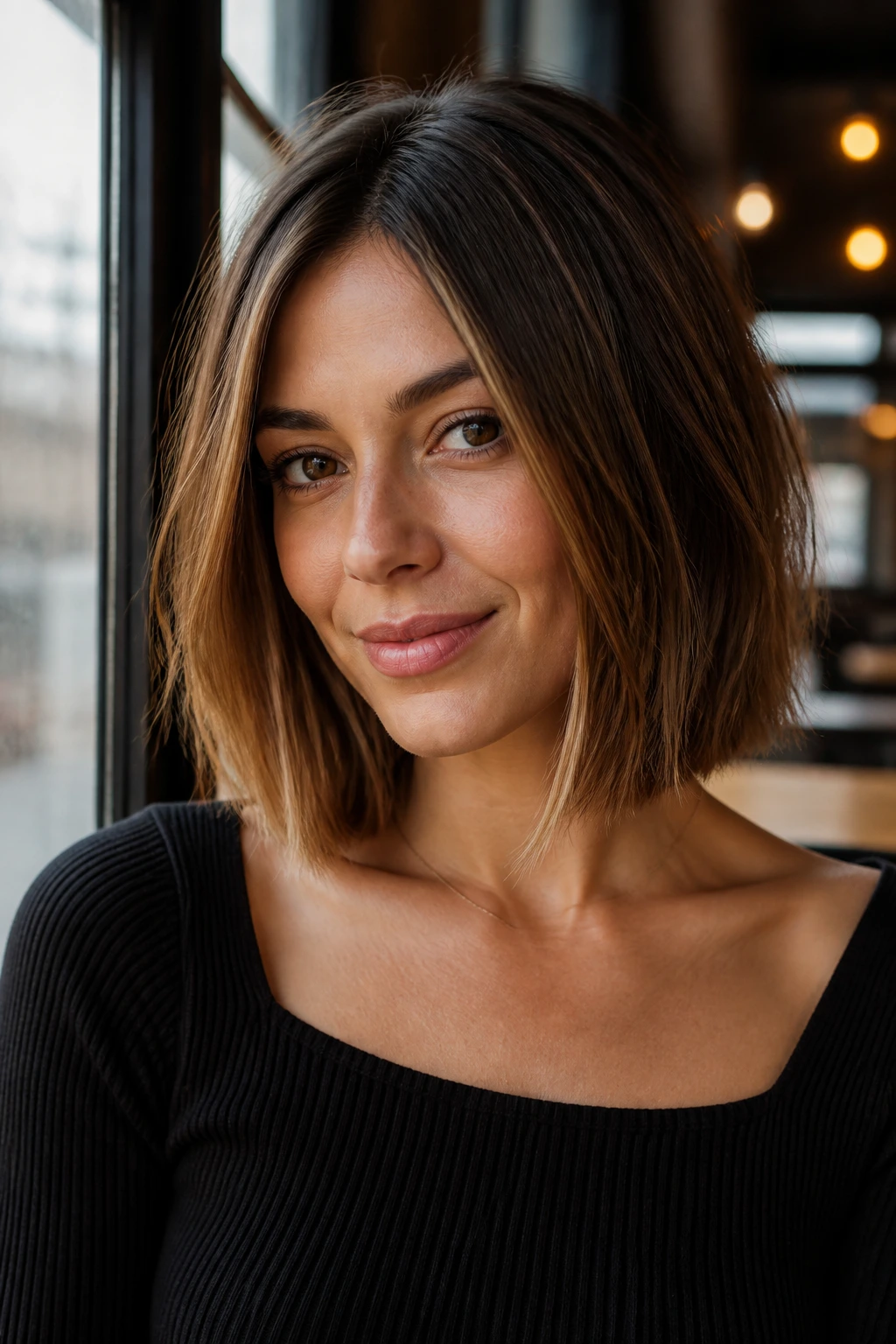
A collarbone bob needs color that respects the shape. Cinnamon-kissed balayage does that by warming the mid-lengths and ends without cluttering the root area. The result is a bob that looks softer around the jaw and a little more lively when it moves.
The cinnamon should be thin and warm, not orange. On a blunt bob, too much brightness near the bottom can make the ends look choppy, so the placement should be feathered and slightly vertical. A loose bend or blowout adds just enough movement for the color to show.
This is a good pick for brunettes who want warmth but don’t want caramel to feel too sweet. Cinnamon gives the hair a little spice without changing the haircut’s clean outline.
33. Ash Brown Balayage with Cool Ends
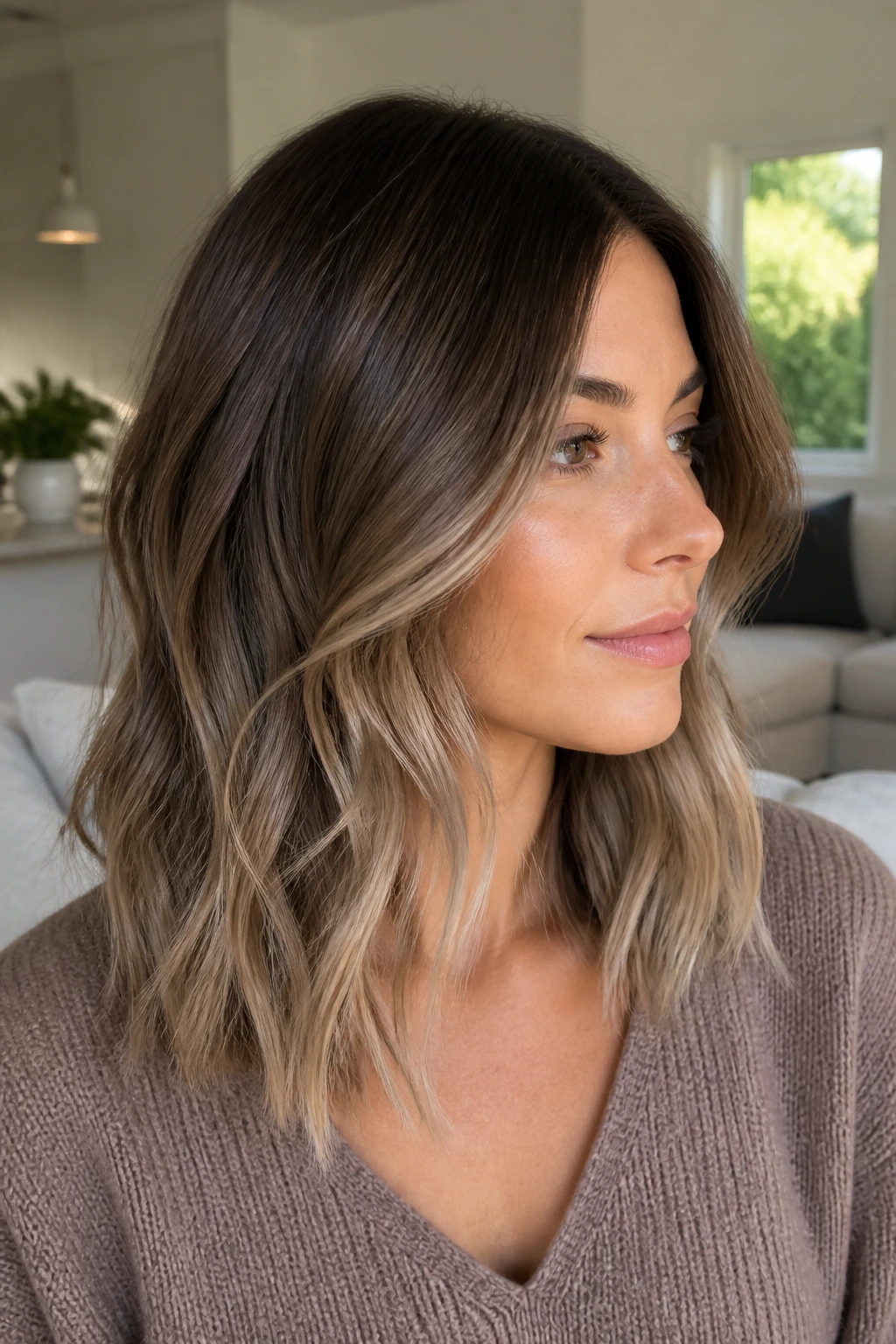
Ash brown balayage keeps the mood cool and grounded. The ends carry most of the lightness, but the tone stays muted so the finish doesn’t drift into blonde. On medium-length hair, that coolness can make the cut look sleek even when it’s worn air-dried.
The base remains brown, while the highlighted pieces stay thin and a shade or two lighter, then get cooled down with toner. The ends should not turn gray. That’s the mistake. They should stay soft ash-brown, which is a very different thing.
If brass is your enemy, this is a strong answer. It also plays well with modern, minimal styling because the color itself already feels controlled.
34. Golden Honey Balayage with Curtain Bangs
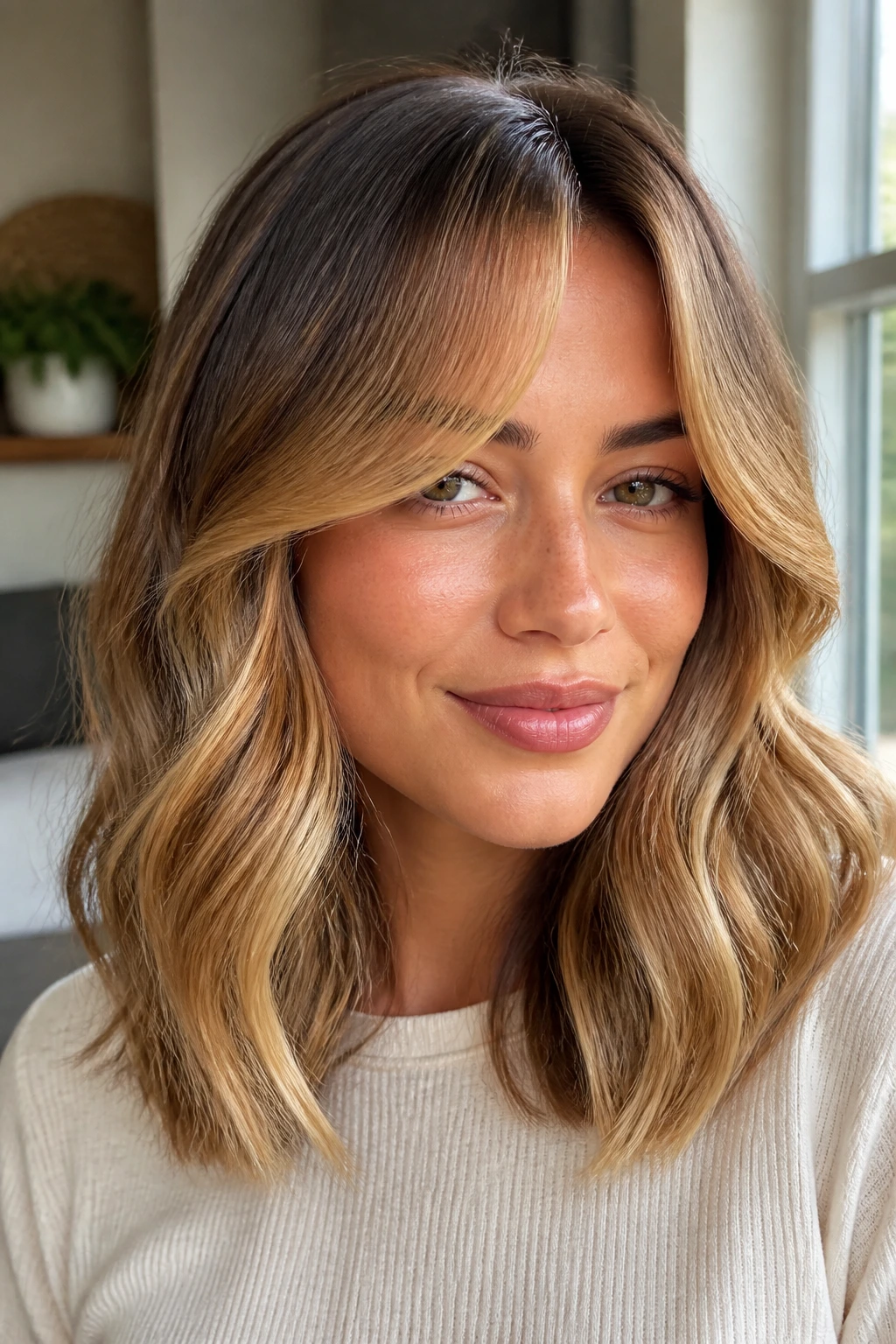
Curtain bangs and golden honey balayage are a flattering pair because both pieces of the haircut work around the face. The lightness lands where the bangs separate, then slides through the front layers and ends. On medium-length hair, that framing effect can make the whole cut look brighter without flooding the crown.
Keep the honey tone warm and glossy, but not yellow. The front pieces should be the brightest, while the rest of the head stays softer so the bangs do the visual work. If the cut is layered, the honey will catch on the shorter pieces too, which gives the style more motion.
This is an easy look to wear if you like warmth and softness around the face. It has a gentle, polished feel without needing a lot of contrast.
35. Platinum-Tipped Balayage with Dark Root
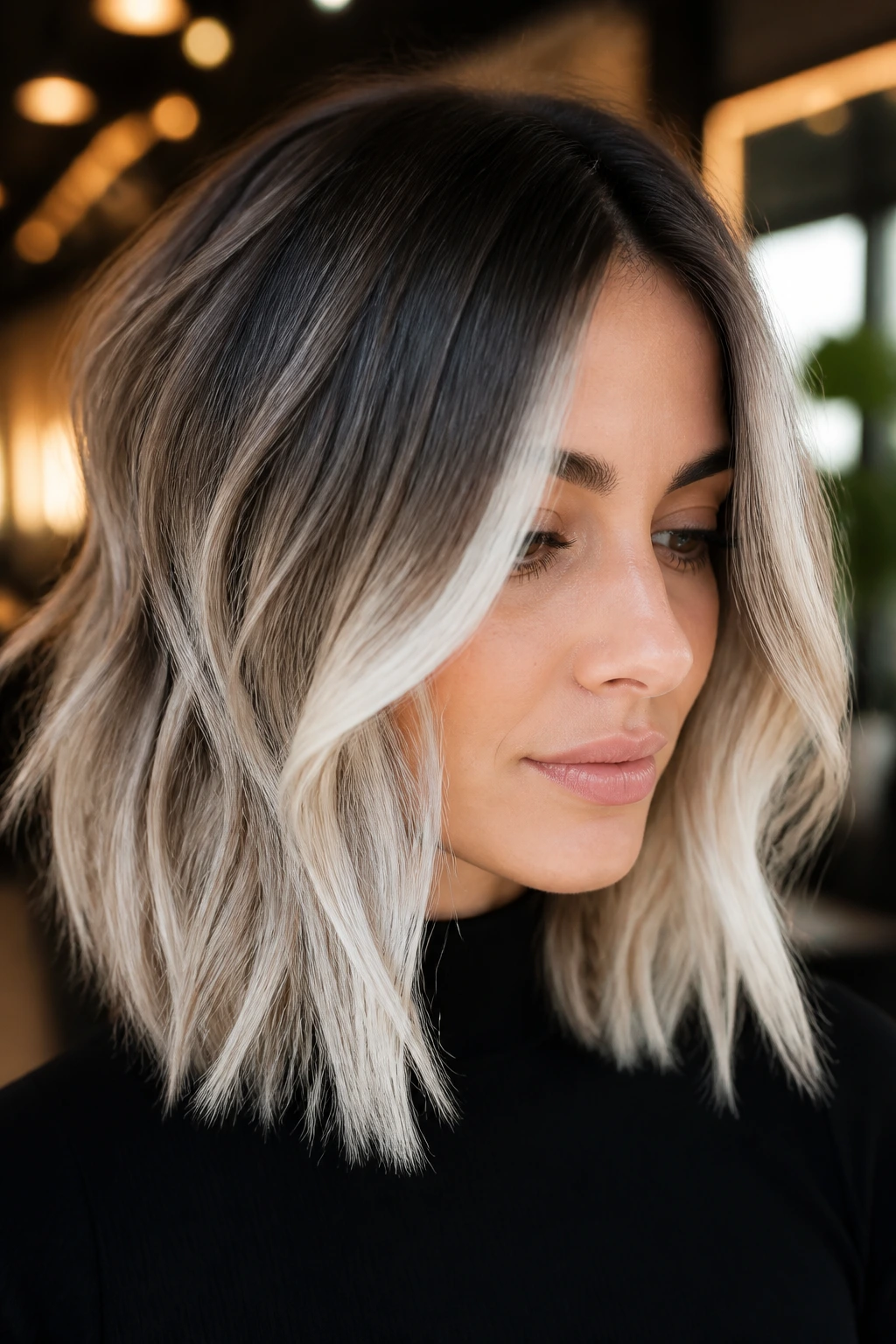
Platinum-tipped balayage is the boldest finish here, and it only works when the dark root is cleanly respected. On medium-length hair, the contrast can look striking because the platinum hits the ends and front panels while the root stays deep and grounded. The result is editorial, not accidental.
The platinum should live mostly at the perimeter and ends, with the face frame lifted a little higher if you want extra brightness. Keep in mind that medium-length hair doesn’t leave much room for error on extreme blondes. A too-wide platinum band can flatten the haircut fast. Thin, controlled placement is better than brute force lift.
This look asks for more upkeep than the softer versions. It also rewards precision. If you like contrast and don’t mind gloss appointments, it’s one of the sharpest ways to wear balayage on a lob.
How to Brief Your Colorist Without Talking in Circles
The easiest way to get the right balayage is to describe the placement before you describe the color. Say where you want the brightness to live: around the face, through the ends, under the top layer, or just in the front two panels. That gives the colorist a map, which matters more than a vague request for “light and natural.”
Bring two photos if you can. One should show the tone you want. The other should show the placement. Those are not always the same photo, and that’s fine. A champagne blonde tone on a layered lob can have nothing to do with a honey beige placement on a blunt cut. One photo rarely tells the whole story.
The best conversation usually includes your maintenance tolerance. If you can only sit in the chair every few months, say so. A high-contrast blonde with a strong root smudge behaves differently from a full, bright face-frame look, and the appointment should reflect that. Also mention how you wear the hair most often. Straight styling exposes banding faster than soft waves do. That detail changes the paint plan.
Essential Tools for Styling and Maintenance
-
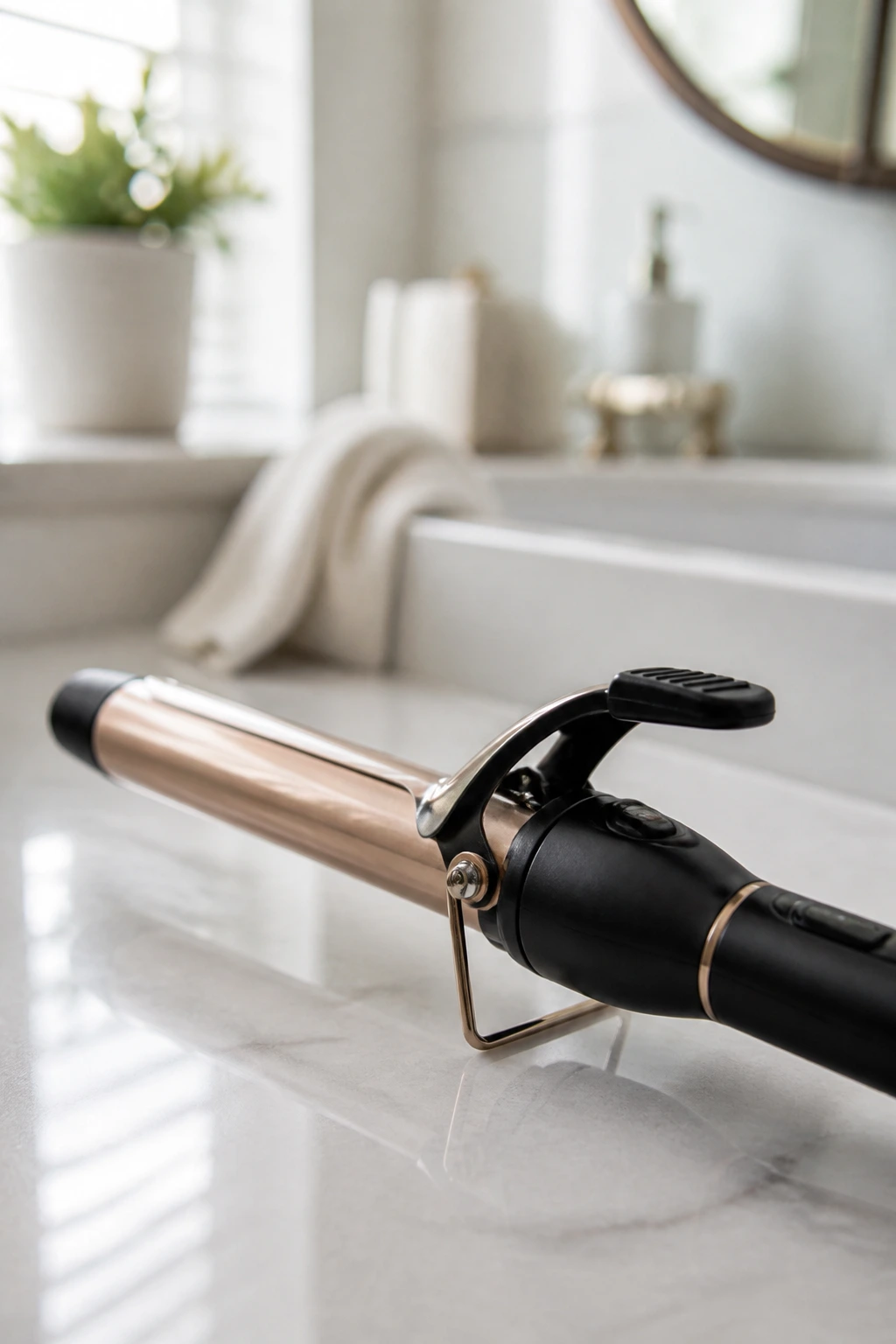
1-inch curling iron or wand: Creates soft bends that show off ribbons of color without making the ends look puffy.
-
Flat iron with rounded edges: Useful for sleek looks and for giving medium-length hair a clean, reflective finish.
-
Heat protectant spray: Use it before blow-drying or hot tools; lightened hair does not forgive repeated heat without help.
-
Color-safe shampoo: A sulfate-free formula helps keep the tone from fading and the cuticle from roughing up too quickly.
-
Purple shampoo: Best for blonde, beige, and pearl tones that start drifting yellow.
-
Blue shampoo or blue mask: Better for brunette balayage that starts throwing orange brass.
-
Bond-repair treatment: Handy after lightening appointments or whenever the ends feel rough and stretchy.
-
Wide-tooth comb: Helps work conditioner through the lighter ends without snapping them.
-
Microfiber towel or soft T-shirt: Cuts down on friction, which matters on medium hair because the ends rub collars and straps all day.
-
Shine serum or light oil: Use a drop or two on the very ends; too much will make the color look heavy.
Picking the Right Tone, Gloss, and Aftercare Products
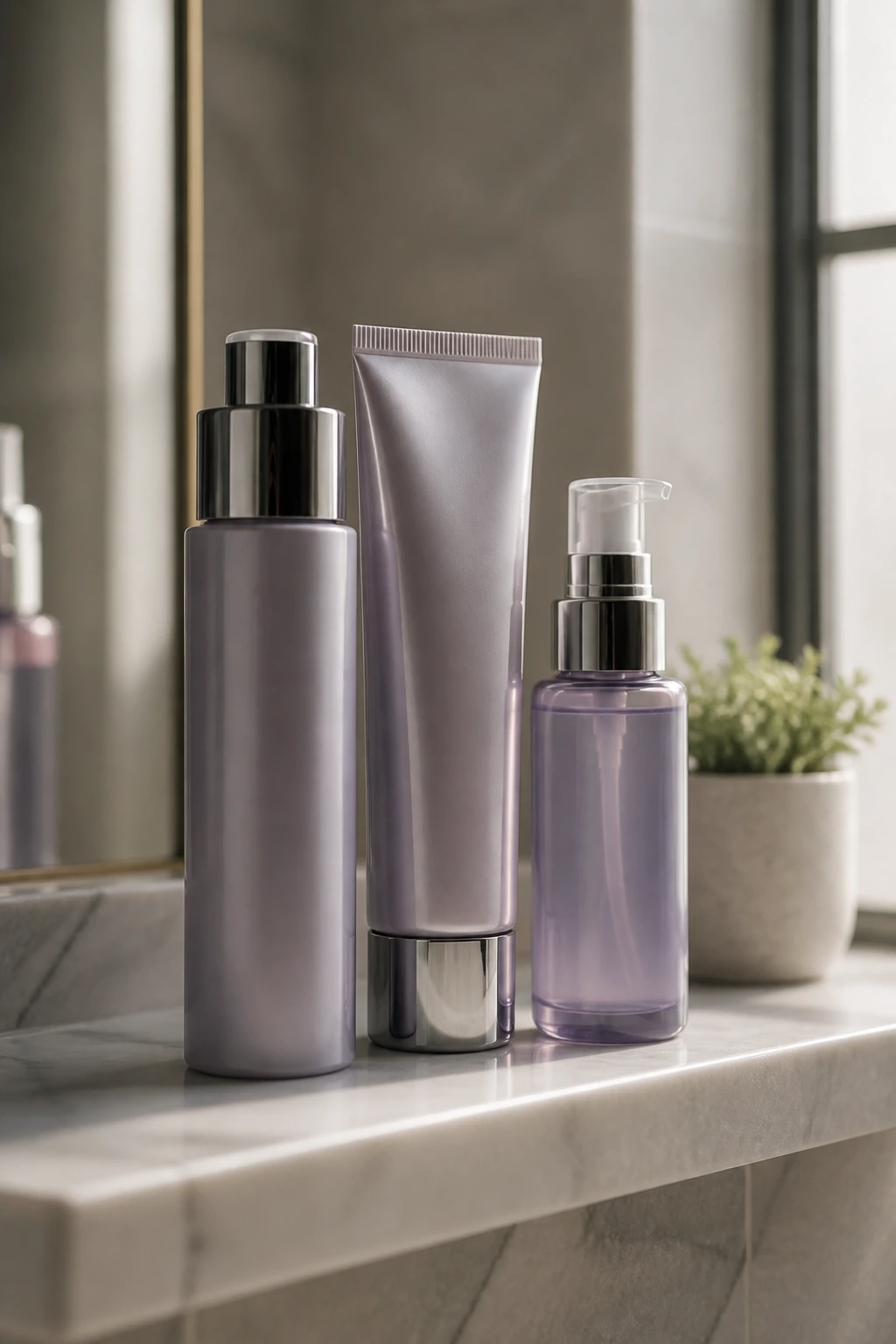
The tone you choose should match the pigment your hair actually lifts to, not the one in a photo. A level 7 brunette that lifts warm will not magically become icy beige just because the picture was pretty. If your hair grabs orange, ash and mushroom shades will need a stronger hand. If it lifts yellow, beige and pearl read cleaner.
At the salon, gloss does more work than most people realize. It’s the finishing filter over the lightener, and it decides whether the result looks like honey, champagne, taupe, or copper. A beige gloss softens brightness. A cooler gloss calms brass. A warm gloss can deepen caramel and bronze. Same lift, different read.
At home, the ingredient list matters more than the packaging. Look for sulfate-free shampoo, a conditioner with slip, a bond treatment if the hair feels porous, and a tinted shampoo only when the tone starts to drift. Purple shampoo is not an everyday cleanser. Blue shampoo is not a cure for bad placement. Both are maintenance tools, not magic.
How to Style These Looks So the Dimension Shows
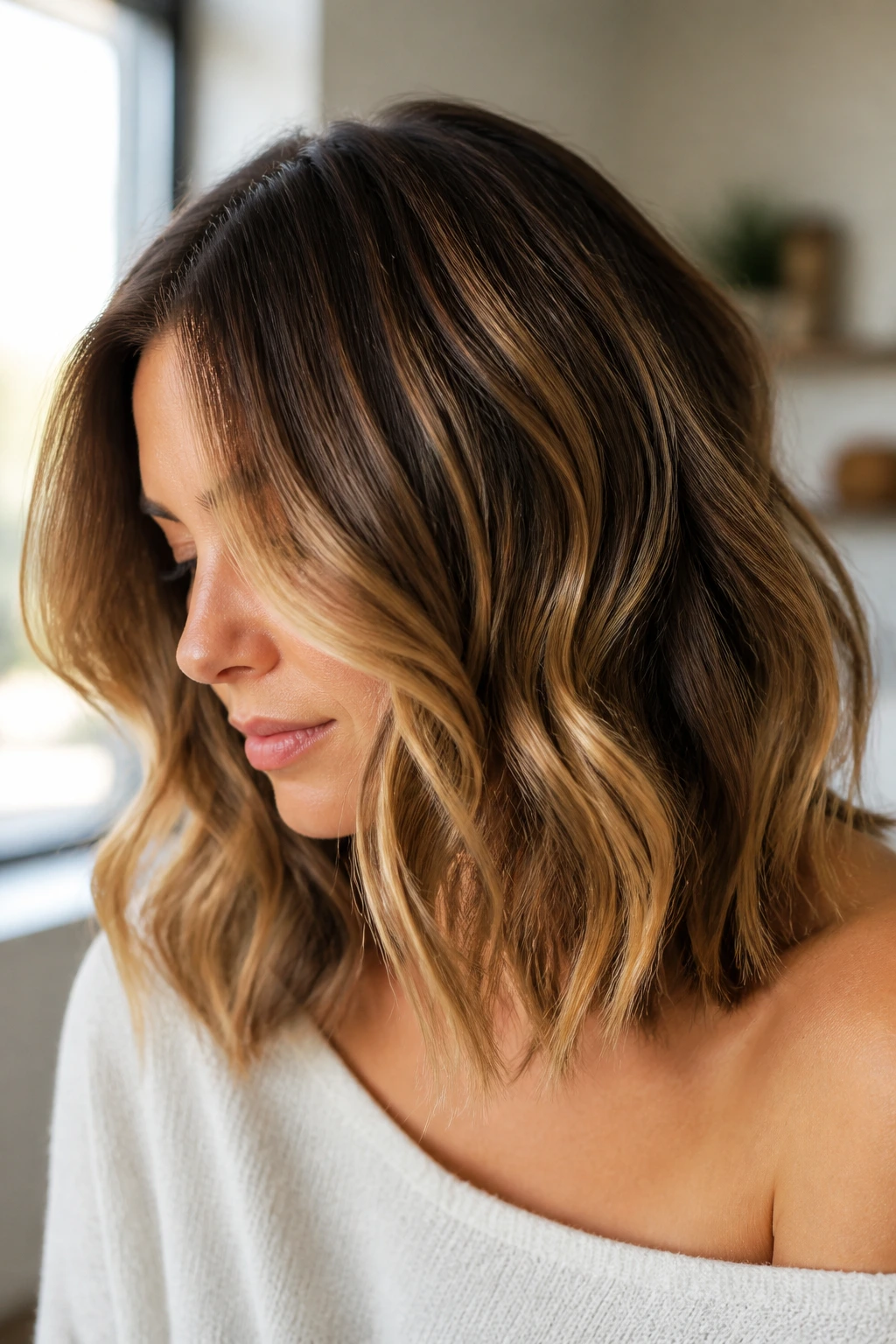
Presentation: The part line changes the mood faster than people think. A center part sharpens champagne, pearl, and money-piece looks. A soft side part helps caramel, honey, and cinnamon blends fall more casually around the face.
Texture: Loose waves show ribbons and lowlights best because the bends catch the light at different angles. Straight styling makes the contrast cleaner and a little more editorial. Air-dried texture is great for curly balayage, but the color has to be mapped around the curl pattern or the pieces vanish.
Framing: Tucking one side behind the ear is an easy trick for medium-length hair. It shows the money piece and makes the face frame look intentional. Curtain bangs behave the same way: they need room to separate, not too much product.
Finish: Use shine spray on the mid-lengths and ends, then stop. The top layer should not look greasy. If the hair is too oily, the lighter pieces lose their edge and the whole thing goes limp.
Extra Ways to Add Shine and Movement
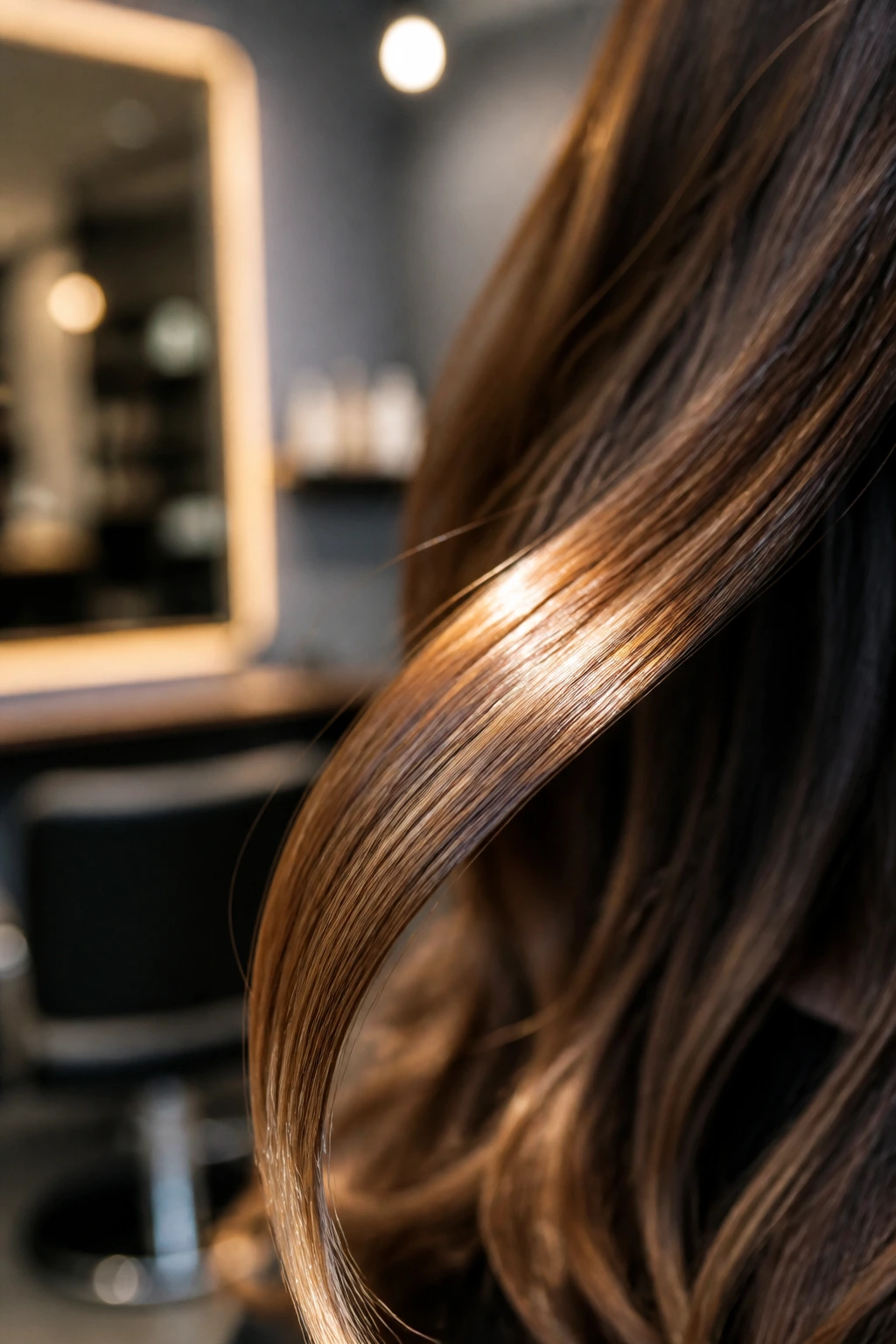
Gloss Boost: A clear or slightly tinted gloss every 6 to 8 weeks keeps beige, honey, and pearl tones from turning dull. It also makes brunette dimension look cleaner, which is half the reason these looks age well.
Texture Play: A light texture spray at the mid-lengths can help ribbons show, especially on layered medium hair. Keep it away from the ends if they’re already dry. Dry ends + salt spray = tired color.
Warmth Control: Use a tinted conditioner or a brief purple or blue shampoo schedule based on what your hair actually does. Blonde brass usually lands yellow. Brunette brass usually lands orange. Treat the correct problem, not the one you wish you had.
Money-Saver: Ask for a face-frame refresh or partial gloss between full balayage appointments. That keeps the front pieces alive without rebuilding the whole head. It’s a small appointment that does a lot of visual work.
Common Mistakes That Flatten Balayage
-
Lifting the ends too hard: If the bottom third looks see-through or dry, the color has gone too light for the cut. Fix it with a darker gloss or by leaving more depth at the perimeter next time.
-
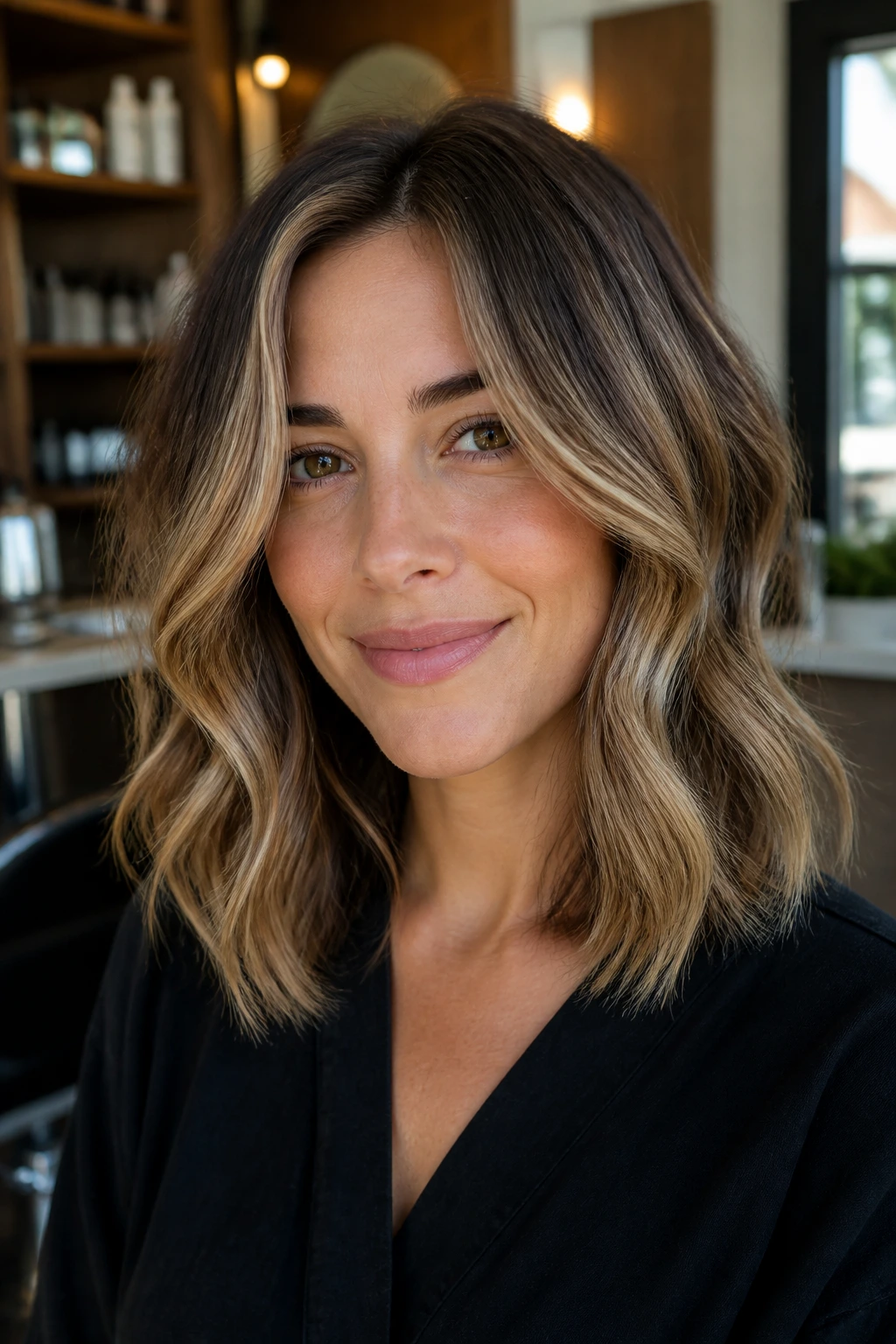
Skipping the root shadow: A flat root makes medium-length balayage look pasted on. A soft shadow root gives the light pieces a frame and buys you better grow-out.
-
Using the wrong toner: A cool toner on a warm base can go muddy. A warm toner on a pale blonde can go brassy. Match the finish to the lift level, not the inspo photo alone.
-
Washing too aggressively: Hot water and harsh shampoo pull tone fast. Lukewarm water and a gentle cleanser keep the cuticle smoother and the color richer.
-
Overusing purple shampoo: Too much can turn beige blonde chalky and dull. Use it when yellow appears, not as your default cleanser.
-
Ignoring trims: Split ends make light bounce weirdly, which kills the clean look of balayage. Dust the ends every 8 to 10 weeks if you want the color to keep its shape.
Variations and Adaptations to Try
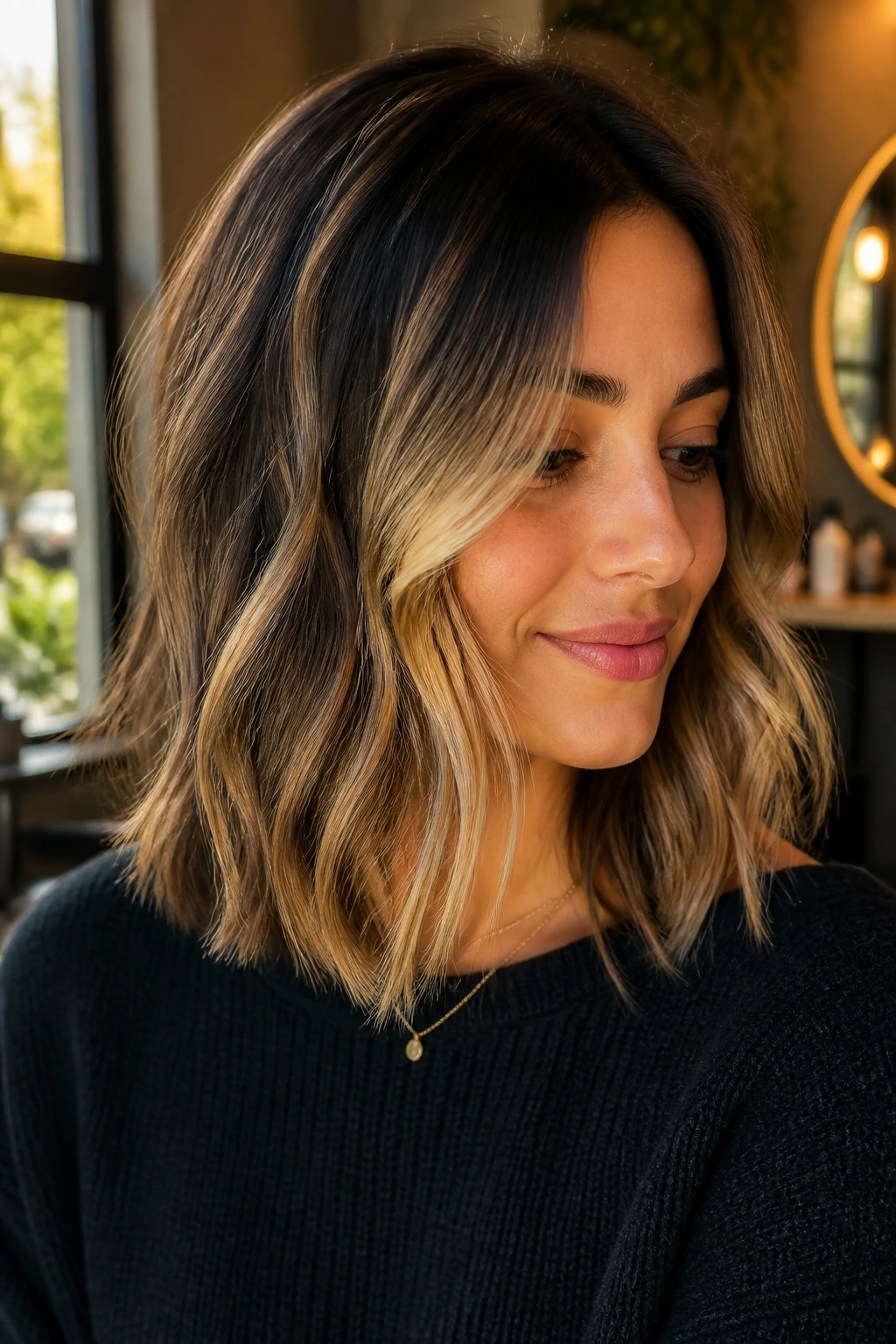
Low-Maintenance Lived-In Blend: Keep the root deeper and the lightest pieces farther from the scalp. This version is best if you want the grow-out to stay soft for months instead of weeks.
Cool-Tone Control: Swap beige and gold for mushroom, ash brown, or pearl tones. It helps when brass is the main thing you dislike, though it does ask for more toner upkeep.
Curly-First Placement: Paint around the curl clumps rather than in straight horizontal lines. The shape stays cleaner, and the color shows where the curls actually separate.
Budget-Friendly Face Frame: Brighten only the front panels and a few lower pieces, then leave the rest of the hair close to the natural base. It gives the feel of balayage without the cost of a full head refresh.
Brunette Glow Upgrade: Add bronze, caramel, or toffee ribbons into dark brown hair instead of chasing blonde. The shine reads richer, the damage stays lower, and the result ages well.
High-Contrast Editorial Version: Keep a dark root with bright blonde or platinum tips, but make the ribbons thin and controlled. This works best on sleek or softly waved medium hair where the contrast can stay sharp.
Keeping the Tone Fresh Between Salon Visits
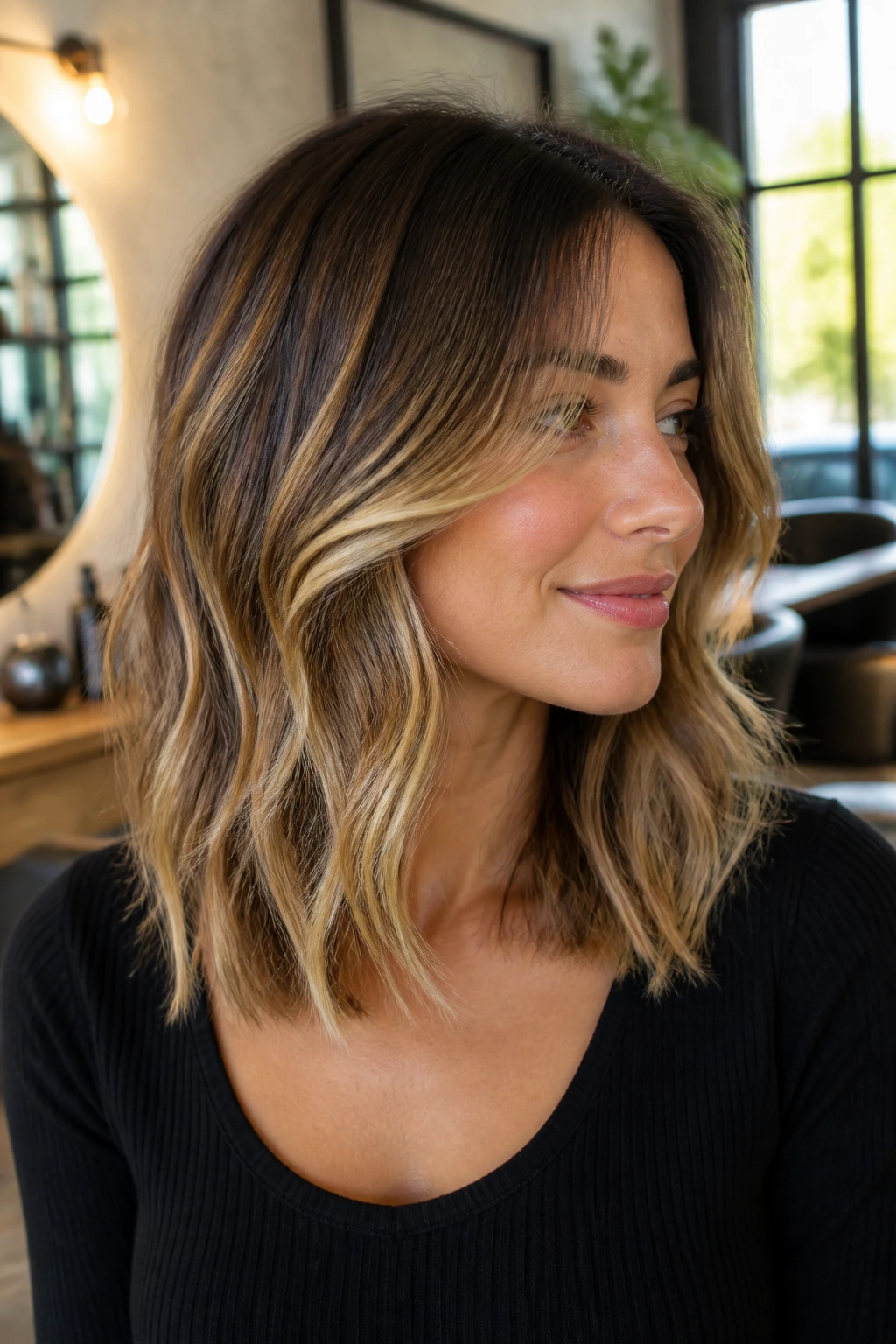
Balayage behaves better when you treat the tone like a finish, not a one-time event. On medium-length hair, the ends are close to coat collars, purse straps, scarves, and heat tools, so they lose polish faster than the roots do. That means the upkeep should focus on the lightest sections first.
A practical rhythm usually looks like this: wash with color-safe shampoo, use a bond treatment or rich conditioner when the hair feels dry, and keep heat protectant in reach before every blow-dry or iron pass. Blonde, beige, and pearl shades often need a purple shampoo every 1 to 2 weeks, while brunette tones may benefit more from a blue shampoo when orange brass shows up. Copper and rose-gold looks need gentler washing and a little more gloss attention because they fade faster.
Salon timing matters too. A gloss or toner refresh every 6 to 8 weeks keeps the finish clean. A partial balayage or face-frame touch-up often works every 10 to 14 weeks, while a full refresh can wait longer if the root blur still looks soft. Trims every 8 to 10 weeks keep the ends from fraying, and frayed ends are the fastest way to make even expensive color look tired.
Frequently Asked Questions
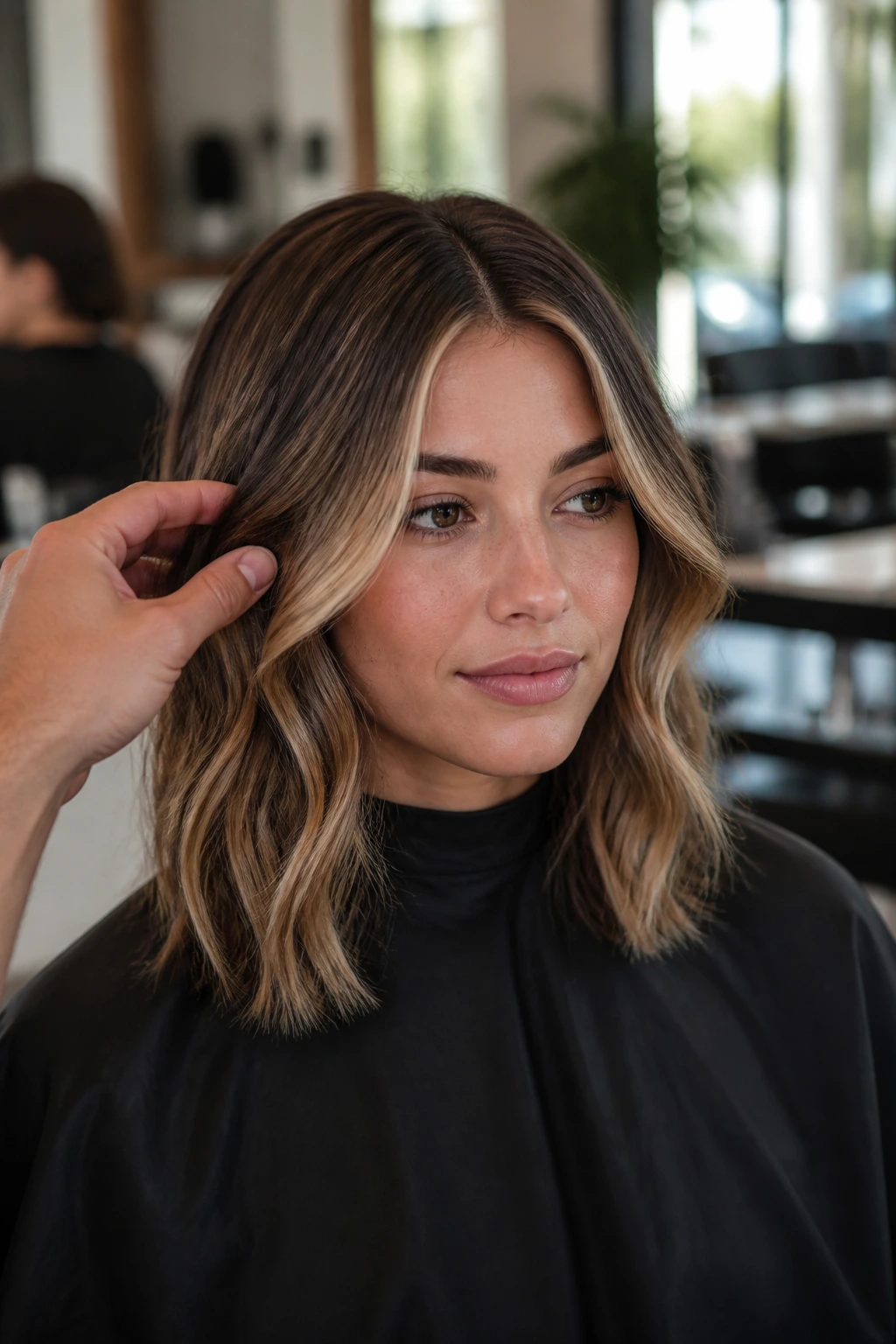
Is balayage better than regular highlights for medium-length hair?
Usually, yes, if you want softer grow-out and more natural-looking placement. Traditional foils can still work, but balayage gives the colorist more freedom to follow the shape of a lob, shag, or layered cut.
Can balayage work on straight medium-length hair?
Absolutely, and straight hair can make the placement look very crisp. The trick is to keep the sections narrower and the contrast controlled, because straight strands show every line the paint makes.
How light should balayage go on shoulder-length hair?
Light enough to show movement, not so light that the ends look transparent. On medium-length cuts, the best result is often one to three levels lighter than the base, with the brightest pieces near the face.
Does balayage cover gray hair?
It can blend gray, but it does not usually cover it the way full permanent color does. If gray coverage matters, ask for a mixed approach: some permanent color at the root, then balayage through the lengths.
Why does my balayage turn brassy so fast?
That usually means the tone was a little too warm for your underlying pigment, or your aftercare is washing the color out too quickly. Hard water, hot showers, and frequent heat styling can all speed up brass.
How often should I refresh medium-length balayage?
A gloss every 6 to 8 weeks keeps the tone clean, and the placement usually needs a partial refresh every 10 to 14 weeks if you want it looking intentional. Softer, darker blends can stretch longer.
Can curly hair wear balayage without looking patchy?
Yes, but the placement has to respect the curl pattern. The color should follow the curl clumps and the natural bend, not a straight section map, or the pieces will disappear once the curls spring up.
What if my hair feels dry after lightening?
Focus on bond repair, moisture, and fewer hot-tool passes for a few weeks. Dryness means the cuticle needs a break, not another round of heat and shampoo.
A Soft Finish That Still Has Shape
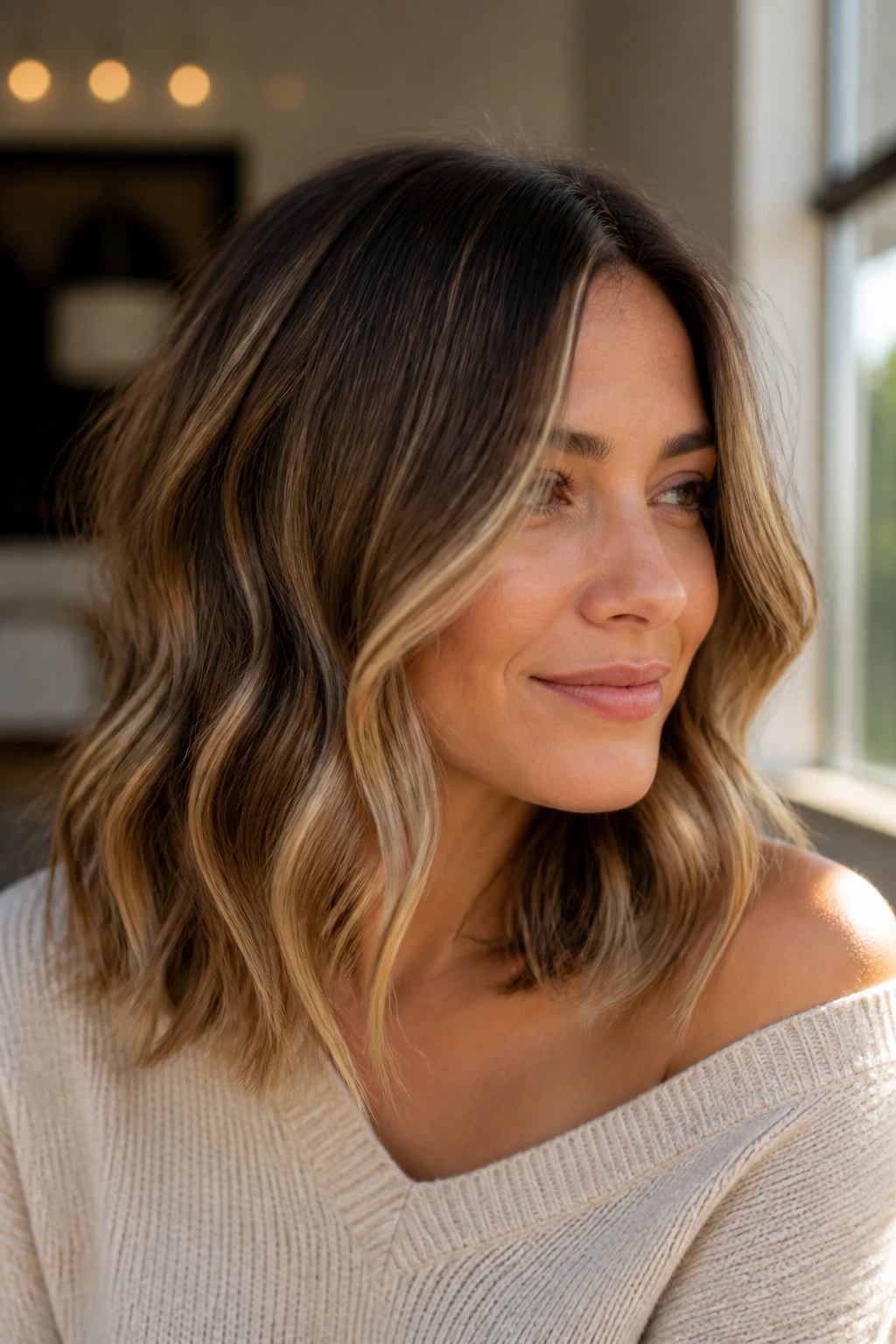
The best balayage on medium-length hair does two things at once: it gives the cut more movement and it keeps the grow-out from looking harsh. That combination is why the style lasts. A good placement can make a plain lob look deliberate, turn a shag into something richer, or let a brunette keep depth while still showing light around the face.
Pick the tone that fits your base, then let the haircut do some of the work. The cleaner the shape, the easier it is for the color to read. And once you find the right balance of depth, gloss, and brightness, the whole thing starts to feel less like a hair color and more like part of the cut itself.
