



Long straight hair does not hide anything.
One blunt highlight line, one toner that leaned a little too smoky, one root shadow that stops in the wrong place — it all shows. That is why hair color ideas for long straight hair have to be chosen with more care than a lot of people expect. Smooth strands reflect light like a satin ribbon, which is gorgeous when the color is placed well and unforgiving when it isn’t.
The upside is just as big. Straight lengths give you a clean canvas for polished brunettes, narrow balayage ribbons, soft blondes, copper veils, smoky melts, and glossy reds that read from the part line all the way to the last inch. The right shade can make long hair look thicker at the ends, softer at the roots, and far more dimensional without changing the cut at all.
That’s the fun part here: long, straight hair can wear quiet color or dramatic color, but it needs both to be mapped with intention. Start with the looks that play nicely with shine, length, and grow-out.
Why These Color Ideas Work So Well on Straight Lengths
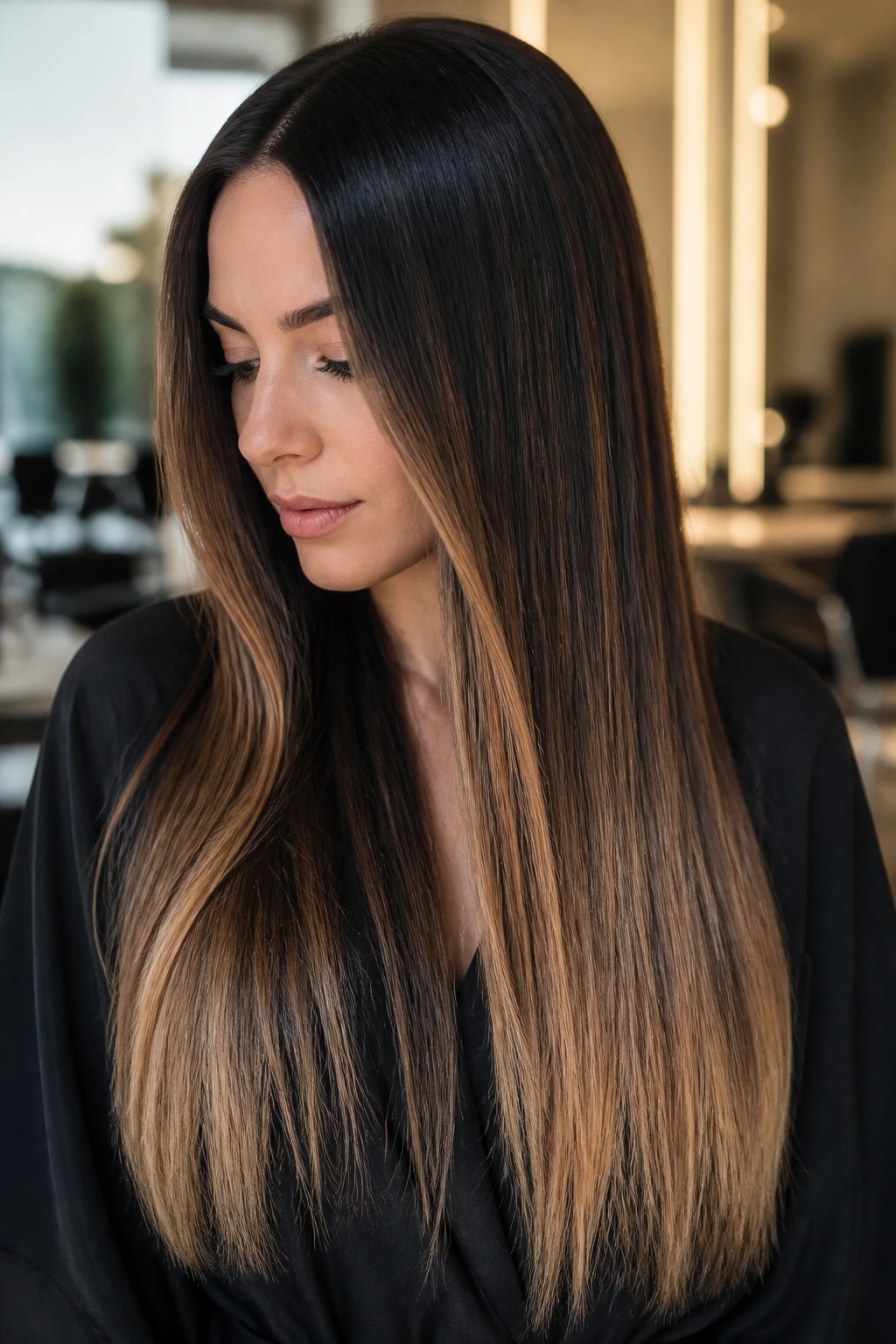
-
Straight strands show placement clearly: A thin ribbon of caramel or a clean root melt reads instantly on long hair because there’s no curl pattern to hide the transition.
-
The finish matters as much as the shade: Glosses, demi-permanent color, and toner-refreshed blondes keep the surface reflective instead of dull and chalky.
-
Grow-out can be part of the look: Shadow roots, face-framing pieces, and low-contrast balayage make regrowth look like design, not an accident.
-
You can go subtle or loud without changing the cut: A blunt hem looks sleek with espresso, mushroom brown, or midnight black; long layers make champagne blonde, copper veils, and oil-slick tones move better.
-
These shades are easier to style flat or blown smooth: Long straight hair gives you one clean line, so the color itself does the talking.
1. Glossed Espresso Brunette
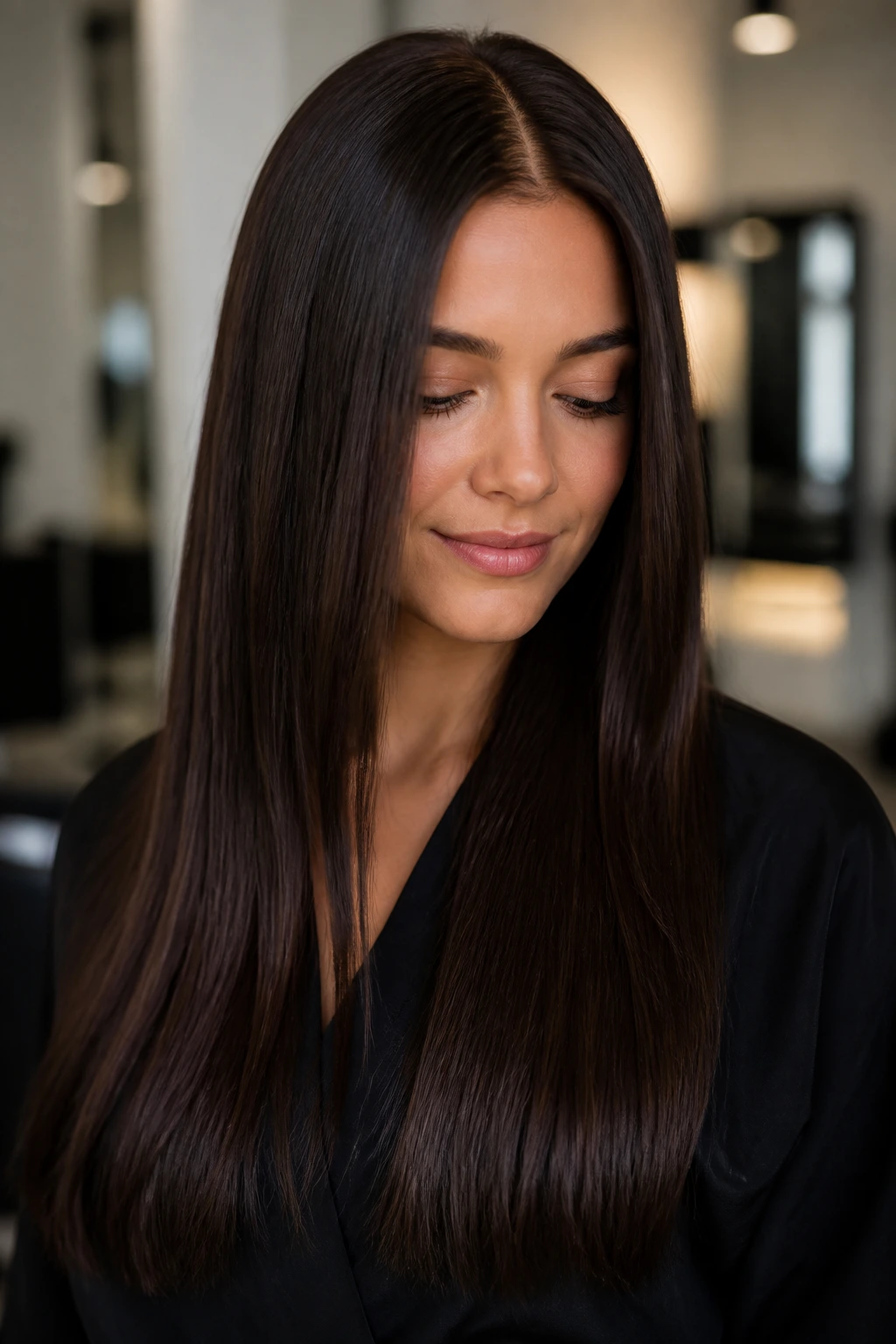
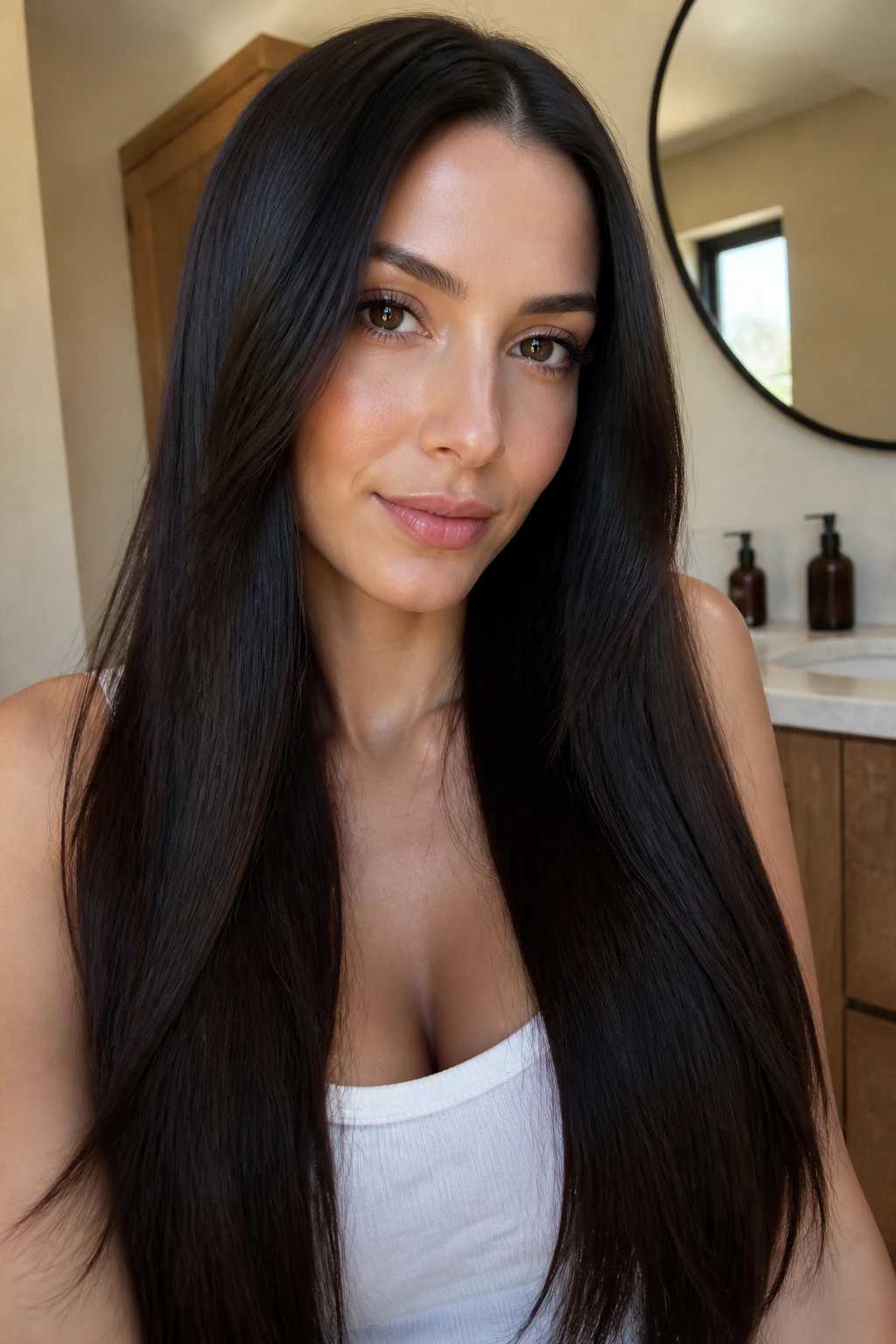
A deep espresso brunette is the sort of color that makes long straight hair look heavier, richer, and more deliberate. It sits in that sweet spot between soft black and dark chocolate, which means the shine matters more than the lightness. On a blunt cut, it looks almost liquid; on long layers, it keeps the shape from feeling stringy.
Why It Works on Long Straight Hair
The surface of straight hair reflects dark pigment beautifully, especially when the color has a gloss finish. Ask for a neutral-to-warm espresso, not a flat one-dimensional black-brown, and keep the root and mids close in tone so the length reads as one smooth ribbon.
- Best for: Medium to thick hair that needs the ends to look fuller.
- Ask for: A demi-permanent glaze over a level 3 to 4 brunette base.
- Maintenance: Refresh every 6 to 8 weeks so the shine doesn’t go muddy.
- Watch for: If your natural base is already dark, a gloss may give you the same visual payoff without permanent dye.
Pro tip: Keep the last inch of the hair a half-step lighter than the root if you want the length to catch light instead of disappearing into a solid block.
2. Caramel Ribbon Balayage
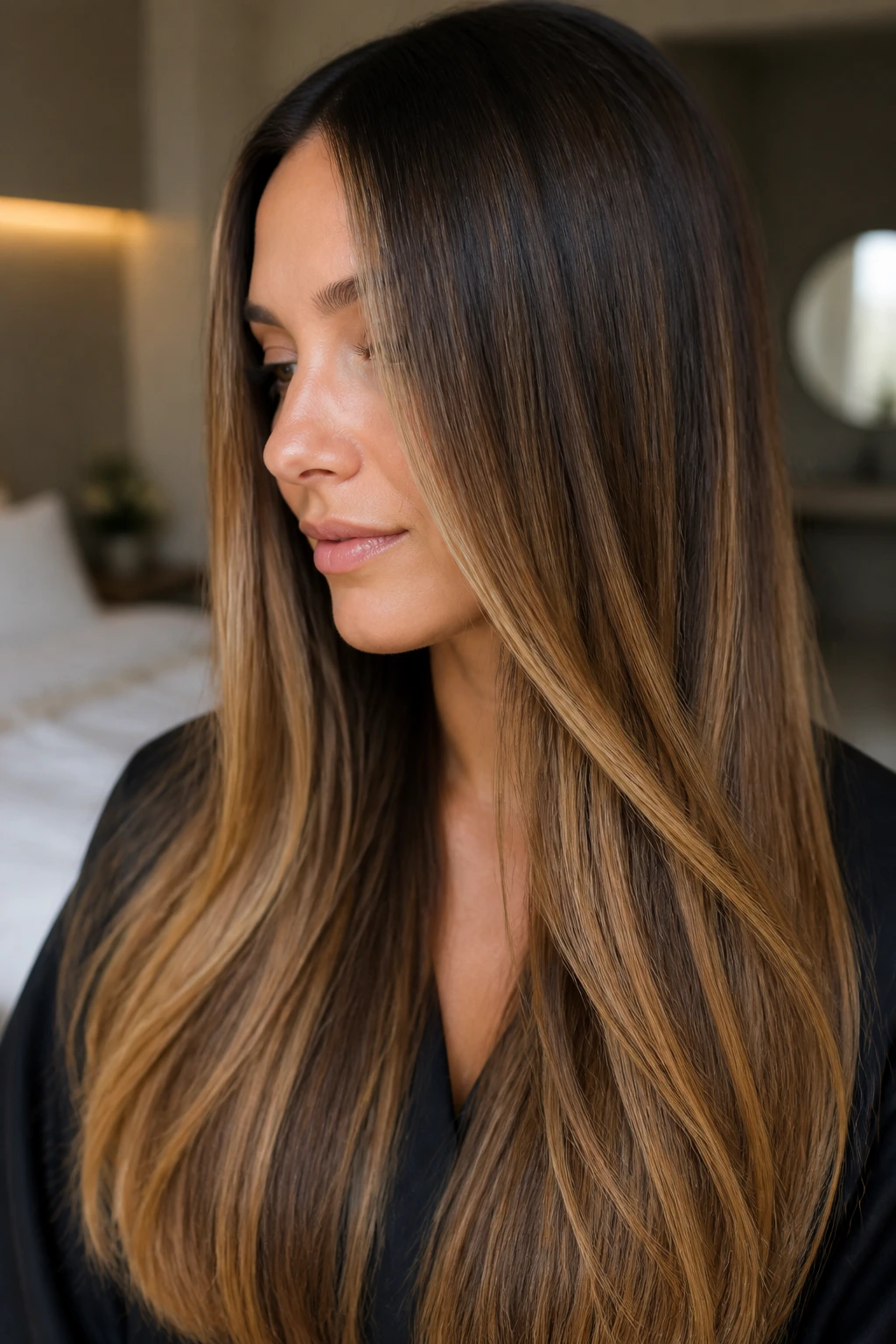
Caramel ribbon balayage is one of those looks that earns its keep on straight hair because it gives movement without needing curls to fake it. The ribbons should be narrow, soft, and spaced out enough that the whole head doesn’t read as stripes. Done well, it looks like sunlight wandered through the mids and stayed there.
The key is restraint. On long straight lengths, chunky highlights can look dated fast, while thin caramel threads stay elegant and flexible. I like this look best when the ribbons start below the cheekbone and continue in long, tapered lines through the ends.
You can wear it on a chocolate base, a medium brunette base, or even a dark blonde if you want warmth without a huge contrast jump. It’s the kind of color that makes a middle part feel cleaner and a side part feel softer. Straight hair gets the glossy finish, and the caramel does the visual work.
3. Mushroom Brown Melt
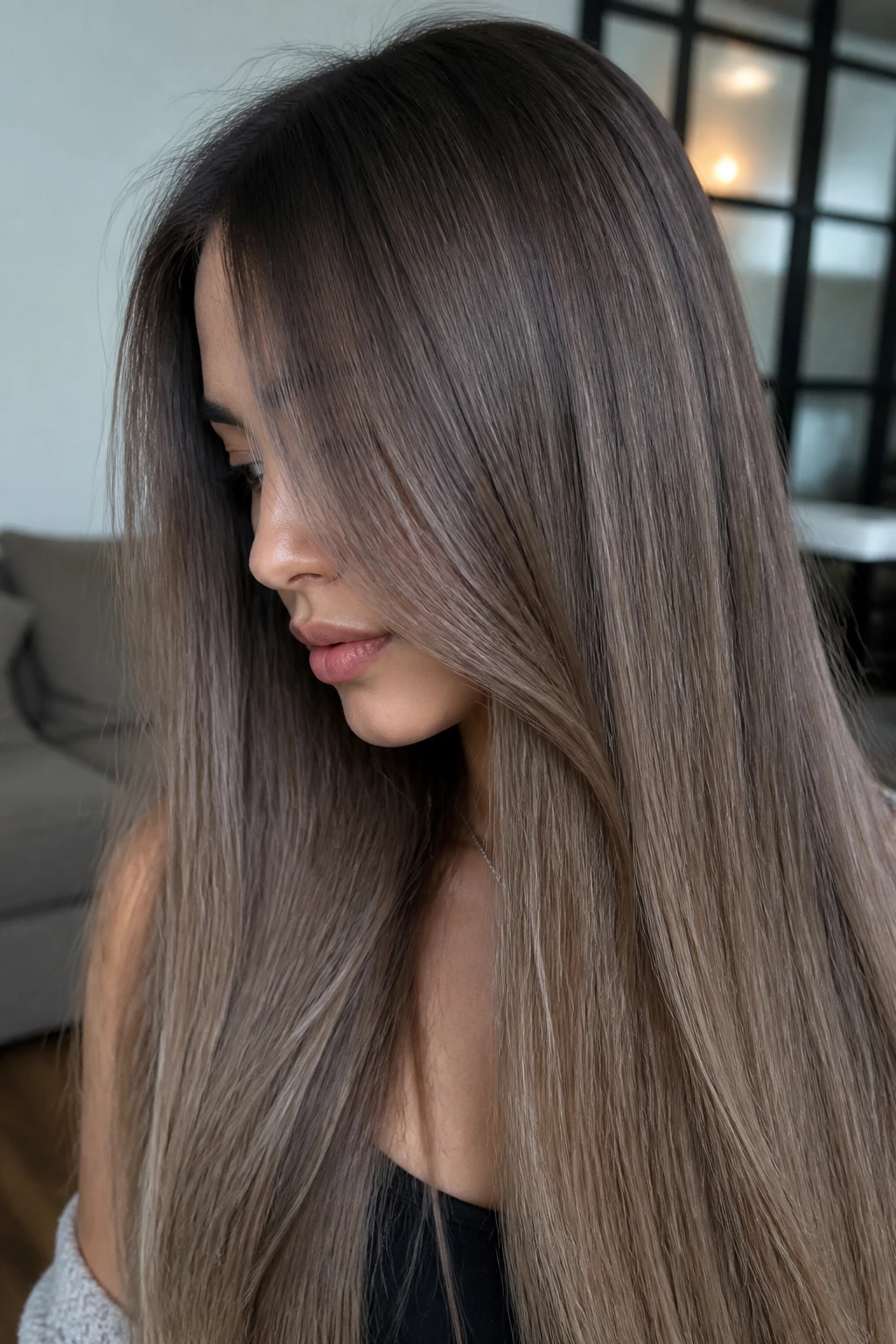
Can brown hair look cool without looking flat? Yes. Mushroom brown is the answer when you want depth, ash, and a little taupe softness instead of the usual red-brown warmth that shows up in a lot of boxed brunette dye. On long straight hair, that cool tone reads almost like brushed suede.
What Makes It Different
This shade works because it keeps the brown family but mutes the red and orange noise. Ask for a beige-ash brunette with a soft melt from root to end, not a hard shift from dark to light. If your hair has a lot of warmth in it already, your colorist may need to tone twice — once after lifting, once after drying — so the result doesn’t go khaki.
How to Ask for It
- Request a cool brunette base one level lighter than your natural black or dark brown.
- Ask for no chunky blonde pieces; the effect should stay smoky.
- Use a blue-based brunette shampoo only if your hair pulls orange fast.
- Keep the ends glossy with a clear glaze every 6 to 8 weeks.
This is a very good color for people who want straight hair to look polished, not flashy.
4. Copper Veil on a Chestnut Base
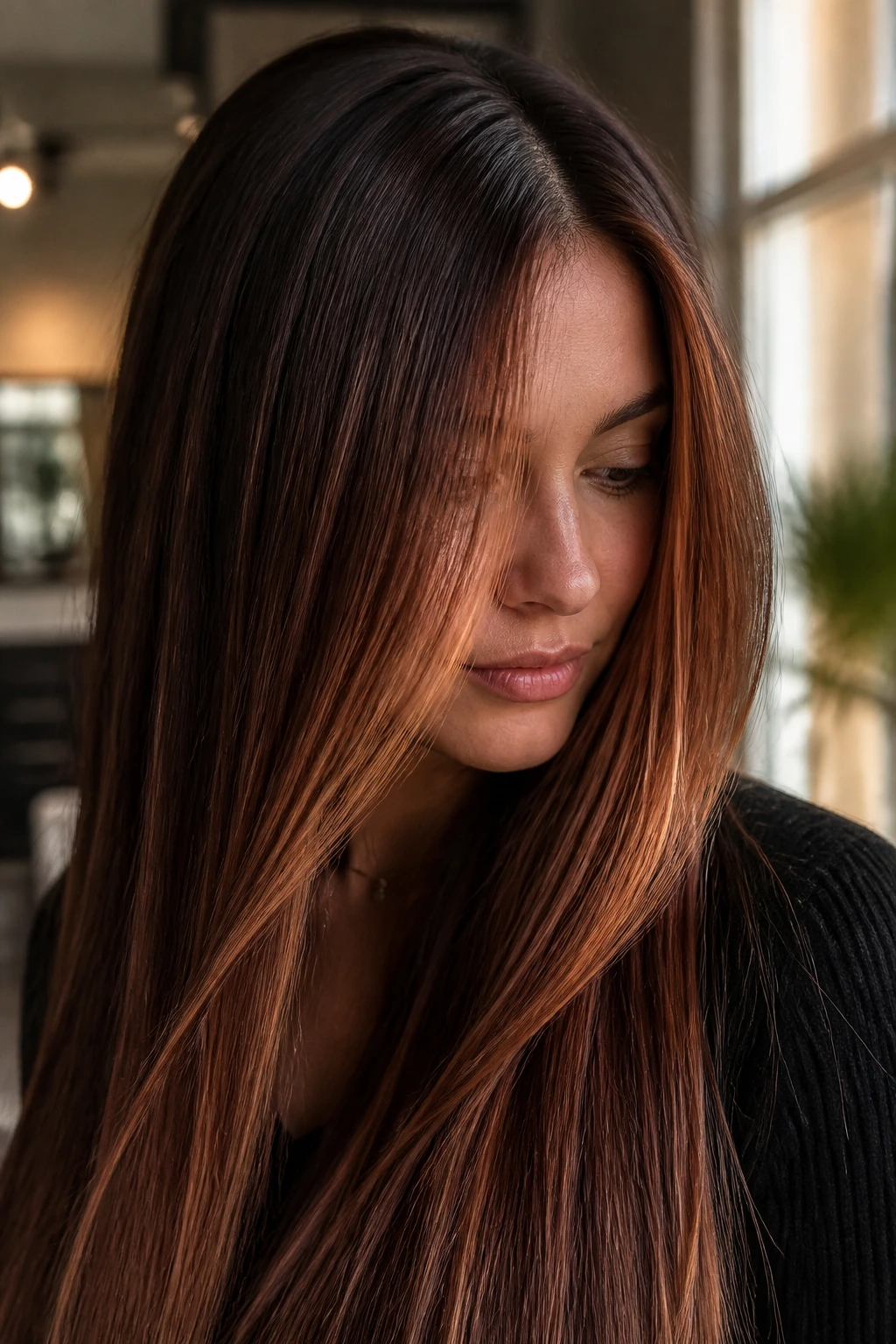
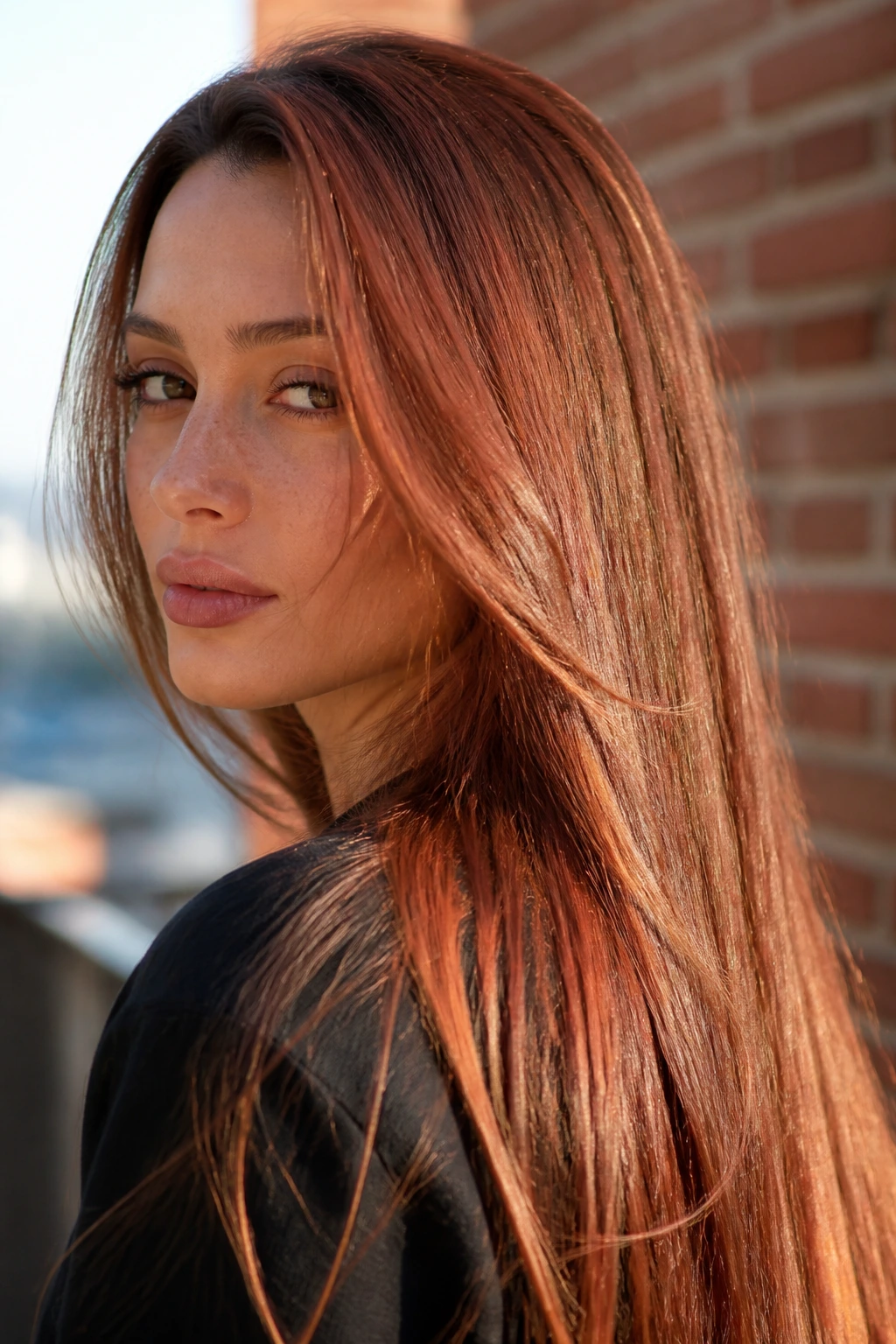
The first time I saw this done well, the copper was so fine it almost disappeared indoors and then flashed red-gold in daylight. That’s the trick. A veil of copper over a chestnut base gives long straight hair movement without turning the whole head into a bright orange sheet.
Because straight hair lies flat, copper has nowhere to hide. That’s why this version works better than a heavy all-over copper on a long, sleek cut. Thin placement keeps the color from fighting the shape of the hair.
- Good for: Warm undertones, hazel eyes, and anyone who likes red but not full fire-engine red.
- Placement: Keep the brightest pieces around the face and the top layer.
- Tone: Copper with a chestnut base, not pure orange.
- Reality check: This shade fades faster than brunette, so plan on toner or glaze refreshes.
Small detail that matters: Ask your colorist to leave a little depth at the root. Copper looks better when it has something dark to lean against.
5. Beige Blonde with a Shadow Root
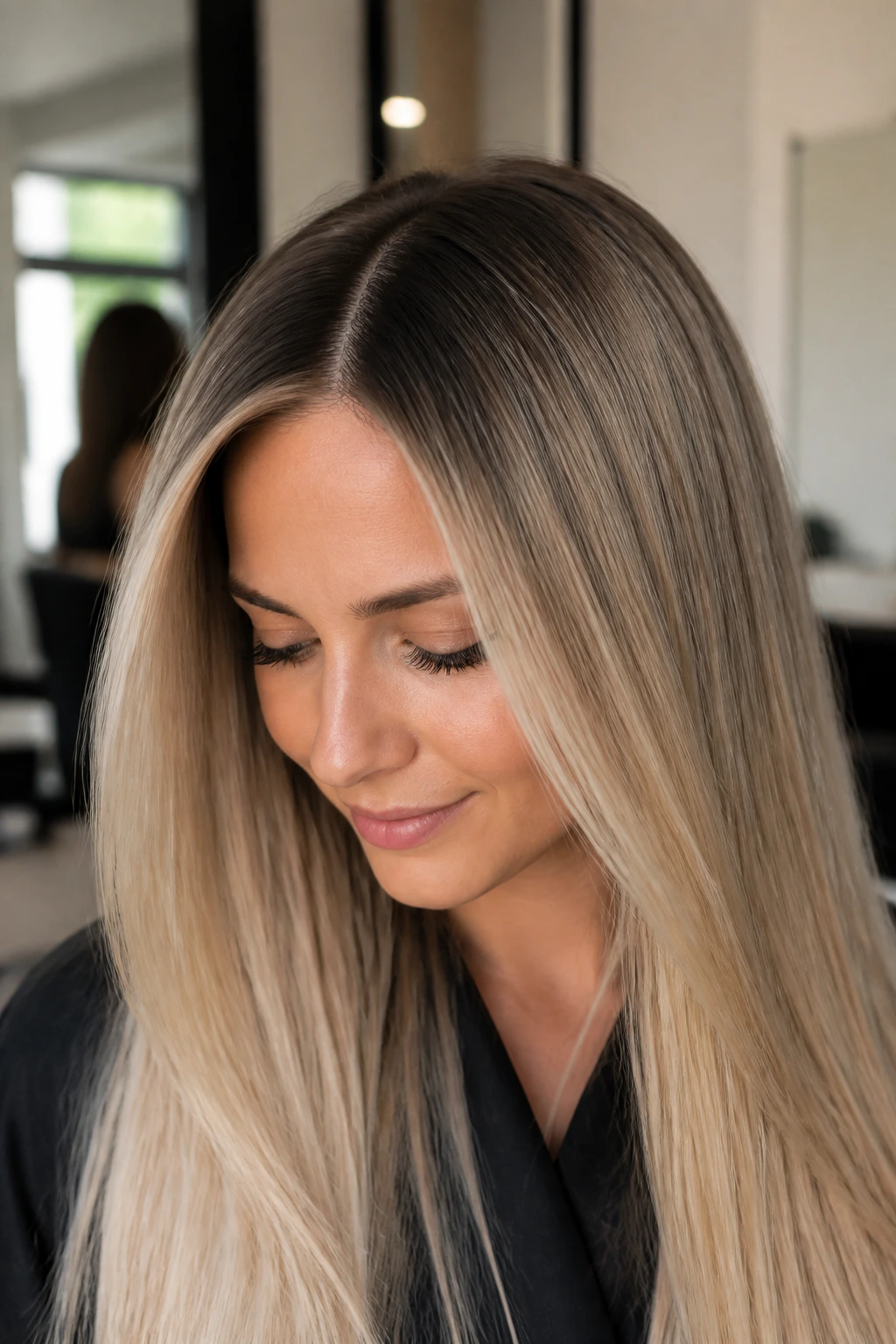
Beige blonde is the blonde for people who hate brass but also hate ice-white hair. On long straight hair, it has a softer finish than platinum and a cleaner finish than golden blonde. The shadow root is what makes it work; without that root depth, the whole length can look too bright at the scalp and too flat at the ends.
This is one of the best hair color ideas for long straight hair if you want brightness without needing a full head refresh every few weeks. The root shadow buys you breathing room, and the beige tone keeps the blonde from turning yellow under warm indoor light. I prefer it when the ends sit at a creamy level 9 rather than pushing all the way to white.
It also behaves nicely with a center part. The root depth frames the face and stops the blonde from looking like a helmet, which can happen on sleek straight hair if the transition is too abrupt.
6. Cherry Cola Brunette
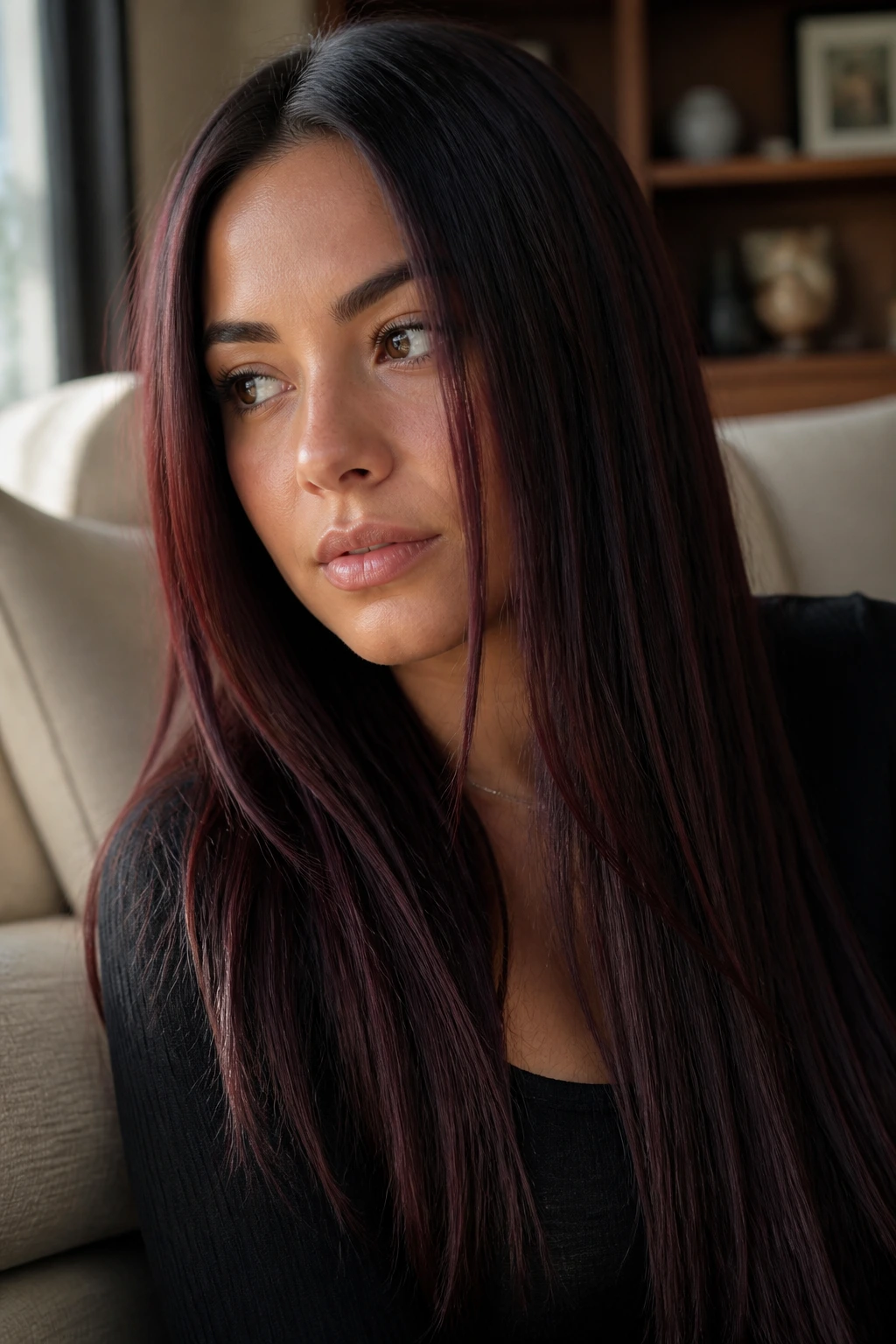
Cherry cola brunette is what happens when brunette gets a shot of red without losing its dark base. On long straight hair, the result is glossy, rich, and a little moody in a good way. The red note should feel like a reflection, not a neon stripe.
Unlike auburn, cherry cola keeps more brown in the mix. That makes it easier to wear on straight lengths because the color shifts with the light instead of shouting the same note every second. If you move your head near a window, that deep ruby tint should show. Indoors, it should still read as brunette.
This is the kind of shade that works best when the gloss is fresh. If the red fades too far, the whole thing can slide into dull brown. A deposit mask in a warm red-brown family helps keep that deep cola finish alive between salon visits.
7. Honey Bronde Face Frame
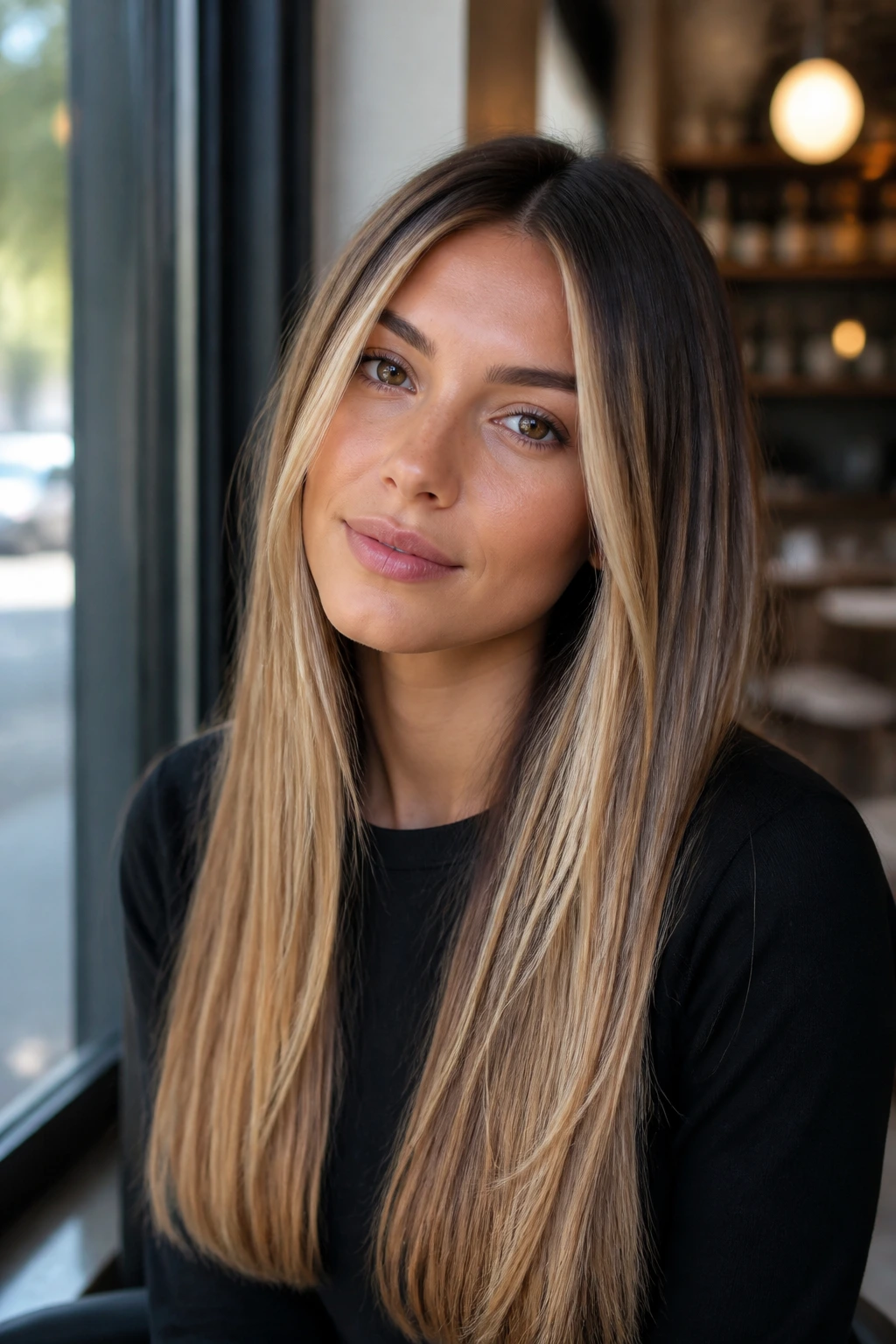
Bronde is often overused as a word, but honey bronde with a face frame actually earns the label. It keeps the mids and ends soft while lifting the front pieces just enough to brighten straight hair without making the whole head lighter. That matters on long lengths, because too much blonde all at once can make the hair look thinner than it is.
Why It Works
The honey tone sits in a warm middle ground. It gives you shine and dimension, but it doesn’t force the contrast to do all the work. On straight hair, that softer contrast reads cleanly from root to tip.
What to Ask For
- Two brighter face-framing pieces that begin near the cheekbone.
- Soft honey mid-lights through the top layer.
- A root that stays one to two levels deeper than the mids.
- A gloss that leans beige-gold, not orange.
My opinion: If you want lighter hair but don’t want to live at the salon every four weeks, this is one of the safest places to land.
8. Ash Mocha with Pearly Ends
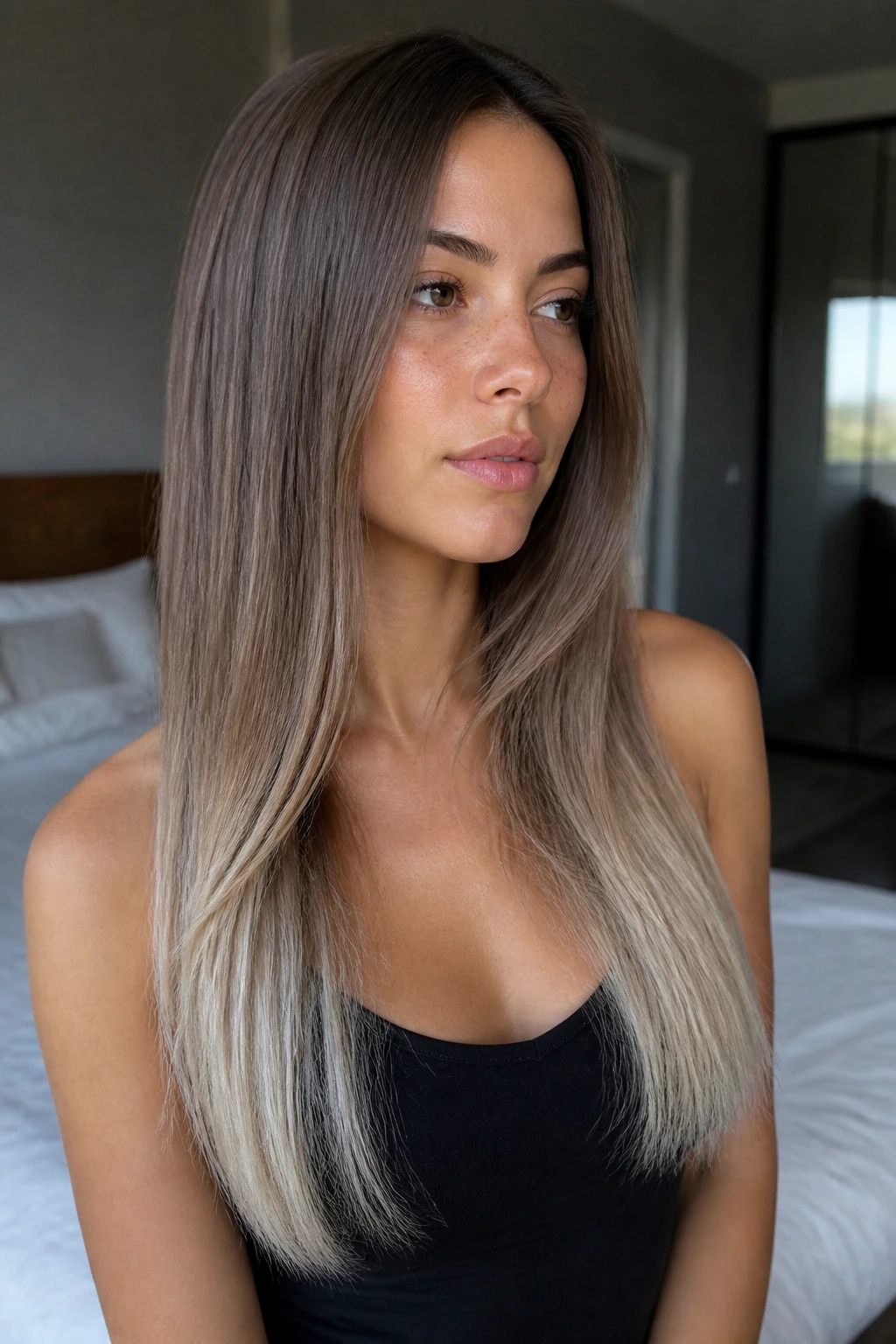
Ash mocha with pearly ends has a cooler, tailored feel that straight hair wears well. The mocha root keeps the base grounded, while the pearly ends soften the finish so the length doesn’t look dense or heavy. I like this when the cut is long and blunt, because the color keeps the edge from feeling too severe.
The important part is placement. You do not want a harsh ombré line. The shift should happen gradually below the collarbone, where the eye can read the change without stopping at it. On very straight hair, the transition should look like a fade, not a stripe.
This shade suits anyone who likes beige tones but doesn’t want the warmth of honey or caramel. It also plays well with silver jewelry and cooler makeup, which is one of those little things that makes the whole look feel finished without trying too hard.
9. Rose Gold Gloss
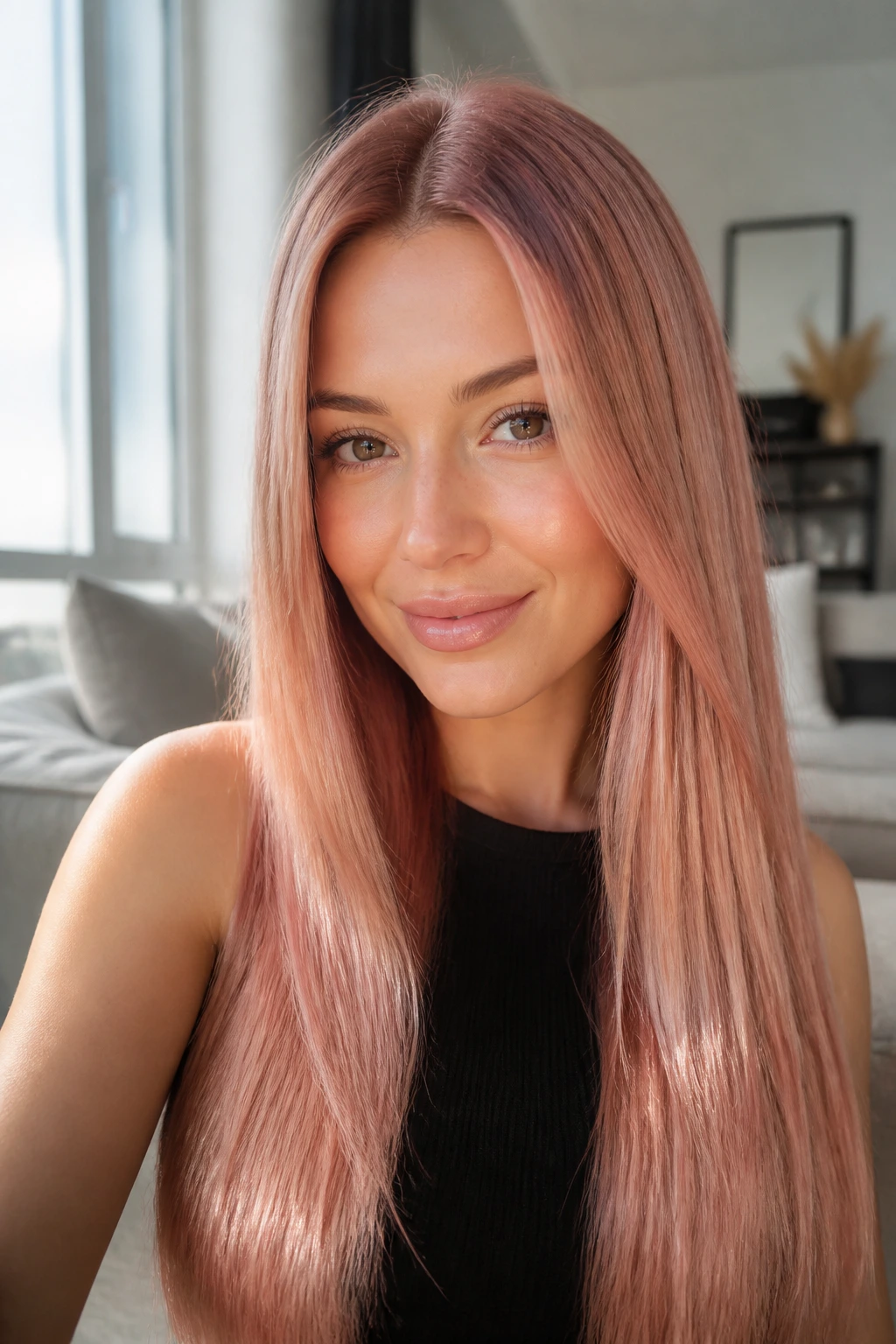
Rose gold gloss can go sugary fast if it’s too pink or too bright. On long straight hair, though, a translucent rose gold glaze gives blonde or light brown hair a soft blush-copper shimmer that moves with the light instead of sitting on top of it. It’s prettier than people expect, and less precious than the name sounds.
How It Reads on Straight Hair
Straight lengths show tonal shifts in a clean line, which means a sheer rose gold gloss can look polished instead of costume-like. Keep the base neutral or beige, not orange, and the rose should sit on top like a wash.
A gloss version also has one huge advantage: it fades in a friendlier way. When the pink side disappears first, you’re left with a warm beige or soft strawberry tint rather than a strange muddy pastel.
Best use: If you want a temporary seasonal shift without a commitment that lasts forever, this is the one to try.
10. Midnight Black with Blue Sheen
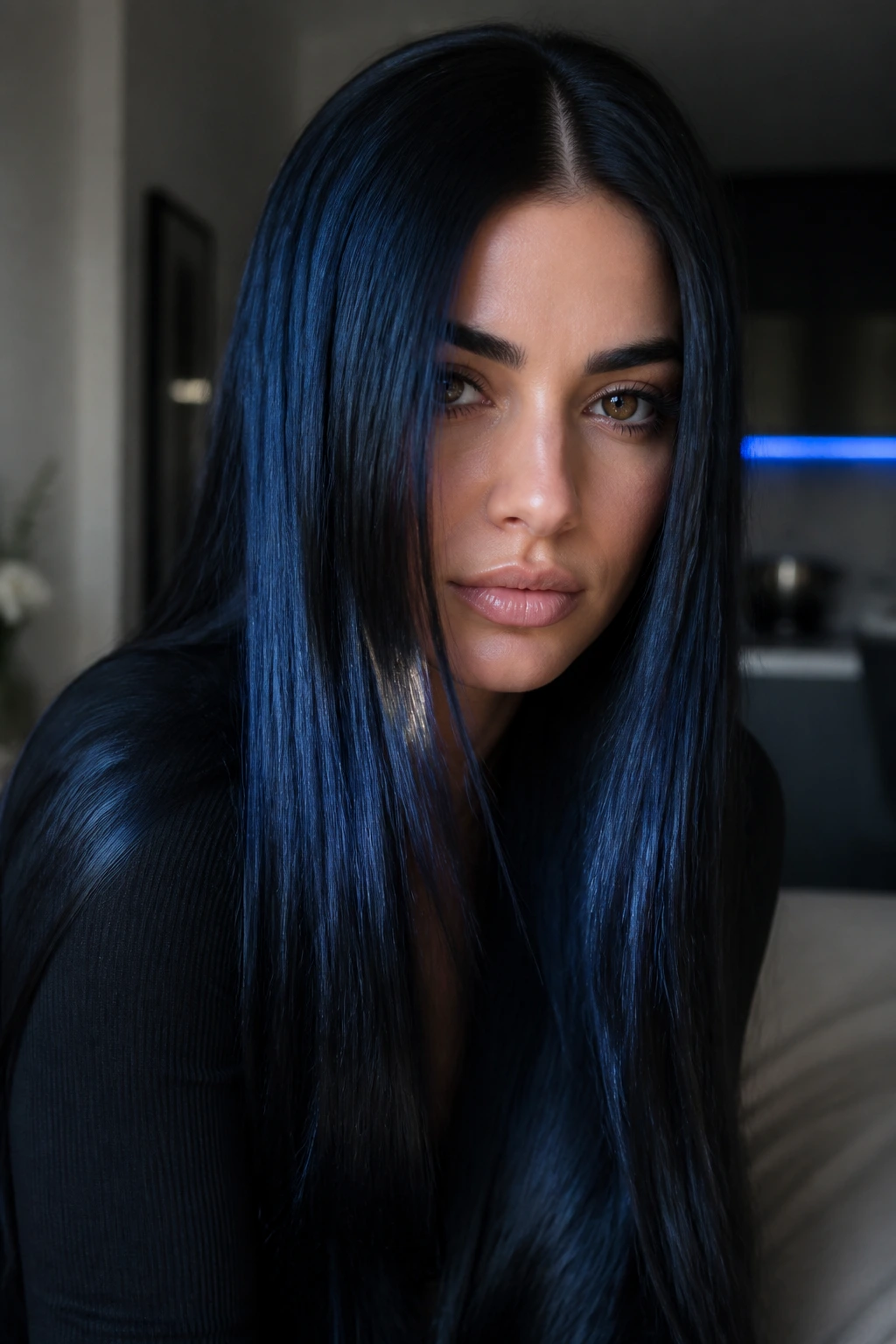
Plain black can swallow movement. Midnight black with a blue sheen fixes that. The blue cast gives long straight hair a reflective edge, almost like polished stone under indoor light, and it keeps black from looking flat against pale skin or a dark outfit.
A lot of people worry that black hair will look too severe on long straight lengths. It does if the tone is flat. It doesn’t if the black has a blue-violet edge and the finish is glossy. The color then becomes more about reflection than darkness.
- Ask for: Blue-black or midnight black, not green-black.
- Wear it with: A blunt hem or glassy blowout; the shine matters.
- Refresh: Every 6 to 10 weeks if you want the blue sheen to stay visible.
- Avoid: Heavy ash toners that make the black look dusty.
The result is sharp. Very sharp. That’s the appeal.
11. Toasted Almond Balayage
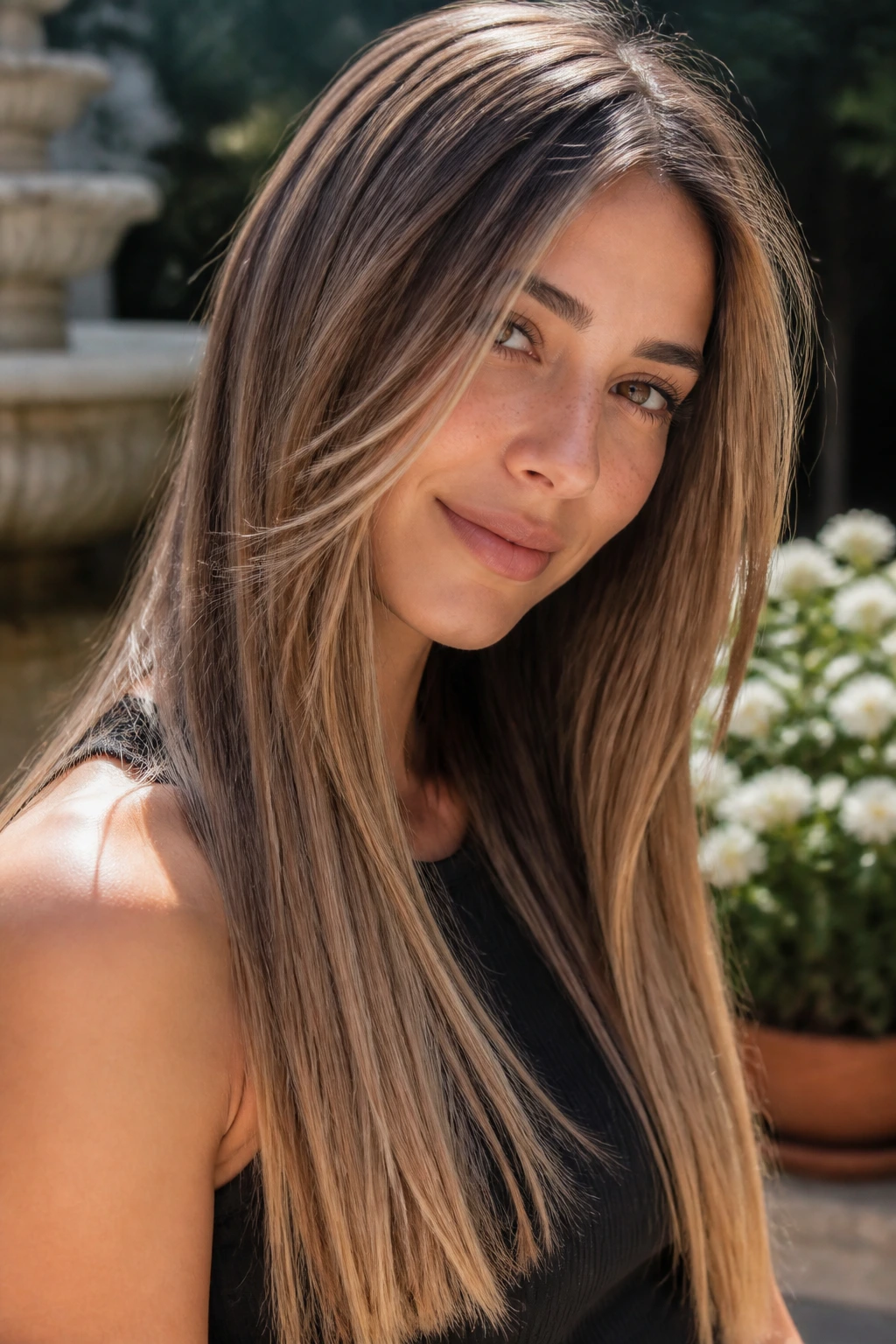
Toasted almond is one of the easiest ways to give long straight hair dimension without pushing it into obvious blonde territory. The base stays in the brunette family, but the lighter ribbons are warm and soft, somewhere between almond, beige, and pale caramel. On straight hair, that color reads as gentle movement rather than a dramatic stripe.
The nice thing about this shade is that it doesn’t fight the hair’s natural behavior. Straight strands tend to show every line in the foil or balayage placement, so a soft almond tone looks intentional even when the hair is worn loose and smooth. It also works whether you part your hair in the middle or sweep it off to one side.
If you’ve ever wanted the effect of lighter hair without the maintenance of a full blonde, this is a smart middle ground. It grows out without a dramatic scalp line and still brightens the face.
12. Smoky Bronze Melt
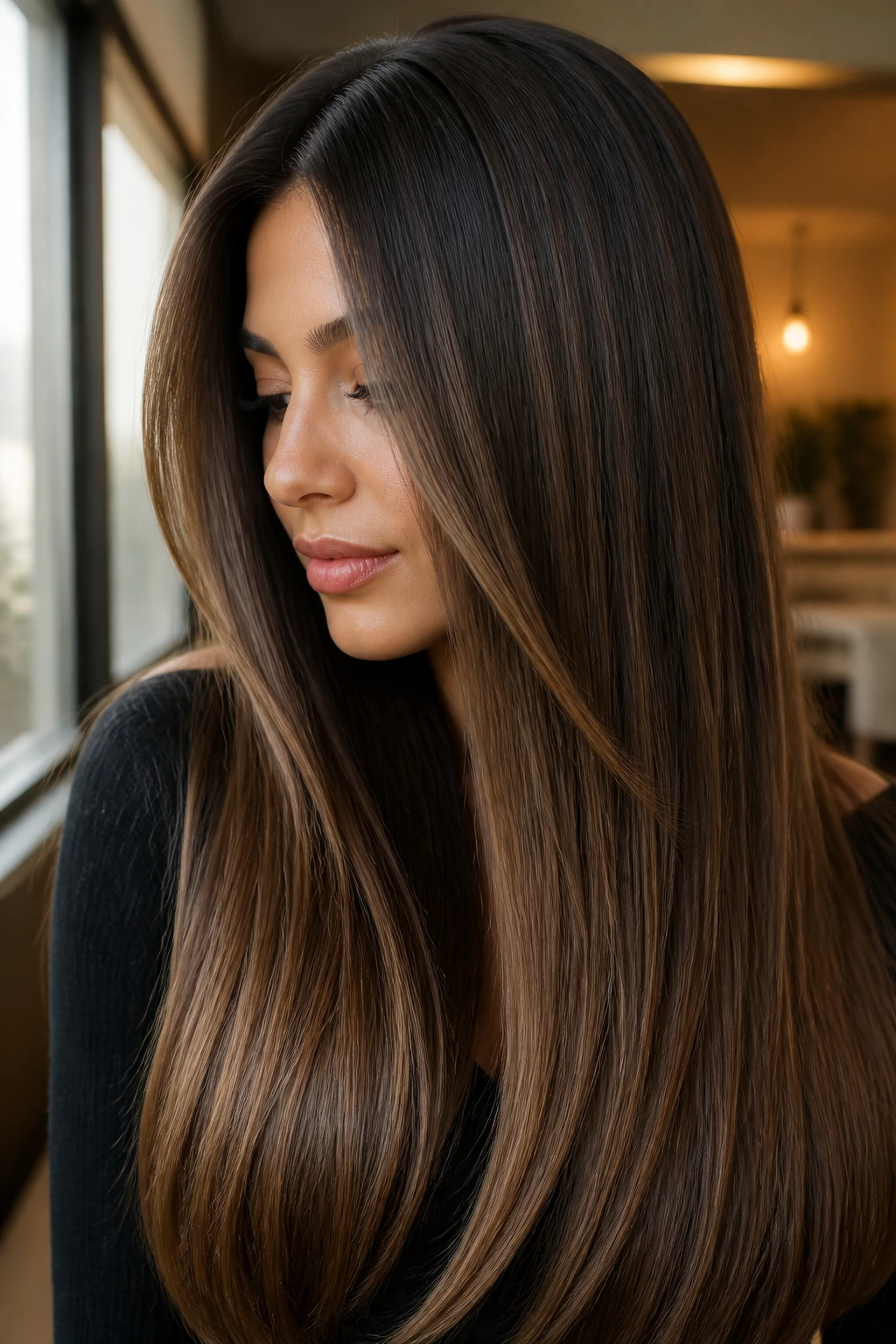
Smoky bronze is what I reach for when a warm brunette wants a little glow but not obvious red. It sits between chocolate, gold, and ash, which means it can flatter long straight hair without tipping into brass. The melt matters more than the individual color, because a bronze shade with a hard line looks cheap fast.
What Sets It Apart
Compared with caramel, smoky bronze is quieter and less sweet. Compared with mushroom brown, it has more warmth. That middle space is why it works so well on straight lengths — the hair catches light along the whole shaft, and bronze gives you shine without overexposing every section.
Best For
- Medium brunette bases
- Thick straight hair that needs a little lift
- People who want warmth without orange
- Blunt cuts and long U-shapes
I’d ask for a root that stays deep and a finish that leans gold-brown, not copper. That keeps the whole look grounded.
13. Rooted Platinum Lengths
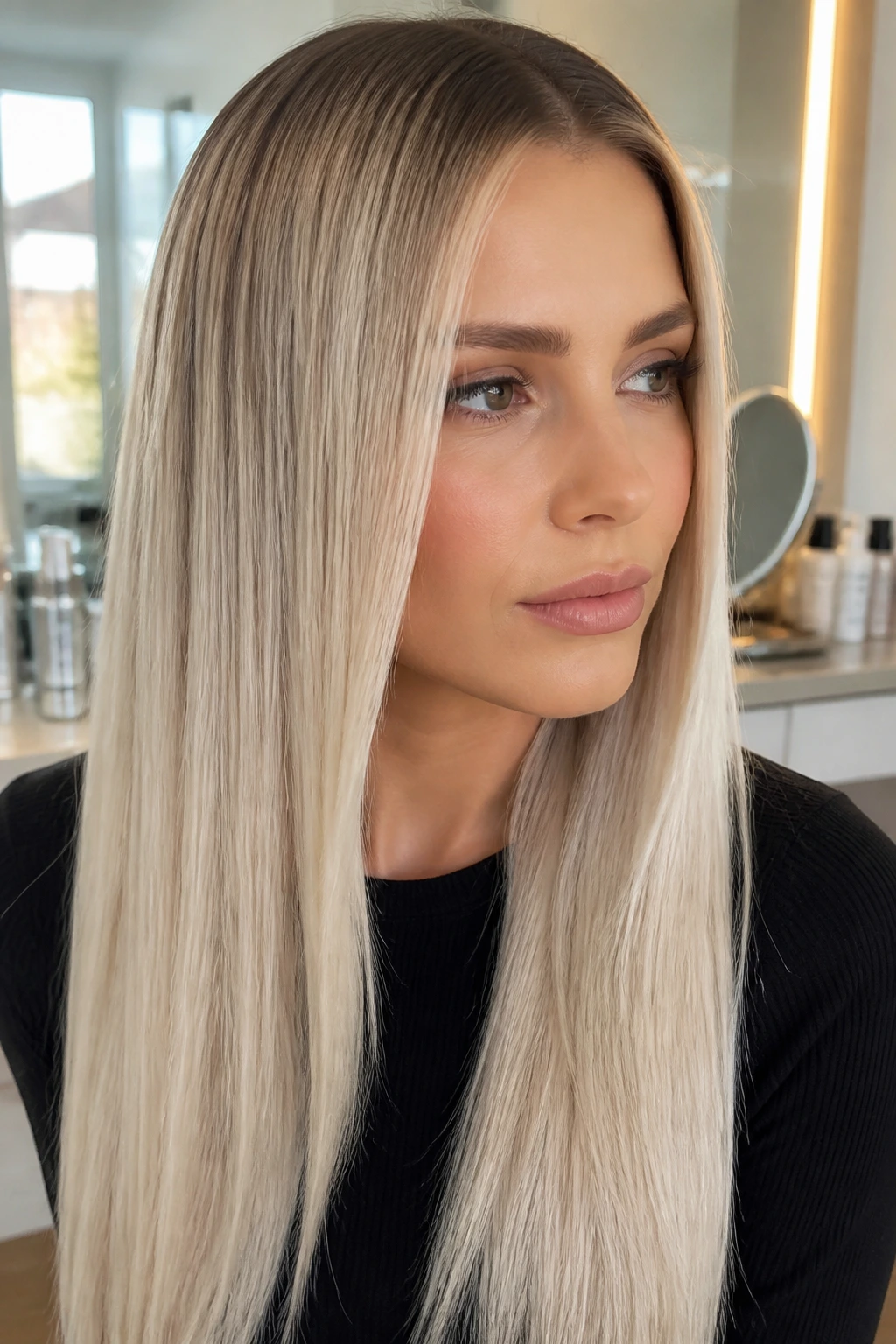
Platinum on long straight hair is a commitment. It is also stunning when the root is handled properly. A rooted version gives you the brightness of platinum through the lengths, but keeps a natural shadow at the scalp so the grow-out doesn’t look like a line drawn across the head.
Why It Works
Straight hair shows platinum in a very clean way. There’s no curl texture to interrupt the light, so the color reads bright from six feet away. The problem is that pure platinum can also make the ends look dry if the tone gets too icy. A soft root shadow gives the eye a place to rest.
Useful Details
- The root can be 1 to 2 levels deeper than the mids.
- A violet toner usually helps keep the blonde creamy, not yellow.
- Bond-building care matters more here than on darker looks.
- Full retouches should be spaced out carefully so the length doesn’t get fried.
If you want big contrast and you can keep up with the upkeep, this is one of the most dramatic hair color ideas for long straight hair.
14. Auburn Velvet
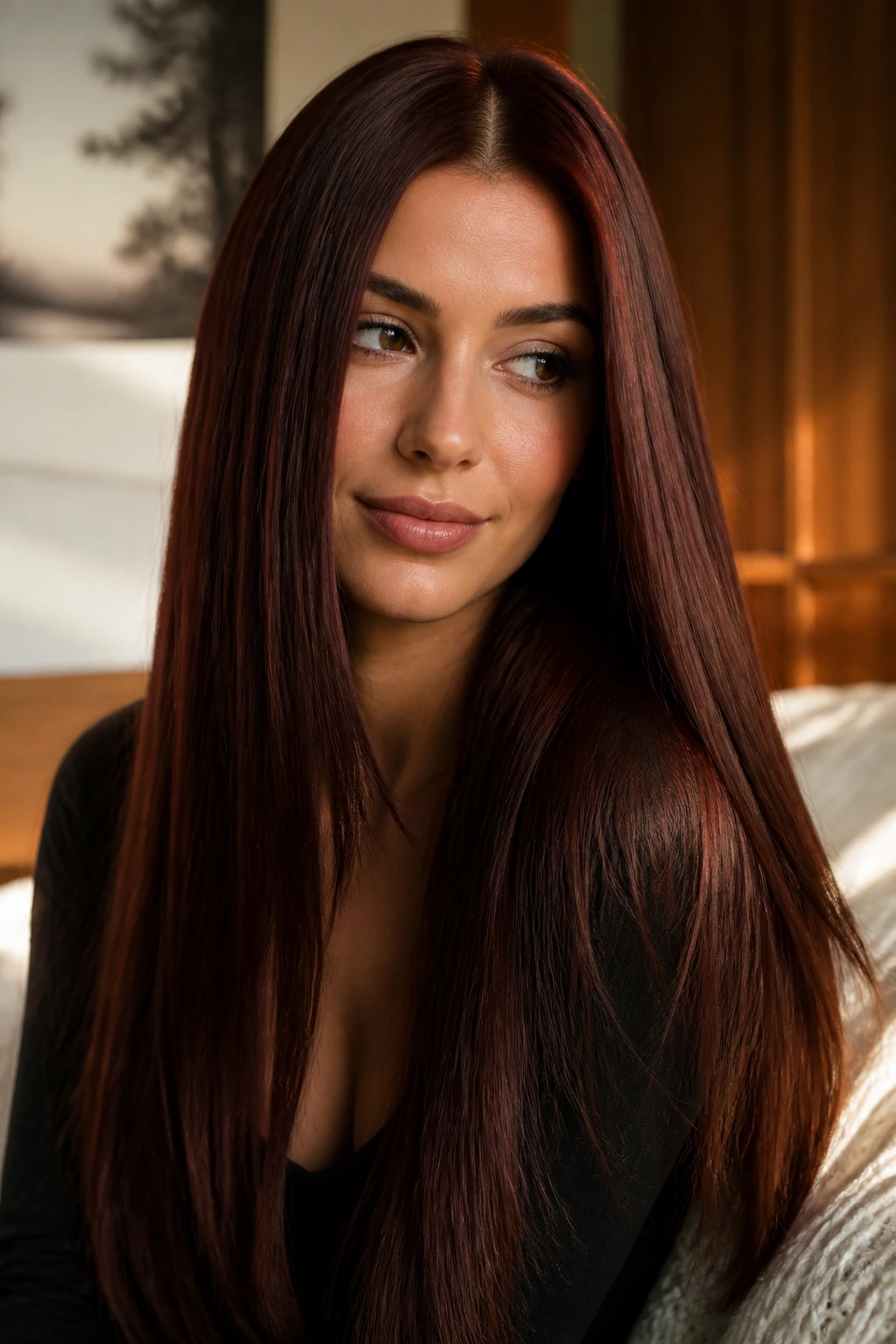
Auburn velvet has a richness that suits long straight hair better than a lot of brighter reds. It’s deep, soft, and a little wine-like at the edges. The finish should feel plush, not shiny in a cheap way, which is why a velvet reference fits so well.
This color works especially well when the natural base is medium brown or dark blonde. The red-brown balance gives straight hair a sense of thickness because the tone doesn’t disappear into the length. Instead, it fills the shaft with color. Indoors, it reads as a warm brunette. In daylight, the red wakes up.
I like it with a clean center part and a smooth blowout. It looks deliberate in the best sense — not trendy for the sake of being trendy, just rich and wearable.
15. Plum Brunette
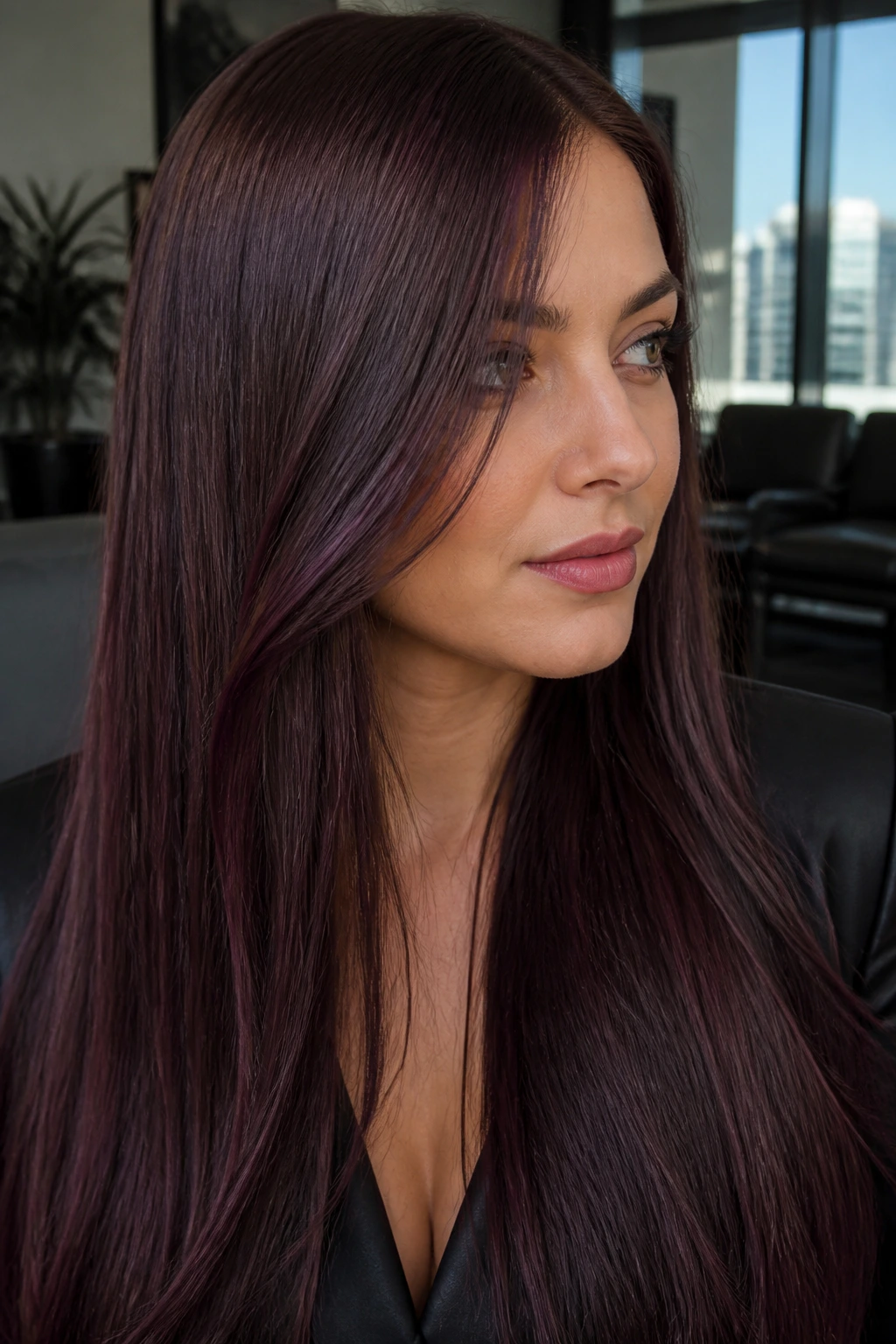
Plum brunette is for the person who wants something darker than burgundy and less obvious than purple. On long straight hair, the plum note hides in the brown base until light catches it, which makes the color feel private in one setting and dramatic in another. That little shift is the whole point.
A Real-World Note
This is a shade that can look office-friendly indoors and unexpectedly rich in daylight. If your hair is very dark to begin with, you may need a subtle pre-lightening or a direct dye overlay to make the plum visible. If you’re already at a medium brunette level, the color can sit on top beautifully without much lift.
How to Keep It Looking Clean
- Use color-safe shampoo.
- Wash in cooler water so the violet-red tone lingers.
- Skip overly clarifying products unless the color starts to build up.
- Refresh with a color-depositing mask every few weeks.
Plum is one of those colors that rewards sleek styling. On straight lengths, the tone looks richer because there’s nowhere for it to hide.
16. Cream Soda Blonde
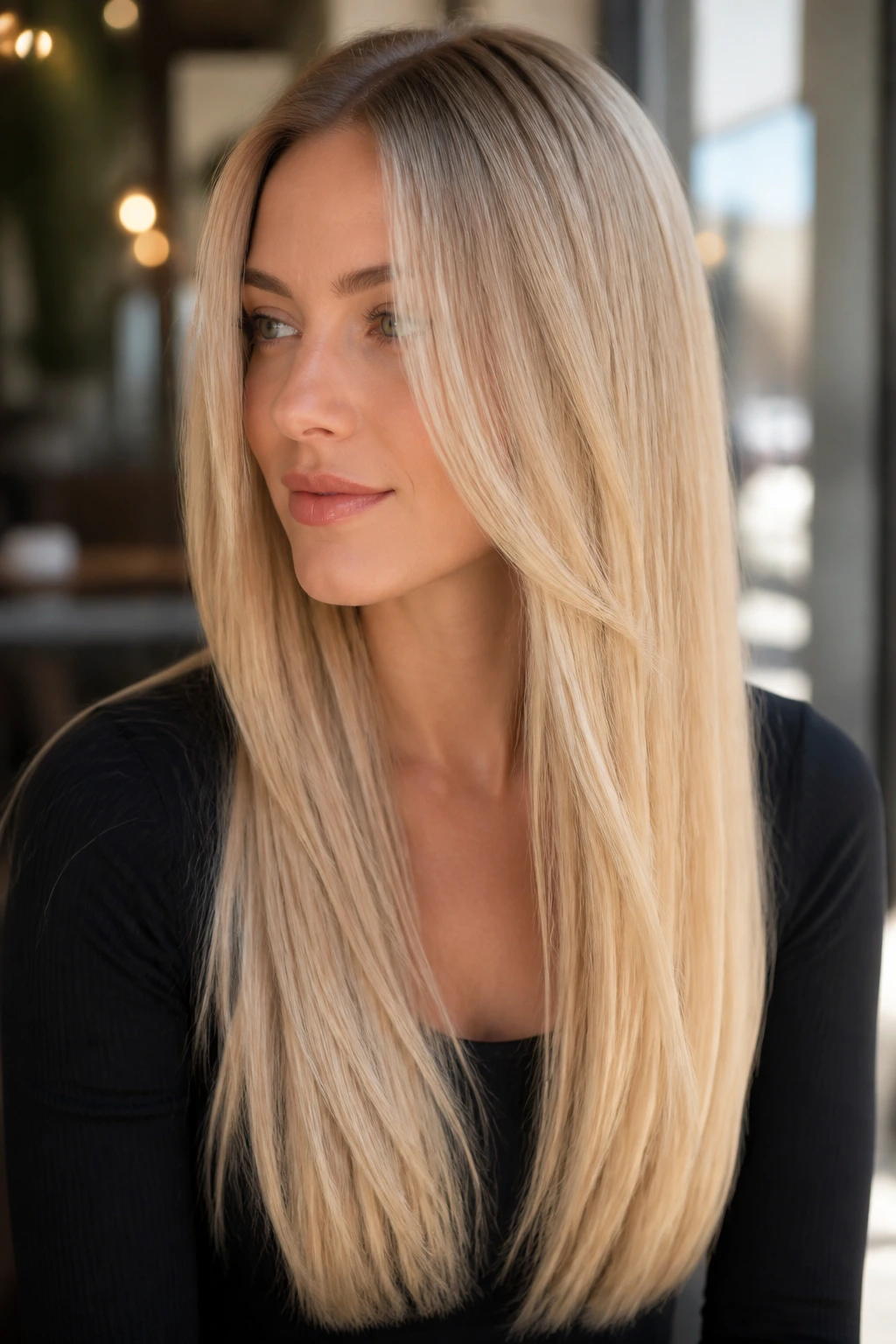
Cream soda blonde is soft, pale, and a little sweet without turning icy. It sits between beige blonde and warm champagne, which gives long straight hair a smooth, creamy finish that doesn’t feel harsh around the face. The result is bright, but not glaring.
Why It Flatters Straight Hair
Long straight hair shows the tonal blend more clearly than wavy hair does, and cream soda is all about that blend. The root should stay slightly deeper, the mids should stay buttery, and the ends should never look stark white. If the blonde gets too white, the length can start to look brittle.
Best Placement
- A soft root melt for easier grow-out.
- Lighter front pieces to brighten the face.
- Creamy mids through the top layer.
- Ends toned beige, not silver.
This is the blonde for someone who wants polish and softness in the same look. It’s not loud. It doesn’t need to be.
17. Cinnamon Brown
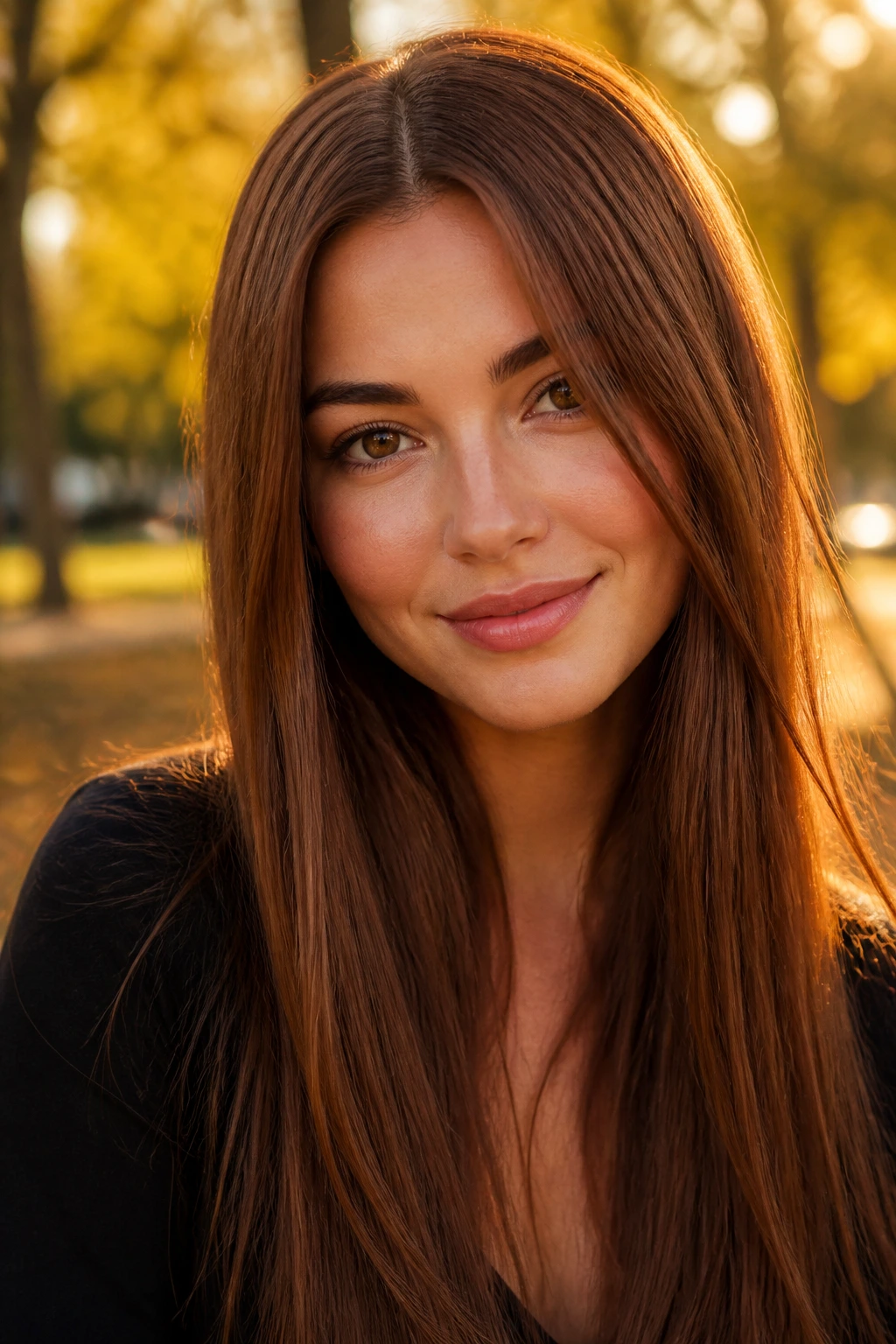
Cinnamon brown is warmer than mocha and softer than copper, which makes it a nice bridge color for straight hair that wants movement without a dramatic red shift. The tone has enough spice to catch light, but it stays grounded in brown so the length doesn’t start looking orange.
This is a good shade for medium brunettes who want a seasonal change that still feels wearable through the rest of the year. On long straight hair, cinnamon adds depth around the face and warmth through the mids without forcing you into constant touch-ups. It also behaves well with layered cuts because the color catches on each layer differently.
If you wear a lot of black, cream, or olive, cinnamon tends to play nicely with those colors. It gives the hair a warm edge that looks richer than plain brown.
18. Oil-Slick Brunette
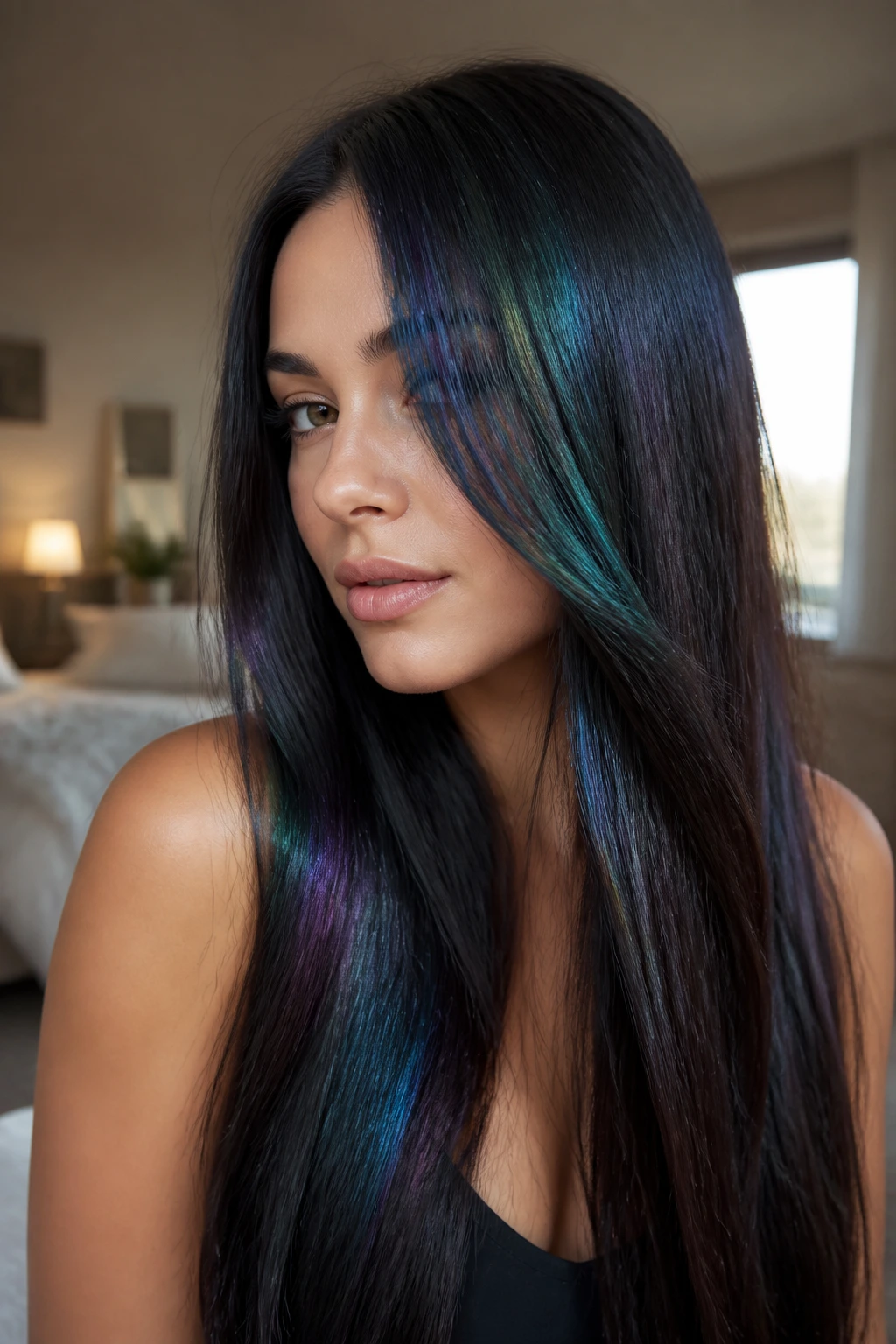
Oil-slick brunette is the bold one in the group. It looks dark at first glance, then flashes green, blue, violet, or plum when the light hits it at the right angle. On long straight hair, that shifting finish looks especially sharp because the surface is smooth enough to reflect each tone without distortion.
What Makes It Different
Unlike hidden-panel color that only shows when you move the hair, oil-slick color can live on the outer layer and still stay subtle. It works best over a very dark base, and the vivid tones should be thin, not chunky. Think sheen, not stripes.
When It Makes Sense
If you want drama but don’t want bright red or blonde upkeep, this is a good left-turn choice. It’s also excellent on glossy blowouts, because the light reflection is part of the design. The more reflective the finish, the better it reads.
A clear gloss on top helps. Otherwise the colors can look dull instead of iridescent.
19. Champagne Beige Blonde
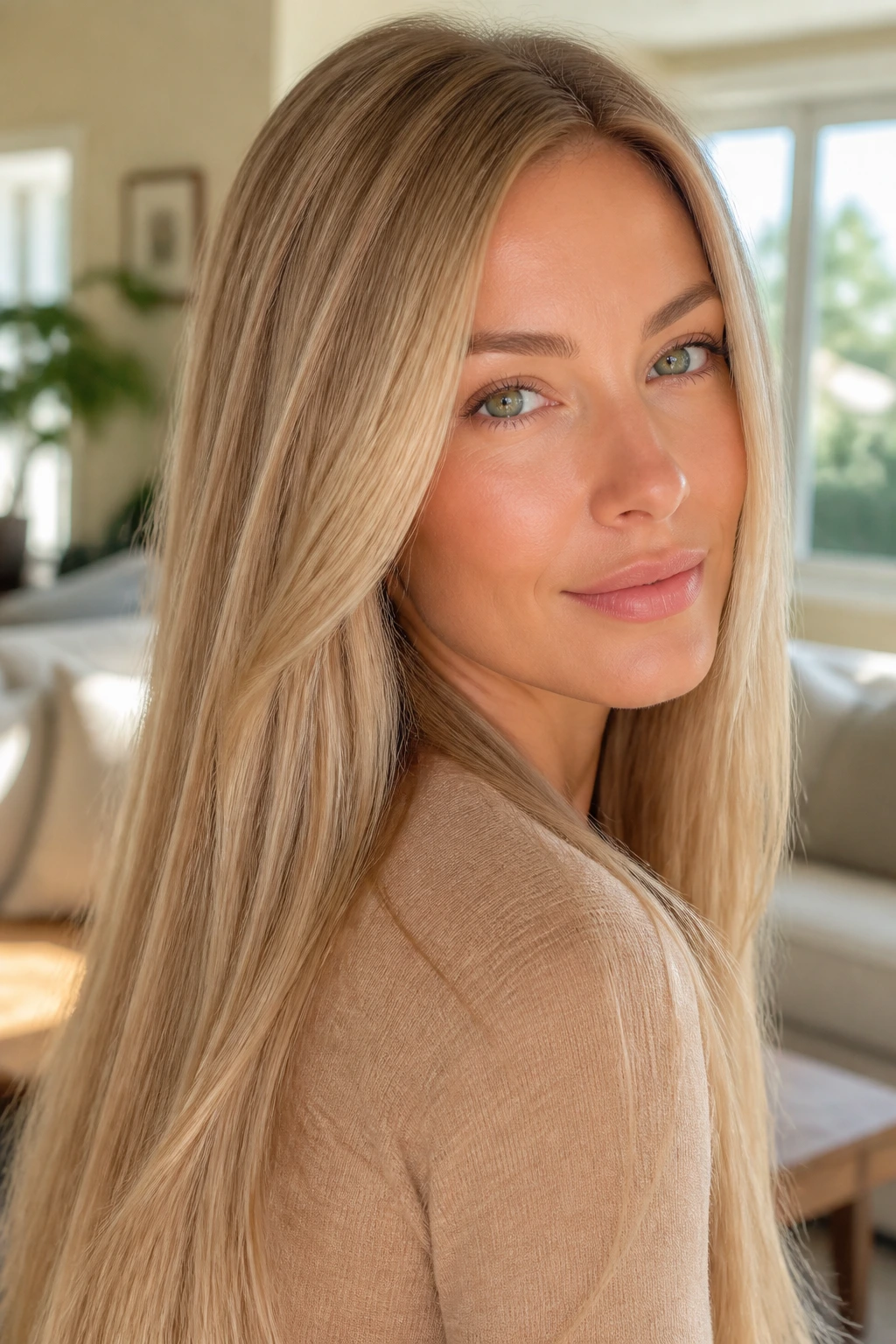
Champagne beige blonde sits between warm and cool in a way that flatters straight hair more than a lot of louder blondes do. The tone is light enough to brighten the whole length, but not so icy that the ends feel stripped. There’s a faint golden-beige glow to it, like pale bubbles in a glass.
Why It Works
The best champagne blondes don’t look dipped in bleach. They look layered. On long straight hair, that means a soft root, a beige middle, and ends that stay creamy rather than stark. You want light, but you also want softness.
Key Things to Ask For
- Beige toner, not white toner.
- A root shadow if your natural hair is darker than level 7.
- Thin lights around the face instead of big blocks.
- A maintenance plan for toner refreshes every 4 to 6 weeks.
Champagne blonde is pretty without being fussy. That matters on straight lengths, where anything too harsh gets exposed fast.
20. Mocha Melt with Light Ends
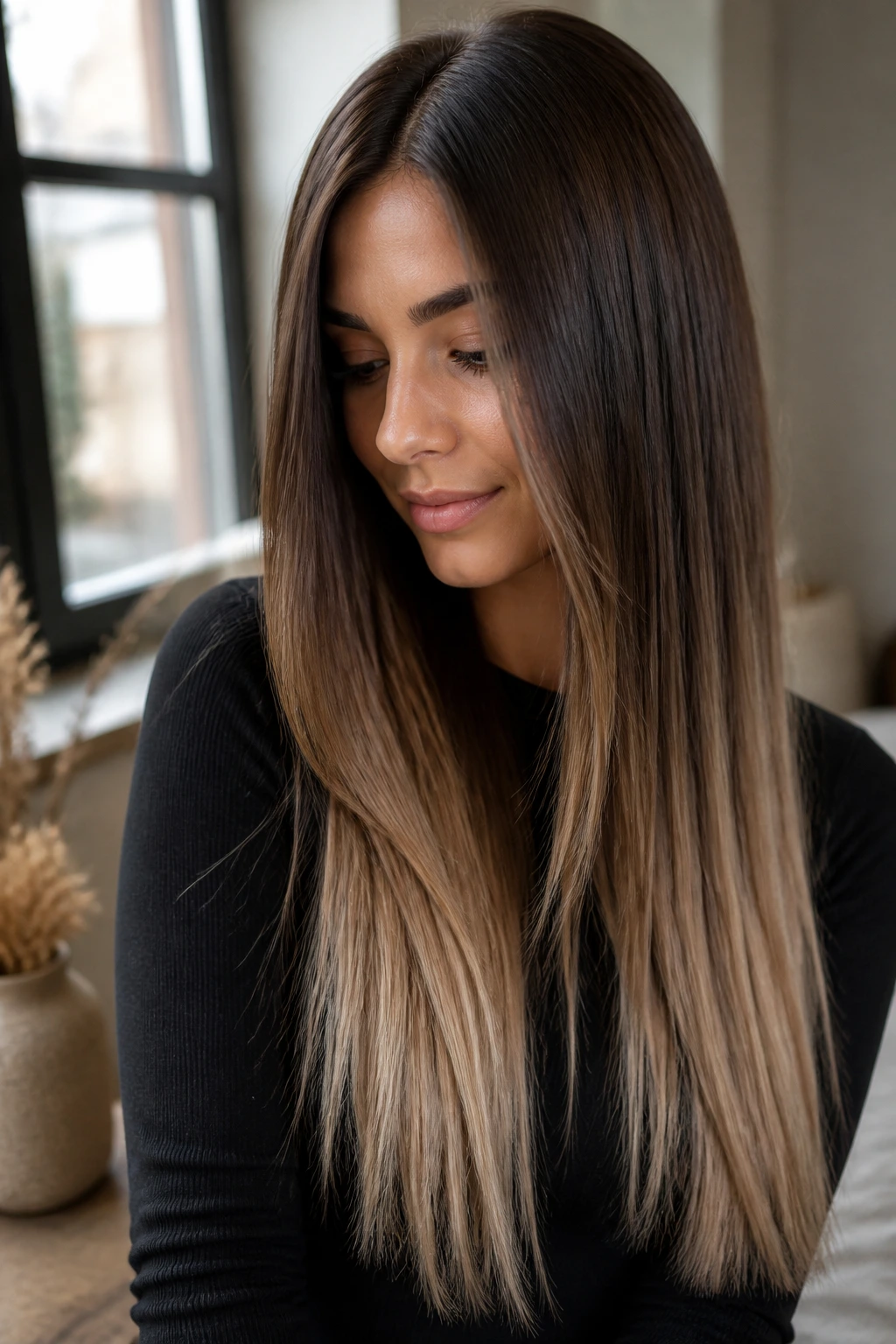
A mocha melt is a smart choice when you want the ends of very long hair to show up instead of disappearing into one dark sheet. The base stays mocha, rich and cool enough to feel modern, while the ends soften into a lighter beige-brown so the length has visible shape.
This is one of the more practical hair color ideas for long straight hair because it keeps the dark root area flattering and the lower half interesting. Straight hair tends to flatten color at the ends if the shade is too close to the natural base, so giving those last inches a little lift makes a real difference.
You can wear it sleek, tucked behind the ears, or in a low ponytail and still see the transition. That’s a sign the color was placed well. If the melt disappears completely when the hair is styled, it was probably too subtle.
21. Chestnut to Toffee Ombre
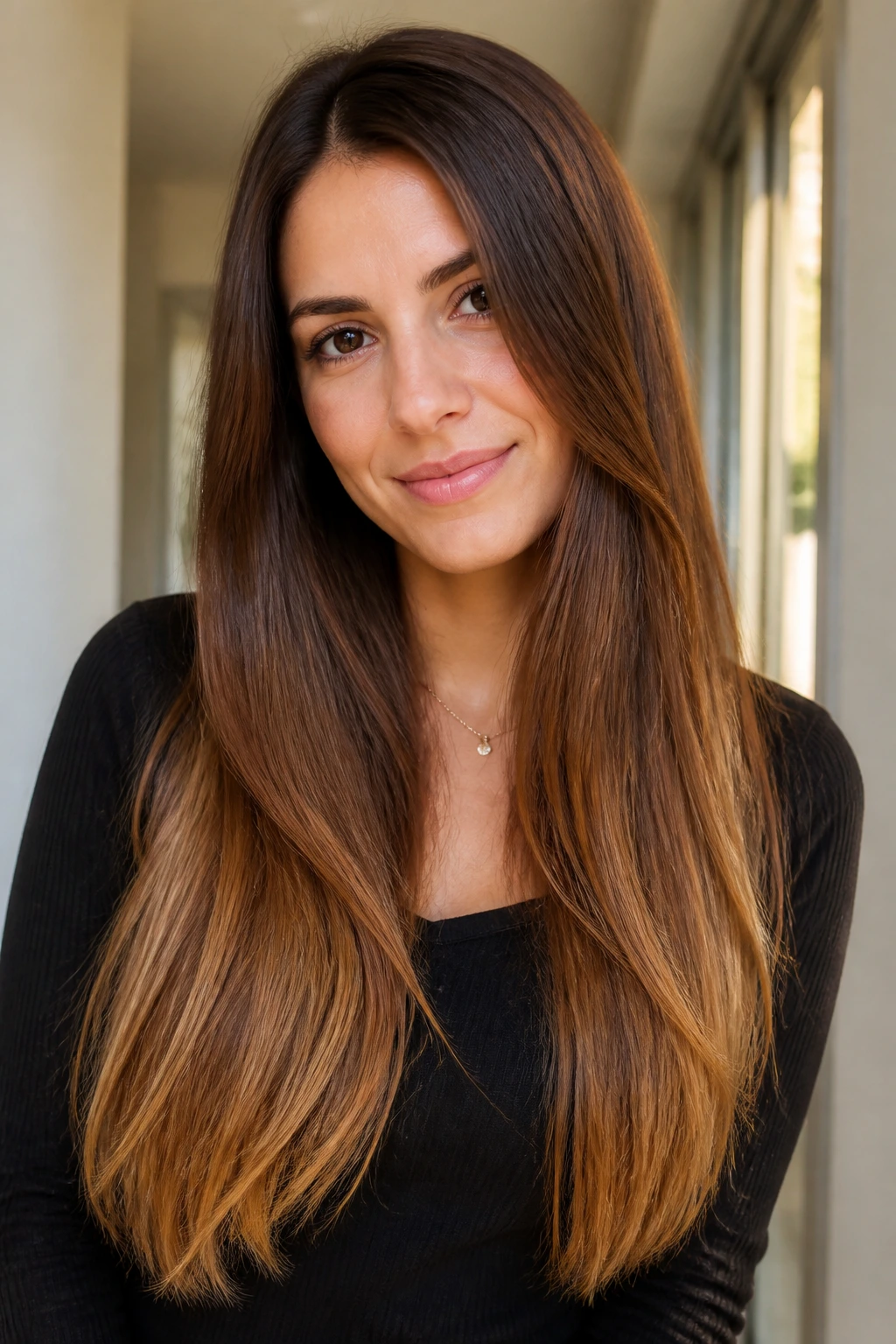
Chestnut to toffee ombre is the classic soft-gradient look, and it still works because long straight hair gives the transition room to breathe. The chestnut root keeps the base warm and rich, while the toffee ends add brightness without jumping into obvious blonde territory.
How It Reads on Long Hair
On shorter hair, ombre can feel abrupt. On long hair, the transition can stretch far enough to look graceful. Straight strands show that fade in a neat line, so the color should move gradually over a generous section, not start and stop in a single band.
Best Use
- Choose this if you like visible lightness but want easy grow-out.
- Ask for a transition that begins below the cheekbone.
- Keep the toffee tone warm, not pale yellow.
- Add a gloss to keep the ends from turning flat.
If you want a safe first step into lighter hair, this is one of the gentlest paths.
22. Cool Taupe Brunette
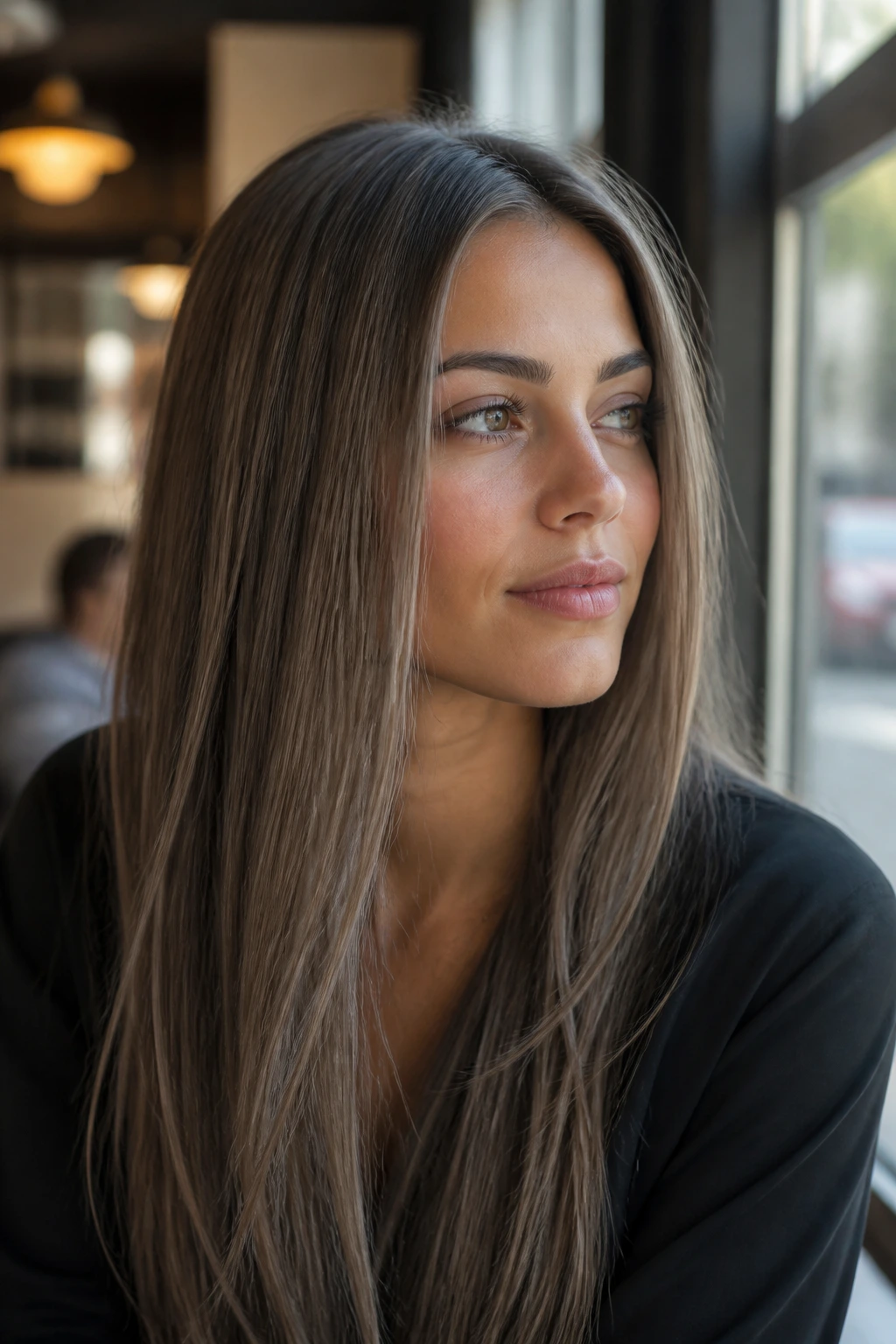
Cool taupe brunette is the quieter cousin of mushroom brown. It’s a brown shade with gray-beige depth, which gives long straight hair a smooth, modern finish that feels soft instead of severe. The color is especially good if you hate reds showing through your brunette base.
What to Look For
Taupe should look neutral, not green. That’s the trap with cool browns: if the formula is too ash-heavy, the hair can pick up a dull cast. The right taupe keeps a beige softness in the mix so the length still looks alive under indoor light.
This shade suits straight hair because the reflective surface shows the muted tonal shifts cleanly. It also pairs well with blunt cuts and long layers alike. The difference is that blunt ends feel sharper, while layers make the taupe look more fluid.
I’d call this a very low-drama color, but that sounds too neat. It’s more honest to say it’s polished and calm.
23. Sandalwood Blonde Face Frame
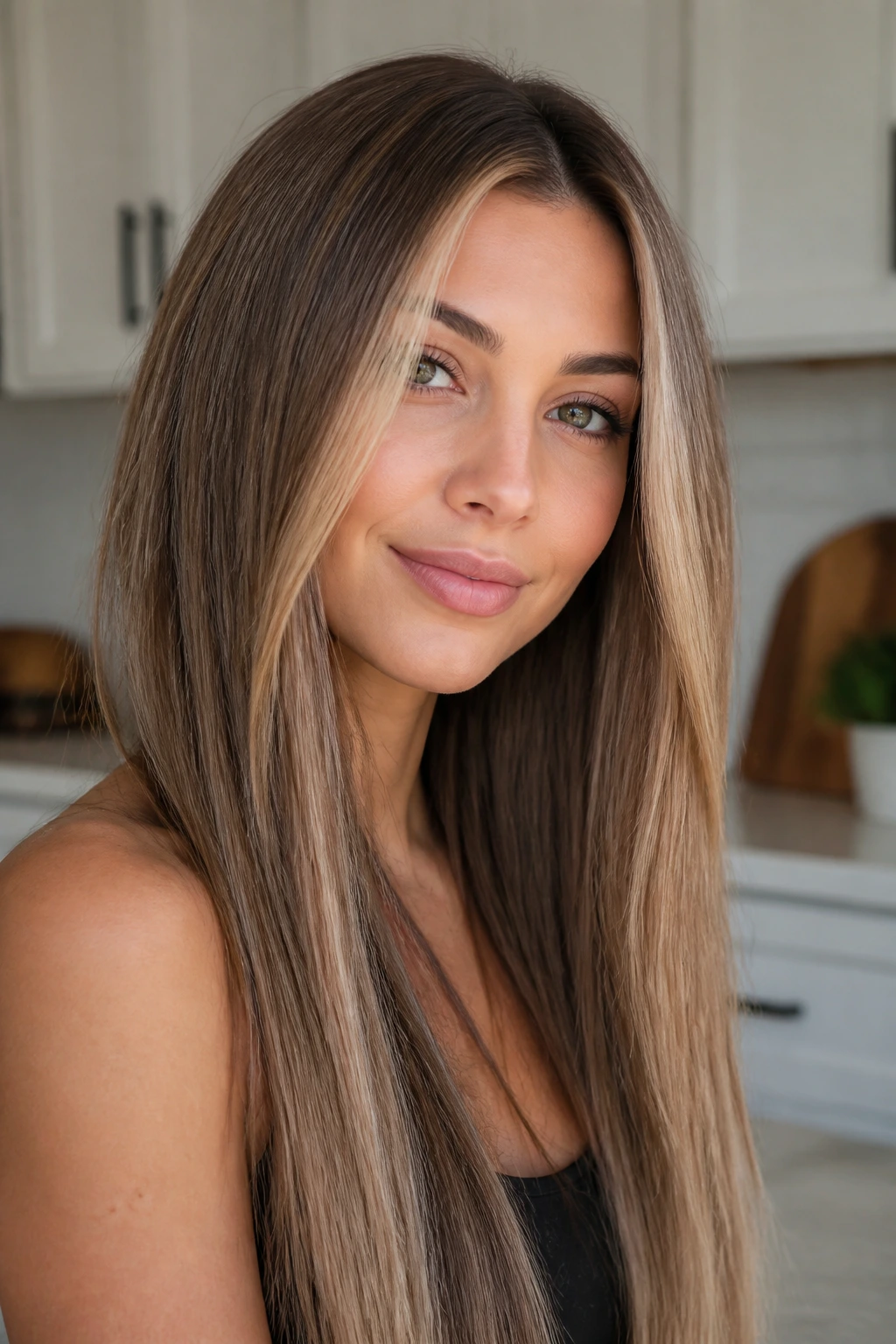
Sandalwood blonde is the color I’d hand to someone who wants brightness without giving up depth. The face frame does the work here: lighter pieces around the face, a soft beige-blonde note at the front, and enough natural color underneath to keep the long length from looking overprocessed. On straight hair, that contrast feels clean and expensive in the plain sense of the word — tidy, balanced, and easy to read.
The reason it belongs at the end of this list is simple. It’s one of the easiest ways to make straight hair look lighter without changing the whole head. The frame brightens the expression; the rest of the length stays calm.
It also grows out in a civilized way. That matters more than people admit. A pretty front piece that turns into a maintenance headache after three weeks is not a win, and sandalwood avoids that trap better than most lighter looks.
Why Straight Hair Makes Placement Matter More
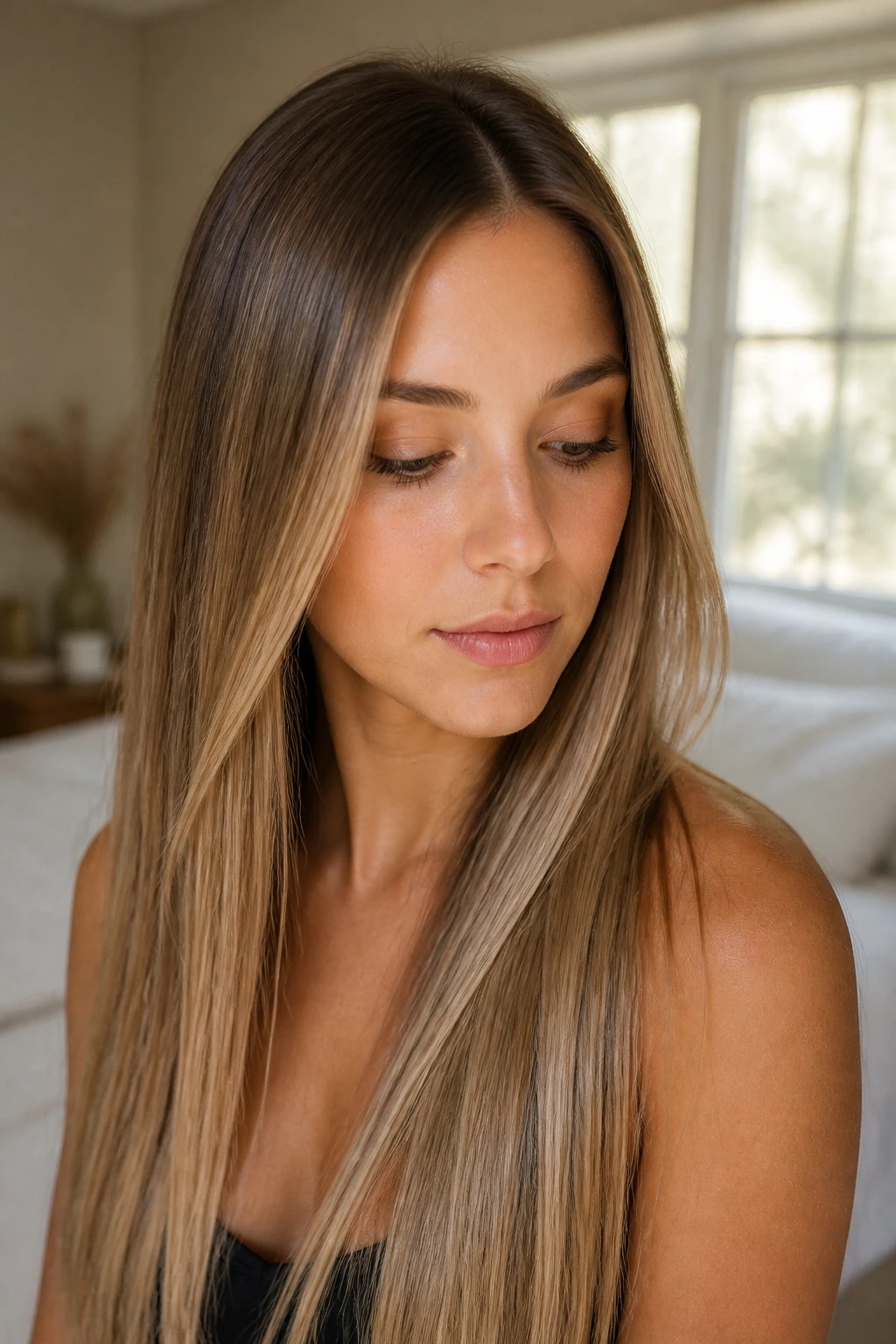
Straight hair is unforgiving in the best and worst ways. It shows shine, yes, but it also shows every line where foil stopped, every place toner shifted warmer than expected, and every root grow-out line that would be hidden by bends or texture. If a color looks smooth on curls and waves, it may look striped on straight lengths. That’s not a flaw in the color. It’s the nature of the surface.
The cleanest looks for straight hair usually share the same habits: soft root shadows, thin ribbons instead of wide panels, and glosses that keep the cuticle reflecting light. A blunt hem can handle more contrast because the line is already graphic. Long layers usually ask for softer blending so the ends do not look chopped into pieces.
Color also changes the way the hair feels visually. A deep brunette can make the length seem thicker. A bright blonde can make it look lighter and airier, but only if the tone stays creamy rather than brassy. Reds and coppers add movement because the eye keeps finding new reflections. That is why this kind of hair color selection is less about picking a pretty shade and more about deciding what shape you want the length to have from ten feet away.
Essential Tools for Keeping Long Straight Hair Color Clean
- Color-safe shampoo: Keeps brunette gloss, beige blonde, and copper from fading faster than they should.
- Purple shampoo or mask: Best for beige, cream soda, and champagne blondes that tilt yellow.
- Blue shampoo: Useful for brunettes that pull orange after a few washes.
- Bond-building treatment: Helps lightened ends stay smoother and less frizzy.
- Heat protectant spray: Straight hair gets styled with heat more often, and bleach plus hot tools is a rough combo.
- Wide-tooth comb: Safer than yanking through toned or lightened ends right after washing.
- Sectioning clips: Handy for toner masks, root touch-ups, and even blow-drying long hair in zones.
- Microfiber towel or cotton T-shirt: Cuts down friction on the lengths, which matters when the color is fresh.
- Tint brush and bowl: Useful if you maintain a color-depositing mask or root glaze at home.
- Reference-photo folder: Not glamorous, but it helps you show a colorist the exact depth and placement you want.
How to Choose Hair Color Ideas for Long Straight Hair That Match Your Base
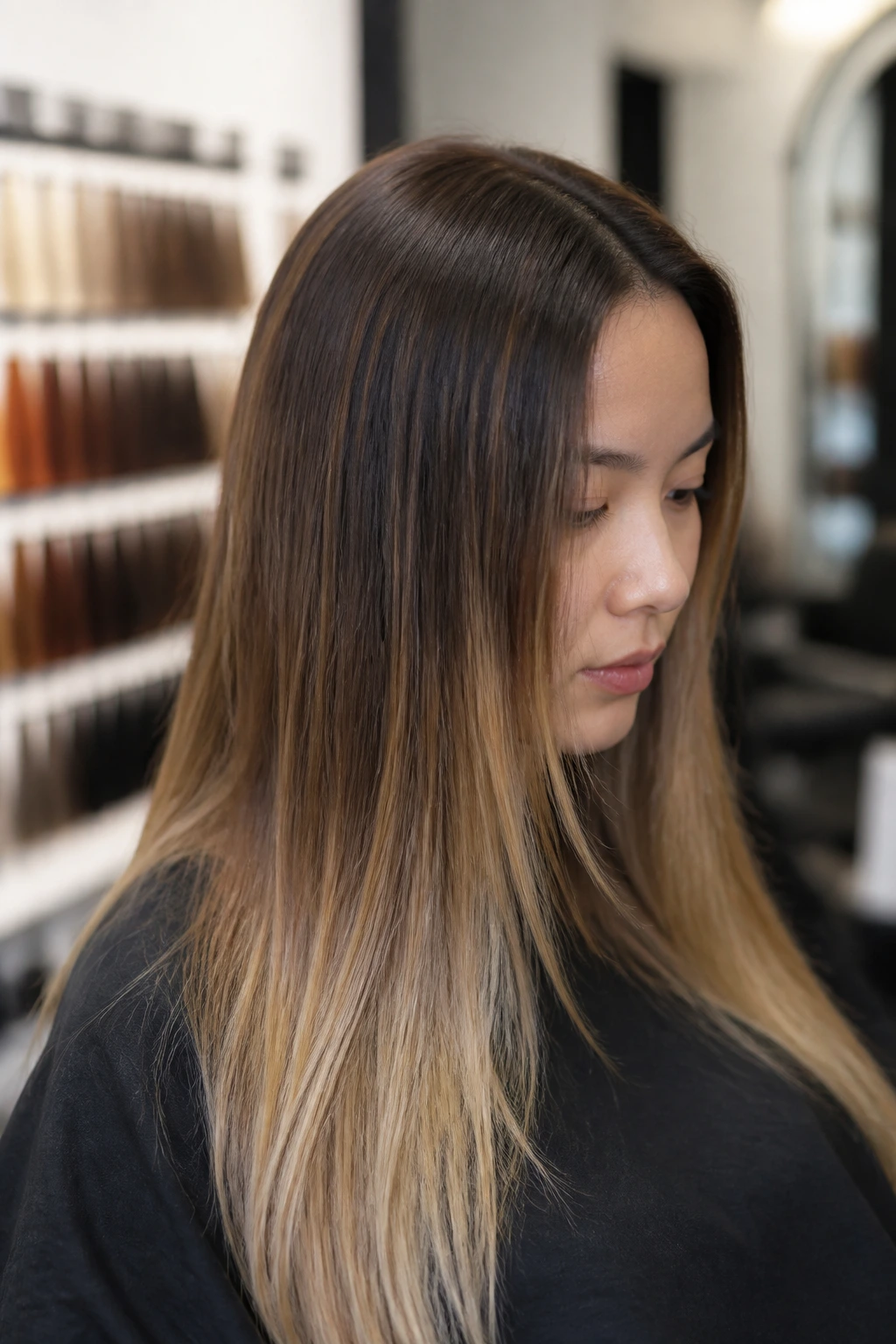
The smartest choice usually starts with your natural level, not the inspiration photo. A level 4 brunette can move into espresso, mocha, cherry cola, or smoky bronze with far less effort than it can move into champagne blonde. A level 7 to 8 base has more room for beige blonde, cream soda, and rose gold. If you skip that step, the pretty photo on your phone can turn into six hours in the chair and a color you can’t maintain.
Undertone matters too. Warm hair can take caramel, honey, copper, and auburn more easily. Cool or neutral hair tends to hold mushroom brown, ash mocha, taupe brunette, and pearl blonde better. If your previous color has built up, a strand test is the sane move. It tells you whether the hair will lift evenly or grab toner like a sponge.
One thing people miss: long straight hair shows porosity in a very obvious way. Ends that are already porous will grab darker pigments and toner faster, then fade unevenly. That’s why a colorist may leave the very ends a touch softer or choose demi-permanent color for the first pass. It isn’t laziness. It’s control.
How to Wear These Shades on Long, Straight Hair
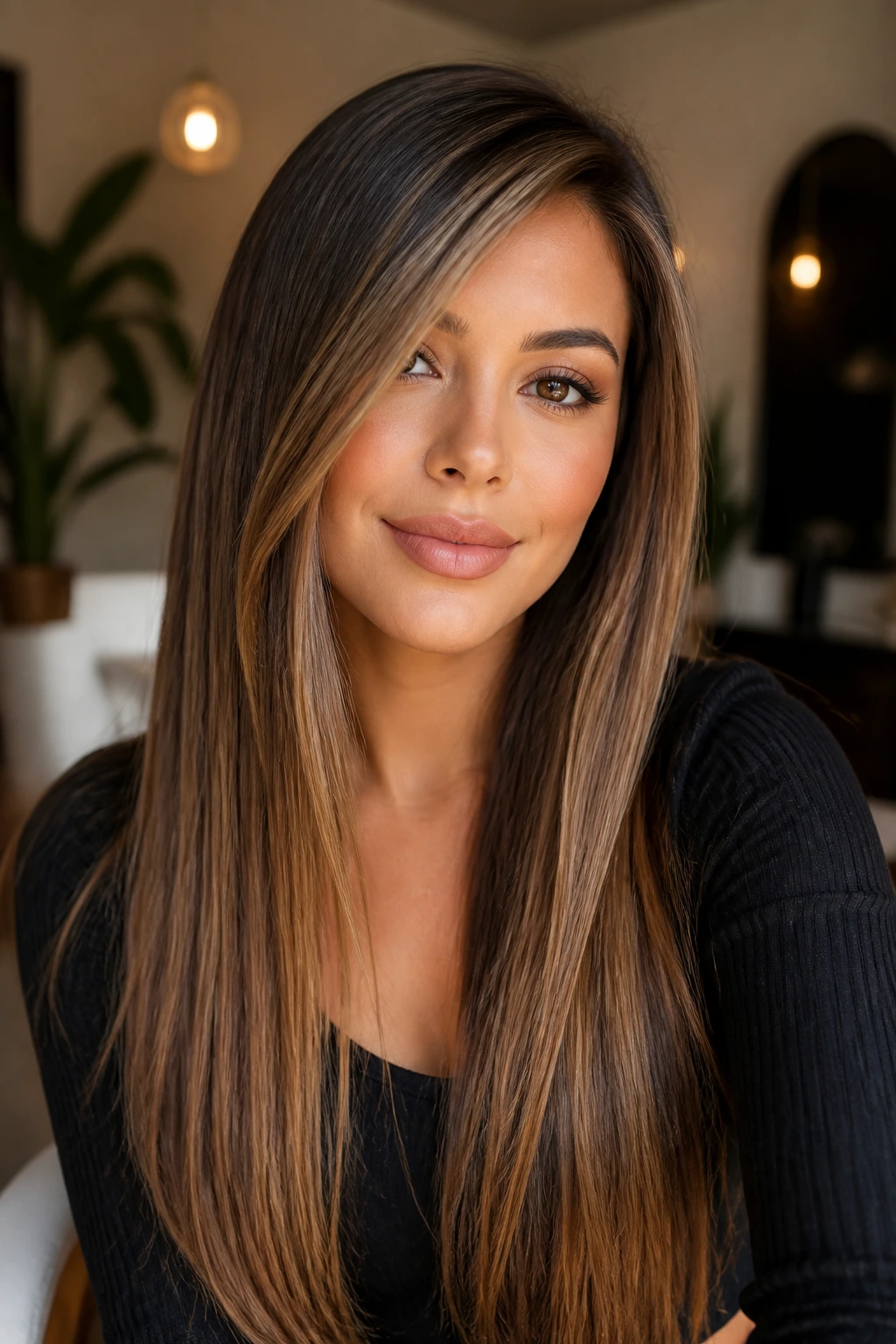
Presentation: A sleek blowout or a smooth, flat-ironed finish shows off the color map best. Middle parts sharpen contrast and make face-framing pieces pop; side parts soften the line and help warm shades feel gentler.
Styling: If the color has ribbons, keep the straightening pass light and smooth rather than bone-pinned flat. A tiny bend at the ends keeps caramel, bronze, and toffee from looking harsh. For dark glosses like espresso or midnight black, a mirror-smooth finish is the point.
Pairings: Warm shades such as honey, copper, cinnamon, and auburn tend to sit well with peach, bronze, and gold makeup. Cooler tones like mushroom, taupe, ash mocha, and pearl blonde look cleaner with taupe, rose, or soft berry makeup. Hair color and makeup do not have to match, but they should not fight.
Commitment: If you want bright blondes, plum glosses, or copper tones, plan for regular refreshes. If you want a soft brunette melt or a rooted face frame, you can stretch salon visits much farther. Long straight hair tells the truth about regrowth, so build the color around the upkeep you will actually do.
Extra Shine, Tone, and Dimension Boosters
Shine Boost: A clear gloss every 6 to 8 weeks can make espresso, chocolate, and chestnut shades look freshly done even when the color itself is not changing. On straight hair, gloss is not a luxury. It is the difference between reflective and flat.
Customization: If you want lighter pieces but not a full highlight job, ask for only the top layer and the front hairline to be brightened. Straight hair does not need much to show a change. Two or three carefully placed ribbons can do more than ten foils scattered everywhere.
Depth Trick: Keep the underside of the hair a touch darker than the top layer. That small move makes the length look denser, especially if your hair is fine or on the thinner side.
Make-It-Yours: If you love warm tones but worry about brass, lean into caramel, honey, and bronze rather than golden yellow. If you like cool tones but fear dullness, ask for beige instead of pure ash. Beige keeps the color readable. Pure ash can go dusty fast.
Finishing Touch: A pea-sized amount of lightweight oil on the last 4 to 6 inches can make dark glosses and blondes alike look smoother, but only if you keep it off the roots. Greasy roots ruin the whole effect.
Keeping the Color Fresh Between Salon Visits
Long straight hair often needs a maintenance rhythm, not a panic overhaul. Brunettes with gloss or demi-permanent color usually look best with a refresh every 6 to 8 weeks. Balayage and rooted blondes can often go 8 to 12 weeks before they need a major appointment, with toner or glaze touch-ups somewhere in between. Platinum, champagne, and cream shades usually need more frequent attention because the tone can slip into yellow or dull beige quickly.
Wash less often if you can. Two to three washes a week is kinder to most color than daily shampooing, especially for copper, rose gold, and plum shades. Use lukewarm water rather than hot water; hot water opens the cuticle and pulls pigment out faster. If your hair has been lightened, cap heat styling where you can and keep your tools below 360°F when the hair is already fragile.
Dry shampoo helps, but use it like a helper, not a lifestyle. Too much buildup makes long straight hair look dusty, which is exactly the opposite of what a sleek color needs. If the ends start feeling rough, rotate in a bond builder or a moisturizing mask once a week and keep the mask off the roots. Scalp oil and porous ends are not the same problem.
Variations and Adaptations to Try
Low-Commitment Gloss Only: If you want change without bleaching, choose espresso brunette, cherry cola, rose gold, or plum as a demi-permanent gloss. These shades add tone and shine without asking your hair to lift, which is kinder to very long lengths.
Rooted Grow-Out Version: Any blonde or lighter brown can be made easier to live with by keeping the top 1 to 2 inches deeper. This is the version to choose if you like polished color but hate obvious regrowth.
Face-Frame First: If you are nervous about commitment, start with money pieces only. Sandalwood blonde, honey bronde, champagne beige, and copper veil all work well in this format because the brightness sits where people look first.
Warm Edit: Swap cooler mushroom, taupe, and ash tones for caramel, cinnamon, bronze, chestnut, or auburn if your skin and wardrobe like warmth. Warm straight hair often reads softer in daylight, especially when the ends are glossy.
Cool Edit: If reds and golds never sit right on you, lean into ash mocha, cool taupe, mushroom brown, pearl blonde, and midnight black with blue sheen. These shades stay cleaner when the undertone is muted.
Common Color Mistakes to Avoid
-
Choosing a wavy-hair photo and expecting the same result on straight hair: Waves blur the transitions. Straight lengths show every edge, so ask for softer blending than the photo appears to have.
-
Going too light from root to ends: A bright blonde sheet with no shadow can make the hair look thinner and the scalp more obvious. A root melt or low-light keeps the shape balanced.
-
Ignoring porosity at the ends: Dry ends grab toner fast and can turn khaki, muddy, or too dark. The fix is gentler processing and a softer finish at the last inch or two.
-
Overdoing purple or blue shampoo: Too much toning product can leave beige blondes dull and brunettes grayish. Use it once or twice a week, not every wash, unless the colorist told you otherwise.
-
Skipping heat protection on straight hair: Flat irons and blow-dry brushes hit long hair more often than most people admit. If the hair is lightened, this mistake shows up fast in split ends and faded tone.
-
Not planning the first grow-out line: A color can look beautiful on day one and annoying by week six if the root and highlight placement were not thought through. Ask how the color will look from the scalp down, not only from the middle of the length.
Frequently Asked Questions About Long Straight Hair Color
What hair colors look best on long straight hair?
The best ones usually have a strong shape: espresso brunette, caramel ribbons, mushroom brown, beige blonde, copper veil, and rooted platinum all show well because the straight surface reflects the tone cleanly. If you want the hair to look thicker, darker bases and soft melts usually help more than super-light all-over blonde.
Are highlights or all-over color better for straight lengths?
Highlights and balayage usually create more movement, while all-over color gives a smoother, denser look. If your hair is very fine, a glossed brunette or rooted balayage may keep the ends looking fuller than a high-contrast highlight job.
How do I keep straight hair from looking flat after coloring?
Ask for dimension in more than one place: root depth, mids, and ends. A one-note color can look flat on straight hair, but a soft shadow root, face frame, or glossed lowlight gives the hair more shape without needing curls.
Can long straight hair handle platinum blonde?
It can, but the upkeep is heavy and the hair has to be healthy enough to take lightening. A rooted platinum version is usually easier to live with than pure root-to-end white blonde.
How often should I tone or gloss straight hair?
Brunettes can often go 6 to 8 weeks between glosses, while blondes may need toner sooner, sometimes every 4 to 6 weeks if they pull yellow or beige too fast. Red, copper, and rose shades usually fade the fastest and benefit from more frequent color-depositing masks.
Is box dye a bad idea for these looks?
For simple brunette refreshes, box dye may do the job in a pinch, but it is a rough fit for balayage, blonde, plum, or multi-tone color. Straight hair shows uneven color more easily, and box dye leaves less room to correct mistakes.
What if my ends are damaged or porous?
Go softer on the ends than on the roots. A good colorist may leave the last inch deeper, choose demi-permanent color, or gloss the ends separately so they do not grab too much pigment.
Can these ideas work on fine hair?
Yes, but fine straight hair usually looks better with low-contrast placement and smart depth at the root. Too much lightness all the way through can make the hair look sparse, while a brunette base with narrow ribbons usually keeps more visual weight.
What should I bring to a salon consultation?
Bring one photo of the color you love, one photo of the maintenance level you can live with, and one photo of your own hair in natural light. That combination tells the stylist more than a single inspiration shot ever will.
The Shade That Moves With You
Long straight hair is honest, sometimes brutally so. That is exactly why the right color feels so satisfying on it. A good brunette gloss can make the length look denser. A careful blonde melt can keep the ends from disappearing. A copper veil, plum gloss, or oil-slick sheen can turn a simple curtain of hair into something that changes as you move.
The trick is to choose color that respects the hair’s shape instead of fighting it. Straight lengths reward restraint, clean placement, and tones that stay believable when the light hits them head-on.
Pick the version that fits your upkeep, your base color, and your taste for drama. Then let the length do what it does best: show every inch of it.
