



Long hair gives ombre the one thing shorter cuts can’t: room to breathe. On a bob, a fade has to land fast. On hair that falls past the shoulders, the color can slip from dark to light in a way that looks deliberate instead of abrupt. That extra length is doing a lot of work, and when the blend is handled well, you notice the movement before you notice the dye.
The best long hair ombre isn’t about slamming two colors together and hoping for the best. It’s about giving the darker root space to stay grounded while the ends open up into caramel, beige blonde, copper, taupe, or a soft berry tone. The whole point is that the eye should travel down the strand. No hard stop. No chunky line. Just a gradual change that makes layered hair and waves look richer than they did a minute ago.
What makes this especially satisfying on long hair is how much the finish changes with styling. Straight hair shows the fade in a long, clean line. Loose bends make the transition look misty. Curl the ends and you get that soft, ribboned effect where the lighter pieces seem tucked into the darker ones. That’s the magic here. The color is doing half the styling before you even pick up a brush.
Why These Long Hair Ombre Ideas Work So Well
-
Soft grow-out: A deeper root and a gentle mid-shaft transition buy you more time before the color line becomes obvious, which matters when your hair is long enough to show every inch of regrowth.
-
Length does the blending for you: Long layers give two or three shades room to overlap, so caramel, beige blonde, copper, or ash tones don’t read like stripes.
-
Easy to customize: The same fade can lean warm, cool, rosy, smoky, or berry depending on the toner and the shade used at the ends.
-
Styling changes the mood fast: A blowout, a loose wave, and a pin-straight finish all show the ombre differently, which makes one color idea pull double duty.
-
Less commitment than all-over lightening: Keeping the root deeper usually means less upkeep and fewer sessions spent chasing the same brightness from scalp to ends.
-
Better with movement: Long hair ombre looks best when the ends can swing, bend, or curl a little. Flat, lifeless hair hides the transition.
1. Dark Chocolate Roots into Caramel Ends
This is the safe choice, and I mean that in the best possible way. Dark chocolate roots fading into caramel ends on long hair give you warmth without the brittle, over-bleached look that can happen when people chase blonde too hard. The change is soft because the caramel sits a few levels lighter than the base, not five.
Why It Reads Soft on Long Hair
Ask for the lightest pieces to start around the collarbone or just below the jaw if you want the fade to stay quiet. On very long hair, that gives the color enough runway to move from dark to warm without looking like a line was painted across the back of your head.
The best version keeps the last 4 to 6 inches the brightest. That is where the light catches when the hair swings, and it keeps the ends from disappearing into the rest of the color. A center part shows the blend clearly, but loose waves make it look richer.
Best for: medium to thick brunette hair, especially layered cuts.
Styling note: a 1.25-inch curling iron with the ends left straight for the last turn gives the caramel a soft, shiny finish.
2. Espresso to Warm Honey Balayage
Why does espresso-to-honey look so flattering on long hair? Because the honey doesn’t need to take over. It can live in the mid-lengths and front pieces, then drift down into the ends, which keeps the whole thing from turning brassy or loud.
This one works especially well if your hair falls heavy around the face. The warm honey pieces break that darkness up without making the root feel thin. On long, layered hair, the lightness settles into the bends and makes the shape look more expensive than it has any right to.
A Smart Way to Wear It
If your hair is thick and blunt at the bottom, keep the honey a shade deeper. Too pale and the ends start looking floaty in a bad way. Too much contrast, and the fade loses its softness.
- Ask for: espresso roots, honey balayage through the mid-shaft, and a beige-gold gloss at the ends.
- Works best with: loose blowouts, soft waves, and long face-framing layers.
- Avoid if: your ends are already dry and rough; honey can make damaged ends look frizzier than they are.
3. Mocha to Beige Blonde Melt
Mocha to beige blonde is one of those long hair ombre ideas that looks calm from across the room and more interesting the closer you get. Beige blonde is doing the quiet work here. It’s lighter than caramel, but not so pale that the fade turns chalky or stripy.
The reason this reads clean on long hair is simple: the middle section gets a real job. It’s not just a pass-through zone. Mocha at the root, beige through the mid-lengths, and a softly toned blonde at the ends creates a gradient that feels deliberate, not rushed.
Best Way to Wear It
This is a strong pick if your hair is naturally level 5 or lighter and you want brightness without a huge jump. It also plays well with long layers because the beige catches on the shortest pieces around the face while the ends stay a touch softer.
Use a sulfate-free shampoo and keep the toner on a gentle schedule. Beige blonde goes dull faster than caramel, especially if you wash with hot water or overdo purple shampoo. Once a week is plenty for most hair.
4. Ash Brown to Mushroom Blonde Fade
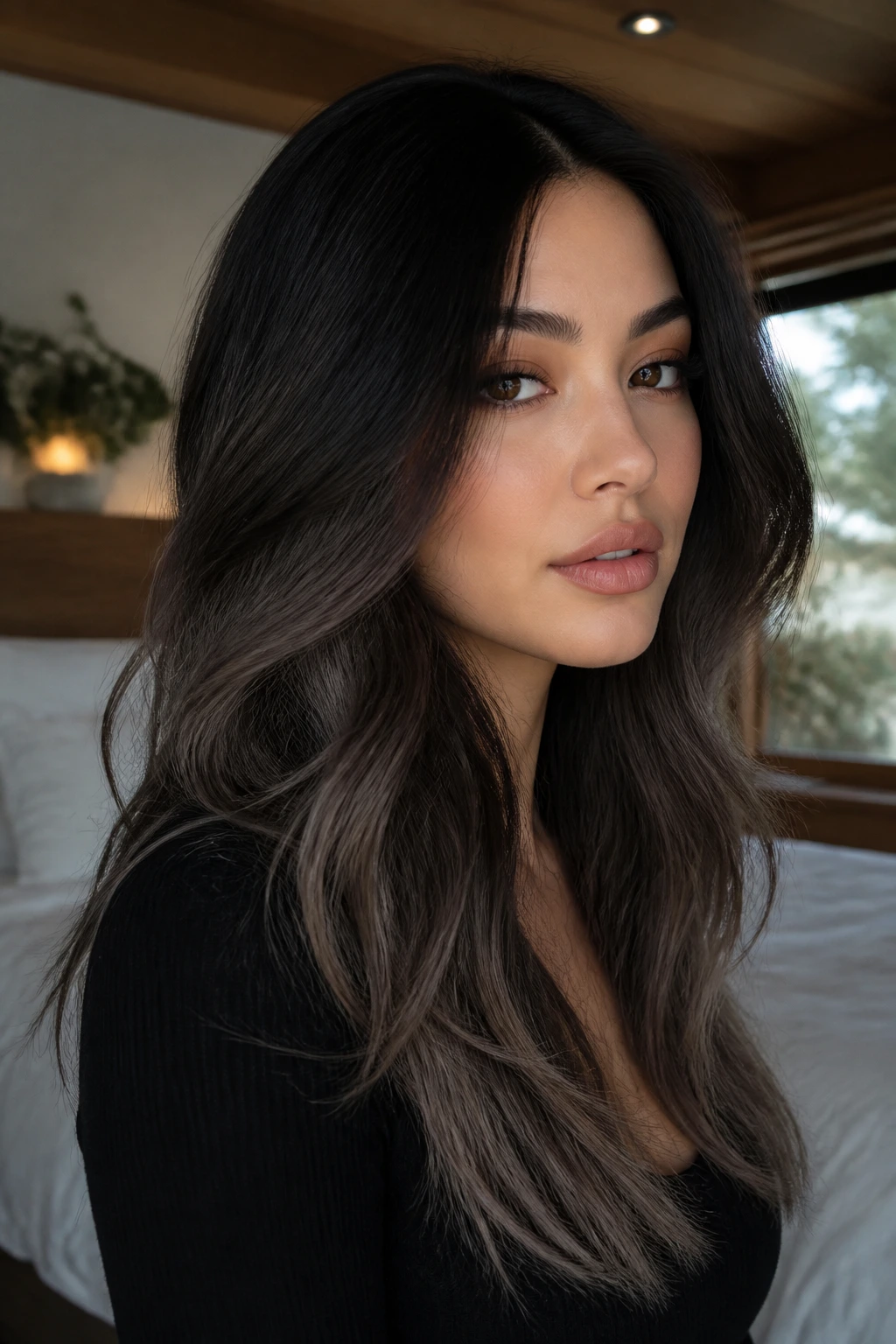
Cool-toned hair can look icy in a way that feels polished, but ash brown into mushroom blonde is softer than platinum and less obvious than silver. The fade stays earthy. That’s the whole point. Mushroom blonde has that gray-beige quality that keeps the color from drifting too warm.
On long hair, this is gorgeous when the cut has movement. The cool shades stack better when there are layers to catch them. Without layers, the look can flatten out and feel a little heavy at the bottom.
What Makes It Work
If your base has natural warmth, don’t fight it too hard. A tiny bit of beige or smoke in the toner makes the transition look better than a full-on flat ash. That tiny adjustment matters.
- Tone family: cool beige, smoky taupe, ash mushroom.
- Best styling: loose bends or a round-brush blowout.
- Maintenance: a toning conditioner every 7 to 10 days keeps the mushroom tone from turning muddy.
5. Chestnut to Honeyed Toffee Lengths
Chestnut to honeyed toffee is warmer and deeper than caramel, which is why I like it on long hair that already has shine. The chestnut root holds the depth, while the toffee ends bring in enough brightness to show the movement in the hair without turning it blonde.
This is one of those shades that looks good on hair with a little thickness. Fine hair can wear it, sure, but thicker hair gives the toffee more dimension. When the hair moves, the lighter ends flash without looking thin.
Who Should Pick It
If you want something softer than blonde but warmer than ash brown, this sits in the middle nicely. It’s also a smart choice if you’re trying to stretch the time between salon visits, because chestnut regrowth blends into a lot of natural brown bases.
Tip: keep the toffee on the golden side, not the orange side. A touch of gold keeps it plush. Too much copper and the whole fade starts shouting.
6. Black Coffee to Smoky Ash Brown
This one is for people who want the fade to whisper. Black coffee roots easing into smoky ash brown ends barely register as color until the light hits from the side. That’s the appeal. It’s subtle, cool, and not trying too hard.
Long hair makes this look better than shorter lengths because the ash tone has space to unfold. On a longer canvas, the difference between black and smoky brown reads as texture instead of contrast. That matters when you want dimension but not drama.
The Quiet-Color Approach
This is a strong pick if you don’t want obvious blonde in your hair. It also works well on straight styles, where the change shows up as a soft shift rather than a bright block. If you wear your hair in sleek ponytails, the darker root and cooler ends still look finished.
A gloss in smoky brown every 6 to 8 weeks keeps the ends from going flat. Skip heavy purple shampoo unless the lightened sections start warming up. Too much of it can make ash brown look dull and dusty.
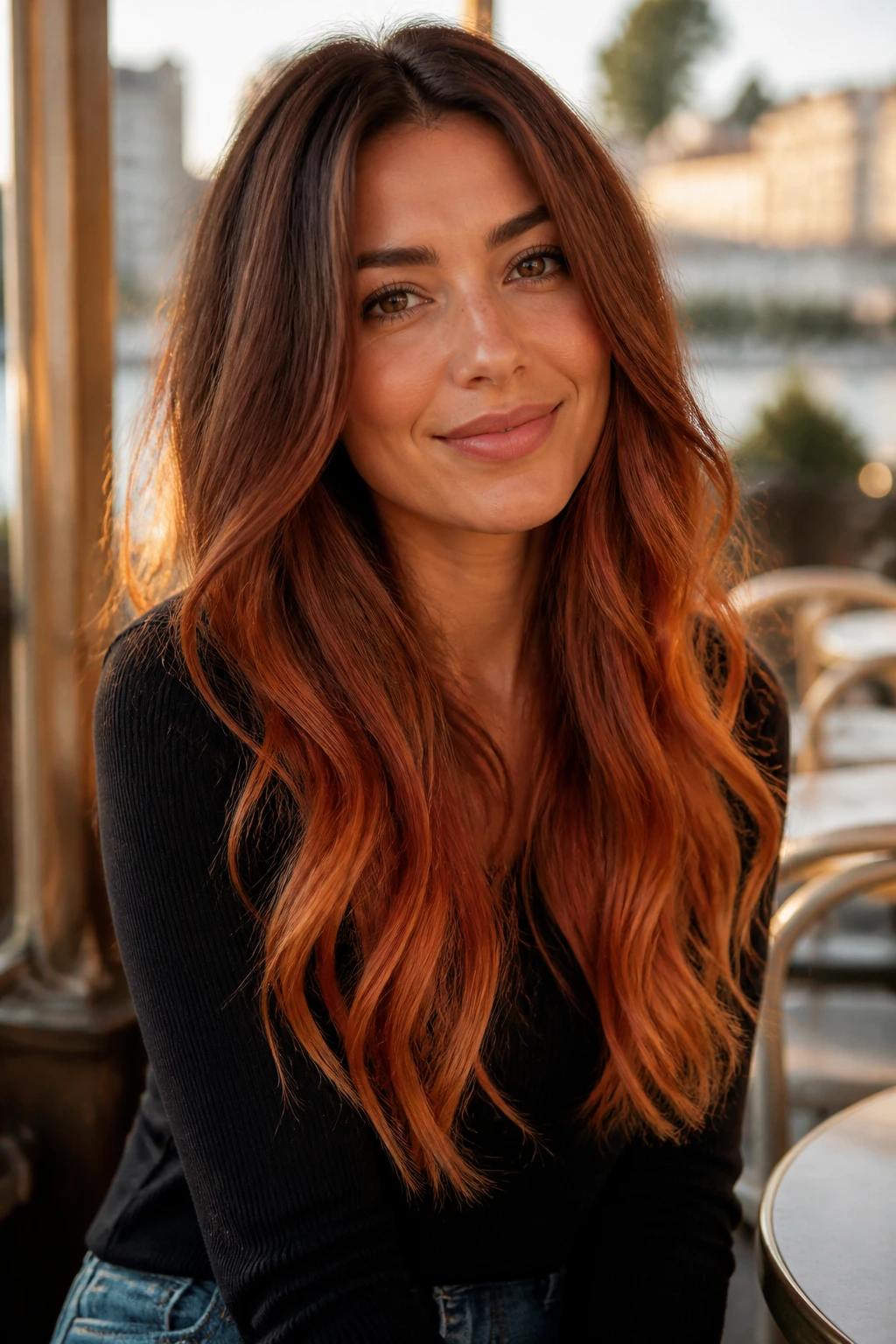
7. Cinnamon Brown to Copper Glow
Cinnamon brown into copper glow has one job: keep the warmth alive. The fade is soft, but it still has energy. That copper glow catches light in a way caramel doesn’t, especially on long hair that gets curled away from the face.
It’s a strong choice if your skin leans warm or neutral and you like color that looks alive without going neon. The trick is to keep the copper in the soft-red family, not the traffic-cone family. That line matters more than people think.
How to Keep It Pretty, Not Loud
Copper fades fast if you wash it with harsh shampoo or blast it with hot water every day. Use cooler rinses and a color-safe shampoo. The warmth stays cleaner, and the cinnamon base won’t get washed out as fast.
A loose wave sets this shade off beautifully. Straight hair still works, but the curl pattern makes the copper pieces separate just enough to show the blend.
8. Auburn to Peach Copper Melt
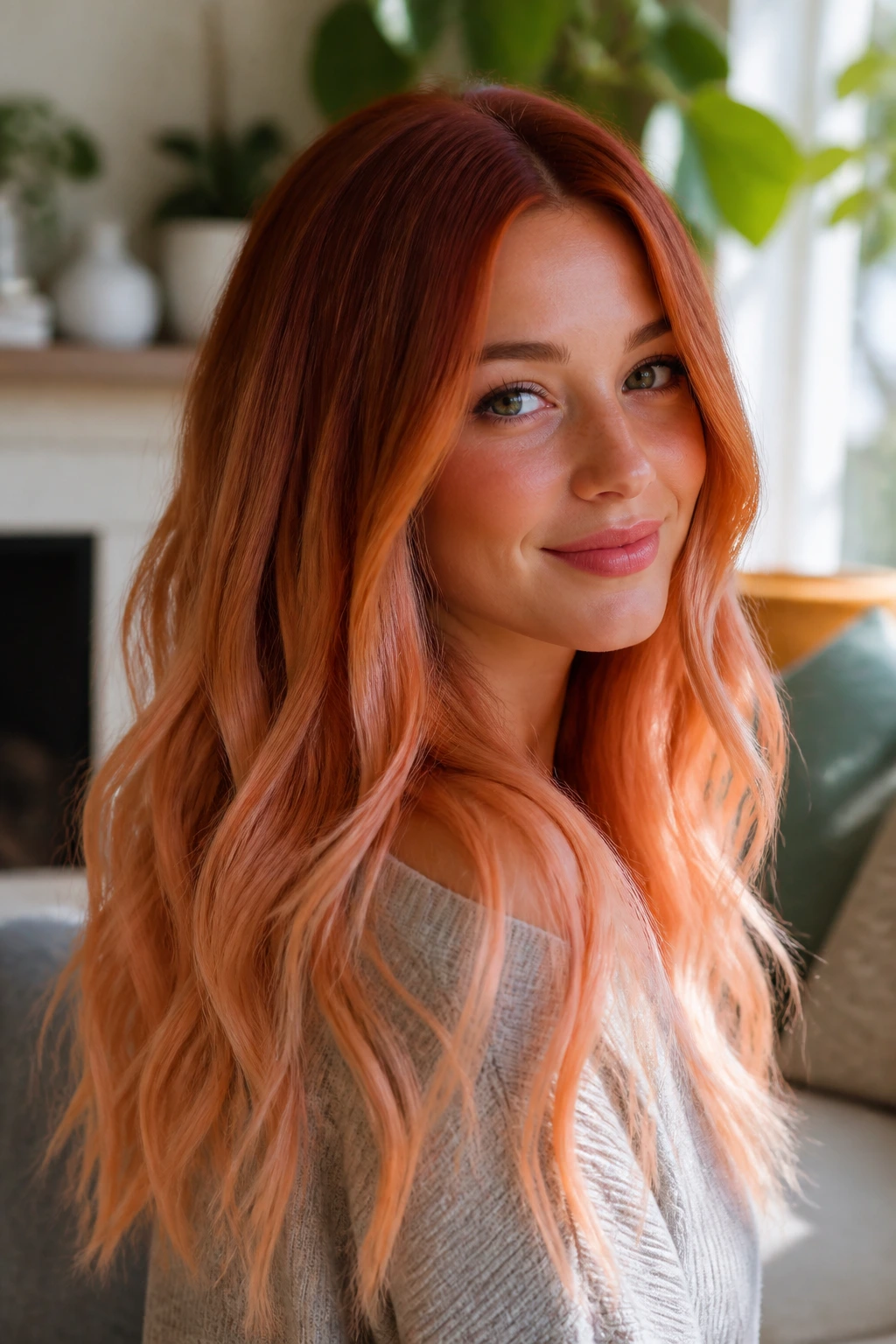
Auburn to peach copper is a little softer and sweeter than a straight copper fade. The peachy end tone keeps the finish from feeling heavy or dark. On long hair, that peach cast is nicest near the bottom half, where it reads as warmth instead of neon.
This color idea has a soft sunset quality. Not a cliché. More like the last bit of light on a copper kettle. The red stays present, but the peach keeps it from getting too deep or wine-like.
When It Works Best
If your hair already has some red in it, this is an easy way to enhance it without going full bright copper. It also looks especially good on layers because the peach tones catch on the shorter front pieces and soften the face.
Best styling move: use a cream-based leave-in and a wide-barrel curl so the peach sections don’t get frizzy or frayed at the ends.
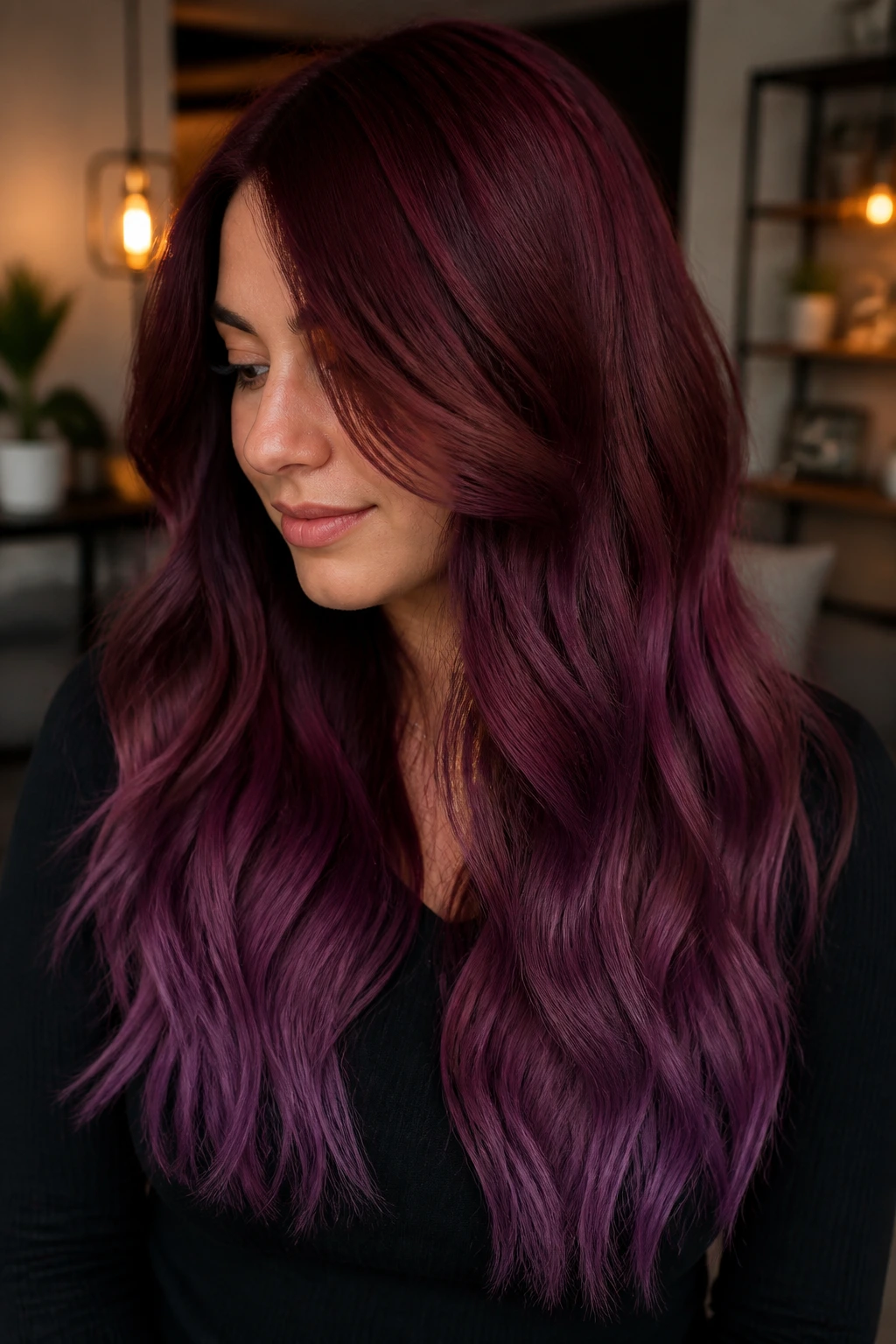
9. Burgundy to Mulled Plum Ends
Burgundy to mulled plum is rich, dark, and a little moody, but the fade stays soft if the plum is muted rather than neon. This is the shade you pick when you want a wine tone that looks expensive, not theatrical.
Long hair helps because the burgundy root and plum ends have enough length to separate. The color can deepen gradually from top to bottom, which keeps the fade from looking like a dip-dye shortcut.
Best With
- Medium to dark bases: the burgundy root blends better when the natural hair already has depth.
- Glossy finishes: shine makes these dark reds look plush instead of flat.
- Straight or softly curled styling: both show the plum shift well.
If your hair is porous, the plum can grab too dark. A good colorist will usually soften it with a demi-permanent or a gloss so the ends stay berry-toned, not black-purple.
10. Espresso to Bronze and Honey Ribboning
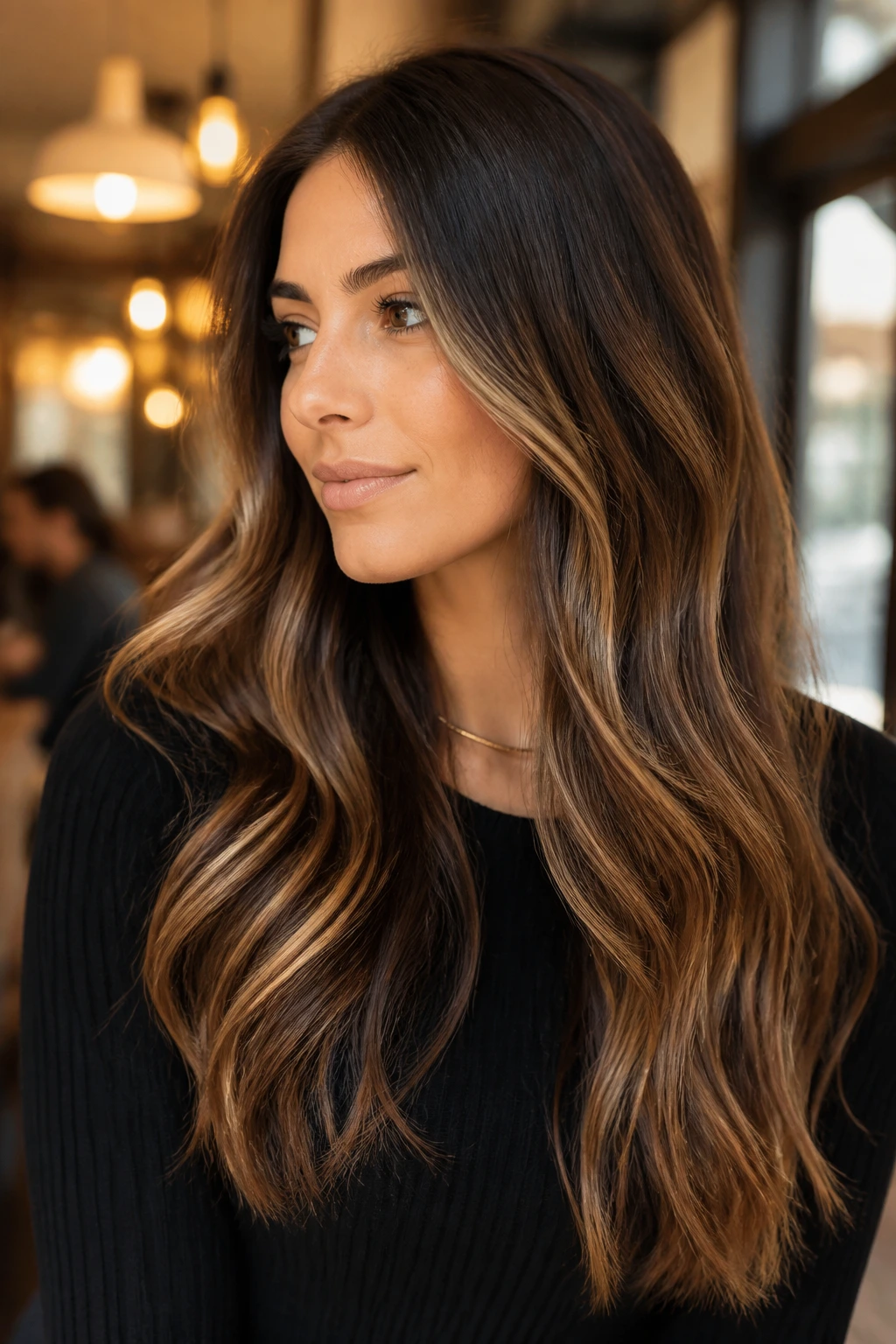
This one is for people who want dimension, not a single solid lighter shade. Espresso roots with bronze and honey ribboning through the lengths create a soft ombre that moves when you do. The bronze gives depth. The honey keeps it from turning muddy.
On long hair, ribboning is a better choice than one chunky fade because the smaller pieces catch light at different points. That means the color looks richer in motion and less painted on when the hair sits still.
A Good Fit If You Like Movement
Loose layers make this shine. The shorter pieces around the face can hold more honey, while the back stays a little deeper and bronze-heavy. That contrast is what gives the style its softness.
A 1.5-inch round brush blowout will show the ribbons better than a pin-straight finish. You want the strands to separate a little. Too sleek and the dimension gets compressed.
11. Mocha to Vanilla Cream Ends
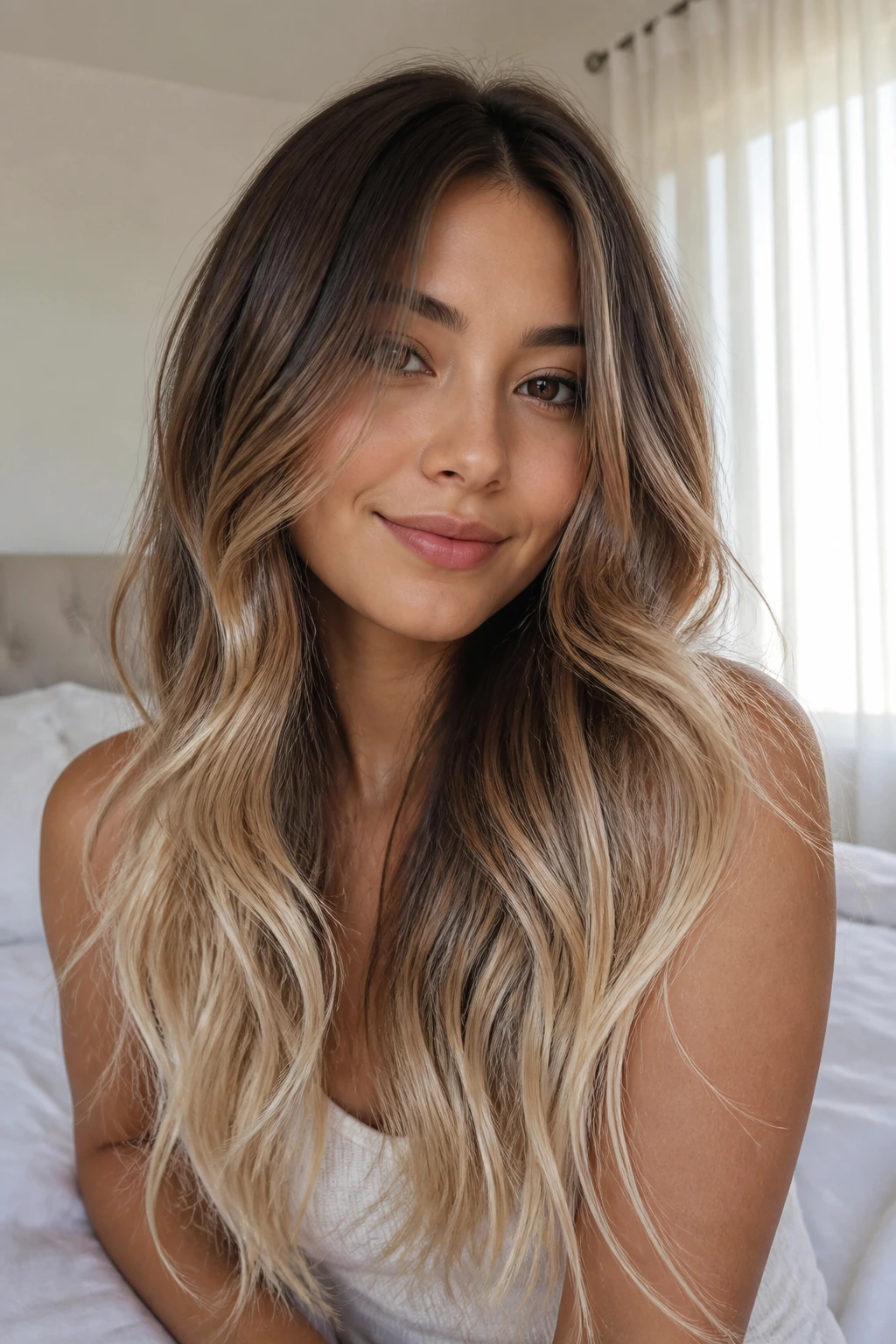
Mocha to vanilla cream is brighter than most of the looks on this list, but it still reads soft if the transition is handled with care. The mocha root keeps the base grounded. The vanilla cream ends lift the whole style and make long hair feel lighter, especially through the last few inches.
Here’s the catch: vanilla cream has to be toned well. If it turns yellow, the whole fade gets noisy. If it’s too white, the contrast looks harsher than it should. The sweet spot is a creamy beige blonde that looks clean, not chalky.
Who It Flatters
This shade looks especially good when long hair is curled away from the face. The brightness opens up the ends and gives the whole shape more lift. It’s also a nice choice if your haircut has long layers and you want the lower half to feel fuller.
Maintenance note: book a gloss every 6 to 8 weeks if your hair pulls warm fast. That keeps the vanilla side creamy instead of brassy.
12. Smoke Brown to Pearl Blonde
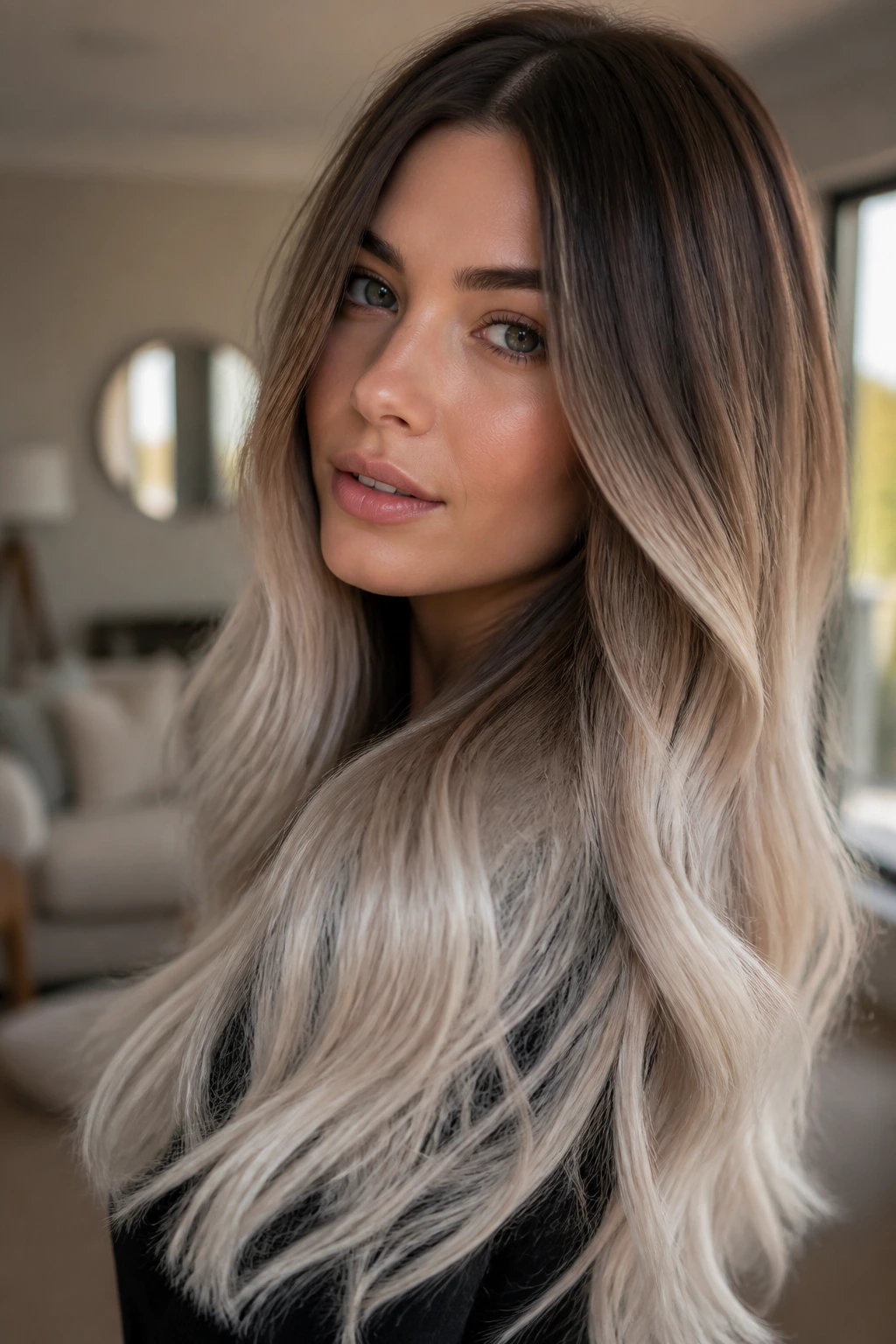
Smoke brown into pearl blonde is cool, airy, and a little more polished than a golden fade. Pearl blonde has a soft iridescent quality that keeps the ends from feeling flat. On long hair, that gives the whole style a cleaner, lighter finish.
This is not the shade to pick if you love warmth. It’s for people who want beige, silver, and cool cream notes all playing together. The fade looks especially nice when the hair is thick enough to hold the contrast.
What to Ask For
A good colorist will usually keep the smoke brown close to your natural level and only lift the ends enough to reach a pearl tone. That way the hair doesn’t look bleached from root to tip. If the ends are over-lightened, the pearl effect disappears.
Use a violet-toned shampoo lightly. Once a week is often enough. More than that, and pearl blonde can start to look dry and over-toned.
13. Raven to Silver Taupe
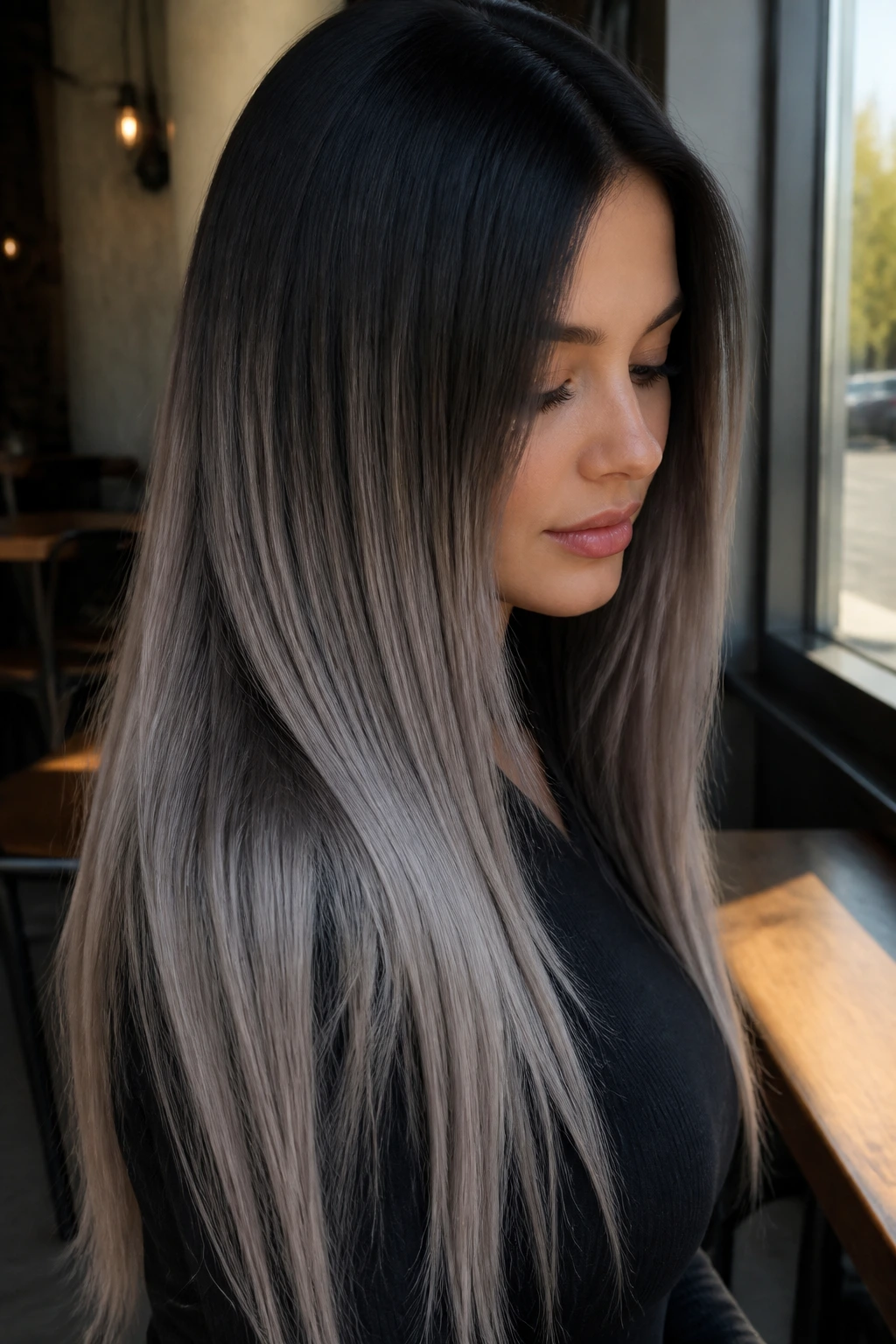
Raven to silver taupe is a cool, fashion-leaning ombre that still stays soft if the silver is muted. The taupe stops it from becoming harsh metal. On long hair, the darker top half gives the silver room to glow without taking over.
This is one of my favorites for sleek, straight hair. The gradient is visible all the way down the shaft, and the cooler shades make the hair look polished instead of busy. On waves, it turns softer and more dimensional.
A Smart Styling Match
If you want the fade to feel less dramatic, keep the silver taupe concentrated in the lower half of the hair and let the top remain raven-dark. That keeps the eye moving downward instead of stopping at a bright line.
- Best on: naturally dark hair or hair already lifted to a cool brown.
- Avoid over-washing: silver tones lose their shape fast with frequent shampoo.
- Use: a light finishing serum so the dark roots stay glossy and the taupe ends don’t get frizzy.
14. Midnight Brown to Navy Smoke
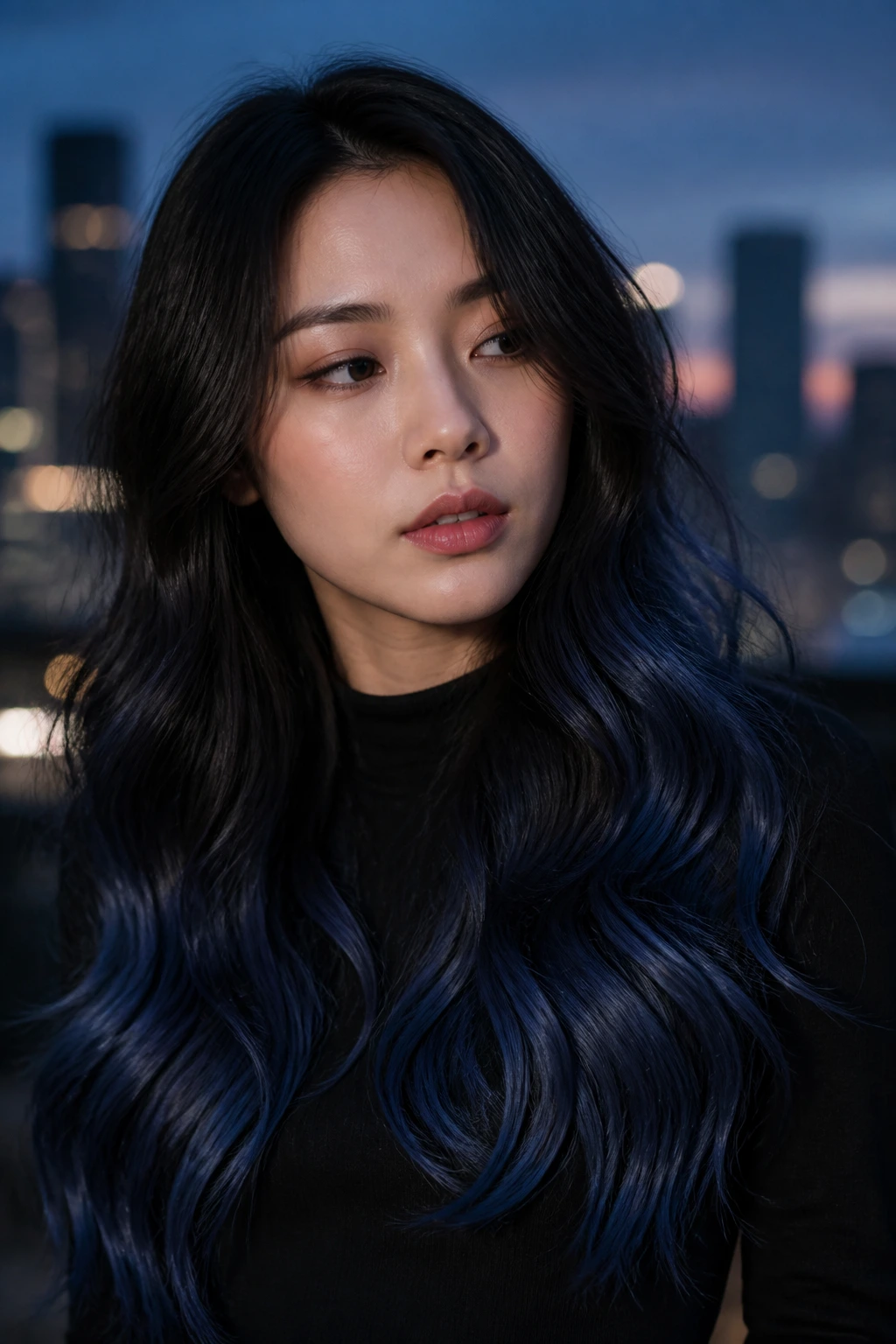
Navy smoke on long hair is a quiet way to wear color that isn’t brown, blonde, or red. Midnight brown at the roots fades into a smoky navy finish that shows up mainly in the light. It’s moody, but not loud.
Long lengths make this work because the navy can settle at the ends without looking like a block of blue. The smoke keeps the shade soft. Too much saturation and it becomes costume hair. Keep it sheered out, and it reads like a shadow with a blue cast.
When to Choose It
If you like dark hair but want a little edge, this is a smart pick. It also works well on straight or softly waved styles, where the blue undertone peeks out at the bends.
This shade likes cooler styling products. Rich oils and heavy shine creams can make the navy disappear. A light serum is enough.
15. Cool Brunette to Iced Sand
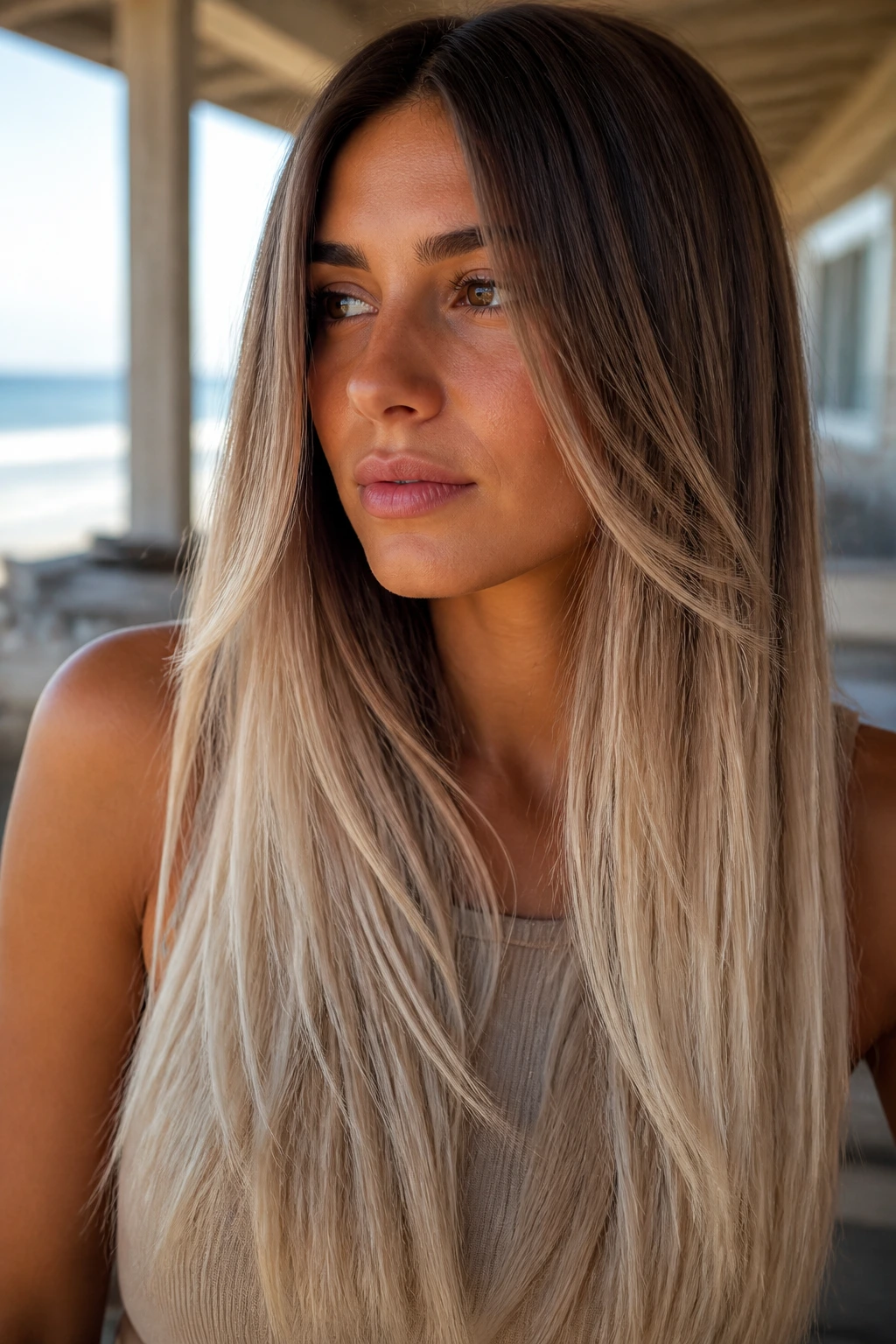
Iced sand is a nicer term than “blonde,” honestly, because it tells you what the tone is doing. Cool brunette fading into iced sand gives long hair a beachy finish without the yellow cast that often shows up in lighter ends.
The fade stays soft because the sand tone is beige with a cool edge. That keeps it from looking too bright or too warm. On layered hair, the shorter pieces around the face can hold the lighter tone while the long ends stay a shade deeper.
Why It Works on Real Hair
This is a good option if your hair lifts unevenly and you need a tone that forgives that. Beige sand softens a lot of unevenness. It also grows out cleanly, which matters if you don’t want obvious stripes at the root.
A root shadow makes this color look better, not darker. The little bit of depth at the top gives the iced sand room to breathe.
16. Golden Brown to Apricot Blonde
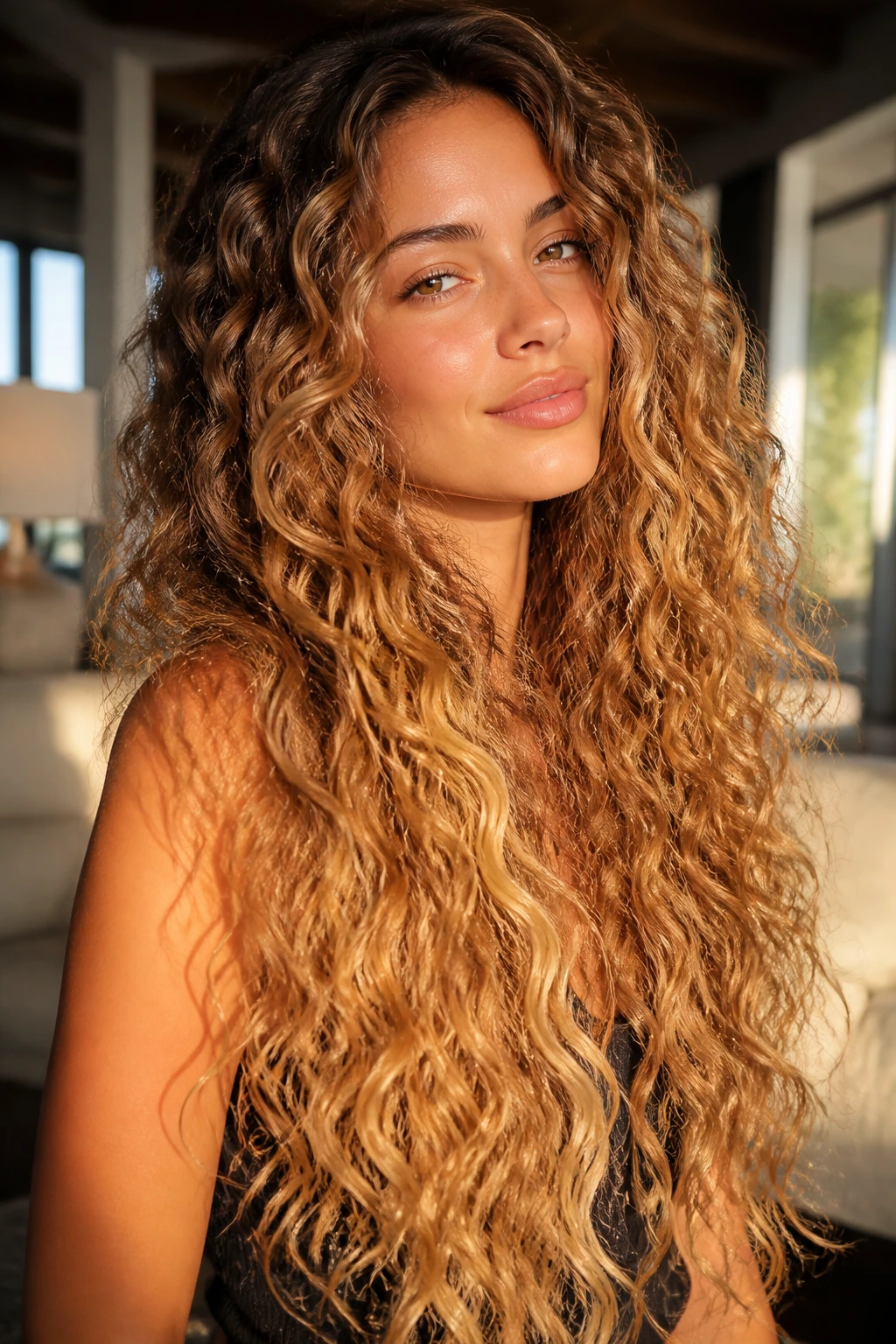
Golden brown into apricot blonde is warm, soft, and a little playful. Apricot keeps the light ends from feeling too yellow. On long hair, that warm peach-blonde shift can look especially pretty through the last third of the length.
This color works because it never becomes flat blonde. The apricot tone keeps the ends soft and a little hazy. If you already wear warm makeup or golden jewelry, this fade settles into your look without fighting it.
Best With Texture
Loose curls or a large round-brush finish help the apricot ends separate enough to show their color. On very straight hair, the shade still looks nice, but it won’t have the same gentle glow.
If your base is already golden brown, this is a low-friction move. You’re not forcing a dramatic change. You’re just moving the tone a few steps lighter and softer.
17. Chocolate Cherry to Plum Wine
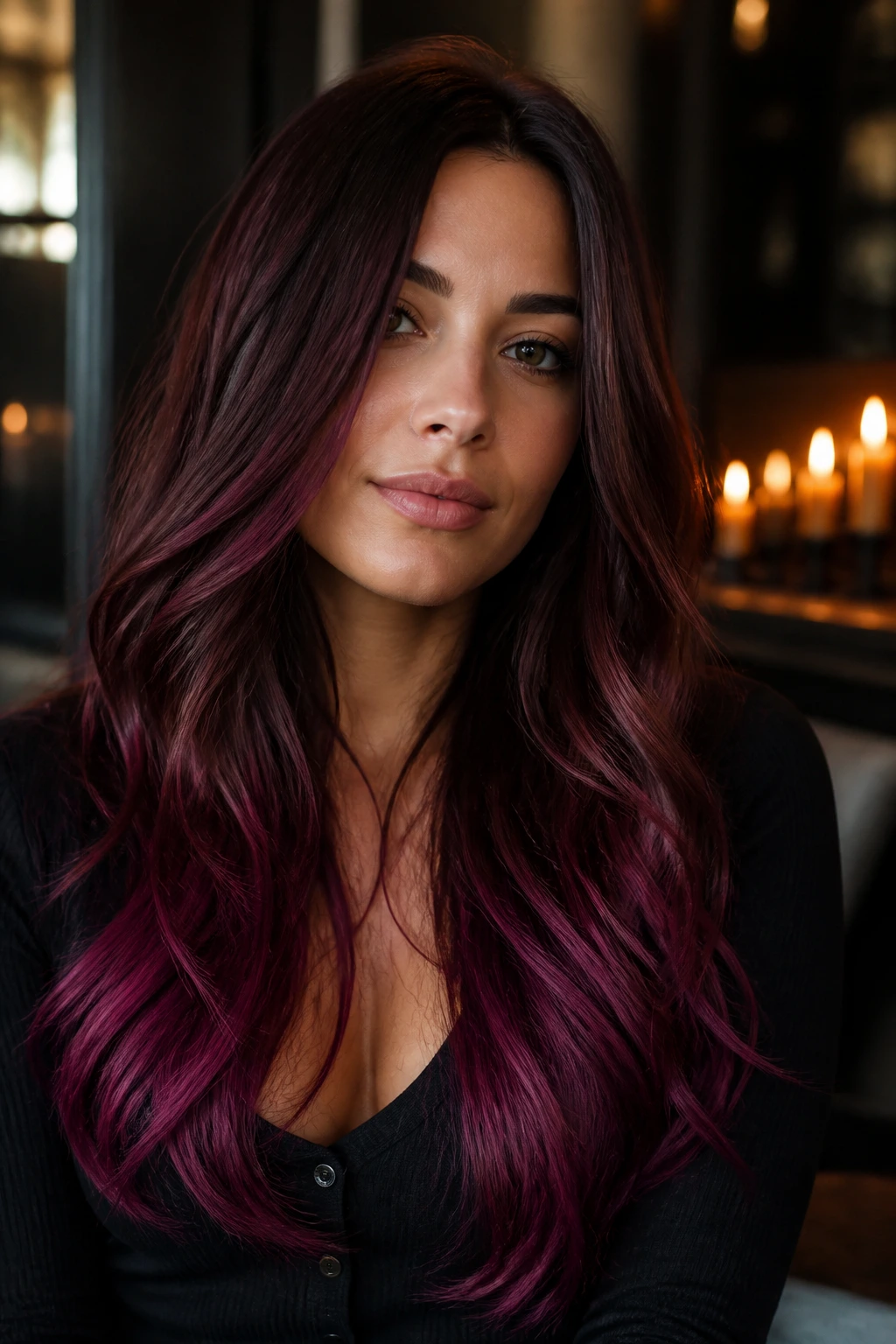
Chocolate cherry roots into plum wine ends give you the richness of red with a cooler finish than copper. The fade stays soft because both shades sit in the deep, drinkable color family — think berry, not candy.
Long hair is useful here because the cherry and plum can change with the light. Indoors, the style looks deep and dark. Outside, the berry tones appear more clearly at the mid-lengths and ends. That shape-shifting quality is half the appeal.
Keep the Shine High
Dark reds look best when the cuticle is smooth. Use a mask once a week and keep heat protectant on hand. The ends need slip so the plum doesn’t read matte and heavy.
This shade is especially flattering if you want something red without wearing a bright copper around your face. It keeps the color moody and soft.
18. Deep Brown to Dusty Lilac
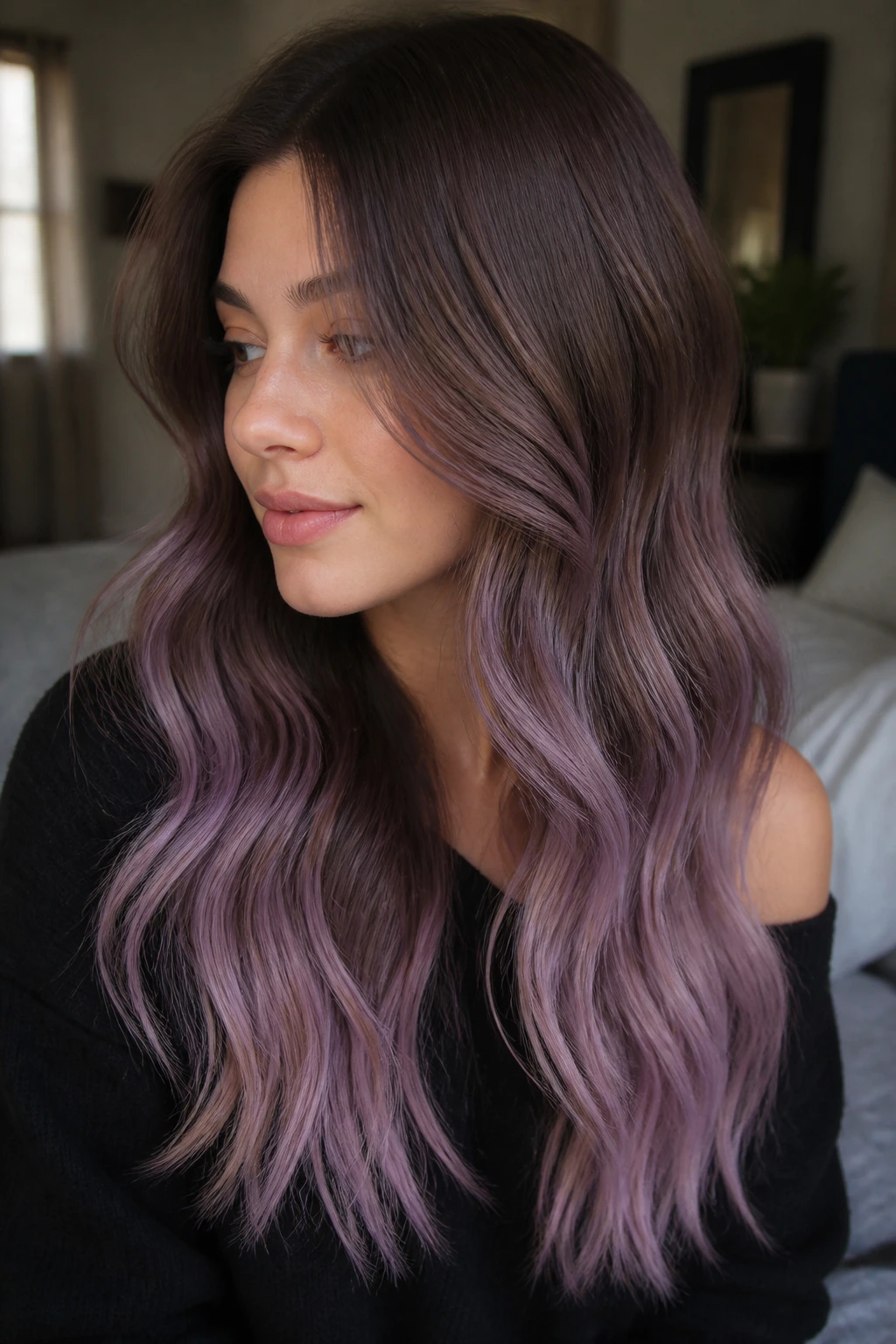
Dusty lilac is the fantasy-color version of a soft ombre, and it works better than people expect when the lilac is muted. Deep brown roots keep it anchored, while the dusty pastel ends give just enough surprise to make long hair interesting.
The trick is not to chase vivid purple. Dusty lilac should look like color that’s been softened by a gray veil. That makes the fade wearable. On long hair, the lower half can hold that muted tone without overwhelming the whole head.
A Better Way to Wear Fashion Color
If your ends are already lightened, lilac is easier to maintain. If they’re darker, ask for a sheer wash rather than a heavy deposit. It should look like a haze, not paint.
Best styling choice: loose waves. The lilac picks up in the bends and keeps the fade from looking flat.
19. Black to Cocoa to Caramel Melt
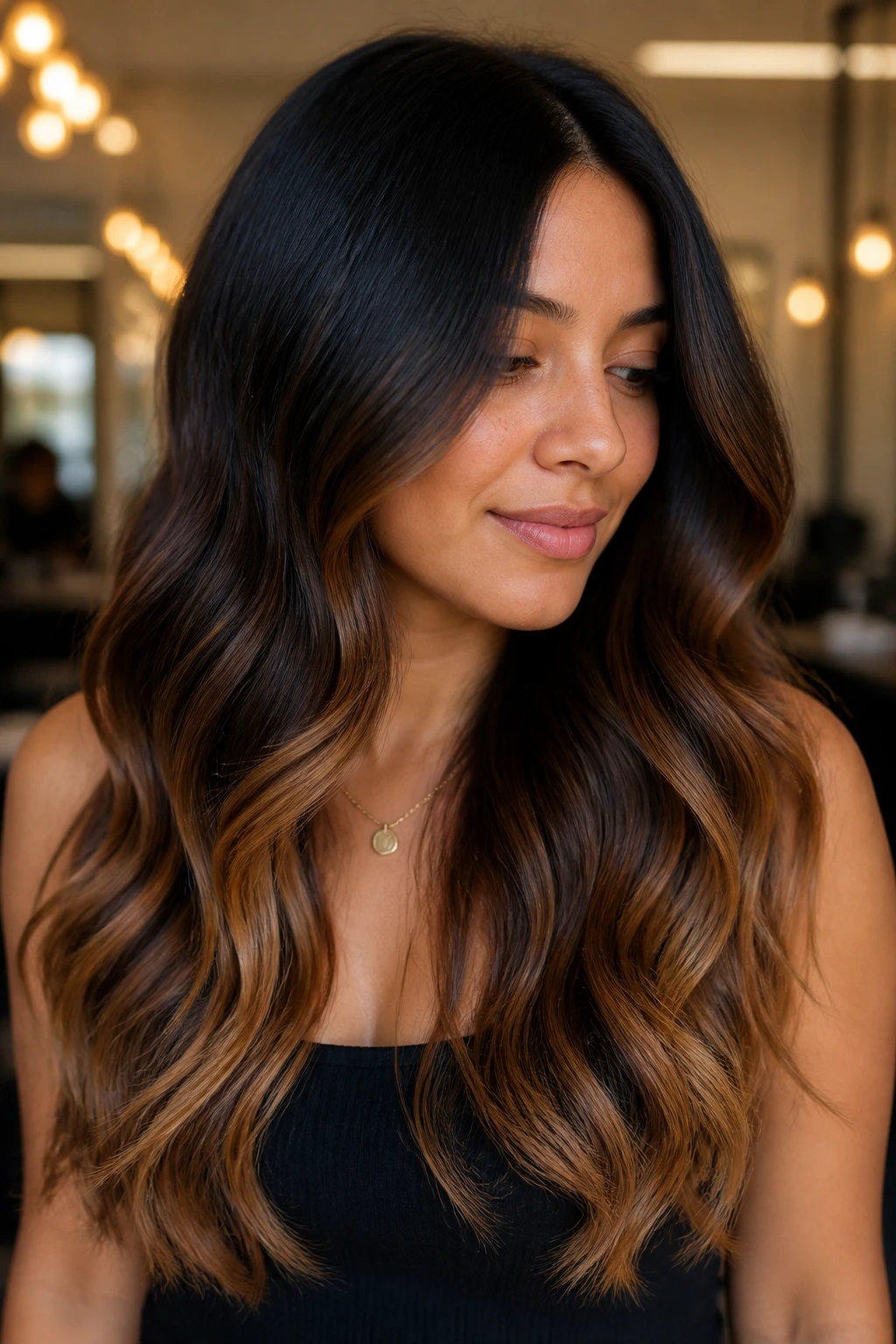
A three-step melt like this is one of the cleanest ways to keep a dramatic ombre soft. Black at the top, cocoa through the middle, caramel at the ends — that middle step matters. It keeps the fade from looking like a two-color split.
Long hair is the reason this works. You have the room to use a true transition tone. Without that middle zone, black-to-caramel can feel abrupt. With it, the whole thing looks like one continuous shift.
Why It Feels Expensive
The cocoa section acts like a buffer. It softens the jump and makes the caramel look intentional instead of random. That little detail changes everything, especially on thicker or wavier hair.
If you wear your hair straight, this fade looks clean and glossy. If you curl it, the cocoa band disappears into the movement and the caramel ends take over in the best way.
20. Dark Blonde to Butterscotch Fade
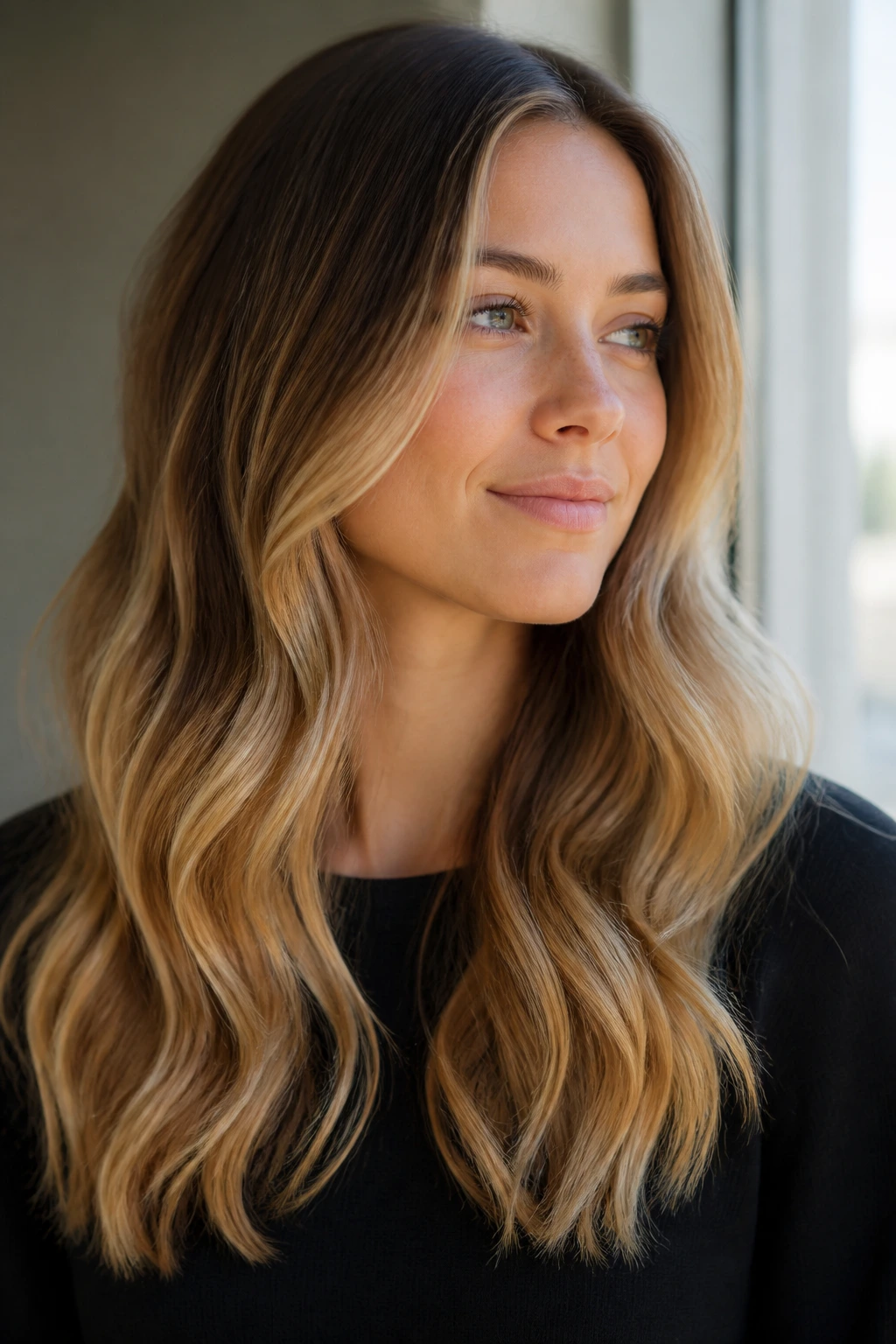
Dark blonde to butterscotch is for people who don’t need a giant color change but still want the ends to glow more than the roots. Butterscotch is softer and creamier than brass. It’s warm, but not syrupy.
On long hair, this kind of fade reads almost sun-touched. The transition is gentle because you’re moving within the blonde family, not jumping from brown to blonde. That makes it a strong pick for naturally lighter bases or previously highlighted hair.
Best When You Want a Lived-In Look
A root shadow can deepen the top just enough to make the butterscotch pop without making it obvious. That’s especially nice if your cut has long layers around the face and you want the lighter pieces to stay bright.
This shade also grows out cleanly. Dark blonde roots do not fight butterscotch the way dark brunette roots fight platinum.
21. Chestnut to Rose Gold
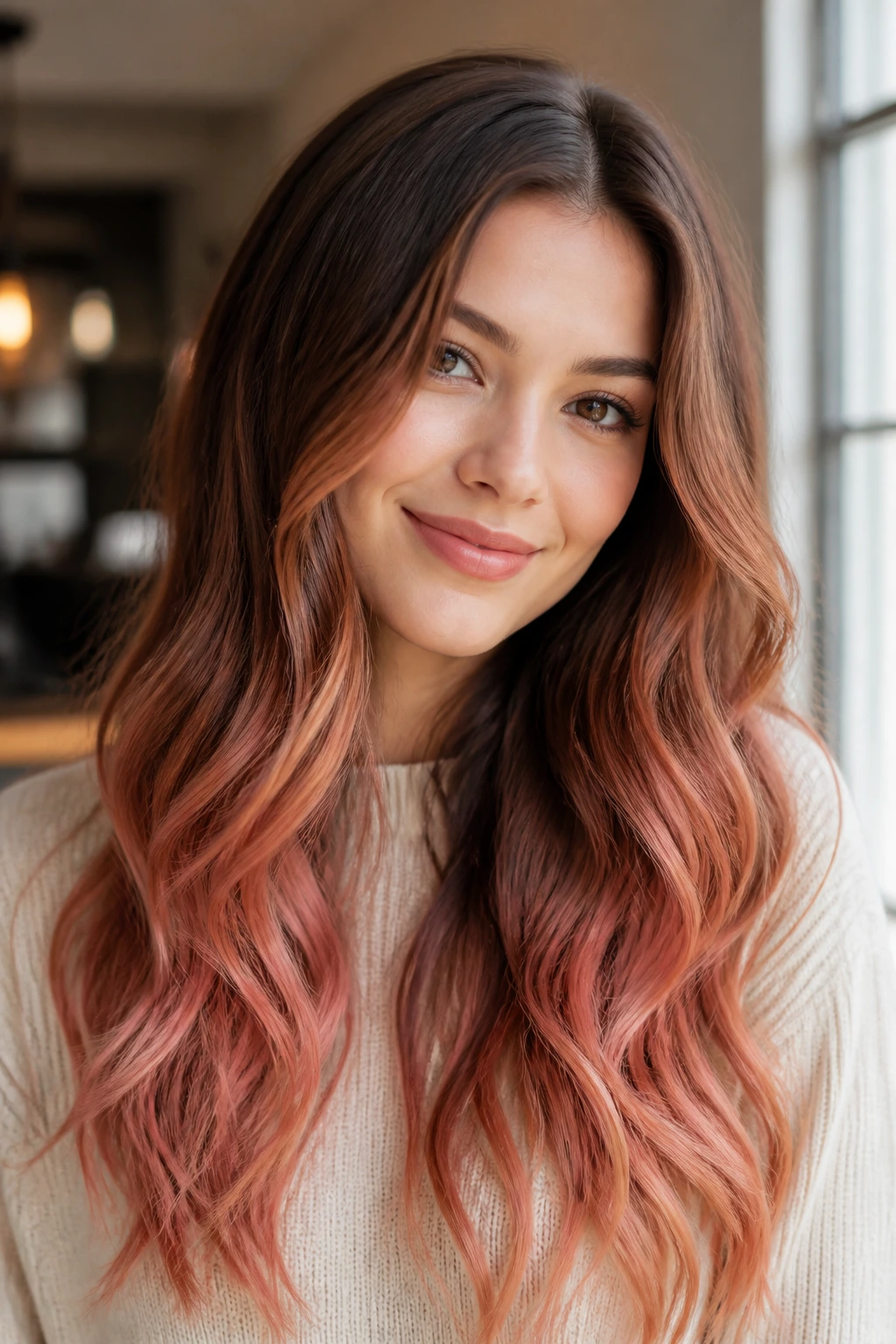
Chestnut to rose gold has a soft blush quality that works best when the rose is subtle. Too much pink and the whole thing turns loud. Kept soft, rose gold looks warm, pretty, and a little luminous on long hair.
The chestnut root gives it depth. The rose gold ends add a faint metallic glow that moves well in waves and curls. It’s one of those colors that changes with the light but never feels stiff.
Who It Suits
If you like warmth but don’t want copper, this is a nice middle road. It flatters long layers because the rose gold catches on the face-framing pieces and makes the style feel lighter without turning blonde.
A color-depositing conditioner in rose or soft copper can keep the end tone alive between salon visits. Use it sparingly. One heavy coat and the soft blush becomes too pink too fast.
22. Espresso to Champagne Beige
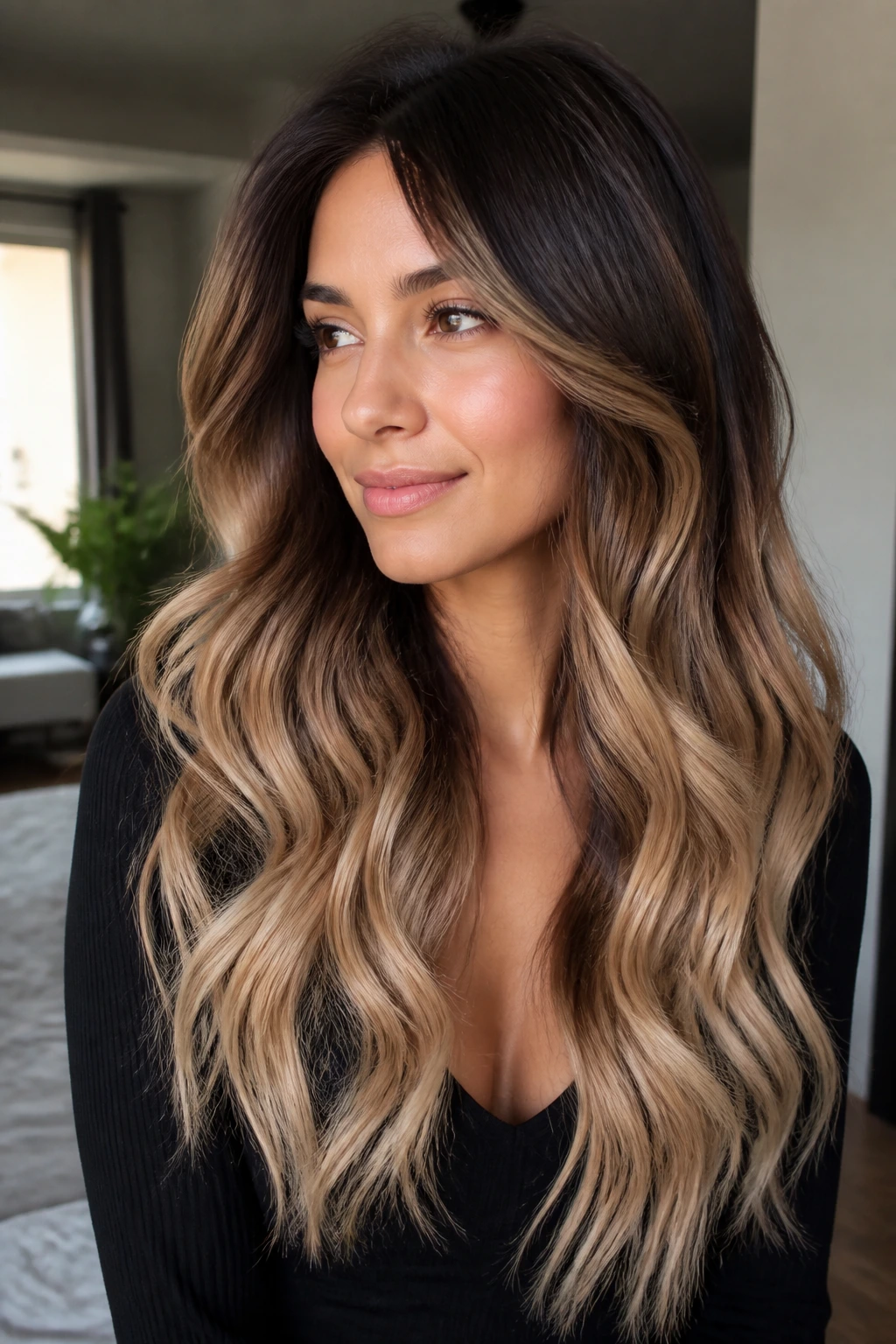
Espresso into champagne beige is the elegant version of a high-contrast fade. The reason it stays soft is the champagne tone. It has enough warmth to avoid looking stark, but enough brightness to feel lifted.
Long hair gives this color real space to move from deep brown to light beige without feeling abrupt. The champagne sits best through the bottom third and a few face-framing pieces, where it catches the light and keeps the fade from feeling too heavy.
The Cleanest Finish on the List
This look needs a good toner and a little discipline. If the beige goes yellow, the whole thing loses its edge. If it goes too ashy, it can look flat. The sweet spot is champagne: creamy, light, and polished without being icy.
A soft wave makes this color sing. The darker root stays grounded, and the beige ends seem to float.
Why Long Hair Gives Ombre Room to Melt
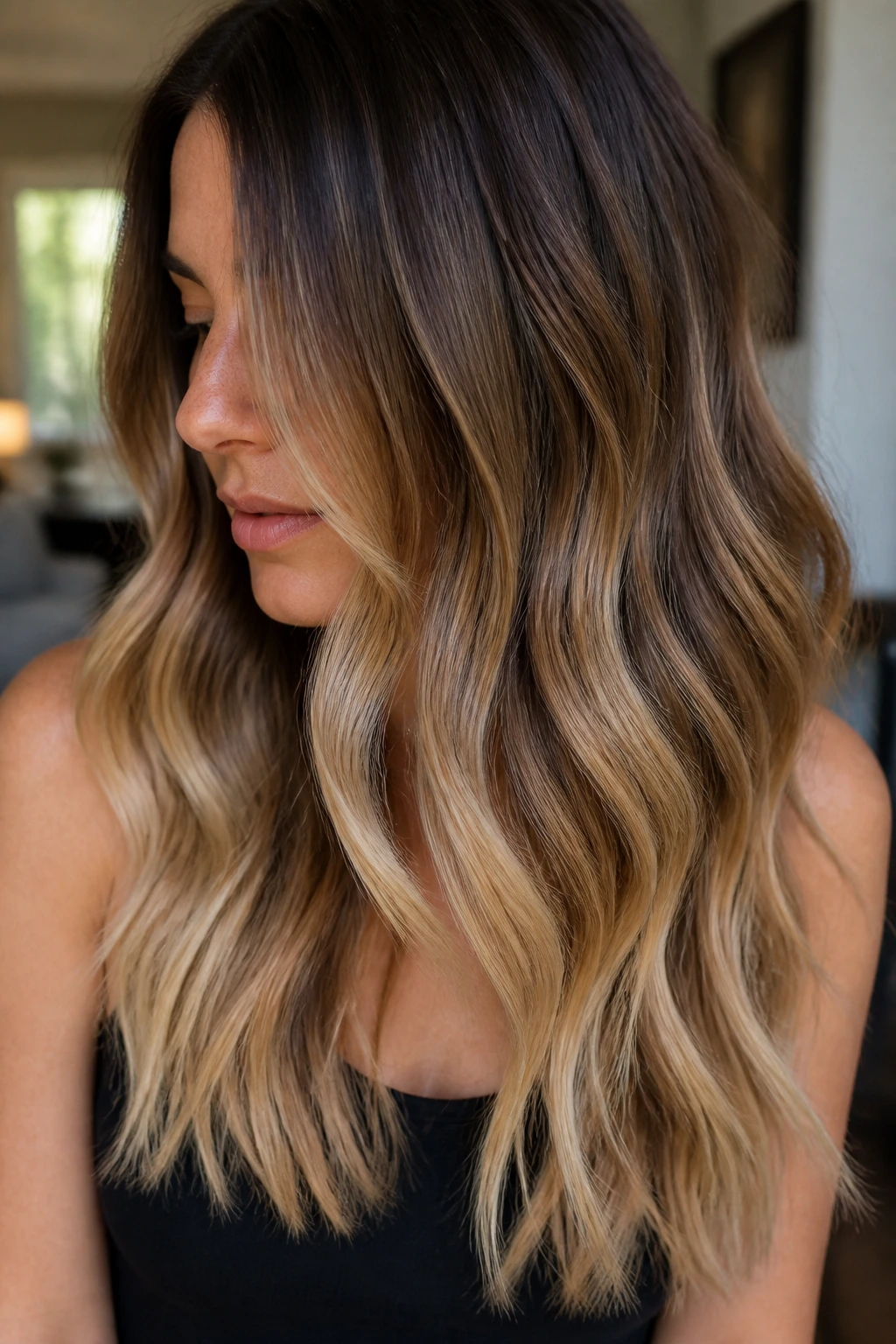
Long lengths are the reason ombre can look soft instead of obvious. A fade needs distance. When you only have a few inches to work with, the shift has to happen quickly, and quick color shifts tend to read harsher. On long hair, the transition can begin in the mid-lengths, pause there for a beat, and then finish at the ends. That pause is doing a lot of visual work.
The other advantage is movement. Long hair bends differently from short hair, and those bends break up the color bands. A layered cut or a soft wave can hide the point where one tone becomes another. A blunt, heavy finish can still look good, but it needs more care in placement because the line shows faster.
What Makes the Fade Look Soft Instead of Stripey
Keep the root zone deeper than you think you need. The goal is not to color every inch. The goal is to let the eye travel. When the lighter pieces start too high, the hair loses that slow build and starts looking like grown-out highlights.
Glossing matters here too. A clear or tinted gloss smooths the hand-off between shades and gives the ends that softer, slightly reflective finish. If the color looks dry, the fade looks harder. Simple as that.
How to Ask for a Long Hair Ombre That Stays Soft
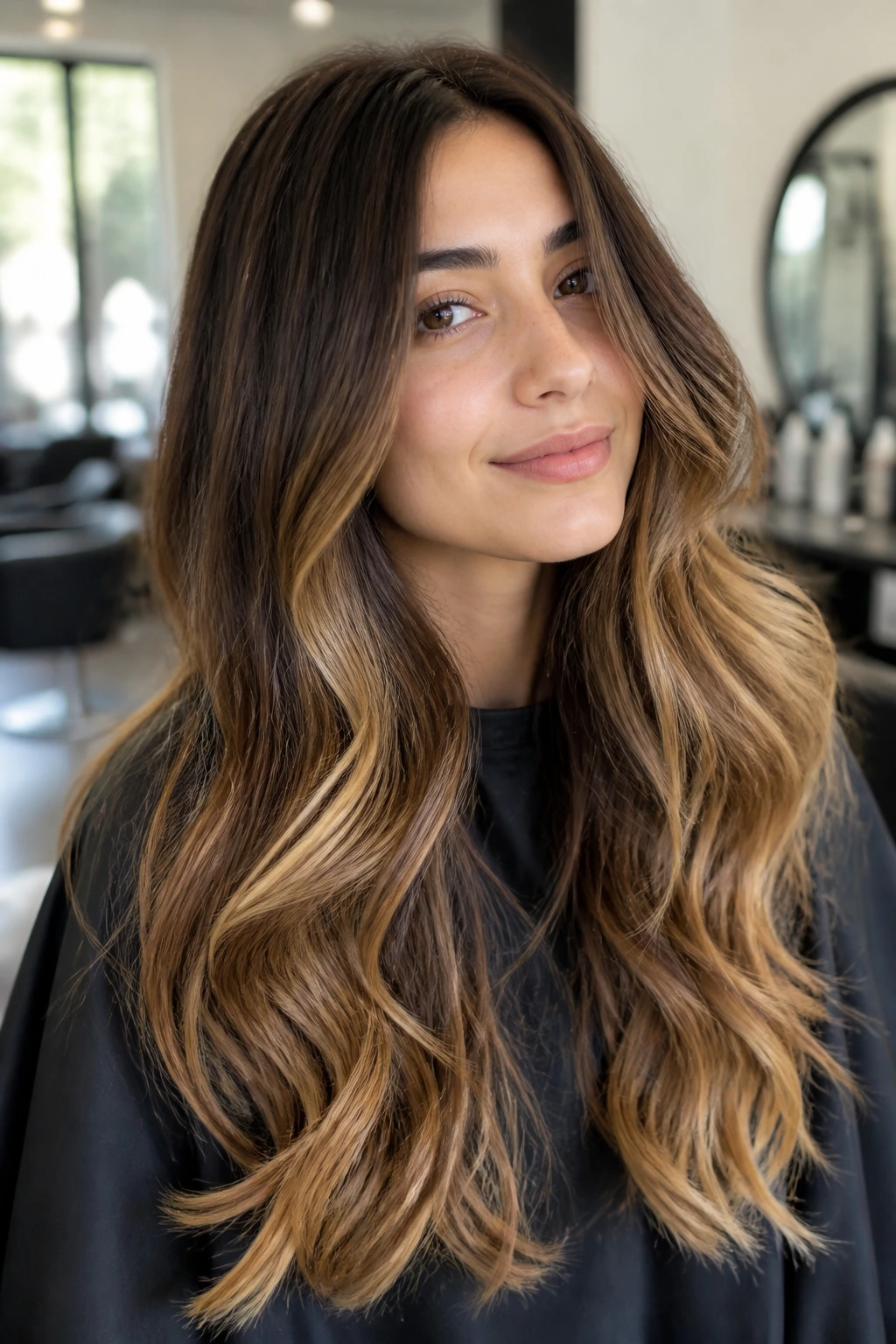
The chair conversation matters. A lot. If you walk in and say “I want it lighter,” you may get something brighter and less blended than you pictured. Better to talk in zones: root, mid-length, ends. That gives your colorist a map.
Placement: Ask to keep the root area darker and start the lightening below the cheekbone or collarbone, depending on how long your hair is. That spacing keeps the fade from looking forced.
Tone: Tell your colorist whether you want warm, cool, or neutral ends. Caramel, beige, ash, champagne, copper, and rose each need a different toner, and tone is what keeps the fade soft after the lift.
Finish: If you want dimension, ask for a gloss after coloring. It smooths roughness, adds shine, and keeps the ends from looking frayed.
Style check: Bring one or two photos of your usual styling. Straight hair and curled hair show ombre differently, and the placement should match how you wear it most often.
Tools and Products That Keep the Blend Clean
-
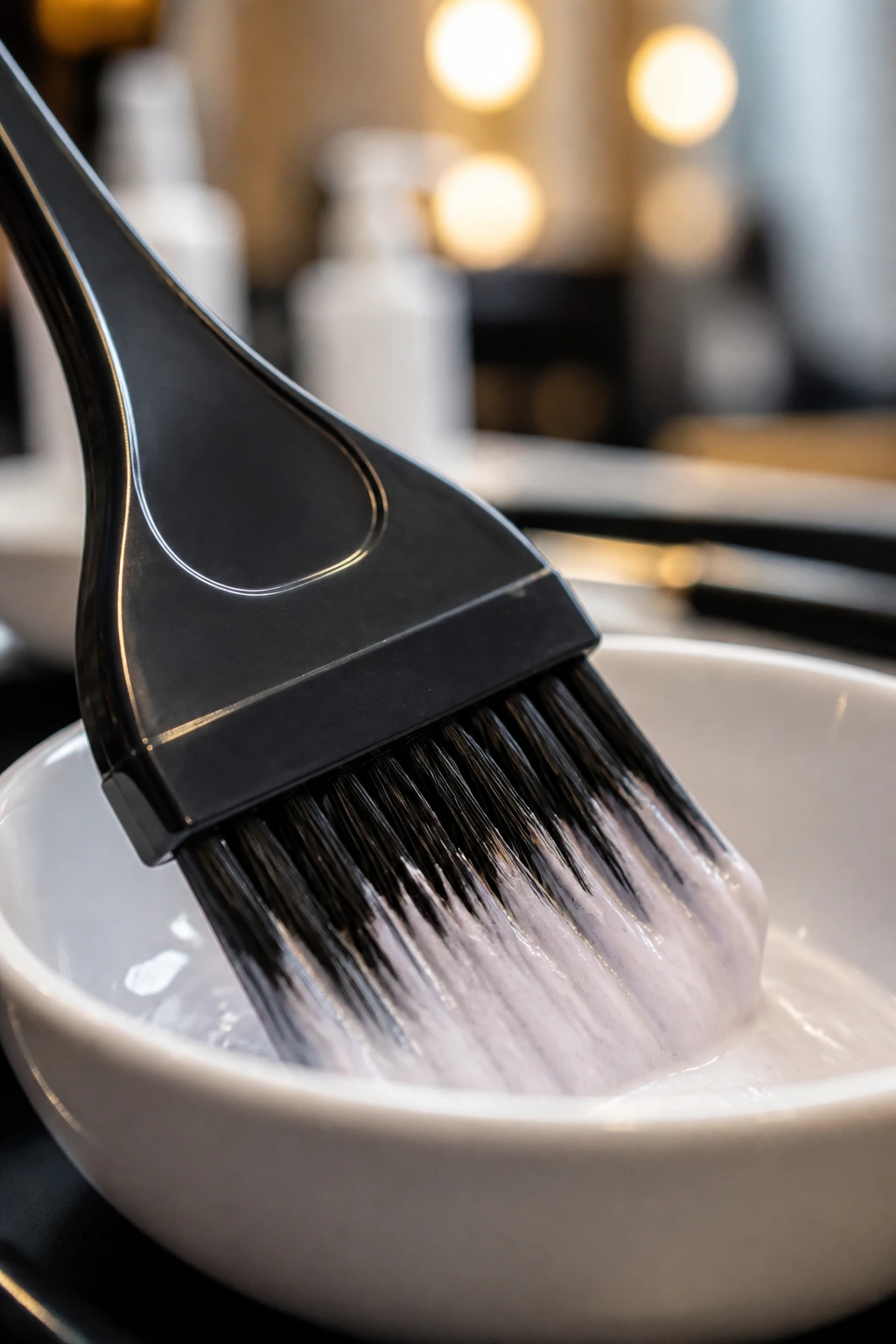
Color brush and bowl: Better control than a squeeze bottle when you want a feathered fade instead of a blocky one.
-
Sectioning clips: Long hair tangles itself into a knot if you try to work fast. Clips keep the layers separated.
-
Tail comb: Useful for clean partings and checking whether the fade sits evenly on both sides.
-
Gloves and cape: Bleach and toner do not care about your shirt.
-
Wide-tooth comb: Good for distributing conditioner or a gloss through long ends without snapping them.
-
Sulfate-free shampoo: Helps the tone last longer and keeps the fade from washing out too fast.
-
Purple shampoo or blue shampoo: Use one only when your blonde or brown tones start drifting warm; too much can make the color flat.
-
Color-safe mask: Long hair needs moisture. Dry ends make ombre look rough.
-
Heat protectant spray: Especially useful if you style with a wand or flat iron. The lightened ends need it.
-
Light finishing serum: Adds slip and shine without coating the hair in grease.
How to Keep the Fade Soft Between Appointments
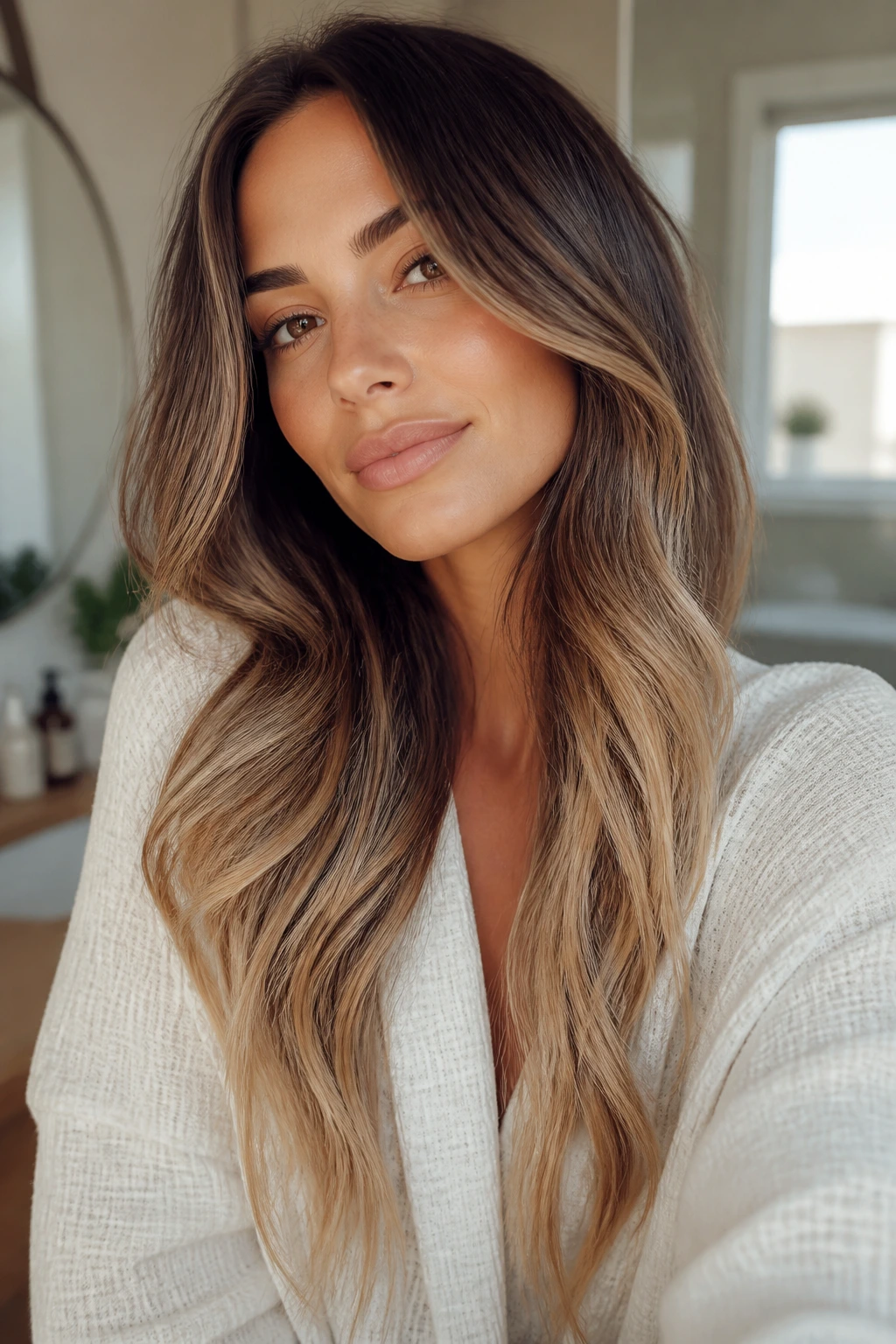
Long hair ombre looks best when the tone stays clean, not when you keep reprocessing the ends. The routine is simpler than people expect. Wash with cool or lukewarm water, use a color-safe shampoo two or three times a week if your scalp allows it, and work a mask through the mid-lengths and ends once a week. If your hair is fine, keep the mask off the roots so it doesn’t collapse the shape.
A gloss every 6 to 8 weeks keeps the transition smooth, especially on beige, caramel, copper, pearl, and silver-based fades. If you are blonde or lifting into cool tones, use purple shampoo sparingly — once a week is enough for many heads of hair. If the ends start looking too cold or flat, pause it. The goal is tone, not chalk.
Trim the bottom 1/4 to 1/2 inch every 8 to 12 weeks if your ends split easily. That keeps the faded portion from looking thin and scraped out. Long hair can hide damage for a while, then suddenly the ends look wispy. A small trim fixes that before it gets ugly.
Common Mistakes That Make Ombre Look Harsh
The most common mistake is starting the lightening too high. That gives you a line instead of a gradient. On long hair, the fade usually looks better when the first lightened pieces sit lower than you think they should, especially if your hair is naturally dark.
Skipping toner is another one. Raw lifted hair can look yellow, orange, or flat depending on the base. Toner is what turns “lightened” into “finished.” If the ends seem brassy a week after coloring, that usually means the tone was never quite right.
Over-lightening dry ends is a trap too. When the hair is porous, it grabs pigment fast and releases it faster. The result is either a muddy tone or ends that look too pale and fuzzy. A good colorist will leave a little depth in the last few inches and soften with gloss instead of pushing for maximum lift.
Using the wrong shampoo can wreck the mood. Purple shampoo on warm brunettes can mute the richness. Blue shampoo on already cool ash tones can make them look dull. Use tone-depositing products with a light hand.
Variations and Alternate Ways to Wear Ombre on Long Hair
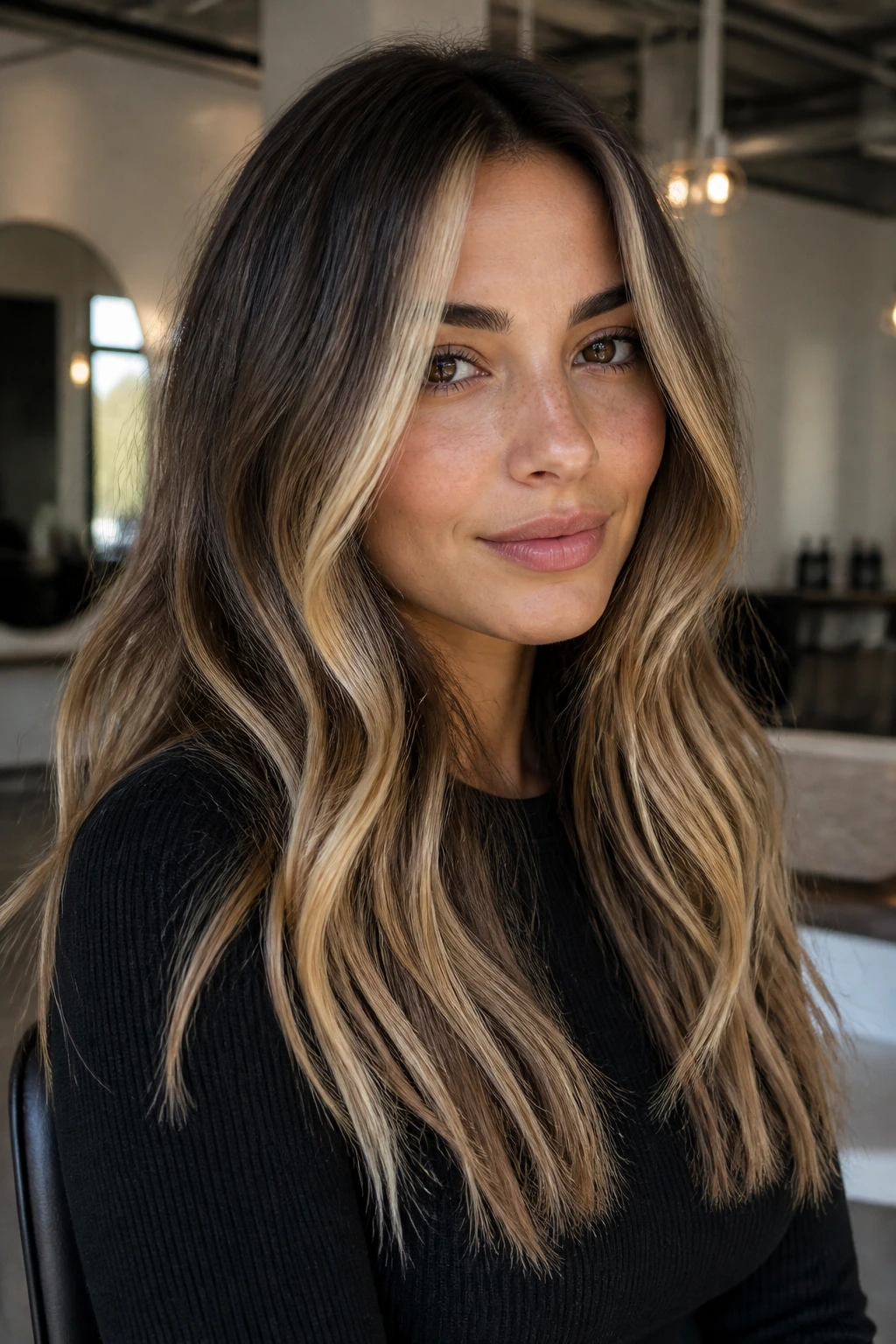
The Money-Piece Melt: Add brighter face-framing pieces while keeping the rest of the fade soft and low. It works when you want the front to pop but don’t want brightness scattered everywhere.
The Glossed Bronde: Stay within brown and blonde territory with a neutral gloss over the whole length. This is a strong option if you want a lived-in fade that doesn’t read too warm or too cool.
The Muted Fashion Fade: Try dusty lilac, smoky rose, navy smoke, or silver taupe at the ends instead of full-strength vivid color. The muted version keeps the ombre playful but still wearable.
The Extra-Low Contrast Melt: Move only one or two levels lighter from root to end. This is the quietest option here, and it’s excellent on very long hair because the length itself provides the visual interest.
The High-Contrast Soft Fade: Go from dark roots to noticeably lighter ends, but keep the transition buffered with two middle tones and a gloss. You get the drama without the hard line.
Frequently Asked Questions
How far down should ombre start on long hair?
Usually lower than people expect. Starting around the cheekbone, chin, or collarbone area keeps the fade soft and gives the color room to blur as it moves toward the ends.
Can long hair ombre work on black hair?
Yes, but the best version usually uses several steps rather than one leap. Black to cocoa, then caramel, ash brown, or smoky taupe reads softer than black straight to pale blonde.
Is ombre the same as balayage?
Not exactly. Balayage is the painting method; ombre is the overall gradient effect. You can get a soft ombre using balayage, foils, or a mix of both.
Does ombre damage long hair a lot?
It can if the ends are pushed too light too fast. Keeping the root darker, lifting only the lower lengths, and using gloss instead of more bleach after the first lift helps keep the damage down.
What if my ends are already dry or porous?
Ask for less lift at the ends and more tone work instead. Porous ends grab dye hard, so a creamy caramel, beige, or muted copper often looks better than a very pale blonde.
How often do I need toner or gloss?
For most long hair ombre shades, every 6 to 8 weeks is a good rhythm. Very cool blondes or silver tones may need a touch-up sooner, while deeper caramel or copper shades can sometimes last a little longer.
Can I wear ombre on curly long hair?
Absolutely. Curls make the fade look softer because the bends break up the color bands. The only catch is placement: lighter pieces usually look best where the curls fall around the face and ends, not buried too high.
What if I want the fade to be subtle from across the room?
Stay within two or three levels of your natural color and choose a shade family close to your base — caramel, toffee, mushroom, champagne beige, or smoky taupe. The smaller the gap between tones, the softer the result.
The Fade That Moves With You
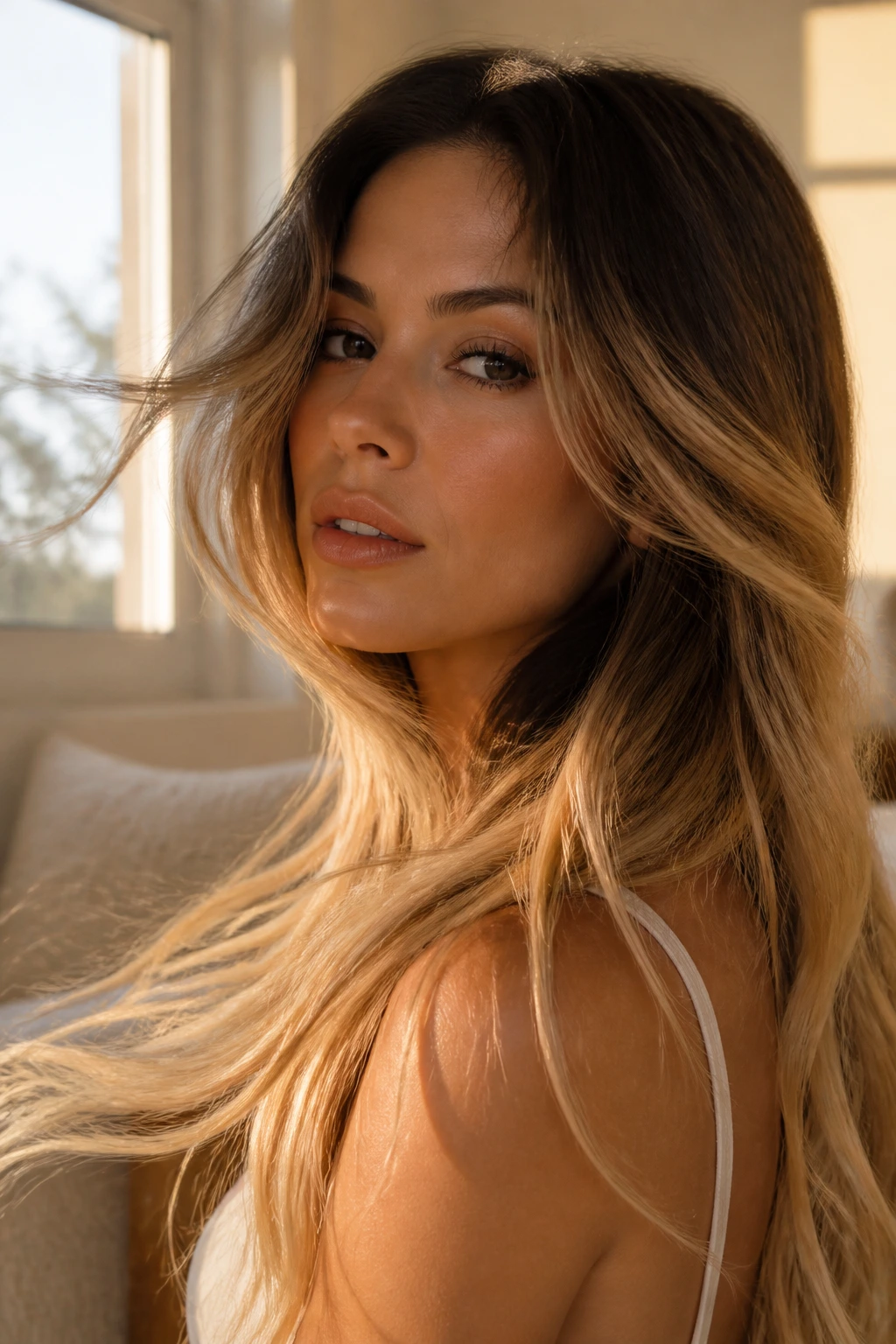
The nicest thing about long hair ombre is that it doesn’t have to be loud to feel finished. A good fade gives the hair shape, depth, and a little motion, even when the style itself is simple. The root stays grounded. The ends do the talking. That balance is what makes the color look soft instead of overdone.
If you’re choosing between shades, start with your base color and your usual styling habits. That decision matters more than chasing the lightest ends on the board. A caramel melt on long layers, a smoky beige fade on straight hair, or a muted copper wash through wavy lengths can each look better than a brighter shade that fights your hair texture.
Pick the tone that feels like it belongs there, not the one that shouts the loudest. Long hair gives you room to let the color unfold. Use it.
