



Spring is when balayage stops looking like a salon service and starts looking like hair that has spent a week in soft daylight. The best versions don’t shout from across the room. They move. They sit a shade or two lighter where the hair bends, keep a little darkness near the root, and let the ends do the talking without turning into stripes.
These 38 balayage looks for spring cover a wide range on purpose: champagne blonde, beige brunette, copper apricot, smoky ash, rose gold, and a few in-between shades that are harder to name but easy to love. That spread matters. A level 8 caramel ribbon on a long layered cut behaves nothing like a pale vanilla gloss on a blunt lob, and a curly head needs its lightness painted in a different rhythm than straight hair does.
What makes this crop useful is the placement logic behind it. Some looks are built for low upkeep and soft grow-out. Others lean bright around the face, which is where people notice color first anyway. A few are for anyone who wants something a little bolder, but still wearable on a random Tuesday with no styling drama. That’s the sweet spot.
Why These 38 Balayage Ideas Hold Up in Real Life
- Grow-Out Stays Soft: Hand-painted placement leaves the root line blurred, so the color can stretch longer between salon visits without looking blunt.
- Tone Is the Real Difference: Champagne, beige, copper, ash, and pearl all read differently under spring light, even when the lift level is similar.
- Cut and Color Work Together: A lob, bob, long layer, or curly shape changes where the brightness should sit, and the best looks respect that.
- Not Just for Blondes: The list includes brunette, red, silver, and bronde ideas, because spring color looks better when it starts from your actual base.
- Easy to Show a Colorist: Each idea gives you a tone direction, a placement style, and a maintenance feel, which makes the appointment conversation much less vague.
- Style Friendly: These shades still look good with air-dried texture, a quick blowout, or a loose wave, which matters more than a pretty photo.
1. Soft Champagne Balayage on a Lob
Champagne on a lob has a clean, polished feel without looking stiff. The shade sits between pale blonde and soft beige, which keeps the ends bright while the root shadow stays calm and natural. On a blunt or slightly textured lob, that contrast makes the cut look sharper in a good way.
Ask for hand-painted pieces through the mids and ends, with a root that stays one to two levels deeper than the lightest ribbons. A level 8 to 9 champagne gloss keeps the blonde from turning flat or brassy. This is one of those looks that likes movement, but not too much of it. A bend with a flat iron or a loose wave is enough.
It works especially well if your hair is fine and tends to fall flat. The lighter ends create the illusion of density, and the darker root gives the style a little backbone.
2. Creamy Beige Blonde Balayage
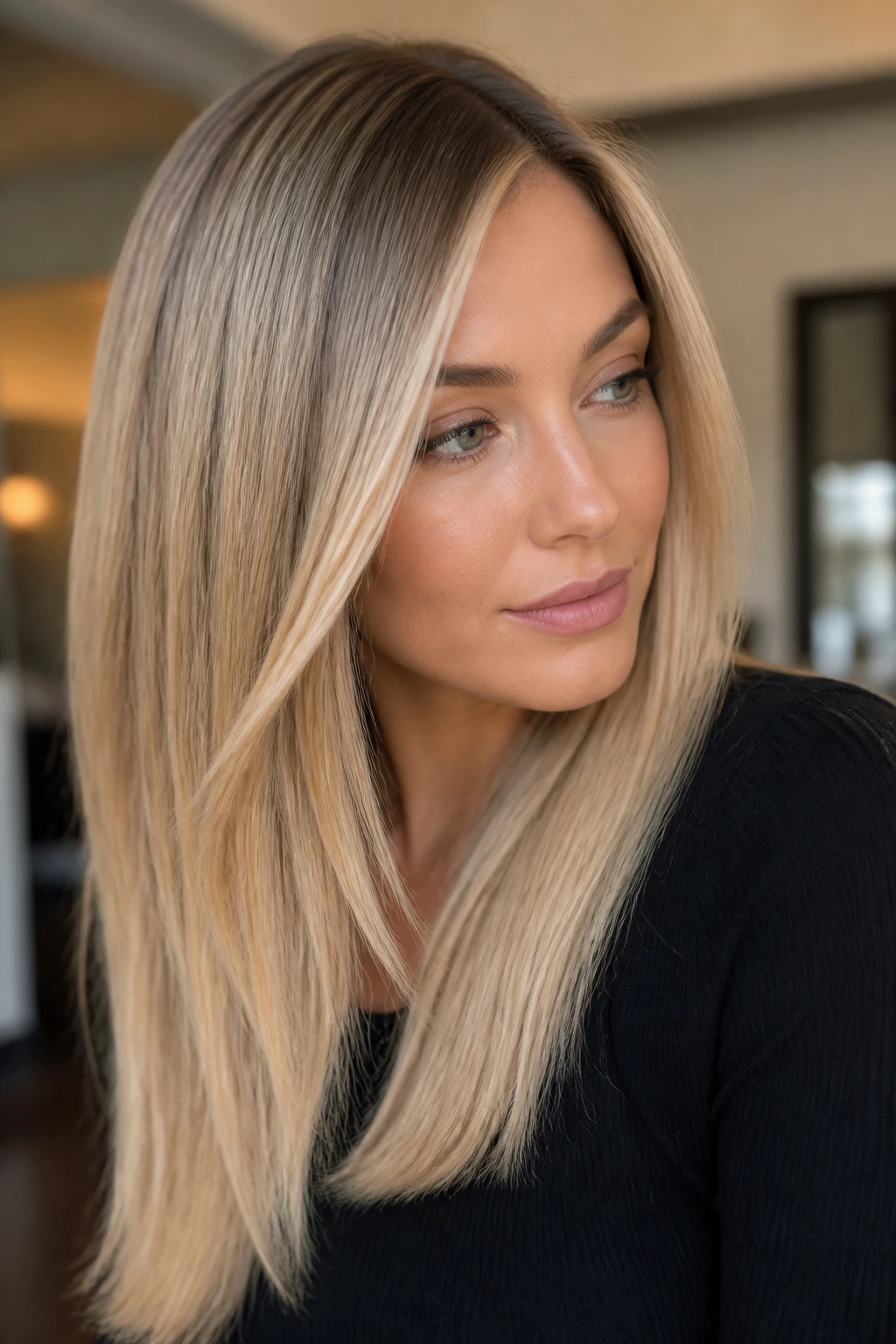
If icy blonde feels too sharp, creamy beige is the safer, prettier bet. The tone is soft and buttery without drifting yellow, which is a thin line in blonde color and one that matters more than people think. This version looks expensive because it doesn’t fight the hair’s natural warmth; it edits it.
For the cleanest result, ask your colorist for beige-toned ribbons lifted to a pale yellow stage before toning. That lets the gloss do the work instead of trying to force coolness onto hair that wants warmth. On medium to light blonde bases, the result is creamy and smooth. On darker hair, it may take more than one visit.
Straight styling shows the blend best here. So does a round-brushed finish. Loose curls can make it look too soft if you’re not careful, and that’s the rare case where sleekness wins.
3. Sunlit Bronde Balayage
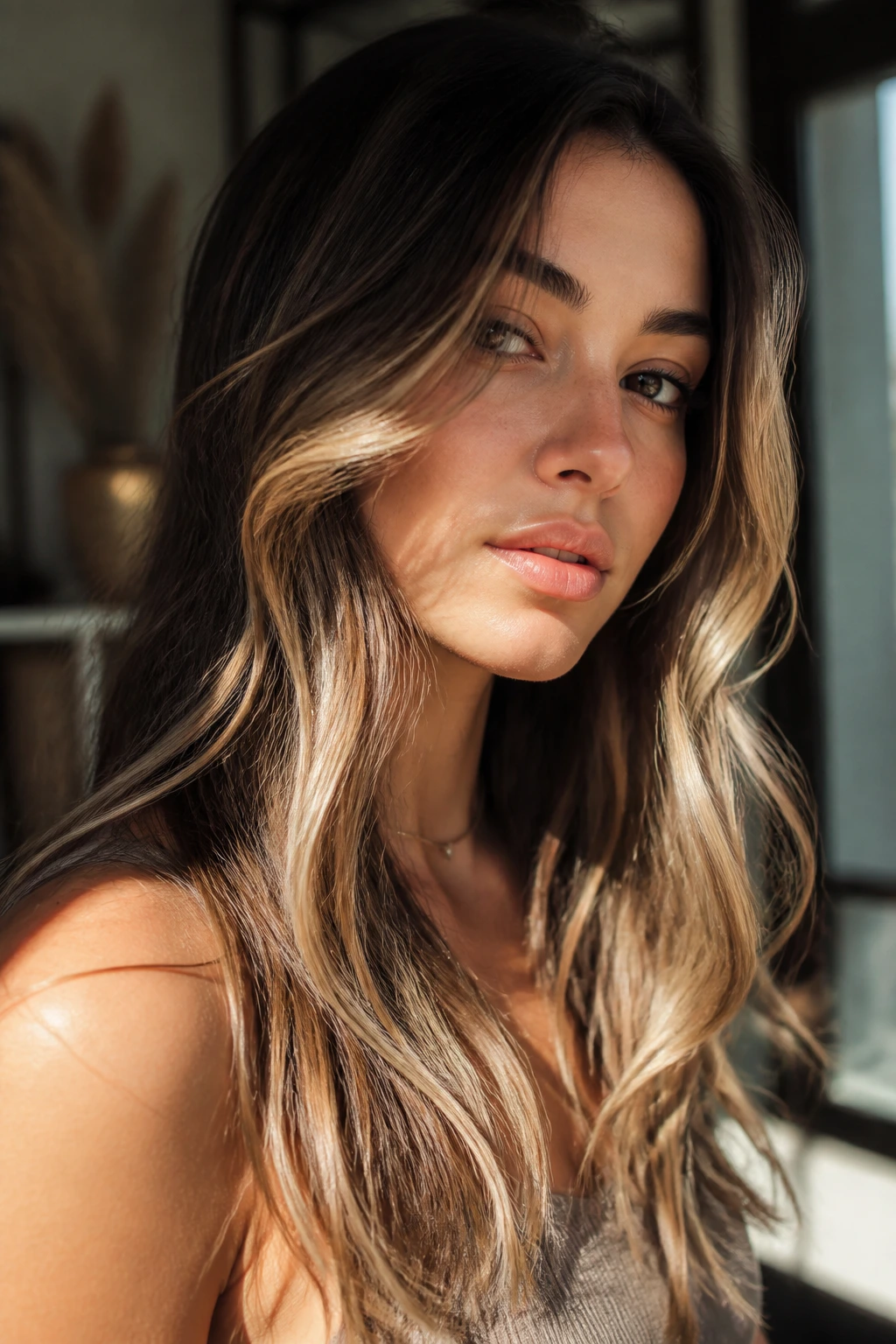
Bronde is still the best word for hair that lives between brown and blonde without committing to either camp. The spring version is lighter at the ends, warmer around the face, and kept a touch darker underneath so it doesn’t vanish in bright light. That depth gives the color some grit.
This is a smart choice if you want dimension without a big change. A level 7 brunette base with level 8 to 9 caramel-beige pieces usually does the trick, especially when the lightest ribbons stay around the cheekbones and collarbone. You get movement without the maintenance headache of a full blonde grow-out.
The thing I like here is how forgiving it is. If your hair air-dries a little wild, bronde still reads intentional. If you blow it out smooth, the color looks richer. That’s not a common combination.
4. Honey Brunette Balayage with Face-Framing Pieces
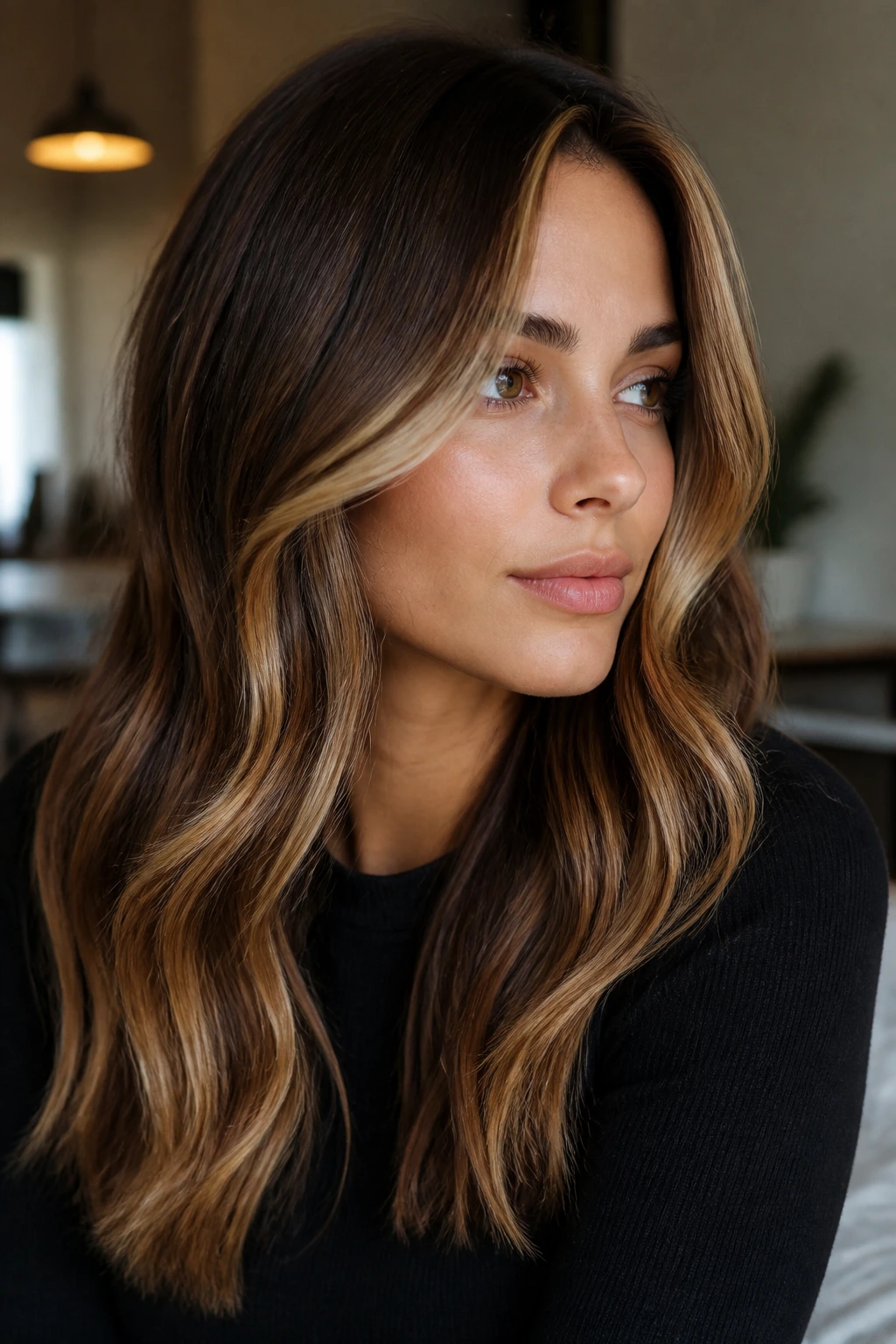
Honey on brunette hair is one of those shades that does a lot with a little. The warmth wakes up darker bases without making them look orange, and the face-framing pieces pull attention to the front where the eye lands first. On layered hair, the effect is especially good because the brighter strands catch every turn.
Keep the interior soft and ask for a brighter money piece that starts near the cheekbone rather than the root. That keeps the top from looking overdone. A neutral or warm brunette base around level 5 to 6 is ideal, though darker hair can still go this route if the lightening is gradual.
It’s a good option if you want spring color that plays nicely with minimal styling. Even a rough blow-dry and a little serum on the ends gives it enough shape.
5. Caramel Ribbon Balayage for Long Layers
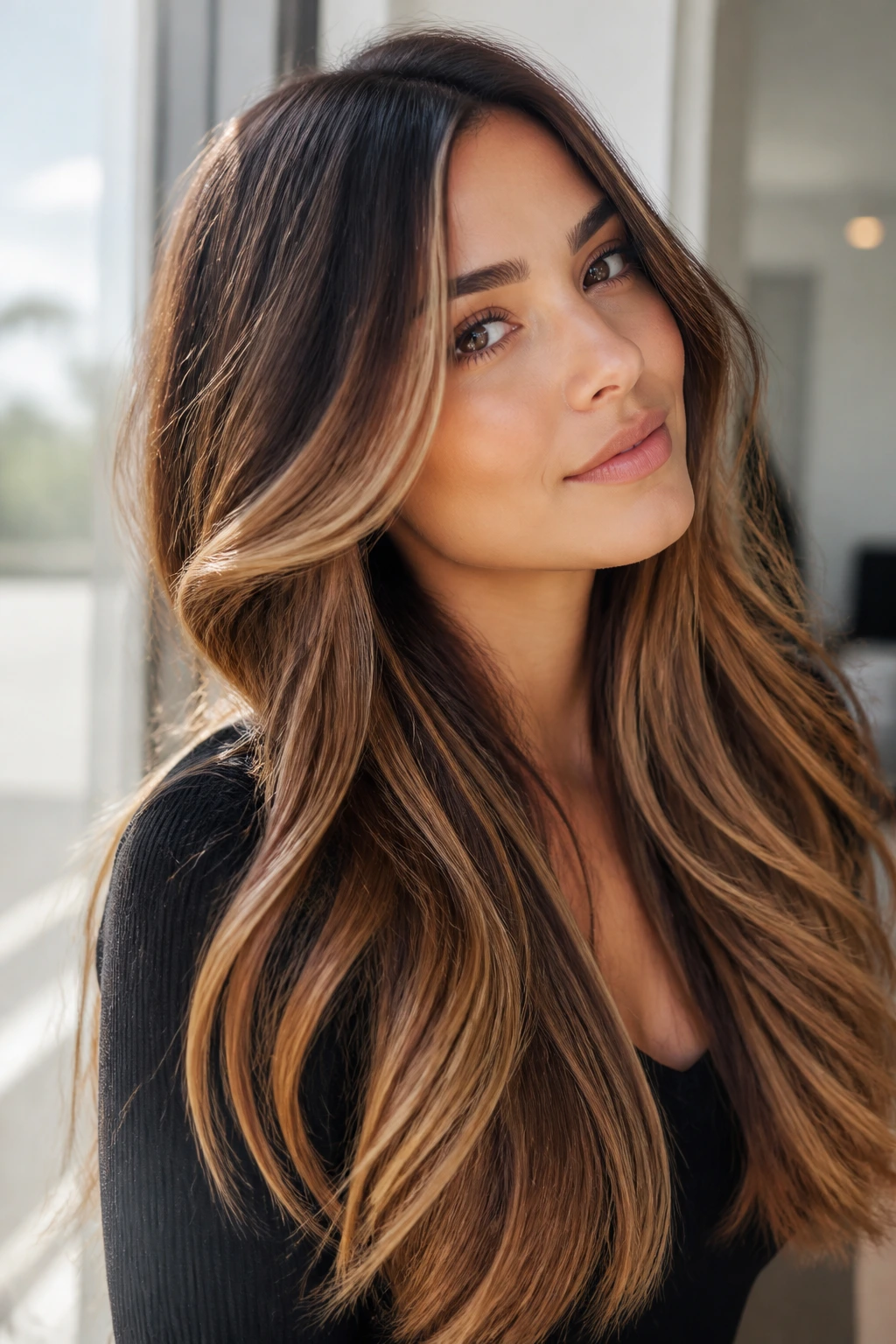
Long layers are where caramel ribbons really make sense. The movement in the cut gives the color something to sit on, so the lightness reads as part of the shape instead of sitting on top of it. On very long hair, this prevents the ends from looking like one heavy block.
Ask for wider painted ribbons through the mid-lengths and lighter ends, but keep the root area softly shaded. That shadow is what keeps the color from turning flat after a few washes. Caramel works on medium brunettes especially well, because it adds warmth without collapsing into copper.
This is one of the better spring choices if you wear your hair wavy most of the time. Loose bends show the ribbons clearly, and the color moves when you walk. That sounds minor. It isn’t.
6. Buttercream Blonde Balayage
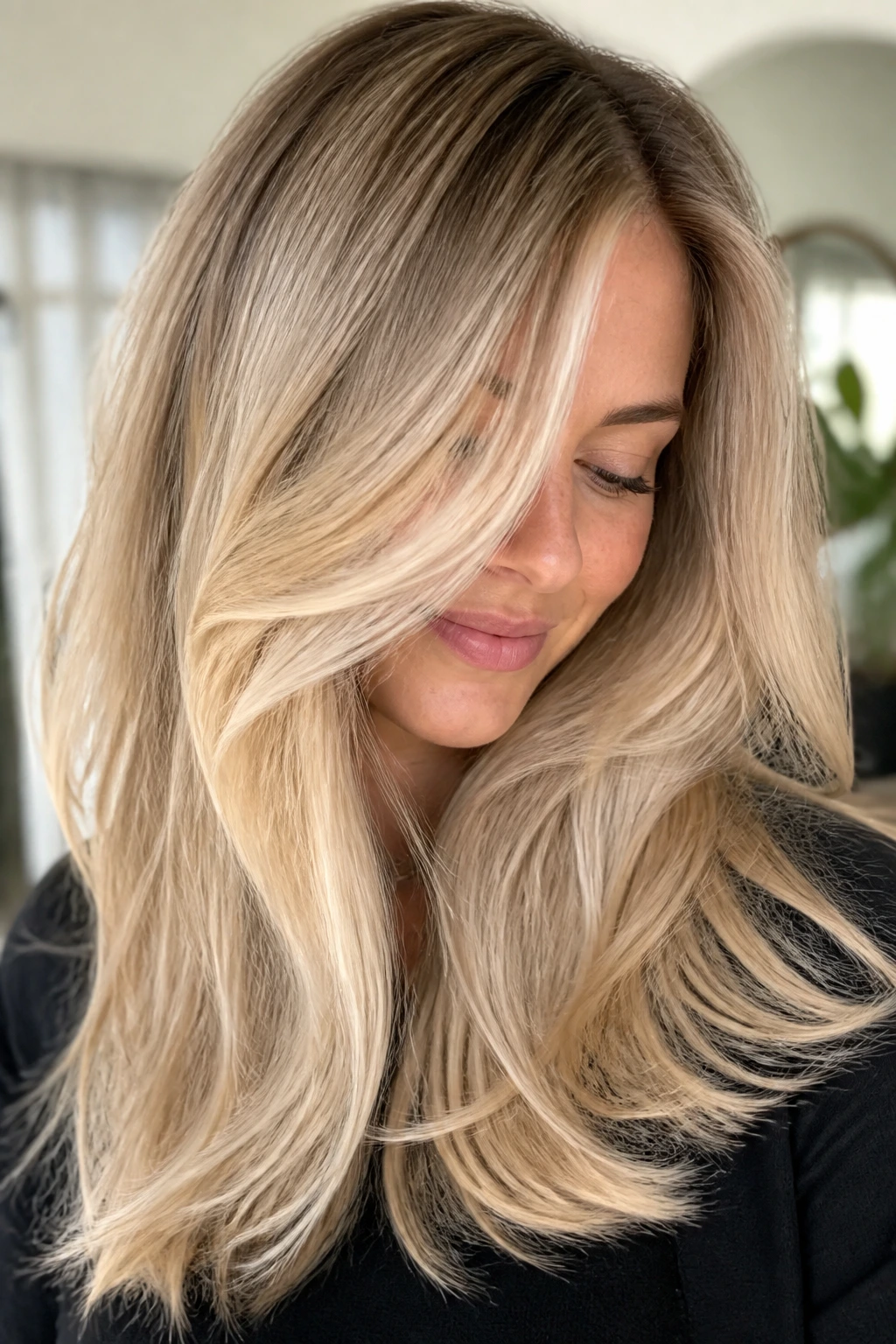
Buttercream blonde sits in a very specific lane: pale, soft, and not too cool. It has that creamy, almost whipped look that reads gentle rather than frosted. On lighter bases, it can be a beautiful spring reset after a winter gloss that went a little dark or muddy.
The main trick is tone control. You want a level 9 to 10 blonde with a beige-vanilla gloss, not a stark silver finish. Too much ash and it starts looking dry. Too much gold and it looks yellow. The sweet spot is in the middle, and it’s a narrow middle.
This shade looks especially good on hair with smooth layers or a long bob. The shape gives the color places to flash without breaking the softness. A little shine spray goes a long way here.
7. Golden Mocha Balayage
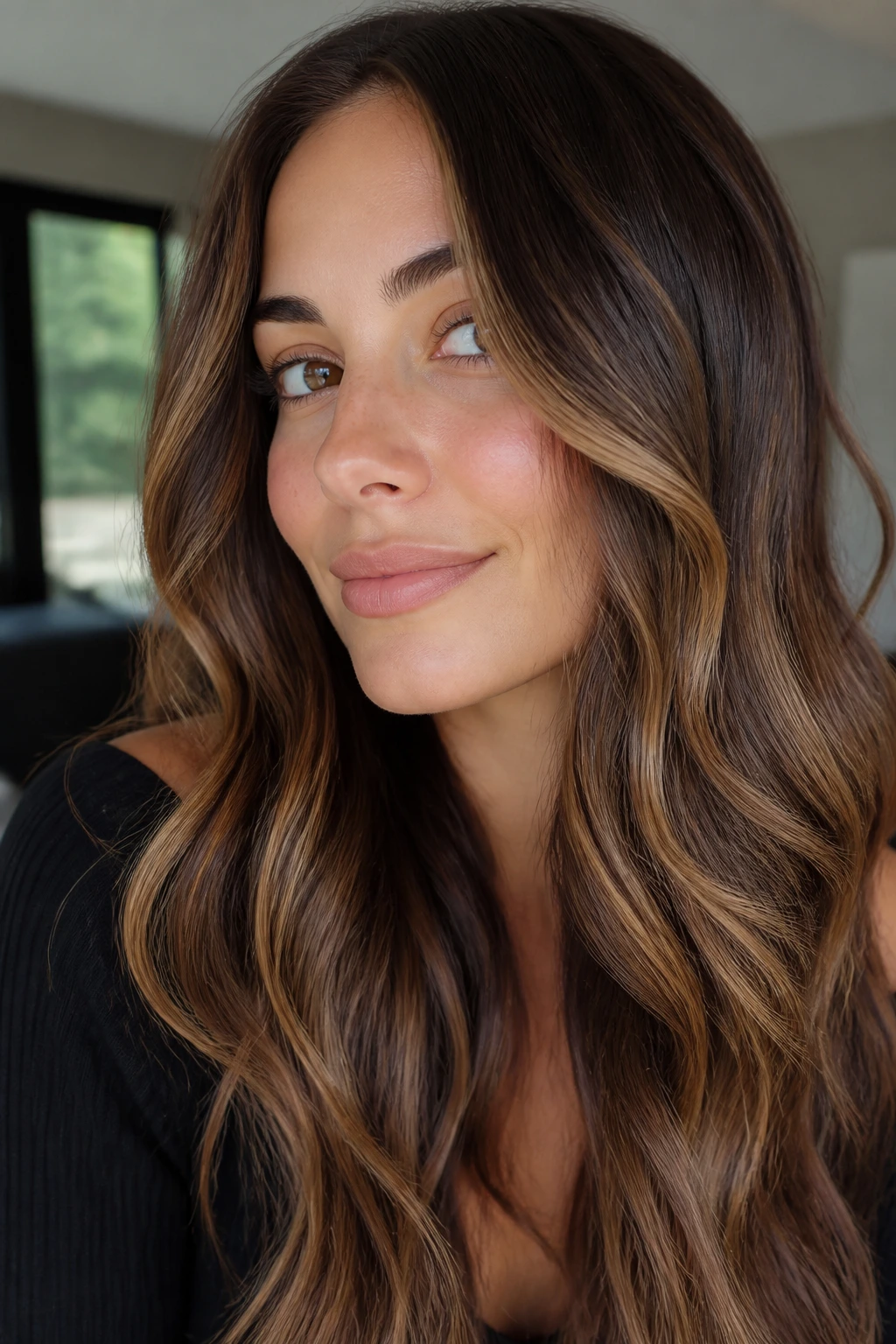
Golden mocha is what happens when brunette color stops playing it safe. The base stays chocolatey, but the lifted pieces carry a warm golden edge that keeps the whole look from going flat. It’s richer than bronde and softer than a true caramel blonde.
This is a strong pick if your natural hair is medium brown and you want something that still feels like you. Ask for mid-length brightness rather than a high-contrast root-to-end fade, because the warmth should look woven in, not painted on in a strip. A gloss with gold-beige reflect helps everything feel connected.
It’s a nice match for spring makeup too. Cream blush, a warm brow gel, and this color all speak the same language. No need to overthink it.
8. Copper Apricot Balayage on Dark Brown Hair
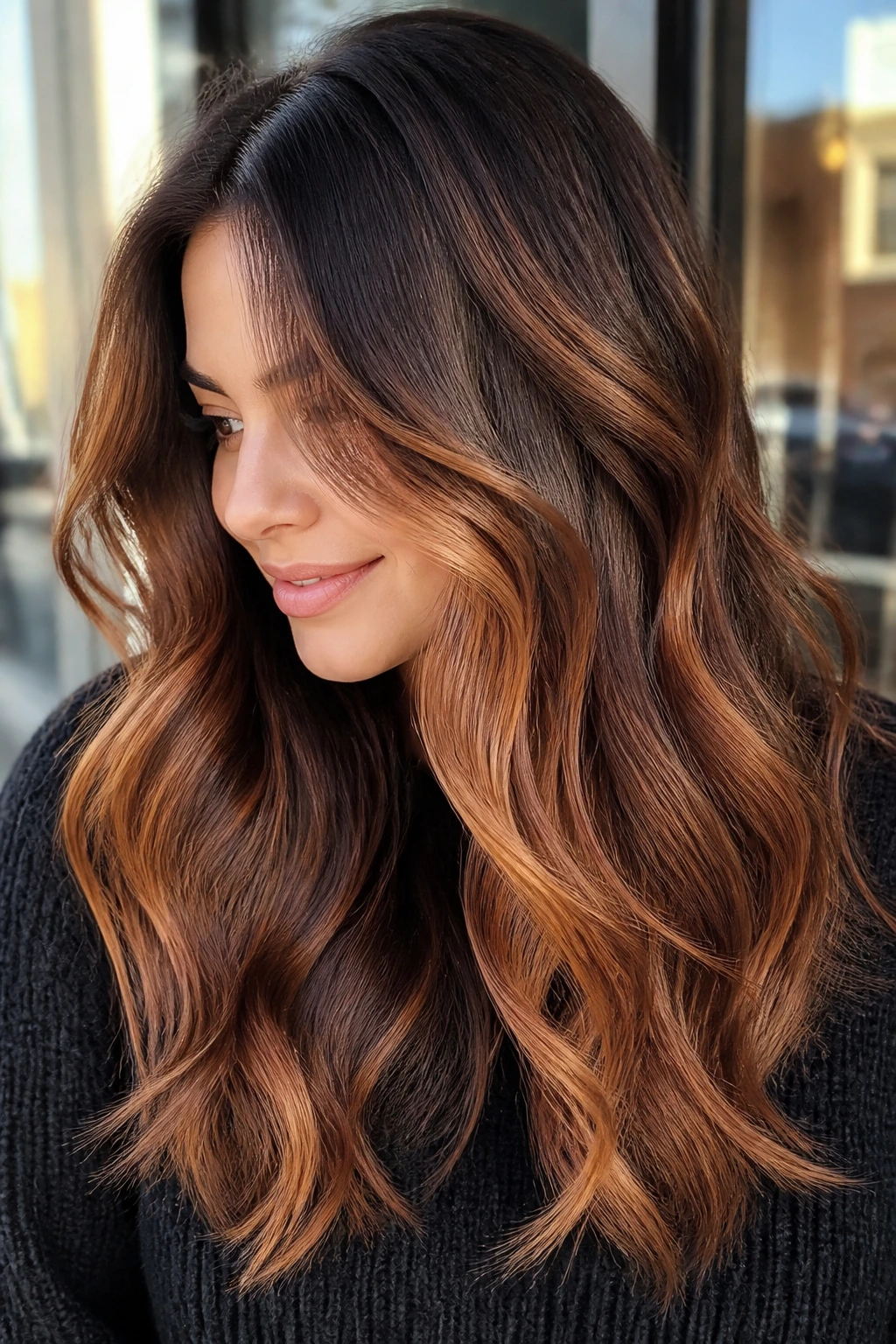
Copper apricot on dark brown hair has a lot of personality, but it still feels wearable when the placement is done right. The warmth shows up as soft light first, then color second. That’s the point. You want the hair to glow, not look dipped in paint.
Because dark brown hair usually needs more lift, this one often works best when the lighter pieces are concentrated on the outer layers and around the face. A copper-gold glaze over pre-lightened ribbons gives the apricot note without making the result too orange. If the hair has old box dye, expect a slower road.
This is a good look for people who want spring hair color with some heat in it. It looks especially pretty on medium to deep skin tones, though the exact tone can be adjusted warmer or softer.
9. Rose Gold Balayage
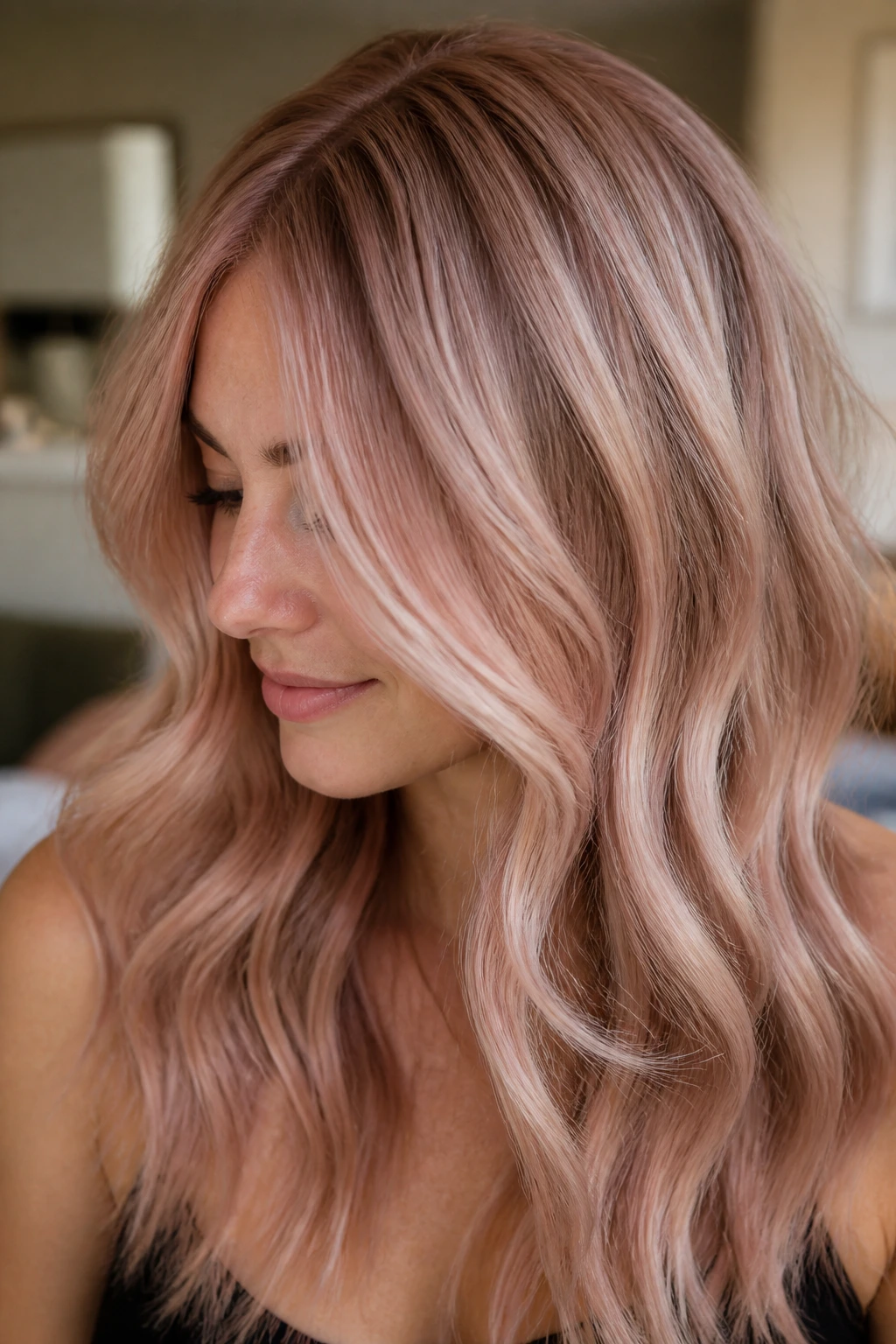
Rose gold is one of those shades that can go wrong fast if the pink is too loud. The better version is muted, almost dusty, with gold underneath so it reflects more than it announces. That keeps it from looking like costume color.
On a light blonde or pre-lightened base, ask for a blush-beige toner with enough warmth to keep the pink from going chalky. On darker hair, rose gold usually needs a lighter canvas first, so this is not a true one-step shade unless you’re already close to blonde. The finish should feel soft and a little warm, not candy-colored.
The shade looks best with waves or a gentle blowout. Straight hair can make the pink show more clearly than you want, which is useful if you want a bolder result and a bad idea if you don’t.
10. Mushroom Brown Balayage
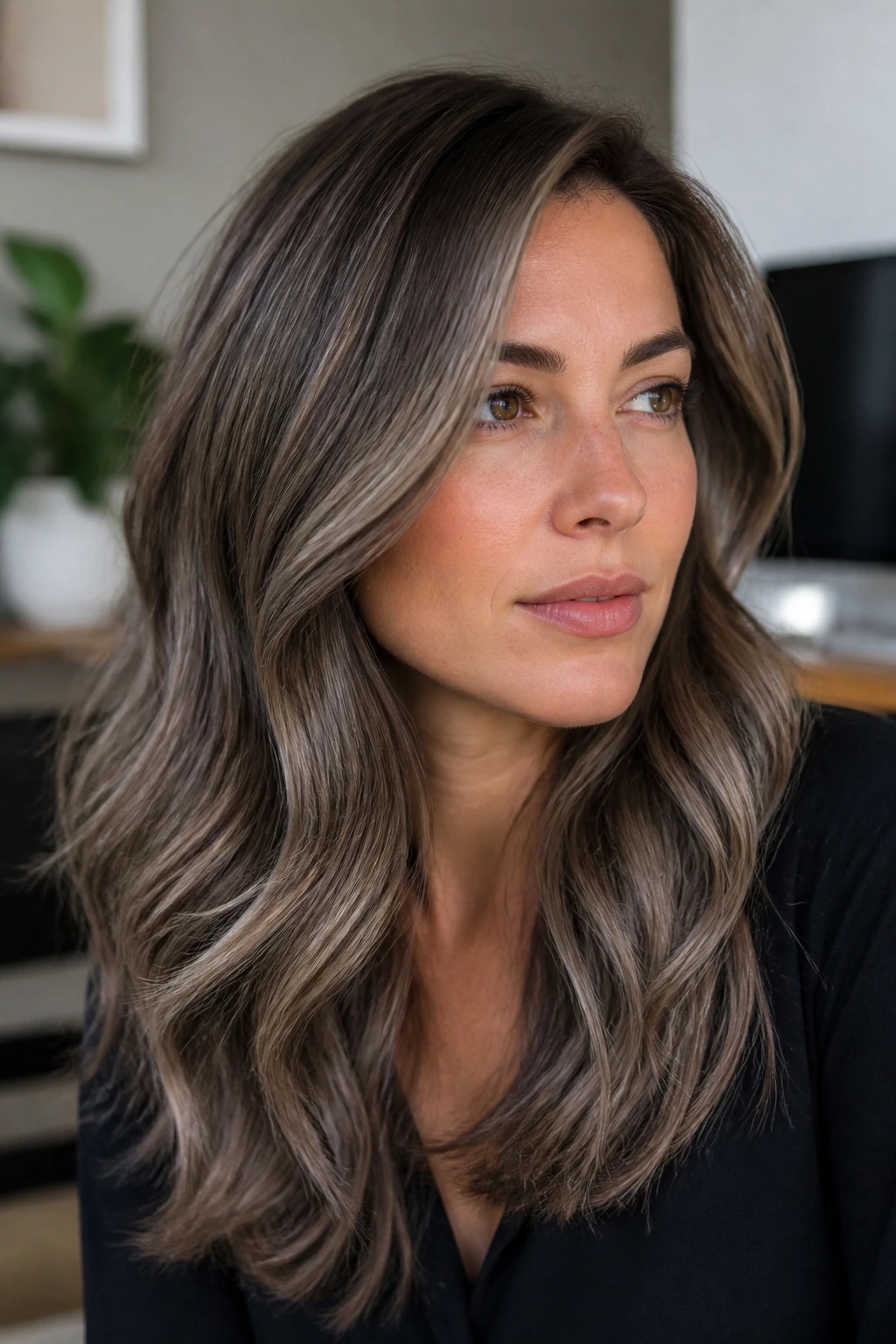
Mushroom brown is the cool brunette’s answer to spring color. It sits in the taupe family, so the light pieces look smoky, beige, and a little earthy all at once. There’s almost no red in it, which is why it reads polished on hair that tends to pull warm.
Ask for cool beige ribbons over a neutral or ash-brown base, with the lightest pieces kept soft rather than bright. If your hair naturally goes orange in the sun, this shade helps tame that without making the color look flat. A gloss every few weeks keeps the brown from turning muddy.
This is one of the more underrated options for office-friendly hair. It isn’t boring. It’s just quiet in the best way.
11. Icy Vanilla Balayage
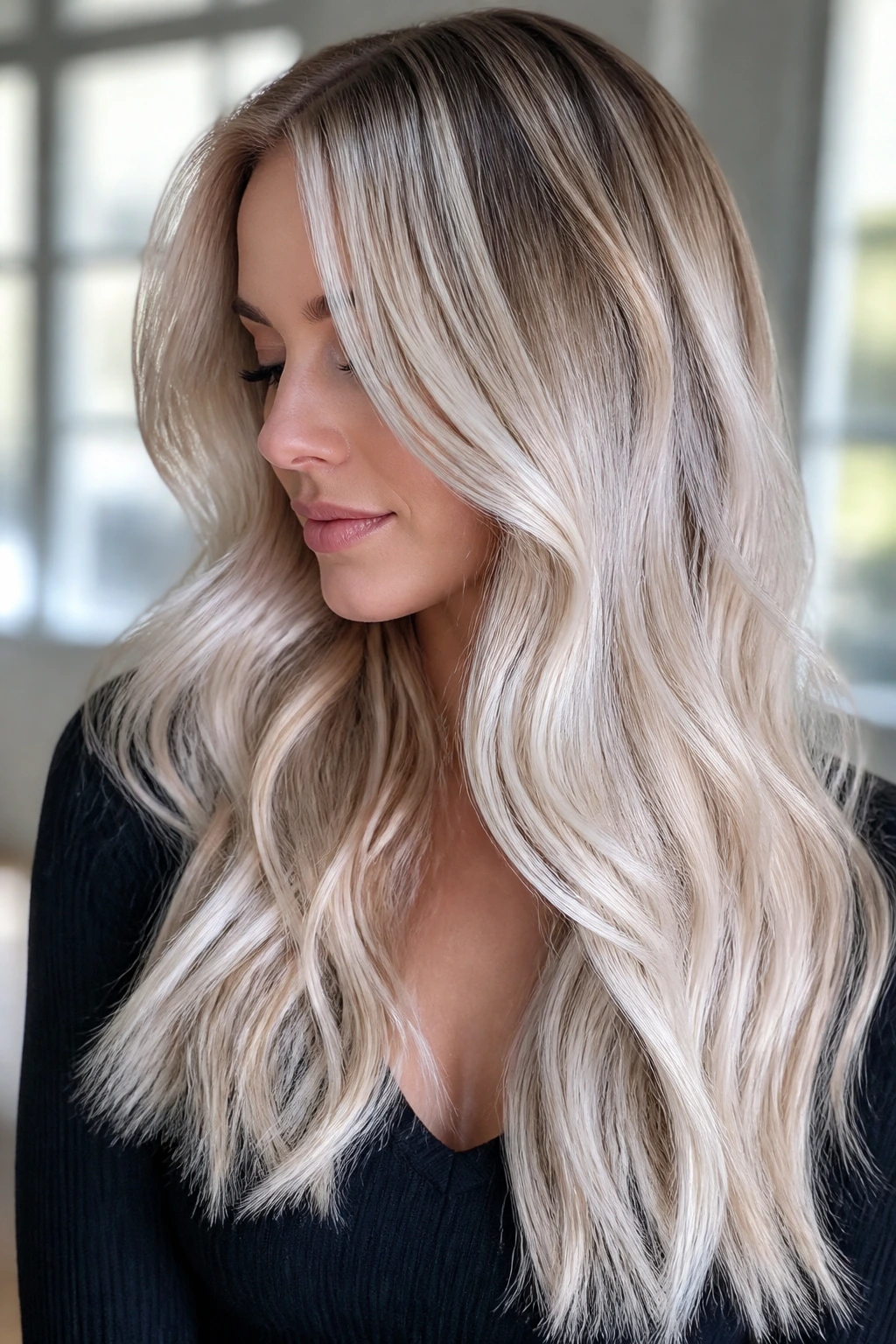
Icy vanilla looks crisp, but only if the blonde is glossy enough to stay alive. The trick is not to go white. White hair can look brittle. Vanilla, even when pale, keeps a little cream in the picture so the strands still have depth.
This look usually needs hair lifted to a very pale yellow before toning, and that means patience. A pearl-violet gloss on the lightest pieces gives the final shade its clean edge. If you have dense hair, keep some depth under the top layer so the pale pieces don’t wash out the whole head.
It shines on long layers and soft waves. If you wear it straight, keep the ends trimmed. Pale blonde shows split ends faster than almost any other shade.
12. Strawberry Blonde Balayage
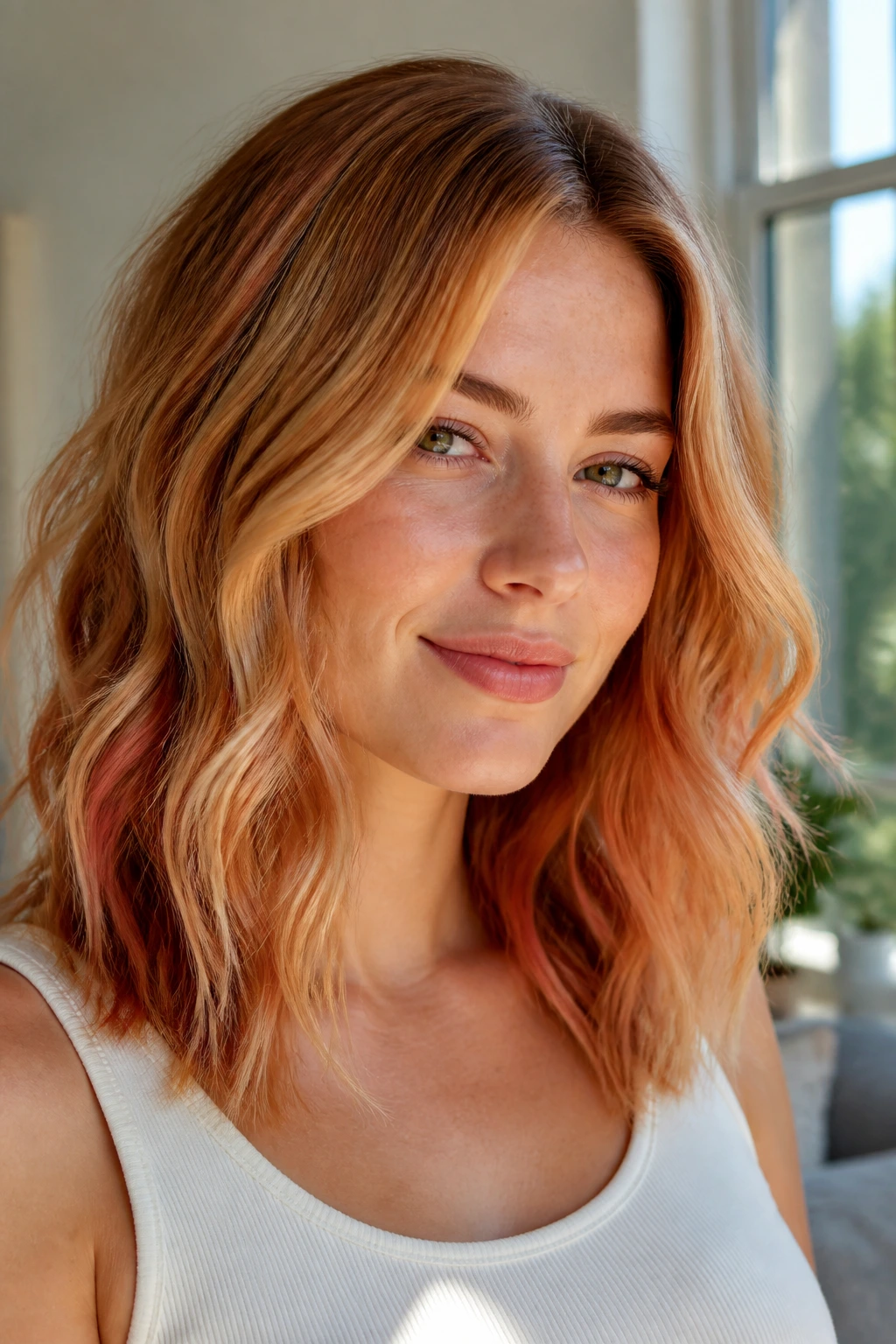
Strawberry blonde is one of spring’s nicest compromises. It has the freshness of blonde, the warmth of copper, and none of the heaviness that can make red hair look autumnal. On the right base, it feels light and alive rather than bold for the sake of boldness.
The best version has gold at the root, peach through the mids, and soft strawberry at the ends. That three-step feel keeps it dimensional. If you go too red too fast, the color loses the delicate quality that makes strawberry blonde so appealing. On very light hair, a deposit-only gloss can do most of the work.
This shade flatters a lot of skin tones because it can be pushed warmer or softer. It’s also a good pick if you want something different from standard blonde without going full copper.
13. Ashy Cocoa Balayage
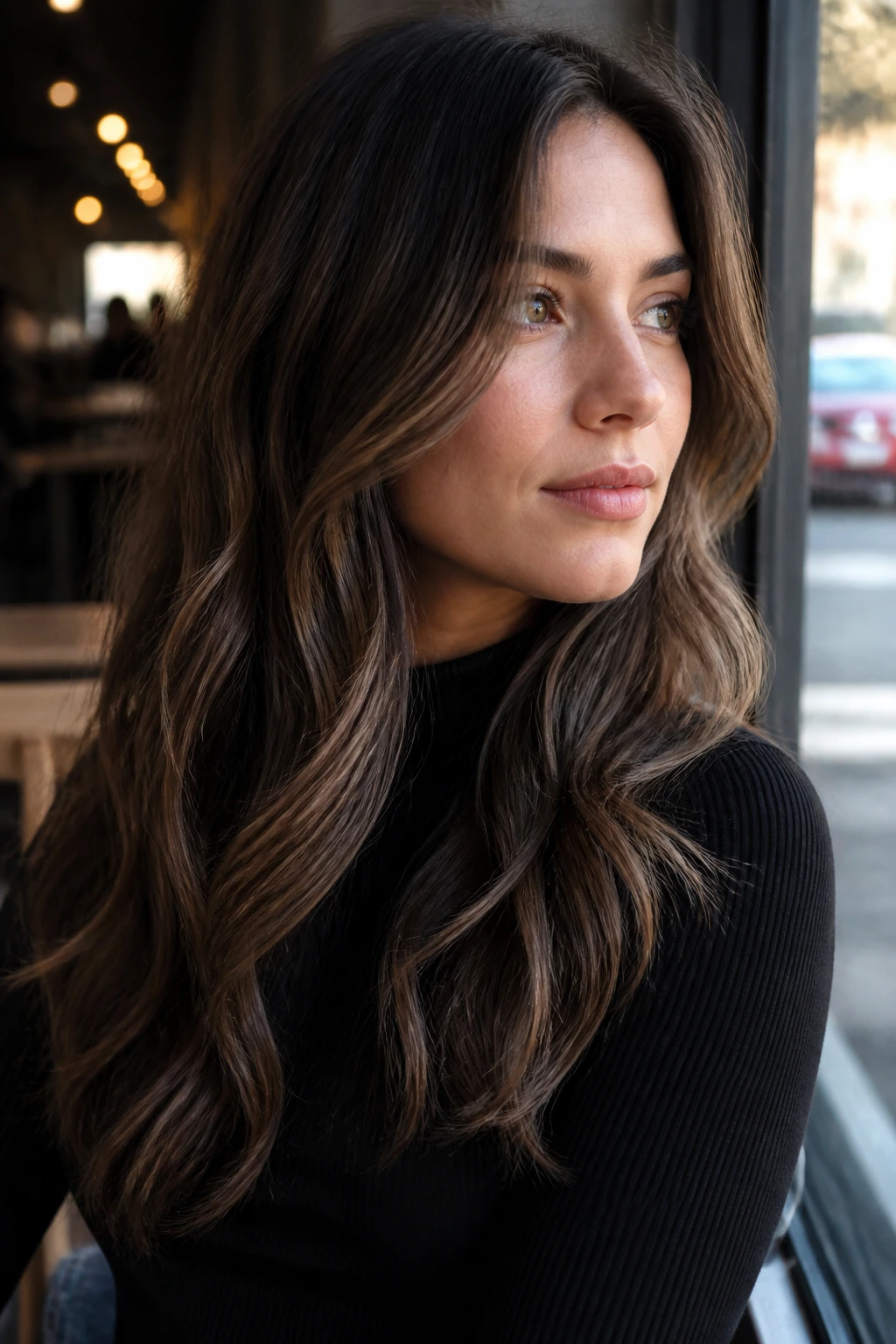
Ashy cocoa is the brunette version of a cool-weather reset, only it works beautifully in spring because it still feels airy. The color keeps the base deep and the lightened strands muted, so the overall result is rich rather than sugary. That matters if you hate warm brass.
Ask for smoky brown ribbons on a dark chocolate base, with the lightest pieces only one or two levels above the root. This is not the place for high contrast. The beauty is in the soft shift. A blue-toned shampoo can help if your hair wants to pick up orange between toners.
It’s a strong choice for people with naturally dark hair who want change without brightness. The look is subtle, but not invisible. There’s a difference.
14. Platinum Money Piece Balayage
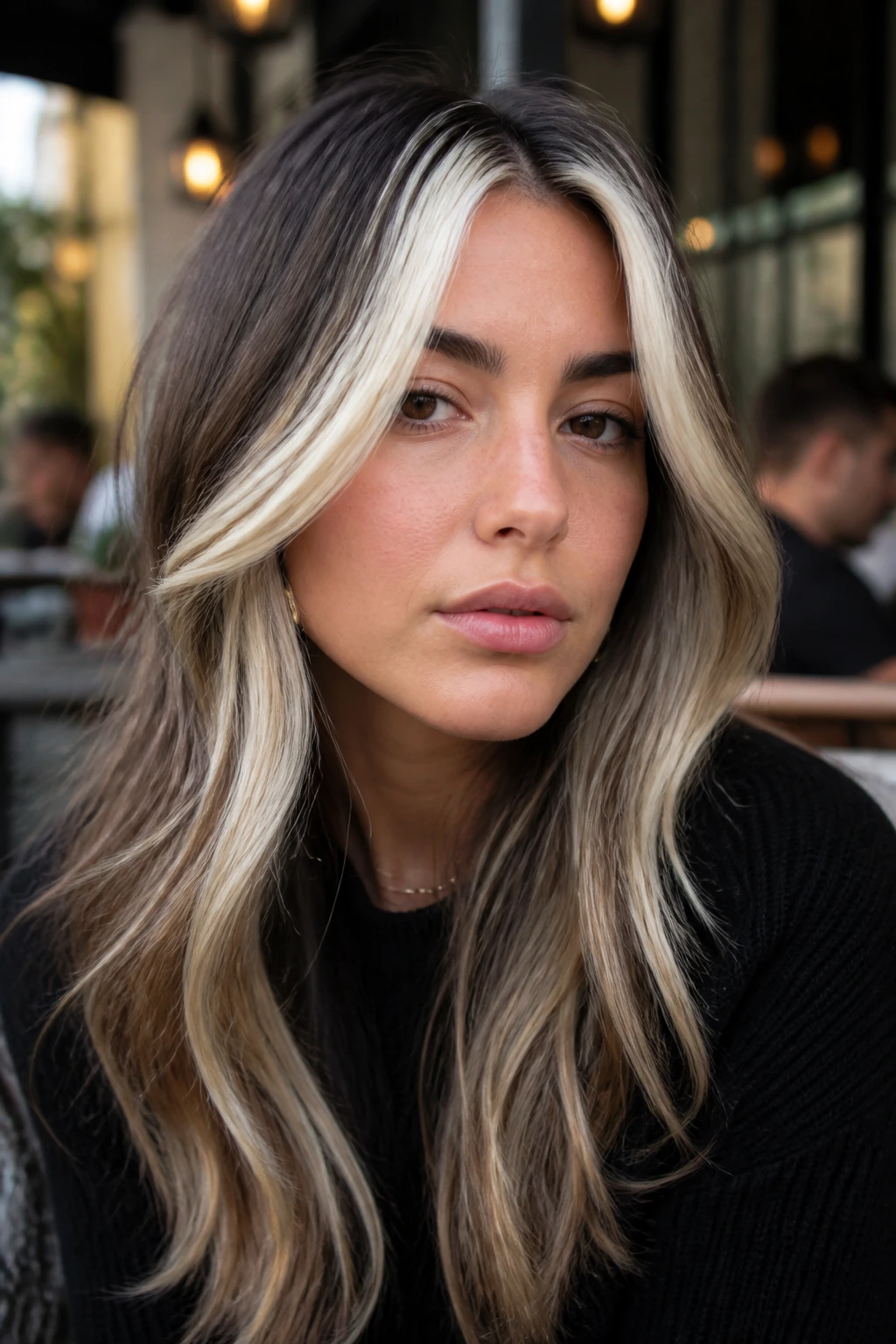
A platinum money piece can wake up an entire haircut if the rest of the color stays calm. That bright front streak is dramatic, sure, but when it’s framed by softer brunette or blonde ribbons, it reads modern rather than harsh. On spring hair, that contrast feels fresh.
Keep the front pieces the brightest and let the interior stay one to three levels darker. That balance keeps the look from becoming a solid block of light at the hairline. It also makes the grow-out easier, because the root line is masked by the surrounding depth.
This is best for people who like to style their hair with a center part or a soft curtain fringe. The money piece wants to be seen. If you’re always pinning your hair back, you lose half the point.
15. Toffee Balayage on Curly Hair
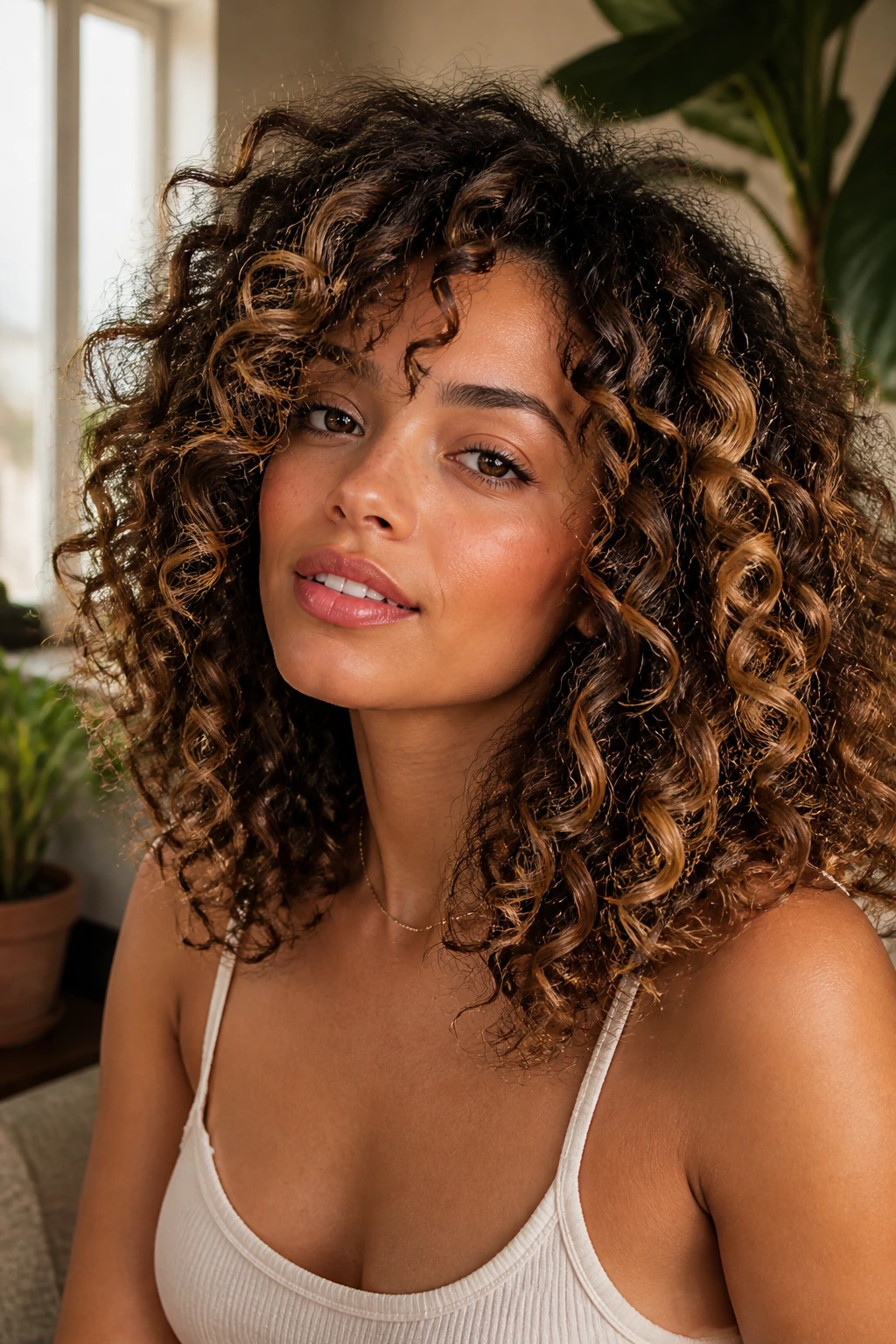
Curly hair takes balayage differently, and that’s a good thing. The light pieces need to follow the curl pattern, not fight it. Toffee works well because it warms the coil without making each curl look painted in isolation.
Ask for curl-by-curl placement around the outer bend of the pattern, with the brightest pieces where the hair naturally expands. That keeps the dimension visible when the curls dry. On tighter curl types, over-lightening the ends can make them look frizzy, so the gloss matters as much as the lift.
This is one of the nicest spring looks if you air-dry or diffuse. The color looks woven in rather than stamped on. That’s the goal.
16. Cinnamon Swirl Balayage
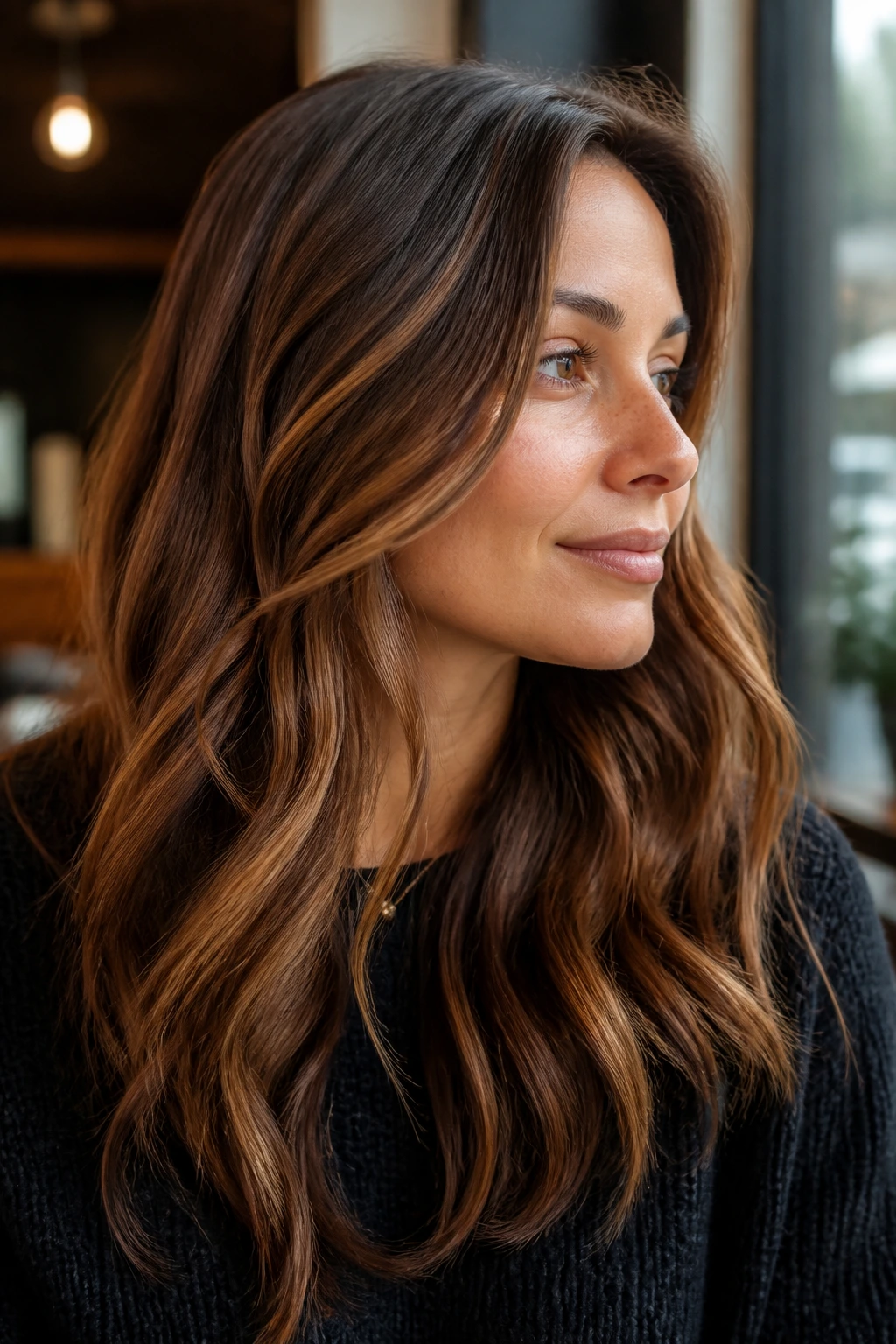
Cinnamon swirl hair has a cozy name, but the effect is lighter than it sounds. The copper-brown tones give medium brunettes a warm lift, and the swirl effect comes from soft placement rather than chunky color panels. It’s spicy without being loud.
A level 5 to 6 brown base with cinnamon and chestnut ribbons through the mids is the sweet spot. Keep the lightest pieces away from the root crown unless you want a brighter, more obvious result. The best version looks like the hair catches fire when it moves, but in a restrained way.
This shade is especially good if your hair gets dull fast. The warmth keeps it from looking flat between gloss appointments, and spring light tends to make the red-brown tones look richer rather than darker.
17. Pearl Blonde Balayage
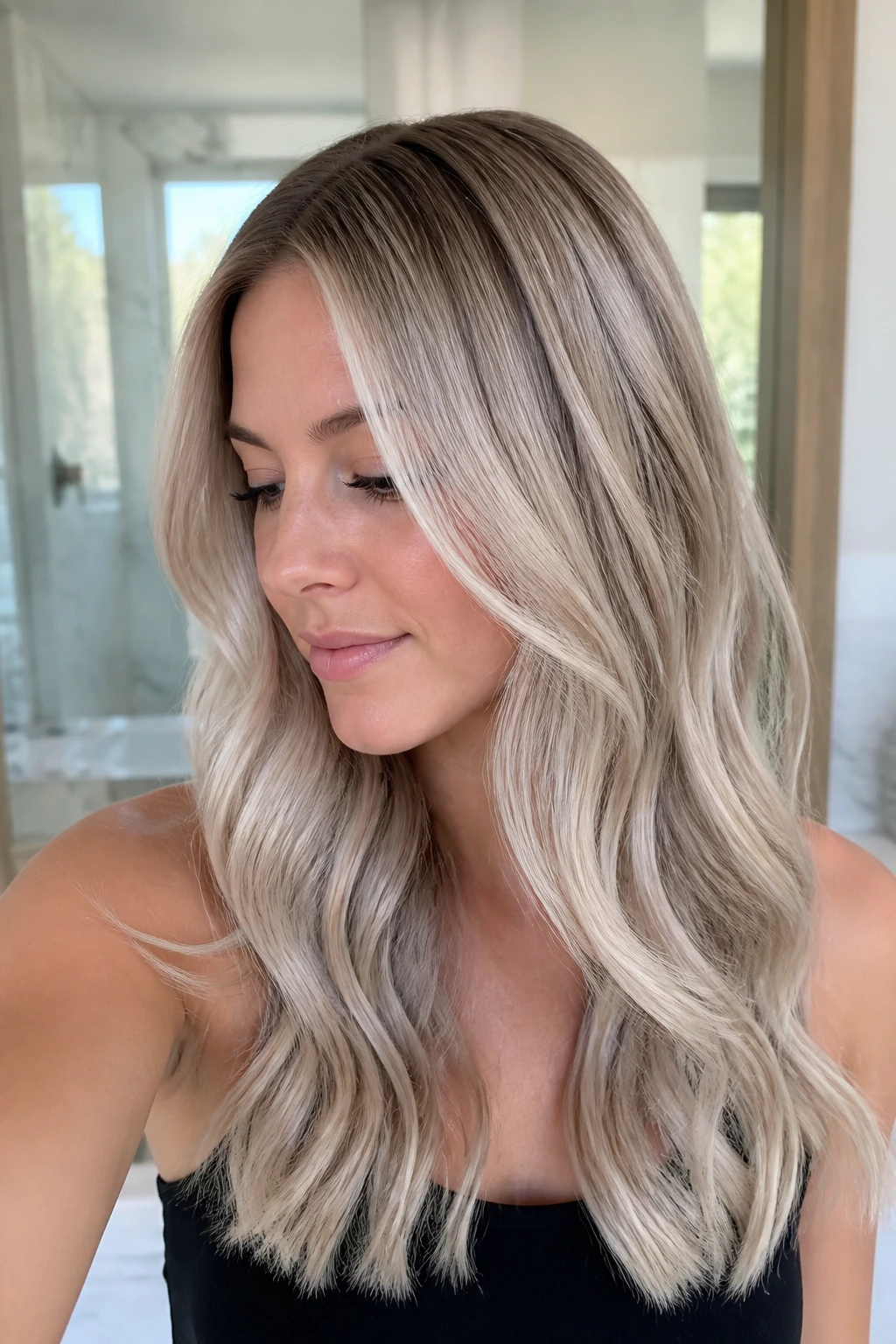
Pearl blonde is not silver, and that distinction matters. Pearl has a soft, creamy reflect with a cool edge, which makes the blonde look polished instead of icy. It’s a pretty choice if pure beige feels too warm and platinum feels too stark.
For this shade, the pieces need to be lifted cleanly and toned with a pearl or opal gloss. That means the base underneath needs to be pale enough to hold the tone without turning gray. If the hair is porous, the gloss can grab too hard and go dull, so a lighter hand is better than a heavy one.
This one pairs well with silky blowouts and neat ends. It’s less convincing on very frayed hair, because the pearl finish shows texture. In a good way. In a very honest way.
18. Muted Cherry Cola Balayage
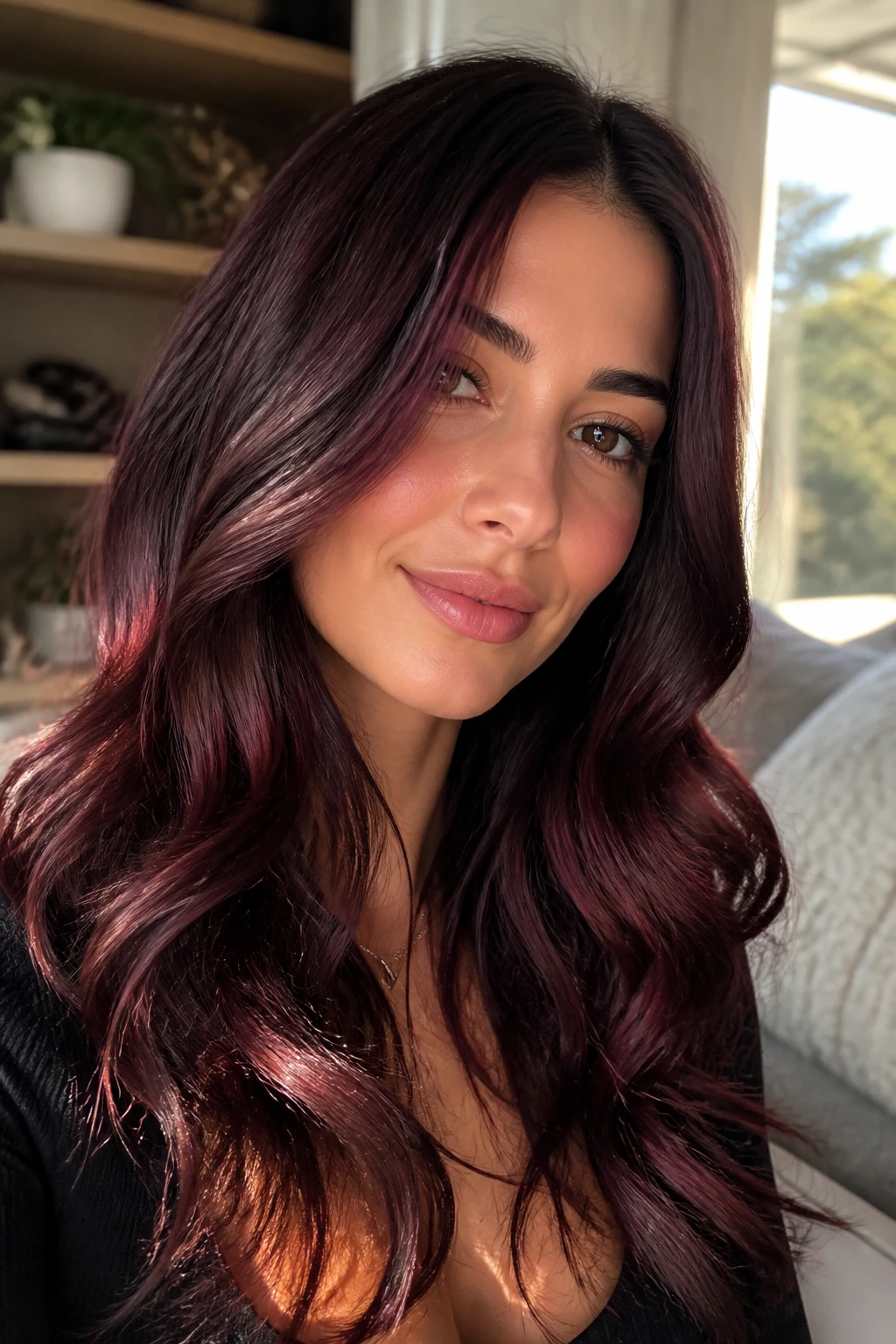
Cherry cola hair looks richer when it’s muted, not neon. The cola part keeps the base dark and glossy, while the cherry note sneaks through as a deep red sheen. That makes it spring-appropriate without losing depth.
Ask for deep brunette roots with wine-red ribbons mostly through the mid-lengths and ends. If the red is too vivid near the root, the color starts looking flat once it softens. A gloss formula with burgundy and brown mixed together gives a better finish than a bright red alone.
This is for people who want their color to show in sunlight and stay private in low light. That duality is the whole appeal. The hair changes depending on where you stand.
19. Sandy Bronde Balayage
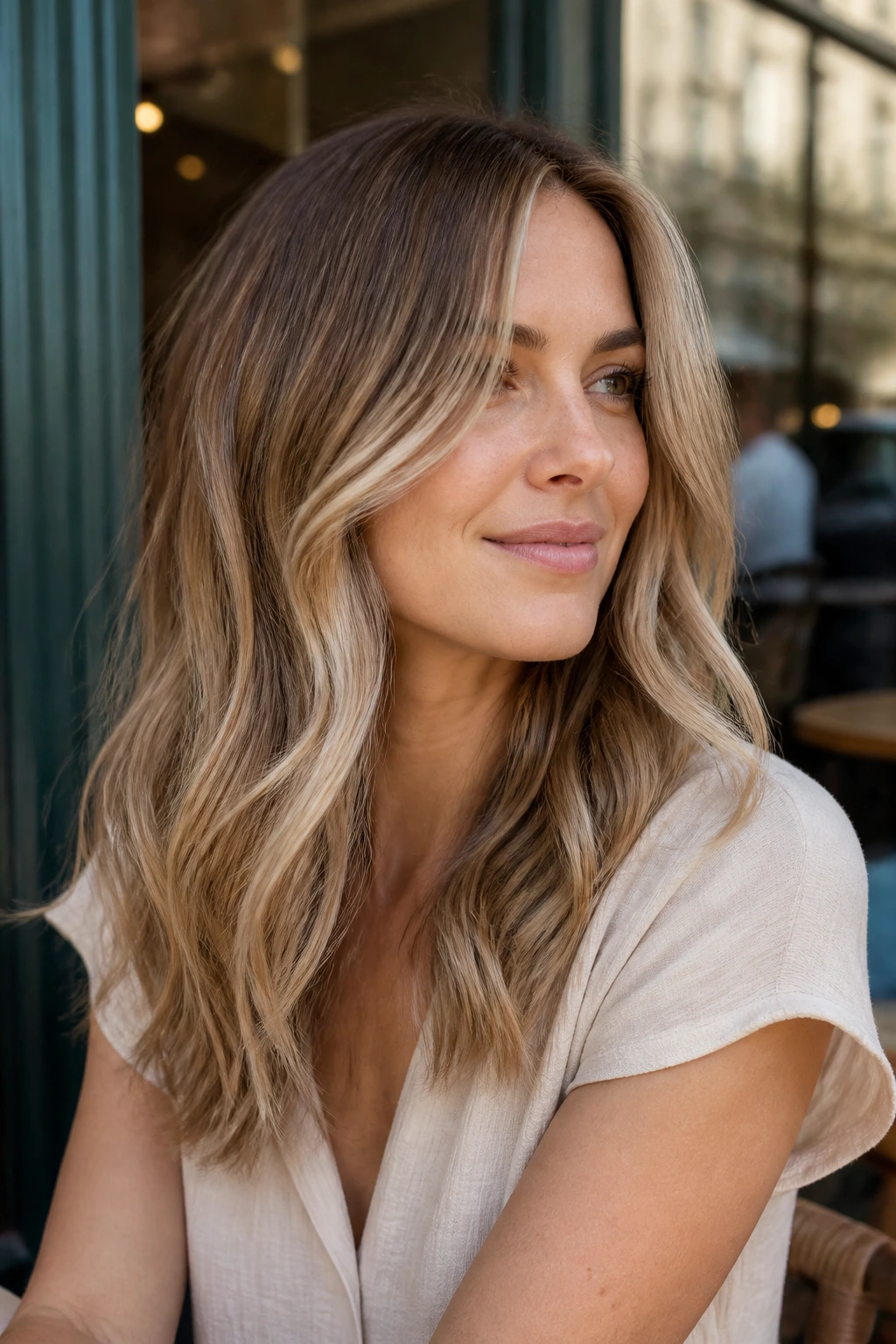
Sandy bronde is one of the easiest spring colors to live with because the tone is so balanced. It isn’t too warm, isn’t too cool, and doesn’t scream for attention. The color looks like the hair itself decided to lighten a little when the weather changed.
The placement should be soft and scattered, with brighter pieces around the face and through the top layer. Keep the contrast low and the gloss neutral-beige so the color wears quietly. This is a strong choice for anyone who wants dimension without spending all month thinking about toner.
If you usually wear jeans, white tees, and not much makeup, this shade fits the wardrobe without competing with it. Sometimes that’s the whole win.
20. Beige Brunette Balayage Bob
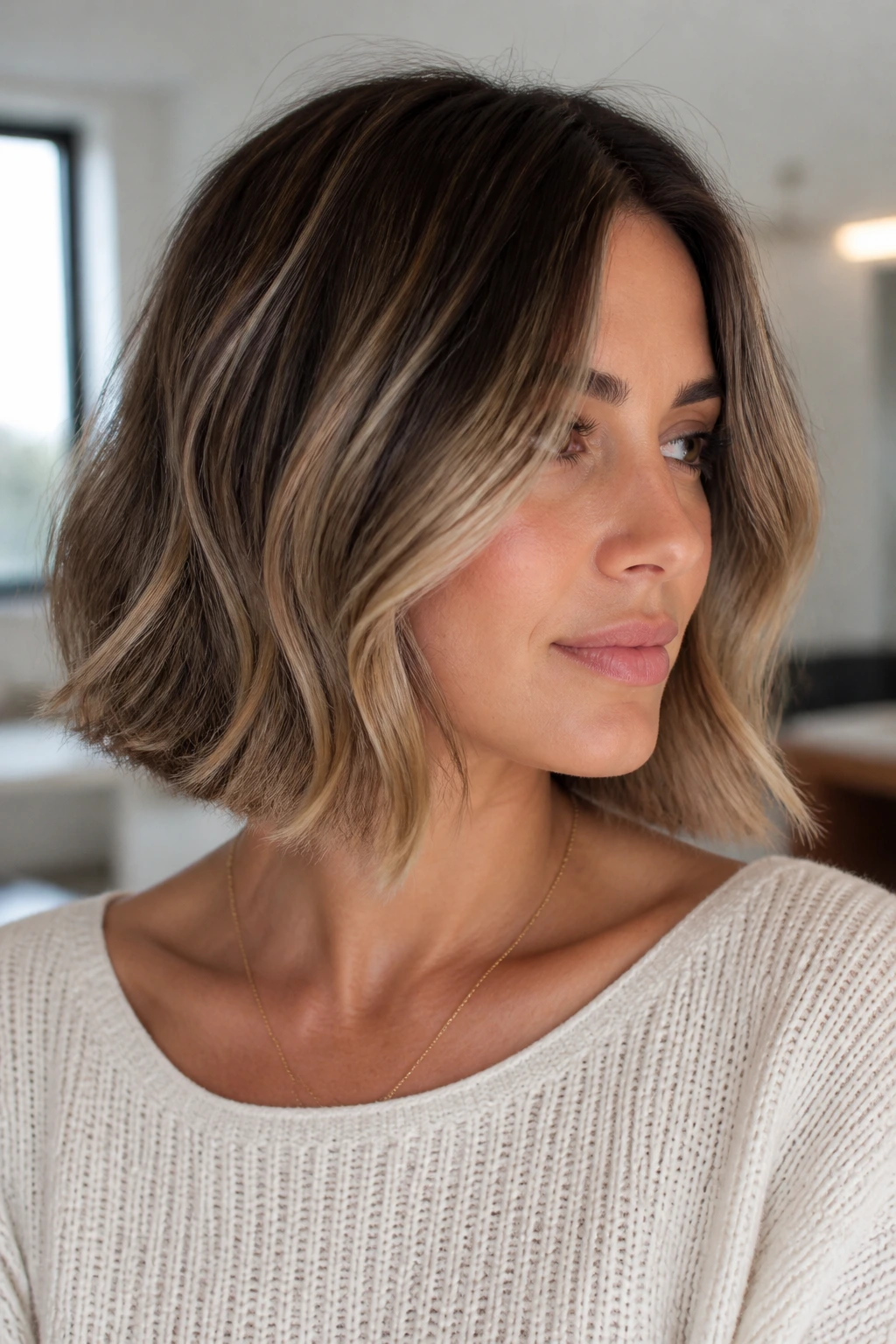
A bob can take brighter color than people assume, but the placement has to be smart. Beige brunette is ideal because it lifts the shape without making the cut look choppy. The soft beige pieces reflect light around the jawline, which is where a bob needs movement most.
Ask for short, fine ribbons through the top layers and a few brighter strands around the front edge. Too much lightness underneath can make the bob look thin at the ends. The goal is a clean surface with enough softness to keep it from feeling blocky.
This shade looks especially good on straight or slightly waved bobs. The line of the haircut becomes clearer, and the color stops the cut from feeling severe. That’s a neat little trick.
21. Bronze Glow Balayage
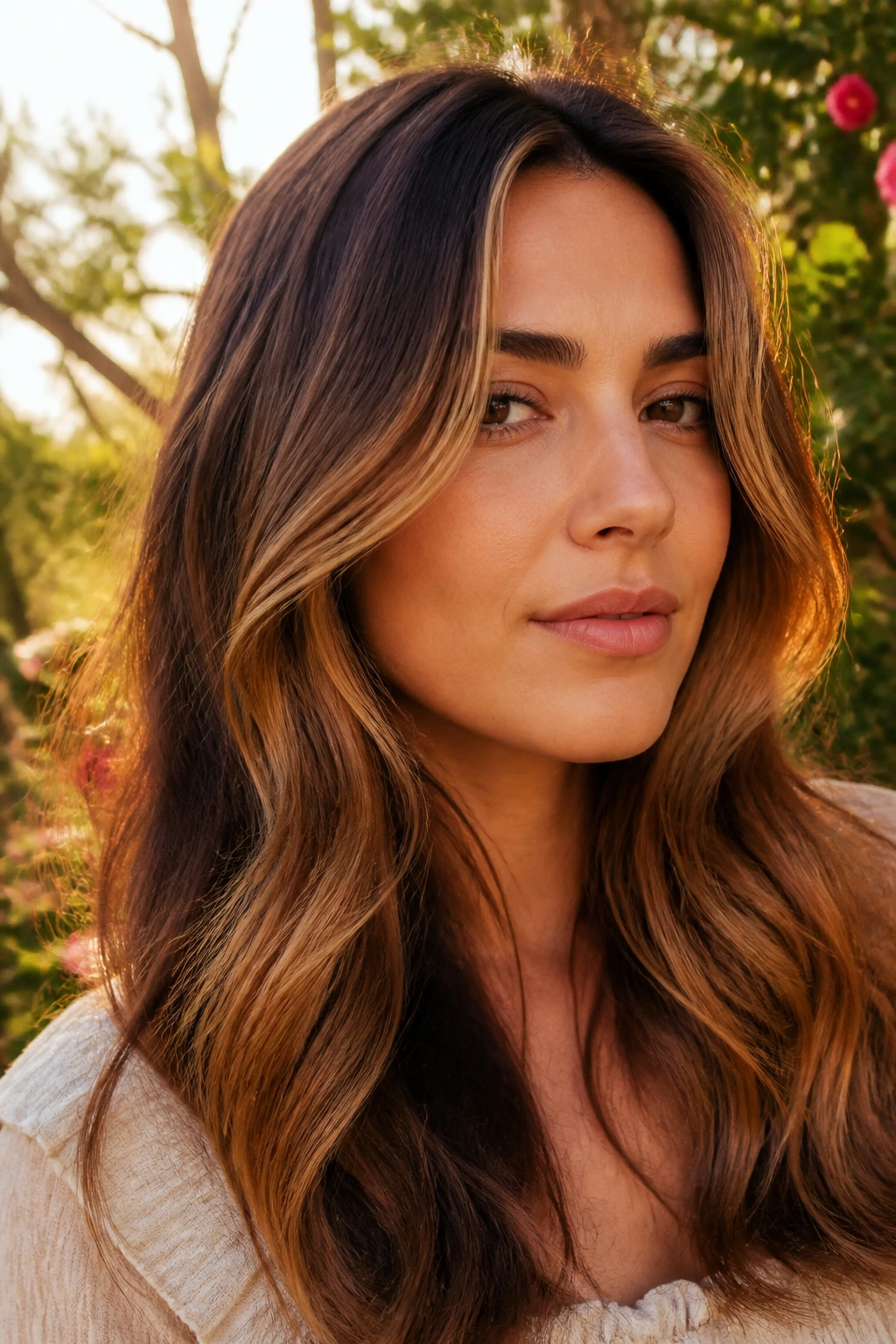
Bronze glow sits in that lovely space where brunette hair looks expensive without needing to go lighter everywhere. The bronze reflect warms the mids and ends, while the darker base keeps the whole thing grounded. It’s spring color for people who still want depth.
This works best on medium to deep brunettes who like warmth but not copper. Ask for bronze-gold ribbons over a neutral brunette base, with more light near the face and less under the occipital area. That placement helps the color catch when the hair moves, not when it sits still in a mirror.
It’s especially good for thick hair because the richer tone can hold its own. Fine hair can wear it too, but with a softer hand and finer sections. Otherwise it can look too dense.
22. Smoke and Silver Balayage
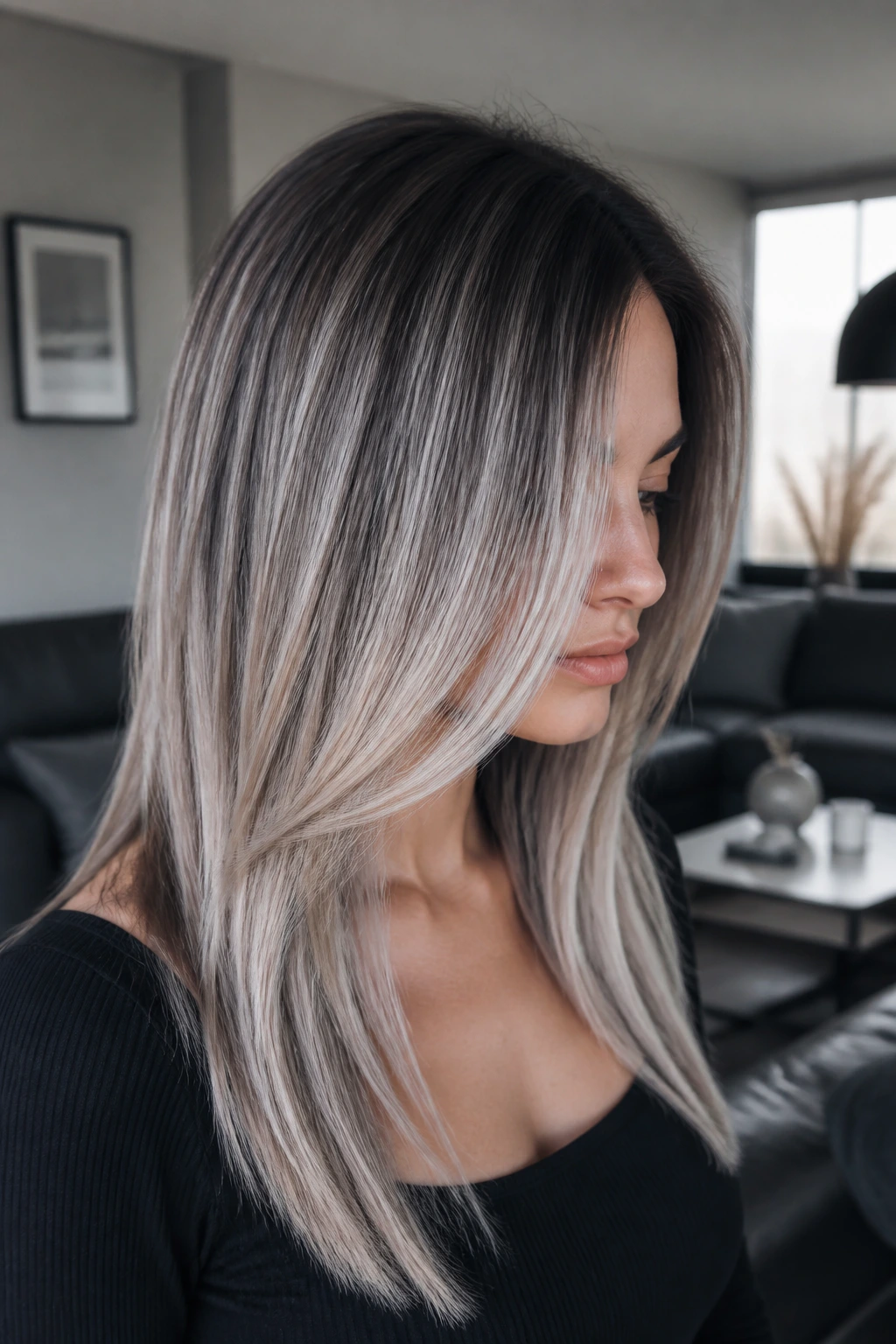
Smoke and silver hair is the cooler cousin of pearl blonde, and it has a sharper edge. The smoke keeps the base dim and moody, while the silver ribbons give it flash. This is not a shy look, even when the contrast is soft.
To make it work, the lightest strands need to be lifted cleanly and toned with an ash-silver gloss. If the hair is yellow underneath, the silver goes muddy fast. That’s why this look depends so much on clean pre-lightening and a careful toner, not just a quick lift and hope.
It suits straight hair and blunt cuts especially well. The smooth surface lets the tones read clearly. On very curly hair, the effect can get lost unless the placement is mapped carefully.
23. Warm Vanilla Balayage on Medium Brown Hair
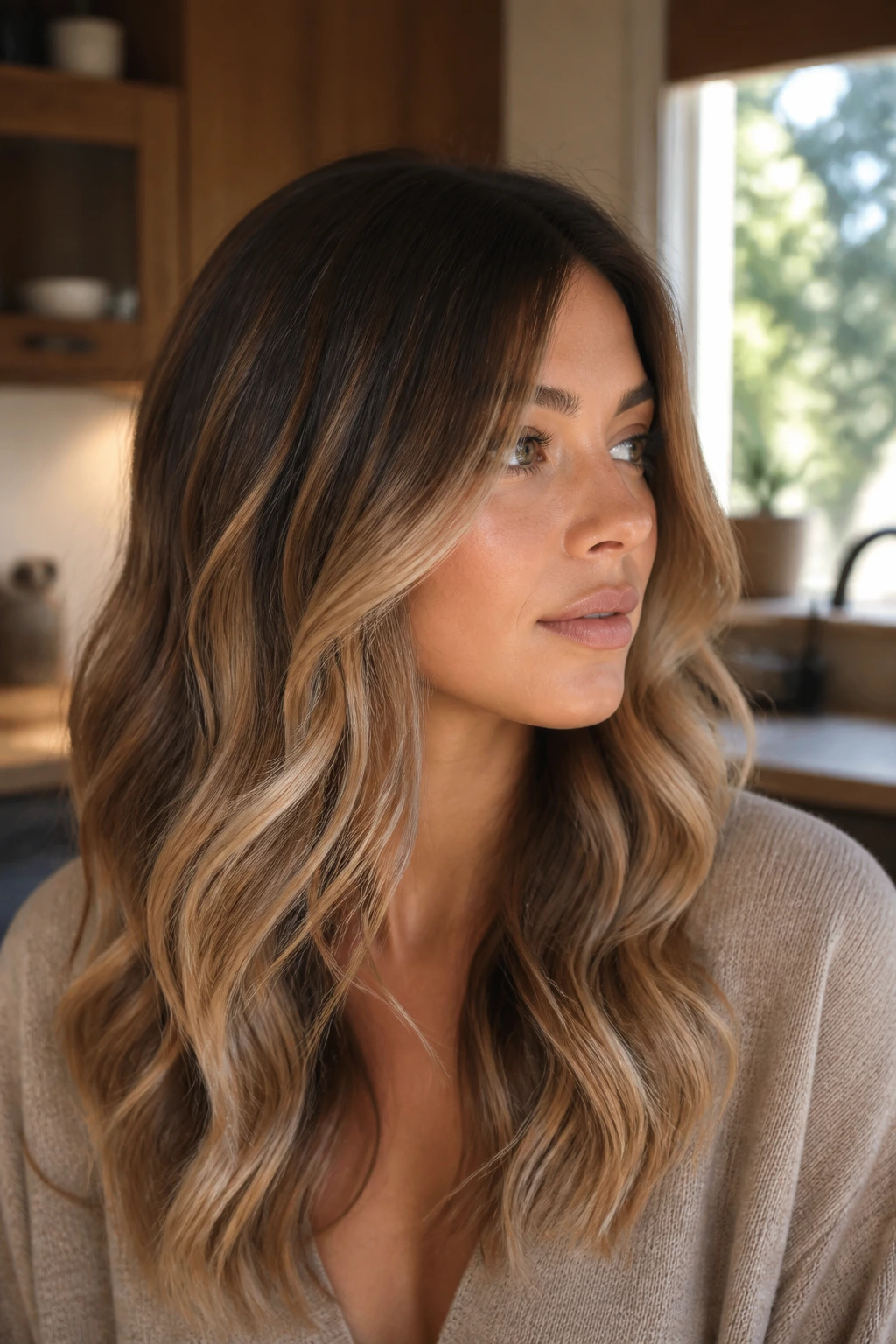
Warm vanilla is the friendlier version of blonde on a medium brown base. The color adds brightness without pushing the hair into stark territory, and the warmth keeps it from looking washed out in spring sunlight. It’s a good middle-ground choice.
Ask for vanilla-beige pieces concentrated from the cheekbones down, with the root kept soft and natural. That keeps the growth line quiet. It also means the lighter bits show up where the hair moves, which is where this color looks best.
This works on both straight and wavy finishes, though waves give it the most life. If you want your brown to look lighter without losing its identity, this is a clean route.
24. Soft Peach Copper Balayage
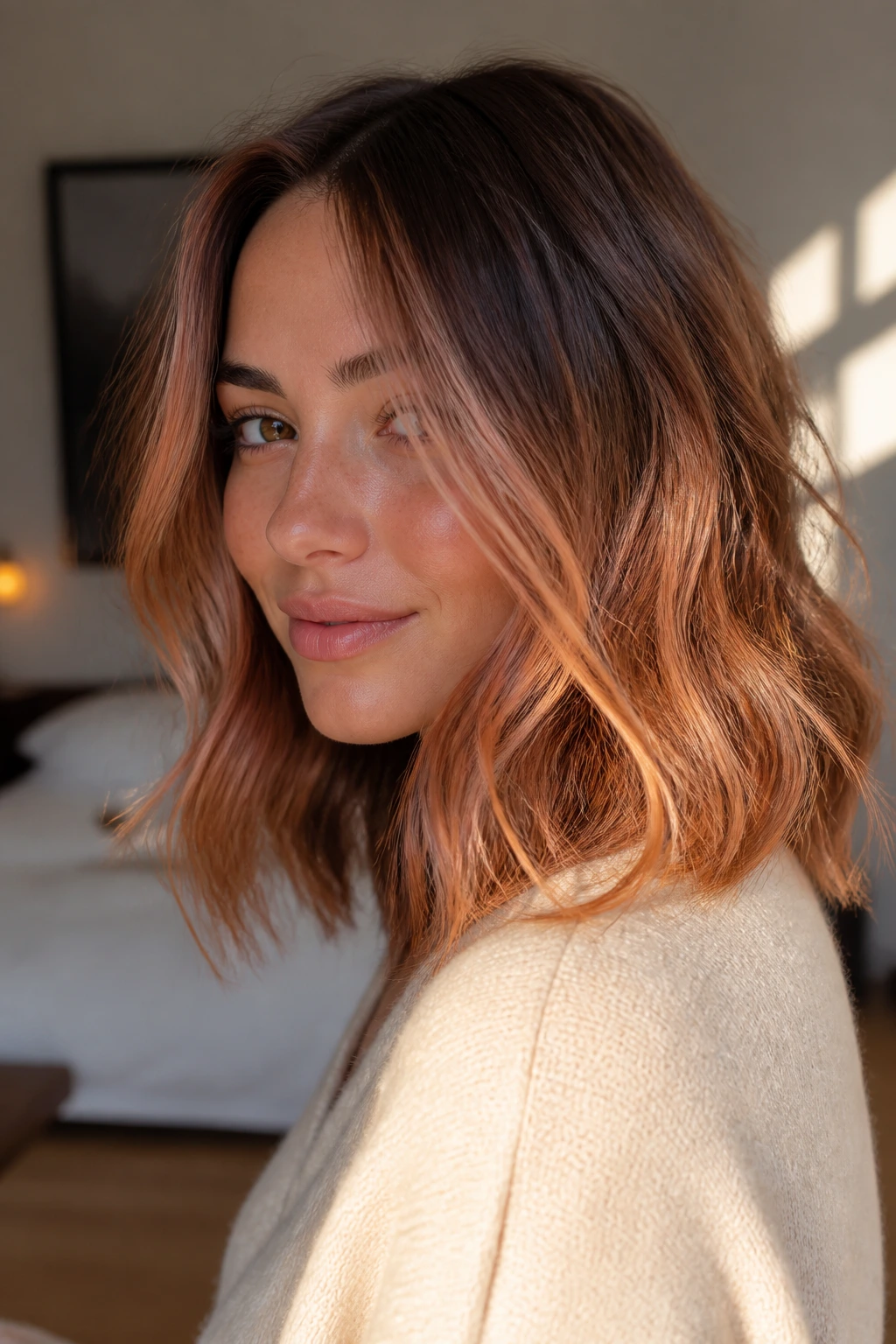
Peach copper sounds loud, but the soft version is actually delicate. The peach makes the copper feel lighter and more springlike, while the copper keeps the shade from turning pastel and washed out. It’s one of the prettiest colors in this whole group when it’s toned right.
This shade usually looks best on lighter brunettes or blondes who want warmth without a full red shift. A gold-copper gloss with a whisper of peach gives the right finish. If the peach is too strong, the hair can start looking orange. Too little and you lose the spring note.
Waves help this one a lot. The tonal shift shows up in layers instead of one flat field of color.
25. Hazelnut Balayage
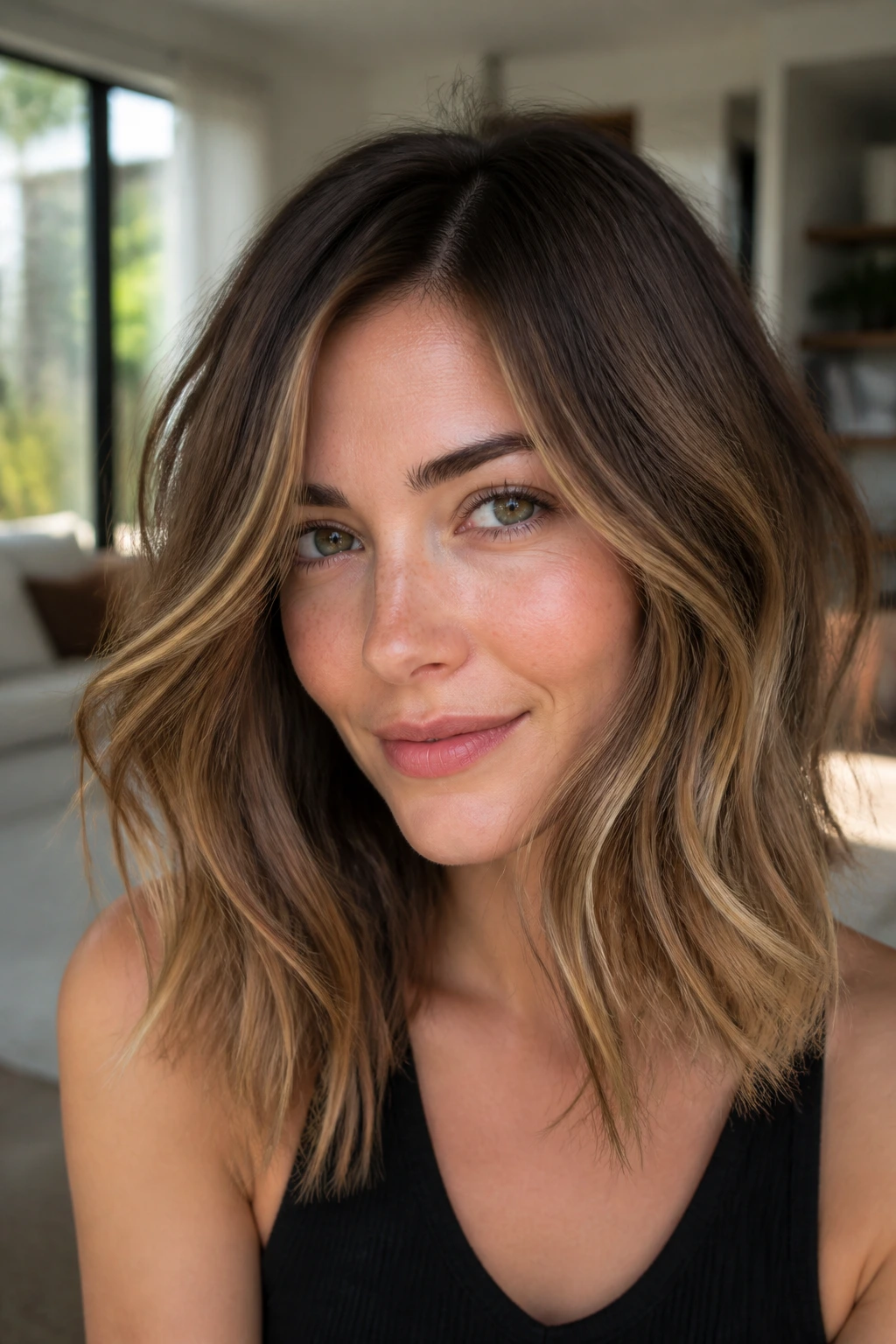
Hazelnut balayage is quiet, nutty, and a little glossy. That’s not a glamorous description, but it’s the truth. The shade brings brown hair to life without making it warm in a noticeable way, which is exactly what some people want.
Ask for warm-neutral ribbons two levels lighter than your base, especially through the outer layers and around the front. The idea is to create dimension, not blonde. On thick or coarse hair, hazelnut helps break up density without making the hair look thin.
It’s a lovely fit if you wear minimal makeup or want your color to look intentional even when you’re not styled to the nines. The tone does the work for you.
26. Cream Soda Balayage
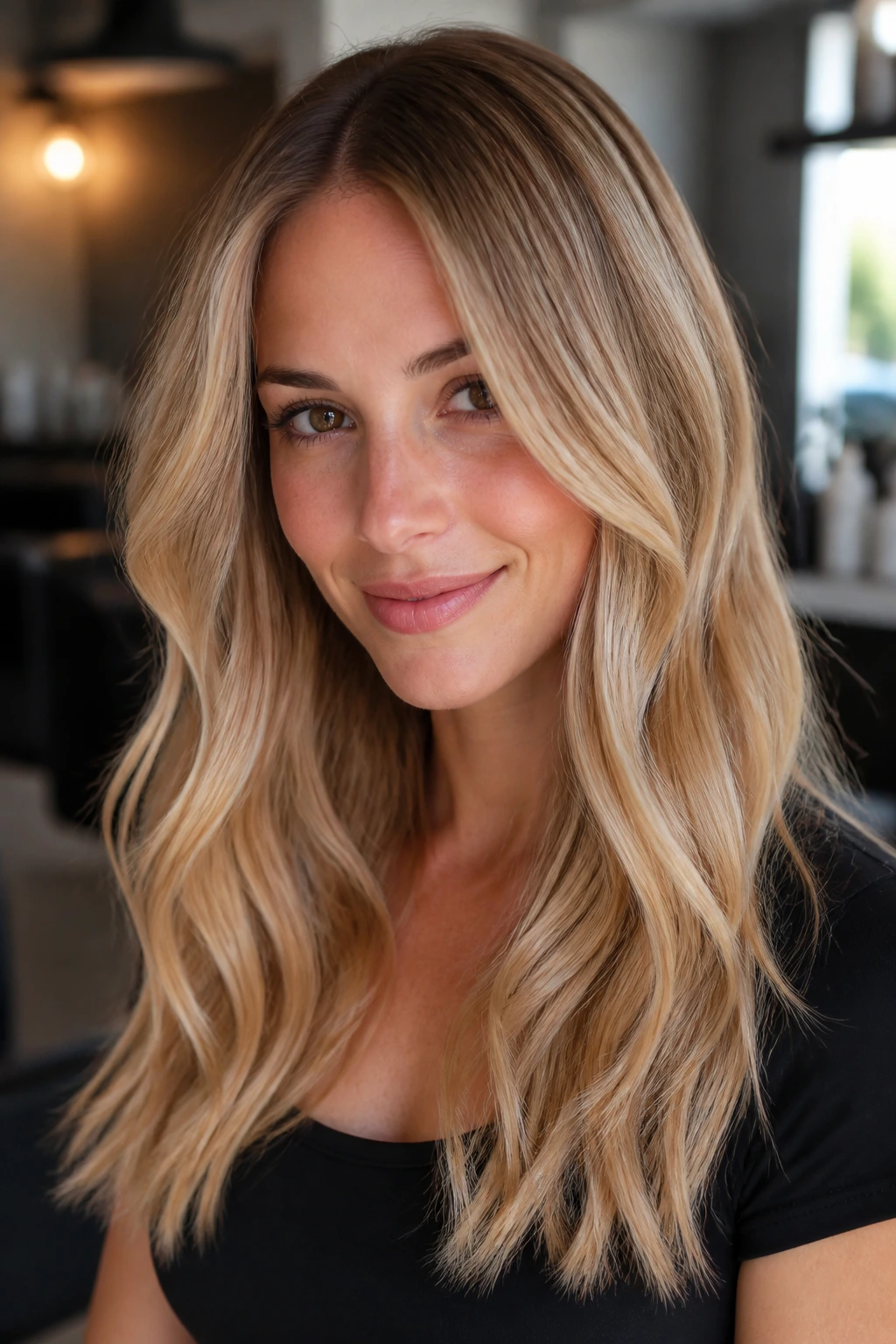
Cream soda is blonde with a little caramel undercurrent, and that tiny bit of warmth keeps it from looking flat. It feels soft, plush, and easy to wear. The shade is a nice choice if you want lightness but hate the brittle look that some pale blondes can get.
The best version has beige roots, creamy mids, and pale caramel ends so the hair doesn’t turn one-note. This is where glossing matters. A clear or beige glaze keeps the finish shiny, while too much ash can kill the softness.
It looks especially pretty on long, layered hair or a long bob. The blend has room to stretch. Shorter cuts can wear it too, but the placement has to be tighter.
27. Apricot Blonde Balayage on Wavy Hair
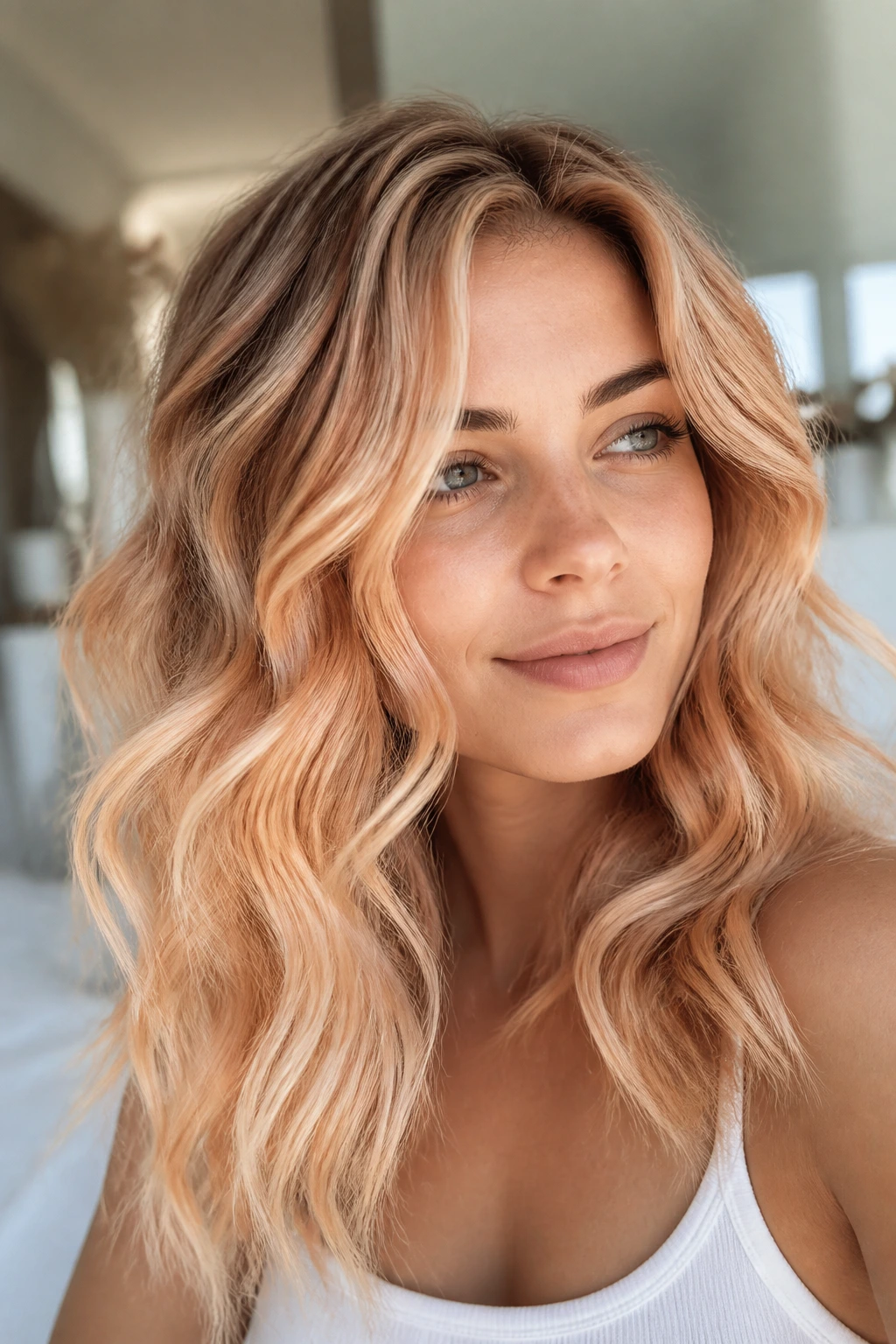
Apricot blonde is spring in hair form when it stays soft. The gold-orange reflect gives warmth, but the blonde keeps it light enough to feel airy. On wavy hair, the color moves in little flashes, which is exactly what you want.
Ask for light apricot ribbons through the mids and ends, with a pale blonde base underneath. That contrast lets the apricot read as a tone, not a block of color. If the waves are very loose, the shade looks sunlit. If they’re tighter, it looks more textured.
This is a lovely option if you want something brighter than strawberry blonde but softer than copper. It’s playful without becoming loud.
28. Chestnut Balayage with Shadow Roots
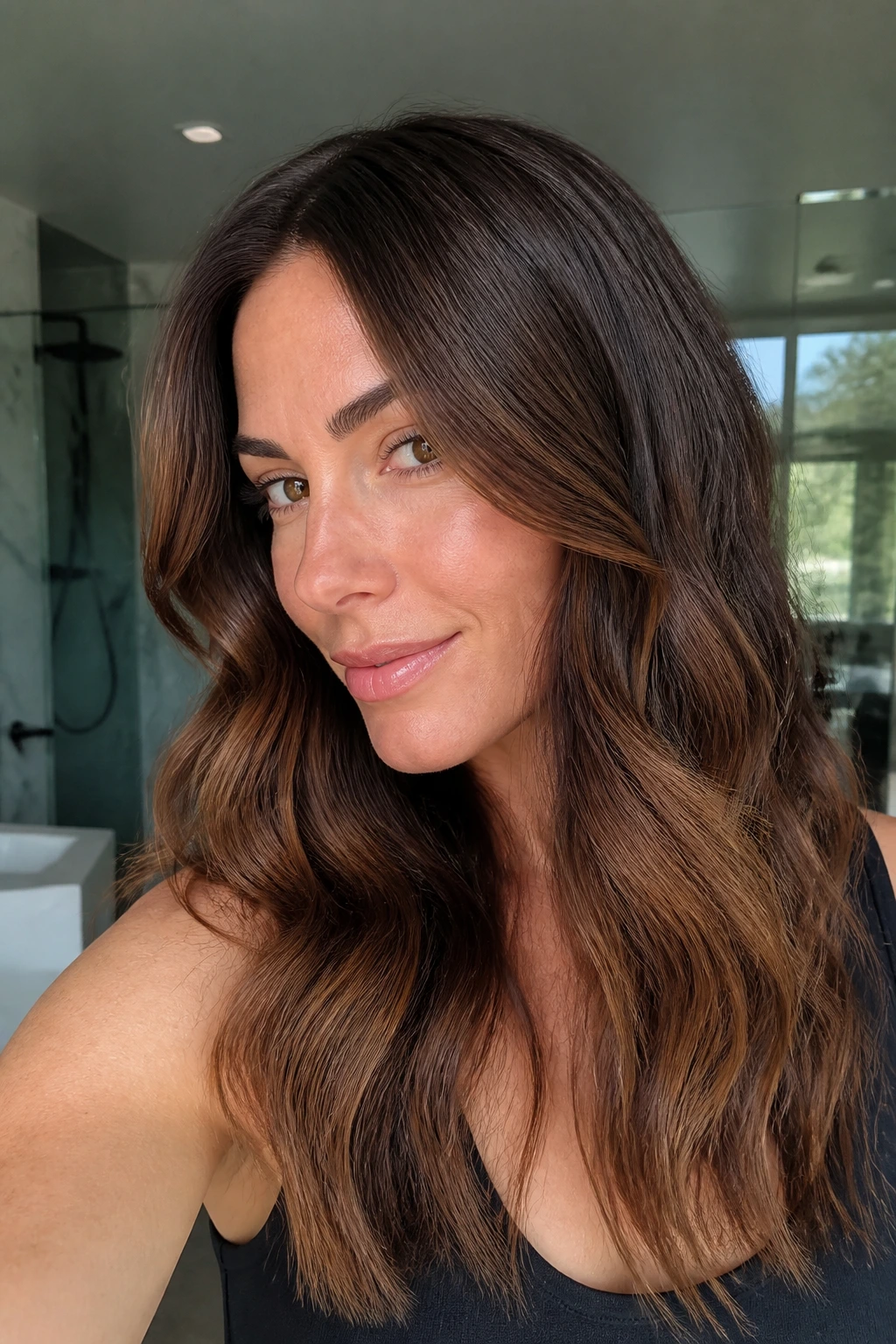
Chestnut with shadow roots is the kind of color that grows out well because the depth is doing so much of the work. The chestnut pieces warm the hair, while the darker root keeps the whole thing cohesive. It’s a grown-up look without feeling stiff.
Ask for a root smudge that stays close to your natural depth, then chestnut ribbons from the mid-lengths down. The more precise you are about the root area, the longer the color will look fresh. This is a smart choice if you don’t want to sit in a salon chair every few weeks.
It works best on medium to dark brunettes, especially if the hair has some layer movement. Chestnut can feel heavy on one-length hair. A little internal texture fixes that fast.
29. Lilac Beige Balayage
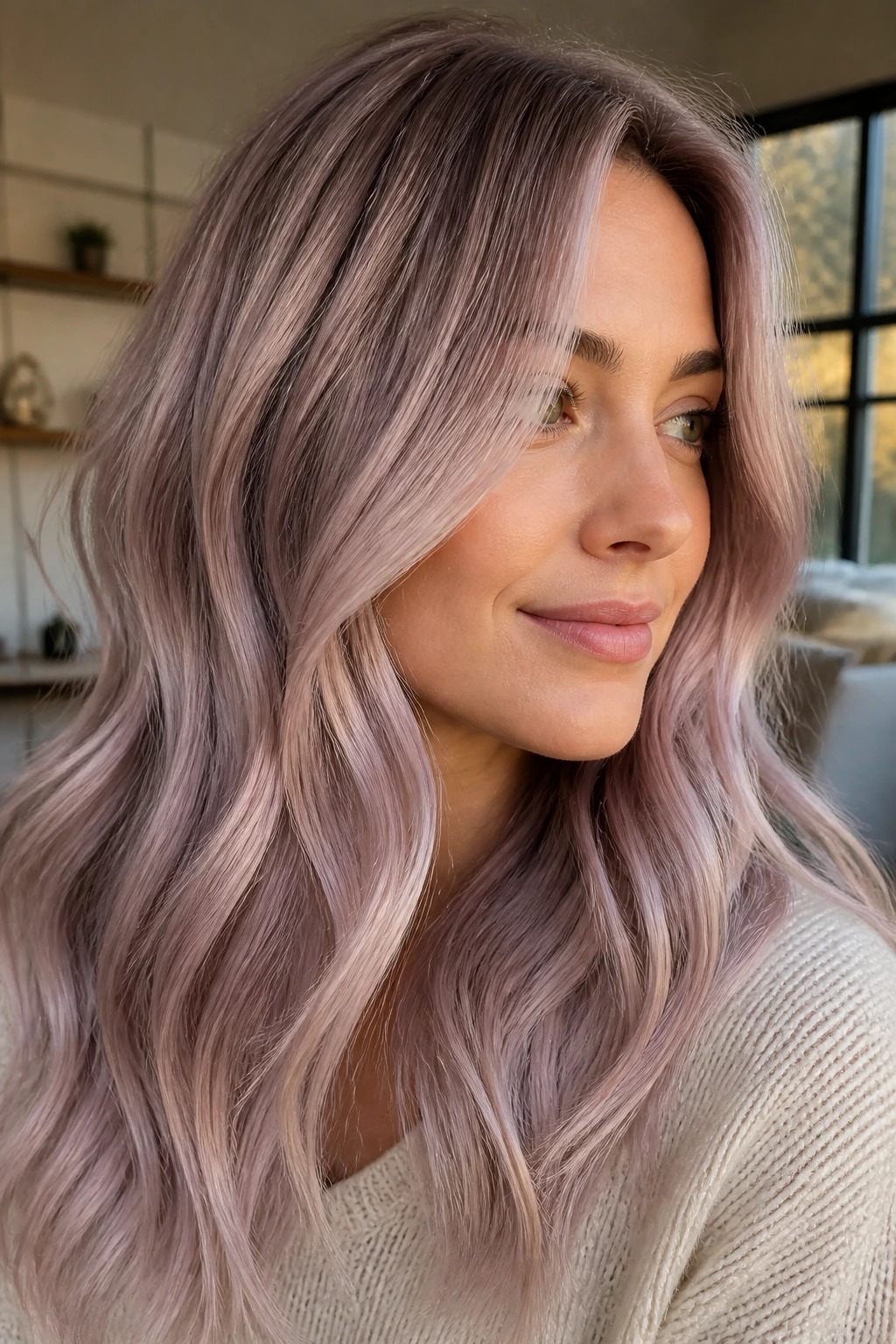
Lilac beige is for someone who wants spring color with a whisper of fantasy. The beige keeps it wearable, and the lilac softens the blonde so it doesn’t turn icy or overbright. Done well, it looks like neutral blonde with a subtle cool haze.
This shade needs a light base. Pre-lightened pieces toned with a beige-lilac gloss give the soft pastel effect without turning purple. If the hair is too dark or too yellow, the lilac can vanish or skew gray. That’s why this look works best when the lift is even.
It pairs nicely with soft makeup and textured waves. You do not need a dramatic haircut for it. The color is already doing a bit of the talking.
30. Golden Hour Balayage for Thick Hair
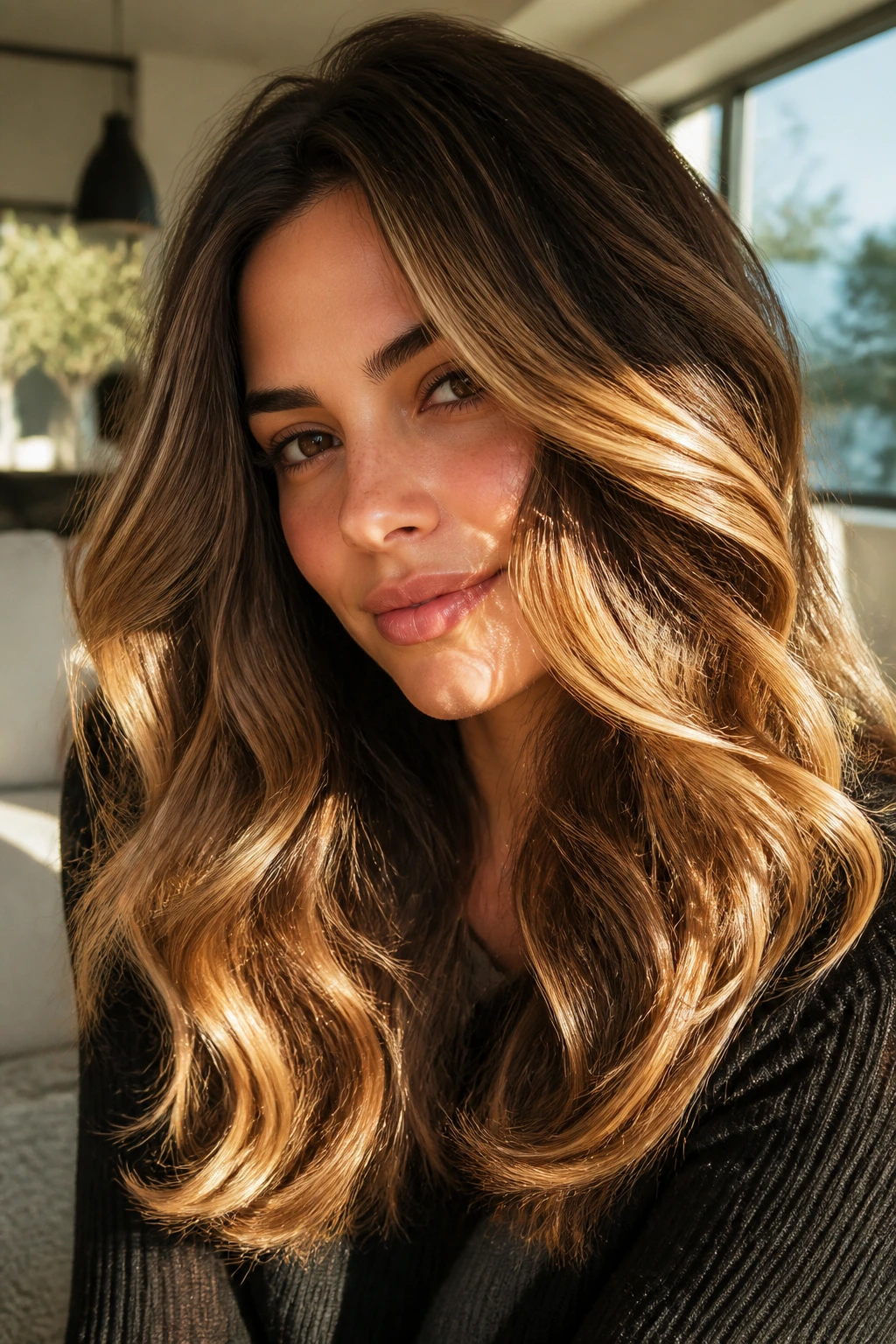
Thick hair can carry more color depth than fine hair, and golden hour balayage takes advantage of that. The look uses broad, warm ribbons that catch light in chunks instead of tiny wisps. On dense hair, that gives the surface more movement and keeps it from feeling heavy.
Ask for larger painted sections through the mid-lengths and around the face, with enough darkness left underneath to support the brighter pieces. If the highlights are too fine on thick hair, they disappear. If they’re too wide, the result looks stripy. The middle is where this lives.
This is one of the easiest spring looks to photograph, but more importantly, it looks good in motion. Thick hair moves in sheets, and the golden tone gives those sheets shape.
31. Mocha Melt Balayage
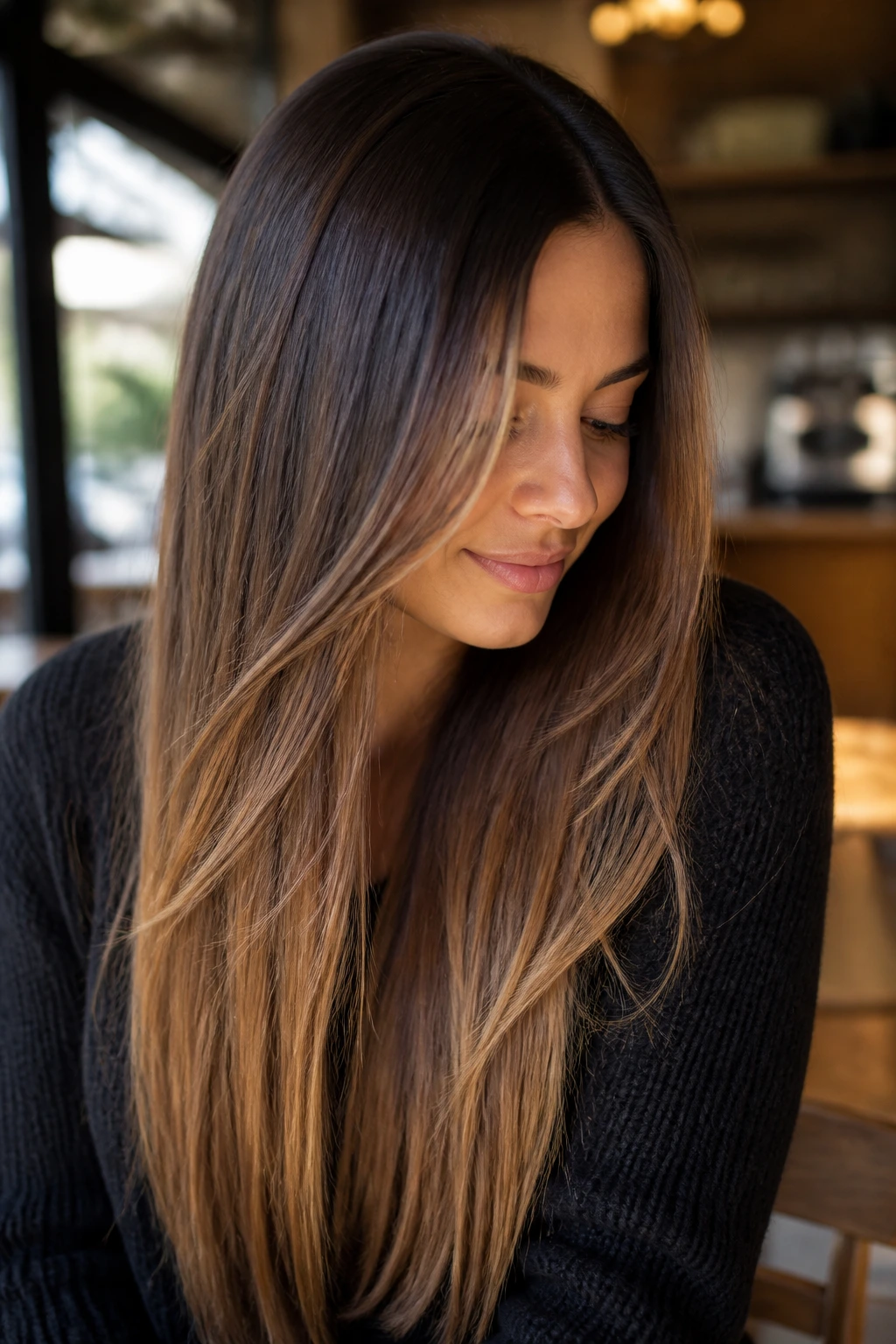
Mocha melt is what happens when you want brunette color to blur instead of contrast. The roots stay deep, the mids soften, and the ends lighten just enough to show movement. It’s a shade built for people who hate obvious regrowth.
The key is a smooth transition from dark mocha at the root to neutral caramel-brown at the ends. You want no hard line at any point. A gloss can tie the shift together, especially if the hair tends to pull red. This is one of the most forgiving looks in the list because the melt effect hides a lot.
It’s especially good on long straight hair, but it also works on soft waves. The shape changes; the logic doesn’t.
32. Strawberry Cream Balayage
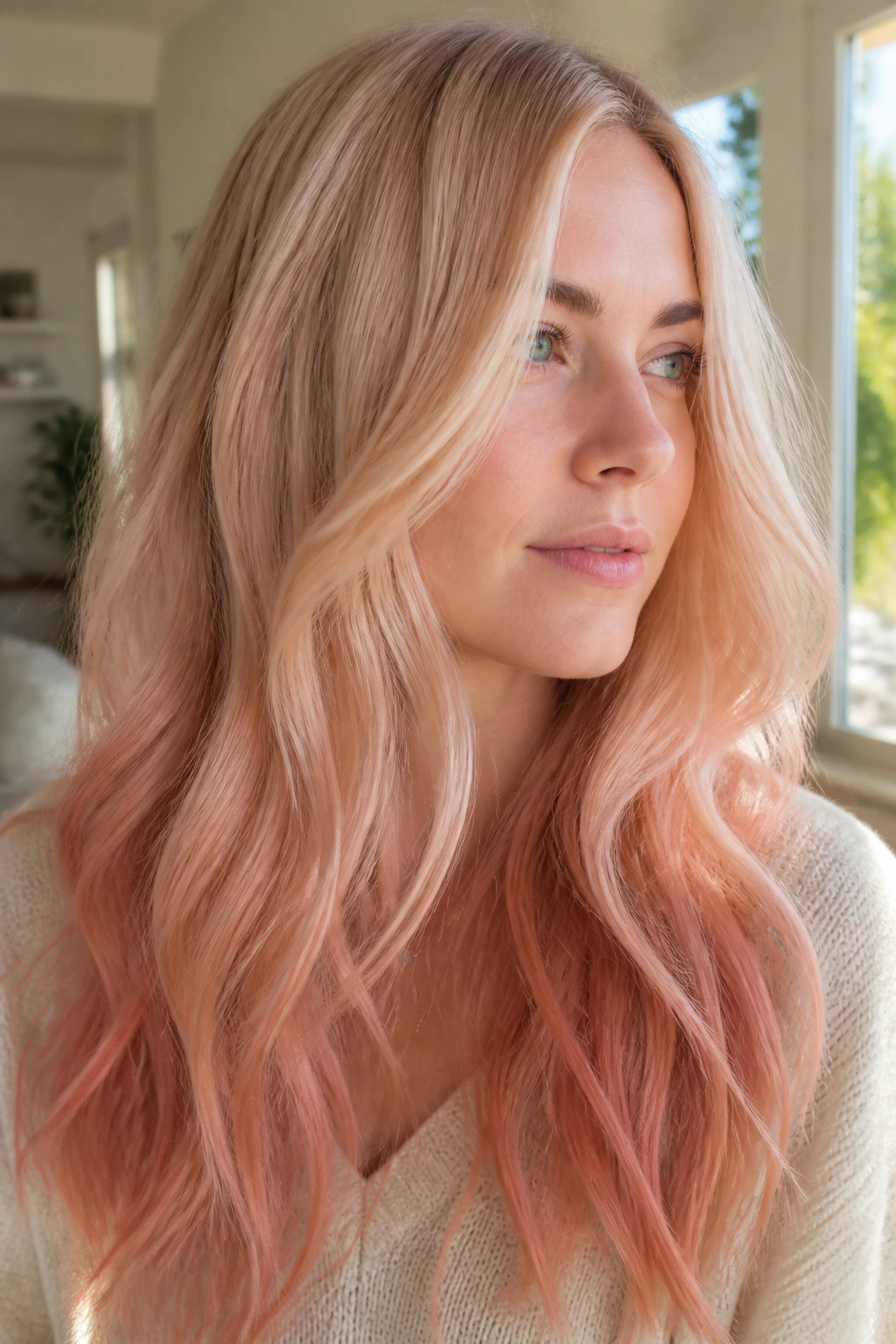
Strawberry cream is lighter and softer than standard strawberry blonde. The cream tone keeps the red from becoming too saturated, while the strawberry gives just enough warmth to make it feel spring-ready. It’s sweet, but not sugary.
This shade usually looks best on hair that already has some lightness. Ask for a pale cream base with strawberry gloss on the ends and a little warmth through the mids. If the red is concentrated too much near the root, the whole look can start feeling busy. A smoother fade is better.
It works well with airy layers and a little texture spray. The movement keeps the strawberry note from settling into one flat shade.
33. Pale Wheat Balayage
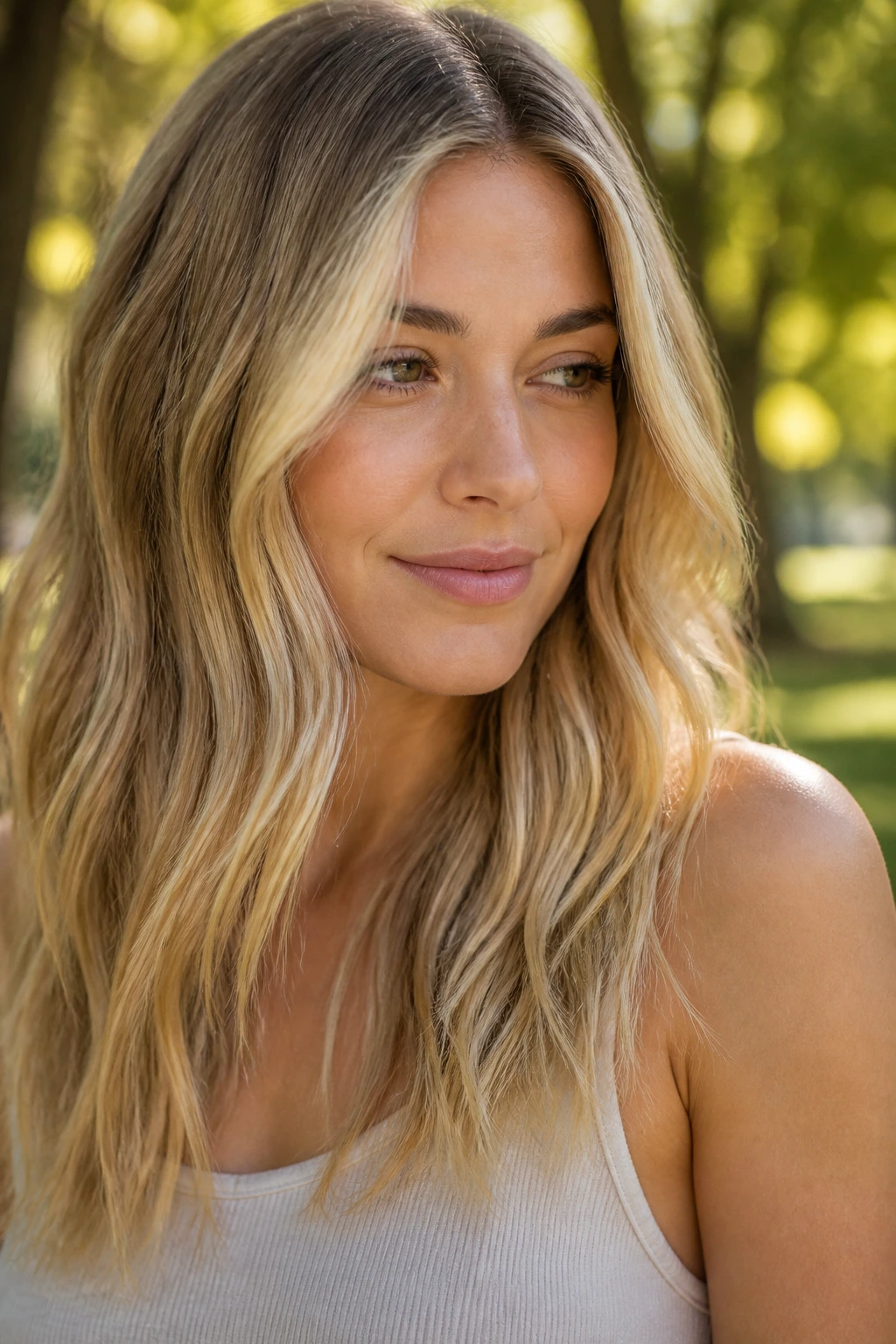
Pale wheat is one of the quietest blonde shades here, and that’s a feature. It sits between beige and soft gold, so the hair looks light but not icy. The tone feels natural in daylight, which makes it useful if you want blonde that doesn’t look salon-busy.
For the best result, ask for finer ribbons with a soft beige-gold gloss. This isn’t the place for chunky placement. The goal is a grainy, soft brightness that looks like it belongs to the hair. If your base is very light already, this can be done with gloss and a few accent pieces.
It suits long hair and shoulder-length cuts equally well. What matters more is the finish: smooth enough to show the tone, not so polished that it loses the wheat-like softness.
34. Copper Penny Balayage
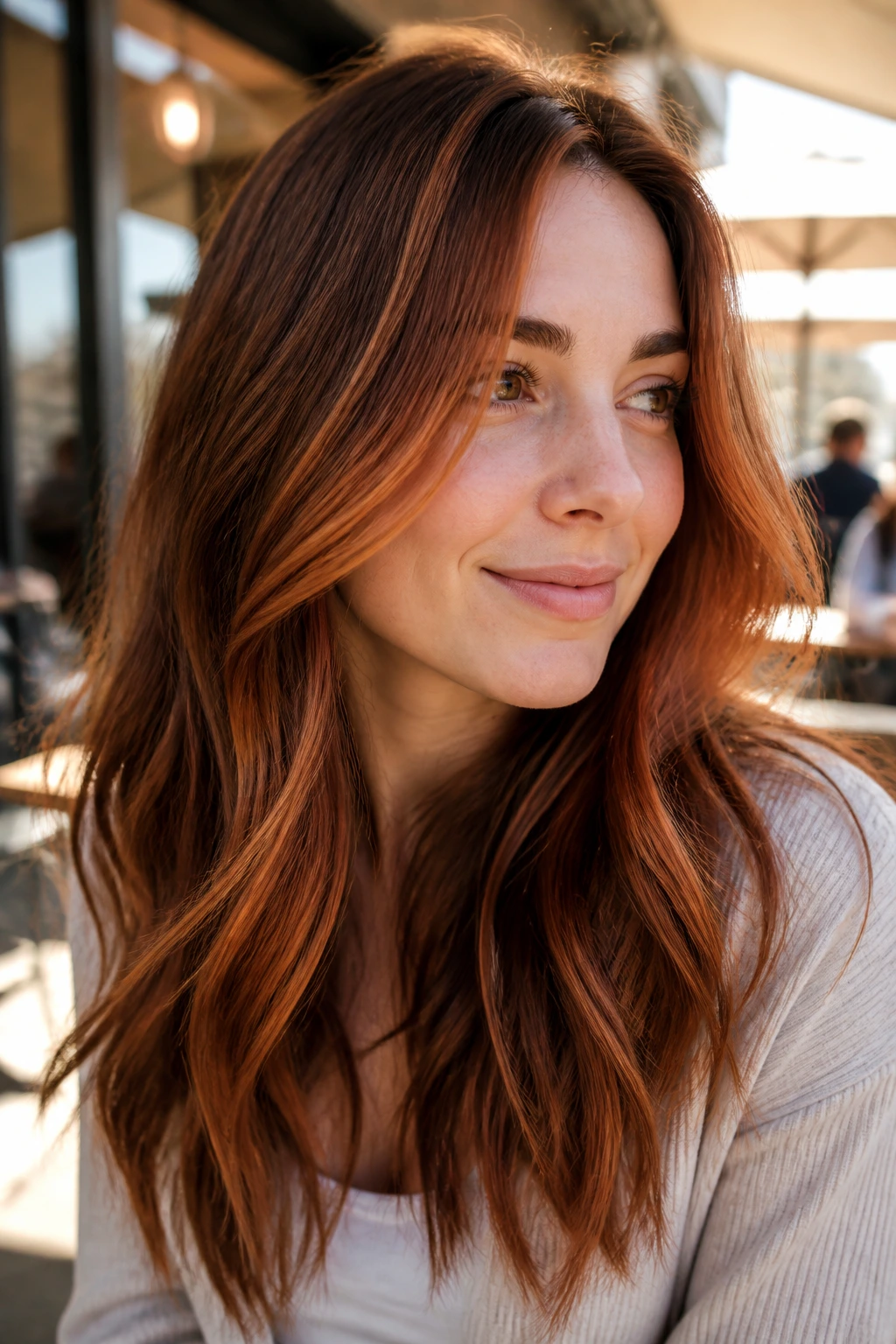
Copper penny is more vivid than apricot and less dark than chestnut. It has that bright, newly minted shine that catches light fast. When it’s placed well, the color feels fresh rather than seasonal in the limited sense.
This look usually works best on medium brown or dark blonde bases. Ask for copper pieces concentrated around the face and through the top layer, then let the lower sections stay deeper. That keeps the copper from swallowing the whole head. A gloss between salon visits helps preserve the metallic feel.
If you want spring hair that reads from across the room without crossing into full fantasy territory, this shade is a good line to walk.
35. Ash Beige Balayage
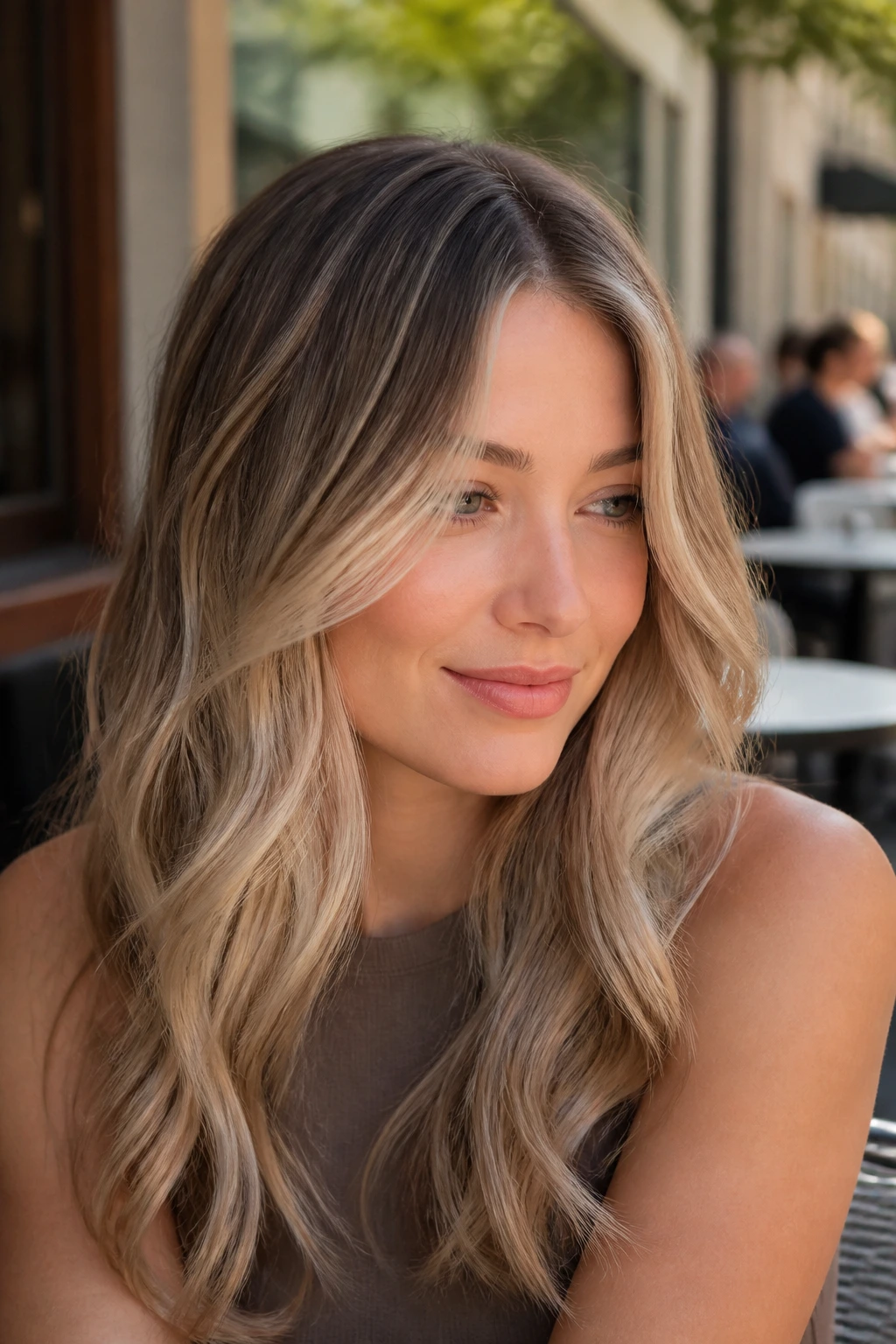
Ash beige is the answer to anyone who likes blonde but not brass. The beige softens the coolness, and the ash keeps the warmth from taking over. It’s one of the easiest ways to get a clean, modern spring blonde without going stark.
The placement should be soft and airy, with pale beige ribbons over a neutral base and just enough ash in the toner to cool the yellow. Too much ash and the hair gets dull. Too little and the warmth creeps back fast. That balance is the whole job.
This shade looks polished on bob lengths, lobs, and long layered cuts. It also grows out neatly, which is a nice bonus if your salon visits are spaced out.
36. Honeyed Curly Balayage
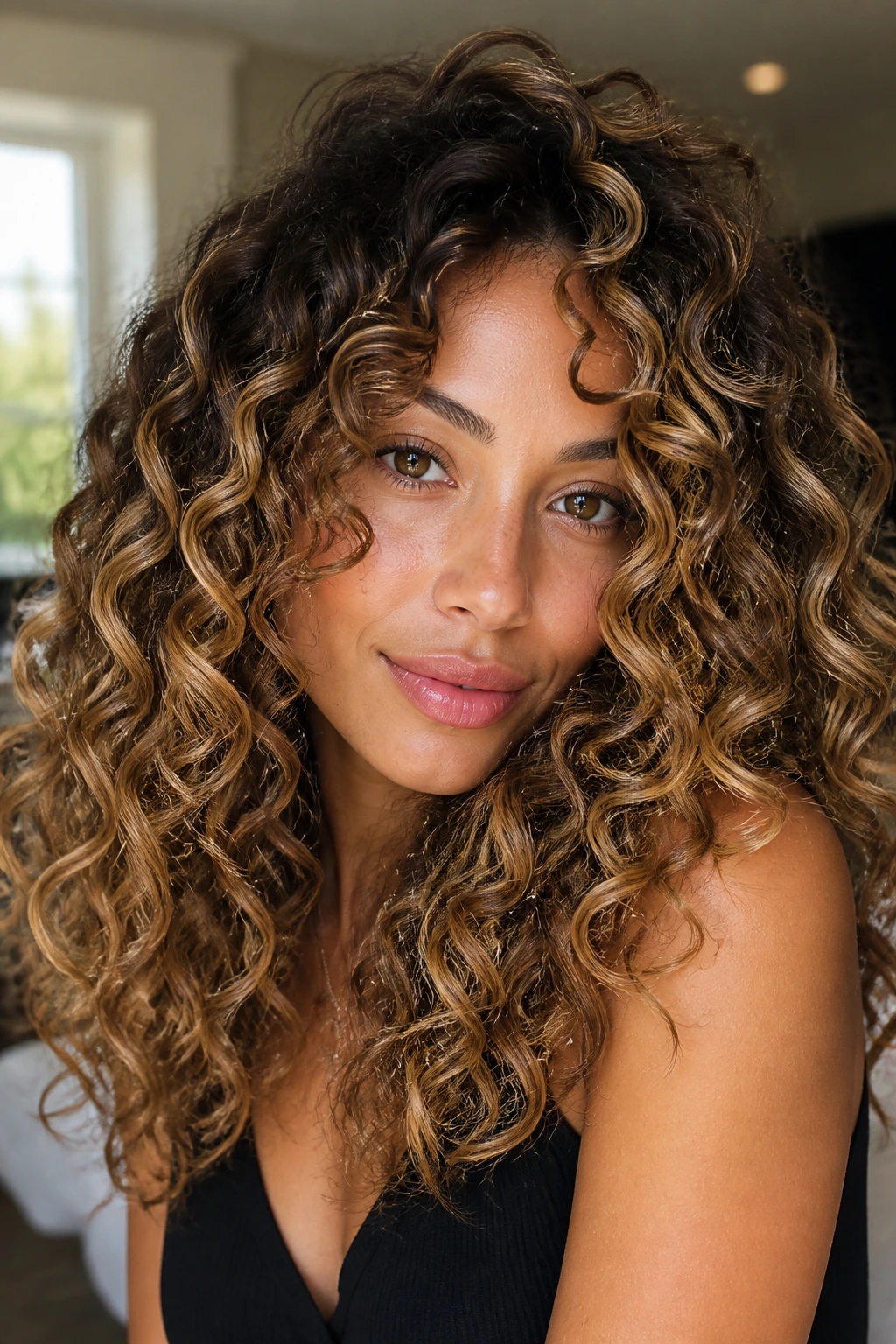
Curly hair loves honey when the placement follows the curl pattern. The warm tone lights up the bends without looking painted-on, and it keeps the shape from disappearing in shadow. On spring curls, this can look almost sun-kissed without tipping into dryness.
Ask for painted pieces on the outer curve of the curls and near the crown where the shape lifts. Avoid saturating the ends too much. Curly ends already show texture; too much lightness there can make them frizzier than you want. A moisturizing gloss or curl-safe toner helps the color stay soft.
This is a very different result from curly highlights that are spaced in a rigid pattern. It’s looser, warmer, and kinder to the curl.
37. Cool Cocoa Balayage with Invisible Ribbons
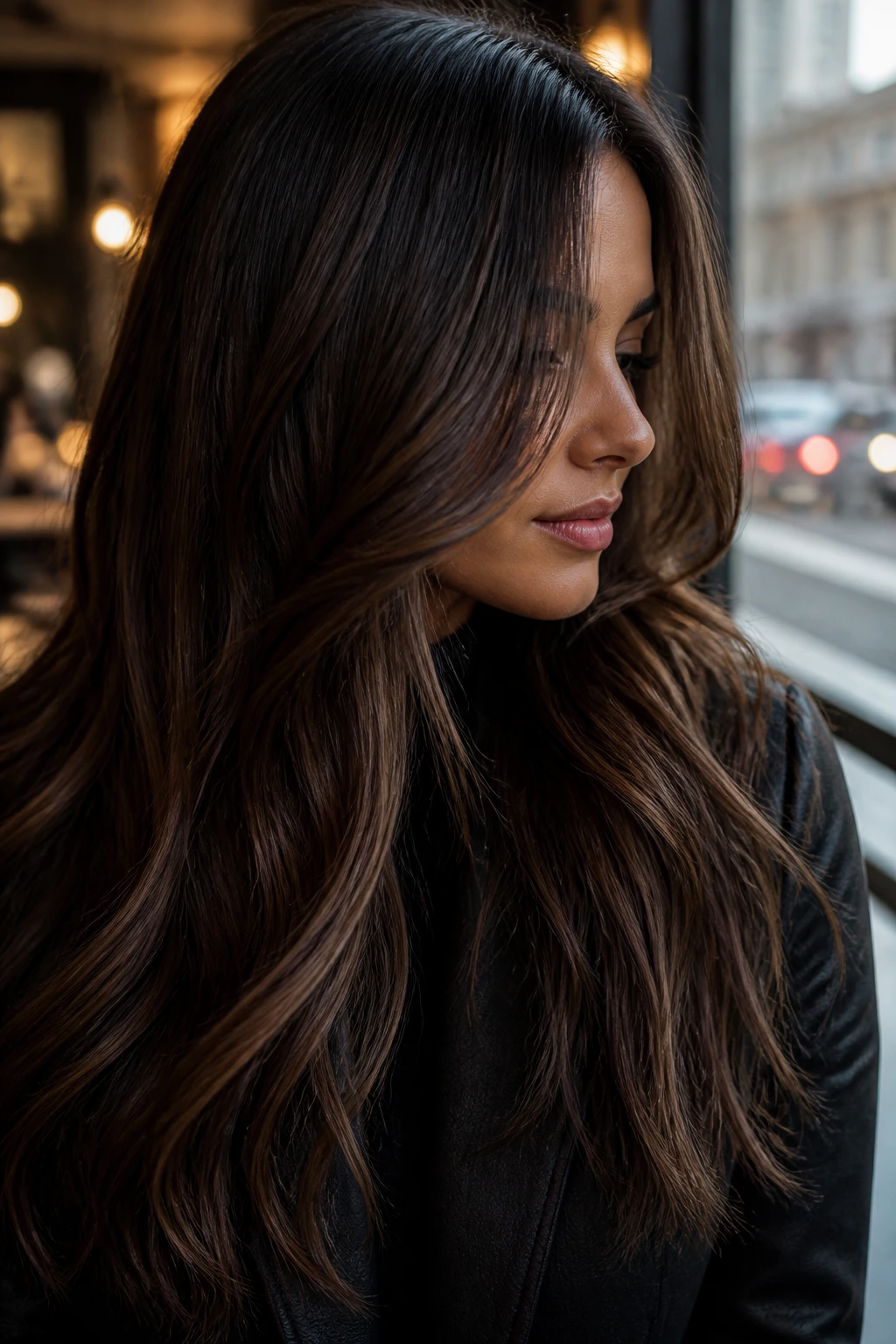
Invisible ribbons are the quietest kind of dimension, and cool cocoa is where they shine. The effect is subtle enough that people notice the hair before they notice the color, which is often the point. You get movement without flash.
This works best on dark brunettes who want depth broken up, not brightened dramatically. Ask for very fine cool-brown ribbons placed through the interior layers, not just the surface. That gives the hair a shadowy movement when it turns. The finish should look expensive and a little moody, even in spring.
It’s the right choice for anyone who wants color that reads more in motion than in a selfie. Not every good balayage has to announce itself.
38. Soft Apricot Champagne Melt
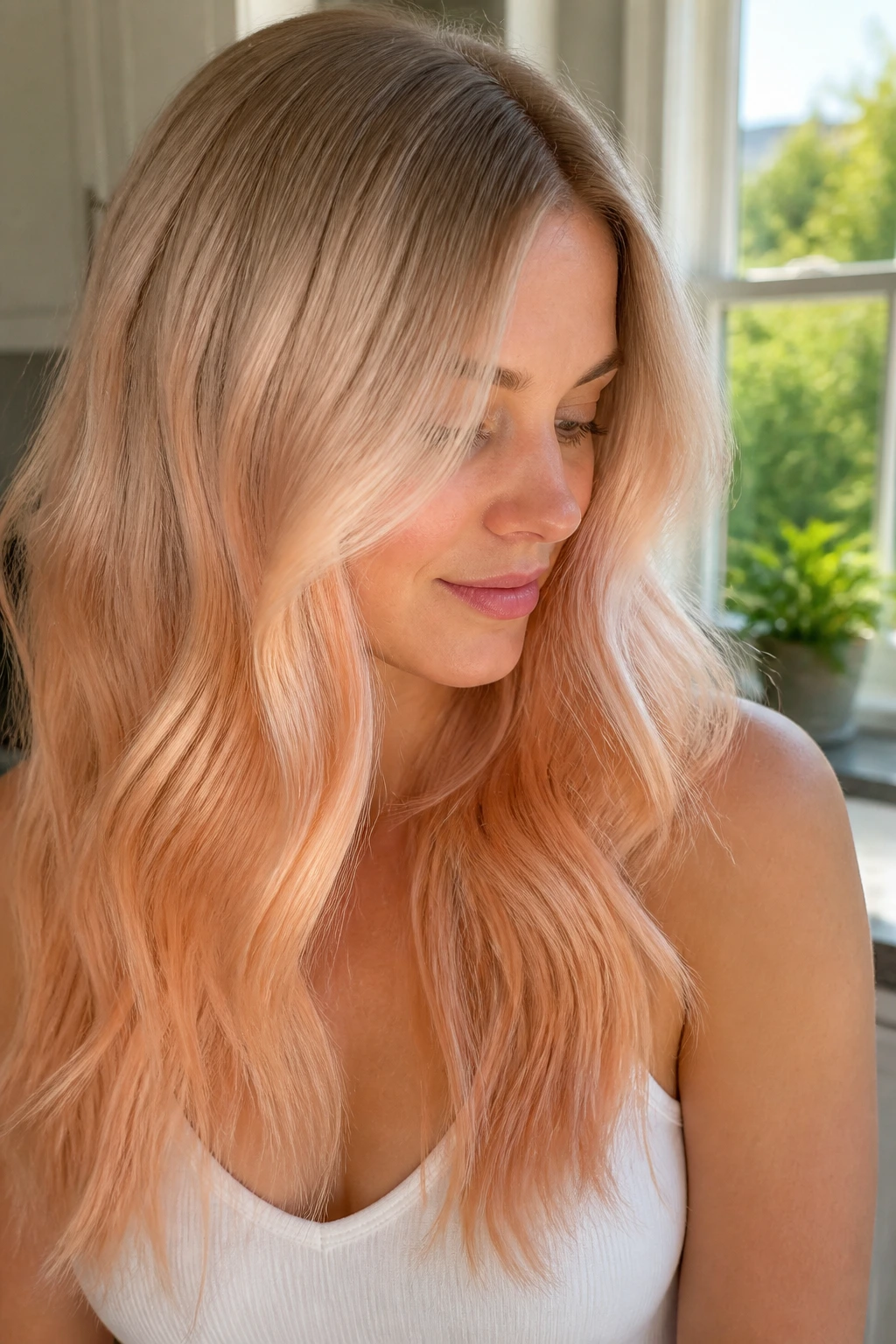
Soft apricot champagne is a pretty way to end the list because it blends warmth and lightness instead of choosing one. The apricot brings a touch of color, the champagne keeps it bright, and the melt effect makes the grow-out civilized. It feels springlike without being sugary.
Ask for a gentle fade from pale champagne at the top to apricot-beige through the ends, with no hard line anywhere. This shade works best on light brown, dark blonde, or pre-lightened hair. If the base is too dark, the apricot gets buried. If the hair is over-processed, the champagne can look thin.
It’s a good choice if you want softness first and novelty second. That usually ages better.
Why Spring Balayage Reads Softer Than Heavy Highlights
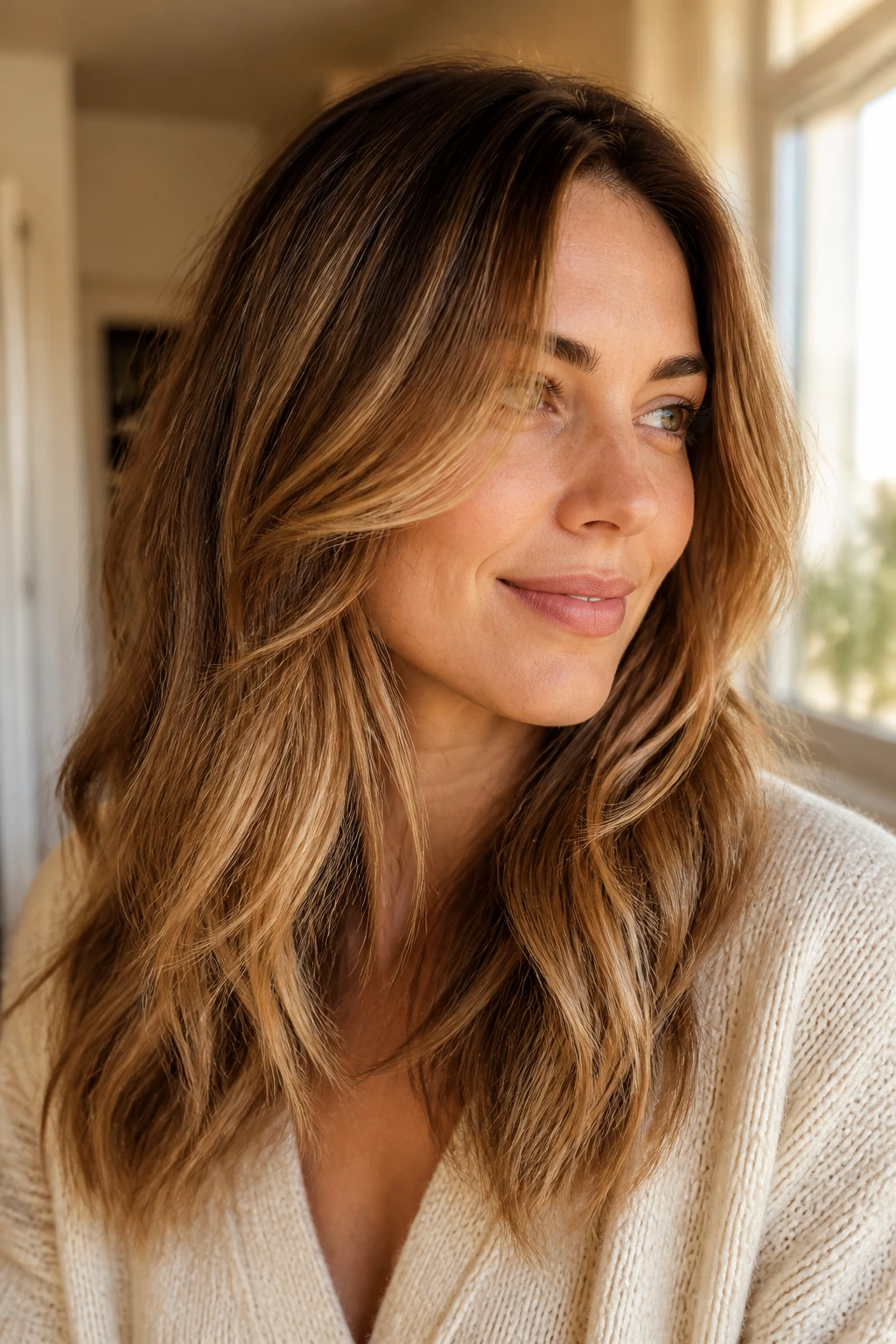
Spring light exposes everything. The shiny stuff. The uneven stuff. The yellow stuff you hoped nobody would notice. That’s why hand-painted color tends to beat rigid foil patterns this time of year; it gives you light where the hair moves and shadow where the head needs structure. The result is easier on the eye.
The other reason balayage works here is grow-out. A root that stays soft gives the color room to age without drawing a hard line across the head. That matters when you’re spacing salon visits farther apart or when you don’t want your color to look “done” in the obvious sense. A little blur makes the whole thing more believable.
There’s also a styling advantage that gets ignored. A painted ribbon shows up in a bend, a wave, a curl, or even a rough air-dry, while a more uniform highlight pattern can look tidy only after a blowout. Spring hair usually wants less effort, not more. This technique meets it halfway.
Essential Tools for Planning and Maintaining Balayage
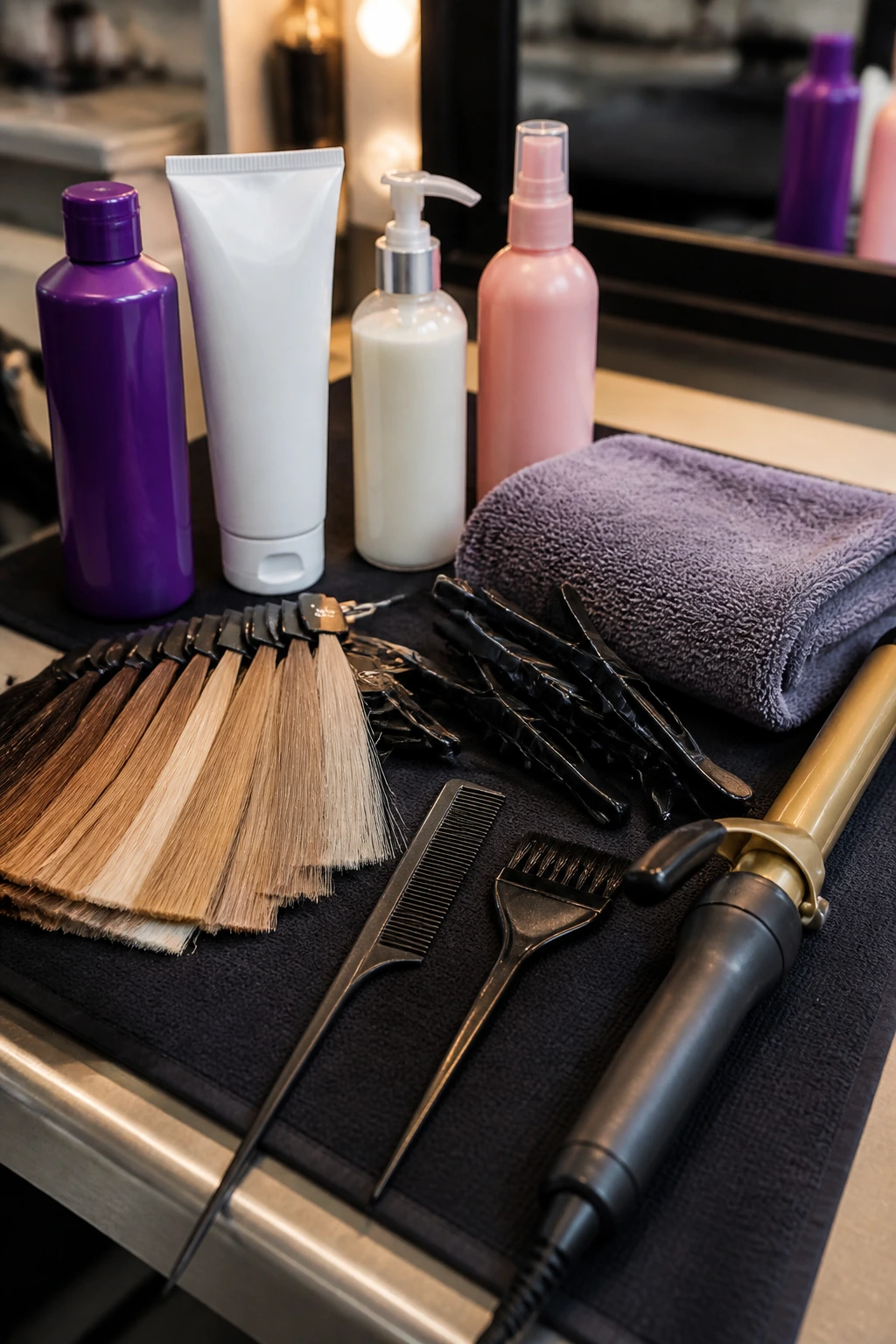
- Reference photos from front, side, and back — one image is never enough when you’re discussing placement and brightness.
- Color-safe shampoo and conditioner — use these to keep the tone from fading faster than the lift.
- Purple shampoo or blue shampoo — choose purple for pale blonde and blue for brunette brass correction.
- Bond-building treatment — useful if your hair has been lightened before or feels stretchy at the ends.
- Heat protectant spray — use it before blow-drying, curling, or flat-ironing; lightened hair burns faster.
- Wide-barrel curling iron or wand — the easiest way to show ribboned color without making the ends stiff.
- Tail comb and sectioning clips — handy for checking regrowth and keeping part lines neat.
- Microfiber towel or old T-shirt — rough cotton can fuzz the cuticle and make toned hair look dull.
- Silk pillowcase or bonnet — cuts friction and keeps the lighter ends smoother overnight.
Smart Shade Selection and Consultation Tips
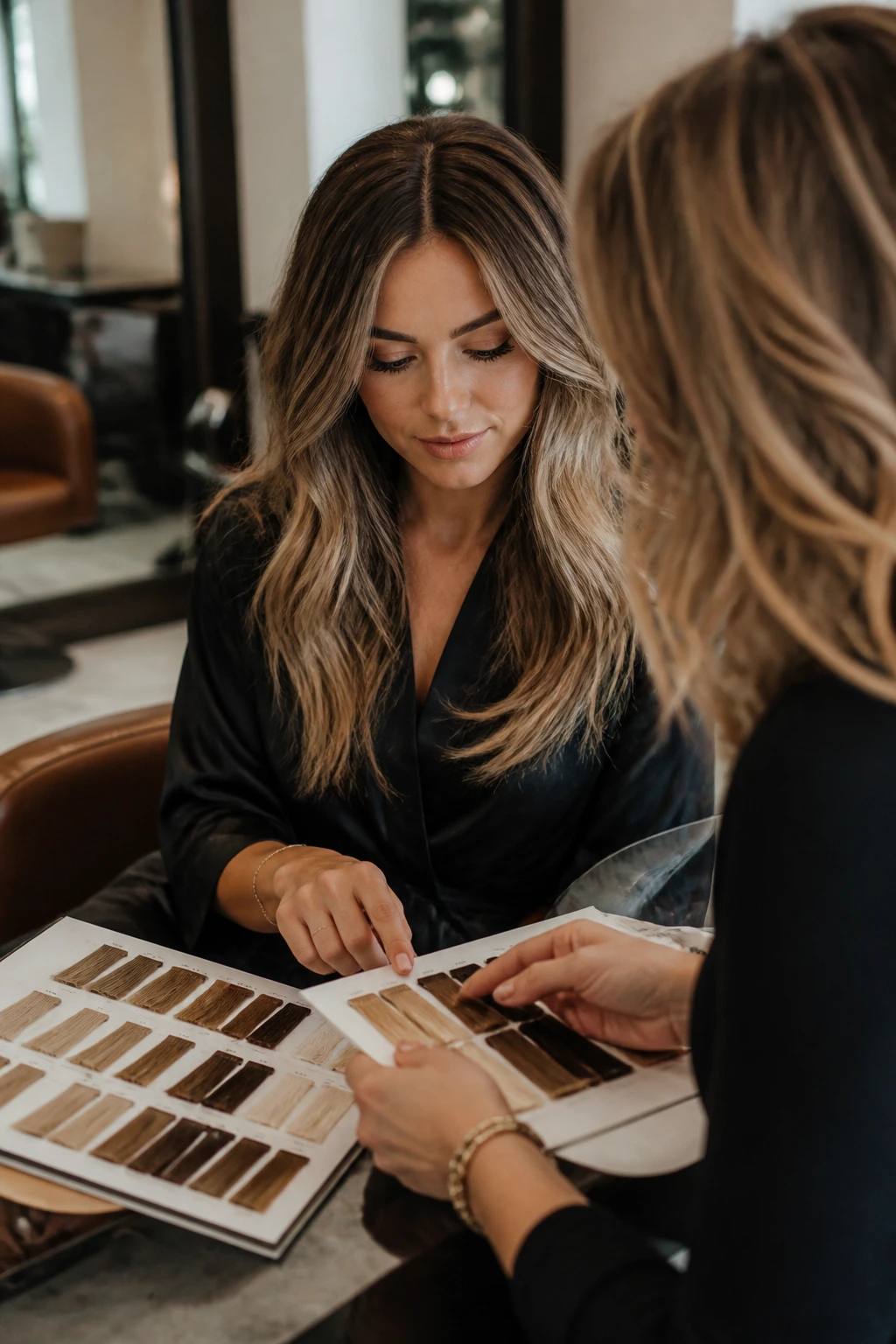
Start with your own base level, not the inspiration photo. That photo might be sitting on a level 8 blonde base while your hair is a level 4 brunette, and those are not the same appointment. A good consultation begins with honesty about what your hair can lift to in one visit, what it has been through before, and how much time you want to spend maintaining the result.
Tone words matter more than people think. Beige is softer than ash. Champagne carries a little warmth. Pearl is cooler and creamier. Copper leans orange-red. If you say “blonde” and stop there, you are handing over the steering wheel. Better to say what you want the hair to feel like: soft, cool, shiny, warm, airy, smoky.
Bring one photo for placement and one for tone. That saves a lot of confusion. You may love the face-framing brightness in one image and the darker root in another. Good. That’s useful. A colorist can build a hybrid if you explain which part you actually like.
How to Wear and Style These Balayage Looks
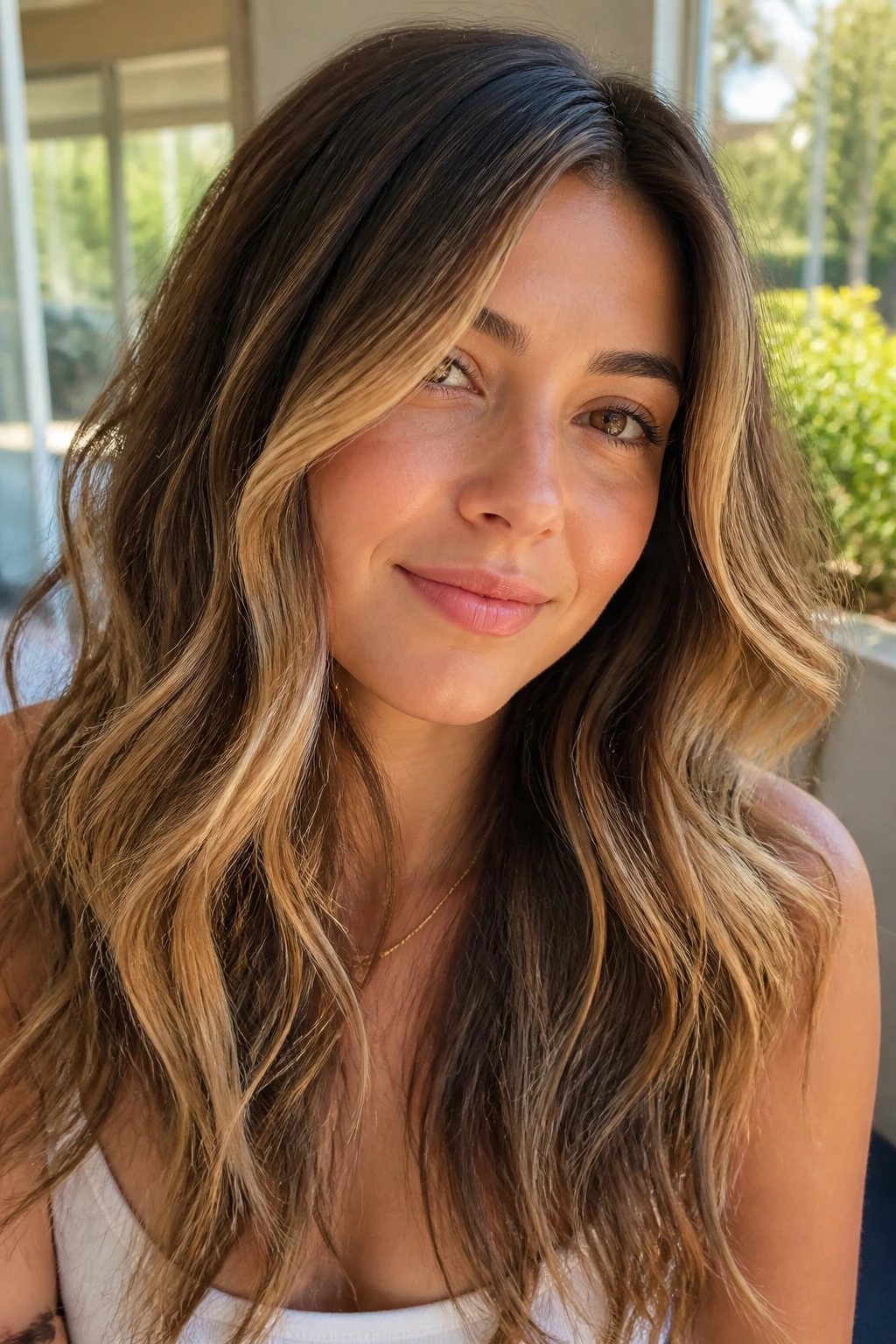
Presentation: Loose waves show painted ribbons the fastest, especially on long layers and bronde shades. Straight hair makes the blend look cleaner and a little more graphic, which works well for ash, beige, and smoky brunette tones.
Accompaniments: Lobs and bobs look strongest with brightness near the face and just below the jawline. Curly cuts need the light mapped around the natural expansion points, not in neat horizontal bands. Thick hair can take wider sections; fine hair usually looks better with finer, more scattered pieces.
Scale: If the hair is short, keep the brightest bits where the eye lands first. If it’s long, let the color travel farther through the mids and ends so the last few inches don’t look forgotten.
Finish: A 1.25-inch curling iron, brushed out lightly, gives most balayage styles enough bend to show depth. Too much curl can hide the blend. Too little movement can make the color look flat.
Extra Shine, Tone, and Dimension Tricks
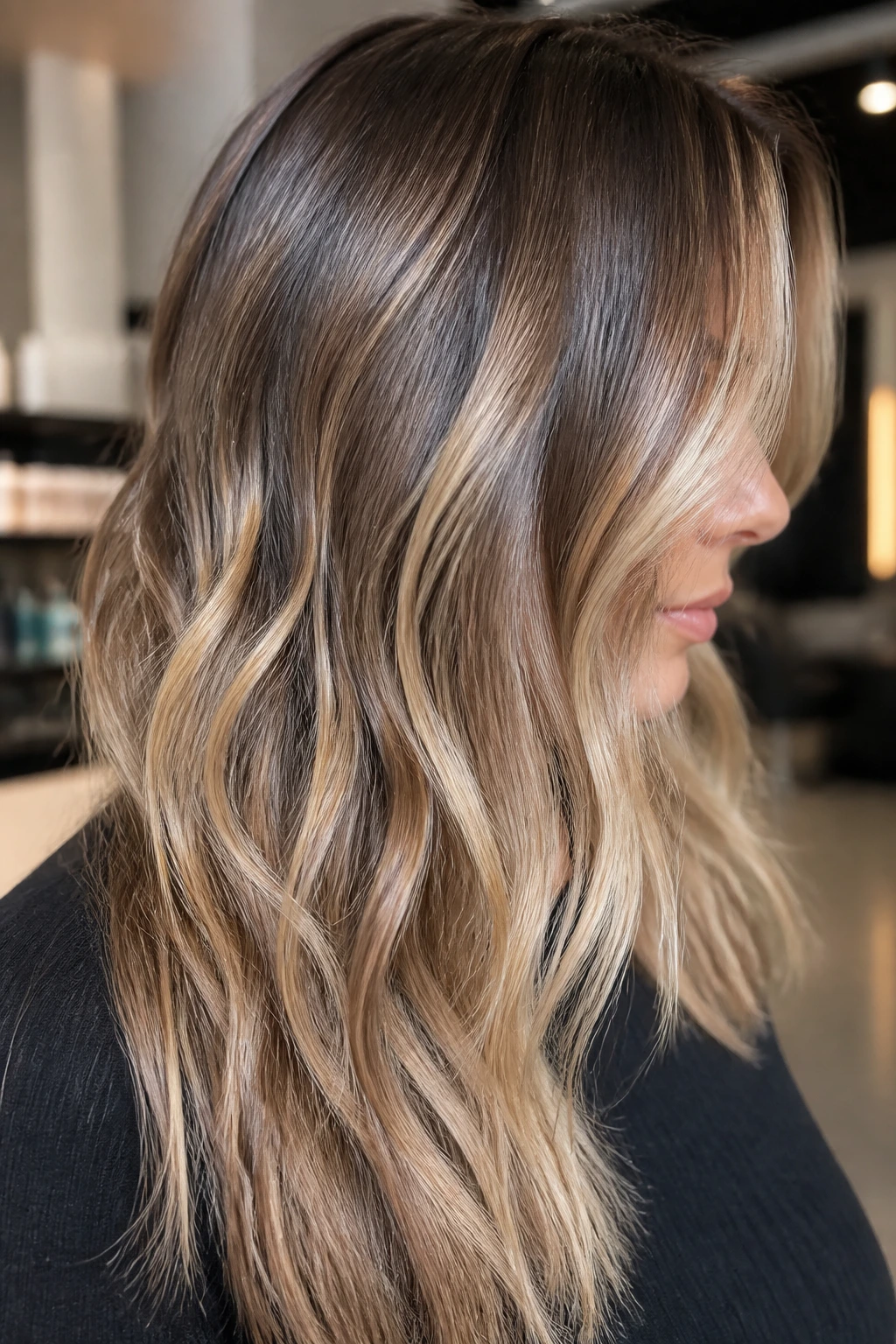
Gloss Boost: A clear, beige, pearl, or copper gloss every 6 to 8 weeks keeps the hand-painted pieces from drifting dull. If the blonde looks chalky, the gloss formula probably needs more warmth. If the brunette goes orange, blue toner is the cleaner fix.
Customization: Ask for a brighter money piece if you want the face to pop, or keep the interior darker if you prefer a softer, lower-contrast result. A small change in placement matters more than another half level of lift.
Styling Suggestions: Use a smoothing cream on the mids and a drop of serum on the ends, then finish with a flexible spray. Heavy oil can make beige and pearl tones look greasy in daylight. Less is better.
Make-It-Yours: Fine hair needs thinner ribbons and a softer root shadow. Thick hair can hold wider panels and more warmth. Curly hair usually benefits from curl-by-curl placement and a gloss that respects the pattern rather than flattening it.
Maintenance, Touch-Ups, and Gloss Refreshing
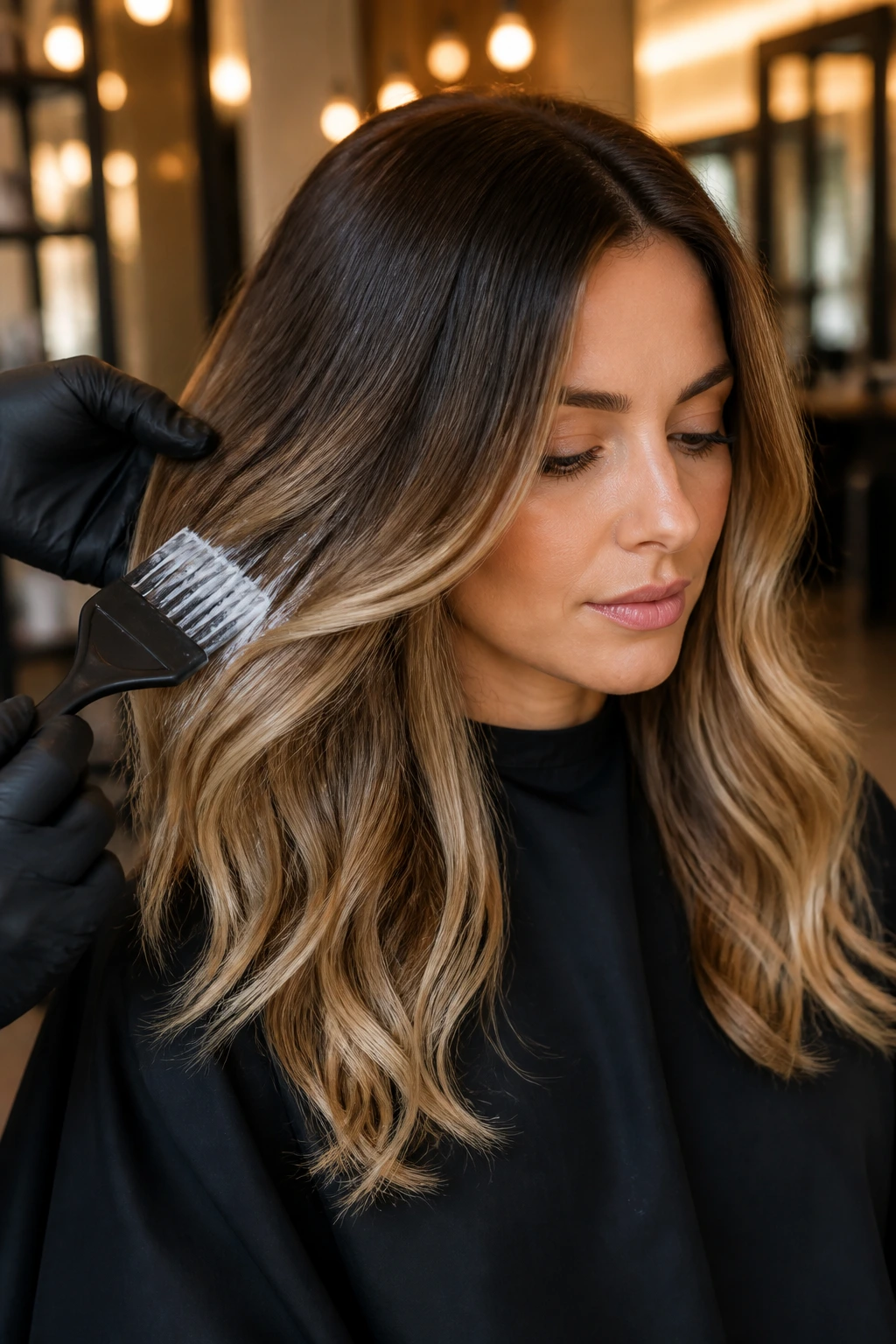
Balayage grows out more gracefully than a blunt foil highlight, but it still needs upkeep if you want the tone to stay clean. For most looks here, a gloss refresh every 6 to 8 weeks keeps the shade honest. That timing can stretch a little on darker, softer colors and shrink on pale blondes or bright money pieces.
At home, wash two or three times a week if you can. Daily shampooing strips tone fast, and spring color is especially vulnerable to water and heat. Use lukewarm water, not hot. Hot water opens the cuticle and sends those pretty beige and champagne notes down the drain sooner than you’d like.
Purple shampoo helps blondes, but it’s not a free-for-all. Once a week is plenty for pale blonde. Bronde or caramel shades may only need it every other week, and only for a minute or two. If hair starts looking dusty, back off. That chalky finish is a sign you went too far.
If the hair has been lifted more than once, a bond-building treatment once a week can make a real difference in how the ends feel. The lighter the color, the more that matters. Dry ends will ruin an otherwise beautiful tone in a hurry.
Variations and Adaptations to Try
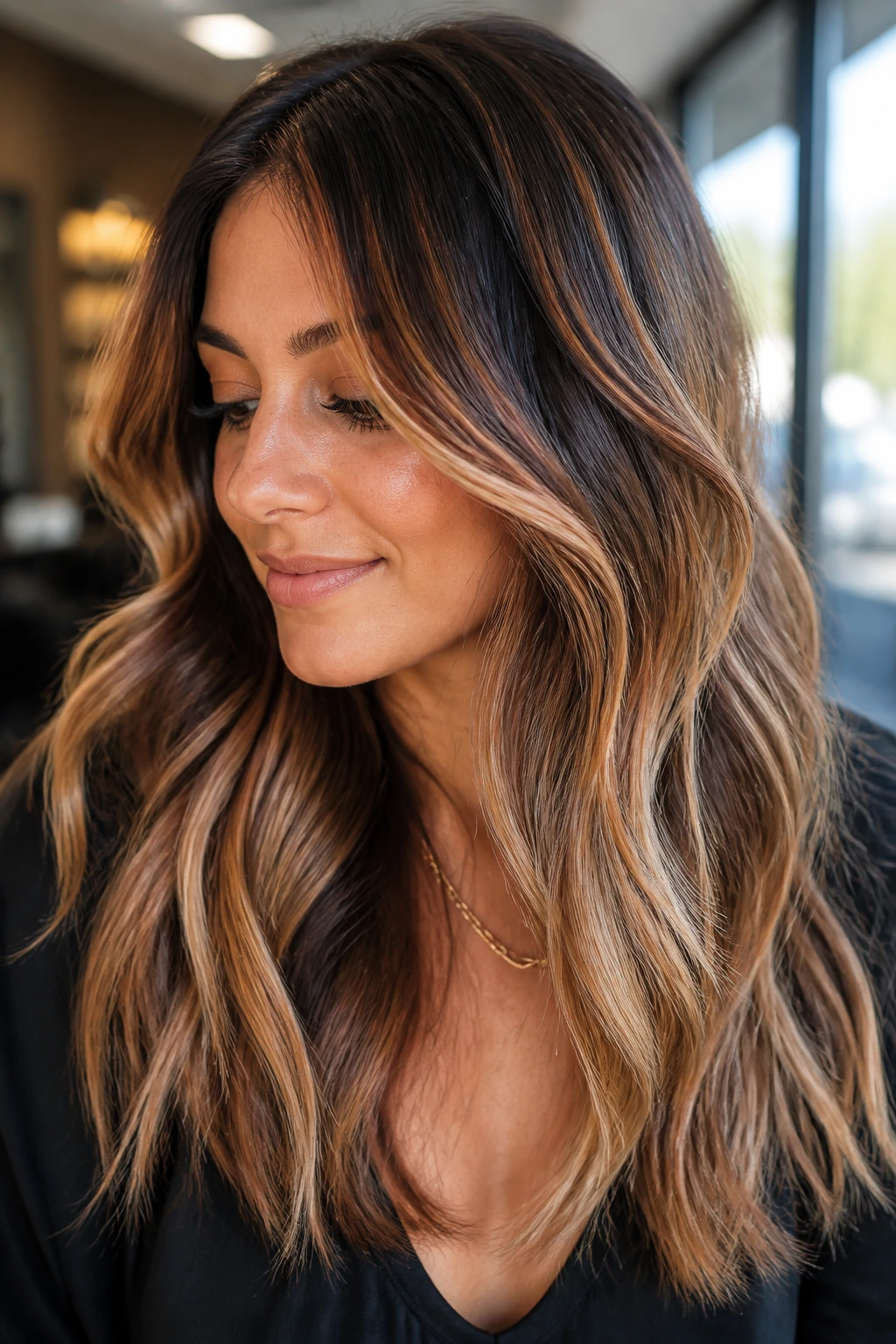
The Low-Commitment Melt: Keep the root soft, reduce the number of bright pieces, and let the color fade slowly into the ends. This is the version for anyone who likes dimension but does not want a loud grow-out line. It works best on brunettes and brondes.
The Face-Frame First: Brighten only the money piece, cheekbone area, and perimeter around the front. The rest stays deeper and softer. It’s a smart first balayage if you’re nervous about changing too much at once.
The Copper Refresh: Skip blonde entirely and ask for a copper, apricot, or bronze gloss on pre-lightened pieces. That gives you warmth without committing to a full redhead move. It suits spring especially well because the tone feels lively in daylight.
The Cool Beige Reset: If the hair has gone yellow or muddy, cool it with a beige-ash gloss and finer placement. This is the fix for people who want blonde without brass. It’s quieter than platinum and easier to live with.
The Curly Coil Map: For curly and coily textures, the placement should follow the shape of the curl family, not the old-school foil pattern. This version keeps brightness where the curl opens and leaves the interior strong. It preserves movement instead of fighting it.
Common Mistakes to Avoid
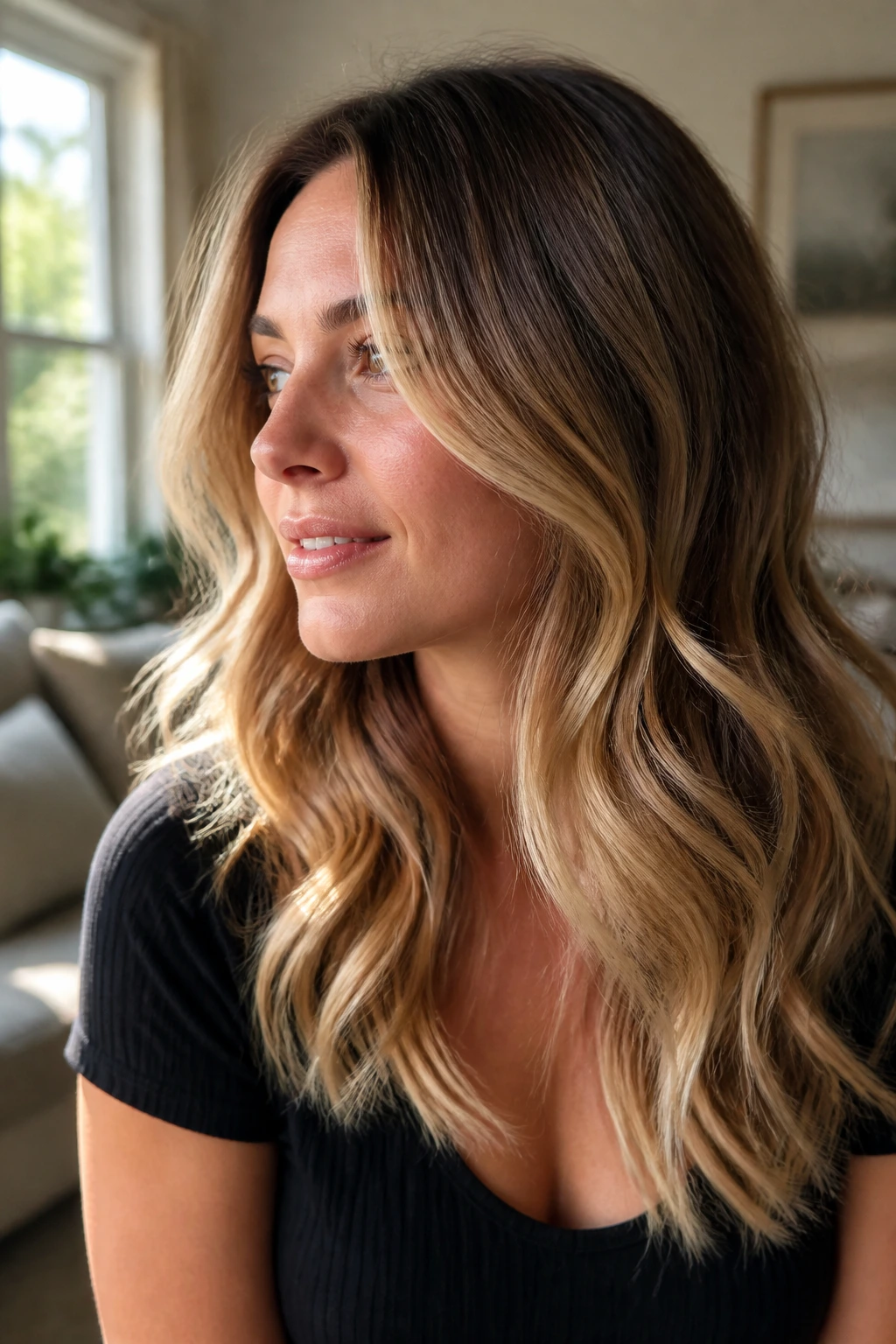
- Bringing only one inspiration photo: A picture of tone without a picture of placement leaves too much room for guesswork. Bring at least two angles if you can.
- Chasing too much lift in one appointment: Dark hair pushed too fast can turn orange, gummy, or both. Better to build the color in stages than to scorch it for speed.
- Ignoring undertone: Beige, ash, pearl, copper, and champagne are not interchangeable. Pick the wrong one and the color can look muddy, green, or too yellow in daylight.
- Using purple shampoo like a daily cleanser: Pale blondes go dull fast when purple shampoo is overused. Keep it occasional and watch the tone after each wash.
- Putting brightness too high on the head: A stripey crown makes the color look dated and harder to grow out. The best spring placement usually sits around the face, mid-lengths, and ends.
- Skipping trims after lightening: Dry ends make even a good balayage look rough. A small trim every 8 to 12 weeks keeps the finish clean.
Frequently Asked Questions
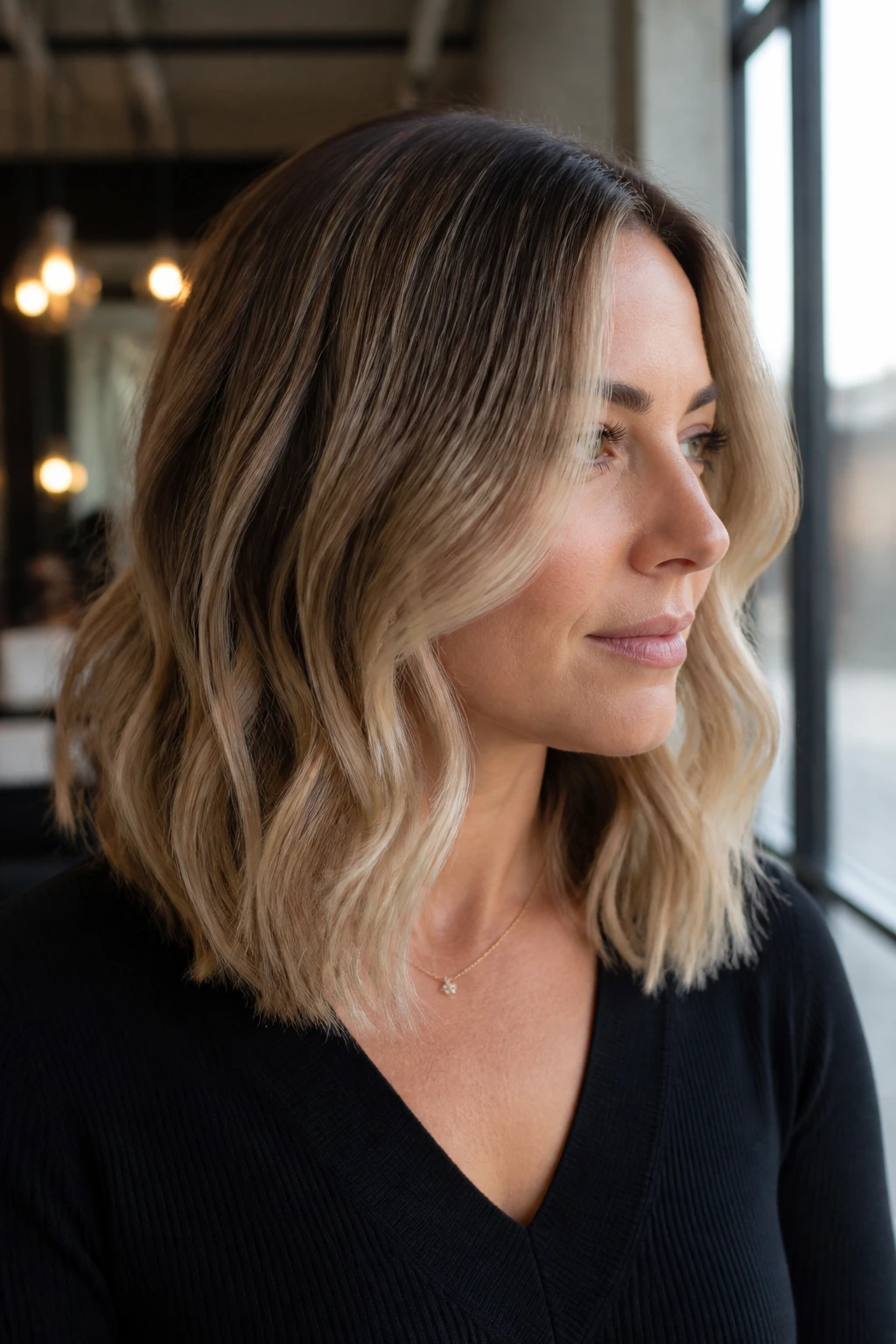
How often does balayage need to be touched up?
Most balayage grows out well enough to stretch 8 to 16 weeks, depending on how bright the face-framing pieces are and how fast your hair grows. Pale blondes and high-contrast looks need attention sooner; softer bronde and brunette blends can go longer.
What is the difference between balayage and highlights?
Balayage is hand-painted, so the placement is softer and usually less uniform than foil highlights. Highlights can still be beautiful, but they often create a cleaner, more structured line of brightness. Balayage tends to grow out with less of a hard edge.
Can balayage work on dark brown or black-brown hair?
Yes, but the target tone matters. Dark bases usually look best with caramel, copper, bronze, ash cocoa, or smoky brunette ribbons before trying pale blonde. If you want a very light result, expect a slower process and more than one appointment.
Why does my blonde turn brassy so fast?
Porosity, hard water, too much heat, and the wrong shampoo all play a part. If the hair sucks up warmth fast, a purple shampoo, a cooler gloss, and less hot water usually help. Sometimes the toner formula simply needs more beige or ash.
Is balayage damaging?
Any lightening service changes the hair, so yes, there is some stress involved. How much depends on the starting color, how far the hair has to lift, and how well it is cared for afterward. Bond treatments and conservative placement make a big difference.
Can I get balayage on curly hair?
Absolutely, and it often looks better when the placement follows the curl pattern. The light pieces should sit where the curls expand and catch light, not in rigid bands that disappear when the hair dries. A curly specialist helps here.
What should I ask for at the salon?
Say whether you want soft or high-contrast, warm or cool, and where you want the brightest pieces. The phrase “hand-painted dimension with a soft root and brighter face frame” is more useful than just saying you want balayage. Bring photos that match your hair length and texture.
Can balayage be taken darker later?
Yes, but it’s easier to deposit tone than to erase lift. If you want to go darker again, a gloss or lowlight service can blur the lighter pieces, though previously lightened ends may still hold some brightness. That’s normal.
Soft Finish
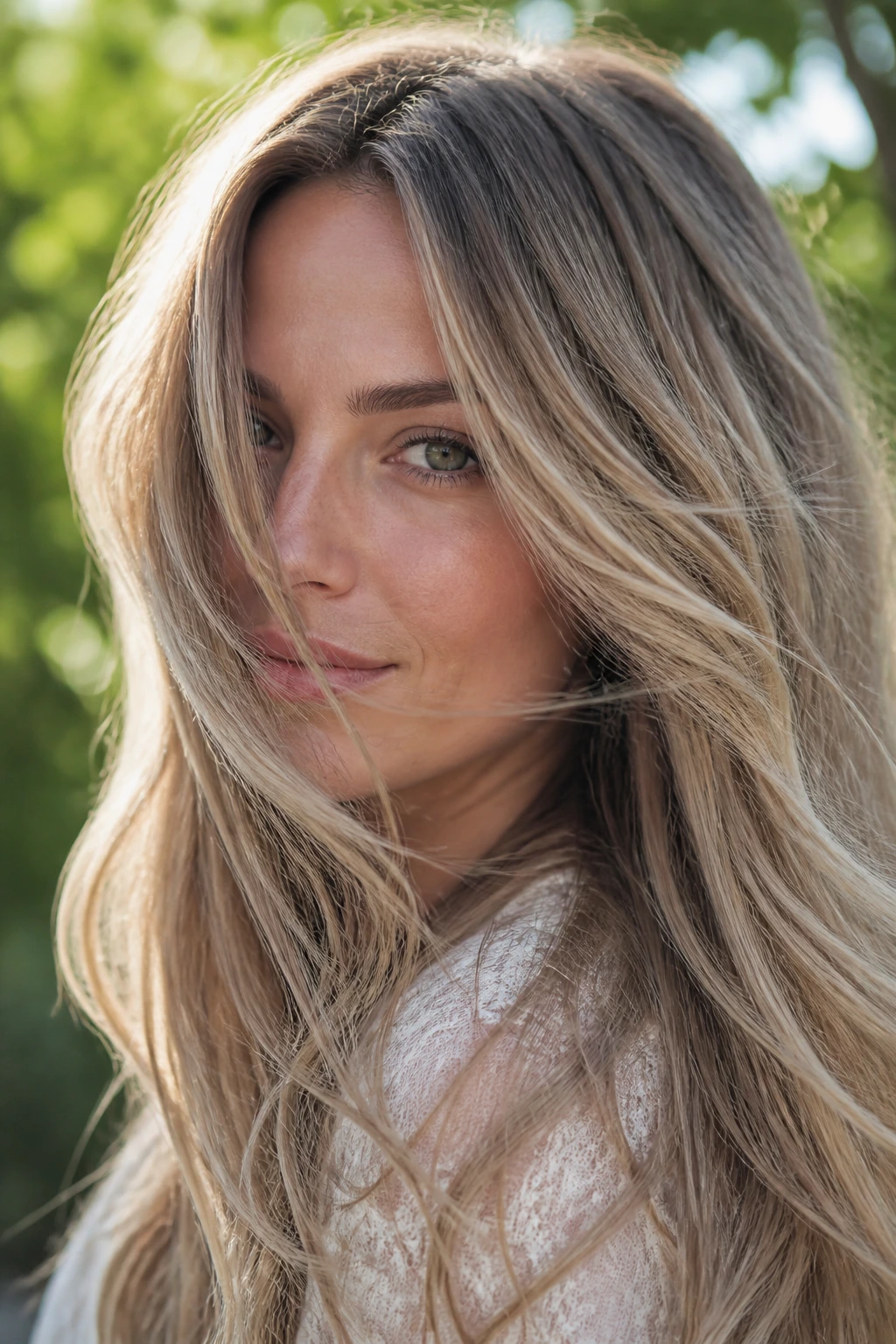
The best spring color does not need to scream. It needs to move, soften, and hold up when the wind changes or the styling takes less than ten minutes. That is why balayage keeps winning for people who want their hair to look lived-in instead of freshly processed every time they glance in a mirror.
Pick the tone that matches your base and your upkeep habits, not the loudest photo in your saved folder. Champagne, beige, copper, ash, pearl, and bronze all have a place here, and the right one is usually the shade that looks good two weeks after the appointment, not only on day one.
If one of these 38 looks is tugging at you, save it with a note about the tone and placement you like most. That single note will make your next color conversation far easier.
