



Long blonde hair color ideas live or die on dimension. A single flat lift can make waist-length hair look dry fast, while a beige root shadow, a champagne ribbon, or a soft honey melt gives the length something to do besides hang there. That’s the difference between blonde that looks polished and blonde that looks like it was stripped in one pass and prayed over.
Long hair shows everything. The root line. The toner fade. The porous ends that grab too much ash. A shade that looks soft on a lob can read stripey on hair that falls past the chest, because there’s more room for the color to stretch, break, and change tone from top to bottom. That sounds unforgiving, and it is. It also means long hair can carry some of the prettiest blonde work you’ll ever see.
The best long blonde hair color ideas are rarely the lightest ones in the room. They’re the ones with a plan: brighter around the face, softer through the back, and balanced enough to survive a few washes without turning orange, muddy, or oddly gray. That’s where the good stuff lives.
Why These Shades Earn Their Space
-
They use length instead of fighting it: Long hair gives beige, champagne, and honey tones room to shift from root to end, which keeps the color from looking chopped up.
-
They grow out with less drama: A shadow root or balayage line lands lower on the head, so the regrowth is softer and easier to live with.
-
They flatter more than one texture: Waves catch the light, straight blowouts show the gloss, and curls soften the contrast so the blonde doesn’t look stripey.
-
They can lean warm or cool on purpose: The same long cut can read creamy, pearl, ash, or honey depending on toner, gloss, and placement.
-
They give a colorist room to work: Long lengths let the lighter pieces stay around the face and ends while the mids hold some depth, which keeps the hair from looking hollow.
-
They’re easier to customize than a one-tone blonde: If you like brightness, you can push the face frame higher. If you hate maintenance, you can keep more root and still get a blonde effect.
How Long Blonde Hair Color Ideas Change on Real Length
Long hair behaves differently from short hair. That sounds obvious until you’re staring at a mirror and wondering why a shade that looked soft on a shoulder-length cut suddenly feels loud on hair that reaches your ribs. The answer is placement. On long lengths, the color travels farther, catches more light, and shows every tonal shift from scalp to ends.
A good blonde plan on long hair usually starts with depth at the root. Not a heavy dark root. Just enough shadow to keep the scalp from screaming for attention while the lighter pieces do the work. If the root is too bright, the whole head can look blown out. If the ends are too porous, they grab toner and go smoky before you meant them to. That’s why a level 9 beige gloss and a softer level 8 or 7 root can look richer than an all-over pale lift.
Texture changes the read too. Fine long hair often needs babylights or lowlights so the blonde doesn’t disappear into a pale sheet. Thick hair can take chunkier ribbons and still look soft, because there’s enough mass underneath to hold the contrast. And if your hair is wavy, the bends do half the styling for you. Each curve catches a different slice of light.
One more thing. Long blonde hair usually needs a little more patience in the chair, because the ends and the mids do not lighten at the same speed. That’s normal. Rushing the process is how you end up with hot roots and tired ends.
1. Creamy Beige Blonde
Creamy beige blonde sits in that sweet spot where the hair looks light, but not loud. It leans neutral, with just enough warmth to keep the tone from going chalky and just enough coolness to stop it from drifting yellow. On long hair, that balance matters more than people think. The length gives the beige room to breathe, so the color looks soft from the crown all the way down to the ends.
My bias: this is one of the safest blonde choices if you want polish without the maintenance tax of platinum. Ask for a soft root shadow and beige toner at the mid-lengths, then let the ends stay a touch brighter. On layered hair, the movement looks like cream poured through silk.
It also plays nicely with natural bases around level 6 or 7. You don’t have to drag the lightener all the way to white to get impact. A level 9 finish with a beige glaze already reads blonde from a few feet away, and it grows out with less temper tantrum at the scalp.
2. Champagne Balayage
Why does champagne balayage work so well on long hair? Because the color doesn’t rely on one big bright band. It’s built from ribbons. The lighter pieces sit where the light would naturally land — around the face, through the mid-lengths, and in the ends — so the shade sparkles instead of shouting.
Champagne is one of those blondes that can go wrong fast if it’s too yellow or too silver. The good version has a pale golden base with a cool glaze on top, the way chilled prosecco looks in a narrow glass. On long waves, it gives you movement even when the hair is still.
I like this look when the client wants something between beige and brighter blonde. It’s especially good on hair that already has some natural warmth, because the champagne tone keeps the whole result from flattening out. A gloss every 4 to 6 weeks keeps it clean.
3. Buttercream Blonde
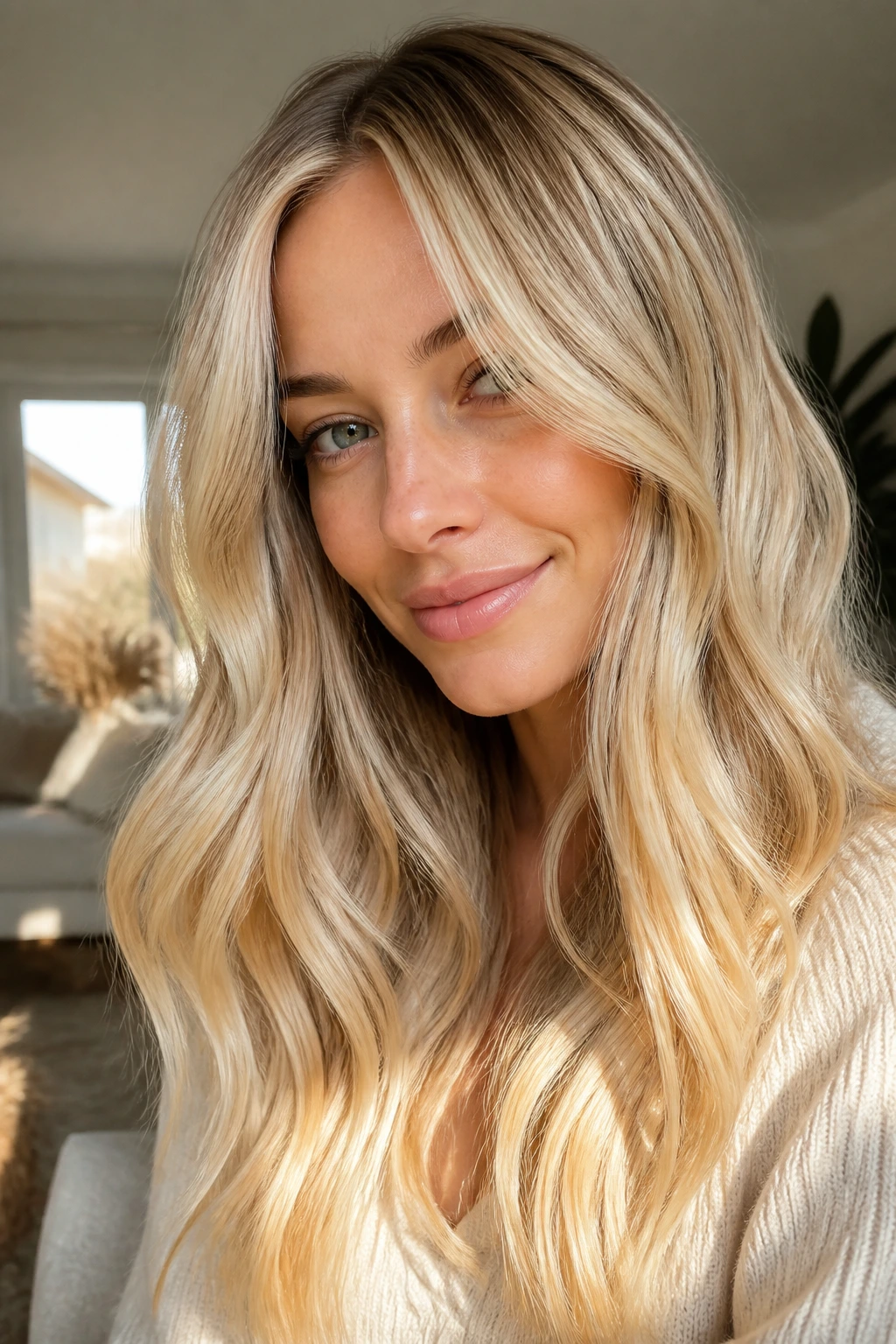
Buttercream blonde is softer than gold and warmer than beige. That’s the appeal. It has the look of a rich frosting — pale, creamy, and a little glossy at the ends — which makes long hair feel full instead of fried. If your hair tends to look dull in cooler blondes, this shade gives it back some life.
This one works best when the tone is built in layers. Keep the root a shade deeper, then feather the buttercream through the mids and let the ends catch the brightest warmth. On long hair, that gradient reads expensive without trying to be icy. On a blunt cut, it can look a little heavy. On long layers, it glows.
A lot of people ask for “golden blonde” when they really want buttercream. Those are not the same thing. Gold can go brassy fast. Buttercream should look smooth, not orange. If your base pulls strong red or copper, the colorist needs to control that warmth before the gloss goes on.
4. Mushroom Blonde
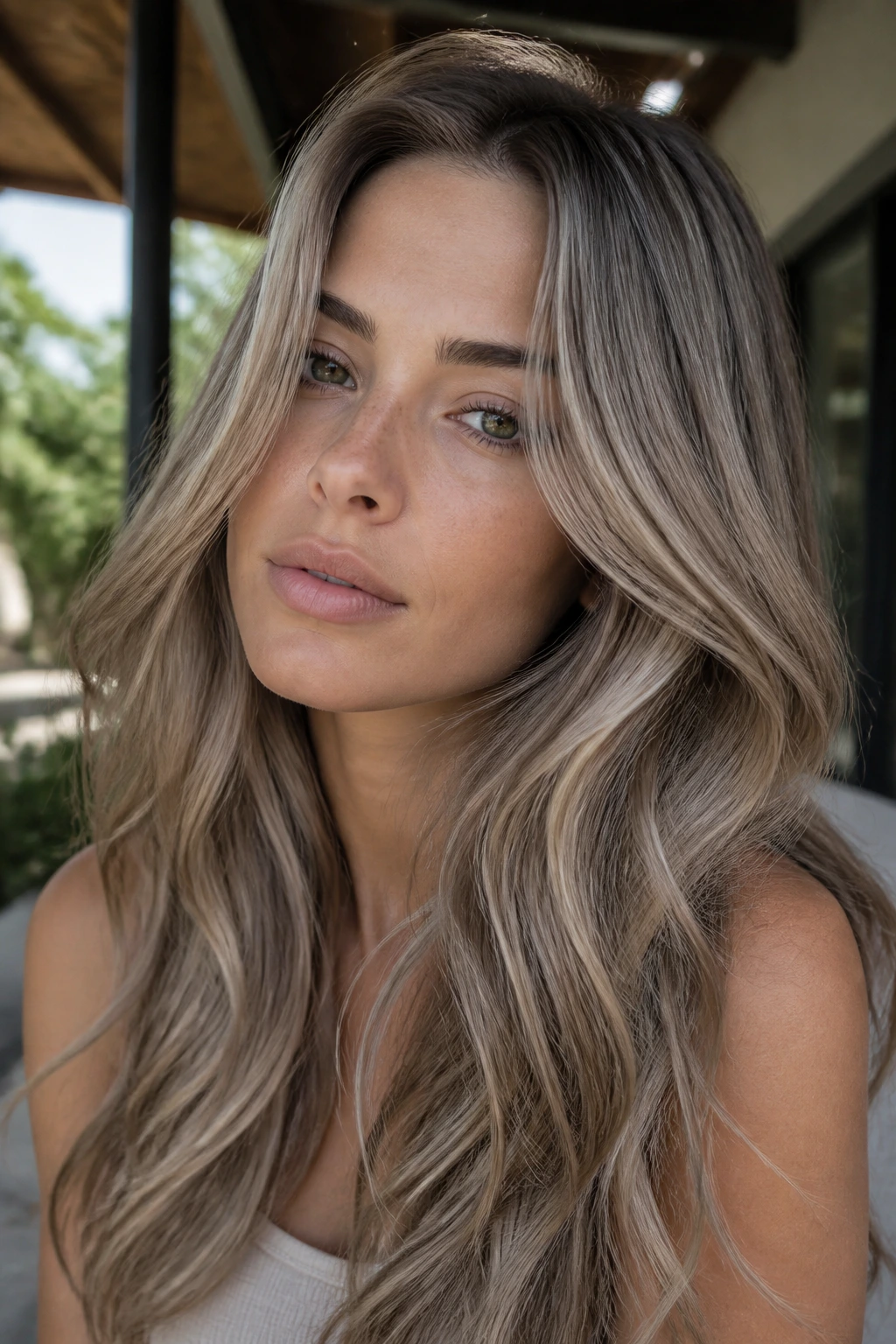
Mushroom blonde is the cool girl’s answer to blonde that still looks believable on long hair. It has beige, taupe, and a faint smoky edge that keeps it from turning yellow the minute you step into daylight. The shade looks especially good when the hair has a little wave or bend, because the movement keeps the earthy tone from going flat.
This is one of my favorite choices for people who want blonde but don’t want to live inside purple shampoo. The root stays soft, the mids hold a neutral ash-beige, and the ends never have to be pushed all the way to icy white. It’s understated, yes, but not boring. There’s a little grit in it.
Ask for a neutral-to-cool gloss over a root melt. If the ends are porous, they may need a gentler toner than the mids so they don’t turn smoky or muddy. That tiny adjustment makes a big difference on long hair, where the lower half tends to grab color faster than the crown.
5. Platinum Ribbon Highlights
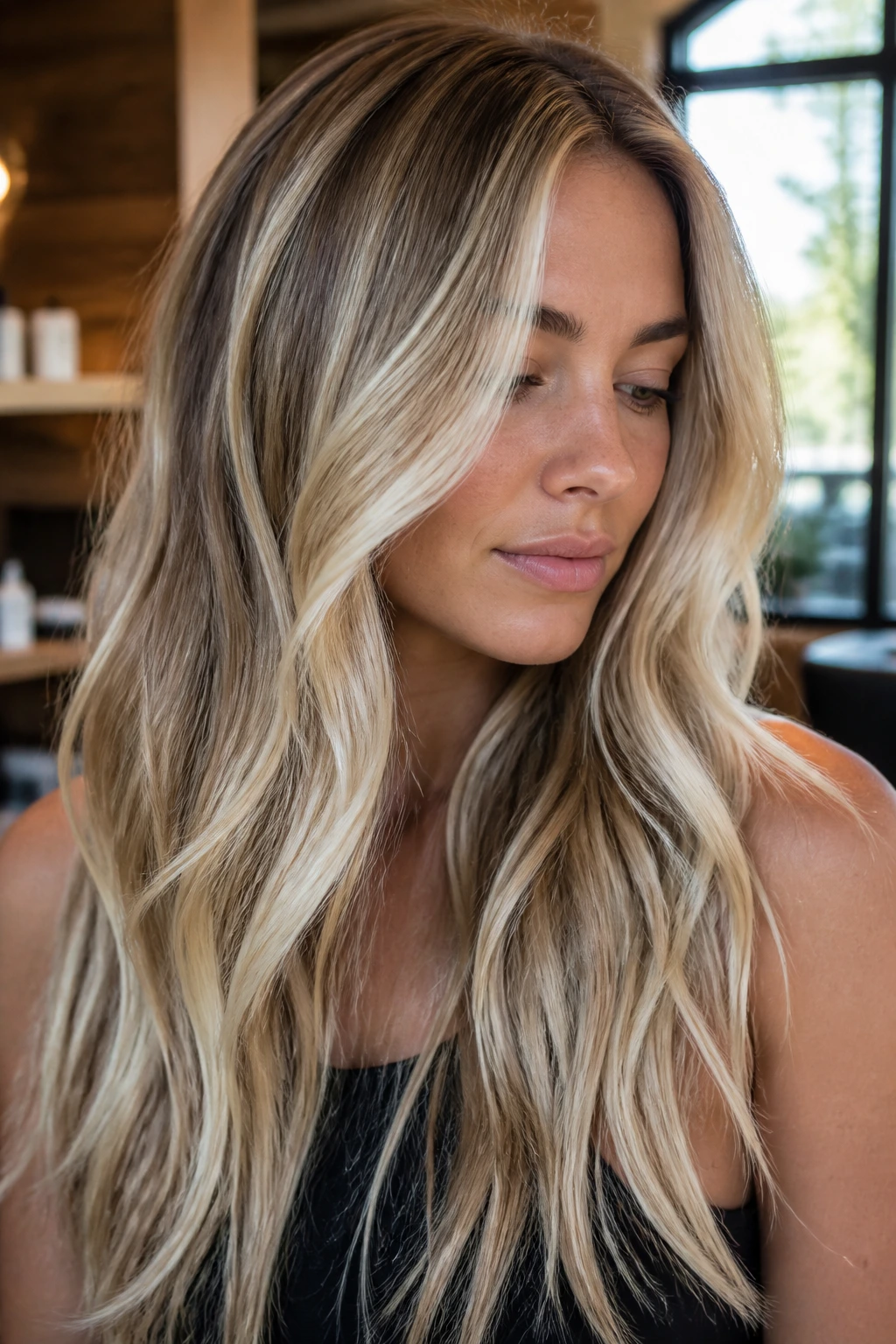
Platinum ribbon highlights are for people who want their long blonde hair to have punch. Not a solid platinum cap. Ribbons. Thin but bright slices that run through the length and catch the light every time the hair shifts. On long hair, the effect is cleaner than on short cuts because the brightness has room to thread itself through the shape.
This is not the easiest blonde to wear, and I’m not going to pretend otherwise. Platinum needs careful lifting, patient toning, and ends that are healthy enough to survive the process. But when it’s done well, the contrast is gorgeous. The darker base underneath keeps the platinum from looking washed out, and the long length stops it from feeling severe.
If you want this look, tell your colorist you want bright ribbons, not a uniform blonding job. That usually means foils or a very deliberate babylight pattern. Leave some depth in the underside and near the nape. The hair will move better, and the platinum won’t swallow the whole head.
6. Honey Blonde Melt
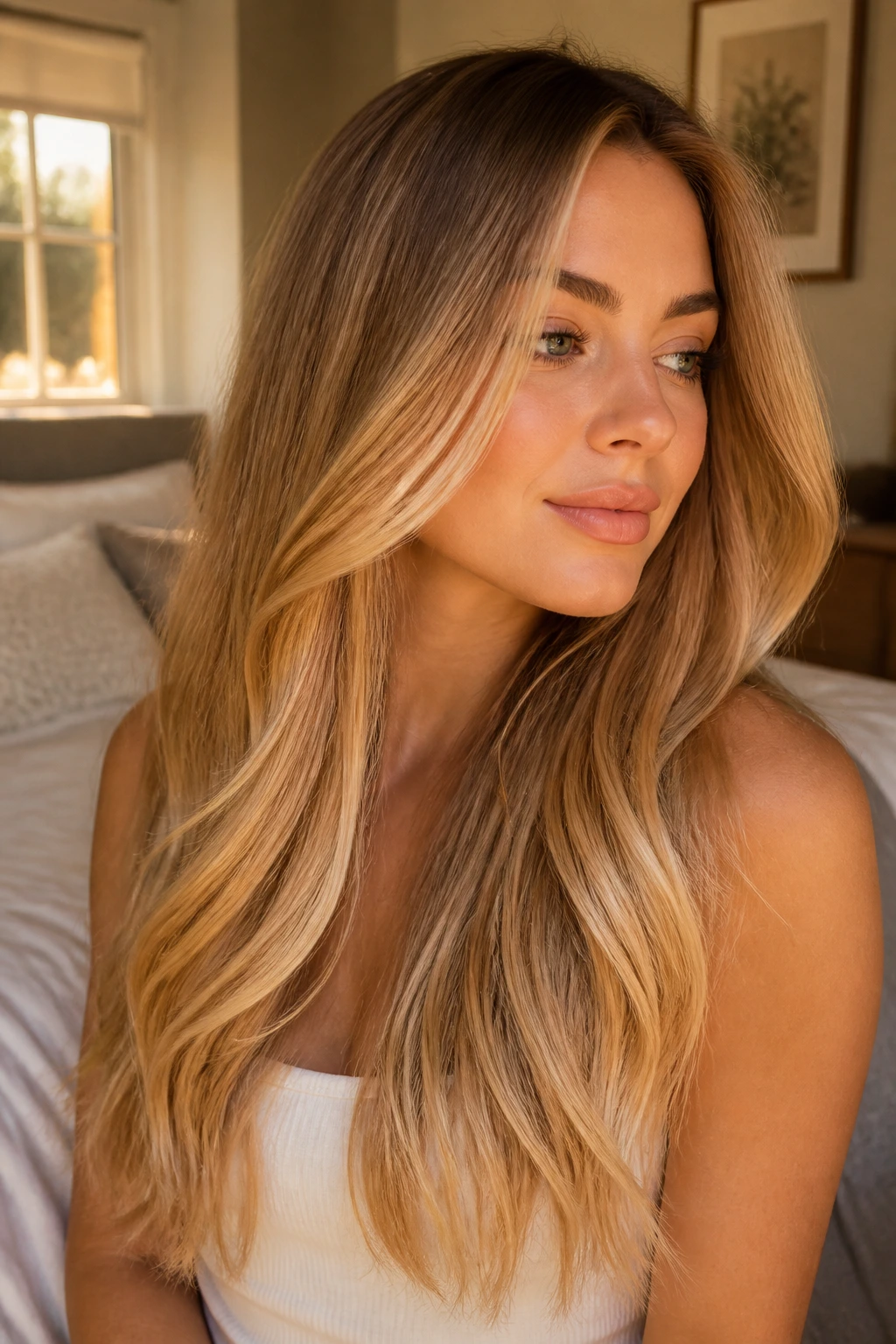
Honey blonde melt is warm, smooth, and frankly hard to mess up when it’s done with a little restraint. The root stays deeper, the mids move into a soft golden honey, and the ends brighten just enough to keep the hair from looking brown. On long hair, that gradual fade is the whole point. It makes the color look like it was grown, not painted on in one shot.
Why the Melt Works
The gradation gives the eye a path to follow. Instead of one hard line, you get a slow shift from brunette depth to blonde warmth, and that keeps the length from looking heavy. The glow lands around the face and through the lower half of the hair, which is exactly where long lengths need help.
What to Ask For
Ask for a root shadow 1 to 2 levels deeper than the mids, then a honey gloss that stays soft at the ends. If your base is dark, a little caramel between the root and the blonde can keep the transition from feeling abrupt. On curls, this shade looks especially rich because each ringlet shows a different band of warmth.
7. Vanilla Cream Blonde
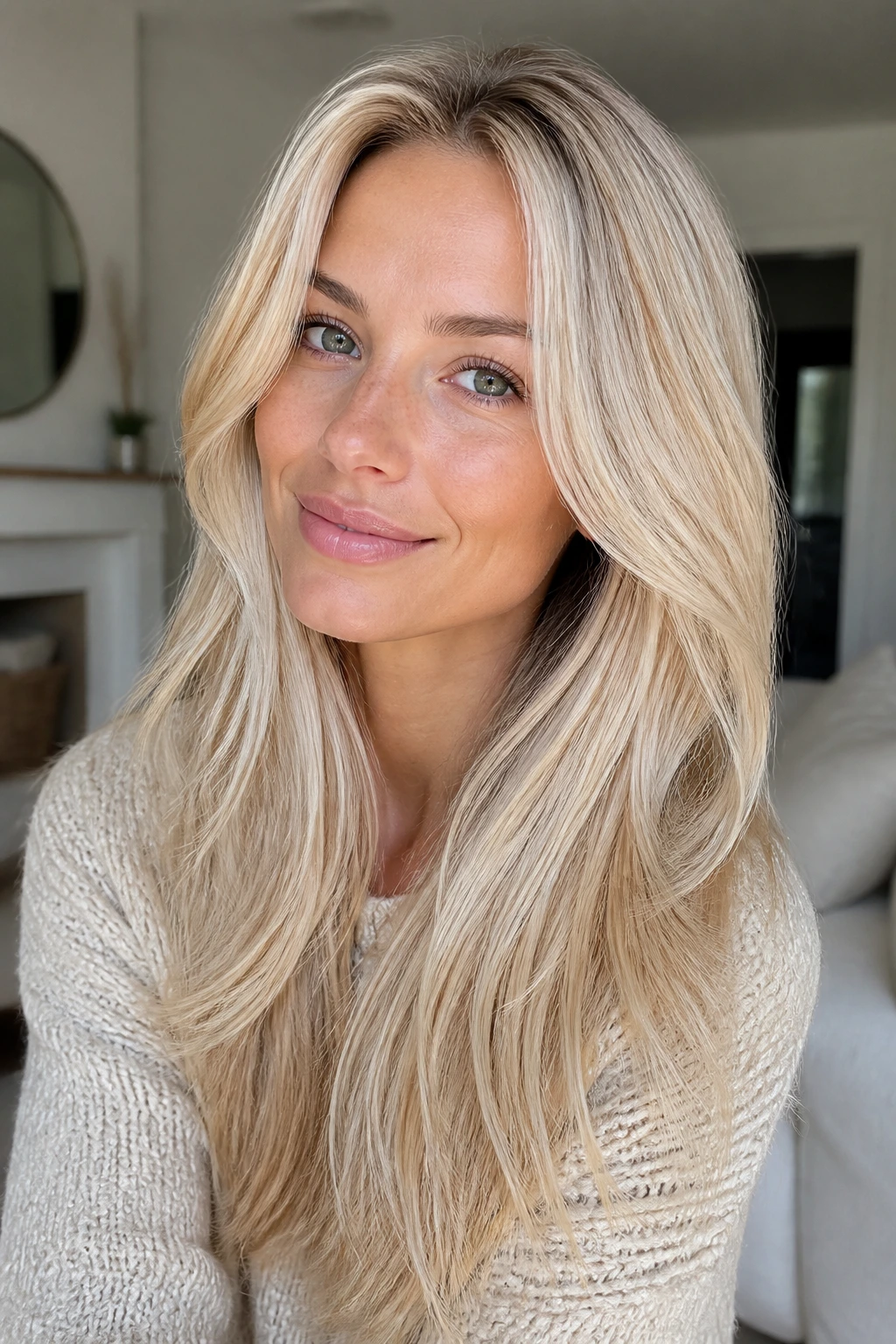
Vanilla cream blonde is the lighter cousin of beige. It has a pale, milky base that feels clean and fresh without tipping into harsh white. Long hair benefits from that softness because the shade reflects light in broad strokes instead of flashing in narrow stripes.
The trick with vanilla cream is keeping the toner balanced. Too much violet and the hair starts looking cold. Too little and it wanders into banana territory. You want the color to sit somewhere between a very pale beige and a clean ivory. On long layered hair, the shade reads smooth and airy, especially in a blowout.
This is a better pick than platinum for anyone who wants brightness but not that rigid, almost metallic finish. It’s also kinder to fine hair, because the lighter tone can make the hair look fuller without needing heavy contrast. I’d still keep a soft root shadow in play. The scalp needs a little depth.
8. Scandinavian Blonde
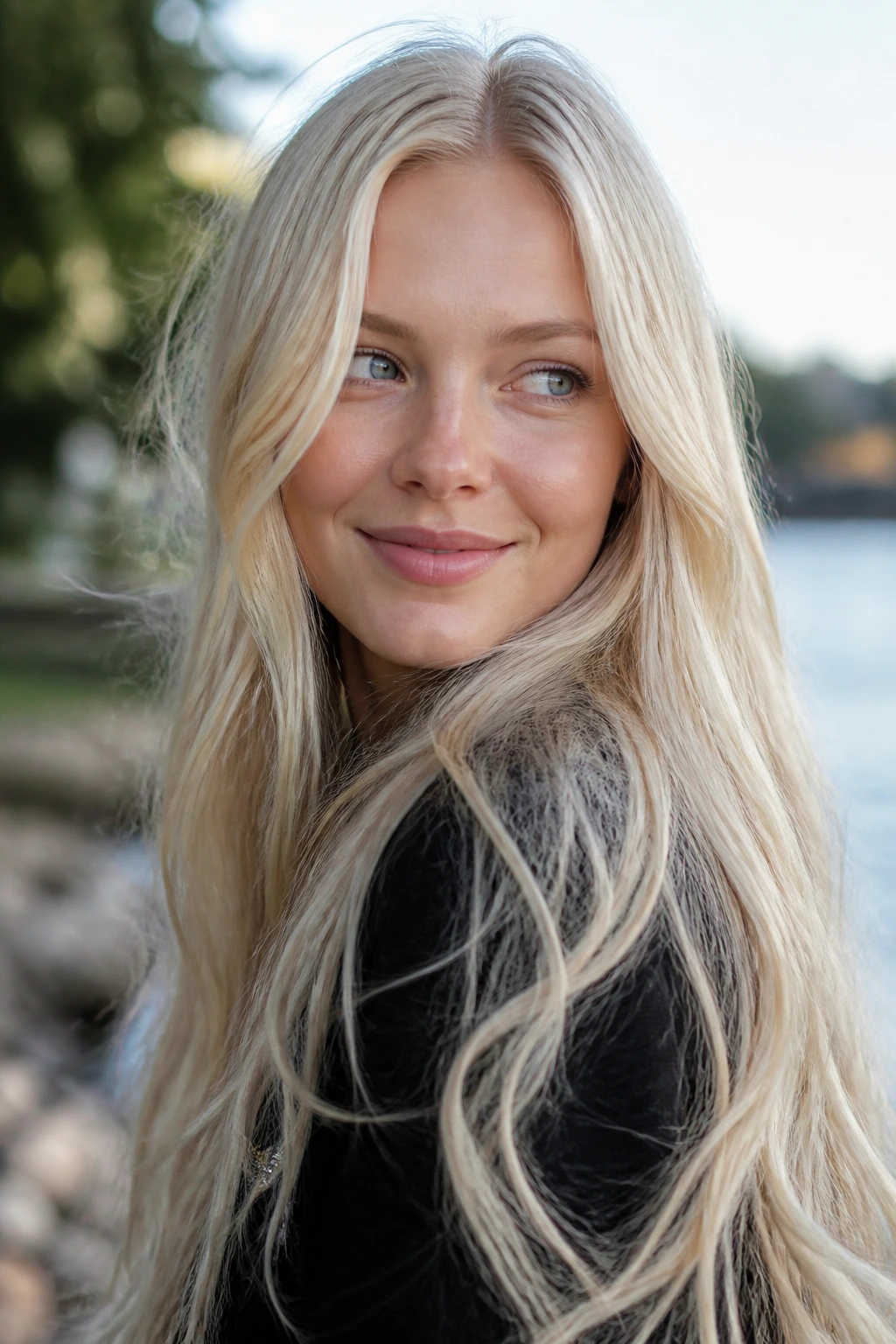
Scandinavian blonde is the bright, near-white blonde people usually imagine when they think of icy hair. On long lengths, it can look incredible, but only if the underlying lift is clean. That means pale yellow before toner, not orange, not straw, not “close enough.” Long hair gives the shade more drama, but it also exposes any patchiness right away.
What makes this version different from generic platinum is the softness in the finish. The best Scandinavian blondes still have a whisper of beige or pearl so the hair doesn’t look paper-white. That tiny bit of softness saves the look from feeling severe. Especially on long hair, which can already read dramatic by itself.
This is not the blonde to choose if you want easy grow-out. It asks for upkeep and it asks politely only once. But if your base is light and your hair can take the process, the result has a cold, clean elegance that’s hard to fake with toner alone.
9. Sandy Blonde Lowlights
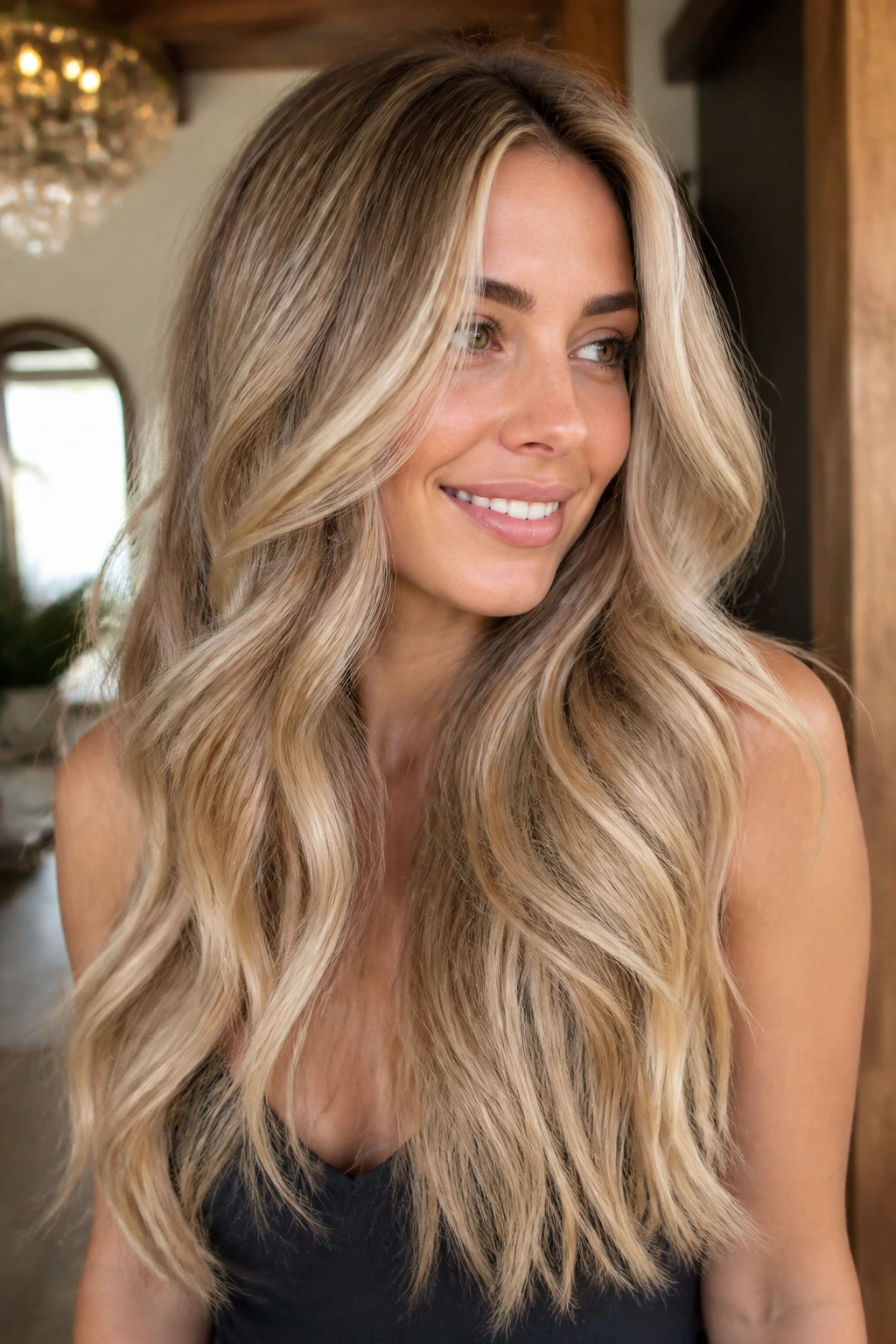
Sandy blonde lowlights are the quiet fixer in this whole list. People keep chasing lighter pieces when what long blonde hair often needs is a little depth back inside the shape. Sandy lowlights add those darker threads, usually in a soft beige-brown or taupe, so the blonde doesn’t turn into one pale blur.
This is a smart move for fine hair, straight hair, and any long cut that has started to look washed out after too many brightening sessions. The lowlights give the hair a thicker visual body. They also help the lighter pieces stand out more, which sounds backward until you see it in the mirror. Contrast creates the glow.
Ask for lowlights that sit one or two levels deeper than the blonde, not a big stripe of brown. The point is to make the color feel lived-in. On long waves, the sandy pieces tuck between the highlights and make the whole head look more expensive. That’s not a word I use lightly.
10. Rose Gold Blonde
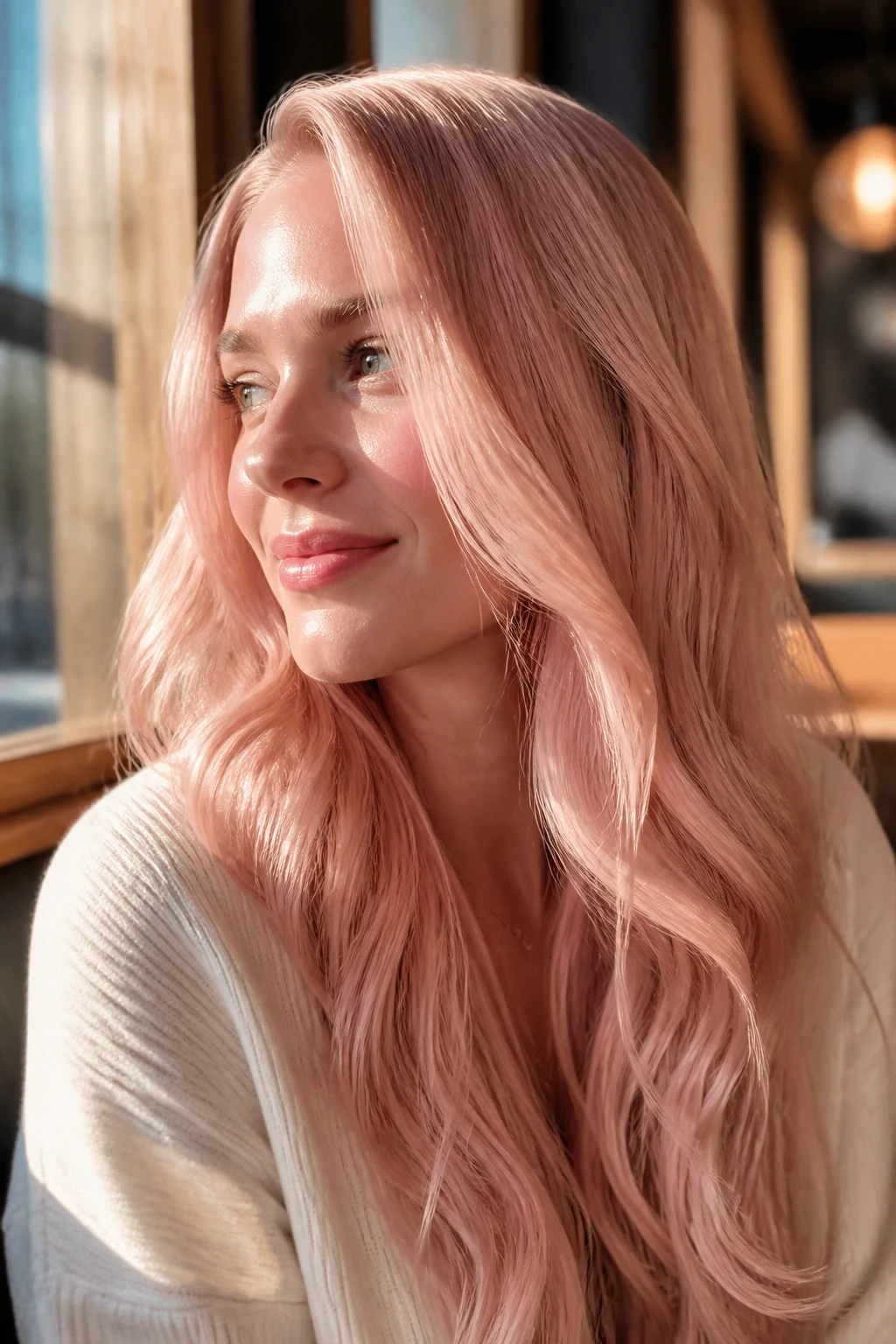
Rose gold blonde has a pink-beige sheen that sits right on the edge of blonde and blush. On long hair, it can look soft and almost romantic without turning into actual pink hair, which is important if you want something wearable rather than costume-y. The warmth helps pale ends catch the light, while the rosy cast adds a little personality.
The shade works best when it starts from a light blonde base. If the hair is too dark, the rose reads muddy. If it’s too white, the pink can look candy-like in a way that doesn’t always age well. A pale beige foundation with a soft rose gloss is the sweet spot. On loose curls, each bend picks up the tint differently, and that gives the color depth.
I’d choose this for someone who wants a blonde that feels a little less expected. It’s also easier to refresh than people think, because the pink-beige tone fades toward a neutral blonde instead of leaving a harsh line. That’s a nice side effect. More colors should do that.
11. Pearl Blonde
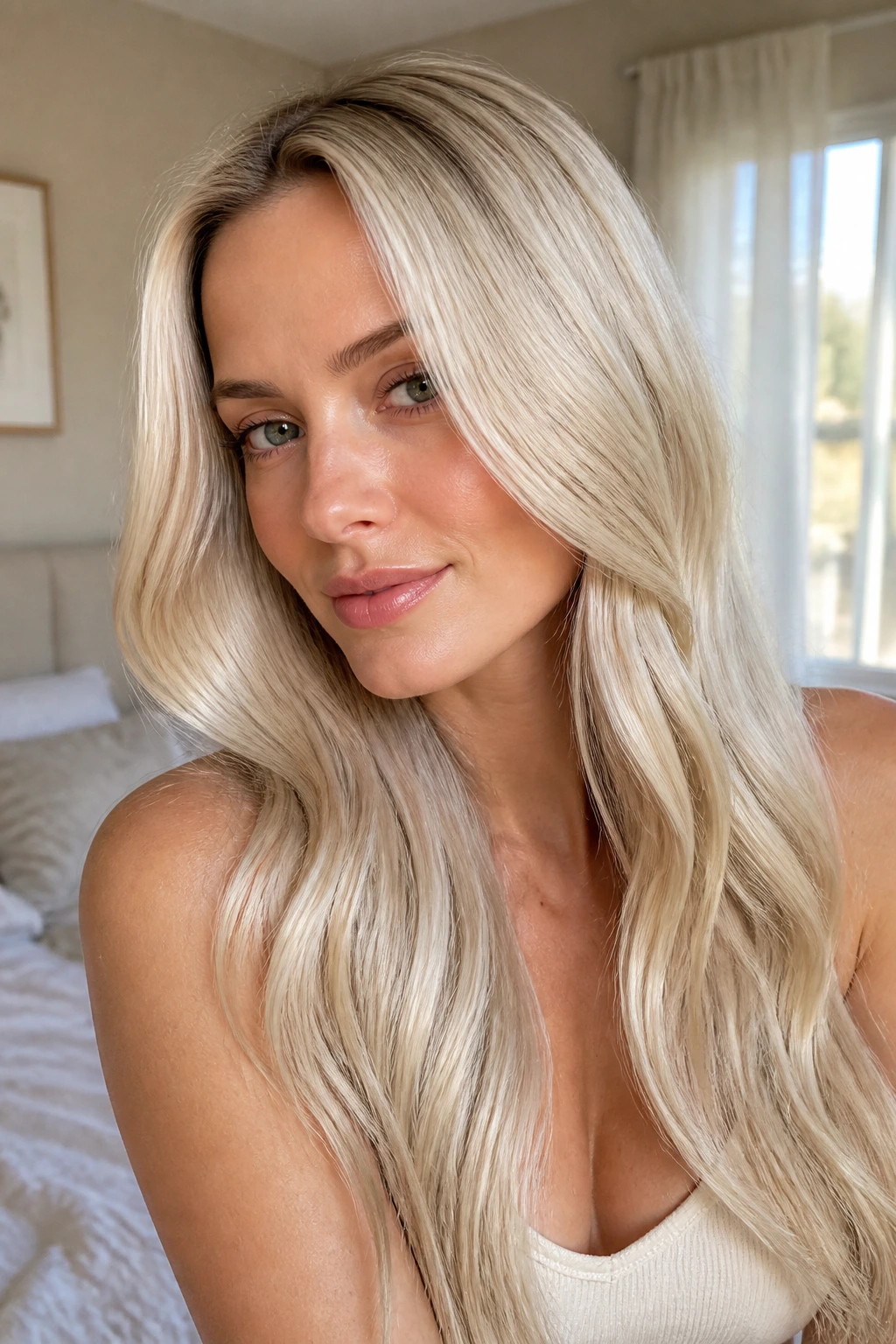
Pearl blonde has that cool, shell-like shine that makes long hair look polished from across the room. It’s lighter than beige, softer than pure silver, and a lot harder to keep from turning murky if the toner is wrong. That’s why the formula matters so much. Pearl needs a pale canvas and a gloss that leaves a whisper of warmth in the background.
The Science of the Soft Shine
Pearl blonde works because it reflects light in a diffused way. The tone isn’t flat white, and it isn’t stark ash either. It lands in the middle, which gives the hair a smooth, luminous surface instead of a chalky one. Long hair shows that effect better than short hair because there’s more length for the sheen to move through.
Best Way to Wear It
Keep the root soft and the ends healthy. If the hair is already porous, a pearl toner can sink in too quickly and go smoky. A clear gloss layered over the color can help the shine stay glassy rather than dusty. I like pearl most on long, blunt ends or soft bends that show off the reflective finish.
12. Money Piece Blonde
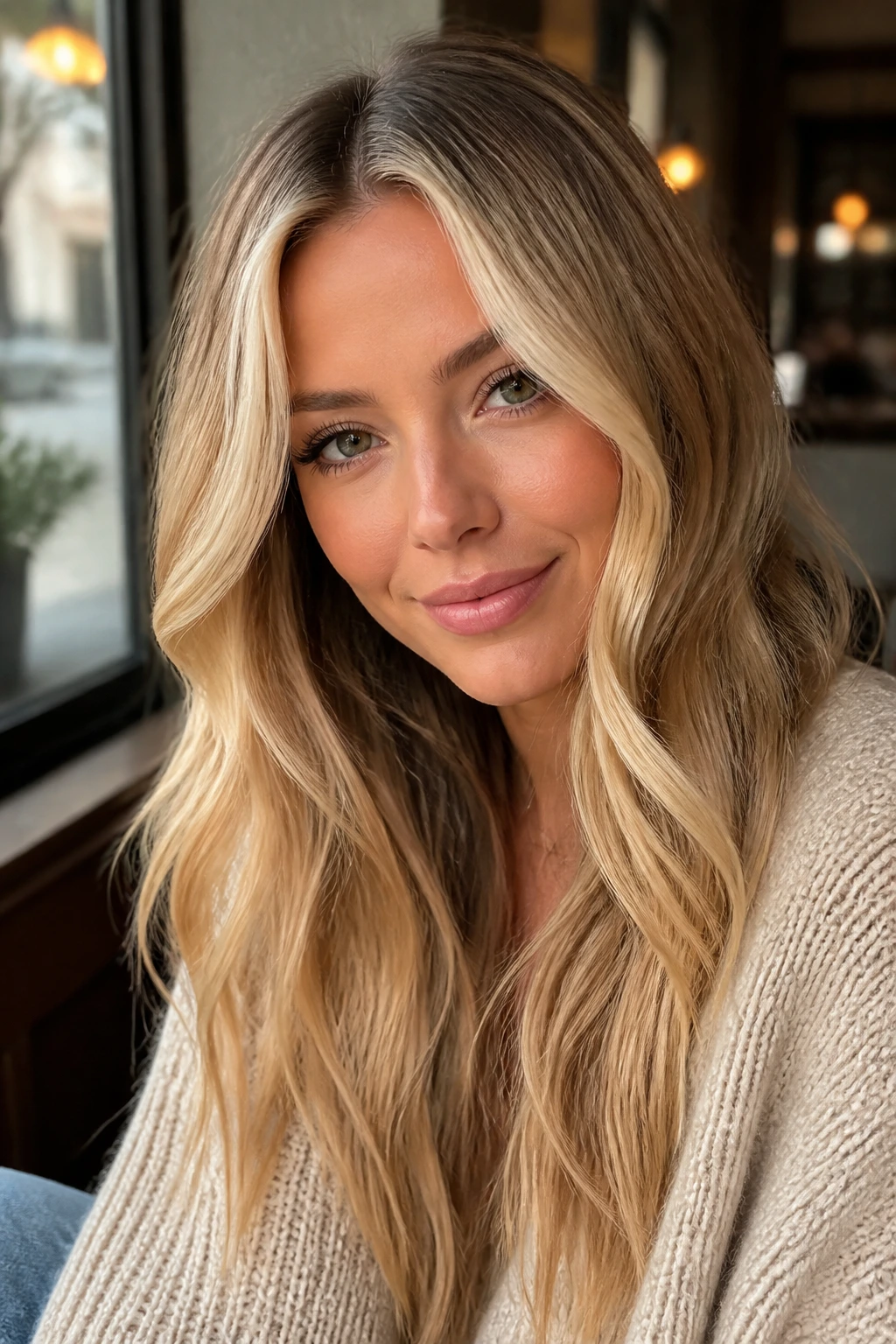
A money piece blonde is the bluntest way to wake up long hair without lighting up the whole head. The face frame goes brighter than the rest, usually a shade or two higher, so the eyes and cheekbones get a little spotlight. On long hair, that contrast is useful. It keeps the lengths from swallowing the face.
The rest of the hair can stay softly rooted or balayaged, which means less maintenance and more shape. That’s the genius of the idea. You do not need to be bright everywhere to look blonde. A strong face frame plus softer lengths can read richer than an all-over pale color that has no place to rest.
If your hair is very long and one-length, the money piece also helps break up the weight. Put the brightness where people actually see it first, then let the rest of the color move in quieter tones. It’s one of the easiest ways to keep a blonde service from becoming a six-hour negotiation.
13. Caramel Toffee Blonde
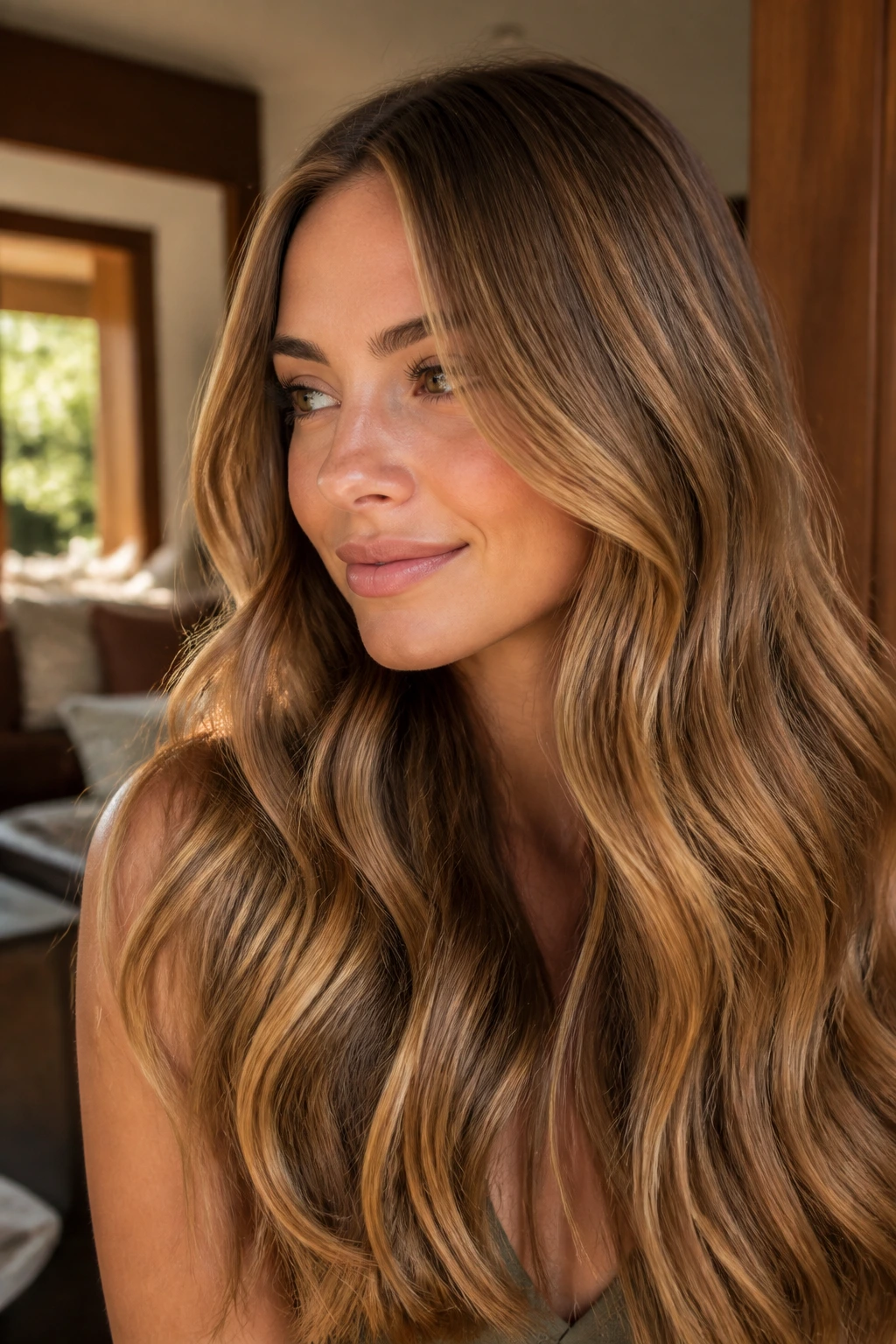
Caramel toffee blonde lives on the warmer side of blonde, but it doesn’t feel flat if the depth is right. The shade starts with a deeper caramel base and moves into toffee-gold ribbons through the mids and ends. On long hair, that richer spectrum makes the length look plush instead of thin.
This is a very forgiving blonde for brunettes who want to lighten up without chasing icy results. It also behaves well on thick hair, where a little warmth helps the color show through the density. If the shade starts too yellow, though, it loses the toffee part and tips into ordinary gold. That’s the line to protect.
Ask for hand-painted ribbons with a soft root blend. You want the blonde to appear threaded through the hair, not sitting on top of it. This one looks especially good on big curls and round-brush blowouts because the warm pieces catch movement at every bend.
14. Ash Beige Blonde
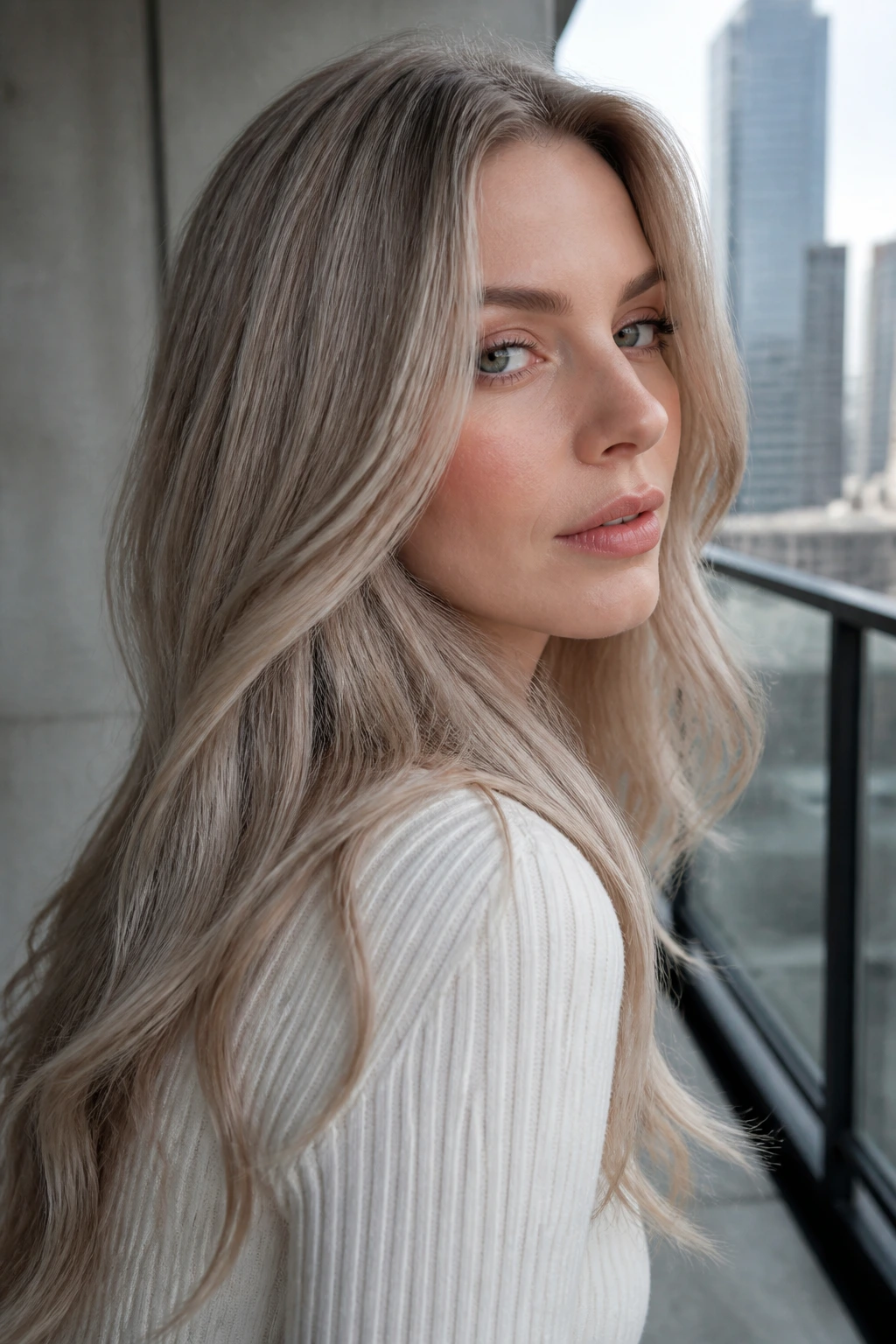
Ash beige blonde is the cooler, quieter cousin of traditional beige. It tones down warmth without going steel-gray, which is a harder balance than it sounds. On long hair, ash beige is useful because it keeps the blonde from drifting orange between appointments while still looking soft enough to wear every day.
The mistake people make with ash shades is thinking colder automatically means better. It doesn’t. Too much ash on porous long hair can look dull and flat, especially if the ends are already dry. The best ash beige blonde still has a little neutral beige in the mix so the hair reflects light instead of eating it.
I reach for this shade when the skin runs pink or red and golden blondes make the face look flushed. It also works nicely on layered cuts, because the cooler tone helps define the movement. The trick is not to overdo the blue-violet correction. Leave the hair cool, not dusty.
15. Baby-Light Blonde
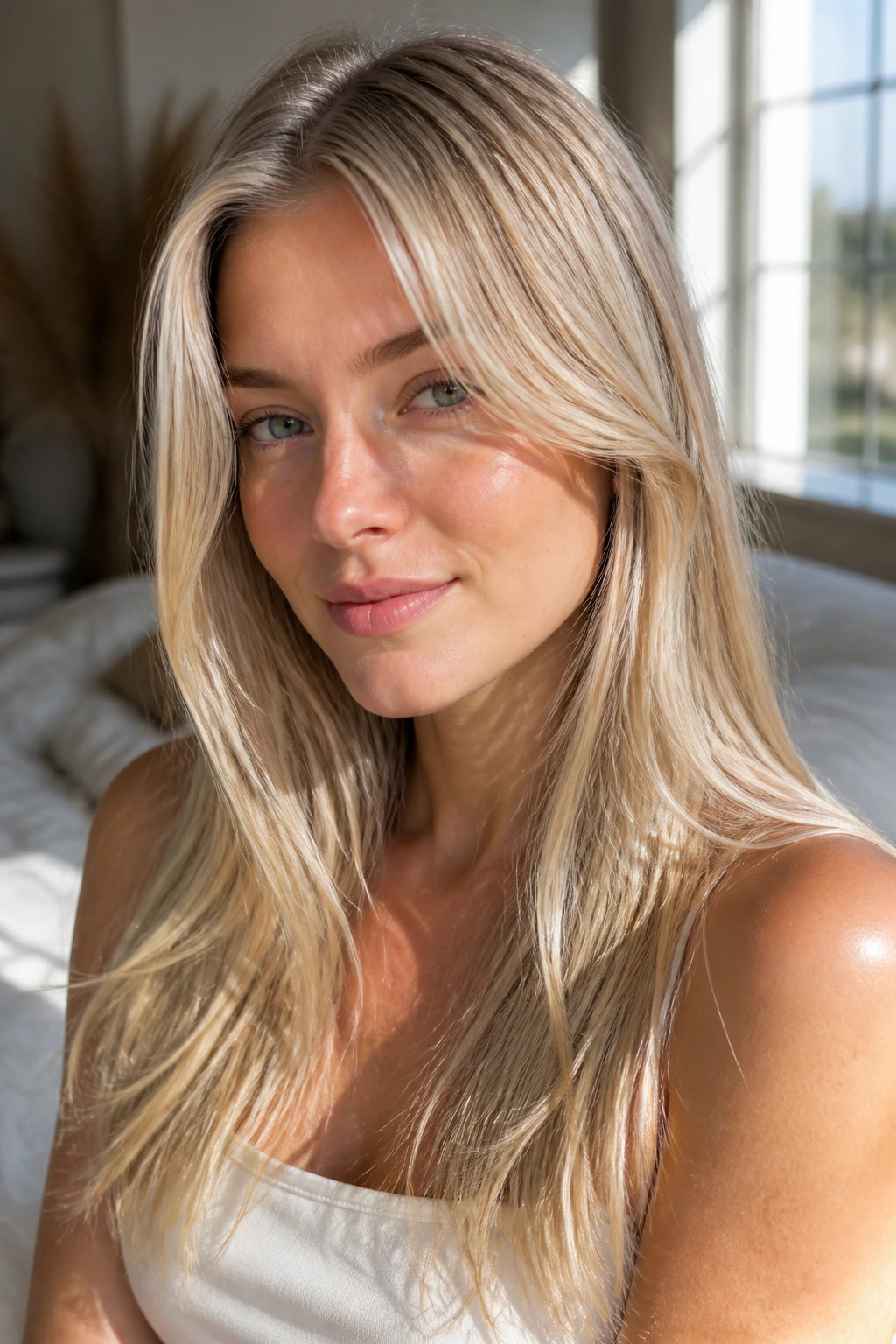
Baby-light blonde is built from extremely fine highlights, woven so softly they almost disappear into the base. On long hair, that subtlety is the whole point. The blonde doesn’t come in obvious chunks; it glides through the lengths in tiny, detailed threads that make the hair look naturally lightened by the sun.
This is one of the best choices for anyone who hates harsh lines. It takes patience in the salon chair, yes. But the payoff is a softer grow-out and a more expensive-looking finish than chunky highlights can usually manage. Long hair gives the baby lights room to blend, which is why they look especially pretty in movement.
The color works across a lot of base levels, though darker hair will need more sessions to reach the pale end of the spectrum. If your stylist is rushing the process, the baby lights lose their point. They’re supposed to be delicate. Delicate takes time.
16. Cream Soda Blonde
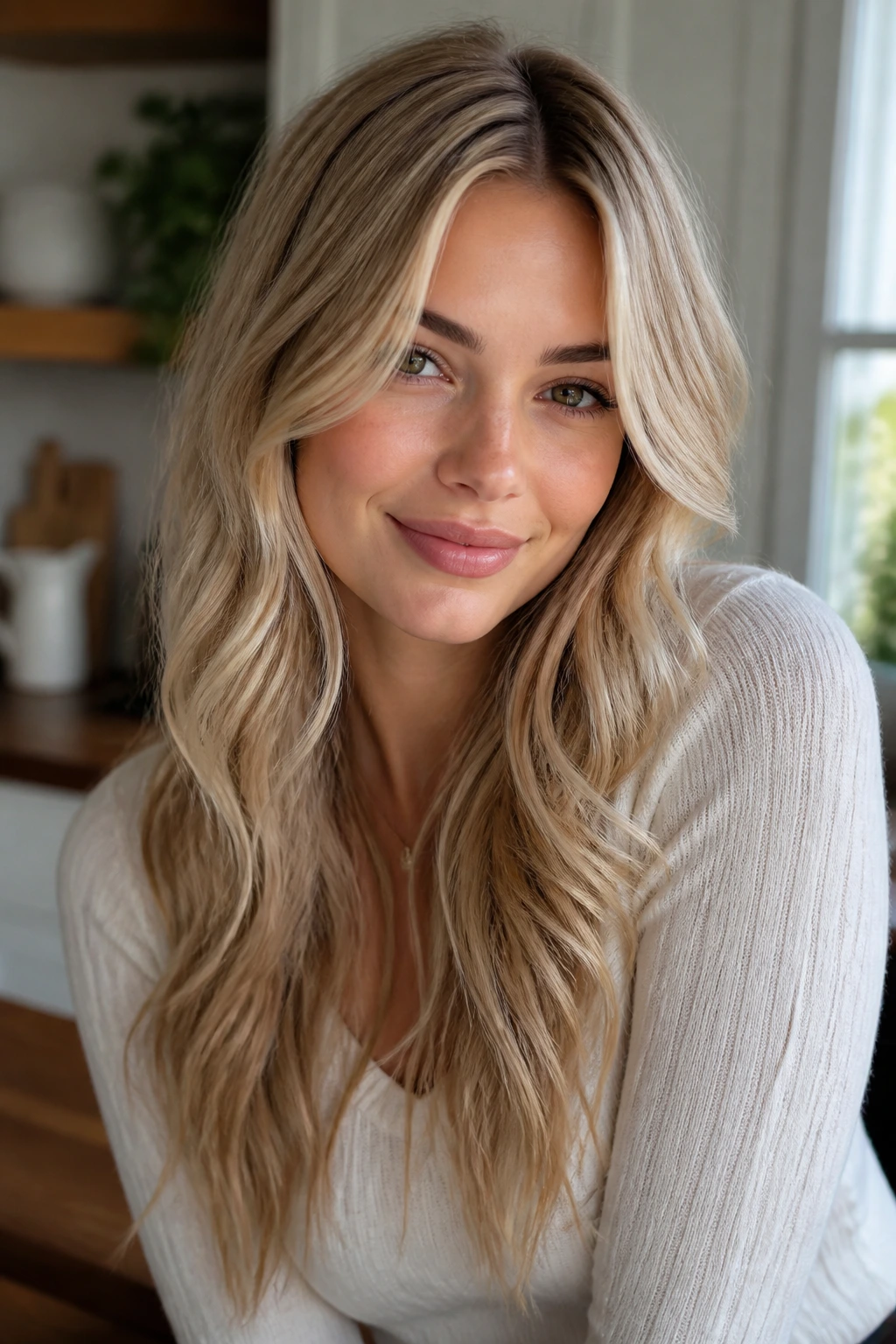
Cream soda blonde has that frothy, mixed tone that sits somewhere between light brown and soft blonde. It’s not trying to be icy. It’s not trying to be golden either. On long hair, that middle register can be the prettiest thing in the room because the color feels rich from root to tip.
Why It’s Easier to Wear
The shade lets the root stay a little deeper while the mids and ends hold a creamy lift. That makes grow-out less fussy and keeps the hair from needing constant tonal rescue. It also works well if your natural base already has some warmth, because cream soda blonde leans into that instead of fighting it.
How to Ask for It
Ask for a neutral gloss with a soft beige finish and a root blend that stays one level darker. If you want more brightness, keep the face frame a bit lighter than the back. On long, layered cuts, the shade has a nice ripple effect — not dramatic, just polished in a way that photographs as quiet depth rather than a single pale block.
17. Golden Wheat Blonde
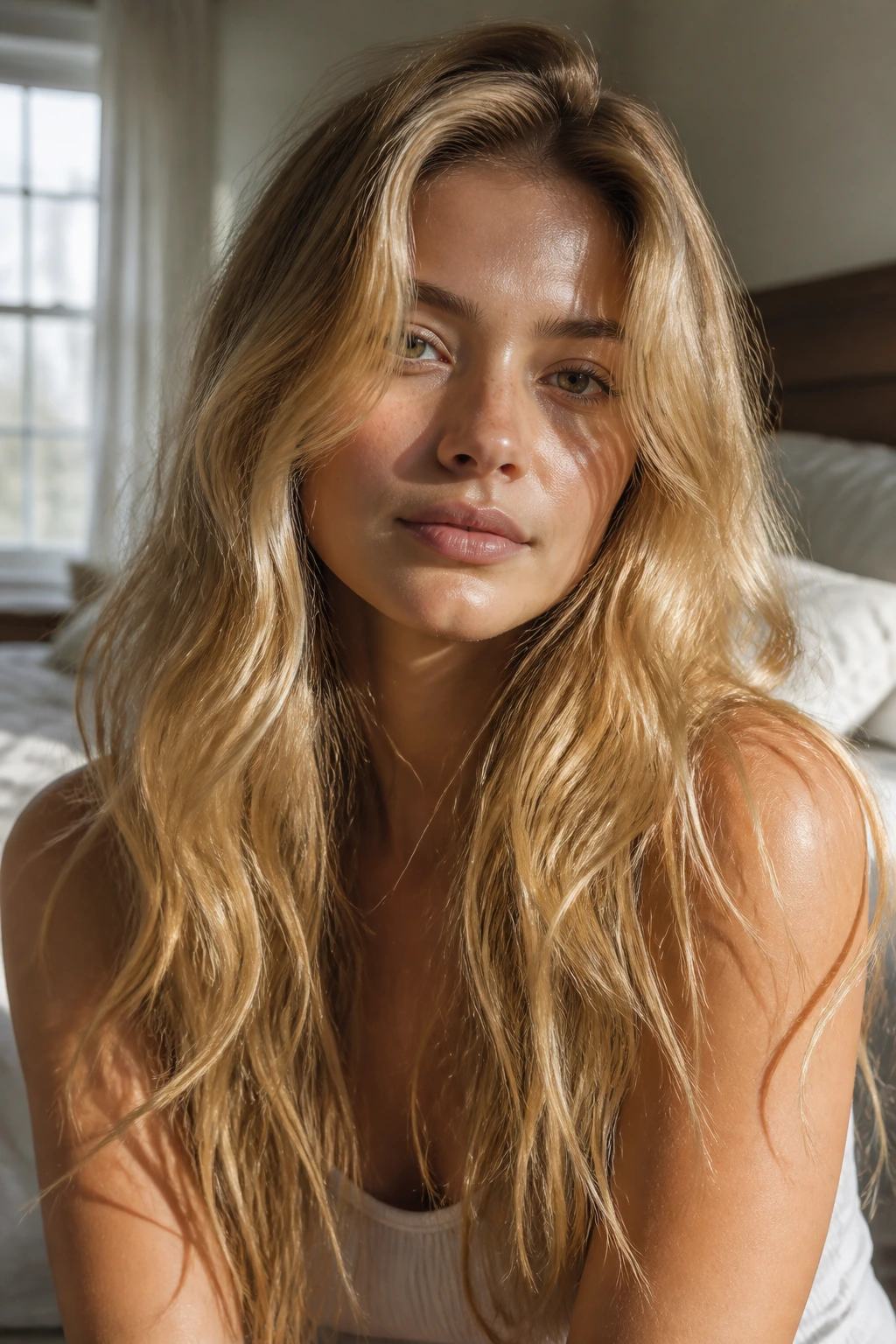
Golden wheat blonde is sunny without turning brass. That distinction matters. The shade has a soft harvested-gold feel, the kind that looks warm in daylight and creamy indoors. On long hair, the tone can make the length look healthy because the color carries a little natural-looking warmth from root to end.
This is a strong choice for people who find ash blondes too cold and platinum too severe. It’s also good on textured hair, because the warmer shade shows up more clearly through waves and curls. A level 9 base with a golden-beige glaze usually does the job without needing to push the hair into fragile territory.
The key is balance. Too much gold and the hair looks orange. Too little and the wheat note disappears. Ask for a gloss that keeps the warmth soft, then maintain it with a color-safe shampoo and a weekly conditioning mask. Dry blonde hair loses gold in a hurry if you beat it up with heat.
18. Iced Latte Blonde
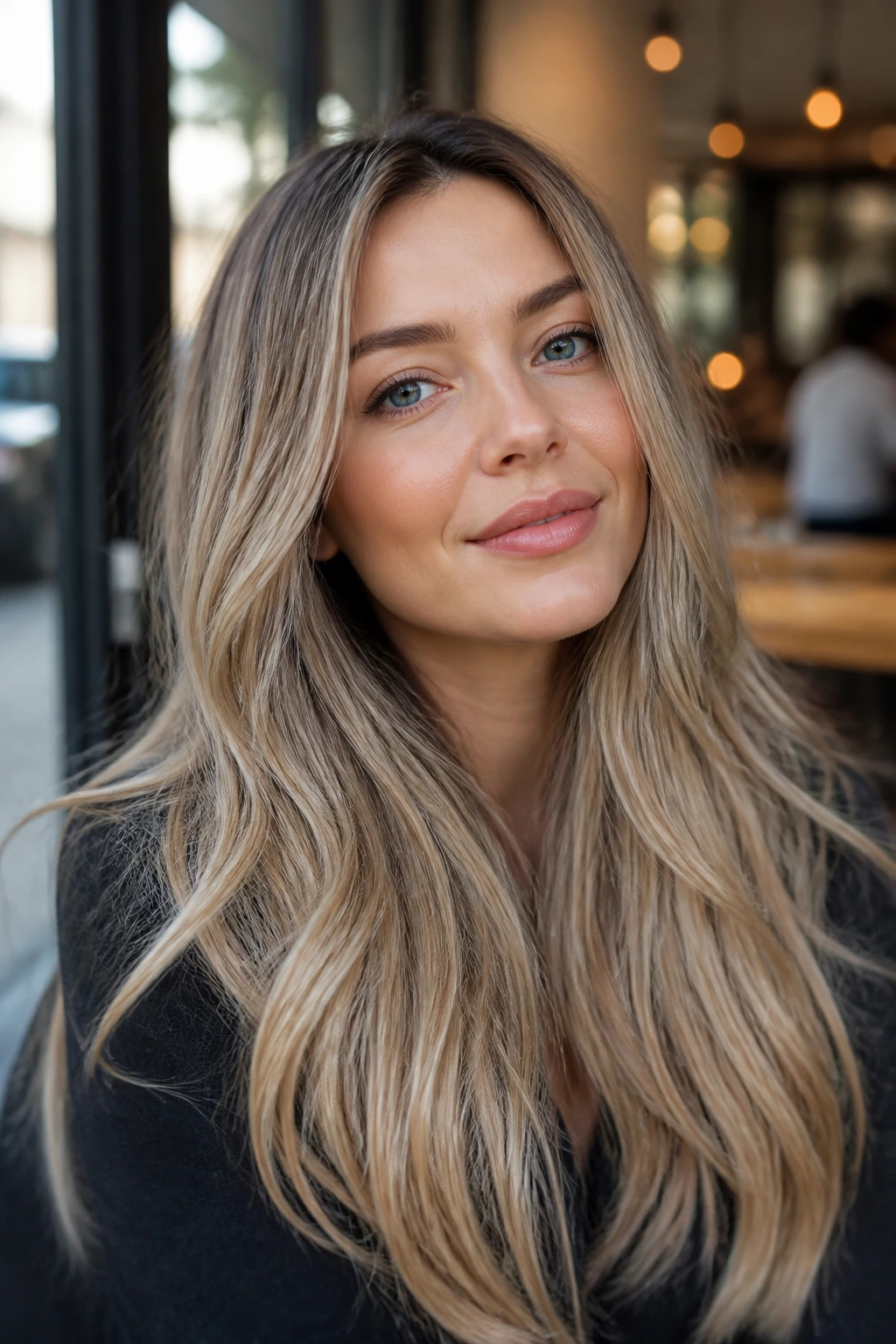
Iced latte blonde is what happens when cool beige meets a creamy brunette base. It’s restrained, modern, and much softer than a full-on platinum push. On long hair, the darker root and cooler blonde pieces create a smooth contrast that looks especially good when the hair is blown straight or bent into wide waves.
I like this shade for darker natural bases because it gives you brightness without pretending the hair came out of nowhere. The root stays honest. The blonde still shows. That tension is the point. If you want something polished that doesn’t require constant high-lift upkeep, this is one of the saner routes.
The finish should stay cool, but not flat. If the toner goes too gray, the blonde loses the latte part and starts looking dusty. A beige-gloss refresh every few weeks keeps the shade creamy. On long hair, that creaminess matters more than on shorter cuts because the ends can otherwise look thin.
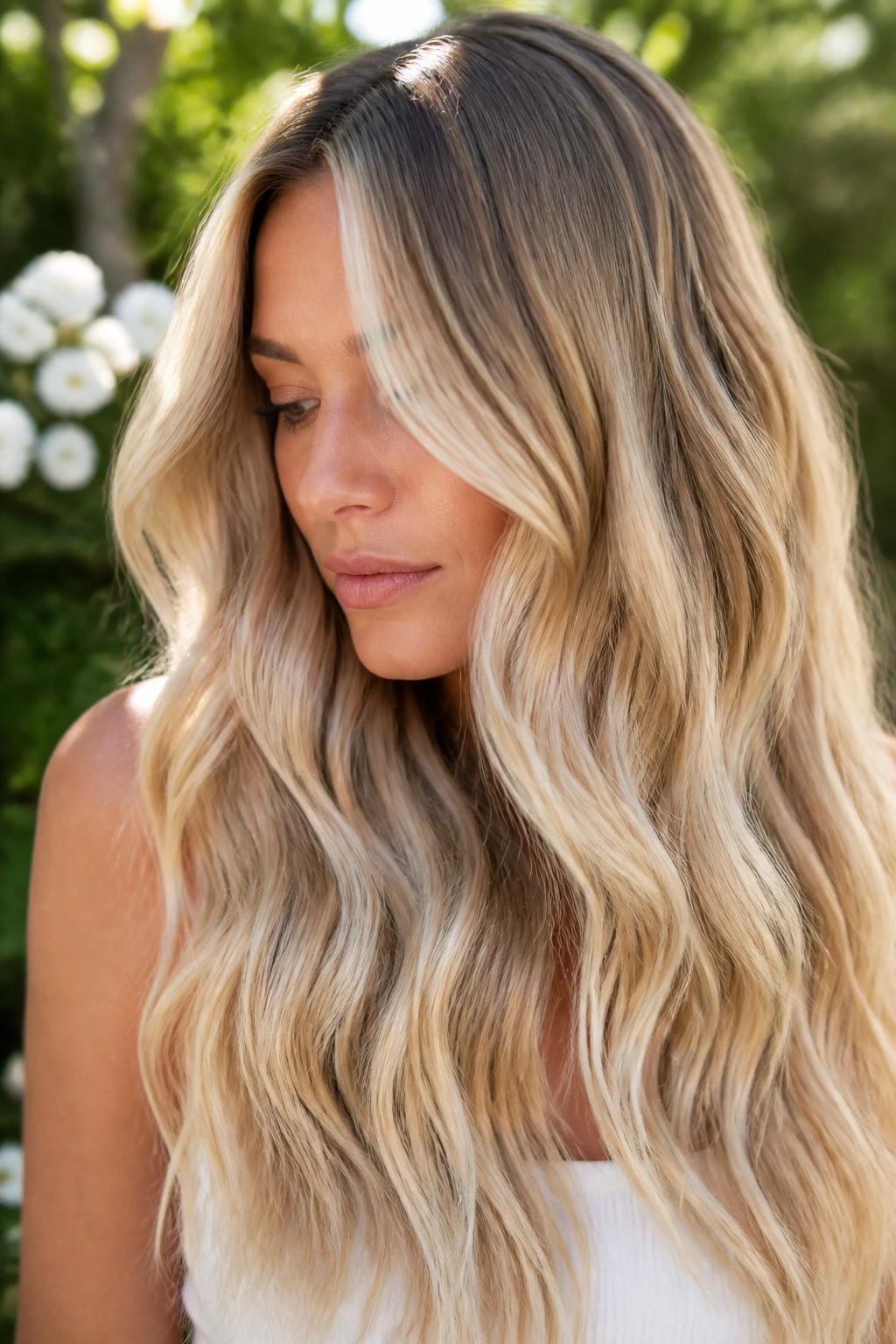
19. Beige Blonde with Shadow Root
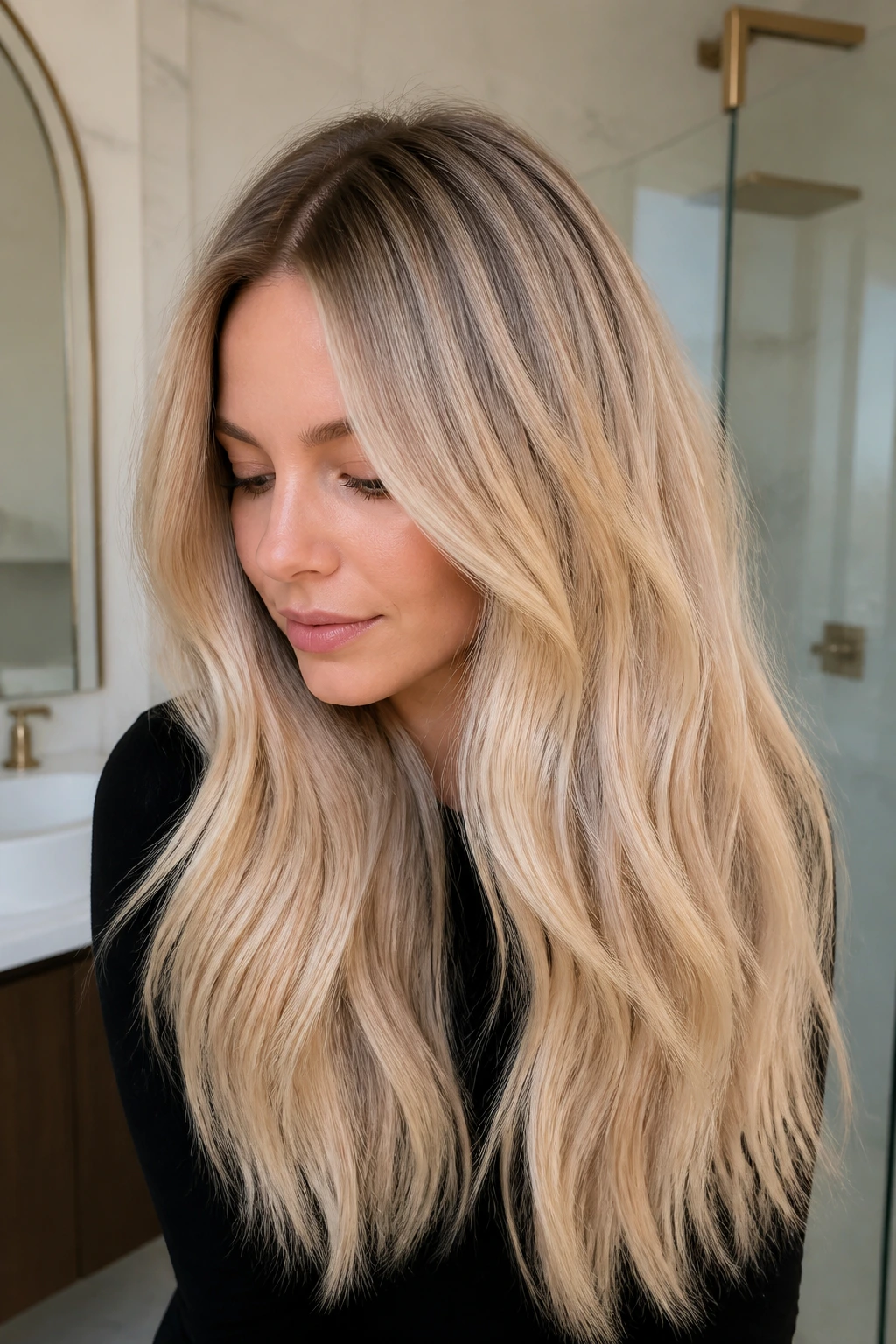
Beige blonde with a shadow root is the low-drama version of long blonde hair, and I mean that as a compliment. The root stays a few shades deeper, usually in a neutral brown or soft beige-brown, while the lengths lift into a creamy blonde. That shadow at the scalp is what lets the rest of the color look clean.
The grow-out is the real win here. Instead of a hard line, you get a gentle fade that can sit for weeks without looking neglected. On long hair, that matters because the root area is only one piece of the picture. The eye keeps moving down the length, and the shade stays interesting even when the roots start coming back.
This is the style I’d recommend to anyone who wants blonde but has a life. Gym, heat styling, a few skipped wash days — the shadow root absorbs the chaos better than a bright root ever will. It also makes the lighter ends look fuller, which is useful if your hair is fine or a little thin at the perimeter.
20. White Blonde Ends
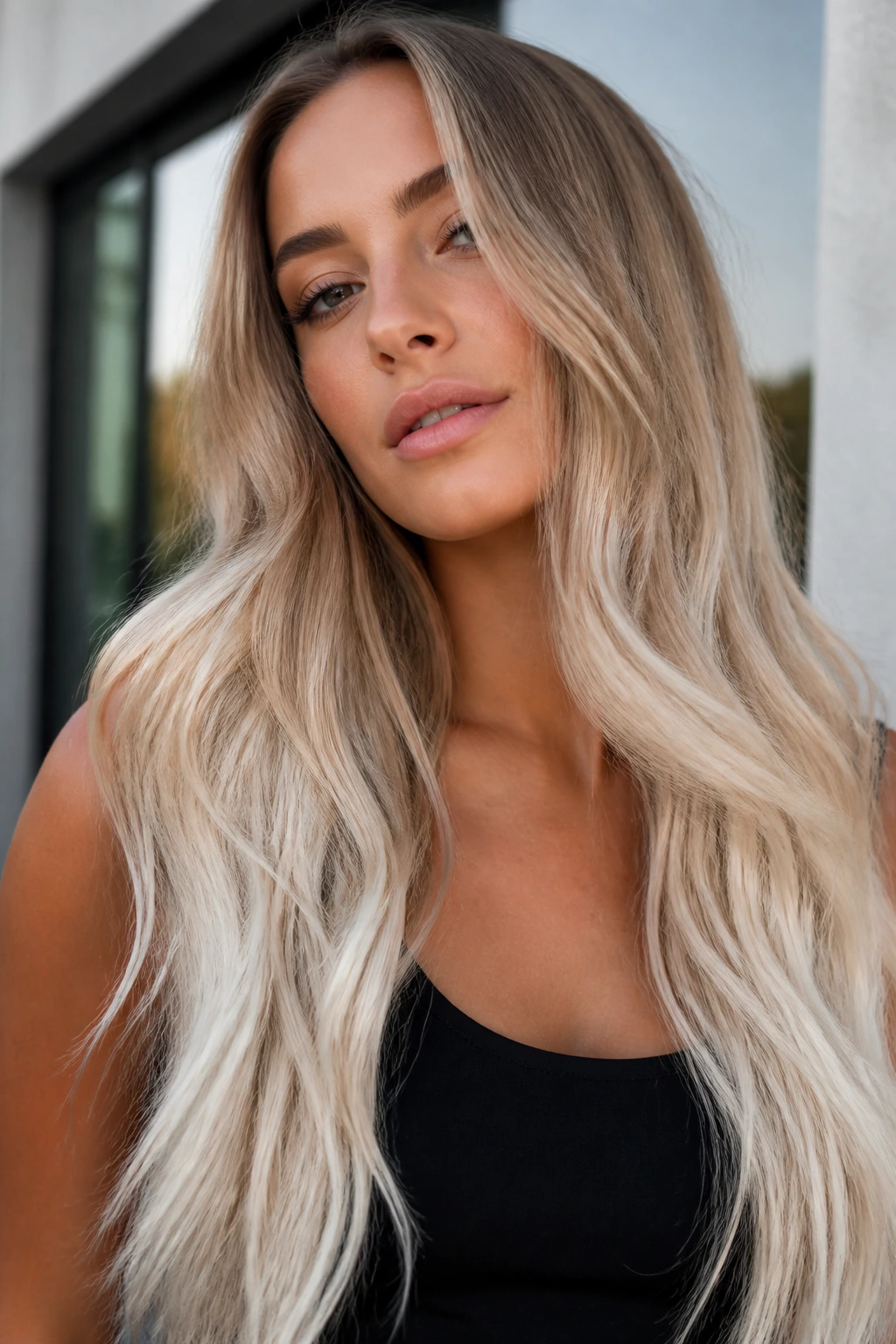
White blonde ends give long hair a dramatic fade that starts softer at the root and finishes nearly white at the bottom. It’s a bold look, but the drama is in the contrast, not in the whole head being blindingly bright. On long lengths, the gradient makes sense because there’s room for the eye to travel.
This shade is unforgiving on damaged ends. I won’t sugarcoat that. If the tips are split, the white will show every rough edge. But on healthy hair, the result can look almost icy at the bottom while the top stays wearable. That’s the trick: keep the root and mids controlled, then let the ends carry the shine.
Ask for an ombré-style lightening, not a blunt bleach-out. The transition should feel smooth, not like someone drew a line across the hair. White ends can look especially strong on straight styles, where the finish reads graphic, or on loose curls, where the gradient softens into a shimmer.
21. Bronde-to-Blonde Balayage
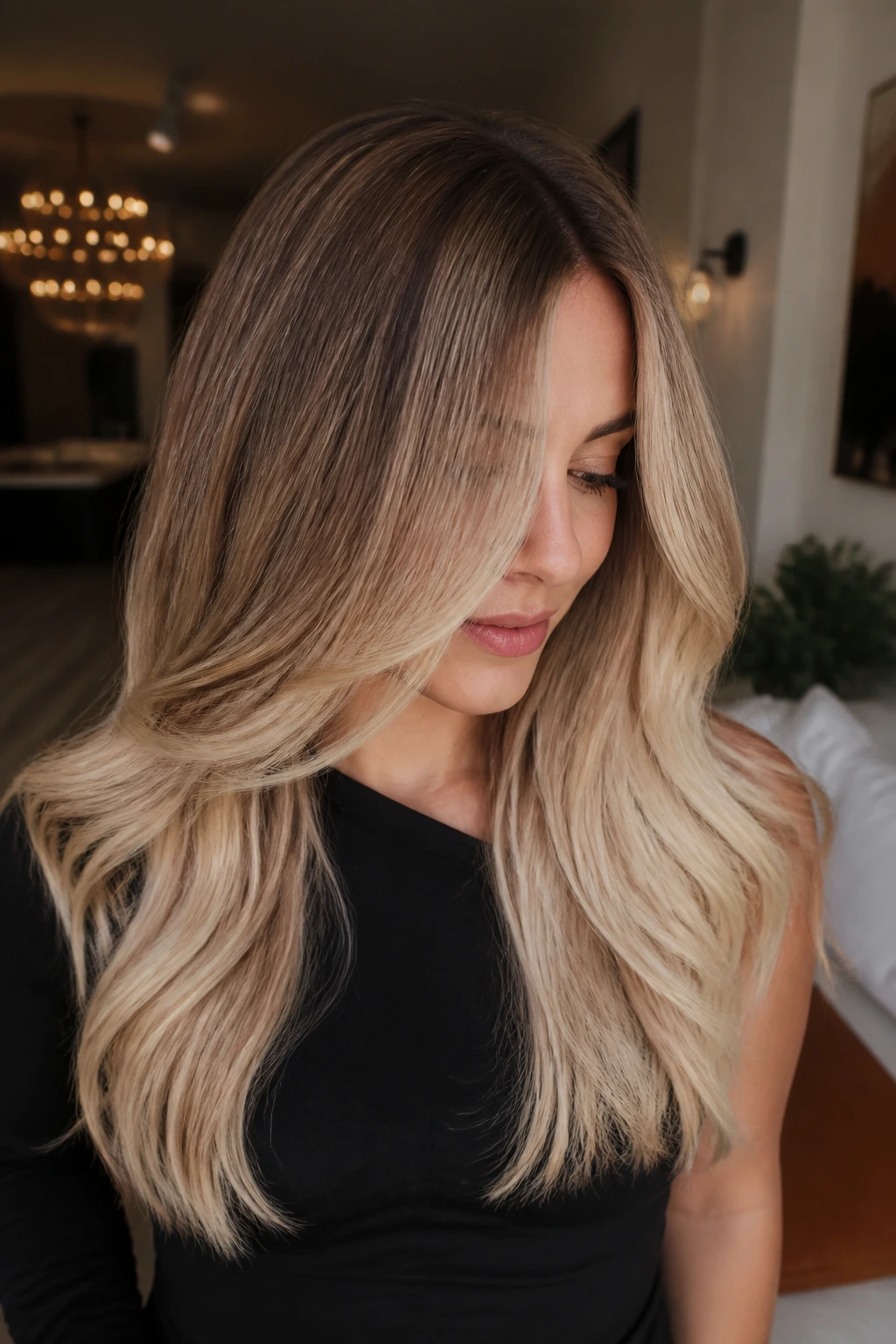
Bronde-to-blonde balayage is the bridge for people who are not ready to commit to a full pale blonde. The root and mids stay in that brown-blonde middle zone, then the ends and face frame brighten into a softer blonde. On long hair, the progression feels natural because the length gives each tone room to show itself.
Why It’s So Good on First-Time Blondes
You get visible lightness without stripping the whole head to the same pale level. That keeps the hair healthier and the grow-out calmer. It also means you can push the color brighter later if you want, without starting over from scratch. On a long cut, this is a smart place to begin.
Where It Works Best
It suits thick, wavy, and very long hair especially well, because the dimension stops the color from collapsing into one brown mass. If your base is a level 5 or 6, this is usually more flattering than chasing a level 10 right away. The color looks lived-in on purpose, which is a nice way of saying it doesn’t panic you every six weeks.
22. Buttery Ombré
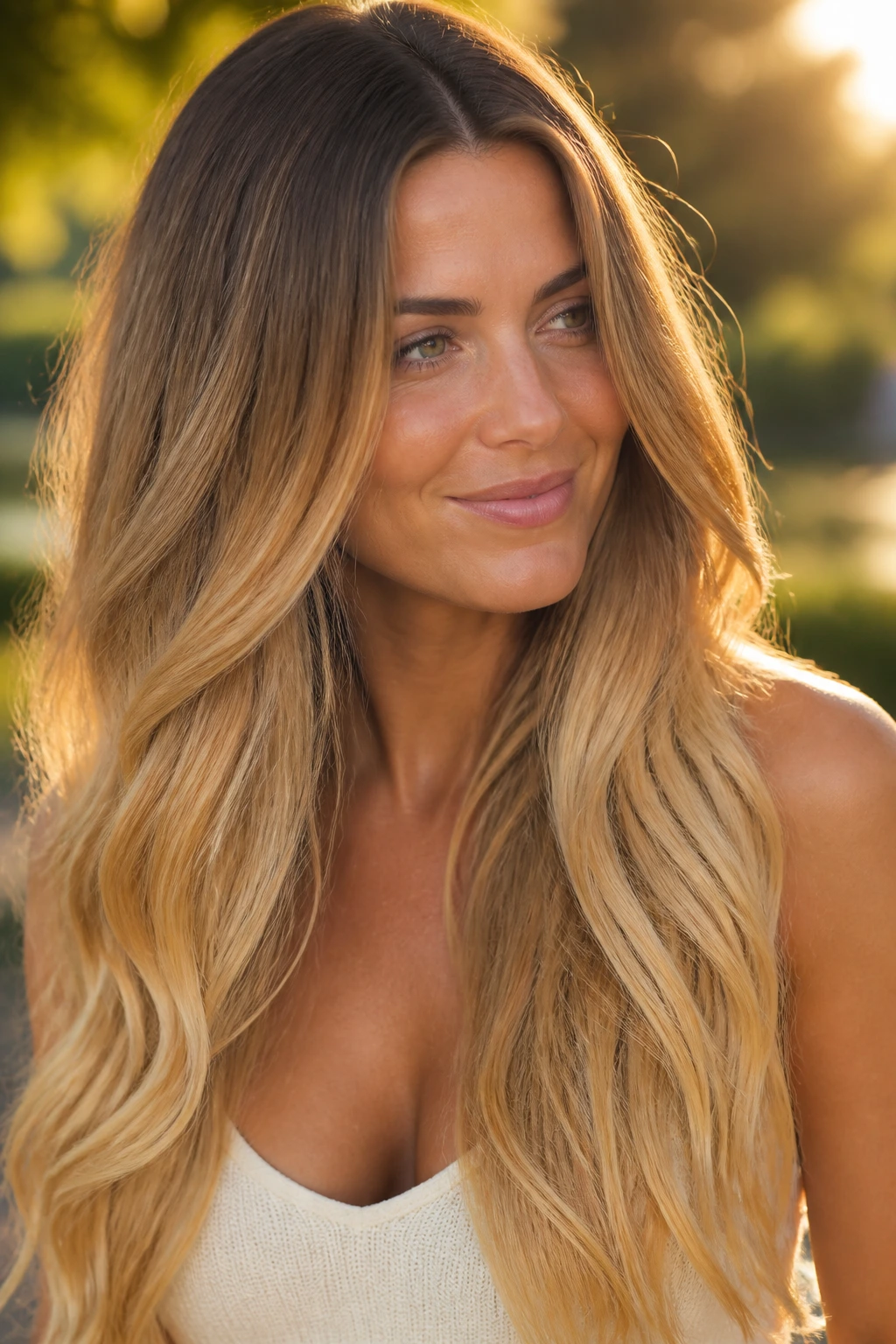
Buttery ombré keeps the root and upper mids a little deeper, then lets the color turn soft and golden toward the ends. It’s a classic for a reason. The fade looks gentle on long hair, and the buttery finish keeps the blonde from going flat or overly cool.
This shade has a softer personality than platinum or white blonde, but it still gives you a clear blonde result. On long waves, the ombré shape makes the color look almost sunlit, especially when the ends hit the shoulders or fall lower. The bigger the length, the more graceful the transition feels.
I like this one for people who want a visible blonde change without making every inch of the hair identical. The darker root helps the style last longer between appointments, and the buttery ends keep the whole thing from feeling heavy. If you want one blonde idea that is easy to live with, this is near the top of the pile.
What Makes Blonde Look Rich on Long Hair
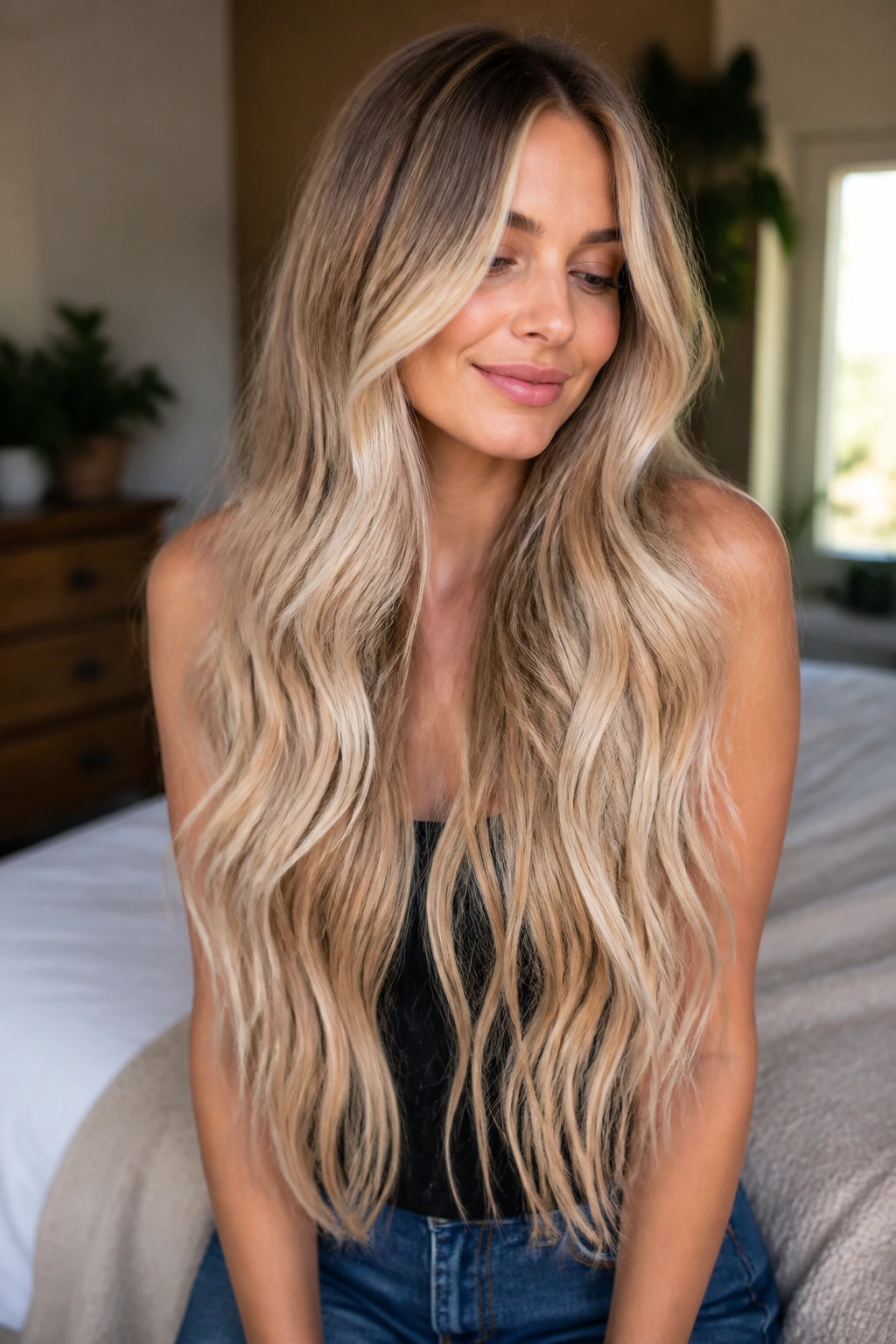
Length is a gift, but it can be a trap if you treat every inch the same. The most flattering blonde on long hair usually has a clear plan for the root, a clear plan for the mid-lengths, and a different plan for the ends. That sounds fussy because it is. Hair this long shows the stitching.
The smartest blondes use contrast without looking striped. A brighter face frame pulls focus upward. A root shadow keeps the scalp from looking stark. Softer mids stop the whole thing from feeling like a helmet. And the ends? They need to stay healthier than most color photos admit. When the ends are too light and too dry, long blonde hair stops looking expensive and starts looking thirsty.
Texture matters as much as tone. Loose waves make beige and champagne blondes look deeper because each bend catches a different piece of color. Straight hair shows every line of the application, which is why clean sections and smooth toning matter more there. Curly hair can hide a slightly harder grow-out, but it will also magnify brass if the toner is off.
If there’s one rule worth keeping, it’s this: long blonde hair looks best when the lightest pieces are placed, not sprayed everywhere. Placement is what keeps the color from feeling common.
Essential Tools for Blonde Maintenance and Styling
-
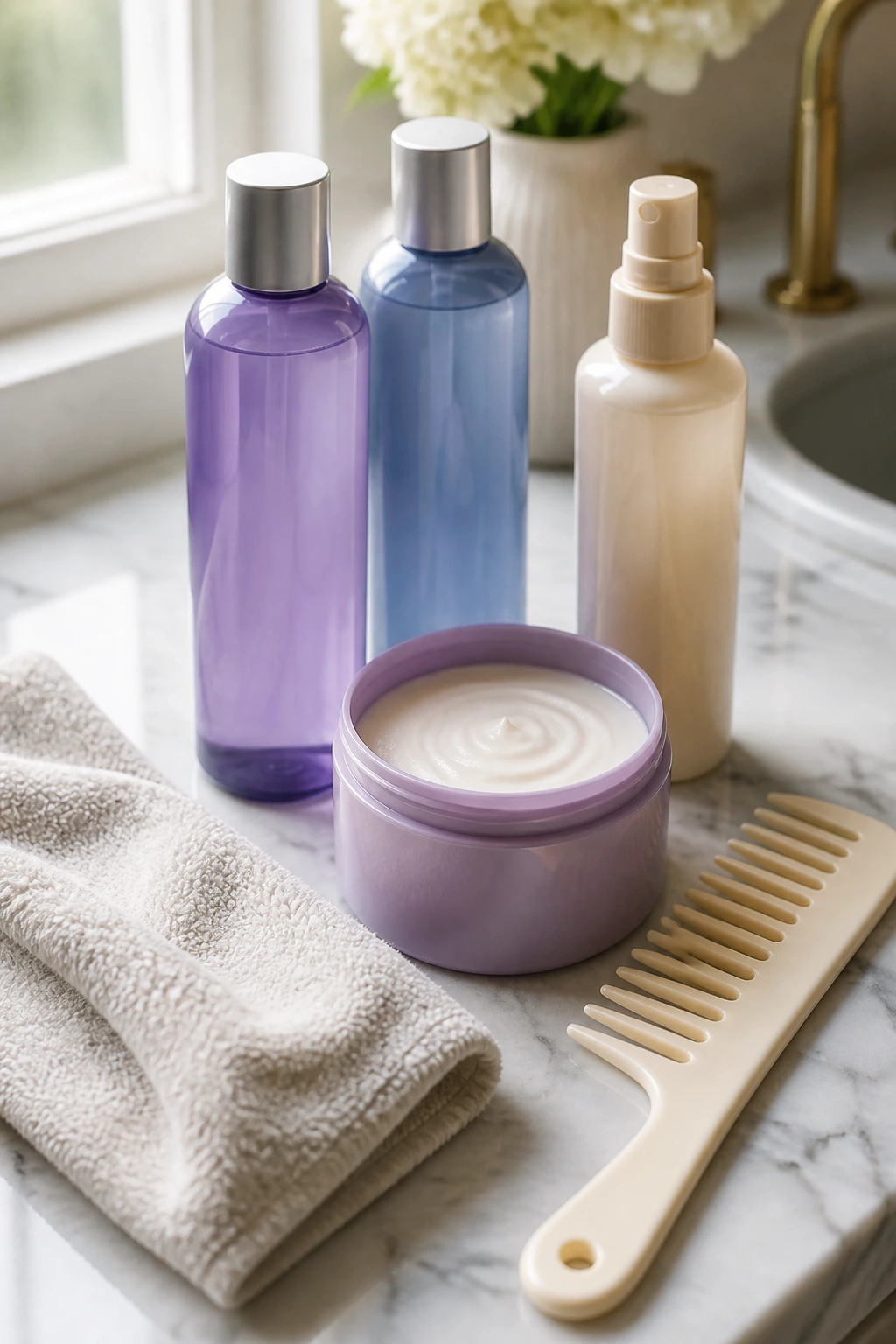
Color-safe shampoo: A sulfate-free cleanser helps keep toner from sliding out too fast, especially on pale beige and pearl blondes.
-
Purple shampoo: Use it sparingly, usually once a week or every other wash, because too much can dull creamy shades.
-
Blue shampoo or blue gloss: Better for deeper blondes that pull orange or copper at the ends.
-
Deep-conditioning mask: Long blonde hair gets dry at the bottom first, so a weekly mask keeps the mids and ends from fraying.
-
Heat protectant spray: Flat irons and hot brushes chew through toner fast if the hair is unprotected.
-
Wide-tooth comb: Safer for wet detangling than a tight brush, especially when the hair is freshly lightened.
-
Microfiber towel or soft cotton T-shirt: Cuts down on friction and rough cuticle lift after washing.
-
Section clips: Useful for blow-drying, gloss application, or keeping highlights separated while styling.
-
Round brush: Helps show off the sheen on beige, vanilla, and honey blondes.
-
Silk or satin pillowcase: Not glamorous, but it helps keep the ends from rubbing themselves into straw.
Smart Shopping and Product Tips for Salon and Home
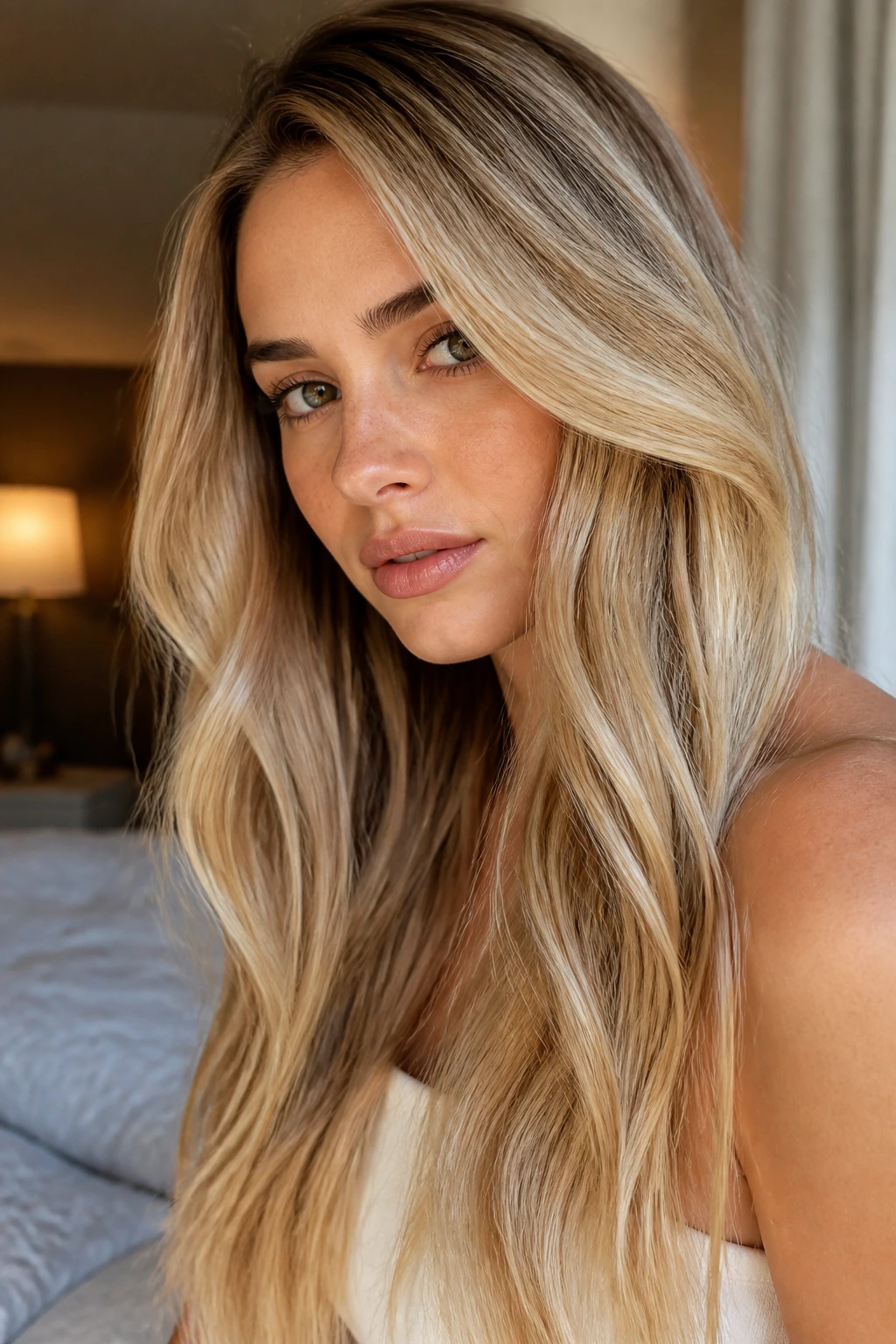
Blonde is not one product. It’s a stack of decisions. If you’re going lighter in a salon, the important questions are about the lightener, the toner, and the finish. Ask whether the formula includes a bond builder, because long hair — especially on the ends — can feel gummy after a big lightening session if the hair is already tired. Bond support does not make bleach gentle, but it does help the hair hold together better.
At home, buy for the tone you actually have, not the tone you wish you had. A pale beige blonde needs a gentler purple shampoo than a yellow blonde. A hair that pulls orange may need a blue-based shampoo or mask. Too many people grab the strongest violet product on the shelf and wonder why their creamy blonde looks dead by the third wash. That’s a very expensive way to make hair look dusty.
Look at the ingredient list on masks and leave-ins, too. If the hair feels stretchy when wet, it probably wants a little protein balance, not only moisture. If it feels rough and puffy, it needs smoothing and slip. And if the ends break when you brush them, no salon toner is going to fix that by itself. Trim first. Then color.
How to Wear and Style Long Blonde Hair Color Ideas
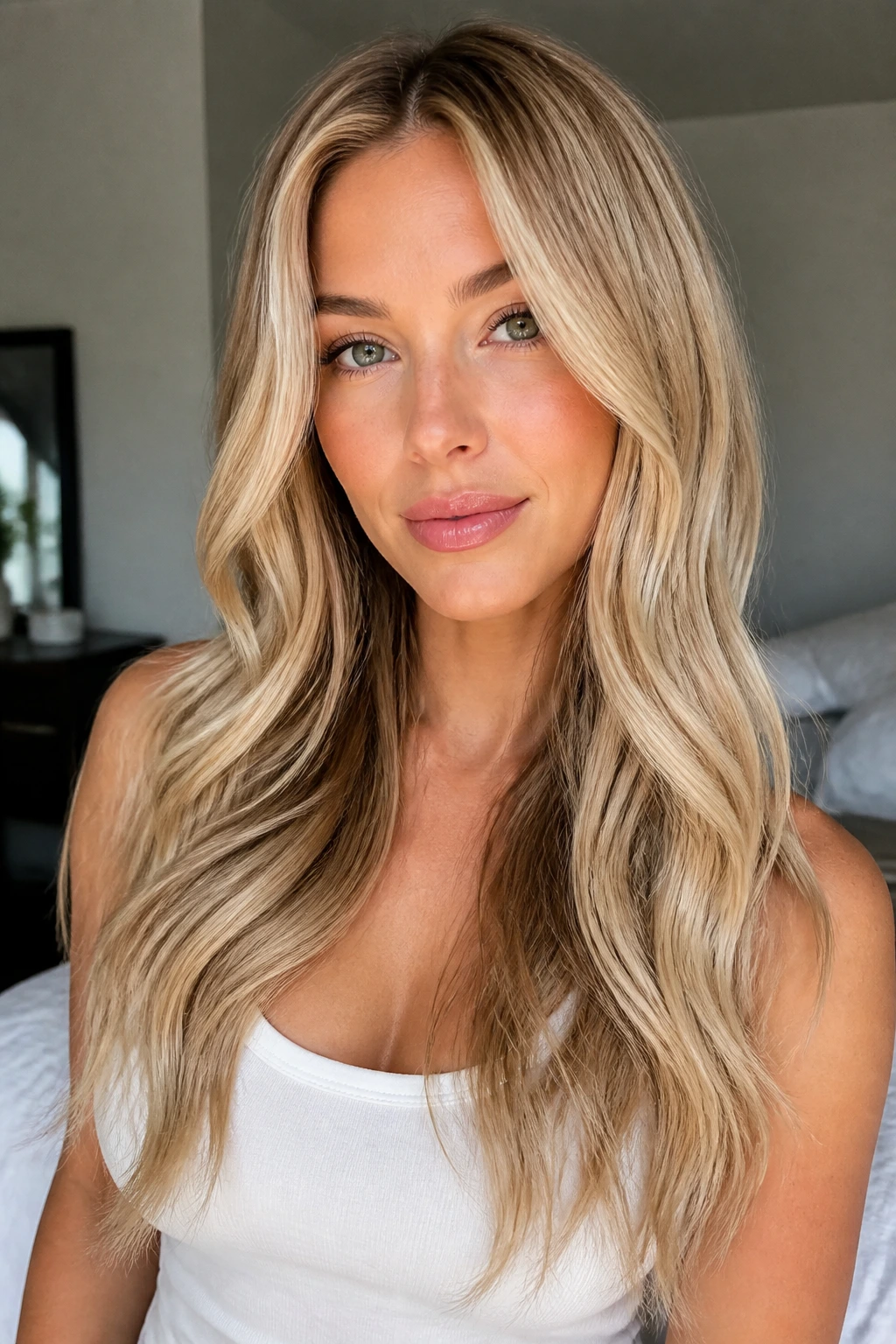
Presentation: Long blonde hair looks different depending on how you wear it. A center-part blowout shows off a root shadow and makes beige or champagne shades look clean. Loose waves are better for balayage, honey melts, and babylights because the bends catch the lighter pieces and keep the color from looking one-note.
Accompaniments: The right clothes and makeup change how blonde reads. Cream, camel, navy, black, and muted olive tend to make most blonde shades look clearer. Heavy yellow foundation or orange bronzer can fight with ashier blondes, while a soft peach blush and neutral brow usually keep the face from competing with the hair.
Portions: On long hair, placement matters more than total brightness. A bright money piece at the front and softer mids through the back can look richer than an all-over lift. If you want a subtle version, keep the face frame one shade lighter than the rest. If you want more drama, widen the bright pieces around the cheekbone and let them fall into the ends.
Finish: A light shine serum on the mids and ends gives long blonde hair that fresh-gloss look without making the root greasy. If the hair is wavy or curly, a creamier styling product can keep the pattern defined so the color doesn’t disappear into frizz.
Additional Tips and Color Boosters
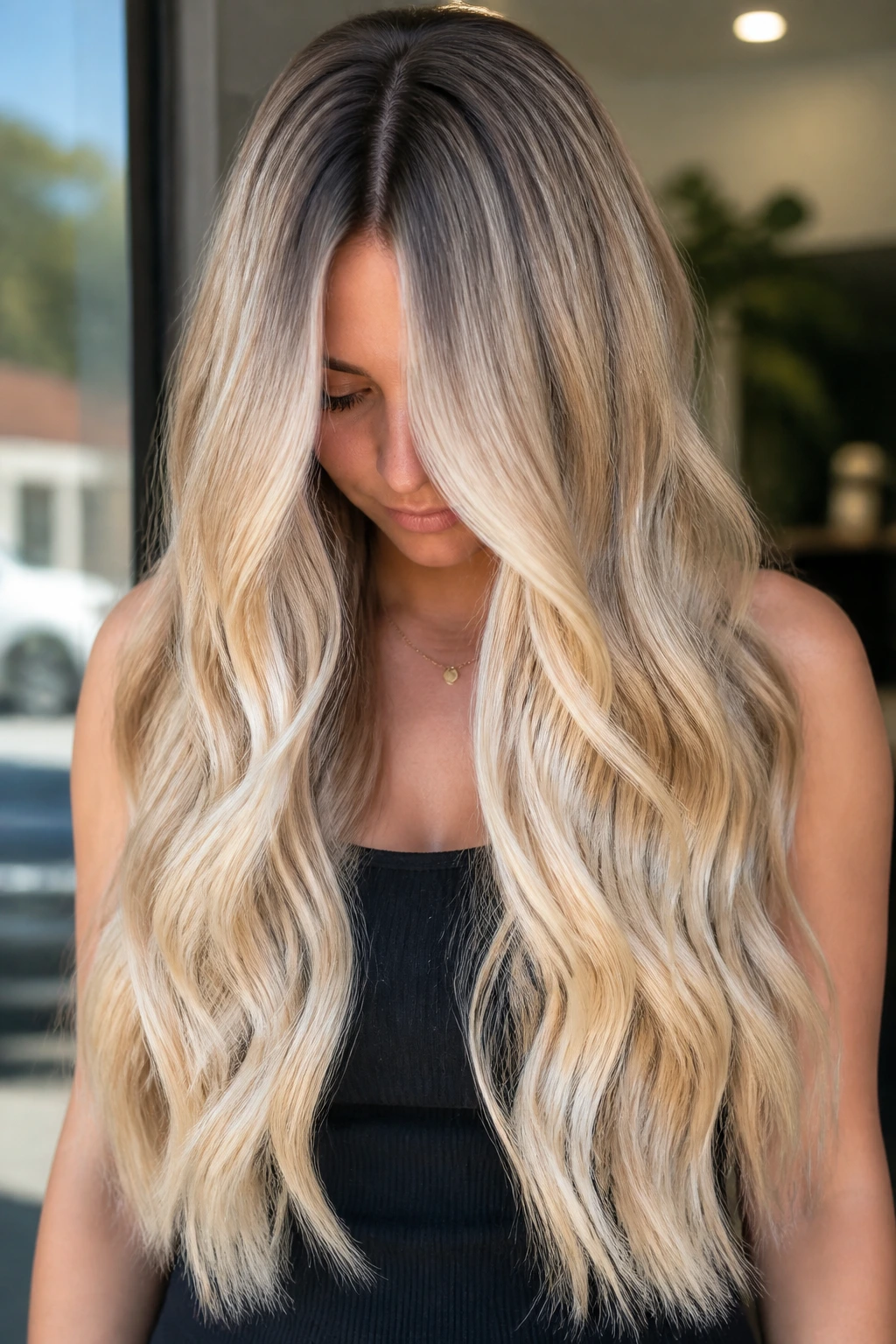
Tone Maintenance: Beige, pearl, and champagne blondes stay cleaner when you use purple shampoo as a correction, not a habit. Once a week is enough for most people; more than that and the hair can start looking dull or chalky.
Shine Trick: A clear or neutral gloss between highlight appointments can make the lengths look newly colored again. It also seals down rough ends better than piling on another layer of purple product.
Cost Saver: Ask your colorist about partial refreshes. On long hair, a bright face frame, a root melt, or a quick gloss can buy you several extra weeks before the next full service.
Heat Control: Keep hot tools on the lower side of the dial. Around 300°F to 325°F is usually plenty for long blonde hair; higher heat chews through tone faster than most people realize.
My Favorite Habit: Leave the very ends a touch softer than the mids. Not darker. Softer. It keeps the color looking expensive from a distance and saves you from that fried, see-through finish that long blonde hair can pick up when every inch is pushed too far.
How to Keep Long Blonde Hair Bright Between Appointments
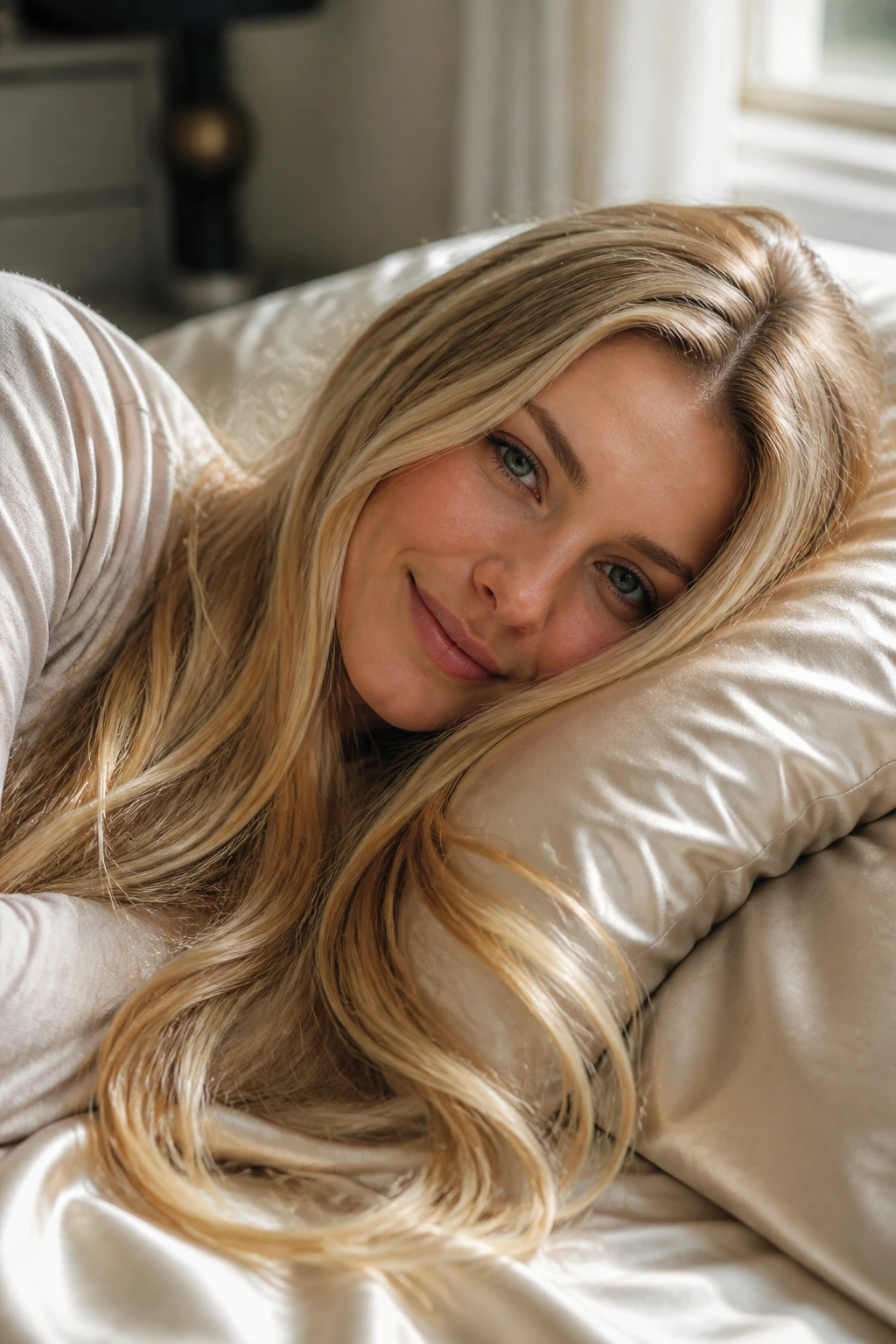
Blonde on long hair needs a schedule. Not a rigid one, but a real one. Toner usually looks its best for the first 1 to 2 weeks after a salon visit, then starts fading as water, heat, and shampoo work on it. That’s normal. If you’re washing often, expect the brightest finish to drift sooner.
A root touch-up or highlight refresh usually lands somewhere around 6 to 10 weeks for balayage and softer blends, and sooner for very pale blondes that rely on a crisp tone. Platinum and white blondes often want attention faster, sometimes every 3 to 5 weeks if you want them looking clean. If the hair is long and fragile, stretching appointments a little farther can be kinder to the ends, even if it means living with some root.
At home, keep the routine simple. Use a color-safe shampoo most of the time, a purple or blue product only when the brass starts showing, and a mask once a week on the mids and ends. Sleep on satin if you can. It cuts down on friction. If the ends start feeling rough, skip the hot tools for a couple of washes and use a leave-in that gives slip instead of heavy oil.
Before a color appointment, show up with dry, detangled hair and note what you used on the lengths during the last few weeks. That sounds small. It isn’t. Porous blonde behaves differently depending on whether you’ve been feeding it protein, pigment, or nothing at all.
Variations and Adaptations to Try
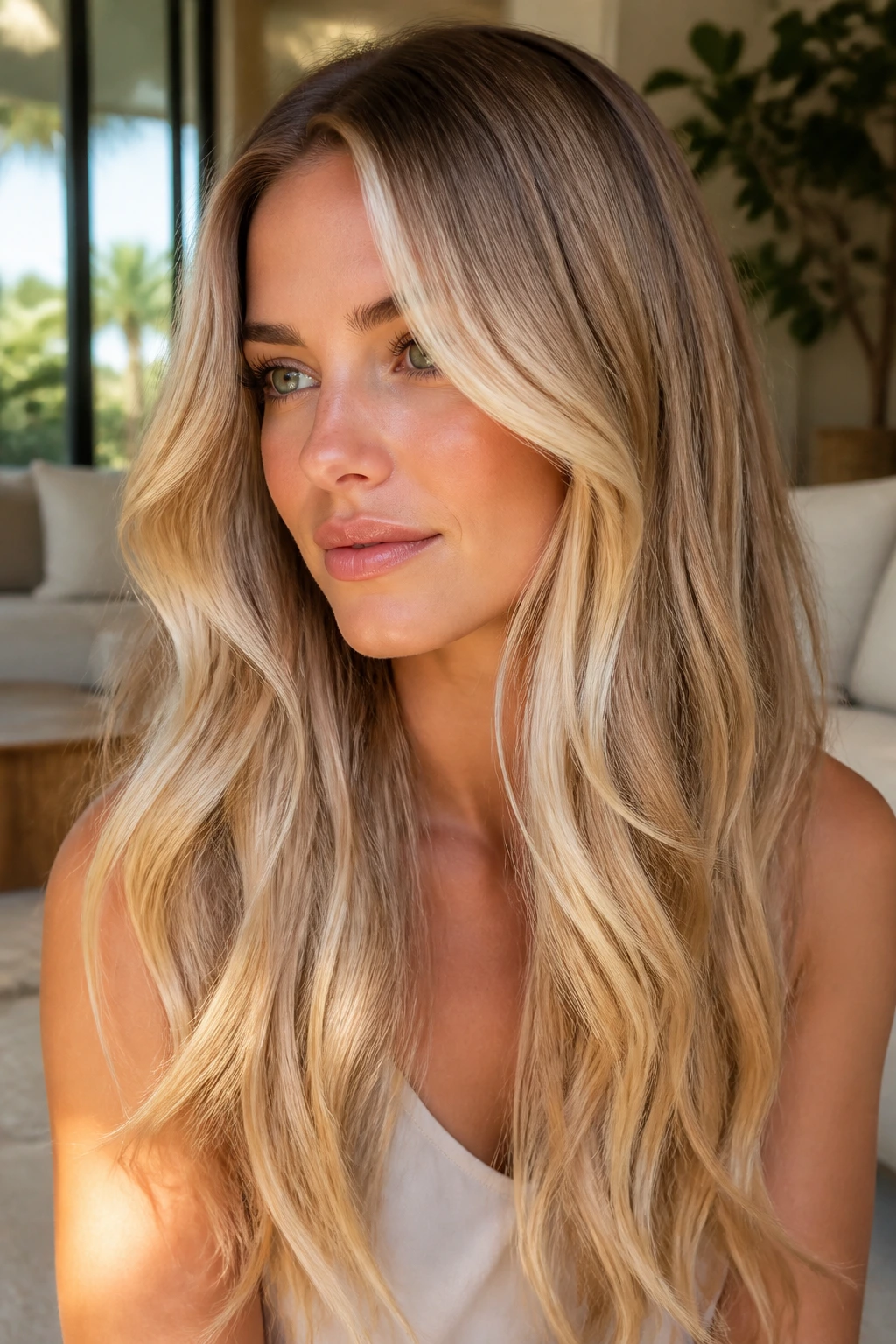
Soft Root Melt: Keep the root 1 to 2 levels deeper than the mids and let the blonde start lower. This is the easiest version to grow out, and it works especially well on long hair that gets pulled into ponytails a lot.
Icy Money Piece: Brighten only the front sections to a level 10 pearl or platinum, then leave the rest of the length beige or sandy. The front reads sharp, but the overall maintenance stays reasonable.
Honeyed Brunette-to-Blonde Blend: Start with caramel and toffee through the crown, then move into honey and beige at the ends. This suits darker natural bases that want blonde without an abrupt jump.
Curly-Hair Blonde Paint: Use finer ribbons and lower contrast so each curl keeps its shape. Too much blonde in one block can make curls look frizzy or cut up, while soft placement keeps the pattern clear.
Ultra-Cool Pearl Edit: Push the toner cooler, but keep a whisper of beige so the hair doesn’t go smoky. This is the right move if warm blondes make your skin look flushed or if your hair pulls yellow no matter what you do.
Common Mistakes That Flatten Blonde
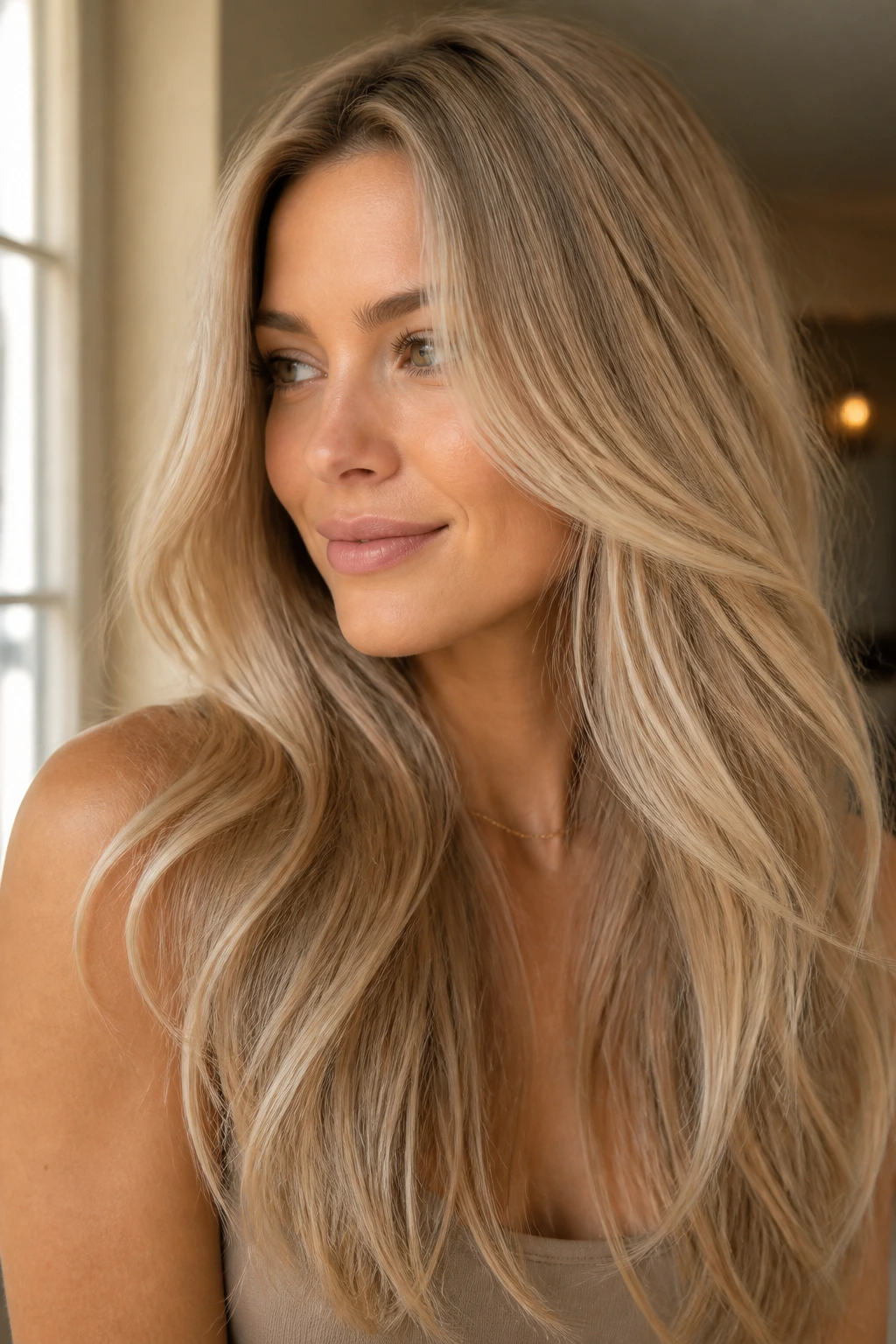
Pushing every inch to the same light level: Long hair needs movement. If the crown, mids, and ends are all the exact same brightness, the result can look flat and overprocessed. The fix is a root shadow, some mid-depth, and lighter pieces where the eye naturally lands.
Choosing toner by photo alone: A beige blonde on one base can look creamy; on another, it can go muddy or too yellow. Bring a few reference photos, but also tell the colorist what your hair does after washing. Brass, peach, yellow, and gray are not the same problem.
Overusing purple shampoo: Too much violet product can mute cream blondes and make pearl shades look dusty. Use it like a correction, not a daily cleanser, and follow with a mask so the hair doesn’t feel chalky.
Skipping the ends: The ends are the oldest part of the hair and usually the most porous. If they are already fragile, pushing them to the lightest possible blonde can leave them rough, hollow, and breakable. Sometimes the better move is to keep the ends a shade softer.
Trying to go too light in one session: Darker bases often need more than one appointment to reach clean blonde without wrecking the fiber. If the hair is still orange after lift, stop and tone or come back later. Pushing past that point is how long blonde hair turns wiry.
Frequently Asked Questions About Long Blonde Hair Color Ideas
Which blonde shade is easiest to maintain on long hair?
Shadow-root blondes, beige balayage, and honey melts are usually the easiest. They grow out softly and don’t show every half-inch of regrowth the way platinum does.
Can dark brown hair go blonde in one appointment?
Sometimes it can get lighter in one appointment, but a clean blonde result usually takes more than one round if you want to keep the hair in decent shape. The darker the base, the more patience you need.
How often should I tone long blonde hair?
Most people need a gloss or toner refresh every 4 to 8 weeks, depending on how often they wash, heat-style, and swim. Pale blondes fade faster than beige or honey shades.
What blonde looks best on fine long hair?
Babylights, creamy beige, and sandy lowlights usually work well because they create the look of thickness. Heavy all-over blonde can make fine hair look see-through at the ends.
Is balayage better than highlights for long hair?
For many long cuts, yes, because balayage softens the grow-out and keeps the root area from looking harsh. Highlights still have their place when you want more even brightness or a lighter overall finish.
Why does my blonde keep turning brassy?
Usually because the underlying warm pigment wasn’t fully neutralized, or because the toner has faded and the hair is porous. Blue or purple products help, but they cannot fix badly lifted hair on their own.
What if my ends are already damaged?
Trim them first or at least before the lightest part of the service. Damaged ends grab toner too fast and go dull, which is why some blondes look smoky at the bottom even when the root is perfect.
Can I keep long blonde hair healthy and still wear heat tools?
Yes, but the heat has to stay controlled. Use a protectant every time, keep the iron in the 300°F range if you can, and give the hair a few low-heat days between styling sessions.
Should I choose warm or cool blonde?
Warm blonde usually flatters skin with peachy, golden, or olive undertones, while cool blonde can suit pinker or red-prone skin. The safer choice is often neutral beige, because it can lean either direction with the right gloss.
The Shade That Fits Your Hair Best
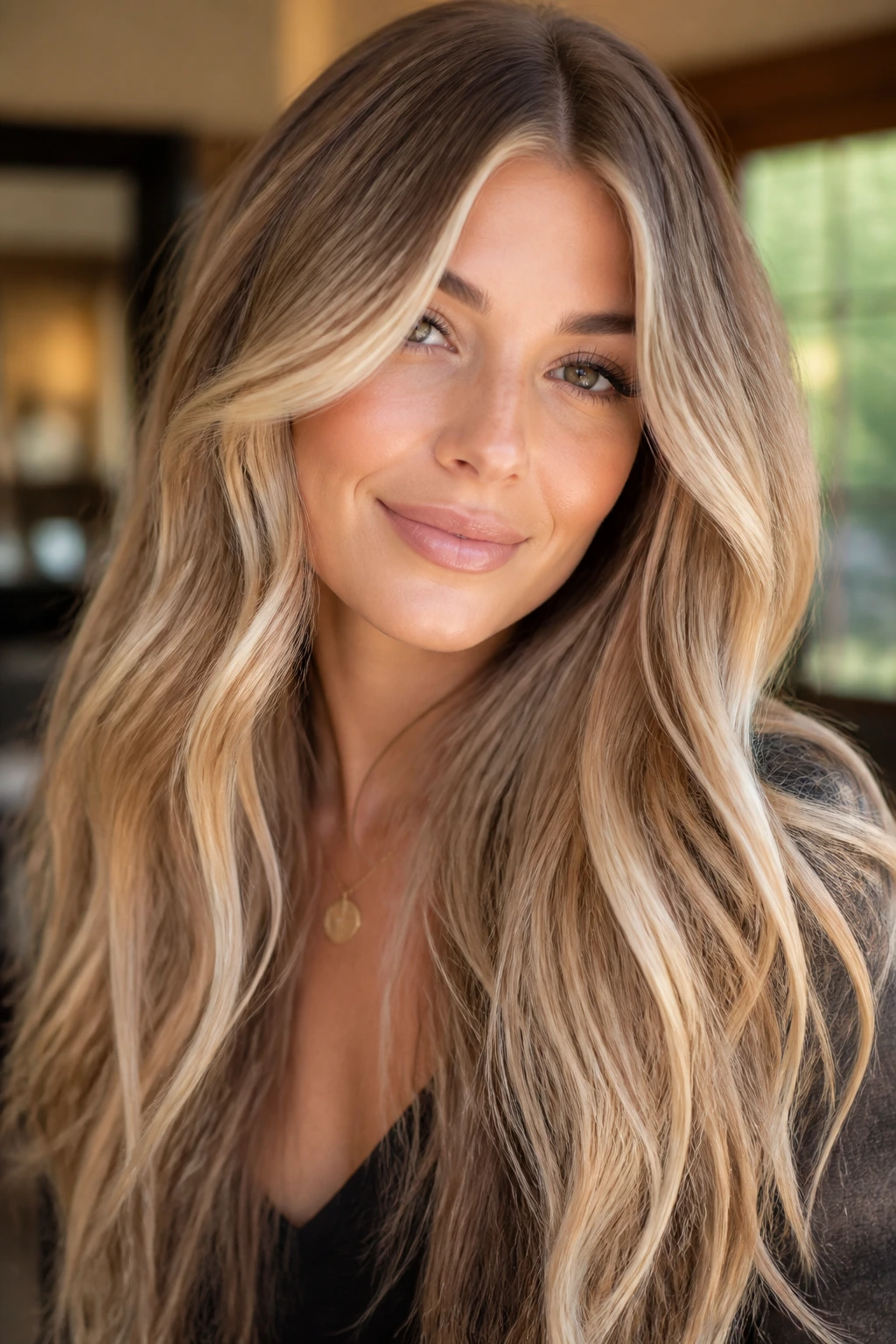
Long blonde hair works best when it looks planned, not painted in one rush. The right shade should move with the cut, hold its tone for more than a week, and leave room for your roots to show up without spoiling the whole effect. That’s why a beige shadow root, a honey melt, or a careful champagne balayage often looks richer than the palest white blonde in the room.
If you’re picking one of these long blonde hair color ideas, start with how much upkeep you’ll tolerate, then decide how bright you actually want the ends to be. That one decision filters out a lot of regret. The prettiest blonde on long hair is usually the one that fits your texture, your base, and your patience — not the one that looks loudest in a screenshot.
