



Shoulder-length black hair has a habit of hiding the good stuff until it swings. A blunt lob catches light at the collarbone, a few painted ribbons near the face can sharpen the whole cut, and a deep dark base can go from flat to dimensional without losing its edge. If you’ve been hunting for shoulder-length black hair color ideas, the real trick is not picking the loudest shade. It’s picking the one that actually shows up on your hair, in your lighting, and in the way you wear it.
That’s where this length earns its keep. Hair that lands around the shoulders has enough movement to show off balayage, peekaboo panels, money pieces, glosses, and lowlights, but it’s still short enough that color can look deliberate instead of busy. Long hair can swallow a softer tone. Very short hair can make a color change feel abrupt. A shoulder-length cut sits in the sweet spot, especially when the ends hit just above or just below the collarbone and the layers do a bit of the talking for you.
The best black hair color ideas for this length are the ones that work with darkness, not against it. Blue-black reads like polished ink. Cherry and plum tones glow in low light. Warm caramel and copper need a little lift, but they can turn a plain dark base into something with movement and warmth in a way that all-over light brown never quite does. The good versions look expensive because they’re placed with intent. The bad ones look like a box dye experiment that got tired halfway through. Let’s stay on the good side of that line.
Why These Shoulder-Length Shades Work
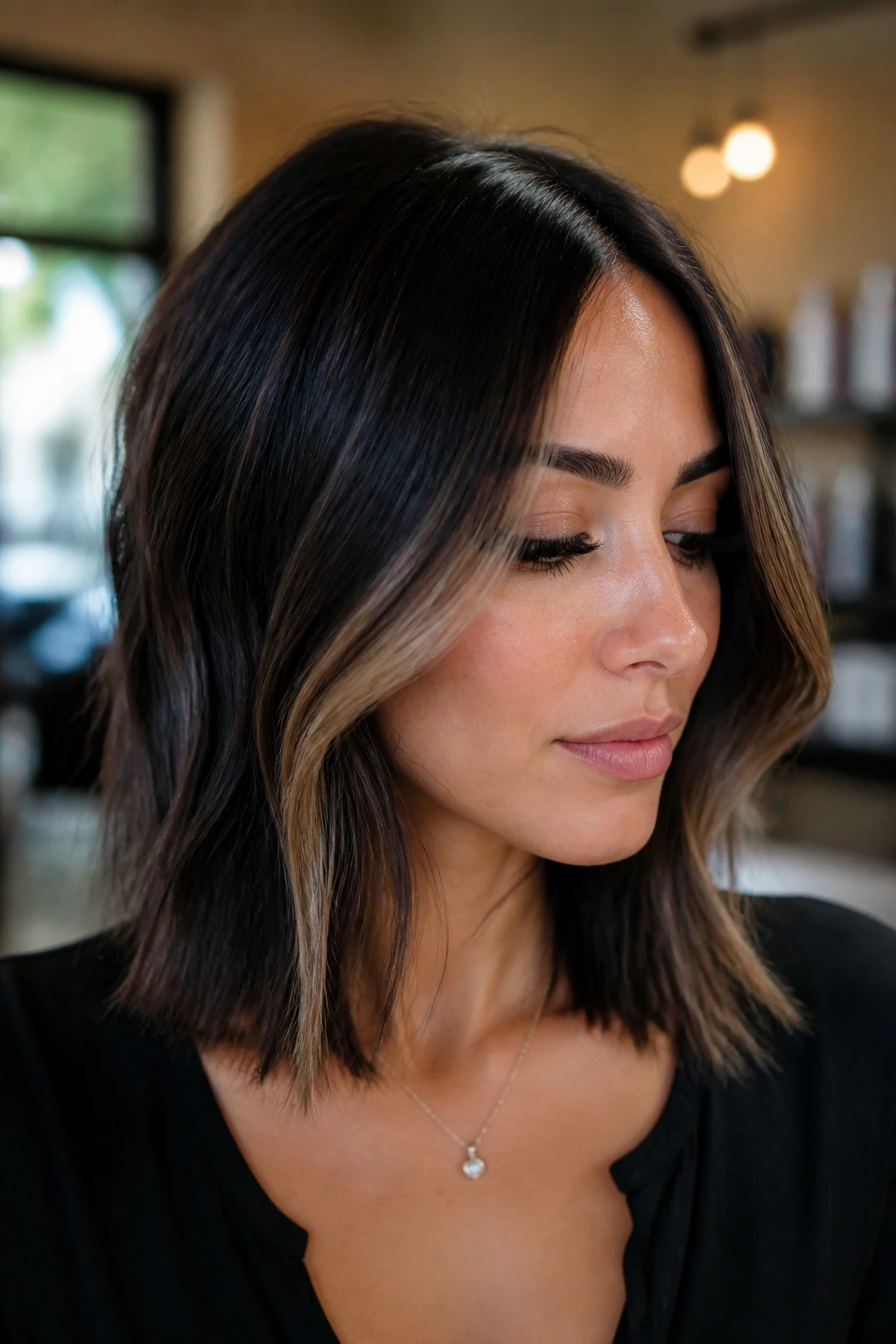
-
The length shows placement, not just color: On shoulder-length hair, a money piece, a ribbon highlight, or a hidden panel actually has room to move, which means the color reads from the front, side, and back instead of disappearing into a long curtain.
-
Dark bases hold drama well: Black hair can carry blue, violet, cherry, bronze, or ash tones without needing a full head of lightening. That keeps the look rich and sharp instead of washed out.
-
You can go subtle or loud: A glossy espresso balayage and a teal underlayer live in the same neighborhood, but they solve different problems. One softens; the other announces itself.
-
Grow-out is friendlier here: Shoulder-length color usually sits close enough to the cut line that you can trim faded ends before they drag the whole look down.
-
Styling changes the result fast: Straight hair shows shine and clean tone. Waves show ribbons, melts, and peekaboo panels. That means one color can wear two different ways without changing the dye.
1. Blue-Black Mirror Shine
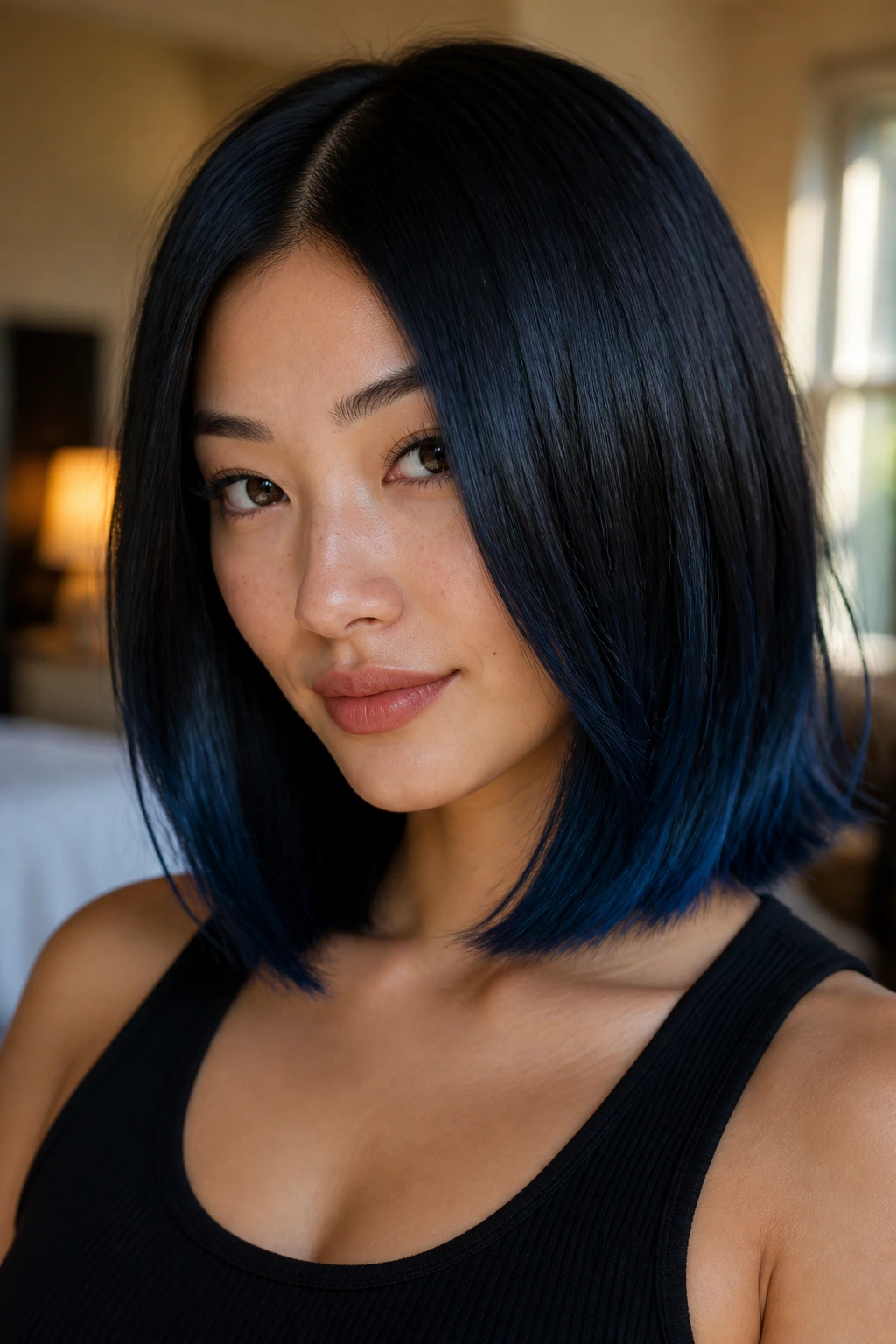
Blue-black is the shade I reach for when someone wants black hair with a pulse under the surface. It looks nearly inky indoors, then flashes a cool sapphire edge when light hits the mid-lengths. On shoulder-length hair, that shift happens fast because the ends are close enough to your face and neckline to catch movement.
Why It Reads So Rich
The trick is depth. Blue-black works because it sits one step away from true black, not five steps away from it. You keep that dark, reflective base, then layer in a cool blue tone that shows up most along the outer curve of the hair and the last two inches at the ends.
If your skin leans cool or neutral, this shade can be especially sharp. If your hair is naturally level 2 or 3, you may not need much lightening at all. A blue-black gloss or demi-permanent glaze can do most of the work.
- Best for: Sleek lobs, center parts, blunt cuts
- Maintenance: Gloss every 4 to 6 weeks
- Tone note: Choose blue-black, not purple-black, if you want a cleaner, colder finish
- Watch for: Greenish fading if the hair was over-toned before the color went on
Pro tip: Blow it out straight once in a while. The shine tells the whole story.
2. Espresso Brown Balayage
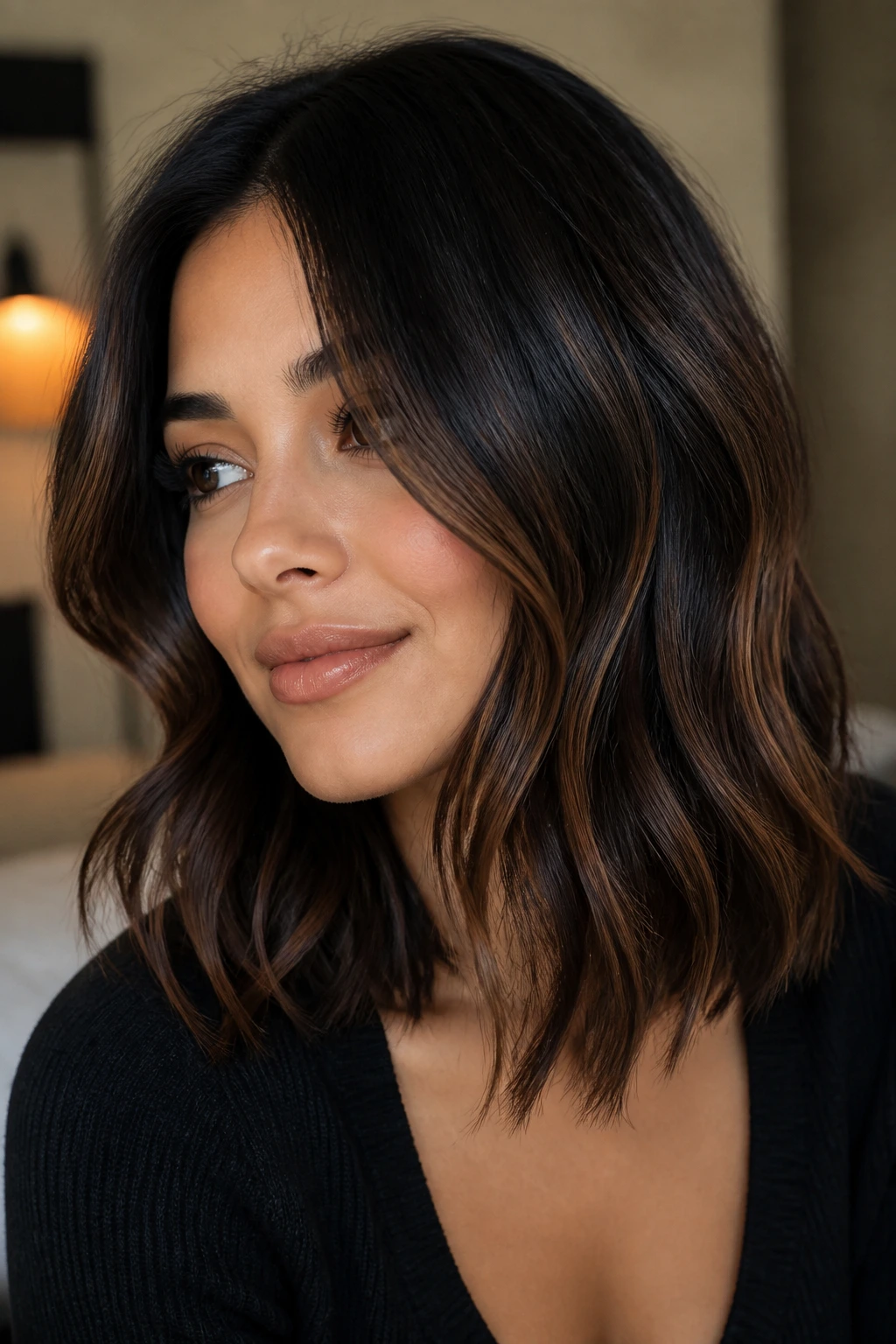
Espresso brown balayage is what happens when you want the darkness to stay, but you’re tired of one flat shade from roots to ends. The contrast is soft, almost whispered. Think of a black base with warm brown ribbons painted through the mid-lengths so the hair looks thicker when it moves.
This is one of the safest first color changes for shoulder-length black hair. You can keep the root zone dark and let the brown live mostly from the cheekbones down. That means less upkeep and fewer obvious lines when it grows out. It also plays nicely with layered shoulder-length cuts because the different lengths catch the light at different points.
It’s the opposite of fussy. And that’s why I like it.
3. Caramel Money Piece
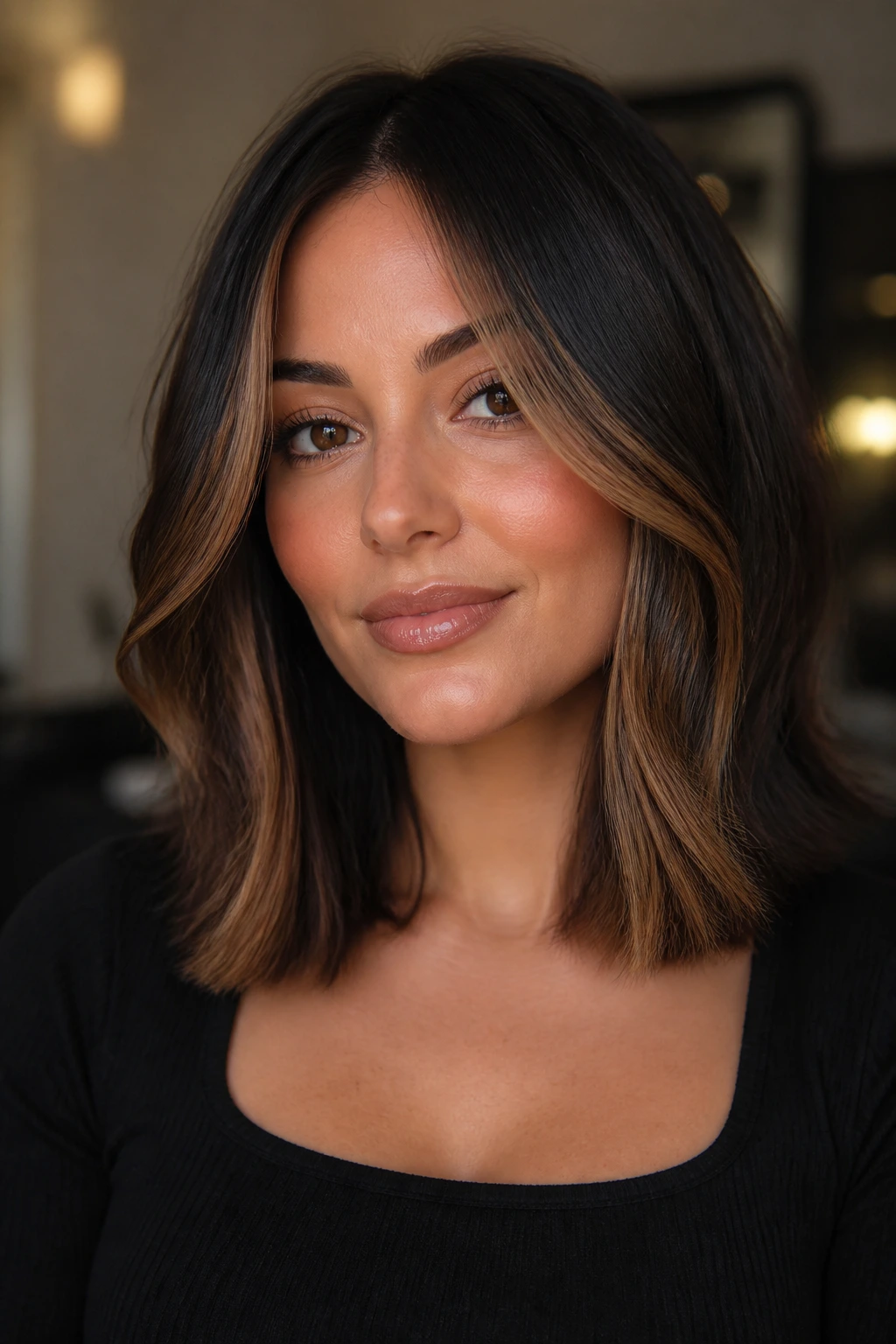
Want brightness without turning the whole head lighter? The caramel money piece does exactly that. Two face-framing sections, lifted to a warm caramel or soft toffee, can wake up a shoulder-length black lob faster than a full set of highlights ever will.
What Makes It Work
Caramel against black has a clean, readable contrast. It’s not subtle. That’s the point. The lighter strands sit where people actually look first — around the eyes, cheekbones, and jawline — so the color feels intentional even if the rest of the hair stays deep and dark.
Ask for the money piece to start around the arch of the brow and melt into the front layers. If it begins too high, it can look striped. If it stays too low, it disappears once you tuck your hair behind your ears.
- Best for: Wavy shoulder-length cuts
- Upkeep: Re-tone every 6 to 8 weeks if the caramel turns brassy
- Placement tip: Keep the brightest pieces nearest the face, not the temple only
- Styling bonus: A loose bend at the front makes the color look softer
4. Cherry Cola Gloss
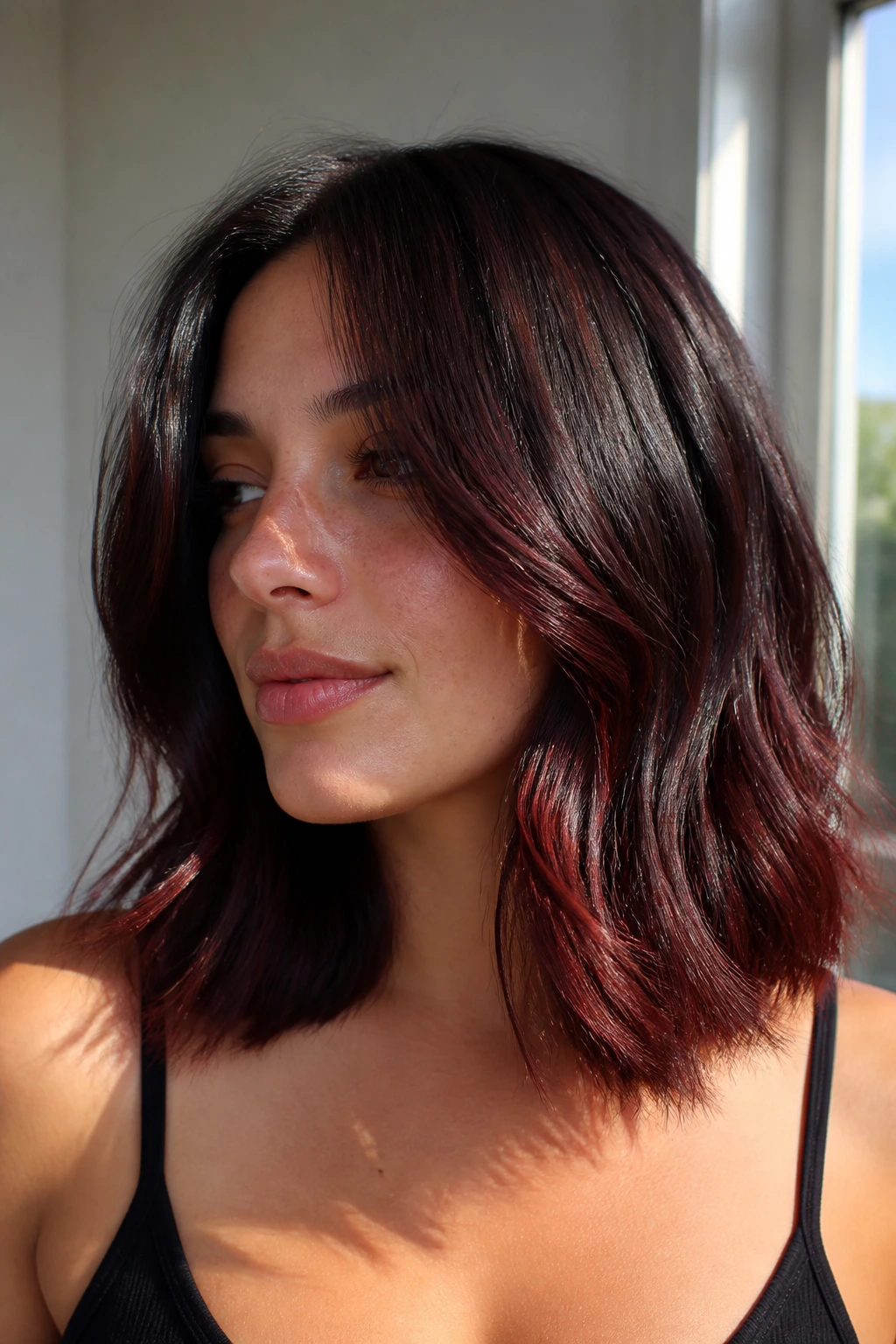
Cherry cola gloss is for the person who wants red, but not in the loud, obvious way. It sits somewhere between burgundy and dark cherry, with a brown-black depth that looks moody in shade and richer in sunlight. On shoulder-length black hair, it gives the surface a stained-glass feel.
Picture this on a collarbone-length cut: the ends catch a burgundy flare when you turn your head, but the roots still read dark and grounded. That keeps the look from getting sugary or too bright. If your hair has layers, the color will show up more at the curve of each wave and less in the interior, which is exactly what makes it interesting.
Key Details at a Glance
- Low lift required: Often works with a glaze or gentle pre-lightening
- Best finish: Glossy, not matte
- Pairs well with: Straight blowouts and soft curls
- Fade pattern: Red tones soften first, leaving a warm brown stain
A quick warning: If your water runs hard, cherry tones can dull faster. A shower filter helps more than people think.
5. Mahogany Melt
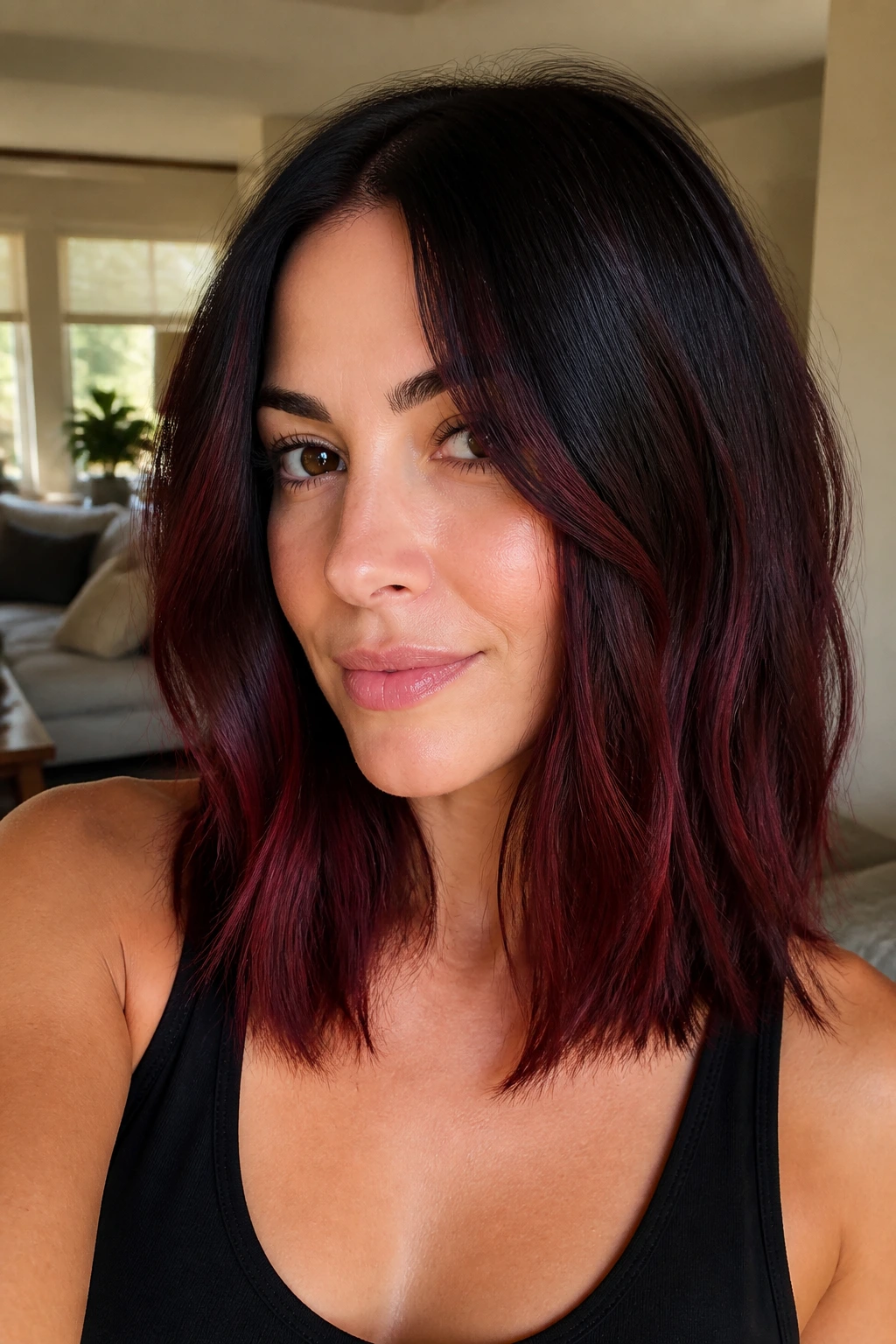
Mahogany is the color I recommend when someone wants warmth but refuses to go copper. It sits between brown and red, with a deep wine note that can make shoulder-length black hair look thicker and more expensive-looking in a quiet way. The melt matters here. You do not want a hard line.
On a shoulder-length cut, a mahogany melt can start near the root shadow and deepen toward the ends, or it can sit as a broad veil through the middle. Either way, the transition should feel soft enough that you notice it only when the light shifts. If the hair is blunt and one-length, the color reads cleaner. If it’s layered, the mahogany tones can look more scattered and dimensional.
This is one of those shades that rewards a good blowout. It has a nice finish, but it really wakes up when the ends swing.
6. Smoky Ash Brown Ends
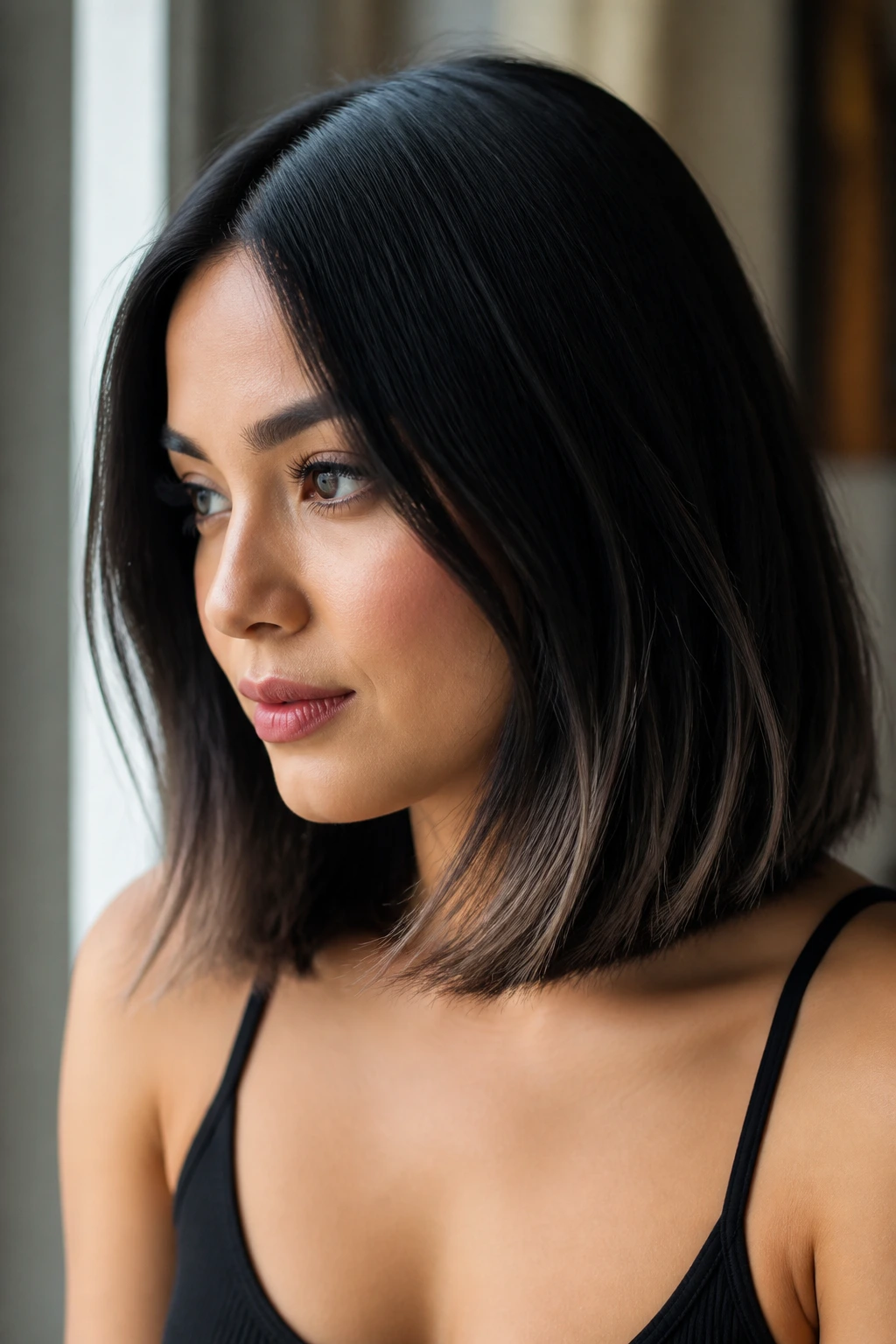
Here’s the move for anyone who likes dark hair but wants to kill the heaviness at the bottom: smoke out the ends with ash brown. The top stays black or close to it, then the last few inches slip into a cool brown that takes some of the weight off the silhouette.
Unlike warm balayage, ash brown does not shout. It blurs the edge. That’s why it looks so good on shoulder-length hair, where the ends sit close to the shoulders and can sometimes feel bulky if they’re all the same tone. A cool brown fade trims that visual bulk without sacrificing depth.
If your natural color already carries red undertones, ask for a cool toner after lightening. Otherwise the ash can drift muddy.
7. Plum Noir Sheen
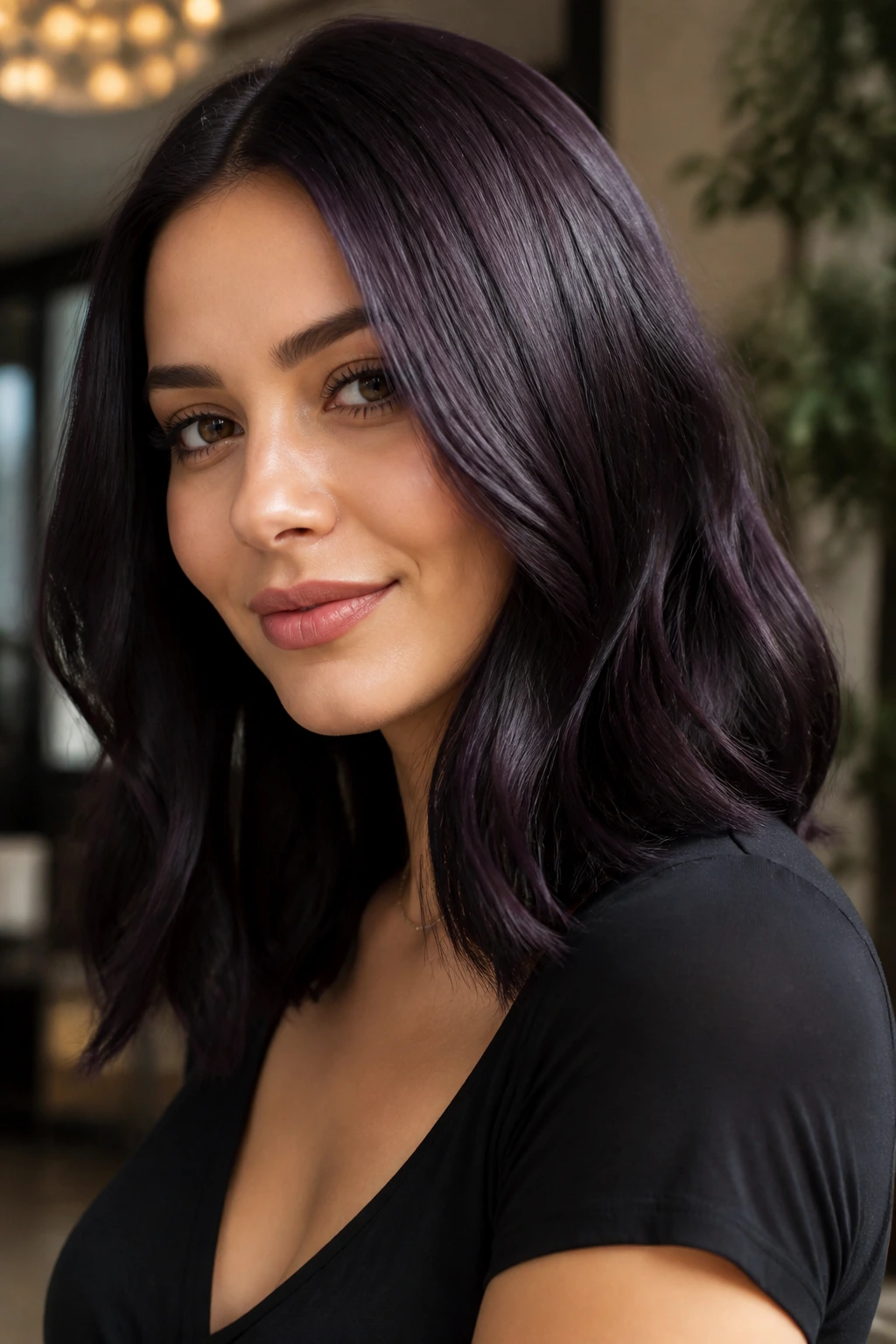
Plum noir is a dark violet-black that stays elegant instead of tipping into costume territory. In low light, it reads almost like black. In sun, the violet undertone lifts just enough to make the whole cut look glossy and a little mysterious. It’s a lovely shade for shoulder-length hair because the shorter length keeps the color concentrated.
Why It Stands Out
Plum tones are forgiving on dark hair. You don’t need a high-contrast highlight map to make them work. A good gloss can be enough if your base is already dark and healthy. If the hair has been colored before, the plum can cling to porous ends and give you that rich, velvety finish people chase with semi-permanent dye.
- Best styling match: A smooth blowout or polished waves
- Maintenance: Refresh with a color-depositing mask every 2 to 3 weeks
- Undertone note: Cooler than cherry, softer than violet
- Best on: Medium-density hair that can carry shine
My opinion: Plum noir looks better when it is almost too dark to name at first glance.
8. Copper Contour Highlights
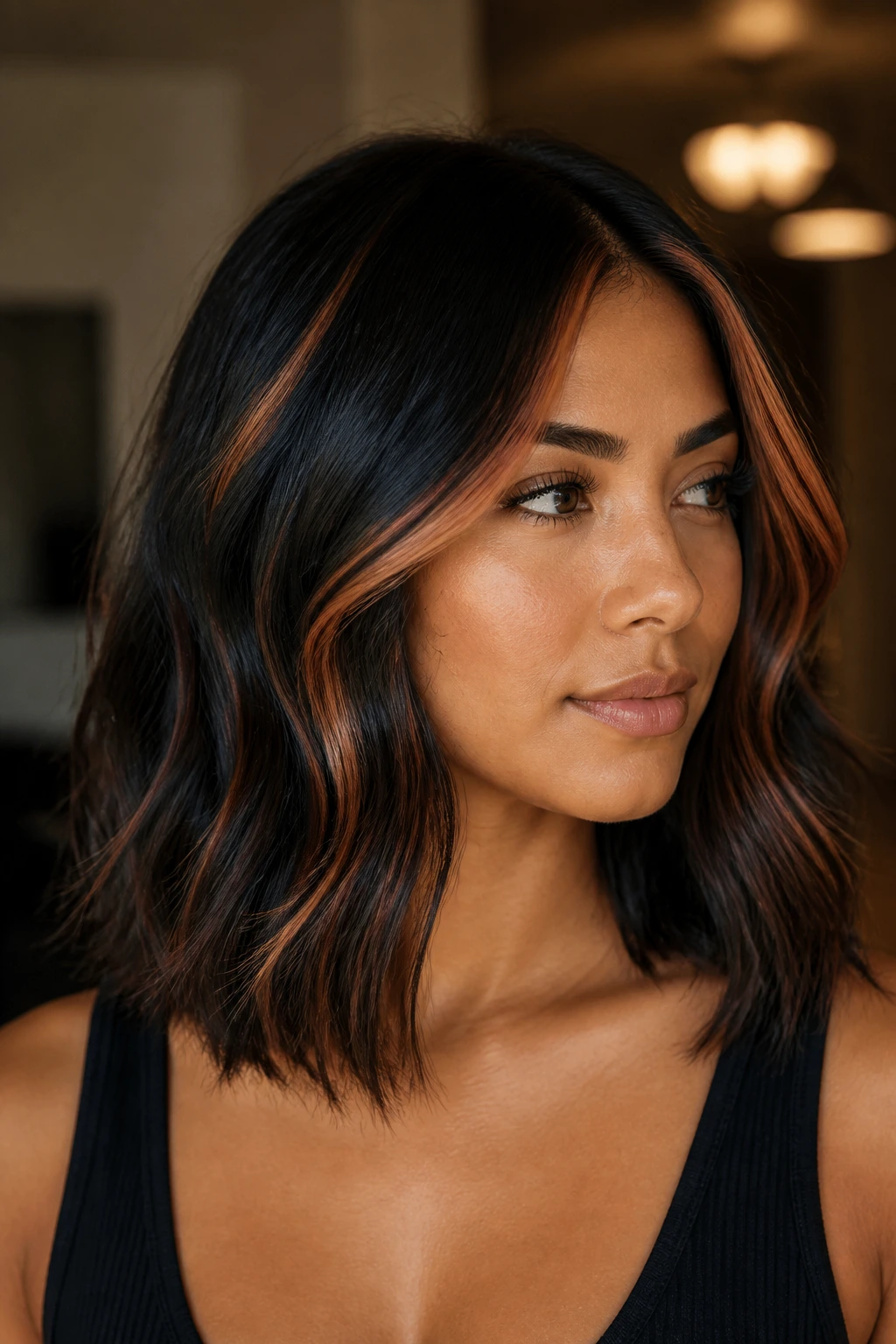
Copper contour highlights are for the person who wants visible warmth and doesn’t mind a little upkeep. The color usually needs lift to show properly on black hair, so the highlight placement matters. Concentrate the brightest copper around the face, crown, and outer layers, then let the darker interior anchor the style.
The result can be electric on shoulder-length hair. Copper pieces curl around the cheekbones and bounce against the shoulders, so every movement sends a warm flash through the cut. If the pieces are too chunky, though, the look turns stripey fast. Keep them ribbon-thin near the face and slightly fuller toward the sides.
This shade is one of the best examples of color placement doing the heavy lifting. The actual copper can be modest. The placement makes it feel bigger.
9. Burgundy Peekaboo Panels
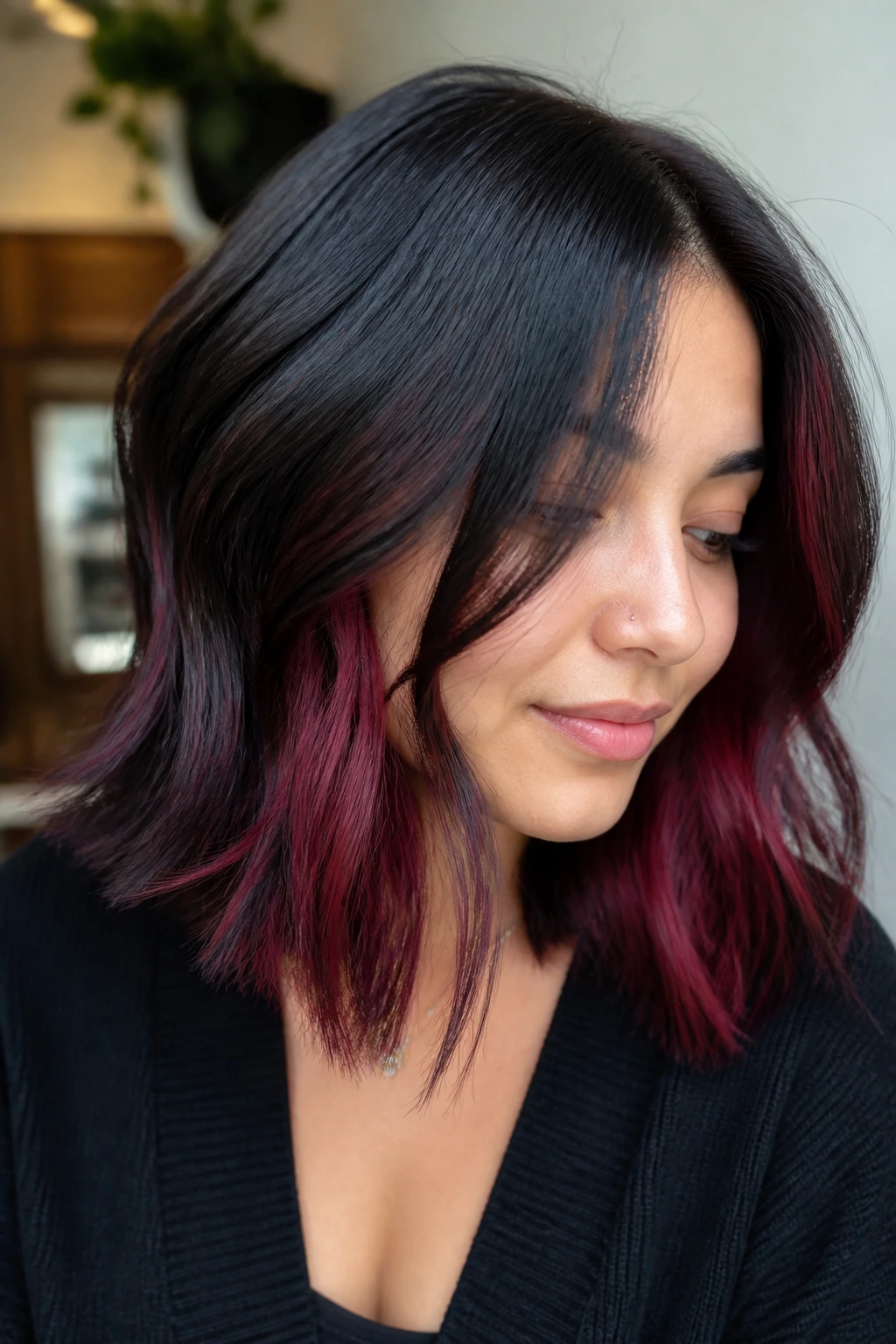
Burgundy peekaboo panels are the right answer when you want color that shows up only when hair moves. The top layer stays dark, and the burgundy lives underneath, peeking out when you tuck one side back, bend over, or wear soft waves. On shoulder-length hair, that hidden layer has enough room to surprise people without looking patchy.
Would I wear this on a job where I wanted to keep things conservative? Probably. The dark top layer does most of the talking. But the second you flip the hair, the color shows depth and intent.
Ask for the burgundy to sit under the canopy, not all the way through the crown. That keeps the contrast clean and makes the color feel like a secret instead of a mistake.
10. Mushroom Brown Ribbon Lights
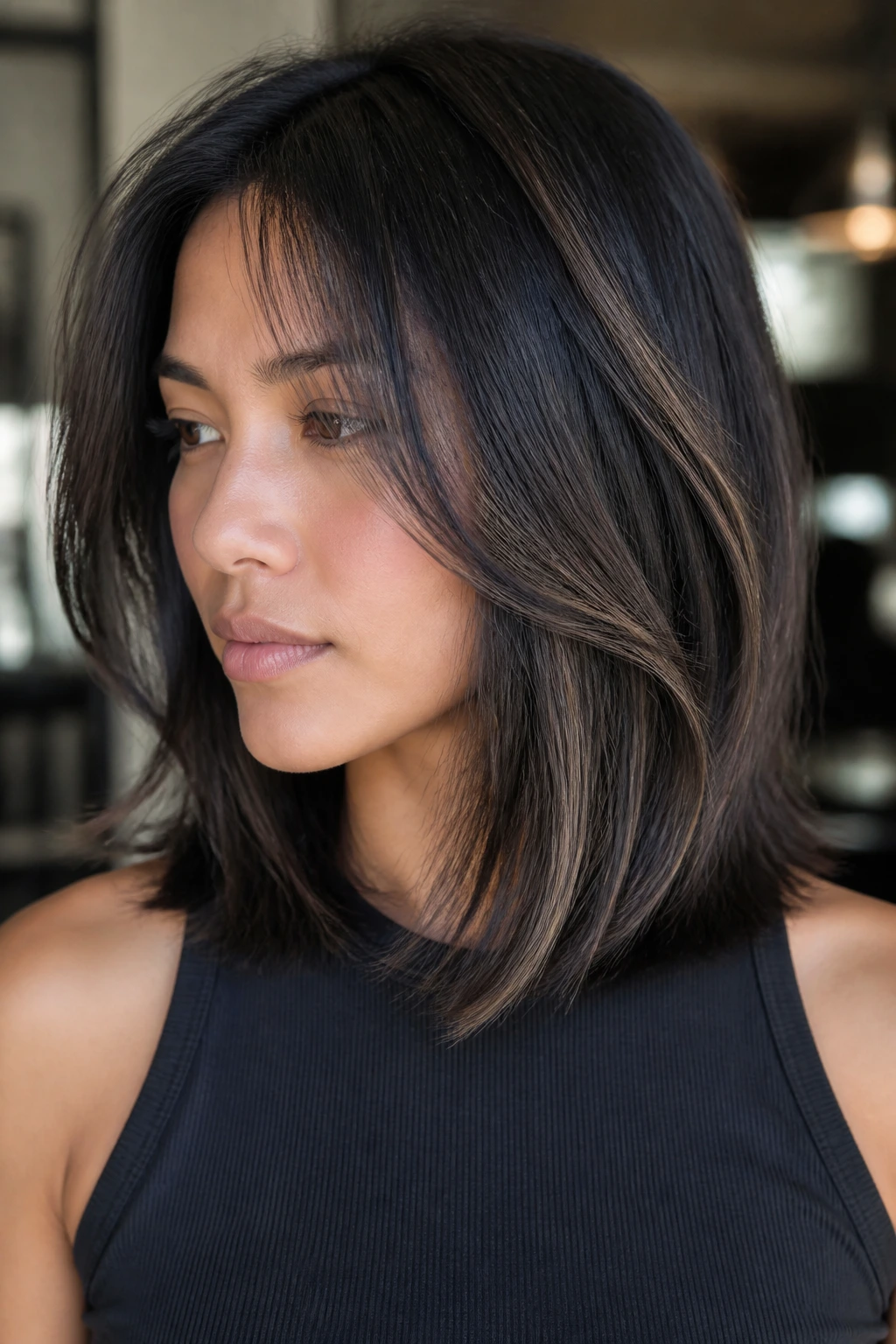
Mushroom brown sits in that cool taupe zone that a lot of people ignore because it sounds dull on paper. On black shoulder-length hair, it isn’t dull at all. It’s soft, smoky, and neutral enough to make the hair look more textured without pushing red or gold.
A Quiet but Clever Choice
The ribbon-light version works especially well on layered lobs. Thin ribbons of mushroom brown spread through the outer layer and the ends, so the color breaks up the darkness in moving sections. If you wear your hair wavy, the different tones stack on top of each other and the cut looks fuller.
- Best for: People who hate brass
- Maintenance: Use blue or green-toned shampoo only when needed, not every wash
- Finish: Satin, not glossy-metallic
- Placement: Mid-lengths and ends, with a soft root shadow
Mushroom brown is not flashy. It is smarter than flashy.
11. Bronze Foilayage
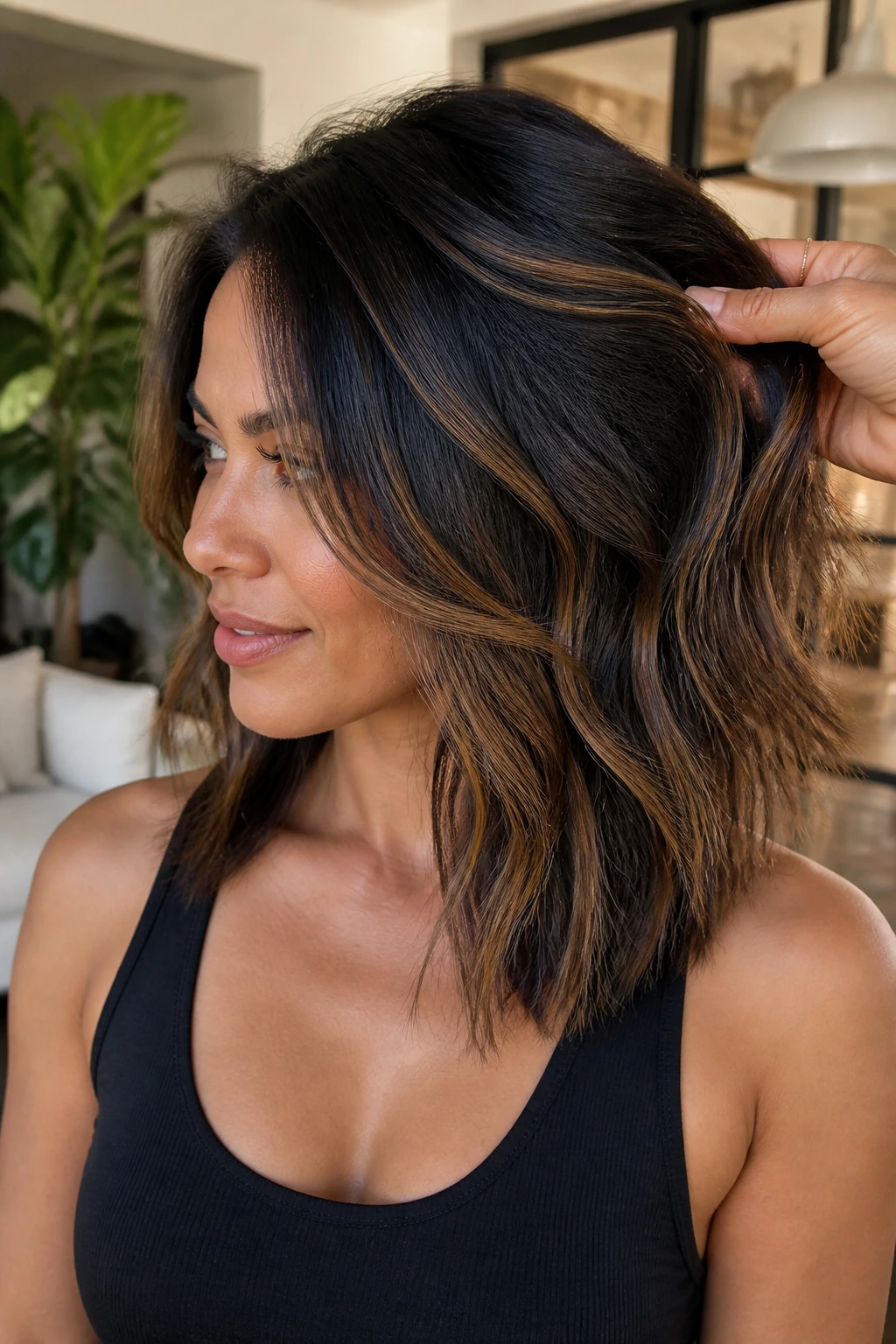
Bronze foilayage brings real light to black hair, and on shoulder length it never feels as heavy as it can on very long hair. The color sits warmer than caramel, with a metallic brown-gold edge that looks especially good when the hair has a loose bend. Foilayage gives the lighter pieces more lift and more brightness than freehand balayage alone.
That matters on a dark base. If you want the bronze to actually show through without turning flat, a foil helps control the lift. The result is a richer, brighter ribbon that still blends into the base instead of floating on top of it like a sticker.
It’s not the easiest look to maintain, but it has one of the best payoffs. Especially on shoulder-length layers.
12. Honey Bronde Melt
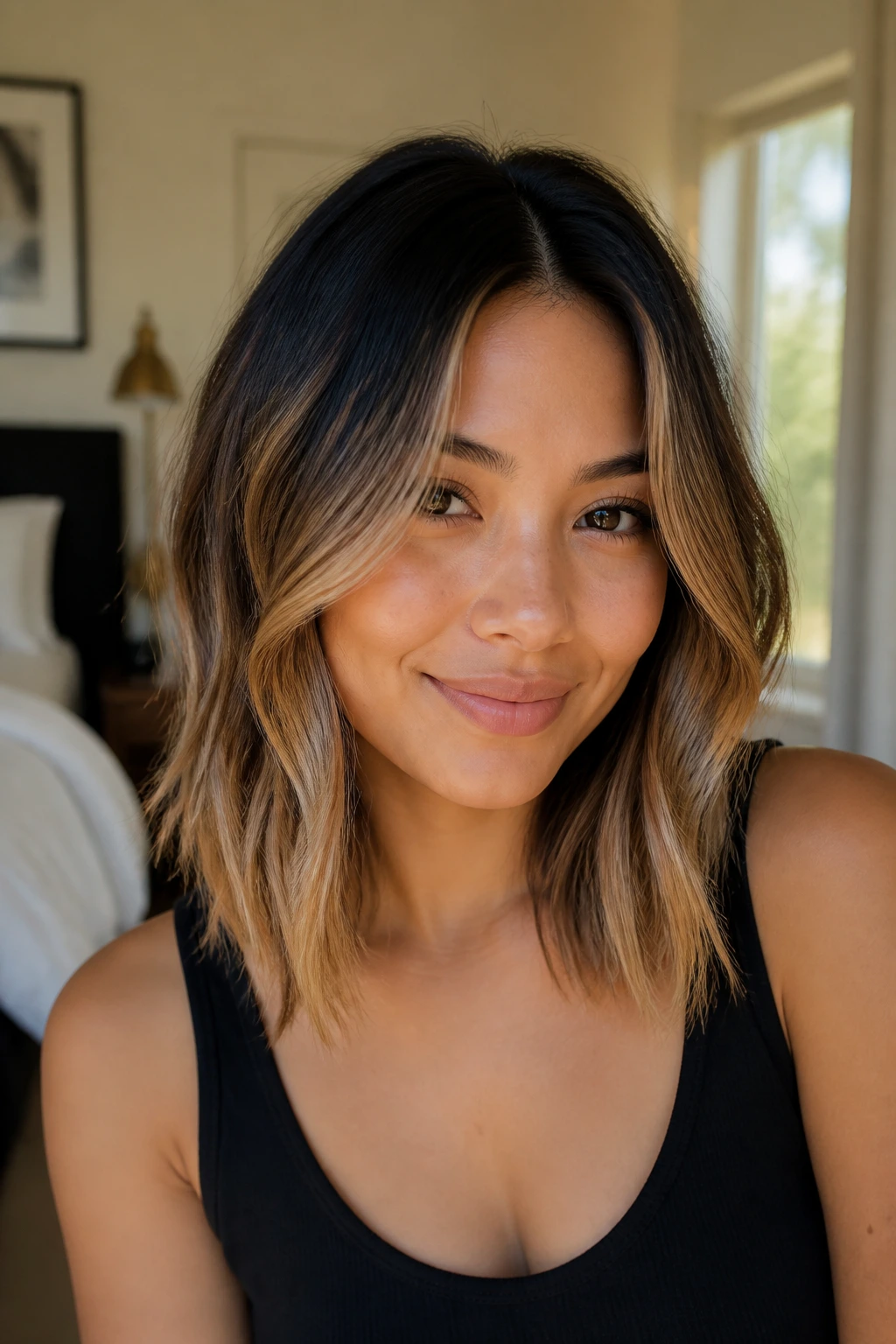
Honey bronde is the softer cousin of all those dark-to-light caramel looks. It sits between brunette and blonde, but on black hair it needs a careful hand so the transition doesn’t turn orange. The best version starts with darker roots, then melts into warm honey through the lower half of the hair.
Compared with straight caramel, honey bronde feels lighter and sunnier. Compared with true blonde, it keeps enough brown in the mix that the grow-out is less brutal. On shoulder-length hair, that matters because the darker root area can stay visible while the warm ends swing around the shoulders.
This is a good choice if you want a brighter finish but hate the hard line a full blonde can create on dark hair.
13. Teal Hidden Underlayer
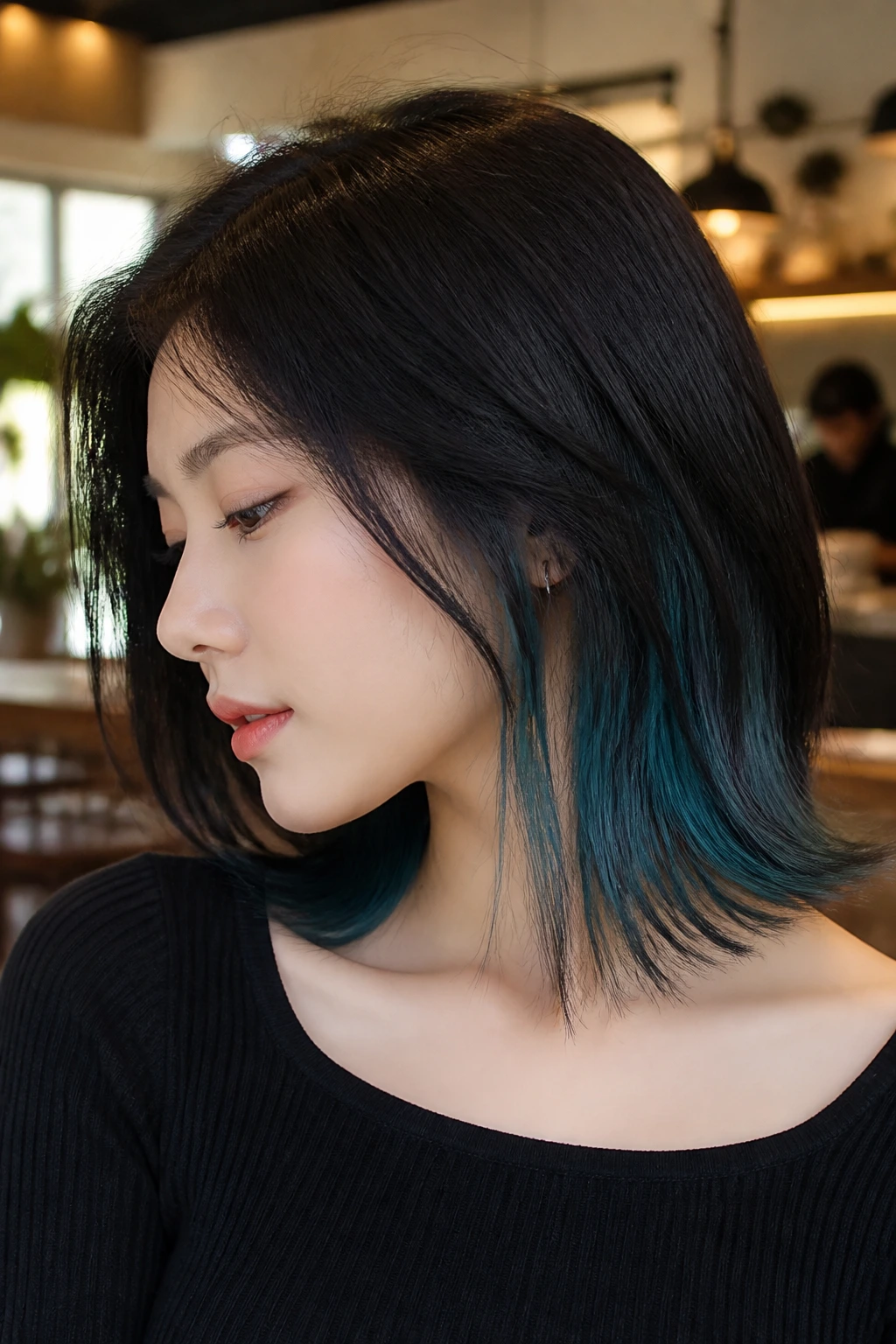
Teal underlayers are for the person who wants a little rebellion that stays mostly tucked away. The top layer stays black, and the teal sits underneath, where it flashes only when the hair shifts. On shoulder-length hair, this works especially well because the underlayer can peek out from under the top section without needing long length to prove itself.
What It Looks Like in Real Life
When the hair is straight and worn down, you might catch only a hint of teal at the hemline. When it’s curled, the underlayer shows more clearly, especially near the nape and the sides. That makes it feel playful instead of loud.
- Best for: Vivid color lovers who need some restraint
- Best base: Pre-lightened panels at a clean level 7 or 8
- Maintenance: Expect fading and refresh with direct dye
- Tip: Keep the teal cool-toned so it doesn’t swing green too fast
14. Violet Dip-Dye Ends
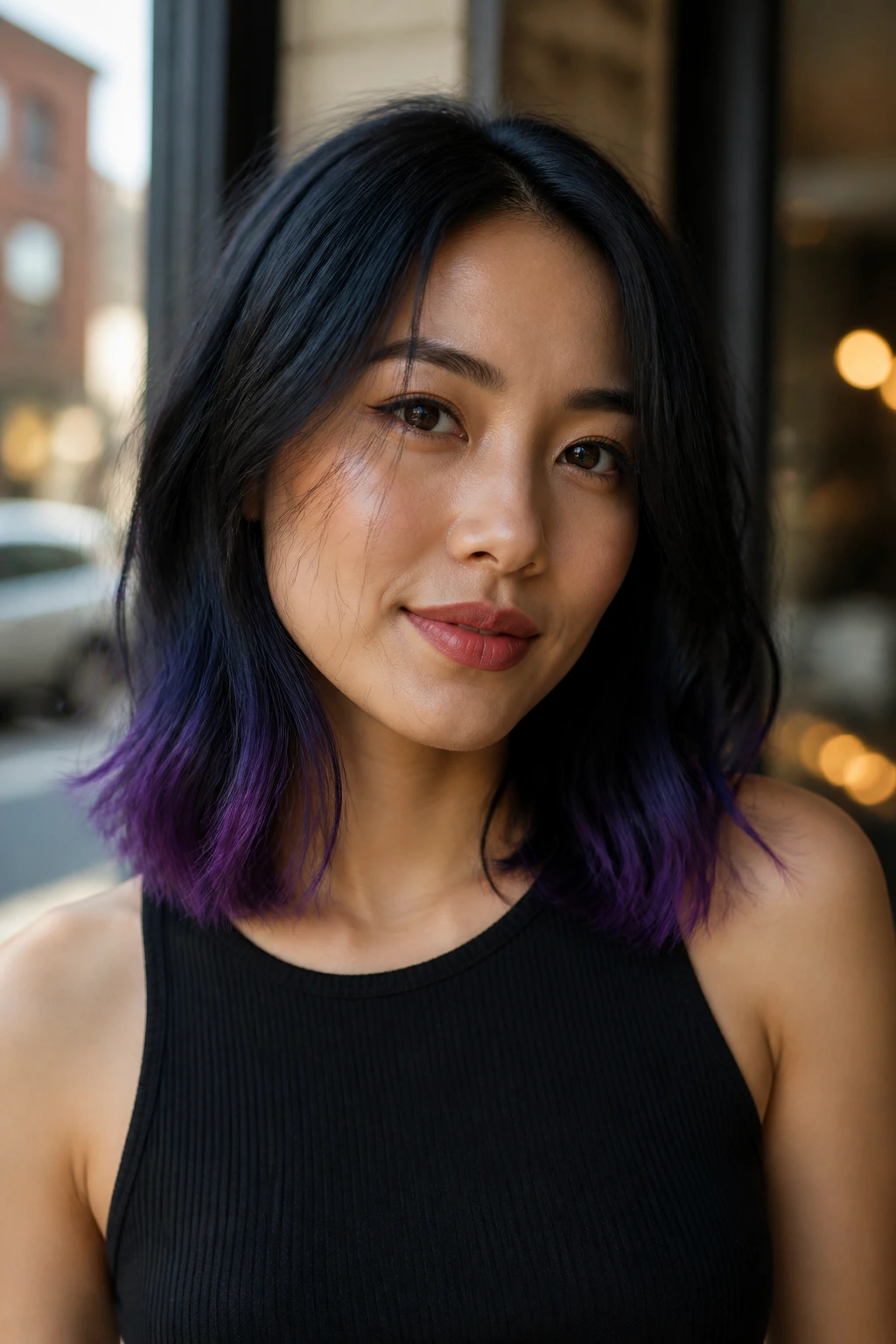
Dip-dye ends are blunt in the best way. The black base stays intact, then the final few inches go violet, usually with a noticeable shift rather than a soft melt. On shoulder-length hair, the dip-dye effect can look clean and graphic, especially if the cut itself is straight or slightly angled.
The trick is placement. If the violet starts too high, it can look like a failed ombré. If it starts too low, you barely see it. Somewhere around the last two to three inches is the sweet spot for a shoulder-length cut.
If you wear your hair wavy, the violet ends show up more often than you’d think. Curves expose color. Straight hair tends to compress it.
15. Cinnamon Curtain-Bang Contour
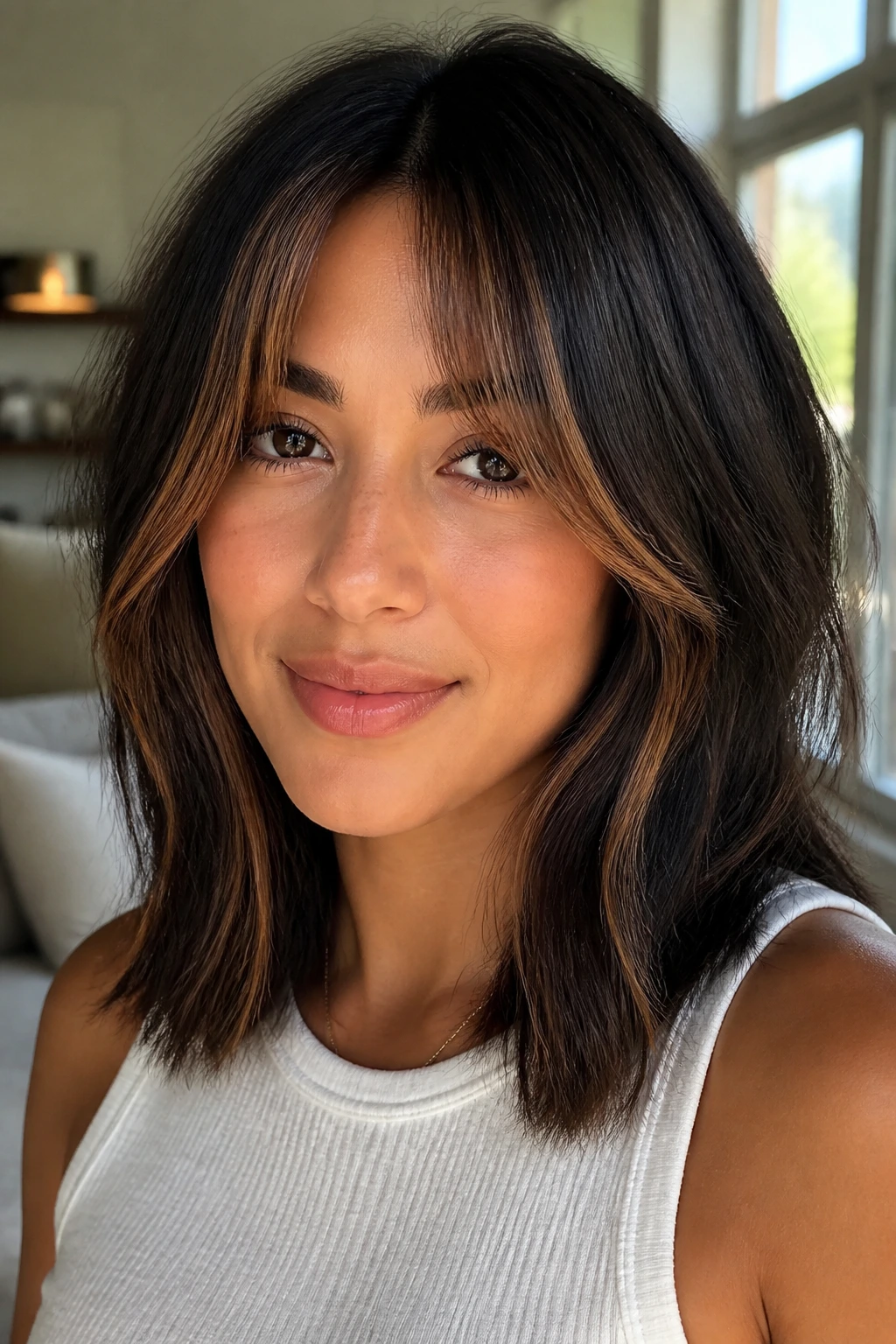
Cinnamon around curtain bangs is one of the easiest ways to warm up black hair without changing the whole head. The color sits in the bang area, around the cheekbones, and through a few front pieces that frame the face. On a shoulder-length cut, that warm contour can make the whole style feel softer.
Need a reason this works? It pulls attention upward. Curtain bangs already guide the eye toward the face, and cinnamon adds warmth where the hair would otherwise read as a dark curtain. The effect is subtle, but not shy.
I like this look on layered lobs because the bangs and front pieces already have movement. The cinnamon just rides that motion instead of fighting it.
16. Mocha Ombré Fade
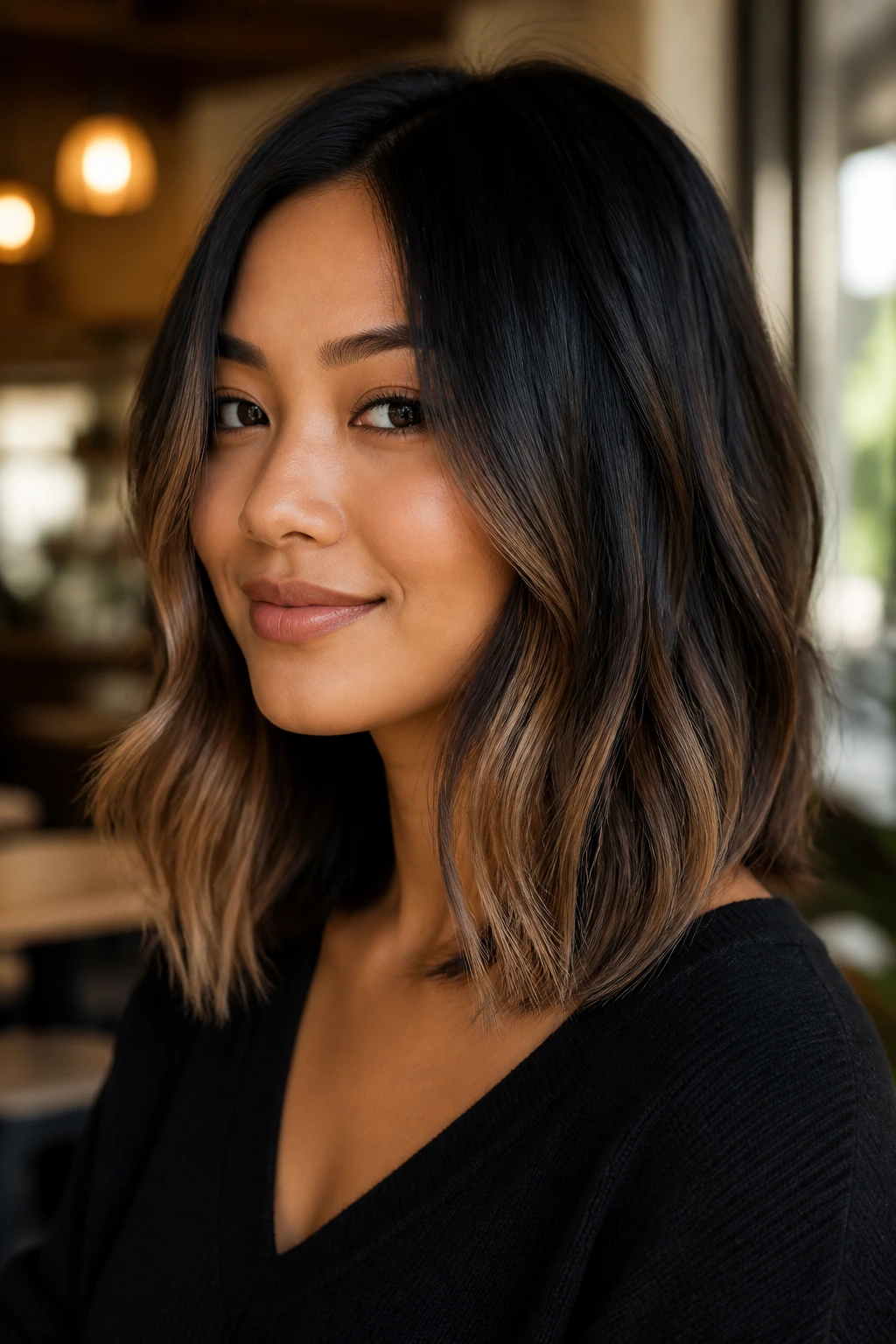
Mocha ombré is what you choose when you want the ends to lighten, but not in a brassy or high-drama way. The fade starts dark at the roots and shifts toward a soft mocha through the mids and ends. On shoulder-length black hair, that gradient gives shape to the cut without stealing the whole show.
The cleanest version keeps the transition long and gradual. No stripe, no harsh drop, no obvious line where the dye started. The best mocha ombrés look like the dark base is slowly easing into a softer brown at the bottom, which is a nice fit for shoulder-length hair because there isn’t a huge length to work with.
This is one of the easiest color ideas to live with if you hate obvious root lines.
17. Auburn Smoke Lowlights
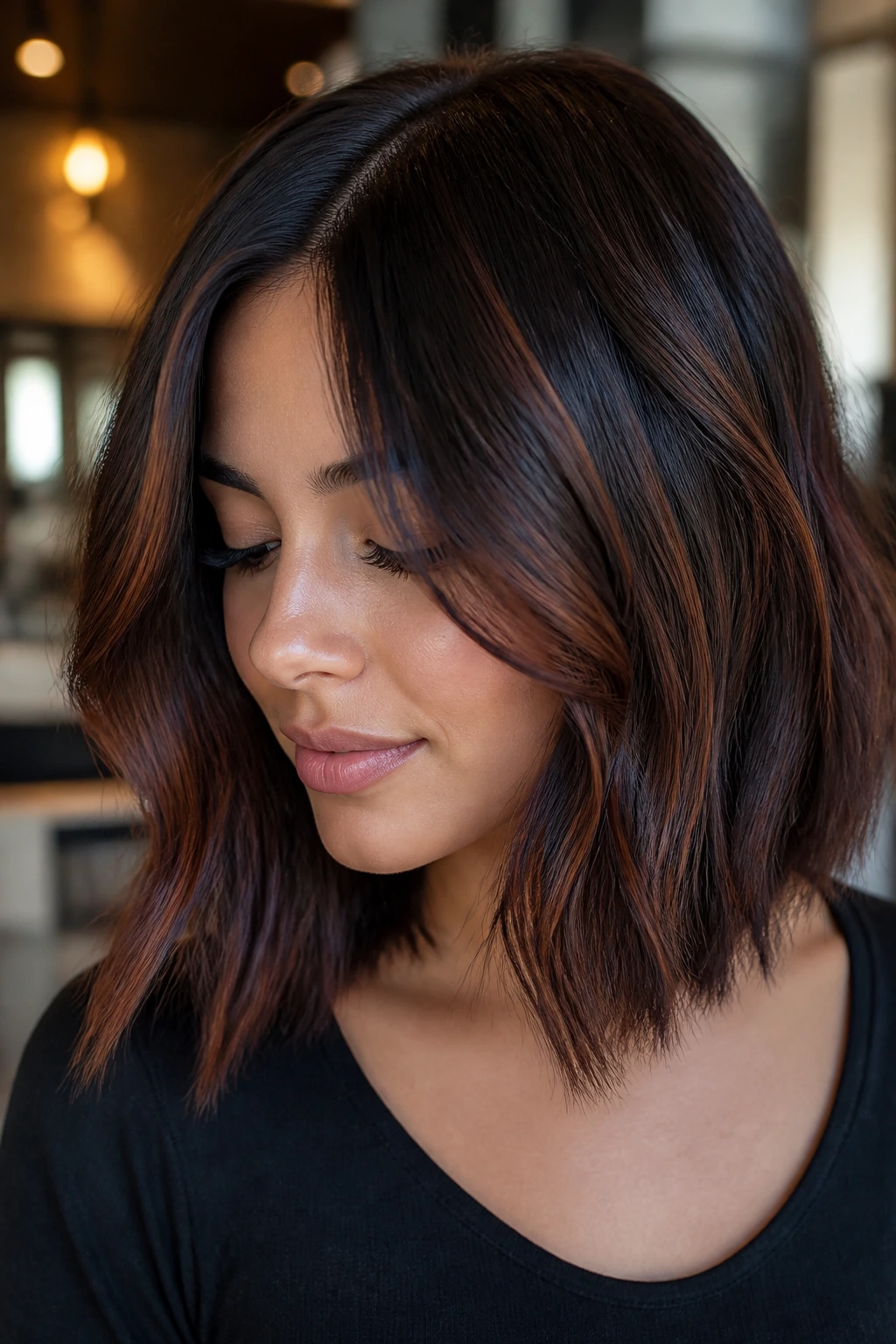
Auburn lowlights are the opposite of what people usually expect from dark hair color. Instead of lifting pieces lighter, you add deeper warm strands into the black base to create dimension from within. That matters on shoulder-length hair, where the cut can sometimes look too solid if everything is the same tone.
Auburn smoke works because it catches light as a warm brown-red, then sinks back into the black when the hair turns away. It makes the cut feel thicker and more expensive, not louder. And if you’re nervous about going too warm, lowlights are safer than highlights because they live inside the dark base instead of sitting on top of it.
It’s a good choice when you want richness, not brightness.
18. Silver-Smoke Ribbons
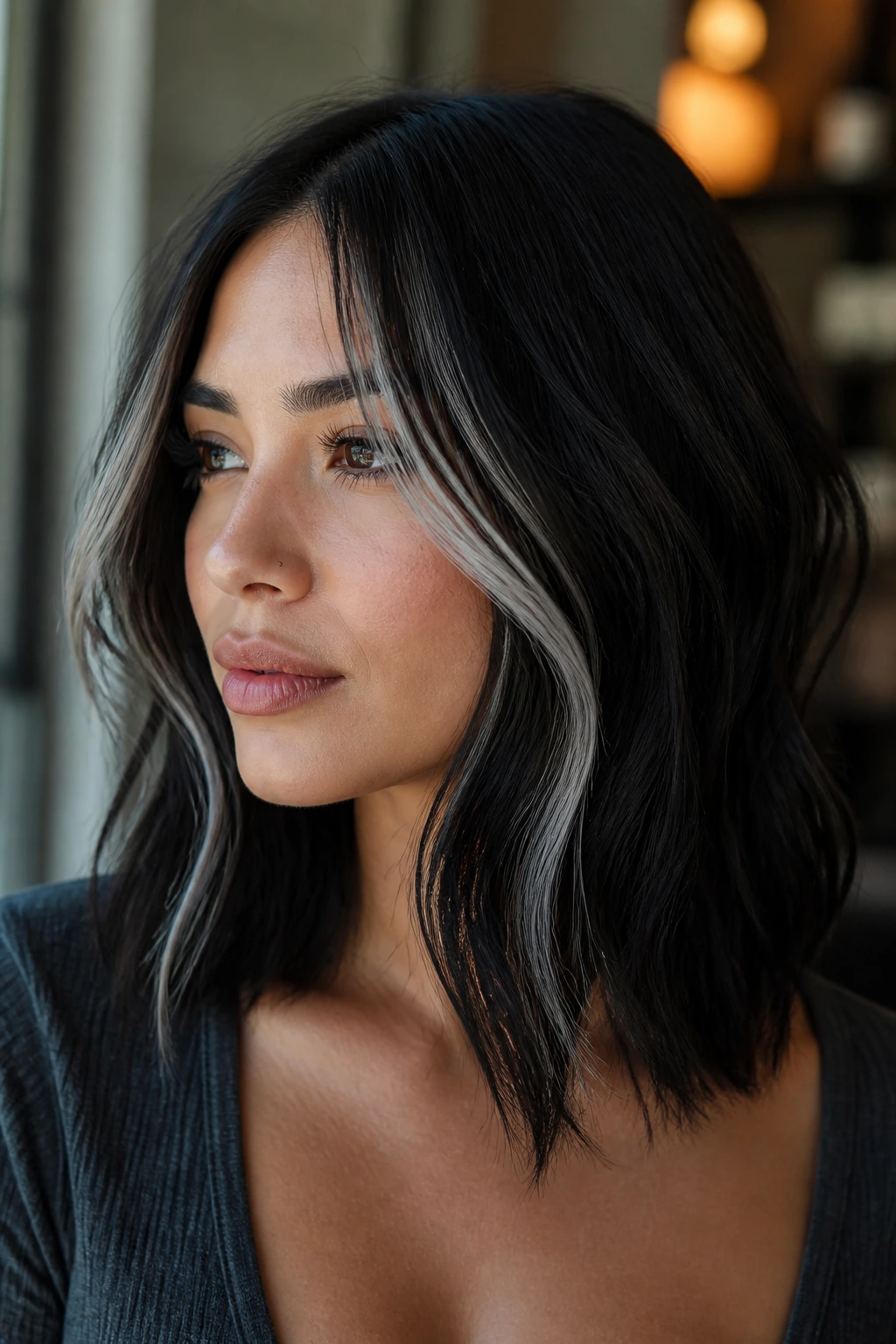
Silver ribbons on black hair can look incredible or a little cursed, and there’s not much middle ground. The good version is smoky, cool, and carefully toned so it doesn’t yellow. On shoulder-length hair, silver looks best in thin ribbons and face-framing pieces, not all over the head.
Where It Works Best
Sleek styles show the metallic edge. Loose waves make the silver weave in and out of the dark base. If your cut has soft layers, even better — the ribbons will land on different lengths and move more naturally.
- Best for: Cool undertones and high-contrast looks
- Requires: Pre-lightening to a pale yellow before toning
- Maintenance: Toner or violet shampoo as needed, but not overused
- Watch out for: Dull steel tones if the hair lifts unevenly
I’d never call silver low-maintenance. I would call it worth the trouble when it’s done well.
19. Forest Green Underlights
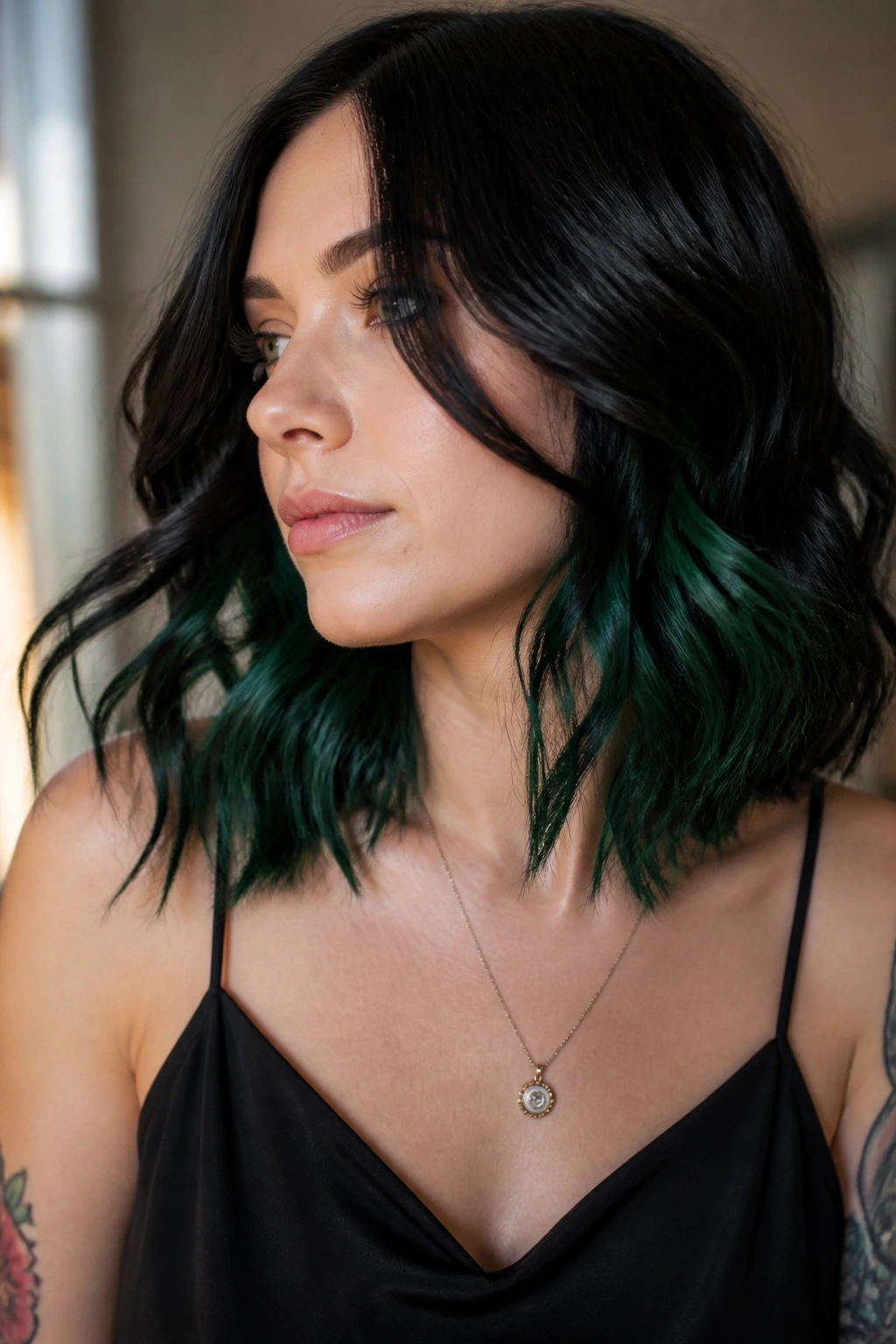
Forest green underlights feel richer than bright green and more wearable than neon anything. Hidden under the top layer of black hair, they show up when you curl the ends or tuck one side behind your ear. On shoulder-length hair, that hidden placement keeps the look controlled.
How It Plays on a Lob
Because the hair is shorter, the green doesn’t get lost near the hem the way it can on very long hair. It sits closer to the face and shoulders, which gives it more visibility without requiring a giant section of color. A deep emerald or forest shade keeps the mood dark and jewel-like.
- Best for: Layered shoulder-length cuts
- Tone choice: Deep green, not lime or grass
- Style pairing: Soft curls or a half-up twist
- Maintenance: Direct dye will fade; refresh as needed
20. Rose Brown Veil
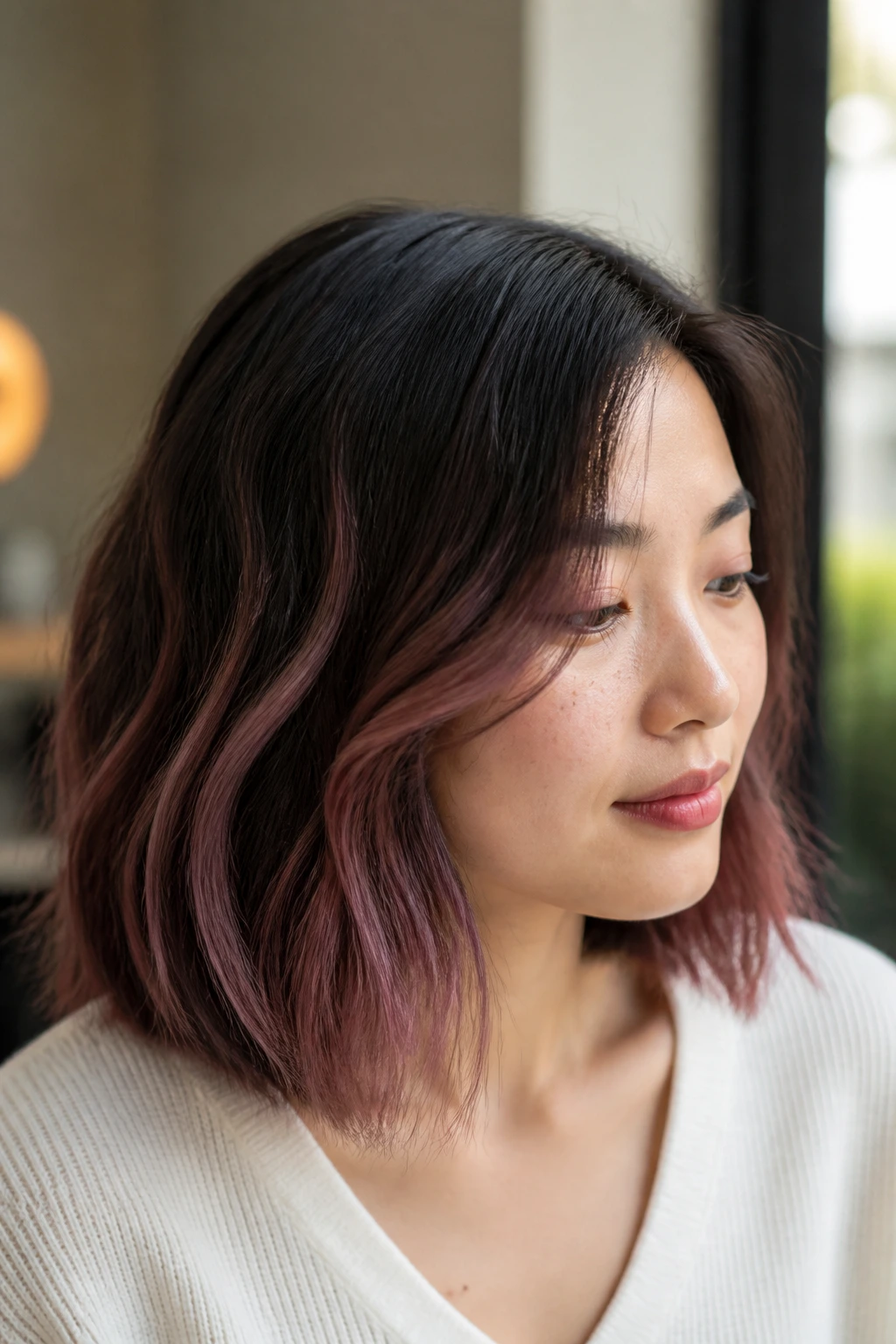
Rose brown is one of those shades that sounds delicate but lands with more presence than you expect. It keeps the brown foundation, then adds a muted pink tone that makes black hair feel softer and slightly dusty. On shoulder-length hair, the veil effect works because the color can sit on the outer layer and ends without taking over.
This is not bubblegum, and it should not be. The best rose brown shades stay grown-up, with the pink pulled back enough that the result looks like a warm neutral in dim light and a soft rose in brighter settings. If the hair is heavily layered, the color will move more; if it’s blunt, the veil looks smoother and more polished.
If you want something feminine without going sugary, this is the lane.
21. Chestnut Glaze
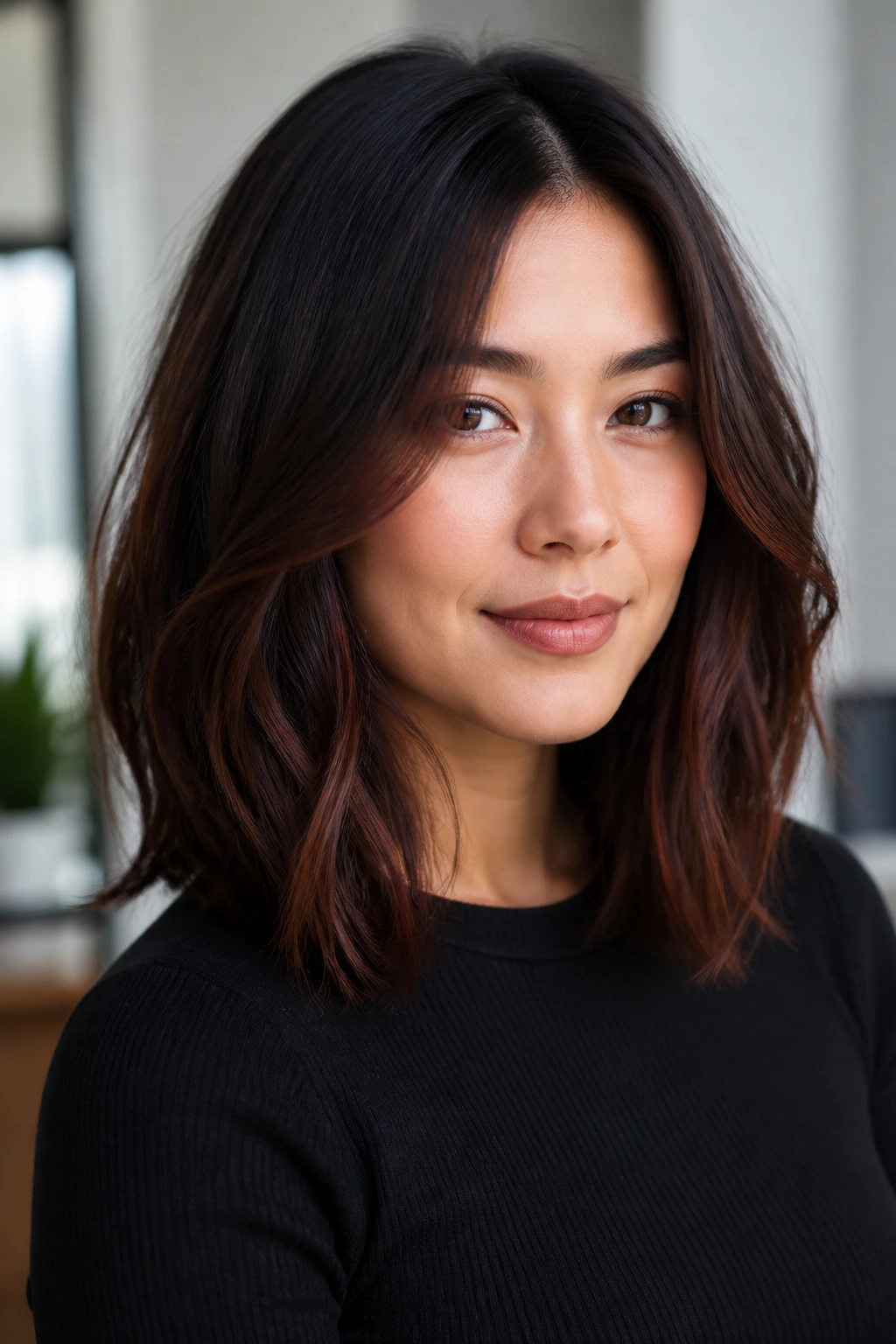
Chestnut glaze is for people who want their black hair to look more expensive, not more obvious. It’s warm, soft, and close enough to the base color that you don’t get a strong line of demarcation. On shoulder-length hair, that can be a blessing. The whole style stays polished.
Why does it work? Chestnut adds brown-red warmth that makes the hair look fuller in daylight and richer at night. It’s the sort of shade that makes a simple blowout look deliberate. If the glaze is semi-permanent or demi-permanent, you also get a pleasant side effect: the fade is kinder than what you’d get from brighter copper or red.
This is the shade for someone who wants the smallest shift with the biggest payoff in shine.
22. Toffee Micro-Highlights
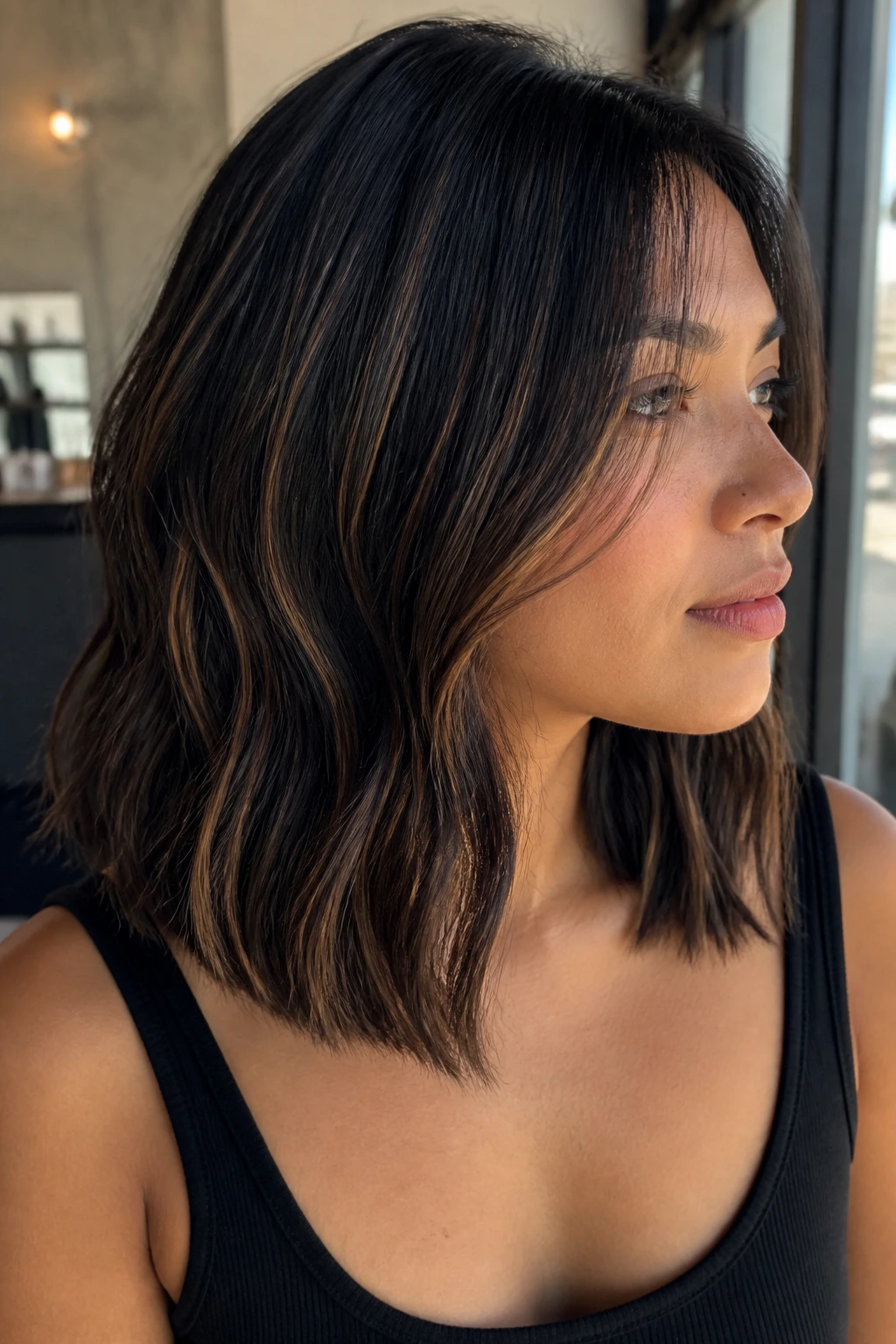
Toffee micro-highlights are tiny, fine pieces scattered through the black base so the hair reads textured rather than streaked. On shoulder-length hair, micro-highlights can be especially good because the shorter length lets the pattern show without becoming busy. The result is a soft shimmer, not a loud contrast.
Tiny Pieces, Big Payoff
The real strength here is subtlety. Since the highlights are so fine, the color blends into the movement of the cut. It looks like the hair has more depth and body, especially if it’s blow-dried smooth or loosely waved.
- Best for: People who want dimension without a dramatic change
- Placement: Surface layers and around the face
- Maintenance: Easier grow-out than chunky highlights
- Styling note: A round brush blowout shows the pattern best
This is one of those looks people notice without being able to name. That’s usually a good sign.
23. Smoky Navy Peekaboo
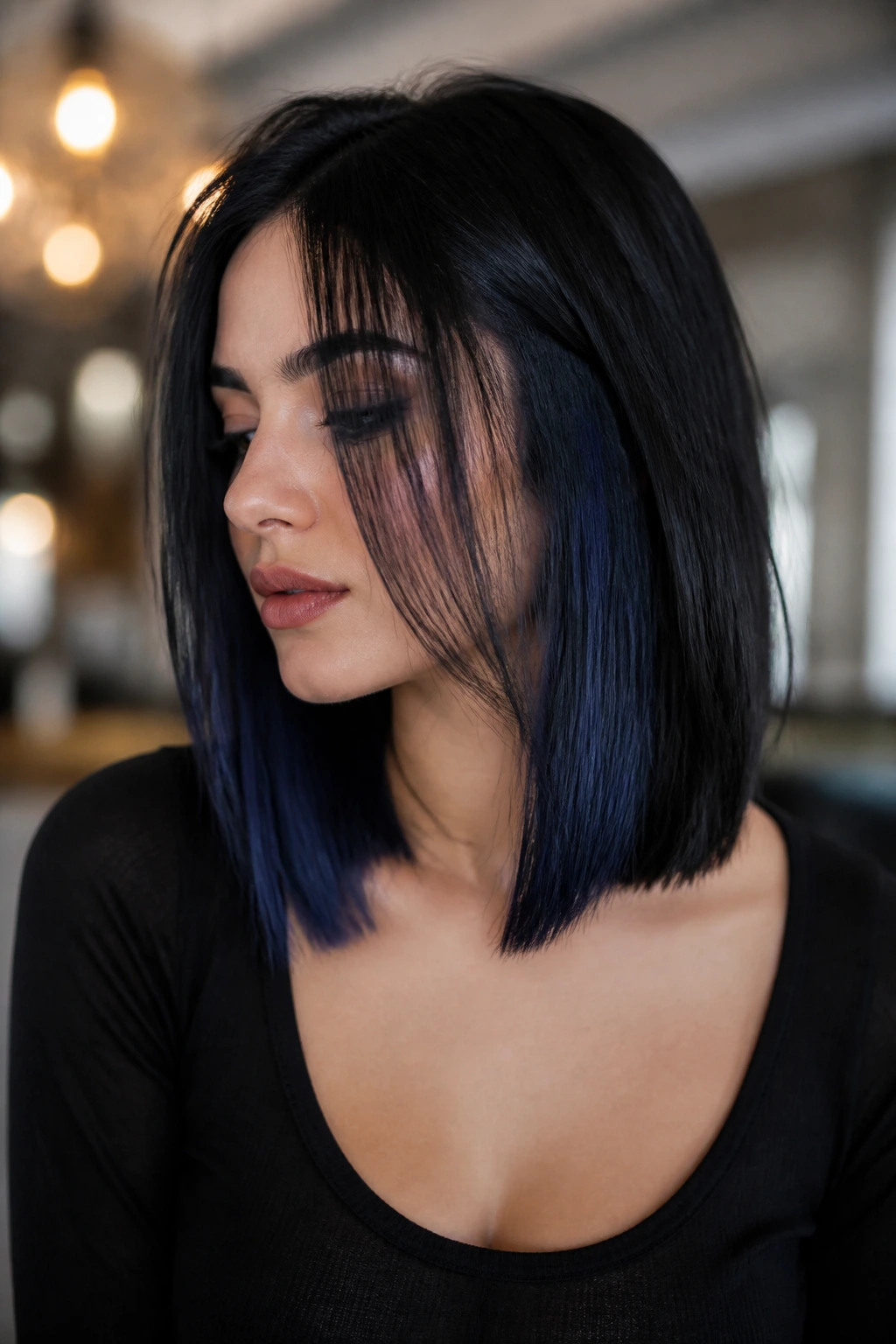
Smoky navy is the cooler, deeper cousin of teal and blue-black. Hidden under the top layer, it feels moody and a little unexpected. On shoulder-length hair, the peekaboo effect is strong because the colored panel doesn’t need extra length to reveal itself; it shows whenever the top layer parts.
The best navy shades are almost black until light hits them. That keeps the look refined. If you choose a navy with too much brightness, it can end up reading like a costume wig panel. Keep it smoky, and it stays sharp.
This works best if you actually wear your hair in motion. A tucked side, soft wave, or half-up style gives the color a reason to show itself.
24. Golden Beige Balayage
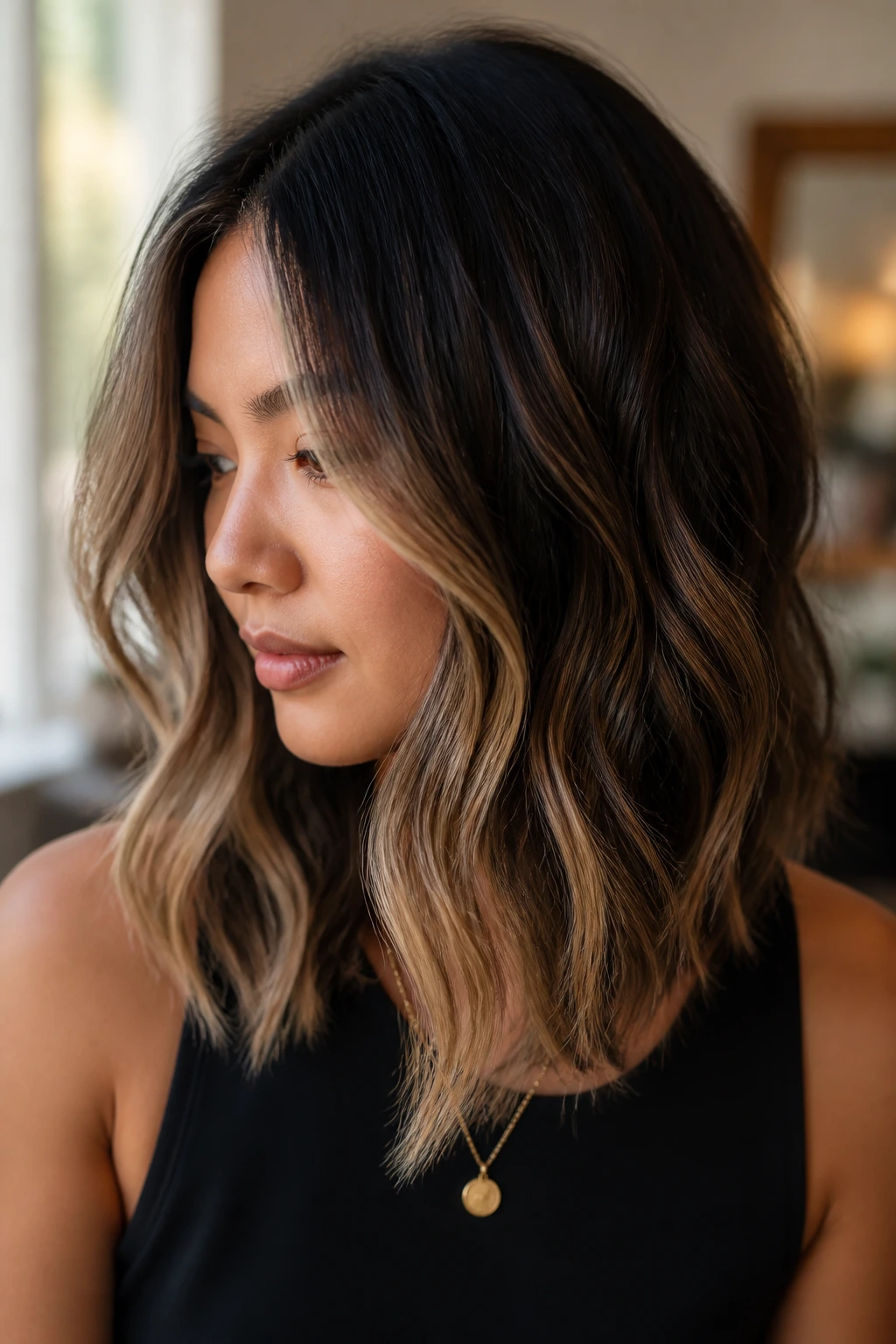
Golden beige balayage is the lightest, airiest idea on this list, and it needs a careful lift to stay pretty instead of orange. The payoff is a soft golden-beige veil that breaks up the darkness and makes shoulder-length black hair feel lighter around the mids and ends.
Compared with caramel, beige is cooler and less red. Compared with honey, it reads a little softer and less sticky-looking. That makes it useful if you want brightness but do not want your hair to swing too warm. On a shoulder-length cut, the beige pieces can sit mostly on the outer layers, which keeps the look breathable.
It’s a good choice for someone who wants visible lightness without losing the dark identity of the hair.
25. Black Raspberry Sheen
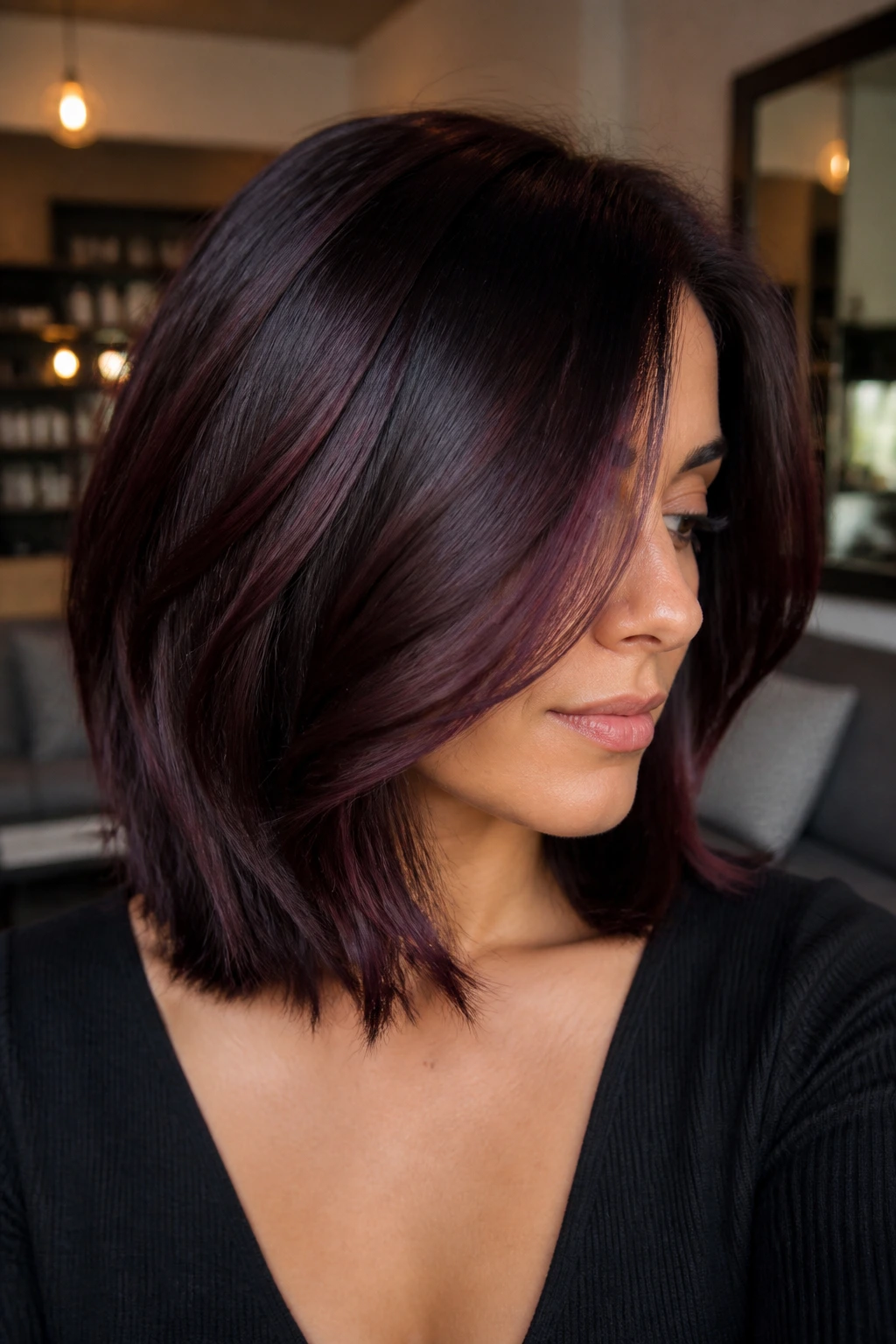
Black raspberry sits in that deep berry zone that looks almost black until light hits it from the side. Then the red-violet notes show up, and the whole cut feels richer. On shoulder-length hair, that sheen is easier to maintain than a full bright red because you’re working with depth, not brightness.
Why I’d Choose It
It gives black hair a velvet finish. Not shiny in a plastic way. Velvet. The color feels plush, especially on smooth layers or a straight blowout, and the shoulder length keeps the berry tone concentrated enough to read cleanly.
- Best base: Dark hair with minimal lifting
- Great for: People who want jewel tones but hate obvious red
- Fade pattern: Berry softens into a warm plum-brown
- Extra touch: A clear gloss on top makes the color look deeper
Why Shoulder-Length Black Hair Loves Color at the Collarbone
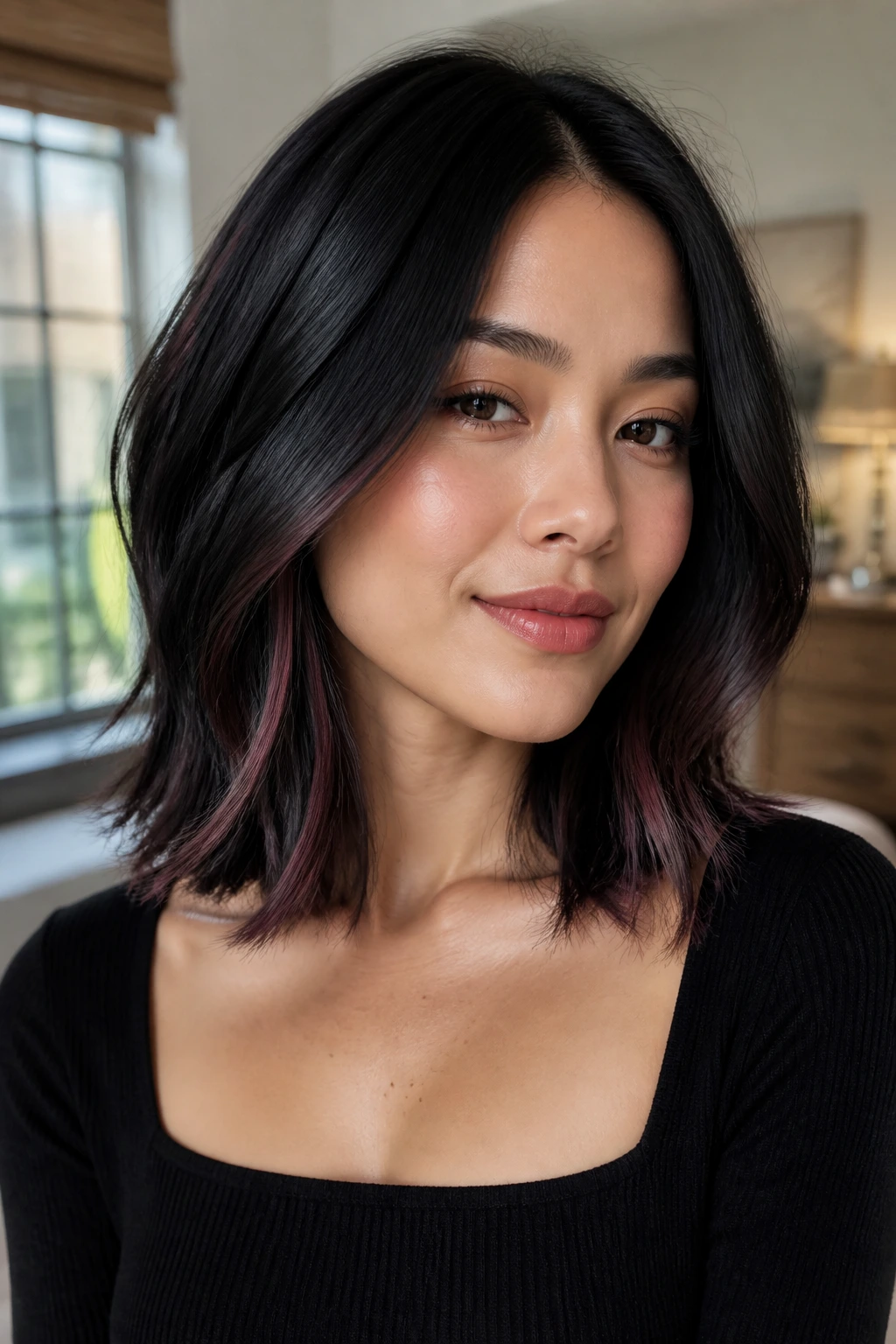
Shoulder-length hair does something long hair often cannot. It keeps color moving in the part of the body people actually notice — near the face, the neck, and the top of the shoulders. A dark lob catches light when you turn your head, tuck the hair behind one ear, or throw on a jacket collar. That movement makes highlights and glosses look alive instead of painted on.
There’s also a practical piece here that too many color guides skip. Shoulder-length black hair can handle contrast because there isn’t a huge mass of hair to drag the color down. A money piece feels brighter. A peekaboo panel feels cleaner. Even a soft balayage looks more intentional because the whole shape of the haircut helps hold it together.
Blunt cuts and layered cuts behave differently, and that matters. Blunt ends make ombré and dip-dye more graphic. Layers help ribbons, lowlights, and contour pieces scatter more naturally. If you already know whether your haircut is blunt or broken up, you can choose a color idea that matches the shape instead of fighting it. That one decision saves a lot of salon regret.
The Tools and Products That Make These Colors Hold Up
-
Color-safe shampoo: Use a sulfate-free formula if you’ve added gloss, red tones, or vivid panels; harsh shampoo strips the very tones you paid for.
-
Color-depositing conditioner or mask: Red, plum, blue, and copper shades fade fast, and a deposit mask every 2 to 3 weeks keeps them from turning flat.
-
Heat protectant spray: Flat irons and hot brushes can wreck shine on dark hair fast, especially if you’ve lightened any pieces.
-
Bond-building treatment: If you’re lifting black hair for caramel, copper, beige, or silver, a bond builder helps keep the ends from feeling straw-like.
-
Toner or gloss service: These matter more than people think. A good toner keeps brass away and makes brown highlights read brown instead of orange.
-
Wide-tooth comb and silk scrunchie: Small thing, big help. They reduce tangles and keep colored ends from snapping off while the hair is still damp.
-
Microfiber towel or old T-shirt: Rough towels frizz the cuticle, and frizz makes color look duller than it should.
-
Shower filter, if your water is hard: It won’t fix everything, but it helps reds, coppers, and blonded ribbons hold their tone longer.
How to Choose the Right Tone on a Dark Base
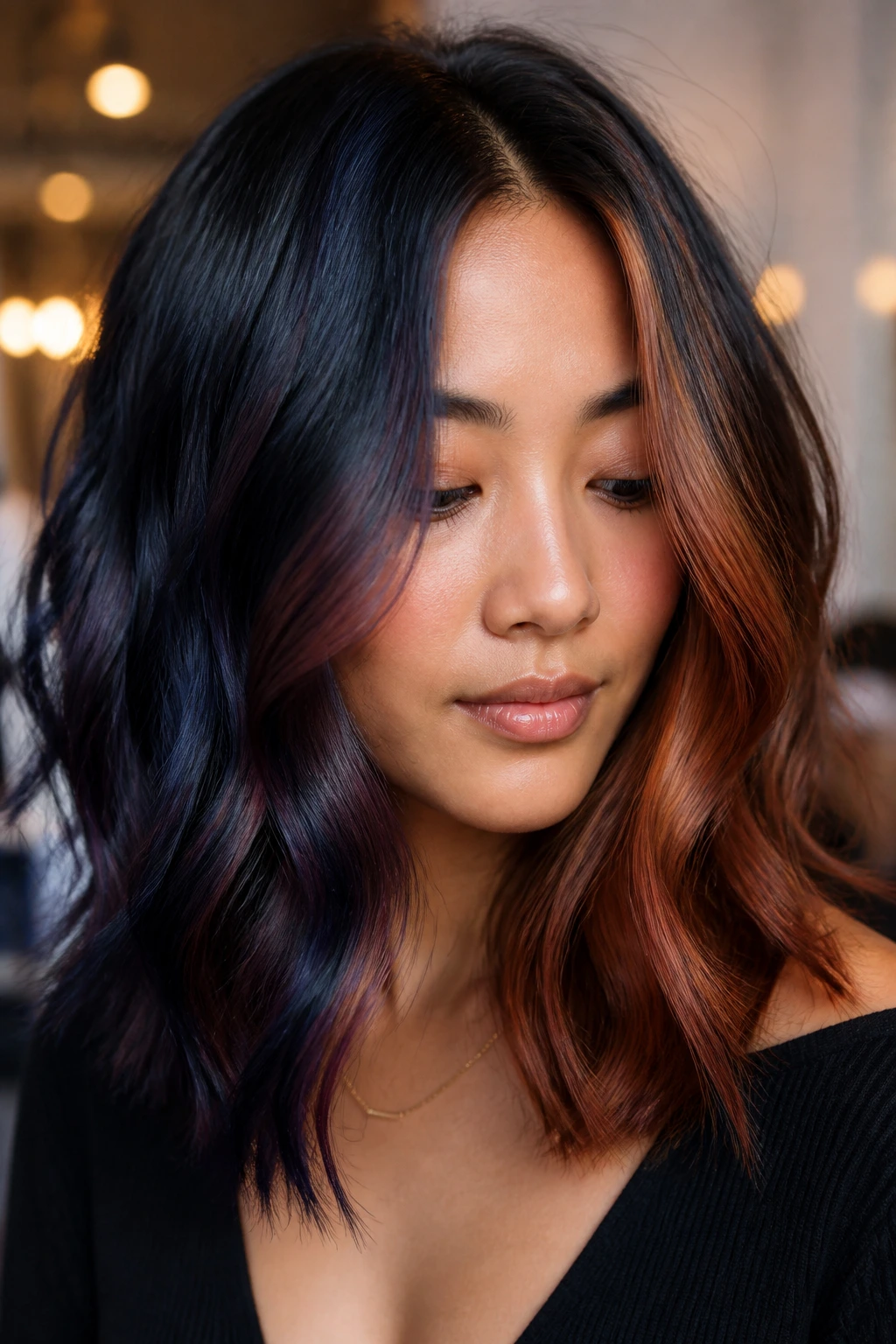
Start with the undertone of the black, not the fantasy shade on the photo. If the hair leans cool, blue-black, plum, smoky navy, and silver ribbons will look cleaner. If it leans warm, chestnut, mahogany, copper, honey, and bronze will sit more naturally and need less fighting to look good.
Then decide how much lift you can tolerate. That’s the part people skip, and it’s why a color inspiration photo can go sideways. Cherry cola, plum noir, blue-black, and black raspberry can often happen with glosses or semi-permanent color if the hair is already dark and healthy. Caramel, beige, copper, bronze, honey, and silver usually need lightening first. Not a tiny amount, either. Sometimes enough lift to get to a level 6, 7, or 8 is the difference between a warm ribbon and a muddy brown streak.
Also think about upkeep before you think about color. A glossy dark red may fade gracefully. A silver ribbon will not. A hidden teal panel can stay fun for weeks and then flatten fast if you wash too often. If you hate salon visits, keep the bright pieces smaller and closer to the face, or go for a glaze that changes tone without changing the whole head.
How to Wear the Color So It Shows Up the Way You Want
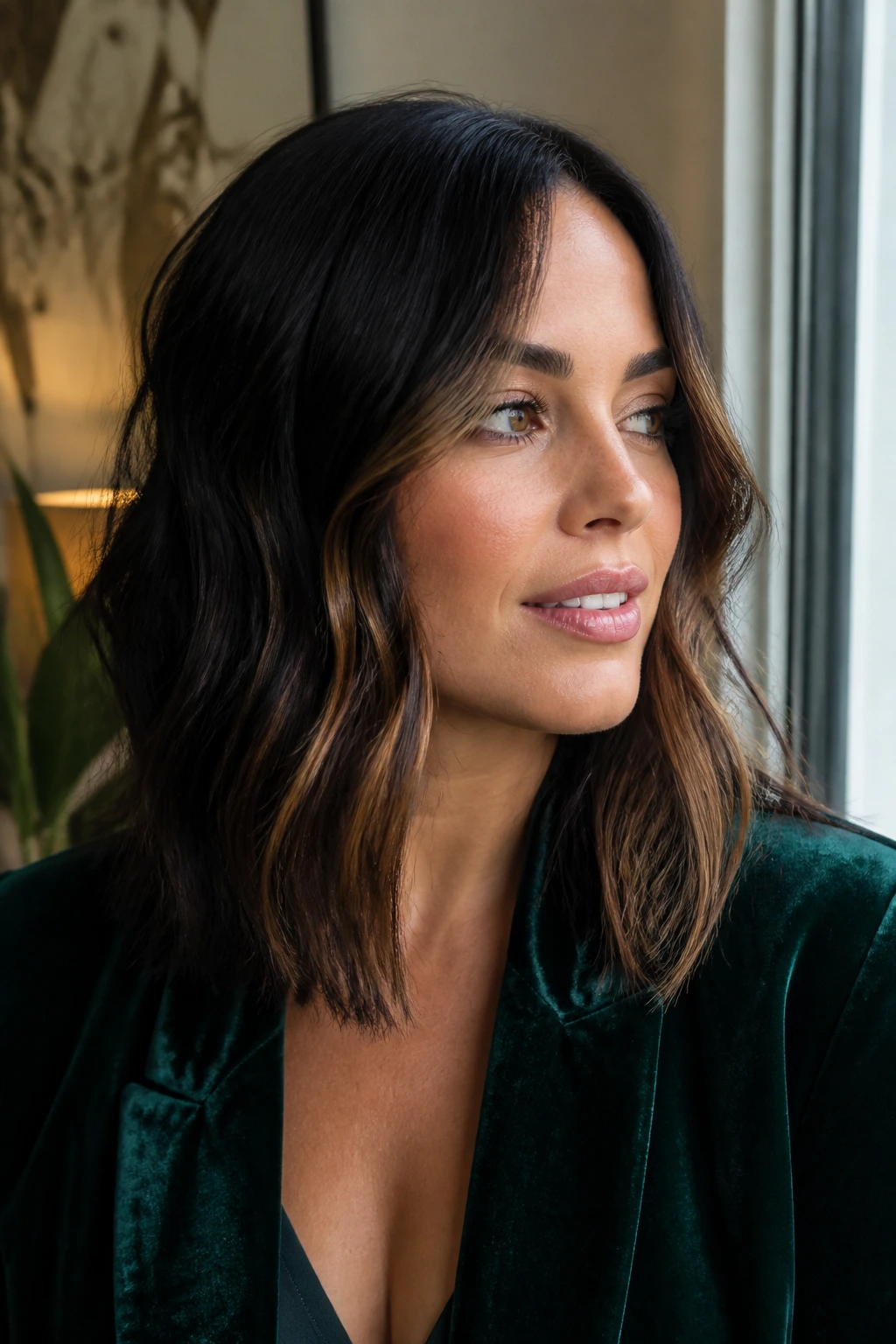
Styling Finish: Sleek hair shows shine, shine shows tone, and tone shows whether your color placement actually worked. Loose bends show ribbons, peekaboo panels, and contour pieces better because they break the light in more places.
Parting and Shape: A middle part makes face-framing color symmetrical. A side part can push a money piece forward and make one side feel brighter. If you’ve got curtain bangs, use them. They give copper, cinnamon, and caramel a built-in frame.
Clothes and Makeup: Dark jewel tones, cream knits, black, and deep brown clothing make most of these shades look intentional. Warm shades like copper and mahogany love bronzy makeup. Cool shades like plum, blue-black, and navy are cleaner with berry lipstick or a softer neutral face.
When the Hair Needs a Reset: If the ends start looking dusty, use a gloss before you book a major color refresh. Shoulder-length hair shows fade at the tips first. That’s normal. A little trim can help more than another round of dye.
Extra Tips That Keep the Finish Sharp
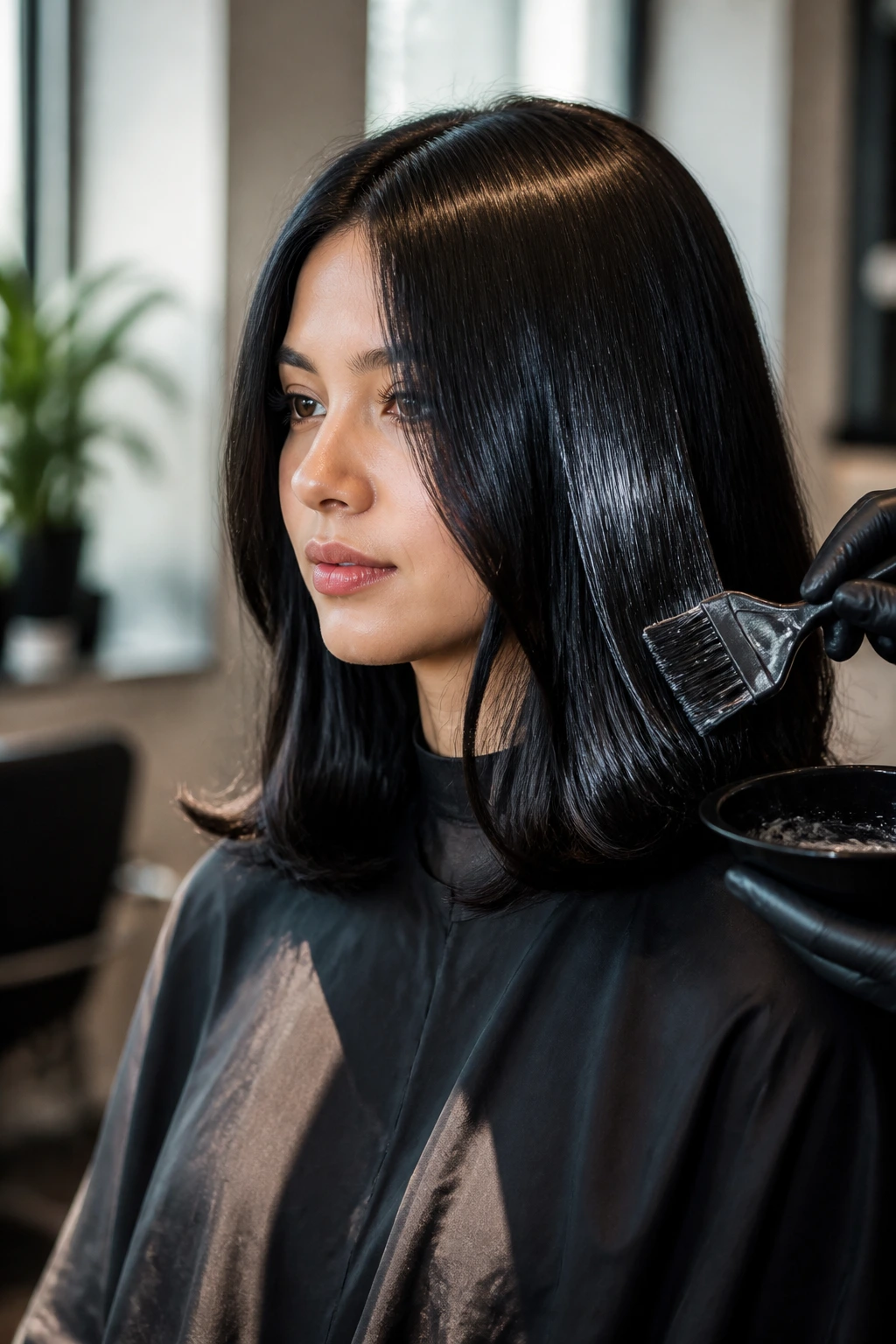
Gloss Boost: A clear gloss or tinted glaze every few weeks can make black hair color ideas look deeper without changing the whole formula. It’s especially useful for blue-black, plum, cherry cola, and chestnut tones.
Customization: If you want more movement, ask for a few face-framing pieces and a softer ribbon through the ends, not a blanket of color. Shoulder-length hair needs placement more than volume of dye.
Heat Strategy: If you love flat irons, keep the temperature lower than you think you need. High heat burns shine off the surface, and on dark hair that dullness shows fast. A good heat protectant can help, but it cannot save hair that’s being pressed over and over at the same setting.
Make-It-Yours: If your hair is curly, concentrate color where the curl clumps separate naturally. If it’s straight, use thinner ribbons so the color doesn’t look blocky. If it’s thick, foilayage or lowlights can break up the bulk better than all-over dye.
Common Mistakes That Flatten the Look
The first mistake is choosing a bright tone that needs more lift than your hair can safely take. On black hair, that usually shows up as orange, muddy brown, or patchy ends instead of the clean caramel or copper you had in mind. The fix is boring, but it works: ask what level the hair must reach before the color goes on, then decide whether you’re willing to get there.
The second mistake is putting all the color in the wrong place. A lot of people pile everything at the bottom and expect it to read as balayage. It often just looks heavy. Face-framing pieces, surface ribbons, and a little movement near the crown matter more on shoulder-length hair than on longer lengths.
The third is overusing purple or blue shampoo on warm-toned colors. That turns chestnut, honey, and copper flat. Use toning products like tools, not shampoo replacements.
The fourth is skipping a strand test when you’re going vivid or light. Black hair can surprise you with hidden warmth, previous dye, or porous ends. One test strand tells you more than a whole mood board.
Variations and Adaptations to Try
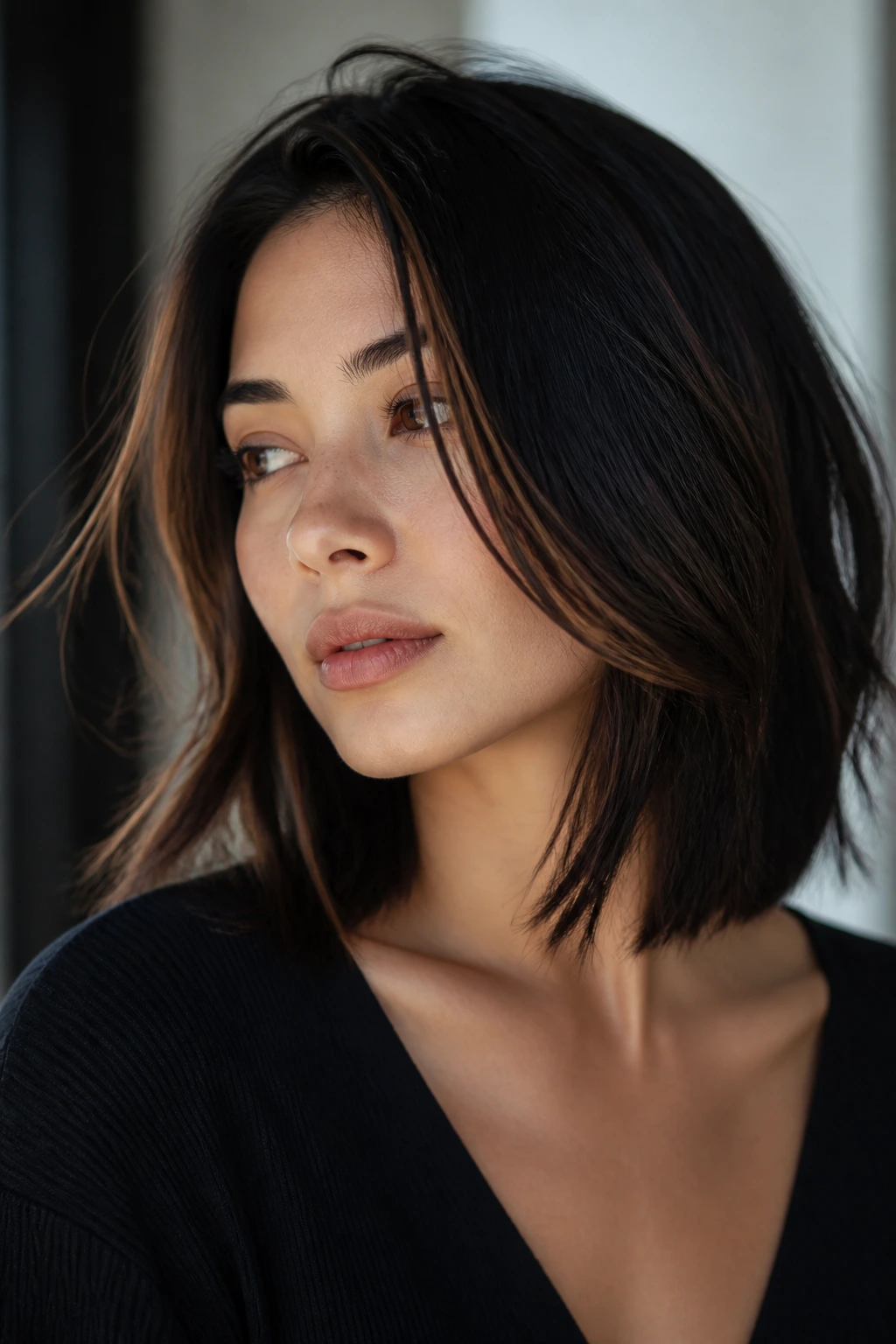
Soft-Office Version: Keep the base black and add chestnut, espresso, or a fine mushroom-brown ribbon. The result looks polished at a distance and dimensional up close. This is the route if you want change without a dramatic grow-out line.
High-Drama Version: Go for blue-black, plum noir, silver ribbons, or black raspberry. These shades live on shine and contrast, so they look best on smoother styling and clean lines. If you want the hair to say something before you do, this is it.
Warm-Glow Version: Choose copper contour pieces, honey bronde ends, mahogany melt, or caramel money pieces. Warm shades lift the face and usually feel brighter than cool shades in daylight. They do need more care, but they give the haircut more warmth and softness.
Hidden-Color Version: Use burgundy, teal, navy, or forest green underlayers. These are for people who want fun color without making it the whole story. Tucked hair, braids, and half-up styles show them off best.
Low-Commitment Version: Try a gloss, semi-permanent color, or color-depositing mask in cherry, plum, chestnut, or rose brown. These fade faster, but they also let you test tone and intensity without locking yourself into a long grow-out.
Color Longevity, Wash Schedules, and Touch-Ups
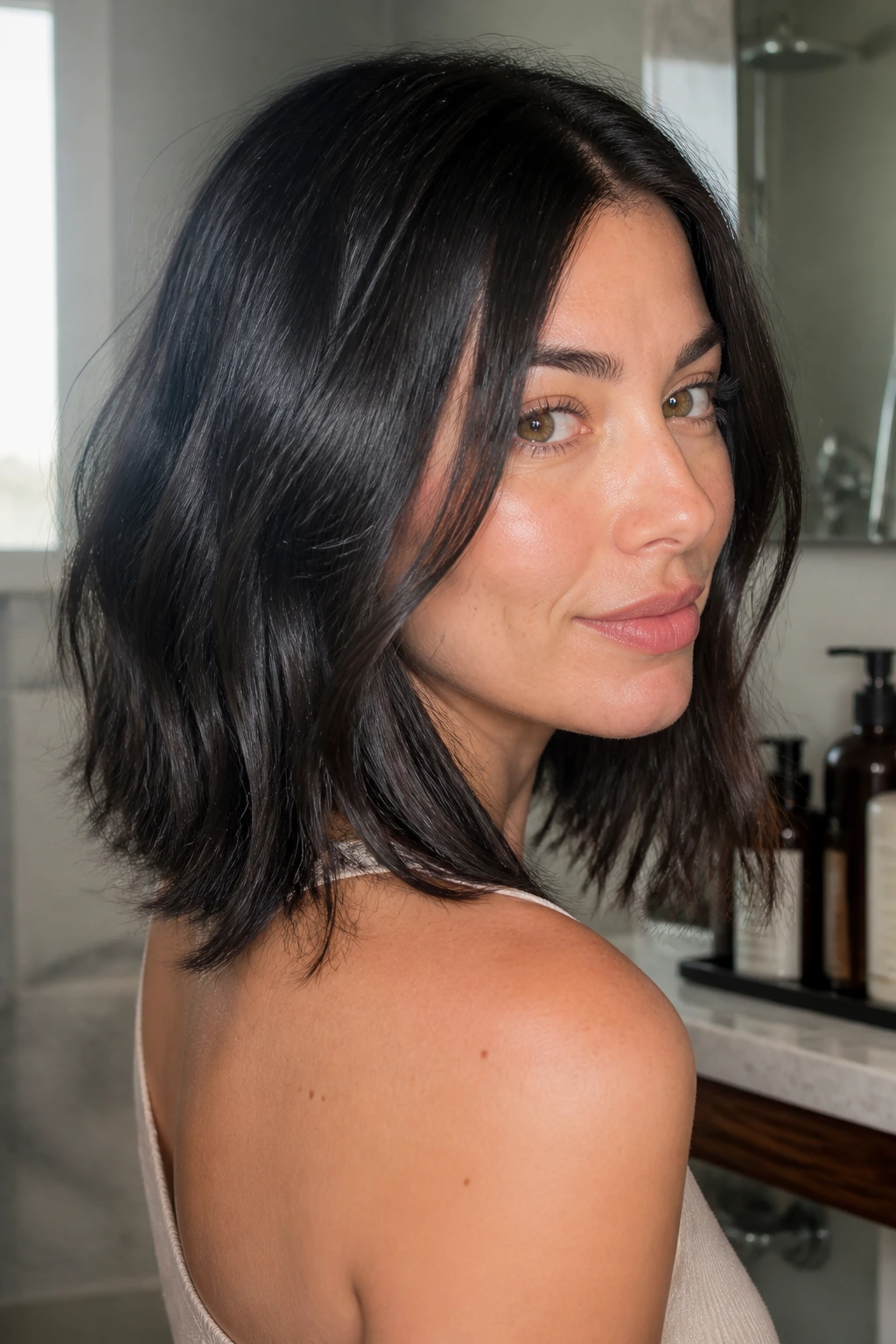
If the hair is mostly a gloss, chestnut glaze, cherry cola, or black raspberry sheen, expect the richest tone to last about 4 to 6 weeks before it starts softening. Direct-dye pieces like teal, violet, navy, or forest green can fade faster, often in 2 to 4 weeks depending on wash frequency and heat styling. Balayage and money-piece work usually hold their shape longer, around 8 to 12 weeks before the tone needs a real refresh.
Wash less if you want the color to last. That sounds obvious, but people still shampoo dark color like it’s a race. Two or three washes a week is enough for many shoulder-length styles, especially if you use dry shampoo at the roots and keep conditioner on the mid-lengths only. Warm water is fine. Scalding water is not.
Sleep on a silk or satin pillowcase if you can. It reduces friction on the ends, and the ends are where faded color tends to look worst first. If you swim, wet the hair with clean water before it hits chlorine or salt, then rinse it again right after. That one habit helps copper, red, blue, and fashion tones keep their shape much longer.
Root touch-ups depend on the idea. A blue-black gloss may just need a quick refresh. A caramel or beige highlight usually needs toner first, then a placement check. Hidden panels and peekaboo colors often stay fresh longest because you can restyle the hair and hide the fade a little while longer. Shoulder-length hair gives you that advantage. Use it.
Questions People Ask Before They Book
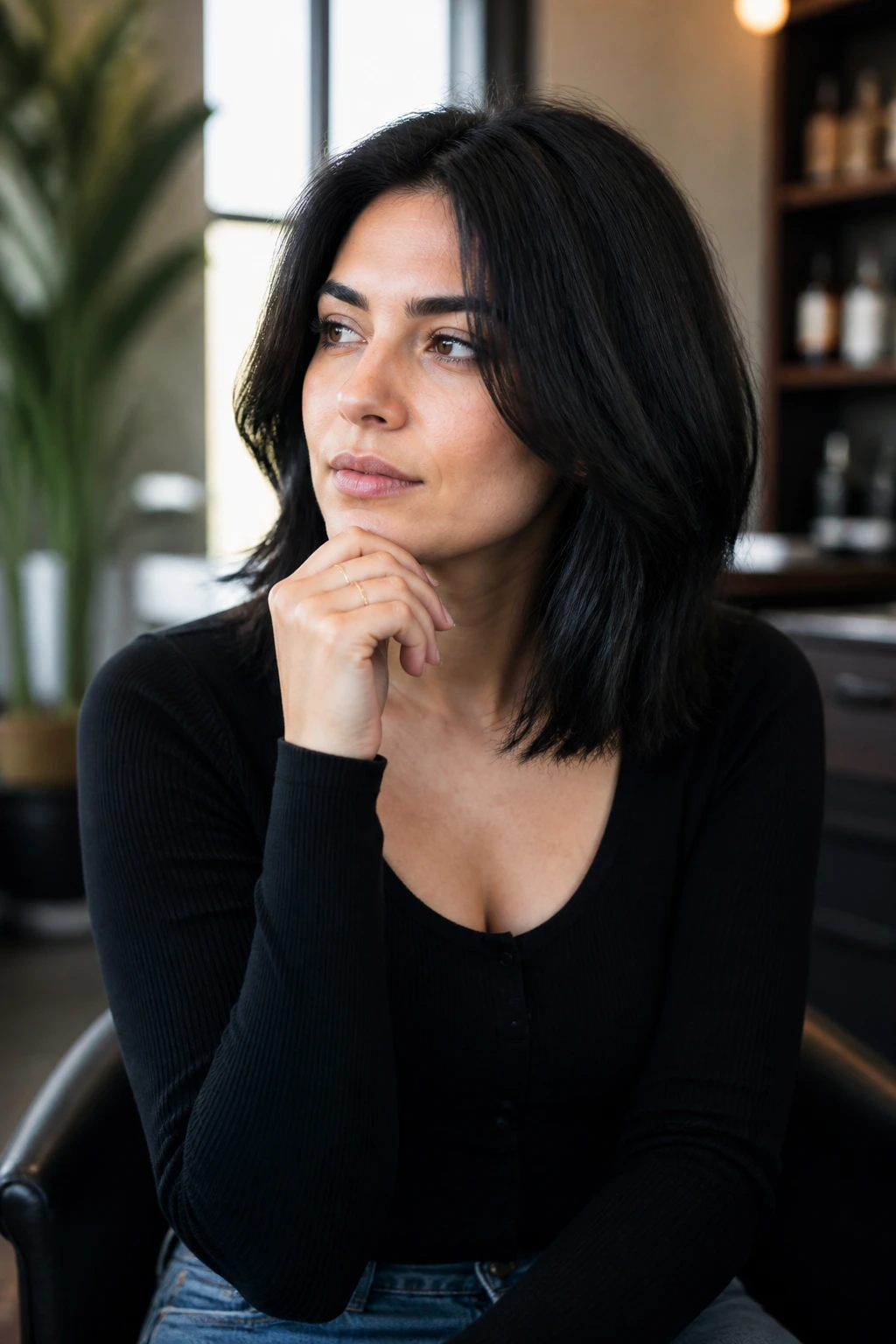
Do I need bleach for shoulder-length black hair color ideas?
Not always. Blue-black, plum, cherry cola, chestnut, and some burgundy looks can work with glosses or demi-permanent color on a dark base. Caramel, copper, beige, silver, and brighter vivid shades usually need some lightening to show properly.
Which shades are easiest to maintain?
Chestnut glaze, espresso balayage, blue-black, and mahogany melt tend to be kinder than bright copper or silver. They fade more softly and don’t demand constant toner appointments to stay readable.
Will balayage look weird on black shoulder-length hair?
Not if the placement is done with the haircut in mind. Shoulder-length hair is actually a good length for balayage because the lighter pieces can sit in the outer layer and ends without being dragged down by extra length.
Can I keep my black base and still add color?
Yes. That’s the whole point of many of these looks. Peekaboo panels, money pieces, glosses, contour highlights, and underlayers let the base stay dark while the color shows in specific spots.
What if my hair has been dyed before?
Then the porosity matters as much as the color you want. Older dye can grab pigment too fast or lift unevenly. A strand test is worth the time, especially if you’re moving into copper, beige, silver, or vivid fashion tones.
Will these colors work on curly shoulder-length hair?
They can, but placement should follow the curl pattern. Thick ribbons can get lost or look chunky in curls, while finer placement around the face and surface layers usually reads better. Hidden panels also look sharp on curls because the movement exposes them naturally.
How do I stop warm colors from turning brassy?
Use a color-safe shampoo, don’t over-wash, and get toner before the tone drifts too far. Brass usually shows up first on the lightest pieces, so those ends need the most care.
Can I do any of this at home?
Some of it, yes. Glosses, semi-permanent dark reds, and color-depositing masks are manageable at home if you keep expectations sane. Anything that needs clean pre-lightening — caramel, copper, beige, silver — is a different story and is safer in a salon chair.
The Shade That Fits Best
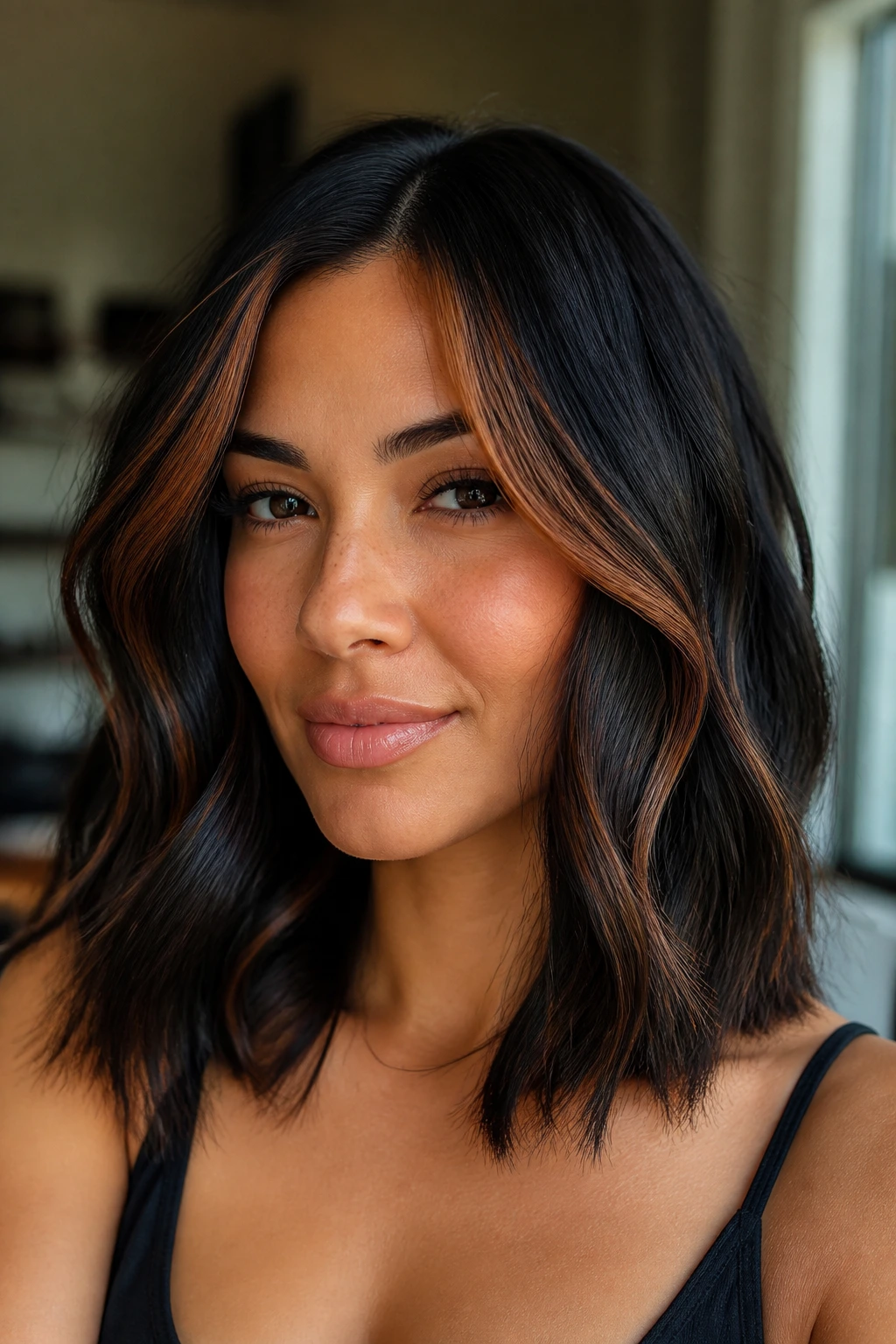
The nicest part about shoulder-length black hair is that it doesn’t force you into one lane. You can keep the base dark and still play with shine, warmth, depth, or hidden color. You can go glossy and quiet. You can go copper and obvious. You can hide teal under the top layer and let it flash only when you want it to.
That flexibility is the real win. The cut is short enough to keep color controlled, long enough to show movement, and close enough to the face that even a small change can shift the whole mood. Pick the shade that matches how much maintenance you can live with, then choose the placement that works with your haircut instead of against it. The right version won’t feel like a costume. It’ll just make the hair look like it finally had a point.
